



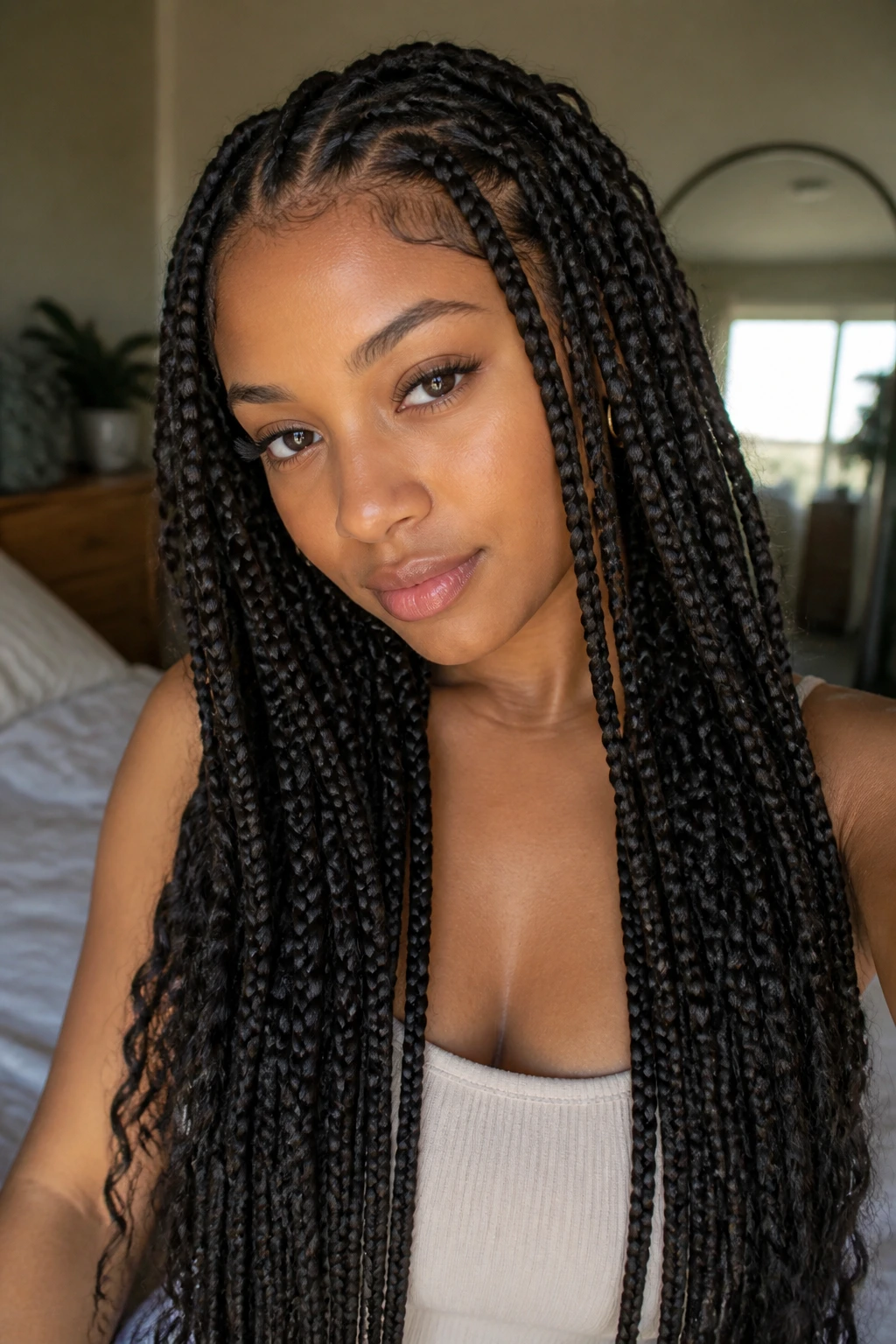
Long braids for a protective style with wavy hair hit a useful middle ground: the length stays tucked and controlled, but the finish still has swing. Wavy hair can frizz at the crown and slip at the root, so the best braid styles do not fight the texture—they organize it.
That means the good ones start light at the scalp, keep the sections clean, and leave just enough movement at the ends to keep the style from looking stiff. Knotless bases, feed-in starts, side sweeps, and soft accessories all help. Heavy wax and over-tight parts do the opposite.
The styles below lean into those realities. Some are sleek and low-fuss, some are dressier, and a few keep a little wave or face-framing texture on purpose, because wavy hair looks best when it is allowed to breathe a bit.
Why These Long Braids Fit Wavy Hair So Well
-
Less root drama: Knotless and feed-in starts sit flatter at the scalp, which matters when wavy hair tends to slide instead of gripping itself.
-
Better grow-out line: Curved, side, and triangle parts hide new growth longer than a straight grid.
-
Length without constant touch-ups: Long braids keep the ends tucked away, so you can skip daily detangling and still have a finished shape.
-
Softness where it counts: Boho pieces, face-framing strands, and beaded ends keep the set from looking rigid.
-
Style range: The same wavy base can handle sleek cornrows, chunky box braids, or a low braid ponytail without a total restart.
-
Lower friction at night: Braids are easier to pin, wrap, and sleep on than loose waves that knot at the neck.
1. Waist-Length Knotless Box Braids
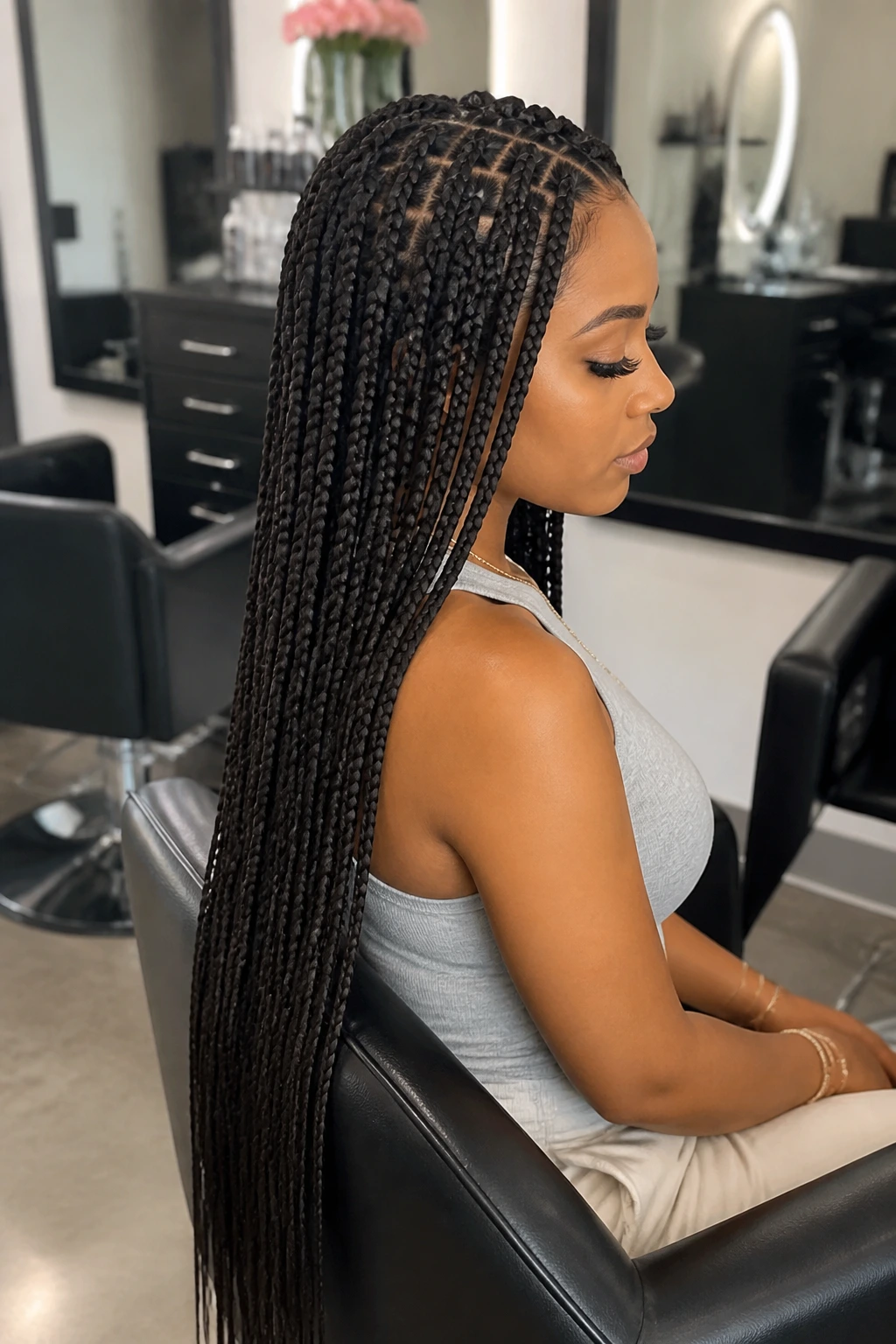
Knotless box braids are the first style I’d hand to someone with wavy hair. The root lies flatter, so you do not get that hard little bulb at the scalp that makes some installs feel heavy before lunch. Waist length gives you real styling room, but the start still looks soft.
Keep the sections medium. Tiny boxes can look fussy on waves and frizz out faster at the base, while medium pieces hang cleaner and put less pull on the hairline. If your hair slides easily, this is the safest place to begin.
2. Classic Straight-Back Feed-In Cornrows
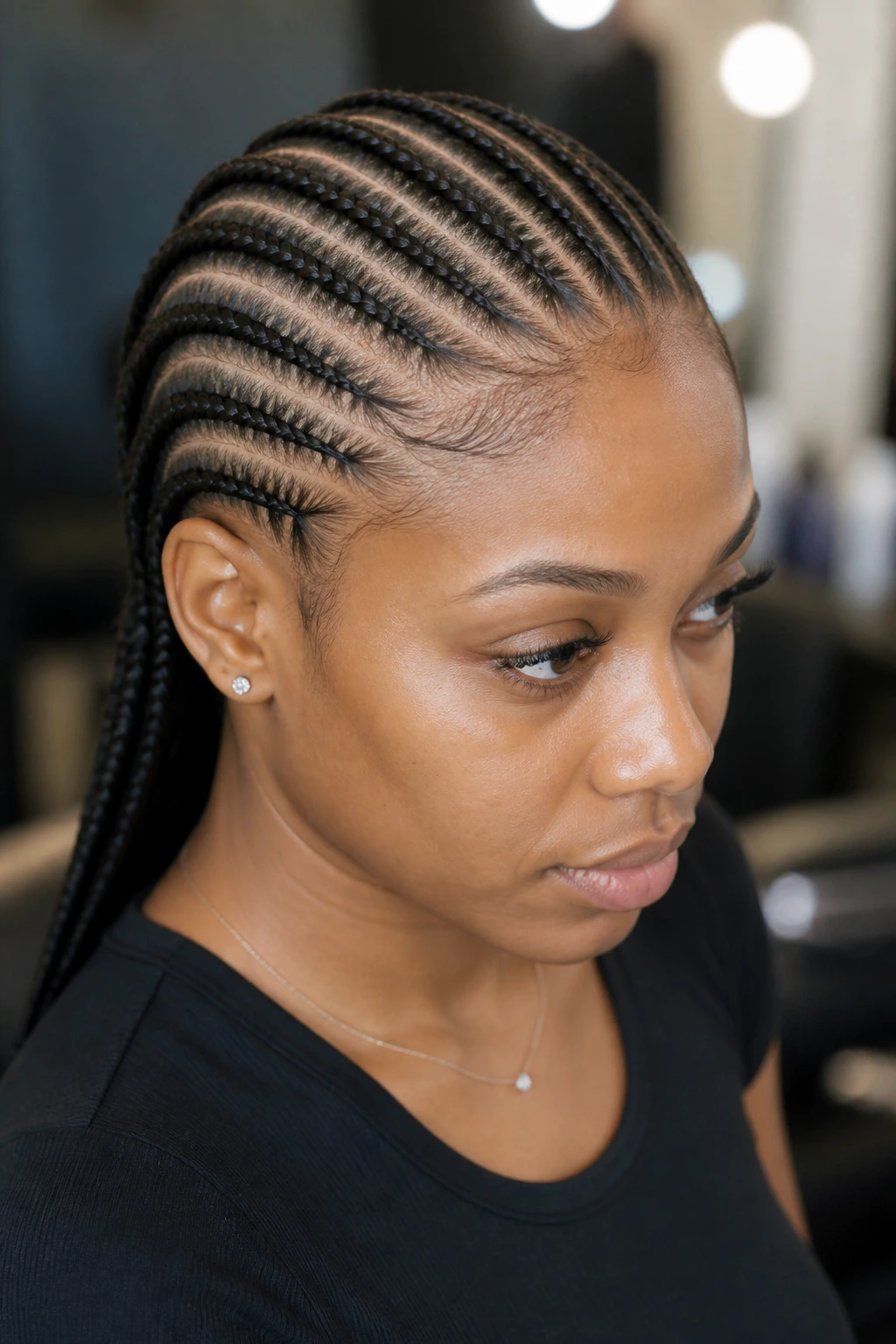
Straight-back feed-ins are the cleanest answer when you want the style to read polished from the front and practical from the back. The feed-in method hides bulk at the scalp, which helps slippery wave patterns stay put without a stiff helmet look.
Ask for even spacing and a soft finish at the nape. If the last inch of each braid is too tight, wavy hair will puff unevenly when it moves. This style holds best when the tension is firm, not aggressive.
3. Side-Swept Lemonade Braids
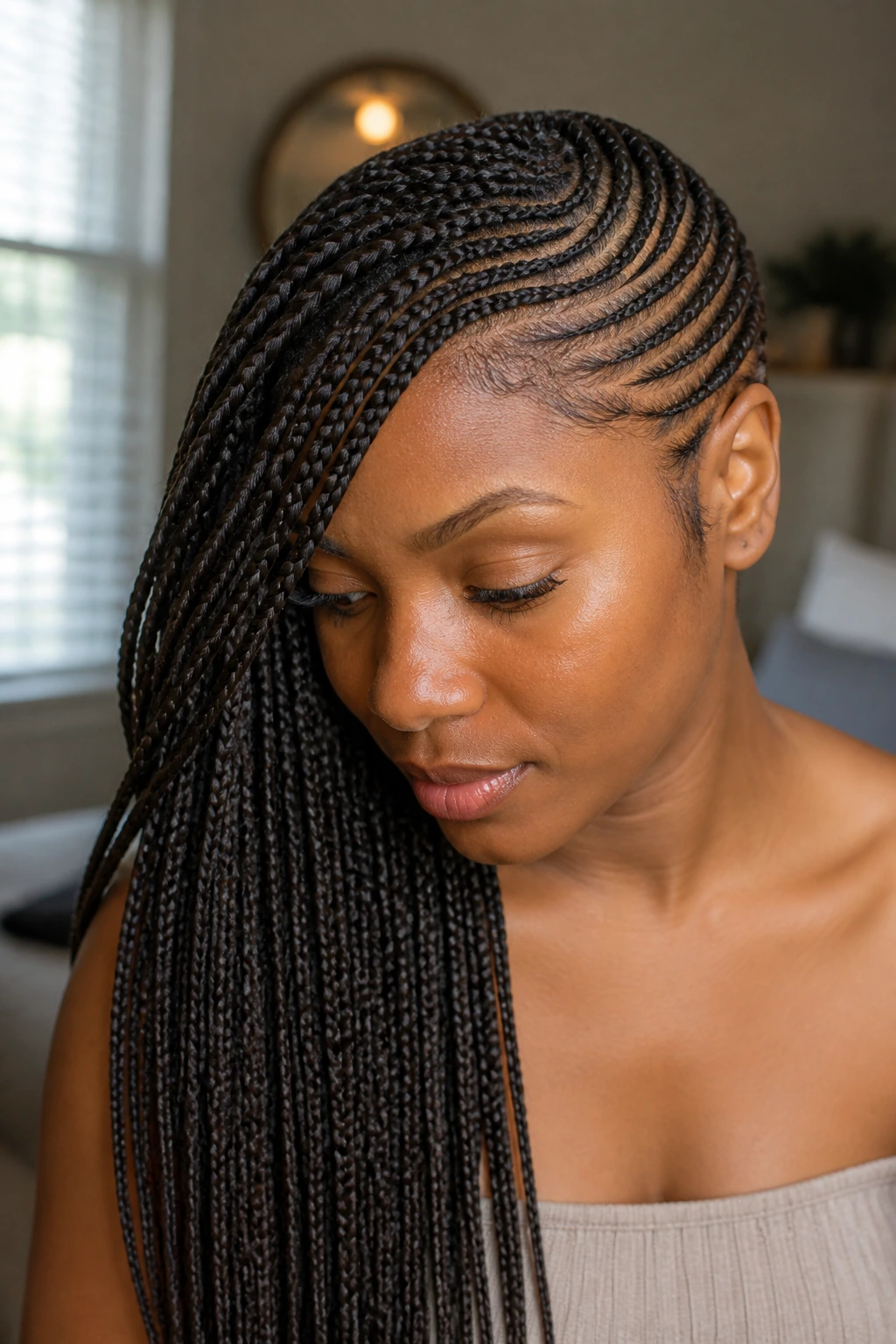
Why do side-swept braids flatter wavy hair so well? Because the diagonal line echoes the bend already in the hair.
They keep one side exposed enough to show off the parting, and the sweep across the forehead makes loose wave texture look intentional instead of accidental. If your hair pushes flat at the crown, this shape gives it direction fast.
4. Fulani Braids with Beads
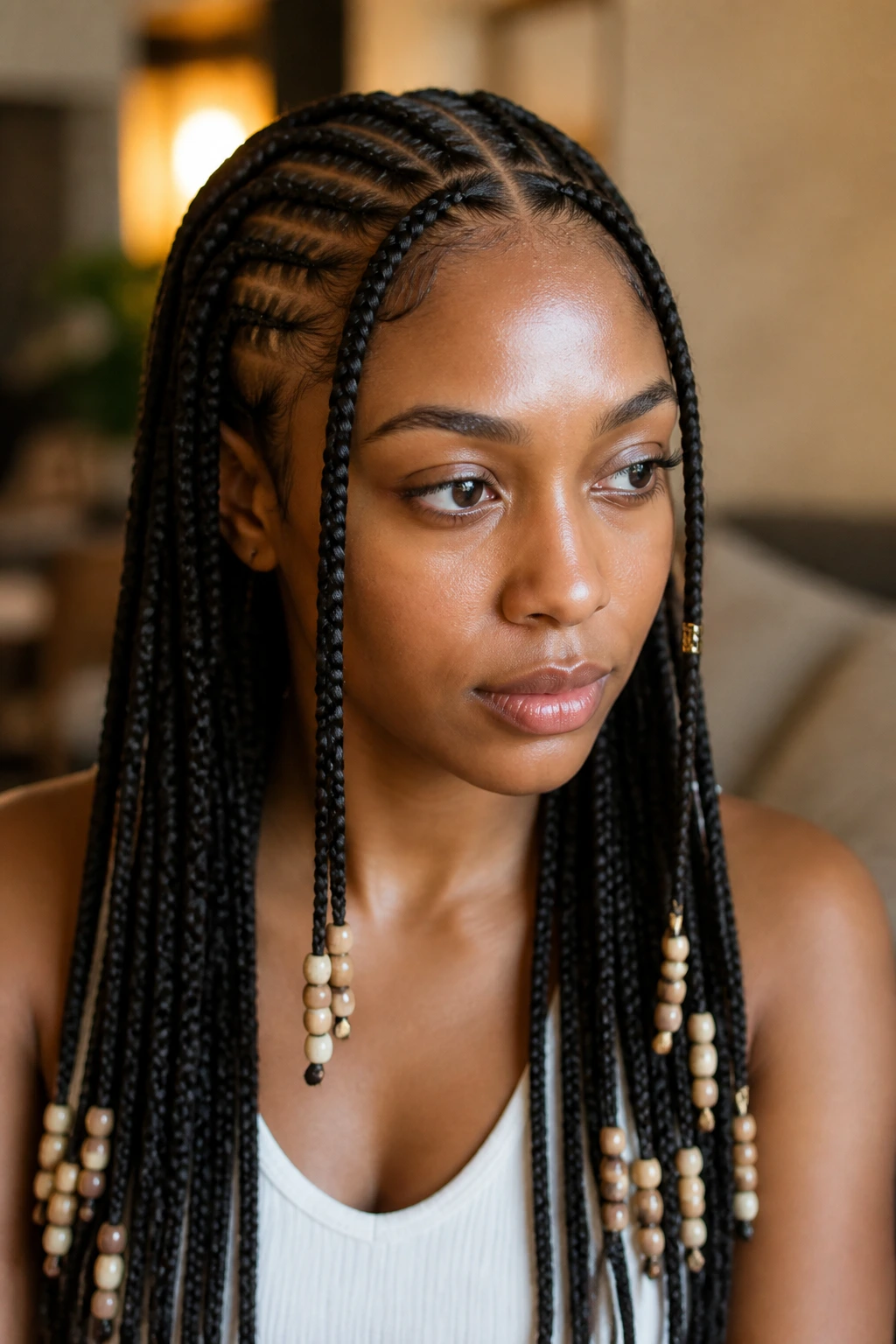
A center braid, a few slim cornrows, and beads at the ends can do a lot without loading the scalp. Fulani braids work well on wavy hair because the front stays structured while the hanging lengths keep the look soft.
Keep the beads light
-
Wood, shell, or lightweight acrylic beads move better than heavy metal ones.
-
Put the weight on the tail, not near the root.
-
If the beads clack loudly all day, they’re probably too heavy for a long wear set.
I like this style when the wearer wants movement and a little personality, not just a straight-back braid job.
5. Boho Knotless Braids with Wavy Leave-Out
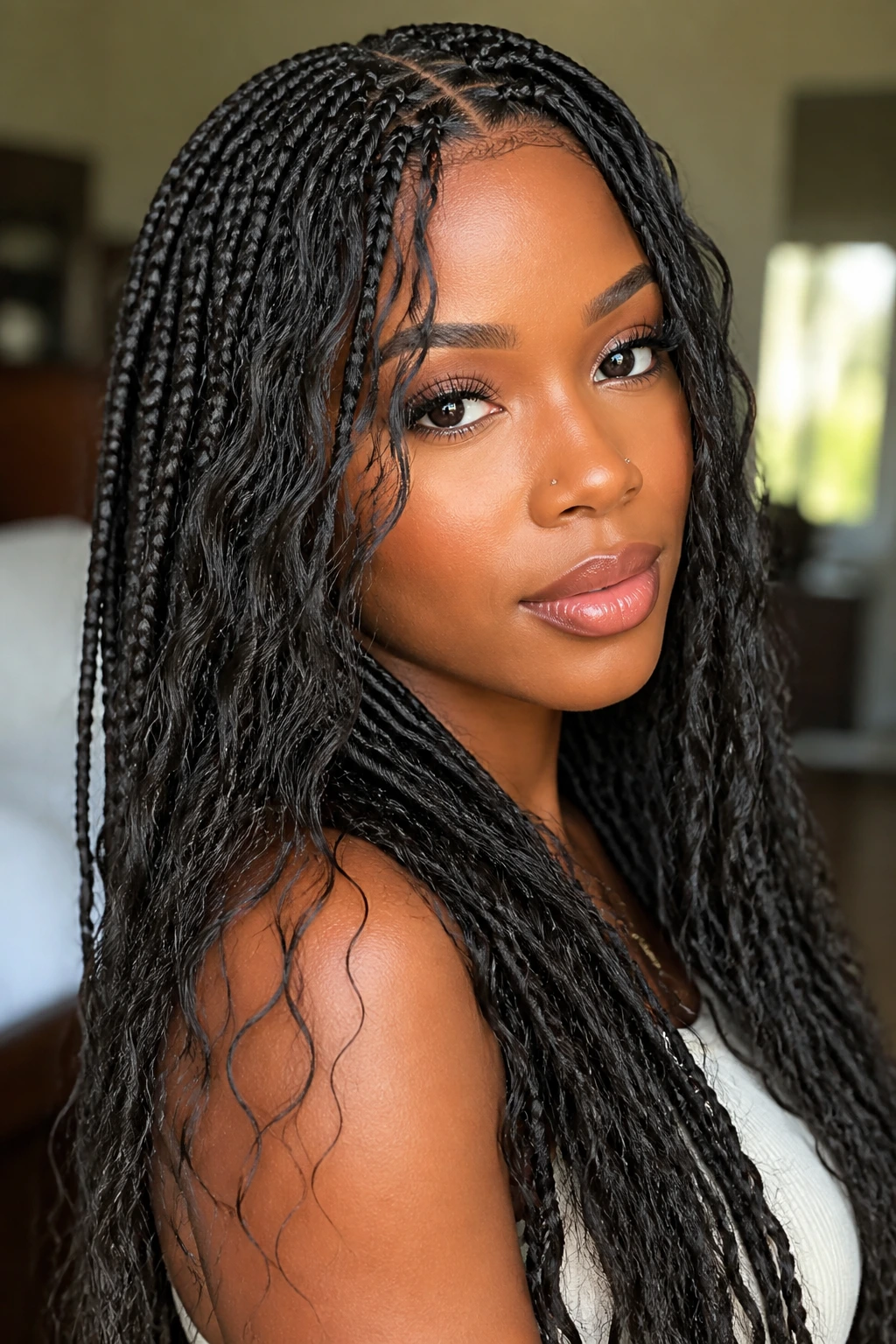
Boho knotless braids are the one style here that welcomes a little mess. The loose wavy pieces break up the length and keep the whole set from looking too rigid.
If your wave pattern is loose already, leave-out pieces near the middle of the braid read like texture on purpose. The style is forgiving in a way most long braids are not, which is why people keep coming back to it.
6. Jumbo Triangle-Part Braids
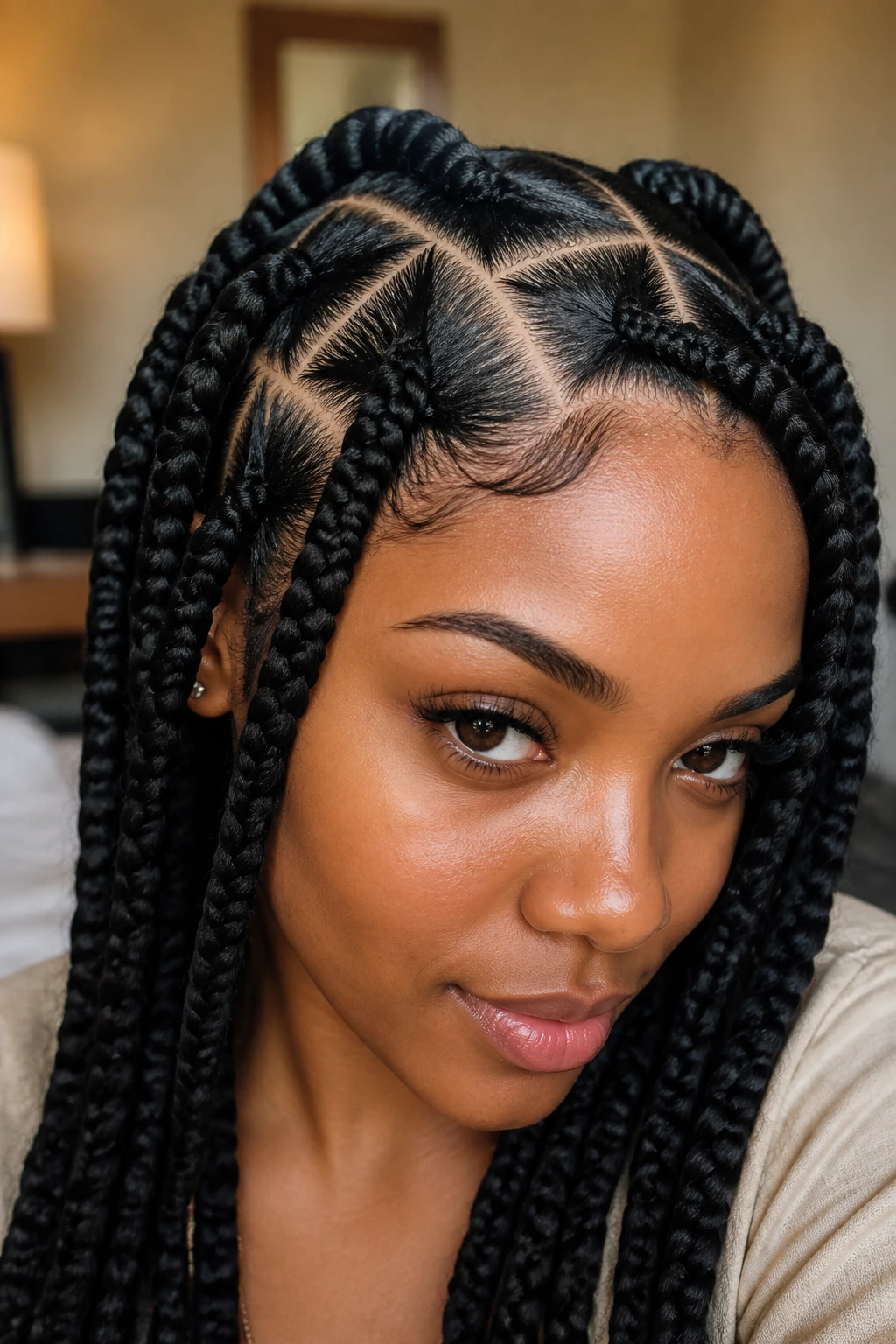
Jumbo triangle-part braids are faster and louder than smaller braid sets, and that is the point. The triangular sections create a sharper pattern at the scalp, which helps wavy hair look deliberate even when the strand texture is soft.
This shape suits thicker hair or anyone who wants fewer, heavier pieces instead of a tight all-over set. It is also a good move if you do not want a braid install that takes all afternoon and then some.
7. Stitch Braids into a Low Ponytail
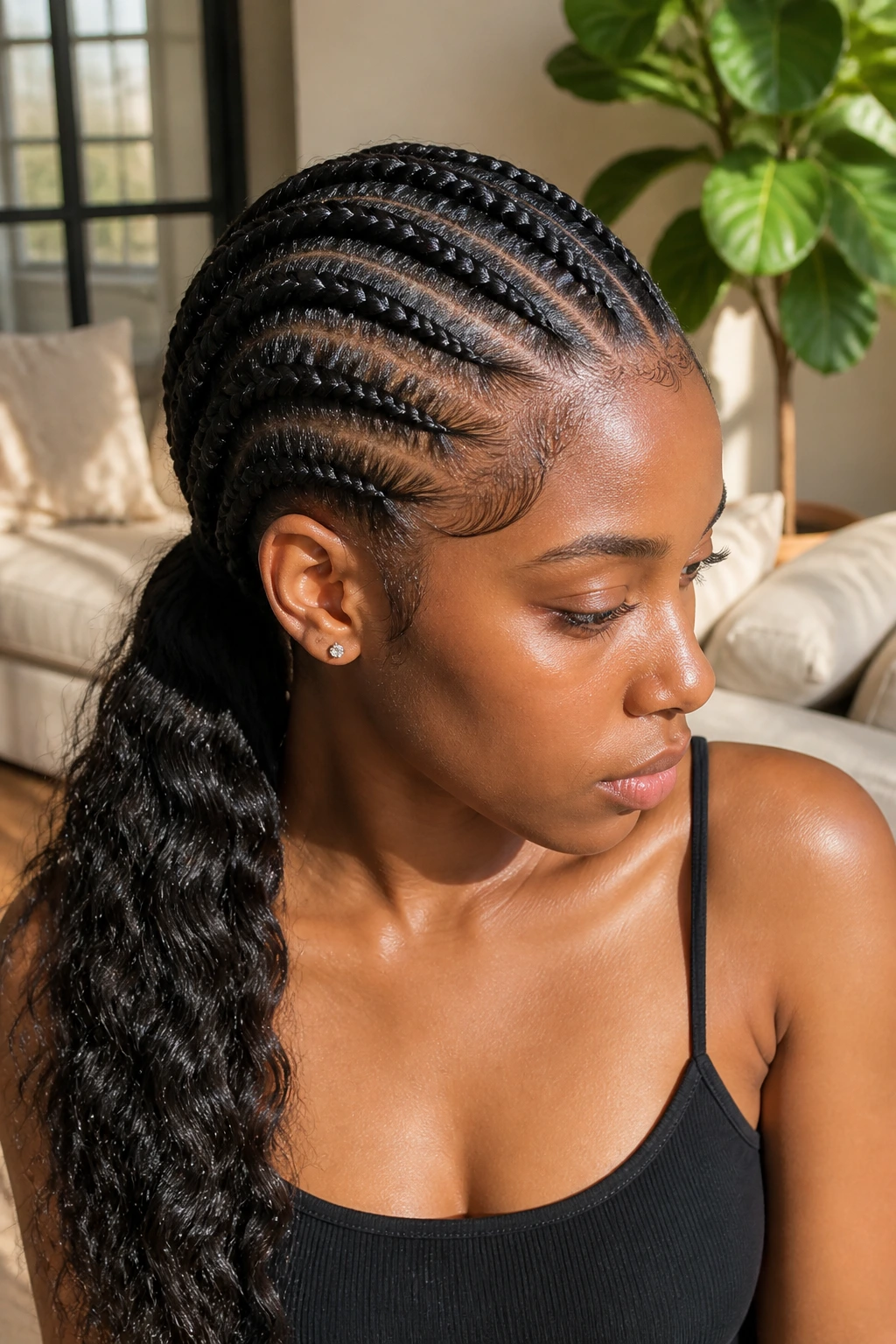
If you want your edges to stay visually neat, stitch braids into a low ponytail are hard to beat. The stitch technique gives the braids a crisp, ribbed look at the scalp, and the low ponytail keeps the length off the neck.
On wavy hair, that matters more than people think. Heat and friction at the nape are where styles usually start to fall apart, so this shape buys you extra comfort without giving up length.
8. Goddess Braids with Loose Face Pieces
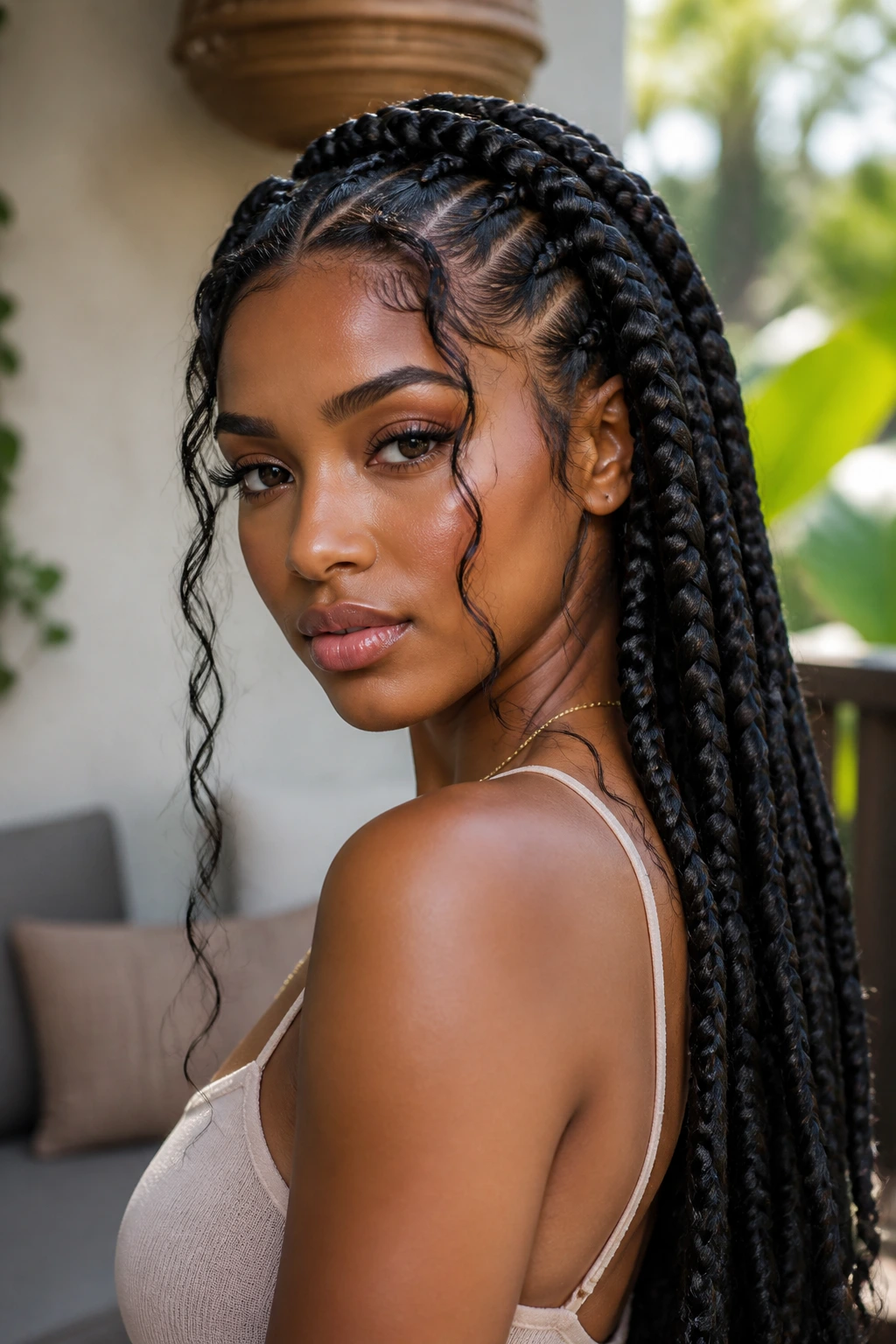
These are the braids for somebody who likes structure but hates looking severe. The body of the braid stays thick and protective, while a few loose face pieces soften the front without opening the whole style up.
On wavy hair, the contrast is the point. The tighter braid line controls the scalp, and the loose pieces pick up your natural bend instead of fighting it. That little bit of softness changes the whole mood.
9. Micro Braids with a Center Part
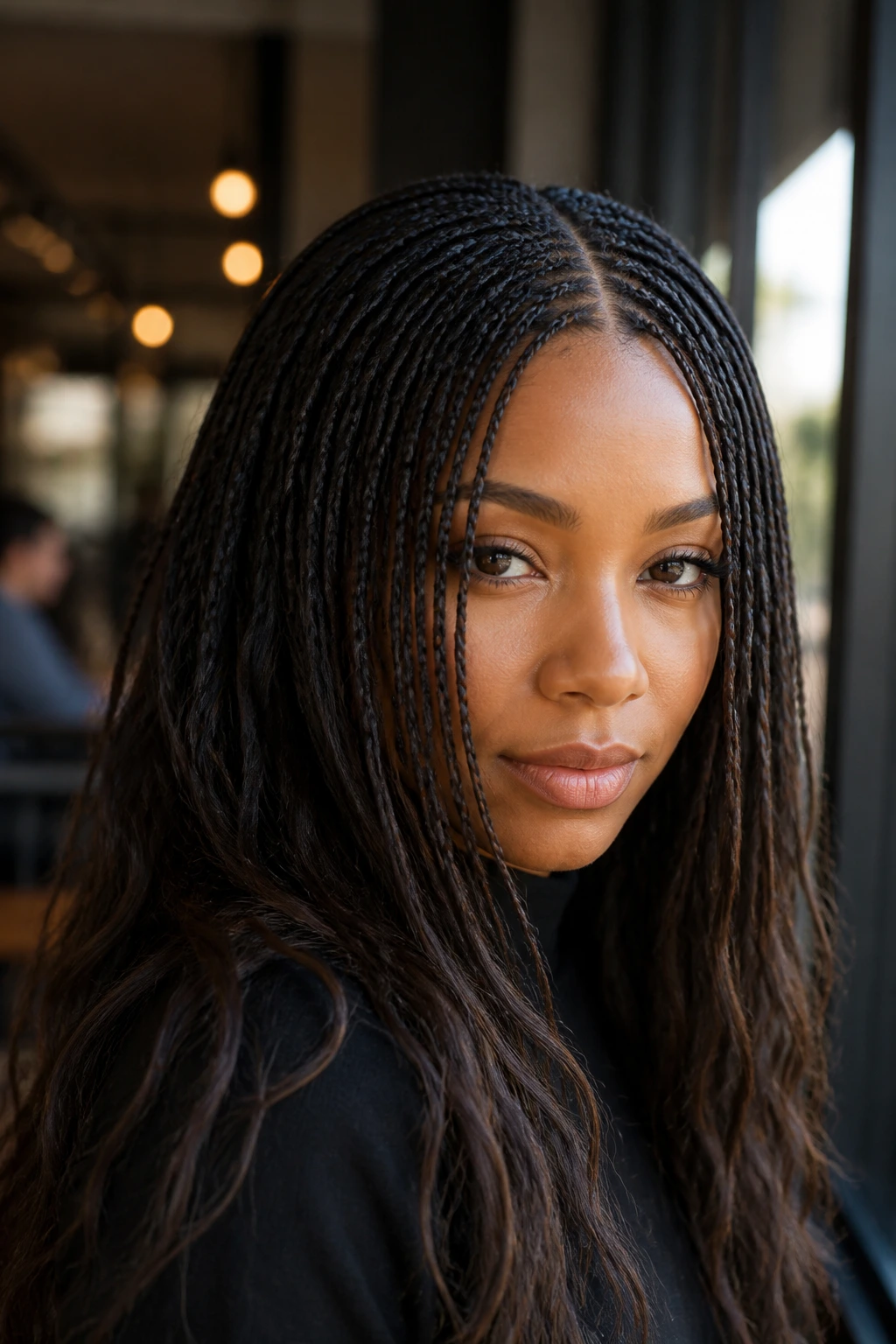
Micro braids are the slow burn of the braid world. They take time to install, but the movement is hard to fake, especially on wavy hair where smaller sections echo the hair’s natural ripple.
This is a patience style, not a rush style. The payoff is the smallest visible braid pattern and the most fluid hang, which is exactly why it can look so good when the hair is very fine or very loose in texture.
10. Two Oversized Dutch Braids
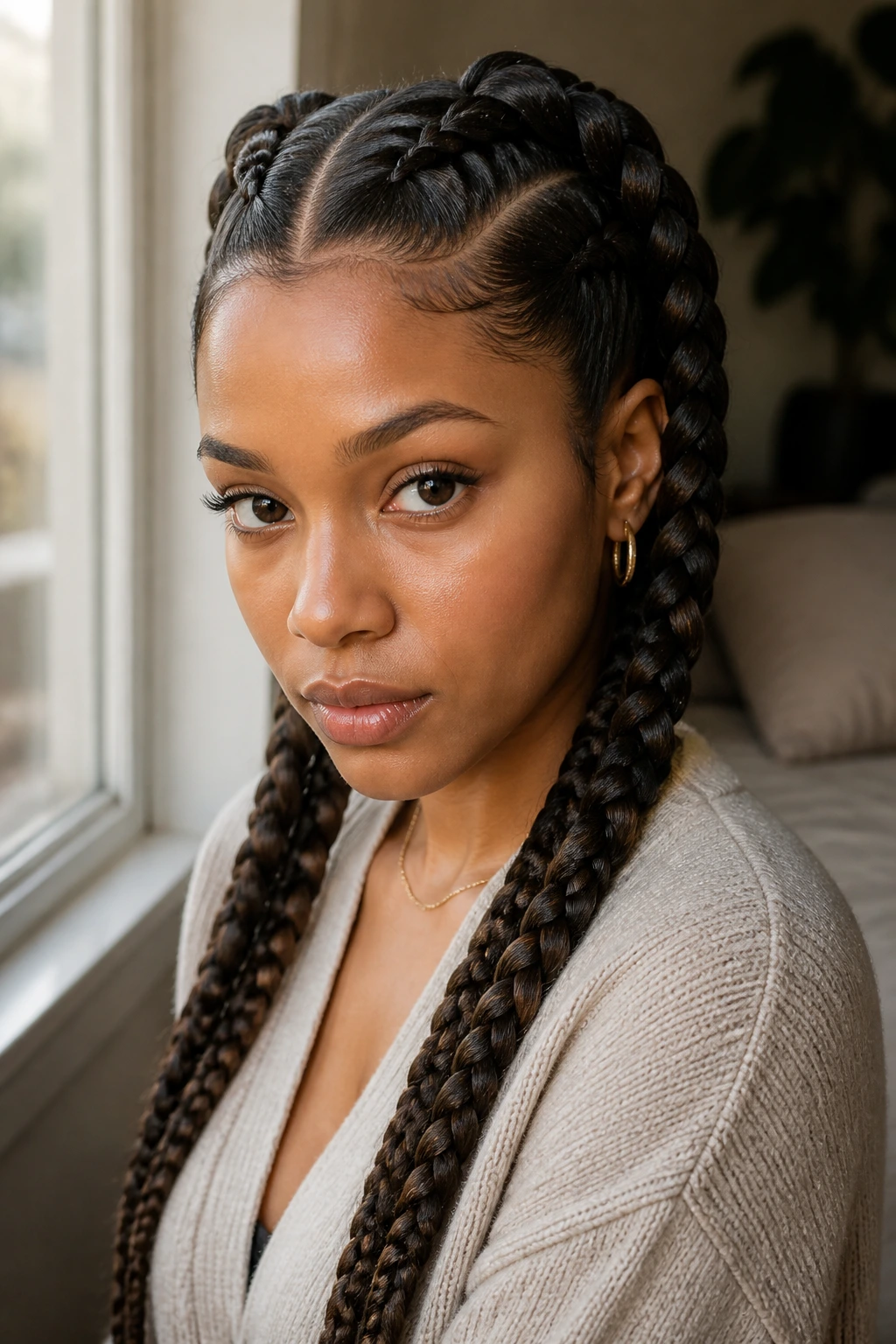
Two oversized Dutch braids are the cleanest low-drama option in the whole set. The braid sits on top of the section instead of sinking into it, so the lines stay visible even if your wavy hair is soft at the crown.
Why two braids can be enough
When the sections are big, the style feels contained without looking overworked. That makes it a good pick for travel, weekend wear, or any day you want the hair kept together but do not want a dozen tiny parts to maintain.
11. Four Long Straight-Back Braids
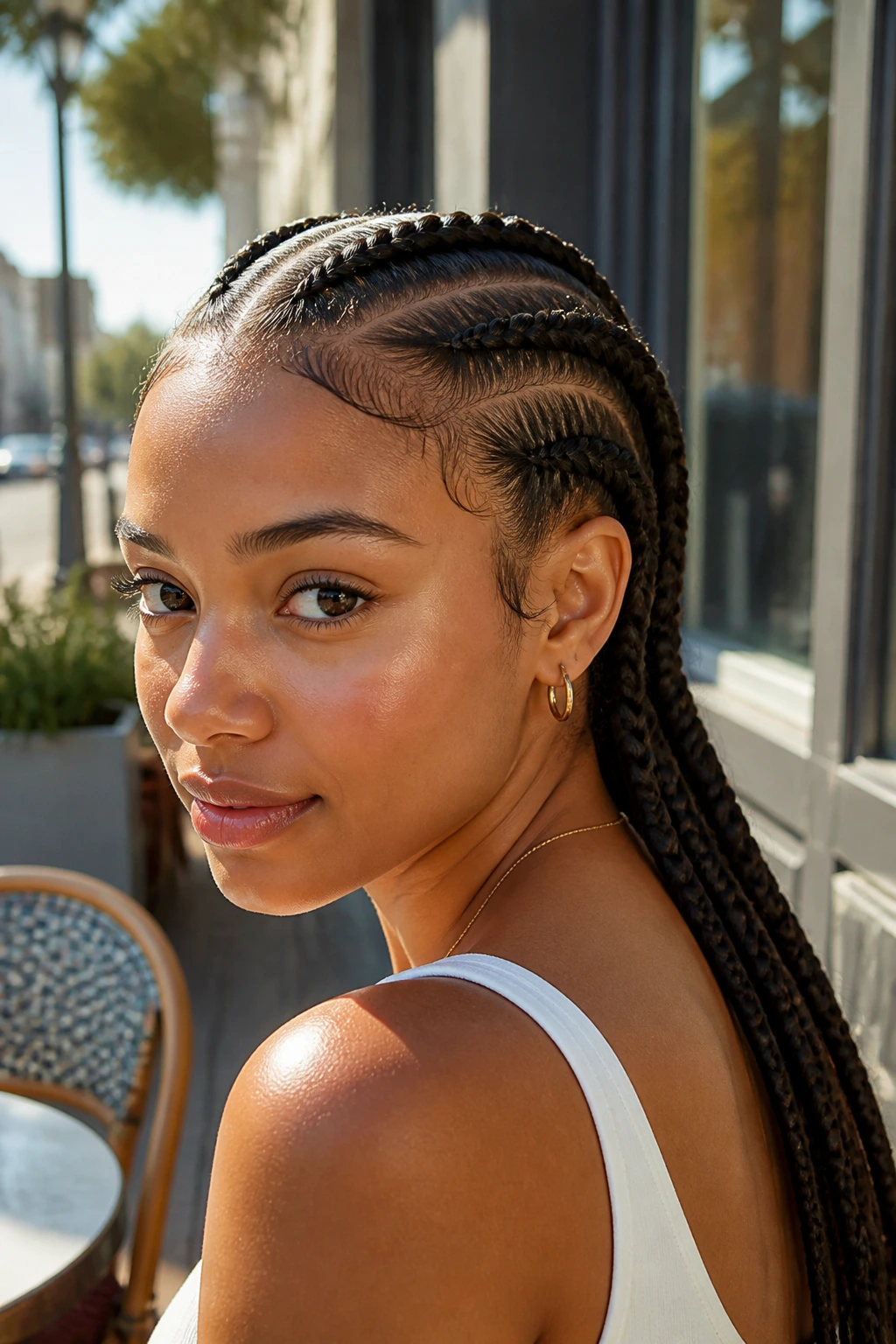
Four long straight-back braids split the difference between a full head of tiny braids and two oversized plaits. You get more movement than a single chunky braid, but the parts are still large enough to keep maintenance sane.
On wavy hair, this is a smart middle ground if you want the scalp to breathe. The braids are heavy enough to hang, yet not so many that your head feels crowded or overbuilt.
12. Crown Braid with Hanging Length
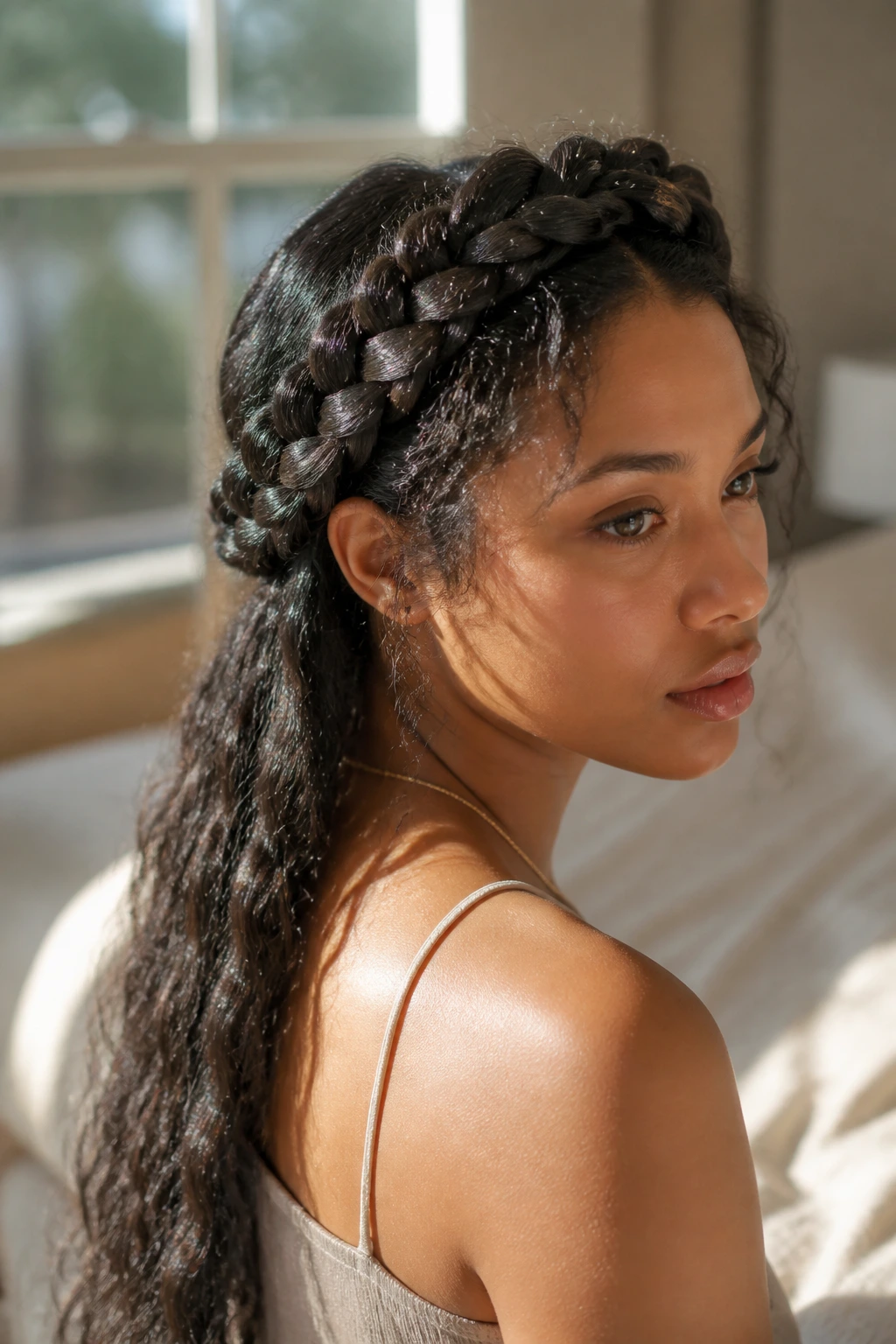
Need something that reads polished from every angle? A crown braid with hanging length does that job.
The braid wraps the hairline like a frame, then drops the rest down the back, which keeps wavy hair from puffing around the temples. If your front layers tend to separate, this style contains them without hiding the texture completely.
13. Rope-Twist Braids with a Sleek Base
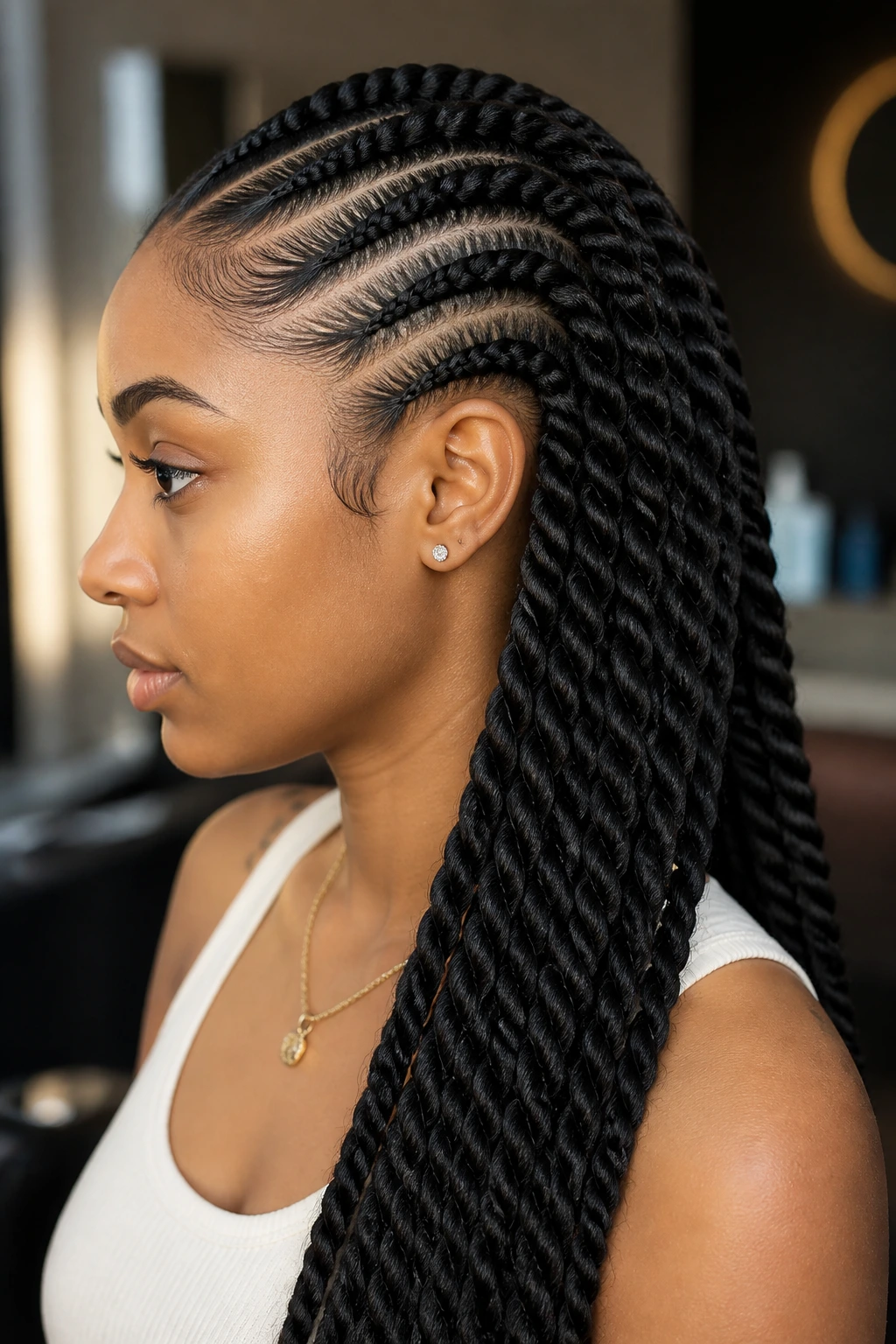
Rope twists behave a little differently from flat braids, and that difference can be useful on wavy hair. They create a smoother spiral and do not need the same deep cross-over tension, so the roots can feel lighter.
I like them when someone wants length without the ridged look box braids leave at the scalp. The finish is neat, but not so tight that the whole style reads severe.
14. Diagonal-Part Long Braids
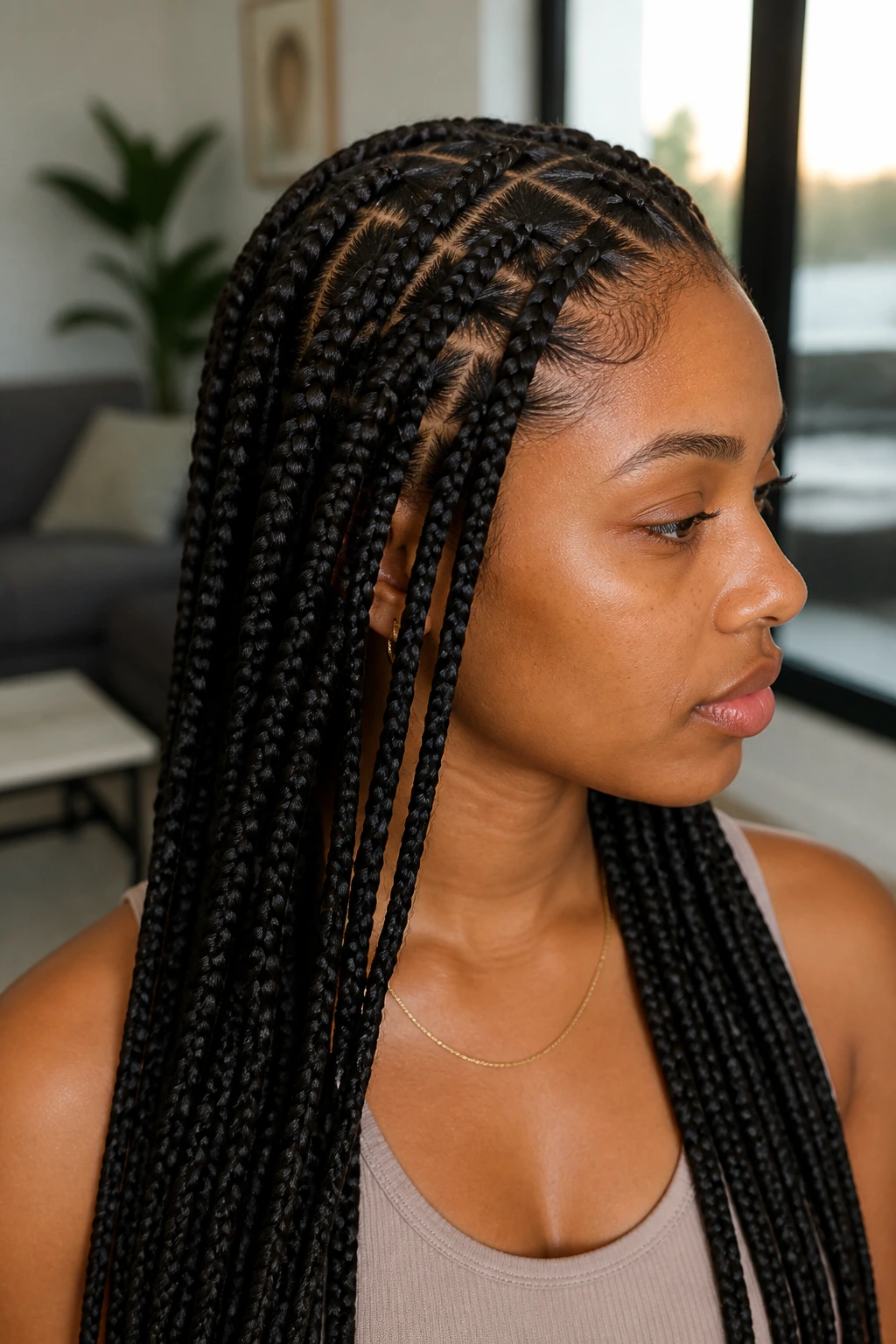
Diagonal parts make a plain long braid set look sharper without asking for extra accessories. The line moves across the head instead of straight back, which gives wavy hair a little motion before the braid even starts.
If your hairline is uneven or your crown has more texture than the rest, diagonal parting breaks up the pattern in a flattering way. That small angle does more work than people expect.
15. Wrapped-Base Braided Ponytail
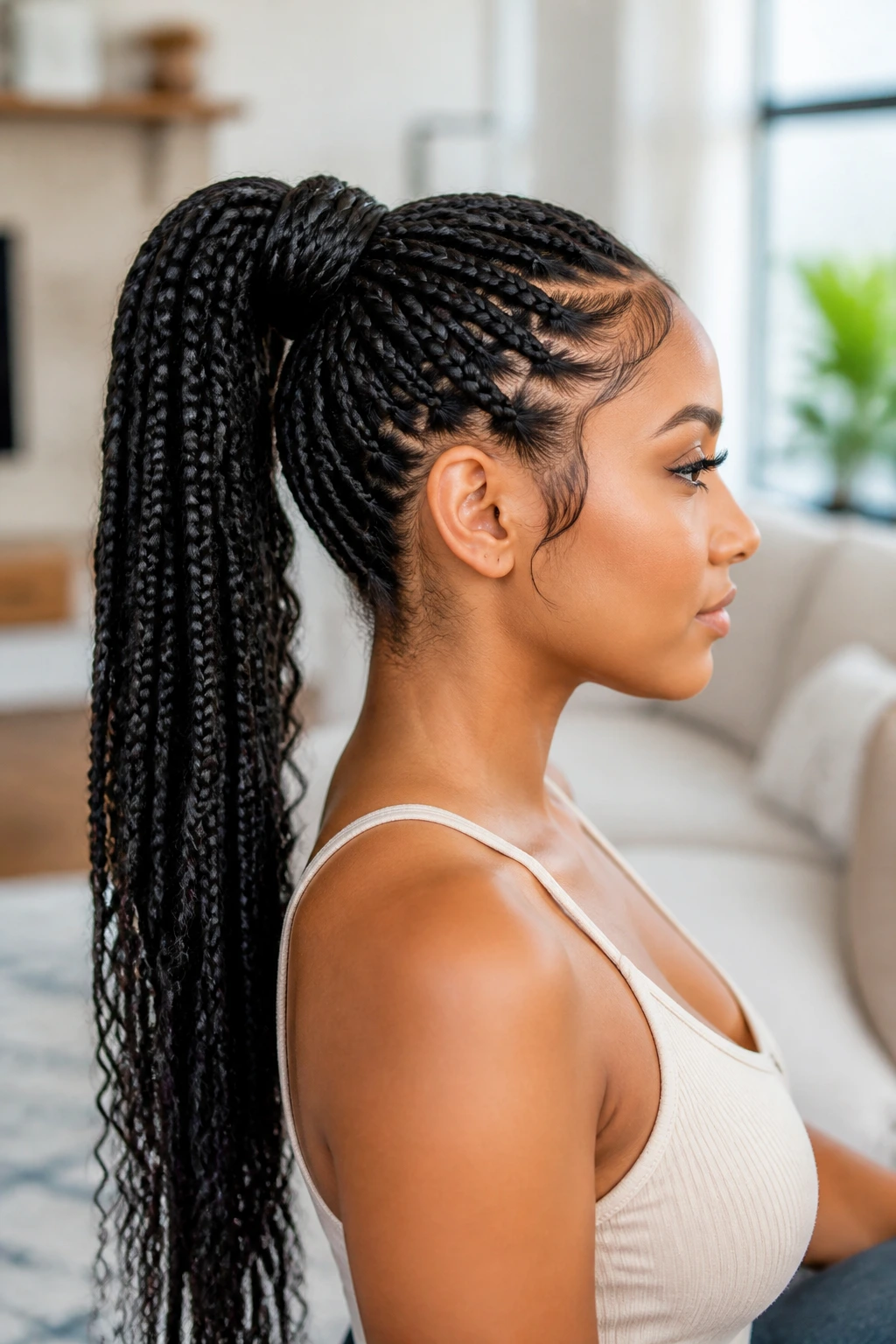
A wrapped-base braided ponytail is one of the most practical long styles on the list. The wrap hides the tie or anchor point, so the ponytail reads clean and secure.
Wavy hair tends to puff at the root when pulled back; this style hides that transition and keeps the shape neat from morning to night. It is a good choice if you want length that stays out of your face without feeling fussy.
16. Tribal Braids with Mixed Cornrow Patterns
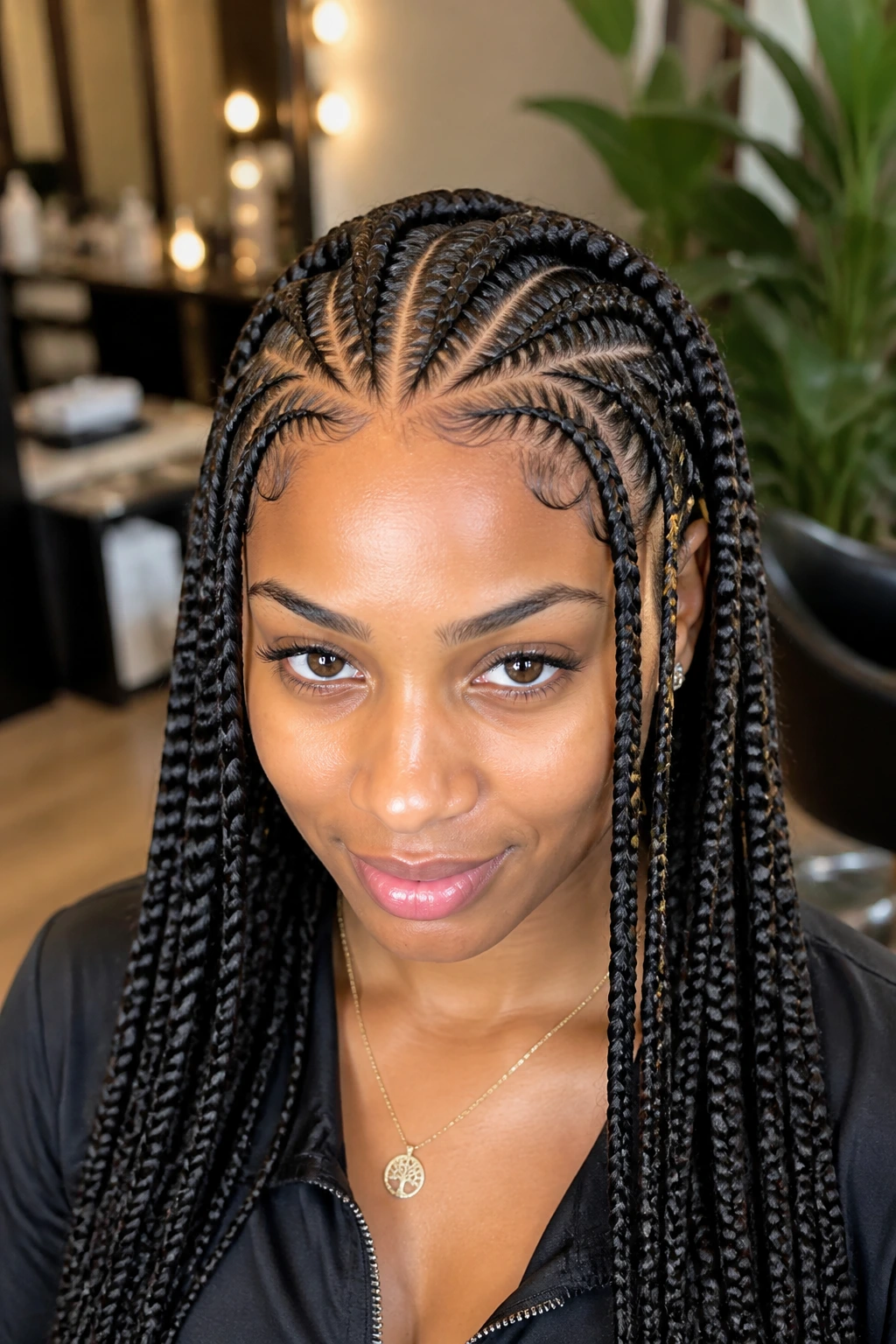
Tribal braids give you room to mix sizes, directions, and part shapes without looking random. That flexibility matters for wavy hair, because not every section behaves the same way.
Some pieces can stay thin and close to the scalp; others can hang longer and looser. The variety keeps the style from feeling flat, which is the biggest complaint I hear about all-over braids.
17. Half-Up, Half-Down Long Braids
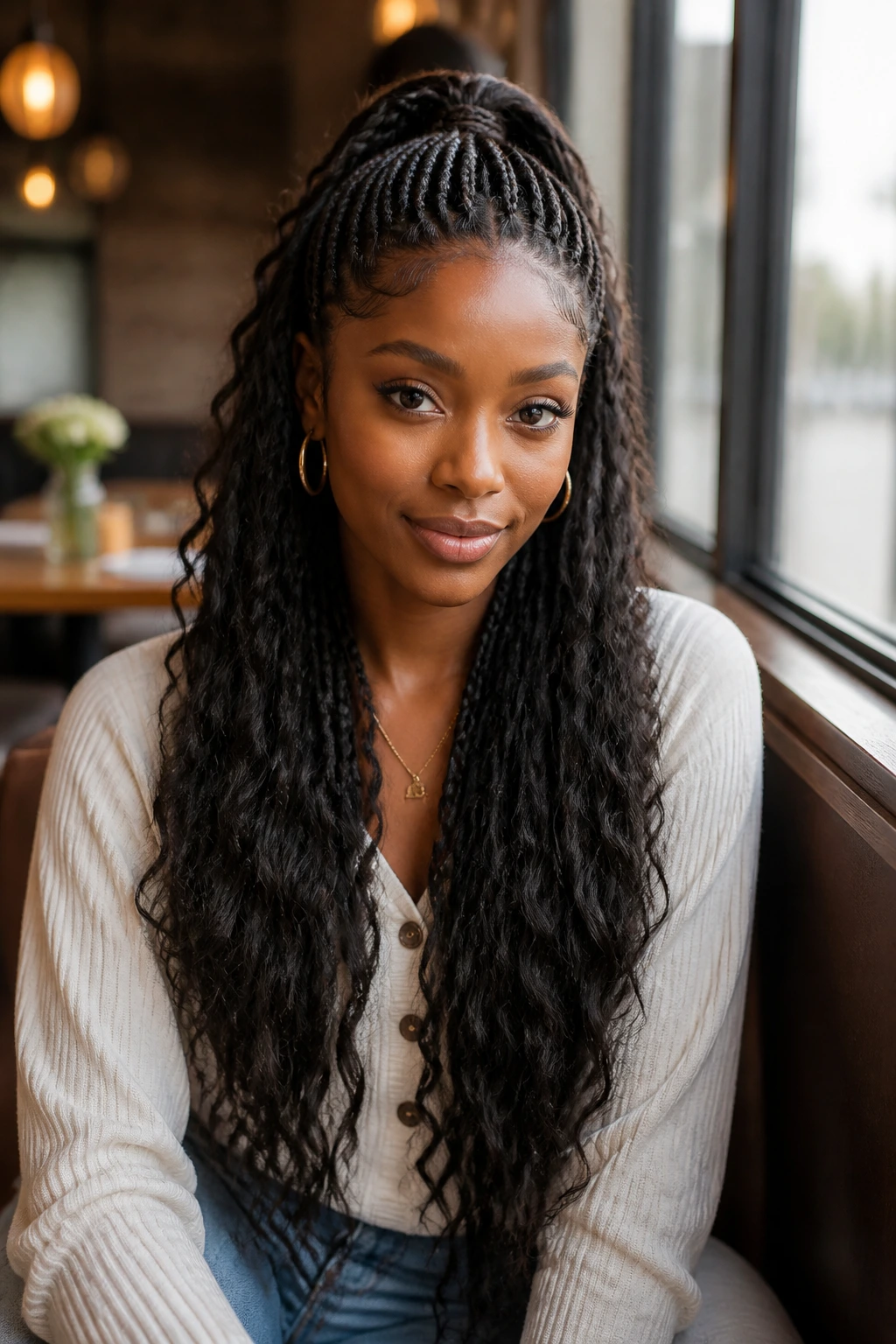
Why do half-up braids keep showing up? Because they fix the one thing long braids sometimes do wrong: too much weight hanging at once.
Pulling the top half away from the face lightens the front, and the lower section still gives you length. On wavy hair, it also lets a little texture live around the face instead of getting trapped under the braid mass.
18. Low Side Bun with a Braided Tail
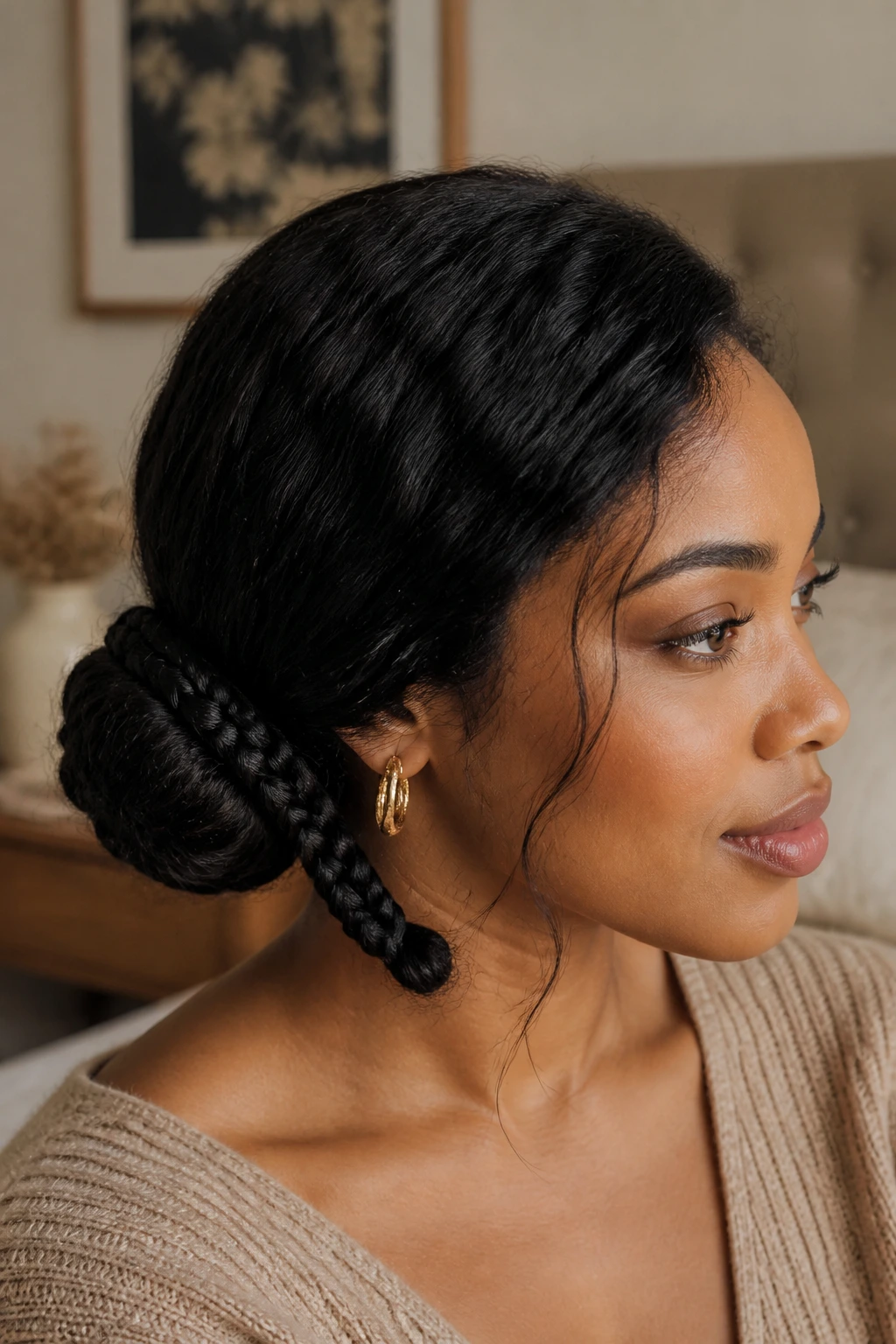
Low side buns are underrated for protective styling. They tuck the length out of the way, but the side placement keeps the look from turning severe or school-uniform plain.
This works especially well when your wavy hair has a softer density at the nape. A low tuck removes the drag that can loosen long braids after a long day of movement, and that makes a real difference.
19. Zigzag-Part Long Braids
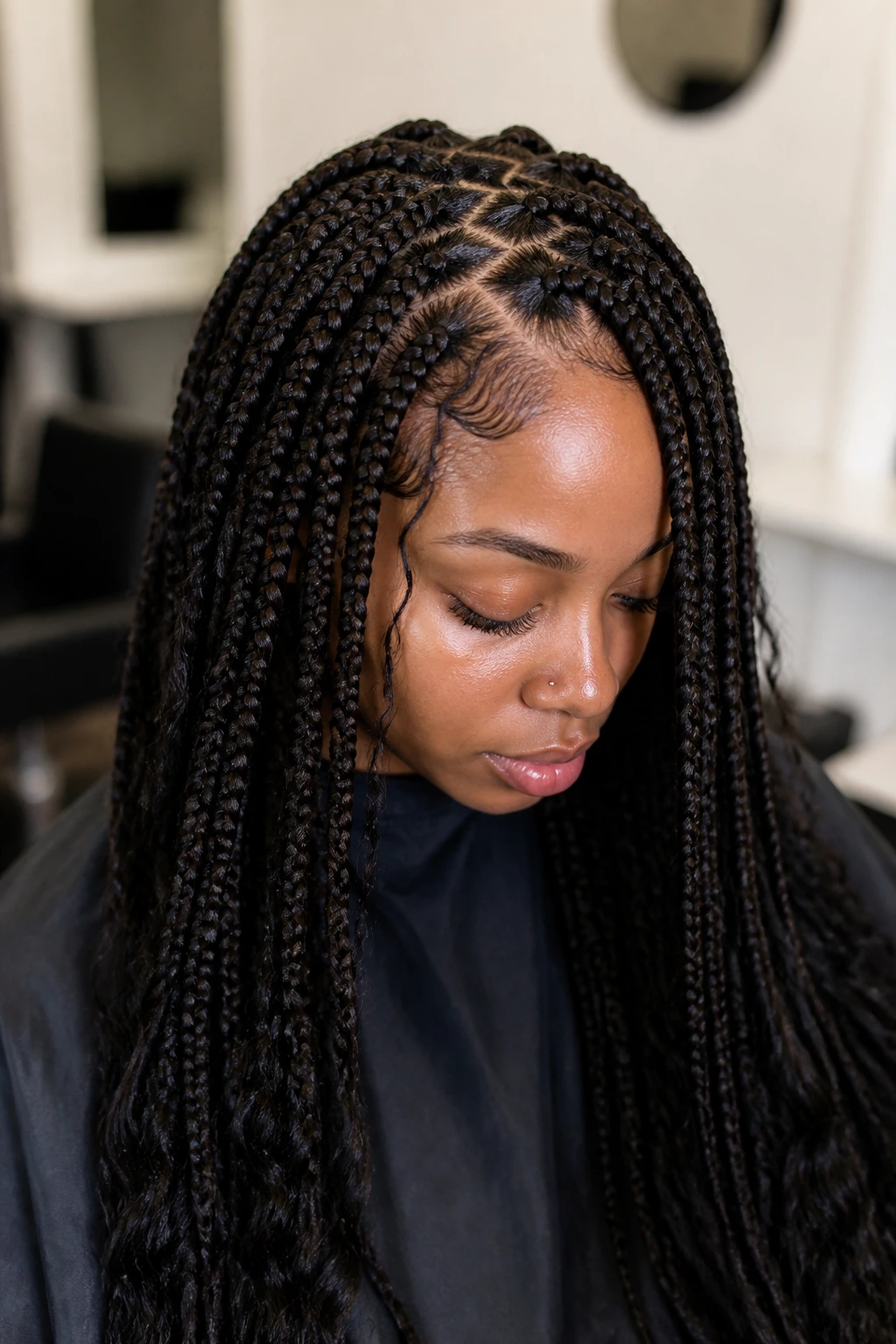
A zigzag part is for the person who wants one detail that everyone notices, even if the braid size stays simple.
-
It hides grow-out better than a straight center part.
-
It keeps the scalp pattern lively without adding beads or color.
-
It suits medium-density waves that look best with a little structure.
Clean lines matter here. If the zigzags are fuzzy, the whole style loses its edge.
20. Curved-Part Box Braids
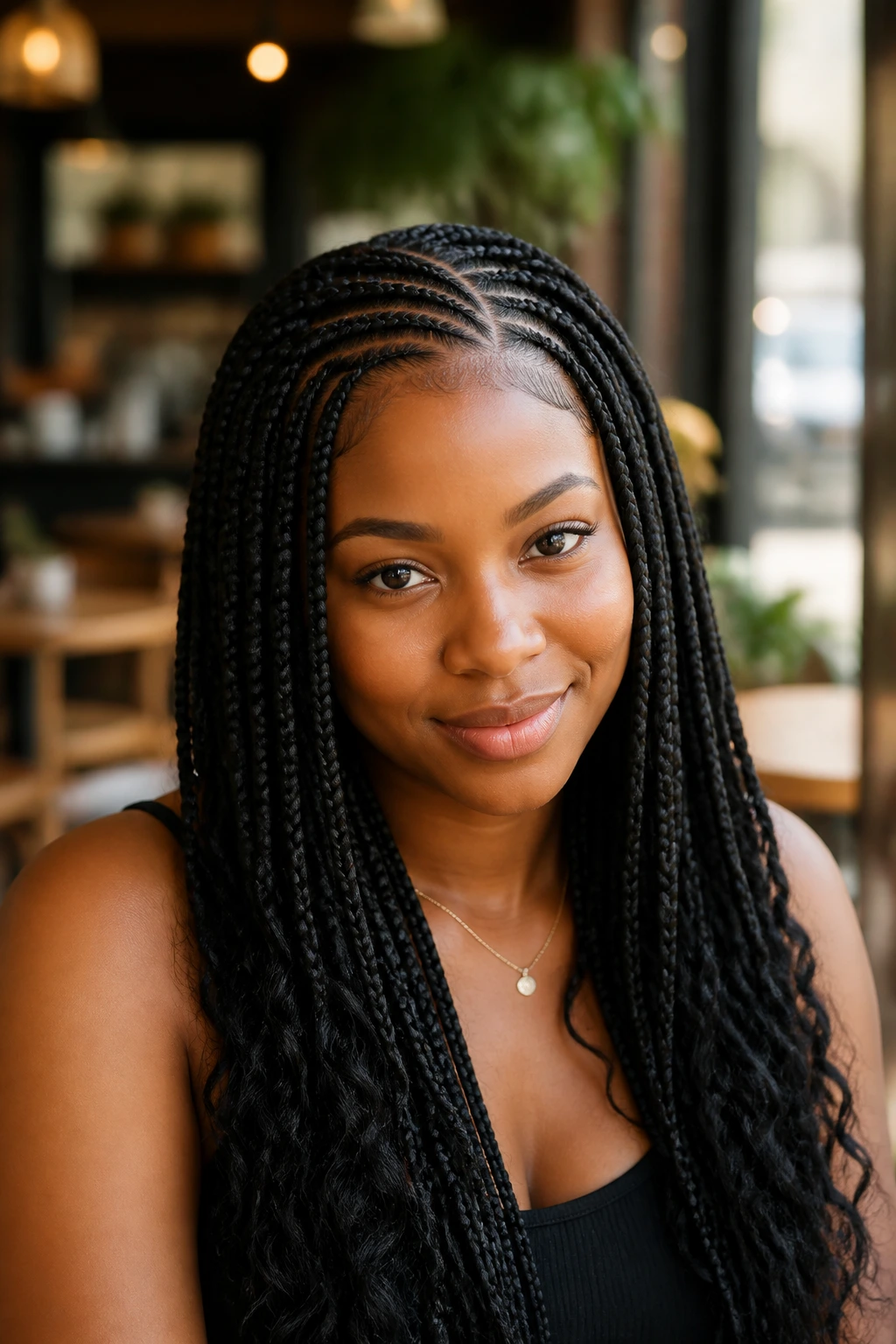
Curved parts make box braids look custom, not copied. The soft arc near the part line is kinder to wavy hair than a hard geometric grid, especially if your natural part never sits perfectly straight.
The shape also moves well around the face, which keeps long braids from feeling too blocky. It is a small change with a noticeable effect.
21. Halo Braids with Back Length
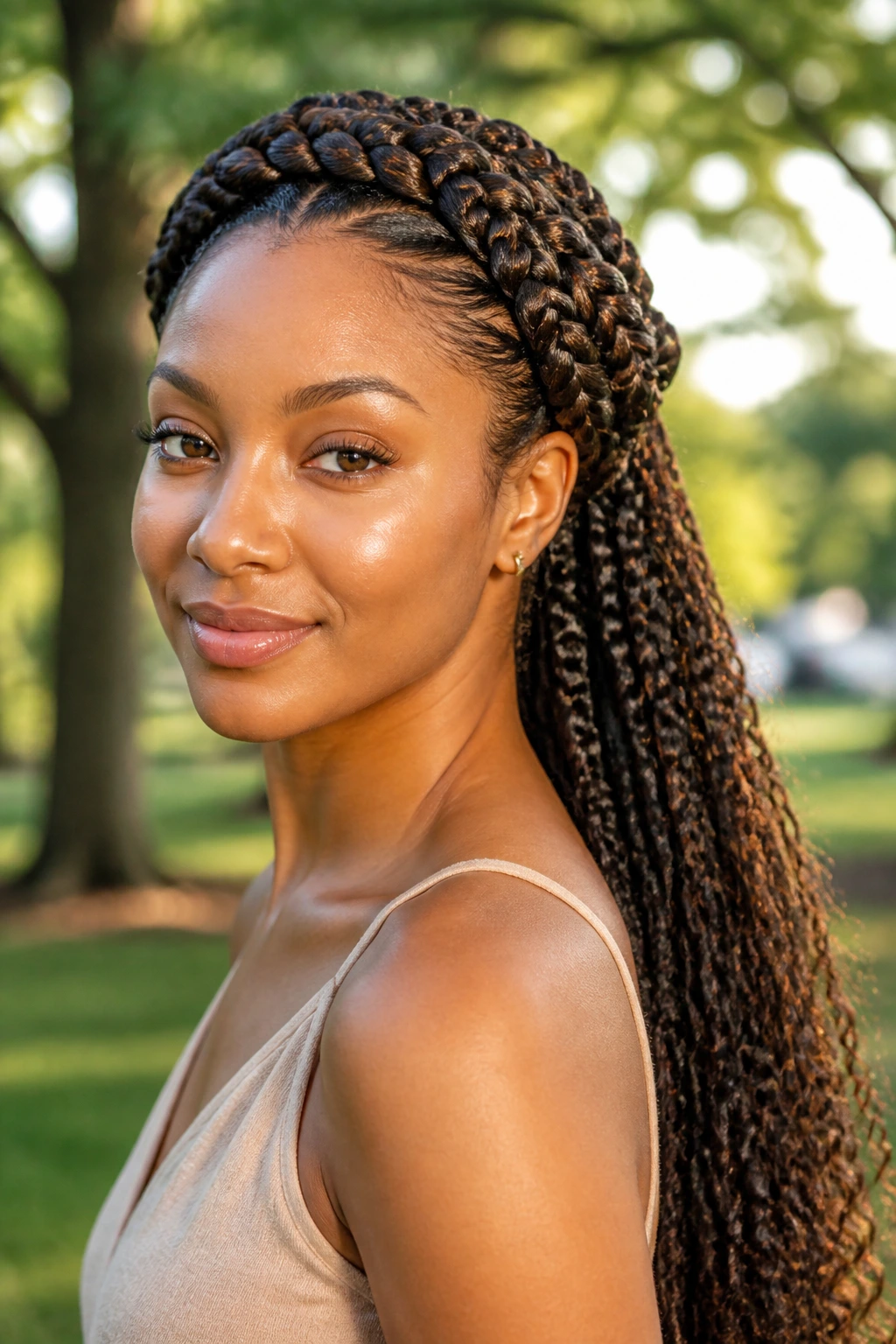
Think of this as a crown braid’s more relaxed cousin. The halo frames the head and keeps the front controlled, while the back length gives the style room to swing.
On wavy hair, that front control matters. It stops the hairline from frizzing first, which is usually where long styles start looking tired. The shape buys you clean edges without locking everything down.
22. Waterfall-Inspired Braids with Loose Wave Sections
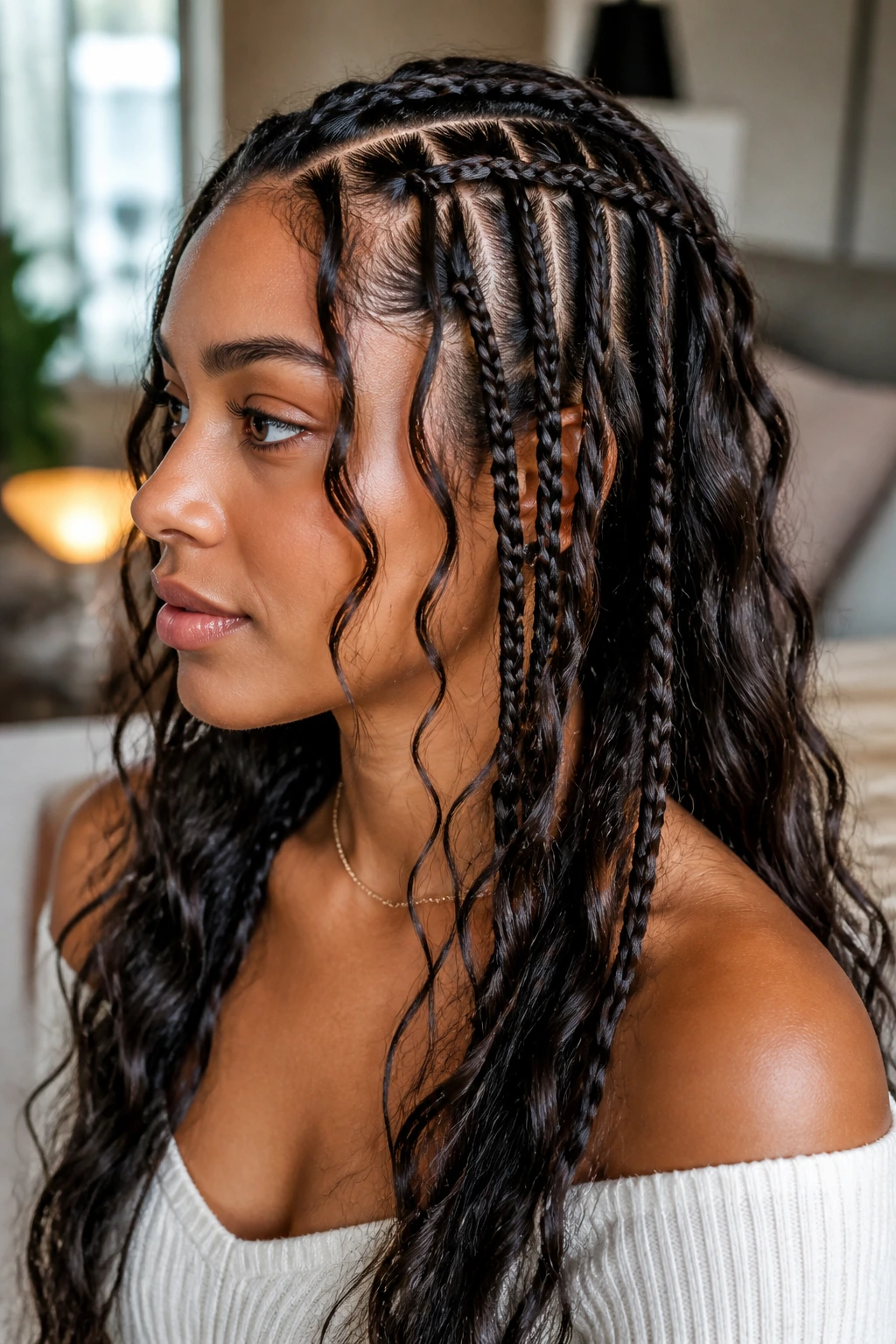
Can a protective style still show off wave pattern? Yes, if you leave the right pieces out.
Waterfall-inspired braids use dropped sections or loose strands to keep the movement visible. They suit people who actually like the bend in their hair and only want the braid to organize it, not hide it.
23. Small-Medium Knotless Braids with Curled Ends
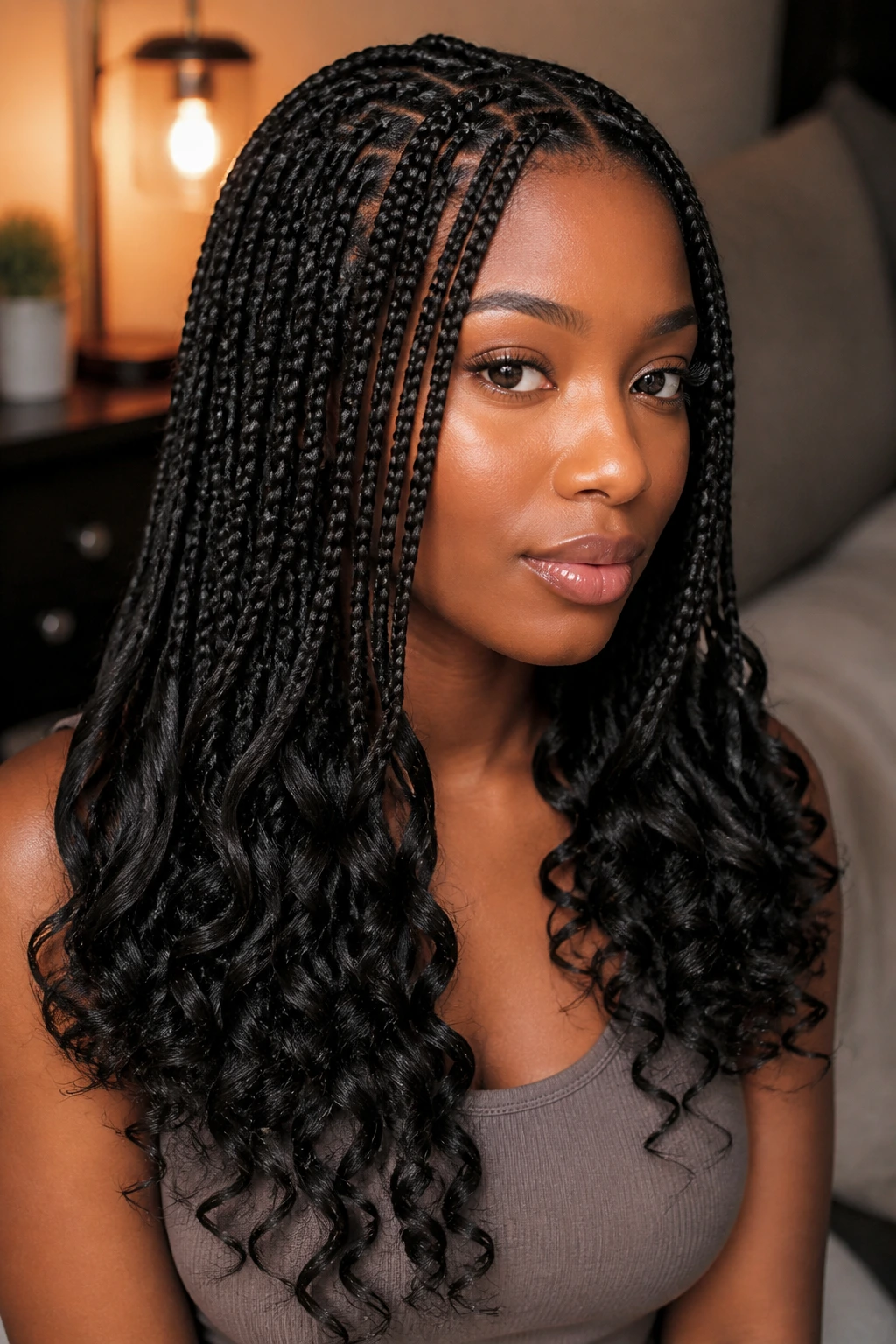
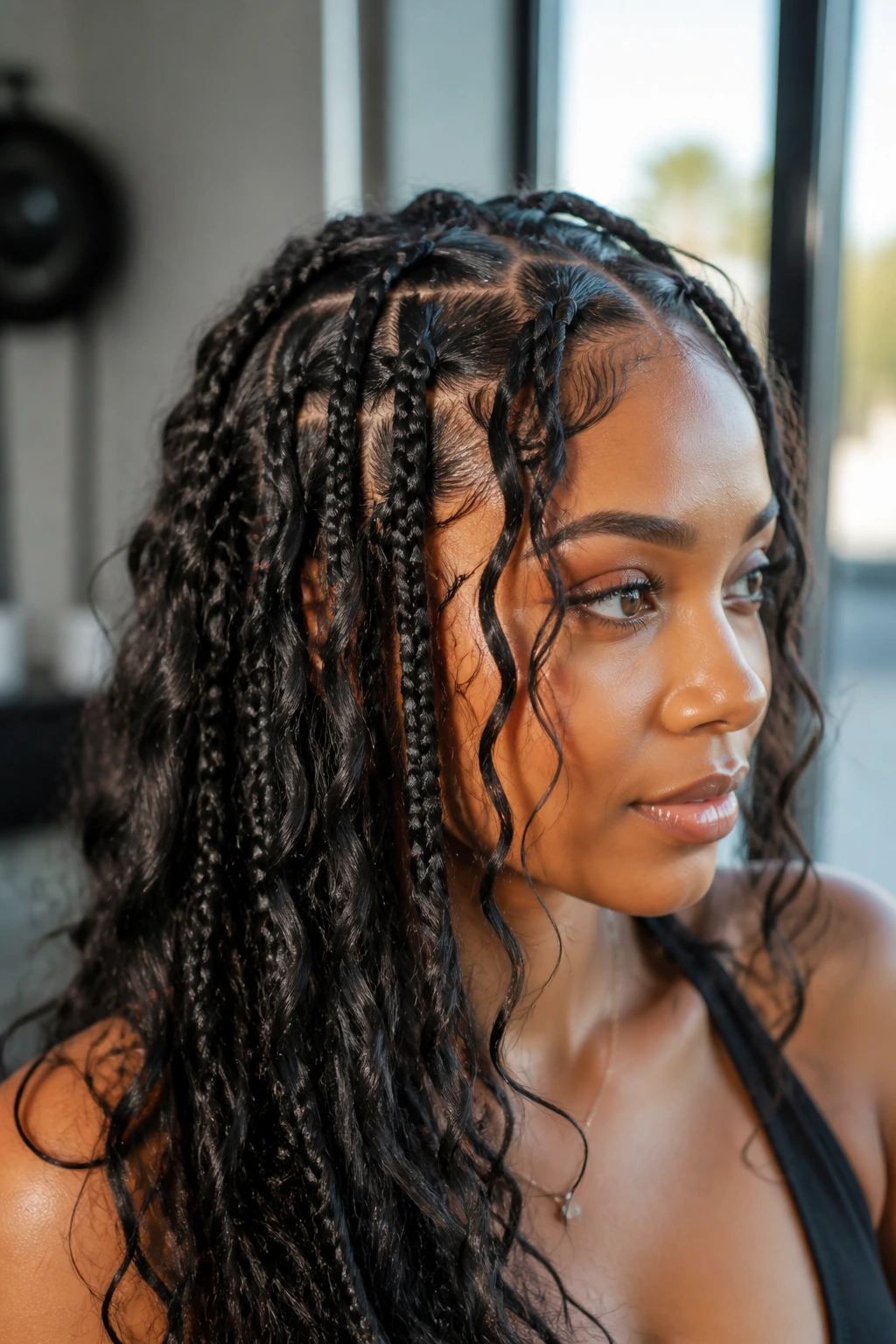
Small-medium knotless braids are more wearable than micro braids and less bulky than jumbo sets. The curled ends add swing without making the braids heavy at the root.
For wavy hair, the clean knotless base and the looser finish make the style feel balanced, not overbuilt. It is a nice choice if you want polish but not stiffness.
24. Long French Braids with Tucked Ends
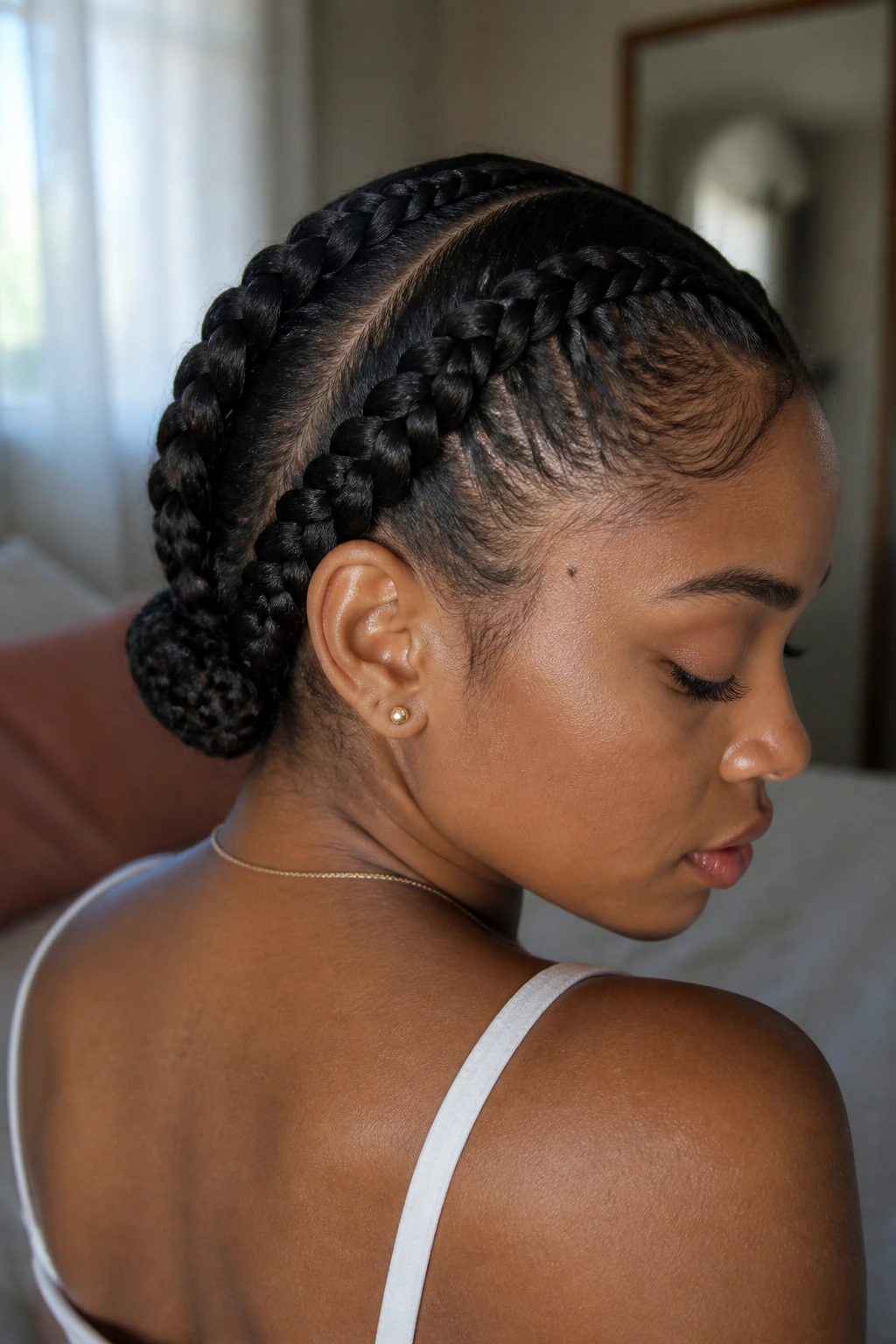
A French braid with tucked ends keeps the whole head gathered in one line, which is useful when your hair wants to separate at the crown. The braid holds the front down, and the tucked finish keeps the length from brushing your shoulders all day.
Best when you want less upkeep
This is the style I’d pick for someone who wants to stay neat for several days with minimal fuss. It is not the flashiest braid on the list, but it wears well and gives wavy hair a clean, calm shape.
25. Feed-In Braids with Beaded Ends
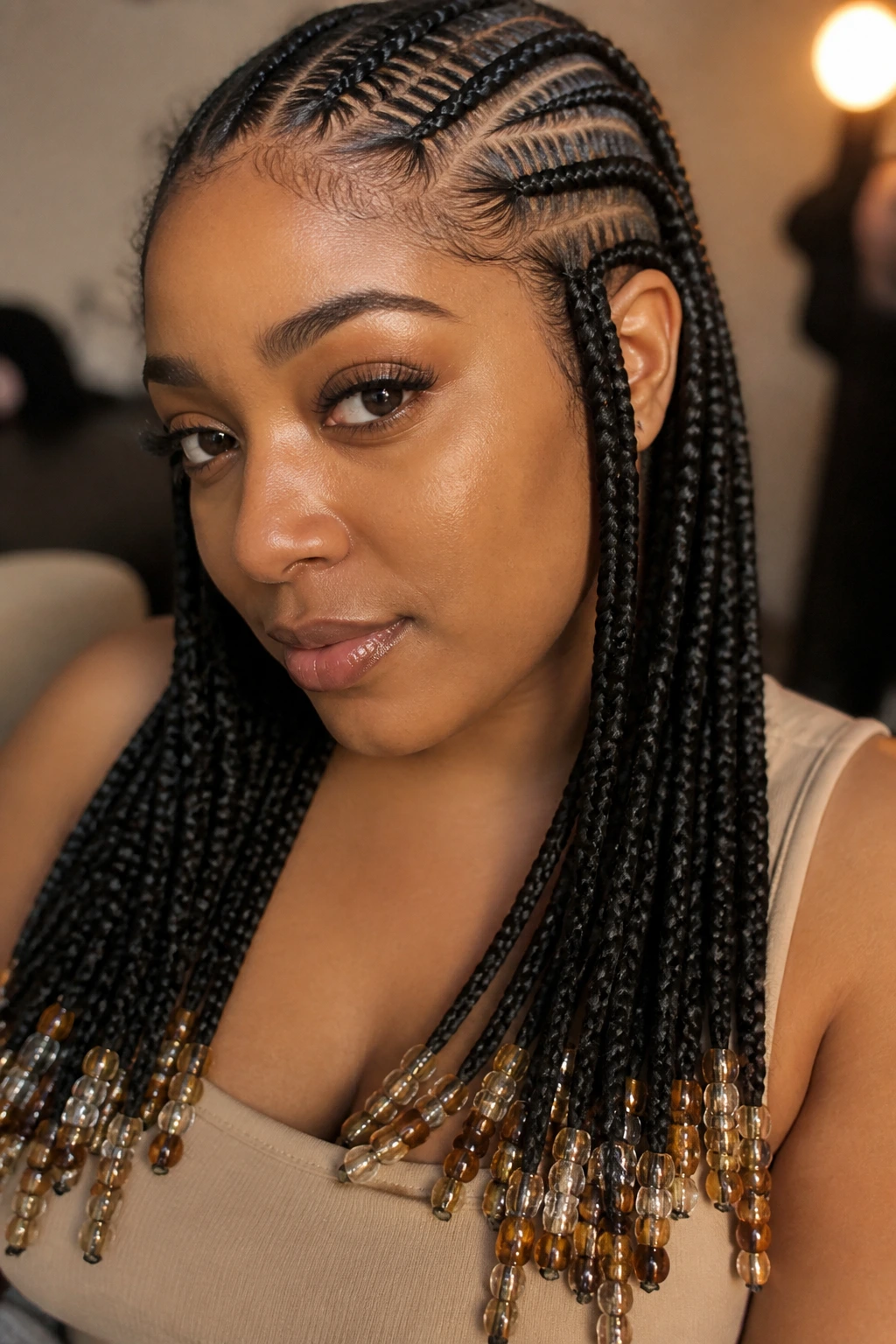
Beads at the ends change the whole mood of feed-in braids. They give the braid weight at the bottom, which helps long wavy-hair styles hang cleanly instead of flipping out.
Keep the beads light and spaced out, though. Too much hardware and the braid loses its swing, which is a shame when the base is so smooth.
26. Braided Space Buns with Long Back Length
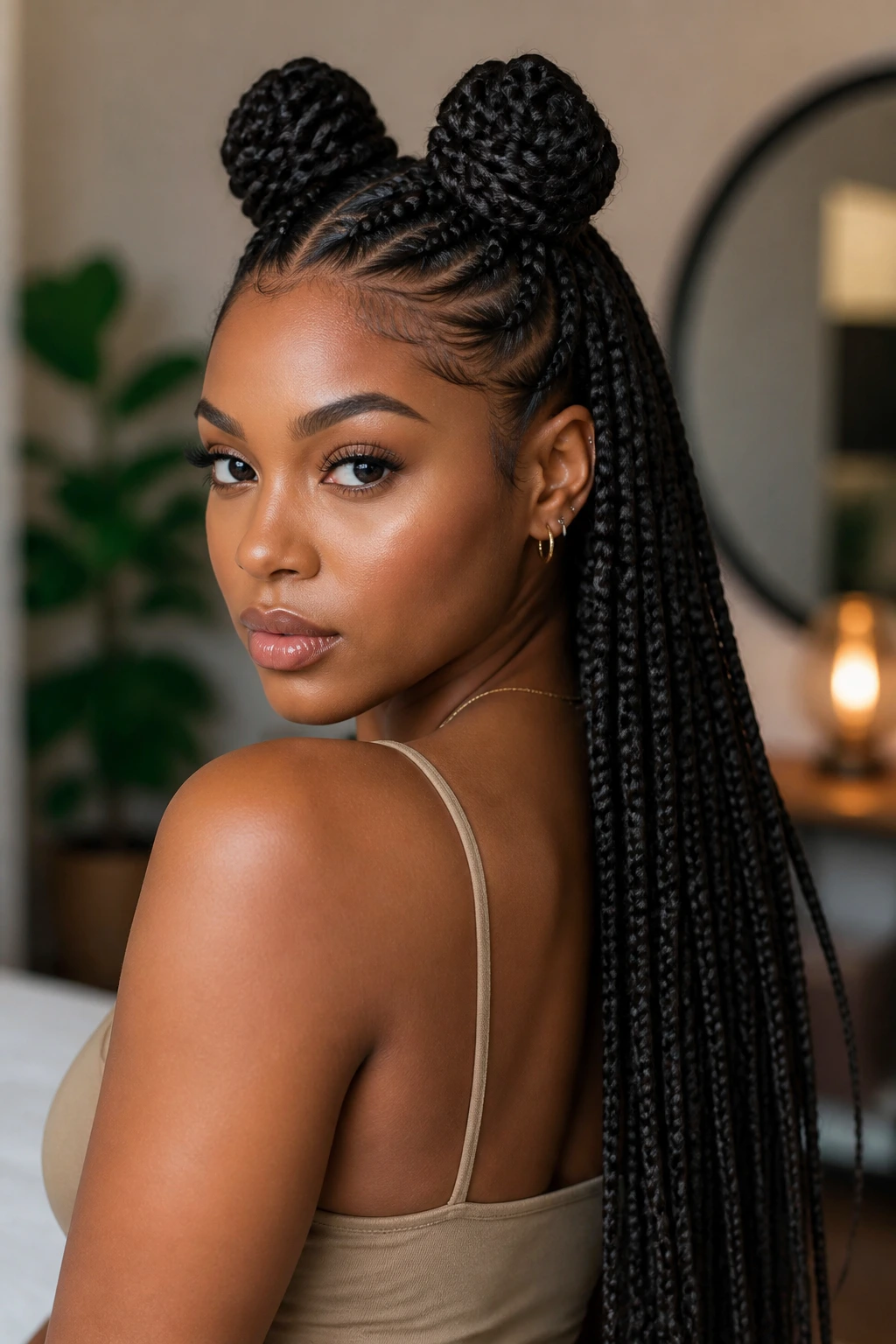
Space buns are not just a cute detour. With long braided length left down the back, they keep hair off the face while still giving you something to show when you turn around.
On wavy hair, this is a good way to split the load. The buns control the top, and the back length keeps the style from feeling too playful for everyday wear.
27. Long Ghana Braids
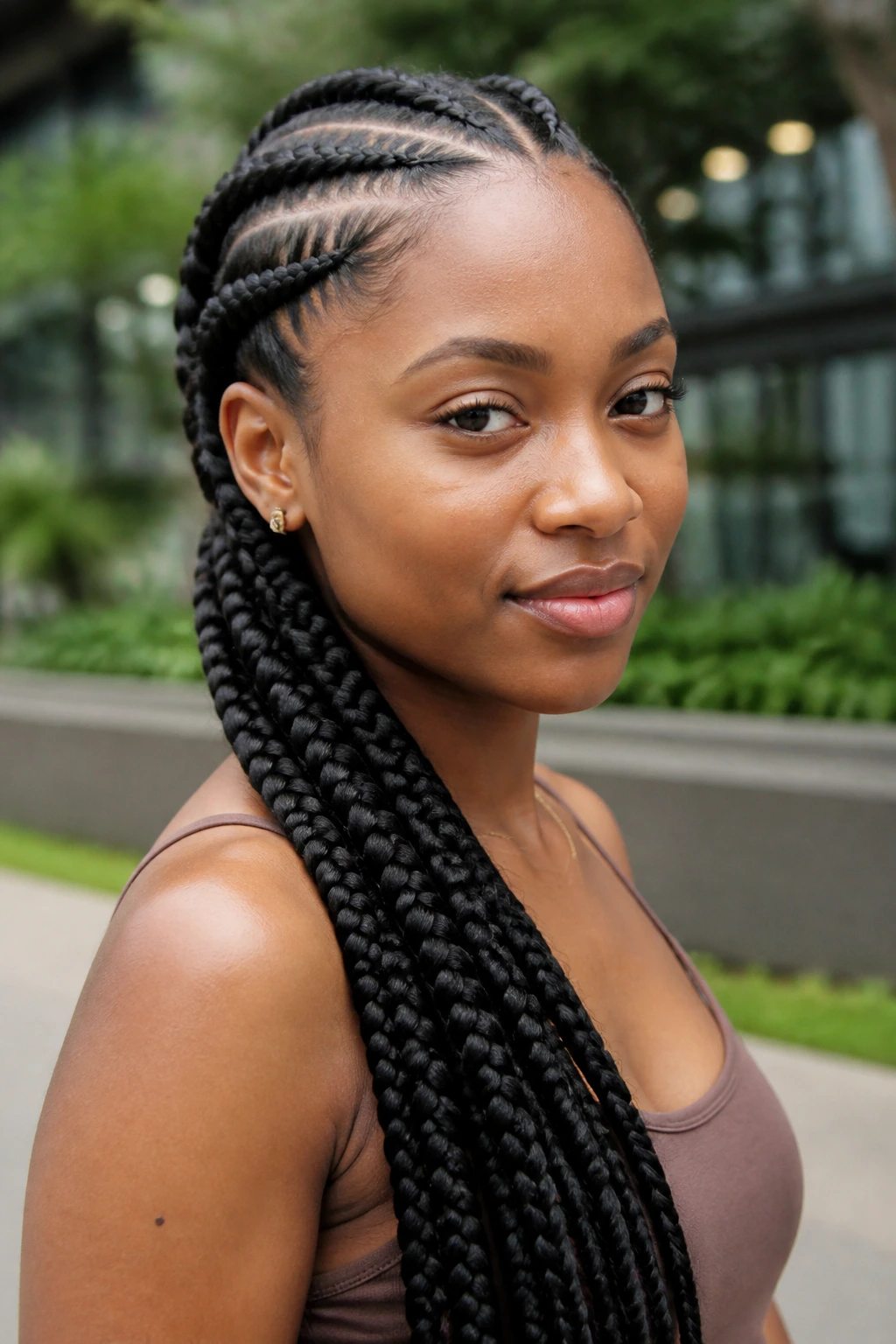
Ghana braids are thicker, sleeker, and a little more dramatic than standard feed-ins. That extra thickness can be a gift for wavy hair if you want fewer sections and less time in the chair.
The base looks bold, the lines stay clean, and the style sits well on medium-to-thick textures that need a strong anchor. If your hair likes structure, this is a strong match.
28. Asymmetrical Side-Sweep Braids
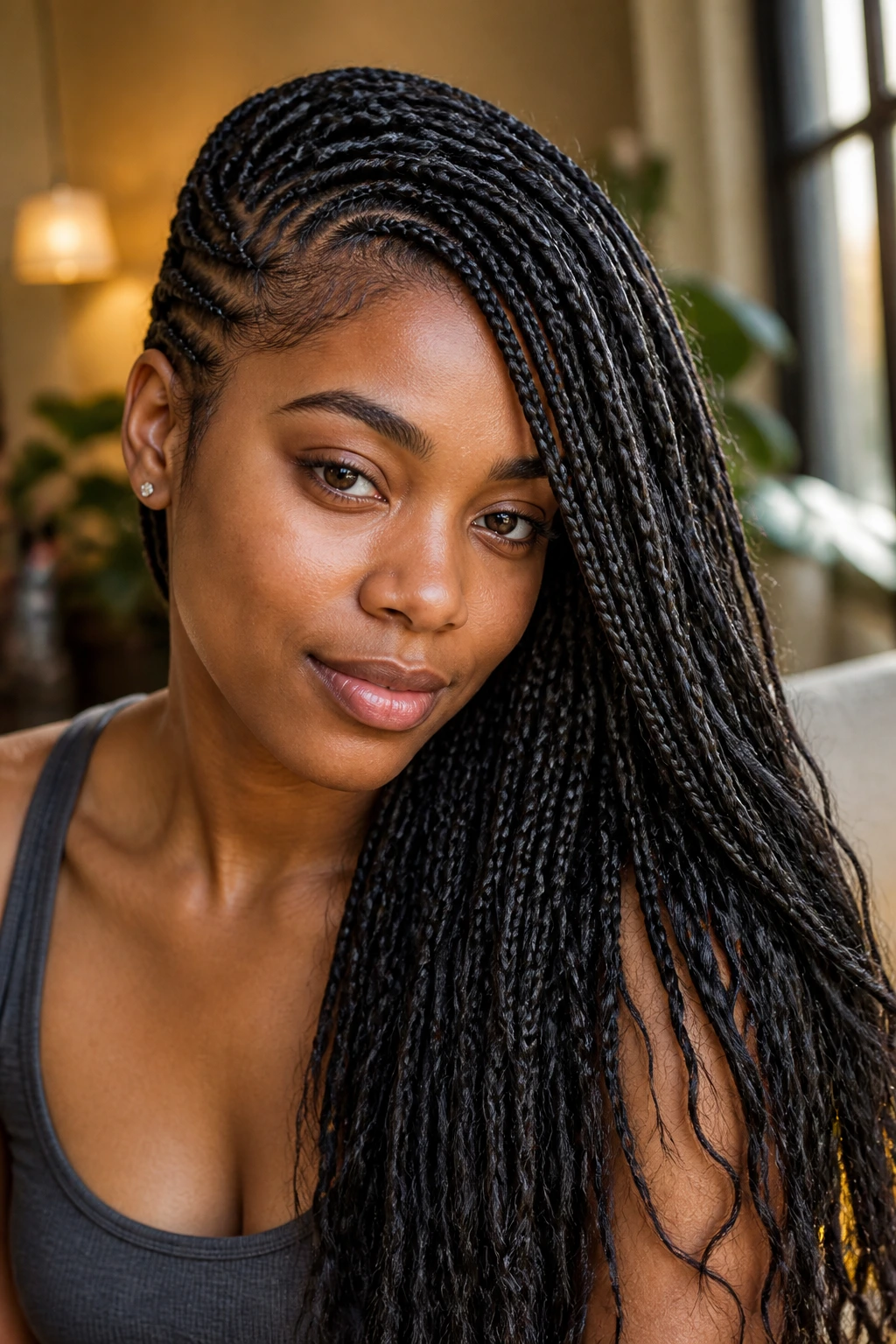
Want long braids without the center-part routine? Go asymmetric.
A deep side sweep softens the face and makes the whole style feel looser, even if the braid pattern itself is neat. Wavy hair usually looks good with that imbalance because the natural bend already has a bit of drift in it.
29. Double Dutch Braids into One Long Back Plait
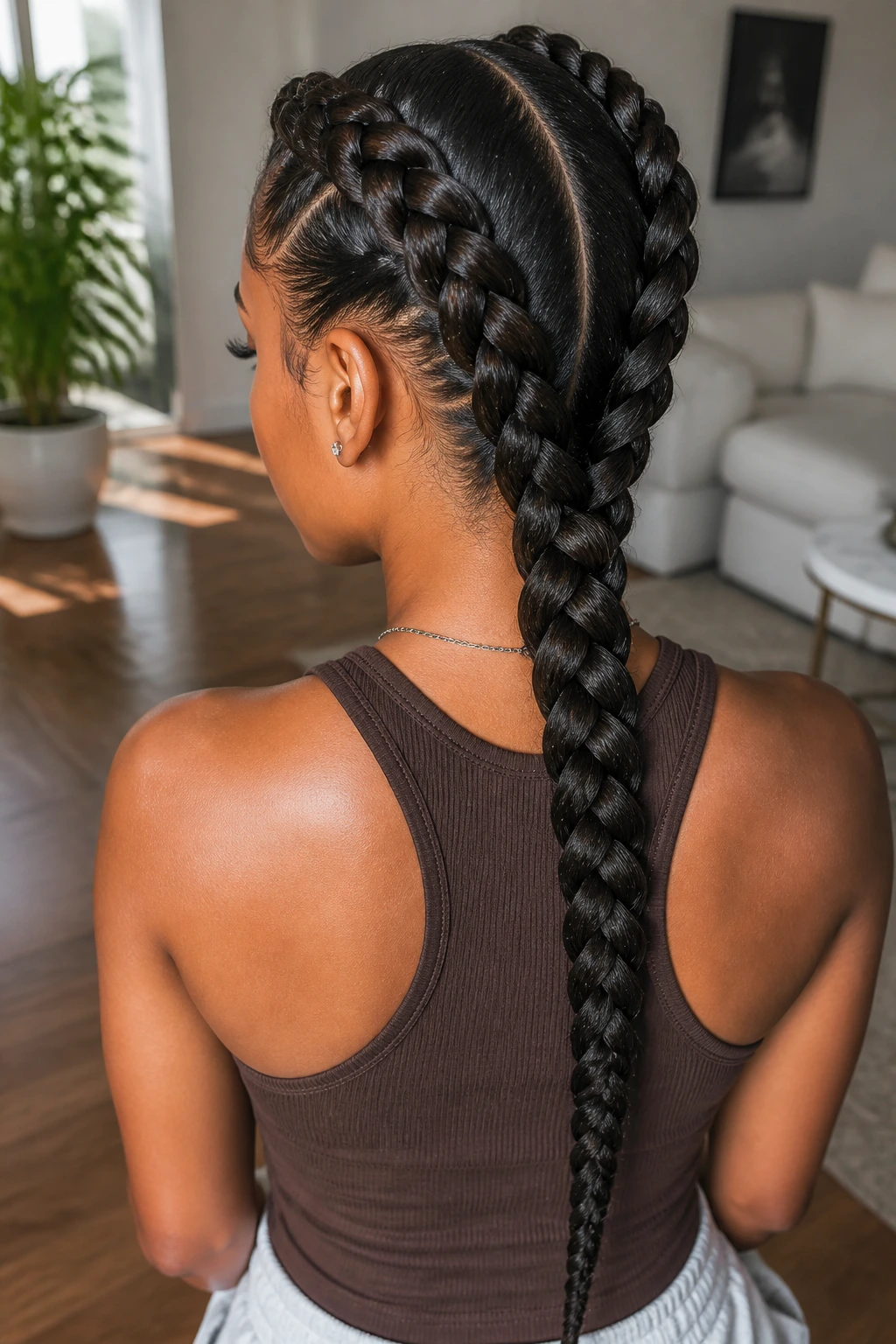
This style starts sporty and ends polished. Two Dutch braids feed into a single long plait at the back, which gives the crown a secure hold and the length a cleaner finish.
It is a smart pick when you want the top section locked down but still want visible braid length. The transition from two into one also helps the style stay flatter at the sides.
30. Braided Mohawk with Cornrow Sides
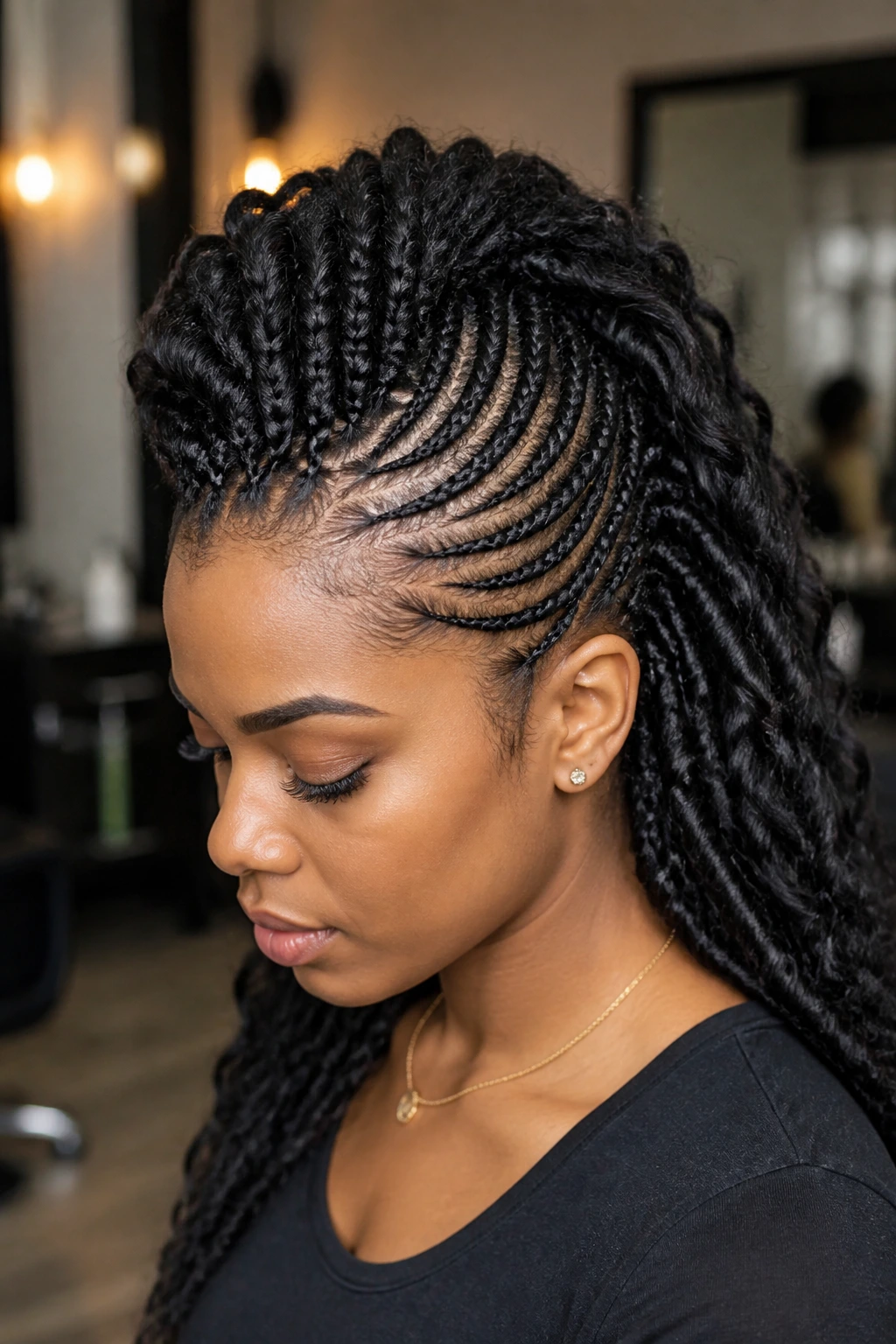
If you like a strong silhouette, the braided mohawk is the loudest shape here. Cornrowed sides keep the perimeter tight, and the central braid ridge carries the length.
On wavy hair, that contrast is useful because it controls the edges while letting the center feel fuller and more dramatic. It is not subtle, and that is exactly why it works.
31. Side-Back Feed-Ins with Open Length
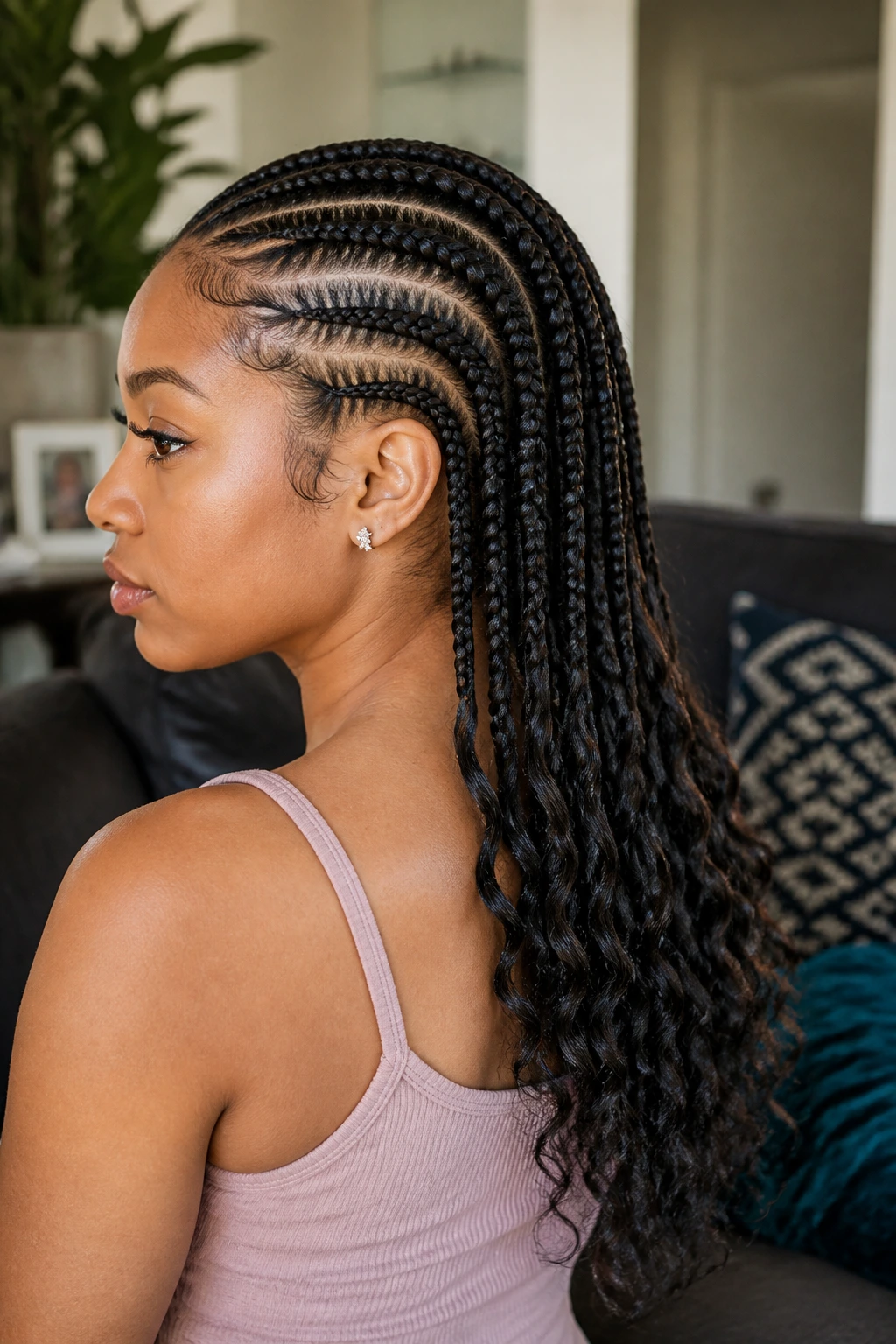
Side-back feed-ins are one of those styles that look complicated and wear easier than they seem. The braid direction angles the hair away from the face, then lets the length hang free so the back can move.
This shape flatters wavy hair that gets fluffy around one temple more than the other. The asymmetry hides that difference instead of drawing attention to it.
32. Minimal Center-Part Long Braids
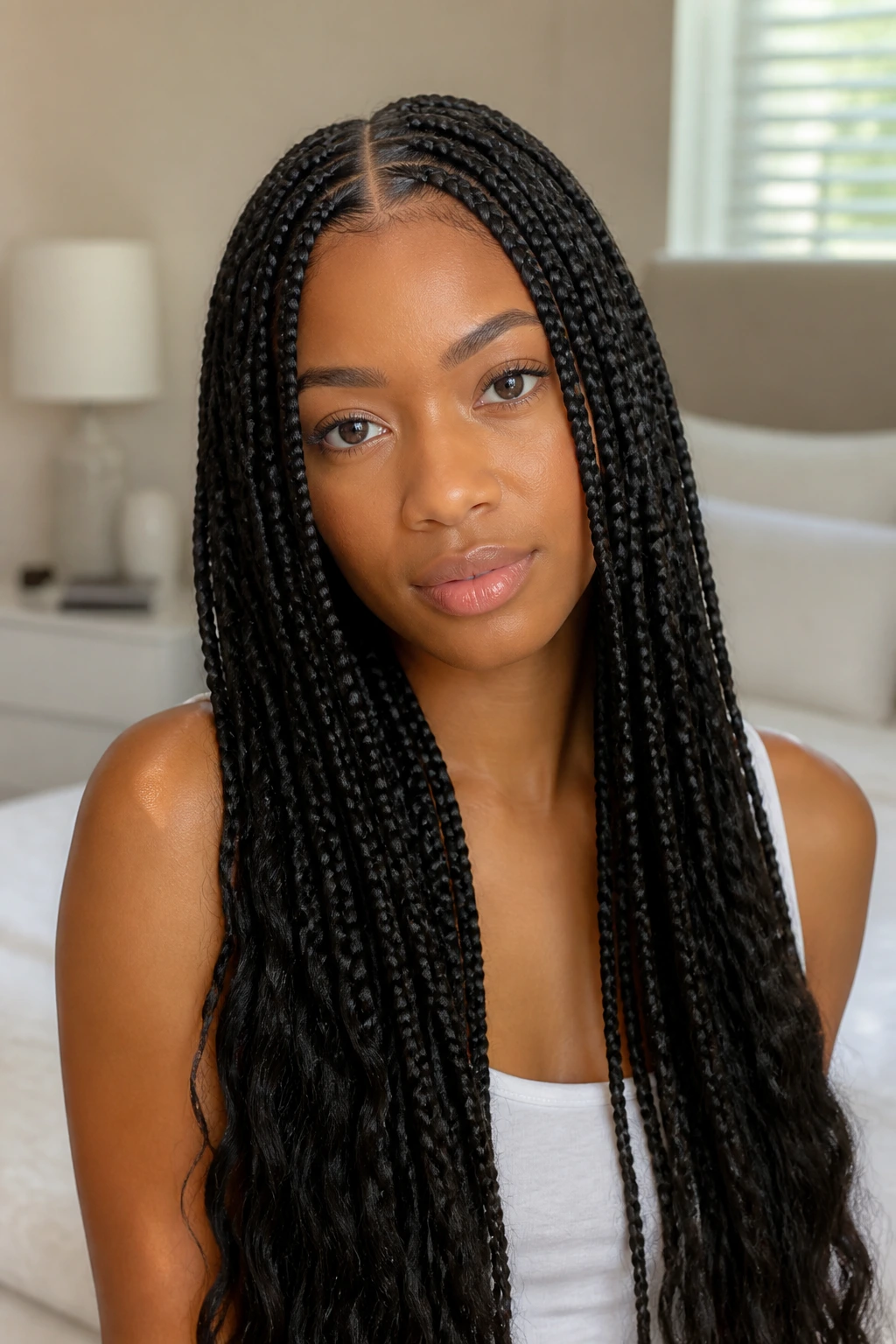
Minimal center-part braids are for people who want the braid itself to do the talking.
No extra curves, no beads, no dramatic swoop. Just a clean middle part and long length. On wavy hair, the simplicity is the point, because the natural movement in the strands keeps the style from looking flat.
33. Long Braids with Thread-Wrapped Accents
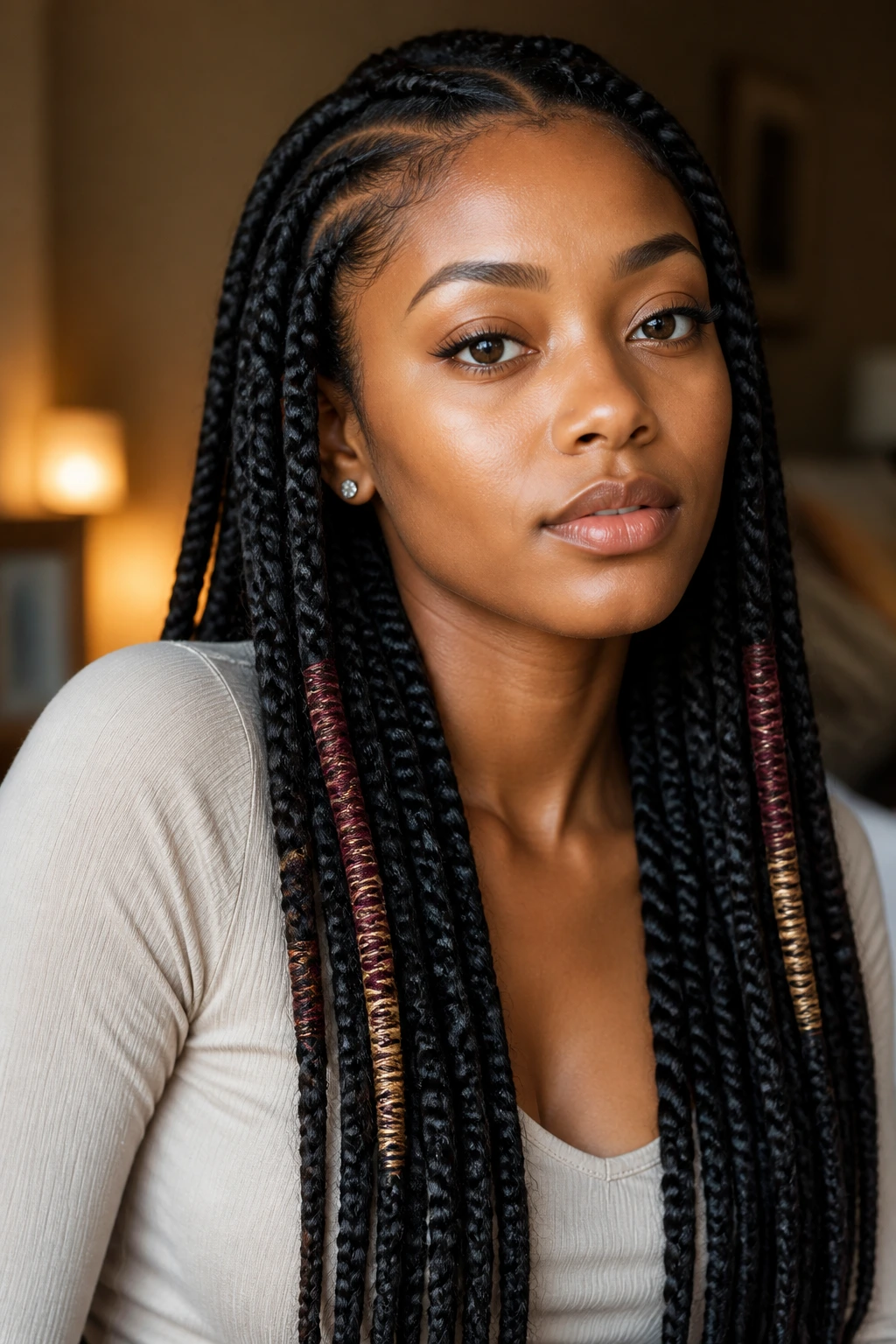
Need a small detail that changes the whole set? Wrap a few sections with thread.
Thread accents work because they break up the braid length without adding real weight. Use cotton or smooth cord in narrow bands, not thick bundles, or the braid starts to snag when you sleep.
Thread placement matters
A few wraps near the lower third of the braid usually look better than crowding the roots. Keep the scalp light and let the color do its work lower down.
34. Soft Halo Braids with Nape Length
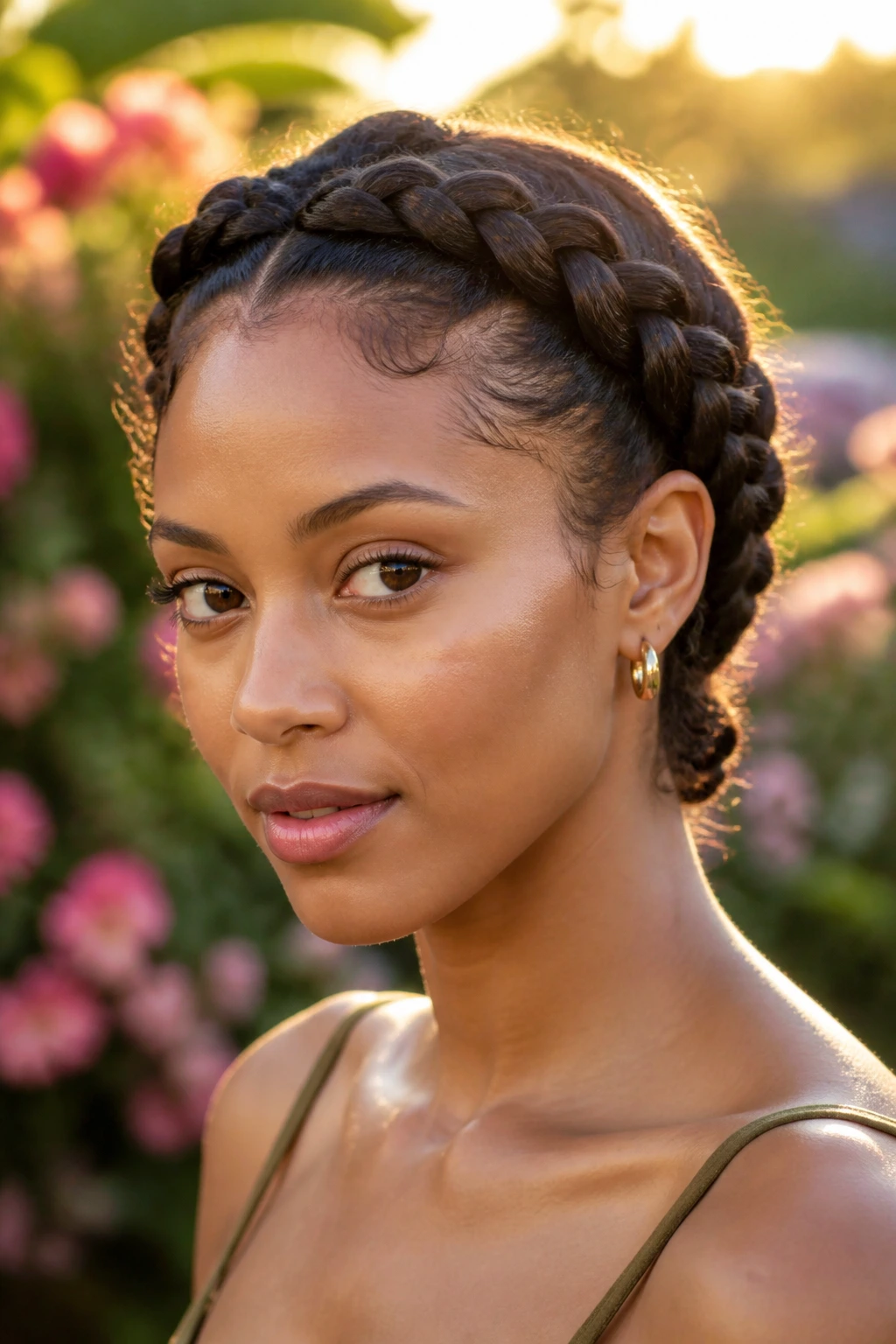
A soft halo with nape length tucks the front into place and leaves just enough length at the back to feel relaxed. The shorter tail at the nape keeps the style from dragging on the collar.
That matters for wavy hair that frizzes first near the neck. Less rubbing means cleaner wear, and the halo keeps the crown from puffing up before the rest of the style.
35. Long Braids with Face-Framing Pieces
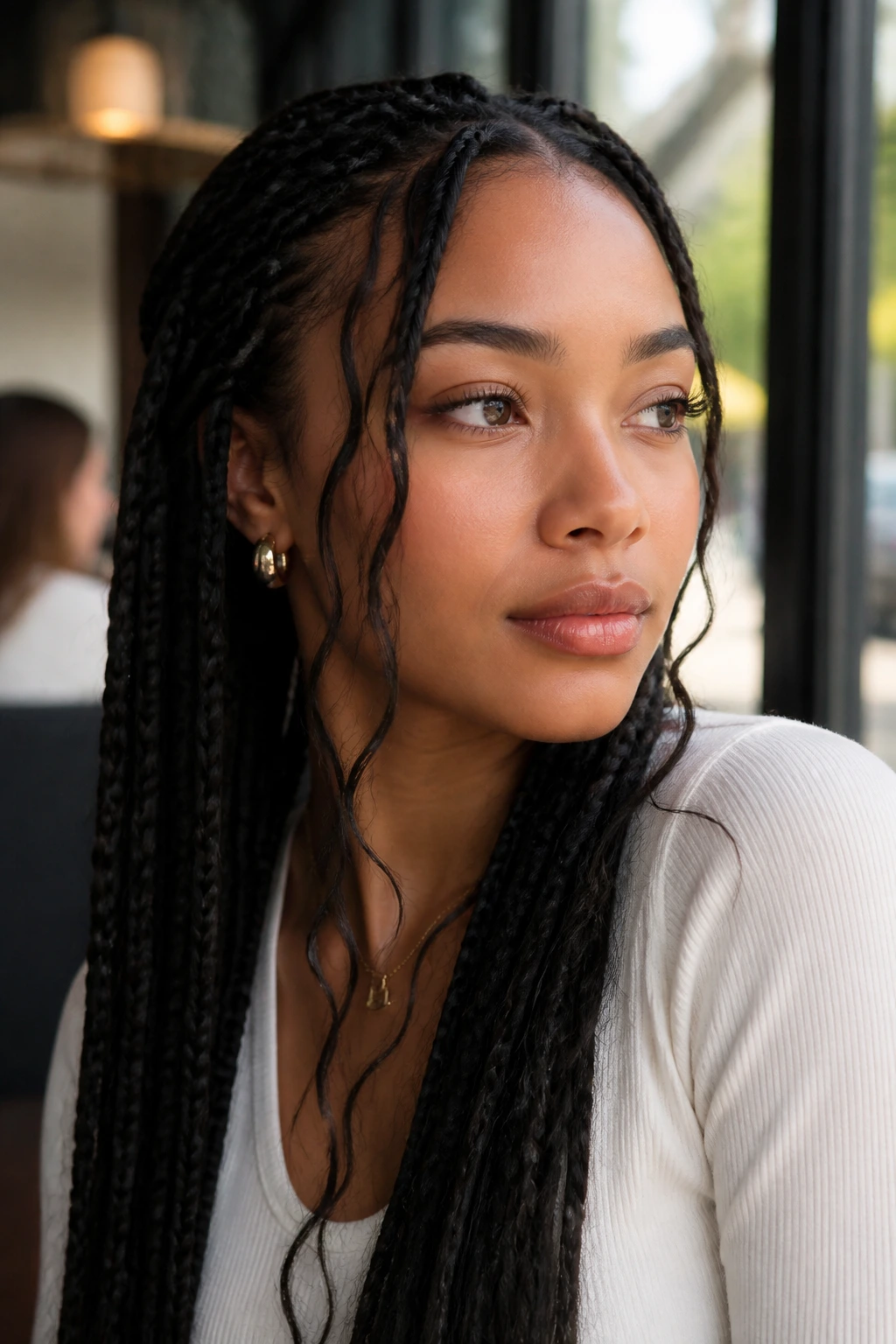
Face-framing pieces are the easiest way to make long braids look softer without changing the whole braid pattern. The loose front pieces give wavy hair a chance to show off its bend, while the long back length keeps the protective part of the style intact.
If your face tends to get swallowed by a lot of braid volume, this is the fix. It lightens the front fast and keeps the braid set from feeling too closed off.
Why Long Braids Hold Their Shape on Wavy Hair
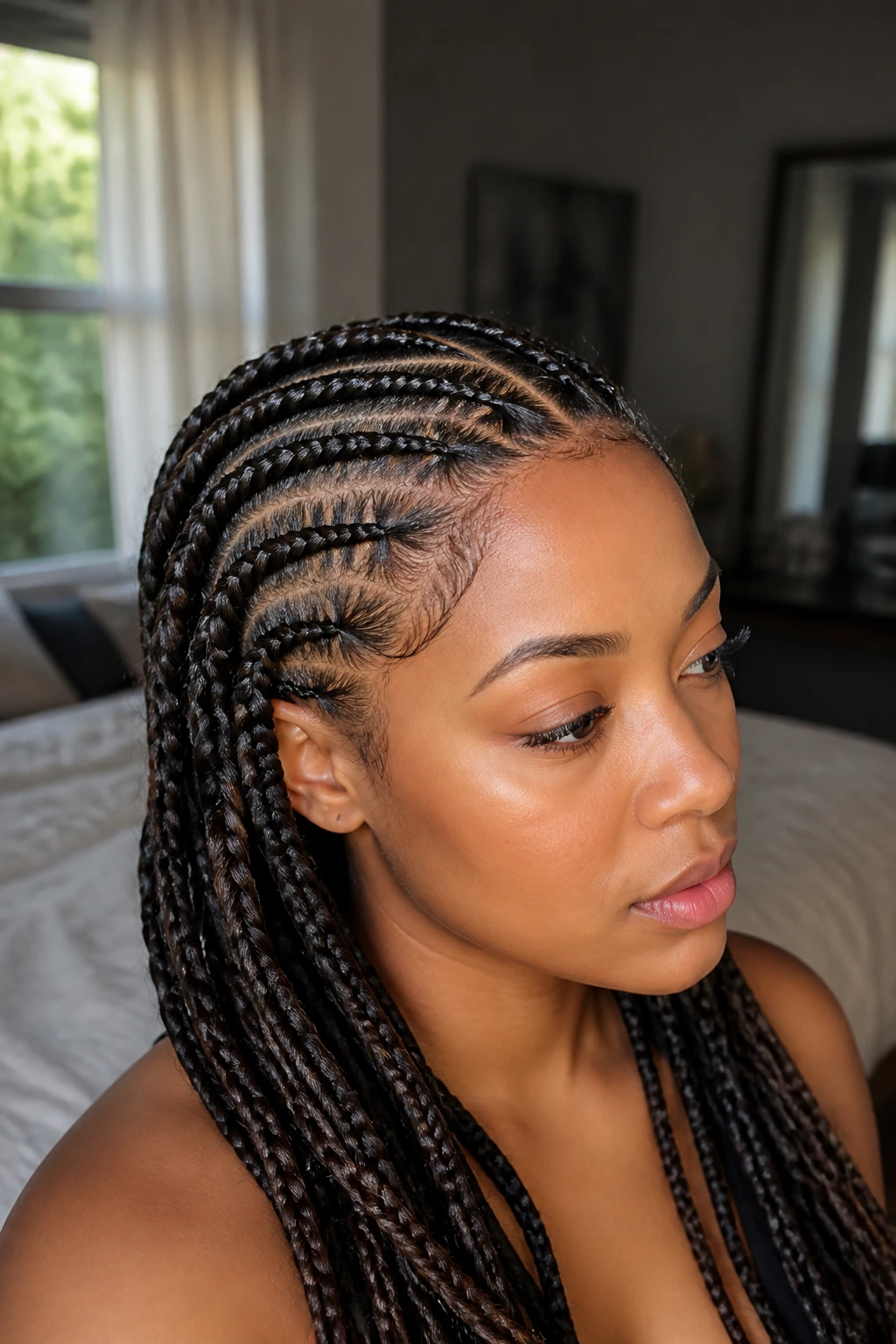
Wavy hair has a built-in bend, and that bend can help a braid settle faster than people expect. The catch is grip. If the base is too slick or the parts are too loose, the style starts to slip before the braid has a chance to settle into its own shape.
That is why knotless starts, feed-in methods, and clean parting matter so much here. They give the braid a flatter foundation and reduce the bulge at the root, which is where wavy hair usually argues back.
Grip beats glue
You do not need a mountain of product. A little mousse, a neat section, and firm but sensible tension usually do more than sticky wax piled on top of itself. Too much product leaves buildup, and buildup makes long braids feel dirty before they are actually dirty.
Weight and part size
The braid should match the hair density. Fine waves do better with fewer, lighter pieces; thicker waves can carry more volume without collapsing. If a style feels heavy on day one, it will feel worse by day four.
The ends matter too
Loose ends, beaded tails, or a tucked finish change the whole wear pattern. Ends that swing constantly can frizz faster at the shoulder line, while tucked ends reduce rubbing and help the style last longer.
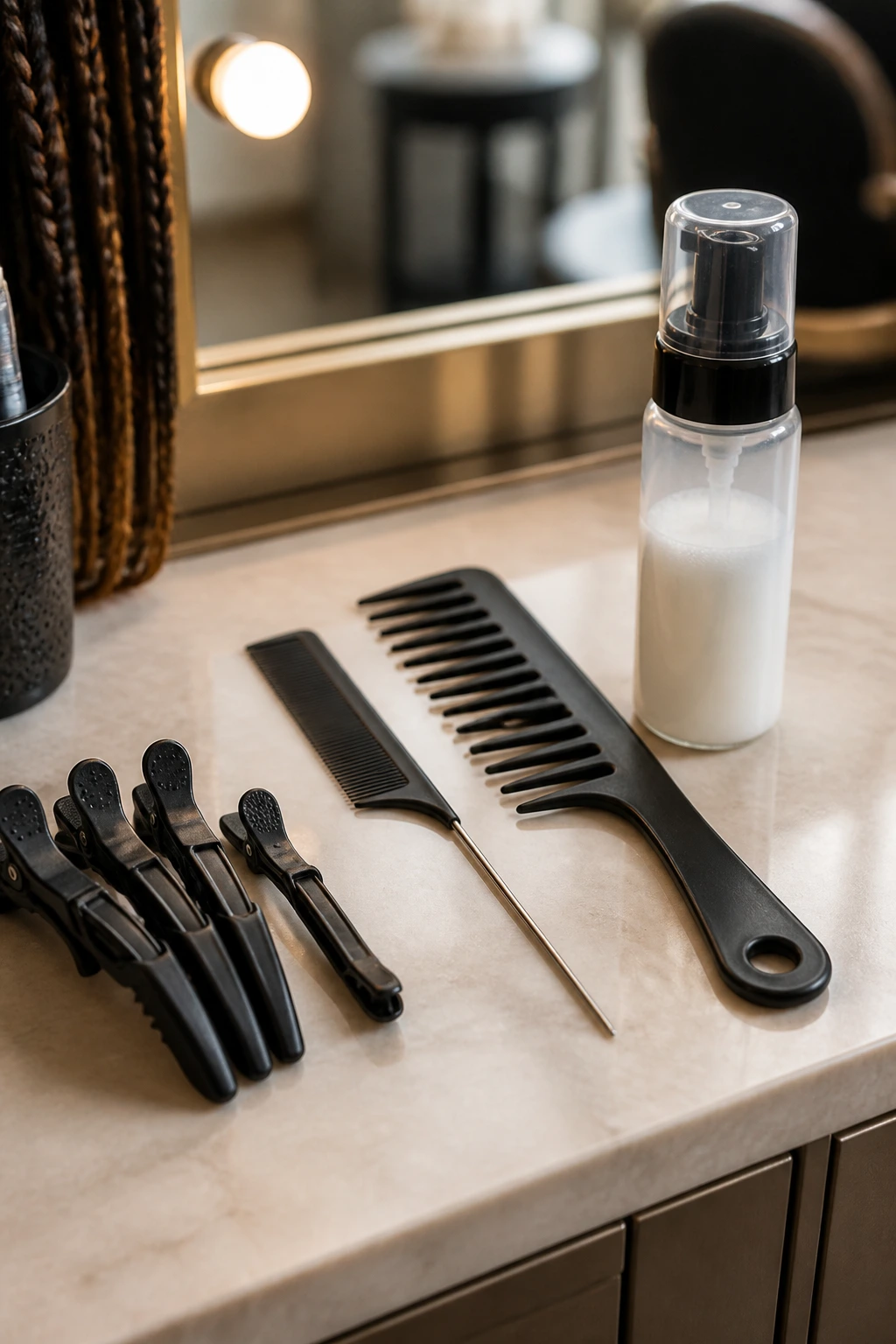
Essential Tools for Long Braids on Wavy Hair
-
Rat-tail comb: Clean parts and tight section lines start here, especially for triangle or zigzag grids.
-
Sectioning clips: Keep loose waves from falling back into the wrong section while you work.
-
Wide-tooth comb: Detangles without ripping the bend out of the hair before braiding.
-
Light-hold mousse: Smooths flyaways without turning the roots hard or sticky.
-
Braiding hair or extension hair: Choose the texture and weight that match the style you want; softer pre-stretched hair usually sits better on wavy hair.
-
Scalp applicator bottle: Gets oil or cleanser into the part without flooding the whole head.
-
Satin bonnet or scarf: Keeps friction down at night and protects the part lines.
-
Snag-free elastics: Useful for ponytails, buns, and temporary section control.
-
Edge brush: Handy for a light pass at the hairline, but don’t scrub the edges raw.
-
Hair clips or duckbill pins: Good for holding crown sections, side sweeps, or braids that need to stay out of the way while setting.
Smart Prep and Product Picks for Wavy Hair

The best braid set starts before the first part is drawn. If your hair is damp under the braid, it can smell stale, itch, and swell in a way that makes the install rougher than it needs to be. Dry hair settles better. Every time.
What to choose
Pick a cleansing routine that leaves the scalp clean but not stripped. A light conditioner or leave-in on the mid-lengths is enough for most wavy hair; heavy creams and thick butters usually make the roots too slick. If you plan to use extension hair, pre-stretched hair or a softer texture tends to blend more cleanly than stiff, ultra-shiny strands.
What to skip
Skip thick edge gel all over the head. It looks neat for about ten minutes, then flakes, crusts, and leaves the roots feeling tacky. A small amount at the perimeter is fine if the style needs it. Beyond that, mousse and a clean part do the real work.
How to match the texture
If your natural wave is loose and soft, braid hair with a mild sheen usually blends better than hair that looks plastic-shiny. If your wave is denser or rougher in texture, a slightly textured extension can make the transition less obvious. The goal is not perfection. It is a braid set that hangs naturally instead of screaming “added hair.”
How to Keep Long Braids Comfortable Day to Day
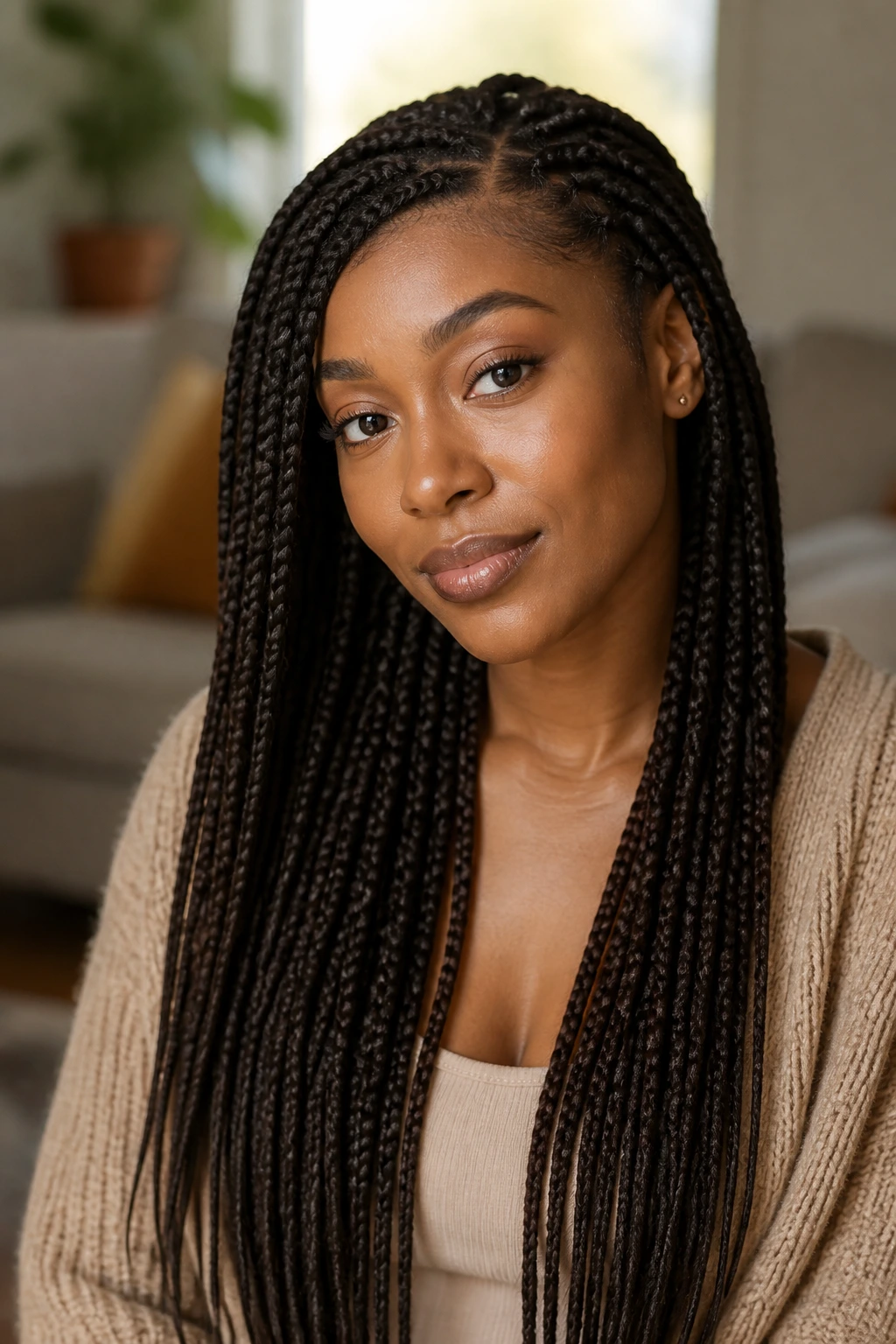
A braid can be pretty and still be a bad idea if it pulls every time you turn your head. Comfort is not extra credit. It is the whole point.
Weight balance: If the front feels heavier than the back, the style will wear you down fast. Ask for the bulk to be distributed evenly, or shift some length into a lower ponytail or side sweep so the tension isn’t all at the hairline.
Night setup: Sleep with a satin bonnet or wrap the hair in a silk scarf. A loose braid or low tie underneath helps keep the ends from tangling around your neck. Tight buns at night are not the move.
Scalp feel: If the scalp itches, use a nozzle bottle with a light cleanser or diluted shampoo between the parts. Don’t scratch the braids loose with your nails. That leads to frizz and little breakpoints at the root.
Accessory use: Beads, thread, and clips should decorate the style, not drag it down. If an accessory changes the way your neck feels after an hour, remove it.
Extra Tips for Softer Roots and Cleaner Length
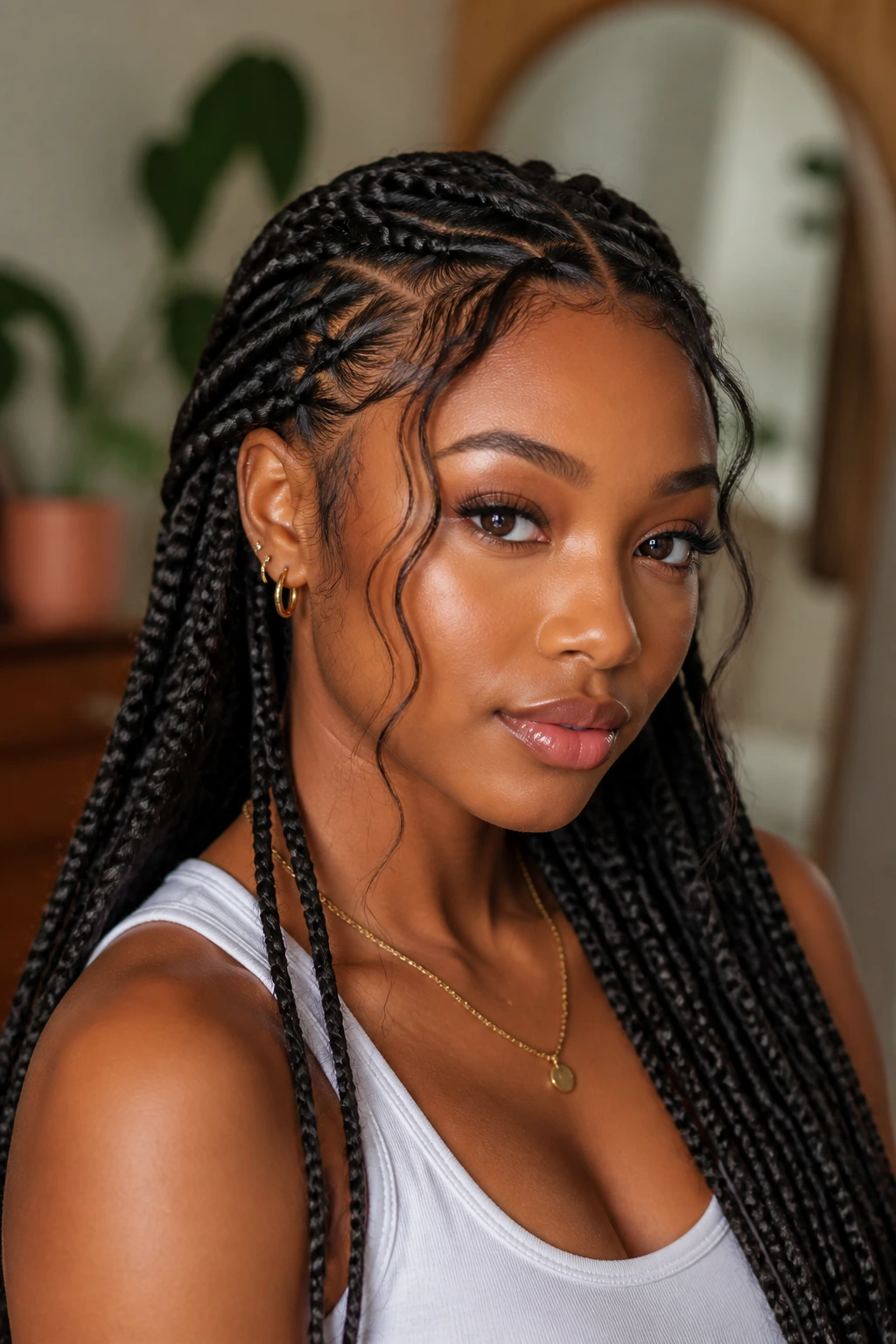
Texture Match: If your waves are loose, ask for a smoother base with softer transitions at the part line. If your waves are thick and coarse, a more structured braid can hold shape better and avoid puffing at the crown.
Color Play: Subtle highlights, dark brown braiding hair, or a few wrapped accent strands can break up a long braid set without turning it into a costume. I prefer small changes here. Big streaks can overwhelm the braid pattern.
Face Framing: A couple of loose pieces near the temples often softens the whole look. That works especially well when the rest of the style is tight or sculpted, like straight-backs or a braided ponytail.
Make-It-Yours: Fine hair tends to look fuller with fewer, larger sections. Denser hair can handle smaller parts and more length. If you force the wrong scale, the style will either feel sparse or feel bulky. Neither is flattering.
Maintenance, Night Care, and Freshening Up
First 48 hours: Let the install settle. Don’t yank the braids into a tight bun the first night unless the style really calls for it. The roots need a little time to relax into place.
Weekly care: Clean the scalp every 7 to 10 days if you wear the braids for several weeks. Use a nozzle bottle or a light diluted shampoo mix, then press the scalp dry with a towel. Don’t flood the braid. Wet roots trapped inside long braids can stay damp longer than you expect.
Freshening the look: A light mousse pass every few days helps the outer layer stay smooth. If the nape starts fuzzing first, smooth only that area instead of redoing the entire head. That saves time and keeps the braid line intact.
How long to keep them: Most long braid installs are best removed or refreshed around 6 to 8 weeks. Fine or fragile hair may want a shorter run. If the base starts matting or the parts blur into each other, stop stretching it out for the sake of it.
Variations and Adaptations to Try
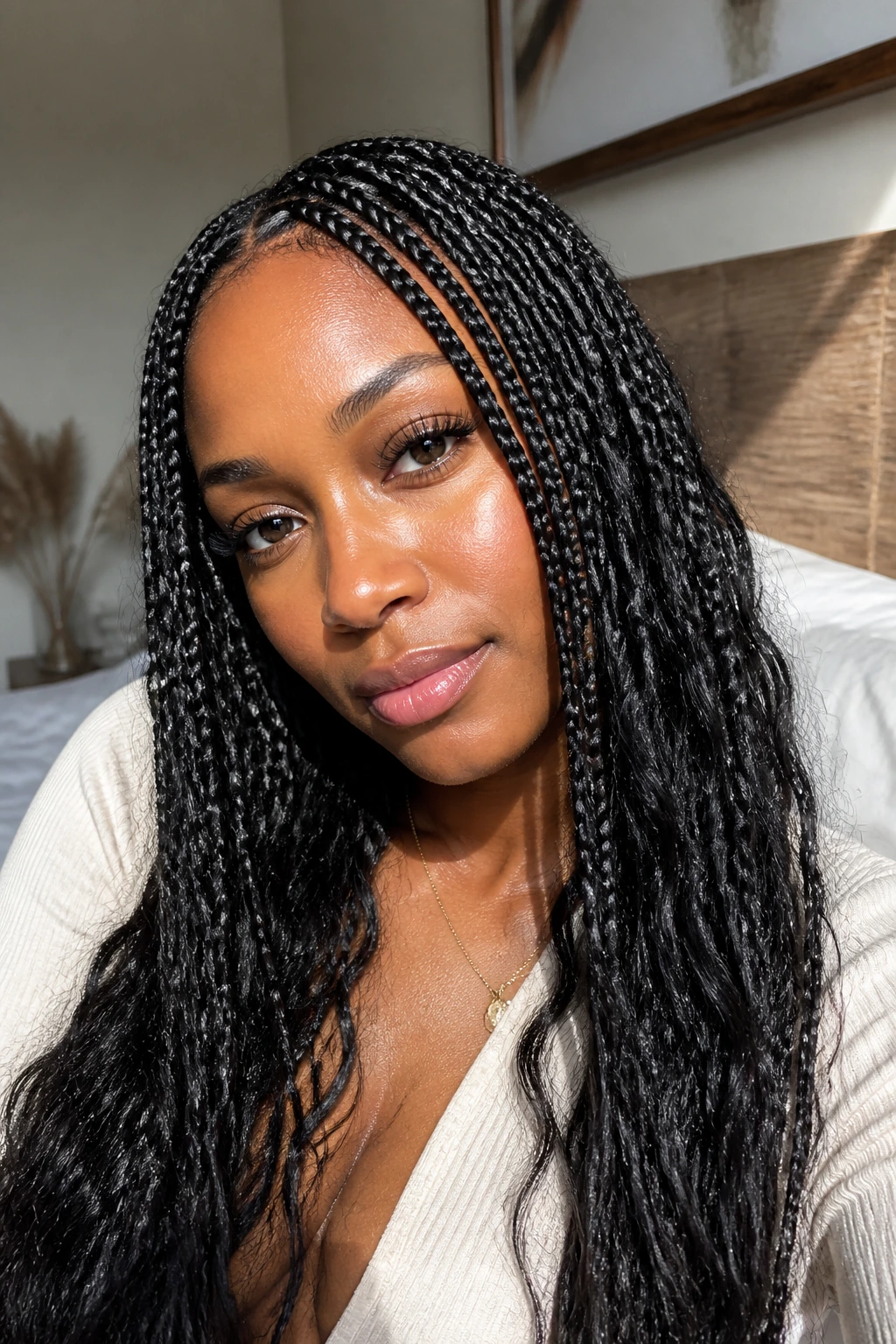
Fine-Wave Friendly Set: Choose knotless or feed-in braids in medium sections and skip heavy accessories. The goal is lightness at the root and enough hair left to support the braid shape without strain.
Thick-Wave Heavyweight Set: Go for Ghana braids, jumbo triangle parts, or four large straight-backs. These styles hold more hair comfortably and keep thick waves from sprawling out between sections.
Low-Tension Office Set: Minimal center-part braids, straight-back feed-ins, or a wrapped-base ponytail keep the look neat without a lot of visual noise. These are the styles I’d reach for when you want clean lines and low drama.
Dress-Up Version: Add beads, thread wraps, or a soft side sweep. A small accent is usually enough. Too many decorations can make a long braid set feel busy instead of finished.
Gym-and-Errands Version: Braided ponytail, double Dutch braids into one plait, or a low side bun keeps the length controlled and the neck cool. These styles move well and stay out of your face when you’re active.
Sensitive Scalp Version: Choose bigger parts, lighter extension hair, and no hard grip at the hairline. If the style hurts on day one, it will not magically get kinder on day four.
Common Mistakes to Avoid When Braiding Wavy Hair
-
Braiding damp hair: The symptom is itch, odor, or puffed roots that never quite settle. The fix is simple—dry the hair fully before installation.
-
Pulling the hairline too tight: If the scalp hurts, the style is too tight. Stop there. Persistent tension can thin the edges and leave sore bumps that take weeks to calm down.
-
Using too much product: Heavy gels and thick creams leave buildup that makes the braids feel sticky and dusty at the same time. Use less at the root and save the richer products for the ends, if at all.
-
Choosing too much weight: If your neck hurts or the front feels dragged down, the braid set is too heavy for your density. Go smaller in sections, lighter in hair, or shorter in length.
-
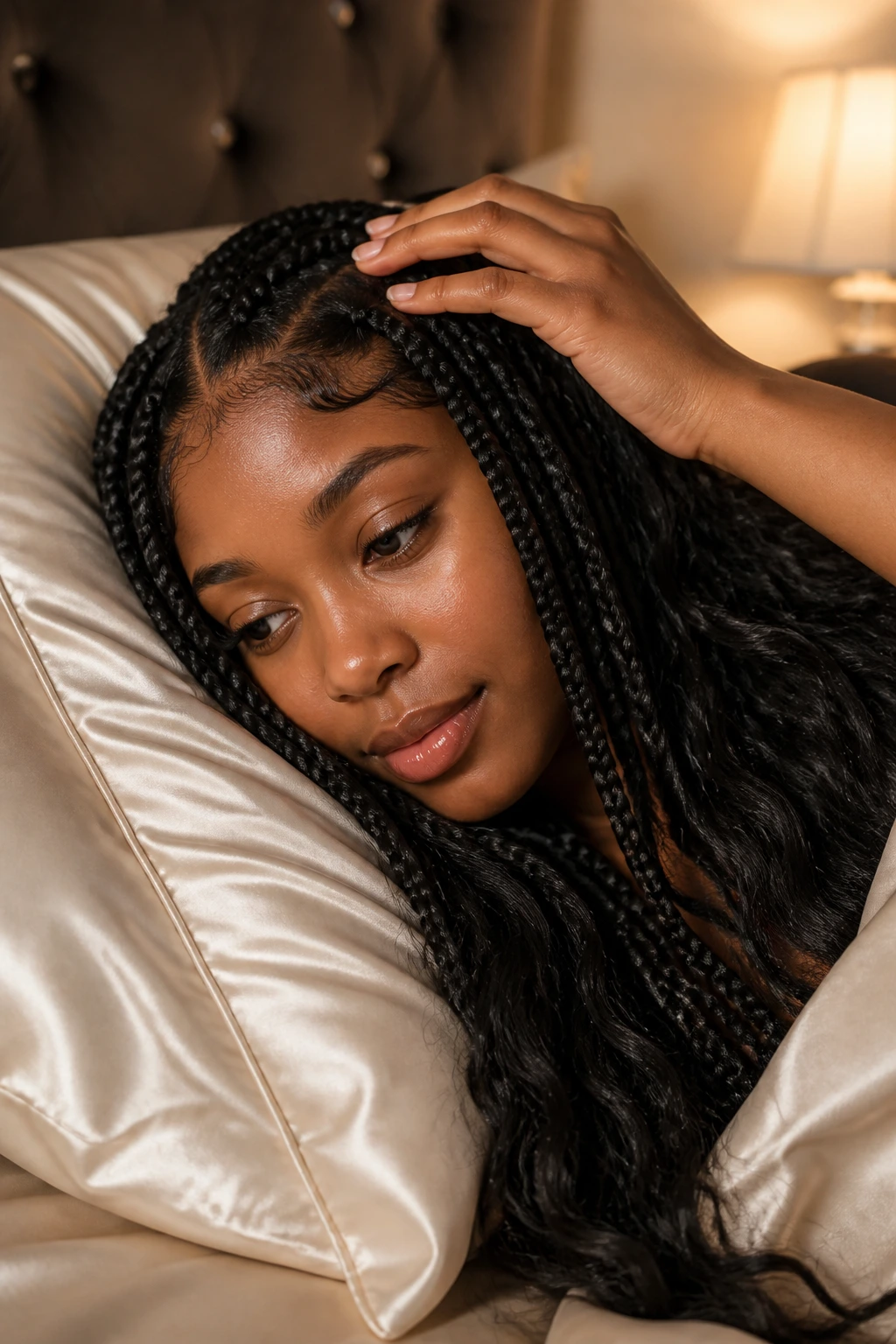
Skipping sleep protection: Friction from cotton pillowcases roughs up the outer layer and fuzzes the parts. A satin bonnet or scarf makes a noticeable difference by the third night.
-
Leaving them in too long: Once the parts are hard to see and the roots mat together, the style has stopped being protective. It is just collecting tension.
Frequently Asked Questions
Can wavy hair really hold long braids well?
Yes, as long as the install is planned around the texture instead of against it. Clean parts, moderate tension, and a lighter base usually make more difference than loading the head with product.
Which braid style is gentlest for wavy hair?
Knotless braids and feed-in cornrows are usually the easiest on the scalp because the root starts flatter. If your hair is fine or sensitive, those are the first two I’d try.
Should I blow-dry wavy hair before braiding it?
Usually, yes. Dry hair parts more cleanly and is less likely to swell under the braid. If you prefer not to use heat, stretch the hair fully by other means and make sure it is completely dry before starting.
How long can long braids stay in?
A practical window is about 6 to 8 weeks, sometimes less if the hair is fine or the parts start matting early. Don’t treat the install like a permanent set; the scalp will tell you when it has had enough.
What if my roots puff up fast?
That usually means the parts were too loose, the hair was not fully dry, or the style is fighting your natural texture. A light mousse pass and a better wrap at night can help, but if the puffing is at the hairline, the install may need a reset.
Are beads and thread safe on wavy hair?
Yes, if they’re light and placed with care. Heavy accessories pull on the braid ends and can make fine or loose waves feel dragged down by day two.
Can I braid layered wavy hair?
Absolutely, but layered hair usually does better in a style with some built-in softness—face-framing pieces, a side sweep, or boho braids. If the layers are short, keep them tucked so they don’t poke out everywhere.
What should the braids feel like on day one?
Snug, not sharp. You should notice the style, but you should not feel pain when you smile, chew, or turn your head. If the scalp aches or the edges feel hot, that is too tight.
Braids That Move with You
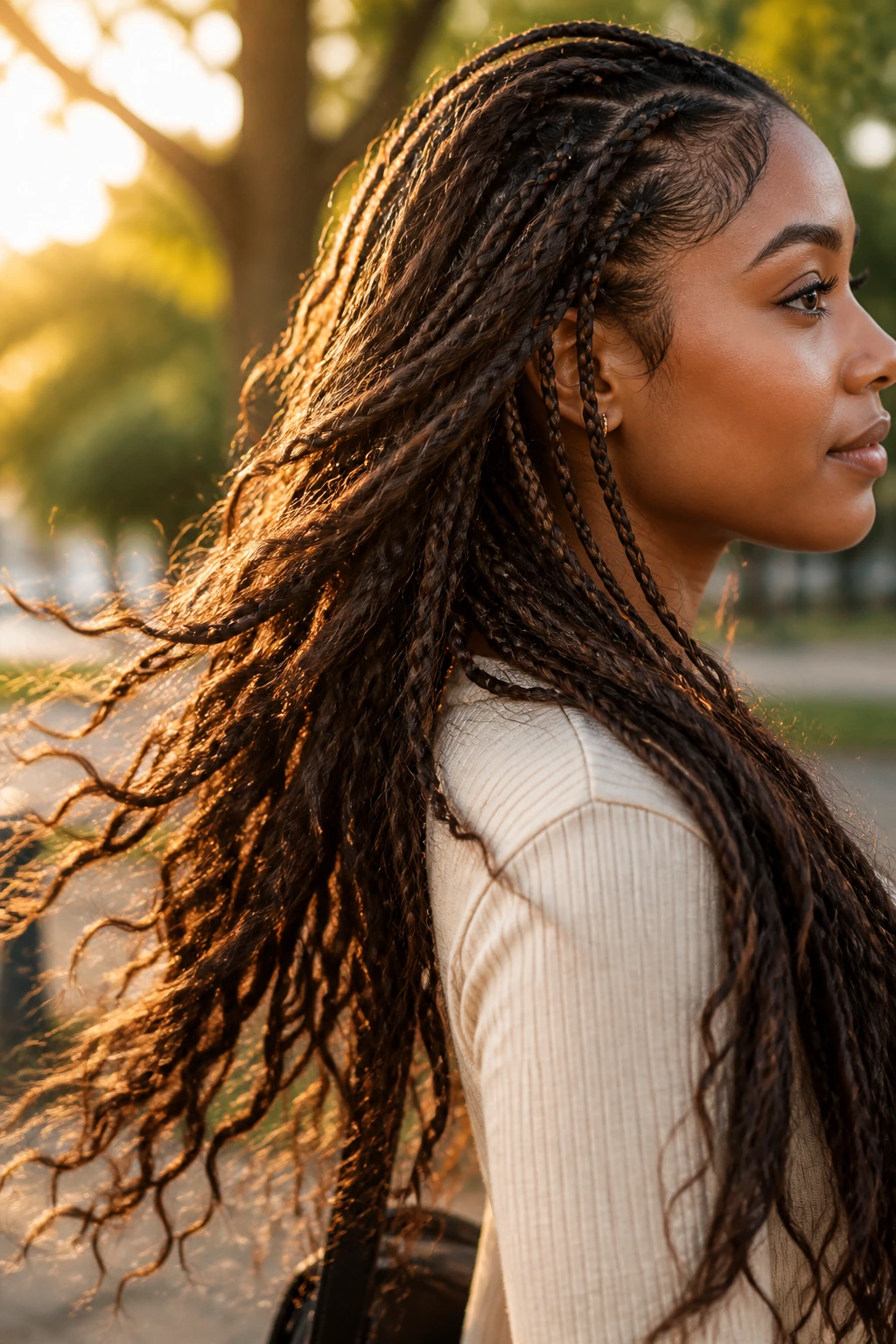
The best long braids on wavy hair do two things at once: they hold the hair together, and they leave enough movement that the style still feels like yours. That is why knotless bases, feed-ins, side sweeps, and softer finishes keep showing up. They respect the bend in the hair instead of flattening it into something stiff.
Pick the style that matches your density, your patience, and how much time you want to spend staring at the mirror before work. Then keep the roots light, the sleep routine covered, and the ends from dragging. That is where these braid sets earn their keep.