



Fine hair and box braids can absolutely live in the same sentence. The trick is not forcing the braid to do a job it can’t carry — no heavy roots, no hard tugging at the hairline, no waist-long curtain of synthetic hair just because it looks good on somebody with thicker strands.
What fine hair needs is weight control. A braid can be sleek, polished, and still gentle if the parts are clean, the extension hair is soft, and the install doesn’t feel like it’s trying to pull your temples into next week.
There’s also more room to play than people expect. You can go blunt and neat, add curls, shift the part, wear a low bun, or lean into color — as long as the style feels calm when you move your head and doesn’t leave you counting the hours until takedown.
Why These Braids Make Sense for Fine Hair
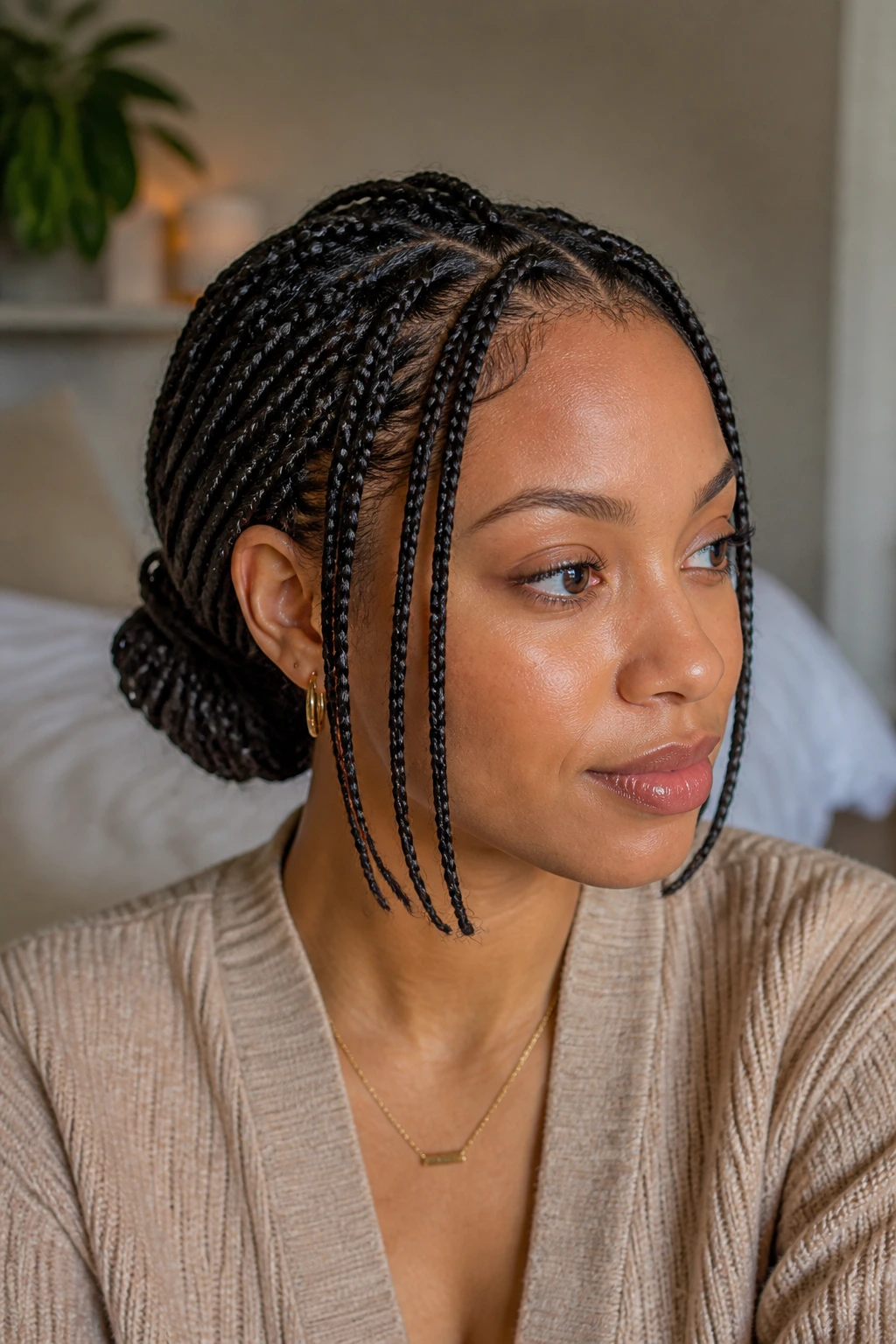
- Less Root Drag: Shorter bobs, collarbone cuts, and low buns keep extension weight from hanging straight off the hairline.
- Cleaner Grow-Out: Center parts, triangle parts, and diamond parts hide new growth better than one giant wall of braids.
- Easy Styling Range: The same install can wear down for two days, then tuck into a bun or half-up knot without a full restyle.
- Better Shape on Sparse Ends: Layered and curled-end versions make the braid line look fuller at the bottom, where fine hair often looks thin first.
- Photo-Friendly Without Extra Bulk: Cuffs, beads, and color do the visual heavy lifting, so you don’t need to add more hair just to make the style feel finished.
What Fine Hair Needs Before the First Part Is Drawn
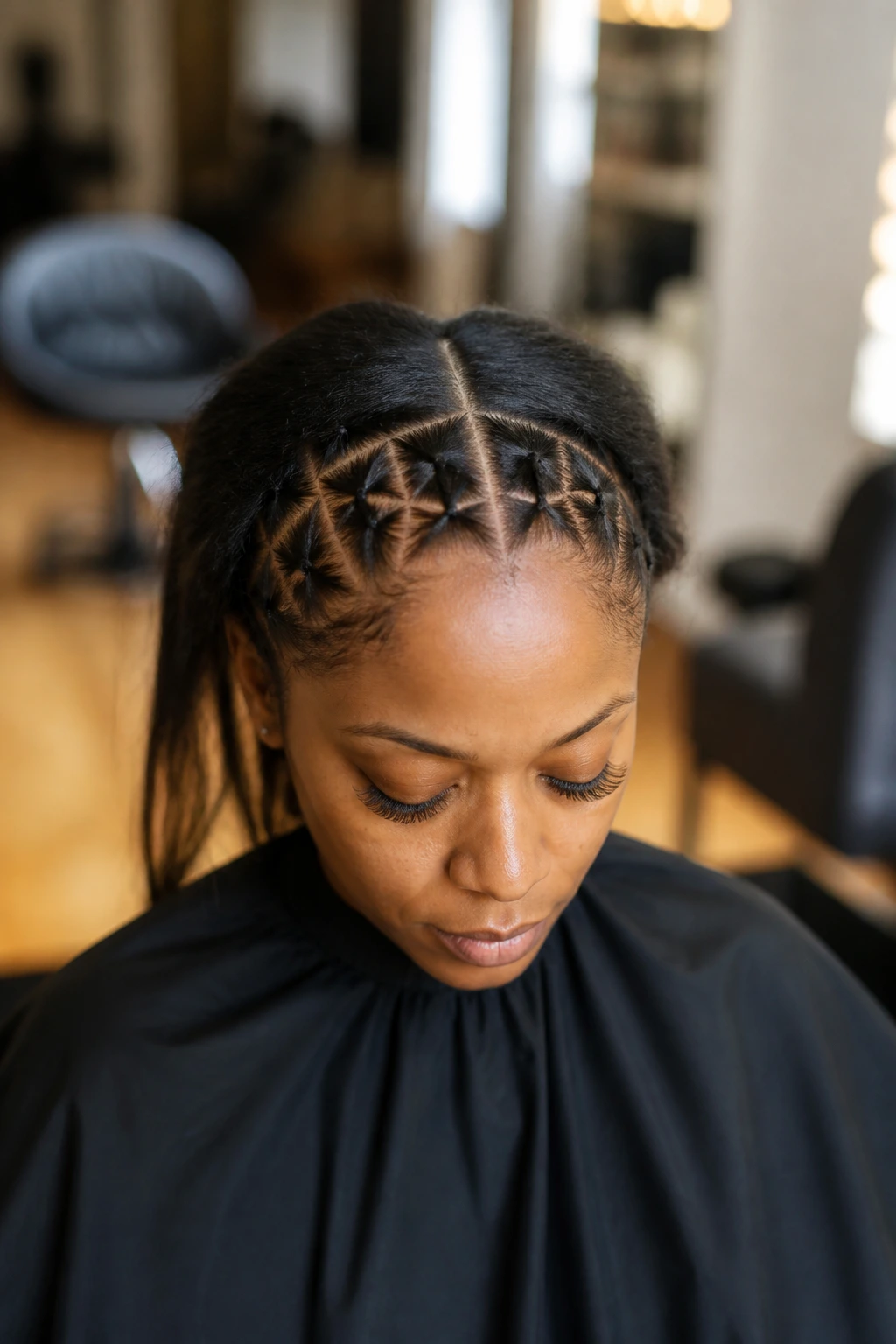
Fine hair isn’t the same thing as thin hair. A head can have plenty of density and still have narrow strands, which is why the real question is not “how much hair do I have?” but “how much pull can each strand handle before it starts complaining?” That pull usually shows up first at the temples and the nape.
Weight sits at the root
A braid that feels snug on day one can turn into a headache if the install is too dense or the added hair is too heavy. On fine hair, medium sections and a softer root usually behave better than tiny micros or heavy jumbo braids that need constant tension to stay neat.
Part size changes the whole feel
Small, clean parts can look beautiful, but they also increase install time and scalp exposure. Medium box sizes often hit the sweet spot for fine hair because they give you a crisp grid without asking every strand to hold up too much extra hair. That matters more than people think.
Length changes the comfort level
Shoulder and collarbone lengths are kinder because they don’t swing against your shoulders every time you turn your head. Waist-length braids can work, but they need a lighter hand, a lighter braid, and a scalp that doesn’t mind the extra load. If the style only looks good when you’re standing perfectly still, it’s the wrong version for everyday wear.
Choosing Braiding Hair That Feels Light, Not Scratchy
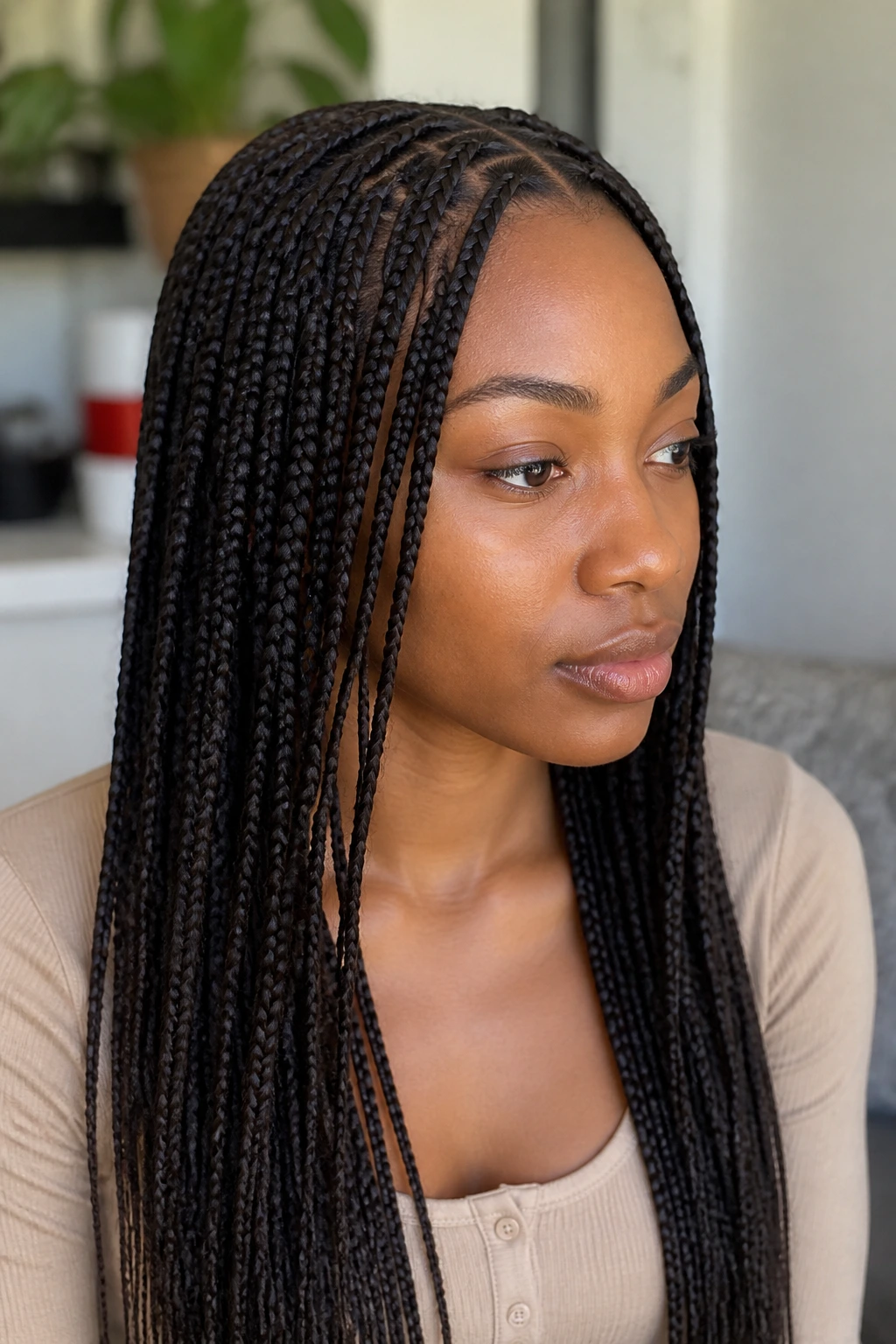
Synthetic braiding hair is not all the same. Some packs feel soft and fold cleanly in your hand; others feel stiff, dry, and weirdly loud when you separate them. Fine hair usually does better with the softer, pre-stretched kind because it lays flatter at the root and frays less at the ends.
A rough pack can be the enemy here. It catches at the nape, rubs behind the ears, and makes a fresh install feel itchy even when the braid pattern is fine. If the fiber feels prickly in the package, it probably won’t feel kinder once it’s braided into a sensitive scalp.
Color and finish matter, too. A darker shade can make the whole set look denser, while a lighter ombré or face-framing highlight can add the illusion of fullness without adding more braid bulk. That’s a small thing, but it changes the whole read of the style.
What to Say When You Sit in the Chair
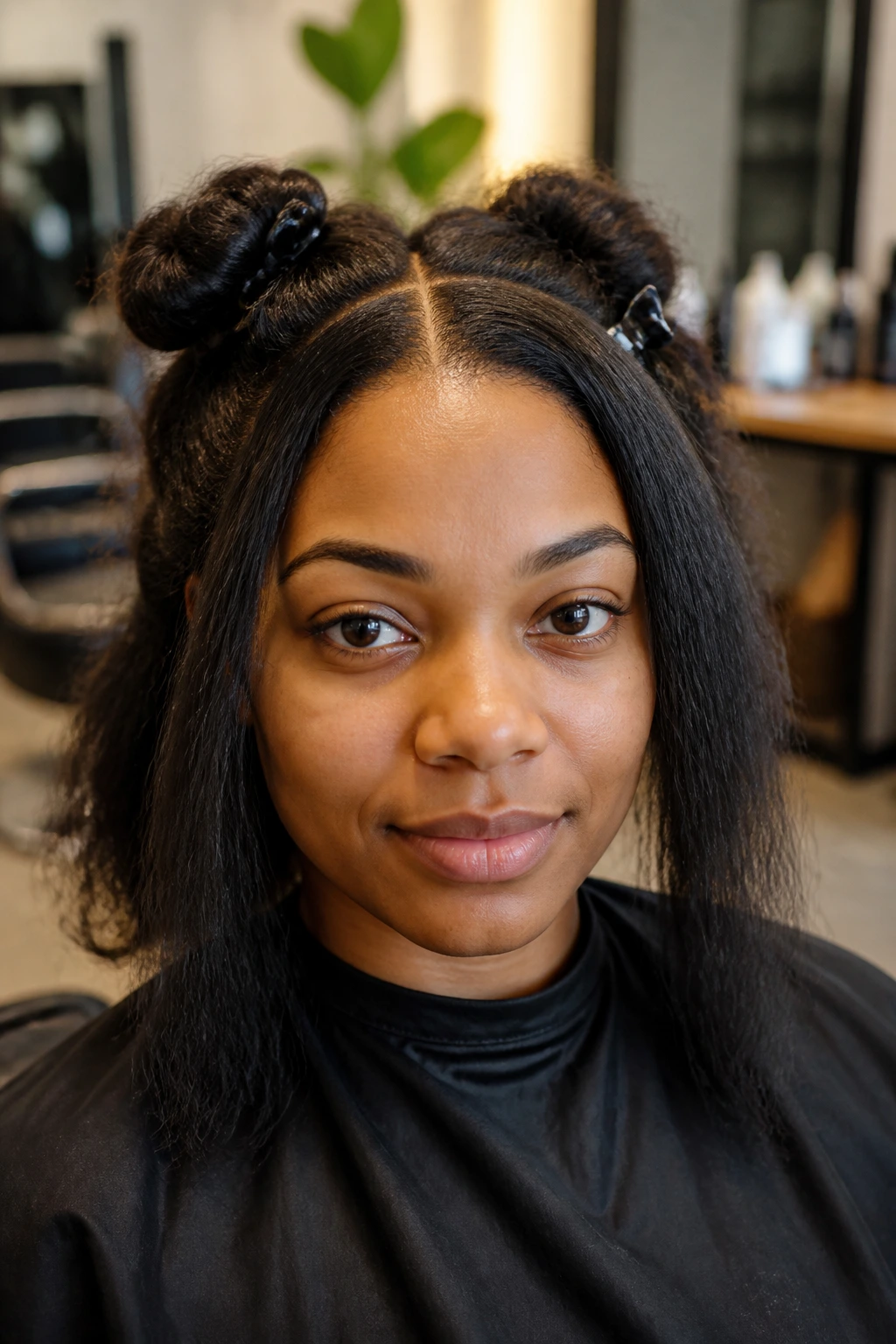
Bring a photo, yes. Bring more than one if you can. But don’t rely on the picture alone, because a braid can look light on an account and feel heavy in real life.
Say the parts out loud. Say the length. Say where your head gets sore. “Medium parts, knotless start, collarbone length, and keep the front soft” is a lot more useful than “make it cute.” If your hairline is sensitive, say that before the first section is grabbed. Once tension is in the braid, you’re negotiating with gravity.
A good braider can also adjust the balance. A slightly fuller back, lighter front pieces, or a shorter finish near the shoulders can make a style much easier to live with. That little conversation before the comb comes out is worth its weight in silk scarf naps.
1. Classic Medium Box Braids
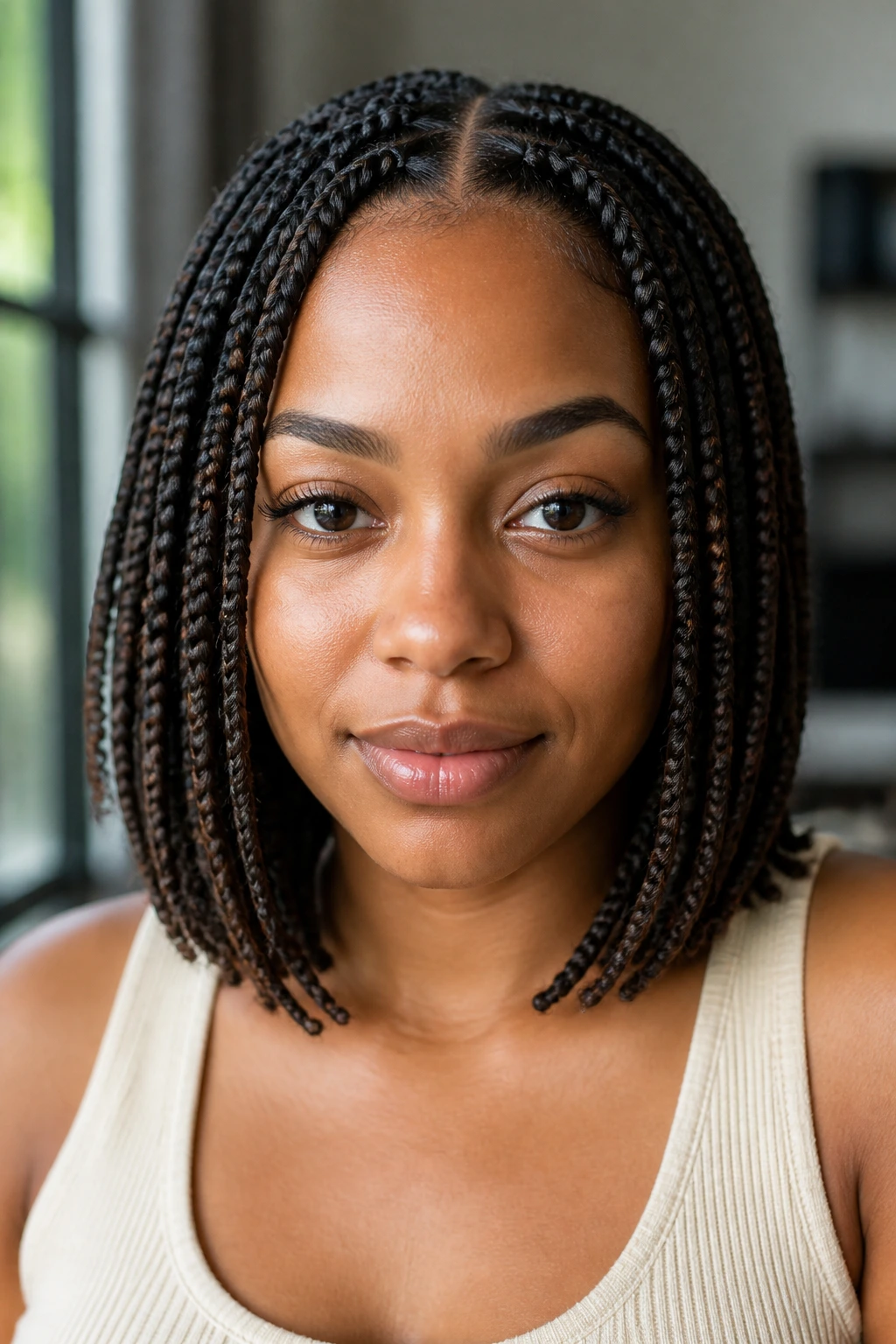
A classic medium set is the workhorse of this whole list. The parts are clean, the sections are large enough to avoid endless install time, and the braids sit with enough body to look finished without bullying fine strands.
Why this version behaves
- Part size: medium squares, roughly 1 inch across, so the scalp grid looks neat without feeling crowded.
- Length: collarbone or a touch below keeps the swing under control.
- Finish: blunt ends or a soft seal so the tips don’t look wispy.
This is the version I’d hand to someone who wants the most straightforward answer. It’s calm, predictable, and easy to wear up or down. On fine hair, that predictability is a gift.
Pro tip: ask the braider to keep the front row slightly lighter than the back row. That tiny adjustment makes the hairline thank you by day three.
2. Knotless Medium Braids
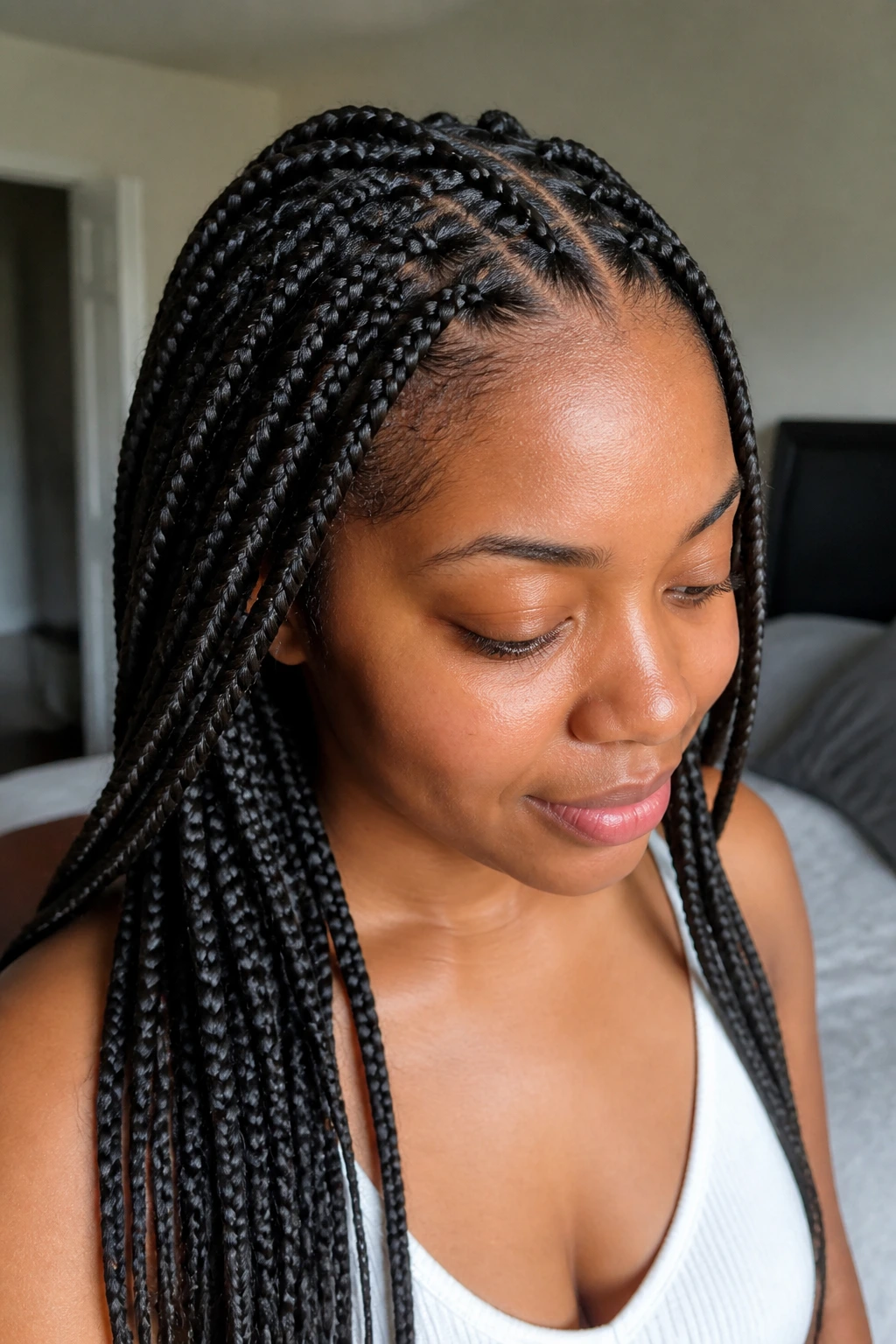
Knotless braids are the first place I’d start if the scalp tends to get cranky. The root lays flatter because the extension hair is fed in gradually instead of anchored with that visible knot, and the whole style tends to feel softer on fine strands.
That flatter start matters. Fine hair doesn’t need extra pressure right where the braid leaves the scalp, and knotless construction spreads that tension out a little more politely. The look is still crisp, but the crown doesn’t feel like it’s under inspection.
Best if you want a set you can wear longer without thinking about your temples every time you tie your shoes. If your hairline is delicate, this is the one that usually behaves.
3. Collarbone-Length Braids
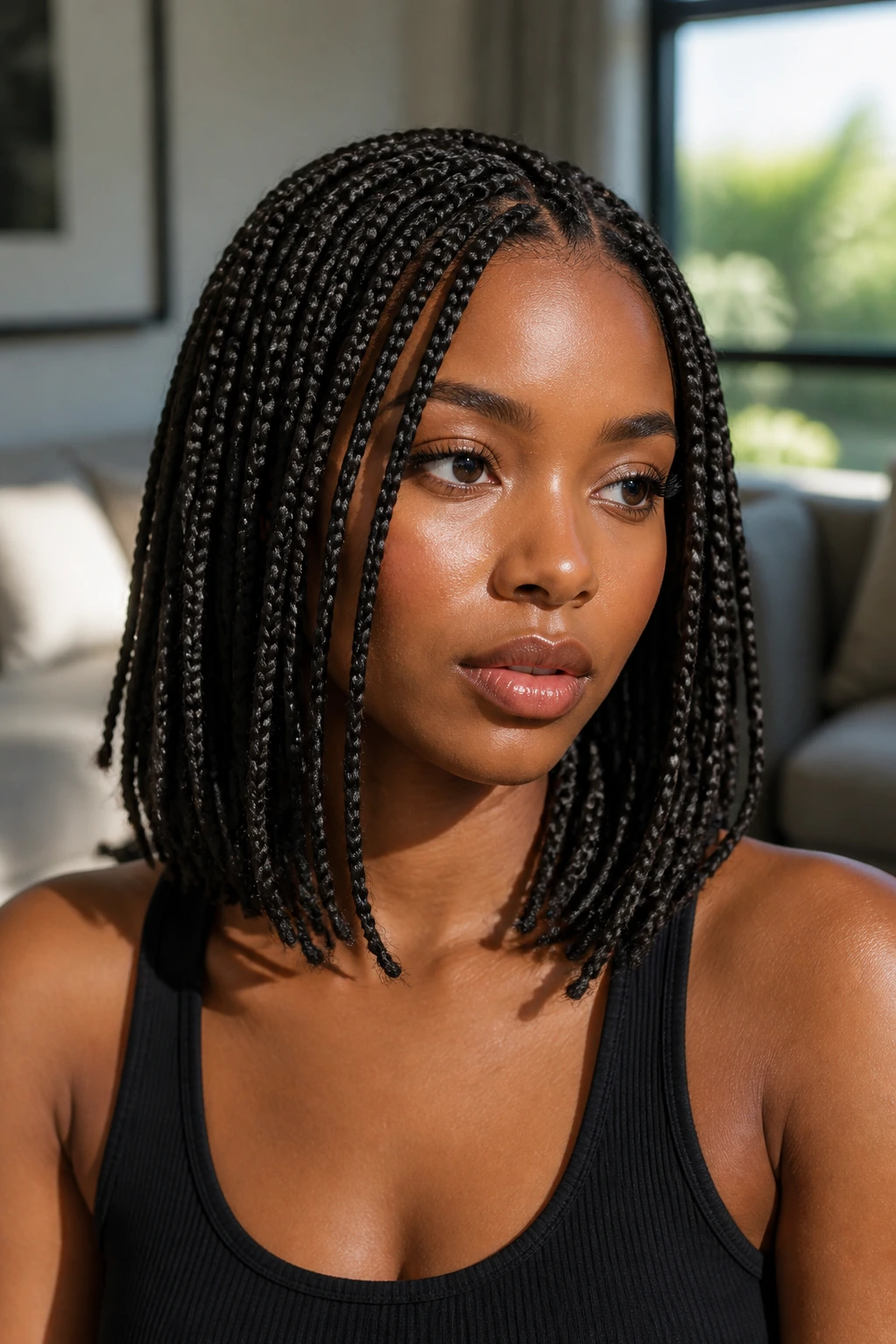
Why does collarbone length work so well here? Because it gives you presence without the drag. The ends sit near the shoulders, which means less swinging, less rubbing, and fewer moments where the style starts feeling bigger than your head.
That length also makes fine hair look more intentional. A long braid can make the ends seem thin if the hair itself doesn’t have much density, but a collarbone finish keeps the line compact and neat. It reads polished fast.
How to wear it
Wear it down on clean days, then tuck the front into a low half-up when you want the braids off your face. A single side pin or a soft scarf at the crown is enough. You do not need more hardware. That’s the mistake people make.
4. Chin-Length Braided Bob
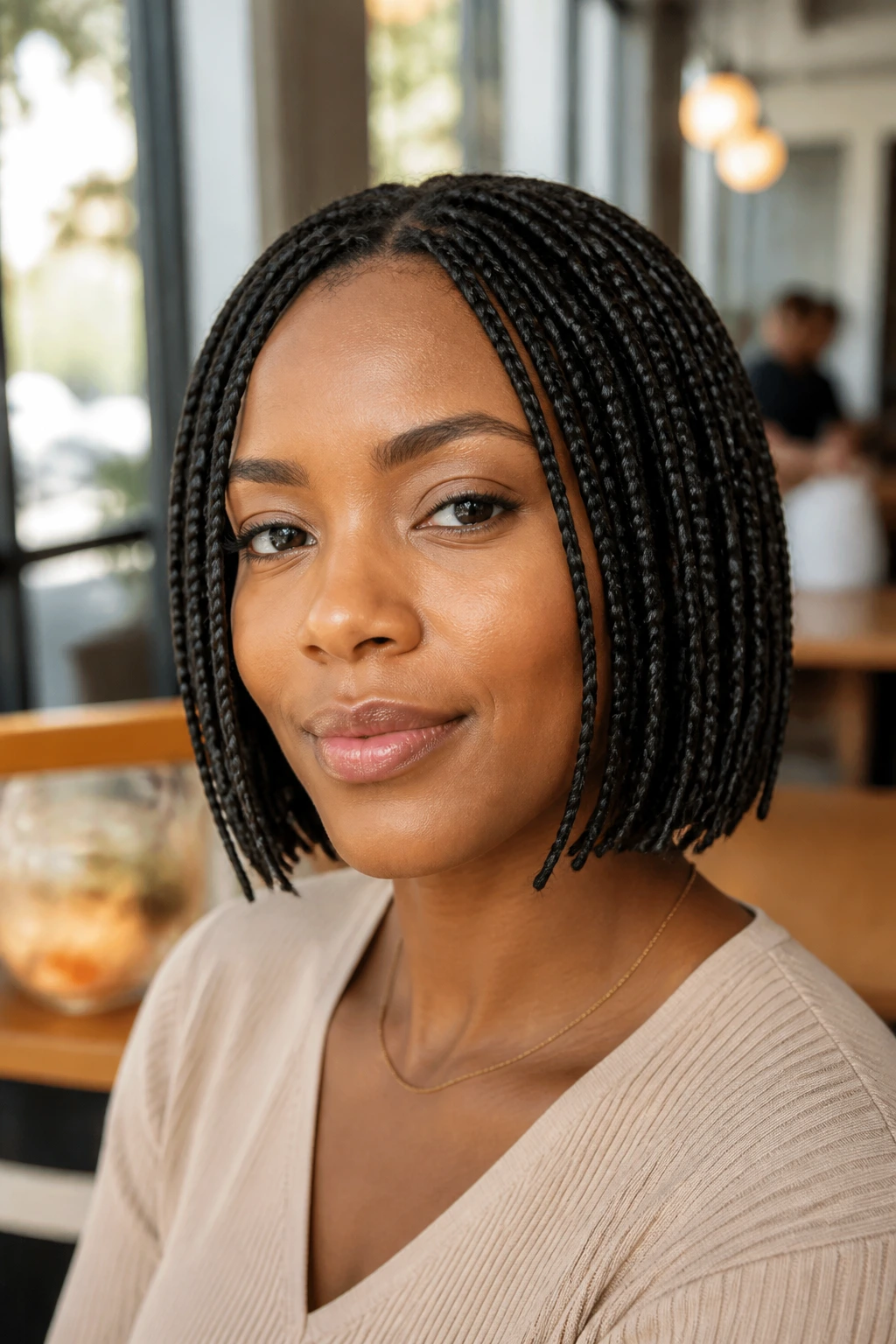
A chin-length bob is the smartest place to hide any worry about weight. The shape is compact, the ends stay close, and the whole style feels airy even with a full head of braids.
It also gives fine hair something it often loses in longer installs: structure. A blunt chin-length line looks deliberate, not borrowed. If your natural hair tends to sit flat, this cut gives the illusion of more body because all the visual energy stays up near the face.
Ask for ends that skim the jaw rather than sit below it. That tiny difference changes the whole silhouette.
5. Shoulder-Length Layered Braids
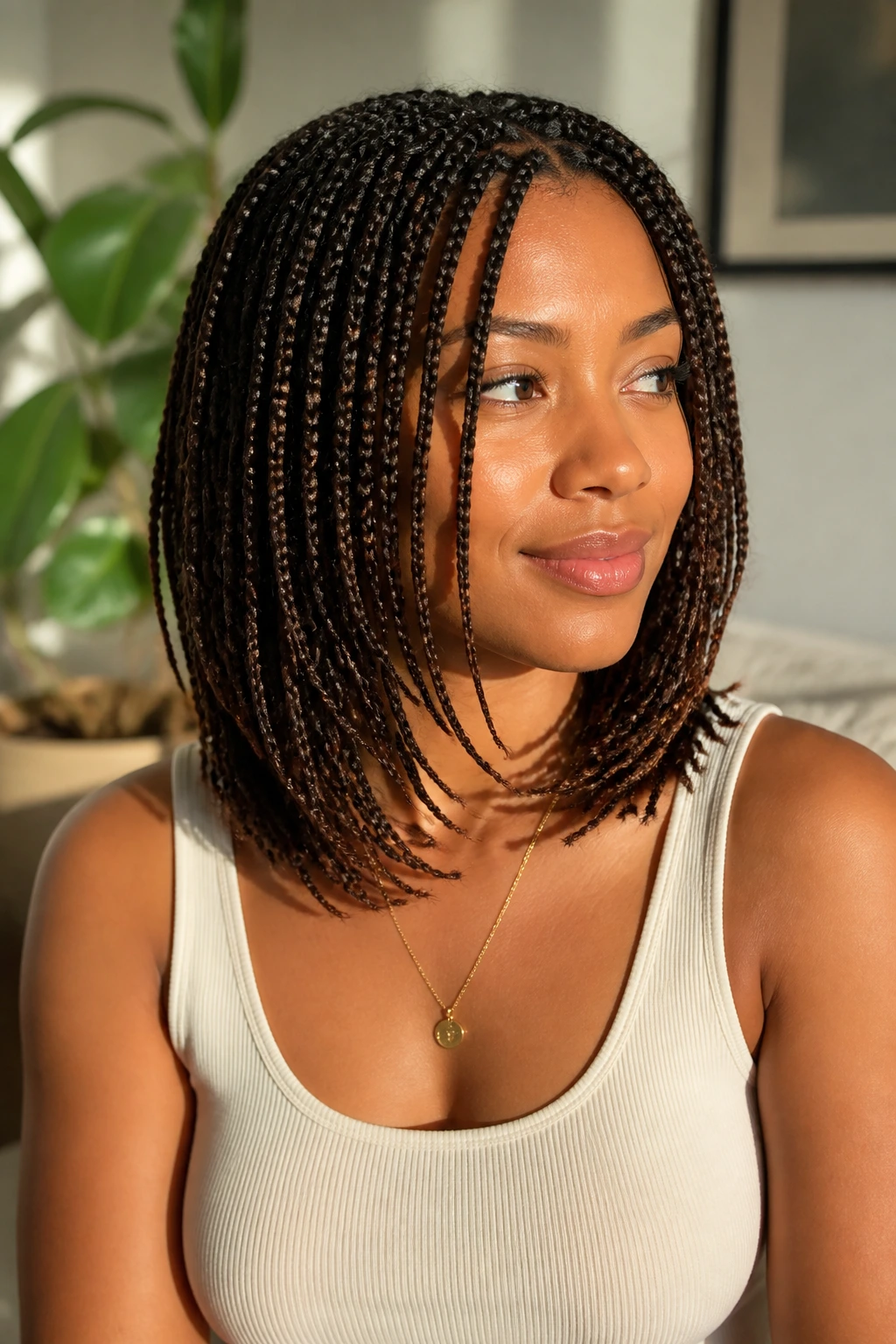
Shoulder-length layered braids have movement without the swing. The front pieces can sit a little shorter, the back a little longer, and that uneven line keeps the style from feeling boxy or heavy.
I like this one for fine hair because it looks fuller than a straight, blunt tail. The eye reads the layers first, not the density of the hair itself. That’s useful when you want volume without bulk.
If you want a soft finish, keep the ends lightly curled or sealed so they don’t look ragged by week two. The shape does enough work on its own; it doesn’t need frizz helping it along.
6. Triangle-Part Braids
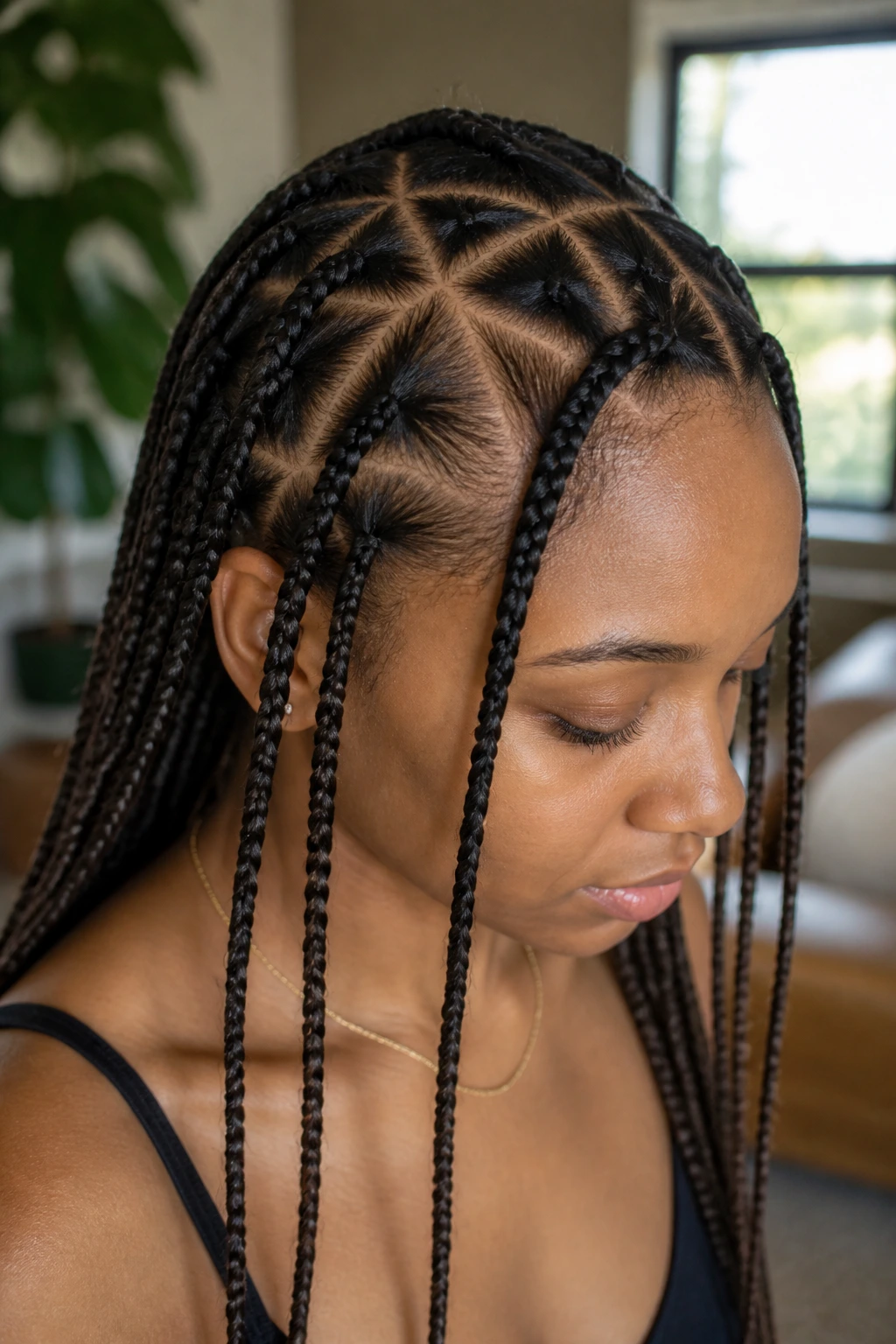
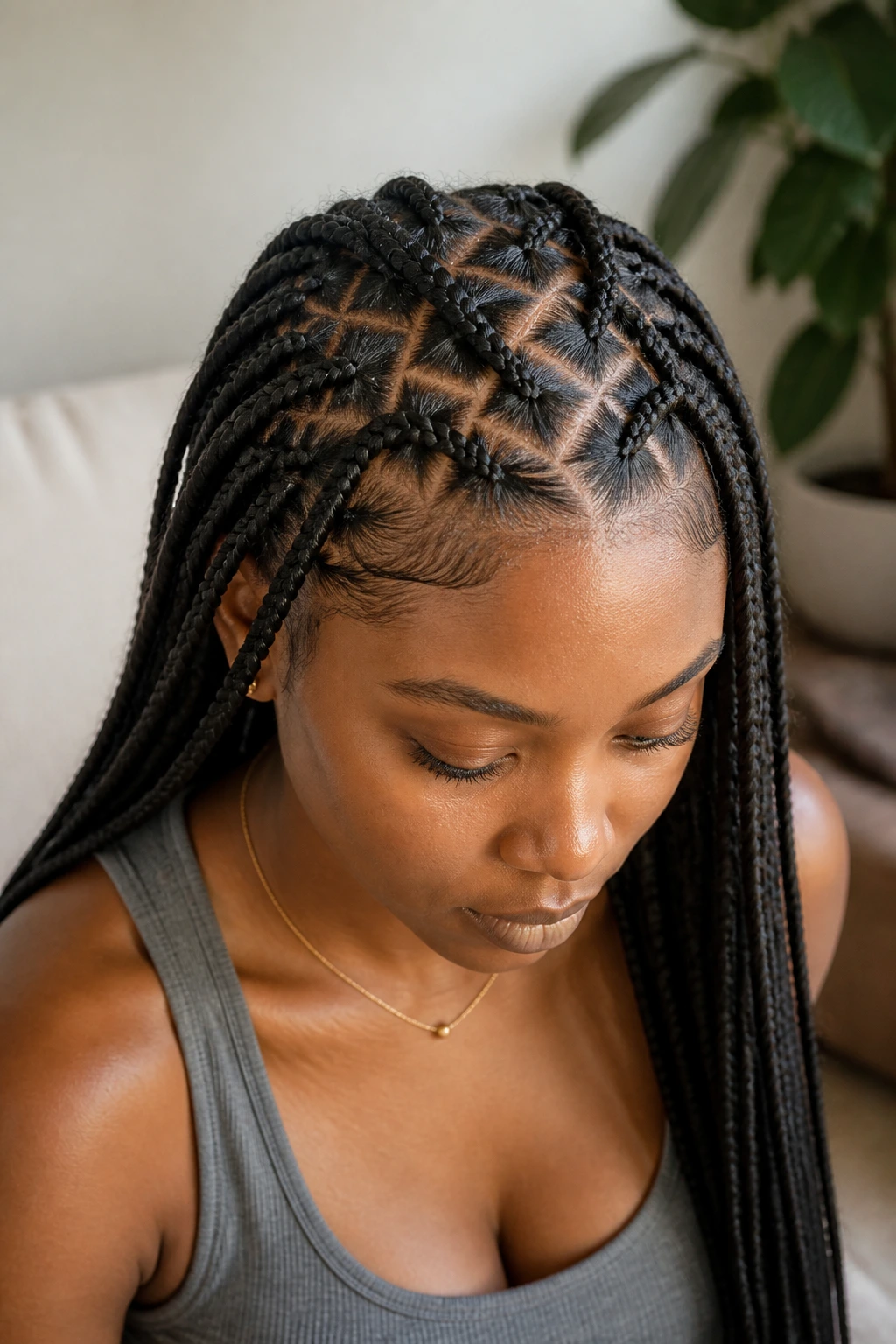
Triangle parts change the mood right away. The grid looks a little more modern, a little less rigid, and the angled sections do a nice job of breaking up a scalp that might otherwise show too much straight-line contrast.
For fine hair, that visual break matters. Triangle parts make the install feel detailed without requiring tiny braids everywhere. You get design without turning the head into a tension project.
This is a good choice if you like your protective style to feel styled, not just installed. The shape does the talking before the accessories even show up.
7. Diamond-Part Braids
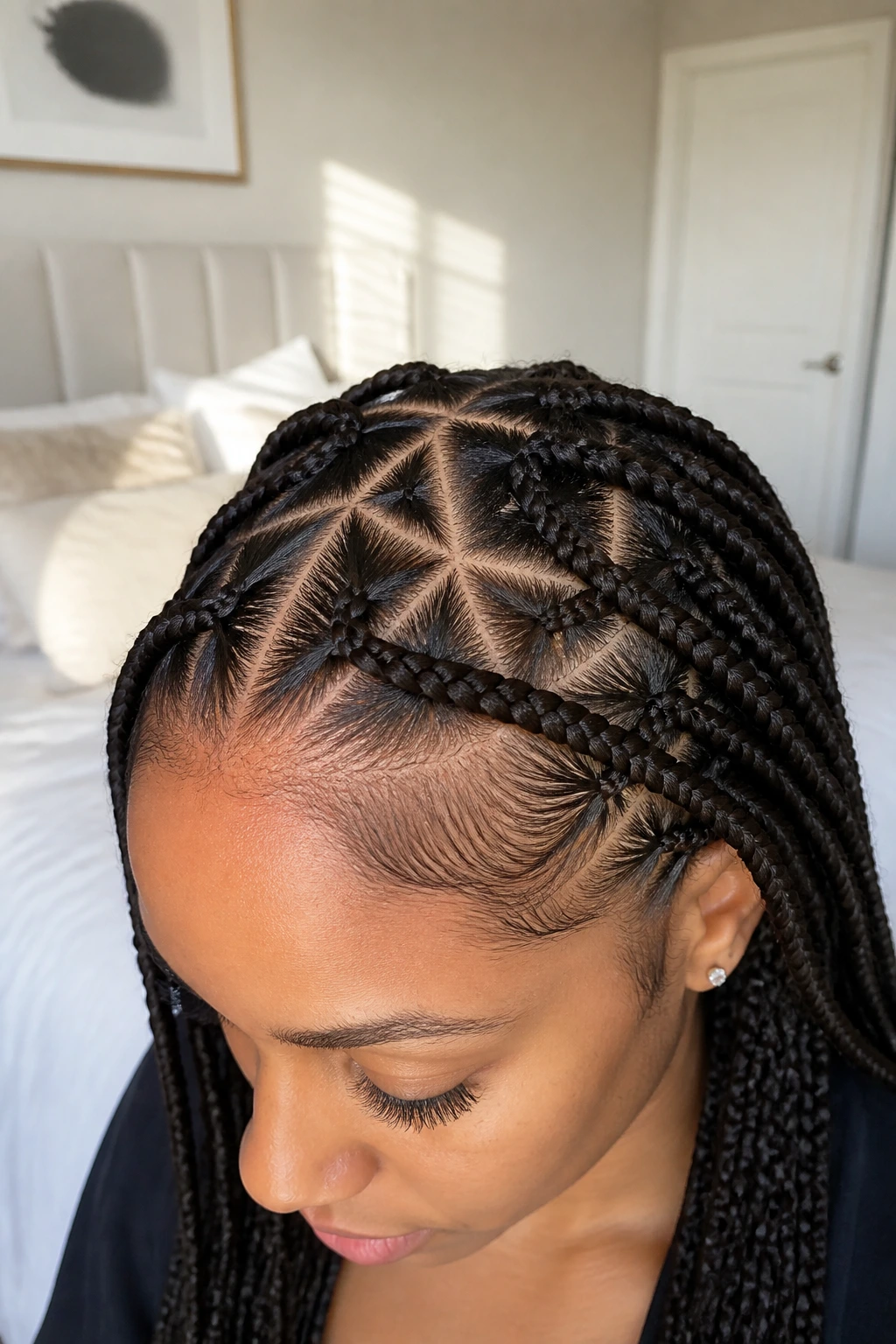
Diamond parts are a little sharper and a little more deliberate than square parts, and I like them for fine hair because they create interest right at the scalp. The braid pattern looks more intricate, which keeps the style from reading flat.
The trick is restraint. The parts should be crisp, not tiny, or you end up with more scalp exposure than you wanted. Medium diamonds usually give the right balance of design and comfort.
This is one of those styles that looks especially good in a low ponytail or a half-up knot because the parting pattern stays visible. If you want the scalp work to be part of the look, this is a good lane.
8. Side-Part Braids
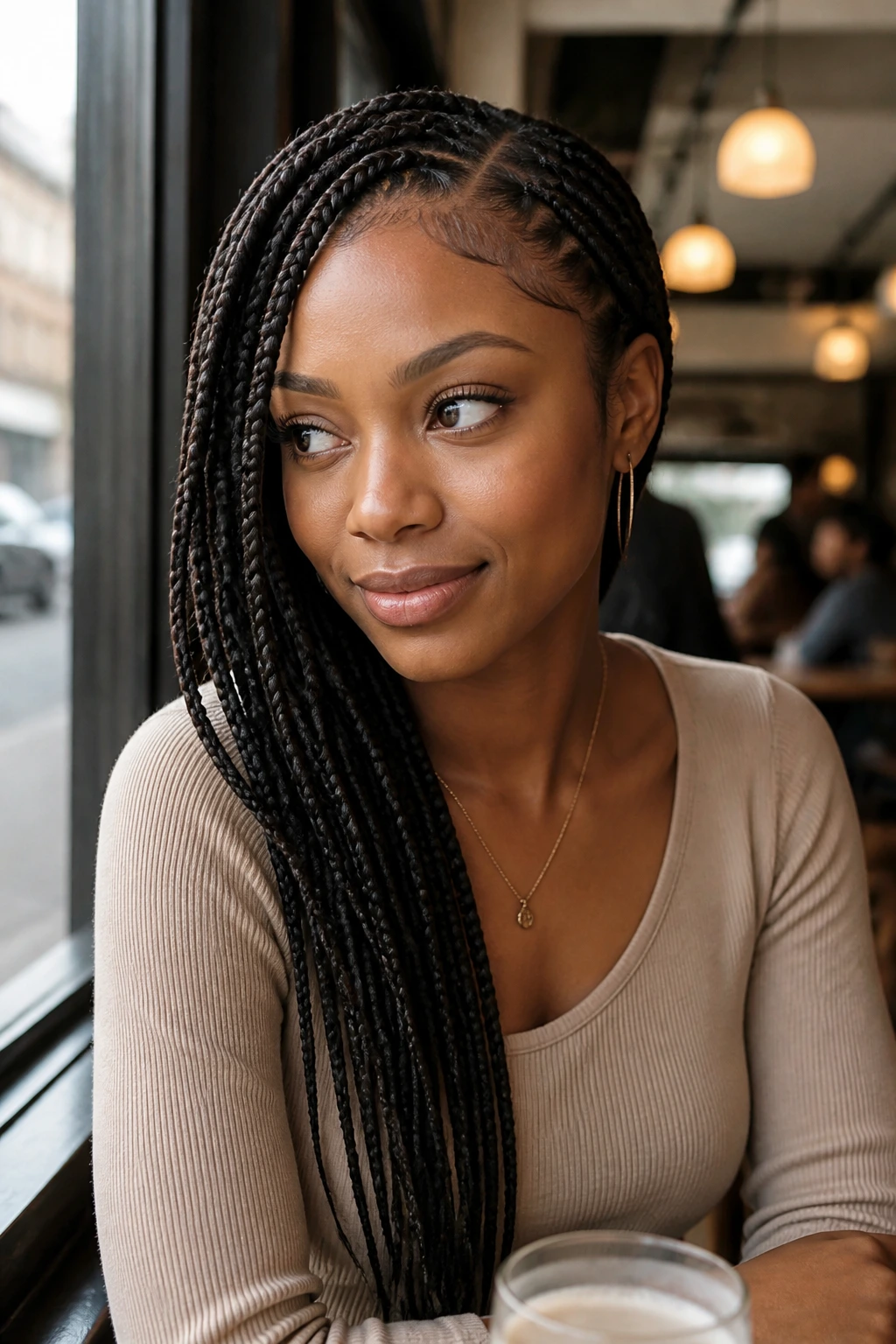
A side part softens a whole head of braids in one move. It shifts the weight visually, gives the face a little sweep, and makes fine hair look less severe around the crown.
The part itself doesn’t need to be dramatic. Even a modest off-center line changes the way the braids fall, and that can be enough to keep a set from feeling too symmetrical or too formal. Some heads need that softness.
This is a good everyday style if you wear your braids loose most of the time. It works with a sweater, a blazer, a hoop earring, all of it. The part does the heavy lifting.
9. Deep Side-Swept Braids
A deep side sweep feels more dressed up than a simple side part. The braids fall heavily to one side, which makes the whole set look intentional and a little dramatic without adding more hair.
Fine hair usually likes this because the volume is gathered instead of spread everywhere. One shoulder carries the shape, the other stays quieter. That can be easier on the scalp than a style that pulls in every direction at once.
Pin the back loosely if you want to keep the sweep in place. Tight pins defeat the point. Loose is better here.
10. Center-Part Braids
A clean center part can be a surprisingly flattering move on fine hair. The symmetry makes the style feel tidy, and the straight line through the middle gives the illusion of a fuller, more controlled install.
Why it feels calm
The center part keeps the face framed evenly, which helps if the hairline around one temple is more sensitive than the other. It also makes styling easier because you don’t have to keep rebalancing a side sweep that keeps falling.
Wear it down when you want the cleanest look, then slide the front into a low ponytail for a sharper finish. Simple. No drama.
11. Crisscross-Part Braids
Crisscross parts add movement right where the eye lands first. The pattern breaks up the crown in a way that looks intricate without forcing the whole head into tiny sections.
That’s why it works on fine hair. You get visual texture from the parting itself, so the braids don’t have to be extra thick or extra long to feel interesting. The scalp becomes part of the design.
A few inches of clean crisscross detail near the front can carry the whole style. You do not need the pattern everywhere. In fact, that usually gets busy fast.
12. Zigzag-Part Braids
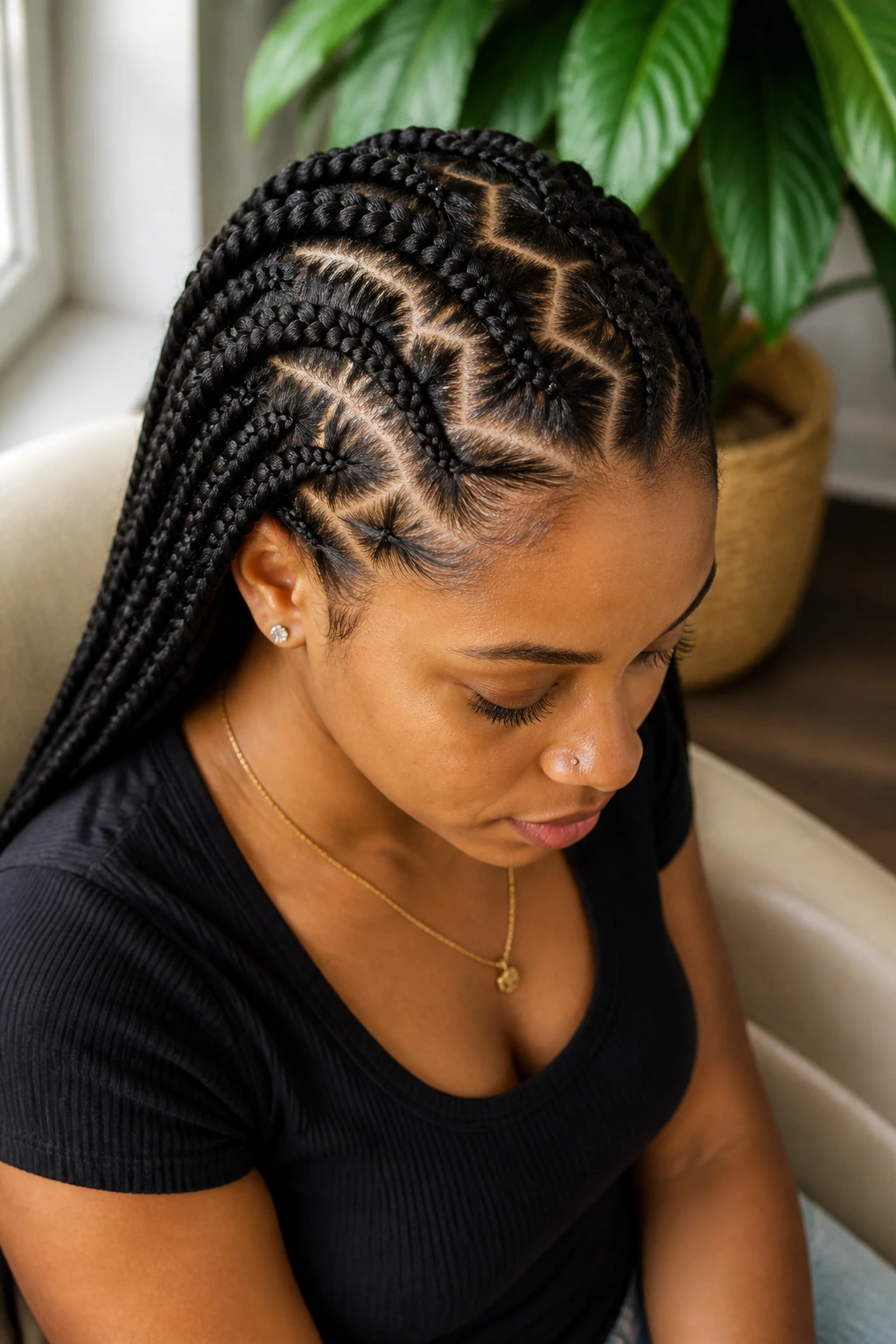
Zigzag parts have a slightly playful edge, and they’re excellent when you’re tired of straight lines but still want the install to feel orderly. Fine hair often looks better with that kind of controlled movement because it keeps the style from going flat.
The key is keeping the zigzags clean enough to read from a few feet away. Fussy zigzags can look messy. Clean ones look clever.
This style is especially good if you wear your braids pulled back a lot. Even a low ponytail still shows the parting work, which keeps the style from disappearing into a basic bun.
13. Fulani-Inspired Braids
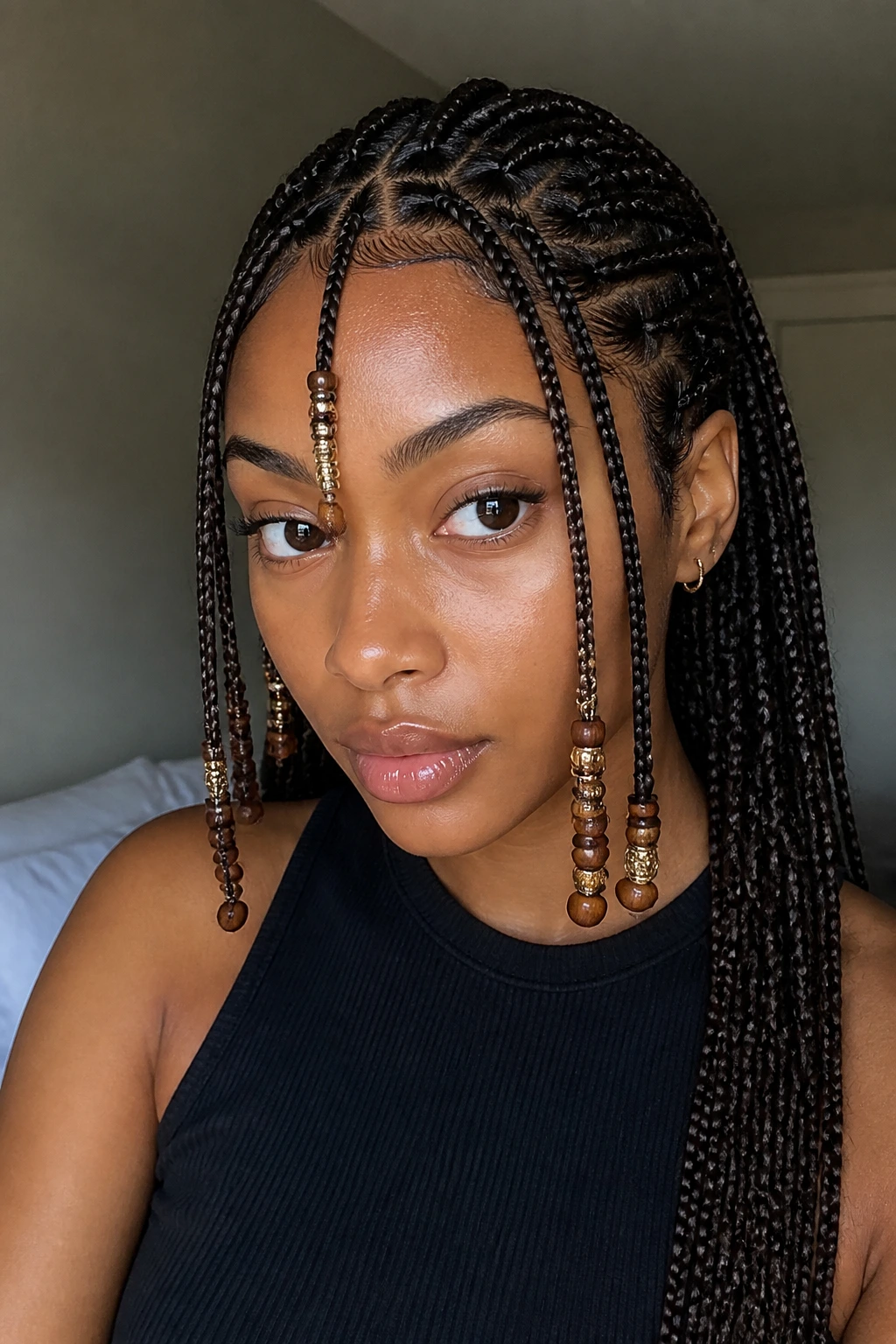
Fulani-inspired box braids bring just enough front detail to change the whole head. A central braid, a few face-framing sections, and maybe some light beads can make a fine-haired install look thoughtfully styled instead of plain.
The caution is weight at the front. That’s where people get carried away. Keep the accent pieces light, or the hairline will tell on you by the second week.
Used with restraint, this look is gorgeous on fine hair because the braids near the face do the visual lifting. The rest can stay fairly simple.
14. Half-Up, Half-Down Braids
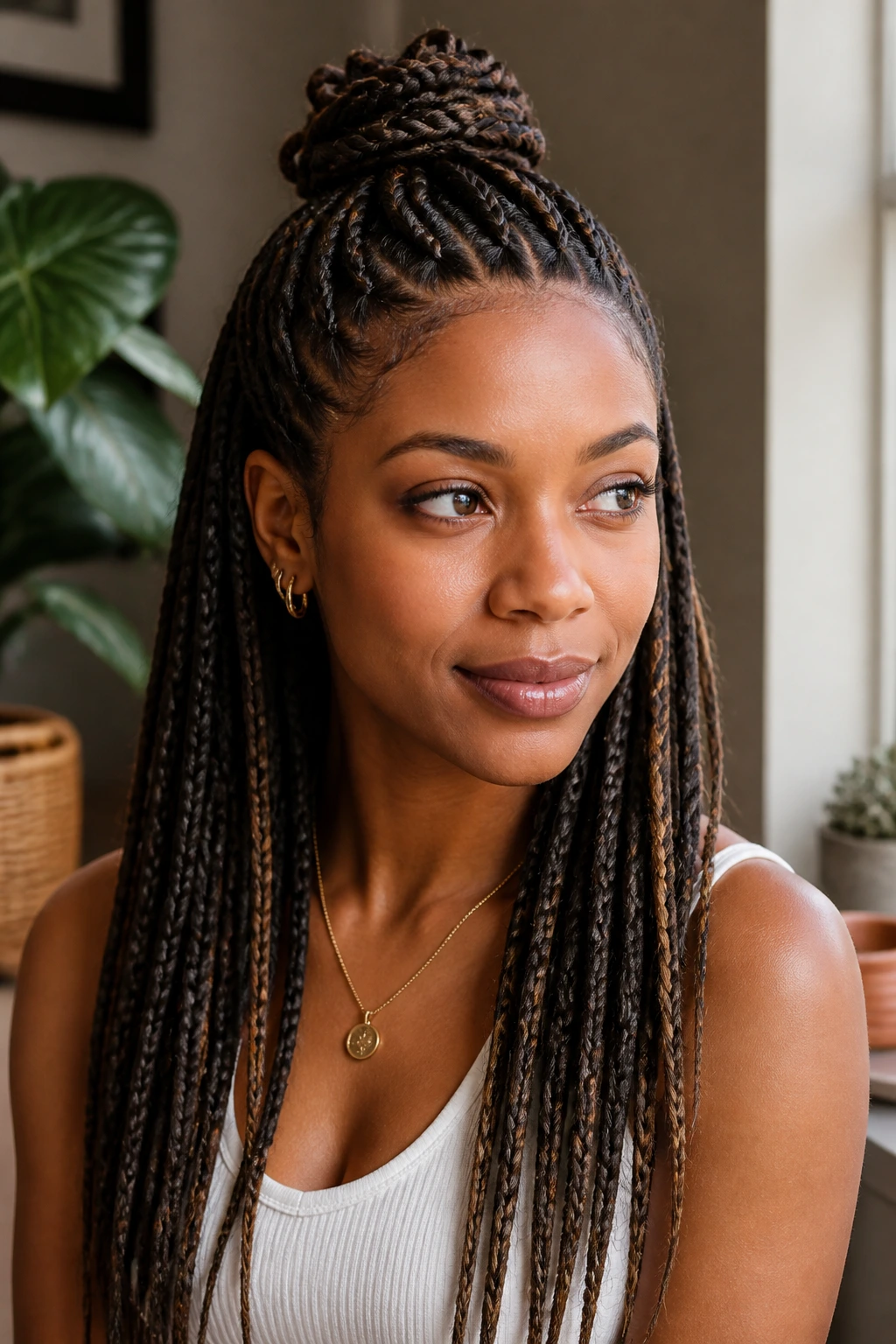
Why does this work so well? Because it gives you lift without asking the whole head to go up. The front is off the face, the back stays loose, and the tension never concentrates in one place for too long.
That makes it a good weekday style for fine hair. You can keep the crown neat and still leave the heavier part of the install resting down your back or over your shoulders. It feels easy.
If your roots are tender, keep the half-up section small and loose. A soft top section is enough. No need to yank everything into a tight knot.
15. Low Braided Ponytail
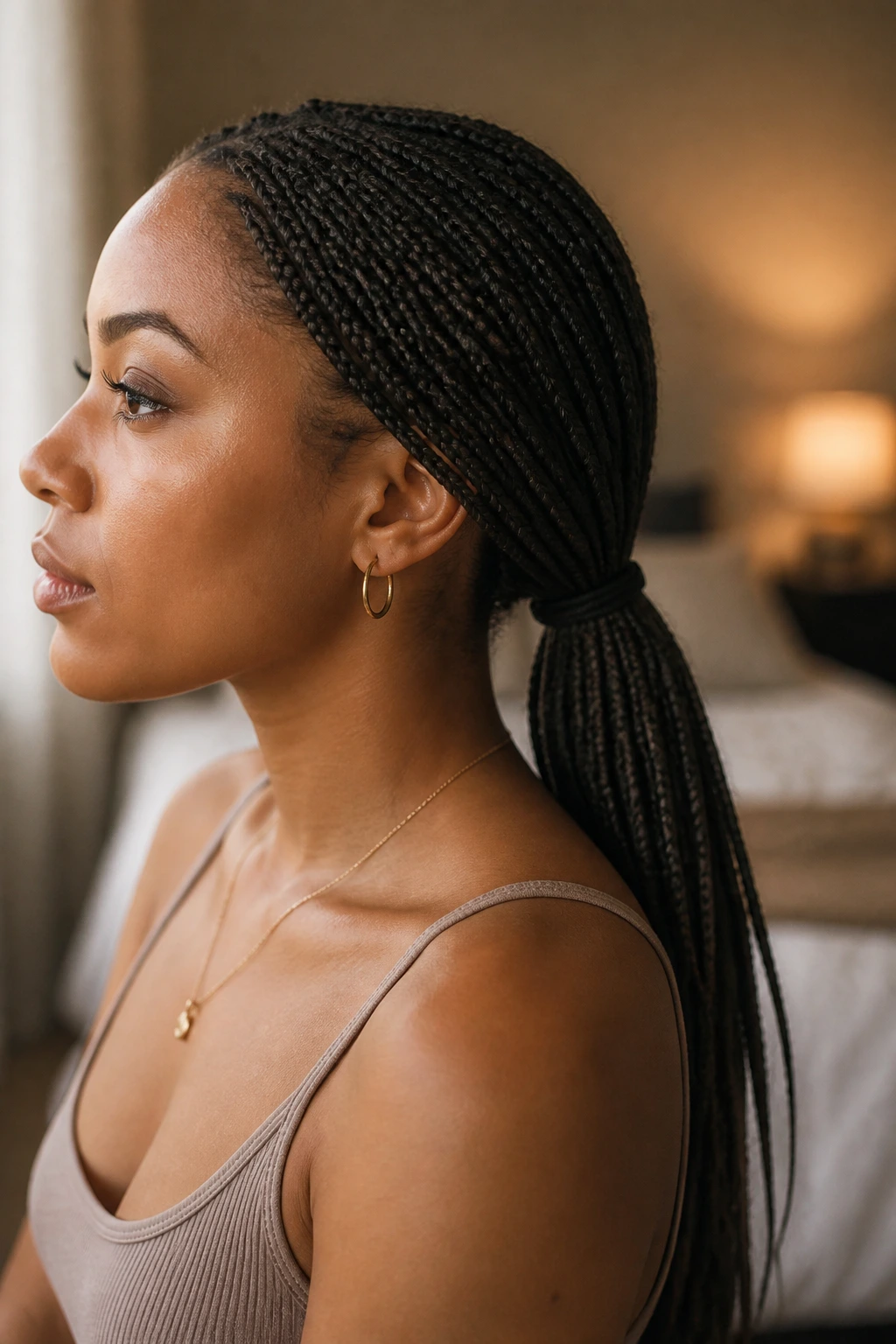
A low ponytail is one of the easiest places to put box braids because it keeps the weight near the nape, not the crown. That usually feels better on fine hair, especially if the install is a little longer.
The look is clean, fast, and practical. It also gives the braids a tidy shape on days when the loose style starts to feel busy or when you just want your neck clear. There’s a reason this one gets worn so often.
Use a snag-free band and stop before it gets tight. If the ponytail starts to feel like a handle, it’s too high or too snug.
16. High Braided Ponytail
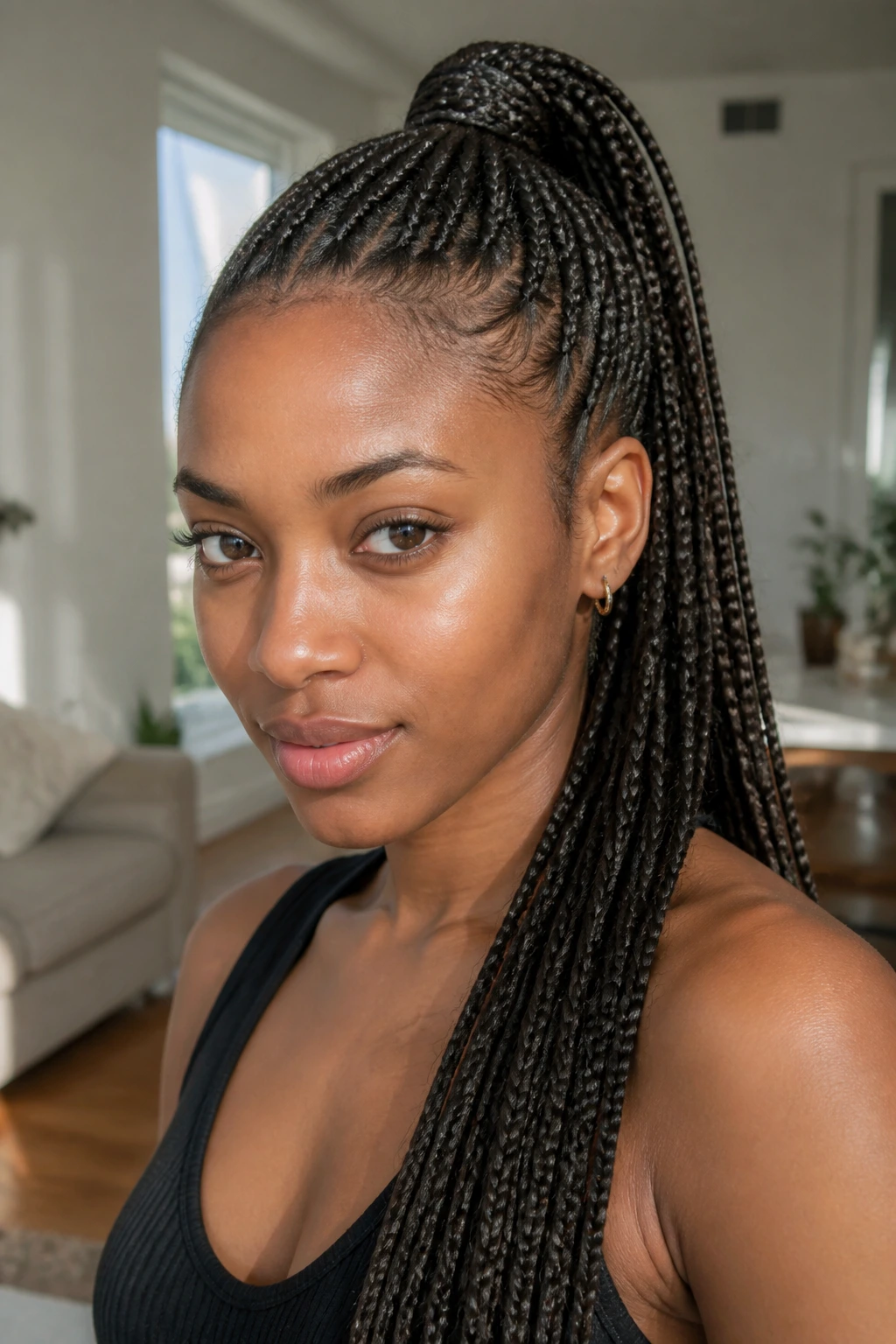
A high ponytail has attitude, but it asks more from fine hair than the low version does. The lift can be fun, yet it puts the braid weight higher on the scalp, which is where some heads start grumbling.
If you choose it, keep the ponytail soft and don’t overpack the crown. A narrow, airy pony reads better than a thick, overstuffed one on fine strands. The shape matters more than the size.
This is the style for days when you want a little height and movement, not a full-on gravity test. Good lighting helps too.
17. Low Braided Bun
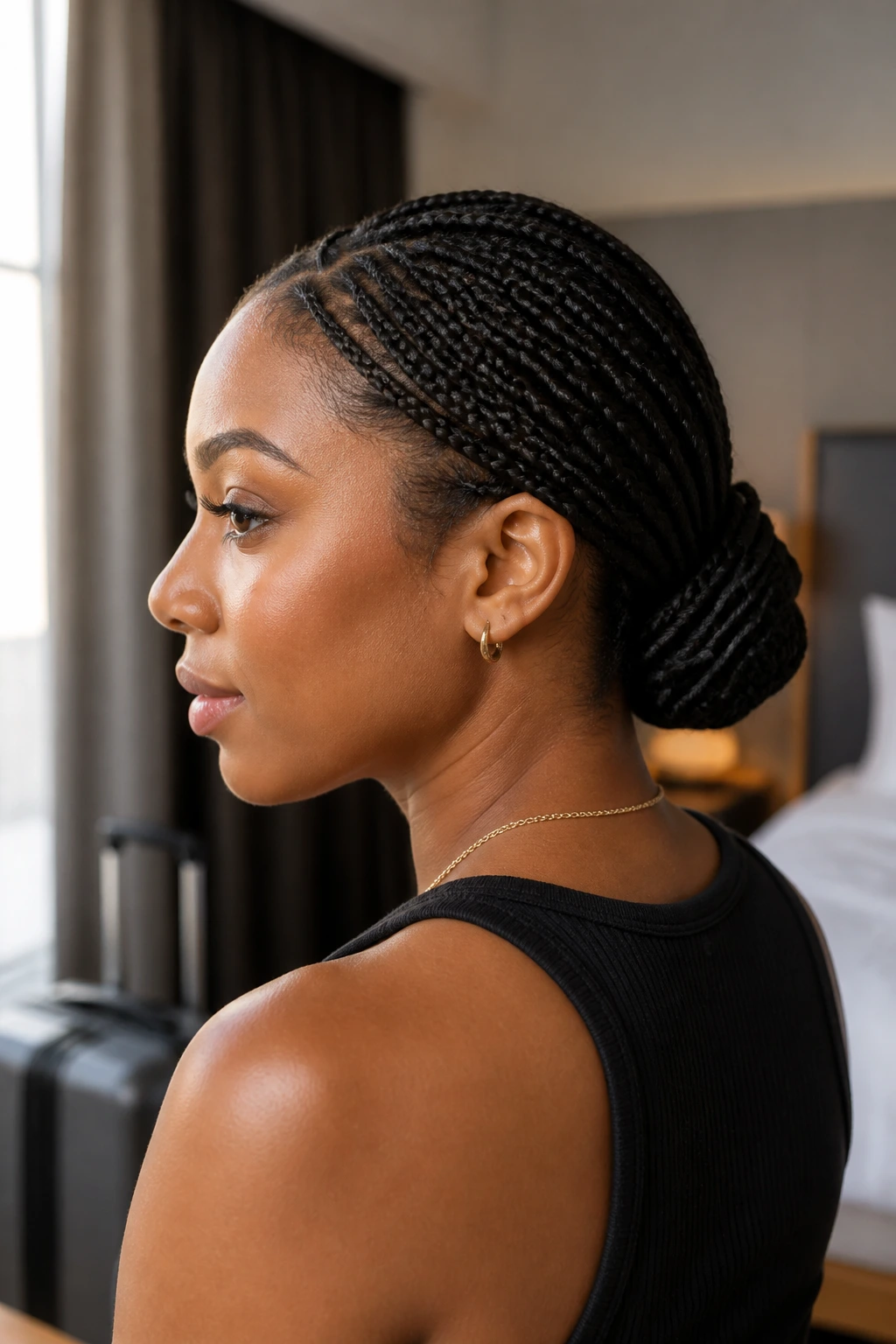
A low bun is the quietest style on this list, and that’s exactly why it works. All the weight gets tucked down near the nape, where it tends to feel calmer, and the ends stay contained.
It also hides grow-out well. Fine hair with braids can start to look a little ragged at the roots before the braids themselves are done, and a low bun keeps that from showing as much.
This is the one I’d choose for travel, long workdays, or any stretch where you want the style to disappear into the background and just behave.
18. Space Buns with Braids
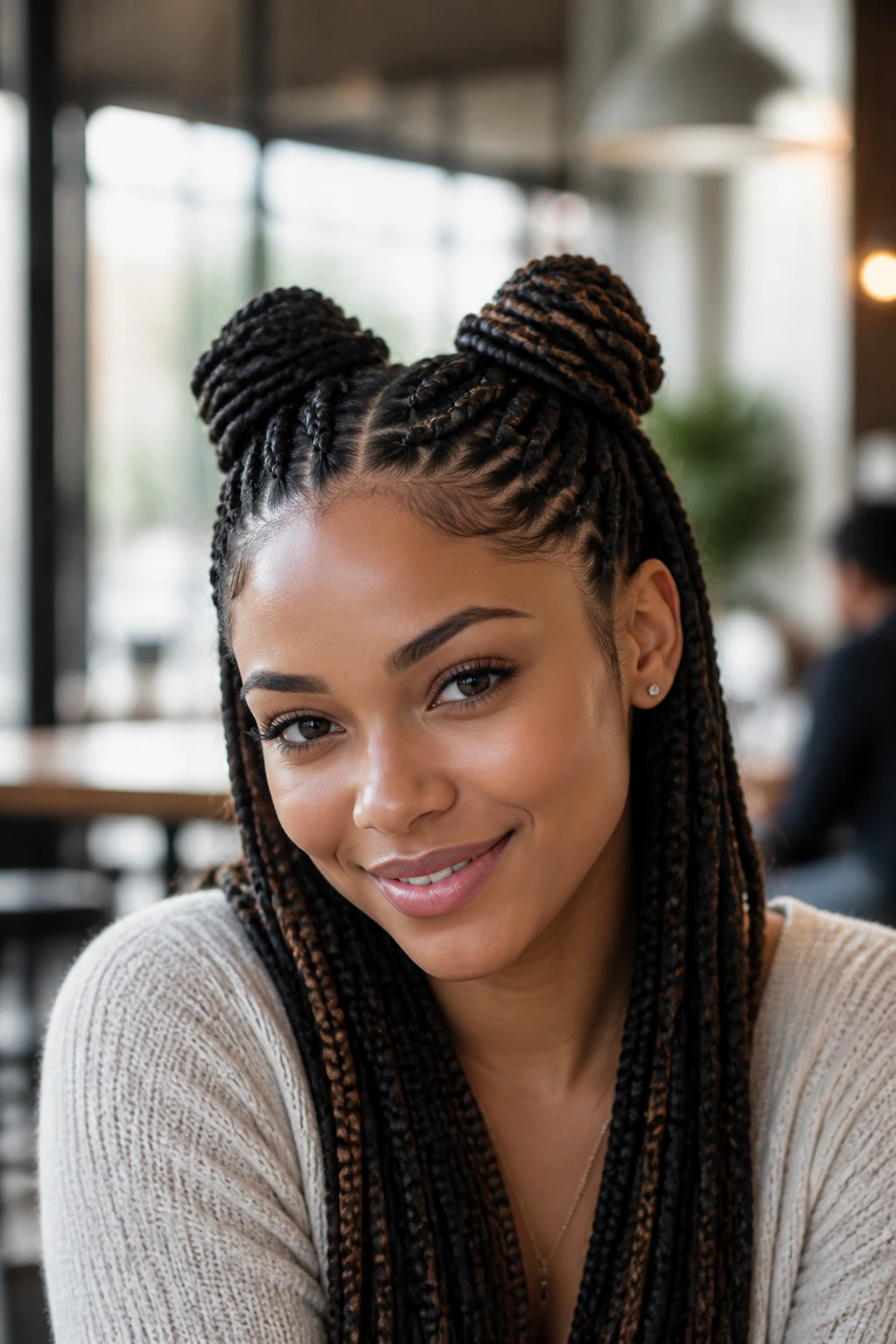
Space buns are playful, but they need a light hand on fine hair. Two small buns at the crown are usually enough; big heavy buns can drag the roots in opposite directions and make the whole head feel tired.
Done well, though, this style is charming. It keeps the face open, adds height, and gives the braids a fun shape that doesn’t need much else.
Keep the buns balanced but not oversized. If the sections are too large, the style stops looking cute and starts looking crowded. That’s the line.
19. Side Bun Box Braids
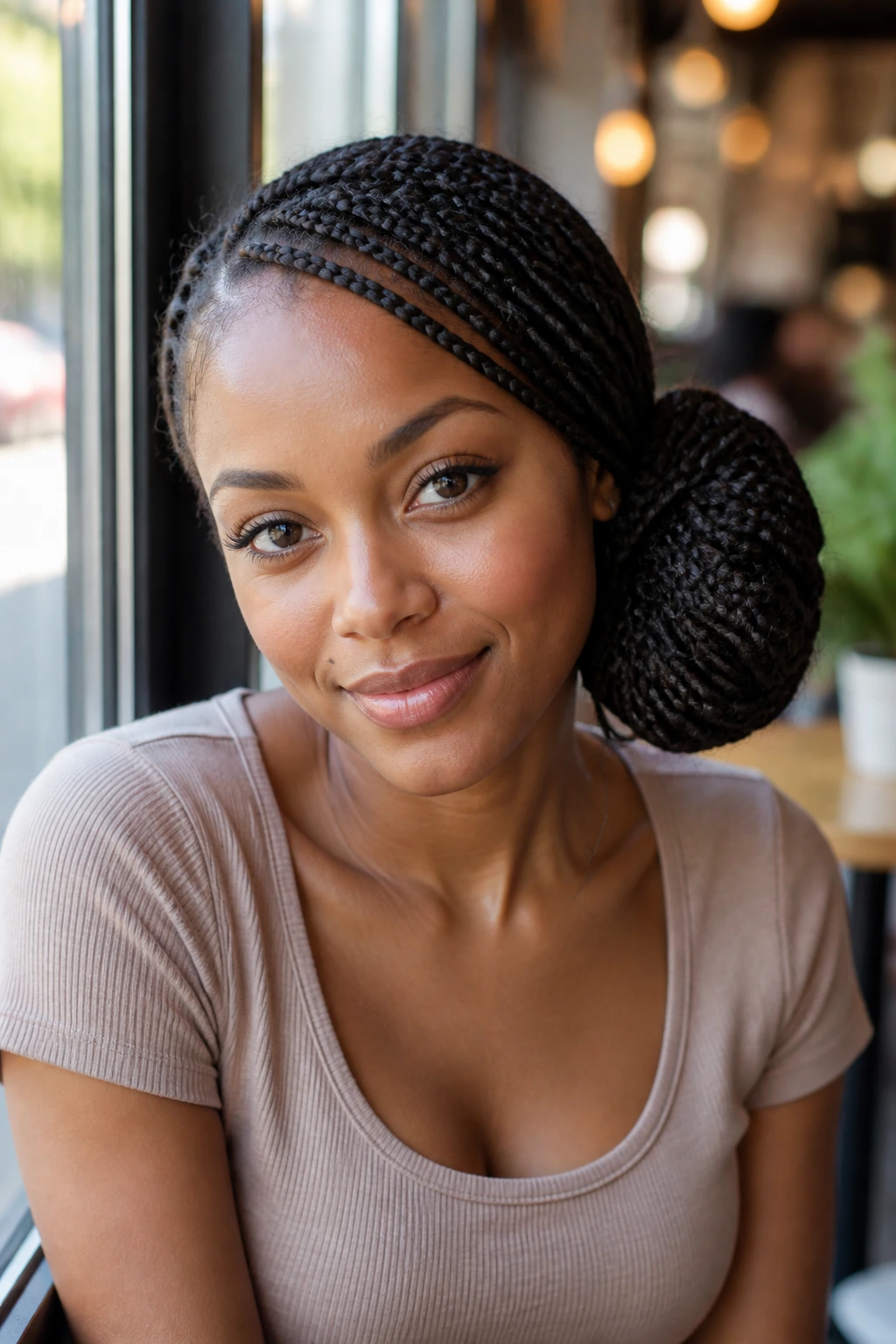
A side bun is softer than a center bun and usually easier to wear because the weight sits off to one side instead of evenly across the crown. Fine hair can handle that a little more comfortably, especially if the bun is low and loose.
The asymmetry also gives the style a finished look without much effort. It can read casual or polished depending on whether you leave a few pieces out around the face.
This is a good option when you want a graceful shape and don’t want the braids falling into your collar all day. The neck gets a break. So does the scalp.
20. Boho Braids
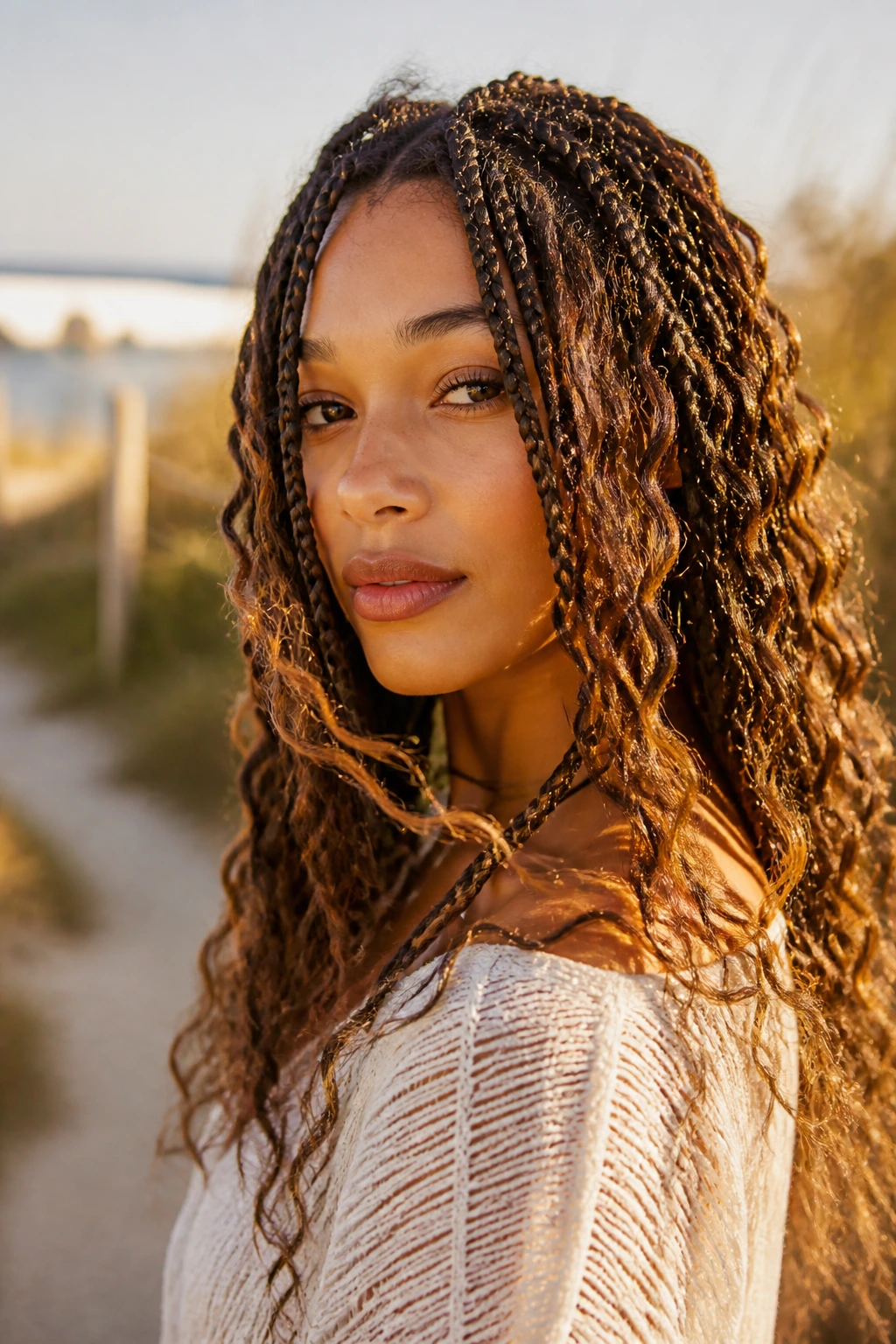
Boho braids add loose curls or wavy pieces between the plaits, and that softness can make fine hair look fuller around the edges. The texture breaks up the braid line in a way that feels airy rather than heavy.
The warning is simple: don’t overdo the loose hair. Too much added curl can turn the style fuzzy fast and make the set feel bigger than it needs to be. A few pieces go a long way.
I like this version for people who want movement more than strict neatness. It has a relaxed look without turning into a tangled mess if you keep the extras controlled.
21. Curled-End Braids
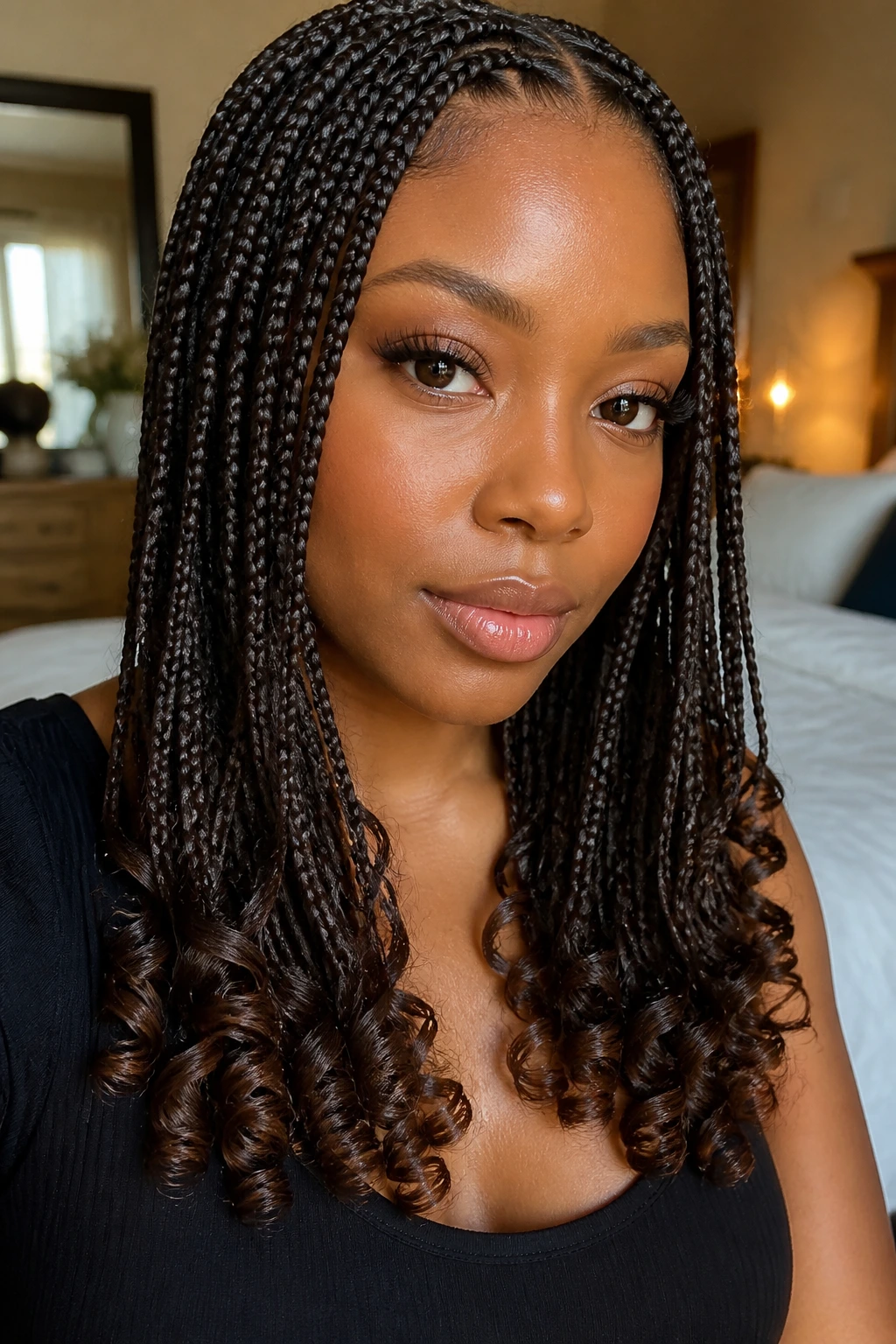
Curled ends are one of the easiest ways to make a braid set feel softer. The braid body can stay neat and compact, while the ends open up with a little bounce.
That works especially well for fine hair because the curled tips make the style look fuller where the braid naturally starts to taper. You get a little body at the bottom without adding more hair through the whole length.
What to ask for
- Rod size: medium rollers for a loose bend, smaller rods for a tighter curl.
- Length: shoulder to collarbone keeps the curl from looking stringy.
- Finish: a light setting foam after the rods come out, not heavy wax.
This one is easy to love on day one and still looks decent when the braids start to relax.
22. Beaded Braids
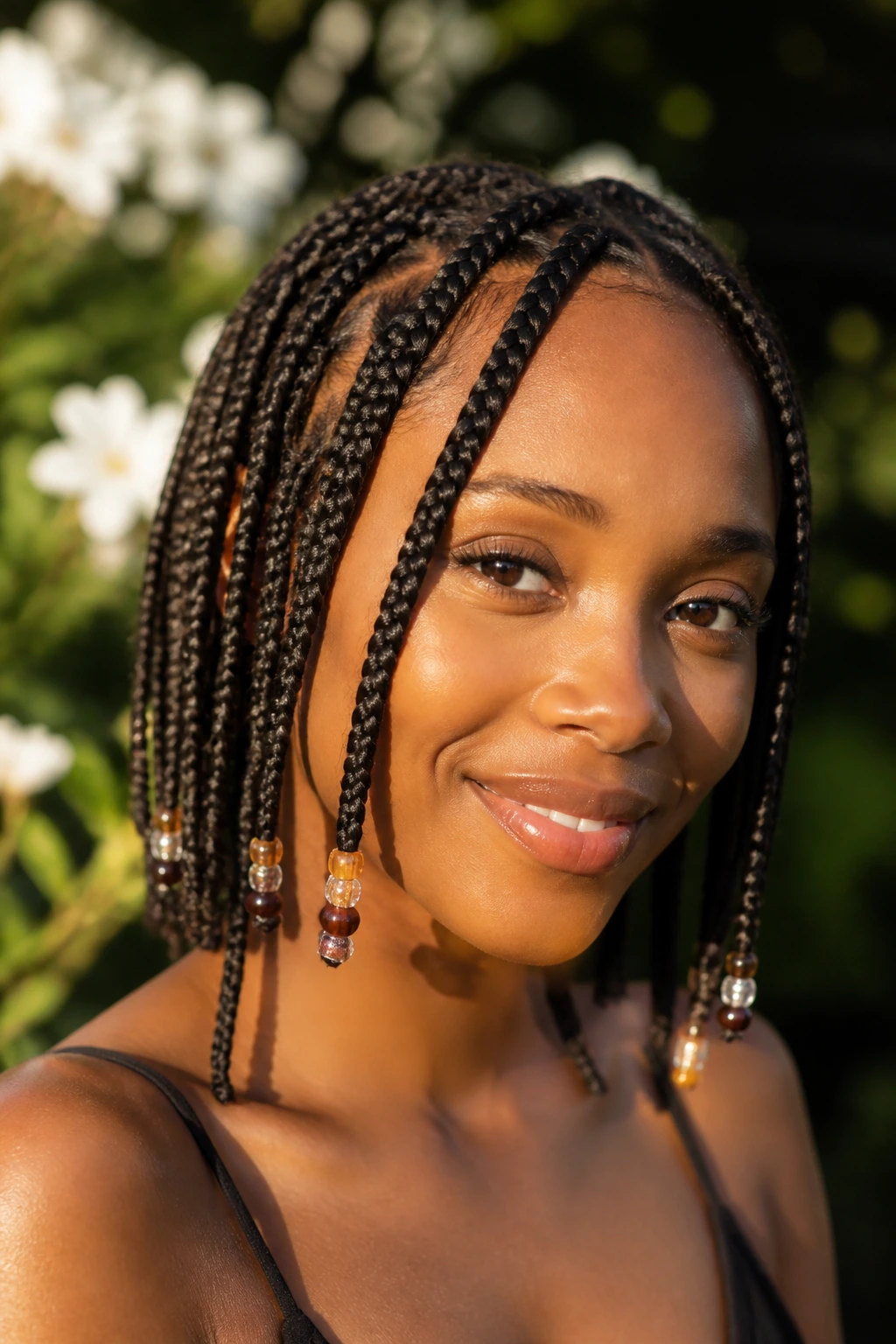
Beads can be beautiful on fine hair, but the trick is moderation. A few beads at the ends or on the front pieces can add sound, movement, and a little shine without dragging the whole head down.
Heavy beads are another story. They pull. They click. They also make the front sections feel busier than they need to be, which is not what a fine-haired head needs.
Use the beads like punctuation, not wallpaper. One small cluster near the face or ends is usually enough.
23. Gold-Cuffed Braids
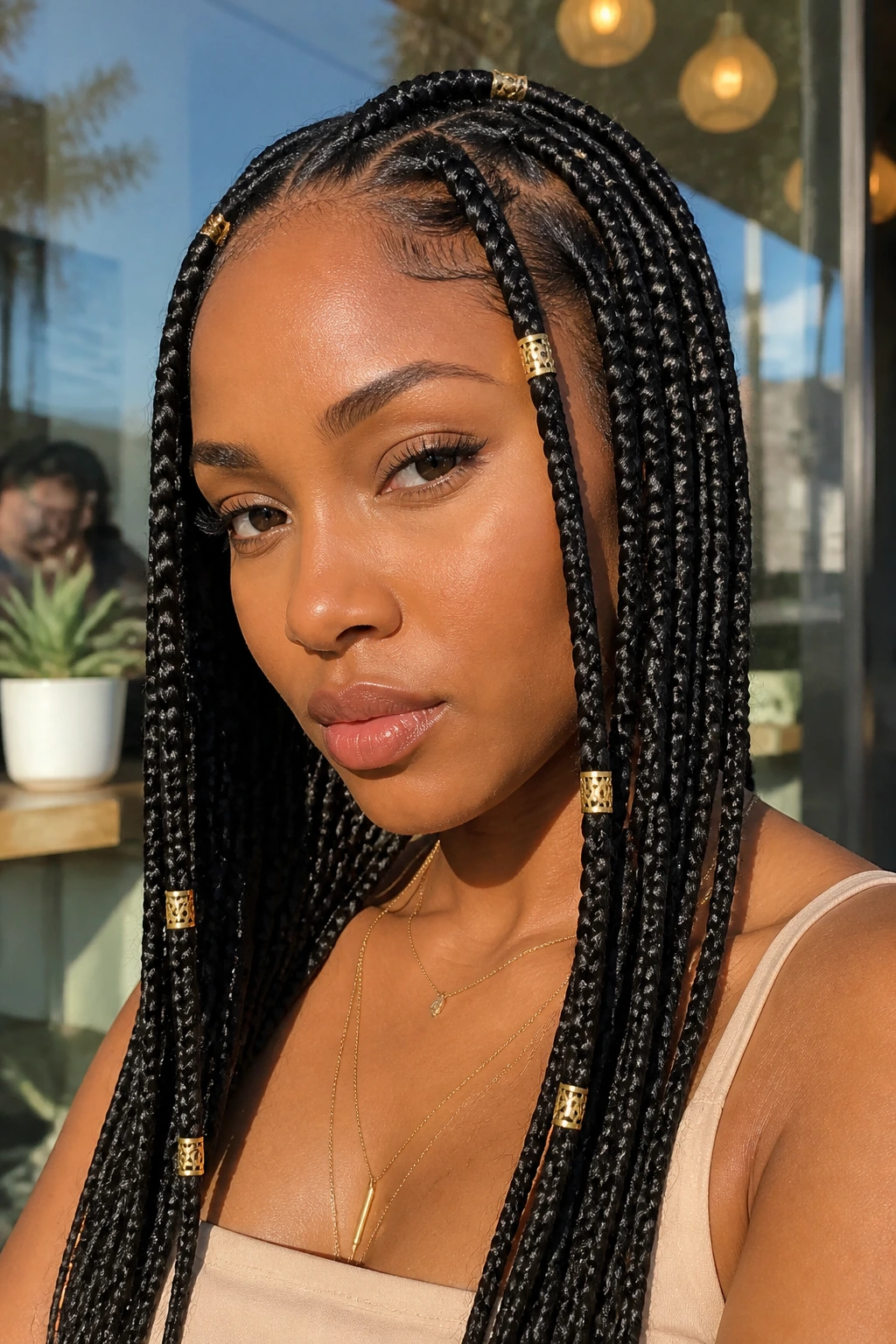
Gold cuffs are lighter than beads and easier to place exactly where you want them. That makes them a nice choice for fine hair because they add detail without much extra weight.
A few cuffs near the face can brighten the whole style. A few more on the lower half can make the ends feel finished. You do not need twenty of them to get the effect.
This is a good style when you want the braids to look styled even on a plain shirt day. The cuffs do the talking.
24. Ribbon-Wrapped Braids
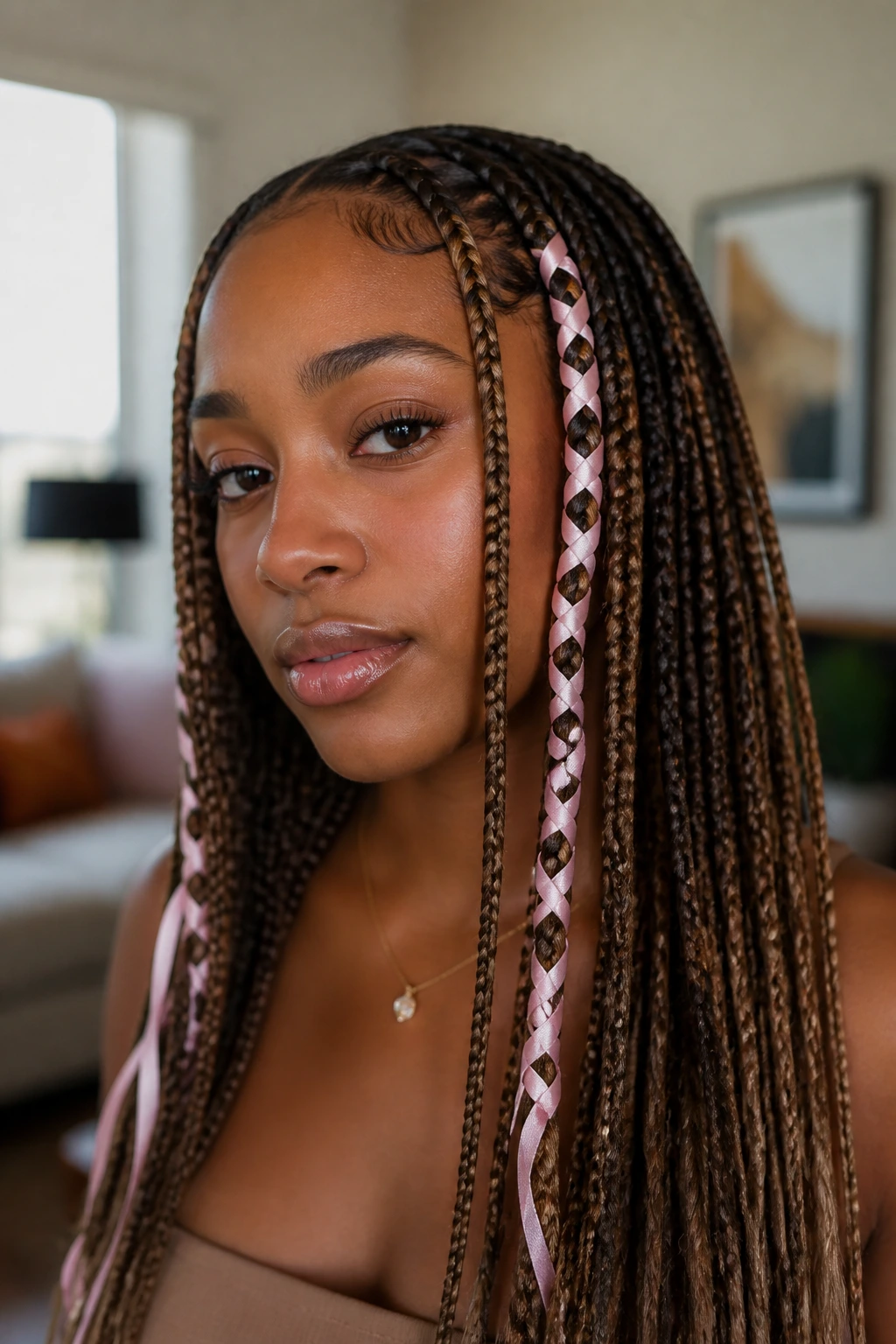
Ribbon-wrapped braids feel a little soft and a little romantic. A thin ribbon woven around a few braids changes the mood without changing the structure of the install itself.
Fine hair benefits from that because the style stays light. You’re not adding bulk at the root; you’re adding a visual accent where it can be seen and removed easily later.
A single color ribbon can look tidy. A satin ribbon can feel more dressed up. Either way, keep it to a few braids, not the whole head.
25. Scarf-Tied Braids
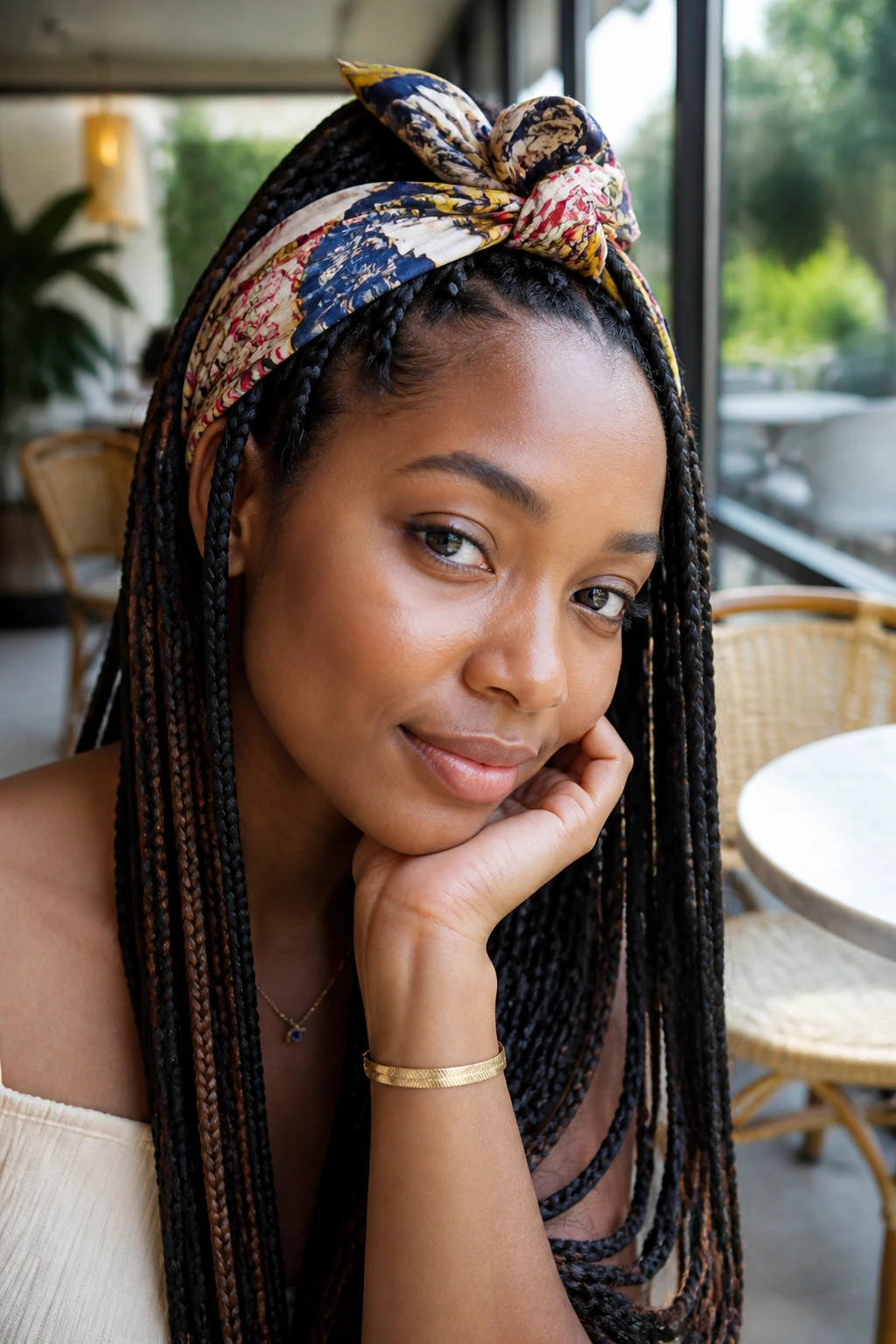
A scarf tied at the crown or around a low bun is one of the easiest ways to make a braid style feel intentional. It also protects the roots a little when you’re sleeping or trying to cover a day-three frizz halo.
The benefit for fine hair is obvious: the scarf does some of the styling work. It adds color and shape without making the braids themselves heavier or more crowded.
Keep the knot loose enough that it doesn’t press on the crown. A scarf should finish the look, not pinch it.
26. Burgundy Braids
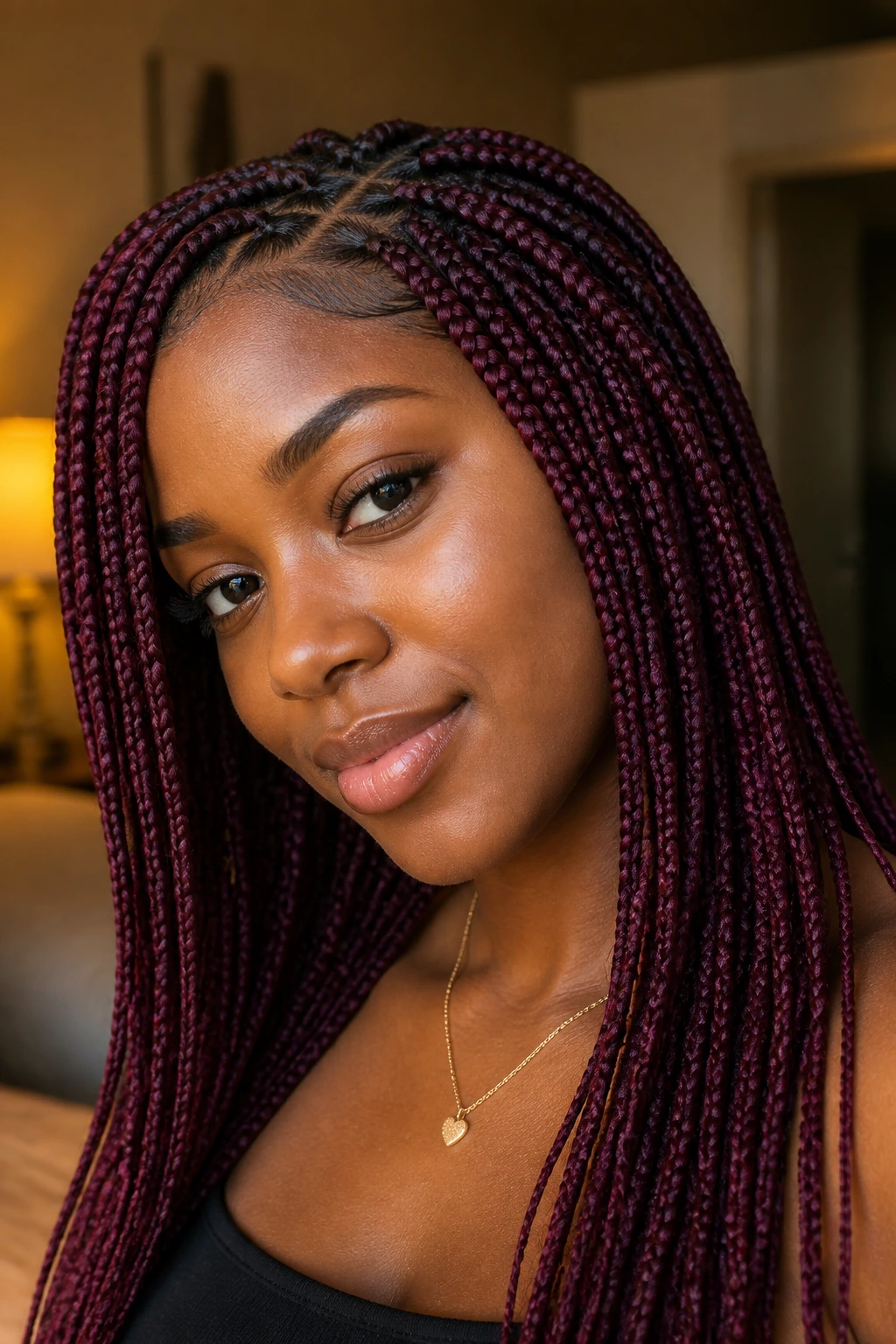
Burgundy gives braids depth fast. On fine hair, that matters because a richer color can make the whole install look more substantial without changing the actual braid size.
The shade reads especially well in low light. It’s not loud, but it isn’t flat either. That middle ground is useful if you want something different without leaning all the way into a bright color story.
This is one of my favorite low-effort color choices for a protective style. It does a lot without asking for extra styling.
27. Honey-Blonde Ombré Braids
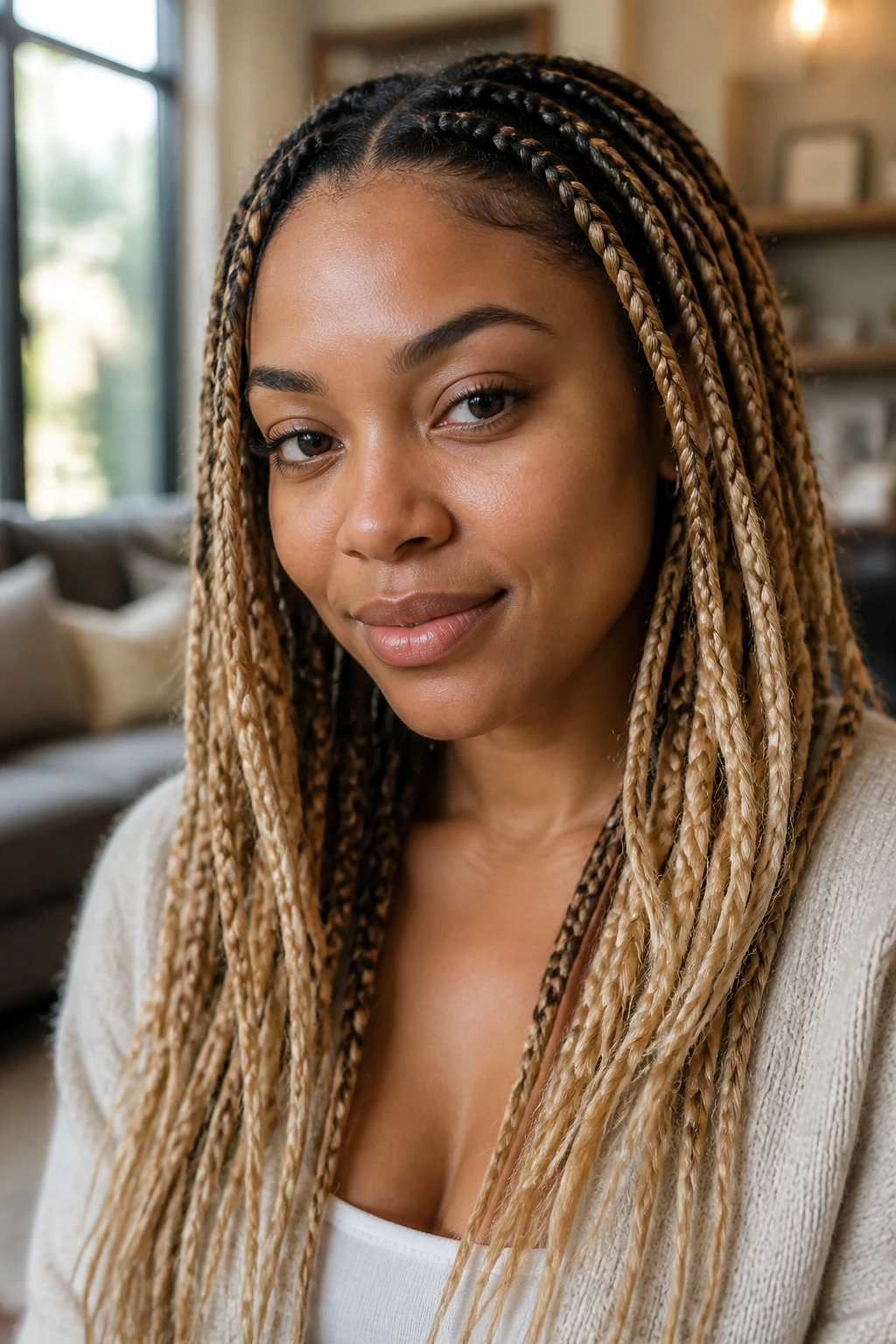
Honey-blonde ends can make fine hair look lighter and fuller at the tips, which helps if the ends tend to disappear into one thin line. The darker root blend also keeps the scalp area grounded.
That contrast is what makes it work. A dark-to-light fade creates movement, and movement gives the eye something to follow. The style reads fuller than a flat single shade.
Keep the blonde tone warm rather than harsh if you want a softer finish. Yellow-y blonde can look loud in a way that fights the braid texture.
28. Chestnut Brown Braids
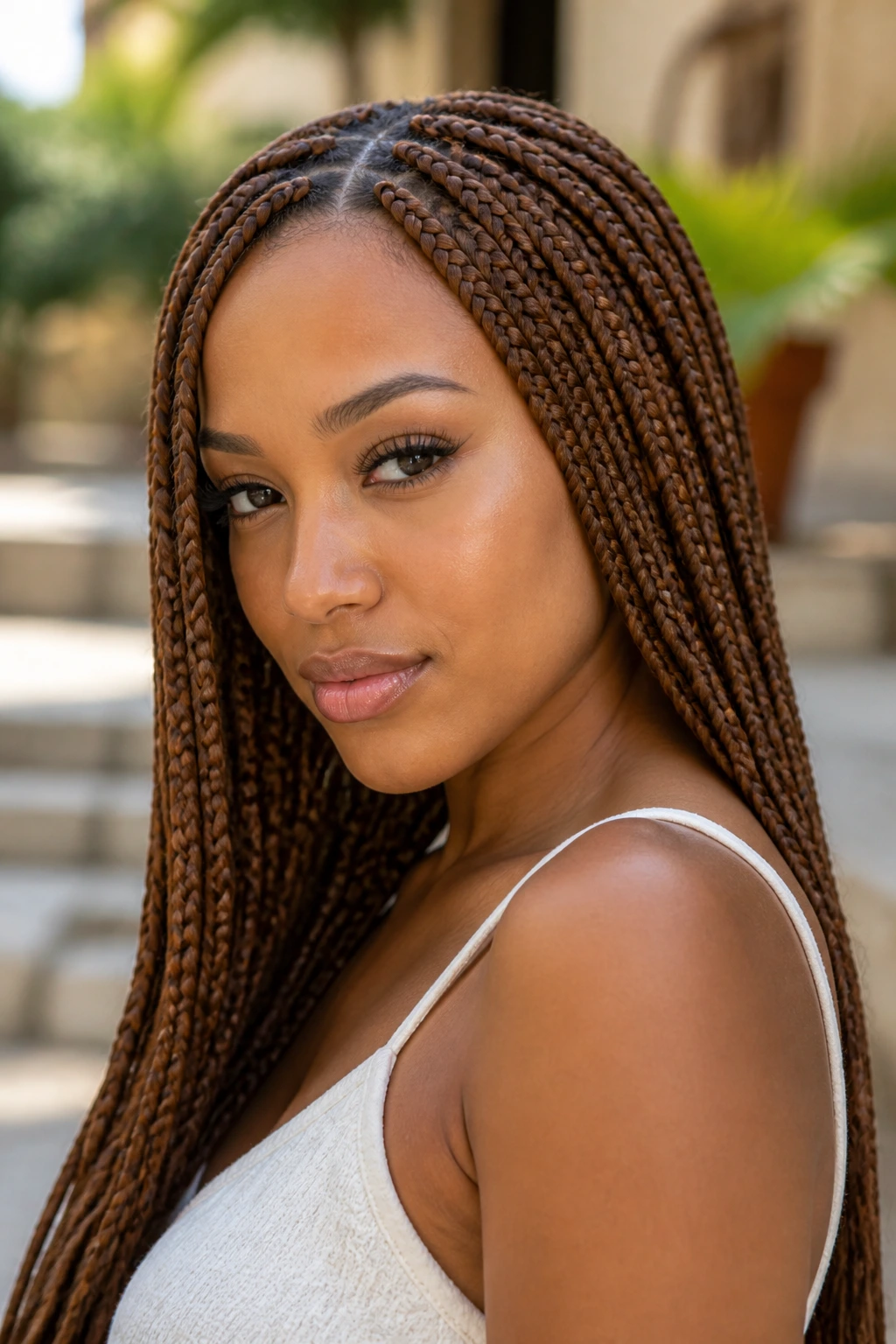
Chestnut brown is one of the easiest colors to wear because it stays close to natural hair tones while still giving the set depth. For fine hair, that lower contrast can make grow-out less obvious and the overall look more continuous.
It’s also a quiet way to make the braids appear denser. A medium brown shade with a little warmth catches the light in a way that black sometimes won’t.
If you want the style to feel polished without announcing itself from across the room, this is a smart pick.
29. Face-Framing Layered Braids
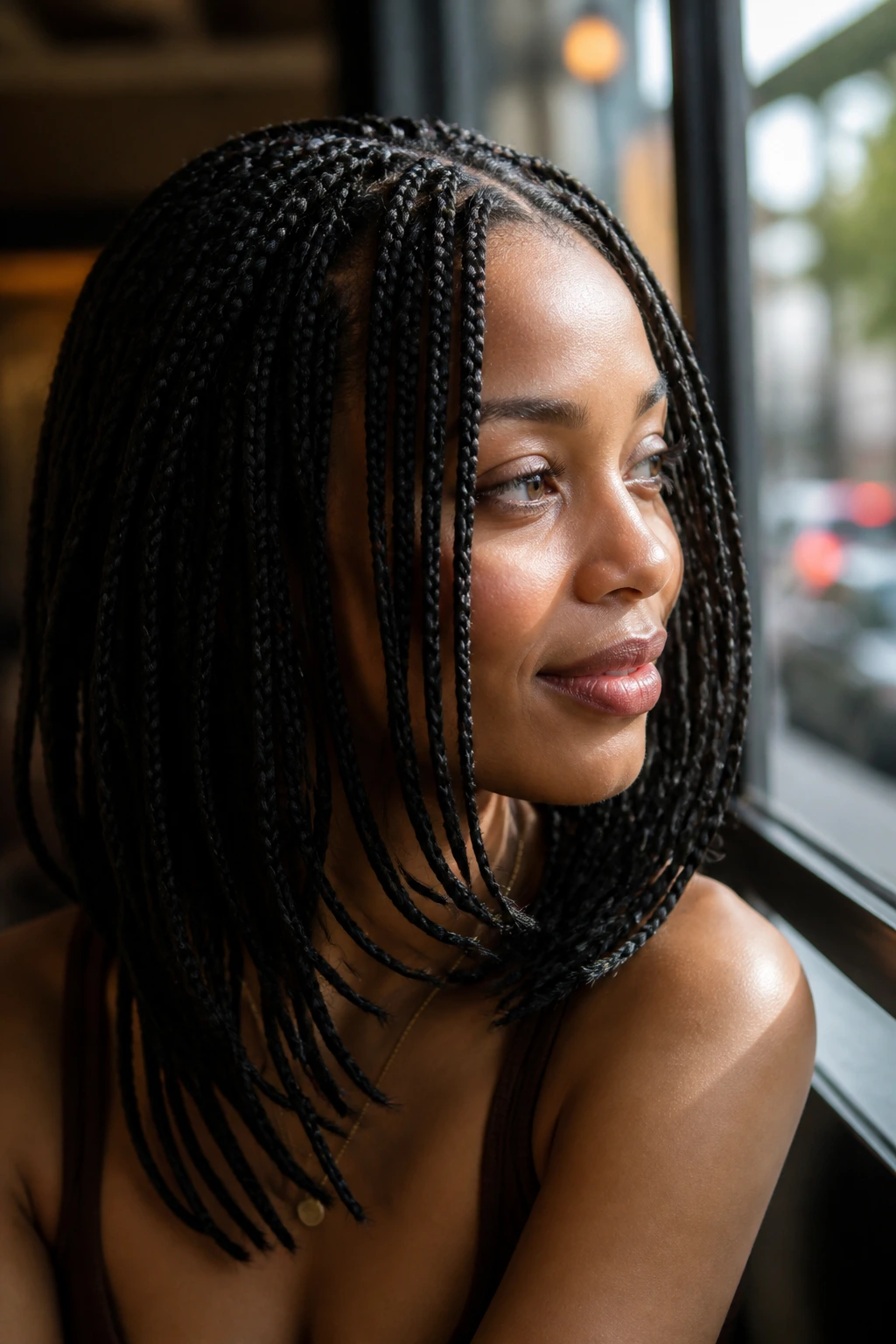
Face-framing layers are one of the best tricks for softening a braid set on fine hair. A few shorter pieces near the cheeks stop the style from feeling too blocky and add movement where the eye naturally goes first.
That layering also helps if your braid ends look a little thin. The shorter front pieces shift attention upward, which means the whole style feels fuller and more balanced.
This is a good one if you wear glasses, hoops, or a lot of open-neck tops. The front pieces play nicely with all of that.
30. Tapered Nape-Length Braids
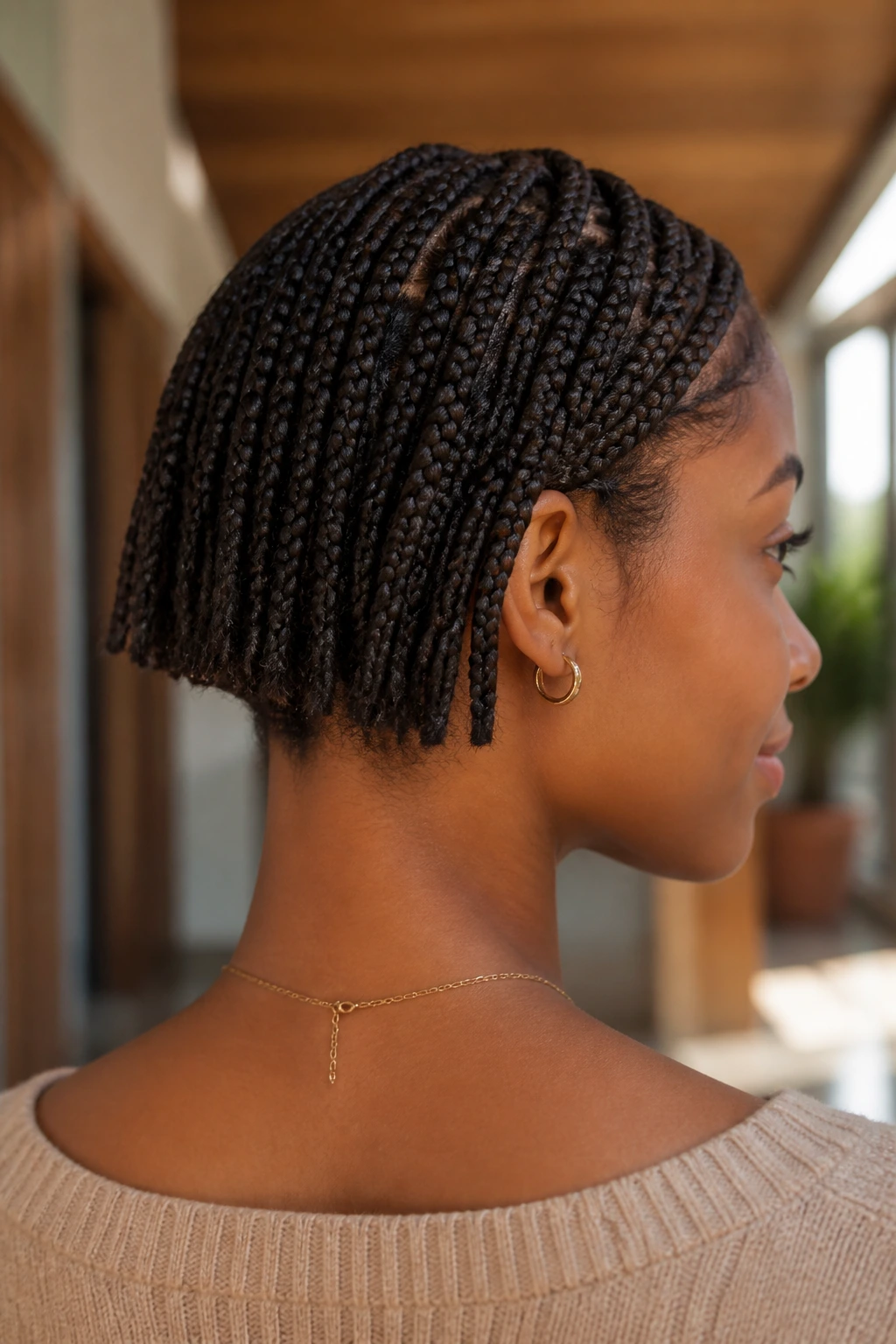
A nape-length set is short, clean, and easy to live with. The braids don’t swing much, the ends stay out of the way, and the weight stays lower where fine hair usually tolerates it better.
This is the shortest style on the list, and honestly, it’s underrated. You get all the visual neatness of box braids without the pressure that comes with length. Sometimes short is the smartest move.
Ask for a soft taper at the neckline so the cut line doesn’t feel harsh. That keeps the whole style lighter visually and physically.
31. Bubble Ponytail Braids
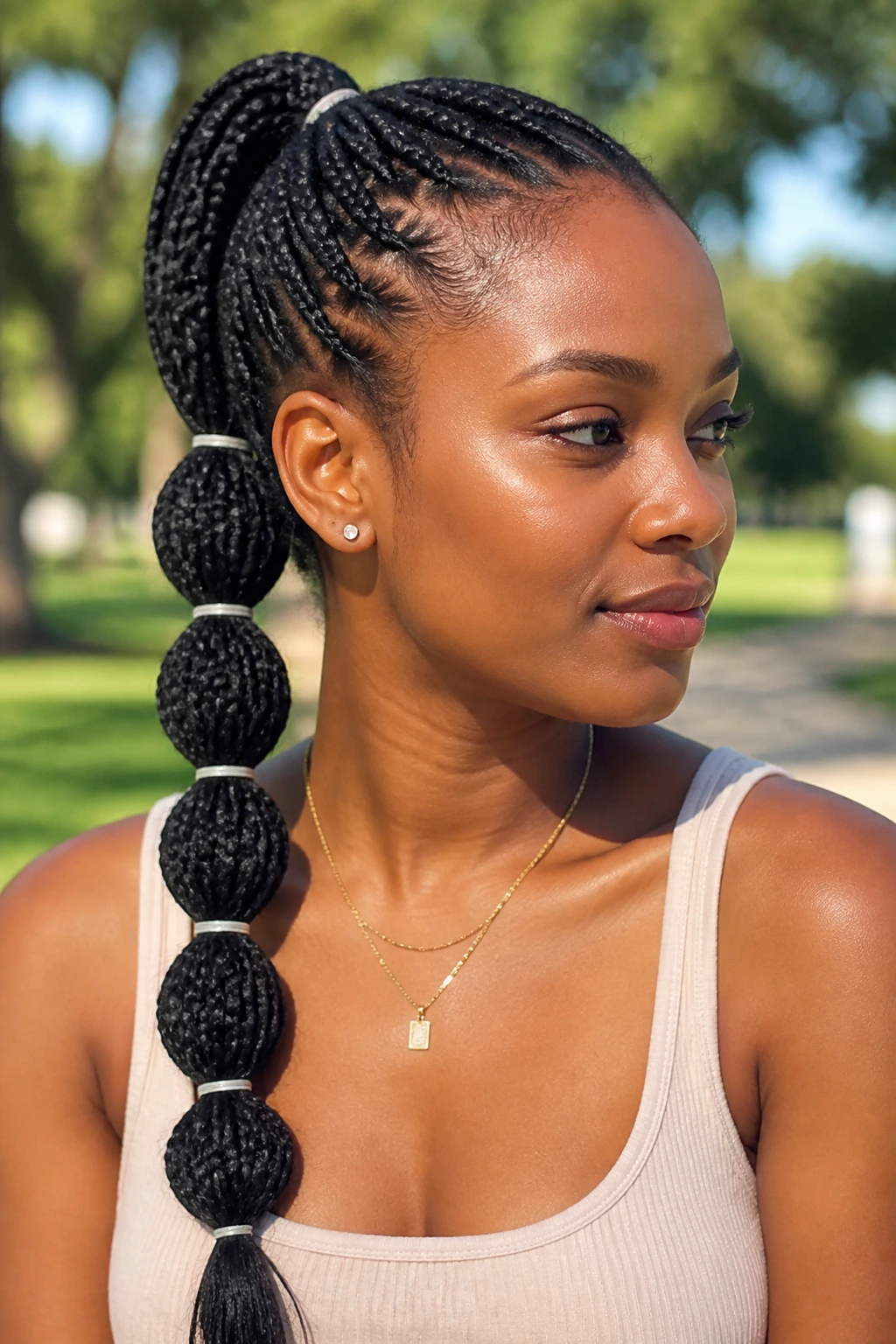
Bubble ponytail braids give you shape without a lot of extra styling. The ponytail is sectioned with soft ties, so the style looks deliberate and a little playful while keeping the weight collected.
Fine hair usually does better when each bubble is modest. Oversized bubbles can pull the ponytail down and make the whole style feel bulky. Small to medium sections usually hold the shape better.
This is a fun option for weekends or casual events. It feels styled, but not fussy.
32. Halo Crown Braids
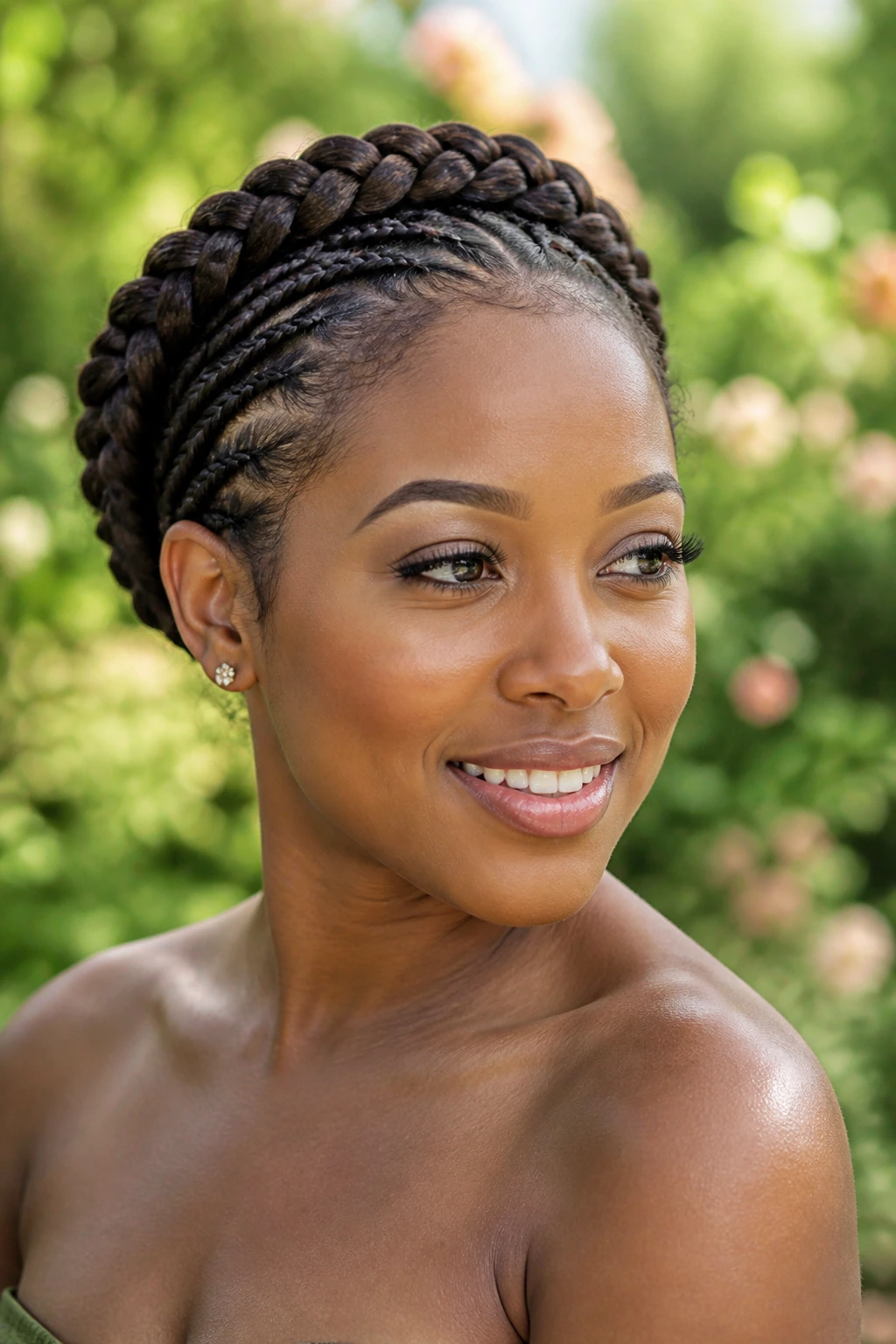
A halo crown braid wraps around the head like a frame, which is useful if you want the braid work to sit mostly around the perimeter instead of hanging everywhere at once. That can feel calmer on fine hair than a full loose cascade.
The look is formal without being stiff. It also keeps the neck clear, which is a nice bonus when the weather or your schedule makes loose braids annoying.
The trick is keeping the crown braid soft enough that it doesn’t press on the edges. Elegant should not mean tight.
33. Mixed-Length Braids
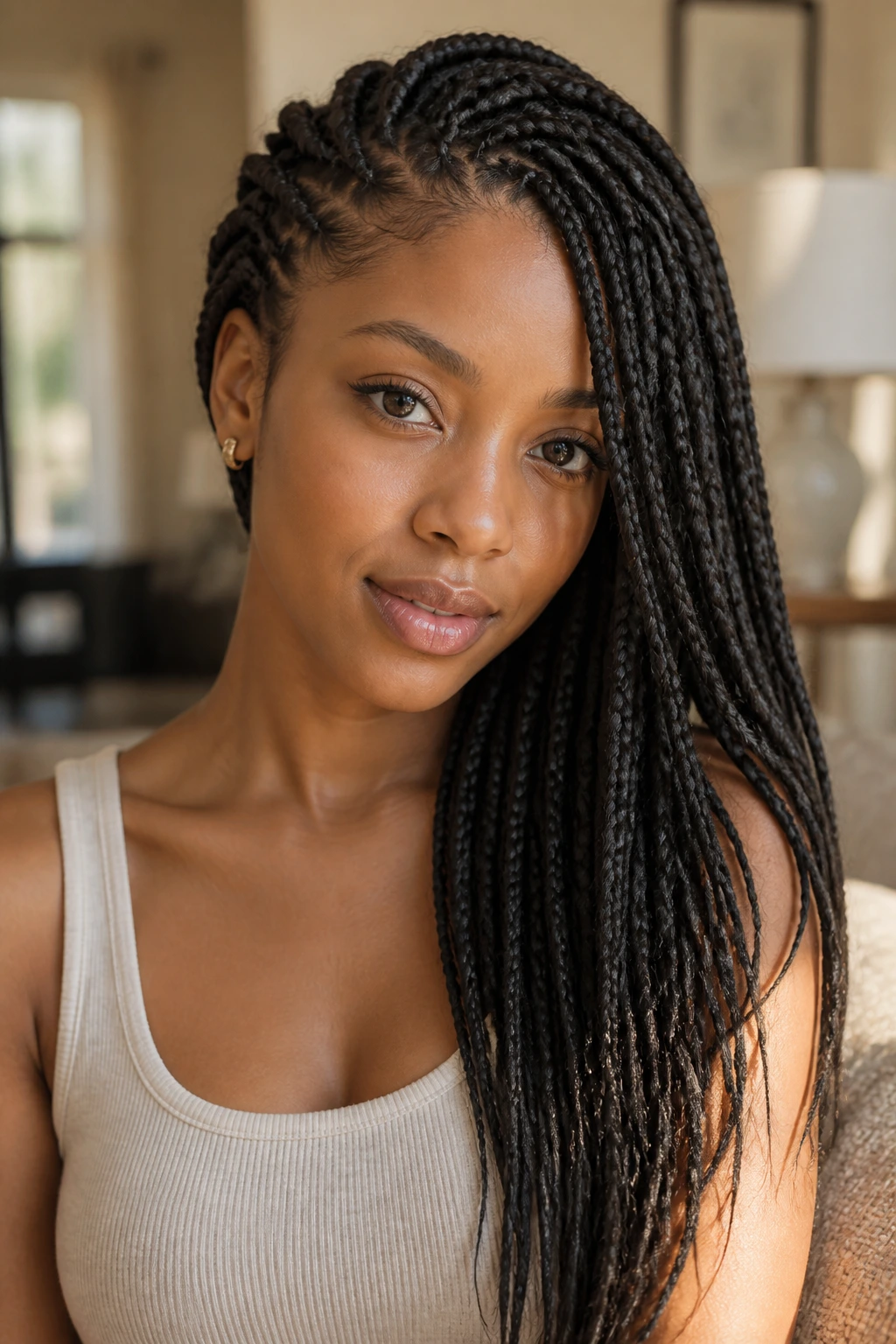
Mixed-length braids are a clever way to fake fullness. When every braid doesn’t end at the exact same point, the silhouette feels thicker and less obviously sparse at the bottom.
That staggered finish is especially useful on fine hair because the eye stops expecting one sharp line. Instead, it reads movement and body. Small trick, big payoff.
This is a good style if you like a little messiness with your polish. It looks lived-in in a good way.
34. Soft Jumbo Bob Braids
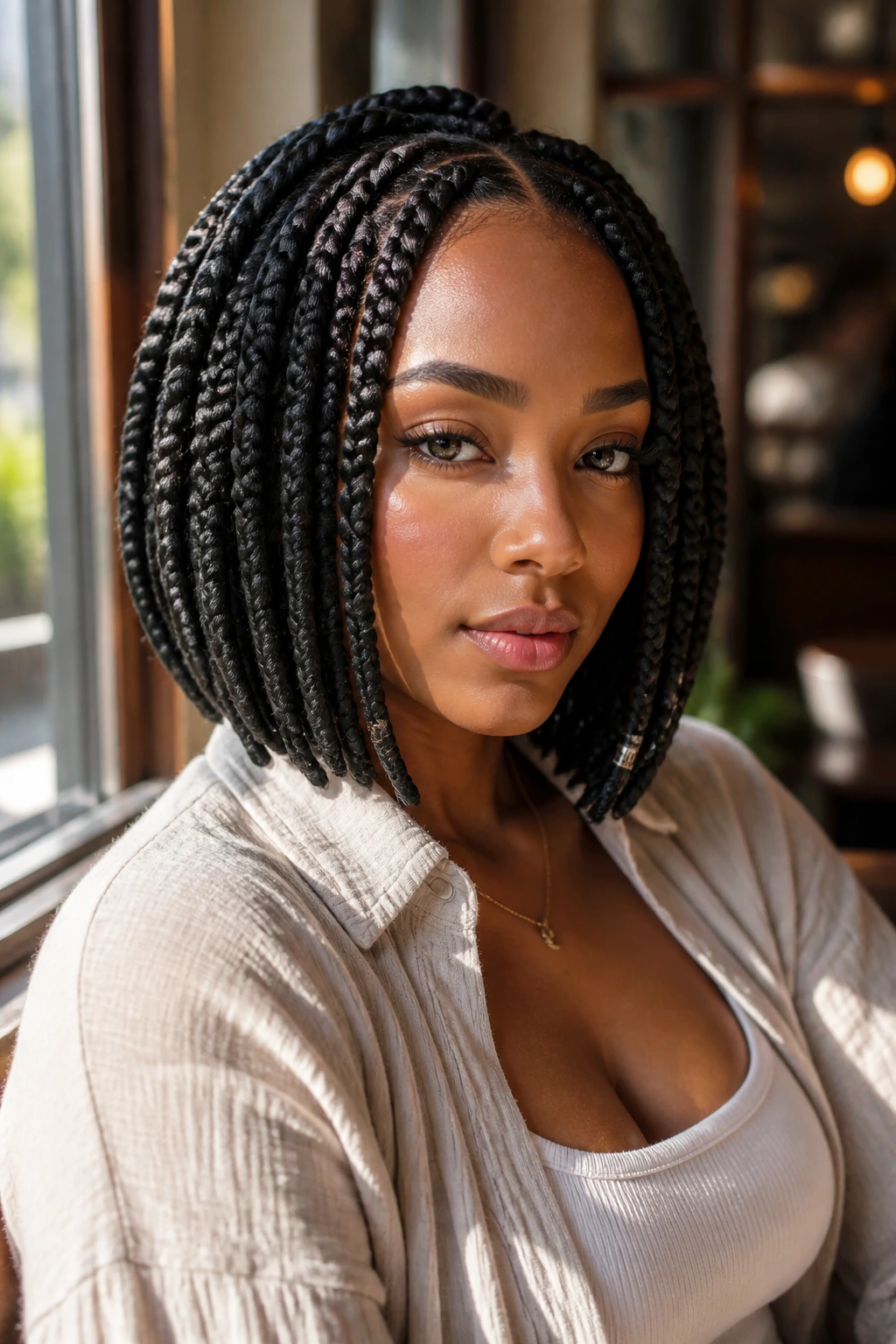
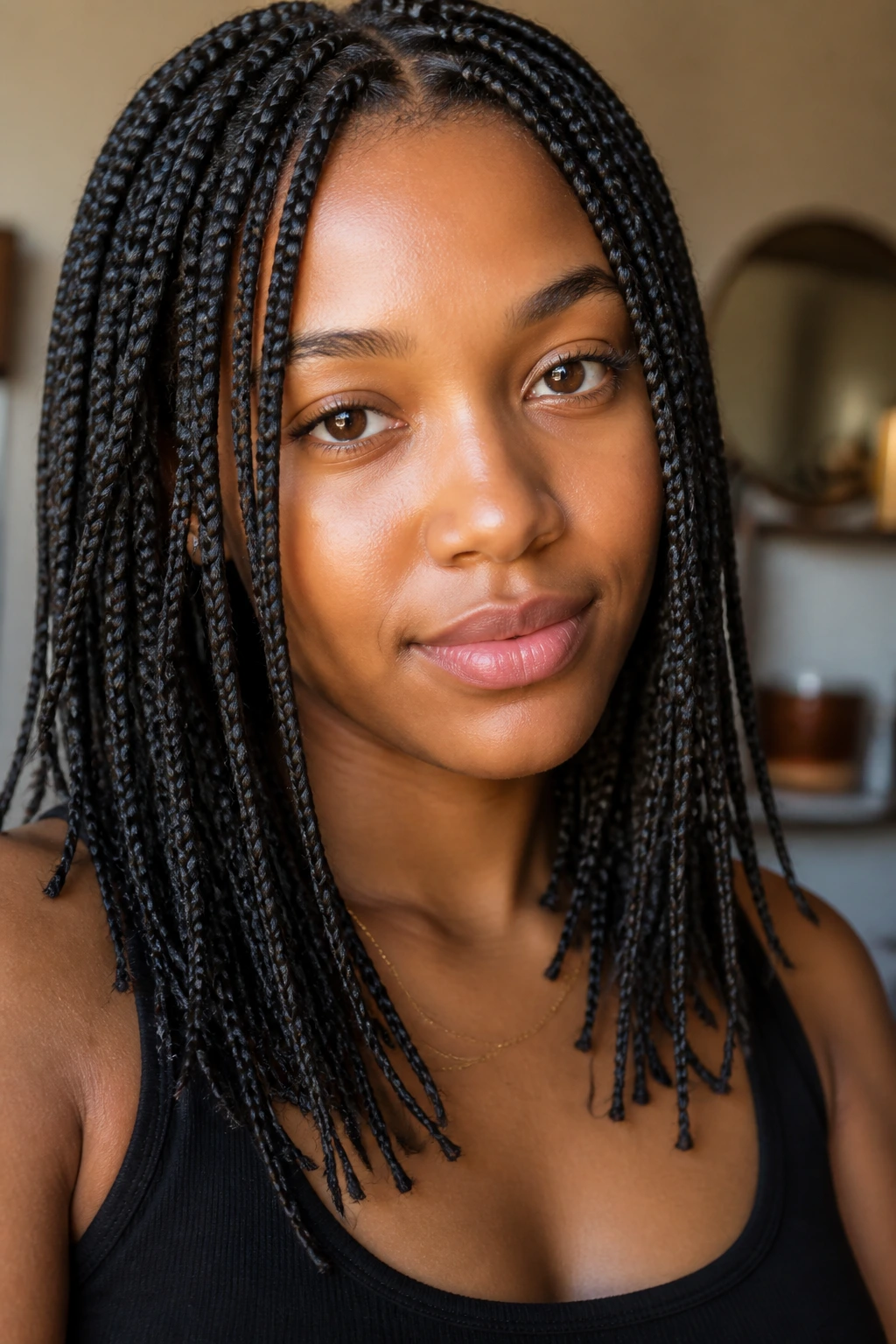
Soft jumbo braids can work on fine hair if the length stays short and the install stays airy. The whole idea is to get the larger braid shape without hanging too much weight off the scalp.
A bob keeps that in check. If the braids were waist-length, I’d hesitate. At chin or collarbone length, though, the bigger sections can look lush without becoming a tug-of-war.
This is one of the few larger-braid looks I’d keep in the running for fine hair, and only because the short length does the balancing.
35. Slim Waist-Length Braids
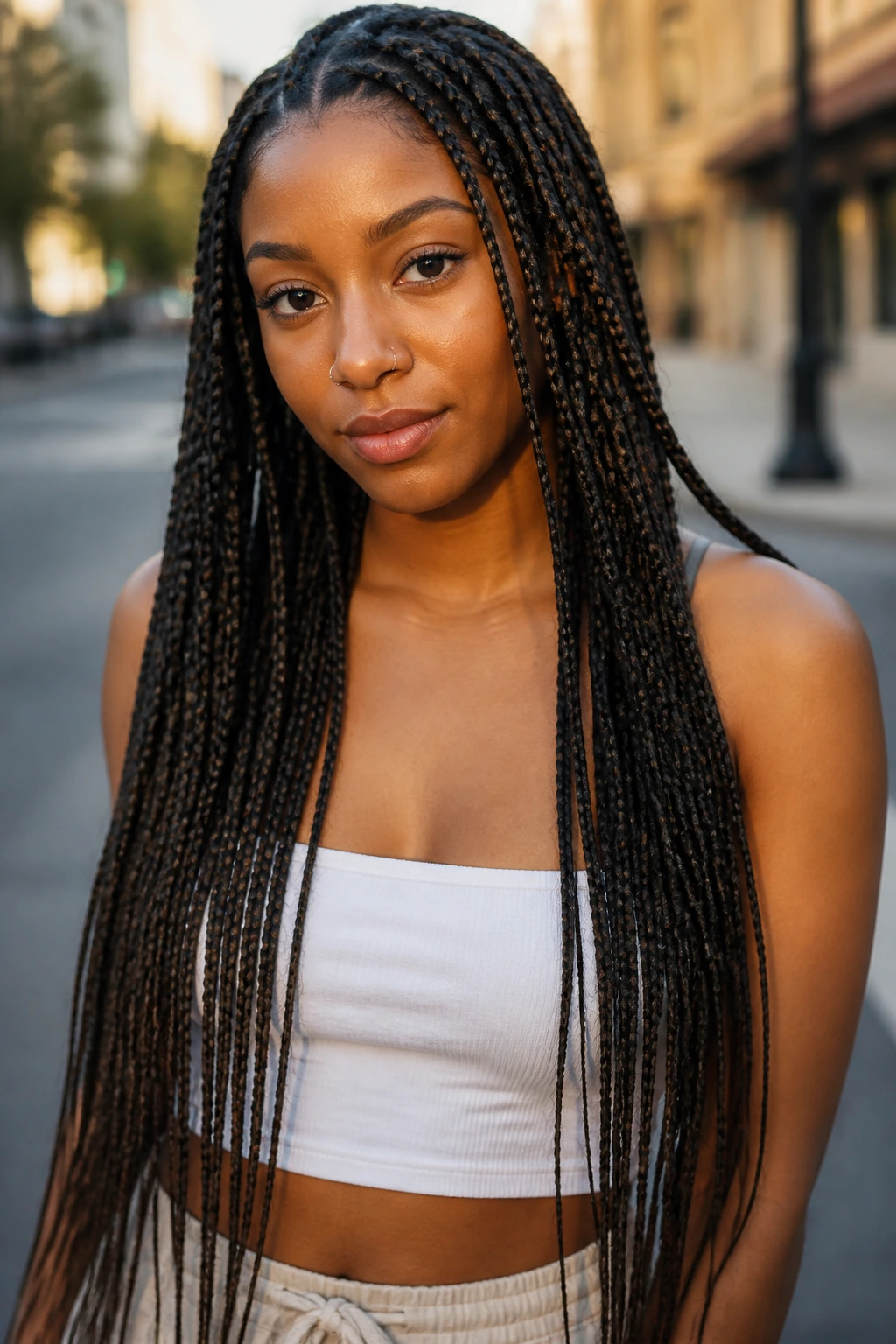
Long braids are not off the table for fine hair, but they need the lightest possible build. Slim waist-length braids look elegant when they’re installed with restraint, and the narrow sections keep the weight from turning ridiculous.
The catch is maintenance. You have to be honest about whether your scalp enjoys that much length. If your roots start to ache after a few days, the style is too ambitious.
This is the version for someone who wants drama and is willing to keep the braid count sensible. Pretty is nice. Comfortable wins.
What Box Braids Actually Do for Fine Hair
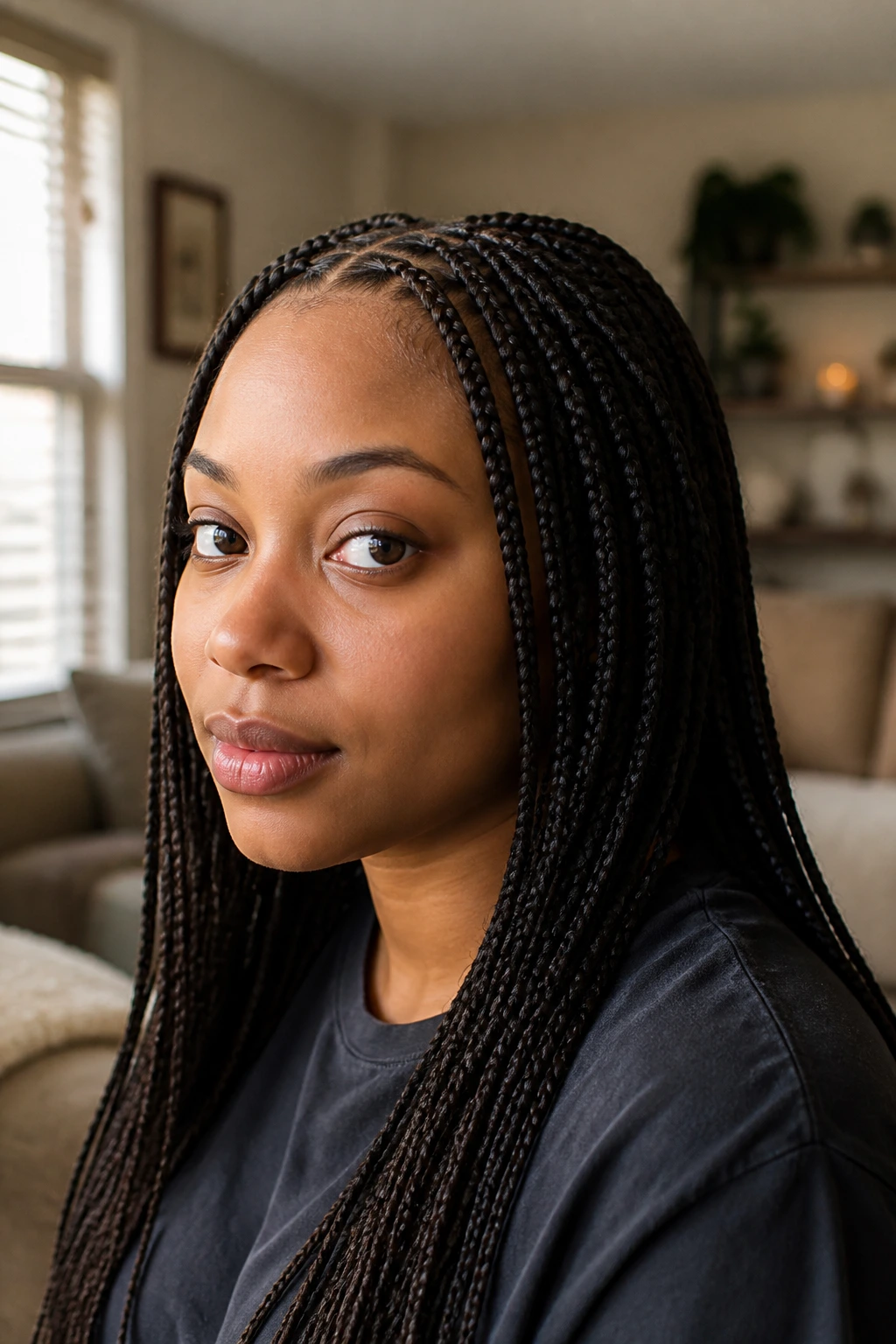
Box braids earn their place on fine hair when they reduce daily handling. Fewer comb-outs, fewer stretched ponytails, fewer heat tools, fewer mornings spent tugging at the same fragile-looking ends. That break matters.
Dermatologists have long pointed out that repeated pulling at the hairline is the thing that causes trouble, not the braid pattern itself. In plain English: box braids are only protective if they’re not tight. A style that leaves your temples sore or your scalp burning is not being kind to your hair, no matter how neat the part line looks.
Fine hair also tends to show breakage faster at the ends, where strands rub against collars and jackets. A braid traps that ends exposure, which is one reason the style can be so useful. The goal isn’t to hide the hair forever. It’s to give it a quieter month.
Essential Tools for These Braided Looks
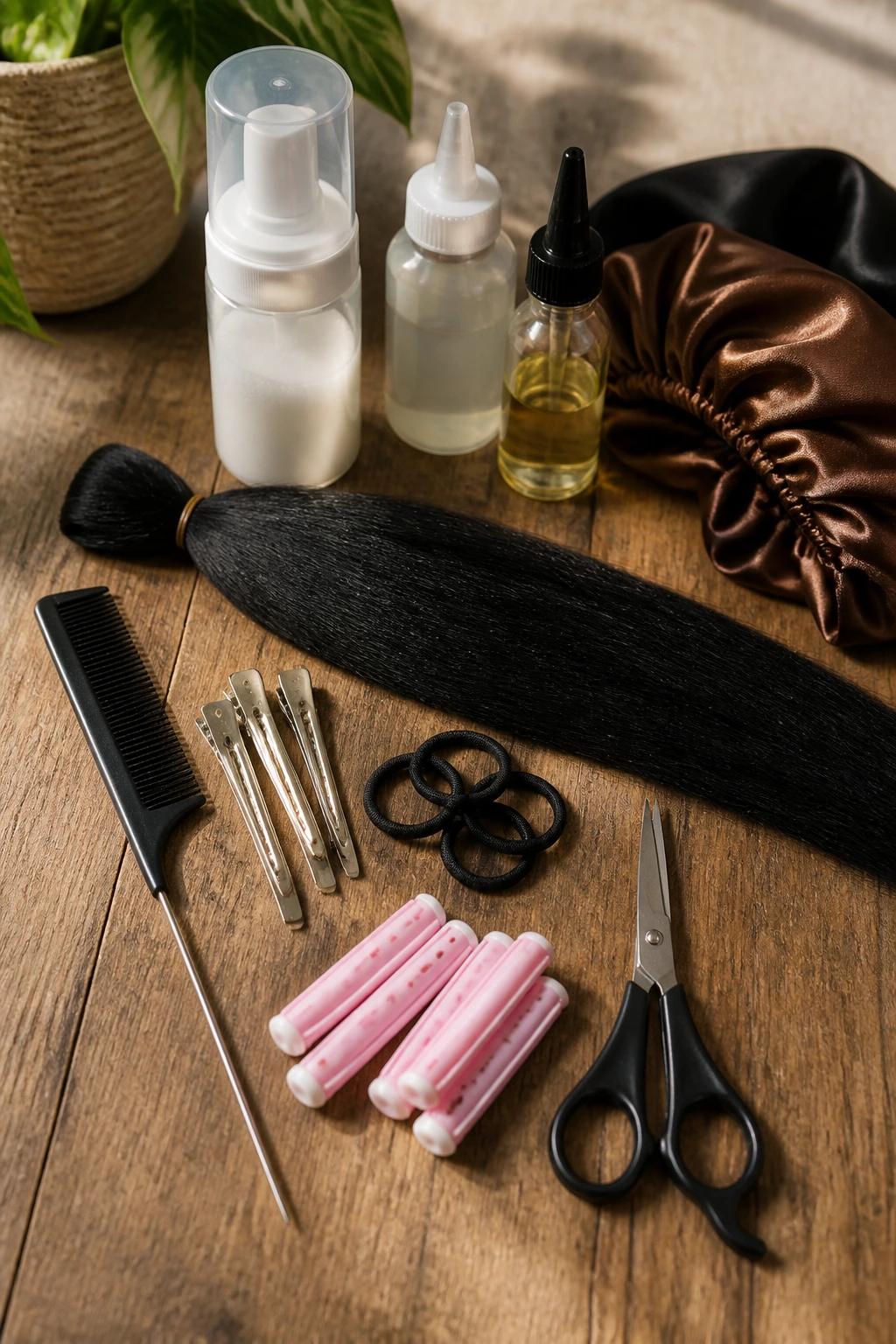
- Rat-tail comb: This makes clean part lines and keeps the boxes or triangles from looking fuzzy at the scalp.
- Sectioning clips: They hold the rest of the hair out of the way without snagging fine strands.
- Pre-stretched braiding hair: Softer at the fold, flatter at the root, and less bulky at the ends.
- Lightweight mousse: Good for smoothing flyaways after the install; heavy wax tends to leave buildup.
- Satin scarf or bonnet: Keeps the braid surface from roughing up overnight.
- Snag-free elastics: Useful for low ponytails, bubble styles, and loose buns.
- Applicator bottle: Makes it easier to place diluted shampoo or scalp oil exactly where you want it.
- Perm rods or flexi rods: Handy for curled ends and boho finishes.
- Light oil with a nozzle tip: Best for the scalp in small amounts, not a full shiny coat.
- Small scissors: Useful for trimming stray extension threads, not for cutting close to your natural hair.
Smart Shopping and Hair-Selection Tips
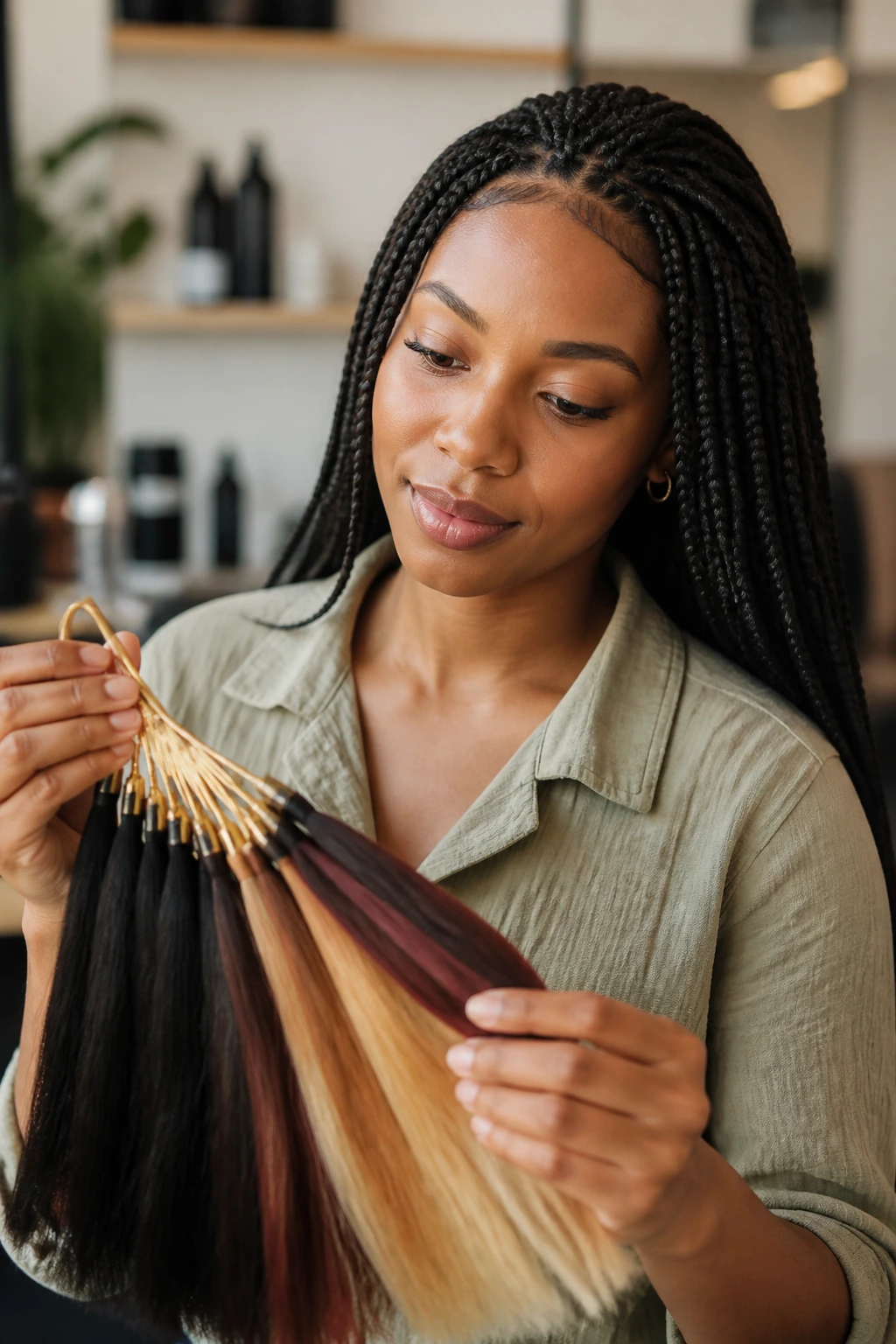
Braiding hair is the whole game here. If the pack feels stiff in your hands, it will probably feel stiff on your scalp too. Softer, pre-stretched hair lays flatter and usually frizzes in a more manageable way, which matters a lot when your own hair doesn’t have a huge margin for abuse.
Length should match your patience, not your ego. Collarbone and shoulder lengths are the easiest place to start, because they keep the style light and the maintenance sane. If you’re tempted by waist length, ask yourself whether you want to wear it, sleep in it, wash it, and carry it for six weeks. That answer usually sorts itself out fast.
Accessories deserve the same restraint. Light cuffs, a few beads, or a ribbon accent can change the mood; heavy glass beads and a hundred charms can turn the front pieces into little anchors. On fine hair, the pretty detail should not outweigh the braid.
Color is worth thinking about before the appointment, not after. Deep brown and burgundy can make a set look fuller. Honey tones and ombré ends can brighten the face and keep the braid body from looking flat. Pick the shade that changes the silhouette, not just the photo.
How to Wear Box Braids Without Dragging the Roots Down
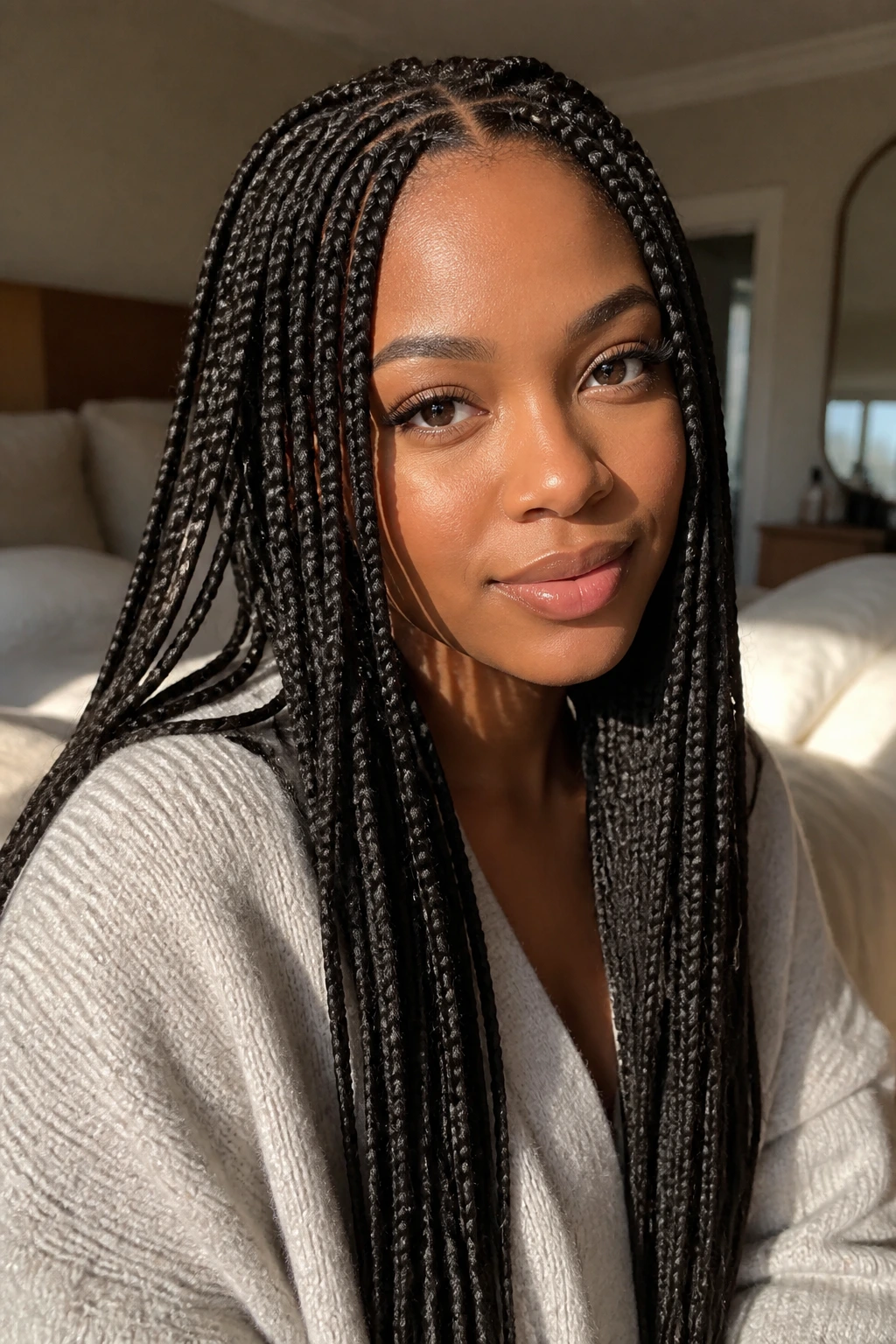
Root comfort first: Wear the braids down or in a loose low style for the first few days. That gives the scalp time to settle before you start asking the roots to hold buns, ponies, or crown shapes.
Accessory restraint: Put cuffs or beads on a few braids, not all of them. The goal is detail, not decoration overload. Fine hair looks cleaner when one accent does the work.
Low-updo rule: If you need the hair off your neck, choose a low bun or low ponytail before you choose a high one. The lower the style sits, the less the crown has to carry.
Mousse over wax: A light mousse smooths fresh frizz without weighing the braid down. Heavy edge products can make the front pieces stiff and sticky, which is the opposite of what you want.
Dry before wrapping: After a workout or a wash, let the scalp dry fully before putting everything back under a scarf. Damp roots plus tight wrapping is a recipe for smell, buildup, and irritation.
Small Upgrades That Change the Whole Mood
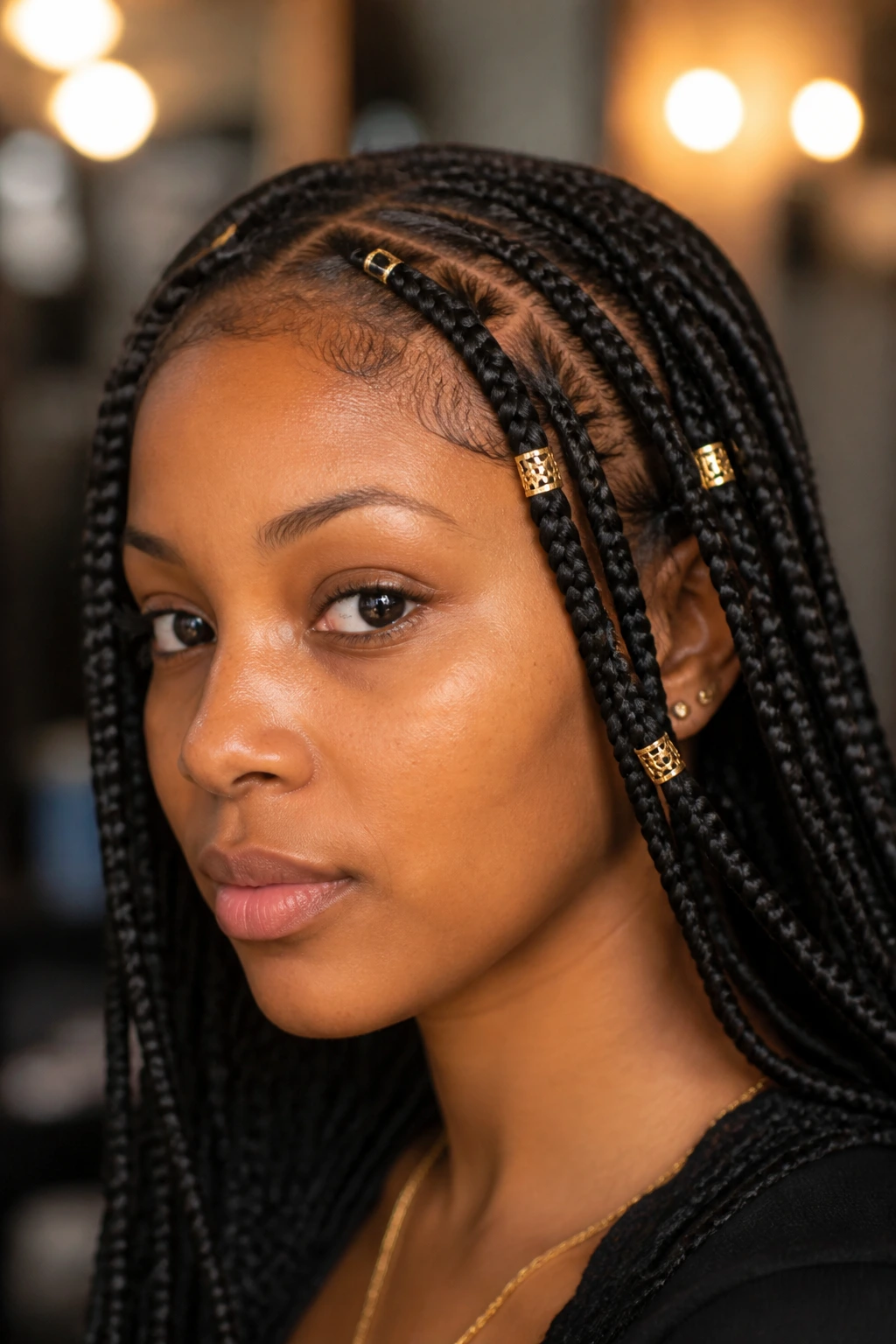
Shape shift: A blunt bob feels sharper, while a layered finish feels softer. If your braids look flat, a slight angle at the ends can make the whole install feel fuller without changing the braid size.
Texture shift: Curled ends or a few boho pieces add movement fast. That helps fine hair look less linear, especially when the braids are all the same width.
Color shift: Burgundy, chestnut, and honey-blonde ombré all give the eye something to follow. A small color shift can do more than adding extra jewelry.
Hardware shift: Gold cuffs near the face are enough for most people. If you also want beads, keep them at the ends or on a few front pieces, not the entire head.
Make-it-yours shift: A side part, a center part, or a scarf at the crown completely changes the mood of the set. Same braids. Different read.
Make-Ahead, Wash-Day, and Long-Wear Care
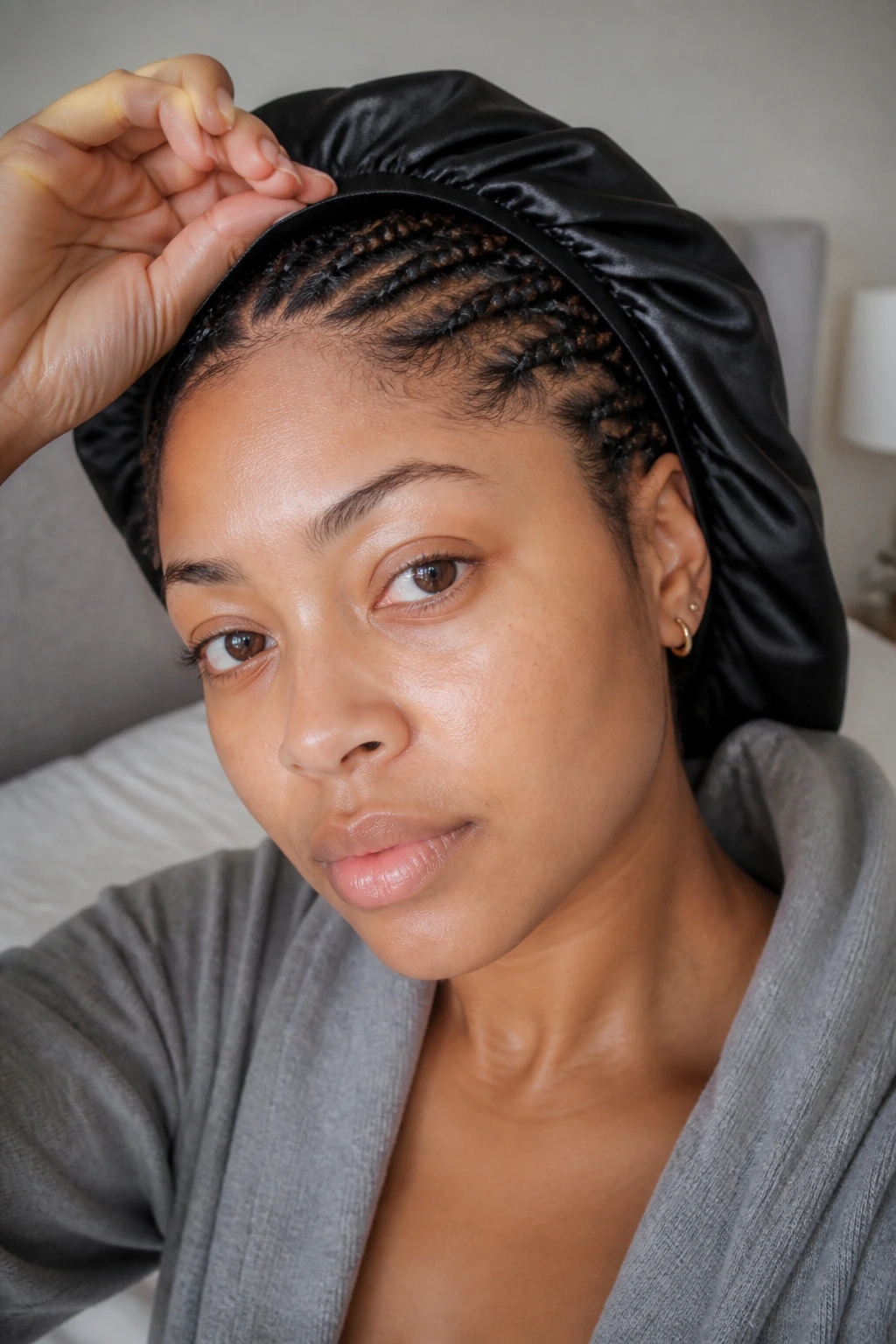
Box braids on fine hair usually do best with a simple routine, not a complicated one. Sleep in a satin scarf or bonnet every night. If the scarf keeps slipping, a satin pillowcase is the backup plan that saves everyone some frustration. That alone can stretch the style’s clean look by days.
Wash day needs a light touch. A diluted shampoo in an applicator bottle lets you clean the scalp without flooding the whole install, and a low-pressure rinse keeps the roots from getting tangled up in their own length. Focus on the scalp, not the braid body. The braid body only needs whatever runoff the rinse leaves behind.
Drying matters more than people think. Fine hair trapped under wet extensions can feel limp, smell off, and start to itch in a way that is hard to ignore. Use a hooded dryer, a fan, or plenty of air time until the roots are completely dry before you rewrap.
Removal timing is another place where honesty helps. Six to eight weeks is usually enough for a fine-haired install, and six is often the safer end if the roots are slipping, the edges feel warm, or the braids start to look tired. If the style starts feeling heavy, don’t chase an extra week just because you want one more good hair day.
Variations and Adaptations to Try
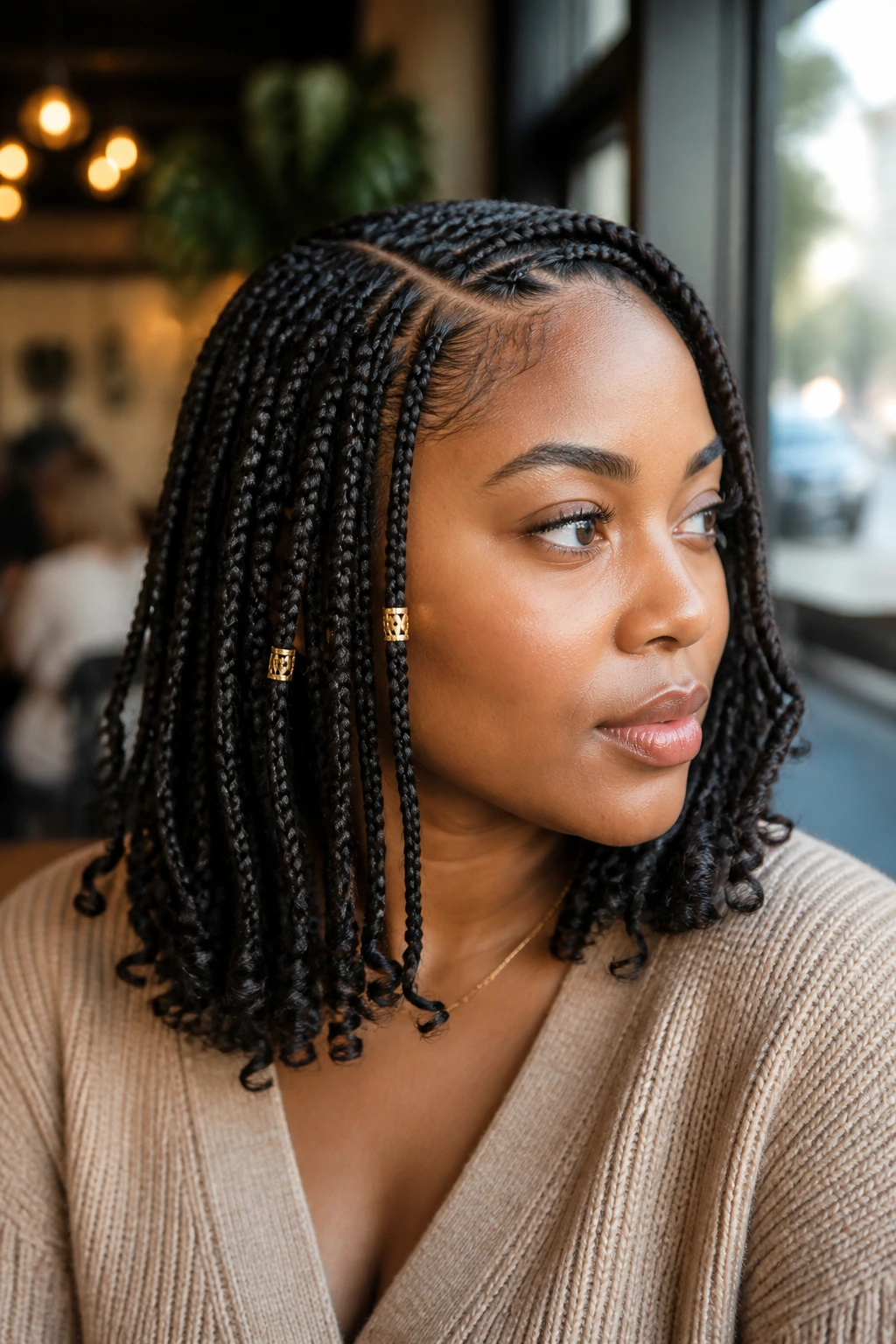
The Sensitive-Hairline Edit: Keep the length collarbone or shorter, ask for knotless starts, and skip the heavy front beads. This is the version I’d choose if the temples tend to get sore fast. It’s the least fussy of the bunch.
The Dress-Up Version: Try a side part, curled ends, and two or three gold cuffs near the face. The style still sits light, but it reads a little more polished when you want the braids to do evening work.
The Low-Activity Version: Go with shoulder-length or bob-length braids and wear them in a low ponytail or bun most days. This works well if you work out, commute, or just do not want hair brushing your collar all afternoon.
The Color-First Version: Use chestnut brown, burgundy, or honey-blonde ombré to build depth without changing braid size. Color can make a fine-haired install look fuller at a glance, which is a neat trick when you want more presence without more weight.
The Grow-Out-Friendly Version: Choose triangle, diamond, or mixed-length braids. Those part patterns and staggered ends make new growth less obvious, so the style stays neat longer without needing a huge amount of manipulation.
Common Mistakes to Avoid
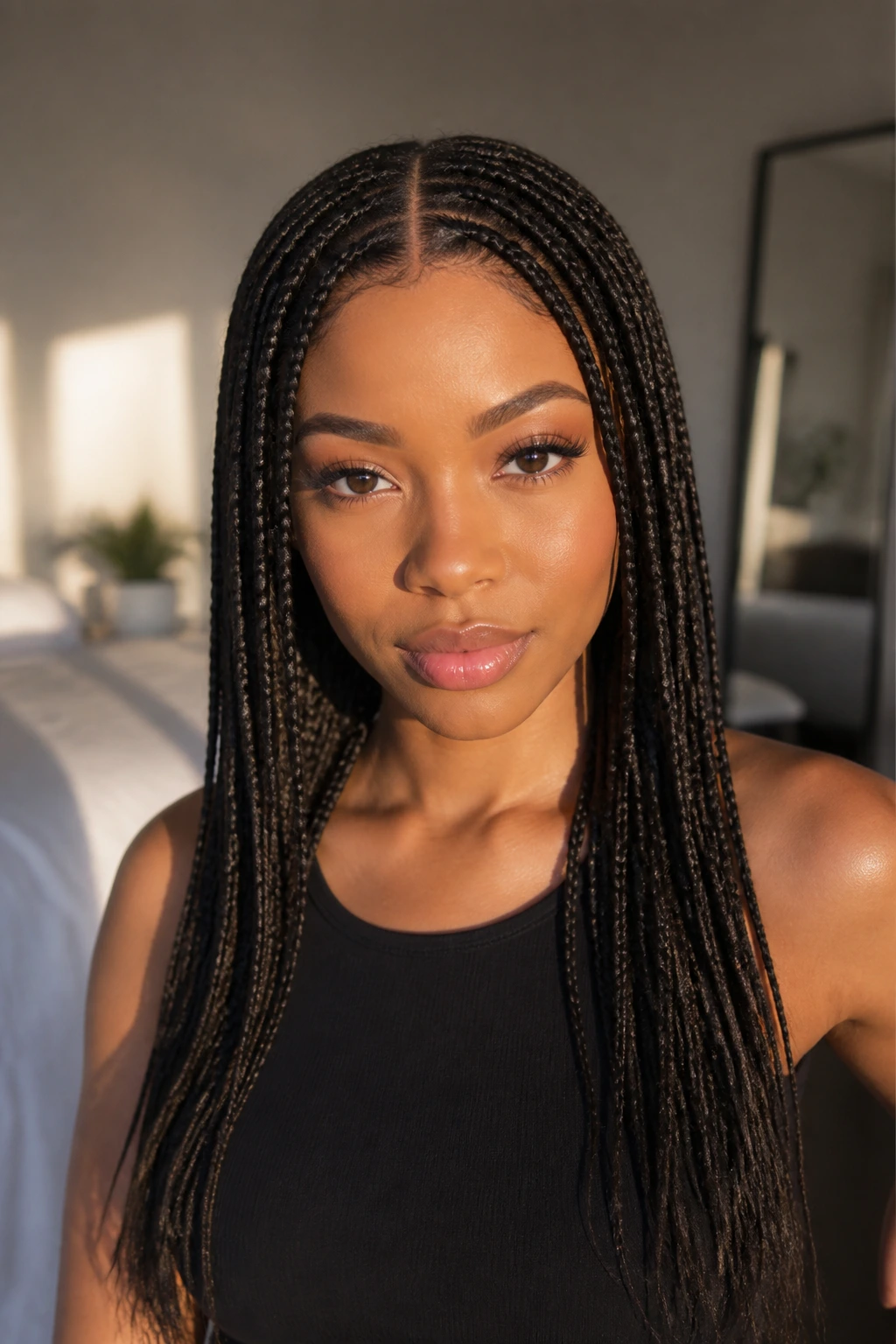
- Choosing too much length: Waist-length braids can be beautiful, but on fine hair they sometimes swing into “too much to carry” territory. If your scalp feels tired by day three, the style is too long or too dense.
- Starting too tight at the hairline: Headache, warmth, and a tugging temple feeling are not badges of a good install. Ask for a looser start or a knotless construction before the braider gets too far.
- Adding too many heavy accessories: Beads, cuffs, and charms all count as weight. Put them on a few accent braids and stop there.
- Overloading with product: Heavy wax, too much oil, and sticky edge gel can make fine hair collapse at the root and attract lint fast. Use lighter products and less of them.
- Leaving the style in too long: Fine hair can mat faster at the base once the new growth starts. If the roots are slipping or tangling, take the set down instead of stretching it for another week.
- Ignoring dry time after washing: Damp braids tucked into a scarf can smell bad and stay itchy. Dry the roots fully before you wrap up.
Questions People Ask Before Booking Box Braids
Are box braids good for fine hair?
Yes, if the install is light and the roots are not tight. Fine hair usually does best with medium sections, shorter lengths, and softer starts at the scalp.
Is knotless better than traditional box braids for fine hair?
Usually, yes. Knotless braids lay flatter and spread the tension more gently, which is helpful when the hairline is sensitive or the strands are narrow.
How short should box braids be on fine hair?
Collarbone, shoulder, and chin-length styles are the easiest place to start. Longer braids can work, but they need a lighter build and more honest maintenance.
Can fine hair handle beads?
It can, but use them sparingly. A few lightweight beads near the ends or on a couple of front pieces is a better bet than loading the whole head with hardware.
How often should I wash my scalp with braids in?
Every 7 to 10 days is a practical rhythm for most people. Use diluted shampoo or a light cleanser and dry the roots fully afterward.
What if the braids feel fine on day one but tight later?
That usually means the scalp is reacting to weight, not that you should pull harder or retie the style. Ease off the ponytails, stop adding tension, and if soreness keeps building, take them out.
Can I wear waist-length braids if my hair is fine?
Yes, but only if the install is light and the scalp tolerates the length. If the style feels heavy when you shake your head, it’s too much for everyday wear.
How do I stop my braids from slipping?
Choose a texture of braiding hair that grips well, and ask for a construction that matches your hair’s texture and density. Slipping is usually a sign that the balance is off, not a reason to tighten the roots harder.
A Lighter Way to Wear Length
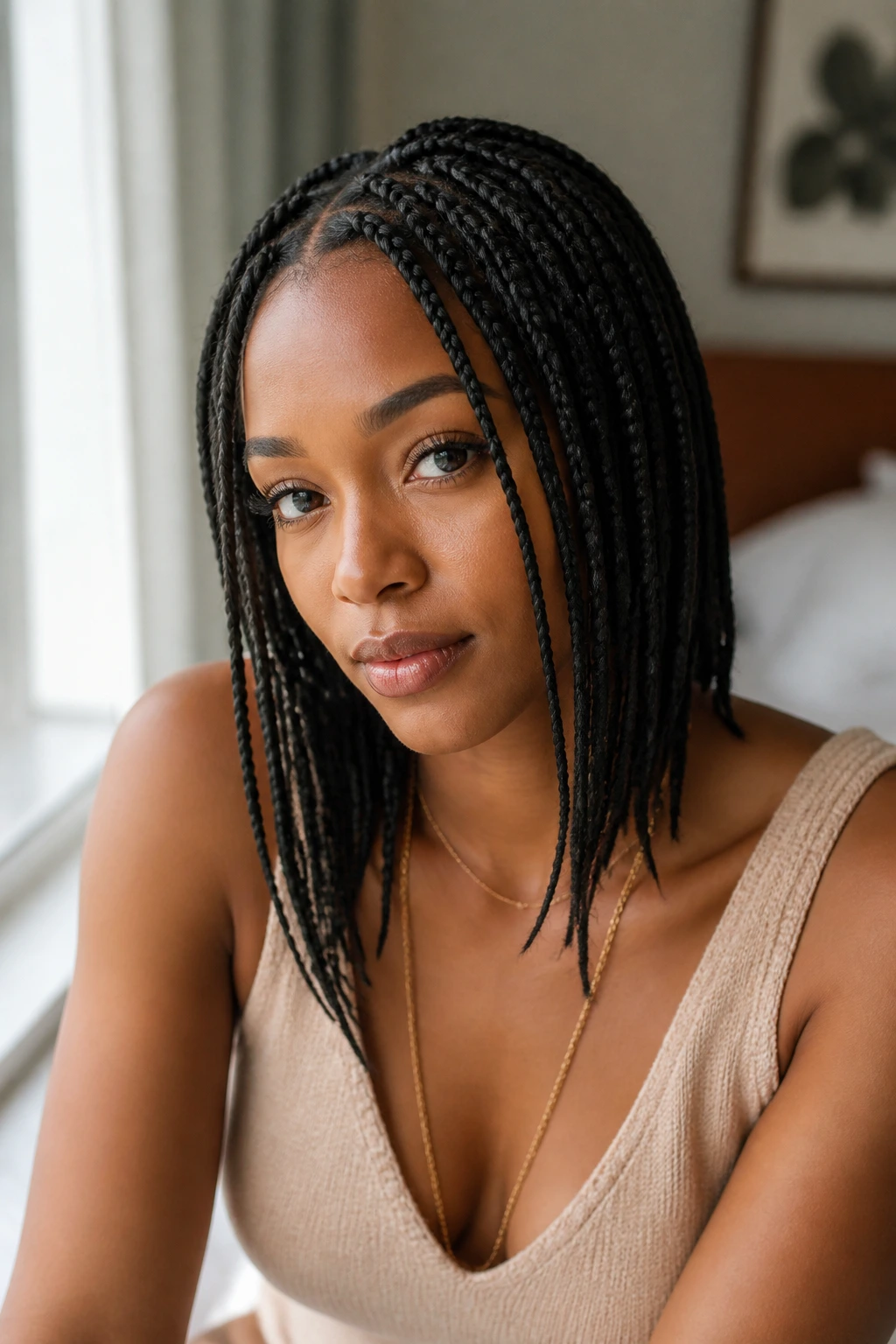
Box braids for fine hair work best when the style feels calmer than it looks. That’s the whole secret, if you want to call it that: lighter starts, shorter or smarter lengths, and enough shape at the scalp that the braids don’t need to fight for their place.
The prettiest set is usually the one you can sleep in, wash, and wear without narrating every tug from your temples. Start with the lightest version of the look you love, and let the rest of the style prove itself from there.