



A round face does not need hiding; it needs angles. The best short choppy hairstyles for round faces do something smarter than chasing extra length. They break up the curve, lift the eye, and keep the sides from collapsing into one soft, wide shape.
That’s why some cuts look crisp and deliberate on one person and strangely fluffy on another. A blunt bob that lands right at the cheeks can add width where you least want it. A choppy crop with broken ends, a side-swept fringe, or a little height at the crown changes the whole read of the face without making the hair feel stiff or overworked.
I’ve always liked cuts that look as if they were cut with a plan but styled with a hand that isn’t trying too hard. That’s the sweet spot here. The styles below do not all solve the same problem in the same way, because round faces are not all the same either — some need cheekbone drama, some need neck exposure, some need softness around the jaw, and some need all three at once.
Why This Collection Works for Round Faces
-
The eye goes up, not out: Short layers at the crown and a bit of lift near the roots pull attention vertically, which keeps the face from reading as wider than it is.
-
The ends stop one solid line: Choppy, point-cut, or razored tips break the horizontal line that can make a bob sit heavy across the cheeks.
-
The fringe gets lighter: Side-swept or airy bangs soften the forehead without cutting the face in half, which is the mistake a heavy straight fringe often makes.
-
The cut can fit real texture: Wavy, straight, thick, or curly hair can all work here, as long as the shape is built around the hair’s natural bend instead of fighting it.
-
The style grows out better: A good choppy cut usually keeps its shape for weeks, because the uneven ends make regrowth look intentional instead of blunt and boxy.
-
The neck and jaw get definition: Even a small amount of openness around the nape or ears can sharpen the whole outline of the face. Tiny change. Big payoff.
1. The Textured Pixie with Crown Lift
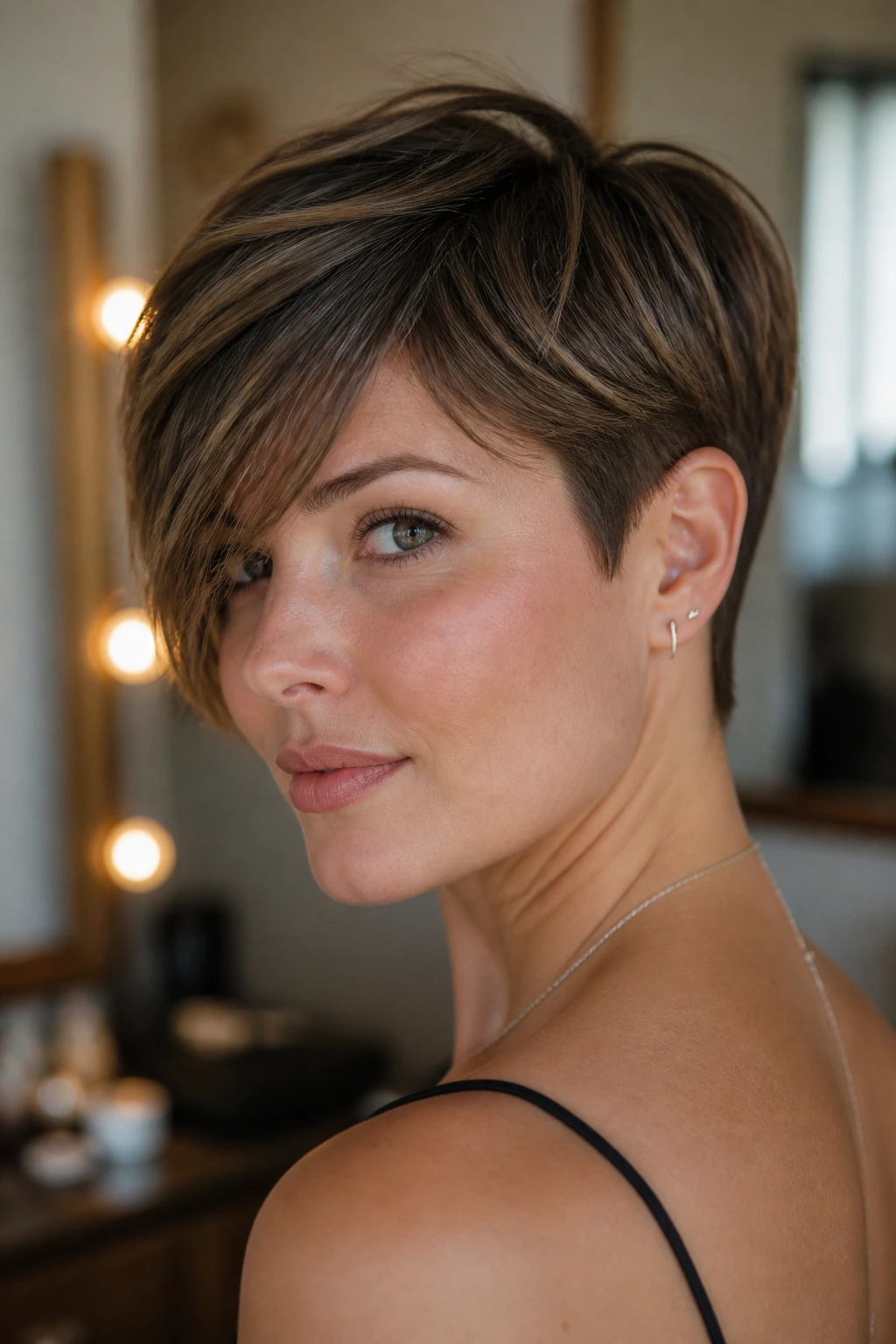
This is the cut I reach for when someone wants short hair that still feels lively. The sides stay soft and close, while the top carries the movement — usually about 2 to 3 inches through the crown, with the fringe kept longer and broken up so it falls in pieces instead of one solid sheet.
The reason it flatters a round face is simple: it builds height where the face needs it most. A pixie that sits flat on top can make the cheeks feel broader by comparison. A textured version with lift at the crown gives the face a little vertical line, and that changes everything.
Why it works
The cut keeps bulk away from the widest part of the face. It also leaves room near the temples and ears, which stops the silhouette from turning into a tidy little circle.
For styling, a pea-sized amount of matte paste is usually enough. Work it through dry hair, pinch the ends, then push the roots up at the crown with your fingertips. If the top goes too piecey, the cut starts looking helmet-like. Keep it airy.
- Short sides keep the outline clean.
- Longer top pieces create height.
- A side-swept front softens the forehead.
- Matte product gives separation without shine overload.
Best note: Ask for the top to be point-cut, not chopped bluntly. That small detail keeps the pixie from looking boxy.
2. The Side-Swept Choppy Bob
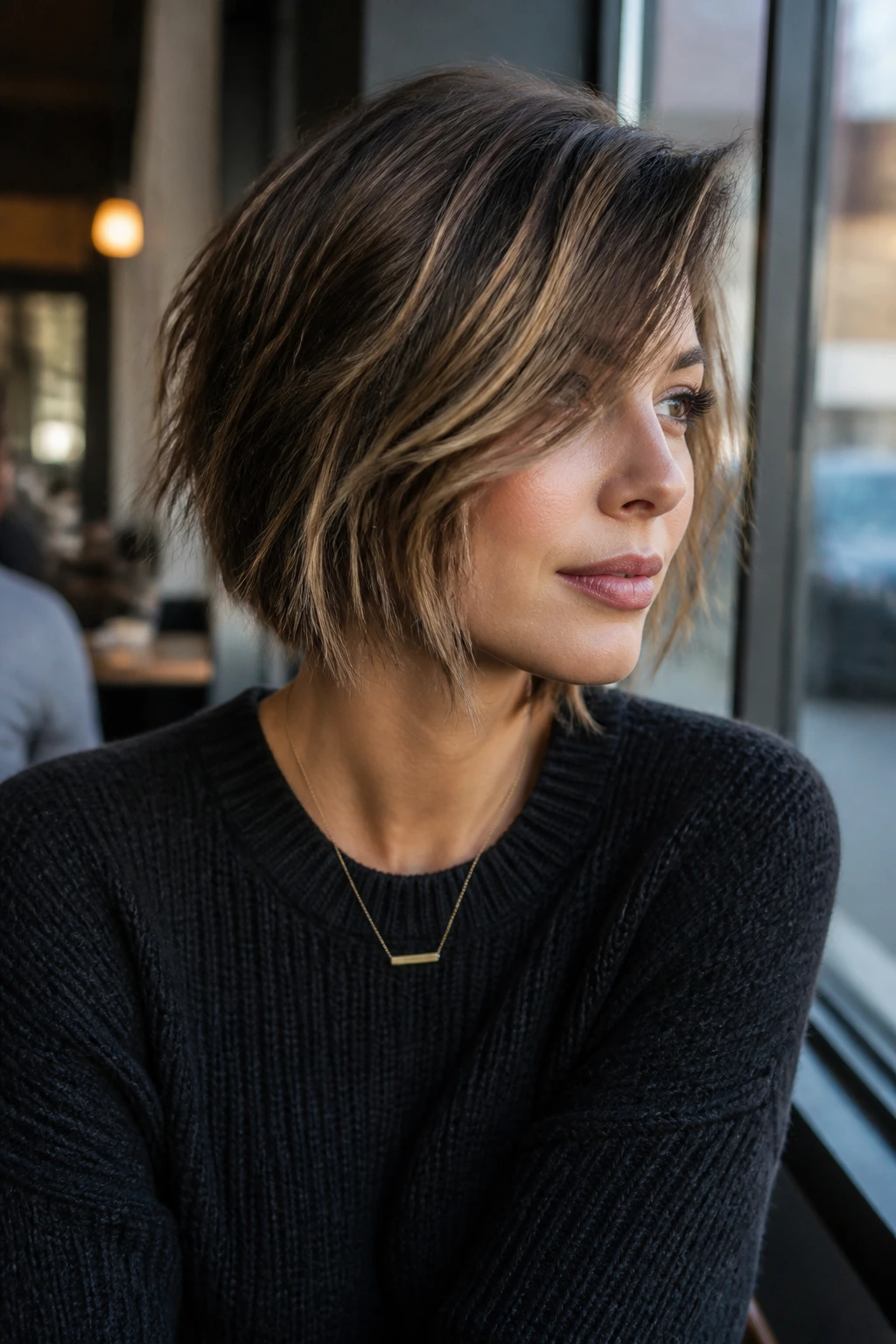
A side-swept bob is one of the easiest shape tricks in hair. Shift the part off center, let one side skim the cheekbone, and keep the ends broken rather than heavy. The whole haircut starts moving diagonally, which is exactly what a round face likes.
What I like about this version is that it doesn’t need drama to work. Even a few degrees of asymmetry change the read of the face. The longer side creates a line that narrows the face visually, while the choppy ends keep the bob from sitting like a hard shelf at the jaw.
If your hair is straight, blow-dry the front away from the face and then tuck one side behind the ear. If your hair bends or waves, use a light texturizing spray and let the ends do a little of the work for you. The cut looks best when it has some swing.
And yes, it can still be polished. It just should not look frozen in place.
3. The Jaw-Skimming French Bob with Piecey Ends
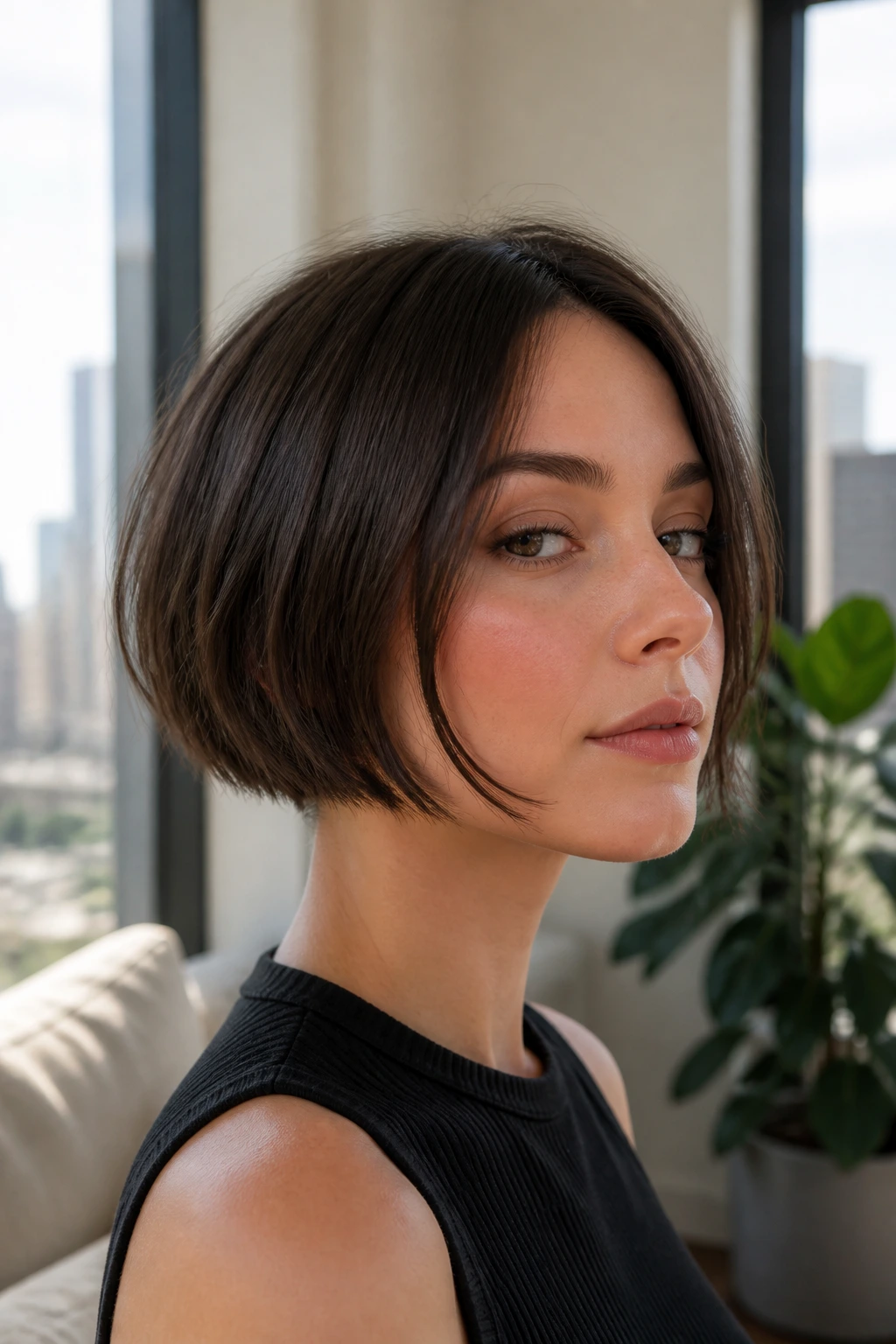
Can a bob this short flatter a round face? Absolutely — if the line is placed with some care. The trick is to let the length sit just below the jaw rather than right at the fullest part of the cheek, then break up the edge so the whole shape feels airy instead of square.
A French bob with piecey ends has a certain snap to it. It’s neat, but not severe. The fringe can live near the brows or just below them, and the cheek area stays open enough to show the jawline. That little gap matters more than people think.
What to watch for
Keep the perimeter soft. A thick, one-length edge at chin level can widen the face fast. A choppier finish, especially around the front, gives the cut movement and keeps it from sitting like a coin around the cheeks.
This version works best when the stylist uses point cutting through the ends. On thick hair, a little internal removal helps the bob lie closer to the head. On fine hair, too much thinning is a mistake; you want separation, not wisps.
4. The Razored Shaggy Lob
A shaggy lob is for the person who wants short hair, but not too short. It usually lands somewhere between the collarbone and just above it, with razored layers that push the shape away from the face instead of trapping it against the cheeks.
Compared with a blunt lob, this one feels looser and far less heavy. The razored ends keep the lower half of the haircut from forming a single hard block, which is exactly what helps a round face. When the hair falls in soft, uneven lines, the eye reads texture first and width second.
This cut has a bit of a lived-in edge. It looks good air-dried with a curl cream if your hair bends naturally, or rough-dried with a diffuser if you want some lift and fuzz around the crown. Straight hair can wear it too, but the finish should still be broken up with a wave or bend somewhere in the mid-lengths.
If you like hair that moves when you turn your head, this is the one to bookmark.
5. The Asymmetrical Choppy Bob
A small length difference can do more for a round face than a whole extra inch everywhere else. In this bob, one side is left slightly longer — often by an inch or so — and the part is placed off center so the haircut falls in a diagonal line instead of a flat horizontal one.
That diagonal is the point. It draws attention down and across rather than straight across the cheeks. A round face does not need more width. It needs a little visual interruption, and asymmetry gives it that without looking gimmicky.
The cut can be sharp or soft depending on how the ends are finished. I prefer a choppy, point-cut edge over a crisp blunt line, because the texture keeps the haircut from feeling too exact. A clean asymmetrical bob can look sleek, but it can also feel severe if the hair is dense and the face is already soft.
Wear the longer side tucked behind one ear if you want the cheekbone to show through. Small move. Strong effect.
6. The Tapered Pixie with Long Bangs
This is the pixie for people who like the back and sides short but do not want the front cut off too fast. The nape is tapered close, the ears stay light, and the fringe is kept long enough to sweep across the cheekbone or land near the outer brow.
That longer front piece is the whole reason it works on a round face. It creates a slanted line over the widest part of the face, which is more flattering than a straight-across edge. The tapered back also exposes the neck, and that makes the face read slimmer from the front.
Styling note
A blow-dry with a small round brush will give the fringe bend and direction. If you prefer air-drying, use a light cream, then twist the front piece while it’s still damp and clip it away from the face for a few minutes. It dries with a soft curve instead of flopping straight down.
This cut can look sweet or sharp depending on how much texture you leave on top. I’d keep the crown a little rough. Too polished, and it starts to lose the easy, face-slimming movement.
7. The Collarbone-Length Wavy Crop
Not every short haircut has to be ultra-short to count. A collarbone-length crop with broken layers can still be short enough to feel fresh, while giving round faces the length they often need near the front.
The best version is not one clean curtain of hair. It has small, uneven layers that fall around the cheekbones and collarbone, plus enough movement to keep the shape from hugging the face. If your hair is wavy, this cut is a gift. The natural bend does the softening for you.
Straight hair can wear it too, but the ends need a bend — even a subtle one — so the lower line doesn’t look too solid. A flat, heavy collarbone cut can drag the eye straight across the widest point of the face. A textured one breaks that line and makes the whole style feel lighter.
It’s a good choice if you want a cut that can still be tied back, tucked, clipped, or worn messy on a day when you do not want to deal with much.
8. The Curtain-Bang Crop
If bangs scare you, curtain bangs are the gentler way in. They part in the center, open at the forehead, and sweep out toward the cheekbones, which keeps them from swallowing a round face the way a heavy straight fringe can.
The crop underneath can be bob-length or slightly shorter, but the fringe is what gives this look its shape. You want the shortest point of the bangs to sit near the bridge of the nose or upper cheek, then taper longer as they move outward. That creates a soft V shape that stretches the face vertically.
A center part is usually the best starting point, though a slight off-center part can work if your hair naturally falls that way. Keep the fringe airy. Thick curtain bangs can look chunky fast, especially if the haircut itself is short and dense around the sides.
This is one of those cuts that looks casual on purpose. Not messy. Not unfinished. Just relaxed enough that it does not fight the face.
9. The Sleek-But-Choppy Micro Bob
A micro bob can be a risky cut on a round face if it’s blunt and even all the way around. Change the finish, though, and it turns into something sharp and modern. The length usually sits around the lip, chin, or just under the jaw, but the ends are point-cut so they don’t make one solid band.
I like this version when the hair is straight or only lightly wavy. It gives that crisp, tailored feeling, but the broken ends keep it from turning into a helmet. A slight bend at the front — one pass with a flat iron, turned inward at the ends — helps frame the jaw rather than widen it.
There’s also a nice contrast here: the shape is short and neat, but the texture keeps it from feeling severe. That contrast is what flatters the face. If every line is too clean, the cheek area starts to dominate.
This cut especially likes a shine spray, not a heavy oil. You want polish on the surface, movement underneath.
10. The Tousled Crop with Hidden Undercut
Thick hair can turn short cuts into a puffball if the bulk is left in the wrong place. A hidden undercut solves that problem without making the haircut look shaved or edgy unless you want it to.
The top stays choppy and full, while the underneath — usually around the nape or just behind the ears — is removed to reduce weight. That lets the top sit closer to the head and keeps the sides from flaring out at cheek level.
This is a good cut if your hair has a lot of density or if it expands in humidity. The hidden undercut takes the pressure off the shape, and the tousled top keeps it from looking too precise. When styled with a little sea salt spray or a lightweight paste, the result is airy instead of bulky.
- Best for thick, heavy, or puffy hair.
- Ask for the undercut to stay hidden when the hair is down.
- Keep the top long enough to sweep over the shorter sections.
- Use a diffuser or rough-dry with fingers for extra movement.
11. The Layered Cub Cut with Flipped Ends

The cub cut sits in that strange but useful middle ground between a bob and a shag. It’s shorter and more structured than a lob, but not as pixie-like as a crop. The layers are built to create shape, and the ends often flip out just a little.
That flipped finish helps round faces because it moves the eye away from the cheeks and toward the lower edge of the haircut. You do not want a tight, tucked-in look here. You want movement. The square-ish outline gives structure, while the choppy layers stop it from feeling blocky.
This cut works especially well when the hair has a little natural bend. If yours is straight, a round brush and a quick outward turn at the ends will do the job. On wavy hair, you can encourage the flip with mousse and a diffuser.
It’s a cut with personality. A bit graphic. A bit soft. And that tension is what makes it interesting on a round face.
12. The Feathered Bixie
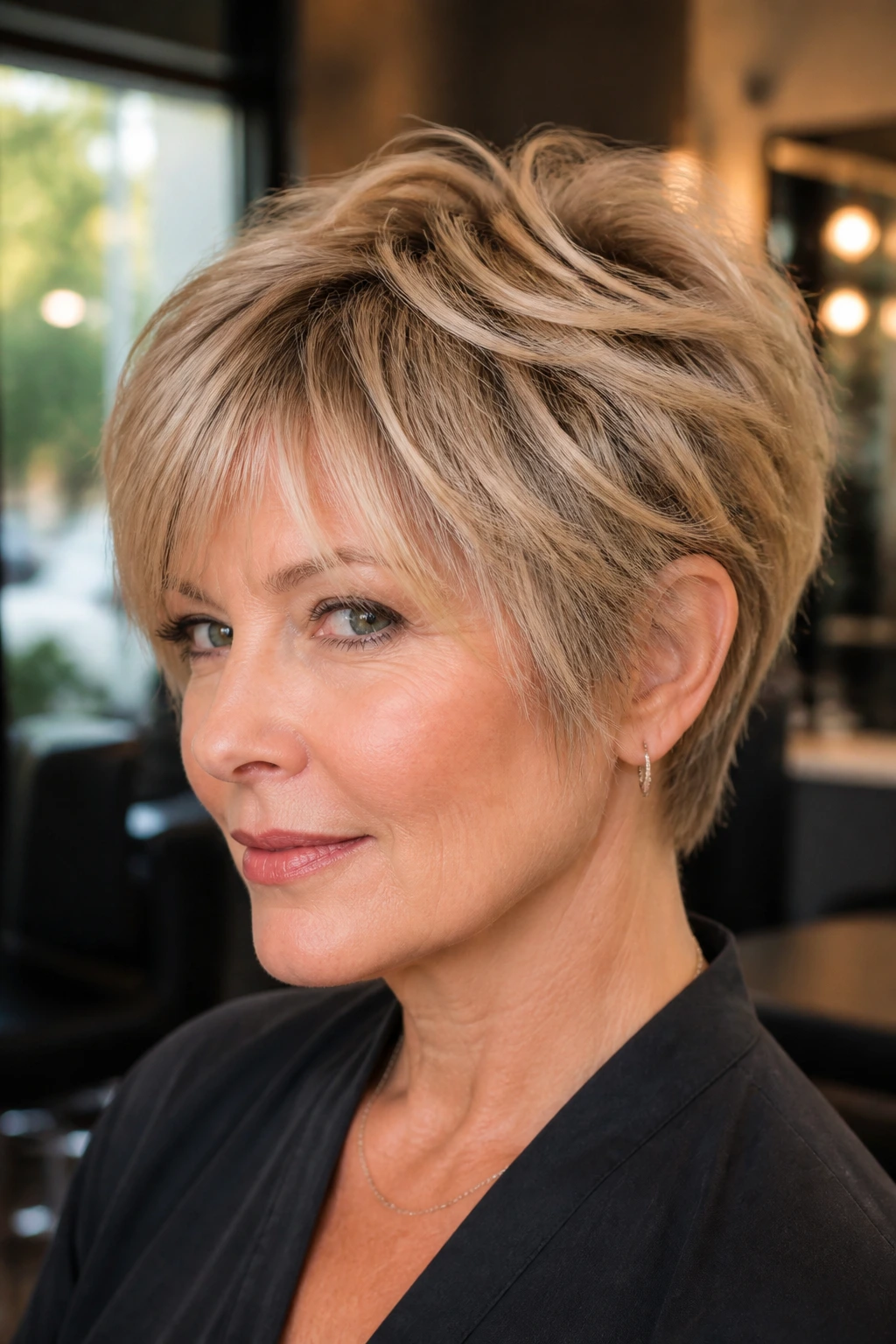
A bixie is the place where a bob and a pixie meet, and the feathered version is the most flattering one for round faces. It keeps the back short, leaves enough length through the top and front to move, and uses feathered layers to avoid a heavy outline.
What I like most about this shape is the air around the face. The fringe is rarely one blunt slab. It’s broken, light, and often slightly longer at the sides, which gives the cheekbones room to show. The nape stays neat, so the whole haircut feels lifted.
If you have fine hair, this can be a smart choice. It creates the look of volume without needing a lot of product, and the feathered pieces make the hair look fuller than a severe crop would. Thick hair can wear it too, but the stylist needs to remove bulk carefully so it does not puff outward.
A little wax at the ends is usually enough. Too much, and the feathering collapses.
13. The Deep Side Part Crop
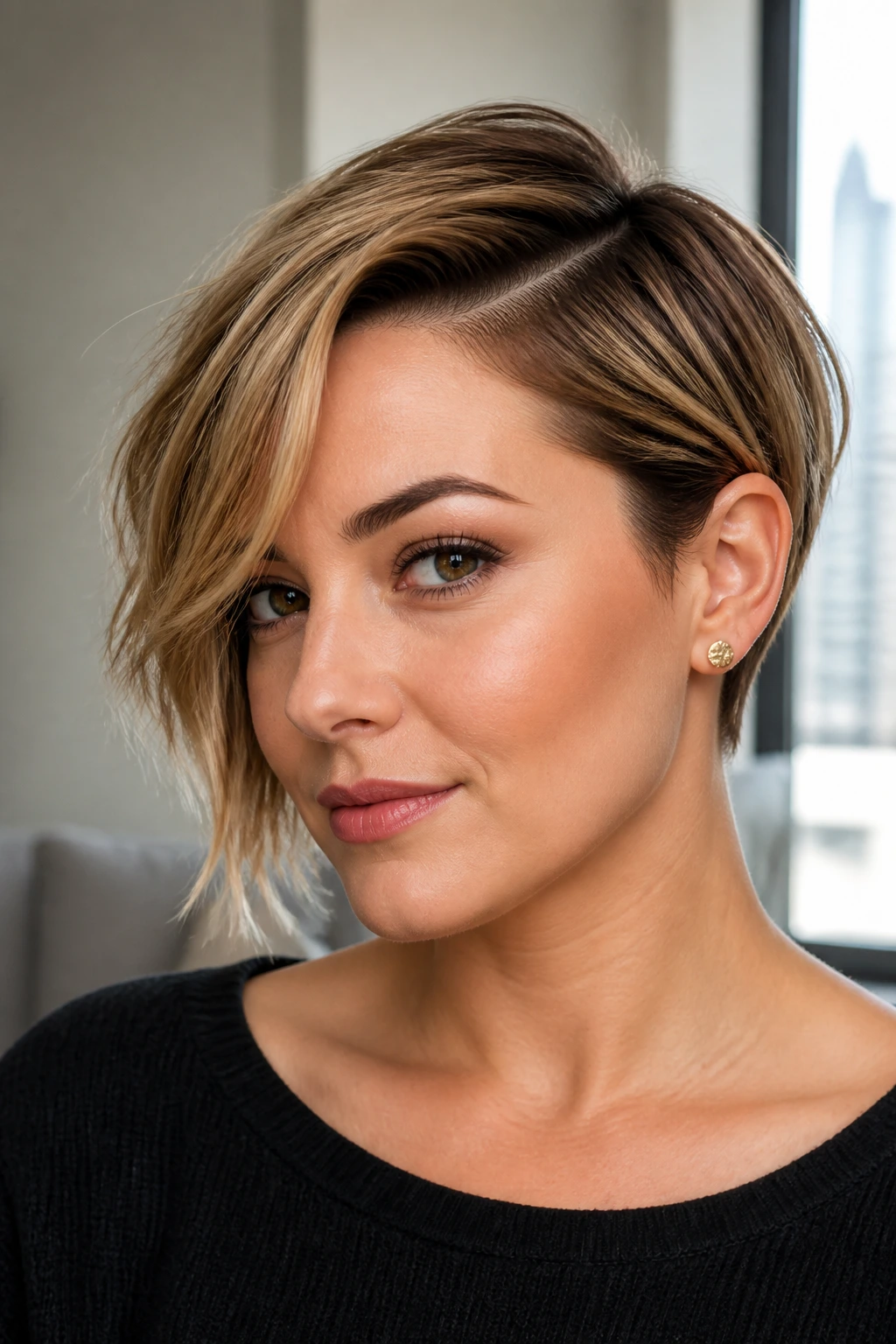
A deep side part can change a haircut more than a full inch of length. On a round face, that matters. It breaks the symmetry, adds shadow on one side, and gives the style a line that pulls the eye diagonally rather than straight across.
This crop can be very short or just long enough to sweep forward. The real feature is the parting. Push the heavier side across the forehead and let the other side sit a little sleeker and closer to the head. That contrast narrows the face in a way a center part sometimes cannot.
It’s one of the best low-drama fixes if you do not want to cut your hair all the way into a pixie or bob. The shape shifts immediately, and you can often make the change just by adjusting where the part sits and how the front is trimmed.
A root-lifting spray at the base and a blow-dry in the opposite direction of the part will give it more staying power. No magic. Just a better line.
14. The Choppy Bob with Airy Fringe

Heavy bangs can make a round face look shorter and broader. Airy bangs do the opposite. They soften the forehead without building a thick wall across it, and that small difference keeps the face open.
This bob usually sits around the jaw or just below, with a fringe that’s more see-through than solid. The fringe pieces should graze the brows and separate a little when they dry. If they hang in one dense sheet, they’re too heavy. You want space between the strands.
The rest of the bob can be blunt-ish through the shape, but the fringe needs movement. That’s what keeps the cut from feeling boxy. It also lets the haircut work with glasses, which is a nice bonus if you wear them every day.
If your hair is very fine, keep the fringe light and avoid overloading it with dry shampoo. If your hair is thick, the stylist should remove enough density that the bangs can fall in a soft veil rather than a curtain.
15. The Curly Shag for Round Faces
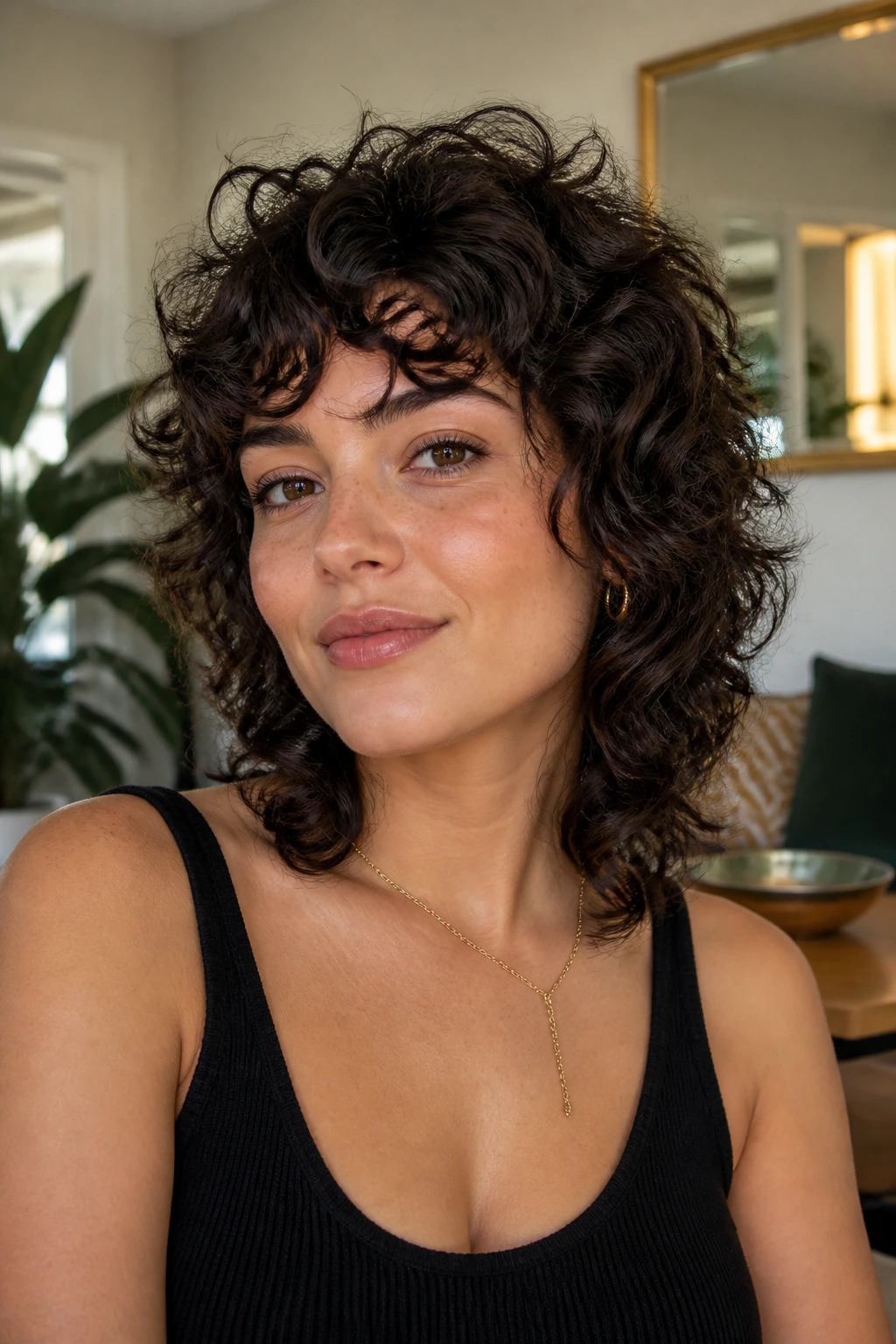
Curly hair and round faces can be a gorgeous pairing, but only if the shape is carved with some thought. A curly shag does that by giving the crown height and spreading the layers in a way that avoids the classic triangle shape.
The big mistake with curly short cuts is leaving too much width at the cheek level. A better shag keeps the layers longer around the sides of the face and a little fuller at the top, so the curl pattern has lift. If the haircut is done dry, even better. That lets the stylist see where each curl sits once it springs up.
This style wants moisture, a light gel, and a diffuser. Scrunch the product in, dry on low heat, and stop before the curls are fully stiff. Once they’re 80 to 90 percent dry, let them air out a bit so the finish stays soft.
The result can feel playful without being round. That’s the sweet spot.
16. The Wedge-Inspired Choppy Bob
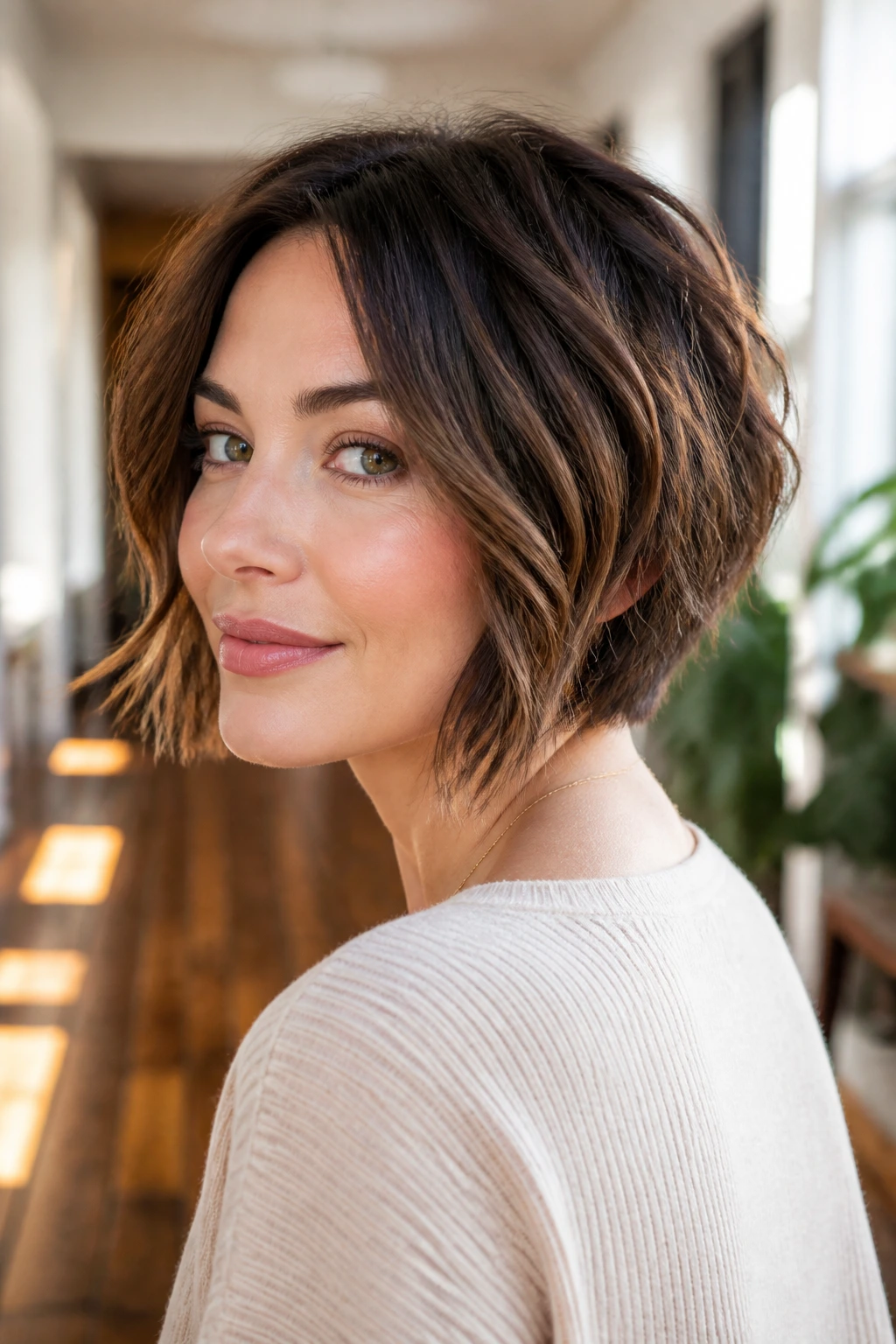
A classic wedge can go too round if it’s built with too much fullness at the back and sides. The choppy version fixes that. It keeps the stacked shape at the nape, but softens the front and breaks the surface so the haircut has movement instead of one hard arch.
For a round face, the front should stay longer than the back by a noticeable amount. That keeps the eye moving forward and downward rather than straight out from the cheeks. The stacking at the back adds lift, which helps the crown sit higher and the neck look longer.
This is a good choice if you want a neat haircut that still has some edge. It can look very polished when blown smooth, or more casual when rough-dried with a little paste. Either way, the broken ends matter. A smooth wedge without texture can feel a bit too tidy.
Keep the front pieces around the mouth or jaw, not the cheek. That one detail changes the whole silhouette.
17. The Ear-Tucked Textured Crop
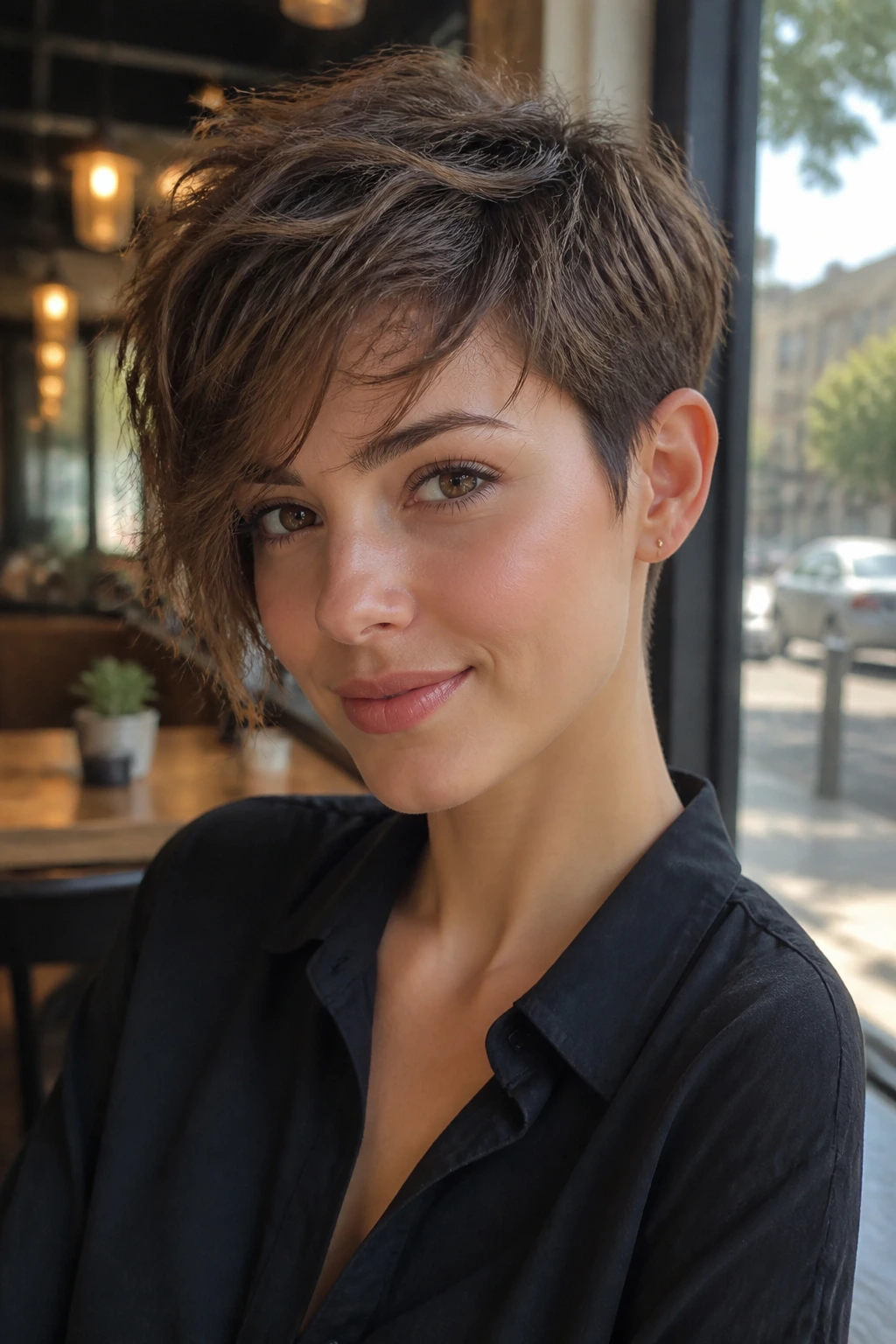
This one is not about how the hair falls by accident. It’s about a cut that looks better when one side gets tucked behind the ear and the other side stays loose. That asymmetry opens up the face and adds a slim, diagonal line right where a round face benefits from it most.
The cut itself should have enough length around the front to tuck without fighting back. A few choppy layers through the crown keep the top from lying flat, and the sides should be soft enough to move, not puff.
I like this shape for people who want a short haircut that can still look neat around earrings, glasses, or a strong collar. It gives the cheekbone a little spotlight without demanding a lot of styling time.
- One tuck exposes the jawline.
- The loose side keeps movement in the shape.
- A side part makes the style feel less symmetrical.
- A dry texture spray helps the pieces stay separated.
There’s a quiet elegance to it, though I hate that phrase. Better to say it looks clean without being boring.
18. The Messy Boyish Pixie
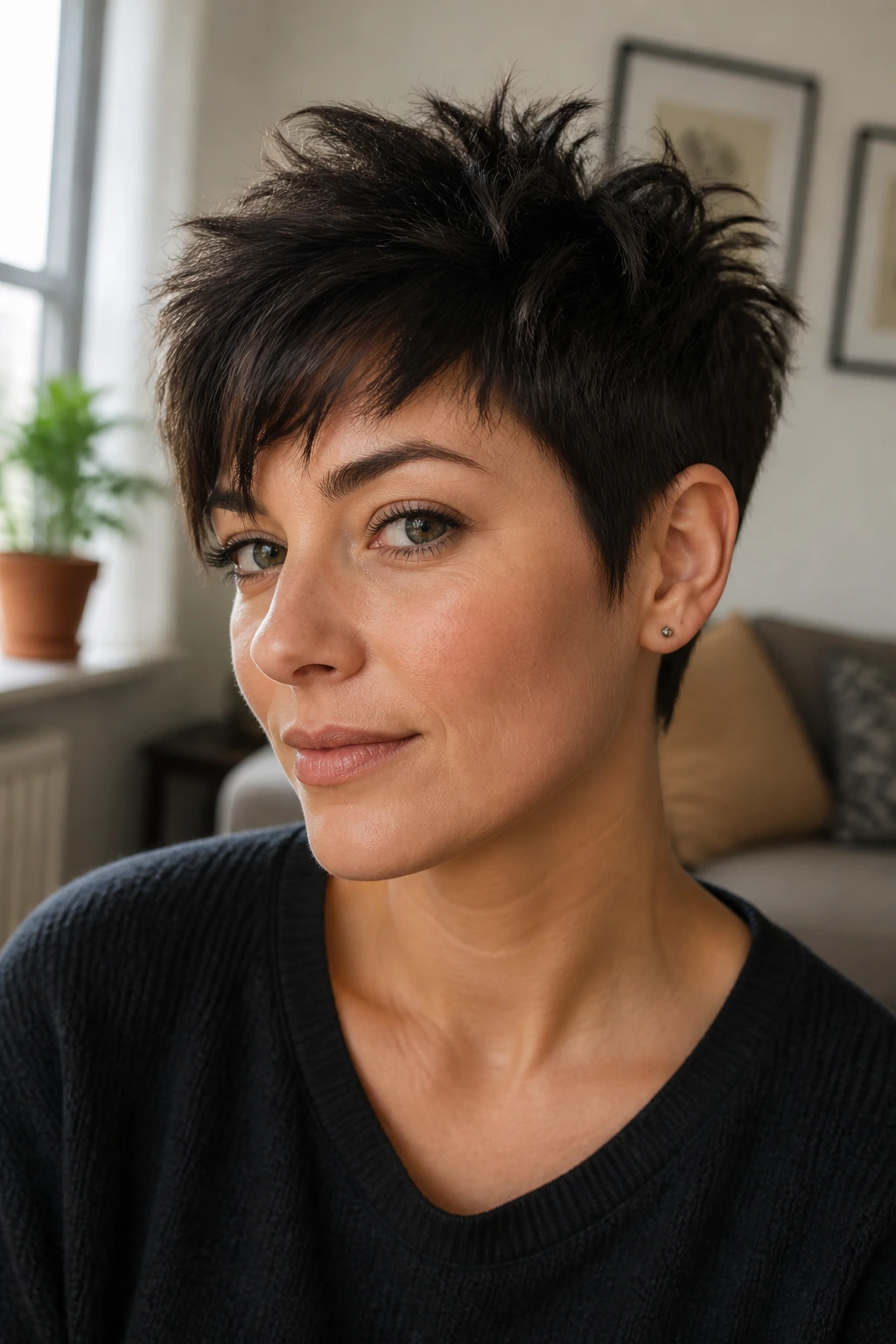
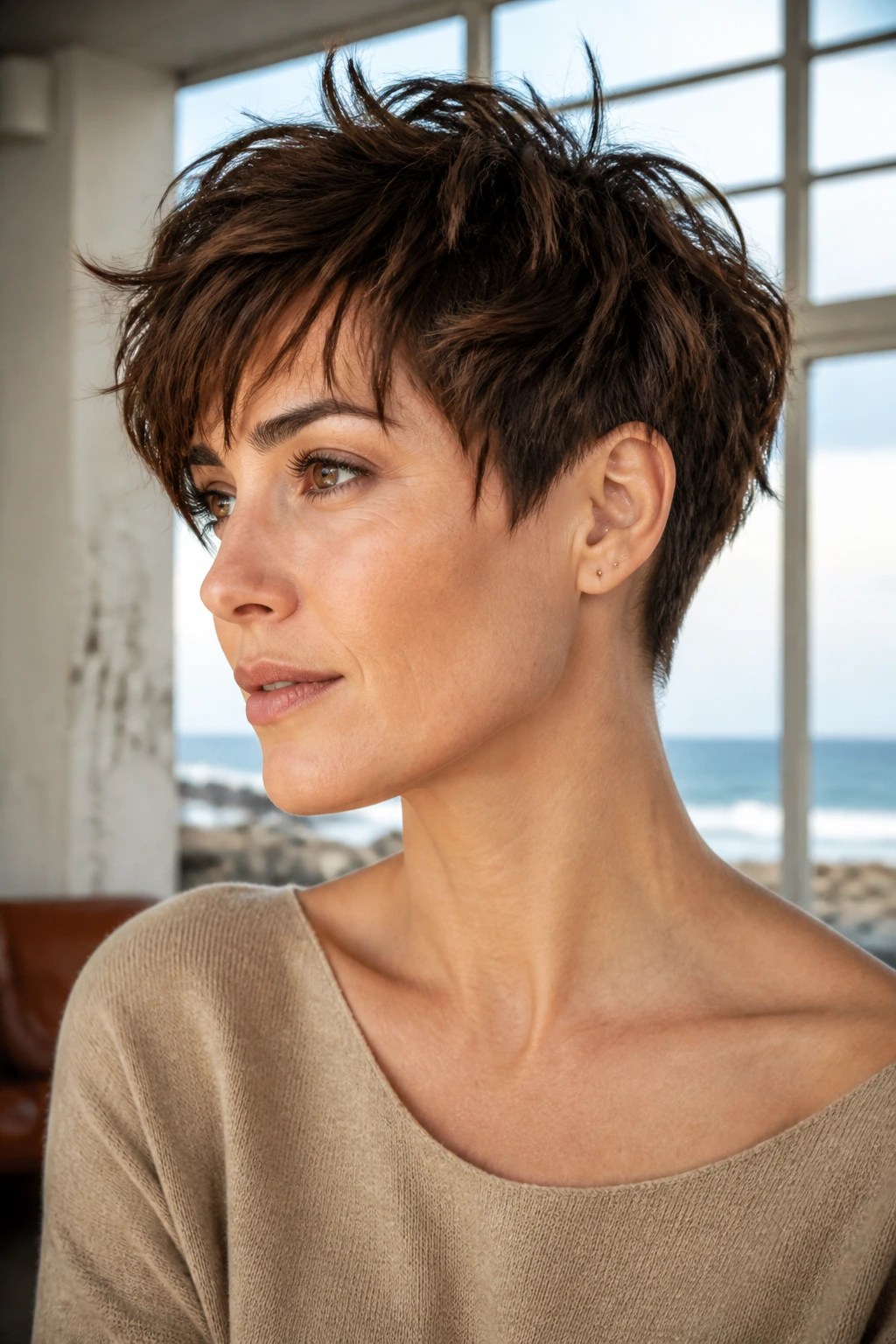
There’s something useful about a pixie that refuses to behave. The boyish version is short at the sides, lifted a touch at the crown, and cut with irregular pieces through the front so it never falls into one predictable shape.
Round faces often suit this better than a too-smooth pixie because the uneven texture keeps the haircut from repeating the curve of the face. You want contrast. You want edges that move in different directions. That roughness makes the face look sharper, especially when the fringe is pushed a little to one side.
This is not a high-polish style. It works best with a light styling cream or wax, worked in with the fingers. Stop before the hair starts looking wet. If the product weighs it down, the top flattens and the whole shape loses its lift.
A bit messy. A bit sharp. That’s the point.
19. The Soft Wolf Cut Lite
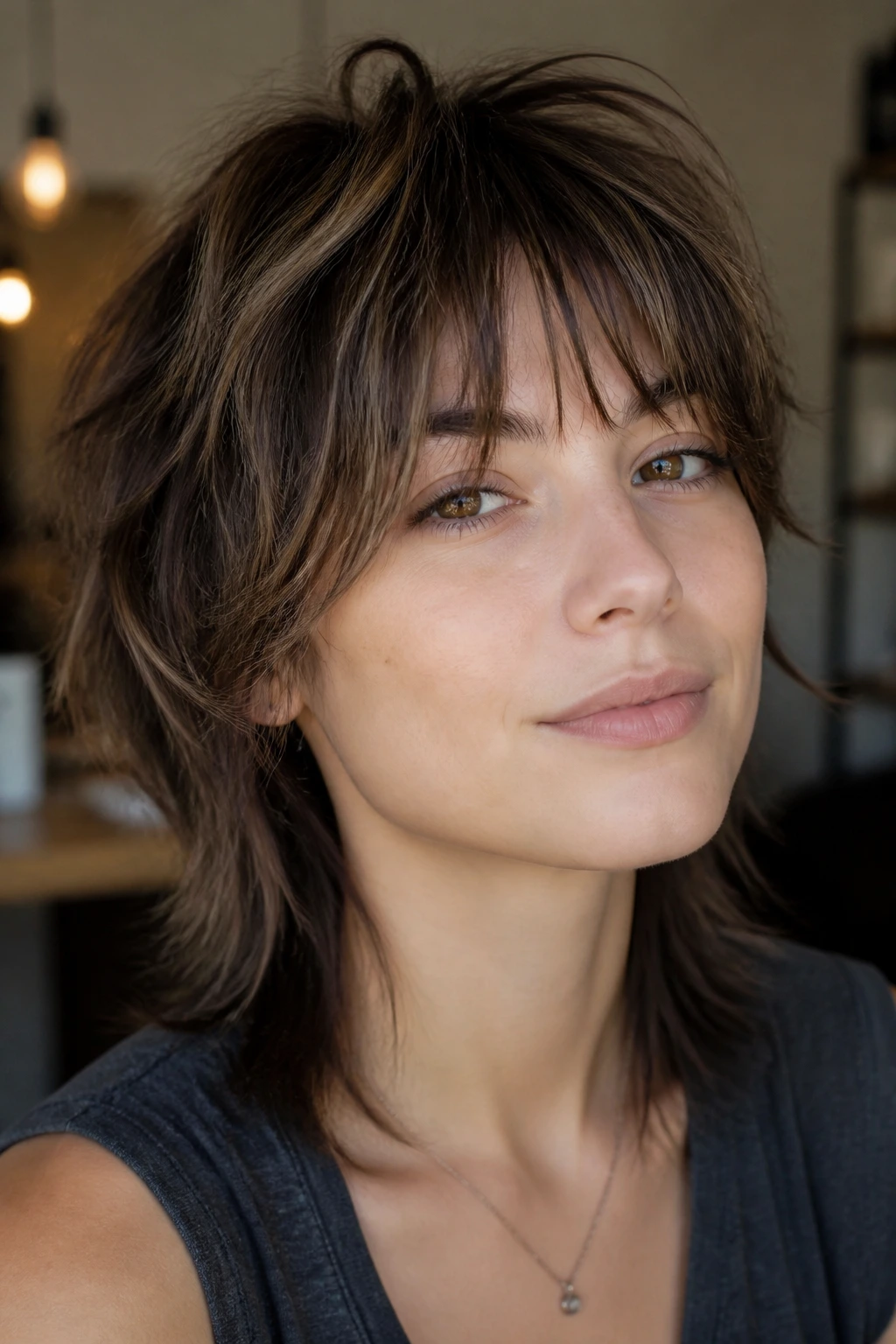
A full wolf cut can be too much for a round face if the shortest layers sit too wide at the cheeks. The softer version keeps the spirit of the cut — crown lift, broken layers, wispy ends — while making the shape more controlled and shorter.
Think of it as a mini shag with a little more edge at the top. The layers should begin higher on the head and fall away from the face, not balloon outward beside it. The front pieces can sweep past the cheekbone, which gives the face a vertical line and a little softness at once.
This is a good fit for people who want movement without a lot of precision. It looks best a little undone. If you try to make it too smooth, you lose the point of the cut.
A salt spray at the roots and a light cream through the ends are often enough. The hair should feel touchable, not crunchy.
20. The Graduated Choppy Bob
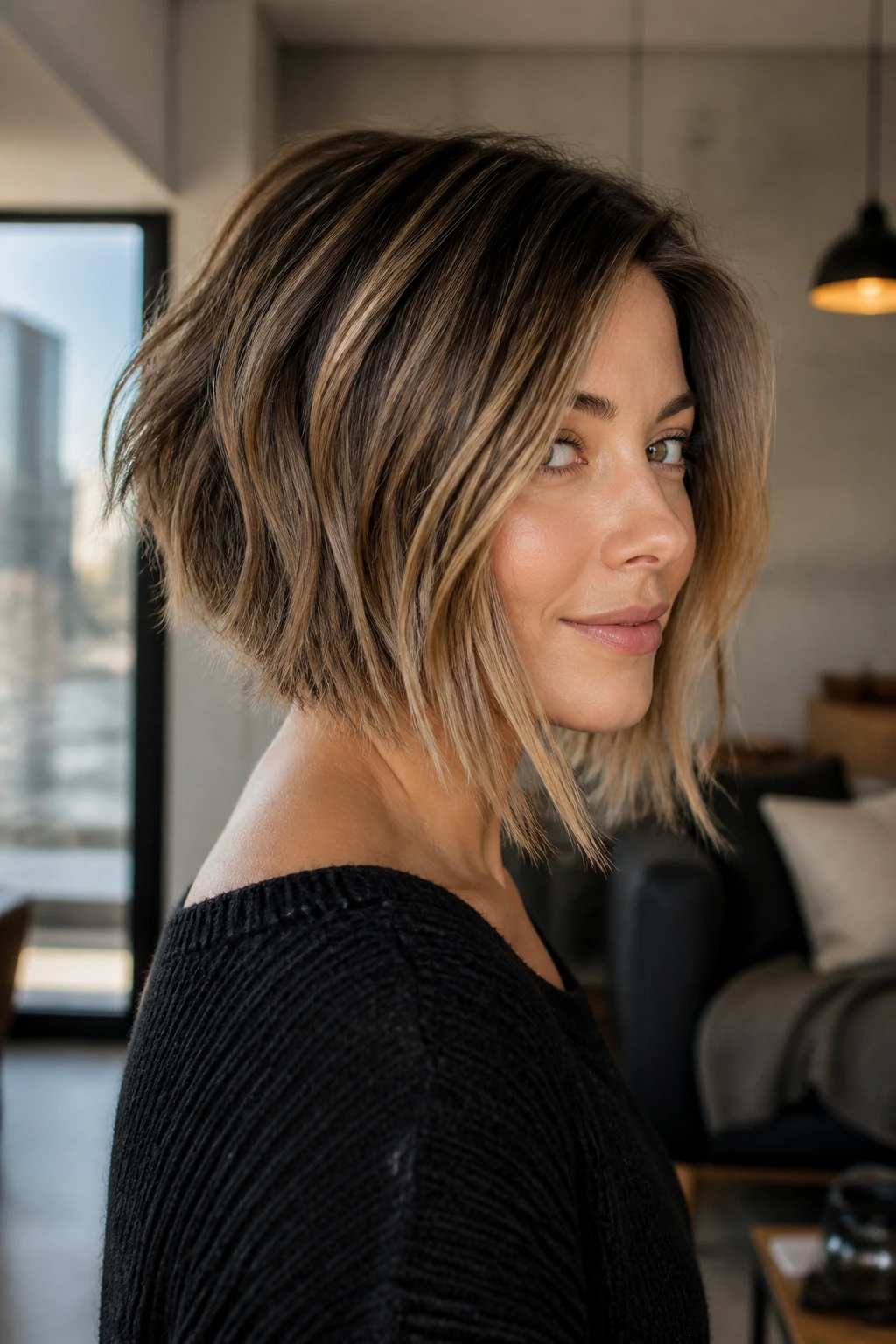
A graduated bob gives you a built-in lift at the back, which is useful on a round face because it moves volume away from the cheeks. Add choppy layers through the interior, and the shape starts doing real work instead of sitting there as a tidy block.
The back is shorter and stacked, while the front stays longer and softer. That forward length helps narrow the face. The graduation at the nape gives the haircut a little height, which is especially helpful if your hair tends to fall flat at the crown.
This cut can be sleek or tousled, but I prefer it with some broken texture at the ends. That keeps the line from looking too strict. It also grows out decently, which matters more than people think. A bob that goes bad after ten days is a bad haircut.
If you want one style that feels polished, practical, and not remotely boring, this one sits near the top of the pile.
Why Short Choppy Haircuts Work on Round Faces
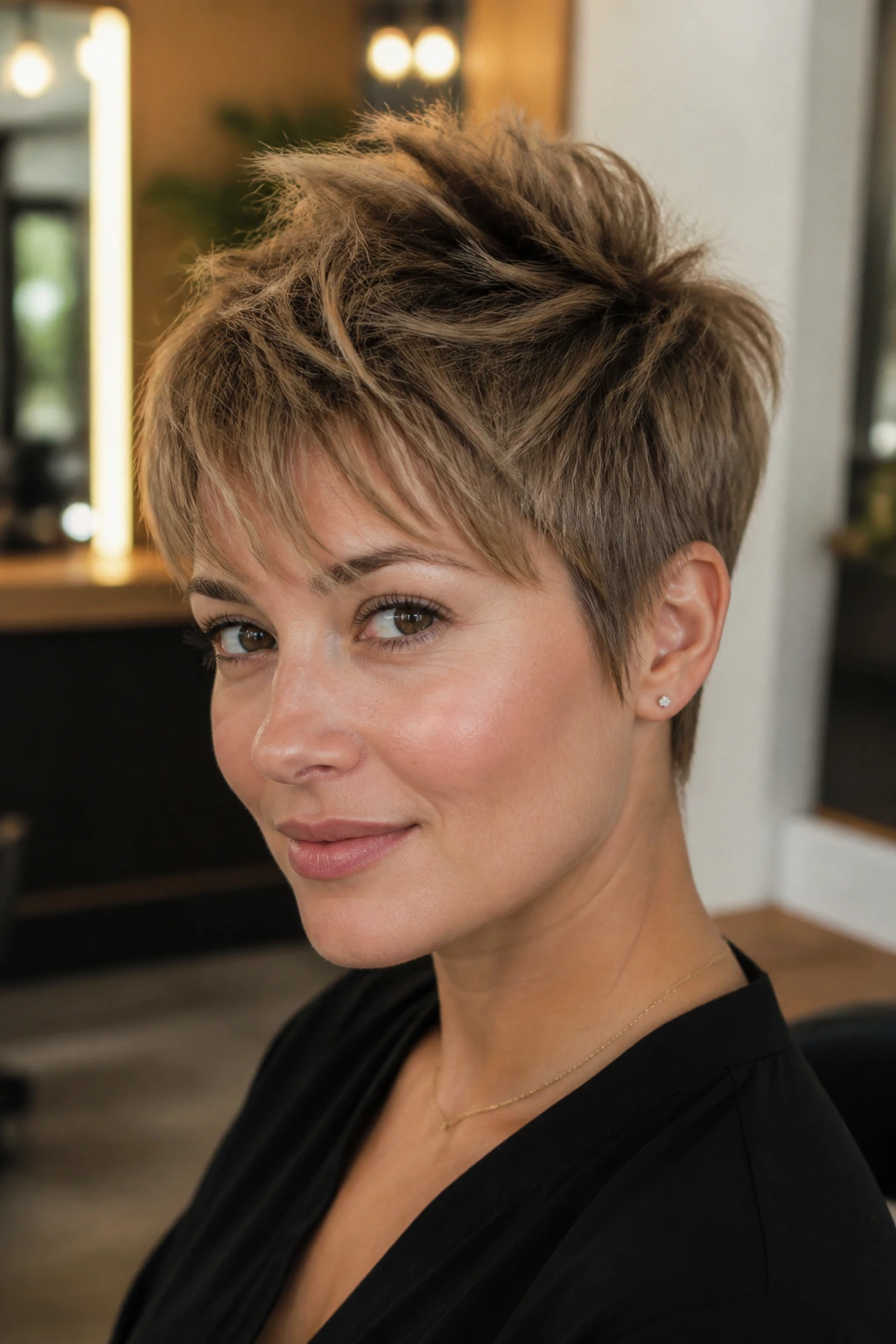
Round faces usually have soft curves, similar width and length, and a fuller look through the cheeks. That does not mean a certain cut is off-limits. It means the haircut needs to change the eye line.
The best short choppy haircuts for round faces do that with three tools: height, asymmetry, and broken edges. Height at the crown adds vertical line. A side part or longer front piece adds diagonal movement. Choppy ends stop the hair from forming one continuous circle around the face.
A blunt bob can still work, but it has to be placed carefully, and even then it often needs texture to keep from sitting too heavy at the widest point. I’ve seen too many round faces lose definition simply because the haircut ended exactly where the cheeks were fullest. A half inch higher or lower can change the entire result.
There’s another factor people miss: neck exposure. Even a small opening around the nape or ears creates a longer look from the front. That’s why pixies, tapered crops, and lifted bobs can be so effective. They give the face room to breathe.
Tools That Make These Cuts Easier to Style
-
Hair dryer with a concentrator nozzle: Directs airflow so you can lift the roots without blowing the whole style apart.
-
Small round brush, about 1 to 1.5 inches: Best for bending fringe, flipping ends, and adding crown lift on short bobs and crops.
-
Flat iron with narrow plates: Useful for a subtle bend through the front of a bob or for softening a choppy edge that dried too wild.
-
Texturizing spray: Adds grit and separation to pixies, shags, and bob ends without making the hair feel sticky.
-
Lightweight mousse: Good for fine or wavy hair when you need hold at the roots and movement through the lengths.
-
Matte paste or styling cream: Helps piece out short layers on pixies and bixies; use a small amount or the cut will collapse.
-
Diffuser attachment: Worth it for curly and wavy styles, especially shags and wolf-cut lite shapes.
-
Tail comb: Makes parting cleaner and helps you lift a section at the crown without denting the rest of the style.
-
Dry shampoo: Not just for greasy roots; a little at the crown gives body to flat short cuts.
What to Ask for at the Salon

Bring photos, but bring language too. A picture alone can be misleading if the model has a different face shape, hair density, or curl pattern. Tell your stylist where you want the eye to go: up toward the crown, across the cheekbones, or down along the jaw.
Be precise about length. Say “just below the jaw,” “lip length,” “around the collarbone,” or “short enough to tuck behind the ear.” Those small measurements matter. “Short bob” means different things to different people, and the wrong inch can turn a flattering cut into one that widens the face at the cheeks.
Also say how much styling you’re willing to do. If you air-dry five days a week, a heavily sculpted cut may not behave the way you want. If you like blowouts, you can ask for a bit more structure and polish. If your hair is thick, ask where bulk should be removed. If it’s fine, ask the stylist to keep the texture in the top layers so the shape doesn’t go limp.
One more thing. Mention your parting habit. If you always wear a deep side part, the cut should support that. Fighting your natural part is a small, annoying way to lose a haircut.
How to Style and Wear These Cuts Every Day
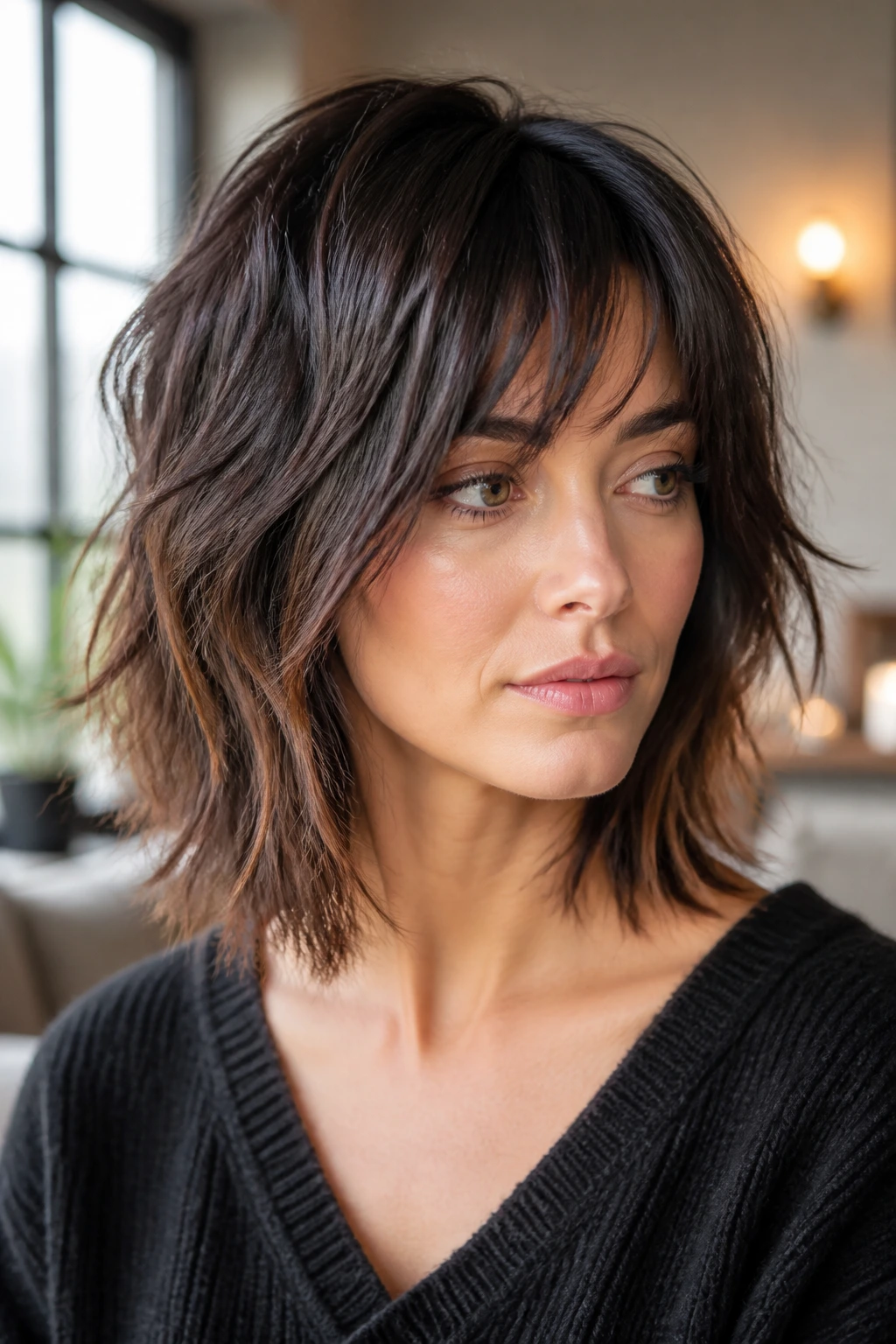
Parting: A side part usually helps round faces most, especially when the hair is short and the cut has some width through the cheeks. A center part can still work, but it needs bangs, lift, or enough length around the front to keep the face from feeling overly symmetrical.
Lift: The crown is your friend. Dry the roots in the opposite direction first, then settle the hair where you want it. That gives the top a little memory and keeps the shape from lying flat against the scalp.
Texture: Use less product than you think. Short choppy cuts need separation, not slickness. If the hair starts sticking together in thick strands, you’ve gone too far.
Finish: Pick the finish that suits the haircut, not the other way around. A pixie can take matte paste. A bob usually looks better with soft texture spray or a touch of cream. Curly cuts need moisture first, hold second. Skip that order and the shape gets fuzzy.
Day-two refresh: Wet your hands, run them lightly through the front, then re-lift the roots with your fingers and a little dry shampoo. You do not need to rewash every time the style gets a little sleepy.
Extra Styling Moves and Personal Tweaks
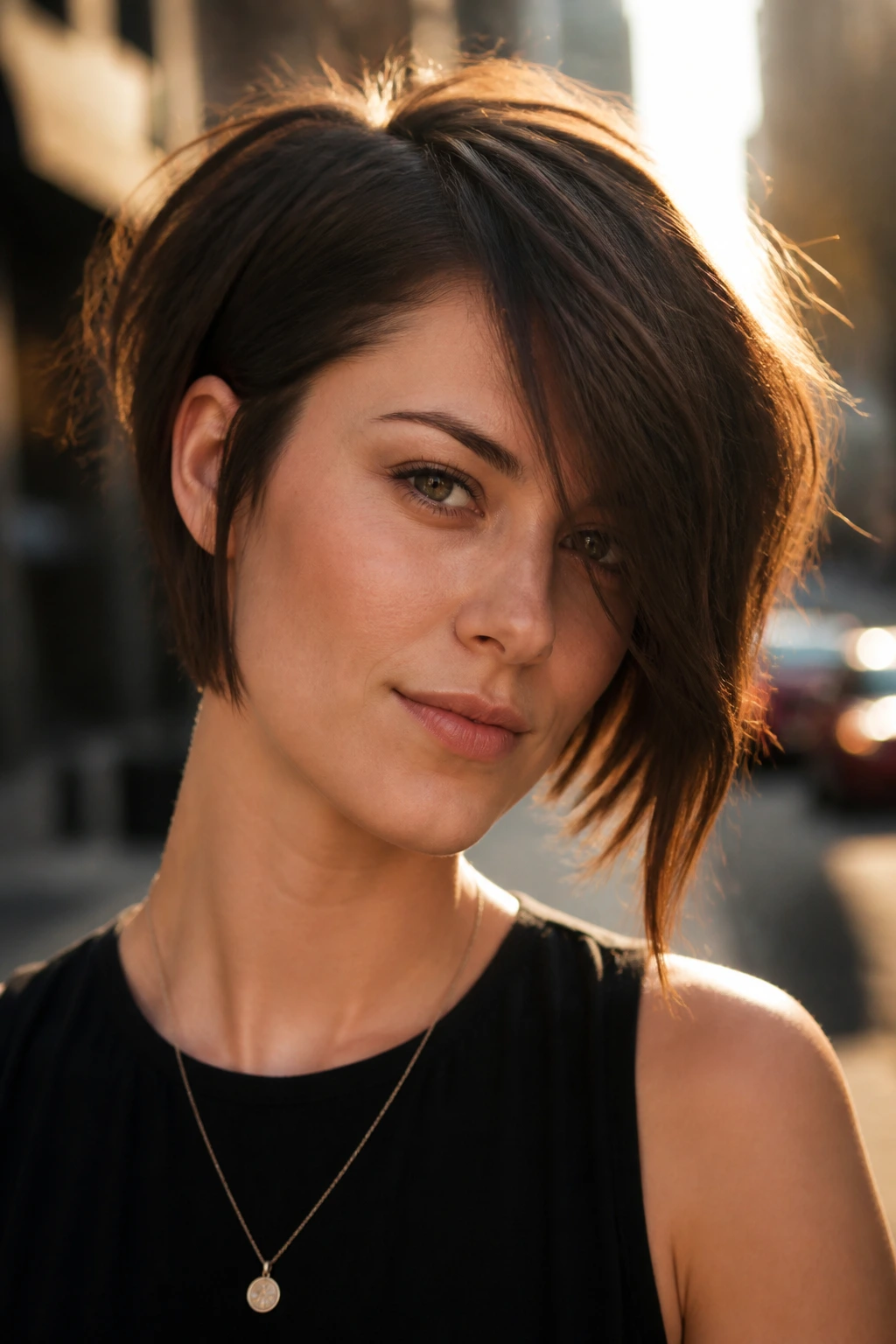
Texture Boost: If your haircut feels too round or too neat, mist a bit of texturizing spray at the roots and pinch the ends once the hair is dry. That small bit of roughness makes the shape look lighter around the cheeks.
Fringe Fix: For bangs that feel too heavy, split them while they’re damp and clip each side away from the center for ten minutes. The fringe dries with a softer fall and won’t sit like a thick curtain.
Low-Heat Shortcut: If you hate blow-drying, choose a cut that already has movement built into it — shaggy lob, bixie, soft wolf cut lite. Then use mousse and air-dry until it’s about 80 percent dry before touching it again.
Glasses-Friendly Move: Keep the sides slightly lighter around the temples and the front a touch longer. That stops the hair from competing with the frames and keeps the face open.
Make-It-Yours: Straight-haired people can ask for a sharper perimeter with texture only in the top layers. Wavy or curly hair usually looks better with more internal layering and less rigid outline. Thick hair benefits from bulk removal. Fine hair needs lift, not thinning.
Wash-Day, Sleep, and Grow-Out Care
Short choppy styles usually live or die by maintenance. Pixies and bixies often need a trim every 4 to 6 weeks if you want them crisp. Bobs and lobs can stretch to 6 to 8 weeks, but once the ends start turning heavy at the cheeks, the face shape changes fast.
At night, a silk or satin pillowcase helps keep the short layers from standing up at odd angles. If your hair is especially piecey, a loose wrap or a soft clip at the crown can save you a morning of re-styling. It sounds fussy. It isn’t. Five seconds at night can save five minutes in the morning.
For refreshes between washes, use dry shampoo at the roots, then work a tiny bit of water or leave-in mist into the front pieces. The goal is to reactivate shape, not soak the whole head. Too much water flattens the crown and makes the cut look tired.
If you’re growing the style out, do it in stages. Don’t wait until everything feels awful. Ask for tiny shaping trims so the front pieces keep their angle while the back fills in. That’s how you keep the haircut flattering instead of sliding into a shapeless in-between stage.
Variations Worth Trying If Your Hair Is Different

Fine Hair with Lift: Choose pixies, bixies, and graduated bobs with crown texture. They create the appearance of fullness without needing a heavy product cocktail that makes the hair lie flat by noon.
Thick Hair with Control: Go for hidden undercuts, tapered napes, or razored shaggy lobs. These cuts remove bulk where the face is widest and keep the silhouette from ballooning.
Curly Hair with Shape: Ask for a dry cut if your stylist works that way, then keep the layers longer around the sides of the face. That preserves curl movement without turning the cheeks into the widest point.
Low-Styling Maintenance: Pick an airy fringe crop, a side-swept bob, or a soft wolf cut lite. These shapes can be air-dried with minimal fuss and still keep the face looking open.
Glasses and Strong Frames: Stay away from overly heavy bangs unless they’re intentionally wispy. Short choppy cuts with lifted crowns and soft temples usually leave enough space for the frames to sit comfortably.
Common Mistakes That Make a Round Face Look Wider

The first mistake is cutting the shortest point right at cheek level and stopping there. That creates a visual band across the widest part of the face. If the line lands there, it often reads broader than you expected. The fix is a small shift up, down, or forward — just enough to break the horizontal line.
Another one: too much volume at the sides. Big side fullness can make a round face feel wider, even if the top is short. Ask for lift at the crown instead of puff at the temples.
Heavy blunt bangs are another trap. They can shorten the face and crowd the forehead, which makes the cheeks feel louder. A softer, lighter fringe usually solves that.
People also over-style the ends. If every piece is curled under tightly, the haircut turns into a rounded shell. A straighter edge, a rough bend, or a flipped-out finish usually works better.
And please do not skip trims for months on a short cut. Short hair shows grow-out fast. Once the shape slips, the whole face shape trick slips with it.
Frequently Asked Questions
Which short haircut is most slimming on a round face?
A side-swept choppy bob or a textured pixie with crown lift usually gives the strongest slimming effect. Both add vertical movement and keep the sides from expanding at cheek level.
Are bangs a bad idea for round faces?
Not at all, but heavy straight bangs can be hard to pull off. Wispy fringe, curtain bangs, or side-swept bangs work better because they open the forehead and keep the face from looking shorter.
Can curly hair wear short choppy cuts without looking wide?
Yes, if the layers are shaped with curl shrinkage in mind. Keep lift at the crown and avoid too much width around the cheeks, which is where curly cuts can get bulky fast.
Will a chin-length bob make my face look bigger?
It can, if it’s blunt and all one length. A choppy chin-length bob with broken ends or an asymmetrical line usually works much better because it breaks up the round outline.
What if my hair is fine and flat?
Choose a cut that builds shape through texture, not bulk. A bixie, pixie, or graduated bob with root lift works well, especially if you use mousse and a dry shampoo at the crown.
How often should I trim a short choppy style?
Pixies and very short crops usually need upkeep every 4 to 6 weeks. Short bobs and shags can go a bit longer, but once the ends start sitting heavy, the face shape effect fades.
Can I air-dry these styles and still get a good result?
Yes, but pick the right cut. Shaggy lobs, curly shags, and softer bob shapes air-dry more easily than sharp pixies or sleek micro bobs, which usually need at least a quick blow-dry at the roots.
Should I avoid center parts completely?
No. A center part can work if the haircut has enough fringe, lift, or asymmetry to balance it. The problem is not the part itself; it’s a center part on a flat, one-length cut.
What if my cheeks are fuller and I want short hair anyway?
Lean into length around the front, not the sides. Pieces that hit near the cheekbone or jaw, plus a little height at the crown, keep the cut flattering without making you give up the short length you want.
The Shape Rule
The best short choppy hairstyles for round faces do not fight the face. They guide it. A little height here, a little diagonal line there, and a broken edge where a blunt line would have been — that’s usually enough to change the whole mood of a cut.
If you remember only one thing, make it this: the most flattering short hair on a round face is usually not the shortest hair or the most layered hair. It’s the one that moves the eye where you want it to go. That’s the whole game.
Choose the shape that gives you lift, space, and a bit of irregularity. The rest is styling, and honestly, styling is the easier part.