



Gray-black hair has a way of looking flat in the bottle and expensive on a person, and deep skin tones are where that difference shows fast. The right version is not a slab of one-color jet black; it’s charcoal, graphite, steel, mushroom, and silver pulled together so the hair still has depth when the light is bad and shine when the light is good.
On deeper complexions, that cool gray family can look razor-sharp or muddy, depending on placement. A silver money piece near the cheekbones, a smoke-soft balayage through curls, or a blue-black gloss over a dark base changes the whole read of the hair — not because the color is louder, but because it has enough contrast to hold its own beside rich skin.
And that’s the part people miss. Gray-black is not one shade. It’s a whole stack of them, from nearly-black ash to true silver and every graphite note in between. Some need bleach, some only need a gloss, and some depend more on curl pattern than on the dye itself. That range is exactly why the ideas below don’t all look alike.
Why Gray-Black Hair Color Looks So Good on Deep Skin Tones
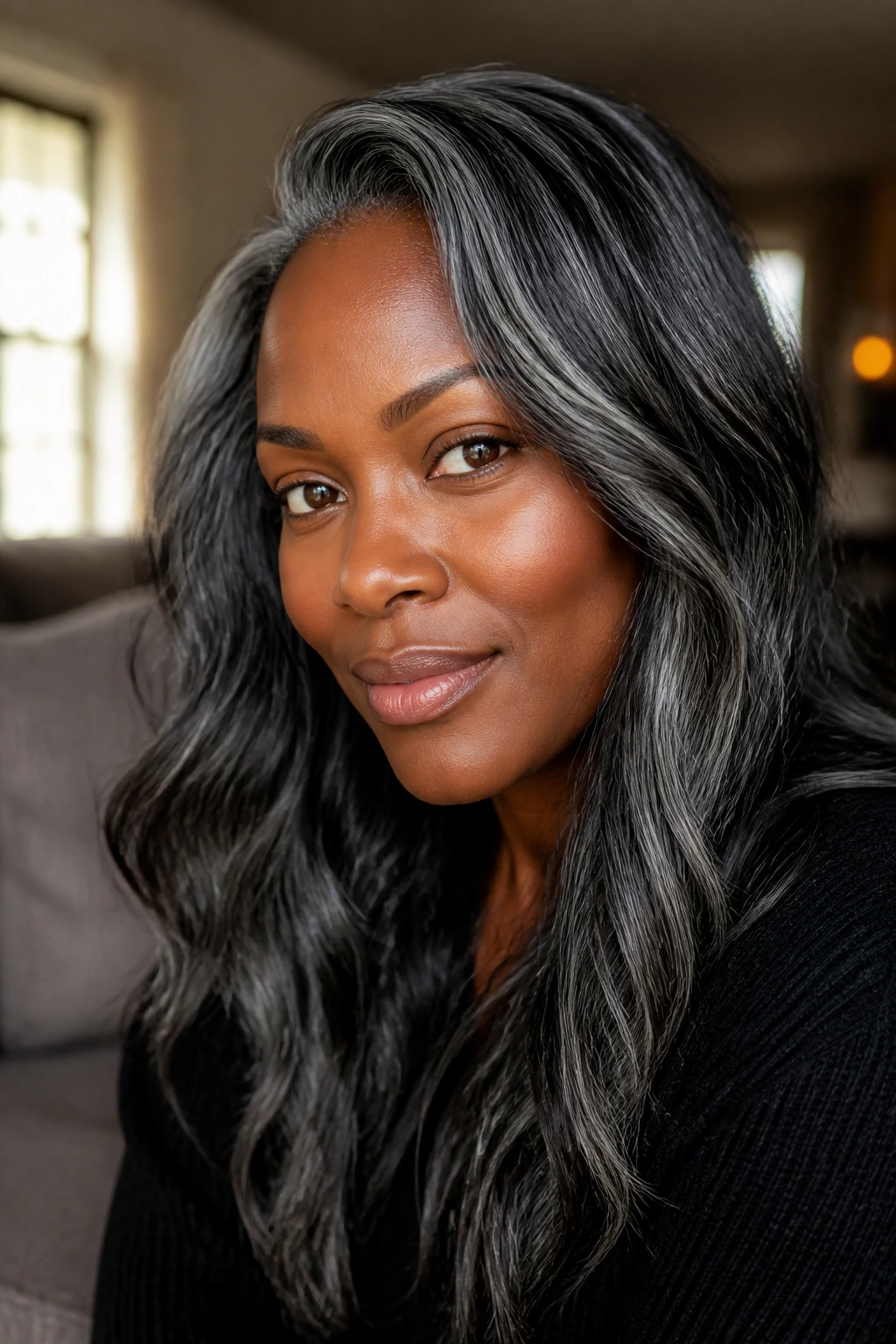
- The contrast stays rich, not chalky: Deep skin gives gray-black shades a darker frame, so charcoal and silver read as luxe instead of washed out.
- Texture does half the work: Coils, waves, braids, and sleek presses all catch smoke-gray light differently, which keeps the color from looking painted on.
- You can control the drama: A rooted melt feels soft and wearable; silver face-framing pieces or frosted ends push the look into statement territory.
- Grow-out is easier to live with: A shadow root or dark base softens regrowth, which matters if you do not want to book touch-ups every few weeks.
- Undertone matters more than people think: Blue-black, ash gray, pewter, and mushroom all behave a little differently against warm and cool deep skin, so there’s room to tune the shade instead of guessing.
1. Charcoal Melt
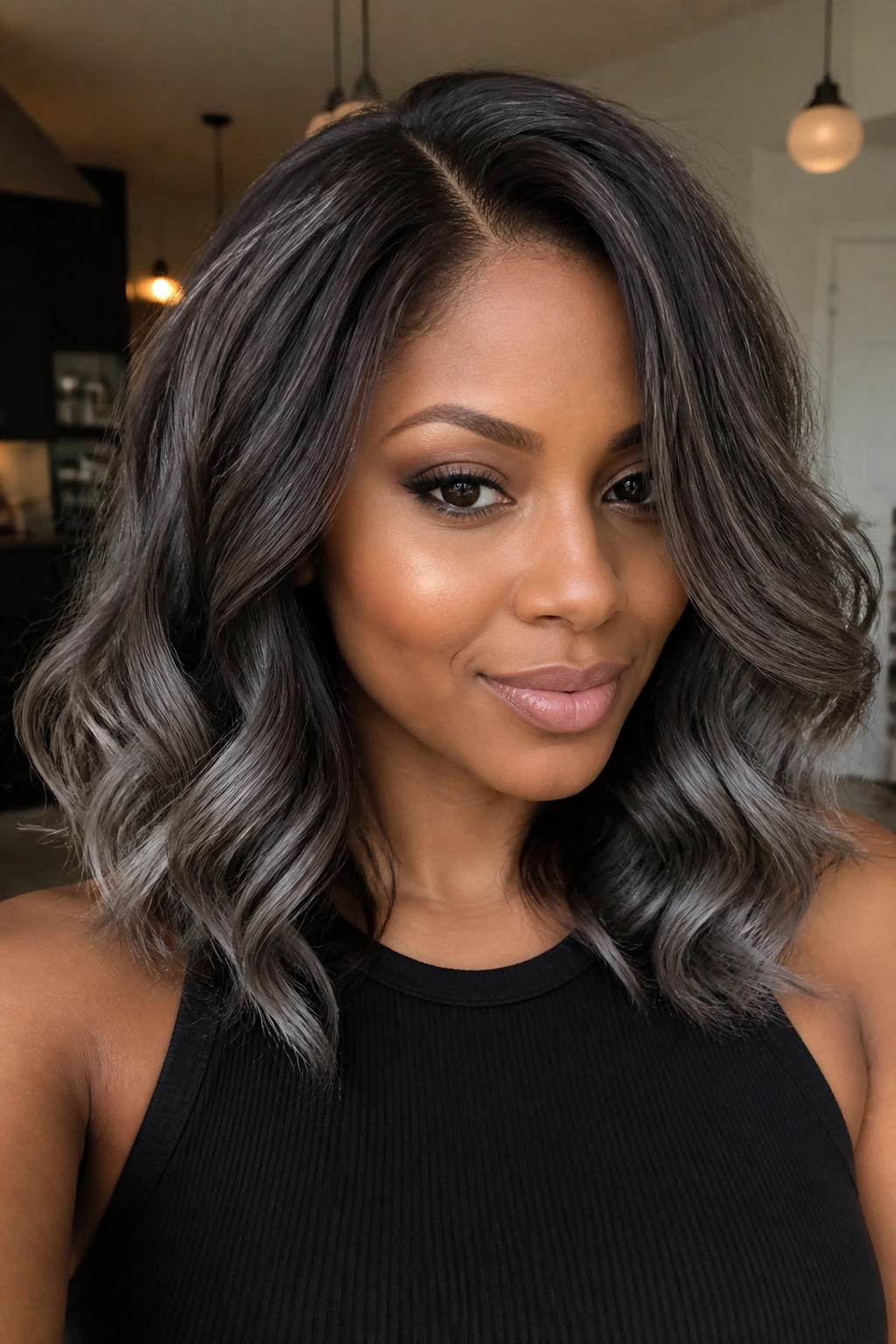
Charcoal melt is the easiest place to start if you want gray-black hair color that still feels grounded. The base stays deep, then the mids soften into graphite and the ends pick up a smoky silver edge that looks more expensive than loud. On deep skin, that dark-to-smoke fade gives the face room to breathe.
Why It Works
A melt keeps the darkest color near the root, where the eye expects depth, and lets the lighter gray show up only where the hair moves. That matters on curls and waves, because the lighter pieces pop when they bend. Ask for a root shadow of about 1 to 1½ inches, then lift the mids just enough to land in charcoal, not pale gray.
Best for
- Long layers
- Loose curls
- Anyone who wants dimension without a sharp stripe at the hairline
Tiny fix: If the ends start looking dusty instead of smoky, the gray went too pale.
2. Gunmetal Money Piece
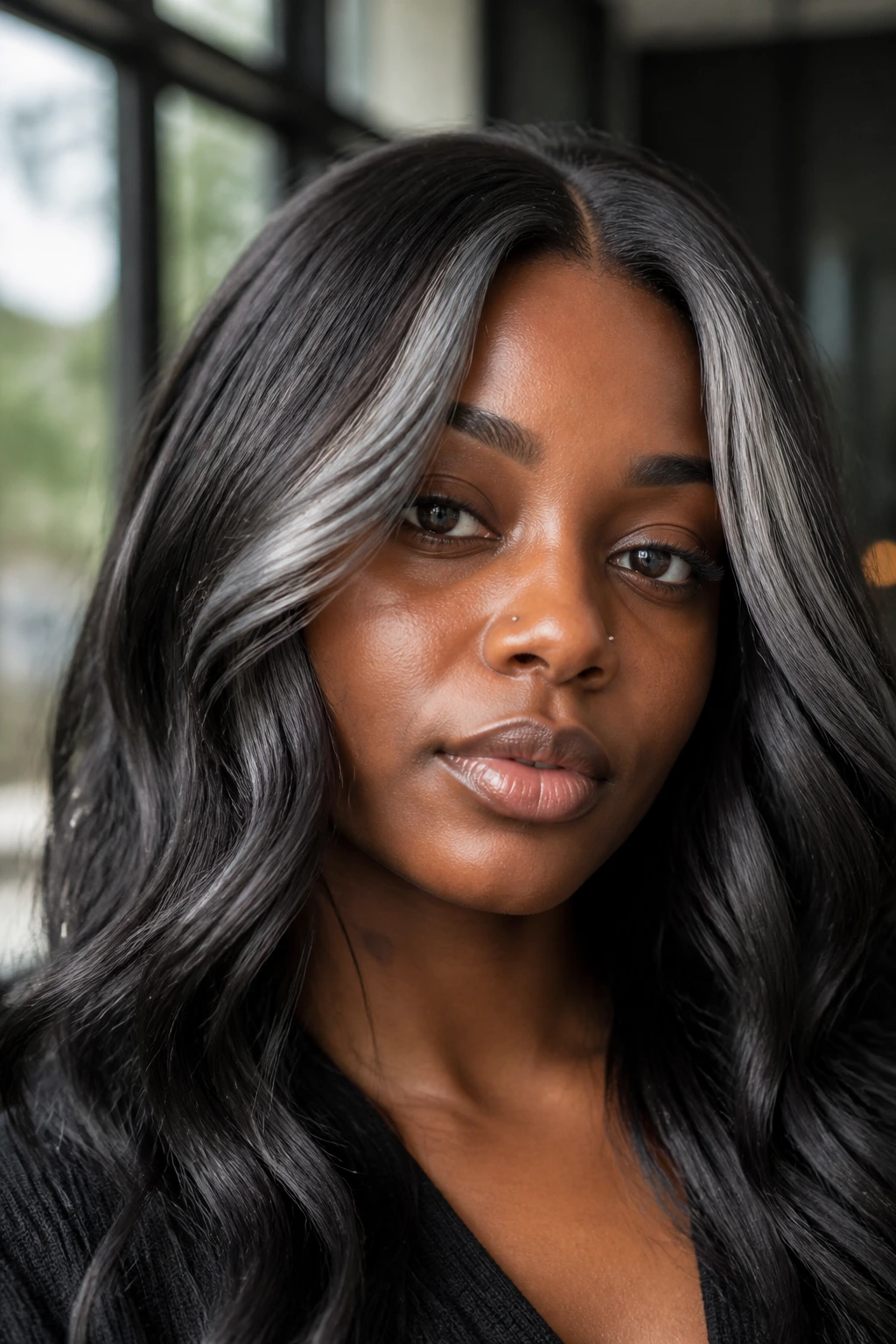
If you want the face to change first, start at the hairline. A gunmetal money piece puts cool silver-gray around the front two sections, then leaves the rest of the hair dark so the contrast lands where it matters most. On deep skin, it can sharpen cheekbones and make dark eyes look even deeper.
This look has a cleaner edge than a full balayage. It works especially well with a center part and soft bends, because the front pieces fall like a frame instead of floating away from the rest of the hair. Keep the money piece one to two shades lighter than the lengths, not five.
A little goes a long way here. Too much silver at the front can look stripey in indoor light, while a narrower panel feels deliberate and easier to grow out.
3. Graphite Balayage
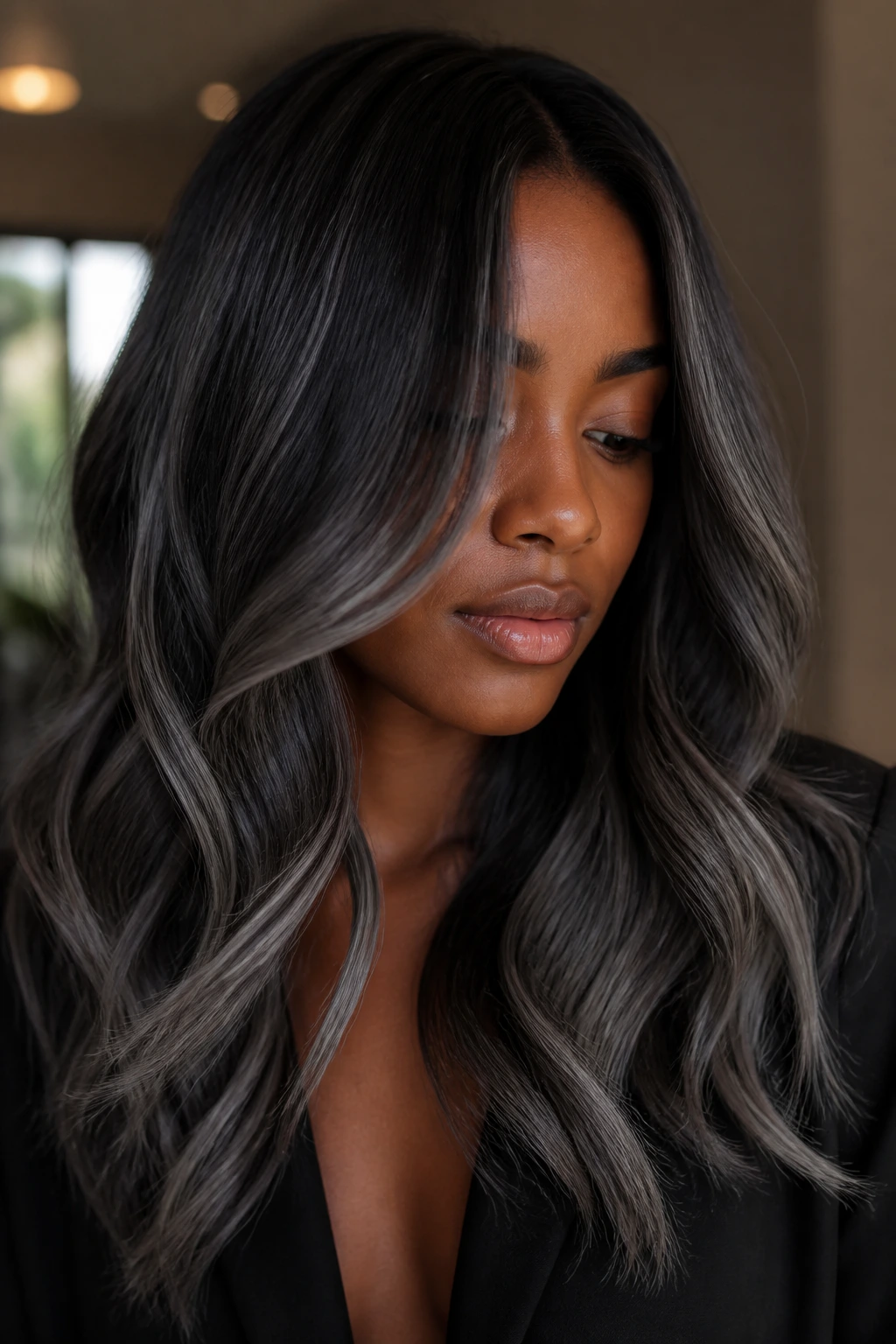
Why does graphite balayage read richer than plain gray? Because hand-painted ribbons keep the dark base intact. You still see black, but the gray sits inside the movement of the hair instead of sitting on top of it like a patch.
That makes this one a smart pick for deep skin tones and layered cuts. The graphite pieces catch on curls, bends, and blown-out ends, which gives the color a natural flicker. It’s especially good if your hair has some length, because short hair can’t always show off hand-painted placement.
How to wear it
A loose twist-out or a soft blowout makes graphite balayage look intentional. Straight hair works too, but it can hide the variation if the ribbons are too thin. Ask for painted pieces that start a few inches below the roots so the color doesn’t fight the natural depth at the scalp.
4. Ash-Black Gloss
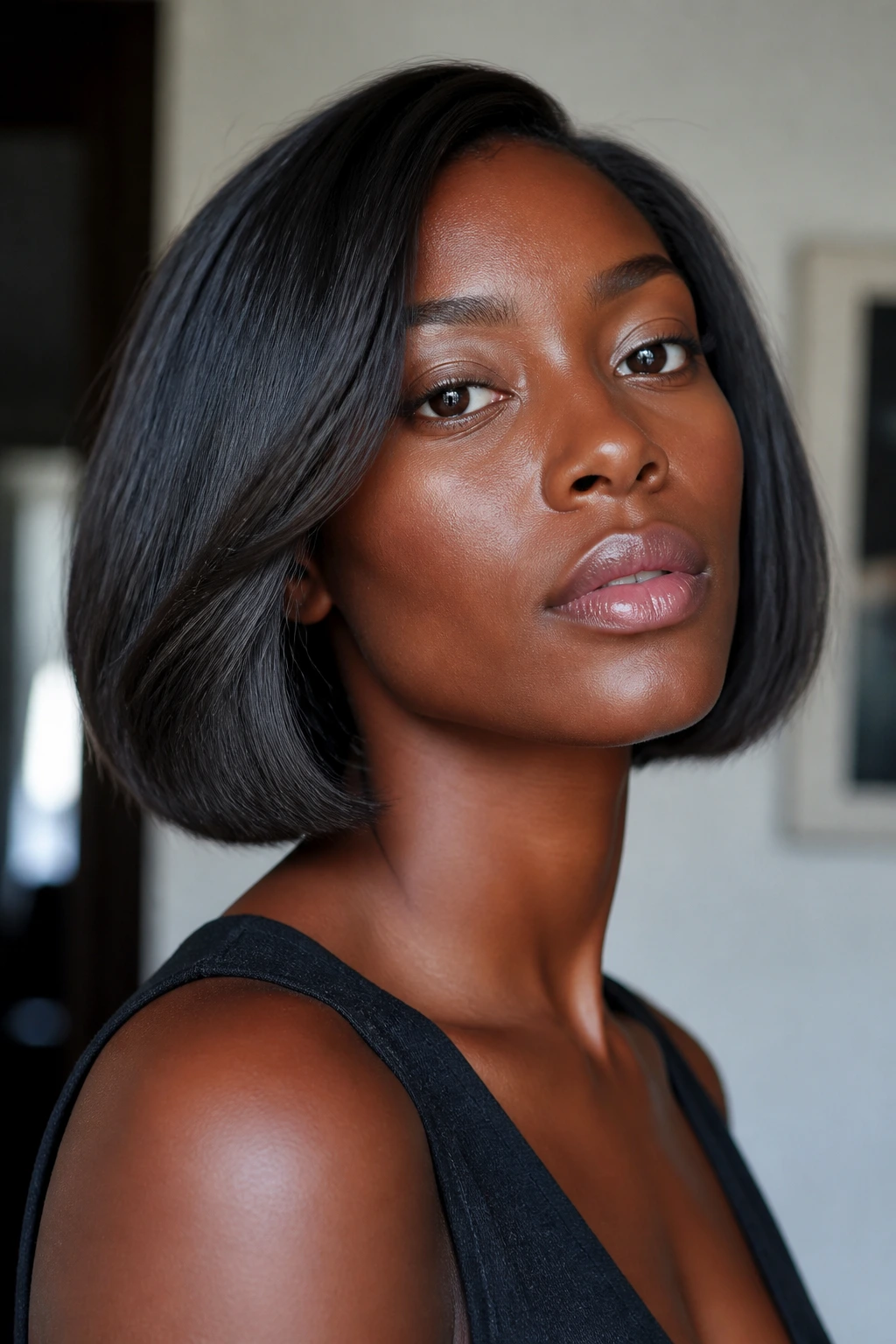
Picture hair that looks black in the shade and smoky when you step near a window. That’s ash-black gloss. It’s one of the quietest gray-black hair color ideas in the group, and that restraint is the point.
A demi-permanent gloss over a level 2 or 3 base keeps the hair dark while knocking out warmth and giving it a cool sheen. On deep skin, ash-black can look polished instead of severe, especially if the hair is cut blunt or styled sleek. It also grows out softly, which means fewer obvious lines at the root.
Best on: short bobs, silk presses, and healthy-looking natural hair that doesn’t need a loud highlight pattern.
5. Silver Ribbon Curls
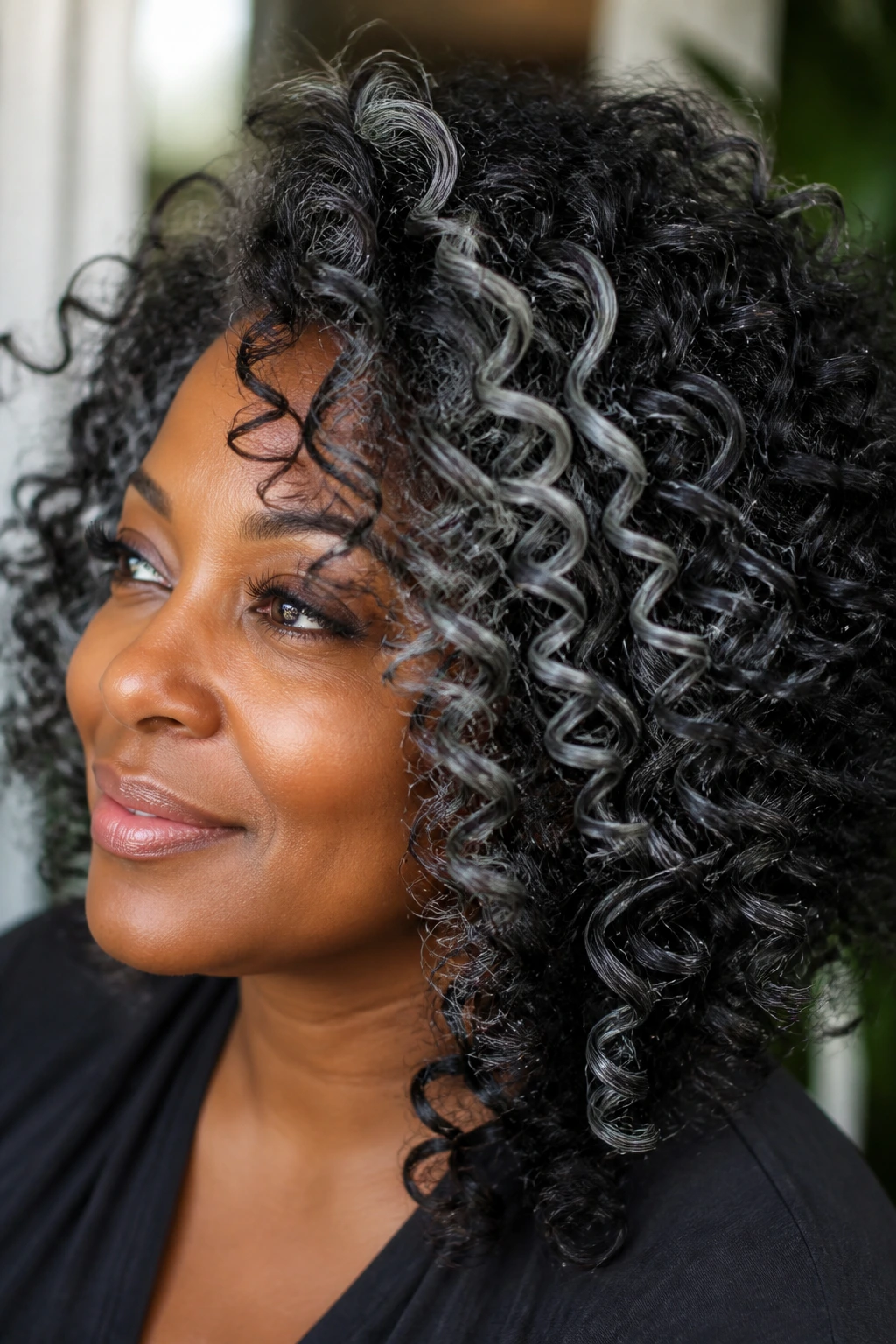
Silver ribbon curls are for people who want the gray to move. Thin silver sections are painted through the curl pattern so every coil catches the light a little differently. The color shows up in motion, not all at once, and that makes it feel woven into the hair instead of pasted on.
On deep skin, ribboning gives you brightness without bleaching the whole head to pale silver. The dark base does the heavy lifting, and the gray threads act like flashes of steel. It’s a strong choice for defined curls, because each ringlet holds its own highlight.
Keep the ribbons a touch thicker near the front and lighter toward the back. That keeps the face bright and stops the whole style from turning into a uniform silver block.
6. Black Pearl with Frosted Ends
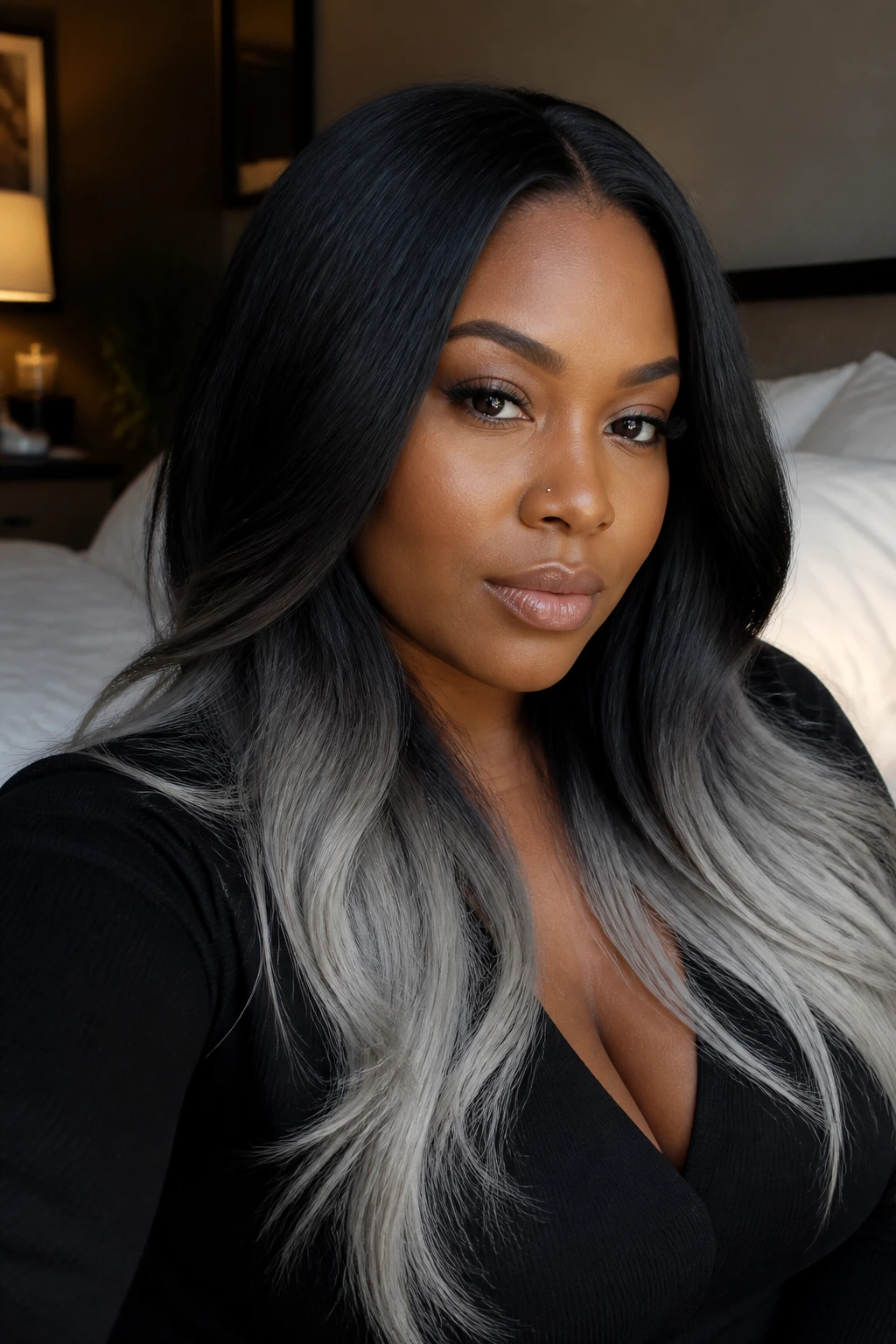
Unlike an all-over silver look, this one keeps the roots rich and lets the ends do the talking. Black pearl hair starts glossy and nearly inky at the crown, then eases into frosted ends that look icy only where the light catches them. It’s sleek, dramatic, and a little bit glamorous in the old-school sense.
The deep root keeps the style wearable on deeper skin tones. Without that darkness at the base, frosted gray can drift into flatness fast. With it, the ends feel like a finish, not a separate dye job. Long hair shows this best, especially if you wear it straight or with a loose wave.
The grow-out is kind to you, too. The darker root hides regrowth while the frosted ends keep the whole thing from reading too heavy.
7. Slate Ombre
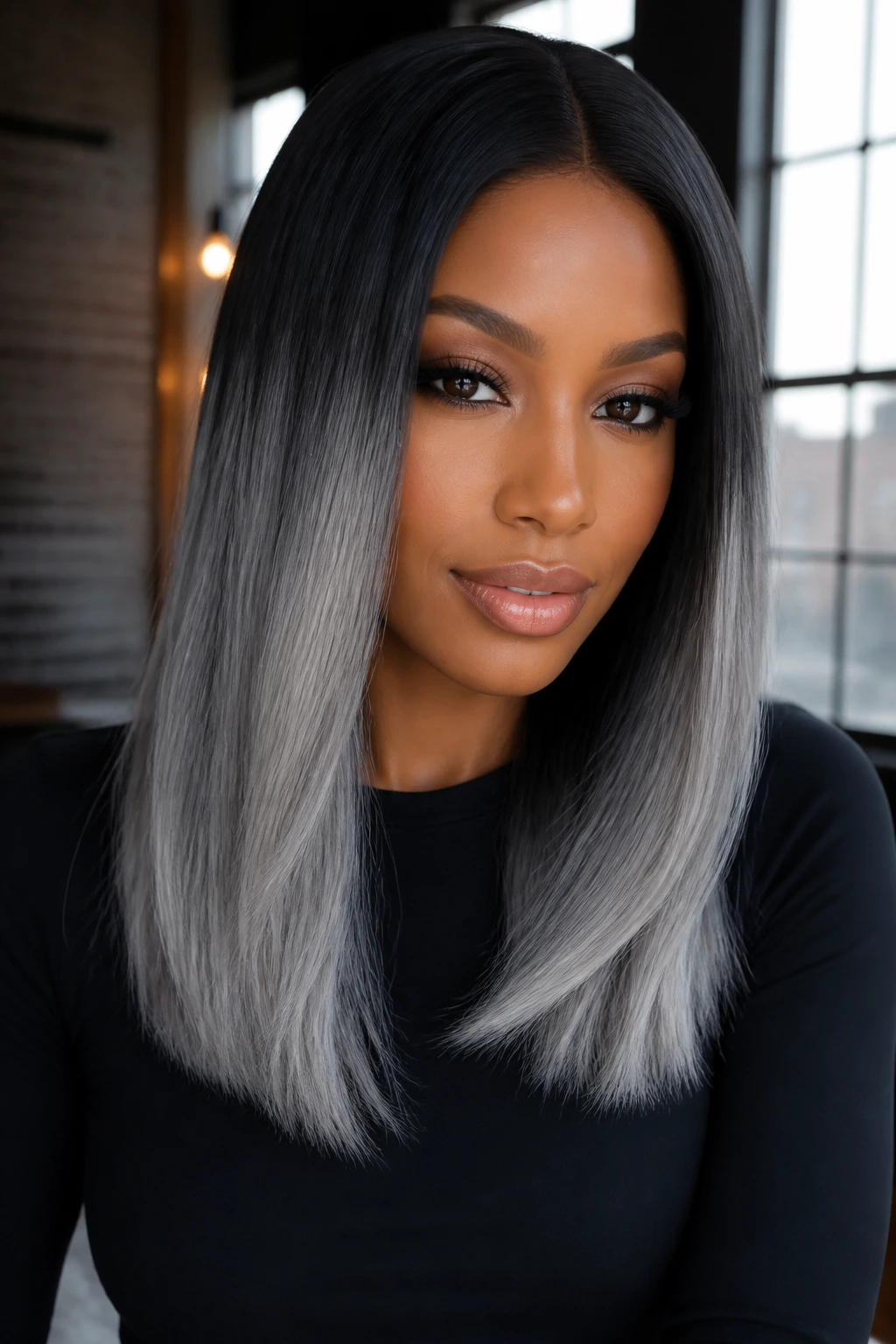
Slate ombré starts like a deep black and slides into cooler slate through the mids before landing in soft silver at the tips. The transition is slower and a little more moody than a standard fade, which is why it works so well on longer hair. There’s room for the shades to blur.
Why It Works on Deep Skin
A slate ombré keeps the top half rich and the ends lighter, so the overall effect stays balanced. On deep skin, that balance matters. Too much pale gray near the root can feel disconnected from the complexion; leaving the base dark keeps the whole look tied together.
What to ask for
- A dark root shadow
- A midtone slate zone
- Ends that are light enough to read silver, not white
A straight blowout makes this look almost chrome. Curls soften it.
8. Pewter Peekaboo Panels
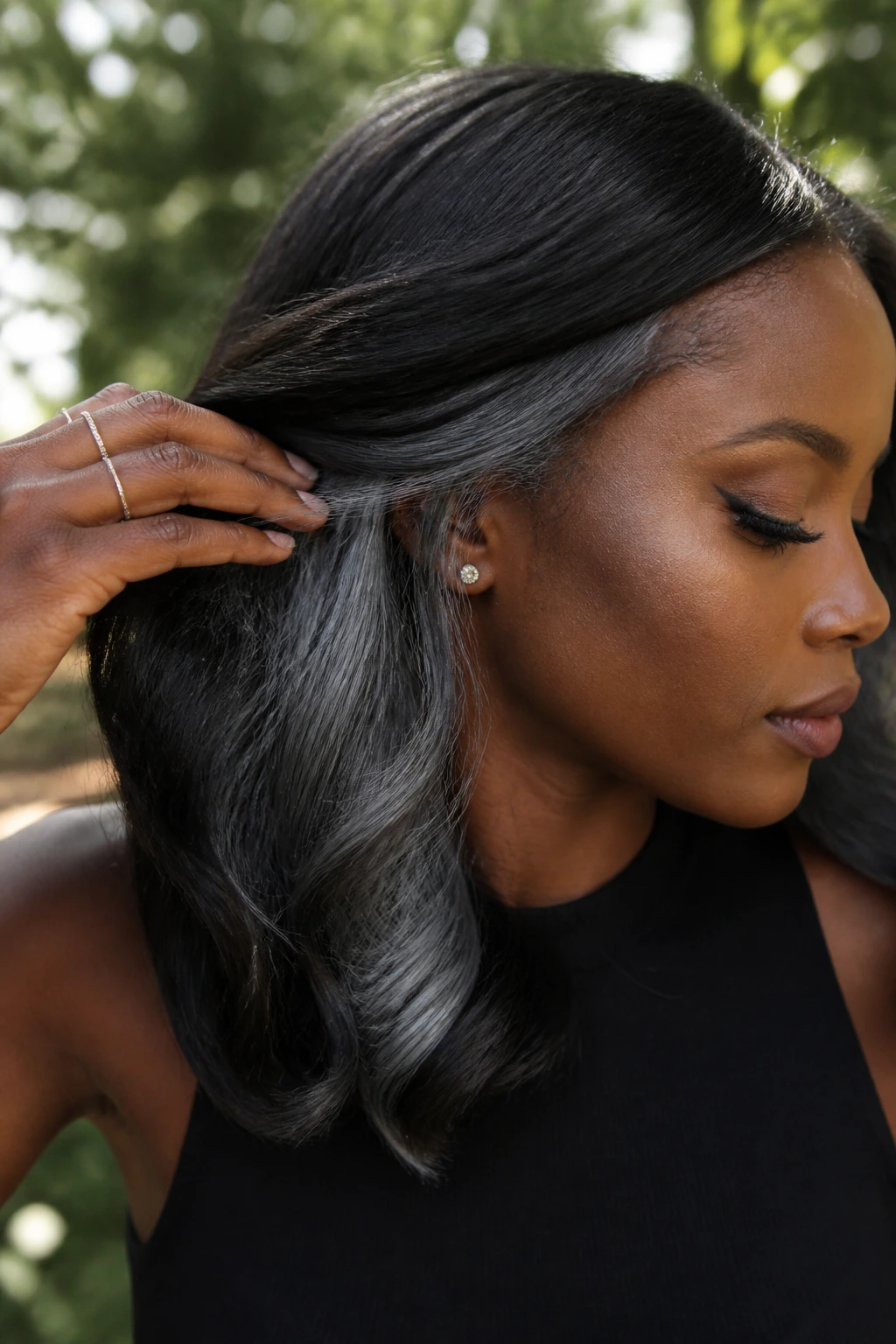
Some people want gray-black hair color without putting it on display all day. Pewter peekaboo panels solve that problem. The gray lives underneath the top layer, so you see it when hair swings, tucks behind the ear, or lifts in a ponytail.
That hidden placement is useful on deep skin because it gives the face all the contrast it needs without flooding the whole head with silver. It also makes the grow-out easier to ignore. If your job wants something quieter, this is one of the smarter ways to get there.
The best part is the movement. Braids, twists, and curls all reveal the pewter at different moments, which keeps the style interesting without making it high-drama every second.
9. Blue-Gray Black
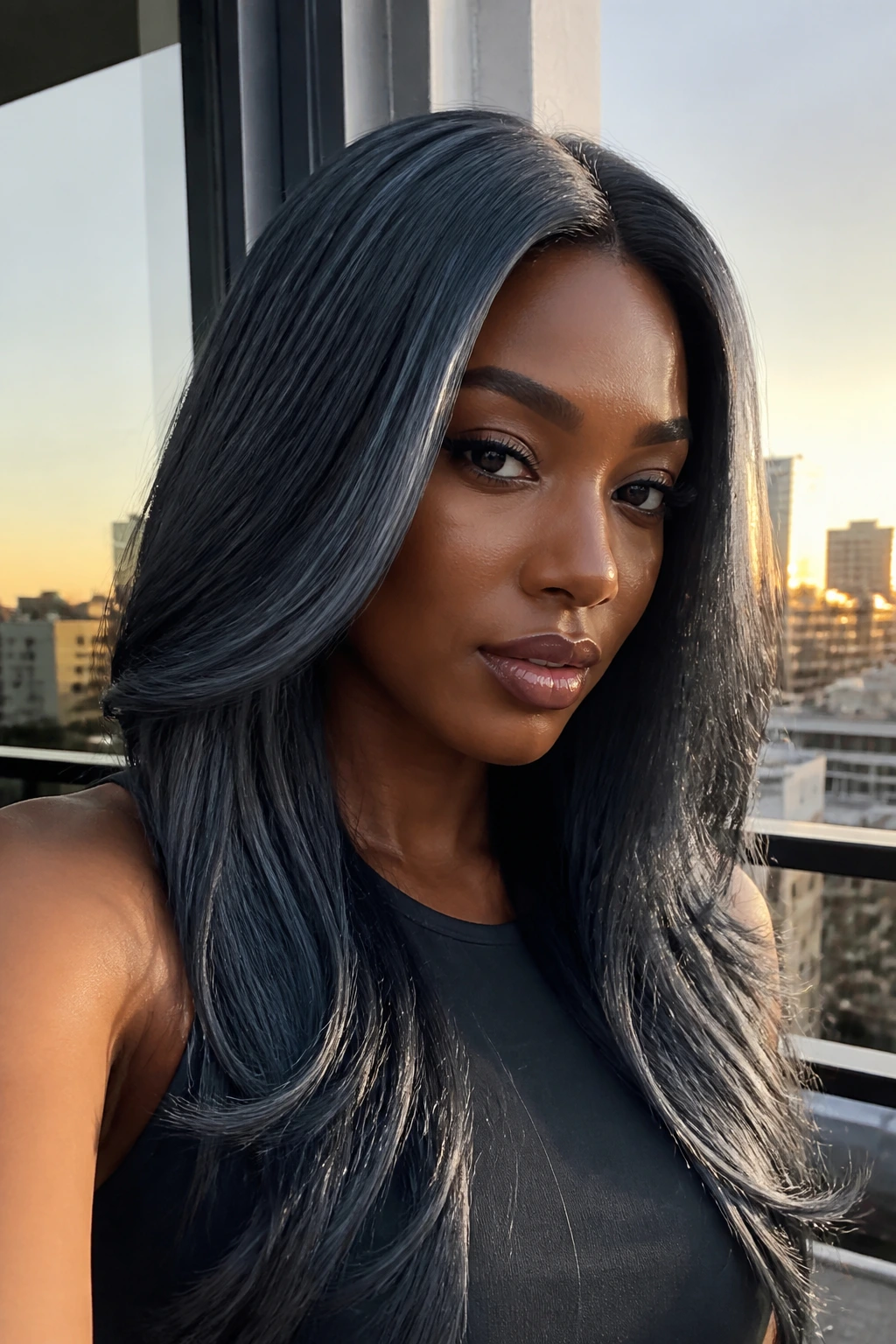
Why does blue-gray black look so clean on deep skin? Because blue keeps the black from turning muddy. A cool blue undertone gives the hair a slick, almost glassy finish, and the gray note stops it from feeling flat.
This is the shade for someone who likes dark hair but wants one small twist that only shows in good light. It can read nearly black indoors, then flash blue-gray along the lengths outdoors. That shift is the fun of it. On straight hair, the sheen is obvious; on waves, the cool tones show up in the bends.
How to wear it
A middle part and glossed edges make this shade look sharp. If you want something softer, pair it with layers so the cool blue-gray appears in motion rather than all at once.
10. Smoky Mushroom Black
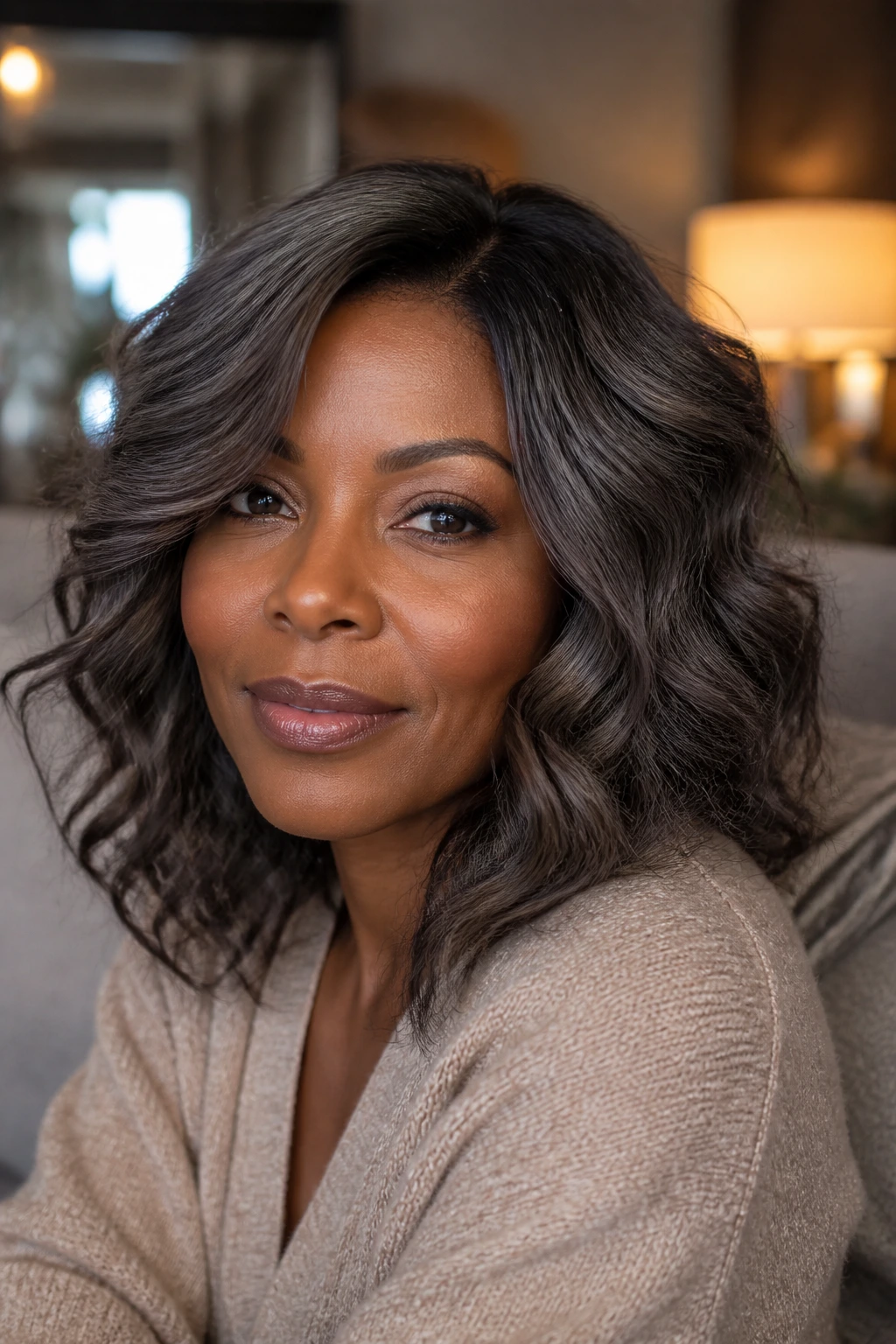
Smoky mushroom black sits in the sweet spot between gray, brown, and black. It has that muted, earthy feel that keeps the cool tone from getting too icy. On warm deep skin, it’s often the easiest gray-black idea to wear because it doesn’t fight the skin’s warmth.
This shade is less metallic and more velvety. Think soft charcoal with a brown-gray haze over it. It looks especially good on shoulder-length cuts and layered curls, where the muted tones can show without shouting. If you’ve ever worried that silver would look too cold on you, this is the one to try first.
The maintenance is friendly, too. Mushroom tones usually fade in a softer direction than bright silver, which means they don’t go from polished to awkward as fast.
11. Charcoal Babylights
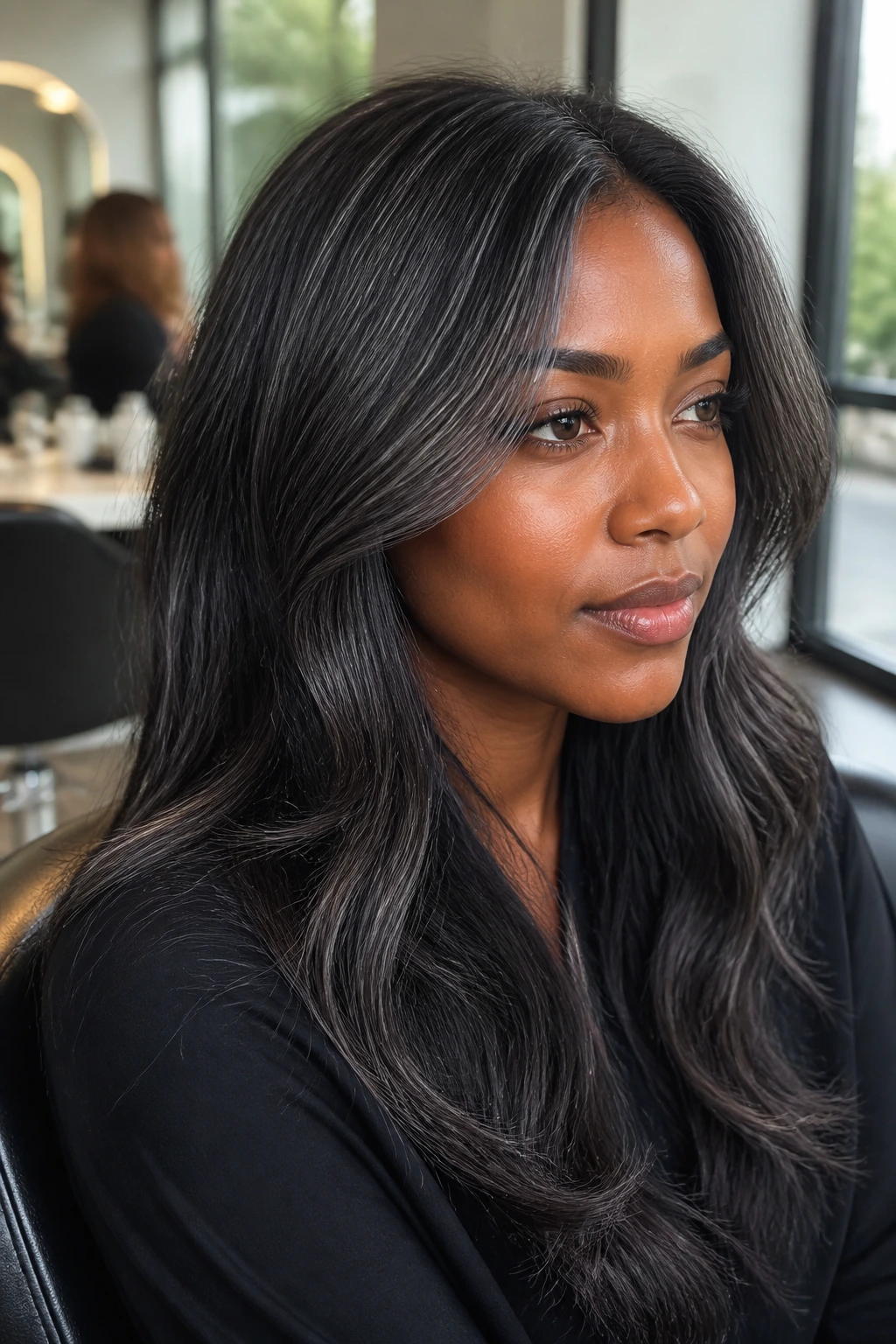
Charcoal babylights are tiny, fine gray-black threads placed just a shade lighter than the base. The trick here is restraint. If the highlights are too chunky, they take over; when they’re narrow and scattered, they create a soft, expensive-looking texture.
On deep skin, babylights can be the smartest move for fine hair or hair that doesn’t love big bleach sessions. The color stays dark, but the surface catches light in little spots rather than in big panels. It’s subtle. That’s the point.
This works well around the crown and hairline, where the light hits first. Ask for micro-weaving or very fine painting, not thick streaks, if you want that soft, feathery finish.
12. Platinum Ribbon Locs
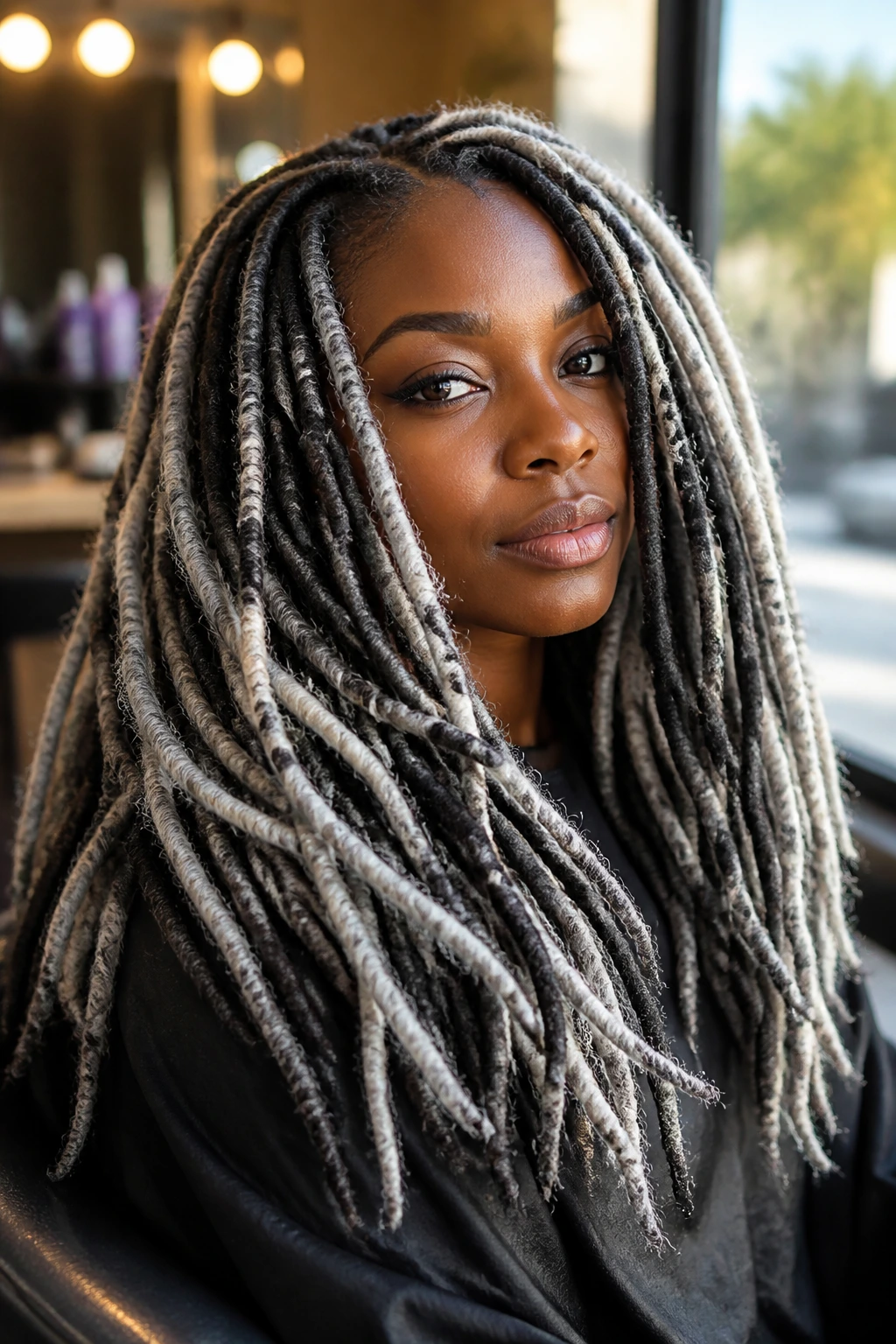
Platinum ribbon locs take the gray-black idea and move it into a protective style. Instead of bleaching the whole head, you weave platinum-gray accents through the locs so the look feels layered, not heavy. On deep skin, the contrast can be striking without putting stress on the natural hair underneath.
This is one of the few gray-black looks that can feel high-impact and low-chemistry at the same time. If you want drama but your hair is already overworked, extensions or wrapped pieces are a smarter path than another lift session. The gray can be thin and streaked, or broad and bold.
The big payoff is movement. As the locs shift, the platinum threads appear and disappear, which keeps the style from looking static.
13. Coal Crown Lift
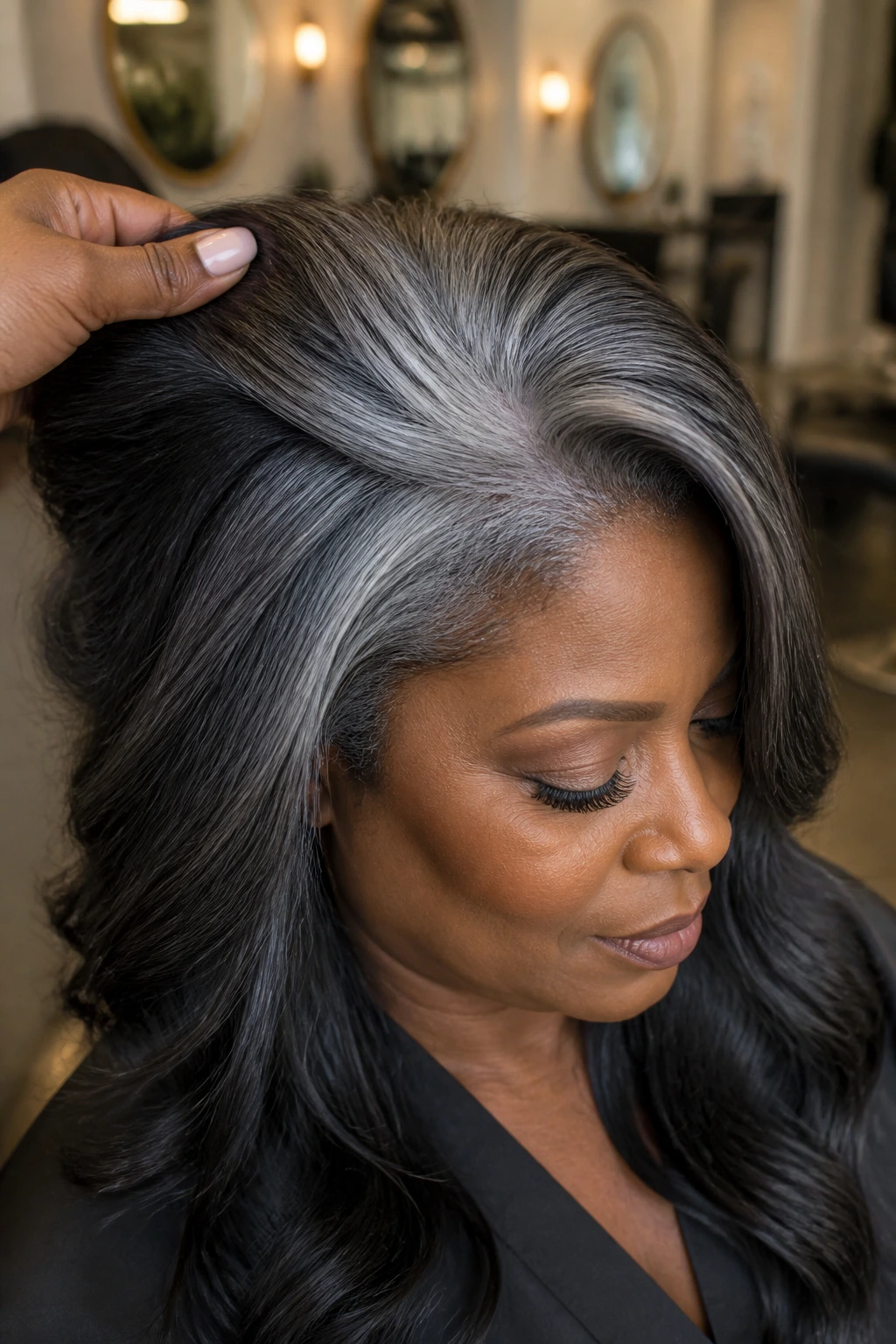
Coal crown lift flips the usual highlight map. The ends stay dark, while the crown picks up a softer gray cast that gives the hair a lifted look at the top. On deep skin, that little brightening near the scalp can open the face without bleaching the whole length.
Why It Stands Out
Most gray-black looks place the lightest pieces at the ends or around the face. This one moves the light upward, which gives short cuts, pixies, and tapered styles a little more shape. The eye goes straight to the top, which makes the haircut read fuller.
Quick notes
- Ask for ash-gray just at the crown
- Keep the lower lengths in charcoal or black
- Use a matte pomade if you want the lift to show
It’s a small shift, but it changes the silhouette.
14. Silver Halo Highlights
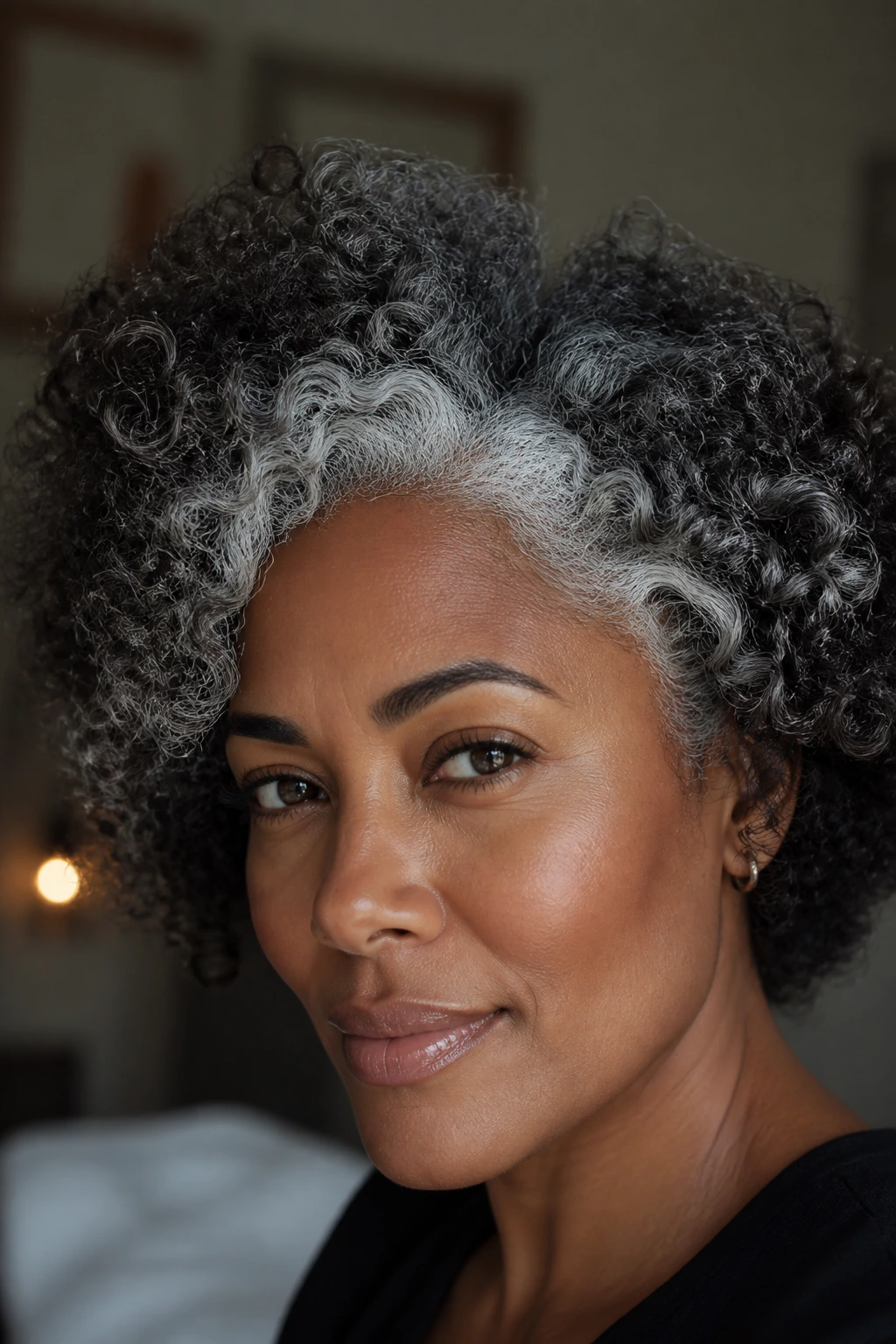
Silver halo highlights are one of those looks that sounds louder than it wears. A ring of silver-gray sits around the top layer and temple area, while the rest of the hair stays darker. The effect is like light falling around the face from the inside.
That halo does a lot on deep skin. It brightens the face, but it also keeps the dark base intact, so the complexion doesn’t lose its depth. It’s especially good on curls, because the halo catches on the outer curve of the hair and shows up from more angles.
Wear it with a soft side part if you want the highlights to feel gentle. A center part makes it read more graphic.
15. Matte Charcoal Pixie
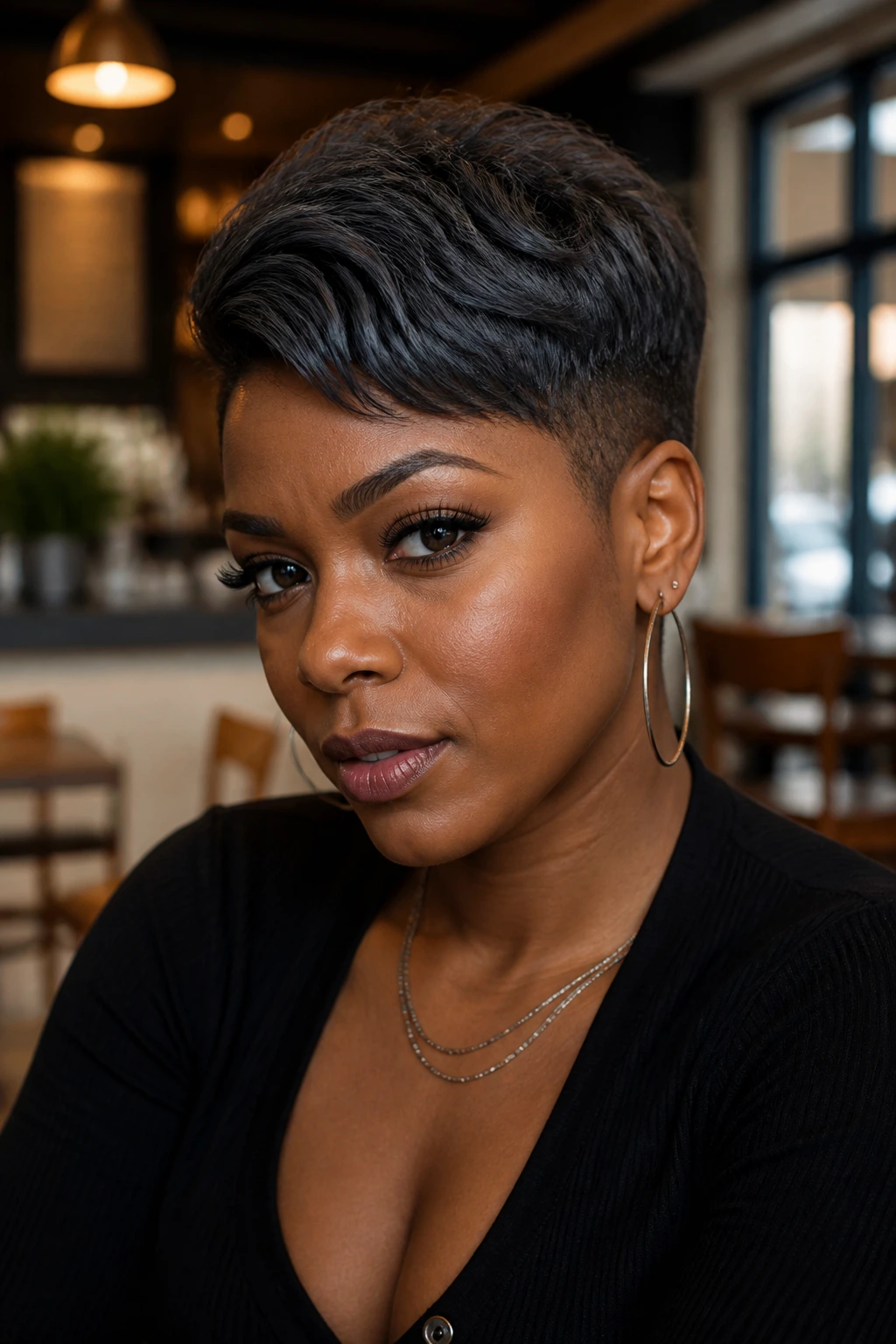
Can a pixie wear gray-black without looking too stark? Yes, if the finish is matte charcoal instead of glossy silver. Short hair lets the shade feel bold, and the matte tone softens the edge so the cut still feels touchable.
This look is one of my favorites on deep skin because the color and cut work together. You get the clean shape of a pixie and the quiet depth of charcoal, which means the hair doesn’t need extra decoration. The short length also makes the gray read denser and richer than it might on long hair.
Keep the top slightly longer than the sides if you want the charcoal to show in texture. A little piecey styling cream goes a long way here.
16. Steel-Thread Twist-Out
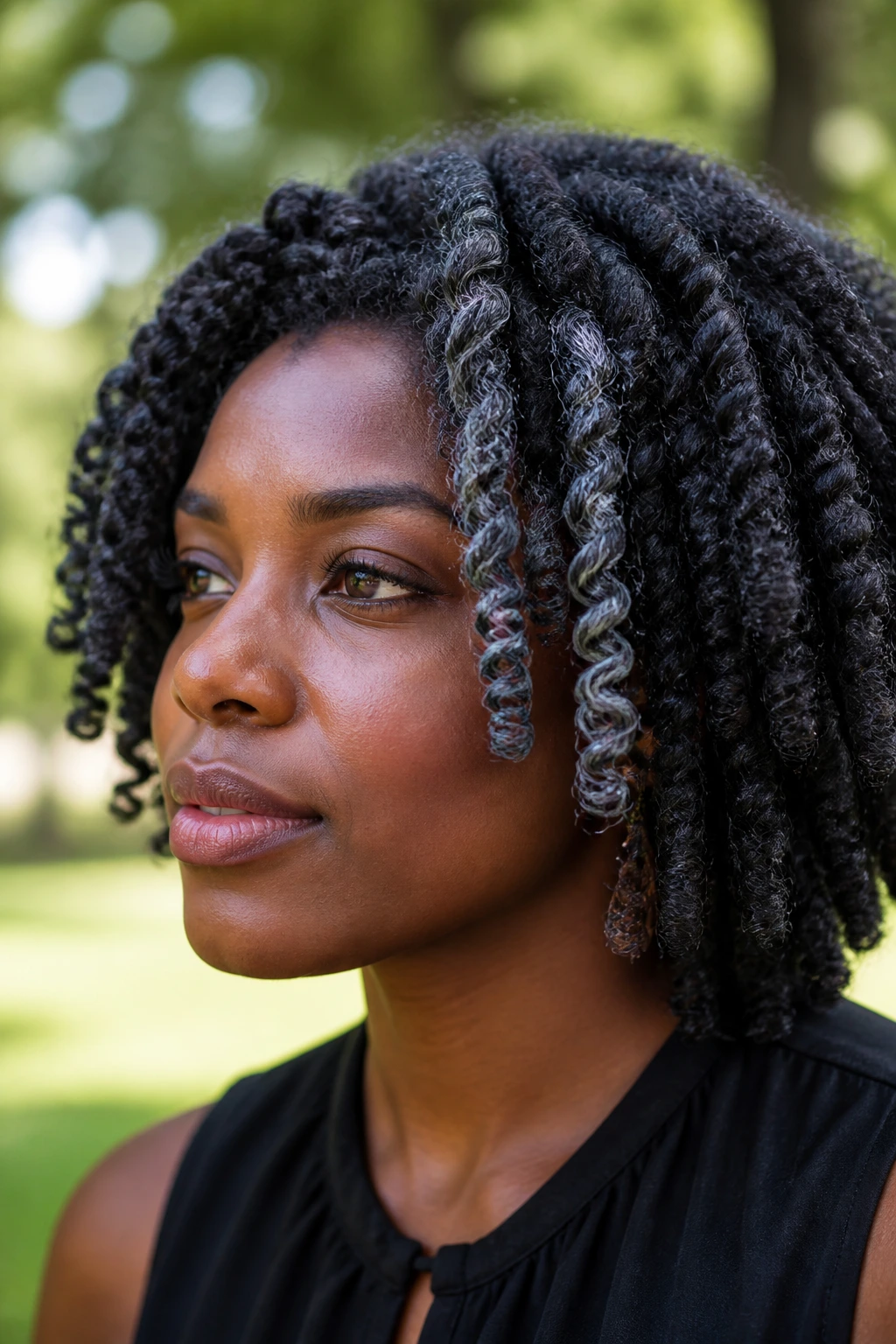
A twist-out is already built for dimension. Add steel-gray threads through it and the whole style starts to glow in motion. The gray doesn’t sit on top of the curl pattern; it rides the curl pattern, which is why this look feels so natural on textured hair.
On deep skin, the steel note reads crisp against the darker base, but it still feels soft because the twist-out breaks the color into pieces. That matters. A solid silver block can overpower a textured style. Thin threaded pieces, though, look like they belong there.
Keep the color concentrated on the outer curl clumps and around the front. That gives you brightness where people actually see it.
17. Satin Black Face Frame
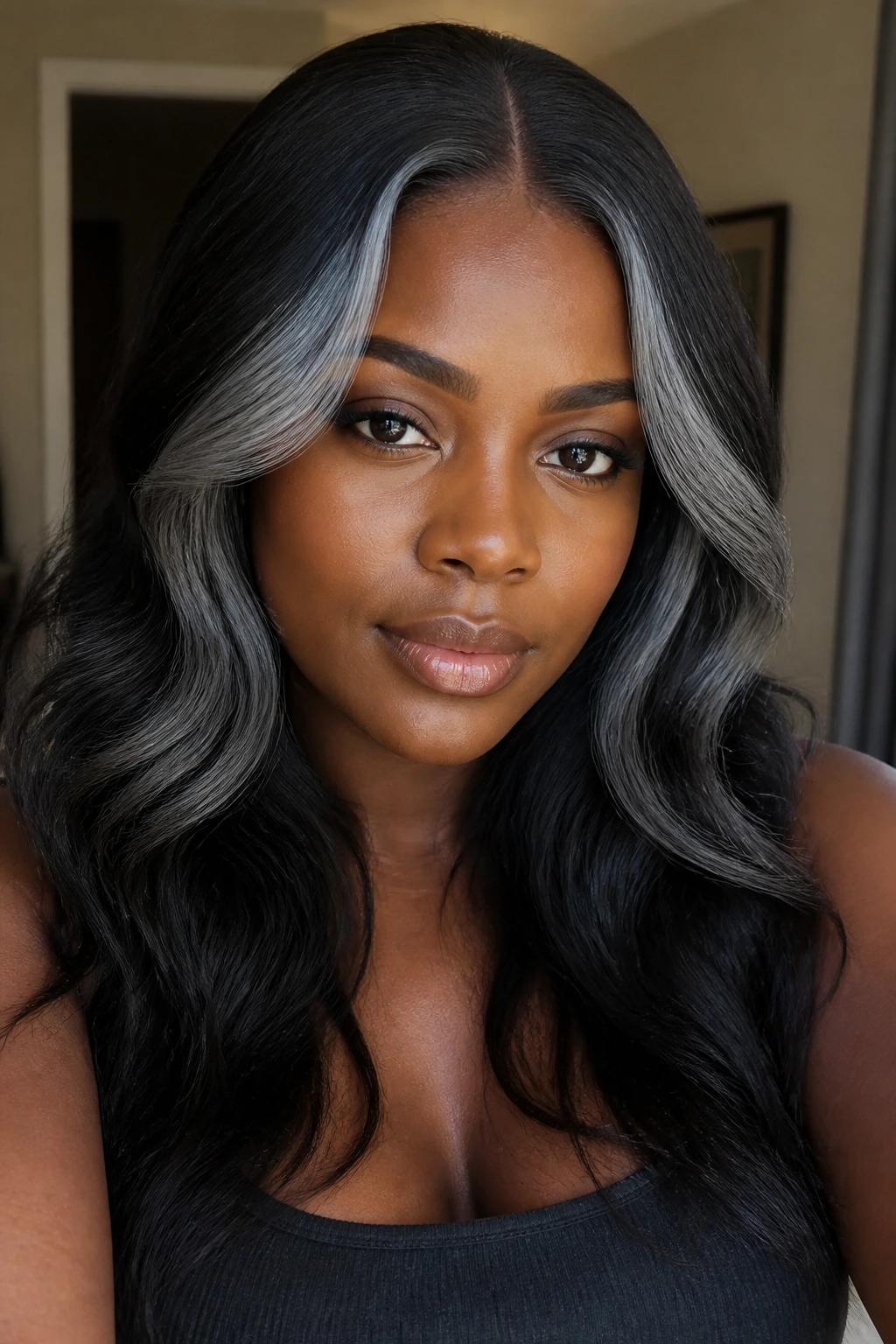
Satin black is the glossy version of black that still has a gray hush under it. Add a face frame in soft gray, and you get one of the cleanest gray-black ideas in the whole set. It’s not loud. It’s controlled.
That control is what makes it flattering on deep skin. The dark lengths preserve richness, while the gray face frame lifts the front without turning the whole head pale. On square or longer faces, the frame softens the shape in a way that chunky highlights never quite manage.
This one plays nicely with straight styles, soft curls, and polished buns. If you want your hair to look finished with almost no visible effort, this is a good lane.
18. Moonstone Underlights
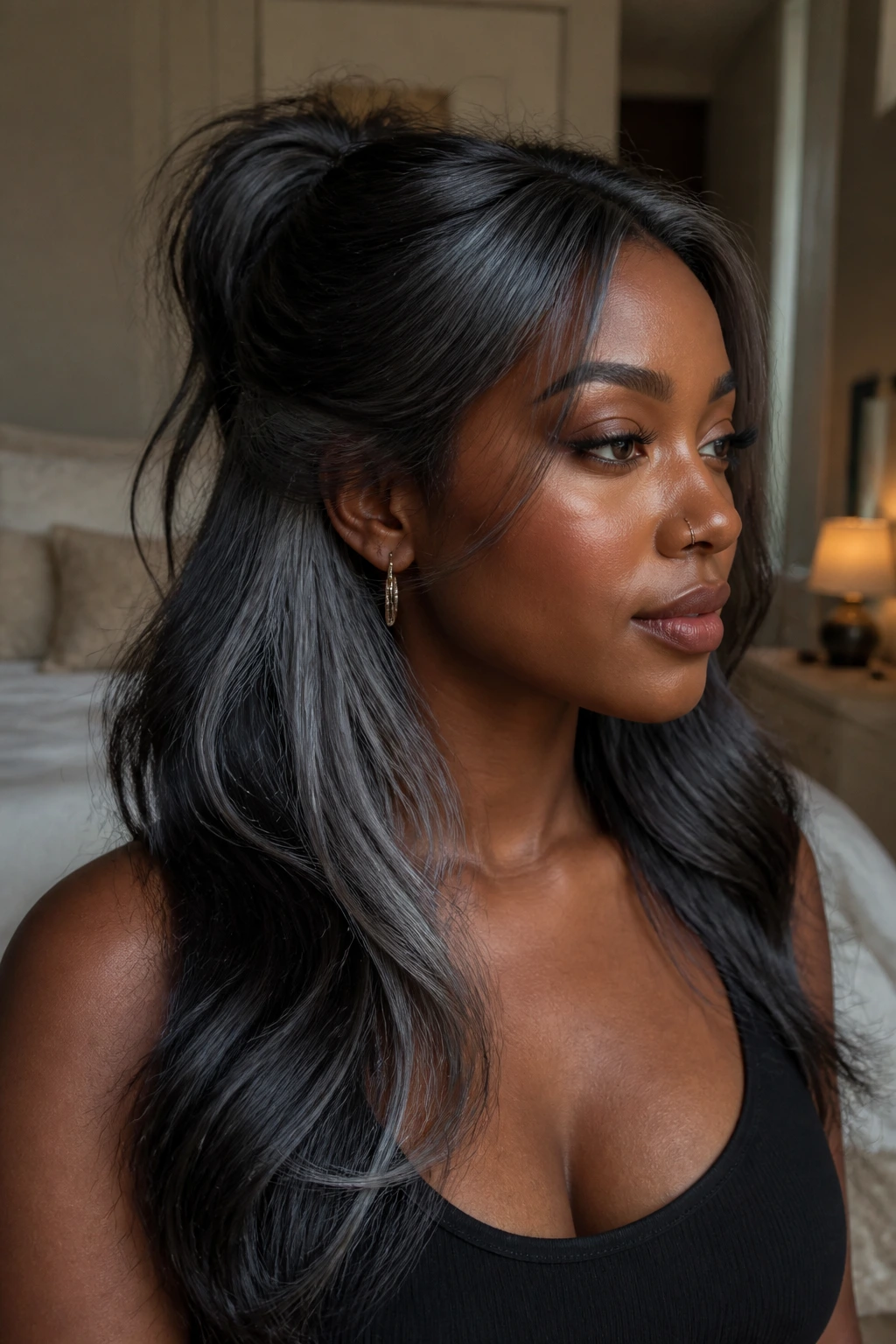
Moonstone underlights hide the light in the lower layers. The top remains deep and dark, while the underlayer carries a pearly gray that flashes when you move. It’s a quieter cousin of peekaboo color, but the moonstone tone feels softer and cooler.
This is one of those styles that rewards motion. On deep skin, the hidden gray gives a nice lift without competing with the face. Pull the hair into a half-up style, toss it over one shoulder, or wear it in loose waves, and the moonstone shows up in little flashes.
If you’re nervous about commitment, underlights are a clever place to start. They let you live with the color before you let everyone else see it.
19. Soft Smoke Bob
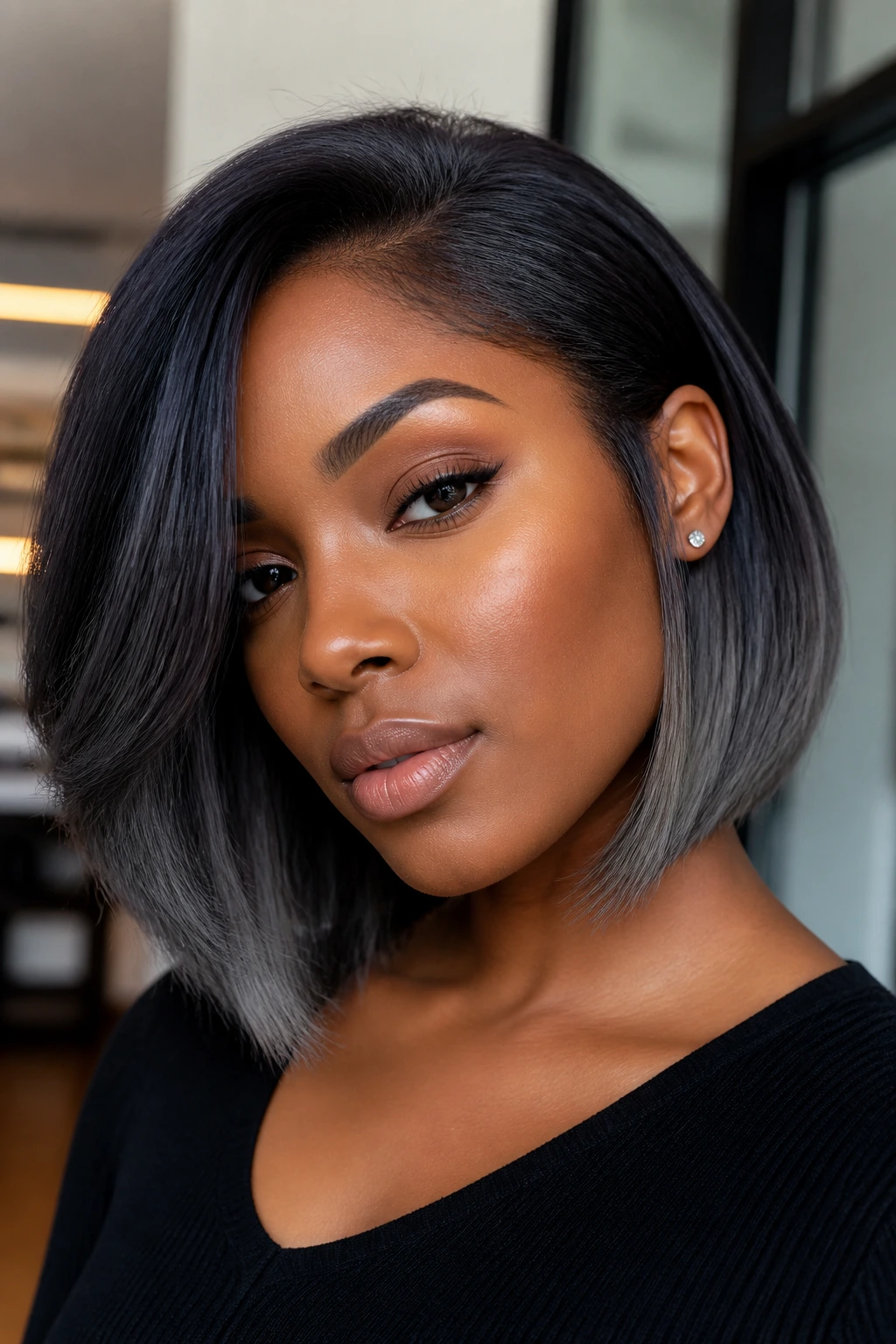
A bob gives gray-black hair an attitude all its own. Once the shape is clean, the smoke-gray notes don’t have to do all the work. A soft smoke bob keeps the base dark and the gray diffused, so the cut stays crisp instead of busy.
Why It Works
Deep skin tones look especially good with a bob that has a little edge. The dark base keeps the hair full, while the smoky tone adds movement around the jawline and neck. If the ends are blunt, the shade looks even richer.
Best styling cues
- Tuck one side behind the ear
- Keep the finish smooth, not puffy
- Use a light gloss serum on the ends only
That last part matters. Too much serum at the root kills the shape fast.
20. Ashy Cinnamon-Black Blend
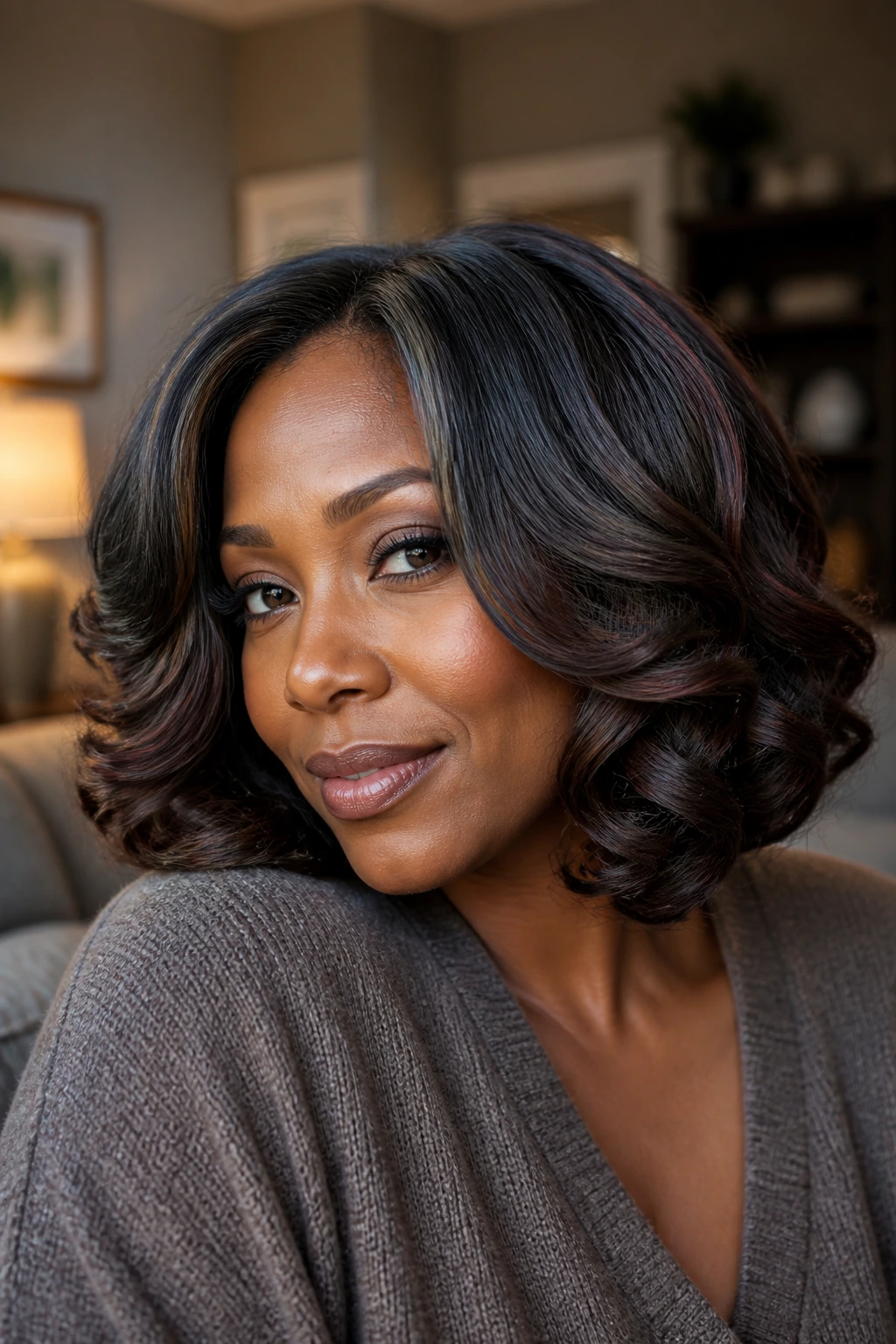
This one is for deep skin with warm or golden undertones. Ashy cinnamon-black mixes smoky gray with a muted brown-red warmth, then keeps the base dark enough to stay grounded. The result is not silver, exactly. It’s a smoked-out black with a warm hum underneath.
That warmth keeps the color from looking icy or harsh. If pure gray tends to drain your complexion, this blend gives you the cool smoke without the flatness. It’s especially good in soft curls or a layered blowout, where the cinnamon note peeks through instead of taking over.
The trick is balance. Too much red and the shade stops reading gray-black; too much ash and the warmth disappears. Ask for both in small amounts, not a loud streak of either one.
21. Frosted Temple Panels
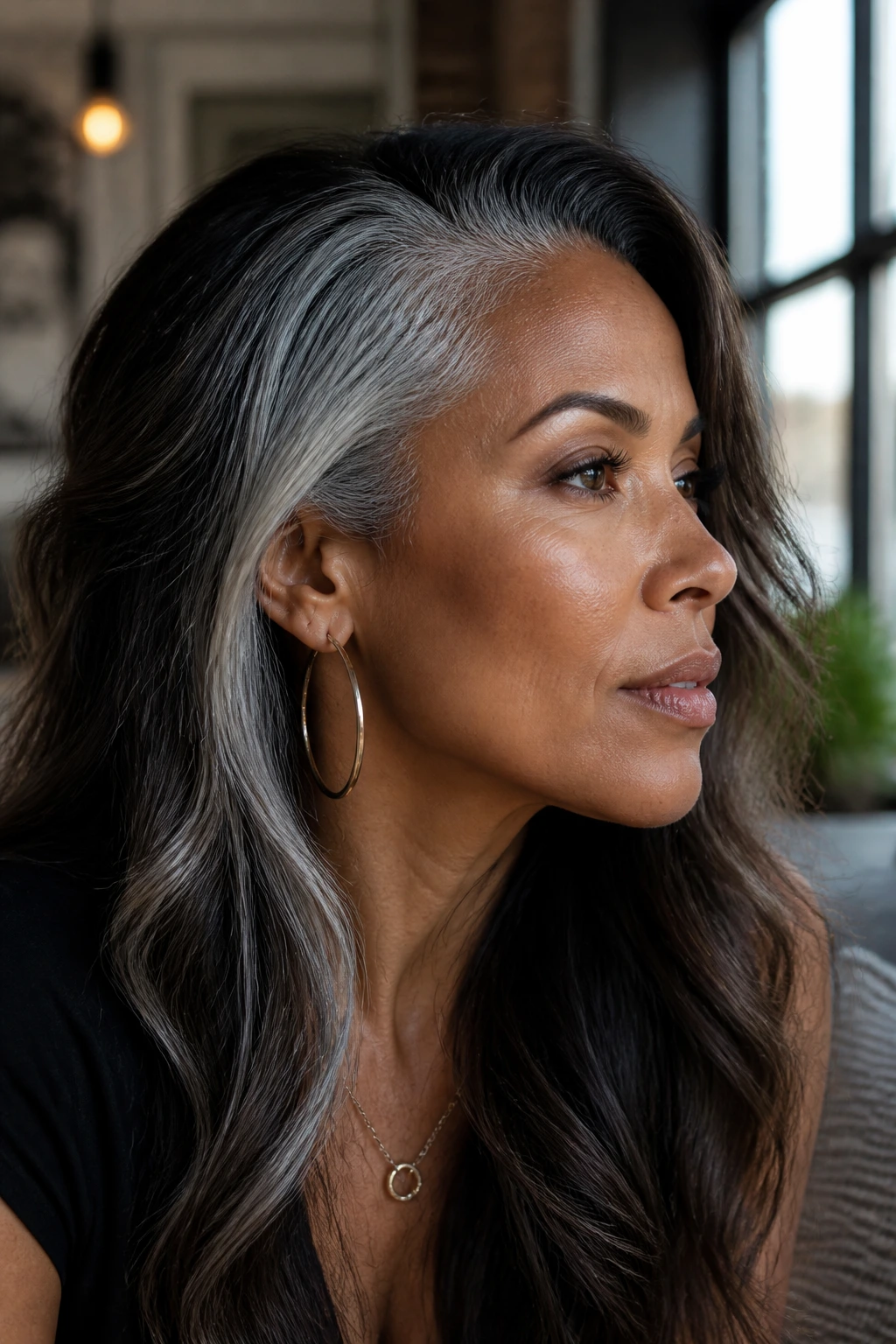
Why does a small panel near the temples make such a big difference? Because the face sees the color first. Frosted temple panels put silver-gray just at the sideburn and temple area, which means the haircut gets a little lift without the maintenance of full highlights.
This is one of the smartest gray-black hair color ideas for deep skin if you want softness around the face. The darker lengths keep the richness, while the frosted edges brighten the hairline. The contrast is strong enough to notice but not so wide that it overpowers the complexion.
How to wear it
A low bun, sleek puff, or short cut lets the temple panels show clearly. If you wear curls, separate the front pieces with your fingers so the silver doesn’t get lost.
22. Silver Veil Braids
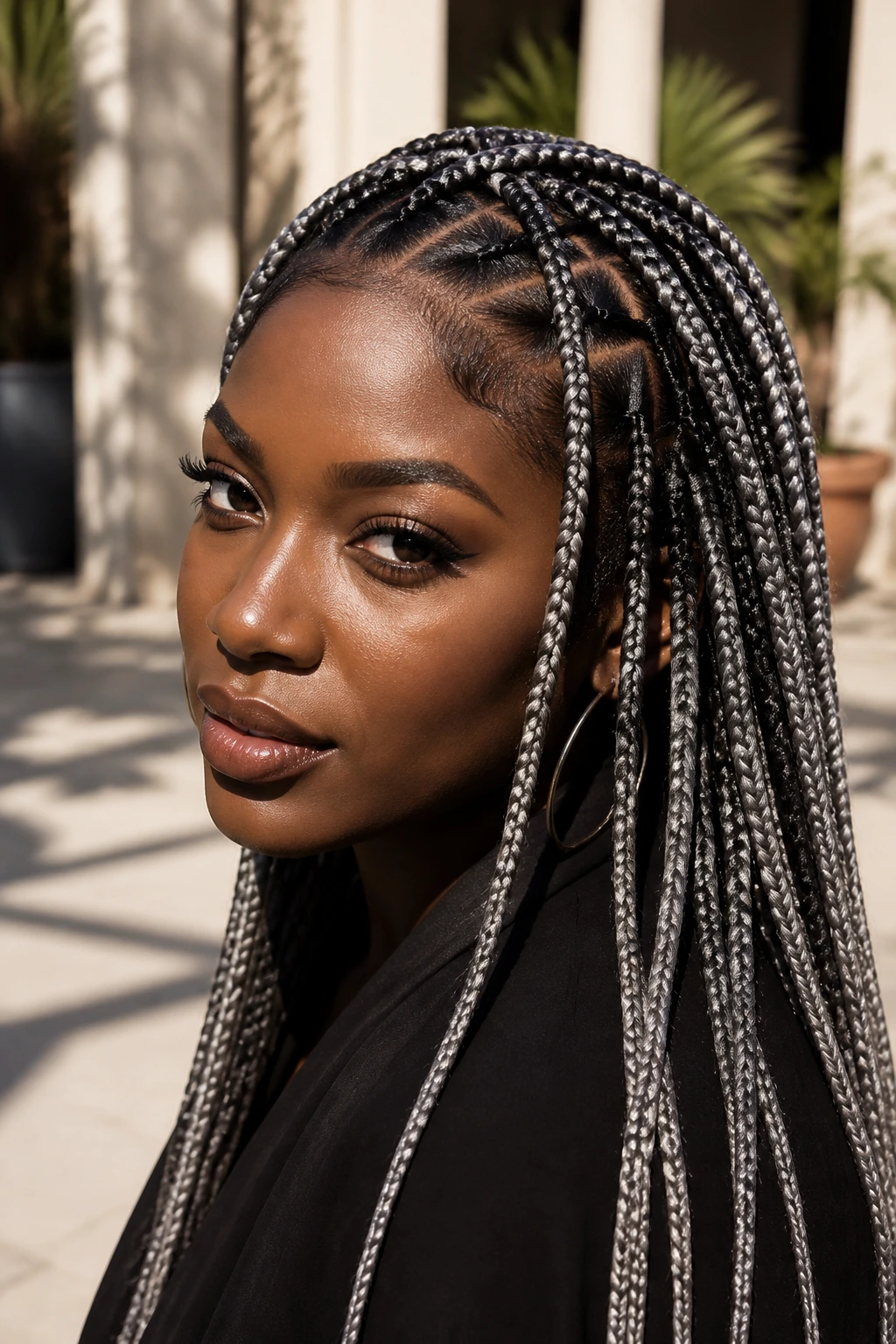
Silver veil braids are for the person who wants gray-black drama without putting bleach through the entire head. The gray shows up in braid extensions, wrapped strands, or a veil-like layer over darker braids. The effect is lighter than it sounds.
Braids are nice here because they give the color a clean, geometric shape. On deep skin, silver against black braids reads sharp and graphic, especially when the hair is parted neatly. The look can be sleek or bohemian depending on the braid size and finish.
The maintenance is different from dyed loose hair, which is a relief. Keep the scalp clean, oil it lightly, and don’t over-saturate the braids with heavy shine products that make the gray look dull.
23. Graphite Afro Puff
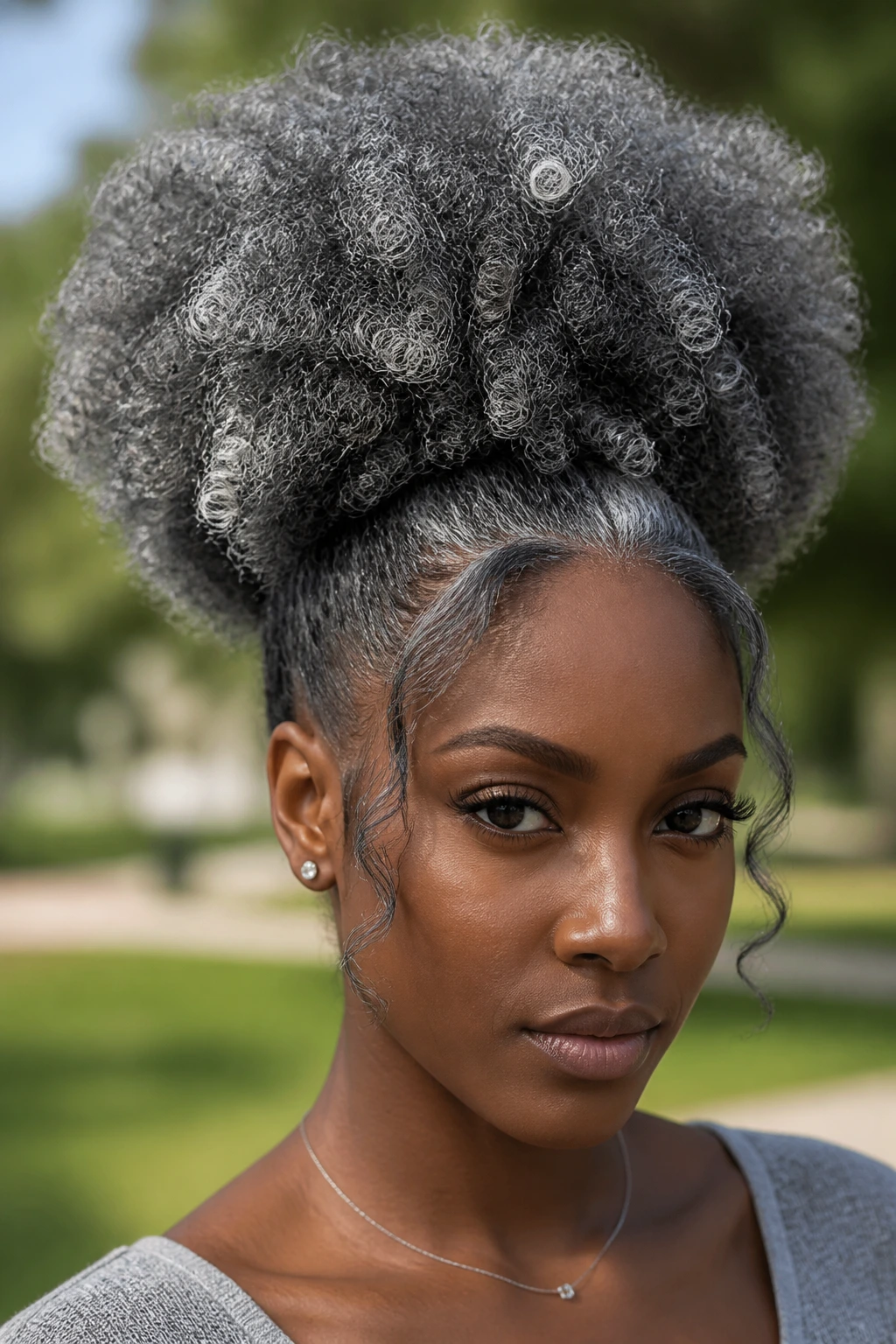
A graphite afro puff keeps the shape simple and lets the color do the talking. The base stays deep, with graphite-gray accents placed where the puff catches light at the top and along the front. On deep skin, the contrast has a clean, lifted feel.
This style works because the puff already creates volume. The gray doesn’t have to fight for space. A few concentrated pieces are enough, and that makes the look easy to wear day to day. It’s a good choice if you like natural hair but still want a color that reads intentional.
Pull out a few face-framing pieces or leave the front edge a little softer. That breaks up the shape and keeps the graphite from feeling too hard.
24. Black Ice Curls
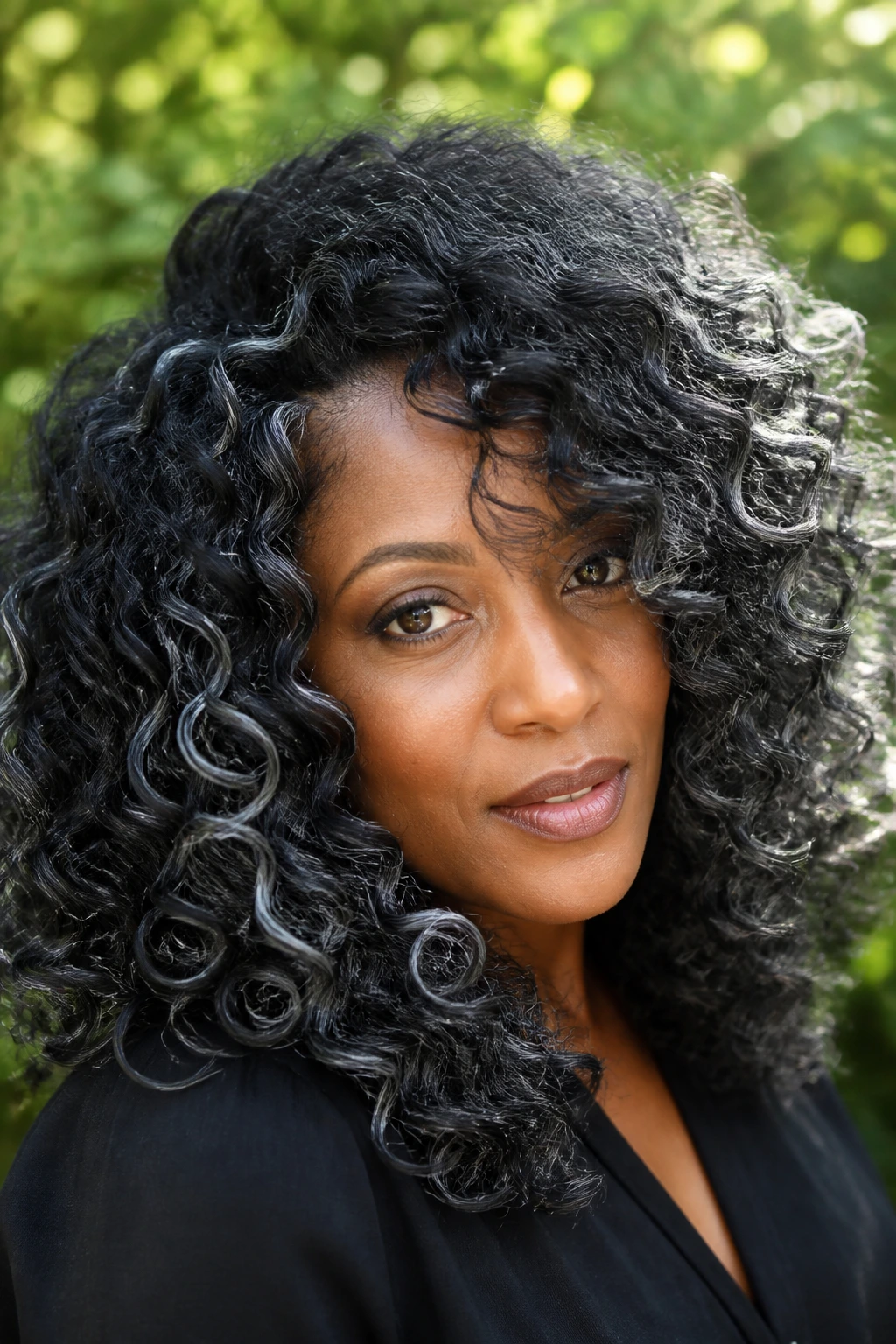
Black ice curls look glossy enough to almost reflect light. The base stays near-black, but the cool gray lives on the surface of the curls and at the ends, so every ringlet feels edged in frost. It’s a bolder look than a charcoal melt and a cleaner look than chunky highlights.
On deep skin, black ice works because the base keeps the hair rich while the gray adds that frozen finish. It looks strongest on defined curls or waves with a little shine spray, but not the sticky kind. You want gloss, not helmet hair.
If your hair has a lot of texture, keep the icy pieces thin. Too much lightened hair can make curls look stringy.
25. Pewter Dip-Dye Ends
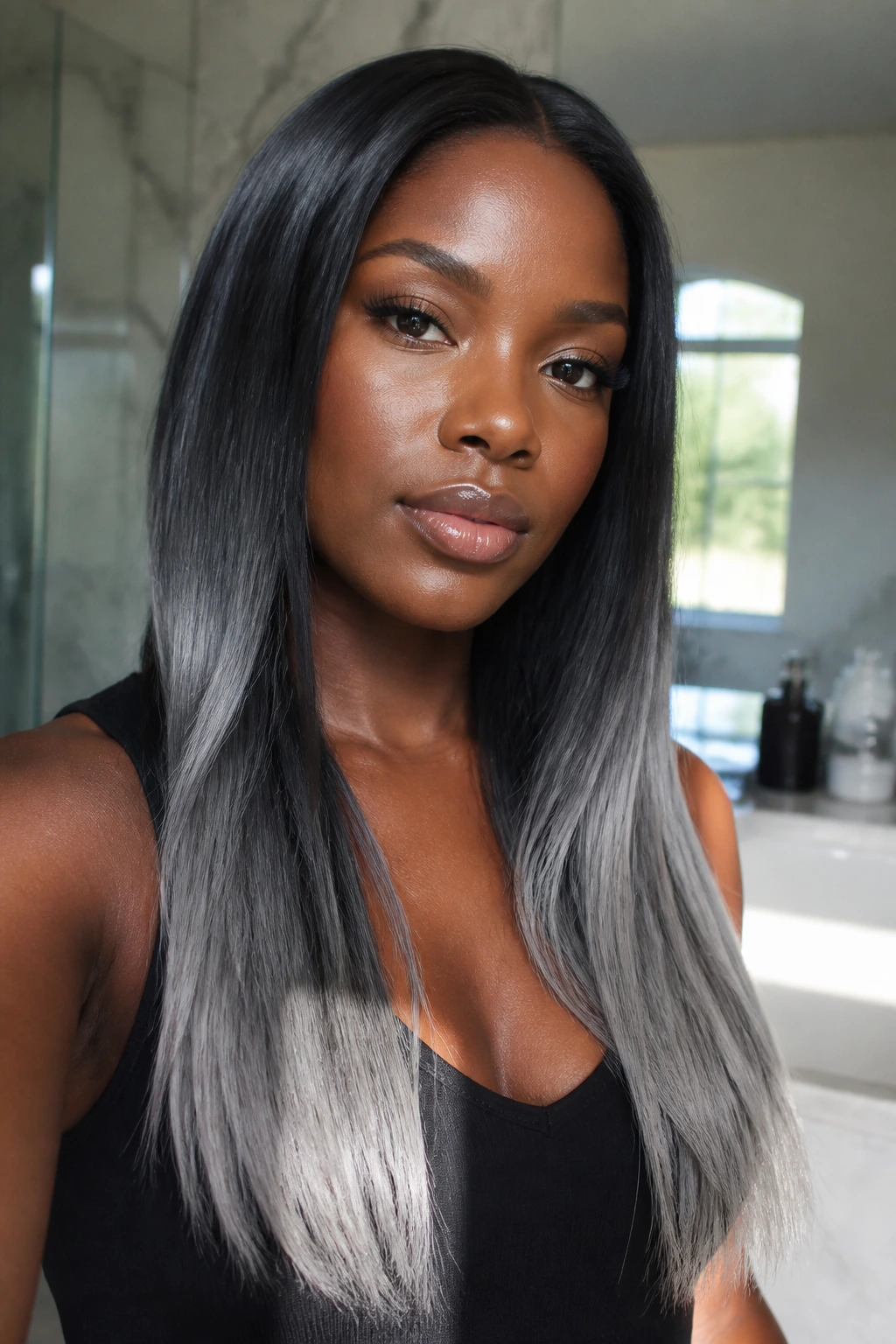
Pewter dip-dye ends give you one of the easiest gray-black color ideas to grow out. The roots and mids stay dark, while the bottom section gets dipped into pewter-gray. It’s simple, direct, and a little bit graphic.
Why It Works
The eye reads the shape first, then the color. On deep skin, that matters because the dark top half preserves richness, and the pewter at the ends creates a clean finish. The contrast is strongest on long straight hair, box braids, and blunt cuts.
Quick details
- Keep the dip line soft, not choppy
- Ask for a medium pewter, not pure white silver
- Curl the ends if you want the gray to show more
The lower placement also means less visible regrowth.
26. Charcoal Coils with Silver Tips
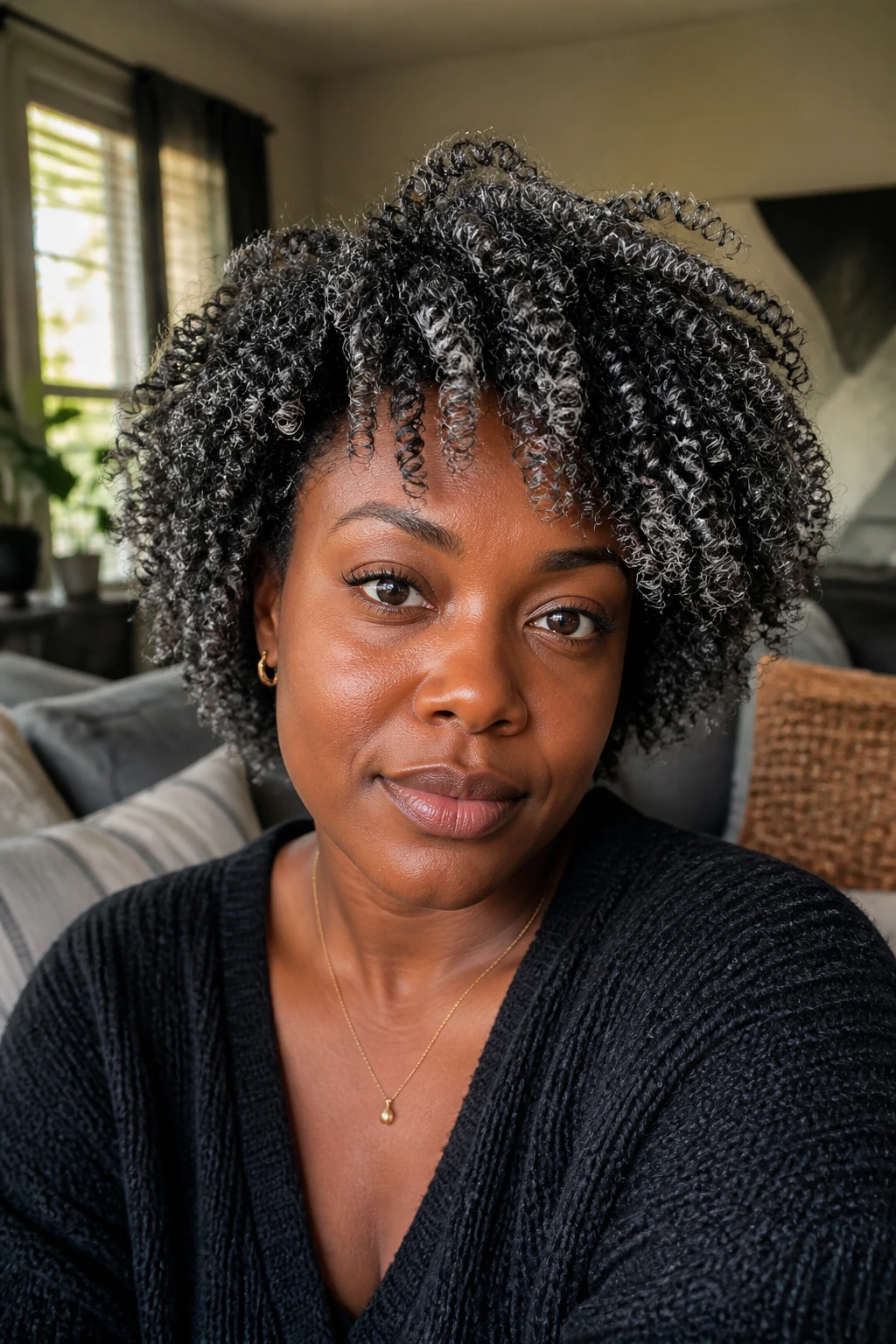
Charcoal coils with silver tips are a softer version of highlights for natural hair. The base stays smoky and dark, then the tips of the coils pick up a silver finish that only shows once the hair shrinks and springs. It’s subtle until it moves, which is half the fun.
Deep skin tones carry this look well because the charcoal base keeps everything grounded. Silver on the tips adds lift without changing the whole head into a light color story. That makes it a smart choice if you like texture first and color second.
Use this on well-defined coils, not frizzy ends. The clearer the curl pattern, the more deliberate the silver reads.
27. Midnight Smoke Layers
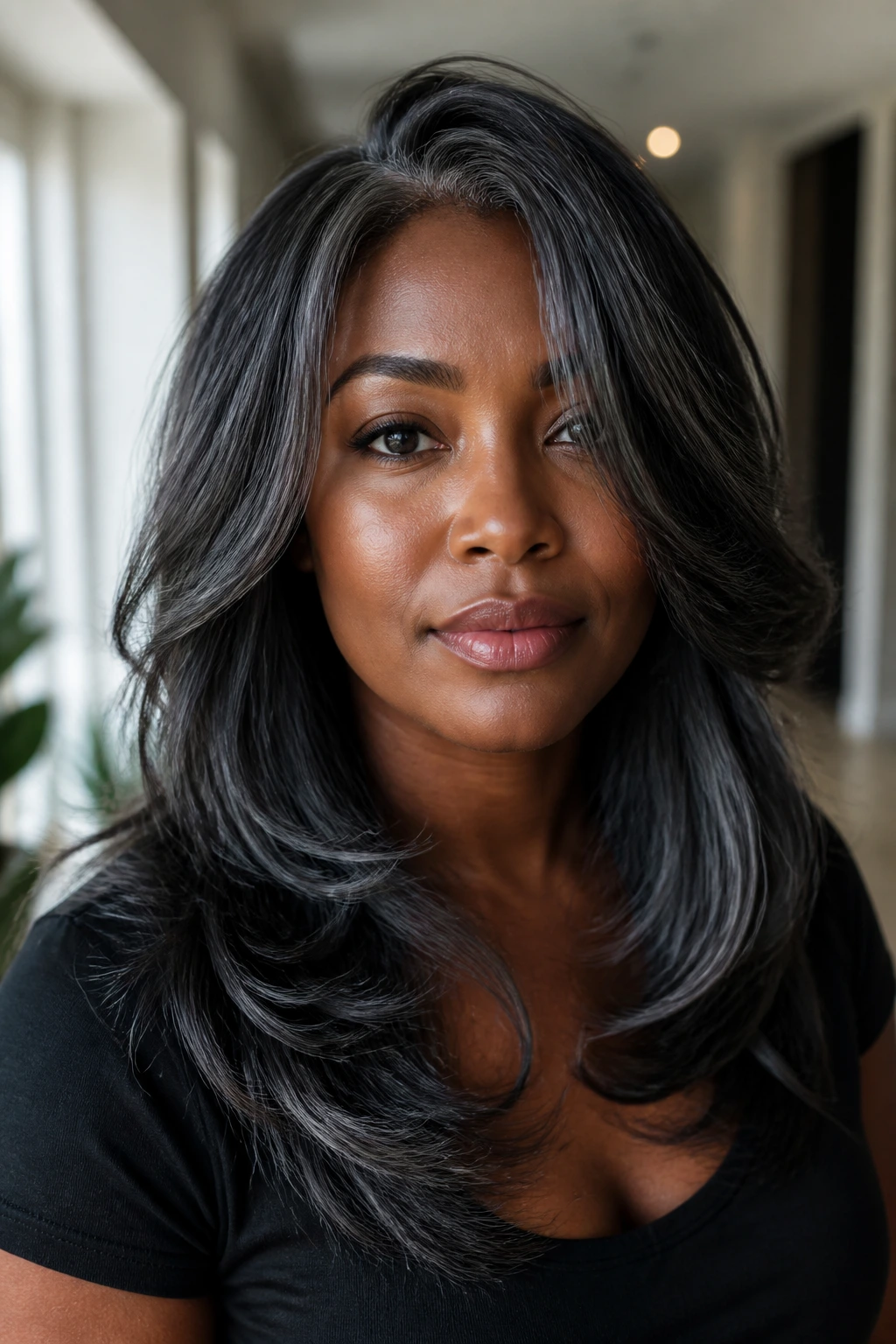
What makes midnight smoke layers feel different from a basic gray-black dye job? The cut. Layers give the smoke somewhere to go, and the color follows the shape instead of sitting in one flat sheet. You get depth at the ends, coolness through the mids, and a dark root that keeps the whole thing rich.
This look is especially good on deep skin with long or medium-length hair, because layers stop the gray from looking heavy. A shag or wolf cut makes the smoke read even more modern. Straight hair shows the layering clearly, but wavy hair gives it more movement.
If you want this one to stay soft, keep the lightest gray pieces on the outer layers and not deep inside the head.
28. Smudged Silver Root Shadow
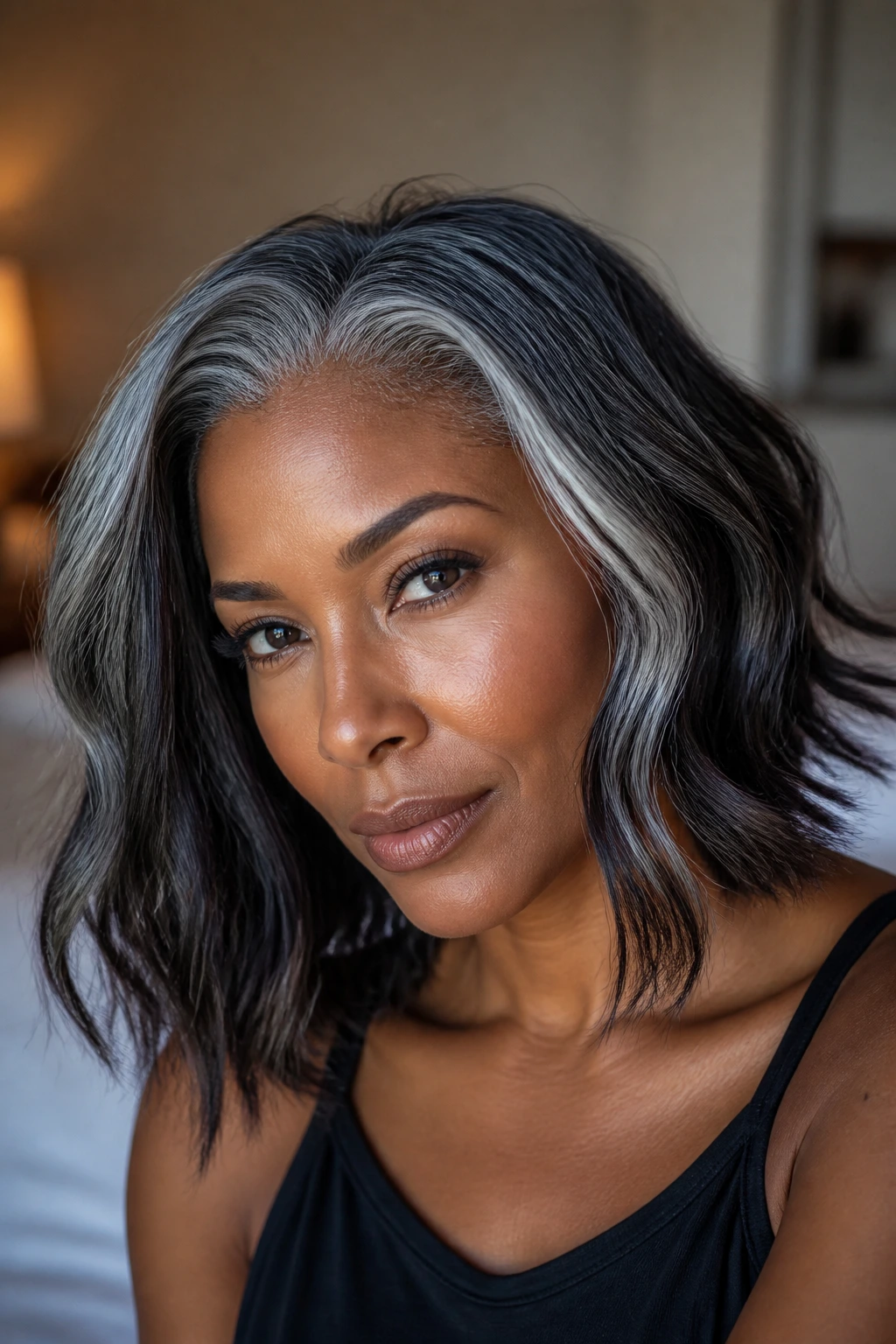
Smudged silver root shadow is for people who like silver but don’t want the root line to scream for attention. The roots stay smoky and soft, then the silver brightens through the mids and ends. It’s the reverse of panic-grow-out hair, which is exactly why it’s clever.
The smudged root gives deep skin a flattering frame. Without it, bright silver can feel detached from the face. With it, the shade stays anchored. The look is strong on bobs, layered lobs, and shoulder-length curls, where the transition can breathe.
This also buys you time between salon visits. A neat root shadow hides regrowth and keeps the silver from turning stripy after a few washes.
29. Gray-Black Faux Hawk
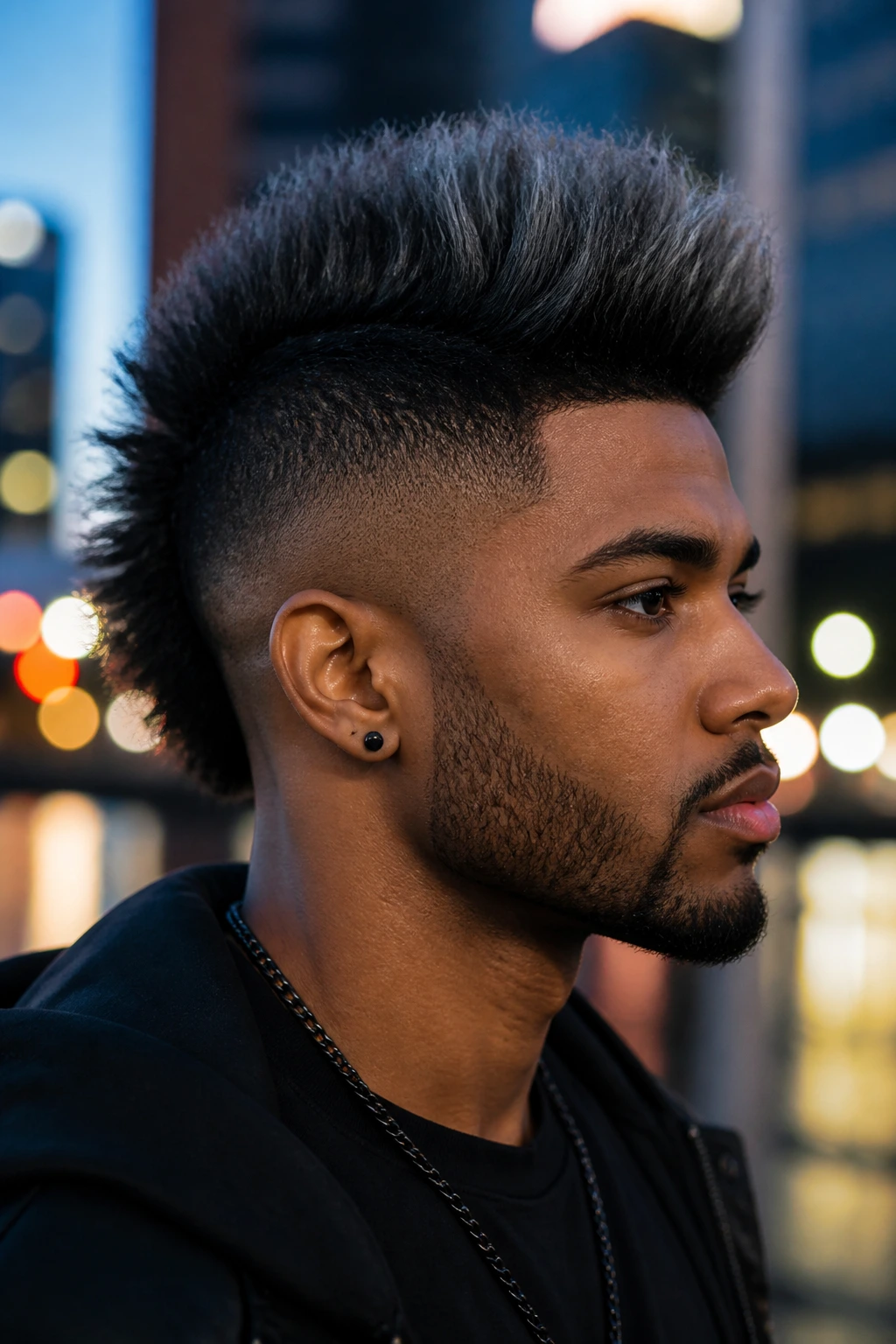
A gray-black faux hawk brings the drama up top and keeps the sides tight. The top section can be steel, charcoal, or silver-tinged black, while the sides stay deep and close. That contrast makes the haircut read sharp before the color even enters the conversation.
On deep skin, the look lands hard in a good way. The darker sides preserve structure, and the lighter top catches the eye. If you want something edgy but not messy, this is a strong lane. It works with natural texture, blown-out hair, or a closely cropped cut.
Keep the top color cool and clean. If the gray gets too warm, the whole faux hawk loses its bite.
30. Oil-Slick Smoke
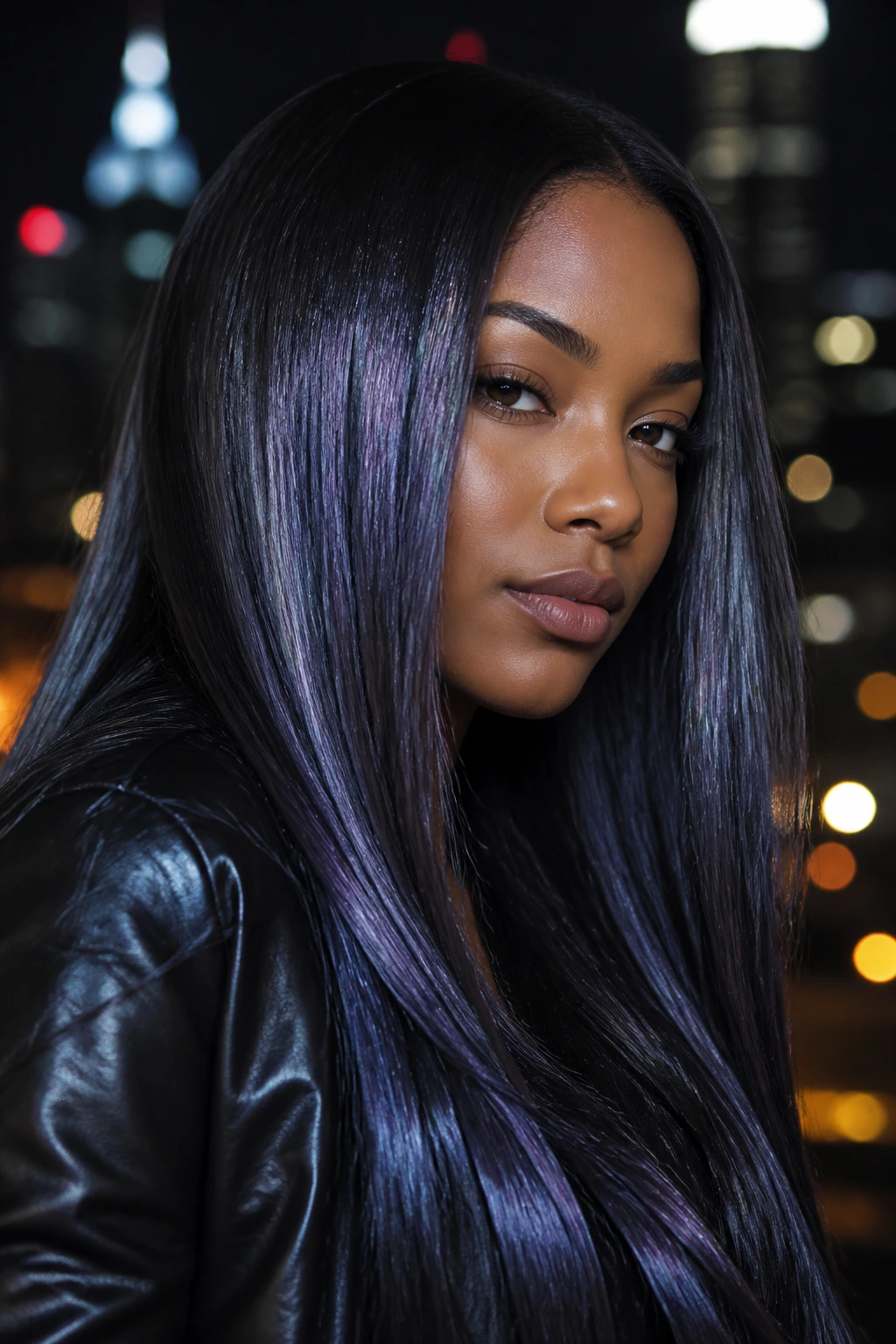
Oil-slick smoke sounds flashy, but the version that works on deep skin is more controlled than that. The base stays black, while the gray picks up blue and violet notes that shift in different light. It’s not rainbow hair. It’s reflective hair.
That reflective quality gives the hair a metallic look without making it pale. The cool undertones sit nicely beside rich skin because the base still does the grounding. This style shines on straight hair and defined waves, where the sheen can move across the surface.
If you want the gray to stay visible, keep the finish glossy and the layers clean. Too much texture can blur the reflective pieces.
31. Cool Steel Shag
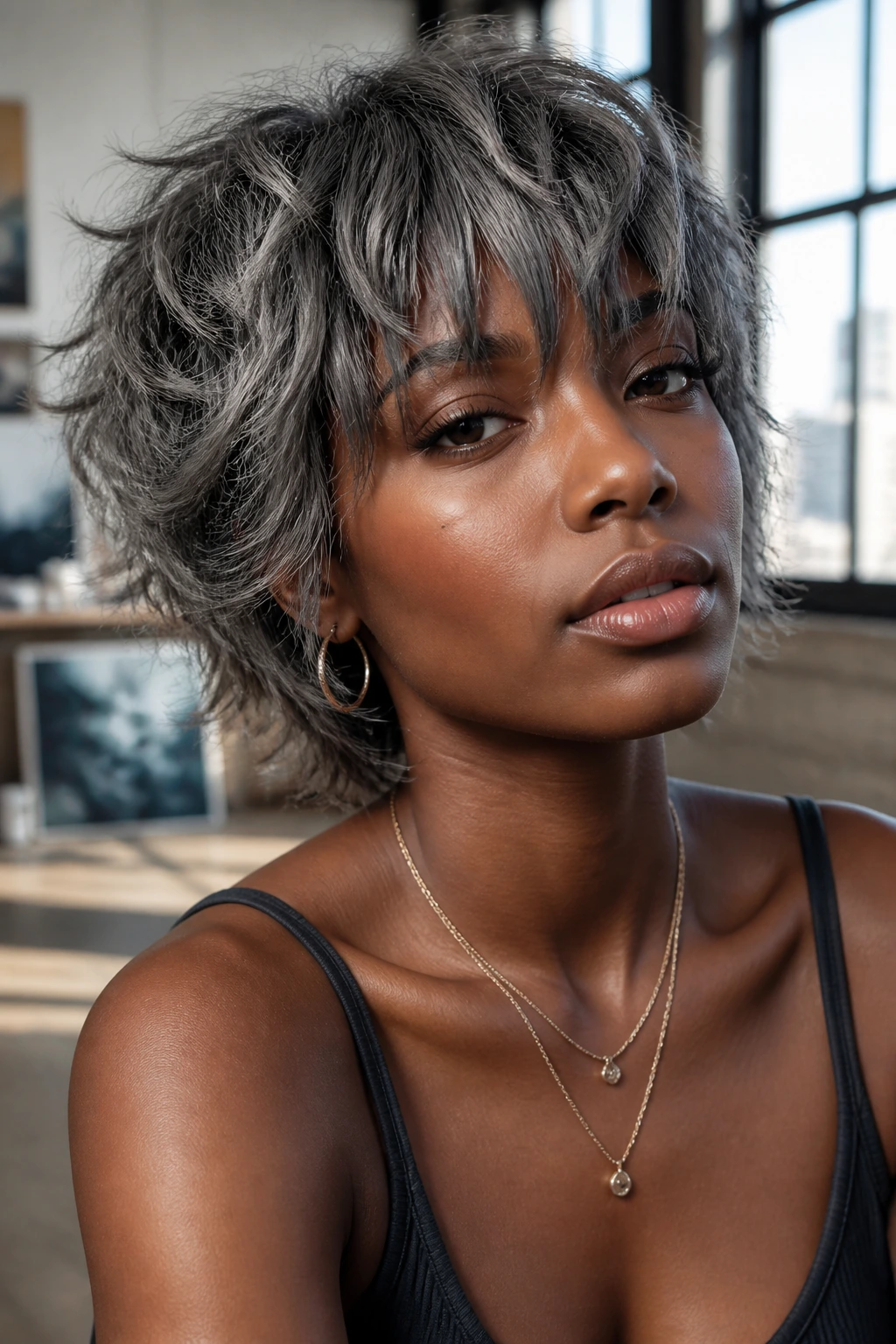
Cool steel shag is the cut-and-color combo that makes gray-black look modern fast. The shag gives you broken layers, piecey bangs, and movement everywhere, which means the steel-gray color has places to catch the light. It’s not neat. That’s a feature.
Why It Works
A shag stops the gray-black from sitting as one solid mass. The layers lift the shade off the face and let the steel note flicker through the ends. On deep skin, that movement keeps the cool tone from feeling heavy.
Good if you want
- Bangs with texture
- A lived-in finish
- Color that looks better a little messy
The messier the styling, the more alive this one gets.
32. Dark Chrome Lengths
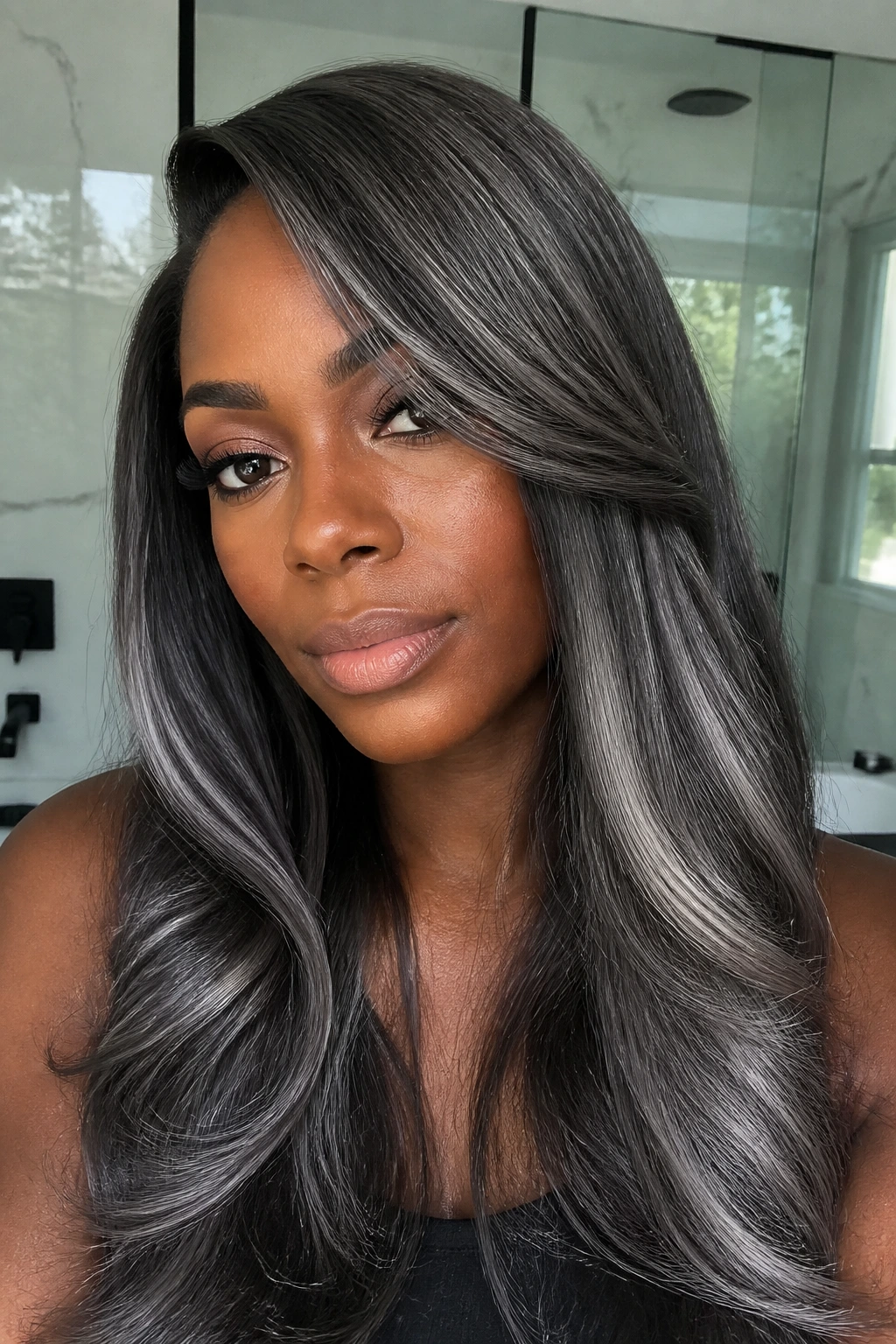
Dark chrome lengths are for people who like shine before anything else. The hair stays dark, but chrome-gray pieces are layered through the length so the surface looks almost metallic. It’s sleeker than graphite and colder than mushroom.
On deep skin, that polished shine gives the color a sharp contrast that feels modern without needing full silver. The trick is keeping the base deep enough to avoid washing the hair out. If the chrome is too light, it will dominate. If it sits in the mids and ends, it looks expensive.
A glassy blowout shows this best. If you wear it curly, ask for broader chrome panels so the color doesn’t disappear in the pattern.
33. Salted Charcoal Curls
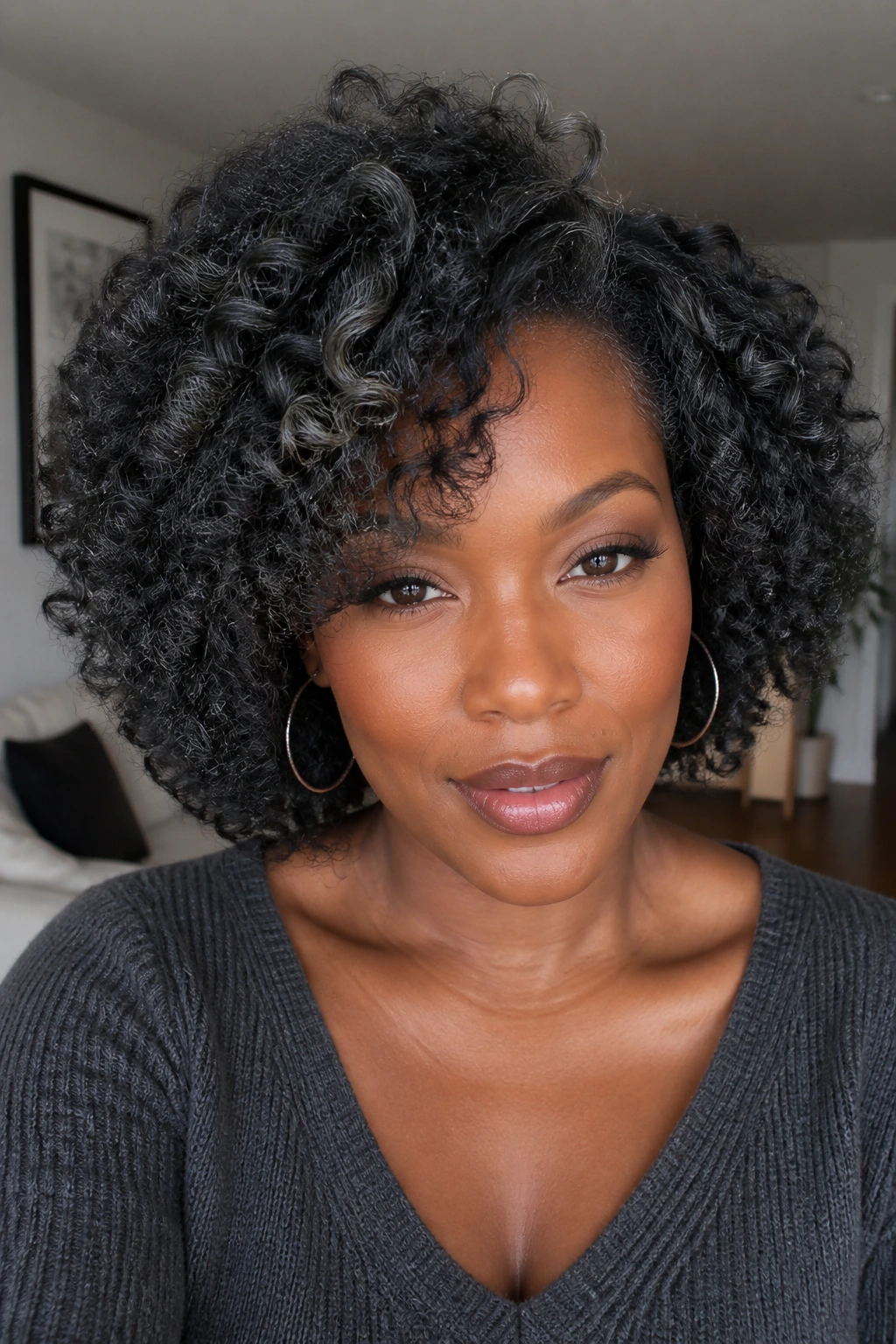
Salted charcoal curls take the idea of salt-and-pepper and push it into a darker, cooler place. The charcoal base keeps the look grounded, while tiny silver flecks scatter through the curls like light on fabric. It feels lived-in, not try-hard.
That makes it a smart choice if you want dimension without obvious streaks. On deep skin, the salt effect reads especially good because the contrast is real but not harsh. The curls do the blending for you. Each coil shows the silver in a different spot, so the look changes with movement.
A curl cream with a light hold helps here. You want the pattern to stay defined so the specks of silver don’t blur into the base.
34. Stormcloud Curtain Bangs
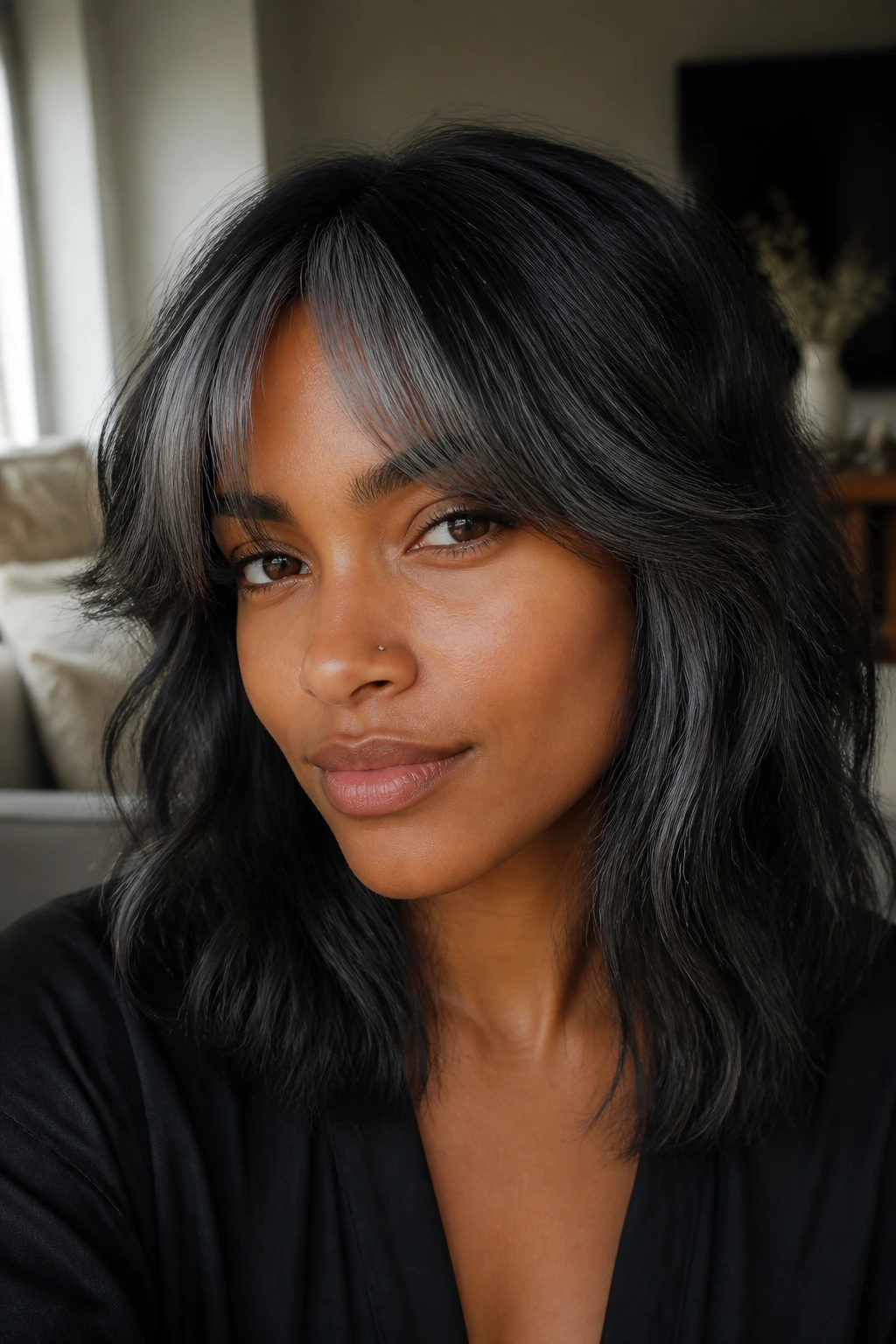
Stormcloud curtain bangs bring the gray-black drama right to the forehead. The bangs carry a smoky silver-black mix, while the longer lengths stay darker, which keeps the style from getting too heavy. Curtain bangs soften the face, but the stormy color keeps them from looking sweet.
This is a strong option on deep skin because the front pieces pull attention upward. The contrast frames the eyes and cheekbones without needing a full head of highlight. It’s especially nice with shoulder-length hair or longer layers, where the bangs can blend into the rest of the cut.
Keep the bangs slightly longer at the edges. That gives the gray-black color room to taper instead of cutting off bluntly at the center.
35. Velvet Black with Smoke Veins
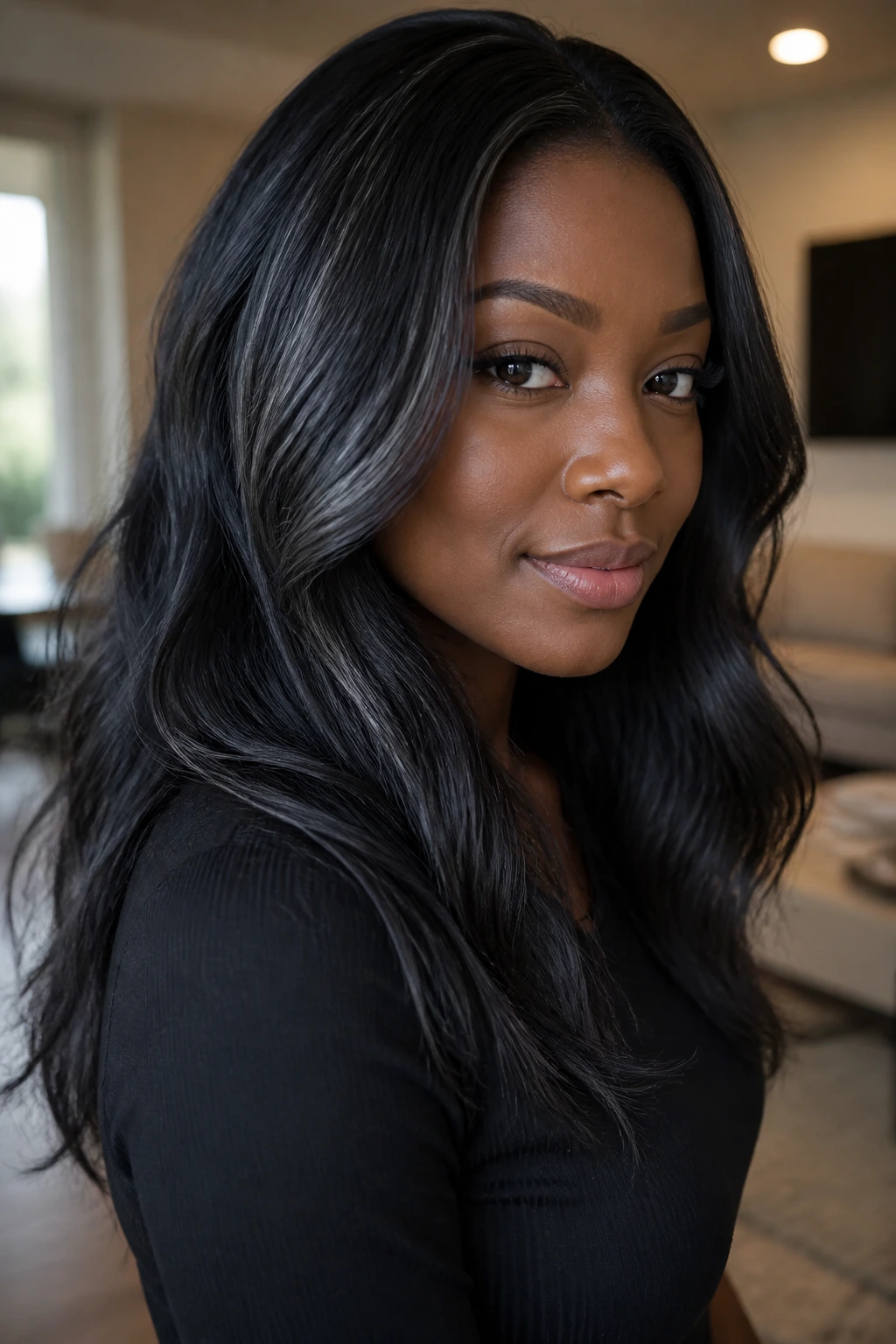
Velvet black with smoke veins is the most understated look in the bunch, and I mean that as a compliment. The base stays deep and plush, while thin gray veins thread through the hair so lightly they almost disappear until the light lands on them. It’s the kind of color that rewards close looking.
On deep skin, that quietness can be a strength. The hair looks rich first, then interesting second. It works on straight styles, loose waves, and even natural textures when you want the shade to feel close to the surface rather than loud. Because the gray is so fine, grow-out is soft and the color stays refined longer.
This is the pick for someone who likes detail over drama. It doesn’t shout. It hums.
Why Gray-Black Works When the Root Stays Deep
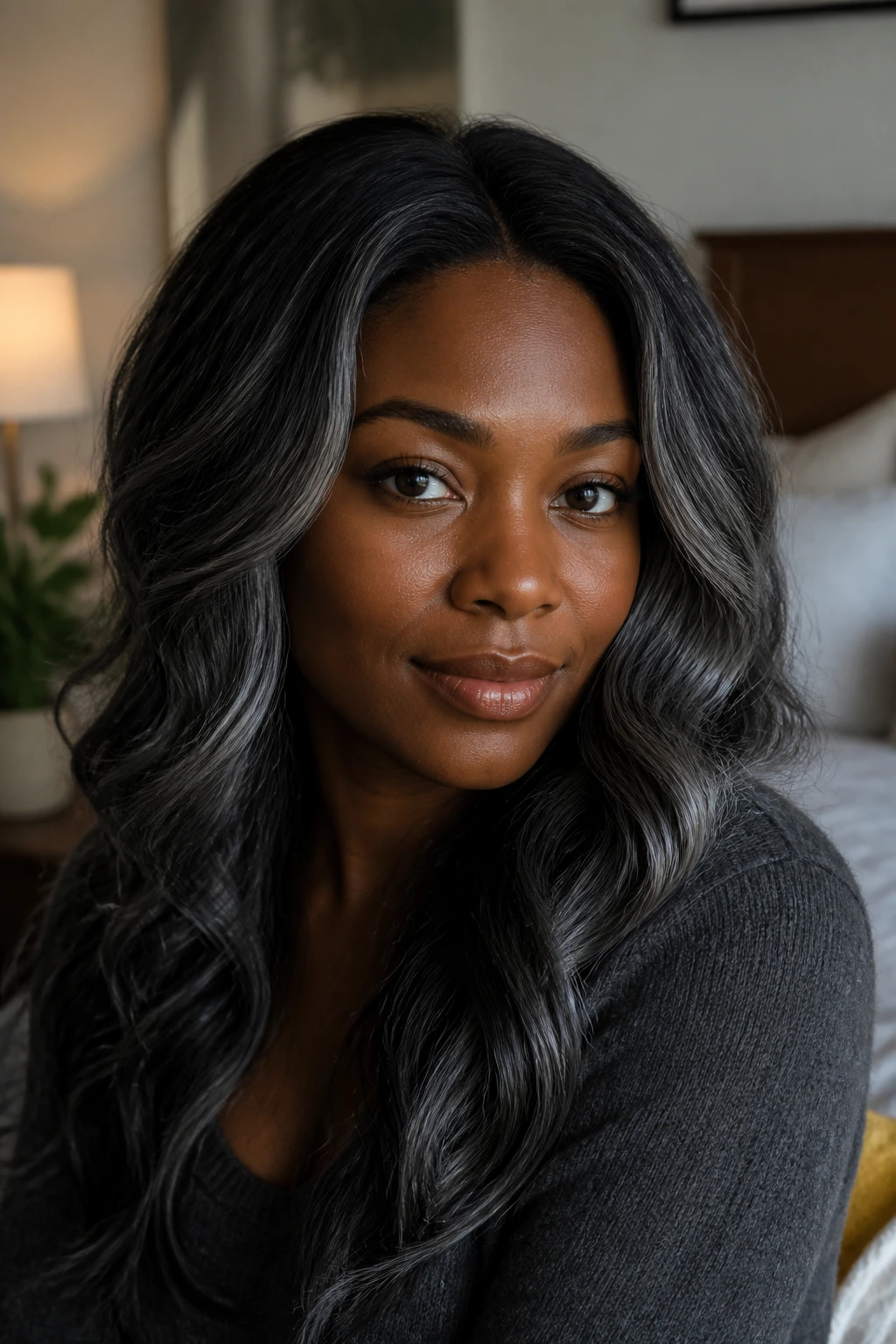
The biggest reason gray-black hair color flatters deep skin tones is simple: depth. A dark root gives the complexion a clean frame, and the gray or silver pieces sit inside that frame instead of fighting it. If you push the whole head too light, the result can look disconnected. Keep the root rich, and the gray starts to look intentional.
There’s also a practical side. Root depth makes regrowth less obvious, especially on naturally dark hair. That means a charcoal melt, a smoke bob, or a gray face frame can last longer before it starts to look tired. If you’ve ever watched a silver color go from sharp to fuzzy in two washes, you already know why that matters.
I also think texture changes the game more than people give it credit for. On coily hair, silver threaded through a twist-out looks different from the same silver on pressed hair. On braids, the color reads in strips. On a silk press, it reads like shine. Same tone. Totally different personality.
Essential Tools for These Looks
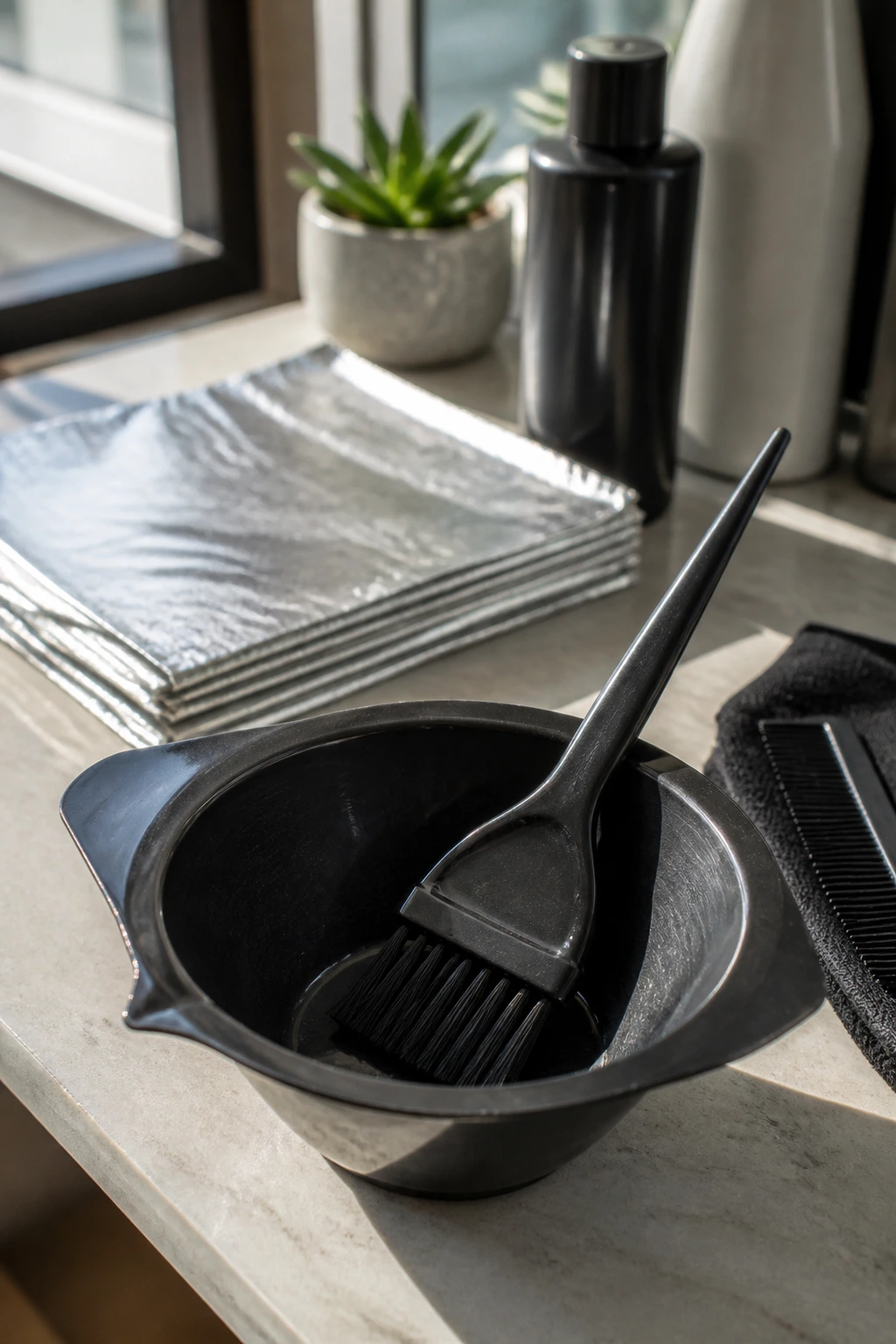
- Swatch photos in daylight and indoor light: Gray-black shifts a lot under bulbs, so bring more than one reference.
- Tint brush and color bowl: Useful for glosses, toner, and precise placement around the face.
- Foils or balayage board: Helps when you want silver ribbons, money pieces, or clean underlights.
- Demi-permanent gloss or toner: The fastest way to keep smoky tones from turning dull or brassy.
- Blue shampoo: Good for black hair that pulls warm or orange at the ends.
- Purple shampoo: Best for silver, pewter, and pale gray sections that need brass control.
- Bond-building treatment: Bleach and silver tones can rough up the hair; bond care keeps breakage down.
- Sulfate-free shampoo: Slows fade and keeps the cool tones from washing out too fast.
- Heat protectant: Required if you flat iron, blow dry, or curl over 300°F.
- Satin bonnet or pillowcase: Keeps gray-black hair smooth overnight and cuts down on friction.
Smart Shopping and Shade-Picking Tips
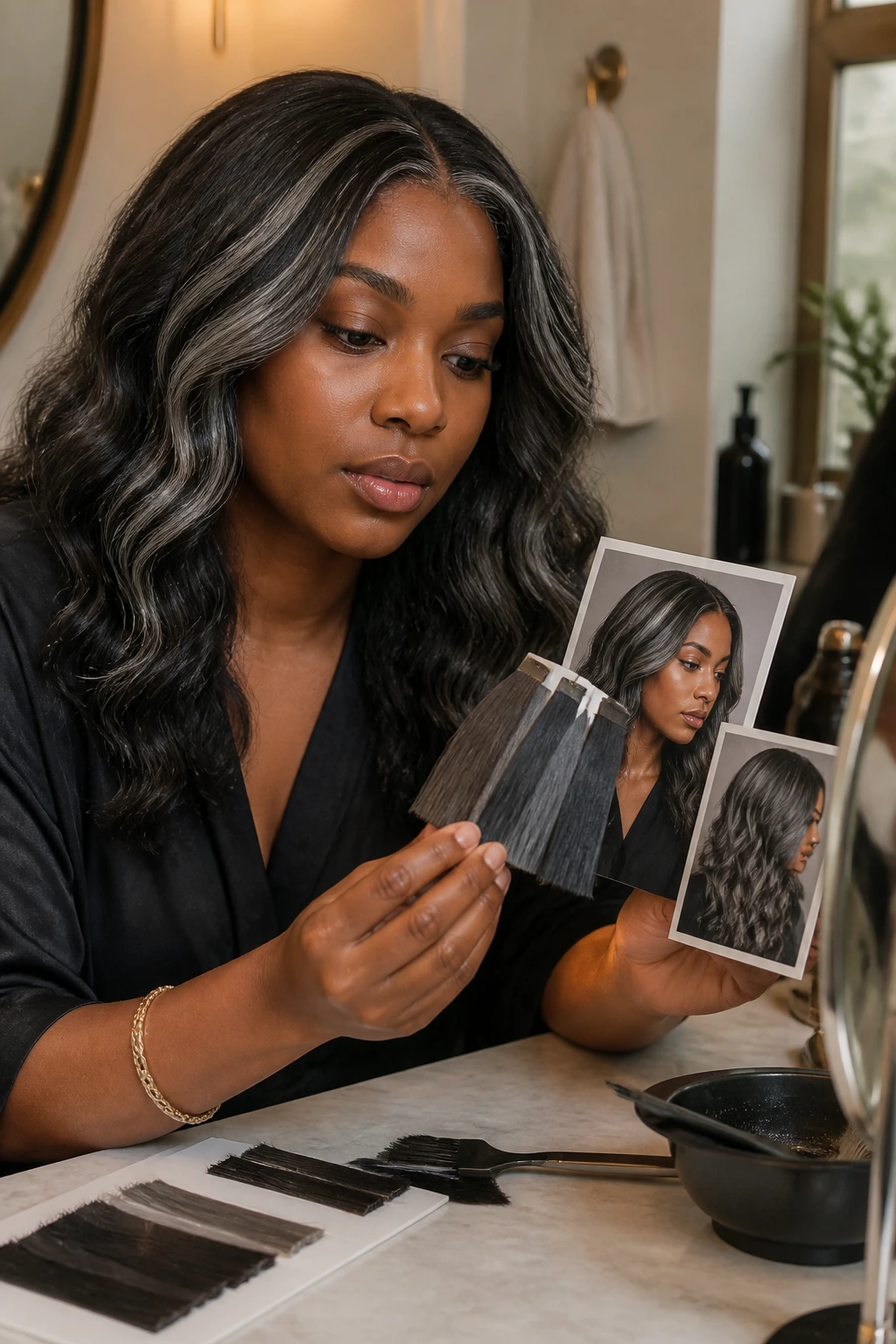
The first thing I’d buy is not dye. It’s a good reference photo and a mirror. Gray-black hair color changes a lot from one light source to another, and the version that looks clean in a salon chair can go dull in a hallway mirror. Bring photos that show the root, the mids, and the ends, not just a glossy close-up of the front.
If you’re going darker and cooler without bleach, ask for a blue-black or ash-black gloss rather than a flat box black. A flat black can look dense in a bad way on deep skin, especially if the haircut has no movement. A blue-based or ash-based finish keeps the hair dark but gives it some edge. For more gray, you’ll need a lightening step first, and that step should be planned around your hair’s porosity and strength.
Tone matters more than most people expect. Blue knocks out orange, violet handles yellow, and a neutral gray toner keeps the whole thing smoky. If your skin runs warm or golden, mushroom, slate, and ashy brown-gray blends tend to sit better than pure silver. If your undertone is cooler, graphite, steel, and blue-gray can look very crisp.
Do a strand test. Seriously. Porous ends grab toner faster than virgin roots, and what looks like graphite in the bowl can turn muddy on the hair if you skip this one small step.
How to Wear the Color So It Reads on Purpose
Presentation: Gray-black hair looks sharpest when the shape has some structure. A blunt bob, defined twist-out, or smooth blowout lets the color show instead of hiding inside frizz. If the style is too busy, the cool tones blur into the background.
Texture: Loose curls and waves show ribboned gray best. Straight hair shows sheen. Braids and locs turn the shade into a pattern. Pick the texture you actually wear most, because the same color can look soft, sleek, or graphic depending on that one choice.
Parting: Center parts make money pieces and face frames feel more modern. Side parts soften silver around the temples. A deep side part is especially good if you want the gray to sweep across the forehead instead of sitting symmetrically.
Accessories and makeup: Gold hoops warm up cool shades. Silver hoops echo them. Rich berry blush, deep nude lips, and clean brows keep the face from getting lost next to smoky hair. If the hair is very light in the front, skip pale lipstick; it can flatten the whole look.
Extra Tonal Boosters That Make the Color Read Better
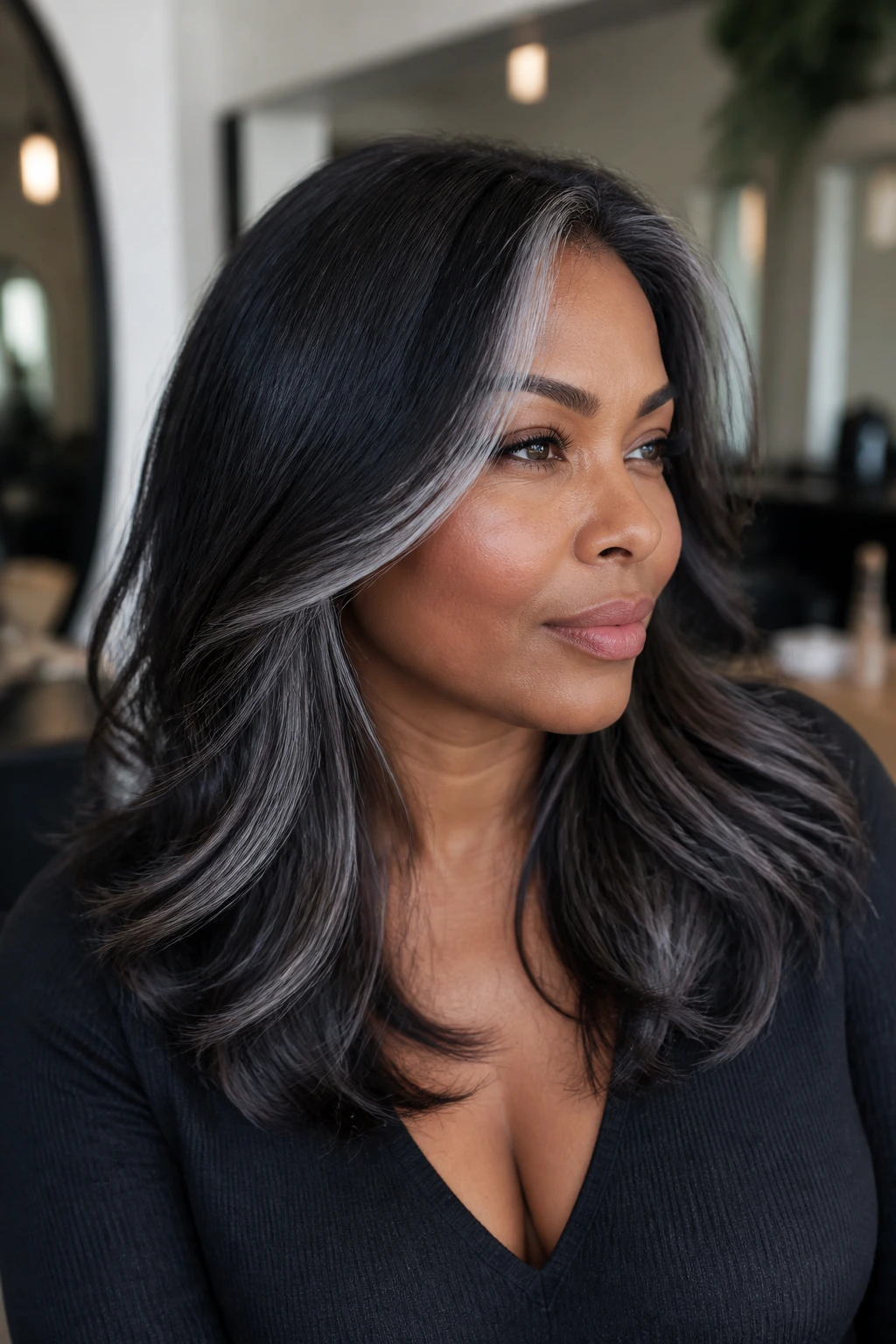
Gloss Boost: A clear or smoky demi-gloss every 4 to 6 weeks keeps gray-black shades from turning dry-looking. The shine matters as much as the pigment, and a gloss makes charcoal look deep instead of dusty.
Customization: If you like soft contrast, add a shadow root and a few face-framing silver threads. If you want more edge, ask for thicker graphite ribbons or frosted ends. Small placement changes can shift the whole mood of the color.
Serving Suggestions: A light serum on the ends, a tiny bit of edge control at the hairline, and a touch of finishing spray can change how the color reads in photos and in person. Less product is usually better. Heavy oils swallow the smoky tones.
Make-It-Yours: For warm undertones, lean toward mushroom and ash-brown smoke. For cool undertones, go graphite and steel. If you want low commitment, keep the silver away from the root. If you want louder contrast, move the brightest pieces to the face frame or crown.
Keeping Gray-Black Hair Crisp Between Salon Visits
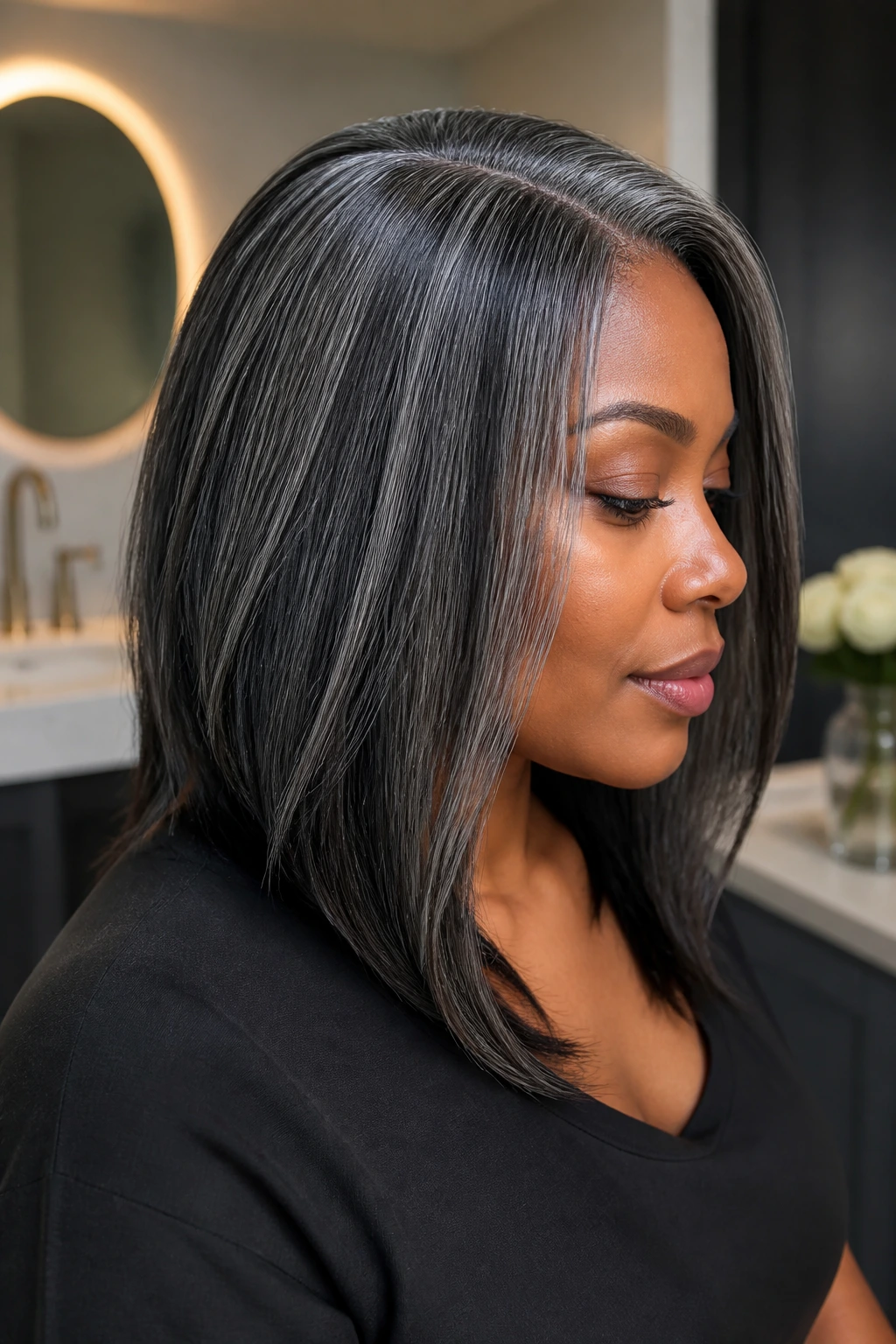
Gray-black shades tend to fade in two directions: they get warmer, or they get duller. The fix is different for each. If the hair starts turning brassy, use a blue shampoo on the dark sections once a week, leaving it on for 2 to 3 minutes. If the silver looks flat, a purple shampoo or a silver-depositing conditioner can bring the tone back without another full service.
For salon timing, a full silver or ash refresh usually needs attention every 4 to 6 weeks if the color is high-lift and very visible. Darker charcoal or blue-black looks can stretch longer, often 6 to 8 weeks, especially if the root stays deep. Protective styles with gray extensions can last longer still, but the scalp and edges need care the whole time.
Heat and water matter more than people admit. Keep hot tools around 300°F to 350°F on bleached sections if you can. Use lukewarm water, not hot, because hot water opens the cuticle and strips toner faster. If your water is hard, a clarifying or chelating wash once every few weeks can stop the color from turning muddy.
Sleep matters too. Satin or silk at night keeps the surface smooth, which helps gray tones keep their shine instead of getting rough and dry by morning.
Variations Worth Trying If You Want Less or More Drama
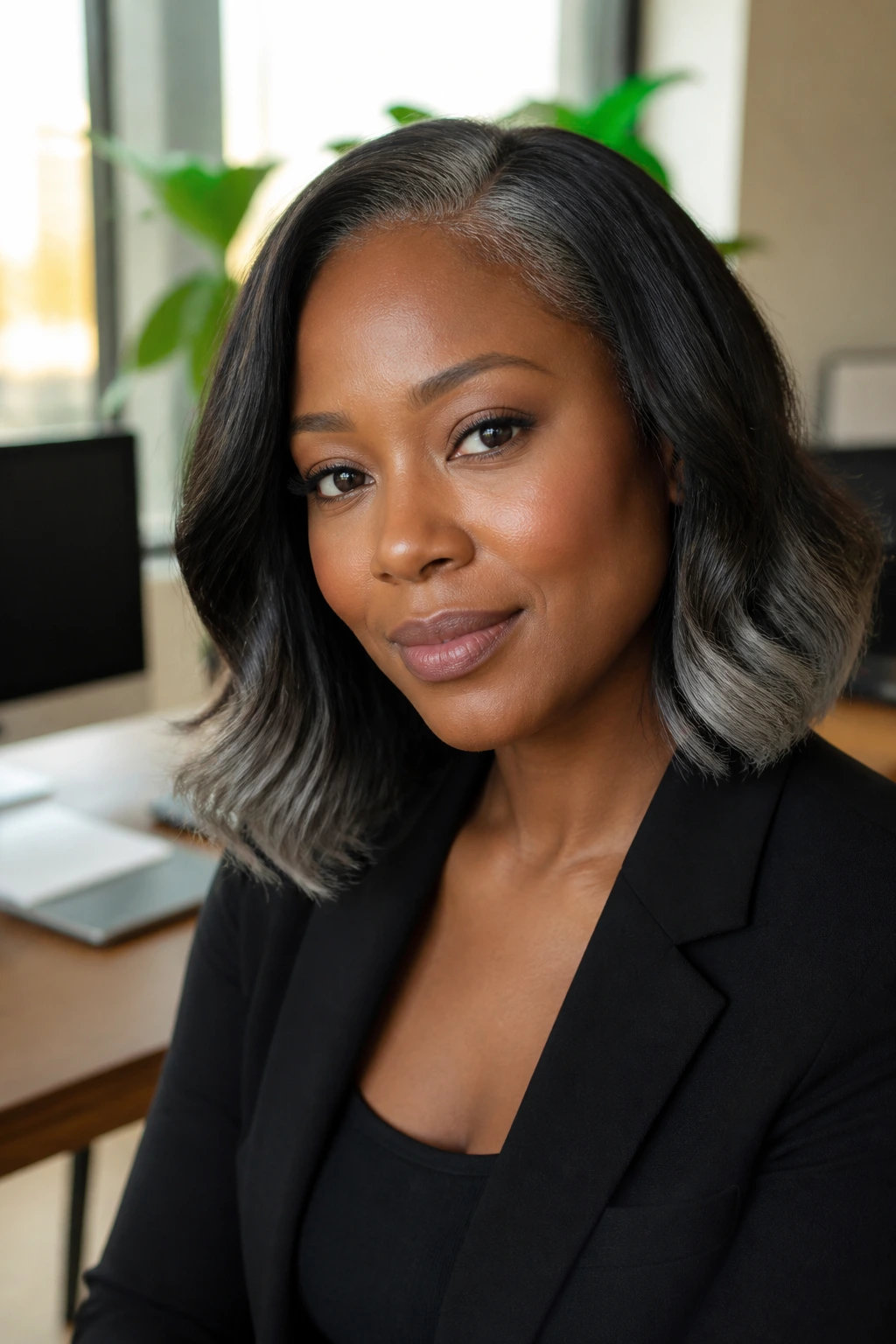
Soft Smoke Office Version: Keep the gray only at the ends or just around the hairline, and leave the rest of the hair near-black. It’s the easiest version to wear if you want the look to stay quiet in regular lighting.
Chrome-Forward Version: Push more silver into the front pieces, crown, and surface layers. This one reads louder and needs a little more upkeep, but it gives the strongest contrast on deep skin.
Warm Smoke Version: Add mushroom, taupe, or ashy brown to the gray-black mix. That softens the coolness for golden or red undertones and keeps the hair from going icy.
Protective-Style Version: Use gray extensions, wraps, or threads in braids and locs instead of bleaching the natural hair all over. You still get the color story, but the upkeep is easier on fragile hair.
Short-Cut Version: On pixies, bobs, and cropped curls, keep the gray pieces closer to the top and front. Short hair shows placement fast, so a little color goes a long way.
Common Mistakes That Make Gray-Black Look Flat
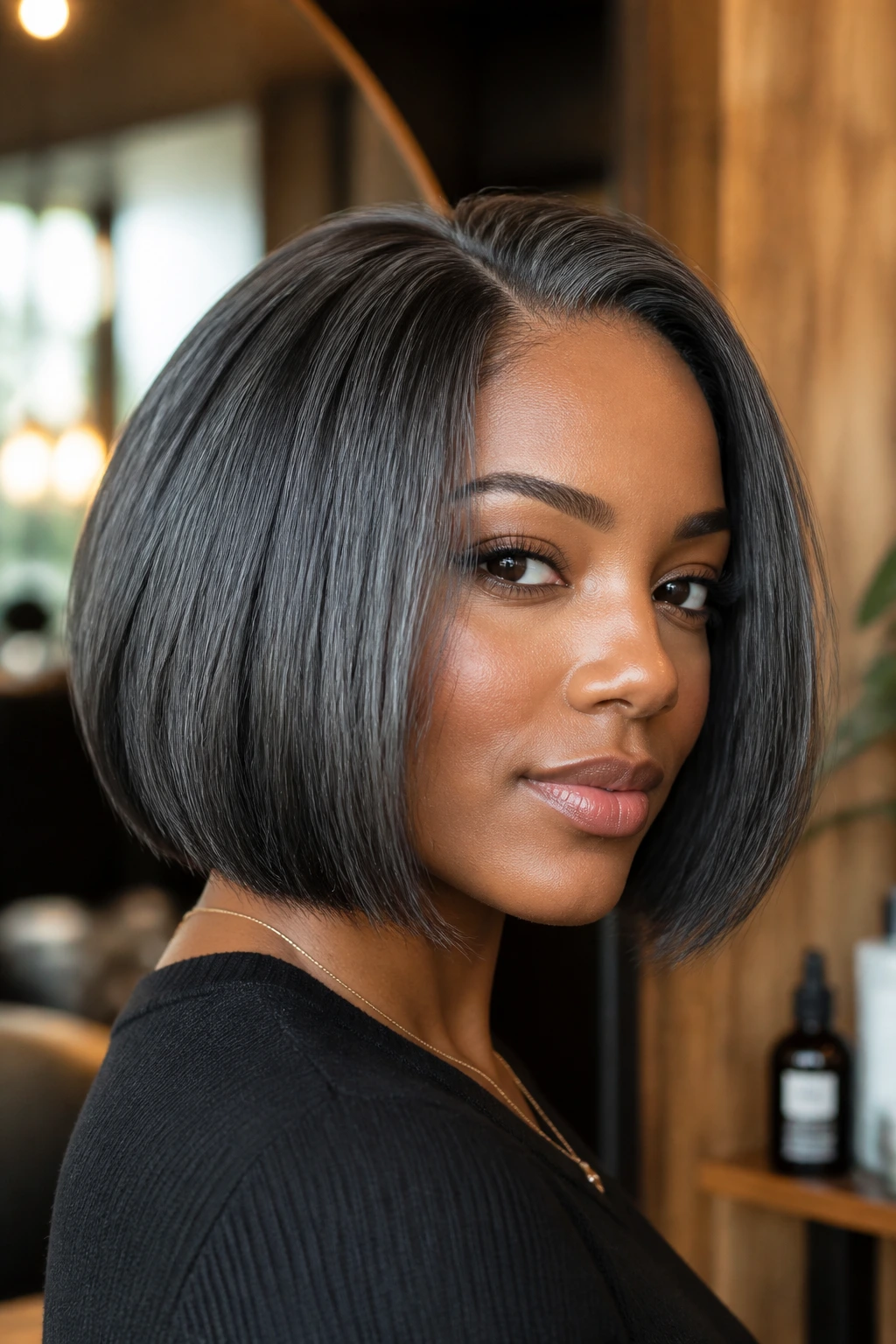
Going too light too fast: If the hair is lifted to pale silver in one pass, deep skin can lose the rich contrast that makes gray-black look good in the first place. Stop at charcoal or graphite if the hair is already fragile, then refine the tone later.
Using the wrong gray base: Blue-gray, ash-gray, and mushroom-gray are not interchangeable. Blue cools orange, violet cools yellow, and mushroom softens warmth. Pick the wrong base and the tone can turn muddy instead of smoky.
Ignoring the haircut: Gray-black without shape can look heavy. Layers, a blunt edge, a bob, or even a strong part help the color read. Flat, shapeless hair makes the gray sit there without purpose.
Skipping root depth: A hard silver root on deep skin can look disconnected. Leave some shadow at the scalp unless you truly want a high-contrast silver look and are ready to maintain it.
Forgetting porosity: Bleached ends grab toner faster and fade faster. If the mids and ends are porous, they need gentler processing and more conditioner, or the color will look patchy after a couple of washes.
Questions People Ask Before They Commit
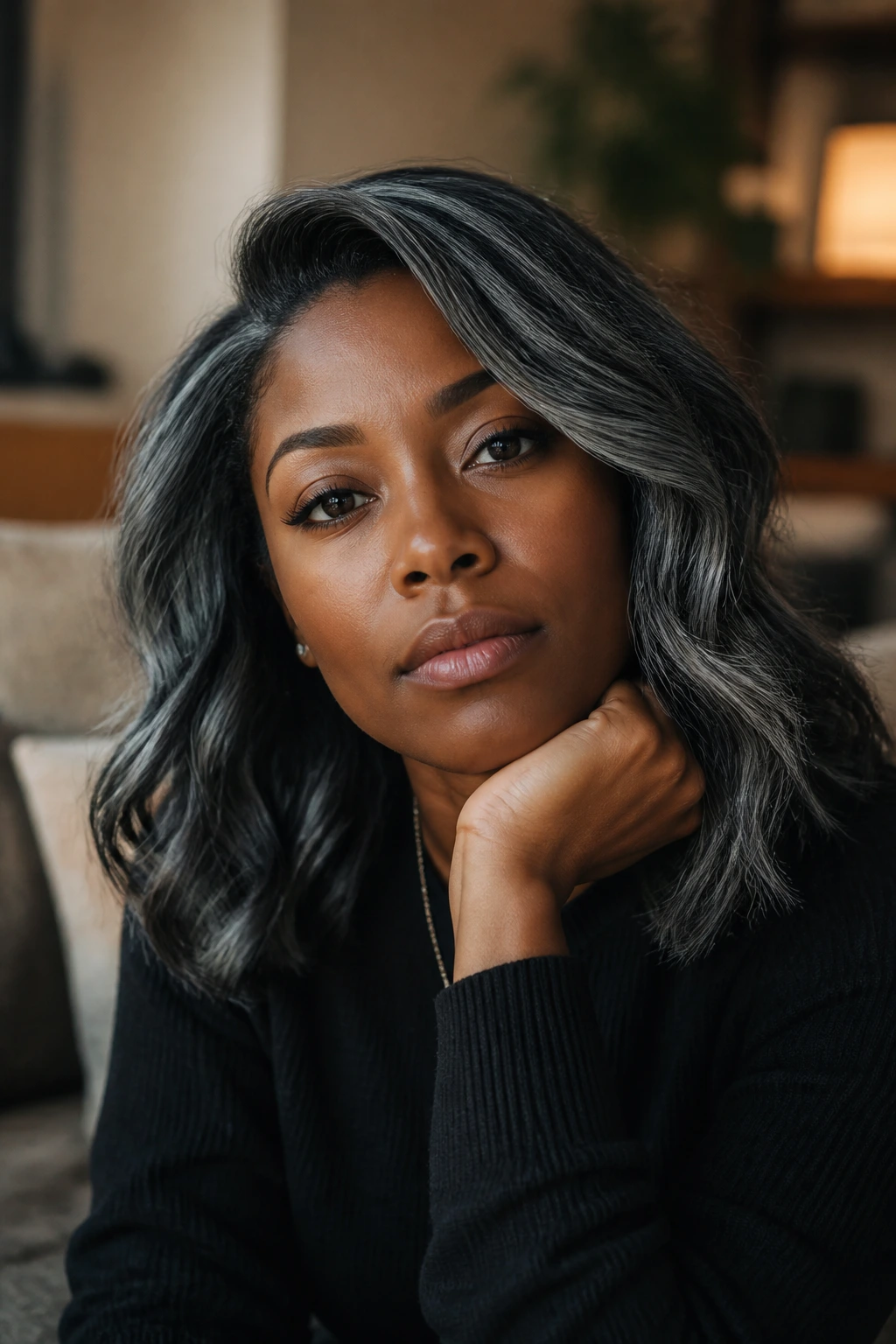
Will gray-black hair wash me out on deep skin?
Not if the tone is chosen well. The safest versions keep the base dark and use gray as a ribbon, frame, or melt rather than an all-over pale silver. That keeps the richness of the complexion intact.
Do I need bleach for these looks?
For true silver, pewter, or frosted pieces, yes, usually some lightening is needed. For ash-black, blue-black, or smoky glosses, you can often stay within the dark range and skip heavy bleach.
Which gray-black idea is lowest maintenance?
Ash-black gloss and charcoal melts are usually easier to live with than full silver highlights. Root shadows and darker bases make regrowth less obvious, and they need fewer toning sessions.
Can I wear this color on curls without drying them out?
Yes, but the curls need more moisture than they did before coloring. Bleached curls often need weekly deep conditioning, a light leave-in, and less heat, or the texture can go frizzy fast.
What if I want the look on braids or locs instead of my natural hair?
Gray extensions, wraps, thread, and pre-colored braiding hair are the easiest path. They give you the color story without forcing the natural hair through bleach.
Can box dye create gray-black hair?
Box dye can give you a dark result, but it usually won’t give you a clean smoky gray. It tends to land too flat or too warm. For a true gray-black finish, salon color or carefully chosen semi-permanent products are safer.
How do I stop silver pieces from turning yellow?
Use a purple shampoo or silver conditioner once a week, and keep hot water off the hair as much as possible. A monthly gloss refresh helps too, especially if you use heat often.
What if the gray turns green or muddy?
That usually means the wrong toner was used, the hair has mineral buildup, or the shade was too cool for the base. A clarifying wash, followed by the right toner, usually fixes the problem faster than piling on more dye.
The Shades That Keep Their Depth
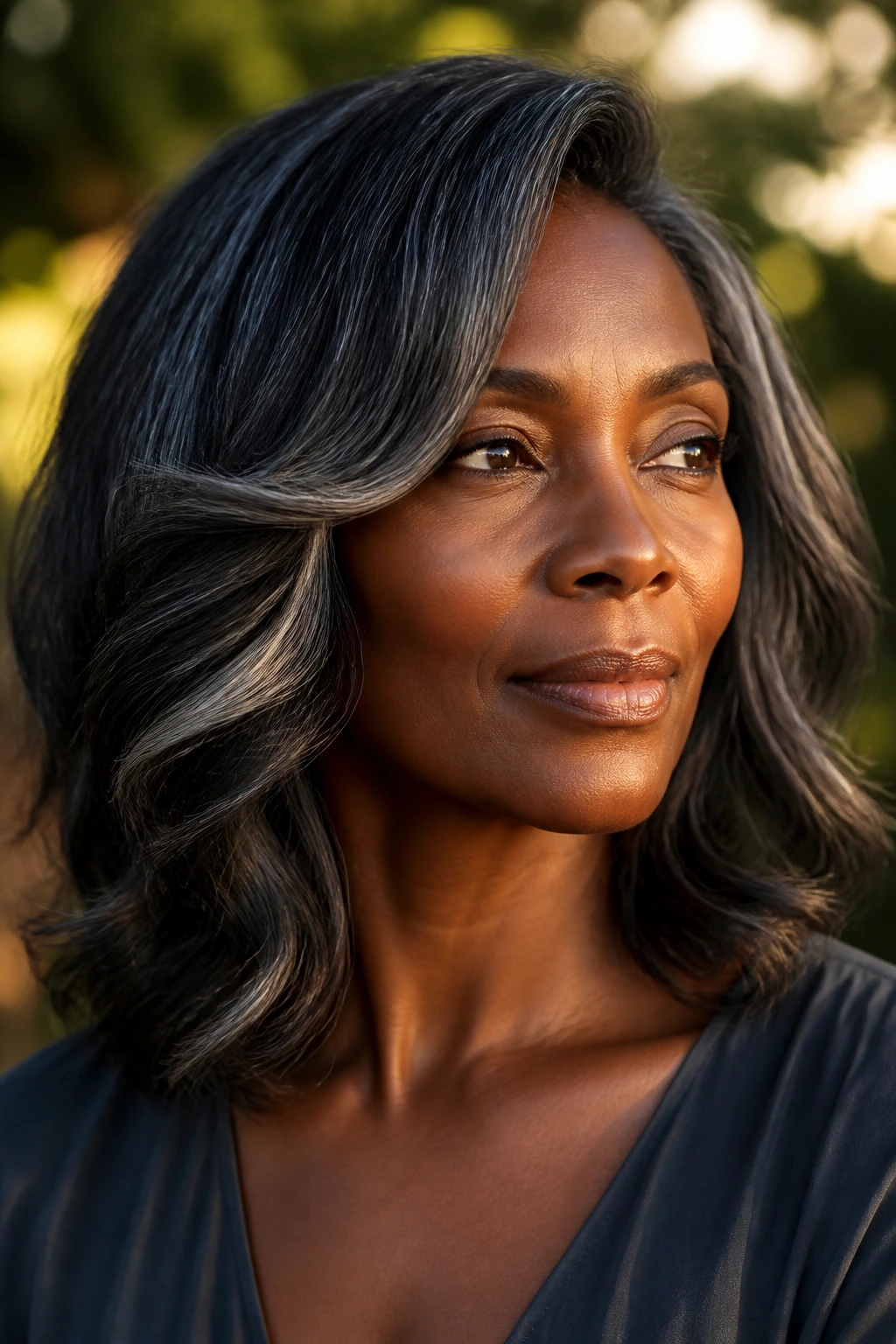
Gray-black hair works when it respects the depth already on your head and the richness already in your skin. That’s the whole trick. Keep the base dark, place the gray where movement can show it, and choose the tone that matches how much maintenance you’ll actually tolerate.
Some people will live happily in an ash-black gloss for months. Others will want silver money pieces and high-contrast chrome the second they see it. Both routes can look excellent on deep skin tones. The difference is not whether the color is gray-black. It’s whether the gray has a shape to live in.
Pick the version that matches your haircut, your texture, and your patience, and the color starts working for you instead of the other way around.