



Brown eyes and olive skin can take blonde in directions a lot of people underestimate. The trick is not chasing the palest shade in the room. It’s choosing a blonde that brings out the warmth in the skin, keeps the iris looking rich instead of flat, and leaves enough depth at the root so the whole thing doesn’t turn chalky by noon.
That’s why some blonde hairstyles look expensive on one person and oddly washed out on another. Olive skin tends to carry green, gold, or neutral undertones, and brown eyes already have depth built in; pair those with the wrong blonde and the face can go muddy fast. Pair them with the right one and the effect is immediate. The eyes look darker, the skin looks smoother, and the hair stops reading like a separate object floating above the face.
The best looks here are not all the same shade, and that’s the good part. Honey, beige, champagne, butter, mushroom, and bronde each solve a slightly different problem, whether you want low-maintenance dimension, a sharper salon finish, or a lighter blonde that still respects your undertone. A little root shadow goes a long way. So does face-framing color that starts one inch off the hairline instead of screaming from the scalp.
Why These Shades Work So Well on Brown Eyes and Olive Skin
-
Warm blondes soften olive undertones: Honey, butter, and golden blondes sit near the green-gold cast in olive skin, so the face looks warmed up rather than gray or sallow.
-
Neutral blondes keep the complexion steady: Beige, champagne, and pearl shades avoid the heavy orange of some golds and the starkness of icy blondes, which makes them easier to wear around the eyes and jawline.
-
Depth at the root keeps the color believable: A shadow root or root melt prevents the blonde from looking blocky against darker brows and brown eyes, which is where a lot of over-lightened hair starts to feel off.
-
Movement matters as much as shade: Waves, layers, curls, and bends break up the light so the blonde picks up dimension instead of sitting as one flat sheet of color.
-
Face-framing pieces do the heavy lifting: A brighter ribbon near the cheekbone or fringe pulls attention to the eyes first, which is why money pieces and curtain bangs are so effective on this color combo.
-
Not every blonde needs to be pale: A level 7 honey blonde can look richer than a level 9 platinum if it works with the skin. That’s the part people miss when they chase brightness for its own sake.
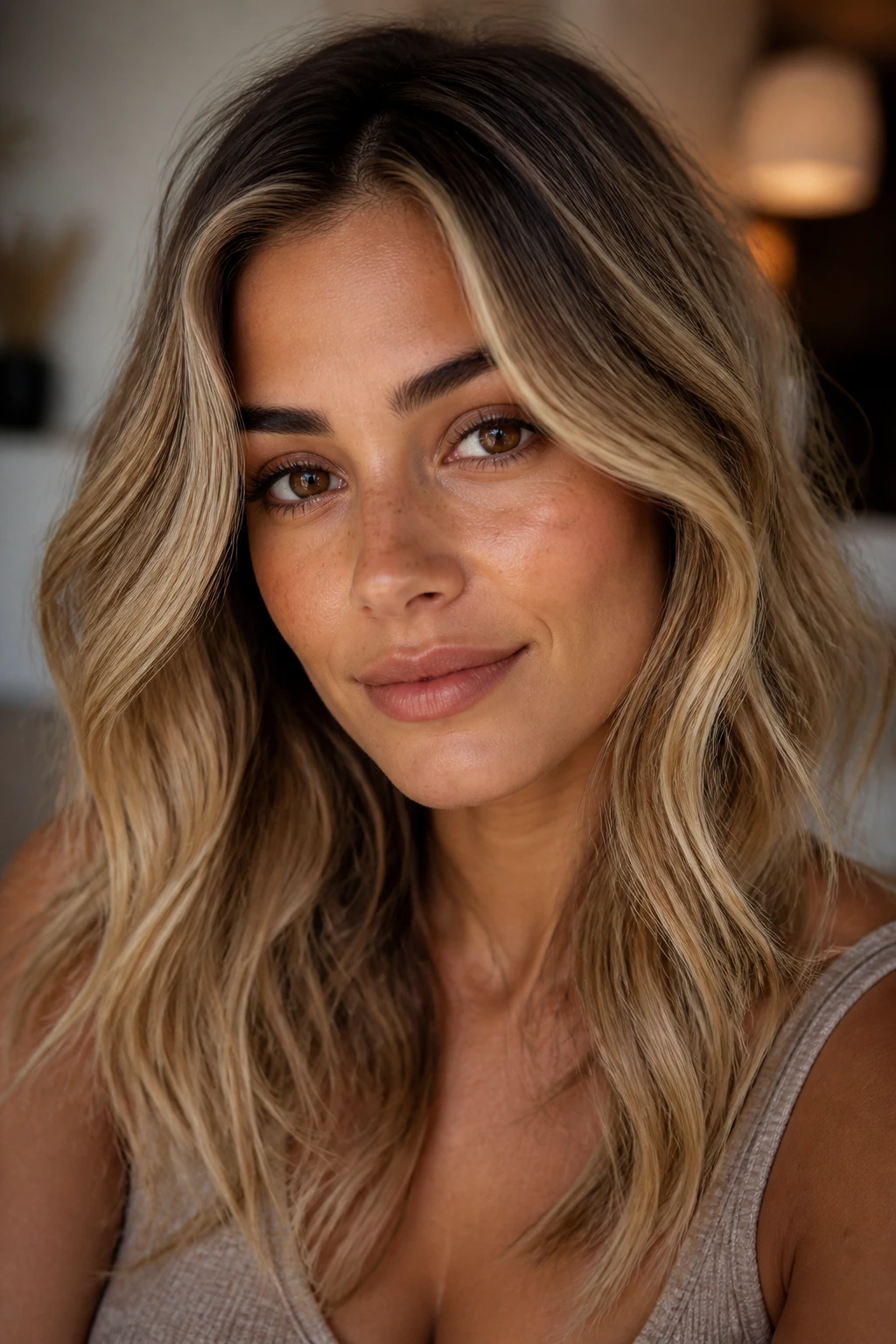
1. Honey Balayage Waves
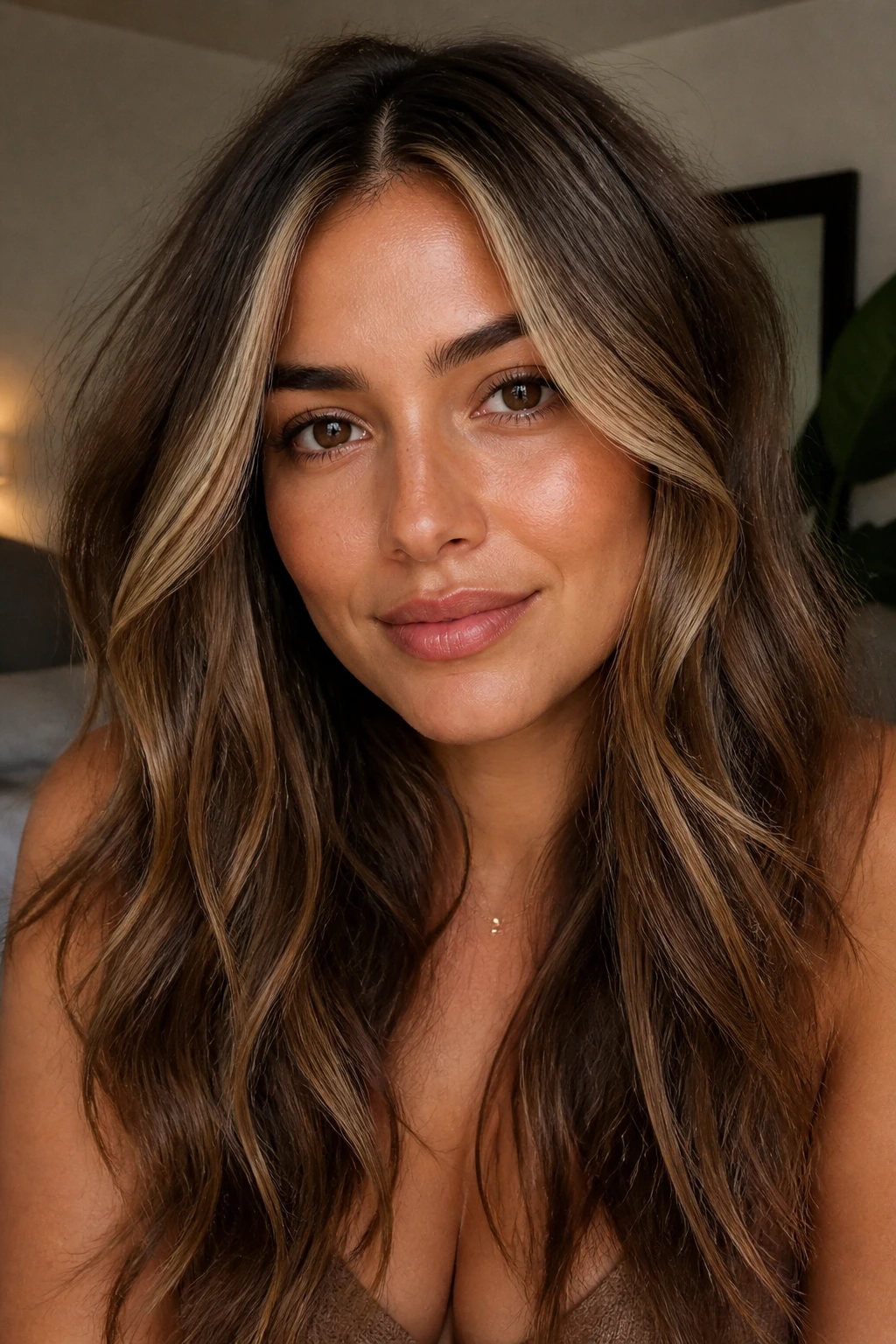
Honey balayage is the first blonde I reach for when someone wants softness without looking overly blonde. The color drifts from a deeper brunette base into ribbons of warm gold, and on olive skin that warmth feels natural instead of forced. Brown eyes love it because the contrast isn’t harsh; the iris stays central, not fighting the hair for attention.
Why It Flatters the Undertone
Balayage works here because the light is painted where the sun would hit it naturally — around the face, through the mid-lengths, and at the ends. That matters on olive skin, which can look a little flat under one solid blonde tone. The honey notes keep the face from going cool or gray, and the darker base gives you breathing room between salon visits.
How to Wear It
Soft bends with a 1.25-inch curling iron or a round-brush blowout are the sweet spot. Keep the part slightly off-center so the brighter front pieces land near the brow and cheekbone, not dead center like a strip of paint. If your natural hair is dark brown, ask for a lift that stays in the level 7 to 8 range through most of the head, then let the ends go a touch lighter.
A flat iron pin-straight finish can make this look too neat, and honestly, that misses the point. The texture is part of the color.
Best for: medium to long hair, oval and heart-shaped faces, and anyone who wants blonde that grows out in a civilized way.
2. Beige Blonde Collarbone Lob
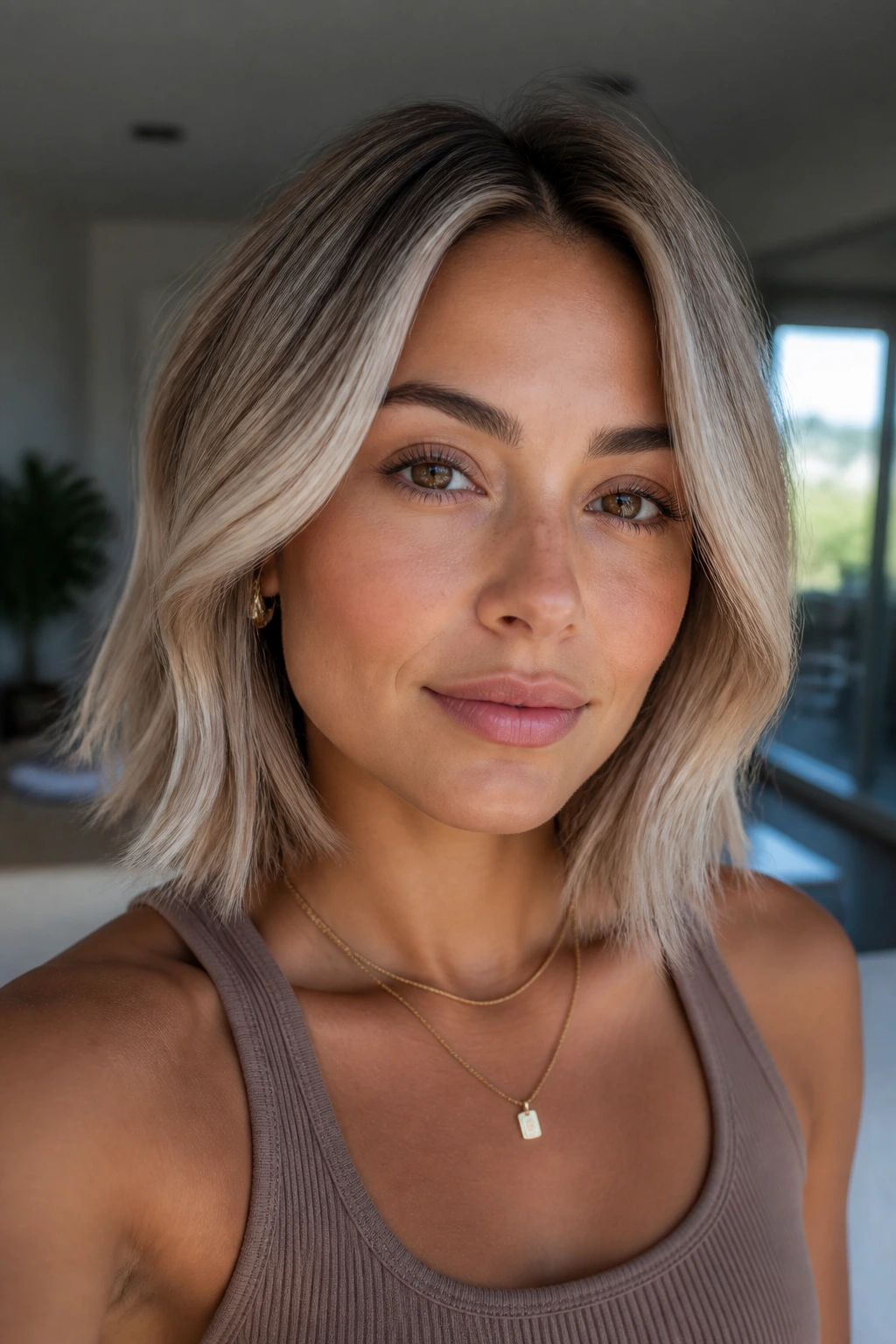
A collarbone lob in beige blonde is one of those cuts that looks composed without trying too hard. The line hits right where the neck opens up, which gives brown eyes a clean frame and lets olive skin stay the star instead of getting buried under too much hair. Beige blonde is the detail that keeps it from leaning brassy or icy.
The reason this works so well is the restraint. Beige blonde sits in the middle: not too gold, not too ash, not too white. On olive skin, that middle ground is usually the safest place to live, especially if you wear little makeup or prefer a face that can hold itself without a lot of extras.
Keep the ends blunt or only slightly textured. Too many choppy layers can make a lob lose its shape, and then the blonde starts looking stringy instead of polished. A slight bend at the last 2 inches is enough. You want the light to move, not frizz out.
This one is especially good if your brows are naturally deep brown. The contrast looks deliberate, and the beige tone stops the cut from feeling severe.
3. Butter Blonde Curtain Bangs and Layers
Why do curtain bangs work so well here? Because they break the face open in the right place. A soft fringe that parts in the middle, then drapes into face-framing layers, pulls blonde right where the eyes live. On brown eyes and olive skin, that little shift can change the whole read of the face.
Butter blonde has a creamy warmth that avoids the too-yellow problem. It’s richer than platinum, softer than gold, and kinder to skin that has a green or golden cast. If the blonde is too pale, the face can look tired; if it’s too orange, it can feel loud. Butter blonde sits in that usable middle.
Styling the Fringe
- Blow the bangs forward first, then sweep them apart with a round brush.
- Keep the roots lifted with a pea-sized amount of mousse.
- If the fringe flips too hard, use a large Velcro roller for 5 to 10 minutes after drying.
The layers behind the bangs should be long enough to move, not chop. Ask for a shape that starts around the cheekbone and melts toward the collarbone. That gives you the softest frame for brown eyes, especially if you like a little makeup around the lashes but not much else.
4. Mushroom Blonde Shag
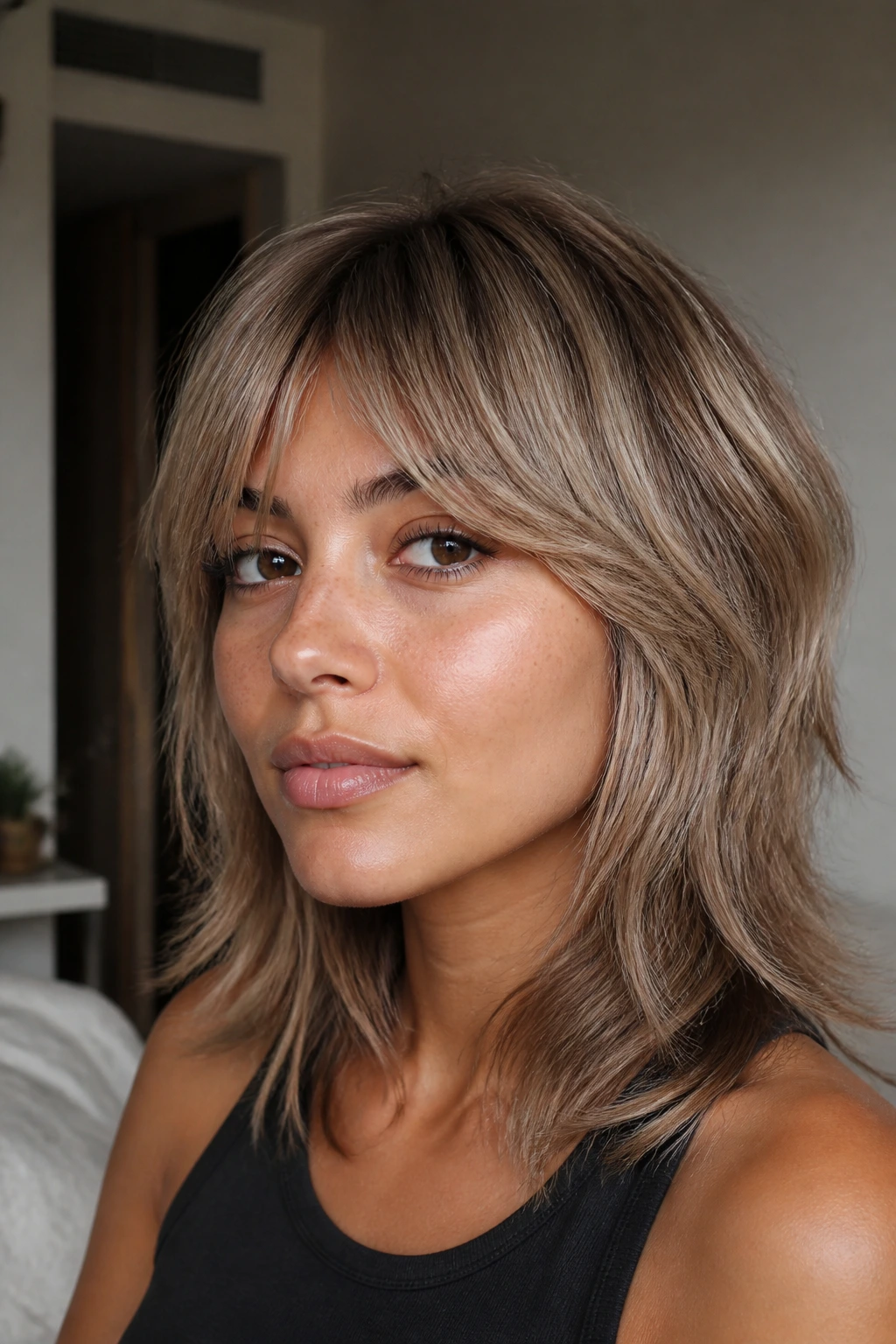
Mushroom blonde is the blonde for people who want dimension but don’t want to look sunny. It lives in the cool-beige zone — smoky, earthy, and quiet in the best way — and on olive skin that can be a very smart move. Brown eyes pop because the hair isn’t competing with them on warmth; it’s creating contrast by being a little muted.
This is the most low-key cut in the list, and that’s exactly why I like it. A shag gives you broken-up texture through the top and around the face, which keeps the color from sitting in one heavy block. When the tone is mushroomy instead of bright, the overall effect feels edgy without turning severe.
If your hair is thick, this cut can remove bulk while still keeping shape. If it’s finer, keep the layers softer and avoid over-thinning the ends. Mushroom blonde likes movement, not holes.
The best version usually starts with a darker root, a smoky beige mid-tone, and a few lighter ends. That gradient matters. Without it, mushroom blonde can drift into dull ash, and nobody needs that.
5. Caramel Bronde Money Pieces
Bronde with caramel money pieces is the move when you want blonde to show up without crossing all the way over. It keeps enough brunette in the base that olive skin still feels grounded, then drops brighter caramel or light honey pieces right where the face benefits most. Brown eyes get an instant frame, and the effect is more strategic than all-over lightness.
This is the easiest blonde-adjacent look to wear if your natural color is dark brown. The money piece, usually two slender sections around the face, creates brightness without forcing the rest of the hair to do too much. It’s also nice if your brows are strong. The darker frame and lighter front can balance each other instead of fighting.
A loose wave helps the color read. Straight hair can make money pieces look stripey if the highlights are too chunky, so ask for fine weaving through the front sections. The caramel should look like sunlight, not a streak.
Best Details to Ask For
- Keep the face frame lighter by 1 to 2 levels than the rest of the hair.
- Let the root stay soft for at least 1 inch.
- Blend the money piece into the cheekbone, not all the way to the crown.
- Use caramel, honey, or light amber — not orange.
6. Creamy Platinum Bob with a Shadow Root
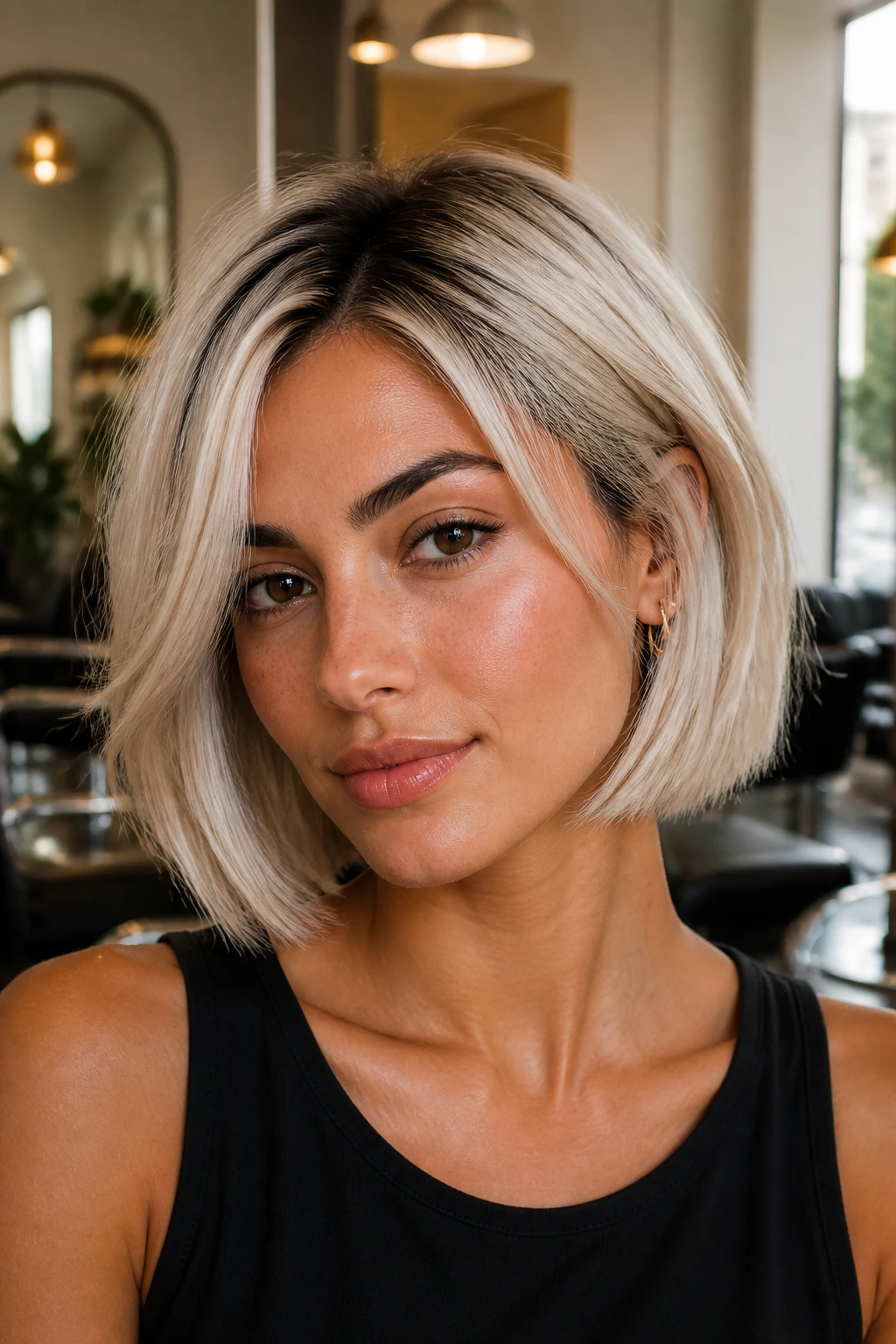
Platinum on olive skin can be striking, but only if it has enough softness to keep the face from going flat. That’s where the shadow root earns its keep. A creamy platinum bob with a deeper root gives the whole cut a little relief, and relief is what keeps high-lift blonde looking wearable instead of costume-y.
The bob itself does a lot of the work. Shorter hair means the blonde reads faster and cleaner, which suits brown eyes beautifully. The eyes become the anchor. The shadow root prevents the scalp from looking like a hard line, especially if your natural color is dark or your brows are thick.
Creamy matters here. Not icy. Icy platinum against olive skin can look too blue or too pale, especially in low light. Creamy platinum has a whisper of warmth or neutral gloss that keeps the tone smoother on the skin. It still looks light, just less aggressive.
This is a bolder choice than honey balayage, and I’d only recommend it if you’re willing to maintain toner and use a heat protectant every time. Platinum shows everything. That’s the deal.
7. Golden Blonde Blowout Layers
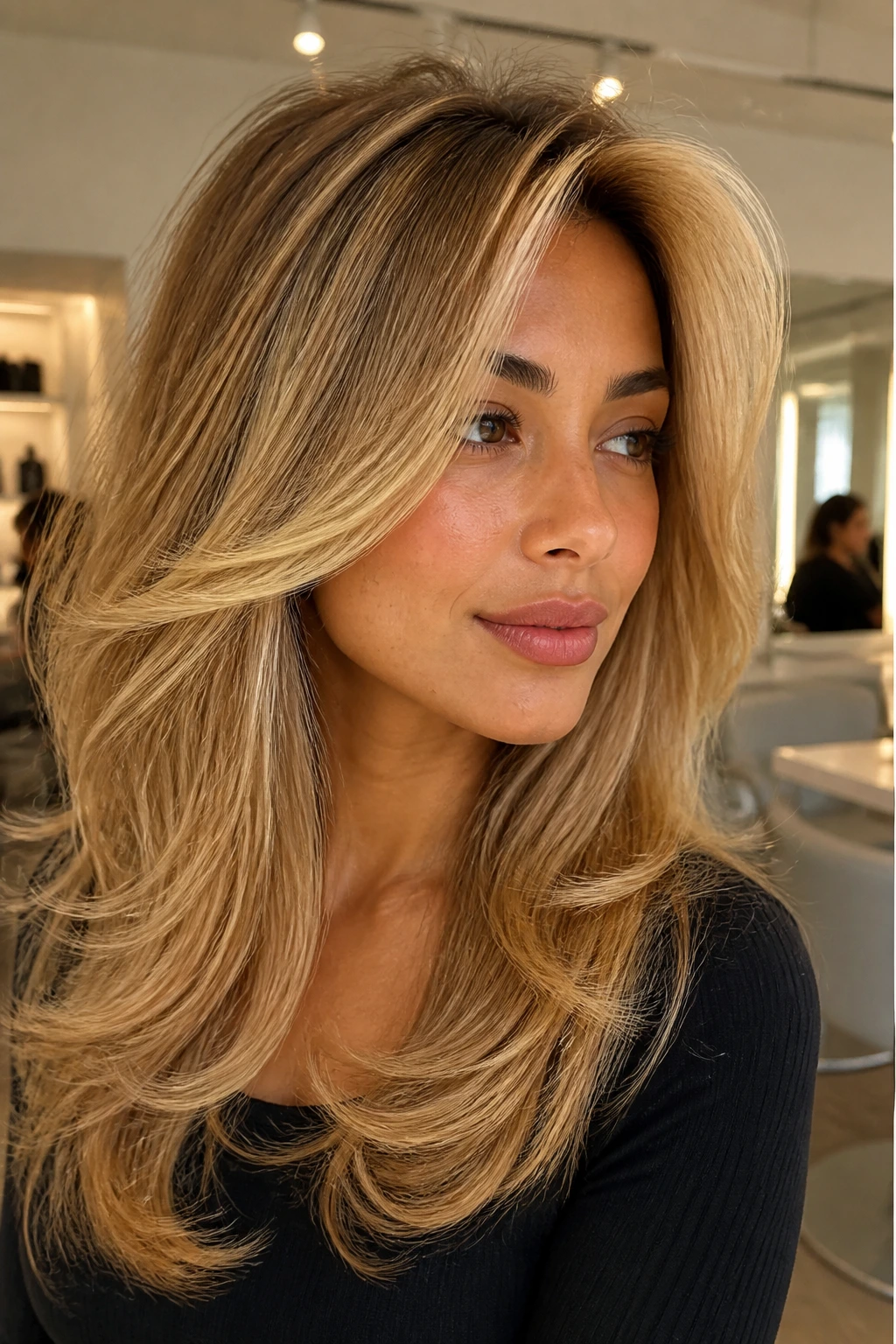
Golden blonde blowout layers are pure movement. The color is warmer than beige, fuller than ash, and when the layers are blown out with a round brush, the whole style seems to catch the light in broad, glossy sections. Brown eyes love that warmth because it ties into the depth of the iris instead of flattening it.
This is one of the best styles for medium-to-thick hair. The layers remove weight from the bottom, then the blowout gives the hair that lifted, swingy shape that makes blonde look expensive in the practical sense — shiny, healthy, and deliberately styled. On olive skin, golden blonde can be tricky if it goes too orange. Keep it to a soft wheat or warm gold, not brassy copper.
What to Ask For
- Long layers that begin below the chin.
- A golden blonde gloss, not a heavy all-over yellow.
- A root that stays 1 to 2 shades deeper than the mid-lengths.
- A smooth blowout with ends curled under or flipped out slightly.
The best thing about this look is that it doesn’t need perfect curl. A little bend is enough. That saves time and keeps the style from turning too pageant.
8. Champagne Blonde Soft Curls
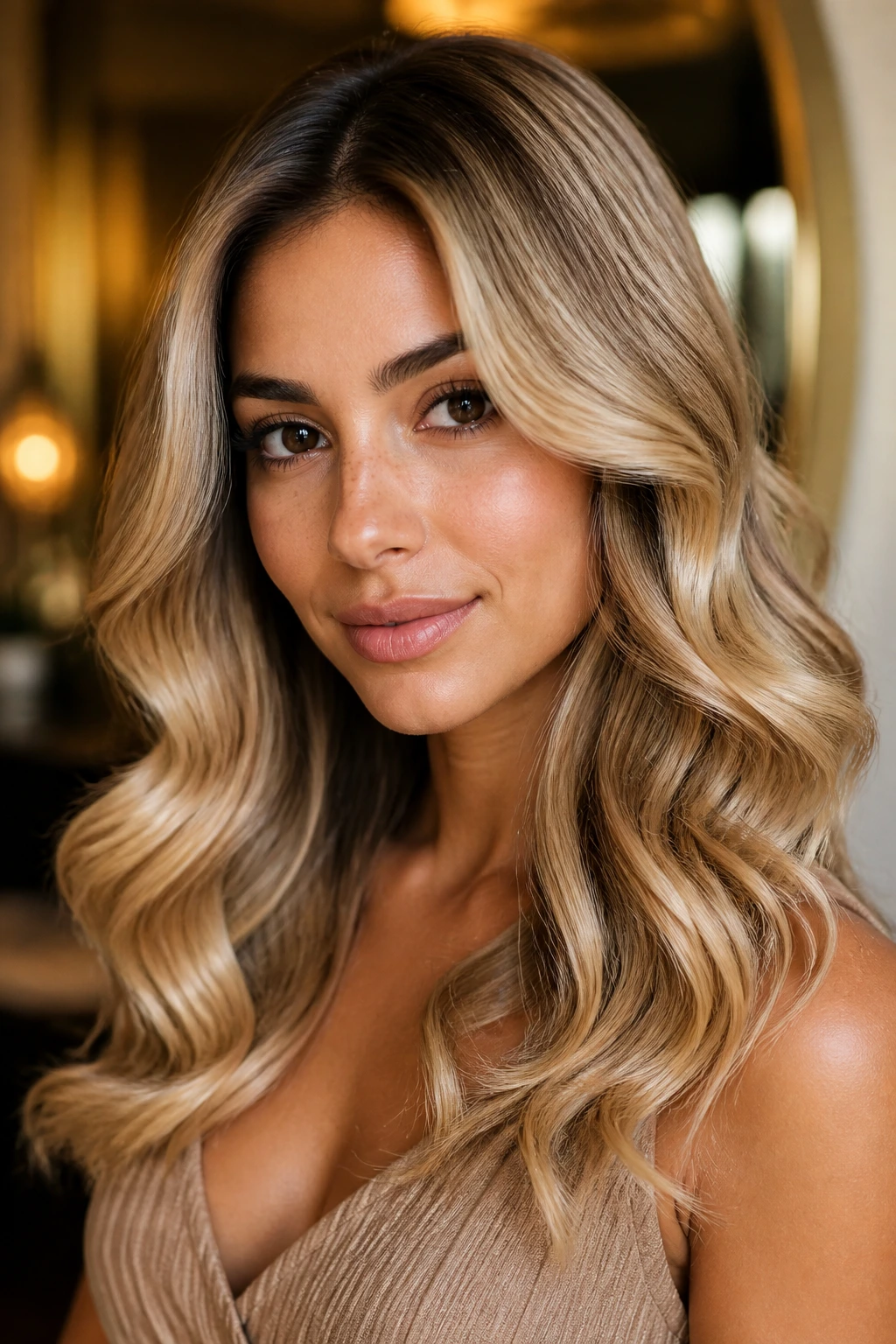
Champagne blonde sits in that elegant middle lane between beige and pearl. It has a soft sparkle to it, but it doesn’t lean metallic if the toner is handled with restraint. On brown eyes, that subtle brightness can make the iris look deeper and more defined, especially when the curls are loose and rounded rather than tight.
The curl pattern matters more than people think. Champagne blonde looks best when the hair has broad S-waves or large barrel curls brushed out into softness. Small curls can make the color look busier than it needs to be. Larger movement lets the blonde reflect light in chunks, which is what keeps it looking dimensional.
Olive skin usually handles this shade well if the root is not dragged too far toward white. Keep a smidge of depth near the scalp, and let the lighter tone live through the mid-lengths and ends. That tiny bit of contrast is what keeps champagne from disappearing.
This is the blonde I’d pick for an event, a dinner, or any moment when you want the hair to look polished without looking stiff. It has enough glow to read dressed up, but it still feels soft around the face.
9. Pearl Blonde Sleek Straight Hair
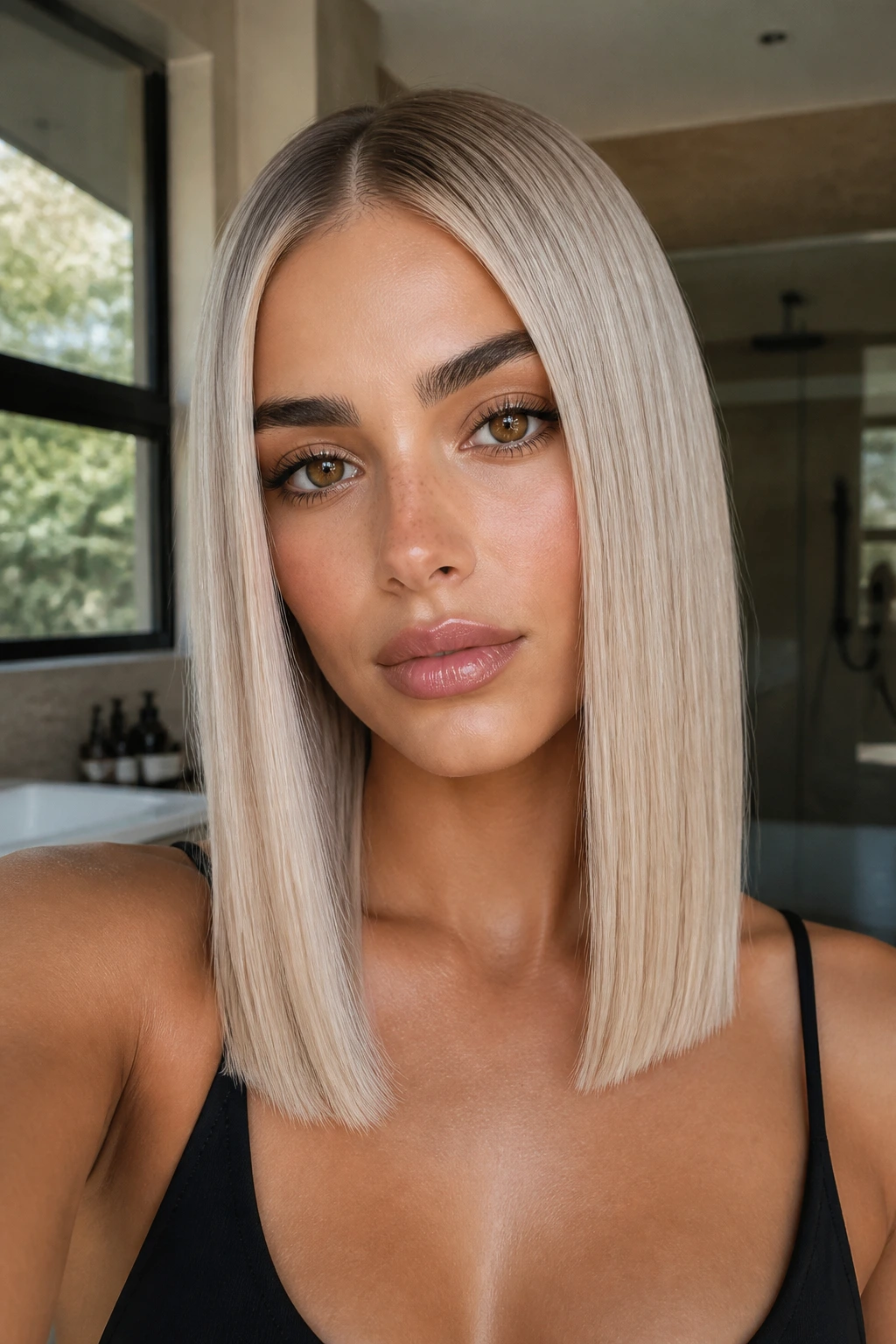
Pearl blonde is the quieter cousin of platinum. It has a pale, luminous finish, but the tone is softer and more neutral, which is exactly why it can work on brown eyes and olive skin when the cut is sleek and deliberate. Straight hair gives pearl blonde a clean surface, and that clean surface is what keeps the color from looking fuzzy or overworked.
Here’s the catch: this style only works if the haircut is tidy. Split ends and uneven layering show immediately on straight blonde hair. A blunt cut, or a cut with very careful invisible layers, holds the shape best. If you’ve got a lot of wave, this is more labor than the softer looks above, but when it’s done well, the result is sharp.
I like pearl blonde most when there’s still a little root depth — enough to ground the color against darker brows and brown eyes. If the whole head is lifted to the same pale tone, olive skin can start to look drained. The tiny root shift keeps the face alive.
A smoothing cream and a flat iron at a low setting are enough. You do not need a glassy, lacquered finish. A little movement in the ends is better.
10. Beige Blonde Butterfly Cut
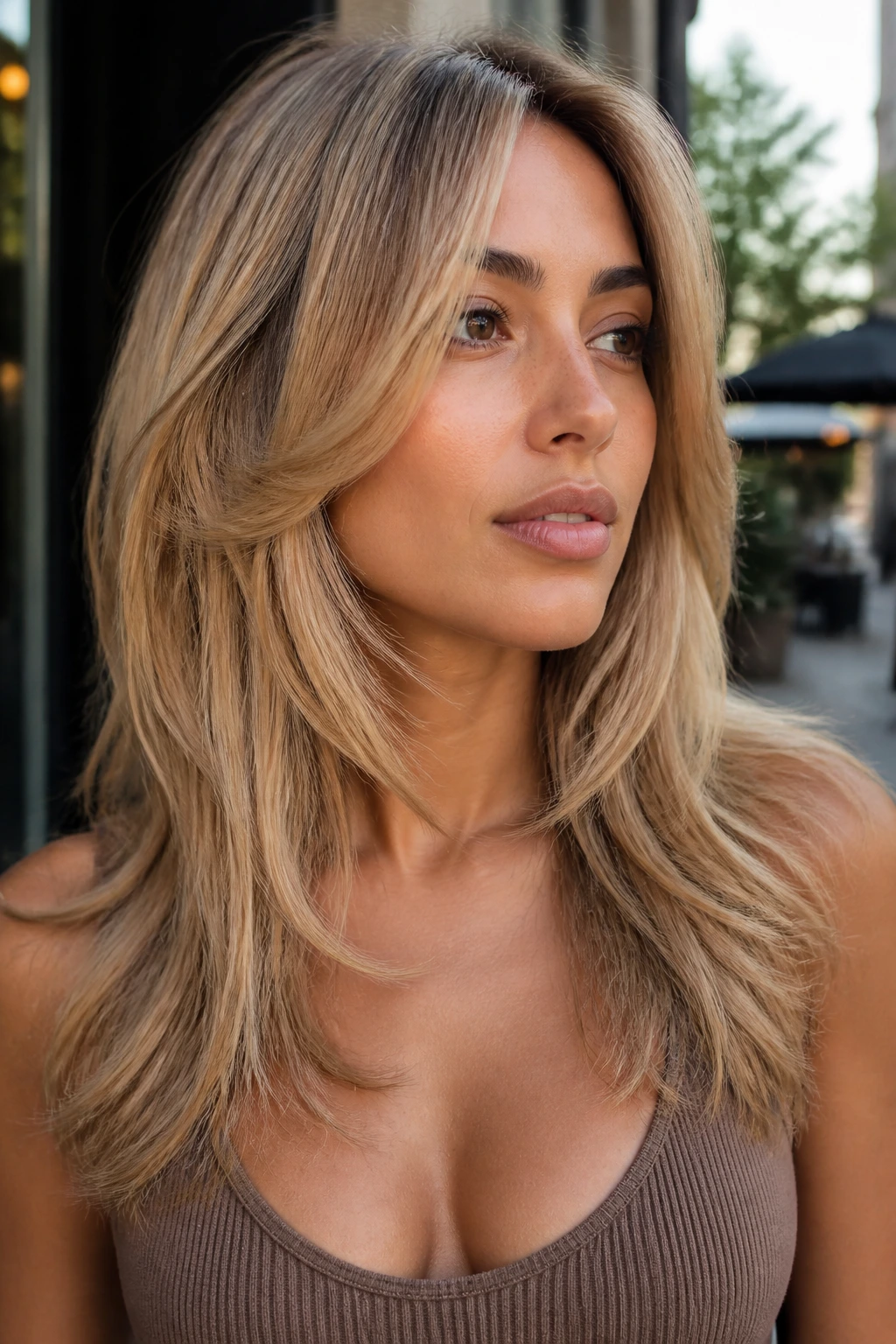
The butterfly cut is a smart answer if you want long hair to feel lighter without losing the length. On olive skin, beige blonde adds softness; on brown eyes, the layered face frame and longer wings pull attention up toward the eyes instead of letting the hair drape straight down and disappear. It’s a very face-conscious cut, which is why it works.
The top layers give lift around the crown and cheekbone. The longer bottom layers keep the silhouette full. That combination matters because beige blonde can go flat if the shape is too one-note. You want two things happening at once: movement near the face and weight in the length. The cut gives you both.
A lot of stylists overdo the shortest layers in butterfly cuts. Don’t let them. You need enough length in the top pieces to tuck behind the ear or curl away from the face. If those sections are too short, the whole thing turns fluffy in a way that fights the elegance of beige blonde.
Why the Shape Helps
- It creates lift without sacrificing the blunt strength of long hair.
- It lets the lighter pieces sit where the face actually needs brightness.
- It keeps beige blonde from reading dull by adding motion around the cheekbones.
- It works especially well if your hair is thick and you want movement without a giant chop.
11. Sandy Blonde Half-Up Knot
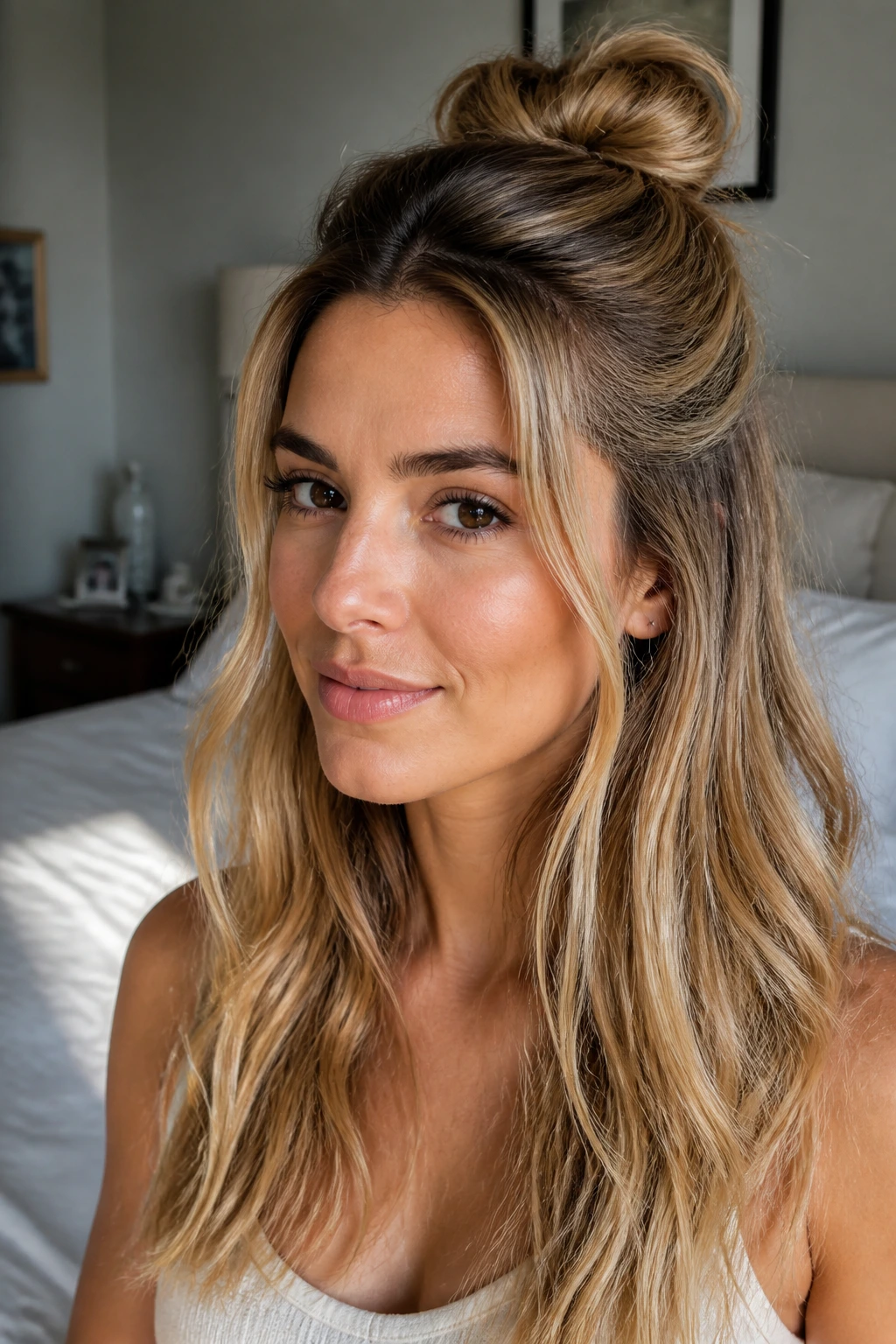
A sandy blonde half-up knot is the casual answer to all the more polished styles above. Sandy blonde sits between beige and warm ash, which makes it one of the easiest tones for olive skin to wear without a lot of fuss. Brown eyes get enough contrast to stand out, but the hair still feels relaxed.
This style shines because it gives you two looks at once. The top section is pulled back — which clears the face and shows off the eyes — while the bottom stays loose and textured. If the blonde includes subtle lowlights, the knot doesn’t look like a simple gym hairstyle. It reads styled.
The best version is not tight. Leave a little bend around the face, then twist the top half into a knot or small topknot and secure it with pins instead of a giant elastic. That keeps the finish soft and keeps the blonde from looking compressed.
It’s also the most forgiving style on this list for second-day hair. A little dry shampoo at the roots and a mist of water on the ends can wake it back up in five minutes. Very useful. Very little drama.
12. Buttery Blonde Pixie
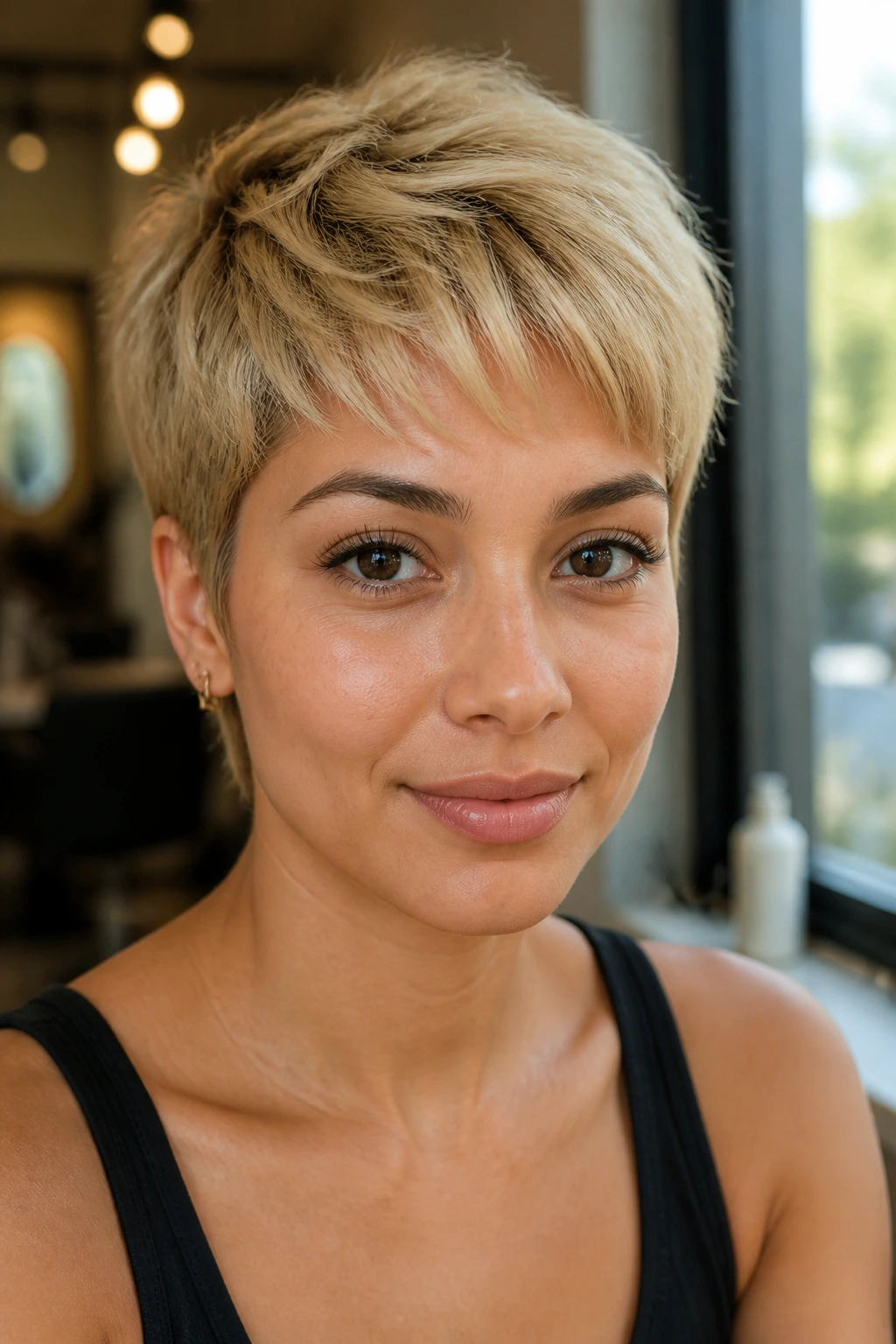
A pixie cut can be the boldest blonde of the bunch, and buttery blonde is the shade that keeps it from going hard. Butter tones warm the skin, keep olive undertones from looking green, and let brown eyes stay front and center. With short hair, there’s nowhere for the color to hide, so the tone matters even more.
This cut works best with texture. A little piecey definition on top, a soft fringe, and tapered sides keep the shape modern and easy to move around. If the pixie is too smooth, the blonde can feel helmet-like. If it’s too choppy, it can start looking dry. The sweet spot is airy and controlled, not messy for the sake of being messy.
Buttery blonde is a strong choice if you want to show your features instead of covering them. It opens the face fast. It also makes earrings, brows, and eyes do more of the visible work, which is why brown eyes often look especially striking with a pixie in this shade.
A styling paste the size of a pea is enough. Work it through the top and separate a few pieces with your fingertips. Done.
How to Choose the Right Blonde Shade for Olive Undertones
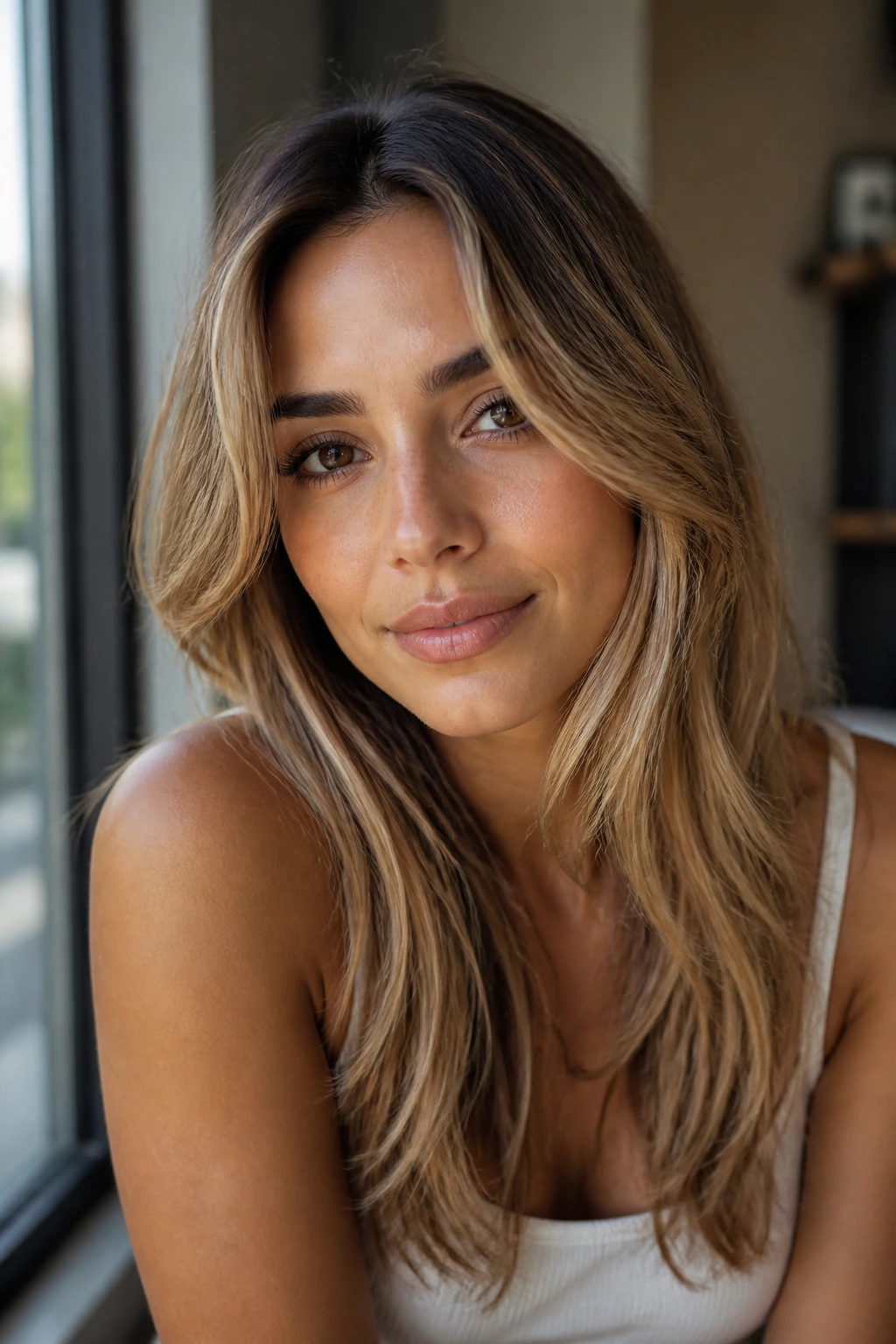
Picking the right blonde for olive skin is less about following a single rule and more about reading the temperature of your face. Some olive complexions lean warm, with a yellow-gold cast that loves honey, butter, and gold. Others lean neutral, which means beige, champagne, and sandy shades tend to sit better. A few lean cool-olive, and those can handle mushroom and pearl blonde without looking washed out.
Start with your natural contrast. If your brows are deep brown and your eyes are very dark, you usually need some root depth so the blonde doesn’t overpower the face. If your eyes are medium brown with gold flecks, brighter front pieces can give you more payoff without making the overall color louder. It’s the front of the face that matters most. People forget that.
A good mirror test: hold a gold top, then a silver one, near your face in daylight. If gold makes the skin look smoother and the under-eye area softer, you probably lean warm. If silver looks clean but gold turns overly yellow, you may do better in beige or pearl. If both seem fine, you’ve got more room to play, which is honestly the nicest position to be in.
The Shade Map
- Warm olive: honey, butter, golden beige, caramel bronde.
- Neutral olive: beige blonde, champagne, sandy blonde.
- Cool olive: mushroom blonde, pearl blonde, smoky beige.
The point isn’t to lock yourself into one lane forever. It’s to stop guessing. Hair color gets expensive fast when the toner fights your skin.
Essential Tools for Styling and Maintenance
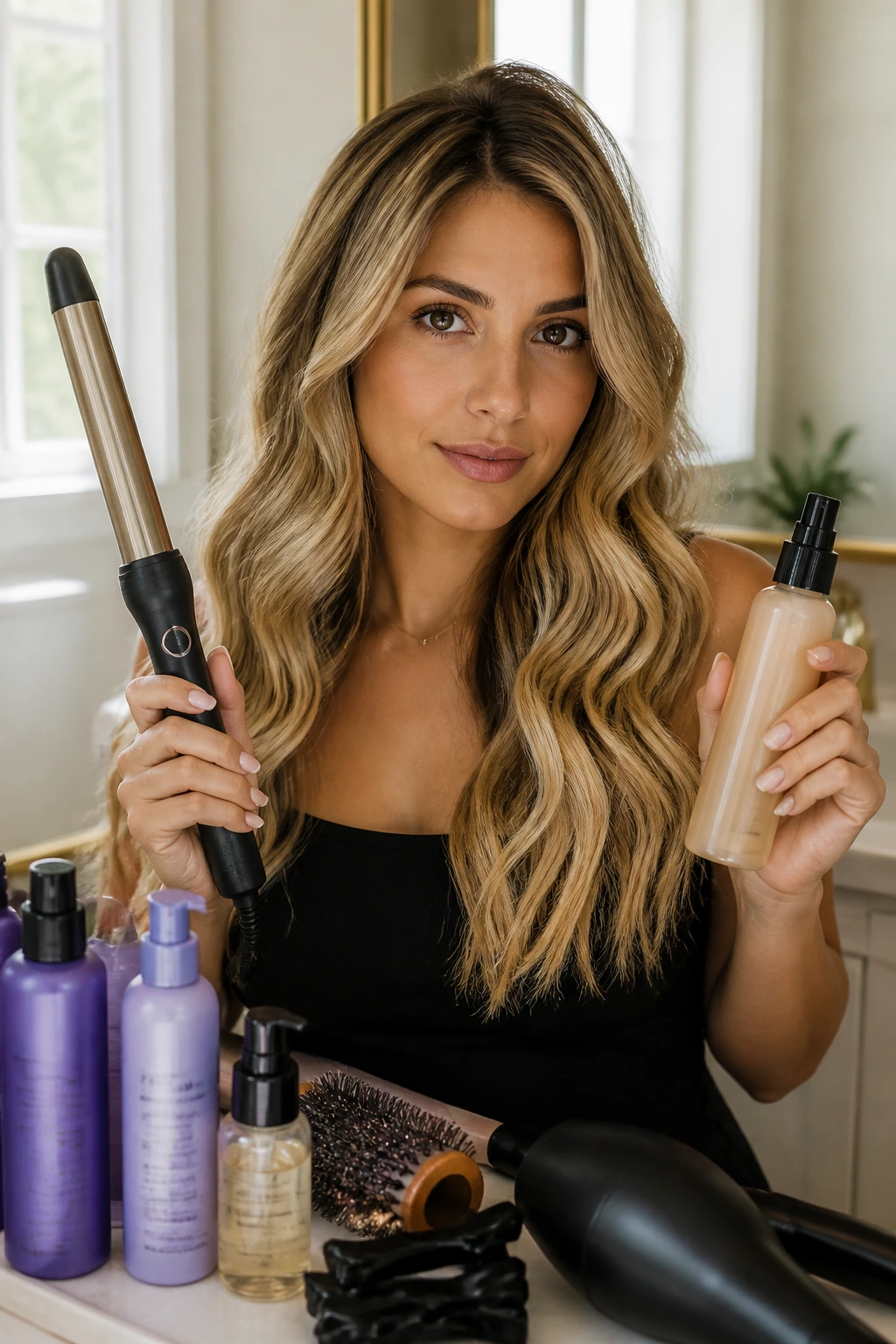
You do not need a drawer full of gadgets, but the right few tools change everything. Blonde, especially on olive skin, lives or dies by finish. A cheap brush with bent bristles or a flat iron that runs too hot can make even a good color look rough.
- Heat protectant spray: Use it before blow-drying, curling, or straightening. It keeps the ends from turning frayed and dull.
- 1 to 1.25-inch curling iron or wand: Best for the waves and soft curls in honey, champagne, and beige looks.
- Round brush, medium barrel: Useful for lobs, blowouts, and curtain bangs. Pick one with a grip that doesn’t snag.
- Blow-dryer with concentrator nozzle: This gives you better control, especially when you want the cut to look smooth instead of puffy.
- Sectioning clips: Necessary for money pieces, bangs, and any style where the front matters.
- Purple shampoo: Good for beige, pearl, and champagne blondes when brass starts to creep in.
- Blue shampoo: Better if your blonde picks up orange on darker bases.
- Lightweight shine serum: Use 1 to 2 drops on the ends, not the roots.
- Wide-tooth comb: Helpful on curls and waves so you don’t drag the shape out.
- Microfiber towel or old T-shirt: Faster drying, less frizz, less breakage.
How to Brief Your Colorist Without Talking in Circles
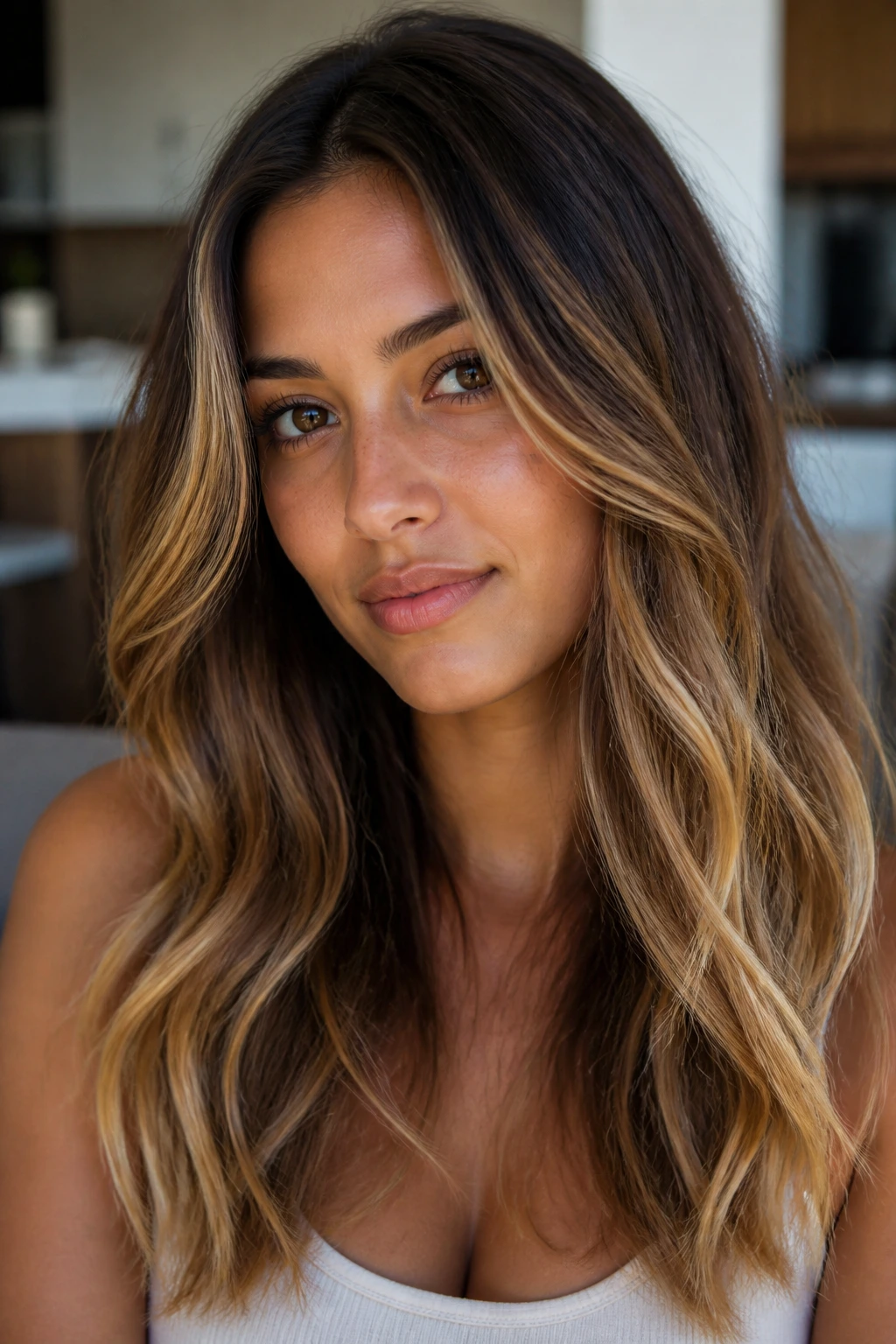
Bringing a photo helps, but not in the lazy way people think. One picture of the color, one of the cut, and one of a shade you do not want tells the story faster than a ten-minute speech. Stylists work from specifics: level, tone, placement, root depth, and upkeep.
Say the words that matter. If you want honey balayage, say “warm level 7 to 8 with dimension and a soft root.” If you want beige blonde, say “neutral, not yellow, not ashy.” If you want platinum, say “creamy platinum with a shadow root so it doesn’t go flat against my skin.” Those words help more than saying you want it lighter. Lighter is not a plan.
Be honest about maintenance. If you only want to come in every three months, platinum bob is a poor match and a rooted balayage is smarter. If you use hot tools daily, your colorist needs to know that too, because high heat can make toner fade faster and ends feel rough sooner. That part matters. A lot.
And don’t skip the haircut conversation. A color that looks gorgeous on a shag may look heavy on a blunt lob. The cut and the tone need to agree or the whole thing gets fussy.
How to Style These Looks at Home
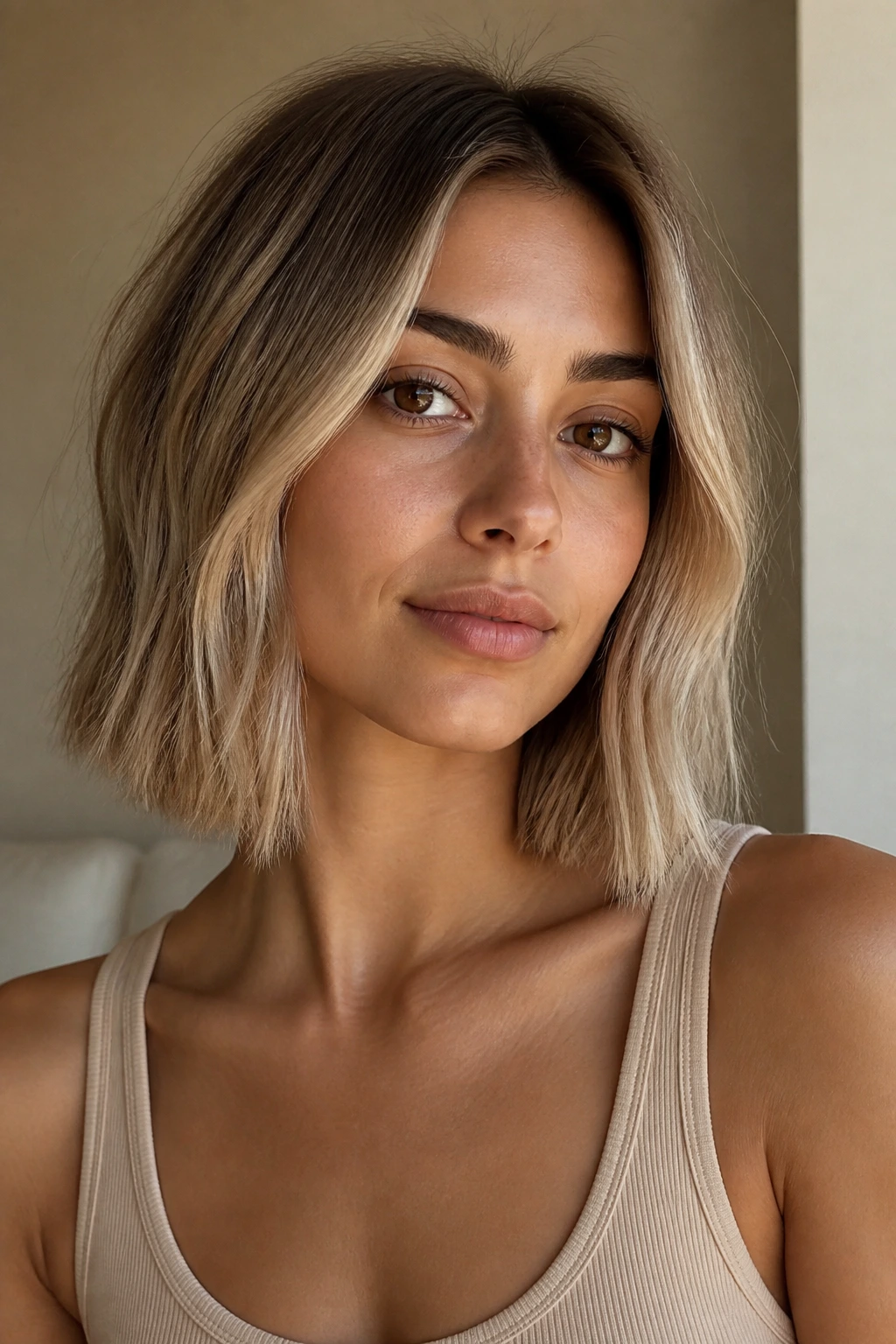
The easiest blonde styles on this list are the ones that tolerate a little imperfection: waves, blowouts, shags, and layered cuts. The hardest are the sleek ones, because straight blonde hair shows every bend and every dry end. That doesn’t mean you should avoid them. It means you need a cleaner routine.
For waves, start with hair that is about 80 percent dry, mist in heat protectant, then wrap 1-inch sections away from the face. Leave the last inch out if you want a softer, lived-in finish. Once the curls cool, rake them out with fingers and add a pea-sized amount of serum to the ends. The blonde should look broken up, not crimped.
For blowouts, rough-dry the roots first. Then use a round brush and pull each section taut while following with the nozzle. The trick is to let the roots set before you touch the ends too much. That gives you lift without frizz, which is what the golden and beige styles need.
Quick Styling Targets
- Honey balayage: soft bends, loose volume, side part or off-center part.
- Beige lob: smooth root lift and a slight underbend at the ends.
- Curtain bangs: forward dry, then split and round-brush away from the face.
- Pixie: piece out the top with matte paste; keep the sides soft.
For curls and textured hair, the rule is different: don’t fight the shape. Let the blonde pieces follow the curl pattern, and use a diffuser on low heat. The highlight placement is what carries the look.
Keeping Blonde Fresh Between Salon Visits
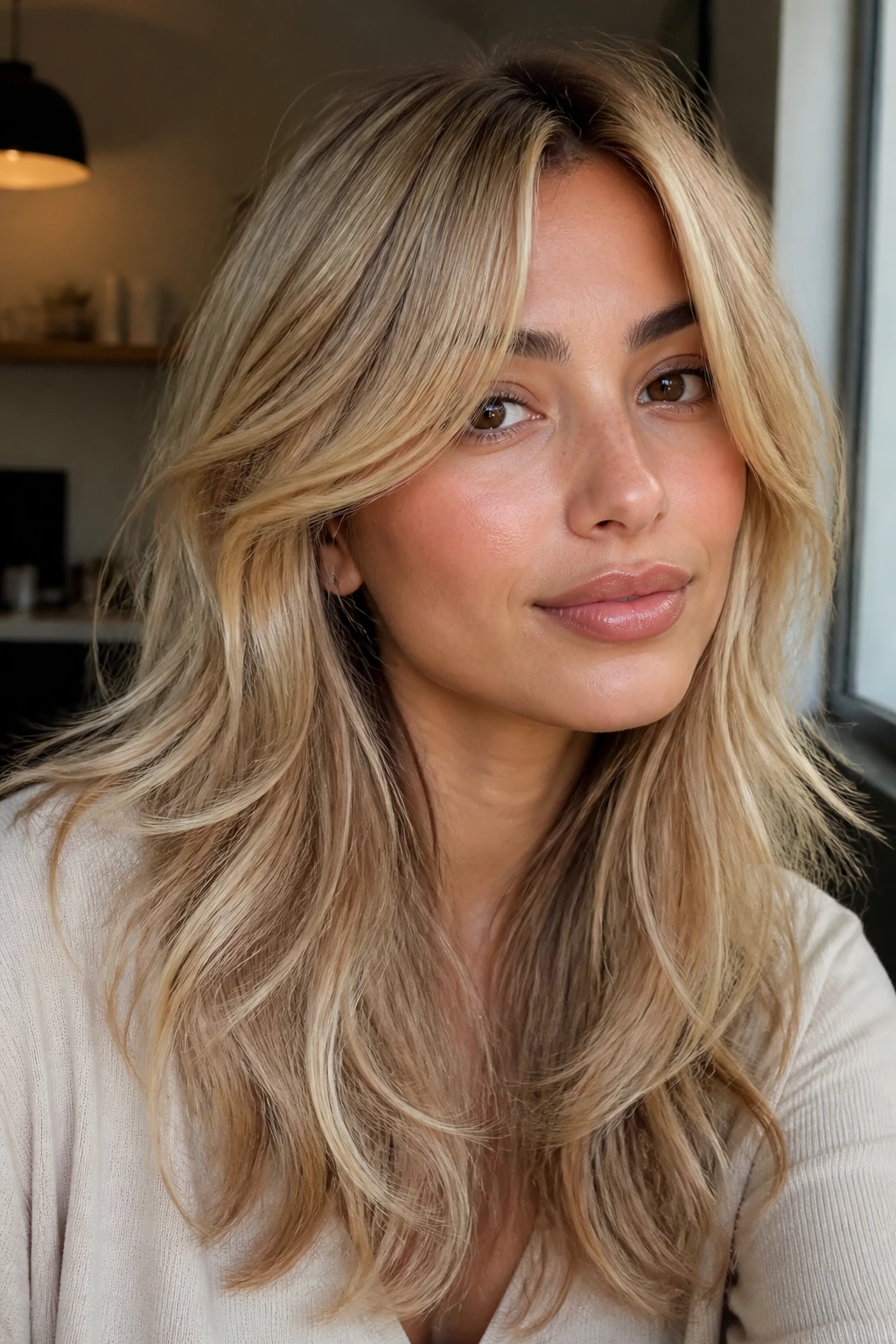
Blonde color is a maintenance game, but it doesn’t have to be exhausting. The biggest enemy is not age; it’s water, heat, and over-toning. A gloss or toner usually holds its best tone for a few weeks, then starts to drift warm, especially if your shower water runs hard or you heat-style a lot.
Use purple shampoo once a week for beige, champagne, or pearl blondes. Twice is enough if the brass is strong. More than that can make the hair look dull and too cool, which is a common mistake with olive skin because the tone starts to flatten instead of brighten. For darker bases that pull orange, a blue shampoo is often the better choice. It cancels warmth without turning the blonde gray.
A salon gloss every 6 to 8 weeks keeps the color cleaner. Root touch-ups depend on the style: every 4 to 6 weeks for platinum or sharp bob shapes, every 8 to 12 weeks for balayage, bronde, and shadow-rooted looks. That spread matters. Don’t copy someone else’s maintenance schedule if the color placement is different.
Sleep on a satin pillowcase if your ends get rough overnight. It sounds small, but it cuts down on friction, and friction is what turns soft blonde into fuzzy blonde faster than anything else.
Practical Tips for Getting the Most Out of It
Color Balance: If your skin leans warm-olive, keep at least one warm note in the hair — honey, butter, or beige — so the face doesn’t go sallow. If it leans neutral or cool, a mushroom or pearl finish can look sharp without going flat.
Texture First: Pick the haircut before obsessing over the exact shade. A shag, lob, pixie, or butterfly cut will change how the blonde reads far more than a tiny shift in toner.
Face Frame Strategy: Brighten the front pieces by one level more than the rest of the head. That small move is what brings brown eyes forward without making the whole color loud.
Accessory Match: Gold hoops, tortoiseshell clips, and warm-toned makeup tend to sit well with honey, butter, and caramel looks. Silver jewelry and cooler makeup can look cleaner with mushroom and pearl blondes.
Make-It-Yours: If you love blonde but hate constant salon visits, keep the base darker and work with ribbons, not full saturation. If you want drama, raise the contrast with a lighter money piece or a sharper bob line.
Common Mistakes That Flatten Brown Eyes and Olive Skin
The first mistake is going too pale too fast. Platinum can be gorgeous, but if the lift is high and the toner is too cool, olive skin starts to look drained. The fix is a softer root, a creamier finish, or a shade one level deeper than you thought you wanted.
Skipping dimension is another one. A single all-over shade can look wiggy on brown eyes because there’s no light movement around the face. Balayage, lowlights, or a shadow root solve that problem by giving the color places to rest.
Then there’s brass panic. Some people reach for purple shampoo every other wash and wonder why their beige blonde looks dusty. Brass control is a tool, not a religion. Use it when the color turns warm; back off when the hair starts to lose shine.
A third issue: ignoring the haircut. Blonde on long dead-straight, one-length hair can turn flat fast, especially around olive skin where the face already carries a lot of color. Adding layers, a lob, a fringe, or a subtle bend gives the shade somewhere to move.
And please, do not over-lighten the brows to “match” the hair unless you really know what you’re doing. Dark brown brows can look beautiful with blonde hair, and on olive skin that contrast often looks more natural than forced brow bleaching.
Variations and Alternatives to Try
Low-Maintenance Bronde Melt: Keep the base in brunette territory and blend up only one or two levels through the mid-lengths. This is the easiest version to live with if you want blonde energy without sitting in the salon every month.
Soft Editorial Pearl: Go lighter around the face and keep the rest of the hair in pearl-beige territory. It has a cooler, sharper finish that suits sleek bobs and straight layered cuts.
Warm Honey Ribboning: Instead of broad highlights, ask for fine honey ribbons throughout the hair. The result looks sunlit, not streaky, and it works especially well on wavy hair.
Short and Piecey Pixie: If long layers feel like too much work, cut the length down and keep the top textured. A buttery or beige blonde pixie puts the color on full display and shows off the brow and eye shape.
Curls With Soft Lowlights: For curly or coily hair, keep some lowlights in the mix so the blonde pieces don’t float apart. That extra depth helps the curl pattern hold shape and keeps olive skin from looking washed out.
Frequently Asked Questions
What blonde shade looks best on olive skin?
Beige, honey, butter, and champagne are the easiest starting points because they usually sit near olive undertones without fighting them. Mushroom and pearl can work too, but they need enough depth at the root and enough softness in the finish to avoid looking chalky.
Can brown eyes pull off platinum blonde?
Yes, but the cut and tone need discipline. A creamy platinum bob with a shadow root tends to look better than all-over icy length, because the root depth keeps the face grounded and the brown eyes stay prominent.
Is ash blonde bad for olive skin?
Not always, but very cool ash can make olive skin look flat or a little tired. Mushroom blonde is usually a safer version because it keeps the cool note while adding a beige or smoky softness.
Do I need to lighten my eyebrows?
Usually, no. Dark brows can look excellent with blonde hair, especially on olive skin, because they keep the face from disappearing. If anything, brows often need a clean shape more than a lighter shade.
How often should blonde hair be toned?
Most blondes benefit from a gloss every 6 to 8 weeks, though platinum and high-contrast looks may need attention sooner. If the color is moving brassy after hard water, chlorine, or lots of heat styling, a salon gloss is usually more useful than layering on more purple shampoo.
What if my hair is naturally very dark brown?
Choose styles that keep a deeper root and use dimension instead of trying to lift everything at once. Honey balayage, caramel bronde, and shadow-rooted blonde bobs are kinder to dark starting levels and usually look more believable.
Which style is easiest to maintain?
Balayage waves, bronde money pieces, and rooted lobs are the least demanding. They grow out with less obvious lines, and the blonde still has enough brightness to matter.
Can curly hair wear these blonde looks?
Absolutely. The placement matters more than the curl pattern. Keep the highlights following the curl shape, use a moisture-rich routine, and avoid over-toning, which can make curls look dry and dull.
The Styles That Hold Their Own
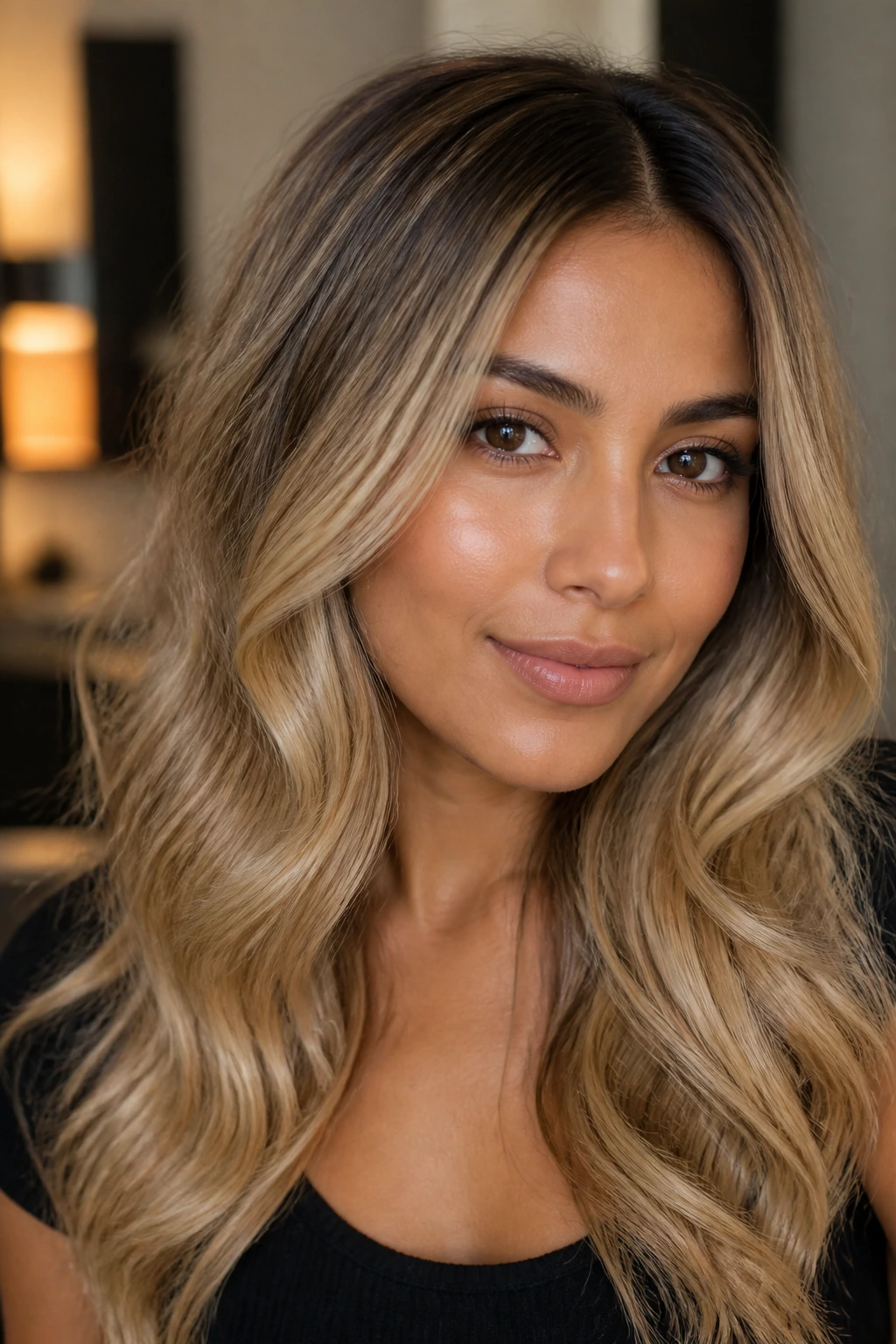
The best blonde for brown eyes and olive skin is not the palest one in the room. It’s the one that respects the undertone, leaves enough depth to keep the face alive, and uses shape to make the color feel intentional. That can be honey and soft, or beige and clean, or even platinum if the haircut and root color are doing their jobs.
If you’re choosing one look to start with, pick the version that matches your maintenance habits before you chase the exact shade. A rooted balayage that suits your life will always look better than a high-maintenance blonde you can’t keep toned. Hair has a way of telling the truth.
And when the color is right, you can see it right away: the eyes look richer, the skin looks smoother, and the hair stops fighting the face. That’s the effect worth aiming for, and it holds up long after the salon mirror glare is gone.