



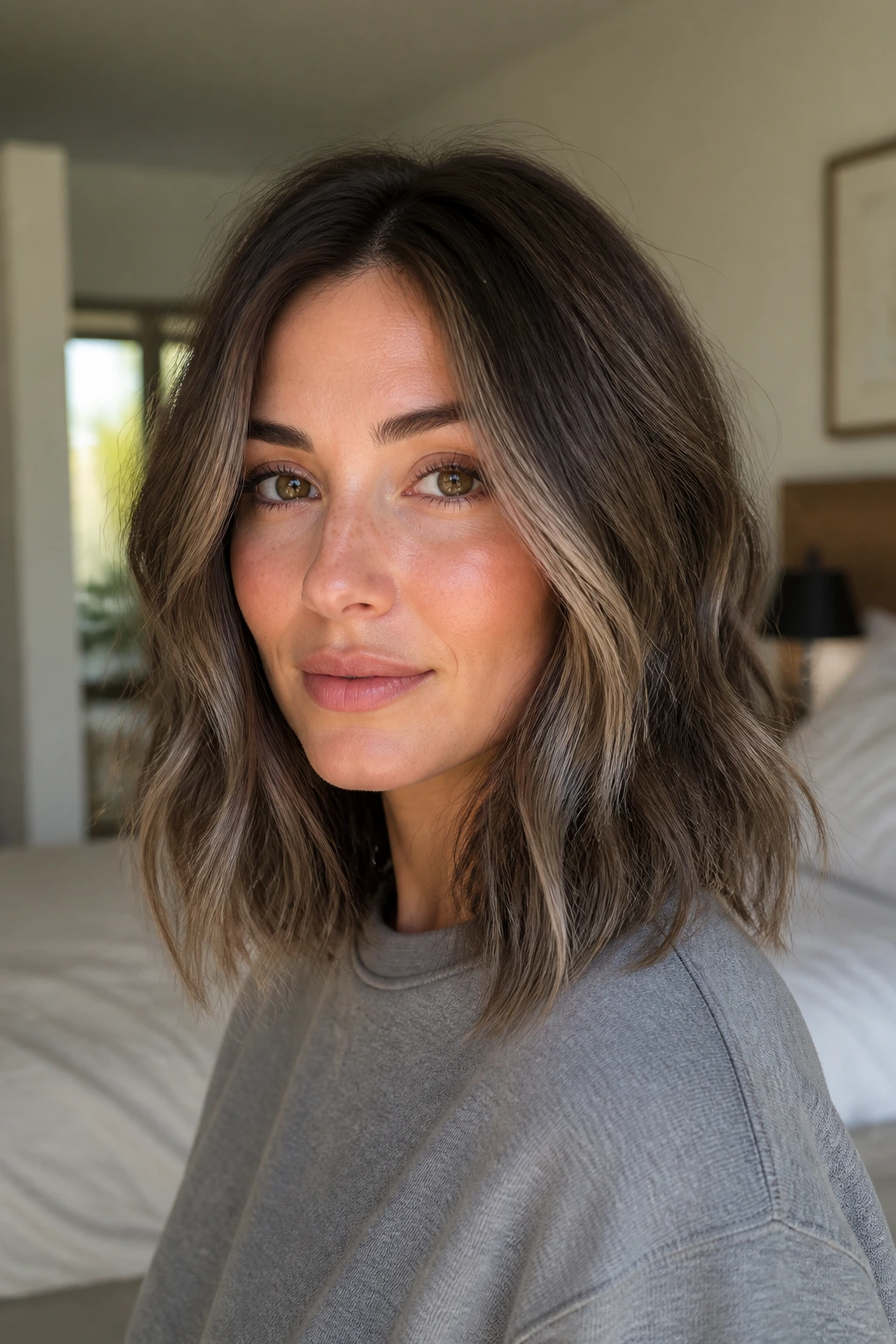
Grey on brunette hair looks best when it behaves like smoke, not paint. On fine hair, that difference matters even more, because a solid silver block can make the strands look thinner than they are, while a smoky ribbon or soft root melt gives the eye more movement to follow.
That is the reason grey hair color ideas for brunettes with fine hair deserve more than a casual scroll. The strongest shades live in ash, pearl, graphite, mushroom, taupe, and pewter territory—not because the names sound pretty, but because those tones keep brunette depth alive under the cool color.
A level-4 or level-5 brown can stay rich at the root, turn icy only where the hair bends, and still hold enough shadow to keep the crown from looking see-through. Some of the looks below need foils and toner; others can be built with a gloss, a careful hand, and a little restraint. That restraint is the whole trick.
Why This Collection Feels Different on Fine Brunette Hair
-
Placement over saturation: These ideas lean on micro-weaves, veils, face frames, and root shadows, which keeps fine hair from looking over-lightened.
-
Cool tones that still feel soft: The shades stay in mushroom, slate, pearl, and pewter territory, so the result reads smoky rather than chalky.
-
Built for different lengths: Bobs, lobs, pixies, waves, and long layers all show grey differently, so the list covers the cuts that fine hair actually wears well.
-
Low-maintenance options included: Some looks need only a toner or glaze; others need lightener and foil work, so you can match the upkeep to your patience.
-
Root depth stays part of the style: A dark anchor makes grey pop and keeps the top from looking transparent under bright light.
-
Salon-friendly but not salon-only: You can take these ideas to a colorist, or use them as a map for a demi-permanent gloss when you want a softer shift.
Why Grey and Brunette Depth Need Each Other on Fine Hair
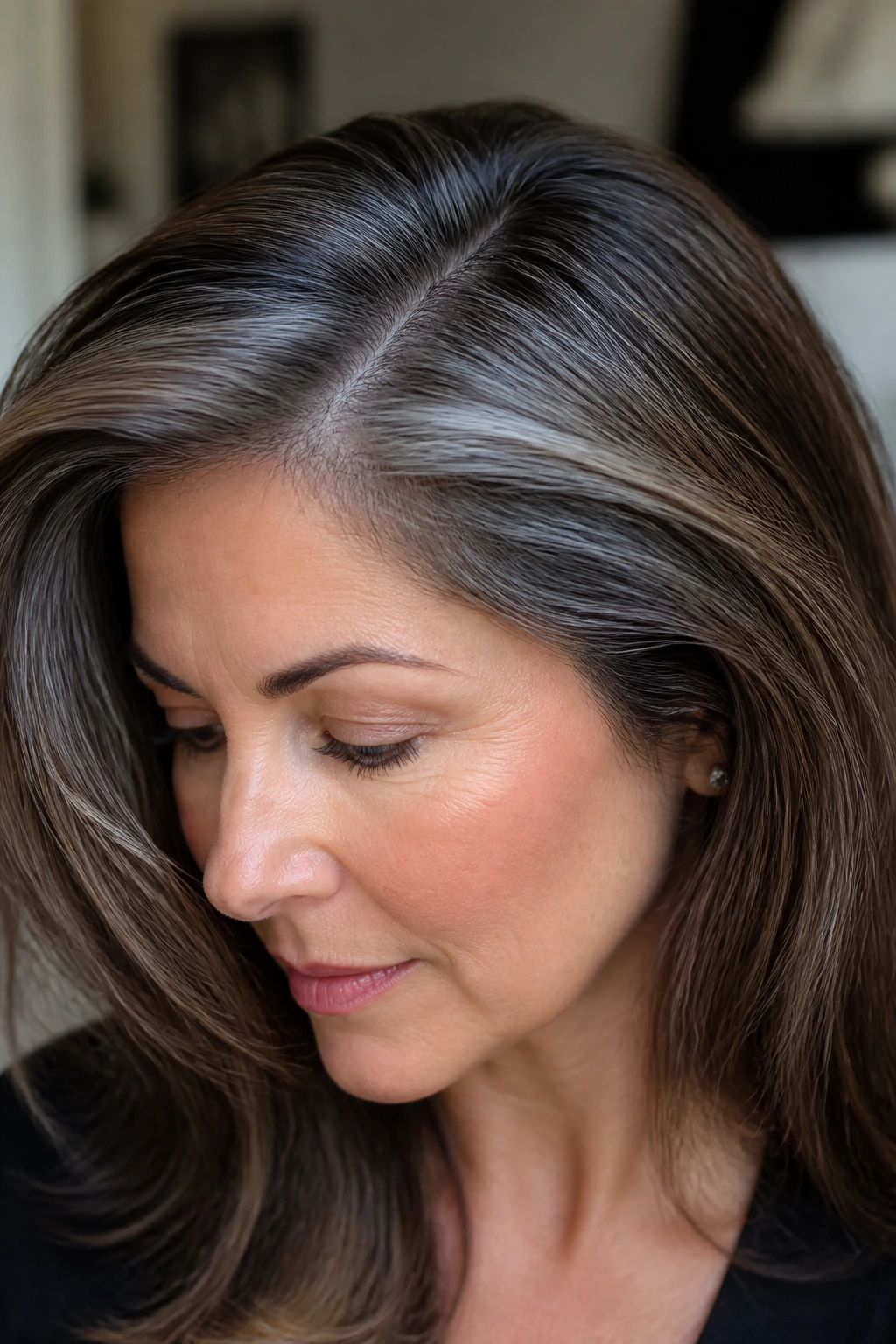
Fine hair doesn’t fail because it’s fine. It looks flat when the color strategy ignores structure. A single, pale silver blanket can leave the part line exposed and the ends wispy; a darker root with cool dimension underneath does the opposite. It gives the eye a place to land.
Flat color is the trap.
My bias is simple: keep at least one part of the head darker than you think you need. That root shadow, even if it’s only one shade deeper, makes the hairline look denser and gives grey something to sit on. Brunette depth is not the enemy of grey. It’s the frame.
The smartest grey work on fine brunettes usually shows up in the first 2 to 3 inches around the part, the face frame, and the bends of layered ends. That’s where movement lives. Ask for micro-babylights, veils, or thin balayage ribbons, not chunky stripes, and let the cool tone do its job without stealing all the volume.
1. Smoky Root Melt on Espresso Brunette
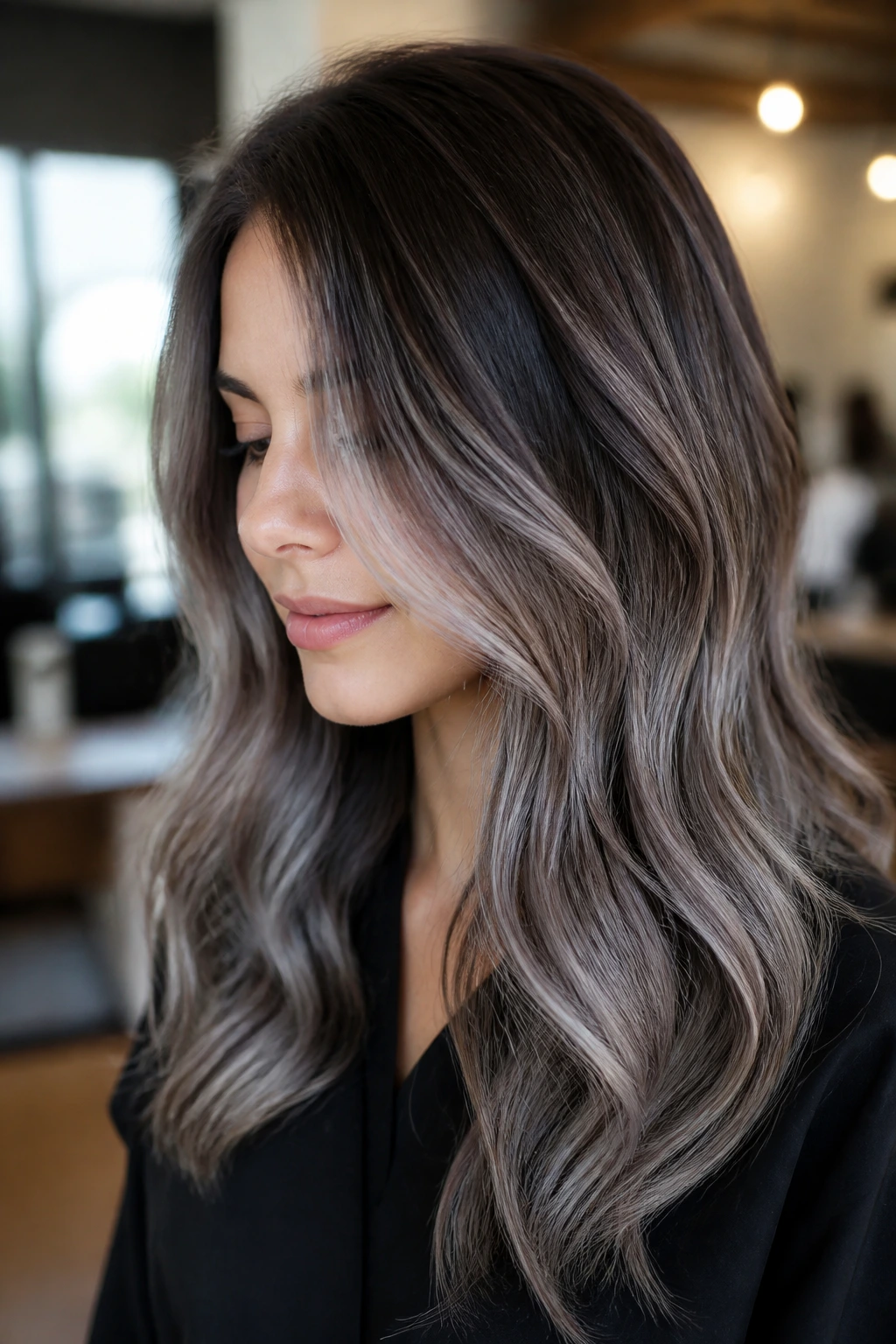
A smoky root melt is the safest place to start if you want grey without a hard line at the scalp. It keeps the crown deep espresso or level-4 brown, then slides into mushroom, silver-beige, or pewter through the mids.
That darker crown matters on fine hair. It keeps the part from looking hollow, and it makes the transition feel soft instead of stripey. If you part your hair on the same side every day, this one grows out cleanly and doesn’t shout for attention.
I like this best on bobs, lobs, and layered cuts that bend a little at the ends. The movement helps the melt read as color, not just a grow-out.
2. Hand-Painted Silver Balayage for Soft Movement
Want grey that looks airy instead of loud? Silver balayage is the easiest answer. The colorist paints thin silver ribbons through the mids and ends while leaving the top layer darker, which keeps fine brunette hair from losing its shape.
The trick is restraint. Too much silver near the scalp can make the whole head read pale and flat; a few well-placed strokes around the cheekbones and lower lengths give you that cool shine without exposing every strand.
This works especially well if your hair has a soft wave. The bends break up the silver and make the brown underneath look fuller. Straight hair can wear it too, but the placement needs to be even cleaner.
3. Mushroom Brown with a Grey-Beige Wash
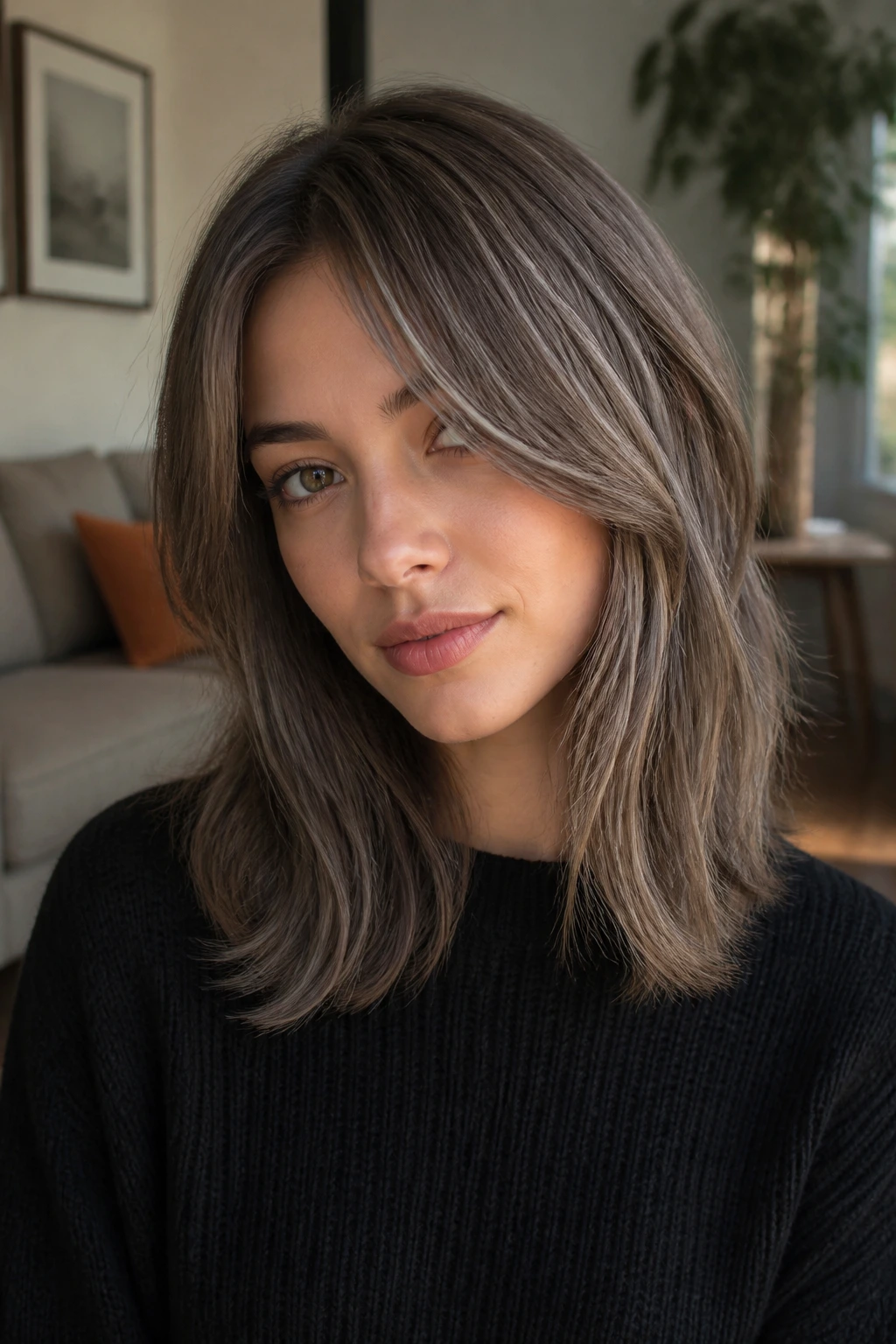
Mushroom brown earns its keep because it softens warmth without pushing the whole head into silver. Think taupe, beige, smoke, and brown sitting in the same bowl.
On fine brunette hair, that balance is useful. The beige keeps the color from going muddy, while the grey stops it from turning golden or red. You get a cool, earthy brunette that still looks like hair, not paint.
This is a smart pick if you wear a blunt cut or a shoulder-length lob. The tone is subtle enough for straight styling, and it doesn’t punish you if the hair is a little porous at the ends.
4. Fine Ash Babylights Over a Dark Base
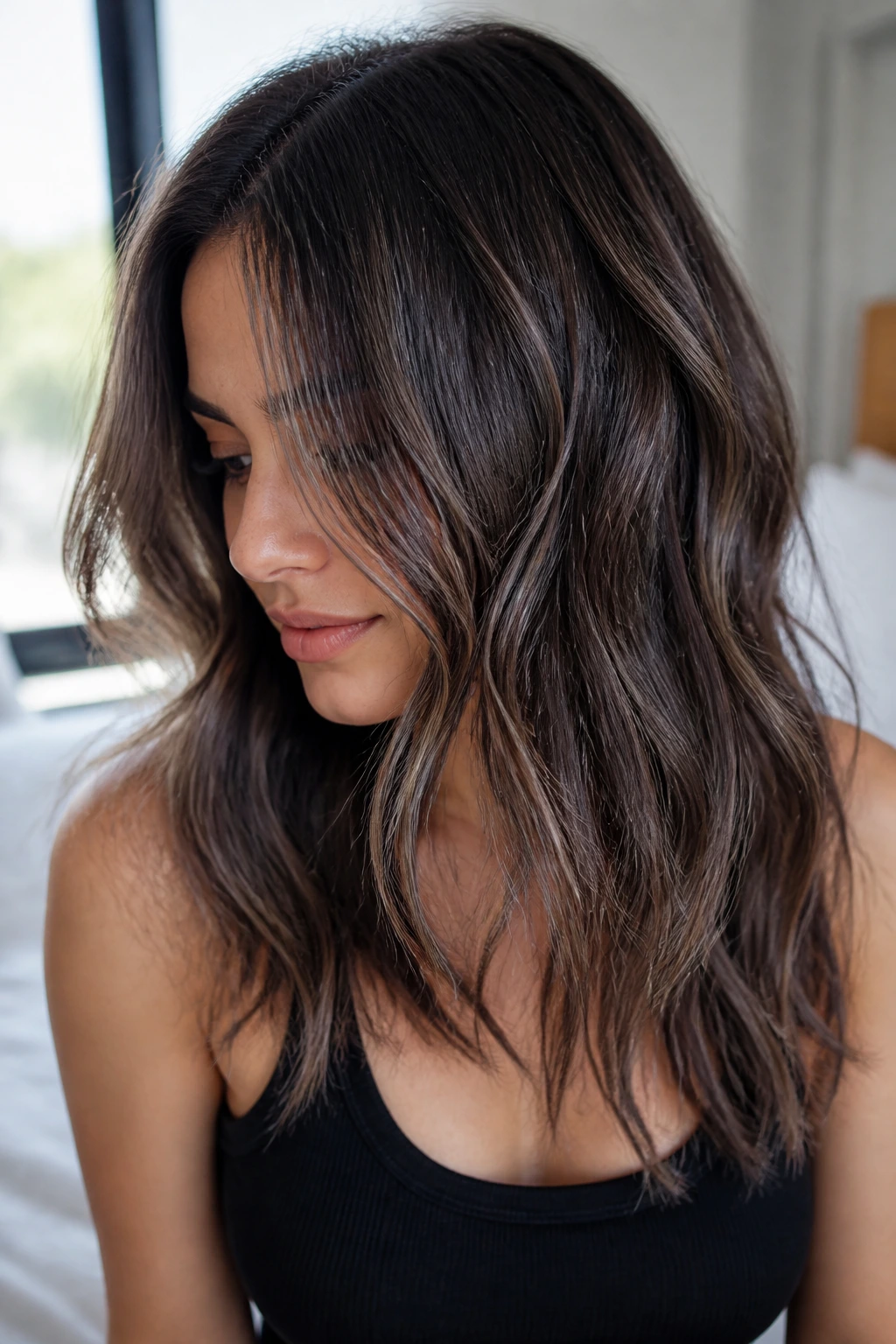
Tiny ash babylights look like threads of frost running through chocolate hair. That’s the effect you want. Thin, whisper-light sections, not chunky stripes that sit on top like ribbons.
Ask for micro-foils through the crown and around the part, with most of the dark base left alone. On fine hair, that creates the illusion of density because the eye sees lots of tiny tonal shifts instead of one flat field.
This is one of those looks that gets better when the haircut has a little texture. A soft bend, a lived-in blowout, even a half-tucked ear moment will show the ash without making the hair look sparse.
5. Charcoal Money Piece That Frames the Face
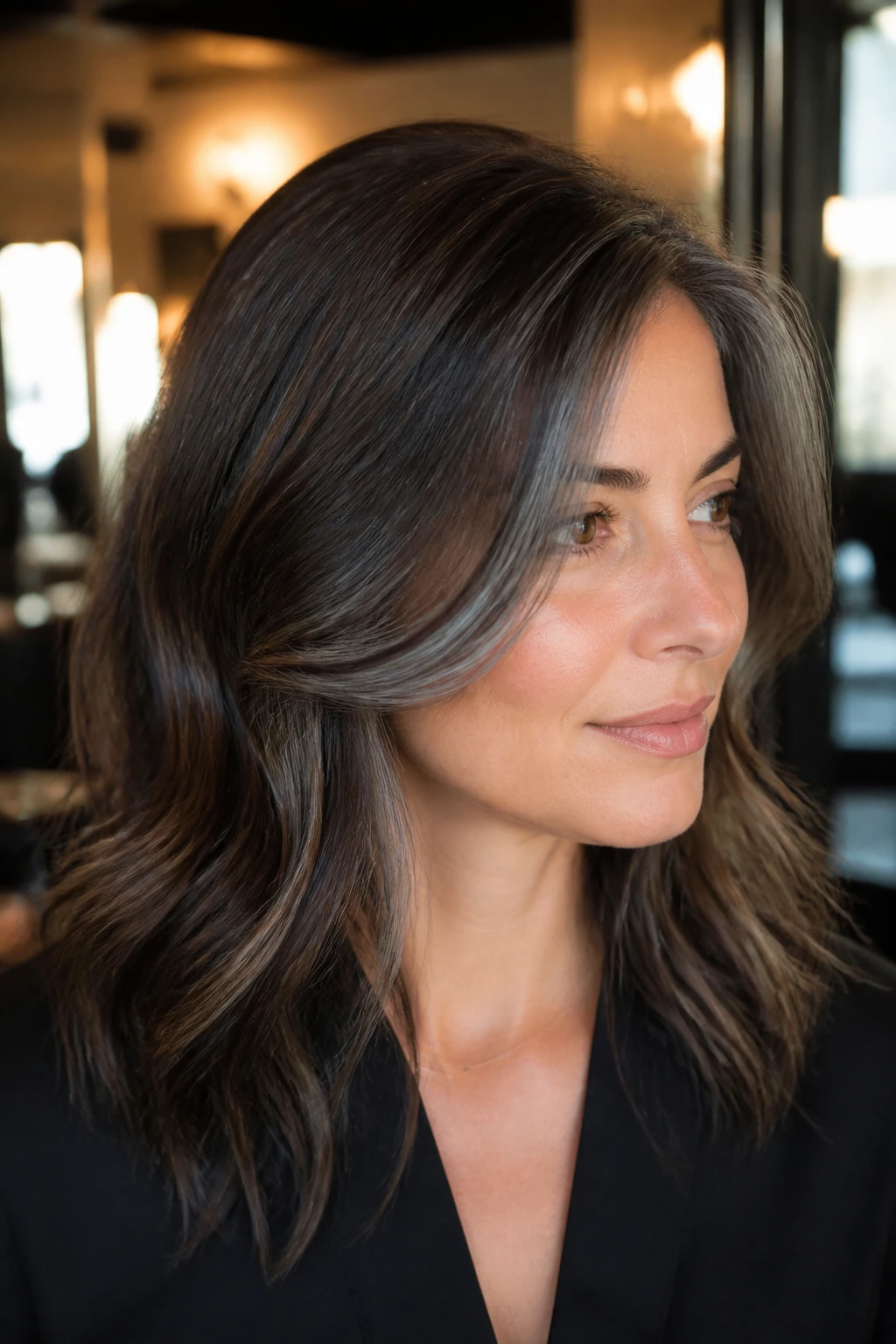
If your hair falls flat around the face, a charcoal money piece is the sharpest fix. The darker grey frame lands around the temple and cheekbone area, which gives the face more structure without bleaching the whole head.
I would not make the frame too wide on fine hair. Keep it narrow, soft at the root, and slightly feathered into the brunette so it looks intentional. The point is contrast, not a block of color.
This one works on bobs, lobs, and longer layers. It also plays nicely with a side part, where the front section can sweep across the forehead and make the color read richer.
6. Pearl Grey Gloss for a Cool, Sheer Finish
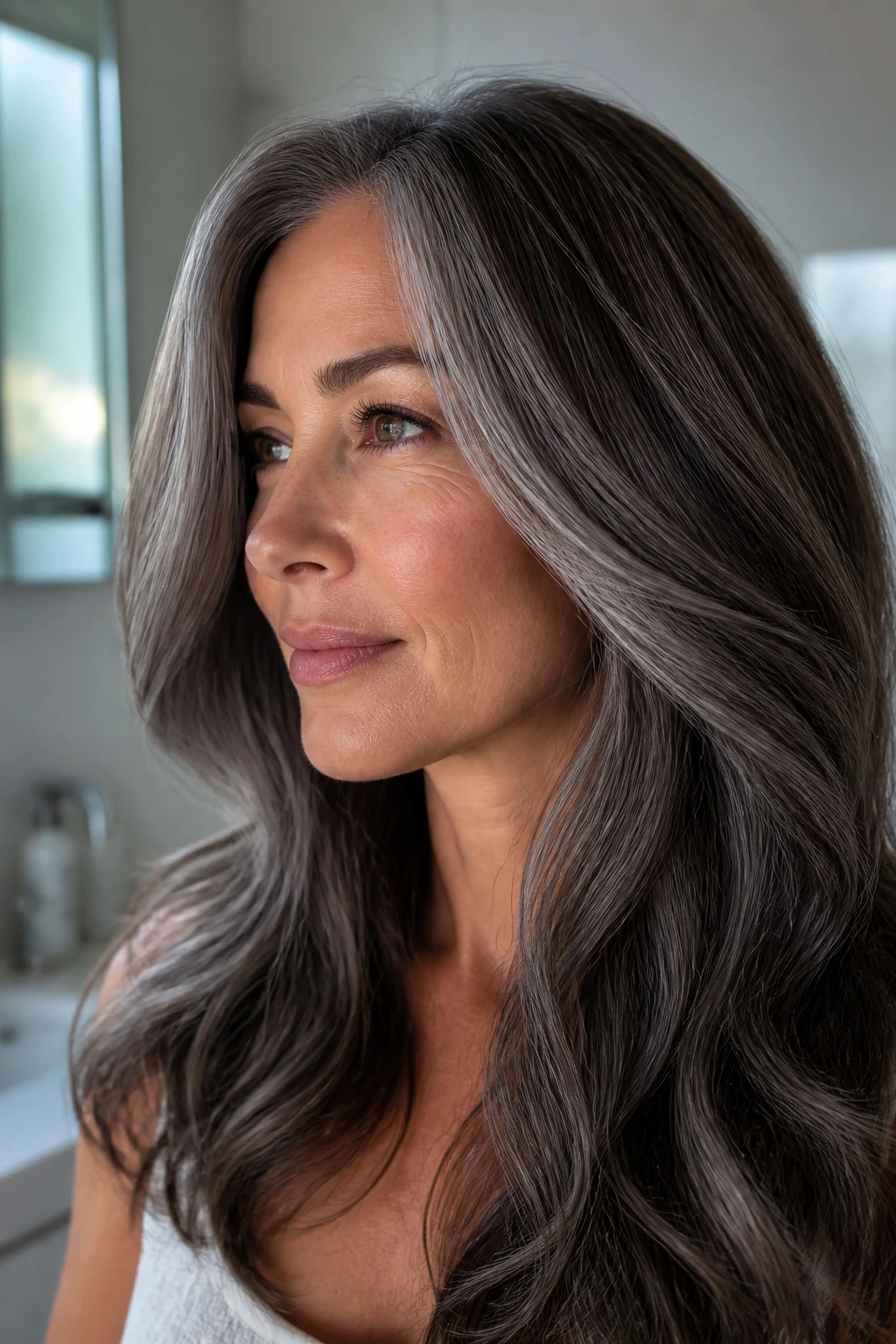
Sometimes the best grey is the one you barely notice until the light hits it. Pearl grey gloss does that. It’s a translucent cool glaze over brunette hair that takes the warmth down and leaves behind a polished, smoky sheen.
For fine hair, gloss is a gift. It adds shine, smooths the cuticle, and doesn’t ask the hair to survive a heavy lightening session. If your brown is already lifted a little, a pearl toner can make it look like expensive silver smoke.
This is the calmest option in the whole list. It’s also one of the easiest to refresh, which matters if you hate hard regrowth lines.
7. Slate Ombre on Long Brunette Layers
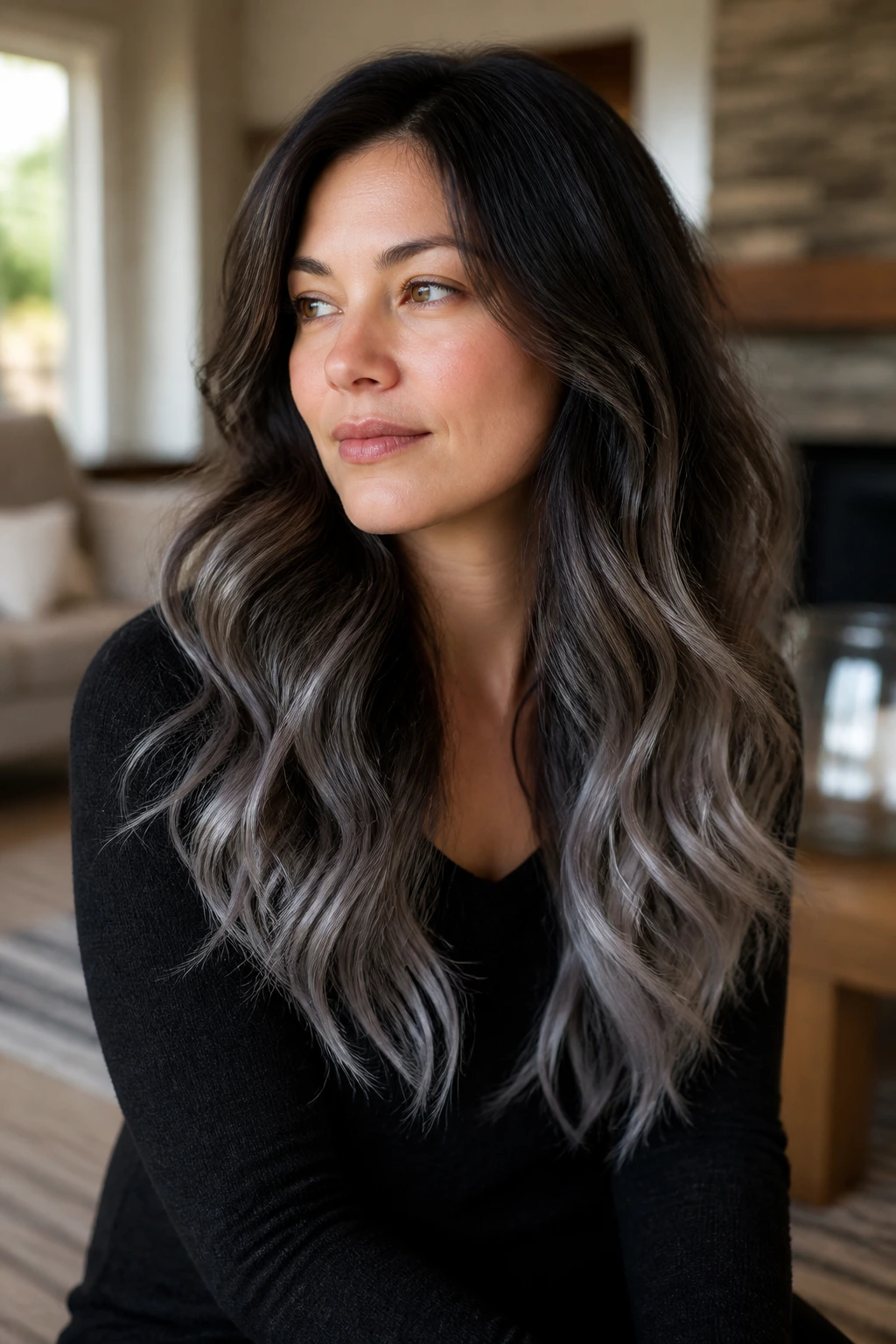
On long layers, slate ombre keeps the roots rich and the ends from feeling heavy. The color starts in deep brunette, then fades into a cool slate-grey through the lower half of the hair.
That fade matters because fine hair can look stringy when the ends are too pale and too thin. Keeping the root and mid-lengths darker holds visual weight at the top, while the slate at the bottom adds edge.
This look comes alive with waves or a big round-brush finish. The movement exposes the grey ends in flashes instead of all at once, which is kinder to fine strands.
8. Cool Mocha Ribbons Through a Medium Brown Base
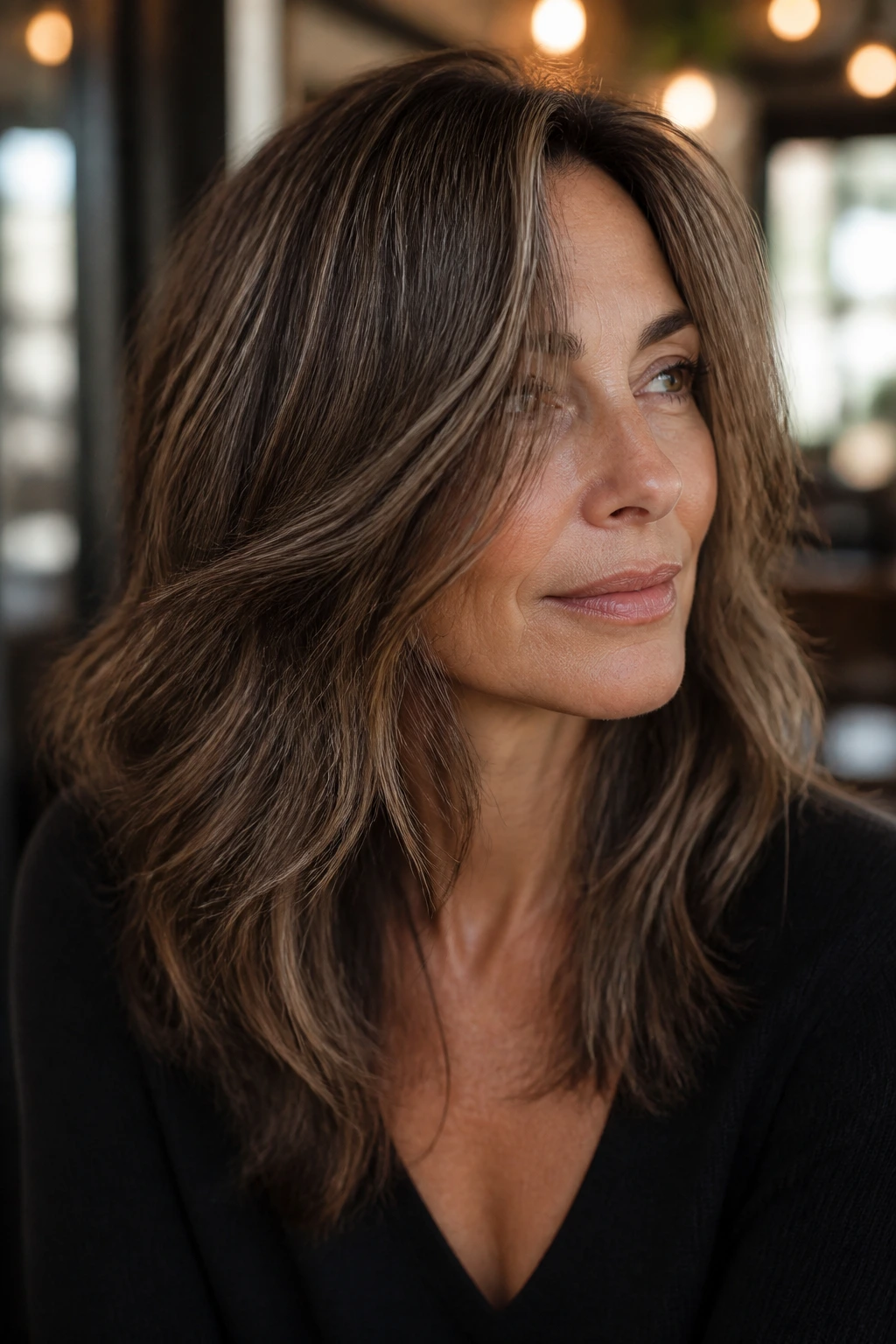
I like cool mocha ribbons more than chunky silver on medium brown hair. They’re softer, less obvious, and they keep the brunette side of the color story intact.
The ribbons should be thin and scattered, not lined up like fence posts. On fine hair, that scattering is what creates body. The hair looks fuller because the eye keeps catching tiny shifts between brown, mocha, and smoke.
This is a good “I want grey, but not full grey” option. It works with a blowout, a loose wave, or even a ponytail, where the ribbons show up in motion.
9. Steel-Tipped Layers for a Crisp Edge
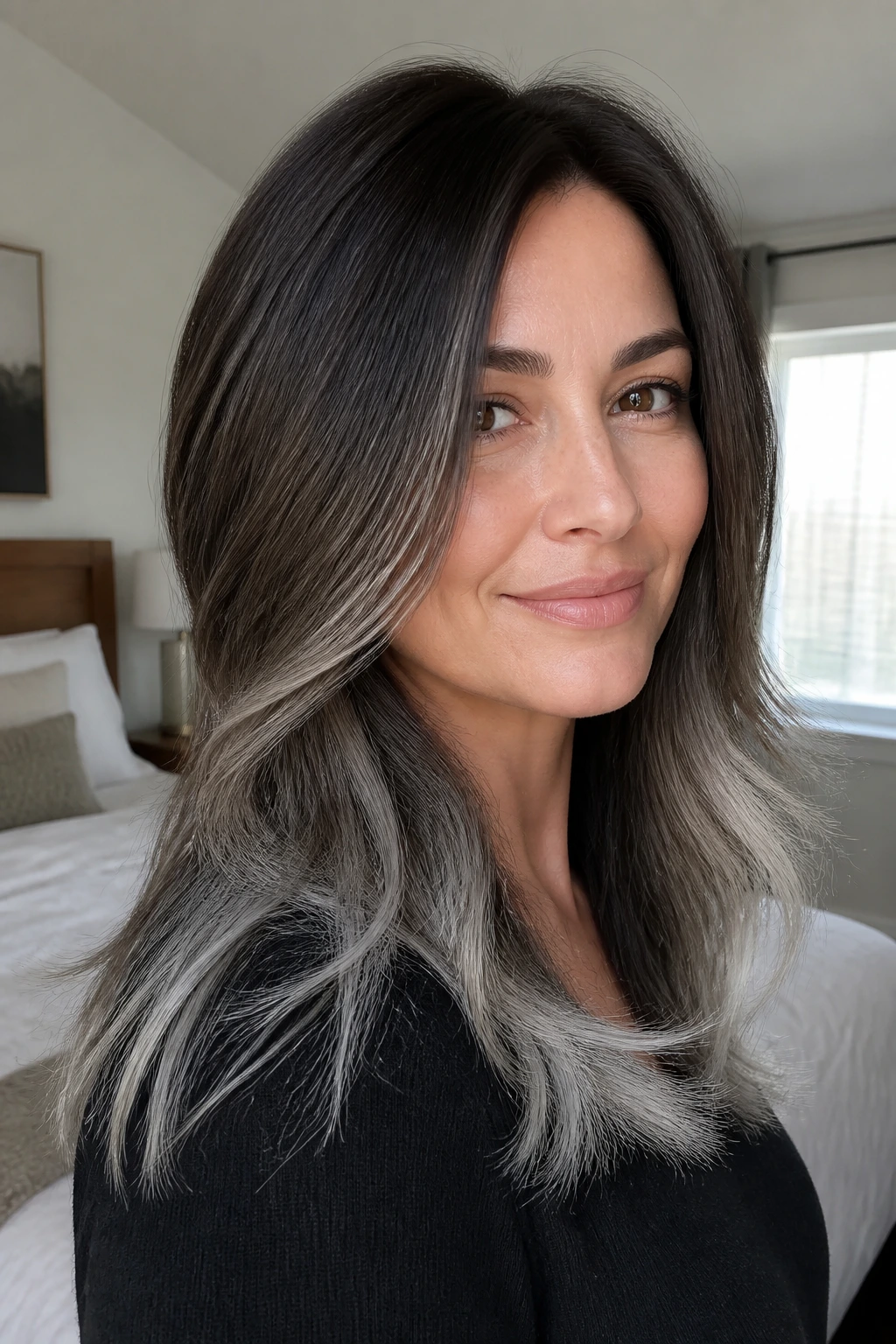
What if you want grey, but only at the edges? Steel-tipped layers handle that nicely. The ends carry the cooler tone, while the crown stays brunette and grounded.
That darker top layer is the reason this works on fine hair. The hair near the scalp still looks dense, and the steel at the tips gives the whole shape a cleaner outline. It’s a little sharper than a soft melt, but not severe.
This style likes layered cuts, especially ones with movement at the shoulder or collarbone. Ask for the tips to stay soft enough that they don’t form a blunt, obvious line.
10. Frosted Brunette Bob with Light Ends
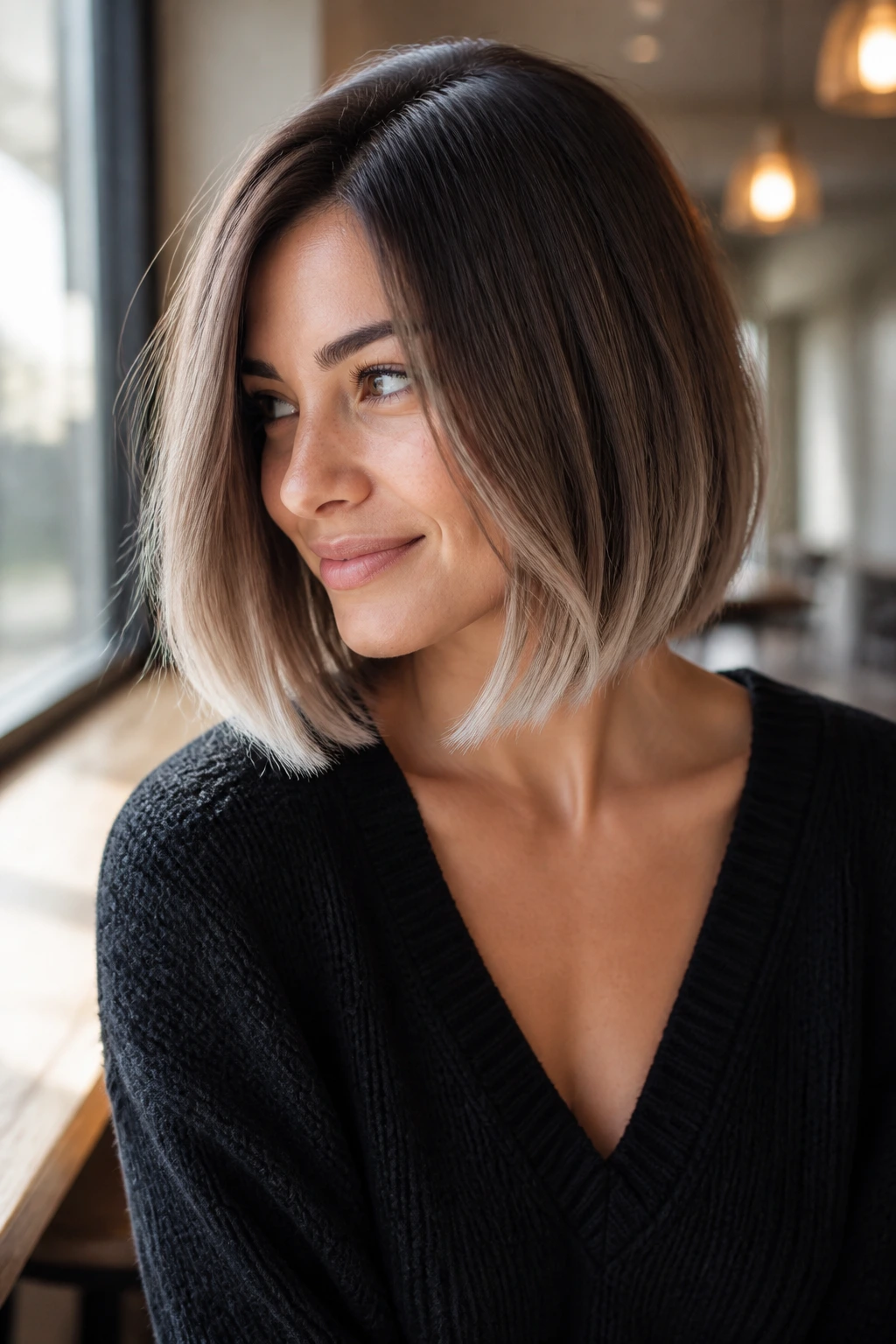
A bob can carry more grey than people expect—if the lightness stays on the ends and not the scalp. Frosted brunette bob color keeps the top rich and adds cool, icy brightness to the perimeter.
That perimeter is where the shape lives. On fine hair, a frosted edge can make a bob look more deliberate, more polished, and a little thicker at the outline. It also stops the cut from looking too dark and heavy.
I’d pair this with a slight bevel under the chin or just at the collarbone. The bend helps the frosted ends catch light without exposing too much of the scalp.
11. Graphite Lowlights for Extra Depth
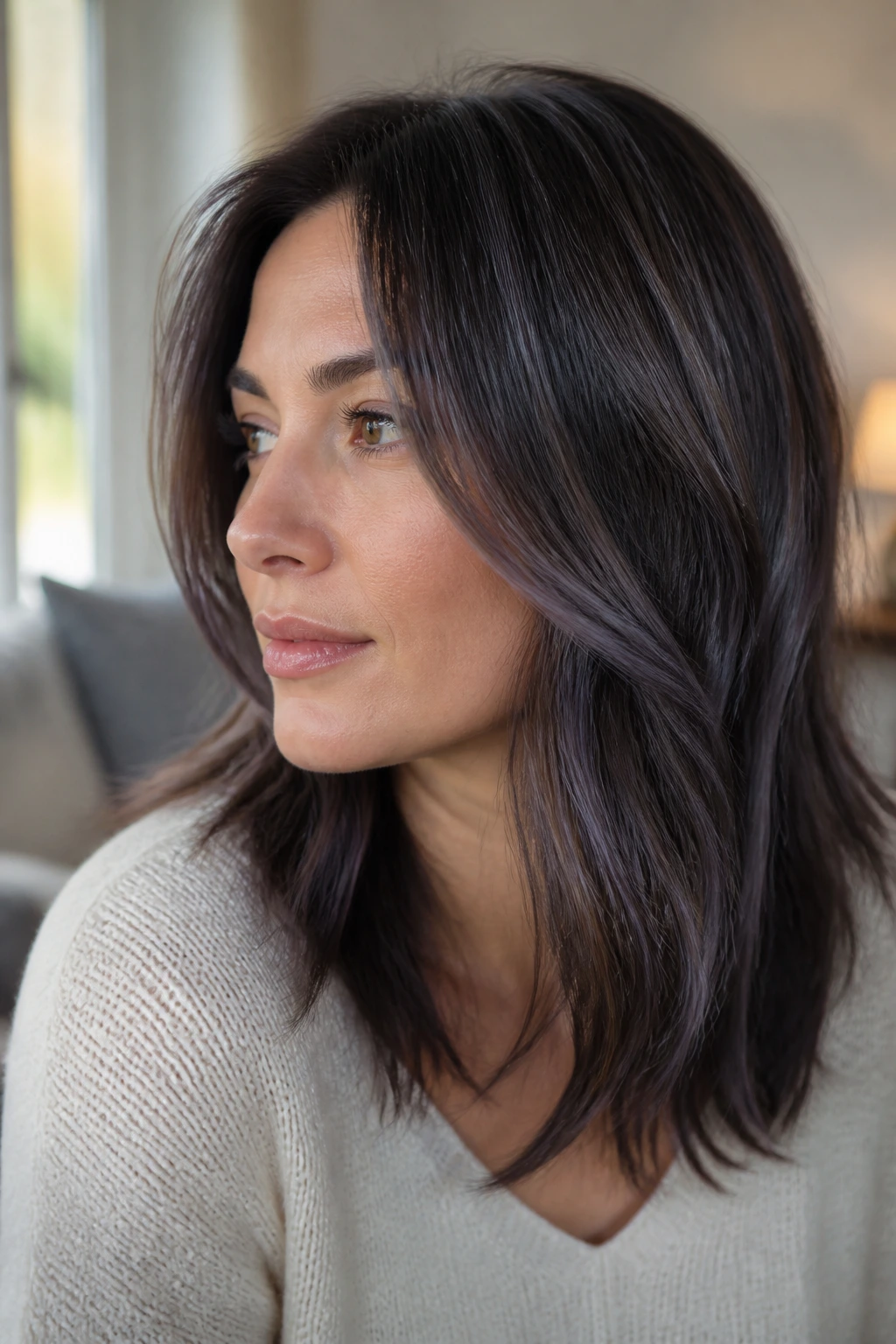
Not every grey idea means lifting hair lighter. Graphite lowlights go the other way: they add darker cool strands back into the brunette, which is useful when the hair has gone too blonde, too flat, or too washed out.
On fine hair, lowlights can be a miracle. They create the look of more density by adding contrast inside the color, not on top of it. The hair reads fuller because there’s more shadow between the lighter pieces.
This is one of the best rescue options if your existing highlights look too bright or too stripey. A good graphite lowlight softens the whole head without making it look heavy.
12. Silver Veil Highlights That Stay Whisper-Soft
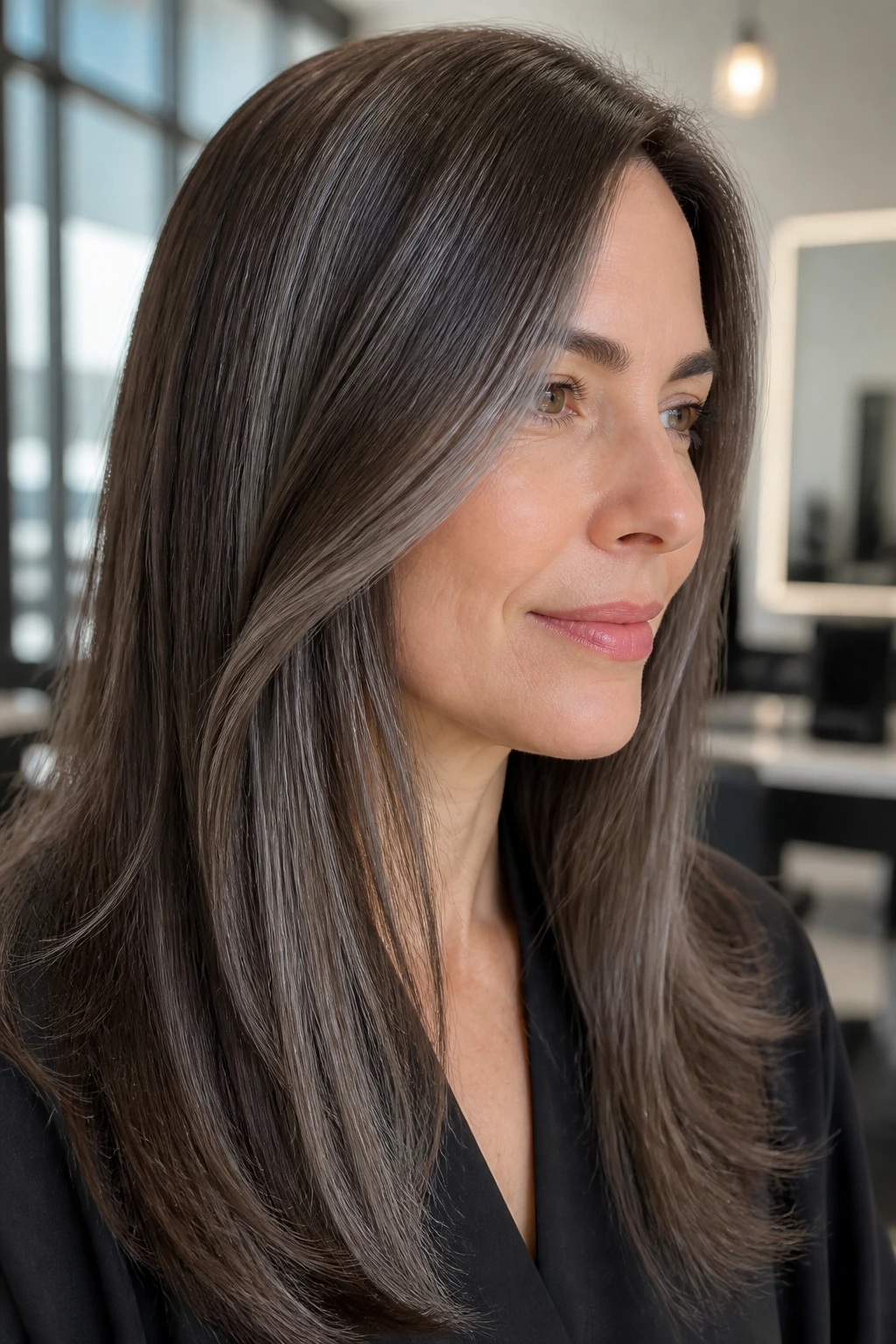
Silver veil highlights look like a faint shimmer, not a stripe. Think of them as a translucent layer of light woven just under the surface.
The veil approach is smart for fine brunette hair because it avoids big, obvious sections. You get the feeling of silver moving through the hair when it sways, but the brown underneath still carries the bulk of the look.
This is especially pretty on straight hair or loose waves. The contrast stays quiet, which means you can wear it to work, out to dinner, or anywhere else without the color shouting before the haircut does.
13. Taupe Melt from Root to Tip
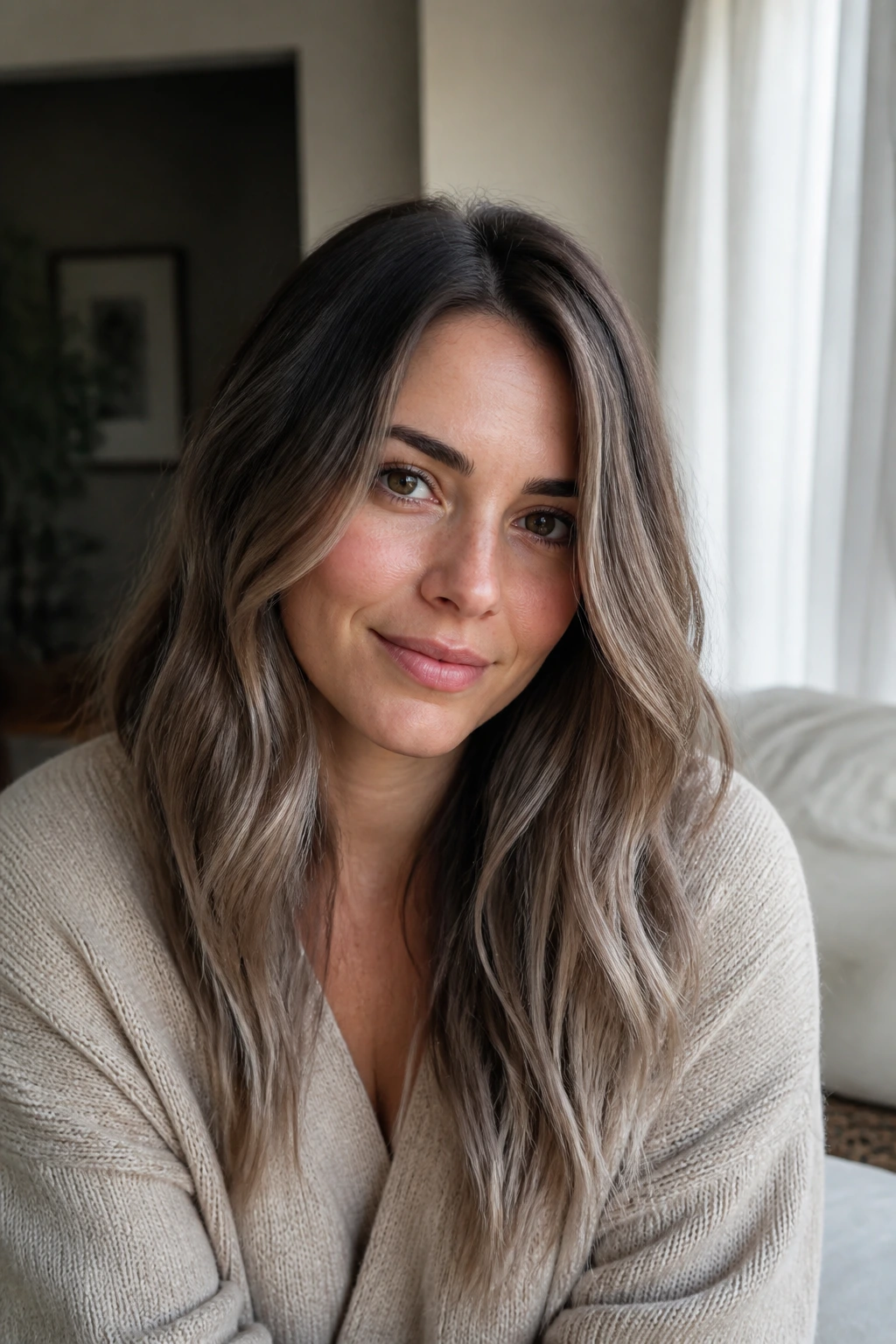
Taupe is the middle ground that saves a lot of brunettes from going too cold. It’s cooler than beige, softer than ash, and less severe than true silver.
A taupe melt works when you want the brunette to stay believable. On fine hair, that matters. The base keeps depth, the mids get a smoky wash, and the ends finish in a pale taupe that still feels attached to the rest of the head.
If your natural color runs warm, this is one of the easiest ways to shift it cooler without the shock of platinum. It also grows out with less drama than brighter grey looks.
14. Titanium Peekaboo Panels Under the Top Layer
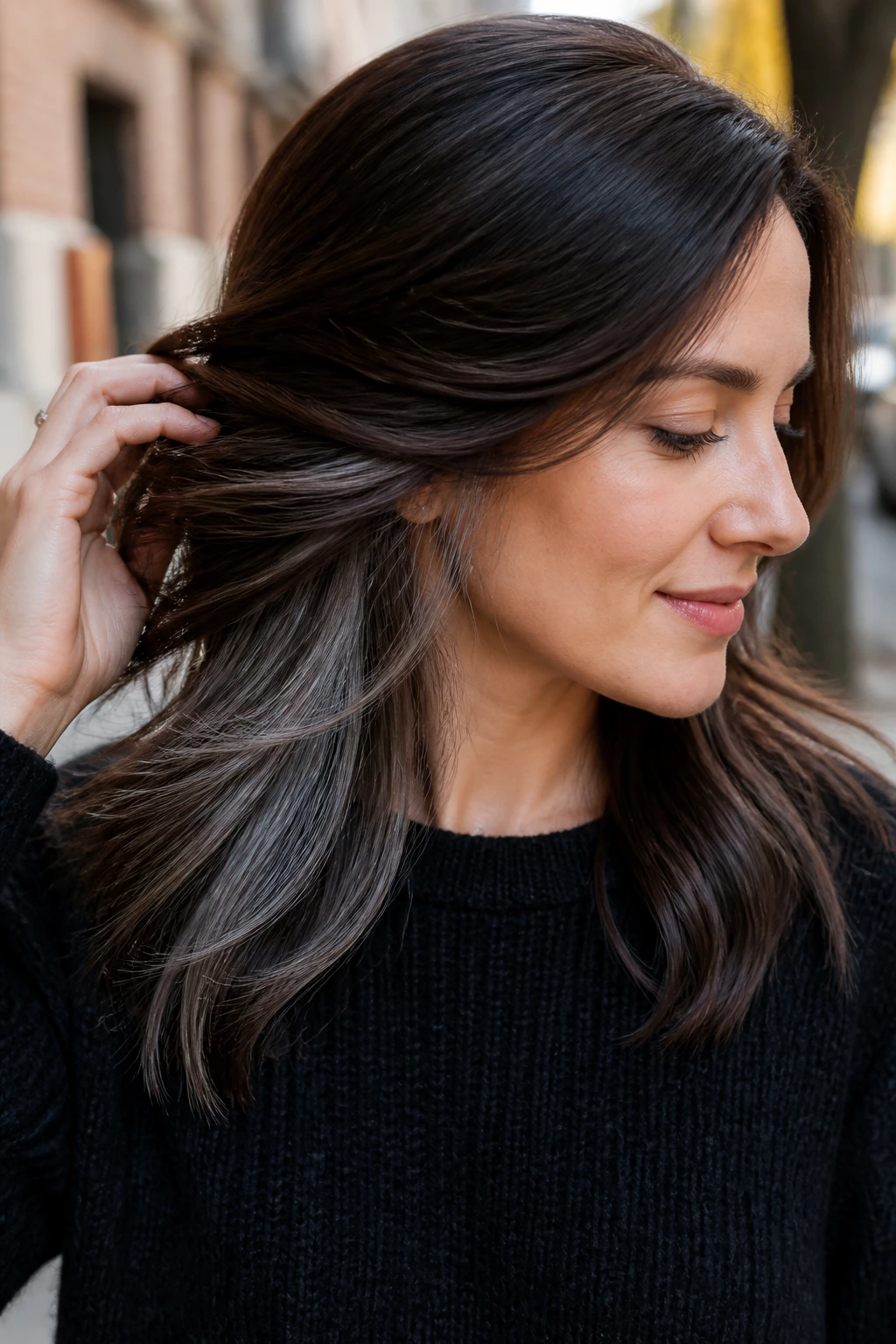
Slide your hair back and the titanium flashes; let it fall and the brunette stays in charge. That’s the appeal of peekaboo panels.
The hidden placement is useful on fine hair because the top layer keeps visual density. You get the hit of grey when the wind moves your hair or when you tuck it behind one ear, but the overall silhouette still reads brunette.
This is a fun choice if you want something a little edgy without living in full maintenance mode. It’s also an easy way to test whether you actually like cool metallic tones before committing to more visible silver.
15. Ash Espresso with Ice-Toned Tips
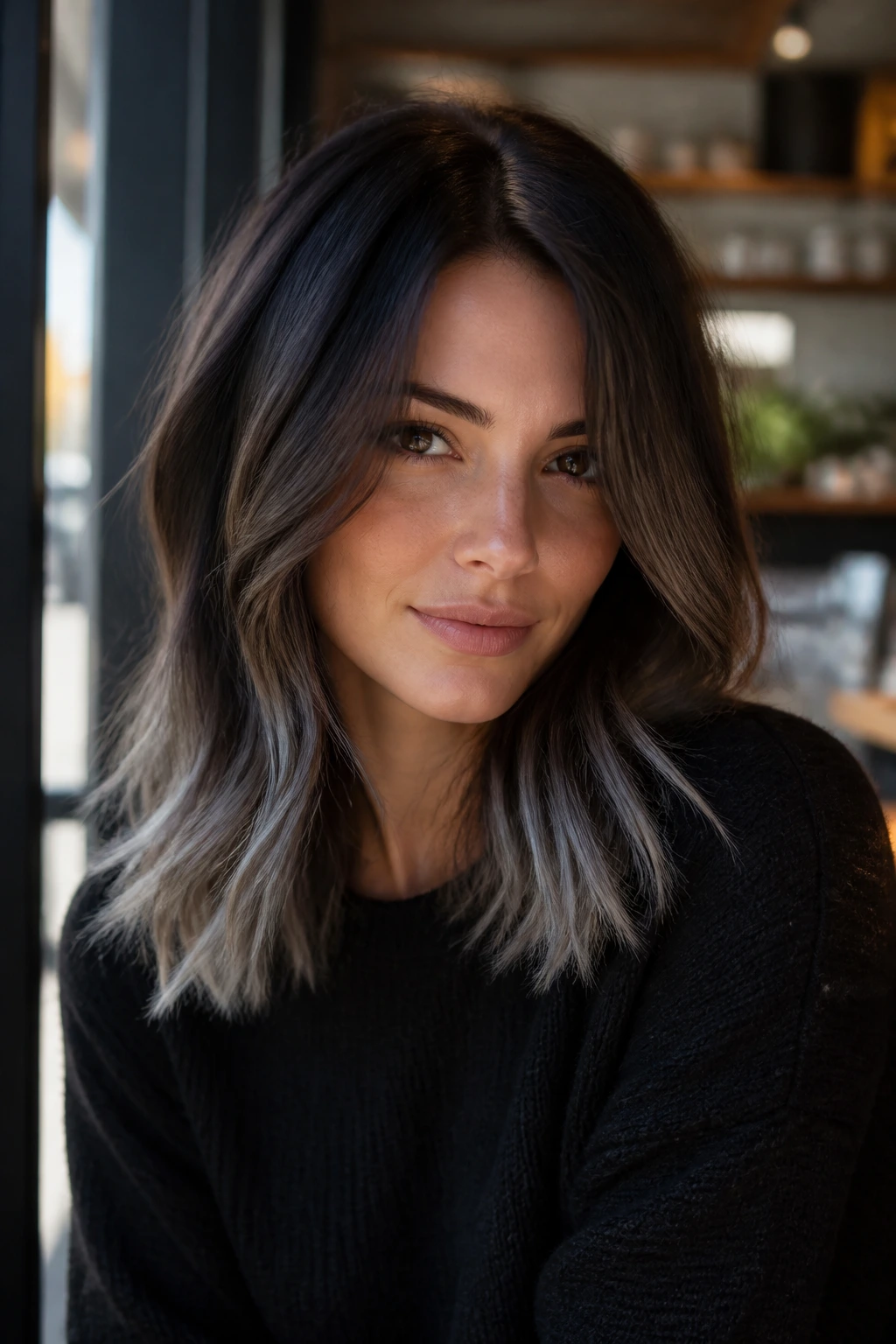
Ash espresso is for brunettes who want grey without losing the dark anchor. The base stays deep and cool, then the tips turn icy enough to catch light at the ends.
That anchor is a gift for fine hair. The roots and mid-lengths still look rich, which keeps the hair from turning transparent, while the colder tips add movement and shape. The result feels more modern than a full-blast silver job.
This one is best on tapered ends, long layers, or soft curls. If the hair is very fine, keep the ice tone on the lower third only; too much brightness too high up can look thin.
16. Pewter Balayage on Wavy Lengths
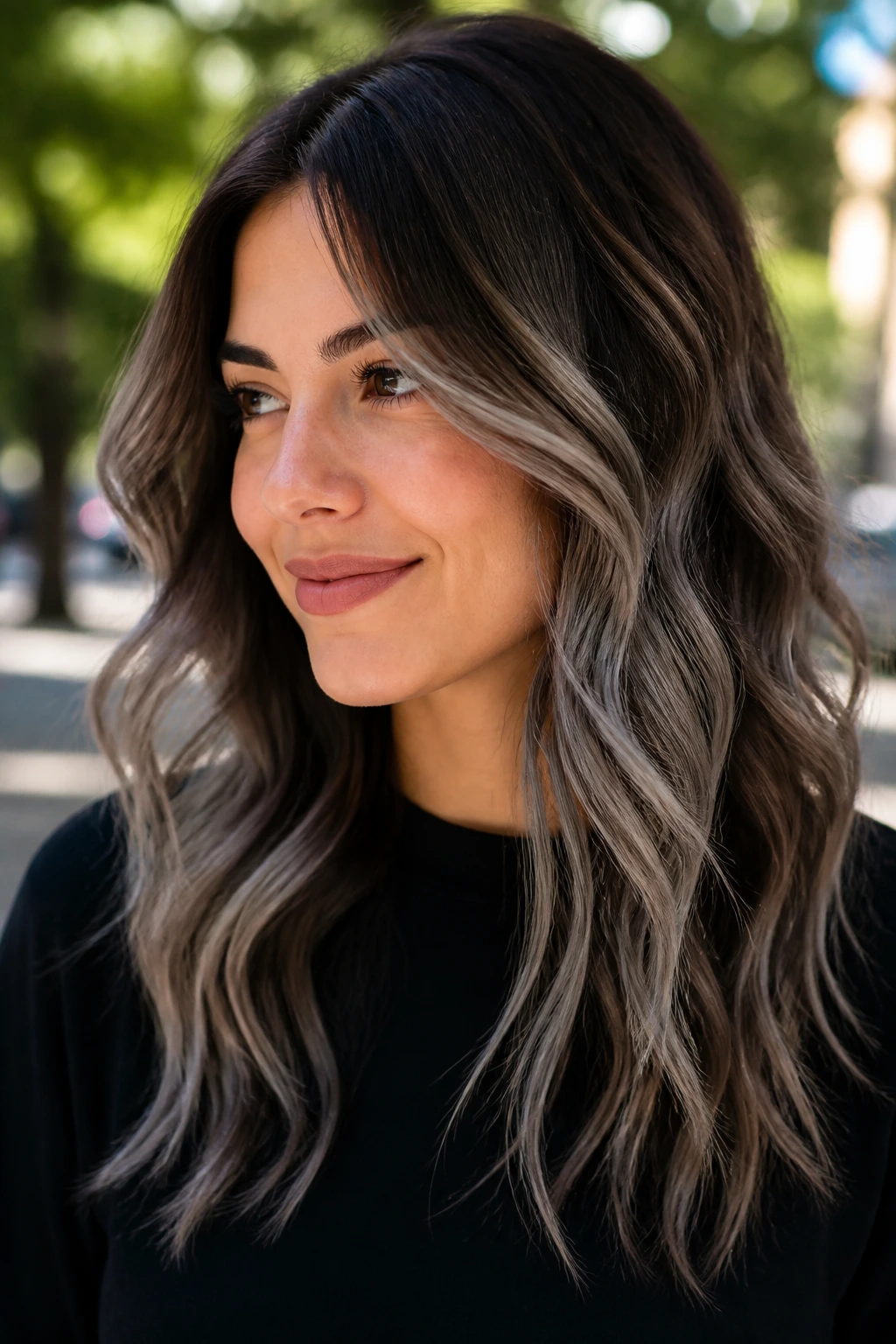
Pewter sits between silver and smoke; on waves it looks almost metallic. That’s why it works so well when the hair has a bend in it.
The balayage placement should be soft and irregular, with the brighter pewter pieces sitting where the wave naturally rises. Fine hair benefits from that irregularity because it keeps the color from looking stamped on. The eye sees movement, not rows.
If your brunette base is medium-dark, pewter is one of the easiest cool shades to wear without going pale. It gives a polished grey read while keeping enough brown underneath to hold the shape.
17. Smoke-and-Shadow Layers for a Thicker Look
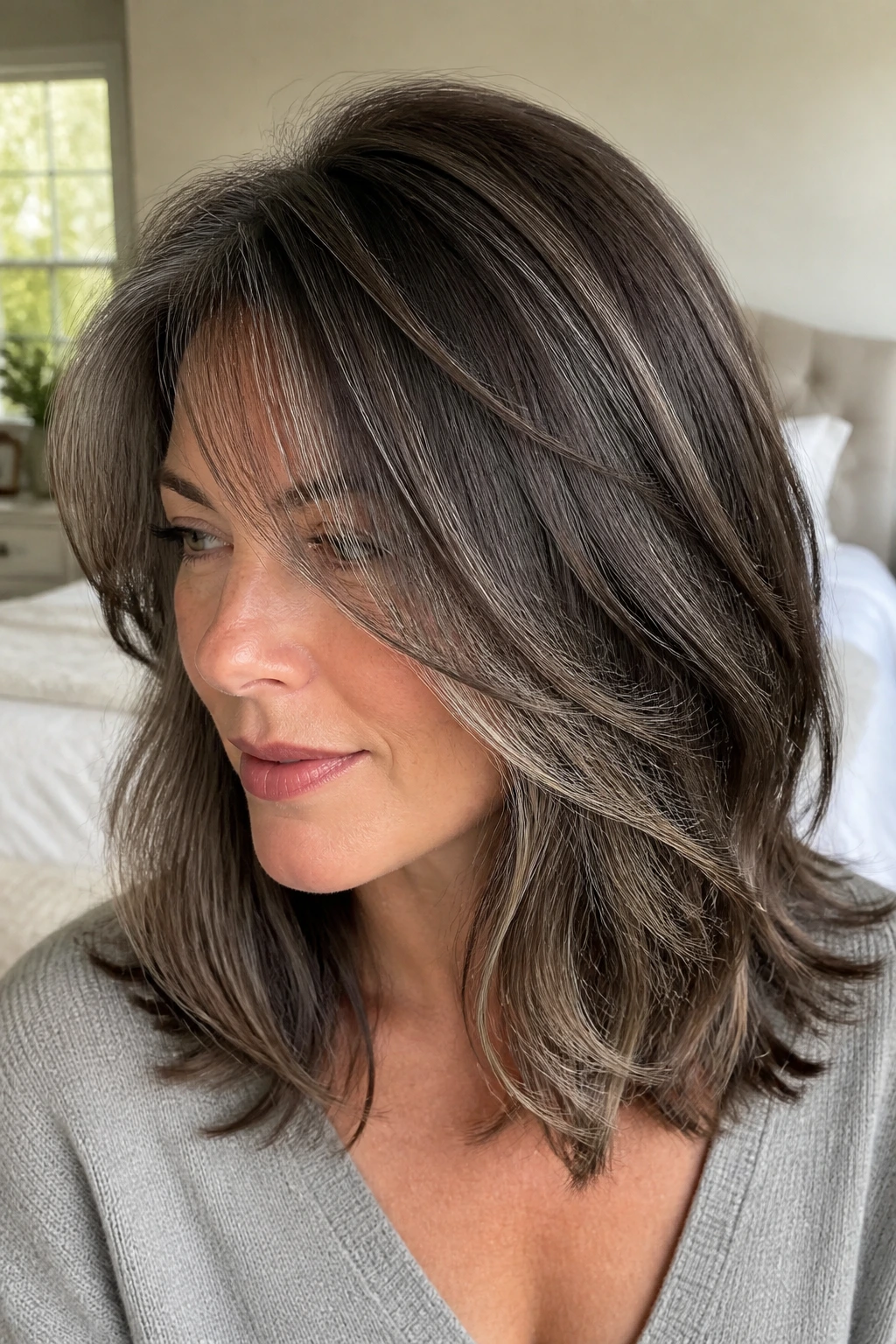
This is the safest bet if you care more about fullness than drama. Smoke-and-shadow layers combine cool lowlights, soft root shadow, and a few smoky highlights to build depth inside the haircut.
Fine hair loves this kind of layering because the contrast is doing the heavy lifting. The strands don’t have to be bright to look dimensional; they just need enough tonal difference to show texture.
It’s a strong choice for grown-out highlights that need a reset. Instead of fighting the natural brunette, it leans into it and lets grey show up as depth rather than as a loud color block.
18. Gunmetal Underlayer on a Sleek Cut
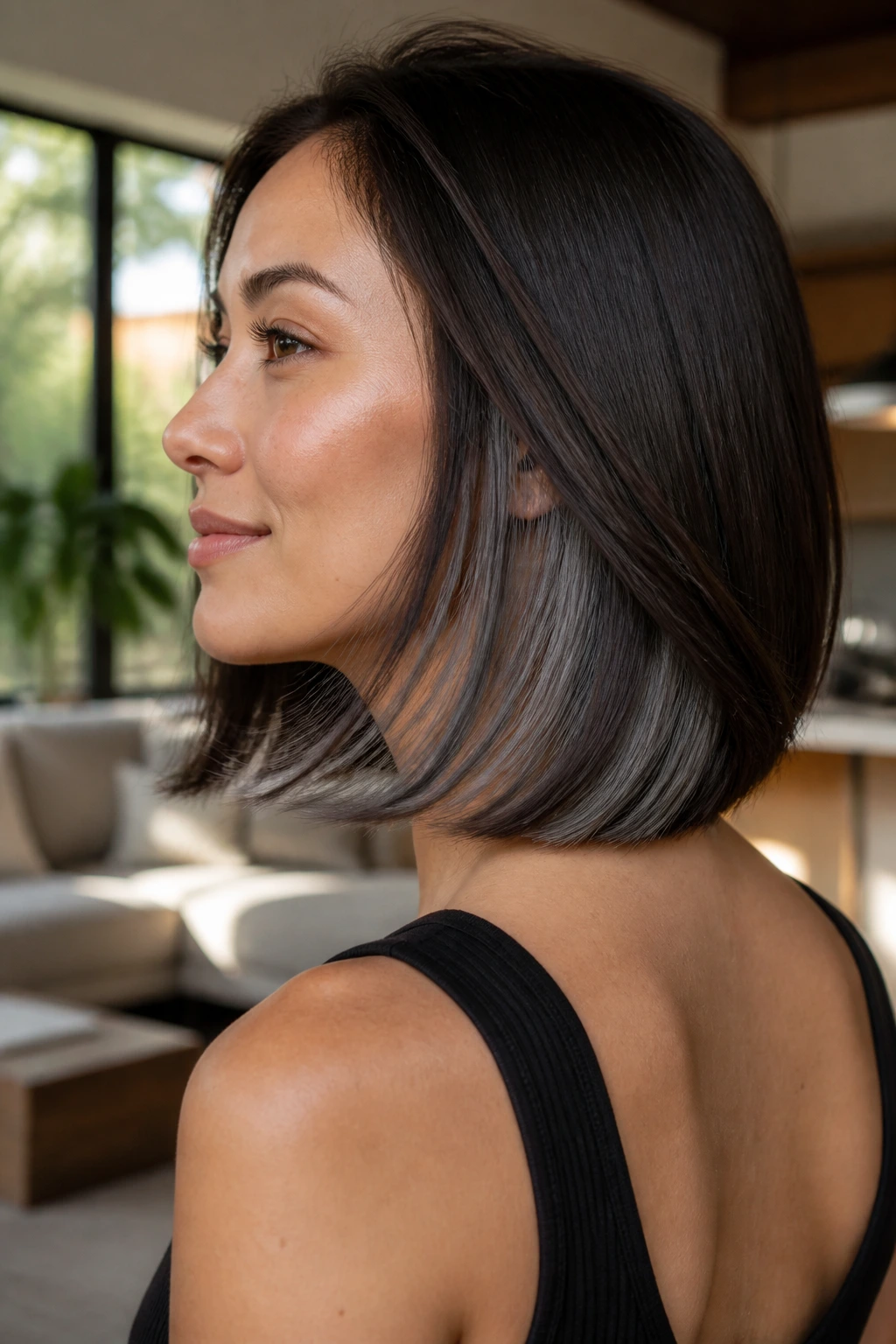
A gunmetal underlayer disappears in a braid and suddenly shows off in motion. That hidden drama is part of the appeal.
For fine hair, the underlayer keeps the top surface brunette and full-looking. The grey sits underneath, where it can flash through the ends, the nape, or a half-up style without taking over the whole head.
This works especially well on a sleek lob or a sharp bob. The cut gives the color a clean edge, and the gunmetal underneath adds depth every time the hair swings.
19. Grey-Blue Toner for a Cool Cast
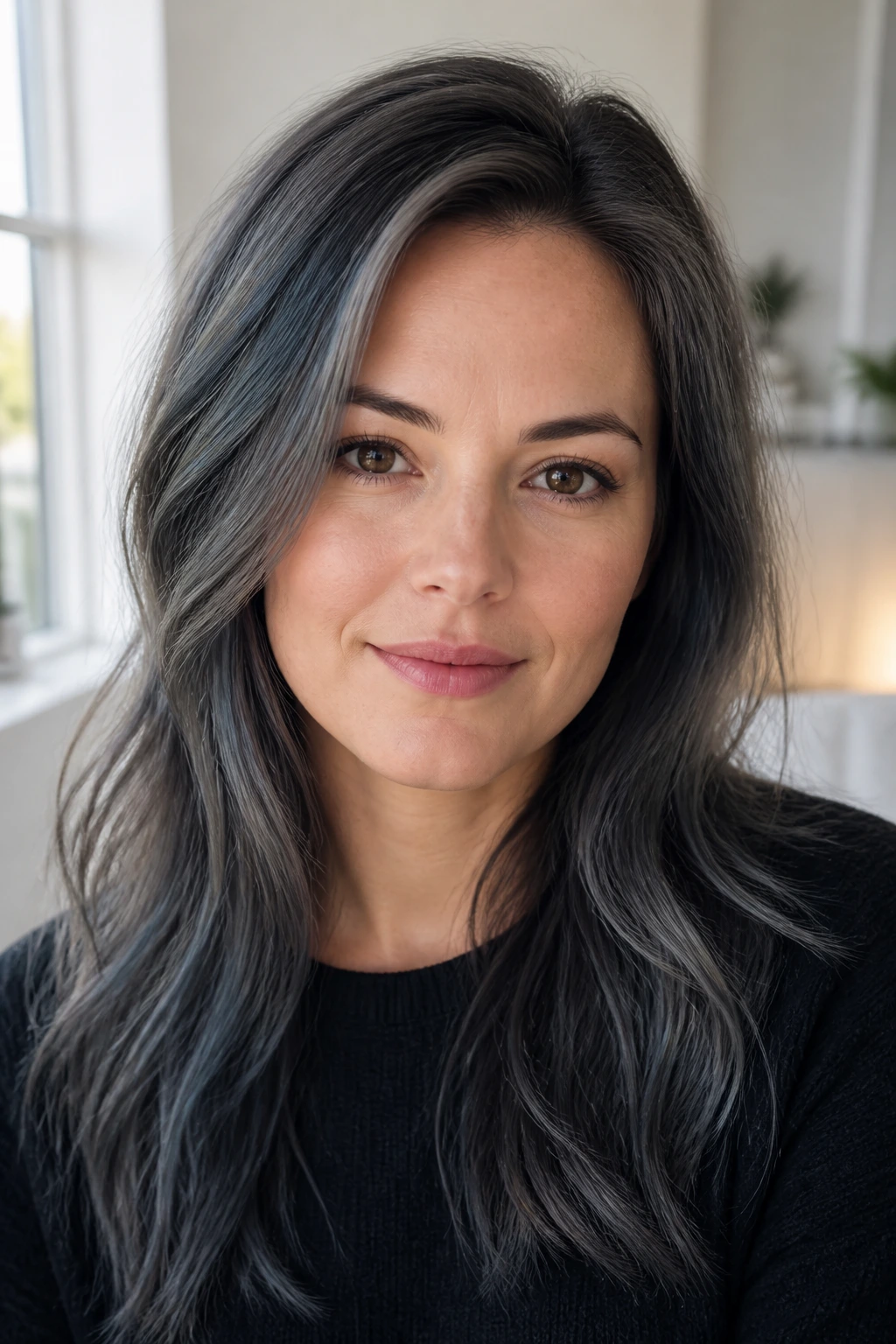
Need a grey result without committing to a full color job? Grey-blue toner is the low-risk route. It cools pre-lightened pieces and nudges brunette tones toward slate.
Blue helps tame orange pigment, while the grey cast keeps the finish from looking too bright. On fine hair, that means less damage and more control, which is a trade I’d take any day if the goal is a soft smoky finish.
The only catch is timing. Porous hair can grab toner fast, so the processing window should be watched closely. Too long, and the result can turn darker or bluer than planned.
20. Soft Silver Sombre with a Gentle Fade
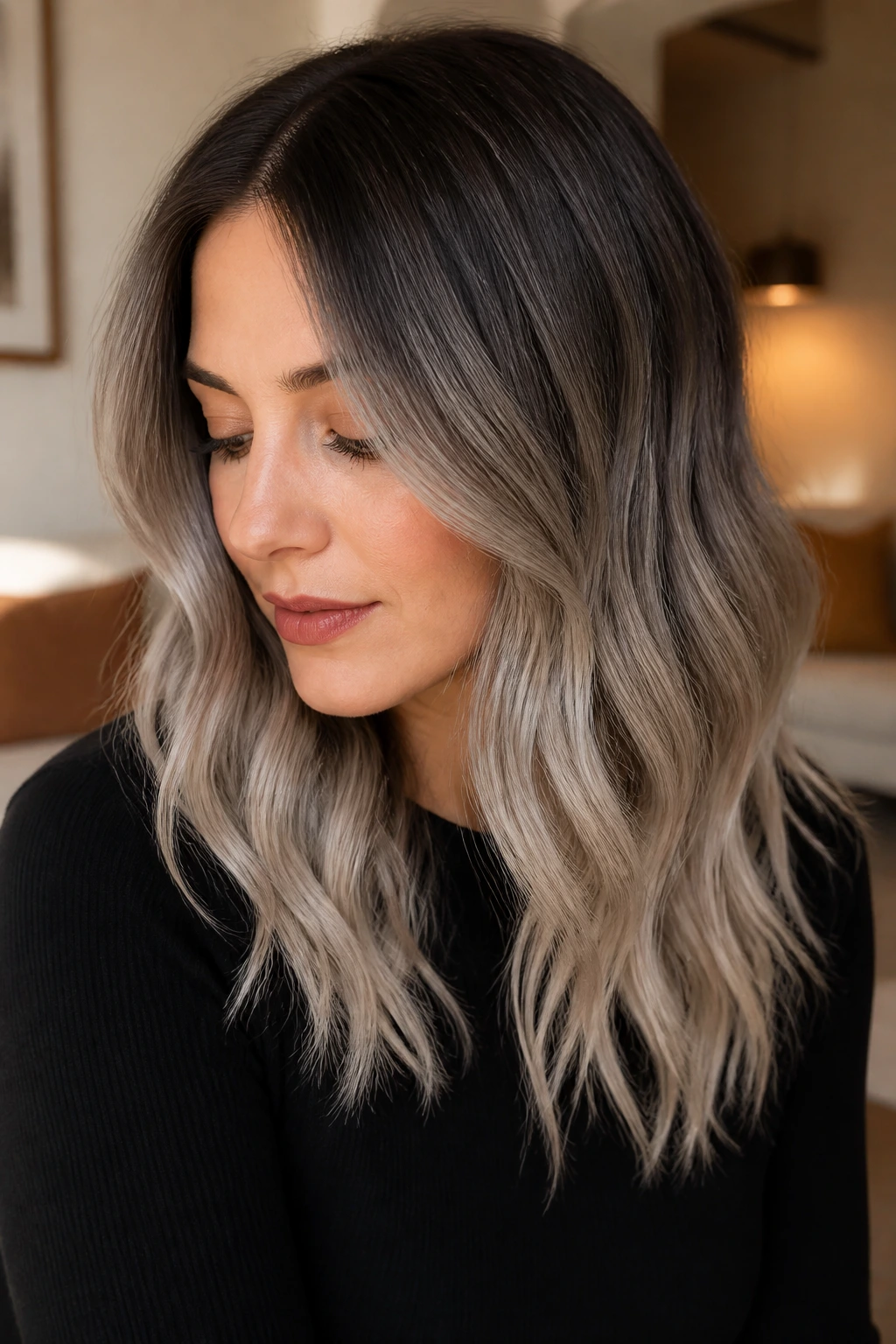
Sombre is the less obvious cousin of ombre, and it works better on fine hair for that reason. The fade is shorter, softer, and less likely to leave a harsh transition line.
The roots stay brunette, the mid-lengths soften into smoky grey, and the ends land in silver without a big jump between the shades. That gentle shift keeps the hair from looking chopped into sections.
It’s a good choice if you wear your hair curled or waved. The movement mixes the tones together and gives the whole style a more expensive, less obvious finish.
21. Mushroom Brunette Pixie with Cool Texture
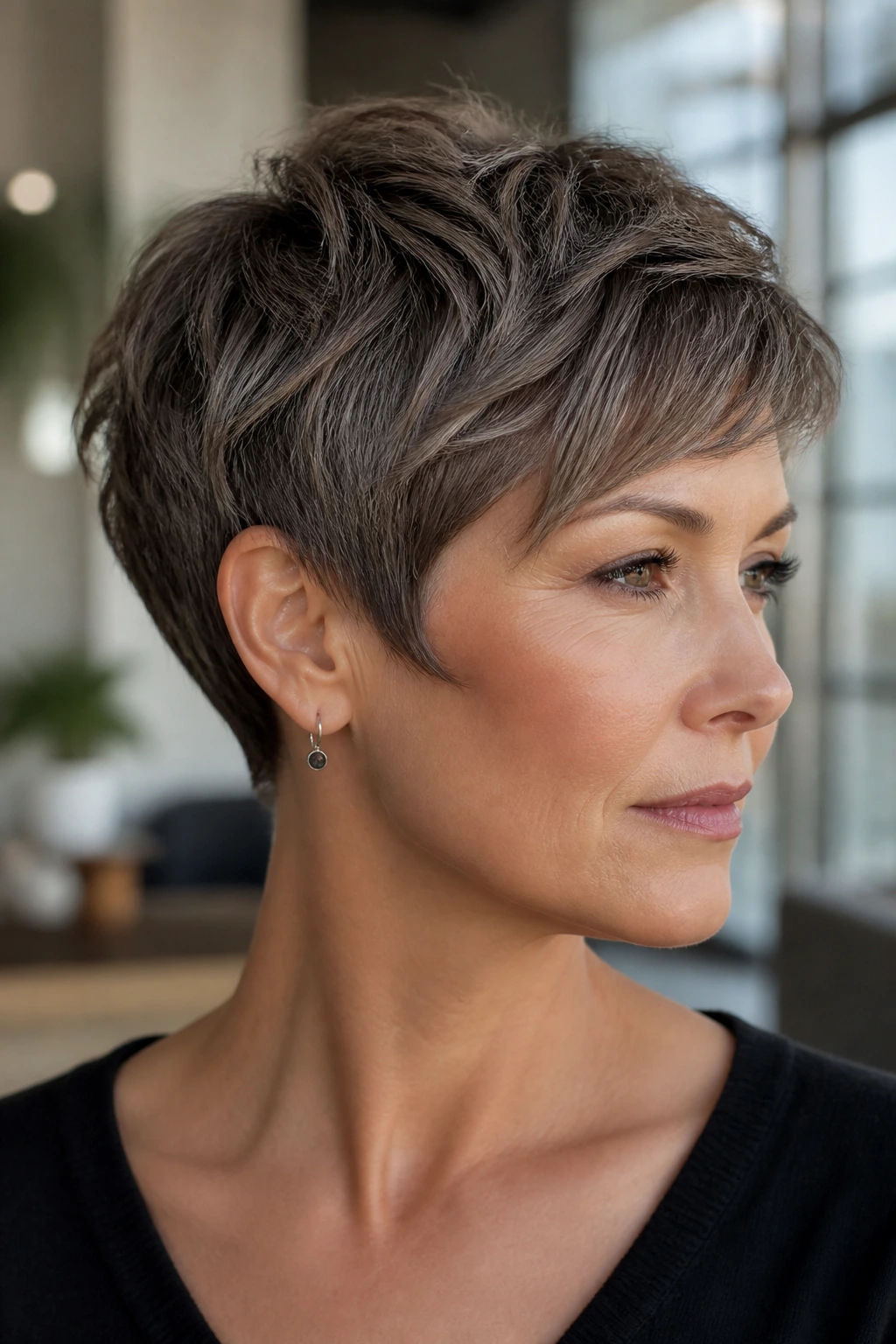
A pixie can wear grey beautifully when the texture is the point. Mushroom brunette on a cropped cut gives you ash, taupe, and smoky brown all in one short shape.
Fine hair often looks fuller when it’s short, and this color helps the cut do that job. The cool tone separates the little pieces of hair, so the layers read as deliberate texture rather than as sparse coverage.
This is a sharp choice if you like a low-fuss routine. A little paste or cream at the fingertips, a quick tousle, and the color does half the styling for you.
22. Charcoal Dip-Dye on Blunt Ends
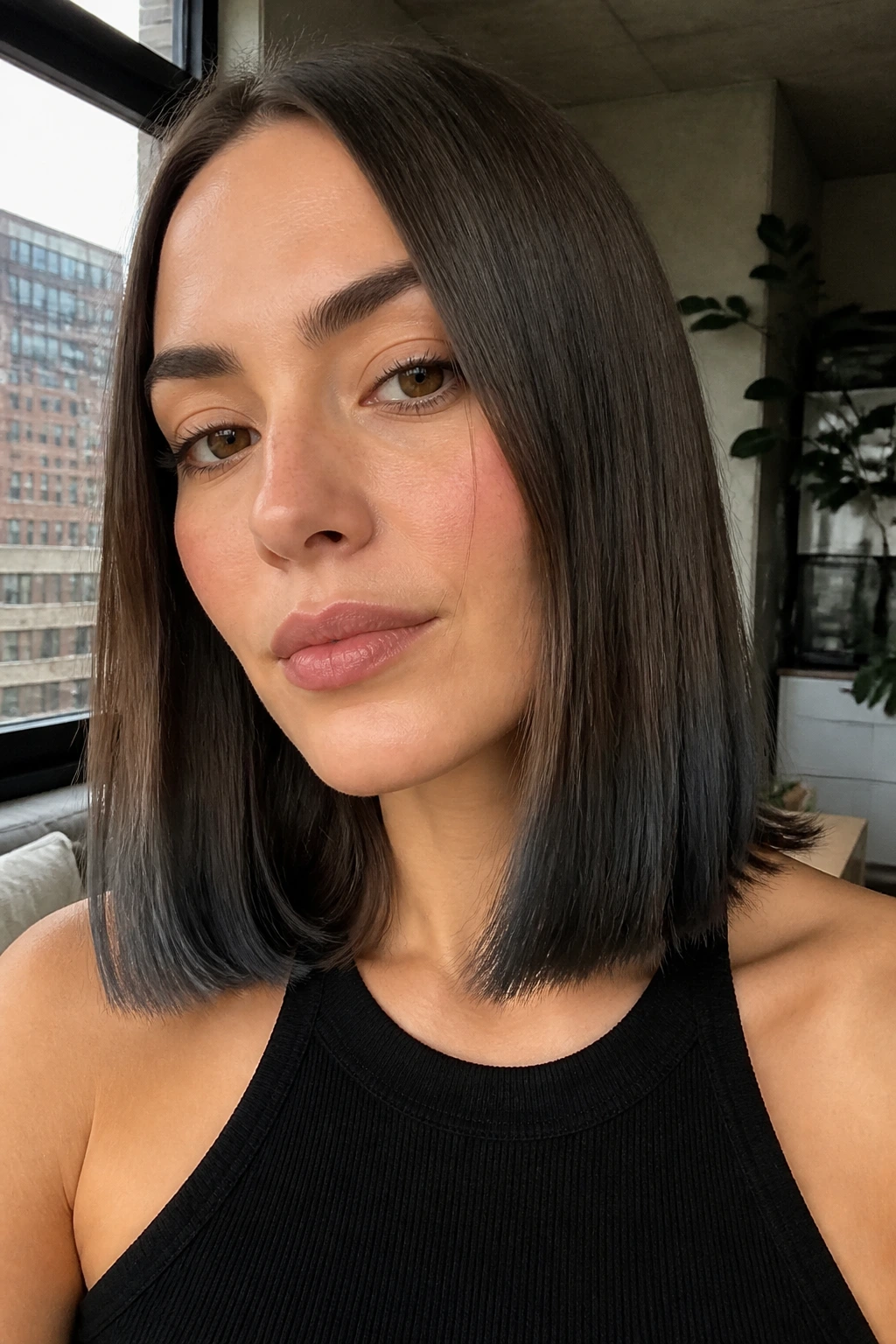
I like charcoal dip-dye on blunt cuts because it looks deliberate, not accidental. The ends carry the deepest grey, while the upper half stays brunette and grounded.
That blunt line gives fine hair a fuller outline, which is half the battle. Charcoal at the bottom adds weight visually without actually weighing the hair down.
This is not the softest look in the group. It’s the one for someone who wants a little edge and doesn’t mind seeing a stronger contrast every time the hair moves.
23. Smoky Beige Brunette for a Lived-In Finish
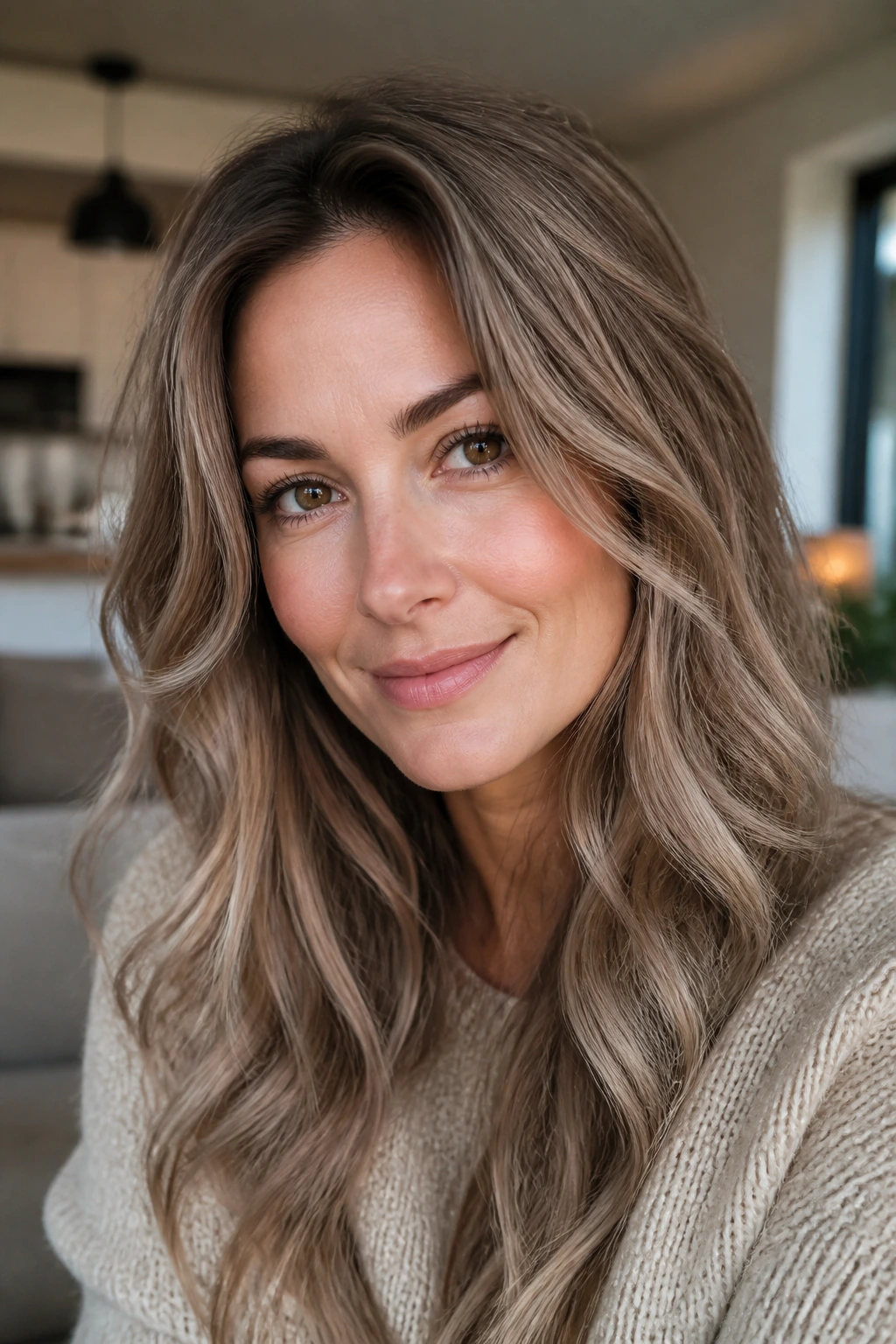
Smoky beige is what happens when ash and warmth stop fighting each other. The result is softer than silver, less red than brown, and easier to wear than stark grey.
For fine hair, that lived-in balance is useful. The beige keeps the strands from looking flat or dry, while the smoky tone keeps the color from drifting orange between salon visits.
This is a smart answer if you want grey-adjacent brunette, not obvious silver. It reads calm, soft, and a little expensive without asking the hair to look over-processed.
24. Platinum Featherlights for Airy Dimension
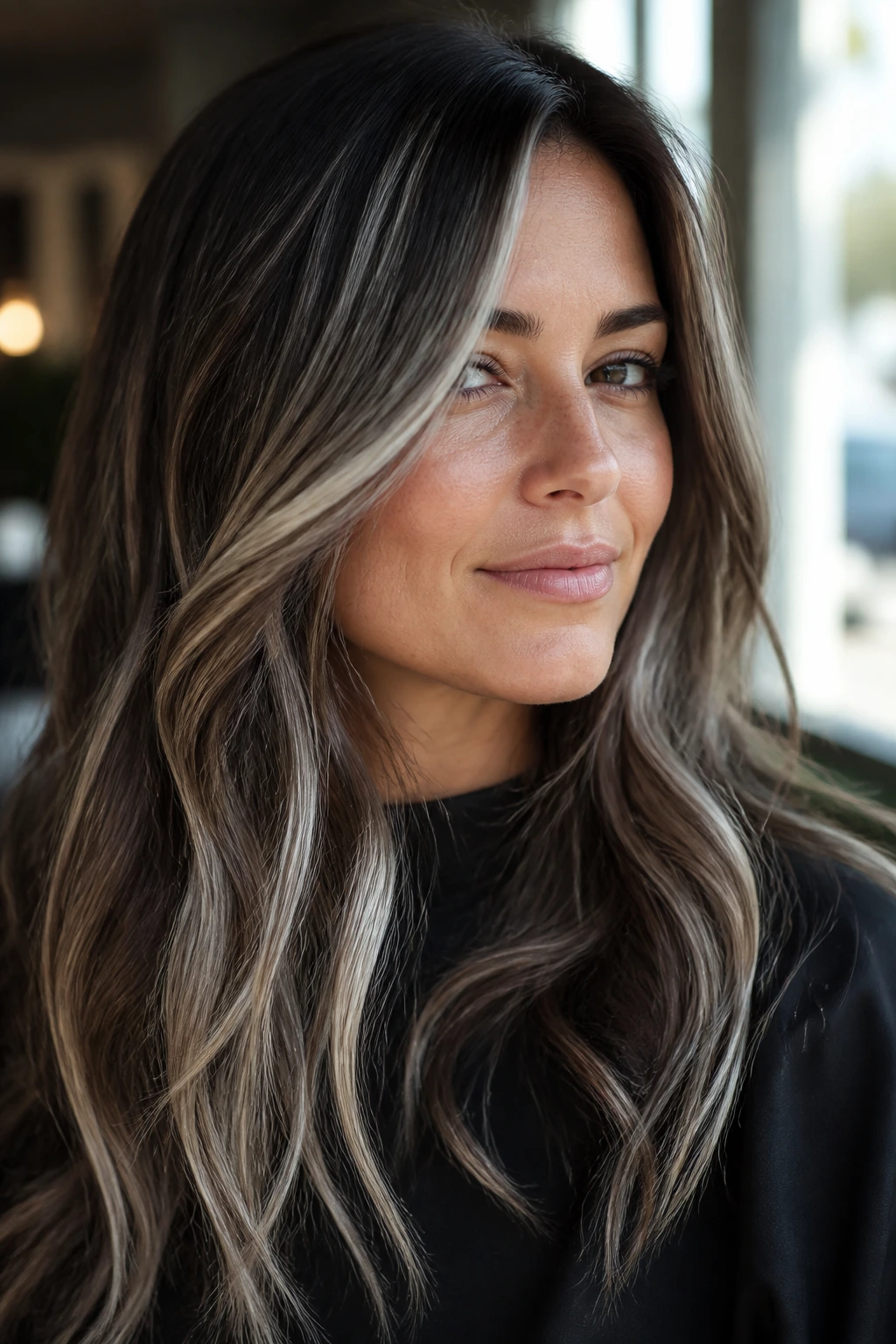
A few platinum featherlights can do more for movement than a full head of brightness. The key is keeping the pieces ultra-thin, almost airy, so they sit inside the brunette instead of on top of it.
Fine hair needs that restraint. Thick platinum streaks can make the scalp show more than you’d like, while featherlights break up the base color in a way that looks dimensional and light.
This one works best on layered cuts and loose waves. The lift shows up in flashes, which keeps the overall look from turning harsh.
25. Dusty Steel Face Frame Around the Cheekbones
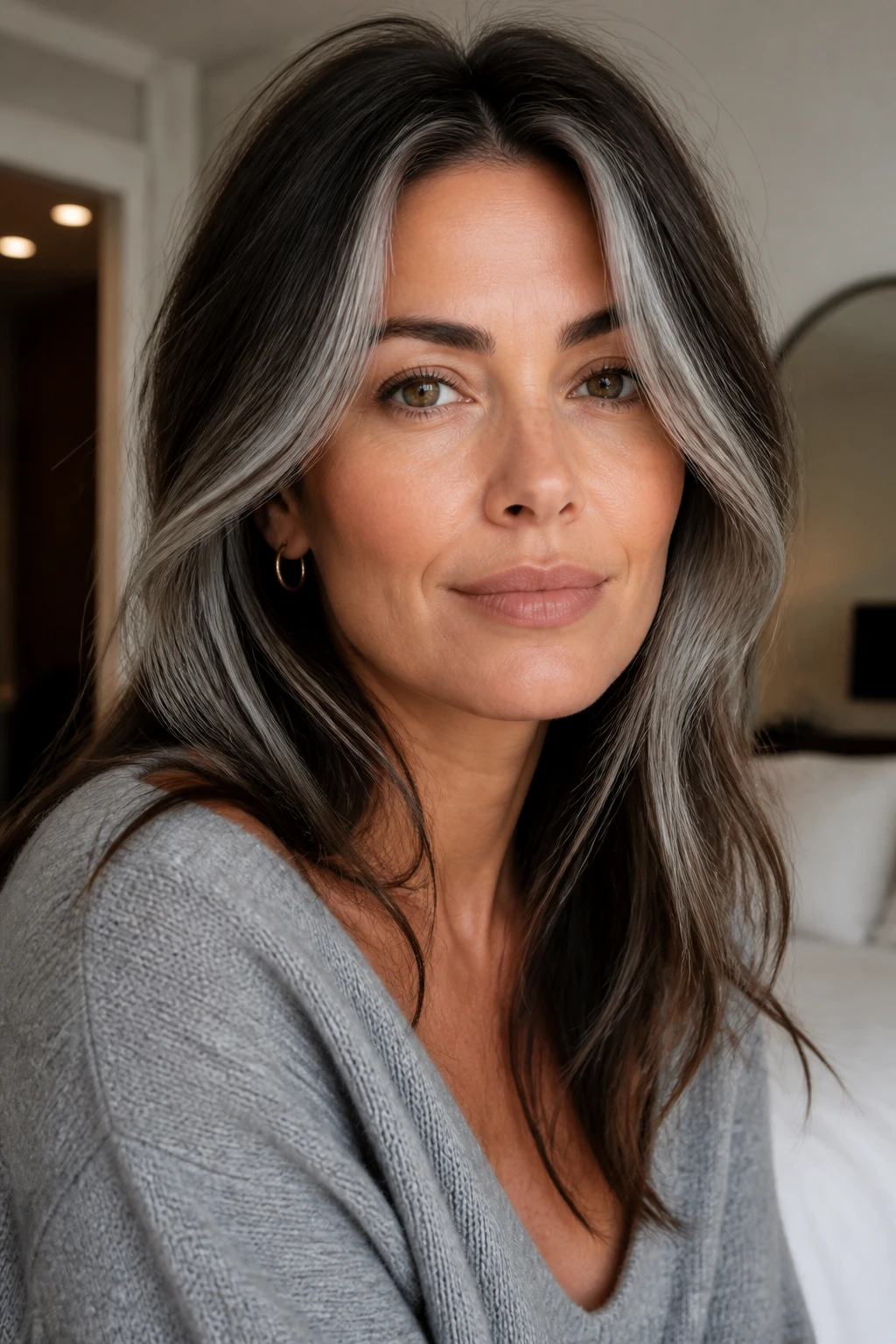
If you only change one zone, make it the face frame. Dusty steel pieces around the cheekbones and temples can wake up fine brunette hair without touching the rest of the length.
That placement creates lift near the eyes and softens the front of the haircut. On fine hair, it’s a clever way to add grey impact while keeping the back and crown dark enough to look full.
This is especially good with curtain bangs or a center part. The steel frame gives the haircut shape even when the rest of the hair is tucked back or tied up.
26. Ashy Contour Highlights for Fine Hair
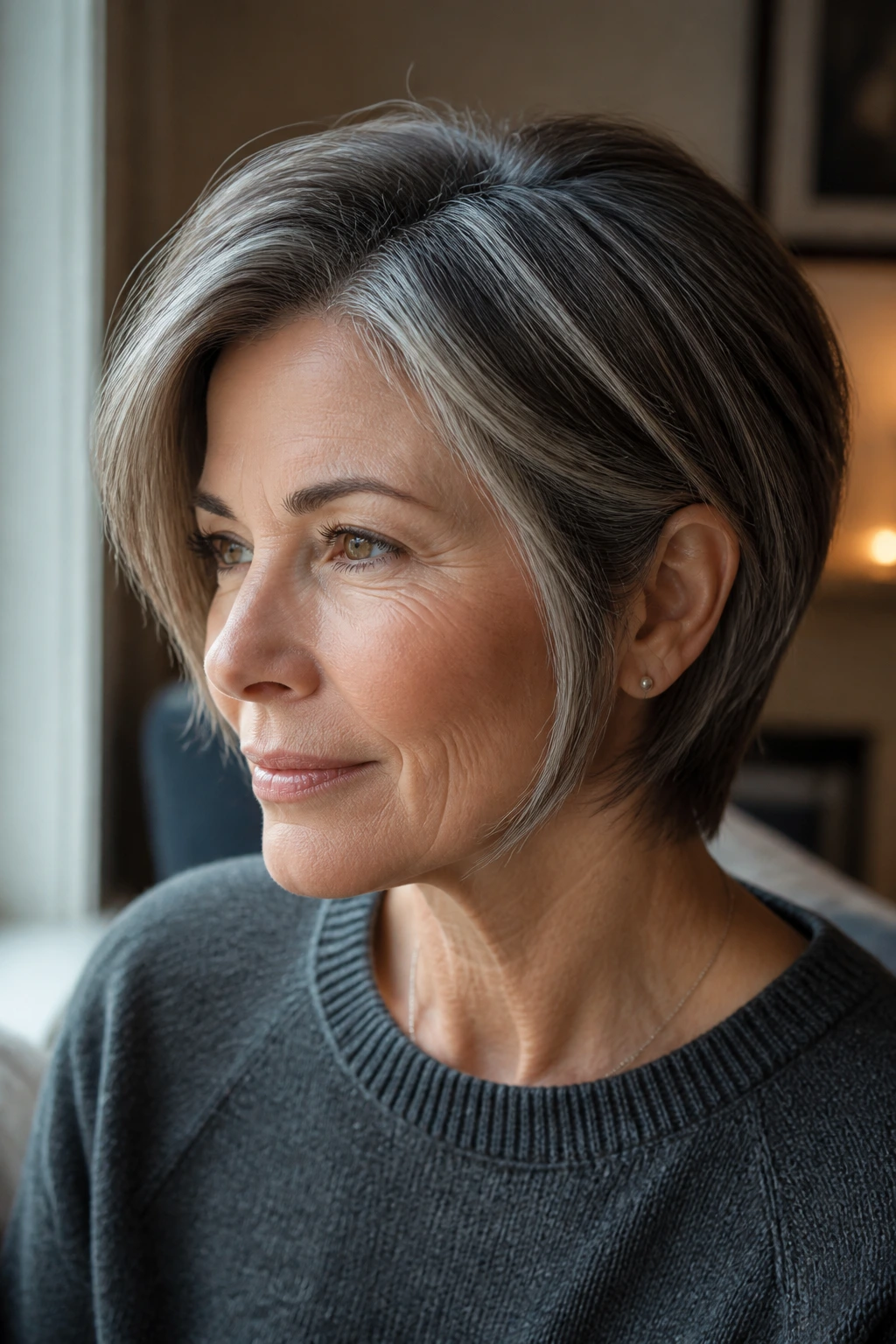
Want grey that acts like makeup for the haircut? Ashy contour highlights do exactly that. They’re placed where light naturally hits—around the part, near the temples, and just above the cheekbone zone.
The result is structure, not flash. Fine hair benefits because the highlights steer the eye toward the shape of the cut, which makes the hair seem more deliberate and less wispy.
I like this approach when the haircut already has good movement. The color follows the cut, instead of trying to rescue it, and that’s usually the smarter move.
27. Icy Rose-Graphite Blend for a Muted Tint
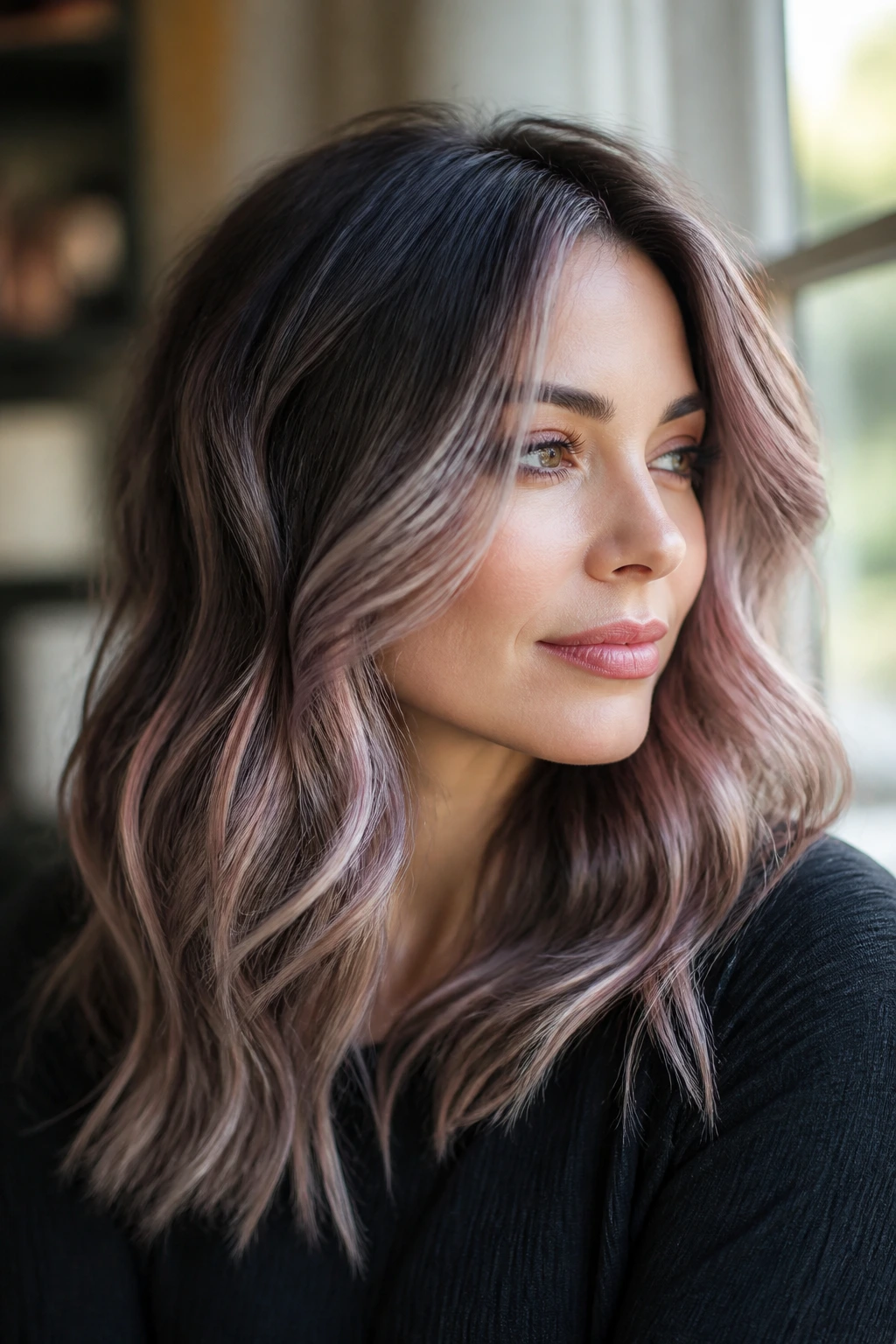
Grey does not have to be purely cool. An icy rose-graphite blend adds a whisper of muted pink under smoky graphite, which keeps the color from looking too flat on certain brunettes.
The rose should stay dusty, not candy-colored. On fine hair, that tiny bit of warmth can help the cool grey read softer and more dimensional, especially if your skin leans pale or neutral.
This is the playful option in the bunch. It’s still restrained, still wearable, but it has enough character to feel different from every straight ash look on the street.
28. Soft Chrome Brunette Glaze with Mirror Shine
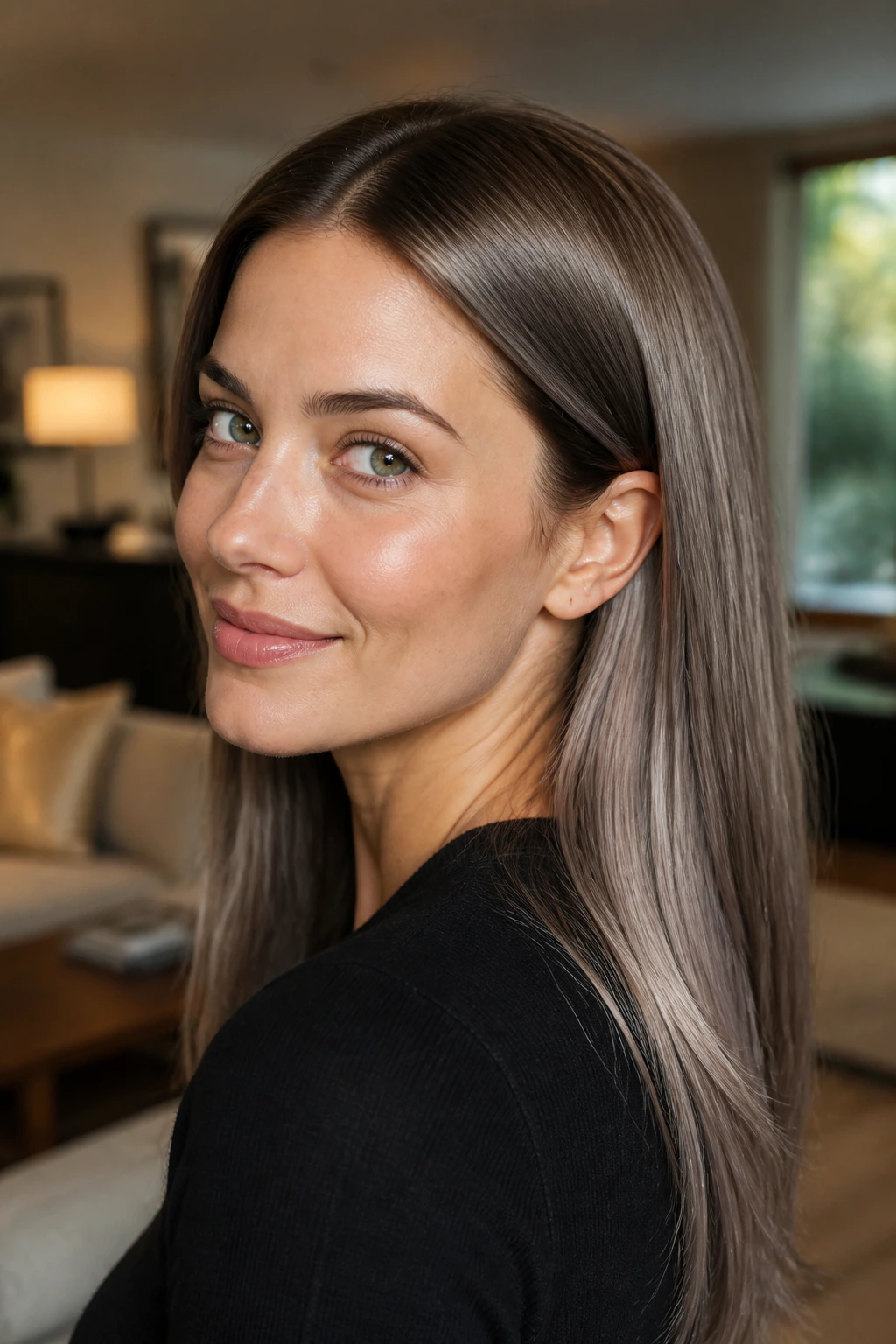
Chrome is the last stop on the grey scale, and a glaze keeps it from turning harsh. Soft chrome brunette uses a cool, reflective finish over brown hair or pre-lightened pieces so the color looks polished rather than icy and brittle.
For fine hair, shine is half the battle. A glossy chrome finish makes the strands look smoother and fuller, especially when the hair is worn straight or tucked behind the ears.
This look is strongest when the root stays a shade deeper. That little bit of shadow keeps the crown grounded and lets the chrome ends do the talking.
Why Grey Works Best When It Keeps Some Brunette Depth
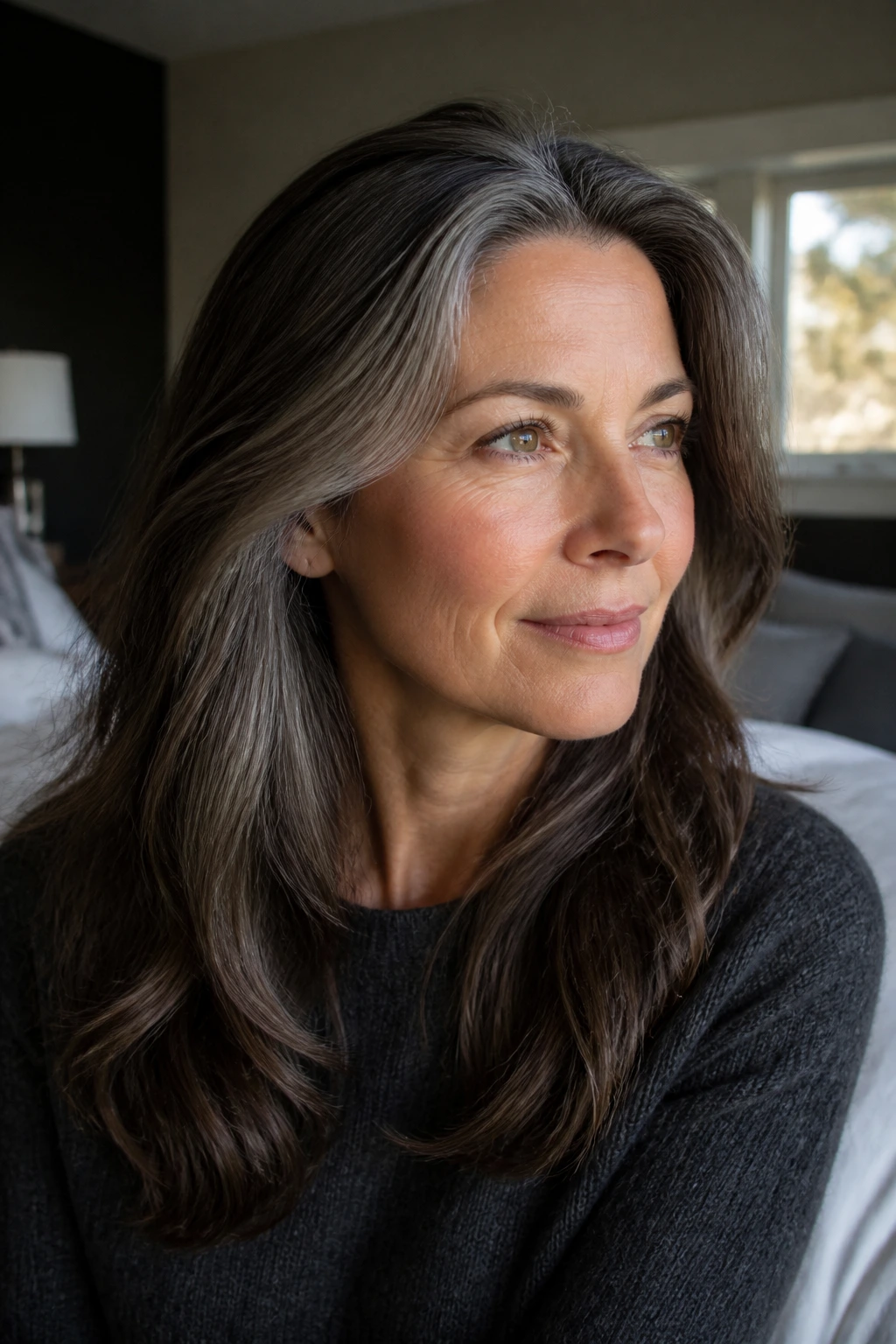
Grey brunette hair on fine strands usually looks best when it starts with shadow. That sounds simple, but too many color jobs skip the shadow and go straight to the bright pieces. The result is pretty in a photo and a little thin in daylight.
The better route is depth first, cool tone second, brightness last. A root shadow, a smoky veil, a graphite lowlight, or a mushroom base gives fine hair something to hold onto. Grey then becomes a texture story, not a blunt color swap.
If you remember one thing, make it this: the best grey for fine brunette hair is rarely the lightest one. The prettiest versions are the ones that keep the brown alive underneath.
Essential Tools for Coloring and Keeping Grey Brunette Hair Fresh
-
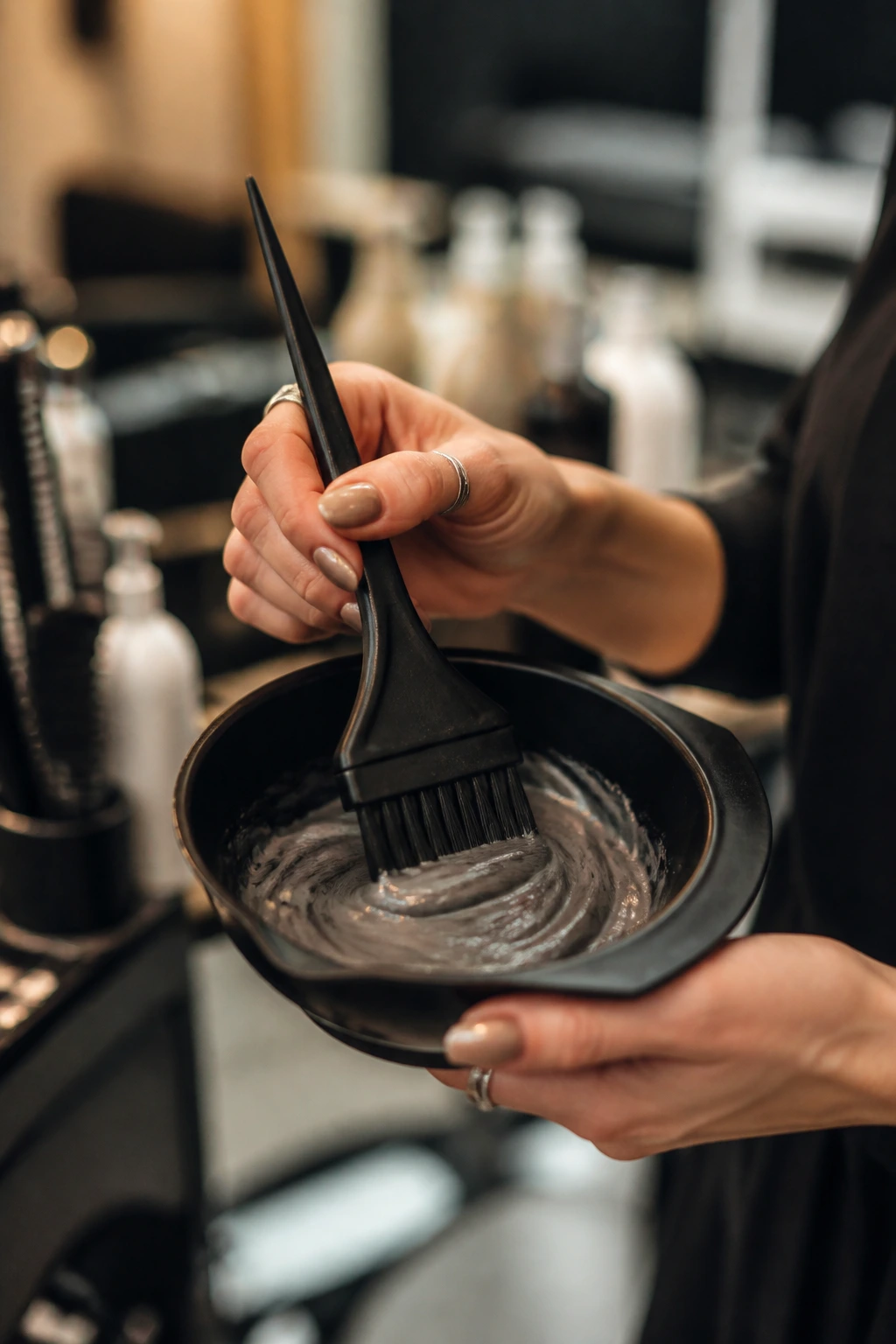
Tint brush and color bowl: Useful for precise placement if you’re mixing a gloss or watching a colorist work.
-
Rat-tail comb: Thin sections are the difference between veiled grey and chunky stripes.
-
Sectioning clips: Fine hair slips around fast, so clips keep the crown and nape organized.
-
Foils or balayage board: Helpful for silver ribbons, babylights, and face-frame work.
-
Bond-building treatment: A smart add-on after lightening, especially if your hair feels soft or stretchy.
-
Purple shampoo: Good in moderation for yellowing, but it can over-tone fine hair if used too often.
-
Blue shampoo: Better than purple when the brass is orange, not yellow.
-
Sulfate-free shampoo and conditioner: They help cool tones last longer without stripping the gloss.
-
Microfiber towel: Cuts down frizz and rough drying, which matters when the cuticle has been lightened.
-
Heat protectant spray: Grey and silver tones fade fast under high heat, and fine hair needs every bit of protection it can get.
How to Pick the Right Grey Tone for Your Brunette Base
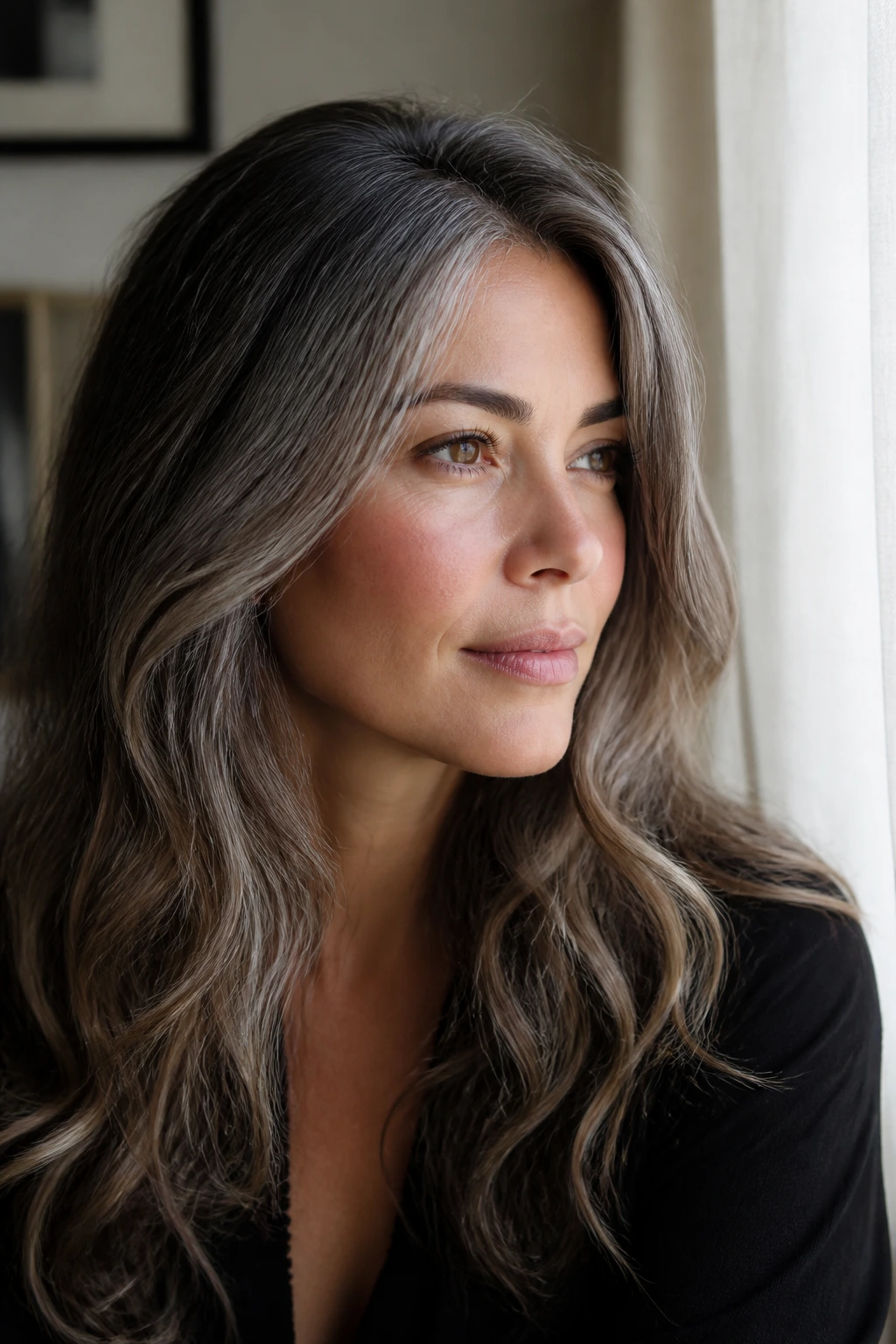
The first decision is depth. If your hair sits around level 3 or 4, smoky root melts, graphite lowlights, and mushroom brown usually look better than bright silver. They keep the brunette story intact and avoid that see-through look that can happen when dark hair is pushed too pale too fast.
If your base is closer to level 5 or 6, you have room for silver balayage, pearl gloss, pewter ribbons, and soft chrome finishes. The lighter starting point means the grey reads cleaner, not muddy. That matters because cool tones on brunette hair can go murky if the underlying warmth is still too strong.
Porosity matters too. Fine hair often grabs toner fast and loses it fast, which is why demi-permanent glosses and cooler beige-smoke formulas are so useful. If the hair is fragile, ask for micro-lightening plus toner, not a full-head bleach job. One heavy session can leave fine strands looking fluffy in the bad way.
How to Style Grey Brunette Hair So Fine Strands Look Fuller
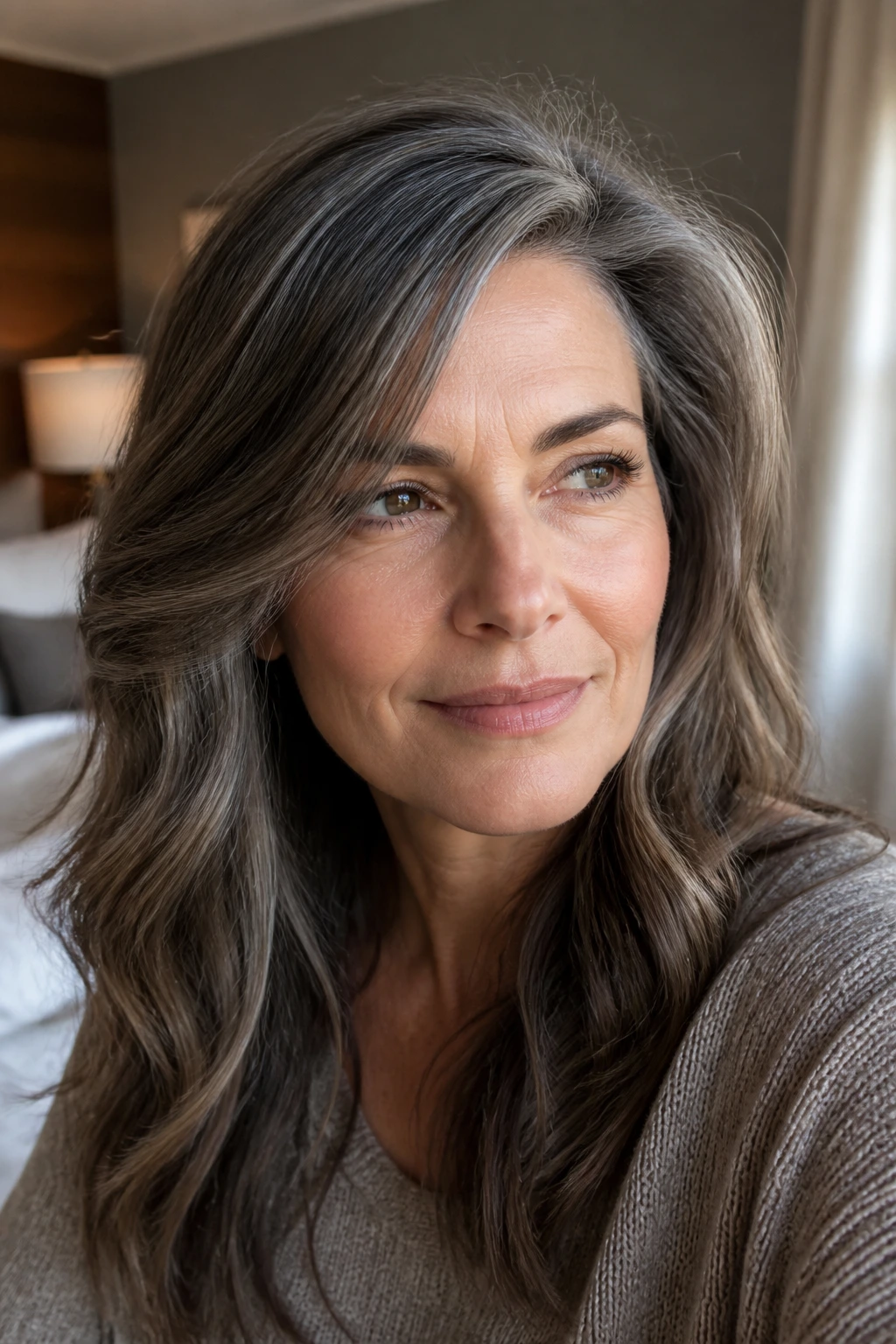
Parting: A deep side part builds lift at the crown, while a center part shows off money pieces, veil highlights, and root melts. Switch the part occasionally so the same section doesn’t flatten in one direction all the time.
Texture: Loose bends, soft waves, and a tucked-under blowout make grey ribbons visible without exposing too much scalp. Poker-straight hair can look thinner if the contrast is too strong, so a little movement helps.
Finish: Root-lifting mousse or a light volumizing spray at the crown keeps the color from collapsing against the head. Fine hair does not need a mountain of product; it needs enough grip to hold the shape.
Accessories: Silver hoops, black frames, and simple clips echo the cool tone without crowding it. If the color leans pearl or chrome, clean lines around the face keep the whole look crisp.
Extra Ways to Push the Look Softer or Bolder
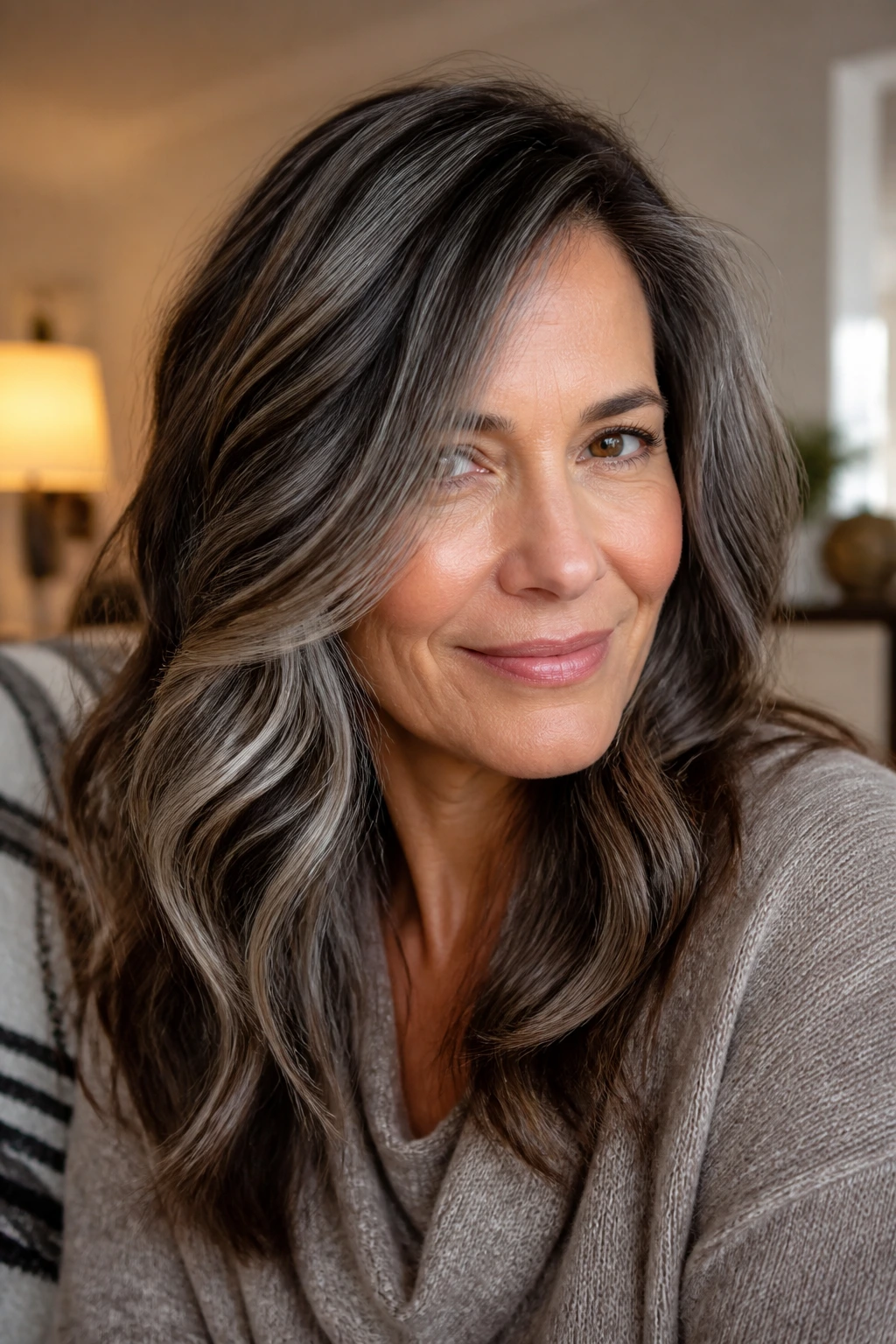
Gloss Boost: A clear gloss with a smoky beige or pearl toner can mute brass and make grey read cleaner between salon visits. It’s the fastest way to sharpen the tone without changing the cut.
Customization: Add lowlights if the hair feels too airy, or ask for a stronger money piece if you want the face to pop. On fine hair, small changes in placement matter more than big changes in tone.
Finishing Touches: A side tuck, a soft bend with a 1-inch iron, or a half-up clip can change how much grey shows. The same color looks far cooler when the surface has motion.
Make-It-Yours: For curly fine hair, keep the grey pieces thin and scattered. For straight hair, concentrate the cooler tones near the part and around the face so the color has somewhere to land.
Common Mistakes That Flatten Grey Brunette Hair
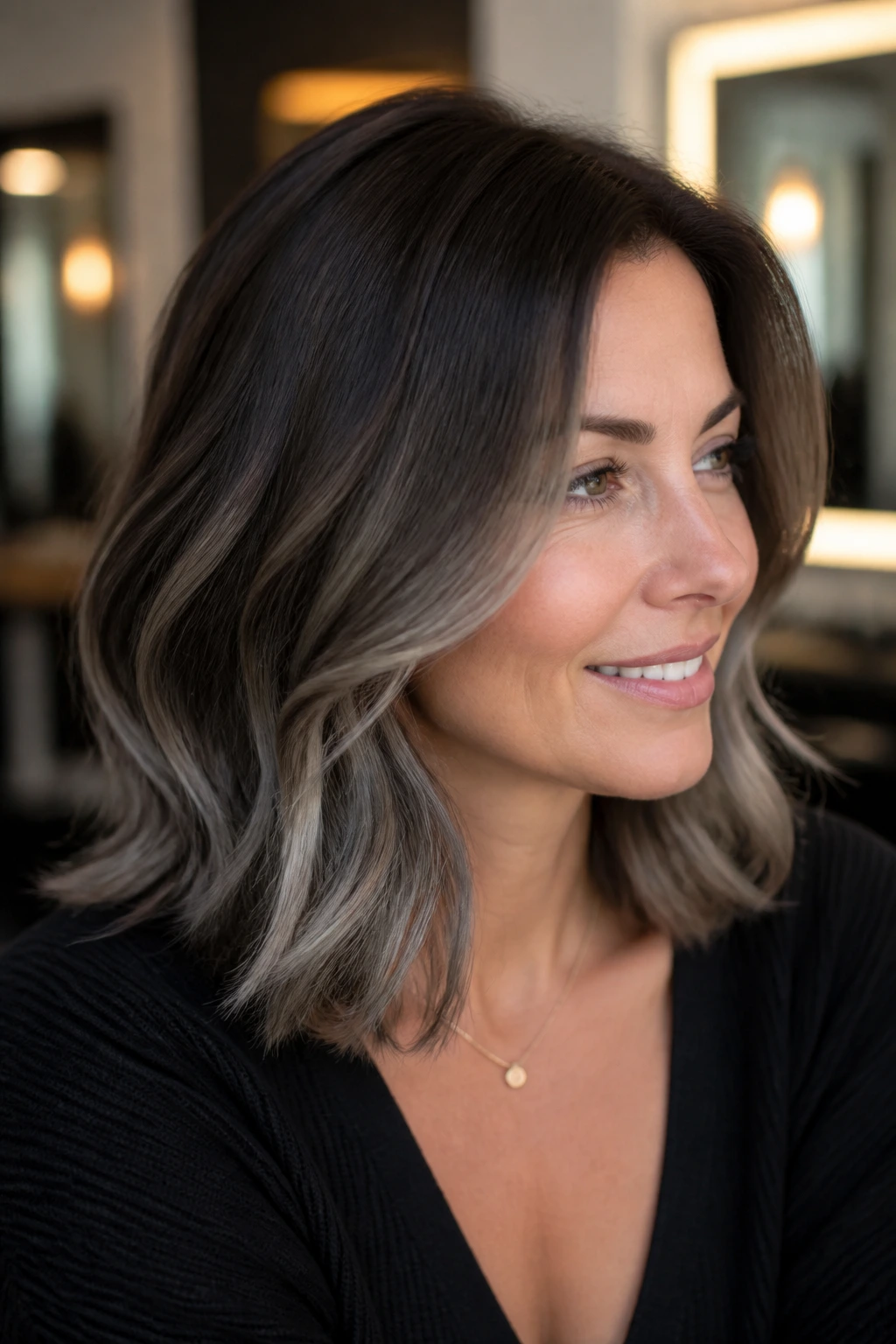
The biggest mistake is going too pale too soon. Fine brunette hair that jumps straight to icy white can lose all its depth, and then the cut starts to look thinner than it is. Keep one or two darker anchors in the root or underlayer.
Chunky highlights are another problem. Big silver stripes can look stiff on fine hair, especially if the base is dark. Micro-weaves, babylights, and soft balayage give a better result because they scatter the light instead of carving it into blocks.
Skipping toner is a fast way to end up with yellow or khaki ends. Grey tones need maintenance, not because they’re fragile, but because brunette pigment underneath them is still trying to push through. A gloss every few weeks is cheaper than trying to rescue a muddy color later.
Overusing purple shampoo can backfire too. Fine hair can grab that violet cast quickly and start looking dull or chalky. Use it only when brass shows up, and follow it with a conditioner that puts some slip back into the hair.
Maintenance, Refreshes, and Trim Timing
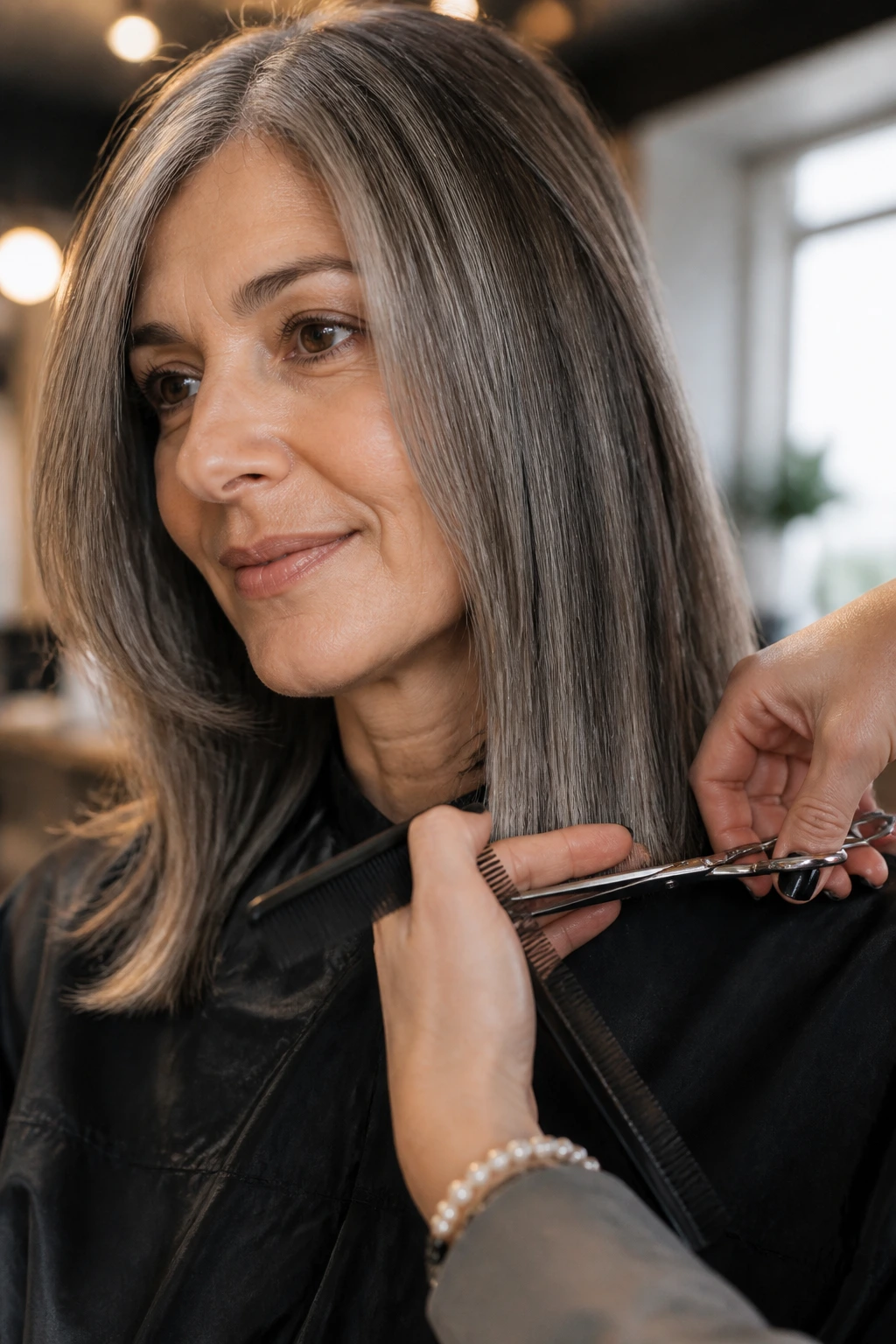
Grey brunette color on fine hair stays cleaner when the routine is light but consistent. Shampoo two or three times a week, not every day if you can avoid it, and keep the water lukewarm rather than hot. Hot water strips gloss faster and can make the tone look tired.
For silver-heavy looks, plan on a toner or gloss refresh every 4 to 6 weeks. Softer smoky looks can often stretch to 6 to 8 weeks before they need a reset. Root shadows last longer, often 6 to 10 weeks, depending on how fast your hair grows and how hard the contrast is.
Purple shampoo is a spot treatment, not a lifestyle. Use it every 1 to 2 weeks if yellowing shows up, then switch back to a sulfate-free cleanser. If the brass leans orange instead of yellow, blue shampoo does a better job.
Trims matter more than people think. Fine ends fray fast, and grey lightness makes split pieces easier to spot. Book a trim every 6 to 8 weeks for bobs and lobs, and every 8 to 10 weeks for longer layers.
Variations and Adaptations to Try
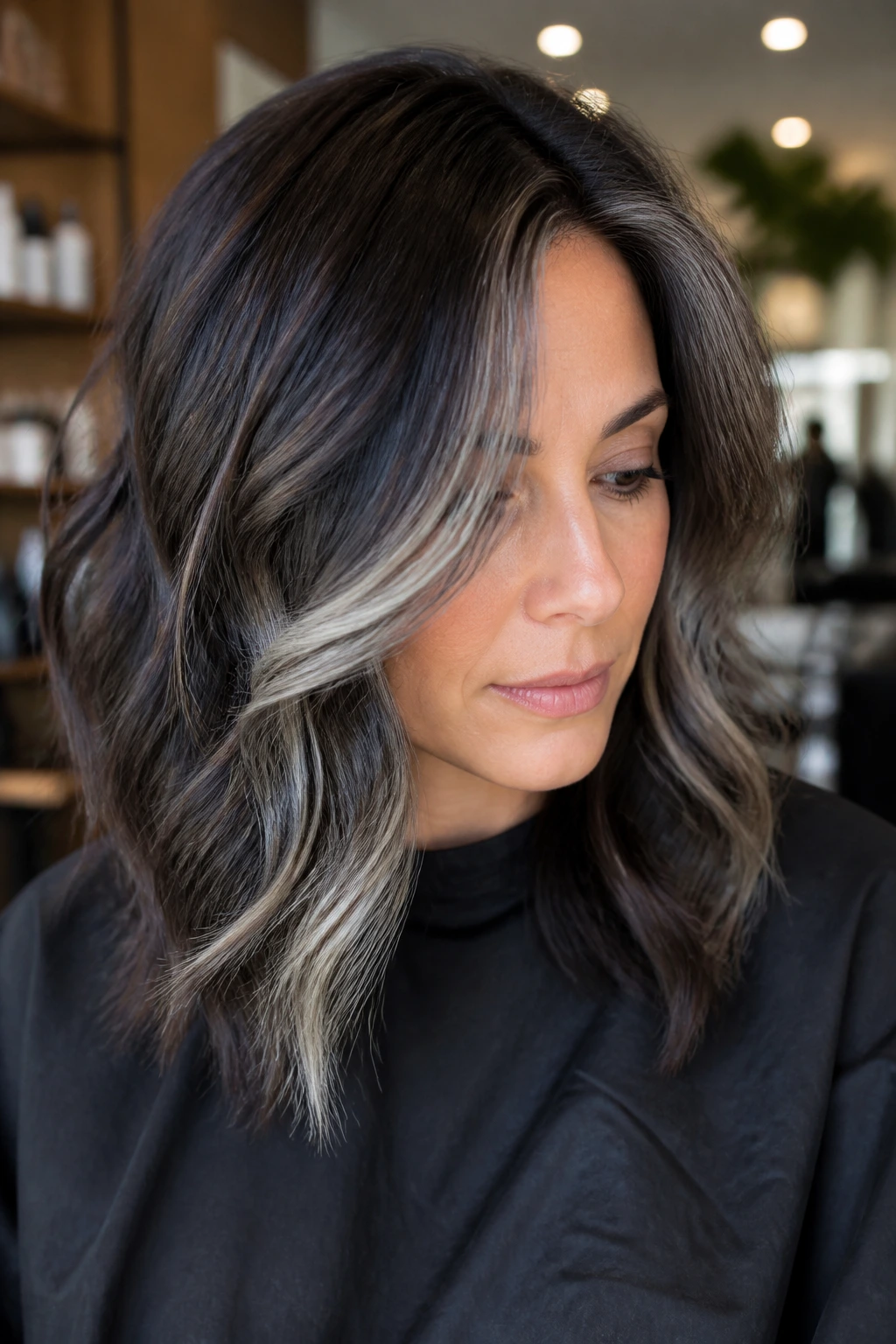
Low-Lift Smoke Gloss: This version keeps the brunette base almost untouched and uses a smoky toner to cool the mids and ends. It’s the best choice if you want a grey mood without committing to lightening.
Silver Money Piece Only: If you like impact but hate upkeep, concentrate the grey on the front hairline and leave the rest dark. It gives the face lift and keeps the grow-out simple.
Salt-and-Pepper Blend: This works especially well if your natural grey is already coming in. The colorist can weave brunette lowlights with silver pieces so the transition looks intentional instead of patchy.
Chrome Bob Reset: A short bob with a chrome glaze and a darker root shadow looks sharp and modern. The cut does most of the work, so the color can stay cool without becoming harsh.
Dusty Lavender Grey: If pure ash feels too flat, a whisper of dusty lavender over grey adds a muted cool tint. Keep it subtle; the best version reads smoky-lilac in motion, not purple on the nose.
Questions People Ask Before Going Grey on Brunette Fine Hair
Will grey hair color make fine brunette hair look thinner?
It can, if the color is too light from root to tip. Grey works better on fine hair when there’s a darker base, a root shadow, or some lowlights to keep the shape full.
Do I need bleach to get grey on brunette hair?
For true silver and chrome looks, usually yes. For smoky mushroom, taupe, and ash-brown ideas, a gloss, toner, or partial lightening may be enough if your base is already a medium brunette.
What grey shade is easiest to wear on level 4 brown hair?
Mushroom brown, smoky root melts, and graphite lowlights are the safest starting points. They cool the color without making the hair look washed out.
How often should grey brunette hair be toned?
A silver-heavy result often needs toning every 4 to 6 weeks. Softer smoky shades can go longer, especially if you wash gently and keep heat styling in check.
Can I do grey highlights without touching the whole head?
Yes. Veil highlights, a money piece, peekaboo panels, or contour highlights can give the grey effect without a full color shift. That’s often the better move on fine hair.
Why did my grey turn yellow or greenish?
Yellow usually means the toner faded or brass came back through the lightened hair. Greenish tones can happen if ash toner or purple shampoo is overused. A clear gloss or a warm-beige correction usually fixes it.
Which haircut works best with grey on fine brunette hair?
A blunt bob, a collarbone lob, or a lightly layered cut tends to show the color best. Those shapes give the eye an outline, which makes the grey read fuller.
Can I wear these shades if my hair is already fragile?
Yes, but choose the gentlest version: gloss, partial highlights, or a darker smoky melt. If the hair stretches when wet or feels gummy, skip heavy lifting until it’s stronger.
Cooler, Fuller, Still Brunette
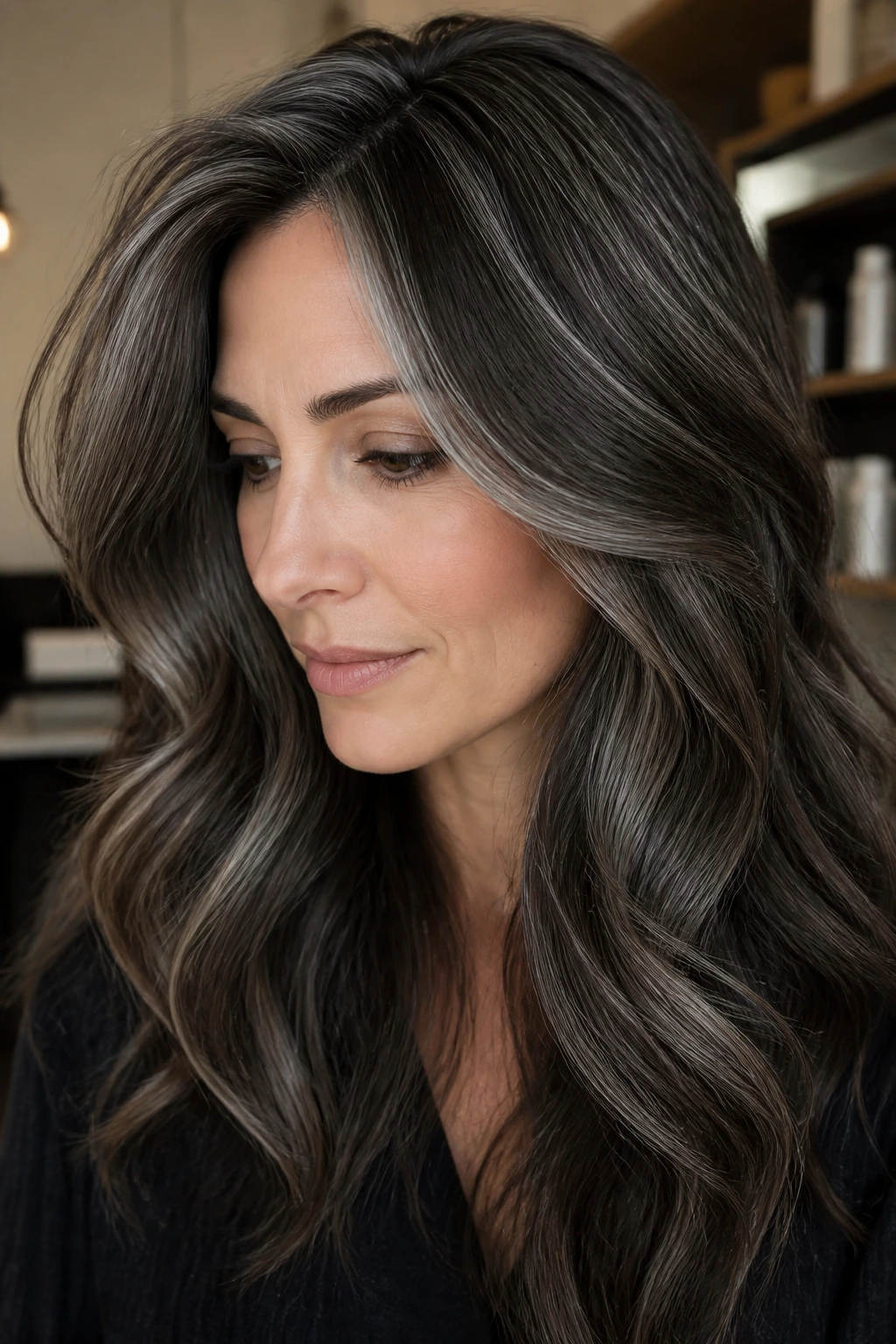
Grey on fine brunette hair works when the color keeps its shadows. That’s the part people miss. The brown is not something to erase; it’s what makes the grey feel intentional, dimensional, and less flat against the head.
If I had to pick the safest lanes, I’d start with smoky root melts, mushroom brown, pearl glosses, and fine babylights. If you want more edge, move toward chrome, charcoal money pieces, or gunmetal underlayers. The strongest version is the one that respects the cut you already have.
Pick one direction and let it breathe. Fine hair always looks better when the grey has room to move.