



Thin hair has a way of telling the truth on a bad haircut. One blunt line at the bottom, one too-short bang, one dark root that sits too heavy, and suddenly the whole head reads flatter than it should. The fix is rarely “more layers” in the loud, choppy sense. It’s usually smarter layers, longer fringe, and a few lowlights placed where they can cast depth instead of stealing light.
That’s why long layered cuts with long bangs and lowlights keep showing up on people whose hair needs shape without losing the little density it has. Long layers keep the ends from looking wispy. Long bangs keep the face framed without exposing too much forehead or scalp. Lowlights do the sneaky work — one or two shades deeper, tucked under the surface, they make the whole length look fuller because the eye reads contrast as body.
Fine hair and thin hair are not the same thing, and that difference matters. Fine hair means the strand itself is small and can go limp fast. Thin hair usually means there isn’t much of it. When both are true, the cut has to be careful: enough movement to stop the shape from falling flat, enough perimeter to avoid a see-through tail, and enough shadow in the color to make the whole thing look anchored.
Why This Collection Works So Well on Thin Hair
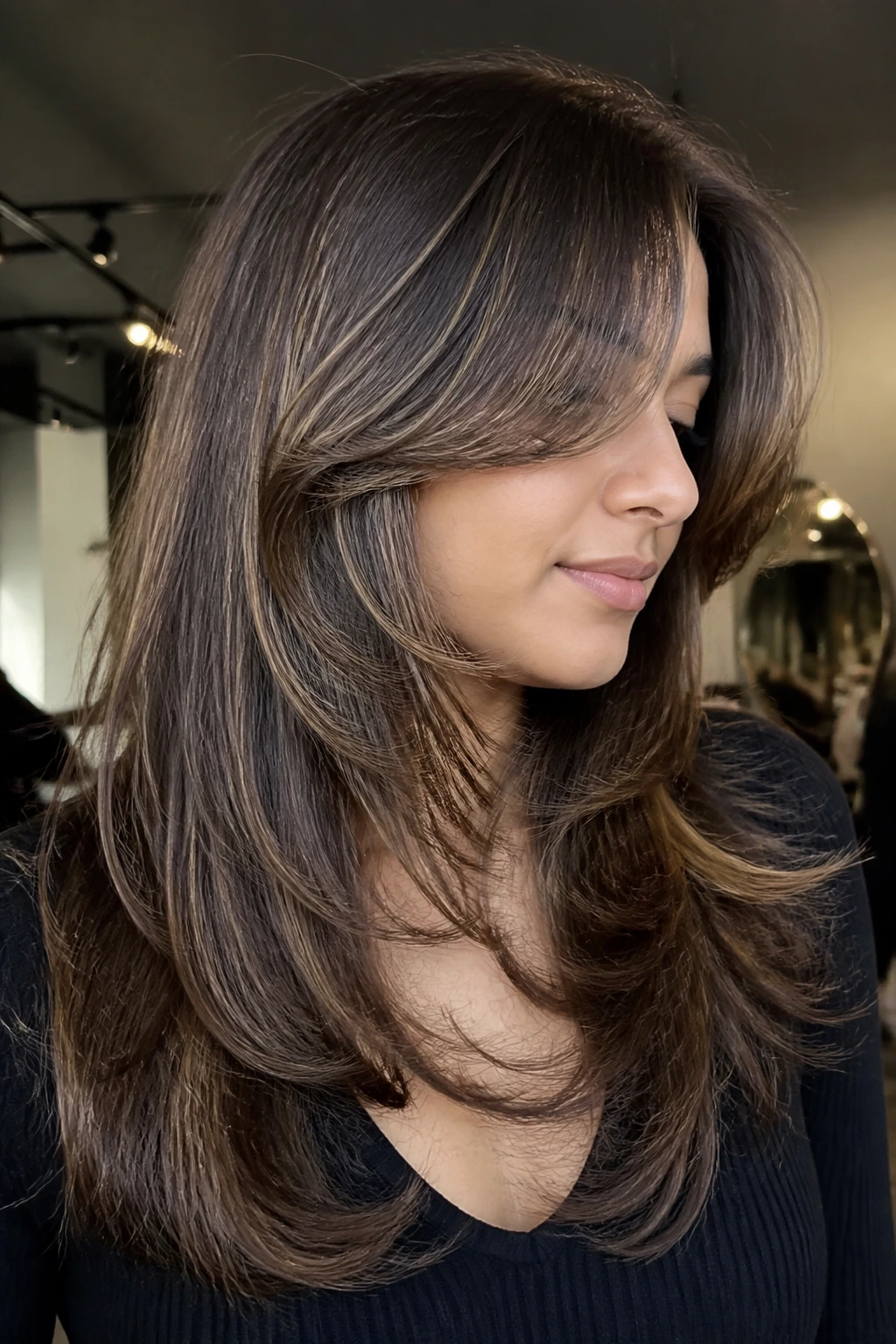
- The layers stay long enough to keep the outline full. Short, shredded layers can make thin hair look like it lost volume in the rinse cycle; longer layers preserve the bottom edge while still giving movement.
- Lowlights create shadow where thin hair needs it most. A few ribbons one or two levels deeper than the base color make the hair read denser because the eye sees depth between the pieces.
- Long bangs soften the forehead without eating the front density. Bangs that graze the cheekbones or jawline frame the face, but they do not create the sparse, see-through line that shorter fringe can.
- You get shape without constant teasing. These cuts and colors do a lot of the work for you, which matters if you hate standing at the mirror with a round brush and a prayer.
- The looks can go polished or relaxed. Blow them smooth, bend the ends, or let them air-dry with a little mousse; the structure still shows up.
- The color can stay subtle. If you do not want chunky highlights or a stark stripe effect, lowlights are the quieter, smarter move.
1. Butterfly Layers With Caramel Lowlights
A butterfly cut can be a gift for thin hair when it is kept soft and not over-chopped. The top layers lift the crown, while the lower length hangs on to enough weight that the ends do not look see-through. Add caramel lowlights underneath and through the mid-lengths, and the whole shape starts to read thicker without feeling dark.
Why It Helps Thin Hair
The butterfly shape gives you two things at once: lift near the face and a long, full-looking bottom section. That balance matters. If the shorter pieces are too aggressive, the haircut starts to look airy in a bad way; if they’re soft and blended, the cut moves without losing its backbone.
- Best bang shape: Curtain bangs that split at the cheekbones.
- Best lowlight tone: Warm caramel or light chestnut.
- Where to place the color: Under the crown and through the interior, not on the very front hairline.
- Styling note: A 1.25-inch curling iron gives the face-framing pieces a bend that makes the layers look deliberate.
Pro tip: Ask your stylist to keep the lowest layer long and clean. The haircut needs one solid line to hold the illusion of density.
2. U-Shaped Layers With Mocha Lowlights
A U-shaped cut gives thin hair a softer hemline than a blunt cut, which is useful when the ends tend to look sparse. The curve at the back creates movement without shaving off too much weight, and mocha lowlights stitched through the underside keep the length from looking washed out.
The best part is how forgiving this shape is on day-two hair. If the blowout drops a little, the curve is still there. If you wear it straight, the U shape keeps the perimeter from looking chopped off. Side-swept long bangs help because they pull attention diagonally across the face, which adds motion even when the hair itself is not doing much.
For thin hair, I like this cut better than a heavy V-shape if the ends are delicate. The U keeps a broader bottom line. That broadness helps.
How to wear it: Blow-dry with a medium round brush, then turn the ends under just enough to show the curve. Keep the bangs smooth and skimpy, not puffed up.
3. Soft Shag With Espresso Ribbons
Why does the soft shag keep showing up on fine hair? Because it gives you texture without pretending the hair is thicker than it is. The longer shag version, especially with long wispy bangs, works best when the layers are sliced into the upper half of the head and left longer below the chin. Espresso ribbons tucked underneath add the kind of depth that makes the texture look intentional instead of stringy.
How to Style It
Air-dry this cut with a pea-sized amount of mousse at the roots and a light cream only on the ends. Then twist two or three front sections around your fingers while the hair is still damp. That gives you the undone, piecey finish the shag wants.
- Keep the crown layers light.
- Do not over-feather the very ends.
- Use a diffuser only until the roots are about 80% dry.
- Finish with a dry shampoo mist at the part if the hair collapses.
This is the cut for someone who wants movement first and polish second. If you live in ponytails, clips, and quick resets, it earns its keep.
4. Bottleneck Bangs With Chestnut Depth
Bottleneck bangs are one of my favorite answers to a forehead that needs framing without a heavy line. They sit narrower in the center, then open out toward the cheekbones, which gives thin hair a better front shape than a full, blunt fringe. Chestnut lowlights woven through the mid-lengths make the whole cut feel richer, especially if the base is a lighter brunette.
What makes this combo work is the way the bangs and color share the same job. The bangs create softness around the face. The lowlights keep the long lengths from looking flat and overlit. Together, they make the haircut feel fuller without a lot of visible bulk.
If you want something easy to wear tucked behind the ears, this is a strong pick. The bangs still sit nicely even when the rest of the hair is pinned back a little.
Watch for this: Ask for the bangs to start long enough to brush the cheekbones. Too short and they lose the relaxed shape that makes bottleneck bangs worth cutting in the first place.
5. Invisible Layers With Toffee Lowlights
Invisible layers are the quietest trick in this whole lineup, and I mean that in a good way. Instead of breaking the surface into obvious steps, the layers live inside the haircut, so the perimeter still looks full when the hair hangs straight. Add soft toffee lowlights under the top section, and the result is subtle depth rather than a loud color pattern.
This is the look for someone who likes length and hates obvious chopping. The long bangs can be center-parted or swept slightly to one side, and because the layers stay hidden, the hair keeps a heavier feel at the bottom. That helps thin hair more than people expect.
You do have to style it with a little intention. A quick blow-dry with a nozzle and a flat wrap around the brush will wake up the movement. Skip rough towel-drying. It makes the ends act smaller than they are.
6. V-Cut With Auburn Shadow
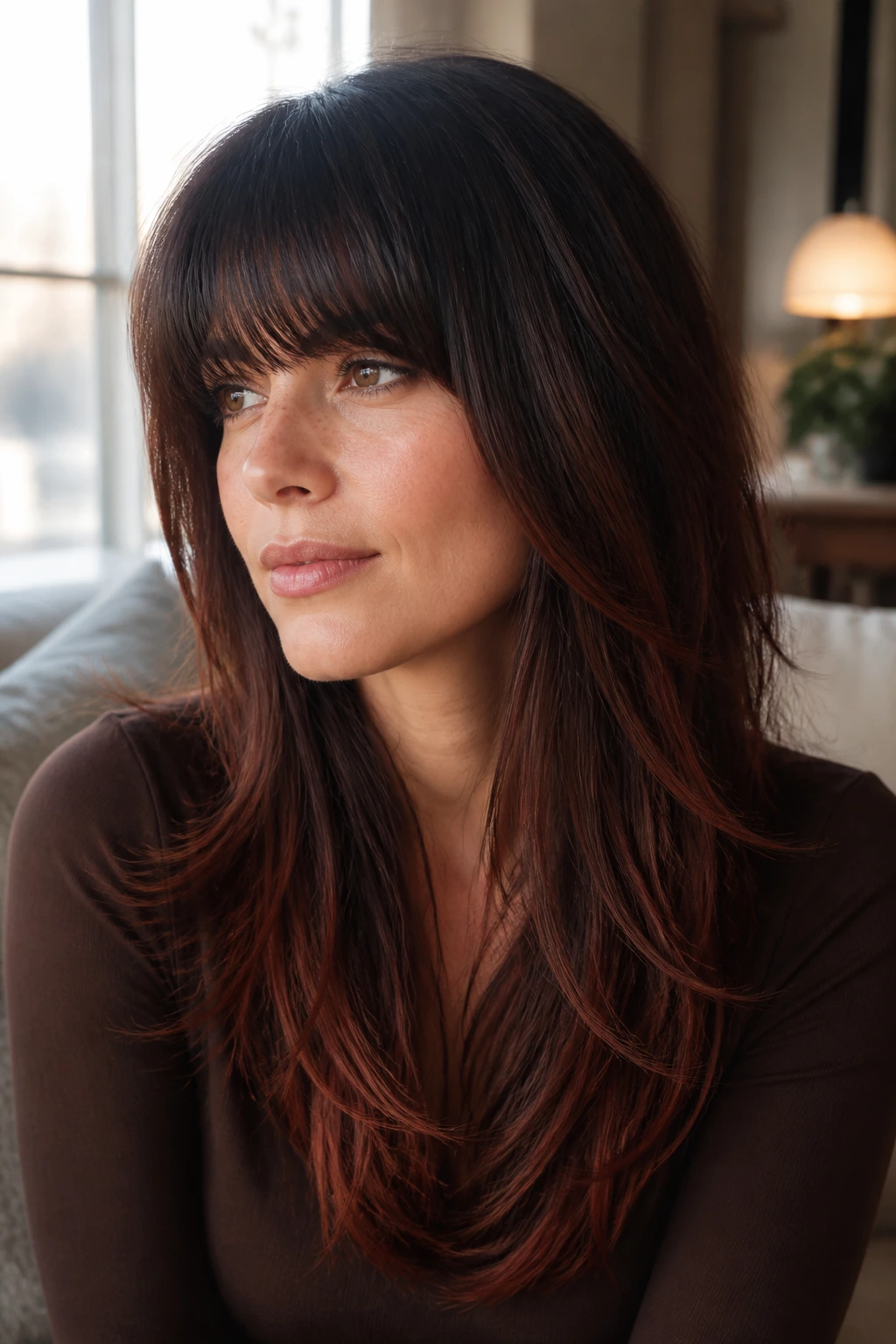
A V-cut can look risky on thin hair, and if the lower point is carved too sharply, it is. But the softer version — long layers that taper gently toward the center back — gives you an elegant line without stripping away the ends. Auburn lowlights threaded through the lower half add warmth and keep the shape from turning stringy.
The bluntness of the front is what saves this cut. Long bangs that stay heavier through the middle of the face balance the pointed back and stop the haircut from feeling too airy. If your hair is naturally straight or only slightly wavy, the V-shape can look very clean. If it’s ultra-fine and slippery, keep the point subtle.
I would use this on someone who likes long hair that still has a little attitude. It’s not a shy cut.
Styling note: A soft bend at the ends, not tight curls, keeps the V visible without making the length shrink up.
7. Rounded Layers With Mushroom Brown Lowlights
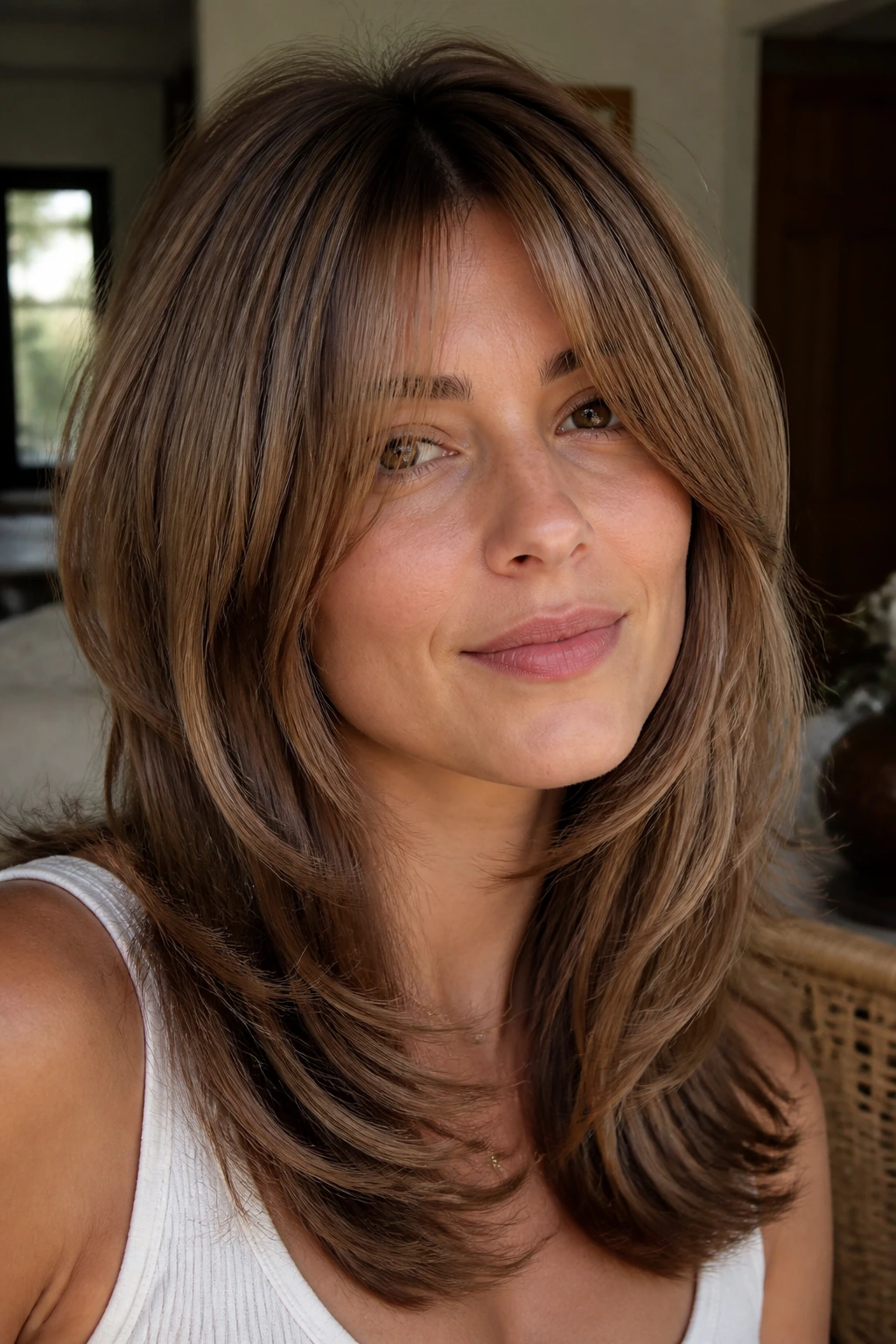
Rounded layers are the unsung hero for thin hair that needs a fuller silhouette. Instead of tapering hard at the front or back, the shape curves around the head, which makes the hair look cushioned. Mushroom brown lowlights — that cool, muted brown that sits somewhere between taupe and soft espresso — are especially good if your base color is blonde or light brown and you want less shine-spray gloss, more structure.
What Makes It Different
The roundness keeps the middle from collapsing. The muted lowlight shade does the rest by removing that washed-out, too-bright finish thin hair can get in daylight. Long bangs that split softly near the nose bridge finish the shape without crowding the forehead.
- Works well on straight or slightly wavy hair.
- Better with a side part if your crown is flat.
- Best for someone who wants a softer, more blended result.
- Avoid chunky panels; the effect should feel misted in.
It’s a quiet haircut. That’s the charm.
8. Curtain Waves With Beige-Brown Lowlights
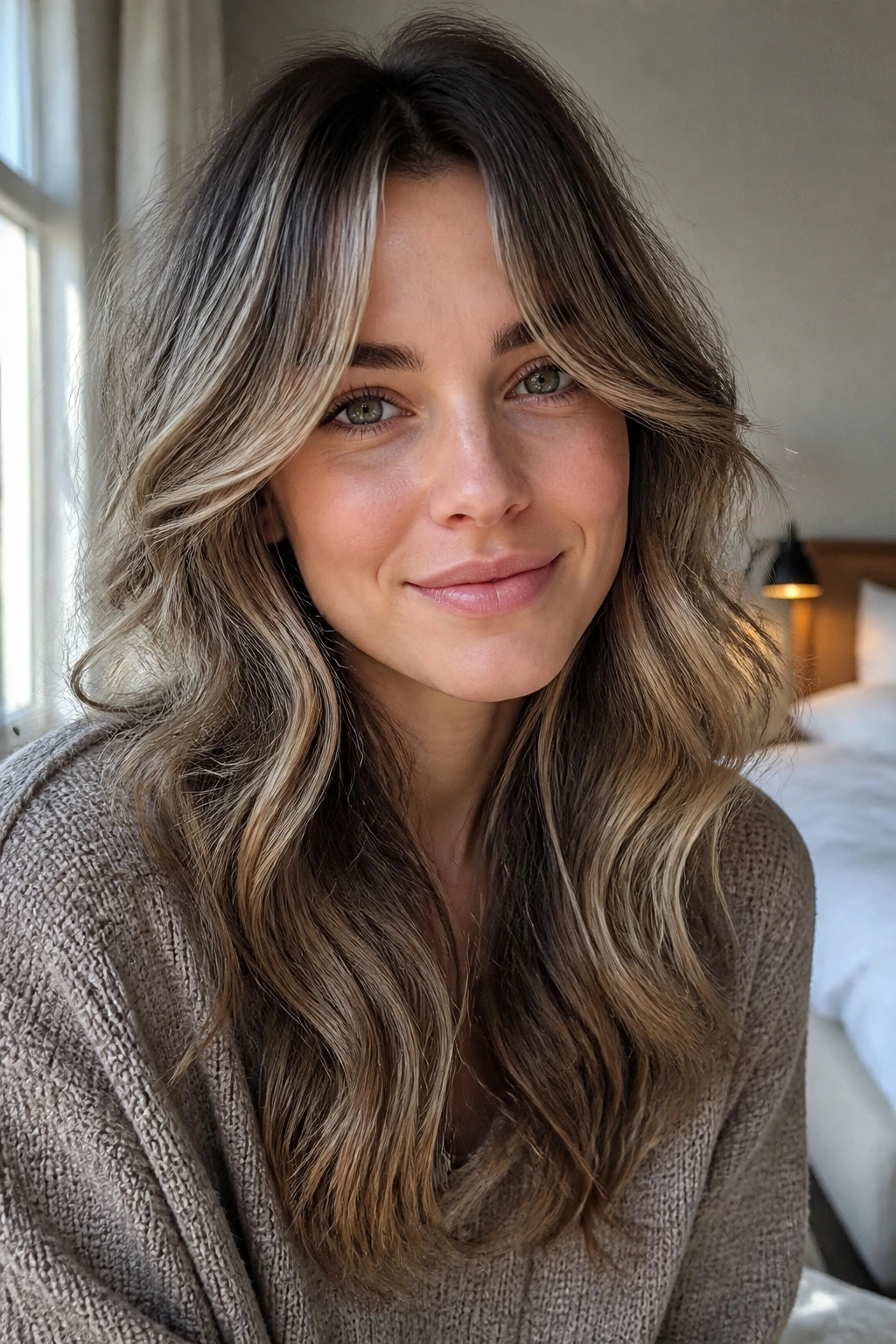
Curtain bangs are not new, but they stay popular for a reason: they give long hair motion right where the face needs it. On thin hair, that motion matters more than a dramatic chop. The longer you keep the curtain pieces, the more likely the whole front section will stay full enough to frame the face instead of splitting into two skinny strands. Beige-brown lowlights woven through the waves add a soft, lived-in depth that keeps the style from looking too glossy or too flat.
A cut like this wants a loose S-wave, not a tight curl. The wave bends the lowlights just enough that the color looks dimensional from every angle. If you blow-dry the bangs away from the face and then bring them back with your fingers, they land in that easy, soft curve people keep asking for.
This is one of those cuts that looks better when it is not overworked. Good. That should be obvious, but people still reach for too much spray.
9. Deep Side-Part Layers With Cocoa Lowlights
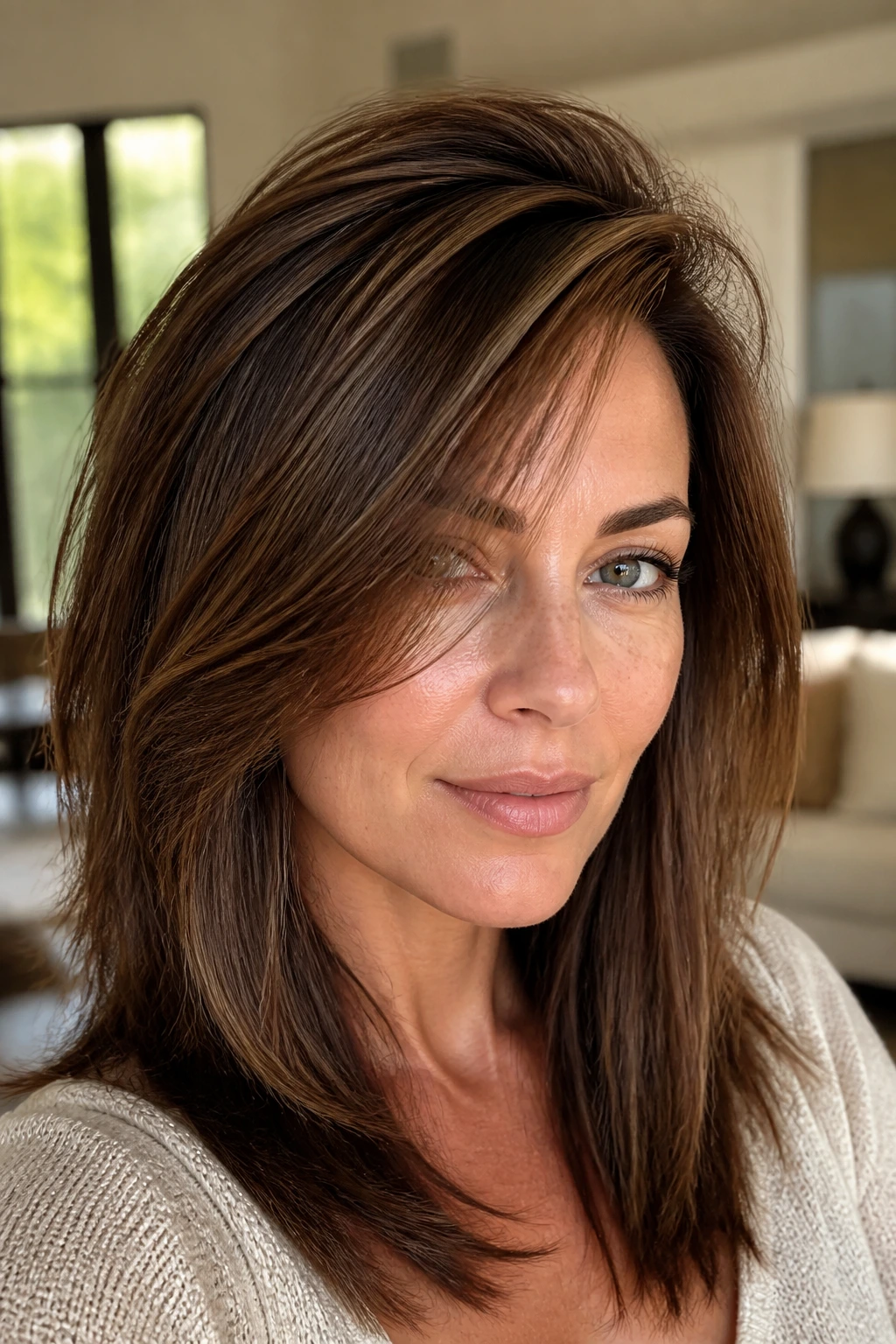
A deep side part changes the whole personality of thin hair. It gives the crown a little lift, creates an asymmetric sweep over the forehead, and lets long layers fall in a way that looks fuller on one side before they soften into the other. Cocoa lowlights through the interior make the lengths feel deeper and a little more expensive-looking, even if you simply blow-dry and go.
Why It Flatters Thin Hair
The side part creates a built-in volume boost at the root line. That’s the real trick. Thin hair often goes flat because everything parts too evenly and sits too close to the scalp. The deep side part breaks that pattern, and the longer bangs can move across the forehead instead of clinging to it.
For this look, I like face-framing pieces that start around the chin and feather into the long length. Keep the bottom edge mostly intact. If you remove too much from the ends, you’ll lose the part’s payoff.
A round brush helps, but only if you keep the lift at the roots and do not curl the whole head into a helmet. Nobody needs that.
10. Wolf-Cut Lite With Smoky Brunette Lowlights
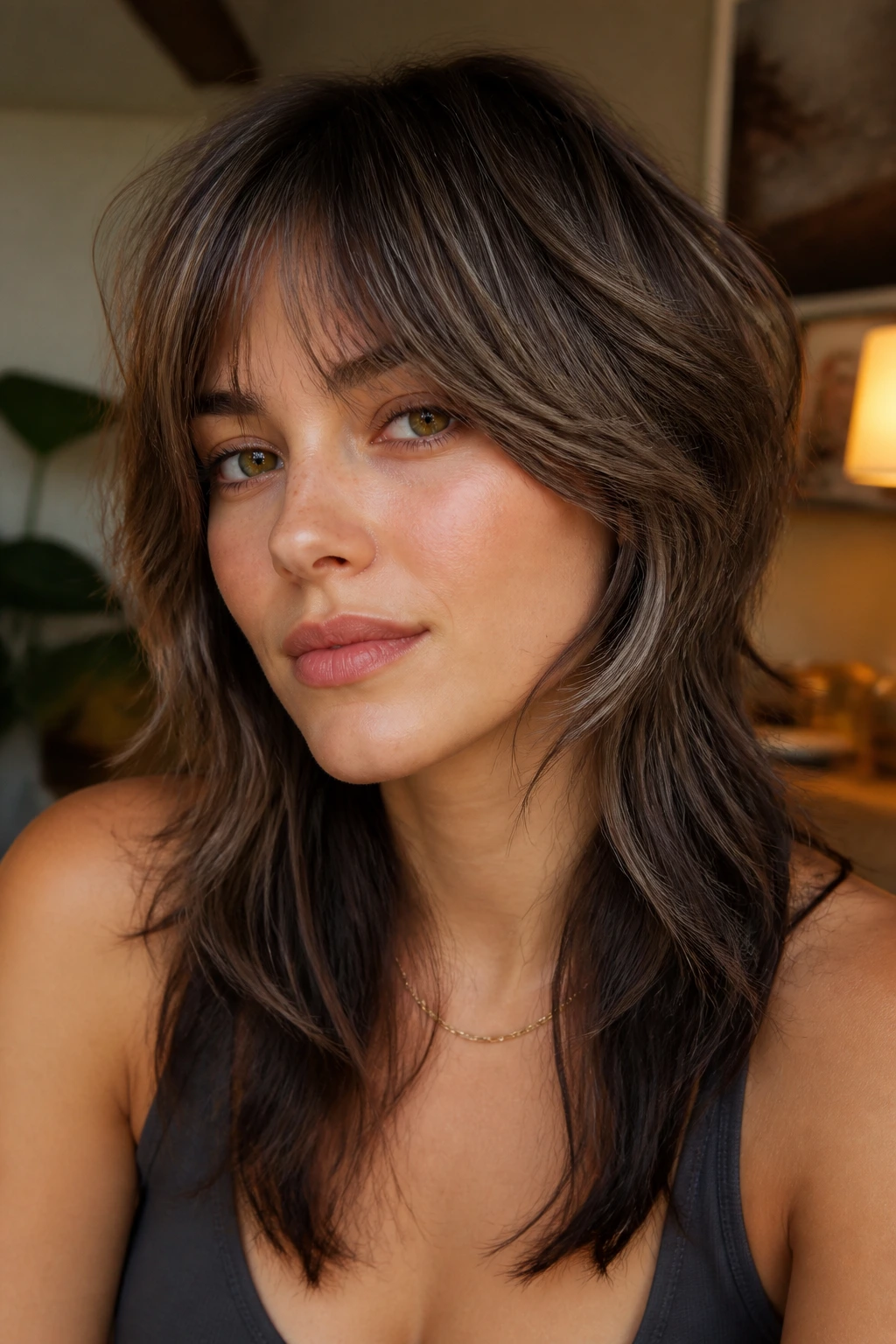
A full wolf cut can overwhelm thin hair fast. The lighter version — call it wolf-cut lite if you want a label — keeps the shaggier top and the longer tail, but tones down the chop so the hair doesn’t look shredded. Smoky brunette lowlights underneath make the texture read more deliberate because the darker strands separate the layers visually.
The long fringe is what keeps this from feeling too punk or too short. It should fall past the brows and split around the eyes, not sit like a hard curtain. That soft length matters because it anchors the cut and stops the crown from looking overcut.
This one suits hair that has some natural bend or can take a little mousse and a diffuser. If your hair is pin-straight and refuses texture, ask for a softer version. A wolf cut with no movement just looks uneven.
Pro tip: Keep the lowlights concentrated in the underlayer and at the nape. Too much dark near the top can make the crown appear smaller.
11. Blowout Layers With Maple Lowlights
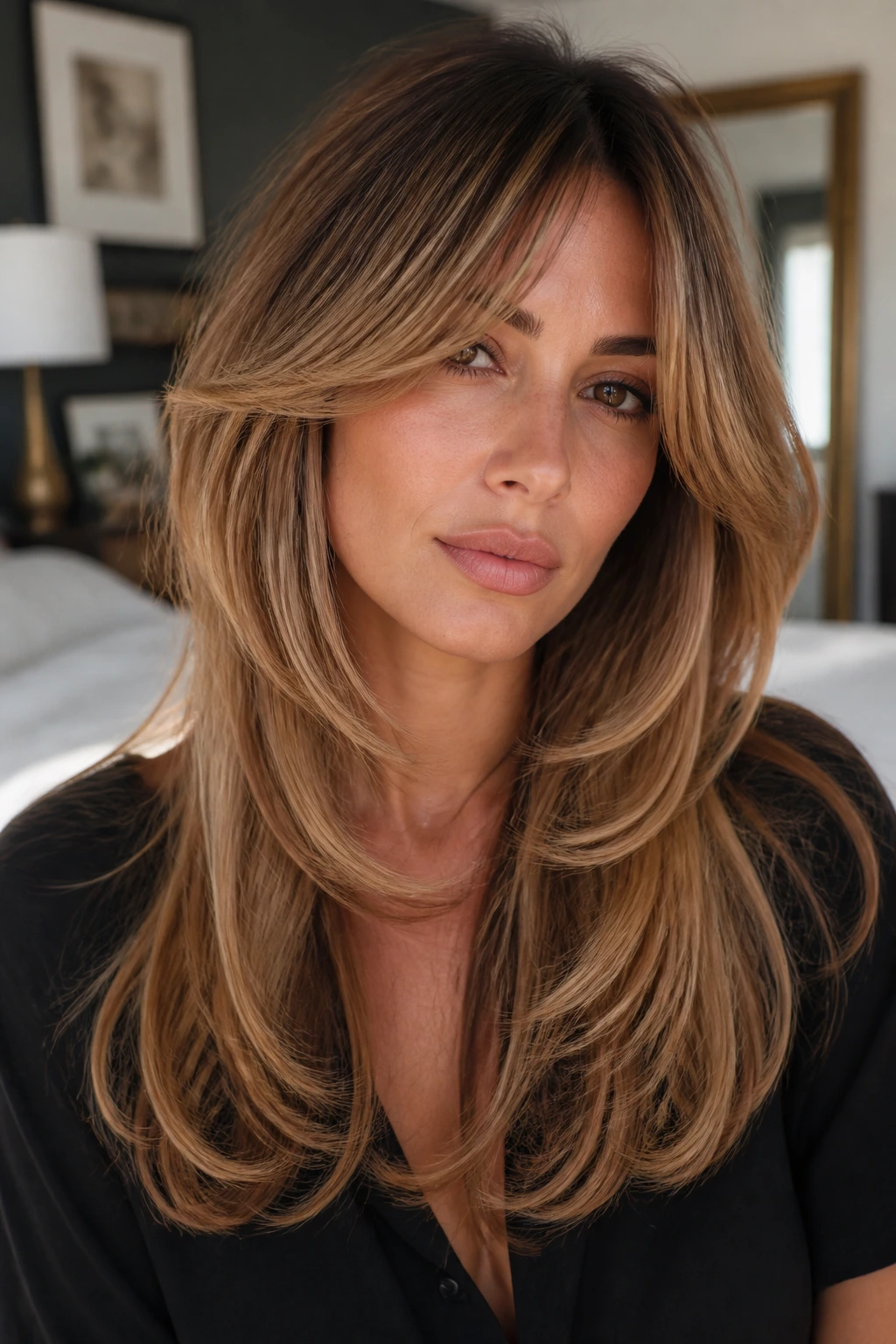
This is the sleek, expensive-looking version of thin-hair layering. The cut is still long and feathered, but the layers are designed to fall into a round, bouncy blowout rather than sit piecey. Maple lowlights — warm, golden-brown ribbons — add depth without turning the hair muddy.
The bangs should be long enough to brush the cheekbones and sweep away from the center. That keeps the whole front soft and keeps the eyes open. I like this cut on shoulder-blade length hair because the length gives the brush something to work with. Shorter long hair can lose the blowout shape faster.
How to Style It
Use a root-lift spray at the part, blow-dry with tension, then roll the front sections under a large brush for five to ten seconds as they cool. That cooling step matters. It’s what makes the bend stay instead of dropping by lunch.
The shape should look polished, not stiff. If the ends feel too curled, brush them out once with your fingers and let the lowlights show through the movement.
12. Mermaid Layers With Sable Depth
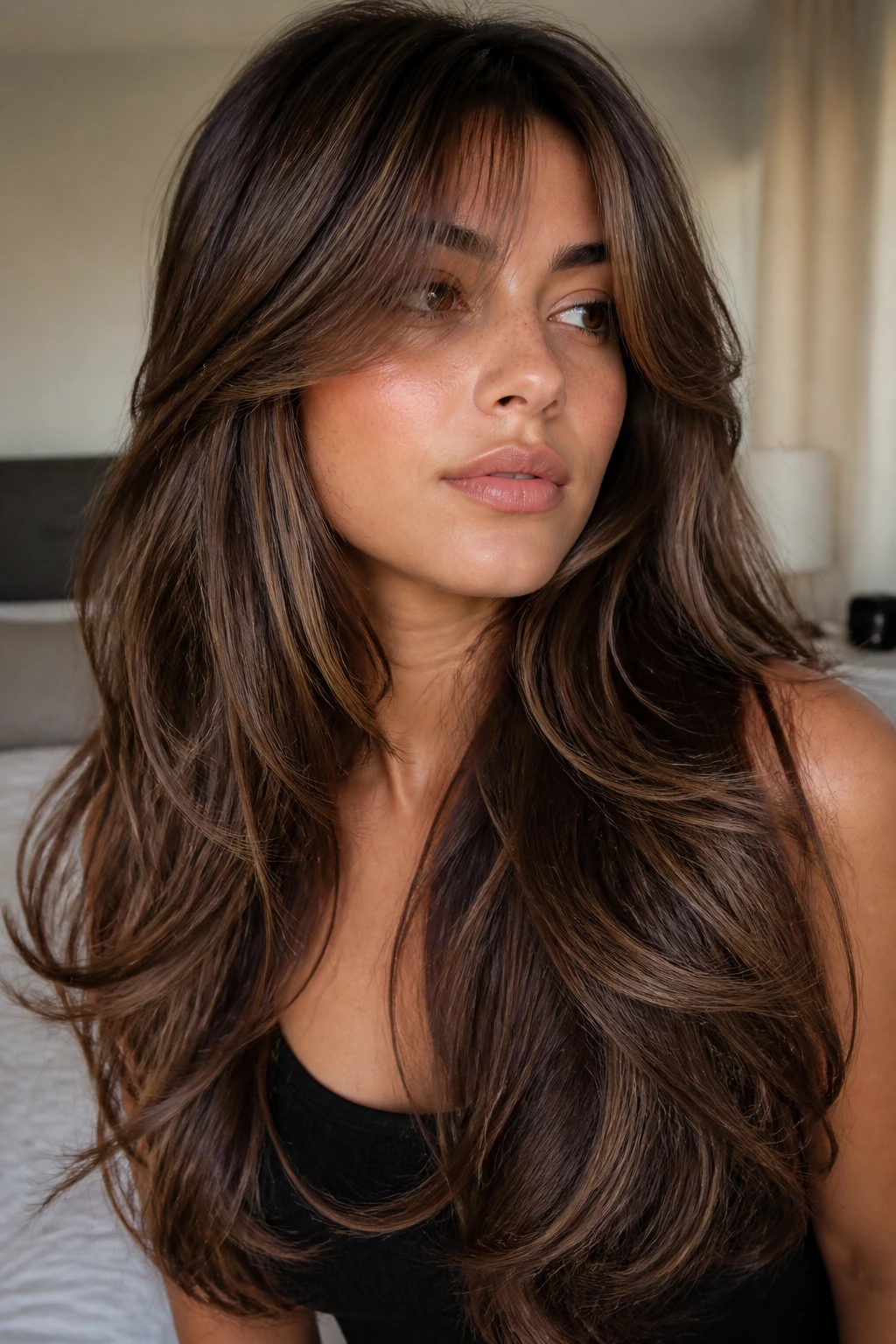
Mermaid layers are all about long, cascading lengths that keep their romance without becoming one heavy curtain. On thin hair, the trick is restraint. You want long, sweeping layers that barely interrupt the length, plus sable lowlights placed under the surface to add a darker core. The result is less “see-through hair” and more “long hair with a body underneath.”
Long bangs help here because they break up the front length and stop the style from becoming a single straight fall. Keep them soft and bendable. If the bangs are too heavy, the cut loses the airiness that makes it work.
This is one of the few long styles that can look better air-dried than over-blown, provided you prep the hair correctly. A little mousse, a center part, and a loose braid while damp can make the waves fall in an easy pattern. No need to fight it.
13. Face-Framing Cascade With Bright Money Pieces and Lowlights
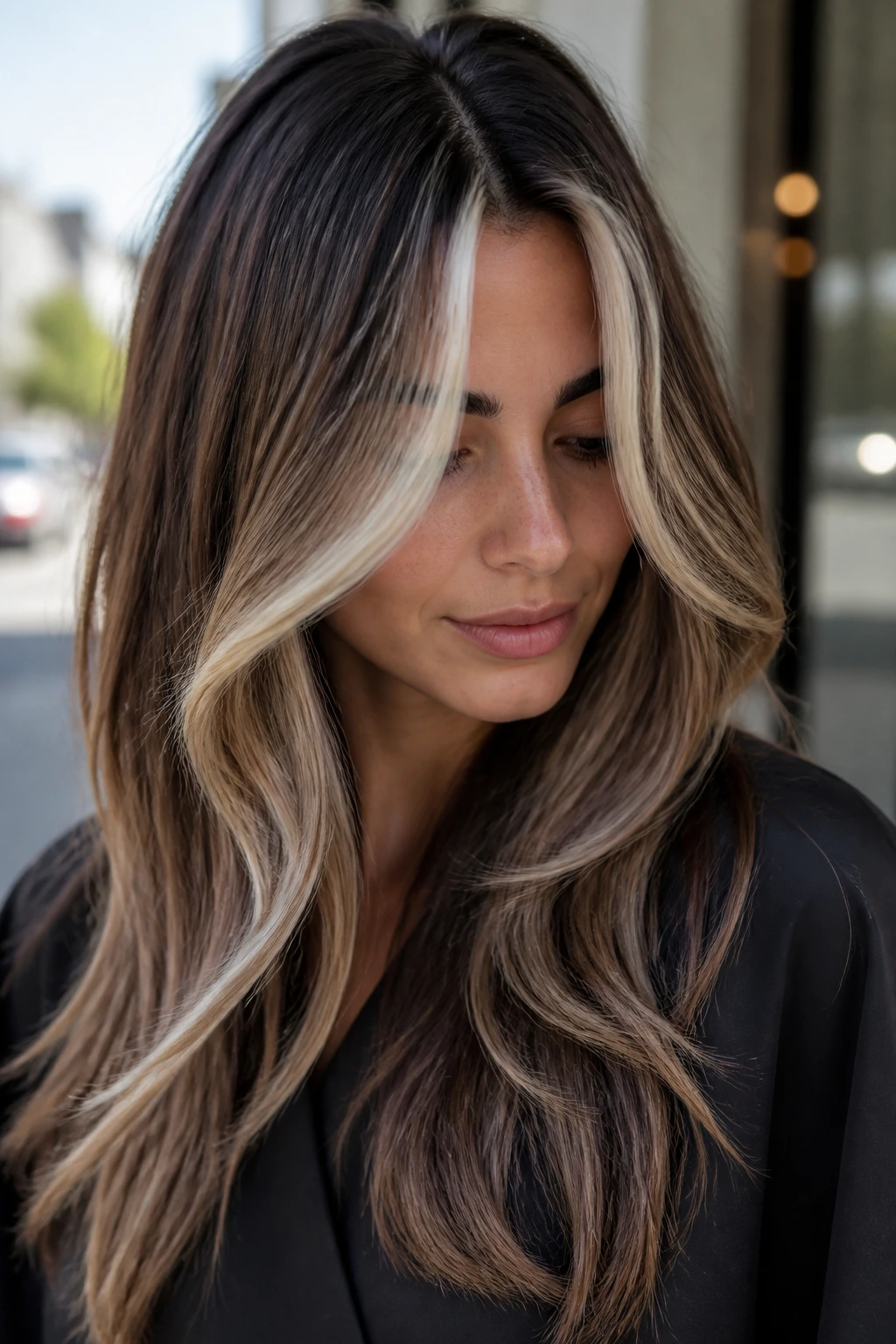
This look is a little more contrast-heavy, and that’s useful if your hair tends to disappear in photos. Bright money pieces at the front open up the face, while lowlights through the rest of the lengths stop the whole style from reading flat or washed out. The layered cascade keeps everything flowing down the sides instead of dragging the eye straight to the ends.
The money pieces should stay soft, not stripey. Thin hair can’t carry a lot of chunky color without looking busy. So the front gets the brightness, the interior gets the shadow, and the lengths keep the movement. That mix works because the eye notices dimension before it notices density. Sneaky, but effective.
If you wear a lot of middle parts and want the face to stand out a bit more, this is a good lane. It’s brighter near the cheeks, deeper underneath, and easy to grow out.
14. Choppy Textured Layers With Walnut Lowlights
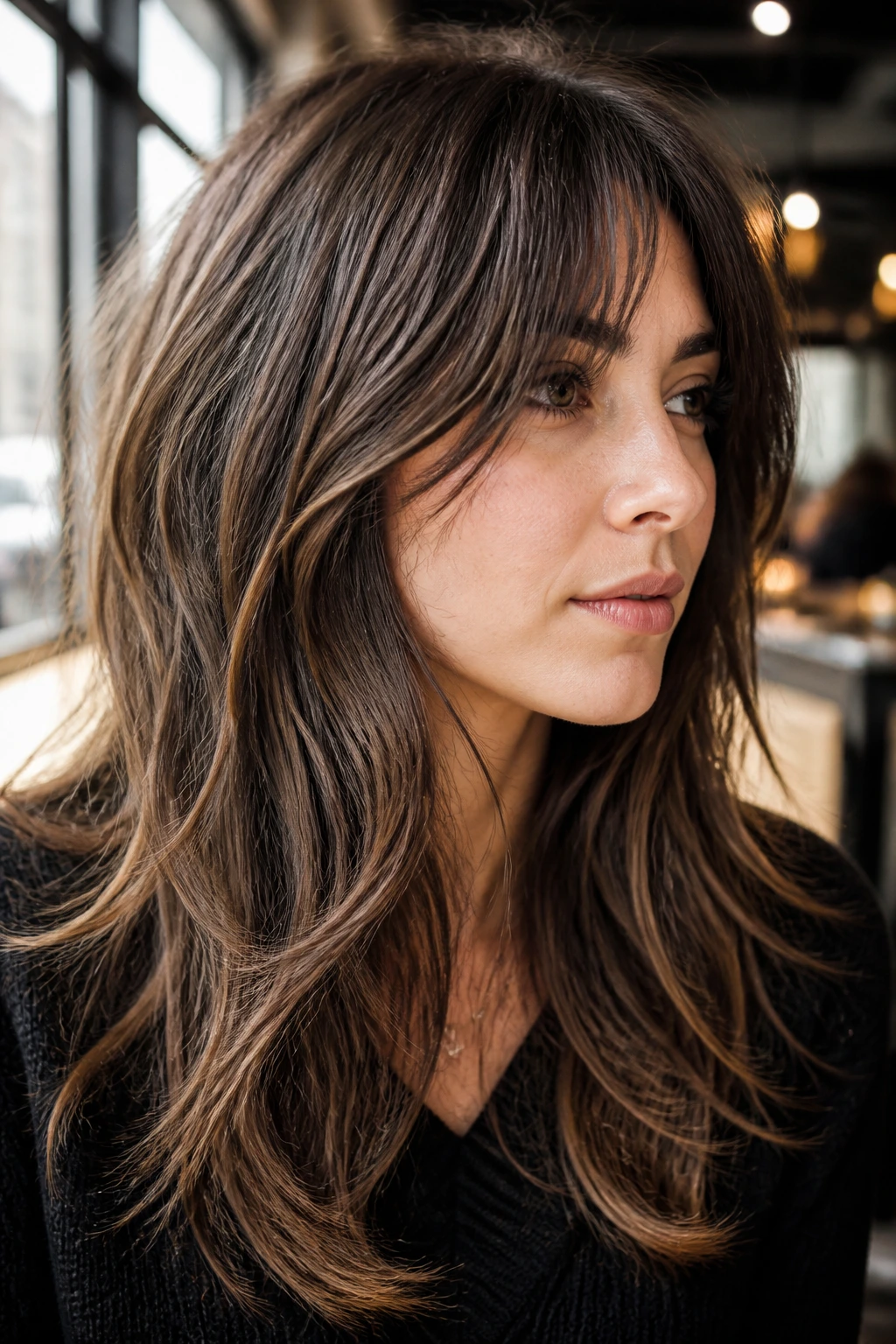
Choppy layers can work on thin hair when the chop is controlled. The hair needs roughness at the surface, not fragmentation in the ends. Walnut lowlights through the mids give the texture a darker base, which helps each piece stand off the next one instead of blurring into a single pale sheet.
What to Ask For
Ask for point-cutting, not razor-happy thinning. Ask for long bangs that can move side to side. And ask that the ends stay blunt enough to keep some weight.
- Best on hair with a natural wave.
- Good for people who like texture sprays.
- Works best when the lowlights sit below the part.
- Skip heavy layering at the very bottom.
This cut gives you that slightly undone, piecey look that never feels over-styled. If your hair bends well but lacks body, this one earns a hard look from me.
15. Glossy Layers With Espresso Veil
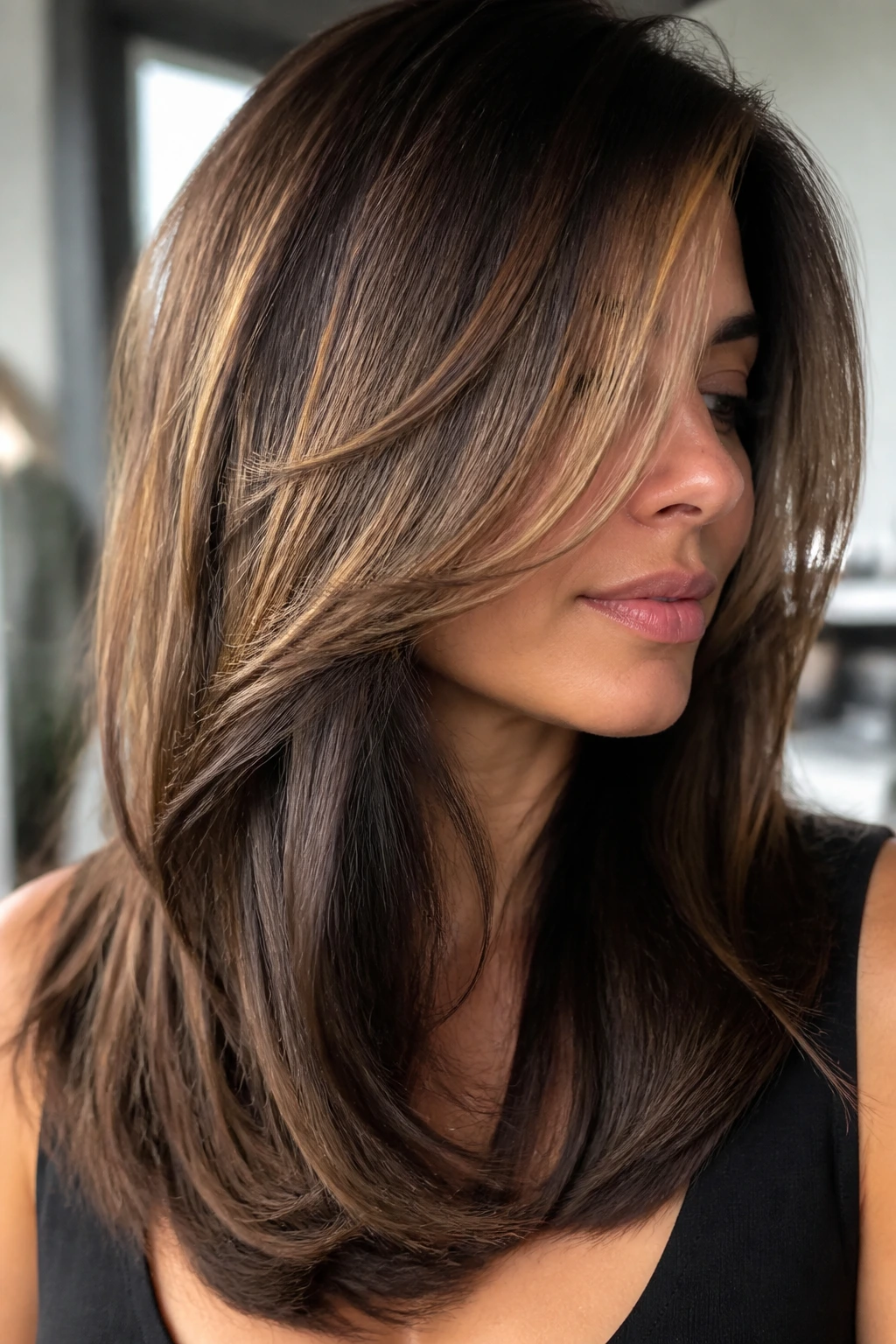
Some thin-hair cuts look better rough. This is not one of them. Glossy layers with a deep espresso veil on the underside create a sleek frame that lets the length look long and deliberate. Long side bangs keep the front soft, while the color underneath adds enough shadow that the hair still reads full when it lies flat.
The secret is not volume spray all over the place. It’s smoothing the surface and giving the hair one clean shape to sit in. A lightweight serum on the last two inches of the length is enough. Too much and you’ll flatten the very thing you’re trying to save.
This is a clean, modern cut for someone who likes shine and hates fuzz. It can look plain if the lowlights are too subtle, so do not be timid with the depth underneath. The front stays brighter, the underlayer goes darker, and the whole head suddenly has a better outline.
16. Choppy Ends With Soft Fringe and Copper Lowlights
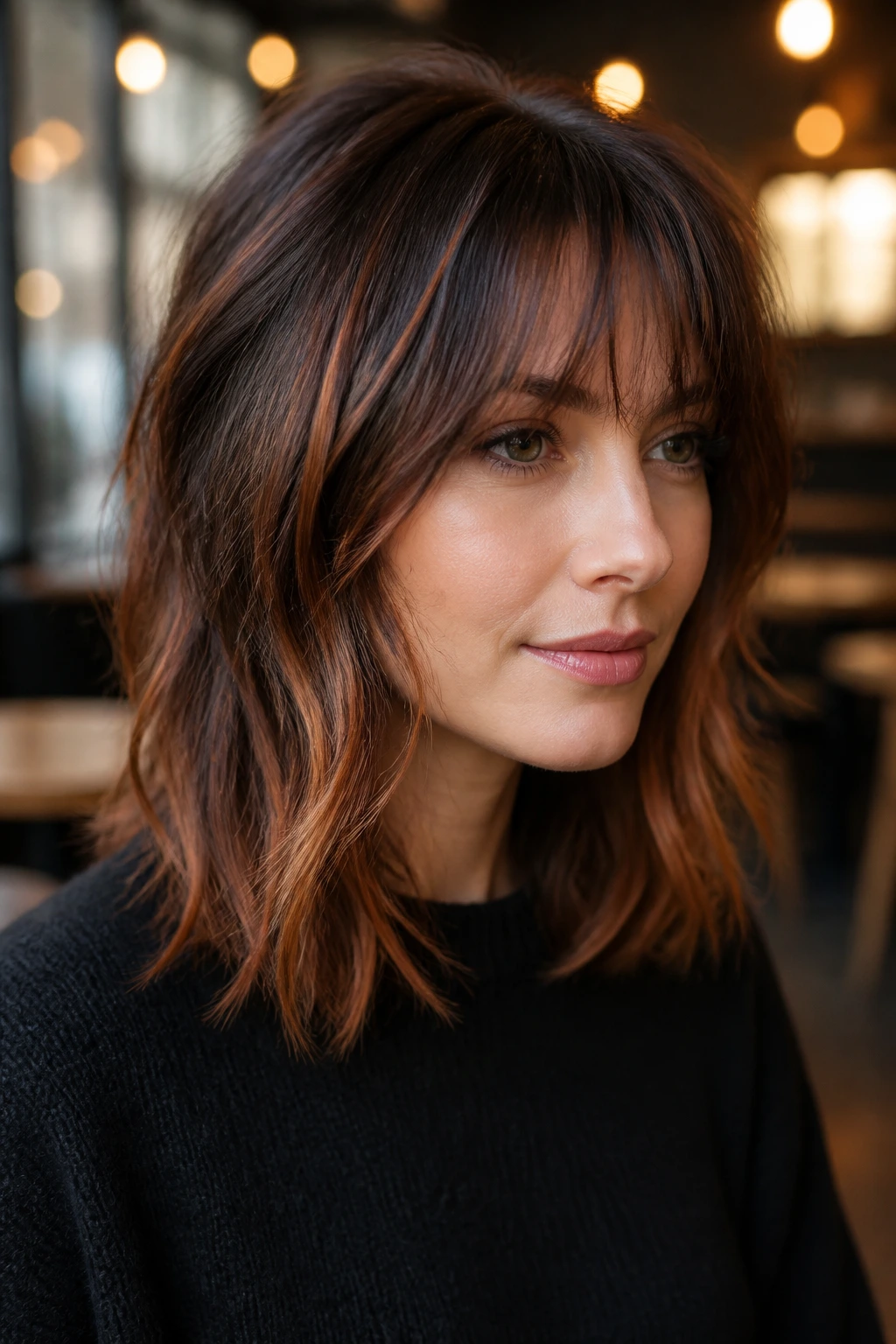
There’s a line between texture and decay. Thin hair can cross it fast if the ends are over-thinned, which is why this version keeps the chopping near the mid-lengths and leaves the bottom edge with enough shape to stay visible. Copper lowlights add warmth and make the layers stand out, especially if the base color is medium brown or darker blonde.
The soft fringe helps because it hides a little of the forehead and connects the front pieces to the rest of the cut. If you want a style that looks a bit lived-in but not messy, this is a good route. It’s not as soft as the butterfly cut and not as wild as the shag. It sits in the middle.
A light wave spray and a twist of the front pieces with your fingers is enough. Don’t overthink it.
17. Razored Layers With Center Curtain Bangs and Latte Lowlights
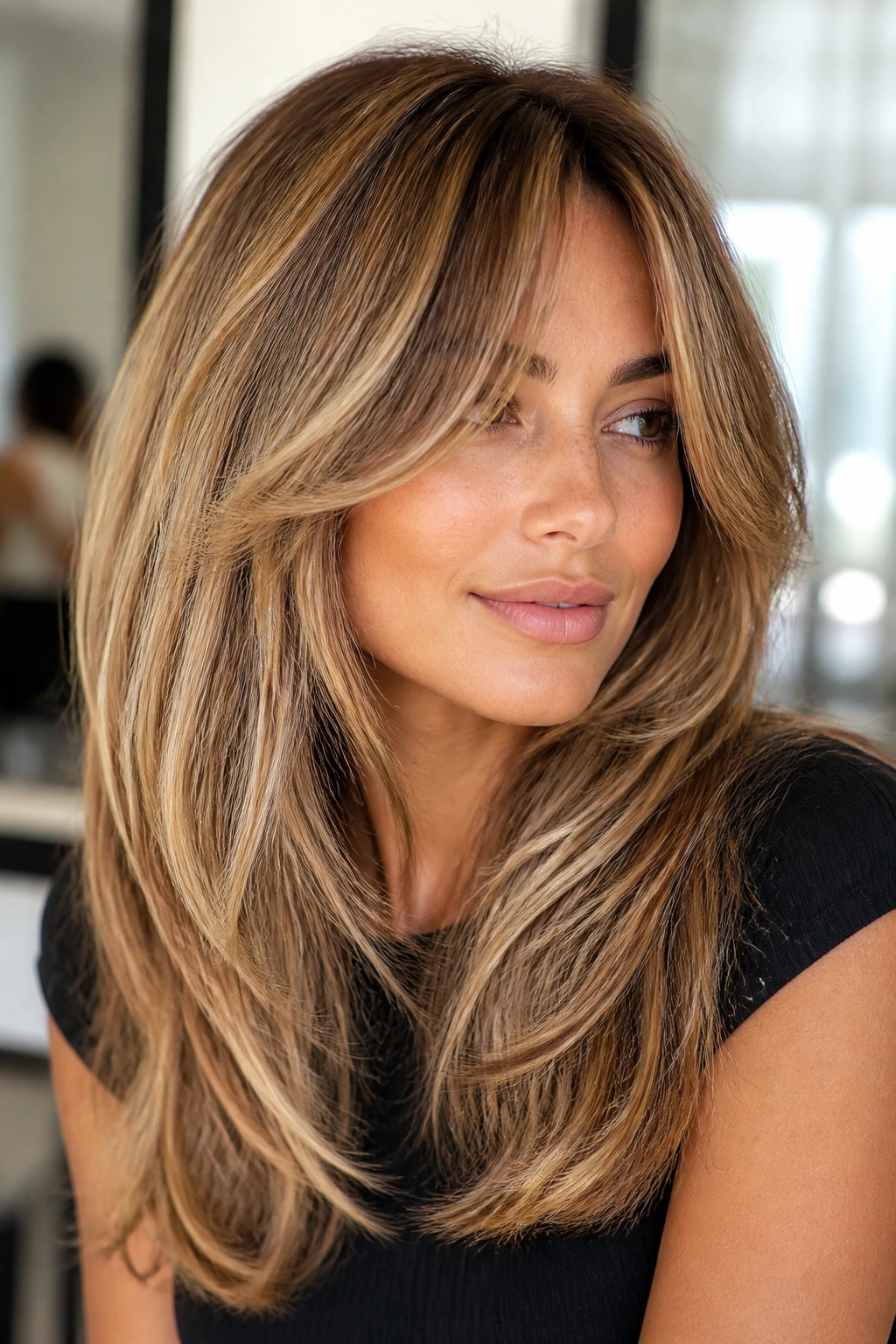
Razored layers can be brilliant on fine hair if the stylist keeps the blade work gentle. The goal is not to shred the ends. The goal is to soften the internal lines so the hair moves instead of hanging in one block. Center curtain bangs open the face, and latte lowlights — that creamy brown, a shade softer than espresso — keep the cut from going too flat in bright light.
The Science Behind the Shape
The razor removes bulk, which can help hair that feels heavy at the top but thin at the ends. Too much, and the hair turns wispy. Too little, and the cut looks stiff. So this one depends on restraint and a stylist who knows when to stop.
- Keep the longest pieces past the cheekbone.
- Keep the bangs parted, not chopped straight across.
- Use a heat protectant before any bend or wave.
- Add the lowlights mostly through the mids, not the whole crown.
If your hair gets puffy instead of full, this is a good middle ground. If it goes limp with every brush stroke, you may want less razor and more shape.
18. Romantic Flip-Out Layers With Ash Brown Lowlights
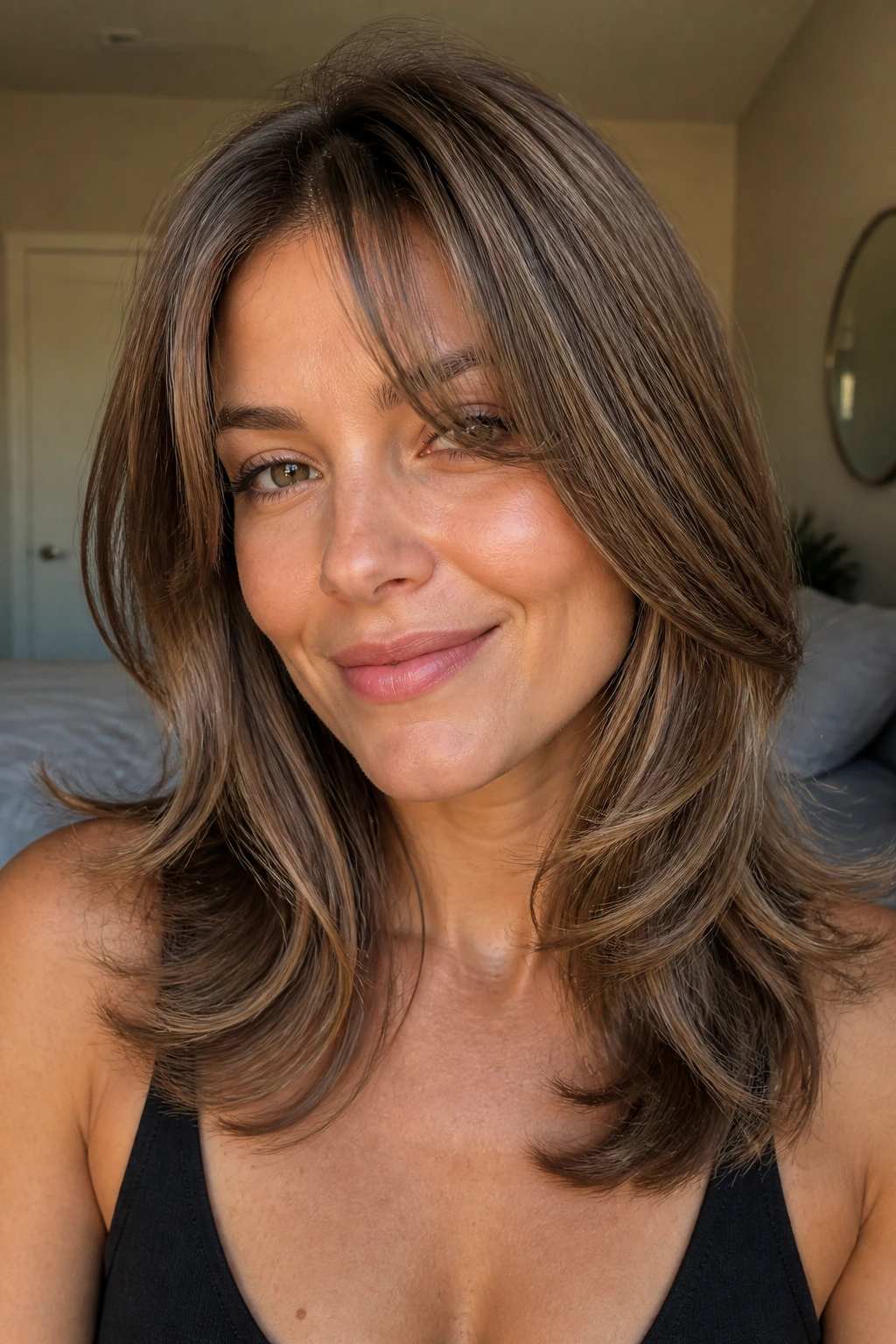
Flip-out ends make long hair feel light without making it look thin. That little outward bend at the ends gives the cut some lift and keeps the perimeter from hanging like a wet towel. Ash brown lowlights cool the color down and give the hair a more dimensional, smoky finish, which is especially nice if the base is warm or brassy.
The long bangs should sweep across the face, not stop in a hard line. You want movement into the flip, not a bang that fights it. A large round brush or a velcro roller at the front can give you the bend without too much heat.
This cut has an old-school feel, but in a clean way. It flatters thin hair because the flip-out shape keeps the ends visible. Straight, flat ends can disappear. Flipped ends don’t.
19. Minimal Layers With Heavy Long Bangs and Deep Brunette Lowlights
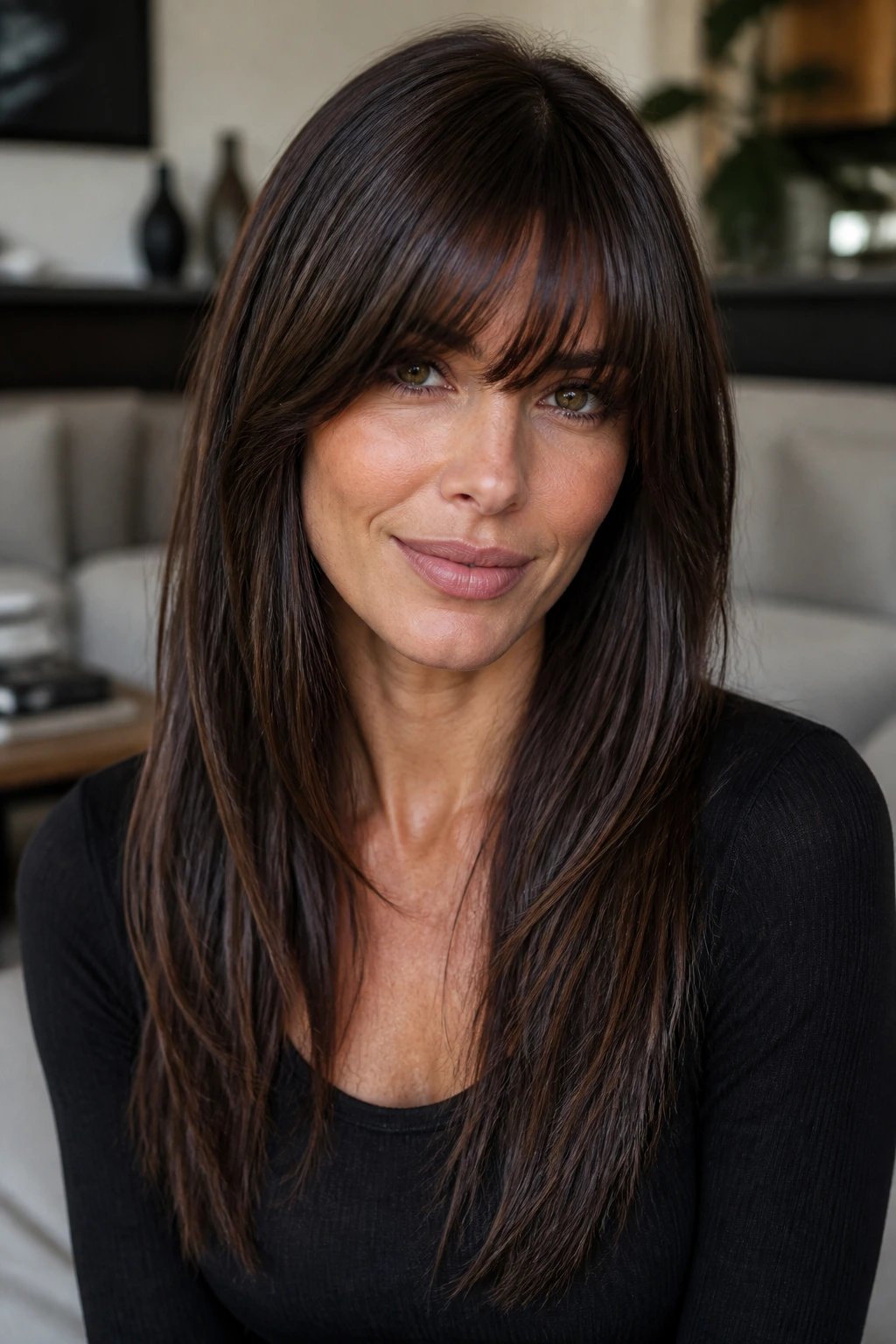
Minimal layers sound boring until you remember what thin hair actually needs: not a lot of interruption, just enough shape to keep it from falling flat. A heavier long bang brings the attention to the front, while the long length stays mostly intact. Deep brunette lowlights under the top layer create enough darkness to make the body of the haircut look richer.
Why It Works
This cut is strong on hair that looks best when the perimeter stays solid. If you over-layer it, the whole shape goes stringy. If you keep the layers long and the bangs heavy enough to sweep past the brows, you get structure without losing the bottom line.
It’s also a good choice if you wear your hair in low buns or half-up styles. The bangs do the work up front; the rest can move quietly.
I like this look when the goal is polish, not obvious texture. It’s not flashy. It just looks better than it should.
20. Layered Curls With Cinnamon Lowlights
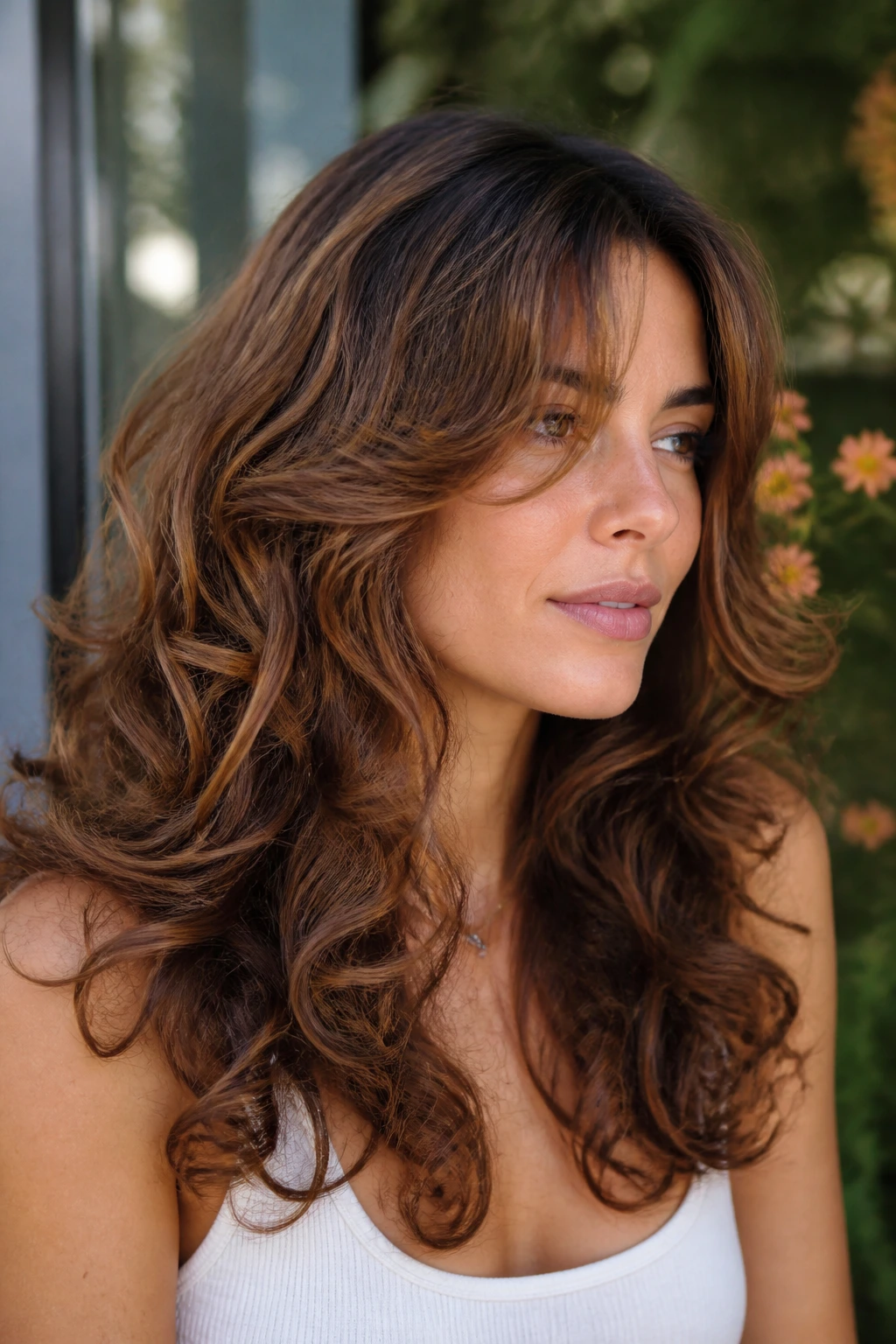
Curly thin hair needs a gentler hand than straight thin hair, and layered curls are where that shows. The layers should be long enough that the curls stack, not scatter. Long bangs, cut to blend into the cheekbones, keep the front from shrinking too high. Cinnamon lowlights add warmth and make each curl read more clearly against the next one.
The best way to wear this shape is with curl cream, a diffuser, and a hard stop before the hair gets frizzy from overhandling. Touch it too much and the lowlights blur. Leave it alone and the color creates a nice pattern through the ringlets.
This cut works because it honors the curl pattern instead of chopping it into pieces. That sounds obvious. People still ignore it all the time.
21. Feathered Layers With Cool Cocoa Lowlights
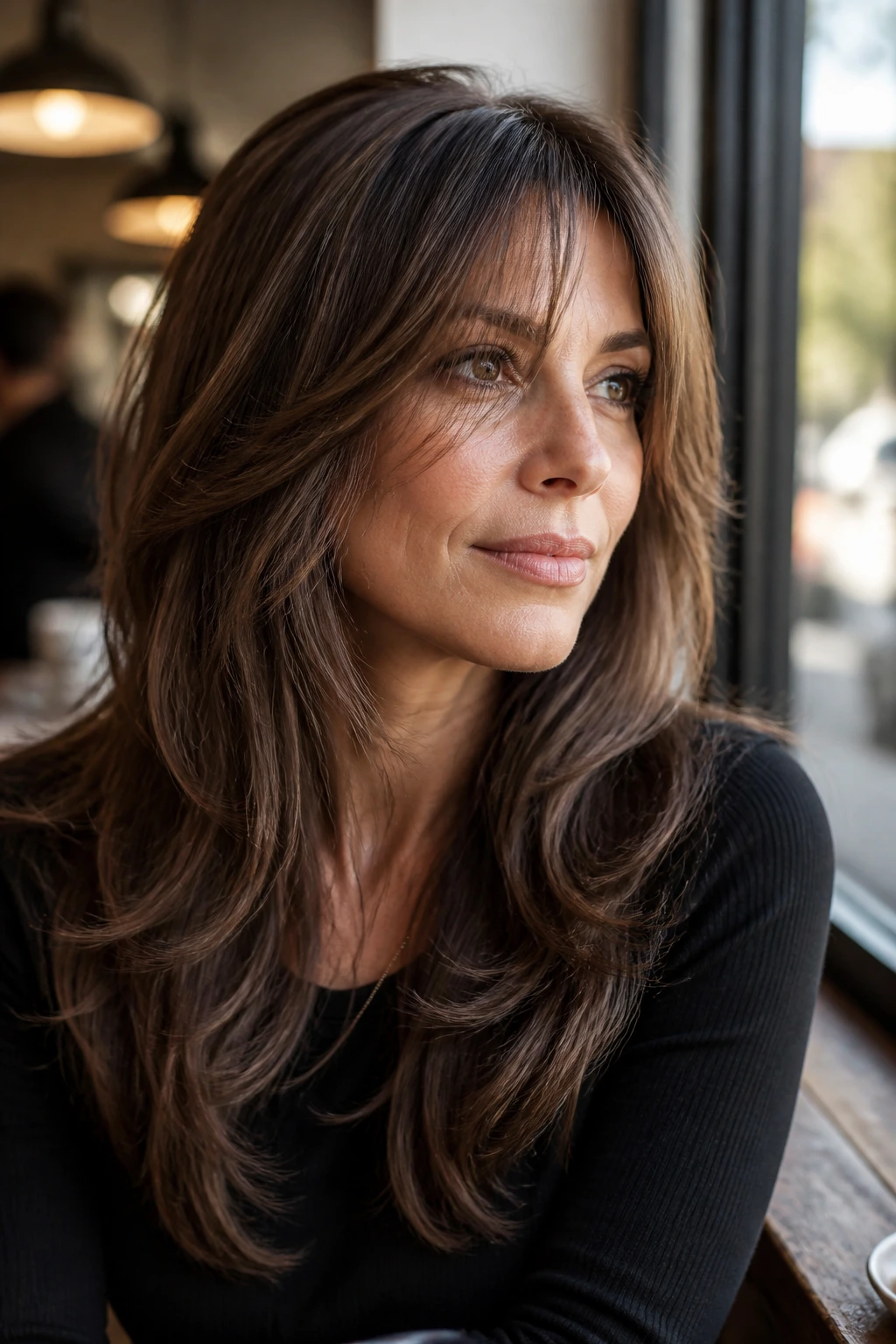
Feathered layers are what you want when you need softness around the face and a little swing through the ends. The feathering should be long and airy, not 1970s-feathered-to-the-heavens. Cool cocoa lowlights add depth without extra warmth, which is useful if your base color leans ash or neutral.
The fringe can be airy and long, skimming the cheekbones and blending into the side layers. That keeps the front from looking separate. Thin hair likes connection between sections. Disconnected pieces can look sparse fast.
This is a polished, wearable shape for people who want movement but not obvious shag texture. It looks clean in a blowout and even better when the ends are given a soft bend away from the face.
22. Dimensional V Layers With Chocolate Ribbons
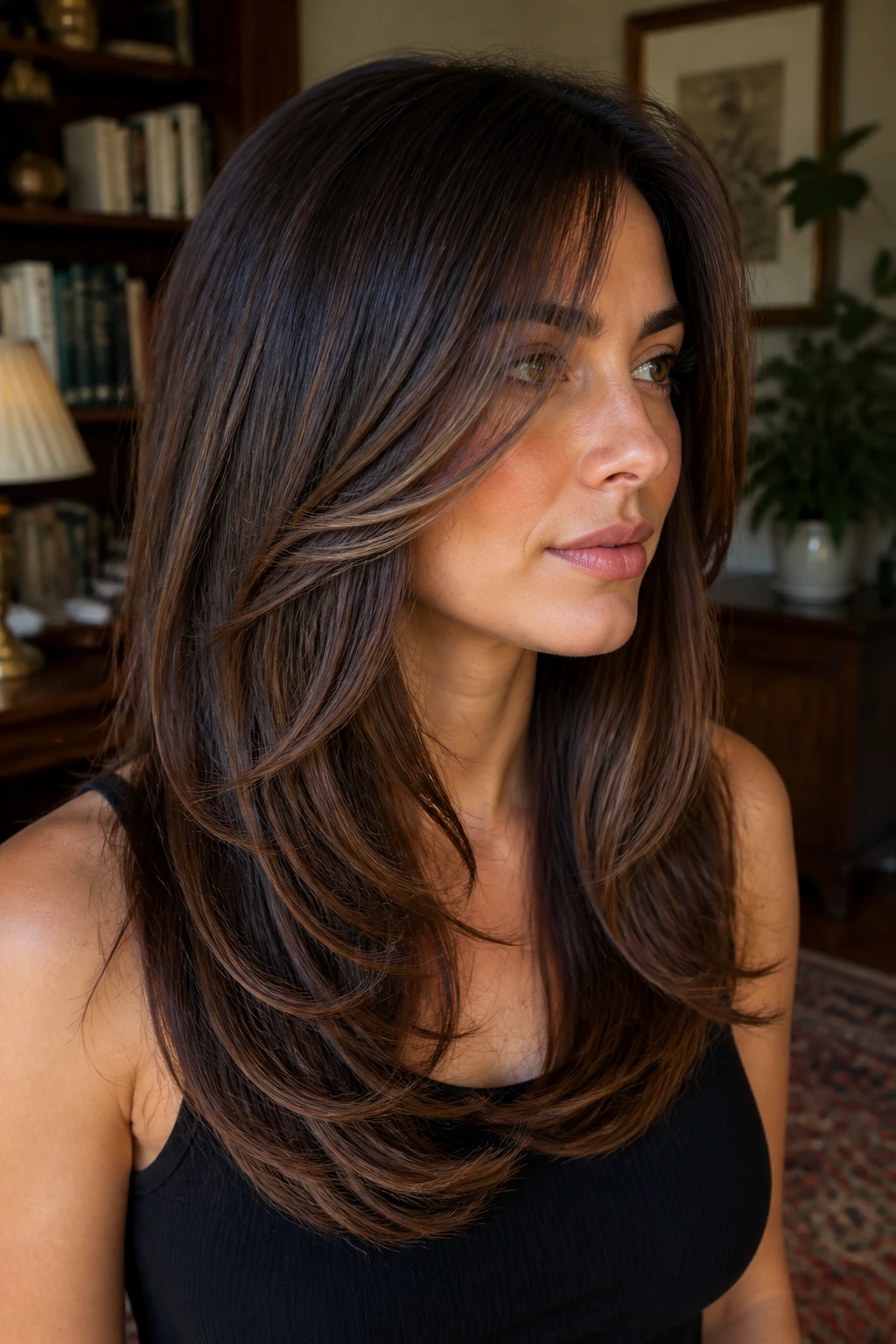
A dimensional V shape gives long hair a pointed finish at the back, but the trick is to keep the point soft enough that thin hair does not look tail-like. Chocolate ribbons woven through the lower half make the layers appear deeper, especially when the hair swings. Long bottleneck bangs finish the face framing and keep the top from feeling too wide.
What Makes It Different
Compared with a U-shape, the V pulls the eye downward more sharply. Compared with a straight cut, it adds more motion at the bottom. That makes it better for someone who wants a little drama without losing length.
- Ask for a soft point, not a sharp triangle.
- Keep the front layers long enough to brush the jaw.
- Place the darker ribbons underneath the visible top layer.
- Style with loose bends, not tight curls.
This one suits longer hair that already has some natural density. If the ends are very sparse, soften the point even more.
23. Face-Framing Cascade With Long Sweeping Bangs and Caramel Lowlights
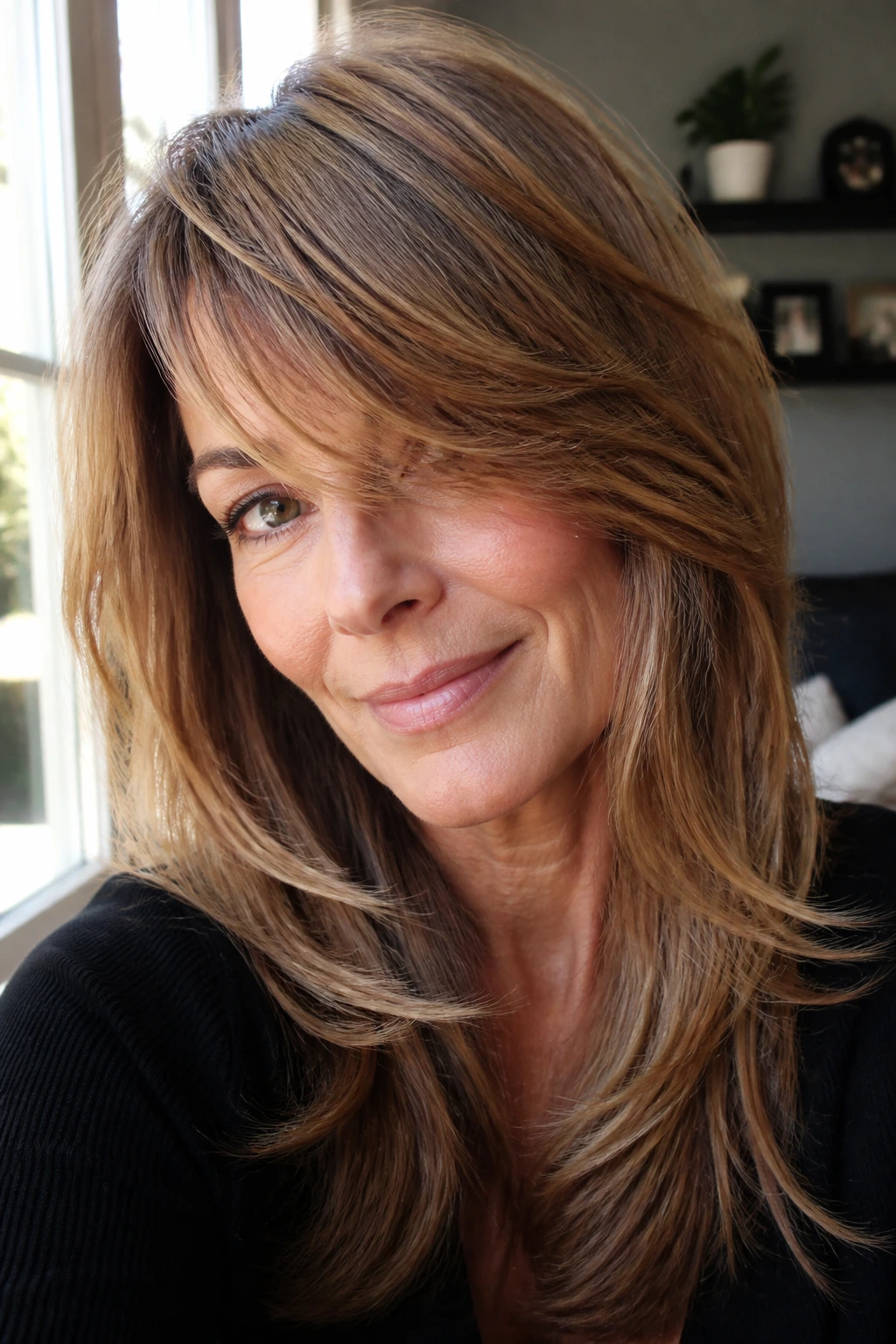
A face-framing cascade can be one of the most flattering shapes for thin hair because it keeps the attention moving around the face and down the length instead of parking it at the ends. The long sweeping bangs start near the cheekbones, then melt into the layers. Caramel lowlights underneath create a warmer, richer backbone that stops the haircut from feeling airy in a weak way.
The key is balance. The front should be soft enough to open the face, but not so soft that the shape disappears. If you ask for a few face-framing pieces that angle from the mouth to the collarbone, you get motion without a pile of short layers around the cheeks. That matters. Too many short face pieces can make the hair look thinner at the front.
This is one of the easiest styles to wear with a middle or off-center part, which is part of why people keep coming back to it.
24. Rachel-Inspired Layers With Mocha Lowlights
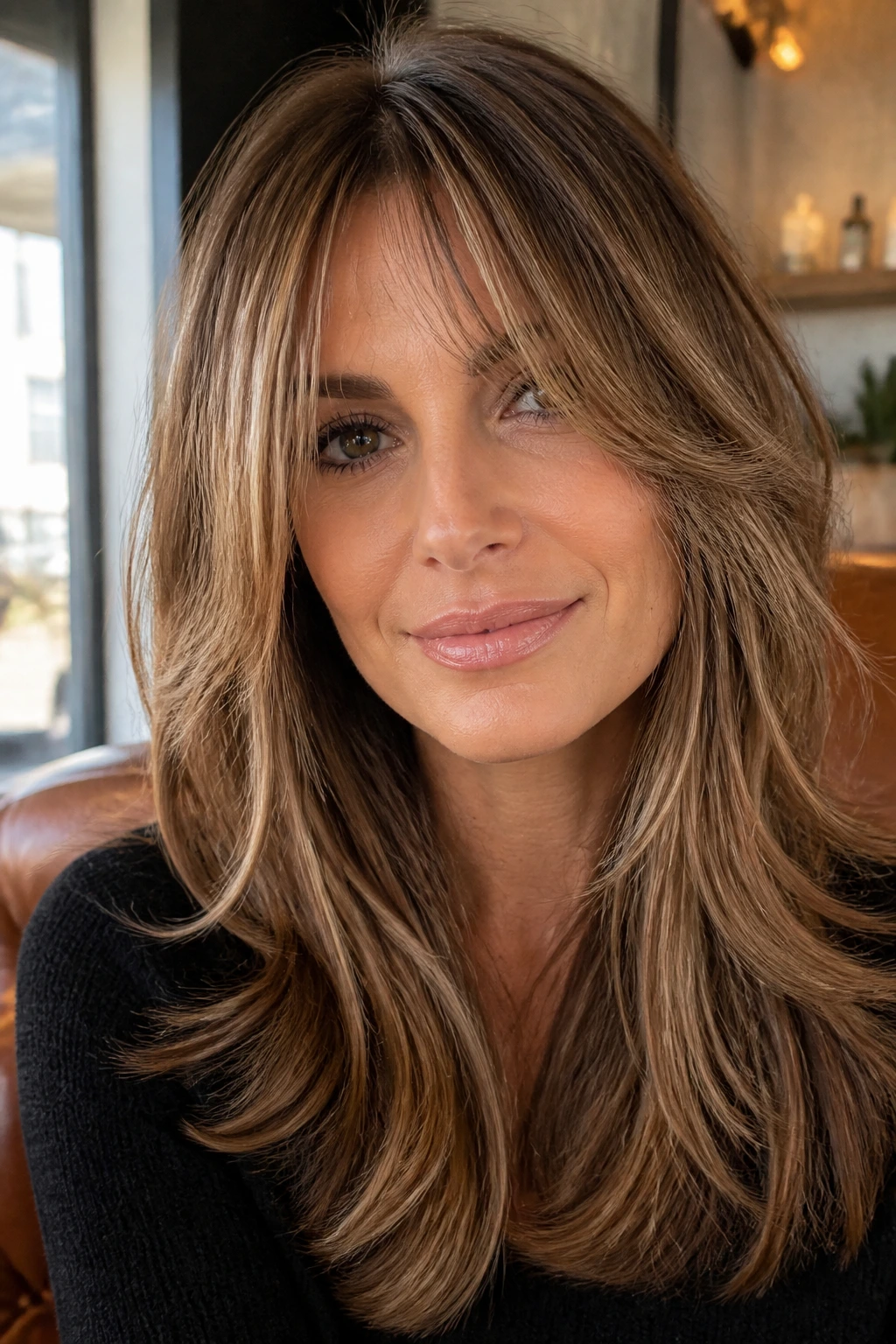
The Rachel silhouette still works because it was built on movement. On thin hair, the modern version has to be softer and less stacked around the face, but the idea is the same: layers that kick out and frame the cheeks, long bangs that can be swept or tucked, and mocha lowlights to keep the blonde or brown base from reading one flat note.
How to Get the Most From It
Ask for the layers to stay long through the back and sides. Keep the face-framing pieces soft enough to curl under with a round brush. Then weave the lowlights through the mids so the shape looks fuller when the hair moves.
This cut loves a blowout. It also loves a little root lift. What it does not love is a rough air-dry with no product and no direction.
I’d pick this for someone who wants recognizable shape but not a dated, over-stacked version of that shape. It should look like the idea, not the costume.
25. Invisible Layers With Shadow Lowlights and a Sleek Finish
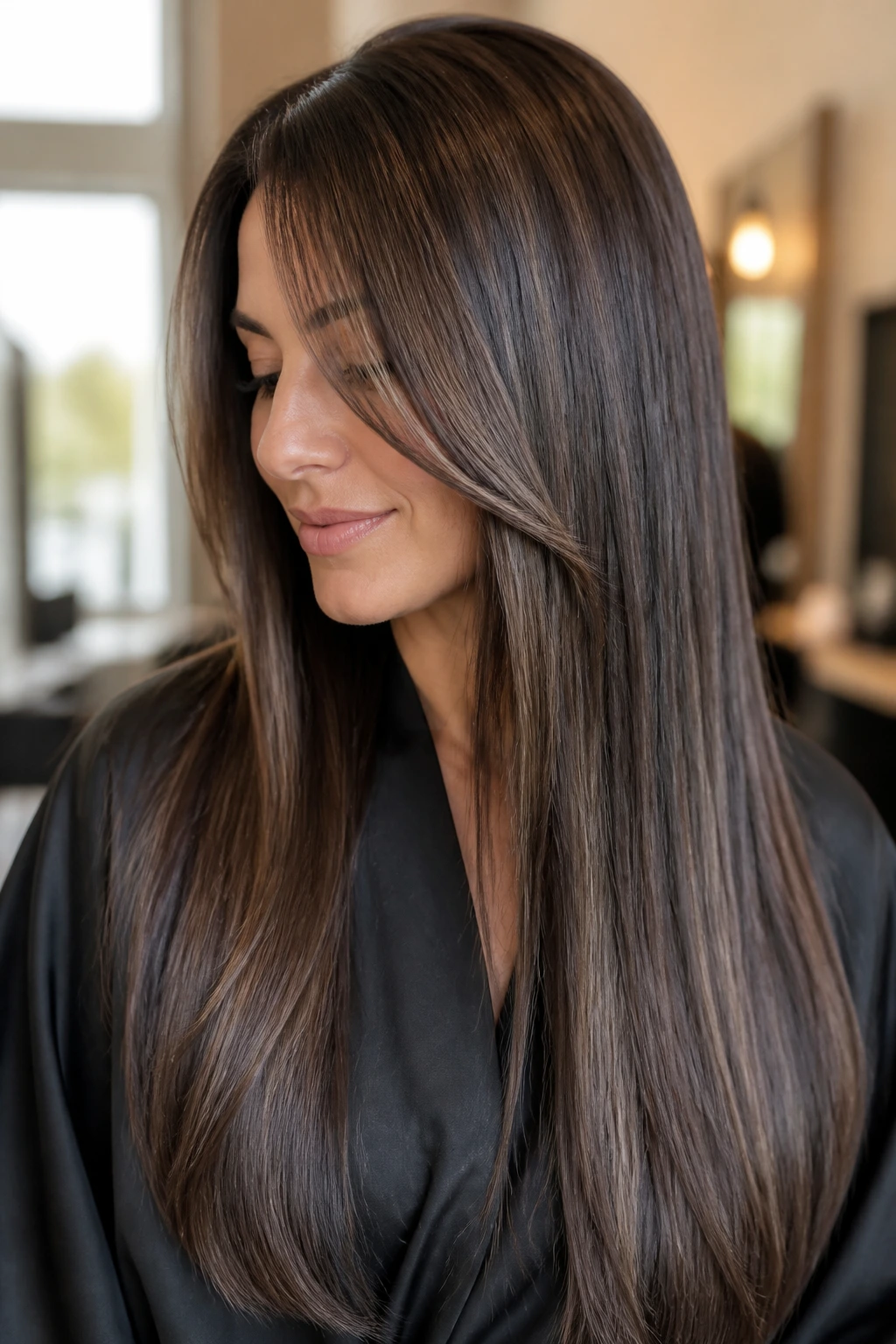
If you want the longest, cleanest-looking version of this whole idea, start here. Invisible layers preserve the perimeter, shadow lowlights deepen the interior, and a sleek finish makes the hair read as denser because every strand sits in a controlled line. The long bangs should be long enough to graze the cheekbones or jaw, then disappear into the length.
This is the cut for someone who likes a neat profile and does not want a lot of obvious piecey texture. The hair looks expensive when it lies smooth, and the shadow lowlights keep the color from looking too bright or airy. That matters on thin hair, where shine can sometimes work against body.
A flat iron pass with a slight bend at the ends is enough. Do not clamp the life out of it. The style needs softness, not stiffness.
Why Long Layers and Lowlights Give Thin Hair More Shape
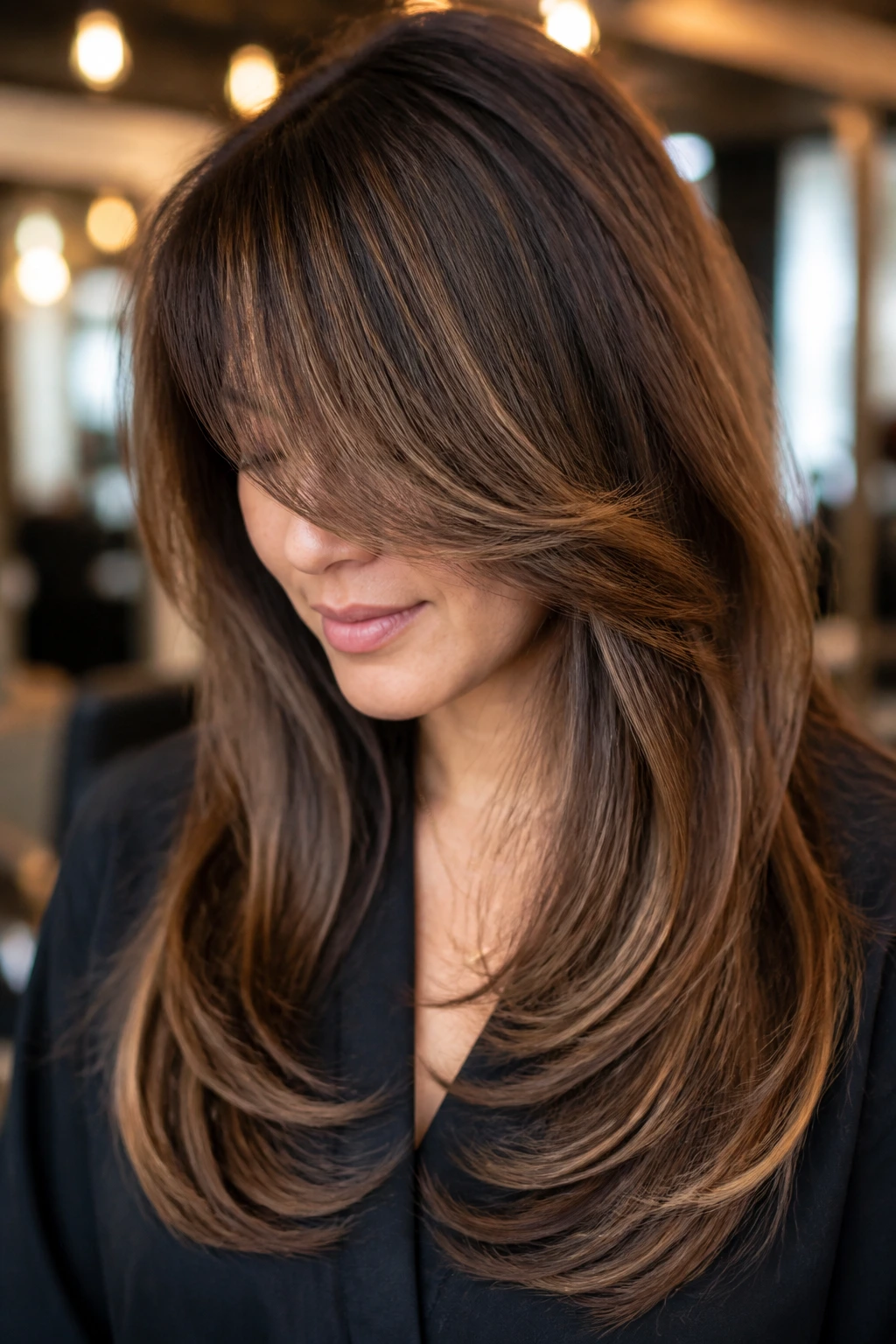
Thin hair usually needs three things at once: a stronger outline, a little lift, and a darker undertone so the length does not look washed out. Long layers handle the outline. They remove enough weight to let the hair move, but not so much that the ends disappear. That is the whole balancing act.
Lowlights do a job that people often underestimate. Darker pieces recede. That receding effect creates a visual base under the lighter top layer, which makes the hair look deeper and more substantial. When those lowlights sit under the part, through the mid-lengths, and around the nape, the whole style reads fuller from the side and back, not just from the front.
Long bangs matter because they keep the haircut from looking top-heavy or overly exposed at the forehead. A short bang on thin hair can steal density from the front and make the scalp show more than you want. Longer fringe gives you framing with breathing room. It also grows out better, which is a quiet blessing when you are not in the mood for monthly bang triage.
Fine Hair vs. Thin Density
Fine hair and thin density ask for different handling. Fine strands need softer layering and gentler color processing so the hair does not get fluffy and fragile. Thin density needs enough weight left at the perimeter that the ends still look like hair, not a suggestion of hair. When both show up together, you want long layers, not aggressive shattering.
That is why the best versions of these cuts keep the last inch or two of the length intact. The haircut can have movement above it. The ends need a job.
The Tools That Make These Cuts Easier to Wear
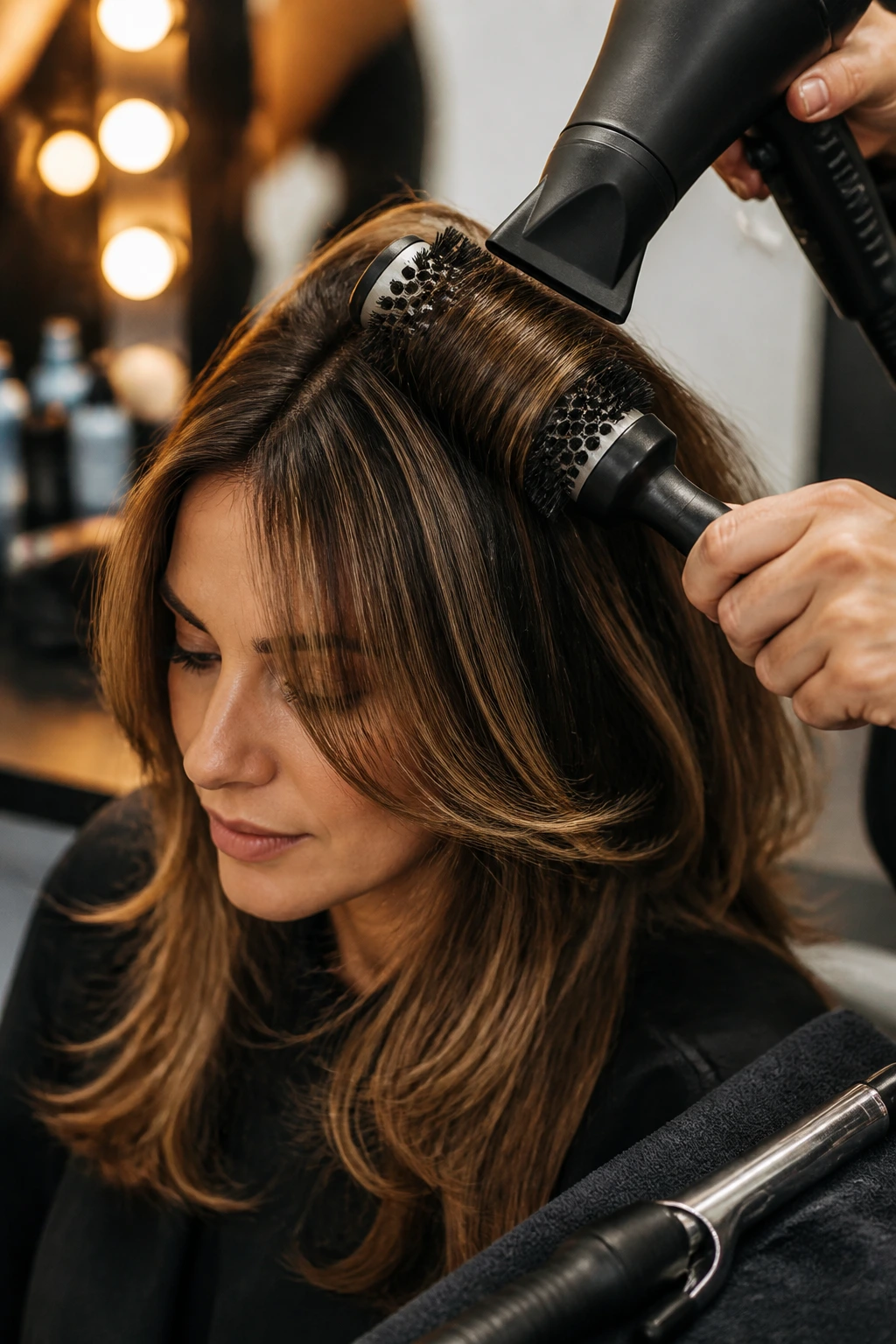
- Blow dryer with a narrow nozzle: Directs air so the roots lift instead of frizzing apart.
- Large round brush, 1.5 to 2 inches: Gives the bangs and face-framing pieces a soft bend without making them curl too tight.
- 1.25-inch curling iron or wand: Good for loose waves that show off the layers and lowlights.
- Heat protectant spray: Thin hair gets singed fast, and once the ends look fried, no lowlight can hide it.
- Volumizing mousse: A small amount at the roots adds grip before blow-drying.
- Root-lift spray: Useful at the crown and part line, especially if your hair collapses by noon.
- Dry shampoo: Best on clean hair or as a day-two reset, not as a rescue mission after the hair has already gone flat.
- Tail comb and clips: Make sectioning the bangs and lowlight placement much easier.
- Color-safe shampoo and conditioner: Helps lowlights stay richer for longer.
- Satin pillowcase or bonnet: Keeps the long bangs from bending into a weird crease overnight.
Choosing the Right Lowlight Shade for Your Base Color
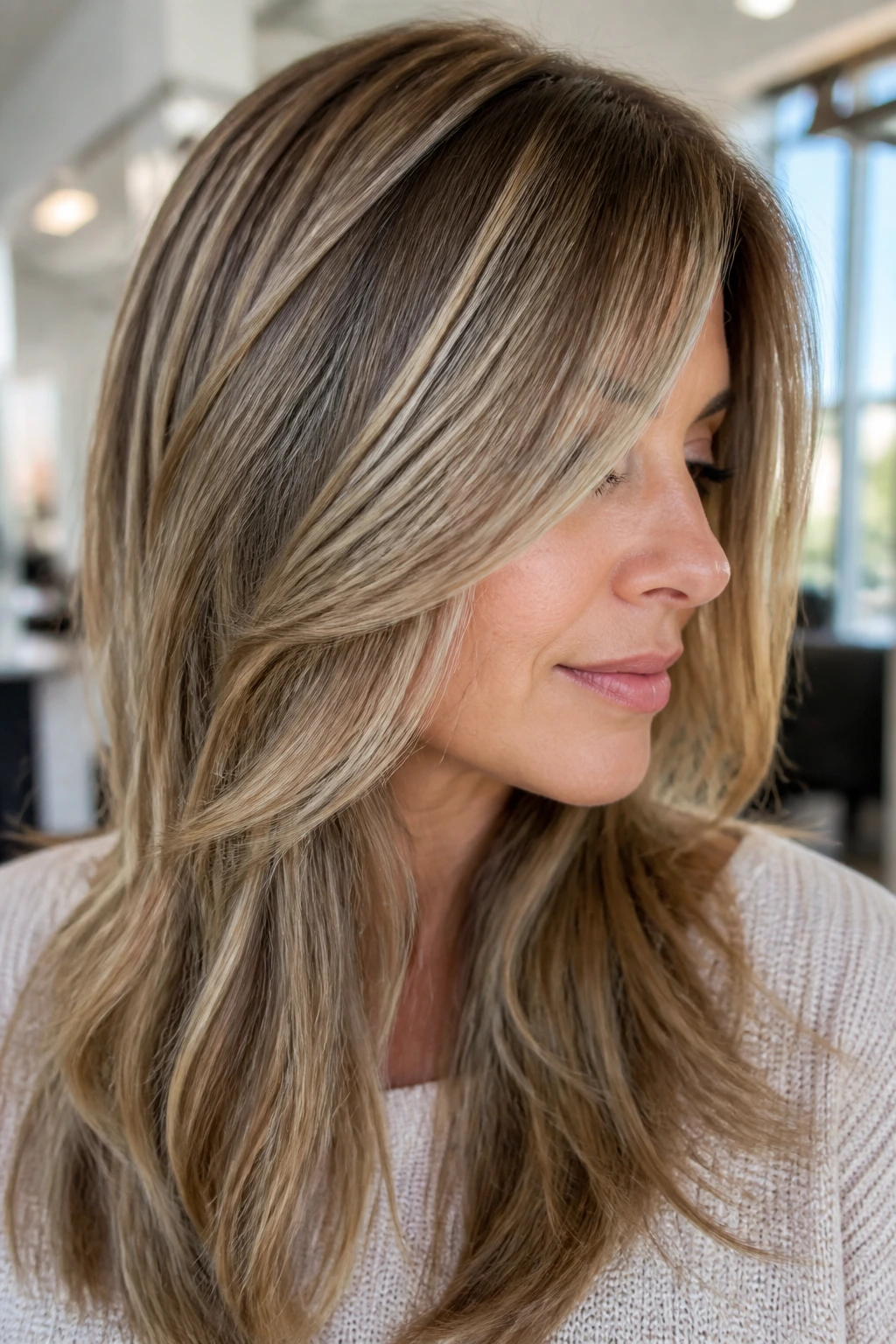
The cleanest lowlights for thin hair are usually one to two levels deeper than the natural base. More than that, and the color can turn into a heavy stripe. Less than that, and the depth gets lost. That middle ground is where the fullness illusion lives.
Blonde bases usually do well with beige brown, taupe, mushroom, caramel, or soft light brown lowlights. These shades add shadow without making the hair look muddy. If your blonde is very pale, keep the lowlights soft and finely woven. Chunky dark ribbons can look pasted on.
Light brunettes can move into mocha, cocoa, chestnut, and espresso territory. Again, subtle placement wins. Medium brunettes can carry more depth than blondes, but thin hair still needs the lowlights distributed underneath rather than stacked across the top. Red bases can use cinnamon, copper-brown, or mahogany tones to add dimension without making the hair feel dark and flat.
Placement Matters More Than Drama
Put the lowlights where they can hide and peek out — under the top layer, through the mids, around the nape, and sometimes near the back panel. Leave some brightness around the face unless the whole look is meant to be darker. That front brightness keeps the hair from feeling closed in.
If you are color-shy, ask for a demi-permanent lowlight or a gloss shade. They fade more softly, which is kinder to thin hair and less annoying when you want to adjust the tone later.
How to Wear These Layers on an Ordinary Morning
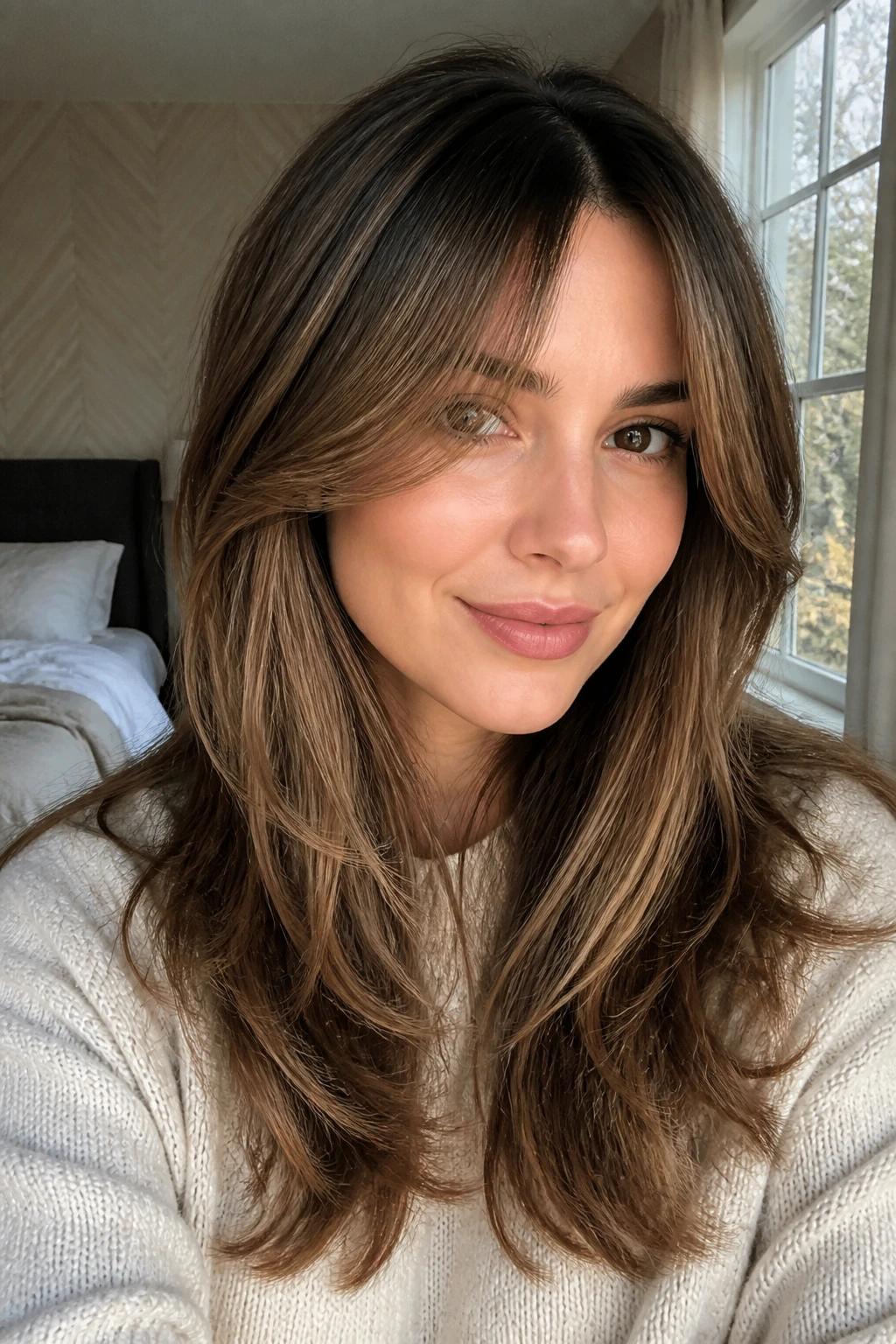
Presentation: Start with the part you actually wear, not the part you imagine wearing in a salon mirror. A center part gives some of these looks a clean line; a deep side part gives the crown more lift. Blow-dry the bangs first so they do not set in a weird bend while the rest of the hair dries.
Accompaniments: Think in products, not piles. A light mousse at the roots, heat protectant through the mids and ends, and a drop of serum only on the last inch is usually enough. If the hair is very fine, skip heavy creams near the scalp. They flatten the shape before the day begins.
Portions: Ask for enough length to keep the bottom line solid. That usually means the shortest face-framing pieces should still brush the cheekbones or jaw, not stop at the temples. If the layers start too high or too many are cut into the bottom third, the whole haircut can go wispy fast.
Finish: Pick one finish and stay with it. Sleek and straight. Loose wave. Soft blowout. If you mix all three on the same head, thin hair can look confused instead of full.
Extra Styling Tricks That Give Thin Hair More Presence
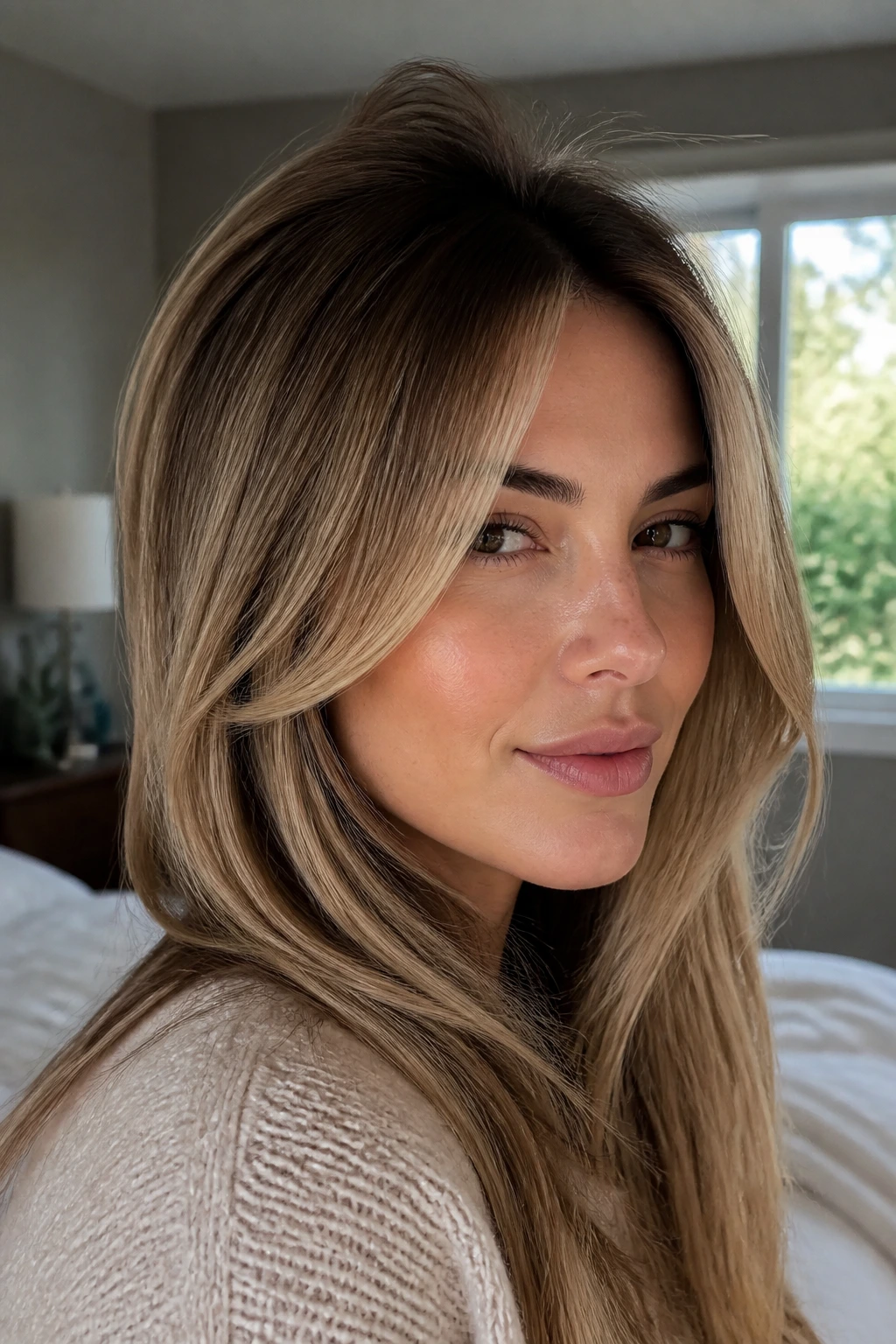
Root Lift: Clip the crown up while it cools after blow-drying. Ten minutes is enough to build a little bend at the root, and that bend lasts longer than most people expect.
Color Enhancement: If the lowlights fade warm, a cool-toned gloss can bring the dimension back without changing the cut. That matters on brunette bases that pick up brass fast.
Texture Trick: Dry shampoo works best before the hair gets oily, not after it has already collapsed. A few sprays at the roots on clean hair give the strands grip.
Face Framing: Bend the front pieces away from the face on one side and toward the face on the other. That uneven movement keeps the style from looking pasted down.
Make-It-Yours: If you wear glasses, keep the long bangs a touch longer so they sit over the frame. If you tuck your hair behind your ears a lot, keep the front layers softer and less dense so the shape still reads when the hair is pulled back.
Common Mistakes That Make Thin Hair Look Flatter
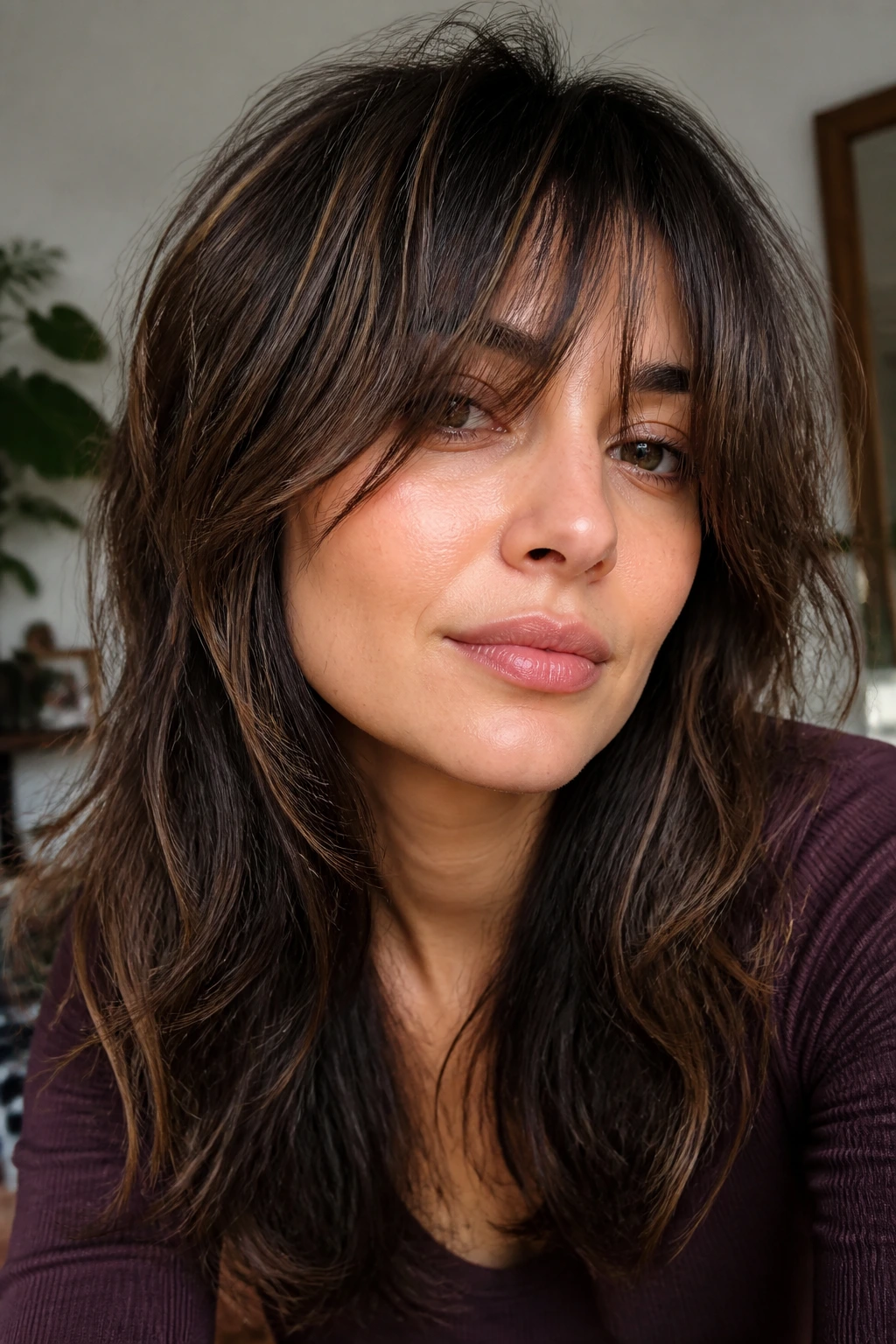
Over-layering the bottom third: This is the big one. If the ends are thinned too much, the haircut loses its outline and starts looking see-through. The fix is a softer layer pattern and a cleaner perimeter.
Choosing lowlights that are too dark: Very dark ribbons on fine hair can look striped, not dimensional. Ask for shades one or two levels deeper than your base, then build depth under the top layer instead of across the whole surface.
Cutting bangs too short: Short fringe can expose too much forehead and leave the rest of the front section looking skimpy. Long bangs that brush the cheekbones or jaw are kinder to thin hair and easier to grow out.
Using heavy oil near the roots: One pump too many and the hair goes limp at the crown. Keep oils on the last inch or two, or skip them entirely if your hair already falls flat.
Flat-ironing every bend out of the layers: If you iron the life out of the hair, the lowlights and layers disappear together. Leave a slight turn at the ends so the shape has some visual lift.
Putting color in chunky panels: Thin hair does better with soft, woven placement. Big foil streaks can make the scalp area look patchy.
Variations and Adaptations to Try
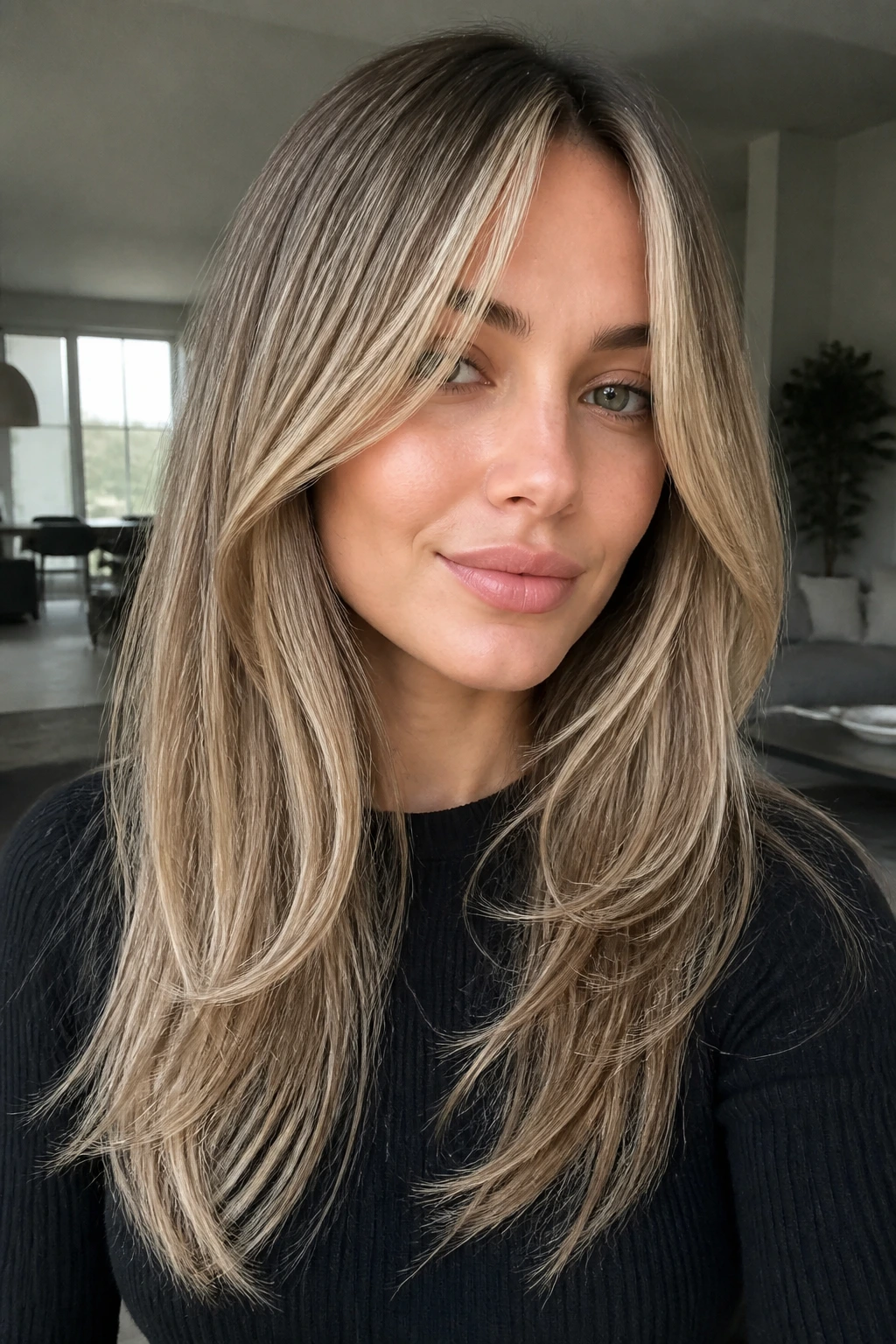
Soft Blonde Blend: Use beige and mushroom lowlights through a long butterfly or curtain-bang cut. This keeps blonde hair from looking overexposed while still letting the front pieces stay bright.
Brunette Smoke: Push the lowlights deeper — mocha, espresso, cocoa — and wear the layers in a glossy blowout. This version suits darker bases that need richer shadow instead of contrasty streaks.
Copper Lift: Add cinnamon or copper-brown lowlights to auburn or warm brown hair. The warmth makes the layers show up without making the color feel heavy.
Curly-Fine Version: Keep the layers longer and let the bangs blend into the curl pattern rather than sitting as a separate fringe. Diffuse with mousse, then stop touching it. Curly thin hair hates fuss.
Air-Dry Version: Choose invisible layers or a soft shag with subtle lowlights. Scrunch in a light foam, braid loosely for a few minutes, and let the hair dry with its own bend.
Glossy Salon-Blowout Version: Use rounded layers, long side bangs, and a smooth lowlight veil. This is the best pick if you want a neater shape that can last into day two with a quick brush and a little dry shampoo.
Keeping the Shape Fresh Between Salon Visits
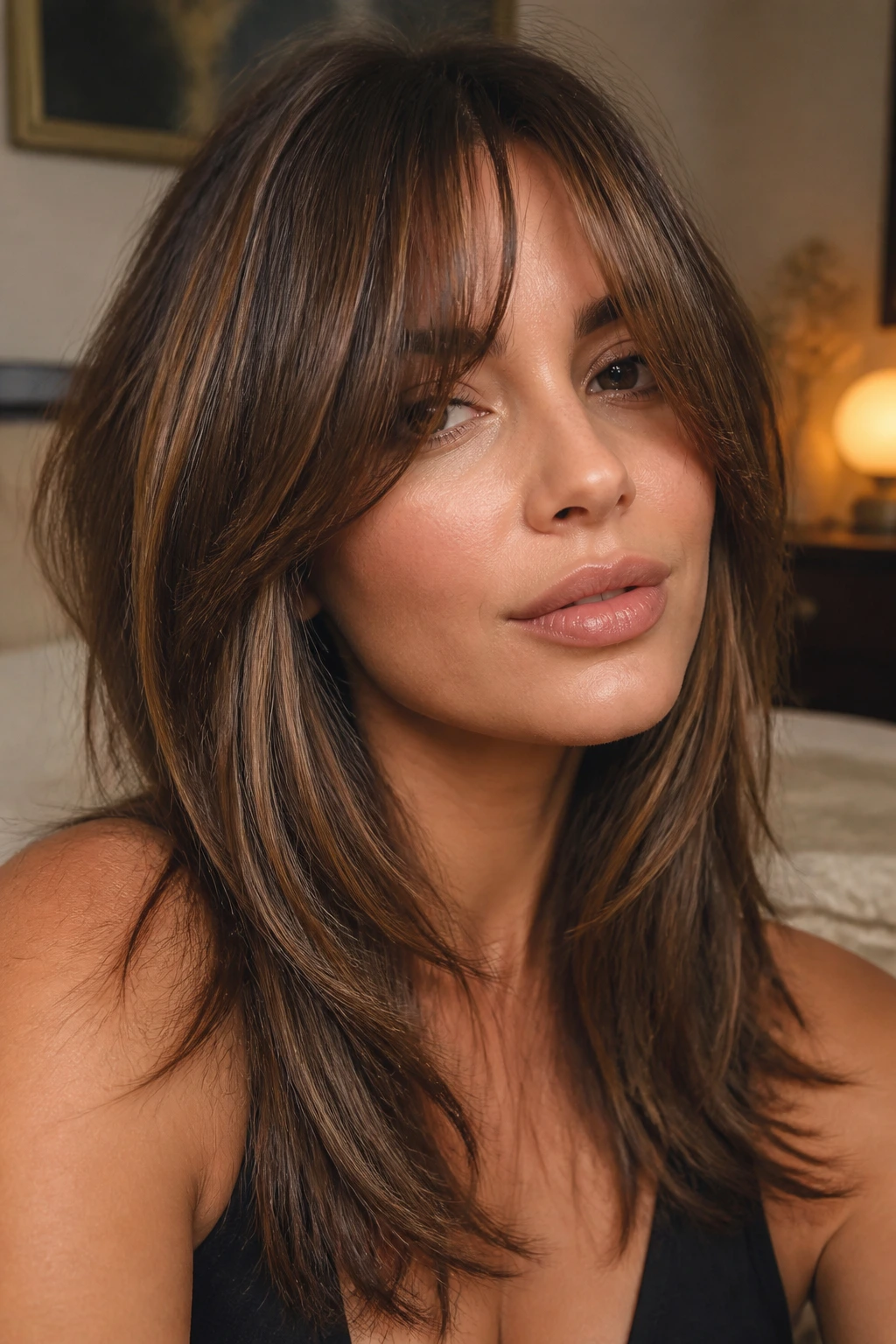
Thin hair tells on neglect sooner than dense hair does, so the trim schedule matters. Bangs usually need attention every 4 to 6 weeks if you wear them regularly. The layers can usually stretch to 8 to 12 weeks before they need a real shape refresh, though that depends on how much growth you get around the face.
Lowlights fade more slowly than bright highlights, but they still need care. A demi-permanent lowlight service or a gloss refresh every 6 to 8 weeks keeps the shade from turning muddy or washed out. If your base is very light, that refresh can keep the contrast soft. If your base is brunette, it helps stop the dimension from going dull.
At home, use a color-safe shampoo and avoid scorching hot water. Heat pulls tone out faster than people think. Sleep on a satin pillowcase or wear a loose top knot so the long bangs do not kink hard overnight. If the crown collapses, a velcro roller while you finish makeup is old-school for a reason. It works.
Questions People Usually Ask About This Haircut
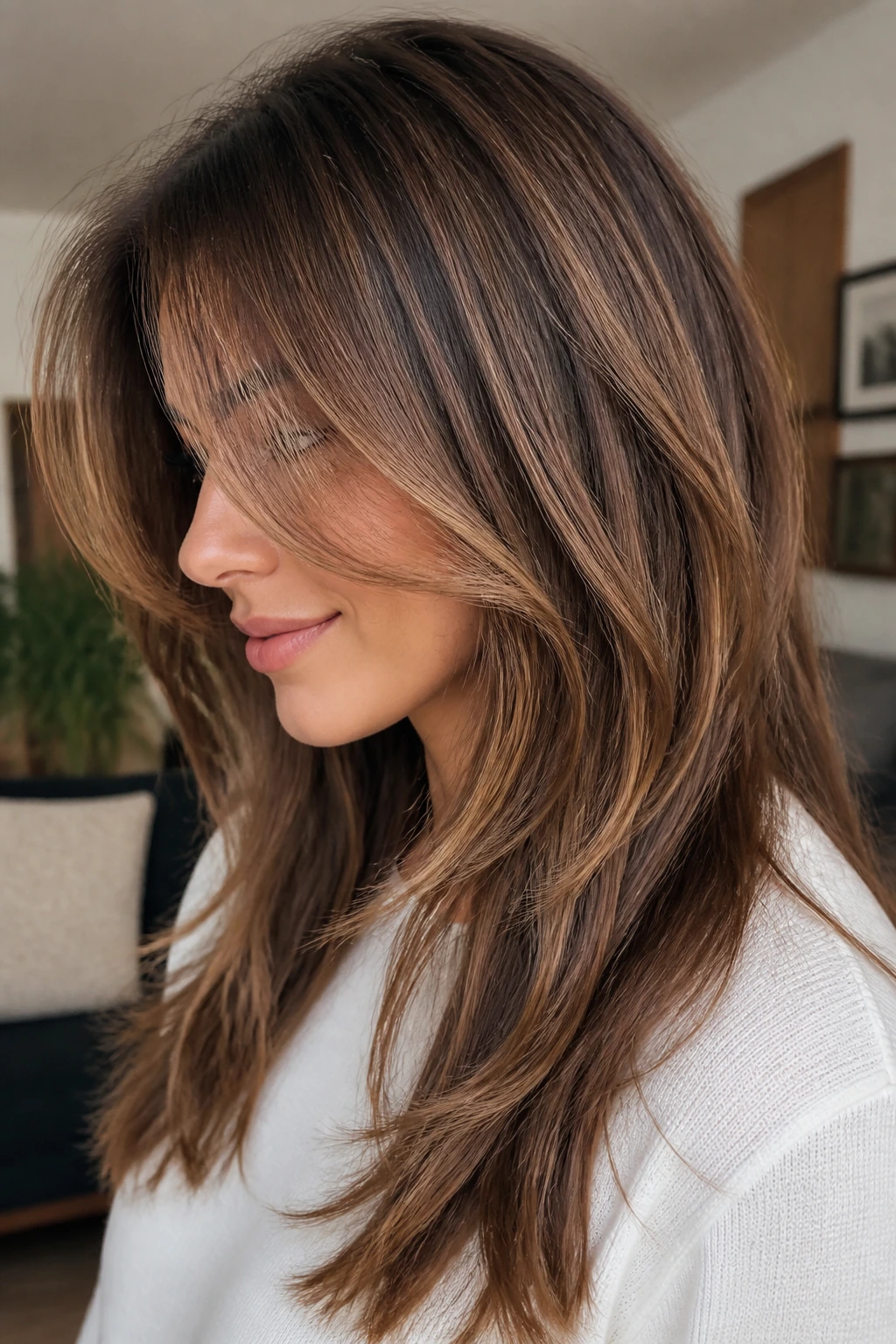
Are lowlights better than highlights for thin hair?
Usually, yes, if the goal is to make the hair look denser. Highlights can brighten the head, but lowlights create the shadow that gives the length more visual weight. A mix can work too, but on thin hair I’d lean darker underneath and lighter only where the face needs it.
Will long layers make thin hair look even thinner?
Not if they are cut with restraint. Long layers should remove just enough bulk to let the hair move while keeping the bottom edge intact. If the layers are too short or too many, then yes, the ends can look see-through fast.
What shade of lowlights works best on blonde hair?
Soft beige brown, mushroom, taupe, and light caramel usually behave well because they add depth without looking stripey. On very pale blonde hair, stay one or two levels deeper, not four. Hard contrast is the enemy here.
Can I wear curtain bangs if my hair is thin?
Absolutely, but keep them long and airy. Short curtain bangs can split awkwardly and make the forehead area look sparse. Long curtain pieces that hit the cheekbones or jawline are easier to live with and easier to grow out.
How often should I refresh the lowlights?
A demi or gloss refresh every 6 to 8 weeks keeps the tone from fading too far. If the color is soft and subtle, you may stretch it longer, but once the lowlights lose their depth, the haircut can start to look flatter again.
What if my hair falls flat at the crown by noon?
Use a root-lift spray before blow-drying and clip the crown while it cools. If that still doesn’t hold, switch to a deeper side part on flatter days. The asymmetry gives the roots a better chance.
Can thin hair with waves or curls wear these cuts?
Yes, and often very well. The layers need to respect the curl pattern, though, so they should stay long enough to keep the curl clumps intact. Too many short layers can make curly thin hair puff apart.
What should I ask my stylist for if I’m nervous about losing length?
Ask for long, blended layers, a preserved perimeter, and face-framing pieces that start below the cheekbone or jaw. Then tell them you want shadow and movement, not heavy texturing. That wording tends to keep the scissors honest.
A Fuller Shape Without Losing the Length
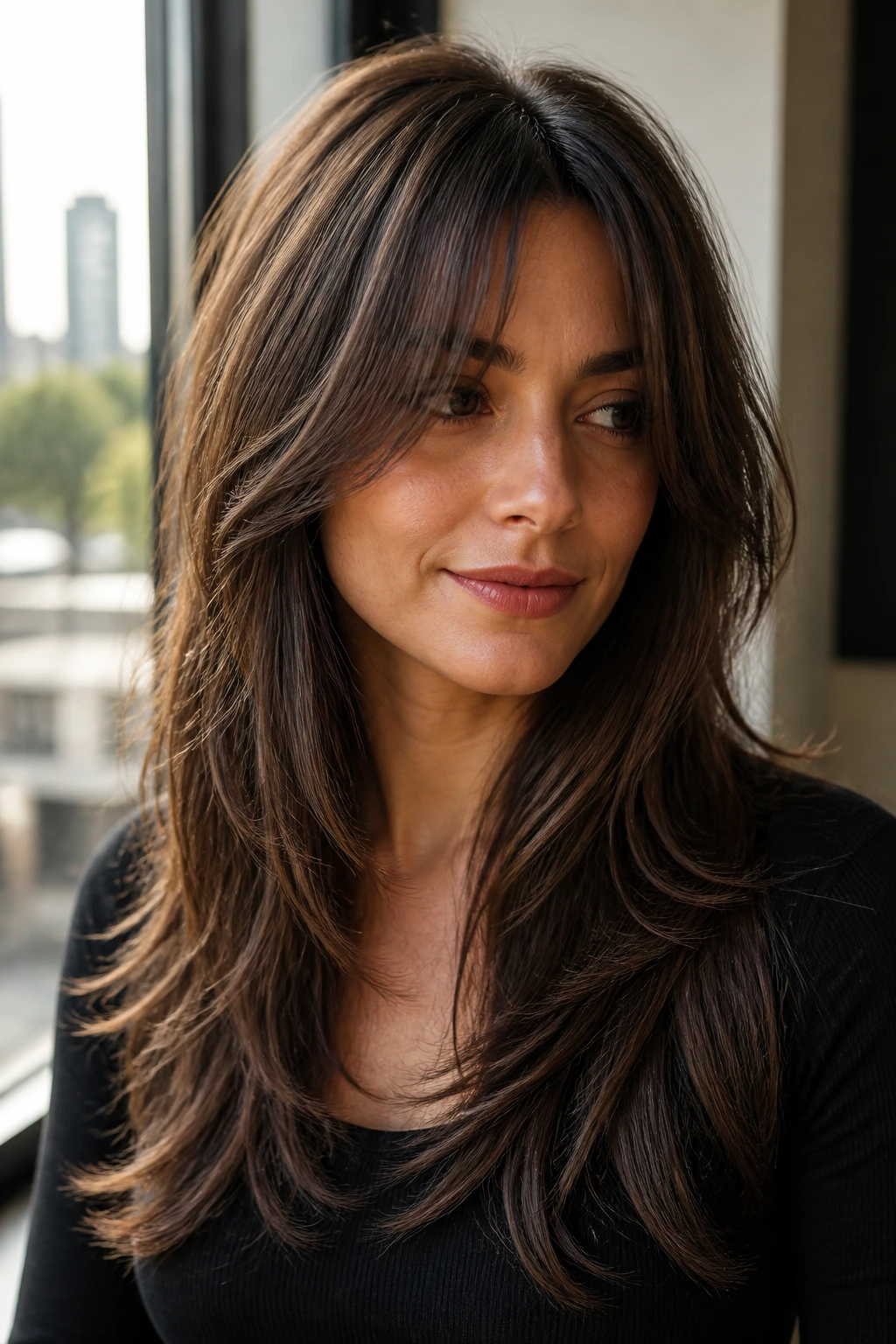
The nicest thing about these looks is that they do not ask thin hair to become something it isn’t. They work with what’s there. Long layers keep the shape alive, long bangs keep the face framed, and lowlights add the depth that makes the whole cut read as richer than it really is.
If you like your hair long but hate the way it can turn wispy or flat, start with one of the softer versions here and keep the color placement subtle. Stronger contrast is not always better. On thin hair, the best results usually come from the cut that holds its line and the color that hides in the right places.
Choose one shape, one bang line, one lowlight shade, and let the hair breathe a little. That usually does more than chasing volume ever will.