



Thick short hair can turn on you fast. One minute it looks crisp; the next, it balloons at the sides, lifts at the crown, and starts acting like it has a mind of its own. That is exactly why fall dark hairstyles for short hair with thick hair are worth paying attention to: espresso, black cherry, walnut, plum, and deep auburn all pull the eye inward and make the shape read cleaner, sharper, and a little more expensive-looking without asking the hair to become someone else.
I’ve always liked dark short styles on dense hair because they let the cut do the talking. A blunt bob in soft black has a different attitude than the same bob in light brown. A pixie in black cherry feels more dimensional because the color catches on the top layers and disappears into the nape. And a shag? On thick hair, a shag can either look like it was carved on purpose or like it was attacked by scissors. The shade matters. The shape matters more.
The sweet spot is usually not the shortest possible cut. It’s the cut that removes bulk where your hair swells, keeps a line where your hair needs a boundary, and uses a deep fall shade that gives the whole style some gravity. Get those three things working together and short hair stops fighting you. It starts looking deliberate.
Why These Dark Short Styles Work So Well on Thick Hair
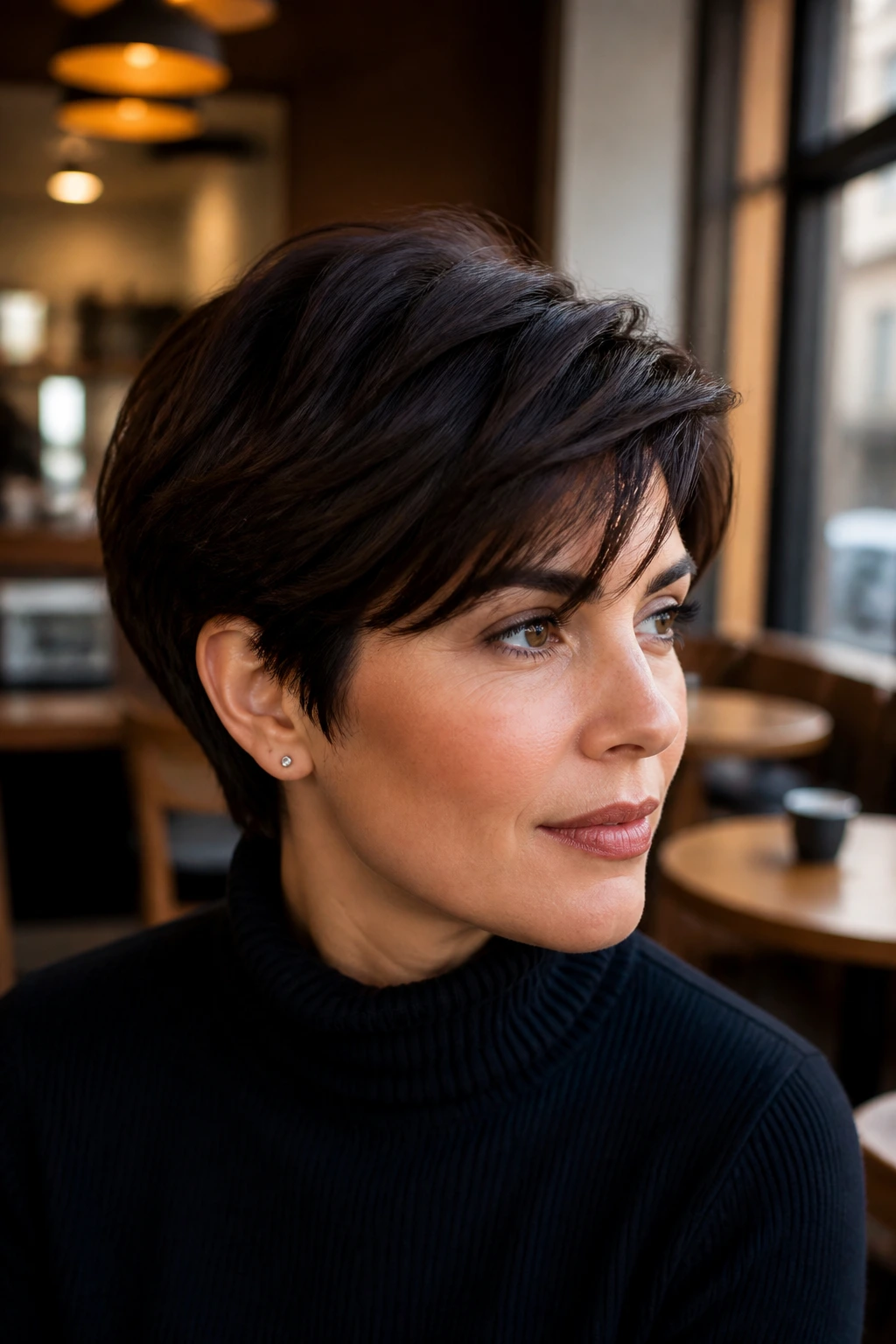
- The outline looks cleaner: Deep brunette, plum, and black shades compress the visual width of thick hair, so the haircut reads as shape instead of mass.
- The cut holds better: Dense hair has enough structure to support blunt lines, stacked napes, and choppy layers without collapsing by lunch.
- The shine shows up nicely: Espresso, cherry, and mahogany catch light in narrow strips, which makes thick hair look polished instead of puffy.
- The grow-out is kinder: Side parts, tapered necks, and slightly longer front pieces hide new growth better than a severe one-length cut.
- The texture has room to move: Thick hair can take a bend, a wave, or a little piecey finish without disappearing into limp strands by noon.
1. Espresso French Bob
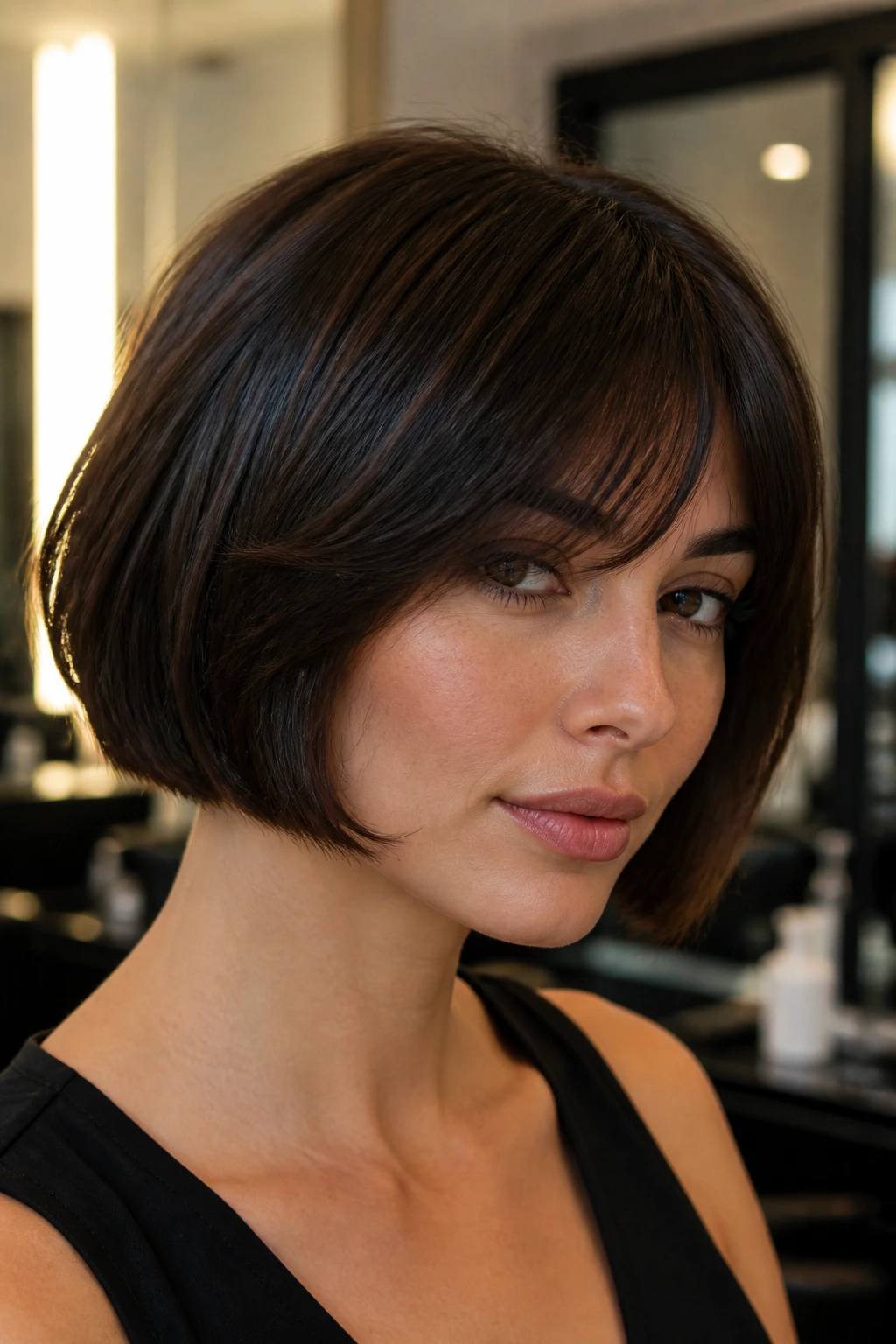
A jaw-length French bob in espresso brown is one of those cuts that makes thick hair look like it finally got a good editor. The ends sit close to the face, the line stays honest, and the darker shade keeps the shape from puffing outward at the cheeks.
Why It Works
The French bob wins here because thick hair has enough body to support the blunt perimeter without needing much help. Ask for a soft internal debulk through the back half, not a lot of feathering at the ends. That keeps the outline clean and stops the bob from turning into a triangle.
What to Ask For
- Jaw-skimming length or just under the chin
- A slight bevel under the ends, not a curled-under helmet
- Light internal shaping through the midsection
- A side part if your hair naturally swells at the center
A quick round-brush pass at the ends is enough. If you like a little bend, wrap only the last inch around a 1-inch brush. Too much rolling kills the sharpness, and the whole point here is that sharp edge.
2. Black Cherry Pixie
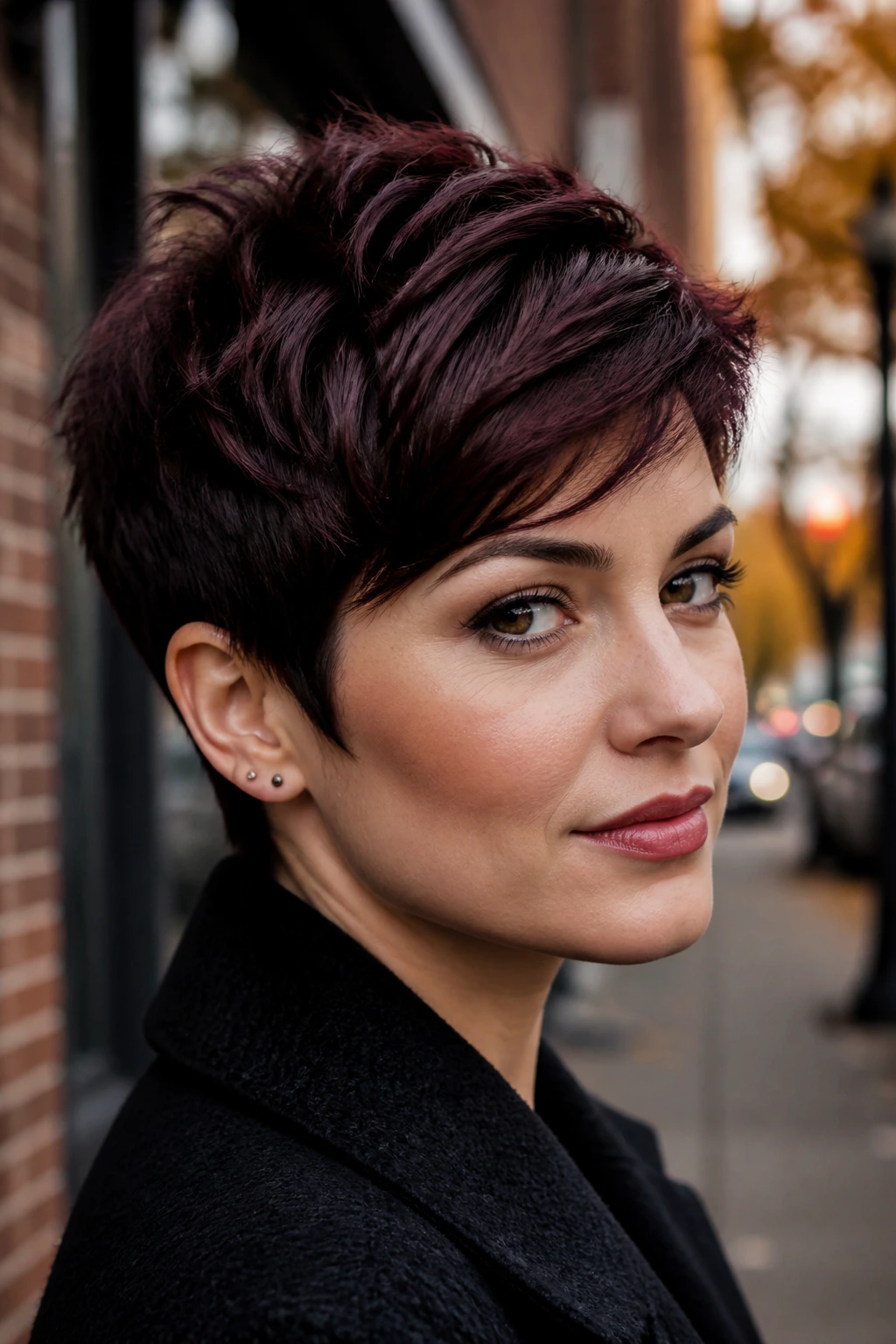
A black cherry pixie is the fastest way to make thick short hair feel dressed up without adding length back. The color reads almost black indoors, then flashes red-violet when the light hits it, which keeps the cut from feeling flat.
This one works because thick hair gives the crown something to lift against. Keep the top around 2 to 3 inches, taper the sides close to the head, and let the nape sit neat. If the sides are left too bulky, the pixie loses its shape and starts looking like a grown-out helmet. That is the wrong mood.
I like this cut with a matte paste at the crown and a tiny bit of shine cream on the ends. Red-violet shades fade faster than brown-black shades, so plan on a gloss refresh every 4 to 6 weeks if you want that cherry tone to stay visible instead of slipping back into plain brown.
3. Mocha Bixie
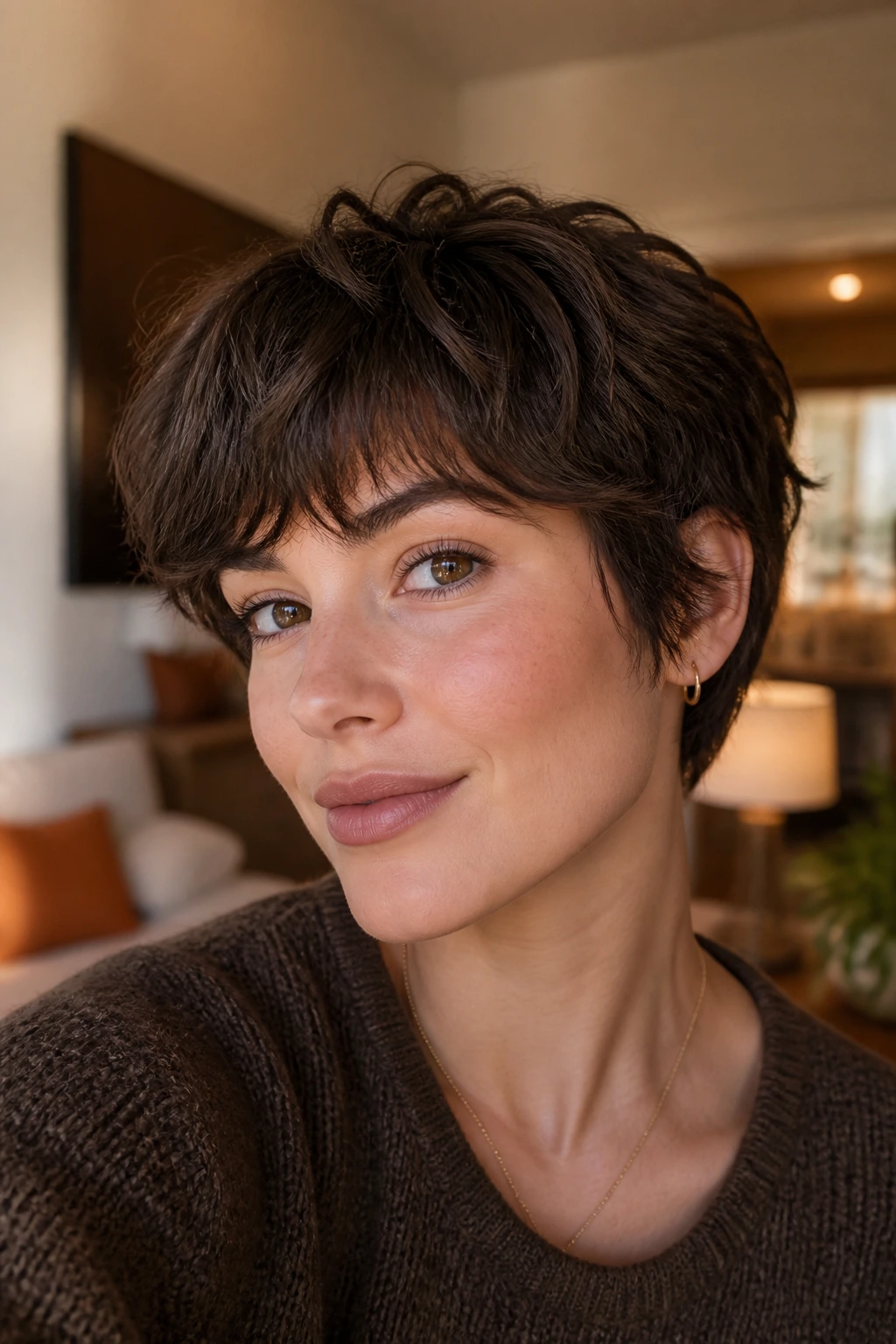
If your hair sits between too short for a bob and too much for a pixie, a mocha bixie lands in the good middle. It keeps the ear-length softness of a bob, but the cropped nape and shorter layers let thick hair breathe.
The reason this shape behaves is simple: the weight gets broken up. A bixie gives you a little length in front, a bit of height at the crown, and enough taper at the back to stop the style from bulging. Mocha brown softens the whole thing and makes the layers read without screaming for attention.
Best details to ask for:
- Cropped nape with a clean taper
- Side pieces that graze the cheekbone
- Crown length long enough to sweep forward or tuck back
- Soft, internal layers instead of aggressive razoring
This is the style for someone who wants a short cut that can still tuck behind the ear when needed. It behaves nicely with a small round brush or a few finger coils of paste. Low drama. Good structure.
4. Deep Walnut Textured Crop
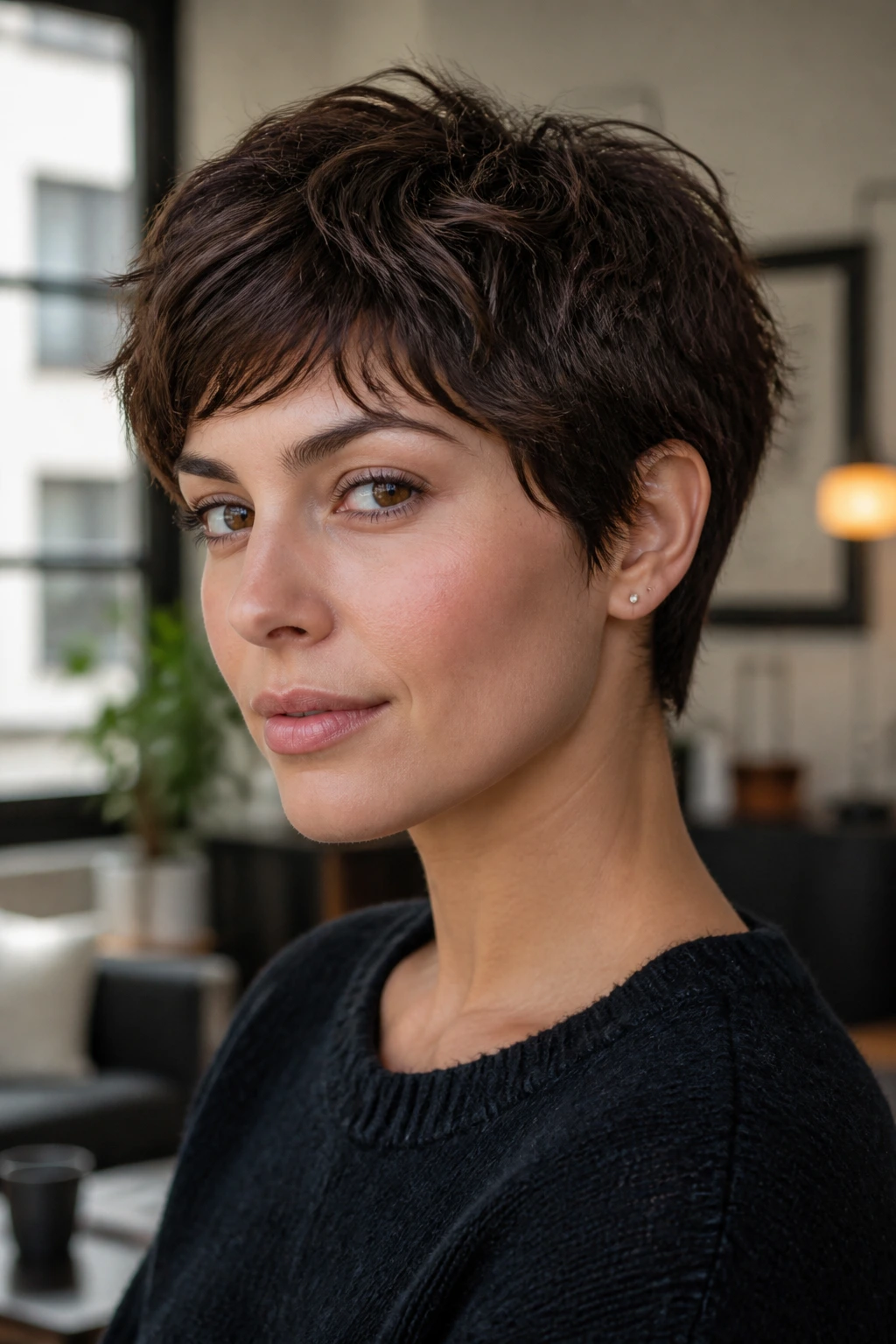
Why does a textured crop work so well on thick hair? Because the hair already has enough substance to show off the chopped edges. On fine hair, a crop can look sparse. On dense hair, it looks intentional, almost architectural.
Walnut brown is a smart shade here because it lets every little piece of texture show without pushing the hair into a muddy black block. Keep the top short but not spiky, and let the sides stay close enough to the head that the silhouette stays neat. Too much length at the ears makes the crop feel bulky instead of chic.
How to Style It
Use a small amount of mousse on damp roots, then dry the hair rough with your fingers until it’s about 80 percent dry. Pinch in a matte clay or texturizing paste once the hair is cool. The cool-down matters; warm hair takes product like a sponge and can look greasy if you rush it.
If your hair bends on its own, even better. Don’t force it straight. The whole point is to let the texture live inside a controlled shape.
5. Dark Plum Asymmetrical Bob
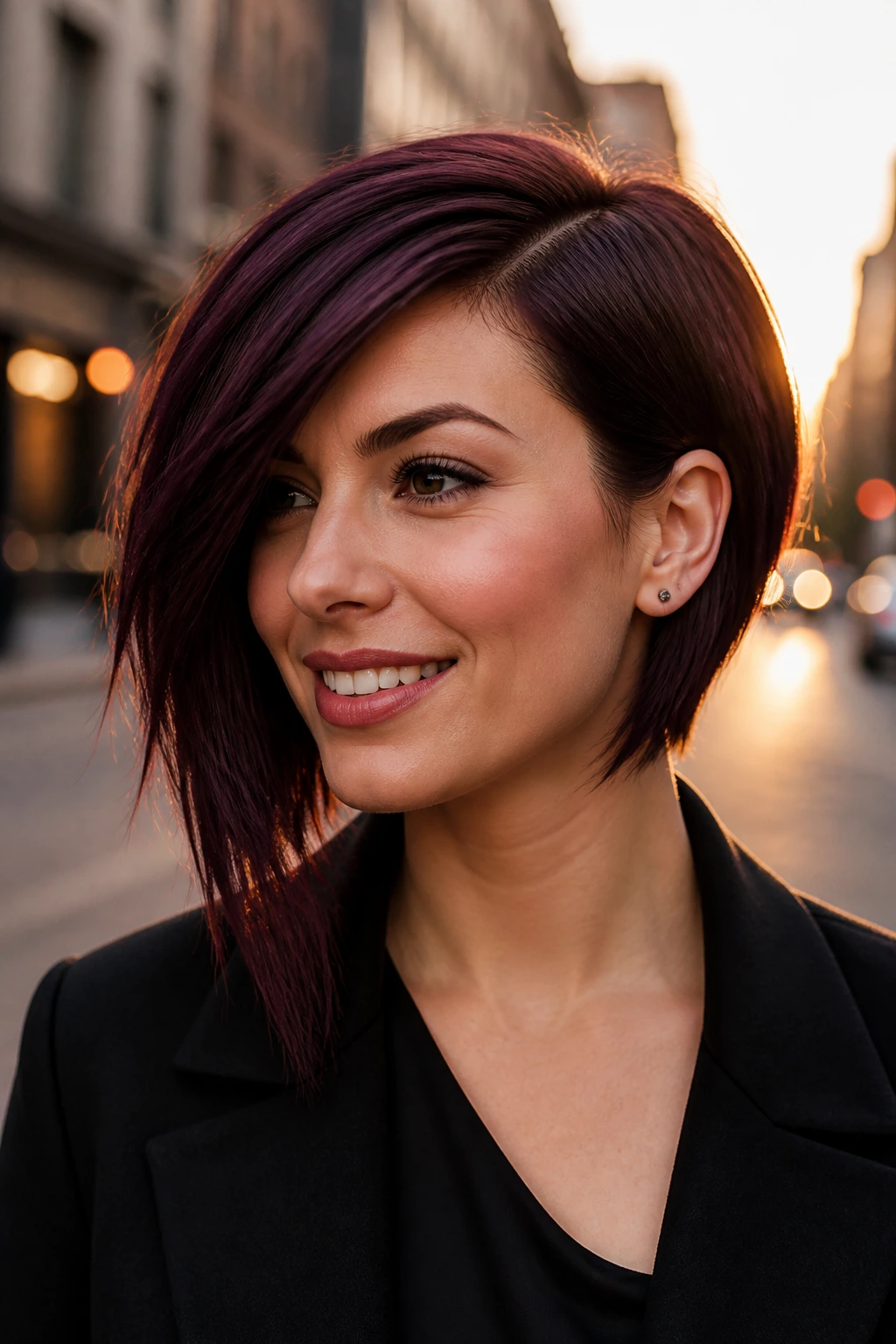
A dark plum asymmetrical bob gives thick hair a built-in escape hatch. One side sits a little longer, the other side stays tighter, and the eye stops reading the head as one wide shape. That diagonal line does half the work for you.
The plum tone is what keeps this from feeling severe. It adds a wine-colored depth that looks rich against fall clothes and doesn’t flatten the cut the way a flat black sometimes can. If your skin runs cool or neutral, plum usually looks cleaner than a warm chestnut. If you like a side part, this is the place to use it.
I’d keep the longer side grazing the chin and the shorter side just skimming the jaw. Tuck the shorter side behind the ear, leave the longer side loose, and the whole style gets a nice bit of movement without needing a lot of product. Thick hair gives the bob enough body; the asymmetry keeps it from turning square.
6. Smoky Brunette Shag
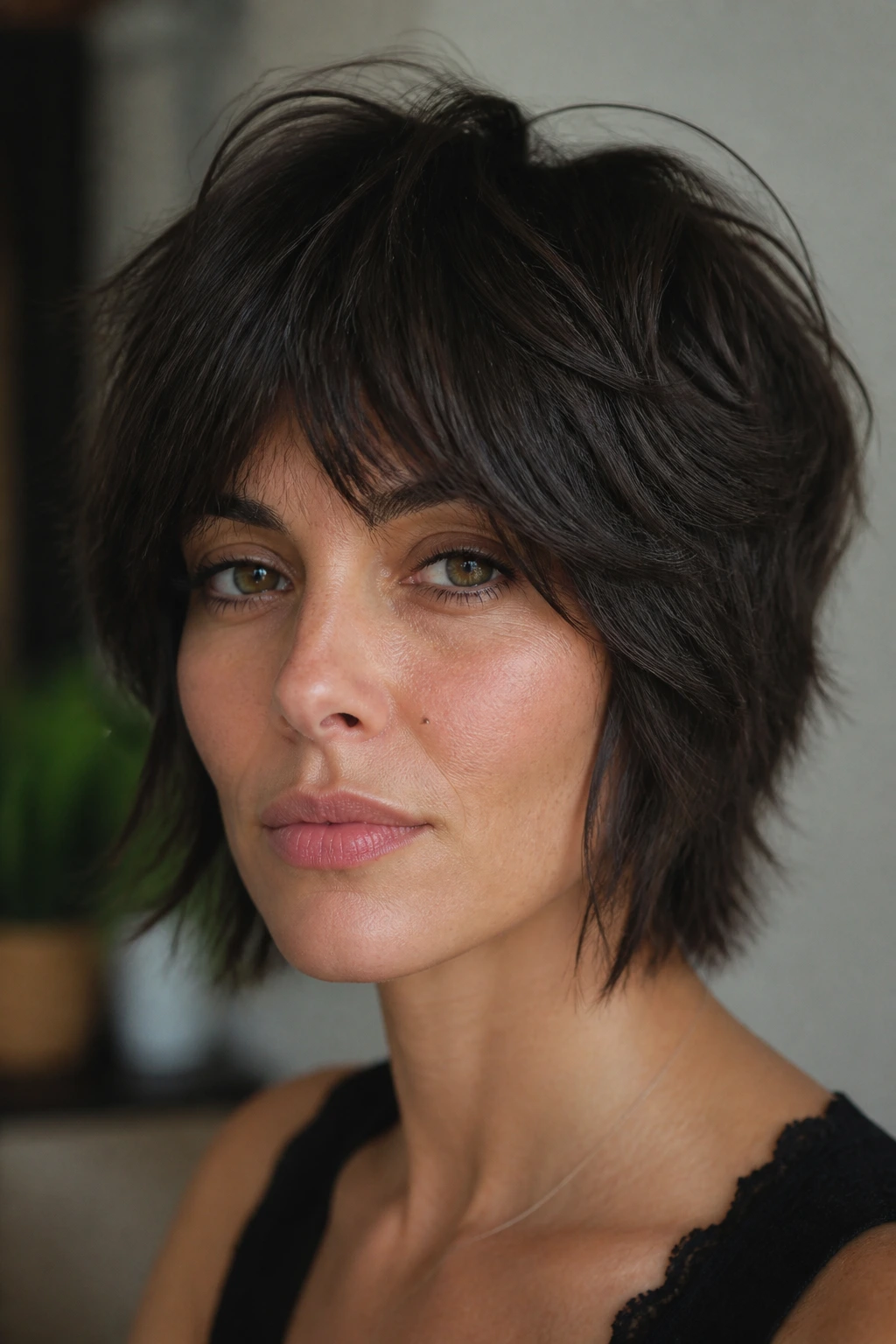
A short shag in smoky brunette is for the person who wants movement more than polish. Unlike a neat bob, this cut likes a little chaos, and thick hair gives it the substance to look full instead of stringy.
The layers should live around the crown and through the cheek area, not just at the bottom. That’s where thick hair tends to puff first. When the layers are placed properly, the shag looks airy around the face and controlled through the back. The smoky brunette shade softens the layers so they don’t scream “layered cut” from across the room.
This is the one I’d recommend if your hair is wavy or if you hate spending time with a brush. Air-dry with a curl cream or diffuse on low heat, then break up the ends with a light texture spray. If you try to polish this into a perfectly smooth shape, you lose what makes it useful.
7. Chocolate Layered Pixie with a Long Top
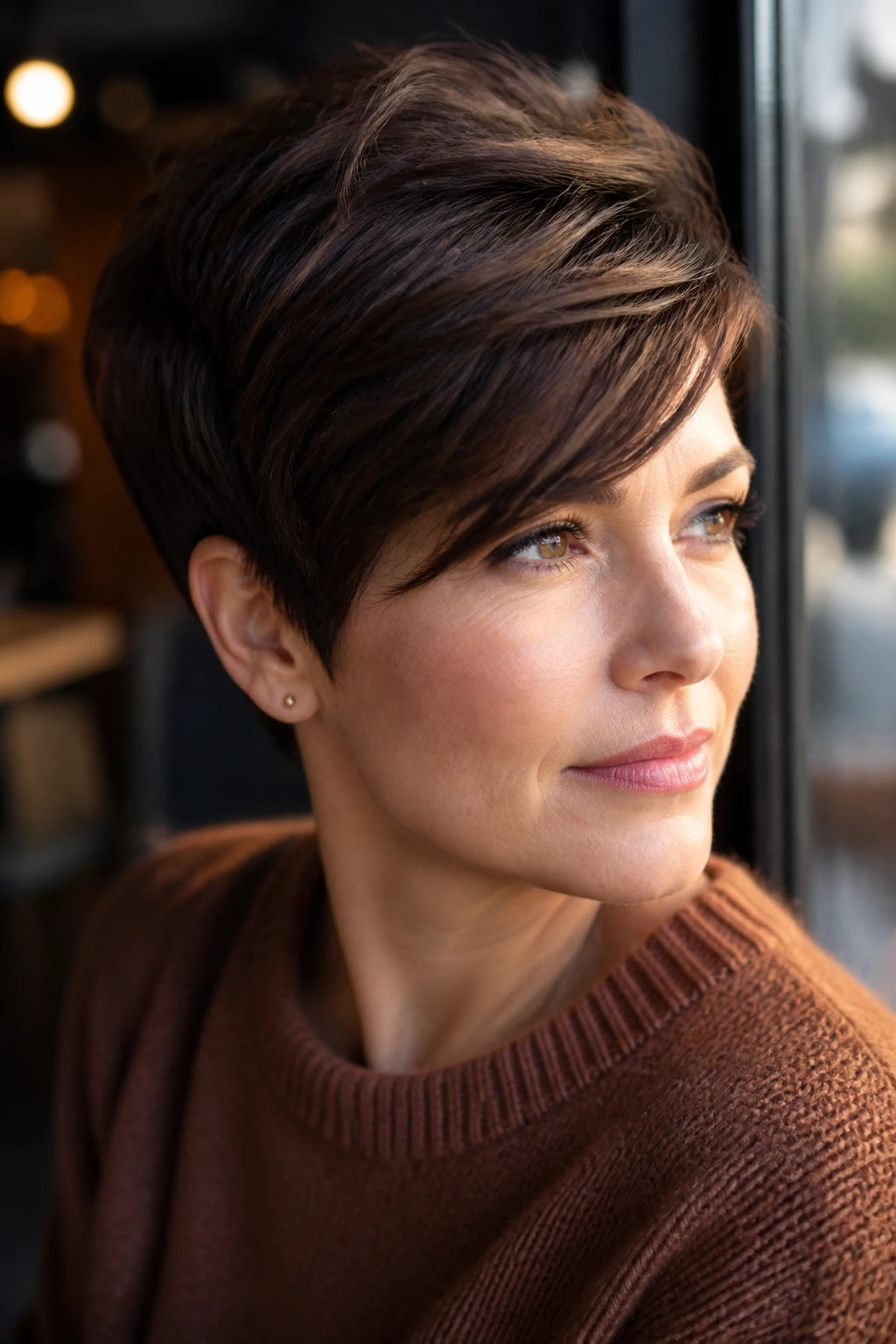
The first time you brush this pixie forward, it almost reads like a soft crop. Then the longer top falls over one eye, and suddenly the cut has range. That extra length on top is the whole reason it works on thick hair.
What Makes It Different
The layers remove bulk where thick hair tends to pile up, but the top stays long enough to style in more than one direction. You can sweep it to the side, lift it up, or flatten it slightly for a neater finish. Chocolate brown keeps the shape grounded and warm, which matters when the cut itself is sharp.
Keep these details in mind:
- Top length around 3 to 4 inches
- Tapered sides and nape
- Side-swept fringe instead of a heavy full fringe
- Matte paste or fiber cream for separation
I like this cut because it doesn’t lock you into one look. One day it’s tidy. The next day it has a little edge. Thick hair gives it enough body to change direction without falling apart.
8. Soft Black Blunt Crop
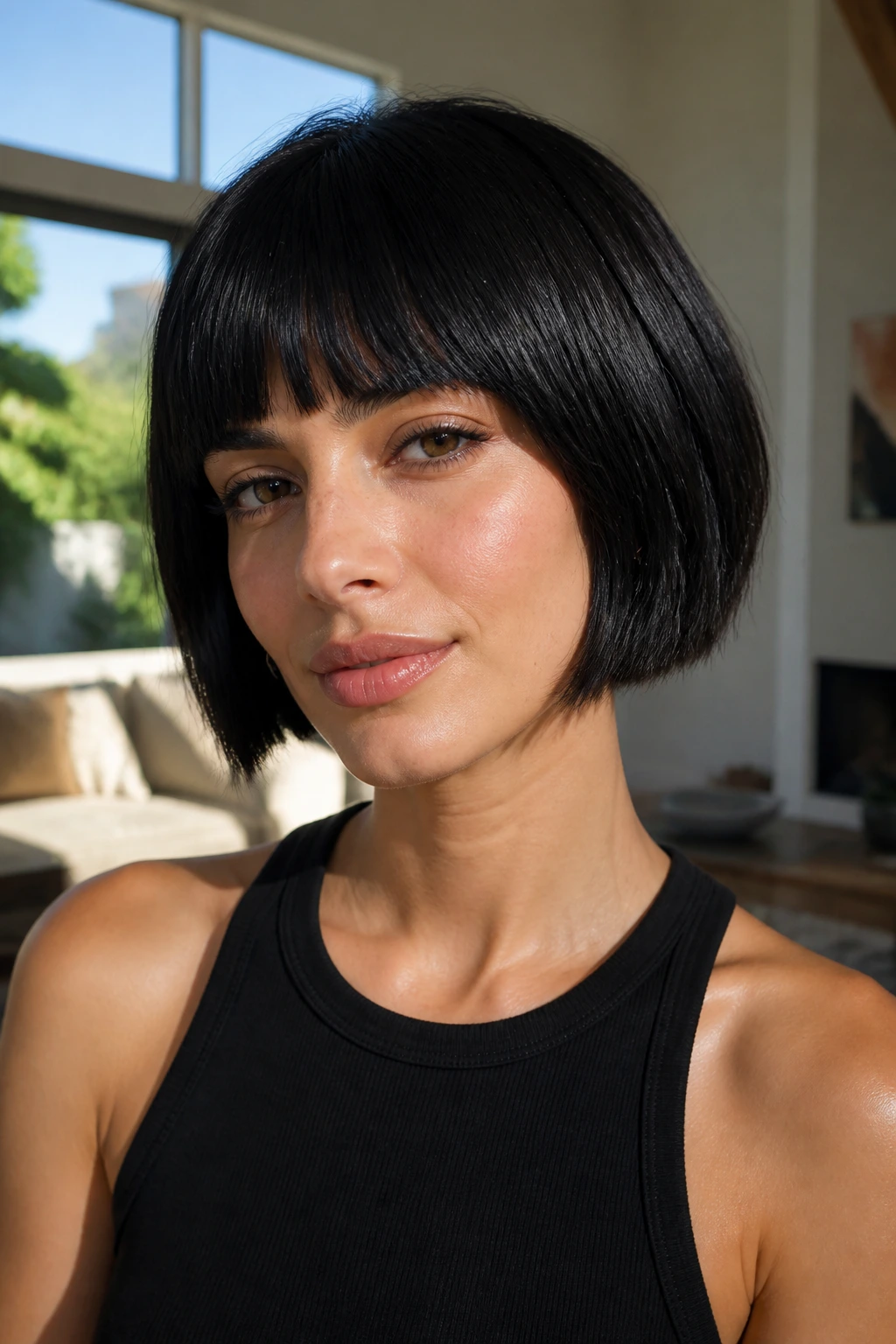
A blunt crop is the strongest answer when thick hair keeps trying to fray at the perimeter. The cleaner the line, the better this cut behaves. Soft black makes that line look crisp without the hard, inky effect that can go severe fast.
This is not the place to over-layer. Leave the base solid, keep the ends blunt, and ask for only enough internal shaping to stop the cut from sticking out at the sides. On thick hair, too much thinning around the ends makes them look dry and fuzzy. A little weight at the edge is not your enemy here.
Use a smoothing cream on damp hair, blow-dry with a flat brush, and finish with a flat iron only if the ends need a tiny bend. I would keep the iron around 300 to 325°F, because you do not need to fry the cut into obedience. You just need the edge to lie down.
9. Cinnamon-Cocoa Curly Crop
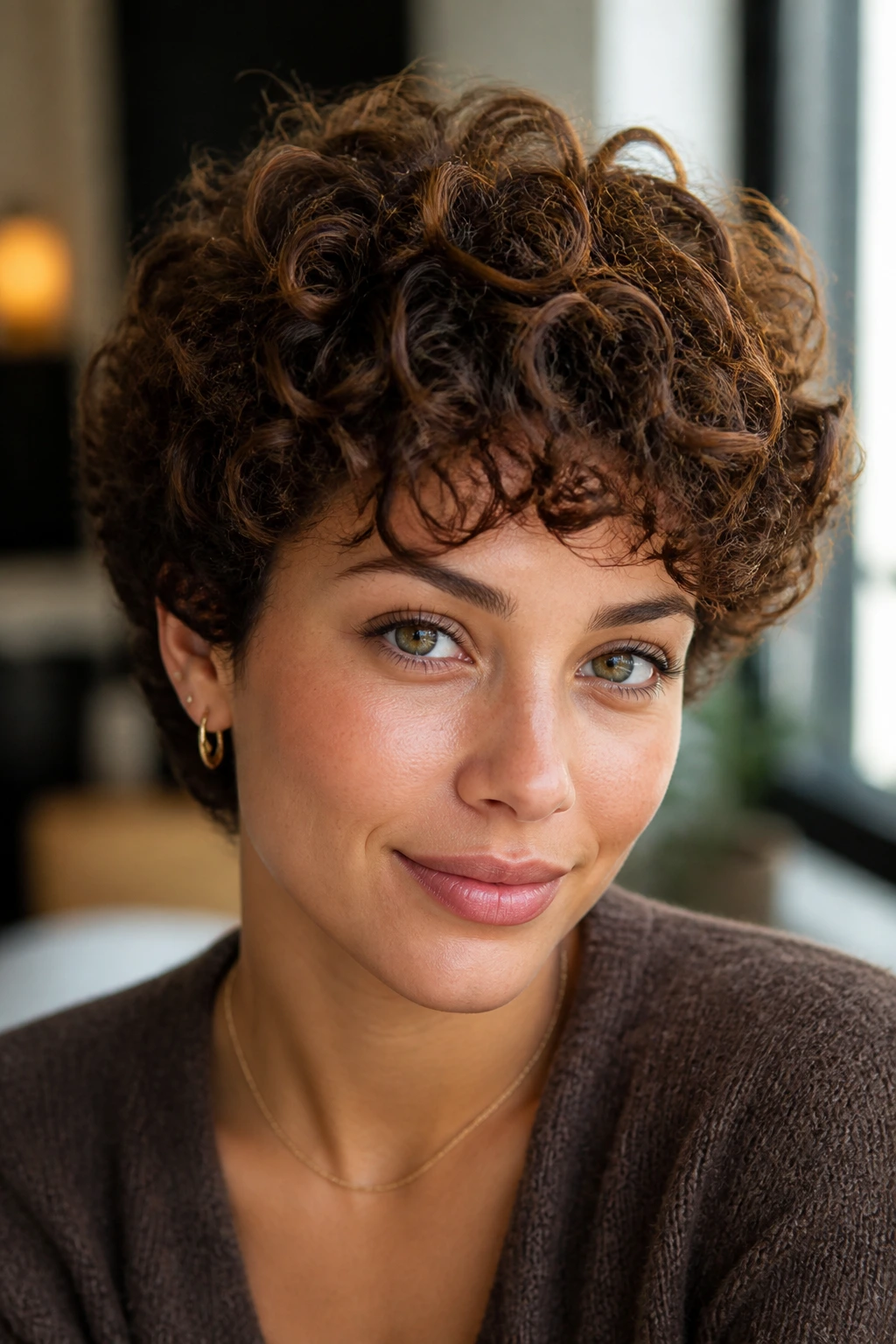
Can thick curls handle a short dark style without looking bulky? Yes, if you respect the curl pattern and keep the outline round. A cinnamon-cocoa crop gives the curls enough depth to show their shape while the darker brown holds the mass together.
The trick is not to cut the curls too short on the sides. Leave a little length where the hair expands, and let the top keep a soft dome shape. That stops the silhouette from widening near the temples. Cinnamon-cocoa is lovely on curly thick hair because it has warmth, but not the orange brightness that can make curls look busy.
How to Style It
Diffuse on low heat until the hair is mostly dry, then stop touching it. Scrunch in a soft gel or cream while the hair is damp, and don’t rake through it once it starts to set. Thick curls need a hold product that can keep the clumps together without turning the finish crunchy. A tiny amount of oil on the ends after drying is enough. More than that and the cut starts to collapse.
10. Ink-Blue Undercut Pixie
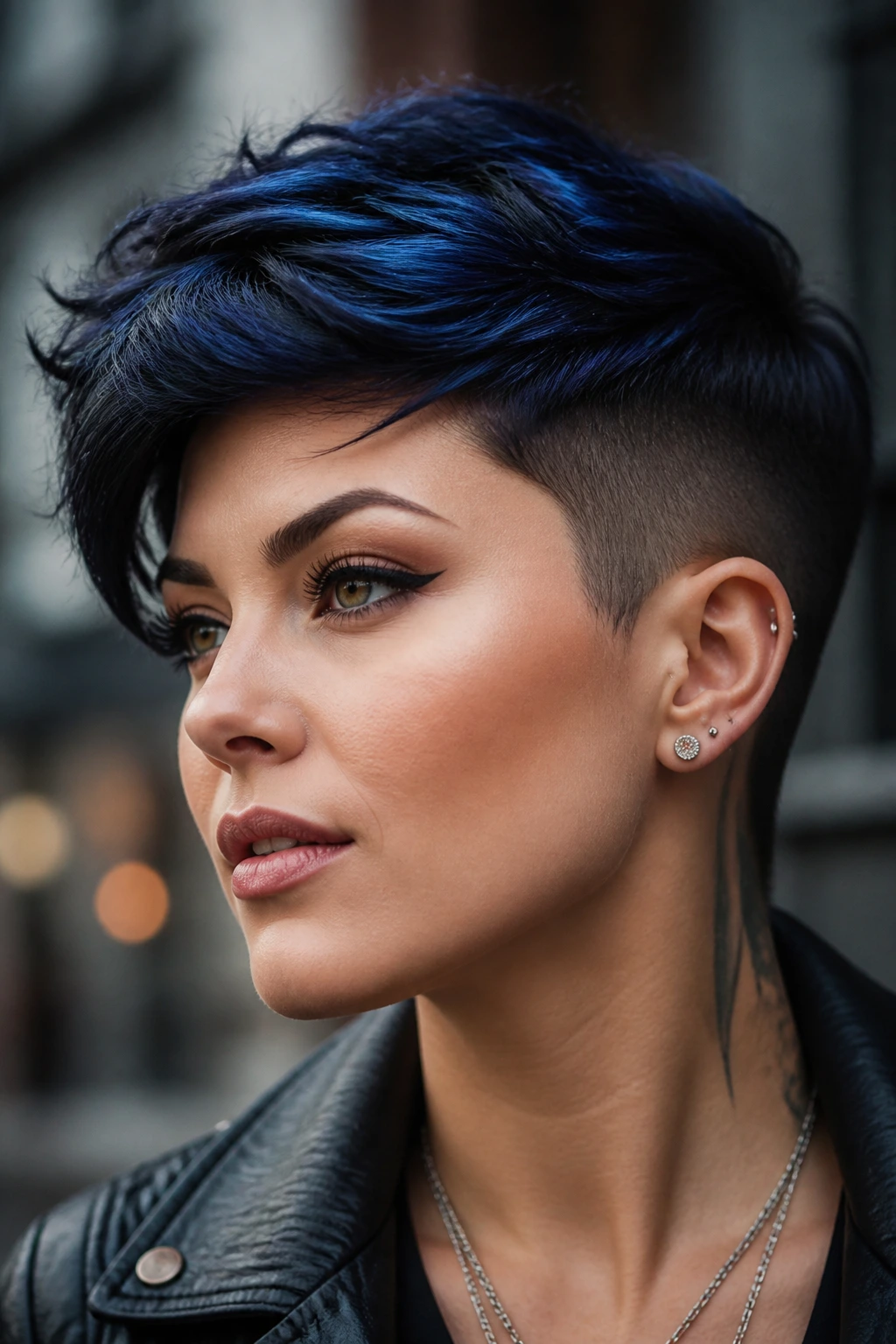
An ink-blue undercut pixie is the blunt instrument of this group, and I mean that in a good way. It removes bulk at the sides and nape, keeps the top dark and glossy, and turns thick coarse hair into something that feels deliberate instead of unruly.
The undercut is doing the heavy lifting. Without it, thick hair can make a pixie stand too tall around the ears. With it, the shape sits closer to the head and the top becomes the focal point. Ink-blue is a smart choice if you want black hair with a little edge; indoors it reads near-black, but in daylight you catch that blue sheen.
This style needs a pomade or wax more than a fluffy cream. Work a pea-sized amount through the top, push the front slightly to one side, and keep the sides neat. If your hairline is strong and your neckline gets hot in the fall, this is one of the easiest short shapes to live with.
11. Mulled Wine Side-Part Bob

A deep side-part bob in mulled wine brown is one of the most wearable dark fall looks for thick hair. The side part breaks the width of the head, and the wine-brown tone brings depth without pushing the color all the way to black.
Unlike a center-part bob, this one gives your hair a downhill line. That matters when the hair is dense, because a center part can make the crown lift in two directions and make the cheeks look wider than they are. A deep side part lets one side lie flatter and lets the other side frame the face with a little softness.
This is a good cut for someone who wants polish without losing movement. Keep the length around the chin or a finger below it, and let the ends bend under just enough to follow the jaw. If your wardrobe leans toward structured coats, crisp shirts, and dark lipstick, this bob fits right in.
12. Chestnut Micro Lob
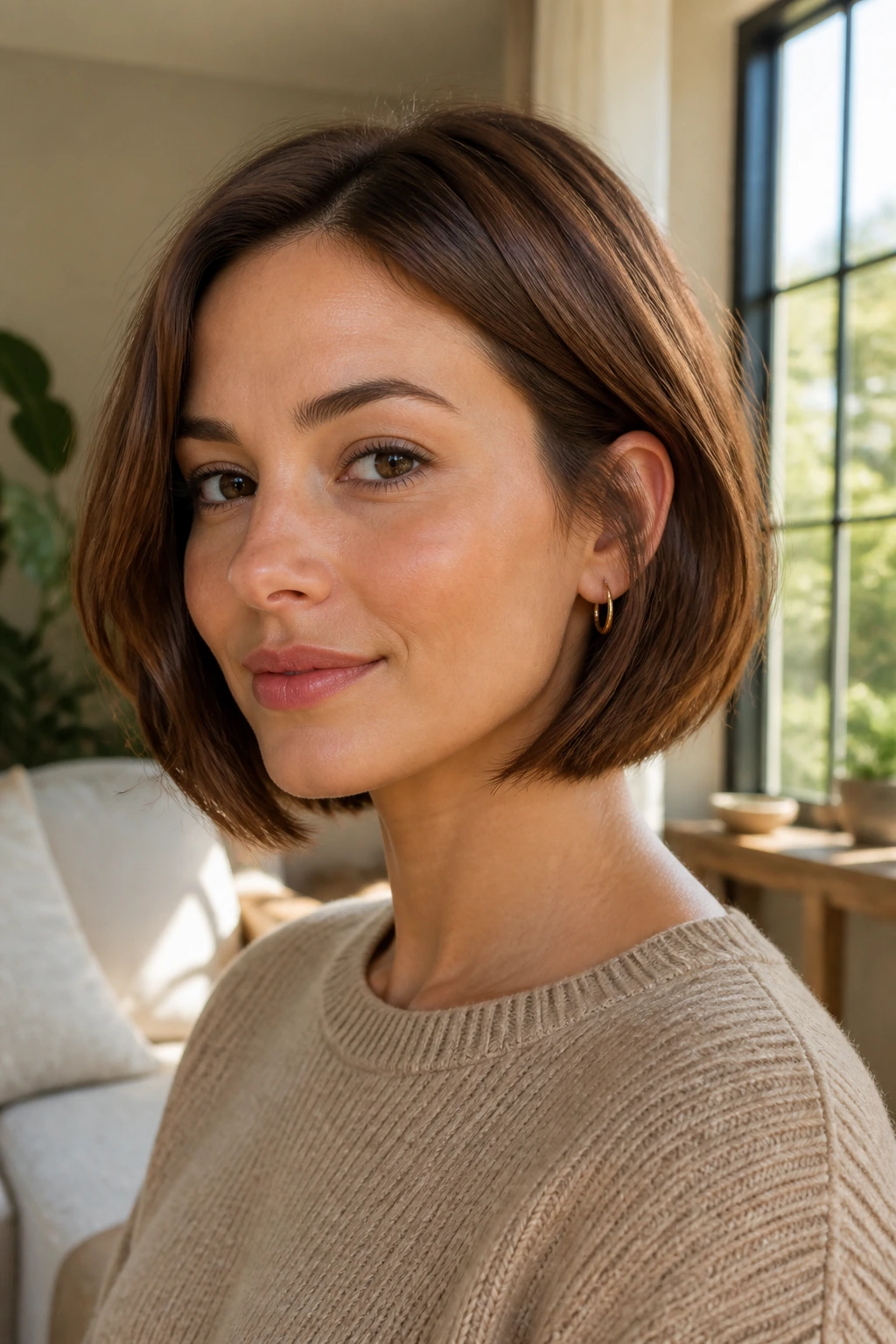
A micro lob is the shortest version of a long bob that still keeps a little neck grazing length. On thick hair, that extra inch or two can make a huge difference. Chestnut brown keeps the shape warm and rich, while the longer perimeter stops the style from feeling too severe.
This is the calmest option in the bunch if you want to keep some length but still get the benefits of a shorter cut. The line stays below the chin, which gives thick hair room to settle instead of sticking out. A few internal layers keep the ends from flipping outward, but the overall shape should stay solid.
What makes it useful:
- Long enough to tuck behind the ears
- Short enough to feel lighter at the nape
- Easy to blow out straight or bend softly
- Friendly to grow-out if you decide to change course later
I’d choose this if you’re nervous about going fully short. It gives you the clean edge of a bob without the commitment of a crop.
13. Raven Wolf Cut Crop
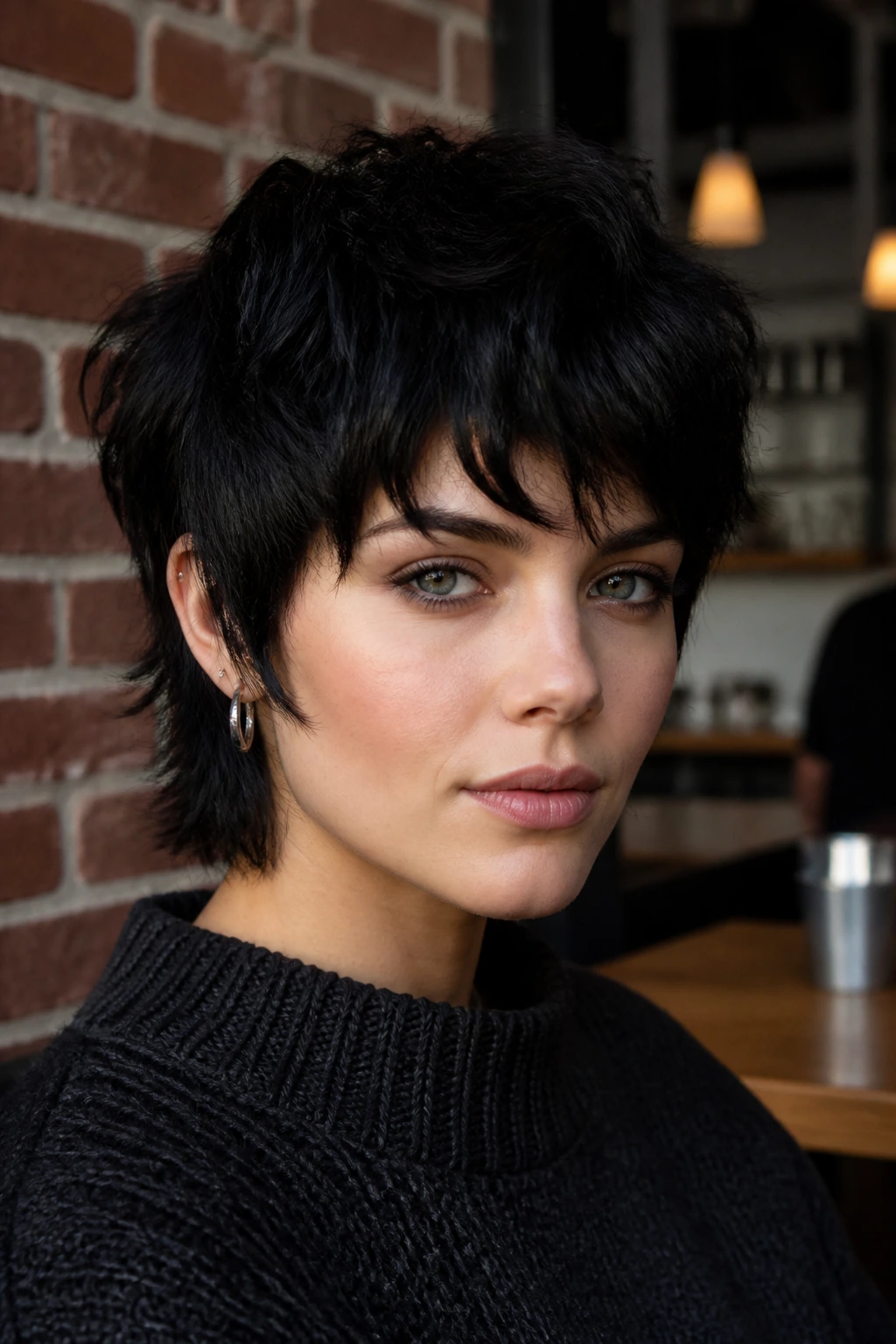
The wolf crop only works if there is enough hair for the layers to bite into. Thick hair gives it that body. Raven black gives it drama without needing highlights, and the choppy crown keeps the silhouette from sitting too heavy.
This is a cut with attitude. The top is slightly shaggy, the sides are feathered, and the back is kept shorter so the neck stays clean. On dense hair, that layered top can look amazing or it can go wild fast, depending on where the weight is removed. You want the crown to have lift, not a puffed mushroom effect.
I’d style this by rough-drying first, then working a texture mist or light paste through the top pieces. Don’t chase perfection here. A little mess is the design. If you like leather jackets, ripped denim, and not spending twenty minutes with a round brush, this cut makes a lot of sense.
14. Cocoa Curtain-Bang Crop
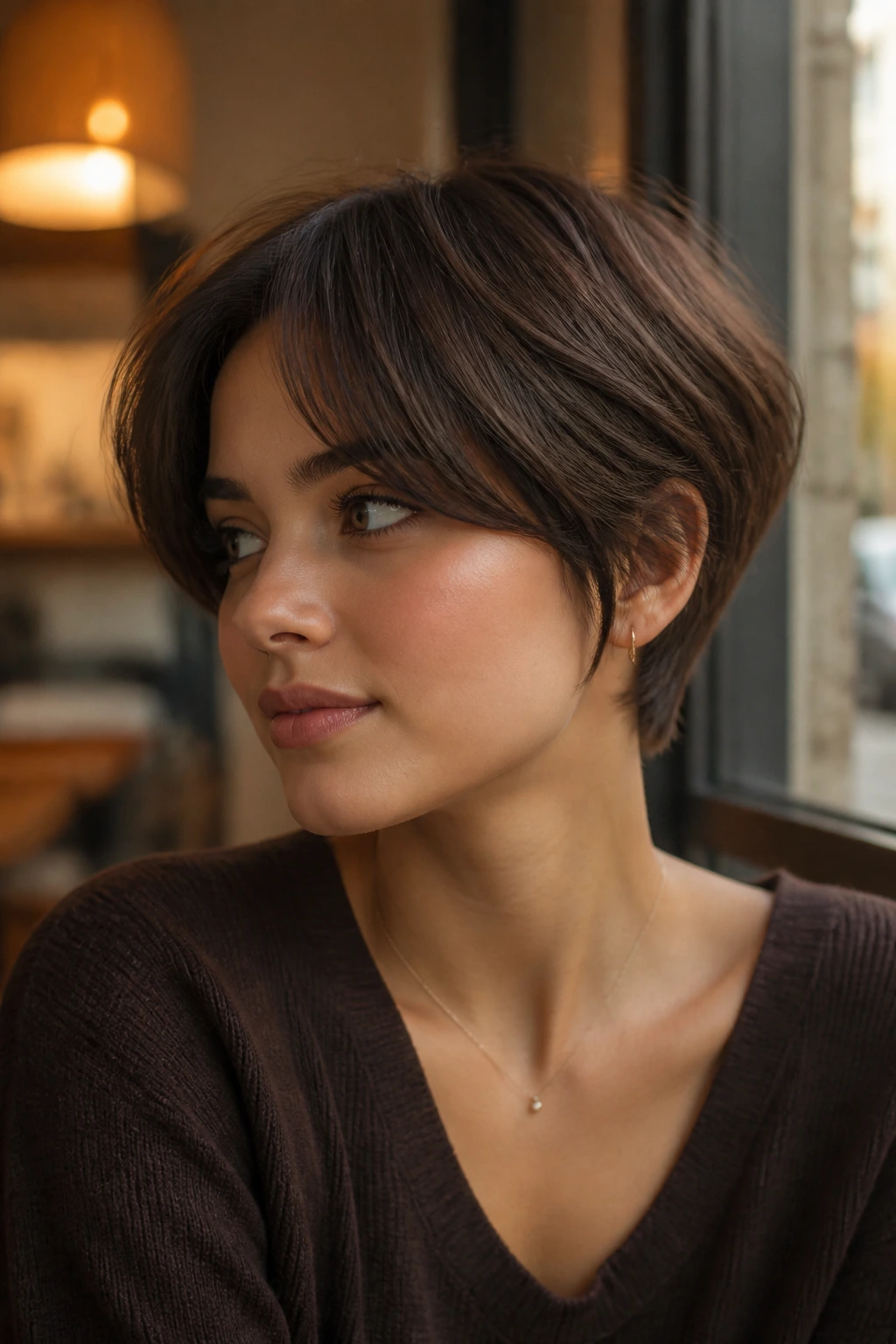
What happens when you put curtain bangs on thick short hair? The face gets a little air, and the whole haircut stops looking so boxy. Cocoa brown keeps the bangs soft and readable without forcing high contrast at the front.
Curtain bangs are useful because they break up the density around the forehead and temples. Thick hair can make that area feel heavy fast. By keeping the fringe longer in the center and tapering it toward the cheekbones, you get movement without creating a blunt wall across the face.
How to Wear It
Blow-dry the bangs first with a small round brush, lifting them away from the face and then bending them outward at the ends. The rest of the crop can stay soft and piecey. A little heat protectant and a light cream are enough. If you overdo product here, the bangs start sticking to the forehead, and that ruins the effect quickly.
15. Mahogany Tapered Pixie
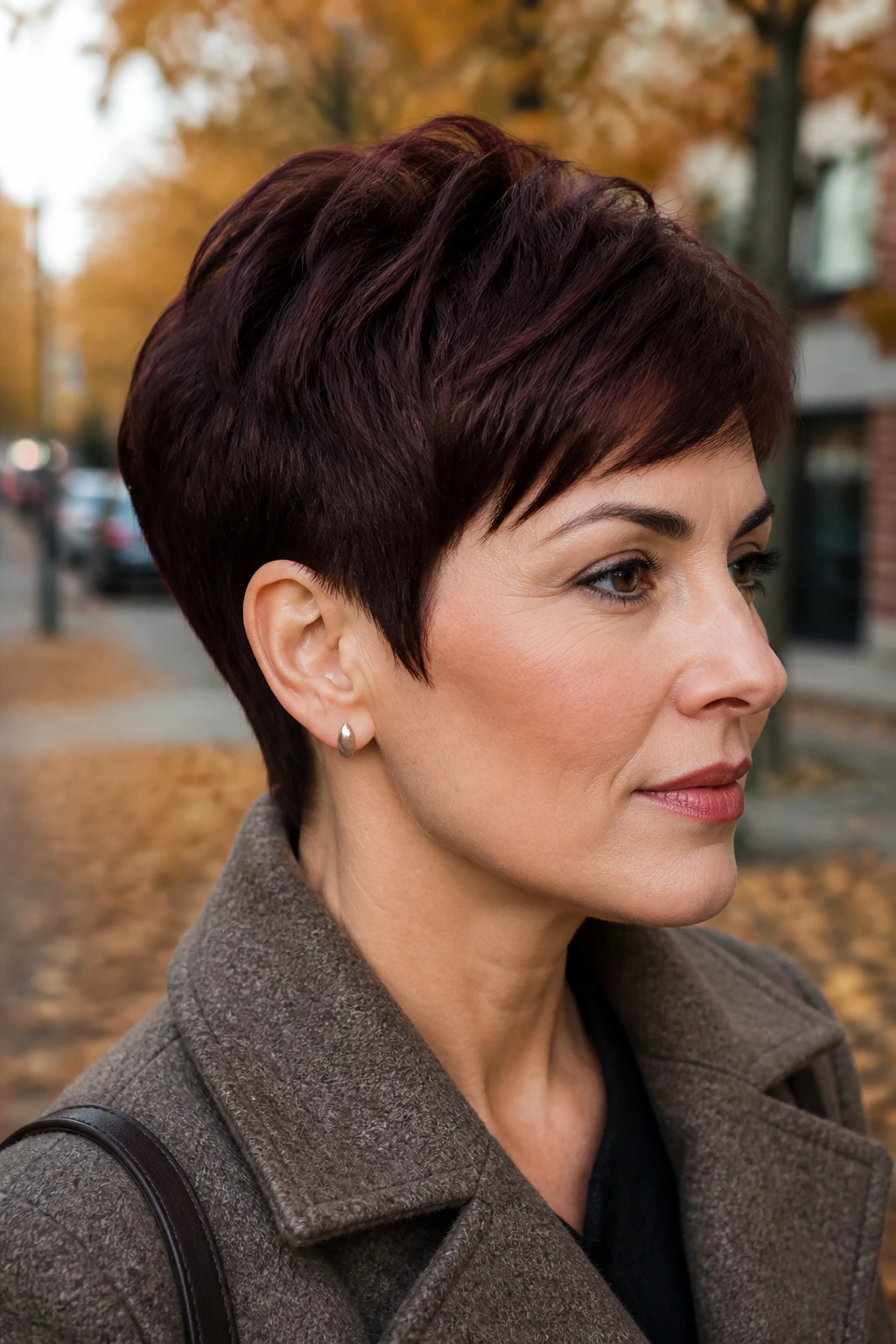
A mahogany tapered pixie has warmth in the color and discipline in the shape. The nape is tight, the sides stay tidy, and the top keeps enough length to move around. On thick hair, that taper keeps the whole cut from sitting like a block.
Mahogany is one of my favorite shades for fall because it still reads brown in low light, but it catches a red glow when the sun hits it. That matters on short hair, where the color has less room to show off. The taper also means the neckline stays clean under scarves and collars, which is not a small thing once the weather turns cool and fabric starts brushing the back of your head all day.
This cut works especially well if you have a strong jaw or a long neck. The shape frames the face without hiding it. A small amount of wax at the ends gives the top a bit of direction, and that is usually enough.
16. Mushroom Brown Textured Crop
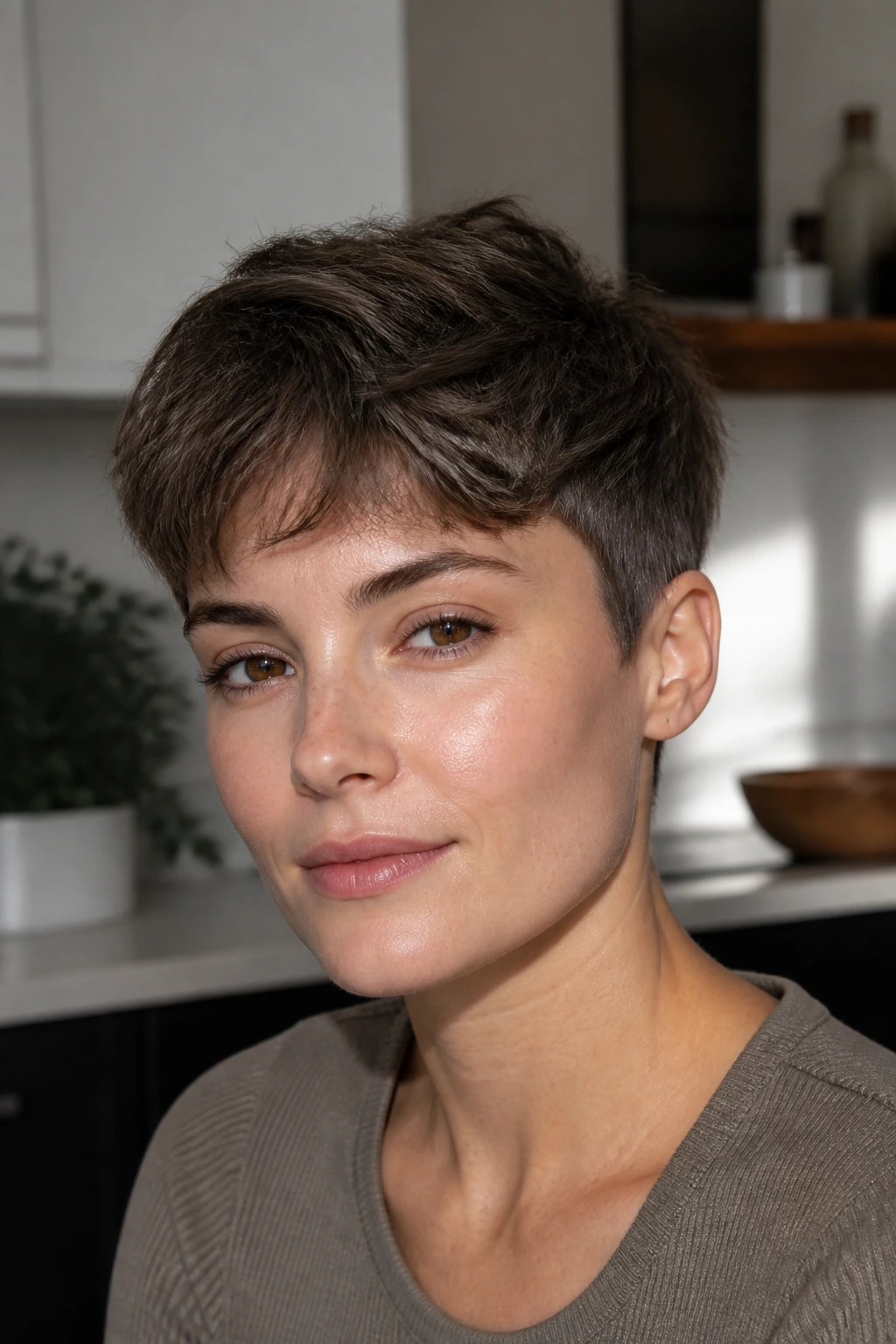
A mushroom brown crop sits in a softer lane than espresso or black. The shade leans cool and smoky, with taupe and ash in the mix, and that makes thick short hair look lighter without moving into blond territory.
Unlike warm chocolate, mushroom brown can calm down very dense hair because it takes some of the visual heat out of the shape. The crop itself should stay short and textured, not overly layered. Too many layers will make the ends fray. A few careful pieces around the crown and fringe are enough to stop the cut from reading like one heavy cap.
This is a good pick if you want dark hair that doesn’t shout. It works best on neutral or cool skin tones, and it looks especially good when the finish is matte rather than glossy. If your closet leans toward charcoal, olive, and denim, this one fits easily.
17. Deep Auburn Undercut Bob
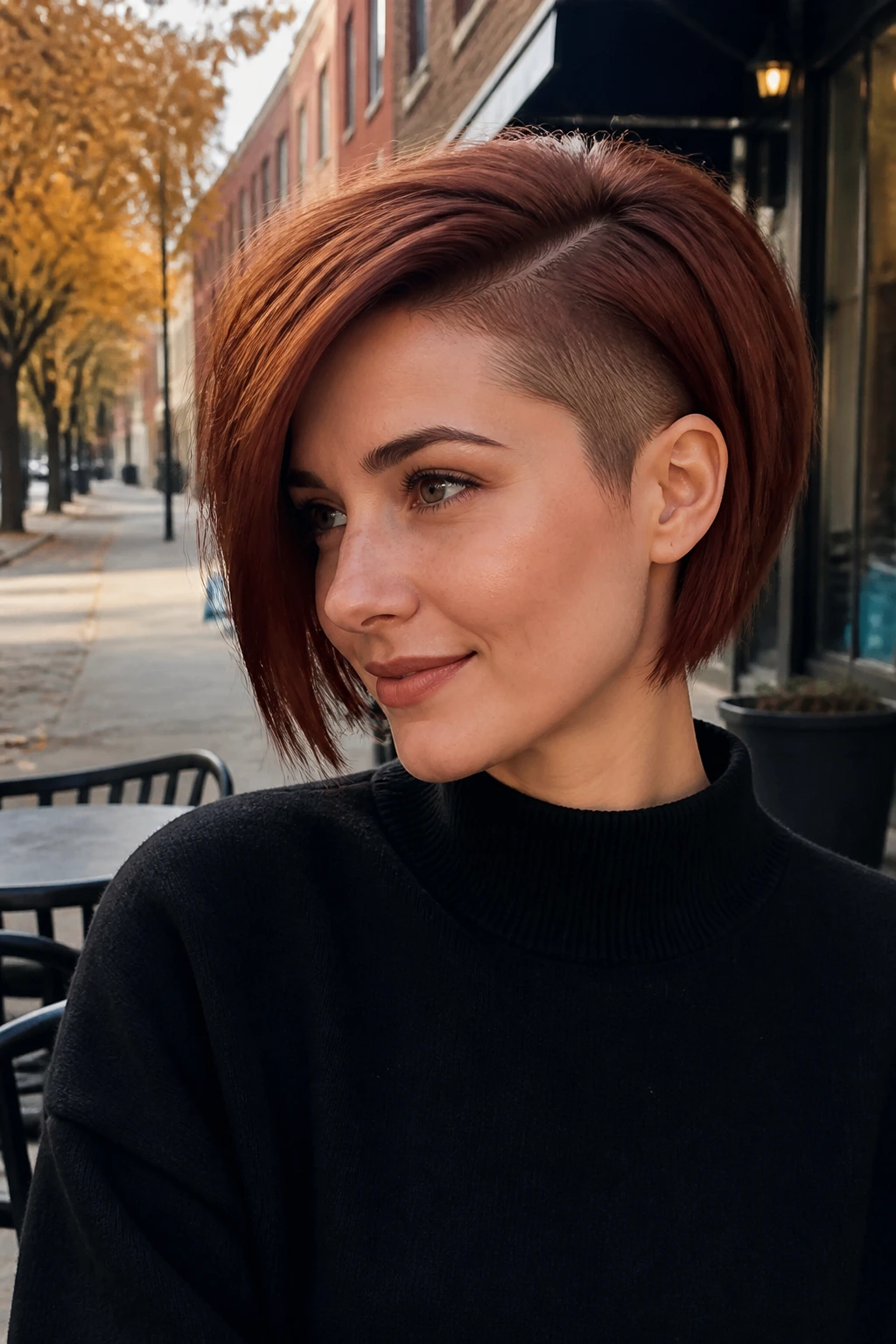
A deep auburn bob with a hidden undercut is what happens when you want warmth and control in the same haircut. The color brings that rich fall feeling, and the undercut removes the hidden bulk that thick hair keeps trying to build at the back.
The best part is the movement. Auburn catches light in the front pieces, while the undercut under the nape lets the rest of the bob fall cleanly instead of ballooning. If you have thick hair that tends to flip outward at the ends, this is a very practical fix. It is a little more maintenance than a standard bob, but it pays you back every time the hair dries in the shape you wanted.
Ask for:
- A chin-length front
- A concealed nape undercut
- A side part or offset part
- A glossy auburn or brown-red finish rather than a bright copper
This cut looks especially good with wool coats and dark knitwear, because the red-brown tone keeps the whole look from disappearing into the clothes.
18. Licorice Side-Swept Crop
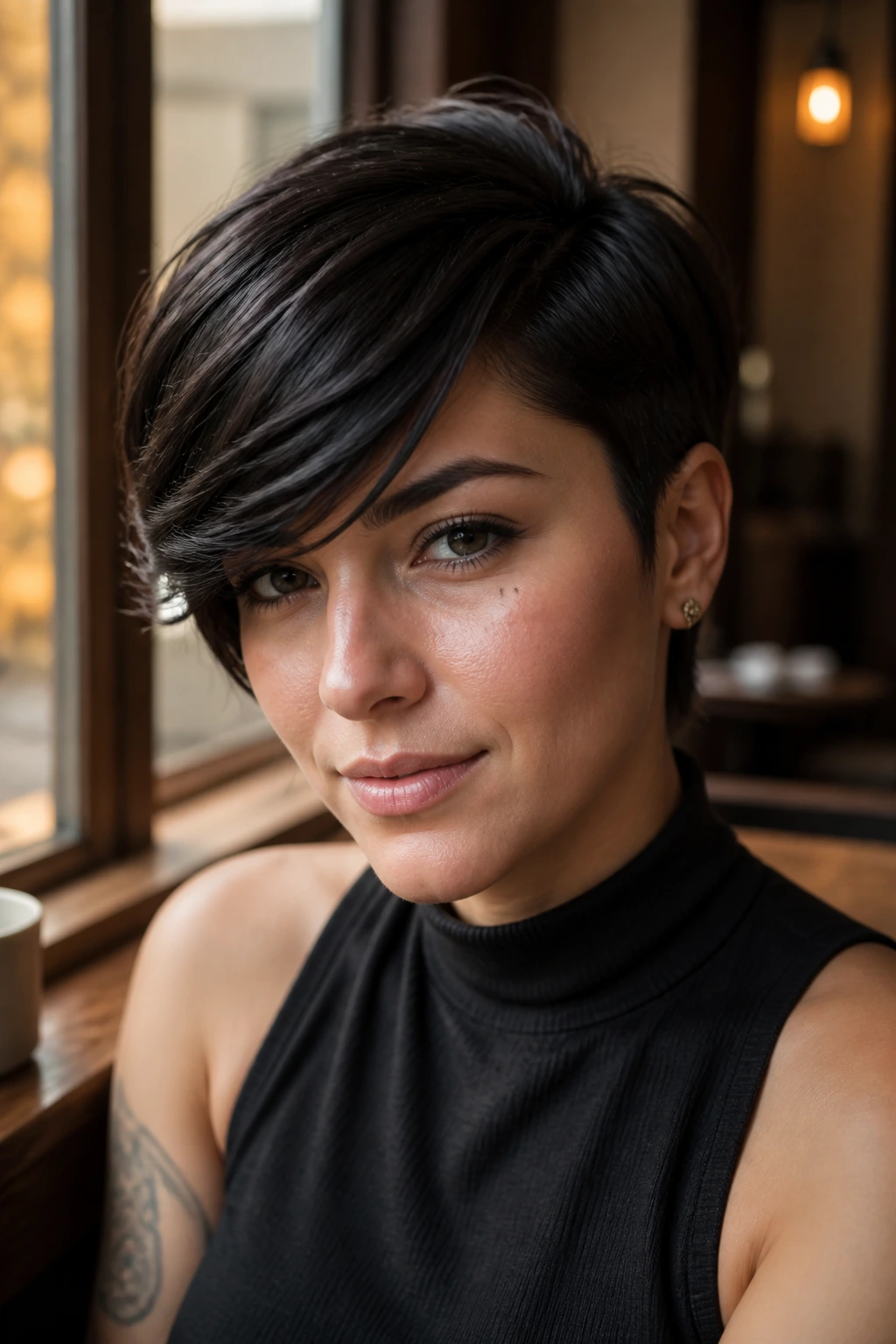
When you want short hair that looks sharp from every angle, a licorice side-swept crop is hard to beat. The near-black shade gives the cut a clean edge, and the side sweep keeps it from feeling severe.
This works especially well on straight or coarse thick hair because the dense strands hold the direction of the sweep without collapsing. Keep one side a little softer around the temple and let the top travel across the forehead instead of straight up. That movement breaks the blocky feeling that can happen with short dark hair.
I’d style this with a concentrator nozzle, a small round brush, and a touch of pomade on the front. Not much. The goal is a controlled sweep, not a wet look. If you wear glasses or like bold earrings, this crop gives you a clean frame around the face without stealing all the attention.
The Styling Details That Matter When Hair Is Dense
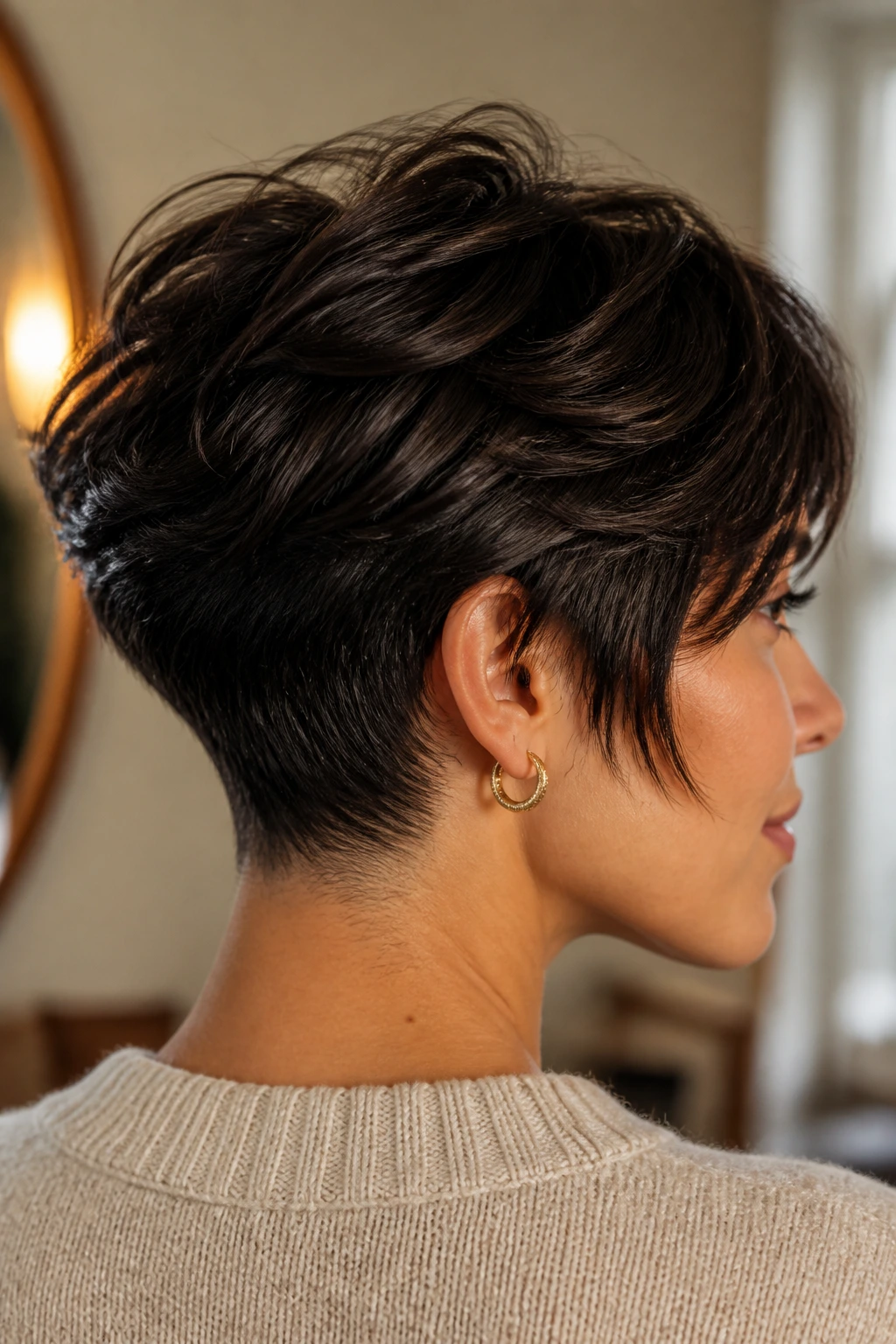
Thick hair is not one texture with one behavior. It can be coarse, wavy, springy, or straight and stubborn, and short cuts show every bit of that personality. The first thing I look at is where the bulk lives. Some heads are full at the crown. Some are full at the ears. Some swell at the nape the second they dry.
That is why the best short styles for dense hair don’t just “thin things out.” They move weight in specific places. A clean taper at the neck can change the whole silhouette. Internal shaping around the middle can stop a bob from puffing at the cheek. A longer top on a pixie gives the hair a place to collapse into instead of sticking up like a brush.
Dark shades help, but they do not rescue a bad cut. They sharpen it. That is the honest truth. If the perimeter is heavy and the crown is too short, a deep brunette will make the problem more obvious, not less. The cut has to behave first.
Essential Tools for These Short Dark Styles
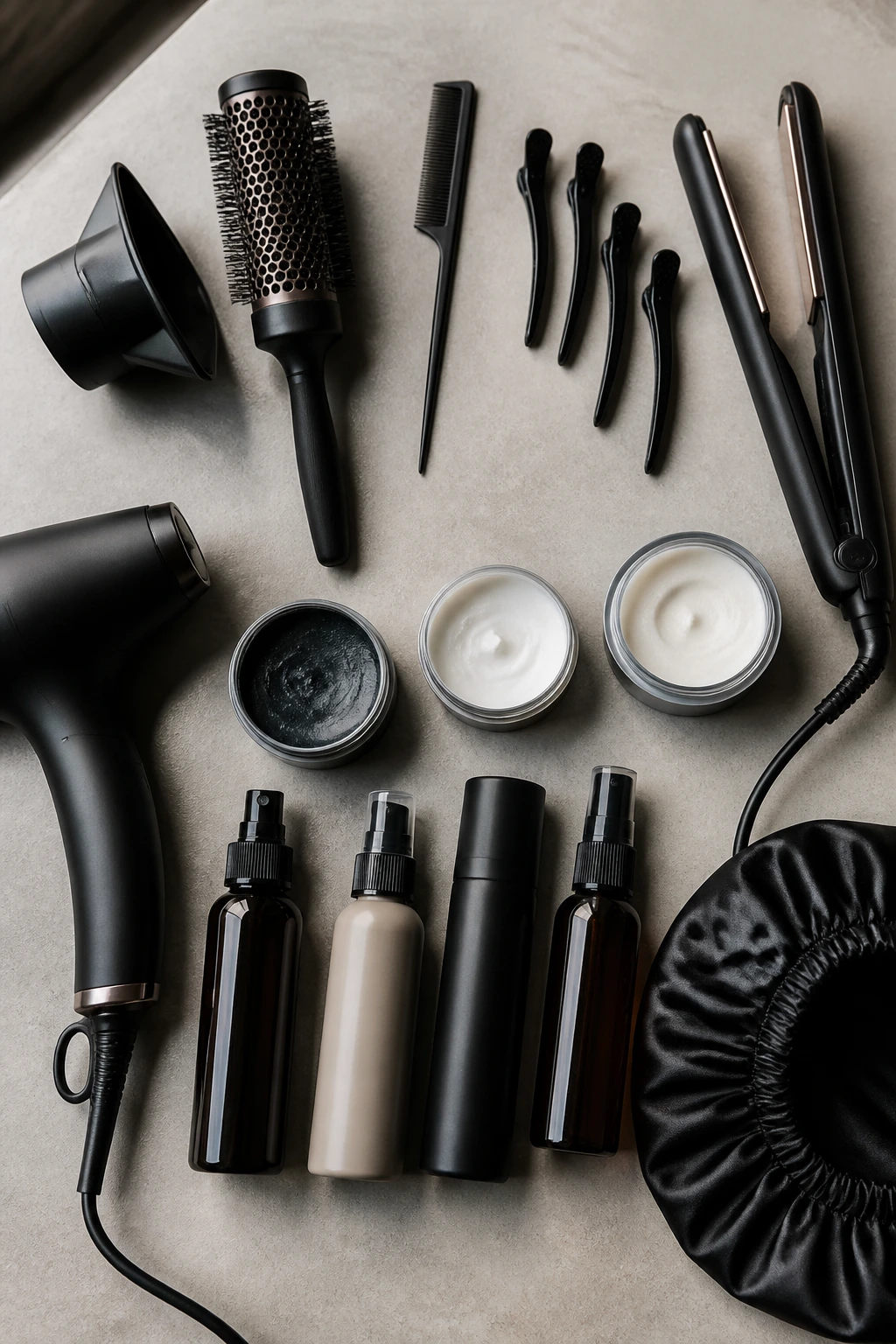
- Concentrator nozzle blow dryer — directs airflow where you need it, which helps stop the sides from blowing open.
- 1- to 1.25-inch round brush — useful for beveling bobs and bending bangs without overcurling the ends.
- Tail comb — makes clean parts and helps you work around cowlicks at the crown.
- Sectioning clips — thick hair needs sectioning or the underneath stays damp and puffy.
- Flat iron with adjustable heat — best for soft bends and edge smoothing, not bone-straight ironing.
- Matte paste or fiber cream — gives short layers grip and separation without greasiness.
- Root-lifting mousse — helps the top keep some height when dense hair wants to sink.
- Heat protectant spray — nonnegotiable if hot tools touch the hair.
- Color-safe shampoo and conditioner — keeps dark shades from fading out too fast.
- Dry shampoo — adds grit at the roots and buys an extra day or two between washes.
- Satin pillowcase or bonnet — keeps the nape and fringe from getting bent into odd shapes overnight.
Choosing the Right Cut and Shade for Your Face and Texture
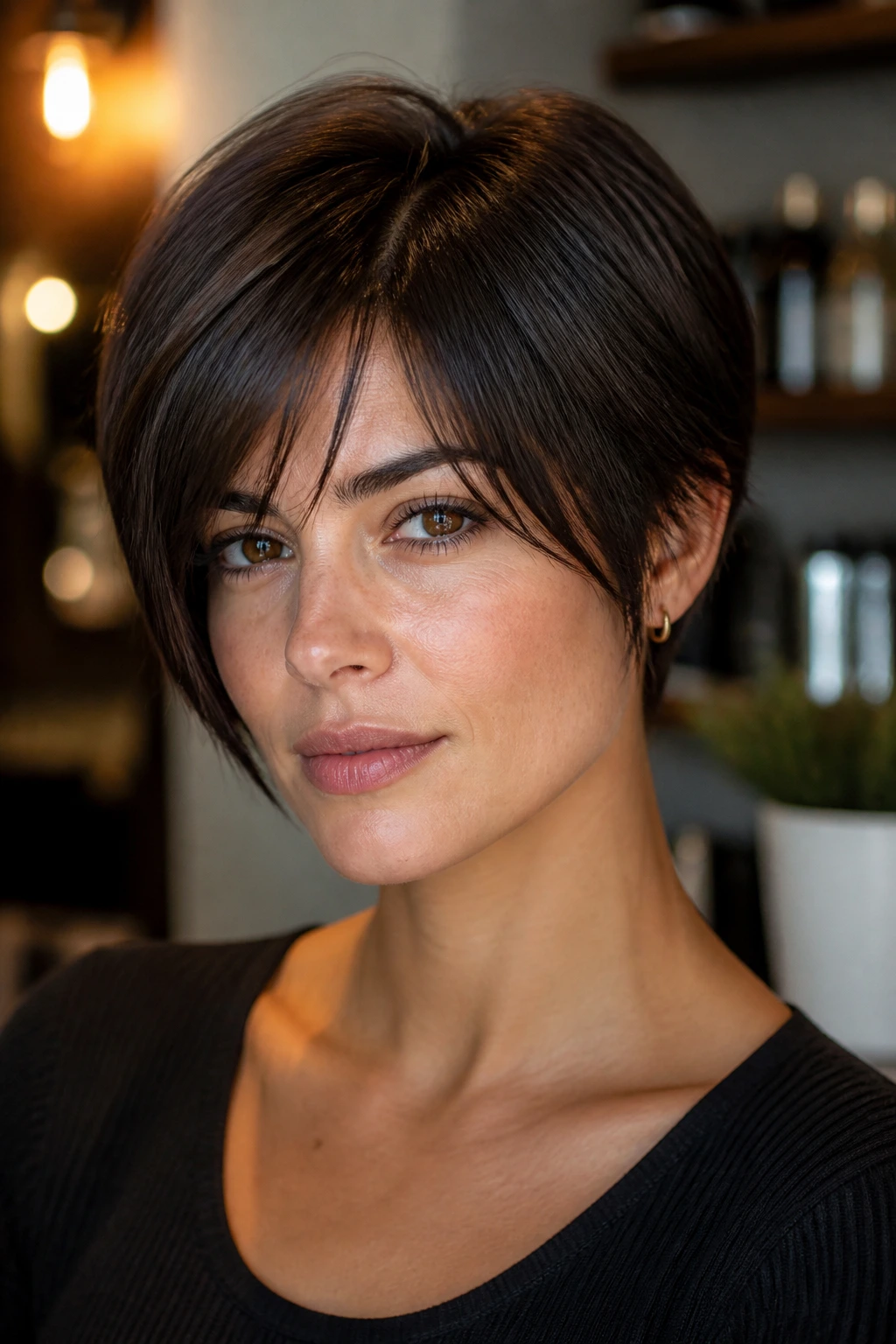
Start With Density and Growth Pattern
The cut should work with the hair that grows out of your head, not the hair you wish you had. If your crown swirls hard to one side, build the shape around it. If your nape is thick and heavy, ask for a taper there first. A stylist who understands dense hair will talk about weight removal, not just length.
Pick the Shade by Maintenance, Not Mood Alone
Black cherry, plum, and mahogany all look rich, but they behave differently. Red-violet shades fade faster. Blue-black shows regrowth sooner. Espresso and mushroom brown are easier to live with if you want fewer appointments and less color upkeep. That matters on short hair because the root line shows fast.
Match the Silhouette to Your Face
A jaw-length bob can sharpen a rounder face. A side-part crop can soften a strong forehead. Longer front pieces help if your cheeks carry more width than you want the cut to emphasize. Thick hair gives you enough body to work with, but the line still needs to point where you want the eye to go.
How to Wear These Looks Without Fussy Mornings
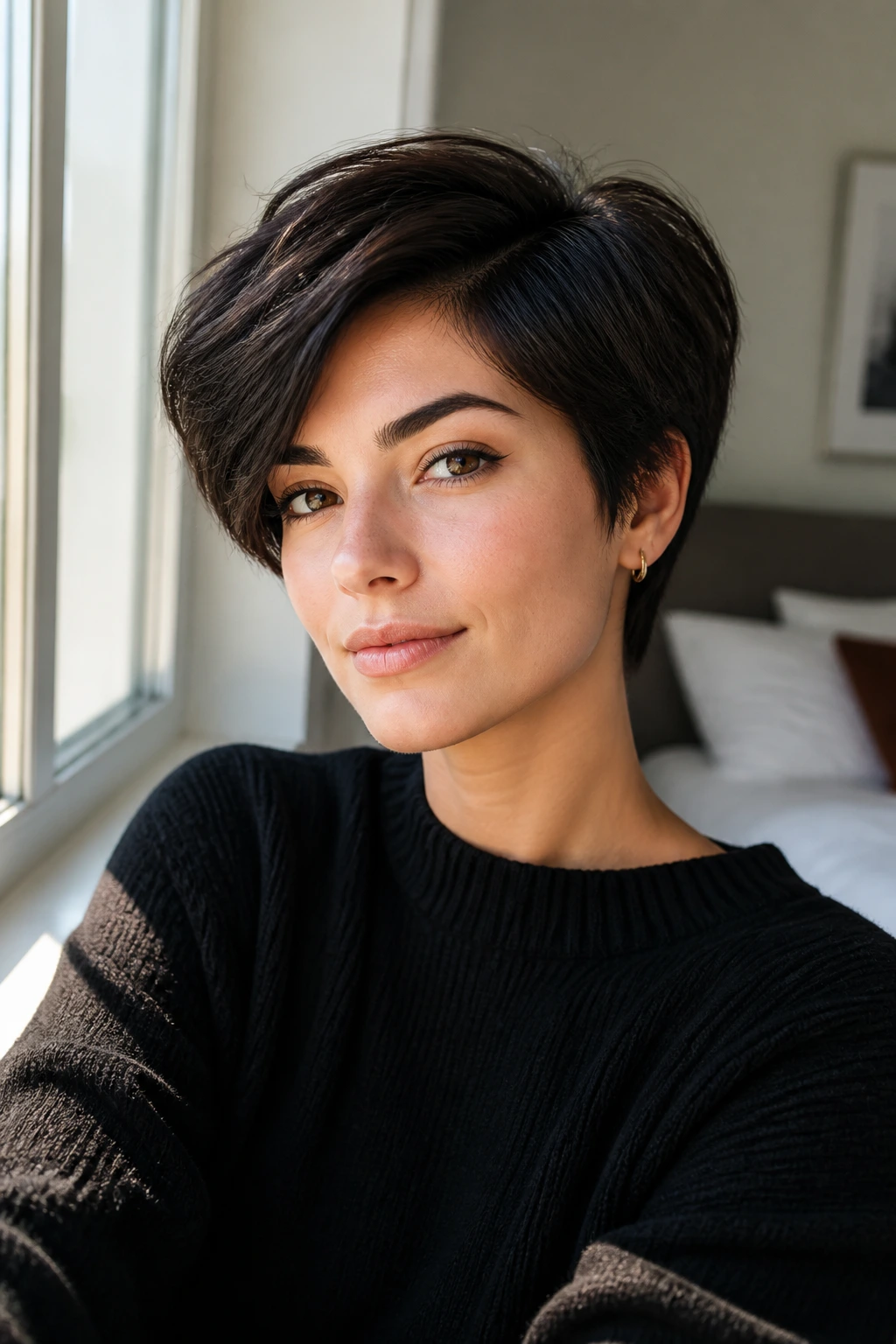
Presentation: Keep the edges controlled and the top either softly lifted or intentionally smooth. Thick short hair looks best when it has a clear decision about what it wants to be.
Accessories: Small hoops, thin barrettes, and slim headbands work better than bulky clips that fight the silhouette. If you wear scarves often, choose a cleaner nape so the fabric does not crush the shape.
Outfit Pairing: Structured collars, ribbed knits, leather jackets, and plain tees all work with these cuts. A shag wants texture around it. A blunt bob likes sharper clothes. A pixie can handle stronger earrings because the hair is not competing with them.
Makeup Pairing: Deep berry lips, soft brown liner, and brushed-up brows look especially good with cherry, plum, and mahogany tones. If the hair is near-black, a little warmth in the face keeps the look from turning too hard.
Practical Tips for More Movement and Less Puff
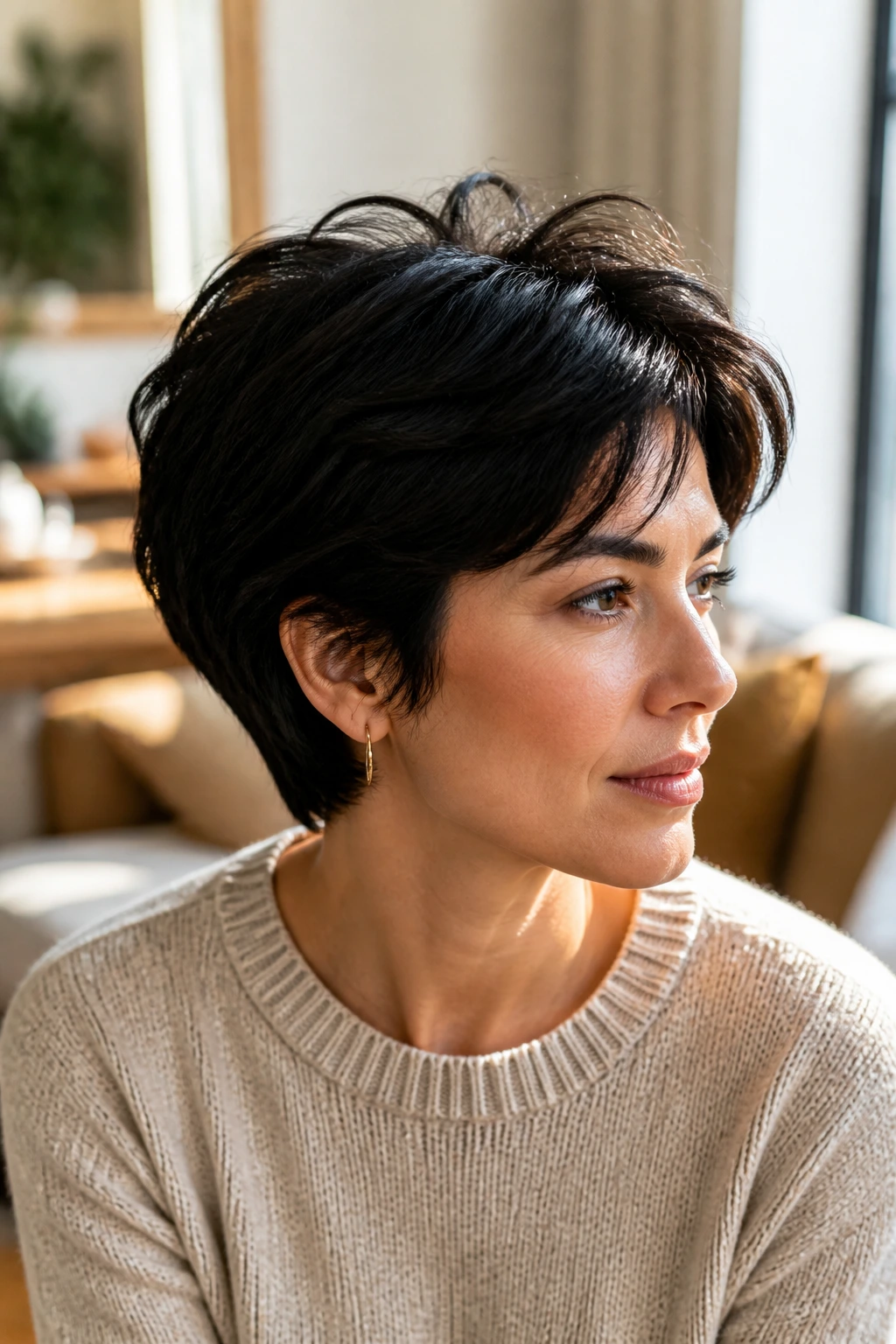
- Dry the roots first: Thick hair swells where it stays damp, so get the nape and crown mostly dry before you worry about the ends.
- Keep creams off the scalp: Use smoothing cream from mid-length to ends only. Heavy product at the roots flattens the shape and makes the crown greasy.
- Use a bend, not a curl: One soft pass of the flat iron or brush gives the hair motion without making the ends look overstyled.
- Watch the back of the head: The nape often puffs first. Check that area in a hand mirror and taper it down with the dryer if needed.
- Choose gloss over more dye: If a dark shade looks flat, a clear gloss or toner usually fixes it better than another round of color.
Common Mistakes That Make Thick Short Hair Misbehave
- Over-thinning the ends: The hair may feel lighter in the chair, but the ends later look fuzzy and weak. Ask for internal shaping, not a shredded perimeter.
- Making every side equally short: Thick hair often needs asymmetry, a side part, or a longer front to stop the silhouette from becoming boxy. Even a half-inch difference changes the whole line.
- Using heavy oil near the scalp: Thick hair can take product, but not at the roots. Oil there collapses the lift and makes dark hair look stringy instead of rich.
- Choosing a shade that is too flat: A single flat black can look harsh if the cut already has a lot of bulk. Brown-black, plum-black, or blue-black usually gives more dimension.
- Ignoring your cowlicks: A fringe or side sweep that fights a hard cowlick will split by lunchtime. Let the growth pattern help decide where the part belongs.
- Heat styling every strand straight: Short thick hair often looks better with a soft bend. Straightening it flat every day can make the cut lose its shape and feel harder than it needs to.
Variations and Adaptations to Try
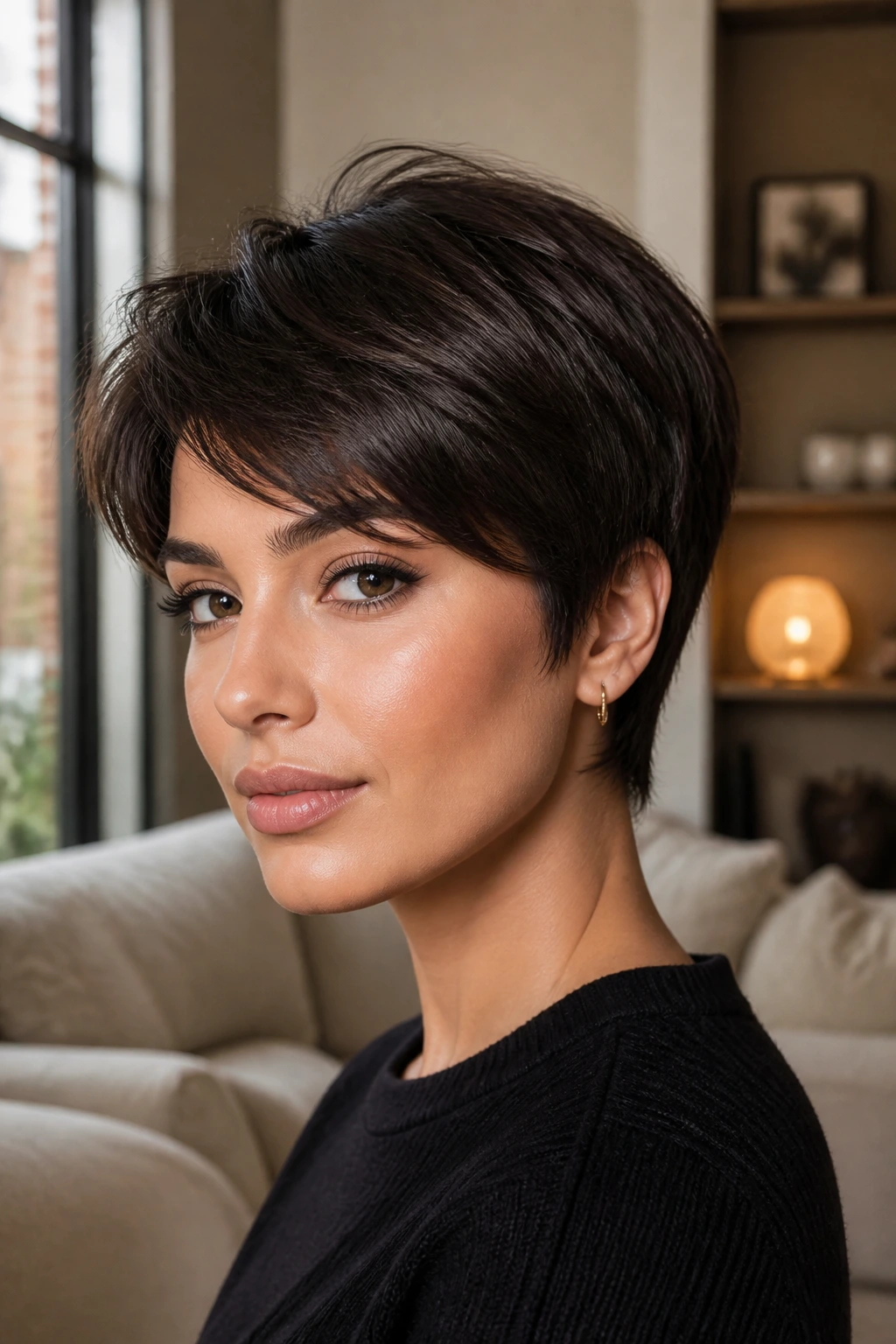
Cool Espresso Edit: Keep the cut the same, but shift the shade toward ash-brown or espresso with a cool gloss. This works well if your skin leans neutral or pink and you want the hair to feel crisp rather than warm.
Warm Chestnut Version: Add a chestnut or mahogany glaze for a softer fall feel. It suits people who want depth but don’t want the near-black edge that can make thick hair look stricter.
Curl-First Version: Leave the sides slightly longer, cut the shape dry, and let the curl pattern guide the finish. This version is better than forcing curls into a blunt shape they will not keep.
Office-Safe Polish: Keep the nape tight, the part clean, and the fringe softer. A side-part bob or a neat pixie usually fits this lane better than a shag or wolf cut.
Edgier Undercut Edit: Hide a shave under the nape or behind one ear. It removes bulk where no one sees it first, which is a very useful trick on thick hair.
Grow-Out Friendly Take: Leave the front longer than you think you need, and keep the crown layered lightly. That gives you a decent shape even when the cut grows past its first appointment window.
Keeping the Cut Sharp and Color Rich
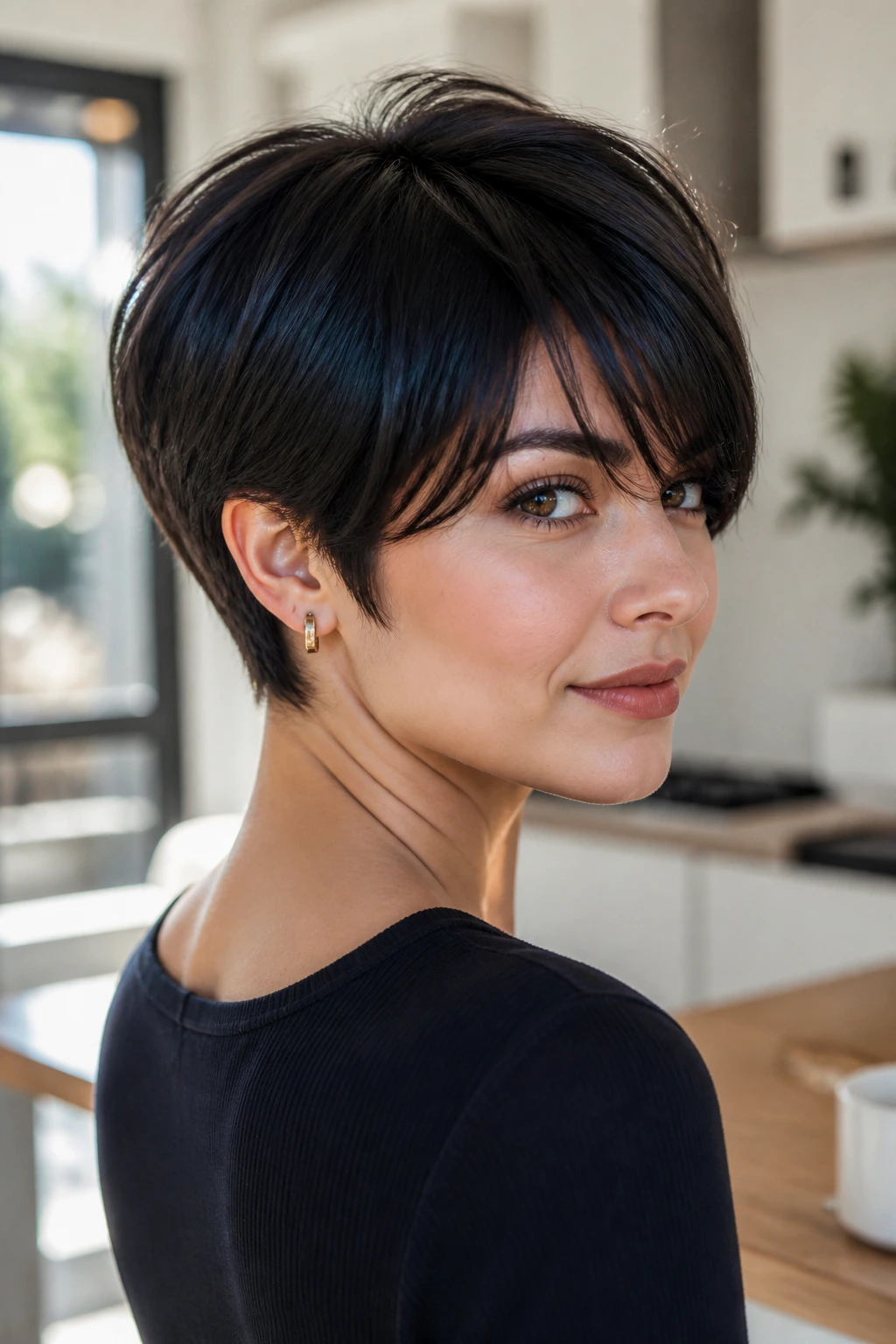
Short dark hair needs maintenance, but not the exhausting kind if the shape was right to begin with. Pixies and crops usually need a trim every 4 to 5 weeks if you want the neckline and ears to stay clean. Bobs can usually stretch to 6 or 8 weeks, though thick hair may need a small cleanup around the perimeter sooner if it starts pushing out.
Color has its own rhythm. Red-violet shades like black cherry and plum fade faster than espresso or mushroom brown, so a gloss every 4 to 6 weeks keeps them from slipping into dull brown. Blue-black and licorice shades tend to show the regrowth line sooner, so root touch-ups need to stay on schedule if you like that sharp look. If you’d rather the grow-out be quiet, deep brunette is easier to live with.
Wash frequency matters too. Thick hair often does better with 2 or 3 washes a week instead of daily shampooing, especially if the color is dark and the ends are dry. Use cool or lukewarm water, keep conditioner off the roots, and dry the nape fully so it doesn’t puff while it’s still damp. That last part sounds small. It isn’t.
Frequently Asked Questions
Which short haircut works best if my thick hair always puffs out at the sides?
A bob with a clean perimeter or a tapered pixie usually behaves better than a heavily layered cut. The key is removing bulk where the hair swells, not shredding the ends until they frizz.
Do dark shades make thick short hair look heavier?
They can, if the color is flat and the cut has no shape. Espresso, plum, and black cherry tend to work better because they add depth and keep the outline readable.
Should thick short hair be blunt or layered?
That depends on the texture. Straight, dense hair often looks stronger with a blunt edge and a little internal shaping, while wavy or curly thick hair usually needs more layering to keep the silhouette from ballooning.
Can I wear these looks if my hair is curly?
Yes, but the cut should respect the curl pattern. A rounded crop, a curly shag, or a pixie with a little extra length on top usually works better than a strict straight-line bob.
How often should I trim a short dark hairstyle on thick hair?
Pixies and crops usually need attention every 4 to 5 weeks. Bobs and micro lobs can often go 6 to 8 weeks, though the nape may want cleanup sooner if it starts widening.
Which dark shade fades the fastest?
Cherry, plum, and auburn tones tend to lose their punch first. They look rich right after color, then soften into brown faster than espresso or blue-black.
What product keeps thick short hair from looking helmet-like?
Use mousse at the roots, then a matte paste or light cream on the ends. Heavy oils and thick butters near the scalp usually make the shape sink and the sides spread.
Can I grow out a pixie without hating the in-between stage?
Yes, if the crown stays a little longer than the sides and the nape gets cleaned up regularly. A side part and a small amount of texture paste make the grow-out look intentional instead of awkward.
Dark Hair, Short Lines, Clean Shape
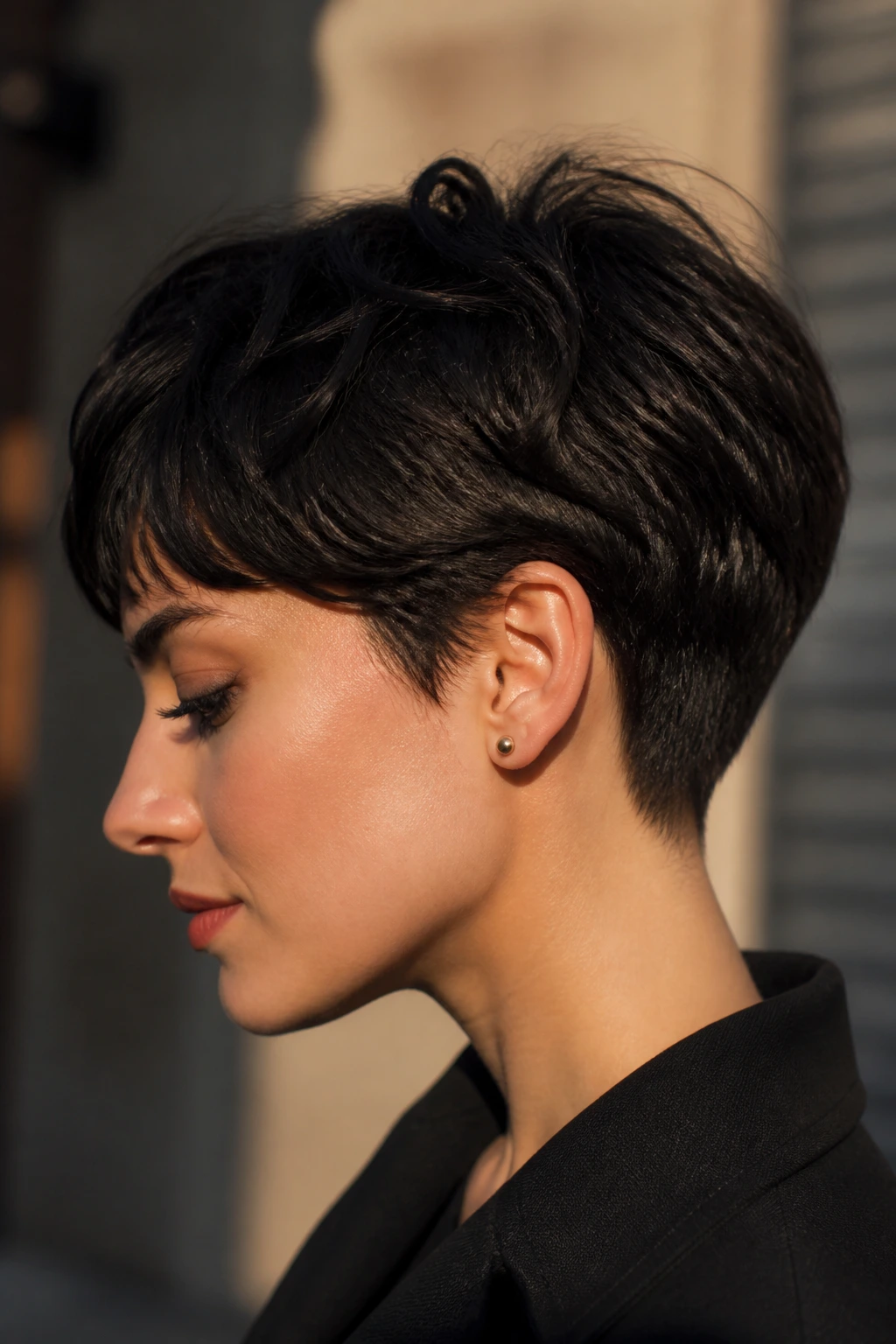
The best fall dark hairstyles for short hair with thick hair do one thing very well: they make the shape look chosen. Not forced. Not overworked. Chosen. That is a small difference on paper, but it changes everything when you’re standing in front of a mirror with a brush in one hand and a stubborn section at the nape that refuses to behave.
If you want the easiest route, start with the silhouette your hair already wants to make, then sharpen it with the right shade. Thick hair does not need more drama. It needs a clean line, a shade with some depth, and a little respect for its own volume. Bring the right reference photos, show the back view, and keep the maintenance realistic. The haircut will do the rest.