



Grey brown hair can look almost jewel-like on deep skin tones when the balance is right: enough brown to keep the face warm and grounded, enough grey to give the shade that smoky, expensive edge. Push it too pale and the whole thing can go flat. Keep the brown too red and the cool tone turns muddy. The sweet spot sits in that soft middle ground where ash, mocha, charcoal, and mushroom all meet.
That’s the part most people miss. Grey brown hair color ideas for deep skin tones aren’t about copying a single trend shade from a salon photo. They’re about choosing a tone that respects your undertone, your texture, and how much contrast you want around the face. On coily hair, the same color reads differently than it does on a silk press or a blunt bob. On braids and locs, it changes again.
The good shades do one thing well: they let the skin stay the star. Instead of fighting your complexion, they frame it with depth, smoke, and shine. A good grey-brown formula can look cool, but it should never look dusty. There’s a big difference.
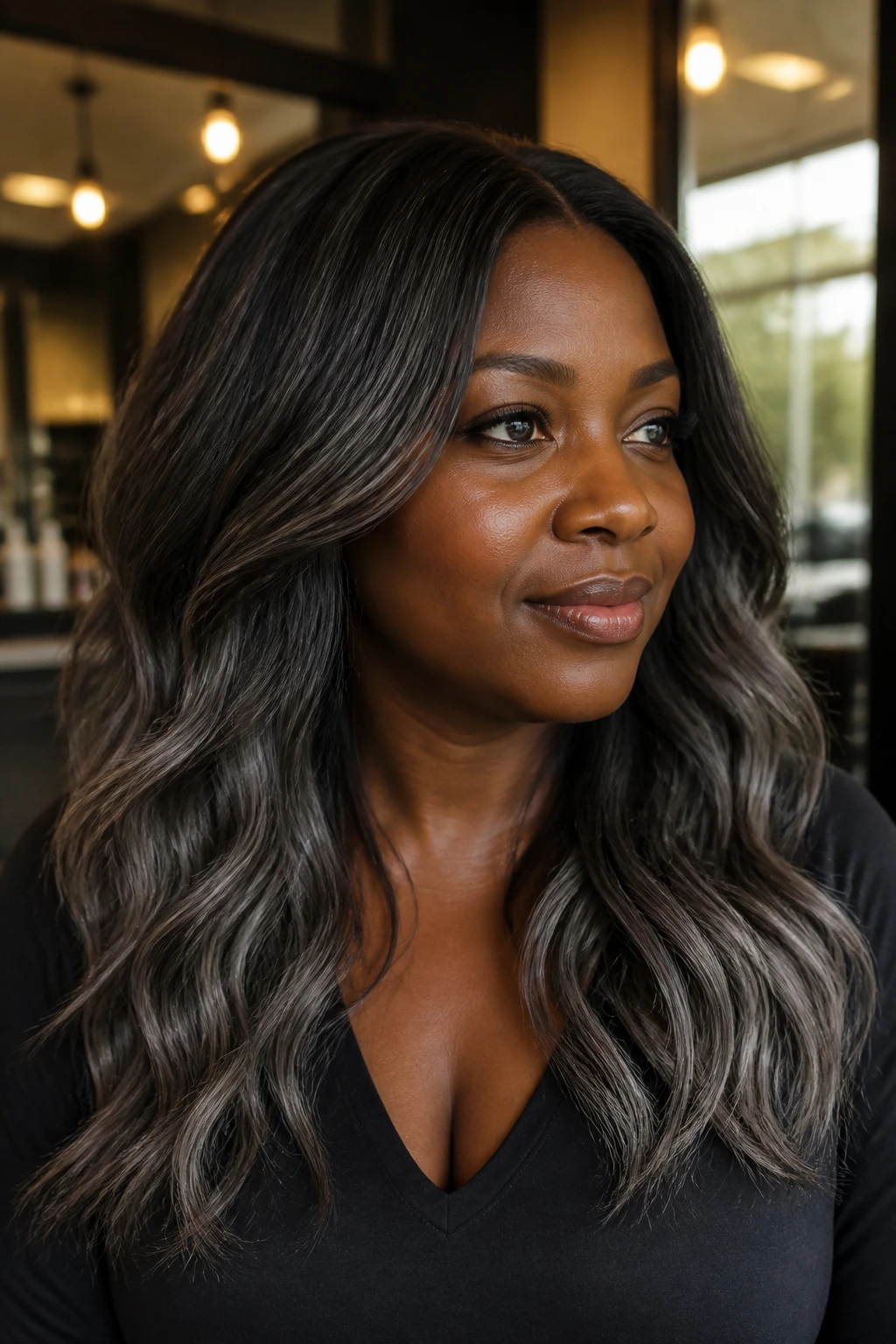
Why These Grey Brown Hair Color Ideas Work on Deep Skin Tones
-
Depth keeps the color rich: Deep skin tones can carry darker roots, charcoal lowlights, and smoky glosses without losing facial definition, which is why these shades look polished instead of washed out.
-
Cool tones need brown in the mix: Pure grey can look chalky on textured hair, but once brown or mocha is woven in, the shade gets body and looks more natural.
-
Contrast can be soft or bold: You can go with a subtle root melt or a strong silver ribbon, and both still work as long as the brown base has enough depth.
-
Texture changes the finish: Curls, coils, braids, and straight styles all catch grey-brown differently, so the same shade can read muted, glossy, or dimensional depending on the cut.
-
You get room to play: Grey-brown sits in a flexible lane. It can lean taupe, mushroom, graphite, cocoa, pewter, or ash without losing the core idea.
Why Grey Brown Looks So Good on Deep Skin Tones
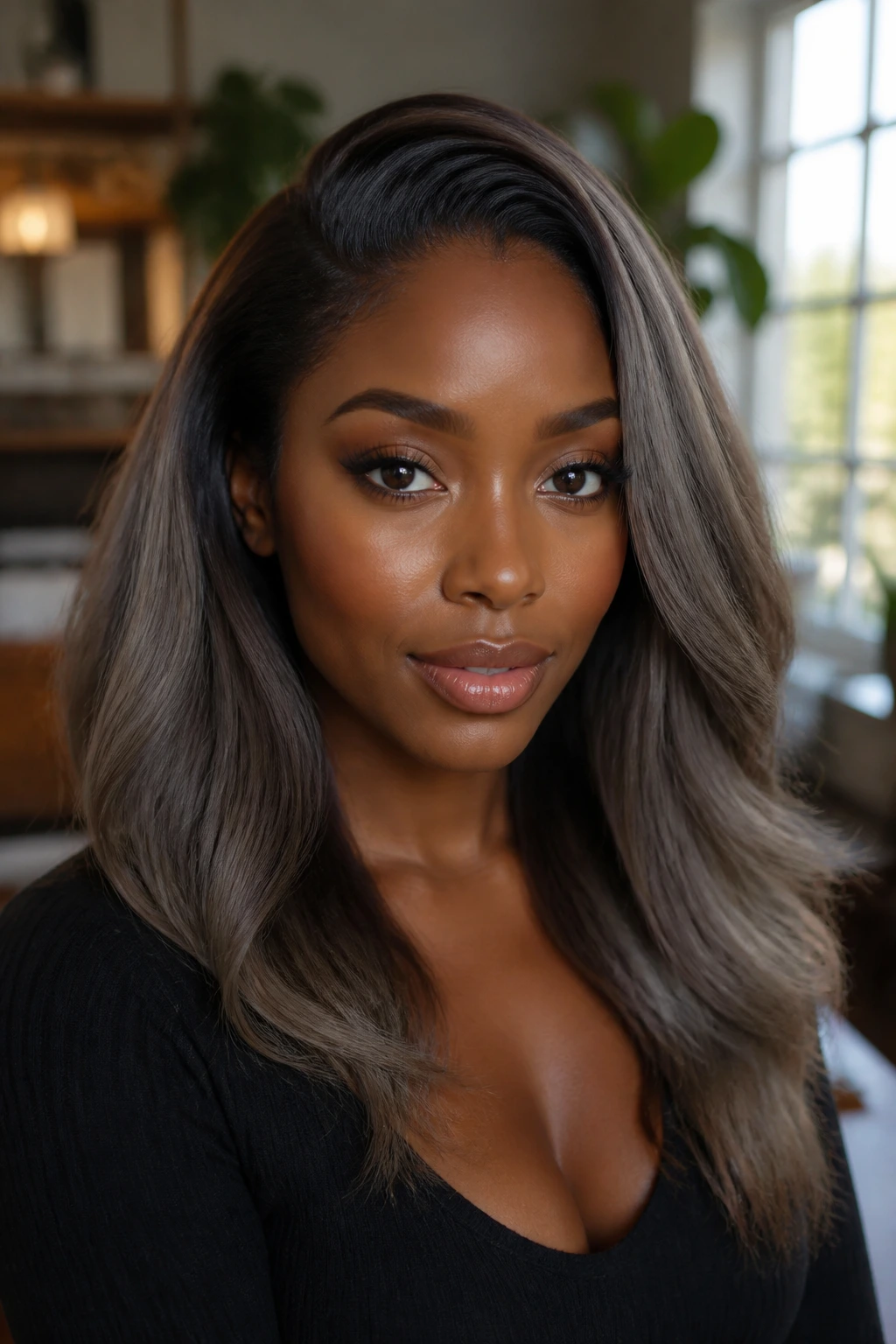
Deep skin tones give grey brown hair something a lighter complexion often cannot: a backdrop strong enough to hold the color’s shadows. That matters. When the base is too pale, grey brown can flatten fast, especially if the formula leans ash-heavy or the hair has been over-lightened. On deeper skin, the shade has space to breathe.
The best versions usually keep the root area a little darker and let the smoky grey live in the mids and ends. That keeps the face from looking hollow. It also makes the finish look more expensive, even when the color itself is soft and understated. A mushroom brown balayage or a graphite money piece will still show up clearly, but the skin stays warm and alive.
Texture changes the story again. Tight curls, waves, and braids make grey-brown shades look layered because the light lands on each bend differently. Straight styles show the gloss and the tone shift more cleanly. Neither is better. They just tell the same color in different voices.
1. Smoky Espresso Melt
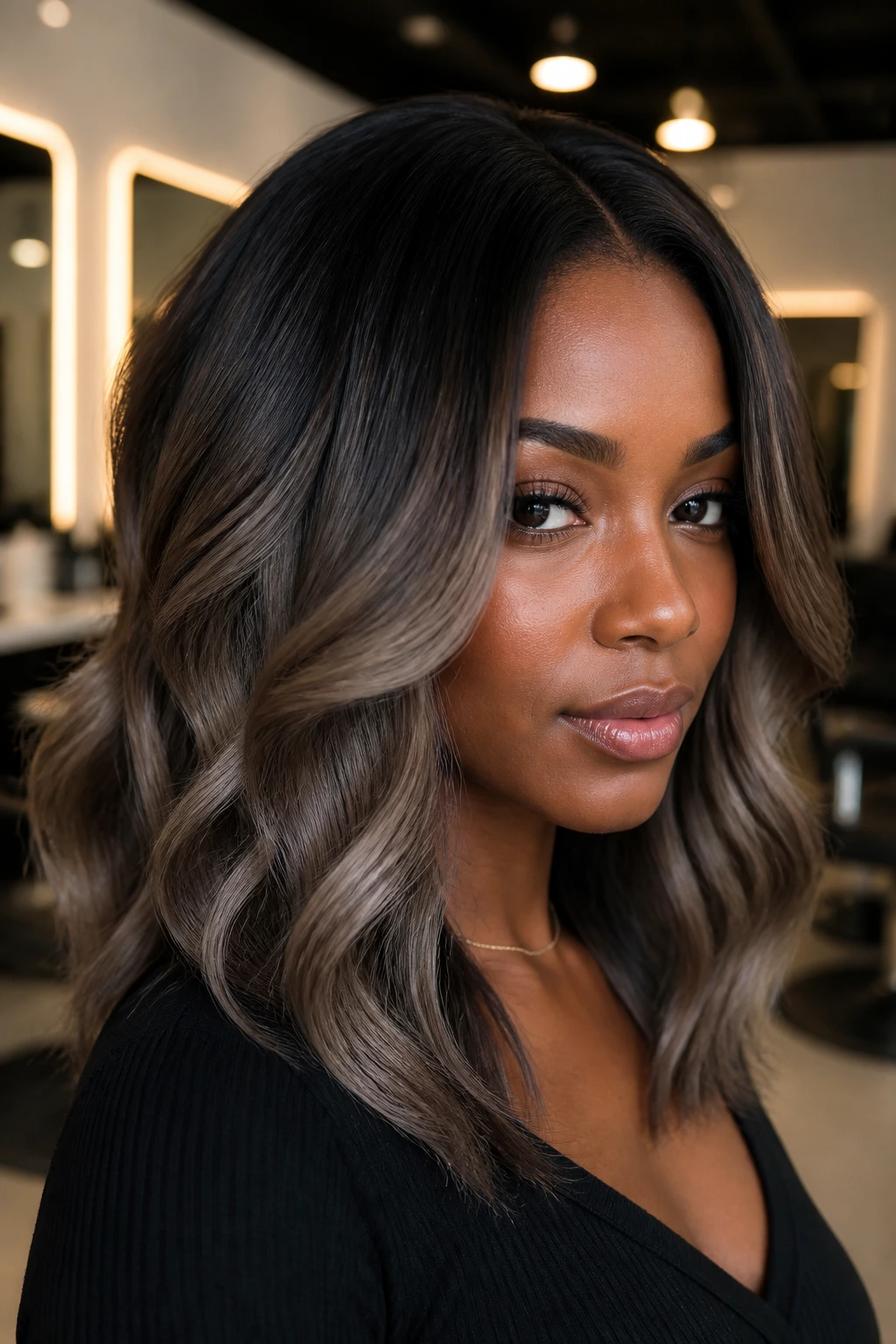
This one is the quiet powerhouse of the bunch. The base stays deep espresso, then a cool grey-brown melt slides through the mid-lengths so the whole style looks smoky instead of flat. On deep skin tones, that darkness at the root keeps the face framed properly.
Why It Works
The darker root gives you that rich contrast people pay for, while the softened grey ends stop the look from feeling heavy. If your hair lifts well, keep the grey away from the scalp and let it start around the cheekbone area. That’s where it wakes up the face.
Best if you want:
- low drama
- a salon finish that grows out neatly
- a shade that works on curls, silk presses, and wigs
A little gloss every few weeks keeps the espresso part looking wet and deep. Dull brown is the enemy here.
2. Mushroom Brown Balayage
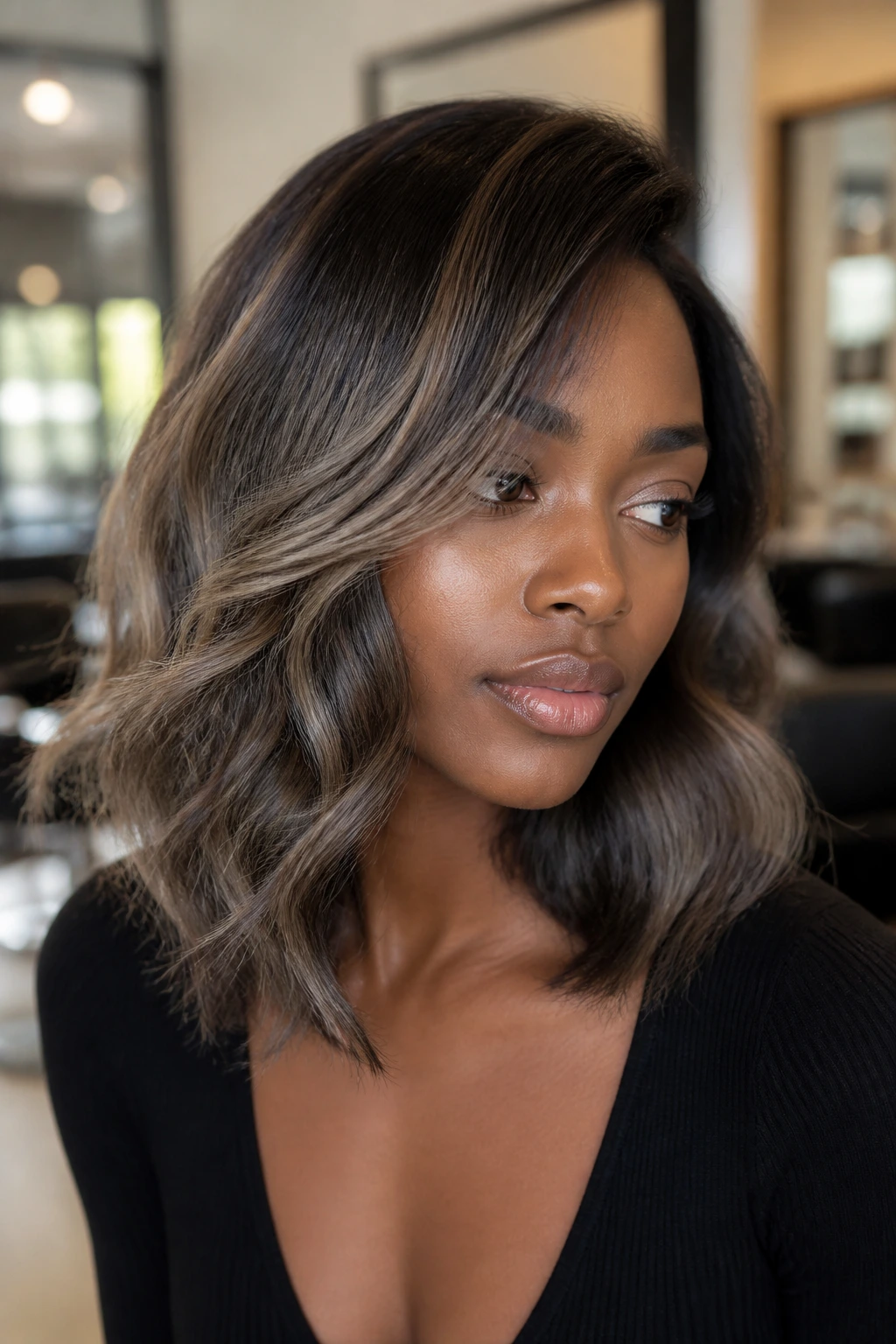
Mushroom brown is one of those shades that looks expensive without trying too hard. The cool taupe-brown ribbons sit on top of a deeper brunette base, and the whole thing leans earthy rather than icy. It suits deep skin tones because the brown keeps the grey from going pale and chalky.
On shoulder-length layers, this shade moves beautifully. On long hair, it reads softer and more dimensional. Ask for hand-painted pieces, not chunky stripes. Chunky stripes can make mushroom brown look striped instead of smoky.
What makes it different
The finish is soft-focus. No hard lines. No harsh contrast. Just a brown that seems to have a thin layer of fog sitting over it.
3. Graphite Money Piece
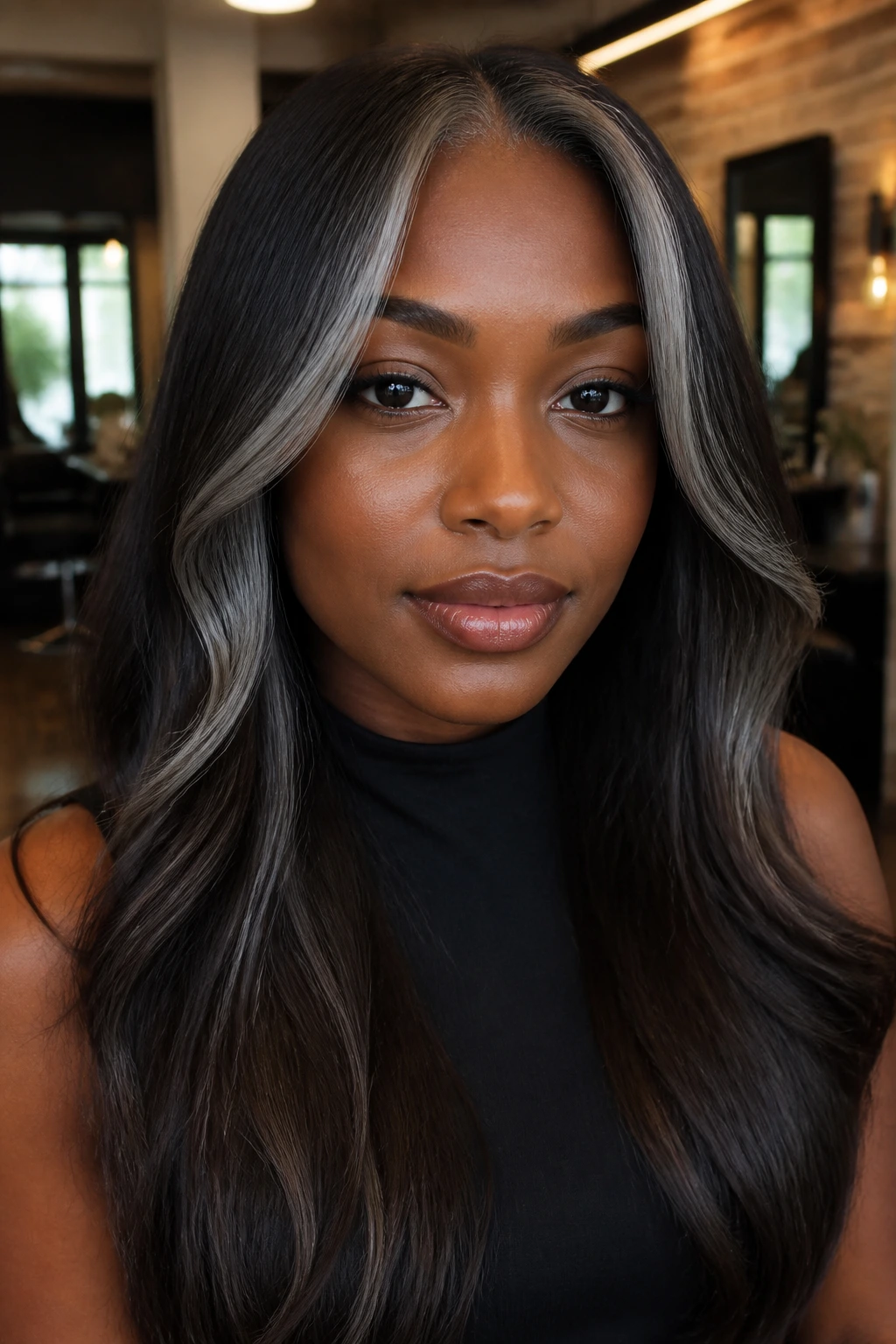
A graphite money piece is for the person who wants a little edge around the face without bleaching the entire head to death. The front panels go cool and metallic, while the rest stays a deep brown or soft espresso. That keeps the look sharp.
Why it works on deep skin tones: the dark base protects the complexion from looking drained, and the lighter graphite front pieces pull attention upward. Keep the money piece narrow if you want subtlety. Widen it if you want drama.
How to wear it
Best on middle parts, blunt bobs, and layered blowouts. It’s one of the easiest grey-brown ideas to refresh when the front fades first.
4. Cool Cocoa Ombré
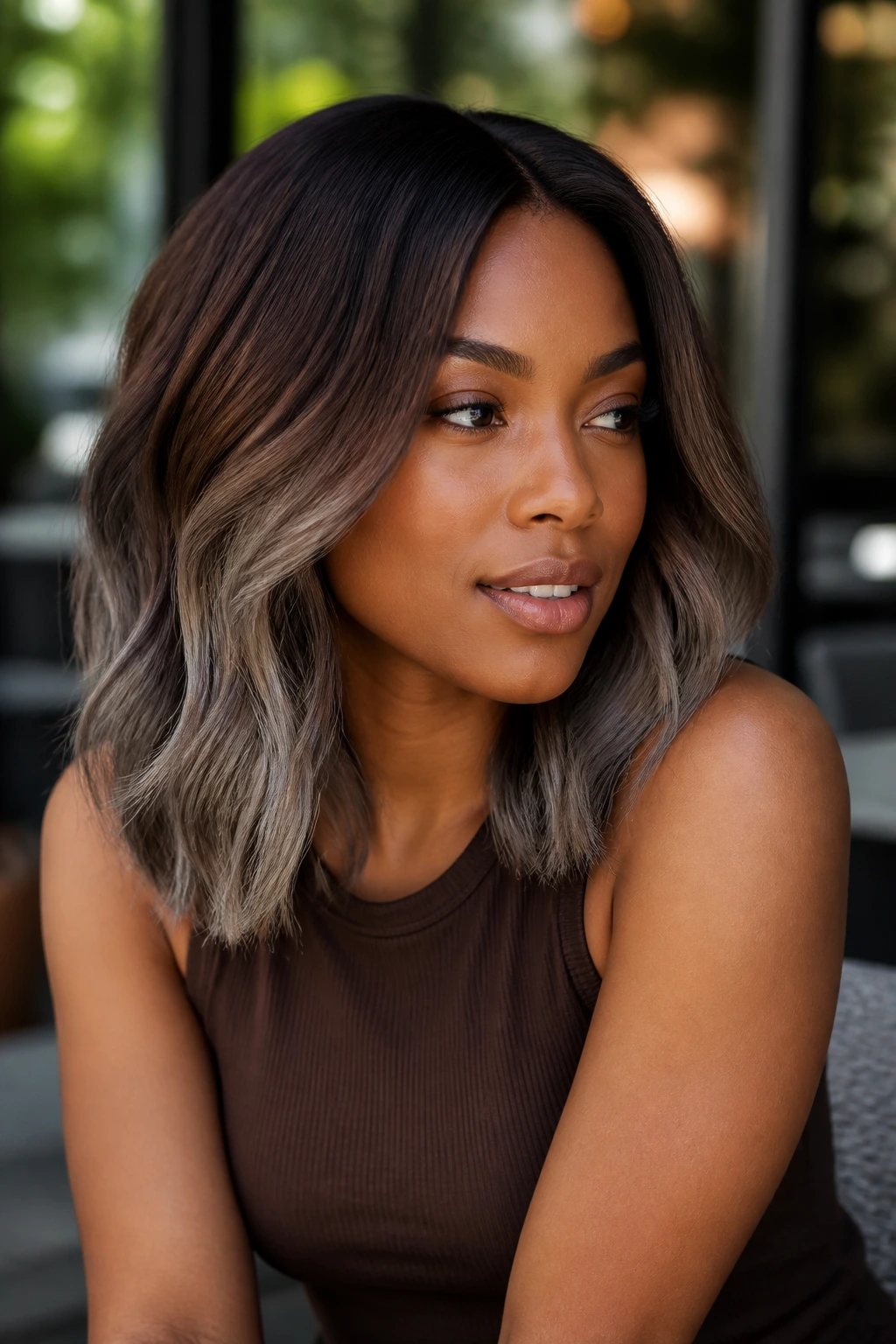
Picture cocoa at the roots and a smoky grey-brown wash near the ends. That’s the whole appeal. It does not need bright blonde to make an impression, which is why it works so well on deep skin. The color shift is soft enough to look grown-in, but clear enough to read from across the room.
The trick is keeping the transition blurred. A hard line between cocoa and grey brown can look stiff. A soft ombré, though, adds movement without shouting. Long curls especially like this treatment because the lighter ends show up each time the hair twists.
Best for
People who want grey-brown hair but do not want a full head of cool-toned maintenance.
5. Taupe Ribbon Highlights
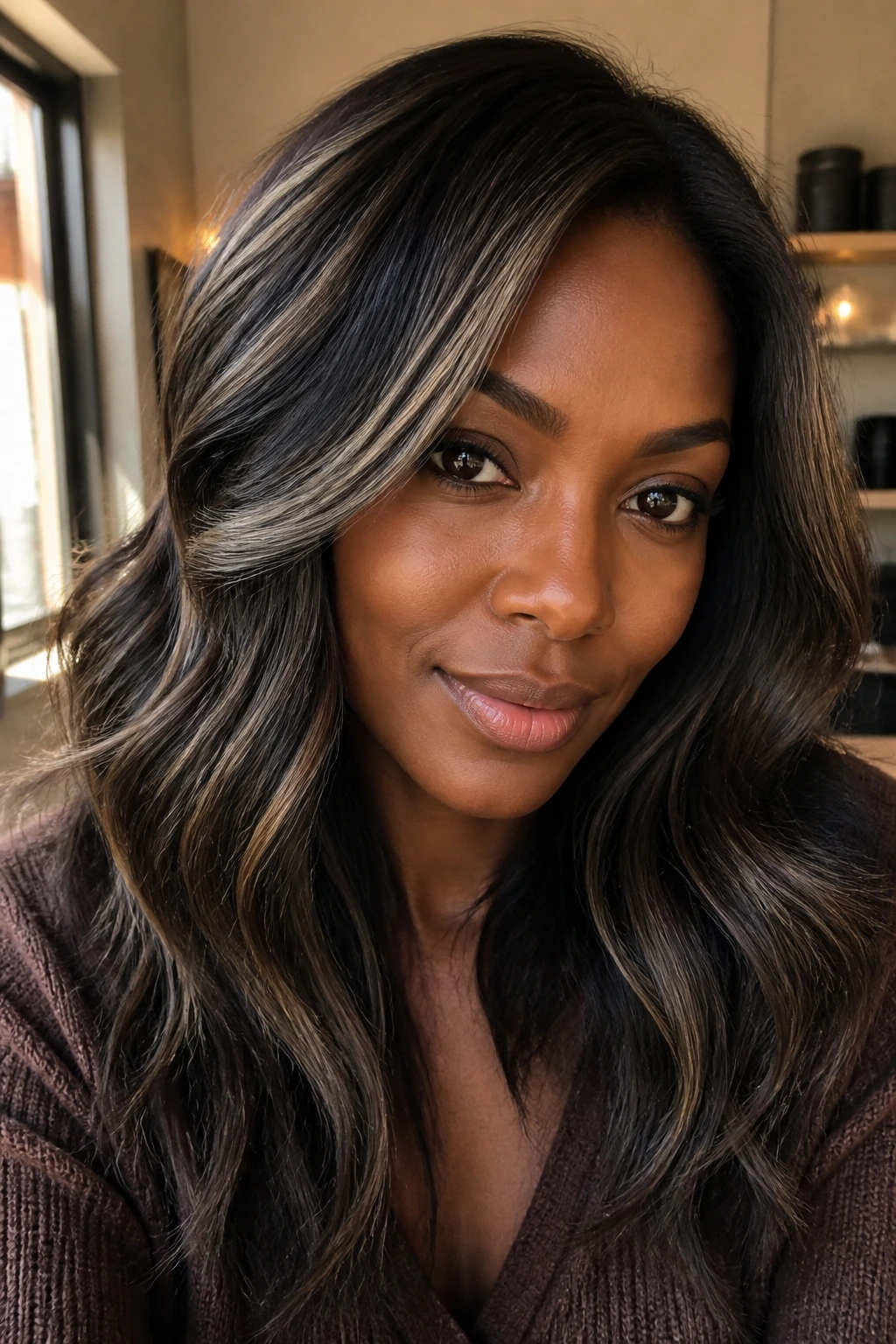
Taupe highlights are the neat, tailored cousin of ash brown. They’re cooler than caramel, softer than silver, and they sit very nicely on deep brown bases. You get thin ribbons of taupe woven through the hair, almost like pale smoke on a dark sweater.
Use this if you want dimension more than transformation. The highlight placement matters more than the amount. Put the brightest pieces around the face and through the top layers. Leave the underlayers deeper so the color has somewhere to land.
A small warning
Too many taupe ribbons can flatten the whole style. Keep some darkness. That’s what makes the highlights glow.
6. Charcoal Brown Bob
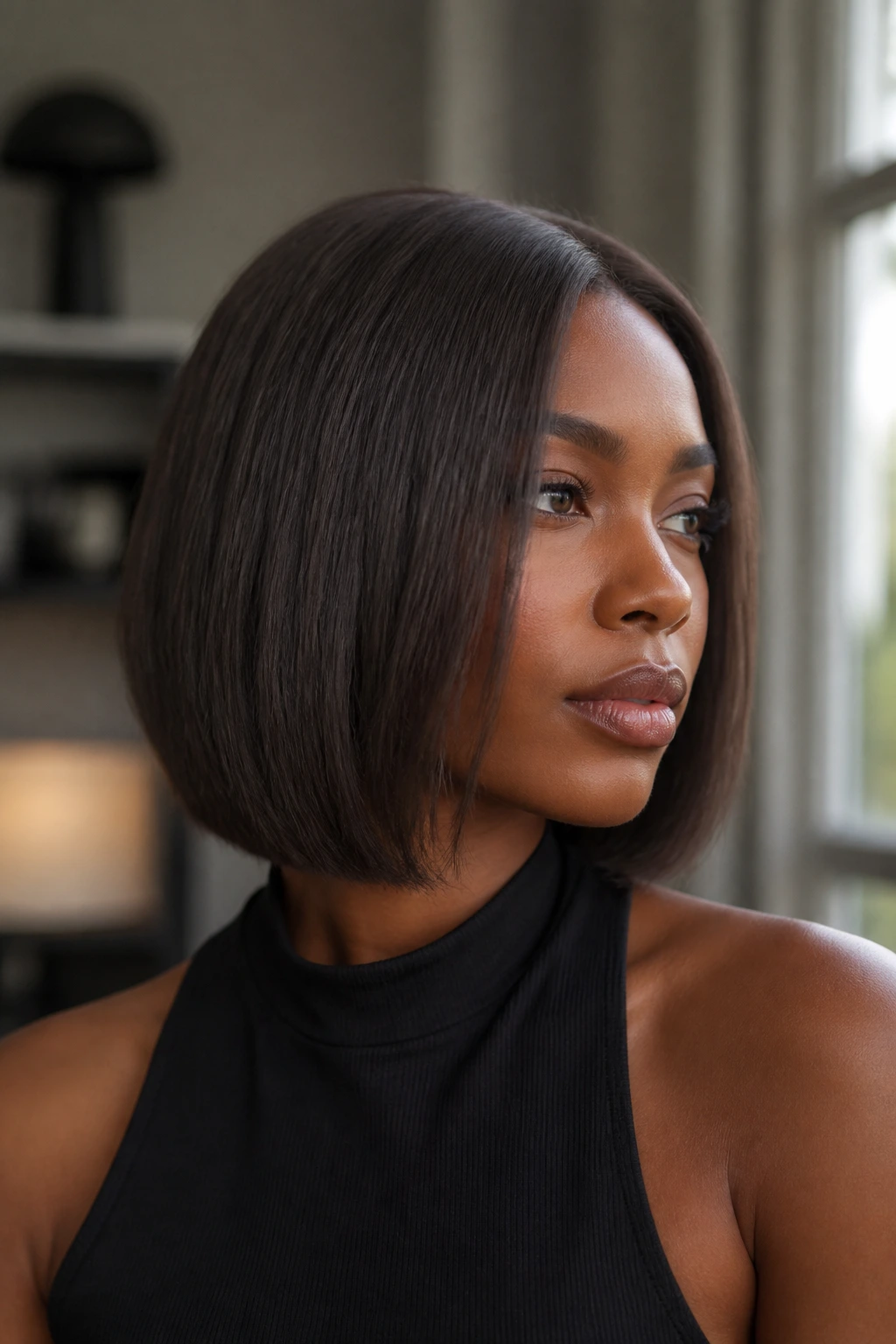
A charcoal brown bob has a blunt, clean shape and a color that sits somewhere between chocolate and graphite. It works because the cut does half the styling for you. The color only has to sharpen the edge.
On deep skin tones, a bob like this looks strongest when the color is uniform with just a whisper of cool sheen. If you add too many light pieces, the shape starts to blur. The charm here is the opposite: a solid, sleek slab of color that still carries a grey undertone.
Short hair like this loves a flat iron pass or a silk press. The grey-brown tone reflects light in a very specific way when the ends are crisp.
7. Silver-Tipped Curly Fro
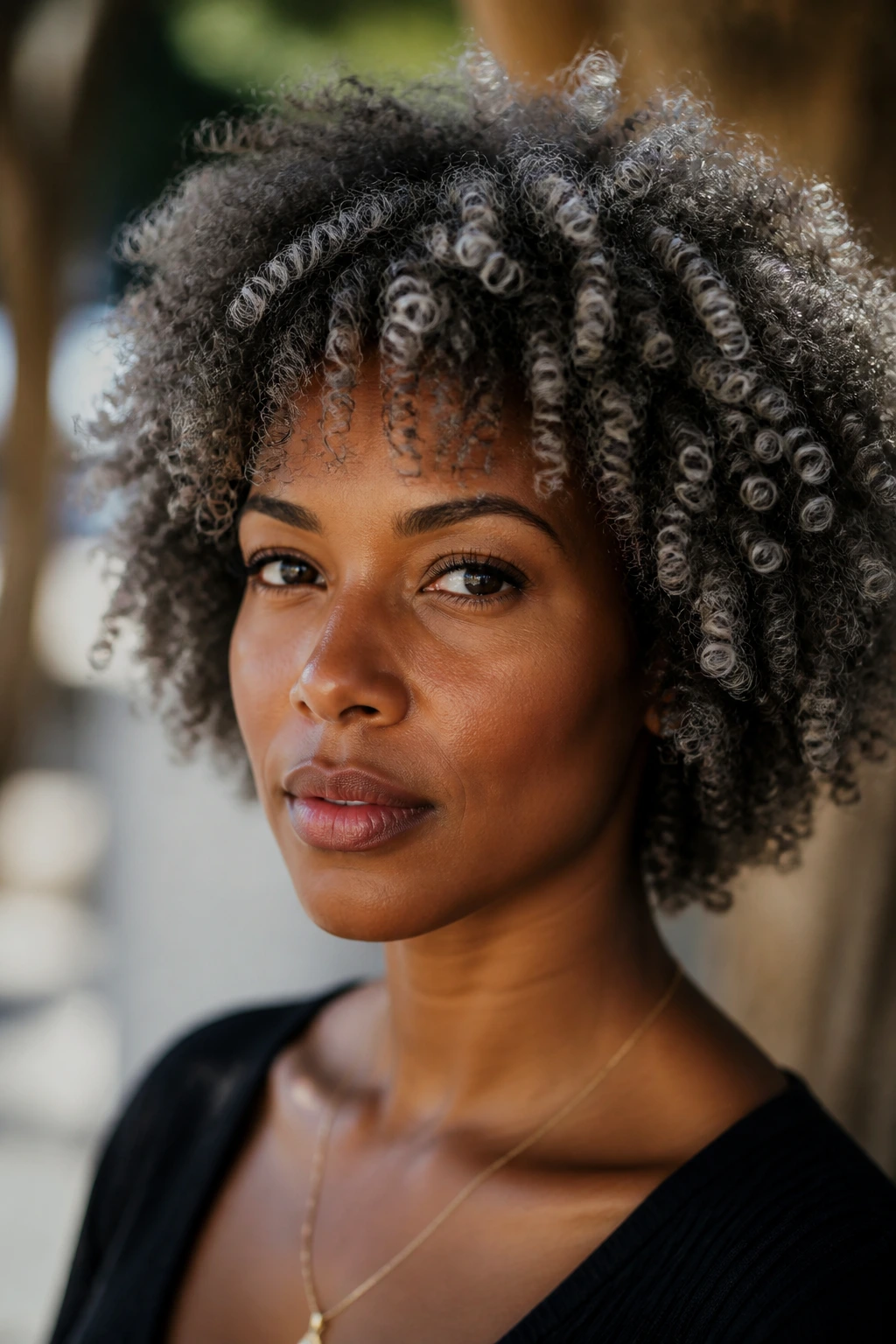
Here’s the fun one. Keep the roots deep and let the silver creep into just the tips of a curly fro. The result is playful, but not cartoonish. Because the hair stays dark near the scalp, the silver ends read like a deliberate finish rather than a bleach experiment gone sideways.
Why it works
Curls break up the silver, so the lighter ends never sit in one flat block. They flick in and out of the shape. On deep skin tones, that contrast is striking in the best way.
Ask your colorist for a controlled lift on the very ends only. You want glow, not dryness.
8. Ash Walnut Face Frame
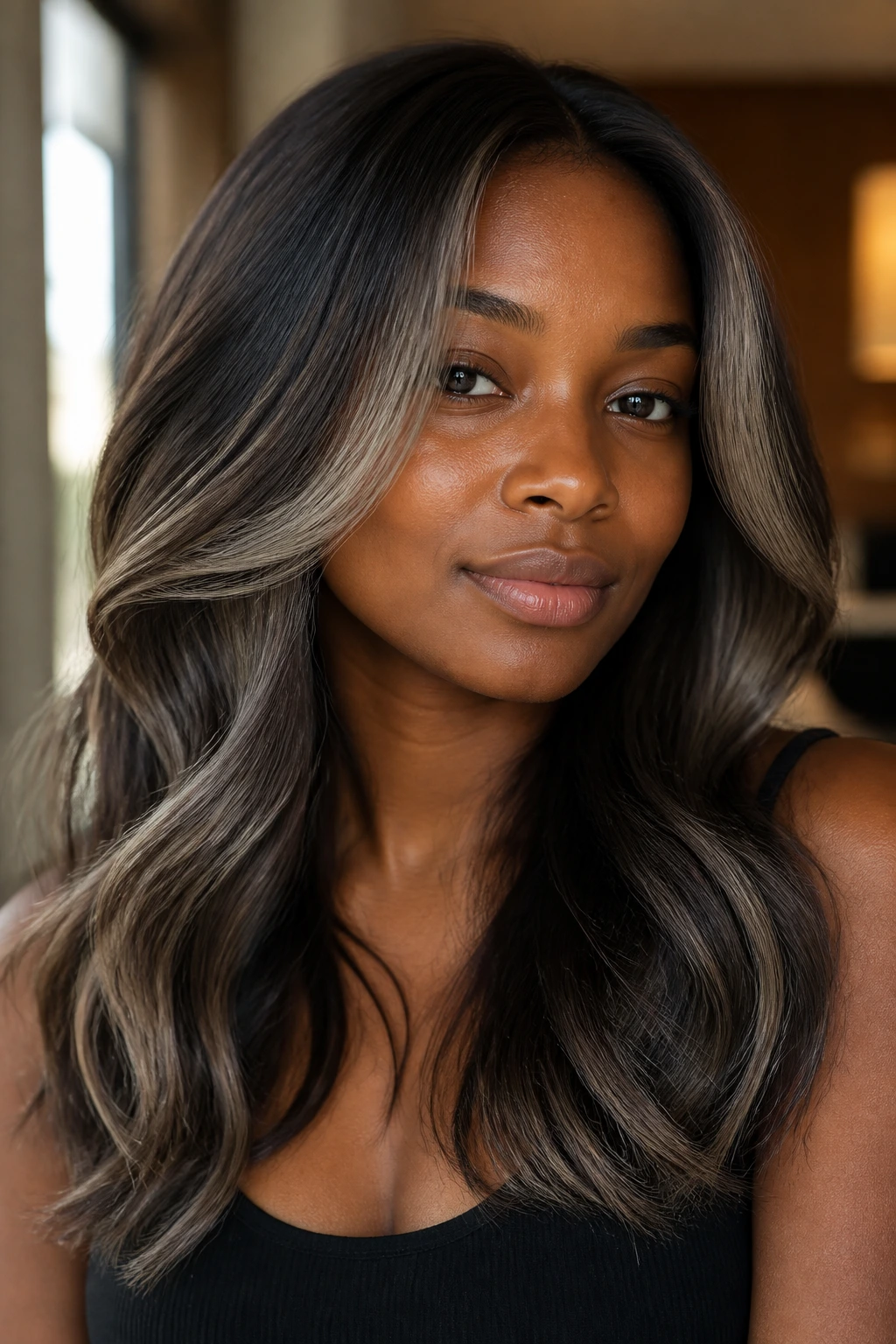
Ash walnut sits in that sweet brown-grey zone that looks polished on almost any deep complexion. Add a face frame, and the whole thing wakes up. The lighter pieces should be placed right where the hair curves around the cheeks and jaw, because that’s where the color does the most work.
This style is smart if you like wearing your hair down. It gives you brightness without the upkeep of full highlights. And because the walnut base stays deep, the ash never turns into a dull film over the hair.
What to ask for
Face-framing pieces one to two levels lighter than the base, toned cool, with soft blending into the front layers.
9. Mocha Smoke Loc Highlights
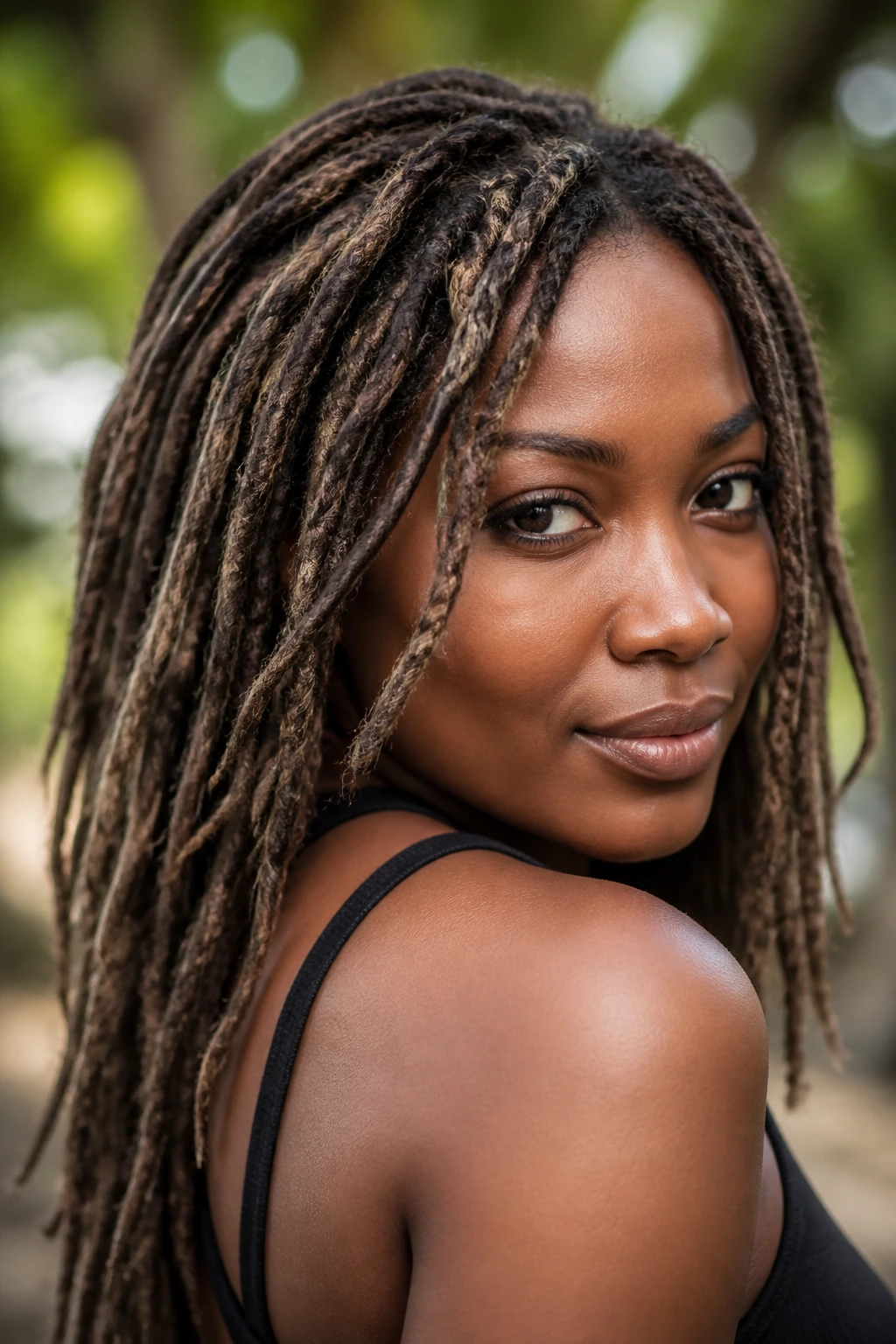
Locs hold color differently than loose hair, and that’s part of the appeal here. A mocha base with smoky grey-brown highlights gives the style depth without making each loc look too busy. The effect is subtle from far away and beautifully dimensional up close.
This shade is especially good if you want your locs to feel lighter without turning blonde. Keep the highlights sparse. A few well-placed pieces across the crown and front can be enough. Too many can break up the look and make maintenance annoying.
Best for
Medium and long locs where movement matters more than bold contrast.
10. Pewter Brown Silk Press
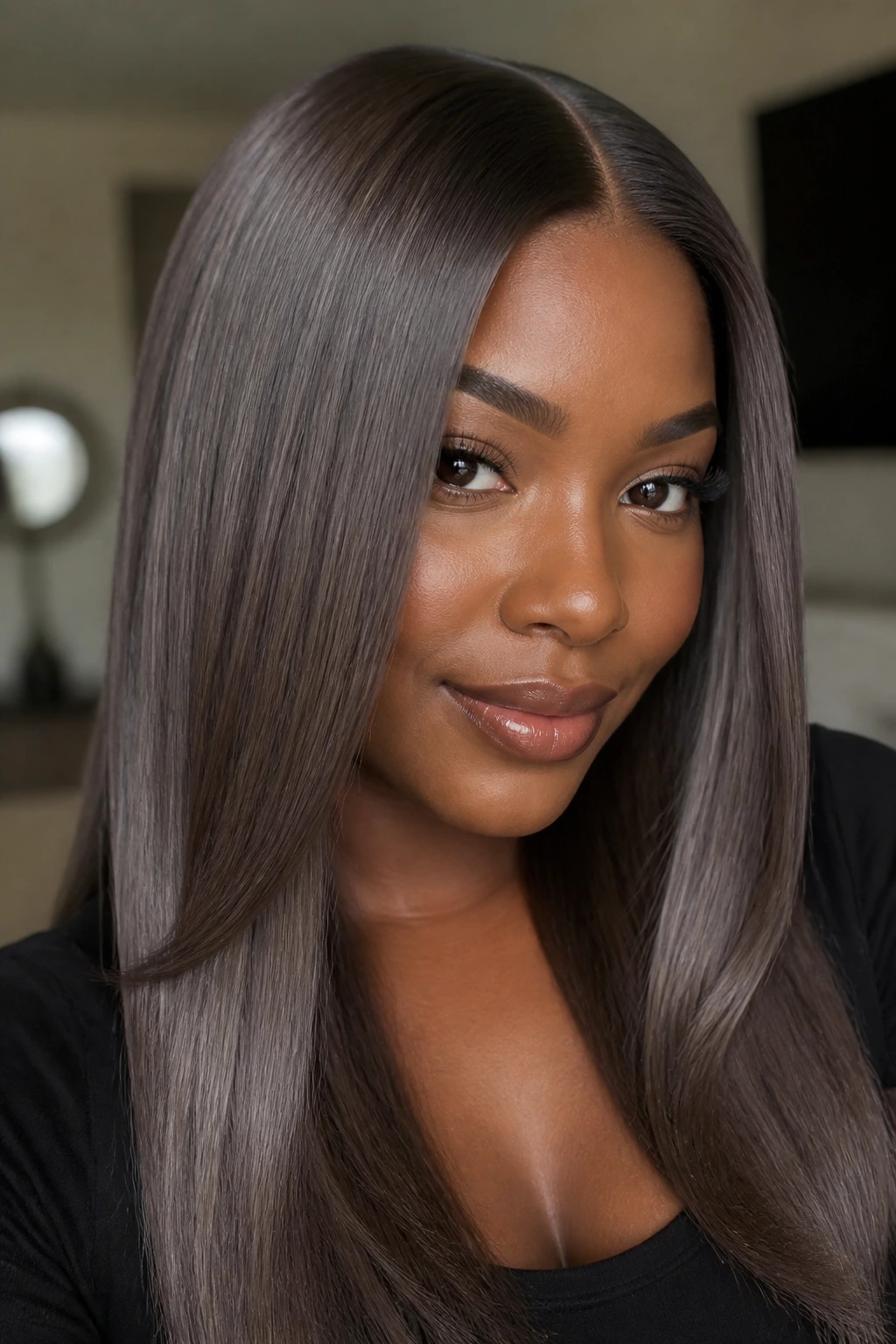
A silk press loves pewter tones because the smooth surface shows every tiny shift in color. Pewter brown is cooler than chestnut, but not as stark as silver. On deep skin, it creates a sleek, reflective finish that feels modern without looking stiff.
The key is shine. Without it, pewter can look dry. With it, the shade gets a metallic polish that makes the hair look expensive. A light serum on the ends and a clean center part can change the whole mood.
This is a strong choice if you like your hair straight and precise.
11. Driftwood Brown Waves
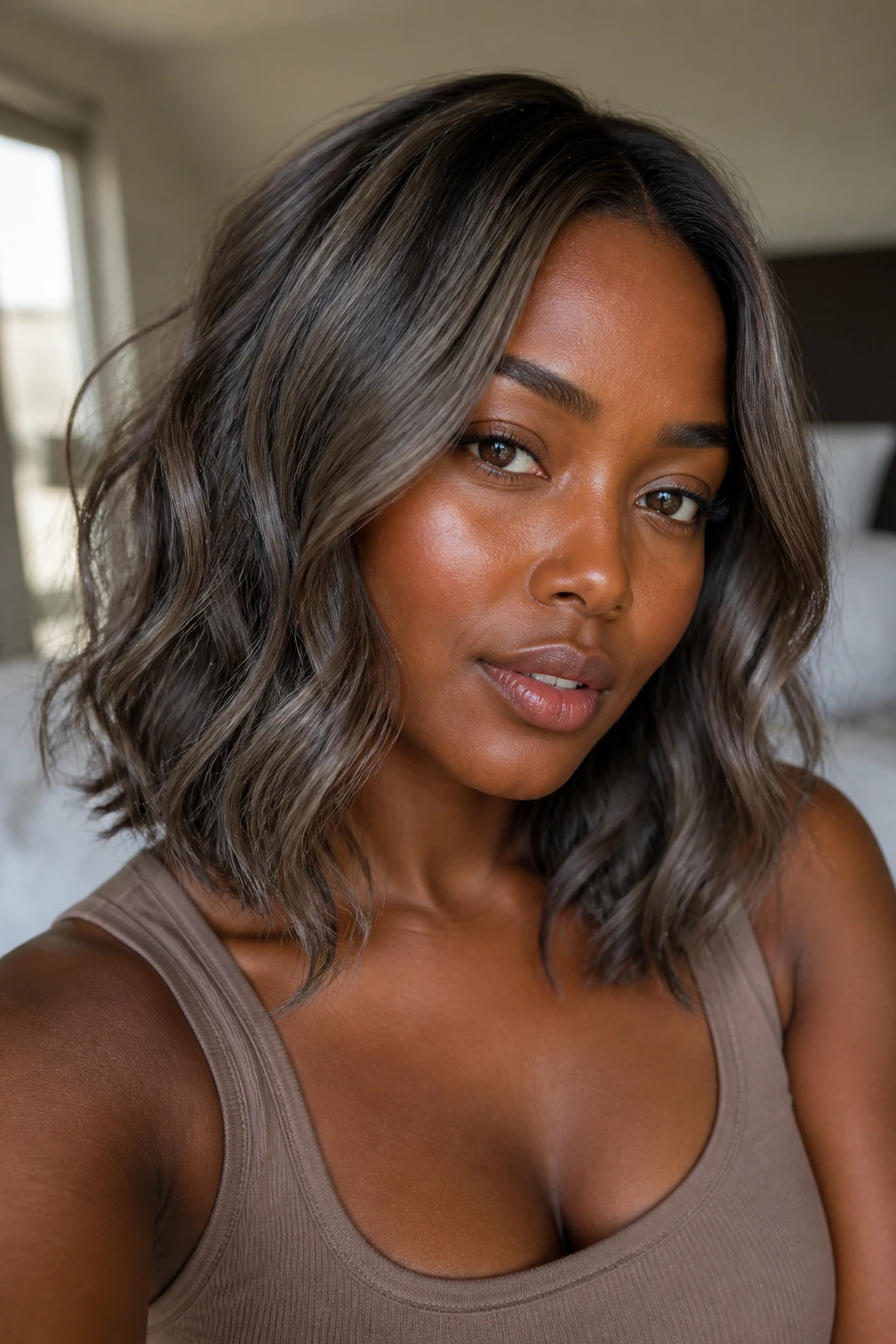
Driftwood brown is one of the softer grey-brown ideas on this list. It has that weathered, smoky feel you get from stone, wood, and old metal, but translated into a wearable hair color. On waves, it looks especially natural because the bends in the hair catch the cooler pieces differently.
It’s a good option if you want a greige brunette rather than a full silver-brown statement. The color should feel muted, not muddy. Keep the roots a touch deeper and the highlights irregular. Uniformity makes driftwood look fake.
12. Brushed Steel Babylights
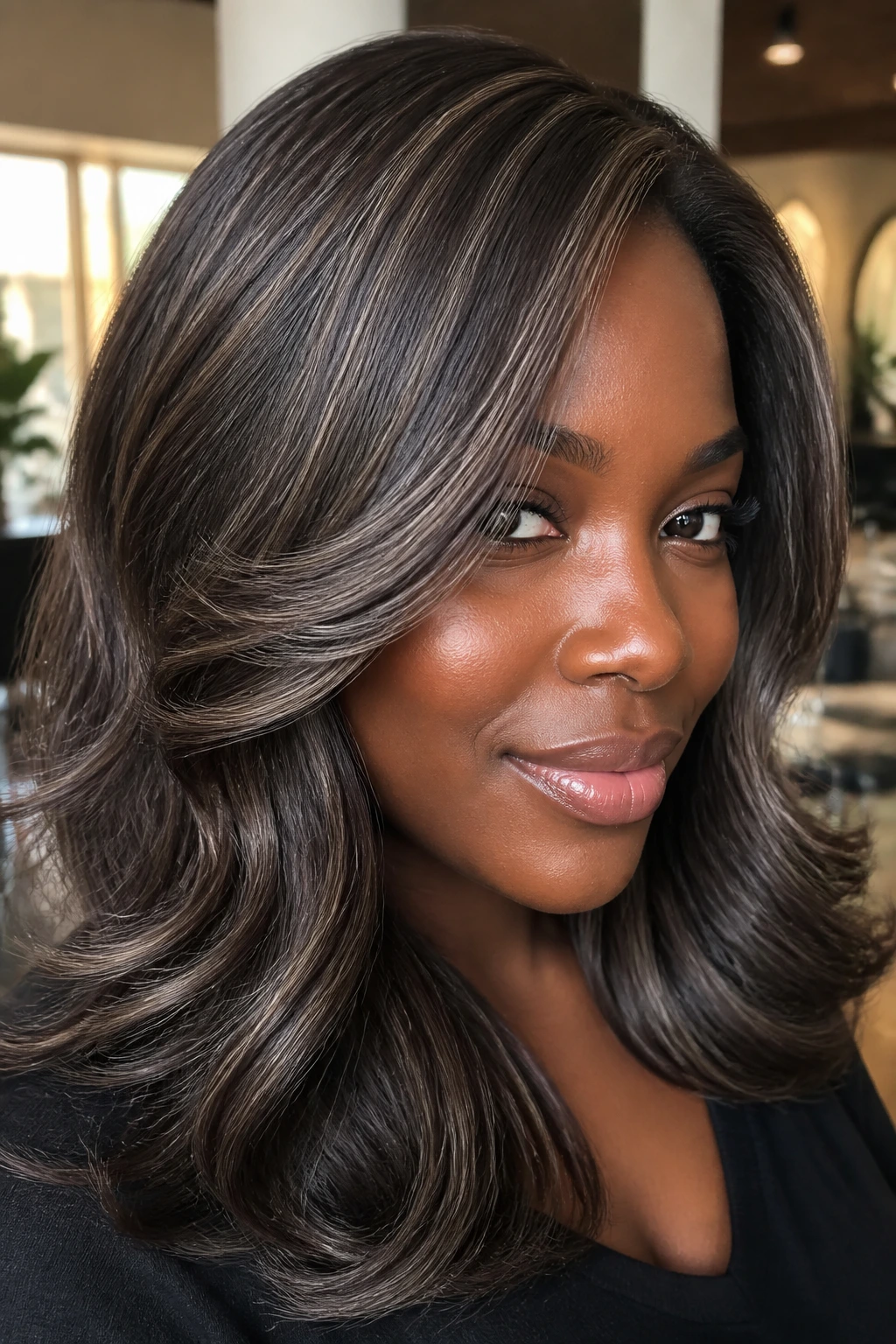
Babylights are tiny, almost threadlike highlights, and brushed steel takes that idea into grey-brown territory. Instead of obvious streaks, you get fine metallic strands running through a brunette base. On deep skin tones, this is one of the best ways to add brightness without losing depth.
The style is especially flattering on layered cuts because the tiny light pieces move around. It looks soft in one light, sharper in another. That shifting quality is the whole point.
Small detail, big payoff
Ask for a cool toner with a satin finish. Too much ash can make the babylights look flat.
13. Deep Umber with Grey Ends
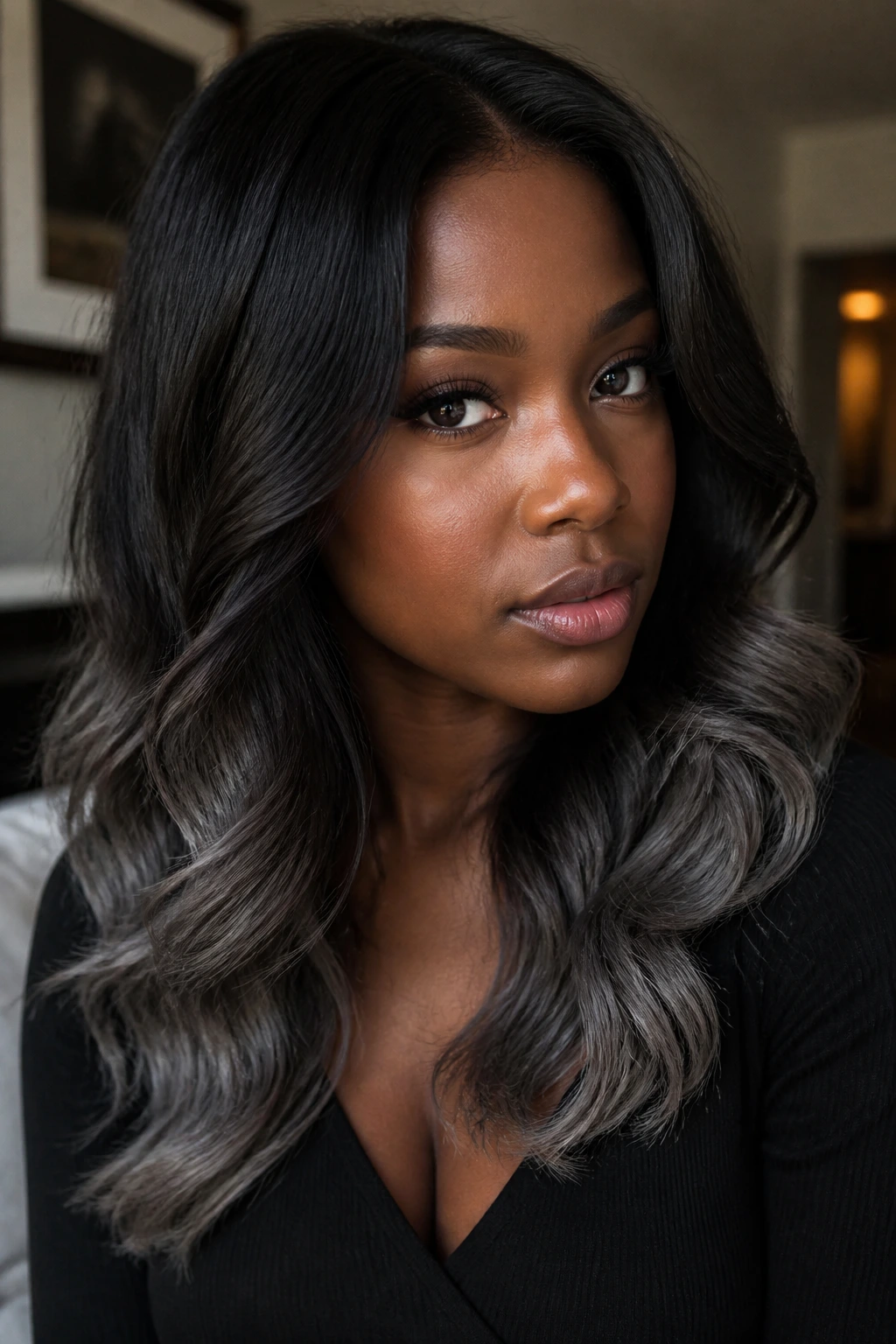
This is a cousin of ombré, but moodier. The top stays deep umber, almost close to espresso, and the ends fade into a muted grey-brown. It gives the hair a smoky tail without turning the roots into a light show.
The reason it works on deep skin tones is simple: the top half keeps the color grounded, so the ends can get lighter without making the face lose its shape. It’s one of the cleaner ways to test the grey-brown trend if you’re nervous about a full head of cool color.
Wear it when
You want visible change, but you still need the color to grow out gracefully.
14. Smoke-Glazed Tapered Cut
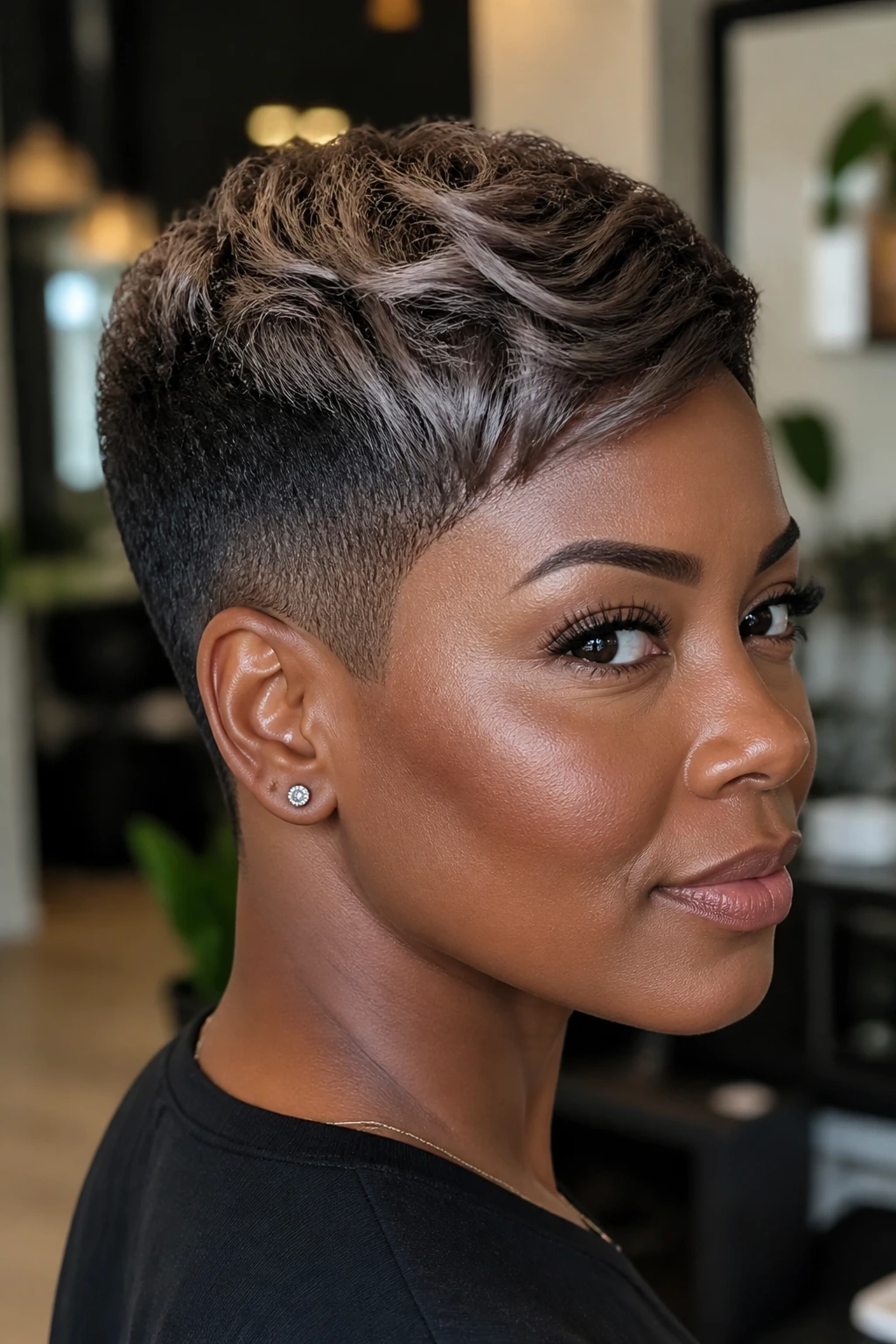
A tapered cut already has attitude. Add a smoke glaze, and the shape becomes sharper. The glaze should sit over a brown base and leave just enough cool reflection to catch the light on the top and crown.
This is one of those styles where the cut and the color need to talk to each other. If the taper is tight, the grey-brown tone can be slightly lighter on top. If the cut is softer, keep the glaze deeper. Either way, the result feels clean and sculpted.
15. Stone Brown Twist-Out
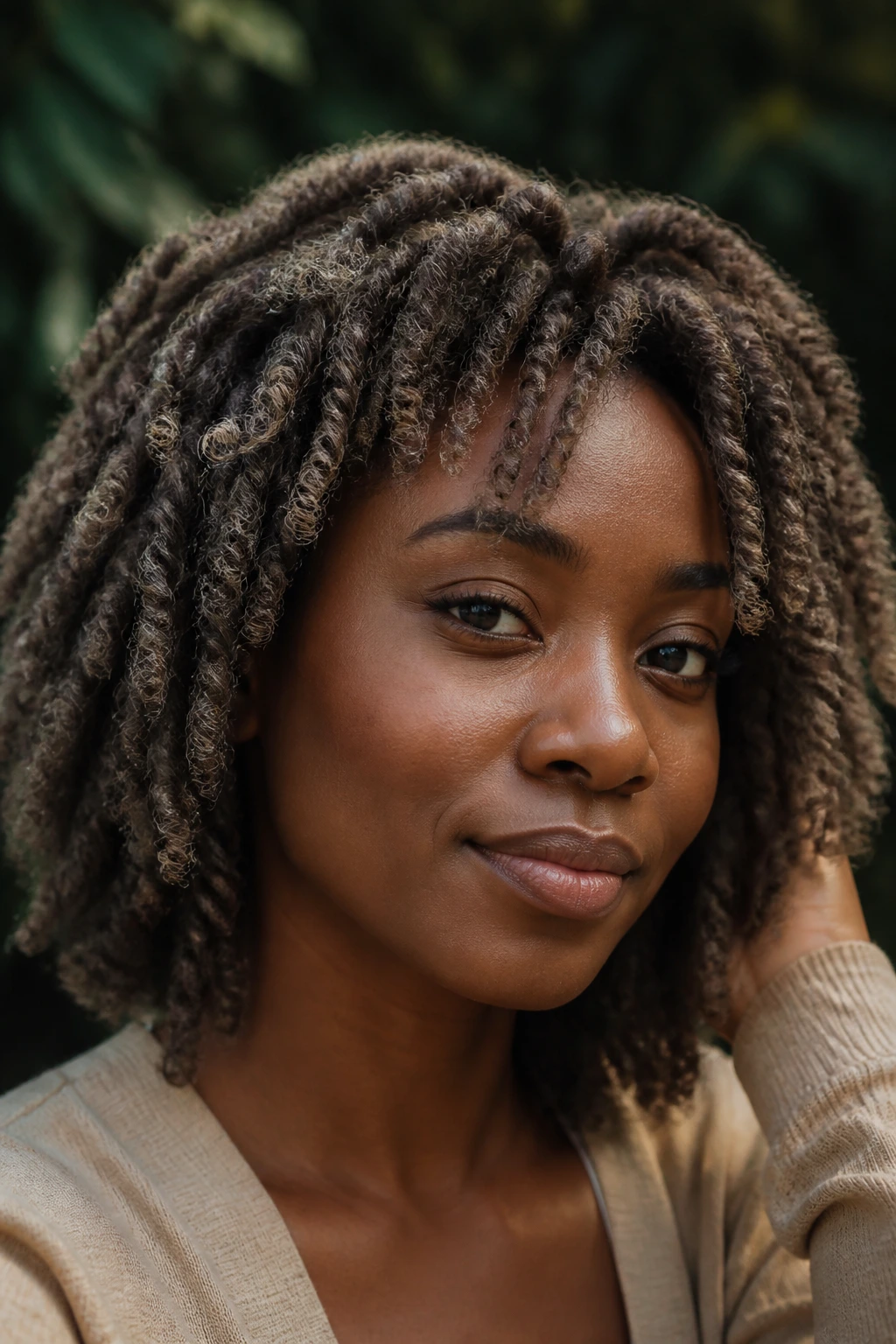
Stone brown is the earthy side of grey-brown hair. It has a mineral, matte quality that looks rich on twist-outs because the texture breaks up the shade so well. You get depth first, coolness second.
The best version of this style keeps the coils and twists defined, not frizzy. That definition helps the stone brown read as intentional. If the hair is too dry, the color can look dead, and that’s the opposite of what you want.
Use this if
You like natural texture and want the color to follow the curl pattern instead of fighting it.
16. Charcoal Peekaboo Panels
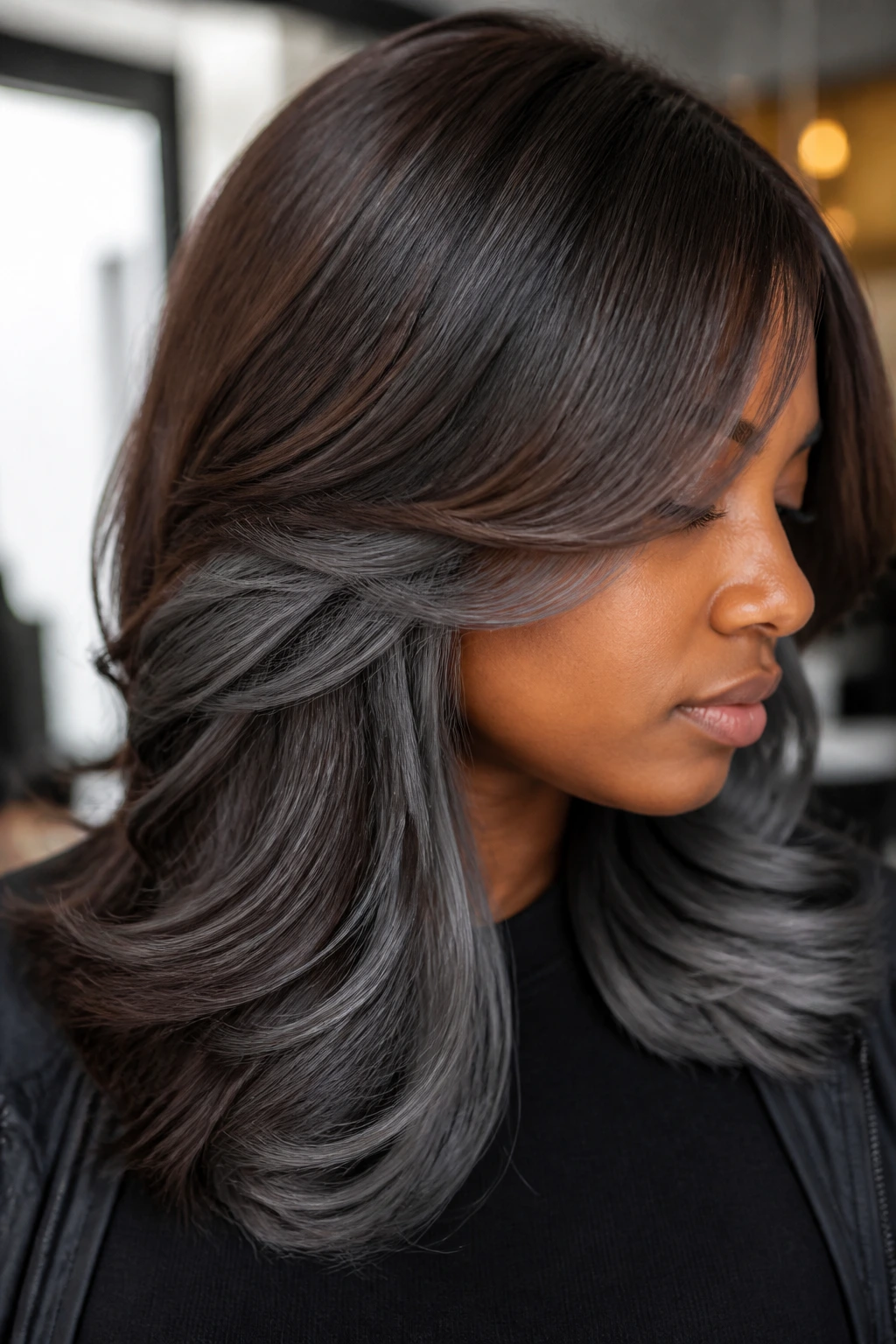
Peekaboo color is underrated on deep skin tones. Keep the surface brown, then hide charcoal panels underneath so the grey-brown shows when the hair moves. It’s moody, a little secretive, and much easier to maintain than a full-head lightening job.
This works especially well in layered hair or mid-length curls. The hidden panels flash through when you tuck the hair behind an ear or flip it to one side. That little reveal is the whole charm.
Good for
People who want a cool tone but have to keep things conservative at work or school.
17. Velvet Taupe Layered Lob
A layered lob gives taupe room to breathe. The soft grey-brown tone sits between beige and ash, and the layers stop it from feeling heavy. On deep skin, that mix can look very plush, almost like brushed fabric.
The length matters here. A lob that hits the collarbone shows off the ends without weighing the face down. If you go too long, the taupe can get lost. Too short, and the layering loses its softness.
This is one of the easiest grey-brown ideas to wear every day.
18. Salt-and-Pepper Brunette Crop
This is for people who want to lean into contrast instead of hiding it. A salt-and-pepper brunette crop keeps some dark pieces intact while bringing in visible grey-brown strands. On deep skin tones, the look has bite. It feels confident rather than apologetic.
Because the cut is short, the color shows fast. That means placement matters. The grey should not look sprayed on. It should appear woven into the dark base so the crop still looks full and strong.
Best with
Tight curls, cropped coils, or a textured pixie with lots of shape around the crown.
19. Metallic Mocha Braids
Braids take color differently from loose hair, and metallic mocha is one of the better grey-brown choices because it keeps the style grounded. The mocha base makes the braids look full, while the metallic grey-brown thread of color adds sheen.
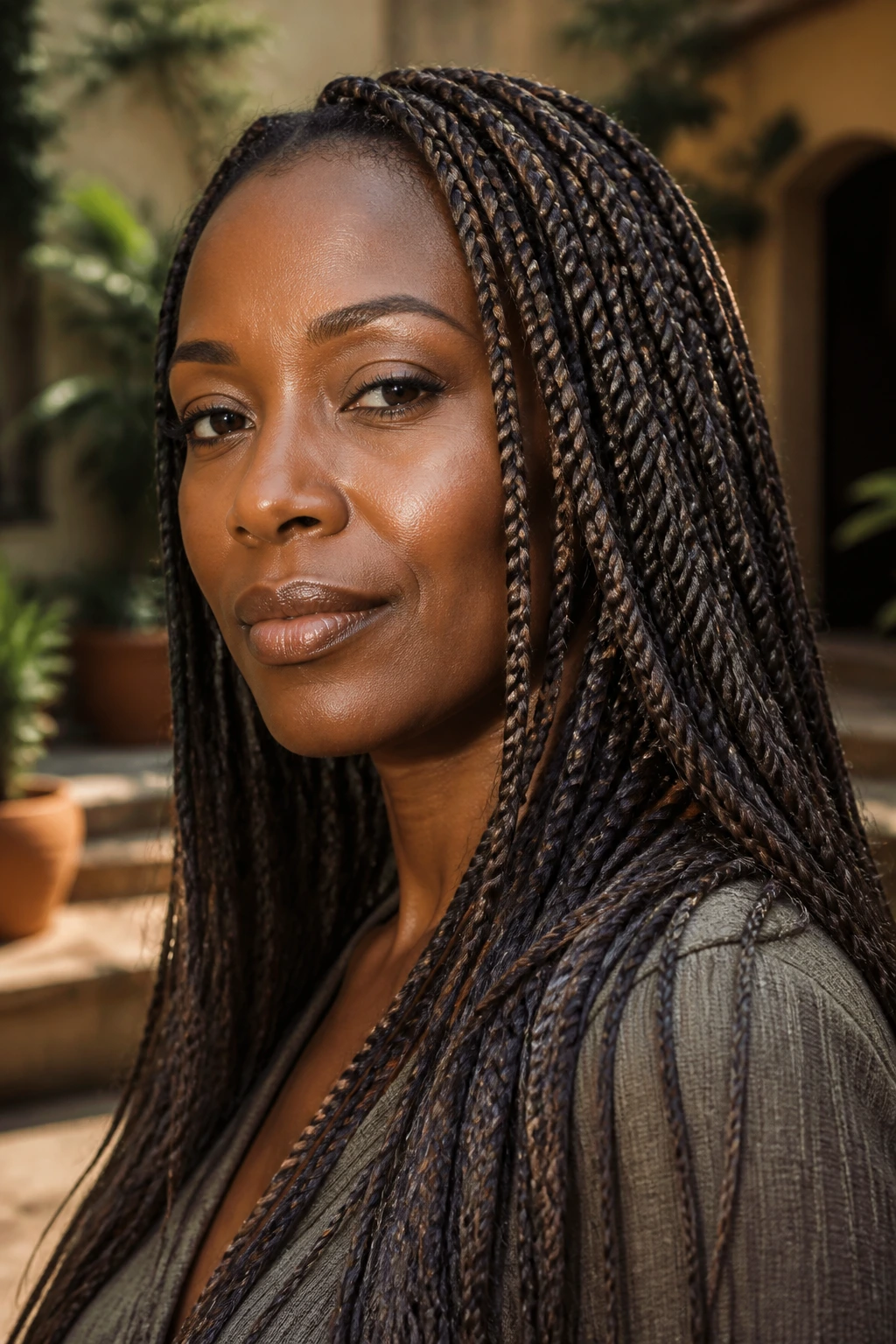
This is a smart option if you like protective styles but want the install to feel new. The color can be carried through feed-in braids, knotless braids, or pre-colored extensions. Choose a shade that stays brown first and silver second. That order matters.
Quick note
If the braids look too light, they can read dusty against deep skin. Keep the mocha prominent.
20. Ashy Chestnut with Grey Veil
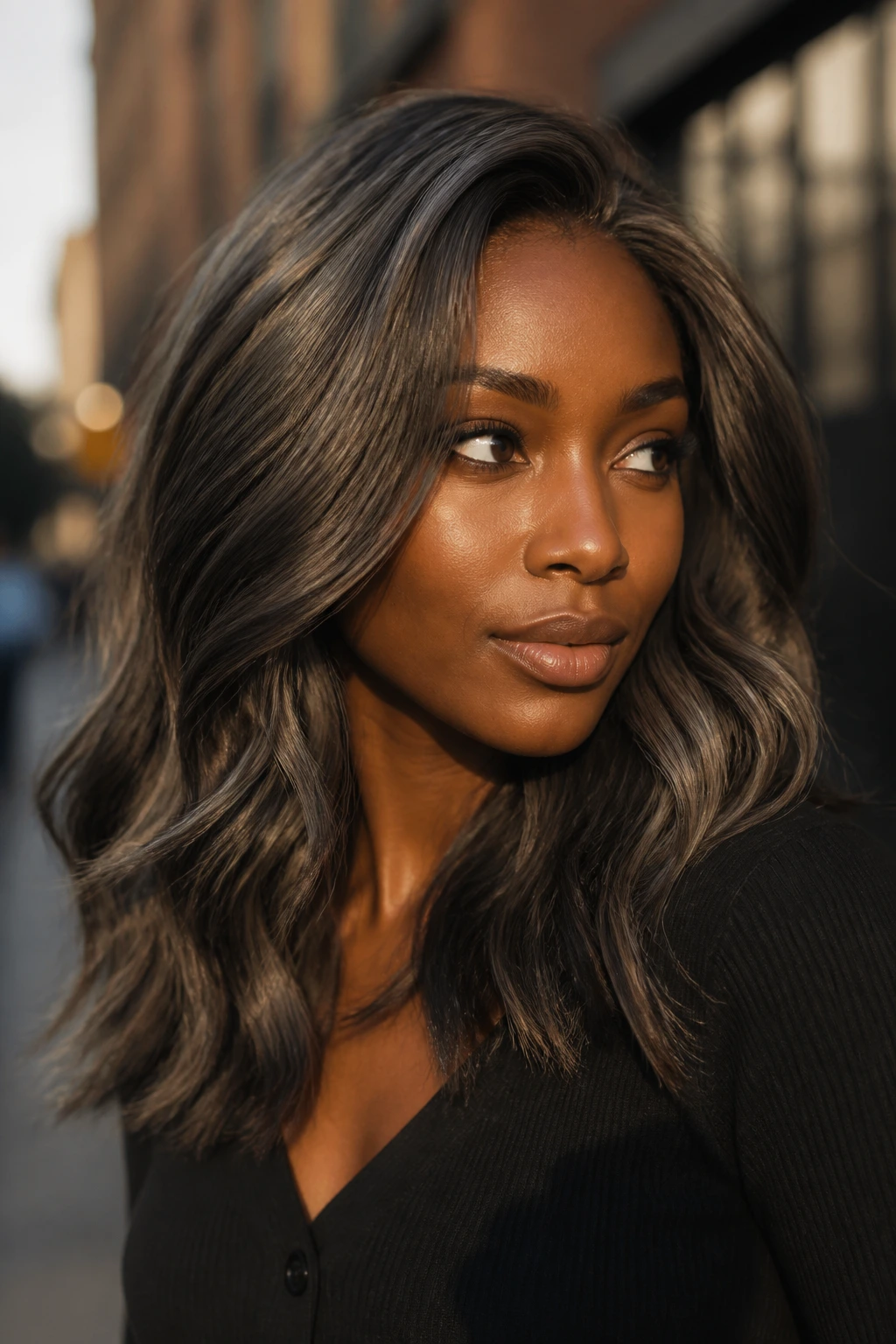
Chestnut can lean too warm on some people, but once you lay a grey veil over it, the whole shade calms down. The result is a brown that still has life, just less red. On deep skin tones, that softer temperature can be very flattering.
The veil should be subtle. You are not trying to erase the chestnut. You’re cooling it down. A demi-permanent gloss works well here if you want to test the tone before committing to a stronger color service.
This shade looks especially nice in loose curls and layered blowouts.
21. Cocoa Cloud Balayage
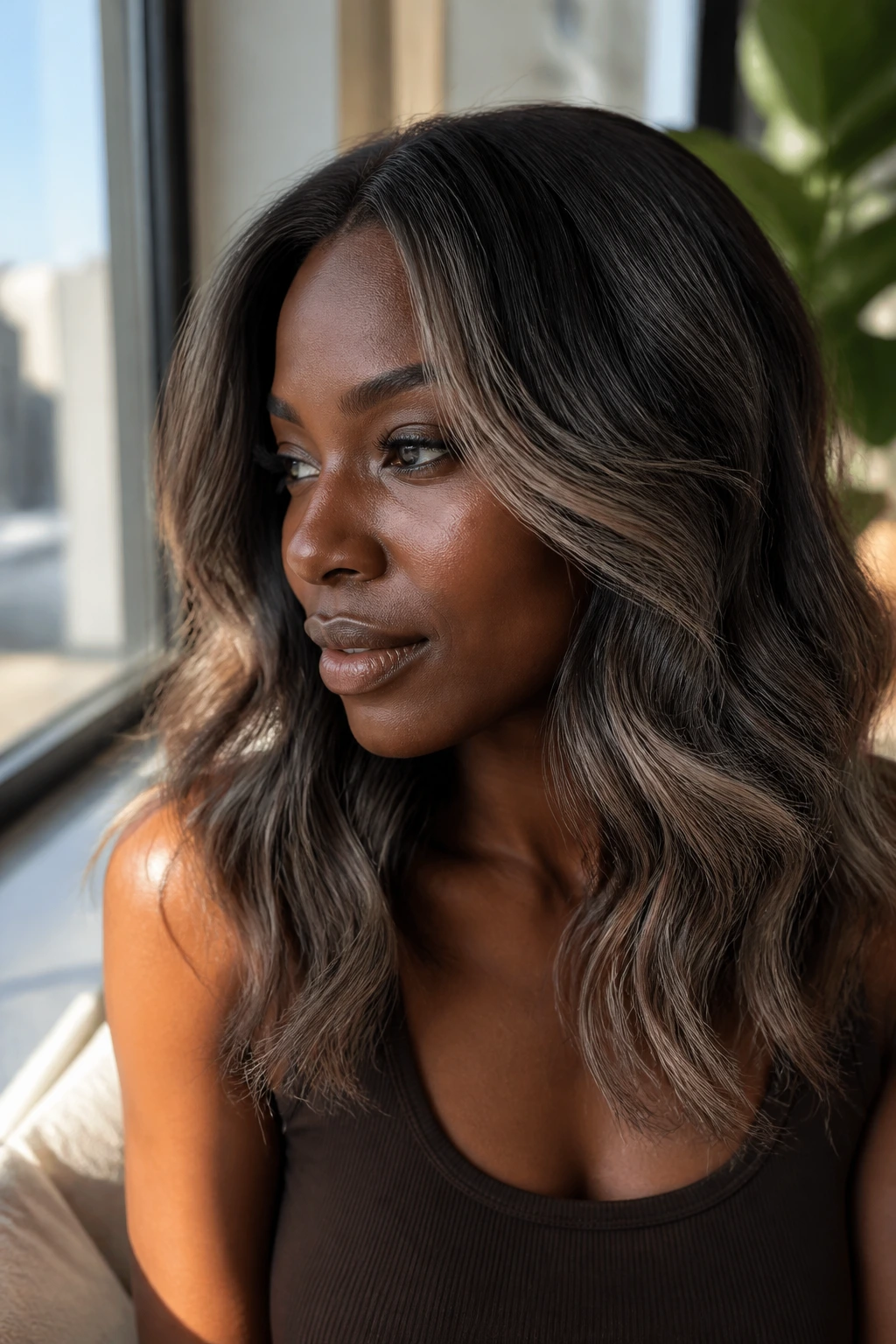
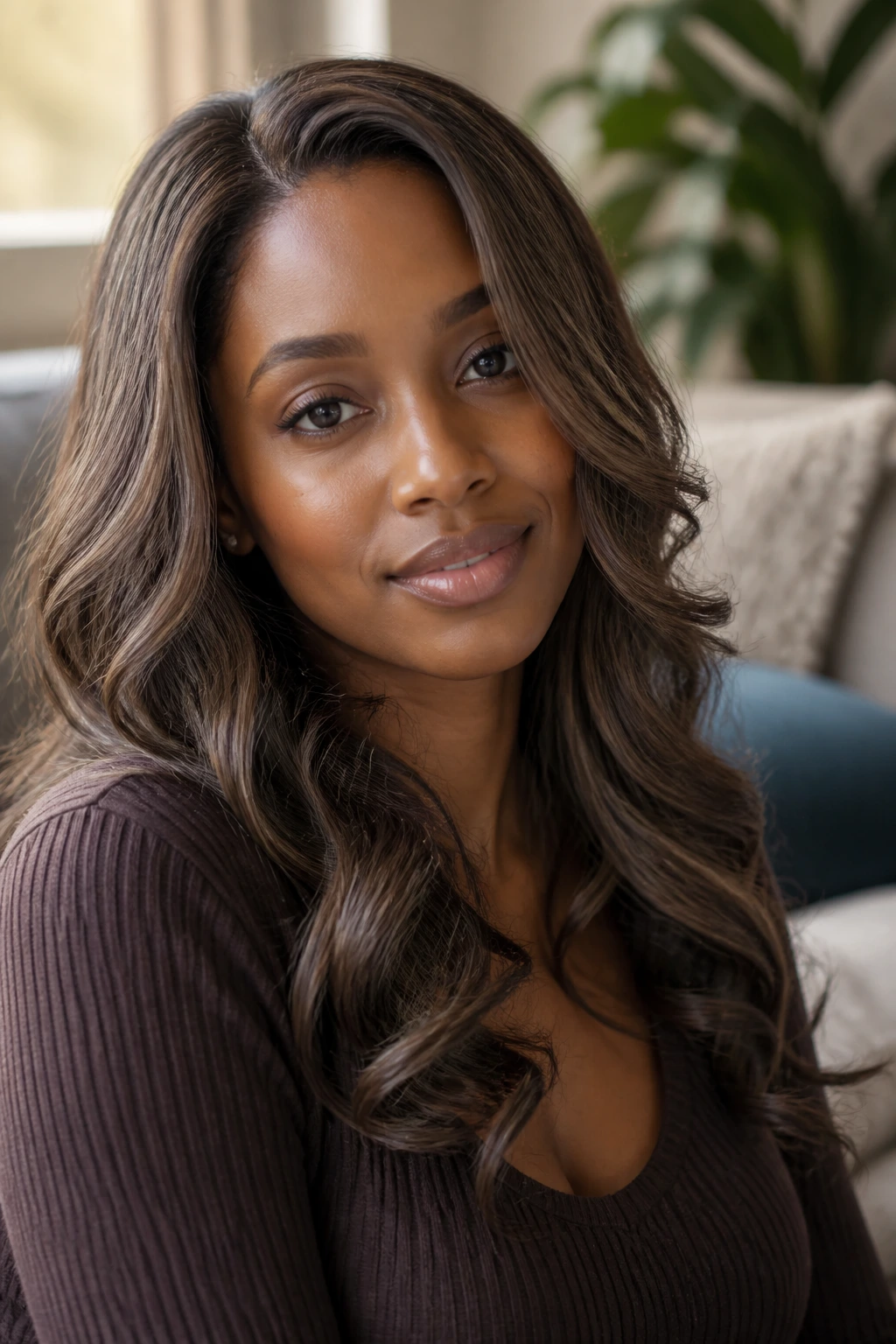
Cocoa cloud balayage is all about softness. The brown base stays dark and creamy, while cool grey-brown pieces float through the mid-lengths like a light mist. It works on deep skin because the base protects the complexion from looking drained.
The color placement should stay diffuse. No stripes. No hard placement lines. The whole idea is that the hair looks naturally clouded with smoke, not painted with a ruler.
Try it if
You want something quieter than graphite but cooler than caramel.
22. Slate Brown Afro Puff
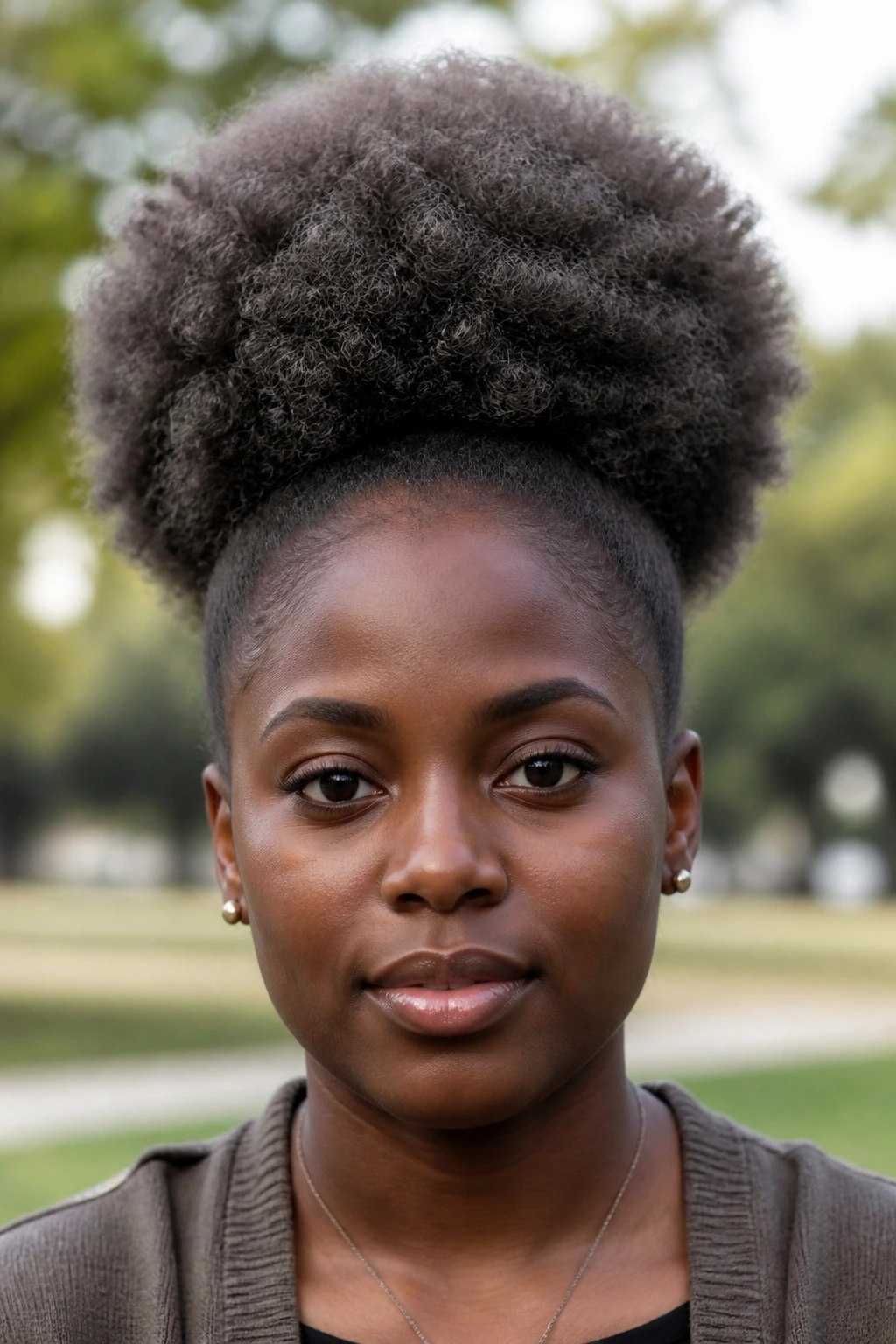
A slate brown afro puff gives a simple shape a lot of personality. The grey-brown tone sits somewhere between cocoa and stone, which means it can catch light on the surface while keeping the puff full and rounded.
This style is easy to wear because the puff itself does the heavy lifting. You do not need complicated color placement. A single, well-chosen slate shade can be enough. Just make sure the hair stays moisturized, because dry coils will swallow the dimension.
A satin scrunchie and a clean edge-up help the shade look crisp.
23. Pearl Brown Coils
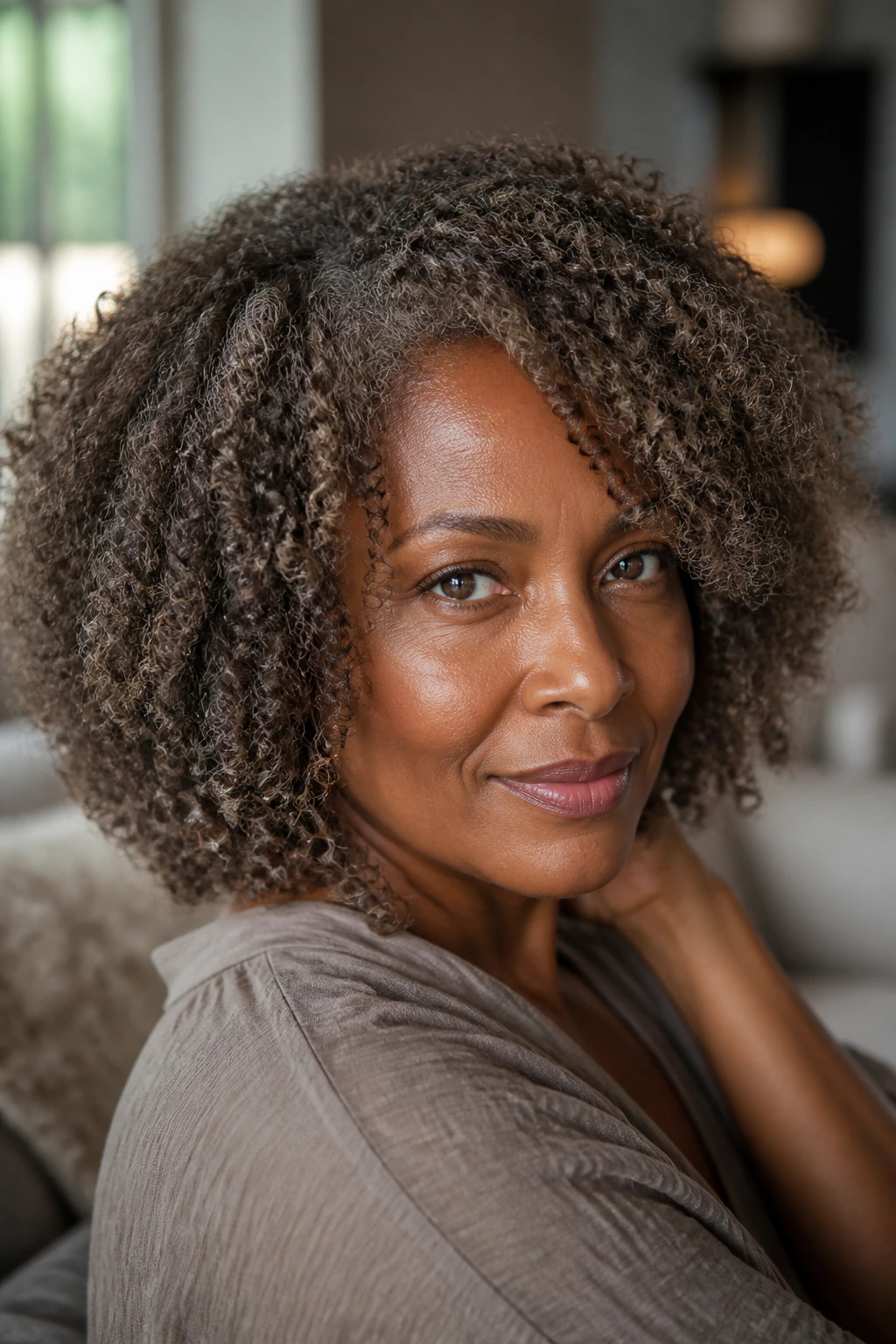
Pearl brown sits on the lighter, softer side of grey-brown, but it still needs enough depth to hold on deep skin tones. On coils, that pearly cast can look elegant and airy without becoming blonde. The trick is balance.
The coils need definition. When the curl pattern is clear, pearl brown looks like light moving across the hair, not like one flat color. If the coils are stretched or fuzzy, the pearl finish can disappear.
This is a good choice for people who want a softer grey-brown effect instead of a smoky one.
24. Root-Melt Grey Brown Lob
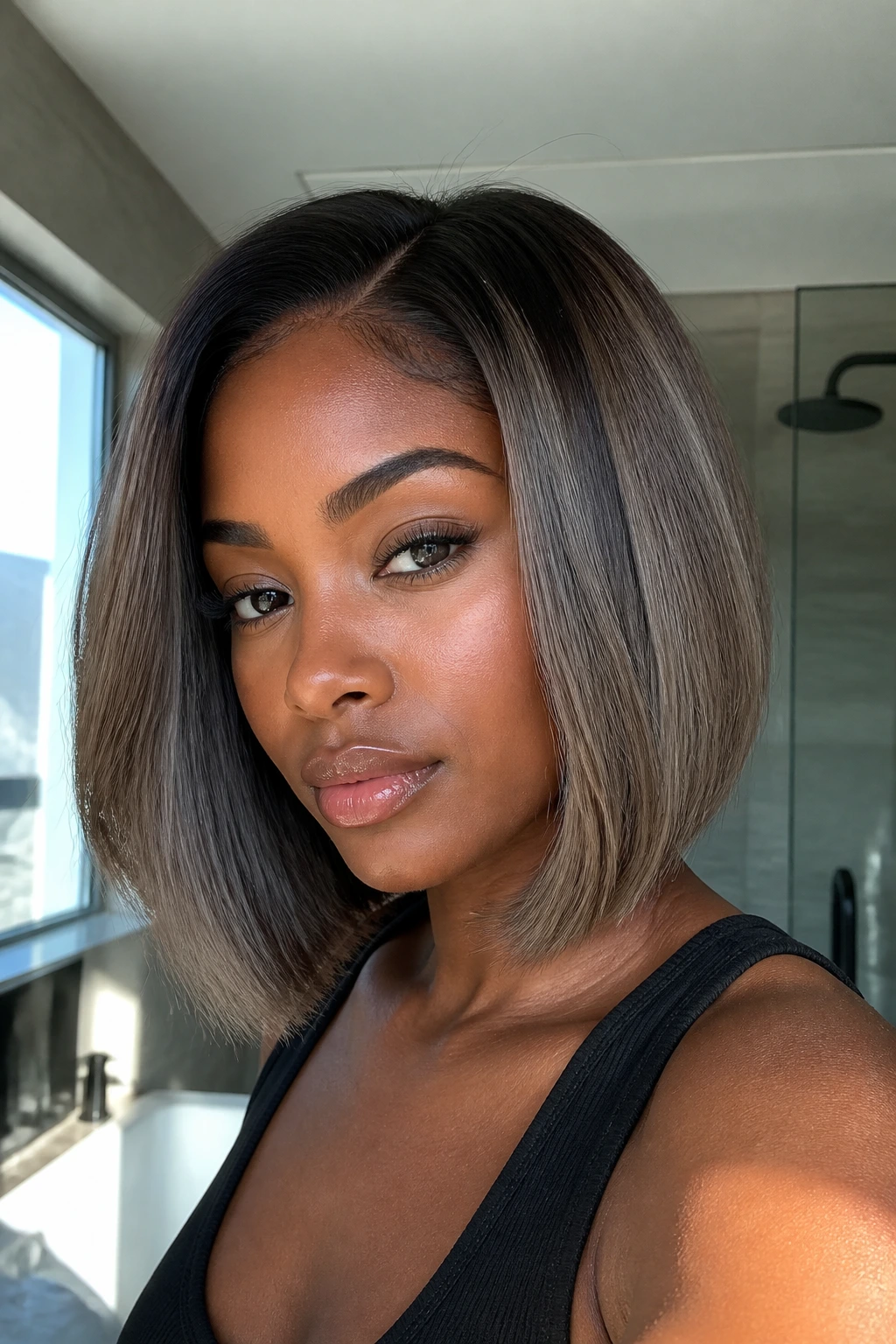
A root melt is one of the easiest ways to wear grey brown without worrying about obvious regrowth lines. The roots stay dark, then the color loosens into grey-brown lengths that feel blended and intentional. On deep skin tones, the darker top keeps the face from looking washed out.
A lob makes this shade even better because the cut gives the melt a clean stopping point. It feels tailored. Too long, and the subtlety can get lost. Too short, and the blend has less room to show itself.
This is salon-friendly, but also forgiving if you like to stretch appointments.
25. Smoky Bronze Brown
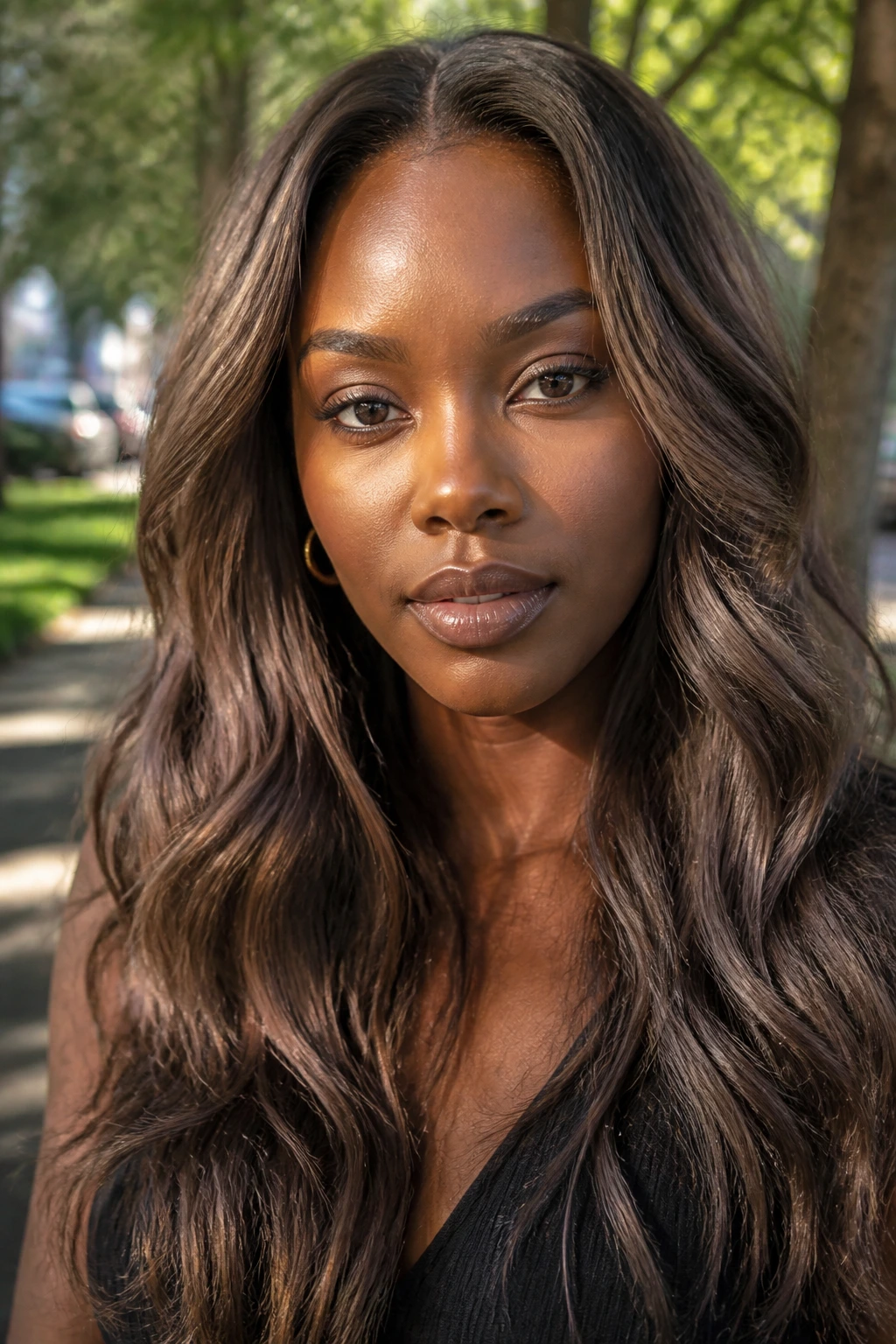
Smoky bronze brown adds a warmer edge to grey-brown hair. It is still cool, but it carries a soft bronzy shimmer that keeps the color from going flat against deeper complexions. That small warmth makes a big difference.
This shade is strong on people who want grey-brown without looking icy. It works especially well in sunlight, where the bronze note peeks through and stops the hair from reading too grey. If your undertone leans golden or neutral, this one deserves a hard look.
Best feature
It bridges warm and cool in a way that feels easy, not fussy.
26. Graphite Ribbon Locs
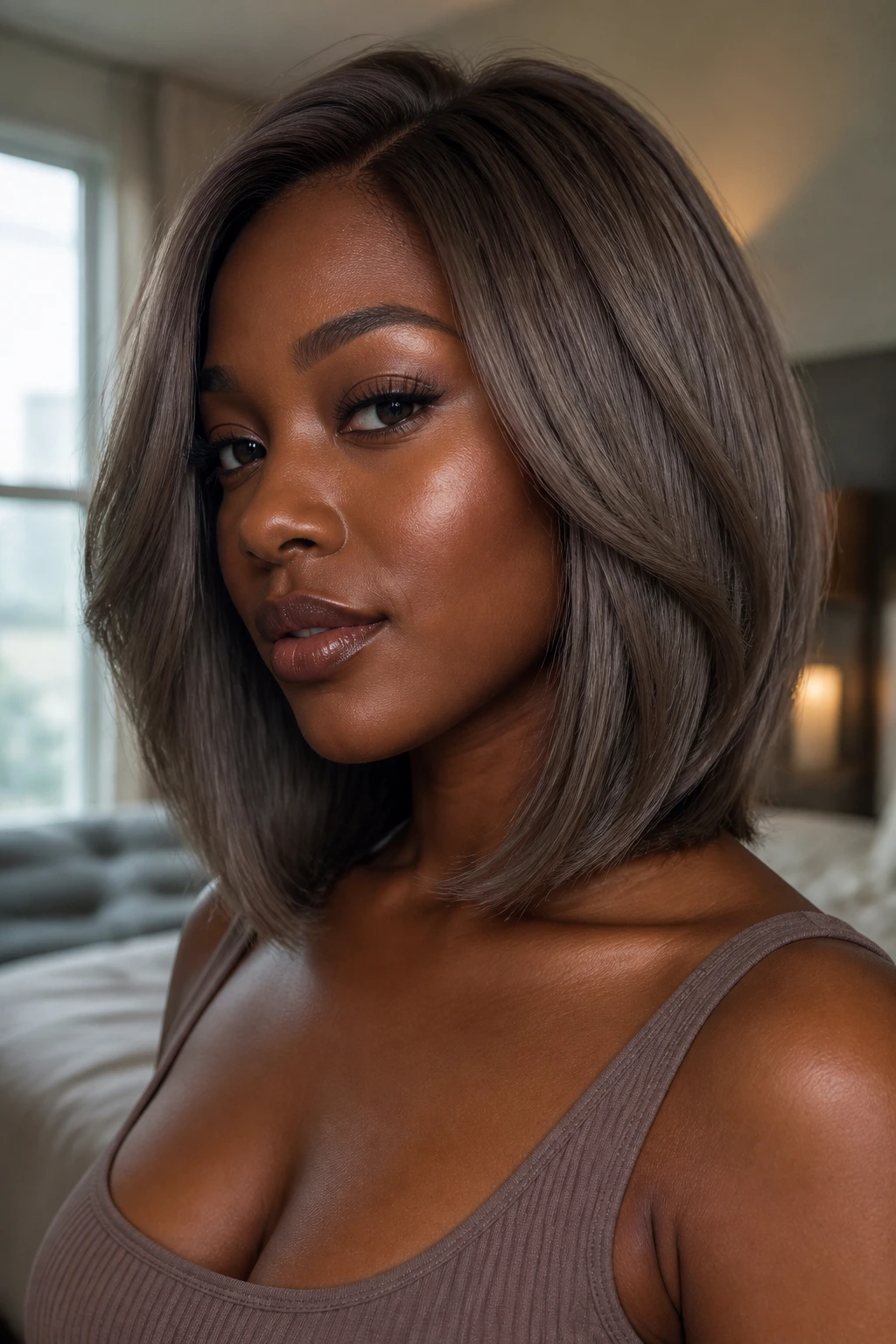
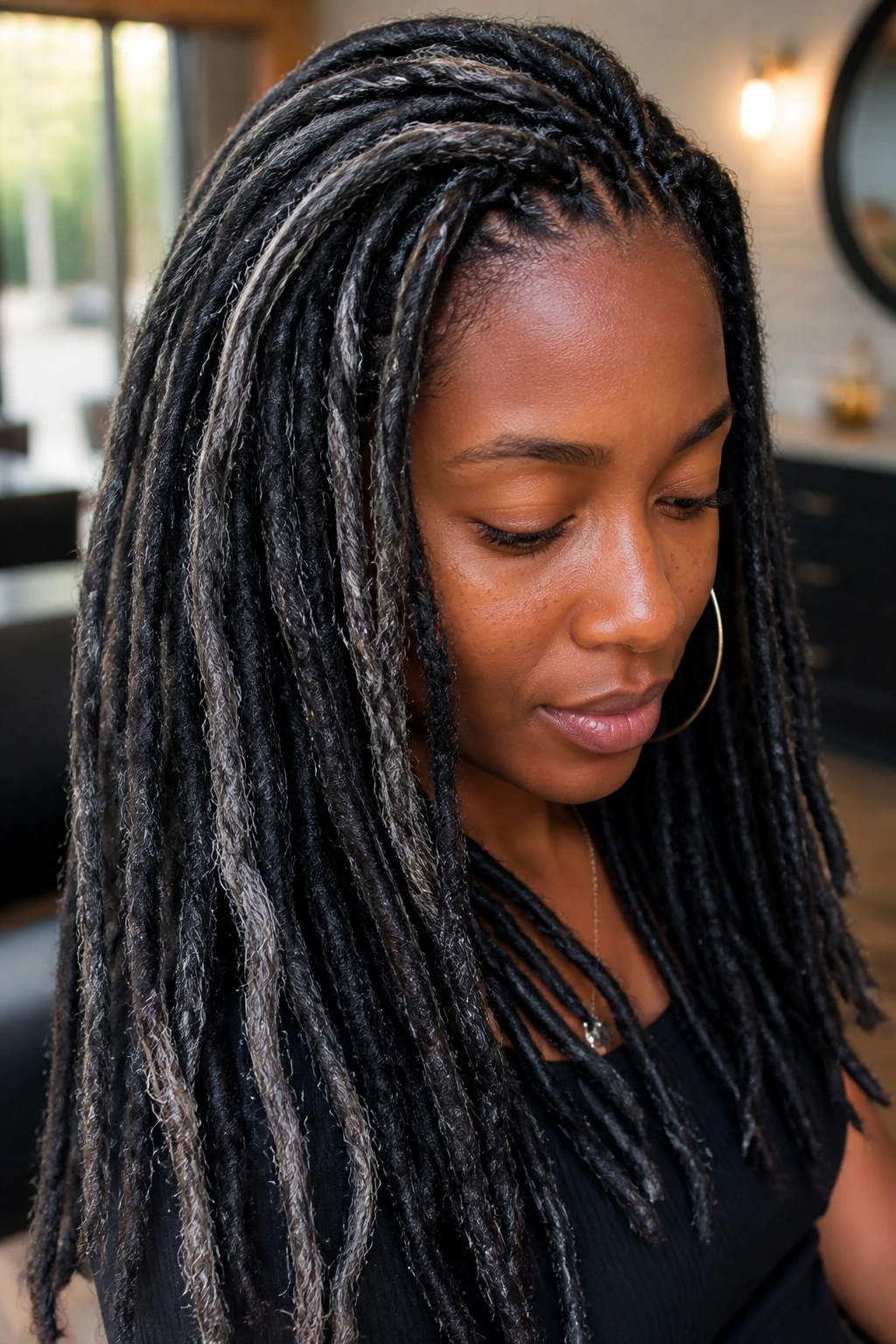
Graphite ribbon locs are about pattern. Thin grey-brown ribbons snake through deeper locs, giving the style a lifted look without erasing the richness at the base. The contrast is there, but it doesn’t take over.
This is one of the prettiest grey-brown ideas for long locs because the ribbon effect moves with the style. A few pieces around the front and crown can change the whole shape. You do not need to color every loc to get the point across.
Keep the ribbons narrow. Wide ones can look patchy instead of sleek.
27. Mushroom Brown Pixie
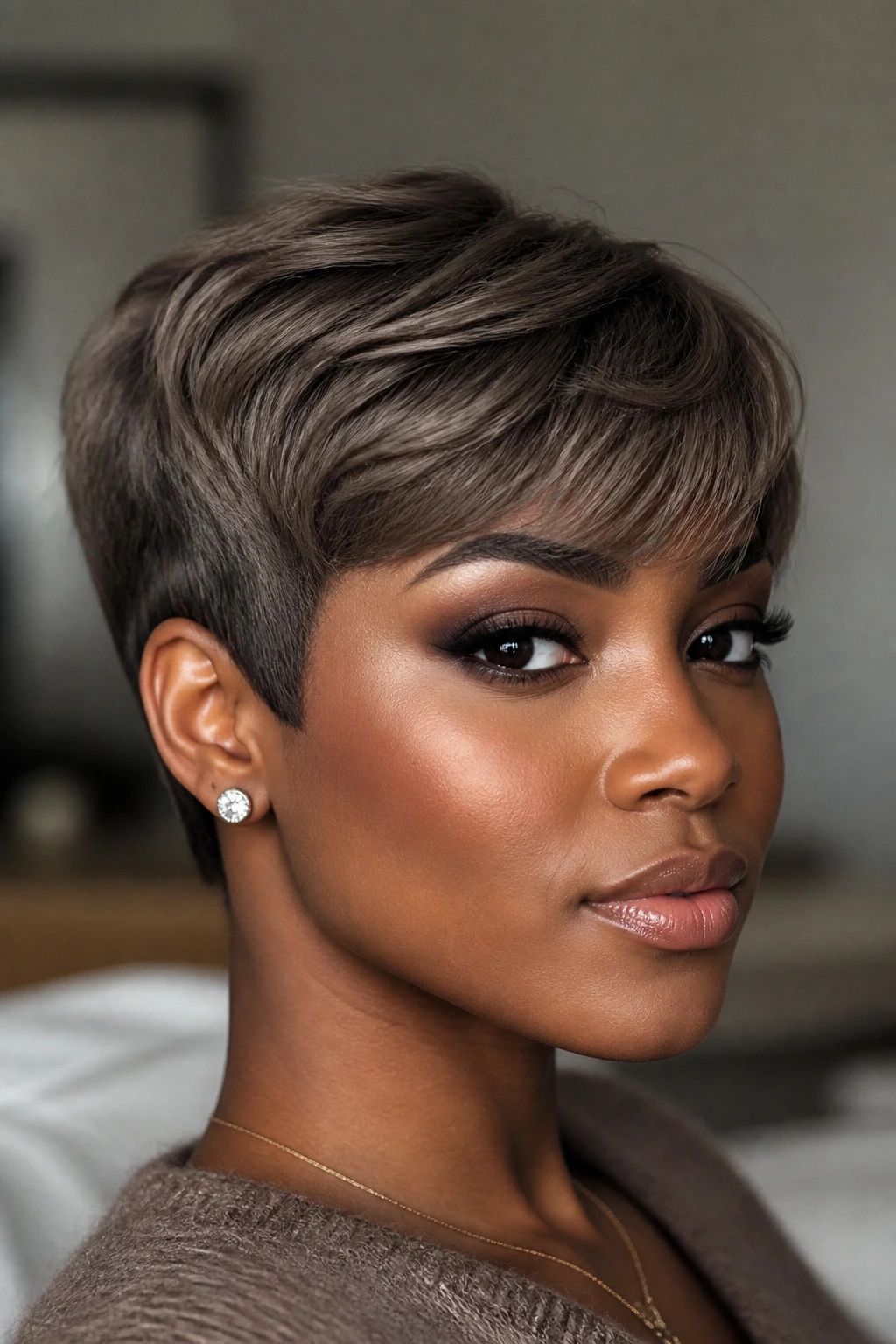
A pixie cut makes mushroom brown look sharper and more modern. The short length keeps the cool taupe-brown visible from root to tip, and the cut creates a neat frame around the face. On deep skin tones, that little bit of cool softness reads nicely.
This is a low-fuss choice if you like short hair and want something that still feels tailored. The color doesn’t have to do too much. A good mushroom brown at this length simply needs a touch of shine and clean shaping around the ears and nape.
28. Steel-Softened Box Braids
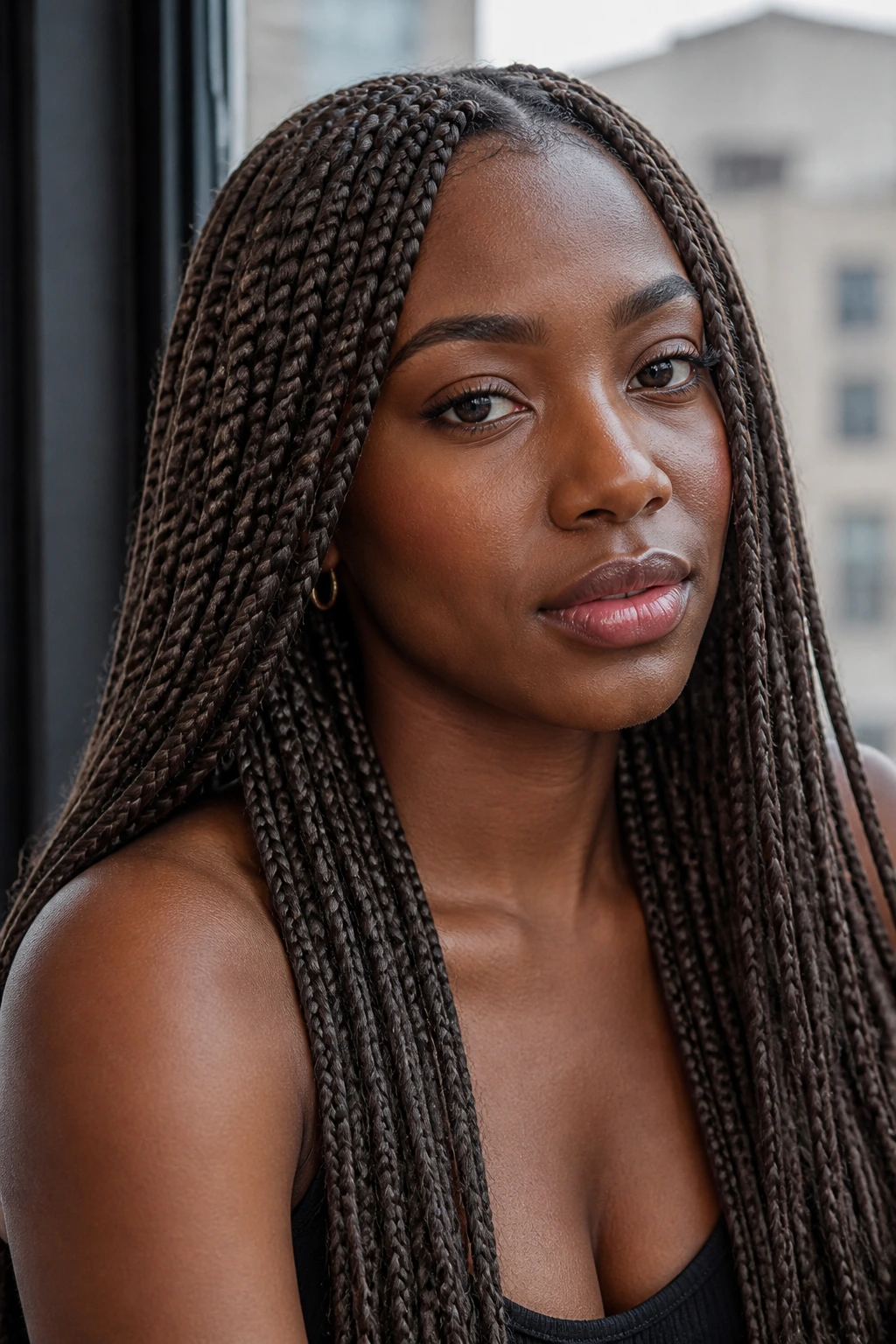
Think classic box braids, but with a steel-softened brown instead of a flat black or warm auburn. The grey note makes the braids feel fresher, and the brown keeps them from reading harsh against deep skin. It’s a small shift, but it changes the whole mood.
This works best when the braid color is consistent from roots to ends, or when the ends are just a little lighter. If you like added beads or cuffs, silver hardware suits this shade well. Warm gold can work too, but silver tends to make the grey-brown story cleaner.
29. Deep Mocha with Silver Streaks
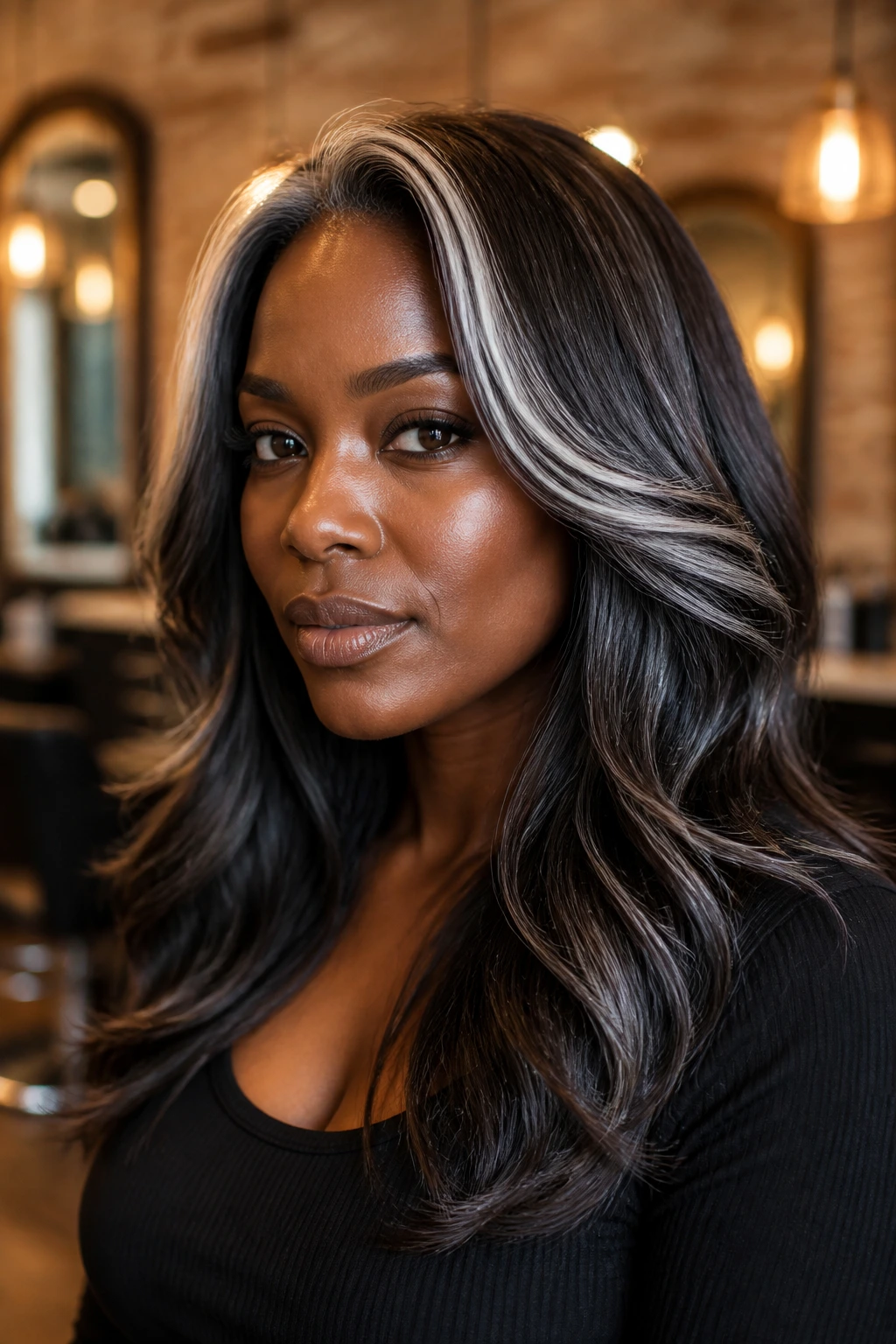
This style gives you a real streak of light without sacrificing depth. The mocha base stays dark and rich, while silver streaks cut through it in clear lines. On deep skin tones, that contrast feels intentional and bold.
It’s not a shy look. That’s the point. If you want subtlety, skip this one. If you want a visible statement that still respects your complexion, deep mocha with silver streaks does the job.
Ask for streaks placed near the front and through the top layers so the silver has somewhere to land when the hair moves.
30. Foggy Brunette Curls
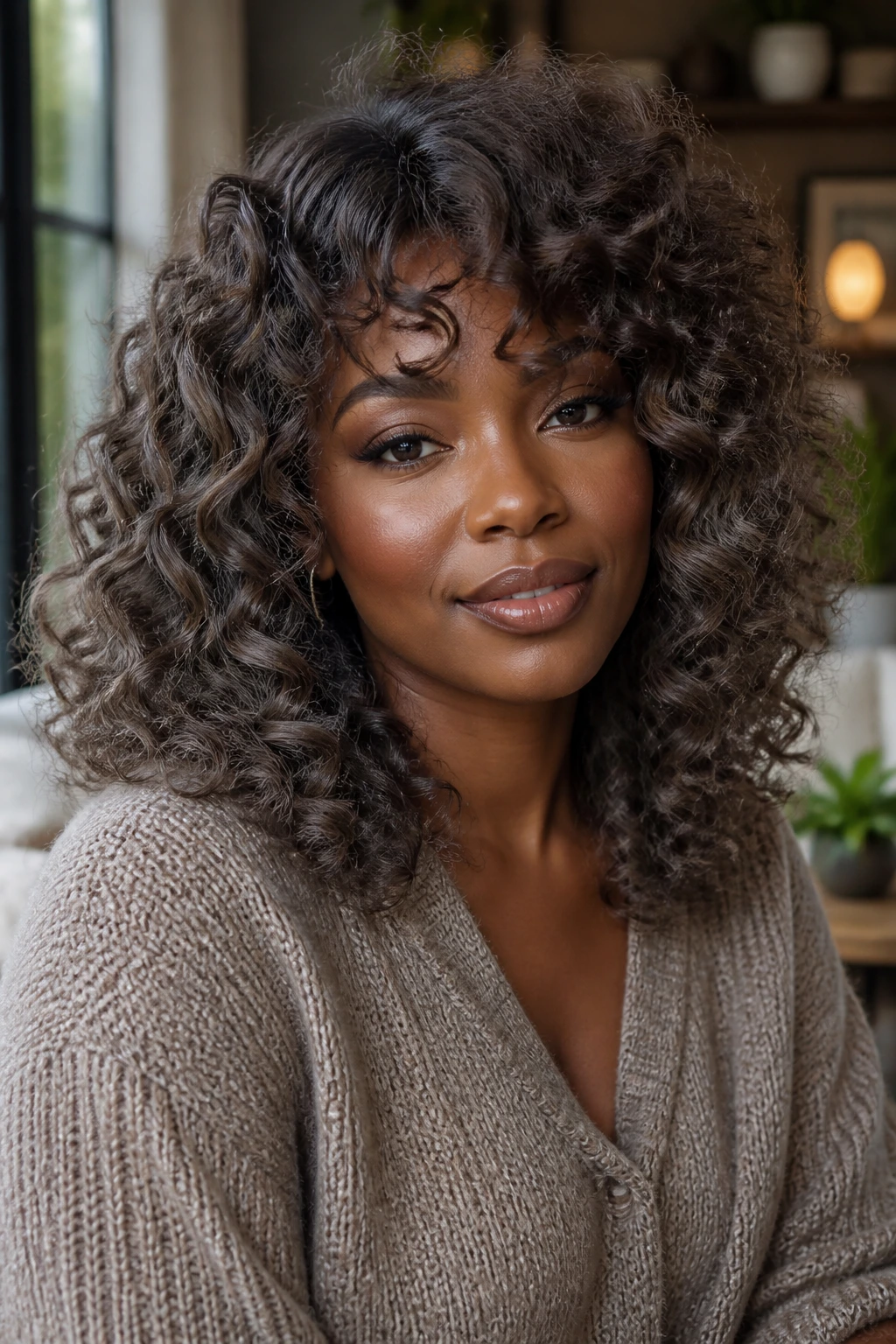
Foggy brunette is one of the softest versions of grey-brown hair. The shade sits like mist over a brunette base, which is especially flattering on curly hair because every bend picks up the cooler tone a little differently.
The color should feel diffused, not heavy. Think fog on glass, not paint. That means the curls need good shape and moisture, because frizzy curls can turn a foggy color into a blurry one. A defined curl cream or twist-out routine helps a lot.
This is a lovely option if you want grey-brown with minimal drama.
31. Ash Brown Goddess Layers
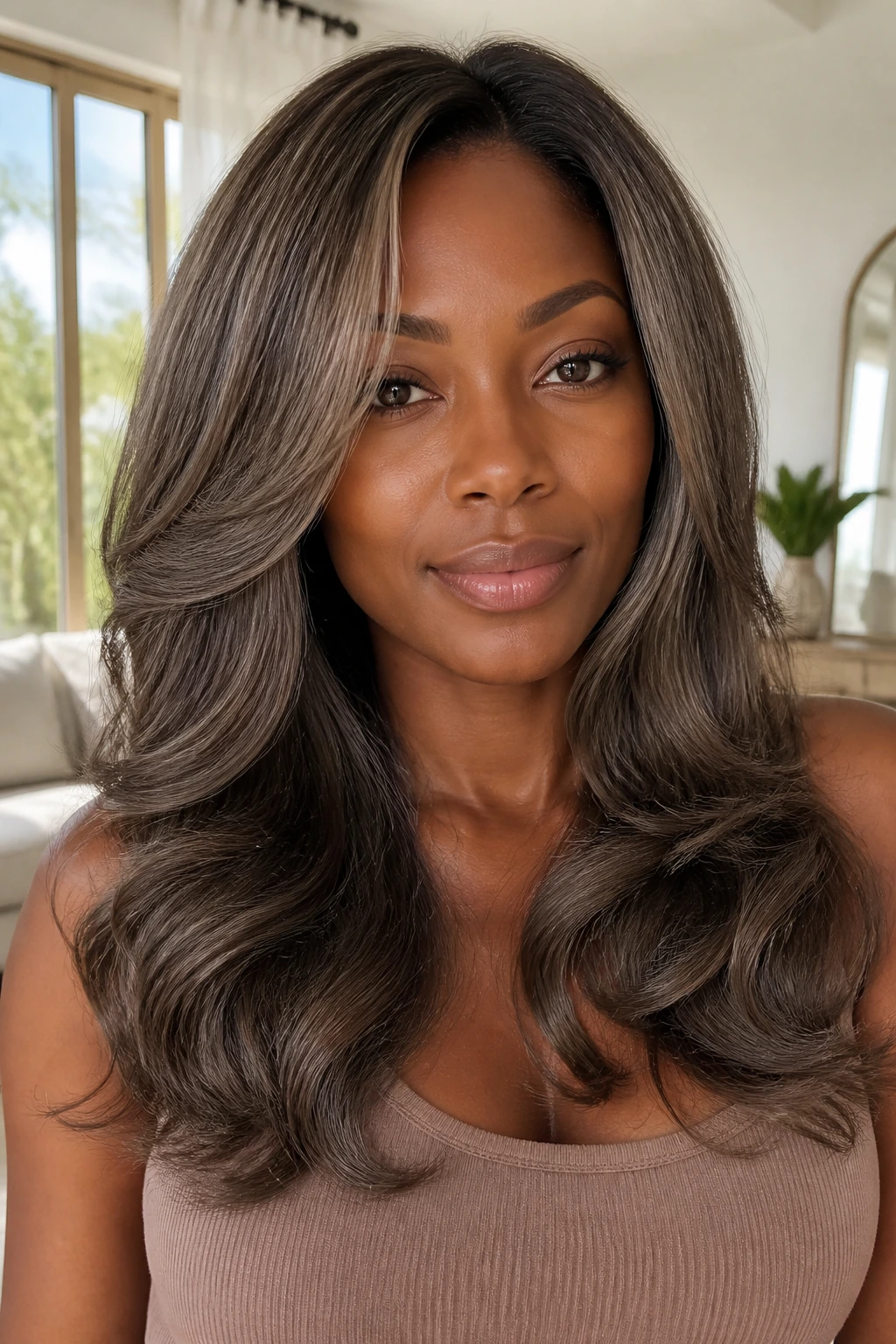
Goddess layers give ash brown enough movement to shine. The layers themselves create dimension, and the ash tone cools the whole look down just enough to keep it from feeling too warm. On deep skin tones, that balance is easy on the eyes.
This style works especially well if you like flowing hair with a little swing. The color should be softer near the face and a little deeper underneath. That keeps the layers from looking thin. Heavy lightening would ruin the whole effect.
Good call
Use a gloss, not just a dye. Ash brown looks richer when the surface is sealed with shine.
32. Charcoal Halo Highlights
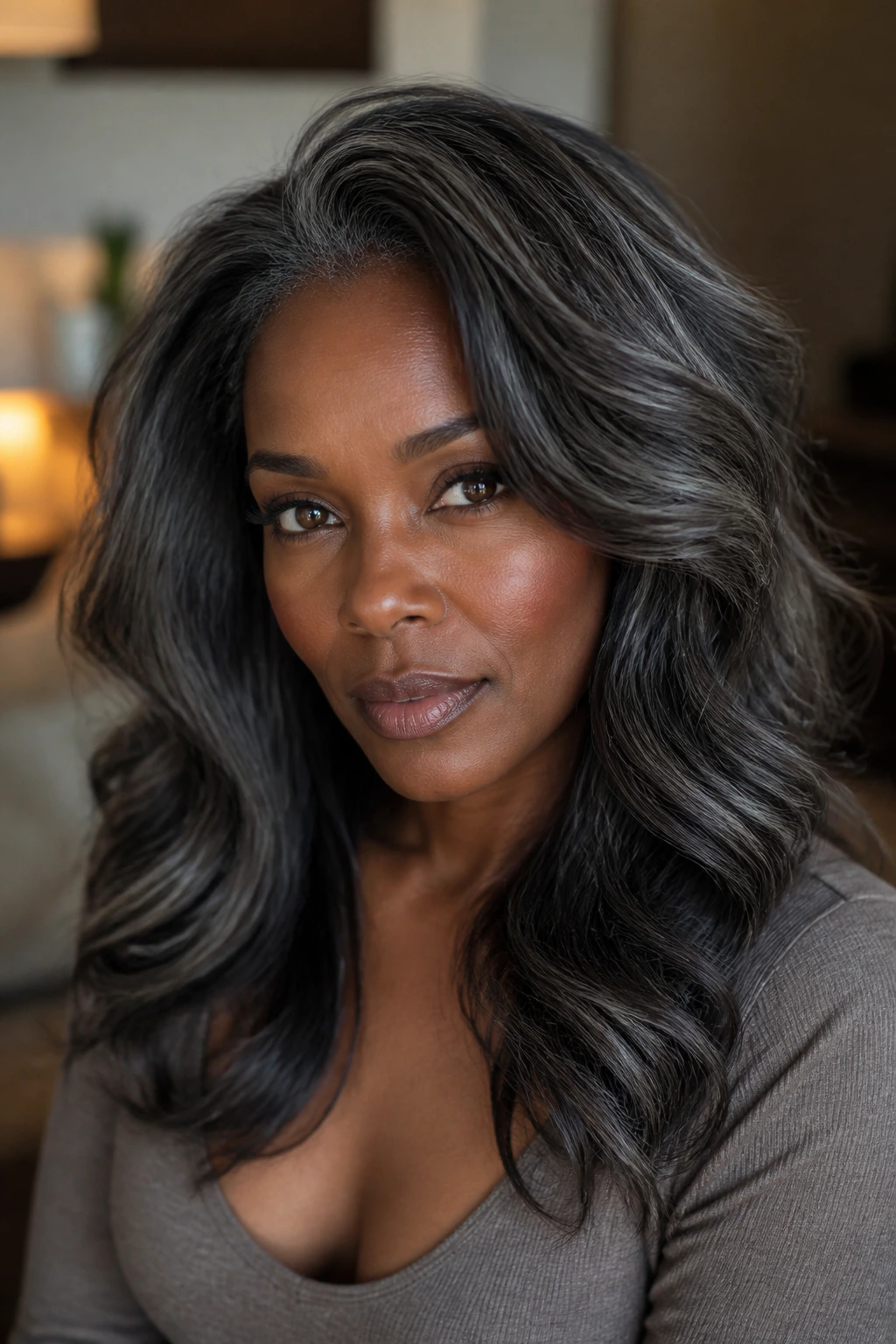
Halo highlights sit around the crown and outer edges, so the grey-brown light hits where the eye lands first. Charcoal is a smart choice here because it adds contrast without turning the style into a high-maintenance blonde situation.
This is one of those colors that changes in different lighting. Indoors, it looks soft and smoky. Outside, the charcoal edges wake up. On deep skin tones, the halo effect keeps the color from sitting too close to the scalp, which helps avoid that flat, helmet-like look.
33. Cool Umber Fade
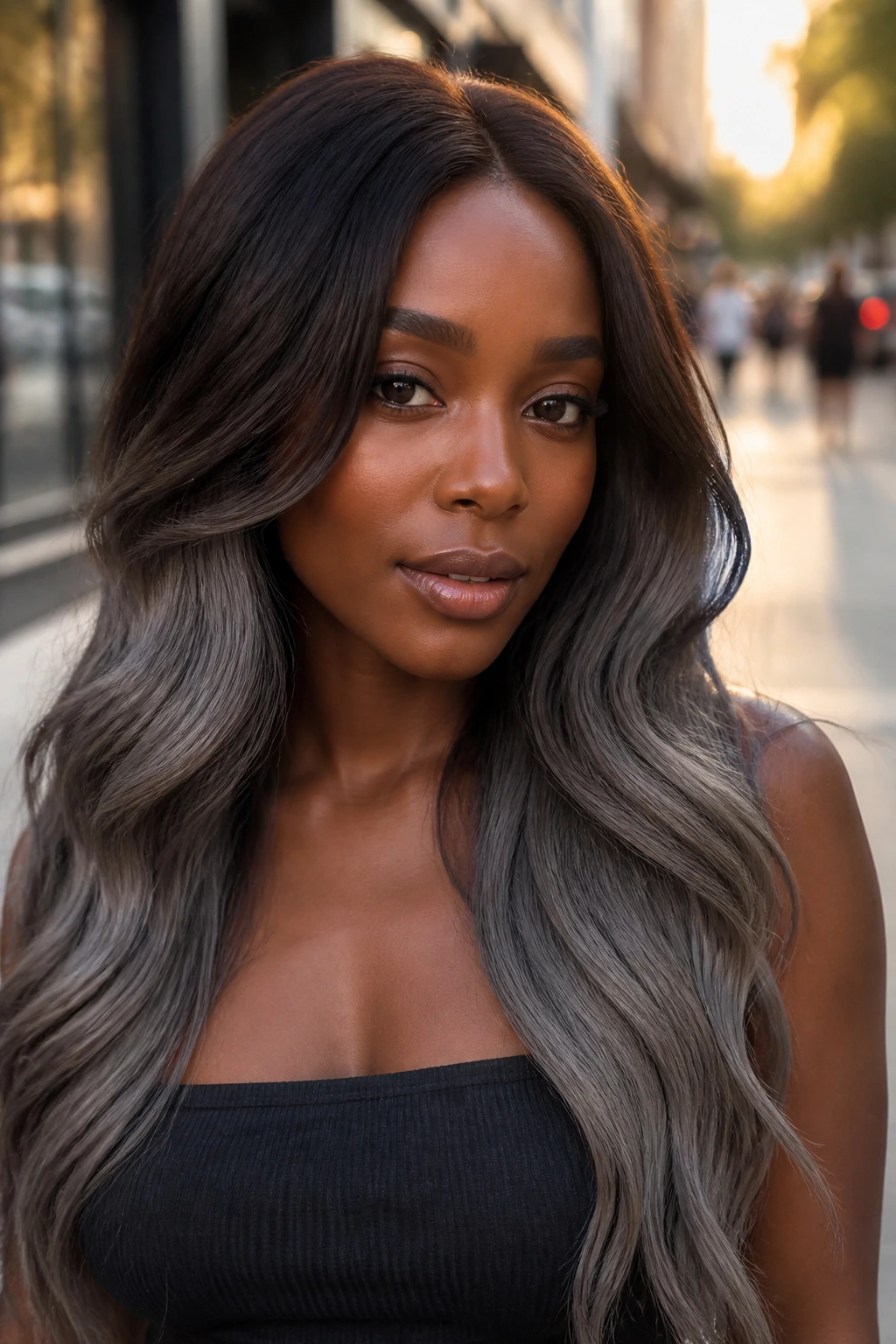
Cool umber fade is the kind of shade that sneaks up on you. It starts with deep brown at the root and slowly cools into a smoky, grey-leaning finish. No sharp line. No awkward midshaft shift.
It’s a solid choice if you want a long, wearable version of grey-brown that feels polished on straight hair or loose waves. The fade should be subtle enough that the color reads as one idea, not a collection of separate dye jobs.
This shade is especially nice when you want movement, but not obvious highlight stripes.
34. Pewter-Edged TWA
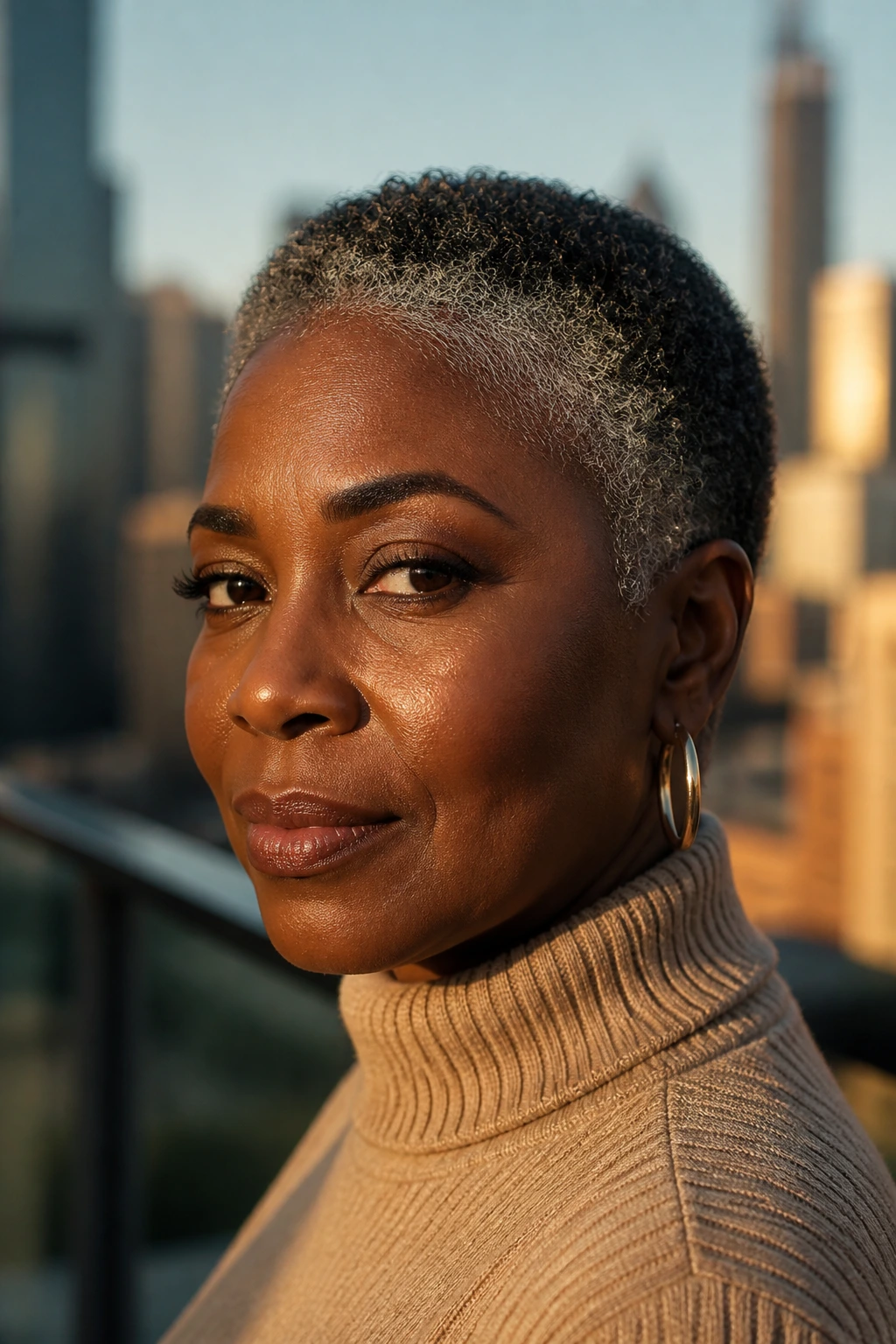
A teeny weeny afro can handle pewter edges beautifully. The shape is already bold, so the grey-brown comes in as a clean edge rather than a full takeover. Put the pewter around the hairline or the outer layer and let the deeper base stay central.
That keeps the style from looking too washed out. On deep skin, a TWA with pewter edges looks sharp and editorial, but still soft around the face. The cut does not need much else. A little shine product and a neat shape are enough.
35. Velvet Smoke Lengths
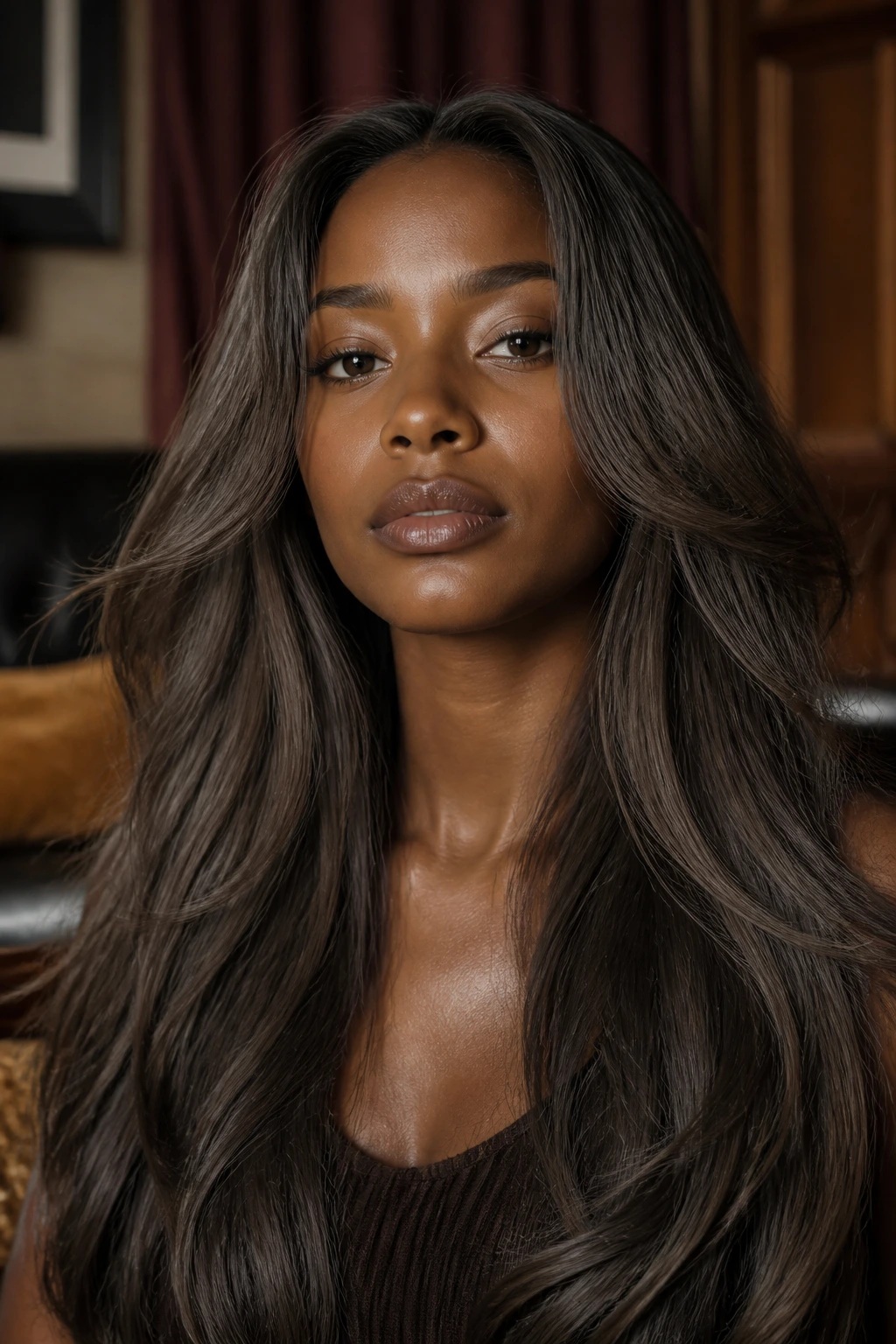
Velvet smoke lengths are the polished ending to the list. The hair stays long, dark, and softly grey-brown through the mids and ends, like smoke caught in fabric. It looks especially good when the color is glossy and the layers fall cleanly.
This is one of the most wearable grey brown hair color ideas for deep skin tones because it does not depend on a dramatic lift. It leans on tone, shine, and shape. If you want a color that feels elegant but not stiff, this is the one I’d keep near the top of the pile.
How to Choose the Right Grey Brown Shade for Your Undertone
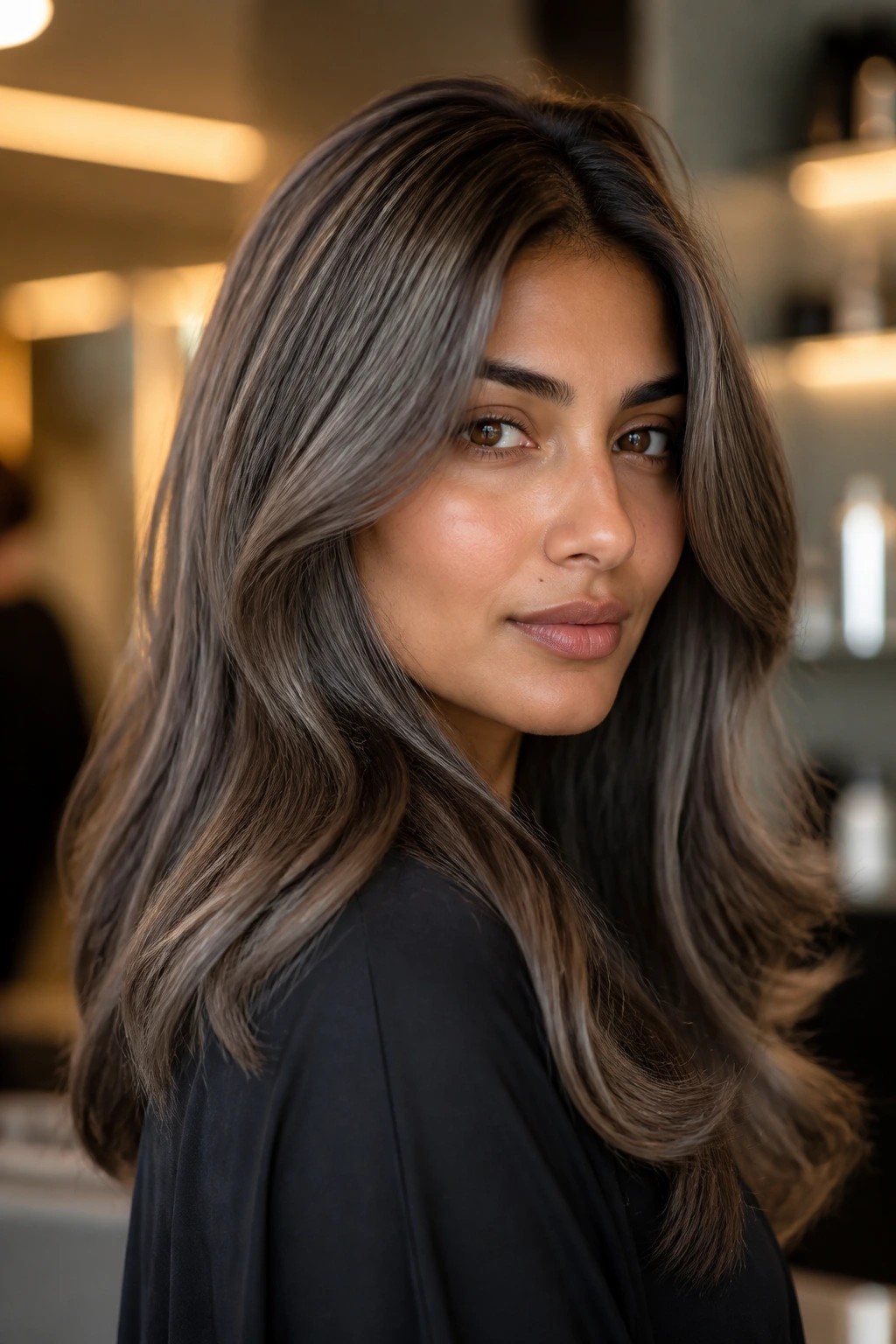
The fastest way to make grey brown hair look right on deep skin tones is to stop chasing the palest ash shade and start matching the undertone. Golden or red-brown skin usually likes mushroom brown, smoky bronze, or cocoa cloud balayage better than icy charcoal. Olive or neutral skin can handle cooler graphite, slate, and pewter tones with less trouble.
Hair texture matters too. Coils and curls can take a cooler tone because the shape adds warmth back into the look. Straight hair needs more depth at the root, or the color can go thin fast. If you wear your hair in braids, locs, or twists, choose a grey-brown that still reads brown first. That keeps the style from looking dusty.
And yes, gloss matters. A lot. Grey-brown shades need shine to stay rich, especially on deep skin where matte ash can look flat in a hurry. A clear or lightly tinted gloss every few weeks makes the color look more intentional and less like it’s fading into itself.
Practical Tips for Wearing Grey Brown Hair Color Well
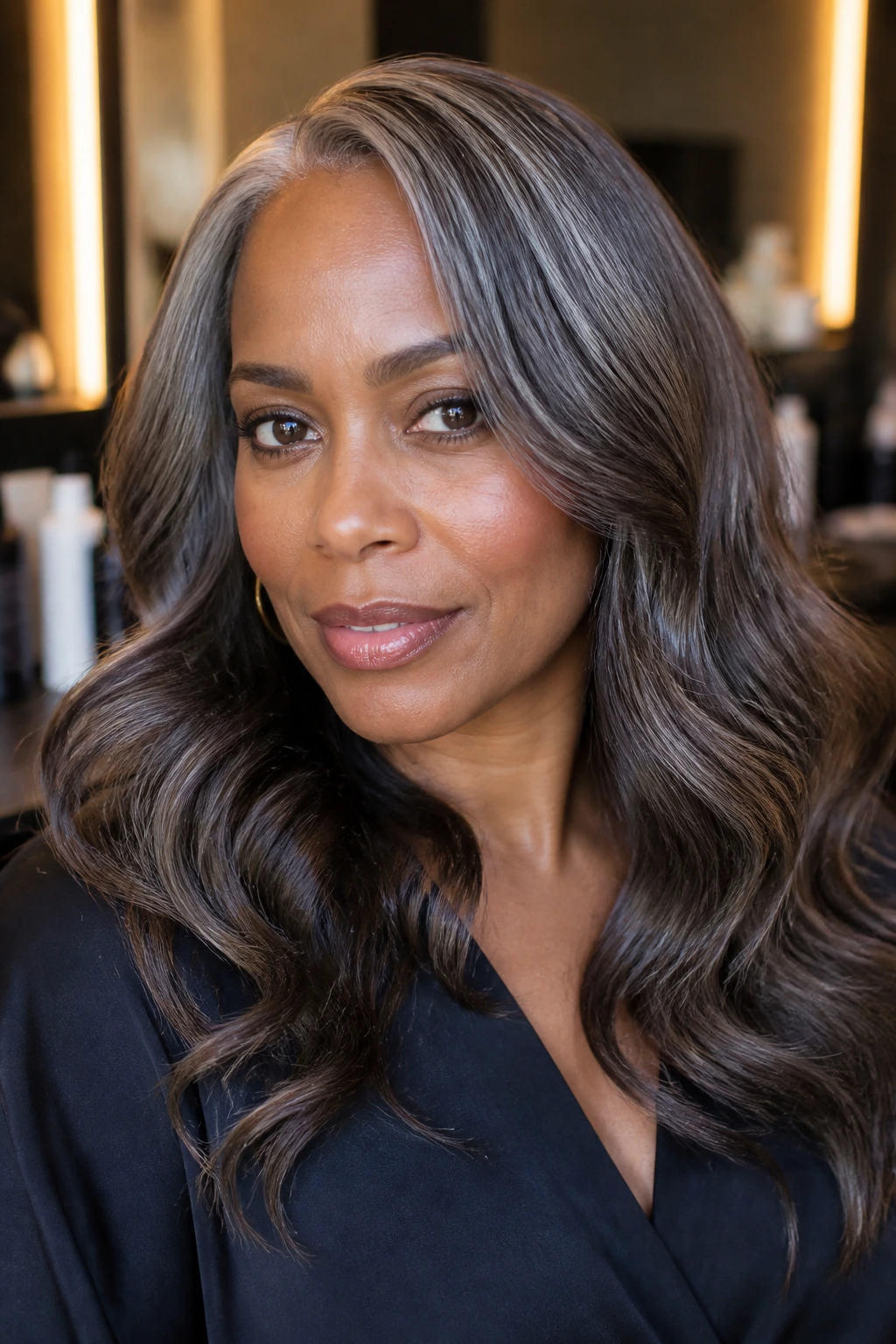
Undertone Match: If your skin has gold, red, or bronze warmth, ask for mushroom brown, smoky cocoa, or a taupe glaze instead of stark silver. The warmer brown base keeps the finish from looking chalky.
Texture Check: Curly and coily hair usually needs a deeper root and softer grey placement. Straight styles can carry more contrast, but only if the hair has shine. Dry grey-brown hair looks older than it should.
Salon Language: Say you want smoky brown with grey-brown reflection, not just “ash.” That tiny wording change helps a colorist keep the shade rich instead of pushing it toward pale grey.
Gloss First: If you are unsure, start with a demi-permanent gloss or toner. It’s easier to deepen a grey-brown shade than to rescue hair that has gone too light and too flat.
Maintenance Reality: The lighter the grey-brown pieces, the faster they need refreshing. Plan on a gloss touch-up every 4 to 6 weeks if you want the tone to stay clean.
Common Mistakes That Make Grey Brown Hair Look Flat
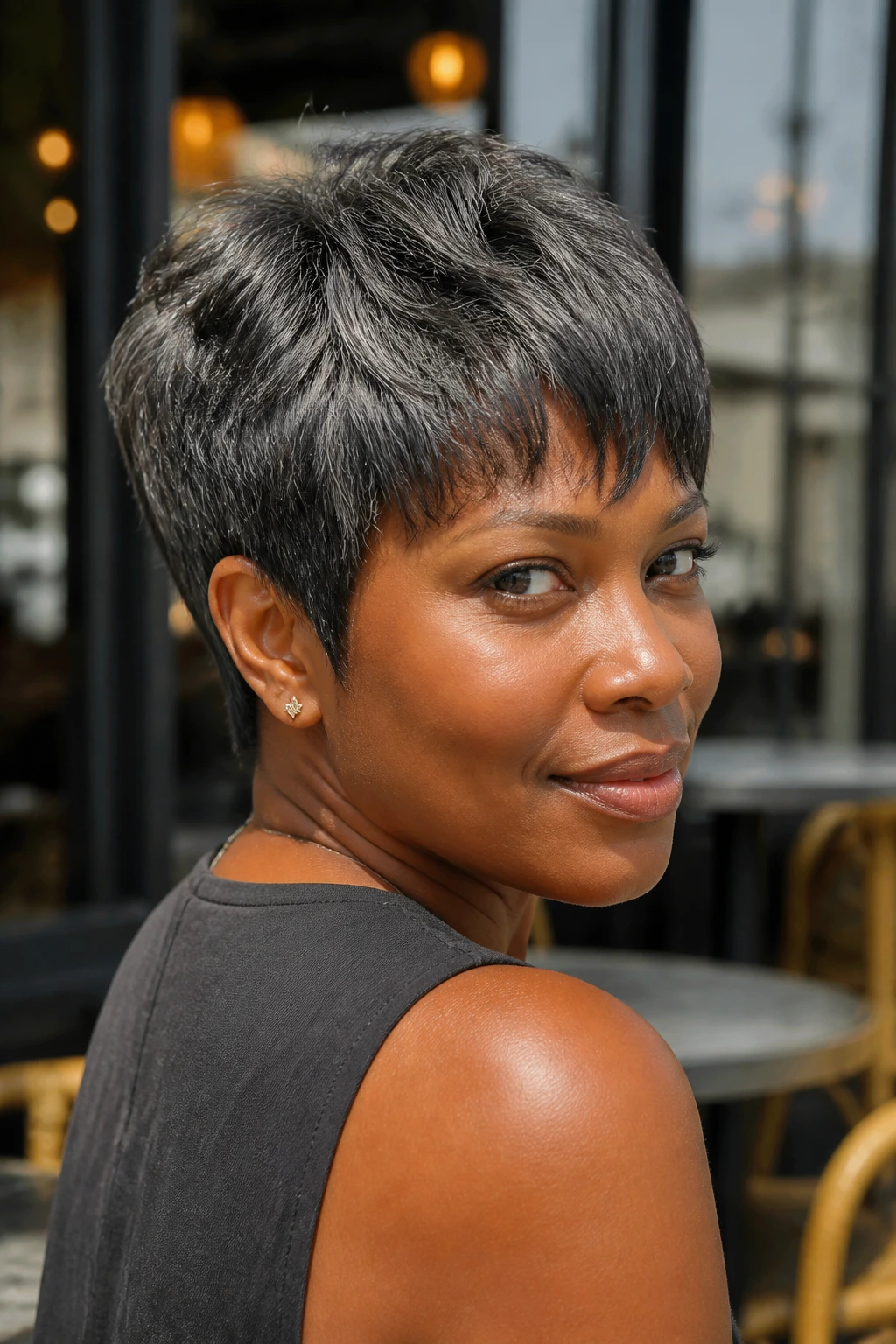
Going too pale at the root: This is the fastest way to lose depth on deep skin tones. The face starts looking drained, and the color can read more dusty than smoky. Keep the root darker and let the lighter tones live lower in the hair.
Choosing a one-note ash formula: Flat ash brown can look like mud when there is no dimension. Add ribbons, lowlights, or a root melt so the color has shadows and highlights to play against.
Skipping shine: Grey-brown hair needs gloss. Without it, the color can look dry even when the hair is healthy. A lightweight serum, gloss treatment, or leave-in with slip helps a lot.
Overusing purple or blue shampoo: These toning shampoos are useful, but too much can make the hair look silvery in a bad way. Once a week is usually enough for upkeep. If the color starts looking dull, stop toning and add moisture.
Ignoring your base color: Box-dye brunette that pulls orange will fight cool grey-brown tones every time. If the starting shade is warm, it needs neutralizing first or the grey will look off.
Variations and Adaptations to Try
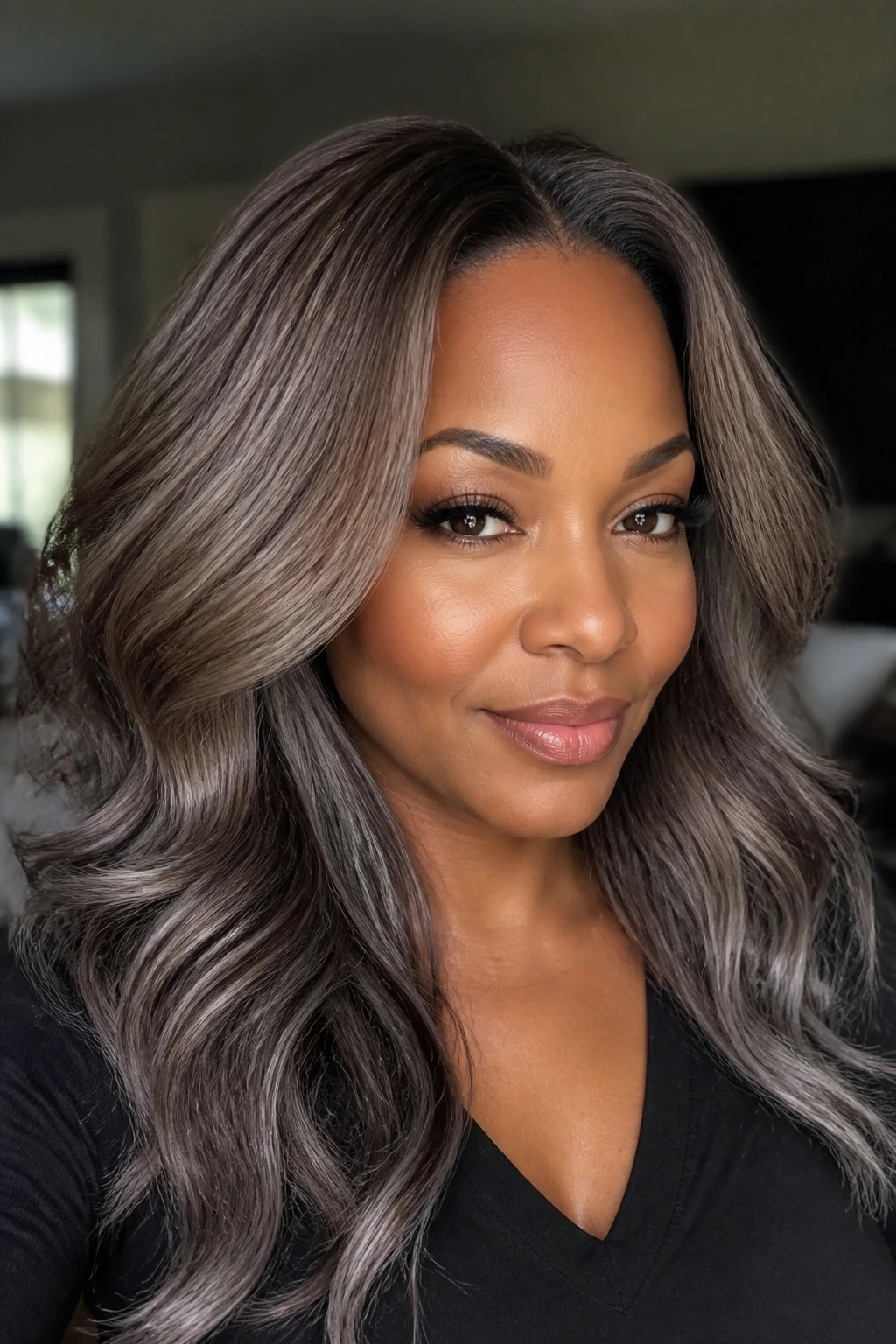
Soft Mushroom Shift: If full grey brown feels too cool, tilt the formula toward mushroom brown by keeping more beige and less silver in the toner. This works well on warm undertones and textured hair that needs softness.
Graphite Edge Upgrade: Want more contrast? Push the face frame, money piece, or ends toward graphite. The rest of the hair can stay deep brown, which keeps the look bold without turning the whole head light.
Protective-Style Version: For braids, locs, or twists, choose pre-colored hair in mocha, slate, or charcoal-brown blends. That gives you the grey-brown story without chemical processing, which is a relief if your natural hair needs a break.
Low-Commitment Gloss Only: If you’re not ready for bleach or permanent color, ask for a cool demi-permanent gloss over a brunette base. It fades more gently, and it lets you test whether you like the smoky cast before you do anything more permanent.
Bright-Front Placement: Keep most of the hair deep and concentrate the grey brown at the front panels, crown, or halo section. That gives you brightness where it counts and less maintenance everywhere else.
Tools and Products That Make Grey Brown Color Easier to Manage
-
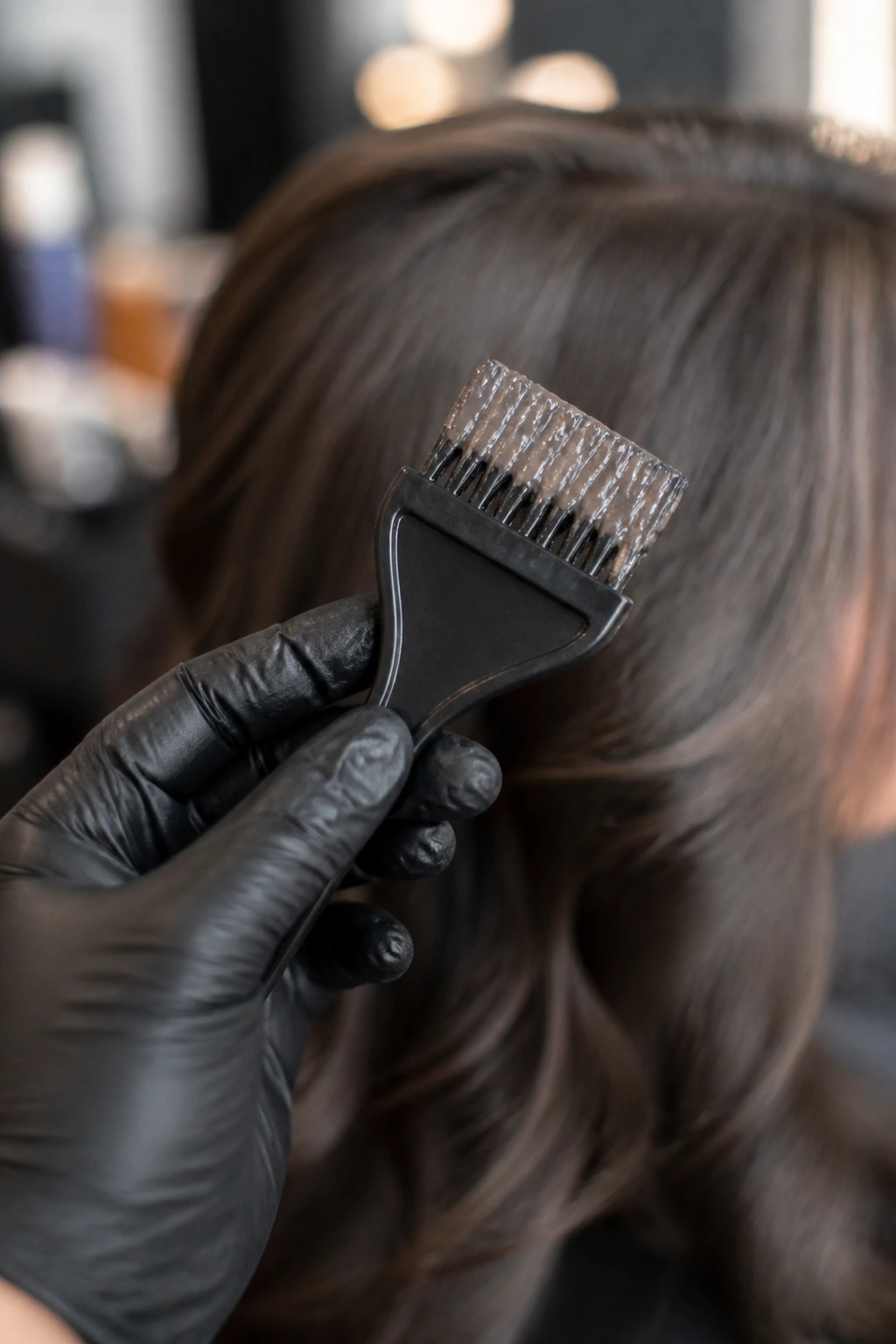
Tint brush and mixing bowl: Helpful for applying toner, gloss, or touch-up color cleanly at the root and along face-framing pieces.
-
Sectioning clips: Grey-brown placement looks better when the hair is sectioned carefully. Sloppy sectioning leads to patchy color.
-
Gloves: Non-negotiable for any toner or color application. Cool shades stain hands fast.
-
Sulfate-free shampoo: Keeps grey-brown tones from fading too quickly and helps preserve shine.
-
Purple or blue shampoo: Use sparingly when the tone starts drifting yellow or orange; too much can make the finish dull.
-
Deep conditioner or bond-repair mask: Lighter grey-brown shades often need extra moisture support, especially after lift.
-
Heat protectant: If you wear silk presses, blowouts, or curls with hot tools, this keeps the color from drying out and turning brassy.
-
Edge brush and satin scarf: Small thing, big difference. A neat hairline and protected edges make the whole color look cleaner.
Keeping Grey Brown Hair Fresh Without Overdoing It
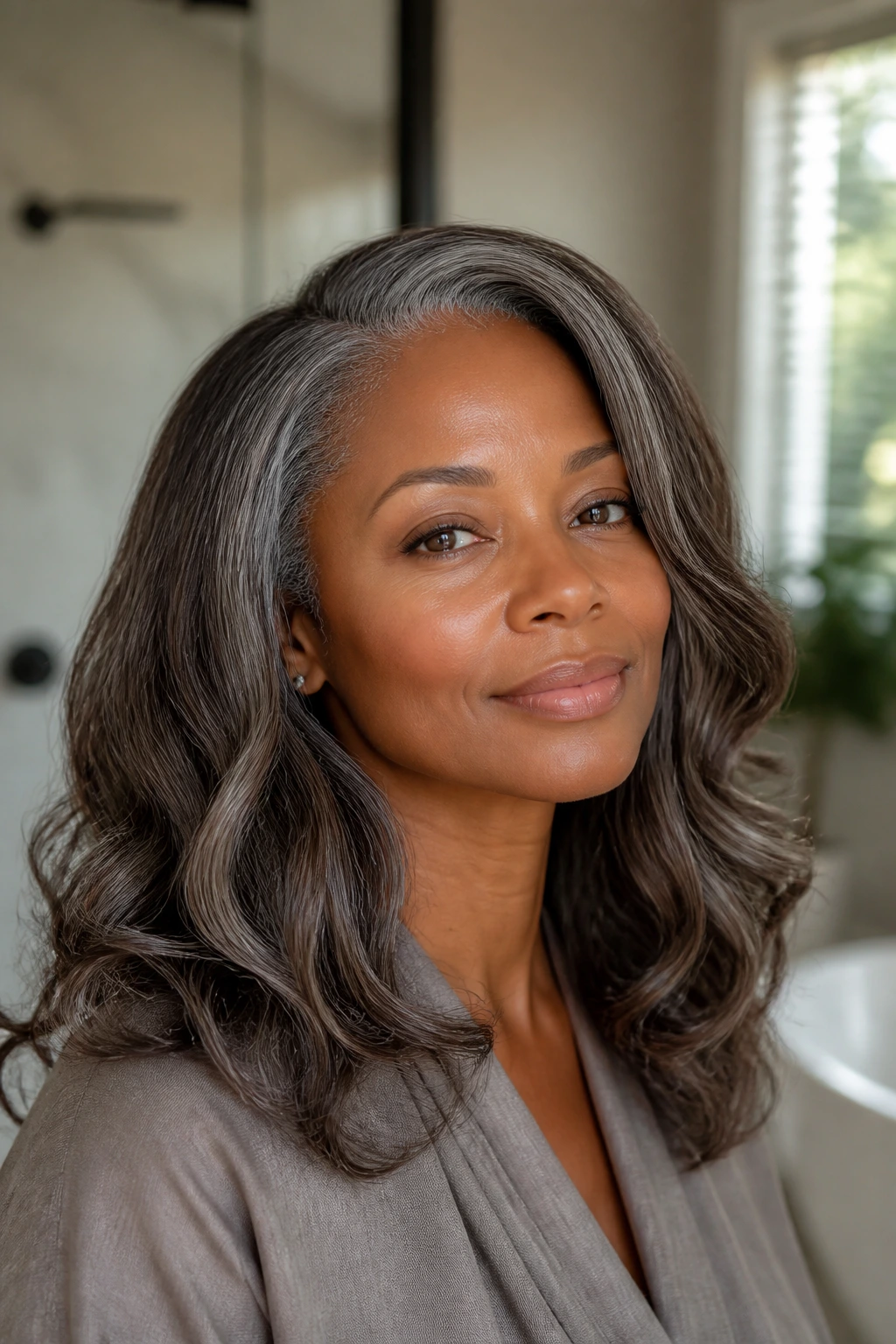
Grey brown hair tends to look best when it stays glossy, not overly toned. A sulfate-free shampoo once or twice a week is usually enough, then follow with a moisture-rich conditioner so the brown stays deep and the grey stays soft. If you use a toning shampoo, keep it to once every 7 to 10 days unless your colorist tells you otherwise.
Gloss treatments help more than people think. Every 4 to 6 weeks is a solid rhythm for maintaining a smoky brown finish, especially if the hair has been lightened. If you wear curls or coils, a leave-in conditioner and sealant keep the cool tone from looking dry and brittle. On straight styles, a lightweight serum on the ends can keep the finish reflective.
Heat changes everything. Flat irons and curling wands can strip the cool tone out faster than you’d expect if you skip protection. Use heat protectant every single time, and keep the temperature lower than you think you need. Hair does not need to sizzle to move.
Questions People Ask Before Going Grey Brown
Will grey brown hair wash out deep skin tones?
Not when the shade has enough brown in it. The problem is usually going too pale or too ashy too quickly. Mushroom brown, smoky cocoa, and charcoal-root melts usually play much nicer than an ultra-light silver brown.
Do I need bleach for grey brown hair?
Sometimes, yes, if you want a visible cool shift. But not every version needs heavy lift. A gloss, toner, or subtle highlight placement can create a grey-brown effect without pushing the hair all the way to blonde.
What if my hair turns orange after lightening?
That means the undertone needs neutralizing before the grey-brown shade goes on. A colorist usually handles that with the right toner. If you try to cover orange with grey alone, the result can go muddy.
Can grey brown work on natural curls and coils?
Absolutely. It often looks better on textured hair because the curl pattern breaks up the tone and keeps it from reading flat. The main thing is moisture. Dry curls make cool color look tired fast.
Which grey brown shade is lowest maintenance?
Root-melt styles, mushroom brown balayage, and deep mocha with subtle grey ribbons usually grow out the easiest. Anything with a bright money piece or silver ends needs more frequent touch-ups.
Is grey brown better warm or cool for deep skin tones?
That depends on undertone and styling goals. Warm-leaning people usually do better with smoky cocoa or bronze-brown blends, while cooler undertones can wear slate, pewter, and graphite more easily.
How do I keep the color from looking dull?
Moisture, gloss, and shine are the whole game. A dull grey-brown shade almost always needs conditioning before it needs more toner.
Can I do this on braids or locs without coloring my own hair?
Yes. Pre-colored extension hair or synthetic blends in mocha, slate, and charcoal shades can create the look with no chemical process on your natural hair. That’s often the safer route if you want the color story without the damage.
A Few Smart Ways to Adapt the Look
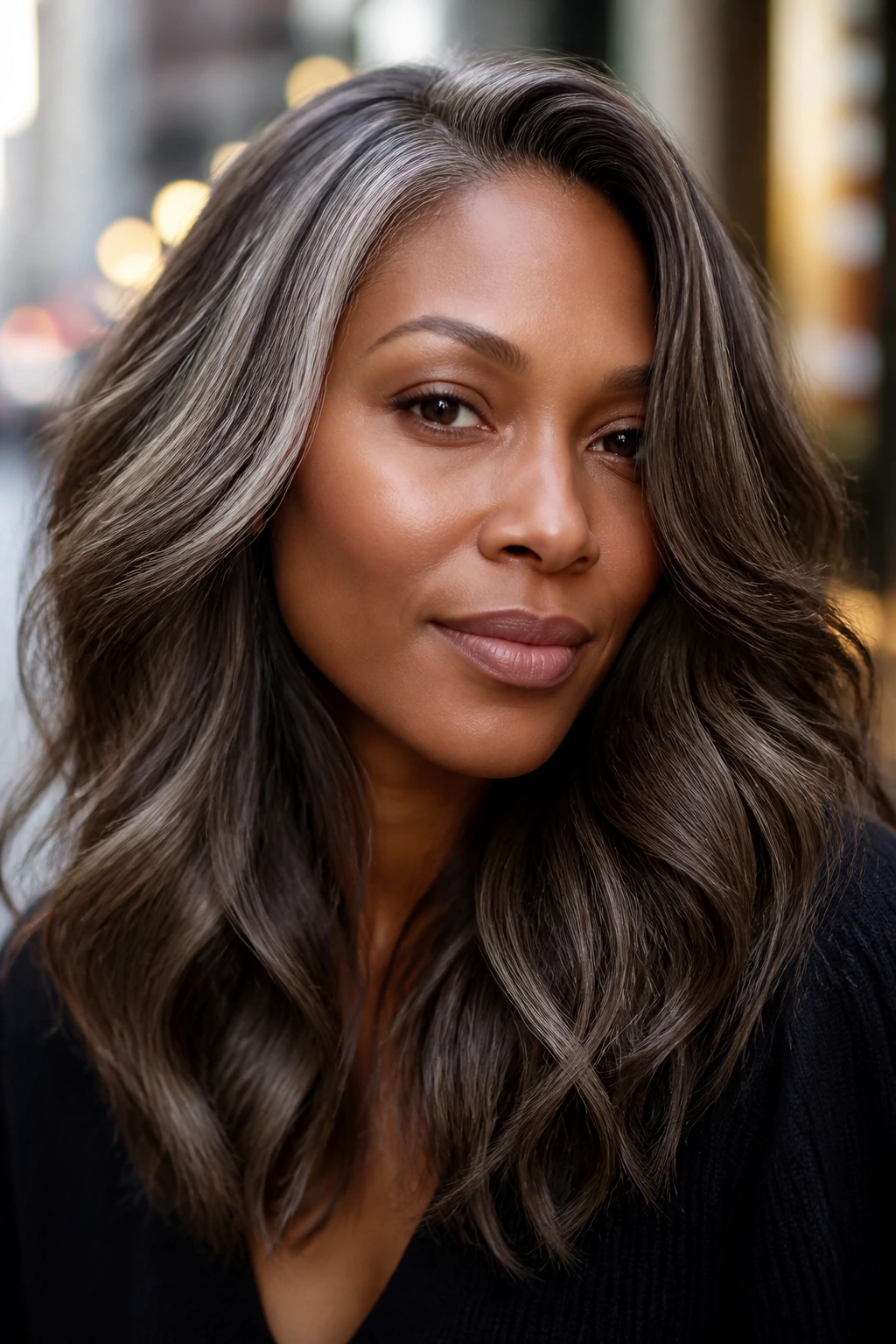
If you want less drama: Stay close to mocha, mushroom, or taupe. Keep the grey as a whisper, not the main event.
If you want more edge: Add graphite money pieces, silver streaks, or charcoal peekaboo panels. Those little pops carry more attitude than a full-head ash tone.
If you want a protective option: Choose grey-brown braids, loc extensions, or twists in a blended color. The finish still feels fresh, but your natural hair gets a break.
If you wear your hair straight most days: Focus on gloss and root depth. Grey brown looks sharp when the hair is sleek, but only if the color has shine.
If you live in heat or humidity: Keep the tone deeper and use a smoothing serum. Humidity can make light ash shades look fuzzy faster than darker smoky browns.
The Shades That Keep Working
Grey brown hair color ideas for deep skin tones succeed when they keep enough depth to frame the face and enough cool tone to feel fresh. That balance can look soft, bold, smoky, metallic, or almost velvet-like. It just should not look pale for the sake of looking pale.
The best shade is the one that still looks rich three weeks after you leave the salon. Maybe that’s a mushroom balayage. Maybe it’s a graphite money piece, or a deep mocha braid set with silver threads. The point is the same: let the brown stay present, and let the grey come in as smoke, not chalk.