



Pale skin and wavy hair can make blonde behave in a strangely picky way. Go too icy and the face can look a little washed out. Go too yellow and the whole thing starts reading brassy instead of creamy, which is a much less charming result when the texture is already soft and bendy.
That is why creamy blonde hairstyles for pale skin with wavy hair tend to work so well: the shade has enough warmth to keep fair skin from looking sharp and enough beige in it to avoid that stark, bleach-bright finish that can feel harsh. Wavy hair helps too. Every bend catches a ribbon of light, so even a subtle glaze can look layered, expensive, and alive instead of flat.
I’ve always thought the sweet spot for this combination sits somewhere between vanilla, buttercream, beige, and a little pearl. Not ash-heavy. Not sunflower blonde. The best looks here are the ones that keep a soft root, some dimension, and a bit of movement around the face so the whole thing feels intentional rather than over-processed.
Why These Creamy Blonde Looks Work So Well
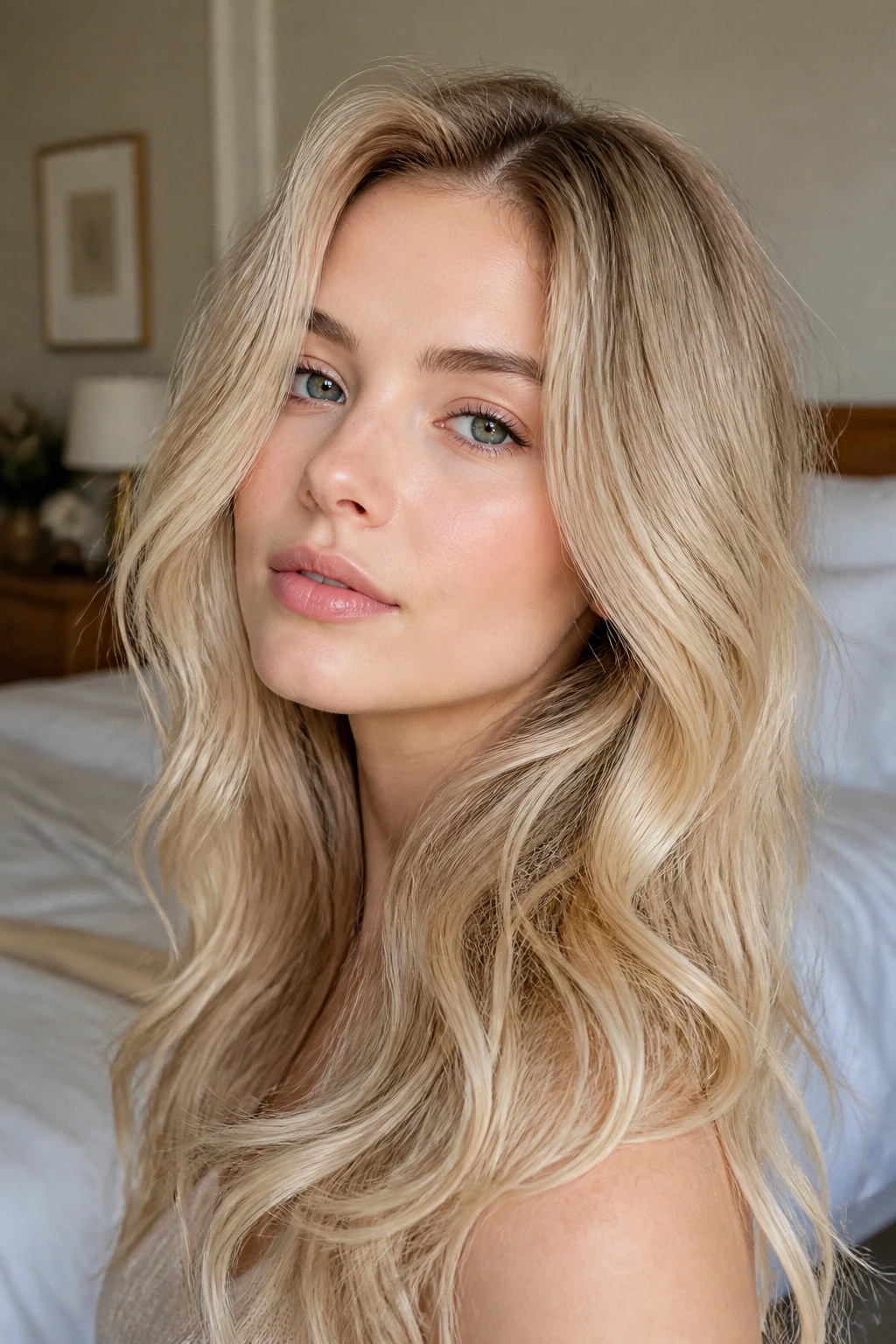
- Soft contrast: Pale skin usually looks best with blonde that has a little depth at the root, because a flat all-over pale blonde can erase the face instead of framing it.
- Wave-friendly shine: Wavy hair shows off ribbon highlights better than pin-straight hair, since every bend gives you another place for the cream tone to catch the light.
- Less brass panic: Beige, vanilla, and buttercream shades age better between toning appointments than a high-yellow blonde, which tends to turn loud fast.
- Flexible maintenance: A shadow root, soft balayage, or lowlight gives you a few extra weeks before the grow-out starts shouting for attention.
- Face-softening effect: The right creamy blonde can blur redness in pale skin, especially when the brightest pieces sit around the cheekbones and jaw.
1. Vanilla Ribbon Lob
A shoulder-grazing lob with vanilla ribbons is one of those styles that looks quietly expensive without trying too hard. The cut gives wavy hair room to move, and the color keeps the ends from disappearing into the background the way a one-note blonde sometimes does on pale skin.
What I like most here is the balance. Ask for a level 9 beige-vanilla blonde with fine babylights and a soft root smudge about one level deeper. That little bit of darkness at the root keeps the cut from looking helmet-like, especially if your skin is pink or cool.
A loose bend with a 1-inch iron is enough. Don’t overwork it. The point is for the cream strands to break up the wave pattern, not sit on top of it like a wig.
2. Cream Bronde Shoulder Cut
Why does this one work so well on fair skin? Because it keeps a little brunette depth in the mix. The base stays near a dark blonde or light brown, while creamy beige pieces thread through the mids and ends. On pale skin, that contrast gives the face a frame instead of a wash.
What Makes It Different
- Best for neutral and cool undertones: The extra depth at the root keeps the blonde from making the face look drained.
- Easy grow-out: A bronde base buys you time, which matters if you hate salon chairs.
- Wave payoff: The waves show the color shift in a way straight hair often can’t.
This is the shade I’d point to if you want blonde, but not the maintenance headache that usually comes with going lighter. It feels lived-in from day one, especially when the ends are air-dried with a little smoothing cream and just a touch of grit.
3. Buttercream Curtain Bangs
Buttercream curtain bangs can be gorgeous on pale skin, but only when the cut is soft enough to move with the waves instead of fighting them. The bang area should be brighter than the rest of the hair, not blinding. Think feathered, creamy, and slightly diffused at the edges.
The best version has layered sides that sweep back into the length, so the bangs don’t hang in a heavy curtain across the forehead. If your skin is very fair and flushes easily, this style helps because the brightness sits near the eyes and cheekbones, where it makes the whole face look awake.
I’d ask for a beige-blonde glaze on the fringe and a slightly deeper cream through the rest. That contrast is subtle, but on wavy hair it makes the shape read from across the room.
4. Pale Champagne Midlength Waves
Pale champagne blonde is a nice move when you want the hair to look light without tipping into white. It has a soft sparkle to it, almost like the tone you see in old glass—cool enough to flatter fair skin, but not so icy that it drains the face.
The midlength cut helps because it keeps the wave pattern compact. You get those loose, rounded bends from collarbone to chest, and the champagne tone lands in each curve instead of fading out at the ends. On pale skin, that gives a clean, bright frame without looking severe.
Ask For
- A level 9 to 10 champagne toner: Keep it pale, but not silver.
- Soft internal layers: They stop the ends from stacking into a blunt line.
- A glossy finish: Champagne blonde looks dull fast if the cuticle is rough.
If your hair tends to puff up in humidity, this is one of the easier ways to keep the shape controlled. The color does half the work.
5. Shadow-Root Cream Blonde Shag
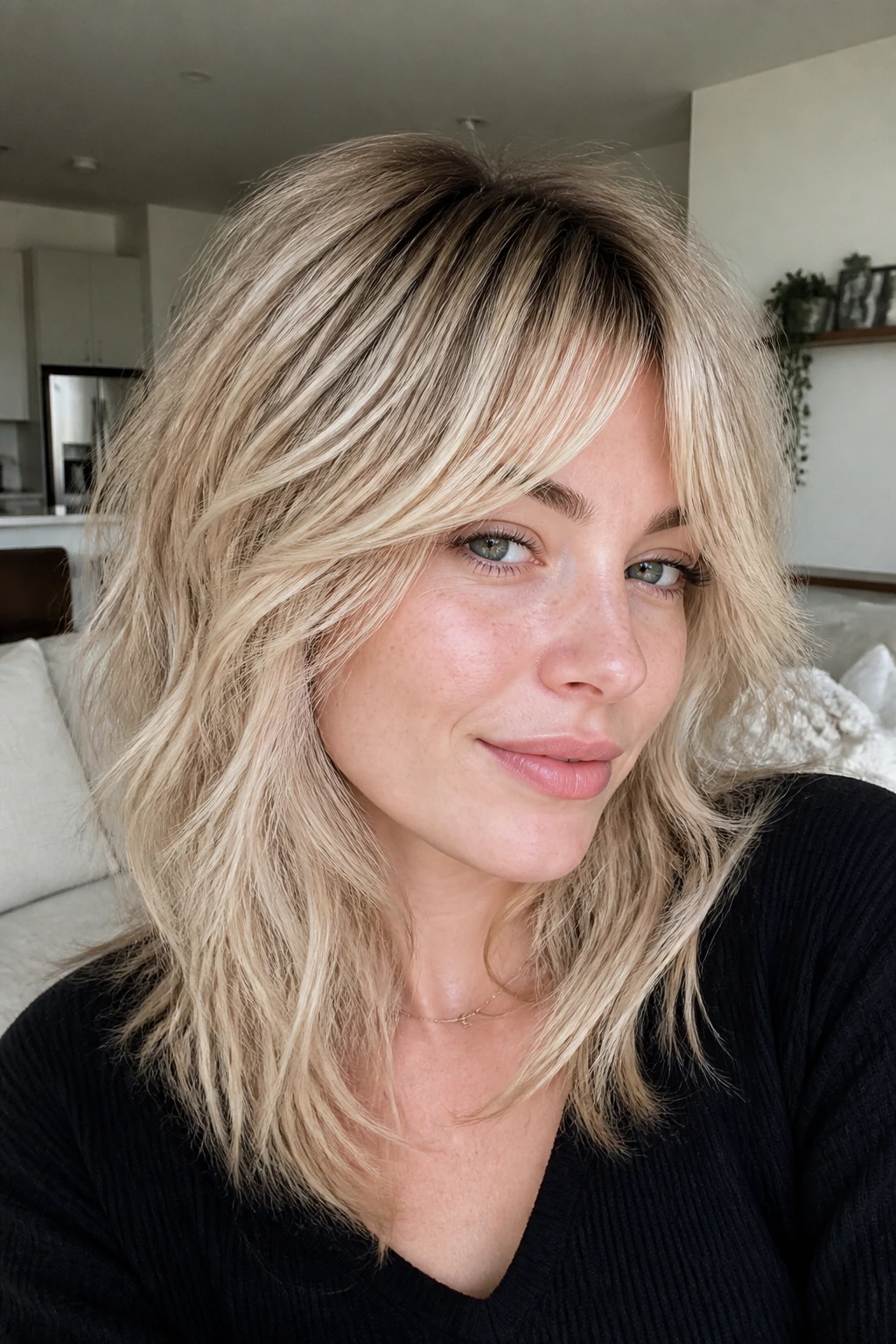
A shag can go wrong fast if the blonde is too flat. This version avoids that problem by keeping a shadow root and letting the creamy highlights flick through the layers in uneven little pieces. The result feels airy, not chunky.
Why It Flatters Pale Skin
The root melt stops the color from sitting too high on the head, which matters when the skin underneath is already light. The depth near the scalp also gives the pale blonde somewhere to land, so the face doesn’t disappear into a single bright plane.
On wavy hair, the shag shape gives you built-in movement. You don’t need perfect styling. A diffuser, a dab of mousse, and some scrunching are enough. The point is messy control, which sounds contradictory until you see it in person.
6. French Bob in Beige Cream
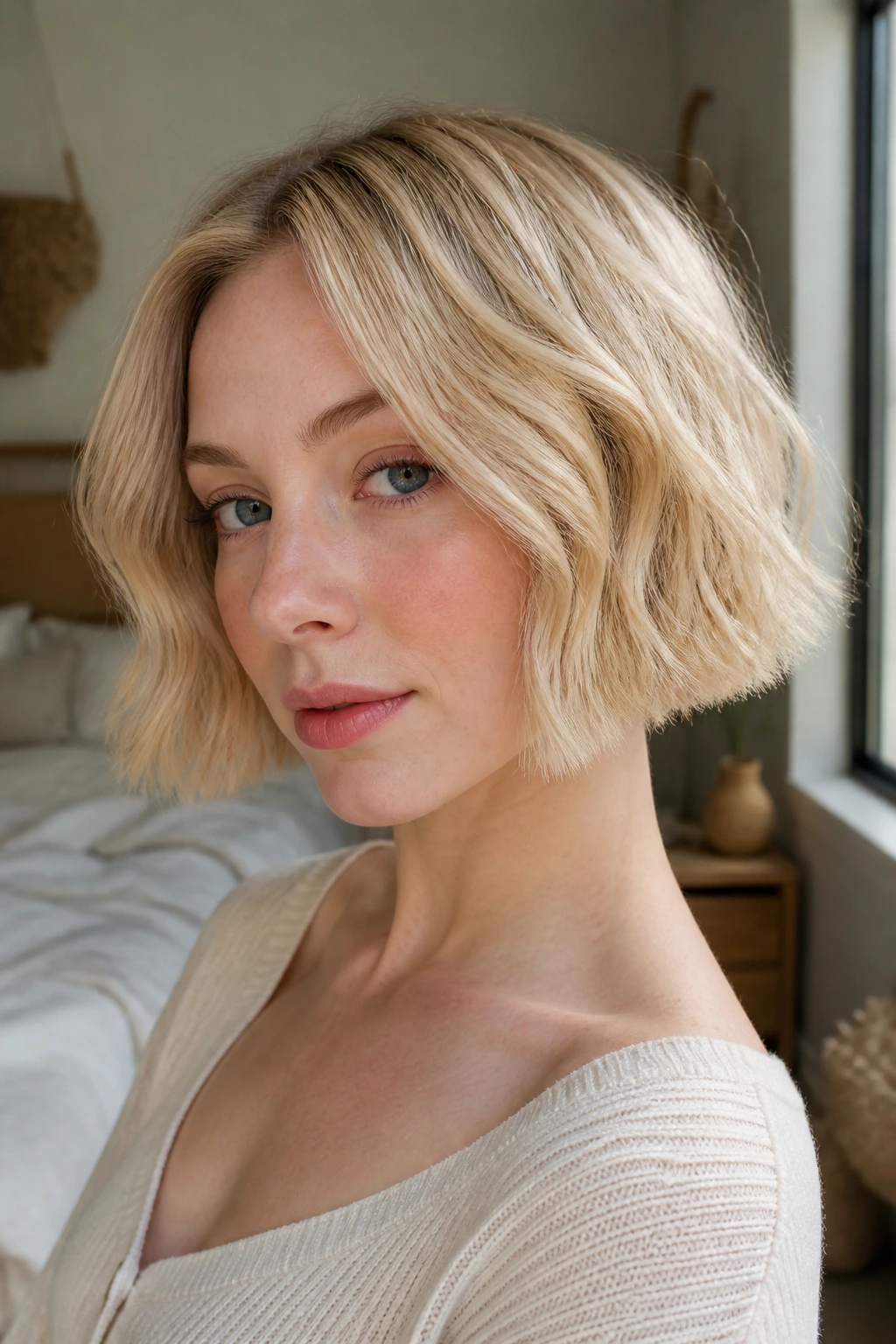
A French bob in beige cream has a crisp edge, but the cream tone keeps it from turning severe. That’s the trick. Pale skin can handle a short cut like this beautifully, yet the shade needs to stay soft or the whole thing starts looking cut too bluntly against the face.
The length usually sits near the jaw, sometimes a hair below. On wavy hair, that means the bends land right where they can show off the shape of the bob. Keep the toner beige rather than icy; a hint of warmth gives the bob a friendlier look, especially if your skin has pink undertones.
Short hair doesn’t give you much room to hide bad color. Here, the creamy finish is the whole point.
7. Long Cream Balayage with Face-Framing Lights
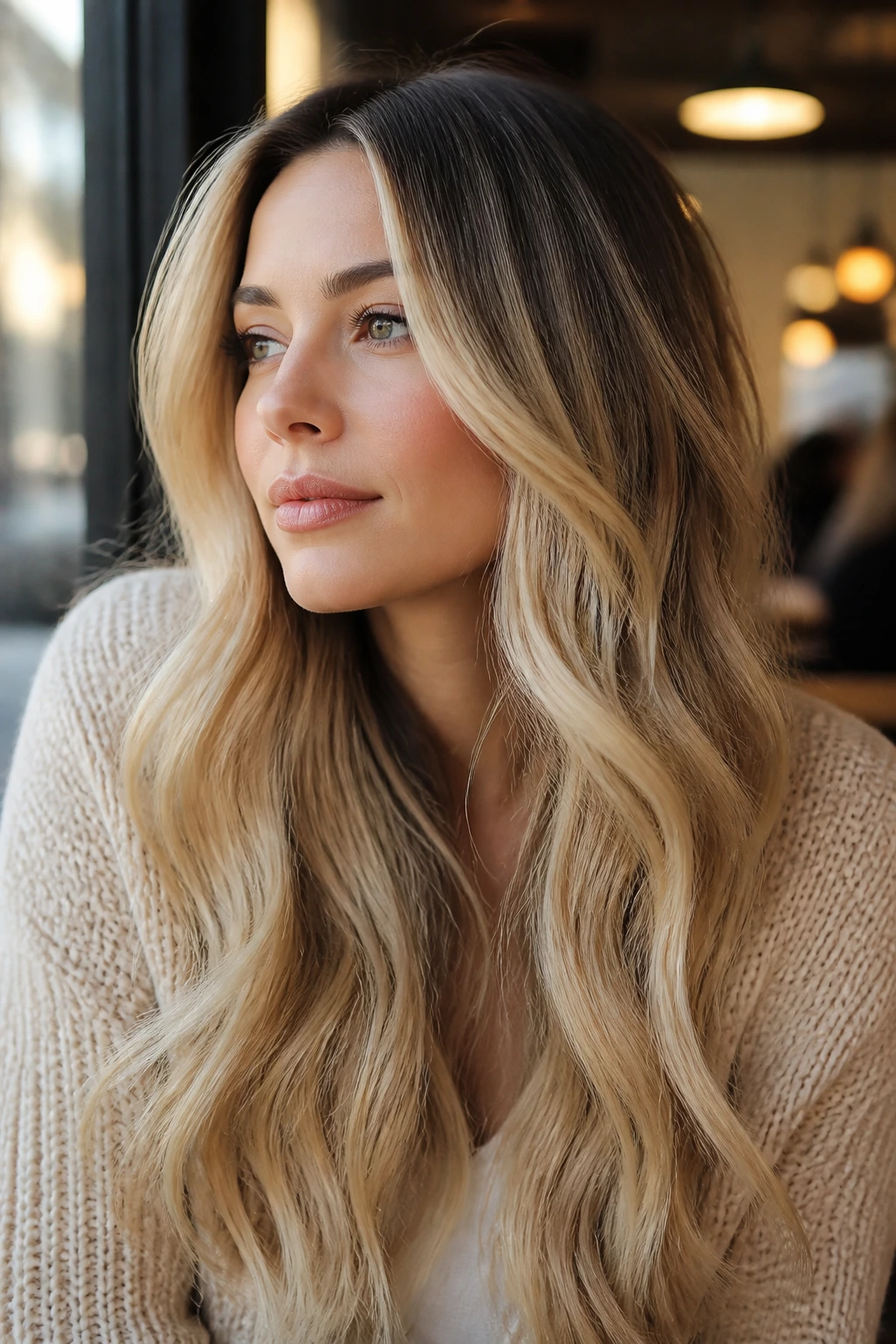
Long hair and creamy balayage are a natural pair, but the face-framing pieces matter more than most people think. On pale skin, the brightest ribbons should sit around the front layers, cheekbones, and just below the jaw. That keeps the color from hiding in the length.
The rest can stay softer and slightly deeper, which is where the balance comes from. Wavy hair loves balayage because the bends separate the lighter pieces from the darker base. You get that ribbon effect without needing a lot of foil work or sharp contrast.
If your hair is thick, ask for a few interior lights too. Not much. Just enough to stop the underlayers from going flat when the top section moves.
8. Honey-Vanilla Collarbone Cut
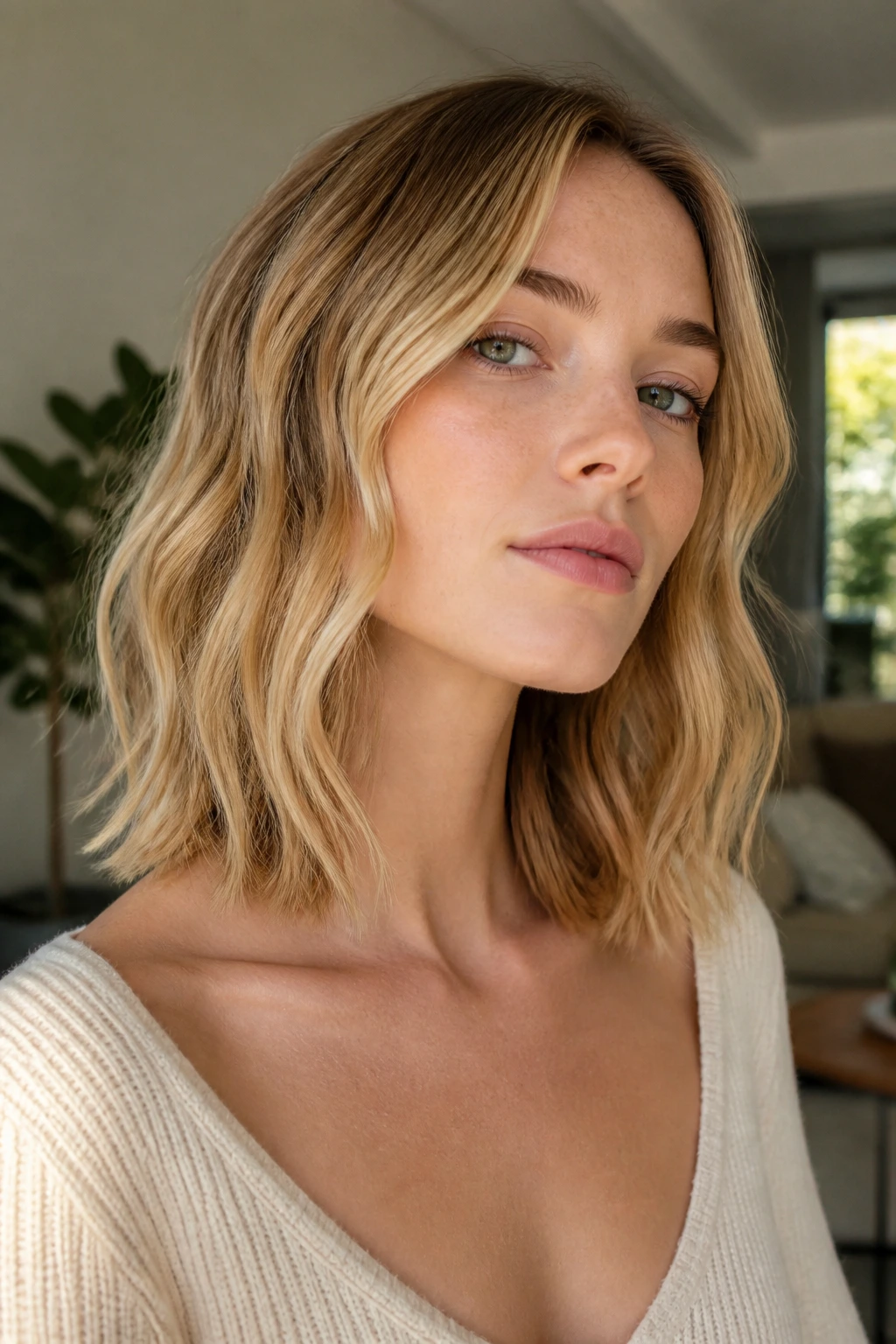
This one sits on the warmer side of creamy blonde, and that’s a good thing if your pale skin has peach or neutral undertones. The honey doesn’t need to be loud. A whisper of it, threaded into vanilla blonde, can keep the face from looking too cool or too ghostly.
The collarbone length gives wavy hair a little bounce without turning it into a giant sheet of texture. It’s one of my favorite lengths for people who want a soft blonde that still feels easy to wear with a sweater, a blazer, or a plain tee. Nothing about it tries too hard.
Best if You Want
- A warmer blonde without orange: Honey-vvanilla stays in the beige family.
- Movement without long-hair drag: Collarbone length keeps the wave shape lifted.
- A cut that works air-dried: Good for people who do not want to reach for hot tools every morning.
9. Cream Money Piece with Loose Bends
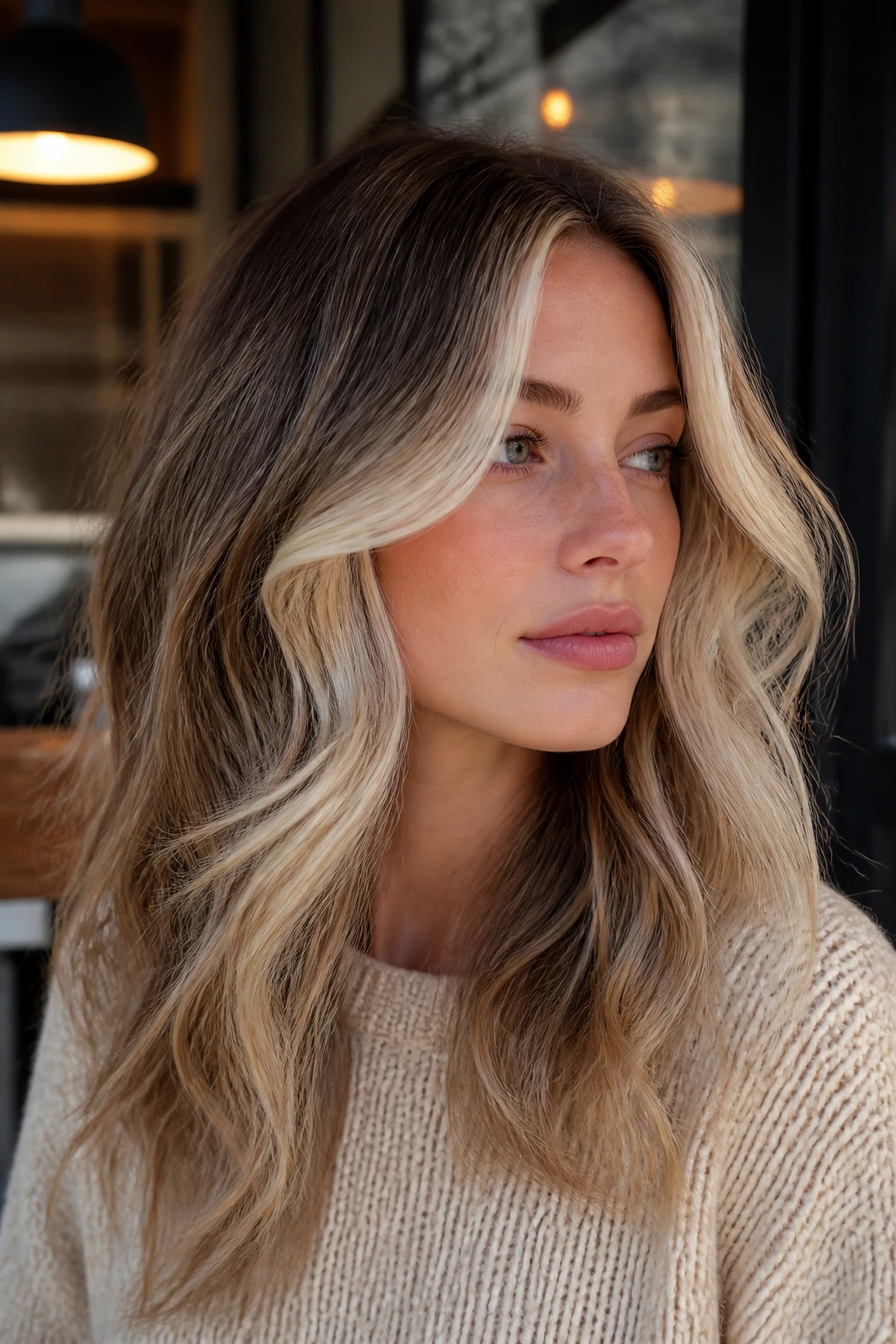
If you want the blonde to read a little more visibly, start at the front. A cream money piece around the hairline can change the whole face, especially on pale skin where bright strands can act like soft makeup. The rest of the hair can stay deeper and more muted.
Loose bends work better than polished curls here. The reason is simple: the front pieces need a little disorder so they don’t look like they were pasted on. When the wave pattern is relaxed, the lighter face frame looks expensive instead of stripy.
This is a smart choice if you’re nervous about all-over lightening. It gives you the brightness where it matters most.
10. Pearl Blonde Pixie Shag
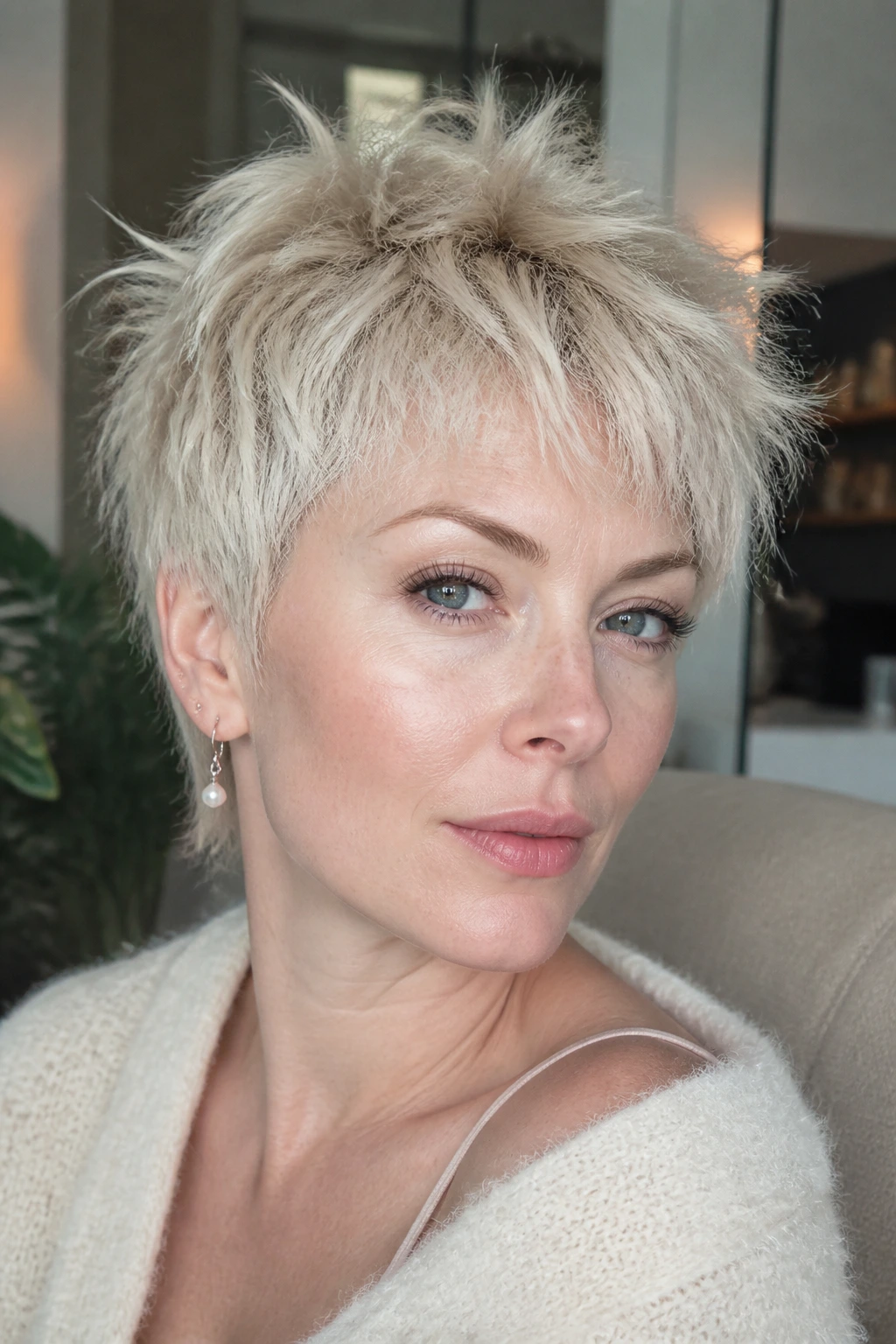
A pixie shag in pearl blonde sounds daring, and it is, but it can be stunning on pale skin when the texture is right. The pearl tone adds a cool gleam without going flat silver, which is where a lot of short blondes go wrong. They become too stark.
The cut should have a little choppiness through the crown and softer sides near the ears. Wavy hair doesn’t always sit neatly in a pixie, so the point here is not sleek precision. It’s controlled texture. A pea-sized dab of styling paste on damp hair is usually enough to bring out the movement.
This style loves cheekbones. If you have them, show them off.
11. Butterfly Cut in Soft Ivory
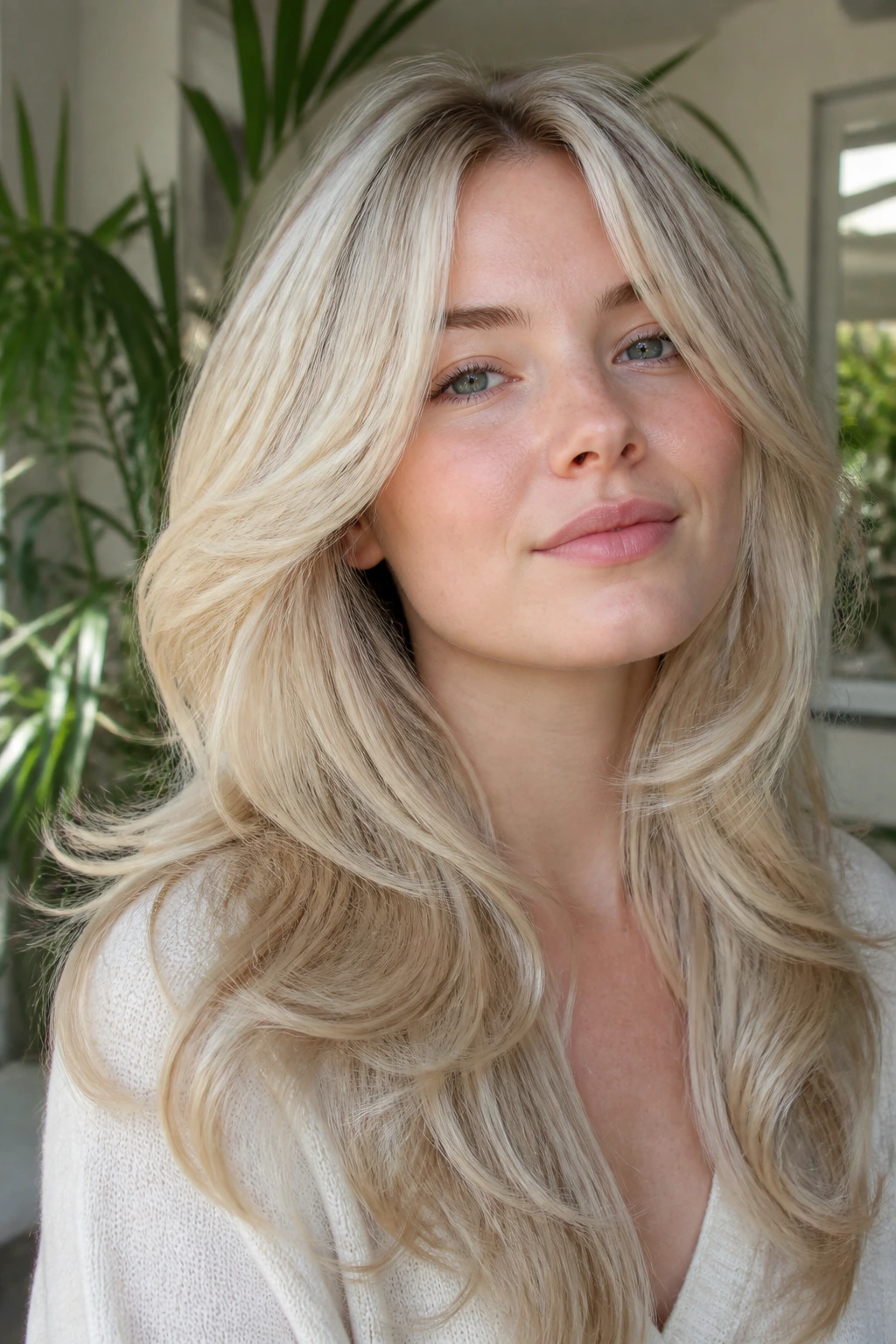
The butterfly cut is built for movement, which makes it a natural match for wavy hair. In soft ivory blonde, it gets a lighter, airier feeling that works beautifully on pale skin because the color is bright but not chalky. The shorter face-framing pieces lift the whole front of the style, while the longer layers keep the length.
I like this one for anyone who wants volume without giving up length. The layers should flick away from the face in a gentle sweep, not in a stiff salon curl. When the ivory tone is glazed properly, the shape looks almost feathered.
It’s one of the few styles here that can look polished after a rough blow-dry. That’s part of its charm.
12. Beige Blonde Wolf Cut
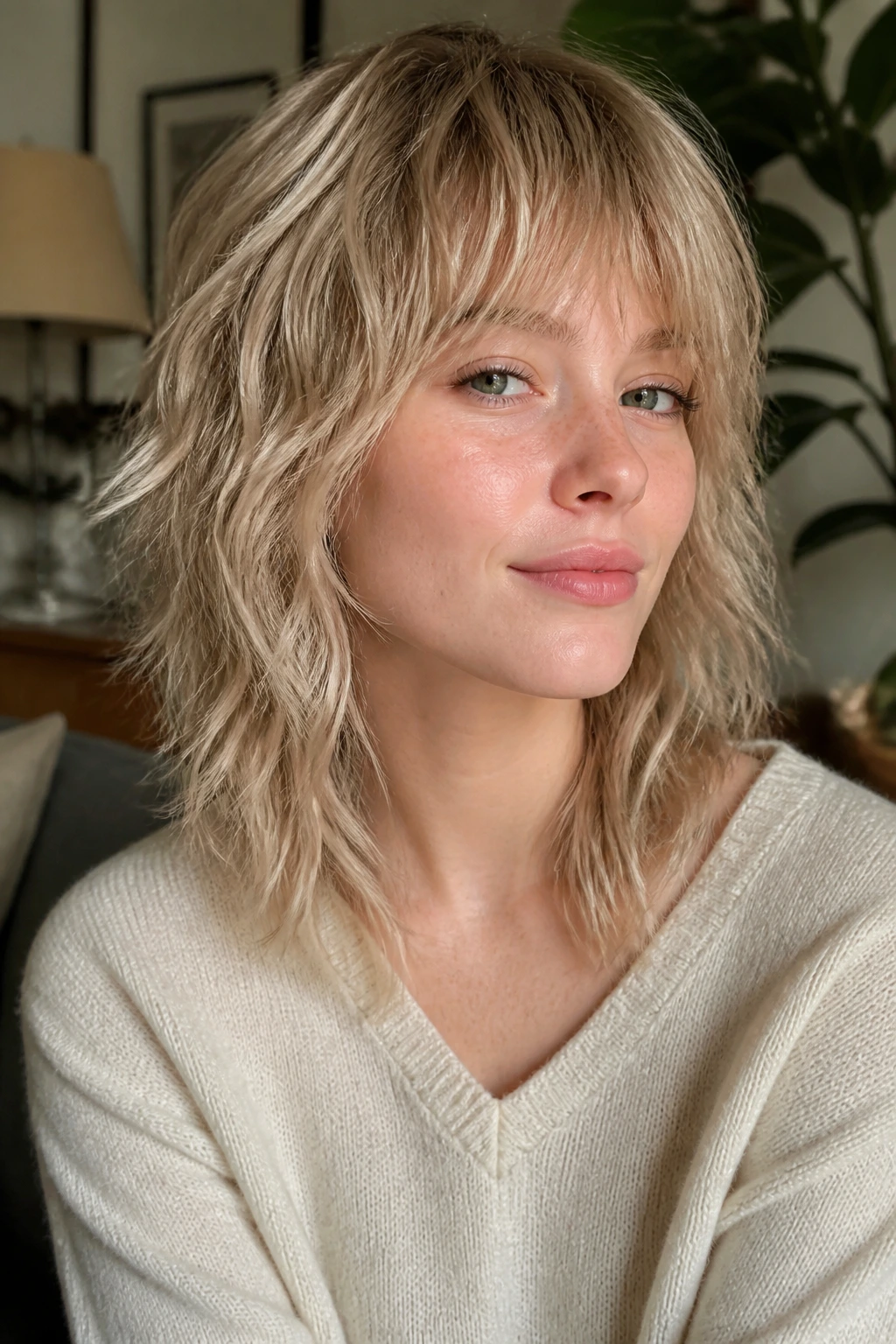
A wolf cut can be too aggressive in the wrong blonde, but beige blonde softens it enough to make the shape wearable. The trick is keeping the color creamy, not frosty. Pale skin already has enough brightness; the cut needs a little grit, and the tone should calm that down.
The layers are shorter at the crown and longer through the back, so wavy hair gets some natural puff and swing. If you’re the kind of person who likes hair that looks better slightly undone, this is your lane. It does not need perfect sectioning. It needs texture spray, a diffuser, and a willingness to let the ends do their own thing.
This is the edgy option that still feels soft enough for fair skin.
13. Rooty Vanilla Blonde with a Deep Side Part
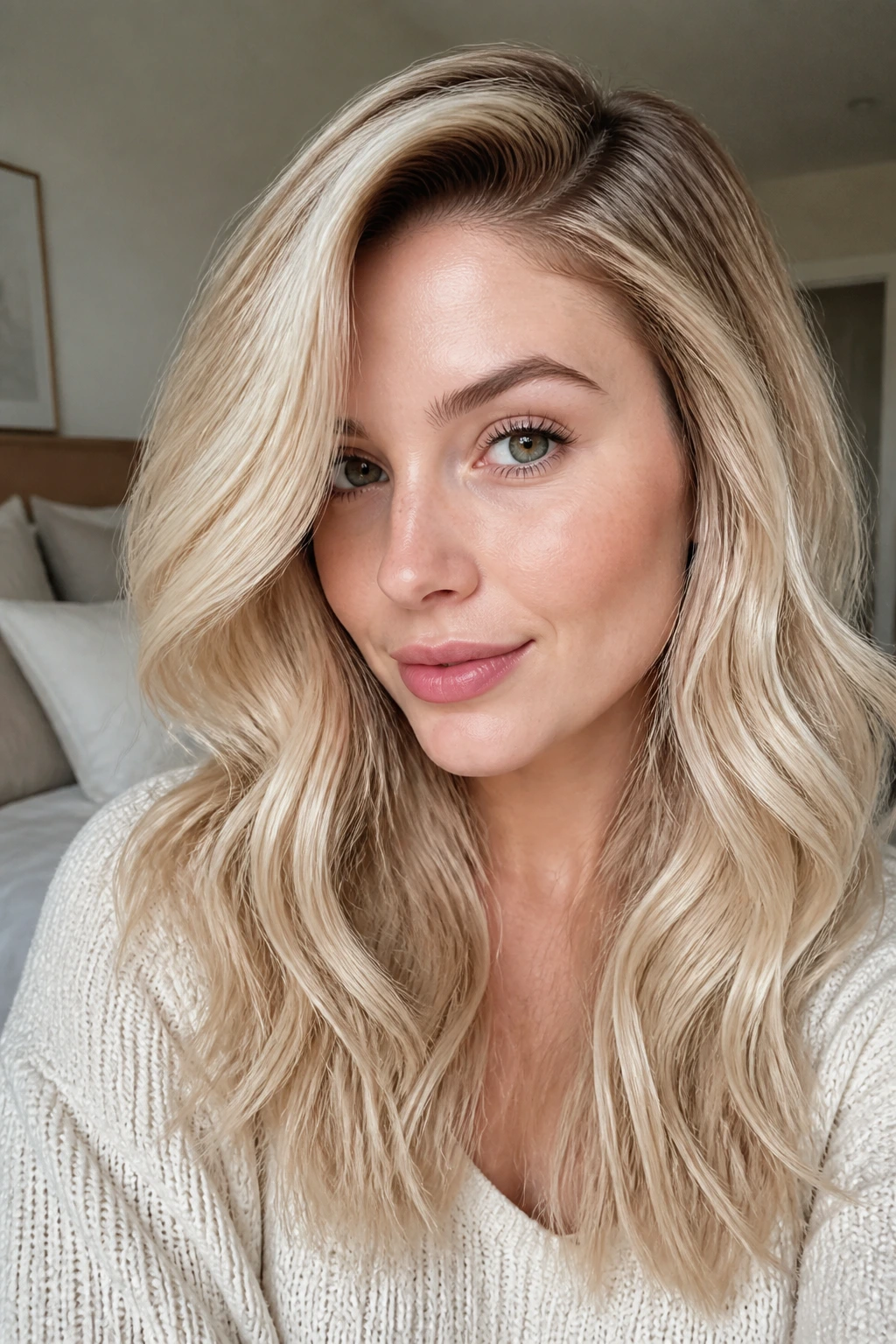
A deep side part changes the whole mood of blonde hair. It gives vanilla blonde a little drama and lets the waves fall in a heavier sweep, which can be lovely on pale skin because it creates shadow where you need it. That shadow keeps the face from looking too one-dimensional.
What to Ask For
- A root shade one to two levels deeper: Enough to create depth, not a hard line.
- Vanilla blonde through the mids and ends: Keep the lightest pieces mid-length and front-heavy.
- A side part with bend, not curl: The effect should look soft and slightly old-Hollywood.
This style is especially good if your face is long or narrow. The side part and weight of the waves make the look feel wider and a little more balanced.
14. Cream Soda Waves with Bottleneck Bangs
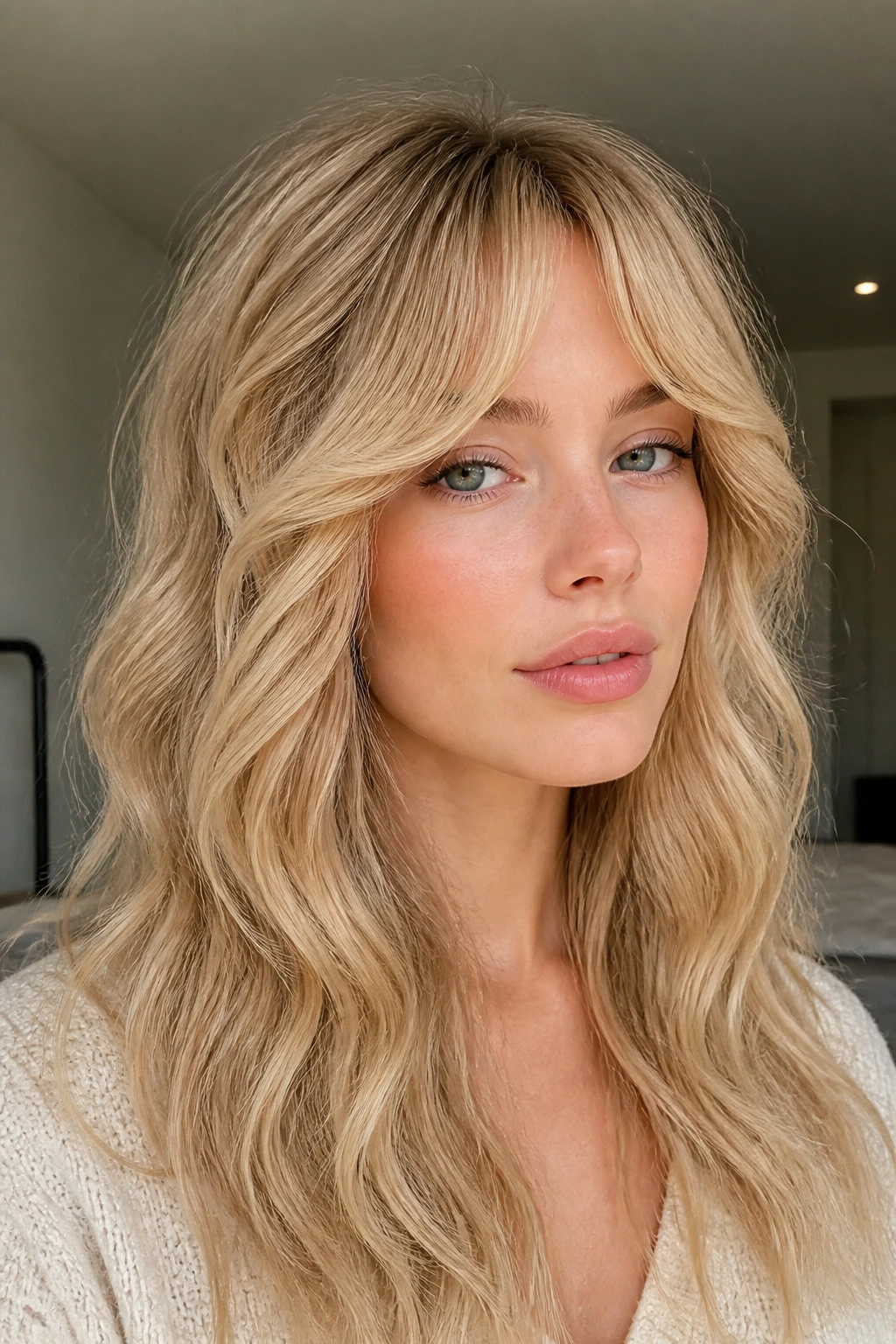
Cream soda is a playful name, but the color should still live in the beige-vanilla family. Bottleneck bangs help because they open at the center and graze the temples, which keeps the forehead from looking boxed in. On pale skin, that softness matters. Harsh bangs can be unforgiving.
The wavy lengths should stay loose and slightly airy, almost like you slept in a silk pillowcase and woke up with the right amount of bend. I’d keep the toner warm-neutral rather than silvery. Too much coolness can make the bangs look disconnected from the rest of the cut.
This one feels a little retro, a little soft-focus. Good combination.
15. Pearl-Lowlight Shag
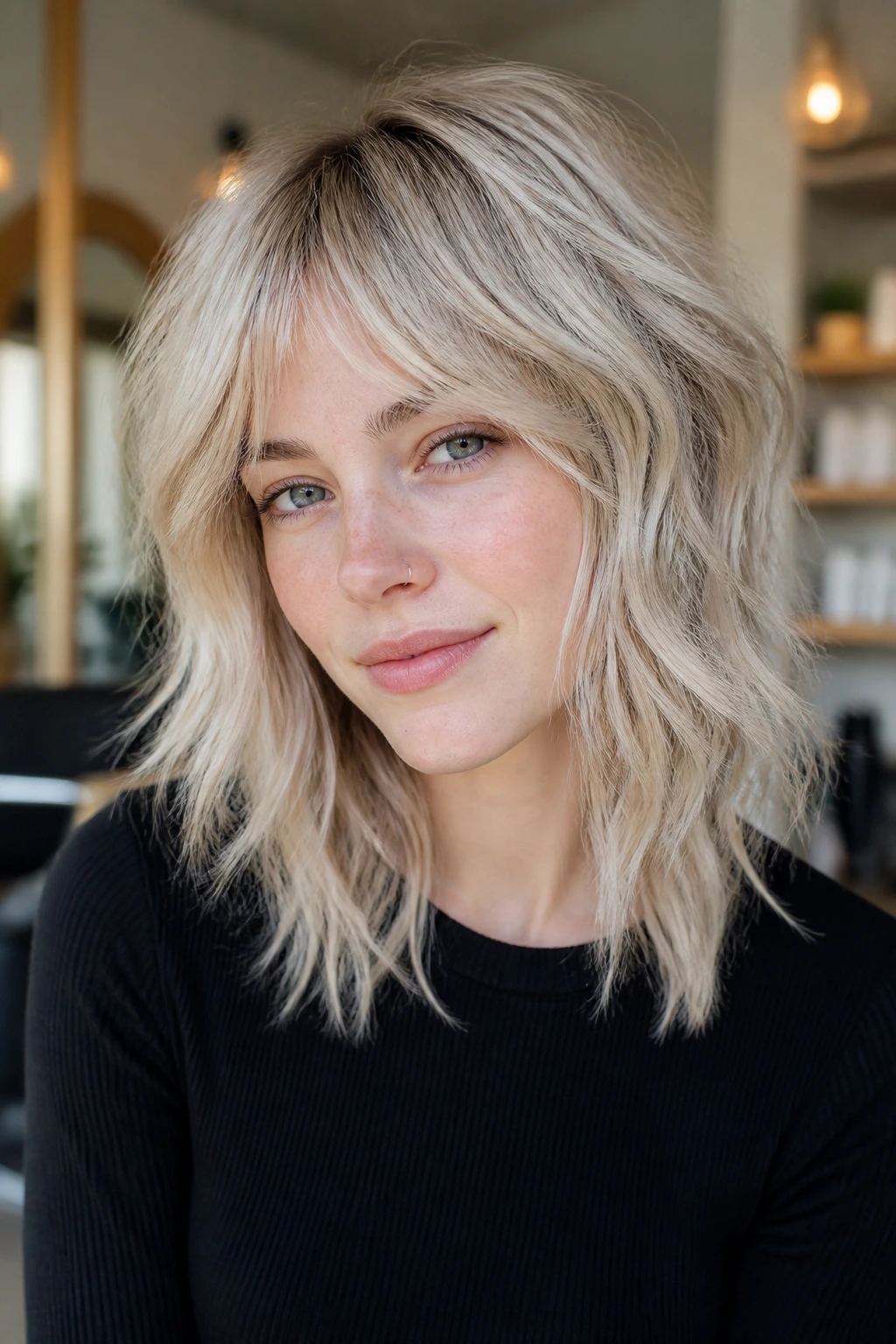
Pearl blonde looks richer when you give it lowlights. That’s the part people often skip, and then they wonder why the color looks flat after two weeks. On pale skin, a few deeper beige strands make the lighter pieces look brighter by comparison.
The shag shape helps the lowlights hide in the movement. Wavy hair naturally breaks up the pattern, so the color reads as dimensional instead of striped. This is one of the better options if your hair is fine and tends to collapse when over-lightened. The darker bits create the illusion of body.
It’s not flashy. It is smart. And smart blonde usually ages better.
16. Butter Blonde Midi with Swoopy Layers
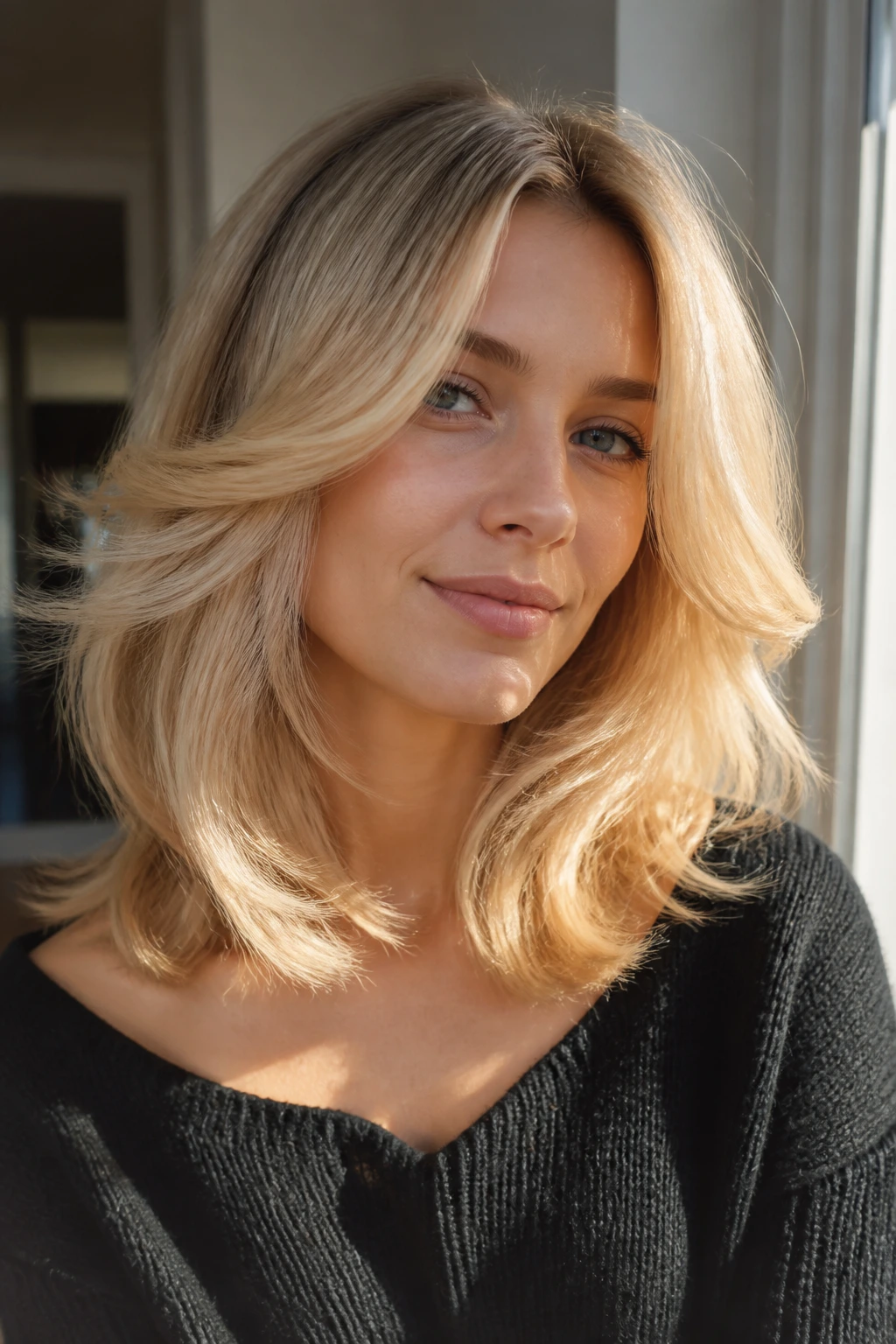
Butter blonde gets a bad reputation when it goes too yellow, but in a midi cut with swoopy layers it can be lovely on pale skin. The warmth softens a chilly complexion, especially if your undertone leans peach or neutral. You want butter, not banana.
The layers should curve away from the face in broad shapes, not thin little flicks. That gives the hairstyle a smoother silhouette and lets the blonde glow in bigger sections. Wavy hair makes this even better because the shape already wants to move.
I’d keep the ends slightly brighter than the roots. Nothing harsh. Just enough lift to stop the cut from looking heavy at the shoulders.
17. U-Cut with Cream Blonde Curtain Layers
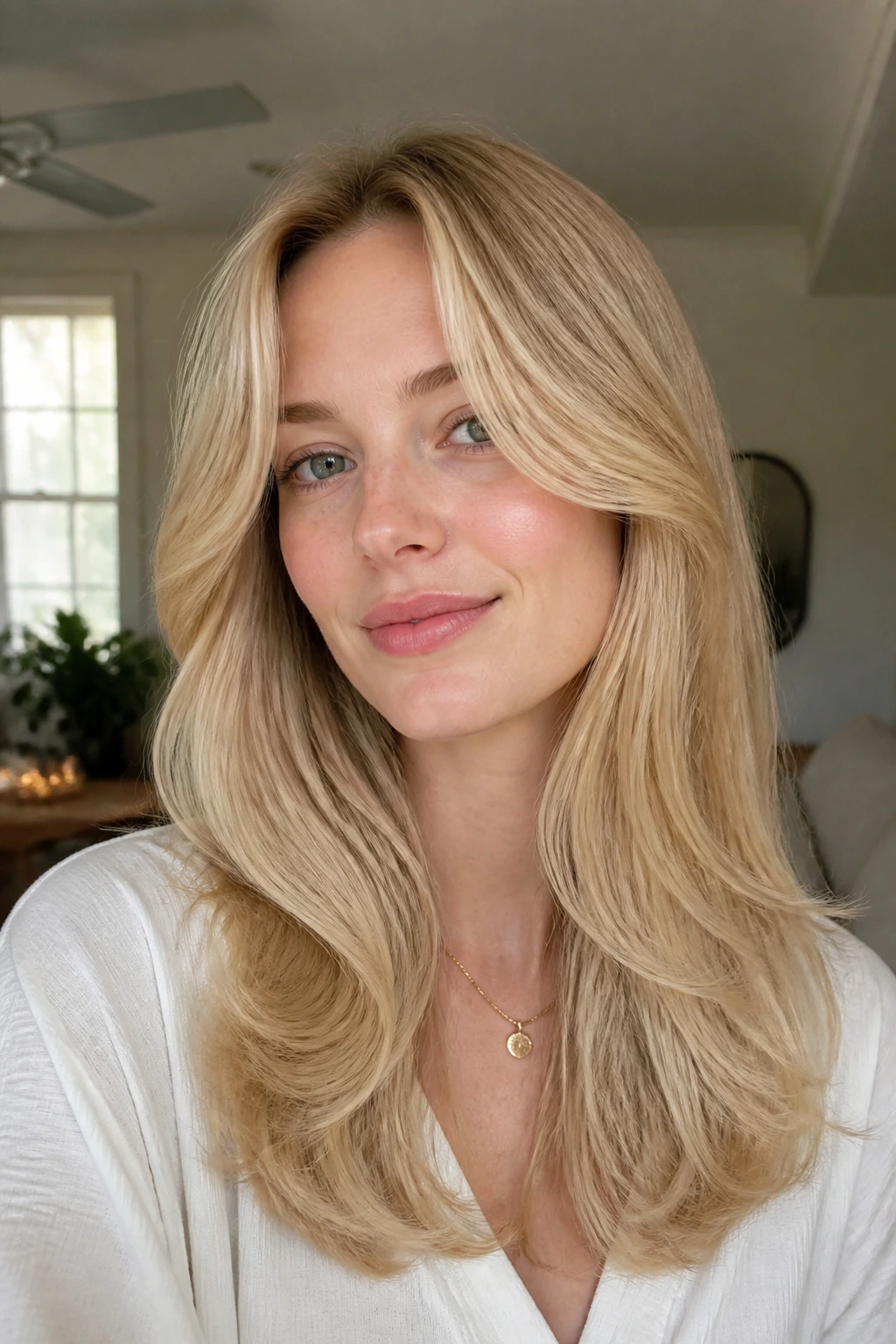
A U-cut keeps long hair from looking like a curtain in the wrong way. The rounded perimeter makes wavy hair fall with more shape, and the curtain layers around the face add the creamy blonde brightness where it does the most work. On pale skin, that front brightness can be a little flattering in the same way a good highlight is flattering.
Why It Works
The U-shape keeps the ends soft, which matters because cream blonde can look boxy when the cut is too straight. The layers also let the lighter pieces slip through the length instead of sitting on top of it. That gives the color a moving, ribboned look when the hair swings.
Ask for a beige-cream toner on the front layers and a softer melt through the back. You do not want every strand fighting for attention.
18. Almond-Cream Balayage Lob
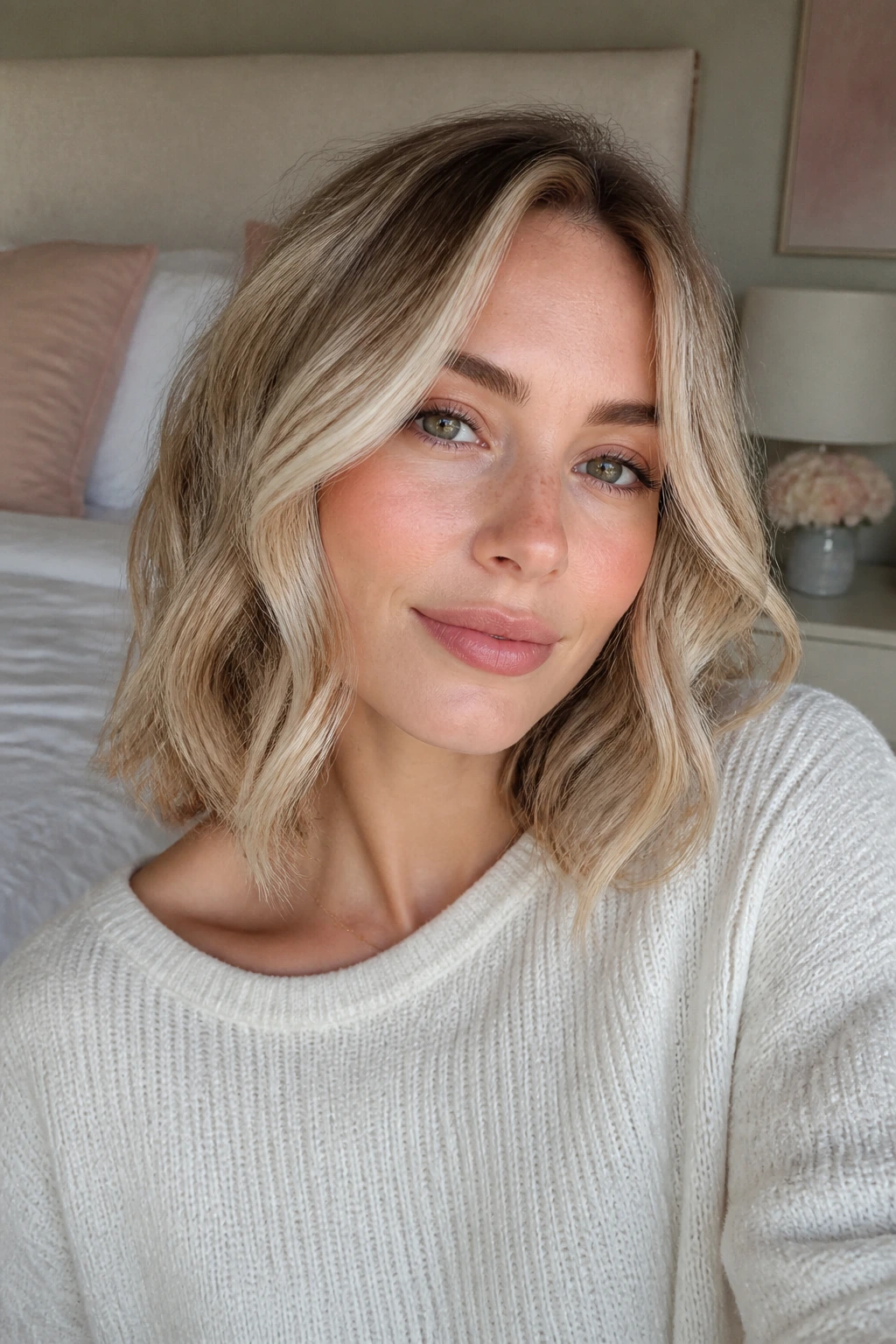
Almond cream sits in a nice middle ground. It has enough warmth to flatter pale skin, but it stays grounded enough to avoid looking yellow. On a lob, that tone can feel especially clean because the cut gives the balayage a clear shape to sit in.
This is the kind of blonde that works in daylight and indoor light, which sounds obvious until you see how many blondes fall apart under a warm bulb. The almond-beige pieces give the hair a soft glow rather than a stark shine. Wavy hair makes the transition between root and lightened sections even smoother.
If you like blonde but hate looking overdone, this is a good place to live.
19. Whipped Cream Blunt Cut with Texture
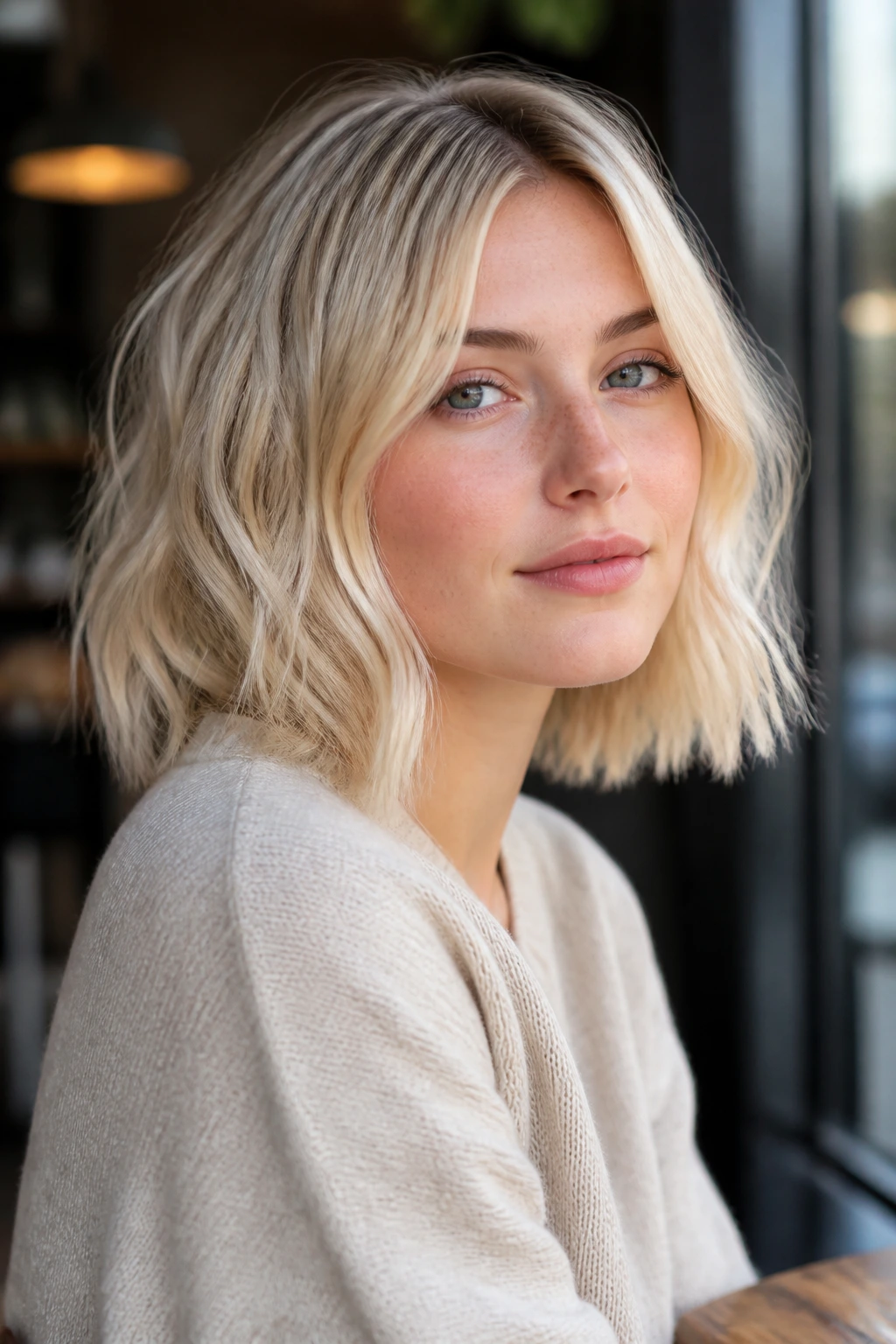
A blunt cut can be gorgeous on wavy hair if you let a little texture stay in the ends. The creamy blonde color keeps the line from looking too heavy, while the blunt shape gives the style a deliberate edge. On pale skin, the clean outline can make the face look sharper in a good way.
What I would avoid here is too much brightness from root to tip. The whole point is contrast between the straight edge of the cut and the softness of the wave pattern. If every inch of the hair is equally light, the style loses that snap.
A mist of sea-salt spray, then a quick rough-dry, is usually enough. Keep it lived in.
20. Mushroom-Cream Bob
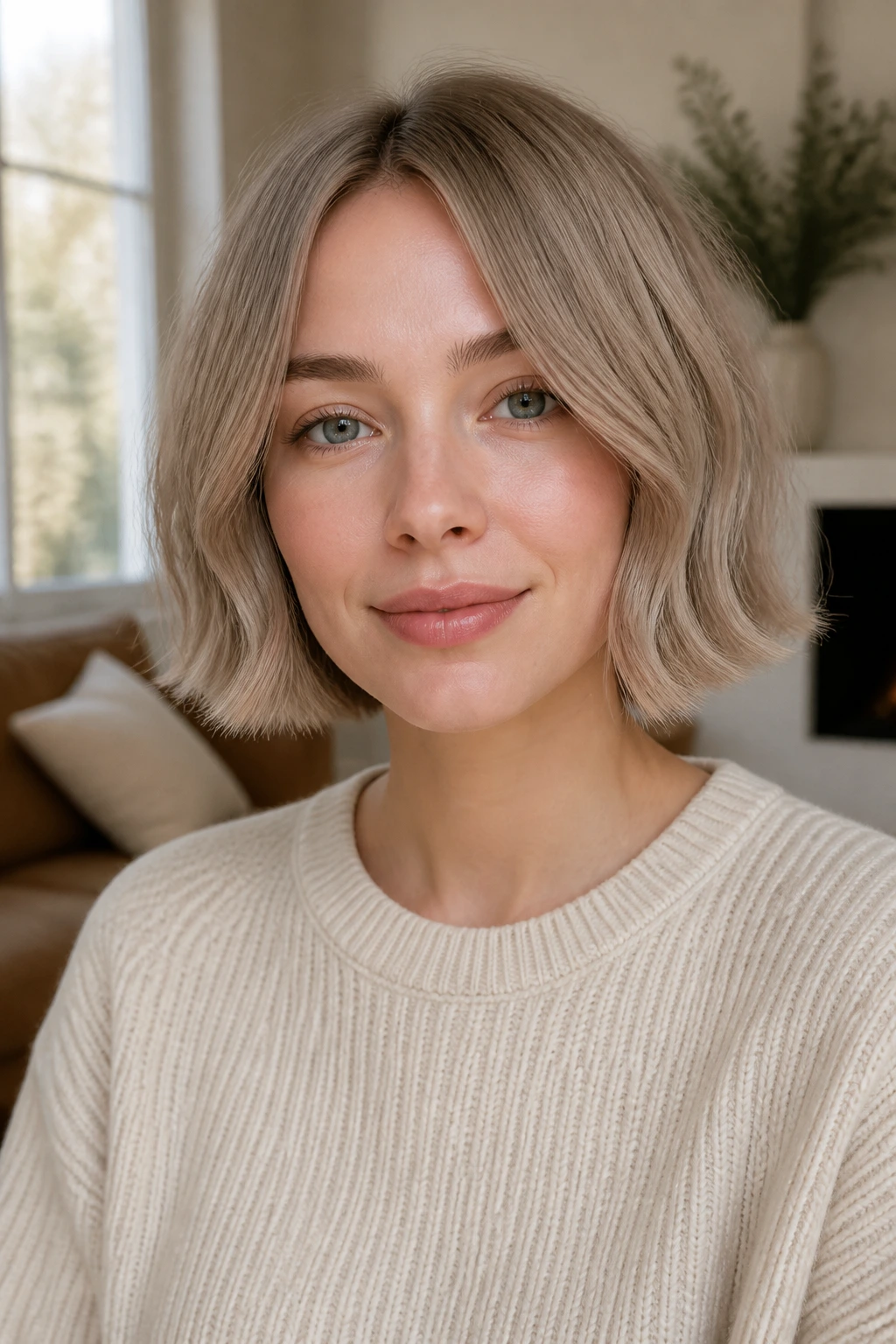
Mushroom cream is one of the most underrated blonde directions for fair skin, especially if your undertone is cool or neutral. It is softer than ash, less sunny than gold, and far more interesting than a plain beige. On a bob, that muted dimension makes the haircut look expensive in a quiet way.
The Look at a Glance
- Cool-beige base: Keeps the bob from turning yellow.
- Soft wave through the ends: Gives the color a little motion.
- Minimal root contrast: Nice if you want a smoother grow-out.
The cut itself should stop around the chin or just above the shoulders. That length lets the mushroom tone sit near the face where it can do its best work without making the skin look flat.
21. Ivory Beach Waves on Long Hair
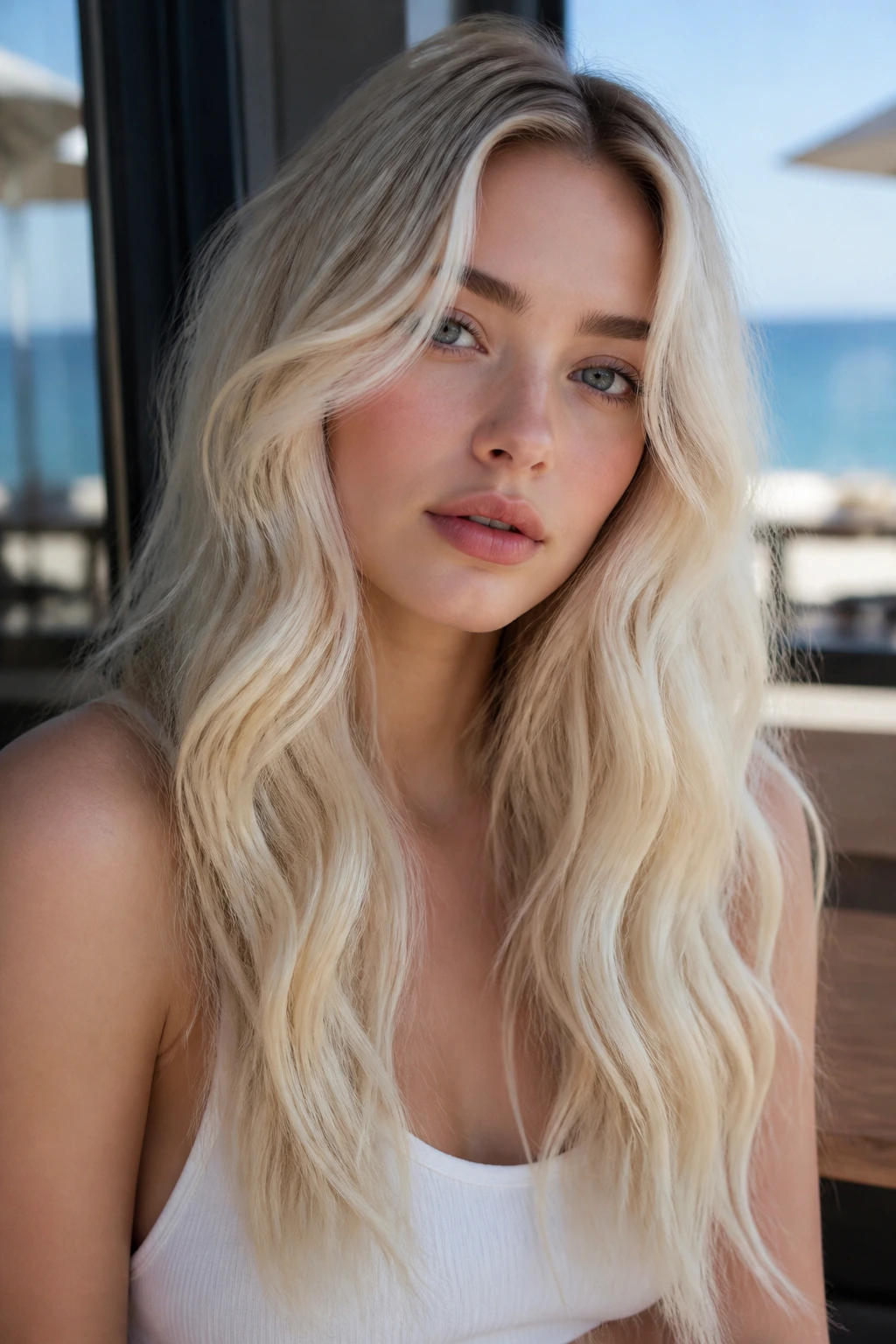
Long ivory beach waves are for people who want blonde to feel airy and soft, not flashy. Ivory is lighter than beige, but it still has enough cream in it to flatter pale skin instead of washing it out. The key is keeping the finish glossy, not dry.
This works best when the waves are large and loose. If the curl is too tight, the hair starts to look busy, and the color loses its softness. A wide-barrel iron or even two loose braids overnight can give you the right shape without much fuss.
The longer length lets the lightest pieces drift through the ends. That movement is part of the charm.
22. Soft Beige A-Line Lob
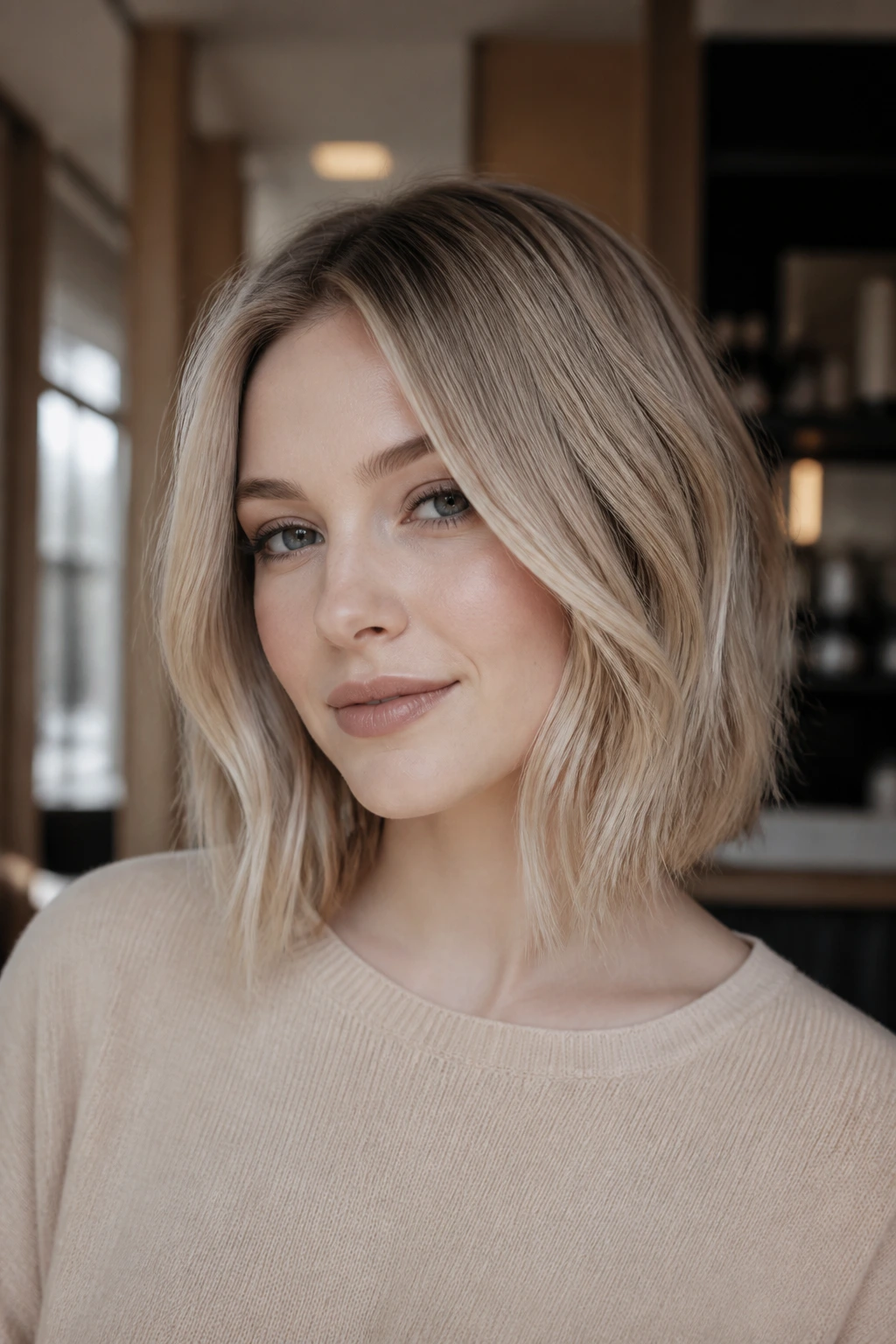
An A-line lob has more shape than a straight lob because the front pieces sit a little longer than the back. Pair that with soft beige blonde, and the whole thing becomes beautifully clean. On pale skin, the angled line can sharpen the jaw without looking harsh.
This is a smart style if your hair waves inward at the ends. The cut works with that bend instead of against it. Beige blonde keeps the angle from feeling severe. You get a modern shape with a very gentle color story.
A Good Fit If You Want
- A defined outline: The angle gives the haircut structure.
- A wearable blonde: Beige stays softer than bright gold.
- Fast styling: The shape holds with a simple bend under the ends.
23. Vanilla Cream Pixie with a Tapered Nape
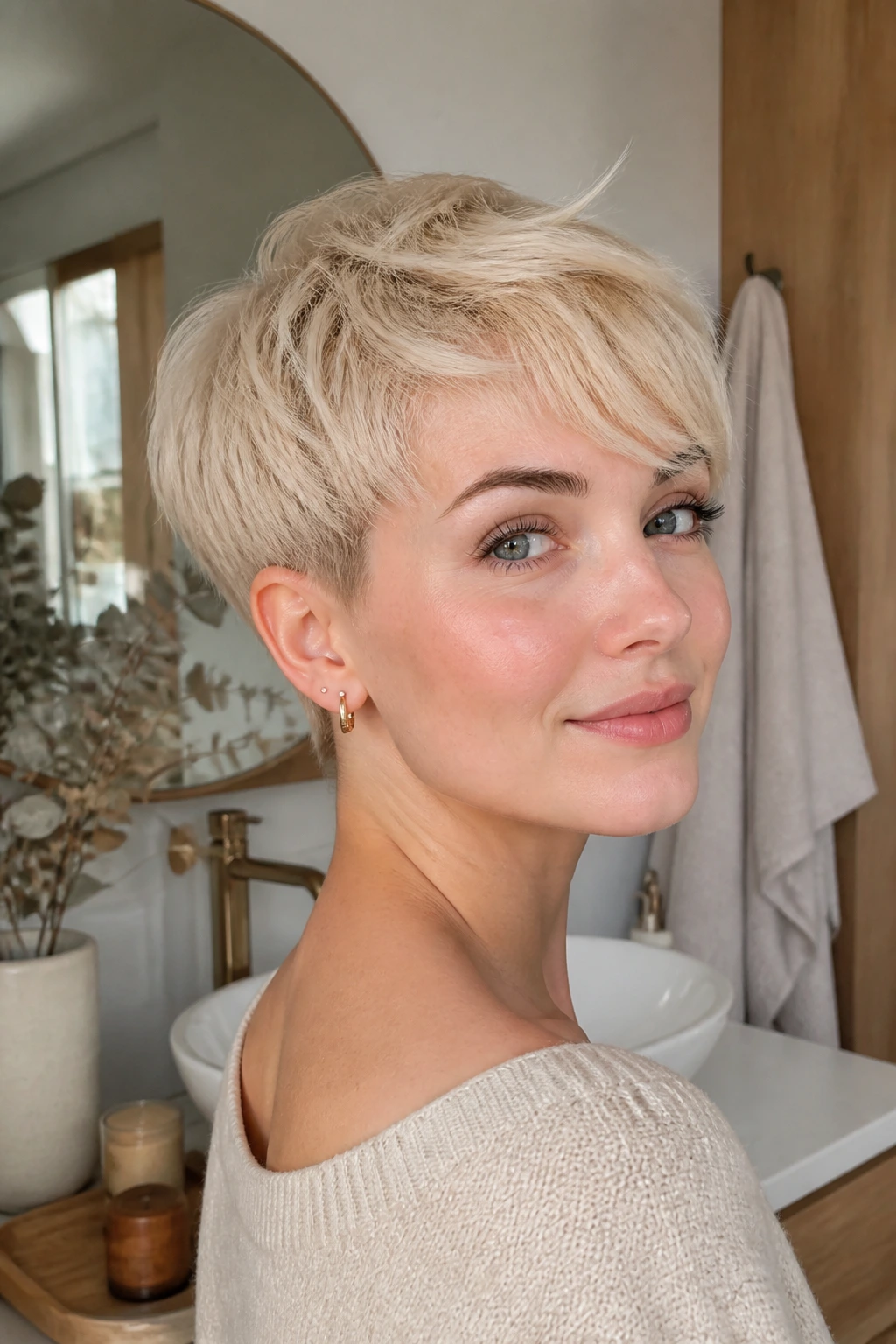
Short hair needs careful color placement, and this is where vanilla cream shines. A tapered nape keeps the shape neat, while the top stays a little fuller and brighter. On pale skin, the contrast makes the face look open instead of swallowed by the cut.
Wavy texture on a pixie is not a problem. It’s a gift, as long as the length on top is left soft enough to move. You want pieces that can fall forward a little, especially near the fringe, because that breaks up the shape and keeps the haircut from looking too fixed.
This one needs regular trims. No way around it. Short creamy blondes lose their line faster than long ones.
24. Dimensional Custard Blonde with Internal Layers
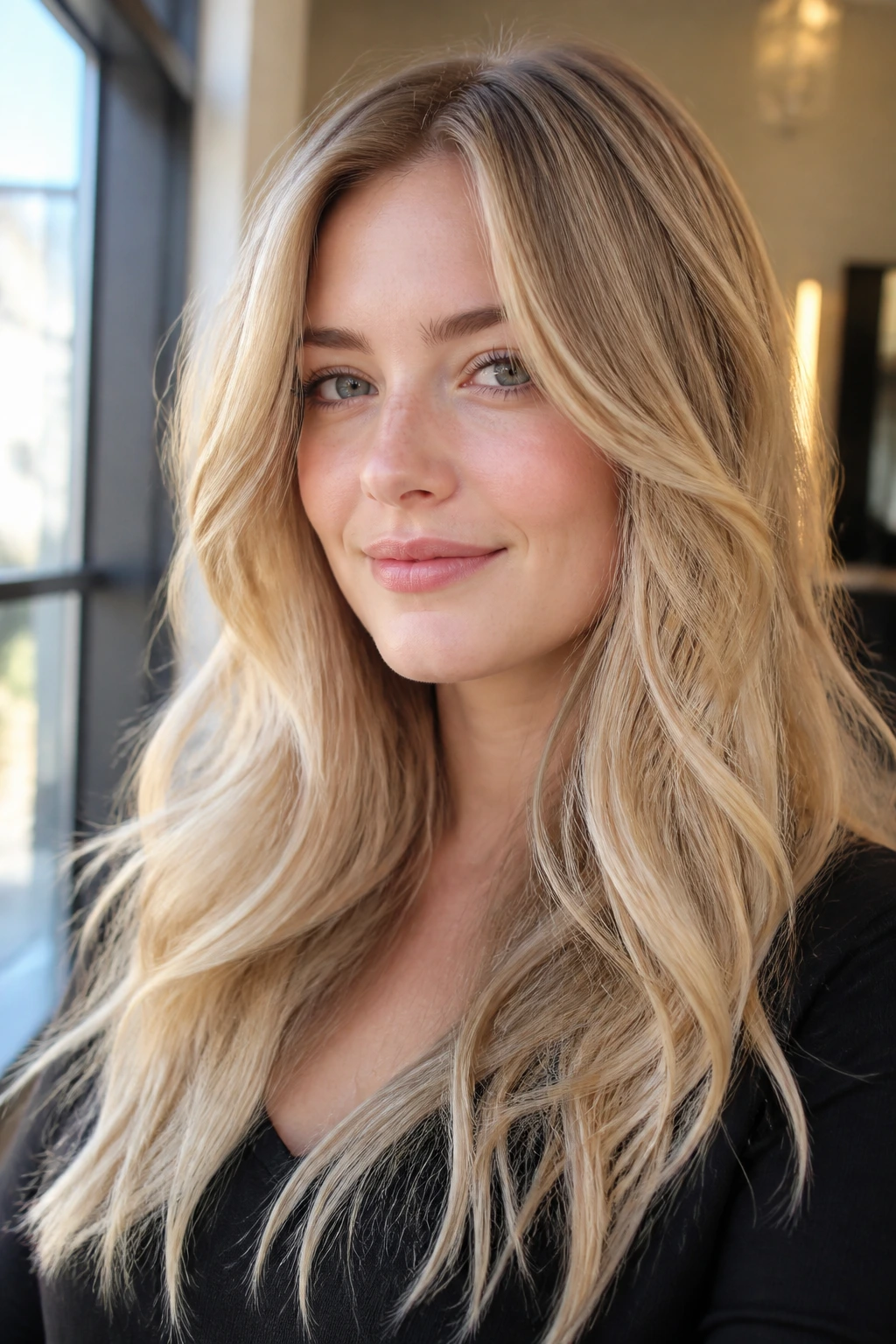
Custard blonde sounds rich, and that’s the point. It’s a creamier, slightly warmer blonde that looks especially nice when the cut has internal layers hidden inside the shape. That keeps the outside looking smooth while the inside carries the movement.
Why It’s Worth the Trouble
The internal layers are what stop thicker wavy hair from puffing out into a triangle. They remove bulk where you can’t see it, which lets the custard tone sit in clean sheets and ribbons. Pale skin benefits from the warmth, especially if your complexion tends to drain under cool light.
Ask for face-framing brightness, but keep the rest soft. Too much light through the crown and you lose the custard effect.
25. Soft Cream Cascade Layers
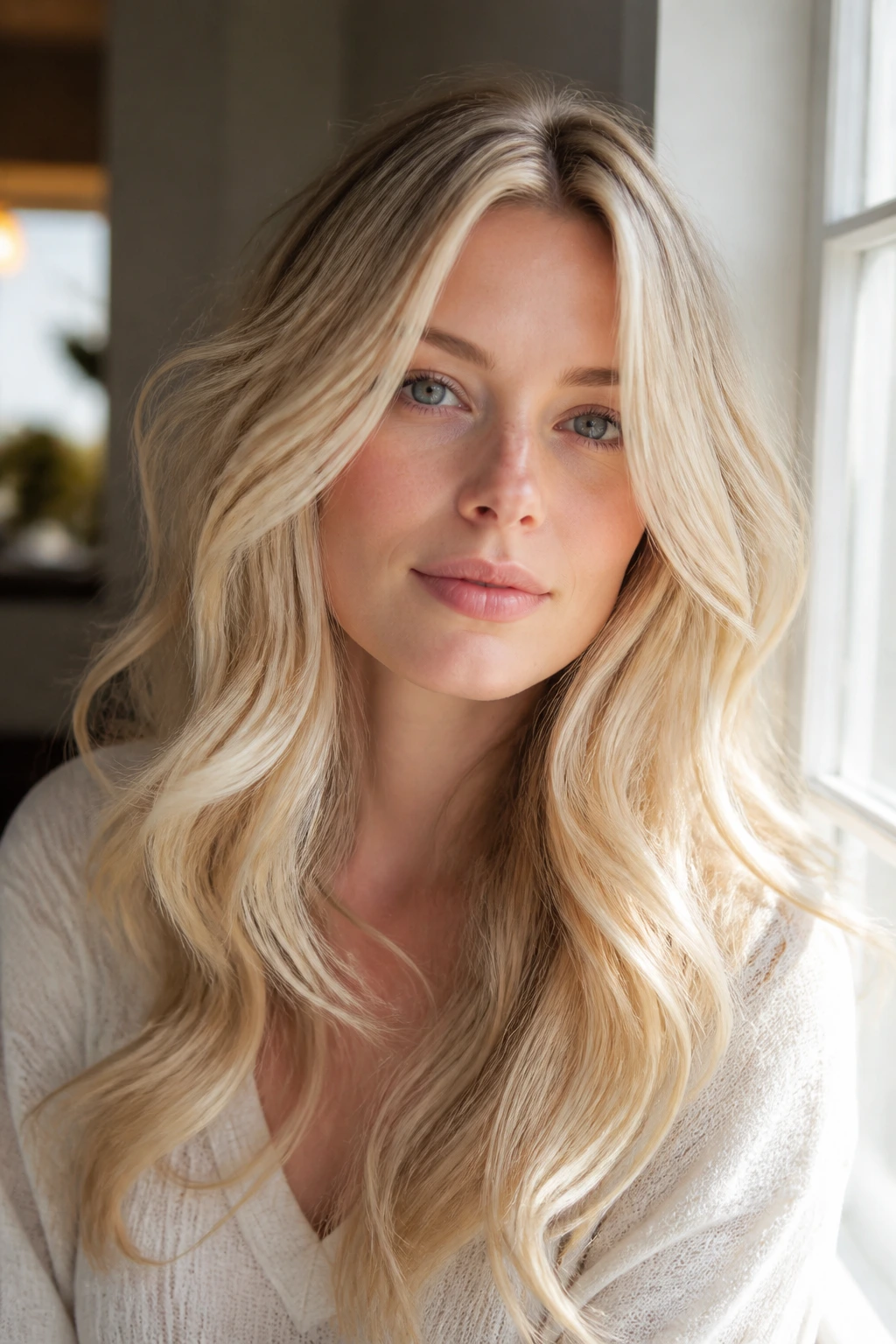
Soft cream cascade layers are the romantic answer in the bunch. The hair falls in long, flowing sections with creamy blonde woven through the mids and ends, and the result is especially flattering on pale skin because the color never hits one harsh note. It moves.
This works well for wavy hair that already has a natural S-shape. The layers encourage the bend to fall in a long line instead of puffing out around the shoulders. I’d keep the root a shade deeper and the brightest cream pieces concentrated from the cheekbones down. That keeps the face open while the length gets all the softness it needs.
It’s a pretty look, yes. But the nicer part is how forgiving it is when the waves aren’t perfect.
Why Creamy Blonde Flatters Pale Skin and Wavy Texture
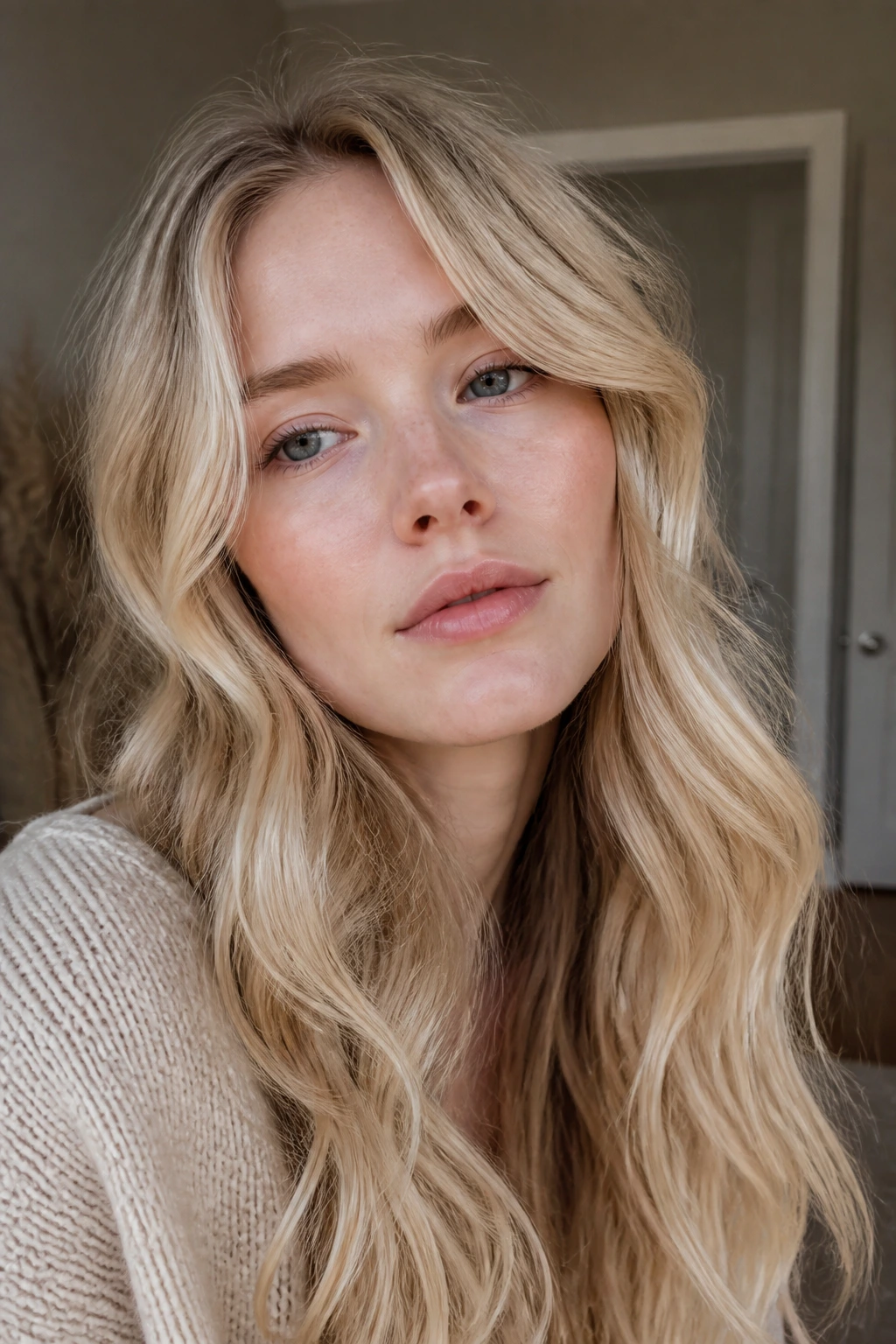
Pale skin usually needs one of two things from blonde: either a little depth at the root or a soft enough tone that the face doesn’t disappear into the hair. Creamy blonde does both if you choose the right version. Beige, vanilla, pearl, buttercream, and champagne all sit in that useful middle ground where the color feels light but not bleached to death.
Wavy hair helps because it breaks up the blonde into moving pieces. Straight hair can show every color line at once, which is why some blondes look harsh in a mirror and flat in a photo. Waves split that light up. A few babylights near the face, a soft root melt, and a couple of lowlights underneath can change the whole read of the style.
There is another benefit people overlook. Creamy tones are kinder to pale skin with redness, freckles, or a pink flush because they soften the contrast instead of sharpening it. A pure platinum finish can make that redness louder. A buttercream or beige glaze tends to do the opposite.
Essential Tools for Pulling Off These Looks
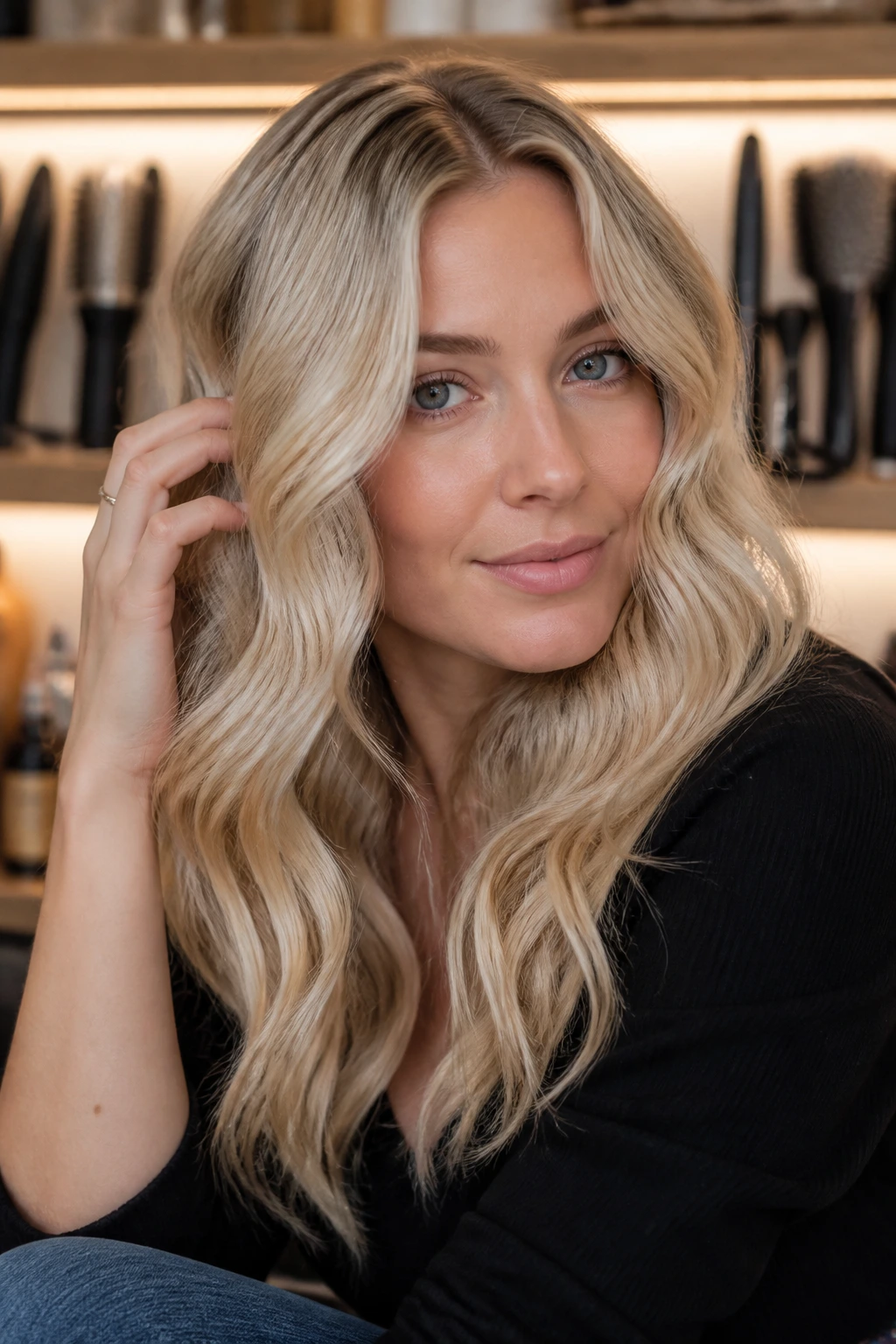
- Color-safe shampoo: Use a gentle formula that won’t strip the cream toner out after two washes.
- Purple or blue-violet mask: Keep it for brass control, not every shampoo day.
- Heat protectant spray: Blonde hair needs it every time you heat style, even at low heat.
- 1-inch curling iron or wand: Best for loose bends that show off ribbons and lowlights.
- Diffuser: A real help for wavy hair when you want the texture to dry with body instead of frizz.
- Wide-tooth comb: Safer than a brush on damp, lightened hair.
- Glossing brush or applicator bottle: Handy if you use a tinted glaze at home between salon visits.
- Microfiber towel or T-shirt: Cuts down on roughing up the cuticle, which matters when hair is lightened.
Smart Shade Choices and Salon Ask List
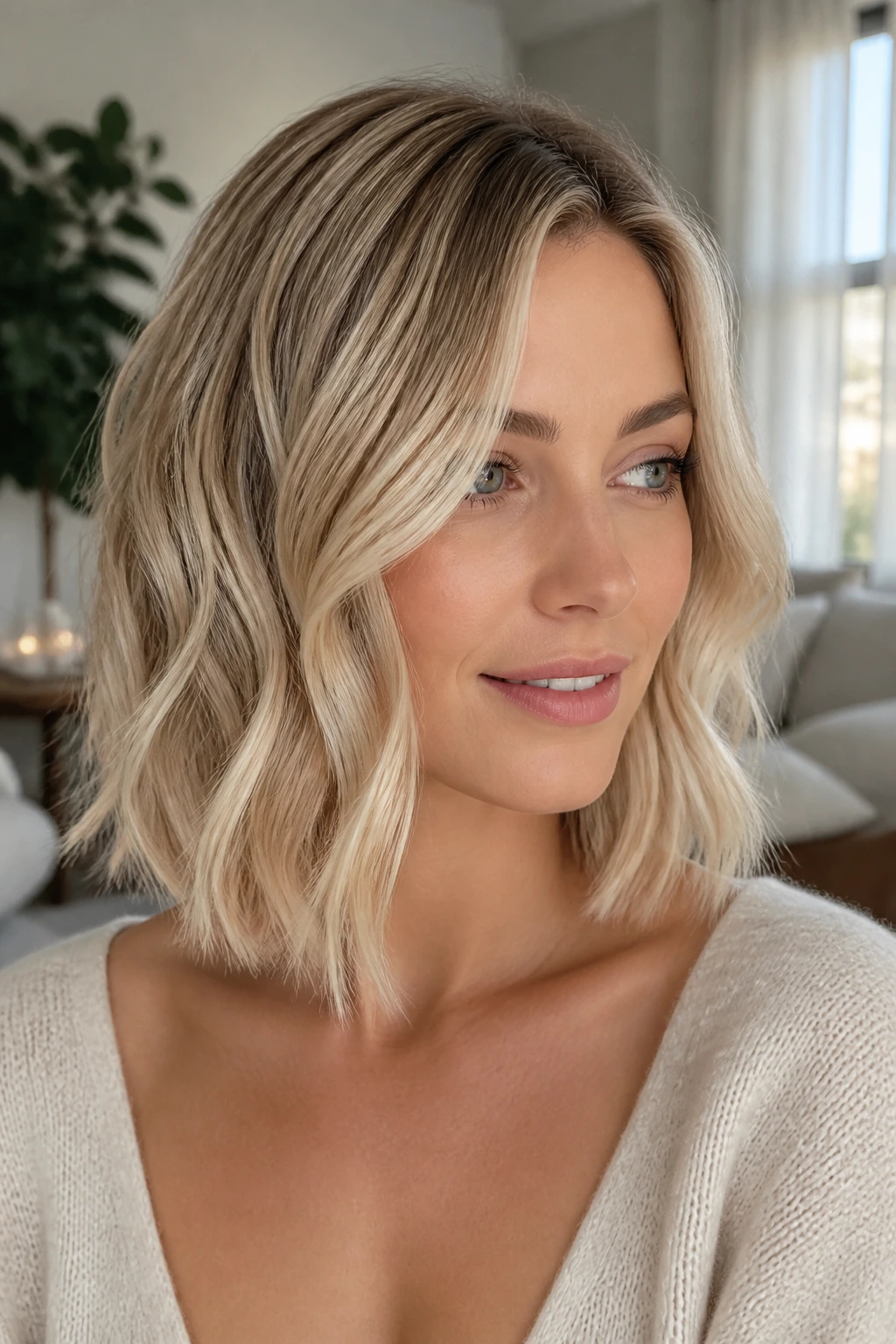
The shade is half the haircut. Maybe more. On pale skin, the cleanest results usually sit around level 8.5 to 10, but the exact tone matters more than the number on the box. A creamy blonde should read beige, vanilla, pearl, butter, or champagne, not flat white and not yellow corn.
If your skin leans pink, ask for neutral-beige or pearl-beige pieces near the face. Too much ash can make your complexion look tired, which is a rude thing for a blonde to do. If you have a touch of warmth in your skin, a little butter or honey-vampilla—really, just a soft golden cream—can make the color glow instead of freeze out.
Bring clear language to the salon. Say you want soft dimension, a shadow root one shade deeper, bright face-framing pieces, and a glossy beige toner. If you mention that your hair is wavy, ask them not to over-thin the ends. Too much thinning can make waves collapse, and then the whole color story loses its shape.
How to Style the Finish So the Color Reads Creamy, Not Flat
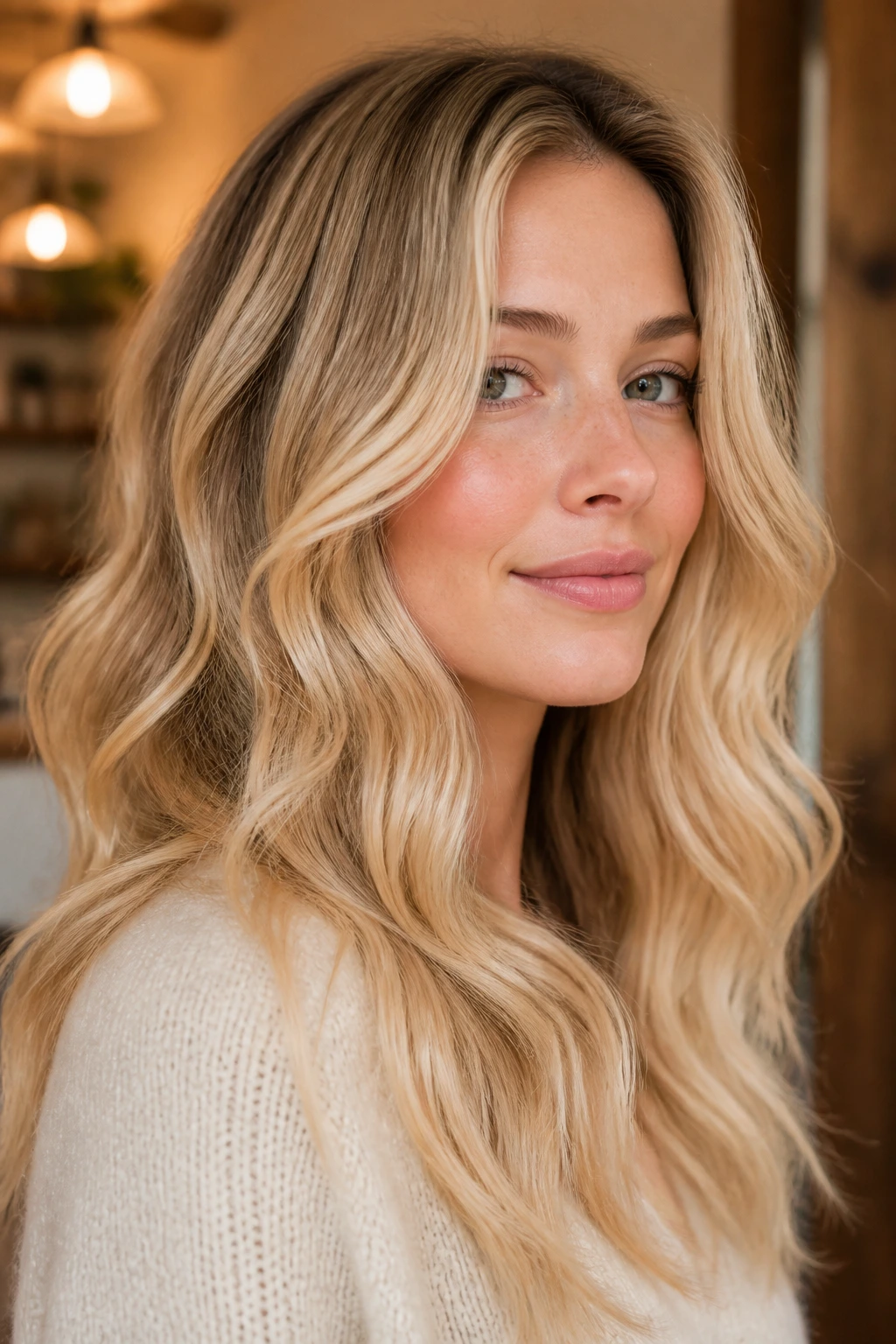
Creamy blonde can go flat if you over-smooth it. That’s the trap. Wavy hair needs a little separation so the light pieces stay visible, which means you should style with some bend, not chase pin-straight perfection.
Start with a light mousse or wave cream on damp hair. Work it through the mids and ends, then either diffuse or rough-dry until the hair is about 80 percent dry. At that point, wrap only random sections around a curling iron, leaving the ends slightly out in some places. That gives you the soft, lived-in texture that makes beige blonde look plush instead of stiff.
A good rule: if the wave looks too polished, the color will look harsher. Break it up with fingers, not a brush. A drop of shine oil on the ends is fine, but don’t soak the hair. Light reflects better off a light mist than a greasy film.
Extra Tips and Tone Boosters
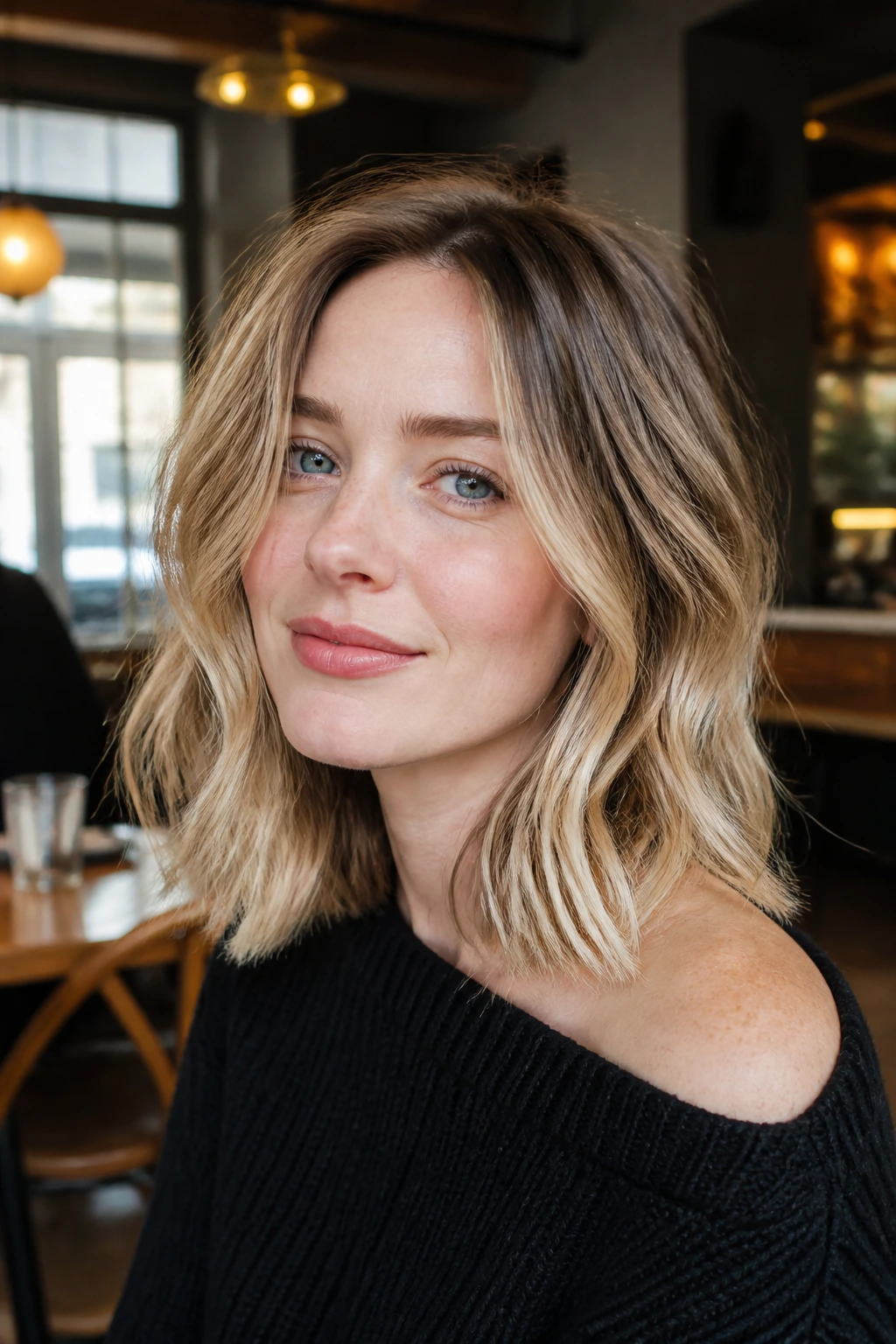
Brightness: Ask for the lightest cream near the part line and hairline, where the skin needs the most softening. That small move can wake up the entire face.
Softness: A beige or vanilla gloss every few weeks keeps the blonde from drifting too icy or too yellow. If the hair starts reading dusty, the toner has gone a little far.
Customization: If you want more depth, add lowlights one or two levels darker than the base. If you want more pop, brighten only the front pieces and leave the back softer.
Make-It-Yours: For lower maintenance, choose a root smudge and balayage. For a cleaner, brighter finish, ask for more foils around the fringe and cheekbone area. For fine hair, keep the layers minimal and let color do the heavy lifting.
Maintenance, Glossing, and Between-Appointment Care
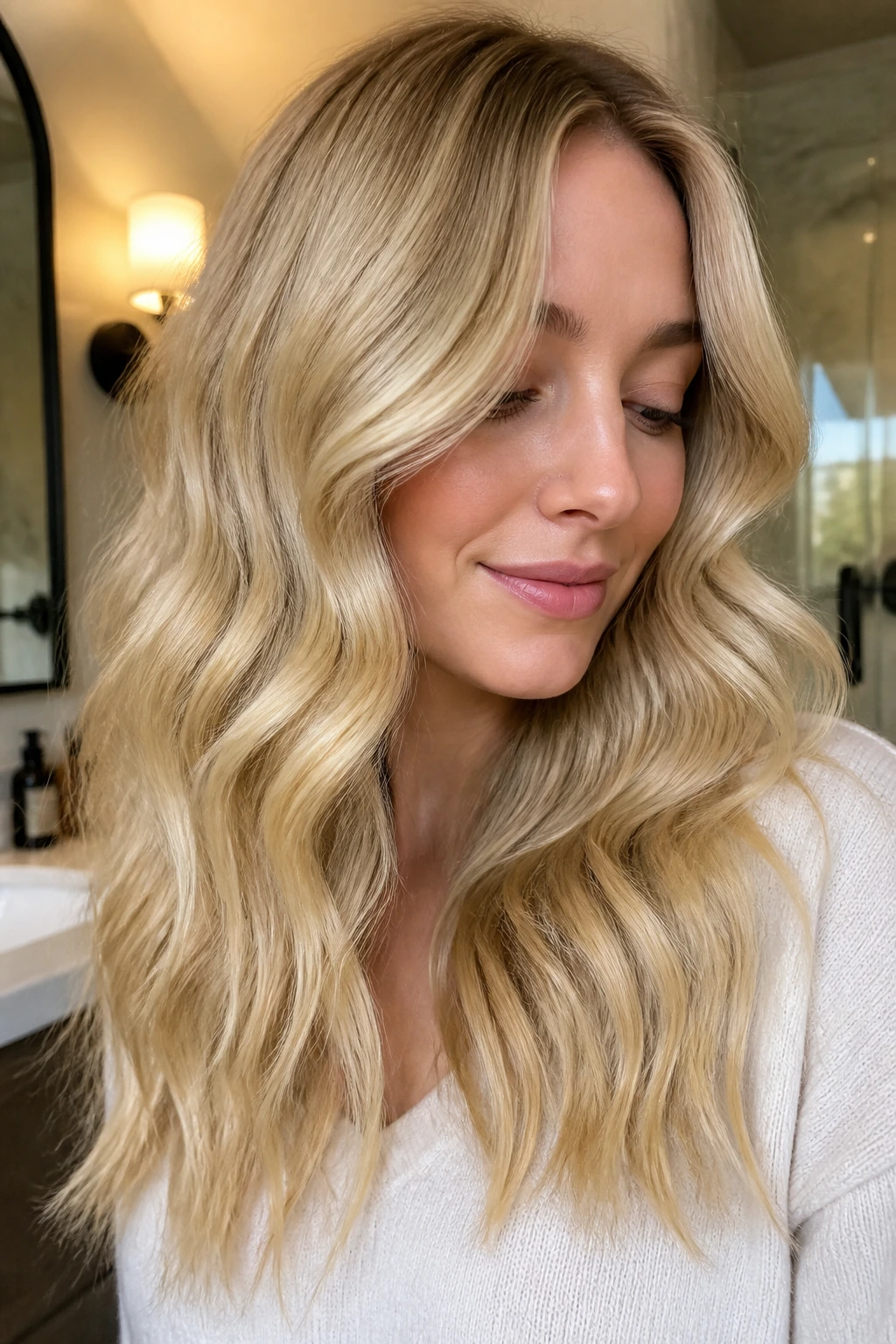
Creamy blonde is nicer to live with when you keep the routine simple. Wash two or three times a week with a sulfate-free shampoo, because frequent washing strips toner fast and turns beige into bland. If brass starts peeking through, use purple shampoo once every two to four washes. More than that, and the blonde can go dull or chalky.
A gloss or toner refresh every 6 to 8 weeks keeps the shade from wandering. If you wear a root melt or balayage, full lightening appointments can usually be spaced out longer, often 10 to 14 weeks depending on how fast your hair grows and how stark you like the contrast. Short styles and high-contrast face frames need trims more often. Long cascading cuts can go a little longer, though the ends still need dusting if they start fraying.
Heat styling should stay moderate. Try not to push hot tools above 365°F unless your hair is unusually coarse, and always use heat protectant. Blonde hair that’s been lightened several levels is more fragile than it looks. It can still shine. It just wants a little respect.
Variations and Adaptations to Try
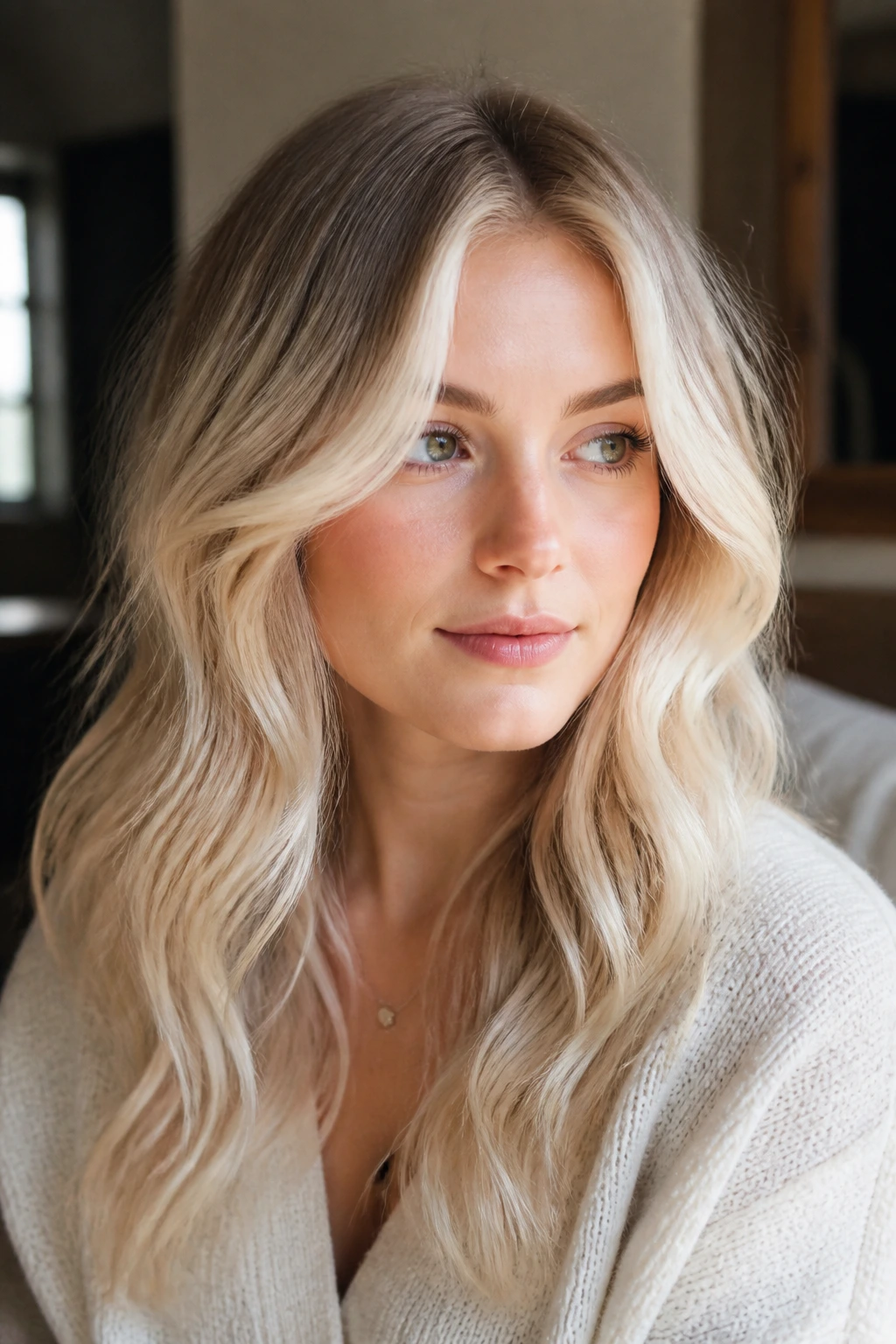
Cool Cashmere: Push the tone a little more beige-pearl if your skin is pink or fair with a cool cast. This version looks calm, not icy, and it works well with a shadow root.
Warm Cream Puff: Add a touch of honey or butter if your complexion has peach or neutral warmth. The hair will read softer in warm indoor light and a little sunnier outside.
Low-Maintenance Root Melt: Keep the roots 1 to 2 levels deeper than the mids and ends. This is the version to choose if you want months, not weeks, before the grow-out starts asking for attention.
Bright Face-Frame Blend: Concentrate the lightest cream around the hairline and cheekbones, then keep the rest of the hair softer. Good when you want the face to pop without bleaching the whole head.
Short and Swingy: Turn any of the softer blonde shades into a bob, French bob, or pixie shag. The color becomes bolder when the cut is short, so keep the tone creamier and less yellow to avoid a hard finish.
Common Mistakes to Avoid
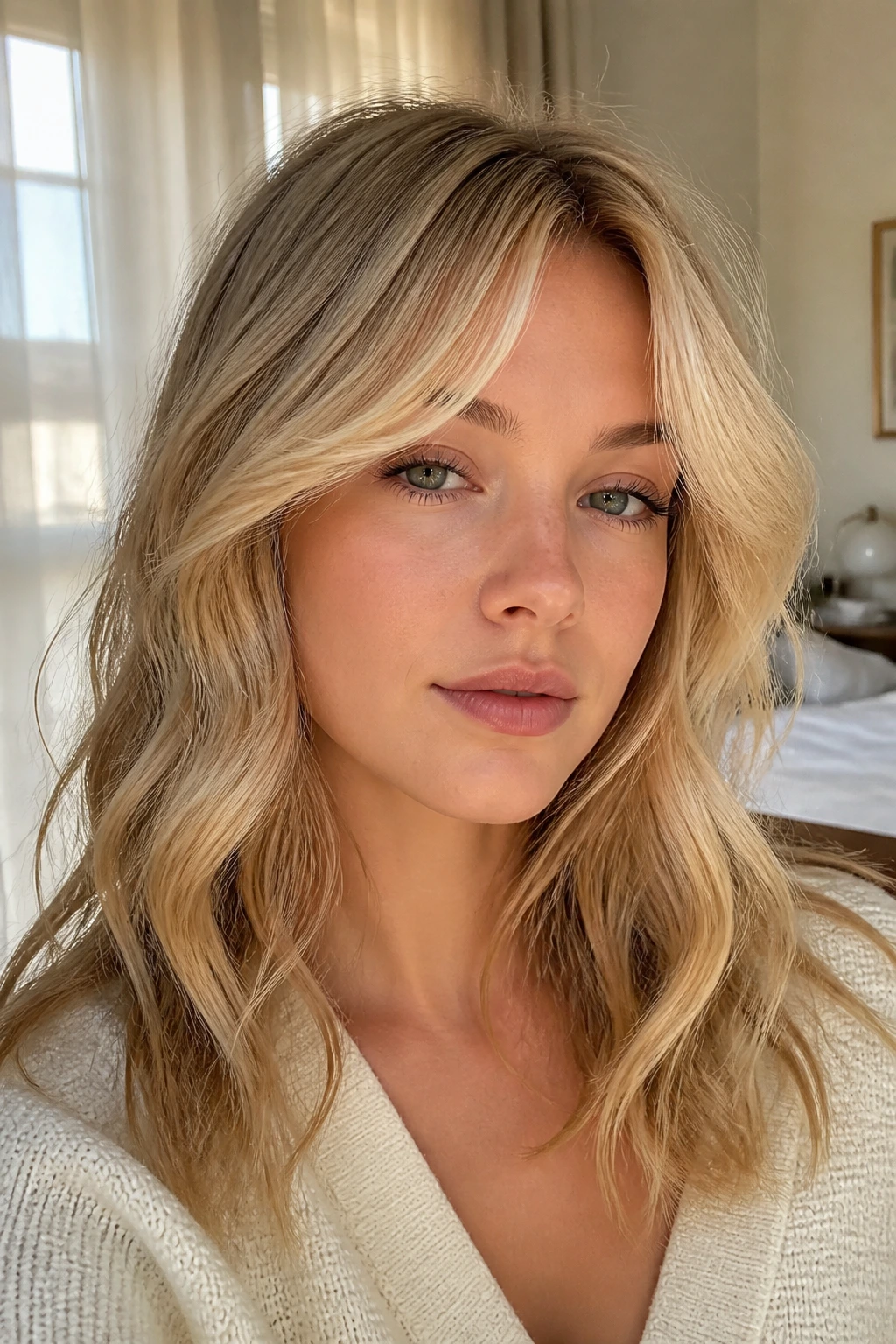
The first mistake is going too icy. Platinum and silver can be striking, but on pale skin they often erase the warmth in the face rather than flatter it. If your complexion already leans cool, a beige or vanilla tone usually gives a better result.
The second mistake is skipping depth. A solid wall of light blonde is hard to wear on wavy hair because it hides the shape. Add a root shadow, some lowlights, or at least a few darker ribbons underneath so the wave pattern has contrast.
Third, watch the purple shampoo. It sounds harmless, then one overused bottle later the blonde looks flat and chalky. Use it like a stain remover, not a daily shampoo.
Fourth, don’t let the cut get too thinned out. Wavy hair needs some weight in the ends so the blonde sits cleanly. If the hair is shredded too much, the style frizzes and the color looks frayed with it.
Frequently Asked Questions
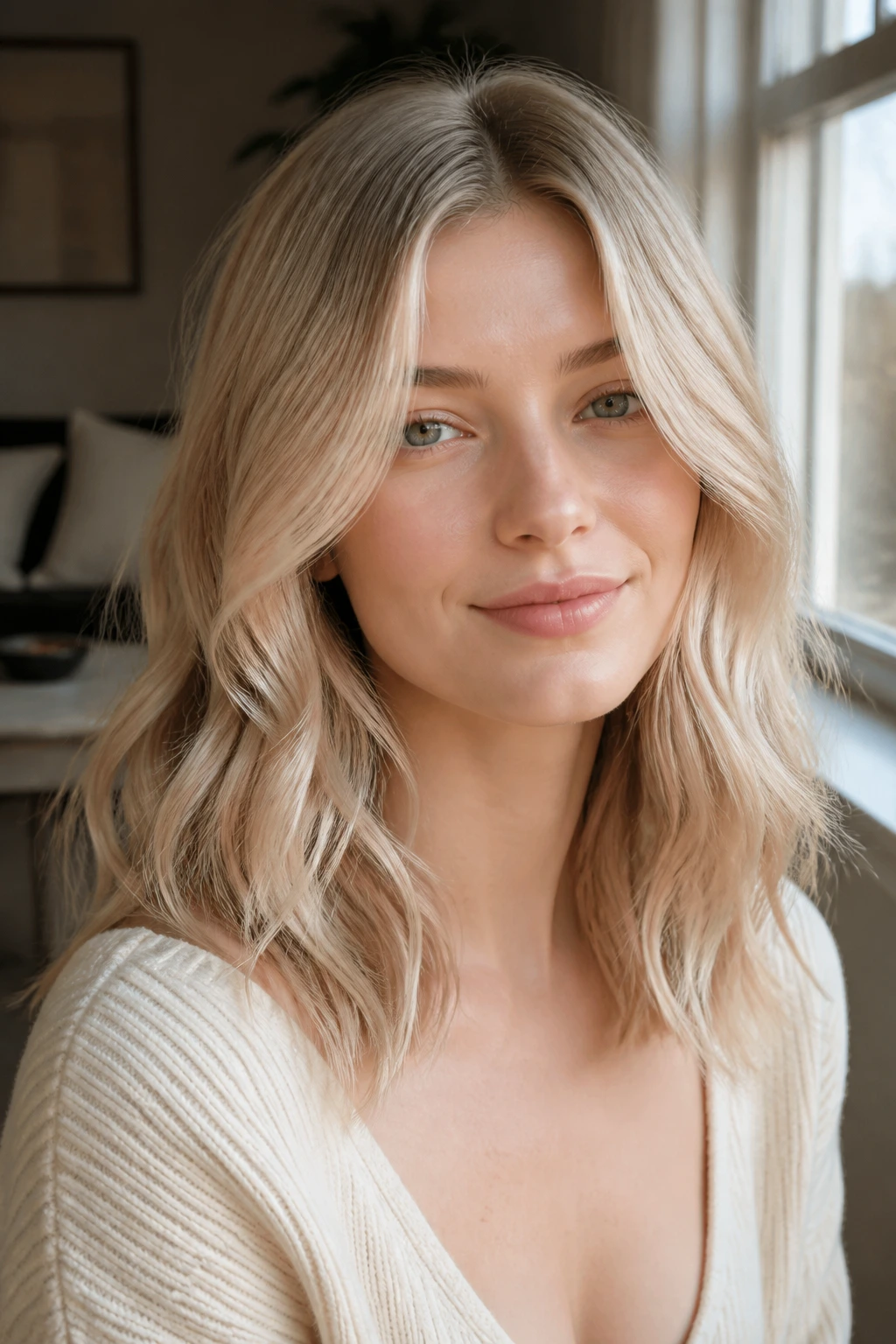
Which creamy blonde shade is best for very pale skin?
Beige-vanilla or pearl-beige is usually the safest starting point. Those shades keep the face from looking washed out while still feeling light enough to flatter a fair complexion.
Does creamy blonde work on naturally dark hair?
Yes, but the process usually needs a few stages if you want the result to stay soft instead of orange. A good colorist will lift first, then tone into beige, vanilla, or champagne rather than rushing straight to the final color.
Is wavy hair better for balayage or foils?
Balayage shows off waves beautifully because the light and dark pieces blend into the bend of the hair. Foils give you more brightness and a cleaner contrast near the face, so the best choice depends on how bold you want the result.
How often should I tone creamy blonde?
Most creamy blondes need a gloss or toner refresh every 6 to 8 weeks. If your water is hard, you swim often, or you use a lot of heat, the tone may drift faster.
Will creamy blonde make pink skin look more flushed?
Not if the blonde has enough beige in it. Very icy tones can sharpen redness, but a creamier finish usually softens the cheeks and keeps the overall look calmer.
Can I wear creamy blonde without heat styling my waves?
Absolutely. A mousse, a curl cream, and a diffuser can do a lot of the work. Air-dried waves can look better than curled ones if the cut is layered well and the tone has dimension.
What should I ask my colorist for?
Say you want creamy beige or vanilla blonde with soft dimension, a shadow root, and bright face-framing pieces. If you like lower maintenance, mention balayage and root melt; if you want more brightness, ask for babylights around the part and hairline.
What if the blonde turns brassy too fast?
That usually means the toner is fading or the hair needs a gentler wash routine. Cut back on sulfates, use a purple shampoo sparingly, and book a gloss before the brass gets loud.
A Soft Blonde Finish That Still Feels Like You
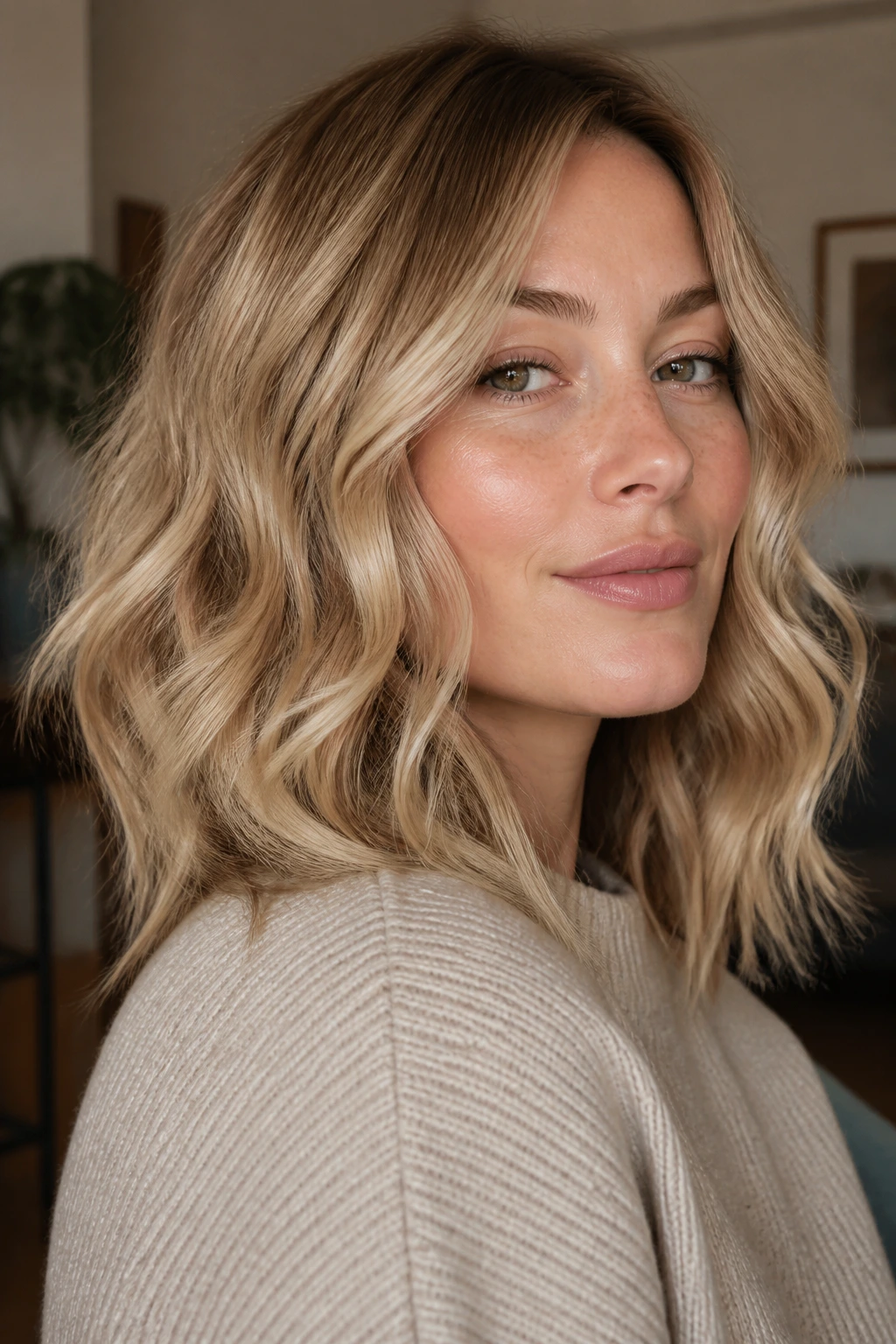
Creamy blonde works here because it respects both the skin and the hair. Pale skin gets softness instead of glare, and wavy hair gets room to show off ribbons, bends, and shadow. That combination is the whole point. Not brightness for its own sake, but a blonde that gives the face shape and the hair motion.
The best version for you might be the lob, the shag, the bob, or the long layered cut. What matters is the tone sitting in that buttery, beige, vanilla zone and the placement giving your waves some dimension to play with. If the color looks soft in daylight and still has a little life under indoor bulbs, you’re in the right neighborhood.