



Dark brown grey balayage can look like smoke threaded through espresso hair—if the grey stays in the ash, slate, and pewter family instead of wandering into yellowed silver or muddy beige. That balance matters even more on cool skin tones. The wrong grey can flatten the face in a hurry. The right one sharpens the eyes, cleans up the jawline, and makes dark brown hair look deliberate instead of heavy.
I’ve always thought this color family lives or dies on restraint. Too much lift and the ends start looking chalky. Too much warmth and the whole thing loses the point. The sweet spot sits in that cool, dim lane where brown stays rich at the root and the lighter pieces drift like fog through the mid-lengths and ends.
And that’s why this collection is worth a long look. Some of these styles are whisper-soft and office-safe; others lean graphic, high-contrast, and a little moody in the best way. All of them are built for cool undertones, which means the grey reads crisp rather than tired, and the dark brown base keeps the whole thing from floating away.
Why This Dark Brown Grey Collection Works
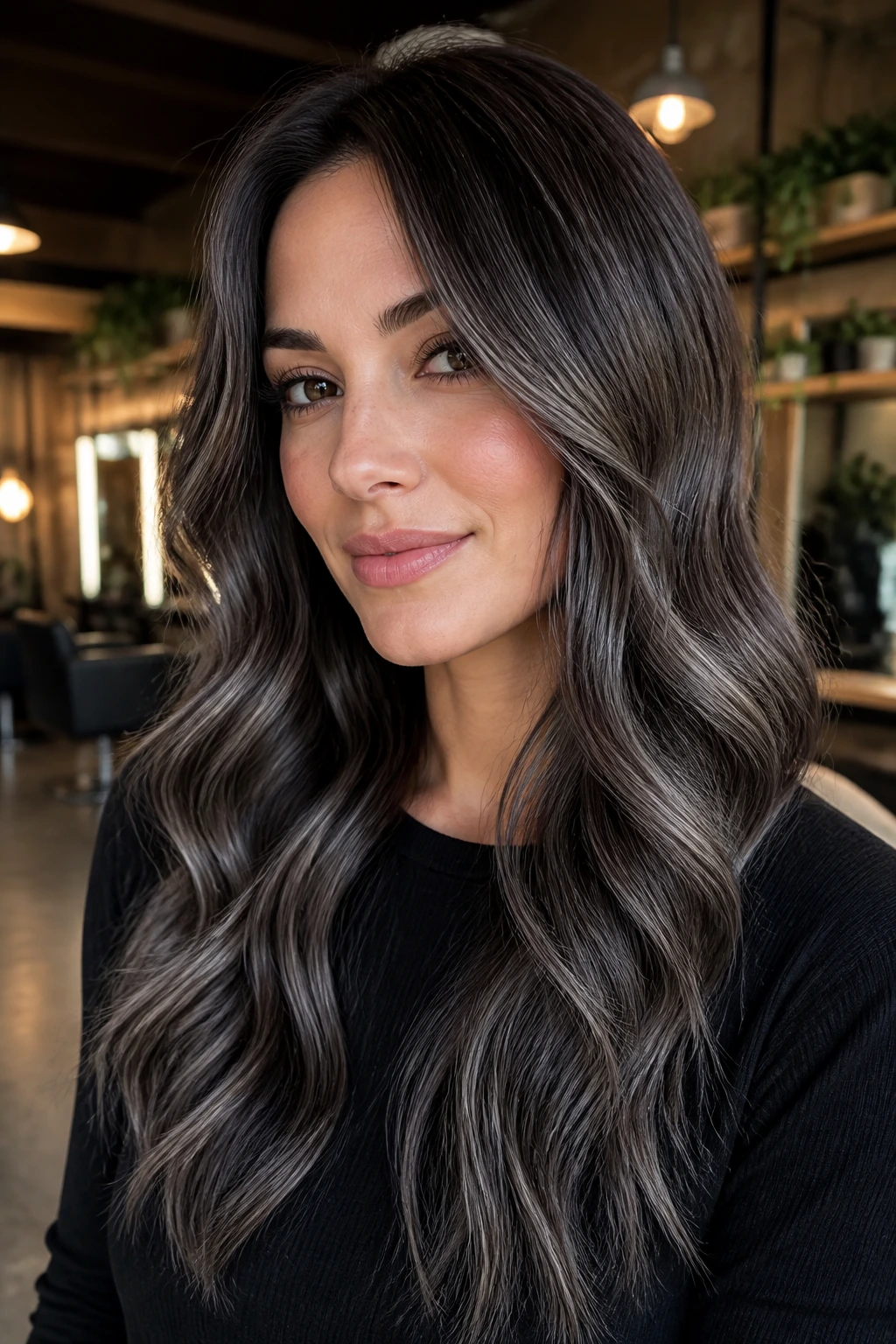
-
Cool tones stay cleaner against cool skin: Ash, graphite, slate, and greige sit beside pink or blue undertones without fighting them, so the face looks calmer rather than ruddy.
-
The dark base does half the work: Keeping the root in the dark-brown range preserves depth near the scalp, which is what stops grey balayage from looking washed out.
-
You can choose your level of drama: Some looks below barely tip into silver, while others go full storm-cloud. That range makes the style usable for different workplaces, hair lengths, and comfort levels.
-
Balayage gives movement without a hard stripe: Hand-painted placement keeps the grey from reading like a stripe across the head. The result is softer grow-out and better dimension on waves, curls, and straight hair.
-
The color looks expensive when the toner is right: Not shiny. Not beige. Just cool, smoky, and controlled. That’s the difference between a salon finish and a color that looks like it was lifted one step too far.
1. Smoky Espresso Melt
A smoky espresso melt is the safest, smartest place to start if you want dark brown grey balayage that looks polished instead of obvious. The grey lives in thin, airy ribbons, usually through the mid-lengths and lower thirds, so the base still reads like rich coffee at the top. On cool skin, that soft contrast keeps the face bright without turning the hair into a silver sheet.
I like this look on shoulder-length cuts and long waves because the movement reveals the grey only when the hair shifts. Straight styles make it look sleek and restrained; loose bends give you those little flashes of ash that catch the eye without shouting. Ask for a root that stays level 4 or 5 and cool-toned ribbons toned into smoky grey, not pale blonde.
2. Charcoal Ribbon Balayage
Charcoal ribbon balayage is a little bolder, and that’s the point. The ribbons are wider, darker, and more graphic, which gives thick dark brown hair real depth instead of a fuzzy all-over haze. Cool skin tones handle this look well because the charcoal sits close to steel rather than warm silver.
This one works best when the colorist follows the haircut’s movement—through the bends of a layered cut, around the cheekbones, and down the lengths where the hair naturally opens up. If you’ve got a lot of density, those wider painted sections stop the style from disappearing into the base. It’s a strong choice for someone who likes seeing the color from across the room, not just in daylight.
3. Mushroom Brunette with a Grey Veil
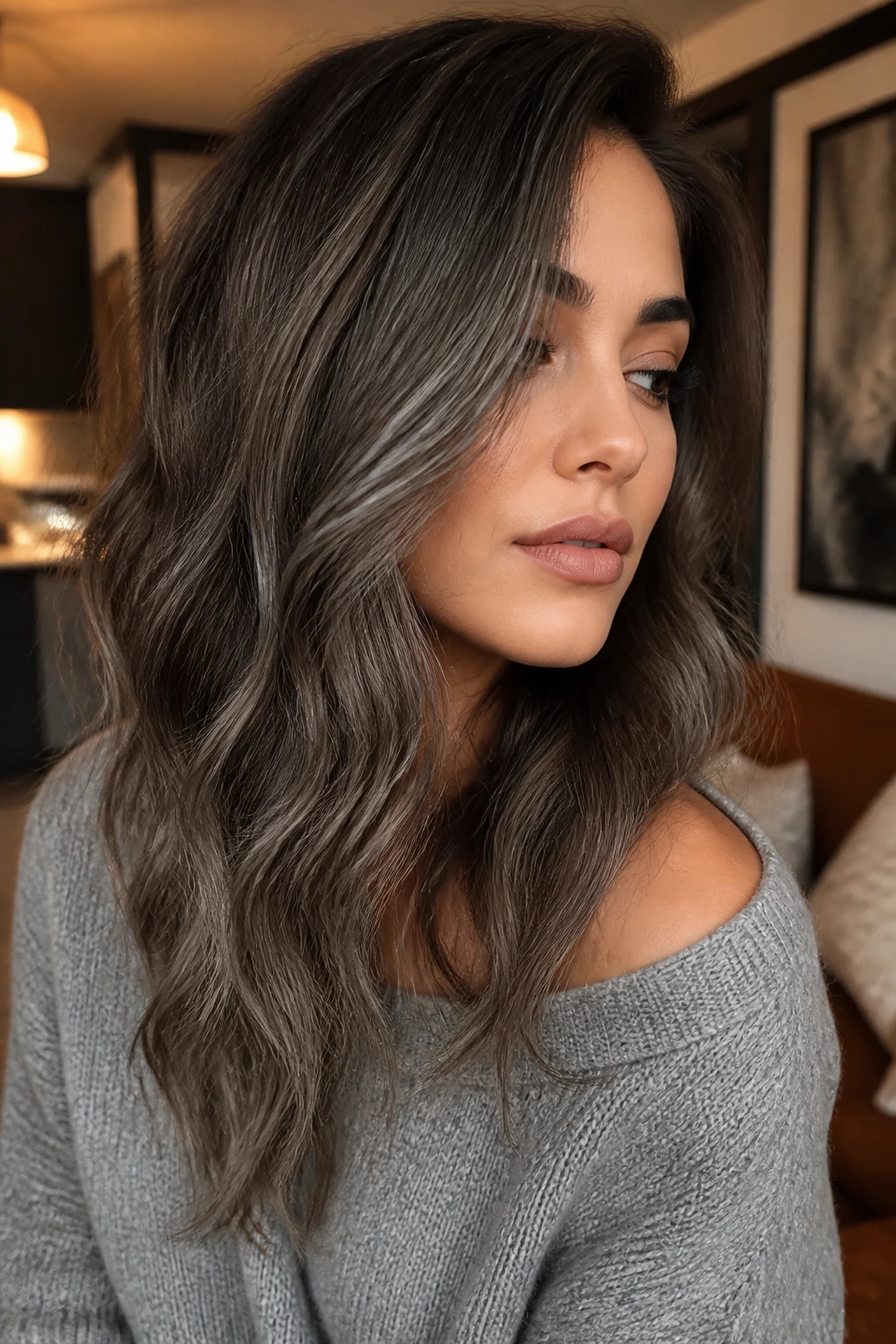
Mushroom brunette has that muted, earthy quality that keeps grey balayage from looking icy in a bad way. Think dark taupe, soft ash brown, and a thin veil of grey through the outer layers. It’s not flashy. It’s the kind of color that looks expensive because it refuses to overdo anything.
This is one of the best matches for fair cool skin, especially if your complexion tends to go pink in strong light. The mushroom base keeps the face from getting too stark, and the grey veil adds just enough edge. Keep the toner in the greige lane, and avoid anything that starts leaning beige-gold. That tiny shift changes the whole read.
4. Ash Money Piece and Dark Brown Lengths
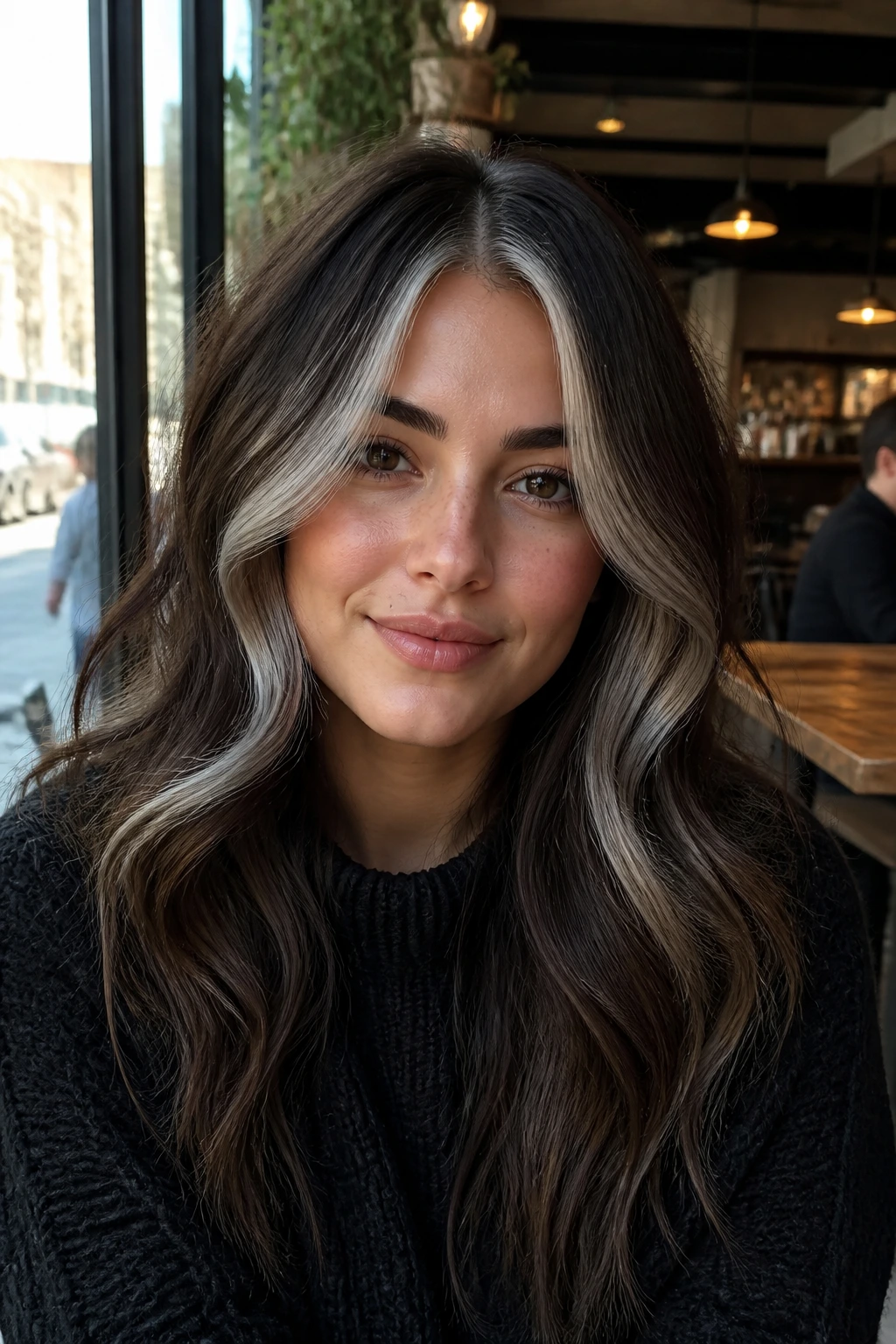
If you want the fastest visual payoff, start at the front. An ash money piece on dark brown lengths puts the light where it matters most: around the eyes, temples, and cheekbones. On cool skin, that front brightness can make the whole face feel more awake, especially when the rest of the hair stays deep and glossy.
I like this version because it doesn’t force you into a full-head grey look. The front pieces can sit at a slightly lighter level, while the mids and ends stay in smoky brunette territory. That contrast gives the style a bit of tension. It’s sharper, cleaner, and easier to grow out than a blanket of silver.
5. Slate Ends on Soft Waves
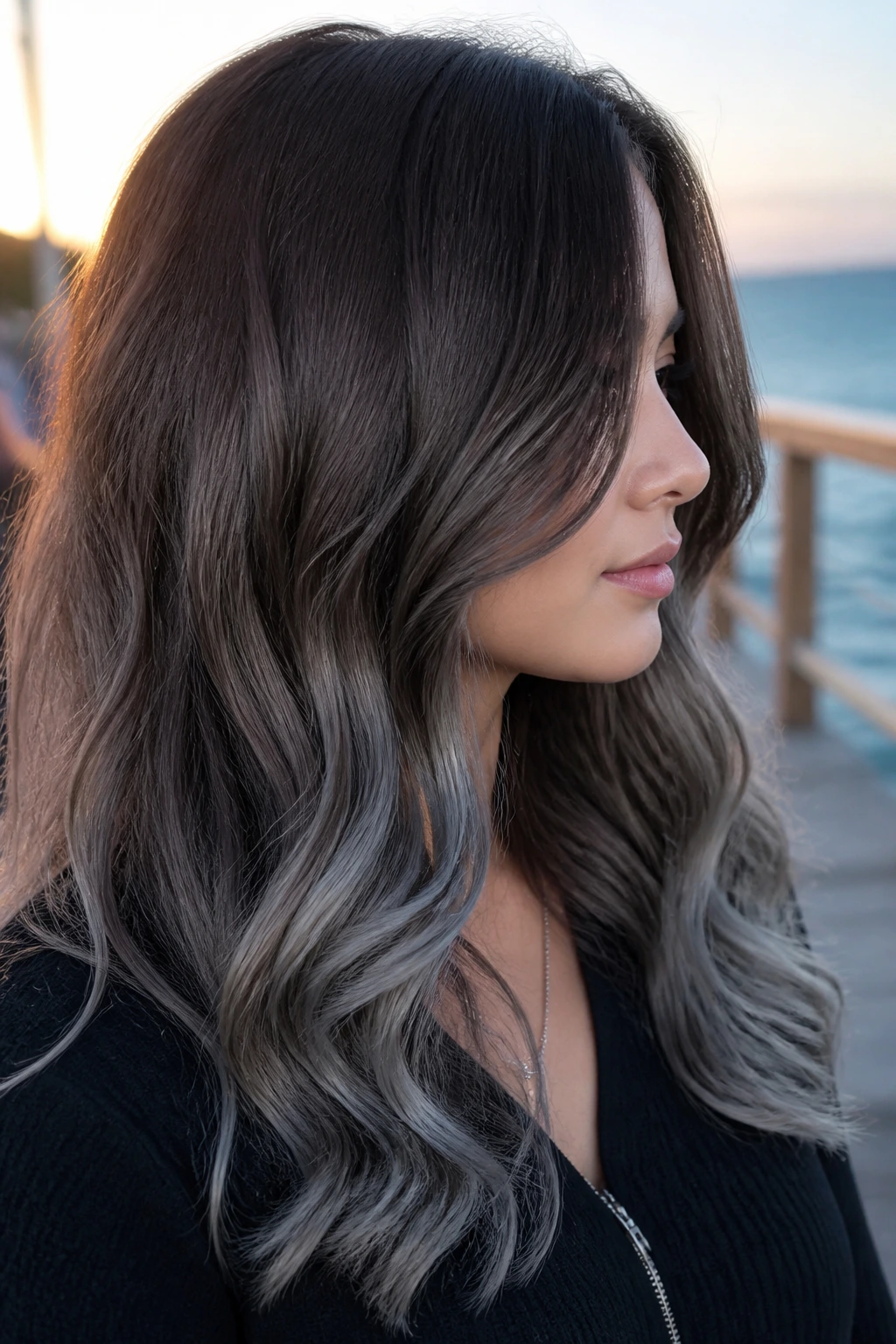
Slate ends are for the person who wants grey balayage to show up at the edges, not the roots. The brown stays rich and dark through the top half, then the ends fade into a slate tone that looks almost like stone dust on the hair. It’s subtle until the wave pattern opens up, and then it suddenly makes sense.
Soft waves are the right companion here because they show the gradient in a clean, horizontal way. I’d keep the trim neat on this one; frayed ends make slate look dull instead of dimensional. If your hair is naturally thick or blunt, this style gives the ends a purpose. If your hair is fine, keep the slate a little lighter and more transparent.
6. Pearl-Greige Balayage for Cool Skin
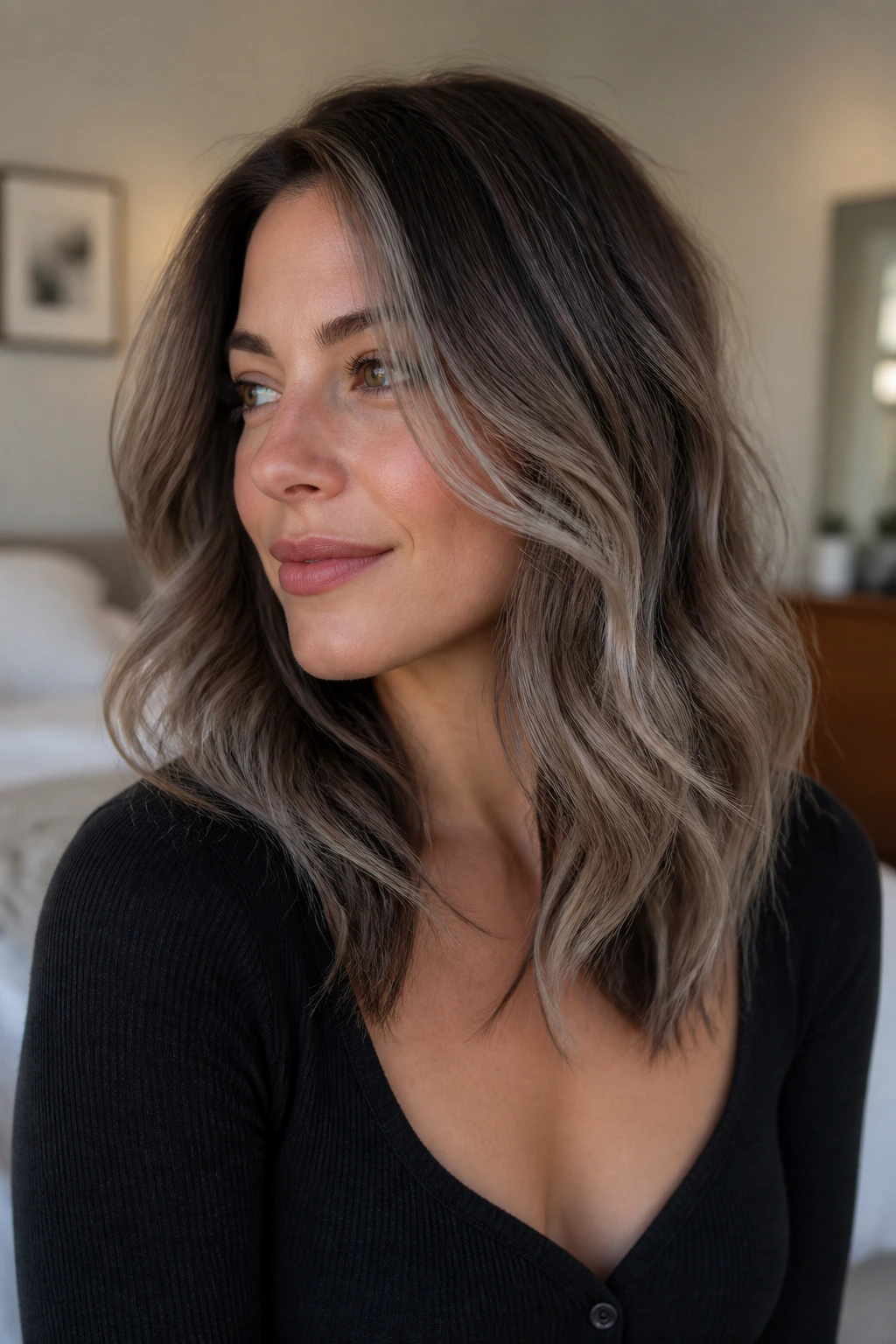
Pearl-greige is the section I’d point to for anyone with cool skin who wants grey balayage without the hard-metal finish. The tone lives between pearl silver and soft beige-grey, which keeps it wearable on fair complexions that can look ghostly under pure silver. The base still needs to stay dark and cool, though. That’s what keeps the whole look from floating off the face.
This is a friendly choice for layered lobs, long bobs, and medium-length hair that needs some softness around the perimeter. Ask your colorist to keep the grey airy, not opaque. That means sheer ribbons, a cool gloss, and a little depth left between the lighter pieces. You want movement, not a sheet of paint.
7. Graphite Peekaboo Layers
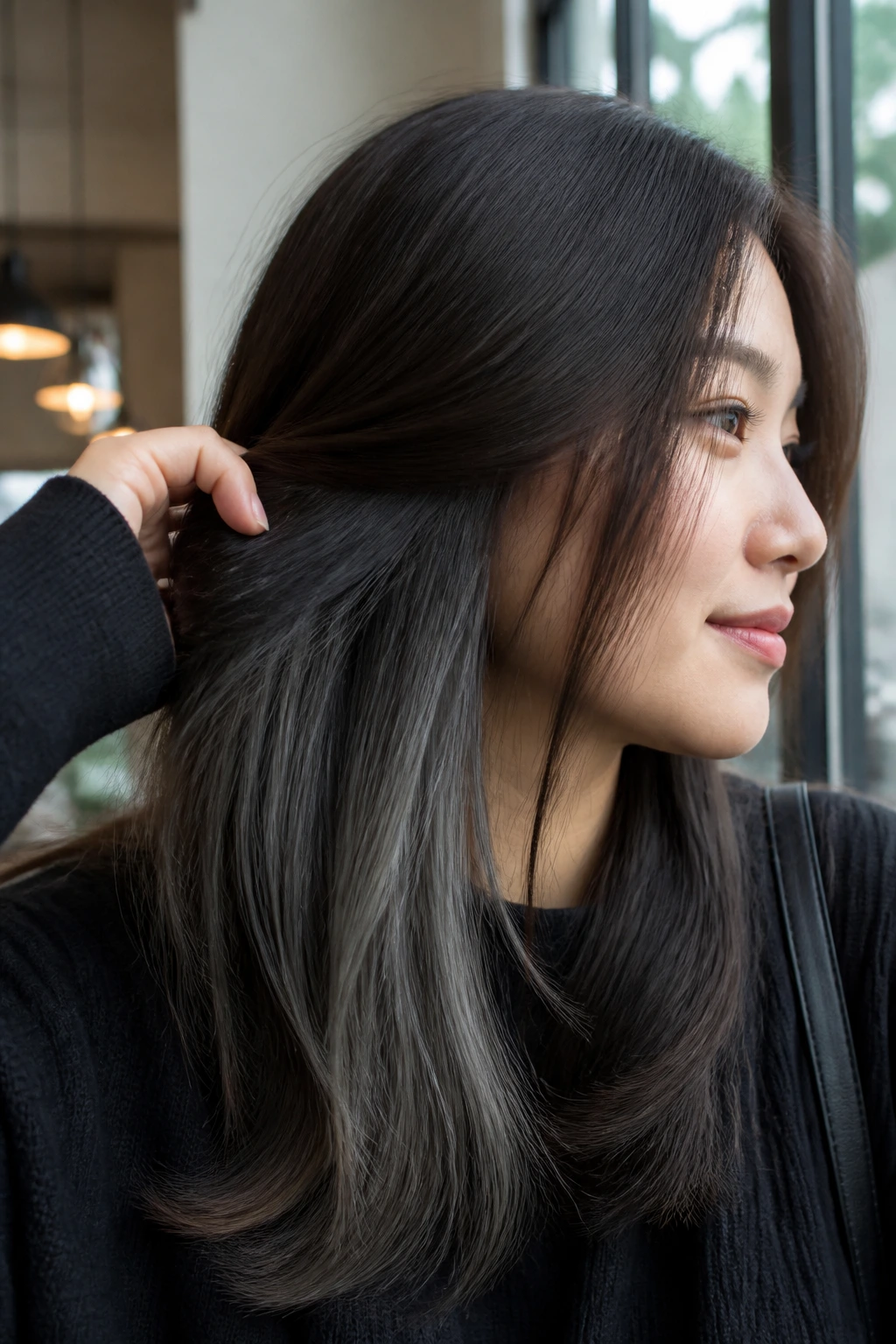
Graphite peekaboo layers are the sneaky version of this trend, and I mean that in the best way. The grey sits underneath the top layer, so you only catch it when the hair swings or when the cut separates. It’s a smart move for anyone who likes a darker surface but still wants some edge hidden inside.
This works especially well on straight or softly wavy hair, where the hidden depth can peek through cleanly. Cool skin tones tend to benefit from the graphite because it reads sharper than silver and less warm than taupe. If you’re nervous about commitment, this is the one I’d call the quiet test drive.
8. Feathered Smoke Contour
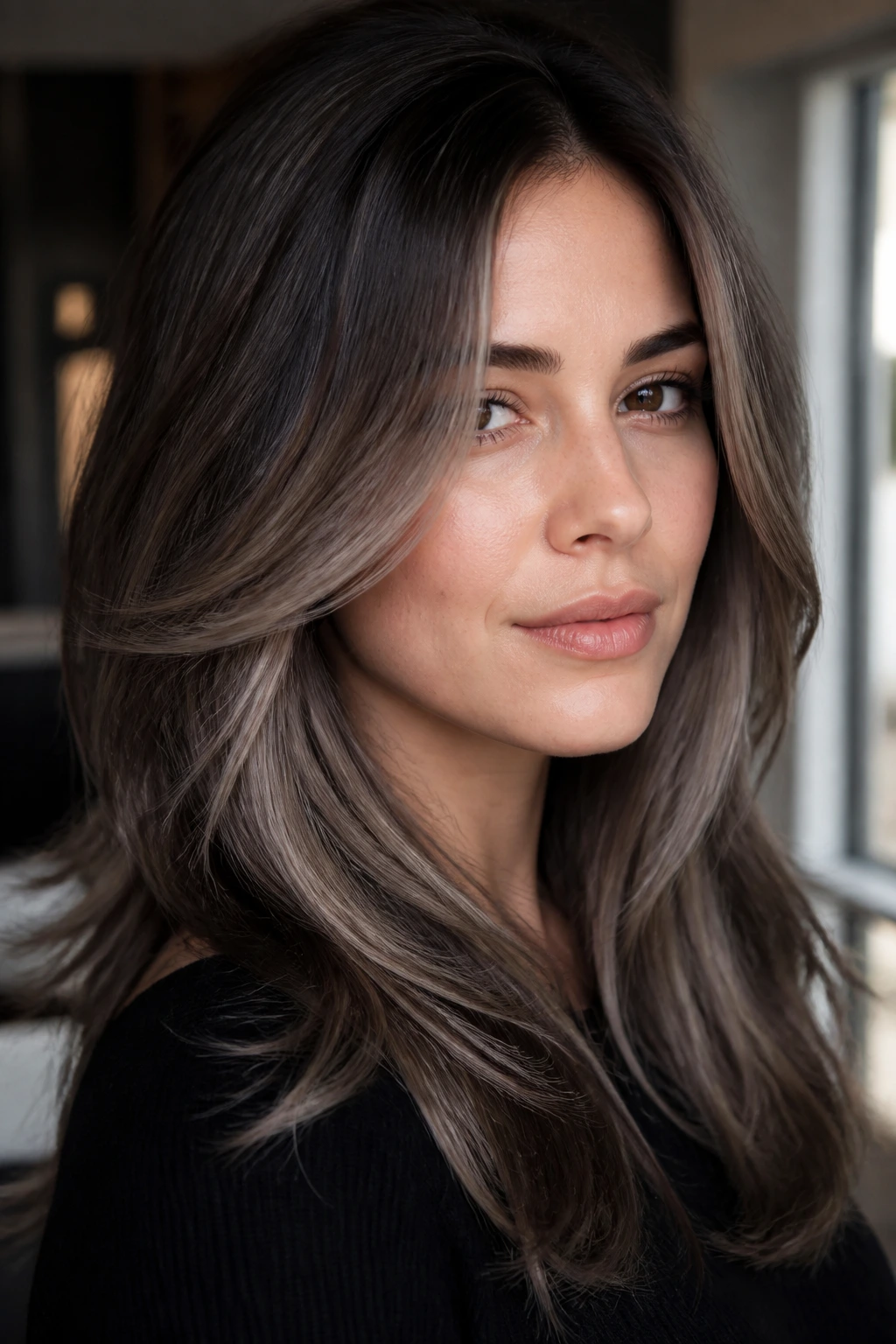
Feathered smoke contour balayage follows the haircut, not just the color plan. That matters. Instead of dropping grey anywhere it fits, the colorist places it where the layers feather away from the face, so the light pieces echo the shape of the cut. On dark brown hair, that kind of placement feels intentional right away.
This style flatters cool skin because the smoke stays soft, not brassy, and the movement keeps the face from being swallowed by dark color. I like it on mid-length layered cuts, especially if the hair already has a bit of natural bend. The result is less “highlighted hair” and more “the haircut itself is doing something clever.”
9. Dusty Taupe Fade
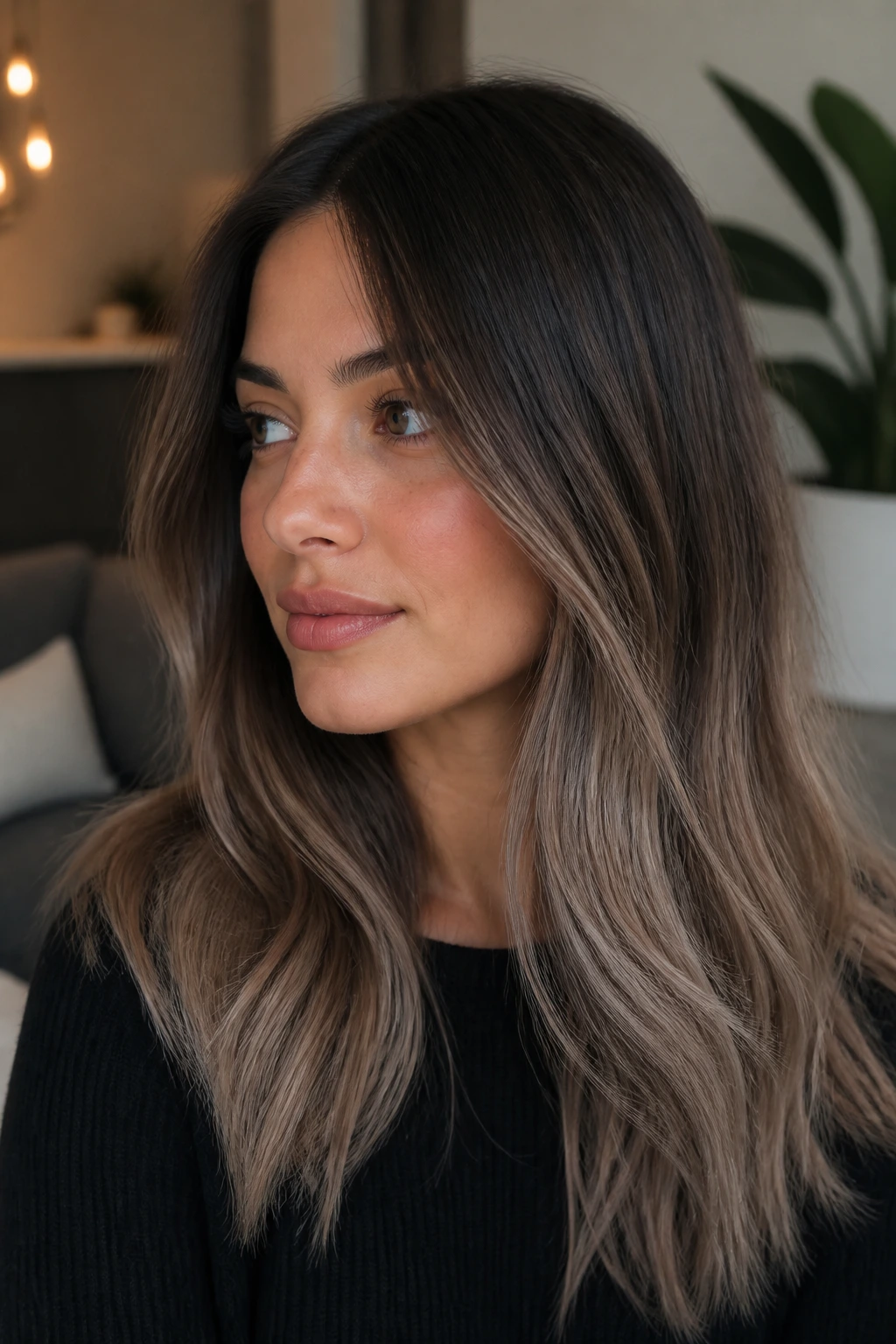
Dusty taupe is what I recommend to people who want to flirt with grey but aren’t ready to commit to a silver-heavy look. It sits closer to a muted ash-brown than a pure metallic, and that makes it easier to wear on cool skin without looking overprocessed. The fade is gentle, the contrast is modest, and the grow-out is forgiving.
This one is especially good if your base is level 4 or 5 and you don’t want a huge maintenance bill. The taupe keeps the ends light enough to move, but dark enough to stay believable next to dark brown roots. It’s a practical choice, which sometimes gets treated like a boring word. It isn’t. Practical hair looks better for longer.
10. Silver Ombré on Chocolate Brown
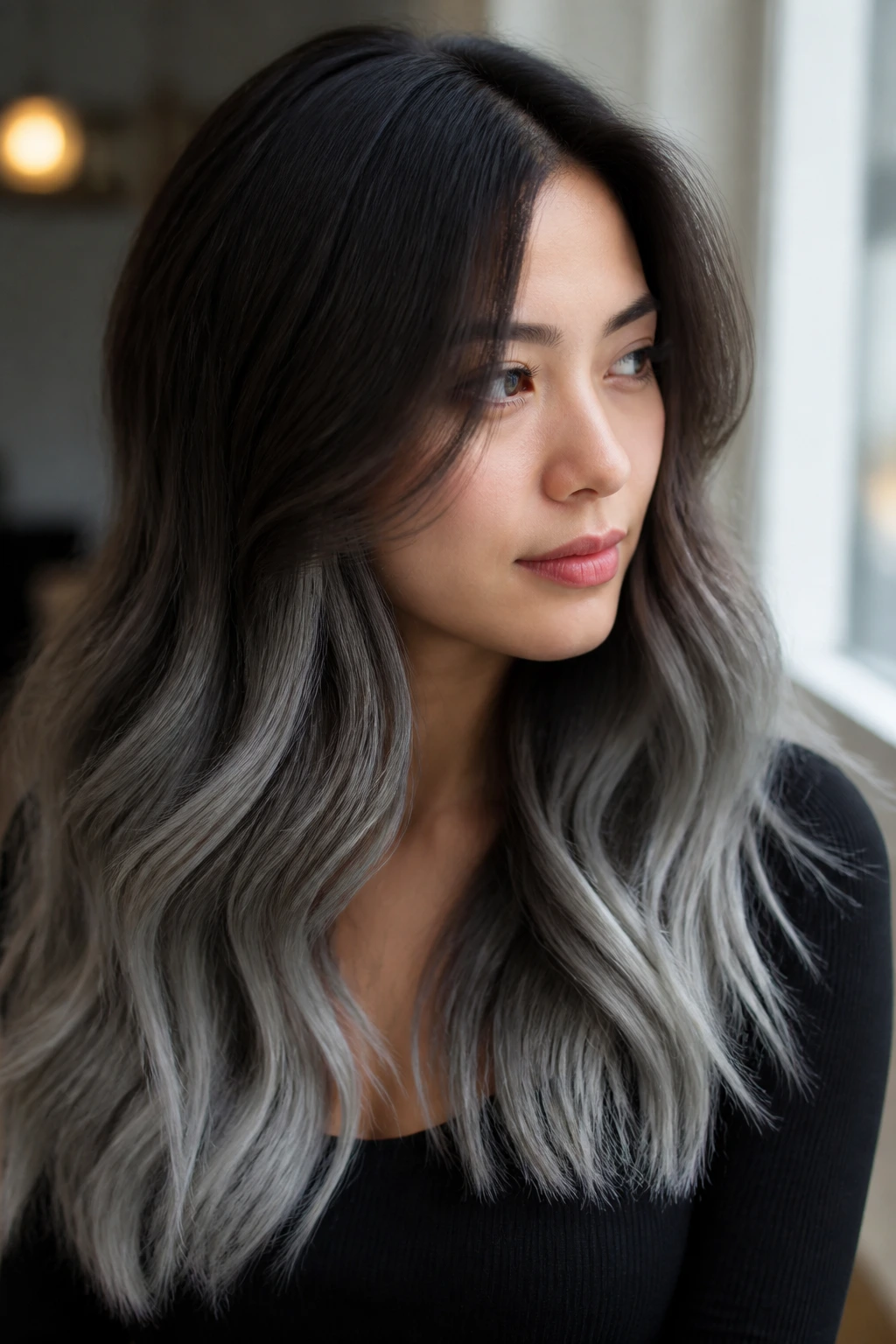
Silver ombré is for people who want the gradient to announce itself. The dark chocolate base holds the crown and mid-lengths, then the silver opens up toward the ends in a clean fade. On cool skin tones, this can look striking because the contrast is crisp, not yellowed or muddy.
Long hair does the best job here. You need enough length for the transition to breathe, otherwise the ombré can look cramped and abrupt. Keep the silver in the cool zone—more steel and pearl than icy white—and ask for a soft blend through the middle inches so the fade doesn’t look like two separate colors stitched together.
11. Cocoa-to-Steel Lob
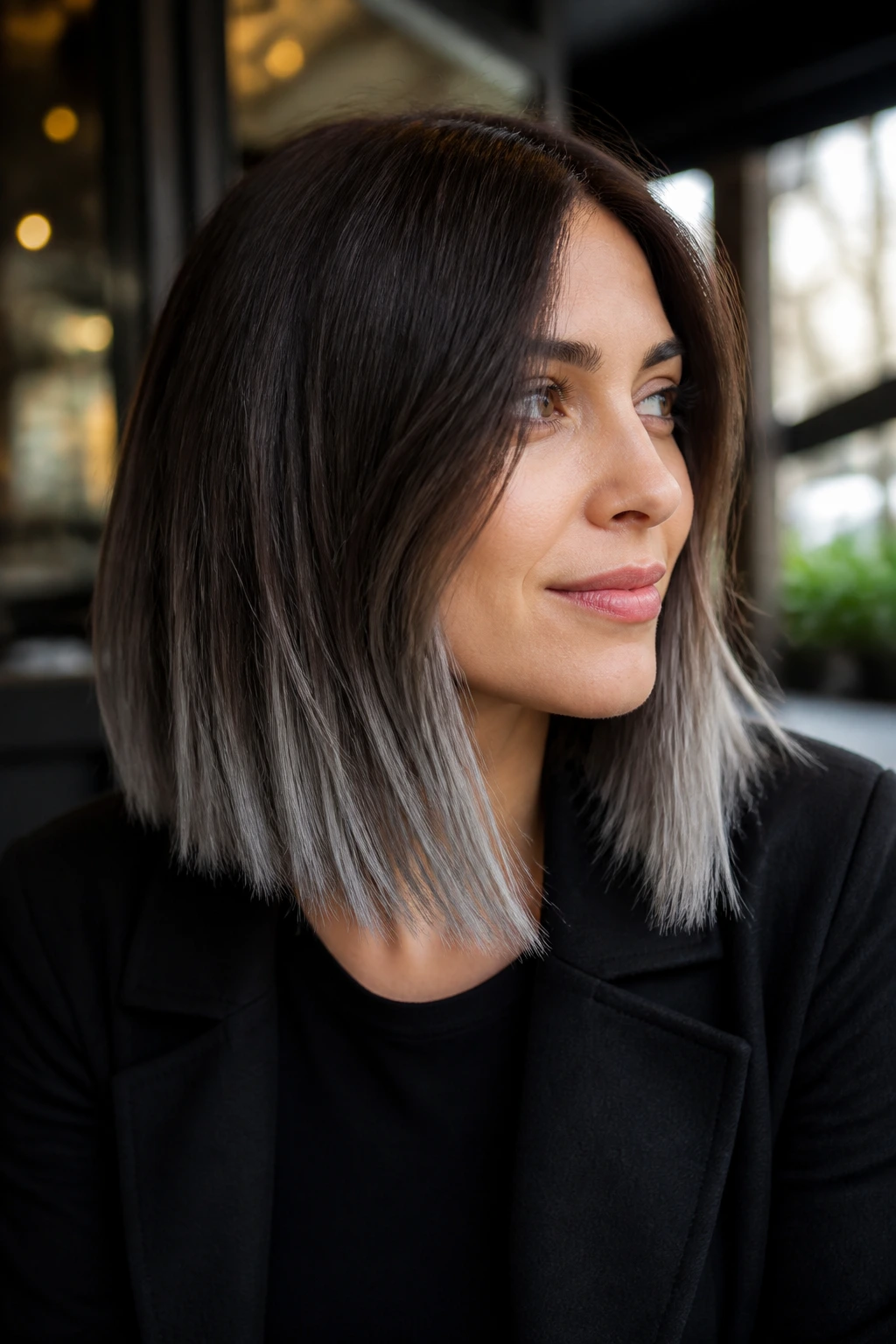
A lob gives this color family a tidy little frame. Cocoa-to-steel works because the shorter length makes the gradient feel polished instead of sprawling. Dark brown at the top, steel at the lower half, and a clean cut line at the shoulders or just above them—that’s the whole trick.
I like this on hair that’s naturally straight or only slightly wavy, because the line of the cut stays visible. Cool skin tones benefit from the steel finish, which keeps the lob crisp and modern. If your hair tends to puff at the ends, ask for a little more weight removal inside the cut; the color shows better when the shape stays sleek.
12. Frosted Face-Framing Pieces
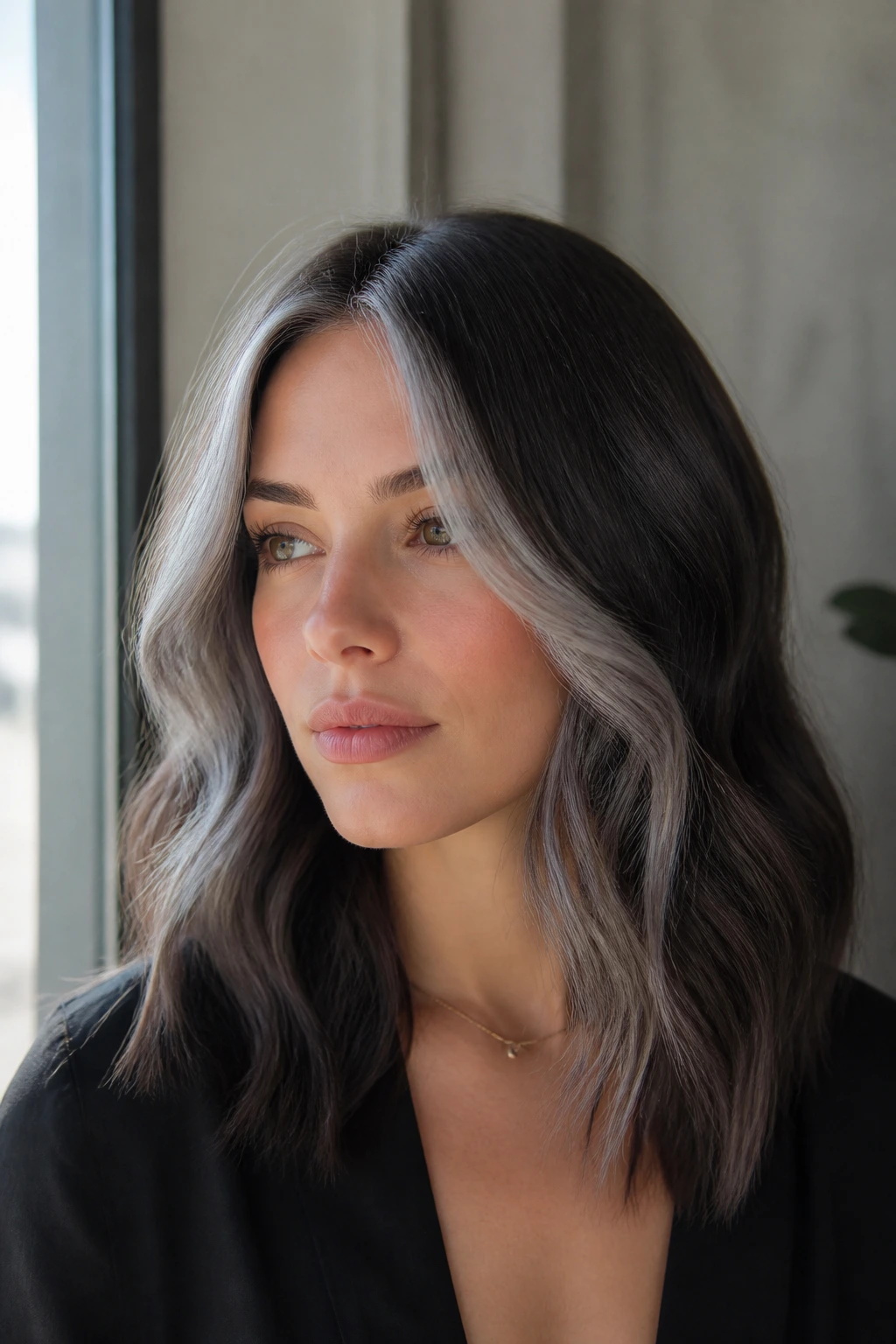
Frosted face-framing pieces give you a bright front without dragging the whole head into high-maintenance territory. The placement usually starts around the cheekbones, then narrows as it moves downward. On dark brown hair, the grey reads almost like frost on a window edge—light, cool, and just sharp enough.
This is a strong option for cool skin because it lifts the front of the face without requiring a full silver map across the back. It’s also a good way to test whether you like grey in your hair at all. If you do, you can always build more dimension later. If you don’t, these pieces fade into the rest of the balayage without a dramatic correction session.
13. Midnight Brown with Frosted Tips
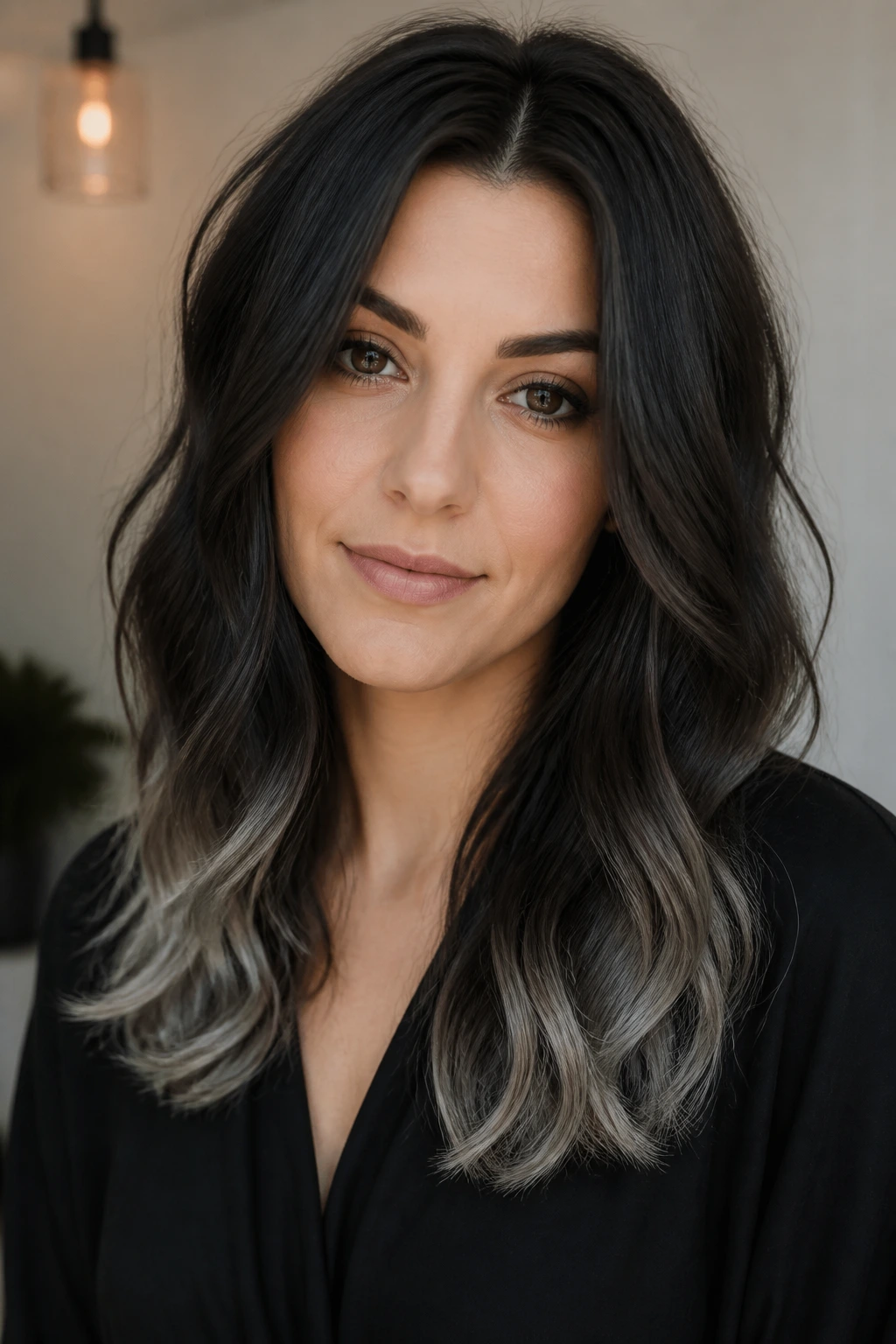
Midnight brown with frosted tips is one of the least fussy ways to wear the idea of grey balayage. Keep the upper half deep and nearly black-brown, then frost the last few inches with a cool grey glaze. It looks calm from a distance and more textured up close.
This style works because the eye reads the ends as a finish rather than a full color change. Cool skin tones benefit from that restraint. Nothing about it feels warm or peachy, and the frost gives the hair a little edge without forcing the whole head into brightness. If you want the lowest drama version of this collection, start here.
14. Ash Root Shadow with Grey Ribbons
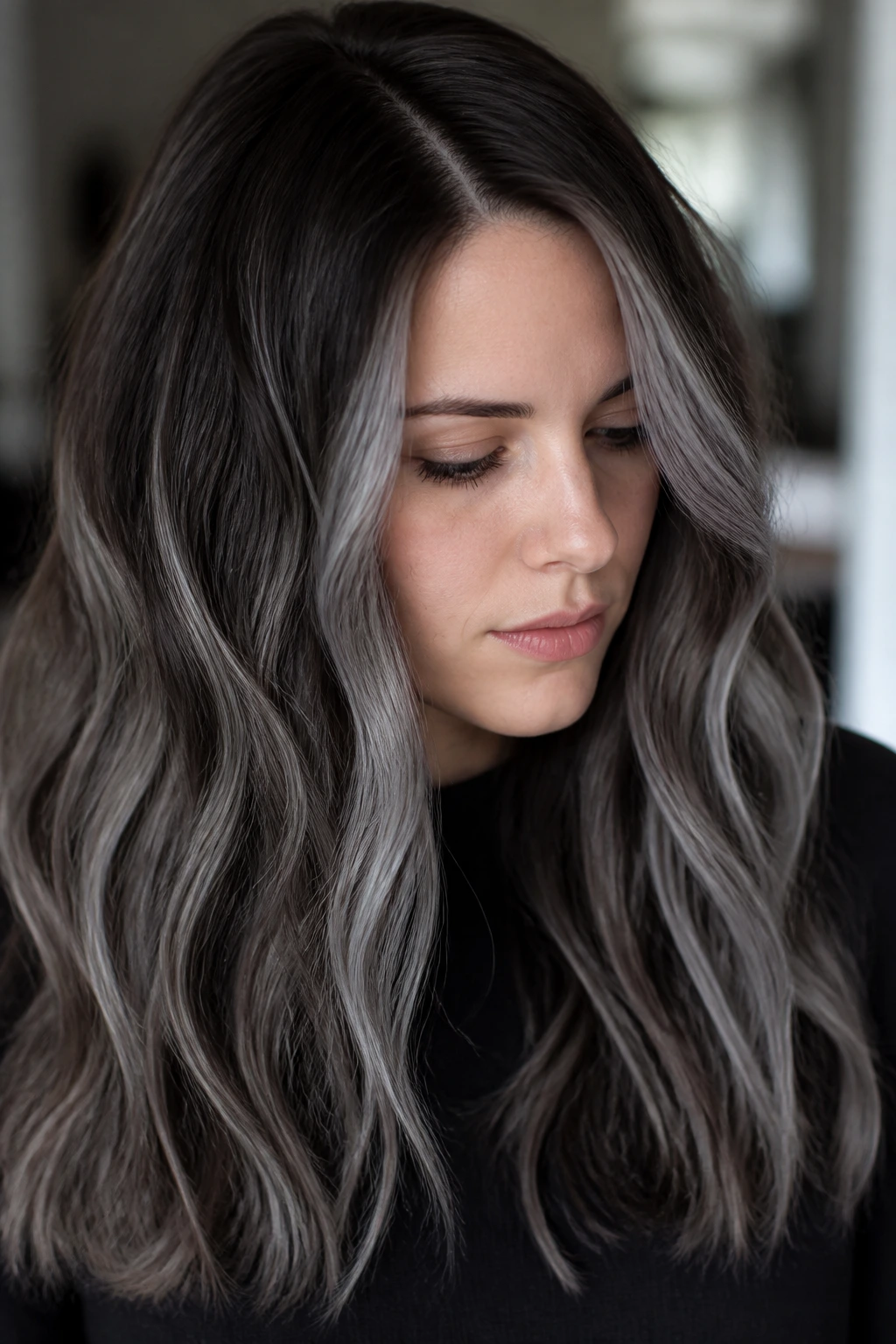
An ash root shadow is one of those practical salon choices that makes the whole style look better for longer. The darker root is smudged just enough to soften regrowth, then grey ribbons are painted through the mids and lower lengths. The blend matters more than the contrast here.
I like this on anyone who hates obvious grow-out lines. The ash shadow keeps the top of the head grounded, while the grey ribbons give the movement. On cool skin tones, the ash root makes the lighter pieces read cleaner and less hollow. It’s a clever fix for dark brown hair that needs dimension but not constant touch-ups.
15. Dimensional Greige Balayage
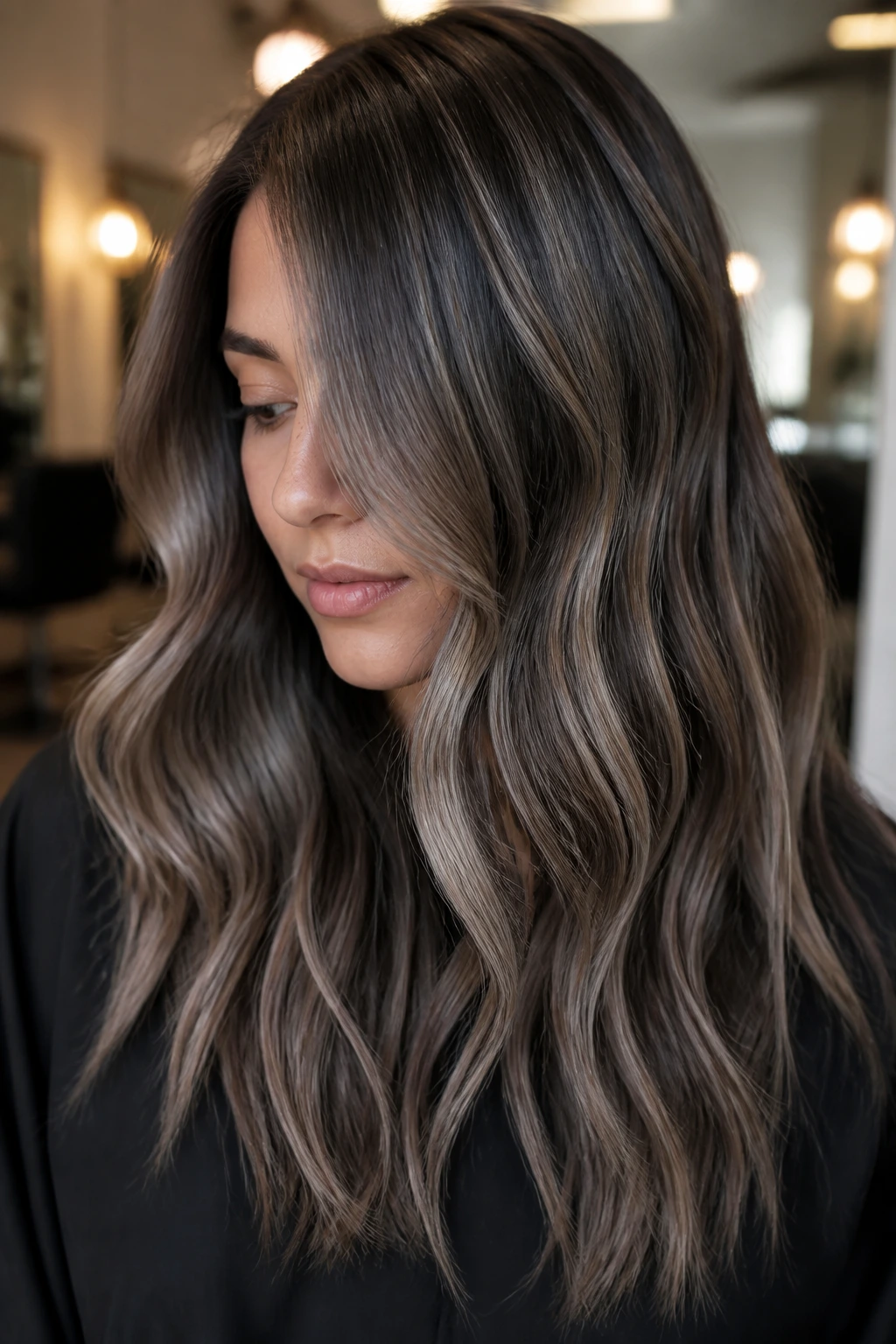
Dimensional greige balayage sits right in the middle of the road, and that is exactly why it works so well. It uses cool beige, ash grey, and dark brown together so the hair doesn’t look painted in one note. The best versions keep enough brown visible between the lighter pieces to let the color breathe.
For cool skin tones, greige is often easier than full silver because it doesn’t go too icy. It also reads well in soft indoor light, where pure grey can disappear into the shadows. Ask for dimension rather than saturation. You want the hair to look layered, not dipped.
16. Cool Mushroom Bob
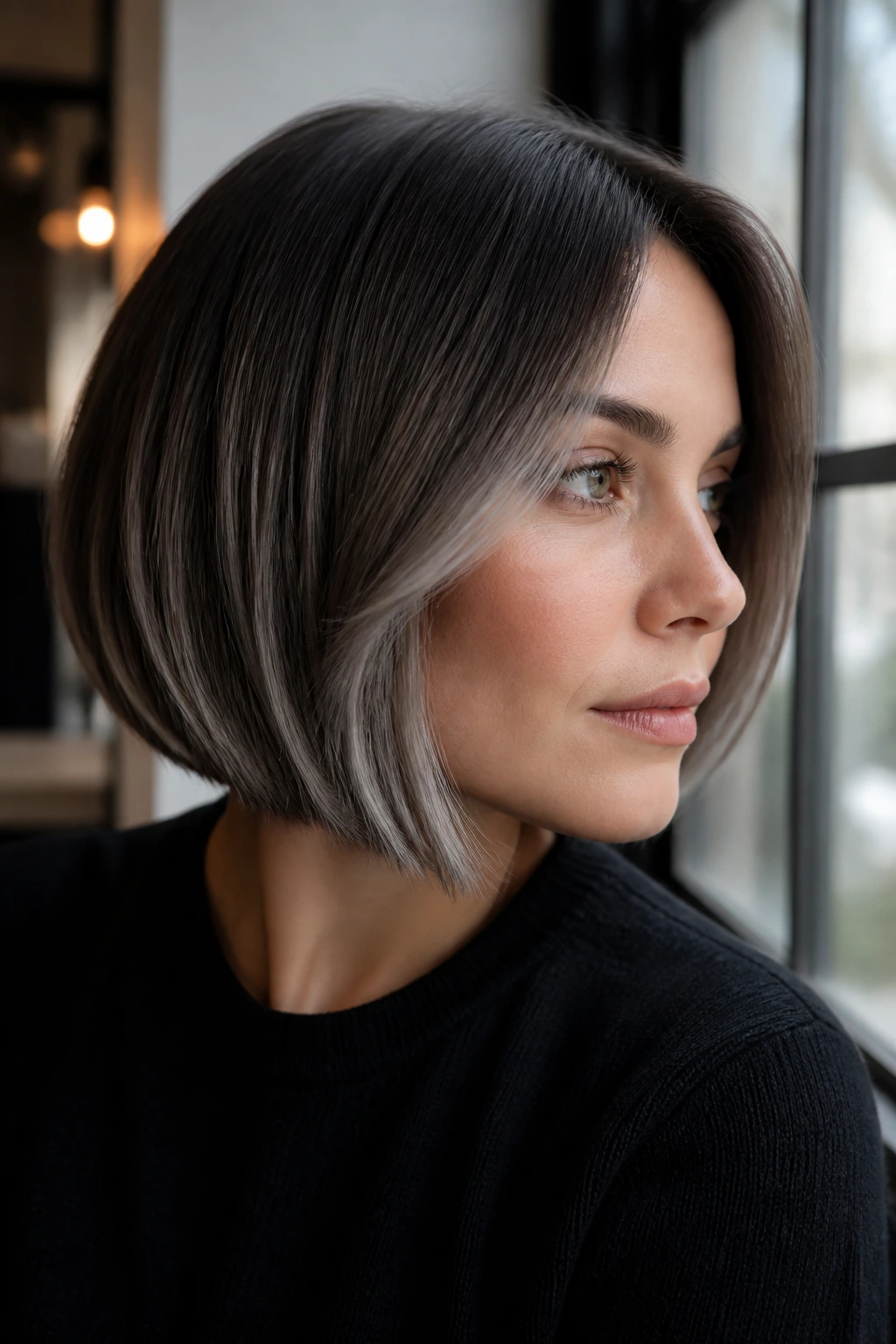
A bob changes the whole conversation because the cut itself brings the attitude. Cool mushroom brunette with grey balayage makes the shape look compact, clean, and a little modernist. The grey should live mostly through the outer surface and ends, with the dark base still visible through the interior.
This is a smart choice for cool skin because the mushroom tone stays muted while the grey gives just enough lift around the face. I’d keep the finish smooth rather than too fluffy; a bob like this looks sharper when the edges are neat. A slight bend at the ends is usually enough. You don’t need a big wave to make the color register.
17. Ribboned Steel on Long Layers
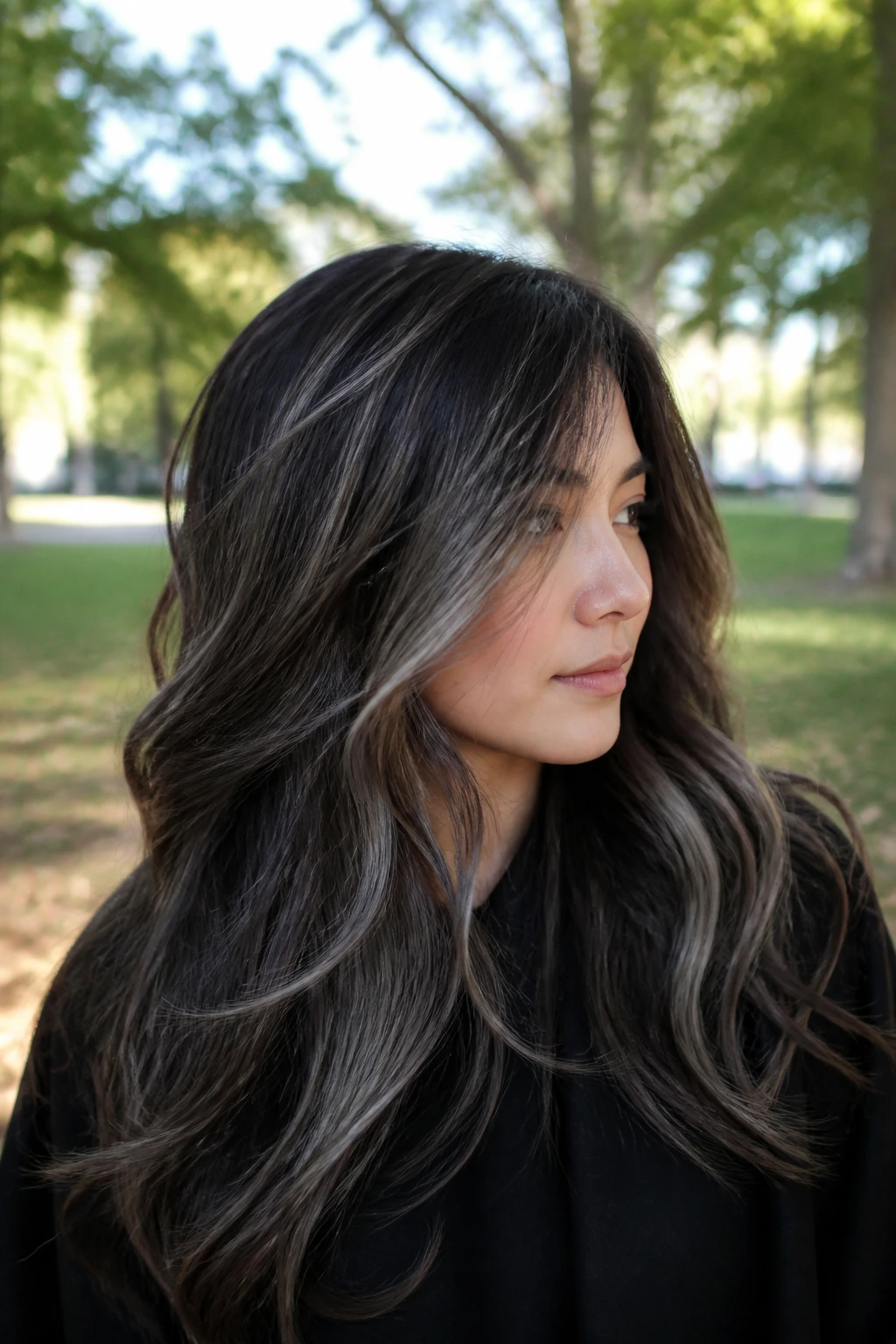
Ribboned steel is all about movement. Thin steel-toned pieces run through long layers so the color appears and disappears as the hair shifts. It’s more refined than chunky highlight work, and it keeps the depth of dark brown hair intact. Cool skin tones usually like this because the steel reads clean, not brassy.
Long layers matter here. Without them, the ribbons can look scattered instead of deliberate. With them, the color follows the shape of the hair in a way that feels finished. If you wear your hair curled, use a larger barrel and keep the curl soft. Tight curls can hide the ribbons a little too much.
18. Chunky Smoke Panels
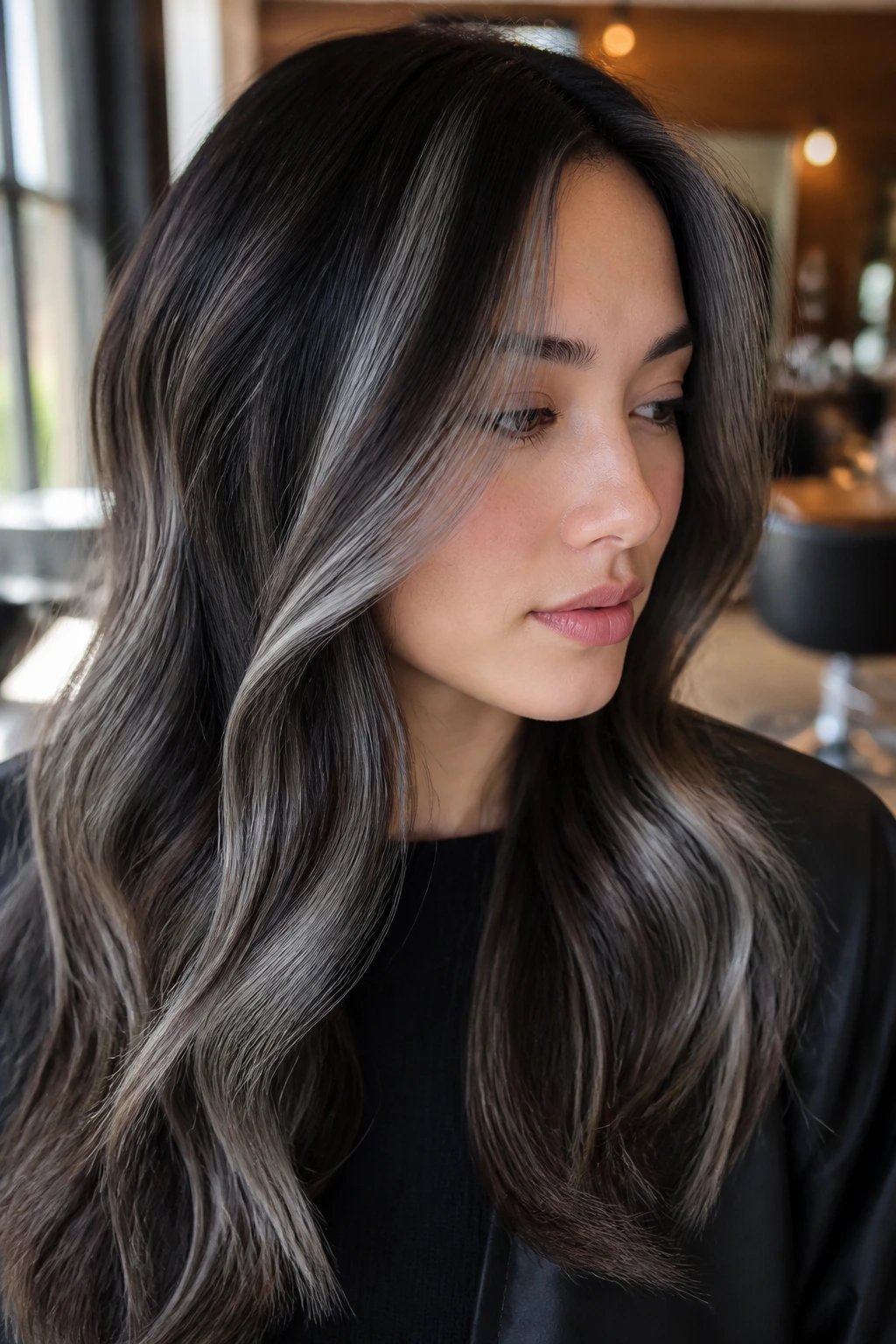
Chunky smoke panels are not subtle. Good. Some people need the color to show up the second they step outside, and this is the version that does it. Wider panels of smoky grey are painted through dark brown lengths, usually with more contrast and less micro-blending than a softer balayage.
Cool skin tones can handle this because the grey stays in the charcoal lane. The look works best when the stylist is disciplined about placement; if the panels land randomly, the whole thing turns busy. On a strong haircut—think long layers, a sharp lob, or a textured cut—the panels feel intentional. On a weak cut, they can feel like someone ran out of steam halfway through.
19. Slate Balayage on Curls
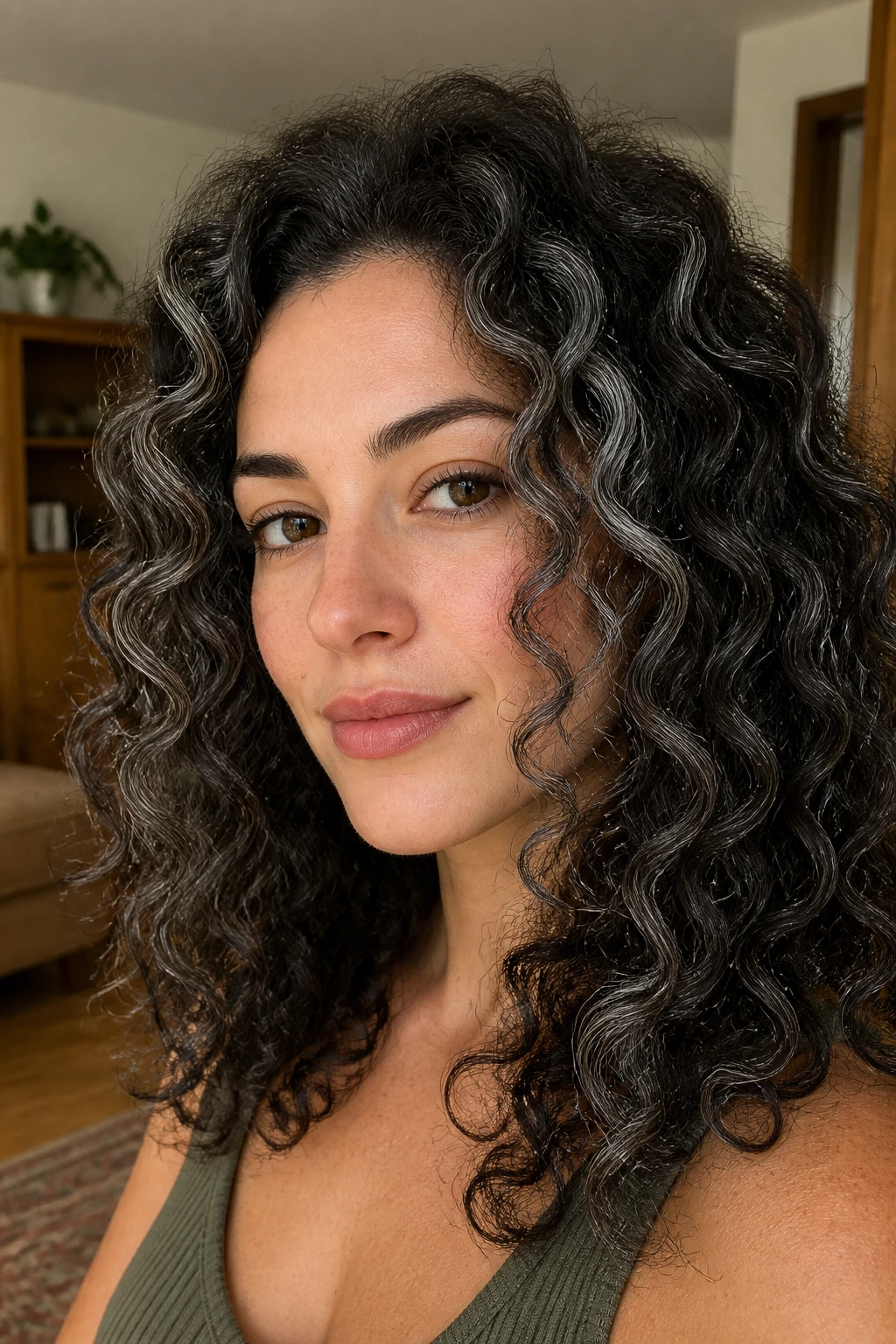
Curl patterns change everything. On curls, slate balayage should be painted on the curl clumps, not across every strand, or the hair ends up frizzy and over-lightened. The dark brown base gives the curl pattern its depth, and the slate pieces show up when the ringlets separate.
I like this on medium to tight curls because the darker base keeps the shape from getting too noisy. Cool skin tones tend to look good with the slate because it stays on the smoky side of grey. The key is restraint. A few well-placed ribbons around the outer curve of the curl can do more than a full head of lighter pieces ever will.
20. Grey Mist on a Shag Cut
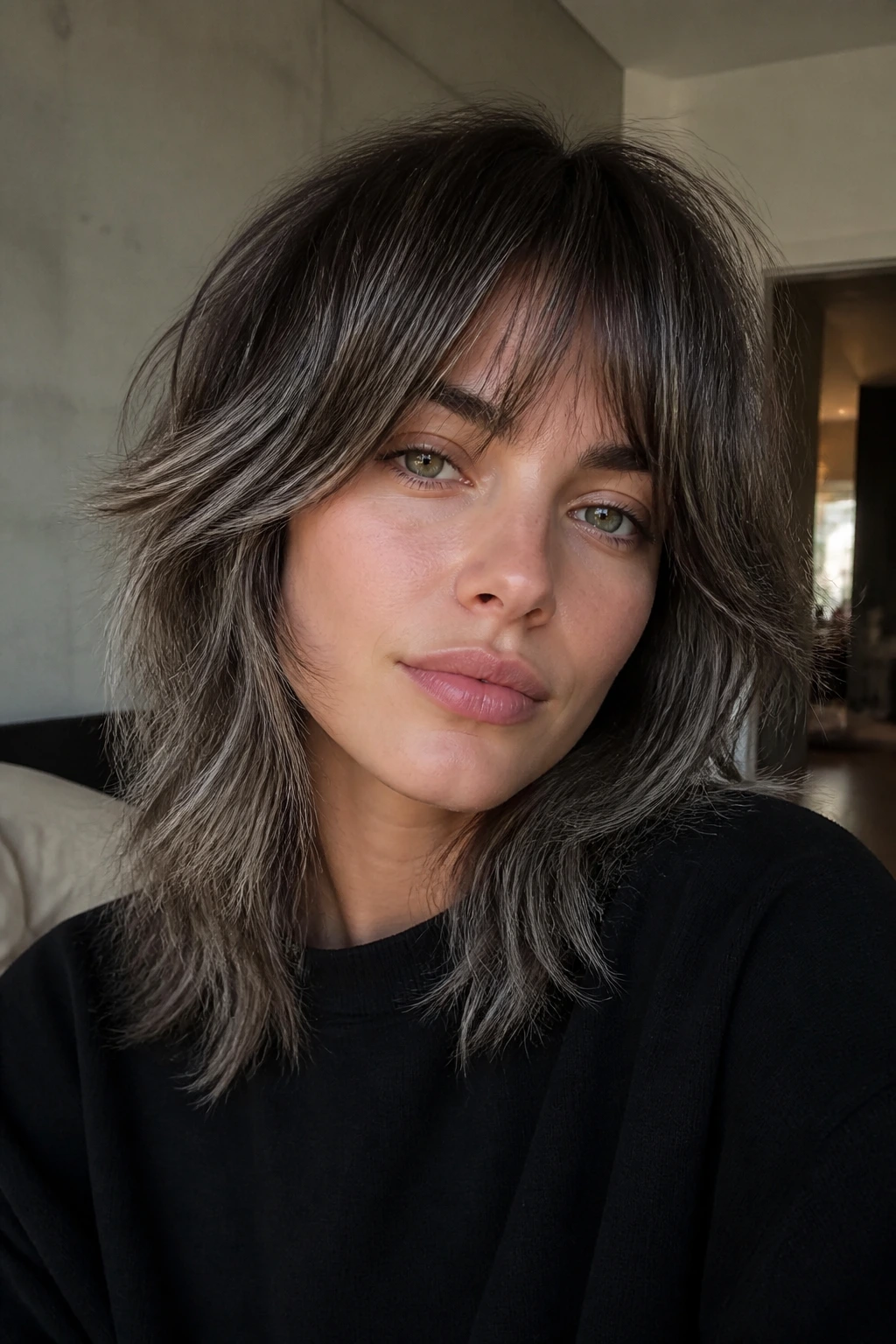
A shag cut already has movement baked in, so grey mist balayage doesn’t need to work hard. The color can be thin, airy, and scattered, almost like powder drifting through the layers. Dark brown roots keep the shag grounded, while the misty ends break up the shape in a good way.
This is one of my favorite pairings for cool skin because the overall effect is cool without being icy. The shag’s messy texture keeps the grey from feeling too formal. If you want the style to read as lived-in rather than salon-perfect, this is where you land. A little texture spray and a loose hand are enough.
21. Mink Brown with an Ash Veil
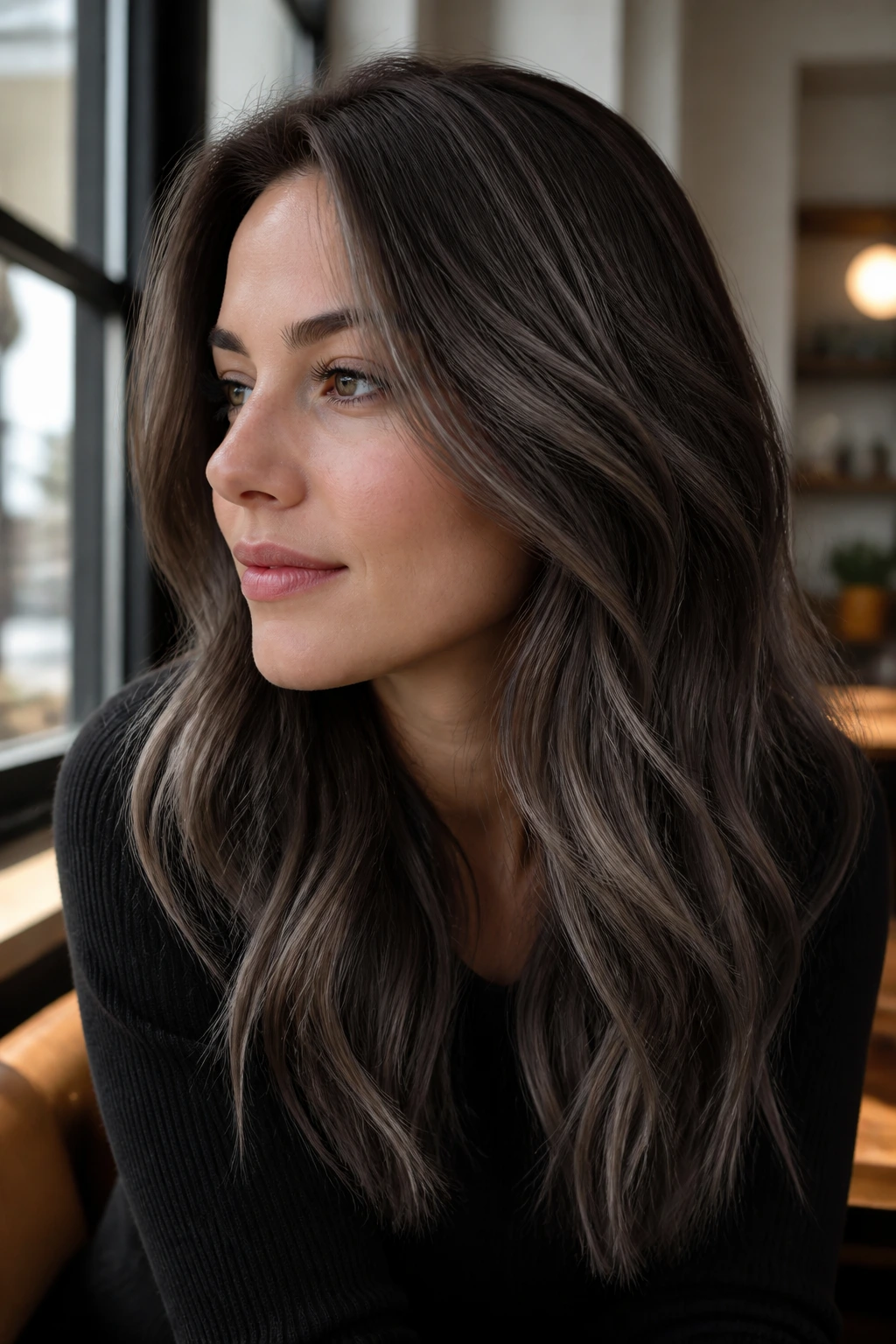
Mink brown is the quietly luxe cousin of dark chocolate. Add an ash veil on top, and the hair starts to feel almost suede-like in tone. There’s no loud silver streaking here, just a smoky overlay that cool skin tones can wear without looking drained.
This is the version I’d suggest to someone who wants grey balayage but works in a conservative setting. The change is visible, but it doesn’t scream for attention. Keep the veil soft and the lightness low. You’ll still get movement, just without the obvious highlight pattern. It’s one of the most wearable options in the collection.
22. Pewter Pop Highlights
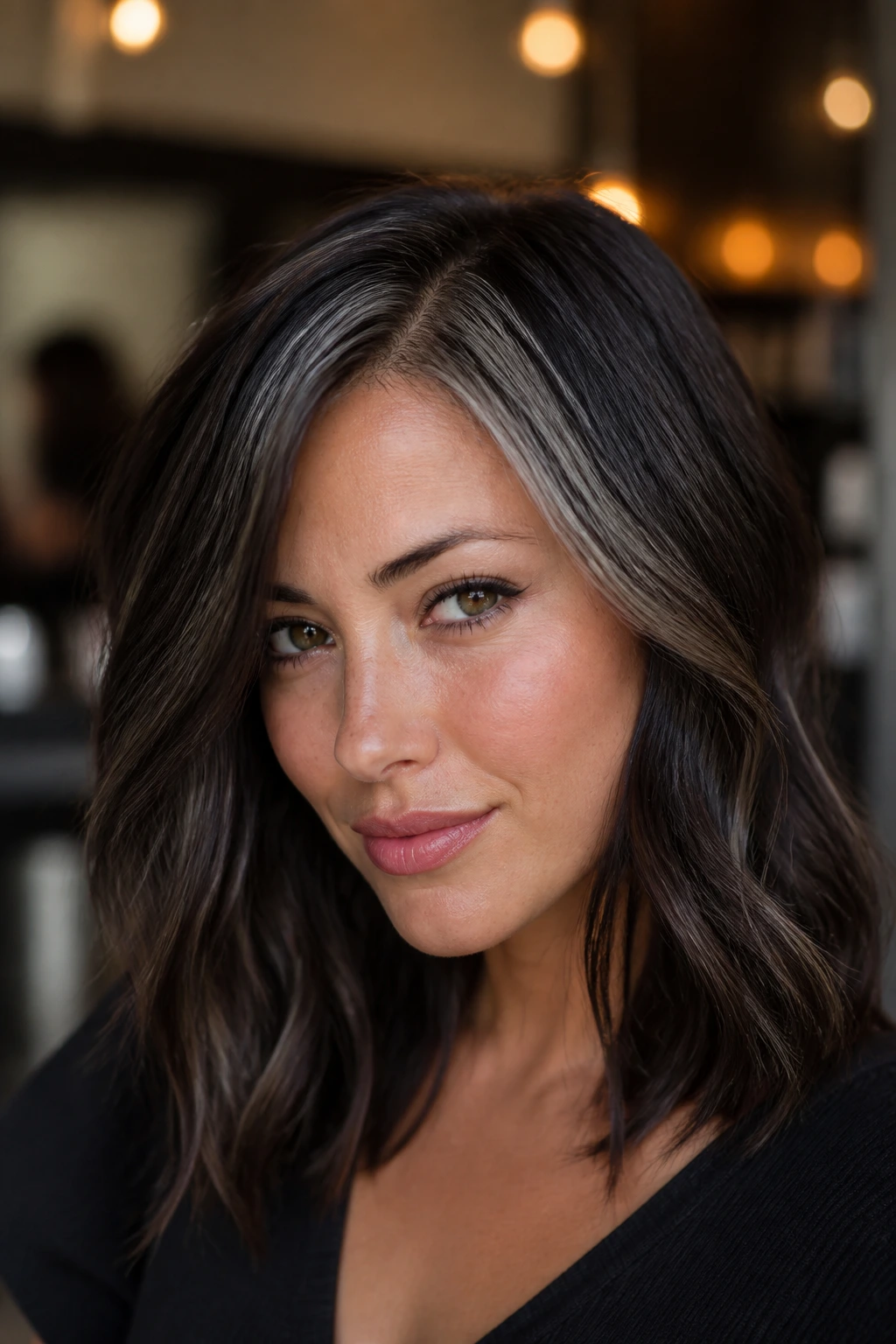
Pewter pop highlights bring a metallic edge without tipping into mirror-like silver. The strands are placed in small, strategic bursts, usually around the crown, temples, and lower lengths, so the hair catches light in specific spots. Dark brown hair loves this kind of interruption because it breaks up the mass.
On cool skin, pewter is one of the nicest tones because it keeps the finish crisp and a little architectural. It’s a good choice if you don’t want the softness of mushroom or taupe. A few sharp pops can change the whole read of the haircut. The trick is spacing. Too many and you lose the effect. Too few and it disappears.
23. Soft Silver Slices
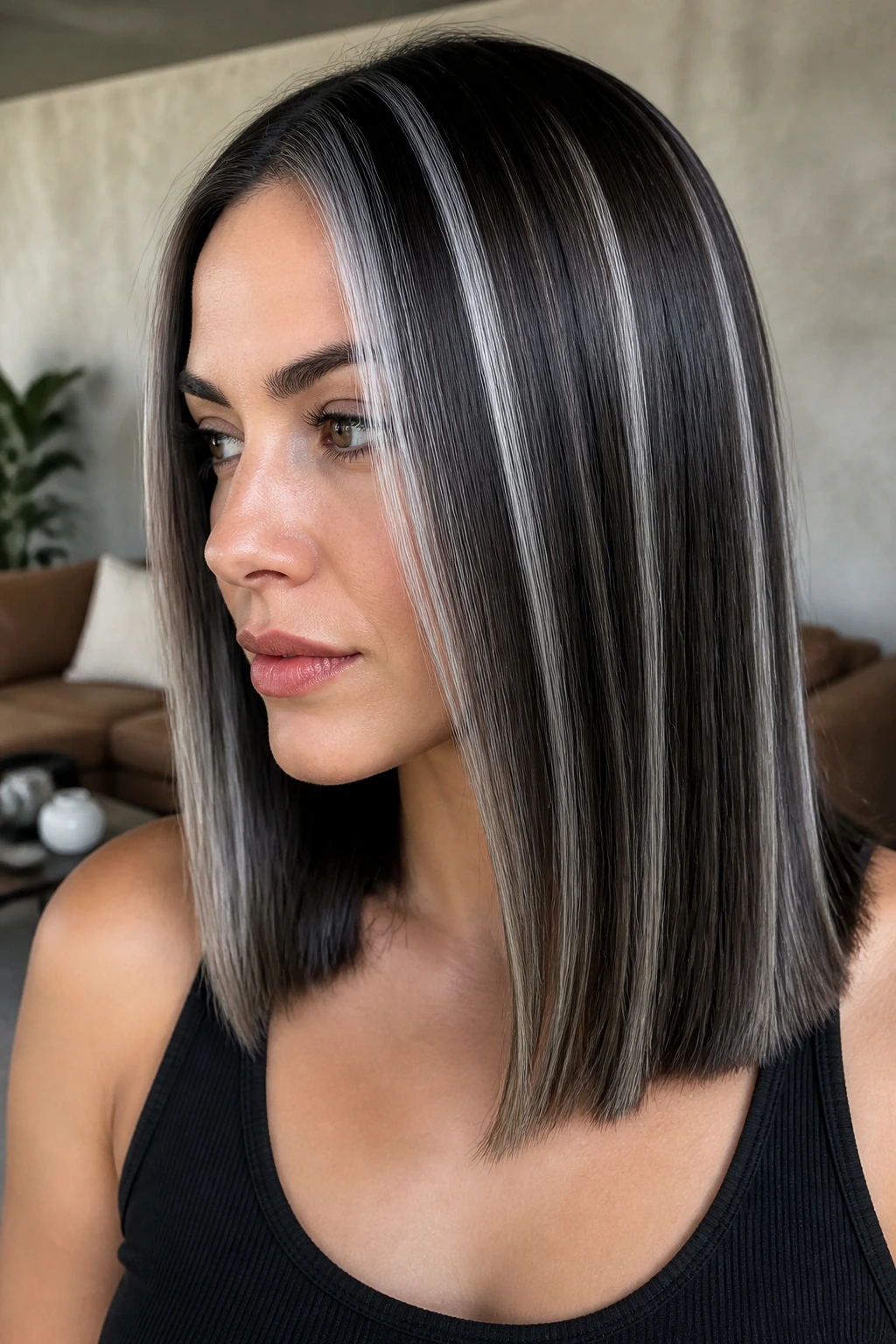
Soft silver slices are more precise than balayage, but they earn a spot here because the result can be gorgeous on dark brown hair. Instead of feathered painting, the colorist places deliberate slices that create clean ribbons of silver through the lengths. The dark base frames them and makes the color stand out.
This works especially well on straight hair or blunt cuts, where the slices stay visible and neat. Cool skin tones can wear the silver well when the toner is kept soft, not white. I’d avoid overloading the head with slices. A few placed in the right areas give you a sharper, more fashion-forward look than a full silver wash ever could.
24. Deep Brunette with Grey Ends
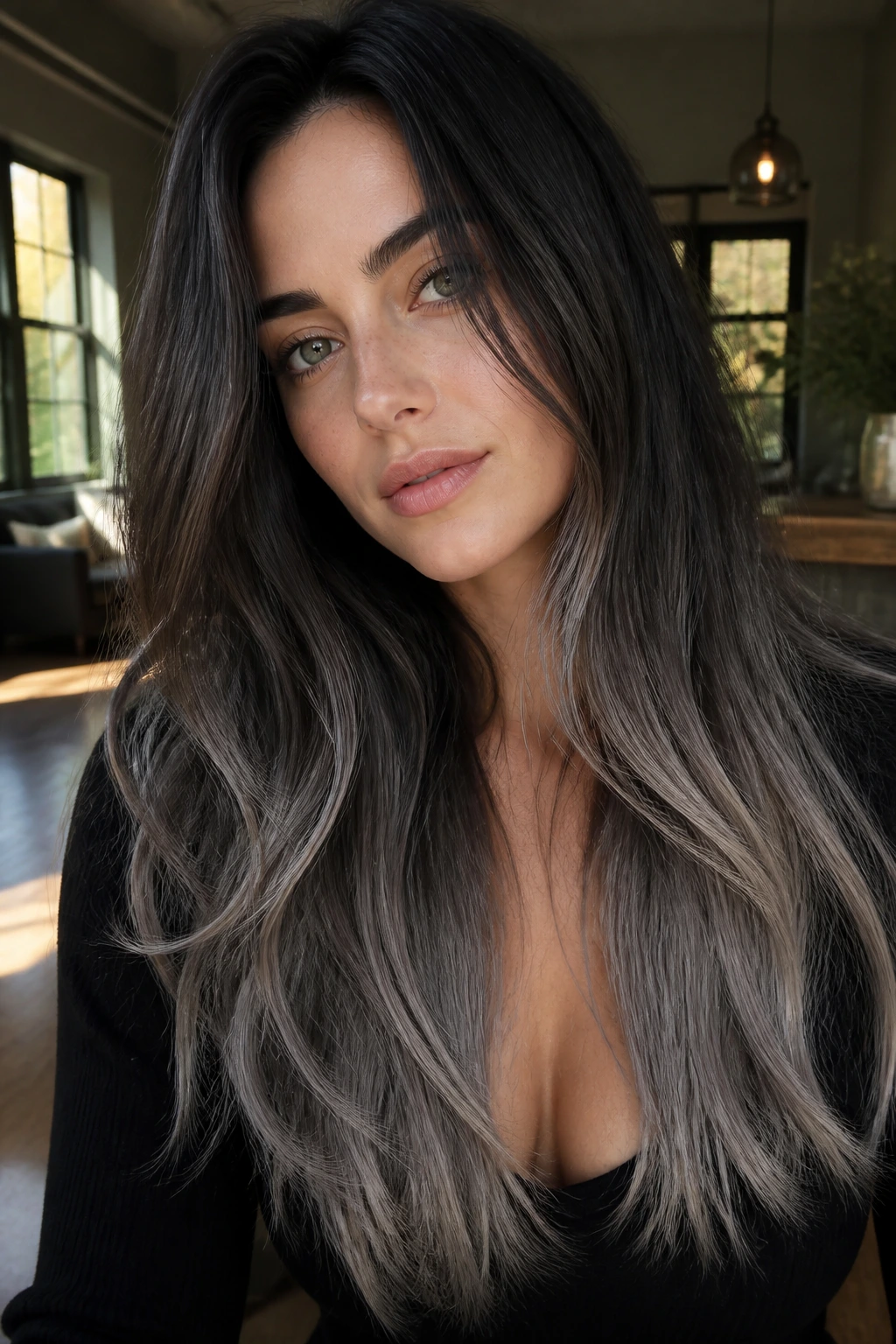
Deep brunette with grey ends is the simplest version of the ombré idea, and honestly, that simplicity is why it holds up. The top stays rich and almost inky, then the ends move into cool grey. The transition should be soft enough that the eye doesn’t catch a hard line halfway down the head.
This is especially good on long hair because the fade has room to stretch. Cool skin tones benefit from the depth at the root; it keeps the complexion from being overpowered by the lighter ends. If you like low drama at the scalp and a little drama below the ears, this one makes a clean case for itself.
25. No-Warmth Cool Brunette
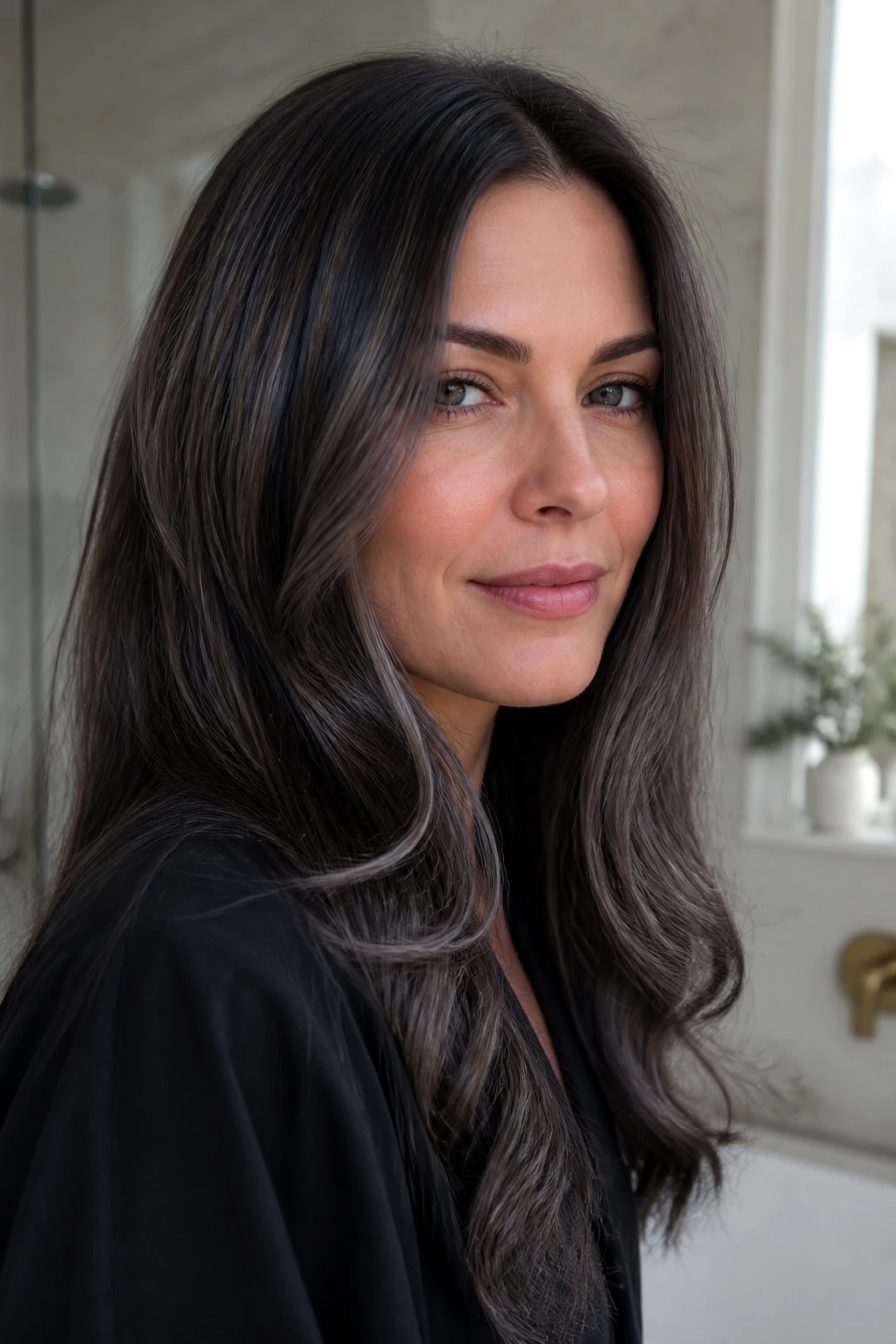
This is the version for people who are allergic to gold tones. No-warmth cool brunette keeps the dark brown base firmly ash-leaning, then adds tiny grey accents through the surface. Nothing copper, nothing caramel, nothing that tries to flirt with warmth just because it’s easier to lift.
I like this look when someone wants the idea of grey balayage more than the full visual punch of grey balayage. It reads understated, which is useful if your face already has a lot going on—strong brows, sharp cheekbones, or a bold wardrobe. Cool skin tones usually look cleanest in this lane. It’s not flashy. It doesn’t need to be.
26. Steel Sombre
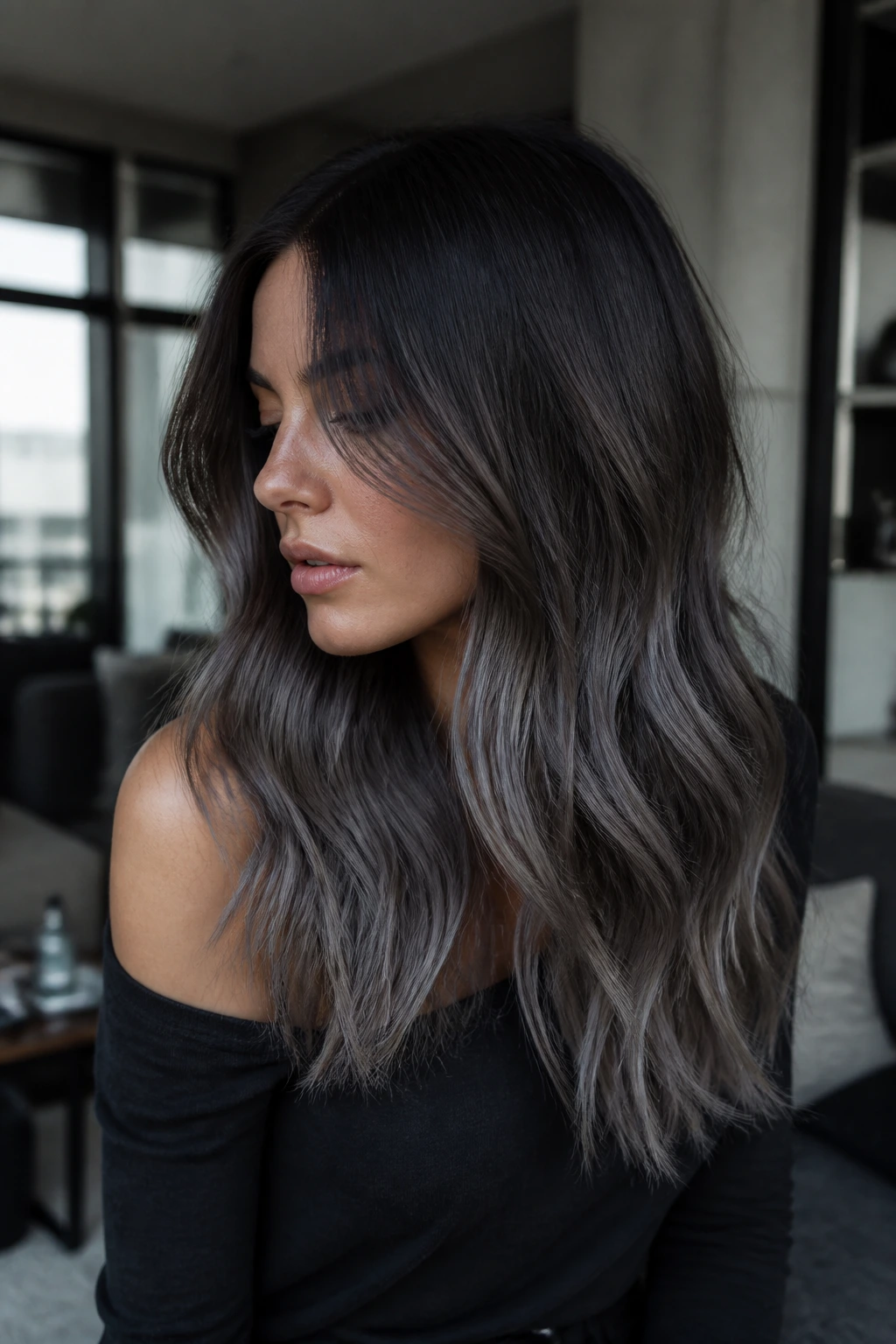
Sombre is the softer sibling of ombré, and the steel version keeps that gradual feel without letting the ends go flat. Dark brown roots melt into steel-toned mids and ends, usually with a gentler gradient than a classic ombré. The color feels controlled and a little moody.
This style works for people who want movement but not obvious stripes or panels. On cool skin, steel is one of the safest grey directions because it carries enough blue-grey reflect to stay fresh. Long bobs and layered mid-length cuts seem to wear it especially well. You want the fade to feel gradual enough that someone notices the hair before they notice the technique.
27. Tapered Grey V-Layers
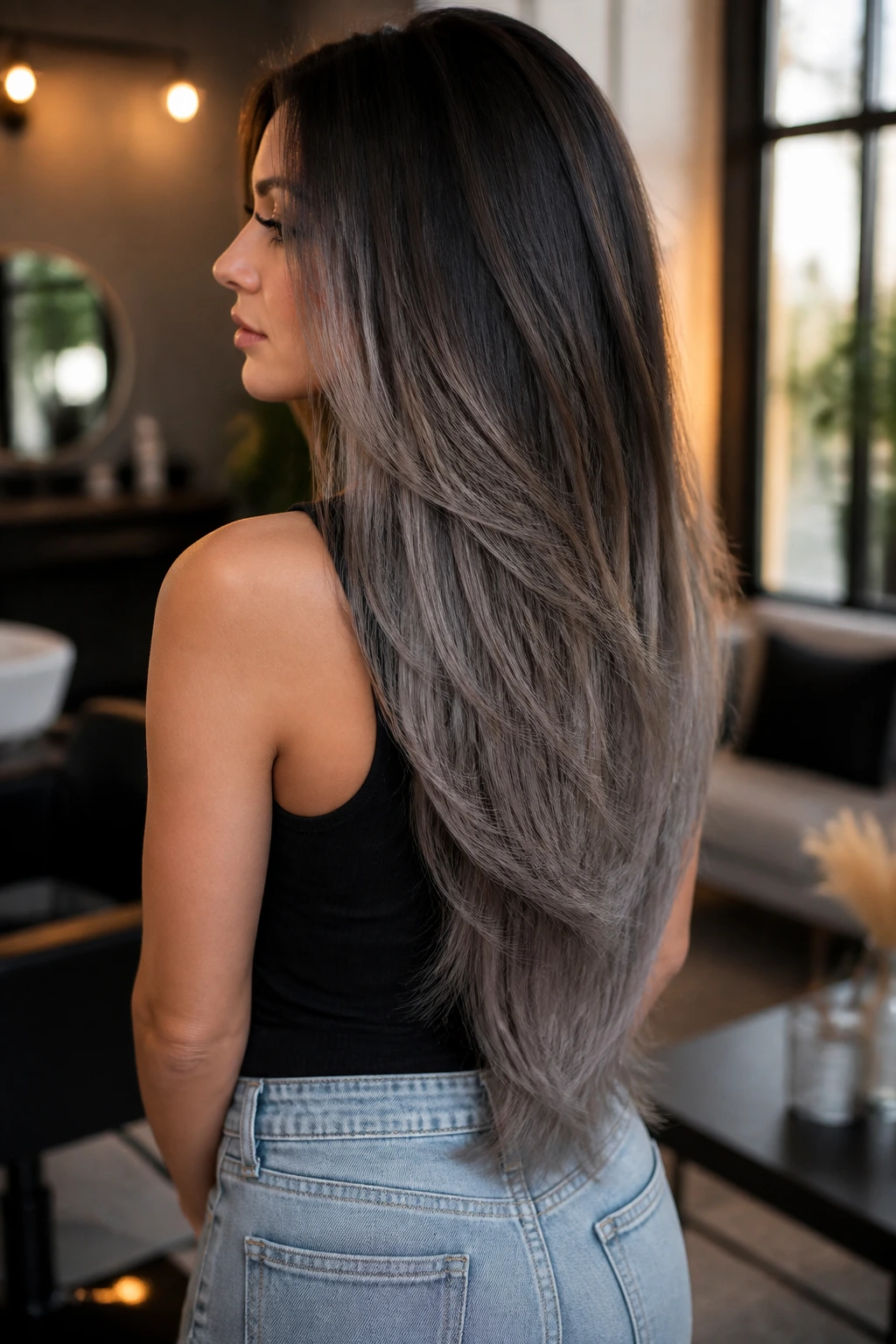
A tapered V-cut gives grey balayage a built-in shape to follow. The color can start sparingly through the upper layers and grow more visible as it tapers toward the point of the V. That means the eye sees a clean flow down the back, which suits dark brown hair very well.
I’d choose this if you like long hair but still want the cut to look deliberate. Cool skin tones usually benefit from the cooler grey at the perimeter, where it frames the body and face without making the scalp area too light. The V-shape keeps the whole look from feeling bulky. It’s neat, a little dramatic, and far less fussy than it sounds.
28. Ashy Butterfly Cut Balayage
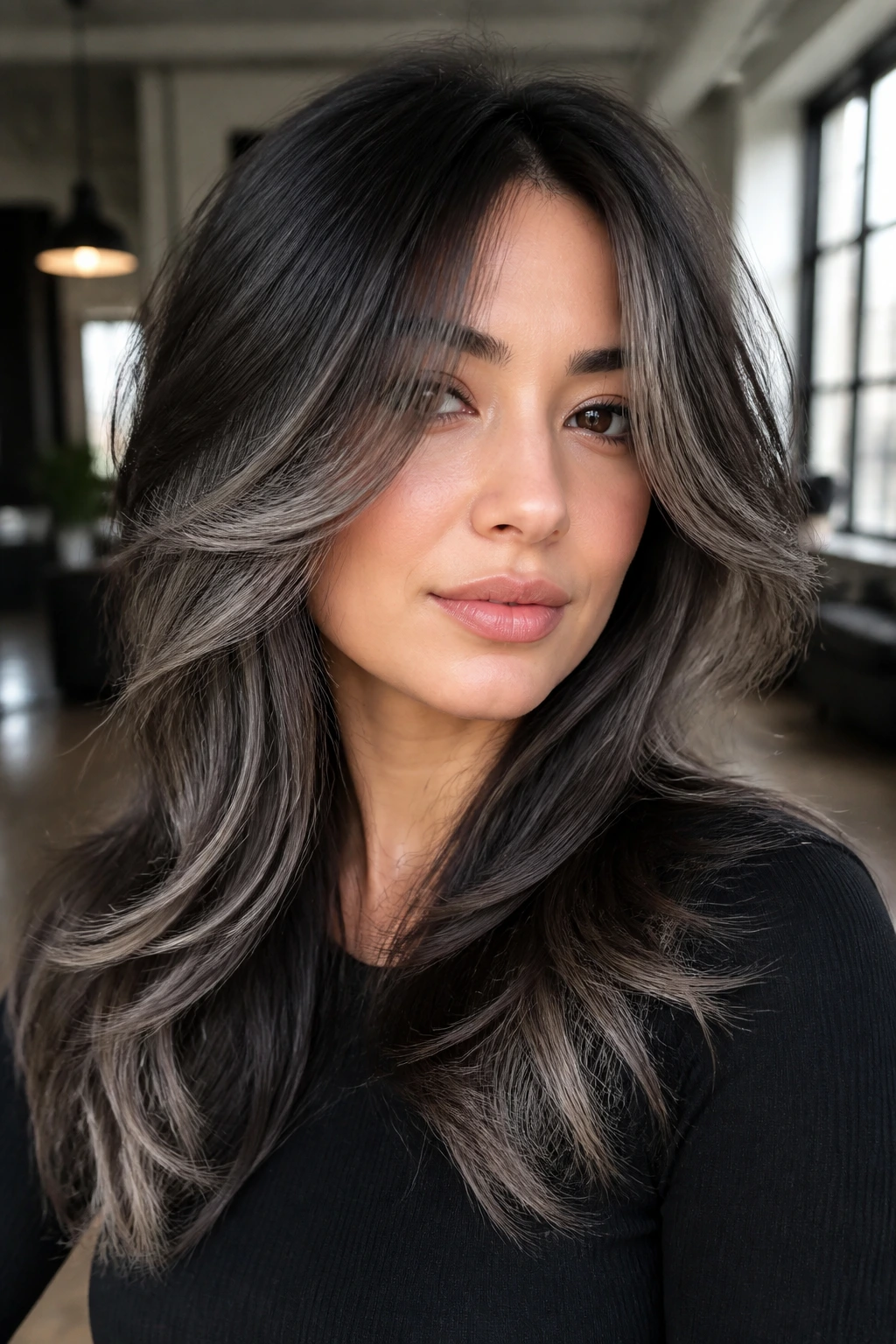
The butterfly cut gives you those lifted face-framing layers, which is exactly where ash balayage can shine. The grey ribbons sit along the bends of the shorter front pieces and then continue into the longer layers underneath. The effect is soft up top and fuller through the ends.
This is a strong choice for cool skin because the lifted front pieces open the face without needing a heavy money piece. A butterfly cut also makes the color move when you curl the layers away from the face. I like this one for anyone who wants volume and dimension in the same appointment. It gives both, if the toner stays cool.
29. Cool Brunette with Grey Babylights
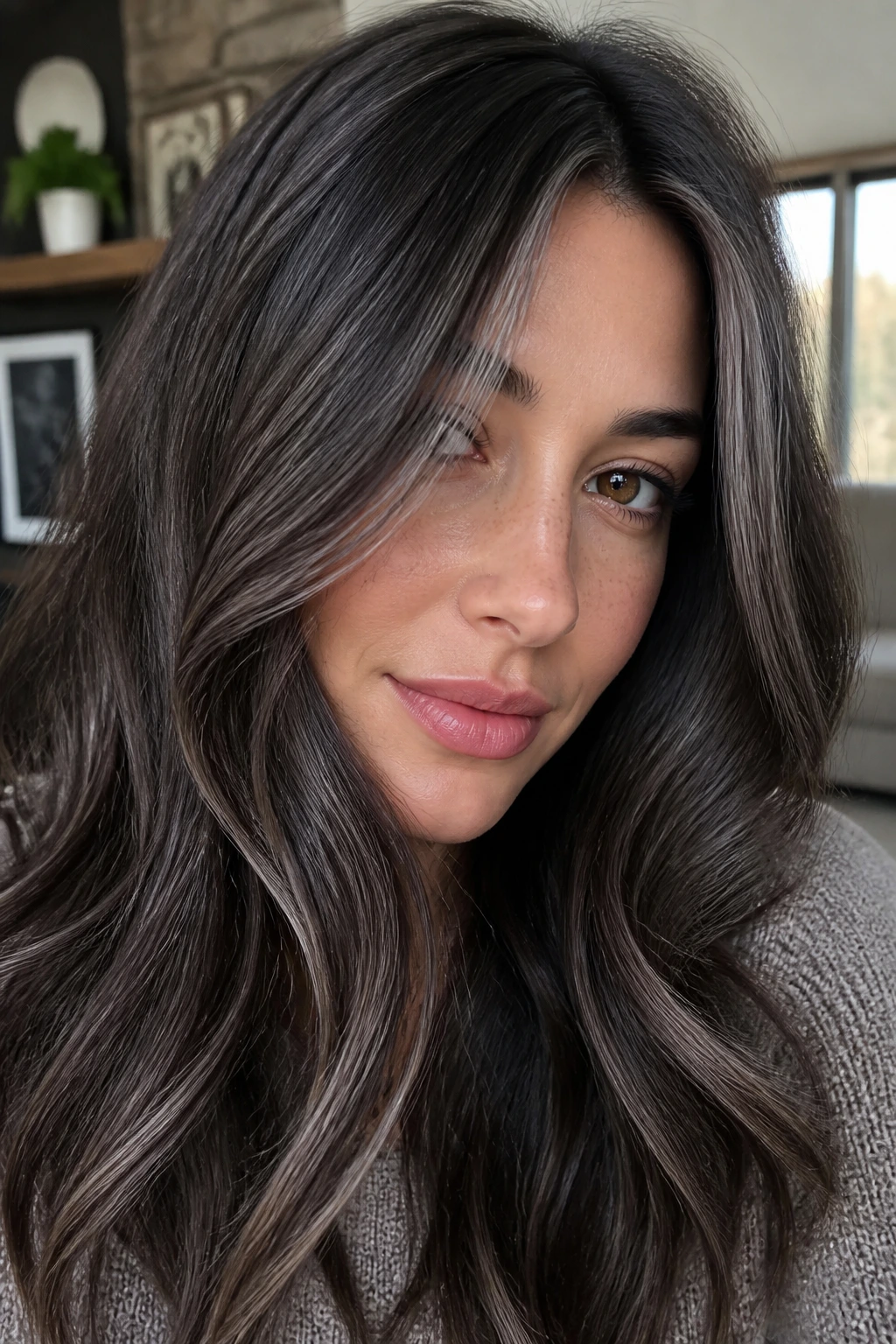
Grey babylights are the quietest way to bring this whole palette into dark brown hair. The strands are so fine they almost disappear at first glance, which is exactly what makes them elegant. On cool skin, those tiny grey threads keep the brown from looking flat while staying understated.
This is the choice for first-timers, professionals with dress codes, or anyone who wants dimension without seeing a dramatic contrast every time they pass a mirror. Babylights are also useful if your hair is fine, because big ribbons can swallow the length. The smaller the thread, the more natural the finish.
30. Storm Cloud Balayage
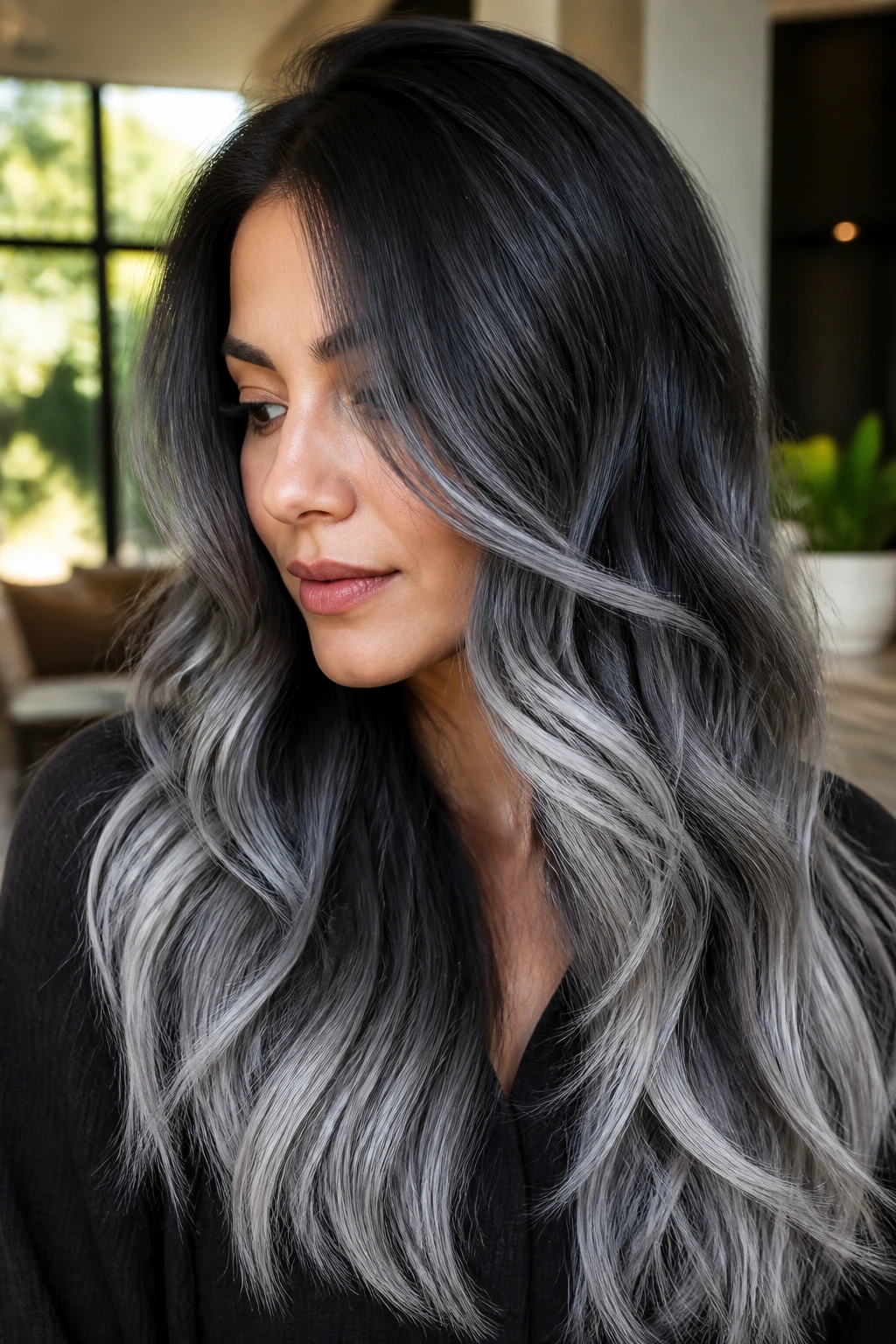
Storm cloud balayage has the strongest personality in the set. The root stays dark and moody, the mids shift into smoky graphite, and the ends flash a brighter silver-grey, like light breaking through cloud cover. It’s dramatic, but the cool palette keeps it from veering into costume territory.
This is one of the more expressive choices for cool skin tones because the deeper shades near the face prevent washout. It’s especially good on long waves, where the layers can reveal the transition in slow motion. If you like hair that makes a point before you say a word, this is the point.
31. Black-Brown with Charcoal Sweep
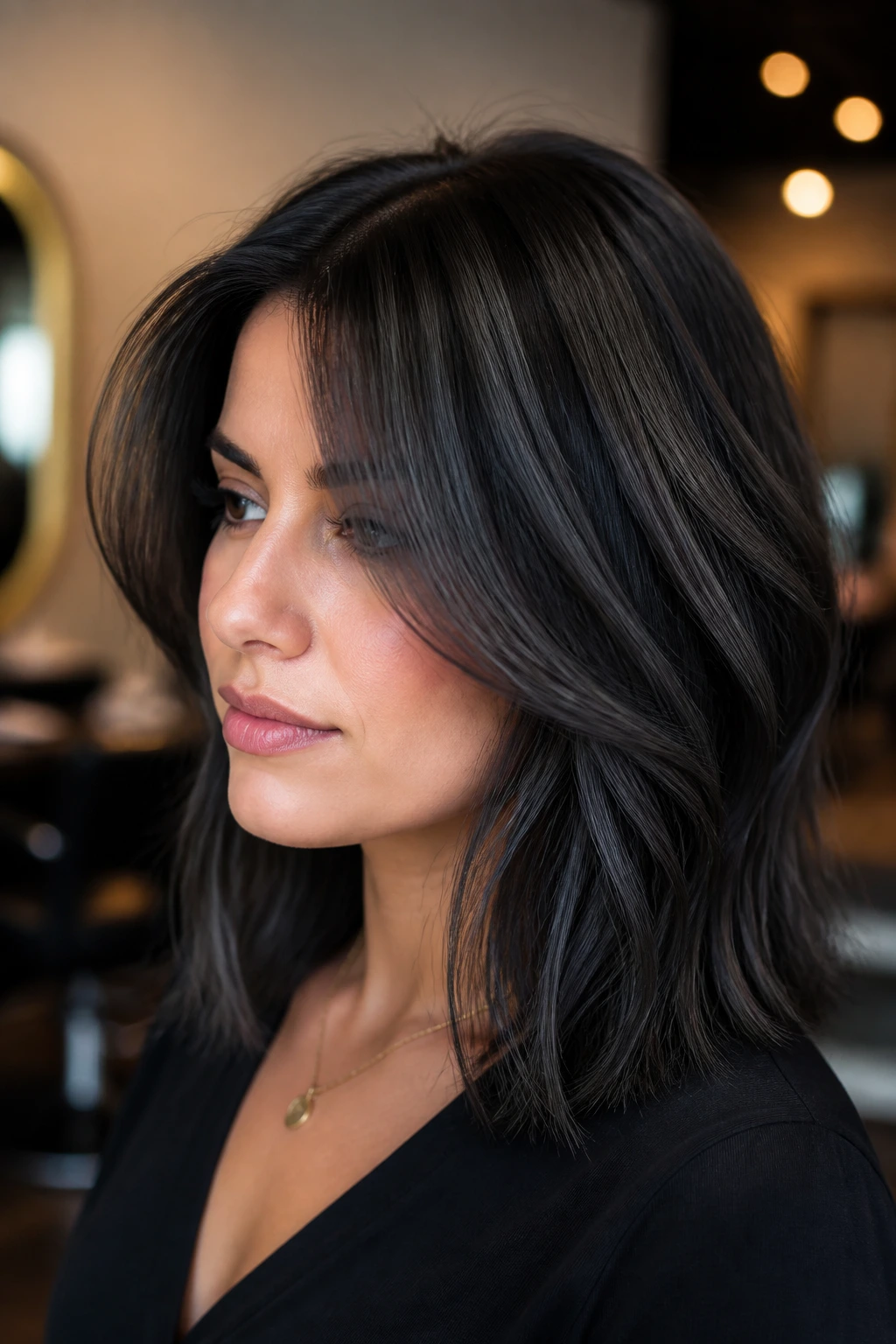
Black-brown with a charcoal sweep is close to the darkest end of the spectrum, and that’s exactly why it reads so well on cool skin. The base remains nearly black, while the charcoal is swept through the surface in broad, smoky strokes. There’s contrast, but not the kind that feels bright or beachy.
This style works best when you want edge rather than softness. Short to medium layers handle it well, especially with a smooth blowout or a bend at the ends. The charcoal sweep should look like shadow, not highlight. That shift in mindset matters. You’re not lightening the hair as much as you’re adding tone on top of depth.
32. Ash Root Smudge and Grey Ribbons
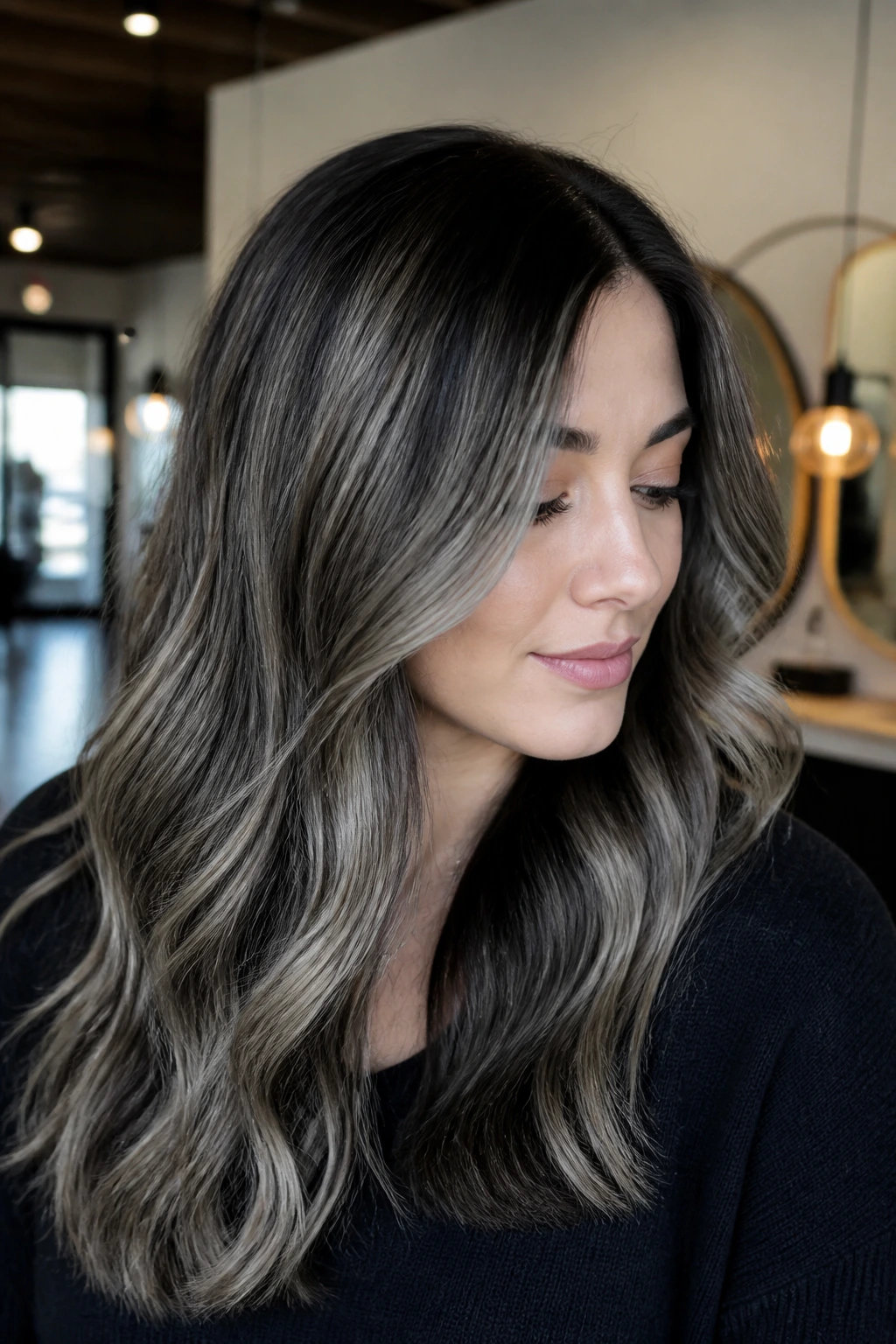
Ash root smudge and grey ribbons are the grown-out version of a well-thought-out balayage. The root smudge softens the line where new growth appears, then the ribbons carry the cooler tone through the rest of the length. It’s a very salon-smart look because it respects regrowth instead of fighting it.
On cool skin, the ash root keeps the scalp area tidy and the grey ribbons do the brightening work elsewhere. I like this on people who are coming out of older highlights or previous color and want a smoother reset. The finish is calm, practical, and less likely to show a hard line after a few weeks.
33. Dusty Silver Lob
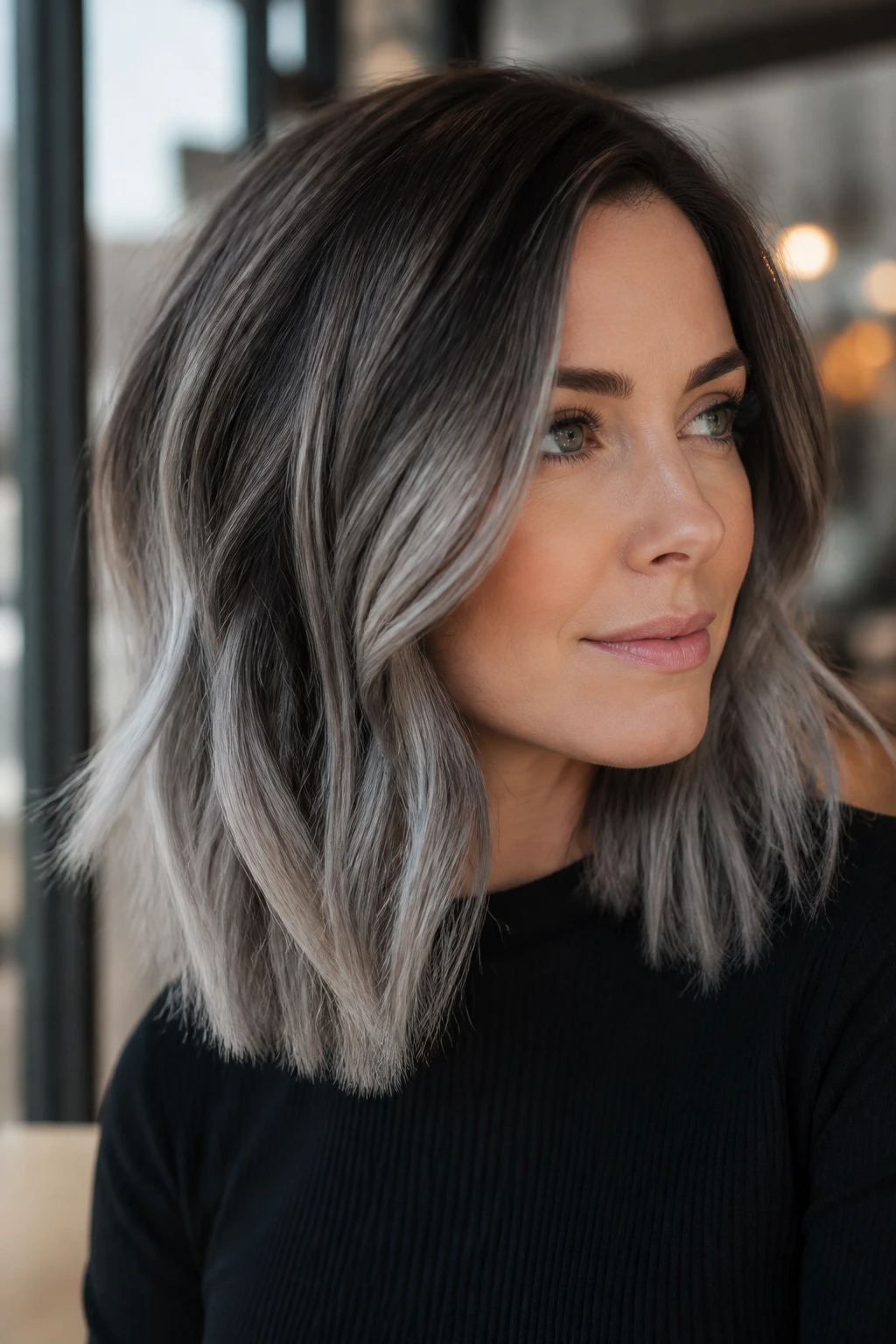
A dusty silver lob sits between polished and undone. The lob gives structure, and the silver dusting keeps the ends from looking blunt or heavy. Dark brown at the top, silver-grey at the lower half, clean shoulder-length movement—that’s the shape in one sentence.
This is one of the easiest cool-skin looks to wear because the color doesn’t need a lot of styling to make sense. A slight wave or a tucked-behind-the-ear finish is enough. It’s also one of the better choices if you like simple clothes and want the hair to do the talking. Not loudly. Just clearly.
34. Cool Beige-Gray Blend
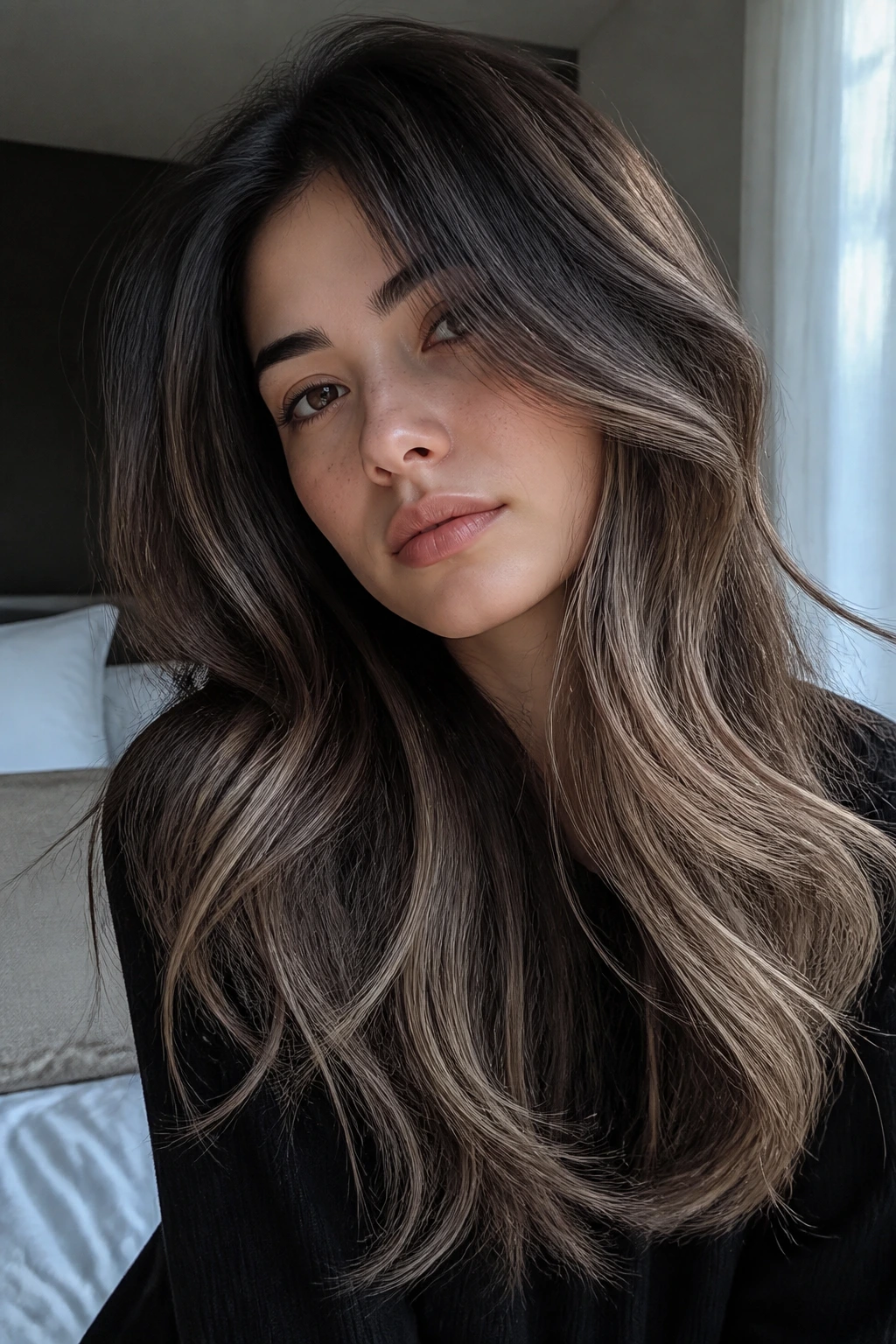
Cool beige-gray, or greige, is a useful middle path for people who find full silver too stark and full brown too plain. The beige stays restrained and cool, while the grey gives the tone its backbone. On dark brown hair, the result is soft, smoky, and just a little polished.
This is a smart option for cool skin tones that need some warmth in the palette but not actual warmth in the pigment. That distinction matters. You’re not adding gold. You’re adding softness. The greige blend sits nicely on layered cuts and longer lengths where the tone can spread out without looking flat.
35. Frosted Cocoa Halo
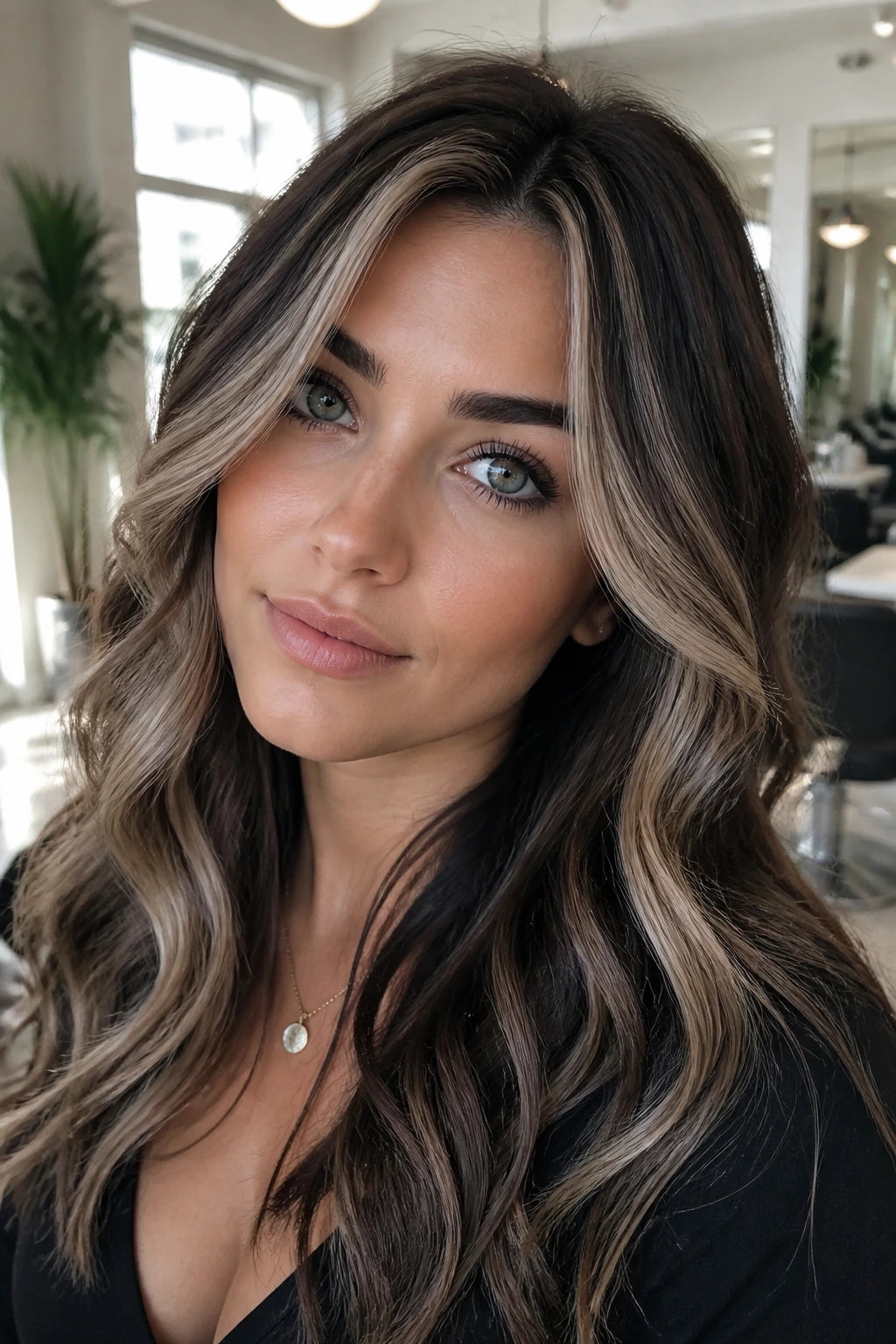
A frosted cocoa halo places the lighter pieces where they frame the face and crown the head, then lets the darker cocoa base hold the length. It’s a flattering arrangement because the brightness lives near the features, not just at the ends where it can be easy to miss. On cool skin, the frosted halo can make the face look cleaner and more sculpted.
I like this for people who want the color to feel present without dominating the haircut. The halo effect works on waves, curls, and straighter styles, though curls show it especially well. Keep the frosting cool and thin. Thick, chunky brightness up top can overwhelm the whole look. Thin placement does the job with less fuss.
Why Dark Brown and Grey Balayage Flatters Cool Skin Tones
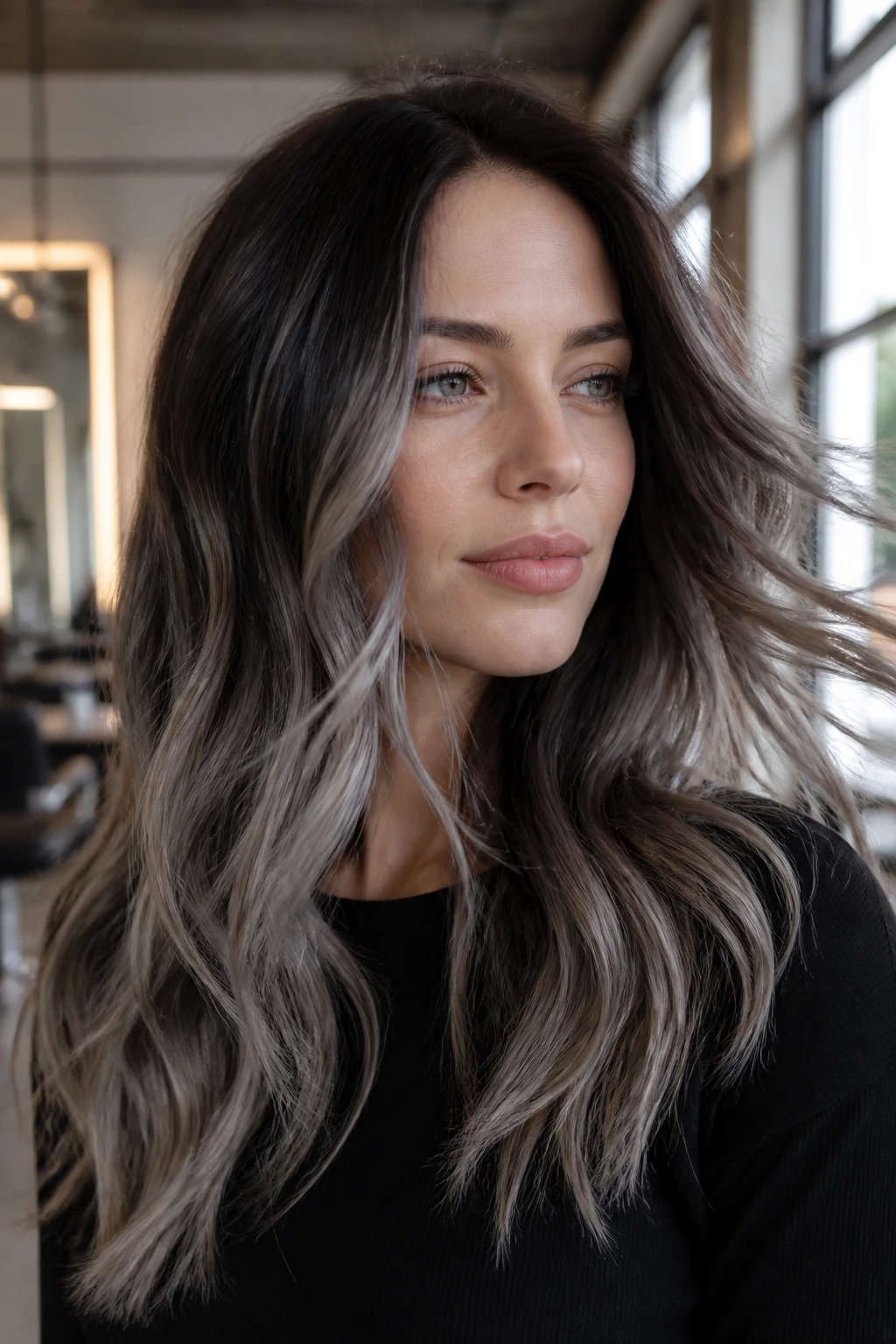
The reason this color combo works is plain old contrast discipline. Dark brown gives the eye a resting point. Grey gives the hair movement. On cool skin, that means the face gets framed by tones that echo the undertone instead of fighting it. Ash, graphite, slate, and pewter tend to look cleaner against cool complexions than beige or caramel because they don’t add extra yellow into the mix.
There’s also a shape issue. A deep brunette root keeps the scalp area grounded, which is especially useful if your hairline is pale or your skin flushes easily. When the brighter grey pieces stay out in the mid-lengths and ends, they read as dimension rather than a blanket of lightness. That’s why grey balayage often looks better in motion than in a static swatch. Hair moves. Color should, too.
And one more thing: grey doesn’t have to mean icy-white. The most wearable versions usually lean into smoke, steel, mushroom, or greige. Those tones keep the style flattering on cool skin without making the hair look flat or one-note. In practice, that’s the sweet spot. Not silver for silver’s sake. Balance.
Essential Tools, Toners, and Salon Must-Haves
-
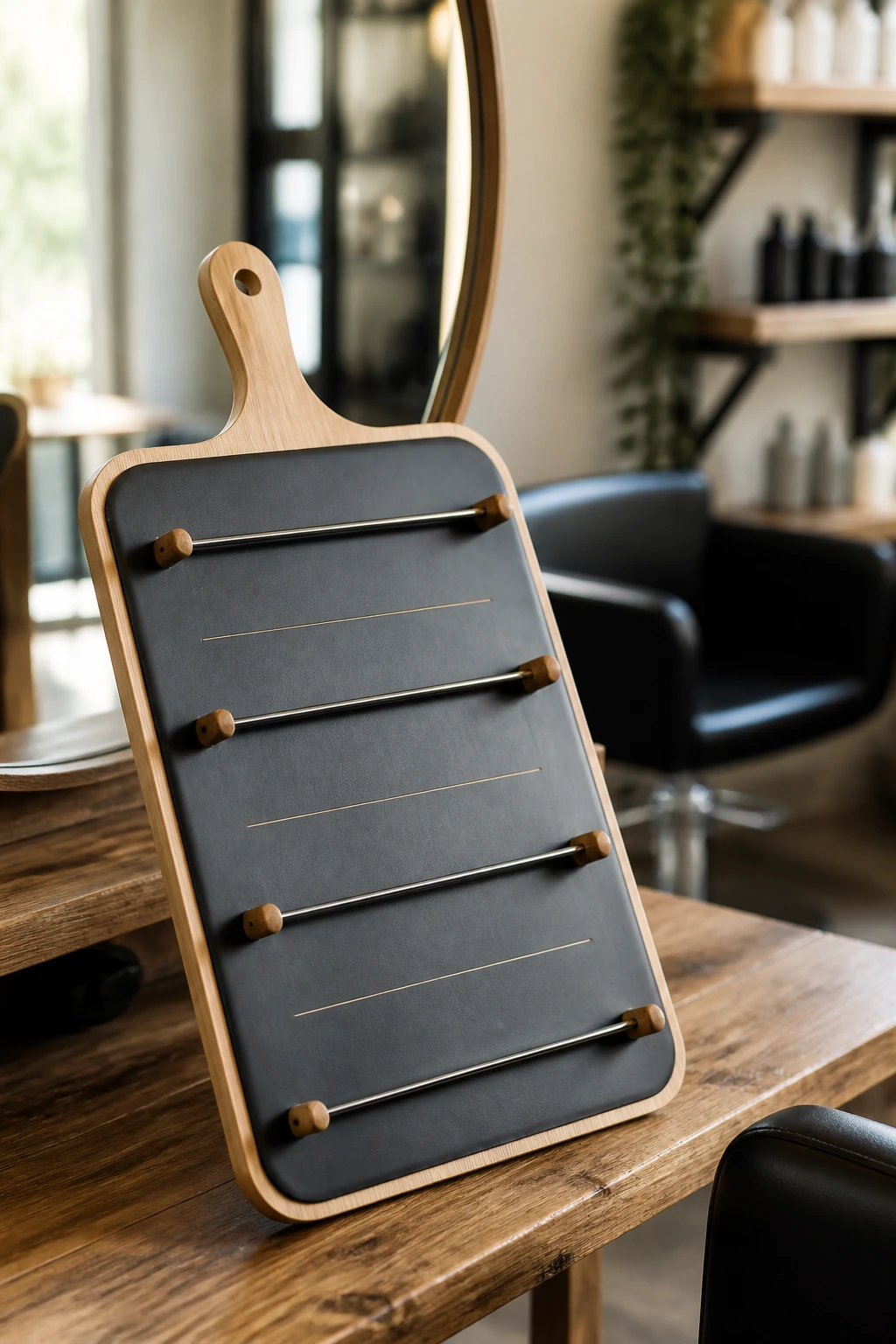
Balayage board or paddle: Helps support painted sections and keeps the lightener from slipping through thick dark hair.
-
Tail comb: Useful for clean sectioning, face-framing placement, and checking whether the grey pieces are evenly spaced.
-
Tint brush and color bowl: You need these for precise application of toner or gloss, especially if the grey needs a cool finish rather than a blanket silver.
-
Lightener and developer chosen for your base level: Dark brown hair often needs careful lift, and the developer strength should match the hair’s condition, not your impatience.
-
Blue-violet toner or gloss: This is what keeps the grey from turning yellow or khaki. Ask for a cool ash or silver direction, not a beige gloss.
-
Bond builder: Especially useful on previously colored or naturally coarse hair. It helps preserve the feel of the hair after lift.
-
Color-safe shampoo and conditioner: Sulfate-free options keep the toner from fading out too fast.
-
Purple shampoo, used sparingly: Fine for occasional maintenance, but too much will make grey pieces look dull or slightly lilac.
-
Heat protectant: Grey balayage shows dullness fast if you keep frying it with hot tools.
-
1-inch curling iron or wand: The easiest way to show off ribbons, smoke, and movement without creating a stiff curl pattern.
-
Blow-dryer with nozzle and round brush: Good for smoothing the cut and making the cool tones look reflective instead of fuzzy.
-
Reference photos in natural light: Not glamorous, but wildly useful. A grey that looks soft in daylight can look almost white under salon lighting.
How to Ask for the Right Grey at the Salon
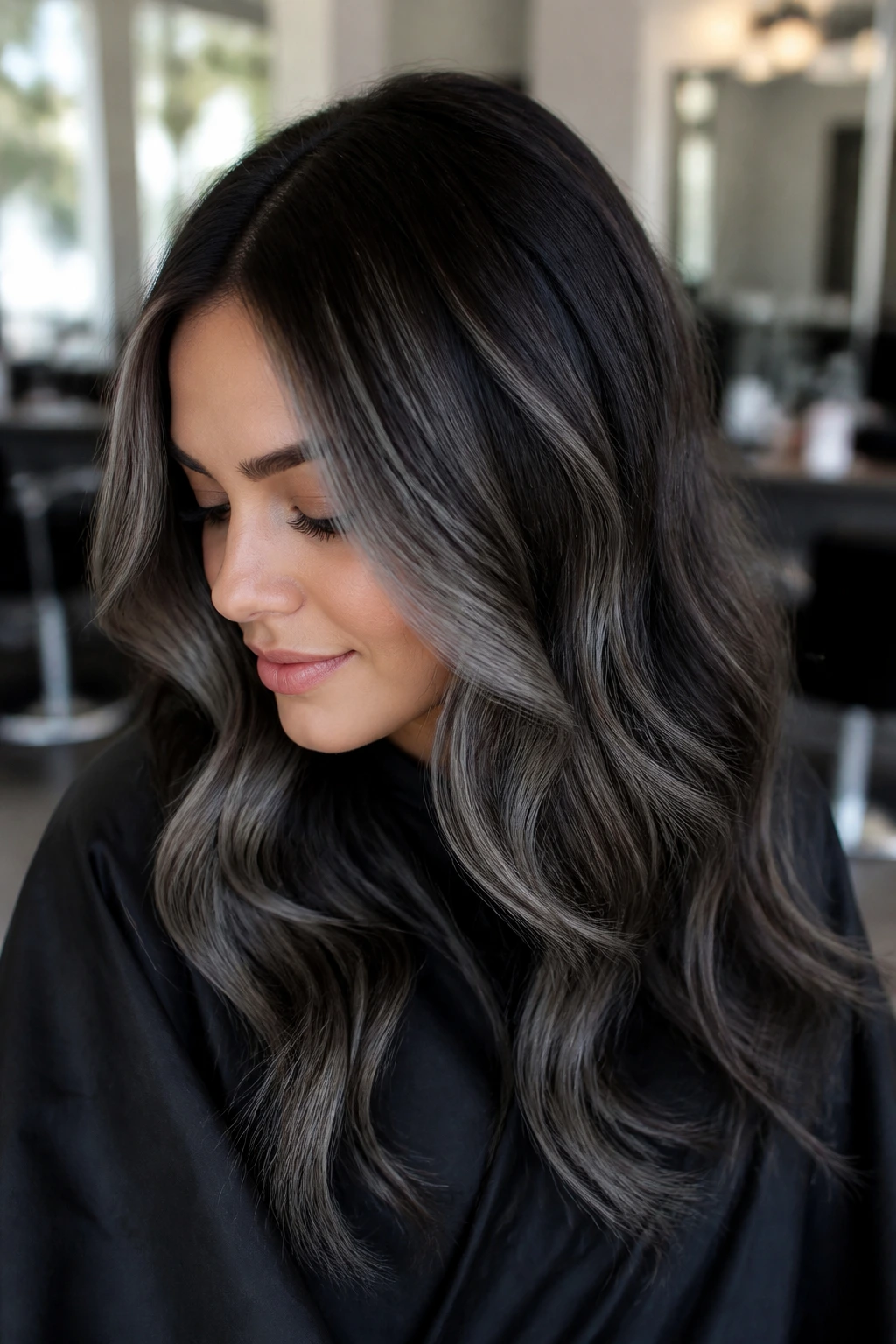
Bring more than one photo, and make them honest photos. If your hair is naturally dark brown, a reference on someone with medium blonde hair won’t translate cleanly no matter how good the picture looks on your screen. A better brief is: “dark brown base, cool grey ribbons, smoky not silver-white, soft grow-out.” That tells the colorist what to build, not just what to copy.
Placement matters more than the word grey. Say whether you want a face frame, hidden panels, grey ends, or soft ribbons through the mids. Those placement choices change the whole look, and they matter even more if your hair is thick or curly. A tiny money piece can do more than scattered highlights when the base is very dark.
Tone vocabulary helps. Words like ash, graphite, slate, pewter, mushroom, greige, and steel all point in different directions. If you love one but hate another, say so. “I want smoke, not sparkle” is a better salon sentence than “make it grey.” You can also ask how often the toner will need refreshing; that answer tells you a lot about the maintenance you’re buying.
Be honest about what’s under the color. Box dye, henna, and old warm highlights change the lift pattern. A good stylist can work with that, but they need the truth first.
How to Wear Dark Brown Grey Balayage Without Letting It Go Flat
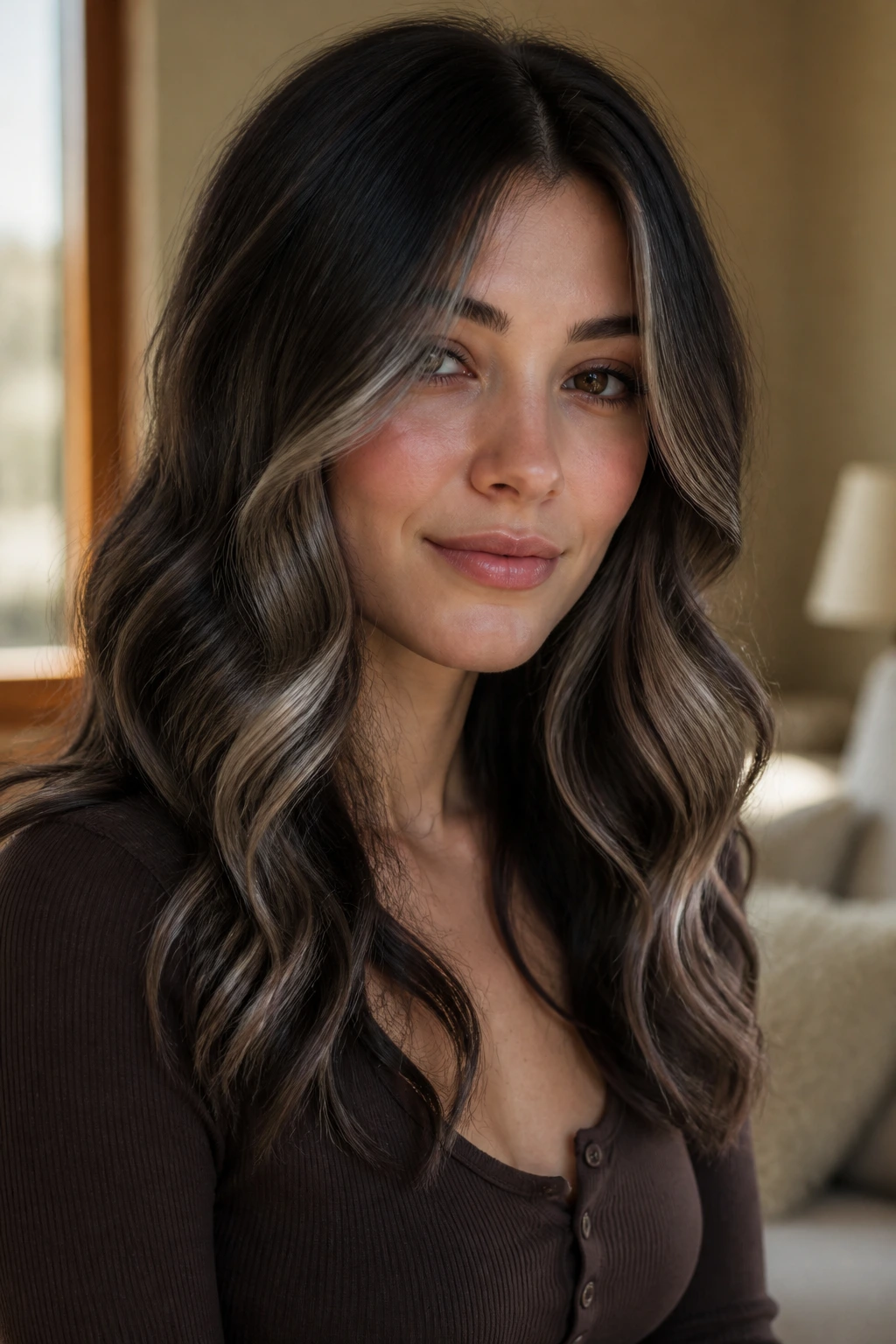
The finish matters as much as the color. Loose waves show the ribboning best, especially on longer hair. Straight styles make the tone look sharper and more graphic. Curls need lighter placement at the outer curve, or the grey disappears into the texture. If the hair is thick, a smoothing blowout can keep the smoky tones from looking fuzzy.
Styling: A 1-inch iron, soft bend, and a finger-combed finish are enough for most of these looks. Too much curl can make the lighter pieces bunch up.
Makeup: Cool rosy blush, berry lips, plum liner, and taupe shadows keep the complexion in the same family as the hair. Warm coral can fight the palette.
Wardrobe: Charcoal, navy, black, slate, icy mauve, and deep wine tend to sit well beside dark brown grey balayage. Cream can work, but yellow cream can make the grey look dull.
Parting: Center parts sharpen symmetrical looks like silver ombré and steel sombre. Off-center parts flatter face-framing styles and help the lighter front pieces do more work.
Smart Shade Selection for Cool Skin Tones
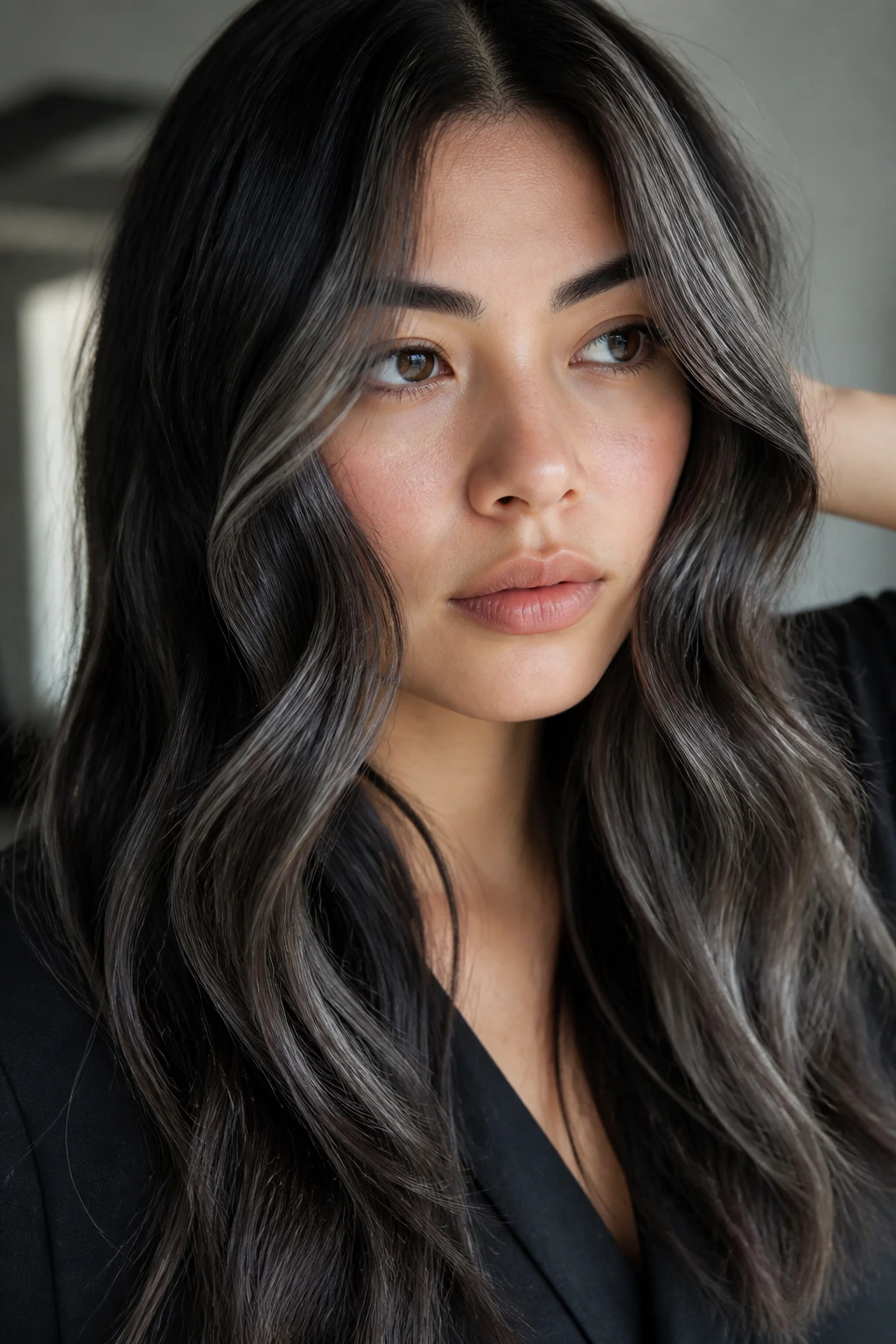
Cool skin tones are not all the same, and that’s where a lot of grey balayage advice gets sloppy. Fair cool skin usually likes pearl, smoke, and soft greige. Medium cool skin can handle graphite, slate, and pewter with less risk of washing out. Deeper cool skin often looks strongest with charcoal, steel, and darker silver accents rather than ultra-pale pieces.
The key is keeping the grey cool without turning it icy and lifeless. A little depth in the toner goes a long way. If the tone is too pale, the hair starts competing with the skin instead of framing it. If it’s too beige, the grey loses the point. The middle is where the flattering stuff lives.
I’d also pay attention to contrast near the face. If your skin is pale and cool, a dark root with smoky front pieces often looks more alive than all-over silver. If your skin is deeper and cool, thicker charcoal or slate sections can add the right amount of drama without flattening the complexion. Matching tone is good. Matching depth matters too.
Common Mistakes That Turn Grey Balayage Muddy
-
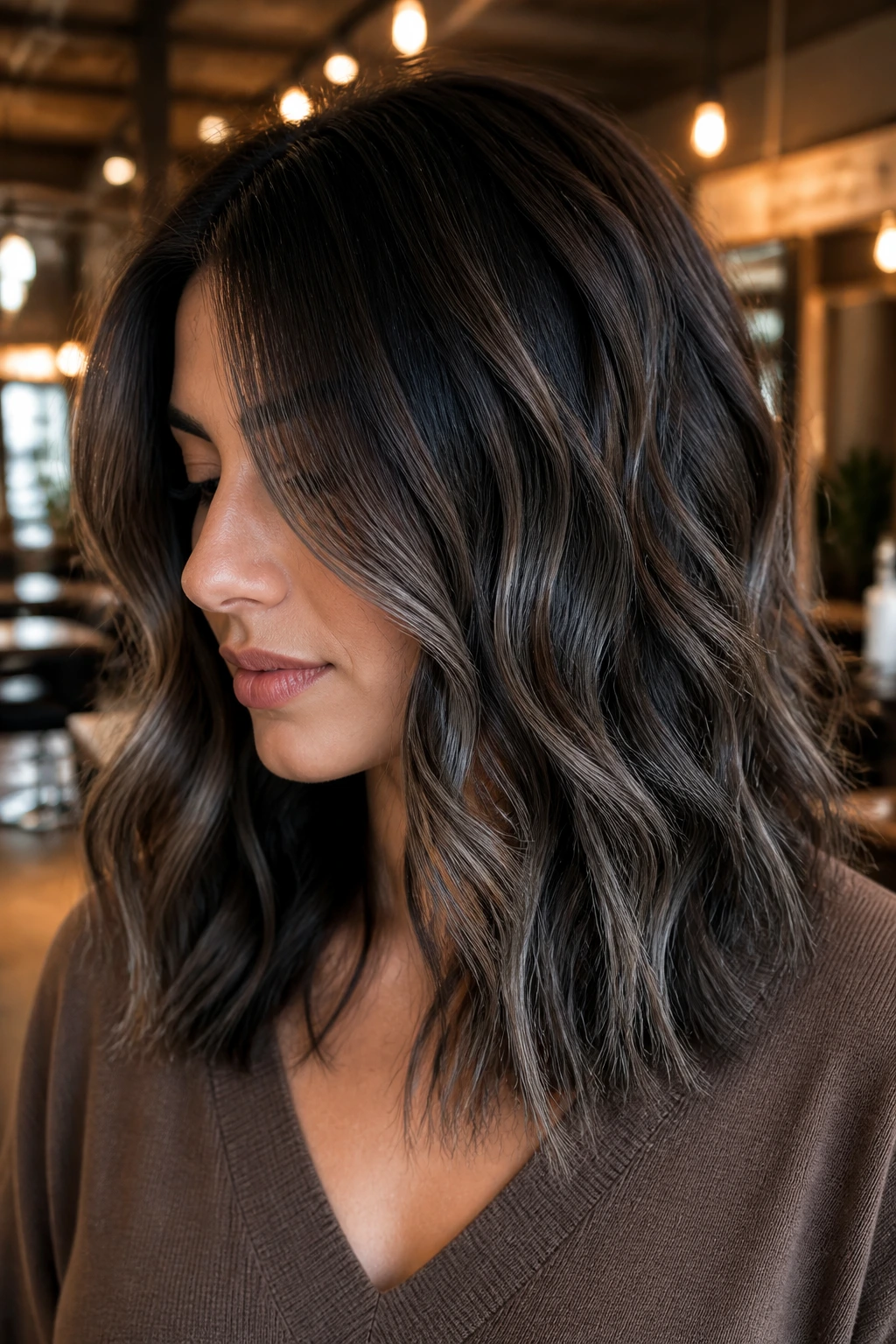
Choosing a beige toner when you wanted grey: Beige can read warm, and on cool skin it often looks muddy instead of soft. The fix is a cooler toner family—ash, silver, graphite, or blue-violet gloss.
-
Lifting too far too fast: Hair that’s pushed all the way to a pale yellow base can lose the dark-brown depth that makes this look work. A more controlled lift usually leaves the grey richer and healthier-looking.
-
Putting too much grey everywhere: If the whole head is lightened the same way, the result can flatten quickly. Leave dark pieces between lighter sections so the hair keeps some shadow.
-
Ignoring porosity: Damaged hair grabs toner unevenly. That’s how you get purple ends, greenish mids, or grey pieces that look patchy. Bonding treatments and careful sectioning help a lot.
-
Overusing purple shampoo: It’s useful, but not as a daily habit. Too much can make the grey look dull, flat, or slightly lavender. Use it when the tone starts to warm, not on autopilot.
-
Skipping a gloss refresh: Grey tones fade. That’s normal. A clear or cool gloss restores the smoky finish before brassiness sneaks in.
Additional Tips and Tone Boosters
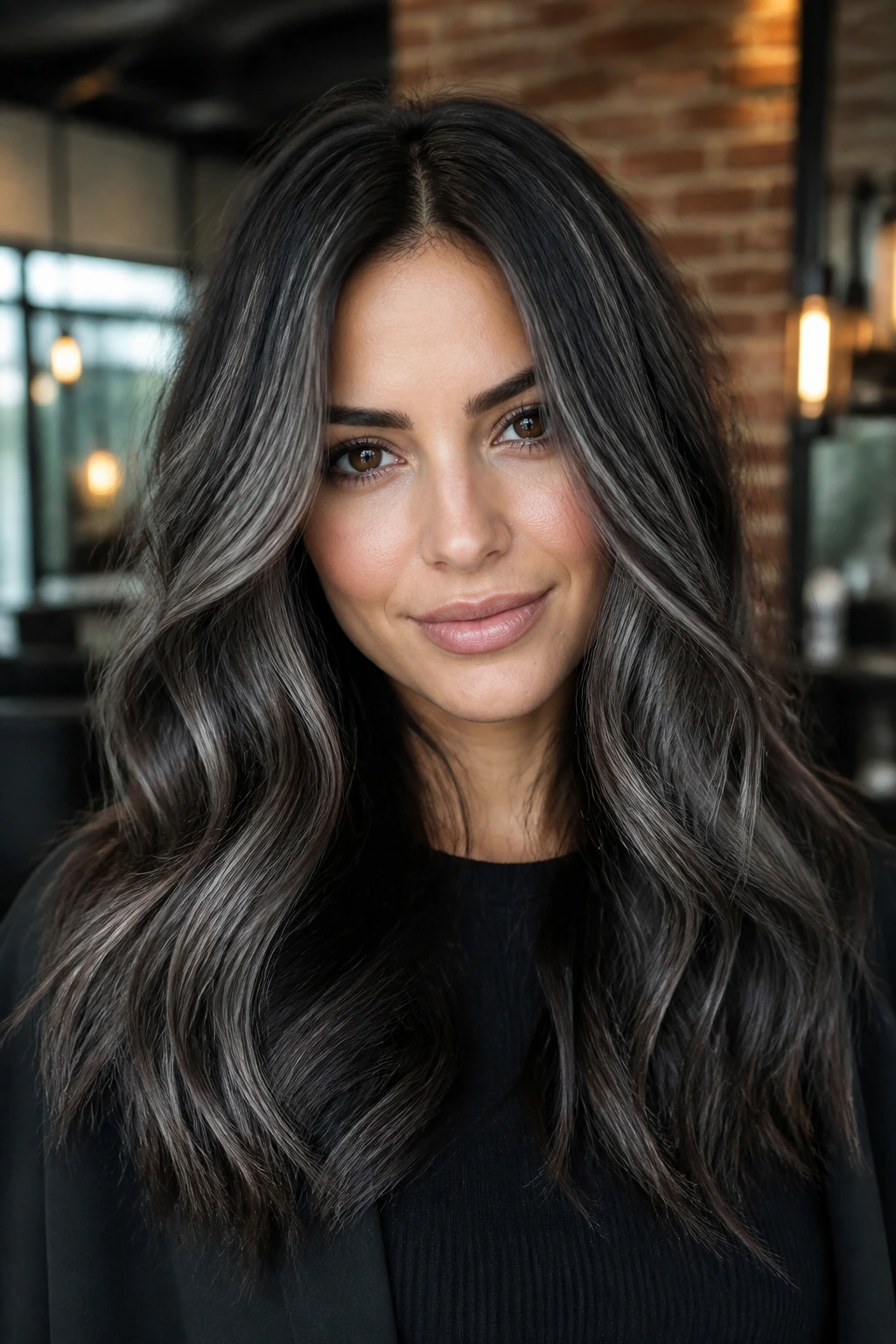
Flavor Enhancement: A clear or ash gloss every few weeks keeps the grey pieces from going chalky. If the hair starts to look flat under indoor light, a gloss usually fixes more than another round of shampoo ever will.
Customization: Add a face frame if you want the color to feel brighter, or keep the grey in the lower lengths if you want the top to stay quiet. Thin ribbons feel softer; wider ones feel bolder.
Serving Suggestions: Soft waves, a tucked-behind-one-ear finish, or a smooth blowout each changes how the grey reads. The same color can feel subtle on one day and dramatic on another just by changing the texture.
Make-It-Yours: For fine hair, keep the placement lighter and higher. For thick hair, ask for slightly wider sections so the grey doesn’t disappear. For curly hair, place the lightest pieces where the curl clumps separate most cleanly. For a low-maintenance version, keep the root shadow deeper and the ends more muted.
Maintenance, Tone Refresh, and Grow-Out
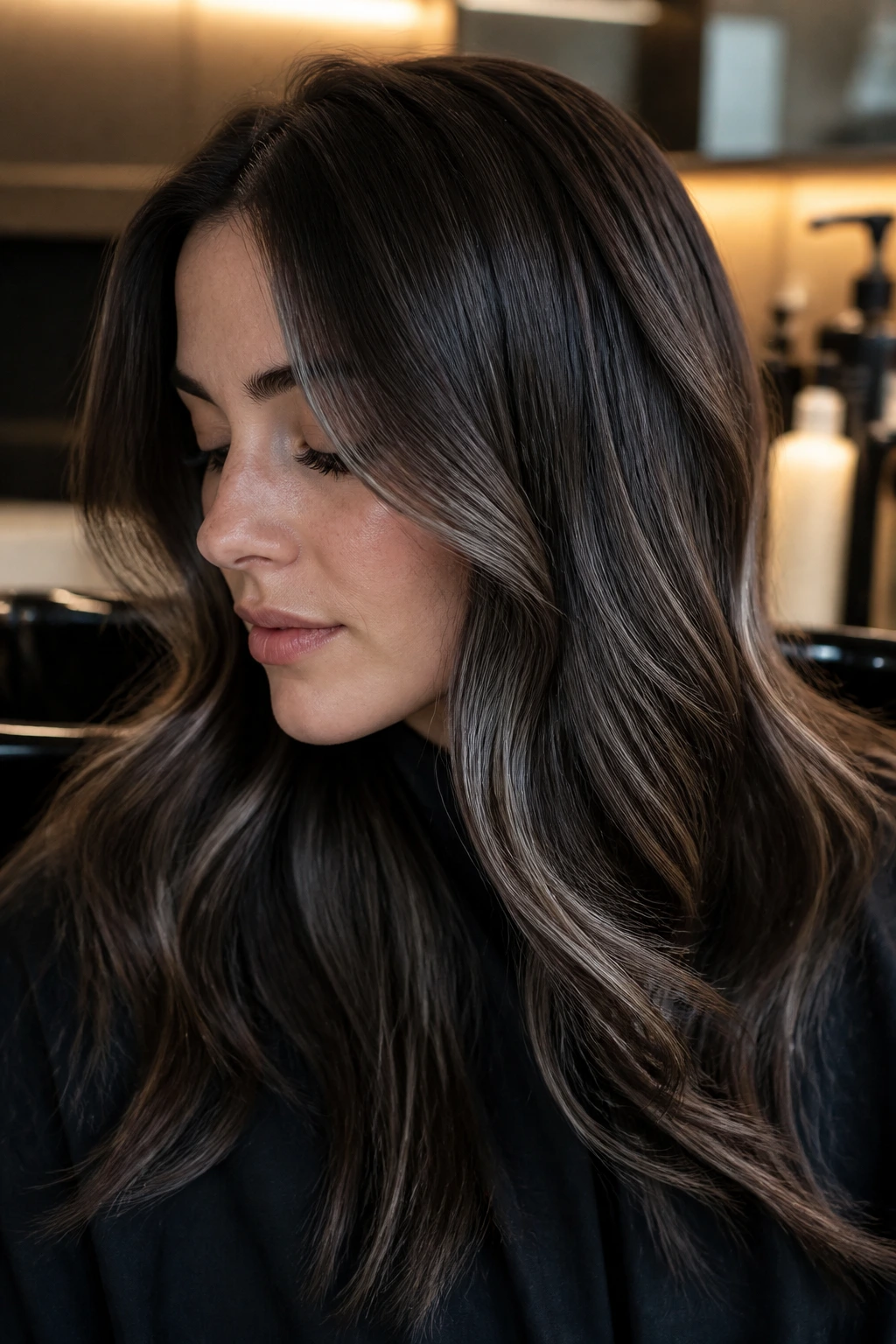
Grey balayage on dark brown hair is not a “wash and forget” color, but it is easier to live with than many bright blondes. Most people do well with color-safe washing two or three times a week, not daily. Cool water on the final rinse helps more than people think. Hot water strips tone and makes the grey go limp faster.
A purple shampoo can be useful once every one or two weeks if the pieces start drifting warm. If the grey is more graphite or pewter than pale silver, a blue-violet mask may make more sense than a strong purple cleanser. Use it like a tool, not a ritual. Leave it on only as long as the bottle says, and stop the moment the tone looks clean again.
Glosses usually need a refresh every 6 to 8 weeks, especially if you wear your hair curly or use hot tools often. Root shadow and balayage placement usually let you stretch the salon visit longer than a full highlight would. If your contrast is subtle, you may be able to wait 10 to 14 weeks for a bigger refresh. If the silver is strong and bright, the upkeep will be closer to the shorter end.
Heat protectant matters every single time you style. Grey tones show dullness quickly when the cuticle gets fried, and once the hair starts looking matte and rough, no toner can fake shine back into it.
Variations and Other Grey Brunette Directions
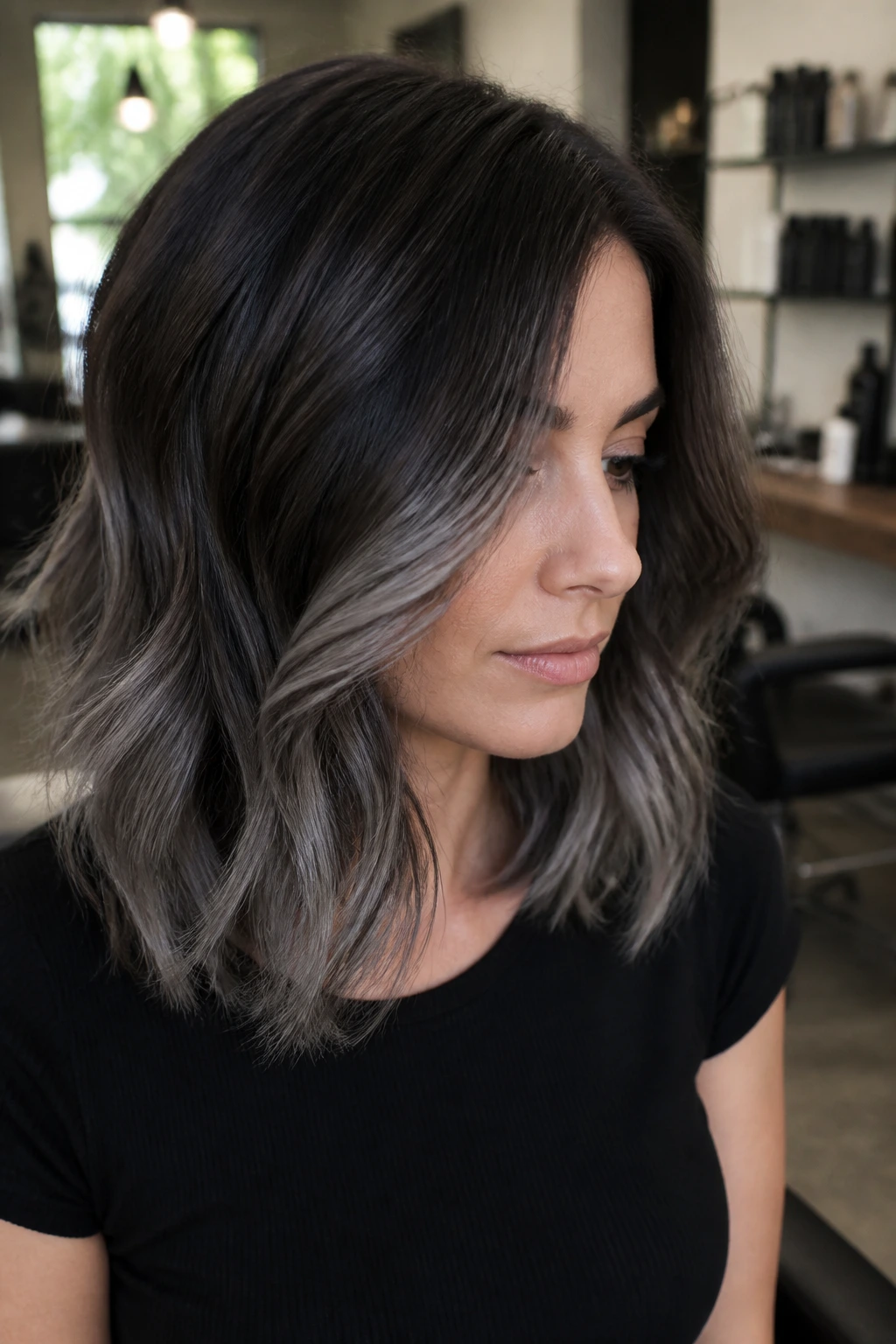
Smoke-Dipped Ends: Keep almost everything dark and only tint the final 2 to 3 inches with ash-grey. This works well if you want a small, wearable nod to the trend without committing to a full balayage pattern.
Silver Money Piece: Put more brightness at the front and leave the rest of the hair darker. It creates a sharp frame for cool skin and works well on both straight hair and soft waves.
Mushroom Brunette Melt: Blend dark brown into mushroom, then into a muted grey-brown instead of clear silver. It’s softer, easier to wear, and less likely to look stark against pale cool skin.
Charcoal Underlayer: Keep the top dark and place the coolest pieces underneath. The color shows through movement rather than all the time, which makes it a strong office-friendly option.
Stormy Ombré: Push the contrast higher with smoky mids and silver ends. This is the most dramatic variation, and it tends to look best on longer hair with enough length for a proper fade.
Questions People Ask Before Committing to Grey Balayage
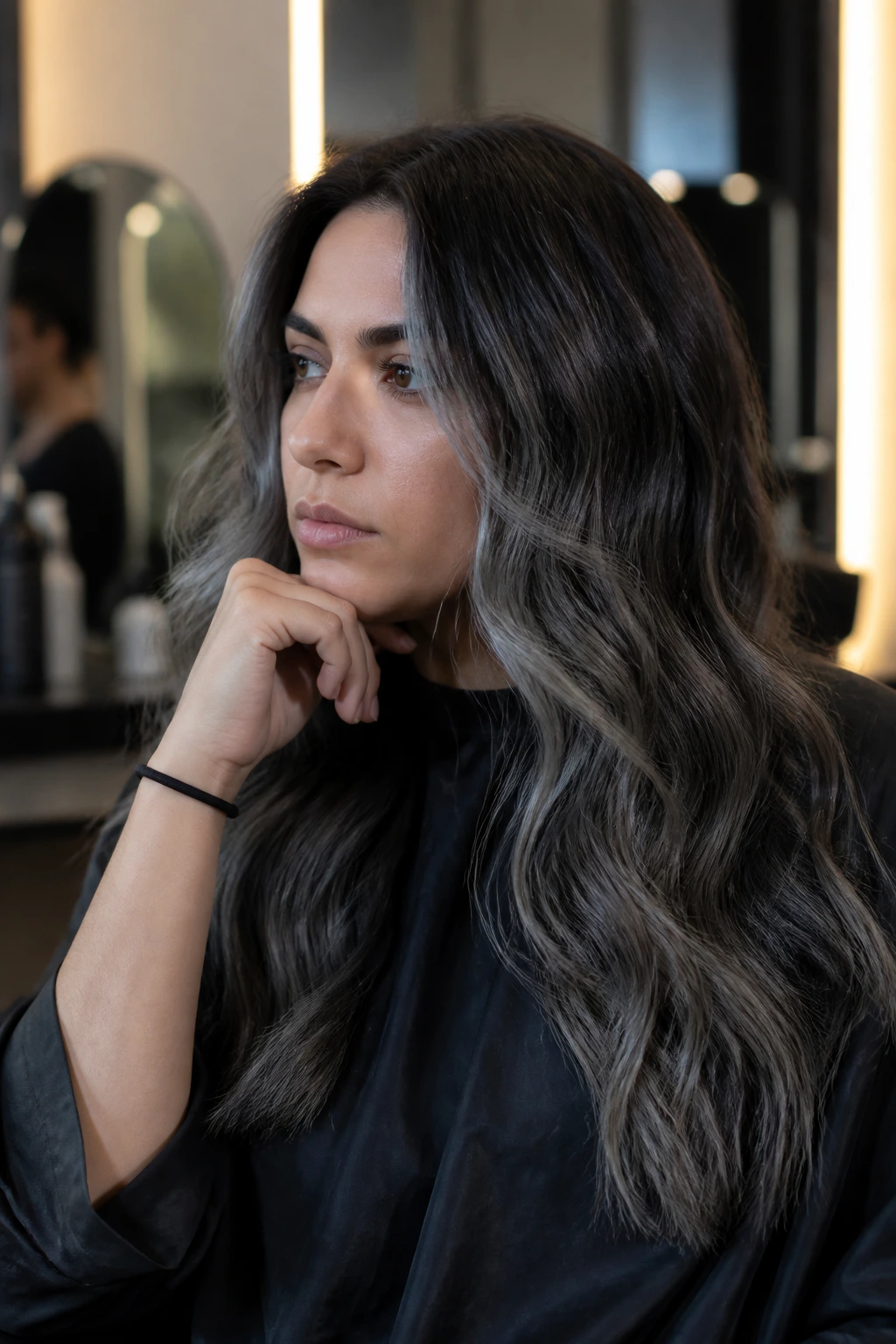
Will grey balayage make cool skin tones look washed out?
Not if the tone stays in the right family. Smoke, graphite, pewter, and greige usually flatter cool skin better than pale yellow-silver or beige-grey. The root depth does a lot of the work here.
Can dark brown hair actually reach grey in one appointment?
Sometimes, but not always, and that depends on the starting color, previous dye, and hair health. Virgin dark brown hair usually needs careful lift and toner, while previously colored hair may need more than one session to stay healthy.
What if I want grey balayage but hate looking obviously highlighted?
Ask for fine ribbons, a deeper root shadow, and a smoky gloss rather than bright silver pieces. You can keep the whole effect muted and still get movement.
Does this work on curly hair?
Yes, and it can look excellent when the placement follows the curl pattern. The trick is not over-lightening every strand. Highlight the clumps that naturally show light as they move.
How often will I need toner?
Most grey balayage looks need some kind of refresh every 6 to 8 weeks, though softer smoky looks can stretch longer. If the tone starts drifting yellow or khaki before that, use a cool gloss or purple-blue maintenance product.
What should I tell the colorist if I want something wearable?
Say you want a dark brown base, cool grey ribbons, and soft grow-out. Add whether you want face-framing pieces, end-only lightness, or a stronger ombré finish.
Can I get this if my hair is already dyed black?
Possibly, but black dye can make the process slower and more unpredictable. A consultation matters here because the hair may not lift evenly, and preserving condition becomes the first priority.
Which grey tones are the most forgiving?
Mushroom, dusty taupe, smoky ash, and greige tend to be easier to wear than pure silver. They keep dimension better and usually grow out more gracefully.
A Cooler Kind of Brunette
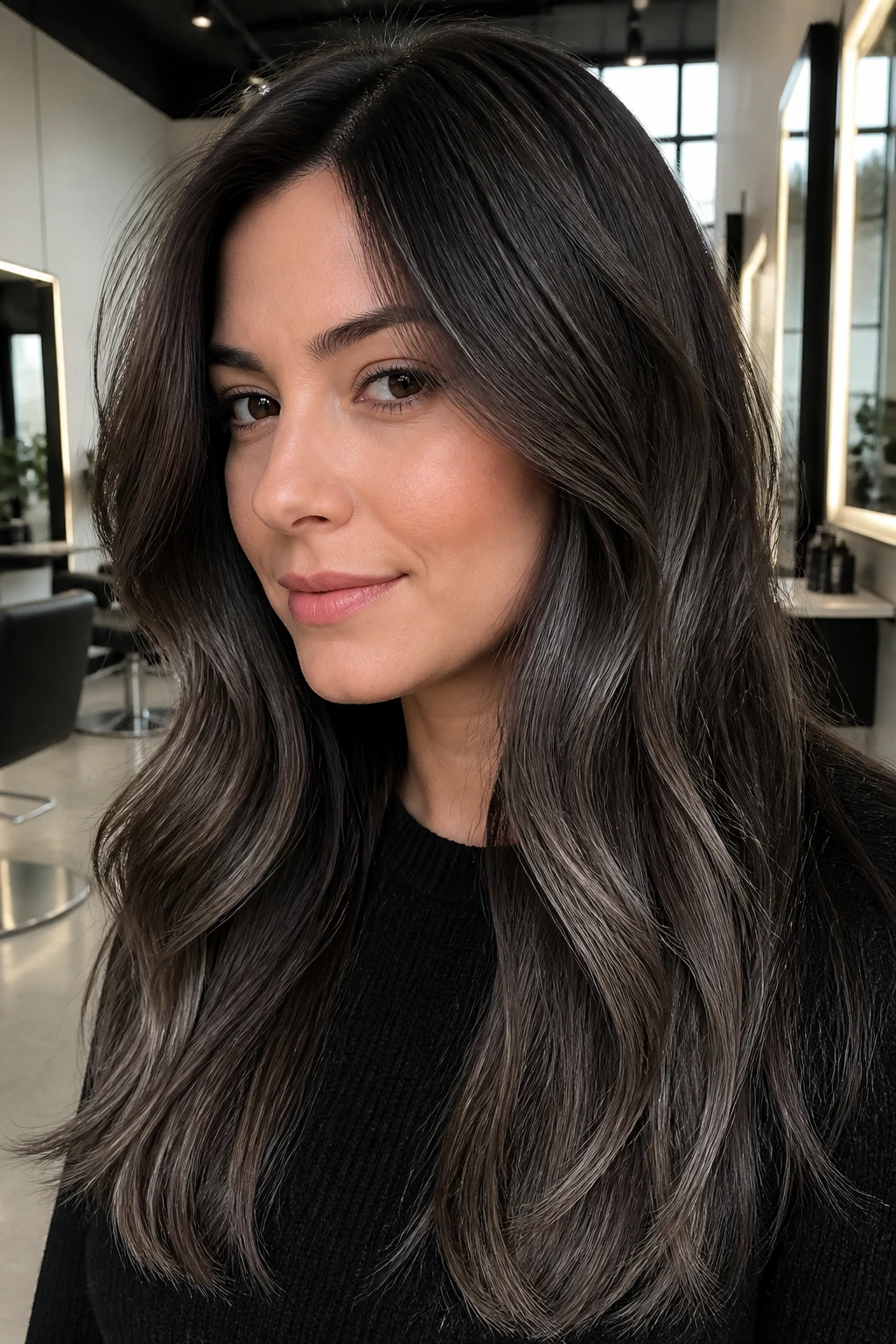
The best dark brown grey balayage does not try to be the loudest thing in the room. It keeps the root rich, lets the grey stay smoky, and gives cool skin tones a cleaner frame than warm blonde ever could. That’s why the most wearable versions in this set are rarely the brightest ones. They’re the ones that know when to stop.
If you’re planning to bring one of these looks to a colorist, start with the tone family first and the brightness second. That order saves a lot of bad outcomes. Smoke before sparkle. Depth before drama. The rest tends to follow from there.