



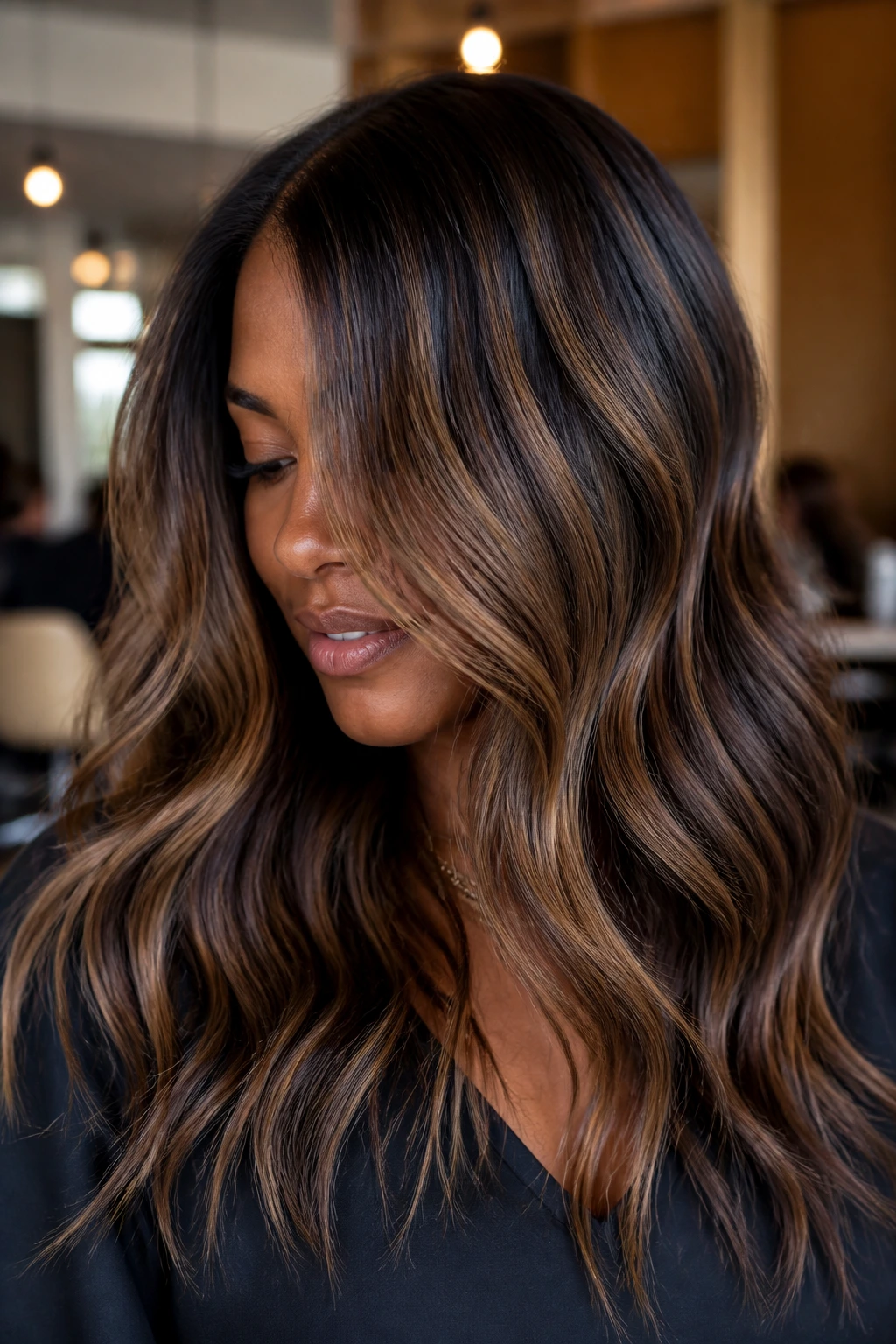
Beige brown balayage for deep skin tones works best when the hair still looks like hair. Not a pale stripy afterthought. The strongest versions keep the base rich, lift only selected ribbons to a level 7 or 8, and land somewhere between toasted almond and smoky taupe so the color picks up movement without sanding away the depth that makes the whole look feel grounded.
That balance matters more on deep complexions than people sometimes admit. Too much ash can turn chalky against warm undertones; too much gold can drift orange once it sits beside melanin-rich skin. The sweet spot is beige with brown underneath it — creamy, not washed out, and never so light that the roots start fighting the rest of the head.
Some of the ideas below lean warm and buttery, some go cool and smoky, and a few live right in the middle where the gloss does the heavy lifting. Coils, curls, silk presses, waves, and blunt bobs all have a place here. The trick is not chasing blonde. It’s choosing the right amount of lift, shadow, and tone so the color looks deliberate from the first day to the grow-out phase.
Why Beige Brown Balayage Reads So Rich on Deep Skin
The reason this color family works is simple: it respects contrast instead of pretending contrast does not exist. Deep skin can hold a lot of visual depth, so a balayage that keeps the root dark and lets only the ribbons brighten tends to look cleaner than an all-over lightening job. The eye gets movement, not shock.
Root depth does the heavy lifting
A level 4 or 5 brown base gives the beige somewhere to live. Without that darker ground, beige can drift flat or go sandy in a way that feels disconnected from the face. With it, the lighter pieces look intentional — like sun caught the hair in a few strategic places, not like the whole head got stripped.
Beige is a family, not one shade
A good beige brown formula can sit warm, neutral, or smoky. On golden or olive deep skin, honey-beige and toasted almond usually feel natural. On neutral or cooler undertones, mushroom beige and taupe-brown can look sharper, but they still need a brown backbone so they do not turn dull.
Placement matters more than blondness
The prettiest versions do not put all the brightness on the ends and call it a day. They place lighter pieces around the face, through the crown, and in the outer bends of the hair so the color moves from more than one angle. That is what keeps the balayage from reading as one flat stripe.
And yes, texture changes everything. A tight curl pattern, a blown-out curl, and a silk press will show the same shade in three different ways. That is not a problem. That is the whole point.
What to Tell Your Colorist Before the Bowl Comes Out
Salon language gets messy fast if you only say, “I want beige brown.” Beige can mean warm, cool, sandy, smoked, creamy, dusty, or almost-gold depending on who is mixing the toner. Give the colorist a little structure, and the odds of getting what you pictured go up immediately.
Say what you want the root to do. Say whether you want the brightness around the face or spread through the mids. Say how often you are willing to come back for toner. Those three things matter more than chasing a label on a mood board.
- Keep the root in the level 4 to 5 range. That preserves depth and stops the whole head from looking over-lightened.
- Lift selected ribbons to level 7 or 8. On deep skin, that usually gives enough contrast without tipping into harsh blonde.
- Ask for a beige gloss, not a silver one. Silver can go dull fast; beige keeps the result softer.
- Mention your undertone. Golden skin usually likes a warmer beige, while neutral or cooler skin can take mushroom or taupe.
- Bring photos in daylight. Indoor lighting lies. Always.
- Ask about a strand test if your hair has box dye, henna, or heavy heat damage. That single test can save you from a strange patchy lift.
One more thing. If you wear your hair curly most days, do not let the salon only judge the color on bone-straight hair. Placement that looks perfect pressed out can disappear once the curls spring back.
1. Toasted Almond Ribbons on a Deep Espresso Base
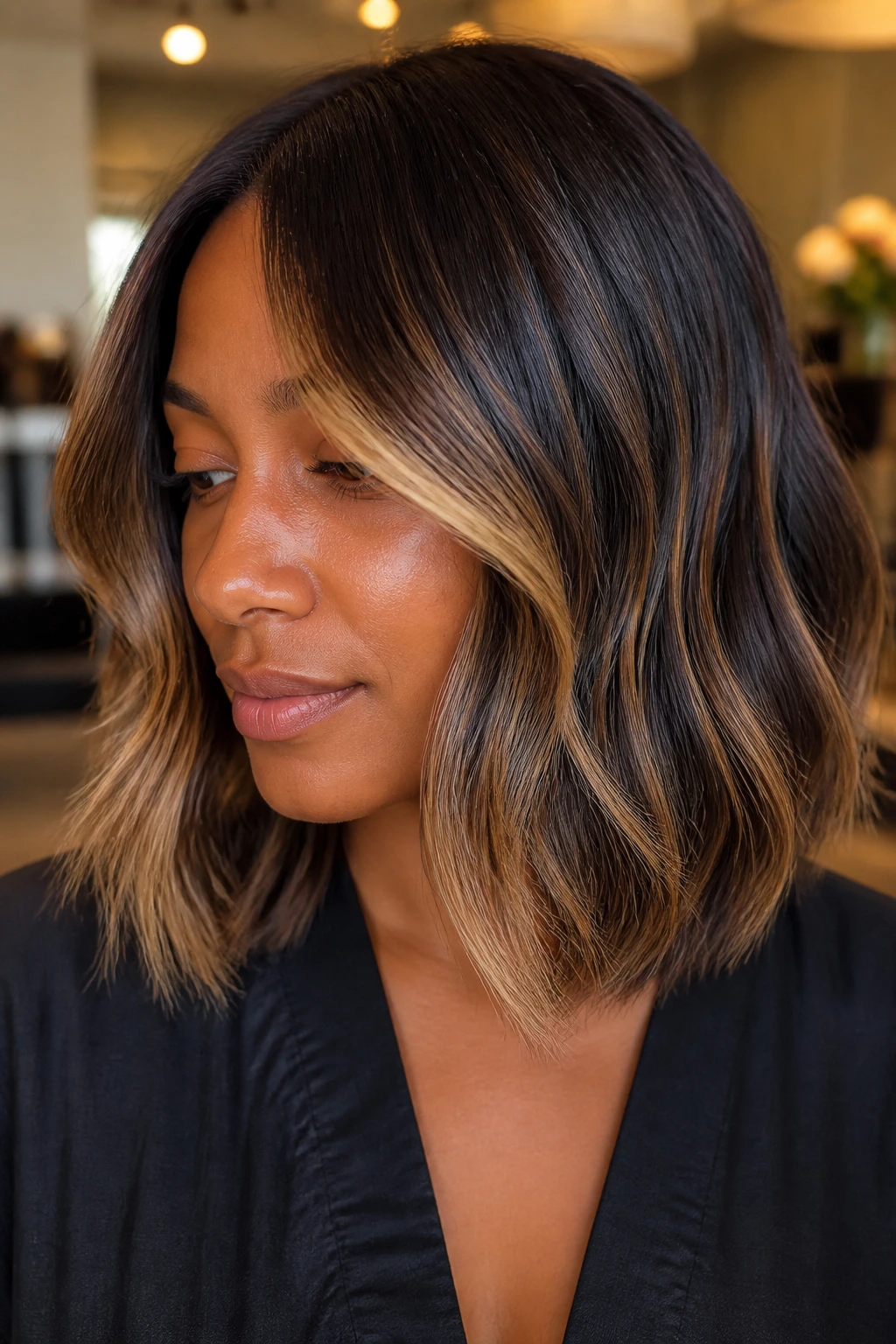
Toasted almond ribbons are the entry point for anyone who wants beige brown balayage without the drama of a big contrast jump. The espresso base stays rich and glossy, while the lighter ribbons lift just enough to read like creamy almond slashed through dark coffee. On deep skin, that combination looks clean because the depth never disappears.
What makes it work
The tone sits in that sweet middle zone between gold and taupe. It is warm enough to avoid a gray cast, but not so warm that it turns coppery. Ask for ribboned pieces around the face and crown, then keep the ends softly painted so the lighter bits do not stop all in one place.
A few loose bends show this color best. Flat-ironed hair can work too, but soft movement lets the almond pieces show in layers instead of one flat plane.
Quick notes
- Best on level 4 to 5 brunettes
- Looks strongest on shoulder-length cuts and long layers
- Ask for a neutral-beige gloss with a touch of warmth
- Works well when you want brightness without a heavy maintenance schedule
Skip icy toner here. That is the fast route to a dull finish.
2. Cocoa Beige Melt That Grows Out Softly
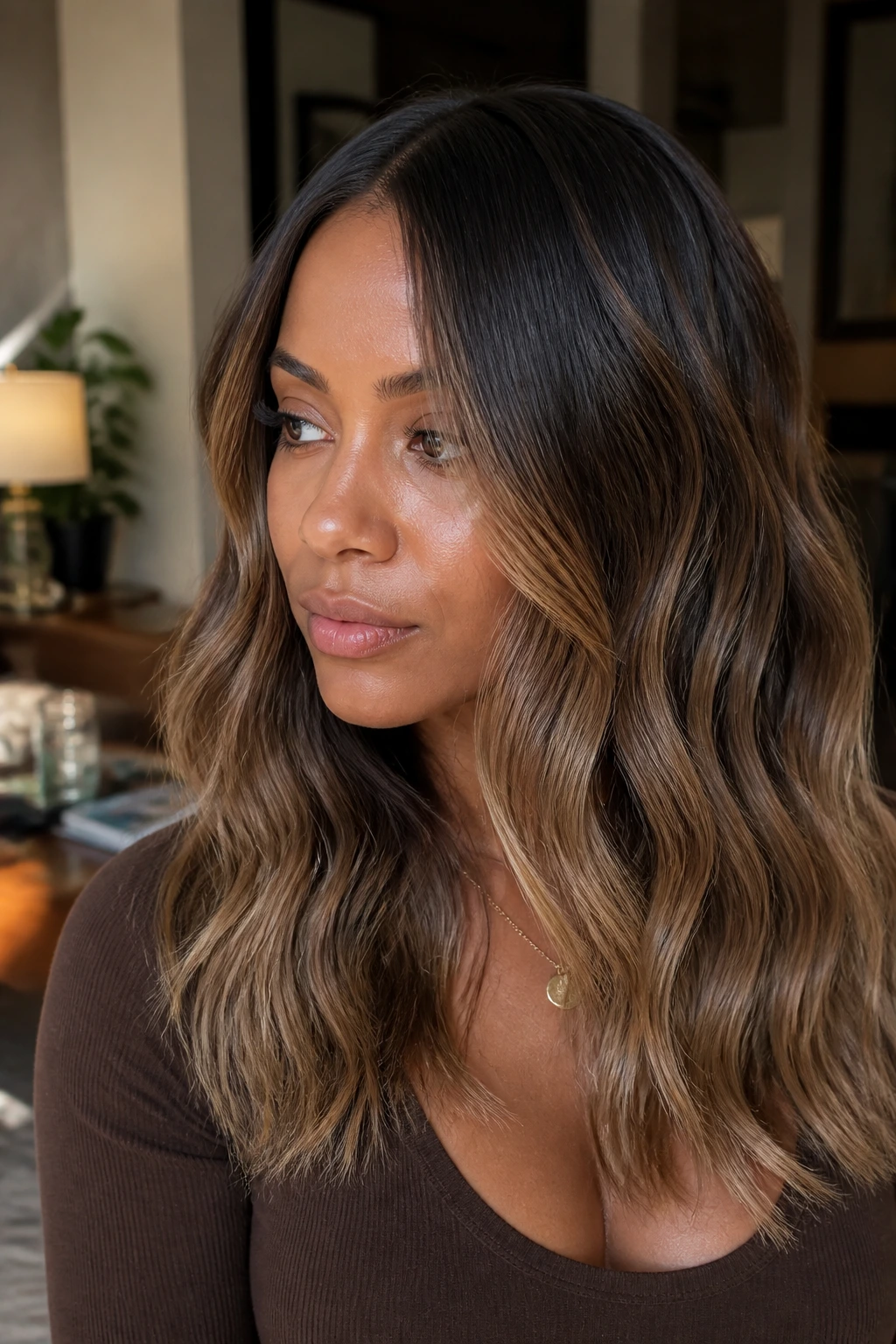
This is the version for people who hate a hard root line and do not want to feel trapped by their color appointment. The cocoa base melts into beige-brown mids, then eases into soft, slightly lighter ends. Nothing jumps out. Everything blends.
The melt matters more than the exact shade. If the root smudge is done well, the transition between dark and light feels smooth from scalp to ends, and the grow-out stays forgiving for weeks. It is especially good on thick hair, where a rough line can look chunky fast.
I like this one on cuts that already have movement — layers, soft feathering, or a lob with a little bend. It gives the beige room to breathe. On very blunt cuts, the melt can still work, but the edges need a little styling so the color does not look like a block.
3. Honey Beige Money Piece With a Darker Halo
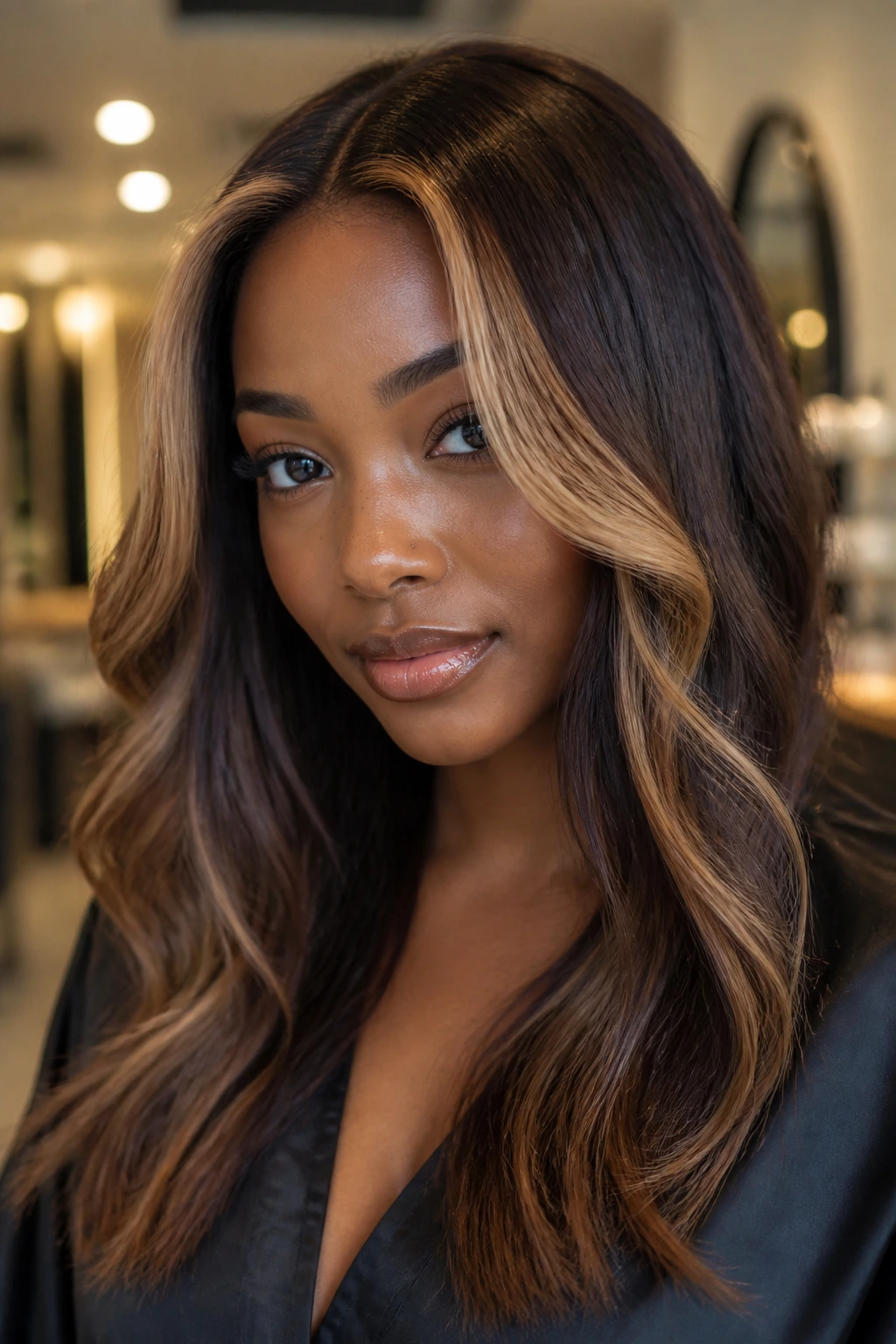
Want brightness near the face without repainting the whole head? This is the one. The money piece sits in honey-beige territory, and the rest of the hair stays deeper so the front reads like a frame, not a spotlight.
The key is restraint. Keep the front pieces lighter by a notch or two, then leave a darker halo behind them so they have something to sit against. On deep skin, that contrast can make cheekbones look sharper and the eyes pop more than a full head of thin highlights ever could.
- Keep the front sections about 1 to 1½ inches wide
- Stop at level 7 or 8, not platinum
- Curl the face-framing pieces away from the face for a softer edge
- Pair with layered cuts or curtain bangs
If the money piece is too bright and the rest of the head is too dark, the color starts to look disconnected. Balance is what keeps it polished.
4. Mushroom Mocha Balayage for a Cooler Finish
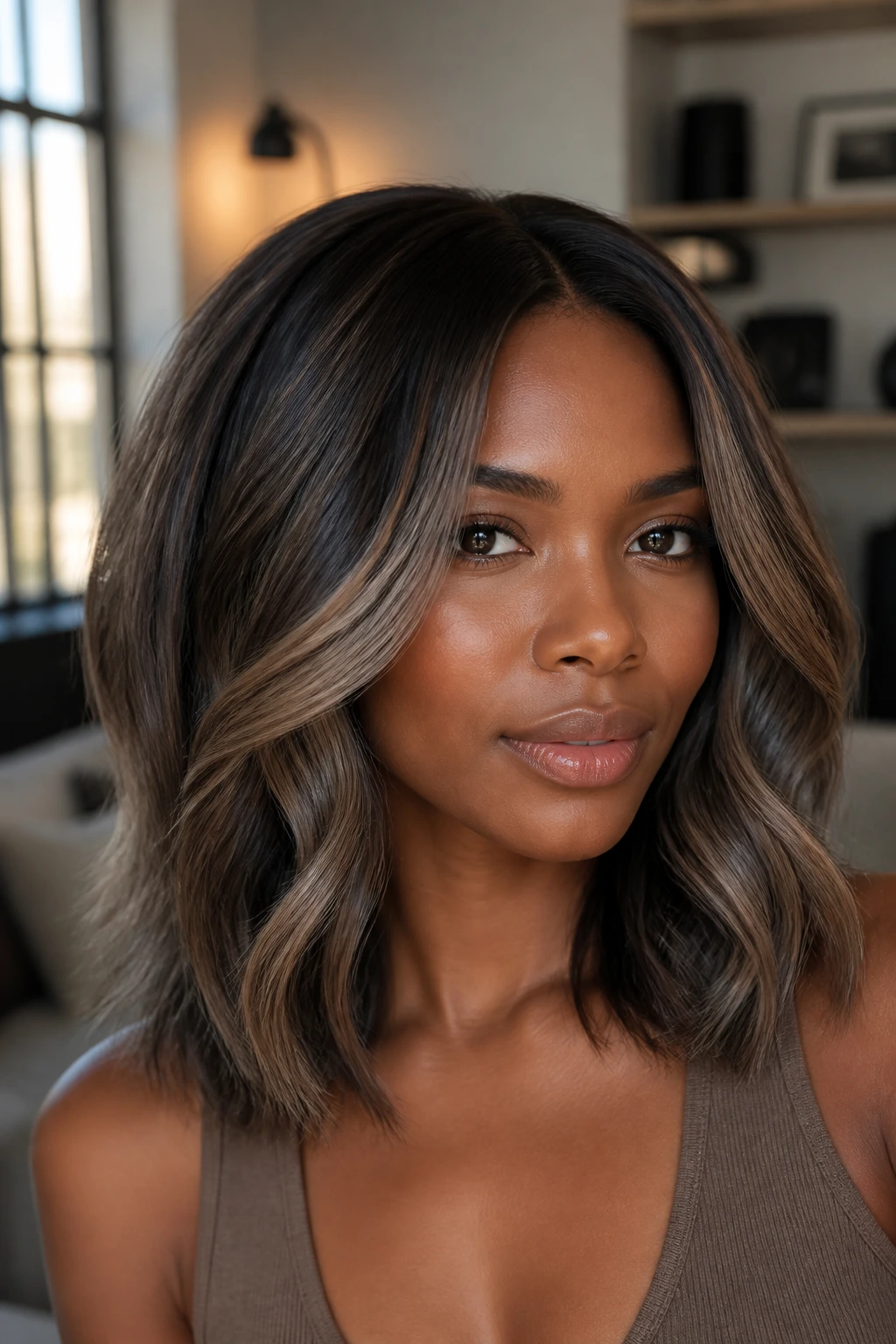
Cool beige is not off-limits on deep skin. It just needs a brown backbone. Mushroom mocha does that job beautifully, because the tone carries a smoky, taupe-like softness instead of pushing gold or orange. It works especially well on neutral or cooler undertones.
The trick is not to go too far into ash. Once the beige starts looking blue-gray, the whole finish can flatten out. A good mushroom mocha has a brown base, a beige middle, and a faint smoked edge — enough coolness to read modern, not enough to make the hair look dusty.
This is one of the few shades that looks sharper on smooth styling than on big, fluffy curls. A medium wave or a neat blowout shows the dimension clearly. If you like a polished finish, this one deserves a look.
5. Caramel Latte Swirl on Layered Hair
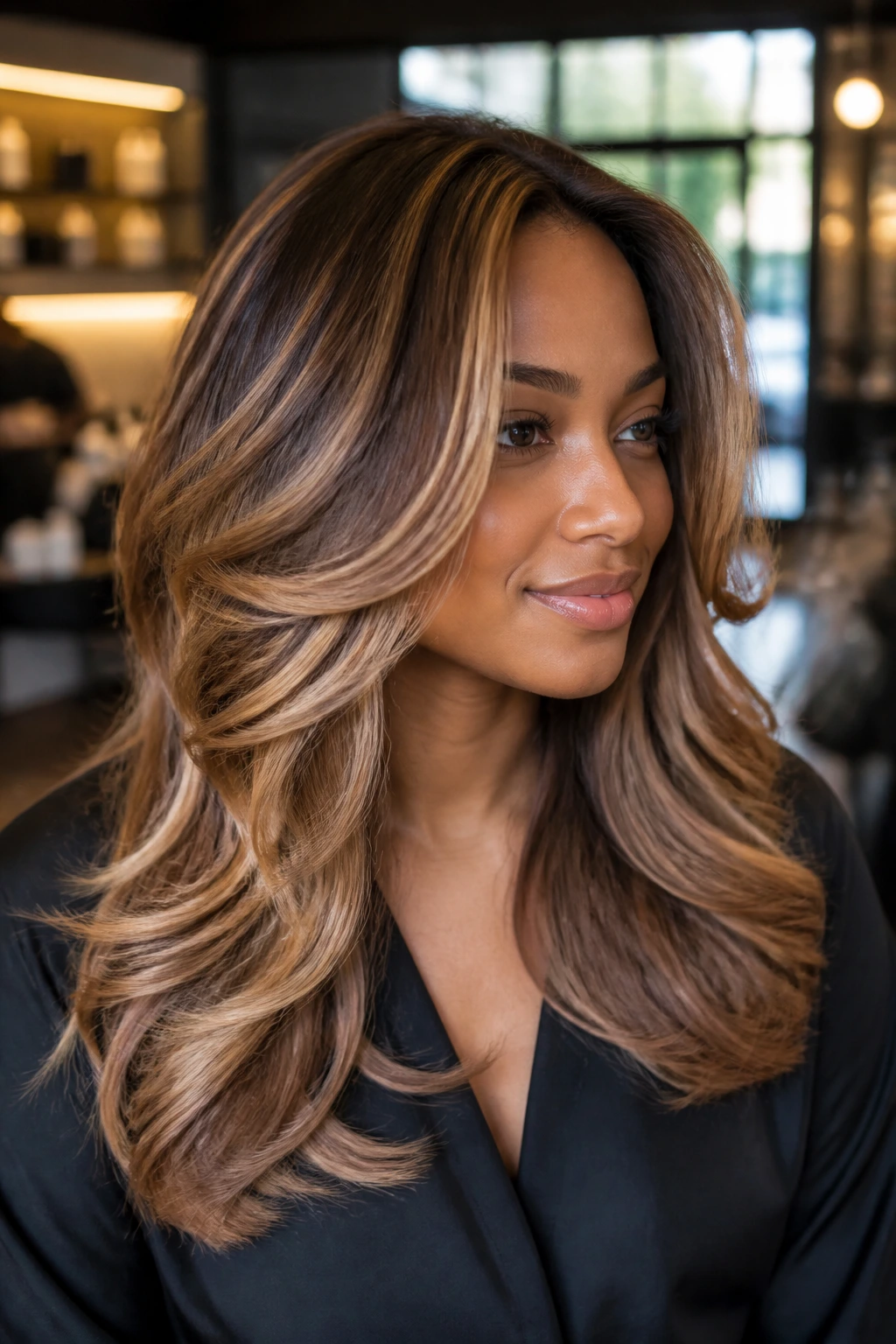
Caramel latte swirl is warm, soft, and a little more obvious in the best possible way. The beige leans caramel, the brown stays creamy, and the placement follows the cut so the whole thing feels like it was built into the hair instead of painted on top of it.
Layered hair takes this shade especially well. The shorter pieces catch light first, the longer pieces keep the depth underneath, and the result has that swirled look you see when milk runs through coffee. It is not subtle in the boring sense. It is subtle in the “you only notice it once you move” sense.
If your undertone runs golden, this is one of the safest bets in the whole set. Keep the front soft and the mids a shade deeper than the ends so the color does not tip into orange. One clean gloss can make the difference between creamy and brassy.
6. Walnut Beige With a Soft Shadow Root
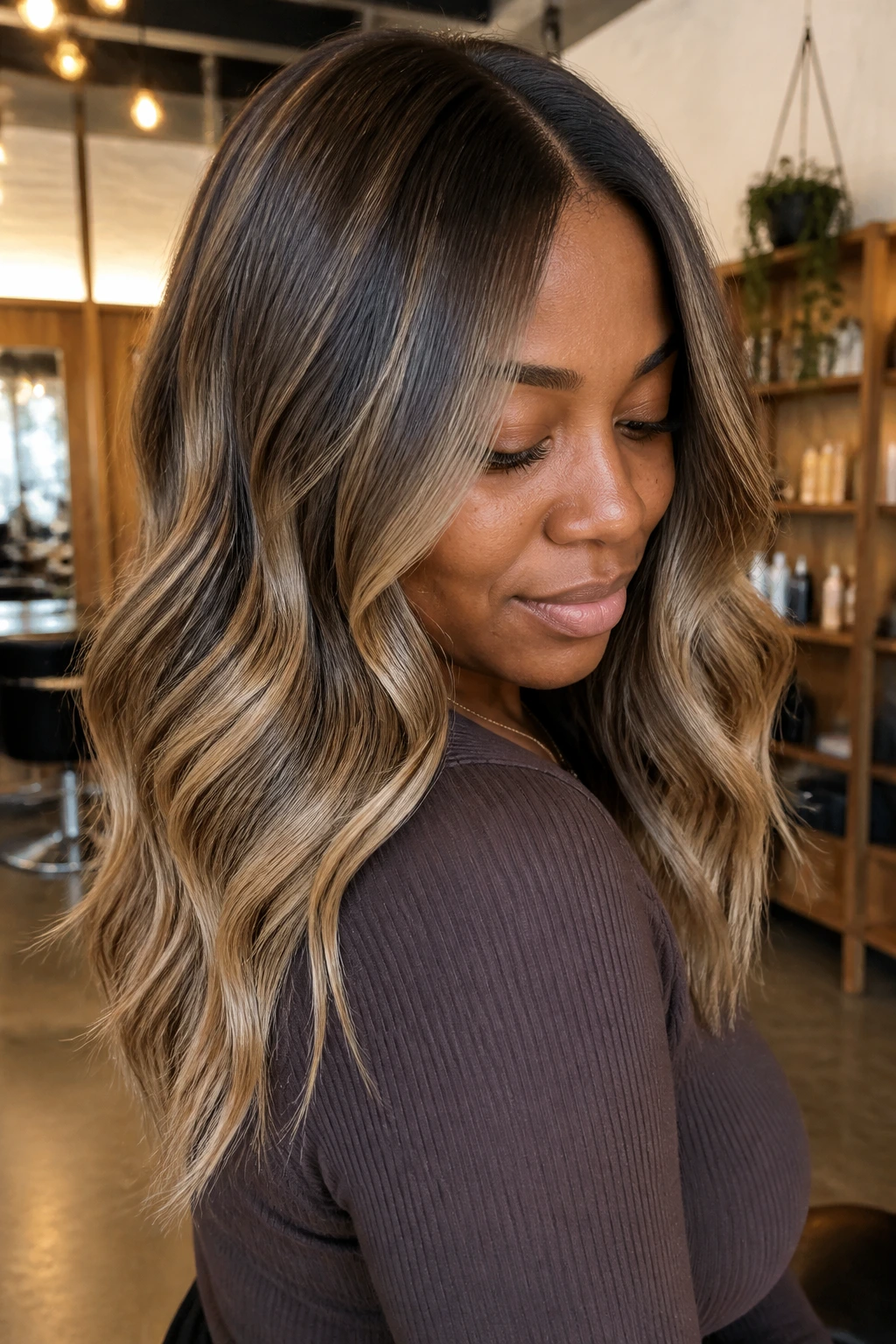
Walnut beige is for the person who likes their highlights anchored. The root stays walnut-dark, then the beige comes through the mids and ends in soft, narrow ribbons. The shadow root keeps the grow-out clean and takes the pressure off the salon schedule.
This is not a “brighten everything” look. It is a “make the hair look thicker and richer” look. On deep skin, that grounded root does something useful: it keeps the face from getting over-framed and lets the lighter pieces flicker in the right places instead of shouting from every strand.
Best for
- People who want fewer salon visits
- Thick hair that needs depth
- Long layers, curls, and soft blowouts
- Anyone who likes dark roots and lighter ends
If your hair tends to puff up at the ends, keep the beige tone soft. Too pale and the lower half can start to look dry.
7. Sandstone Balayage for Coily Hair
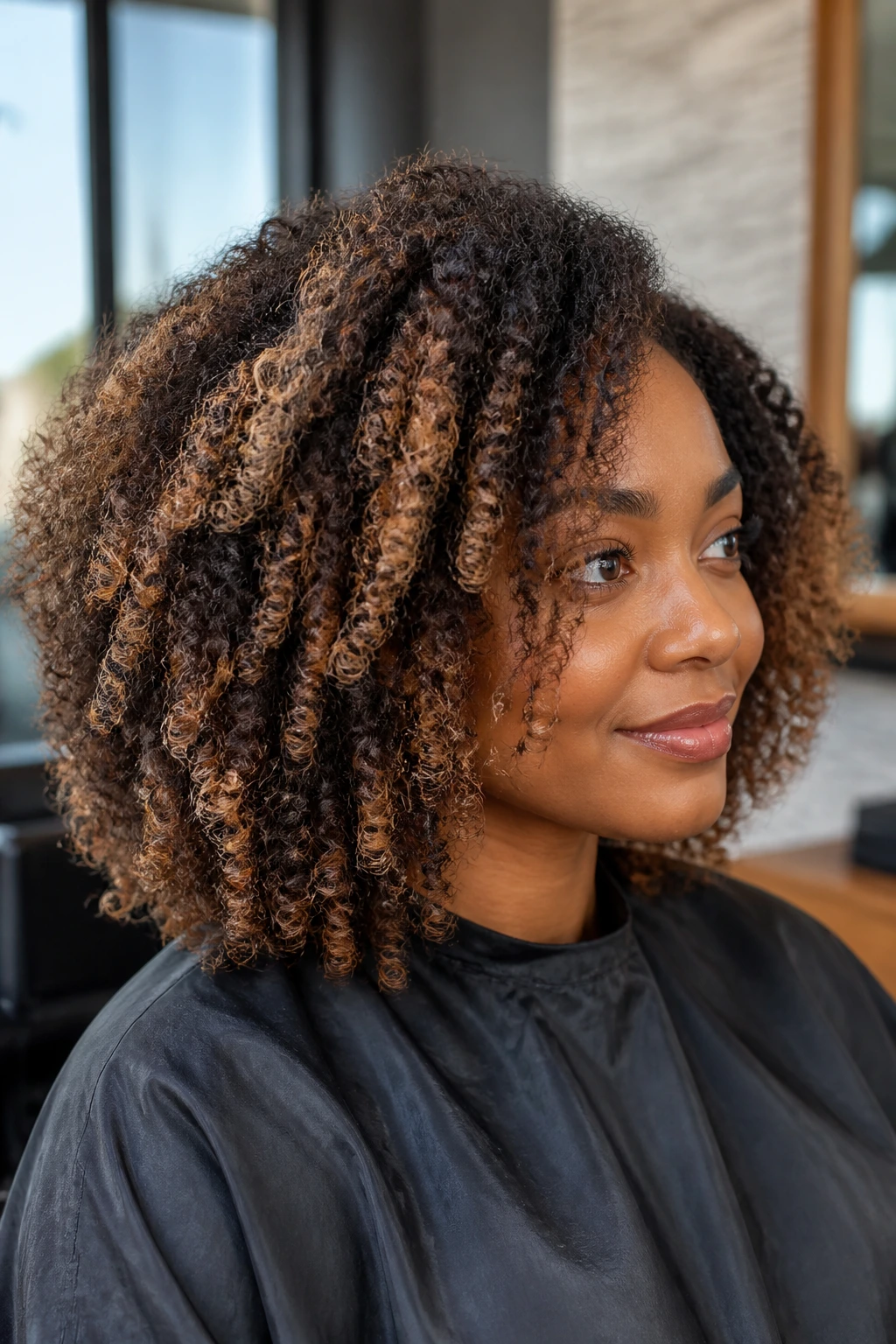
Coily hair needs a different hand. Thin stripes usually disappear once the hair shrinks back, and that is why sandstone balayage works better when the color is painted in broader ribbons that follow the coil pattern. The tone itself sits between warm beige and soft brown, like sand pressed into stone.
The color should be placed where the eye will actually see it after the hair settles. Outer curves, not random streaks. Mid-lengths, not just the very tips. On stretched coils, the placement can look more obvious in the salon chair, then settle into something softer once the pattern tightens back up.
A good sandstone balayage does not try to flatten the texture. It uses the texture. That is the difference. If you have coils and you keep being handed inspiration photos of straight hair, ignore the pose and focus on the placement map instead.
8. Beige Brown Face-Framing Layers That Open Up the Cheekbones
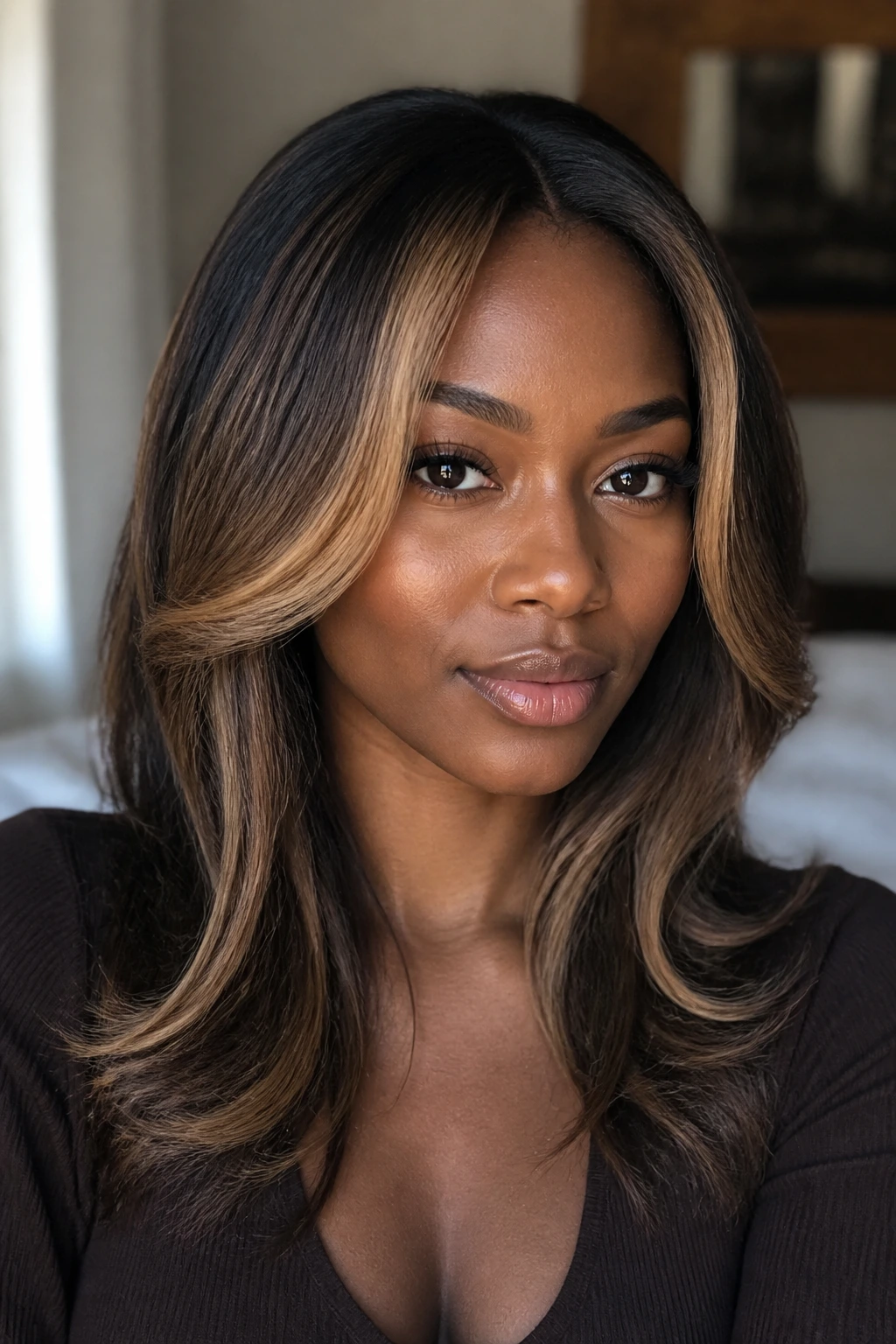
Some color jobs need the cut to do part of the work, and this is one of them. Beige brown face-framing layers take a deep brunette base and slip lighter pieces around the cheekbones, jawline, and temple area so the hair pulls attention where you want it. The rest of the head can stay quieter.
The payoff is immediate. A few well-placed ribbons near the front can brighten the face without forcing the whole color story into blonde territory. On deep skin, that controlled brightness often looks sharper than a full head of highlights because the contrast stays where it belongs.
If you wear layers, this one is easy to love. If you do not, it may be worth asking for a few strategic face-framing pieces during your next trim. The color looks more expensive when the cut supports it.
9. Chestnut Beige Ends That Keep Long Hair Full
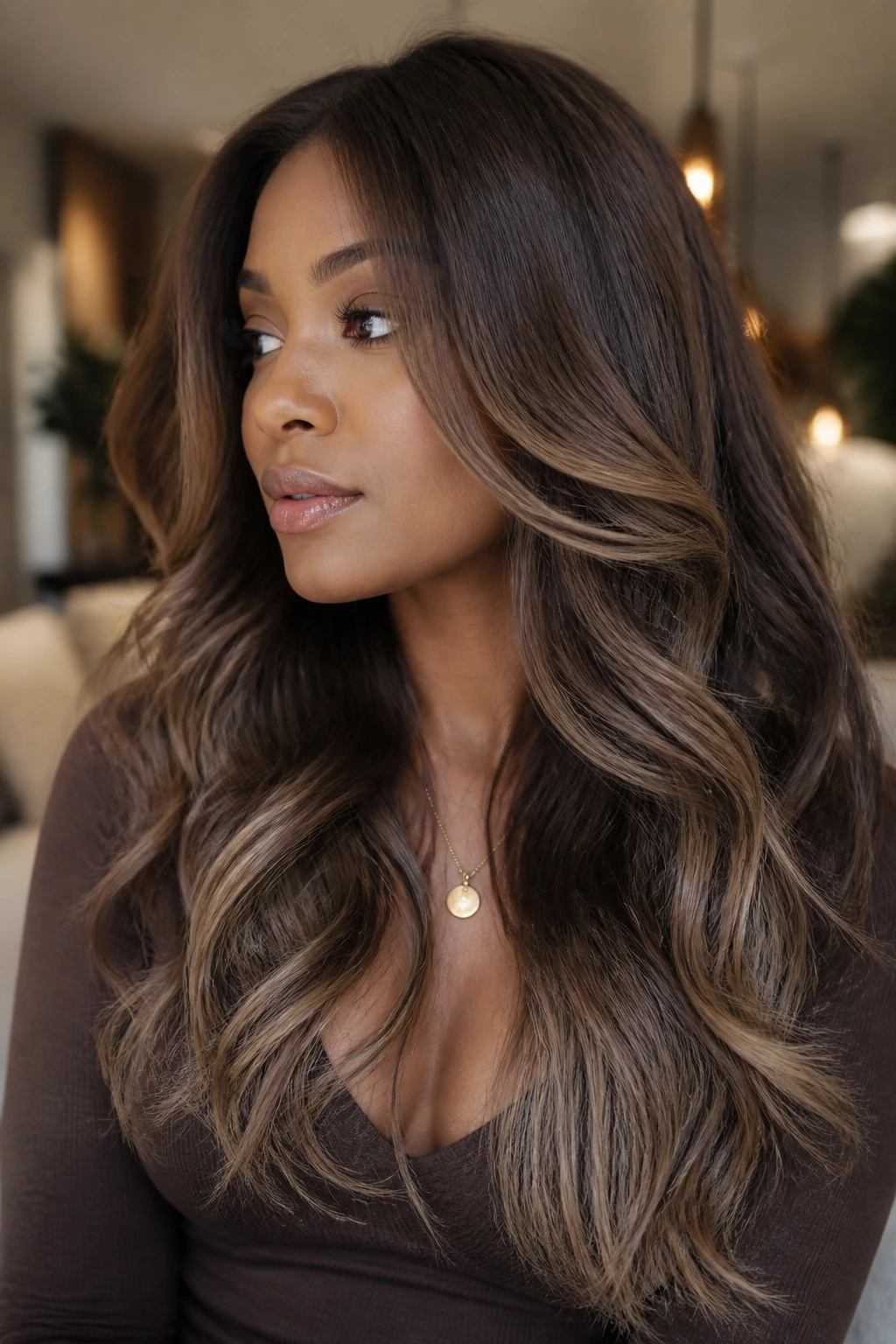
Long hair can go stringy fast if the ends are too light and too thin. Chestnut beige handles that problem well because the mids stay chestnut-rich while the ends are only a shade or two lighter. The result is dimension without making the hair look see-through.
This works best on hair that is long enough to show a real fade. If the length is there, the soft drift from chestnut to beige feels elegant in a grounded way. If the hair is all one length, you may want a few layers or a slightly deeper melt to keep the color from sitting too evenly.
The biggest mistake here is chasing brightness on the last two inches. Don’t. That is how long hair starts looking frayed at the bottom. Let the lighter ends stay controlled, then use a gloss to keep them reflective instead of fried-looking.
10. Smoked Taupe Balayage With a Glossy Finish
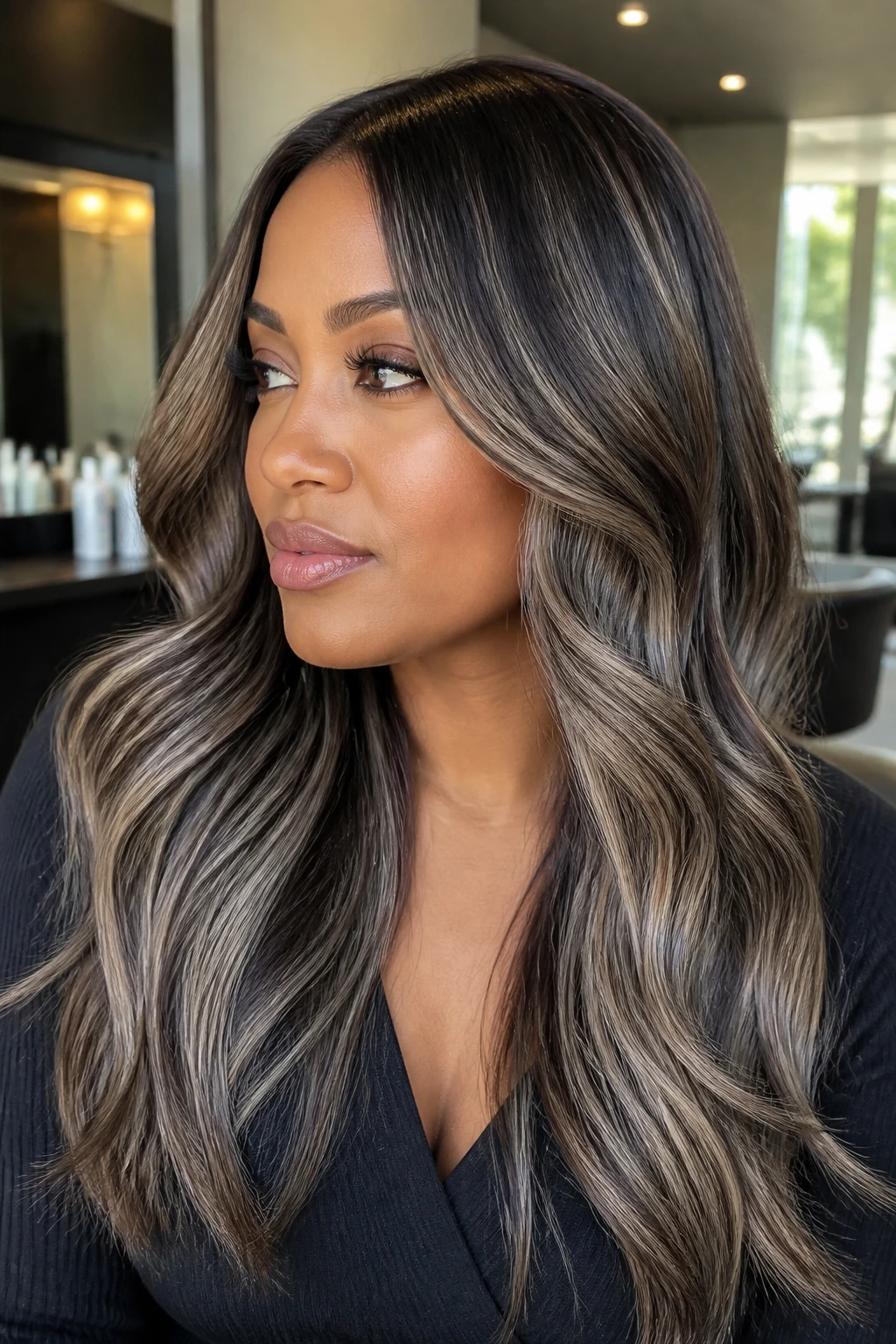
Smoked taupe is the cooler, moodier cousin in the beige brown family. It leans neutral-to-cool and needs a glossy finish so it does not go flat. On deep skin, that smoky shift can look striking, especially if your undertone is neutral or you like a more polished, slightly editorial feel.
The color depends on a clean toner. If the hair is lifted too warm and then flooded with ash, it can turn muddy. You want the beige to stay visible under the smoke. That means brown first, taupe second, and no heavy-handed toning that buries the light.
This one thrives on shine. A gloss, a smoothing cream, or a round-brush blowout all help. The shade itself is doing part of the work, but the finish matters just as much.
11. Bronze-Beige Curl Pop for Defined Texture
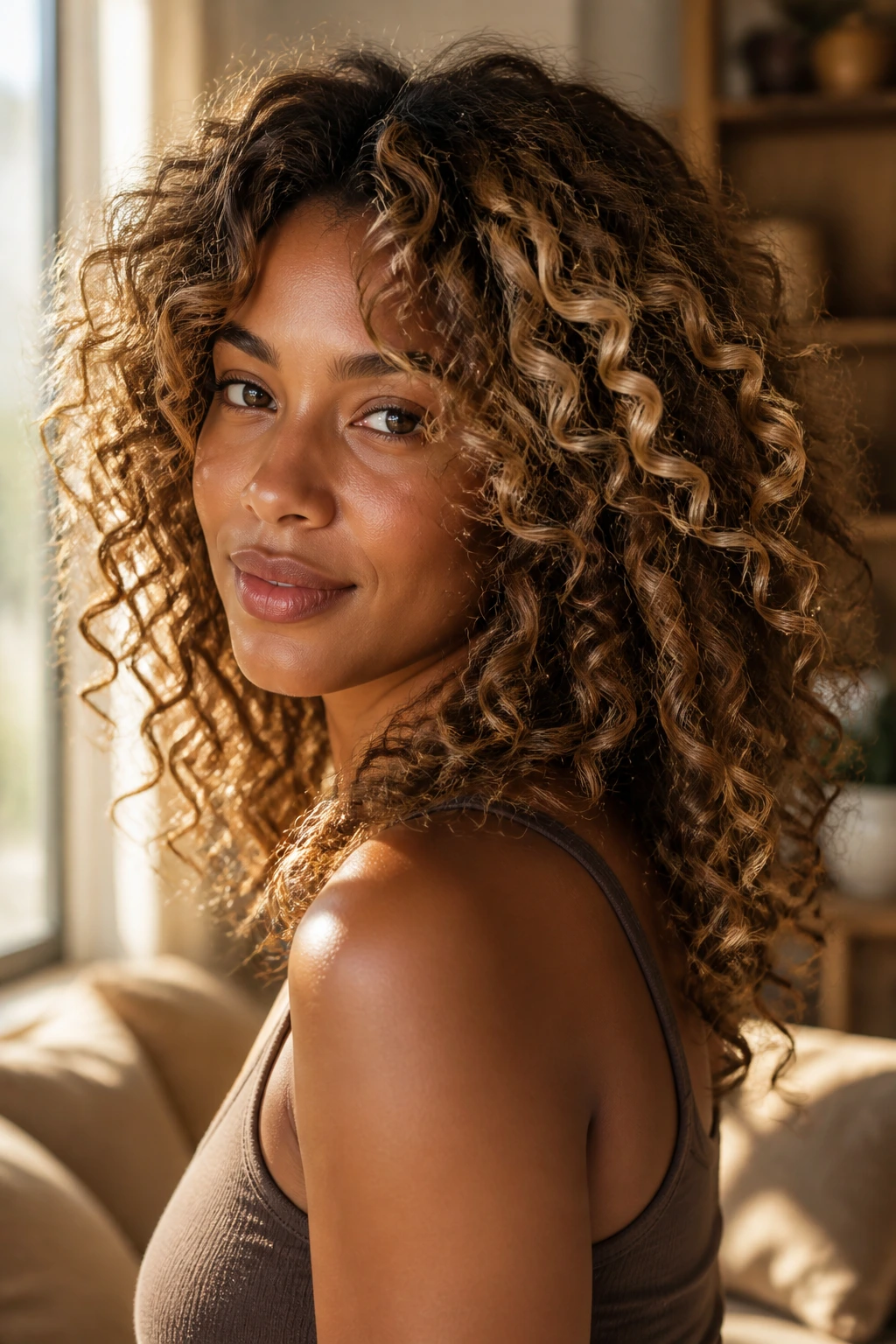
Bronze-beige curl pop is a warm, dimensional look that makes curls feel fuller instead of flatter. The bronze sits underneath, the beige glides across the outer pieces, and the curl pattern does the rest. It is one of the few color ideas that can make a coily or curly head look more detailed without needing a lot of brightness.
The reason it works is simple: warm bronze catches the eye first, then the beige gives the curl a lighter ridge so every bend has a little contrast. If the hair is cut into shape — rounded layers, a curly lob, or a soft shag — the effect gets stronger.
Do not over-lighten the front here. The color wants to live in the curl family, not blast across the hairline. A little brightness in the outer pieces goes a long way.
12. Creamy Toffee Balayage on a Sharp Bob
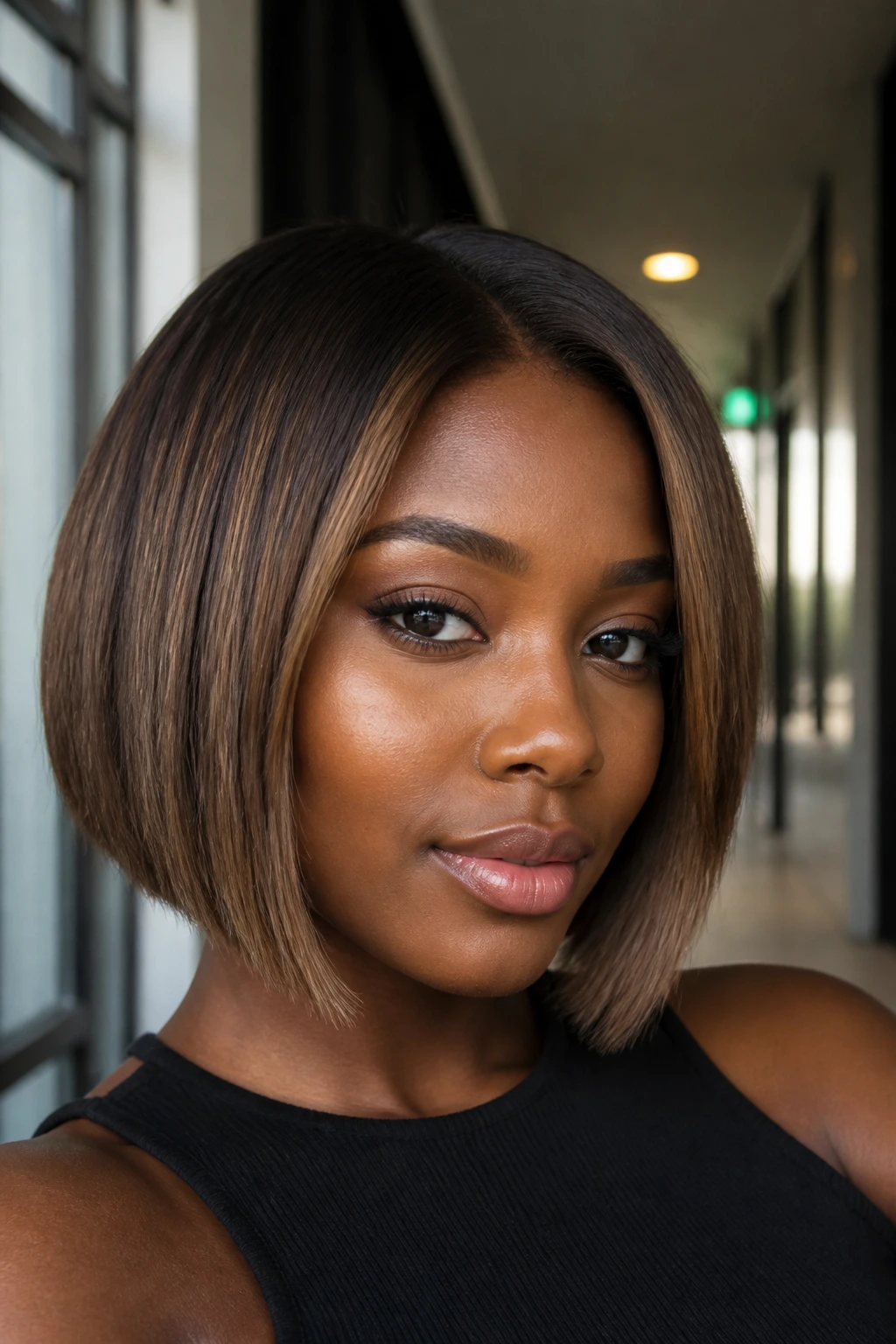
A bob can be tricky with balayage because the cut is so clean. Too much highlight, and the shape starts looking chopped up. Creamy toffee solves that by keeping the tones close enough together to respect the perimeter while still giving the bob movement.
Think of this one as micro-dimension rather than big contrast. The beige pieces should be fine enough that the color shifts as the head turns, not so bold that the bob loses its edge. On deep skin, that creamy toffee can look rich and soft at the same time, especially when the bob is tucked behind one ear or curved under at the ends.
A blunt bob benefits from this look when the highlights stay close to the surface. A layered bob can handle slightly more ribboning. Either way, keep the tone creamy, not pale.
13. Espresso Root Stretch With Beige Lengths
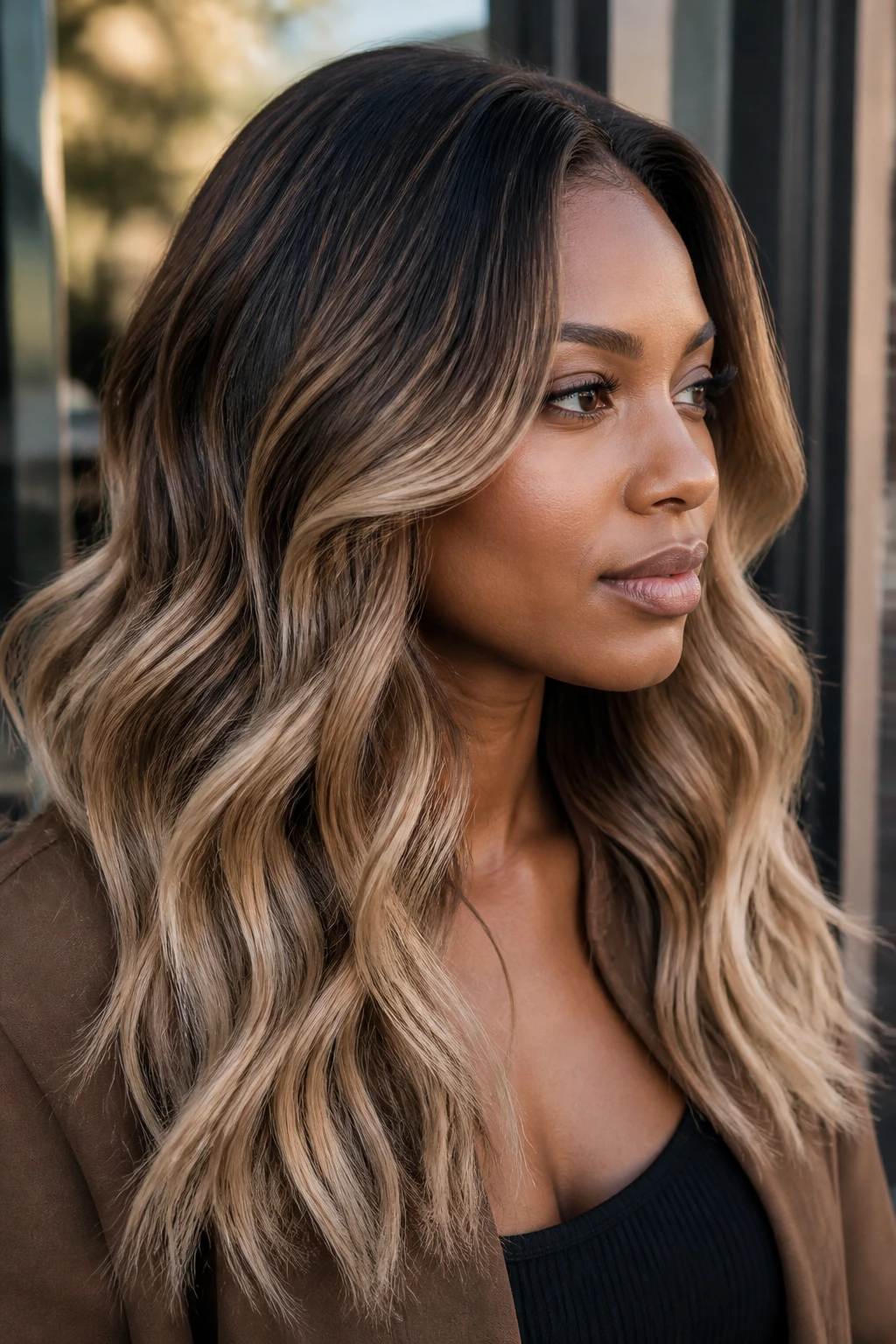
This is the dramatic version for people who want the contrast to show. The root stays deep espresso, the mids lighten gradually, and the beige lives mostly in the lower lengths. It is a stretch, not a jump.
That long fade can look stunning on deep skin because the darkness at the scalp frames the face before the beige takes over. It also makes the hair look denser near the root, which is a nice side effect if your strands are fine or medium.
The risk is obvious: too much lightness at the ends can make the length feel thin. Keep the beige controlled and the root stretch intentional. If the gradient looks lazy, the whole thing falls apart.
14. Cinnamon Beige on Silk-Pressed Hair
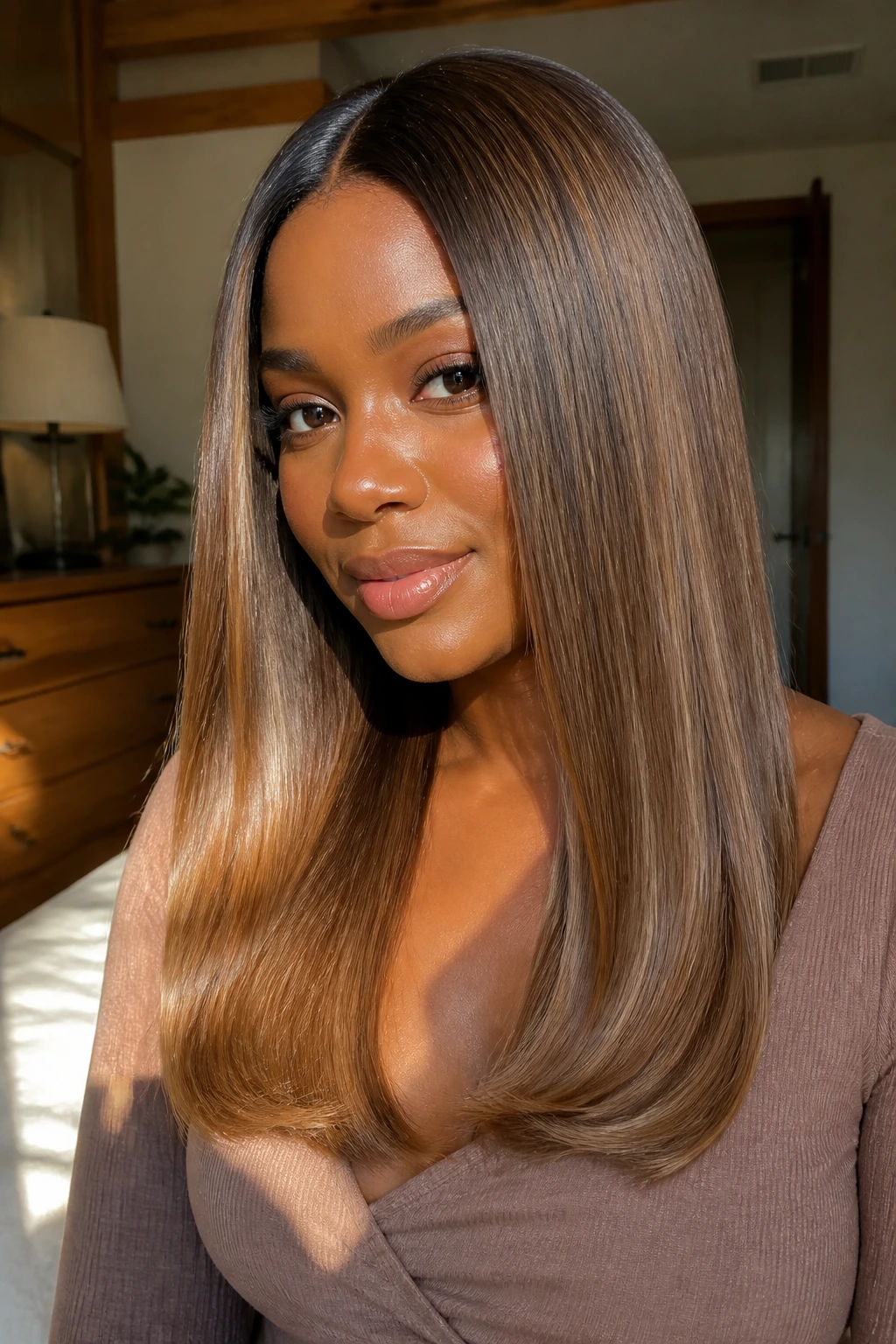
Silk-pressed hair shows tonal shifts in a way curls sometimes hide. That is why cinnamon beige works so well here. The warm beige-brown pieces slide across the straight strands like fine threads, and the cinnamon note keeps the shade from going flat under heat styling.
Use heat carefully. Lightened hair does not need aggressive flat-iron passes, and a single slow pass with a good heat protectant usually does more than repeated pressing. If the hair is already beige-brown, the shine should come from the gloss and the smoothing, not from frying the cuticle into submission.
This look is strong on long, straight styles with a slight bend at the ends. If you love the swing of a silk press, cinnamon beige gives it a little more depth than plain brown ever can.
15. Ash-Soft Beige That Still Flatters Warm Undertones
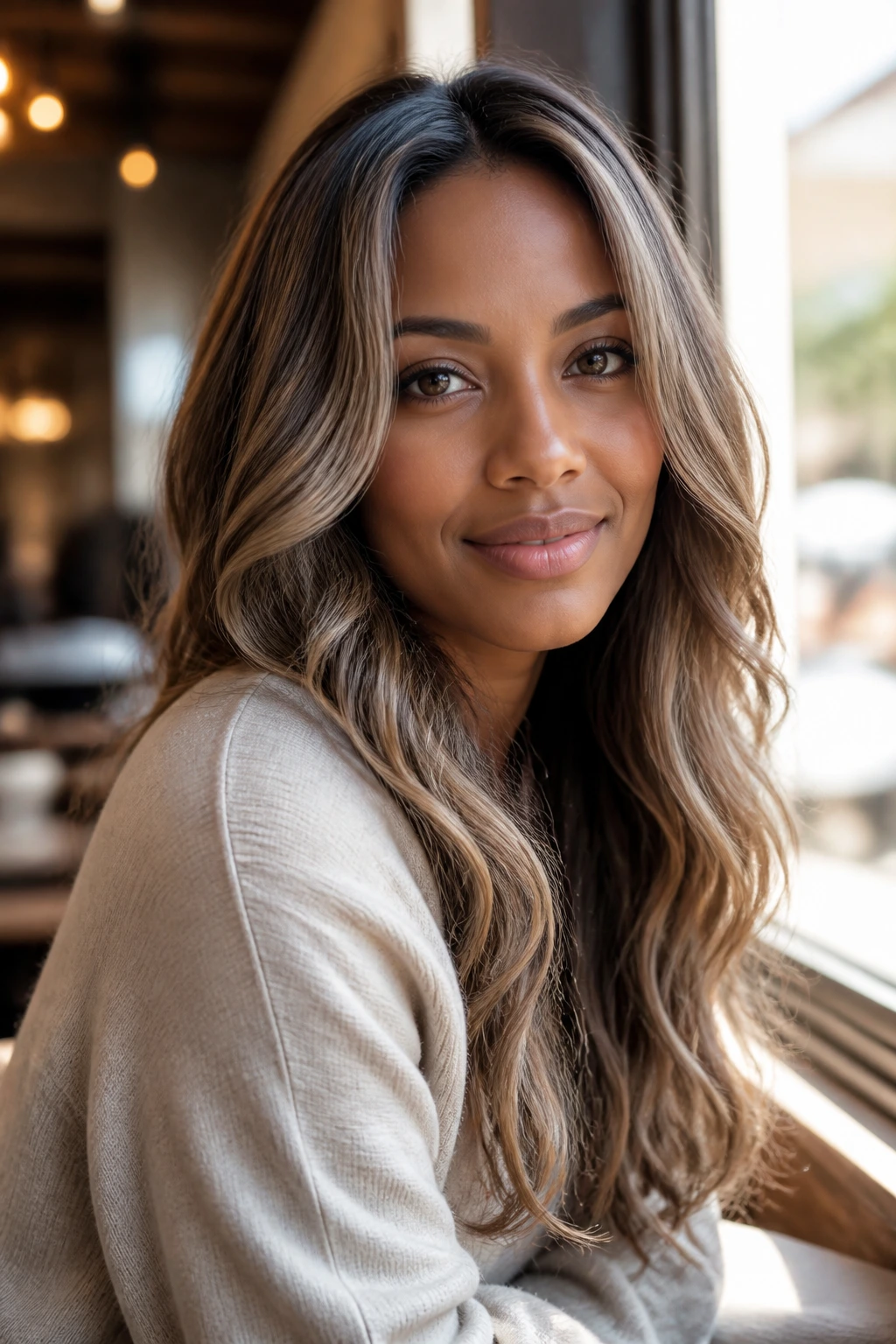
Ash on deep warm skin is a risky road, but ash-soft beige can work when the cooler tone is kept on a short leash. The hair still needs brown underneath it, and the beige needs to stay visible enough that the finish does not look gray. This is not icy. It is softened ash.
The best way to handle it is to use the cool note as seasoning, not the whole meal. A taupe-toned gloss or a beige-ash blend can add that smoke without draining the warmth from the face. If you have golden undertones, keep the root a little warmer so the contrast stays flattering.
This is one of those shades that looks better after a careful blowout than after a rough air-dry. The smoothness helps the tone read as intentional instead of accidental.
16. Golden Beige Balayage With Fine Babylights
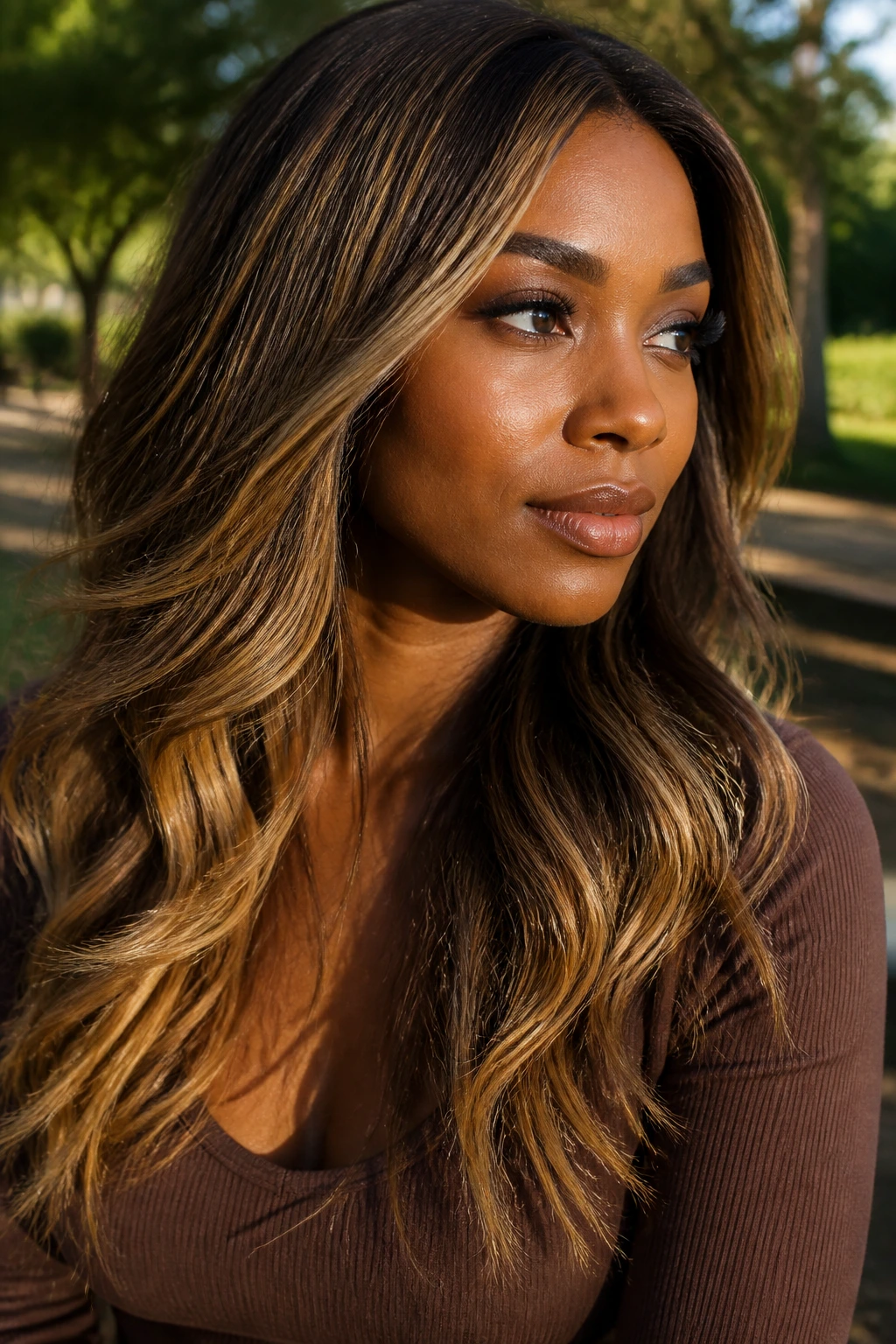
Golden beige gets a lot of attention, and for good reason. On deep skin, the tone can look luminous when it is controlled. Babylights — those tiny, fine lightened strands — keep the look from getting chunky, while larger painted pieces give the color somewhere to land.
This is a smart choice if you want the hair to shimmer in motion without committing to large ribbons everywhere. The fine lights soften the transition between dark and light, which is especially useful on layered cuts or textured hair that needs a little visual lift near the crown.
The key is to keep the gold in the beige lane, not the brass lane. If the warmth starts looking orange, the tone needs to be rebalanced. A soft beige glaze usually fixes it.
17. Chestnut Ribbon Balayage for Long Waves
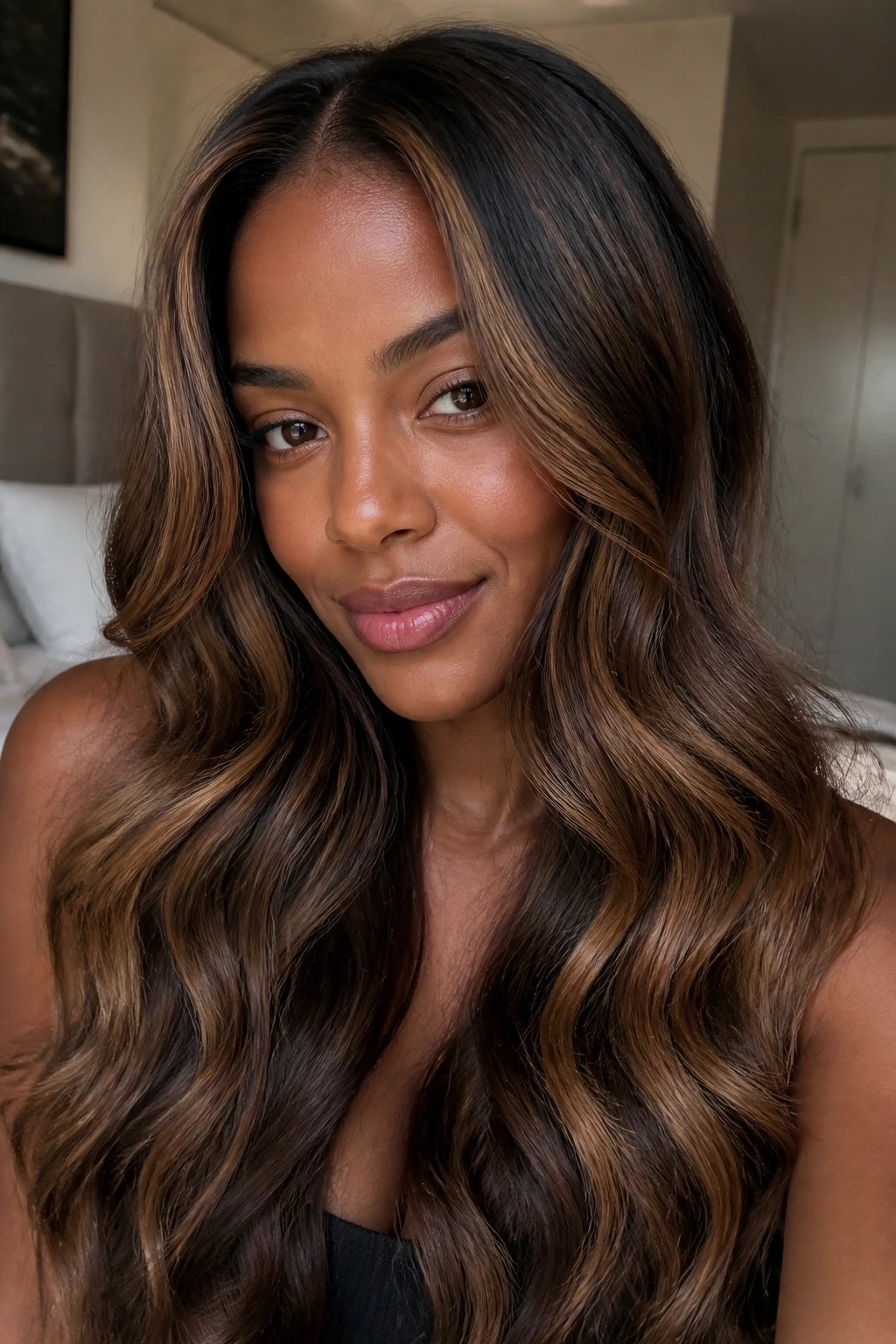
Chestnut ribbon balayage is classic for a reason. The ribbons are visible enough to show movement, but they stay close enough to the brunette base that the hair still reads rich and substantial. On long waves, the pattern opens up beautifully because every bend shows a different piece of the tone.
This look is a strong choice if you want something that does not scream highlight. It just gives the hair more depth. The chestnut pieces can sit a shade lighter than the base, then the beige comes in as a glaze over the top rather than a big lightened block.
Long waves do the best job of showing it. Tight curls can still wear the shade, but the ribbon pattern is easiest to read when the hair has a slow, loose bend.
18. Beige Brown Balayage for a Curly Lob
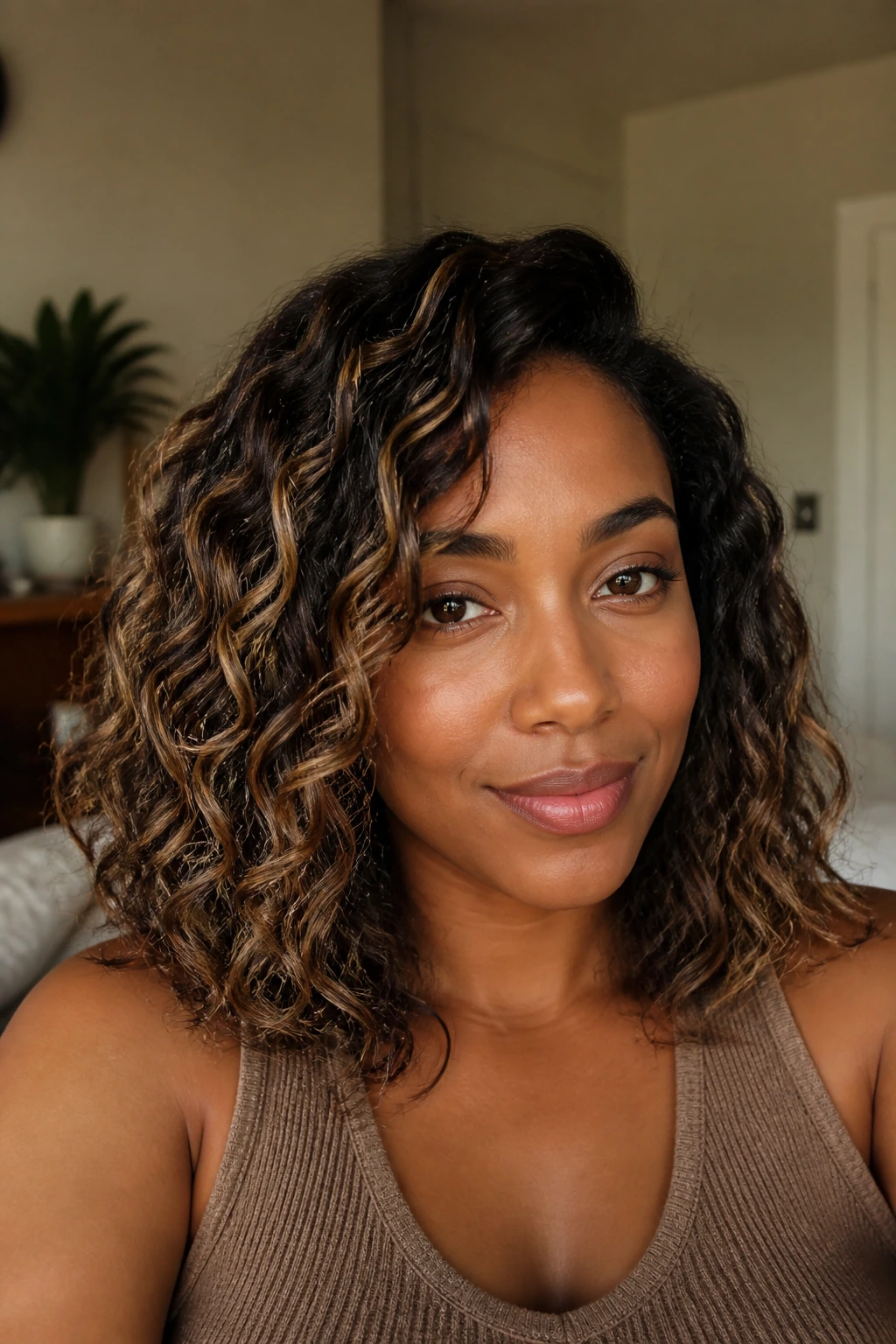
A curly lob gives beige brown room to breathe without all the weight of extra length. That matters. The cut sits at the collarbone, which makes it easy for the lighter pieces to frame the face and the lower half of the curl pattern without getting lost.
Place the brighter ribbons through the mid-lengths and outer ends, not just on top. If the color only sits on the surface, the curls swallow it. Once the lift is distributed through the curl family, the movement reads better from every angle.
This is also one of the easier styles to maintain. The length is short enough to keep the ends healthy, but long enough to show a proper color melt. That combination is hard to beat.
19. Soft Sable Balayage With Lived-In Roots
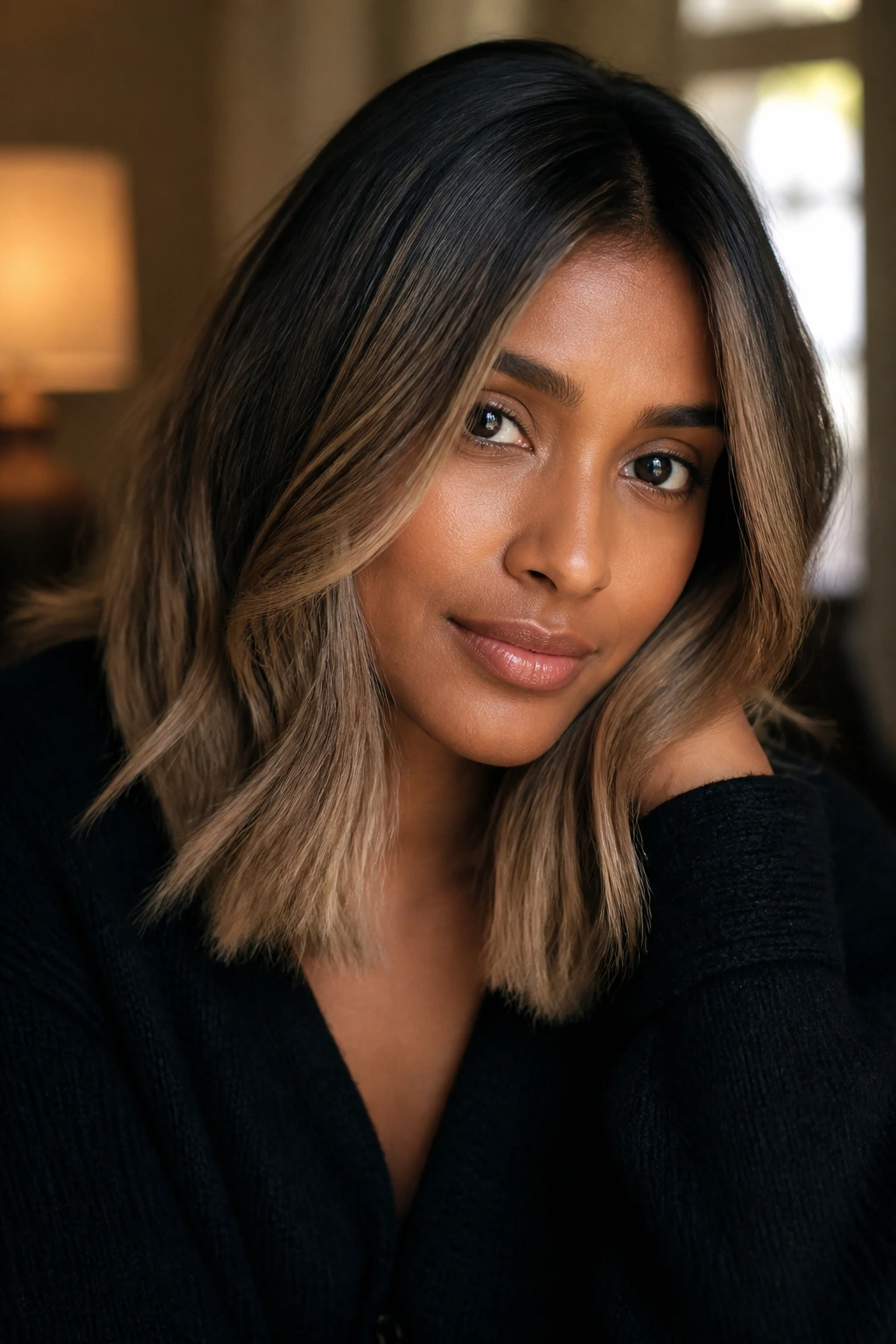
Soft sable is the grown-out, lived-in member of the family. The roots stay deep and natural, the mids pick up a softened beige-brown, and the ends carry just enough lightness to show movement. It is a good choice if you want your color to survive a busy schedule.
The root area matters here more than almost anywhere else. A slightly darker base makes the beige feel placed rather than painted randomly across the head. That shadowed root also keeps the style looking fuller near the scalp, which is handy if your hair is fine or has less density at the crown.
If you are the type who goes too long between appointments, this is one of the smarter options. It ages better than high-contrast highlight work because the grow-out is part of the look.
20. Khaki Beige Brunette Balayage With a Muted Edge
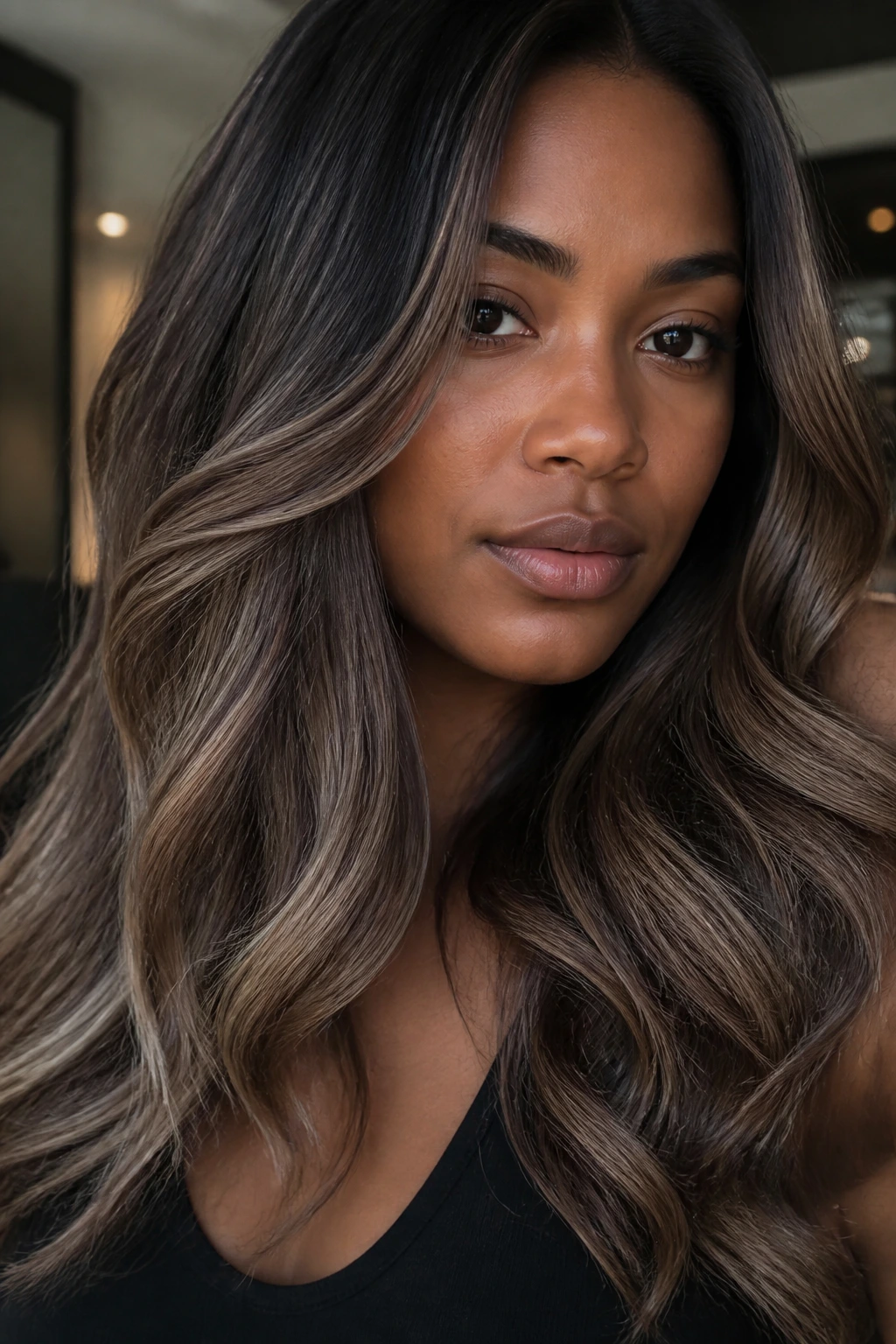
Khaki beige is not for everyone, and that is exactly why it belongs on the list. It has a muted, earthy edge — a little olive, a little beige, a little brunette — and on the right deep skin tone it can look sharp in a way that warmer shades cannot. Think understated, but not bland.
The tone needs a steady hand. Too much green in the gloss and the hair looks odd. Too much warmth and the khaki idea disappears. The best version keeps the beige visible, with just enough muted coolness to give the shade its edge.
This is the one I would point to if someone wants color that feels fashion-aware without going loud. It suits clean cuts, smooth styling, and people who like a shade that takes a second glance.
21. Maple Beige on High-Contrast Layers
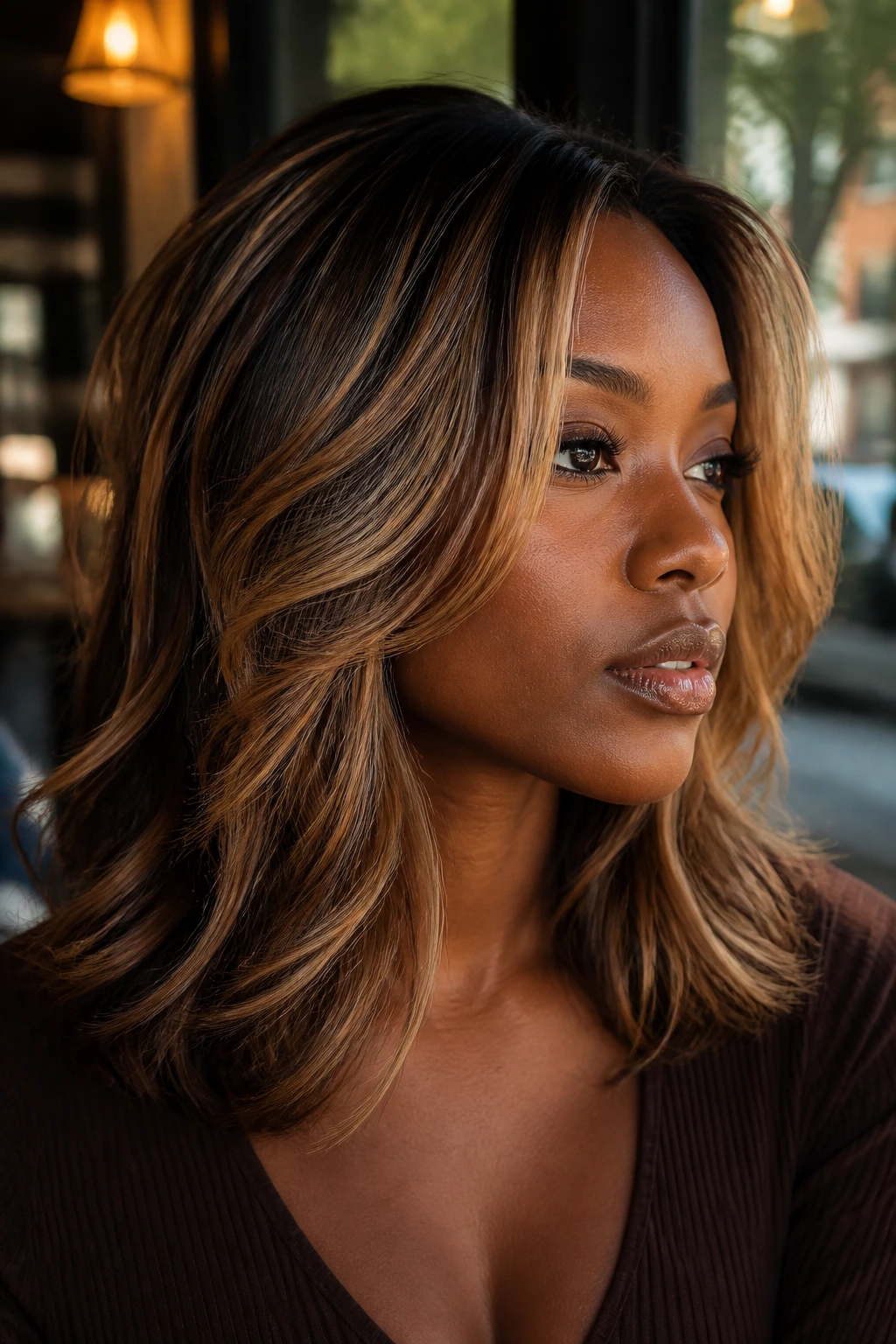
Maple beige is warm, rich, and easier to wear than people think. On layered hair, the shade gets depth because the shorter pieces pick up the light first while the longer pieces stay darker underneath. The contrast is what makes it interesting.
The maple note keeps the color from drifting too sandy. That matters on deep skin, where a shade with no warmth can feel hollow. A maple glaze over beige-brown ribbons gives the hair a sweet spot between copper warmth and almond softness.
This is a strong option if you wear side parts or big layered blowouts. The shape of the cut helps the color tell its story. Without that movement, the contrast can feel too deliberate.
22. Smoky Mocha Balayage for Wash-and-Go Curls
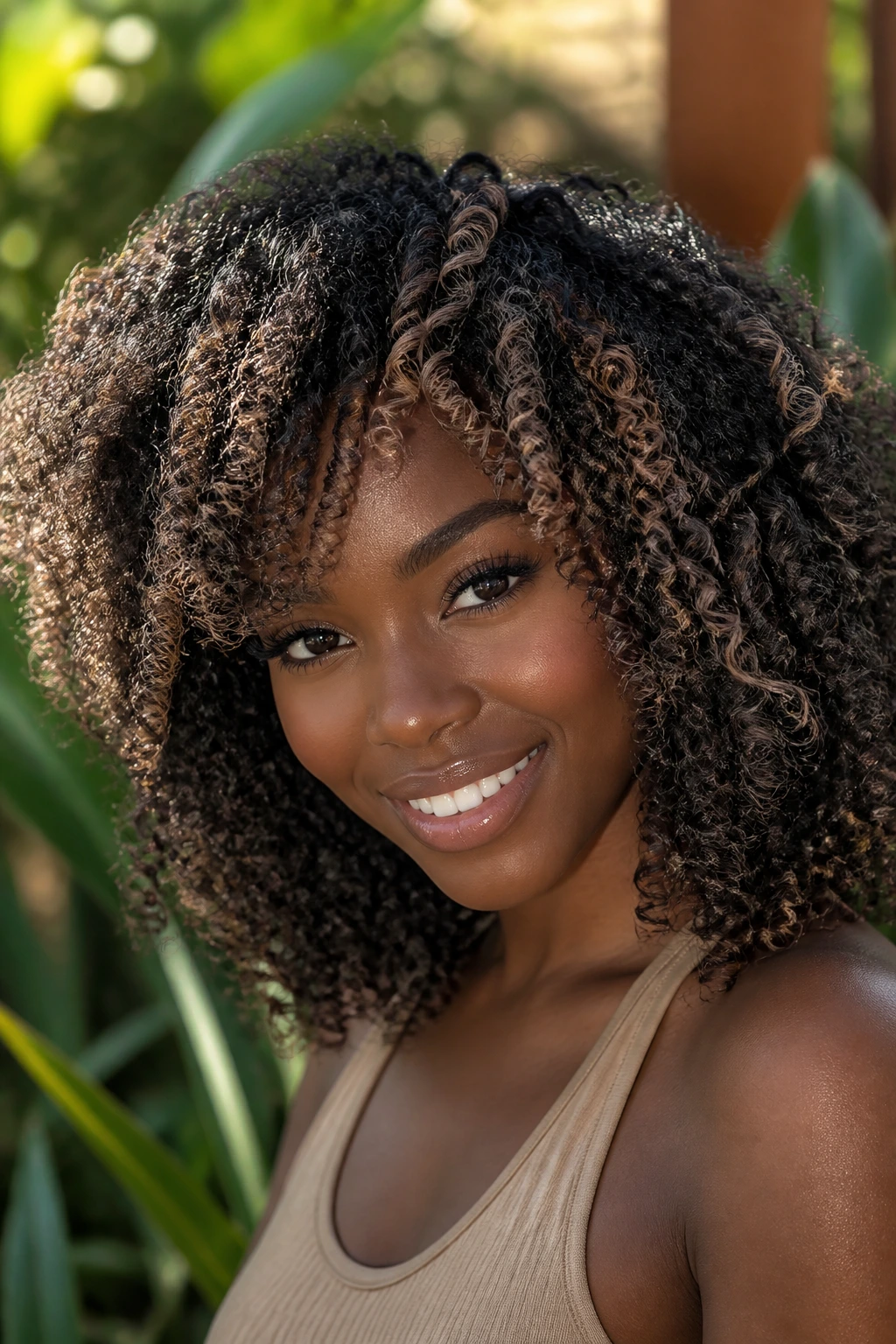
Wash-and-go curls need color that still makes sense when the hair dries on its own. Smoky mocha does that. The base stays dark, the lighter pieces sit in a smoky beige-brown lane, and the curl pattern breaks the color up into soft shifts rather than obvious streaks.
The placement has to respect shrinkage. Paint the sections with the final curl pattern in mind, not just the stretched version. Bigger, well-spaced ribbons tend to read better once the curls tighten up, while tiny stripes can disappear into the pattern.
This is a good choice if you want color that does not require daily heat styling to make sense. It looks alive on defined curls, and it still feels rich when the hair is stretched out a bit on the next wash day.
23. Porcelain Beige Highlights With a Deep Root
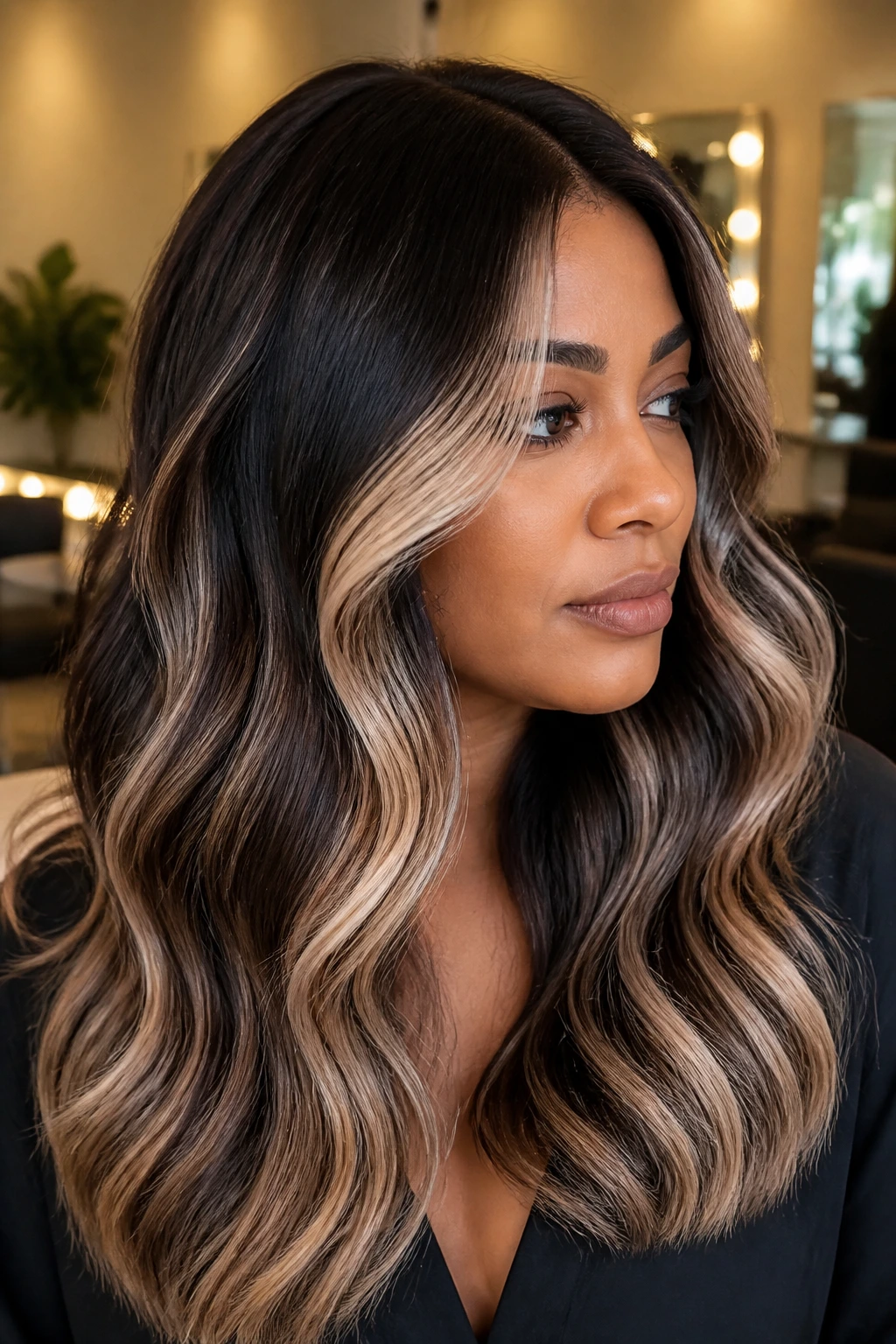
Porcelain beige is the boldest shade in the set, and I would only choose it if the hair is healthy enough to take the lift. The root stays deeply brunette, which keeps the look anchored, but the highlights go lighter than the rest of the list. That contrast can be gorgeous on deep skin when the gloss is precise.
The caution is real. If the ends are already fragile, going this light can make the whole style look tired fast. On strong hair, though, the effect is crisp and luminous in a way that beige-brown shades usually are not.
This is the version for someone who wants the color to make a statement without turning the whole head blonde. Keep the styling soft so the contrast stays polished, not harsh.
24. Mocha Sand Ombré With a Long Fade
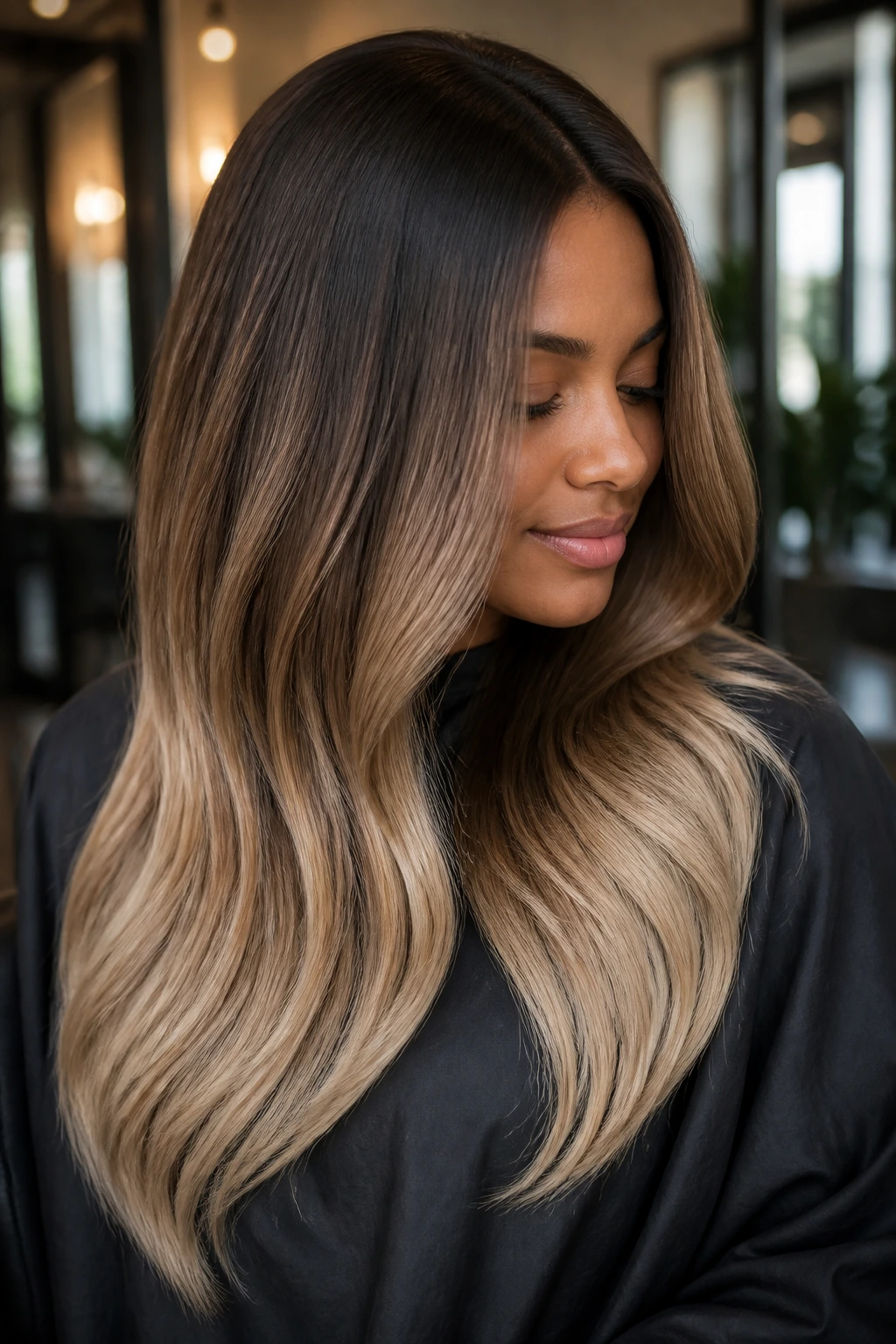
Ombré and balayage are cousins, not twins, and this is where the difference shows. Mocha sand ombré fades in a longer sweep from mocha root to sand-beige ends, with less scattered ribboning and more obvious gradient. On deep skin, that long fade can look clean if the transition is smooth.
This is easier to maintain than high-contrast highlight work because the grow-out is built in. If you do not want to see foils or painted strands as a separate pattern, ombré is the better fit. It gives the same beige-brown family, but the mood is softer and more continuous.
The danger is rough blending. If the fade looks like two colors glued together, the whole thing falls apart. The gradient has to move in steps, not leaps.
25. Glossed Beige Brown With a Cool-Warm Blend
If you cannot decide between warm and cool beige, this is the safest compromise. The base stays brown, the lifted pieces sit in a beige-brown middle ground, and the gloss balances warm and cool notes so neither one takes over. It is the final look for a reason: it works on a lot of undertones without feeling indecisive.
What makes it useful is the flexibility. A warmer gloss can tilt it toward honey for golden skin. A cooler gloss can push it toward taupe for neutral undertones. The haircut, styling, and parting all get a say.
For someone trying beige brown balayage for the first time, this is the lane I would trust most. It gives you dimension, keeps the root rich, and avoids the extremes that usually make deep-skin color jobs go wrong.
How to Style Beige Brown Balayage So Every Ribbon Shows
The hair color will do more of its work if the style gives it somewhere to move. Straight hair shows contrast, but soft bends show the gradient. Big curls show the placement. A slicked-back style hides the whole conversation, which is fine if that is what you want, but strange if you spent four hours at the salon and then flatten everything with gel.
Finish: Loose waves, blown-out bends, twist-outs, and defined curls show beige brown best. On silk-pressed hair, keep the ends slightly curved rather than pin-straight so the ribbons separate in the light.
Parting: A middle part gives the color symmetry, while a side part shifts the brightness toward one side of the face. If your face frame is the lightest part of the look, switch the part occasionally so the whole style does not start to feel one-note.
Texture: On curls and coils, a little stretch before the first style check helps you see where the highlights actually landed. On straight cuts, the dimension shows better when there is movement through the mids and ends, not just a polished sheet of hair.
Best Matches: Layered cuts, curtain bangs, lobs, long waves, and rounded curly shapes all make the color easier to read. Blunt cuts can still wear beige brown balayage, but they need softer placement so the perimeter does not look chopped.
Smart Tips for Keeping the Tone Soft and Dimensional
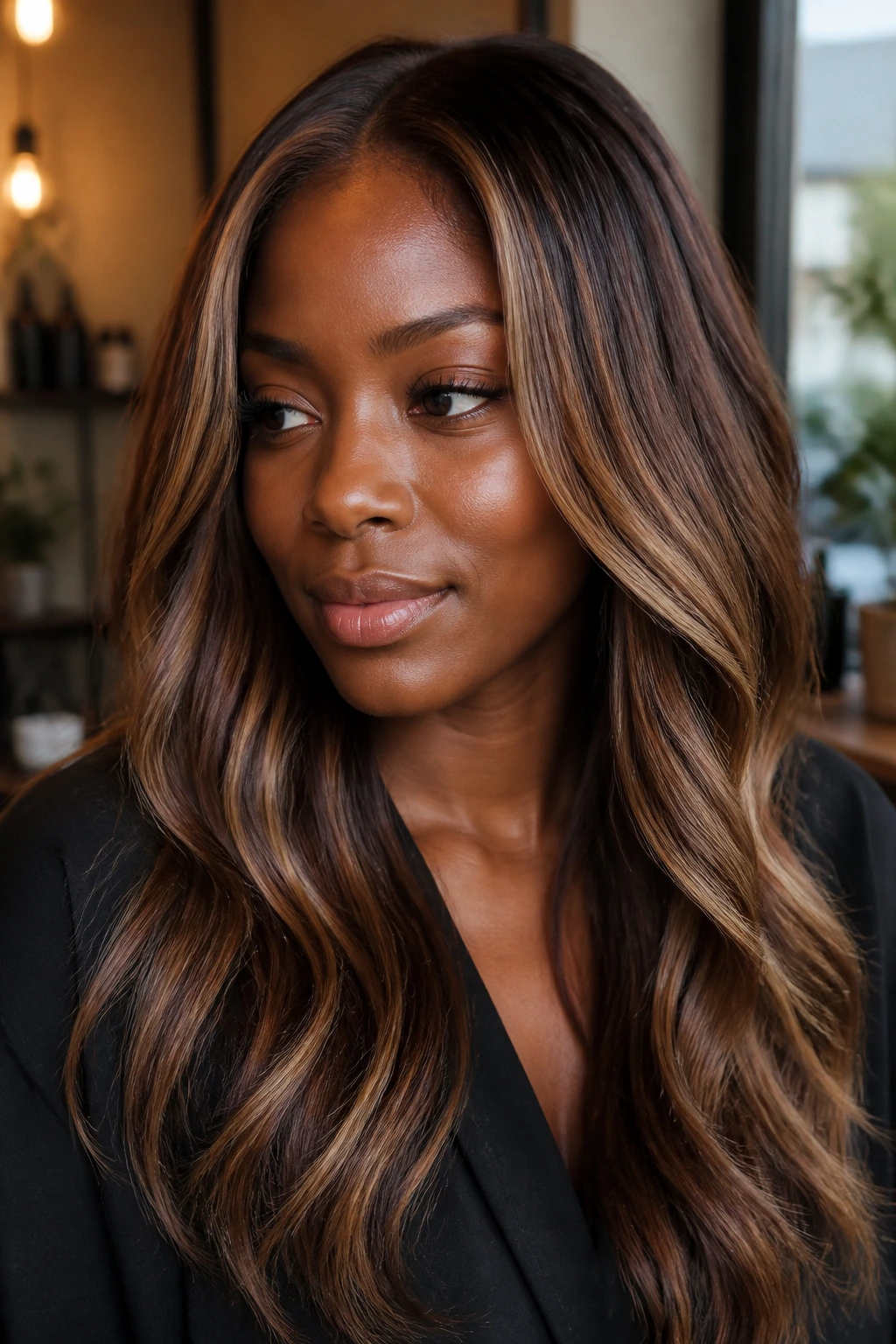
A beige brown shade can go from creamy to dull faster than people expect, and most of the fix lives in the first few weeks after the appointment. If the hair was lifted properly, the aftercare should protect the gloss more than fight the color.
Undertone Match: Golden or olive deep skin usually handles warm beige, honey, and caramel better than cool ash. Neutral or red-leaning undertones can take mushroom or taupe, but even then the shade should keep enough brown in it to stay soft.
Placement Trick: Brightest ribbons near the temple, crown, and part line do more than a full blanket of thin highlights. That is where people look first. Put the light where the eye lands.
Gloss Timing: If the beige starts fading after a few washes, a gloss refresh is usually smarter than chasing another round of lightening. Gloss keeps the tone soft without scraping more pigment out of the hair.
Texture Tip: On curls and coils, judge the placement on hair that has been stretched enough to show the pattern. If you only look at the shrunk-up version, the color map can fool you.
Budget Move: If a full balayage session is too much right away, start with face-framing pieces and a gloss. It is a cleaner entry point than trying to force a whole head of contrast in one appointment.
Common Mistakes That Make Beige Brown Go Flat
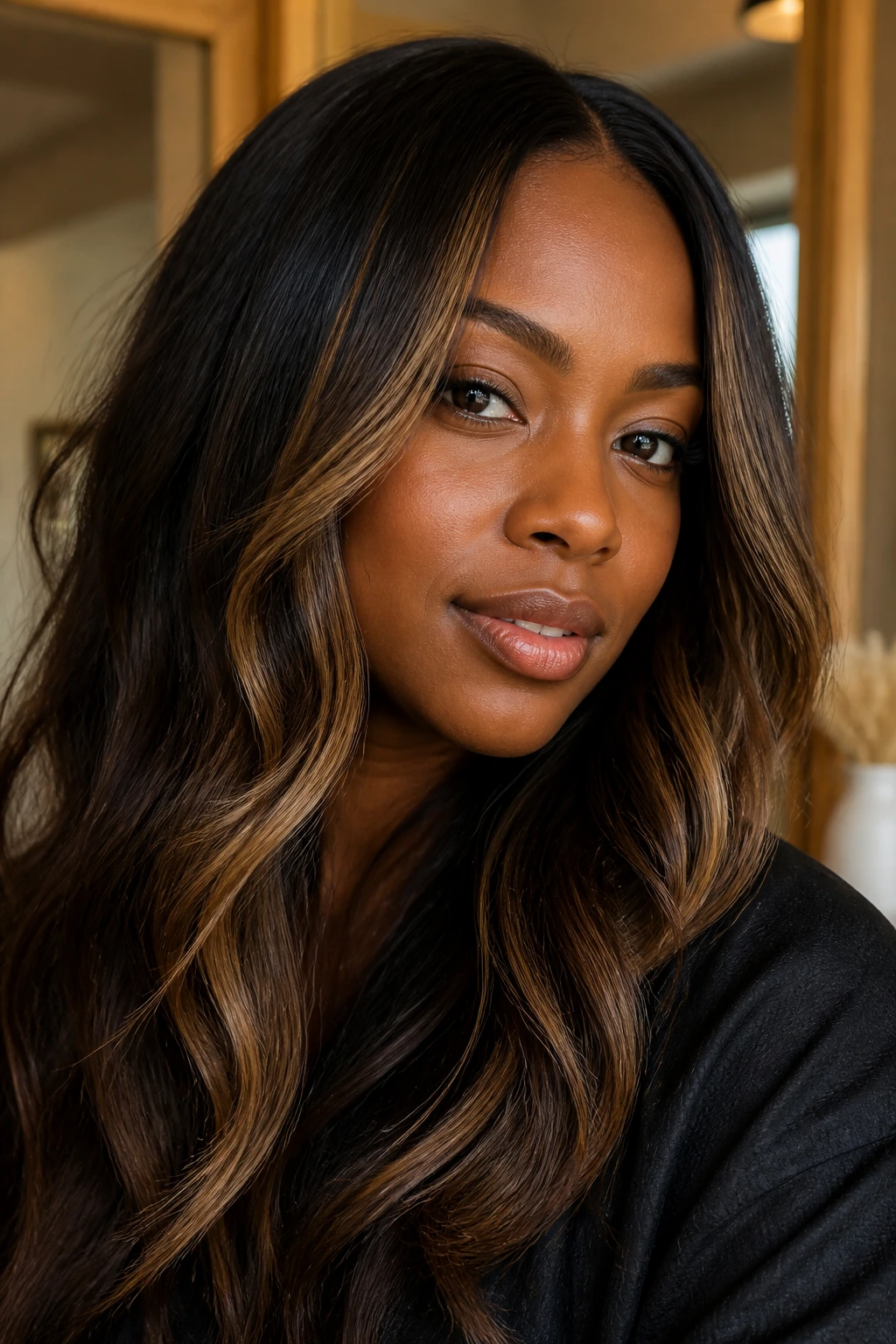
A bad beige-brown job usually fails in one of three ways: it gets too light, too ash, or too disconnected from the haircut. The fix is almost always about restraint.
- Lifting too pale. The hair starts reading blonde instead of beige, and the deep-skin contrast gets harsh. Stop at level 7 or 8 unless the stylist has a clear reason to go lighter.
- Using ash as the default. Too much ash can turn the tone gray or muddy. Ask for beige first, then add coolness only if your undertone can carry it.
- Skipping the shadow root. When the light starts at the scalp, grow-out turns into a stripe. A soft root melt keeps the color from looking painted on.
- Ignoring hair texture. Fine, coarse, curly, and straight hair all show color differently. Placement should follow the cut and the texture, not just the inspiration photo.
- Letting the ends get dry. Beige is less forgiving on rough ends than warm brunette is. A weekly mask and regular trims keep the lighter pieces from looking crispy.
One more mistake shows up a lot: people ask for color that looks good in a salon mirror, then hate it in daylight. Ask for natural light proof, not mirror proof.
Variations and Adaptations to Try
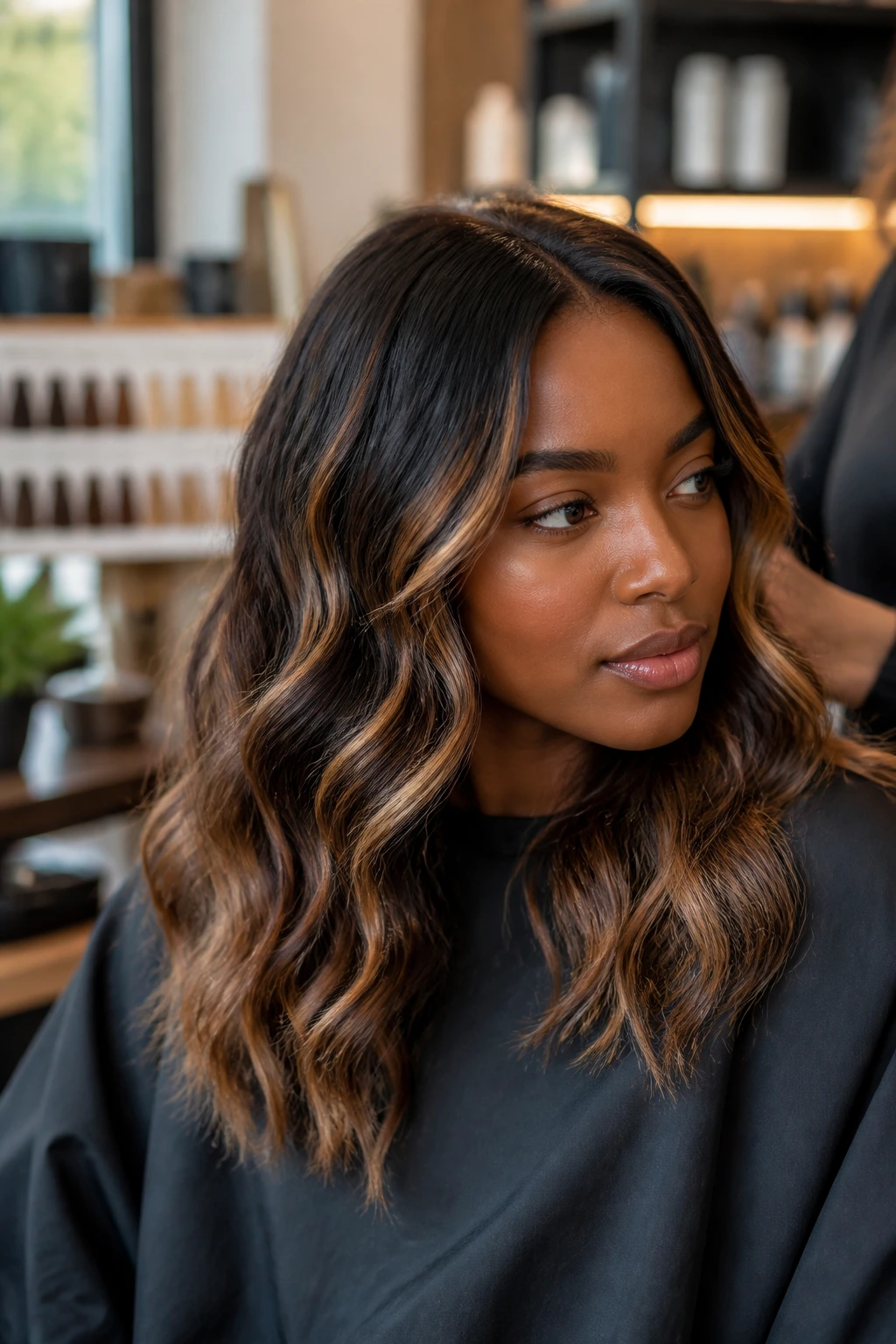
Warm Honey Lift: If your skin leans golden and you want the color to feel softer, push the beige toward honey and toffee. It makes the hair read warmer without crossing into orange, and it usually looks best on layered cuts with movement.
Smoky Stone Finish: For neutral or cooler undertones, mute the beige with a touch of taupe. The result has a smoky edge that feels cleaner on deep skin, especially when the hair is styled smooth or in a polished wave.
Curly Ribbon Map: On curls and coils, use larger painted sections that follow the curl family instead of thin, scattered stripes. That keeps the color visible after shrinkage and stops the hair from looking busy.
Low-Maintenance Root Melt: Keep the root at least a shade deeper than the rest and blend the transition softly. This is the easiest version to grow out, and it works if you do not want to babysit your hair every few weeks.
High-Contrast Face Frame: Brighten only the front pieces and crown while keeping the back darker. It gives deep skin a sharp framing effect without turning the whole head light.
Gloss-Only Refresh: If the highlights are already where you want them, skip another lightening session and ask for a beige gloss or toner refresh instead. It is cheaper, gentler, and usually enough to bring the tone back.
Essential Tools and Resources
- A salon level chart: Helps you talk about level 4 espresso, level 5 brown, and level 7 beige without guessing.
- Color-safe shampoo: Slows fade and keeps the beige from washing out too fast.
- Moisture-rich conditioner: Lightened ends need slip, especially if the hair is curly or porous.
- Blue or violet shampoo: Use it sparingly when brass starts creeping in; too much can dull the beige.
- Heat protectant: A must if you curl, straighten, or blow-dry the lighter sections.
- Wide-tooth comb or detangling brush: Less breakage around highlighted pieces.
- Microfiber towel or cotton T-shirt: Better for curls and waves than rough terry cloth.
- Silk bonnet or pillowcase: Cuts overnight friction and helps the gloss last longer.
- Bond-building mask: Worth having if the hair has been lightened more than once.
- Daylight mirror or window: Not glamorous, but it shows the tone honestly.
If you are heading to the salon, bring two or three daylight photos, not ten screenshots from different rooms. One clear reference is better than a pile of mixed messages.
Maintenance and Ongoing Care
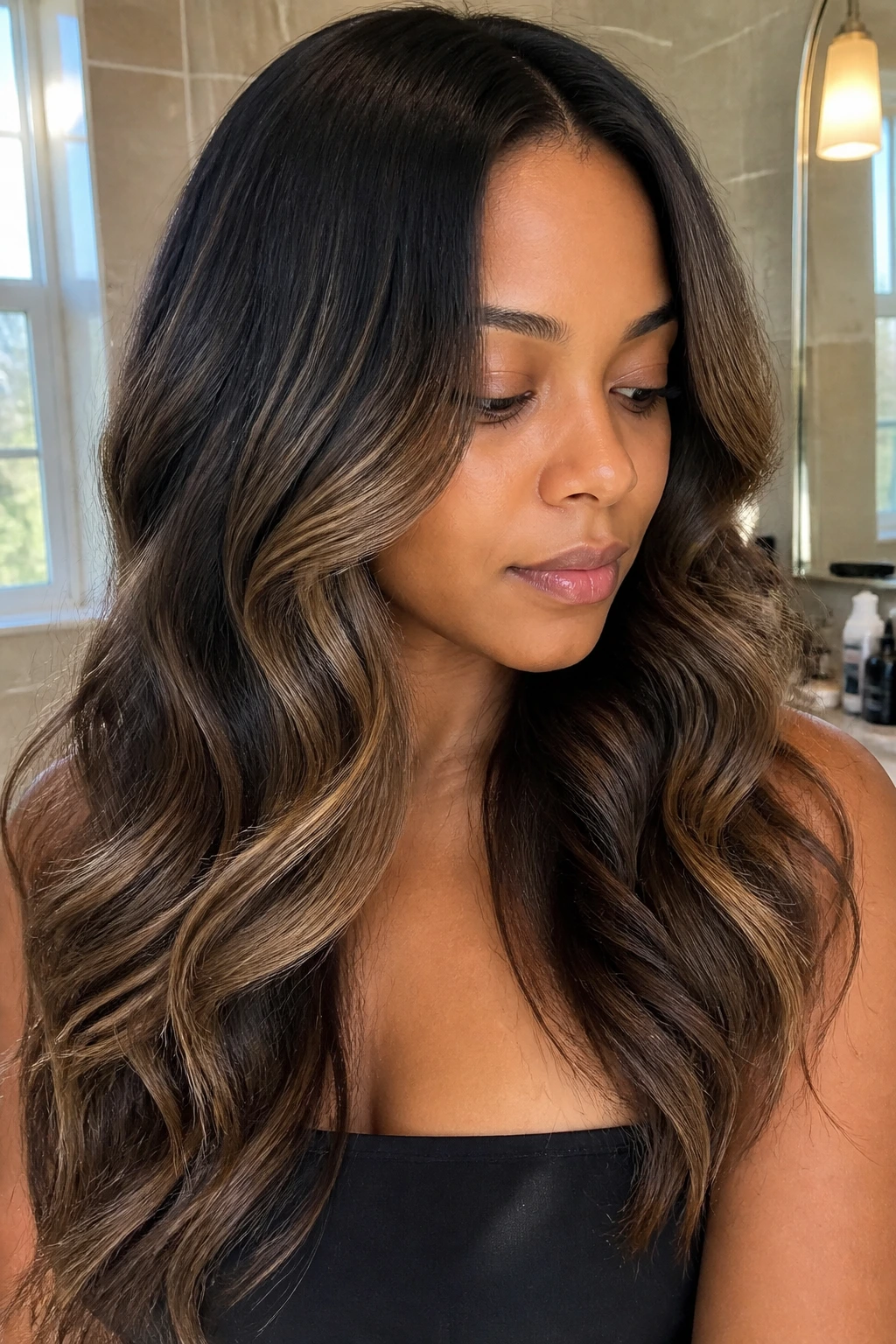
Beige brown balayage usually looks freshest in the first few weeks after a gloss, then slowly softens as you wash, style, and live in it. That fade is normal. The trick is knowing when the tone needs a refresh and when the hair just needs moisture.
For most beige-brown looks, a gloss refresh every 4 to 8 weeks keeps the tone creamy. Cooler shades like smoked taupe tend to drift faster, while warm caramel and toffee hold a little longer. Full highlight retouching usually waits longer — often 8 to 14 weeks, depending on how noticeable you want the regrowth to be.
Wash frequency matters more than people think. If you shampoo daily, the beige will fade faster and the root shadow may lose its softness. If you wash once or twice a week, the tone usually hangs on longer and the hair stays shinier between appointments.
Heat changes the picture too. Lightened ends do not love high heat, especially if the hair is already porous. Keep hot tools below 375°F on the lighter pieces when you can, and use a protectant every single time. Higher heat is fine only if the hair is strong enough to take it and the passes are minimal.
For curls and coils, weekly moisture masks make a visible difference. Not a maybe. A real difference. When the hair feels rough, the beige looks less creamy because light bounces off the frizz instead of the strand.
Frequently Asked Questions
What beige shade looks best on deep skin tones?
Warm deep skin often takes honey-beige, caramel beige, or toasted almond best because those shades keep the face from looking drained. Neutral and cooler undertones can handle mushroom or taupe, but the brown base should stay visible so the color does not turn flat.
How light should the highlights be?
Most beige brown balayage on deep skin looks best when the lightest ribbons stop around level 7 or 8. That gives enough brightness to show movement without pushing the hair into pale blonde territory, which can look harsh against a rich base.
Does beige brown balayage work on curly and coily hair?
Yes, but the placement has to respect shrinkage. Broader ribbons, painted along the curl pattern, usually show up better than thin streaks that disappear once the hair springs back.
How often do I need a toner or gloss?
A gloss every 4 to 8 weeks keeps the beige direction clean. If your hair is lifted very cool or you wash often, the tone may drift faster and need a refresh sooner.
What if the color turns brassy after a few washes?
That usually means the hair is exposing its warm underpigment as the gloss fades. A beige toner with a blue-violet support can calm it down, but if the hair is very warm, the better fix may be a slightly deeper beige rather than chasing the lightest finish.
Can I get this look without bleach?
You can add warmth, softness, or a darker beige glaze without bleach, but true beige on dark hair usually needs controlled lifting. Deposit-only color will not show the same level of dimension on a level 3 or 4 base.
What should I ask for if I want low maintenance?
Ask for a shadow root, fewer but more deliberate ribbons, and a soft beige melt instead of a bright all-over highlight pattern. Beige-brown ombré and cocoa melts are usually easier to live with than a high-contrast money piece.
Will a money piece be too loud on deep skin?
Not if it stays in the beige-brown lane and the rest of the hair holds enough depth. The problem is not brightness itself; it is brightness without a darker frame behind it.
How do I keep the color from looking stripey on a bob?
Use finer placement and keep the tone close to the base. A bob needs micro-dimension more than chunky contrast, or the shape can start looking chopped up.
A Shade Range That Keeps Its Depth
Deep skin does not need blonde to look bright. That is the part people get wrong over and over. The better move is depth plus controlled lift, with beige acting as the bridge between the two.
The nicest beige brown balayage always keeps one foot in brunette territory. That is why these 25 ideas work across curls, coils, waves, lobs, long layers, and silk presses: they all respect the same basic rule. Keep the root rich. Let the beige show up where the hair moves. Leave some shadow in the mix.
If your hair has been asking for dimension without losing its backbone, this is the lane worth trying.