



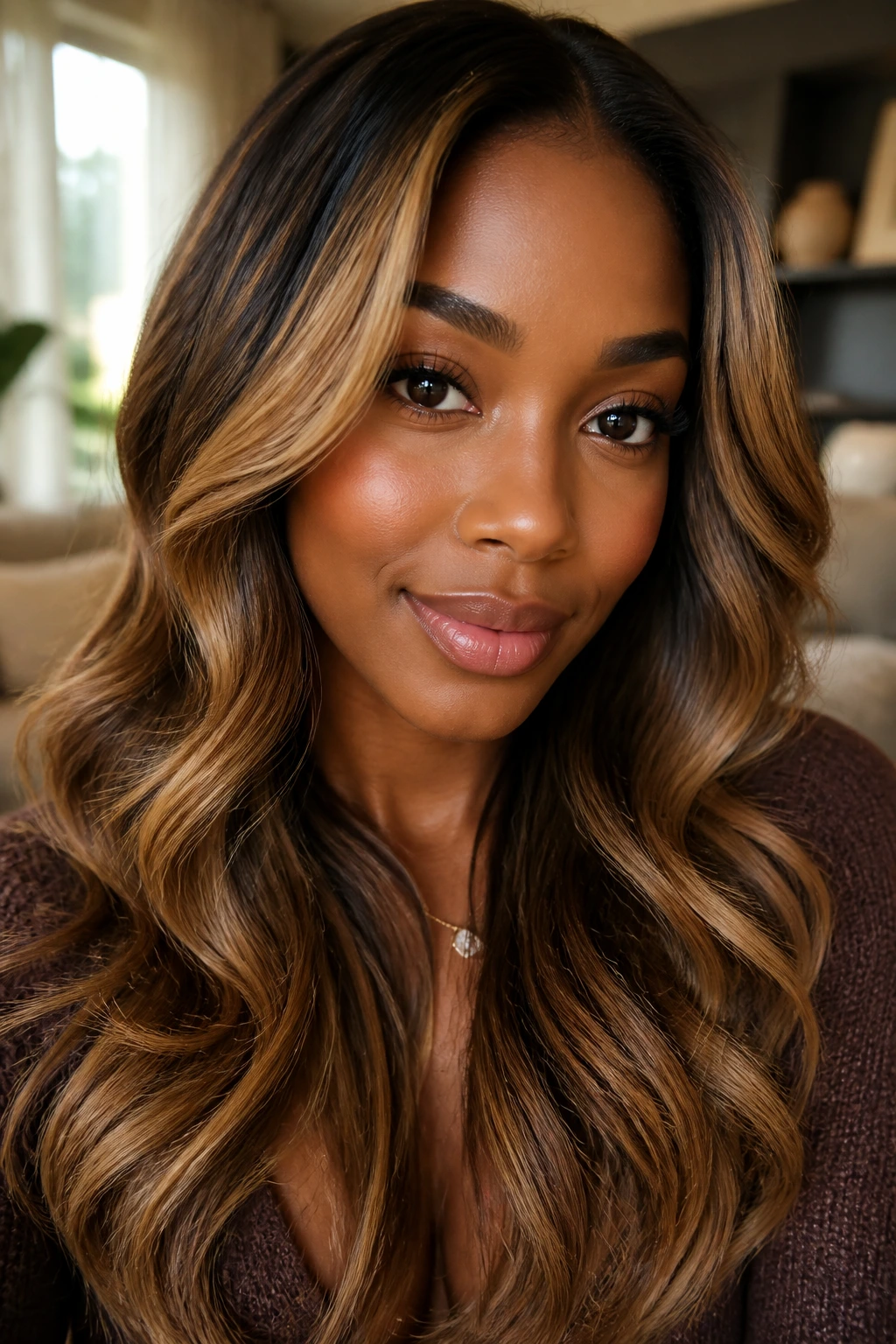
Caramel blonde balayage for deep skin tones is one of those color ideas that looks easy until you sit in the chair and have to make real decisions. The good versions have warmth in the right places — around the cheekbones, through the mids, maybe a few soft ribbons near the part — and the whole head seems to glow instead of shout. The bad versions lean too pale, too orange, or too ash-heavy, and suddenly the hair and skin stop speaking the same language.
That mismatch is the whole reason this topic matters. Deep skin can hold warmth beautifully, but it usually needs that warmth to be controlled, not noisy. I’ve always preferred caramel shades that sit somewhere between toasted sugar and honeyed coffee: rich enough to read as blonde, soft enough to stay flattering when the light changes. On curls, that warmth catches the bends. On a silk press, it slides across the surface like gloss. On a lob, it keeps the cut from looking like one flat block.
The trick is not finding the lightest blonde in the room. It’s choosing the shade that gives depth, movement, and a little shine where your hair naturally wants to move. That’s where these 25 looks earn their keep.
Why You’ll Keep Coming Back to These Shades
-
Warmth that belongs on deep skin: Caramel, toffee, honey, and beige sit in the same family as a lot of deep undertones, so the hair looks rich instead of chalky.
-
Soft grow-out: Balayage leaves the root blurred, which means you don’t get that hard stripe you see with traditional foil highlights.
-
Works across textures: Loose waves, tight coils, braid-outs, and silk presses all show caramel differently, which is part of the fun.
-
Easy to adjust: You can keep the color subtle with a root shadow or push the brightness forward around the face and ends.
-
Better movement in plain clothes and dressy clothes: The same caramel ribbon can look casual with a T-shirt or polished with a blazer. It changes with the styling.
-
Less commitment than an all-over blonde: If you want lightness without that full-head bleach look, balayage gives you a softer way in.
1. Honeyed Chestnut Ribbons
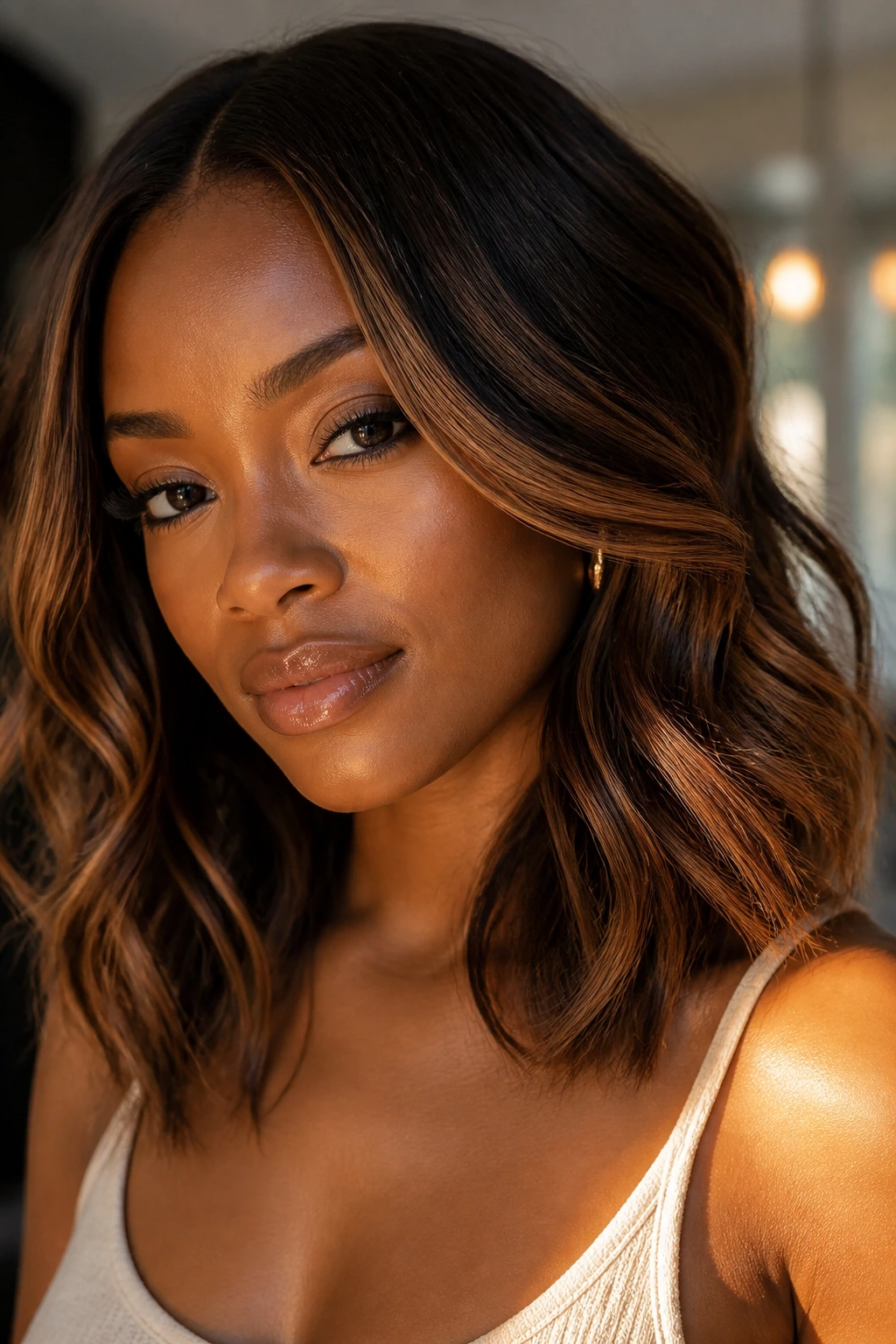
The prettiest thing about this look is the way the honey sits on top of a chestnut base without trying to overpower it. You get those slim ribbons through the mids, then a little extra lightness where the hair bends around the collarbone. It reads soft from across the room, then starts showing off when the light hits the waves.
Why It Flatters Deep Skin
Honeyed chestnut works because the caramel is warm enough to echo deep skin tones, but not so pale that it starts looking disconnected. I like this on shoulder-length layers most of all. The shape opens up the ribbons, so each wave gets its own stripe of light instead of turning into one big block.
- Best placement: Keep the brightest pieces from cheekbone to ends.
- Best cut: Layered lob, long layers, or a shoulder-grazing cut.
- Styling move: A 1.25-inch curling iron gives the ribbon effect a little bend without making the hair look stiff.
Pro tip: Ask for the lightest pieces to stop around level 7 or 8, not pale yellow. That tiny restraint is what keeps the look rich.
2. Burnt Sugar Face Frame
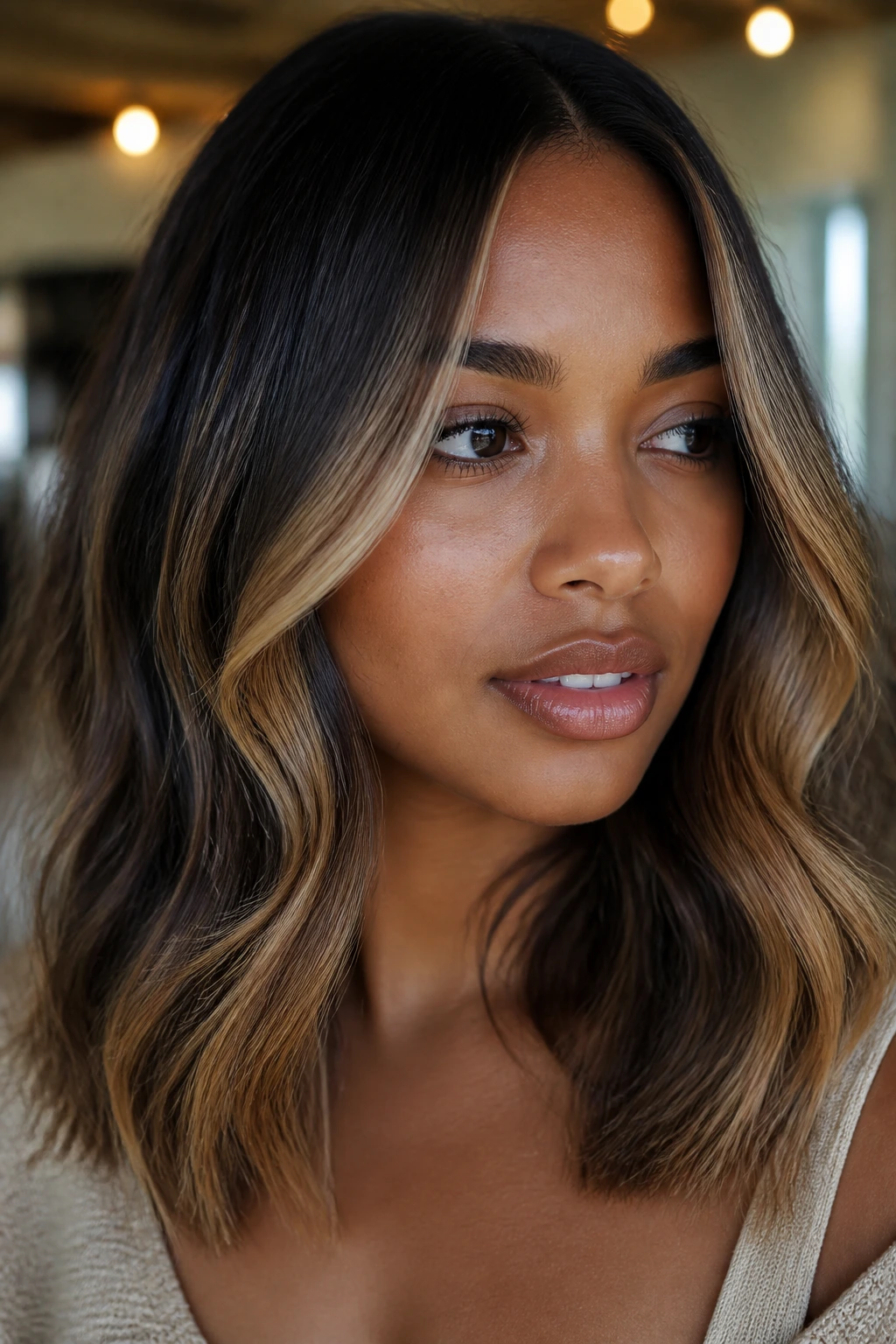
If you want the color to announce itself before the haircut does, this is the one. The front pieces are brighter, the back stays deeper, and the whole thing has that “someone knew exactly where to paint” feel. It’s a strong look, but not a loud one.
The magic is in the placement. Color starts near the temples and sweeps down around the cheekbones, then tapers into softer caramel through the rest of the hair. On deep skin, that front brightness makes the face look awake without washing anything out. It’s especially good on center parts, ponytails, and loose half-up styles.
You can wear this with curls or a blowout. I actually think it looks more expensive on hair that has a little movement, because the contrast shifts as you turn your head.
3. Cocoa-to-Caramel Melt
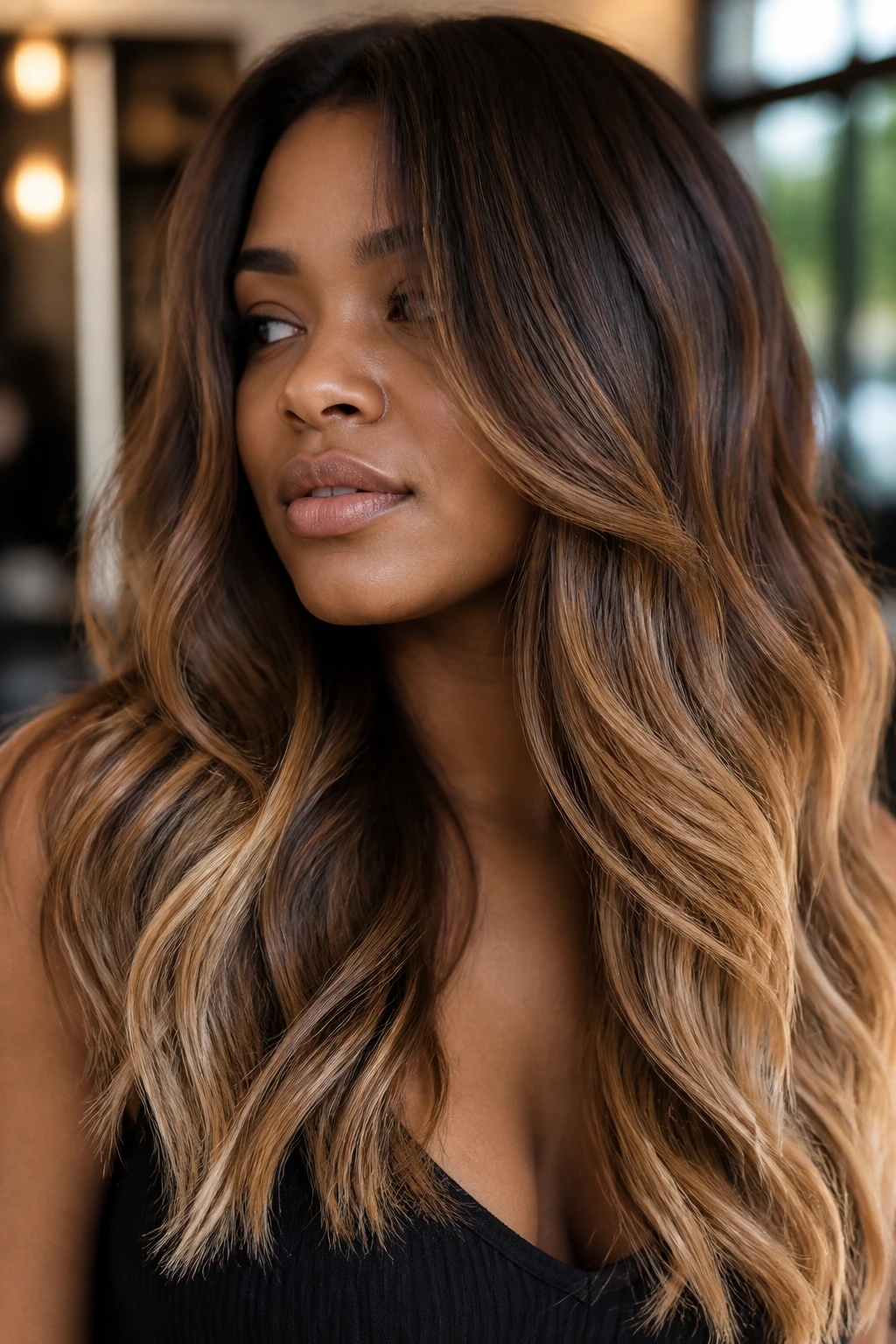
Why does this one look so smooth? Because the transition is doing the work, not the contrast. The roots stay cocoa, the mids drift into warm caramel, and the ends go just a shade lighter so the whole thing feels like one long gradient. There’s no sudden jump. Good.
What Makes the Blend Work
A cocoa base gives deep skin tones a grounded frame. Then the caramel begins to surface slowly, usually from the mid-lengths down, which keeps the look soft even when the ends are brightened. On long hair, this is a nice way to keep length from disappearing into one dark curtain.
How to wear it
Loose twist-outs, big curls, and stretched natural styles show the melt best. If your hair is straightened, keep the ends smooth with a round brush and a small drop of serum. The color needs shine to read correctly; dull hair makes even a well-done ombré look tired.
4. Butterscotch Lob
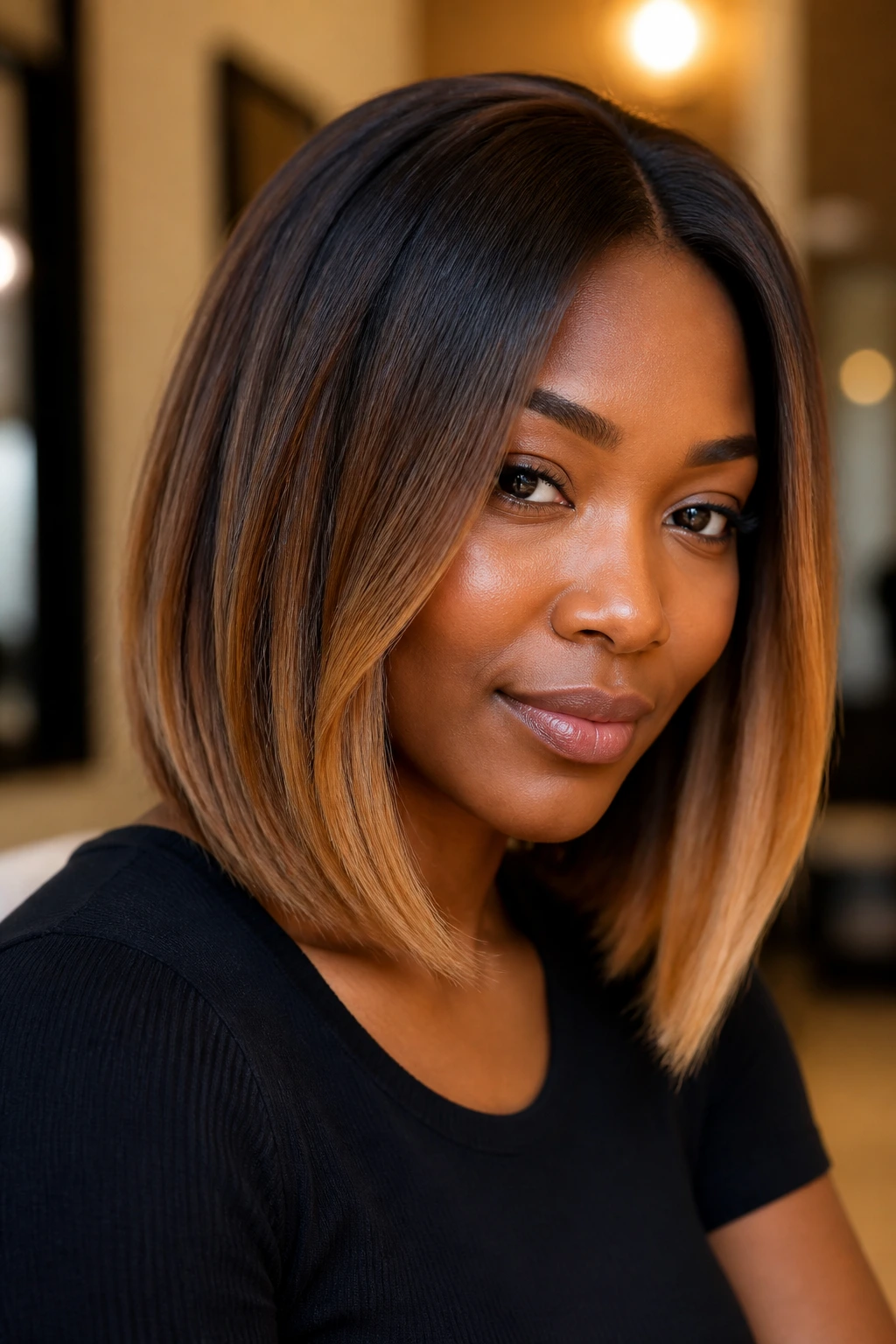
A blunt lob can go flat fast. Butterscotch fixes that. The brighter caramel sits near the lower half of the cut, so the edge of the lob moves with a little more life and the ends stop looking like one heavy line.
This is one of my favorite choices for fine to medium hair on deep skin tones. You don’t need huge contrast. You need enough lift to break the shape open. Butterscotch does that without forcing the whole head into a high-maintenance blonde story. Keep the roots deeper, keep the mids warm, and let the ends carry the lighter tone.
It’s a smart cut-and-color pairing. On a lob, the whole point is clean shape. The caramel should sharpen that shape, not blur it.
5. Cinnamon Swirl Balayage
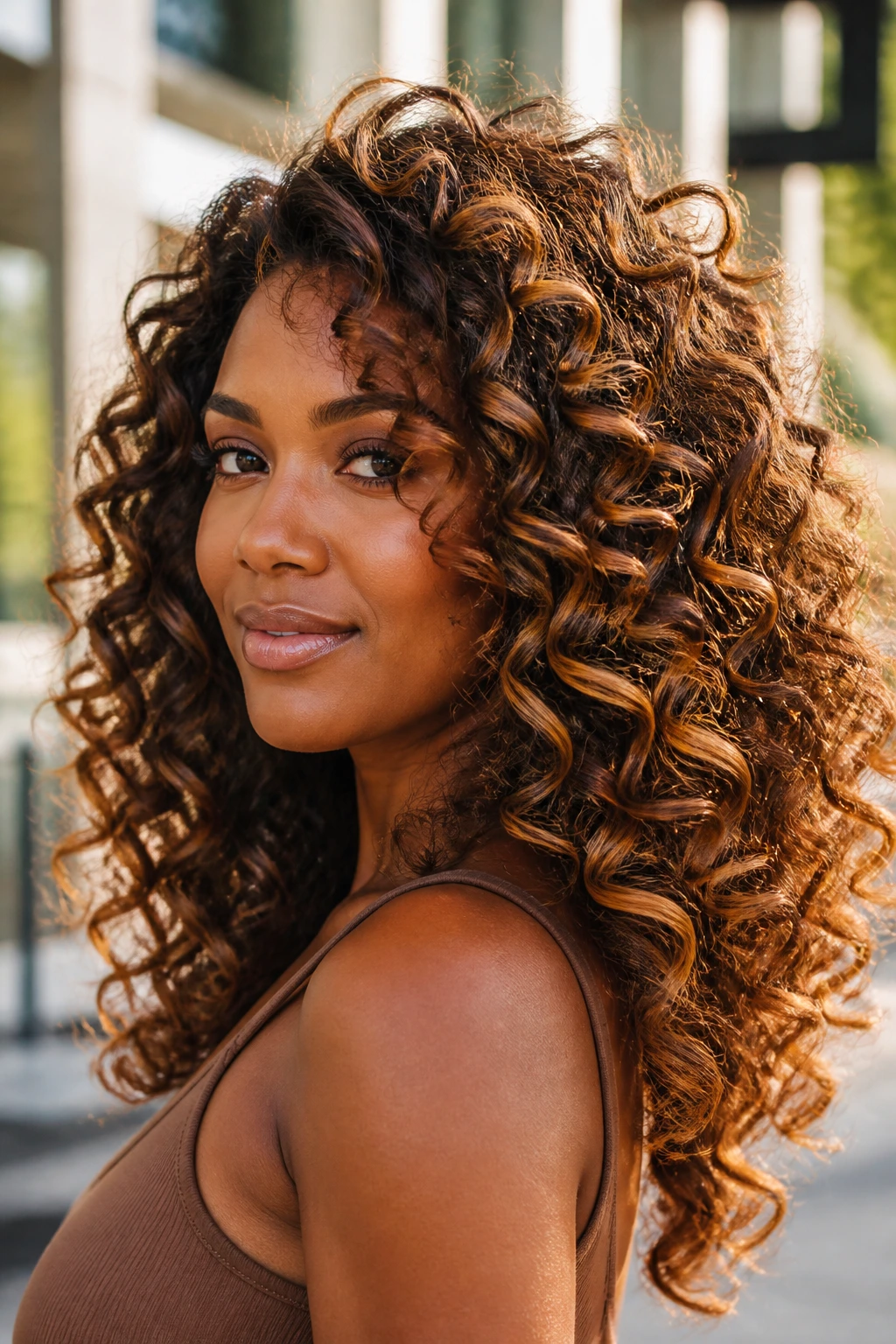
Cinnamon swirl balayage looks like it was painted for curls, because it was. The lighter pieces spiral through the hair in a way that makes each bend catch light separately, which is exactly why this shade works so well on textured hair. You don’t want stripes here. You want little flashes.
The color sits between auburn and caramel, which keeps it warm enough for deep skin and soft enough to avoid that brassy, overcooked look. On natural curls, ask your colorist to place the lightest pieces on the outer ring and along the top bends. That keeps the brightness visible when the hair expands.
This is one of those shades that looks almost quiet in a photo and then unexpectedly beautiful when the hair moves. Motion matters here.
6. Golden Almond Blowout
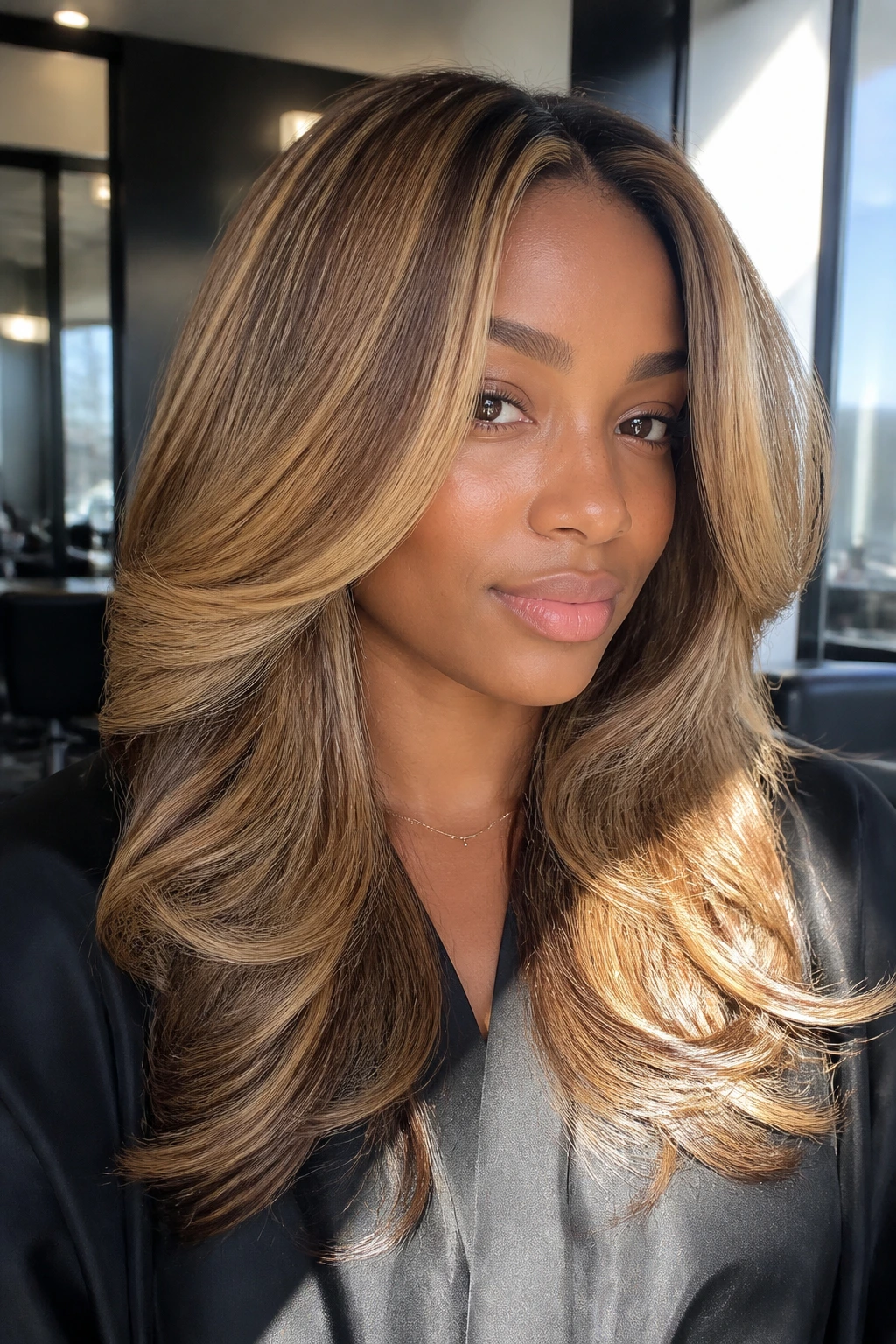
A blowout changes the whole mood of caramel balayage. The color starts to read smoother, longer, and more expensive-looking, even if the actual formula is fairly simple. Golden almond sits in that warm-beige lane that deep skin can wear without fighting it.
The best part is the floaty effect you get on layered hair. The lighter pieces don’t need to be chunky. They need to be airy, spread out, and just bright enough to separate the layers. On a round-brush blowout, the ends curve and the highlights show their edges. It’s a very clean finish.
If your hair tends to puff up in humidity, keep the caramel slightly deeper near the crown. That way, the shape still reads even when the blowout loses a little polish.
7. Auburn-Caramel Ombré
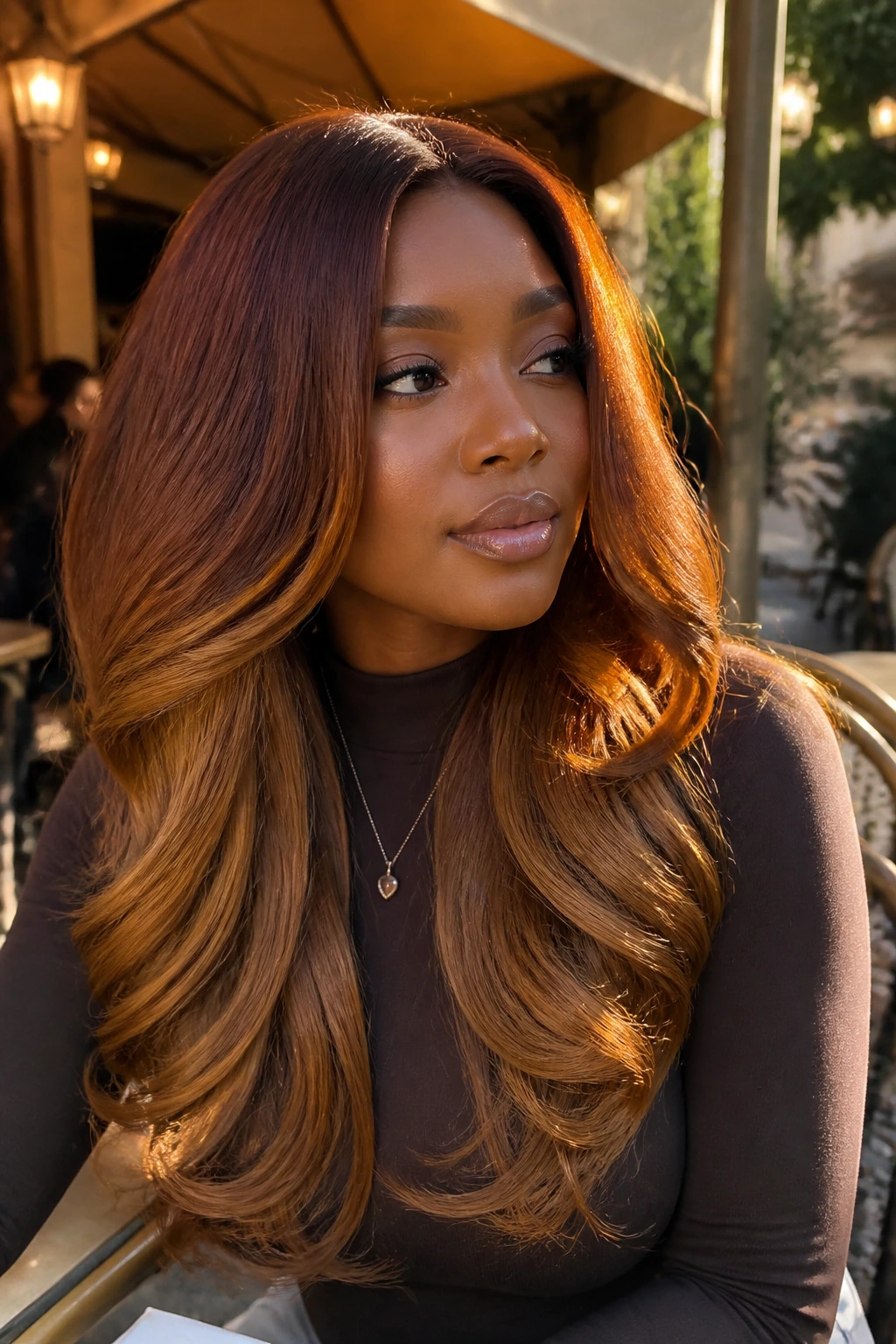
This is the warmest look in the bunch, and I mean that in the best way. Auburn at the root drifts into caramel ends with just enough red-brown richness to keep the color from ever looking flat. On deep skin with golden or red undertones, it can look almost velvet-like.
The ombré works because the shift happens slowly. There’s no sudden line, and the auburn root gives you a buffer before the caramel appears. I like this on long hair best, especially when the ends are curled away from the face. The result feels lush rather than obvious.
If you’ve ever worried that caramel blonde might look too yellow on you, this is a cleaner path. The auburn keeps the warmth grounded.
8. Soft Mocha Money Piece
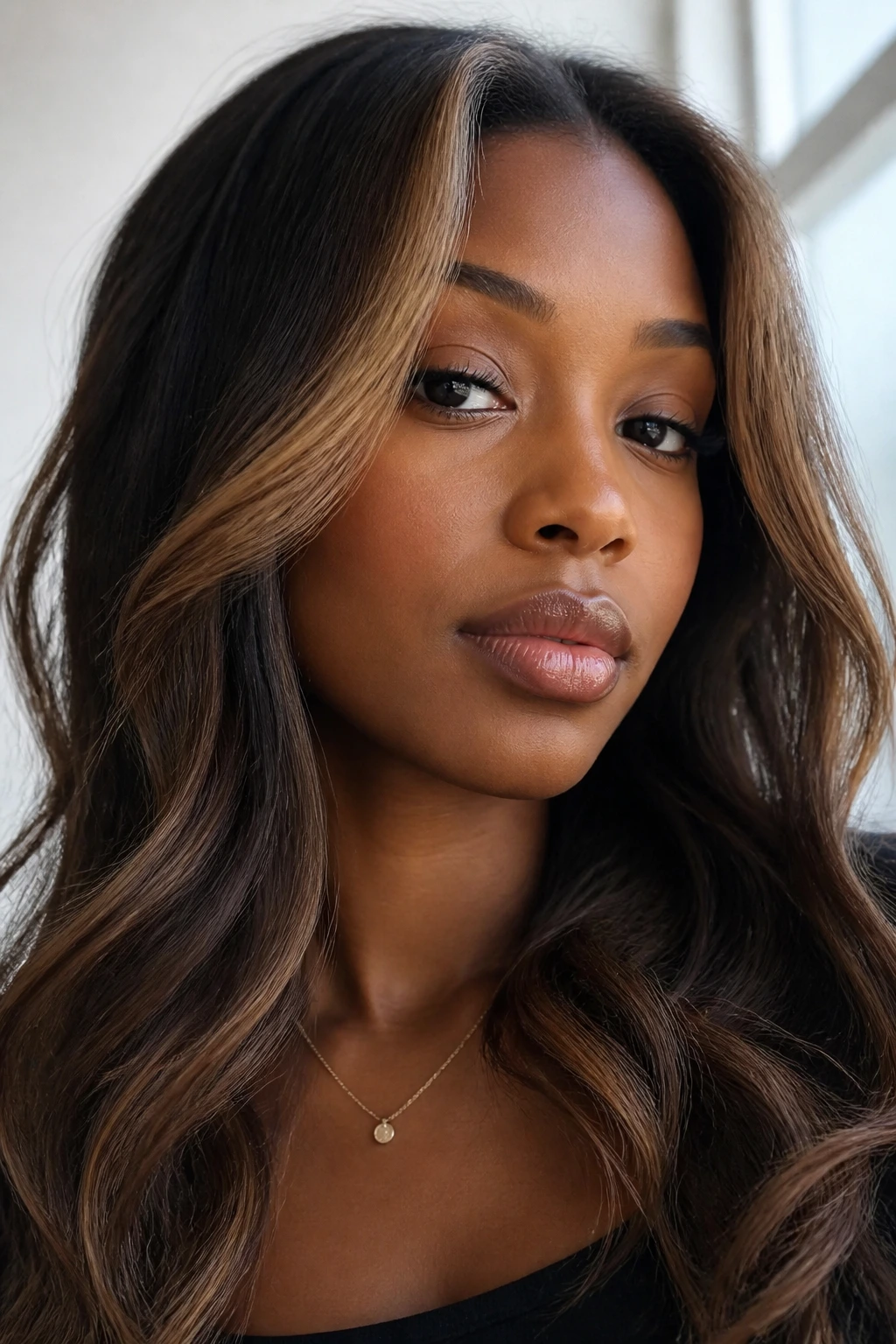
The front pieces do all the talking here. Everything else stays mocha-dark and understated, while the face frame gets a soft caramel lift that brightens the features without turning the whole head into a highlight project. It’s a good starter look if you want to test the waters.
This style is especially kind to deep skin because the bright pieces stay controlled. They don’t march all the way through the hair. They sit where light naturally lands first — around the eyes, cheekbones, and jawline. That placement can make a plain ponytail look deliberate and a loose blowout look finished.
If you wear a middle part, keep the money piece thin. Thick face-framing blond pieces can look harsh fast. Thin is better here. Always.
9. Caramel Dip-Dye Ends
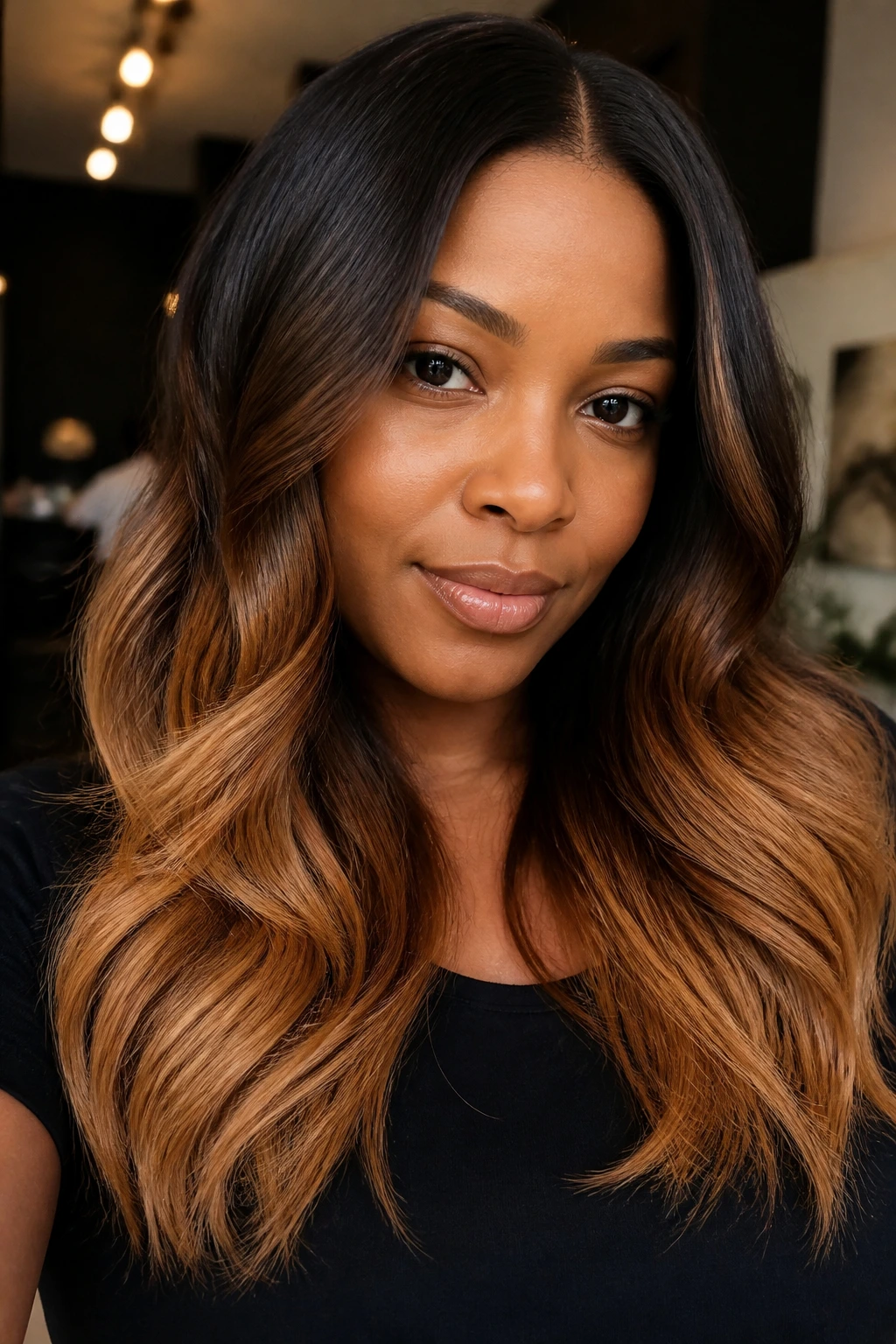
Caramel dip-dye ends are for the person who wants the color to be obvious, but only at the bottom. The top half stays dark and neat, then the lower section fades into caramel blonde with a little extra brightness at the tips. It’s bold in a clean way.
What to Ask For
- Ask for the color to begin below the cheekbone or mid-shaft so the root stays untouched.
- Keep the transition soft, not stripey.
- On curly or coily hair, let the color land where the pattern opens up naturally.
- On straight hair, a blunt cut makes the dip-dye line feel sharper and more graphic.
This look gives you the most contrast for the least root maintenance. If you’re not ready for full-head lightness, it’s a nice compromise. The darker crown keeps the look grounded, and the caramel end section gives the whole style a little swing.
10. Warm Beige Ribbon Highlights
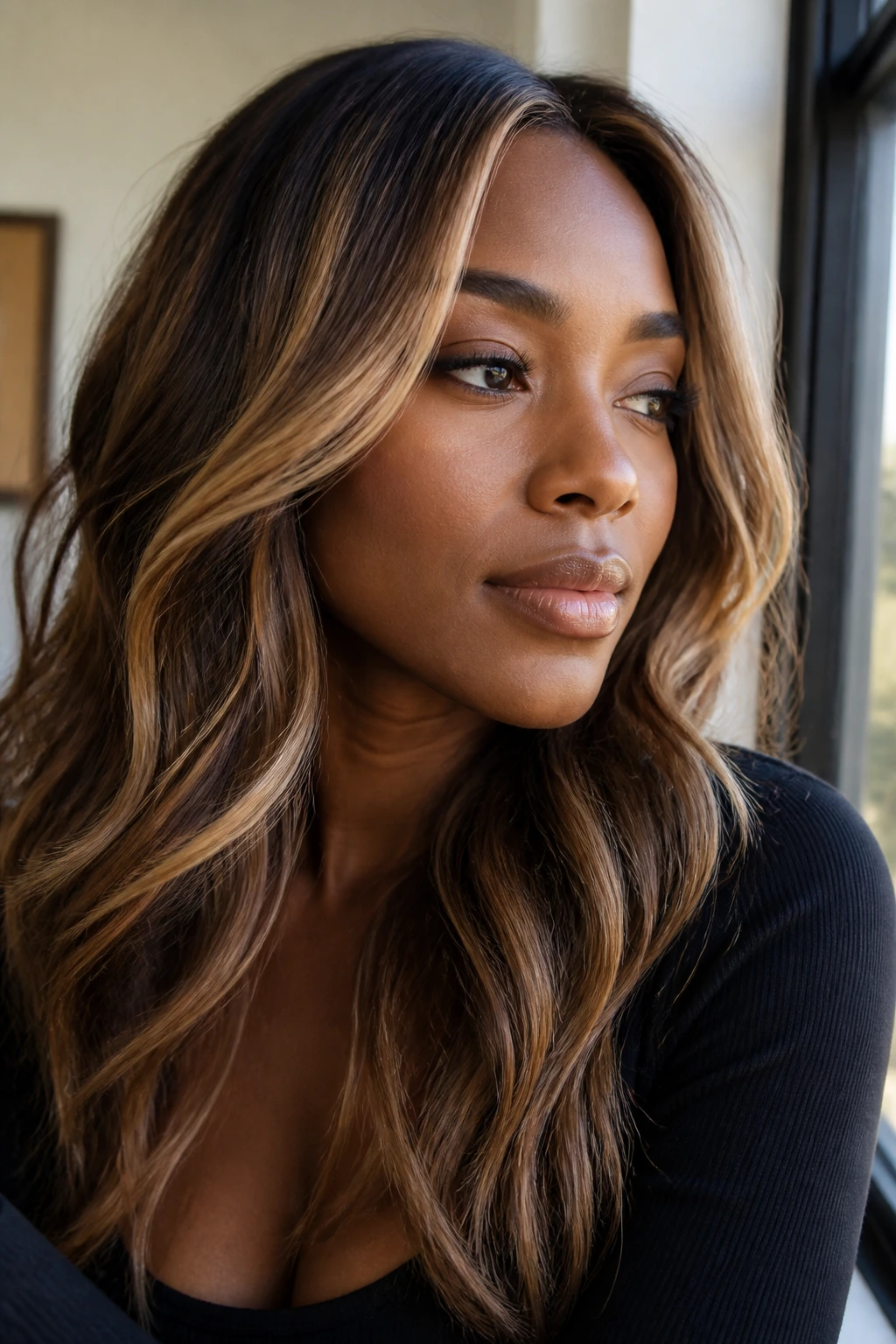
Beige is the quiet cousin in the caramel family. It’s less gold than honey, less orange than toffee, and a little more refined on deep skin when you want the hair to look soft instead of saturated. The best beige caramel tones sit in that middle space where they still read warm in daylight.
I like this on medium to long hair with layers, because the highlights can bend through the cut without looking overdone. On a silk press, the beige pieces create a smooth, reflective surface. On curls, they separate the shape without becoming stripey.
The key is tone, not brightness. A beige highlight that’s lifted too far can turn pale and lose its charm. Keep it warm. Keep it controlled. That’s the whole thing.
11. Curly Coil Pop
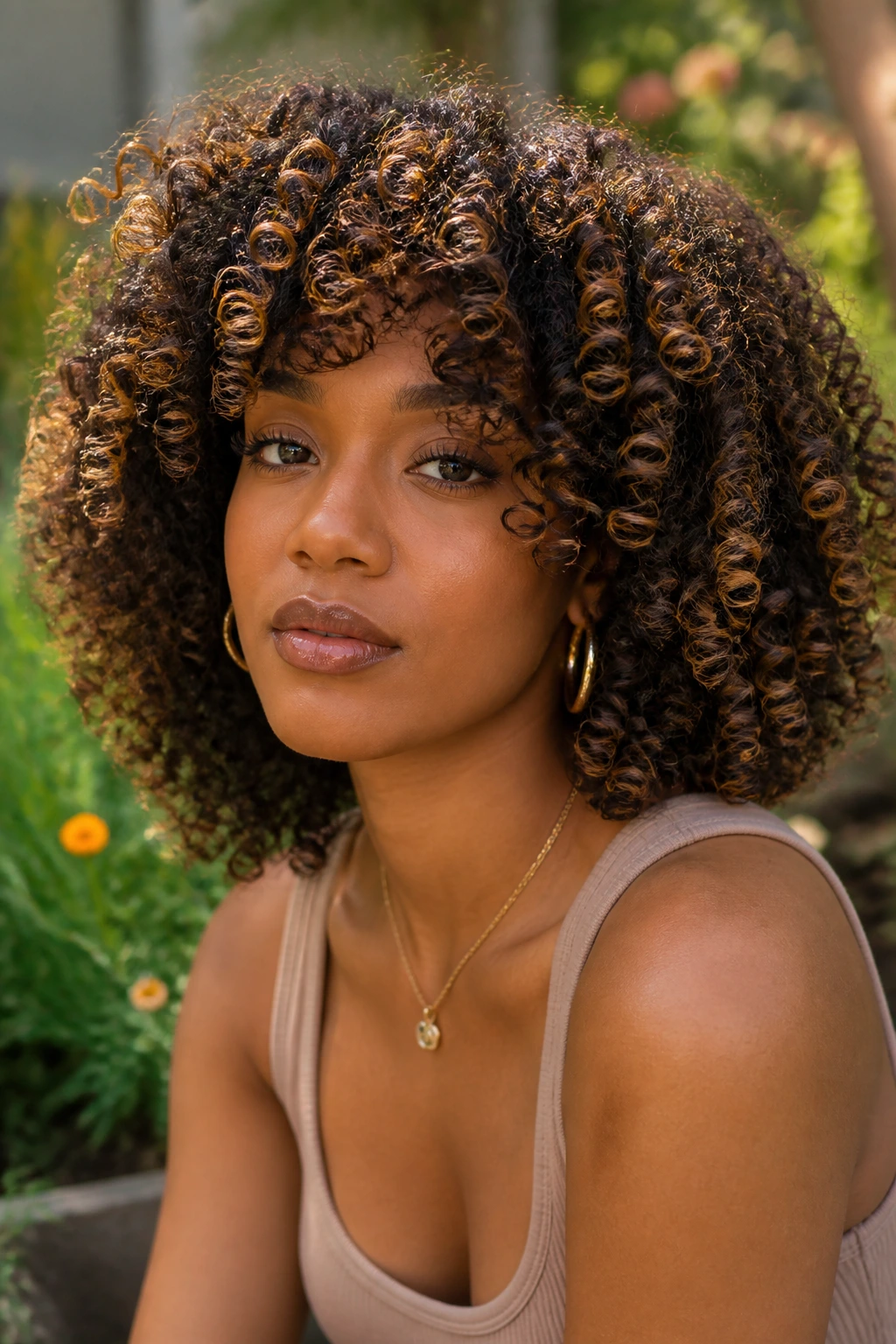
Here’s the difference with coils: the placement matters more than the amount of lightness. Curly coil pop is about picking the outer bends and the top layer so the caramel flashes when the curls stack on top of each other. Too much lightness, and the texture gets busy. Too little, and the color disappears.
The best versions stay close to the natural depth near the roots and brighten only where the curl pattern opens. That gives you dimension without making the style look dry. I’d use this on type 3 and type 4 hair when the client wants visible color but not a full blonde event.
This is also the kind of look that forgives grow-out. As the curls shift, the color reads a little differently every time, which keeps it interesting.
12. Shoulder-Length Bronde Sweep
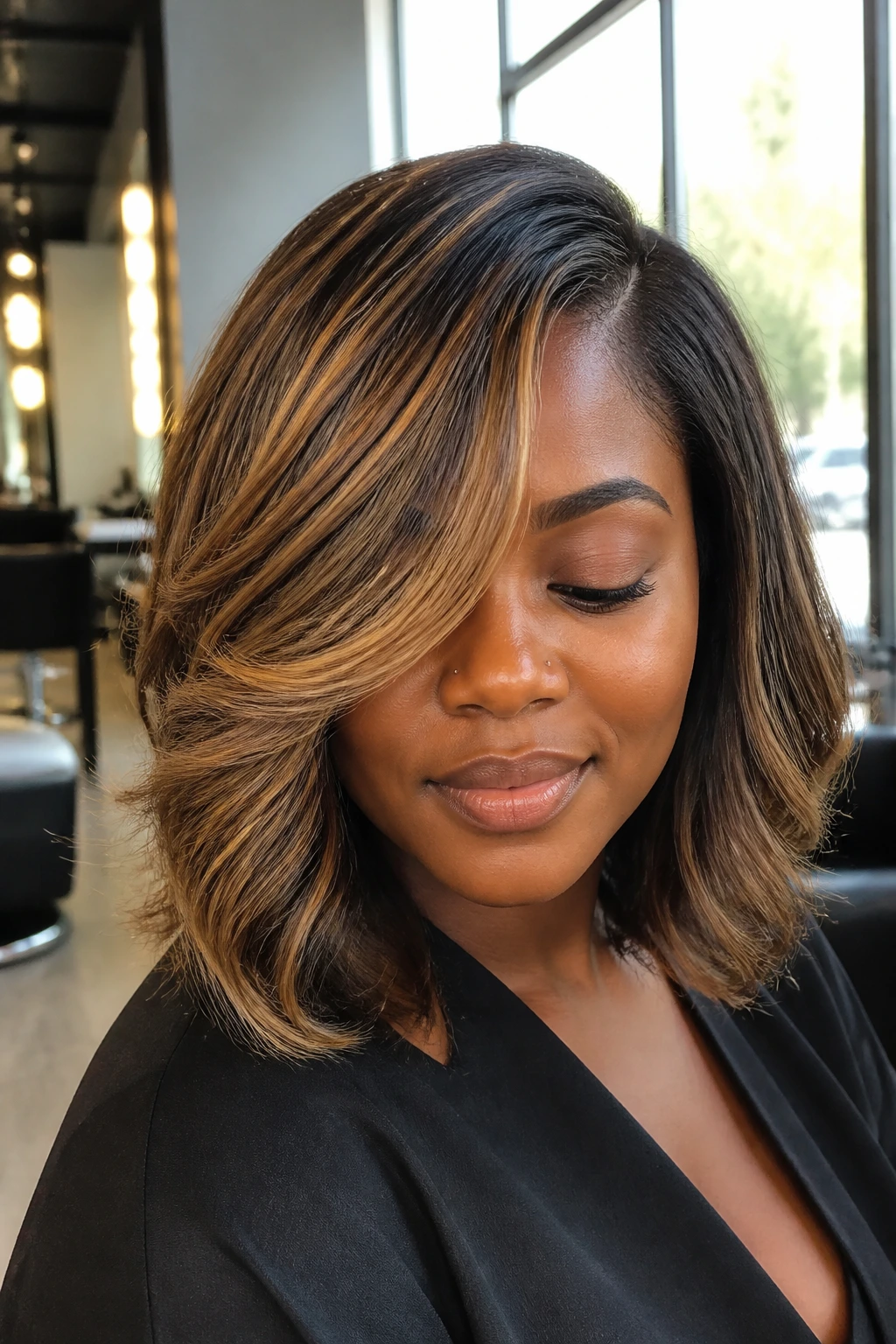
Bronde can sound vague, but on deep skin tones it becomes very specific very quickly. You’re not trying to go beige-blonde all over. You’re blending brunette depth with a sweep of caramel lightness that gives shoulder-length hair a longer, looser look.
That’s why this cut works. Shoulder-length hair can sit heavy if the color is too flat. Bronde sweep breaks the surface up with ribbons that move from the lower crown through the ends. The result feels polished without looking pinned down.
I prefer this on layered cuts with a soft side part, because the sweep gives the highlights a path to follow. Straight hair works, but loose bends make the color feel richer.
13. Honey Biscuit Layers
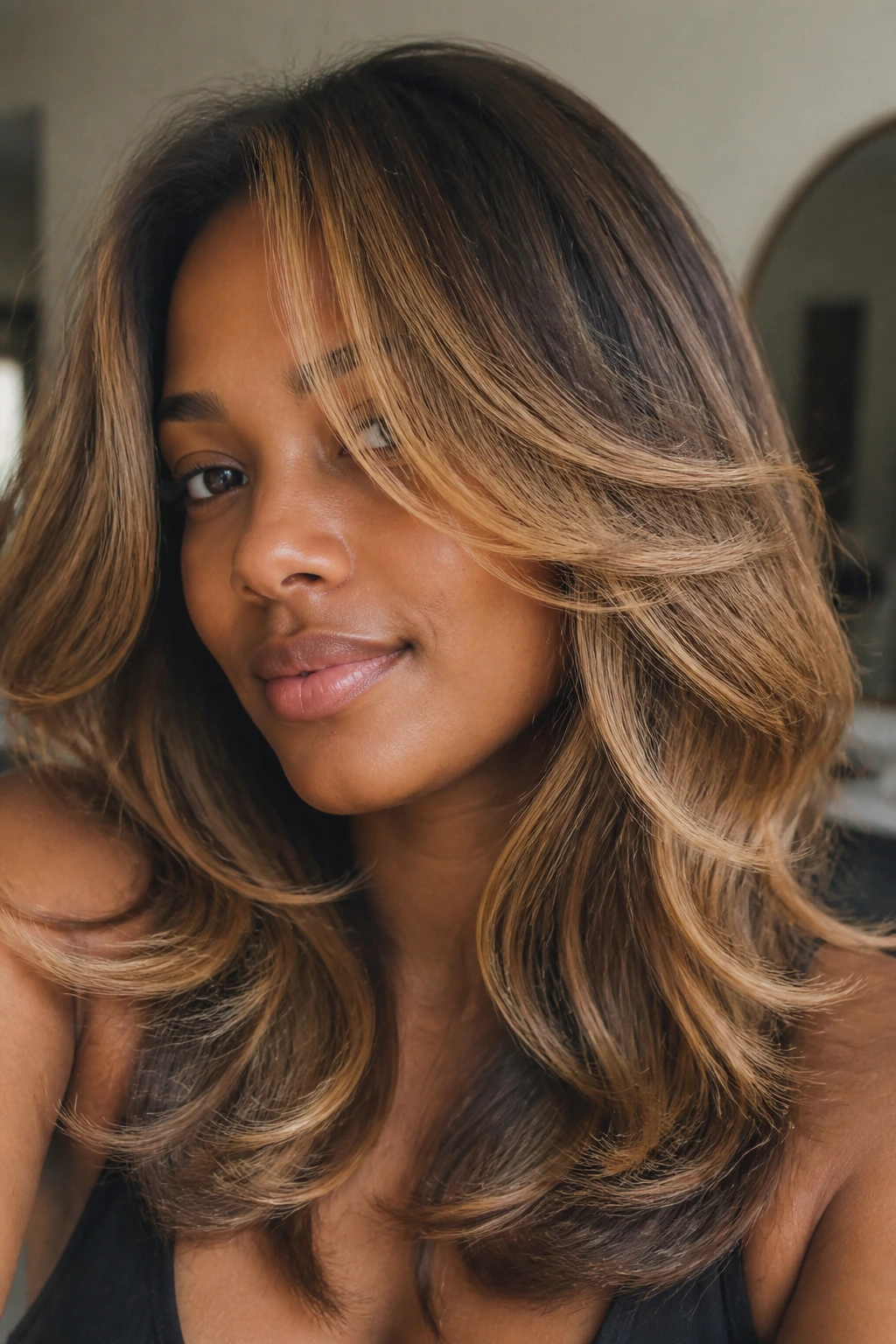
Honey biscuit is warmer and softer than it sounds. The tone sits in a toasted-gold lane that makes layered hair look sunlit without pushing it into brass. On deep skin, it brings a little glow to the face and a little lift to the ends.
Why It Works So Well
Layering is doing half the work here. The color lands on the moving parts of the haircut, so the ribbons show up in the places the eye notices first. That’s the smart part. If the layers are choppy, the honey biscuits pieces can look playful. If the cut is smoother, they read more elegant.
This is a good choice if you want warmth but don’t want the bright front pieces that come with a money piece. It stays friendly, wearable, and easy to grow out.
14. Copper-Kissed Caramel
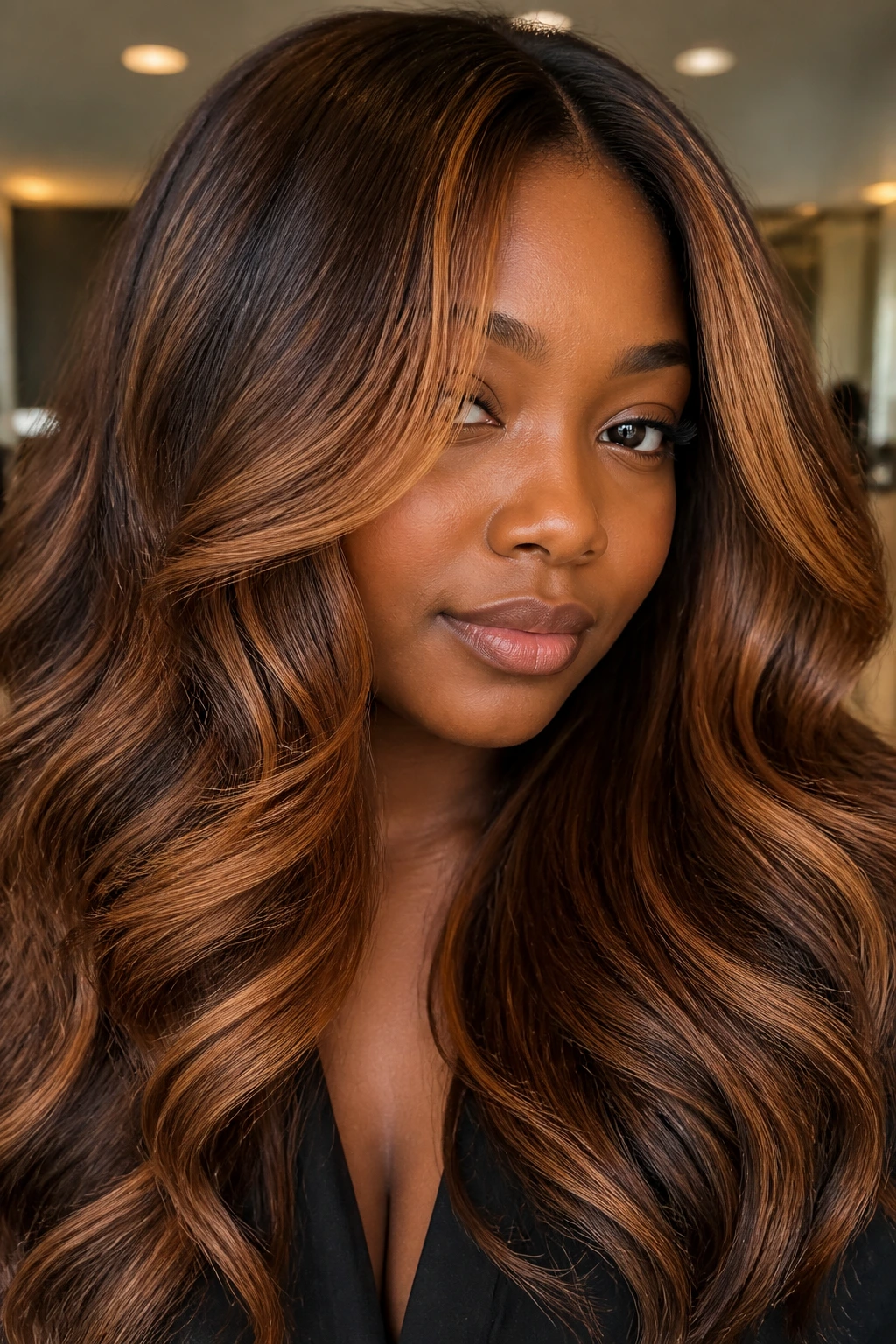
Copper-kissed caramel is what happens when you stop pretending caramel has to stay neutral. A small copper glaze — not a heavy red overlay — can make deep skin look even richer. The trick is to keep the copper under control so it reads like warmth, not a fiery block of color.
This look is especially nice on thick hair because the extra warmth can hold its own against density. On lighter strands, copper brings the caramel forward. On dark strands, it softens the contrast. I like it when the client wants the hair to feel alive indoors, where flat tones can disappear under artificial light.
If you’re torn between red and blonde, this is the middle ground. It’s a smart one.
15. Glossy Caramel Sleek Bob
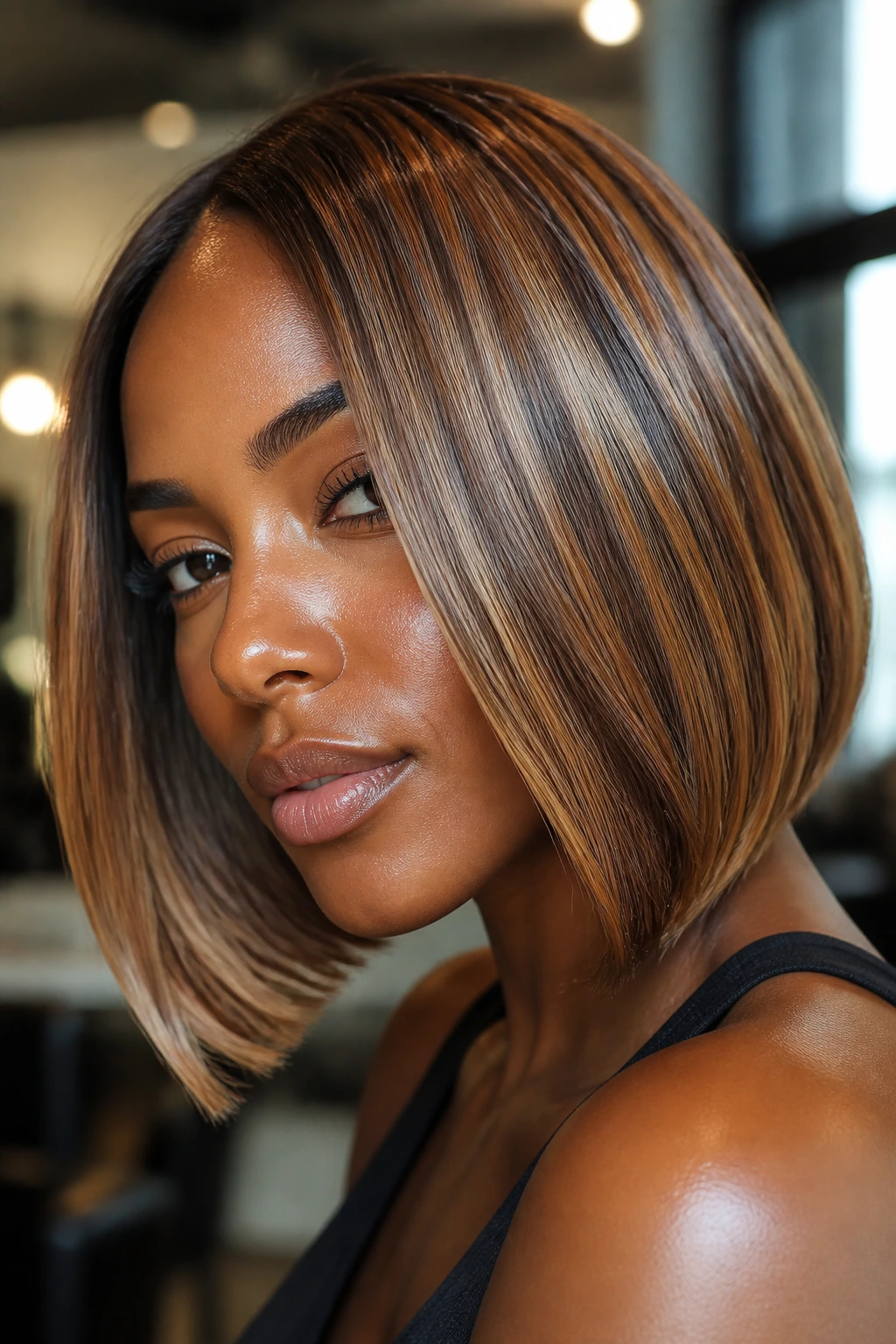
A sleek bob changes the whole conversation. Suddenly the color has nowhere to hide, which is exactly why this one looks so sharp when done well. The caramel sits against a shiny, precise cut, and every line looks deliberate.
The bright pieces should live around the surface and the ends, not scattered randomly through the bob. That keeps the shape crisp. On deep skin, the shine matters as much as the tone. A dry bob with caramel highlights can look patchy. A glossy bob looks expensive and clean.
A simple rule
If the bob is blunt, keep the highlights finer. If the bob is layered, you can use a little more width in the painted pieces. The cut and the color need to share the same mood.
16. Mid-Length Root Smudge
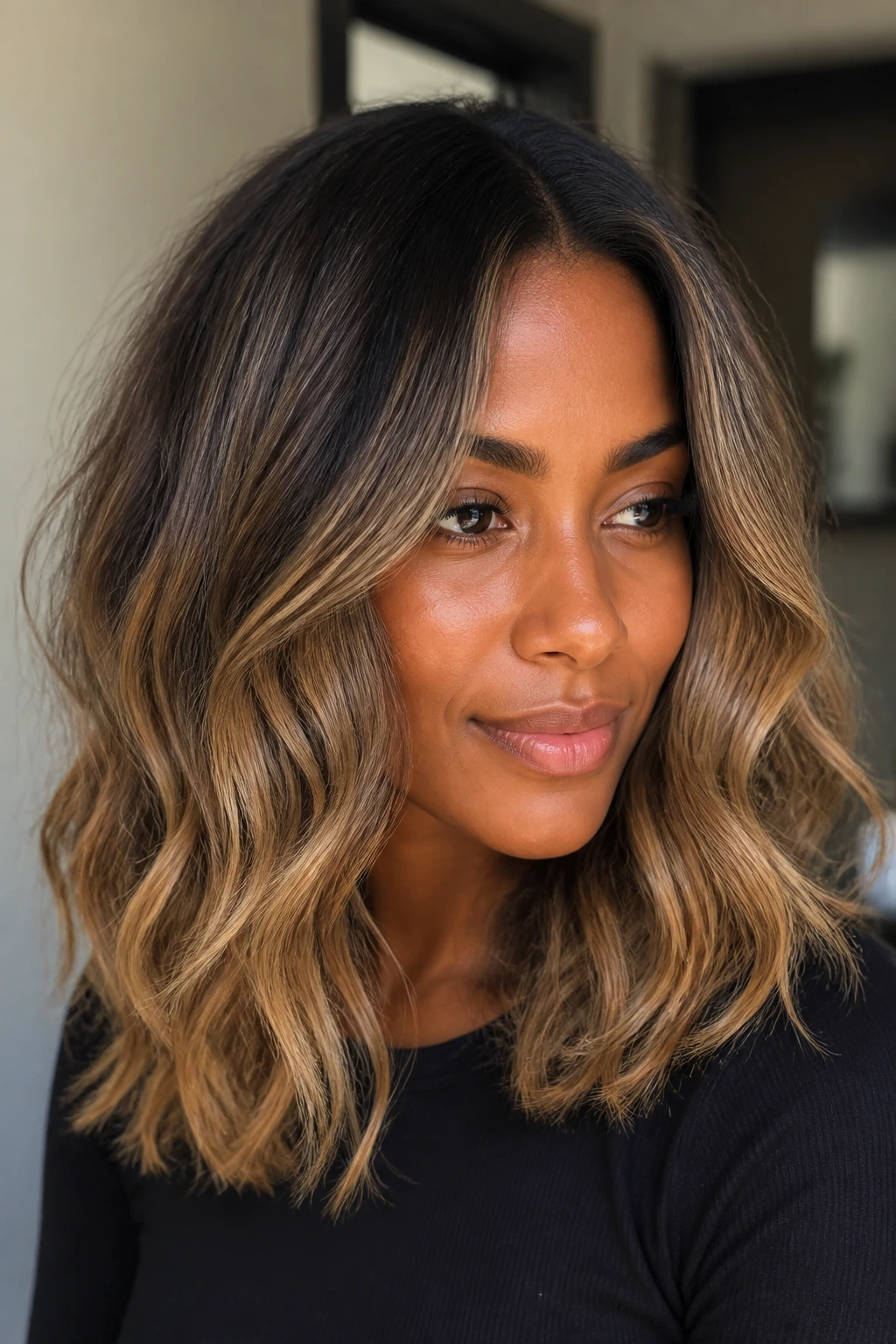
A root smudge is not a trick to hide bad color. It’s a way to make the grow-out look intentional. On mid-length hair, a darker root blur into caramel mids and ends keeps the whole style soft and low-maintenance.
This is a good fit for anyone who hates obvious root lines. The transition starts a little lower, usually two shades deeper at the crown, then opens into warm blonde at the ends. The effect is subtle at first glance and richer up close. That’s usually the sweet spot for deep skin tones anyway.
If you work with your hair in waves or curls, the root smudge also helps the style look fuller. The dark root gives the hair a stronger base. Nice side effect.
17. Caramel Contour Highlights
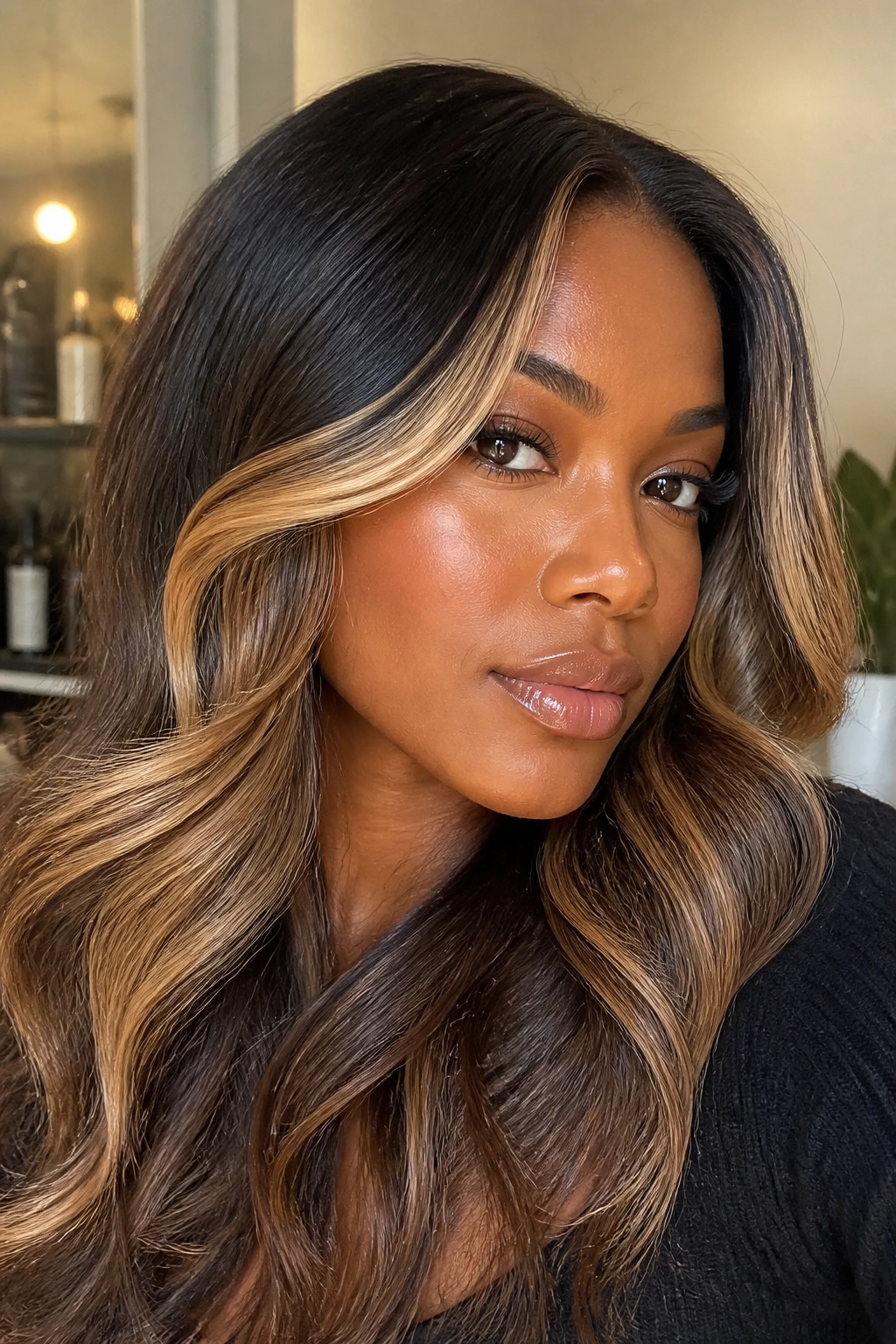
Think of this like contouring with hair color. The lighter pieces go where you want structure: near the temples, around the cheekbones, maybe along the jawline if the haircut allows it. The result can make the face look more sculpted without going anywhere near harsh contrast.
It’s a clever choice for deep skin because the caramel never floats randomly. It has a job. That job is to guide the eye. I like this on layered cuts, curtain bangs, and soft curls because the color can move with the face shape instead of sitting beside it.
If you’ve ever looked at balayage and thought it felt pretty but a little unfocused, contour highlights are the antidote.
18. Deep Mahogany with Toffee Veils
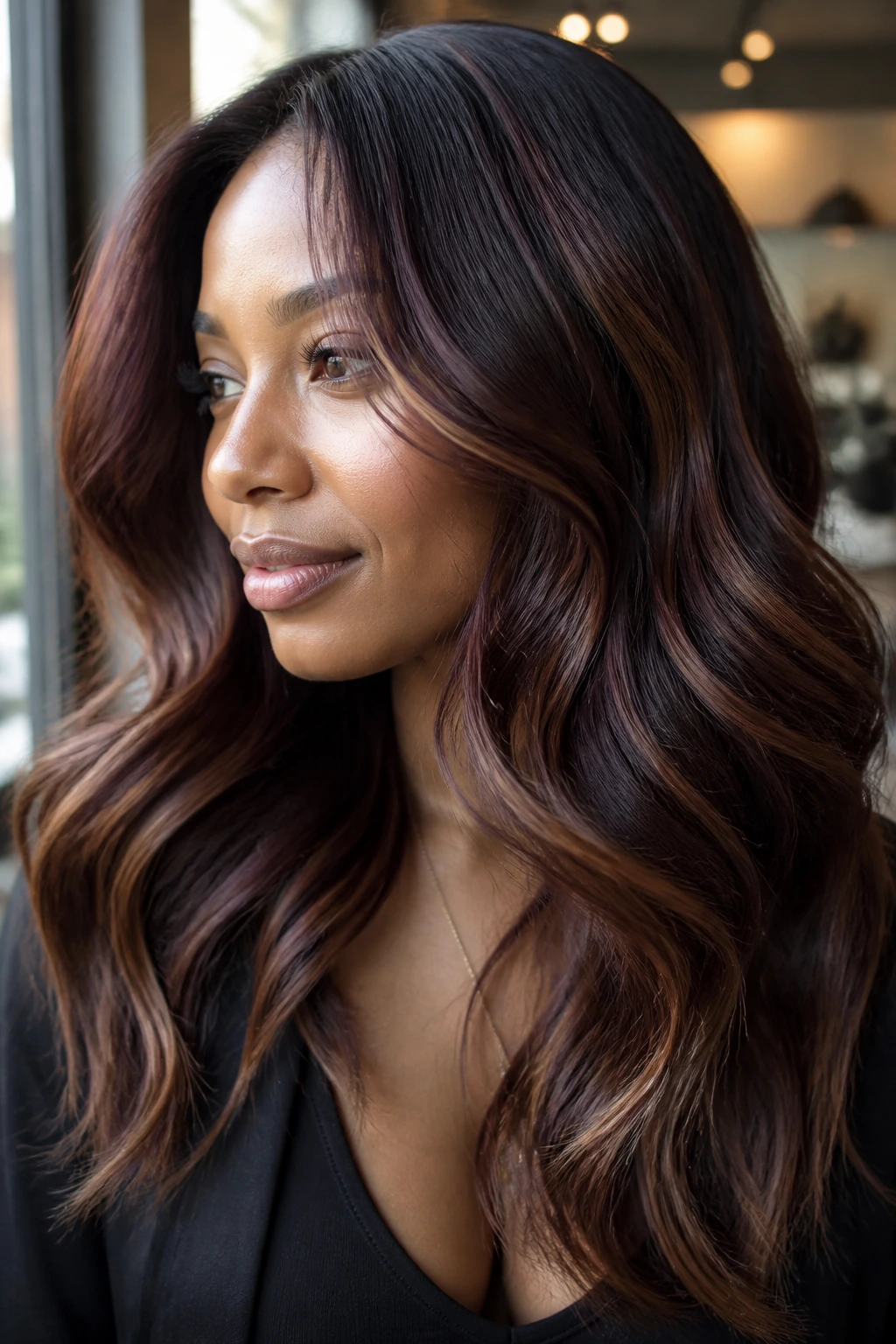
This one is for the person who wants dimension but doesn’t want to look blond at all. Deep mahogany keeps the base rich, while thin toffee veils slide through the upper layers and ends. The contrast is quiet, which is why it looks expensive rather than flashy.
It’s a nice route for conservative workplaces or for anyone who likes color that shows itself slowly. Deep skin holds these warmer browns beautifully, and the toffee pieces only need to catch light at the edges to matter. On thick or dense hair, this can be a better choice than brighter balayage, because the darker base keeps the volume from feeling too busy.
I’d call this the “if you know, you know” version of caramel.
19. Sunlit Twist-Out Balayage
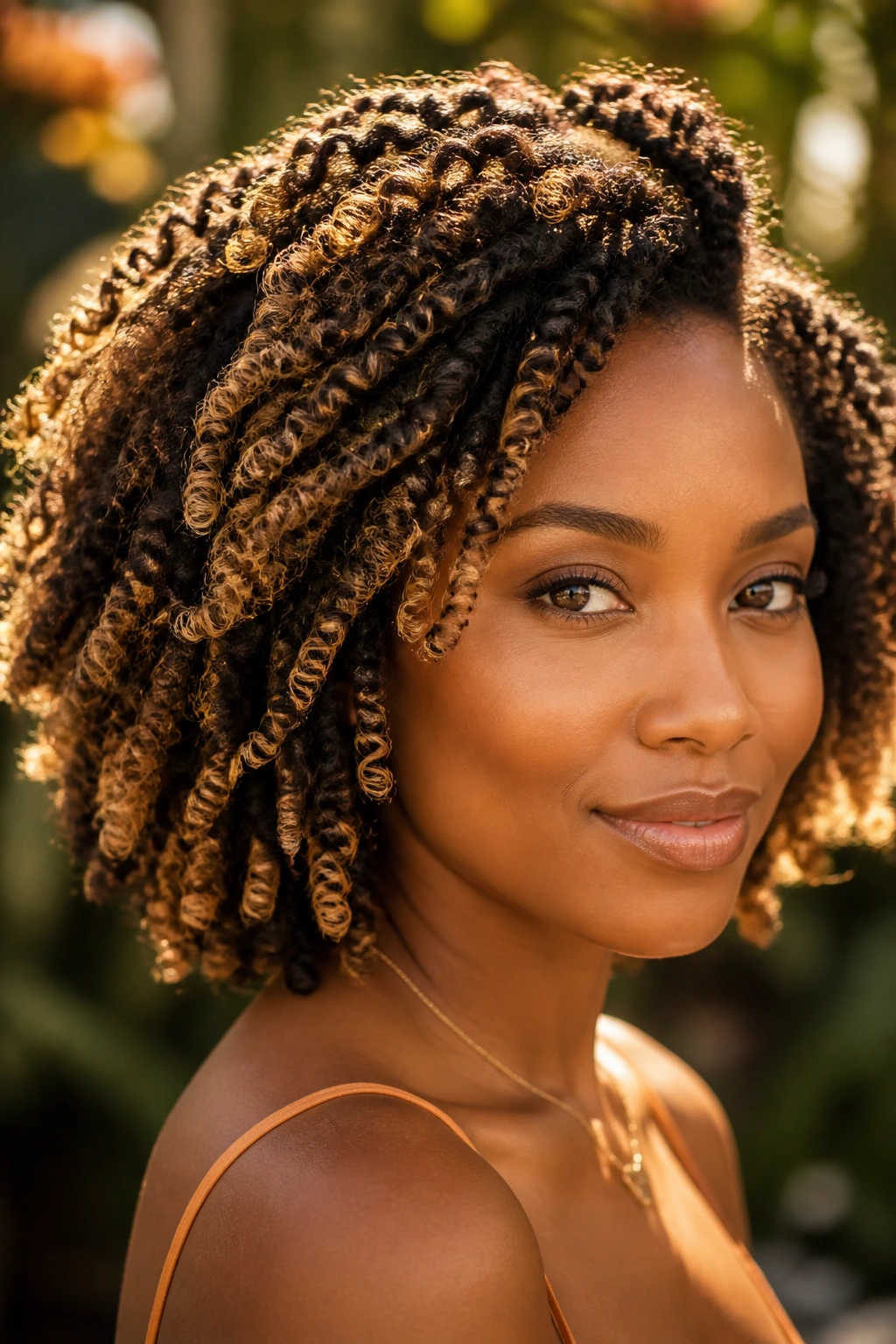
Twist-outs and balayage have a strong relationship. The twists create ridges, the light pieces fall on the raised parts, and the result has this nice broken-up brightness that looks like it belongs in the curl pattern. Sunlit twist-out balayage is all about that movement.
What Makes It Different
The color is painted so it appears in the places the twist-out naturally expands. That means the brightest pieces are not scattered evenly. They show up in the bends, on the outer layer, and around the face. The whole effect is softer than a straight highlight map and often easier to maintain on natural hair.
If you wear twist-outs often, this is one of the most practical ways to get caramel blonde without flattening the texture. The curls do half the styling for you.
20. Face-Sculpting Peekaboo Caramel
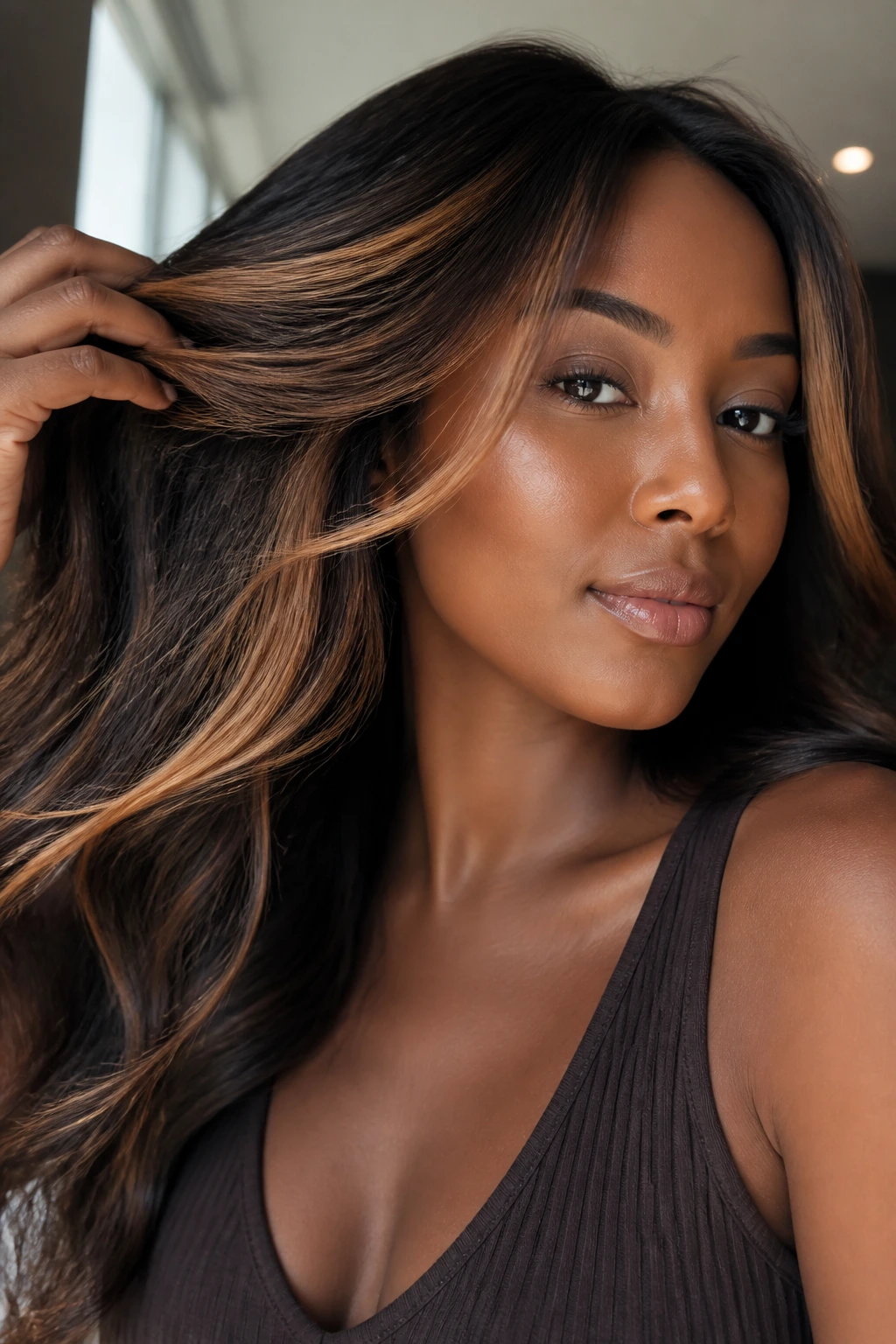
Peekaboo color gives you the fun of caramel blonde without committing every strand to the same brightness. The lighter pieces sit underneath the top layer or just behind the front section, so they flash when the hair moves. From the front, the look is subtle. From the side, it tells a different story.
I like this on deep skin when someone wants a little surprise without making the color the entire personality of the style. It’s smart for layered blowouts, ponytails, and half-up looks. When the hair shifts, the caramel shows up in a way that feels intentional, not accidental.
This one has range. Office-friendly at one angle, dramatic at another.
21. Dark Chocolate Melt with Honey Veil
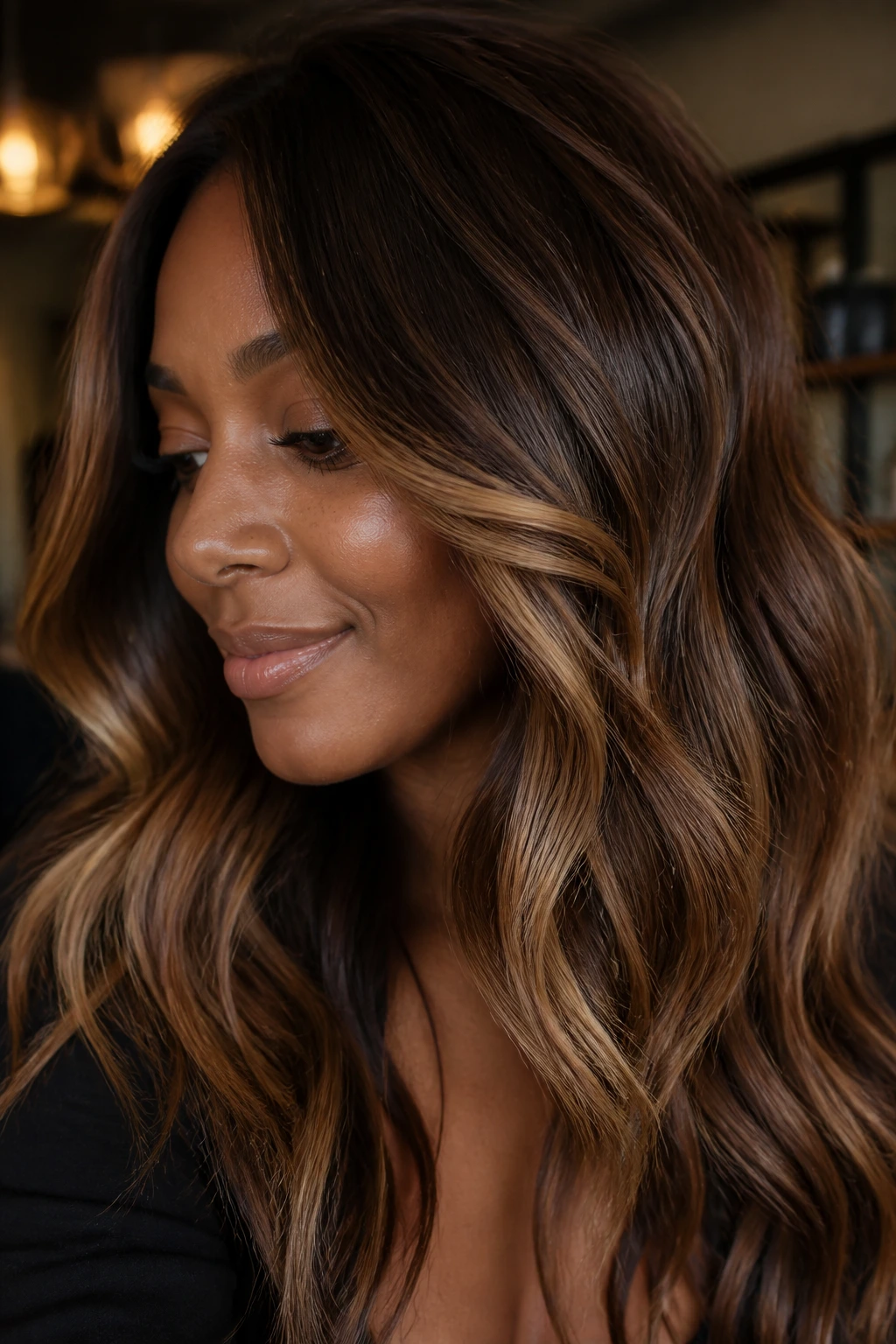
How much blonde do you actually need? Usually less than people think. A dark chocolate base with a honey veil keeps the brightness soft enough to flatter deep skin while still giving the hair that light-catching finish. The veil part matters. It means the blonde is there, but it isn’t shouting.
This works well if you want to keep the hair mostly dark and just nudge it toward caramel. The honey pieces should live through the mids and ends, not root-to-tip. That keeps the look dimensional and prevents the warm tone from going flat. On long hair, this is especially pretty in loose curls, because the honey shows up in the bends.
If you want a safe entry point into caramel blonde, this is one of the calmest options.
22. Soft Ombré on a Silk Press
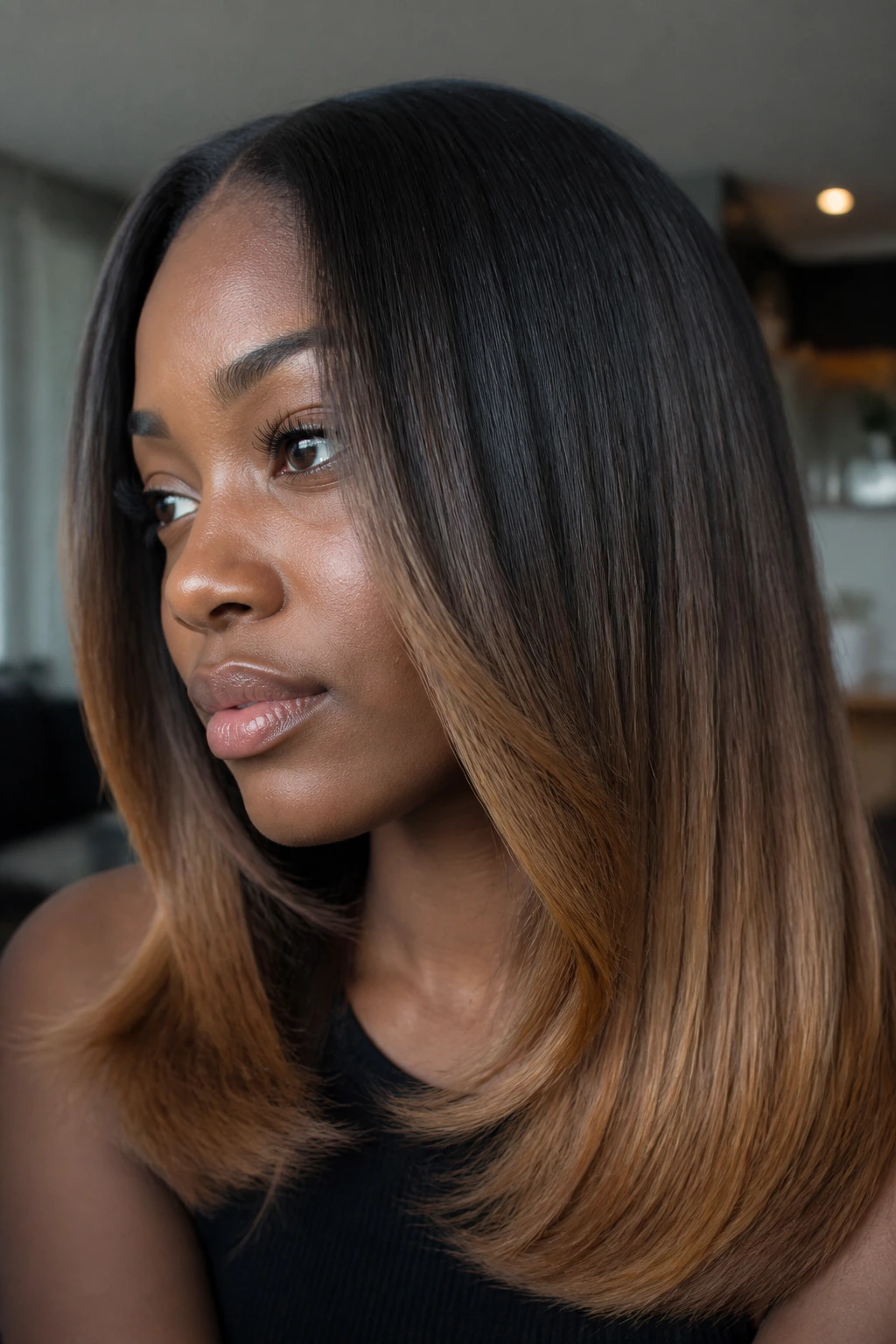
A silk press gives ombré a different personality. The surface gets smooth, the color transition becomes more visible, and the whole style can look incredibly clean when the ends are a little lighter than the roots. Soft ombré works because the shine does the heavy lifting.
The best version keeps the top darker and the ends a warm caramel-blonde blend, not a pale yellow finish. That way the look stays rich when the hair is straight. If you use heat often, this style also lets you keep the lightness where it’s easiest to maintain — the ends and outer panels.
A good silk press can make caramel look more polished than a lot of much lighter blondes. It’s a plain fact.
23. Caramel Laced Curls
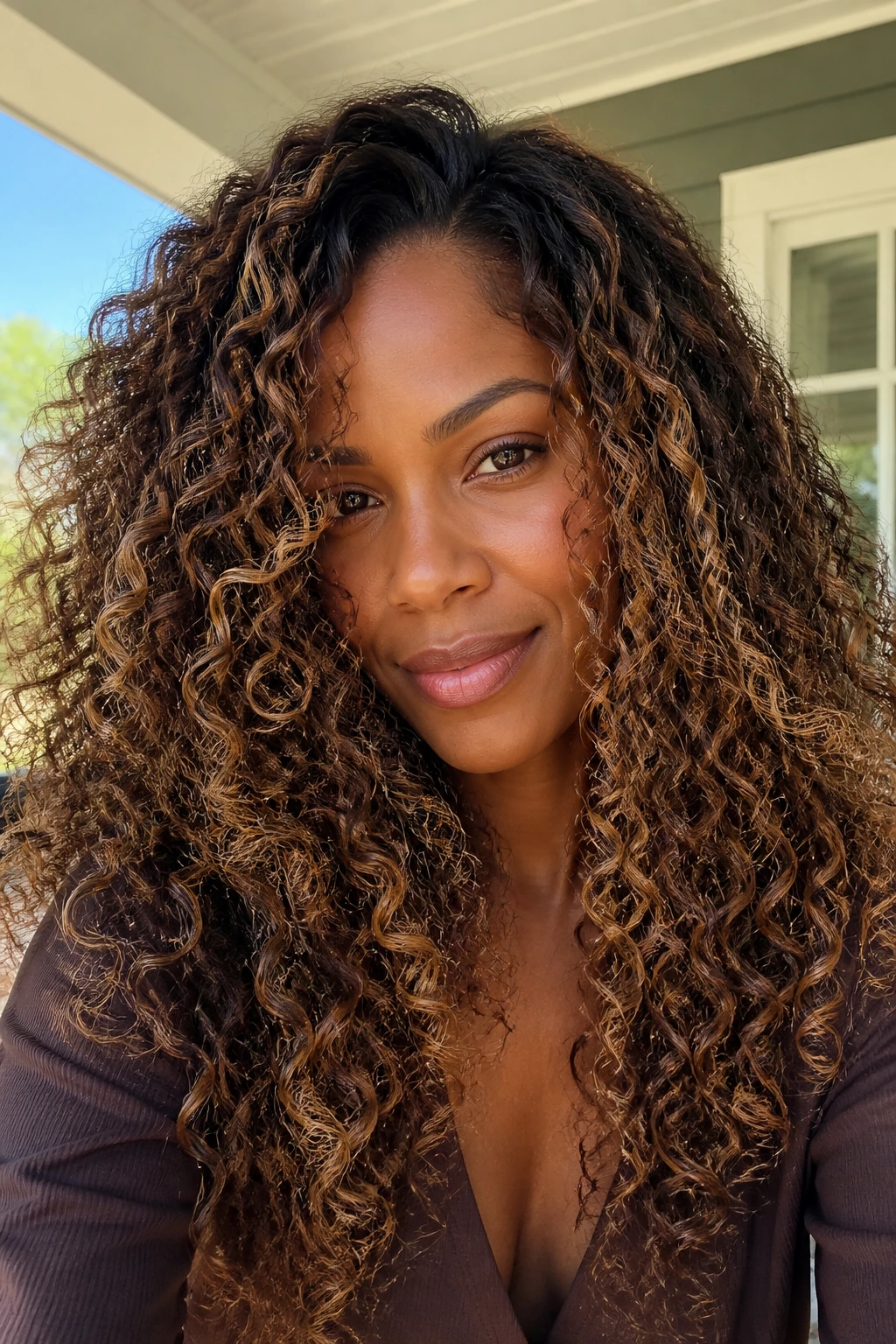
Caramel laced curls have that hand-painted, thread-like effect where the brightness seems woven through the curl pattern rather than laid on top of it. The result is elegant if the pieces are thin and placed with a little restraint. Too wide, and you lose the lace effect. Too sparse, and the color disappears.
This is a good choice for medium to long curly hair that already has shape. The caramel should follow the curl groupings and hit the places where the curls separate naturally. That makes the highlights visible from multiple angles, not just head-on.
I like this look because it doesn’t fight texture. It works with it. That’s rarer than people think.
24. High-Contrast Caramel Halo
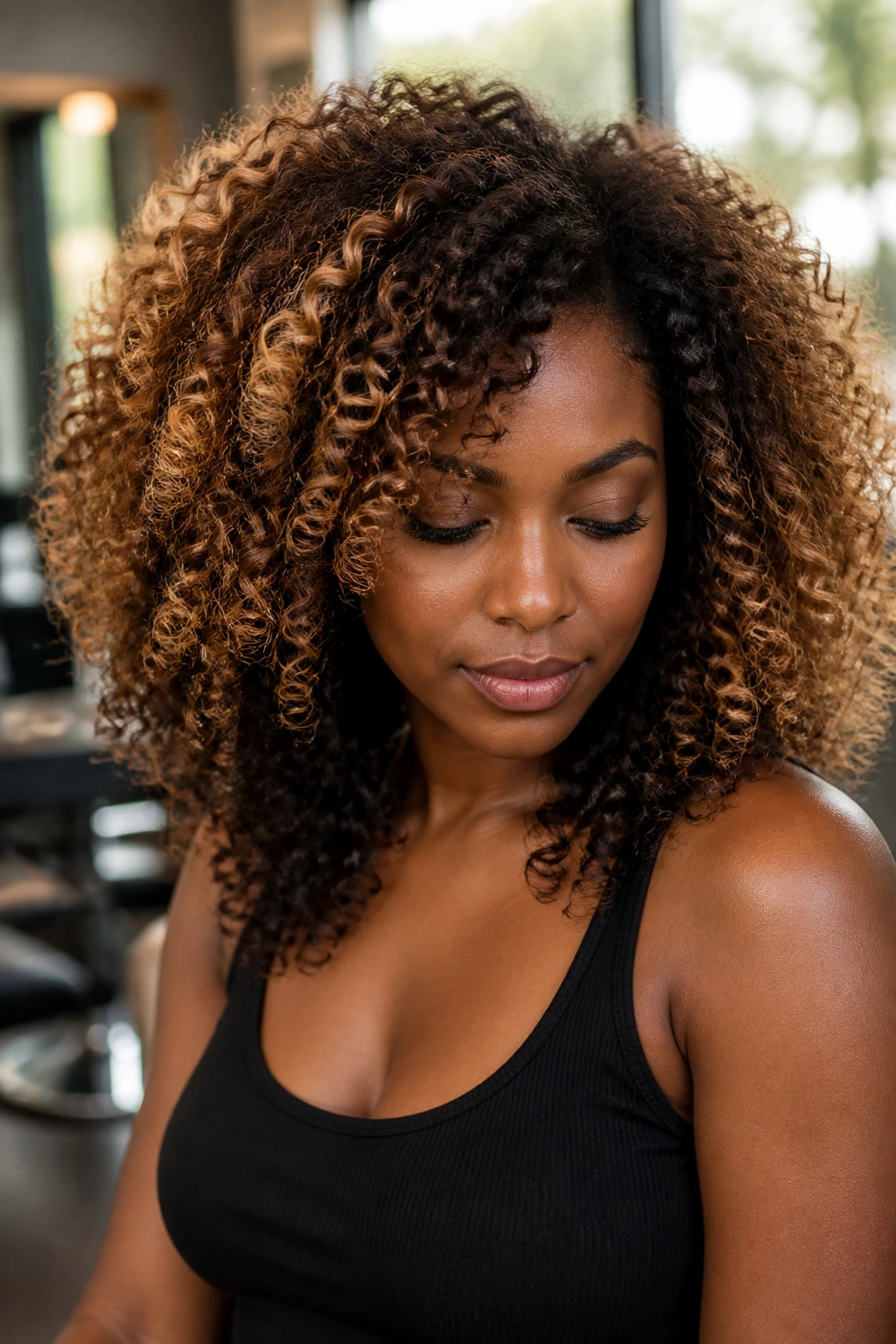
If you have a lot of volume, use it. A caramel halo places brightness around the outer edges and upper layers, which creates a ring of light that can make curls and afro textures look even bigger in the best way. This is not the shy option. It’s the one with presence.
The halo has to be shaped carefully on deep skin. Keep the root richer so the brightness has somewhere to land, and let the caramel sit where the hair naturally arches outward. That keeps it from reading stripey. On a rounded shape, the halo can make the whole style look lifted. On a tapered cut, it creates a sharp frame.
This is the look for someone who likes a clear contrast and does not mind the color being noticed.
25. Velvet Sunset Blonde Melt
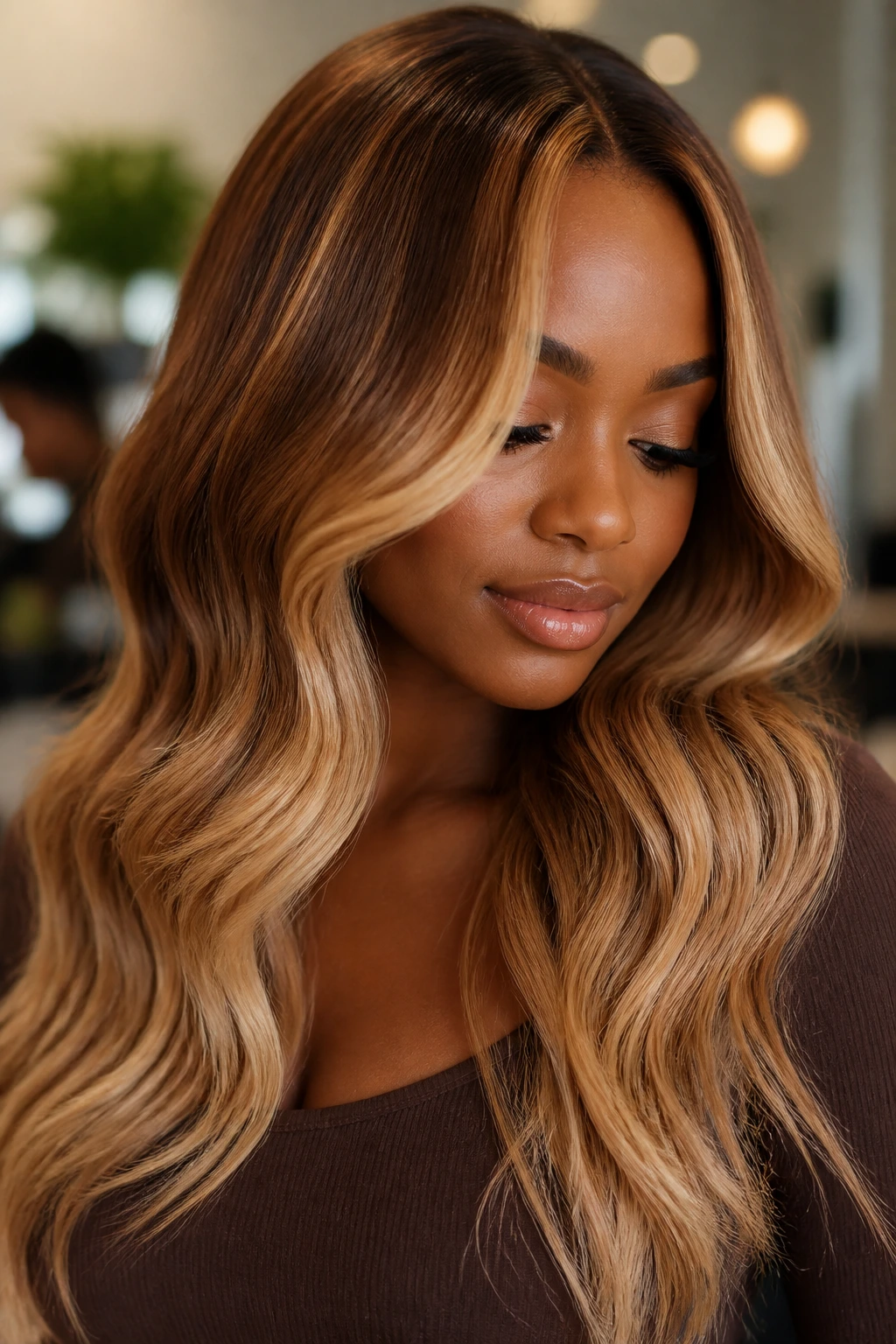
Velvet sunset blonde melt is the richest version of this entire family. Honey, caramel, and pale beige work together in a soft gradient that feels warm from every angle. The name sounds dramatic. The color should not be. It should feel smooth, glossy, and controlled.
Why It’s a Strong Finish to the List
This blend works because it keeps the darker base alive while letting the lighter pieces bloom slowly toward the ends. It’s especially pretty on long waves, thick curls, and layered blowouts. The melt reads like a natural light change rather than a salon stunt.
If you want one look from this collection that feels polished, versatile, and easy to dress up, this is probably it. The shade has enough warmth for deep skin, enough lightness to show dimension, and enough restraint to grow out with grace.
Why Caramel Blonde Balayage Flatters Deep Skin Tones
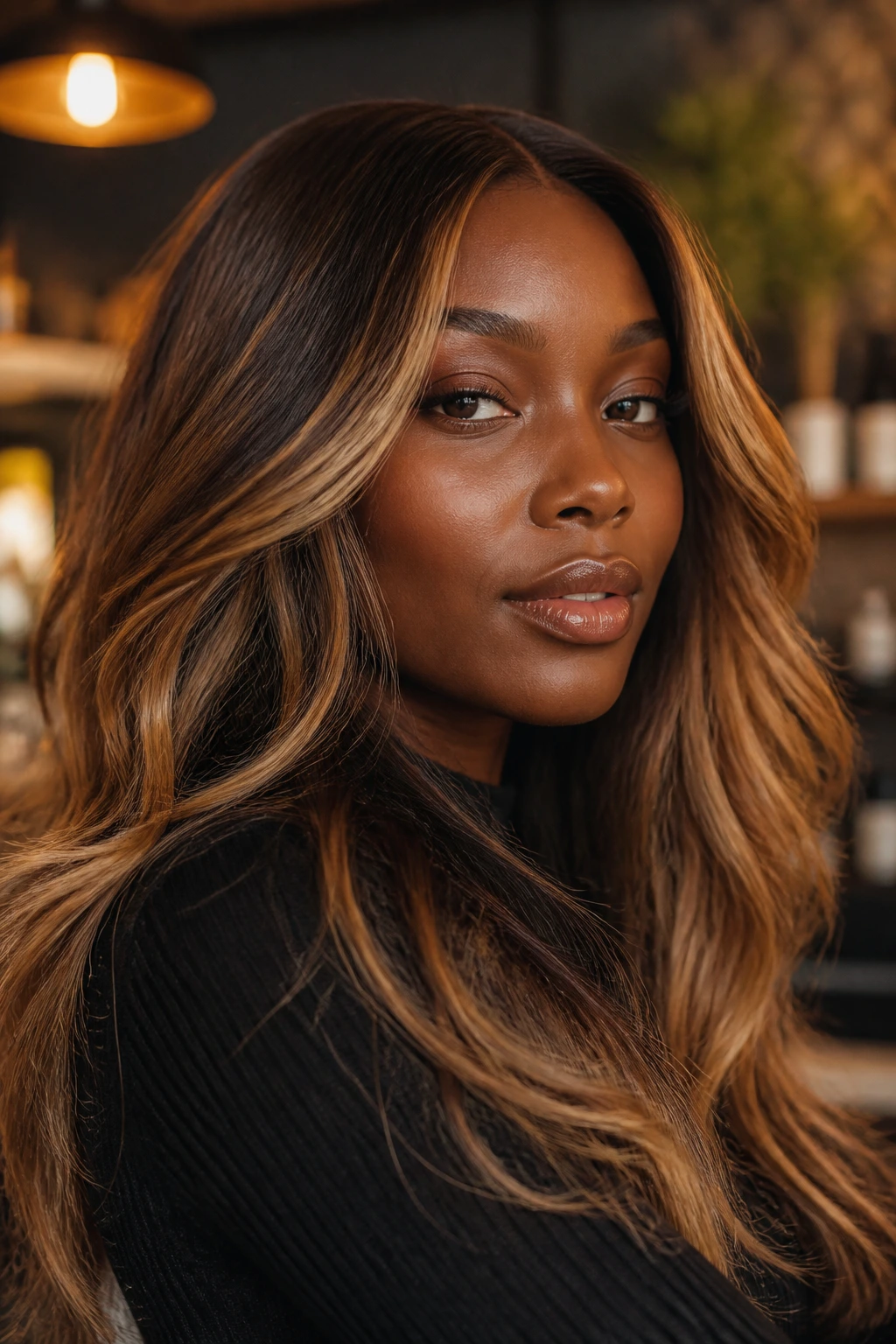
The short version: the right warm blonde doesn’t sit outside deep skin, it sits with it. Caramel, honey, toffee, and beige all share a warmth that can echo the undertones already in the skin, which is why they look richer than a cool ash blonde or a yellow blonde that’s been lifted too far. The color feels integrated.
The longer answer has to do with contrast. Deep skin can carry a lot of richness, so hair color needs enough lift to be visible but not so much that it turns brittle-looking. When caramel blonde is painted with restraint, the result is movement, not glare. That’s the sweet spot.
I’m also a fan of the way this shade behaves in different light. Under daylight, the ribbons show texture. Indoors, they go softer and more golden. On curls, each bend catches a different piece of tone. That flexibility is half the appeal.
How to Ask for the Right Caramel Blend at the Salon
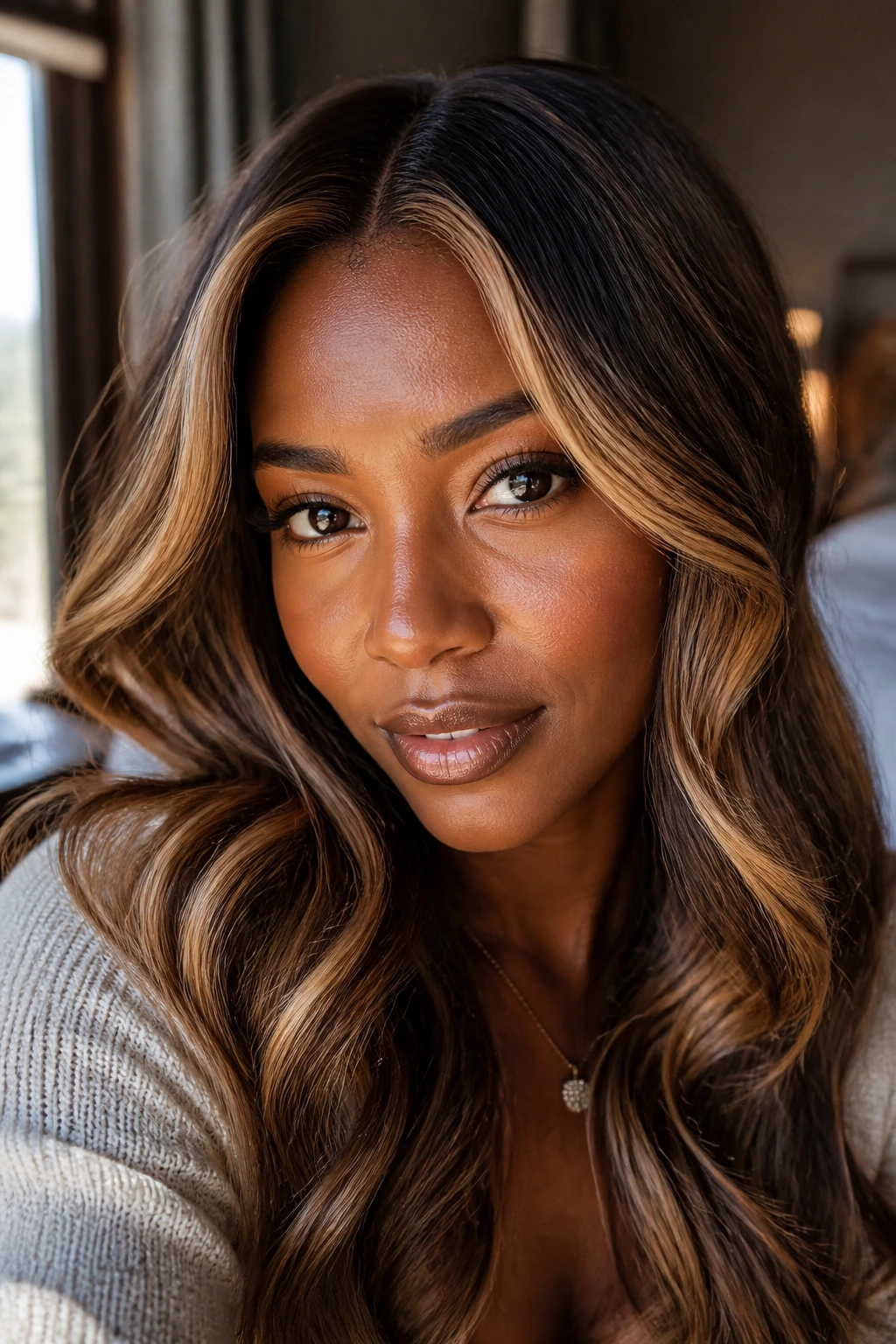
Bring photos, but bring the right photos. A picture taken in daylight is worth more than five filtered shots that make the hair look lighter than it really is. Tell your colorist you want a caramel blonde balayage that stays warm, with a root shadow if needed, and brightness focused around the face and ends rather than packed all over the head.
A useful script sounds like this: “I want caramel, honey, or toffee tones — not icy blonde — and I want the lightest pieces to stay soft against my skin.” Then add your hair history. If your hair has been box-colored, relaxed, keratin-treated, or repeatedly heat-styled, say it plainly. That changes the lift, and it matters more than people admit.
If your natural base is very dark, ask about going one step at a time. A shade that lands in level 7 or 8 caramel territory often looks better than trying to jump straight to pale blonde. That extra patience usually saves the hair and the final tone.
Warm Undertones, Beige Undertones, and Copper Undertones
Tone choice matters more than most people think. Honey and golden caramel are the warmest lane, and they flatter deep skin with gold or red undertones especially well. Beige caramel sits a little quieter, which can be lovely if you want less shine and more softness around the face.
Copper is the one I’d use most carefully. A little copper glaze can make the color richer and more dimensional, but too much can push the whole look into orange. I like copper most when the base is deep and the highlights are thin. Then it reads like warmth, not costume.
If your skin has cooler or more neutral undertones, beige-caramel or toffee often lands better than a heavy gold. The goal is harmony, not matching the skin exactly. Matching is a little boring anyway.
Styling Moves That Keep the Dimension Visible
Caramel balayage is not a “set it and forget it” color. The way you style it changes how the tones show up. Loose bends and soft curls tend to reveal the ribbons more than pin-straight styles, because the light pieces land on the high points of the hair. A little bend goes a long way.
Use a heat protectant before any hot tool. That sounds obvious, but the reason matters here: caramel tones lose their shine fast when the cuticle gets rough. Rough cuticle means the blonde pieces stop reflecting light and start looking dusty. Nobody wants dusty caramel.
A finishing serum can help, but use less than you think. One or two drops rubbed between the palms is plenty for medium hair. On thicker textures, use a light cream or glossing spray and keep it off the roots.
Essential Tools and Products for Keeping the Blend Soft
- Color-safe sulfate-free shampoo: It helps the caramel stay rich instead of fading out into a dull brown-gold.
- Moisture mask: Lightened hair on deep textures can feel thirsty fast; a mask once a week keeps the ends from frizzing up.
- Heat protectant spray or cream: Use it before blow-drying, curling, or flat-ironing. No exceptions.
- Wide-tooth comb: Better than yanking a brush through curls when the hair is damp and fragile.
- Leave-in conditioner: Handy for twist-outs, blowouts, and ends that start to feel rough between washes.
- Silk or satin bonnet: Keeps the curl pattern from chewing up the color overnight.
- Purple shampoo, used sparingly: Only useful if the caramel starts leaning too yellow; too much and it can mute the warmth that makes the shade flattering.
- Gloss or clear shine spray: Nice for silk presses and bob cuts when the color needs a reflective finish.
Practical Tips for Getting the Most Out of It
Placement: Ask for brightness where the hair moves first — around the face, through the top layer, and toward the ends. That creates the most visible shift without flooding the whole head with blonde.
Finish: If your hair is textured, don’t iron every curl into submission just to show the color. A stretched twist-out, a soft blowout, or a defined curl pattern usually shows the caramel better than a stiff straight style.
Tone control: I’d rather see a warm caramel that’s a little too deep than a pale beige that fights your skin. Pale can be pretty on the right client. On deep skin, warmth usually does more work.
Time-saver: If you want lower upkeep, keep the root darker and let the lightness live in the mids and ends. That lets you stretch appointments without looking grown out in a bad way.
Common Mistakes That Make the Color Look Off
The first mistake is chasing blondest-in-the-room hair on the first appointment. That’s how you get damaged ends, orange patches, and a tone that doesn’t sit right on deep skin. Start with caramel, not platinum, and let the color build if you want more lightness later.
The second mistake is choosing an ash-heavy toner because it sounds sophisticated. Ash can look muddy on warm deep skin, especially if the hair has been lifted into a yellow-orange stage. A neutral-gold or warm beige toner usually does the job better.
The third mistake is putting too much brightness right at the roots on dense curls. The hair expands when it dries, so the color can turn stripey fast. Keep the root softer and let the light live where the curl bends.
The fourth mistake is overusing purple shampoo. Once a week is plenty for many people, and some will need it even less. Too much purple product can knock the warmth right out of the caramel and leave it grayish.
The last one is ignoring the cut. Balayage on a blunt, heavy shape can disappear under all that weight. A little layering, even if it’s subtle, gives the color space to breathe.
Variations and Alternatives to Try
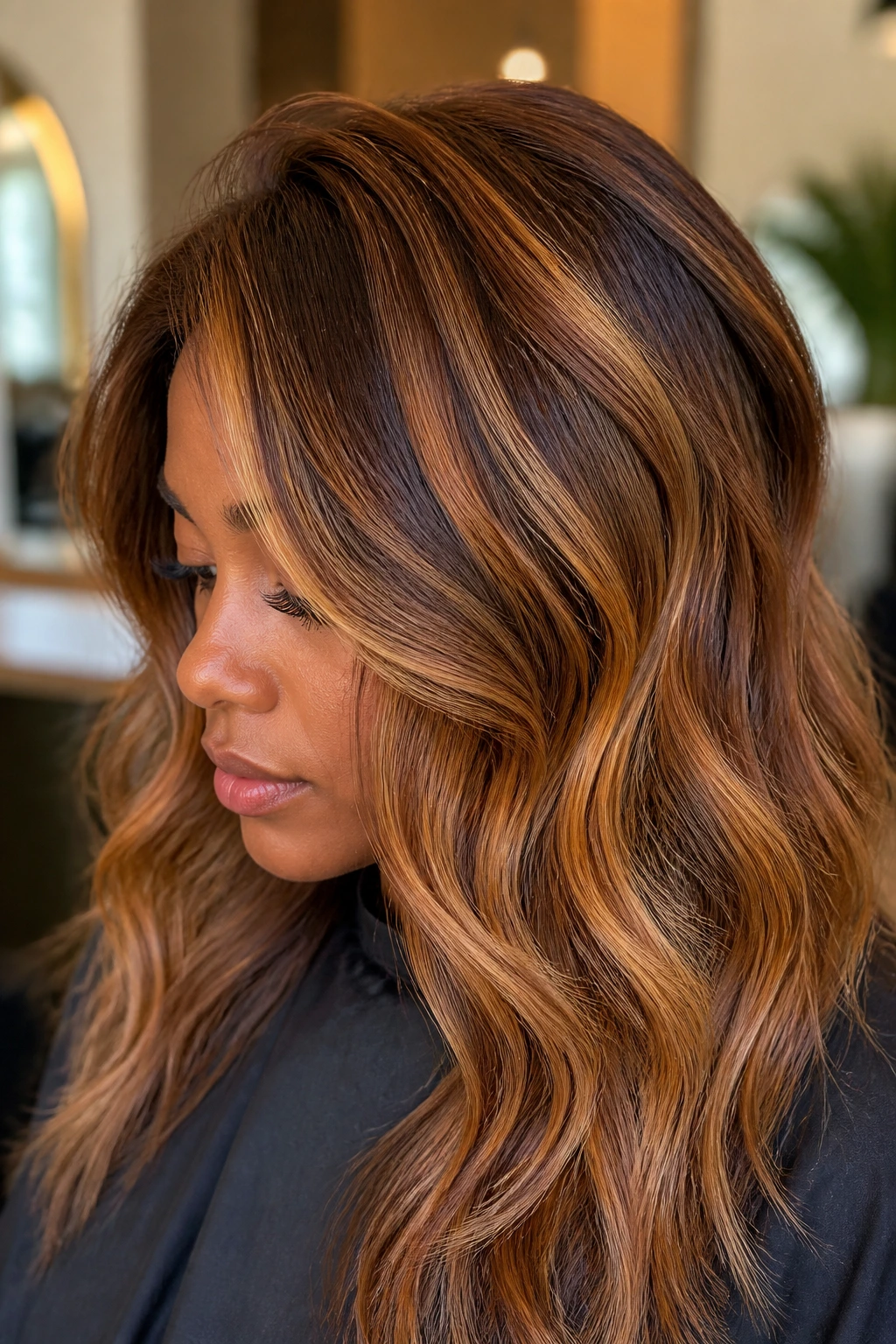
Golden Hour Honey: This version leans brighter and sweeter, with honey running through the mids and lighter ends. It’s a good fit if you want the color to read sunnier without crossing into pale blonde territory.
Toffee Root Shadow: Keep the base deeper and use toffee pieces only through the upper layers. The effect is softer, lower maintenance, and especially good if you don’t want obvious regrowth.
Copper Satin Blend: Add a sheer copper glaze over caramel ribbons. The color becomes warmer and more vivid, which can look especially rich on deep skin with golden undertones.
Contour-Light Ends: Brighten just the face-framing sections and the last few inches. This is a strong choice if you want movement without changing the whole head.
Curly Halo Caramel: Paint the outer coil pattern and the top layer so the brightness sits around the shape, not inside it. The result has more volume and a little drama.
Maintenance, Glossing, and Grow-Out
Caramel balayage usually looks best when the root stays a touch deeper than the mids. That makes grow-out softer and keeps the contrast flattering instead of harsh. A gloss every 6 to 8 weeks can refresh the warmth if the tone starts to fade, and a trim every 8 to 12 weeks helps the ends stay clean.
Wash frequency matters too. If your scalp allows it, washing 1 to 3 times a week is easier on color than daily shampooing. Use lukewarm water, not hot water, because hot water roughs up the cuticle and strips warmth fast. If your hair is lightened, a weekly moisture mask is worth the time.
For heat styling, keep a protectant in the routine every single time. Flat irons and curling wands don’t just change the shape — they change how the blonde reflects. Good heat habits keep caramel glossy. Lazy heat habits make it dull.
Frequently Asked Questions
Will caramel blonde balayage work on very dark natural hair?
Yes, but the first appointment may need to stay within the caramel family rather than jumping to a pale blonde. On very dark hair, a rich level 7 or 8 caramel often looks more flattering and much healthier than trying to push the hair too light too fast.
Does this look work better on curls or straight hair?
Both work. Curls show the ribbon placement more dramatically because each bend catches light separately, while straight hair shows the smoothness of the blend and the shine in the toner. Pick the finish that matches how you actually wear your hair most of the time.
How often will I need a gloss or toner refresh?
A lot of people do well with a refresh every 6 to 8 weeks, but the exact timing depends on wash frequency, heat styling, and how quickly your hair loses warmth. If the caramel starts looking flat or dull, a gloss is usually the first fix I’d reach for.
Is balayage less damaging than full highlights?
Usually, yes, because not every strand is lifted and the root is left softer. That said, damage depends on how far the hair is lifted and what the hair has already been through. A gentle balayage can still be rough if the hair is over-processed.
What if my caramel turns orange?
Orange usually means the hair was lifted enough to expose warmth but not toned to the right place. A colorist can correct that with a more balanced gloss or toner, but don’t keep piling on purple shampoo and hoping it will fix orange — it won’t.
Can I keep my natural root and still get a noticeable result?
Absolutely. A darker root with brighter mids and ends is one of the nicest ways to wear caramel blonde on deep skin. It gives dimension without forcing the whole head lighter.
Is beige caramel or golden caramel better for me?
Golden caramel usually flatters deeper golden or red undertones, while beige caramel can feel softer on neutral undertones. If you’re unsure, beige-gold is often the safest middle ground because it stays warm without turning too yellow.
Warmth That Grows Out Cleanly
The best caramel blonde balayage on deep skin tones never feels borrowed from somebody else’s head. It looks like warmth that belongs there, with enough contrast to move and enough restraint to stay flattering as it grows out. That balance is the whole point.
If you’re choosing between “a little too warm” and “a little too pale,” I’d take the warmer version almost every time. Pale can be beautiful, but caramel has more room to breathe on deep skin. It gives shine, depth, and a softer edge around the face.
Bring clear photos, ask for warmth with control, and keep the placement where the hair actually moves. That’s the version worth sitting for.