



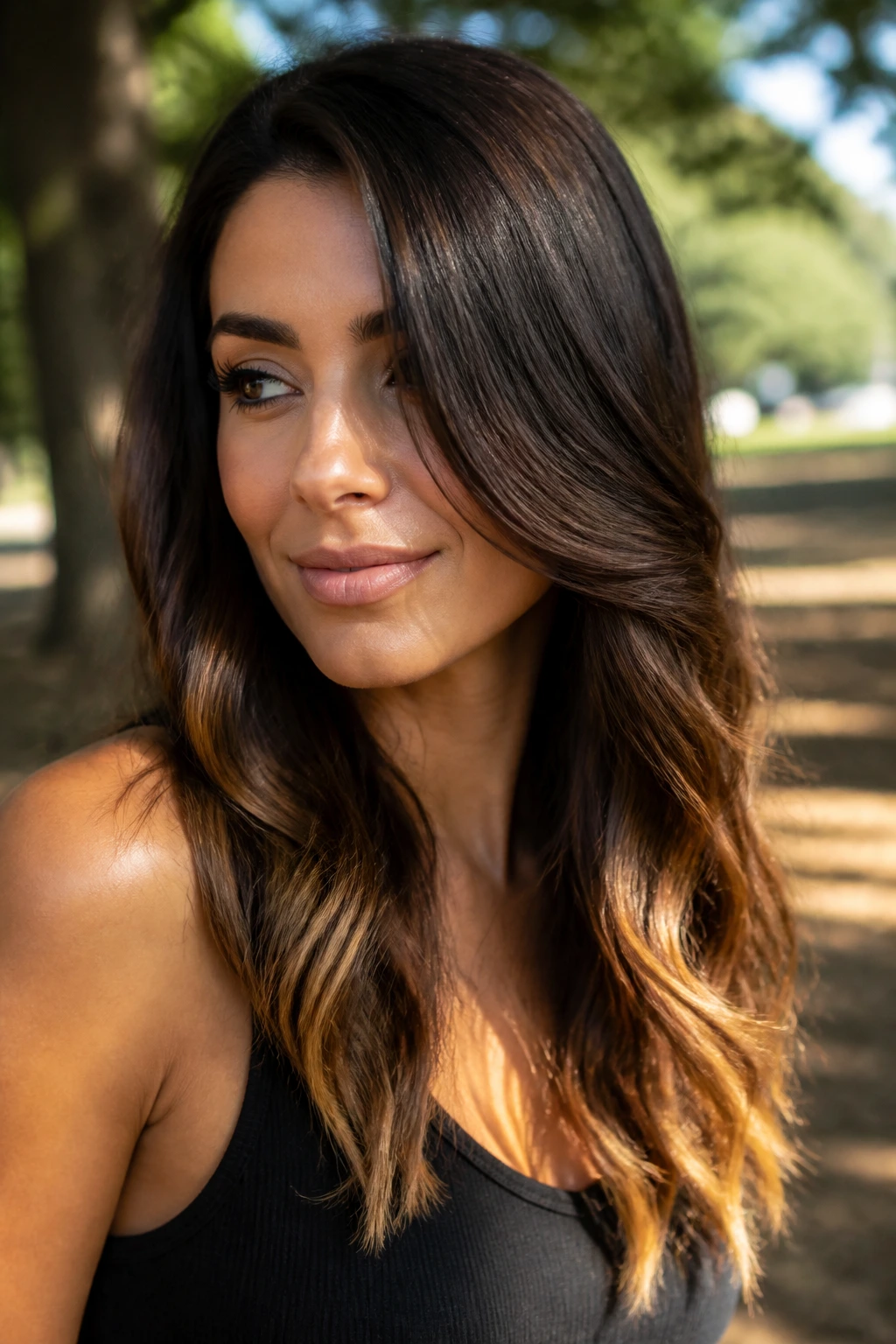
The nicest caramel blonde brown balayage for brunettes does something a flat all-over color never manages: it keeps the depth at the root, then lets the lightness drift through the hair like sun slipping across dark wood. The contrast is soft enough to feel expensive, but not so pale that you lose the richness that makes brunette hair look glossy in the first place. When the placement is right, the lighter pieces don’t shout. They flicker.
That’s why this color family keeps showing up on brunettes who want warmth without the usual stripy highlight look. Caramel sits in a useful middle zone — warmer than beige, less brassy than gold, and gentler than a bright blonde ribbon near the face. On darker hair, that matters a lot. A caramel piece that starts a little below the root and grows brighter toward the ends can make layers look thicker, curls look looser, and a blunt cut look more intentional. A bad version can turn orange fast. A good one looks like the hair has natural depth and a little movement built into it.
The other thing people notice, usually after the first salon visit, is how much the finish changes under different light. Indoors, the color reads brown with honeyed edges. Outside, the blonde-brown balance opens up and the caramel picks up that warm, almost toffee tone that makes brunettes look alive instead of over-lightened. The placement is the real trick. Keep it chunky in the wrong place and it looks busy. Feather it through the right sections and the whole head starts to move.
Why These Caramel Balayage Ideas Work on Brunettes
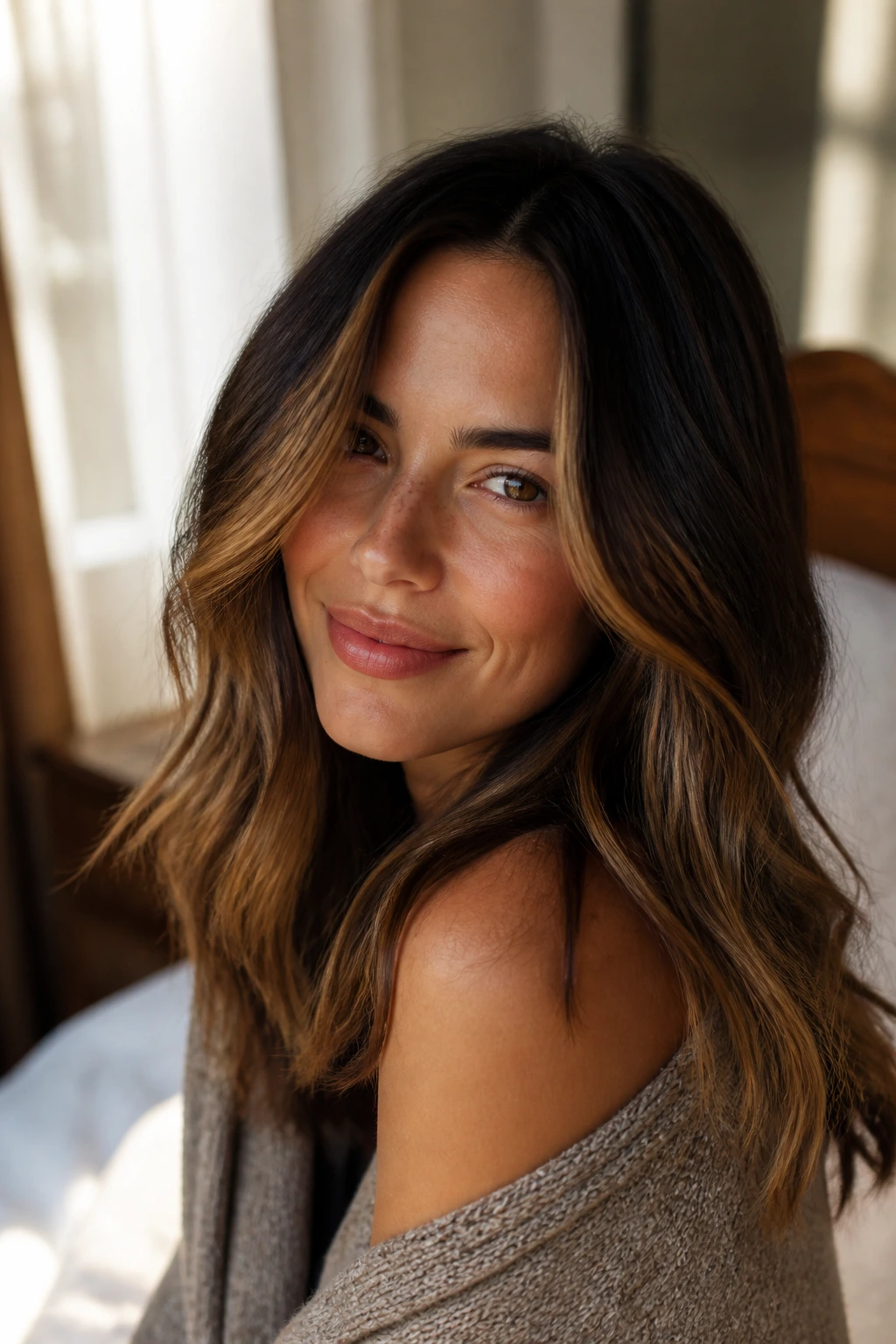
- The dark base does the heavy lifting: A brunette root keeps the style grounded, so the lighter caramel pieces can look dimensional instead of washed out.
- Warm tones blend more easily: Caramel, toffee, honey, and amber sit close together on the color wheel, which helps the grow-out stay soft.
- Face-framing pieces change the whole cut: Two well-placed ribbons around the cheekbones can do more than a full head of highlights.
- Texture changes the finish: Waves make the color look softer and fuller; straight hair makes the placement look cleaner and more graphic.
- You can dial the brightness up or down: A subtle glossed balayage and a high-contrast money-piece look live in the same family, but they send very different messages.
1. Soft Face-Framing Caramel Ribbons
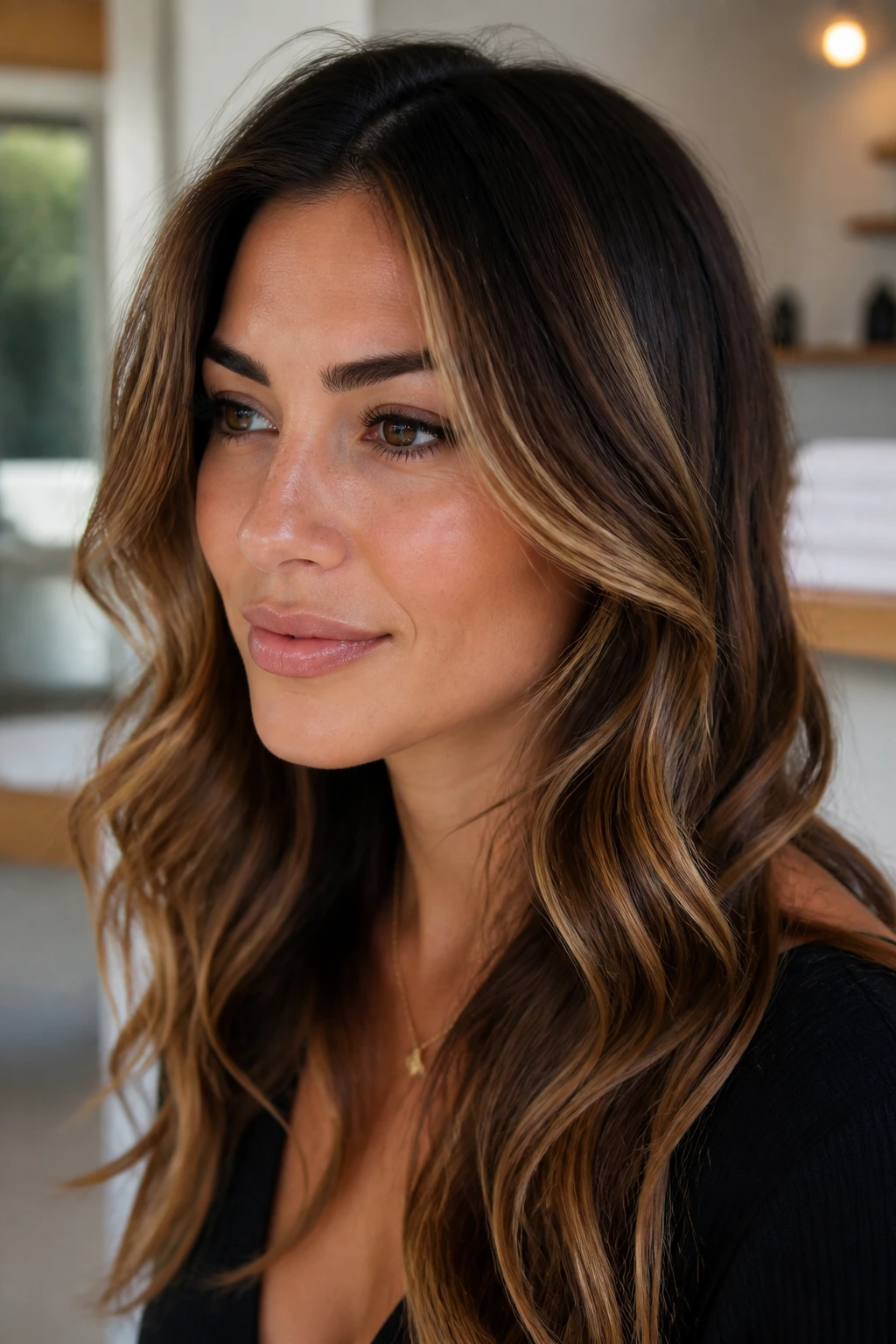
A few thin caramel ribbons around the face can change brunette hair faster than a full-lightening session. The trick is to keep the root area deep and let the brightest pieces land just off the hairline, where they catch the cheekbones and the top layer around the eyes. On long waves, this look feels gentle and expensive; on straighter hair, it reads cleaner and sharper.
Why it works
This style is for brunettes who want brightness without losing their dark base. The contrast sits in the front, so the rest of the hair can stay quieter and easier to maintain. It’s especially good if you wear your hair down most of the time, because the lighter pieces stay visible even when the back layers aren’t moving.
Ask for caramel that lifts to a warm level 7 or 8, not a pale blonde. That keeps the grow-out soft and avoids the “striped” look that shows up when front pieces are too light. A root shadow helps, too. It gives the color a soft start instead of a hard line.
Best on: medium to long brunettes with layered cuts.
Keep in mind: the front pieces should be fine enough to bend with the haircut, not sit on top like streaks.
Styling tip: a loose bend with a 1¼-inch iron makes the ribbons show without turning the whole head into curls.
2. Chestnut Root Melt with Honey Ends
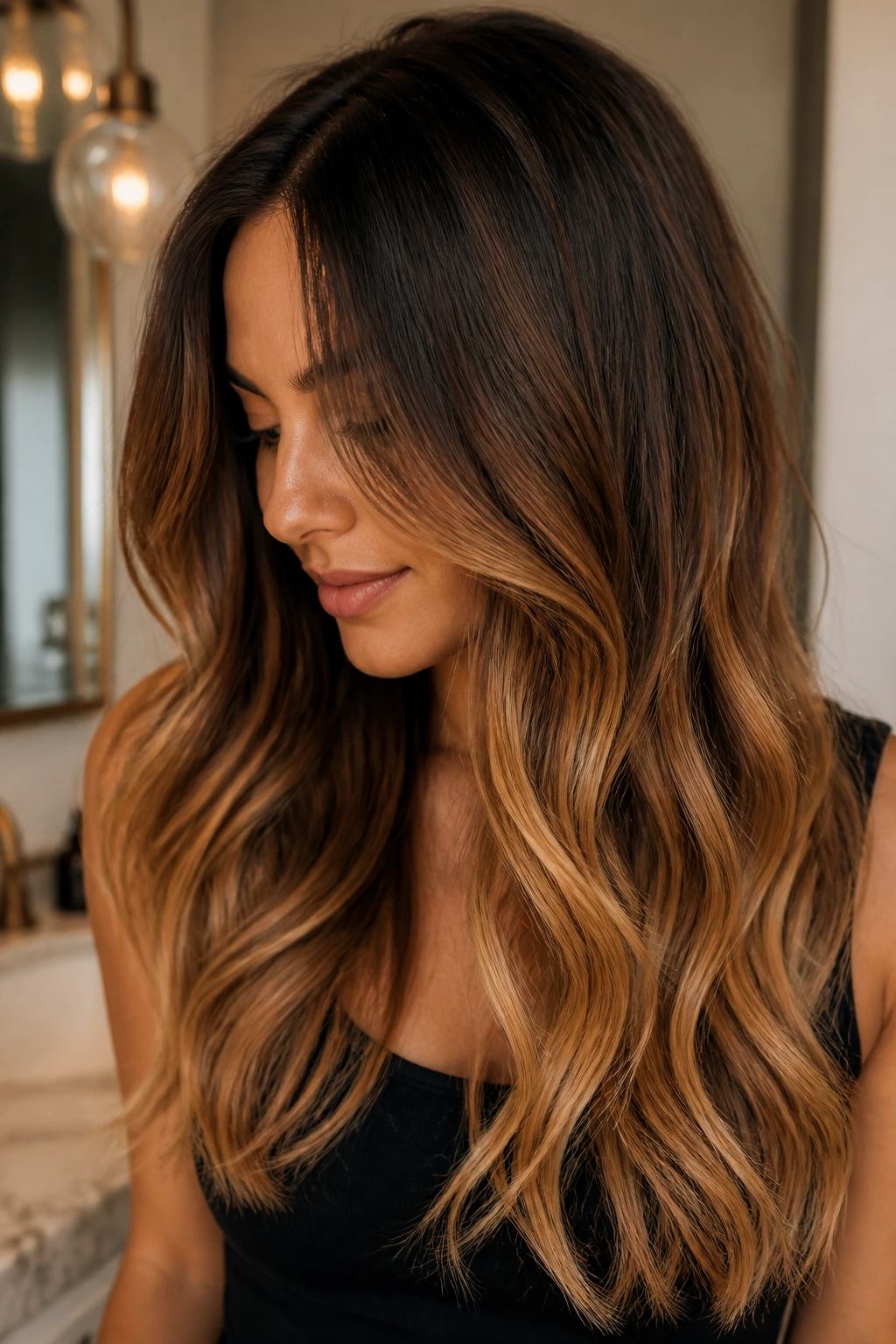
This one starts almost nearly black-brown at the scalp and loosens into chestnut and honey through the mid-lengths. It’s a slower, richer look than a standard highlight job, and that’s the appeal. The transition is so gradual that the ends feel lighter without ever looking chopped off from the base.
What makes it different
The root melt is the reason this style stays elegant as it grows. There’s no obvious line of demarcation, which means the balayage can be worn a little longer between appointments. On brunette hair that tends to pull warm, a chestnut bridge between the dark root and honey end prevents the final result from tipping too yellow.
If you have thick hair, this is a smart choice because the deeper root keeps the shape from puffing out too much. Fine hair can wear it too, but the transition needs to stay soft and narrow so the ends don’t look stringy.
The nicest part? It looks even better after a few washes. The honey softens slightly, the chestnut settles, and the whole thing starts to look lived-in rather than freshly colored in the blunt way some salon work does.
3. Toffee Balayage on a Long Lob
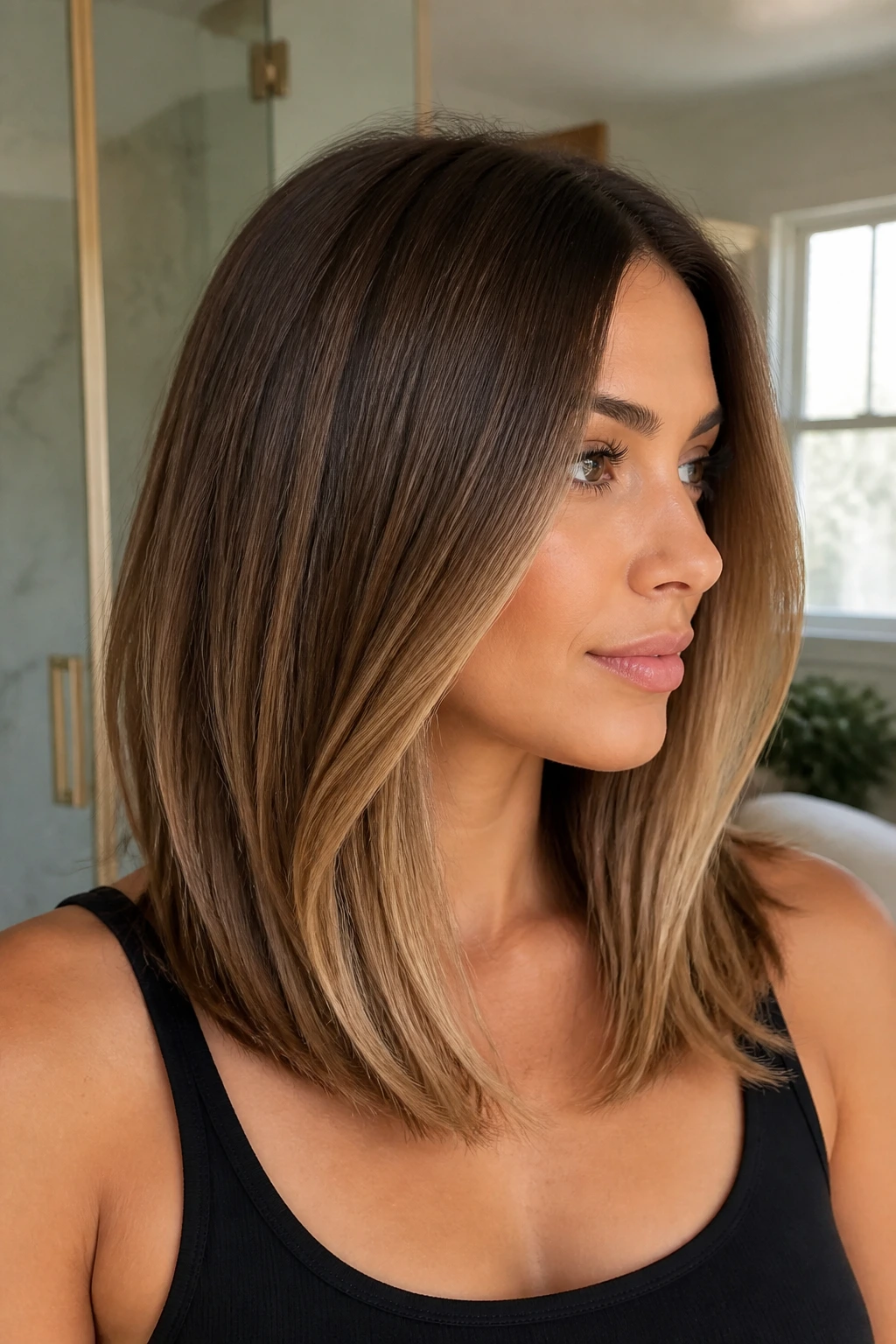
Can a lob carry caramel without feeling too busy? Absolutely — if the lighter pieces stay below the chin and the blend is kept wide and airy. A long bob gives caramel blonde brown balayage a clean surface to show off on, especially when the hair is blown smooth through the ends and slightly tucked under.
How to wear it
This version is strongest on brunettes who like a polished shape. The lob acts like a frame, so the caramel doesn’t have to do all the work. Instead, the color catches on the surface and along the bend of the cut. It’s neat without being stiff.
A toffee tone works better than an icy blonde here. Why? Because the cut is usually shorter and more geometric, and a warmer shade softens the line. If the color gets too light, the whole thing can start to look blunt in a bad way.
Best details to ask for
- A soft root shadow
- Toffee or light caramel through the lower half
- Slightly brighter pieces around the jaw
- Ends that stay darker than the middle, so the cut keeps its shape
4. Caramel Curtain Bangs
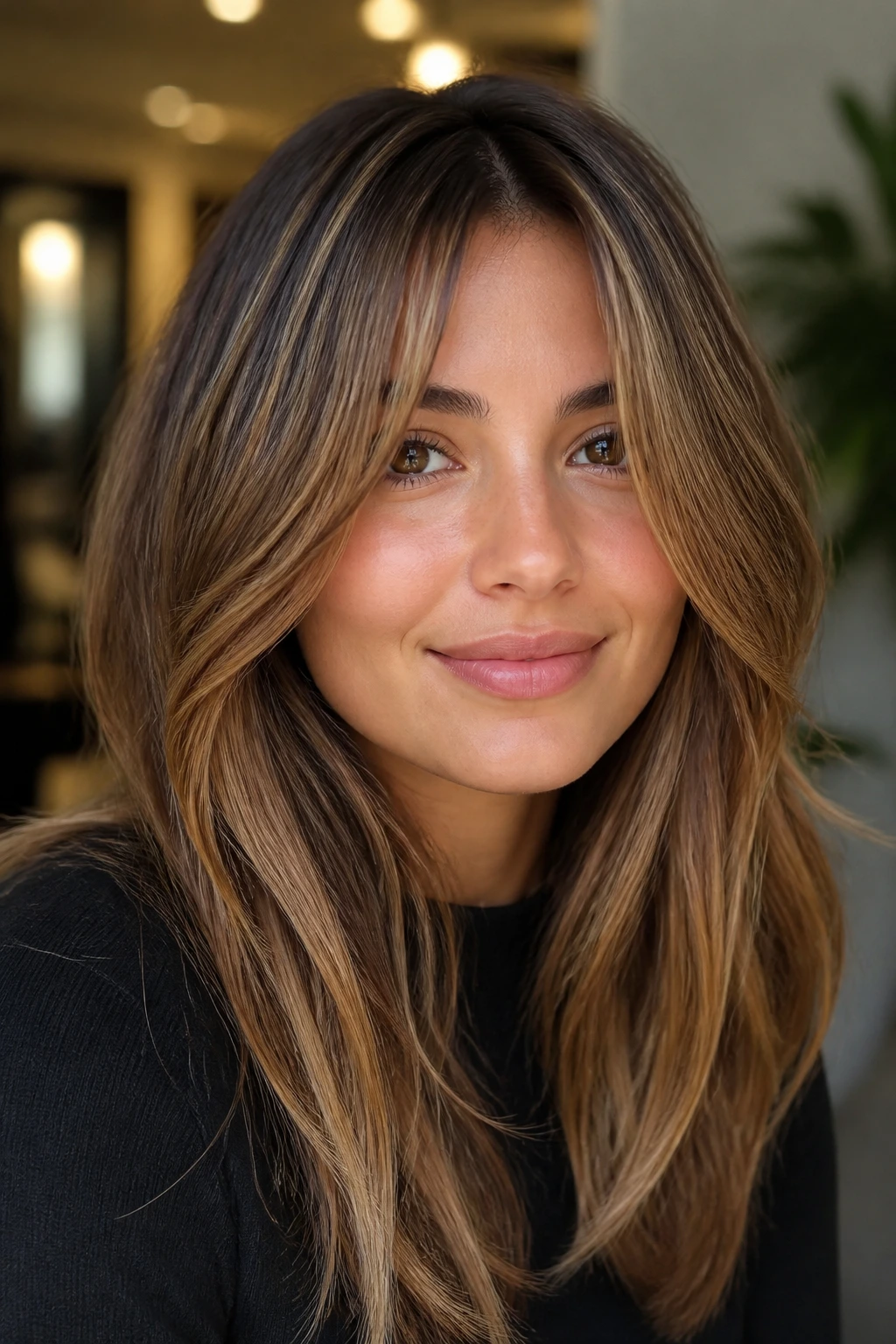
Curtain bangs and caramel balayage have a sneaky little chemistry. The bangs break up the forehead area, and the light pieces along the front edges give the cut some lift without requiring a heavy lightening job all over the head. On brunettes, that means the bangs look intentional instead of like a separate haircut floating above the rest.
Why it flatters brunettes
Curtain bangs soften the top of the face, which gives the caramel room to sit around the eyes and cheekbones. The result is less about high contrast and more about movement. If your brunette base is deep chocolate or espresso, this approach keeps the color from feeling too fragmented.
The key is placement. The brightest bits should begin just under the bangs, then blend into the front layers. If the color starts too high inside the bang section, the fringe can look lighter than the rest of the hair in a way that feels patchy. That is not the look.
A round brush blowout makes this style sing. The caramel pieces bend around the face, and the bangs fall in that soft, split shape that makes people think the haircut itself is doing more work than it actually is.
5. Buttery Brunette Waves
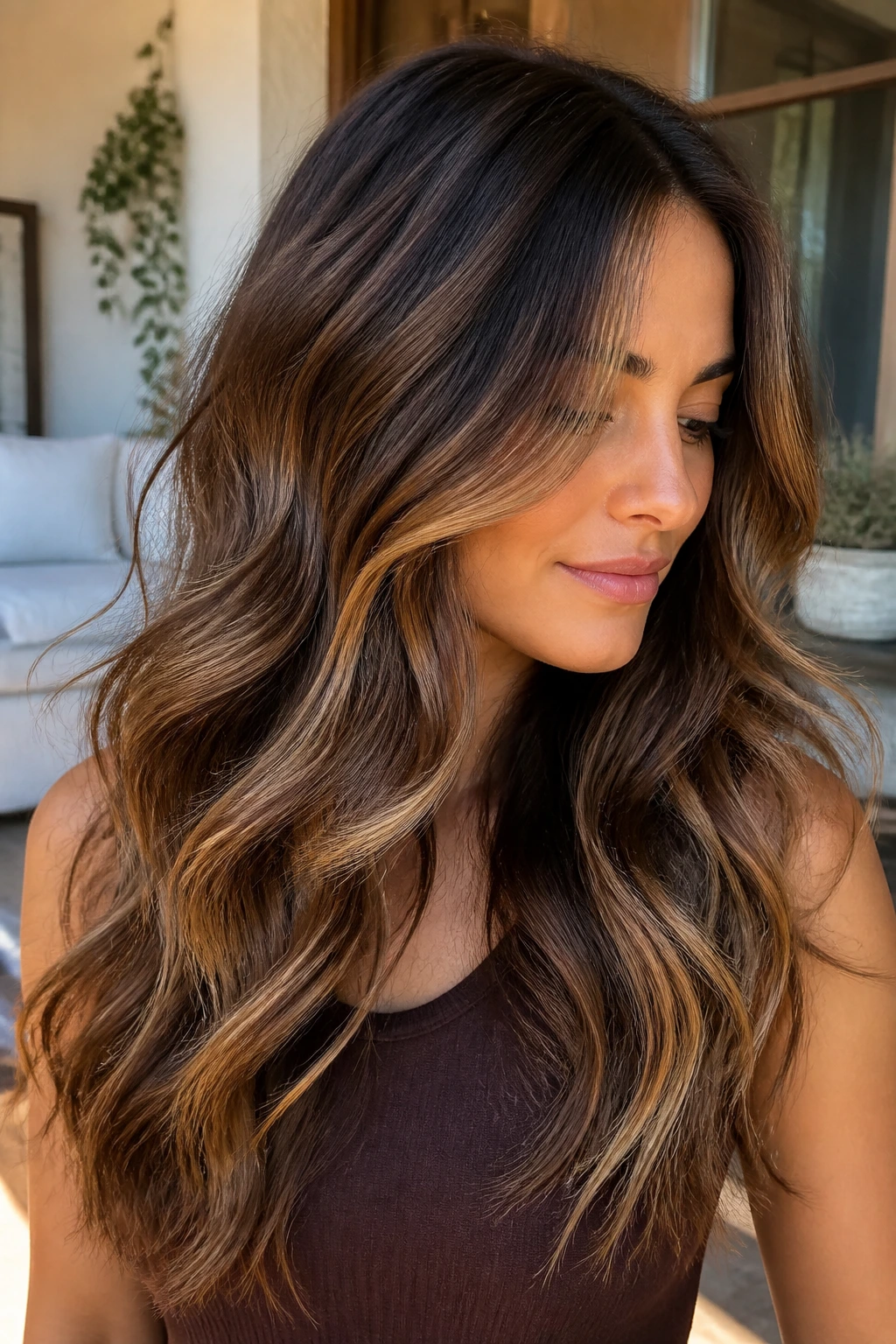
There’s nothing shy about buttery caramel on long brunette waves. The color sits warmer than beige and a little softer than gold, so the hair looks creamy without drifting into brass. On a layered wave, that warmth slides across the bends and creates a soft shine that shows up even when the light is mediocre.
This version suits brunettes who want a brighter result but don’t want the maintenance that comes with pale blonde pieces. The waves do half the work. They make the caramel break up into little sections instead of one large block of color, which keeps the whole style from feeling overdone.
If your hair is naturally wavy, this is an easy win. If it’s straight, the color still works, but you’ll want to add movement with a curling iron or a blowout brush. The shine is nicer when the ends are a little flipped rather than left pin-straight. Flat hair can swallow warm highlights.
6. Smoky Beige Bronde Balayage
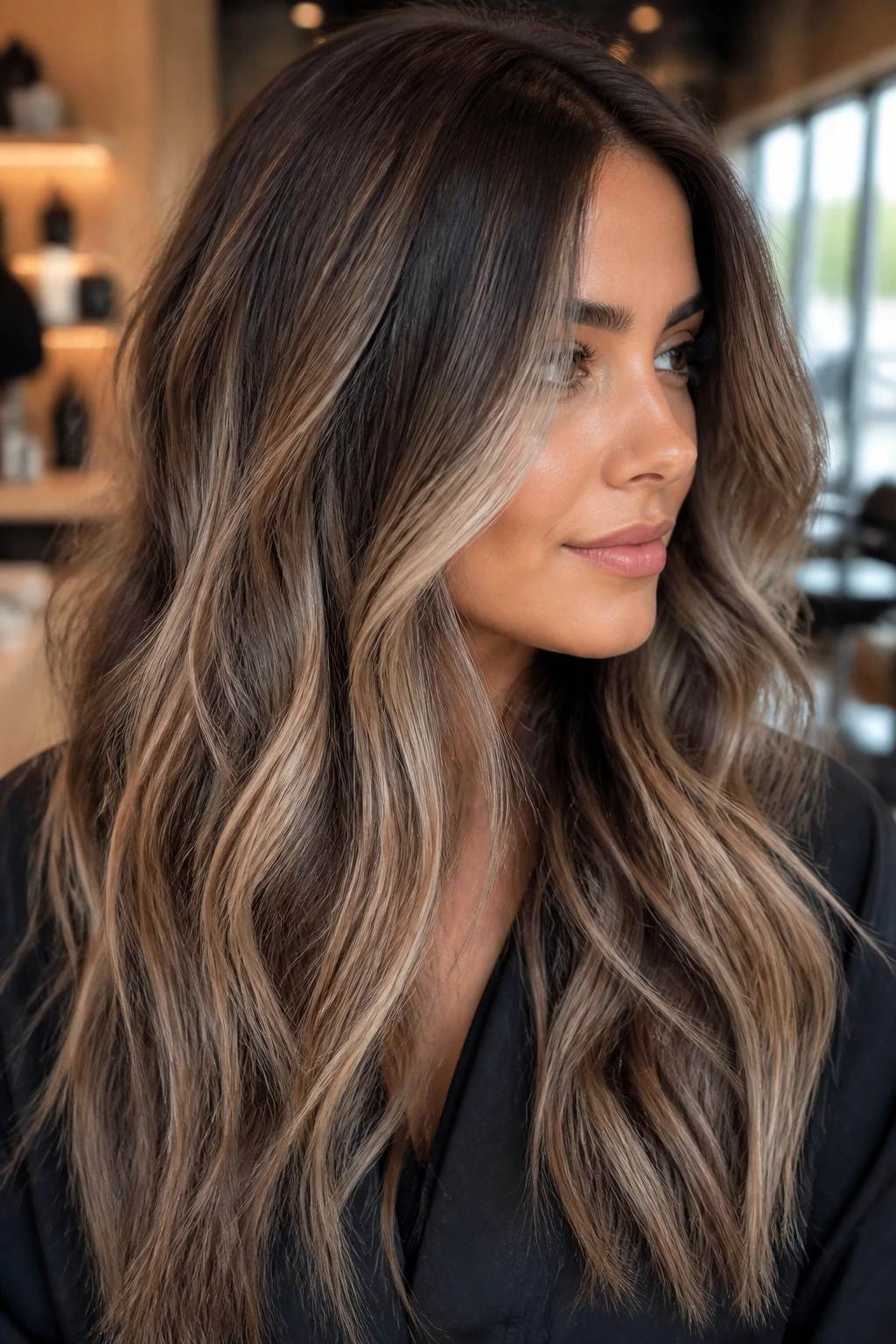
This is the cooler cousin in the group. The brunette base stays strong, but the lighter pieces drift into beige-caramel territory with a smoky finish, which keeps the warmth from going too orange. It’s a good fit for people who like warm color in theory but not the candy-colored version that can happen when caramel is pushed too hard.
Unlike a honey-heavy balayage, this one leans quiet. The result looks less sun-kissed and more blended, almost like the hair picked up just enough warmth to soften the brunette. It’s useful for hair that already pulls red or gold on its own, because the beige tone reins that in a little.
If you wear a lot of black, cream, or muted neutrals, this one sits nicely against your wardrobe. If you prefer loud color or strong makeup, it can still work, but the hair will read more subtle than statement-making.
7. Cinnamon Swirl Layers
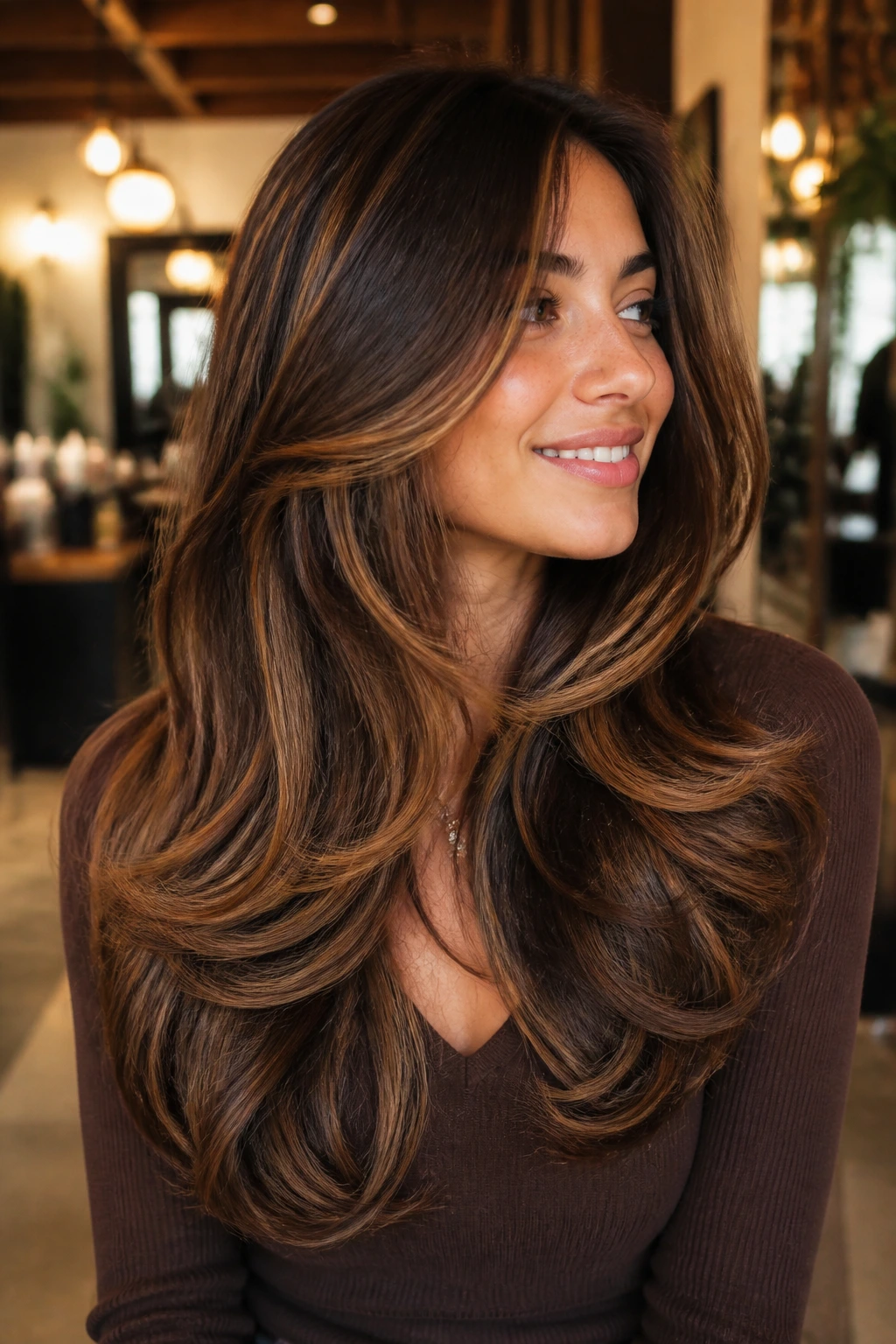
A layered brunette cut with cinnamon and caramel pieces has a little more spice than the softer looks above. The warmth sits in strips that follow the layers, which gives the hair a swirled, almost ribboned effect when you move. It’s flattering on thicker hair because the lighter pieces help break up the density.
Why it works
Layers create built-in movement. When the caramel follows the layer lines instead of fighting them, the hair looks lighter around the ends and fuller near the top. The cinnamon note adds a touch of copper warmth, which is useful if a plain caramel tone would feel too sweet on your skin tone.
This look can skew too red if the colorist goes heavy on copper. So the safest move is to keep the cinnamon as an undertone and let the caramel carry the brightness. You want warmth, not a pumpkin effect. That difference matters more than people think.
Best for
- Medium-to-thick brunette hair
- Haircuts with obvious layers
- Anyone who wants warmth in the mids and ends, not just around the face
8. Glossy Chocolate and Caramel Striping
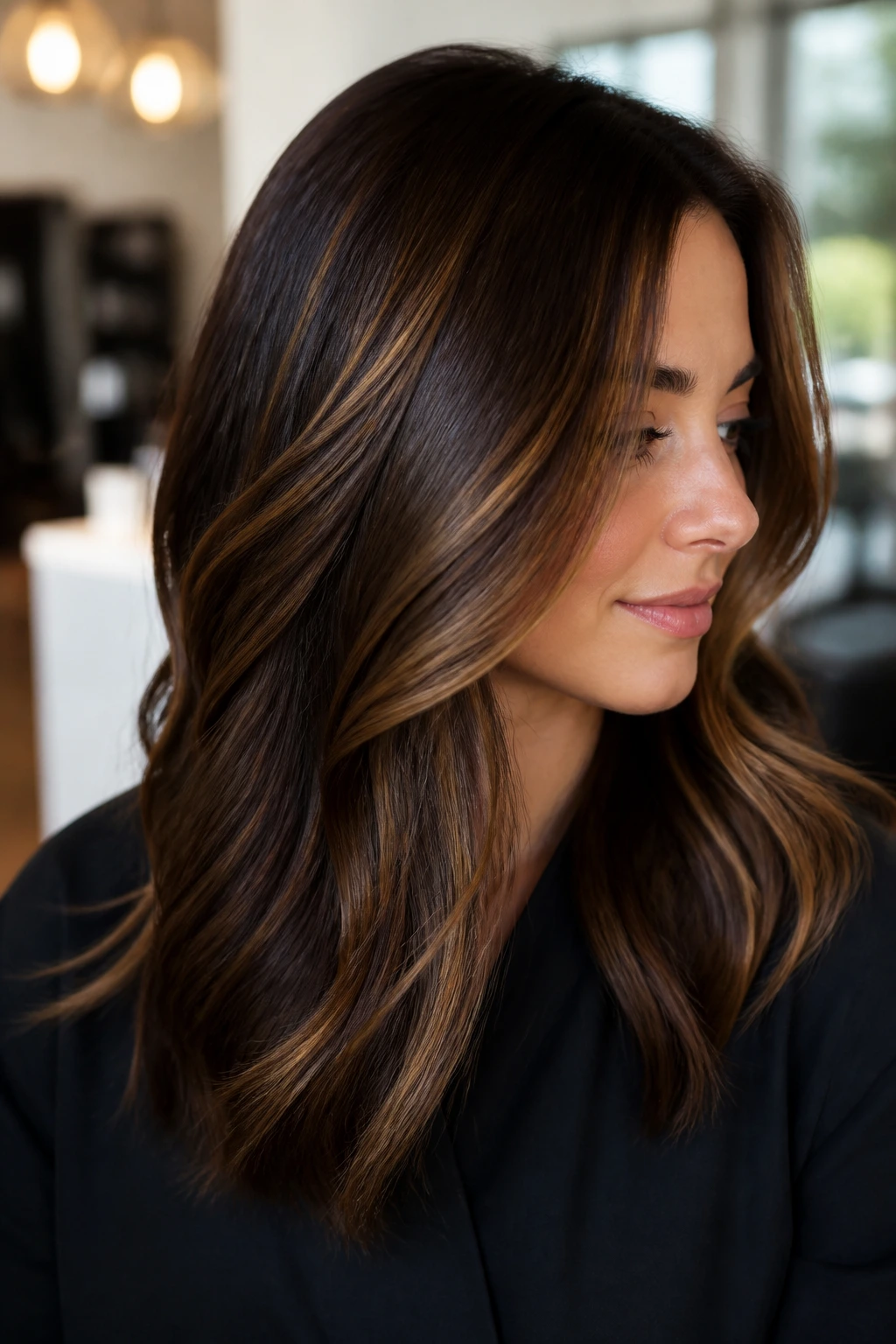
Here’s the contrarian take: a little striping is fine when the hair is glossy and the pieces are placed with intention. This style keeps the brunette chocolate base visible, then drops cleaner caramel streaks through the top layers so the contrast has a sharper edge. It’s bolder than a melt, but not as harsh as old-school highlights.
The key is shine. On dull hair, striping looks accidental. On smooth, healthy-looking hair, it reads like a deliberate fashion choice. A clear gloss or beige toner helps the lighter pieces reflect light instead of sitting flat against the brown.
This works best when the haircut has a bit of structure — a blunt lob, long layers with ends that flip, or even a polished blowout. The caramel bands need a surface that can hold them visually. Messy curls can blur the lines, which may be a plus if you want the look softer. If you want edge, keep the styling sleek.
9. Curly Caramel Halo
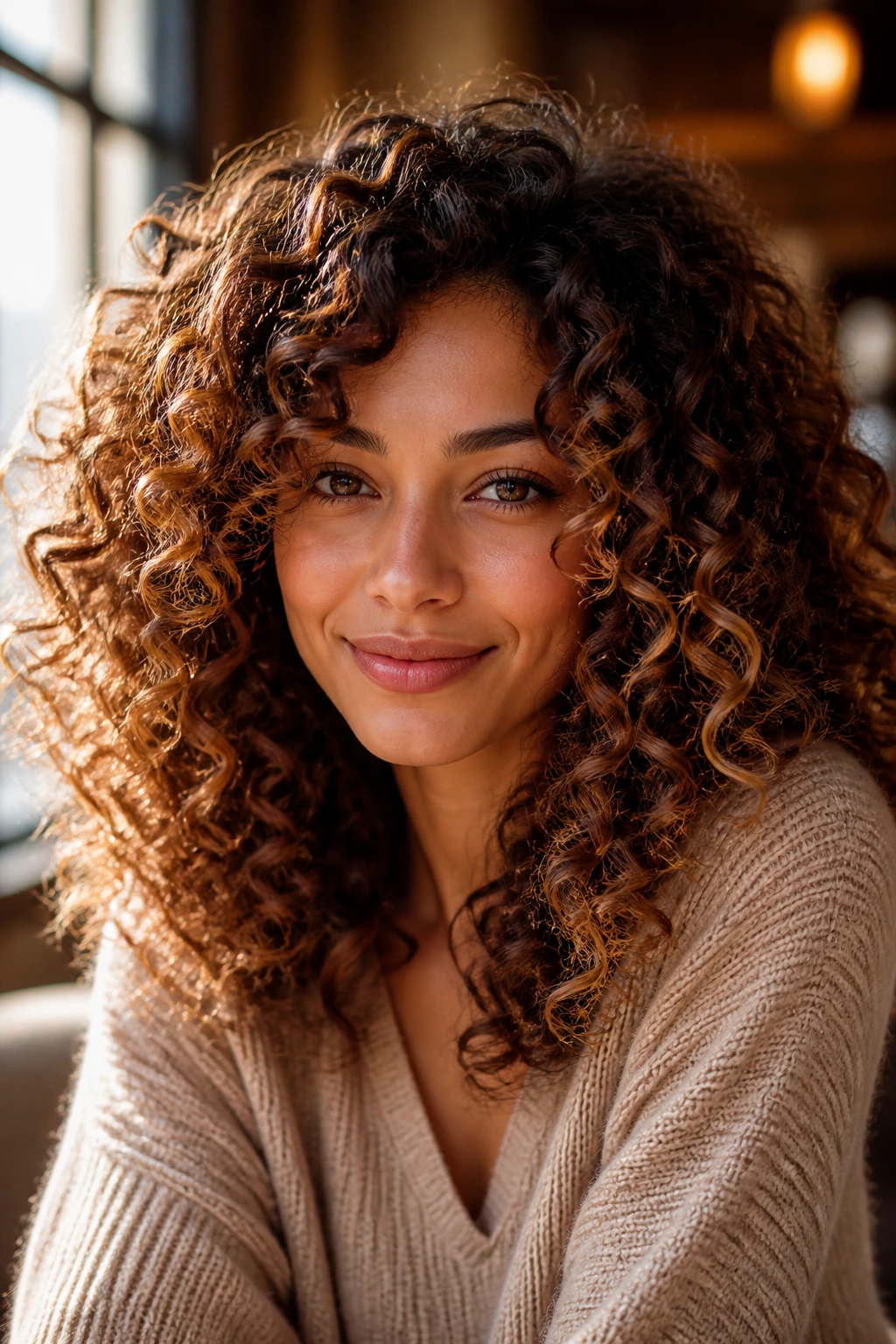
Why do curls and caramel get along so well? Because curl pattern naturally breaks up color placement. That means the lighter pieces don’t need to be everywhere. A halo of caramel around the outer layers and crown can create a bright, airy finish without flooding the whole head with lightener.
This style looks especially nice on brunettes with medium to tight curls. The lighter pieces land on the raised parts of the curl, so every twist gets a little flash of warmth. It’s a smart way to make the hair look fuller, too, because the eye reads the movement and brightness together.
Keep the pieces soft and not too thick. Large sections can turn into bands on curls, and once that happens, the charm is gone. The best versions look almost painted into the shape of the curl family, not laid across it. That’s the whole point.
10. Deep Brunette with Almond Money Pieces
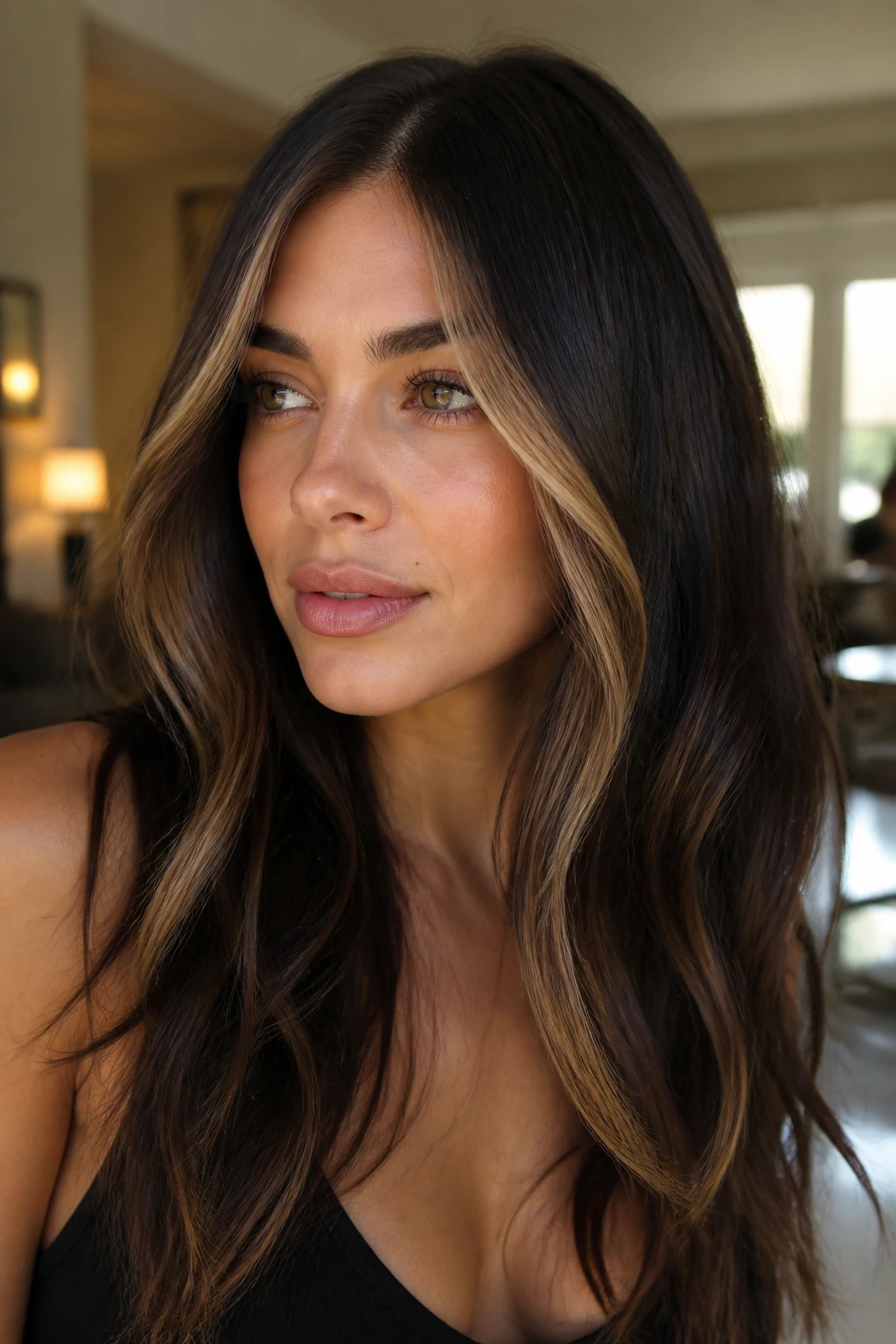
Almond money pieces are for the person who wants people to notice the hairline first. The rest of the brunette stays deep and calm, while two brighter caramel-almond panels sit near the front and take the spotlight. It’s a very specific kind of confidence. Not loud. Just direct.
What it does to the face
These front pieces can lift the whole expression, especially if they start just below the eyebrow and sweep down toward the jaw. The almond tone is a touch lighter than classic caramel, so it gives brightness without going pale. That’s a smart choice for darker brunettes who want a visible shift but don’t want to bleach every layer.
The rest of the hair should stay dimensional and rooted. If you lighten too much around the face and nowhere else, the style can look unfinished. A few midshaft ribbons behind the front pieces help connect everything.
For styling, a deep side part makes the money pieces swing across the face in a flattering way. Middle parts work too, but they make the symmetry more obvious. Pick your poison.
11. Sunlit S-Bend Balayage
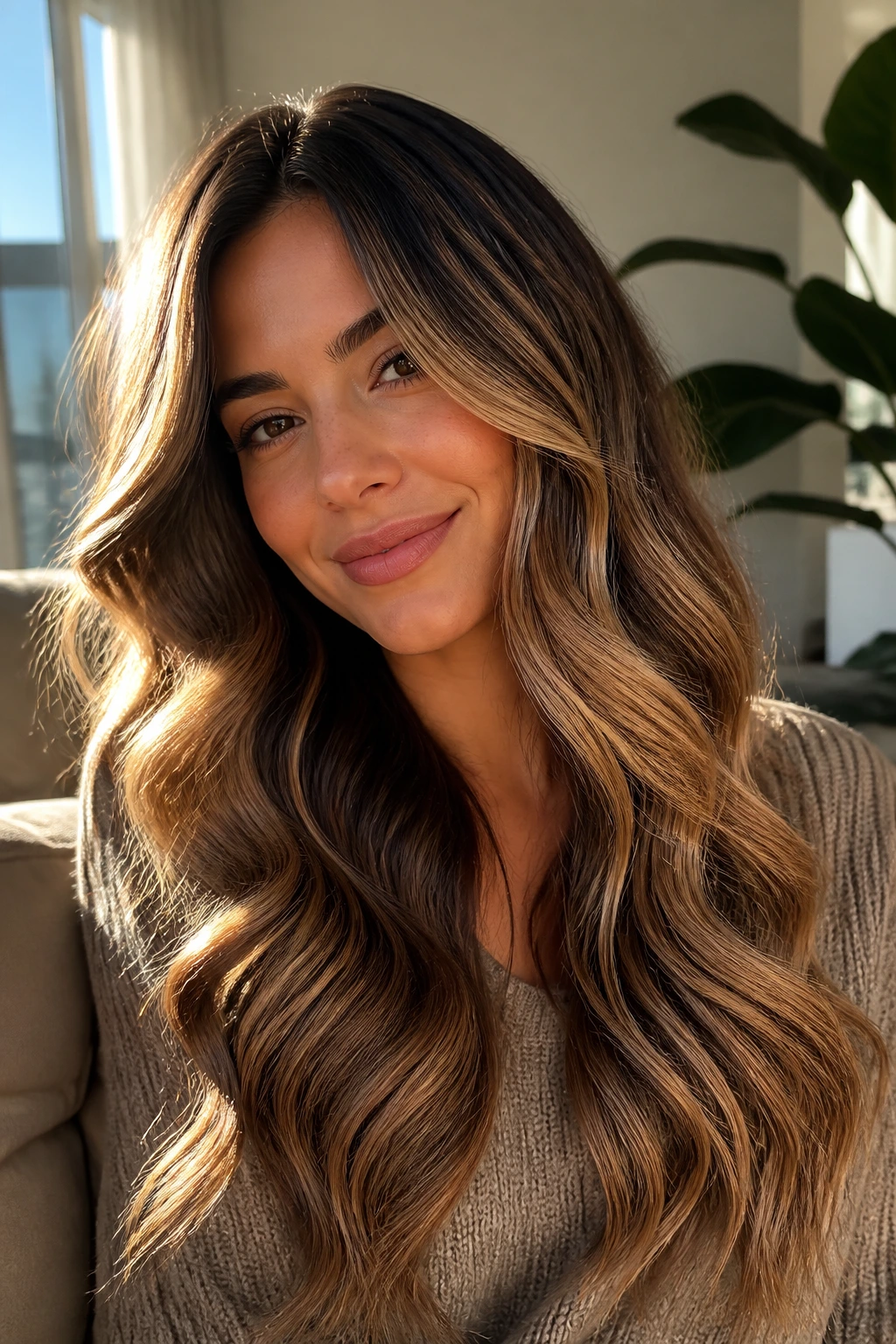
S-bend waves and caramel balayage have the kind of easy relationship that makes the hair look more expensive than it was to make. The bend pattern isn’t as curled as a full wave, so the caramel shows in long, soft stretches rather than tiny broken pieces. That gives brunette hair a smoother, more reflective finish.
This style is useful if you do not want to fight your natural texture. A loose S-bend can be done with a flat iron, a large curling iron, or even braid-out styling on some hair types. The color doesn’t need perfect curls to show up. It just needs movement.
The lightest caramel should sit on the outer layer and around the lower half of the hair. If you place it too high, the bends can turn busy near the root. And that’s where the whole thing starts to feel heavier than it should.
12. Mushroom Brown and Caramel Mix
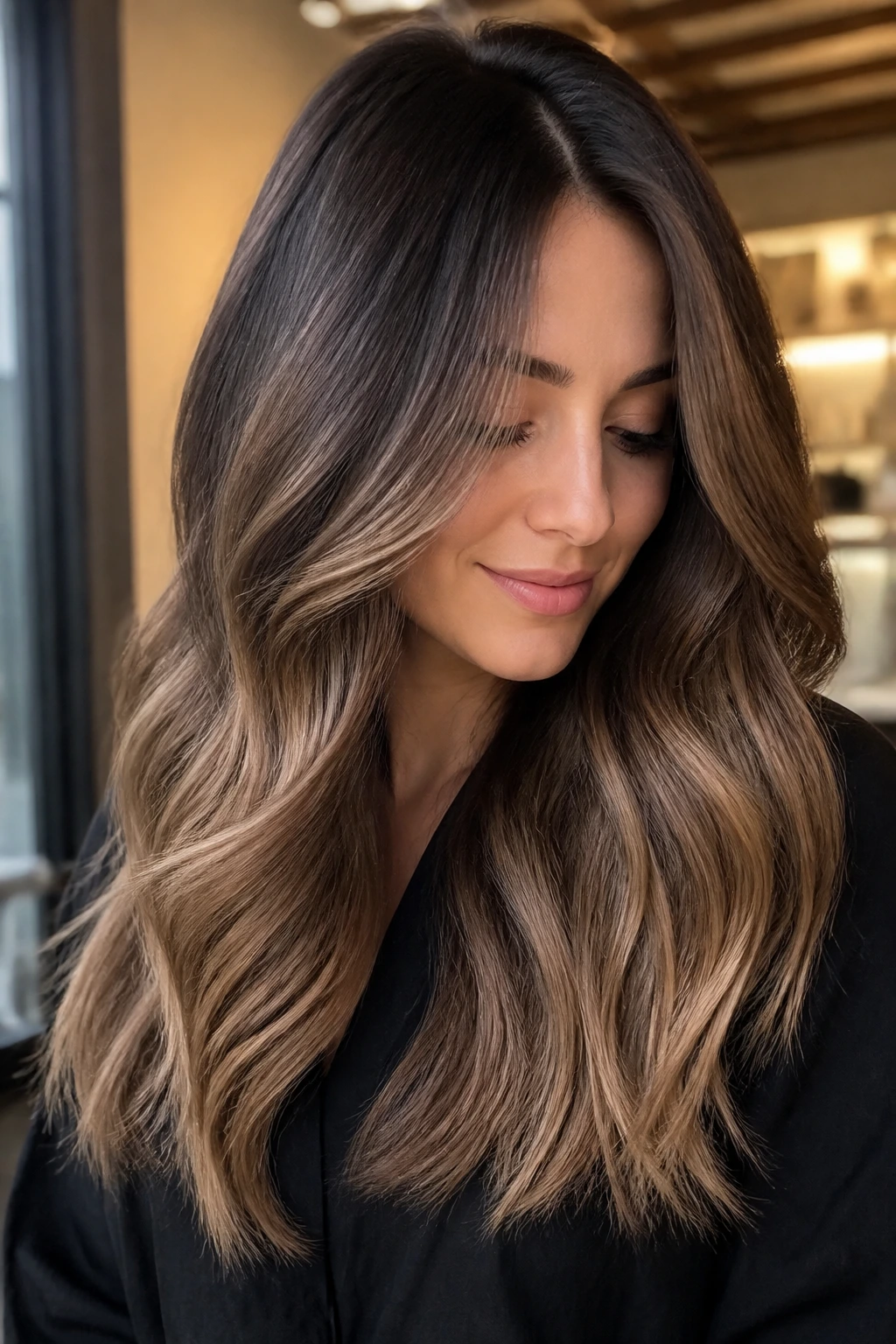
Mushroom brown and caramel is one of those combinations that sounds odd until you see it on brunette hair. The cooler brown gives the base a gray-beige softness, while the caramel warms the ends just enough to keep the hair from looking flat or muddy. It’s a good bridge for people who like muted color but still want dimension.
Unlike a full warm balayage, this blend has a quieter finish. That makes it a solid choice for office settings or for anyone who likes hair color that reads polished rather than sunny. The caramel isn’t the star here. It’s the accent that keeps the cooler brown alive.
Ask for a soft shift from mushroom through taupe into caramel ends. The transition should feel gradual, not like three separate colors stacked on top of one another. If the contrast is too sharp, the mushroom shade loses its appeal and the whole thing just looks confused.
13. Caramel Ombré Cascade
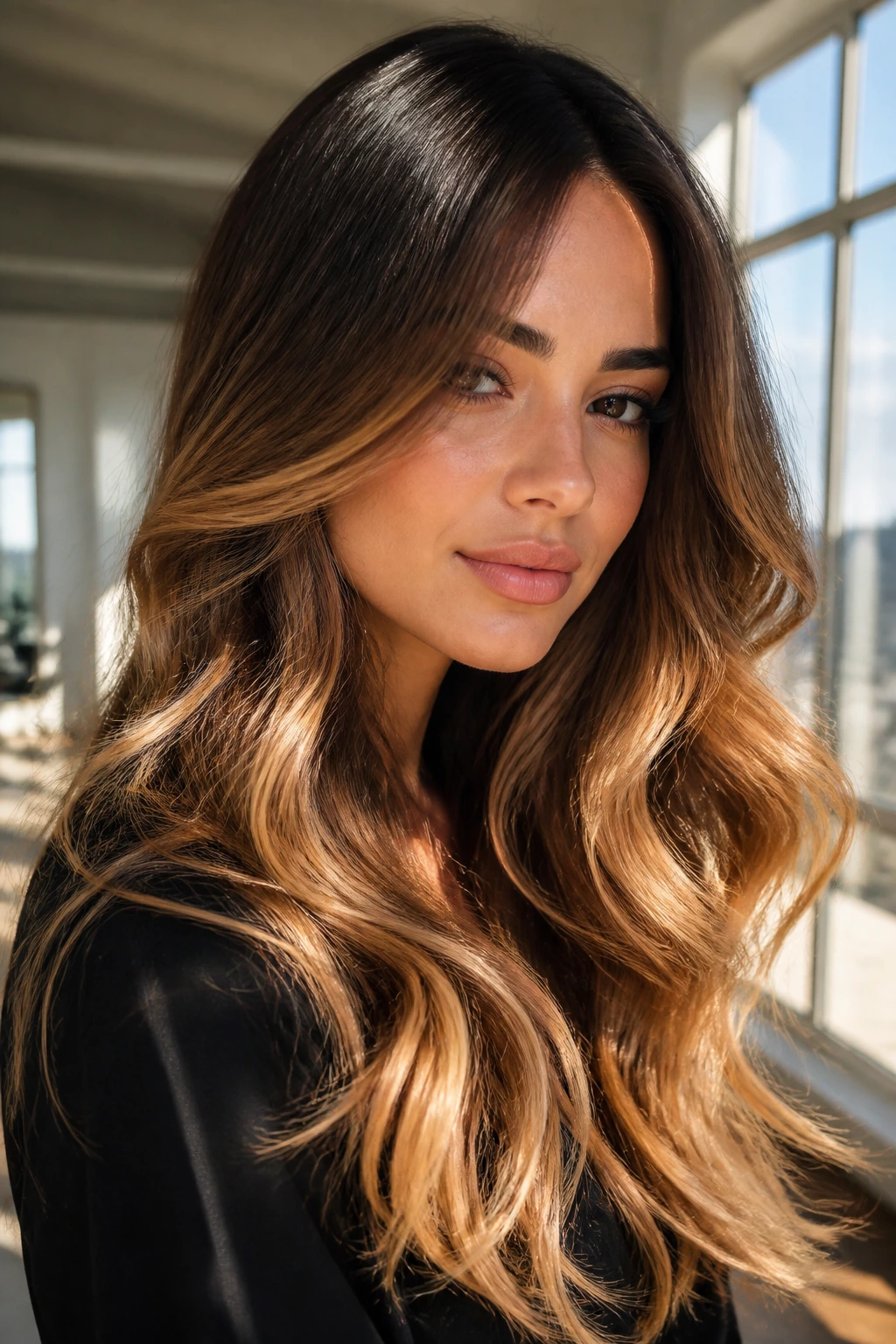
A caramel ombré on brunette hair has more drama than a standard balayage, and that’s the point. The color starts deeper at the top, then moves into a more obvious caramel sweep through the mid-lengths and ends. On long hair, the cascade effect can be gorgeous. On shorter cuts, it can fall apart fast.
Why it works on long brunette hair
Length gives ombré room to breathe. You need enough hair for the transition to show, otherwise the gradient looks abrupt. When it’s done well, the darker root and caramel finish feel connected by a soft middle zone that keeps the line from snapping in half.
This is not the quietest option in the group, and that’s fine. Some brunettes want visible contrast. The trick is keeping the top dark enough that the ombré still feels rooted in brunette hair, not like blonde ends attached to a brown head.
Styling note
Loose, brushed-out curls make the gradient look smoother. Straight hair shows the shift more clearly, which can be good if you want people to notice the color itself instead of the movement.
14. Buttercream Ends on Dark Mocha
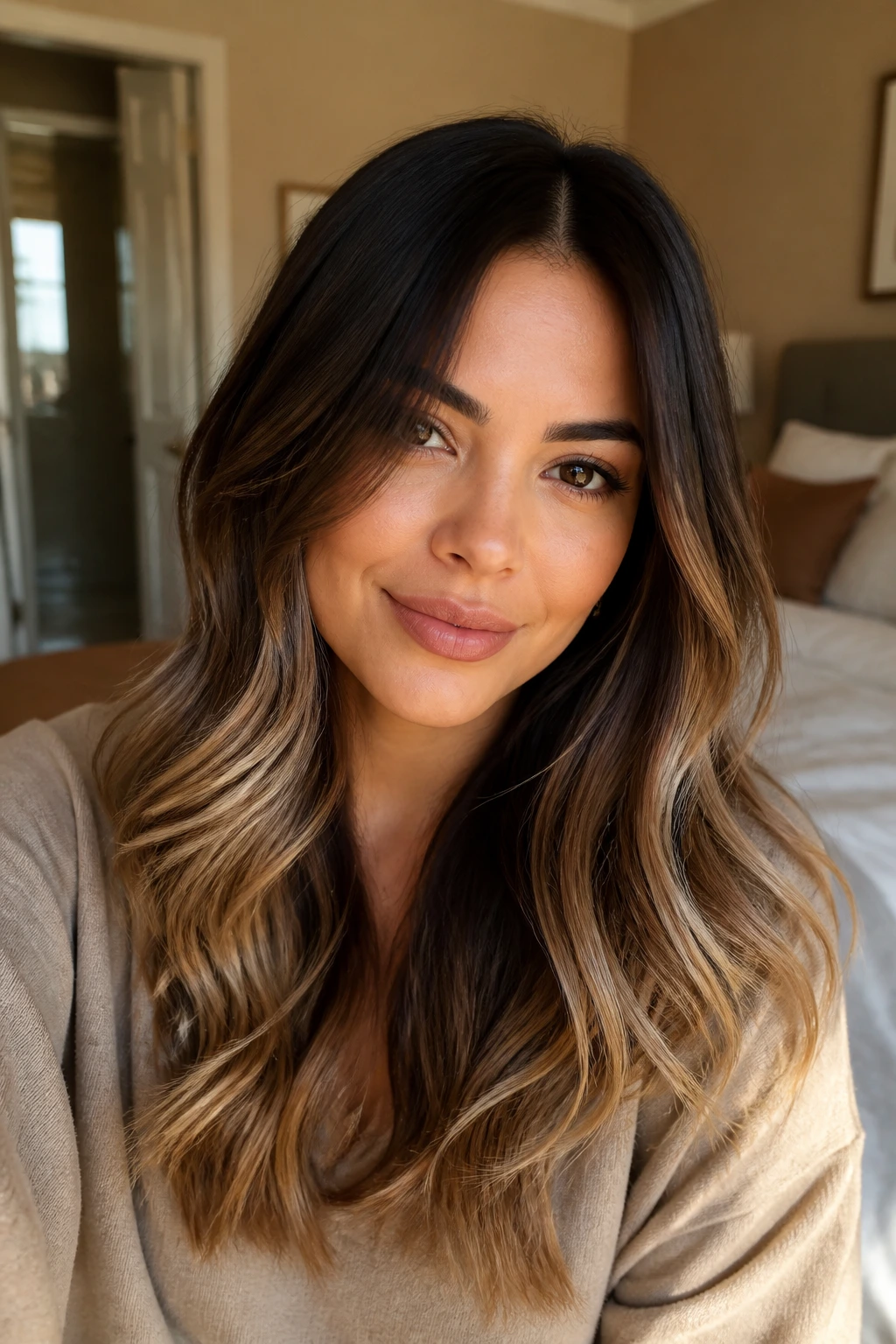
Buttercream ends are for brunettes who want the lightest touch to happen only at the bottom. The mocha root stays rich and dark, then the color opens into a soft caramel-blonde finish that looks creamy rather than pale. It’s a little gentler than a bright ombré and more directional than all-over balayage.
The cut matters here. Long layers or a softly feathered hemline help the lighter ends feel deliberate. If the hair is one blunt block, the buttercream finish can look like the color stopped halfway through. That’s not flattering. You want the ends to feel like they were chosen on purpose.
This look also gives fine hair a nice lift, because the light ends create the illusion of movement. Thick hair can wear it too, but the transition needs to stay smooth so the ends don’t look chopped. A gloss in warm beige keeps the finish creamy, not yellow.
15. Face-Frame Pop with Soft Root Shadow
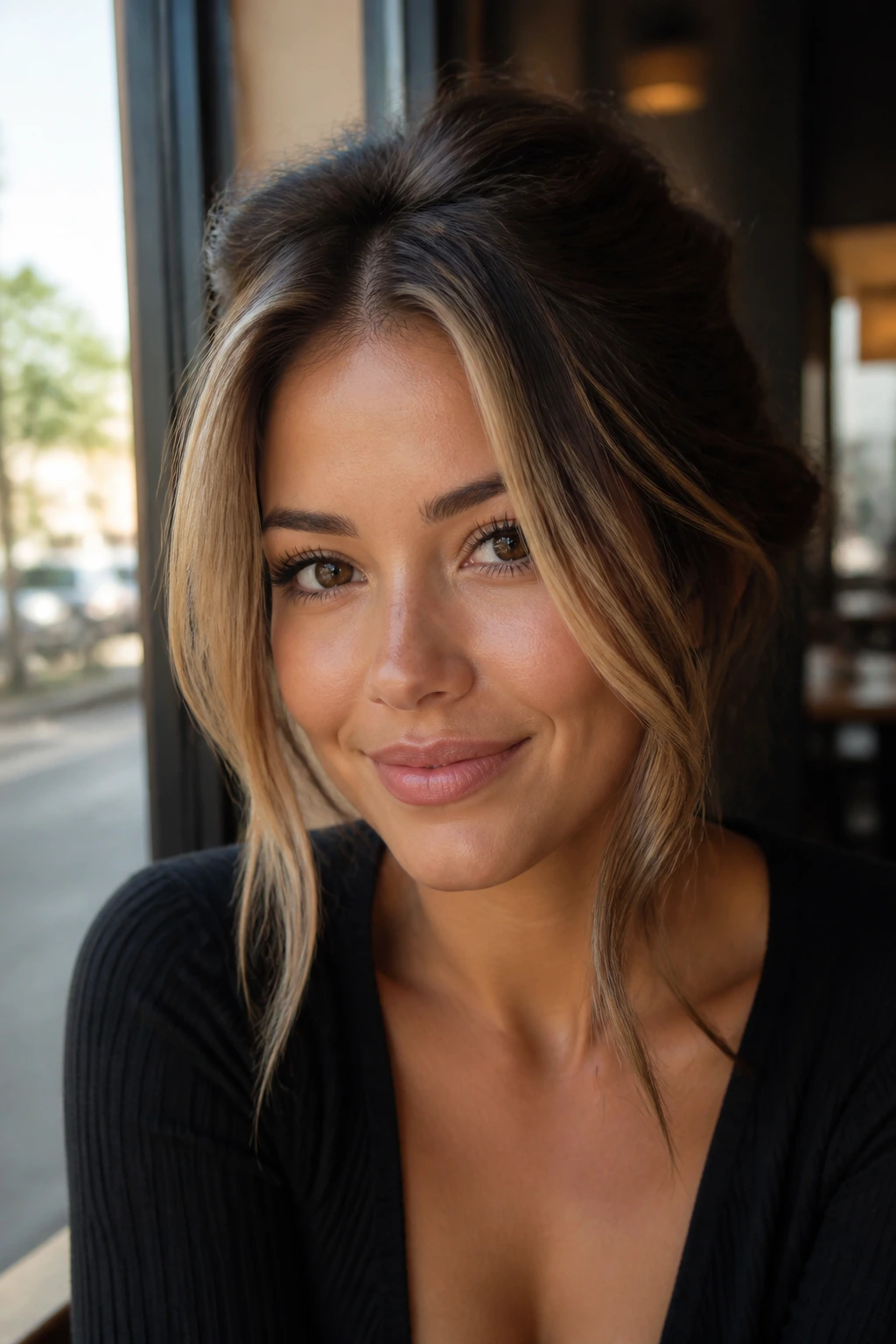
What if you want brightness, but only where the eye lands first? This is the answer. A strong face-frame pop paired with a soft root shadow gives brunette hair definition without turning the whole head into a highlight project. The darker root keeps it grounded, and the bright front pieces give instant lift.
Best use case
This is smart for anyone who wears hair back often. A ponytail, claw clip, or half-up style still leaves the front pieces visible, so the color keeps doing its job even when the rest of the hair is off the shoulders. It’s also one of the easiest ways to test a lighter look before committing to more brightness.
The root shadow should not be heavy or muddy. It should just soften the start point so the caramel can fade in naturally. If the shadow is too dark, the front brightness can feel disconnected. If it’s too light, you lose the brunette depth that makes the contrast pretty in the first place.
16. Chestnut Bob with Floating Caramel
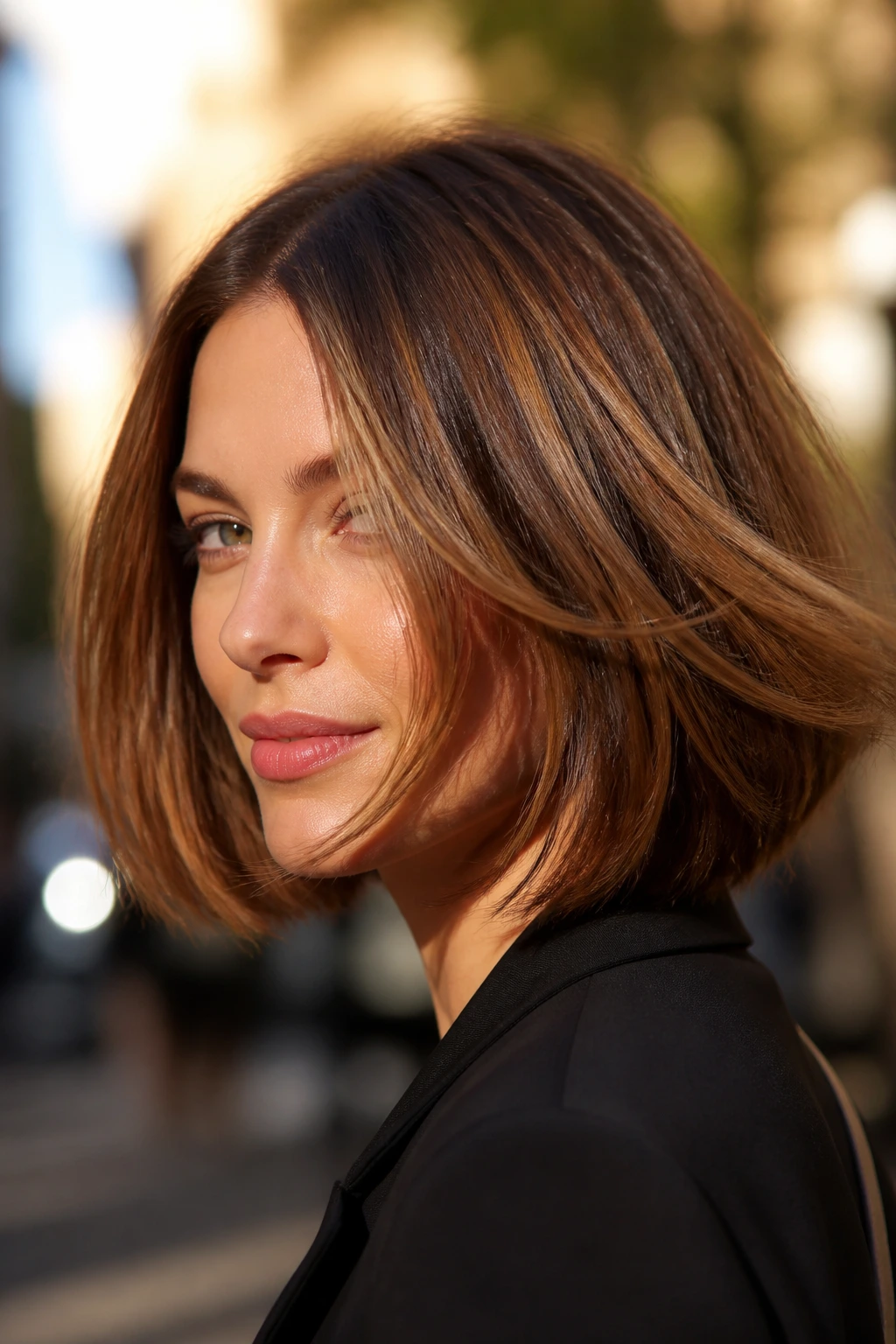
A bob with floating caramel pieces is a cleaner, sharper version of balayage. Because the cut is shorter, the lighter strands need to be placed so they move across the surface instead of getting lost in the interior layers. That creates the “floating” effect — little flashes of warmth that shift when the bob swings.
This version works especially well with straight or slightly bent hair. On a bob, too much wave can hide the color placement. But a little bend at the ends helps the caramel show around the perimeter, where the haircut needs it most.
Chestnut is a smart base for this look because it keeps the color rich and polished. Too dark and the contrast can feel harsh; too light and the bob loses that glossy brunette feeling. A single bright strip near the front can be enough if the shape is precise.
17. Walnut Brunette with Golden Veils
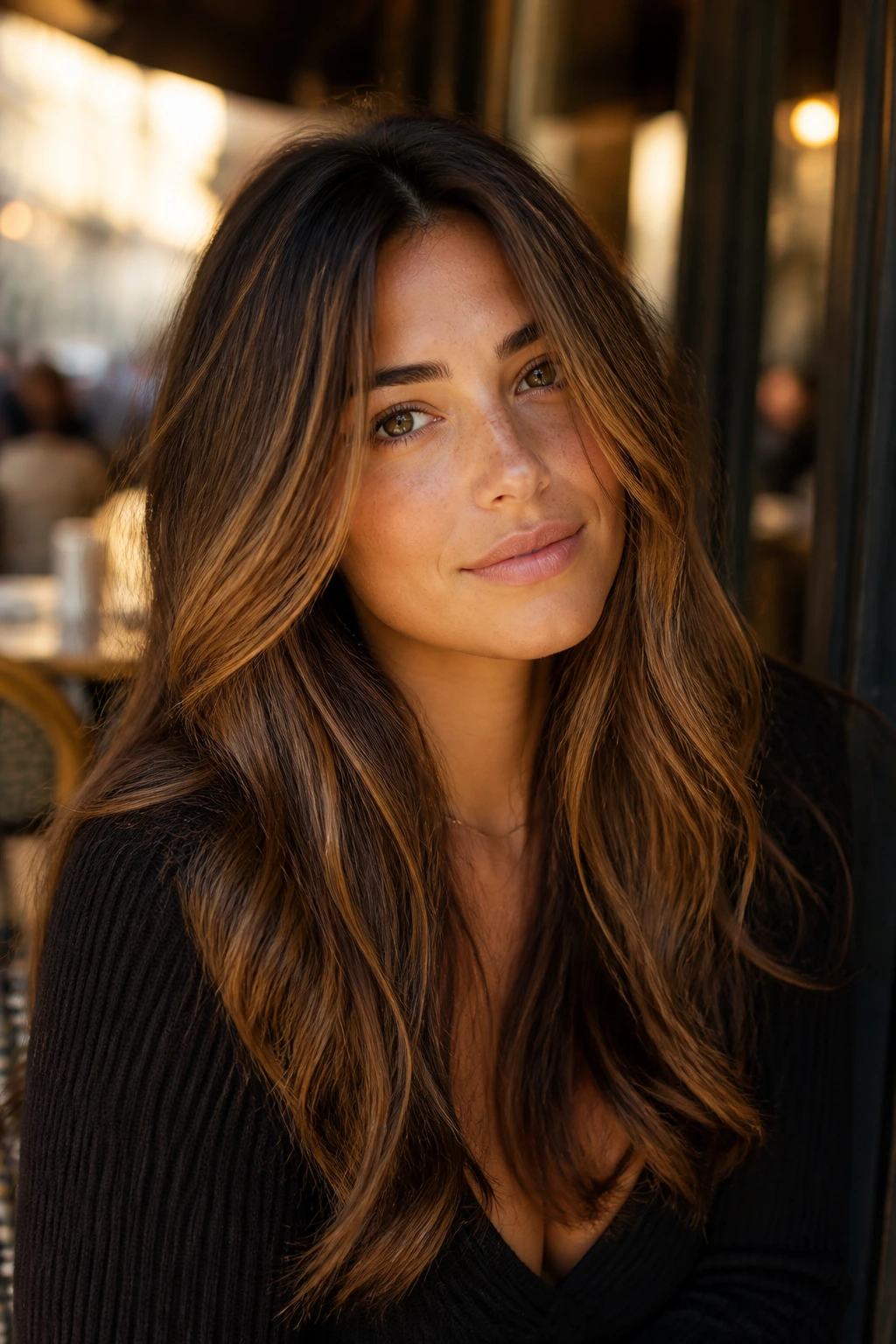
Walnut brown is one of the best bases for golden veils because it already has a soft warmth in it. The caramel pieces don’t need to fight the base, so the whole look ends up with a low-glow finish rather than a bold streaky one. It’s the kind of color that looks even better after a few days of wear.
The “veil” idea matters. These highlights should be thin and slightly transparent, sitting over the top layers instead of cutting deep into the interior. That keeps the hair from feeling busy and lets the brown stay visible between the lighter pieces.
This is a nice choice if you like warm jewelry tones, tan leather, or makeup in bronze and peach. The hair and wardrobe don’t have to match, but they do need to sit in the same temperature zone. Golden veils can look off when paired with very cool styling, so think about the whole picture.
18. Toasted Sugar Balayage on Mid-Length Hair
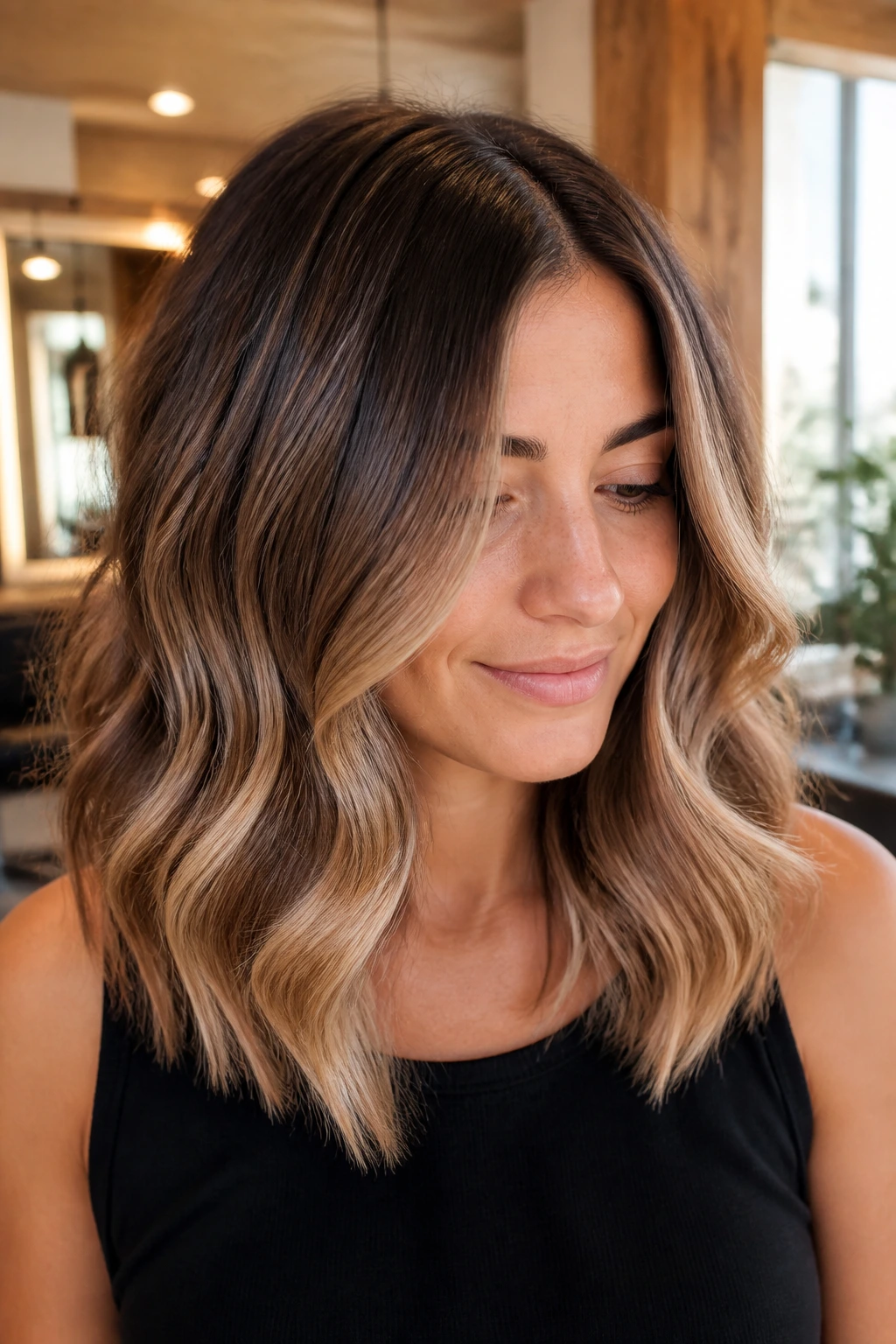
Mid-length hair is where caramel balayage often looks the easiest. There’s enough length for a real gradient, but not so much hair that the color disappears into the ends. Toasted sugar tones work well here because they’re warm, soft, and light enough to read from a distance without becoming blonde-blonde.
This style is especially good if you want movement without big maintenance. The lightest pieces can live through the mid-lengths and sweep down toward the bottom few inches, which means grow-out stays graceful. If your hair tends to puff at the ends, this placement can make it look more controlled.
A center part keeps it modern. A side part makes the front brighter. Both work. The important thing is not to over-lighten the very ends, because toasted sugar should feel warm and reflective, not crisp or bleached out.
19. Smoky Caramel on a Shag Cut
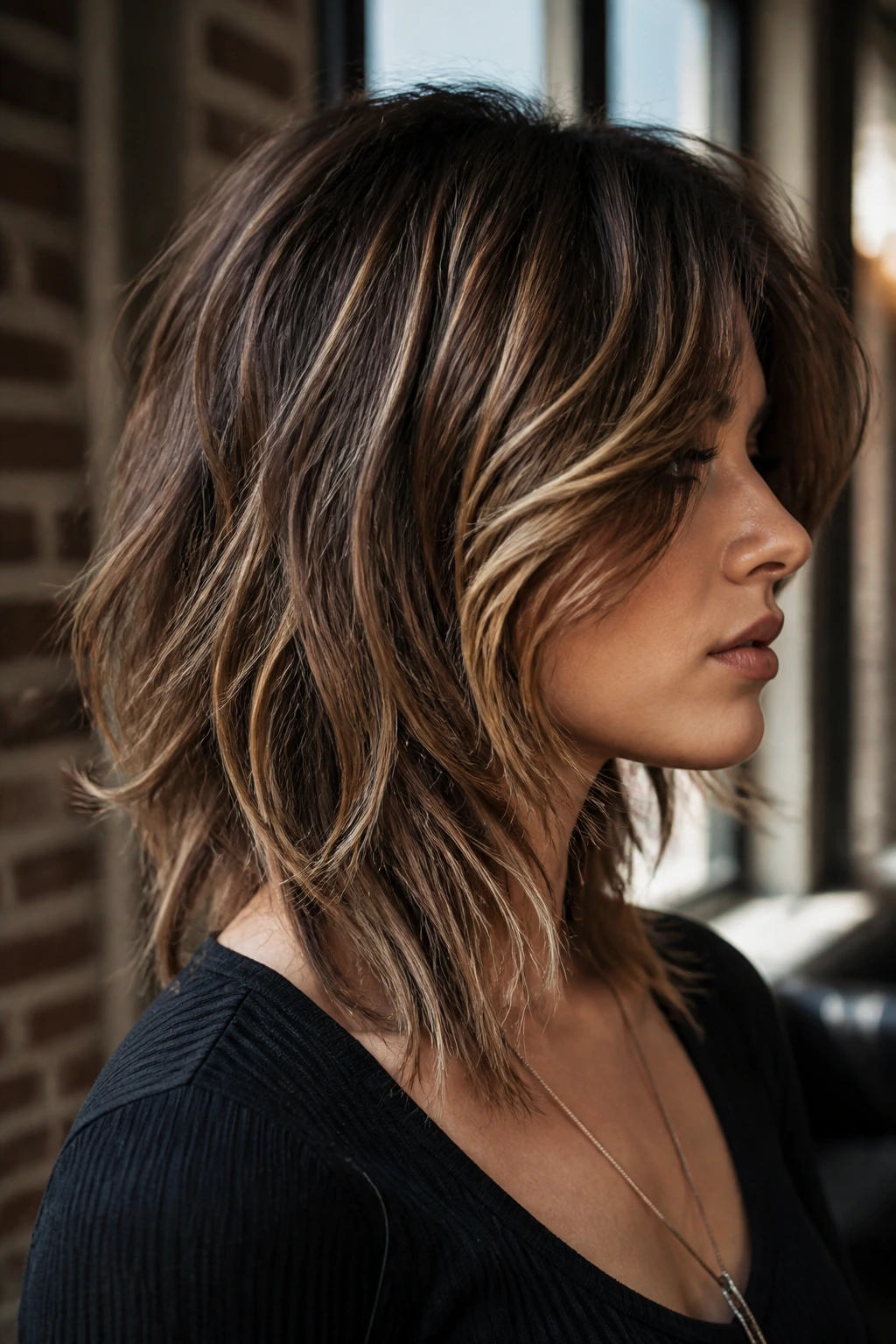
A shag cut can handle more contrast than a sleek cut, and smoky caramel gives it exactly that. The ends stay textured and airy, while the lighter color follows the choppy layers and makes each piece stand apart. On brunettes, this can look a little rebellious in the best way.
Why it suits the shag
The shag already has movement built in. Add caramel that leans slightly smoky or beige, and the layers stop blending together into one lump of color. You can actually see the cut. That’s the whole point of paying for texture and then hiding it under heavy color. Don’t do that.
If the caramel is too warm, the shag can look softer than intended. A smoky finish keeps it a little cooler and more modern. Still warm, though. This is not ash brown pretending to be caramel.
A texturizing spray works well here. The color looks best when the pieces separate a little and the ends aren’t glued together. A shag should feel loose.
20. Honey Glaze on Long Layers
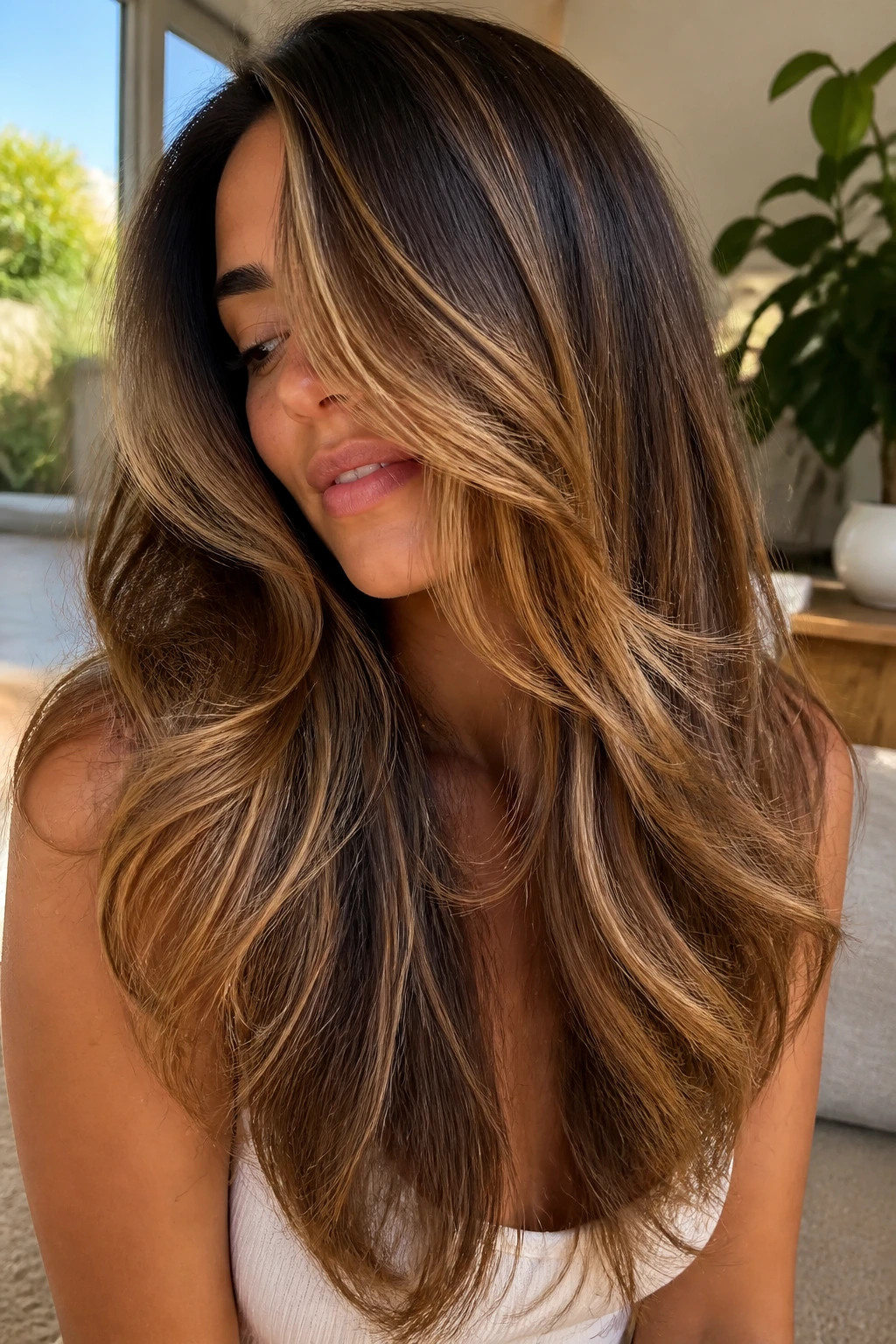
Long layers are practically made for honey glaze balayage. The layers let the lighter pieces fall at different heights, which makes the color look deeper and more expensive than a single band of highlights ever could. Honey is a touch brighter than caramel, so this one reads sunnier.
This is a good match for brunettes who want a visible refresh without jumping to blonde. The glaze effect matters because it keeps the finish shiny rather than dry-looking. If the hair is over-processed, honey can start to look flat or metallic. A glossy topcoat keeps it alive.
Wear it with loose curls or a big blowout. Long layers need air around them, and the honey pieces need enough surface to catch the light. A heavy straight style can mute the movement. A light bend does the opposite.
21. Soft Beige Balayage for Straight Hair
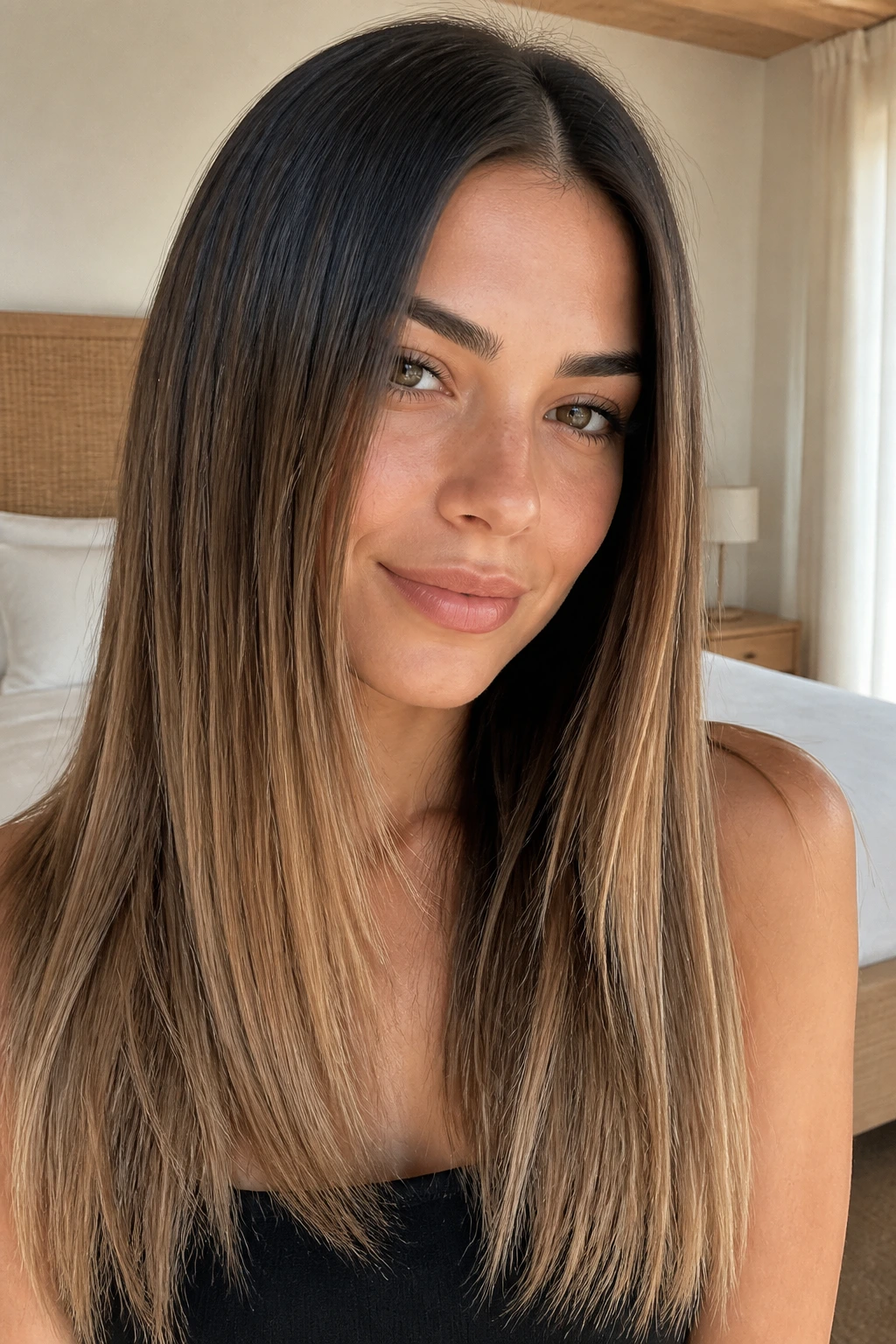
Can straight brunette hair carry balayage without looking too severe? Yes, but the placement has to be feathered and the tone has to stay soft. Beige caramel is the answer here. It gives enough brightness to show on a flat surface while still staying in the brunette family.
What to ask for
Ask for thin, diffused pieces that start lower on the head and get lighter toward the ends. On straight hair, every line is visible, so the transition has to be clean. Big chunky sections will look intentional only if you want a high-fashion blocky effect. Most people don’t.
Beige caramel keeps the finish understated, which suits straight styles well. A glossy blowout or sleek flat-iron finish lets the color do the talking. If the hair is very long and pin-straight, this look can feel elegant in a restrained way rather than big and dramatic.
The one thing to watch is brass. Straight hair reflects light more directly, so any warmth that goes too orange becomes obvious fast. A beige gloss keeps that under control.
22. Brunette Butterfly Cut with Caramel Sweep
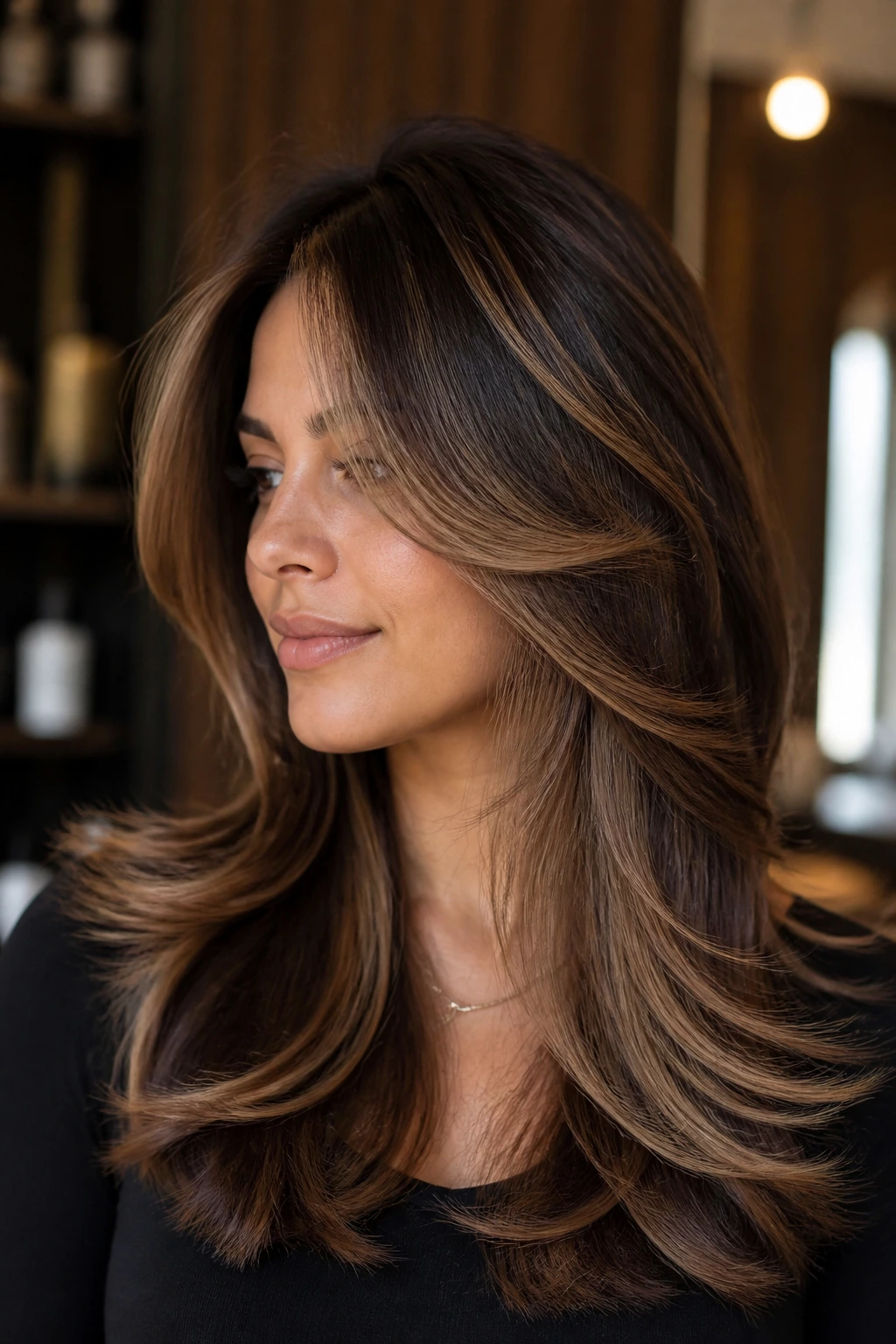
The butterfly cut needs color that can move with it, and a caramel sweep does that job beautifully. The short face-framing layers and the longer bottom section create two visual zones, so the balayage should echo that split. Brightness near the front, softer caramel through the longer lengths.
This is one of the more flattering combinations for brunettes who want volume without a heavy stack of layers. The lighter pieces around the crown and cheeks create lift, while the lower sweep keeps the length feeling full. It’s a clever optical trick. Nothing fancy. Just smart placement.
If the sweep is too even, the butterfly shape disappears. The color should be slightly more concentrated where the shorter layers flip out, then softer as it drops into the longer section. That unevenness is what makes the haircut and color feel like they belong to each other.
23. Espresso Base with Cinnamon Ribbons
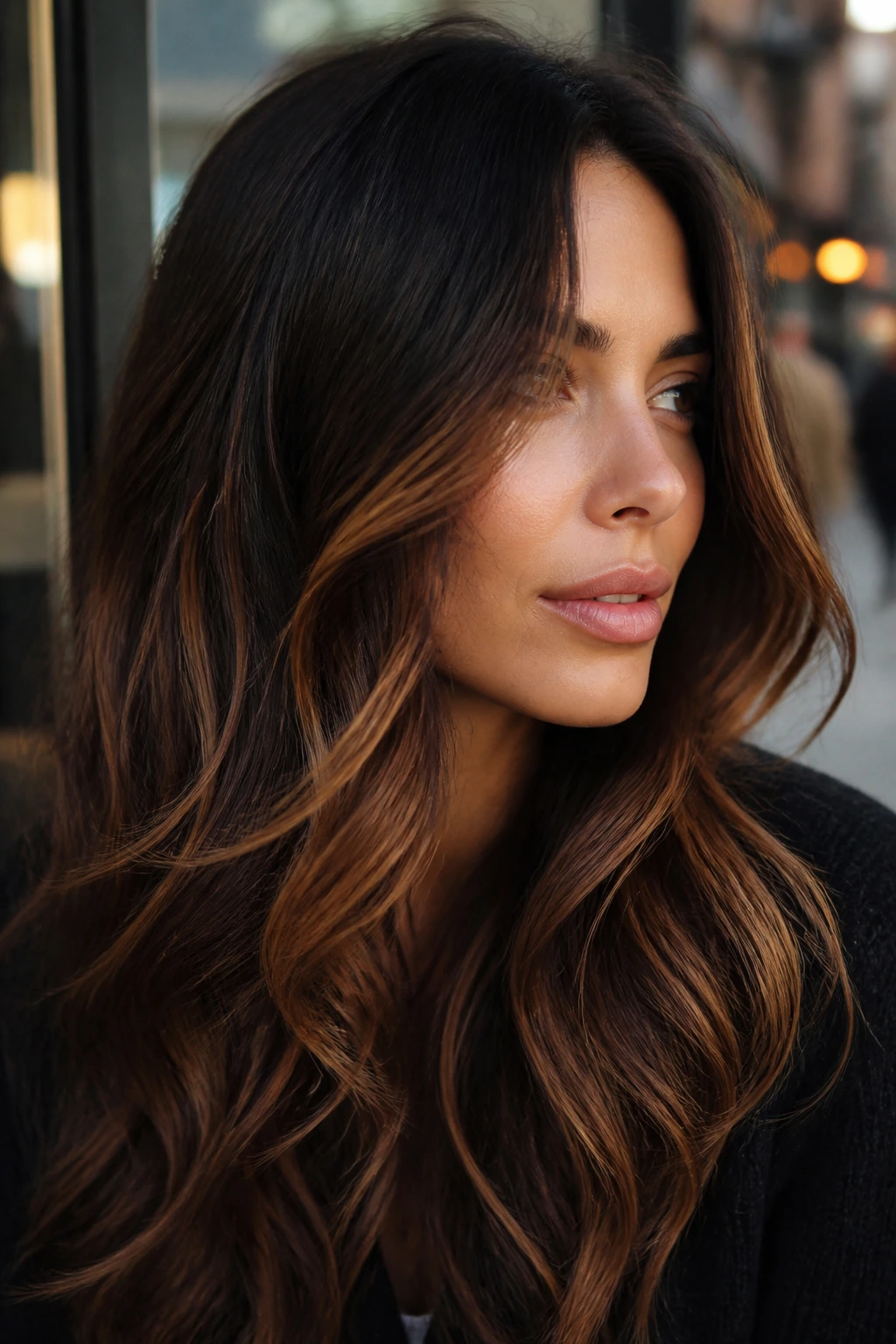
Espresso brown gives cinnamon ribbons a dark stage to shine on. The contrast is stronger here than in the chestnut or walnut versions, which makes the warmth read richer and a little more dramatic. If you like brunette hair that still looks clearly brunette, this hits the mark.
The cinnamon should be used like an accent, not a flood. A few ribbons through the surface layers and around the face are enough to wake up the espresso base. Too much copper and the style loses its depth. Too little and you won’t see the color at all unless you’re standing in a window.
This is a smart pick for people whose hair naturally pulls cool. The warmer ribbons add life without needing the whole head to shift into gold. That can be especially useful in winter, when dark hair sometimes starts to look flat under indoor lighting.
24. Lived-In Caramel Lob
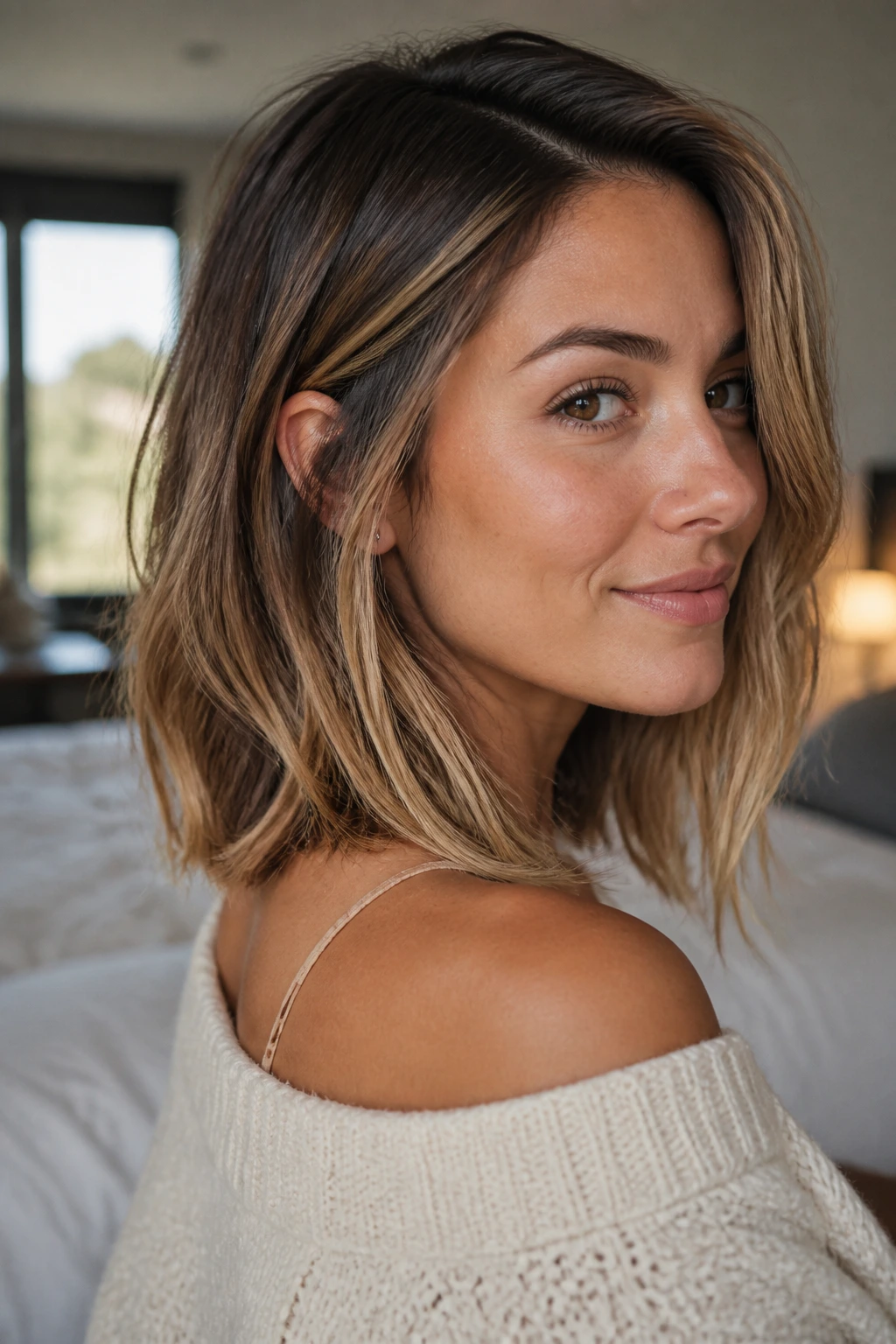
A lived-in lob is the haircut equivalent of good denim. It needs color that doesn’t try too hard. Caramel balayage works here because the pieces can be soft, broken up, and slightly irregular, which keeps the lob from looking too salon-perfect.
Unlike a more polished toffee lob, this version is looser and a little more casual. The brightness sits in patches that catch when the hair tucks behind the ear or bends at the ends. That makes it easy to wear every day without feeling dressed up for no reason.
This look is especially nice if you don’t want to visit the salon every few weeks. The grow-out stays easy because the lighter pieces aren’t packed into the root zone. You get movement, but not a sharp maintenance line. That’s the real appeal, honestly.
25. Warm Bronde with Soft Contrast
Bronde can sound vague until you see a good one. On brunettes, it’s that middle ground where brown stays visible but the caramel pushes the hair closer to blonde around the ends and front pieces. The “soft contrast” part matters because the transition should still feel blended.
Why it works
This look is useful if you’re unsure how much brightness you want. It gives enough blonde-brown shift to feel fresh, but not so much that the brunette base disappears. The color stays dimensional in daylight and smoother indoors, which makes it easy to live with.
Ask for a warm gloss after the lightening so the bronde doesn’t look too pale. The finish should be mellow and buttery, not chalky or flat. If the ends are too cool, the whole color can look muddy against a dark brown root.
People with medium-brown hair often wear this best, but darker brunettes can too if the lighter pieces are concentrated where they’ll matter most. That means front pieces, ends, and a few surface ribbons — not a full head of pale strands.
26. Melted Toffee on Thick Hair
Thick hair can swallow color if the placement is too timid. Melted toffee fixes that by using enough brightness to show through the density while still keeping the transition soft. The strands seem to move in layers, which is what you want when the hair has real bulk.
The melt works because the toffee tone follows the shape of the haircut. The lighter pieces usually need to sit a bit deeper in the hair as well as on the surface, otherwise only the top layer reads and the rest looks dark and heavy. Thick hair has to be painted with more intention.
If your hair holds curl well, this look is a favorite. The thickness gives the color a plush feel, and the toffee tones keep it from looking too dark at the ends. It’s one of those styles that looks richer on day three than on the first day.
27. Caramel Ribbon Balayage for Fine Hair
Fine hair needs a different kind of support from color. Too many heavy highlights can make it look see-through, which is why thin caramel ribbons are the smarter move. They create the illusion of density by alternating between darker and lighter strands without blowing out the base.
Best use case
This is a good choice if you want your hair to look fuller at the ends. Thin ribbons add tiny shifts in tone that make the surface look more textured. Fine hair can go flat fast, and caramel helps break up that flatness without forcing a dramatic color change.
Keep the pieces delicate and avoid broad panels. A fine-haired head with chunky balayage can end up looking patchy, especially when the hair is tucked behind the ears. Small ribbons travel better through the cut.
A lightweight styling cream or mousse helps the movement show up. Heavy oils can make fine hair collapse, which defeats the whole point of the color. Let the dimension stay visible.
28. Reverse Balayage with Warm Ends
Reverse balayage sounds backwards because it is. Instead of lightening more of the hair, it keeps the brunette base strong and adds depth through lowlights, then lets the warm caramel end pieces carry the brightness. This is perfect if you’ve gone too light before and want the hair to look fuller and richer again.
The reason it works on brunettes is simple: darker pieces reintroduce depth around the face and crown, which makes the warm ends look more intentional. Too many highlighted brunettes lose their shape because everything is equally bright. Reverse balayage fixes that by giving the eye somewhere to rest.
It’s also a useful transition look if you’re trying to move away from high-maintenance blonde. The grow-out is calmer, the color sits closer to your natural depth, and the caramel ends still give enough lightness to keep the style from feeling heavy.
29. Chai Latte Brunette Blend
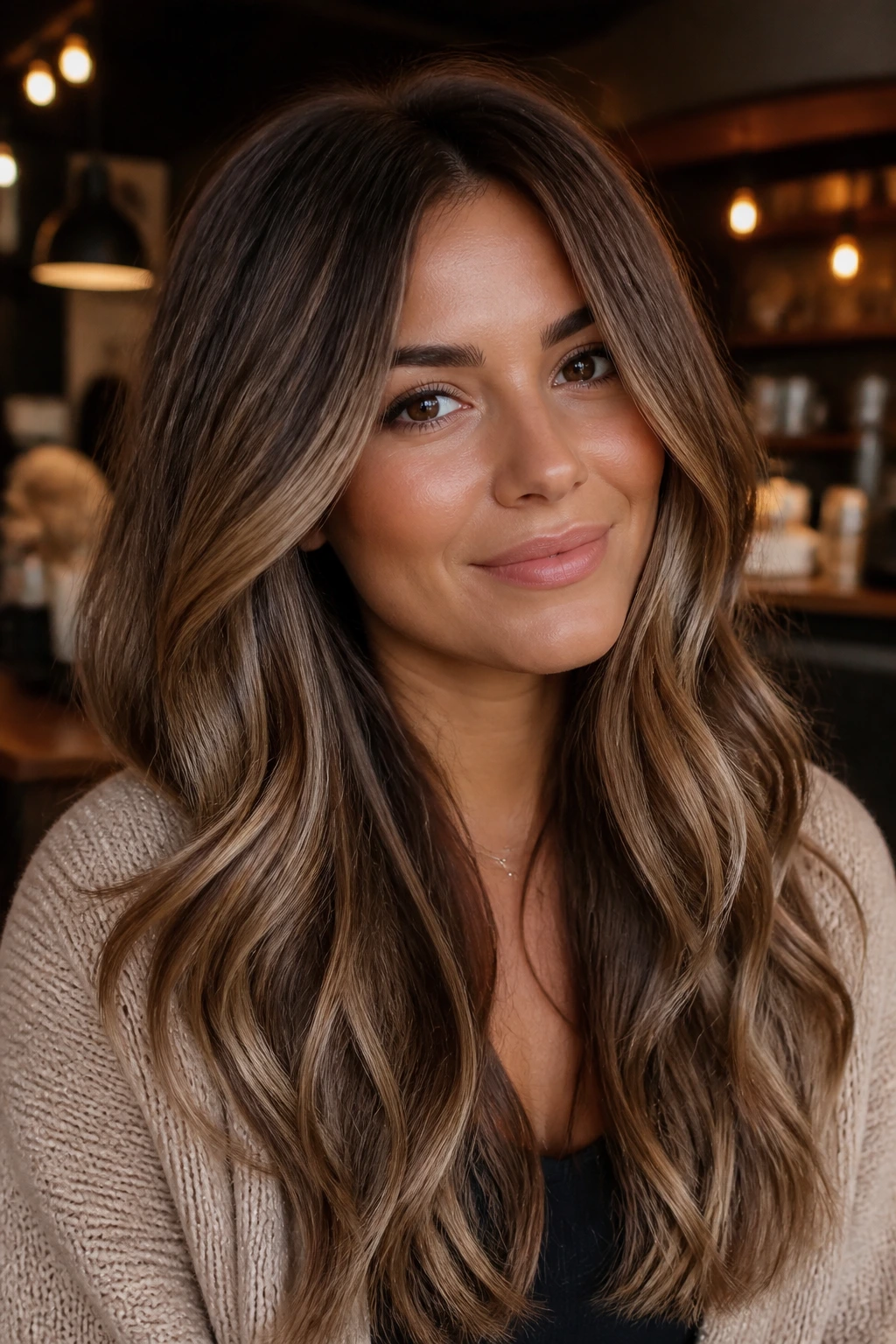
Chai latte hair has a soft, spiced warmth that sits somewhere between beige, caramel, and light brown. It’s not aggressive. It’s smooth. On brunettes, it gives the whole head a creamy tone without erasing the richness underneath.
What makes this version nice is the balance. The base stays brown, the lighter pieces are airy, and the warmth never pushes so far that it becomes copper. That makes it flattering on a wide range of skin tones, especially if you wear warm makeup or gold jewelry.
This is one of the easier colors to style because it doesn’t rely on sharp contrast. A soft blowout, a loose bend, or even a straight finish can still show the shade. The color does the work quietly, which is a relief if you don’t want a lot of styling fuss.
30. High-Contrast Caramel Face Frame
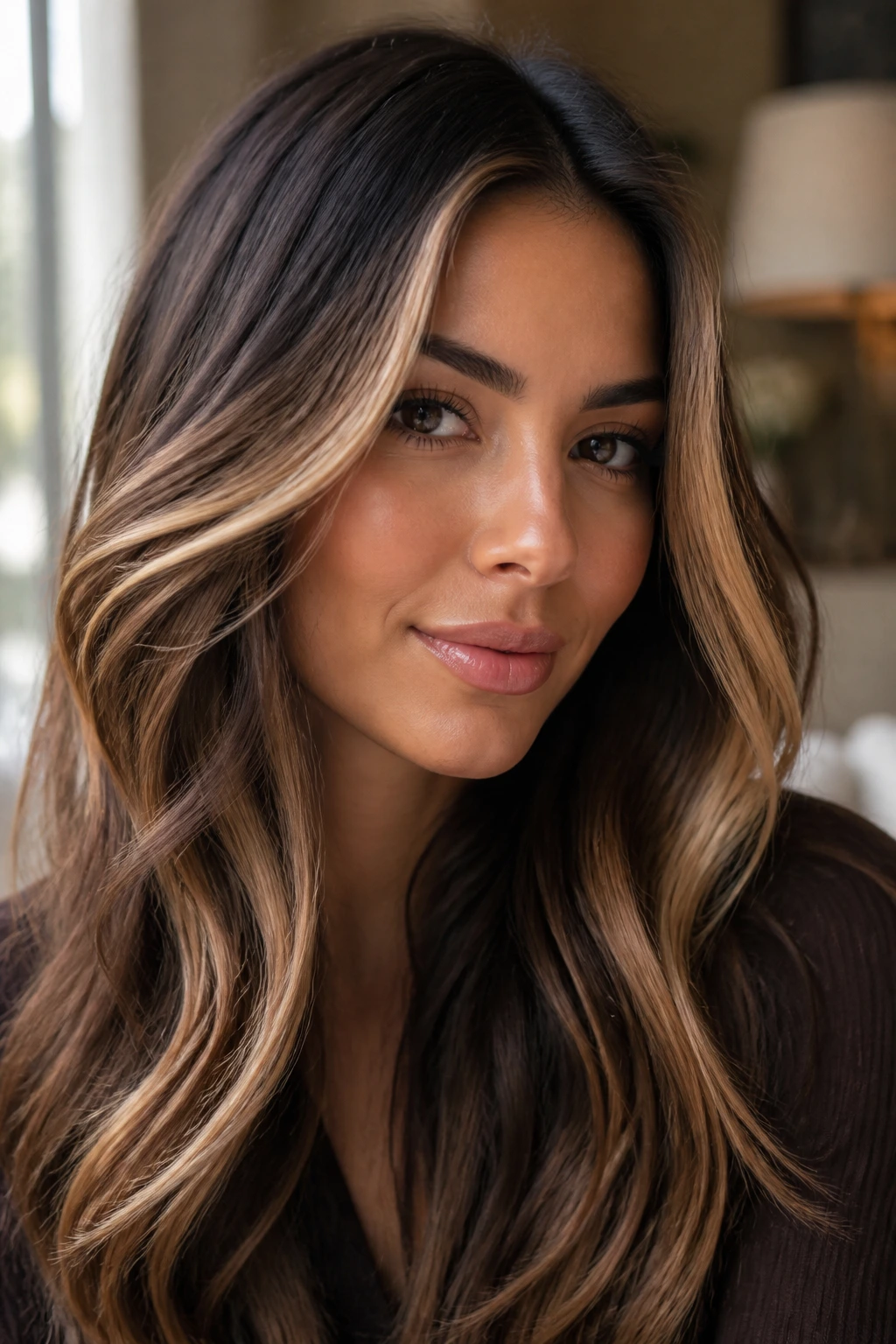
A high-contrast face frame is for people who want the front to say something before the rest of the hair does. The brunette base stays deep, but the front panels are lifted enough to create a real pop. It’s bolder than soft ribbons and more direct than a melt.
The trick is keeping the contrast deliberate, not random. The bright pieces should start where they can lift the cheekbones and continue down through the front layers so the look feels built in. If the contrast stops too abruptly, it can look like a separate section.
This is a strong option for round or heart-shaped faces because it draws the eye vertically. It also works well with dark brows and a neutral makeup palette, since the hair is already doing some of the framing work.
31. Soft Golden Balayage on Layered Curls
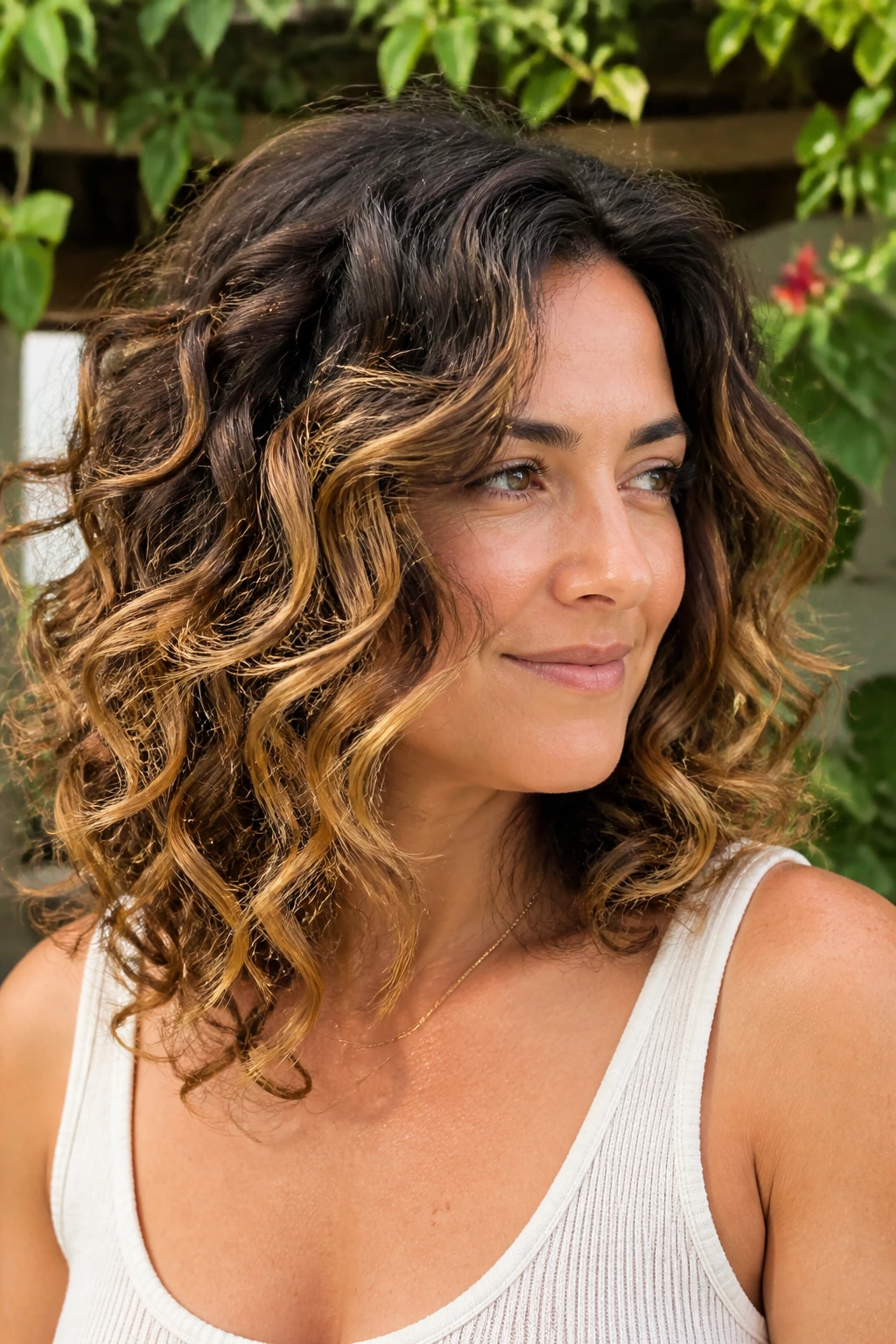
Layered curls and soft golden balayage are a very good pairing. The layers let the lighter pieces peek through, and the curl shape keeps the color from looking flat or blocky. Golden caramel is the sweet spot here because it brightens without looking pale.
What to watch for
The gold needs to stay soft. Too much yellow and the curls lose their richness. Too little brightness and the color disappears inside the curl pattern. On brunette curls, a balanced gold-caramel finish usually looks best when the lighter pieces are placed where the spiral opens.
A diffuse placement around the outer layers helps the curls look bigger. The light catches the raised sections and makes the pattern more visible. That can matter a lot if your hair tends to shrink or clump when it dries.
For styling, a curl cream with light hold works better than heavy gel if you want the color visible. Heavy products can darken the curls too much and mute the highlights. Keep the finish airy.
32. Cocoa and Caramel Midshaft Blend
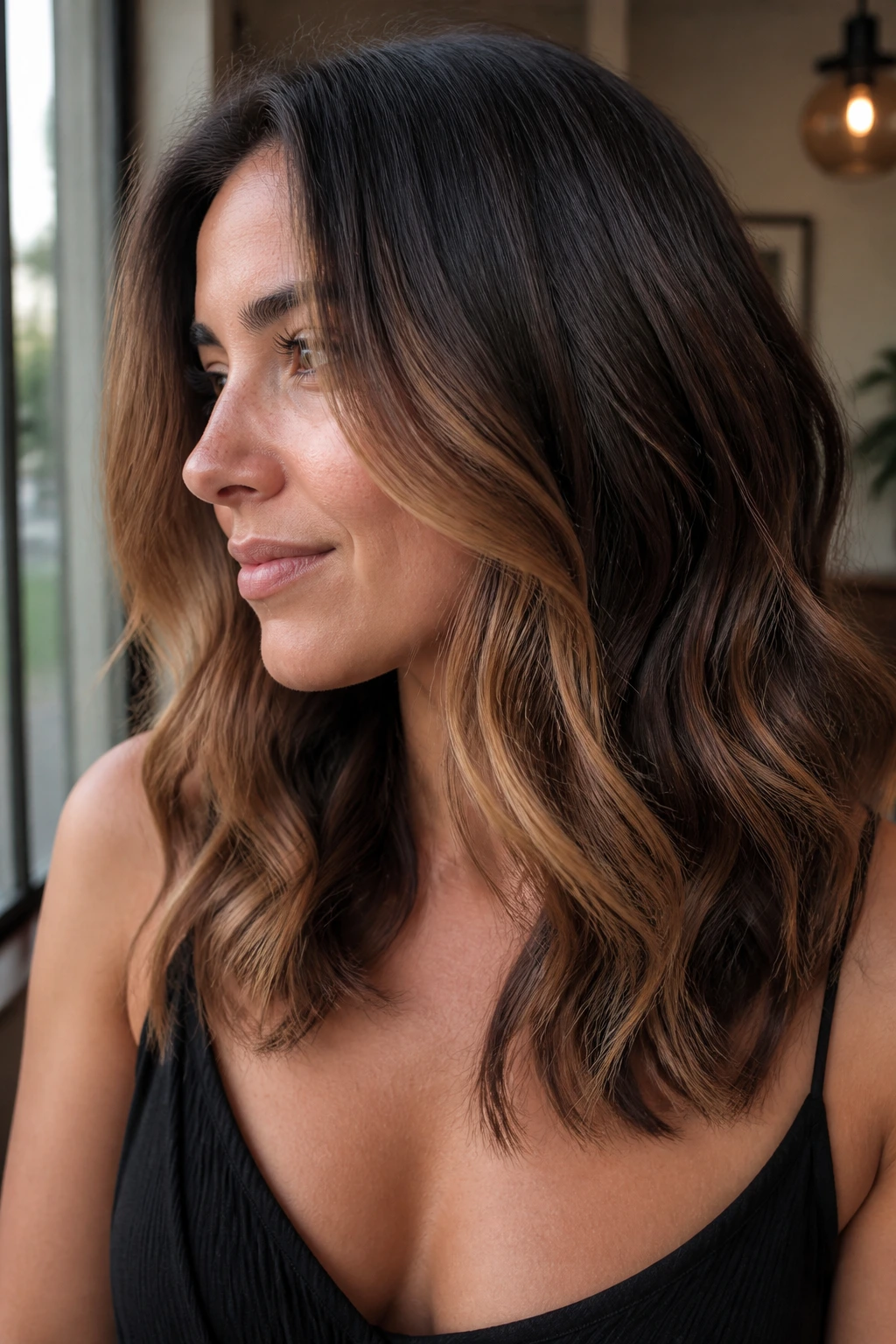
A cocoa base with caramel through the midshaft is a smart middle path for brunettes who want dimension but not dramatic ends. The lighter pieces begin well above the bottom, which gives the style a fuller-looking body through the middle of the hair. That’s especially useful if your ends are damaged and you’d rather not put all the brightness there.
Comparison angle
Unlike a classic ombré, this version doesn’t wait until the ends to brighten. Unlike a full balayage, it doesn’t spread the lightness everywhere. The result sits in that very useful space where the hair looks intentional from across the room but still natural up close.
This works on straight, wavy, and loosely curly textures. The midshaft brightness helps the hair move visually, so the style doesn’t collapse into a dark curtain. If your cut is one length, this can be a small miracle. If you already have layers, it makes the shape even clearer.
33. Vanilla-Toffee Ends on Brunette Hair
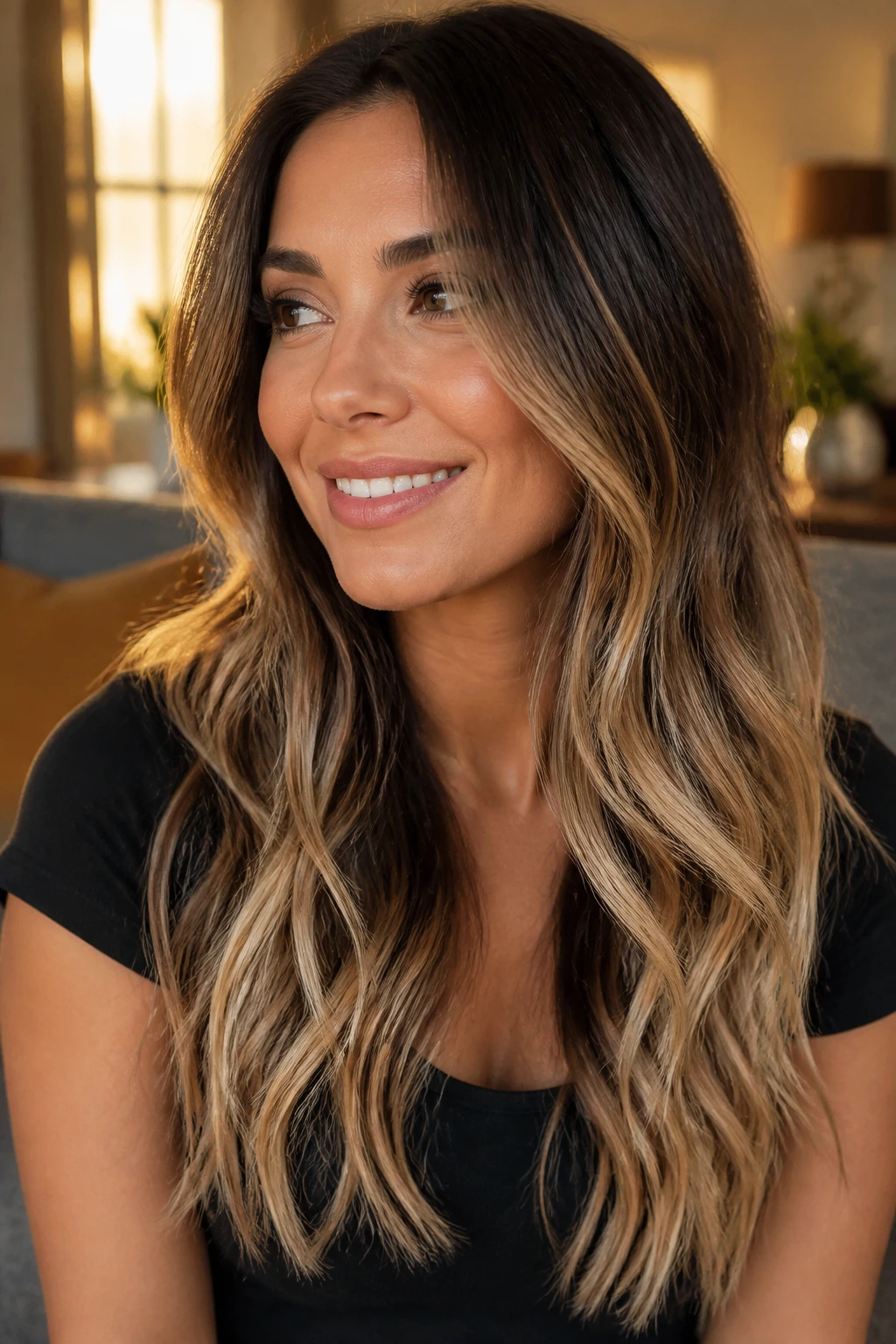
Why do vanilla-toffee ends look so polished on brunettes? Because the top stays dark enough to protect the depth, while the bottom opens into a light caramel-blonde finish that feels bright but still warm. It’s one of the cleanest ways to push brunette hair lighter without flooding the whole head.
This version looks best when the transition is smooth and the ends are soft rather than blunt. Think long layers, not one heavy line at the bottom. The vanilla tone should feel creamy, not icy. The toffee note keeps the base family connected.
If you want a softer version of blonde without going full highlight, this is a smart place to land. It gives the illusion of more length and more movement, especially on thicker hair. The eye follows the fade all the way down.
34. Glossy Auburn-Caramel Balance
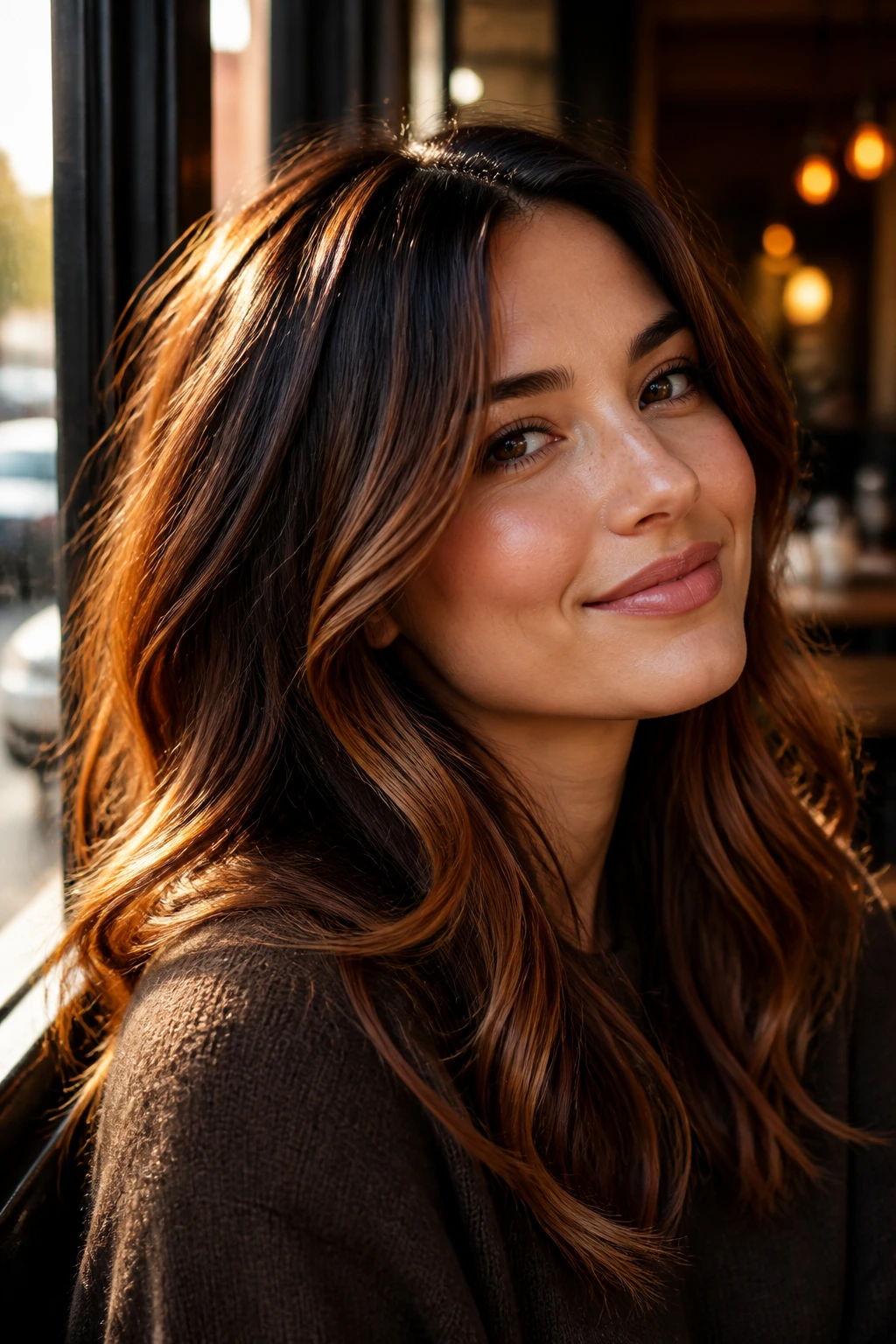
Auburn-caramel balance is warmer and a little richer than straight caramel. It’s a good fit for brunettes who like a deeper, spiced finish instead of a sunlit one. The auburn note gives the color a glow that feels especially nice in low light, where plain blonde pieces can disappear.
Where it shines
This style is flattering on dark brunettes with warm undertones in the skin or eyes, but it also works for cooler complexions if the auburn stays soft. The caramel keeps the look from going red-red. That balance is the trick. Too much auburn, and the whole head becomes louder than you may want.
The color can be gorgeous on long waves, but it also shows up well in straight hair because the warmth catches shine. If you already wear copper makeup or earthy clothing, this one slots right in. It feels intentional from head to toe.
35. Luxe Brunette Melt with Light Ends
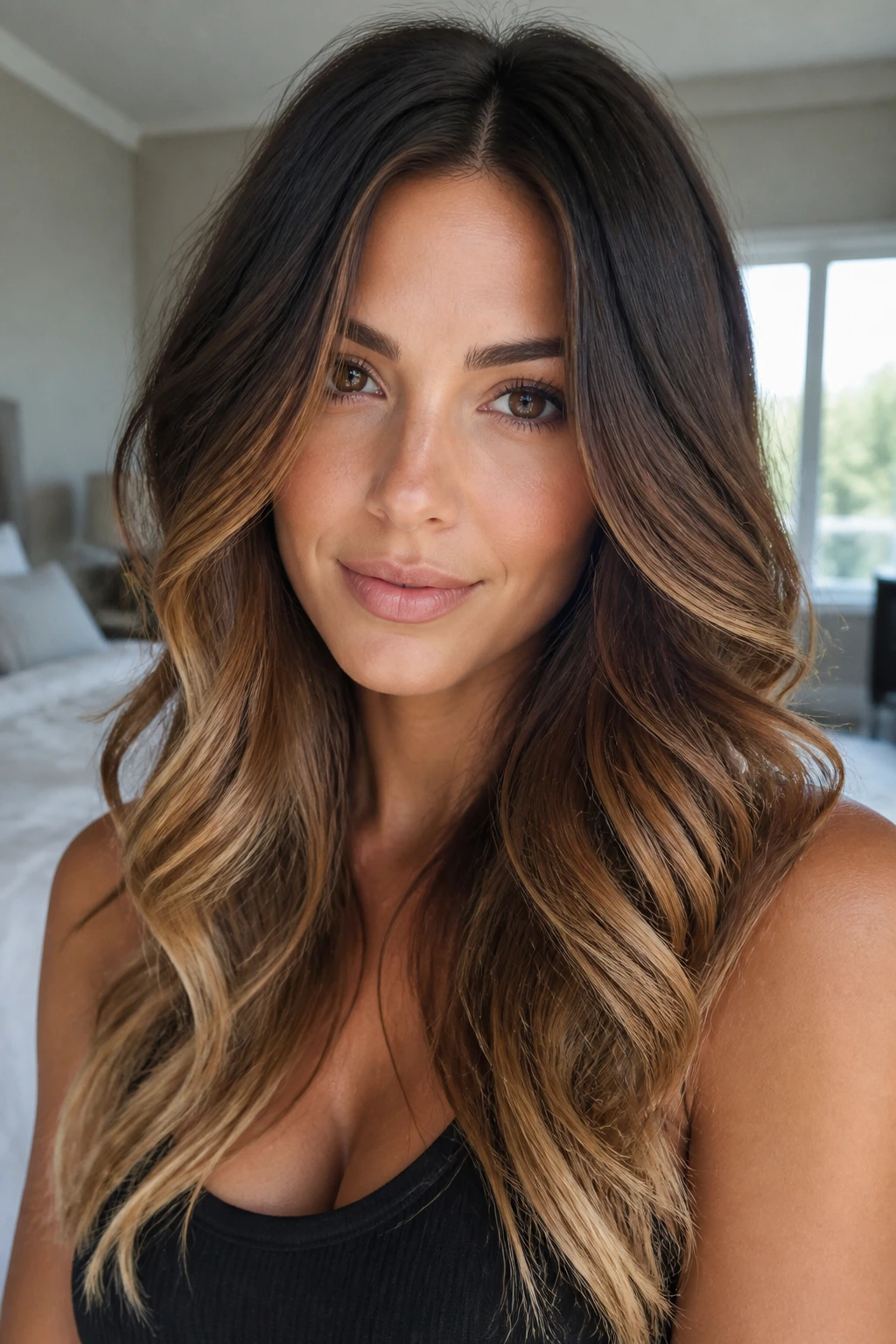
A luxe brunette melt with light ends is the polished finish people ask for when they want the hair to look expensive without looking obvious. The root stays brunette, the mids carry caramel, and the ends arrive at a soft blonde-brown finish that still belongs to the rest of the color family. Nothing jerks. Everything slides.
This is the broadest version of the whole group, and it works because the transitions are slow. The color should move like a gradient, not a set of bands. On long hair, that gives a silky finish. On medium hair, it can make the shape look longer than it is.
If you like a style that can be worn with a center part, a side part, or clipped back, this is one of the most forgiving options. It’s the kind of caramel balayage that still looks good when the blowout falls apart a little. Which, honestly, is most of the time.
Why Caramel Balayage Stays Soft on Brunette Hair
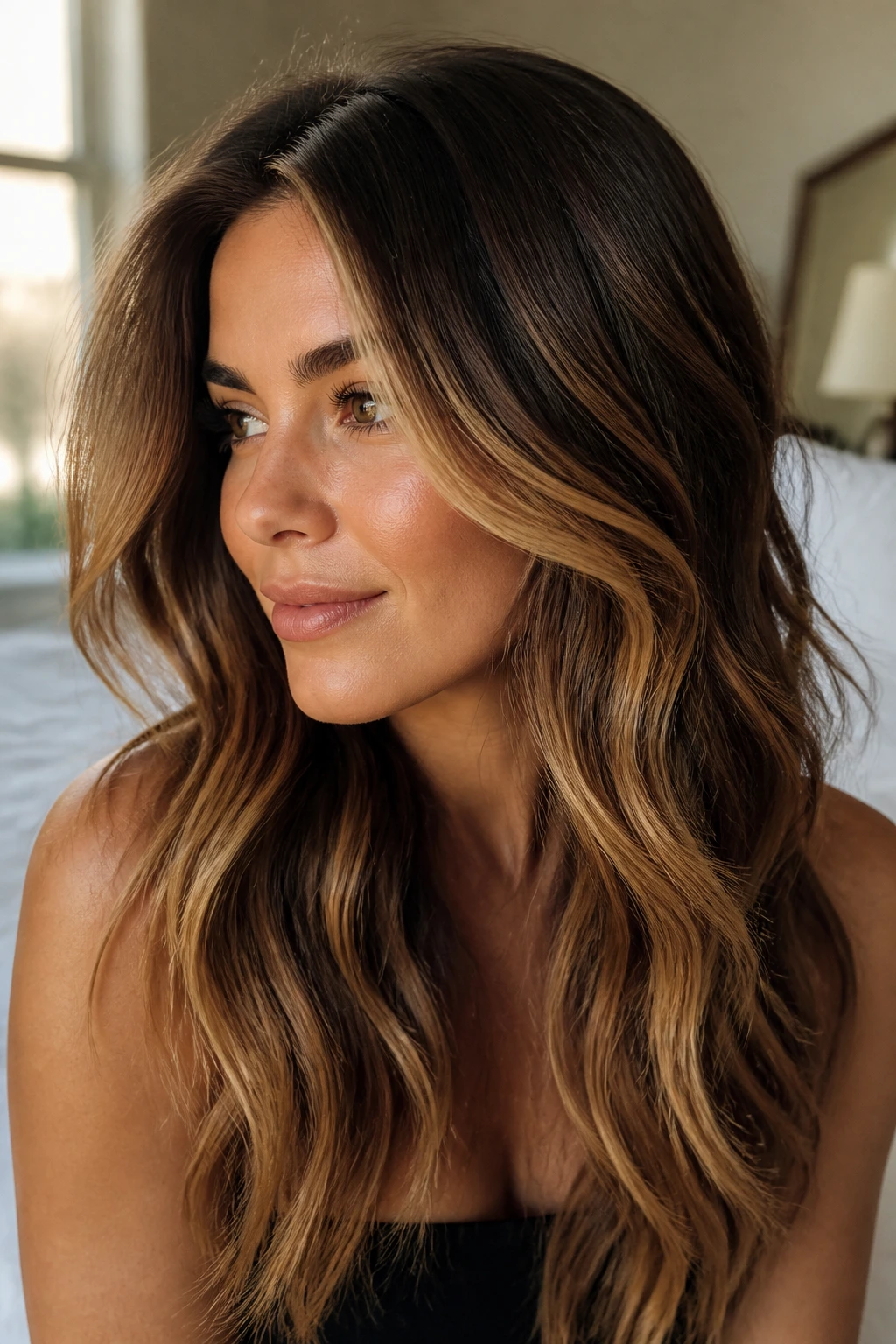
Brown hair already has depth built in, and that’s why caramel balayage can look so much better on brunettes than a heavy blonde overhaul. The darker root gives the color a place to land. Without it, warm highlights can get loud fast. With it, the lighter pieces look hand-placed instead of sprayed on.
The tonal range matters too. Caramel sits in that useful middle lane between gold and brown, so it can brighten the hair without forcing the entire head into pale blonde territory. That keeps the grow-out softer. It also keeps maintenance sane, which is the part people forget when they get seduced by the first salon photo they see.
Placement does more than tone ever will. A few brighter pieces around the face, a little depth at the root, and a few lighter ends can change the shape of a cut. That’s why a balayage on brunette hair can make layers look more expensive, curls look looser, and blunt cuts look more deliberate. The best versions don’t scream for attention. They just keep paying off every time the light shifts.
Essential Products and Tools for This Look
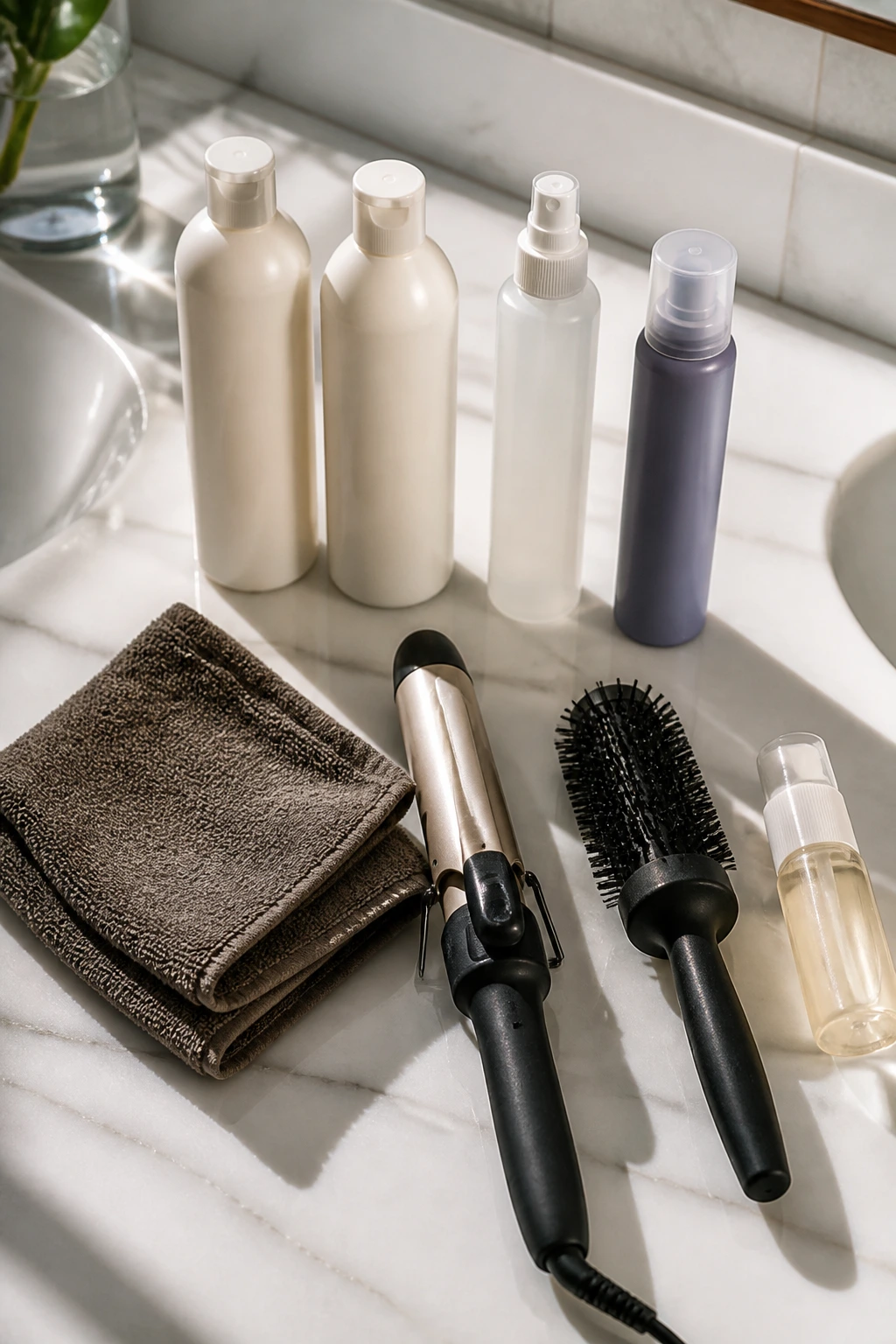
- Color-safe shampoo: Pick a sulfate-free formula so the caramel doesn’t fade out too fast between washes.
- Moisturizing conditioner: Brunette balayage can show dryness at the ends, and a richer conditioner helps the lighter pieces stay smooth.
- Heat protectant spray: Use it before blow-drying, curling, or flat-ironing; caramel tones look dull fast when the hair gets scorched.
- Purple or blue shampoo: Keep this for occasional brass control, not every wash, because too much can make warm caramel look muddy.
- Microfiber towel or soft T-shirt: Rough towels can rough up the cuticle and make the color look less shiny.
- Wide-barrel curling iron or wand: Loose bends show off the dimension better than tight curls on most brunette balayage.
- Round brush: Useful if you want the face-framing pieces to swing and catch the light.
- Light serum or glossing oil: One or two drops on the ends can help the caramel reflect without looking greasy.
How to Talk to Your Colorist About Tone and Placement
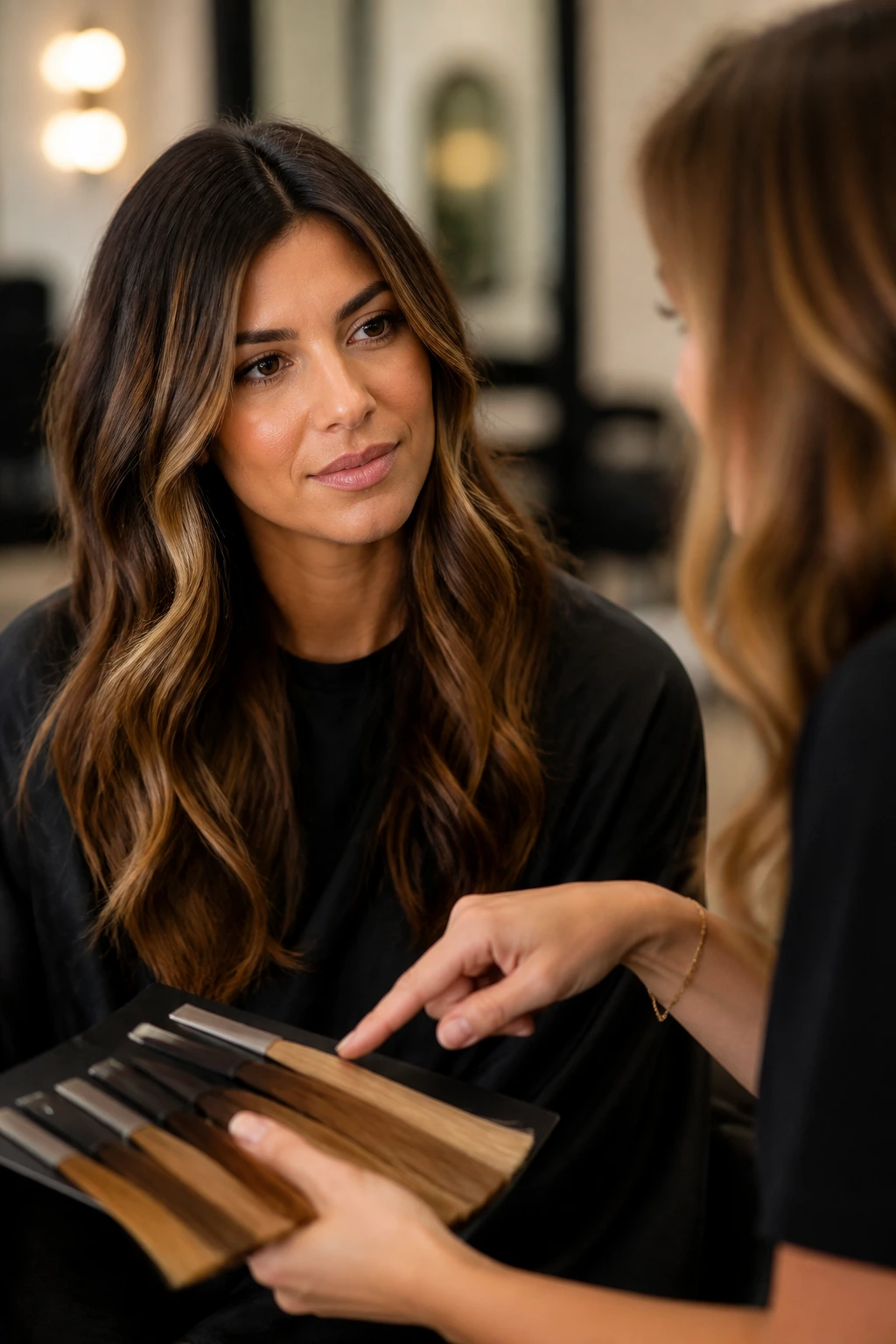
Walk in with pictures, yes, but also with a few plain-language notes. Say whether you want the caramel to read more golden, more beige, or more toffee. Those words matter because “caramel” means different things in different salons, and the shade can drift warm or cool depending on the base color.
Be specific about how much brightness you want near the face. If you want subtle, ask for thin face-framing pieces and a soft root shadow. If you want more contrast, ask for brighter front panels and lighter mids, but keep the ends a shade deeper so the whole thing doesn’t blur into one pale section.
If your natural base is dark brown or black-brown, ask how much lift your hair can handle in one session. That’s not a vanity question. It affects whether the color ends up caramel or orange. A good colorist will tell you straight up if the result needs two visits, a gloss, or a slower build.
How to Style It So the Color Shows Up
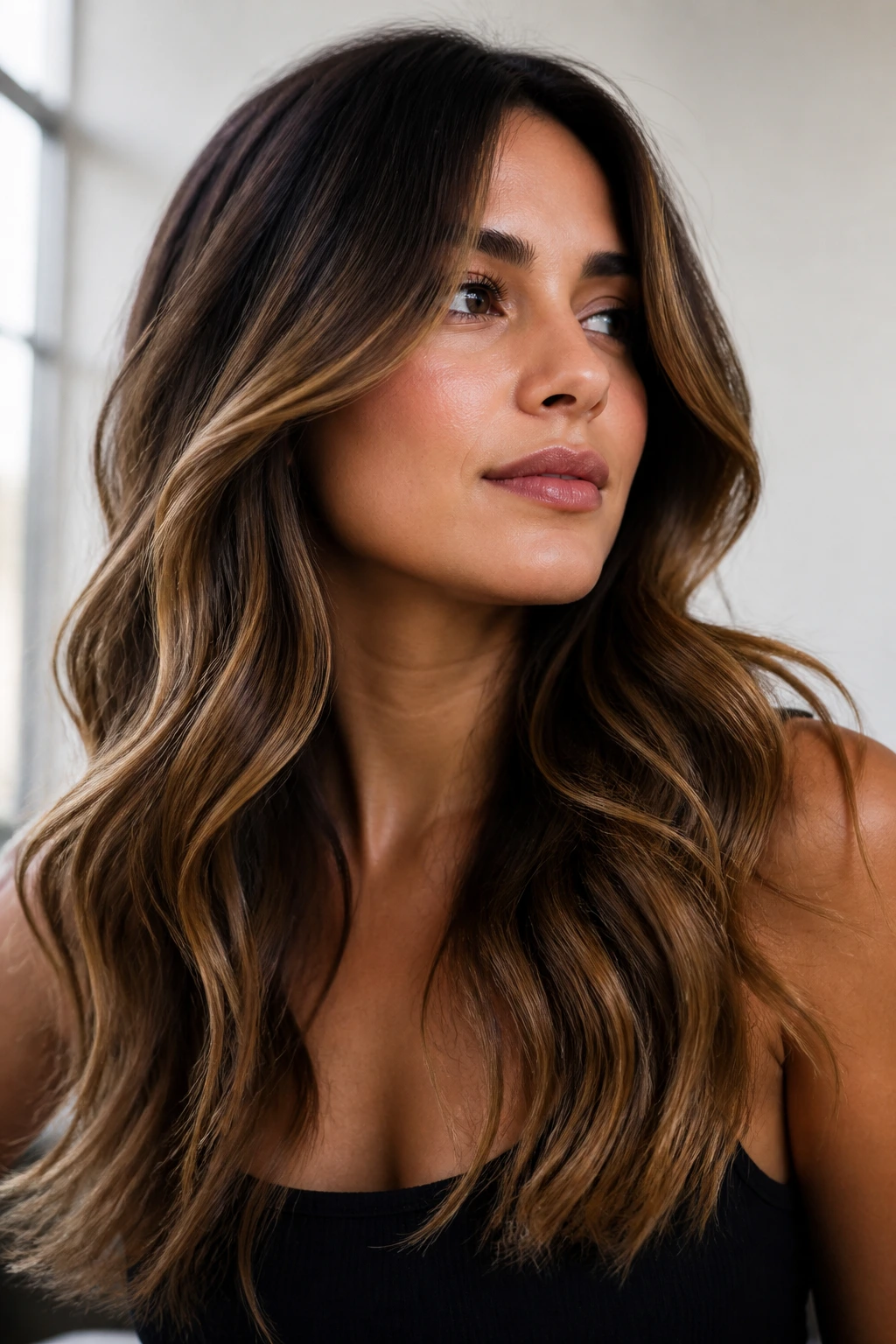
Presentation: Wear the hair in loose bends, brushed-out curls, or a smooth blowout with a clean part. Those shapes let the caramel ribbons sit on the surface instead of hiding inside the hair.
Accompaniments: Long layers, curtain bangs, a lob, or a butterfly cut all give the color something to move around. Very blunt cuts can still work, but they need cleaner placement and more shine.
Portions: If you want subtle dimension, keep the lightest pieces around the face and ends, with darker interior sections. If you want stronger contrast, ask for a fuller sweep through the top layers and front panels.
Finish: A little serum on the mids and ends is enough. Heavy oil flattens the lighter pieces and turns the whole look dull. Skip that.
Additional Tips and Color Boosters
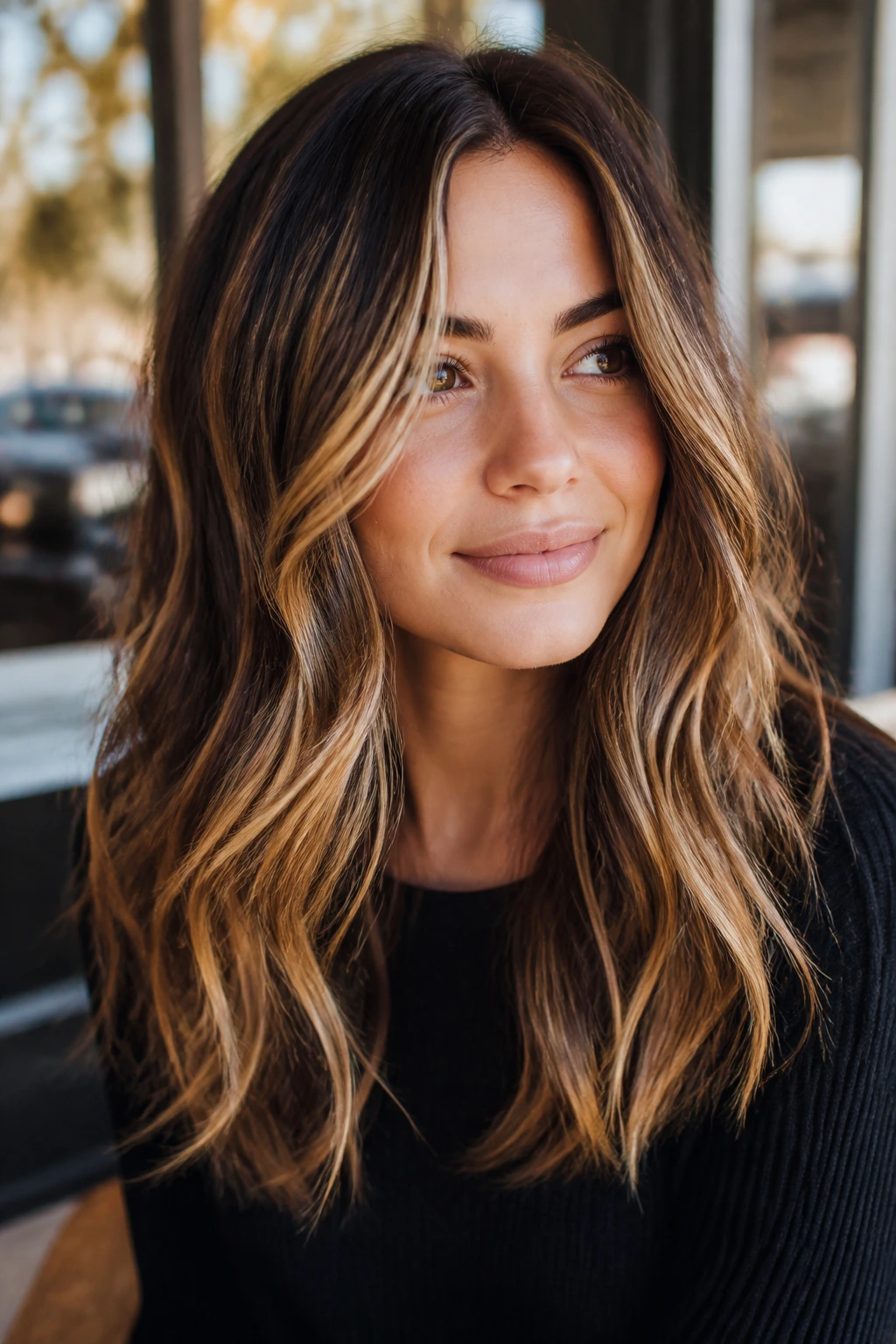
Tone Enhancement: A gloss every 6 to 8 weeks keeps caramel from drifting brassy. If the color starts leaning orange, ask for a beige or neutral caramel toner rather than trying to fix it with purple shampoo alone.
Customization: Add brighter front pieces if your cut is simple, or keep the blend softer if the haircut already has movement. A shag can handle more texture in the color; a blunt lob usually looks better with cleaner placement.
Styling Boost: Flip the ends out once in a while. It sounds small, but it shows the lighter tips and makes the balayage feel more alive than a perfectly tucked-under blowout.
Make-It-Yours: For a softer look, keep the caramel close to the base tone and skip the bright front panels. For a bolder finish, ask for a stronger money piece and a lighter end zone. Same family. Different mood.
Common Mistakes That Make Brunette Balayage Look Harsh
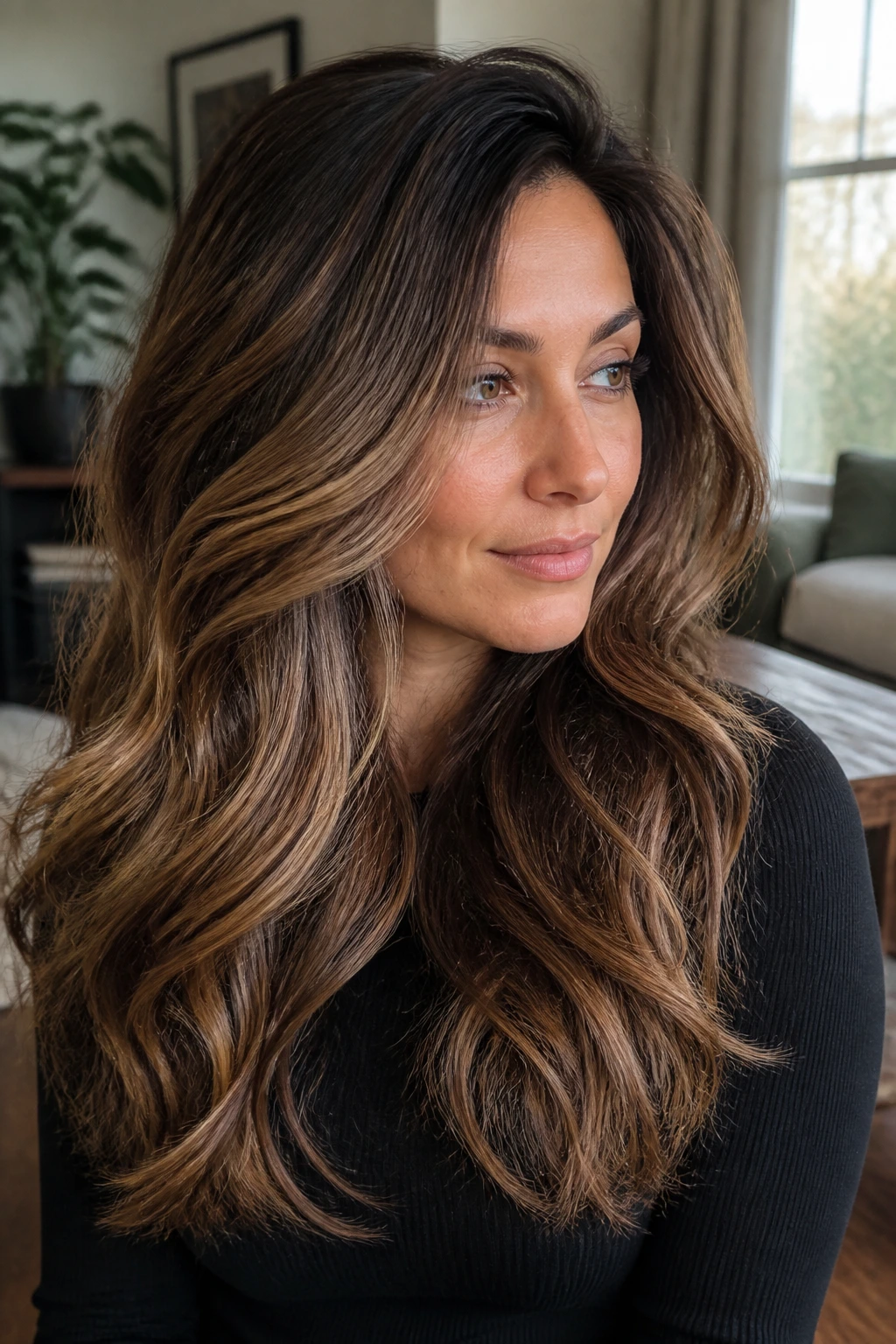
The first mistake is lifting the hair too light. On brunettes, pale blonde pieces can look disconnected fast, especially if the toner fades. The fix is simple: stay in the caramel-to-light-brown range unless you’re ready for more maintenance and more salon time.
Another common miss is placing too much brightness too high on the head. If the roots and top layers are packed with light pieces, the grow-out line gets obvious. Keep the brightest areas around the face, the top surface, and the lower mids, then let the rest breathe.
Skipping glossing is a quiet problem that turns into a big one. Caramel can go dull or orange if the tone isn’t refreshed, and once that happens, the whole style looks older than it is. A quick salon gloss or toner makes a bigger difference than most people expect.
Over-styling can flatten the color, too. Tight curls, too much hairspray, or heavy oils all mute the dimension. The color wants movement. Give it some.
Variations and Adaptations to Try
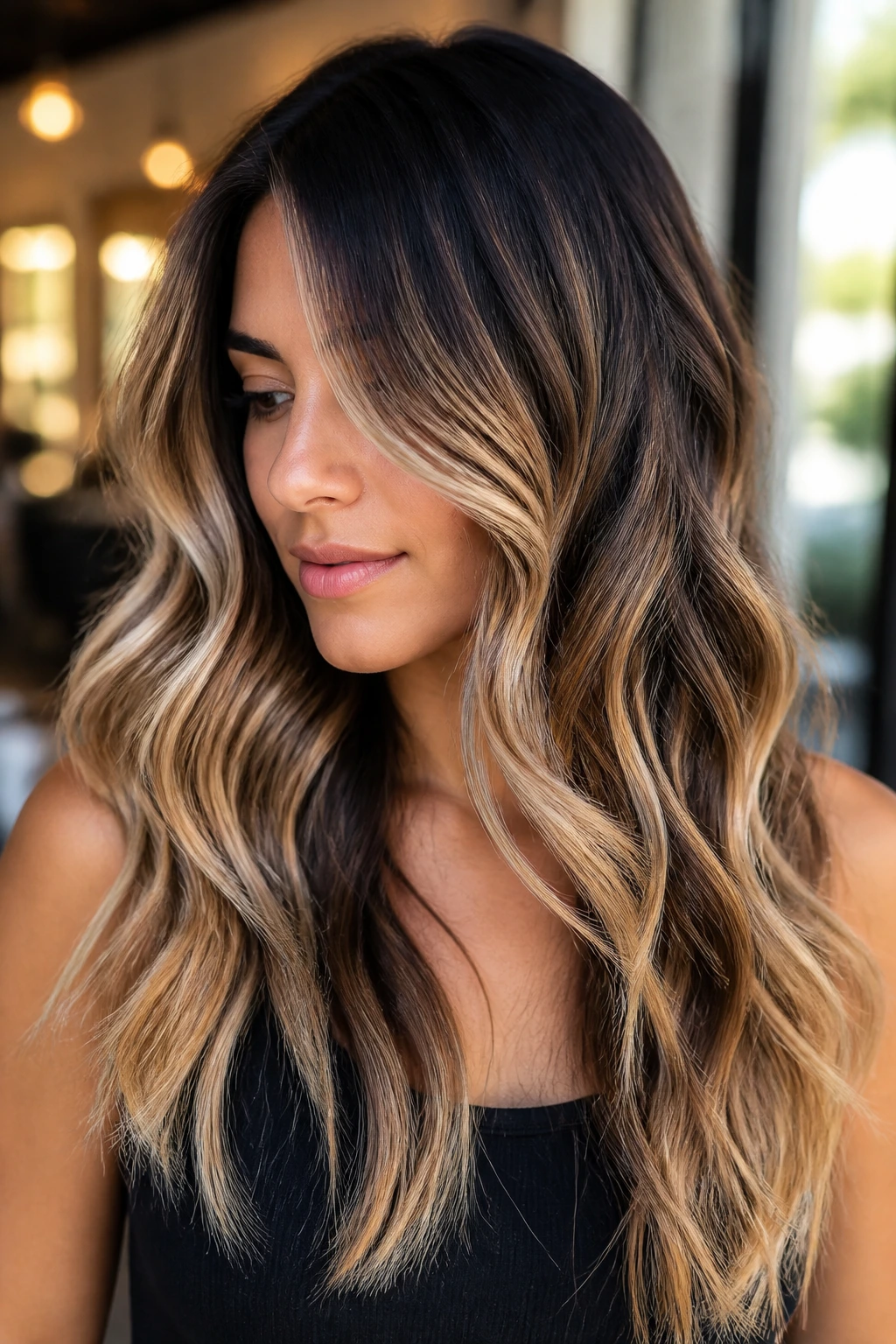
Cool Beige Caramel: If your skin tone looks better in cooler makeup or silver jewelry, ask for a beige-caramel finish instead of a golden one. It keeps the brunette base soft without pushing the warmth too far.
High-Contrast Money Piece: This version concentrates brightness at the front and keeps the rest of the hair deeper. It’s a good pick if you wear your hair up a lot or want the face-framing section to do the talking.
Curly Halo Blend: For curly or coily hair, keep the caramel on the outer curl pattern and around the crown. The lighter pieces should ride the curl shape, not sit across it.
Lived-In Ombre Melt: If you prefer visible gradation, let the caramel deepen into the ends in a more obvious fade. This fits long hair best and usually needs the least root upkeep.
Smoky Bronde Shift: Add a cooler brunette gloss to reduce gold and keep the finish muted. Great for people who want warmth without a sunny result.
How to Keep the Color Fresh Between Salon Visits
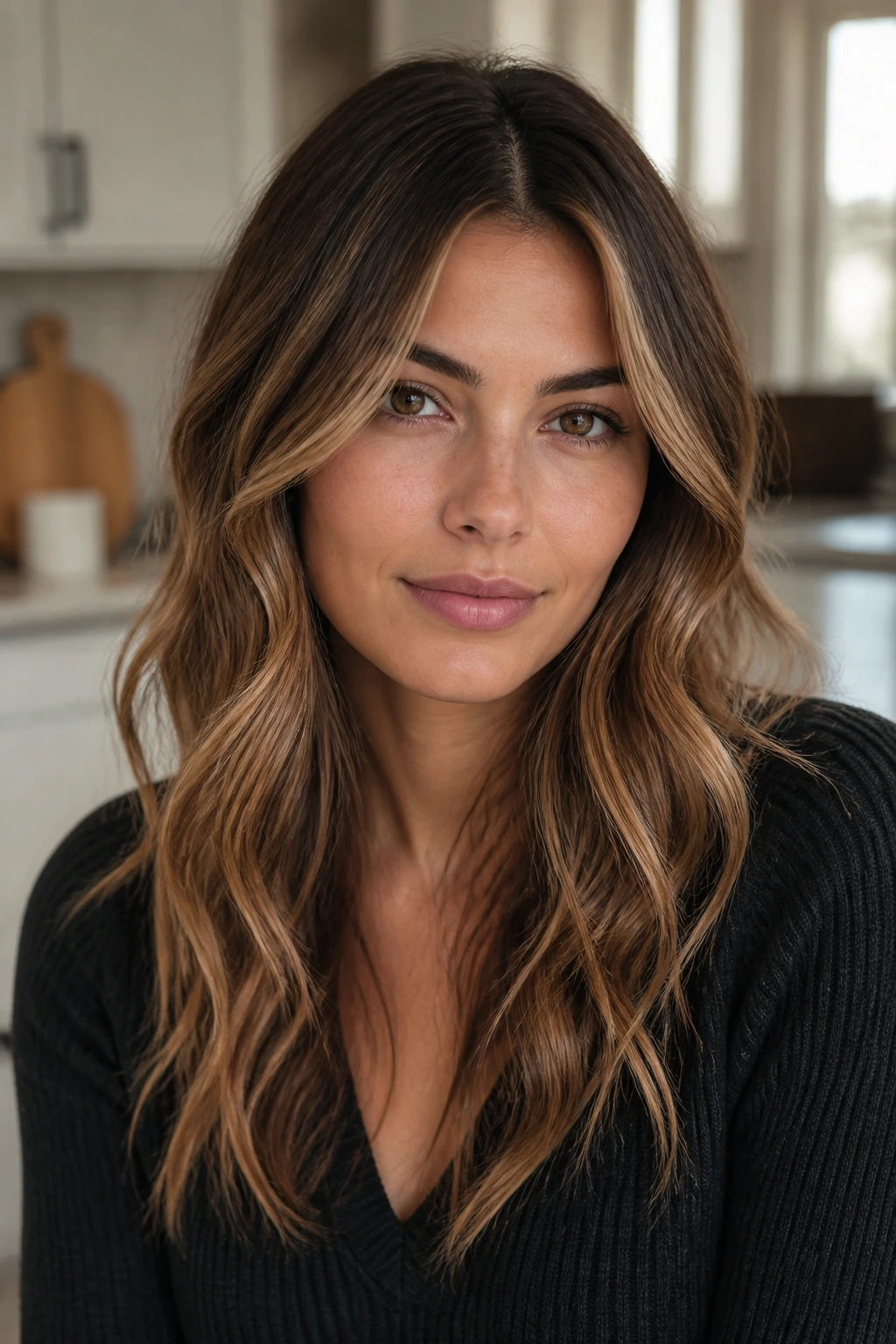
Wash the hair two to three times a week if you can. Daily shampooing strips warmth faster, and warm caramel is the first thing to go when the hair is over-cleaned. Use lukewarm water, not hot water. Hot water is rough on the cuticle and makes the finish lose shine.
A deep conditioning mask once a week helps the lighter pieces stay smooth, especially on the ends. If you use hot tools often, apply heat protectant every single time. That sounds obvious until you see caramel ends that have turned dry and fuzzy from one too many rushed blowouts.
Glossing every 6 to 8 weeks keeps the tone balanced. Root touch-ups are usually spaced farther apart — often 8 to 12 weeks — because balayage is designed to grow out softly. If the hair starts to look too warm, book a toner instead of reaching for stronger shampoo. If the ends get dull, trim them. There’s no miracle product for split ends, and anyone selling one is playing games.
Questions People Ask Before Booking Caramel Balayage
Will caramel balayage work on very dark brown hair?
Yes, but the shade usually needs to stay warm and soft rather than pale. Very dark brunettes often look best with caramel, toffee, or honey-brown pieces instead of a full blonde lift. If the hair is extremely dark, the color may need more than one session to stay glossy.
Does caramel balayage turn orange?
It can, especially if the hair is lifted too fast or the toner fades out. That’s why a beige or neutral glaze matters so much. Regular glossing and sulfate-free shampoo help keep the warmth in the caramel zone instead of the copper zone.
Can I get this look without losing my natural brunette base?
Absolutely. That’s one of the best things about balayage. The root can stay deep while the lighter pieces live through the mids, ends, and face frame, which keeps the hair looking like brunette hair with dimension instead of a full blonde transformation.
Is balayage better than ombré for brunettes?
For most brunettes, yes, if you want a softer blend. Balayage gives you hand-painted placement and a more scattered finish, while ombré tends to create a more obvious shift from dark to light. Ombré still works, but it’s a different mood.
What if my hair is curly?
Curly hair can wear caramel balayage beautifully. The placement just needs to follow the curl pattern so the light pieces sit where the hair naturally opens. A good curl cut helps the color show up instead of disappearing into the shape.
How often do I need to touch it up?
Most balayage styles can go 8 to 12 weeks before needing a real refresh, sometimes longer if the root shadow is soft. Glosses and toners may be needed sooner if the caramel starts to look brassy. The haircut and your wash routine matter a lot here.
Can fine hair handle caramel highlights?
Yes, as long as the pieces stay thin. Fine hair usually looks better with delicate ribbons and a root that stays deeper, because chunky light sections can make it look sparse. The color should support the cut, not chew through it.
What’s the easiest way to style it at home?
A loose bend with a medium-barrel iron or a round-brush blowout usually shows the color best. The goal is movement, not perfect curls. Even a simple tuck-behind-the-ear moment can change how the front pieces read.
A Rich Brunette, Just Softer at the Edges
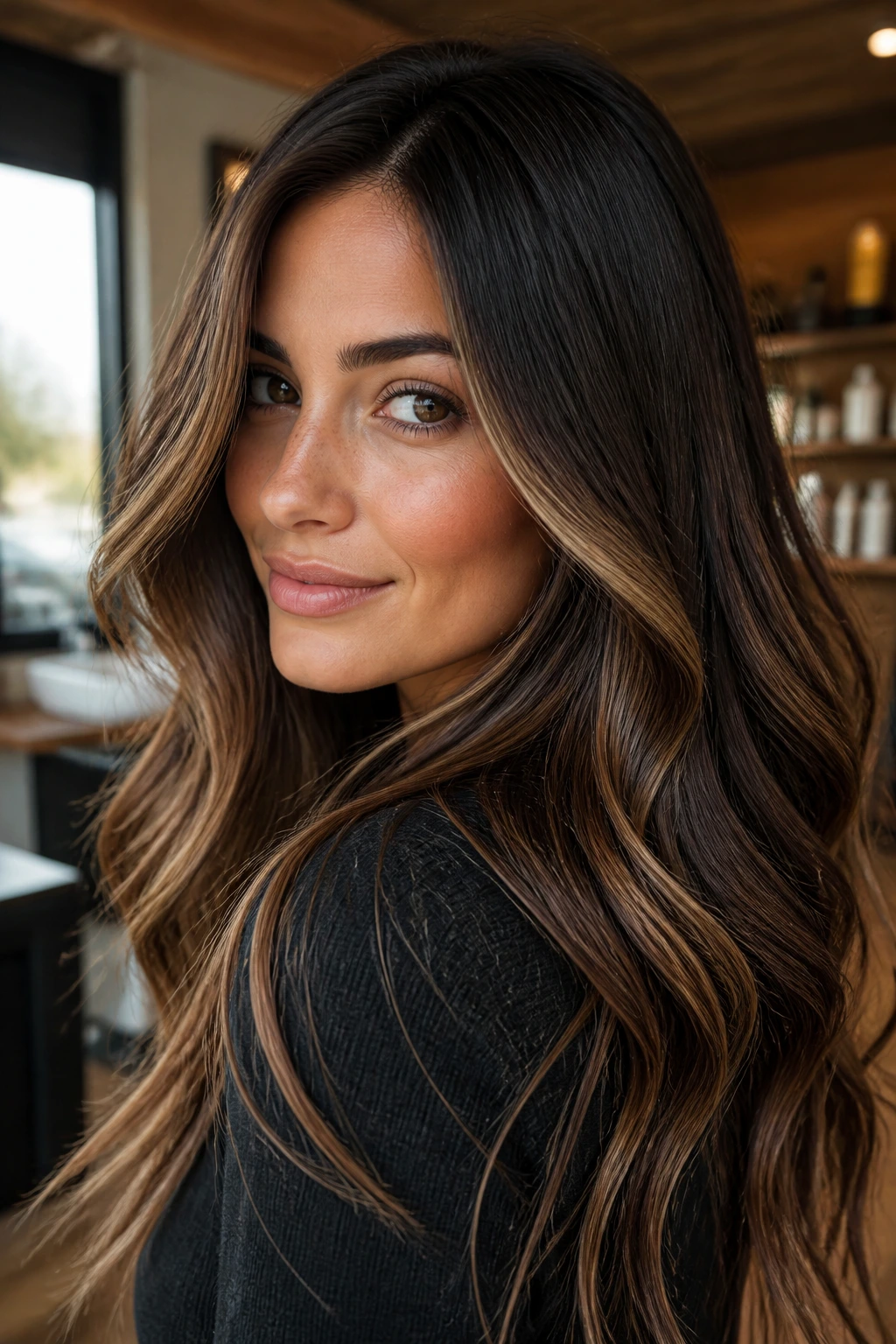
The best caramel blonde brown balayage on brunettes doesn’t try to erase the brunette part. It keeps that depth, then brightens the hair where movement and light naturally land. That’s why the color looks grown-up rather than flashy. It has structure.
If you’re choosing between softer ribbons, a brighter money piece, or a full melt toward the ends, start with your haircut and your tolerance for upkeep. Those two things decide almost everything. A good caramel balayage is not one single formula anyway. It’s a set of choices, and the best choice is the one that still looks good on a tired Tuesday morning.