



Cool skin tones can turn muddy fast when the highlights go yellow or copper, which is why balayage for cool skin tones with side-swept bangs has such a strong payoff. The diagonal fringe moves the light across the face, and the right cool ribbons keep the complexion looking crisp instead of flushed or tired.
The trick is not chasing the palest blonde in the room. Ash, pearl, silver, smoky taupe, dusty rose, and blue-based brunettes sit closer to the undertones in cool skin, so they read clean in daylight and soft under indoor lighting. Add a side-swept bang, and the color stops feeling static. It starts to move.
A good color placement treats the bang area like its own little stage. The lightest pieces usually live where the eye lands first, the deeper root stays anchored near the part, and the ends get enough softness that the whole thing grows out without a hard shelf. That balance is what keeps these looks bold instead of busy.
-
Cool undertones stay clear: Ash, pearl, silver, and violet-based tones avoid the yellow cast that can make cool skin look sallow.
-
The side sweep adds motion: A diagonal fringe breaks up the forehead line and makes the color feel painted, not striped.
-
Grow-out is kinder: Balayage softens the root line, so you can stretch appointments without the blunt regrowth band you get from full foils.
-
There’s room for drama: Platinum, graphite, lilac, and smoky rose can still flatter cool skin when the root depth stays controlled.
-
Styling stays manageable: A round brush or one-inch iron through the bang is usually enough; the color does most of the visual work.
-
The looks photograph cleanly: Cool tones tend to hold their shape in both natural light and flash, which matters more than people admit.
1. Smoky Mushroom Balayage
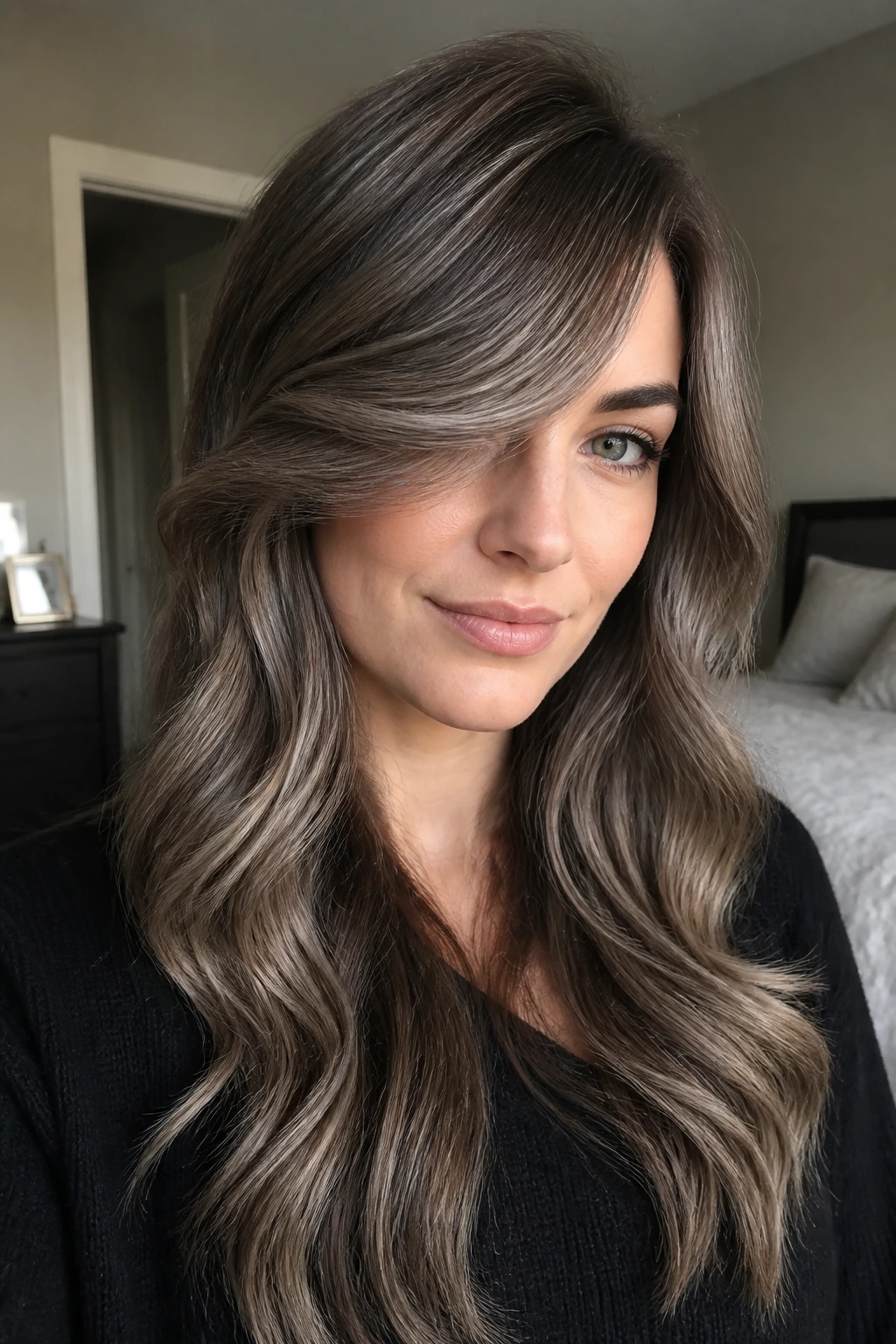
This is the safest place to start if you want depth with a little edge. A mushroom base leans taupe and ash instead of gold, so it keeps cool skin from picking up redness. The side-swept bang should curve into the cheekbone, not flop straight across the forehead; that diagonal line is what keeps the whole look from feeling heavy.
Shade Notes That Matter
Ask for a medium brown root with smoky beige ribbons lifted only a couple of levels lighter. If the ends go too pale, the mushroom effect disappears and the whole thing starts reading warm. A soft root shadow around the part is the difference between polished and stripey.
- Best on: fair to medium cool skin, especially if your natural hair is level 5 to 7.
- Tone to request: ash beige, taupe, and a neutral gloss — not honey.
- Bang cue: keep the shortest piece just below the brow so it can swing instead of spike.
Strong opinion: this is the most wearable “bold” balayage in the bunch. It has shape, but it doesn’t shout.
2. Icy Pearl Blonde Swirl
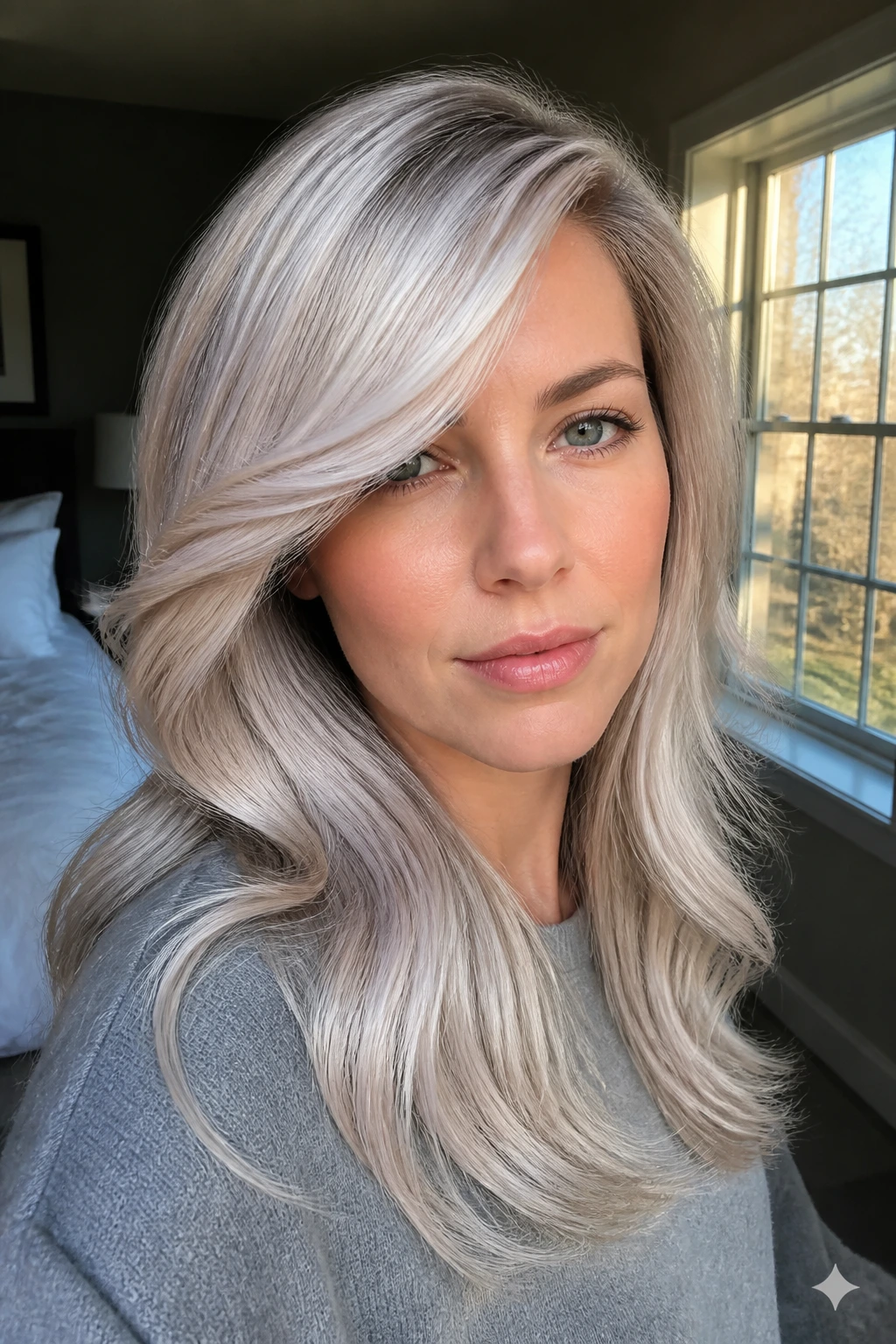
If you like brightness, this is the clean version. Pearl blonde sits cooler than standard beige blonde, and it gives cool skin a soft, almost porcelain finish. The side-swept bang matters here because pale blonde around the face can look flat fast; the sweep adds shadow and keeps the front from turning into one big light panel.
The finish should look glossy, not chalky. That means toner, bond care, and a careful lift to pale yellow before the pearl glaze goes on. If the lift stops too early, the result can go dingy instead of icy.
What to Ask For
Bring a photo with real daylight in it. Ask for a pearl or violet toner, plus slightly deeper shadow near the root so the bright pieces don’t start at the scalp line. A bit of beige in the mid-lengths can help the color feel expensive instead of icy in a harsh way.
3. Ash Brown Money Piece Sweep
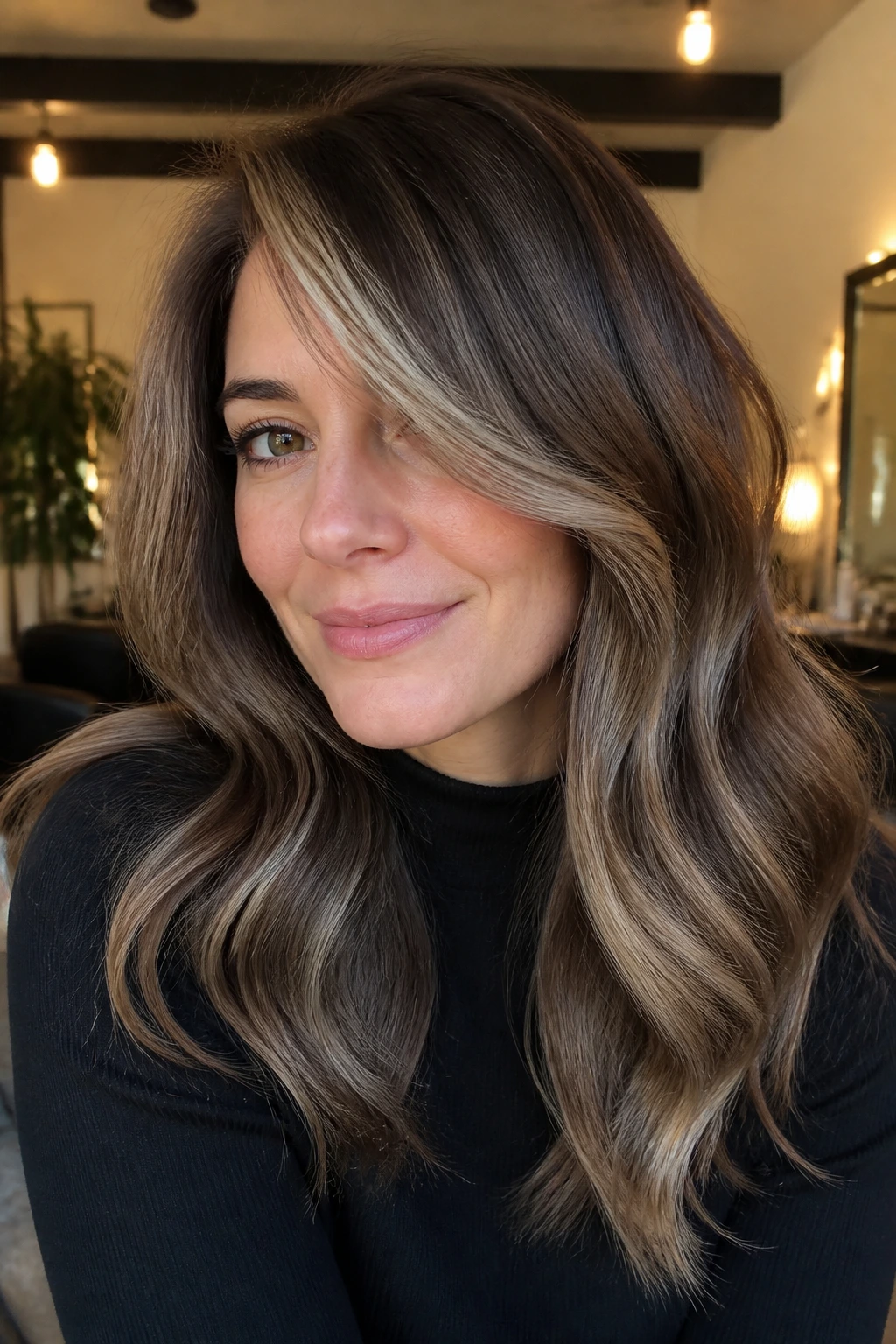
Want brightness without committing to a full blonde moment? This is the answer. The money piece sits right where the side-swept bang parts and falls, so a cool ash-brown base gets a hit of light exactly where the eye goes first. It’s flattering on cool skin because the front pieces brighten the face without pushing warmth into the cheeks.
The trick is restraint. Too much lift at the front and the bang looks disconnected from the rest of the cut. Keep the front one or two panels a clean ash blonde, then let the color melt back into a smoke-brown mids section.
Best for: brunettes who want lift around the face but don’t want to bleach every strand.
Styling note: curl the bang away from the face once, then brush it out. You want bend, not a ringlet.
4. Silver Ribbon Brunette
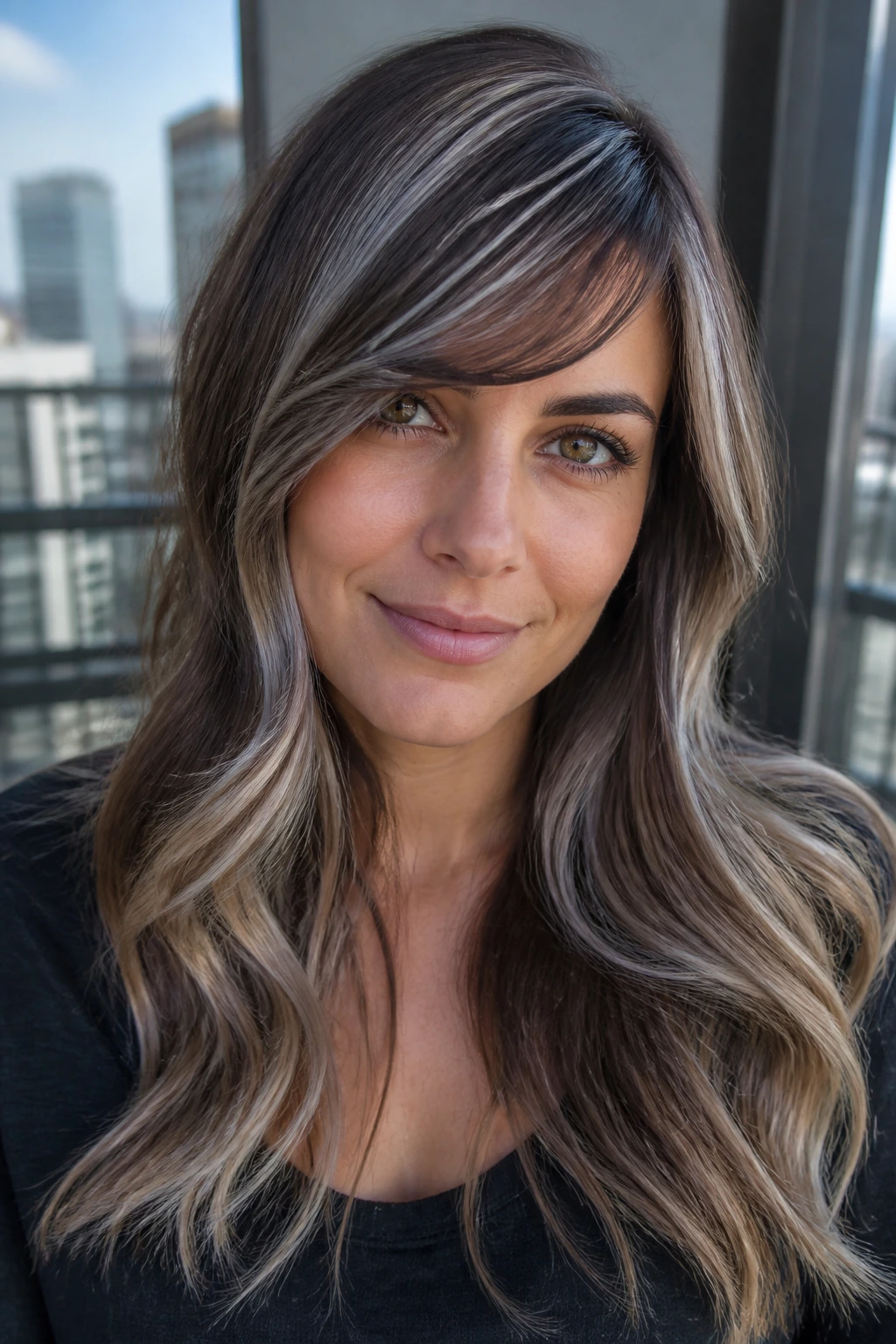
This one catches light in a very specific way. A brunette base with narrow silver ribbons gives movement to darker hair without forcing it into blonde territory. On cool skin, the silver pieces echo the natural undertone instead of fighting it, and the side-swept bang gives the front a little spark every time you move.
If your hair is thick or a little coarse, this is a smart choice because the darker base keeps the color from disappearing between appointments. The contrast is there, but it’s controlled. On straighter hair, the ribbons show best when the ends are lightly bent with a brush or iron.
Quick Placement Cue
Keep the brightest silver around the bang sweep and the top layer of the side panel. Underneath, stay a shade or two deeper so the hair doesn’t turn flat from the side.
- Good for: medium to dark brunettes with cool undertones.
- Avoid: chunky silver streaks at the hairline; they can look harsh.
- Pair with: a slightly off-center part for extra movement.
5. Cool Beige Bronde Melt
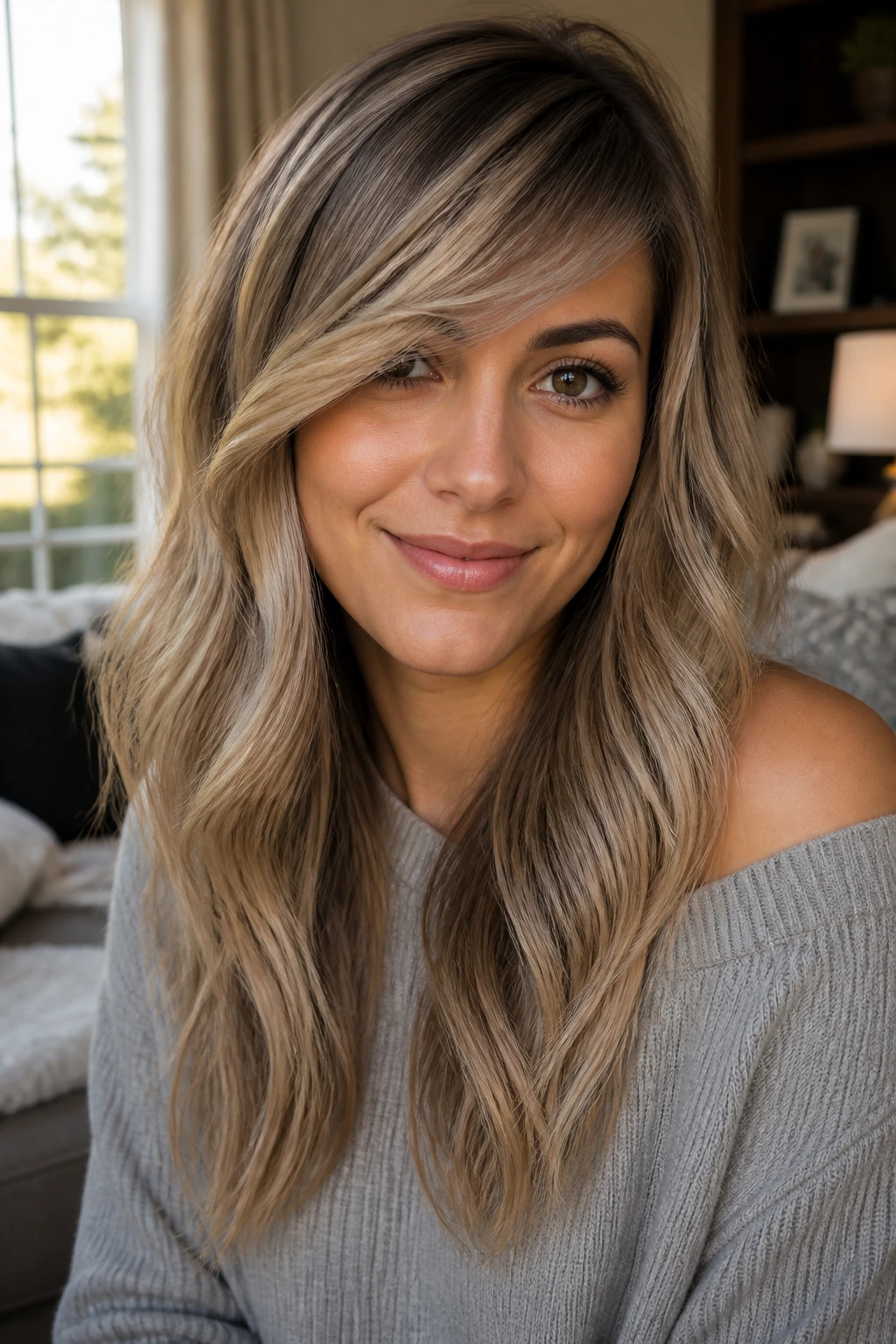
Bronde can go yellow in a hurry. Cool beige is the version that behaves. It sits between brown and blonde without sliding into honey, which is why it works so well on cool skin tones with side-swept bangs. The fringe gives the lighter pieces a soft landing, and the overall look feels quieter than full blonde but less heavy than deep brunette.
This is one of my favorite options for fine hair. Beige ribbons add the illusion of thickness without obvious stripes, especially when the color is painted in soft diagonal sections. If your hair has a bit of natural wave, even better. The movement helps the cool tones show up in layers.
Pro tip: ask for a root blur and a beige gloss with no gold in it. That single detail matters more than people think.
6. Platinum Frost Ends
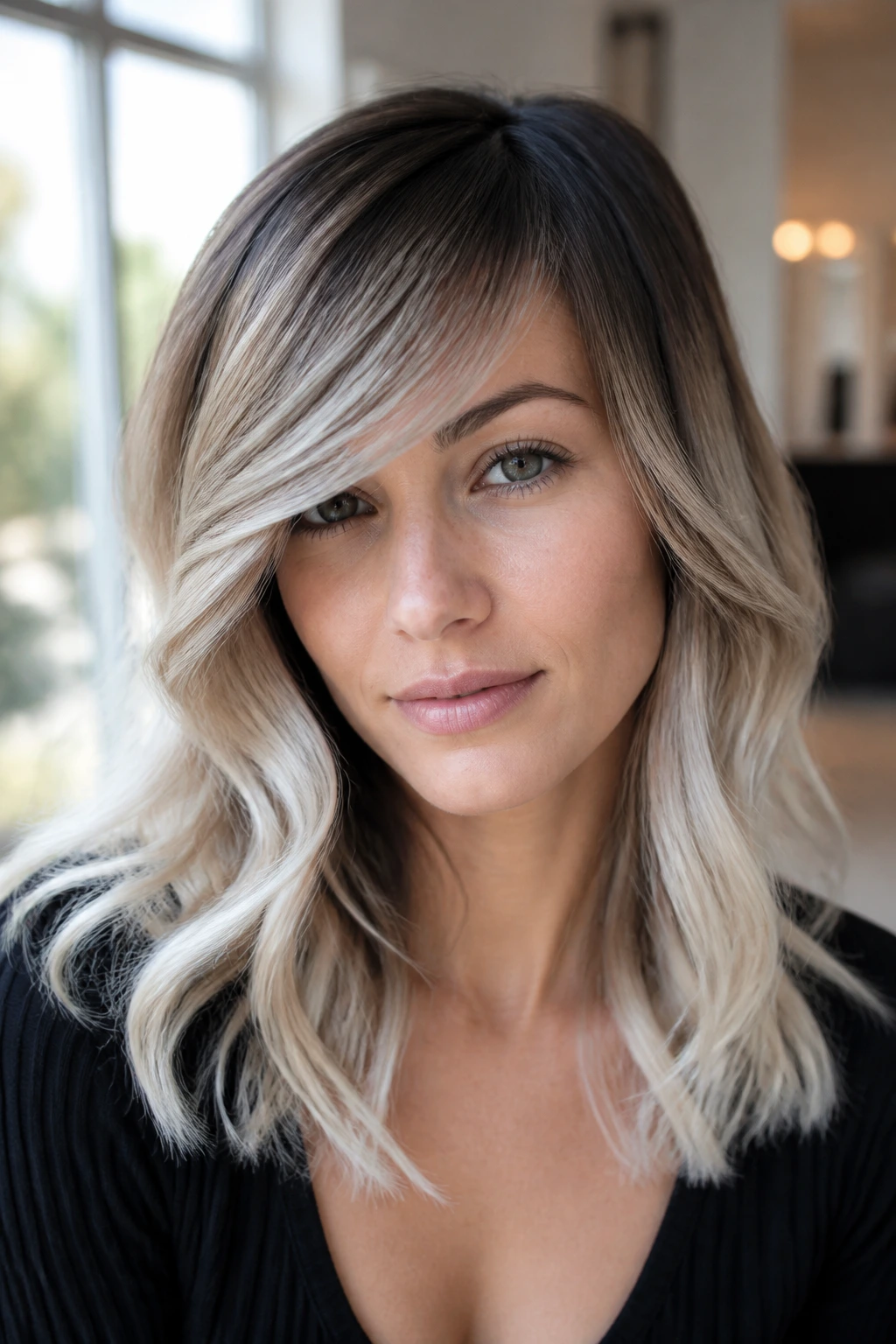
This is the boldest blonde in the set, and it knows it. A darker root melting into frosted platinum ends gives real contrast, which cool skin usually handles better than warm, buttery blonde. The side-swept bang keeps the front from looking too severe by carrying some of that brightness across the face in a controlled way.
It does demand care. Dry, porous ends can go brittle if you bleach too aggressively, so this look works best when the hair is already healthy or has been pampered for a while. A bond builder is not optional here. Neither is heat protectant.
The Practical Reality
The hair should be lifted evenly before the final toner goes on, or the ends will read patchy in daylight. Keep the bang a touch deeper at the root and brighter through the sweep. That soft gradient is what makes the platinum feel wearable instead of icy in a harsh, salon-demo way.
7. Slate Brunette with Soft Ribbons
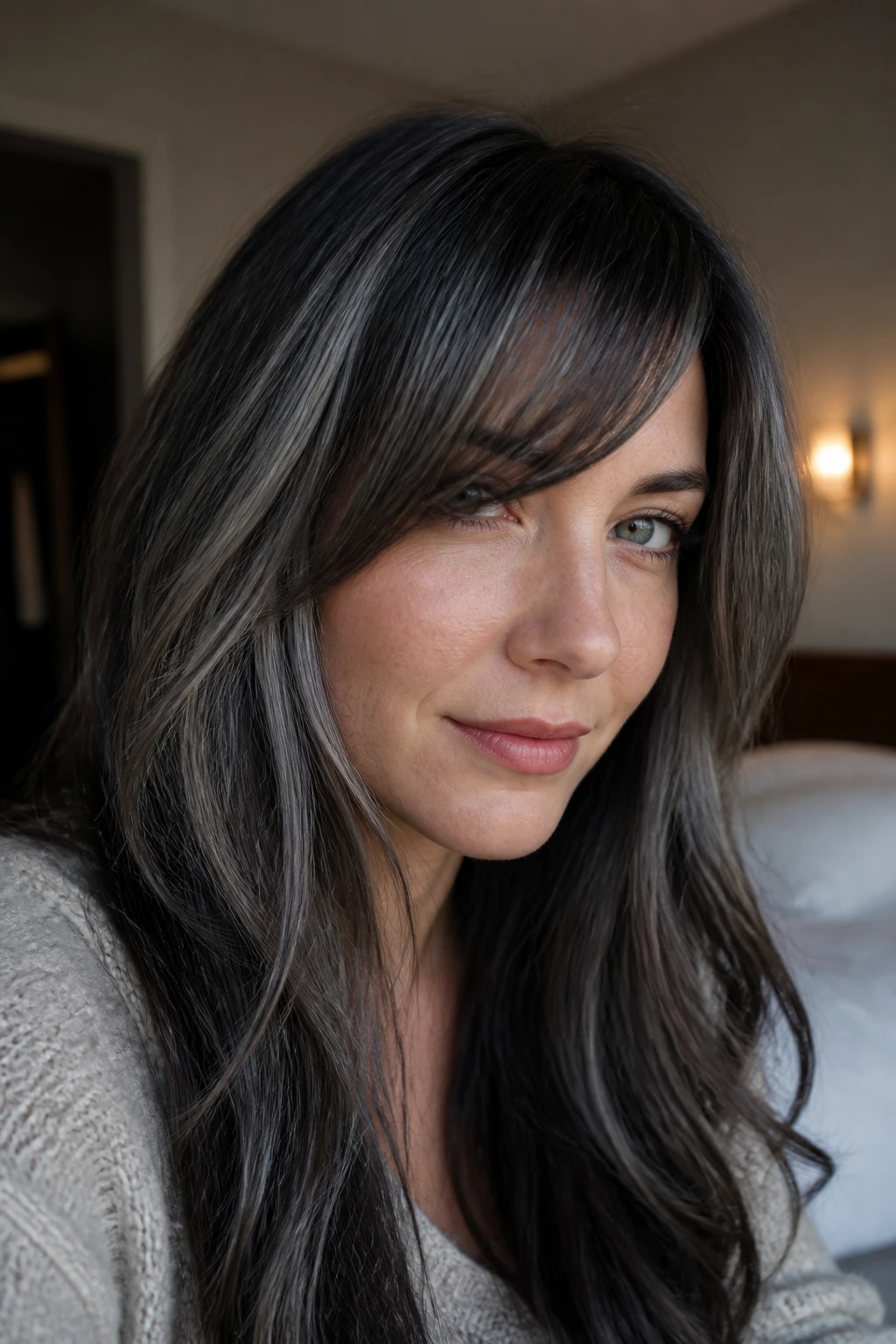
A slate brunette is what happens when deep brown gets filtered through ash and a little blue-gray. The result is darker than mushroom, cooler than espresso, and much less plain than a flat brunette. Side-swept bangs matter here because the soft angle keeps the richness from sitting like a block around the face.
Why It Flatters Cool Skin
The cool depth lets pink or blue undertones stay balanced instead of looking flushed. Light ribbons should be narrow and scattered, not chunky. Think mist on dark stone, not stripes.
A look like this is especially good if you don’t want your color to announce itself from across the room. It reads more expensive in motion than it does in a static selfie, which is a nice change. And yes, a loose bend through the bang makes the ribbons show more clearly.
8. Charcoal Ombré Sweep
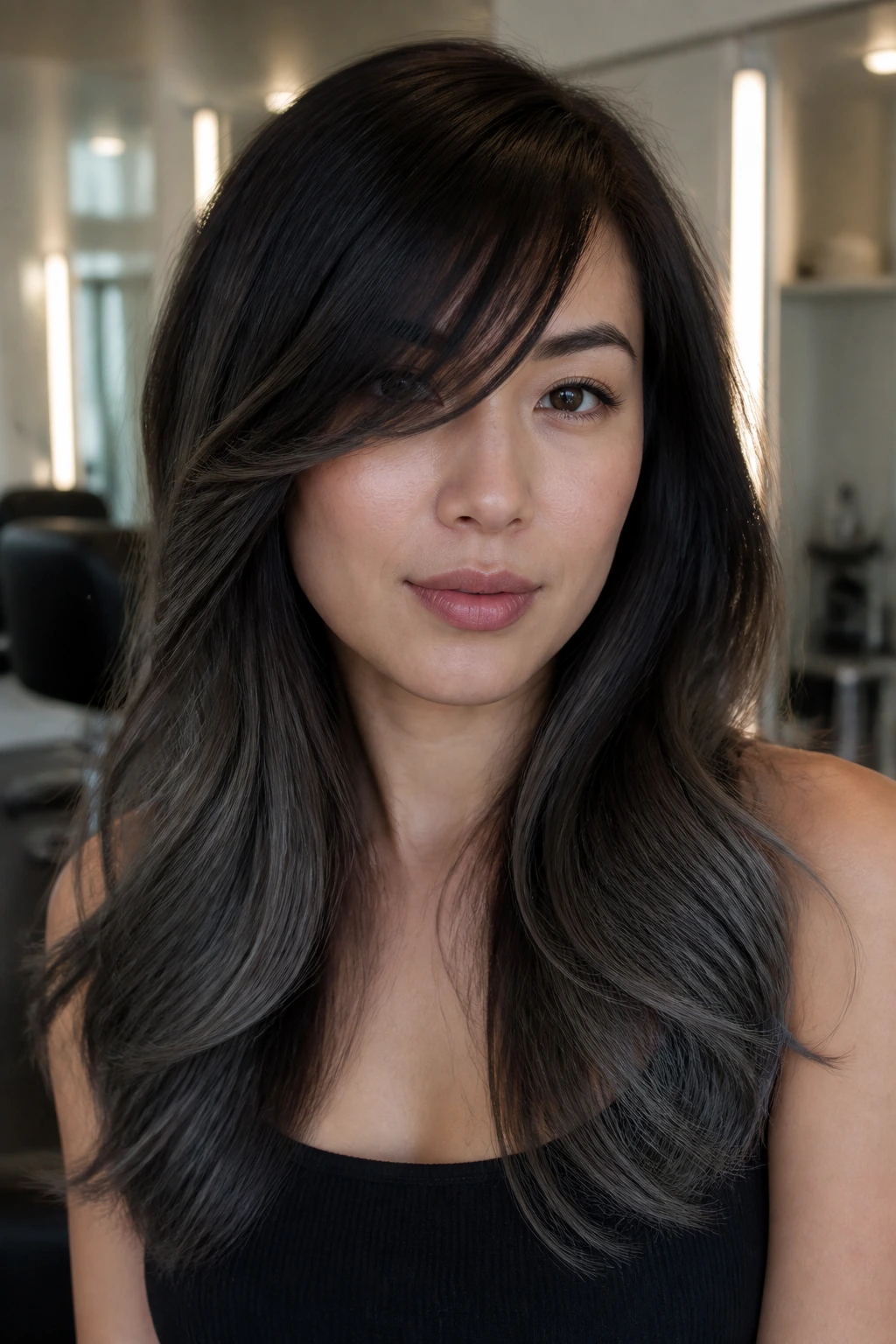
Charcoal ombré is dramatic without turning into costume hair. The roots stay deep, almost black-brown, and the ends drift into a smoky charcoal finish that picks up cool light beautifully. The side-swept bang stops the overall shape from becoming too blunt; it puts a diagonal line into a color story that could otherwise feel very vertical.
If your wardrobe lives in black, gray, denim, and white, this is an easy match. The hair becomes part of the outfit instead of fighting it. The best version keeps the ends soft and misty, not one solid block of black fading into another.
One thing people miss: the front pieces should be slightly softer than the back. If the bang is too dark from root to tip, it can eat the face. A few smoky ribbons near the sweep fix that fast.
9. Lavender Ash Balayage
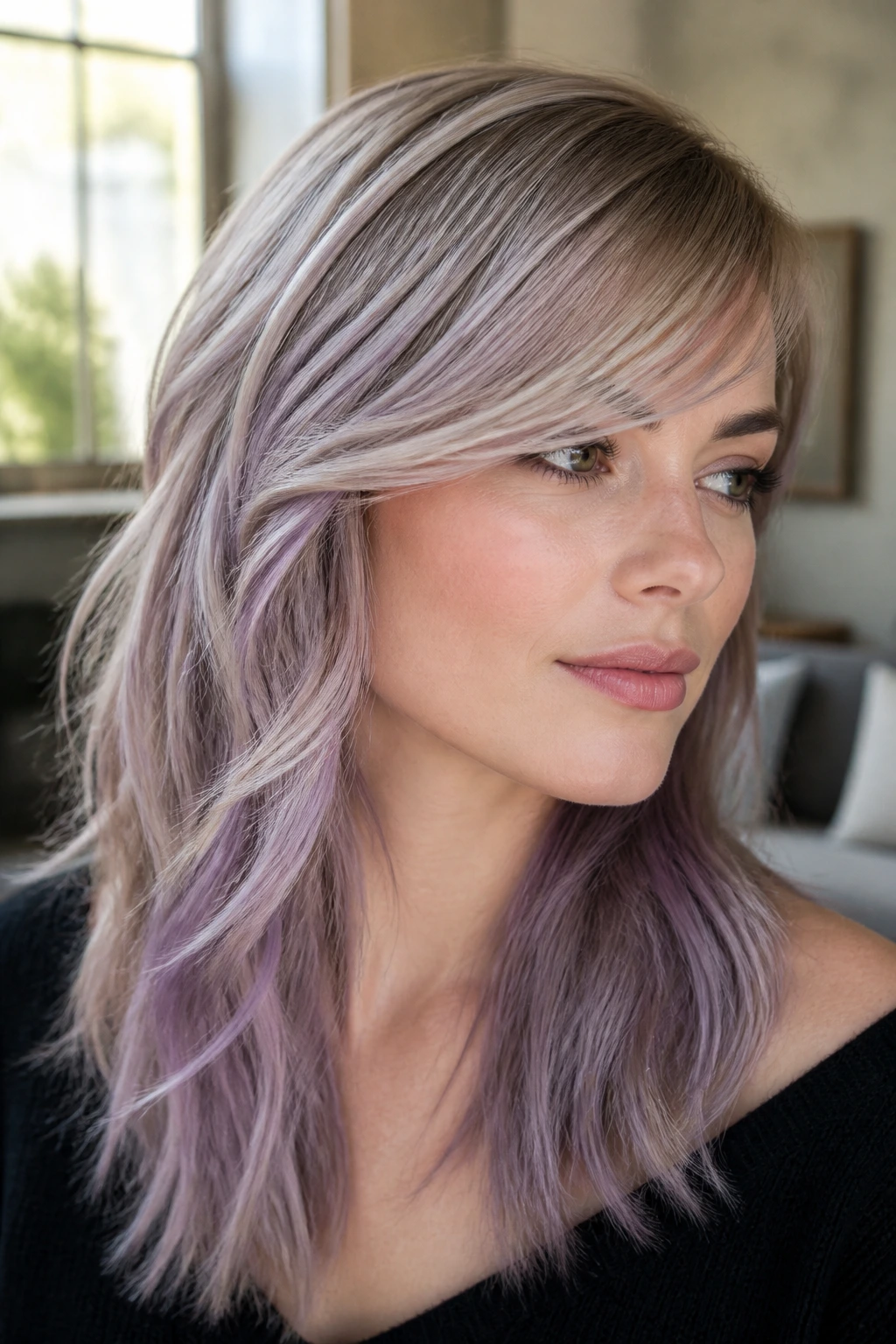
Can pastel look grown-up? Absolutely, if the base is controlled. Lavender ash takes the sweetness out of purple and gives it a smoky edge that cool skin tends to love. With side-swept bangs, the look gets movement and softness, which keeps the lavender from reading like a flat wash of color.
This works best on lighter hair that can hold a pale pastel glaze. The lavender should sit on top of an ash blonde canvas, not raw yellow lift. Otherwise it shifts muddy fast. A soft wave through the bang helps catch the lilac tones at the ends.
A Small but Useful Detail
Ask for the lavender to be concentrated a little more on the lower half of the bang sweep. That’s where it shows when hair falls forward, and it keeps the top from getting too busy.
10. Mauve Smoke Balayage
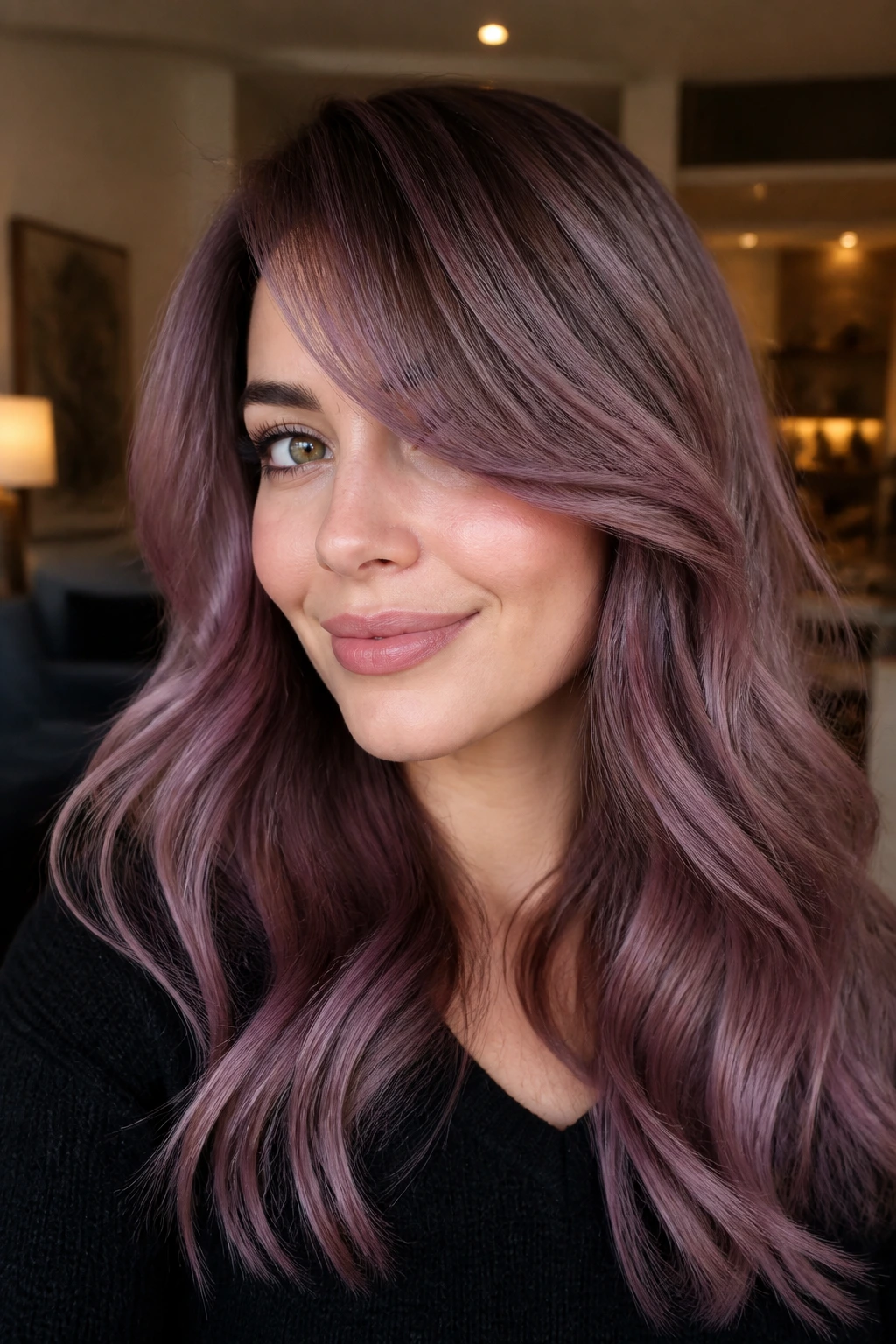
Mauve smoke is one of those shades that looks richer in person than it does in a photo. It sits between dusty pink and plum, which makes it a smart choice for cool skin that can handle a bit of color but doesn’t want anything sugary. The side-swept bang softens the pink-violet edge and makes the whole finish feel tailored.
This is a nice bridge between blonde and fantasy color. The underlying blonde can stay muted while the glaze adds a cool rose cast, especially through the front third of the hair. On layered cuts, the mauve catches on the ends and gives a nice haze instead of a hard block.
Best for: medium-light skin with pink undertones, especially if your features are low contrast.
11. Blue-Black Satin Dimension
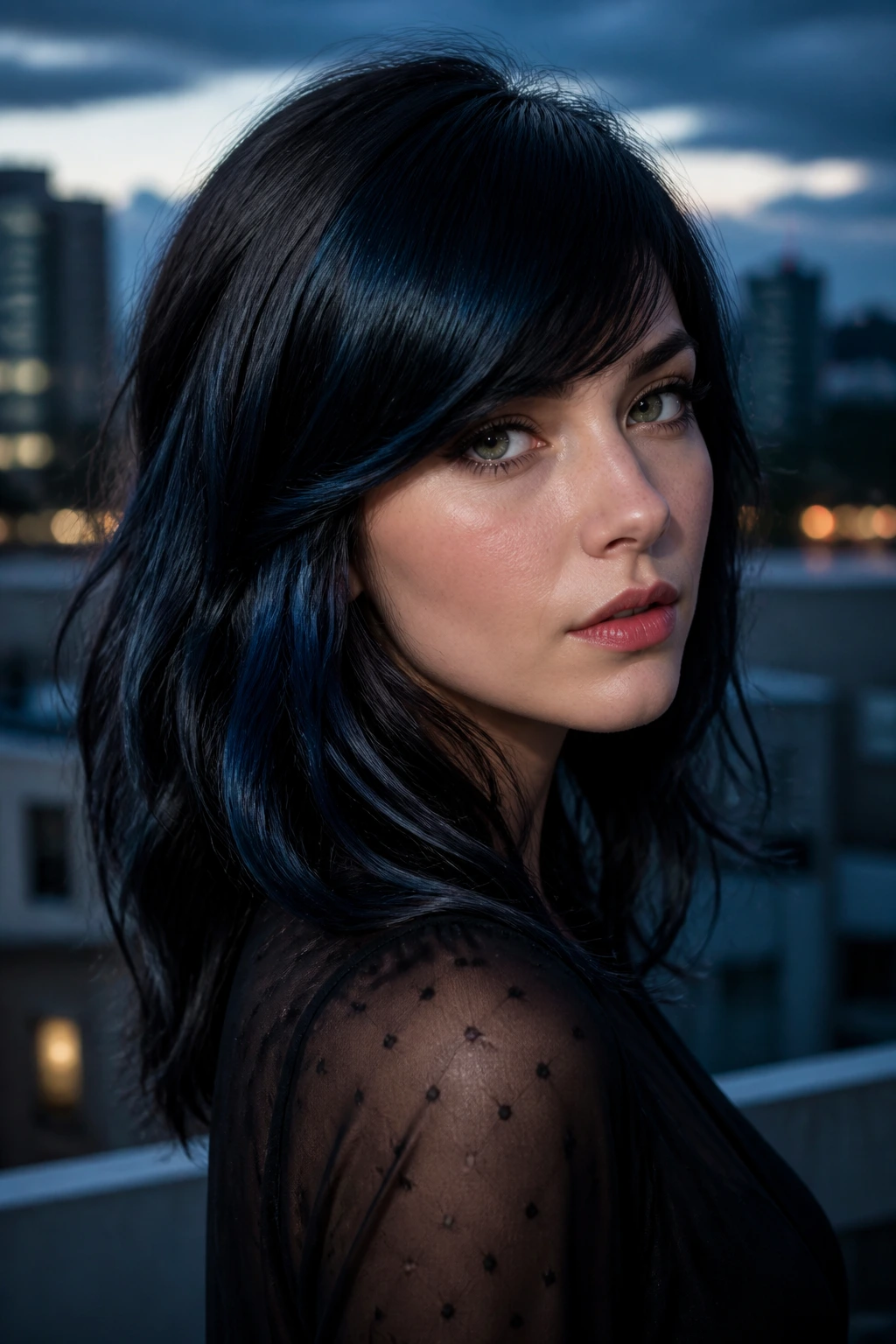
Blue-black is ruthless in the best way. It’s almost black, but the blue reflect gives it sheen instead of deadness, which makes cool skin look sharper and more awake. The side-swept bang is the part that saves the look from becoming one-note; it opens a little window for the blue to show when the hair moves.
This shade is excellent if you like dark hair but hate warmth. It also plays nicely with straight styles because the reflection is cleaner on a smooth surface. If your hair tends to frizz, plan on a smoothing blow-dry or a light serum through the ends.
What to Request
Ask for a blue-based gloss over a dark brunette or black base, not a flat jet black box color. The finish should look inky with a cool shine, not dense and flat. That difference is huge.
12. Opal Blonde Balayage
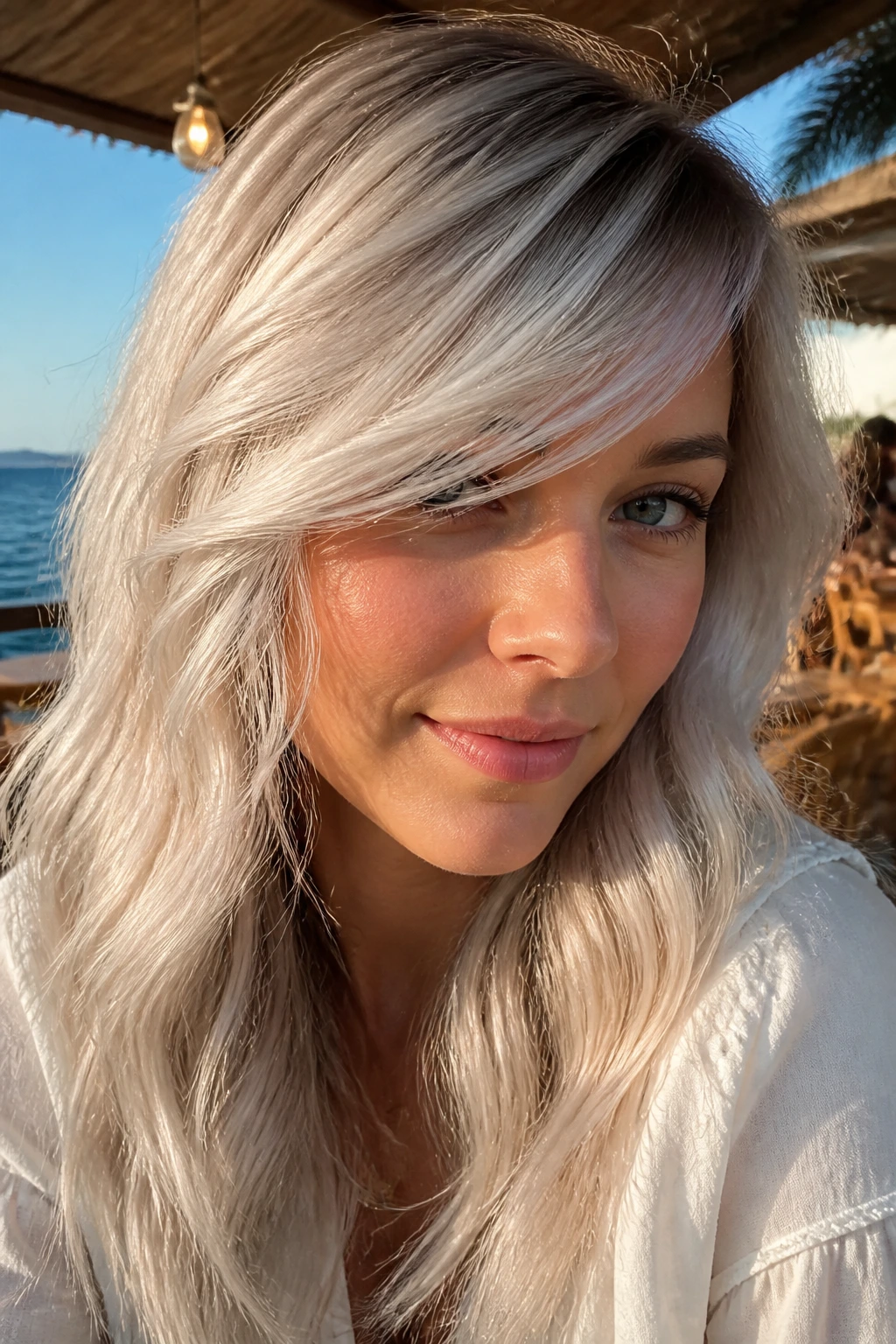
Opal blonde is a pale, multi-tonal blonde that shifts between pearl, silver, and a little translucent beige. It gives cool skin that soft, bright glow without the harshness of pure platinum. The side-swept bang is useful here because it lets the tones layer over each other instead of showing all at once.
Think of this as the more dimensional cousin of icy blonde. It’s still light, but it has that almost shell-like shimmer that makes the hair read smooth. On longer layers, the effect is even better because each curve picks up a different tone.
Why It Feels Softer
Flat platinum can look severe against cool skin if the face is already fair. Opal blonde keeps the brightness but adds movement through tone variation. That little bit of shift is what keeps it from turning into a highlighter strip.
13. Nordic Ice Blonde Sweep
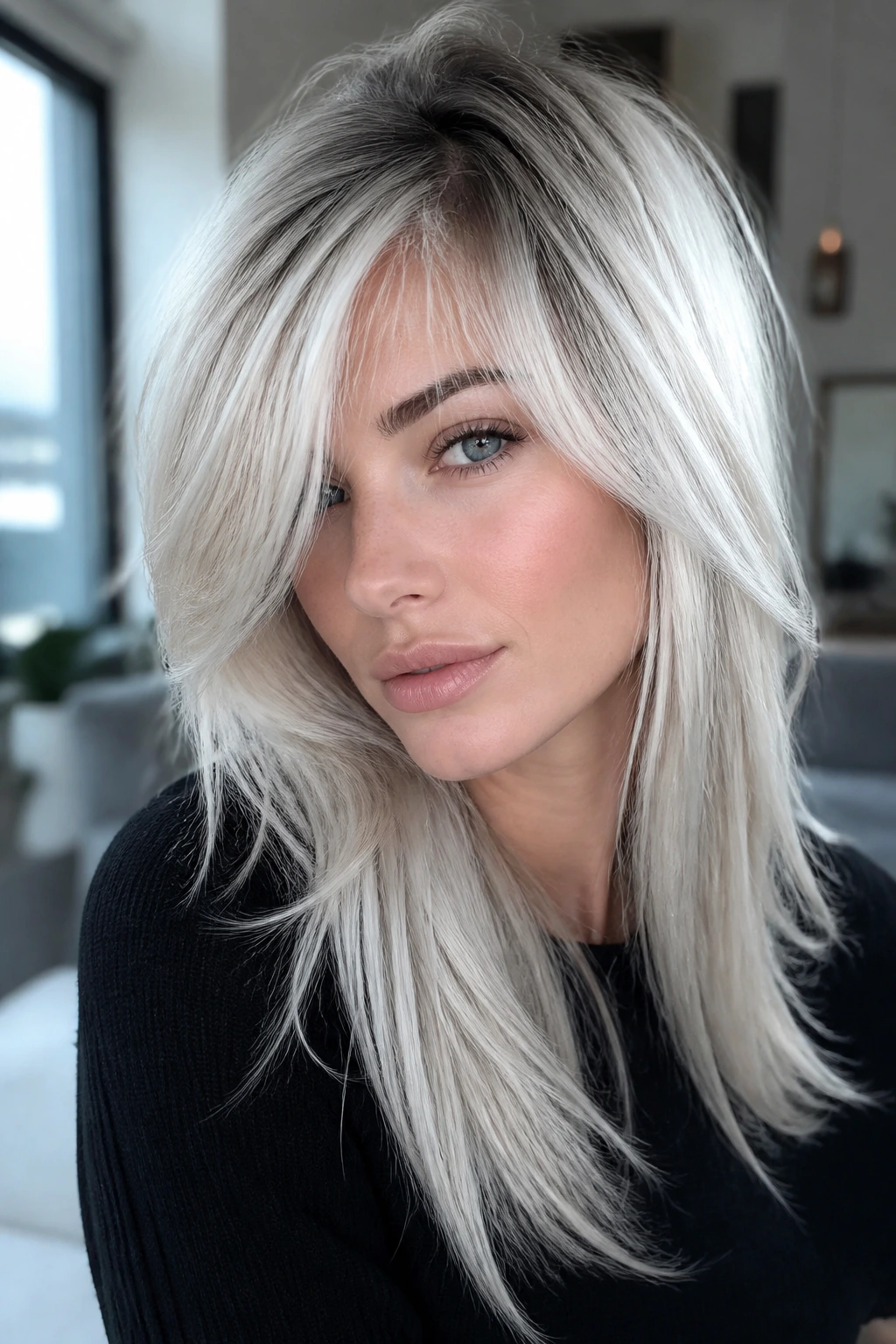
Nordic ice blonde is for people who want the hair to look almost white, but not yellow, ever. The root shadow is crucial. Without it, the lightness can wash out the face, especially with cool skin tones that already lean pale. Side-swept bangs give the style some shape so the front doesn’t become a sheet of pale color.
This look is strongest on naturally light hair or hair that has already been lifted safely. It is not a casual maintenance color, and pretending otherwise is nonsense. Purple shampoo helps, but it won’t fix bad lift. A clean ash or pearl gloss is what keeps the finish from drifting creamy.
My take: this shade looks best when the bangs are feathered, not blunt. A sharp line across the forehead makes the pale blonde feel colder than it needs to be.
14. Smoky Rose Beige
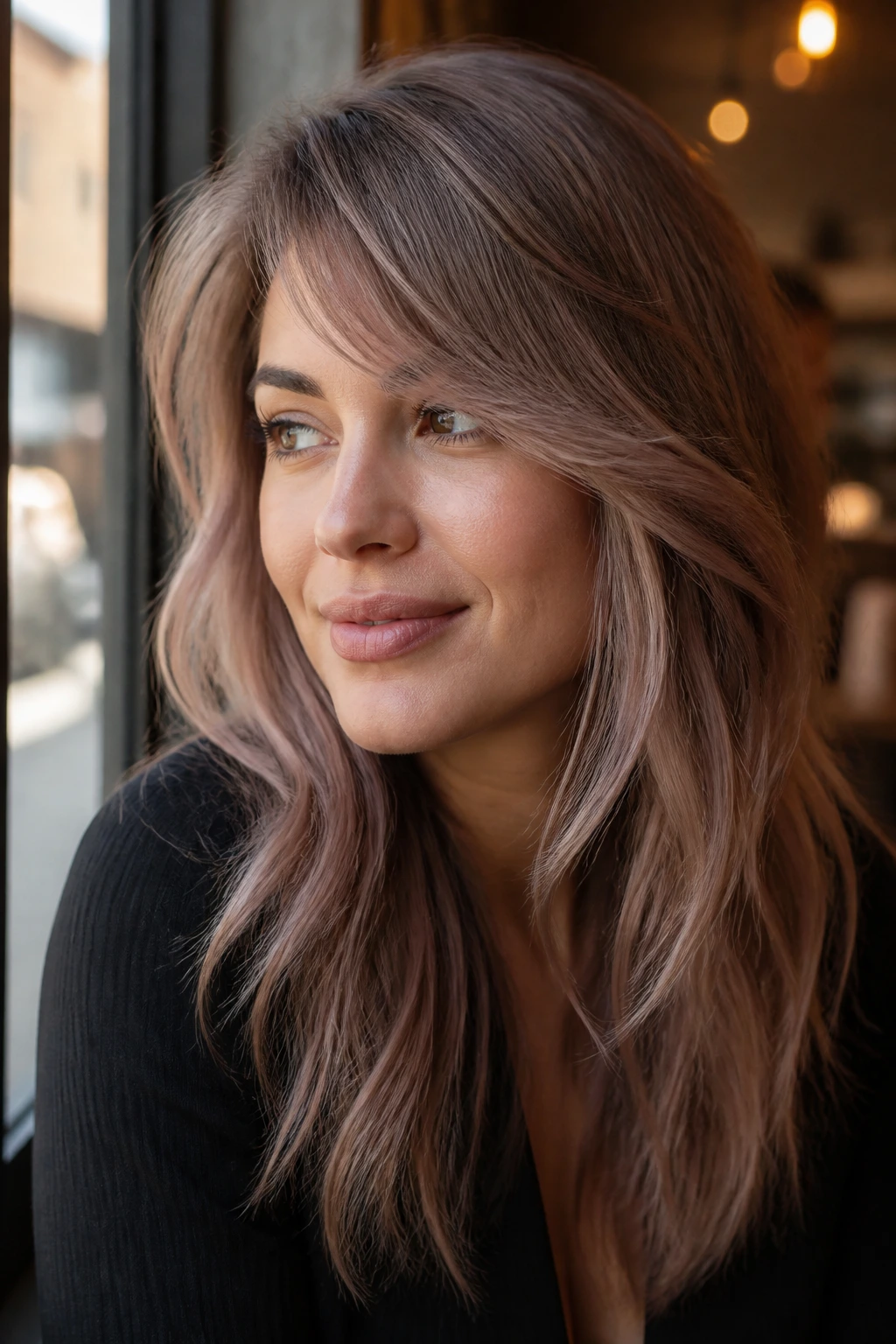
Smoky rose beige takes the softness of beige and tints it with a muted rose cast. The result is subtle enough for everyday wear, but still interesting enough to read as a deliberate color choice. For cool skin, the rose sits in a friendly zone — it adds warmth in the emotional sense, not the orange sense.
This is a good move if pure ash blonde feels too flat on you. The side-swept bang picks up the dusty pink pieces and keeps them from settling into the same visual plane as the rest of the hair. Loose bends are better than tight curls here; you want the color to drift.
A good stylist will keep the roots deeper and the rose most visible through the mid-lengths. That’s the sweet spot. Too much pink at the hairline and the look becomes precious fast.
15. Graphite Brown Balayage
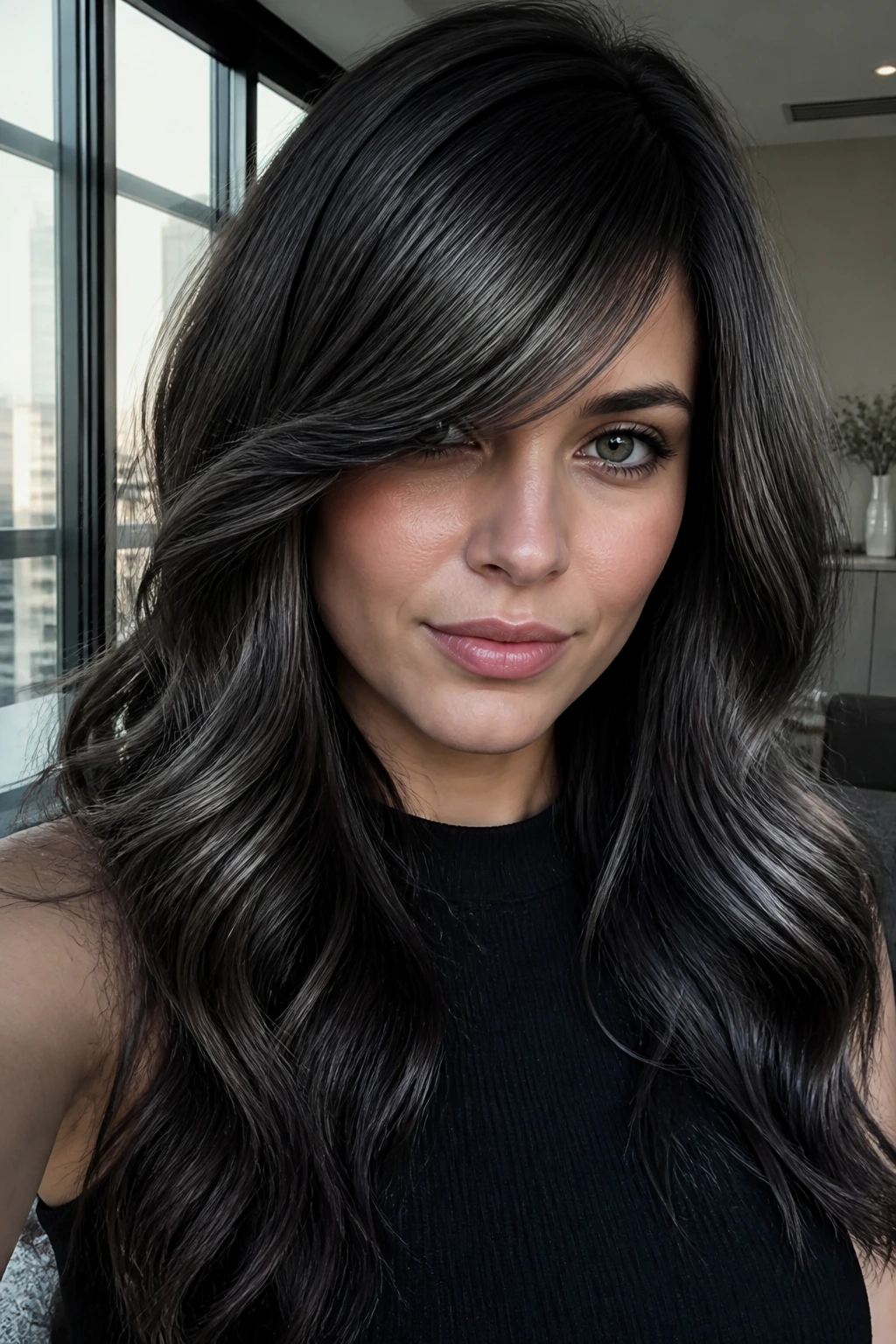
Graphite brown is dark, cool, and very controlled. It’s deeper than slate and a little more metallic in feel, which is why it works on cool skin that wants richness without bronze. The balayage pieces should be narrow and placed where the side-swept bang crosses the forehead, because that’s where the light can actually do something.
This shade is especially good on medium to thick hair. The depth gives the strands weight, and the subtle lift keeps the haircut from looking like one solid mass. If you like a cleaner, sharper finish, this one is a strong contender.
A Quick Color Note
Ask for graphite or cool mocha ribbons, not caramel-adjacent brown. One warm stripe can ruin the whole read. Seriously.
16. Frosted Cocoa Ribbons
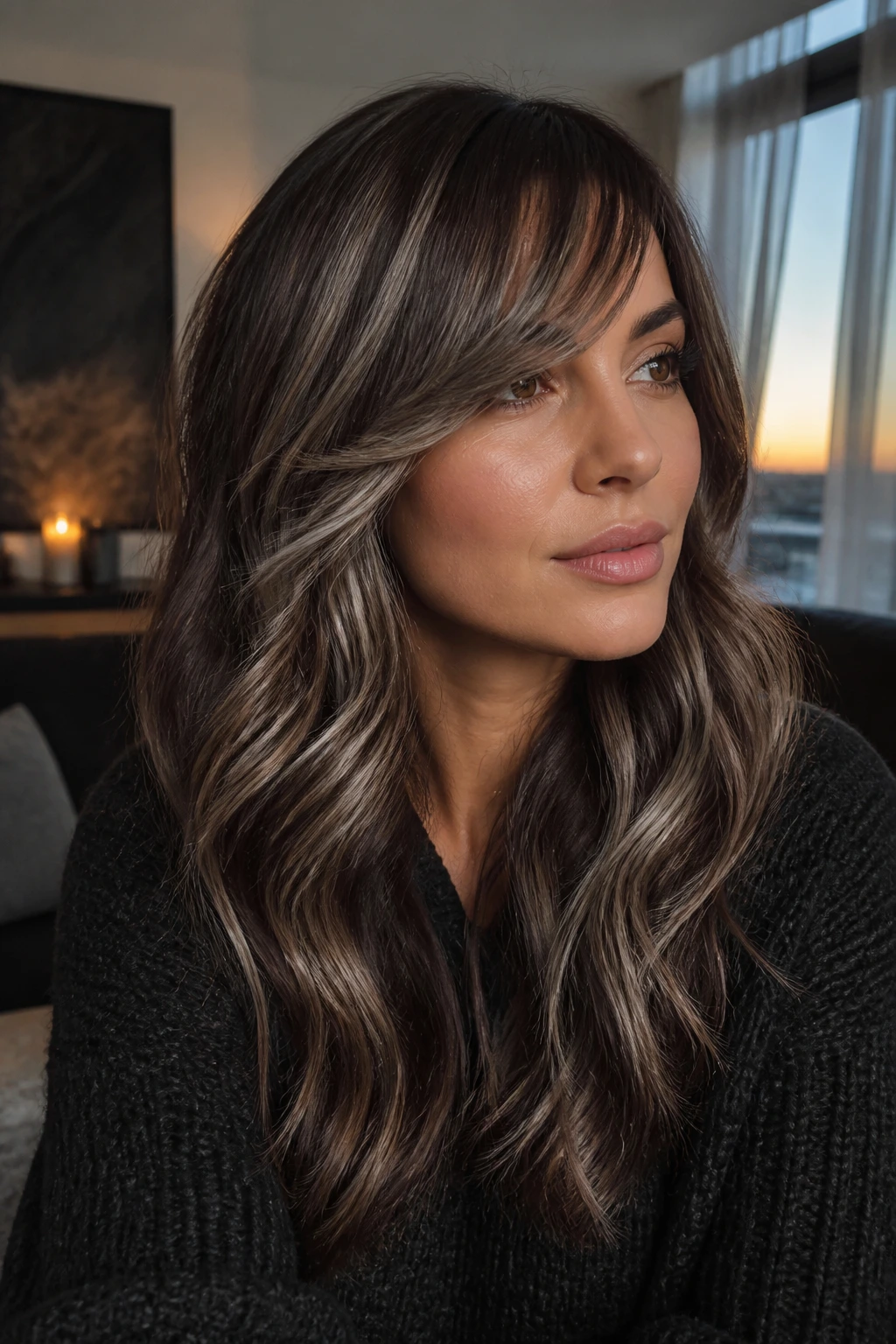
Cocoa sounds warm, but frosted cocoa is a different animal. The base stays rich and brunette, while the ribbons are cooled down with ash so they look like frost on dark chocolate instead of milk chocolate with highlights. Side-swept bangs are important here because they bring the lighter pieces right to the front without over-lightening the whole head.
This is a flattering route for medium-deep cool skin. It gives depth around the face, which helps the complexion stand out instead of blending into the hair. If you wear a little makeup, a berry lip or cool rose blush looks especially clean against it.
The best versions keep the ribbons broad enough to show in movement but soft enough that you don’t see a stripe line at the root. That’s the balance.
17. Steel Taupe Balayage
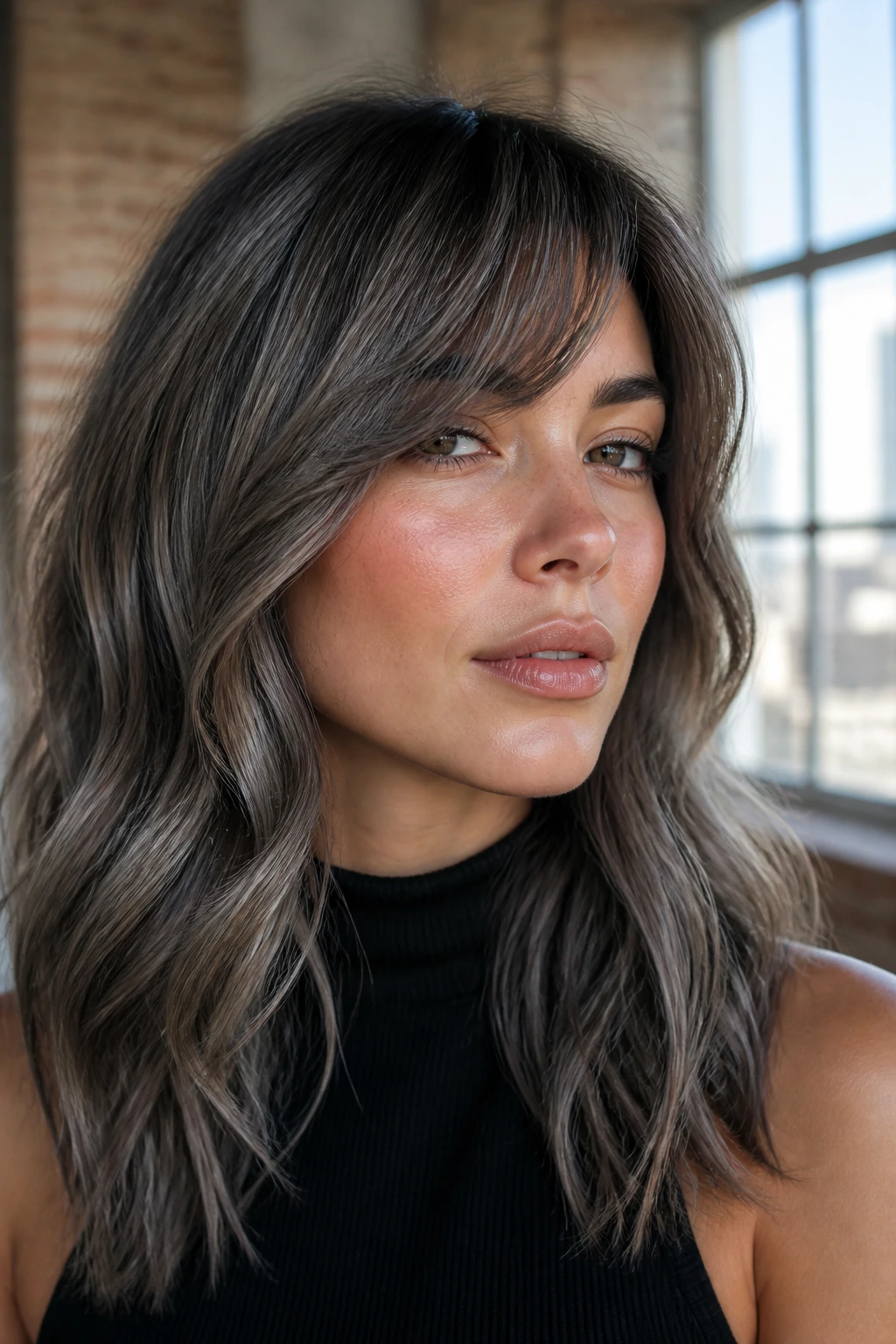
Steel taupe has a clean, almost metallic finish that sits beautifully on straight or softly waved hair. It’s cooler than beige, lighter than slate, and a bit sharper than mushroom. The side-swept bang benefits from the same polish: a controlled bend, a smooth finish, and enough softness at the ends that the color can shift as the hair moves.
How to Wear It
- On straight hair: ask for very fine ribbons so the color doesn’t look blocky.
- On waves: keep the bend loose; tight curls can make the tone read patchy.
- On cool skin: pair with silver jewelry or charcoal clothing to keep the whole effect coherent.
This is one of those shades that looks expensive when the cut is clean. If the fringe is shaggy in a bad way, the color loses its precision.
18. Pearlized Mushroom Blonde
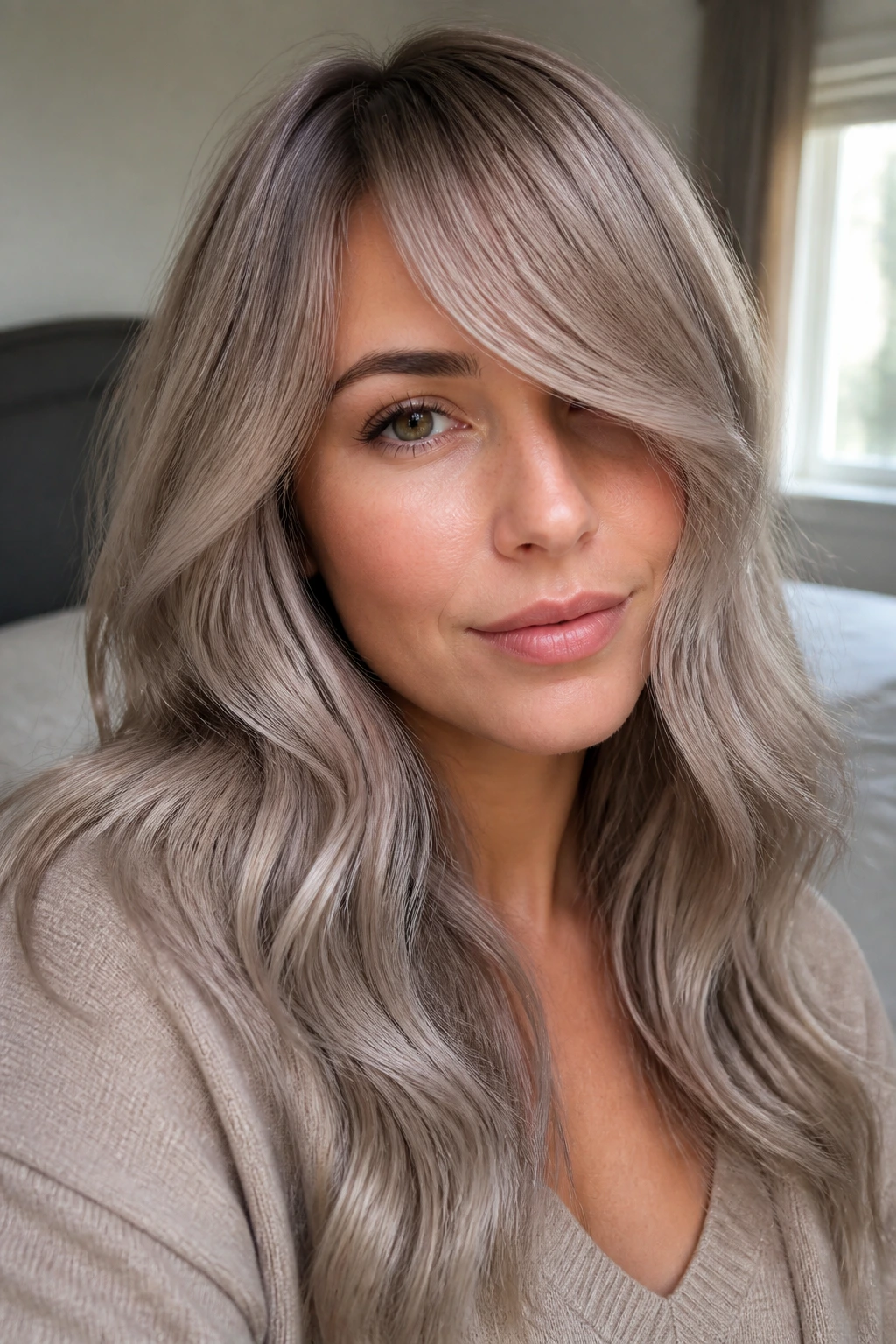
Pearlized mushroom blonde takes the earthy softness of mushroom and brightens it with a pearl finish. It’s a little lighter and a little more polished than the standard taupe-mushroom look, which makes it especially good for cool skin that wants brightness without gold. The side-swept bang keeps the front from looking too uniform and gives the pearl tone a nice flicker.
This shade sits in a sweet spot for people who want to go blonde but don’t want the maintenance of very pale lift. It grows out more gently than platinum, and it usually survives more real-life styling because the base stays grounded. A soft side part helps the pearl pieces catch around the eye and cheek.
If you hate orange, this is a smart lane. The undertone discipline matters more than the brightness.
19. Cool Champagne Glow
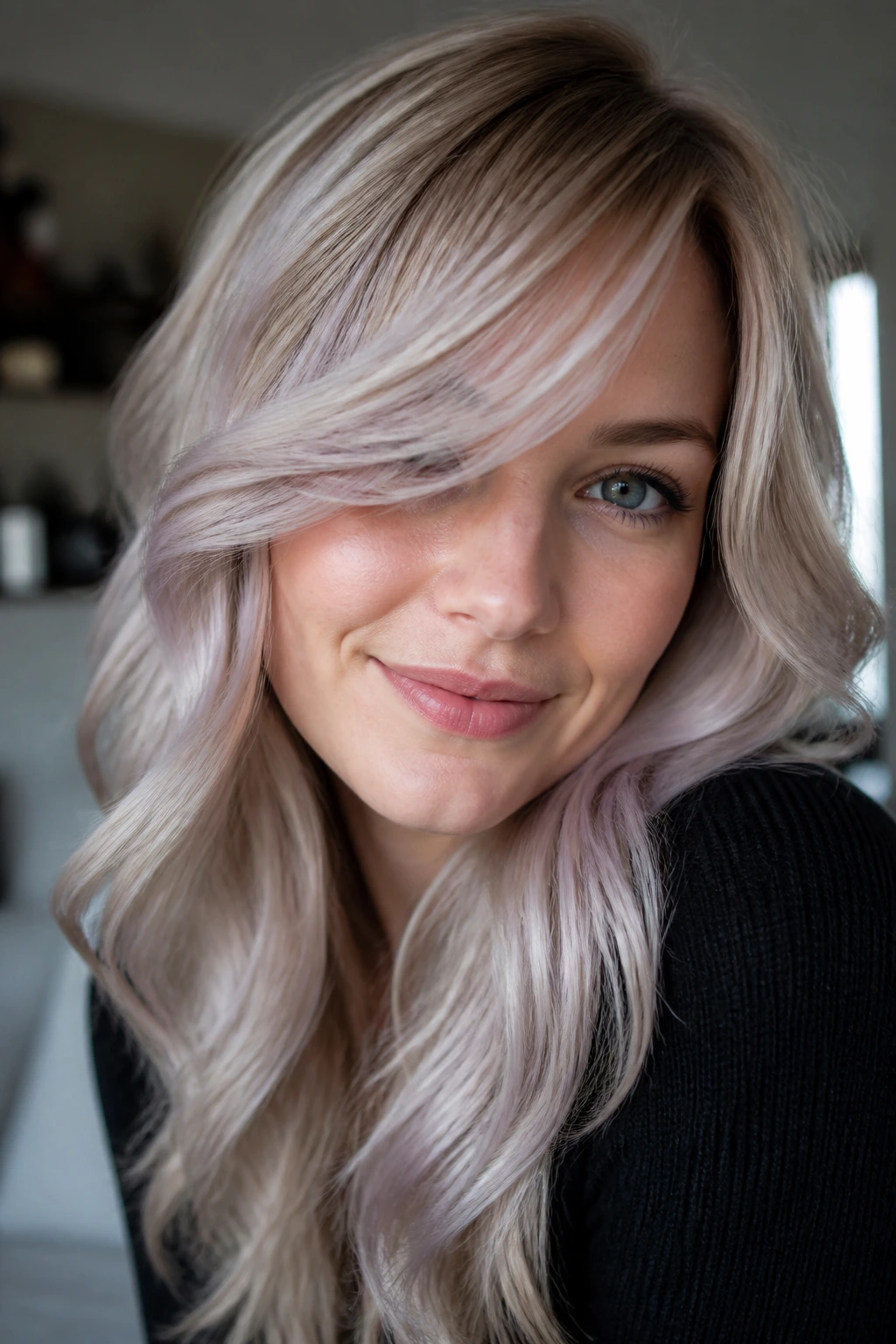
Cool champagne is not the buttery champagne blonde that shows up everywhere. This version has a paler, more neutral base with a faint pink-violet edge, so it stays friendlier to cool skin. The side-swept bang makes the glow look intentional because it guides the light across the face instead of letting it sit on top.
This is a good option if you want something lighter than bronde but less icy than platinum. It’s soft, polished, and easy to dress up with a blowout. A round brush and a little tension through the bang are enough to make the front piece sweep cleanly.
Best for: people who like a light blonde but don’t want anything that reads yellow in daylight.
20. Smoky Mocha Contour
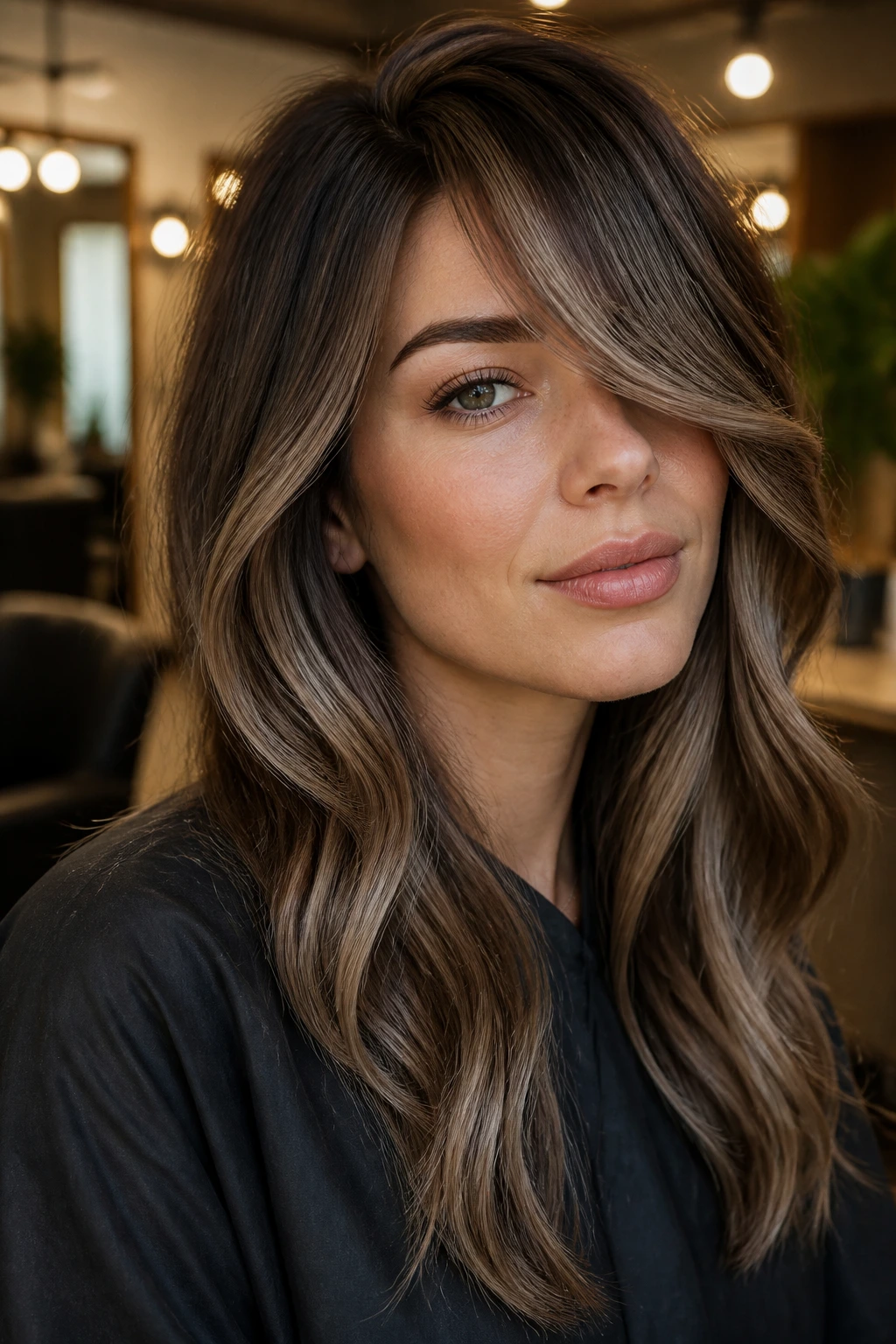
This is brunette color with a purpose. Smoky mocha uses deeper panels around the face and lighter ribbons a little farther back, which gives the hair a contour effect instead of a flat highlight pattern. The side-swept bang is basically the anchor here; it helps the lighter pieces show exactly where the eye lands.
The mood is soft, not severe. On cool skin, the mocha depth keeps the face looking defined, and the ash lift prevents the brown from getting red. If you wear layered cuts, this style makes the layers obvious without needing a lot of contrast.
Why It Works
The contrast sits where hair naturally bends — around the bang sweep, cheekbone, and ends. That’s why it feels elegant rather than stripy. There’s a difference.
21. Lilac Smoke Brunette
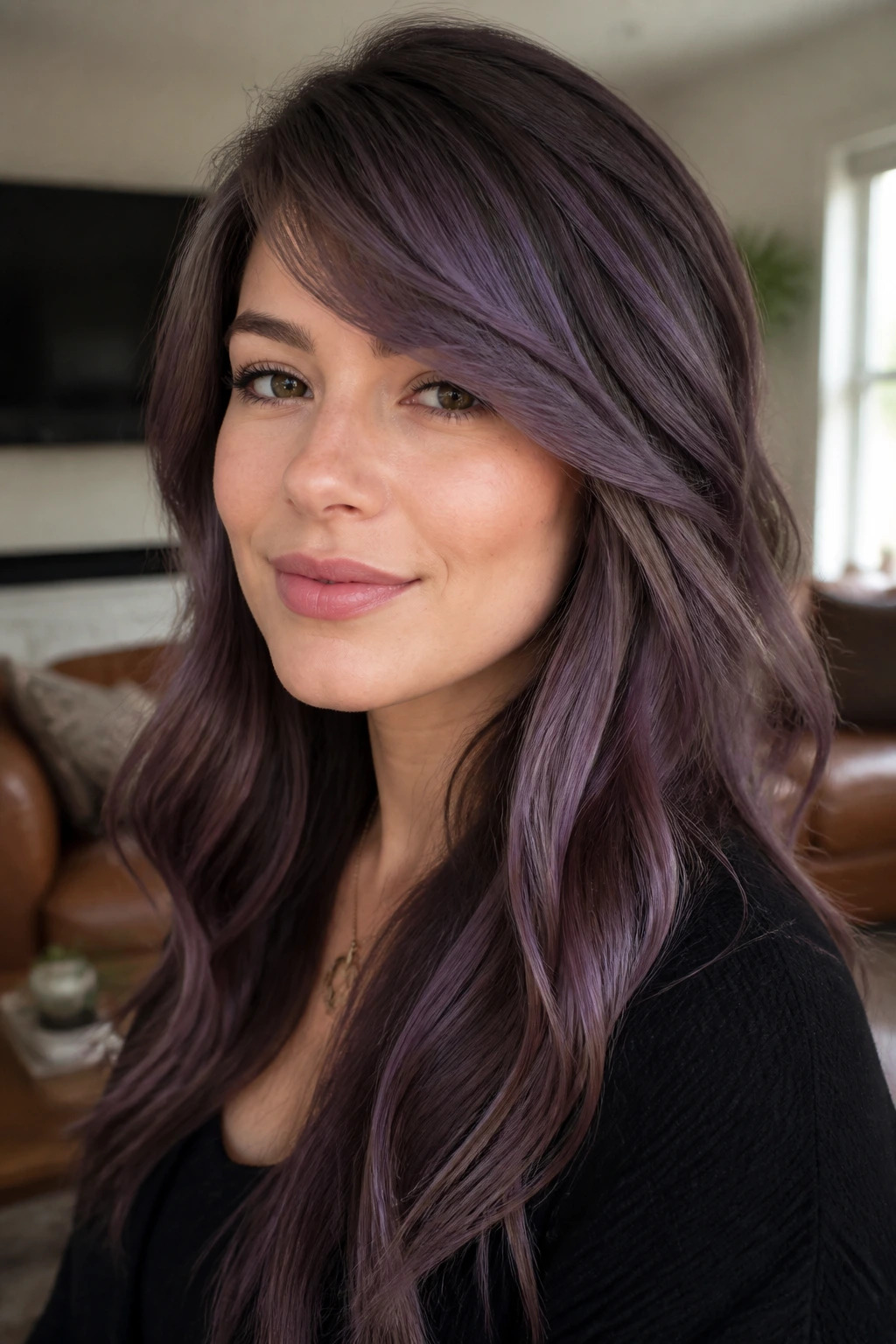
Lilac smoke is for the person who wants the brunette base to have a little secret in it. The lilac is muted, almost hidden, until the light hits the right section. On cool skin, that hint of violet keeps the hair from drifting warm, and the side-swept bang lets the color show without screaming for attention.
The darker base is doing a lot of the heavy lifting here. If the hair is too light before the lilac goes on, the result can go cotton-candy fast. Keep the palette smoky and the finish glossy, and the color reads like a custom glaze rather than a fantasy dye job.
A soft curl through the bang helps the violet tones show at the bend. Straight hair can flatten the effect a little too much.
22. Arctic Silver Balayage
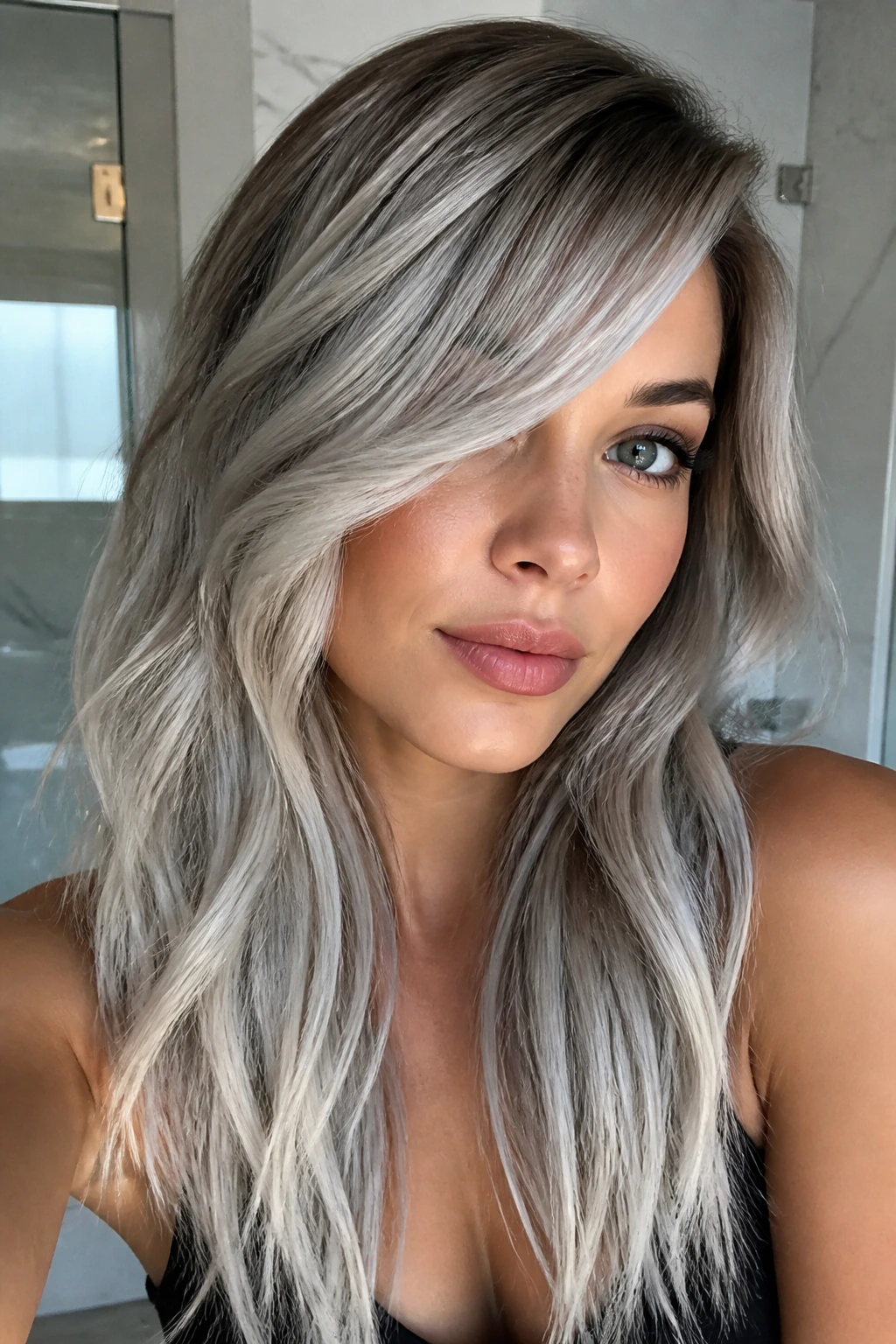
Arctic silver is not for people who want to blend in. It’s high-contrast, cold, and very crisp, which makes it a natural match for cool skin when it’s done with care. The side-swept bang keeps the look from becoming all edge and no softness; the diagonal line gives the silver somewhere to travel.
This color asks for a healthy base and a patient lifting process. Silver is unforgiving. If the underlying pigment is too yellow, the result goes beige or dull fast. A violet-toned glaze can help, but the lift has to be clean first.
Use this when: you want the hair to be the sharpest thing in the room.
23. Denim Ash Brown
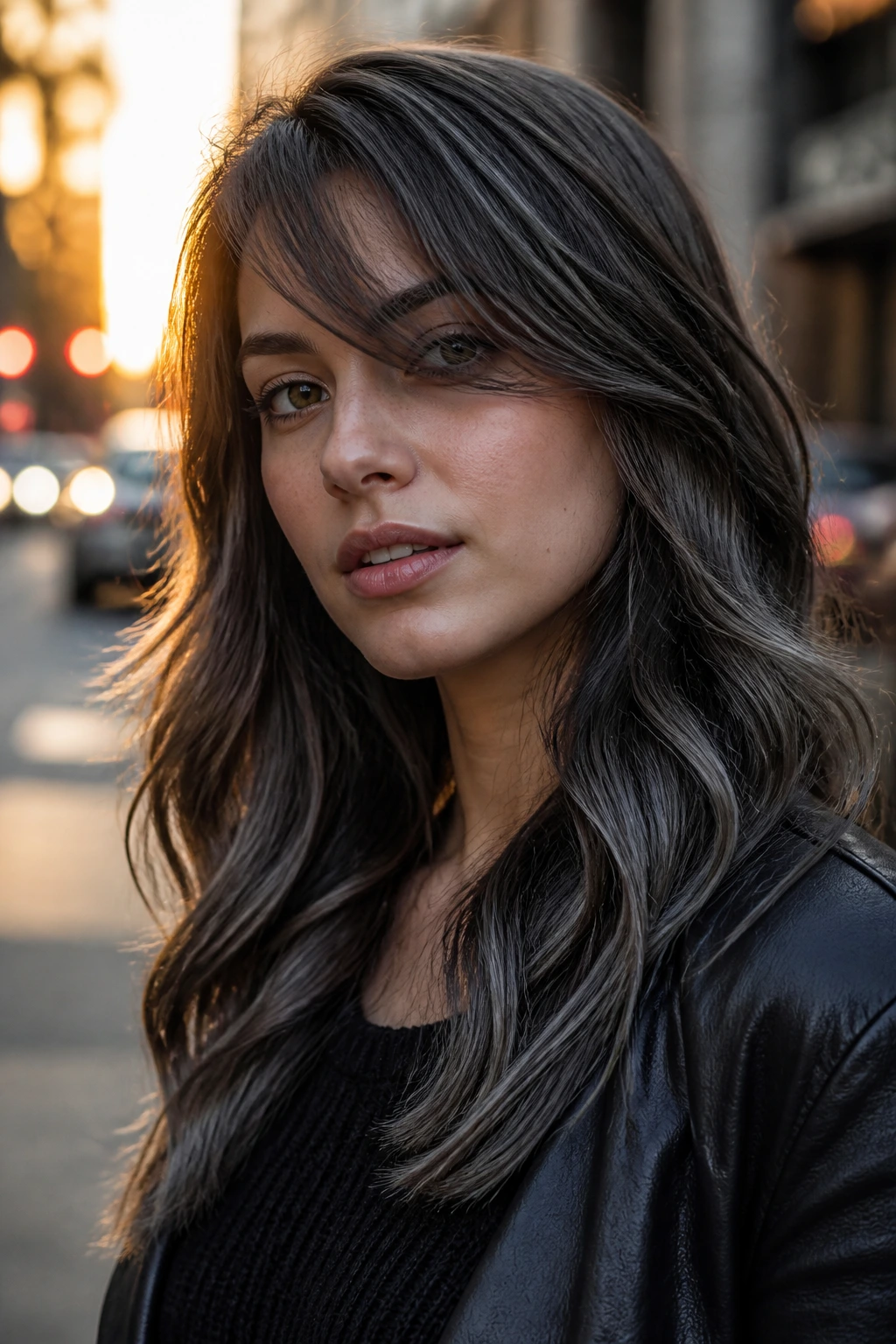
Denim ash brown has that cool blue-gray cast that sits somewhere between brunette and fashion color. It’s subtle enough for daily wear but unusual enough to feel intentional. Side-swept bangs are a smart pairing because they expose just enough of the blue undertone as the hair falls across the face.
This shade works beautifully on medium brunettes who want a cooler finish without going silver or platinum. The blue cast helps neutralize warmth, and the ash pieces keep the dimension from reading flat. It’s especially nice on shoulder-length cuts where movement happens around the collarbone.
A Good Fit If
You like dark hair, but plain brown feels too safe. Denim ash gives the same depth with a cleaner edge.
24. Moonstone Beige Balayage
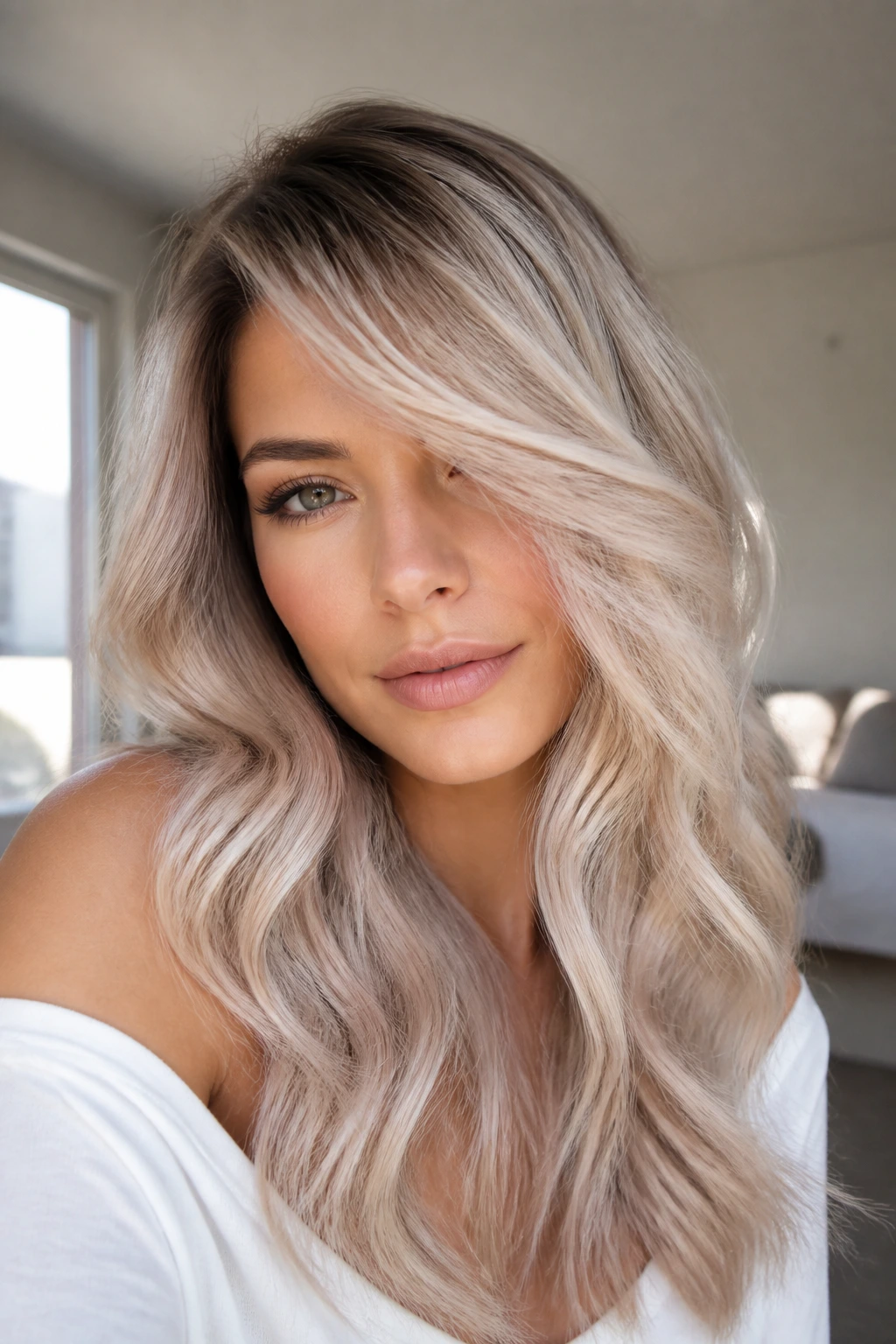
Moonstone beige is soft, pale, and a little luminous. It’s not as icy as silver and not as warm as gold, which is exactly why cool skin can wear it so well. The side-swept bang gives the color movement, and movement is what keeps pale beige from going limp.
This shade shines on medium-length waves. Each bend catches a slightly different tone, so the hair looks layered even when the haircut is simple. It’s also one of the easier light looks to grow out because the beige stays close to the natural root family.
If you want brightness without a lot of drama, this is a tidy answer. Quiet, but not flat.
25. Misty Bronde Layers
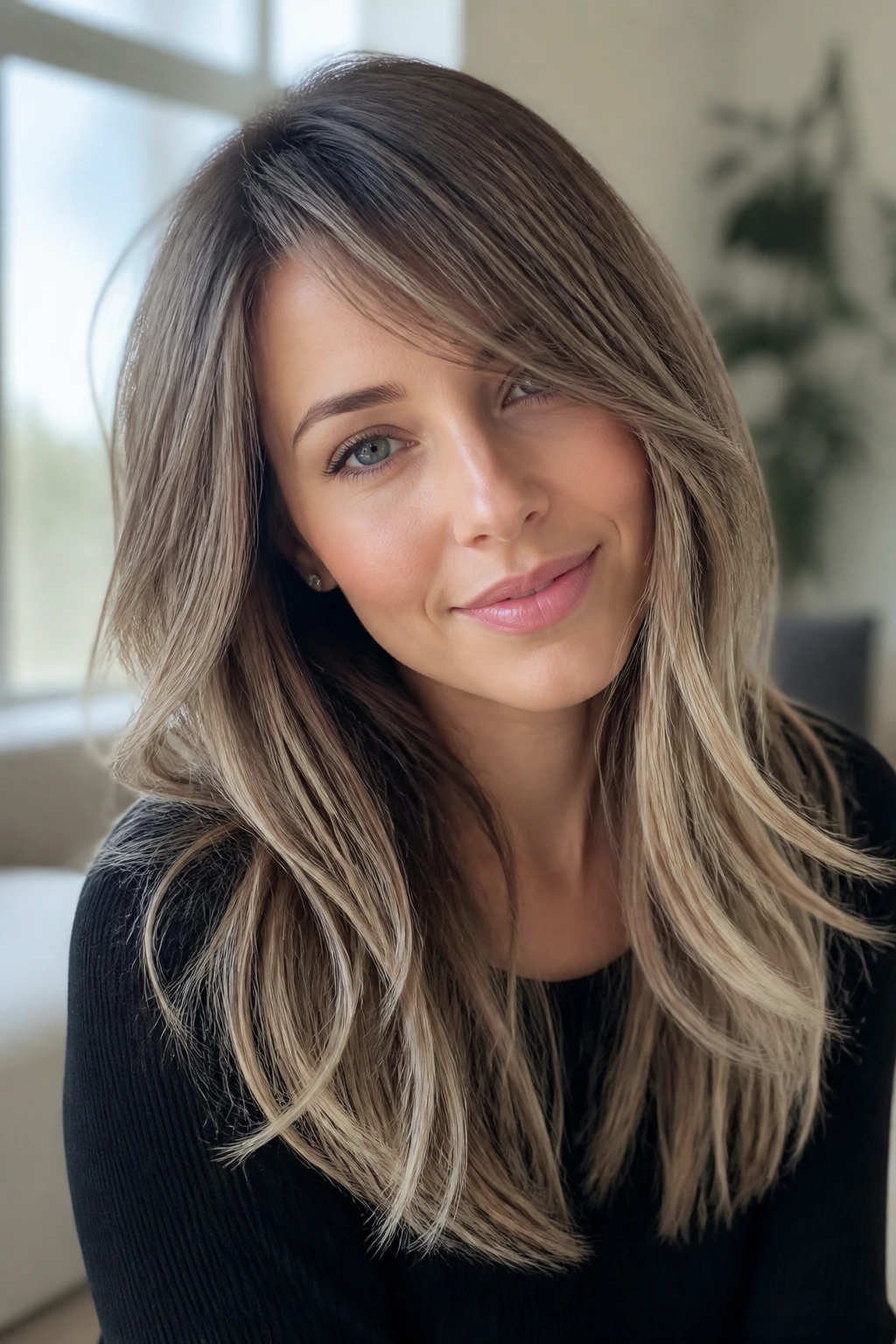
Misty bronde is the closest thing here to an all-purpose answer. It blends brown and blonde through smoky, cool ribbons, so the hair keeps depth at the root and a lighter haze through the ends. The side-swept bang is the part that gives it shape; without that diagonal, the layers can blur together.
This is a strong choice if you want movement more than contrast. On cool skin, the bronde stays clean because the blonde stays muted and the brown stays ash-based. The result looks easy, but not lazy.
A soft bend through the bang and ends is enough. Too much curl and the misty effect disappears. Keep it loose. That’s the whole trick.
Why Balayage and a Side Sweep Play So Nicely Together
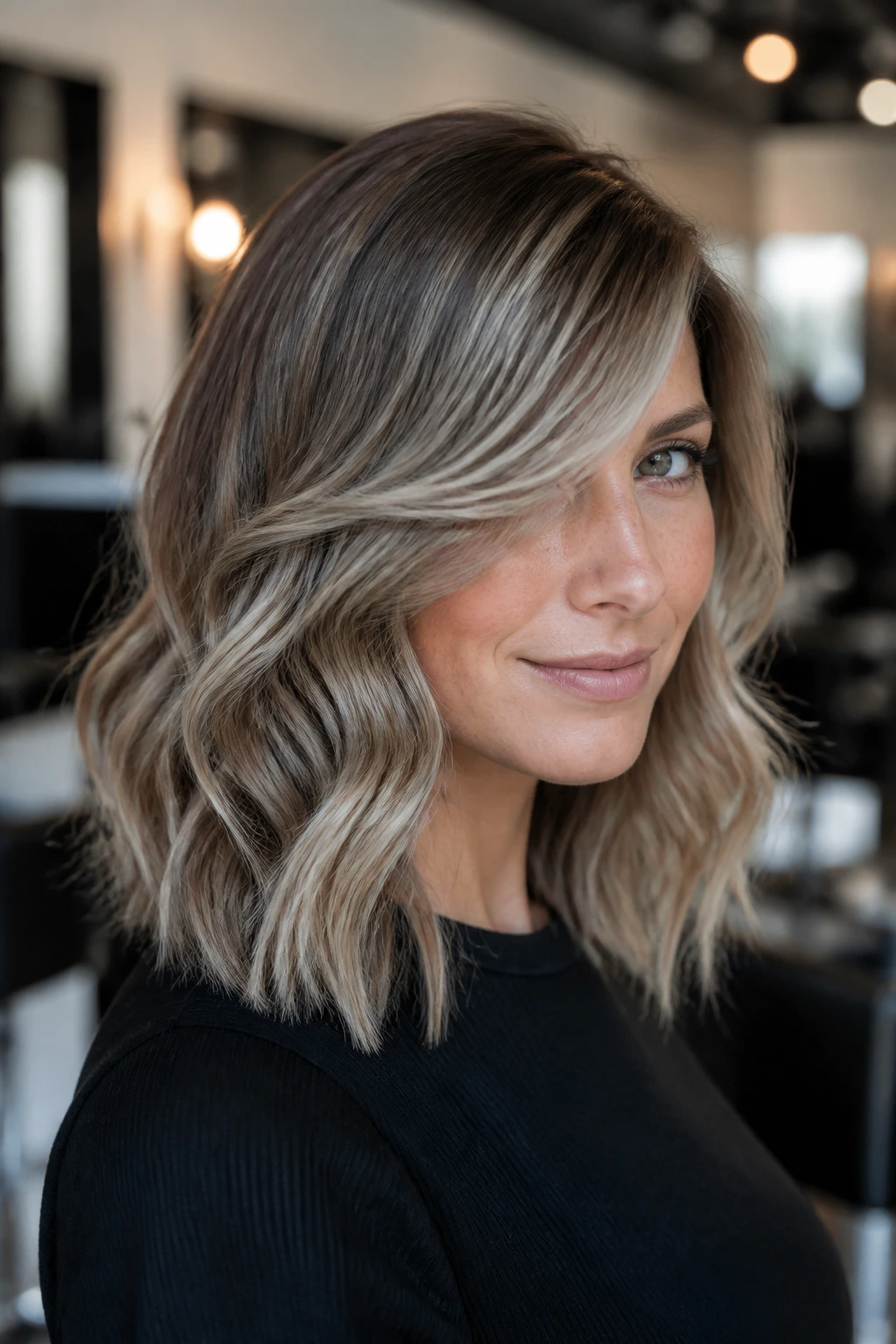
A side-swept bang does something blunt bangs rarely do: it lets cool-toned color breathe. The diagonal line breaks up the face in a way that makes ash, pearl, silver, and smoky beige look like they were painted in motion instead of laid on as blocks. That matters when your skin already has cool undertones, because the wrong highlight pattern can make the whole face look flat.
The best part is the grow-out. Balayage is already softer than traditional foil work, and the bang sweep keeps the front from showing a hard regrowth line. When the part shifts a little — and it always does — the color still makes sense. That’s the quiet magic here.
There’s also a practical angle people ignore. Side-swept bangs can hide a less-than-perfect root day, soften a strong cheekbone, and give the hair a little lift even if the rest of the style is just a rough blow-dry. If you’re not the type to spend 40 minutes on hair, that matters.
How to Ask for the Right Tone at the Salon
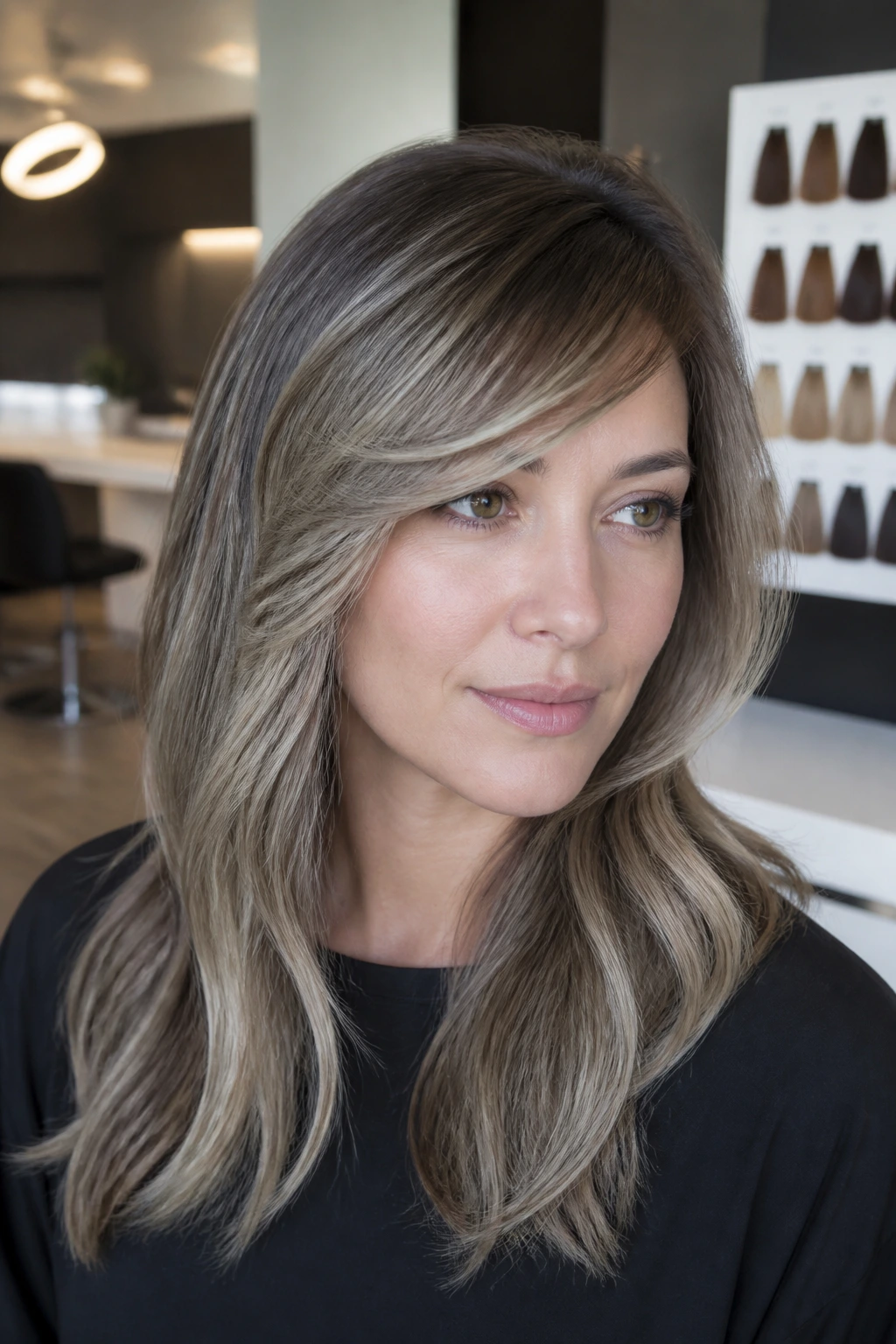
Bring photos, yes, but bring the right photos. The problem with saving ten inspiration shots is that half of them are warm, and warm and cool are not interchangeable once bleach hits the hair. Pick images that show daylight, not filter-heavy indoor mirrors. Better still, show one picture of the shade and one of the bang shape so the stylist can separate color from cut.
Ask for the tone family by name. Ash, pearl, silver, violet, blue-based brunette, smoky beige — those words tell a colorist more than “blonde but cooler.” If your natural hair is darker, be honest about how much lift you can tolerate. Going two to three levels lighter is a very different project from jumping to pale platinum in one session.
Hair history matters. Box dye, henna, repeated heat styling, and porous ends change the plan. A colorist who knows what they’re doing may build the look in stages: root shadow first, ribbons second, gloss last. That sounds slow because it is. Slow is often what keeps the hair on your head.
Tools That Keep the Look Polished
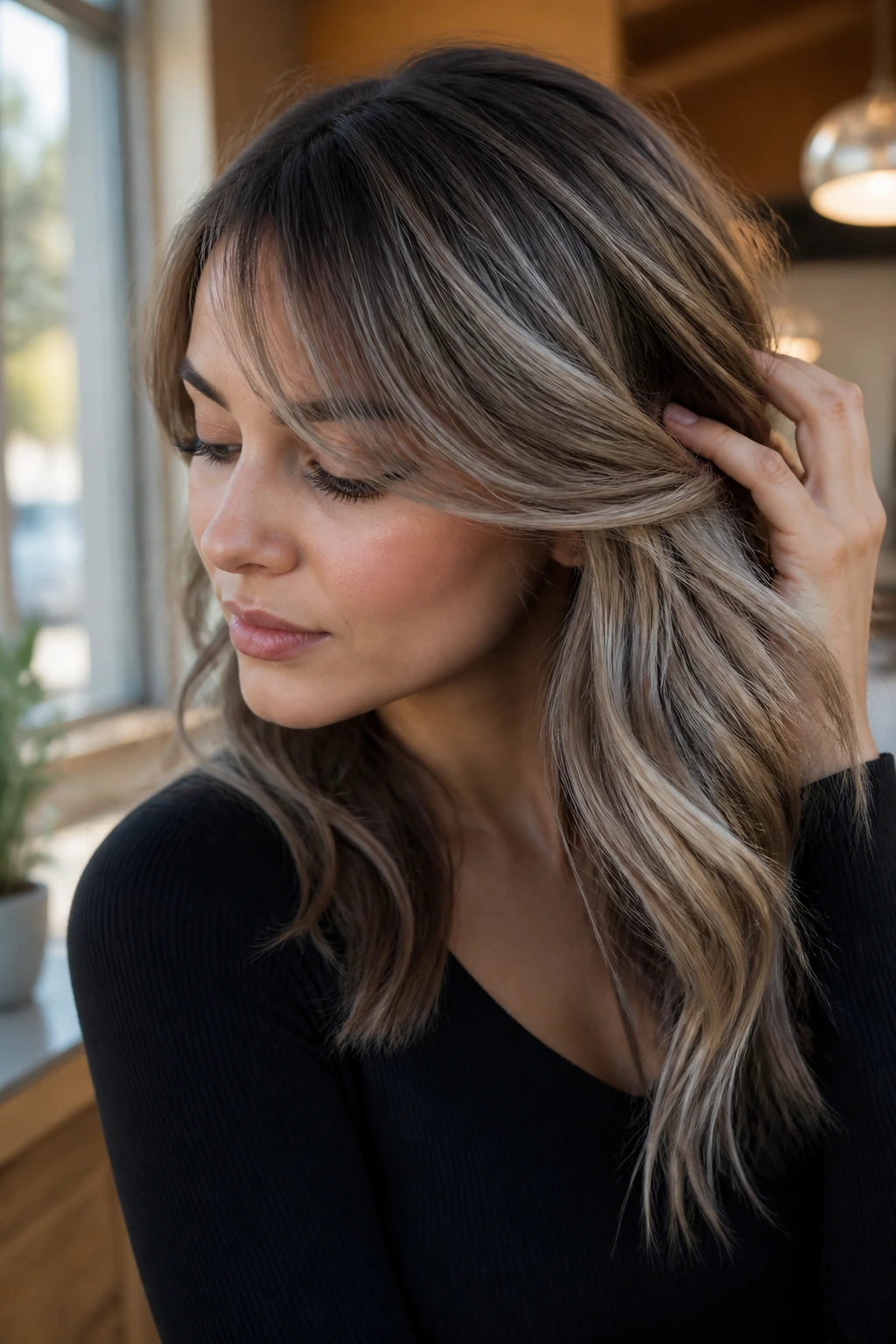
- Tail comb: Useful for clean parts and for steering side-swept bangs into the right direction.
- Sectioning clips: Keep the top layers out of the way when you blow-dry or pin-curl the fringe.
- Tint brush and bowl: Needed if you’re glossing or toning at the salon or at home under guidance.
- Balayage brush or paddle: Helps distribute lightener in soft, feathered strokes rather than chunky lines.
- Foils or film strips: Optional, but handy if you want stronger lift around the face.
- 1 to 1.25-inch curling iron or wand: Gives the bang and front pieces a bend without tight curls.
- 1.5-inch round brush: Good for a smooth side sweep and a little root lift at the crown.
- Heat protectant spray: Non-negotiable before blow-drying or hot-tool work.
- Purple shampoo: Best for pale blonde, pearl, and silver looks; use sparingly so the hair doesn’t go dull.
- Blue shampoo or mask: Helpful for brown bases that drift orange or copper.
How to Wear These Shades Day to Day
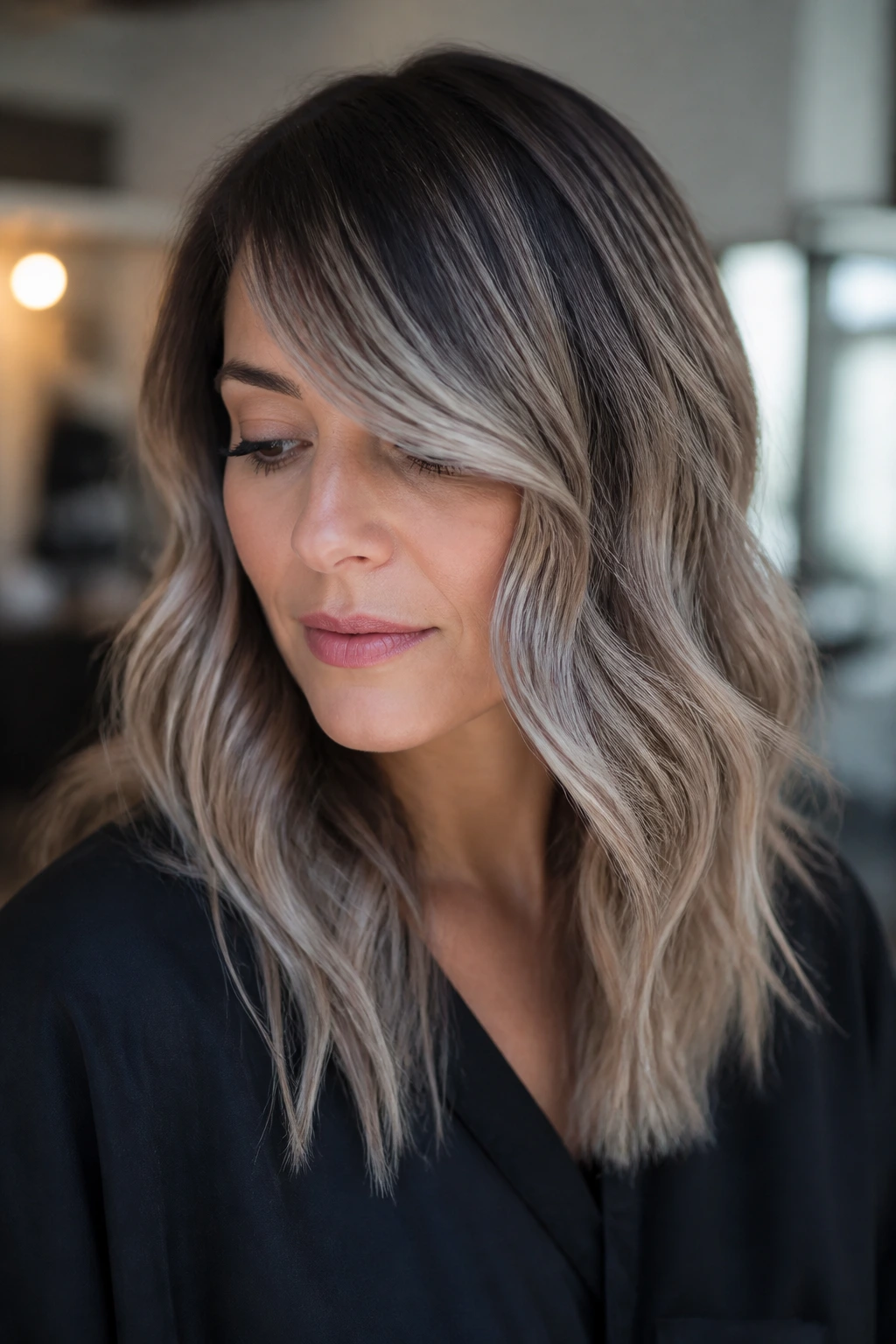
Parting: Keep the side part shallow enough that the fringe can move, but not so deep that it collapses over one eye. The sweet spot is usually just off center, with the shortest bang piece landing around the brow or just below it.
Styling: Add a soft bend, not a tight curl. A round brush at the roots and one pass with a hot tool through the bang usually gives enough shape. If the rest of the hair is wavy, leave the ends a little undone; the contrast makes the color look dimensional.
Makeup: Cool rose blush, mauve lip color, graphite liner, taupe shadow, and a berry stain all sit well next to ash, silver, and pearl tones. Warm orange blush tends to fight these shades.
Wardrobe: Black, denim, charcoal, winter white, cool navy, and silver jewelry help the hair read clearly. If you wear a lot of beige, choose beige with gray in it, not yellow in it.
Smart Shade and Salon Consultation Notes
The cleanest cool-toned balayage usually starts one level deeper than people expect. That’s not a sales pitch. It’s just how light behaves on hair with cool skin in the frame. If the base is too pale and the bangs too bright, the face can lose shape.
Fine hair usually needs fewer, thinner ribbons. Thick hair can carry broader panels and still look soft. Curly hair needs the color painted where the curls clump, not on every strand, or the pattern disappears. Straight hair can take sharper placement, but then the blend has to be immaculate because there’s nowhere to hide a bad line.
Another thing worth asking for: a cool gloss after the highlights settle. Glosses are the difference between “nice blonde” and “that blonde looks expensive.” They also keep ash and pearl from drifting yellow before the first trim.
Extra Ways to Tune the Tone Without Losing the Cool Edge
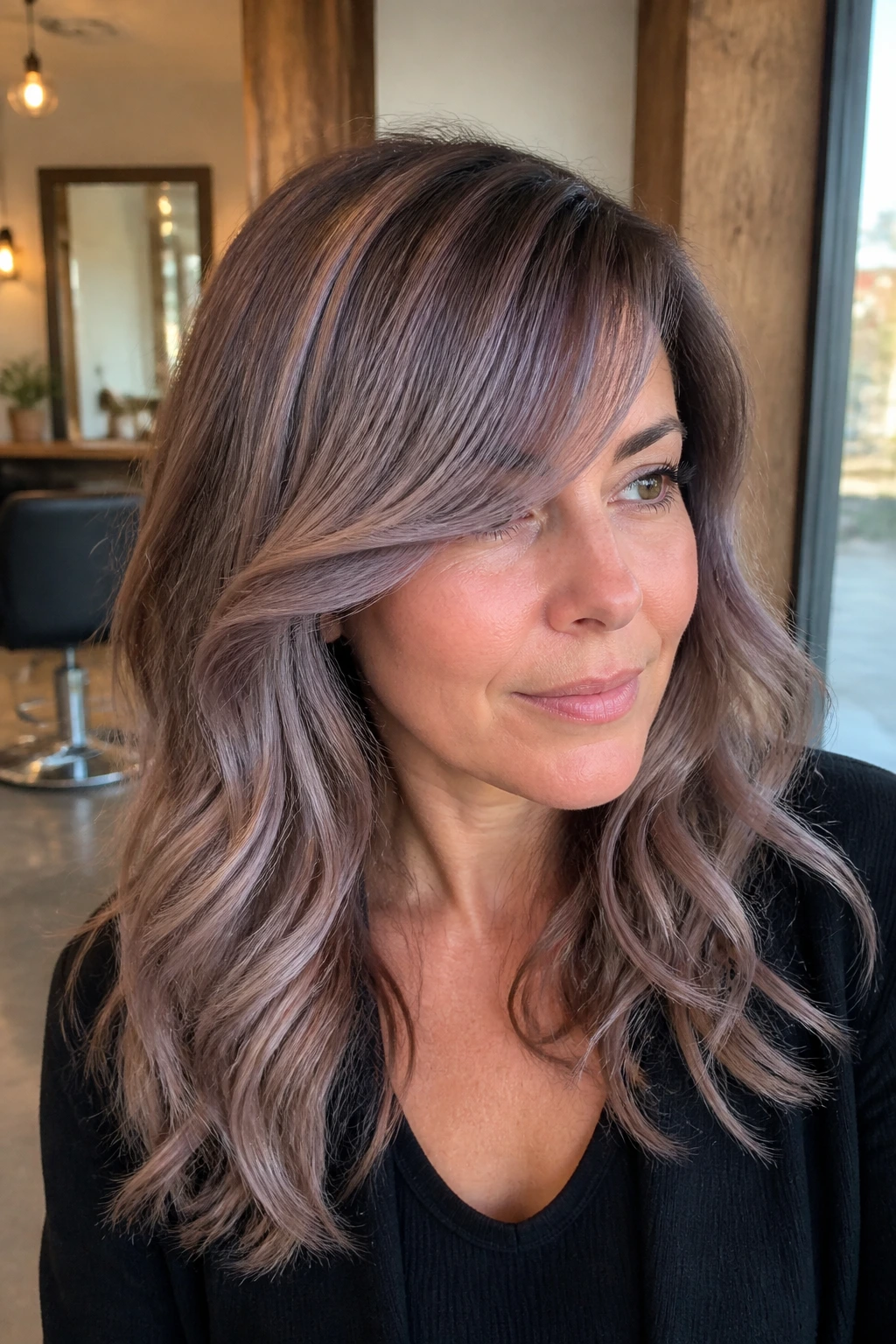
Glaze Trick: Ask for a cool beige, violet, or pearl gloss every six to eight weeks. That refresh keeps the blonde from going muddy and saves you from overusing purple shampoo.
Contrast Control: If you want more drama, keep the root deeper and the face-frame lighter. If you want softness, blur the front pieces into the mid-lengths instead of stopping them at the bang line.
Texture Play: Loose waves show off ribbons, while straight styles show off shine. If the color is silver, graphite, or pearl, straight styling tends to make the tone cleaner. If it’s mushroom, bronde, or smoky rose, waves help the blend.
Make-It-Yours: For a bolder finish, add a cool pastel glaze — lilac or mauve — over lighter pieces. For a more conservative version, stay in ash brown, smoky beige, or pearl brunette territory and let the cut do the talking.
Common Mistakes That Make Cool Balayage Look Off
The first mistake is going warm by accident. Beige is not always cool beige, and blonde is not always ash blonde. If the toner leans gold, the skin can look redder than it is. The fix is simple: ask your stylist to stay in ash, pearl, silver, violet, or blue-based families and to show you the toner formula before it goes on.
The second mistake is over-lightening the bang area. When the front is too bright from root to tip, the hairline can look striped and harsh. Keep the front slightly softer at the root and let the lighter pieces live through the sweep and ends.
The third mistake is cutting the side bang too short or too blunt. A sweep needs room to swing. If it hits mid-forehead and stops, it can look awkward fast. The better cut usually grazes the brow and cheekbone, then tapers into the layer below it.
The fourth mistake is ignoring maintenance. Cool blondes turn yellow, silver fades, and smoky brunettes drift copper if you never gloss them again. A toner refresh, a weekly mask, and regular heat protection solve most of that before it starts.
Variations and Adaptations to Try
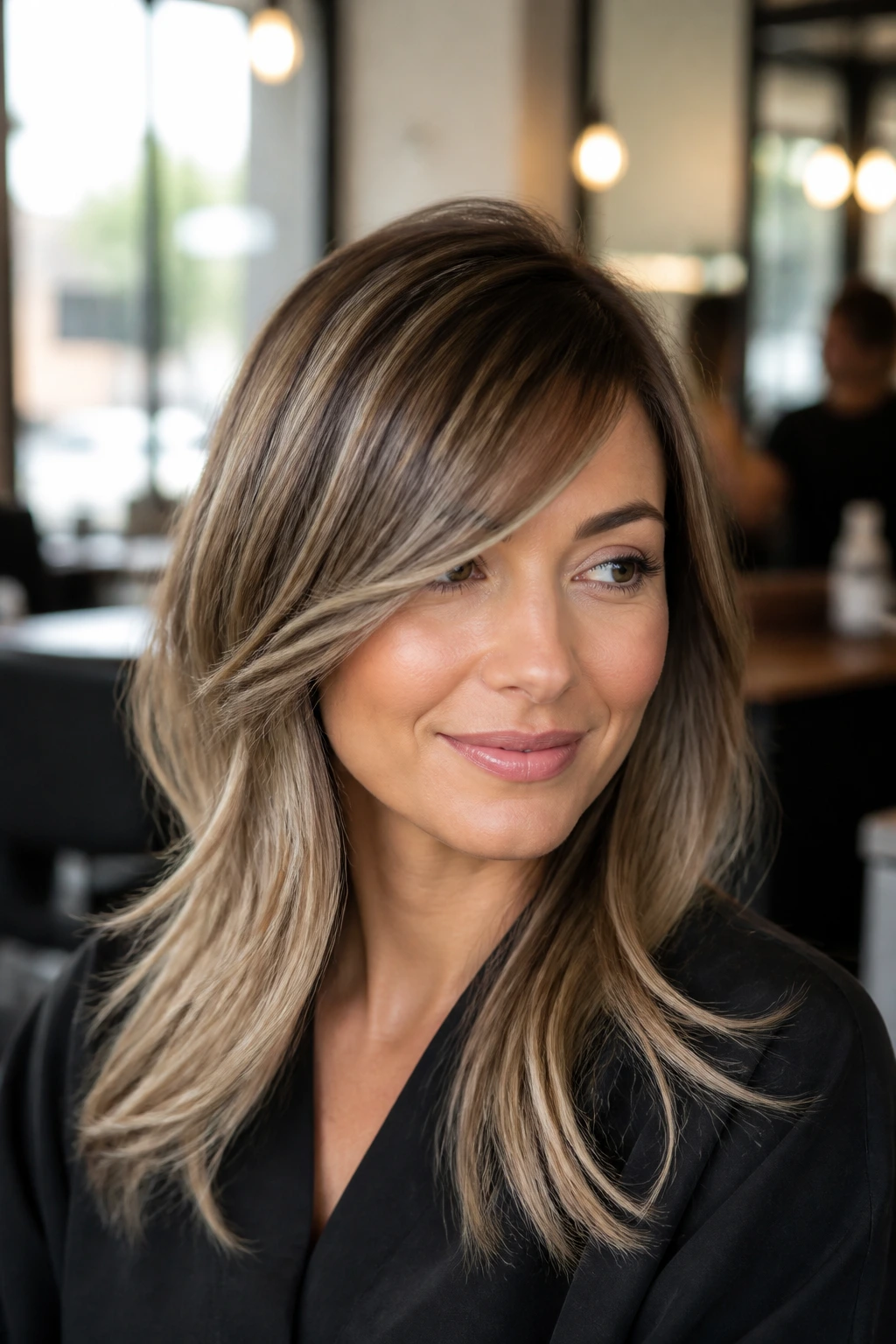
Soft Office Sweep: Keep the ribbons narrow and the root shadow close to your natural color. This version looks polished at work and grows out cleanly, especially if you don’t want obvious blonde pieces around the face.
High-Drama Ice: Push the lift higher and lean into platinum, silver, or arctic tones. It needs more upkeep, but it gives a sharp, editorial edge that pairs well with sleek styling and a side part.
Curly-Cut Version: Paint the highlights on the curl clumps instead of across every strand. The side-swept bang should follow the curl pattern rather than fight it, or the whole front will puff.
Gray-Blending Version: Use ash, pearl, and smoky beige to soften early grays without covering them completely. This works especially well when the bang sweep overlaps the temples, where gray usually shows first.
Short Bob Version: Concentrate the brightest pieces around the face and the ends of the bob. A side-swept bang on a shorter cut can be fantastic, but it needs enough length to move.
Bold Violet Version: Keep the base cool brunette and glaze the ends with violet smoke or mauve. It’s a good way to test fashion color without going all-in on neon.
Keeping the Color Fresh Between Appointments
Cool balayage stays cleaner when you don’t wash it to death. Two or three shampoos a week is plenty for most hair types, and dry shampoo between washes helps preserve both tone and volume in the bang. If your hair is fine, use less dry shampoo than you think you need; too much gives the roots a dusty feel.
Purple shampoo is useful, but not as a daily habit. Once a week is enough for most pale blondes. Brunettes that go orange can use a blue-based cleanser less often, mainly on the mids and ends. Overdoing either one can leave the hair dull or slightly violet.
A gloss or toner refresh every six to eight weeks keeps pearl, ash, silver, and mauve from fading into plain beige. Bang trims usually need to happen more often — every four to six weeks if the fringe is part of the look. Heat protectant before blow-drying, plus a weekly mask on the mids and ends, keeps the light pieces from turning brittle.
If the color starts looking tired, check the bang first. That’s where brass shows up first, because the front gets the most heat, the most sun, and the most touching.
Frequently Asked Questions
How do I know if I really have a cool skin tone?
Cool skin usually leans pink, red, or blue rather than yellow or olive. If silver jewelry looks cleaner on you than gold, that’s a clue, but lighting matters too, so check your skin in daylight.
Which balayage shades are safest if I hate brassiness?
Ash brown, pearl blonde, mushroom beige, silver brunette, and smoky mocha are the safest bets. They stay farthest from warm gold, which is usually what makes cool skin look off.
Do side-swept bangs work with curly or wavy hair?
Yes, but the cut has to respect the texture. A curly side-swept bang should be shaped for the curl pattern, not cut like straight hair, or it will spring up and lose the sweep.
How often should I get the tone refreshed?
Most cool balayage shades benefit from a gloss or toner refresh every six to eight weeks. If you wear pale blonde or silver, you may want to schedule it sooner once the first yellow cast appears.
Can I do cool balayage on very dark hair?
You can, but the look usually needs more than one stage if you want true ash, silver, or pearl pieces. Dark hair often needs careful lifting first, then toning, because the underlying warmth has to be managed.
What if my bangs get oily faster than the rest of my hair?
That’s normal. A light dry shampoo at the roots, plus a quick round-brush blow-dry at the fringe, usually fixes it without touching the rest of the style. Avoid piling on product near the front; it flattens the sweep.
Will these shades work if I wear glasses?
Yes, and side-swept bangs often look better with glasses than blunt fringes do because they leave more room around the frames. Keep the bang a little longer so it doesn’t fight the top edge of the glasses.
What should I do if the color looks too ashy or flat?
Ask for a softer gloss, not more bleach. A touch of neutral beige or pearl can bring the color back to life without pushing it warm.
A Cool Finish That Moves With You
The best thing about these looks is that they don’t depend on one perfect styling day. A side-swept bang lets the color shift with your part, your waves, your blow-dry, even the way you tuck hair behind one ear. That movement is what keeps cool-toned balayage from looking stiff.
If you’re choosing between blonde and brunette, start with the version that sits closest to your natural depth, then push bolder once you know how your skin reacts to the tone. Cool color rewards restraint first and drama second. Once you get that balance right, the whole look feels settled in the best way.