



Blonde balayage with bangs for fair skin can look feather-light and polished when the tone is right — and strangely flat when it isn’t. That’s the whole game here. On very light complexions, a bright blonde ribbon around the face can either make your features glow or wash them out so much that your eyes and brows disappear into the hair.
The fix is not one single blonde. It’s placement, depth, and fringe shape working together. A soft curtain bang with champagne balayage reads completely differently from a blunt fringe paired with icy platinum, even if both live in the same pale color family. The wrong contrast can look harsh fast. The right one gives you that lifted, airy effect that makes fair skin look fresher instead of paler.
I’ve always thought blonde on fair skin works best when it has a little shadow somewhere — a root melt, a beige lowlight, a slightly deeper bang root, something to stop the whole head from going chalky. You want brightness, not a helmet. You want movement, not stripes. And bangs can do a lot of that work before the color even starts.
Why This Collection Feels So Useful
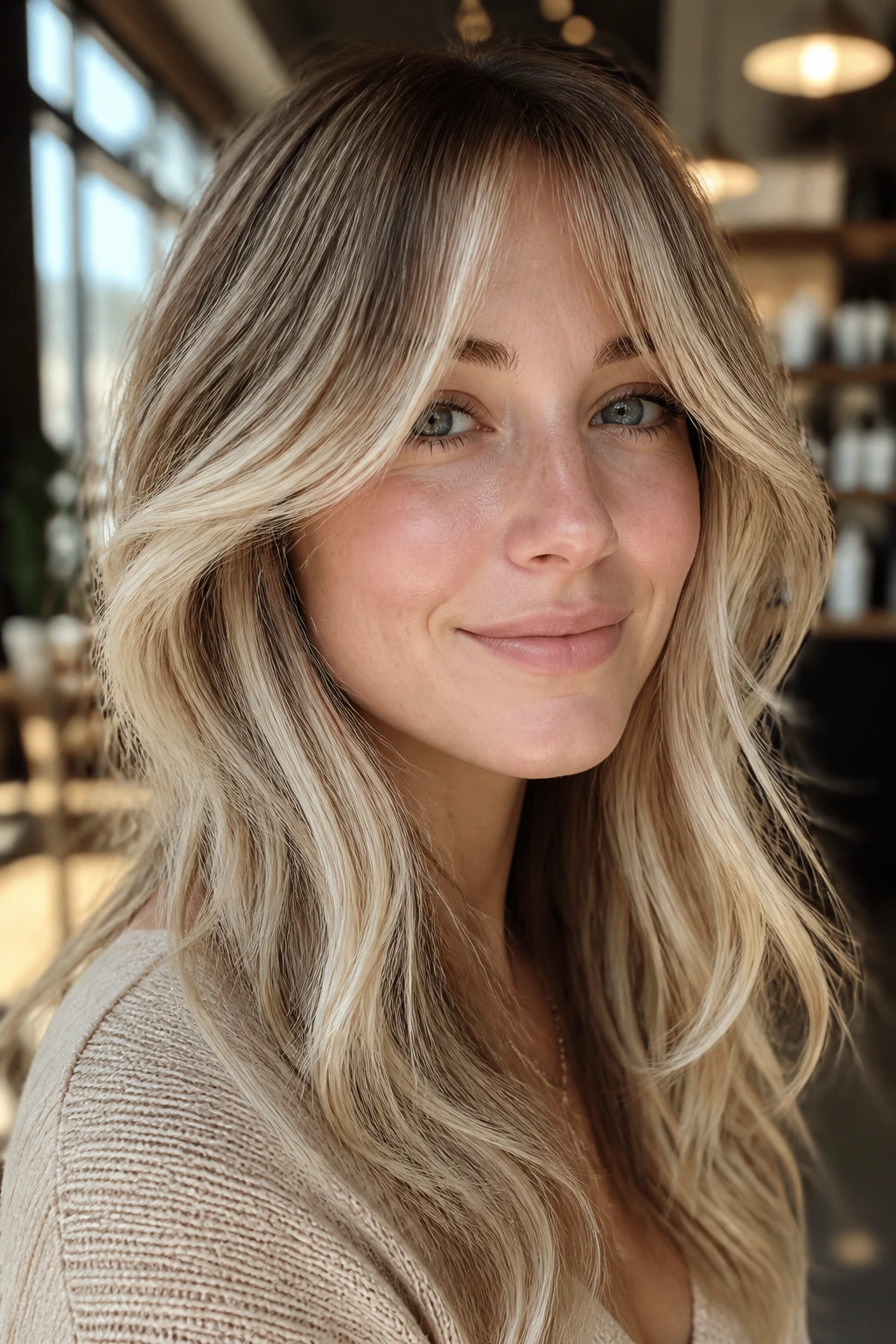
-
Softness Around the Face: Bangs break up the forehead area, which keeps pale skin from looking surrounded by one big light block of color.
-
Tone Variety Without Guesswork: The looks here range from pearl and ash to beige, butter, and champagne, so you can match cool, neutral, or warm fair skin more easily.
-
Different Maintenance Levels: Some styles lean rooted and low-fuss; others are more high-drama and need toner or trims more often. That matters more than people admit.
-
Works at Different Lengths: There are options for bobs, lobs, shoulder-length cuts, and long layers, so you’re not stuck chasing one salon-photo formula.
-
Better Face Framing: The brightest pieces sit where they actually help the face — temple, cheekbone, and fringe — instead of flooding every strand with the same lightness.
-
Easy to Explain to a Colorist: These ideas use real salon language: curtain bangs, bottleneck bangs, face-framing highlights, root melt, gloss, and dimensional blonde.
1. Champagne Curtain Bangs on Long Layers
Champagne blonde is one of my favorite shades for fair skin because it has sparkle without that brittle, white-blonde glare. Paired with long curtain bangs, it opens the face in a way that feels soft, not severe. The longest pieces should start around the cheekbone and melt into long layers that move when you walk.
This look works especially well if your skin is cool or neutral and your hair naturally bends a little. The balayage can start a touch lower through the back, then rise slightly toward the front so the bangs and temple area catch the most light. That little placement shift makes a big difference.
A 1.25-inch curling iron and a round brush are your friends here. The bangs should be blown away from the face, then let fall back into a center part. If they collapse too fast, the cut is probably too heavy.
2. Beige Blonde Bottleneck Bangs on a Lob
Bottleneck bangs are a smart choice when you want fringe without committing to a heavy wall of hair. They sit short in the middle, then curve longer at the edges, which gives fair skin some shape without swallowing the forehead. Beige blonde keeps the color calm and modern.
On a lob, this combination looks especially clean because the cut stops at a length that shows off the neck and jaw. The balayage should live mostly through the mid-lengths and ends, with a soft halo of brightness around the front. I like this because it keeps the face from looking overlit.
If your skin has pink undertones, beige blonde is kinder than a very golden blonde. It blends instead of shouting. Ask for a root shadow that’s only one or two levels deeper than the blonde — enough to anchor the style, not enough to feel dark.
3. Creamy Face-Framing Waves with Wispy Fringe
Creamy blonde around the face can be the difference between “my hair is light” and “my face looks luminous.” Add a wispy fringe, and the whole thing turns airy. The fringe should skim the brows in soft pieces, not one blunt line.
This version is especially good for very fair skin that needs warmth but not brass. A creamy tone has enough softness to keep the complexion from going gray. The face-framing pieces can be a shade brighter than the rest, but not stark white. That tiny shift keeps the hair looking expensive in the practical sense: smooth, glossy, believable.
I’d keep the waves loose and brushed out. Tight curls fight the fringe. A few large bends with a curling wand are better than anything too neat. If you have fine hair, ask for the fringe to stay light and see-through at the ends so it doesn’t sit like a shelf.
4. Pearl Blonde Side-Swept Bangs on Shoulder-Length Hair
Pearl blonde has a cool sheen that flatters fair skin with pink or blue undertones, especially when the hair is shoulder length and the bangs sweep to one side. The diagonal line draws the eye across the face instead of straight down the center. That alone can make a pale complexion look a little more alive.
What I like here is the balance. Side-swept bangs can look old-school if they’re too stiff, but pearl blonde keeps them fresh. The balayage should be woven through the top layers and front edge so the sweep catches light on the move.
Blow-dry the bangs with a medium round brush and pin them across the forehead for ten minutes while they cool. That tiny trick helps the shape last. A dab of lightweight serum on the ends keeps pearl tones looking shiny instead of dusty.
5. Butter Blonde Shag with Feathered Bangs
Butter blonde gets a bad reputation when it turns too yellow, but in the right shade it’s one of the best options for fair skin with freckles or warmer undertones. On a shag, it looks casual and a little messy in the best way. Feathered bangs keep the top from feeling too dense.
This cut relies on texture. The layers should kick out at different lengths, and the balayage should follow those bends so the color looks scattered rather than painted in blocks. If the front pieces are too blonde and the interior is too dark, the contrast will fight the shag shape. Keep it blended.
I’d style this with a light mousse and a diffuser if your hair is wavy. Straight hair can still wear it, but you’ll need some bend through the fringe and crown. The whole point is movement. Flat butter blonde is a waste; feathered butter blonde has life.
6. Cool Ash Balayage with Bardot Bangs
Bardot bangs are those soft, parted front pieces that look a little glamorous without trying too hard. Add cool ash balayage, and the result is especially good on fair skin that tends toward pink or neutral tones. The cooler blonde keeps the face from looking flushed.
The trick with ash blonde is not to let it go flat. You need a little dimension at the root and through the lower lengths, or the color can look dusty. I’d ask for thin balayage ribbons rather than thick slices. The bangs should be lightly thinned so they fold open instead of sitting heavy on the forehead.
This is a strong choice if you wear minimal makeup and want the hair to do some work. It also looks good with soft waves, because the bend in the hair keeps ash tones from reading too serious. Straightened too much, it can feel stern. A little texture fixes that.
7. Platinum Money Pieces with Soft Full Bangs
Platinum around the face is bold, no way around it. On fair skin, though, it can look incredibly clean when it’s balanced with soft full bangs and a deeper root. The bangs should be dense enough to feel intentional, but not so thick they look like a cap.
The reason this works is contrast. Pale skin can handle platinum when there’s some shadow in the cut and a little definition at the brow line. Without that, the look can wash you out. The front pieces should be the brightest zone, with the rest of the balayage falling one level softer so the color doesn’t read as a solid sheet.
This is not a low-maintenance choice. Toner, trim appointments, and heat protection are part of the deal. But if you like crisp, face-lifting blonde, this one has real presence. It’s sharp in a good way.
8. Honey-Vanilla Balayage with Piecey Bangs
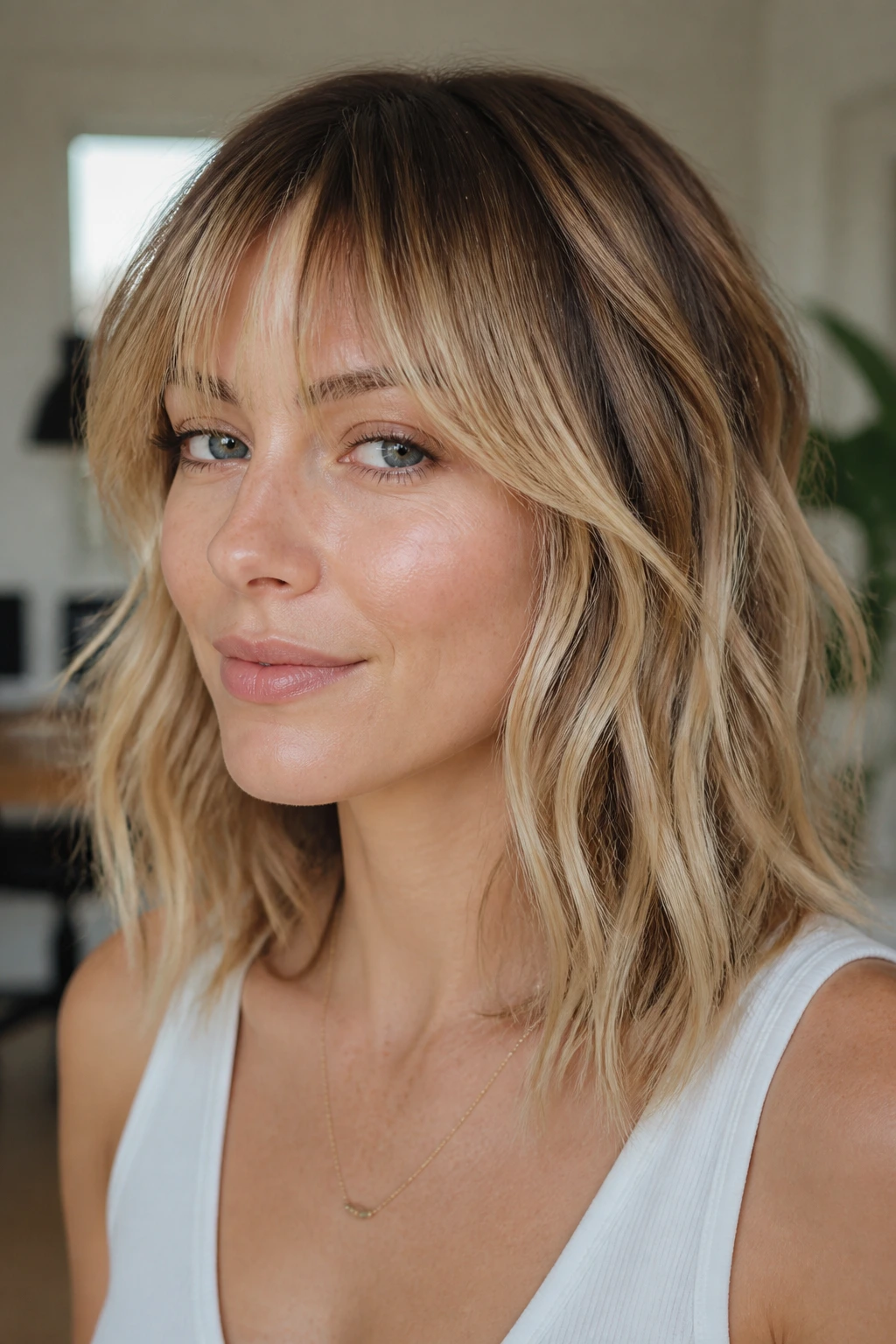
Honey-vanilla sounds sweet, and the best versions really are — but the tone needs restraint on fair skin. Too much gold and the hair starts to look brassy against pale cheeks. Keep it in that middle zone where honey and cream overlap.
Piecey bangs are the reason this style stays modern. They let bits of forehead show through, which helps fair skin avoid that boxed-in feeling. The balayage should be painted in fine, soft ribbons through the mid-lengths, with a brighter face frame that starts around the cheekbone. That placement keeps the color from overwhelming the skin.
A little styling wax on the fringe goes a long way. Too much and the pieces clump. Too little and they separate in a fussy way. I’d finish this with a loose wave and a brush-through, not a defined curl.
9. Icy Blonde Blunt Bob with Micro Bangs
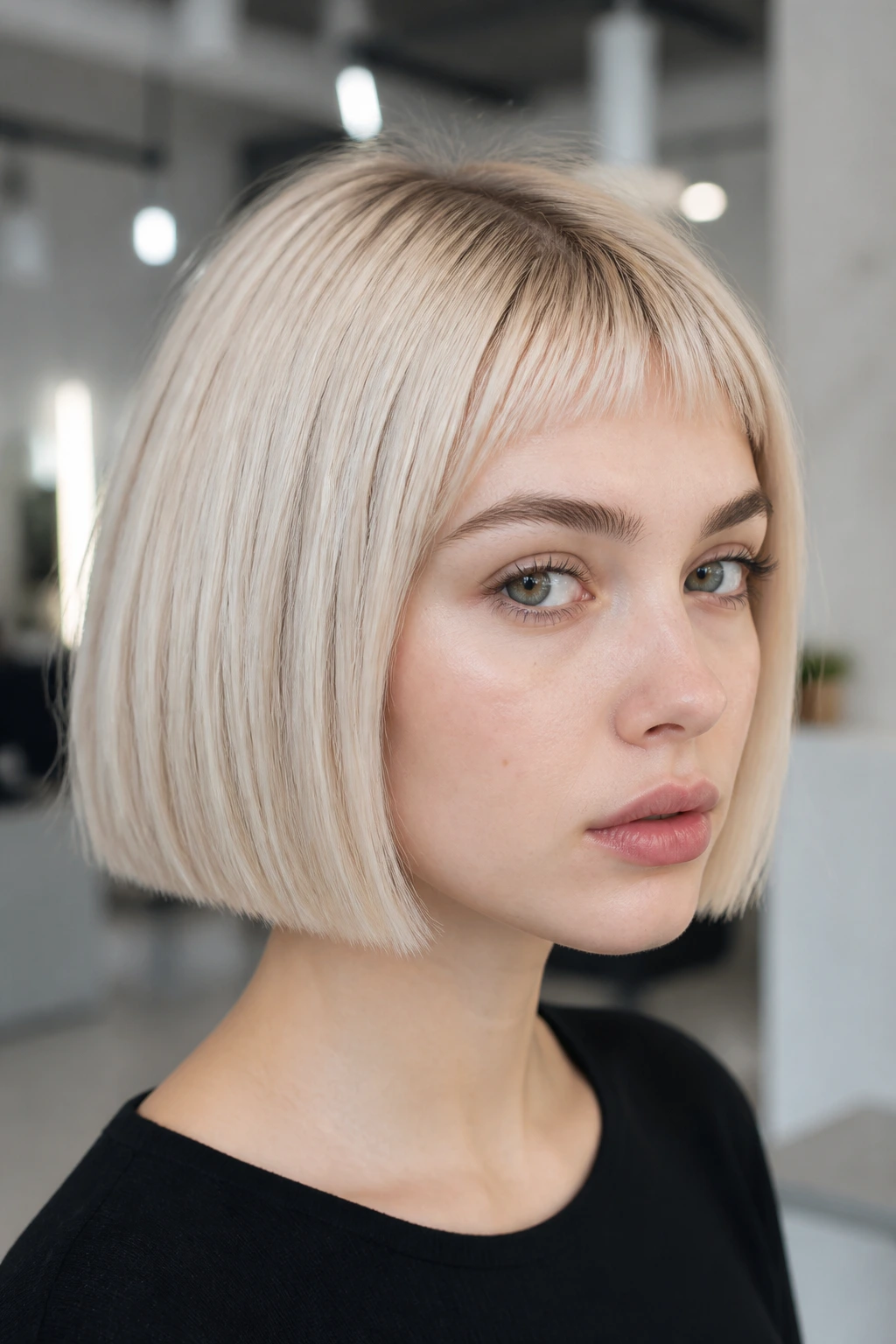
This one is for the brave. An icy blonde blunt bob with micro bangs is graphic, sharp, and almost editorial in how little it tries to be sweet. On fair skin, it can look almost porcelain when the toner is clean and the cut is precise.
The danger is obvious: if the blonde is too white and the fringe too heavy, the face can disappear. So the bob has to be exact. The ends should sit blunt at the jaw, and the micro bangs should be softened just enough at the edges so they don’t look clipped on. I prefer a tiny bit of root shadow here, even if the rest of the blonde is icy.
This style needs regular trims because micro bangs grow fast and lose the whole effect once they hit the lashes. It’s a high-commitment look. But if you like strong shape and pale-blonde contrast, it’s hard to beat.
10. Sandy Butterfly Cut with Curtain Fringe
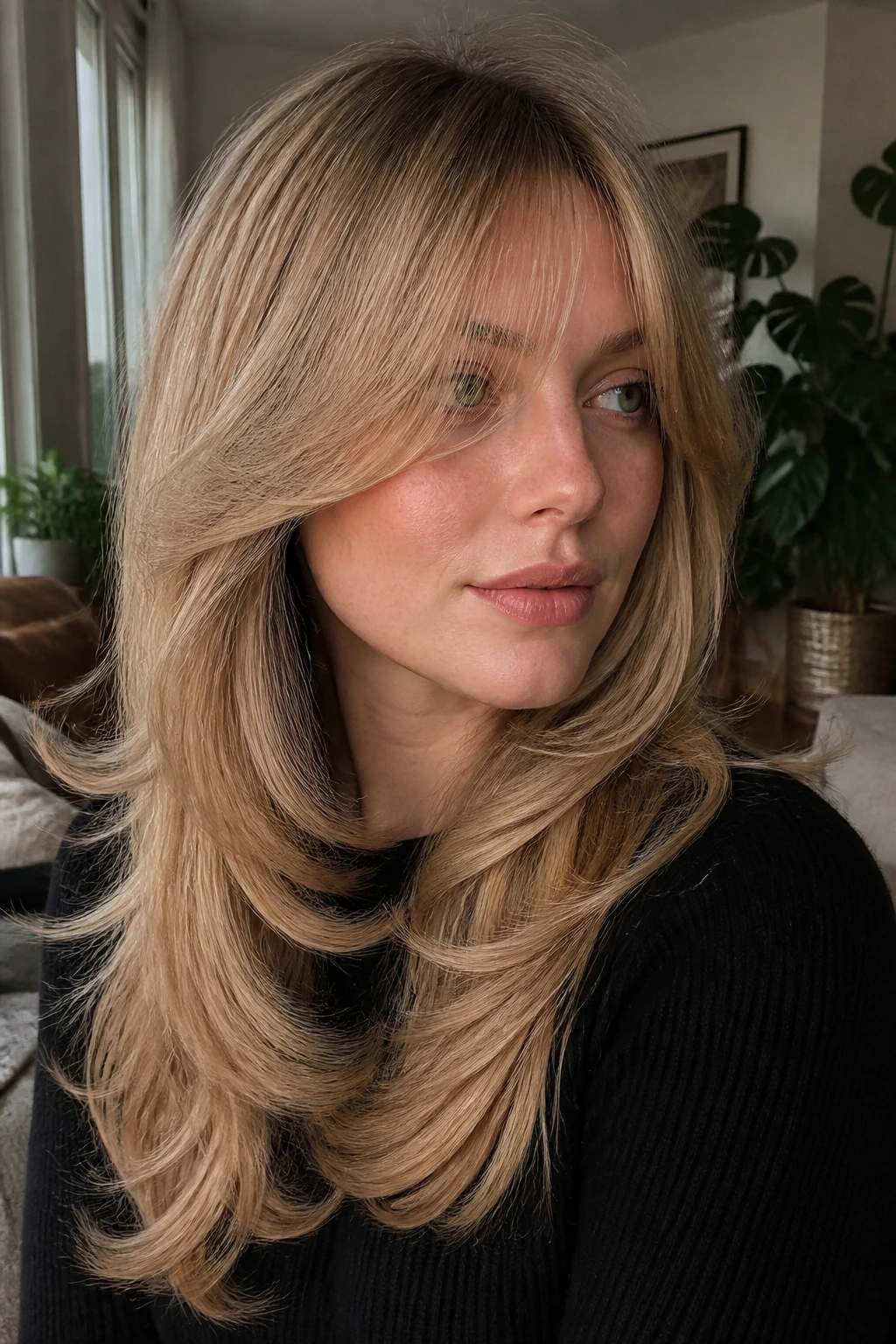
The butterfly cut gives you that built-in swing through the layers, and sandy blonde keeps it from going too bright. On fair skin, sandy tones are useful because they add warmth without turning orange. Curtain fringe fits the shape naturally; it falls into the layered sides instead of fighting them.
What makes this pairing work is the way the layers lift around the cheekbones and collarbone. The balayage should show up most clearly on the outer layers, not buried inside the cut where nobody can see it. That gives the hair movement when it’s worn loose, tied back, or half-up.
If your hair is thick, this cut can take weight out fast. If it’s fine, ask for softer graduation so the ends don’t look stringy. Either way, the fringe should stay long enough to blend — you want a flow, not a curtain wall.
11. Vanilla Blonde Rounded Bob with Airy Bangs
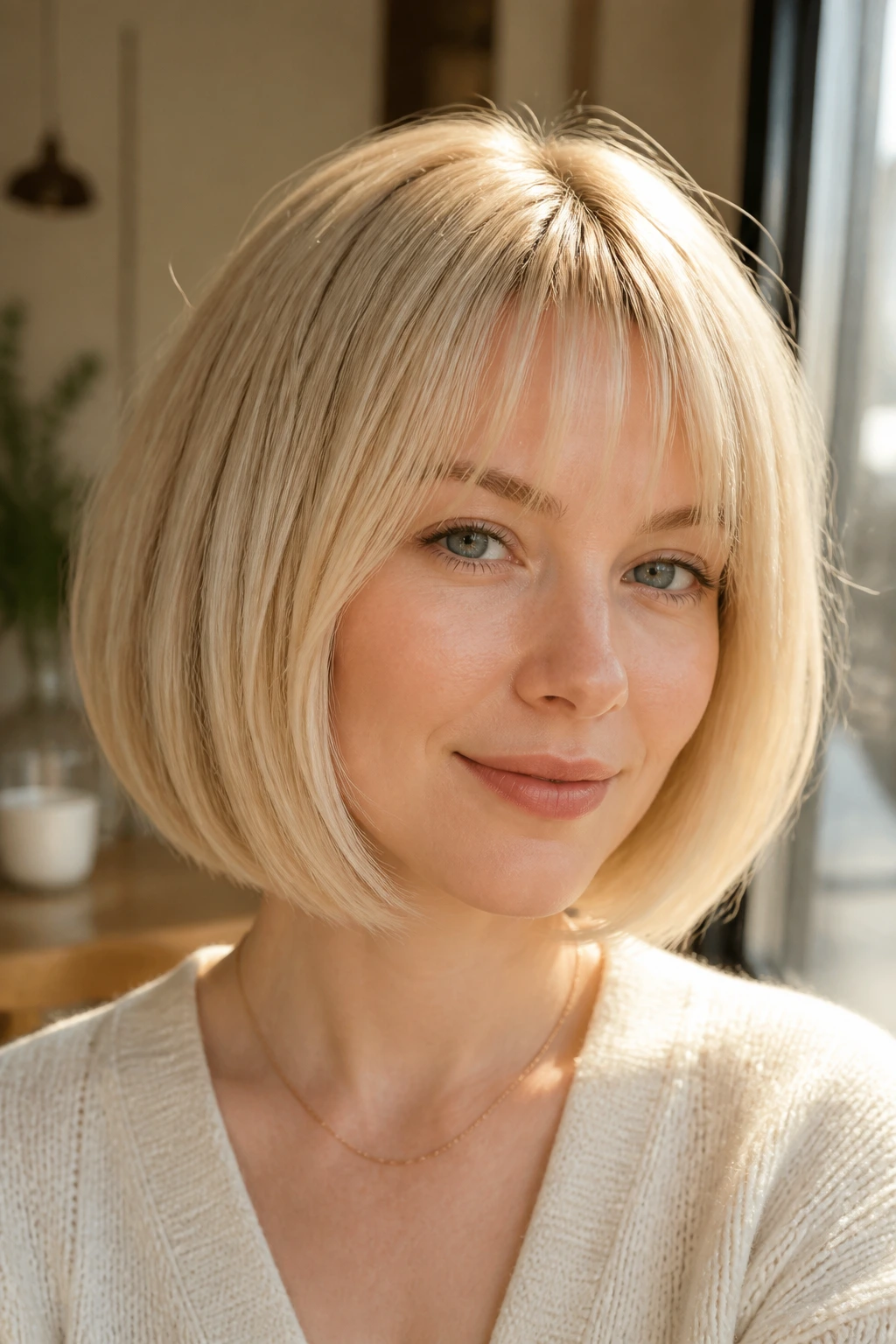
Vanilla blonde is one of those shades that sounds plain until you see it on fair skin and realize how useful it is. It adds softness, a little warmth, and enough light reflection to keep the face from looking hollow. On a rounded bob, it feels clean and almost creamy.
The airy bangs matter here. A rounded bob can turn heavy if the fringe is blunt, so the bangs should let a little forehead show through. That helps the face stay open. The balayage can be subtle, with the brightest pieces living just under the top layer so the shine pops when the bob swings.
I’d blow this out with a small round brush and tuck the ends under by half an inch. Don’t overcurl it. The shape should feel polished, not precious. Vanilla blonde gets its power from restraint.
12. Cool Champagne Layers with Cheekbone-Grazing Bangs
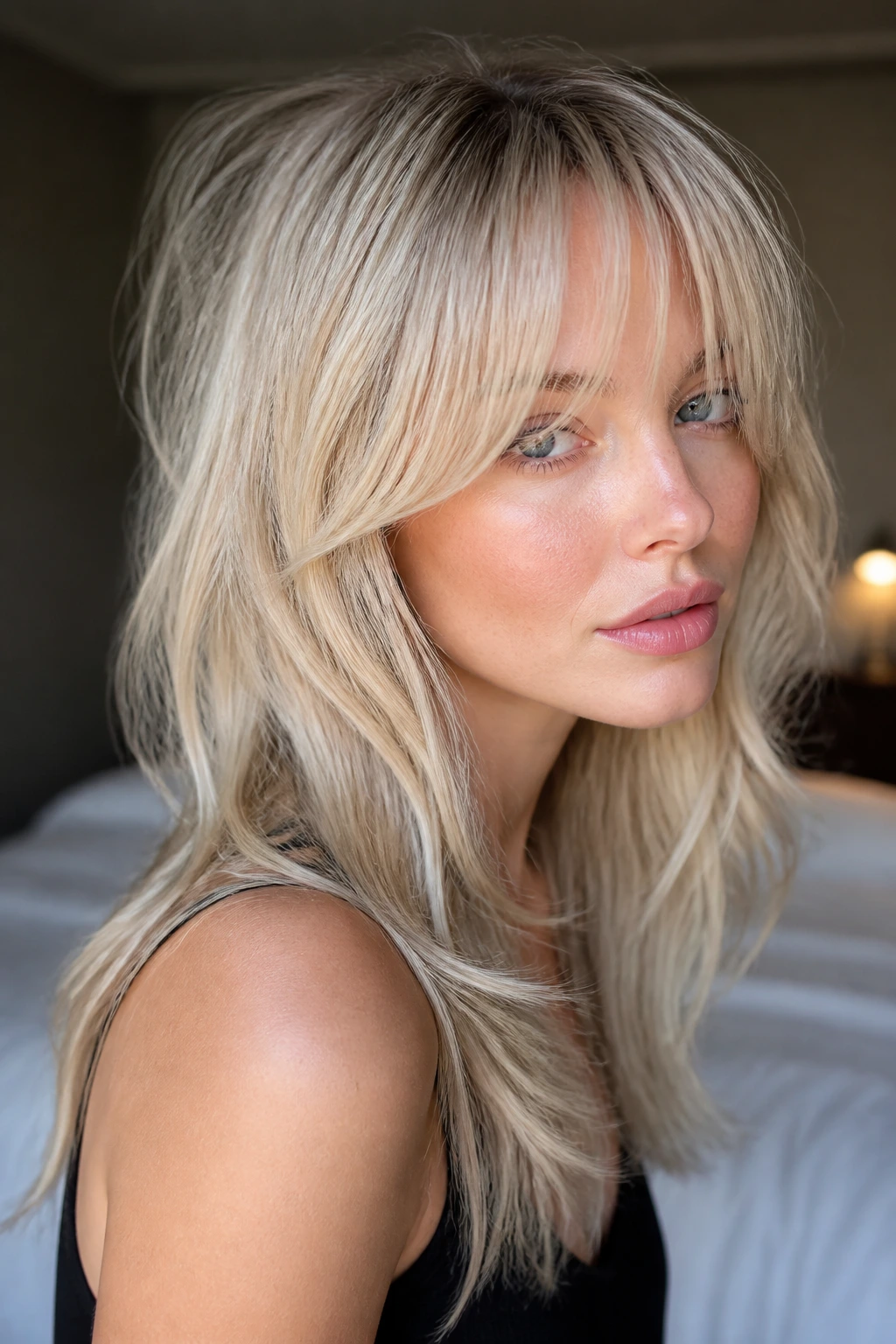
Cheekbone-grazing bangs are flattering for the simple reason that they point the eye to the center of the face, not the edge. Cool champagne layers give the cut an expensive-looking sheen without pushing into stark platinum territory. Fair skin with cooler undertones tends to handle this especially well.
This is one of those styles that looks best when the layers are visible. The balayage should sit on the outer planes of the hair, then soften toward the ends. If the front chunks are too thick, the bang line loses its lightness and the whole cut feels overbuilt. Keep the density medium.
A loose wave helps the bangs fall into place. I’d avoid heavy hairspray; it makes the front pieces stiff. Use a small amount of flexible hold spray instead so the bangs stay soft but still move.
13. Mushroom Blonde Balayage with Textured Fringe
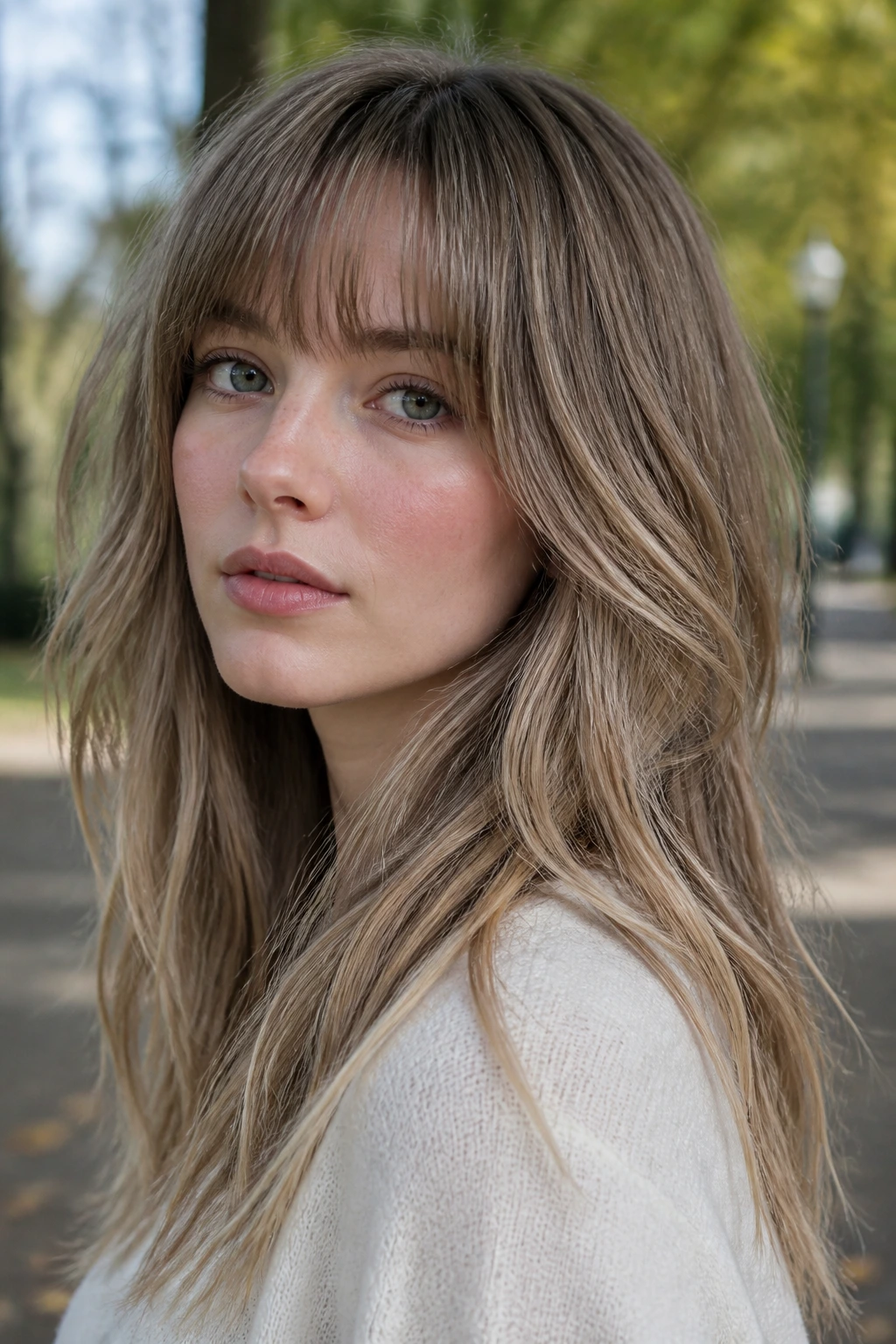
Mushroom blonde is one of the smartest shades for fair skin if you want something muted and cool but not icy. It sits in that beige-ash zone that can calm redness in the complexion and still look dimensional. Textured fringe keeps the color from feeling too polished.
This is a nice choice if you’re tired of bright blonde upkeep. The balayage should be fine and woven, almost like soft streaks of smoke through the lengths. Because the tone is muted, the cut has to do the interesting work. Texture through the bangs and ends gives the hair shape.
I like this on straight or slightly wavy hair, especially if you wear minimal makeup. It reads modern without being loud. The only caution is glossing it too cool — you can push mushroom blonde into dull territory if you overcorrect the toner.
14. Rose Beige Balayage with Long Bangs
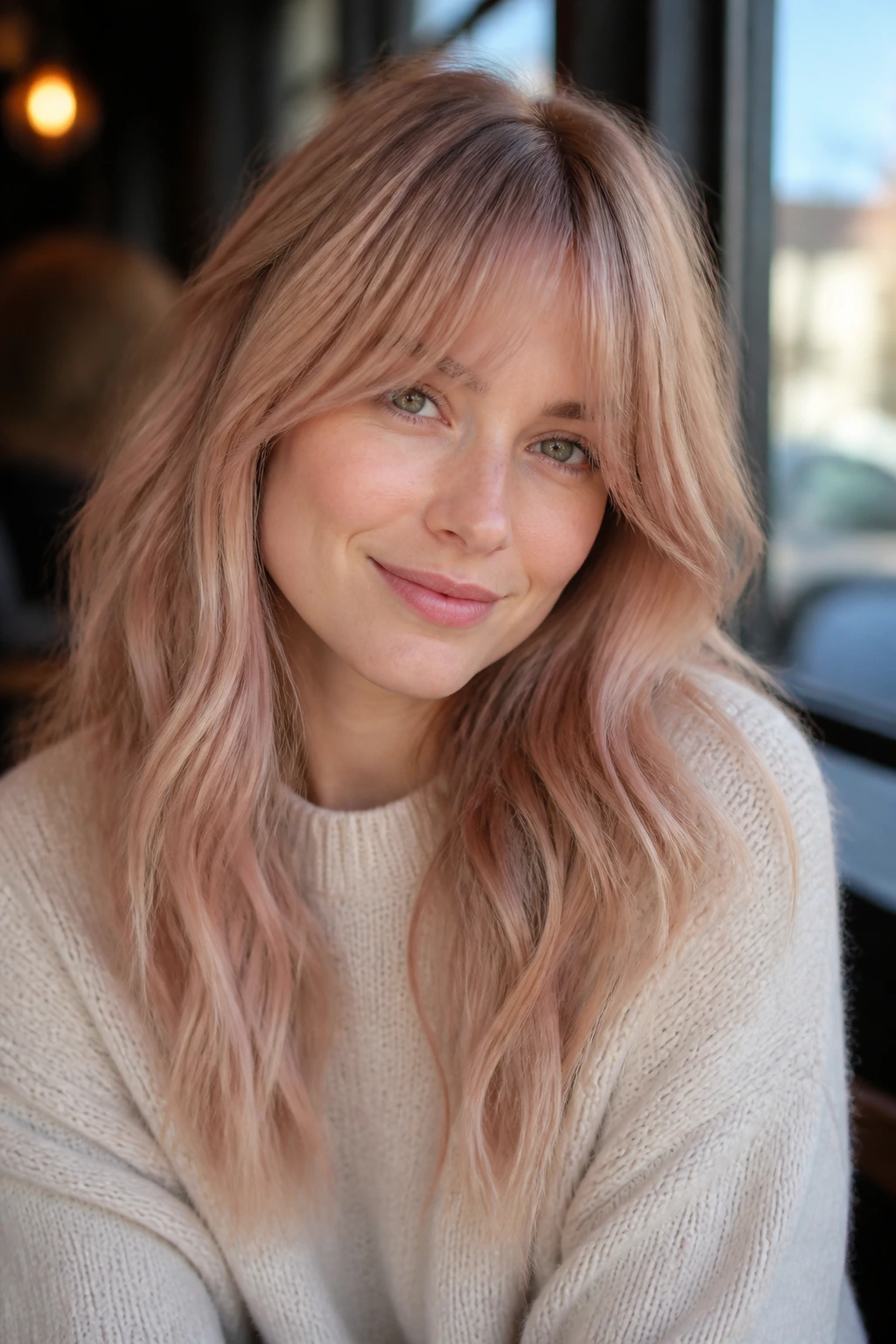
Rose beige is the quietest kind of warmth, and on fair skin with rosy undertones it can look incredibly natural. It doesn’t fight the flush in the cheeks; it sits beside it and makes the skin look intentional. Long bangs keep the face soft and can be tucked back or split as needed.
This color works best when the rose note is faint, not pink. You want beige first, rose second. The balayage should be brushed through in thin panels so the pink-beige quality shows as a sheen rather than a dye job. Long bangs give you room to play with the part, which is useful if your face shape changes depending on how you wear your hair.
It’s a softer, more romantic choice than icy blonde. Not everyone wants that, and that’s fine. But if you like gentle color that flatters pale skin instead of shouting over it, this is one to keep in the running.
15. Bright Beige Balayage with Rounded Bangs
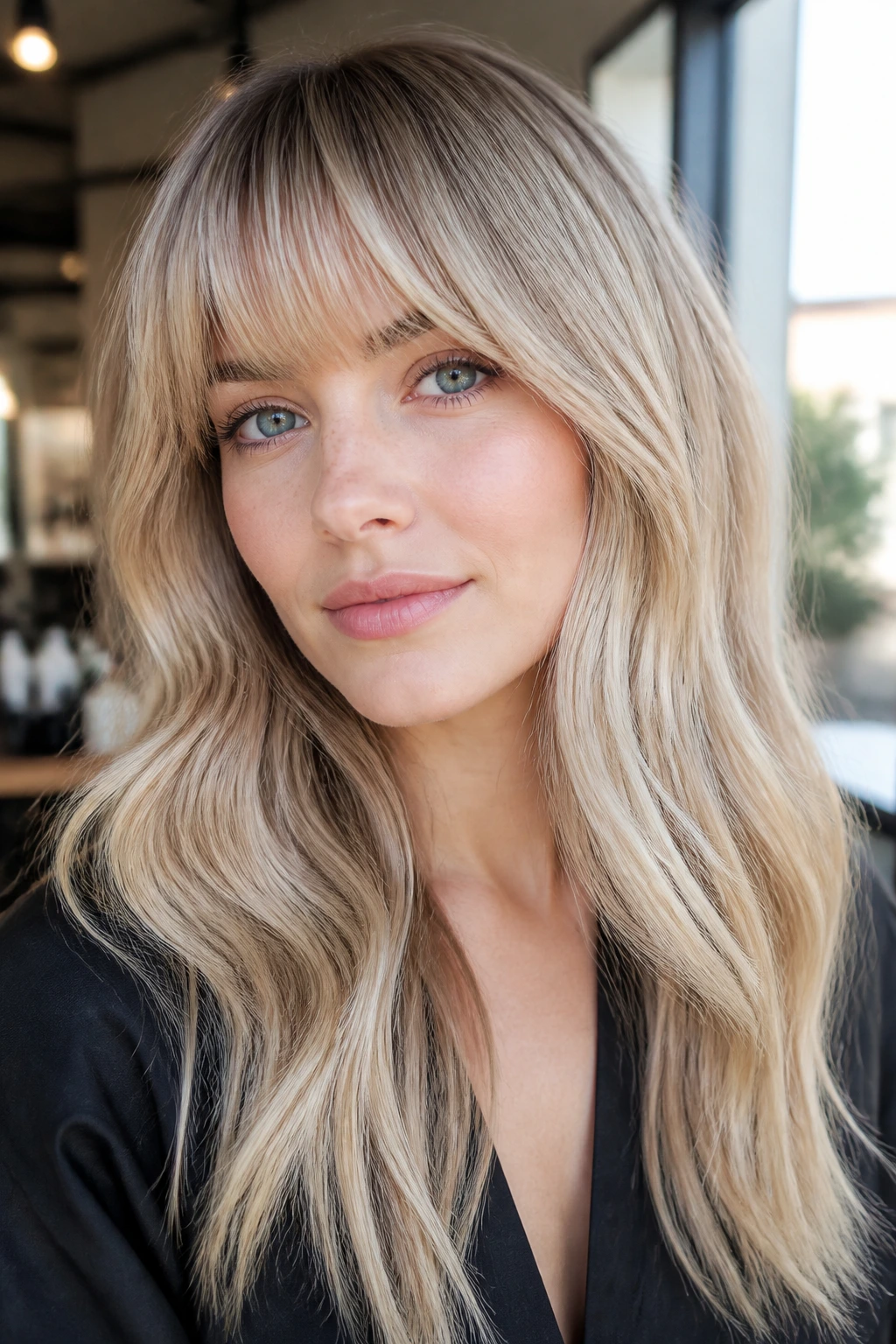
Bright beige is what I reach for when fair skin looks a little too blank in blonde hair. It has enough lightness to feel fresh, but the beige note keeps it from going washed out. Rounded bangs add a subtle curve that helps the face look fuller and more open.
The rounded bang shape works best when the center is a touch shorter and the sides graze the brows. That shape creates a soft frame without the bluntness of a straight fringe. The balayage can start fairly high around the crown, but the front pieces should still stay blurred, not striped.
If your hair is fine, this look can create the illusion of more thickness because the fringe and beige glow add body. If your hair is dense, the bang line may need internal thinning so it doesn’t sit heavy. Either way, the result is polished and easy to wear.
16. Grown-Out Curtain Bangs on Baby Blonde Waves
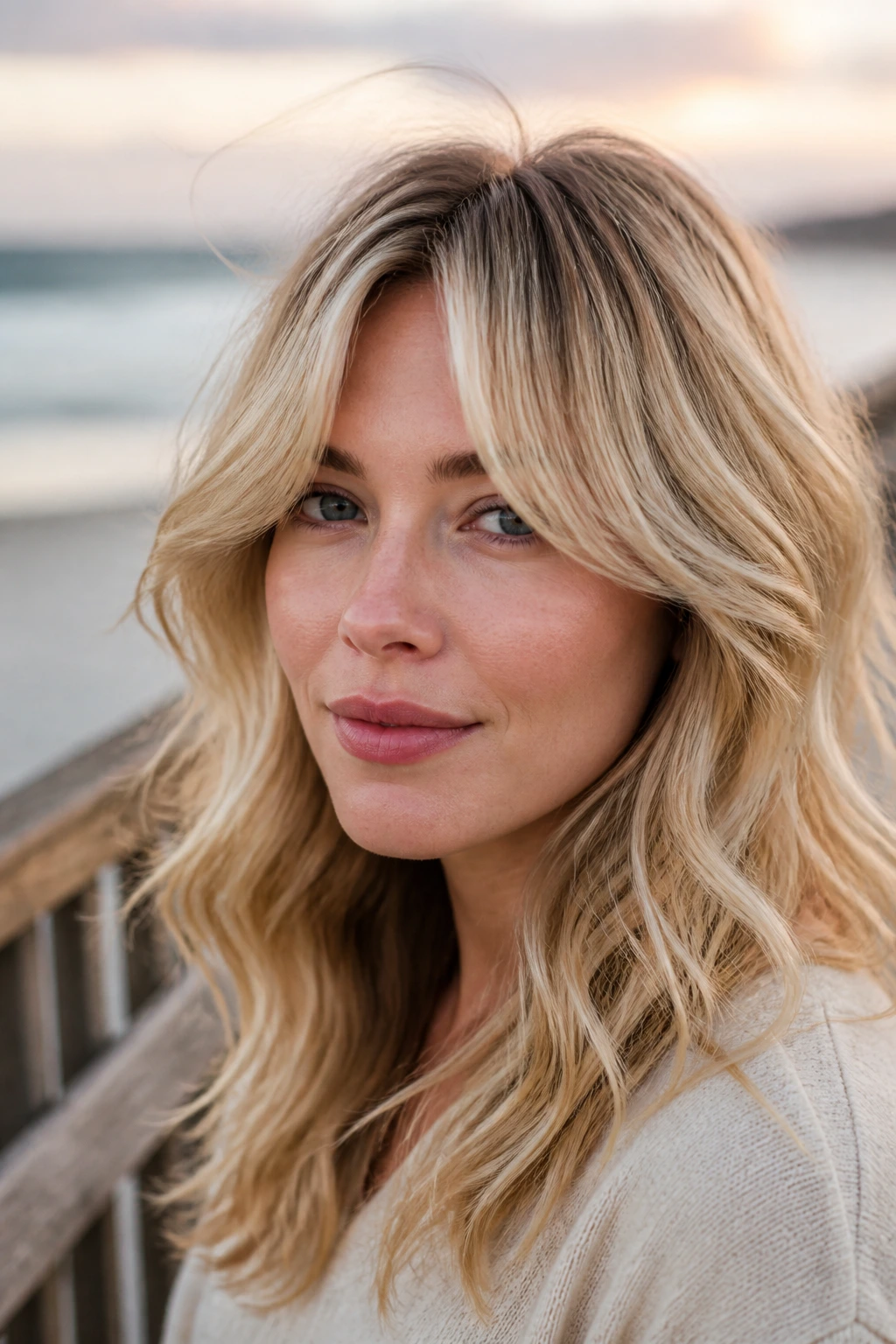
Grown-out curtain bangs are useful because they don’t demand perfection every morning. On baby blonde waves, they create a soft frame that looks lived-in without looking neglected. For fair skin, baby blonde works when it has enough beige or cream in it to keep the face from going flat.
This style is one of the easiest to wear if you hate sharp lines. The balayage can be scattered through the surface layers, with the brightest points near the temples and ends. Because the bangs are already grown out a little, they blend more naturally into the rest of the cut.
I’d use a wave iron or just braid-dry the hair if you like a looser finish. The texture matters more than the curl pattern here. The point is movement, not polish.
17. Ash Blonde Woven Highlights with Choppy Bangs
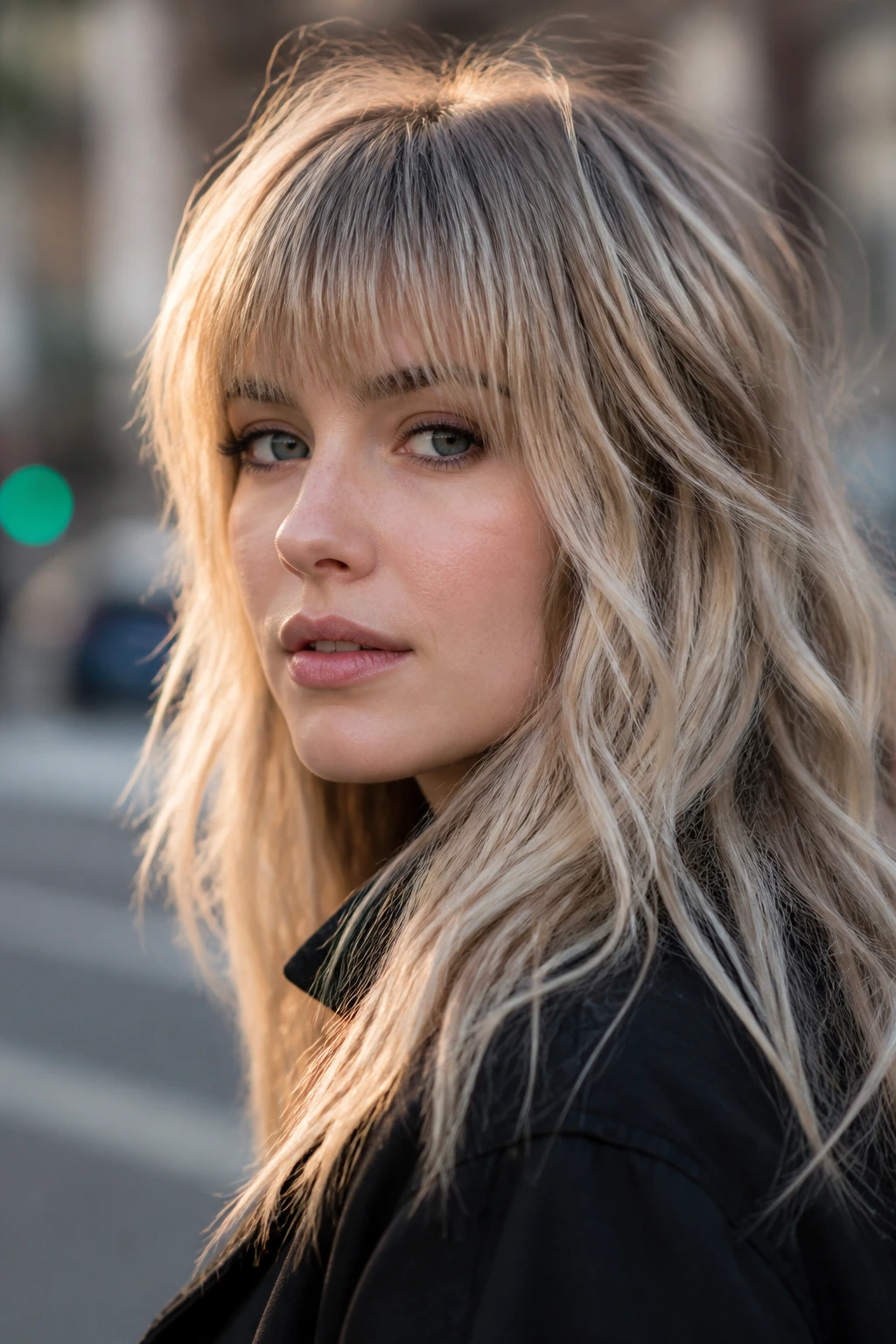
Woven highlights have a softer, more natural look than obvious stripes. On fair skin, ash blonde woven through the hair can keep things cool and dimensional without tipping into silver. Choppy bangs bring enough edge to stop the cut from feeling too safe.
This is a good option if your hair is medium density and you want a little grit in the shape. The bangs should look pieced apart, not blunt, and the color should follow that same idea. Thin weaves, subtle root depth, and an uneven face frame make the whole style feel more expensive than a broad highlight panel ever could.
If your skin burns pink, ash blonde can be a smart choice because it cuts some of that visual redness. If your complexion is already muted, though, you may want a bit more beige mixed in so the hair doesn’t disappear into the skin.
18. Cream Soda Blonde with Side Fringe
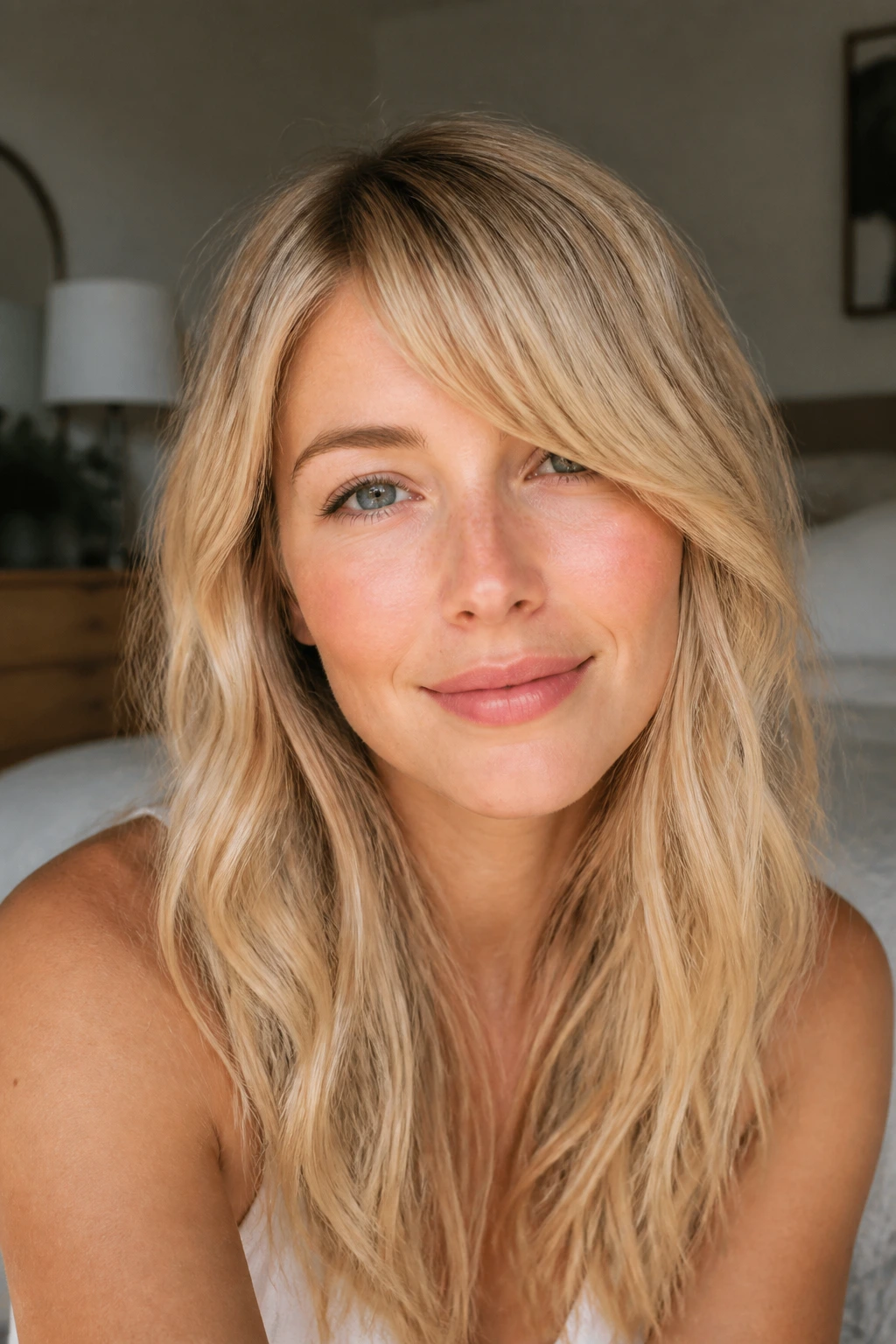
Cream soda blonde has more warmth than ash, but it still lives in the beige family rather than the yellow one. On fair skin, that balance keeps the color bright without turning loud. A side fringe gives the style an easy, wearable shape that works when you don’t want to fuss with center parts.
The side fringe is especially nice if your forehead is shorter or you wear glasses. It breaks the face diagonally and leaves room for the brows to show. The balayage can be a little thicker through the side fringe area, then softer through the back so the whole head doesn’t look overlit.
This look lives or dies by the styling. If you blow the fringe flat, it loses lift. A quick round-brush pass at the root and a little bend at the ends makes all the difference.
19. Smoky Beige Lob with Tousled Fringe
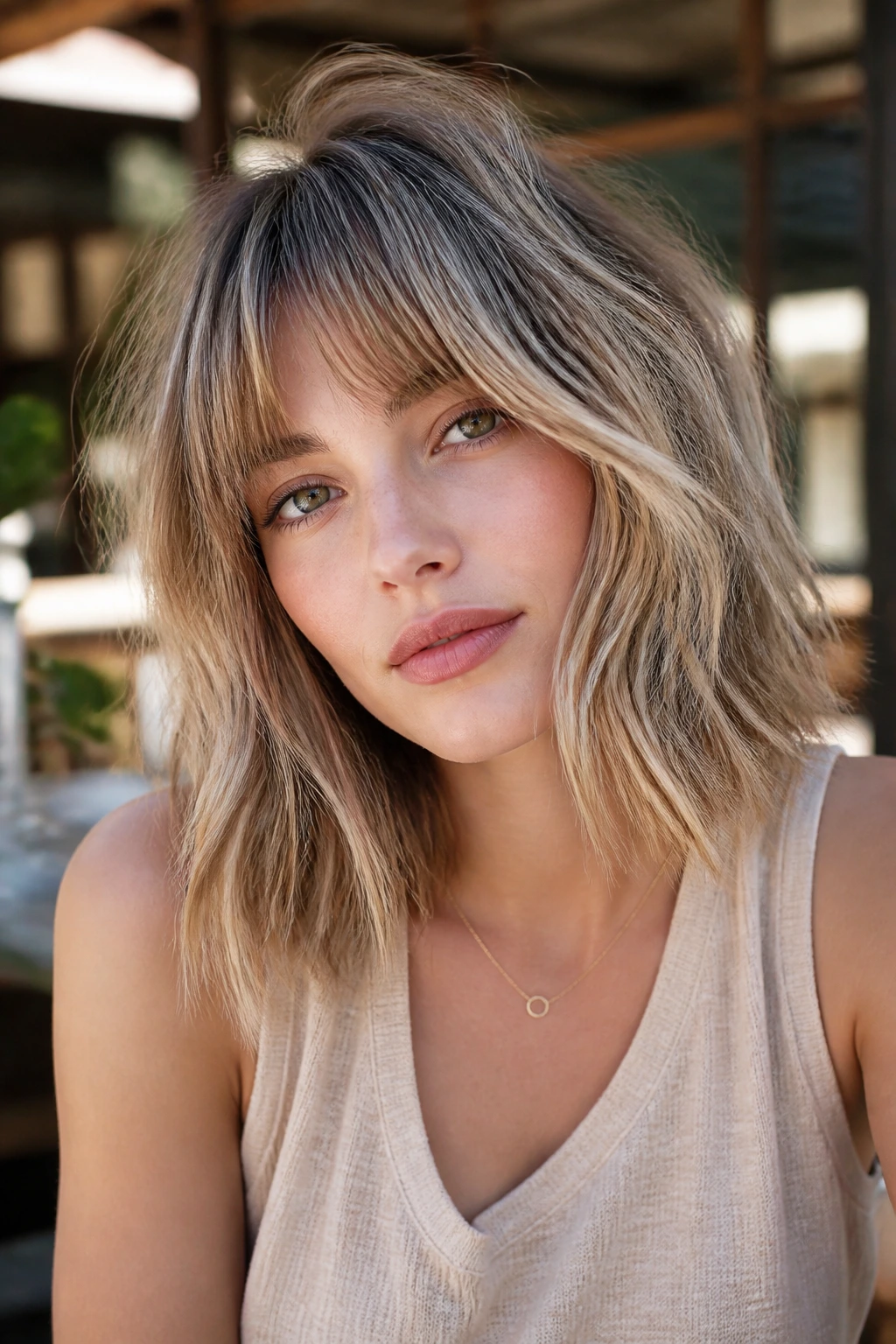
Smoky beige is the shade I point to when someone wants blonde but not sparkle. It has enough coolness to sit well on fair skin, and enough warmth to stop it from feeling flat. On a lob, that tone picks up movement in a very easy way.
Tousled fringe makes this cut look relaxed instead of salon-perfect. The bangs should separate naturally, with a few soft pieces falling across the forehead and the rest sweeping to the sides. If the fringe is too exact, the smoky beige can look severe. A rougher finish is better.
This is one of the most forgiving styles in the group. It works air-dried, curled, or straightened. If you’re busy and don’t want a color that demands a lot of makeup to support it, this is a strong choice.
20. White Blonde Face-Framing Balayage with Bottleneck Bangs
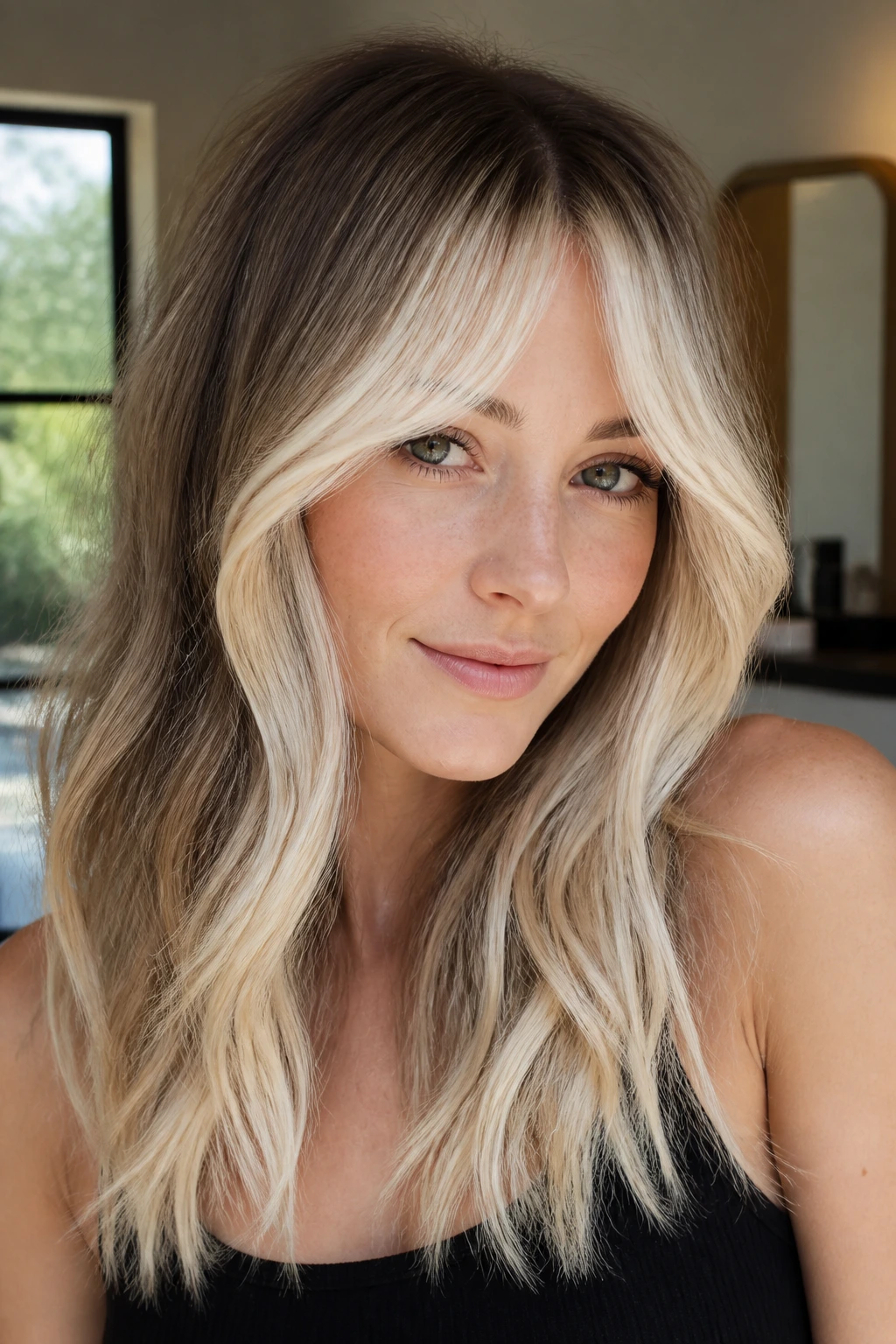
White blonde around the face is a statement, and on fair skin it can look striking when the rest of the hair keeps some depth. Bottleneck bangs soften the top of the face so the bright front pieces don’t feel too stark. That shape also helps the grown-out phase look intentional.
The key here is placement. The brightest blonde should live at the temples and outer fringe, not everywhere. If the whole front is lightened to the same level, the face can go oddly flat. A darker root and slightly softer interior layers give the eye somewhere to rest.
This is a style for people who like clean contrast and don’t mind toner upkeep. It’s dramatic in a crisp, polished way. Pair it with defined brows and a little blush; fair skin usually needs a touch of contrast somewhere when the hair is this bright.
21. Golden Beige Blowout Layers with Layered Bangs
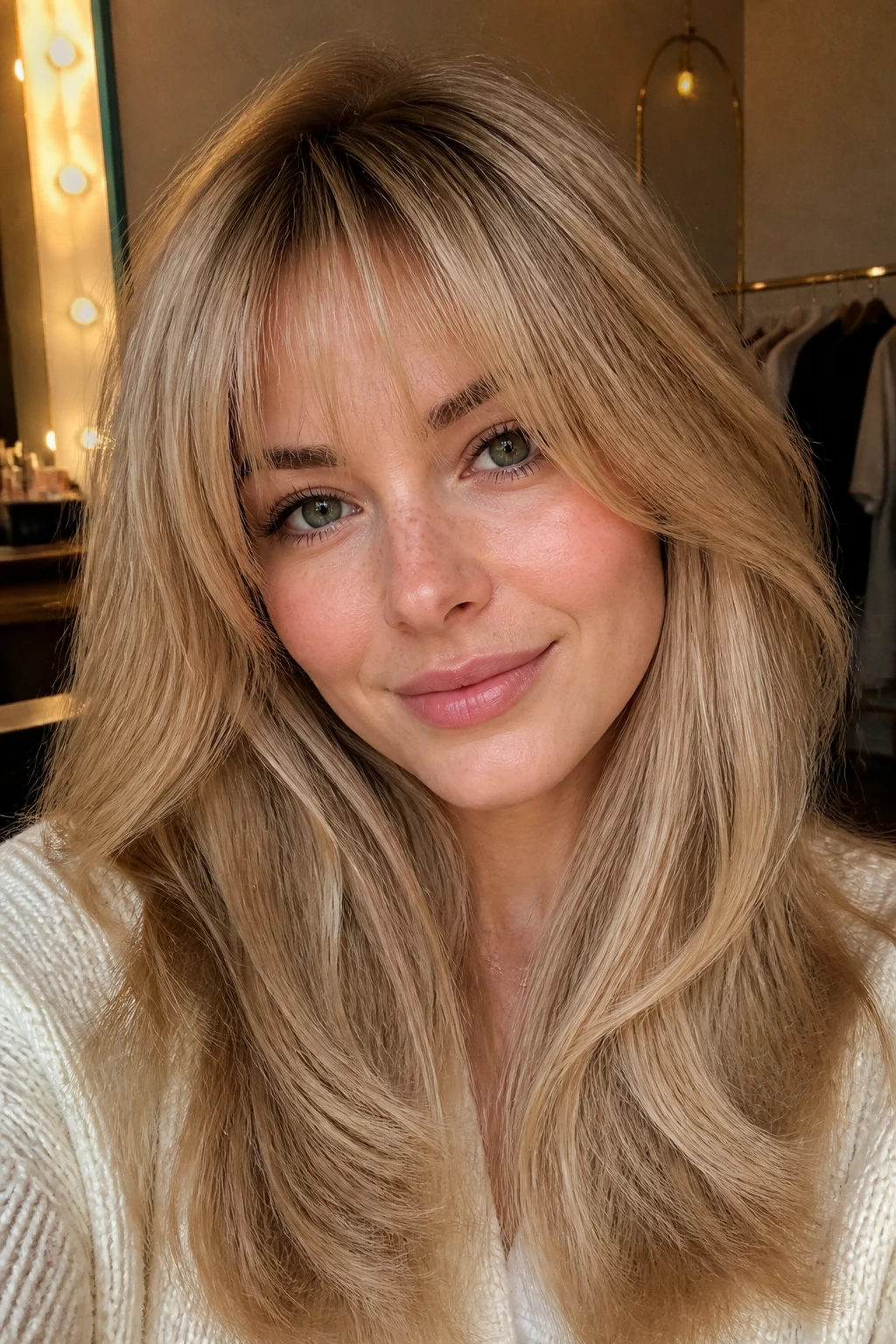
Golden beige can be lovely on fair skin with freckles or warm undertones, especially when the cut is blown out with movement. Layered bangs blend into the sides so the color doesn’t look pinned to the forehead. The result is softer and less fashion-forward than platinum, but often more flattering in daily life.
This shade is all about keeping gold quiet. You want beige first, gold second. The balayage should sit through the mid-lengths and ends, with the front pieces bright enough to lift the complexion but not so warm they start looking orange. A glossy blowout makes the whole thing feel finished.
If your hair tends to frizz, layered bangs can puff at the edges, so a smoothing cream helps. If your hair is silky, the bangs may need a little dry texture spray to keep them from collapsing. Small details, but they matter.
22. Pearl Balayage with U-Shaped Bangs
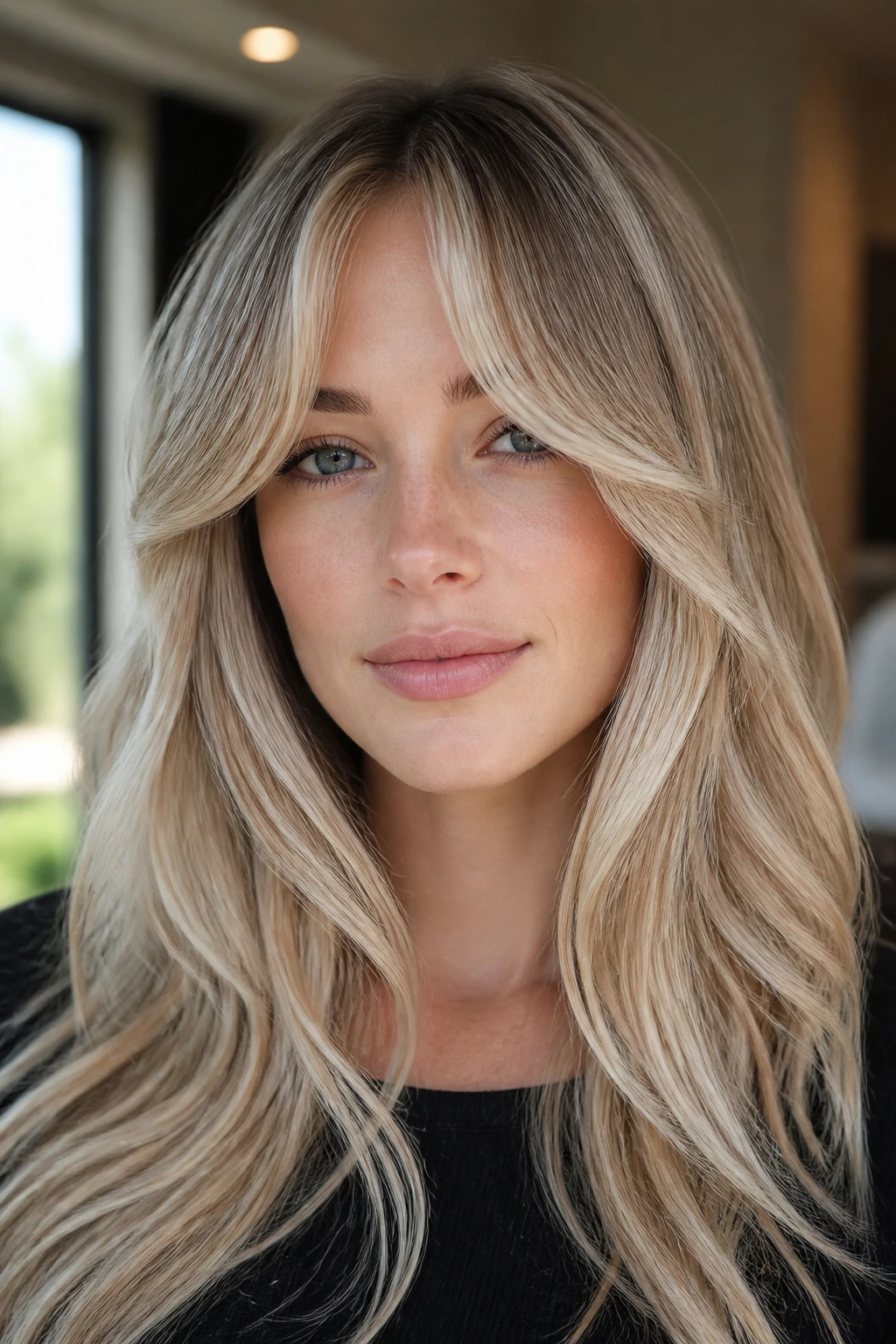
U-shaped bangs curve slightly longer at the sides, which is useful if you want the forehead softened but not hidden. Pearl balayage gives the hair a cool, luminous quality that flatters fair skin without the edge of platinum. This combination has a pretty, quiet balance to it.
I like U-shaped bangs for wider foreheads or anyone who wants the middle of the face to stay open. They also blend well into long layers. The balayage should be brightest near the upper face frame and softer as it travels down, so the hair doesn’t look like it’s all one brightness level.
This style is easy to dress up or down. A smooth blowout makes it neat; loose waves make it feel softer. Pearl tones do best when they’re glossy, so don’t skip the finishing serum.
23. Subtle Sunkissed Blonde with Wispy Fringe on Short Hair
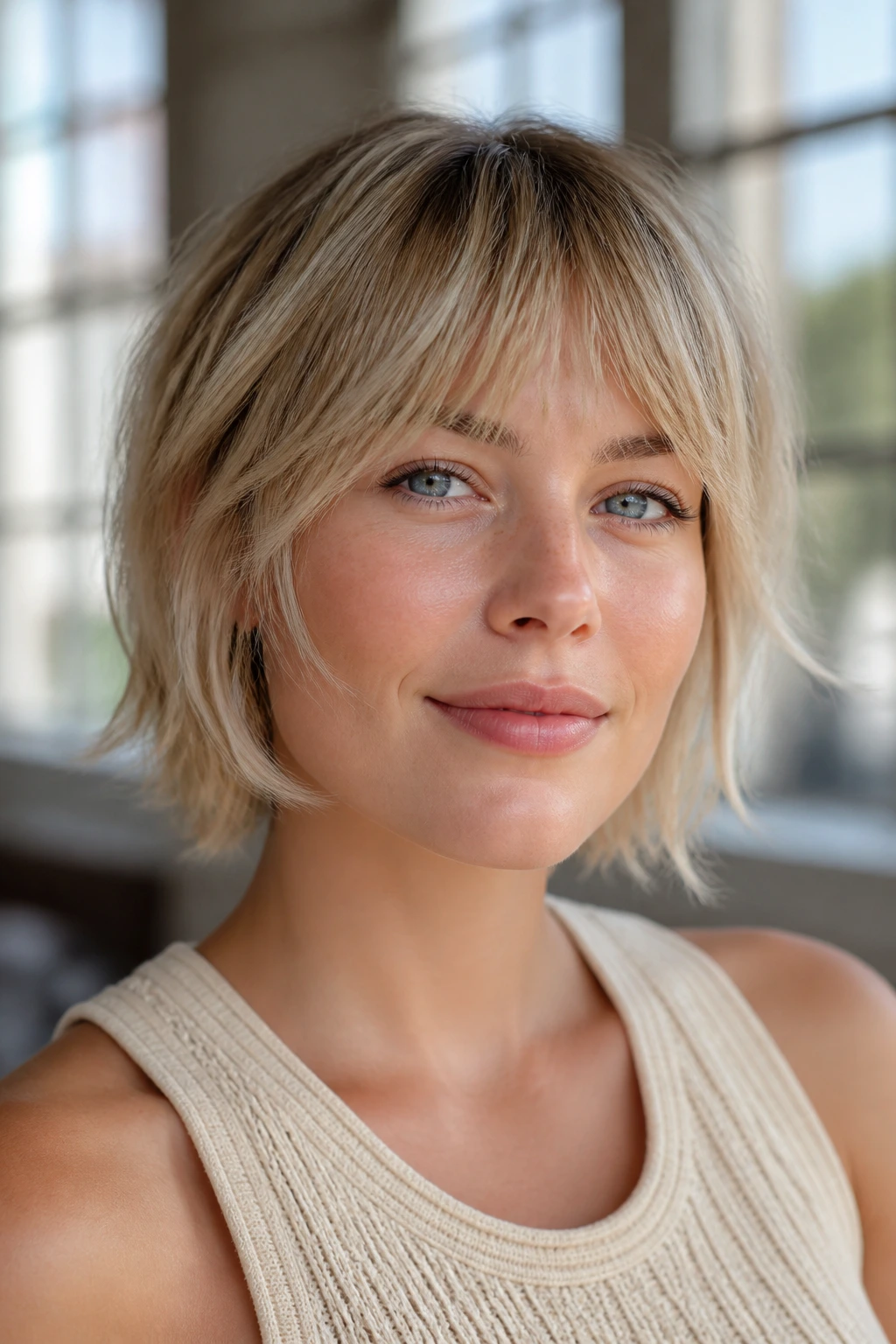
Short hair can be tricky on fair skin because a blunt blonde crop sometimes looks harsher than expected. Subtle sunkissed blonde with a wispy fringe fixes that. It keeps the brightness low-key and the front soft, which helps the face feel open rather than boxed in.
The fringe should be airy enough to move when you blink. No helmet bangs, please. Balayage on short hair works best when it’s concentrated on the top layer and around the temples, where it can catch light without making the cut look overworked.
This is a strong choice if you like easy styling and don’t want to spend much time with hot tools. A little mousse, a rough dry, and a dab of paste at the ends can be enough. The haircut does most of the work.
24. Dimensional Butter Blonde with Long Side Bangs
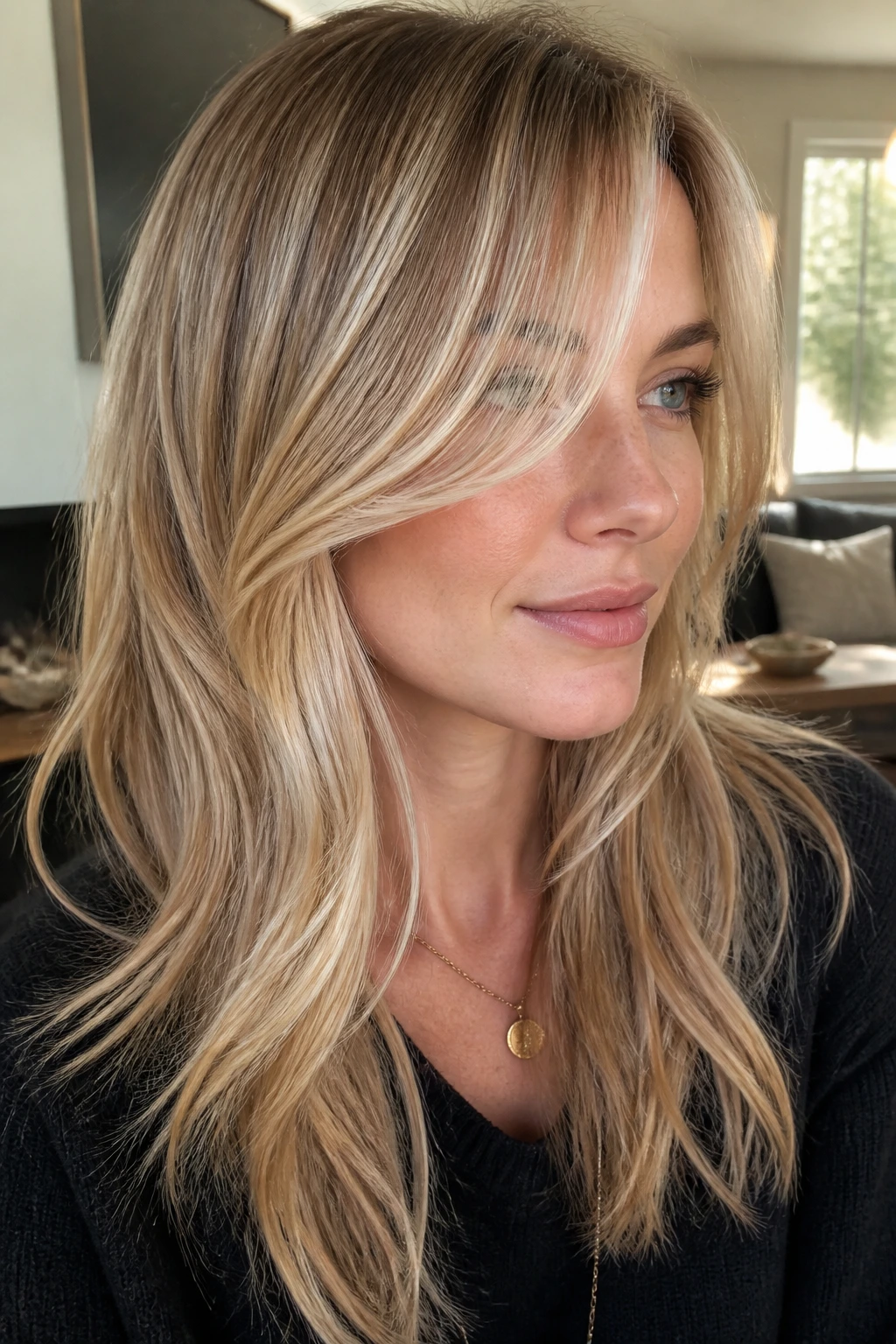
Dimensional butter blonde has a softer glow than a strong gold blonde, which makes it useful on fair skin that needs warmth but not brass. Long side bangs sweep across the face and create that easy, slightly romantic line that works especially well with long layers.
The dimension matters. If the blonde is one flat shade, the style loses depth and can look a bit wig-like. Keep some lowlights or a deeper root so the butter tone has something to sit on. The side bang should blend into the front layer, not sit on top of it like a separate piece.
This is one of the most wearable looks here if you want fullness around the face. It suits soft waves, blowouts, and even a loose ponytail. The bang gives you enough movement to make an updo feel intentional.
25. Soft Icy Champagne Balayage with Split Fringe
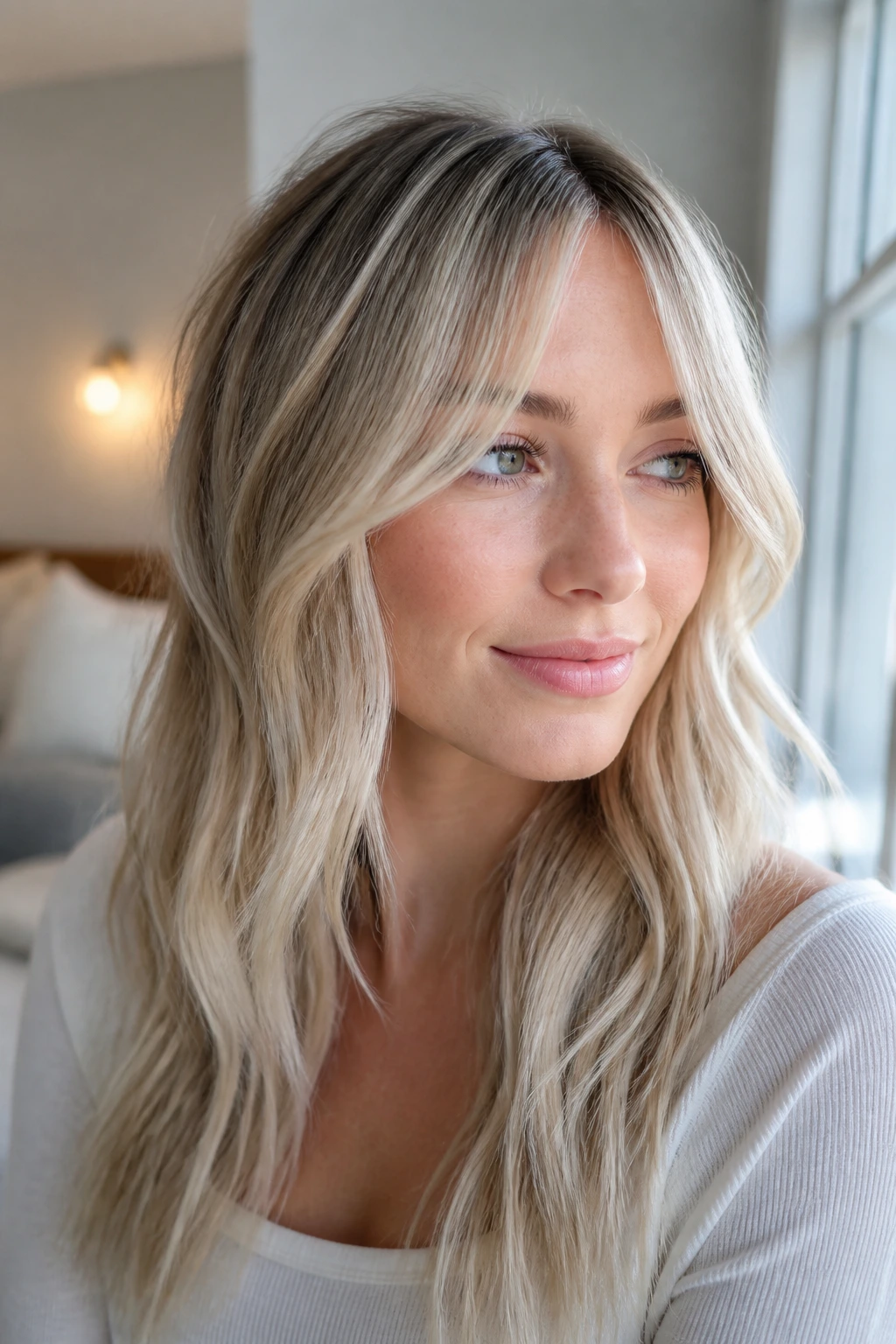
Soft icy champagne is the closest thing to a finishing note on the whole list. It has the brightness of icy blonde with enough warmth to keep fair skin from turning gray. The split fringe — a gentler version of a curtain bang — gives the face shape without hard lines.
This look works because nothing is too severe. The color is pale but not chalky, and the fringe parts just enough to show skin beneath. That open space is what keeps the face from feeling crowded. On very fair skin, that matters more than people think.
If you want a polished finish, blow the fringe forward first, then split it with your fingers and let it cool in place. A tiny bit of root lift and a clean gloss will make the champagne tone read glossy instead of flat. It’s one of those styles that looks light in photos and even better in motion.
Why Blonde Balayage and Bangs Play So Well on Fair Skin
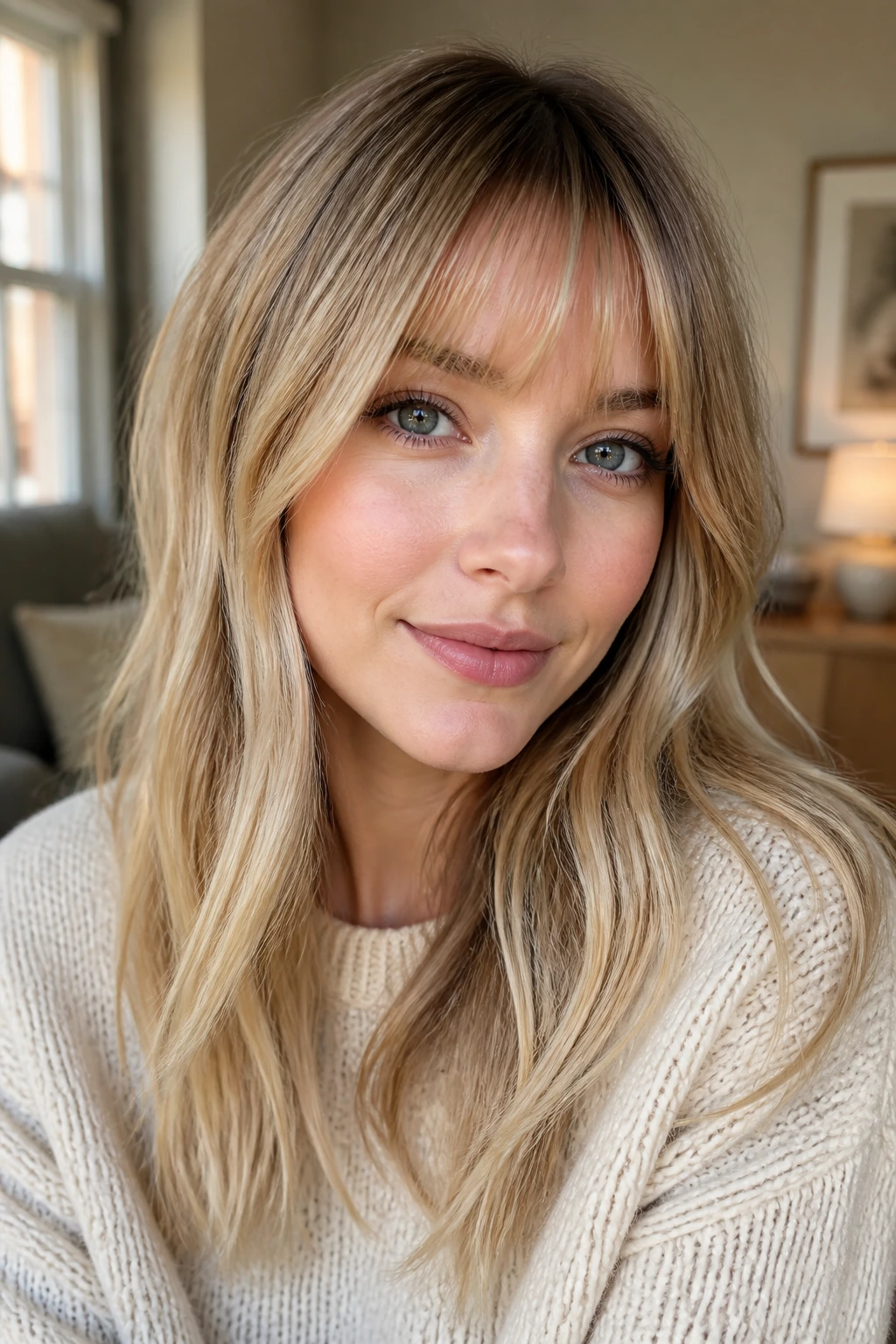
Fair skin can be a funny canvas. It doesn’t always need more brightness; sometimes it needs shape. Blonde balayage with bangs works because it gives you both at once. The blonde can lift the complexion, while the bangs create contrast, shadow, and a clear frame around the eyes.
The biggest mistake people make is assuming all fair skin wants the same blonde. It doesn’t. Very pale skin with pink undertones often looks best with beige, pearl, or ash-beige tones. Fair skin with freckles or warmer undertones can take honey, butter, and cream soda more easily, but even then the color needs some depth near the root or it gets loud fast.
Bangs matter just as much as color. A thin fringe can soften a strong blonde. A heavy blunt bang can turn a bright blonde into a block. I’ve seen more bad blonde because of the fringe than because of the toner. That’s not the glamorous answer, but it’s the honest one.
How to Choose the Right Blonde Tone for Your Undertone
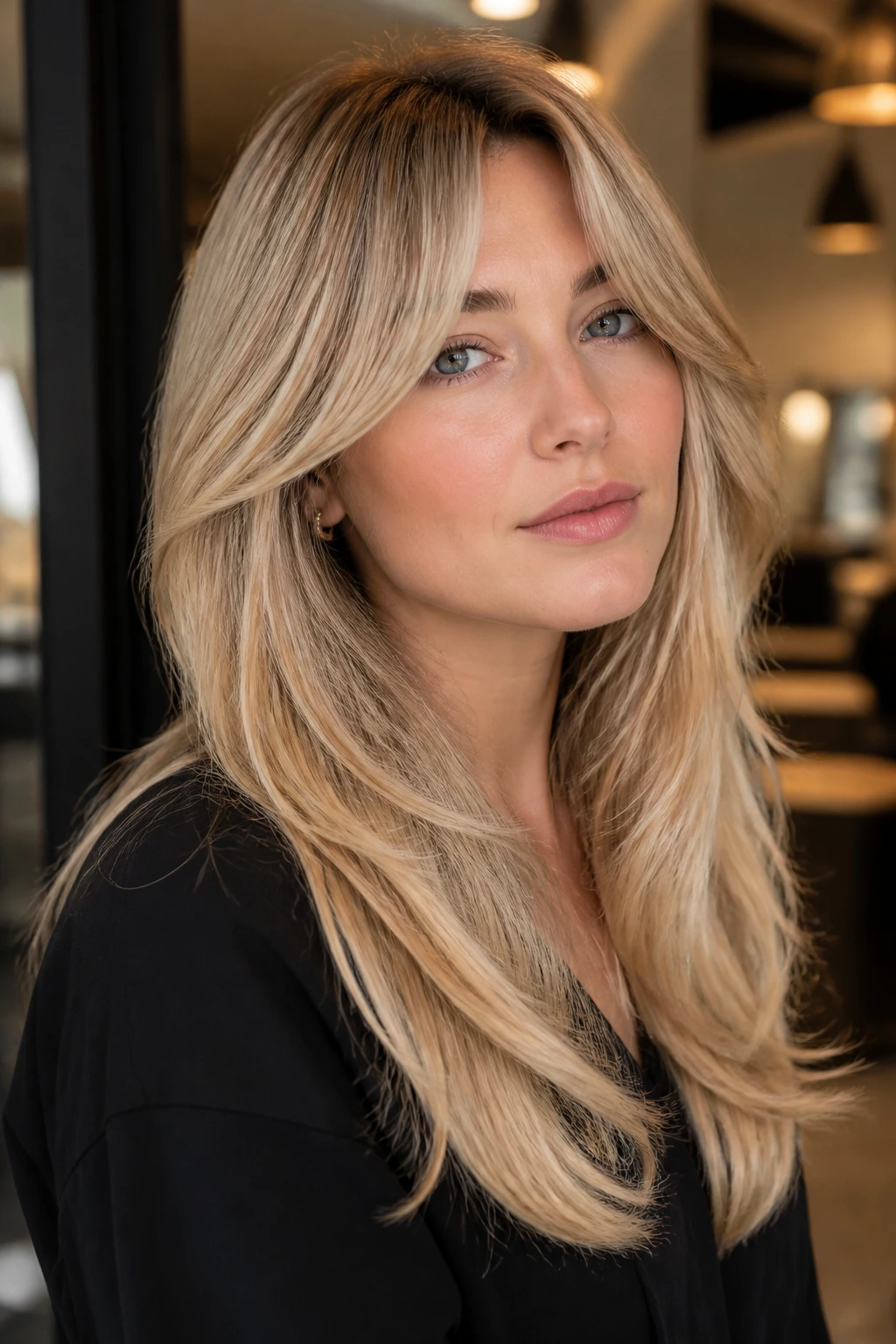
If your skin runs cool, look first at pearl, ash, champagne, or beige blonde. Those tones keep the face clear and bright without leaning yellow. On very fair skin, cool blondes also pair well with soft makeup, since the hair won’t suddenly overpower your features.
If your fair skin is neutral, you get more room to play. Beige blonde, champagne, and soft butter all work, as long as the front pieces are blended. Neutral skin is the easiest to push too warm, though, so I’d still keep a little root depth in the mix.
Warm fair skin usually likes golden beige, honey-vanilla, or cream soda blonde, but the trick is moderation. The blonde should look sunlit, not orange. If you can’t decide, ask for a neutral blonde gloss and see how your skin reacts in daylight before you go warmer or cooler.
If you’re not sure about undertone
Stand by a window, not a bathroom bulb. Bathroom light lies. If silver jewelry seems to disappear and gold jewelry warms your face, you may be warm-neutral. If pinkness in your cheeks becomes more obvious next to gold, cool or beige blonde is probably safer.
The Bang Shapes That Change the Whole Mood
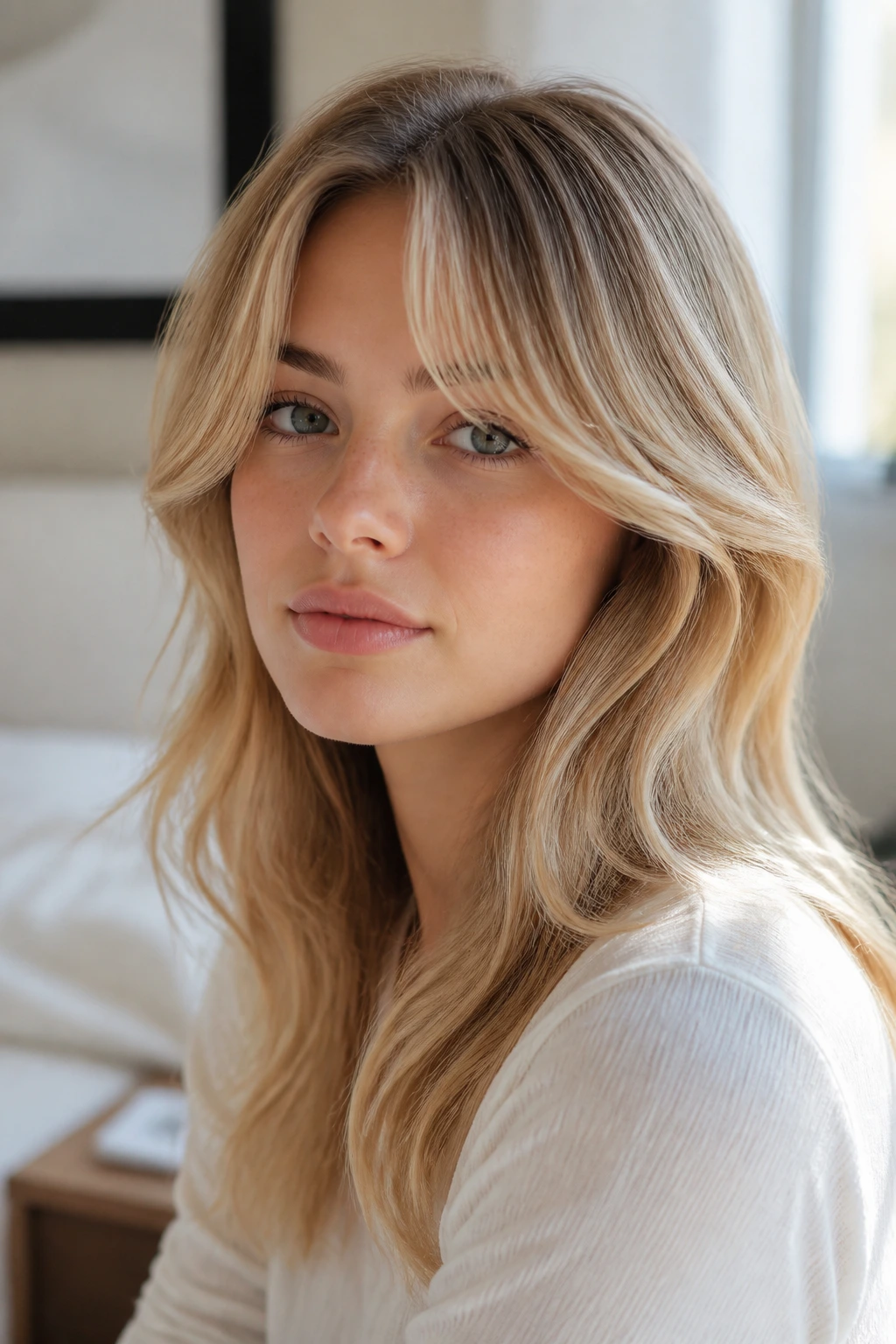
Curtain bangs are the easiest entry point. They part at the center, move out toward the cheekbones, and let the face breathe. On fair skin, that extra open space matters because it keeps the blonde from feeling like a white curtain across the forehead.
Bottleneck bangs are a little more styled and a little less soft, which is useful if you want something more tailored. They’re especially good on lobs and mid-length cuts because they taper the forehead without taking away the lightness around the eyes. Side-swept bangs are the low-drama option, and they’re underrated.
Blunt bangs and micro bangs are the sharpest tools in the box. They can look stunning on very fair skin, but only if the color has depth behind them. If both the fringe and the blonde are too bright, the face can flatten out fast. That’s where texture and root shadow save the day.
Where Balayage Should Sit Around the Face
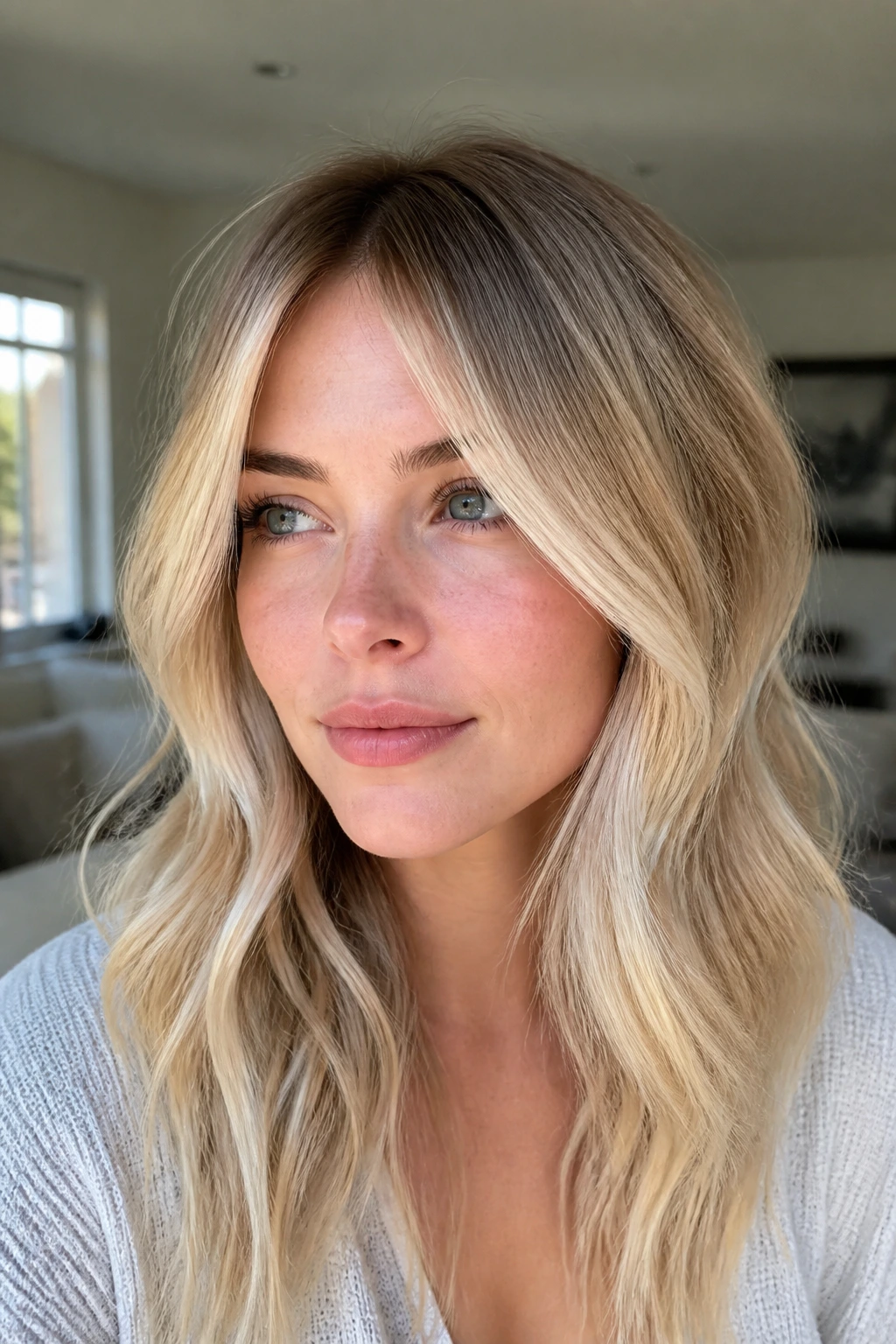
The face frame is not the place to paint randomly. On fair skin, the brightest pieces should usually start around the temple, cheekbone, or just below the brow, depending on the bang shape. That keeps the brightness near the eyes and stops the hairline from looking like a glowing outline.
A little root shadow goes a long way. I like when the very top is a half step deeper than the front pieces, especially on pale skin. It creates contrast, but not that chunky stripe you get from old-school highlights. Balayage should look like light fell through the hair, not like it was stapled on.
If your bangs are full, keep the brightest pieces a bit lower. If your bangs are see-through or split, you can bring the light higher. That’s the quiet trick behind a lot of good blonde work: the fringe shape dictates the paint map.
How to Style These Looks at Home
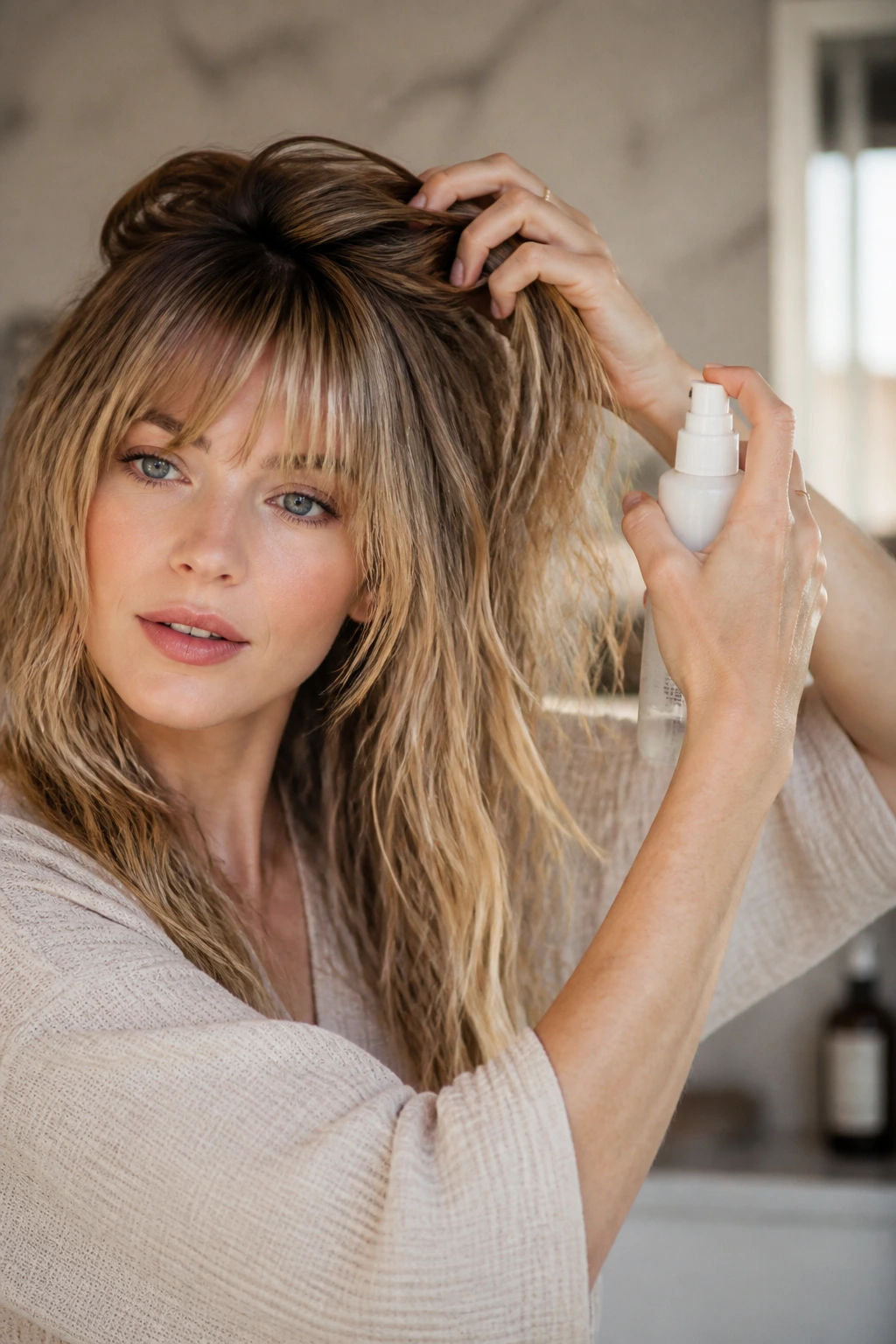
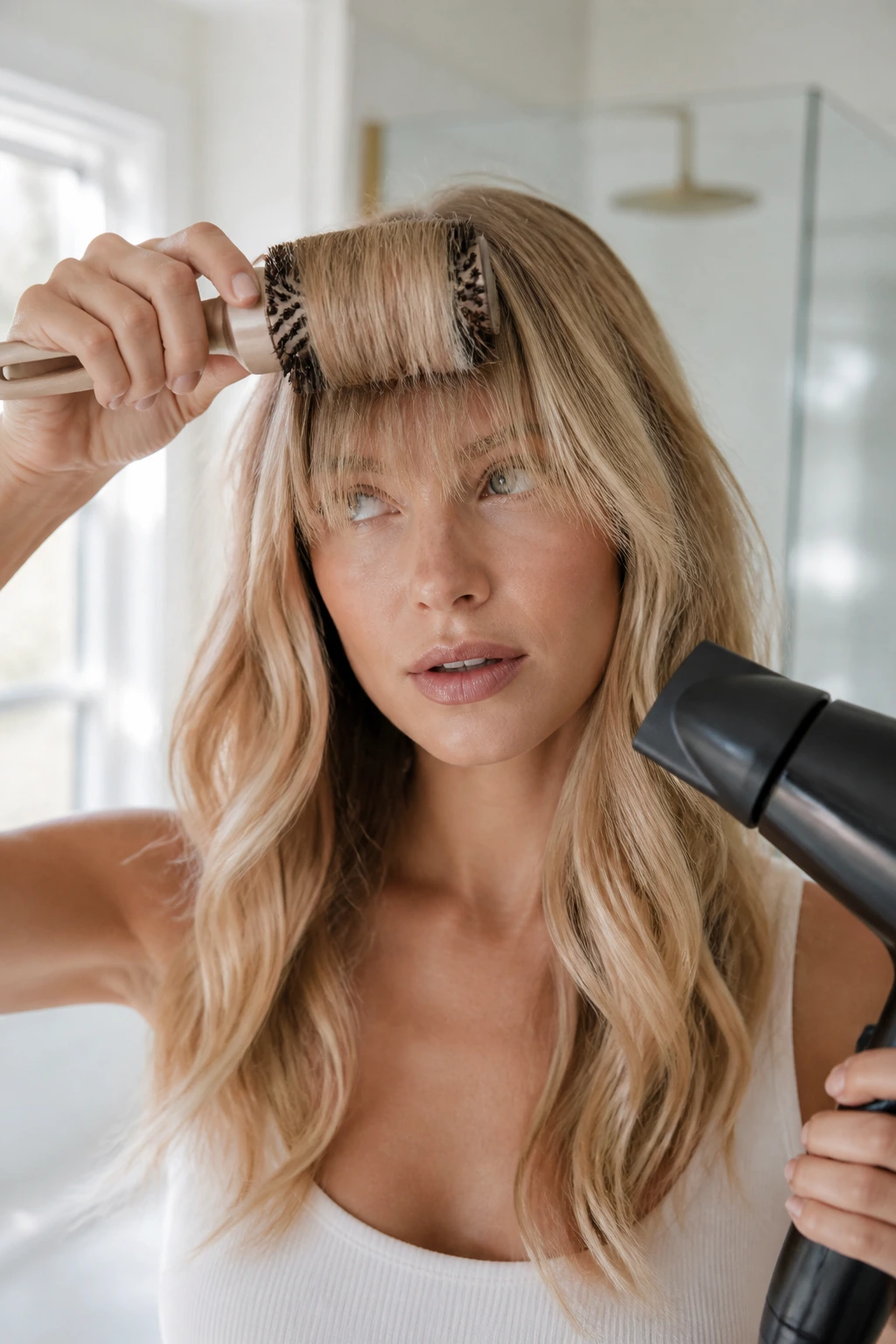
Start with heat protection. Not optional. Blonde hair — especially lightened hair around the fringe — dries out faster than the rest, and bangs show damage first. A lightweight spray on damp hair is enough; you don’t need to soak the whole head.
Rough dry the roots first, then move to the bangs. Use a round brush and direct the fringe where you want it to live once it cools. That cooling step matters more than the hot styling itself. If you pull the bangs down and walk away, they’ll slump. If you hold them in shape for a few seconds and let them set, they keep the lift.
For waves, curl away from the face in the front sections, then alternate direction through the back so the ends don’t look too uniform. Once the curls cool, brush them out with your fingers or a wide-tooth comb. Finish with a little texture spray at the mid-lengths, not the roots. Too much product at the front makes fair skin look tired instead of fresh.
Essential Tools and Products That Help
-
Round brush, 1 to 2 inches: Good for shaping bangs and giving the front pieces bend without a big curl.
-
Blow dryer with a nozzle: The nozzle helps aim the airflow so the fringe doesn’t puff out in every direction.
-
Heat protectant spray: Use it every time you blow-dry or curl; blonde hair shows heat damage fast.
-
Purple shampoo: Helpful for keeping ash, pearl, and icy blondes from turning yellow, but use it sparingly.
-
Sulfate-free shampoo: Gentler on lightened hair and less likely to strip toner too fast.
-
Lightweight mousse: Gives lift to curtain bangs, bottleneck bangs, and soft waves without making hair crunchy.
-
Dry texture spray: Best for piecey bangs and shaggy cuts; use a small amount, then shake it through.
-
Wide-tooth comb: Better than a brush for breaking up waves without pulling blonde strands apart.
-
Duckbill clips: Handy for setting bangs while they cool after blow-drying.
-
Shine serum: A tiny amount on the ends keeps pale blonde looking glossy instead of fuzzy.
How to Brief Your Colorist
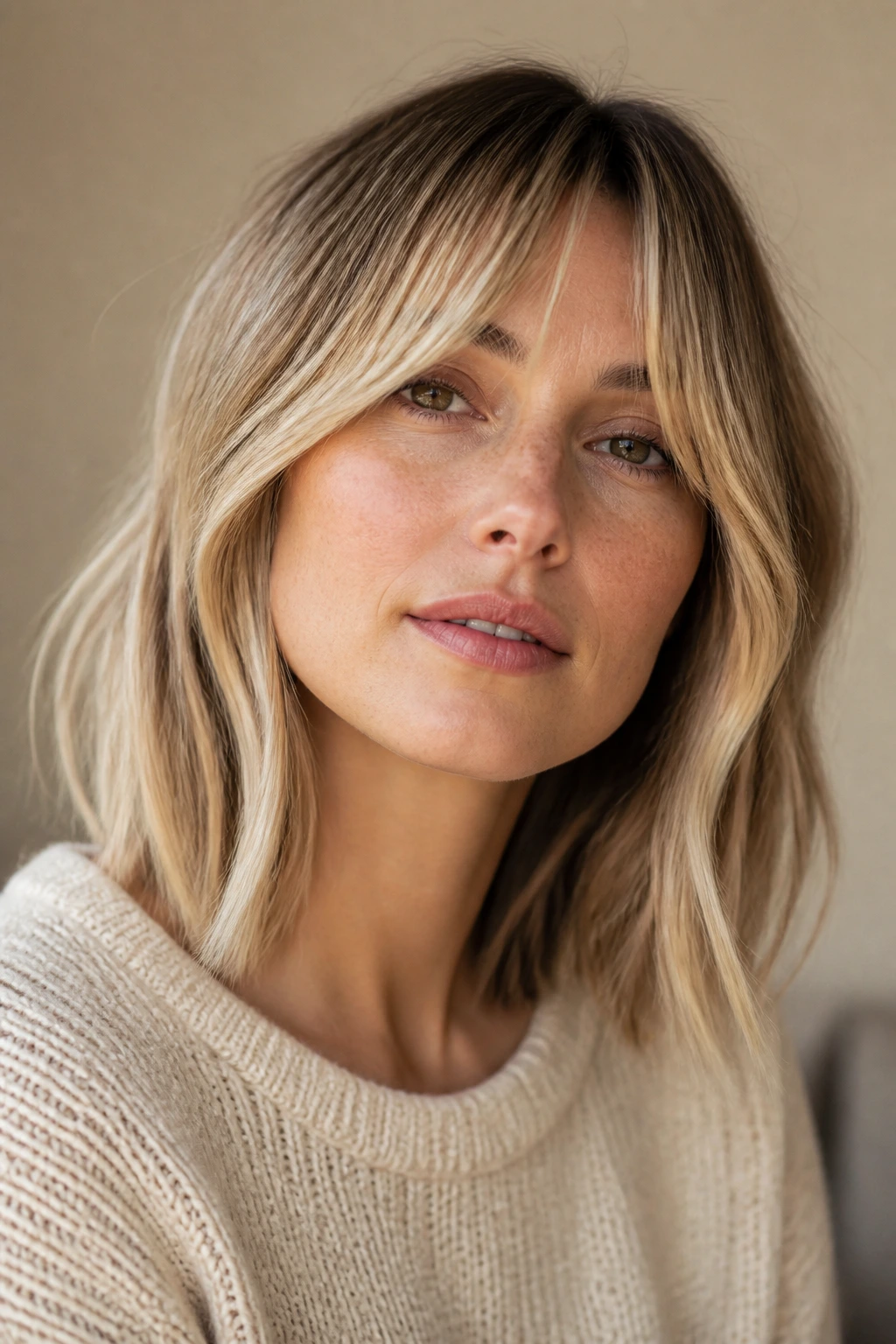
Bring photos, yes, but bring the right photos. One image for the haircut and one for the color is usually smarter than trying to find a perfect single reference. A great blonde with the wrong bang density can miss the mark just as badly as the right fringe with the wrong tone.
Say what you want in plain language. “I want a beige-champagne blonde that stays softer near the root and gets lighter around the face” is a lot more useful than “make me brighter.” Tell them whether you want the bangs to blend into the sides or stand apart. That one detail changes the whole cut.
If your skin is very fair, mention whether you tan, flush, or stay pink. It sounds small, but it helps the colorist decide how much warmth to put near the hairline. I’d also ask how often the toner will need refreshing before the first appointment is even booked. That tells you whether you’re signing up for a casual color or a maintenance hobby.
Maintenance, Toning, and Grow-Out
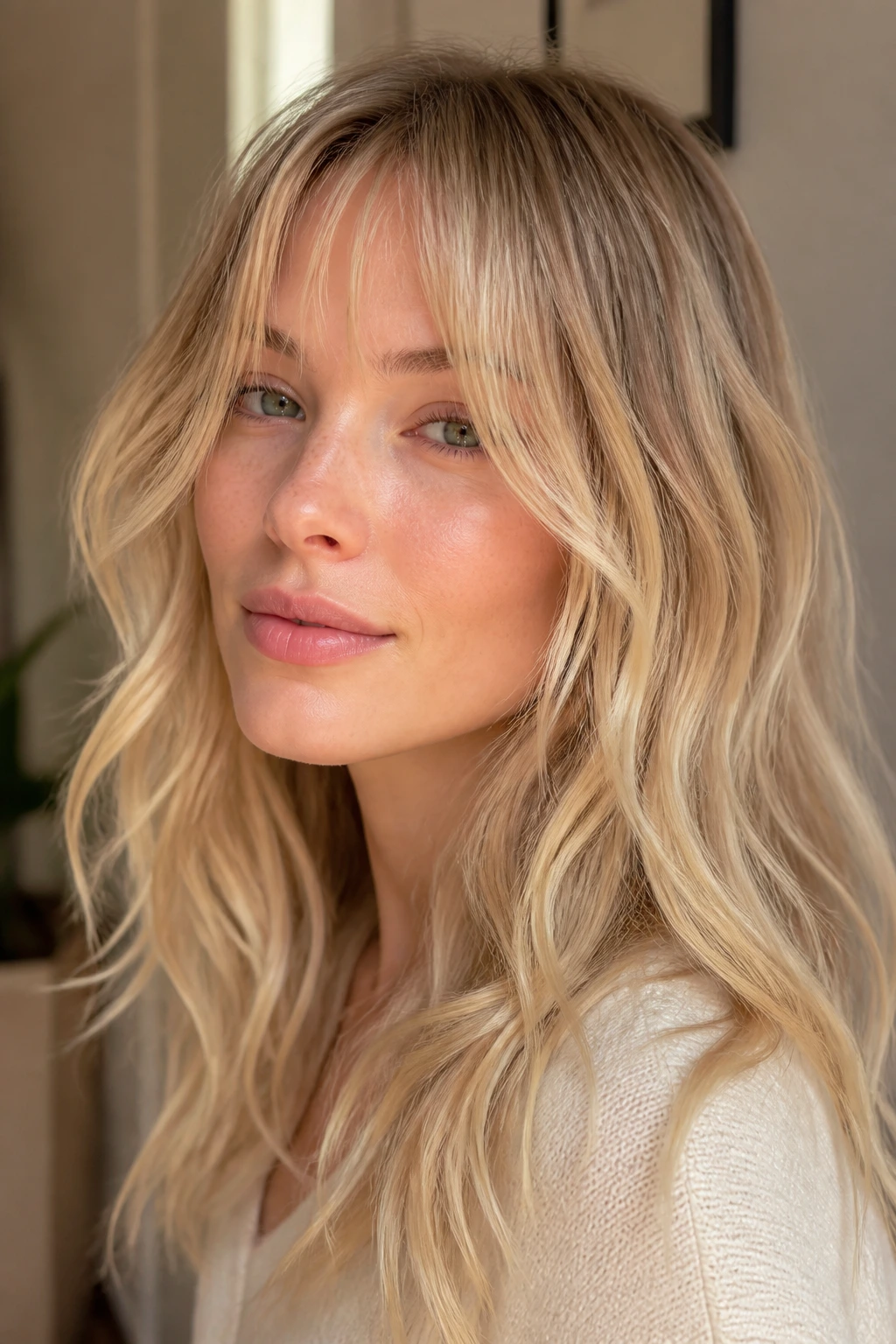
Bangs need trims more often than the color needs a refresh. Plan on a fringe cleanup every 4 to 6 weeks if you want the shape to stay clean. If you let curtain bangs grow longer, they can slide into the face in a nice way. Micro bangs, on the other hand, are unforgiving once they hit the lashes.
For toner, the usual window is 4 to 8 weeks, depending on how pale and cool the blonde is. Icy and pearl shades fade faster and show yellow sooner. Beige and champagne shades tend to be kinder in the grow-out phase. If your bangs go yellow before the rest of the head, don’t drench them in purple shampoo every wash; use it once every week or two and focus on the mid-lengths more than the roots.
Balayage itself can stretch longer than traditional highlights. Many looks here can go 8 to 14 weeks before a full refresh, especially if there’s a rooted blend. That’s part of the appeal. The hair should look softer as it grows, not badly overdue.
Additional Tips and Color Boosters
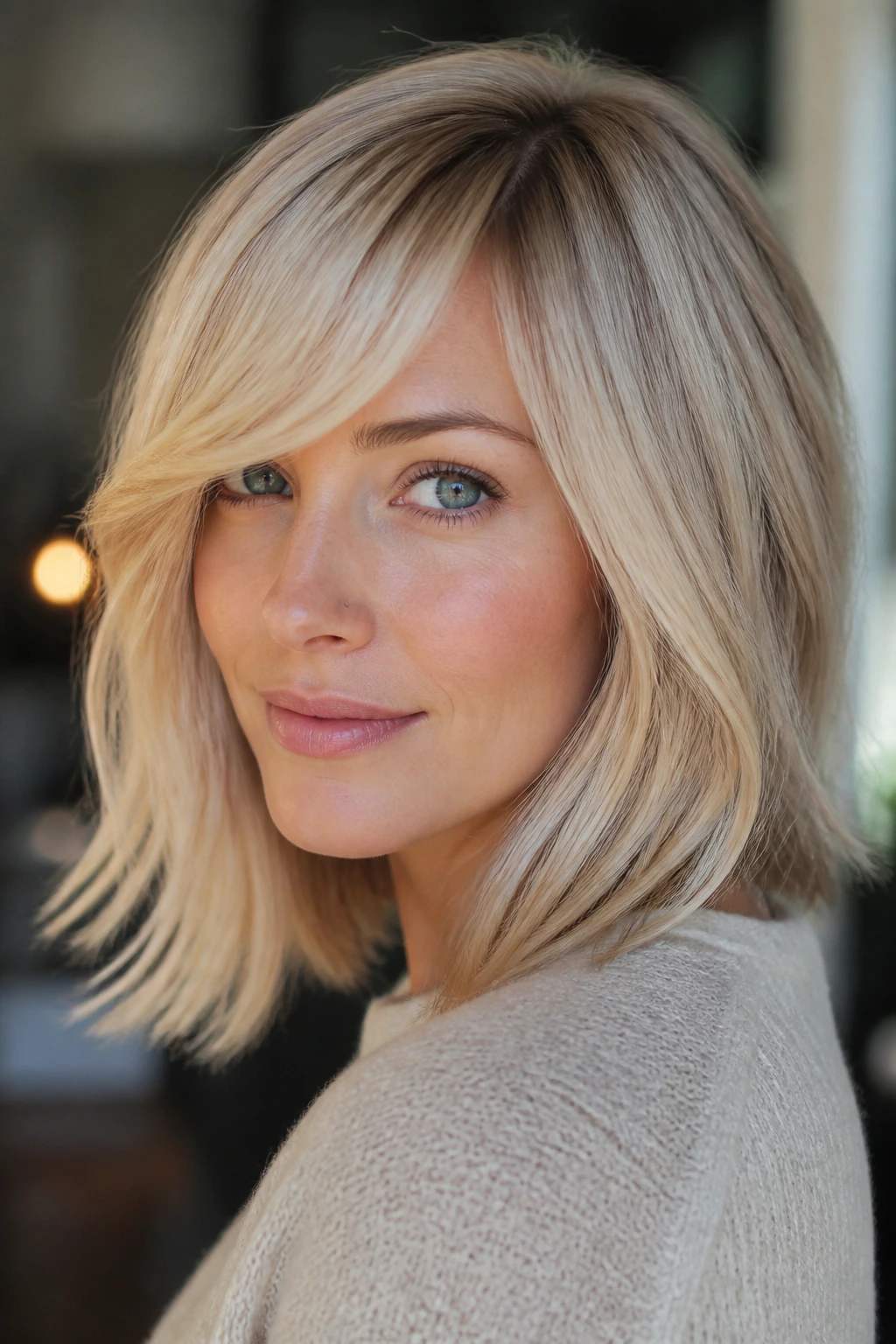
Tone Balance: If your fair skin looks a little flat in the mirror, add a touch more beige or champagne around the face, not more white. Brightness without depth is where blondes go wrong.
Shape Control: Ask your stylist to soften the ends of the bangs slightly if you wear hair off your face often. A fringe that only looks good straight down is a headache you don’t need.
Texture Trick: A tiny bit of dry texture spray at the ends can keep pale blonde from sliding into a limp, shiny sheet. Use less than you think. Too much and the front turns chalky.
Make-It-Yours: If you’re low-maintenance, favor rooted beige or mushroom blonde. If you like a sharper finish, go cooler and brighter, but stay ready for gloss appointments. Those two paths are not equal in upkeep, and pretending they are is bad salon math.
Common Mistakes to Avoid
-
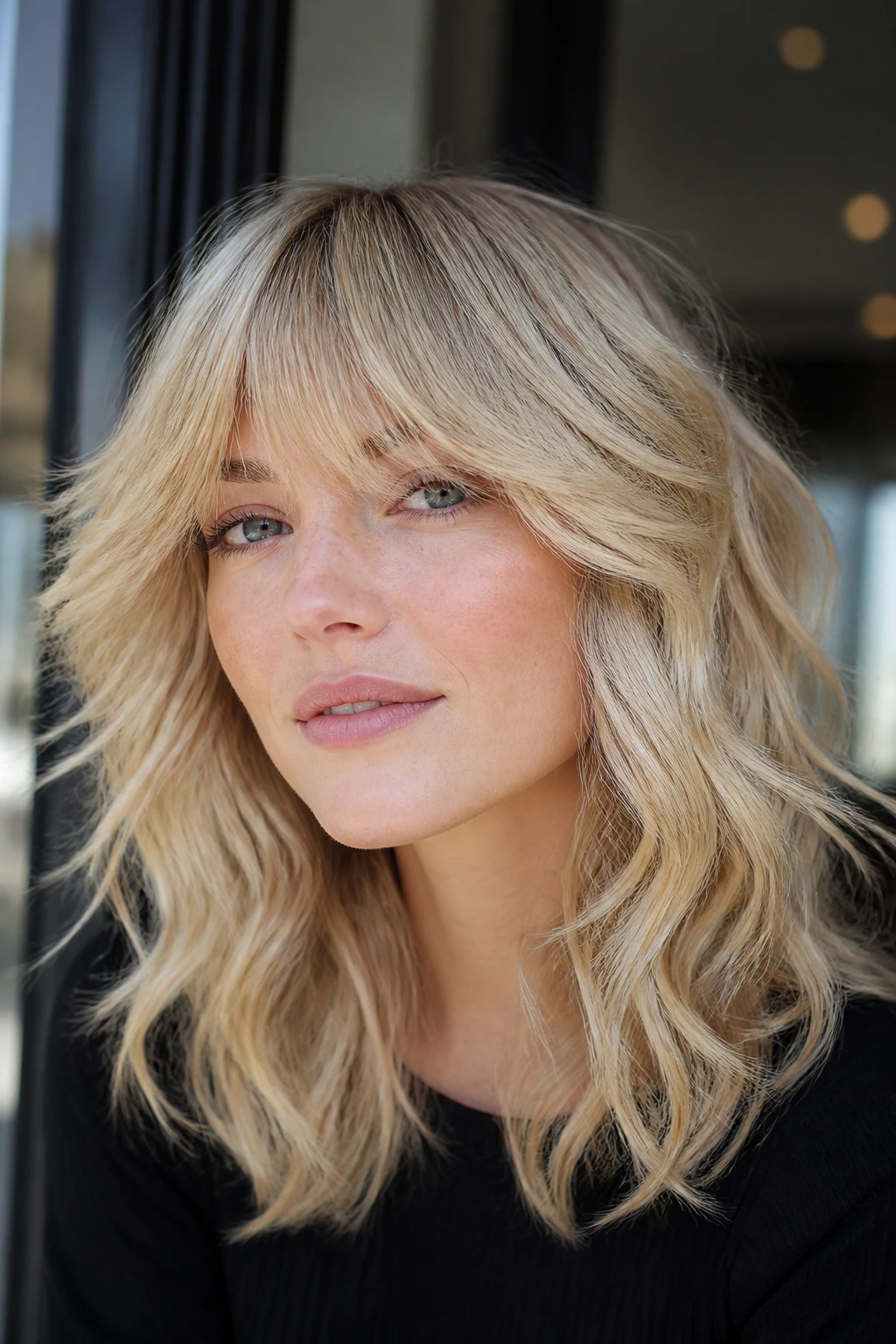
Going too white at the hairline: On fair skin, a harsh white frame can erase the brow and eye area. Ask for brightness that starts softly and blends into the fringe.
-
Cutting bangs too thick for the color: Dense bangs with very light blonde can look helmet-like. The fix is either a lighter fringe or a deeper root underneath.
-
Ignoring brow and makeup contrast: If your brows are very light and your blonde is icy, the face can flatten. You do not need heavy makeup, but you do need some contrast somewhere.
-
Overusing purple shampoo: It can leave porous bangs gray or dull if you use it too often. Keep it occasional, not nightly.
-
Placing balayage too high everywhere: Brightness at the crown and part can make fair skin look overexposed. Keep the top softer and push the light toward the face frame and ends.
-
Skipping trims: Bangs change the whole haircut when they overgrow. A style that looked airy in the salon can turn heavy in six weeks if you ignore the fringe.
Variations and Alternatives to Try
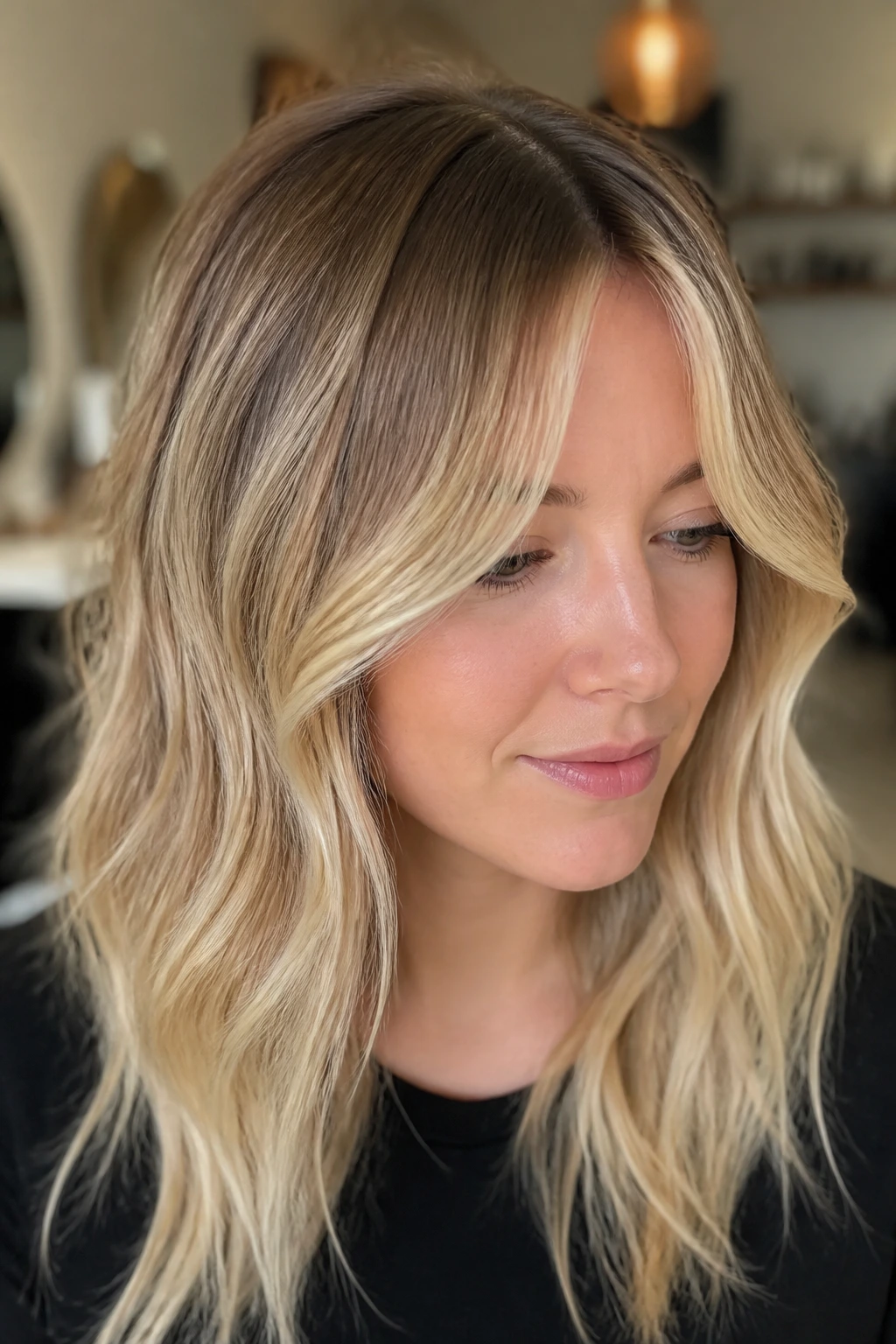
Low-Maintenance Root Melt: Keep the root a half to one shade deeper than the blonde and choose curtain or bottleneck bangs. This gives you softer regrowth and fewer salon emergencies.
Cool-Icy Statement: Go pearl, ash, or platinum with a split fringe or micro bangs. This suits fair skin that can hold contrast and likes a sharper, cleaner finish.
Warm Beige Everyday Blonde: Choose champagne, cream soda, or honey-beige and pair it with wispy or side-swept bangs. The result is gentler and usually easier to wear without full makeup.
Short-Cut Switch: Turn any of these ideas into a bob, pixie-bob, or shag crop. The bangs and face frame do the heavy lifting, so you do not need a lot of length to make the color work.
Soft Romantic Version: Keep the blonde creamy, the waves loose, and the fringe long enough to brush the lashes. This works well if you want the hair to feel pretty and touchable instead of sharp.
Frequently Asked Questions
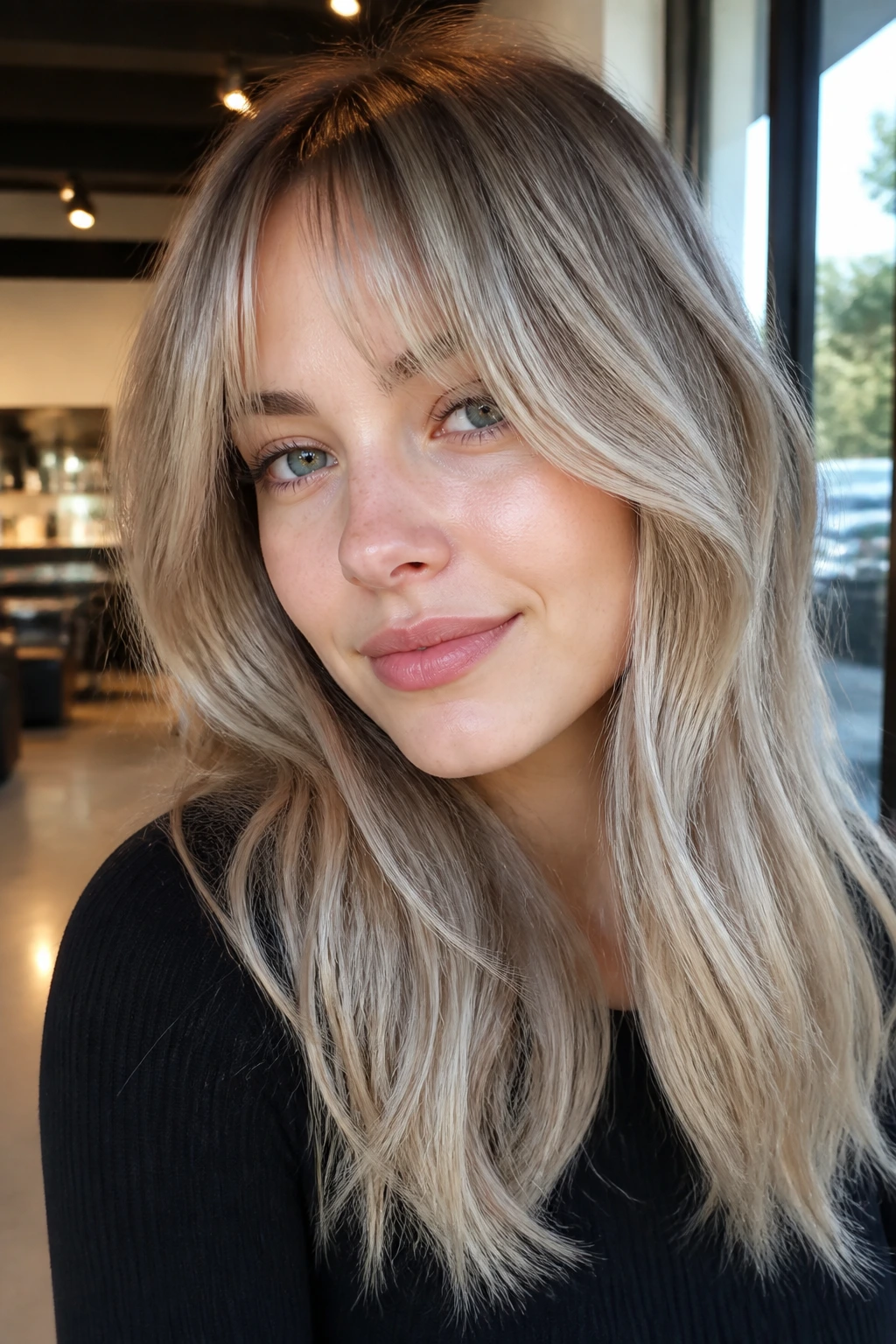
Which blonde shade flatters fair skin the most?
Beige, champagne, and pearl blonde are usually the safest starting points because they brighten without turning the face yellow or chalky. If your fair skin leans pink, ash-beige often behaves better than a strong gold.
Do bangs make fair skin look paler?
They can, if the bangs are heavy and the color is too flat. Softer fringe shapes — curtain, bottleneck, wispy, or side-swept — keep the forehead area open and let the blonde frame the face instead of covering it.
Can I wear platinum blonde if I have fair skin?
Yes, but the cut and contrast need to support it. Platinum looks best when there’s a shadow root, well-shaped brows, and some softness in the fringe so the face doesn’t disappear into the color.
How often do balayage highlights need refreshing?
Most balayage looks can go 8 to 14 weeks between major color appointments, but toner may need a touch-up sooner if the blonde is very cool or icy. Bang trims usually need to happen more often than color refreshes.
What if my bangs get brassy faster than the rest of my hair?
That’s common because bangs sit on the face, get more oil, and are washed or styled more often. Use purple shampoo sparingly, protect them from heat, and ask your colorist for a slightly stronger toner on the fringe area if they fade quickly.
Is balayage better than full highlights for fair skin?
Usually, yes, if you want softness and easier grow-out. Balayage blends better at the root and lets you control where the brightness hits the face, which matters a lot on very pale skin.
Will these styles work if my hair is fine?
They can, but the bang shape matters. Wispy bangs, airy fringe, and soft curtain pieces tend to work better than thick blunt bangs because they don’t steal too much density from the front.
How do I keep blonde bangs from looking flat?
Blow-dry them with a round brush, let them cool in shape, and keep heavy oils away from the roots. A tiny bit of dry texture spray at the ends can help the fringe separate and move instead of sticking to the forehead.
Soft Light, Good Shape
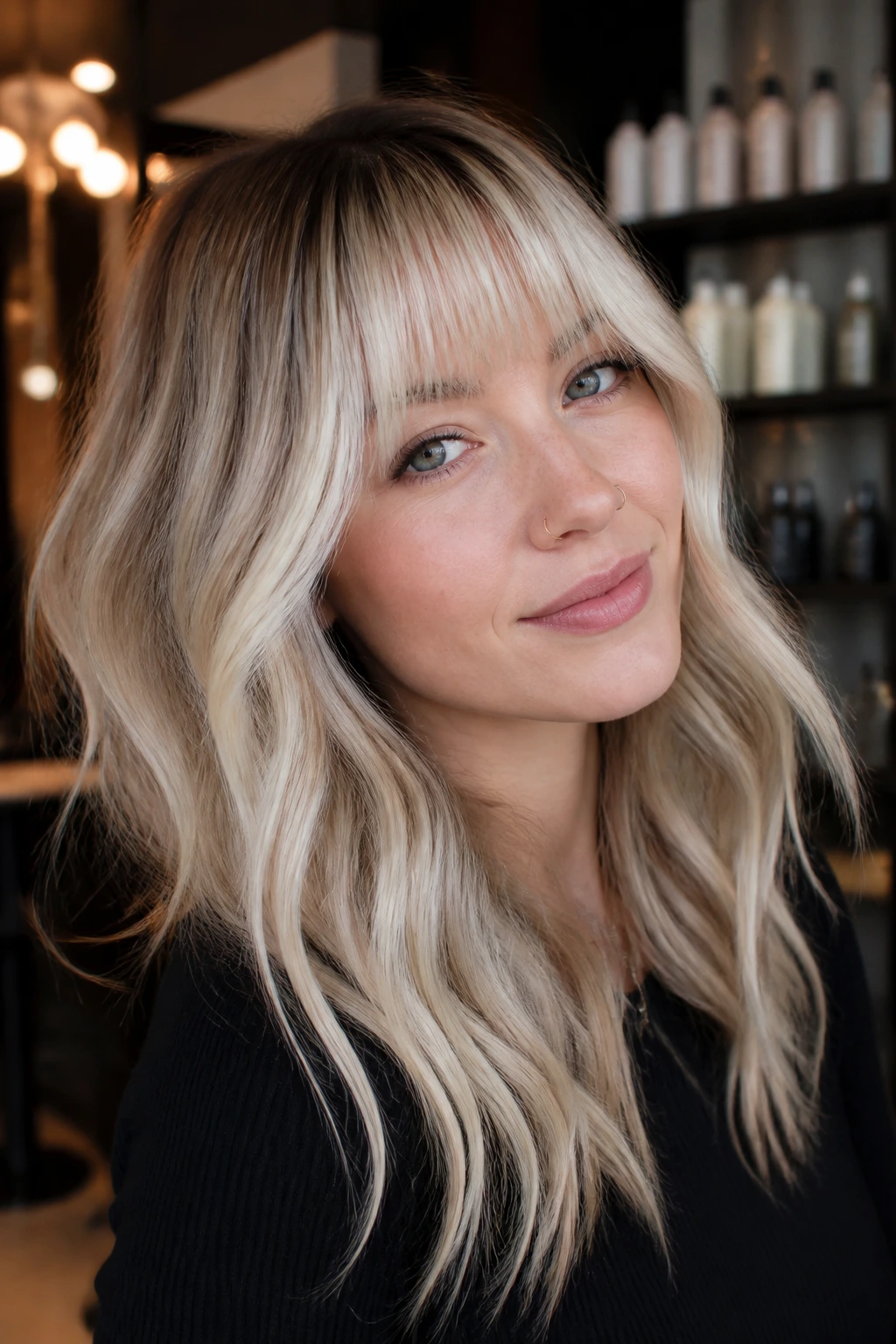
The nicest thing about blonde balayage with bangs on fair skin is that it gives you room to play. You can go cool or warm, soft or sharp, low-maintenance or high-contrast. The color does not have to do all the work, and the bang shape doesn’t have to stay locked in one mood forever.
What matters most is balance. Bright pieces near the face, some depth underneath, and a fringe that flatters your forehead instead of bulldozing it. Get those three things right, and the blonde starts looking intentional instead of accidental.
If you’re heading to the salon, bring two references: one for the blonde tone and one for the bangs. That small habit saves a lot of disappointment. The right combination can make fair skin look luminous in a way that never feels overcooked — and that’s the sweet spot worth aiming for.