



Ombre highlights for fair skin and round faces work best when the fade behaves itself. That sounds fussy, but it’s the truth. If the lightest pieces sit too high around the cheeks, the face can read wider; if the brightness drifts lower, from the jaw toward the ends, the whole look gets longer and softer in a way that feels almost sneaky.
Fair skin brings its own little trap. A pale complexion can look washed out if the blonde turns too yellow, too white, or too coppery, so the most flattering ombre shades usually live in that middle lane: champagne, beige blonde, mushroom brown, pearl, rose gold, honey, or a muted apricot. The color should have depth at the root and a gentle lift at the ends, not a sudden stripe that yells, “Look, I was lightened in one afternoon.”
What I like about this kind of color is that it does not need to be loud to do its job. A good ombre can reshape a round face with placement alone, especially when the cut has collarbone length, long layers, or curtain bangs that move the eye vertically. That’s the whole trick. Not drama. Direction.
Why These Ombre Looks Earn Their Keep
-
Face-lengthening placement: Every style here keeps the brightest pieces below the cheekbone, which pulls the eye down instead of out.
-
Fair-skin friendly tone families: The shades lean beige, pearl, honey, smoky brunette, or soft rose so the hair does not turn harsh against light skin.
-
Lower-maintenance grow-out: A shadow root means the color can stretch 8 to 12 weeks without looking like you forgot about it.
-
Better texture in photos and mirrors: The darker root-to-lighter end shift keeps hair from flattening into one flat color, especially on wavy or layered cuts.
-
Easy to tailor: Each look can be warmed up, cooled down, or softened with a glaze, which matters more than most people think.
-
Works with real life: These are the kinds of ombre highlights that survive ponytails, side parts, and the occasional dry shampoo day without looking broken.
Why Ombre Highlights for Fair Skin and Round Faces Work So Well
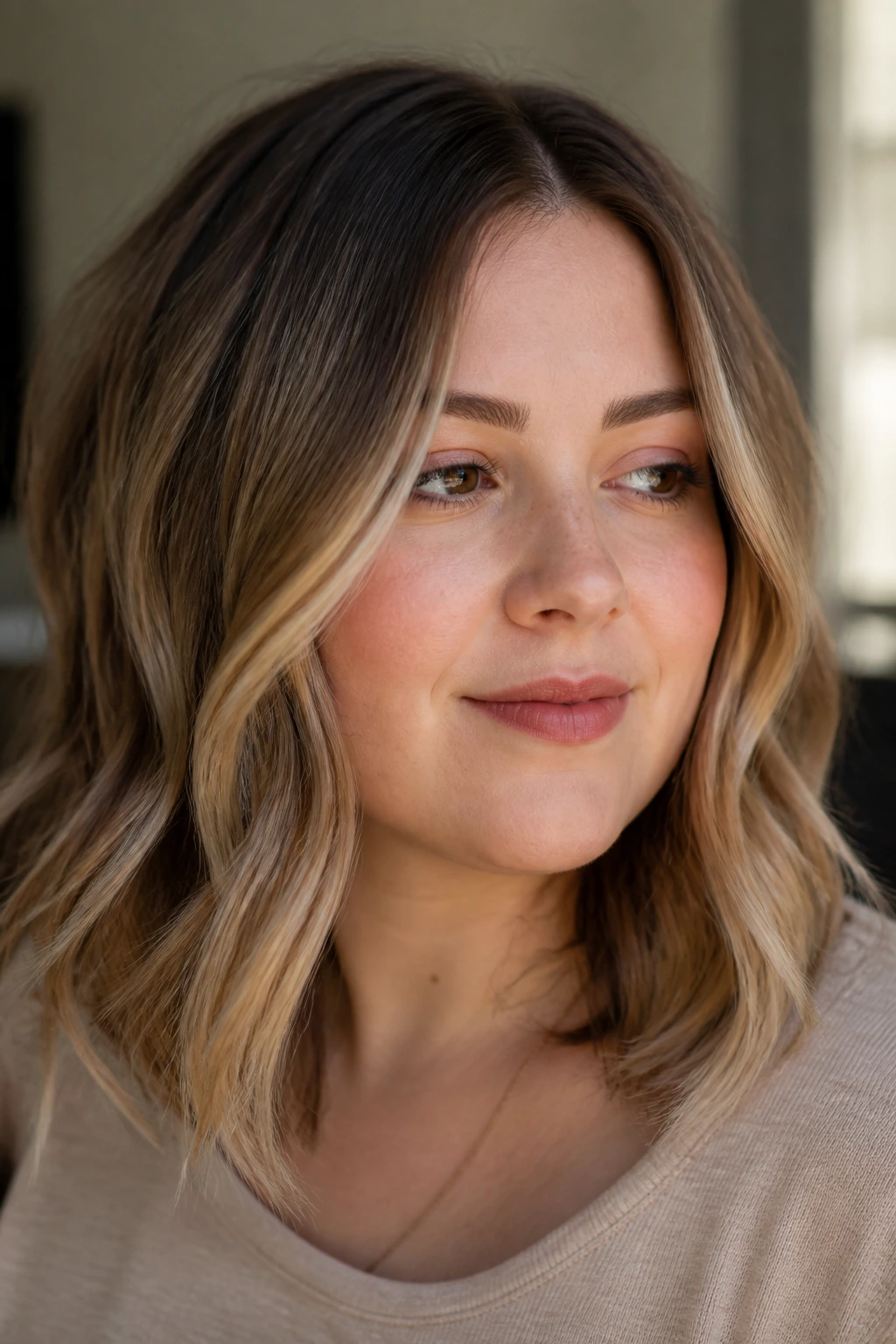
The shape logic is doing half the work here. Ombre gives the eye a path to follow, and on a round face that path matters. A hard horizontal band of light across the cheek area tends to widen the face, while a fade that starts lower — usually at the jaw, mouth, or collarbone — makes the hair carry the visual weight downward.
Fair skin needs a careful tone choice, not just more lightness. A pale complexion can look tired against overly icy blonde, and it can go a little peachy or brassy if the warmth is pushed too hard. Beige, champagne, pearl, mushroom, honey, and soft caramel all solve that problem in different ways. They brighten without bleaching the life out of the skin.
The cut matters just as much as the color. On a lob, for example, a shadow root plus softly lighter ends gives the jawline somewhere to relax. On longer hair, face-framing pieces that begin around the cheek-to-lip area and slide toward the collarbone can narrow the widest part of the face without looking staged.
I keep coming back to one rule: the brightest zone should live below the cheekbones whenever possible. That one placement change does more for a round face than a dozen “face slimming” tricks.
Picking the Right Tone Before the Foils Go In
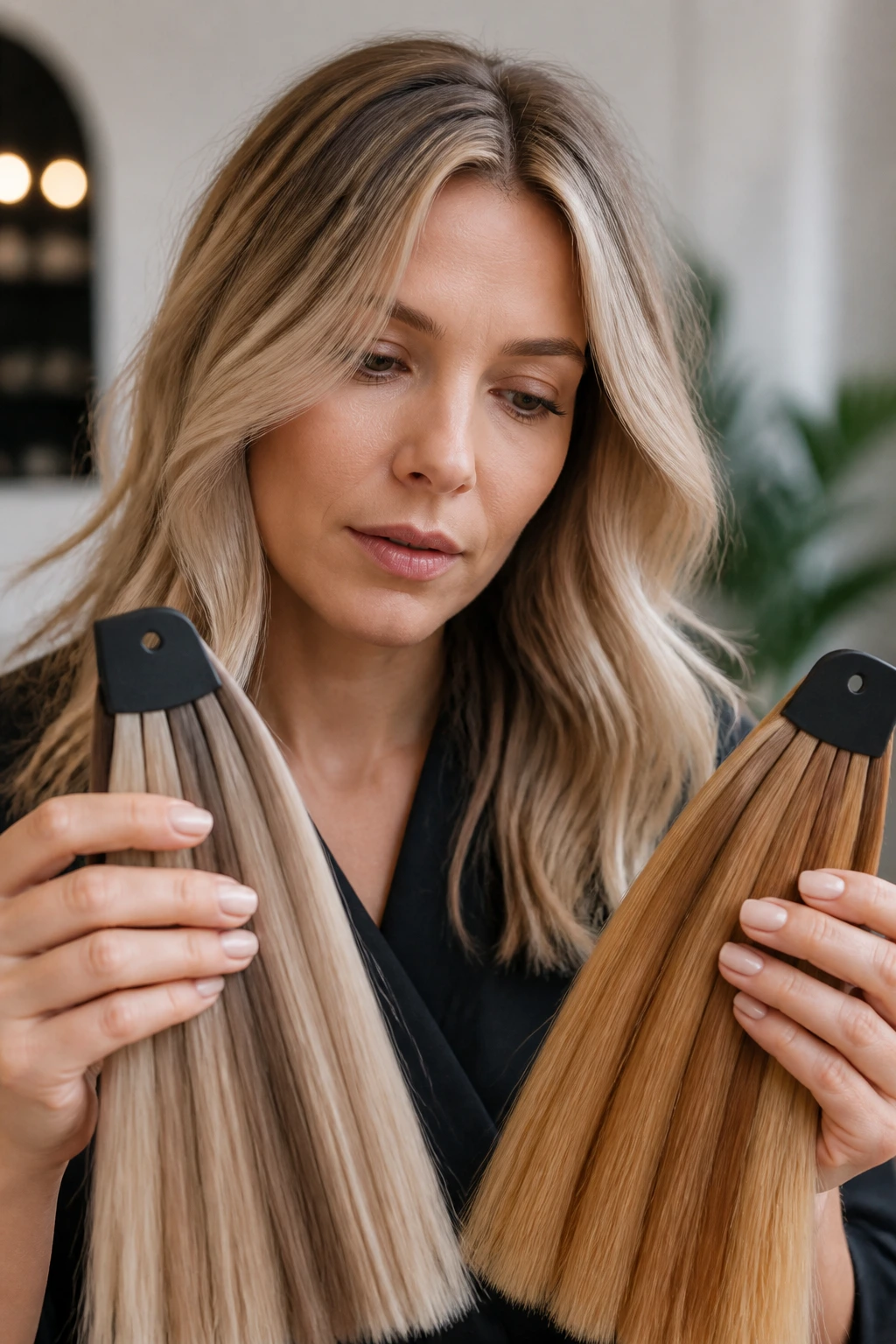
Undertone is where a lot of people get tripped up. Fair skin is not one thing. Some fair complexions lean pink and cool, some lean peach and warm, and some sit in the middle and can borrow from both camps. The wrong tone can make skin look red, flat, or oddly gray.
If your skin leans cool, ash beige, pearl blonde, mushroom brown, smoky cocoa, and dusty mauve are the safest bets. They keep the hair from turning yellow next to the skin. If your skin leans warm, honey, toffee, apricot, soft caramel, and strawberry blonde often feel easier, because they echo the warmth that’s already there instead of fighting it.
Neutral fair skin gets the most freedom, which is mildly annoying if you’re trying to narrow things down. Champagne, bronde, vanilla, and smoke-and-honey blends tend to be the easiest starting points because they can lean warmer or cooler depending on the toner and gloss.
Bring photos, but bring the right kind. One photo should show the color you want. The other should show where the lightness sits on the head. Those are not the same thing. Salon photos love bright ends shot under warm lights, and that can trick you into asking for a tone that’s too yellow or a fade that starts too high.
1. Soft Champagne Melt
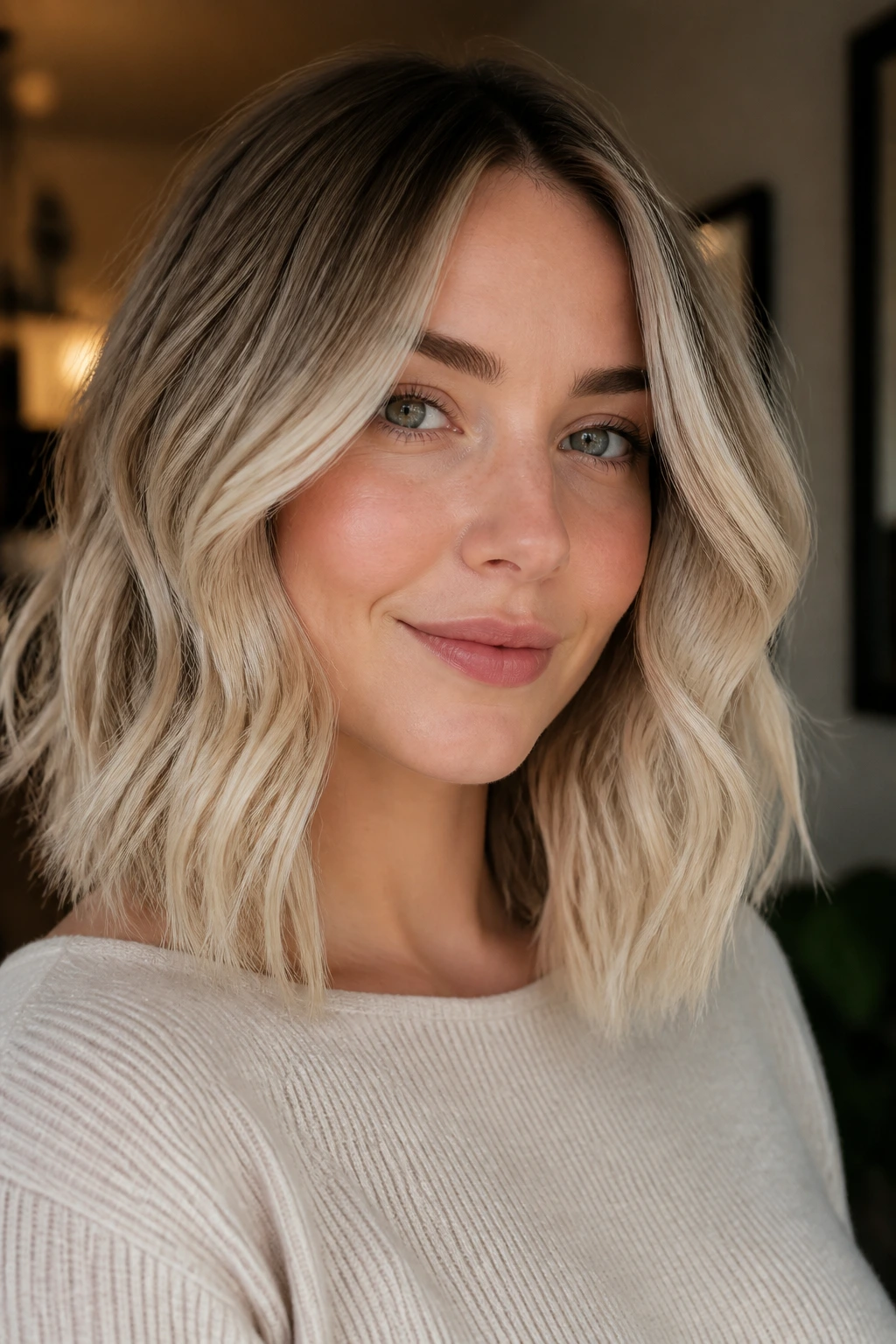
A soft champagne melt has that quiet, expensive-looking glow that never feels like it’s trying too hard. The root stays a shade or two deeper than the ends, and the transition should begin low enough that the brightest blonde lives around the jaw and collarbone, not right at the temples. On fair skin, champagne works because it brings warmth without tipping into gold.
Why It Flatters
- The beige note in champagne keeps pale skin from going flat.
- The fade starts low, which helps a round face read longer.
- Loose waves make the gradient look softer, especially around the front pieces.
A champagne melt also behaves well in bad lighting, which matters more than glossy salon photos let on. If you wear your hair straight, ask for a few thinner ribbons near the face and keep the overall lightness concentrated in the lower half of the length. That keeps the crown from looking puffy.
Best tip: ask for a beige gloss after lightening; it turns “blonde” into “soft blonde,” and the difference is not subtle.
2. Beige Blonde Lob with Shadow Root
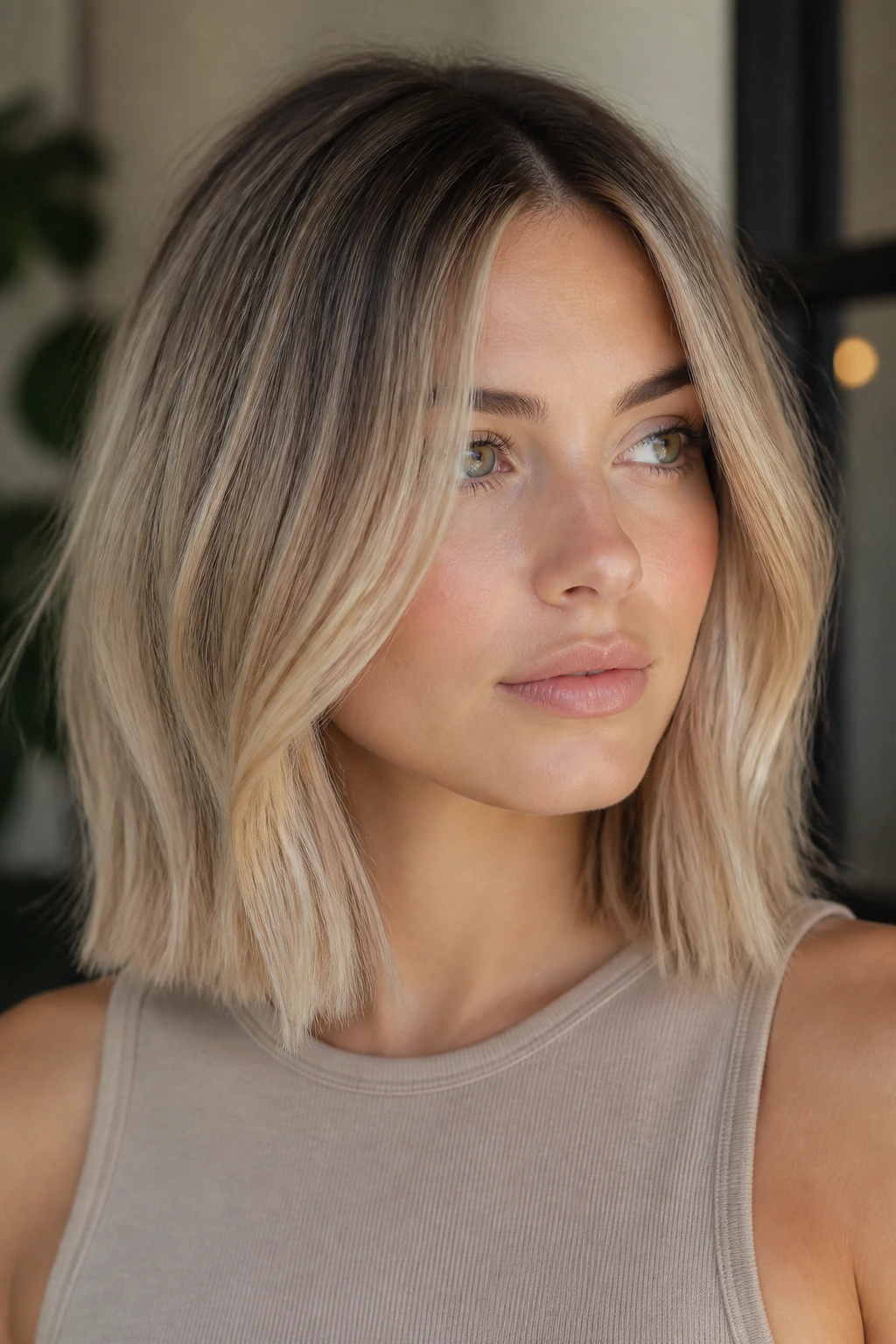
If you want a round face to look a touch narrower, this is the safest blonde on the list. A beige blonde lob with a shadow root gives you length where you need it and softness where you do not. The lob skims the collarbone, which already helps stretch the face, while the root shadow stops the color from looking like one wide band.
Beige is the secret here. Not yellow. Not icy. Beige is the shade that keeps fair skin looking bright instead of washed out, and it tends to age better than stark platinum because the grow-out is gentler. I like this best when the colorist keeps the lightest pieces below the cheekbone and leaves the front a hair deeper near the part.
The styling matters too. A soft off-center part creates more vertical movement than a dead-center line, and a loose bend through the ends keeps the cut from hugging the face too tightly. If you wear the lob sleek and pin-straight, the color reads a bit more serious; if you add a bend, it reads lighter and softer.
This is one of those looks that quietly fixes a lot at once.
3. Mushroom Brown to Ash Beige Fade
Why does a cool mushroom fade look so good on fair skin? Because it tones down redness without making the face look pale and chalky. The darker mushroom root gives the crown some depth, and the ash beige ends keep the finish light without a yellow cast. On a round face, that darker top section matters — it visually narrows the widest part before the fade opens up at the ends.
How to Wear It
- Keep the ash beige starting around the lower cheek or jaw, not higher.
- Pair it with curtain bangs or long face-framing pieces.
- Brush it into loose bends so the cool tones do not read flat.
This one is especially good if your wardrobe lives in black, gray, navy, or soft taupe. Warm blonde can fight those clothes a bit; mushroom and ash sit next to them without making noise. If your skin leans pink, this is one of the easiest ways to stay blonde-adjacent without turning orange at the ends.
A small warning: ash can go smoky in a hurry. Ask for beige ash, not steel gray, unless you want the tone to look deliberate and a little edgy.
4. Honey Ribbon Balayage
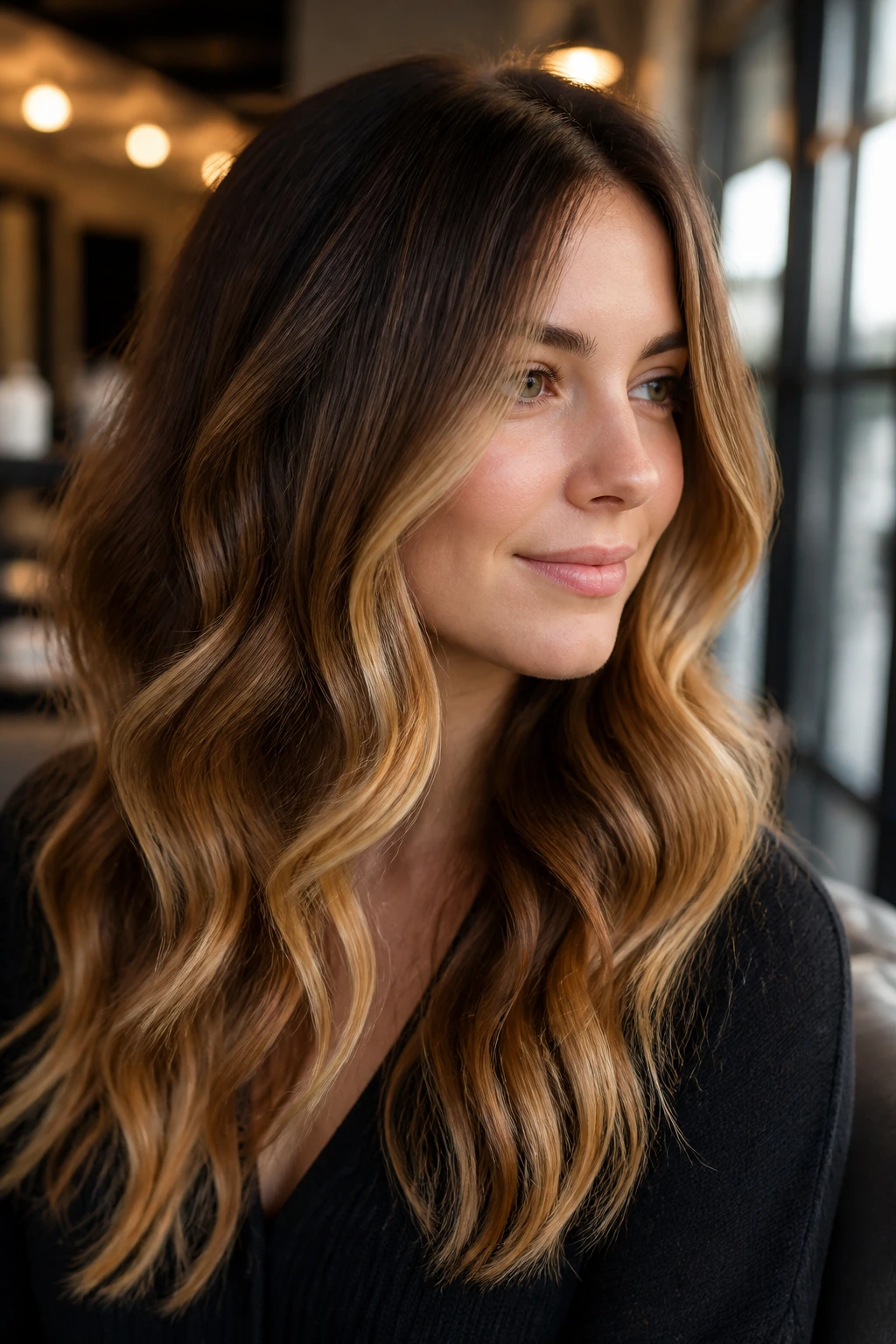
Picture hair that looks like it caught the last hour of daylight on a long drive. That’s honey ribbon balayage. The base stays deeper and softly neutral, then thin ribbons of honey get painted through the mid-lengths and ends so the brightness feels woven in, not sprayed on. On fair skin, honey can be gorgeous when it sits lower on the hair and never reaches the root like a helmet of warmth.
The round-face trick is placement. Honey ribbons should frame the lower half of the face, then drift into the ends where the eye naturally follows them downward. If the bright pieces stop at cheek level, the width comes back. If they fall lower, the face looks longer and the cut gains movement.
- Ask for thin, broken-up ribbons rather than chunky panels.
- Keep the strongest warmth below the mouth line.
- Works especially well on soft layers and medium-density hair.
I like honey best on people who want warmth but hate brassiness. It reads richer than straight gold, and it can make fair skin look alive without pushing it into orange territory.
5. Strawberry Blonde Ombré
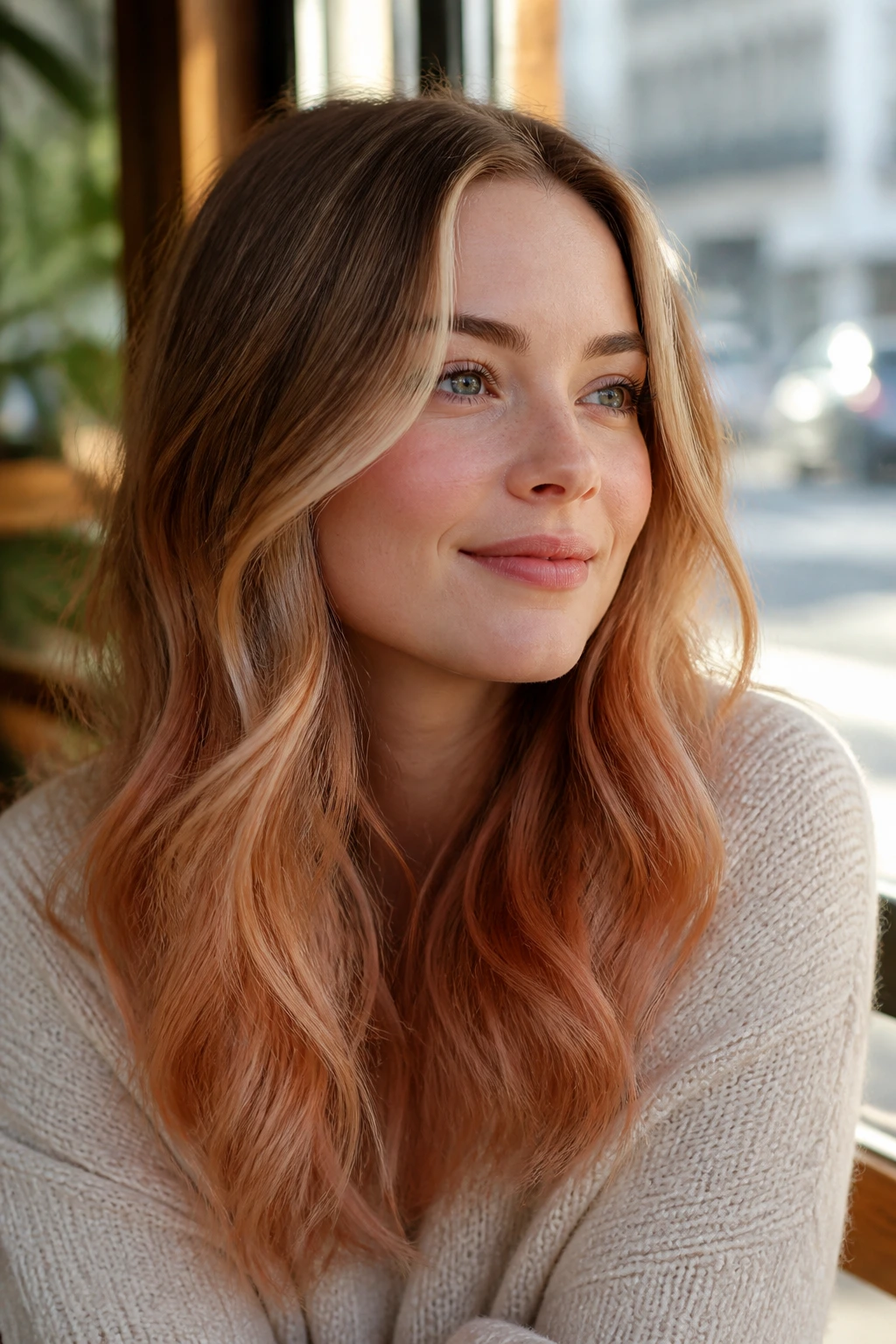
Strawberry blonde is one of those shades that looks sweet from a distance and complicated up close. That’s why it works. On fair skin, especially skin with a pink or peach cast, a strawberry ombré can wake up the complexion without the hard contrast of copper. The roots stay softly beige or light brown, then the ends pick up a blush of warmth that looks sun-touched rather than red.
The important thing is restraint. Too much copper at the face can make a round cheek look fuller, and too much pink can drift into costume territory. The version I prefer keeps the strongest strawberry in the last third of the hair and uses tiny face-framing ribbons, not a full frontal sweep, to keep the eye moving downward.
On wavy hair, strawberry ombré gets a little magic from movement. The bends catch the warmer tone in strips, so the color looks alive instead of one-note. Straight hair can wear it too, but I’d keep the transition especially soft and add a beige gloss to the root so the red does not feel abrupt.
If your skin is very fair and flushes easily, this is better than a true copper. It gives warmth without the glare.
6. Icy Sand Blonde Waves
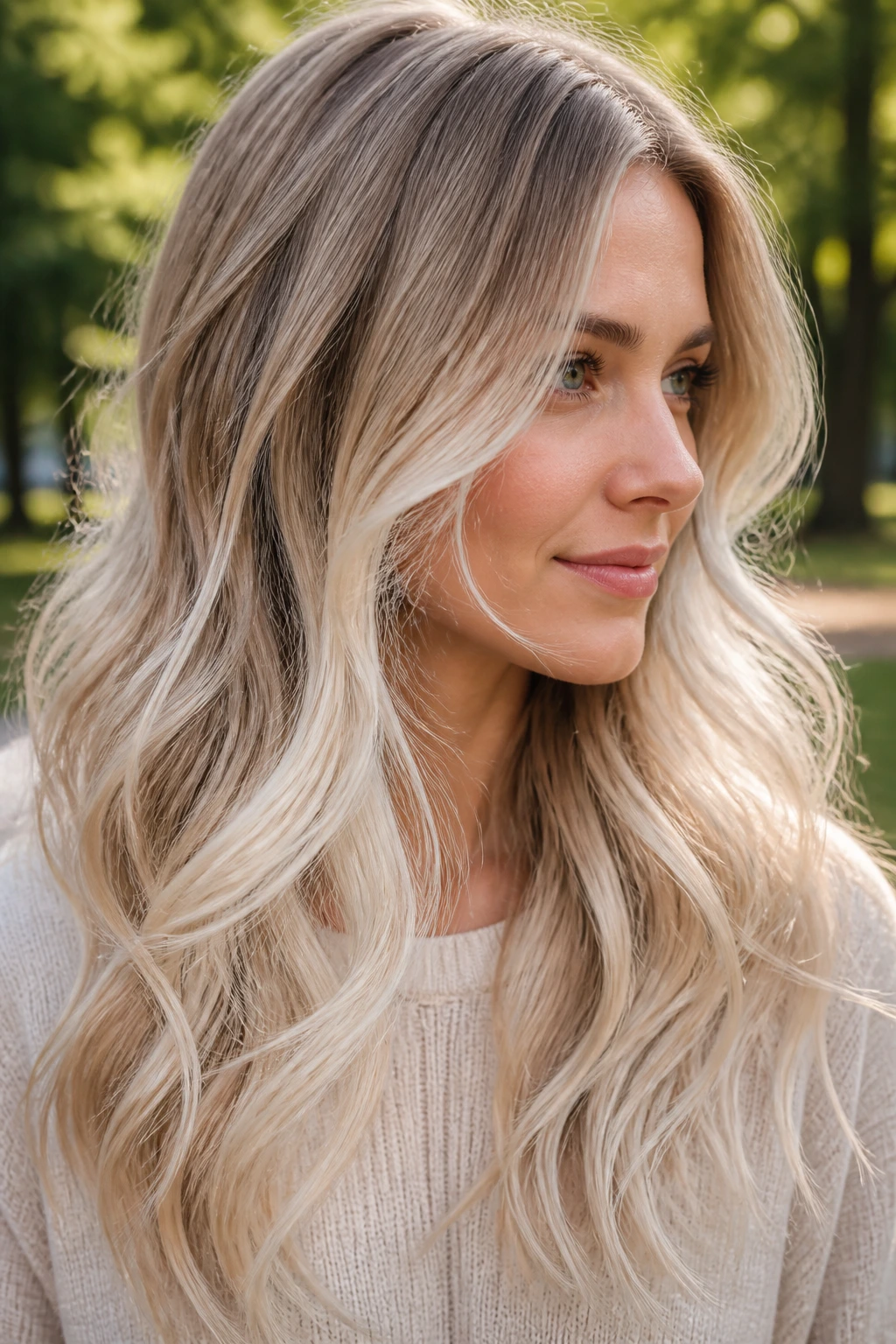
Unlike platinum, icy sand blonde does not try to make the whole head one flat, loud statement. It leaves room for the eye. The root stays sandy and muted, then the ends brighten into a pale, cool blonde that sits between beige and pearl. On fair skin, that coolness can look clean and polished instead of stark, as long as it’s not pushed so high that the hair starts looking white.
What Makes It Different
The sand note is what keeps it wearable. Pure icy blonde can make some pale faces look drained, especially if the brows are light too. Sand blonde gives the finish a little grain and depth, so the color still feels like hair rather than frosting.
Who It’s Best For
- Fair skin with cool or neutral undertones.
- Medium to long hair with soft layering.
- People who want a lighter blonde without the maintenance of full platinum.
Specific Recommendation
Ask for level 9 to 10 ends with a pearl-beige toner, not a harsh silver toner. Then style it with wide waves or a large iron bend. The texture softens the contrast and keeps the face from looking boxed in.
7. Caramel Tea-Dip Ends
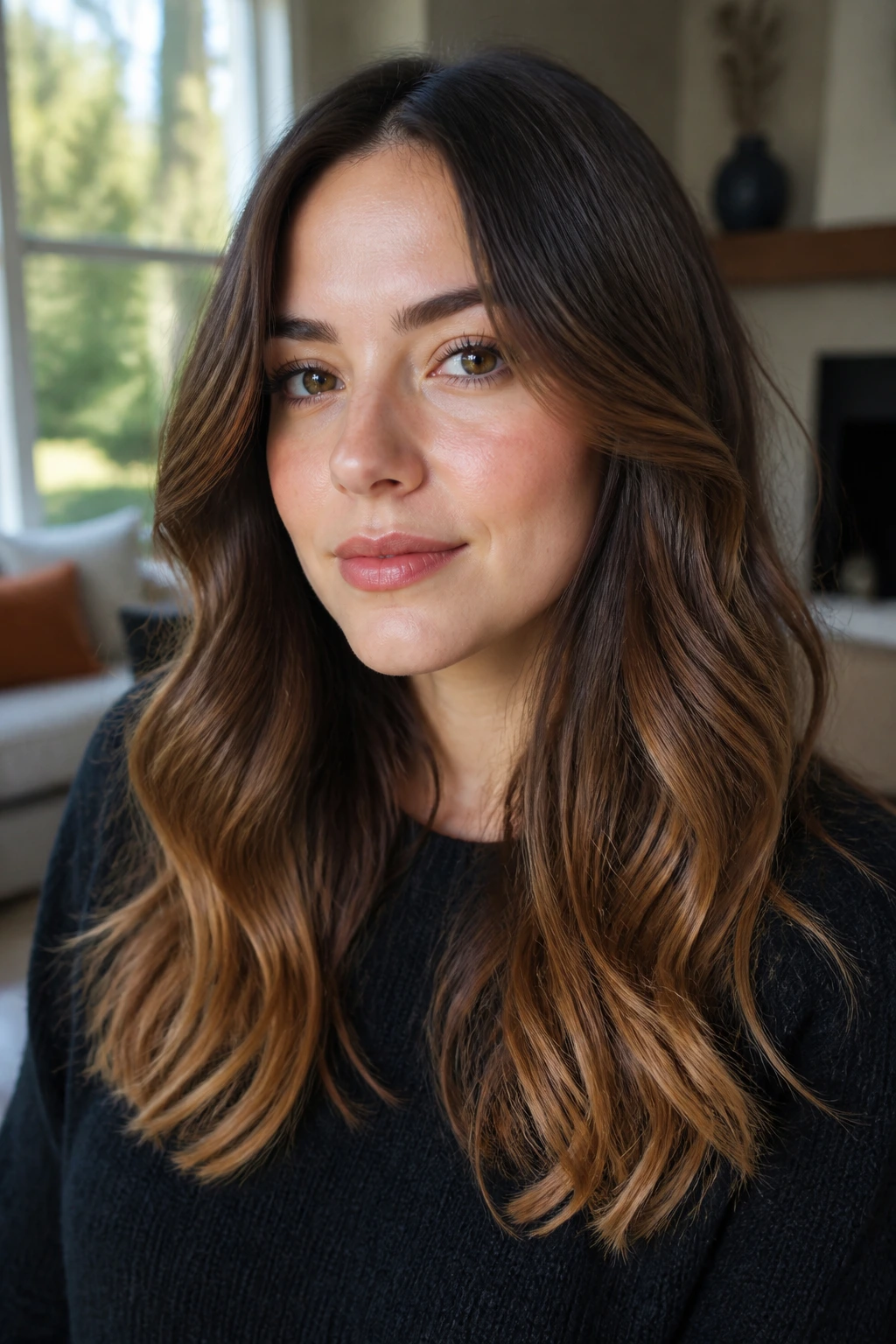
Caramel tea-dip ends feel a little more grounded than the blonder looks on this list, and I think that’s why they work so well on fair skin. The root can stay a soft brunette or dark blonde, the mid-lengths hold on to a neutral brown, and the last several inches turn into warm caramel. It’s color with a gentle finish, not a sudden cliff.
What Makes It Different
The “tea-dip” part means the warmth is concentrated at the bottom, almost like the hair has been dipped in something richer. That keeps the upper half of the head from expanding visually — a good thing on a round face. You want the warmth to live under the chin and travel down, where it adds movement instead of width.
- Best on long layers or a blunt lob that needs softness.
- Ask for caramel, not orange-gold.
- Keep the transition fuzzy, not striped.
This is one of my favorite options for people who don’t want to look blonde at all. It gives enough lift to make the ends interesting, but it still reads as brunette from across the room. If your skin is fair and your eyes are dark, the contrast can be especially nice.
Tip: if the caramel starts at the mouth line, it’s too high.
8. Rooted Vanilla Blonde
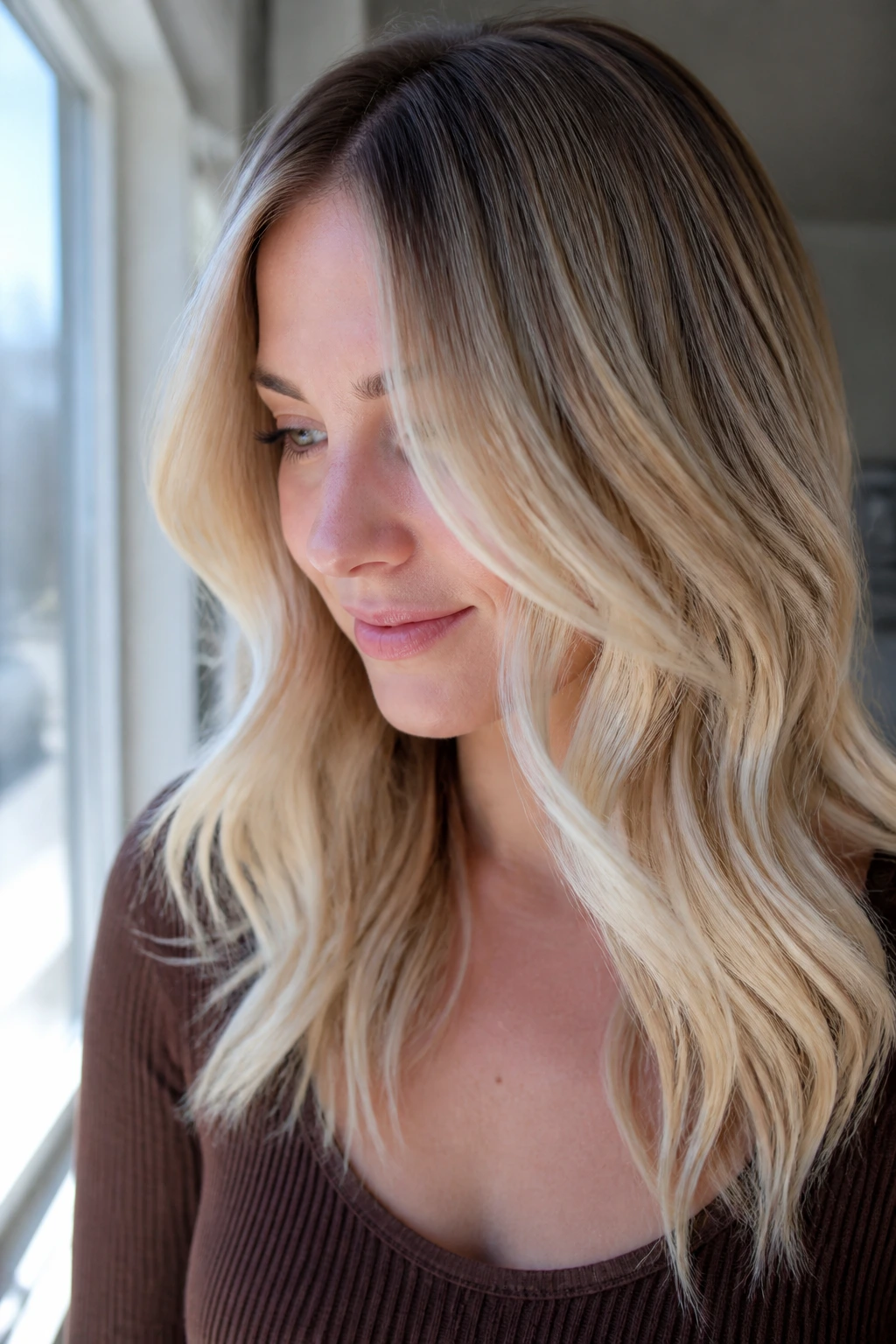
Vanilla blonde is what I reach for when someone wants brightness but hates the striped highlight look. The root stays deeper — usually a soft level 6 or 7 depending on the starting color — and the ends lift into a creamy vanilla shade that sits between beige and pale gold. On fair skin, vanilla is flattering because it gives light without that sharp, over-processed finish.
The reason it works on a round face is subtle. A deeper root keeps the top of the head from visually puffing outward, and the creamy ends create movement below the cheek line. That’s the whole shape trick in one color. If the colorist pushes the front pieces too high, though, the illusion disappears, so the front should start soft and graduate down.
I’d pair this with a cut that has some motion: invisible layers, a long bob, or a loose blowout with a bend away from the face. Vanilla blonde is not a stiff color. If you wear it straight and flat, it can lose its softness.
If you like blonde but find platinum too severe, this is a smart middle ground. It’s gentler, and honestly, easier to live with.
9. Chestnut to Milk Chocolate Fade
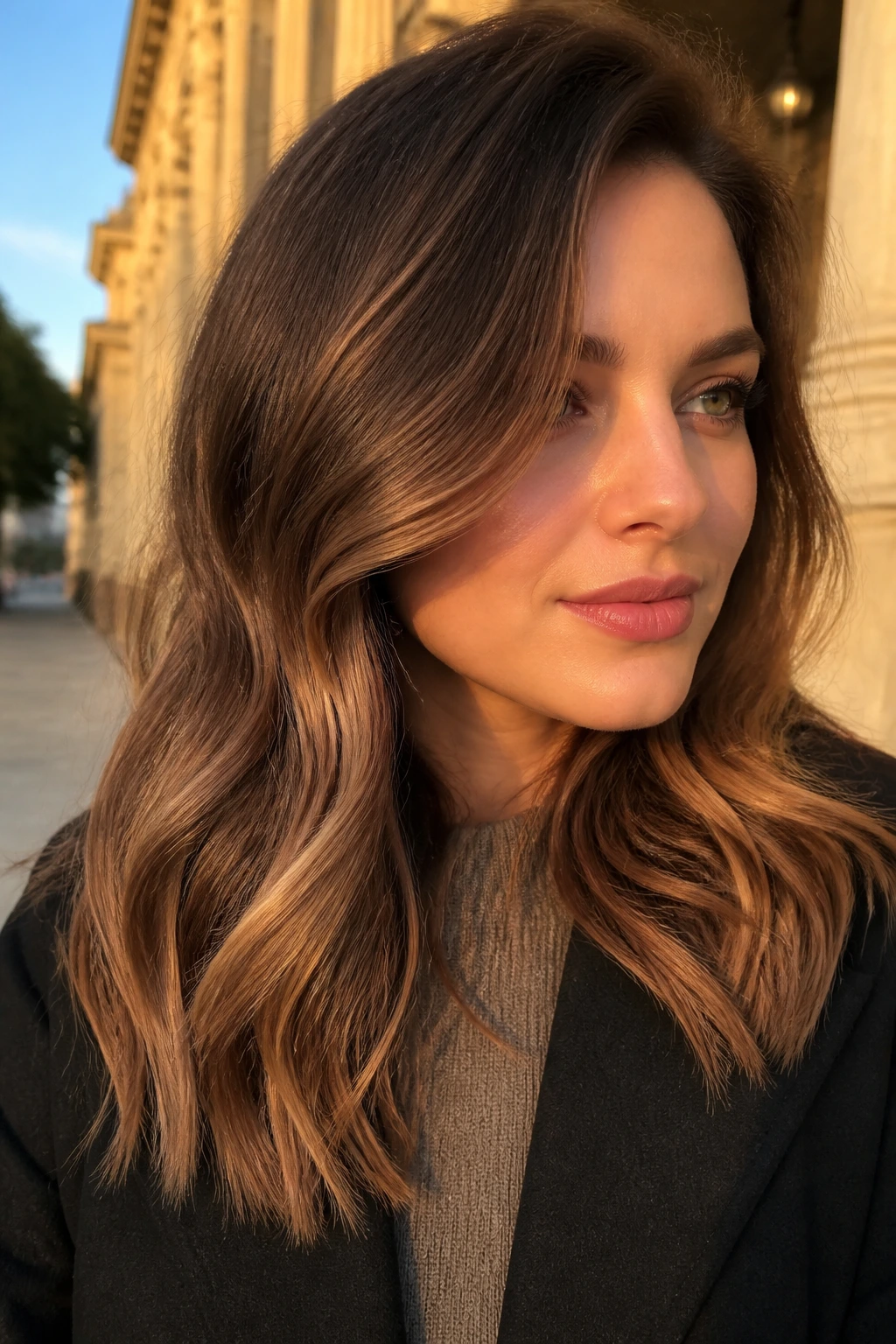
Why bother going lighter at all if you already have fair skin? Because a brunette ombré can give shape without making the hair fight the face. Chestnut roots sliding into milk-chocolate ends stay in the brown family, which makes this one feel understated, but the lighter ends still pull the eye downward — exactly what a round face needs.
How to Use It
The best version keeps the chestnut fairly neutral at the top and shifts into milk chocolate around the lower third of the hair. If the ends are too dark, the fade disappears. If they are too light, you lose the brunette richness that makes the style feel intentional.
This looks especially good with a side part and a little volume at the crown. That tiny lift at the top helps elongate the face without turning the style into a teased mess. Loose waves are the sweet spot here because they catch the brown-to-brown shift more clearly than straight hair does.
If you wear dark brows or eyeliner, this color pair feels easy. It gives fair skin definition without forcing a full blonde transformation, and sometimes that’s exactly the point.
10. Rose Gold Dusting
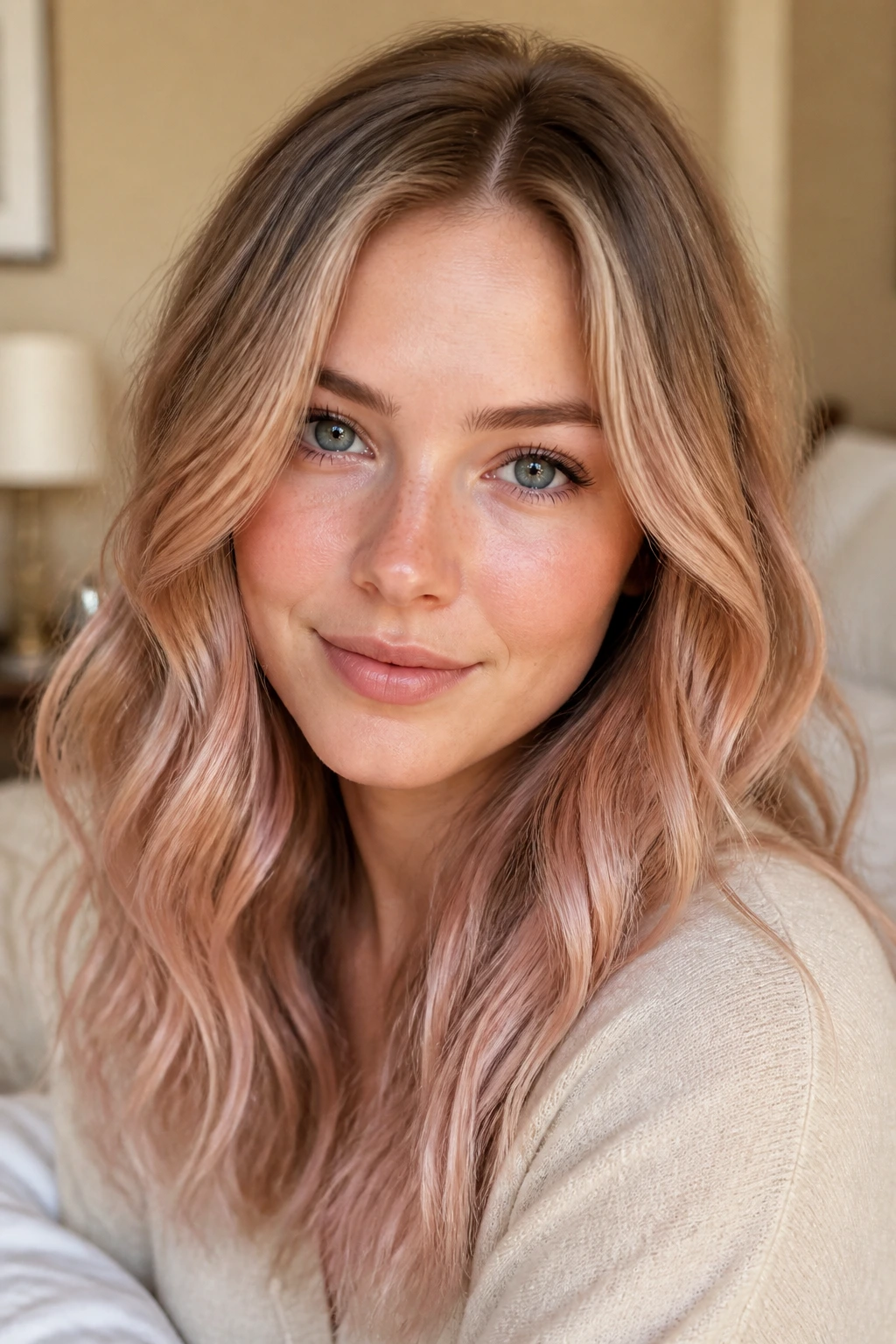
A rose gold dusting is the shade I suggest when someone wants color that feels fresh but not noisy. The base stays neutral or softly beige, then a muted rose-gold tone appears mostly at the ends and perhaps a few whisper-thin ribbons around the face. On fair skin, rose gold can brighten the complexion in a way that warmer blondes don’t always manage.
The trick is keeping it dusty. Bright pink-gold at the cheekbone can look costume-like fast, especially on a round face where you don’t want the width to sit too high. If the rose begins lower and fades softly into the last inches, the effect is more like a glow than a statement.
- Best on level 7 to 9 hair that can hold a soft pastel tint.
- Keep the rose muted, not bubblegum.
- Refresh with a gloss every 4 to 6 weeks if you want the tone to stay visible.
I like this on people who dress in cream, gray, black, or faded denim. The color adds warmth without pushing the whole head into copper territory. It’s a small move with a surprisingly big payoff.
11. Bronde Face Frame with Soft Ends
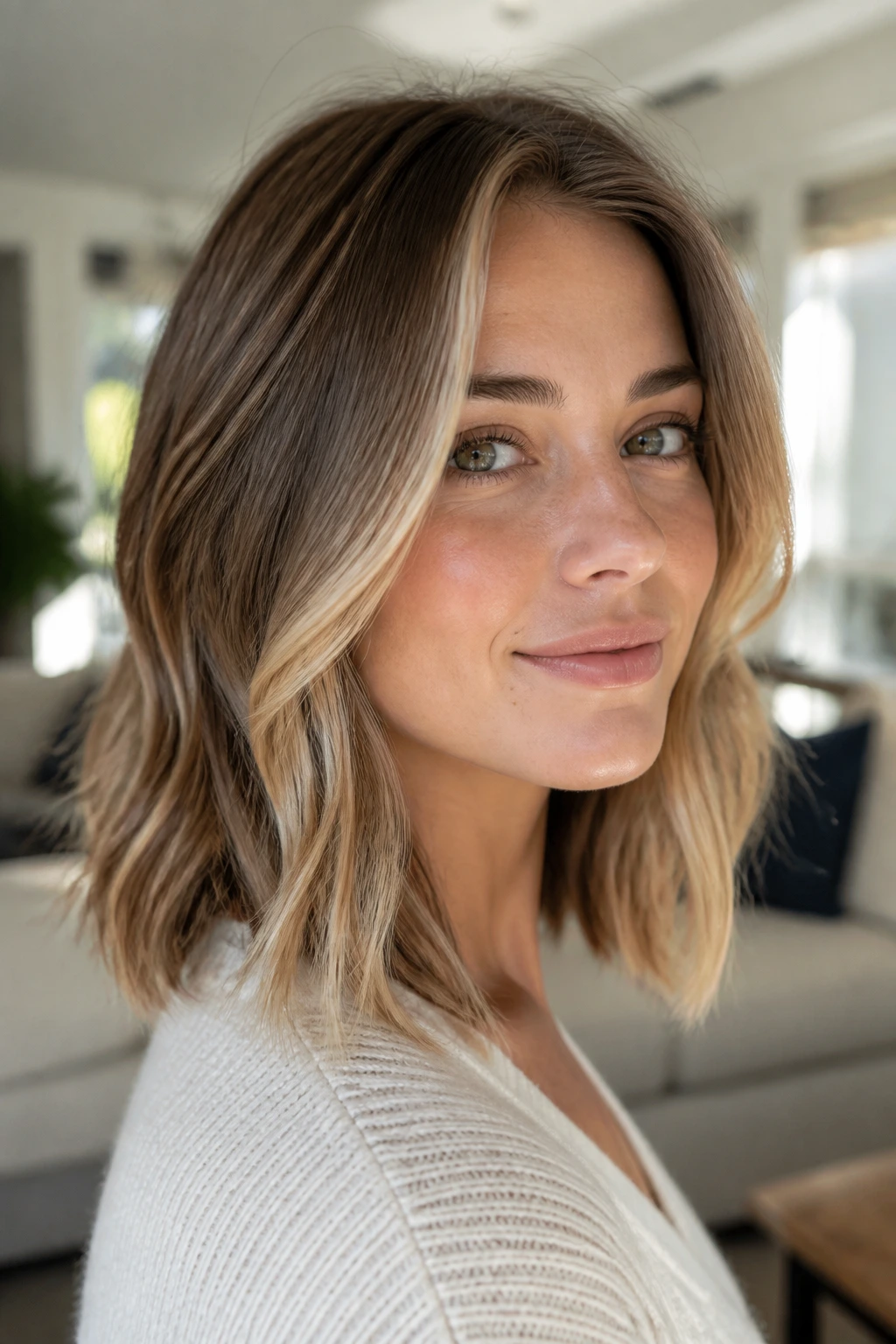
Bronde is the comfortable middle seat between brunette and blonde, and that’s exactly why it plays so nicely on fair skin. The roots and mid-lengths keep enough brown to give the hair shape, while the ends open up into beige-blonde softness. For a round face, the real win is the face frame: the front pieces should start a little darker near the temple, then drift lighter as they pass the cheek and reach the collarbone.
That vertical sweep matters. A lot. It keeps the widest part of the face from getting a bright horizontal band, which is the move that usually makes roundness more noticeable. Bronde also gives you a bit of depth if your brows are dark, which can make the whole face feel more balanced.
I prefer this on long layers or a lob with movement. If the cut is blunt and heavy, the color can still work, but it needs a little bend through the mid-lengths so the transition doesn’t look blocky. The beauty of bronde is that it never needs to scream to be useful.
This is the shade I recommend when someone says, “I want lighter hair, but I still want it to look like mine.”
12. Cool Cocoa with Pearl Ends
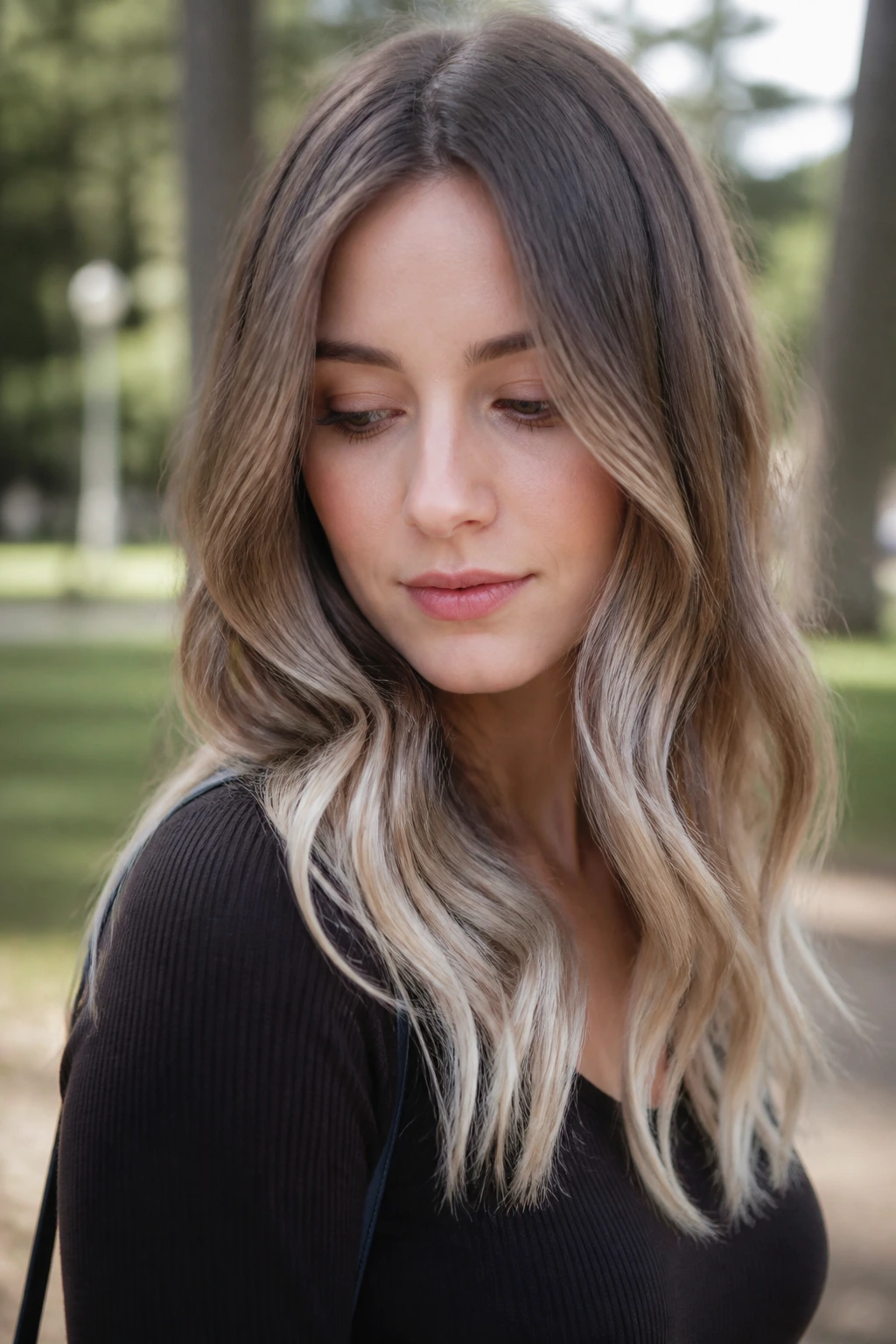
Unlike warm brunette-to-blonde ombre, this version stays cool from root to tip. That’s the whole point. Cool cocoa roots hold on to the depth, while pearl ends lift the color enough to read lighter without turning yellow. On fair skin, especially skin with pink undertones, that cool balance can look crisp and clean.
What Makes It Different
Pearl is softer than silver and less stark than platinum. It has that faint, milky quality that makes the ends feel polished rather than icy. The fade is especially flattering if your natural hair is ash brown or neutral brown, because the color shift looks believable instead of cosmetic.
Who It’s Best For
- Fair skin that goes red easily.
- Round faces that need shape more than brightness.
- People who like cool clothing palettes and mauve or berry makeup.
Specific Recommendation
Ask for a level 5 cocoa root, a level 8 pearl finish, and a soft root shadow that melts over about an inch. Then style with loose movement, not flat iron stick-straight hair. The pearl reads richer when the light catches it on a bend.
13. Sandy Blonde Collarbone Cut
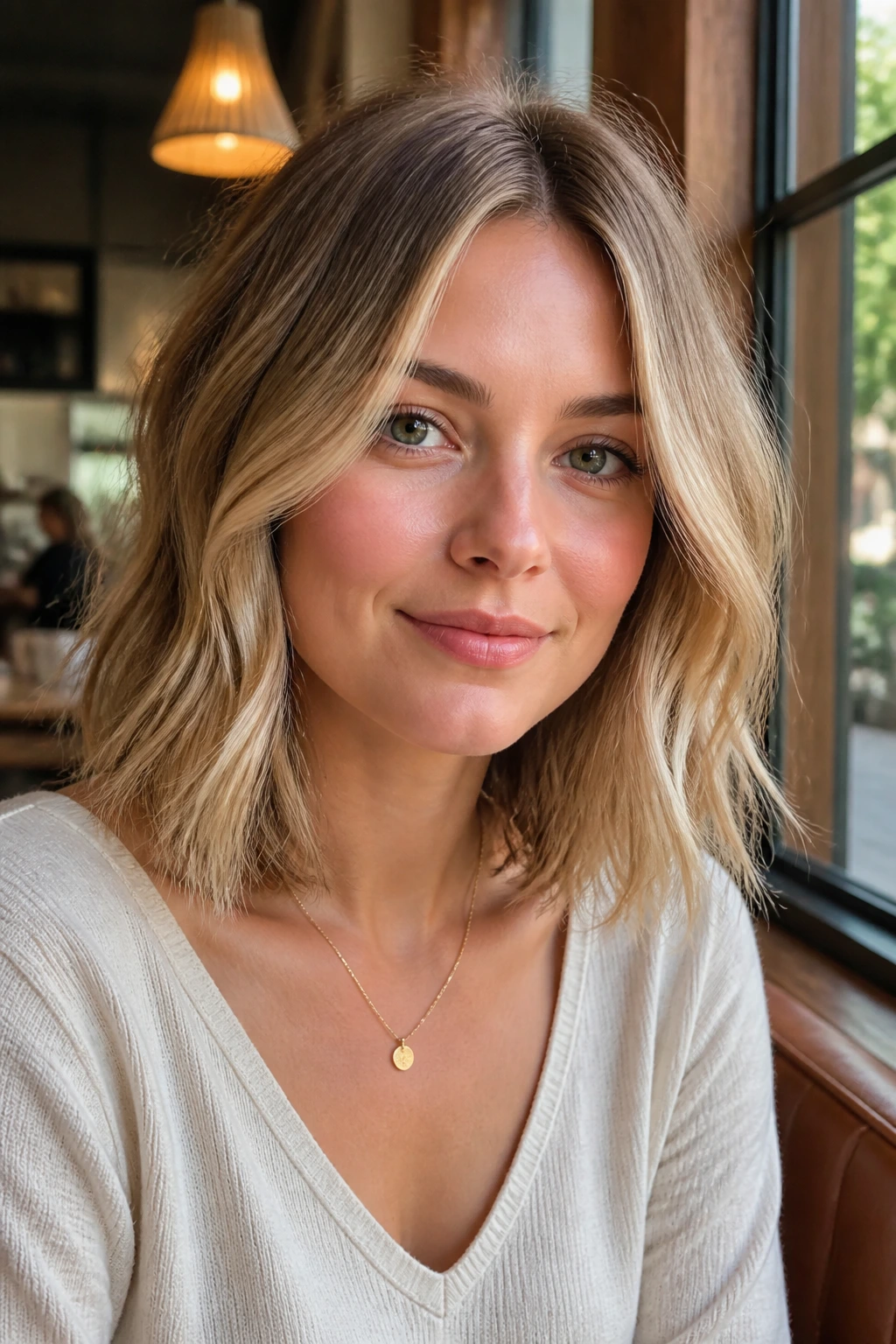
A sandy blonde collarbone cut does two jobs at once: the length stretches the face, and the color keeps everything from feeling heavy. Sandy blonde sits in that beige-gold zone that flatters fair skin without turning orange, and a collarbone cut gives the ombre a clean runway to travel down.
Why the Cut Matters
The collarbone length is the thing most people underestimate. A cut that lands right there creates a vertical line, and vertical lines are friends to round faces. Add ombre that gets lighter from the jaw down, and the whole silhouette starts to feel longer without any sharp contouring around the cheeks.
Quick Placement Notes
- Keep the brightest bits in the lower half of the length.
- Ask for softer brightness around the face, not a chunky highlight panel.
- Pair with a loose wave or a round-brush blowout for movement.
Sandy blonde works especially well if you want an airy finish rather than a glossy one. It’s less sugary than champagne, less yellow than honey, and easier to maintain than a crisp pale blonde. When the cut swings a little, the color looks like it has room to breathe.
Tip: if the ends look too pale next to your skin, add a clear beige gloss, not more lightener.
14. Toffee Melt on Long Layers
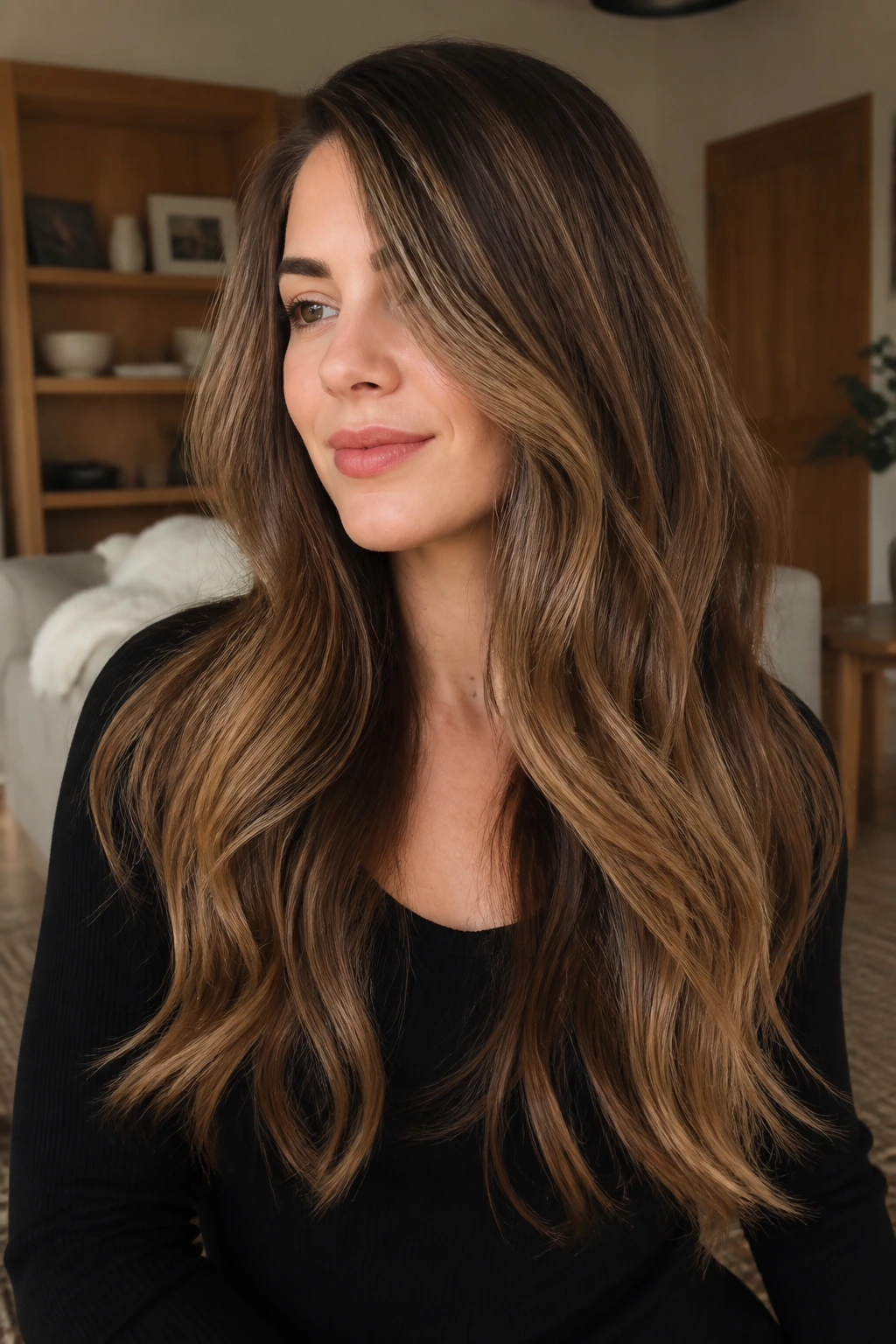
A little warmth can be your friend, and toffee proves it. On fair skin, toffee melt adds a soft, caramel-beige glow that does not feel loud when it’s placed correctly. The roots stay deeper, the mid-lengths carry a warm brown, and the ends melt into toffee that reads rich rather than orange.
Long layers make this one sing. Without movement, the warmth can look heavy; with layers, it breaks into ribbons and the eye follows the length of the hair instead of the width of the face. That matters on round faces, because every long layer becomes a little visual arrow pointing downward.
I’d keep the toffee lower than most people expect. Mid-shaft warmth is nice, but the strongest glow should live at the bottom third. If you push the caramel too close to the cheekbones, the face can look fuller than you want.
This is a good pick if you like warm makeup, gold jewelry, or camel-colored clothes. The tone plays nicely with those things without turning the whole look brassy.
15. Smoky Lilac Pastel Fade
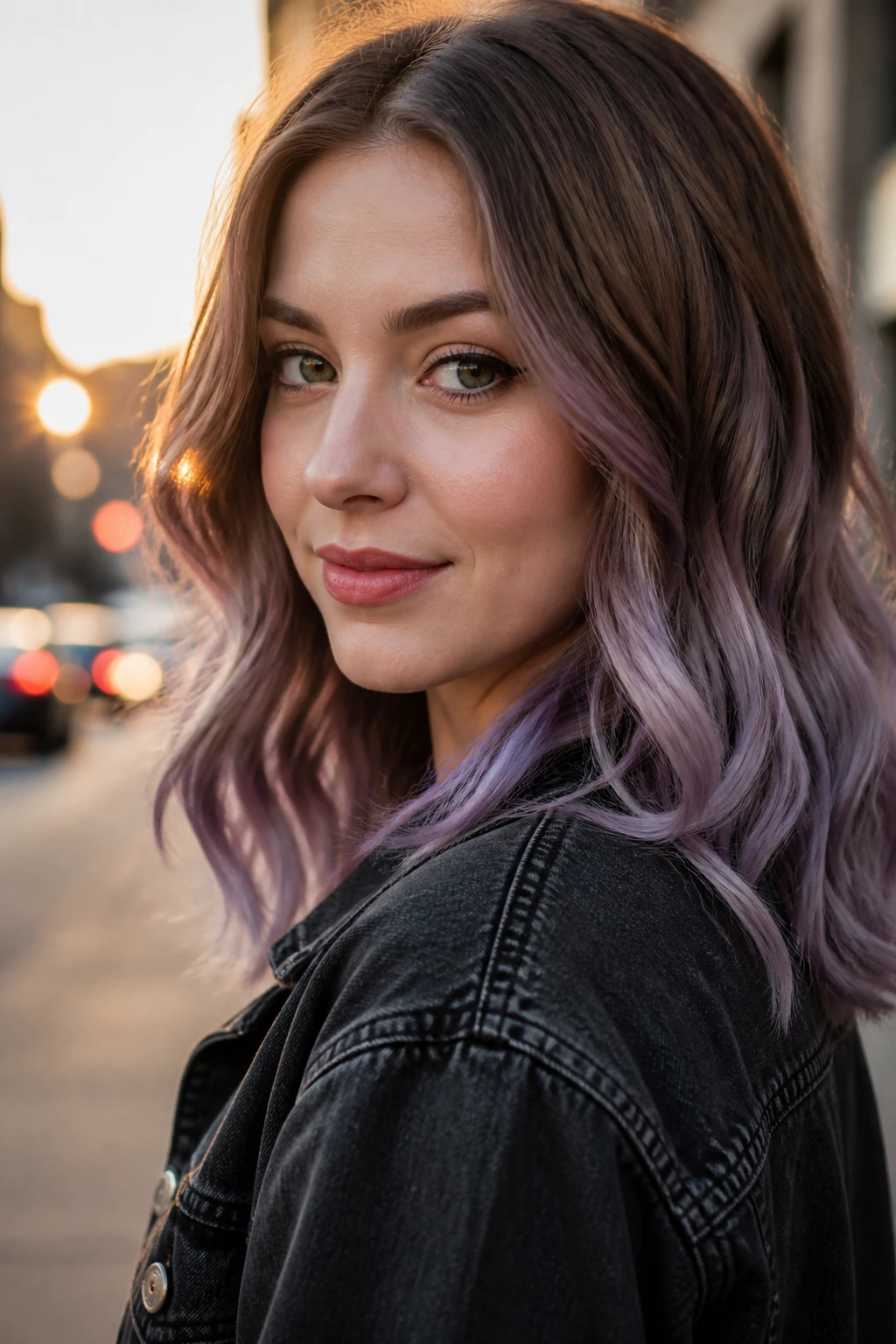
Why does a pastel ombre work on fair skin? Because fair skin can carry a lower-contrast color story without getting lost, and smoky lilac is soft enough to keep the result from looking like candy. The roots stay muted — usually a cool beige or soft brown — and the ends take on a gray-lilac wash that sits somewhere between lavender and pewter.
The key word is smoky. Bright purple can fight fair skin and make the face look flushed. Smoky lilac does the opposite. It cools the skin down, gives the ends a little whisper of color, and still leaves the face looking open. On a round face, the fade should begin below the mouth line so the pastel does not sit too high.
How to Use It
- Best on pre-lightened ends that can hold a pastel toner.
- Works well with wavy bobs, lobs, or layered mid-length cuts.
- Needs a color-safe routine and occasional tone refreshes.
This is the look for someone who wants personality but not chaos. It’s quiet, but not boring. Different things.
16. Apricot Cream Ombré
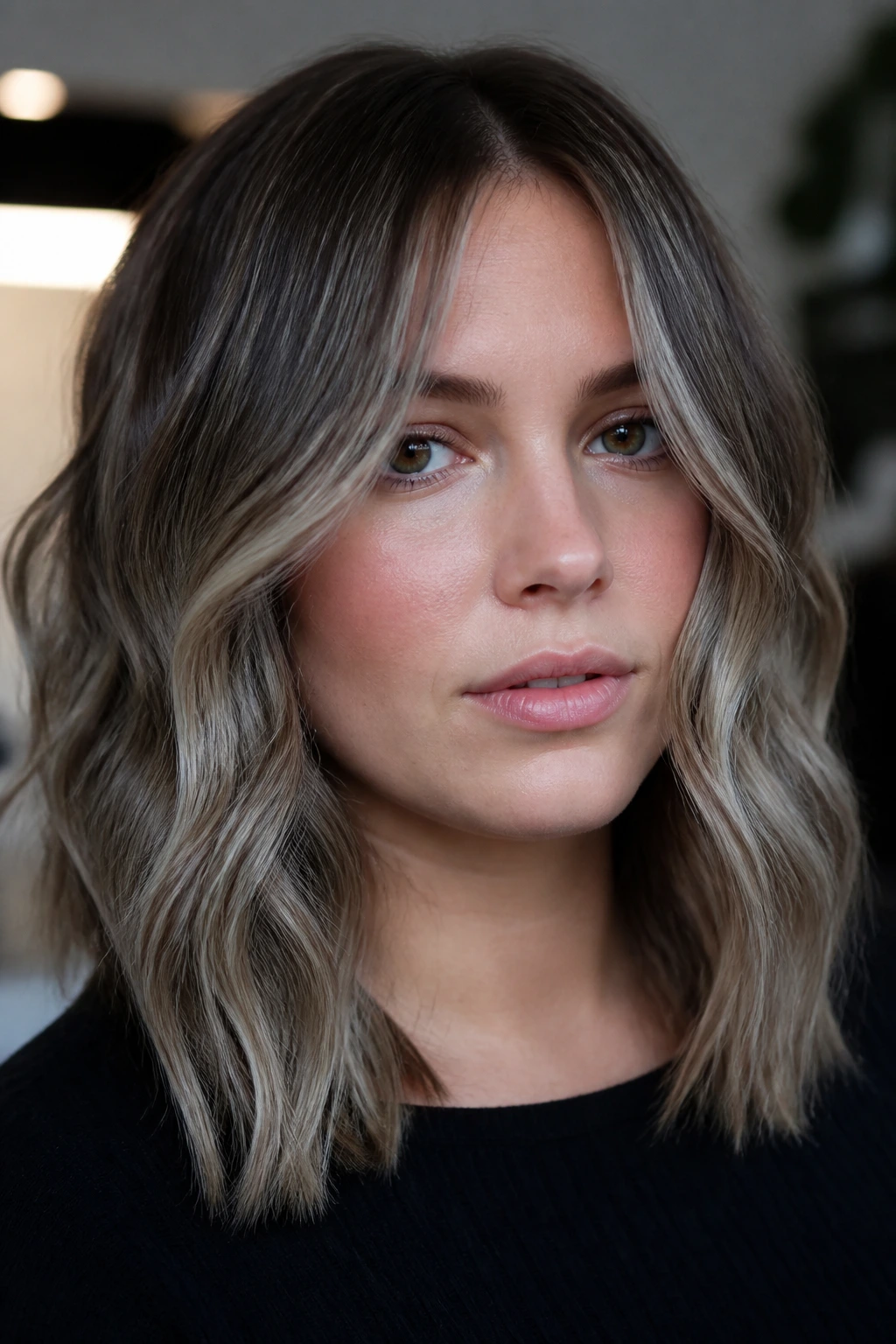
Apricot cream has a funny effect on fair skin: it can make the complexion look healthier without making it look warmer in a heavy way. That’s because apricot sits in a narrow lane between peach and beige. The roots stay neutral, the mid-lengths soften into warm beige, and the ends pick up a creamy apricot glow that catches light without turning orange.
Round faces benefit from this color when the apricot is kept low and broken up with fine ribbons. One solid apricot end section can look flat. A few soft transitions, though, and the color starts to move. That movement matters because it draws the eye down the hair shaft.
- Best for warm or neutral undertones.
- Keep the finish creamy, not copper.
- Ask for a glaze that stays translucent rather than opaque.
I like apricot cream on shoulder-length cuts and layered lobs, where the ends can swing a little. It’s softer than rose gold, warmer than beige blonde, and easier to wear than a full copper. There’s a reason it keeps showing up in better salon chairs.
17. Espresso Roots with Biscotti Ends
Espresso roots with biscotti ends sound rich because they are rich. The top stays deep and cool-toned, which gives fair skin a frame, while the ends lighten into a toasted beige that reads soft, not blonde-blonde. That contrast is useful on a round face because it keeps the crown from looking wide and lets the lighter ends do the elongating work.
I like this one when the hair is thick or naturally dark blonde to light brown. The espresso root grounds the style, and the biscotti ends stop it from feeling heavy. If the ends lift too far into pale blonde, the balance goes off. If they stay too brown, the ombre vanishes. The sweet spot is a soft beige end with enough warmth to look edible — and yes, that’s the right word here.
This is also a smart option if you hate obvious regrowth. The darker root is part of the design, so grow-out feels intentional instead of messy. It’s a practical move with a polished finish, and I respect that.
18. Pearl Blonde Curtain Waves
Pearl blonde curtain waves are the gentler cousin of full platinum. The base remains a soft beige or light brown, then the ends and curtain-bang area shift into pearl blonde that looks milky rather than icy. On fair skin, pearl can be a lovely fit because it reflects light without putting a harsh yellow or orange cast back at the face.
What Makes It Different
Unlike all-over platinum, pearl blonde leaves some depth at the root and around the crown. That depth matters on a round face; it stops the head from reading too wide at the top. The curtain bangs help too, because they open the face in the middle and guide the eye down toward the cheek and jaw.
Who It’s Best For
- Fair skin with neutral or cool undertones.
- Long layers or curtain bangs that can frame the face.
- People who want bright ends without a hard blonde block.
Specific Recommendation
Ask for level 9 pearl ends, a soft shadow root, and thin baby lights around the part. Then blow-dry the bangs away from the face and let the ends fall in loose bends. The wave shape is half the look.
19. Hazelnut to Almond Ombre
Hazelnut to almond is the kind of ombre that sneaks up on you. It looks natural first, pretty second, and smart third. The root stays a soft hazelnut brown, the mid-lengths lighten a shade or two, and the ends finish in almond beige. On fair skin, that slight lift keeps the face from disappearing into one block of brown.
Why It Flatters
- The color shift is gentle, which suits pale skin that gets overwhelmed by heavy contrast.
- Almond ends add softness below the cheek line, helping a round face look longer.
- The palette stays warm-neutral, so it works with gold or silver jewelry.
The best version keeps the front pieces lighter starting around the lips or chin, not the temples. That one placement detail changes the whole shape. You still get brightness near the face, but it reads as movement, not a stripe.
Tip: if you want this to look expensive instead of plain, add a beige gloss at the end. It makes the almond finish look creamy instead of dusty.
20. Dusty Mauve Ends
Muted mauve is one of the easiest ways to wear color without losing softness. On fair skin, dusty mauve can look almost like a tinted shadow at the ends, which sounds odd and works beautifully. The roots stay neutral brown or beige blonde, while the ends drift into a smoky mauve that leans berry, not purple.
The reason it flatters a round face is simple: the color sits low. If the mauve is kept below the jaw and broken up with airy waves, it adds interest without widening the face. Too bright and it turns costume-like. Too pale and it vanishes. The smoky middle zone is where it lives best.
I like dusty mauve on shoulder-length cuts, especially when the styling is loose and a little undone. It feels modern without looking stiff. If you wear cool makeup — plum, rose, taupe — this one has a nice little echo across the whole face.
This is not a shy color. It is, however, a controlled one.
21. Beige-to-Ivory Bob
Why does a short cut with a soft fade work when some bobs do not? Because the bob already supplies the shape. The color only needs to stretch it. A beige-to-ivory bob should sit at or just below the jaw, with the ivory pieces focused in the lower half so the face keeps its vertical line instead of turning into a bright box.
On fair skin, beige and ivory can be gorgeous together if the ivory is toned into softness. Pure white-blonde on a bob can feel severe; beige ivory keeps the finish creamy. I’d keep the root shadow subtle, maybe only half an inch to an inch, so the transition is there but not obvious.
How to Wear It
- Side parts and soft bends help the cut feel longer.
- Tuck one side behind the ear to show off the fade.
- Keep the ends beveled or softly textured, not blunt and heavy.
This look is clean, crisp, and a little more tailored than the others. If you like tidy hair, this is your lane.
22. Smoke and Honey Dimensional Ombré
When you cannot decide between cool and warm, smoke and honey gives you both without making the head look confused. The root stays smoky and neutral, the mid-lengths hold a soft brown-beige, and the ends catch honey in thin ribbons. On fair skin, that combination can be useful because the smoky base stops the warmth from taking over, while the honey keeps the skin from looking drained.
The round-face benefit comes from the way the colors stack. Smoke at the top narrows, honey at the bottom lengthens, and the narrow ribbons in between keep the whole thing from becoming a hard block. It’s dimensional in a very practical way.
- Ask for the honey pieces to be thin and broken up.
- Keep the brightest bits below the mouth line.
- Works well on layered cuts, mid-length waves, and soft blowouts.
This is one of the easiest looks to wear if you want a little warmth but know that full caramel can be too much. It’s balanced, and balance is underrated.
What Your Colorist and Home Kit Need
A good ombre starts with clean sectioning, not guesswork. The tools below are the ones that matter most, whether you’re sitting in a salon chair or keeping the color alive at home.
- Tail comb: This is the workhorse for clean parts and face-framing sections.
- Sectioning clips: Four to six strong clips keep the hair separated so the color lands where it should.
- Balayage board or foil support: Helpful for painting the ends cleanly and keeping the lightener controlled.
- Tint bowl and brush: Necessary for accurate toner application; a kitchen bowl is not the same thing.
- Lightener and developer: Best left to professionals unless you already know how your hair lifts.
- Color-safe shampoo: Helps the fade stay soft without stripping the toner out too fast.
- Purple shampoo: Useful for blonde ends, but use it sparingly; once a week is usually enough.
- Bond-building treatment: Handy after lightening, especially if the ends were lifted more than two levels.
- Heat protectant: If you blow-dry or curl the hair, use it every time.
- Wide-tooth comb: Better than a brush when the hair is wet and fragile.
- Silk or satin pillowcase: Not glamorous, but it keeps the ends from roughing up overnight.
Smart Shopping for Ombre Highlights for Fair Skin and Round Faces
The smartest consultation is the one that talks about level, placement, and tone instead of vague words like “blonde” or “brunette.” Color level tells your colorist how light the hair should get; placement tells them where the lightness should sit; tone tells them whether the finish should lean beige, ash, honey, pearl, or rose. If one of those pieces is missing, the result can drift.
For fair skin, I like to think in terms of soft contrast rather than extreme contrast. A level 5 or 6 root with level 8 to 9 ends will often give enough lift for shape without making the face look stark. If you go all the way to level 10, the toner has to do more work, and that can be gorgeous — or a little too white if the skin is very pale.
Bring inspiration that shows the same face shape as yours if you can find it. That matters more than hair color alone. A shade on a long, narrow face does not automatically behave the same way on a round one. You want to see how the brightness sits around the cheeks, jaw, and collarbone.
And please, look at the photo in daylight. Salon lighting is a liar. It makes beige look whiter, warm blonde look cleaner, and low-contrast brunette blends look brighter than they really are.
How to Style Ombre Highlights for Fair Skin and Round Faces
Presentation: Loose waves, a soft blowout, or even a rounded brush bend will show the fade better than poker-straight hair. Keep the front pieces moving away from the face so the brightest bits drop downward instead of sitting like a stripe across the cheeks.
Accompaniments: Curtain bangs, long layers, collarbone lobs, and off-center parts all help the ombre do its job. A round face usually likes a little height at the crown and a little swing at the ends. Heavy blunt bangs and a sharp, chin-hugging line can fight the color.
Scale: The lighter the base, the more careful you need to be with the ends. On very fair skin, a level 9 beige or pearl can read richer than an aggressive level 10 white blonde, because the tone carries the softness. Keep the brightest area below the cheekbone whenever possible.
Pairing: Makeup and wardrobe matter more than people admit. Cool ombre shades usually look best with taupe, berry, silver, and muted rose; warm shades sit nicely with cream, camel, peach, and gold. If your neckline is crowded with a high collar, the face can look wider, so a V-neck, scoop neck, or open collar often helps the whole shape feel longer.
Additional Tips and Color Boosters
Flavor Enhancement: A clear or beige gloss every 6 to 8 weeks can keep the fade creamy and stop blonde ends from looking raw. It’s one of the cheapest ways to make an ombre look freshly done.
Customization: If the roundness of the face still feels noticeable, ask for a slightly deeper shadow root or a few lowlights around the temples. That tiny bit of darkness near the top tightens the silhouette without changing the whole color story.
Serving Suggestions: Soft waves, a side-swept part, and a small amount of shine serum on the ends give most of these looks a cleaner finish. The goal is movement, not crunch.
Make-It-Yours: Warm-toned dressers can lean honey, toffee, apricot, or rose gold. Cool-toned dressers usually look better with mushroom, pearl, ash beige, dusty mauve, or cool cocoa. If you love both, smoke-and-honey blends split the difference nicely.
Time-Saver: Book your gloss and trim together. It saves a second trip and keeps the ends from looking dry right when the tone is starting to drift.
Common Mistakes That Flatten the Look
The biggest mistake is starting the lightest color too high. If the ombre begins near the cheekbone, the face can look wider because all the brightness sits in the same place the face is already widest. The fix is simple: push the lightest section lower, usually from the jaw down.
Another common error is choosing a tone that fights your skin. Too yellow next to fair skin can look brassy. Too icy can look stark. Too coppery can flare up redness. A beige or pearl gloss is usually safer than going all the way warm or all the way white.
Over-lightening the front money pieces is another one. People want face-framing brightness, which makes sense, but if the front pieces are thick and bright all the way to the top, the color stops elongating the face and starts widening it. Thin, softly placed ribbons work better.
Flat styling can wreck the illusion too. A center part with stick-straight hair and no bend around the chin tends to emphasize roundness. You do not need big curls. You just need enough movement to break up the line.
And finally, don’t ignore porosity at the ends. If the ends are already dry, they’ll grab toner faster and look dull sooner. That is where a gloss or bond treatment earns its keep.
Variations and Adaptations to Try
Low-Contrast Barely-There Fade: Keep the root and ends only one to two levels apart. This works when you want the ombre effect more than you want the blonde look, and it’s especially easy to wear on fair skin that goes red quickly.
Warm Glow Reset: Shift the palette toward honey, toffee, or apricot while keeping the brightest pieces low. This suits skin that looks flat against ash tones and adds a little life without going orange.
Cool Porcelain Blend: Use mushroom, pearl, and ash beige tones from root to tip. It’s a clean choice for cool fair skin, but the tonal shift has to stay soft or the hair can look gray.
Pastel Wash-Out: Add a smoky pastel glaze — lilac, rose, or mauve — only to pre-lightened ends. This is for people who want a color story rather than a standard blonde, and it wears best when the fade is low and the cut has movement.
Curly-Hair Ribbon Placement: On curls, place the lighter ribbons lower and leave more depth at the root. Curls already add width, so this keeps the color from ballooning out around the cheeks.
Brunette-First Grow-Out: If maintenance matters more than brightness, keep the ends in the brunette family and use almond, biscotti, or caramel rather than blonde. It grows out quietly and still gives the face shape.
Maintenance, Glosses, and Refresh Schedules
Ombre is forgiving, but it is not magic. The first 48 hours after a salon gloss or toner matter most, so if you can avoid shampooing during that window, do it. That lets the tone settle instead of washing out before it’s had a chance to cling.
For most blonde-leaning ombre looks, color-safe shampoo two or three times a week is plenty. Purple shampoo is useful, but don’t treat it like a daily cleanser. Once a week is usually enough for pale blonde ends; more than that can make the hair look dull and flat. Brunette-based ombres usually do better with a moisturizing color-safe shampoo and an occasional gloss rather than constant toning.
A salon gloss every 6 to 8 weeks keeps champagne, pearl, beige, and rose gold shades from drifting brassy or muddy. If the fade is darker and lower-contrast — hazelnut, chestnut, espresso, smoke-and-honey — you can often stretch that to 8 to 12 weeks, depending on how fast your ends fade in sunlight.
Trim the ends before they start looking wispy. That usually means every 10 to 12 weeks for shoulder-length cuts and a little longer for longer layers if the hair is in good shape. Dry ends make ombre look older than it is. The color can still be fine while the hair itself looks tired, and that’s a haircut problem, not a toner problem.
If the hair feels rough before it looks brassy, do not rush for more bleach. Use a bond-building mask, a trim, or a clear gloss first. Lightening again is the move that causes the real damage.
Frequently Asked Questions
Which ombre shades flatter very fair skin best?
Beige blonde, champagne, pearl, mushroom brown, soft honey, and dusty rose tones usually sit the easiest against fair skin. They give enough contrast to shape the hair without making the complexion look flat or red.
Does ombre make a round face look wider?
It can, if the brightness starts too high or forms a strong horizontal band across the cheeks. A lower fade, usually below the cheekbone, does the opposite and helps the face look longer.
Should the lightest pieces start at the cheekbones?
Usually not. For a round face, cheekbone-level brightness can widen the mid-face area. It’s safer to let the lightest pieces begin lower, around the jaw or collarbone, and use thinner face-framing ribbons near the front.
Can you wear ombre on a bob or lob?
Yes, but the cut needs to give the color space to move. A lob or longer bob that hits at or below the jaw works best; a very short bob can make the fade feel cramped and too horizontal.
What if my hair is already dry or porous?
Then you need to be gentle with lightener and even gentler with toner. Porous ends grab color fast, so a gloss, bond treatment, and a trim can help more than another round of bleach.
Is balayage better than classic ombre for fair skin and round faces?
Balayage usually gives more control at the front, which is useful. Classic ombre gives a stronger root-to-end gradient. If you want the face to look longer, a hybrid — balayage through the front with a soft ombre on the ends — is often the most flattering route.
How often should I refresh the toner?
Blonde or pearl tones often need a gloss every 6 to 8 weeks. Brunette-based ombres can usually stretch a little longer, but if the ends start looking flat, that’s the sign the tone has drifted.
What if the ends turn brassy?
Use a purple or blue-toned product that matches the warmth you’re fighting, but don’t overdo it. If the brass is stubborn, a salon gloss is cleaner than layering on more at-home toning shampoo and making the hair dull.
The Fade That Keeps Its Shape
The best ombre on a fair, round face does something quietly clever: it guides the eye downward without looking like it’s trying to fix anything. That’s why the low fade, soft root shadow, and careful tone choice matter so much. They change the shape of the hair, and the shape changes the face.
If you’re choosing between shades, I’d start with beige blonde, champagne, mushroom, smoke-and-honey, or a soft brunette-to-almond blend. Those are the shades that tend to age well, grow out cleanly, and play nicely with pale skin without turning the whole look into one loud color block.
The right ombre does not need to be perfect on day one to keep working for months. It just needs the brightness in the right place, the tone that suits your skin, and enough softness around the face to keep the width in check. Once those three things line up, the rest is easy to wear.