



Olive skin can make a brunette look expensive in one light and slightly muddy in the next. That’s the whole game with golden brunette balayage: the tone has to warm the face without tipping into orange, and the placement has to brighten without stealing the show from your skin. Get that balance right, and the hair looks soft, dimensional, and alive even on a plain day with no styling effort.
The reason this color family works so well is that olive undertones already carry a muted green-gold cast. A brunette base with honey, caramel, amber, or toffee ribbons sits in the same temperature range, so the hair doesn’t fight the complexion. Instead, it wakes it up. I’ve always thought the best versions of this look are the ones that keep enough brown in the formula to anchor everything; once the highlights get too blonde or too yellow, the whole thing starts to wobble.
That’s where balayage beats a blunt all-over dye job. The hand-painted sweep gives you brightness where the eye naturally lands — around the cheekbones, through the mid-lengths, at the ends that move — instead of laying a flat stripe of color across the whole head. The result can be subtle or bold, but it should always look intentional. Soft. Lived-in. Not stripy. Not brassy. And definitely not like the color was picked under the harshest light in the salon.
Why Golden Brunette Balayage Flatters Olive Skin
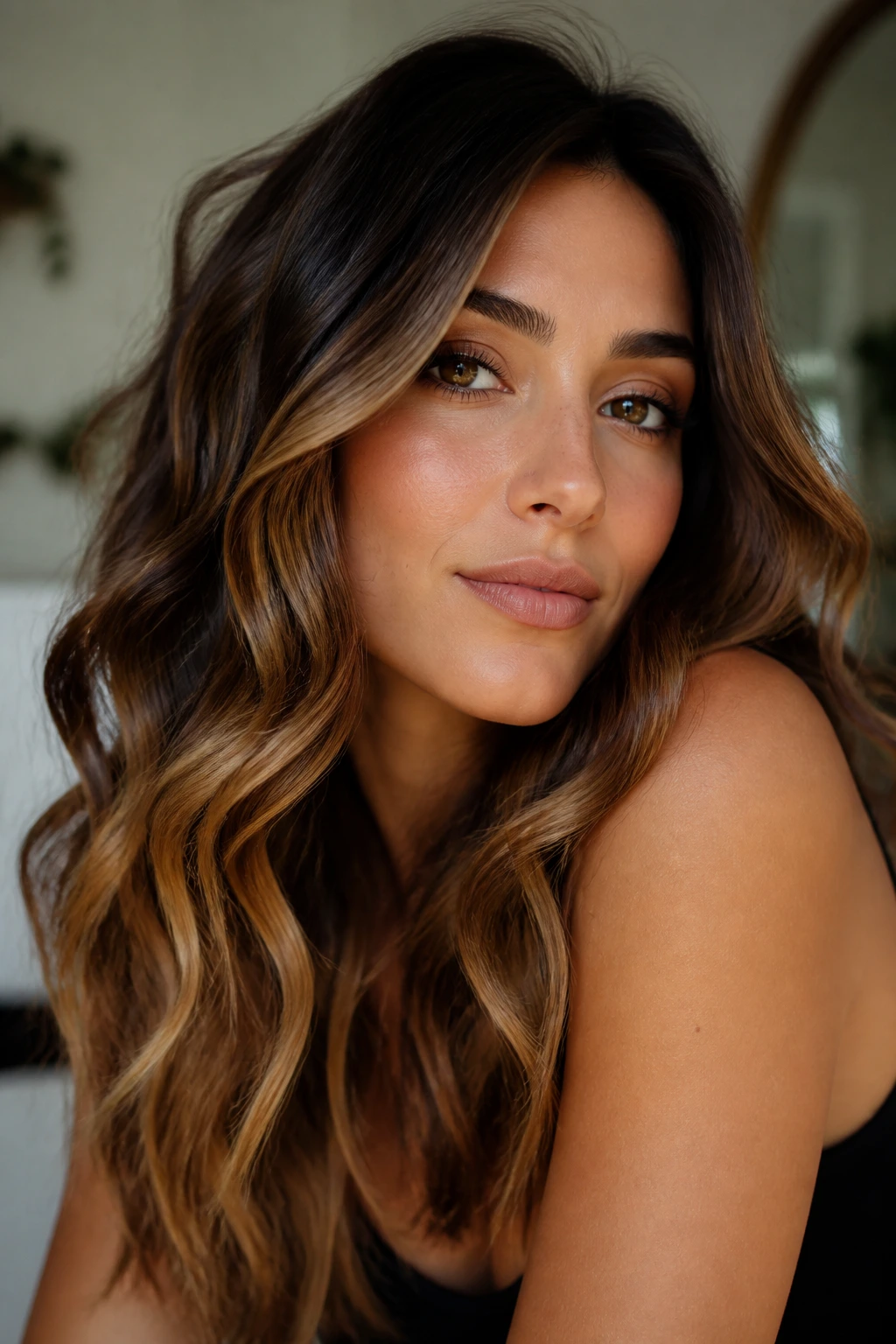
- Warmth Without Orange: Honey, caramel, and amber tones echo the warmth already sitting under olive skin, so the hair looks radiant instead of coppery or brassy.
- Depth Still Matters: Keeping the base one to three shades deeper than the lightest ribbons prevents the face from looking washed out.
- Soft Light Around the Face: Brightness near the cheekbones and temple area gives olive skin a lifted look, especially when the rest of the hair stays a rich brunette.
- Balayage Grows Out Cleanly: The painted placement avoids a hard line at the roots, which matters if you don’t want to live at the salon.
- Works Across Textures: Straight hair shows off the ribboning, waves make the color flicker, and curls turn the highlights into little flashes of gold.
- Easy to Tune Up or Down: The same family can read as barely-there beige one day and deeper toasted caramel the next, depending on how much light you ask for.
1. Honey Ribbon Waves
A deep brunette base with thin honey ribbons is one of those looks that makes olive skin look awake even when you’ve had a rough week. The highlights sit like little strips of warm light through the lengths, so the hair moves without looking busy. I like this version best on long waves, because the bends catch the gold and keep it from reading flat.
Ask for fine balayage pieces painted mostly from the mid-lengths down, with a few brighter threads starting around the cheekbones. That placement keeps the crown rich and gives the face a soft frame instead of a loud stripe. It’s the kind of color that looks polished in daylight and still behaves under indoor lighting, which is harder to get than people think.
2. Caramel Face-Framing Lob
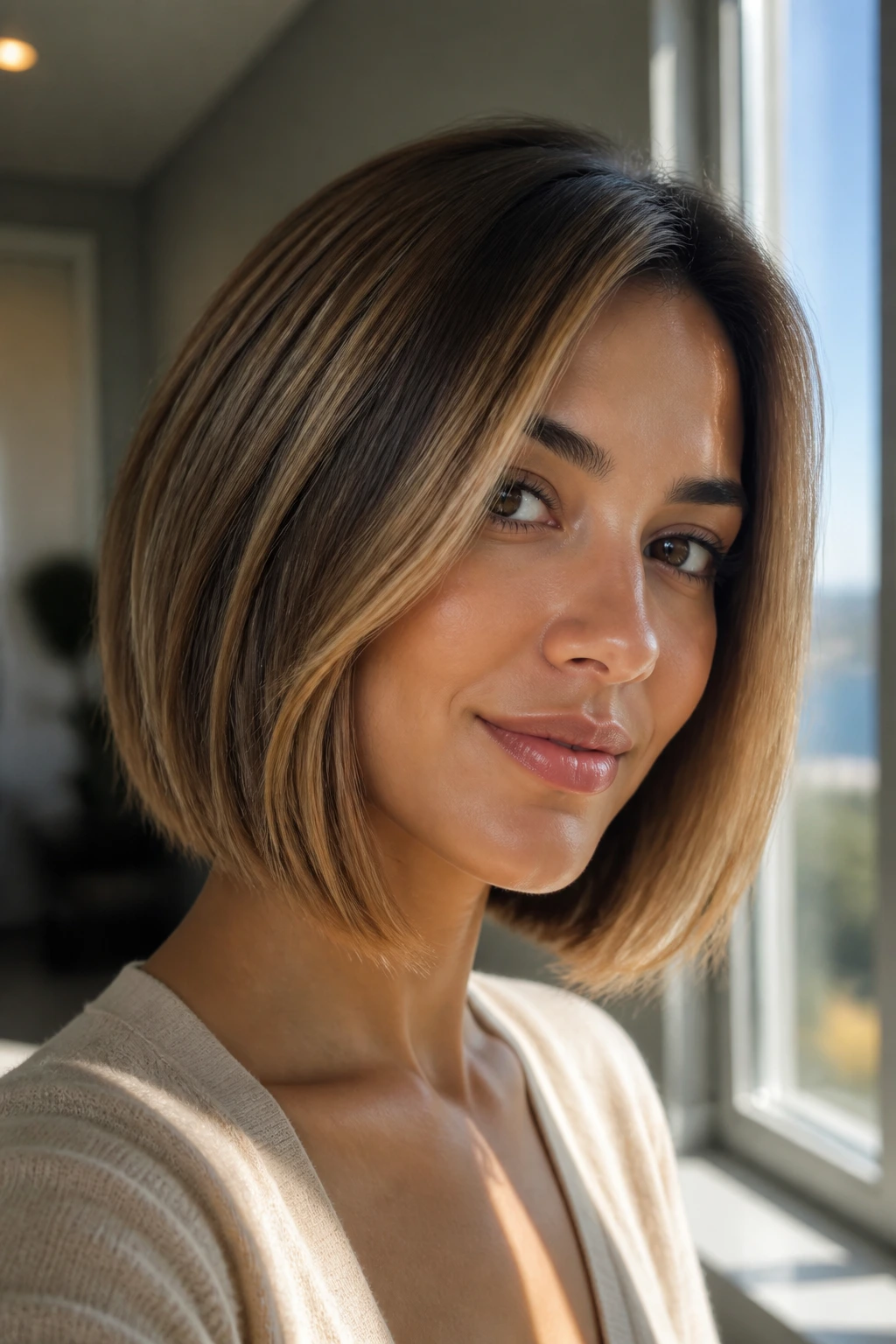
A collarbone lob with caramel just around the face does a lot of heavy lifting. The cut keeps the style crisp, while the warmer front pieces warm up olive undertones in a way that feels clean, not sugary. If you wear glasses, this one is especially good; the highlight placement sits right where the frames meet the skin.
The trick is to keep the back slightly deeper so the front pieces have something to bounce off. You want contrast, not a blonde helmet. A loose bend with a 1-inch iron is enough here — no need for tight curls that erase the sharp edges of the lob.
3. Toasted Chestnut Layers
If you want the most understated version in the group, toasted chestnut is the one. It leans brown first, gold second, which is exactly why it flatters olive skin so well. The color doesn’t shout. It just makes the hair look healthier, thicker, and a little sun-warmed around the ends.
This works beautifully on long layers with a center part, especially if your natural base is a medium brunette. The colorist should keep the highlights soft and low-contrast, using a beige-caramel gloss rather than a bright gold toner. The whole point is that the color should be noticeable only when the hair moves.
4. Maple Bronde Bob
A bob with maple bronde pieces has a sharper, more modern feel than long waves, and that edge plays well with olive skin. The warmer brown-blonde mix brightens the face without pushing the hair into the pale, washed-out zone that can happen with cooler blondes. Fine hair likes this look because the lighter pieces create the illusion of thickness.
Keep the lightest strands near the top layers and around the jawline. If everything is bright at the ends, the bob can lose its shape. A smooth blow-dry with a round brush helps the color read glossy instead of fluffy.
5. Bronze-Tipped Curls
Bronze-tipped curls are for the days when you want the hair to look like it’s catching every sliver of light in the room. On olive skin, bronze sits in a sweet spot: warm enough to glow, deep enough to keep curl patterns defined. The tips pick up the light first, so the color looks active even when the roots stay grounded.
Why This Placement Works
The lighter ends keep the curl pattern visible from across the room, which is useful if your hair tends to disappear into itself once it dries. Ask for hand-painted bronze only on the outer third of the curls, with the interior left darker. That gives the hair a layered look instead of a bulked-up one.
6. Cinnamon Melt Midlength
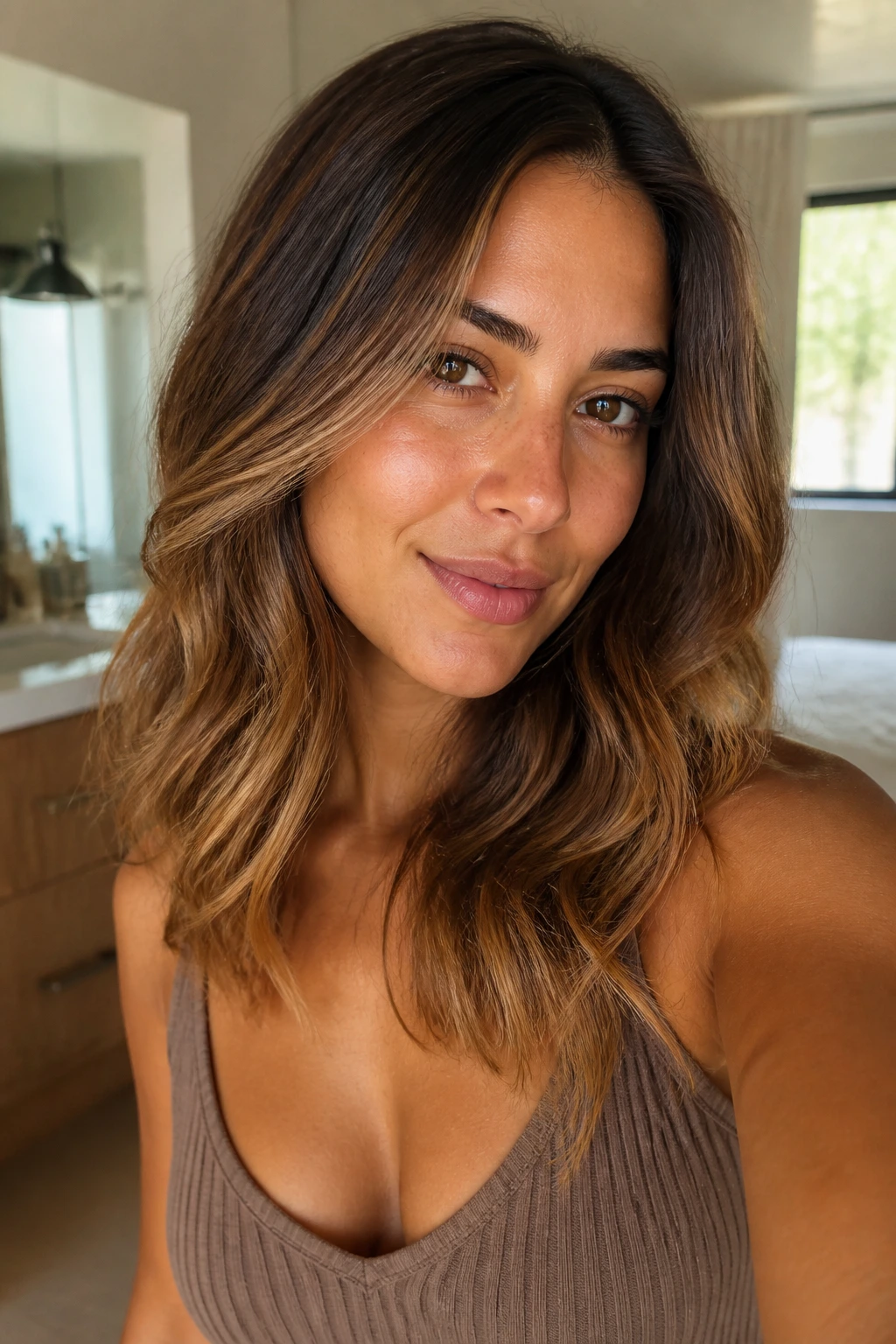
Cinnamon-gold is warmer than caramel and a touch spicier, which is why it looks especially good if your olive skin leans a little peachy or golden. The color melt is gradual: brunette at the roots, warm cinnamon through the middle, and a soft gold toward the ends. It’s richer than a regular honey balayage and a little more interesting, too.
This is one of the few looks in the list that can handle a bit of copper without going too far. The key is restraint. Keep the light pieces narrow and let the brunette base do most of the talking. If the highlights get chunky, the warmth turns loud fast.
7. Soft Golden Ombré
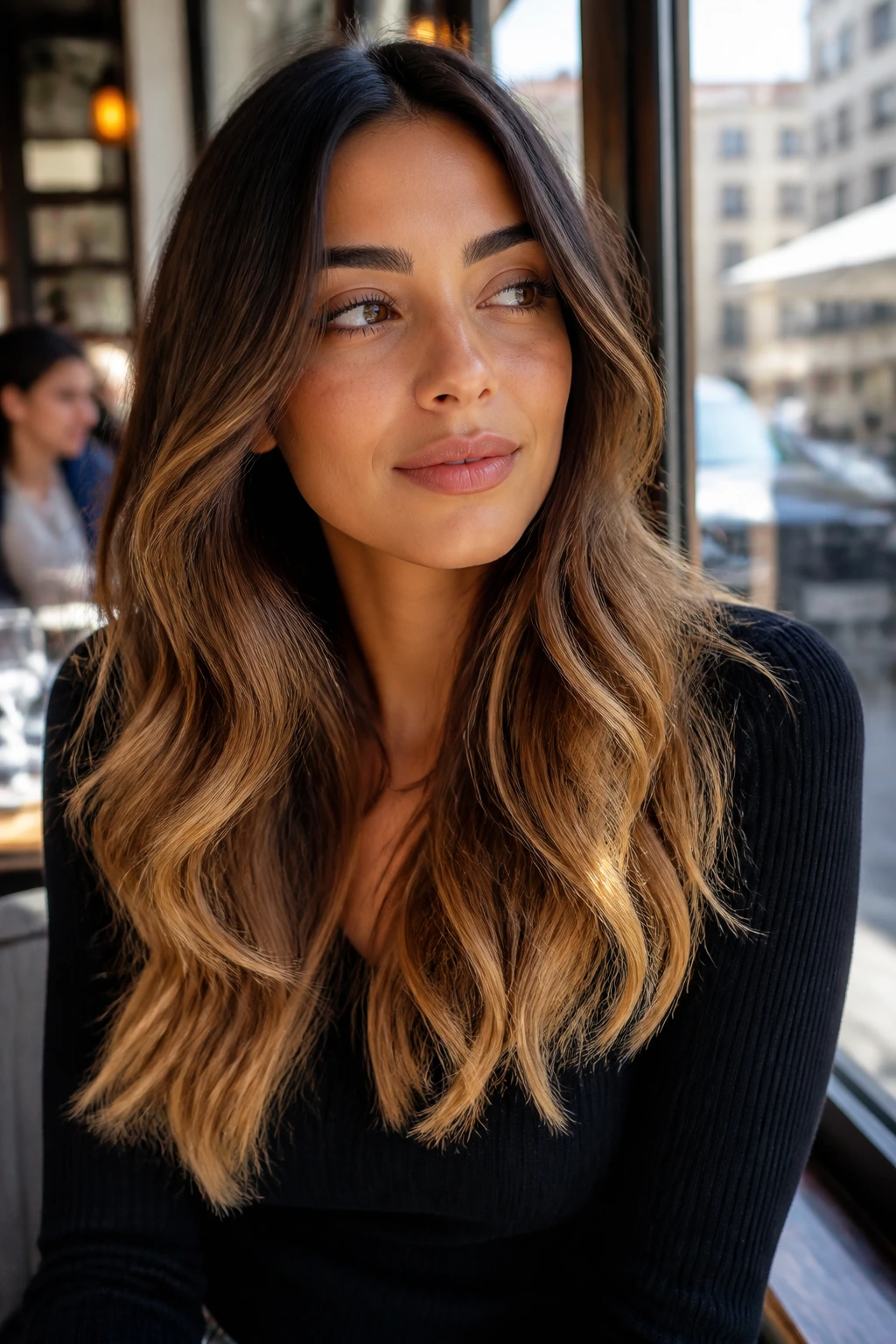
Soft ombré is the quieter cousin of a full balayage, and it can be a smart move if you want low maintenance. The color starts deep and gradually opens into golden brunette at the ends, which means the grow-out stays smooth and the face doesn’t get over-brightened at the root. Olive skin often looks especially good with this kind of gradual change because it doesn’t create a harsh contrast line.
The best version is the one that looks like your ends simply lightened after a long stretch in sun, not like a dye job trying too hard. Keep the transition blurred around the ears and collarbone. That soft edge is what makes the style feel expensive.
8. Butterscotch Curtain Bangs
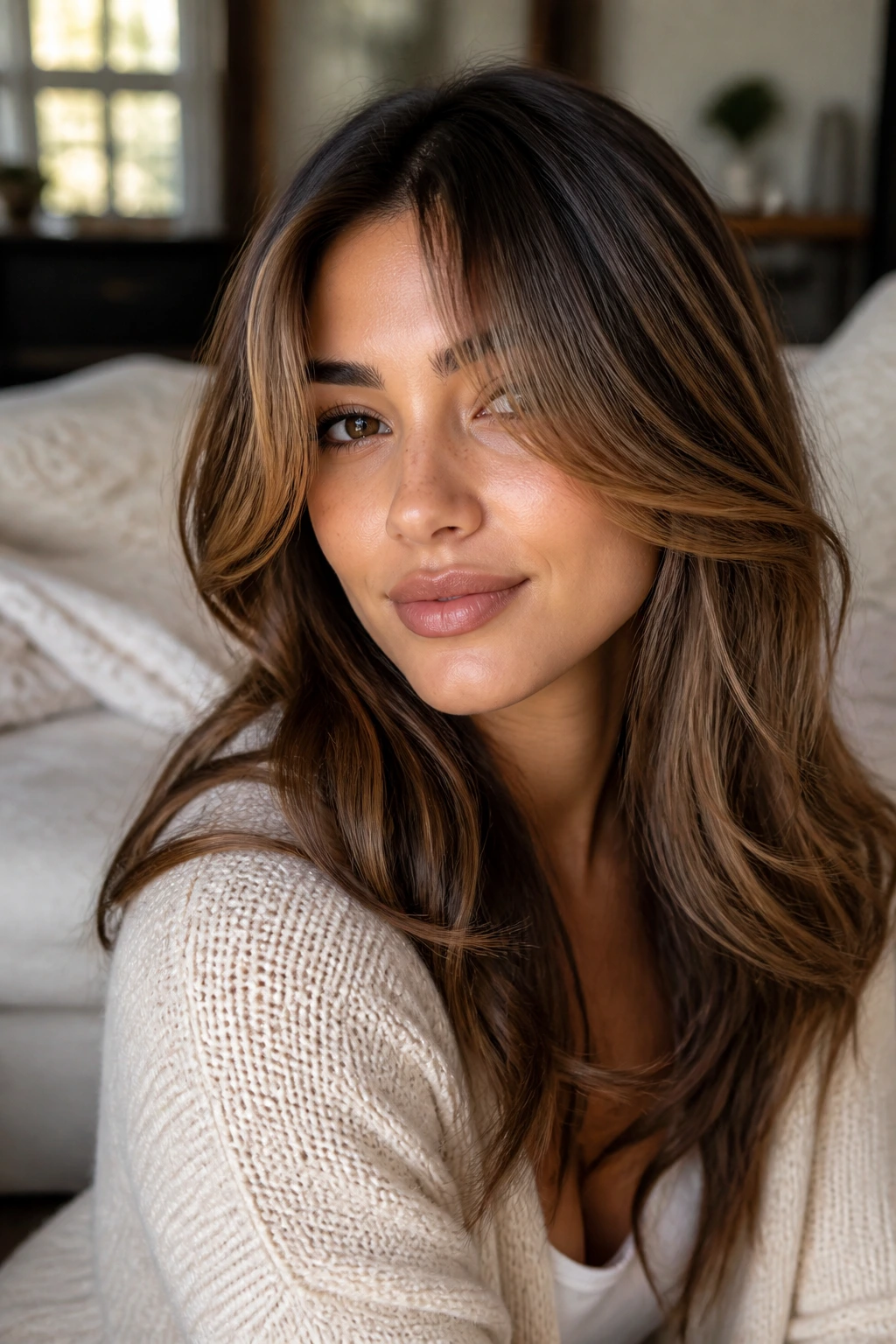
Curtain bangs are already a strong frame for olive skin, and when you add butterscotch highlights through them, they get even better. The warmth lands right near the eyes and cheekbones, so the face gets a lift before anyone notices the rest of the hair. It’s a smart move if you like softer makeup and want the color to do some of the work.
The rest of the balayage should stay a shade or two deeper so the bangs don’t float away from the haircut. A good colorist will paint the lightest pieces just under the bend of the bangs, not all the way to the roots. That keeps the fringe airy instead of striped.
9. Amber Money Piece
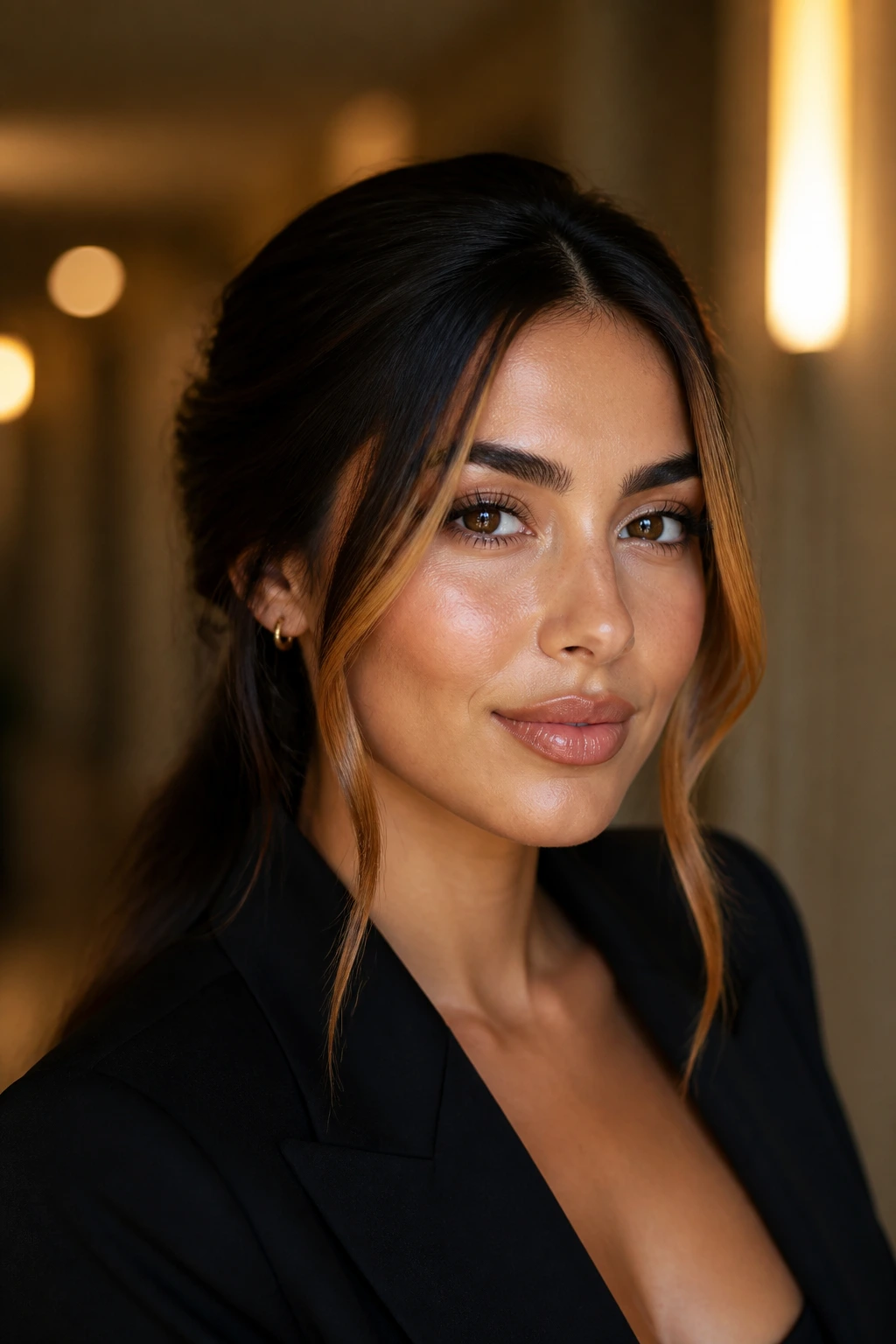
An amber money piece is the bolder choice here, and I mean that in the best way. If you like your color to show up immediately, bright amber around the face can make olive skin glow in a way that’s almost cinematic. It’s especially good on darker brunettes, where the front contrast feels sharp and clean.
Best For
- Oval and heart-shaped faces that can handle a stronger front highlight.
- Dark brunettes who want a little drama without going full blonde.
- People who wear their hair pulled back half the week and want the color to still be visible.
Keep the money piece narrow and deliberate. Too wide, and it starts looking like a stripe from the early days of chunky highlights. Too thin, and you lose the whole point.
10. Sandy Caramel Collarbone Cut
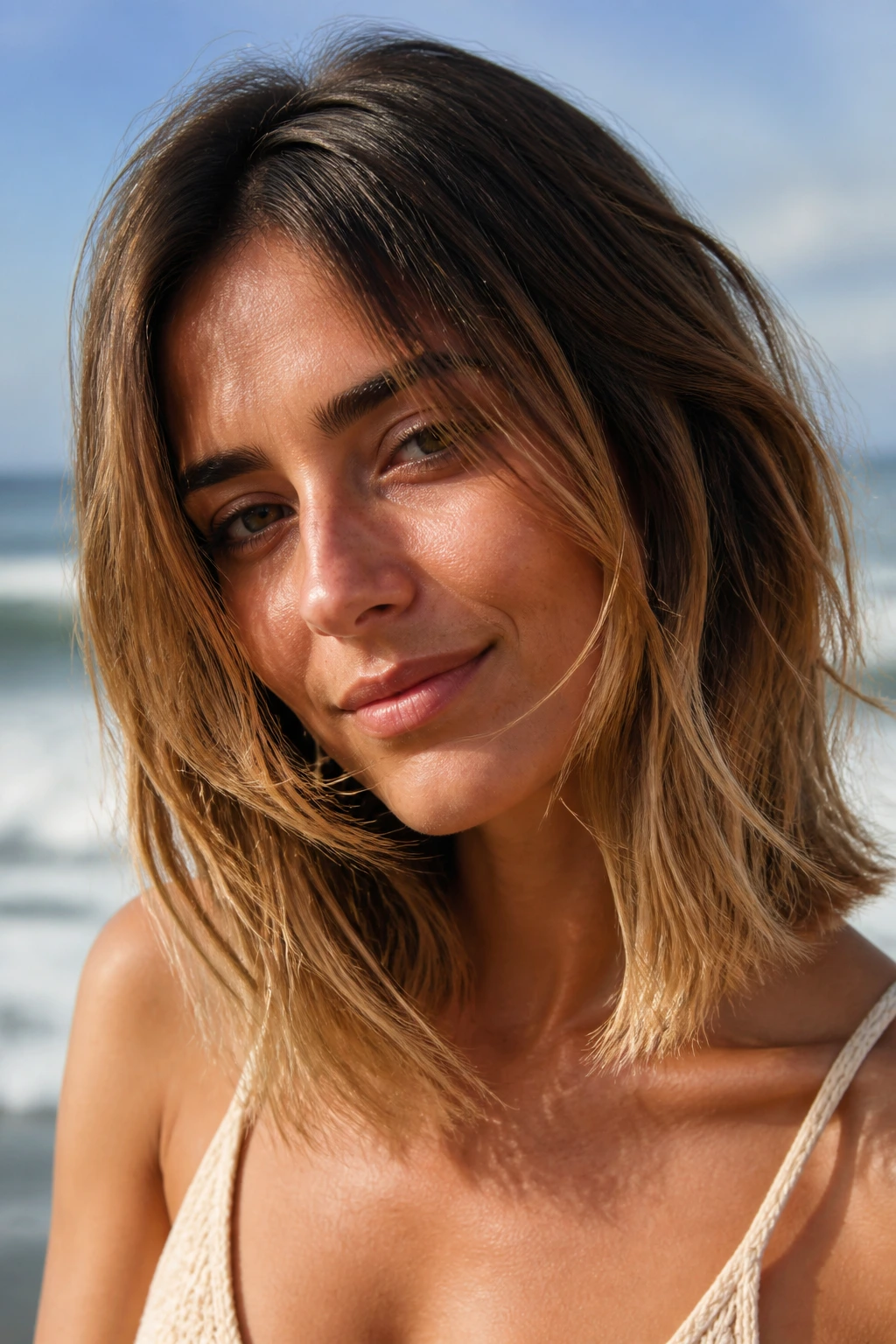
Sandy caramel sits between gold and beige, which is why it feels so wearable on olive skin. It brightens the hair without dragging it into yellow territory, and the collarbone cut keeps the whole thing neat. If you want a style that can air-dry and still look presentable, this is one of the safer bets.
The color should be woven through the ends and a few front pieces, not blasted over the whole head. That keeps the brunette base visible. A little wave from a flat iron is enough to show the placement; you don’t need perfect curls.
11. Espresso with Beige Feathers
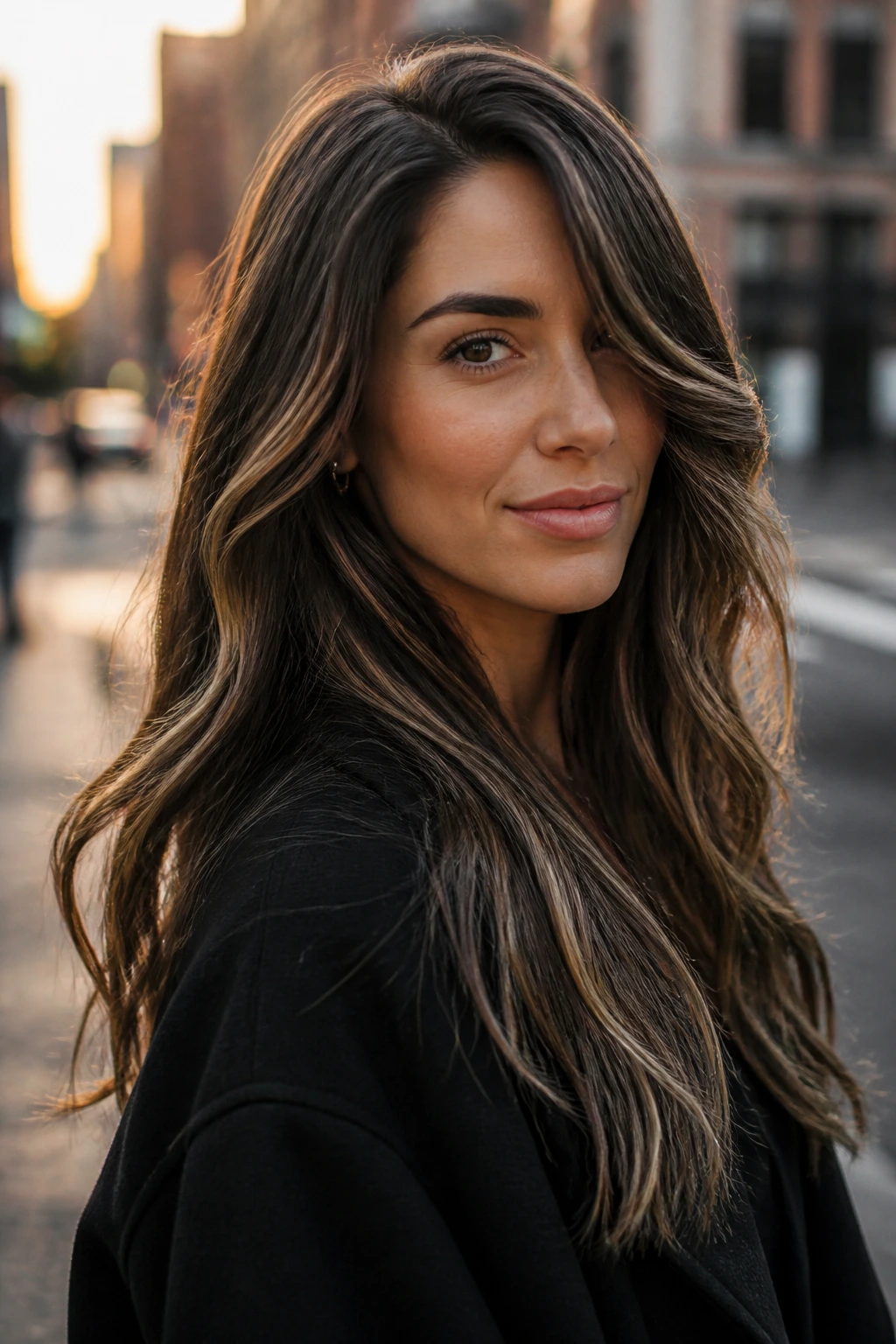
This one is for people who want the color to whisper. Espresso roots with beige-gold feathers through the lengths make olive skin look clean and rested, not overdone. The contrast is mild, but that’s the point. The hair gains movement without losing its depth.
What Makes It Different
The lighter pieces are feather-thin, almost like fine brush strokes. They catch light only when the hair shifts, which makes the look feel much more expensive than a heavy highlight job. Ask for a gloss that keeps the beige warm enough to avoid going ash-gray.
12. Sunlit Shag
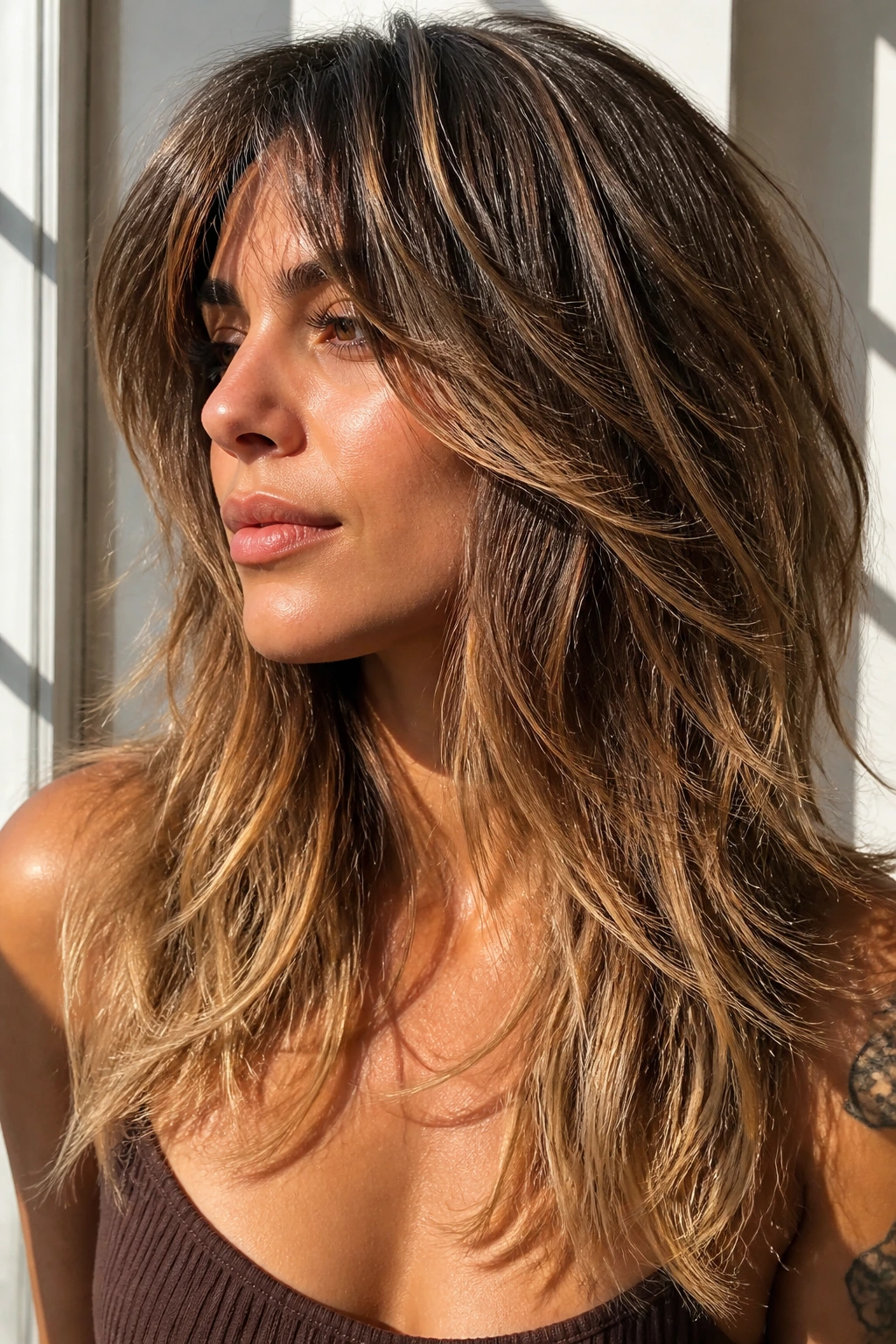
A shag cut loves balayage because the layers already break up the shape. Add golden brunette pieces, and every flip of the hair exposes a different tone. Olive skin tends to look especially good with this style because the texture keeps the color from sitting too neatly in one place.
The ends should be a little lighter than the mids, but not blond. That keeps the shag from losing its smoky brown base. If your hair is naturally wavy, this look can be air-dried with a curl cream and still carry enough shape to show the color.
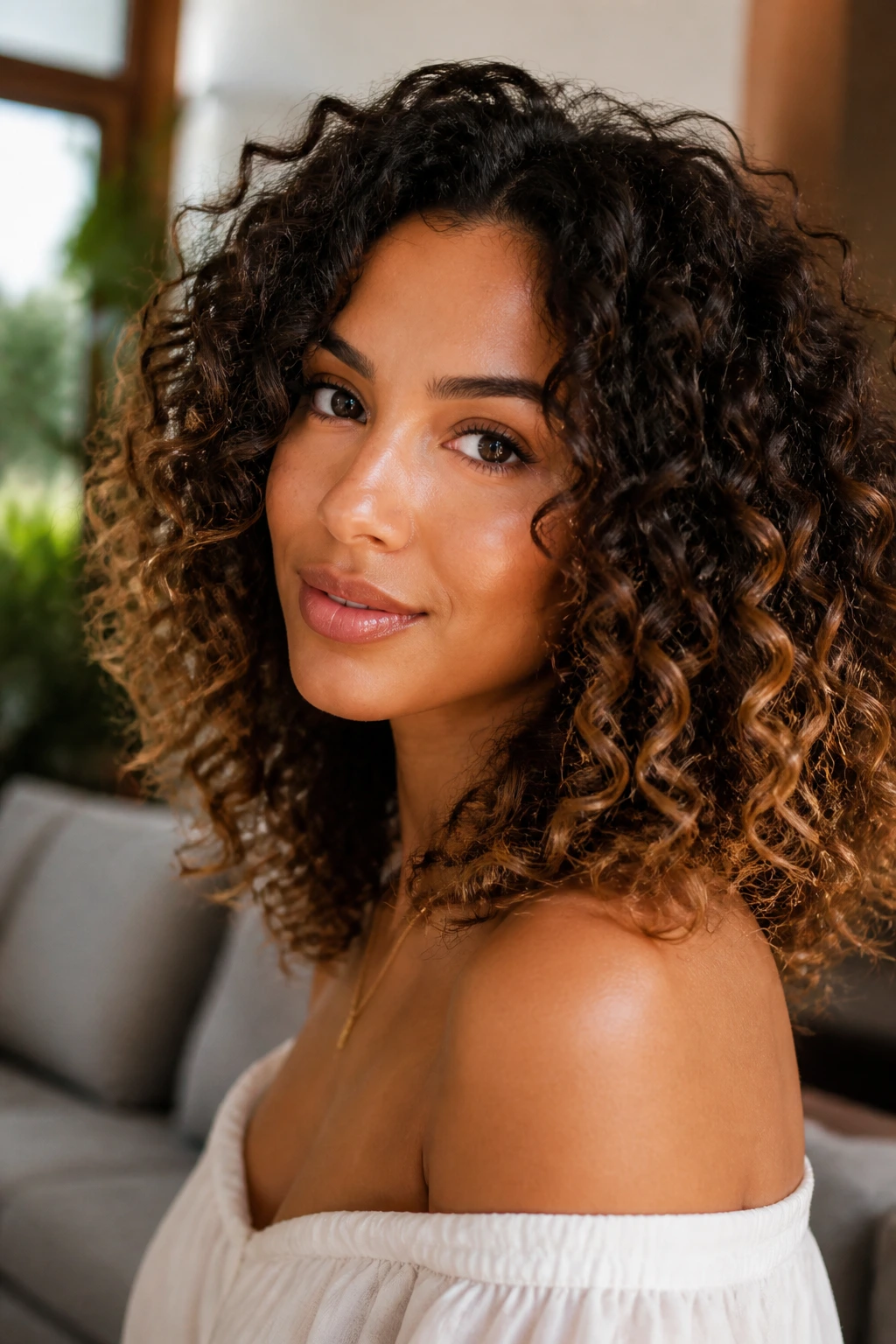
13. Golden Cocoa Curls
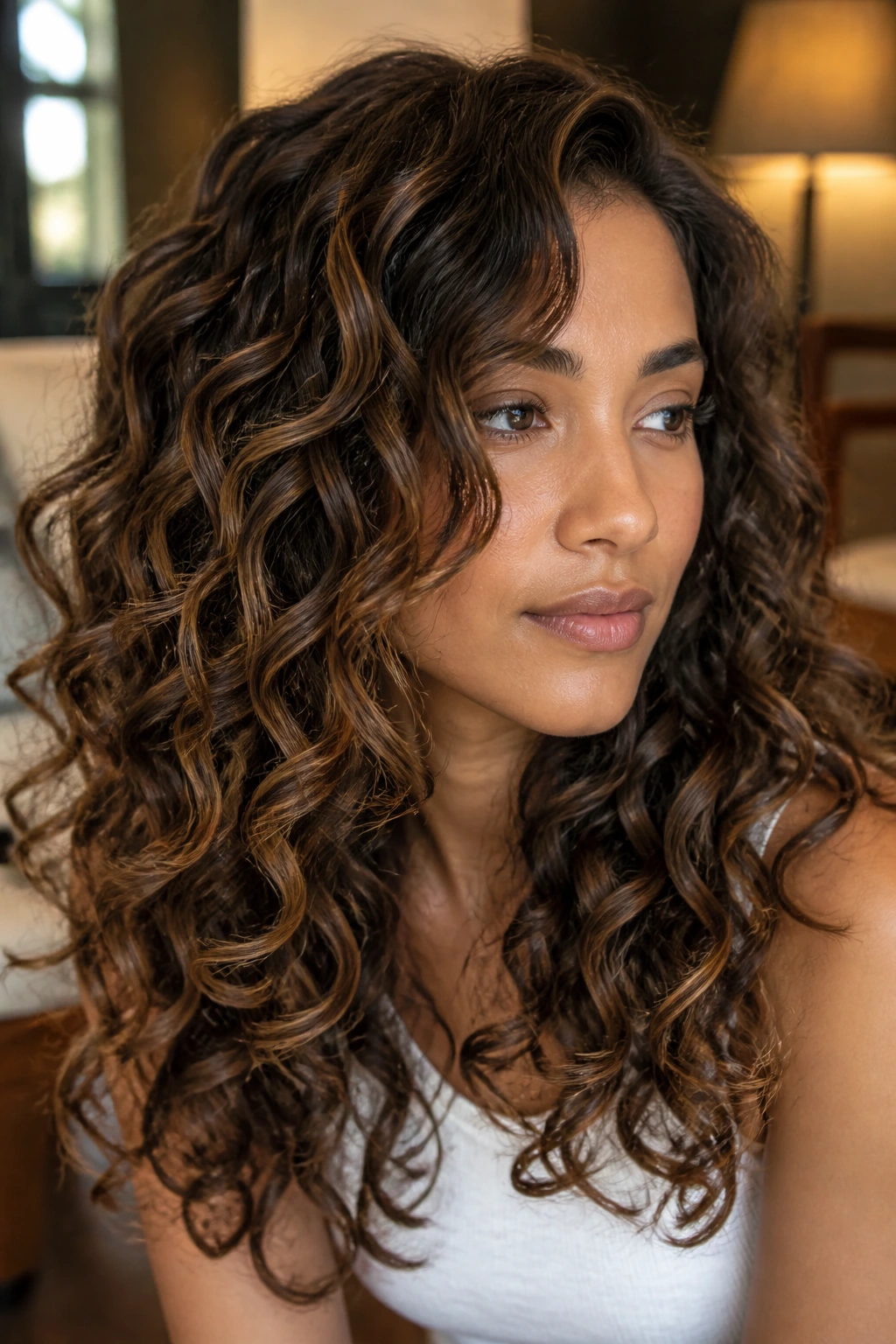
Golden cocoa curls are a rich, dense version of brunette balayage that works especially well when you don’t want the hair to look sparse at the ends. The cocoa base keeps the curl pattern grounded, while the golden ribbons weave through the bend of each curl. Olive skin likes this because the warmth feels deep, not sugary.
Ask For This
- A dark cocoa base at the roots.
- Thin golden ribbons painted inside the curl clumps.
- A few brighter face-framing pieces that stop around the mouth or chin.
Keep the highlights inside the curl pattern instead of only on the surface. That gives you depth when the hair is down and a little glow when it moves.
14. Warm Walnut Balayage
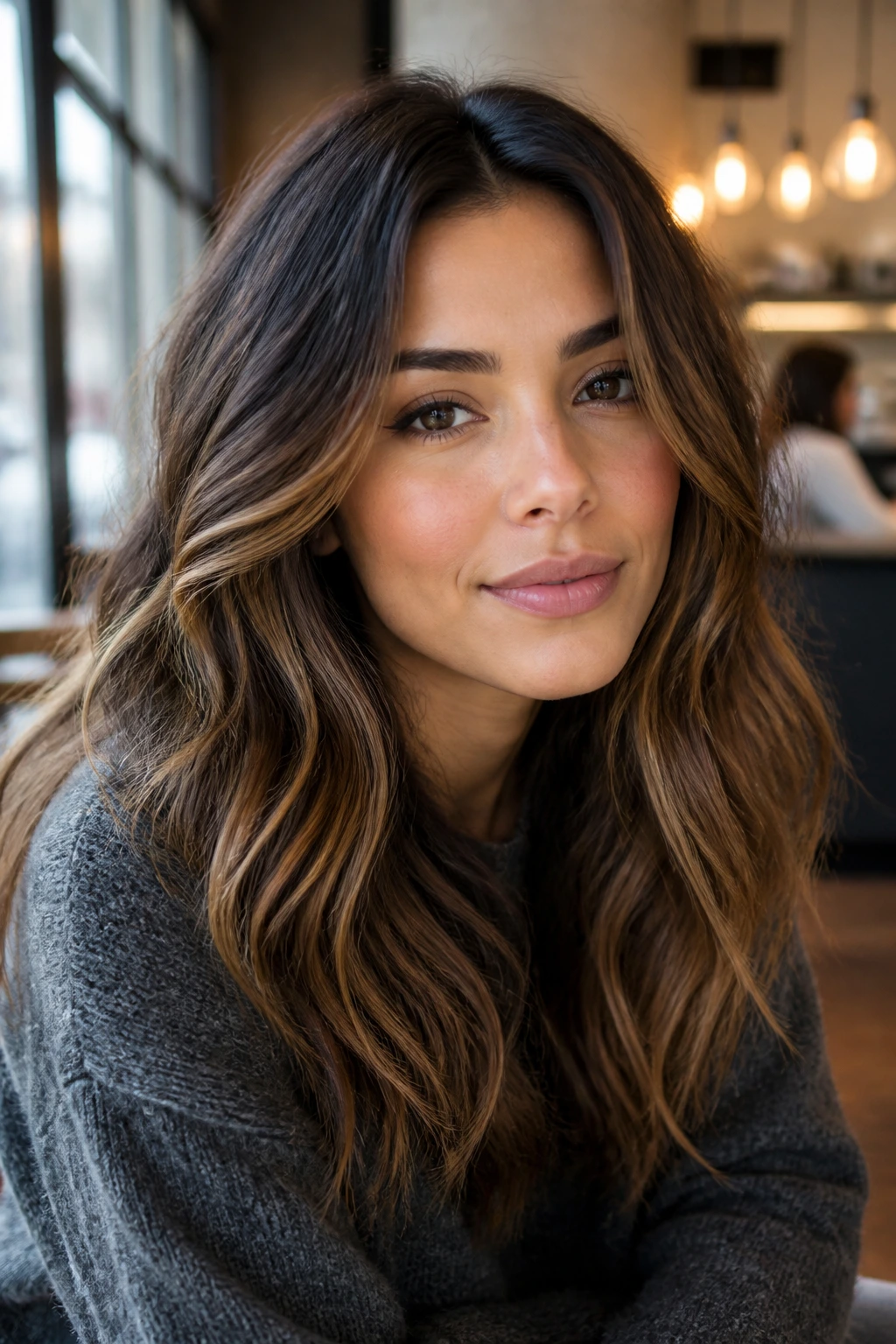
Walnut brown is underrated. It sits right in the middle of brunette and gold, and on olive skin that middle ground can be the most flattering spot. The look feels richer than caramel, darker than honey, and far less obvious than blonde.
This works best on thick hair that can hold a layered shape. The balayage should be soft and spread out, with the brightest pieces landing below the ear. If the top gets too light, the whole cut starts looking busy.
15. Toffee Swirl Lob
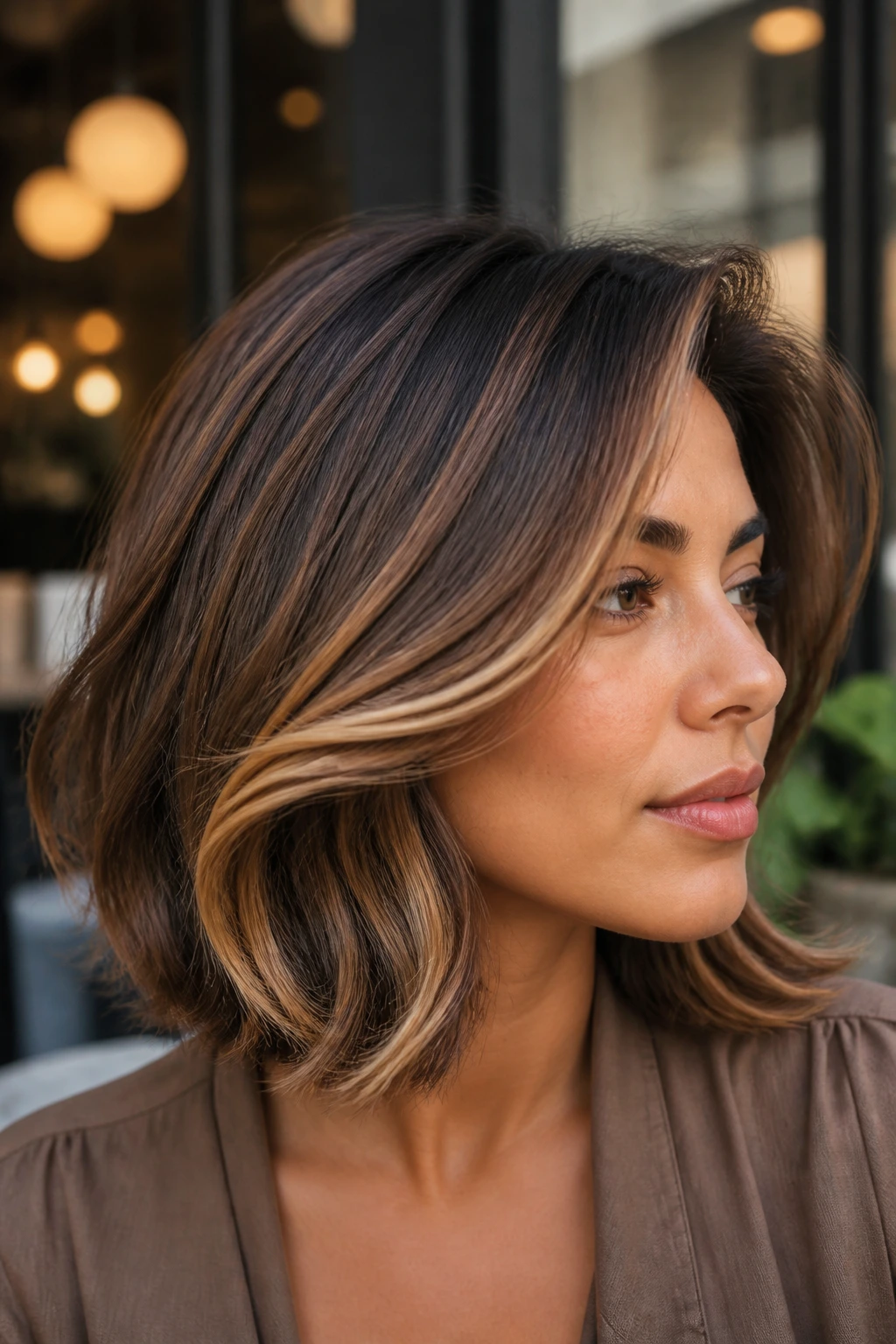
Toffee swirl balayage gives a lob more movement than a single brown shade ever could. The highlight placement should follow the bend of the cut, almost like the color is wrapping around the face and ends. On olive skin, that warm toffee tone softens the jawline and keeps the complexion from going flat.
A side part makes this version look especially good, because the sweep shows off the contrast between the deeper root and the lit ends. If you have straight hair, a few loose bends with a flat iron are enough. The goal is not perfect curls. Just enough motion to show the swirl.
16. Bronde Melt with Shadow Root
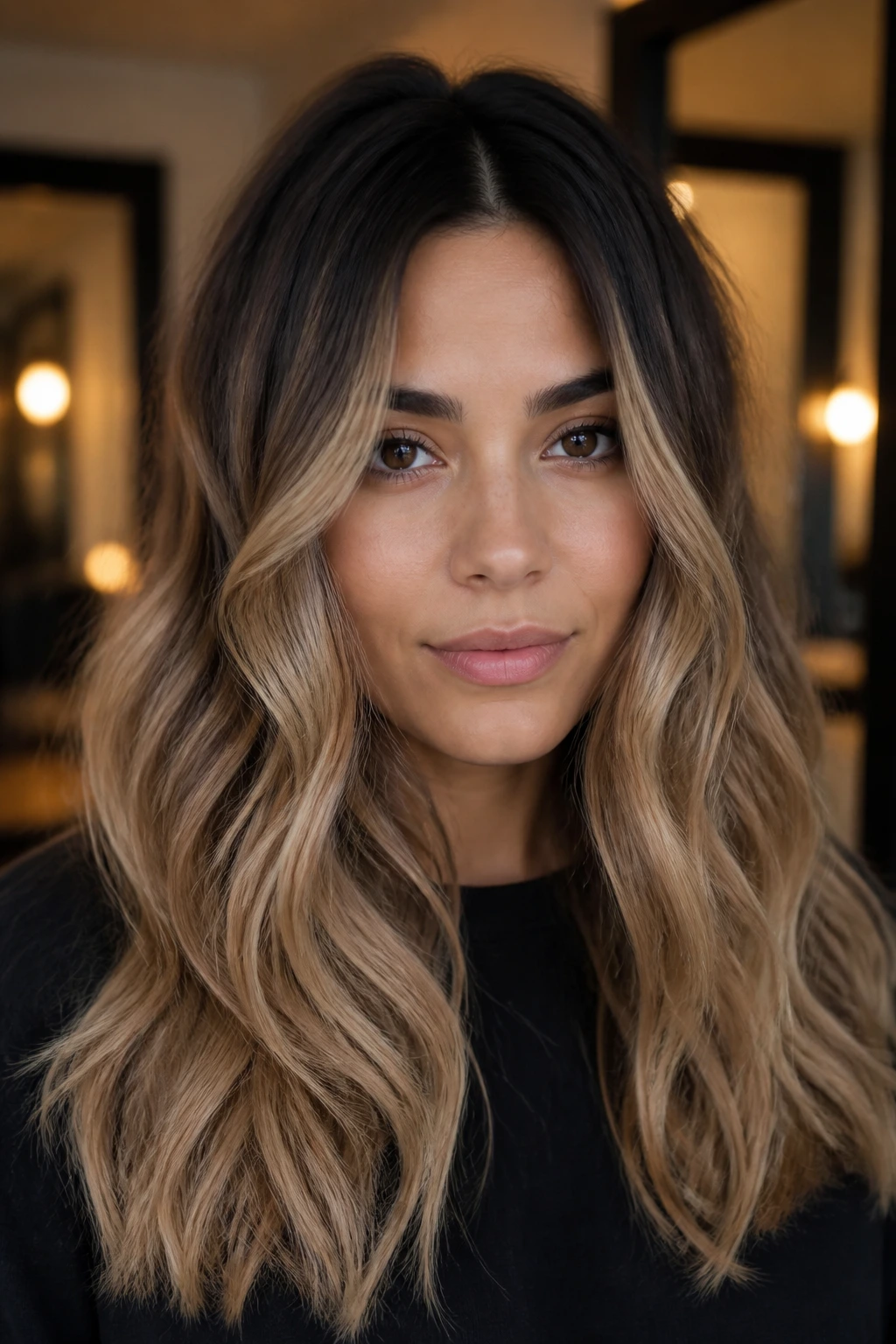
This is the best “first balayage” option in the group. A shadow root keeps the base deep, then the color melts into bronde — that in-between zone where brown and blonde meet without fighting each other. Olive skin usually handles this well because the root depth prevents the face from getting washed out.
The shadow root should be soft, not blocky. Ask for a melt that starts around an inch or two from the scalp, depending on your natural color. If your hair is already medium brown, you may only need a glaze and hand-painted pieces, not a big lift.
17. Liquid Honey Layers
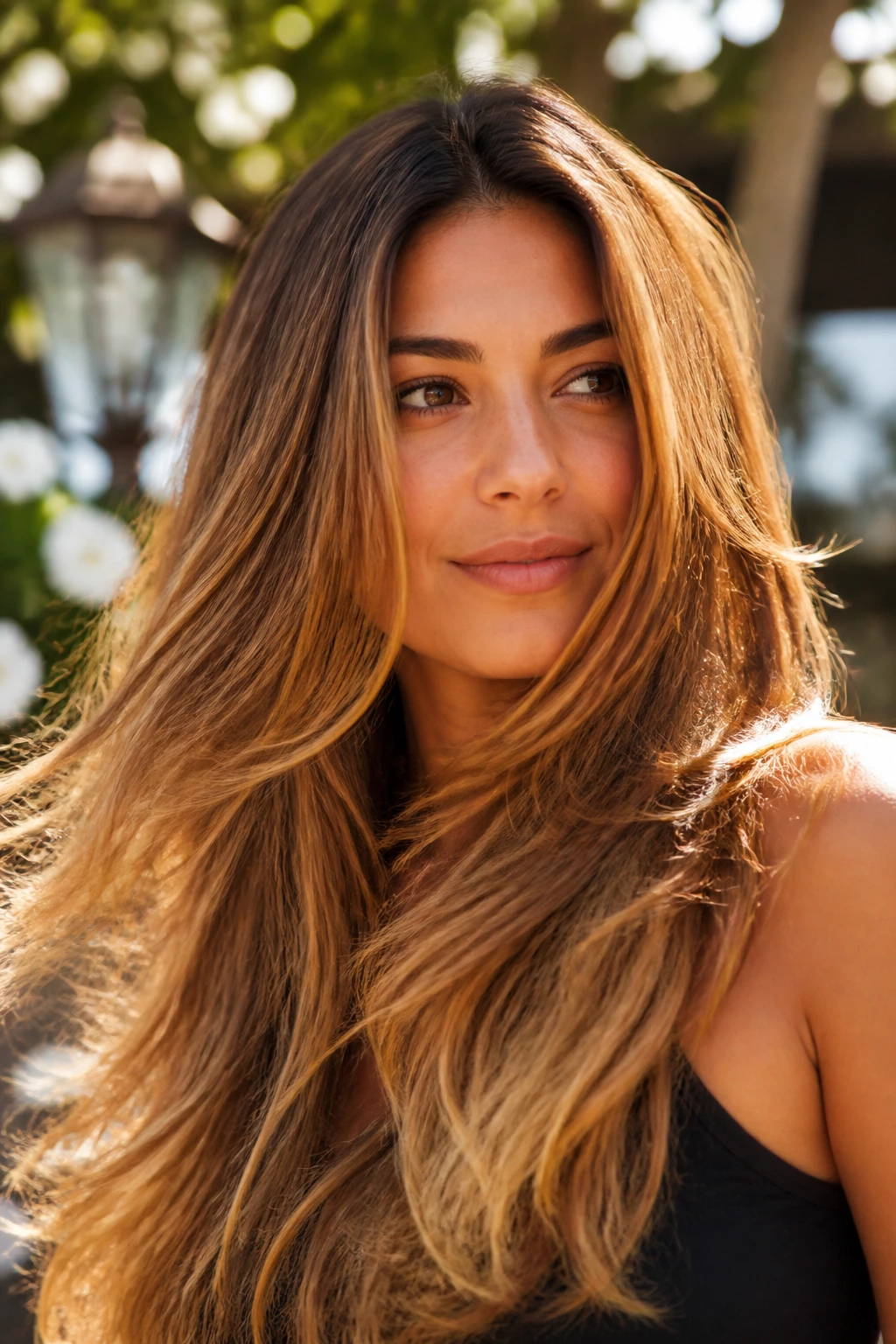
Liquid honey is the shiny, polished version of this whole family. The color depends as much on finish as on tone: glossy layers make the honey reflect instead of sit flat. Olive skin gets a nice lift from that shine, especially if your hair is longer and moves in sheets.
Style Note
Use a round brush blowout or a wide-barrel curling iron to keep the layers smooth. Tight ringlets can hide the shine, which is a shame here. This look wants movement that shows off the gold in a clean line.
18. Tigereye Balayage
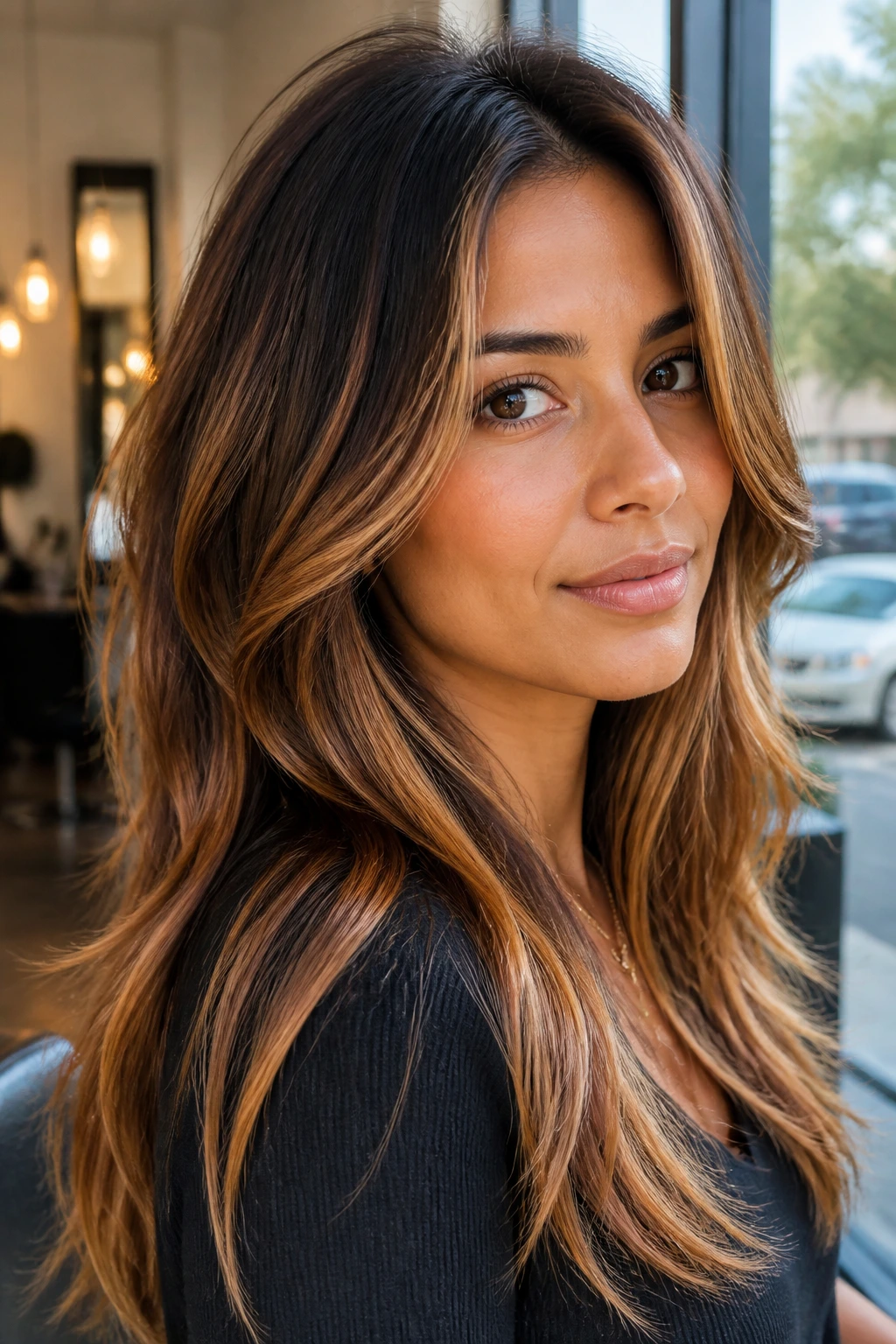
Tigereye hair borrows from the gemstone: brown, gold, amber, and bronze all packed together in a way that looks rich without looking loud. On olive skin, that layered warmth is a strong match because it echoes the natural depth in the complexion. It’s one of the more dramatic options, but it still stays rooted in brunette.
The color works best when the highlights are placed in chunky-yet-soft panels, not tiny babylights everywhere. You want a few obvious shifts in tone so the hair has a jewel-like depth. It’s a good choice if you like your color to read from across the room.
19. Golden Mocha Blowout
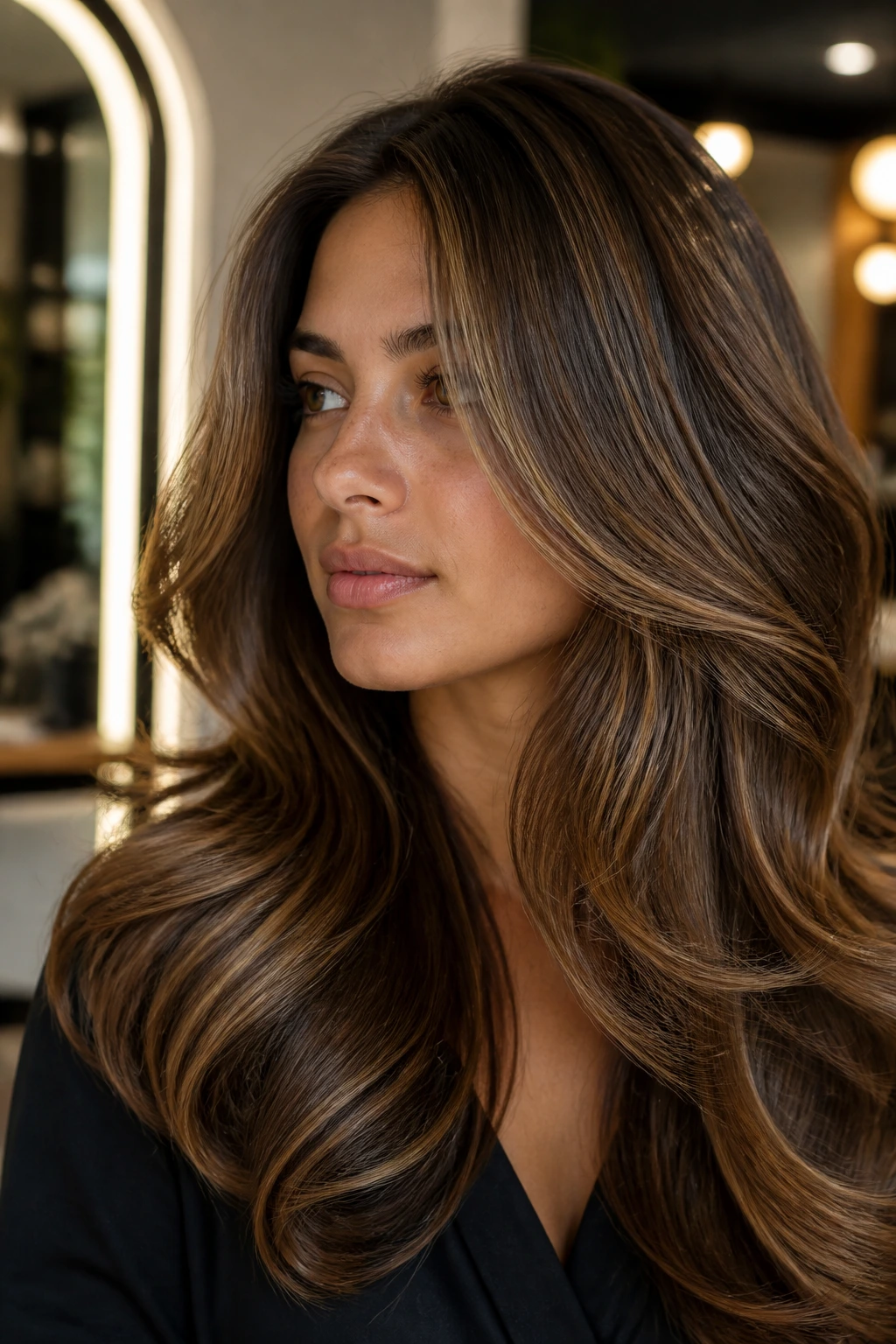
Golden mocha is for people who want the hair to look styled even on a simple day. The mocha base keeps the shade grounded, while the gold woven through the surface gives the blowout a softer finish. Olive skin often looks especially clean next to this mix because the tones are warm, but not sugary.
A smooth blow-dry matters here more than tight curls. The highlight pattern should skim the outer layer of the hair, which makes the shape look fuller. If the color is painted too deeply into the interior, the blowout can lose that polished surface shine.
20. Smoked Caramel Bob
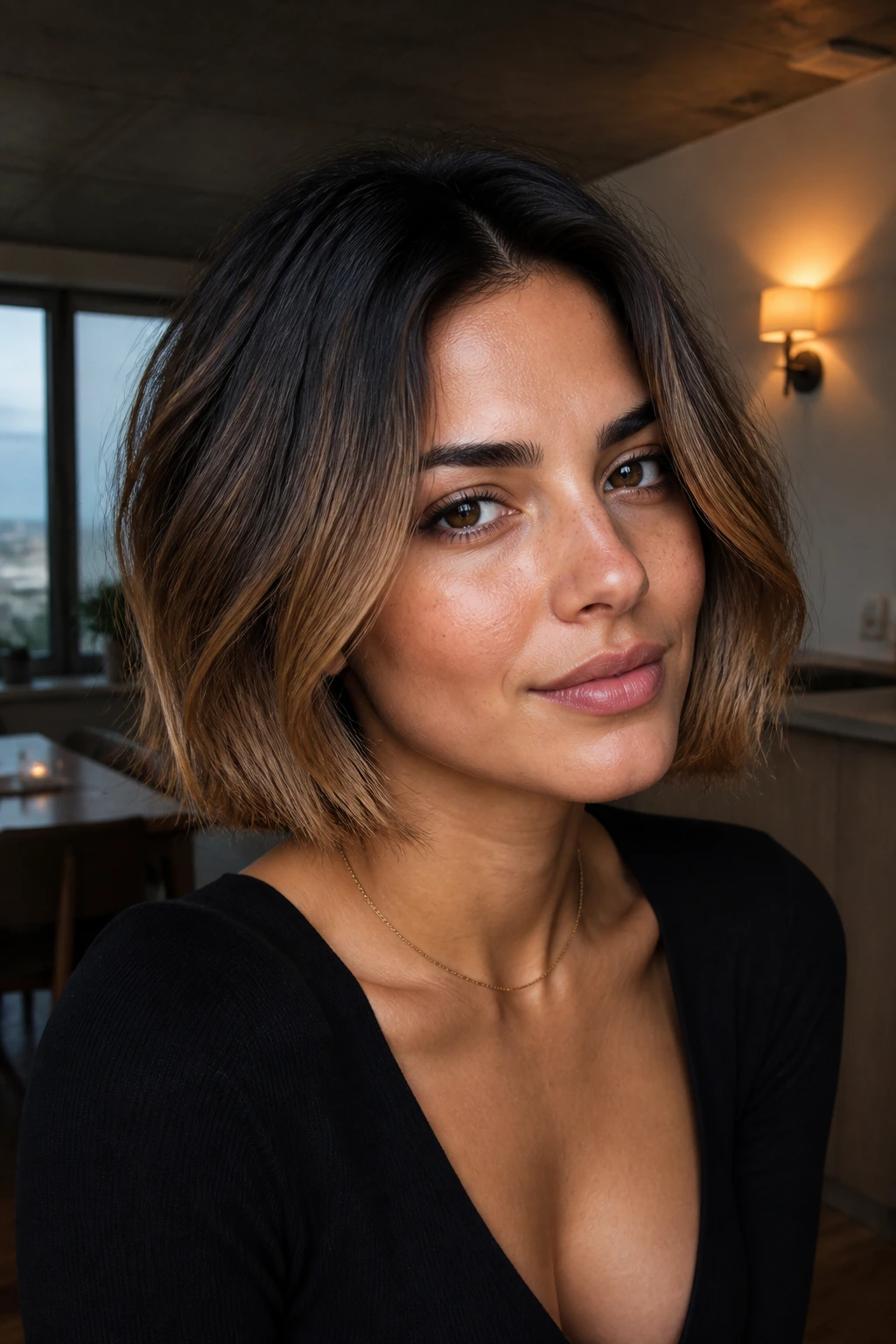
Smoked caramel has a slightly cooler edge than honey or butterscotch, and that can be a relief if your olive skin leans more neutral than golden. The darker root and the muted caramel ends keep the bob from turning orange. It feels modern, neat, and a little bit moody in a good way.
Keep the highlights focused near the perimeter of the haircut. That shows the line of the bob instead of dissolving it. It’s a smarter move than flooding the inside layers with light, which can make short hair look fuzzy.
21. Chestnut-to-Honey Side Part
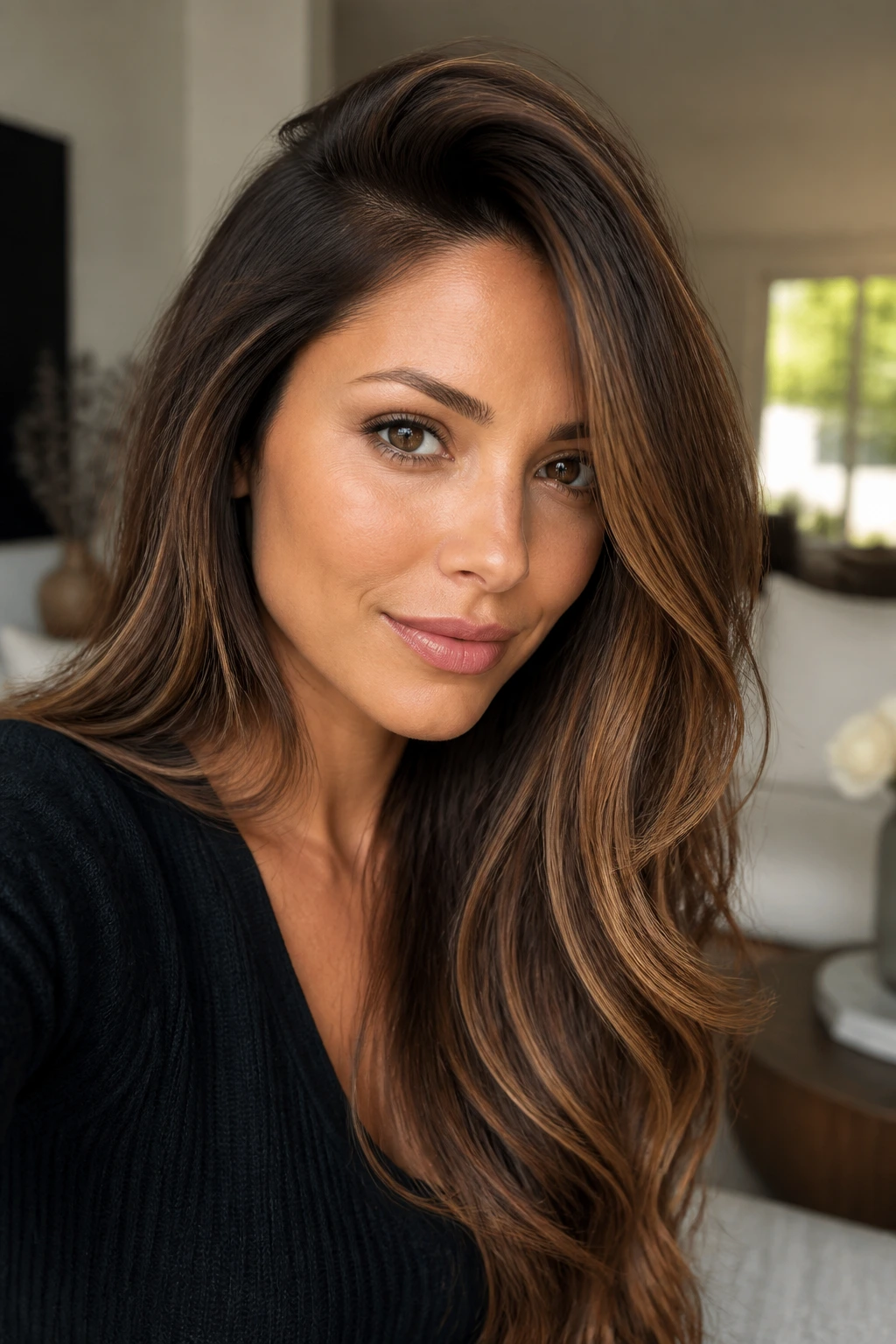
A deep side part gives you a built-in contour effect, and chestnut melting into honey makes the movement even stronger. The darker chestnut underlayer supports the face, while the honey pieces on top bring brightness where olive skin wants it most. The result is softer than a high-contrast blonde and less predictable than plain brown.
Why It Works
The side part creates lift at the crown, and the color adds the illusion of volume. If your hair tends to fall flat on one side, this is a nice fix. Ask for the brightest ribbons to sit just above the ear and through the front thirds, not all over the head.
22. Gilded Brunette Layers
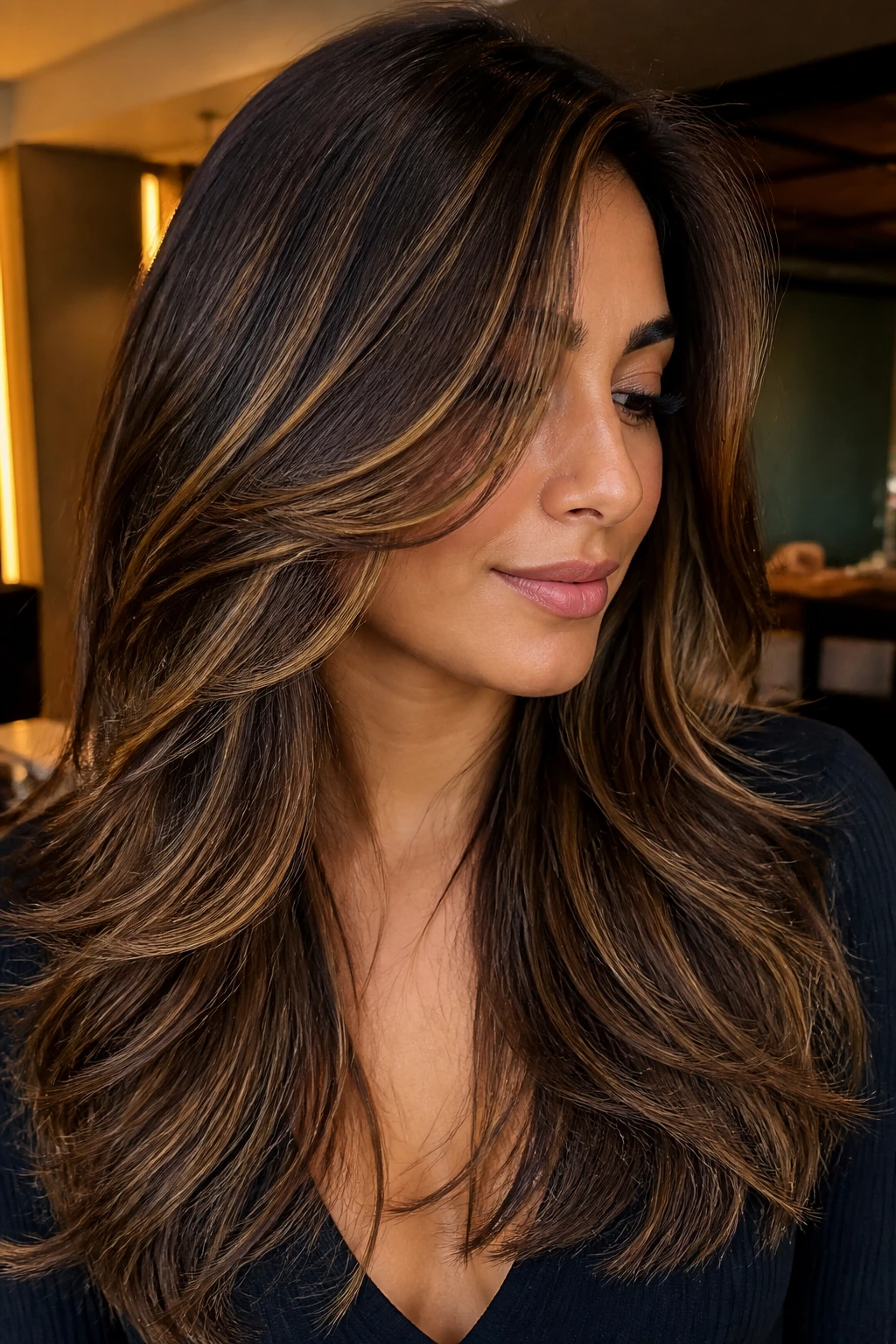
Gilded brunette is what I reach for when I want the hair to look richer, not lighter. The gold sits on top of a deep brunette base like a glaze, which is flattering on olive skin because it gives the face warmth without too much contrast. The layered cut helps the light catch in narrow bands instead of broad streaks.
Keep the highlights narrow and polished. This is not the place for chunky sections or heavy blonde ends. The more controlled the placement, the more the hair reads as glossy and expensive.
23. Sienna Balayage
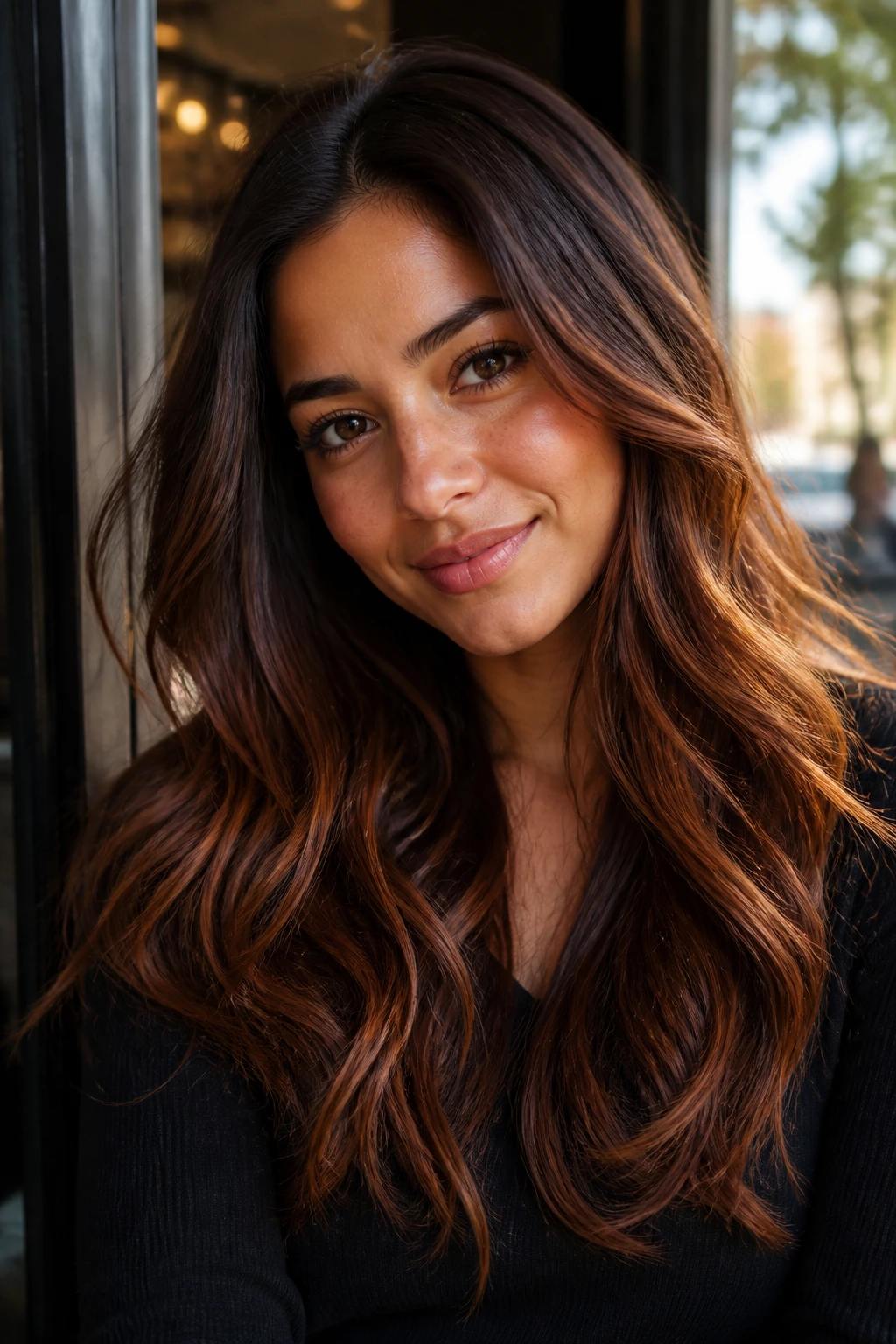
Sienna adds a touch of red-gold that can look fantastic on olive skin with warm or neutral-warm undertones. The trick is to keep it deep enough to stay brown-forward. A little sienna at the mid-lengths and ends gives the hair a richer, almost autumn-leaf feel without pushing it into full copper.
Use This If
- Your olive skin pulls golden in daylight.
- You want the color to feel warmer than caramel.
- You like a softer, richer finish rather than a blonde-looking result.
If your skin leans cool olive, go lighter on the red and heavier on the brown. Sienna can tilt too orange if the formula is pushed too far.
24. Roast Almond Waves
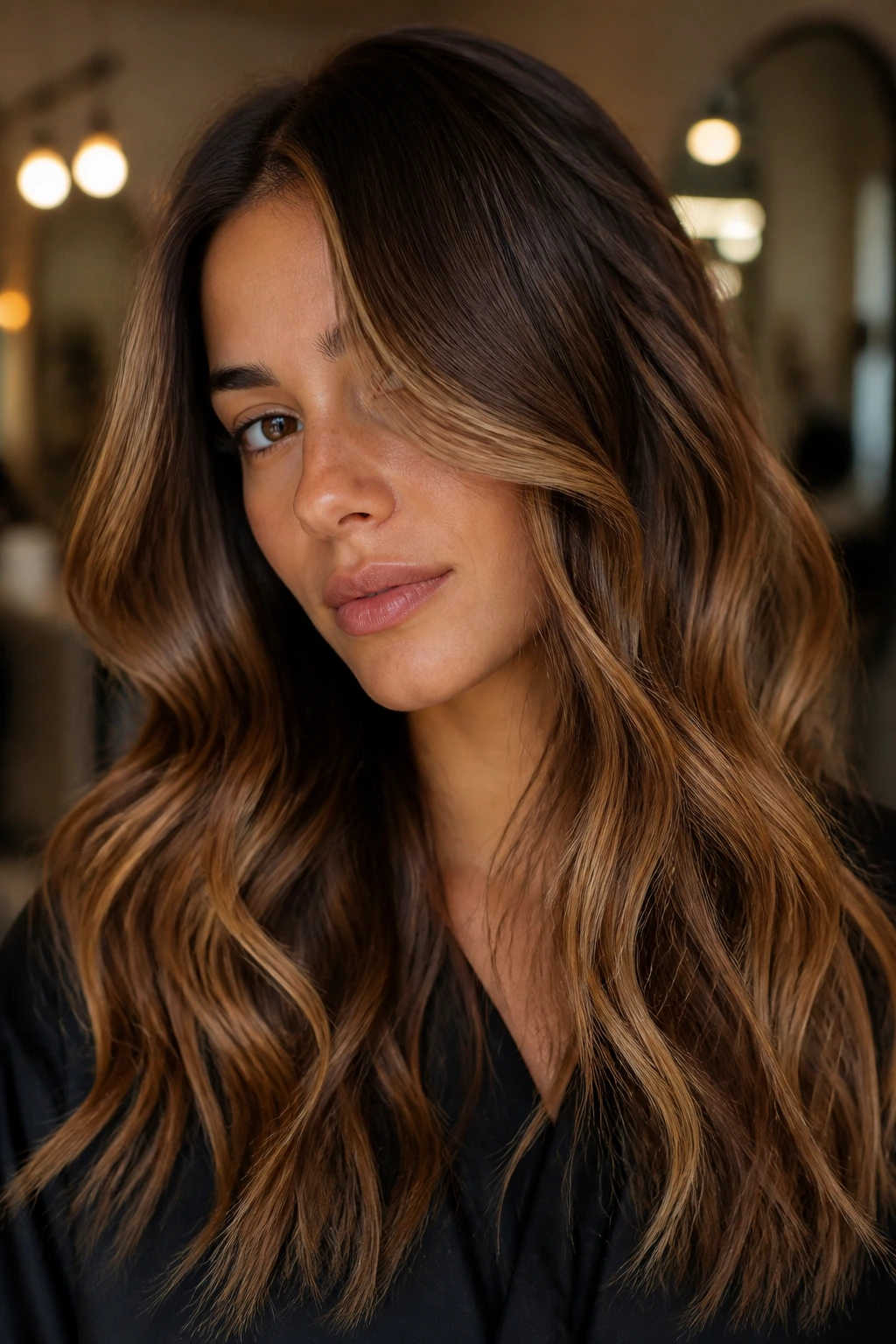
Roast almond is a quieter, toastier tone than honey. It has enough warmth to light up olive skin, but it doesn’t carry the yellow sparkle that some gold shades do. The effect is subtle on paper and very pretty in motion.
This look is strongest when the waves are loose and irregular. A perfect curl can make the highlight pattern look too tidy. A brushed wave lets the brown and almond tones slip into each other, which is where the softness lives.
25. Maple Honey Halo
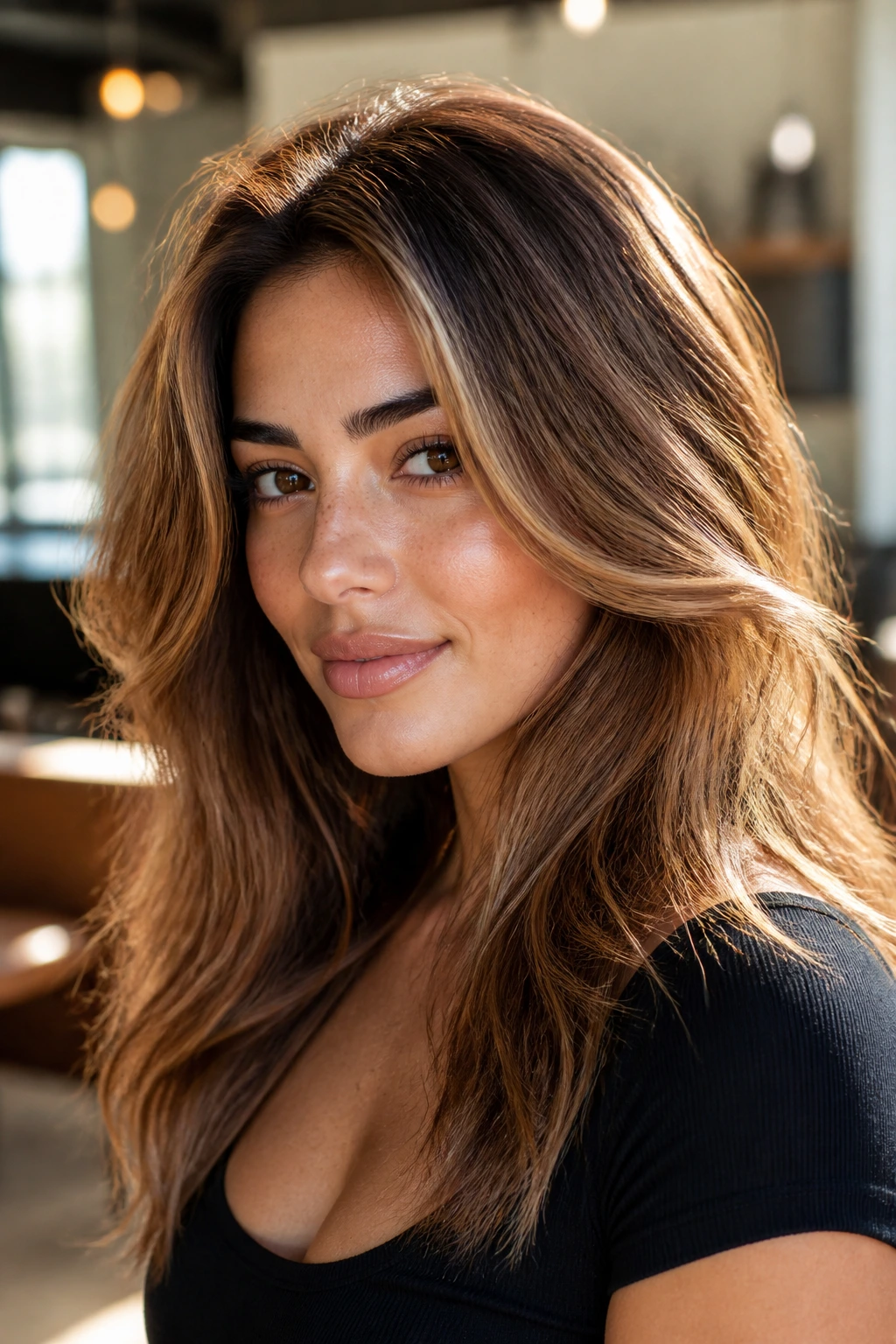
A maple honey halo is all about brightness around the crown and outer face layers. Instead of spreading the light everywhere, the colorist keeps the most luminous pieces where the eye goes first. On olive skin, that framing can make the whole face look fresher without needing a huge color change.
The halo effect is especially useful if your hair is long and heavy, because it breaks up the top section and adds lift. Keep the deepest brunette underneath so the bright pieces have something to stand against. If you want one look that feels luminous without being obvious, this is the one I’d put on the shortlist.
The Undertone Math Behind the Glow
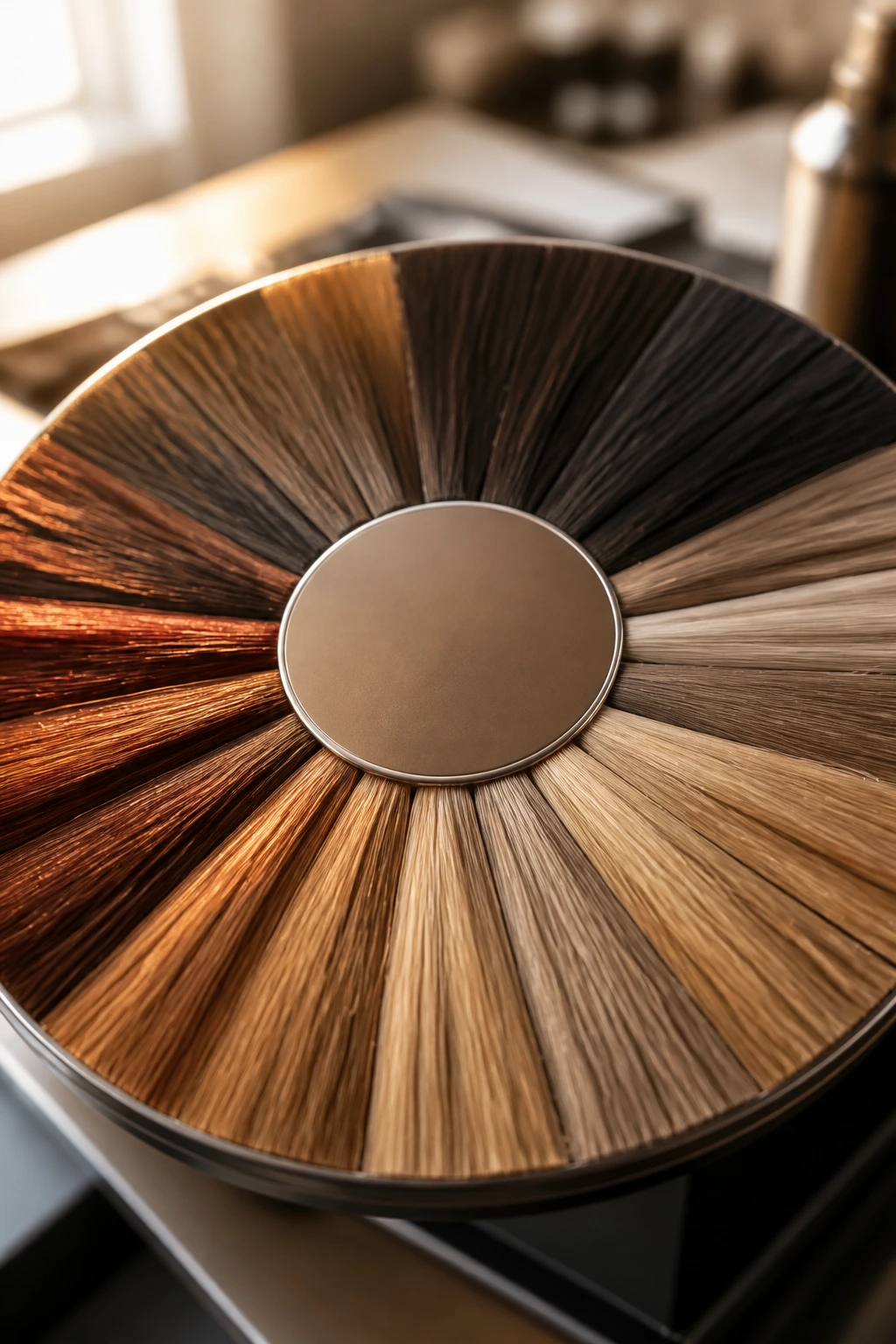
Olive skin is tricky in a way that people often underestimate. It isn’t just “warm” or “cool.” It can lean green-gold, beige, muted peach, or a mix that shifts depending on the light and the makeup you’re wearing. That’s why a golden brunette balayage can look fantastic on one olive complexion and flat on another if the tone is off by even a little.
The safest place to live is usually in the warm brunette range: caramel, toffee, honey, walnut, amber, beige-gold. Those shades bring out the warmth in the skin without making it look chalky. Very ashy brunettes can make olive skin go a touch gray. Very yellow blondes can make the skin look tired. The sweet spot is warm, but not brassy.
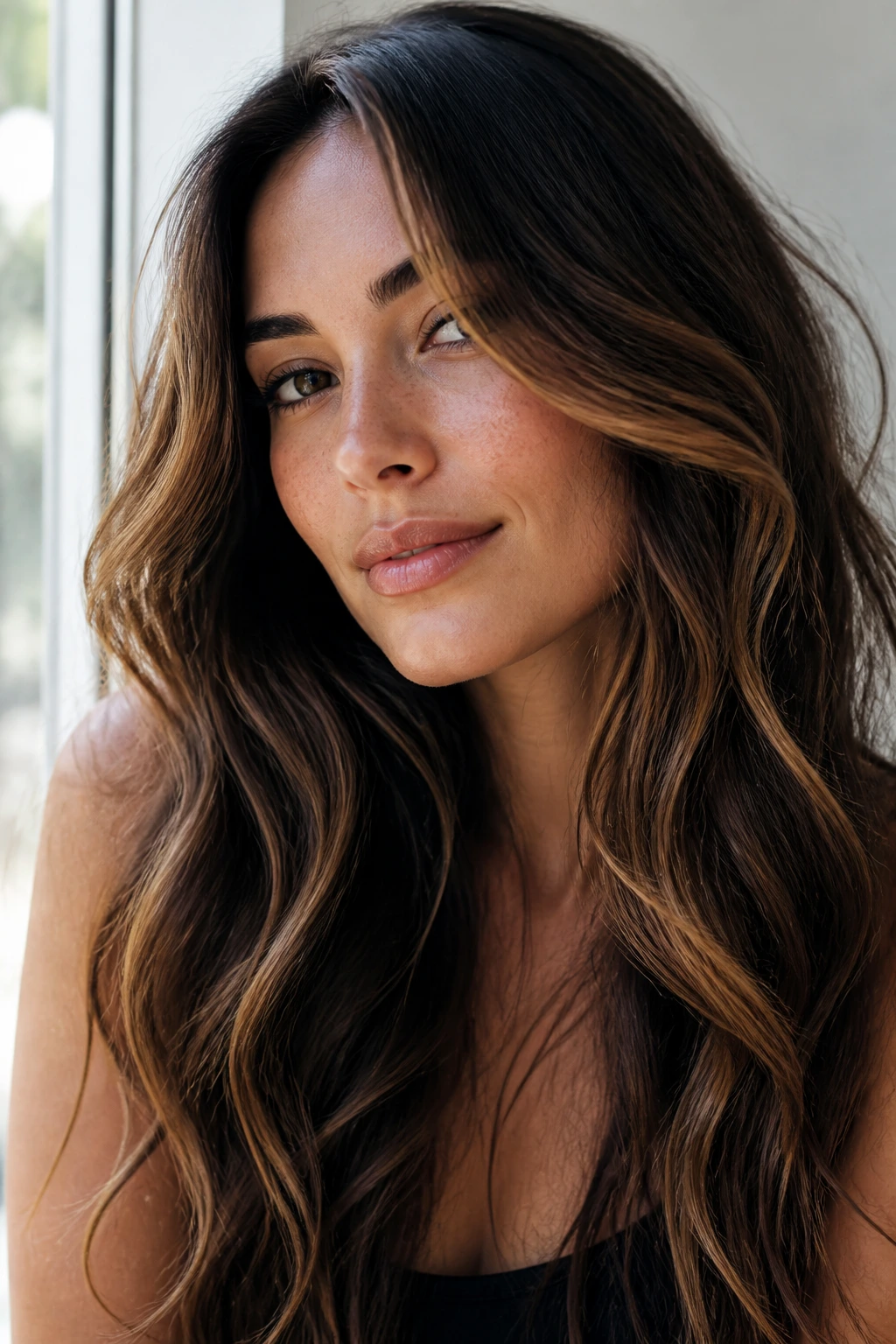
Placement matters just as much as tone. A deep root with light near the face gives olive skin contrast; a full head of even brightness can drain the shape right out of it. I like the highlights to cluster around the cheekbones, the part line, and the ends that move. That’s where the color does the most work with the least noise.
What to Tell Your Colorist Before the Foils Go In
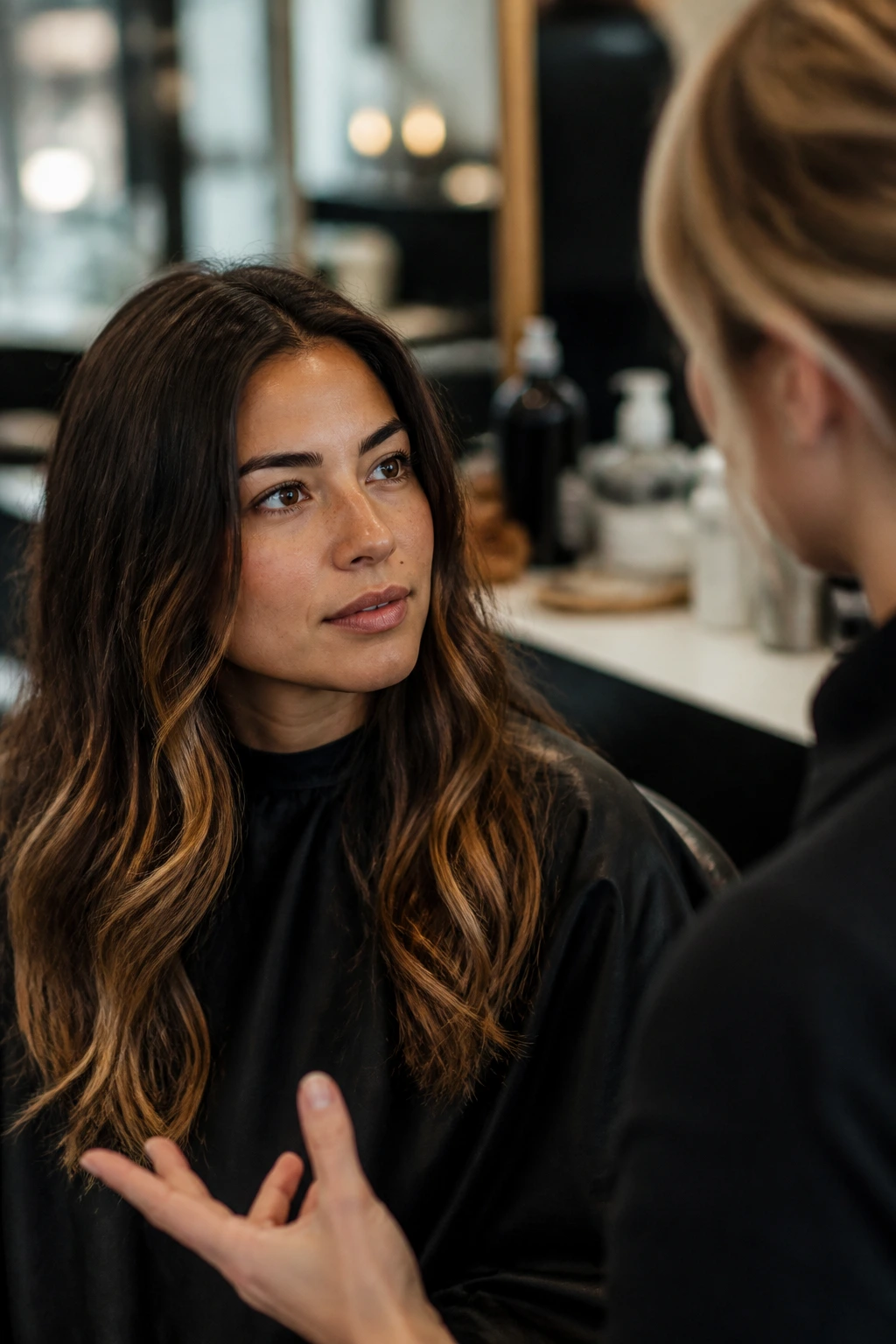
A good salon consultation saves you from a bad shade. Bring photos, sure, but bring the kind that show the light source too. Hair that looks honeyed in golden hour can look more beige under indoor bulbs, and that difference matters. If you can, show your colorist two or three images with the same haircut and different lighting. That makes the target clearer than a single perfect photo.
Say the Useful Stuff
Tell them whether you want the gold to read more honey, more caramel, or more bronze. Those three words are not interchangeable. Honey is lighter and softer. Caramel is rounder and more brown. Bronze runs deeper and richer.
Ask for a shadow root if you want easy grow-out, and ask for the lightest pieces around the face if you want the skin to look brighter. If you want lower maintenance, say that plainly. If you want more contrast, say that too. Vague words like “natural” don’t help much on their own.
Bring These References
- A photo in daylight and a photo indoors.
- A screenshot of the haircut you actually want, not a different length.
- A note about your normal styling routine.
- Any history of brassiness, dryness, or box-dye buildup.
If your hair has old color on it, say so. That one detail can change how the lift behaves, and it’s the sort of thing that gets missed when people rush the consultation. Don’t rush it.
The Tools and Products That Keep the Tone Glossy
- Color-safe shampoo: A sulfate-free formula keeps the brunette base from fading too fast and helps the gold stay warm instead of washed out.
- Moisturizing conditioner: Balayage ends can get dry first, so a richer conditioner helps the lighter pieces move instead of frizz.
- Gloss or glaze: This is the fastest way to refresh beige-gold or caramel tone between salon visits.
- Heat protectant spray: Any wand, iron, or blow-dry session can dull the shine if you skip this.
- 1-inch or 1.25-inch curling iron: That size makes soft bends that show off ribbon highlights.
- Wide-tooth comb: Better than yanking a brush through wet highlighted hair.
- Microfiber towel: Less friction, less puff.
- Purple or blue toning shampoo: Use it carefully and only where brass shows up. Too much can mute the warmth that makes this color work.
- Hair clips and sectioning comb: Helpful if you style in layers or do a blowout at home.
How to Style the Highlights So They Actually Show Up
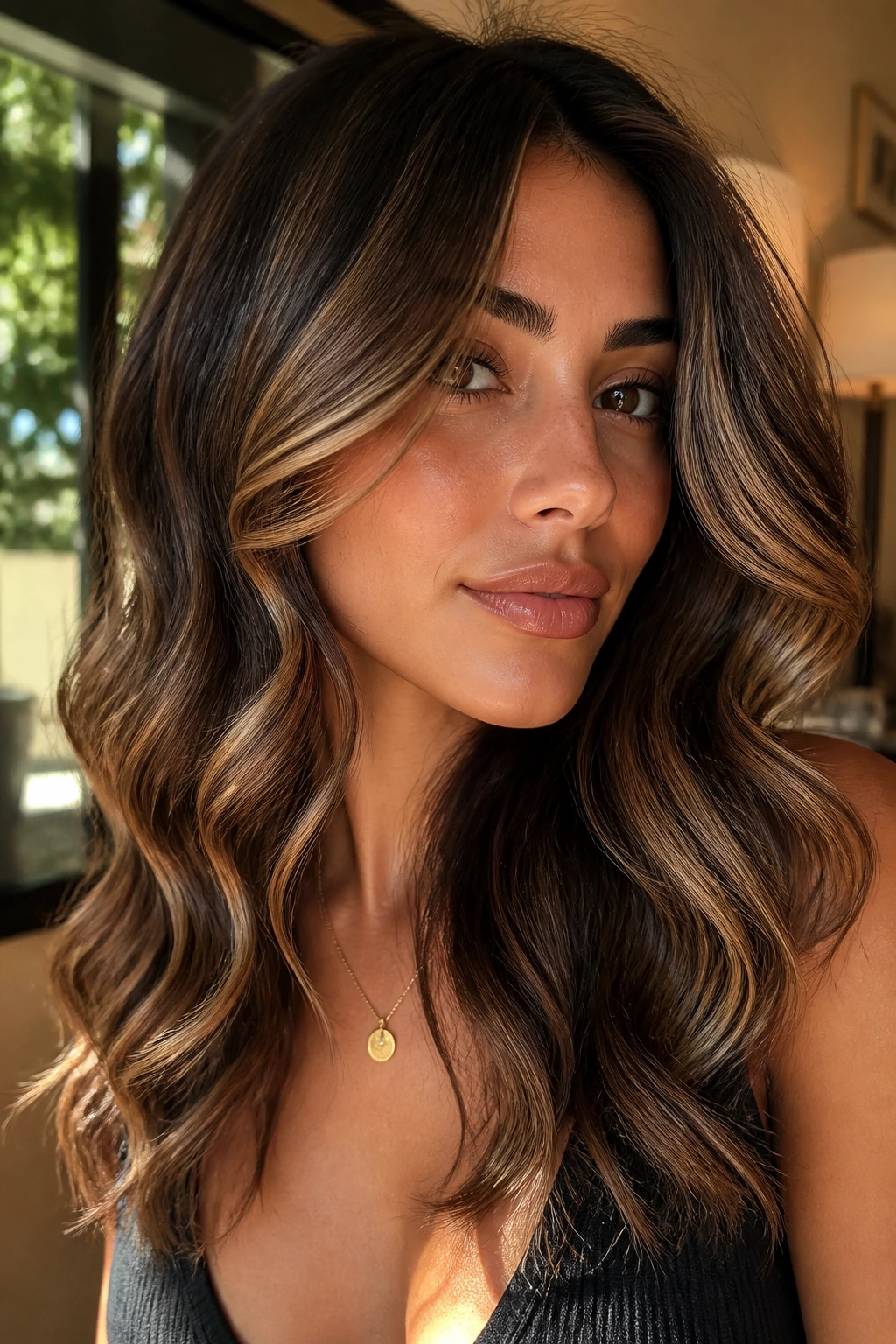
Golden brunette balayage can disappear if you wear the wrong style. Tight, uniform curls often hide the placement. A flat, center-parted blow-dry can make the color look dull. The best styles are the ones that let the light move through the hair in pieces.
Soft Waves
Loose S-waves are the safest choice. Wrap each section once or twice around a 1.25-inch iron, leave the ends out on a few pieces, and brush them through once they cool. That gives the highlights a soft flicker instead of a hard stripe.
Blowouts
A round-brush blowout is the best friend of glossy gold-brown color. Lift at the roots, curve the ends under slightly, and finish with a light serum on the mid-lengths. The shine makes the gold look more expensive. Heavy oil at the roots will flatten the whole thing, so keep it away from the scalp.
Curly and Coily Hair
For curls and coils, the brightest pieces should sit where the curl clumps naturally separate. That keeps the balayage visible without breaking up the pattern. Diffuse on low heat, then separate the curls by hand once they’re dry. Don’t rake a brush through it or you’ll turn the whole thing fuzzy.
A side part can change the whole mood of the color. So can tucking one side behind the ear. Small things. They matter.
Maintenance, Toning, and Grow-Out
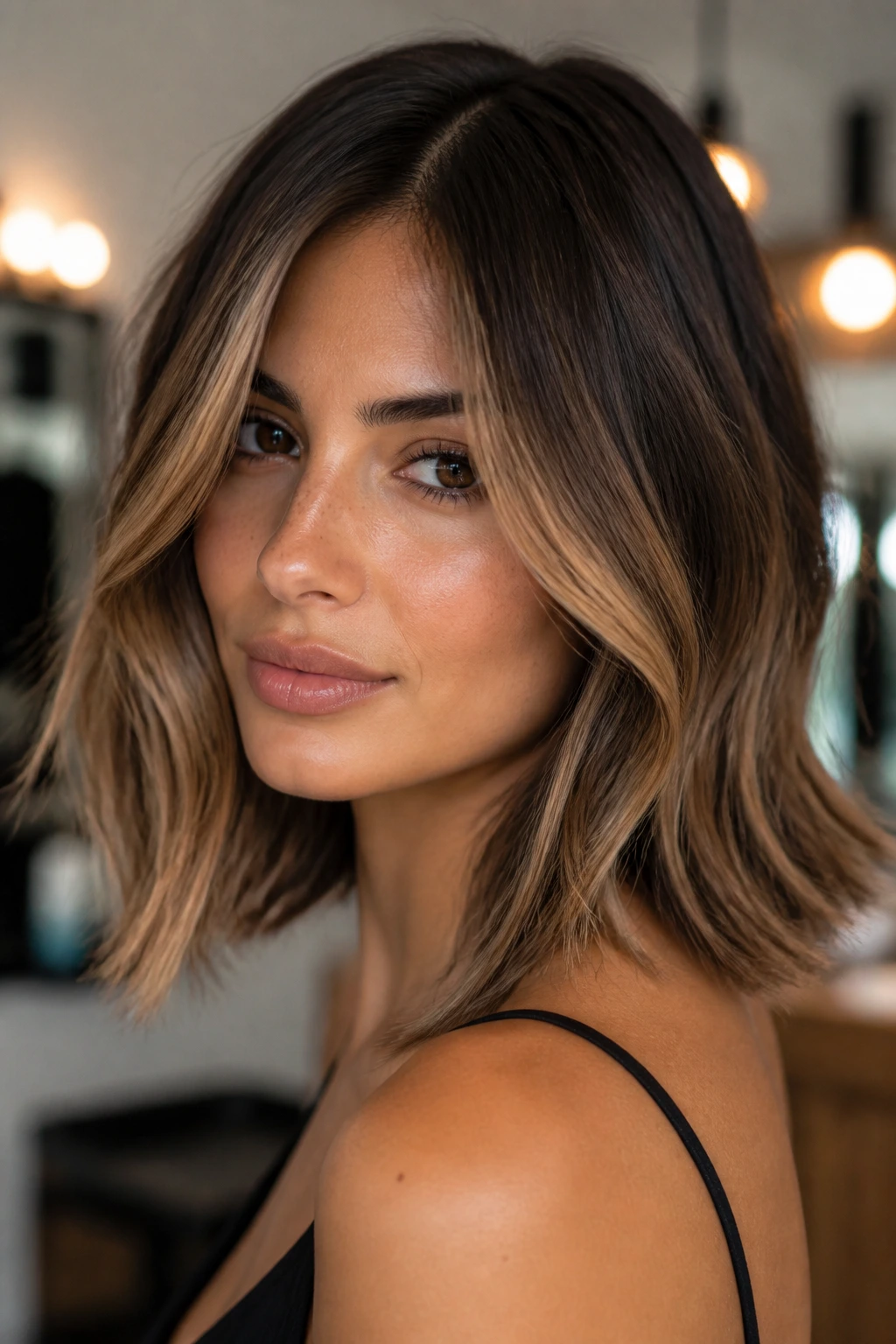
A golden brunette balayage usually grows out better than a full-head color, but it still needs care. Glossing every 4 to 6 weeks keeps the caramel and honey from turning dull. Root touch-ups or a refresh at the salon tend to fall in the 8 to 12 week range, depending on how much contrast you asked for and how fast your hair grows.
If the gold starts looking too orange, reach for a blue shampoo only on the warmer sections, and leave it on for a minute or two at most. If the tone goes too yellow, a violet shampoo can help, but don’t overuse it. Olive skin usually looks best when the warmth is still visible. Kill the warmth, and the whole color gets sleepy.
A deep mask once a week helps keep the lighter pieces supple, especially if you heat-style often. If you live with hard water, a clarifying wash every couple of weeks can stop mineral buildup from dulling the gold. That buildup sneaks up on people. One day the color looks rich, and the next it looks dusty.
Common Mistakes That Make Olive Skin Look Flat
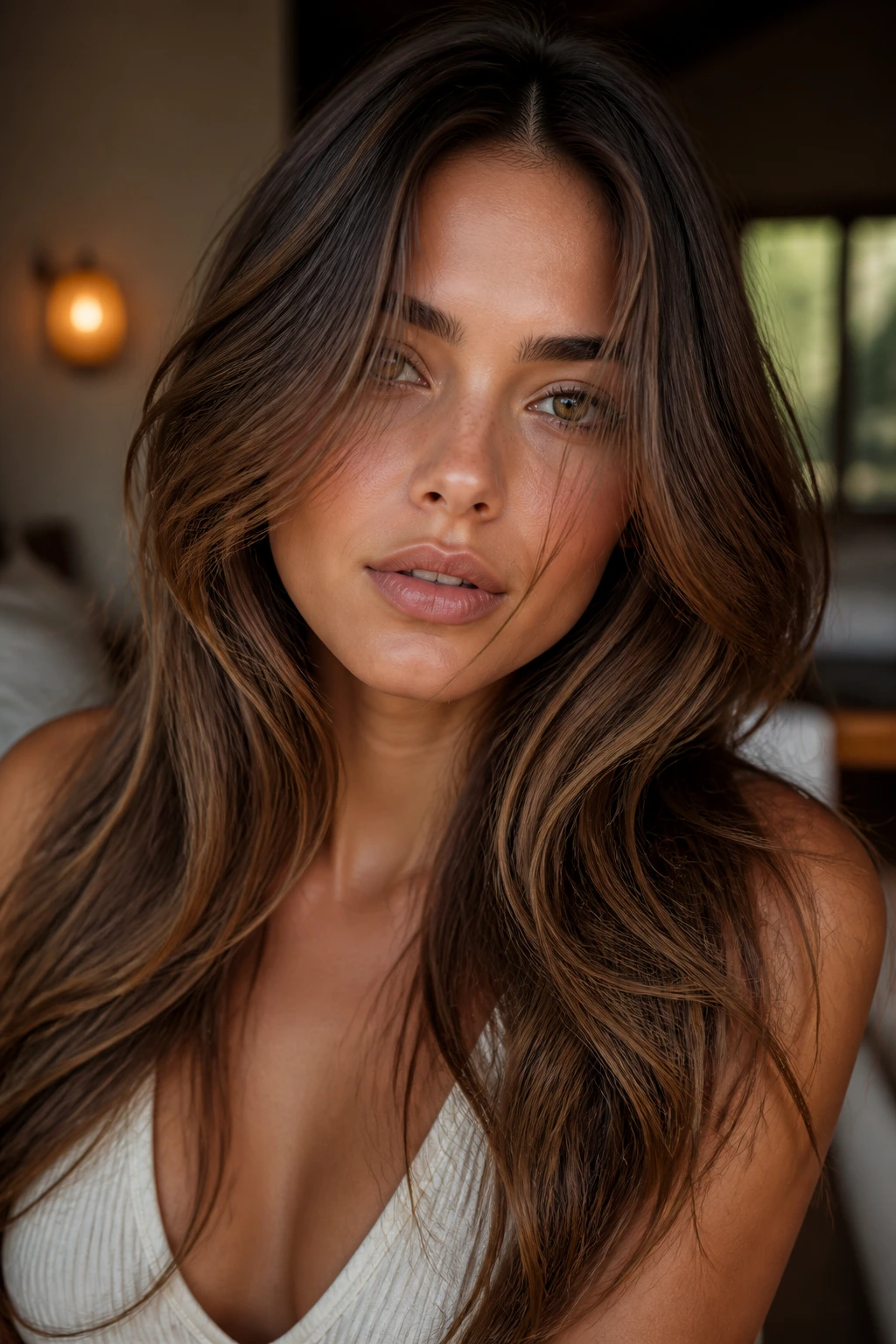
The biggest mistake is picking a gold that’s too yellow. Yellow-gold can turn olive skin sallow, especially if the base is already light. The fix is to ask for beige-gold, honey, or caramel instead of a brighter blonde-gold.
Another problem is over-lightening the roots. When the brightest pieces start right at the scalp, the face can lose shape and the hair starts to look a bit frosty. Better to keep the root deeper and let the brightness begin lower, around the cheekbones or mid-lengths.
People also ask for “natural” and then end up with no contrast at all. Flat brown hair isn’t the same as dimensional brunette. If you want balayage, you need some visible shift in tone, even if it’s subtle.
And then there’s brass. Brass happens when the warm gold slips into orange or red-orange territory. If that starts showing up, don’t pile on more toner blindly. You need to adjust the formula, not just chase the color with purple shampoo until the hair gives up.
Variations and Adaptations to Try
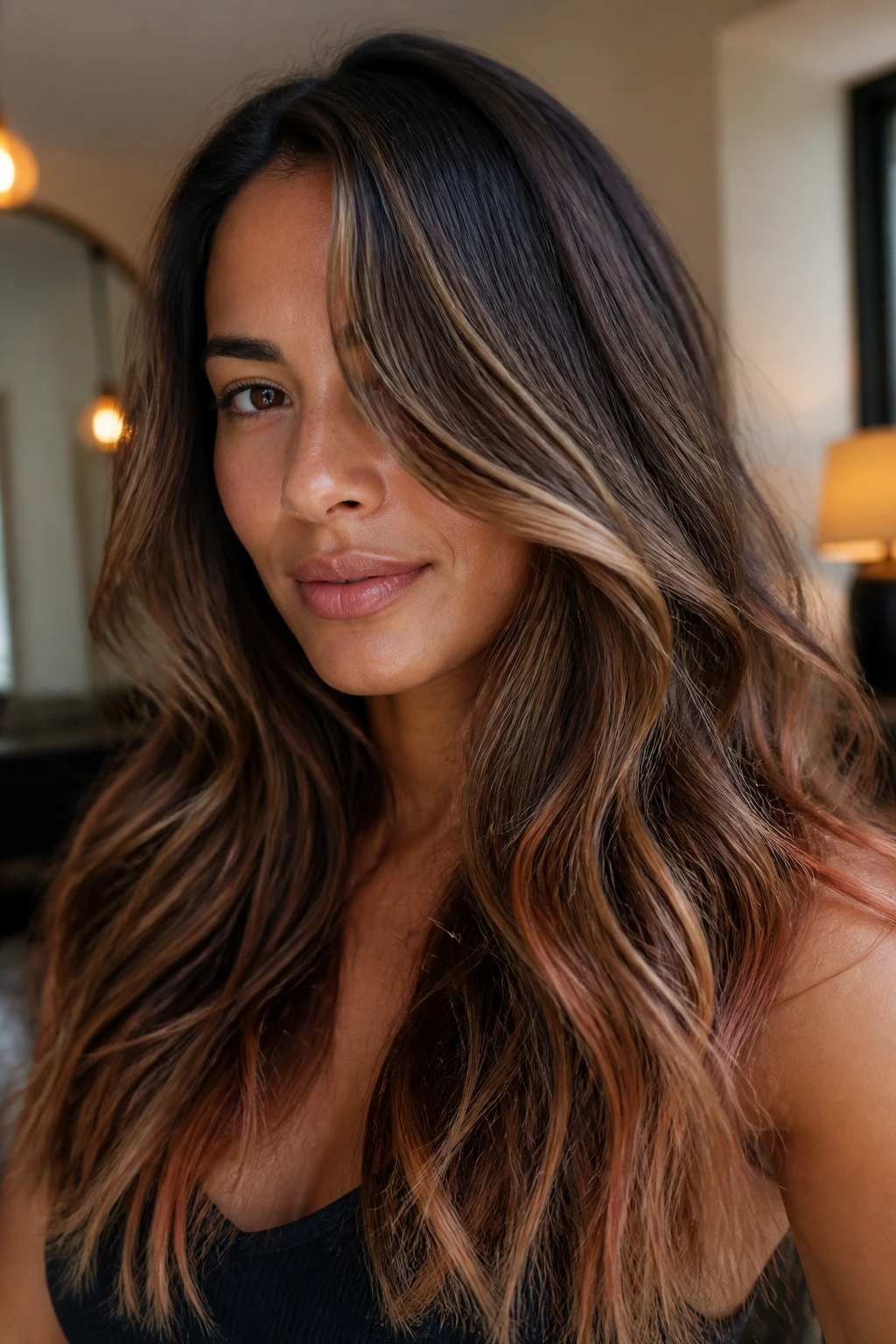
Honey-Beige Refresh: If you want a softer look, swap bright caramel for beige-gold ribbons and keep the contrast low. This is a smart fit for olive skin that leans neutral.
Bronzed Reverse Balayage: If your hair is already light, add deeper brown lowlights and a bronze gloss instead of more lift. It puts the brunette back where it belongs and keeps the color grounded.
Cinnamon Edge: For warmer olive skin, a faint cinnamon tone through the ends gives the hair more richness. Keep the red small, though. A little goes a long way.
Rooted Bronde Melt: This version starts darker at the scalp and fades into bronde through the mid-lengths. It’s a good choice if you want easy grow-out and a softer face frame.
High-Contrast Halo: Brighten only the top layers and the pieces nearest the face, then leave the underlayers deeper. This gives thick hair movement without making the whole head look light.
Frequently Asked Questions
Does golden brunette balayage work on cool olive skin?
Yes, but you need to keep the gold more beige and less yellow. A deep brunette base with muted caramel or soft bronze pieces usually flatters cool-leaning olive skin better than a bright honey tone. The goal is warmth, not gold overload.
Should I ask for honey or caramel?
If you want lighter and softer, ask for honey. If you want richer and browner, ask for caramel. On olive skin, caramel is often the safer start because it stays close to brunette and is less likely to look brassy.
Will balayage damage my hair a lot?
It can dry the lighter pieces, especially if your hair lifts several levels. That doesn’t mean the style is a wreck, but it does mean you need a mask, heat protection, and a toning plan. If your hair is fragile, ask for a softer lift and fewer high-contrast pieces.
How often do I need to tone it?
Most golden brunette balayage looks stay fresh with a gloss every 4 to 6 weeks. If your hair pulls brassy fast, you may need toning a little more often, but not with heavy shampoo every wash. Too much toning can flatten the warmth that made the color work in the first place.
What if my brunette base is almost black?
Then the first visit may be about lift, not the final shade. On very dark hair, a golden brunette balayage often looks better when the highlights stay in the caramel-to-bronze range instead of trying to jump straight to honey blonde. Two gentler sessions usually look cleaner than one aggressive one.
Can curly hair wear this color?
Absolutely. Curls can make the highlights look even richer because the color sits in the bends and catches light from different angles. The only thing to watch is placement; the light pieces need to follow the curl pattern, not fight it.
What if the highlights turn orange?
That usually means the tone is too warm, not that balayage failed. A salon gloss can usually pull it back toward beige or caramel. At home, use toning shampoo carefully, but don’t try to scrub the orange out with every wash or you’ll end up with dry, flat ends.
Is this a good low-maintenance color?
Yes, if you keep the root deeper and the light pieces soft. Balayage grows out more gracefully than traditional foils, and olive skin is forgiving when the tone sits in the brown-gold family. The look loses its shape faster when the contrast is too sharp.
Warm Brunette, Done Right
Golden brunette balayage can be quiet or bold, but on olive skin it works best when it looks warm, not loud. The color should give the face a little lift, keep the brunette base strong, and let the gold show up where movement happens. That’s the part people miss. It’s not about going lighter everywhere. It’s about placing warmth with intent.
If you’re deciding between several shades, start with the one that stays closest to caramel, honey, bronze, or toffee. Those tones tend to flatter olive undertones with less drama and less brass. Bring better photos, ask for a soft shadow root, and pay attention to where the light pieces sit. The difference is obvious once the color settles into real life.