



Dark blonde balayage can do something bright blonde often can’t: it gives fair skin shape instead of flattening it. That matters more than people think. On a pale face, a hair color that’s too light can erase the cheekbones and make the whole look go a little washed out. Dark blonde keeps the contrast gentle, so the skin still looks like skin, not a blank canvas.
Side-swept bangs change the equation even more. They cut a diagonal line across the forehead, soften the hairline, and give the face somewhere to go visually. When the color is placed well — a little deeper at the root, a little brighter around the bangs and cheekbones, never stripey at the crown — the whole cut starts to look expensive in the old-fashioned sense: balanced, intentional, and easy on the eyes.
The trick is tone. Beige, mushroom, taupe, smoked caramel, soft honey, and champagne-dark blonde all behave differently on fair skin, and the wrong one can turn either brassy or dusty fast. The right one makes the bangs swing across the face instead of sitting there like an afterthought. That’s the difference between hair that merely reads “blonde” and hair that actually flatters the person wearing it.
Why These 25 Looks Work So Well on Fair Skin
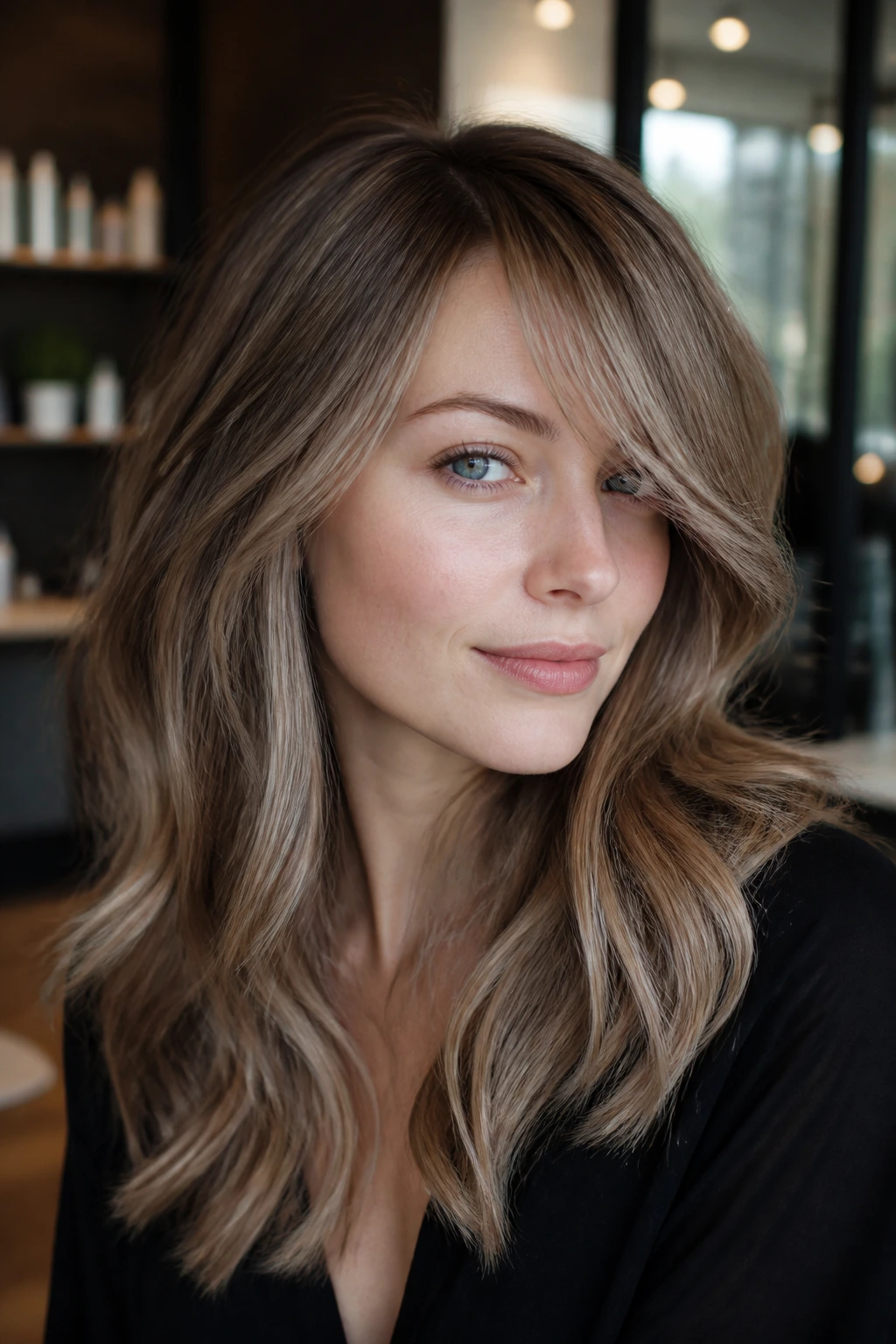
- The contrast stays soft: Dark blonde adds depth at the root and through the midlengths, so fair skin doesn’t get wiped out the way it can with high-lift blonde.
- The tone does the flattering: Beige, mushroom, ash, and neutral caramel each play differently with pink, peach, or cool undertones, which is why shade choice matters more than brightness.
- Side-swept bangs do real work: A diagonal fringe breaks up the forehead and draws the eye toward the cheekbones, especially when the first bright ribbon sits near the bend of the bang.
- Grow-out looks cleaner: Balayage grows in with blurred edges, so the line of demarcation stays softer than a full foil highlight job.
- The color reads fuller: Dark blonde ribbons create the illusion of thickness, which helps fine hair and airy bangs avoid that see-through, overlightened look.
- You can tune it up or down: A gloss, a root shadow, or a few face-framing pieces can push the same base look cooler, warmer, bolder, or more understated without starting over.
1. Mushroom Mocha Melt with Side-Swept Bangs
Mushroom tones are underrated on fair skin. They sit in that narrow space between beige and ash, which means they add dimension without turning the hair yellow or orange. With side-swept bangs, the look feels almost tailored — the fringe softens the forehead while the mushroom blend keeps the mids from floating away from the face.
This version works best when the root stays one or two levels deeper than the midlengths. You want a visible melt, not a harsh line. Ask for thin, hand-painted ribbons around the temples and just under the fringe so the bangs catch a little brightness when they move.
Why it flatters fair skin
The cool-gray edge in mushroom brown keeps pink skin from looking flushed. On very light skin, that matters. The color gives structure, but it does not fight the complexion.
If your hair is fine, this is a smart choice. The darker base underneath adds the look of density, and the soft beige pieces on top stop the cut from feeling heavy.
A good mushroom melt should look like it was lifted from the inside out. Not painted on. That’s the whole point.
2. Beige Ribbon Balayage with a Feathered Side Fringe
What happens when you keep the blonde a shade darker and make the ribbons broader? You get a look that feels polished but not fussy. Beige ribbon balayage is one of those styles that flatters fair skin without begging for attention, which is exactly why it works so well with a feathered side fringe.
The ribbon placement matters here. Ask for slices that start around the cheekbone, then drift lower toward the ends. If the light pieces start too high, the face can look overexposed. If they’re too low, the bangs lose their job as a frame.
Best for: fair skin with neutral or slightly warm undertones.
Ask for: beige ribbons, not gold ribbons, and a fringe that’s point-cut at the ends so it bends instead of sitting stiff.
Tip: a soft bend with a 1.25-inch iron makes the fringe match the rest of the style instead of fighting it.
3. Root-Smudged Champagne Waves with Long Swept Bangs
Champagne blonde sounds brighter than it needs to be. In this darker balayage family, it’s more of a glowing beige with a faint warm lift — enough to catch light, not enough to blow out fair skin. The root smudge keeps the overall look from becoming too airy, and the long swept bangs keep the front line from feeling blunt.
A root shadow is doing a lot of quiet work here. It softens the grow-out, but it also keeps the crown from looking hollow when the hair is moved from side to side. That matters on straight or medium-texture hair, where every part line can show.
This is one of the better choices if your skin leans cool but not icy. Champagne with a muted root gives you brightness without that yellow cast that can make pale skin look tired.
4. Ashy Toffee Sweep with a Diagonal Fringe
Bright blonde is not the only road to softness. Ashy toffee proves it. This color is warmer than mushroom, but the ash keeps it from tipping into orange, which is the line you do not want to cross on fair skin. The diagonal fringe gives the whole cut a little motion, like the color itself is moving with the hair.
What makes it different
Toffee tends to read rich and sweet, but the ash cuts the sugar. That’s the point. You get a dark blonde that looks dimensional under indoor light and still feels believable outside, where a lot of warm blondes can turn too coppery.
This is especially useful if your eyebrows are darker than your hair or if you want the bangs to stand out without bleaching the front pieces too light. The fringe should be longer at the temple and a touch shorter near the part, so it sweeps across the forehead in a clean line.
A blunt bang would fight this color. A feathered diagonal one lets it breathe.
5. Soft Caramel Face Frame and Side-Swept Bangs
Caramel only works here if it stays polite. That sounds snobbish, but it’s true. On fair skin, hard caramel can turn orange fast. Soft caramel, placed as a face frame and kept low in saturation, gives warmth near the cheeks and keeps the rest of the hair in a dark blonde lane.
This look is especially good when you want the bangs to melt into the sides instead of feeling like a separate section. The brightest piece should sit just where the fringe folds over the temple. One inch too much brightness and the whole thing starts shouting.
Placement note: keep the face frame a little brighter than the lengths, but not lighter than a level 8. That’s enough to lift the complexion without creating stripes.
Texture note: loose waves or a smooth blowout both work. The color is flexible like that.
6. Sandy Bronde Lob with a Curved Fringe
If your hair sits flat at the crown, a sandy bronde lob fixes part of the problem before you even touch a styling tool. The cut gives the color room to show, and the sandy tones keep fair skin from looking too stark against the hair. The curved fringe helps the front pieces fold into the lob instead of landing like two separate ideas.
This is a good style for people who want the comfort of a medium-length cut without losing movement. The balayage should be scattered, not clustered. A few brighter strands around the top layer, deeper beige underneath, and the bangs bent softly away from the face.
A lob can look severe on pale skin if the tone is too cool and the lines are too blunt. Sandy bronde avoids that. It keeps the visual weight low and makes the face look a little more awake.
7. Vanilla Latte Ribbons with a Light Side Sweep
Vanilla latte sounds sweet, but in hair terms it should read creamy, not sugary. The darker blonde base keeps the style grounded, and the lighter ribbons peek through like steam on a cup — soft, not obvious. On fair skin, that kind of creaminess is useful because it adds warmth without a yellow cast.
This is one of the prettiest choices for wavy hair. The ribbons catch the bends, and the side sweep keeps the front from looking too symmetrical. A long, loose fringe helps the face keep its shape even when the waves puff up a little.
How to ask for it
Ask for a neutral beige gloss over a level 6 or 7 base. Then ask for brightness around the part line and the front bend of the bangs, not the whole crown.
If your skin is pink, keep the ribbons more beige than gold. If your skin is peachy, you can warm them up slightly. Small shift. Big difference.
8. Chestnut Smoke Balayage with Side-Bent Bangs
Chestnut smoke is what I reach for when fair skin needs depth more than brightness. There’s a quiet richness to it. The chestnut note warms the hair, while the smoky finish keeps it from going red. Side-bent bangs then break that darker mass in the front so the whole style doesn’t feel heavy.
This works beautifully on thicker hair, where too much lightening can make the ends puff or fray. A few muted ribbons are enough. The goal is movement, not sparkle. The bangs should bend from a side part and skim the cheekbone instead of sitting straight across the forehead.
If your hair tends to grab copper from the sun or the shower, this is a safer family than golden dark blonde. The smoke in the tone acts like a brake pedal. Useful thing, that.
9. Honeyed Ends with Feathered Bangs
Honey belongs at the ends here, not at the root. That’s the part people get wrong. On fair skin, honey can be gorgeous, but only when it looks like it arrived after the rest of the color was already settled. Feathered bangs keep the front light and airy so the richer ends don’t drag the whole look downward.
A little warmth at the tips gives the hair a sun-washed finish without forcing the face to wear the brightness directly. That’s helpful if your skin is extremely pale or freckled and you want a softer contrast. The fringe should be dry-cut or point-cut so it breaks apart naturally when you sweep it over.
This one reads especially well on layered cuts. The feathering in the bangs mirrors the movement at the ends, and the whole style feels consistent without looking overly styled.
10. Taupe Root Melt with a Narrow Side Fringe
Taupe root melt is for people who want the color to stay calm as it grows. The root area stays slightly deeper and cooler, and the midlengths fade into a smoky dark blonde that doesn’t scream “fresh salon visit” every ten days. On fair skin, that low-contrast approach is often the smartest one.
The narrow side fringe helps because it keeps the front from becoming a blanket of hair. A wide fringe plus a deep root can feel too dense. Narrow it down, curve it a bit, and let the first bright piece sit just below the bend.
Why it works: taupe doesn’t shout. It sits quietly beside fair skin and lets the complexion keep the spotlight.
Wear it if: your hair is straight, fine, or naturally light brown and you want a cooler result without going silver.
11. Biscotti Blonde with Swept Bangs
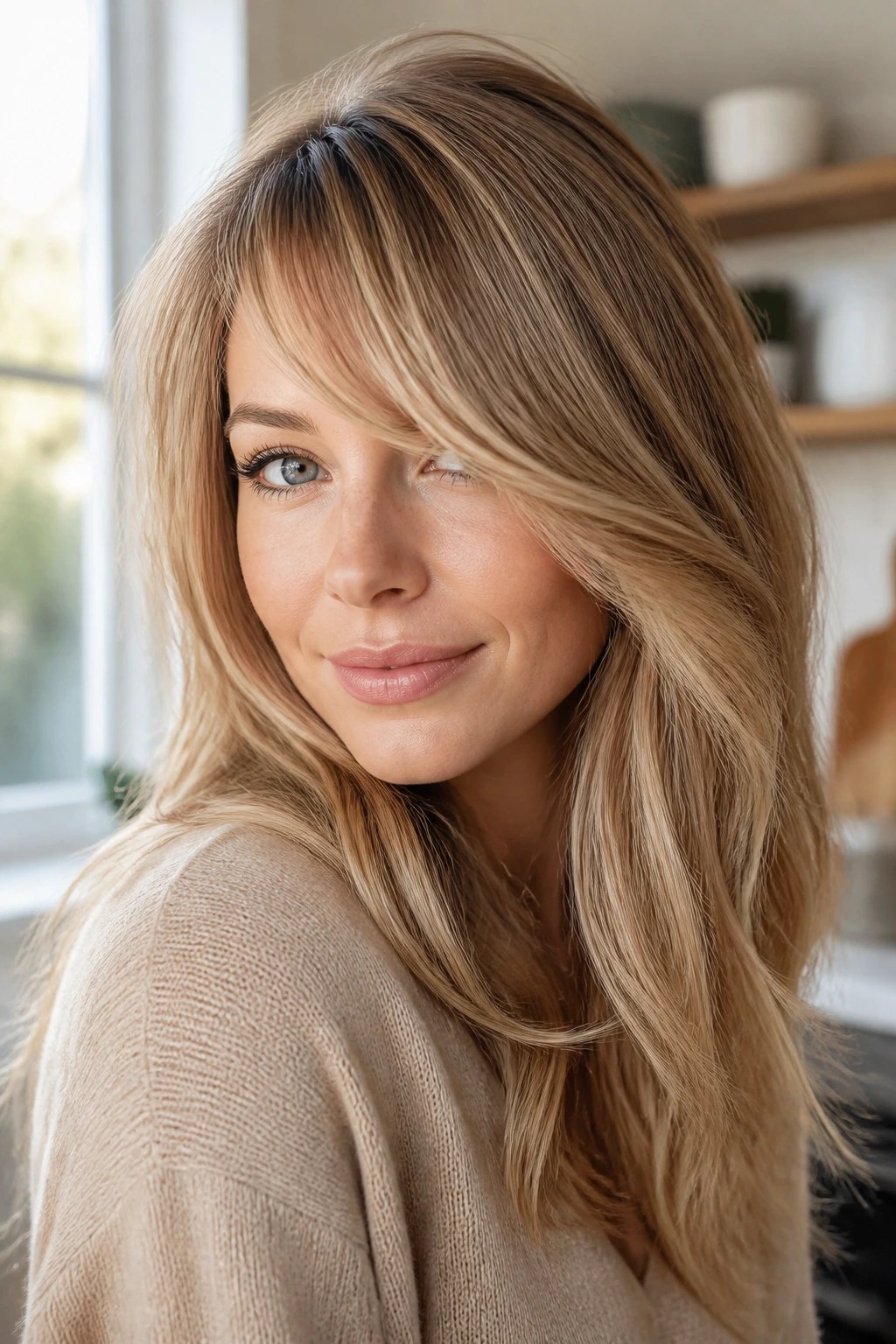
Biscotti blonde has the kind of beige warmth that looks expensive under normal light — kitchen light, office light, the light at the end of a grocery aisle. On fair skin, it reads like a soft glow rather than a stark blonde. Swept bangs bring the whole thing back to the face and keep the cut from feeling too airy.
This is a good bridge shade if you’re growing out something lighter and want to go gentler without going dark. Ask for a base that stays close to your natural color and for thin ribbons that appear in the middle and lower third of the hair. If the highlights start at the root, the biscuit effect disappears and you’re left with ordinary blonde.
The bangs should be brushed across the forehead with a little tension, then released. That keeps them from collapsing into a narrow strip. It sounds fussy. It isn’t, really. Just a small difference in how they fall.
12. Cocoa Beige Dimension with Side-Swept Bangs
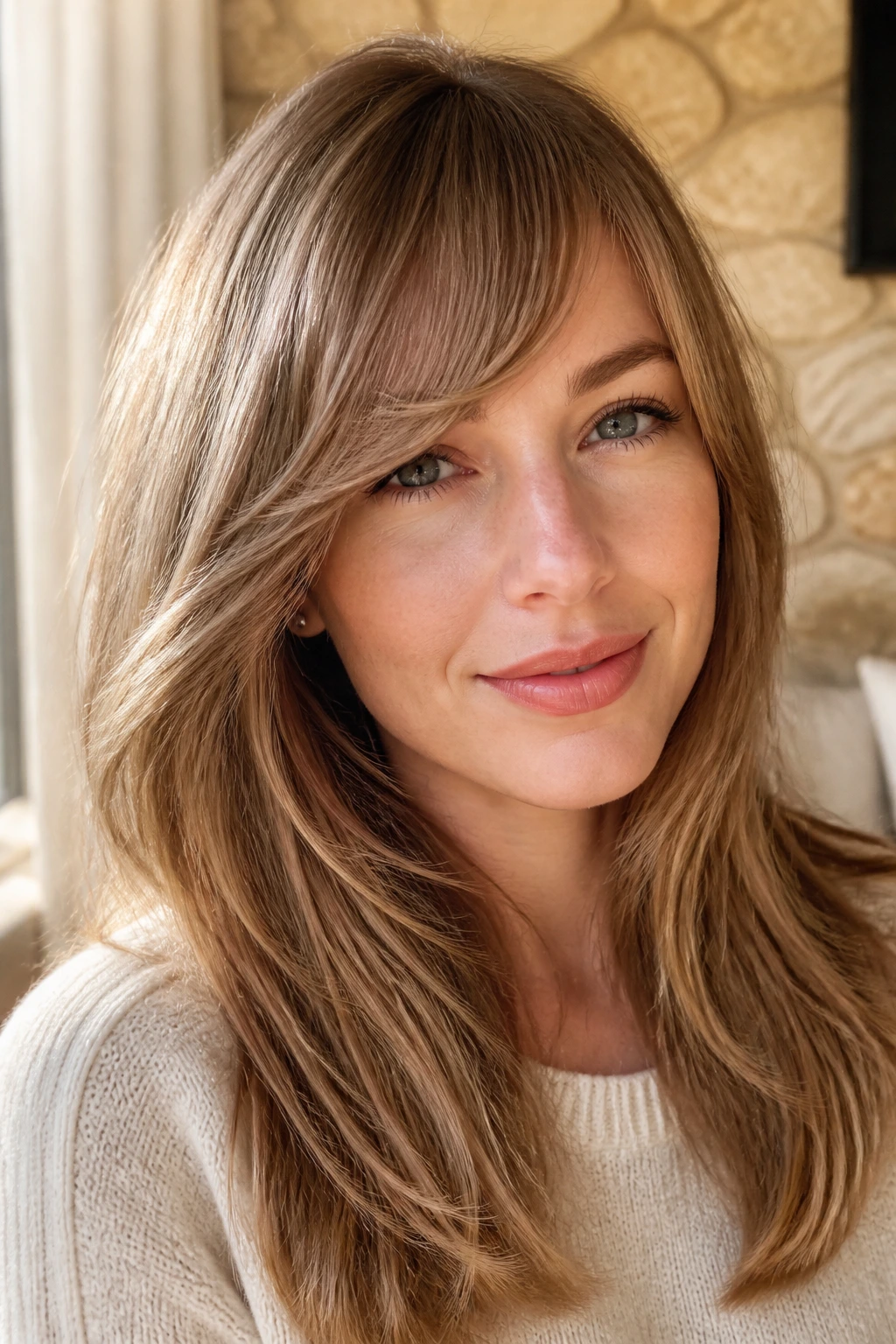
If your hair is thick, cocoa beige is one of the smarter ways to keep dark blonde balayage from going flat. The cocoa lowlights give the hair body, and the beige ribbons stop it from looking too dark against fair skin. Side-swept bangs help by opening up the forehead and making the color around the face feel lighter.
What to watch for
Too much beige can make thick hair look wide. Too much cocoa can turn it muddy. The good version has both — just enough darkness underneath to hold the shape, and just enough brightness on top to catch the eye when the bangs move.
This is one of those styles that looks better with a lived-in blowout than with a stiff curl pattern. The bend in the bangs should match the bend in the lengths, or the color will feel disconnected.
A lot of people ask for “dimension” and get random light pieces. That is not the same thing. Dimension needs a plan.
13. Cool Sand Balayage with a Loose Fringe
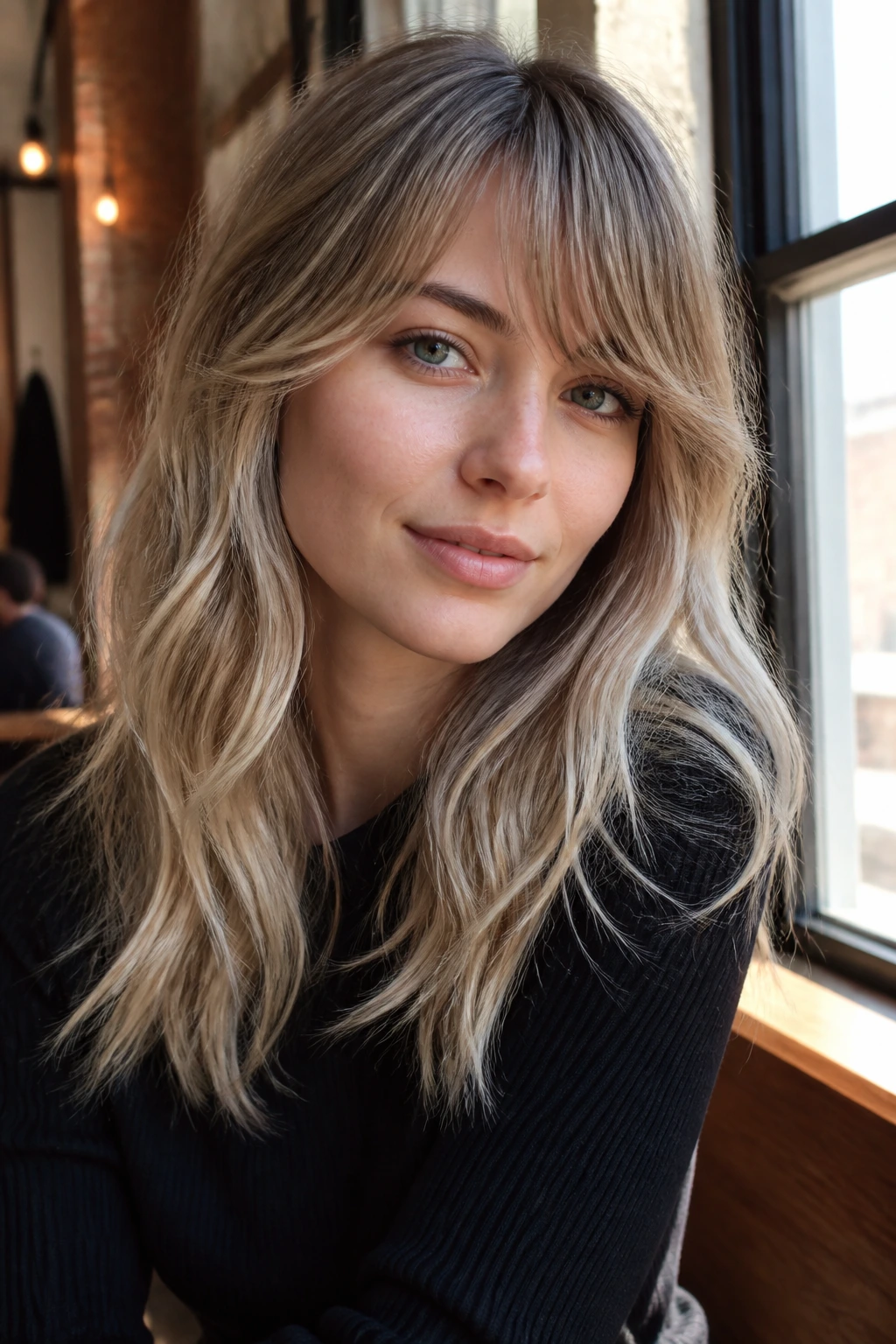
Cool sand is the safe lane for fair skin that turns pink in warm hair color. It has enough beige to stay soft, enough ash to keep brass away, and enough depth to avoid that overbleached, see-through feeling. A loose fringe keeps the front easy and slightly undone, which suits the color.
This look works especially well on straight-to-wavy hair. The lighter pieces can be painted in broad, gentle strokes that follow the movement of the cut. Then the side-swept bang can be bent away from the face in one smooth motion, not curled into a sausage ring. Please. Don’t do the sausage ring.
If you like a cooler palette but hate the flatness of ash blonde, this is the compromise. It’s still dark blonde. It just feels more weathered, less shiny, and that can be a better match for fair skin than full brightness.
14. Toasted Almond Sweep with Side-Bent Bangs
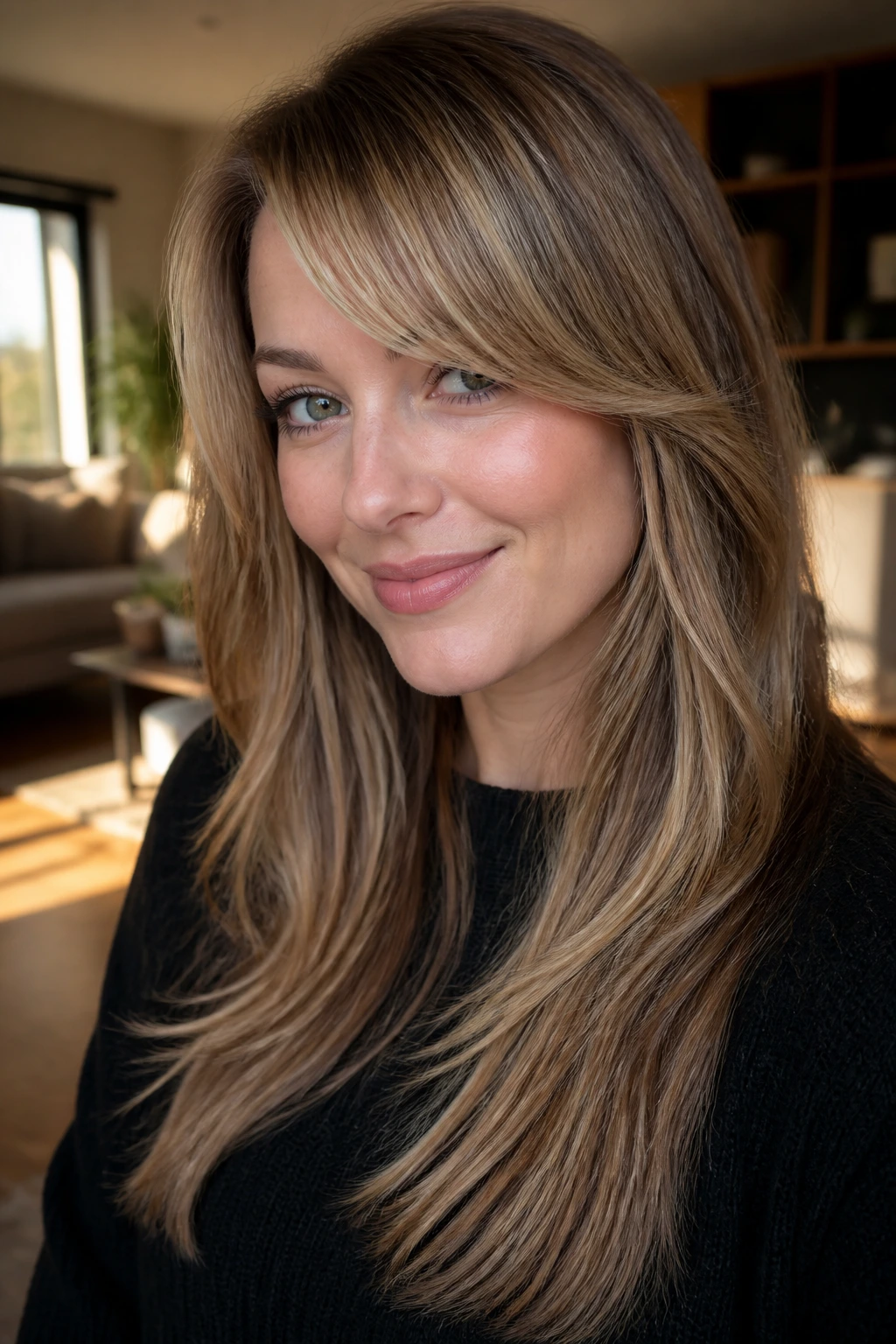
Toasted almond has a little warmth, but not the kind that turns the hair orange the second you walk outside. On fair skin, especially neutral or peachy skin, that warmth can make the complexion look healthier without making the face seem red. Side-bent bangs draw the color forward and keep the whole thing from sitting too far back on the head.
This style likes medium-length layers. The sweep in the bangs echoes the sweep in the balayage, so the eye travels from the fringe into the rest of the hair without breaking. If you want the color to feel soft, keep the lightest pieces a half-inch away from the hairline and let the bangs carry the brightness.
A little almond warmth. That’s all. Enough to soften, not enough to fry the tone.
15. Smudged Root Bronde with Long Bangs
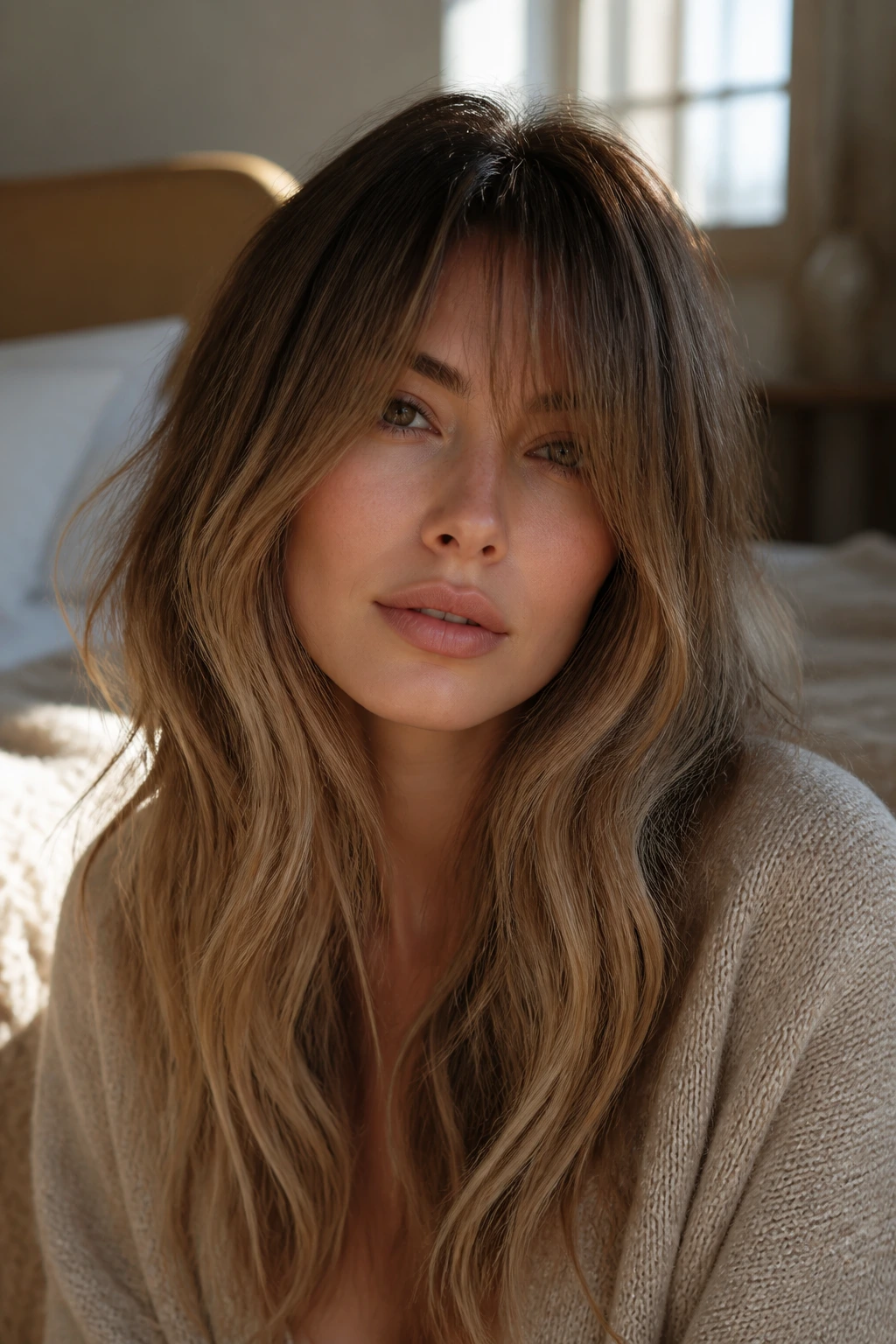
Smudged root bronde is one of the best low-maintenance choices in this whole group. The darker root gives fair skin a frame, and the bronde mids keep the look from becoming too dark or too heavy. Long bangs help because they stretch the face vertically and give the hair a little drama without extra bleaching.
You want this one to grow out on purpose. That means the root shadow should be visible but soft, and the lighter pieces should cluster around the cheekbones and ends rather than the scalp. If the color starts too high, the smudge loses its point.
This is especially good if your brows are dark or your eyes have a lot of depth. The contrast feels balanced instead of harsh. And if you’re tired of chasing a fresh highlight every few weeks, this is the style that quietly gives you a break.
16. Creamy Wheat Highlights and a Deep Side Part
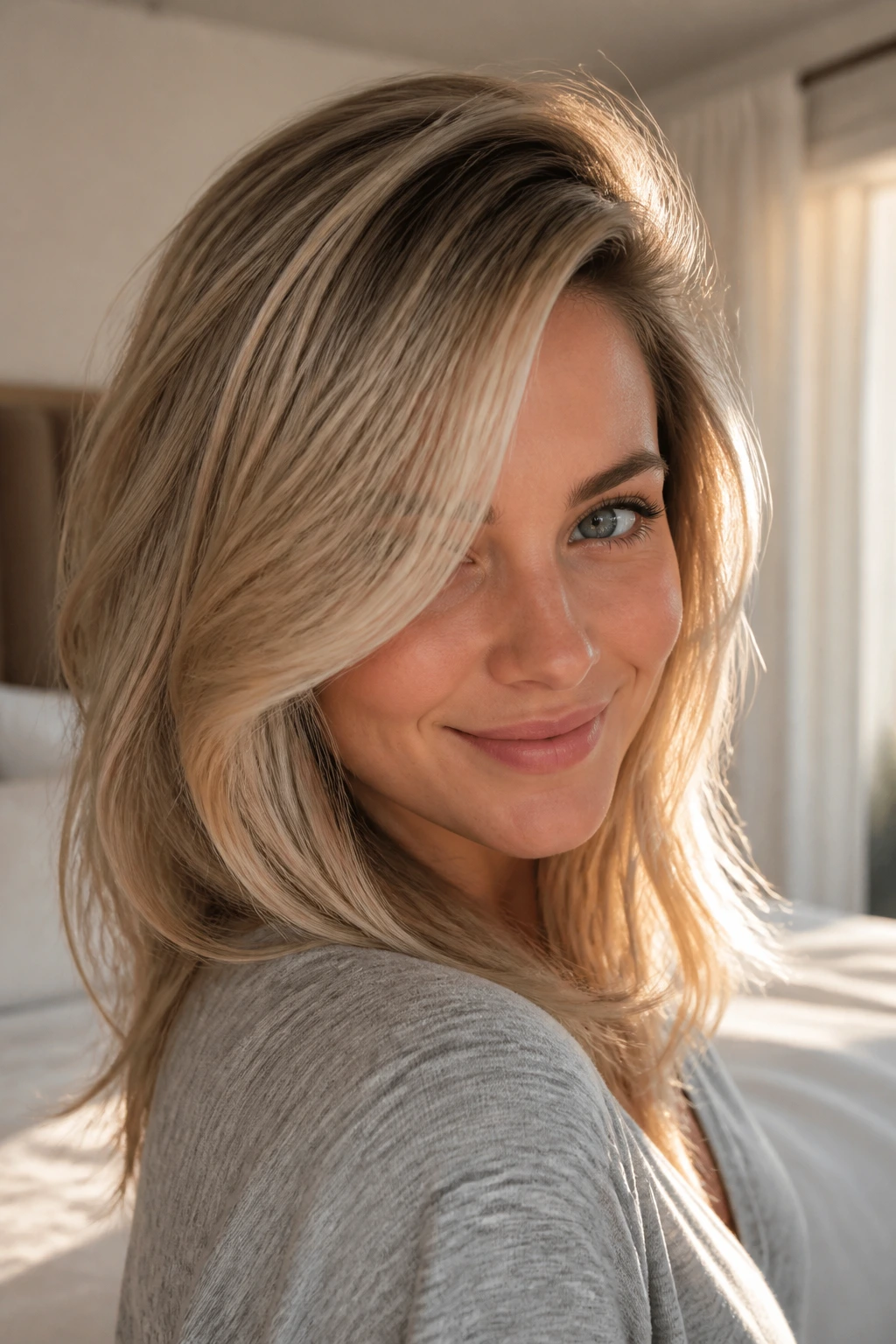
Creamy wheat sits in the middle of warm and cool, which is exactly why it behaves so well on fair skin. The deep side part creates instant lift at the crown, and the highlights move with the part instead of fighting it. With side-swept bangs, the overall shape gets longer and softer, not wider.
This look is a good one for longer layers. You can place a few brighter wheat ribbons near the part and let the rest of the color live lower through the lengths. That makes the bangs seem fuller without requiring a lot of teasing or product.
If your hair tends to fall flat at the roots, the deep side part matters almost more than the color itself. It gives the fringe a clean direction and keeps the balayage from collapsing into one flat curtain.
17. Dark Blonde Shag with Side-Swept Bangs
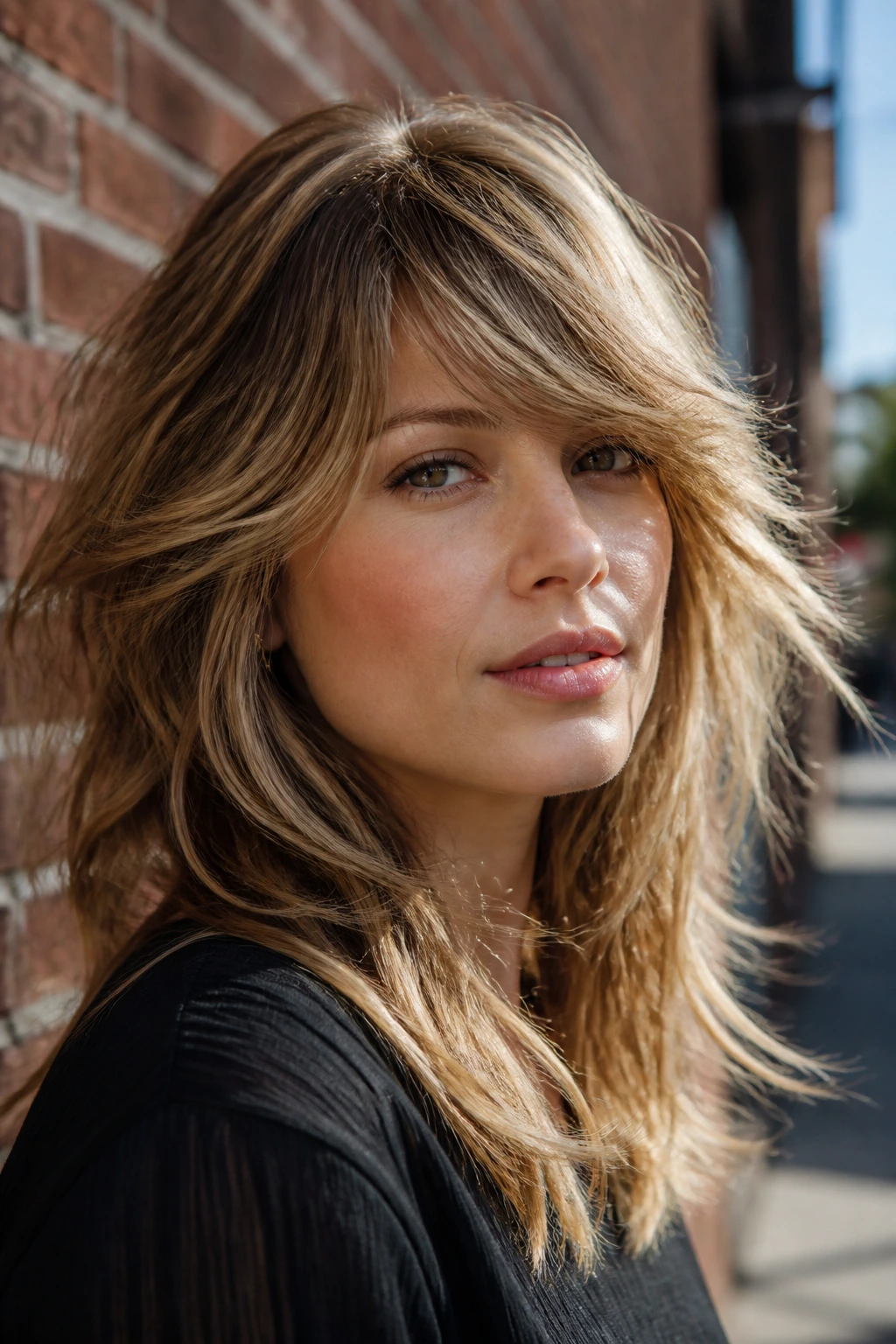
A shag needs movement, and dark blonde balayage gives it exactly that. Fair skin can look a little washed out in a shag if the layers are too close to the head and the tone is too pale. Dark blonde pieces break the shape apart and make the cut look fuller from every angle.
Side-swept bangs are the right move here because they soften the forehead while still letting the shag do its messy, piecey thing. Keep the fringe longer than you would in a polished cut. A shag should feel airy, not precocious.
This is one of the few styles where a slightly uneven placement of highlights is a good thing. Not random. Uneven. The color should follow the layers, not form tidy stripes. That’s what gives the shag its rough little charm.
18. Smoky Beige Balayage with Curved Bangs
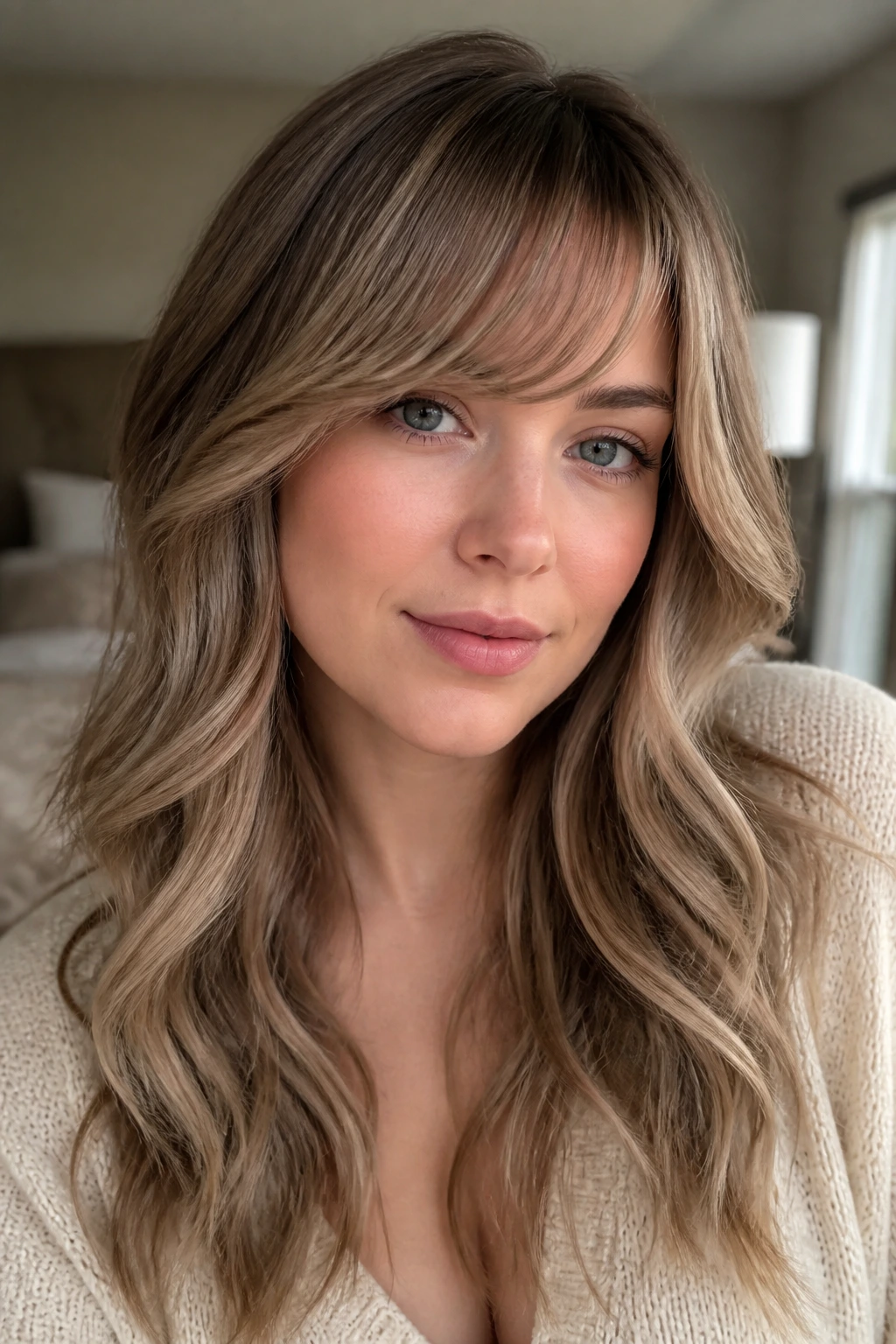
Smoky beige is the color I’d point to if you want fair skin to look calmer, not brighter. The smoky note dulls the brass, the beige keeps the hair from reading gray, and the curved bangs bend around the face in a way that feels soft and deliberate.
The curve in the fringe matters because smoky shades can get heavy if the front is cut too straight. A curved bang opens the face and gives the hairline a little lift. Ask for the shortest point of the fringe just off center, then let it lengthen toward the temple.
This works especially well if you wear your hair tucked behind one ear sometimes. The curve in the bangs still makes sense when the style shifts. That kind of flexibility is worth more than a fancy toner.
19. Maple-Glaze Ends with a Soft Fringe
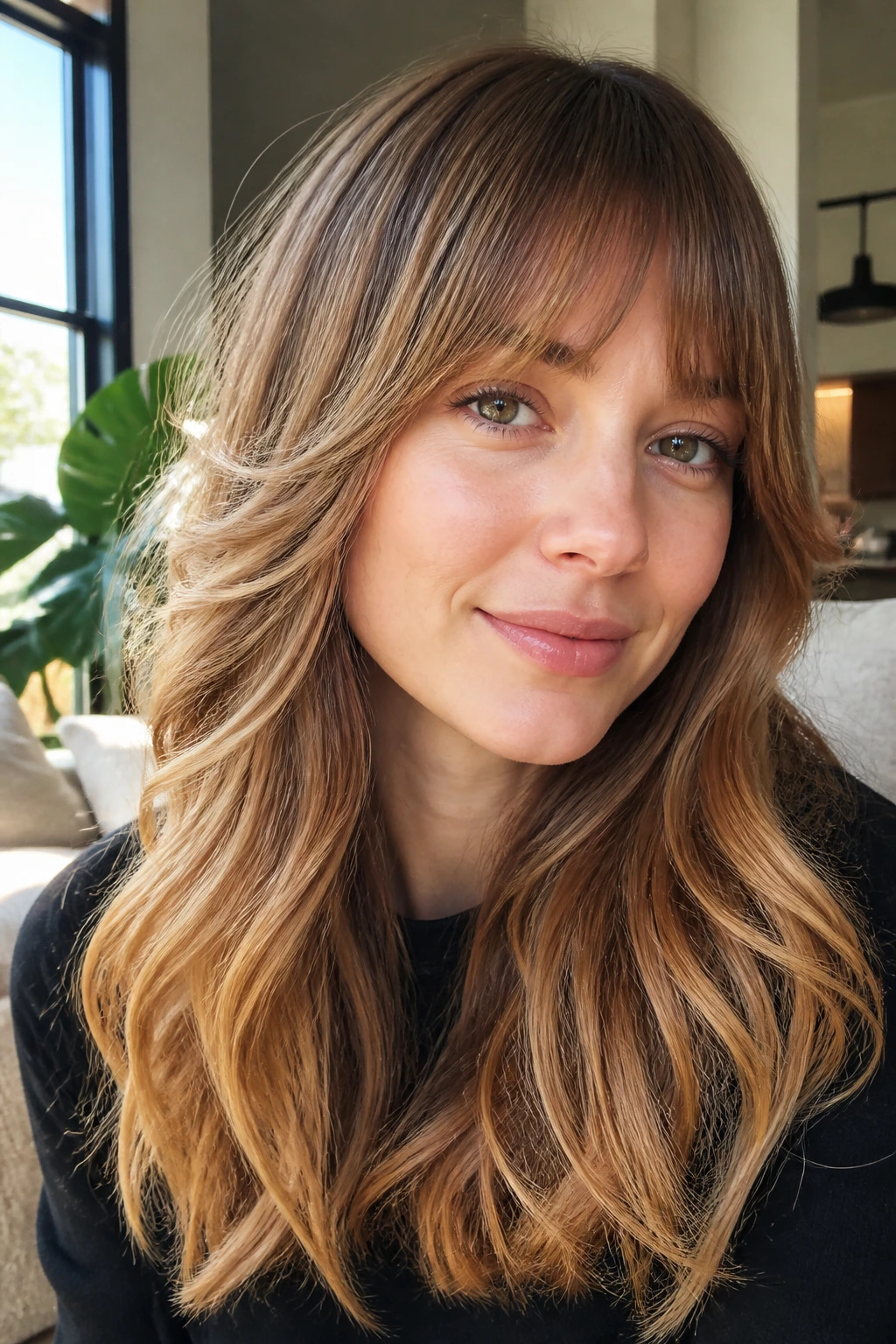
Maple-glaze ends bring warmth, but not all warmth is equal. On fair skin, a little gold at the ends can make the face look alive, especially when the root stays deeper and cooler. The soft fringe keeps the front from becoming too sweet or too bright.
This is a better warm option for neutral-to-warm undertones than for very cool skin. If your complexion already leans pink, keep the maple effect faint. If your skin has peach or golden notes, you can let the ends glow a little more.
The best version of this style looks like the warmth arrived after the rest of the hair had already settled. Nothing obvious. Just a subtle change at the edges when the light moves across the ends.
20. Dimensional Bronde for Curly Hair with Side Sweep
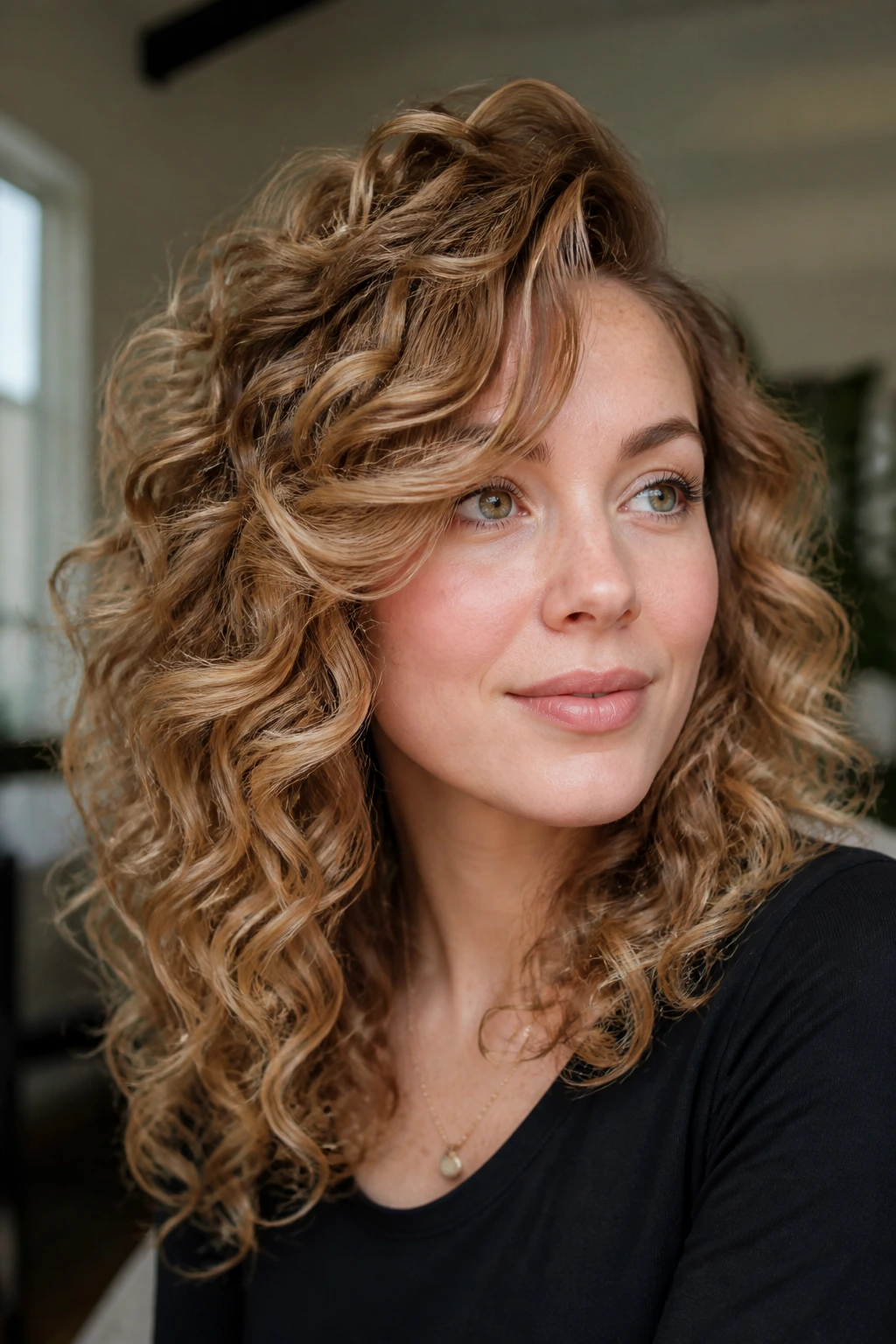
Curly hair needs a different kind of balayage map. You do not paint curls the same way you paint straight hair, because the curl family creates its own surface. Dimensional bronde gives fair skin enough contrast while letting the curl pattern keep its shape, and the side sweep should follow the curve of the curls instead of straightening them out.
A good curly placement puts brightness on the outside of the curl clumps and a little depth underneath. That creates the look of light bouncing through the hair instead of sitting on top of it. Side-swept bangs in curly hair should be cut longer than you expect. Dry shrinkage is real.
If you want this to feel polished, ask for a gloss that stays beige rather than yellow. Curly hair can hold warmth fast, and fair skin often looks better with a cooler or neutral bronde balance around the face.
21. Soft Espresso Lowlights and Dark Blonde Veil
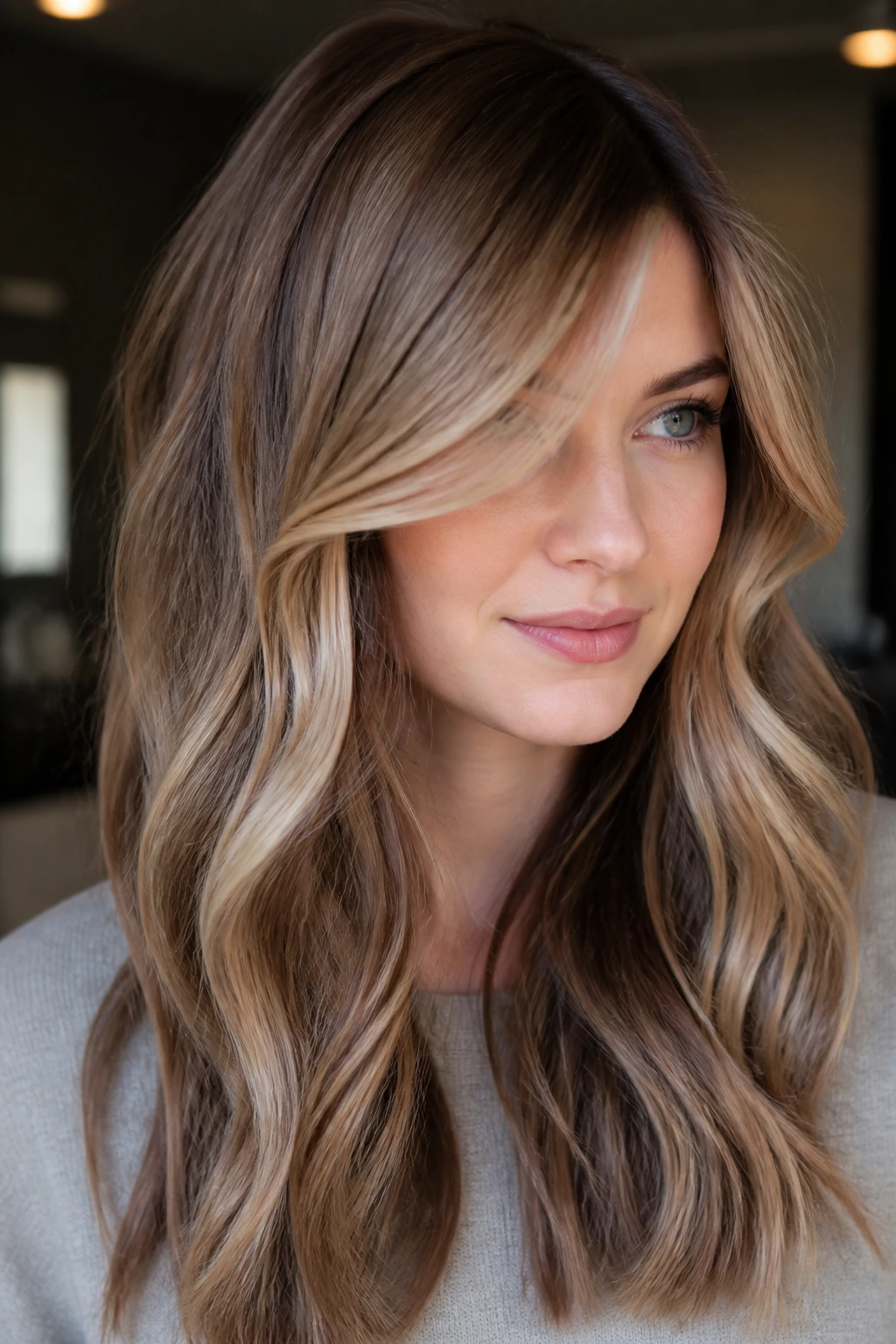
This is the one for people who want contrast without becoming blonde at all. Espresso lowlights underneath create depth, and the dark blonde veil on top gives just enough lightness to keep fair skin from disappearing into the hair. The bangs can sweep across the face and pull a few brighter pieces into view at the same time.
It’s a strong choice if your natural hair is already medium brown and you’re not in the mood for a full lift. The darker lowlights also make the style hold up better between appointments, because the grow-out is built into the design.
One thing I like here: the hair looks richer in bad light. That sounds minor until you see it in a mirror at 7 p.m. under yellow bulbs. A lot of blonde fails there. This one does not.
22. Sunlit Oat Blonde with a Feathered Fringe
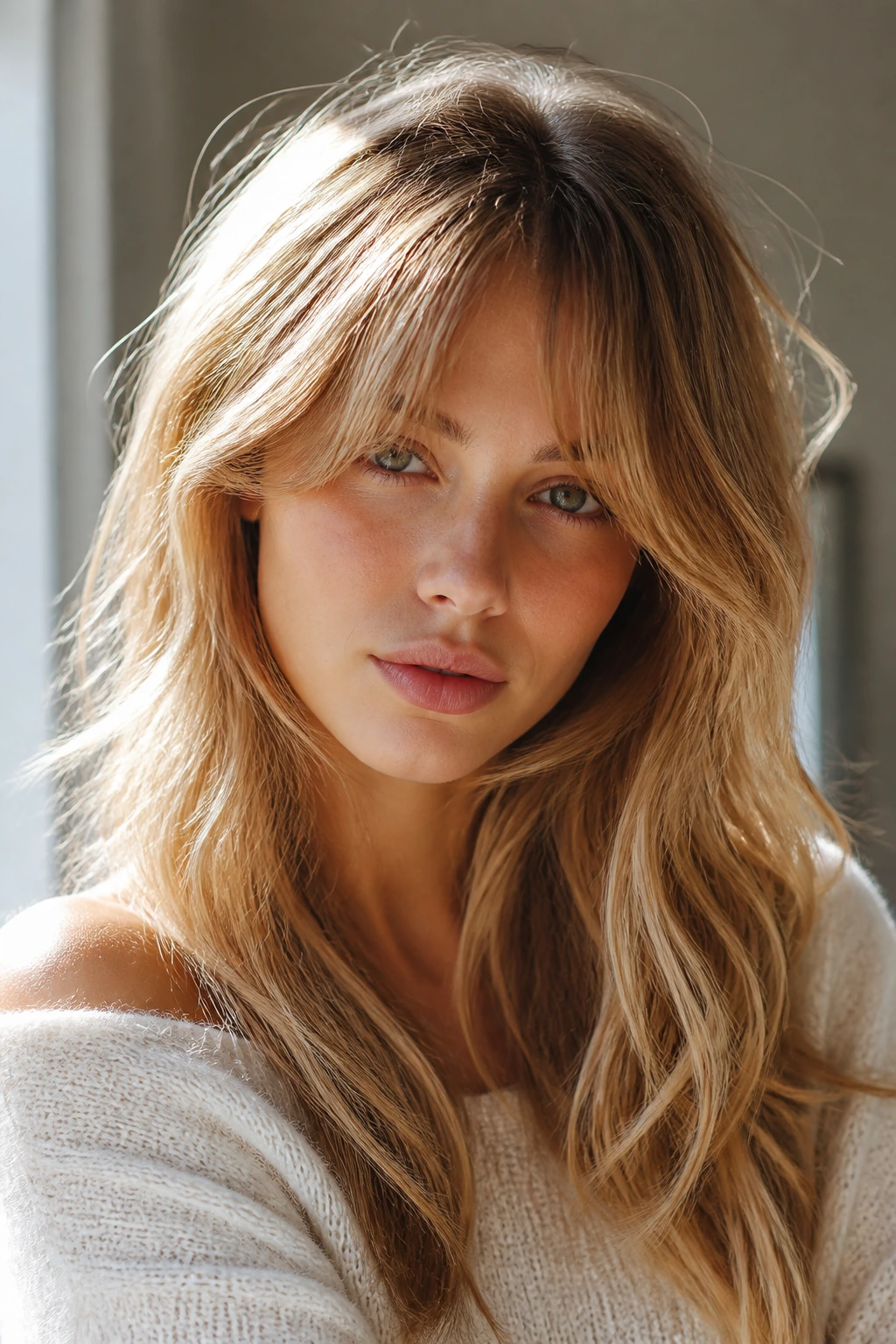
Oat blonde is soft, creamy, and just a little dry-looking in the best way. It does not scream warmth. It does not scream coolness. It sits in the middle and lets fair skin keep its own tone. The feathered fringe helps because it adds motion right where the color needs it most.
This is a good look if you want brightness but do not want the all-over lightness of a traditional blonde. Ask for sunlit ribbons only on the outer layer and around the front sweep. Leave the underlayers deeper so the hair still has shape when it’s tucked, tied, or moved behind the shoulders.
The fringe should be feathered with point-cut ends. That tiny bit of texture makes the bangs sit lightly on the forehead instead of dropping in a heavy sheet.
23. Buttery Neutral Balayage with Side-Swept Bangs
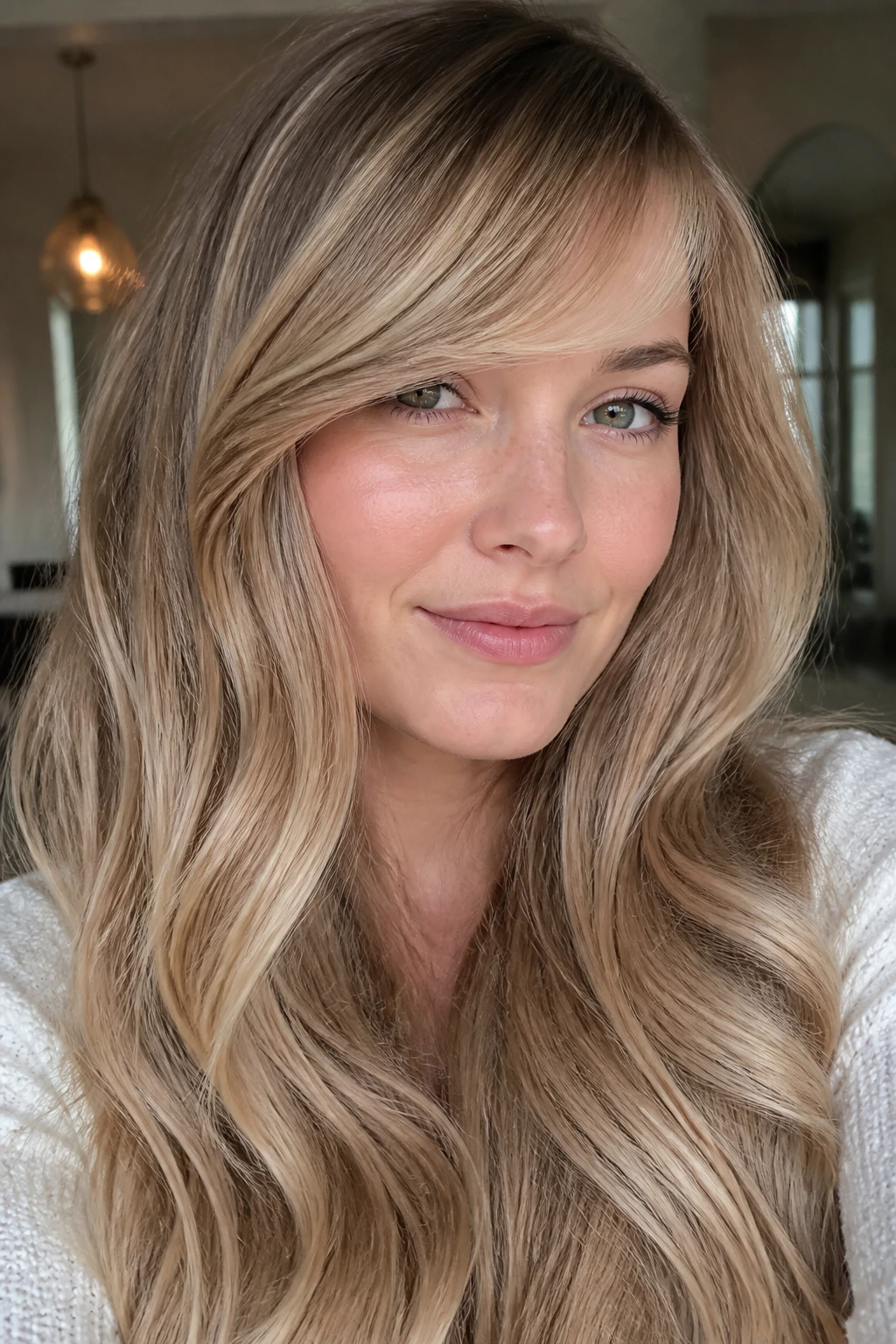
Buttery is dangerous if it’s too yellow. Neutral buttery? That’s where the sweet spot lives. On fair skin, a buttery neutral balayage can soften redness and add warmth around the cheeks without making the hair look dyed in one solid color. Side-swept bangs keep the front lifted and prevent the warmth from settling too heavily around the face.
This works especially well if your hair is a little porous and tends to drink toner fast. Neutral buttery tones hold onto a lived-in glow longer than icy shades, which can go dull the second the gloss fades. The hair should look touched by light, not painted in a souvenir-shop shade of blonde.
If you wear soft makeup — pink blush, beige lips, a little mascara — this color slides into the look without arguing with it. Easy pairing. That counts.
24. Pewter-Beige Toning with a Soft Sweep
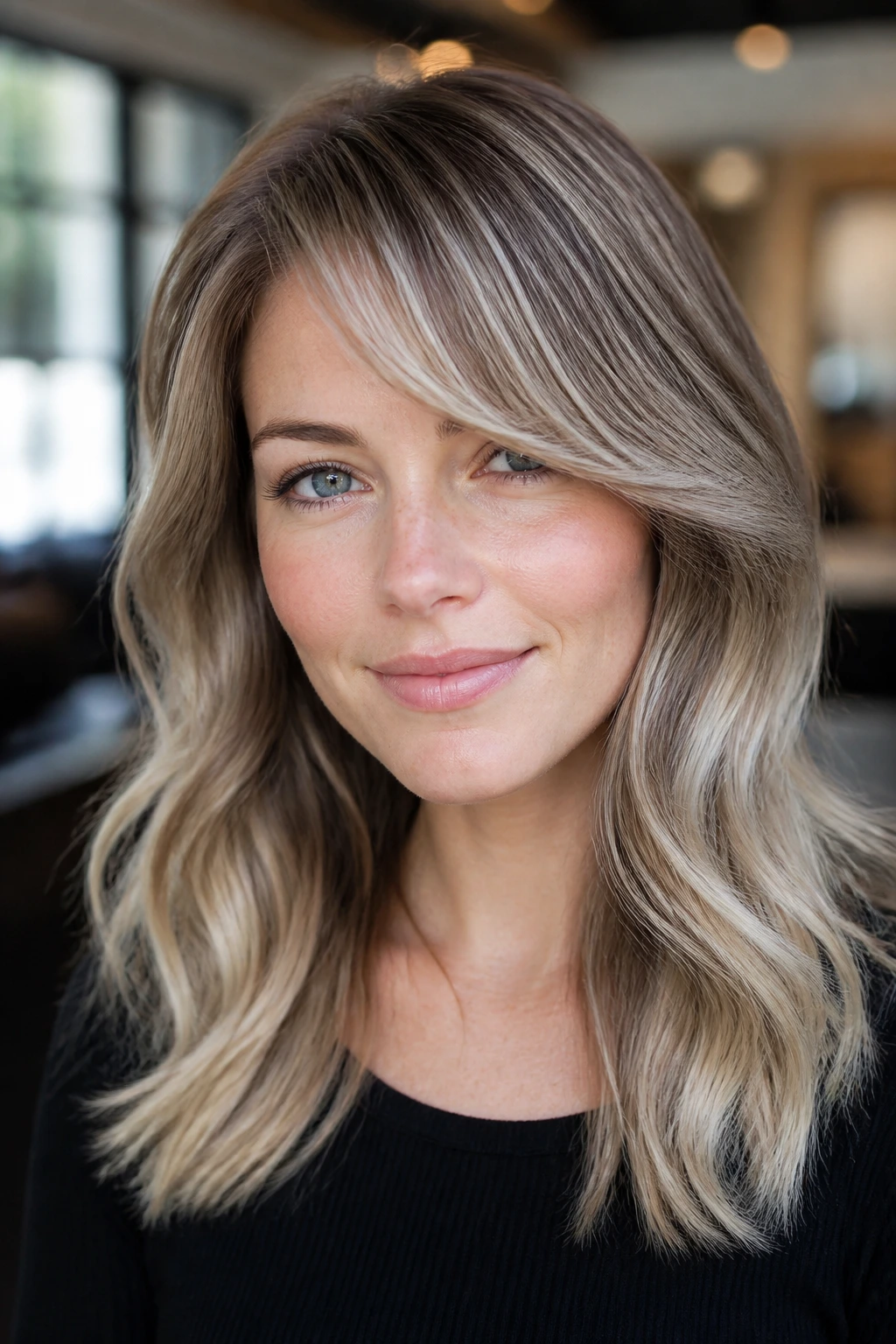
Pewter-beige is for the person who wants the blonde to feel cooler, cleaner, and slightly more modern. It has a muted metallic edge, but not enough to look gray. On fair skin, that can be a smart move if warmer blondes keep going brassy no matter what you do.
The soft sweep in front matters because pewter tones can feel severe when the hairline is too straight. A loose side sweep takes the edge off and keeps the color wearable. The best version has a shadow root, a cool beige midsection, and a few brighter ends that do not jump out too hard.
This is one of the better choices if your skin is pink and your eyes are light. It gives contrast without adding warmth that might fight the complexion.
25. Cool Honey Brown Melt with Diagonal Bangs
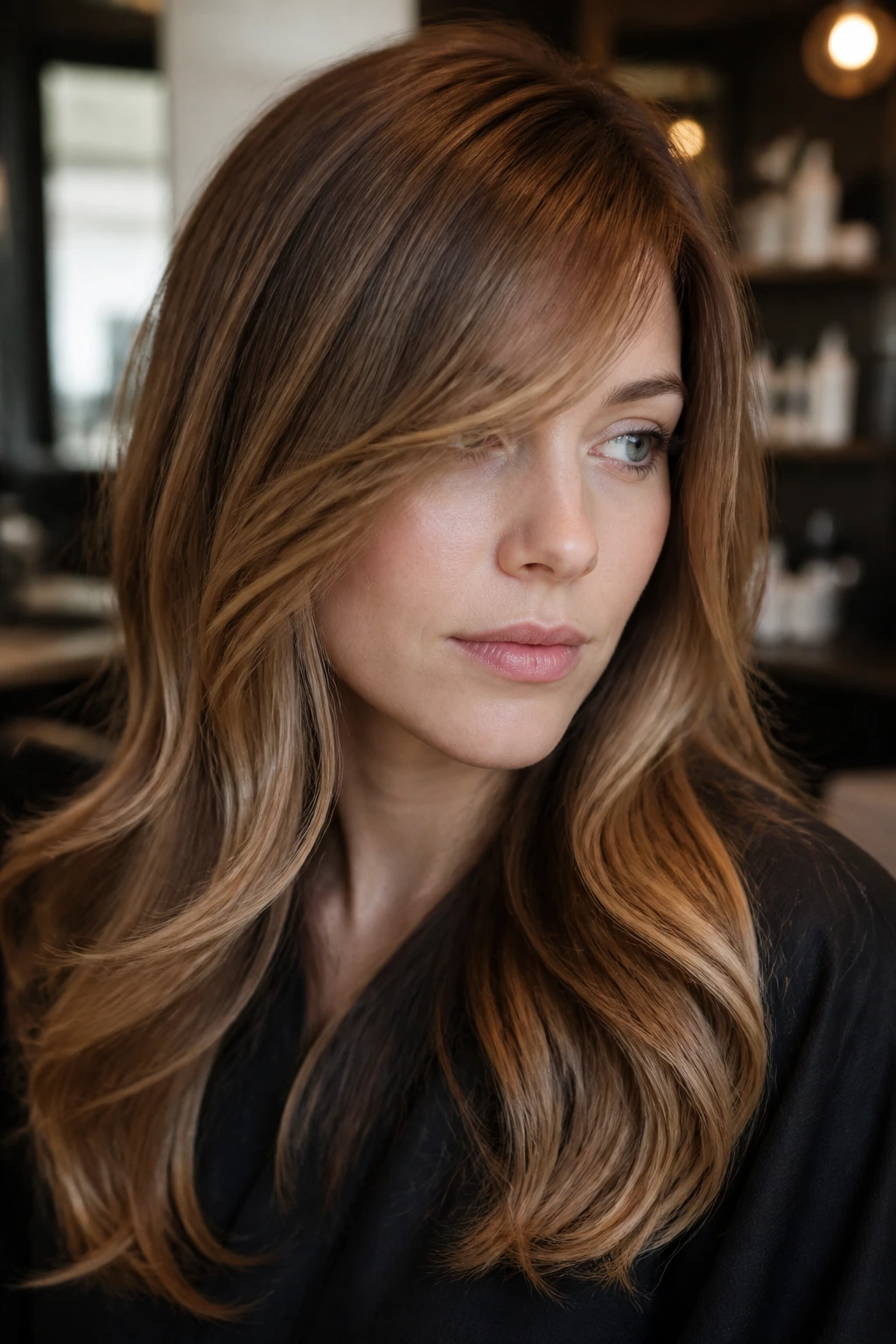
Cool honey brown sounds contradictory, and that’s why it works. The honey brings a little glow, the cool finish keeps it from turning orange, and the diagonal bangs give the face a clean frame. On fair skin, this is a lovely “I didn’t try too hard, but I still look finished” kind of color.
Ask for a darker root melt with honeyed pieces that stay controlled through the ends. The diagonal bangs should be longer near the cheek and a touch lighter at the bend, so the front feels connected to the rest of the hair. If the fringe is too short, the shape gets fussy. Too long, and it hides the face instead of framing it.
This is a strong choice if you want dark blonde balayage that still leans a little brunette. It gives you warmth without committing to full gold.
Why Dark Blonde Balayage Flatters Fair Skin Better Than Bright Blonde
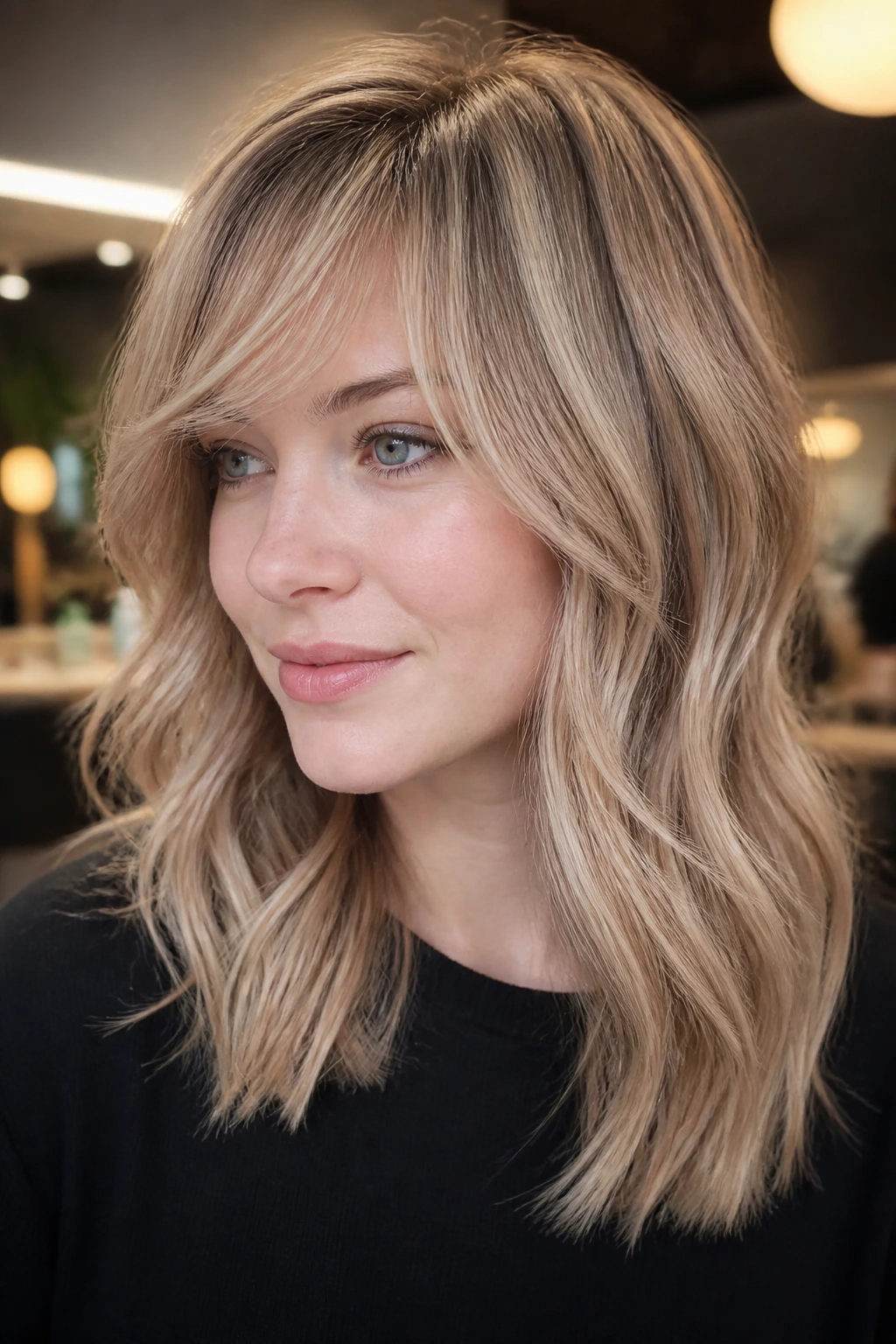
Bright blonde has its place. It just is not always the first place I’d send fair skin. Dark blonde balayage gives you a softer contrast at the root and more control around the face, which means your skin tone stays visible instead of competing with the hair for attention. That sounds dramatic, but anyone who has gone one shade too light knows the feeling.
The real advantage is tone depth. A level 6 or 7 base with painted ribbons lets the color read as dimensional from the first glance and keeps it from going flat when the shine wears off. On fair skin, that dimension does more flattering work than raw brightness ever could.
Side-swept bangs fit into that because they create movement across the forehead and cheekbone area. Hair that sweeps diagonally is friendlier to light skin than hair that hangs straight down in a blunt wall. The line matters. So does the space it leaves around the face.
How to Ask for the Right Blend at the Salon Chair
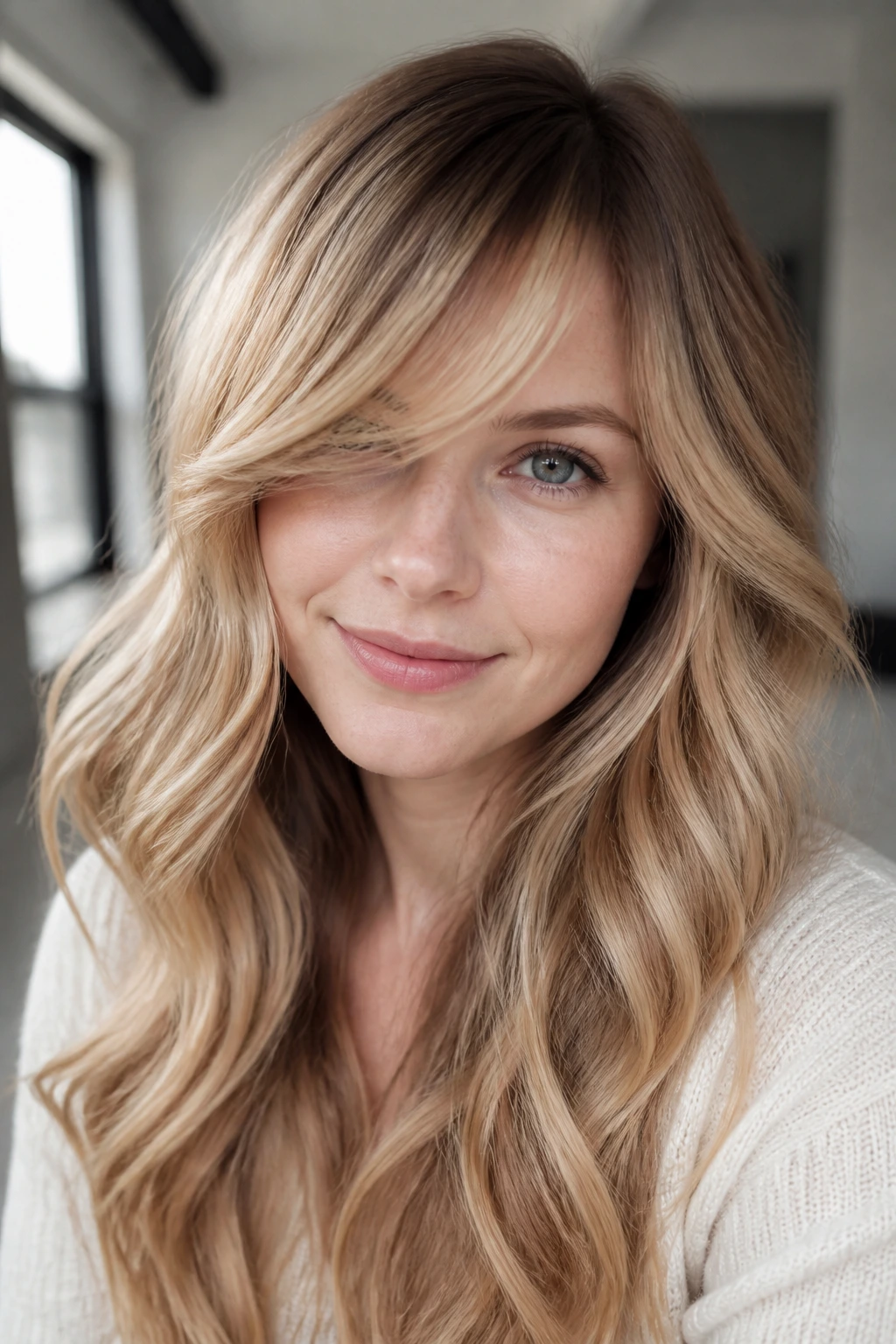
Bring two photos if you can. One should show the tone you want, and the other should show the bang shape or the placement around the face. People often show a blonde they like and forget that the color works because of the cut, or vice versa. That’s how miscommunications happen.
Use plain language with your colorist. Say you want dark blonde balayage, not high-lift blonde, and tell them you want the root left a little deeper for grow-out. If you have fair skin with pink undertones, ask for beige, mushroom, or neutral toner. If your skin runs peach or golden, a soft caramel or biscuit direction may work better.
Mention where you want the brightness. Around the cheekbone. Near the ends. Maybe a little around the part, but not a solid halo at the hairline. And if you wear side-swept bangs, say so early. The face frame should connect to the fringe, not fight it.
Tools and Products That Keep the Finish Soft
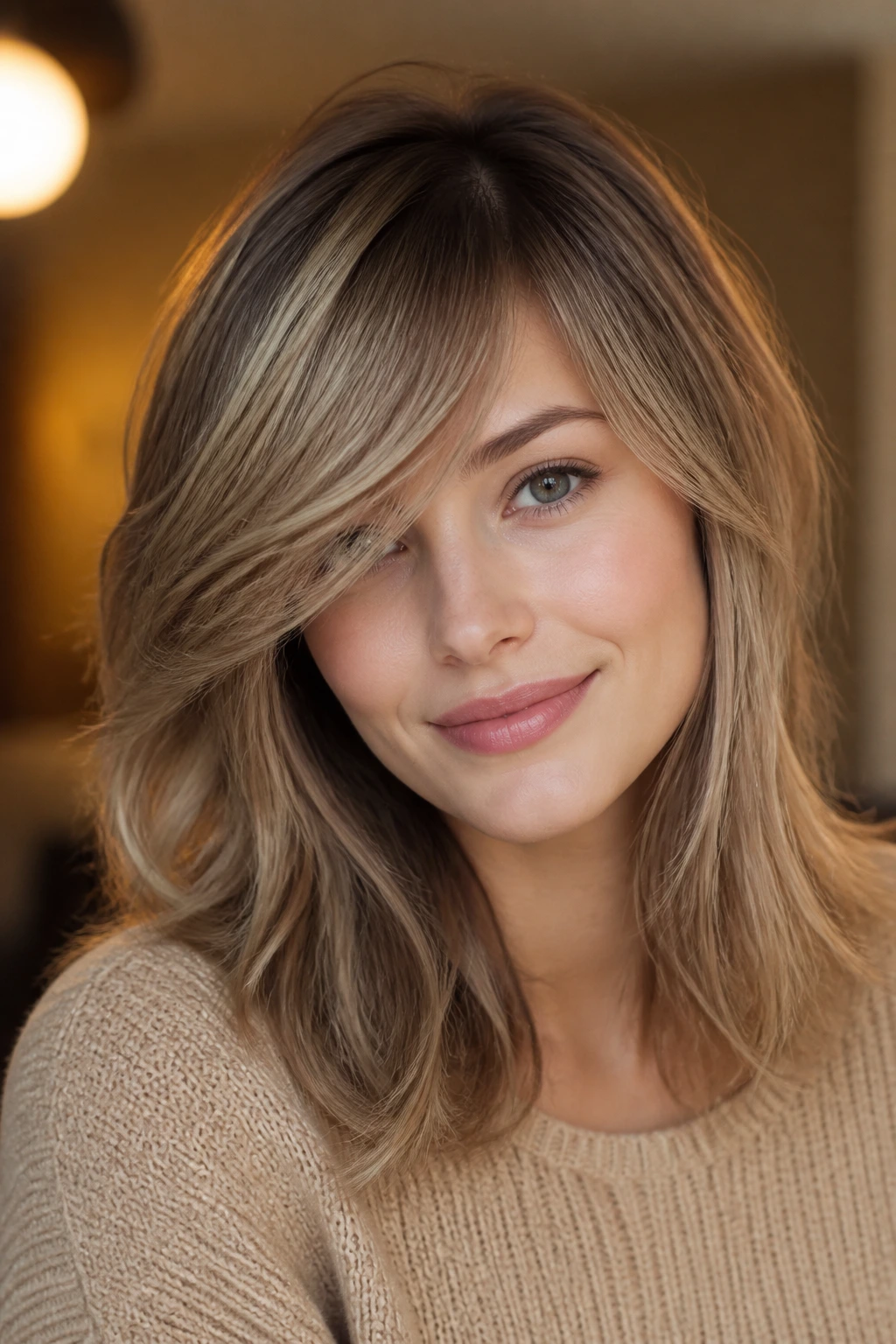
- Color-safe shampoo: Choose a sulfate-free formula if your hair turns dry or dull after washing; it helps the balayage hold its tone longer.
- Purple or blue-purple shampoo: Use this only when the blonde starts leaning yellow or orange, usually once every 1 to 2 weeks.
- Lightweight conditioner: A creamy conditioner keeps the ends smooth without flattening the bangs or making the roots limp.
- Leave-in heat protectant: A mist that protects up to 450°F is handy if you blow-dry the fringe or bend the lengths with a hot tool.
- 1.25-inch curling iron or flat iron: This gives the hair a soft bend, which is usually better than a tight curl for dark blonde balayage.
- Round brush, 1.5 to 2 inches: Useful for side-swept bangs; smaller brushes can make the fringe too round and too short-looking.
- Sectioning clips: Necessary if you’re styling the face frame carefully. No one does a clean sweep with wet hair flopping over their eyes.
- Shine serum or finishing oil: Use a drop on the ends only. Too much, and the balayage can go greasy fast.
- Wide-tooth comb: Good for distributing conditioner and separating waves without tearing the lighter pieces.
- Silk or satin pillowcase: Keeps the fringe from kinking overnight and cuts down on frizz at the front.
Styling Side-Swept Bangs So They Frame, Not Fight
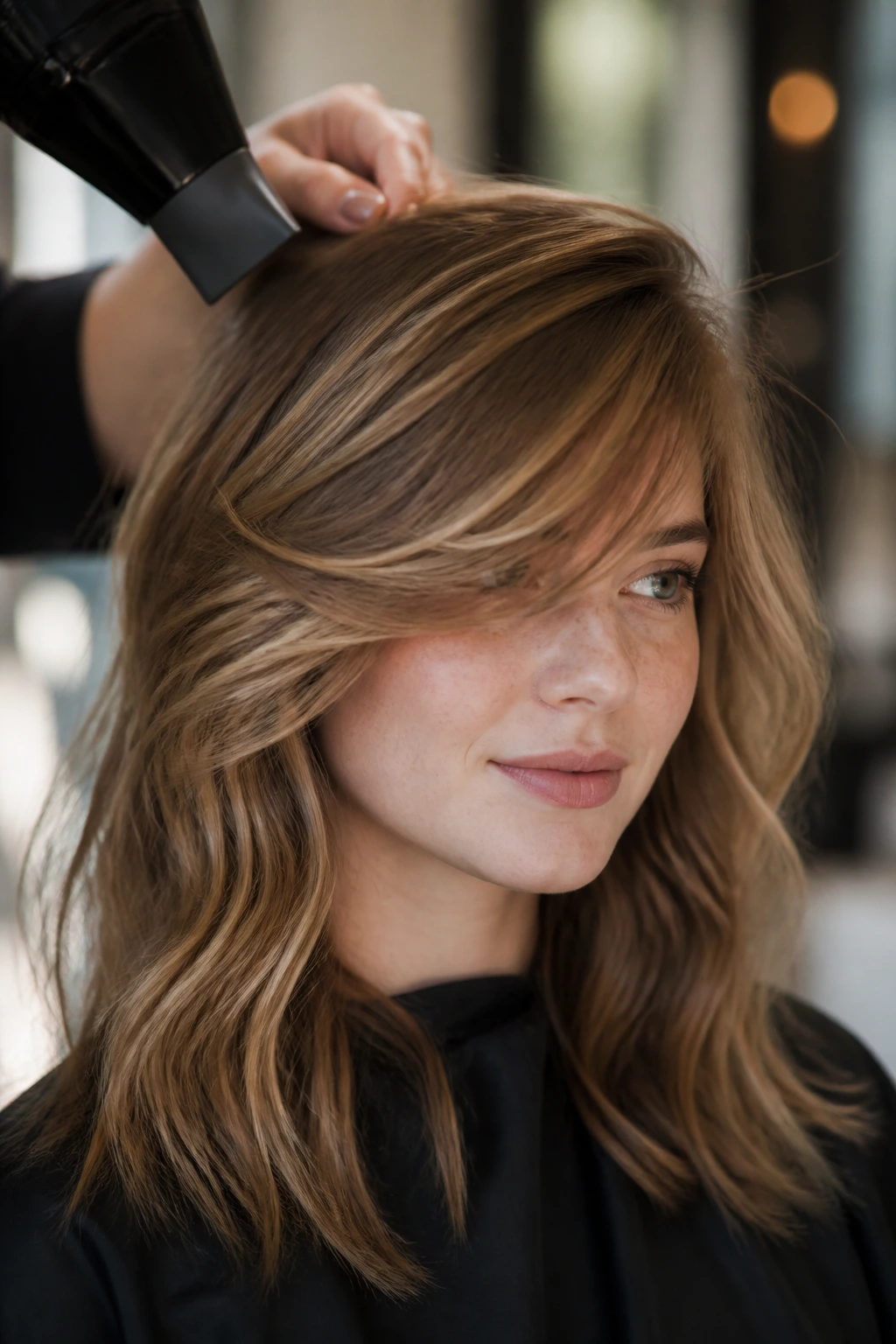
Side-swept bangs look easy until they split in the middle or flop straight down by noon. The fix starts at the root. Dry the fringe first, or at least partly first, because bangs that dry in the wrong direction tend to stay there all day. A quick blast with the dryer and a round brush can change the whole shape.
Direct the bang across the forehead, not forward. Pull it slightly over the side part, roll the brush once, then release and cool it with the nozzle for a second or two. That creates a soft bend instead of a hard curl. On darker blonde hair, a stiff bang looks even more obvious because the contrast is lower and every line shows.
A tiny amount of dry shampoo at the root can help, but use it sparingly. Too much powder near fair skin can leave the fringe dusty and kill the sheen of the balayage.
Maintenance, Washing, and Tone Refresh
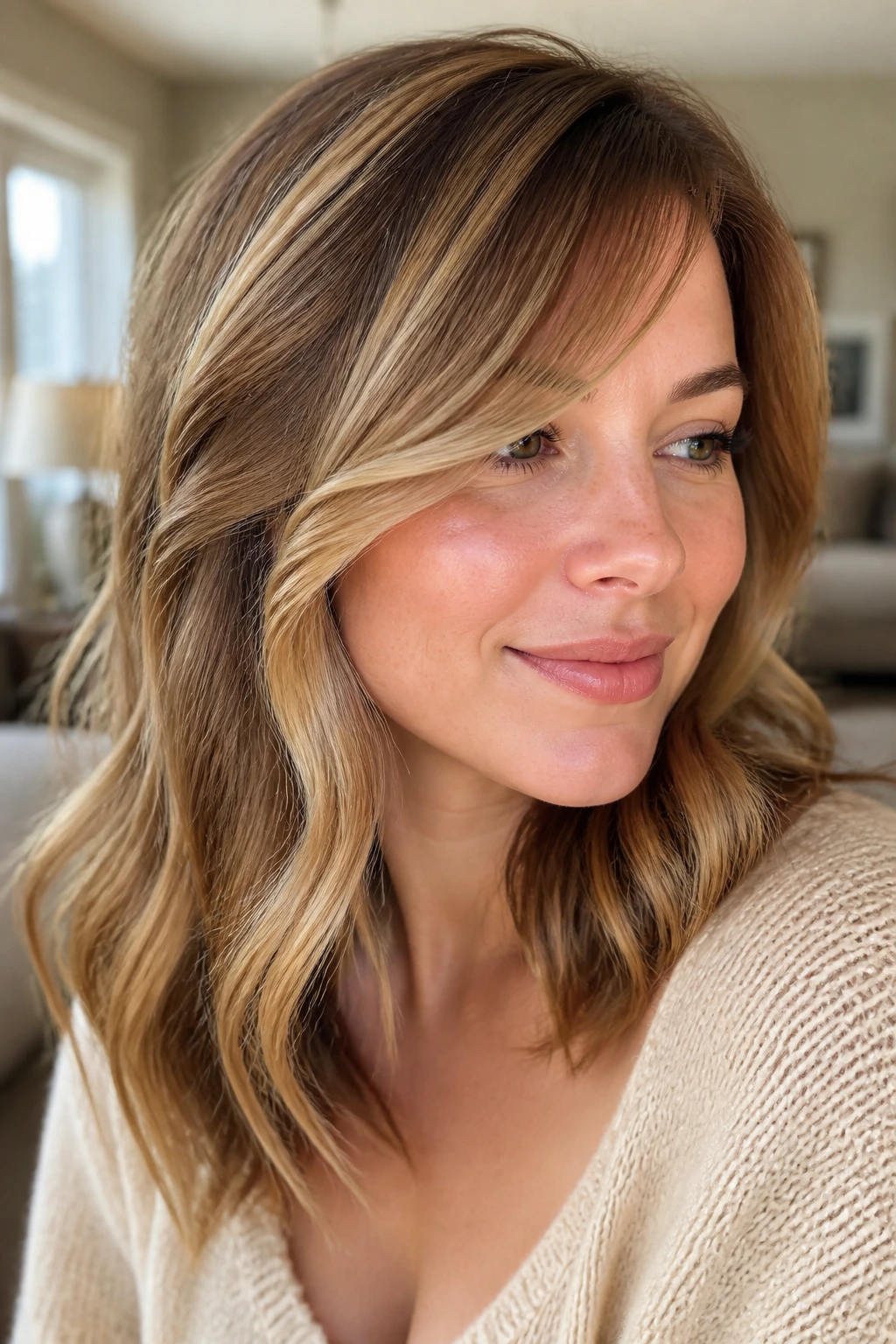
Dark blonde balayage is kinder than platinum, but it still needs a little attention. Wash two or three times a week if you can. Every wash strips a little tone, and fair skin tends to show the change fast because the contrast is subtle enough to notice when the color shifts. Lukewarm water helps more than people expect. Hot water pushes the cuticle open and lets the tone slide out faster.
If your hair is on the warmer side, a purple shampoo every week or two can stop brass before it becomes obvious. If your hair is already cool or ash-toned, do not overuse purple shampoo. It can make the dark blonde look flat and a little dusty. That dead matte effect is not flattering on anyone.
A salon gloss every 4 to 8 weeks keeps the beige, mushroom, or caramel tones honest. Bang trims usually need attention every 4 to 6 weeks, because the side sweep loses its line quickly once the fringe falls into the eyes. The color can wait a bit. The bangs usually cannot.
Additional Tips for a Softer, Richer Finish
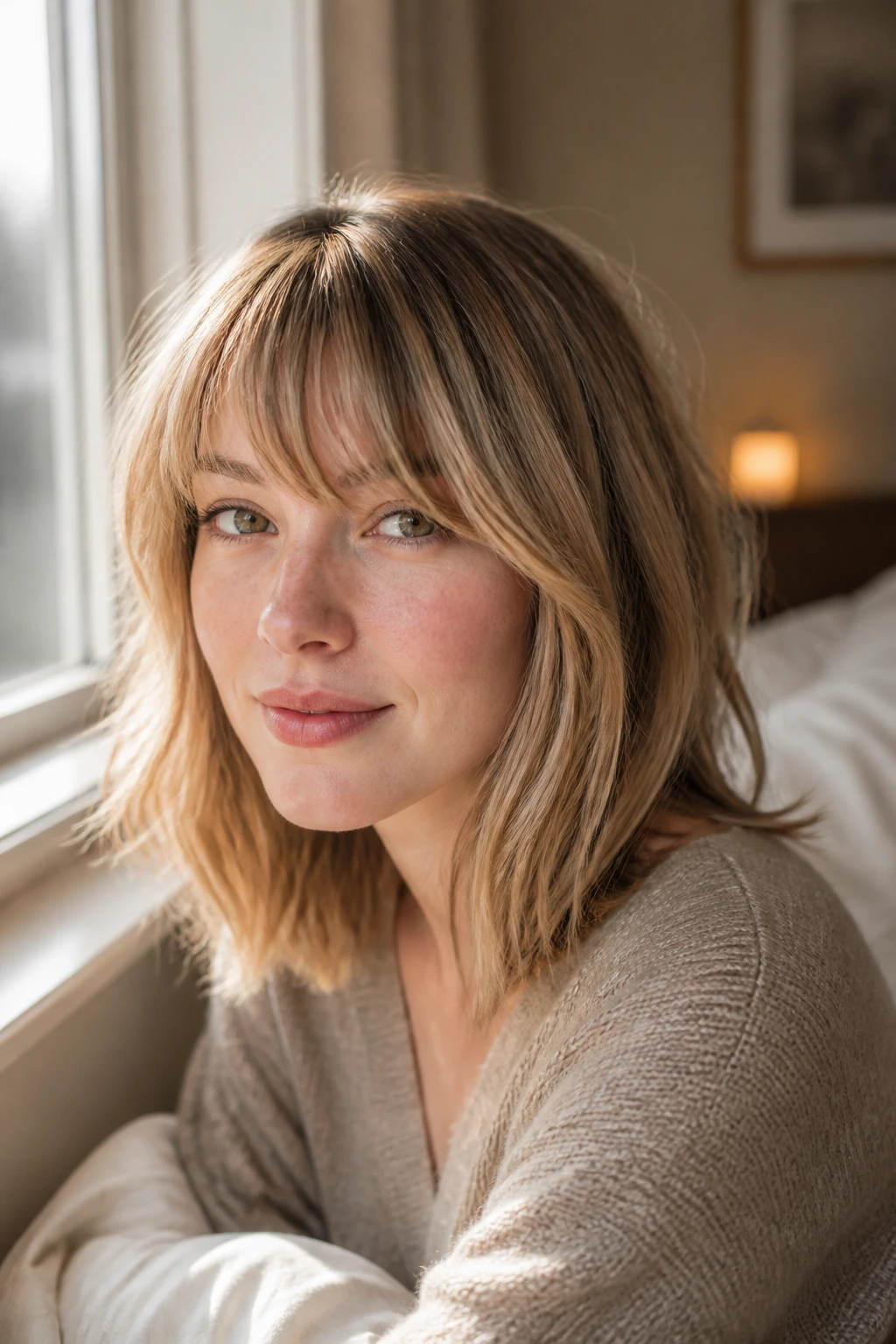
For pink fair skin: lean beige, mushroom, or neutral ash instead of gold. Those tones soften redness instead of amplifying it.
For thicker hair: keep some lowlights underneath. Without them, the balayage can spread out too much and the shape starts looking puffy.
For fine hair: ask for brighter ribbons only on the outer layer and around the face. Too many light pieces can make the ends feel transparent.
For side-swept bangs: cut them slightly longer than you think you need. Hair shrinks when it dries, and the sweep looks better when it can skim the cheekbone.
For a cleaner finish: use a small drop of serum on the last two inches only. Put it near the root and the bangs go limp. Put it on the ends, and the highlight placement looks polished instead of frizzy.
For a more lived-in look: ask for one deeper ribbon between two lighter ones. That tiny contrast keeps the balayage from blurring into one soft color.
Common Mistakes That Make the Color Look Flat or Brassy
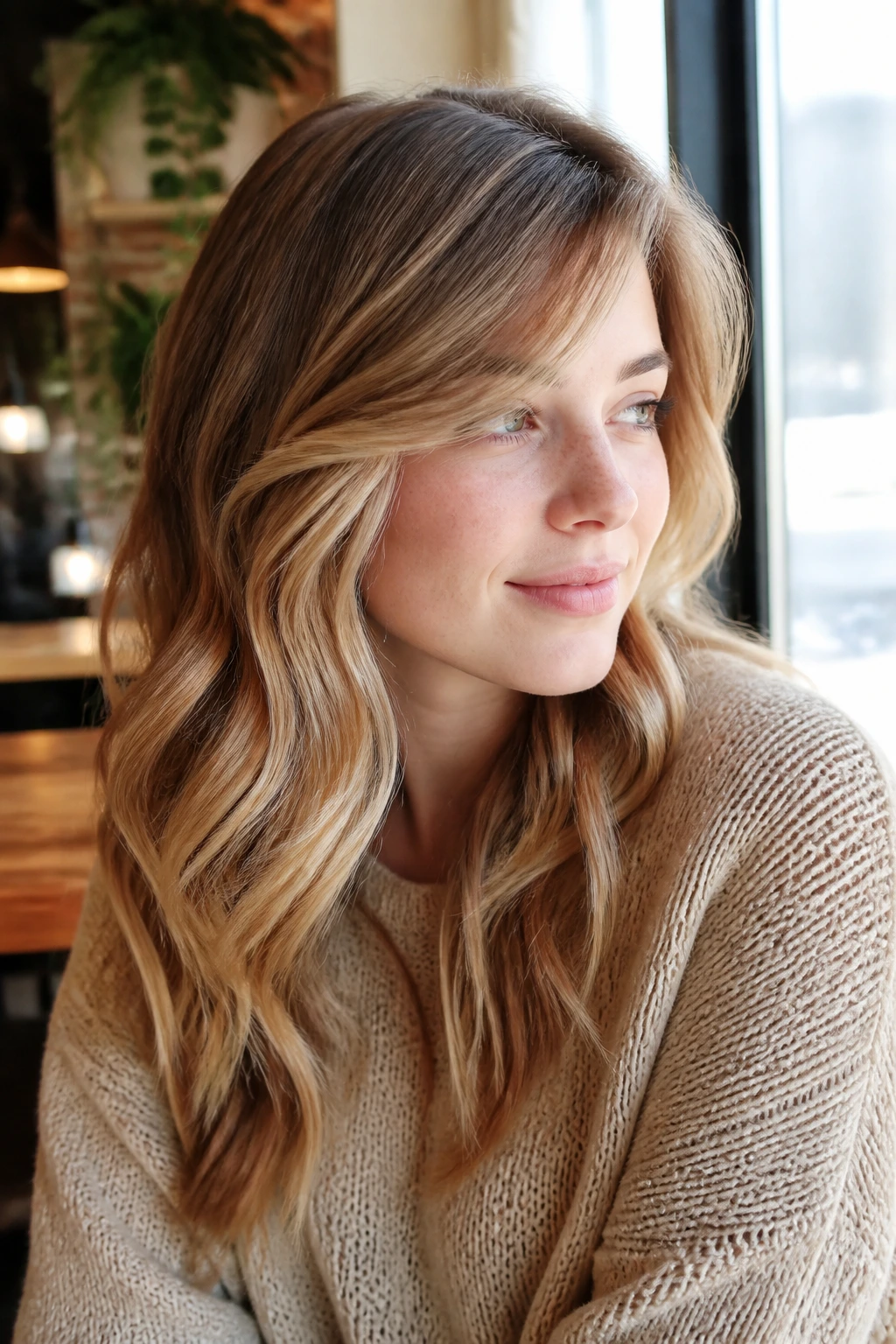
- Making the front too light: The face frame can start wearing you instead of flattering you. On fair skin, keep the brightest pieces just a shade lighter than the rest, not several shades lighter.
- Ignoring undertone: Gold on pink skin can look harsh, while ash on warm skin can look muddy. Ask for beige, mushroom, caramel, or taupe with a specific reason, not just “blonde.”
- Cutting the bangs too blunt: Side-swept bangs need movement. A harsh straight edge makes the balayage look disconnected and can add weight to the forehead.
- Overusing purple shampoo: It helps with brass, but too much turns beige tones chalky and dull. Use it only when you see yellow creeping in.
- Placing highlights too close to the root: The grow-out turns obvious and the balayage starts to look stripey. Keep the lightest pieces around the midlengths and ends.
- Styling the hair too straight all the time: A little bend shows off the color. Pin-straight hair can hide the contrast that makes balayage look expensive in the first place.
Variations and Adaptations to Try
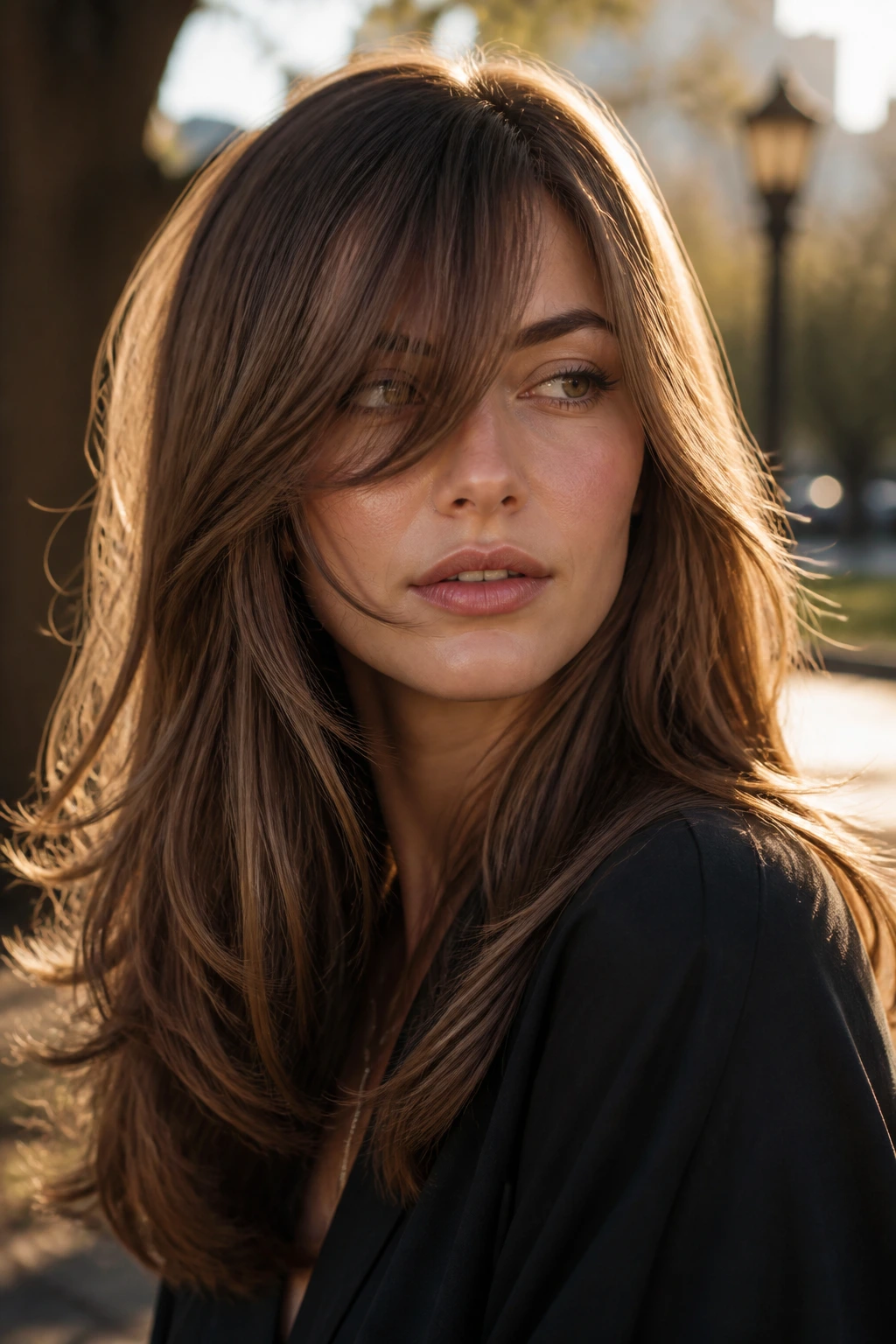
Porcelain Beige Melt
Best for very cool fair skin. Swap warm caramel notes for beige, ash, and a soft root shadow, then keep the bangs feathered so the front doesn’t feel heavy. The overall effect is quiet and clean, not icy.
Peach Biscotti Sweep
A nicer choice for fair skin with warmth or freckles. Keep the base dark blonde and add biscuit-toned ribbons through the mids and face frame. The side-swept bangs can carry a little more glow without tipping orange.
Low-Contrast Grow-Out
For people who hate salon upkeep. Keep the root close to your natural color and paint only the outer surface and ends. This looks especially good with side-swept bangs because the fringe does the face-framing work and the rest can stay low-key.
Curly Ribbon Halo
Built for curls and coils that want depth without losing shape. Ask for ribbon placement around curl families rather than straight sections, and keep the fringe long enough to bend naturally. The hair keeps its movement, and the color reads more dimensional.
Soft Bronde Bob
If your hair is shorter, a bob with dark blonde balayage gives you enough variation without making the cut feel busy. Keep the face frame slightly brighter and the bangs airy. Shorter hair benefits from restraint here.
Smoky Warmth Blend
Good when you want a little warmth but brass keeps ruining the result. Mix taupe roots, beige mids, and a whisper of honey at the ends. The bangs should sweep across the forehead with a soft bend, not a curl.
Frequently Asked Questions
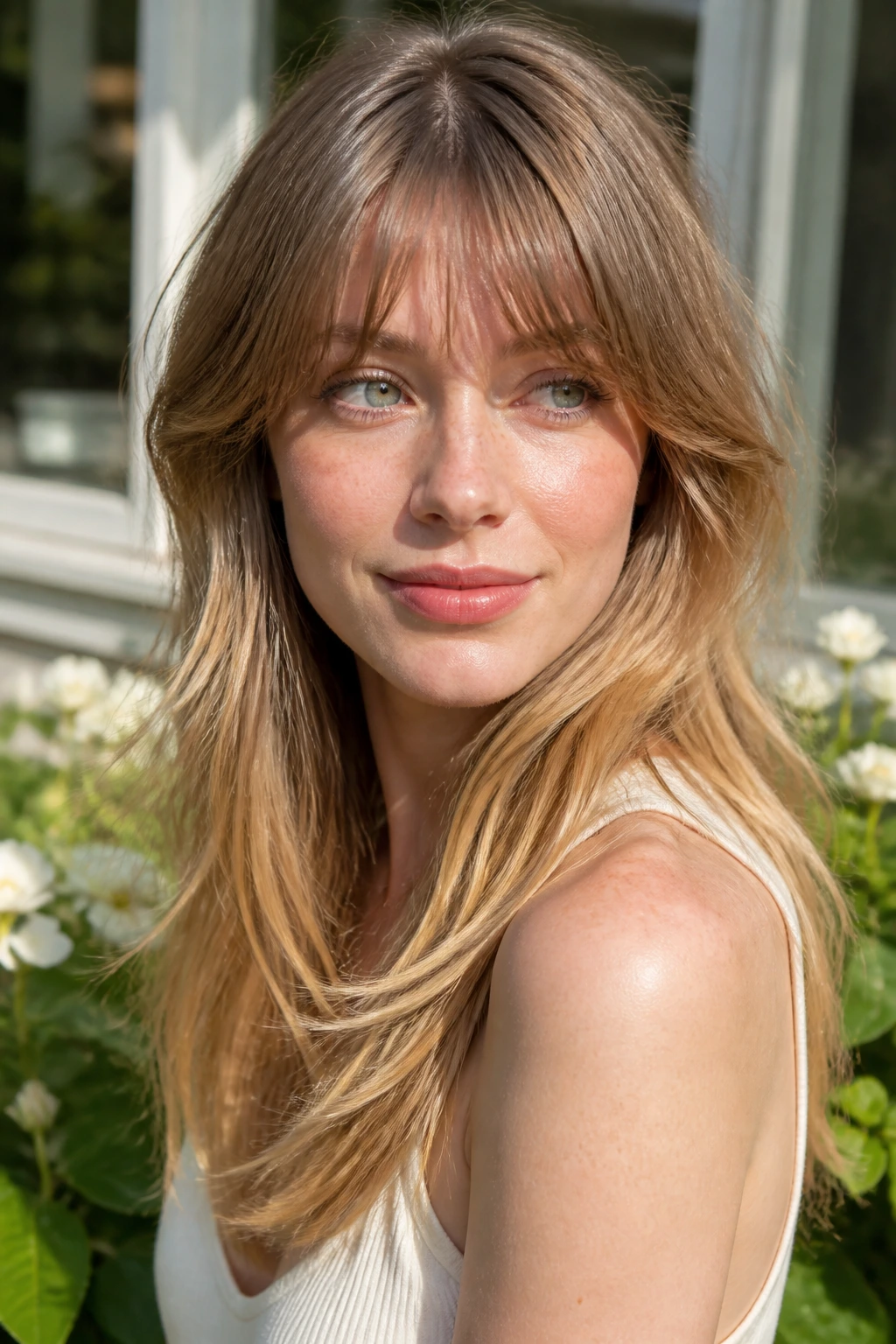
Will dark blonde balayage make fair skin look washed out?
Not if the tone is chosen well. Beige, mushroom, taupe, and soft caramel usually give fair skin shape without draining it, while very pale blonde can make the face look a little ghosted under indoor light.
What shade of dark blonde works best for cool fair skin?
Mushroom, ash beige, taupe, and smoky sand are the safest bets. They keep warmth under control and stop the hair from turning yellow against pink or cool skin.
How often do I need to tone dark blonde balayage?
A gloss every 4 to 8 weeks is a sensible range, depending on how fast your hair pulls brass and how often you wash it. If your water is hard or you use hot tools daily, the tone may need refreshing sooner.
Can side-swept bangs help a wide forehead?
Yes. The diagonal line breaks up the forehead space and makes the face look a little softer. Keep the bangs long enough to move, though; a short, chopped fringe can do the opposite.
Does dark blonde balayage work on fine hair?
It can, and often better than full blonde. The darker root and soft ribbons create the look of thickness, which helps fine hair avoid that fragile, overlightened finish.
What should I say if I want low-maintenance grow-out?
Ask for a root shadow, soft hand-painted ribbons, and no brightness packed into the hairline. Tell your colorist you want the front to look blended even if you stretch appointments a little.
Can I get this look if my hair is naturally light brown?
Yes, and that base is actually ideal. Light brown hair usually lifts into a strong dark blonde family without needing a huge amount of bleach, which keeps the ends healthier and the color more believable.
The Soft Contrast That Keeps It Interesting
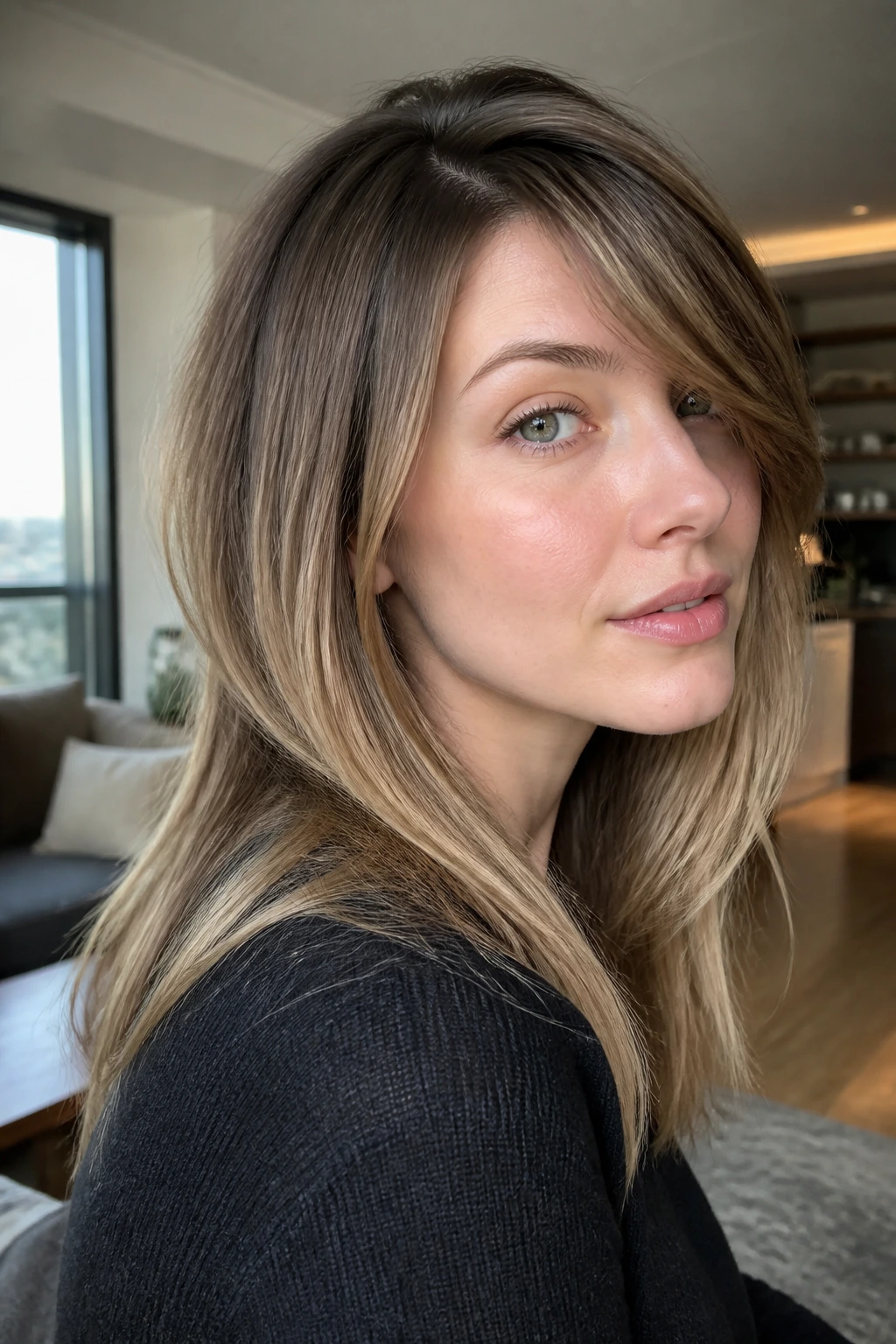
Dark blonde balayage has a way of doing the flattering work quietly. It doesn’t chase brightness for its own sake. It adds depth where fair skin needs it, and with side-swept bangs, it gives the face a shape that feels soft but not vague.
That’s why these looks hold up so well in real life. They grow out with less drama, they style into shape without much fuss, and they leave room for your skin to stay the main character. If you’re choosing between another pale blonde and a darker, more blended route, I’d take the darker one more often than not.
And if the bangs are cut well? Even better. That diagonal sweep is the little piece that pulls the whole thing together, and once you get the tone right, it’s hard to go back to flat color again.