



Warm skin can handle glow, but it gets picky about the kind of glow. Too much ash and the face can look tired; too much flat gold and the hair starts reading brassy instead of rich. The sweet spot lives in that middle zone where caramel, honey, copper, amber, and bronze all seem to belong to the head shape and the undertone at the same time.
Balayage highlights for warm skin tones work because they don’t sit like a solid block of color. They move. They catch light on the mids and ends, soften the root, and let the warm undertones in your skin feel like part of the whole look instead of something the hair is competing with. That’s the part most people miss. Warm doesn’t mean orange, and it definitely doesn’t mean yellow. The best versions have depth at the root, a controlled lift through the body of the hair, and a gloss that keeps everything creamy instead of loud.
I’ll take a caramel melt over a harsh stripe any day. A good balayage should look like it grew there after a few sunny weeks, not like someone painted the front pieces and called it done. If your skin leans golden, peach, or olive, the right placement matters as much as the shade itself — and that’s where the fun starts.
Why These Shades Work on Warm Skin
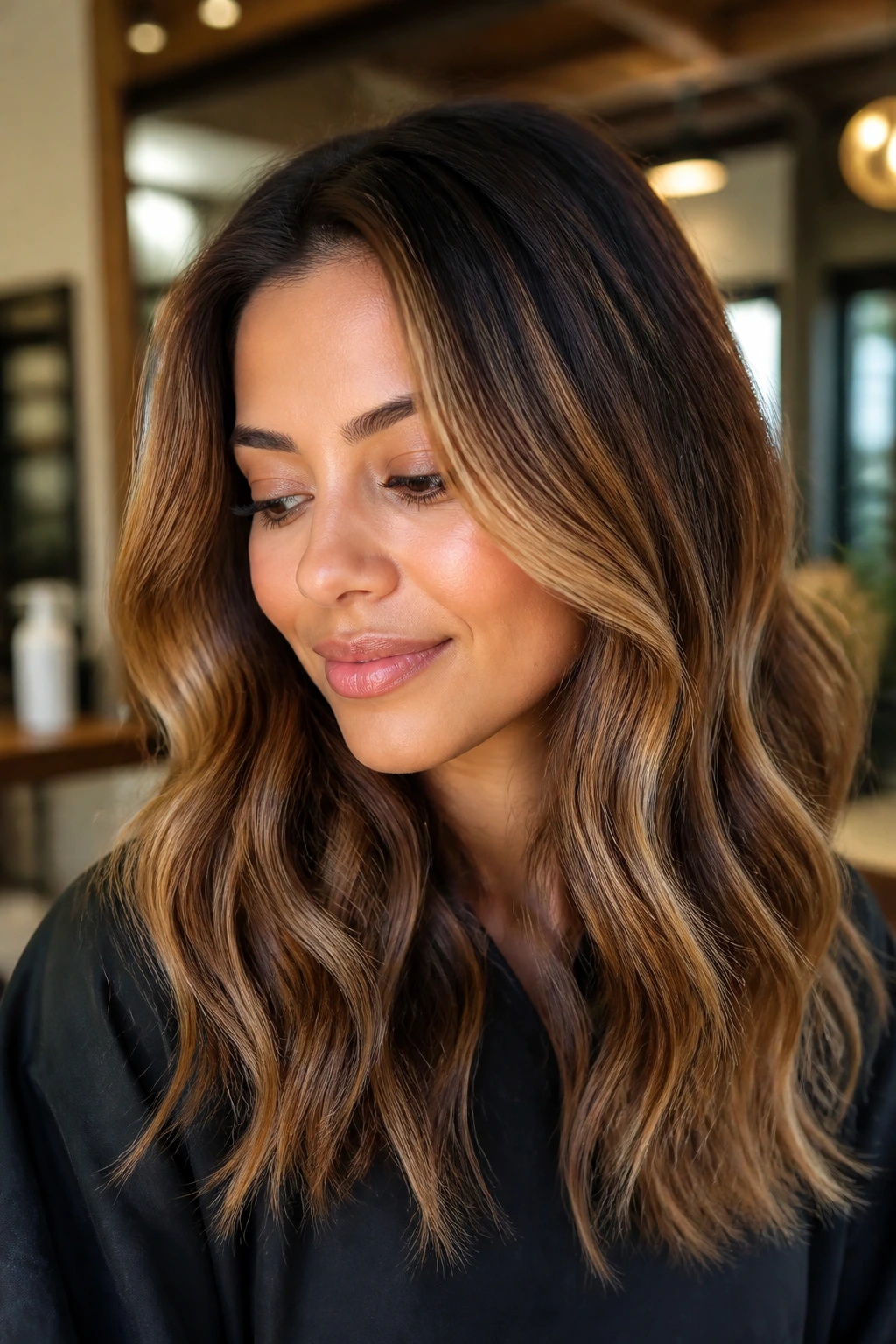
Golden undertones like company. Warm skin usually looks best when the hair repeats the same family of color: honey, toffee, amber, bronze, copper, apricot. That doesn’t mean the hair has to match the skin exactly; it means the two should sit in the same temperature range so neither one starts shouting.
Depth matters just as much as brightness. A warm balayage with no shadow at the root can look one-note fast. Leave some brunette, chestnut, or auburn depth near the scalp and the lighter ribbons have somewhere to land. The contrast is what makes the color feel expensive instead of flat.
This collection covers the whole warm spectrum. Some looks are barely-there and glossy. Others are bold enough to show from across the room. That range matters, because warm skin tones aren’t one look, and warm hair color shouldn’t be one look either.
Placement changes the whole mood. A few face-framing ribbons can brighten the skin in a way full-head blonding never will. Push the lightest pieces around the cheekbones and outer layers, and the skin reads smoother almost automatically.
1. Honey Almond Ribbon Balayage
Honey almond is the easiest warm balayage to love because it stays soft. The ribbons sit one or two shades lighter than a medium brown base, so the result looks woven in rather than painted on. When the hair moves, the lighter strands flash through the deeper brown like thin lines of sunlight.
Best on medium brunettes who want shine more than drama
- Base level: Natural level 5 or 6 brown
- Lightness: Keep the ribbons around level 7 to 8, not pale blonde
- Placement: Focus on the outer layer and the pieces that sit near the jawline
- Finish: A beige-gold gloss keeps the honey from turning too yellow
If you wear your hair in soft waves, this one does half the work for you. The bend in the hair makes each ribbon show a little differently, which is where the color gets its depth. I like this look because it never feels overworked.
Tiny detail: ask for the brightest pieces to stay an inch or so off the root so the grow-out stays smooth instead of stripy.
2. Caramel Mocha Melt
This is the least fussy color on the list, and that’s why I keep recommending it. A caramel mocha melt starts with a deeper brunette root shadow, then drifts into caramel through the mids and ends. The shift is gradual enough that regrowth won’t slap you in the mirror two weeks later.
The best version keeps the root about one shade darker than your natural base and uses caramel that has a brown backbeat, not a bright gold one. That matters on warm skin. Too much yellow at the ends can look thin; caramel with a little mocha underneath reads richer.
If your hair is long and layered, this one has even more movement. The ends catch the light, the crown stays grounded, and the whole thing feels polished without looking stiff.
3. Cinnamon Copper Face Frame
Why does cinnamon copper look so alive on golden skin? Because it repeats the warmth already in the face instead of trying to cool it down. The trick is not to flood the whole head with copper. Keep most of the hair in a brunette or warm brown range, then paint the brightest copper pieces around the temples, cheekbones, and part.
That front brightness changes the way the skin reads. Cheeks look a touch warmer, the eyes get a frame, and the color has a little spark without turning the whole style into a redhead costume. Ask for a copper that leans cinnamon rather than orange.
How to ask for it
- Brightest around the face, softer through the back
- Copper-gold toner, not a flat red glaze
- Wider pieces near the fringe or money piece
- Slightly deeper ends to keep the color from looking all front-loaded
If you like curls, this shade is especially good. Copper catches on the curve of each wave and gives you that little flicker of color that straight hair hides.
4. Toffee Bronde Sweep
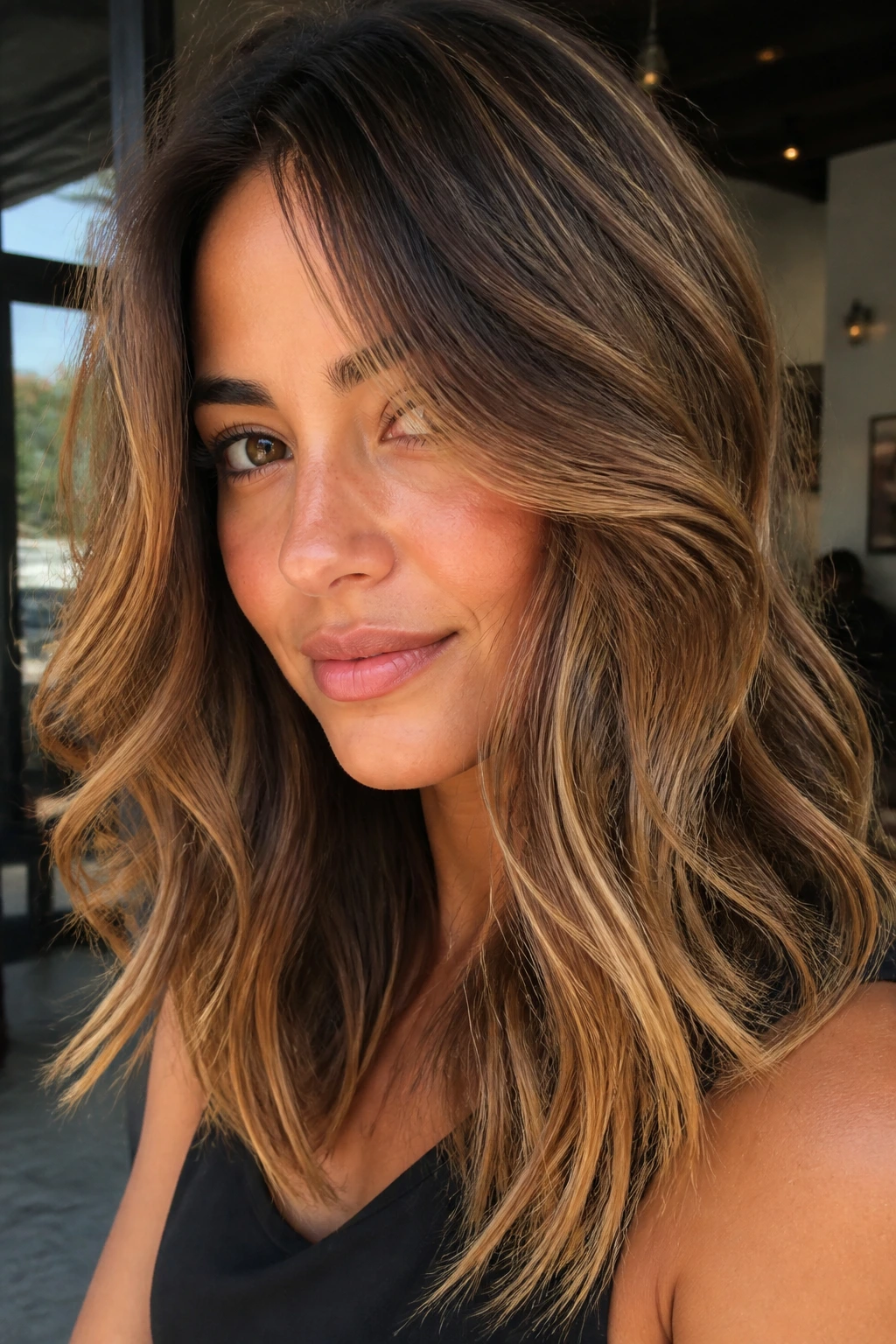
If you want brightness but you hate the idea of a hard blonde line, this is the one. Toffee bronde sits in that brown-blonde middle ground and works best when the pieces are broad enough to show from a distance, but not so light that they look pasted on. The brown base stays visible. That’s the point.
Think of it as sun hitting a brunette and leaving behind warm trails at the mids and ends. On warm skin, toffee bronde gives you lift without that chalky contrast that cooler blondes can create around the mouth and jaw.
- Best haircut pairing: long layers or a blunt lob with soft bends
- Best styling move: blow-dry the crown smooth, then add bends only from the ear down
- Best tone note: ask for toffee, not beige ash
The look is quieter than honey blonde, but it has more shape than a plain brunette. That middle path is where a lot of people land once they’ve tired of maintenance.
5. Butterscotch Beige Blonde
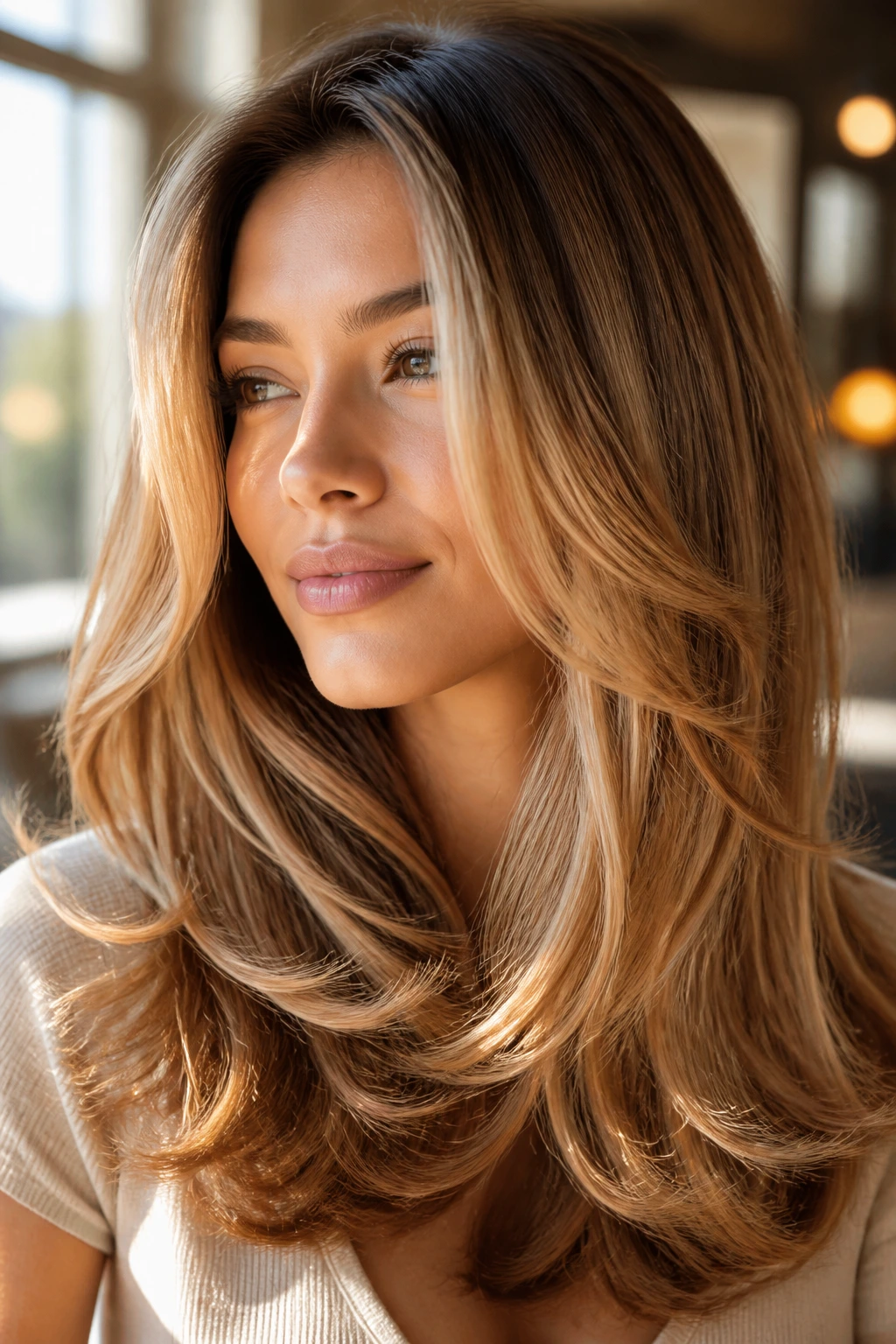
Butterscotch beige blonde is for the warm-skinned person who wants to be noticeably lighter without losing the warmth that flatters them. The key here is the beige. Not ash. Not pale butter. Beige-gold. That balance keeps the blonde creamy instead of loud.
On lighter brown or dark blonde hair, the color can start a shade or two below the root and move toward a soft, buttery blonde around the face. Keep some depth underneath so the hair doesn’t turn into a bright sheet. A few darker panels at the back make the blonde pop more, which sounds backward until you see it.
This one looks especially good with a rounded brush blowout. The smooth curve brings out the gloss. If the hair is very fine, though, too many pale pieces can make it look thin, so leave a little more depth than you think you need.
6. Amber Chestnut Veil
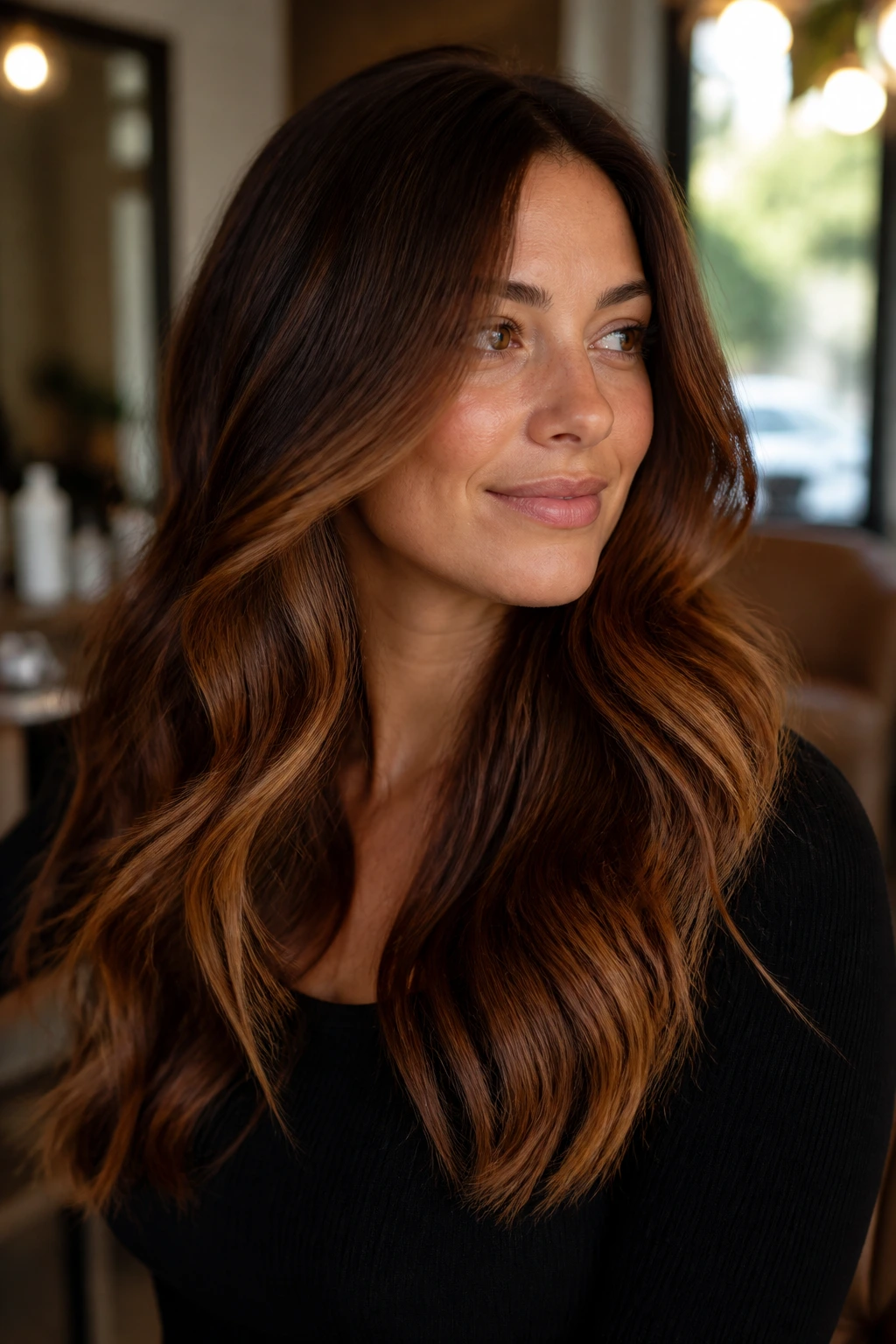
Unlike high-contrast balayage, this one barely announces itself at first glance. Amber chestnut is a veil, not a stripe. The chestnut base holds most of the depth, while amber-toned ribbons sit just on top of the mids and ends and glow when light hits them.
That’s why it suits warm skin so well. It doesn’t try to fight the undertone. It echoes it. You get movement, shine, and a little warmth around the face without sacrificing the darker richness that keeps the hair looking full.
For people with thicker hair, this is a smart choice because it doesn’t chew up the whole head with lightener. The amber is enough. If you want more drama later, you can always add brighter face-framing pieces, but starting here keeps the color elegant and wearable.
7. Maple Glaze Balayage
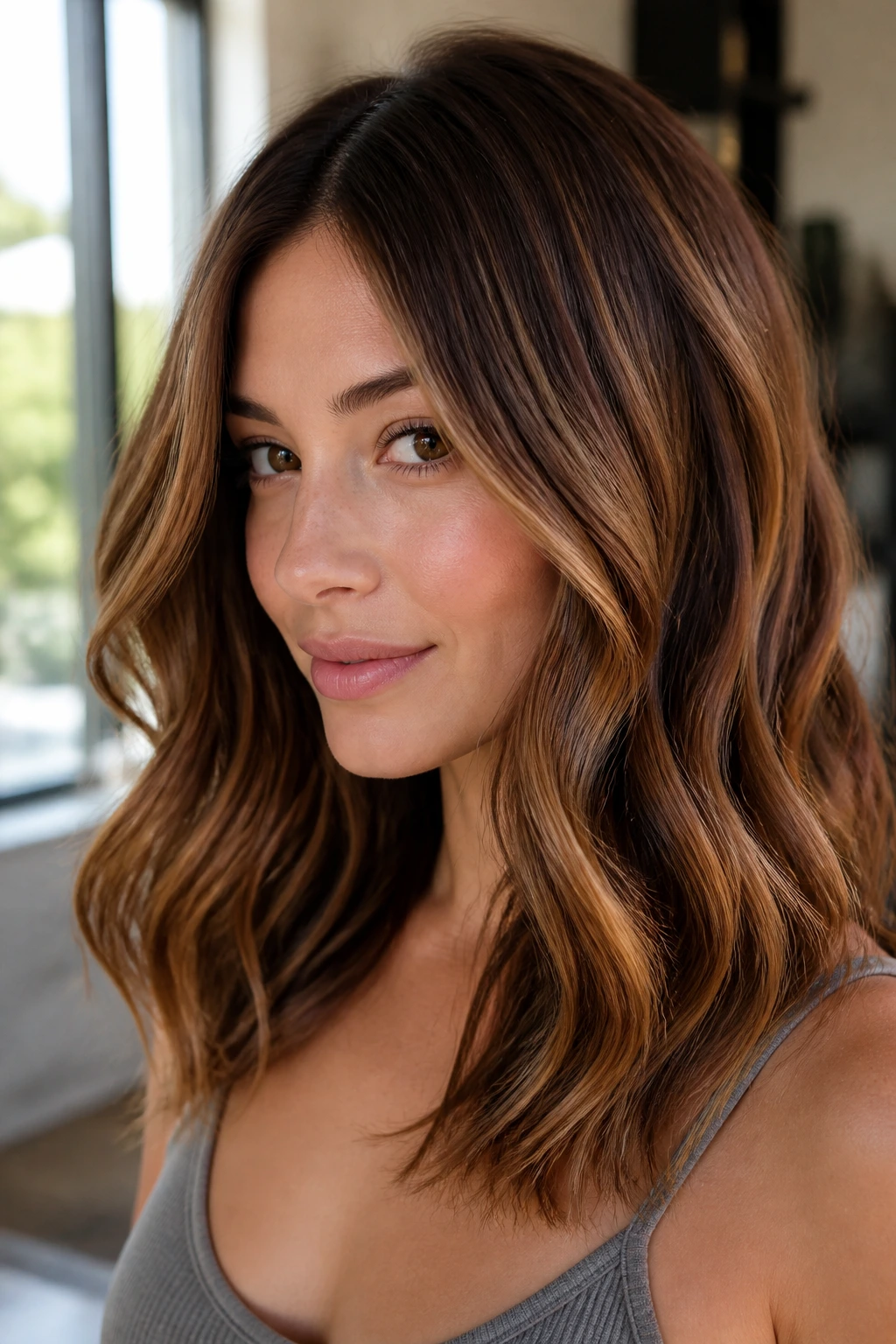
Maple glaze is for anyone who likes shine more than obvious contrast. The color story stays in the amber-brown family, but the final gloss makes everything look smoother and a little glassy. If the hair is dry or porous, this shade can save the whole look. Gloss does that. It tightens the tone and makes the warm pieces look intentional.
Where the shine comes from
- A clear or amber glaze over prelightened ribbons
- A root shadow that stays two shades deeper than the lightest pieces
- Soft bends instead of tight curls
- A finish that avoids heavy serum on the roots
The strongest version of this look is subtle in daylight and richer under indoor light. I like that. Not every balayage needs to flash from across the street. Some of them are better when you catch them in a mirror and notice the color has a syrupy depth.
8. Golden Apricot Ends
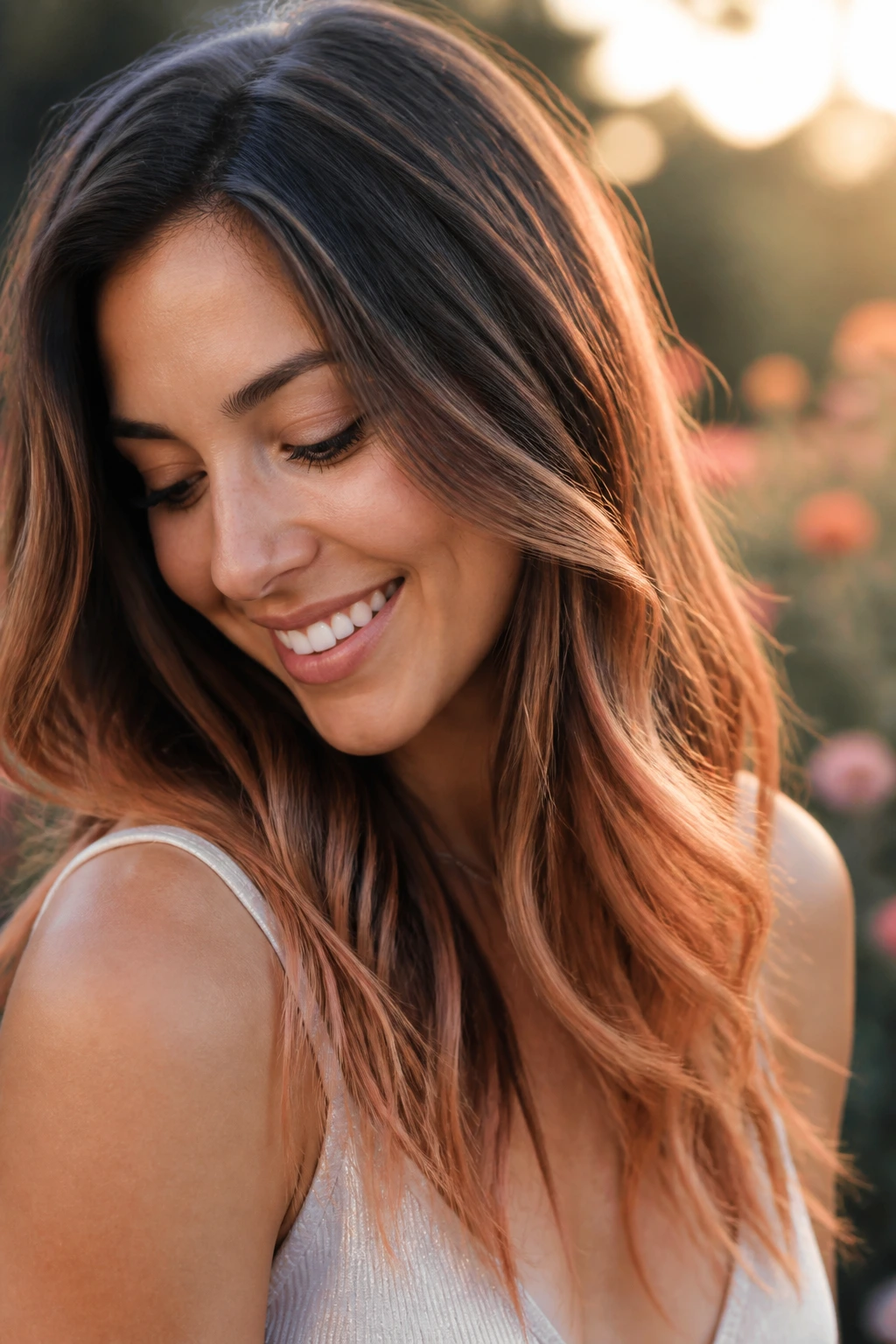
Golden apricot ends are for the person who wants a little play in the color. The apricot tone brings peach and gold together, which can be lovely on warm skin as long as the shade stays soft and not neon. Keep the apricot mostly on the lower third of the hair. That way it reads like a warm fade instead of a costume shade.
This works especially well on medium-length hair with movement at the ends. When the cut has texture, the apricot peeks through in flashes rather than sitting in one flat panel. The look is lighter and a touch more editorial than caramel, but still grounded enough to wear every day.
If your natural base is dark brown, leave the roots and mid-lengths rich. The contrast makes the apricot look deliberate instead of washed out.
9. Auburn Honey Streaks
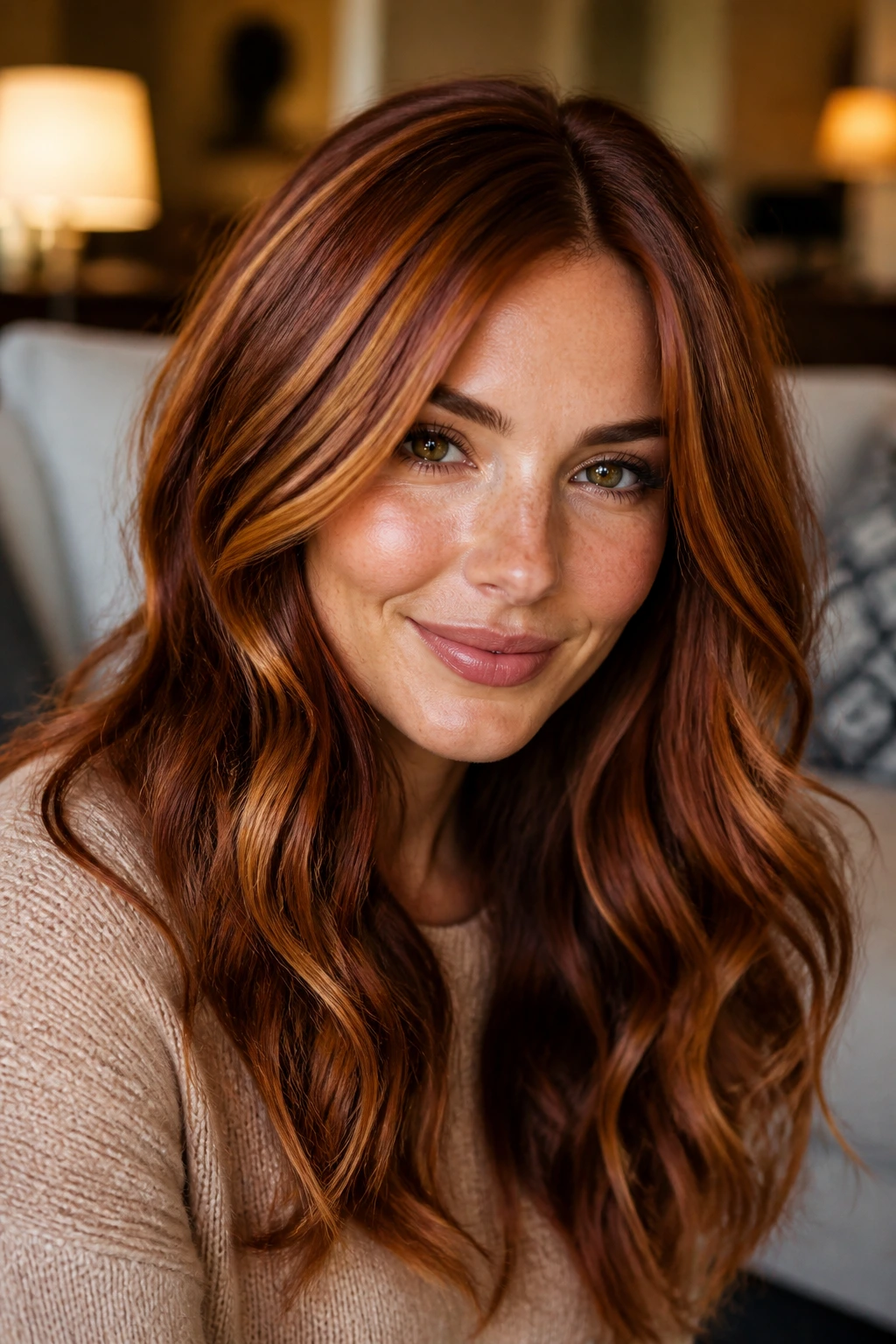
Can red-brown hair look warm without going flat? Yes, and this is the answer. Auburn honey streaks build dimension by layering honey ribbons over an auburn base, so the color has red depth and golden reflection at the same time. That combination is hard to beat on warm skin.
The honey should not overpower the auburn. Keep the pieces thin and scattered through the top layer, especially around the crown and temples. That keeps the red visible underneath, which is where the richness lives. Too much blonde and you lose the point.
This shade is a smart bridge for someone who likes red but doesn’t want the upkeep of a full copper. It fades into something soft and coppery rather than going muddy, which is exactly what you want from a warm balayage.
How to wear it
A loose wave makes the honey streaks look woven in. Straightened hair shows the auburn depth more clearly. Both work, which is rare enough to be worth mentioning.
10. Cocoa Toffee Money Piece
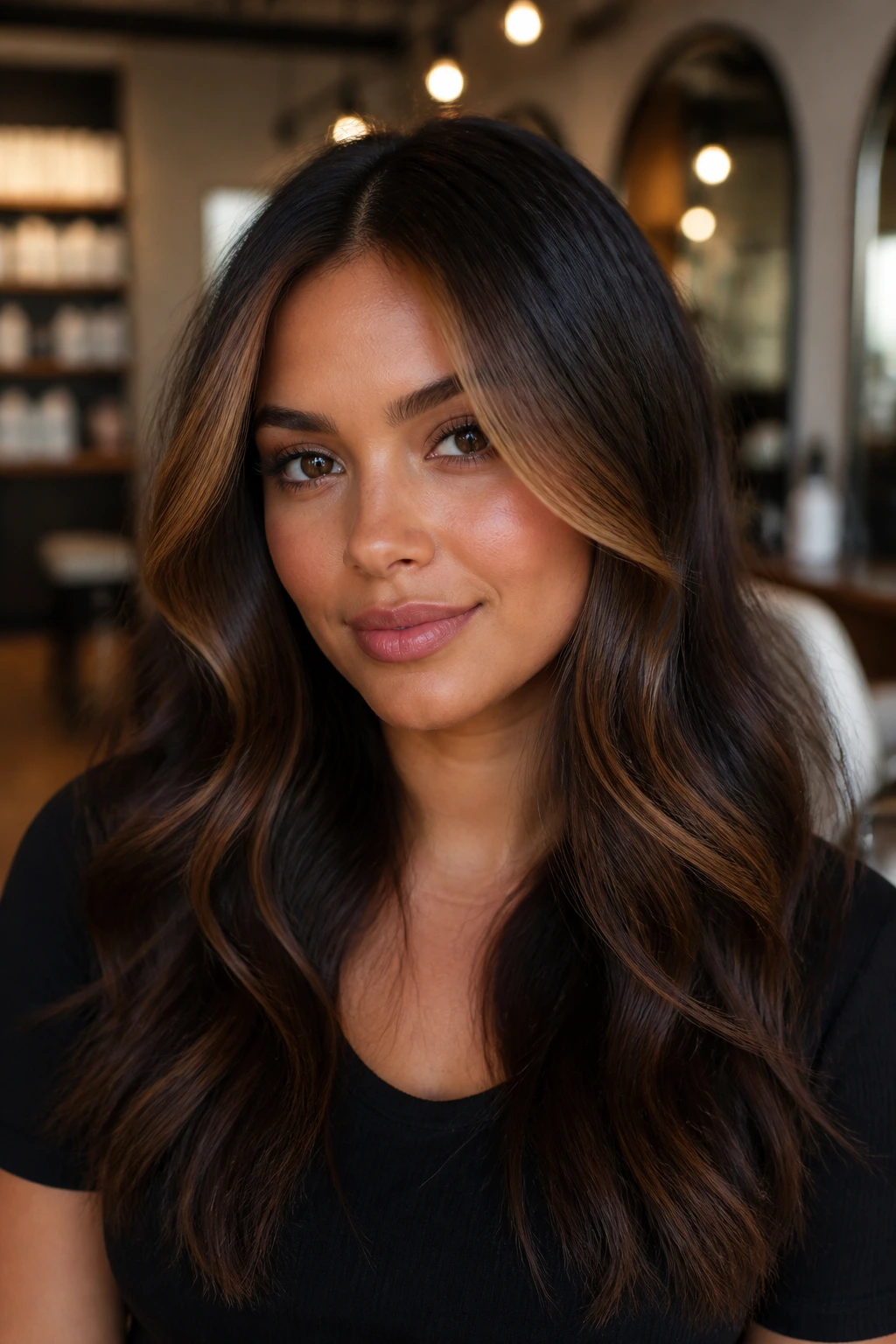
This one is all about the front. A cocoa toffee money piece brightens the face with a strong caramel frame while the rest of the hair stays in a darker cocoa range. On warm skin, that front lift can be enough to wake up the whole look without pushing the ends too light.
The money piece should be just one or two levels brighter than the rest of the balayage. Go too pale and the front starts wearing the face, not the other way around. Keep it warm, keep it caramel, and let the rest of the hair stay deep and shiny.
The best cut for this is a layered shape or a long bob with pieces that fall forward. You want the money piece to land near the cheekbone, not disappear into the back. That’s where it has the most effect.
11. Bronze Sunbeam Balayage
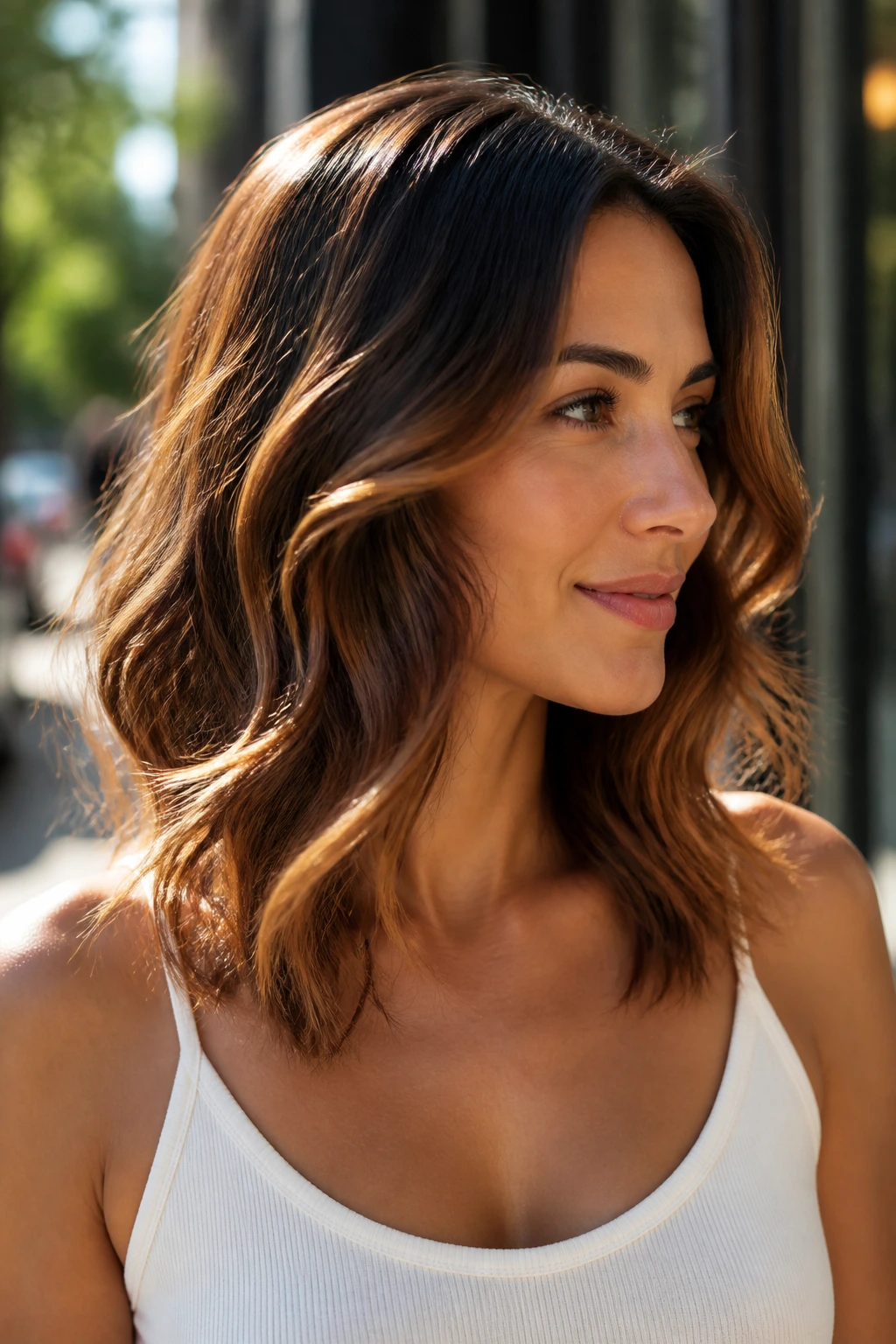
Bronze sunbeam balayage has a darker, richer finish than honey, and that’s what makes it so good on deeper brunettes. Bronze doesn’t scream blond. It hums. The color sits between brown and gold, with just enough lightness to catch on layered ends and curls.
Best if your base is dark brown or black-brown
- Placement: Keep the bronze mostly on the mid-lengths and outer ends
- Tone: Ask for bronze with gold, not smoky beige
- Maintenance: Gloss every 6 to 8 weeks so the bronze stays reflective
- Style note: Waves show the bronze best; pin-straight hair makes it look subtler
I like this shade for people who want dimension but hate the idea of obvious highlights. It has a more grown-up feel than straight caramel, and it sits beautifully against warm undertones because it never drifts into ash territory.
12. Spiced Latte Layers
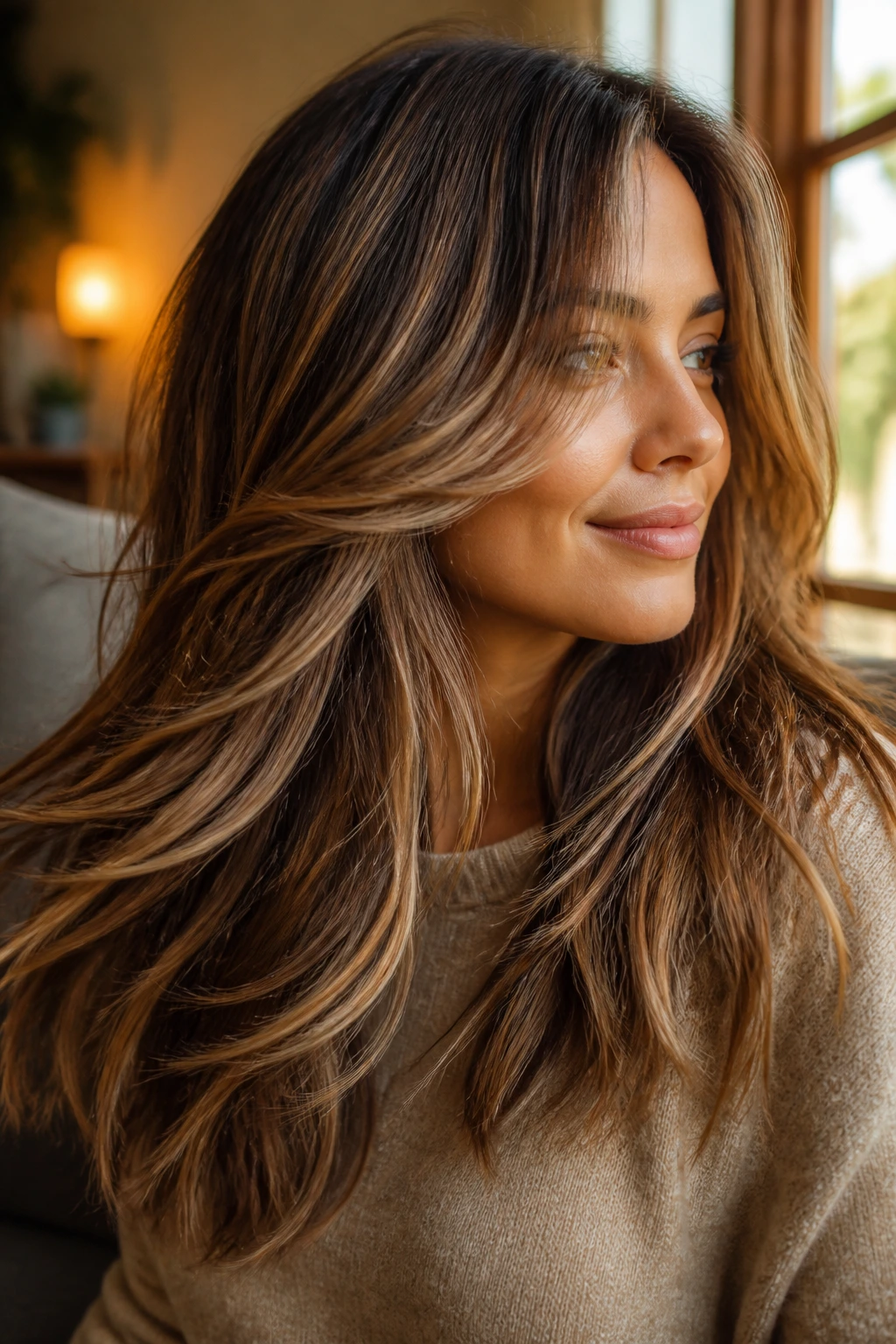
This is the color version of a layered haircut that actually does something. Spiced latte balayage mixes milk-chocolate depth, cinnamon warmth, and a soft latte finish through the lengths so each layer catches color differently. The haircut matters here. Without movement in the cut, you lose the whole point.
Unlike chunky highlights, this look depends on fine ribbons scattered through the inner and outer layers. That gives the hair dimension even when it’s tied back. On warm skin, the cinnamon tones keep the face from looking washed out, while the latte pieces stop the whole look from going too dark.
If you wear your hair in a medium-length cut with face-framing pieces, this one is a strong pick. It’s understated, but not boring. There’s a difference.
13. Copper Pumpkin Glow
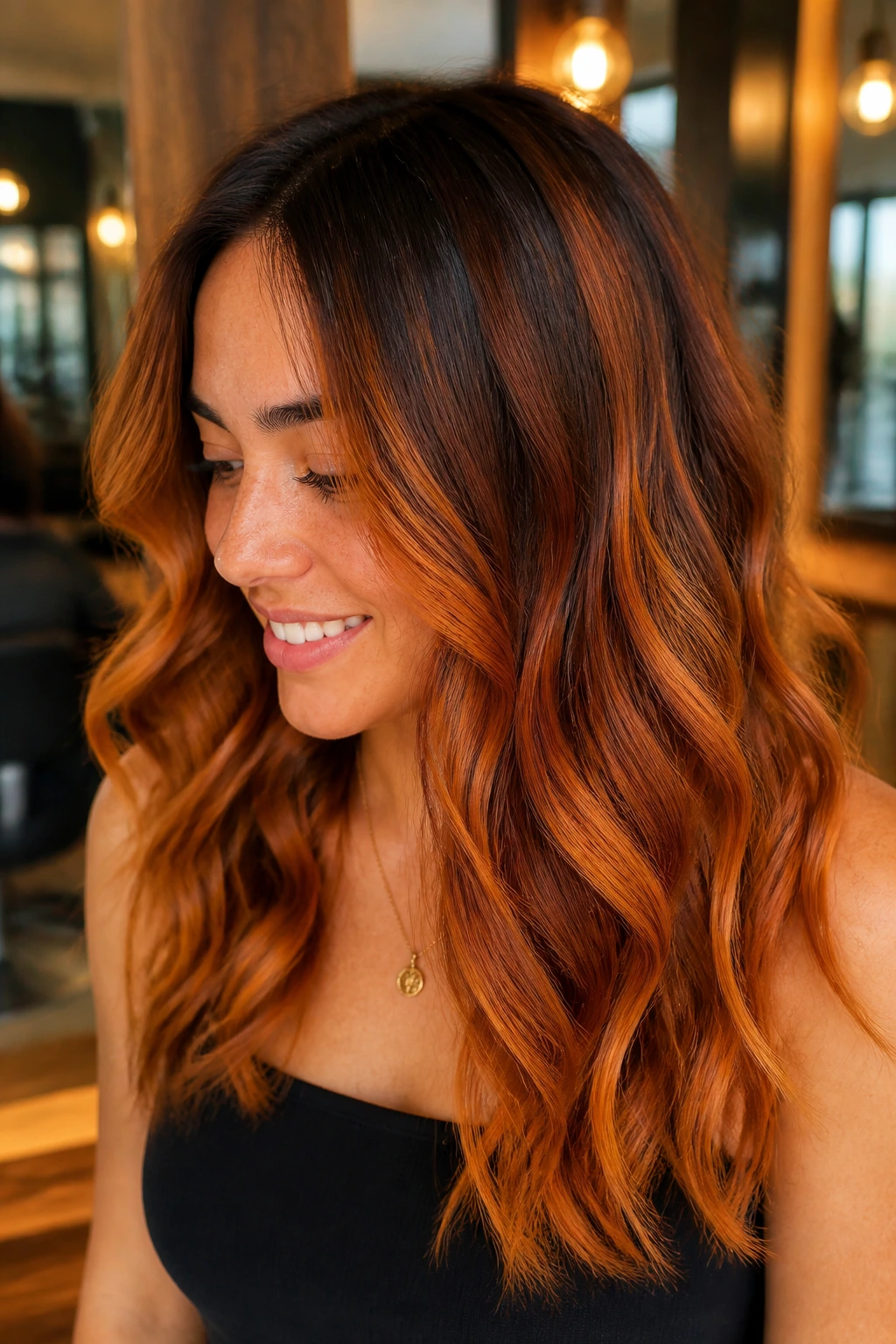
Copper pumpkin glow is the bolder side of the warm balayage family. The copper reads brighter, the orange-red note is more obvious, and the reflection hits hard when the light moves across the hair. Warm skin can carry that kind of color better than most people think, especially when the root stays deeper and the copper is concentrated through the mids.
What keeps it from looking brassy
- Leave a brown base at the root and crown
- Ask for a copper-gold gloss, not a flat orange toner
- Keep the brightest pieces away from the entire hairline
- Refresh the tone sooner than you would with caramel
The mistake with strong copper is going too light too fast. If the lift is pushed too far, the shade starts to look loud instead of rich. Keep some depth and the color reads expensive rather than harsh.
14. Golden Champagne Lift
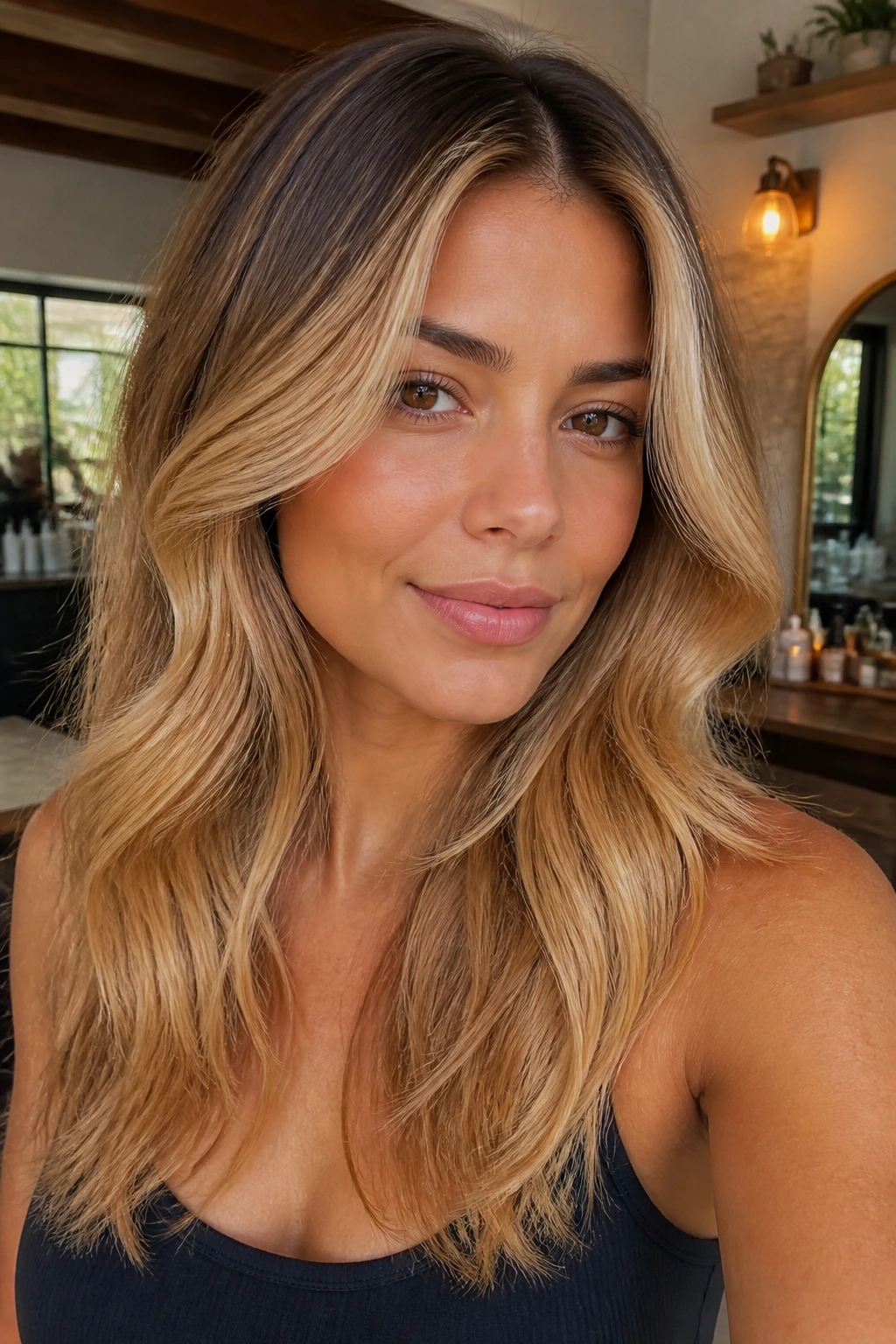
Golden champagne lift works best when the champagne part stays warm and gold-forward. If the toner leans too pale, the look can go flat on warm skin. The better version uses a soft golden blonde through the ends with just enough beige to keep it from turning yellow.
I like this on people who have dark blonde or light brown hair and want to move lighter without becoming icy. The trick is to keep the root soft and the mid-lengths creamy. The face frame can go one shade brighter, but not much more.
It’s also a smart choice if you wear a lot of gold jewelry or warm makeup tones. The color and the styling start speaking the same language, which makes the whole look feel more pulled together.
15. Mango Gold Balayage
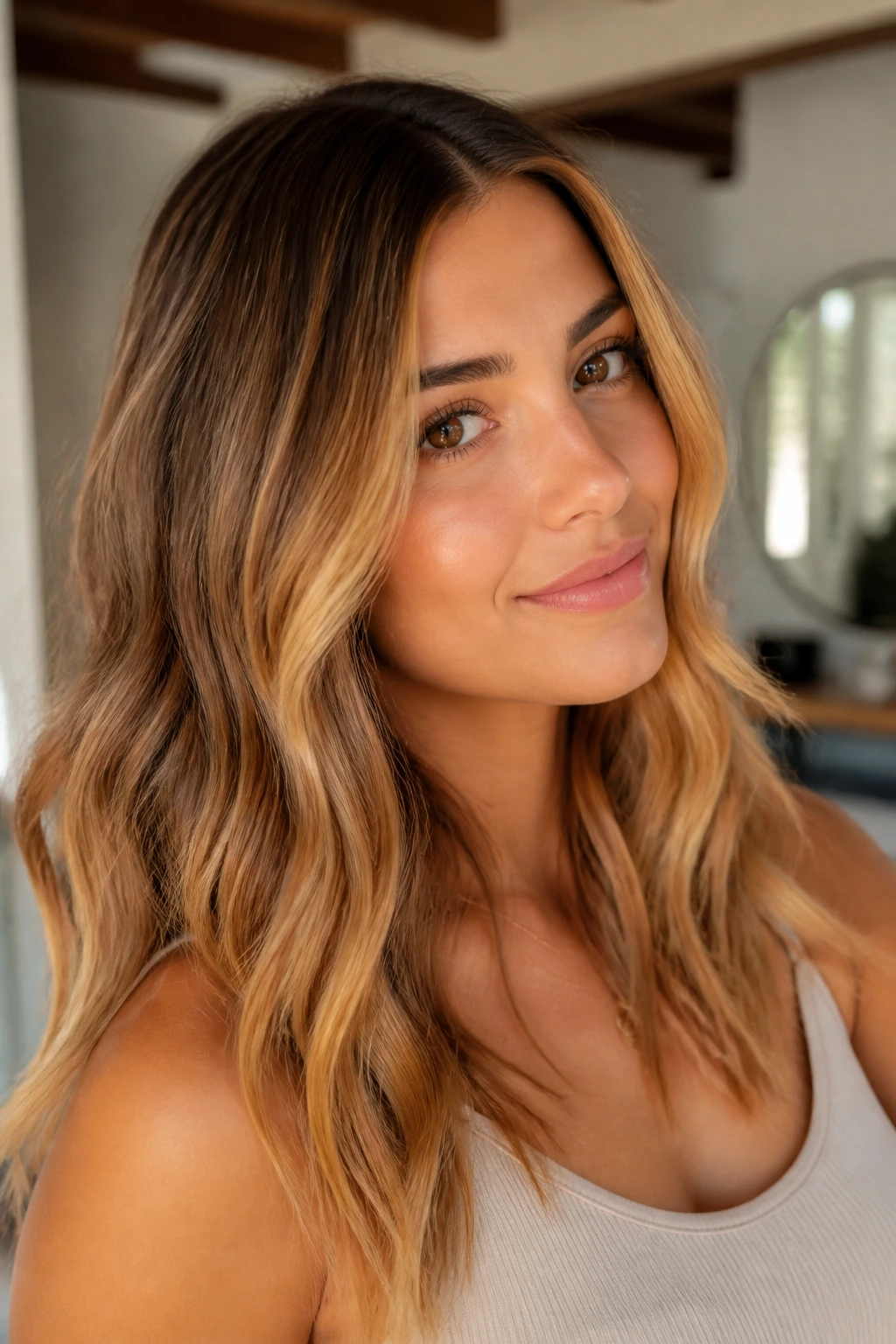
Why does mango gold work better than plain yellow-gold? Because mango has a little depth in it. It’s richer. On warm skin, that matters. Too much bright yellow can flatten the complexion, while mango gold gives you a sunlit finish that still has a warm orange-gold core.
This one shines on lighter brunettes and dark blondes who want a brighter result without going icy. Keep the ribbons soft at the crown and let the gold intensify through the ends. That keeps the color from looking like one solid block of lightness.
A center part can make this shade feel clean and modern. A soft side part gives it more lift around the cheekbones. Both work, but the part changes the mood fast.
16. Saffron Brunette Glow
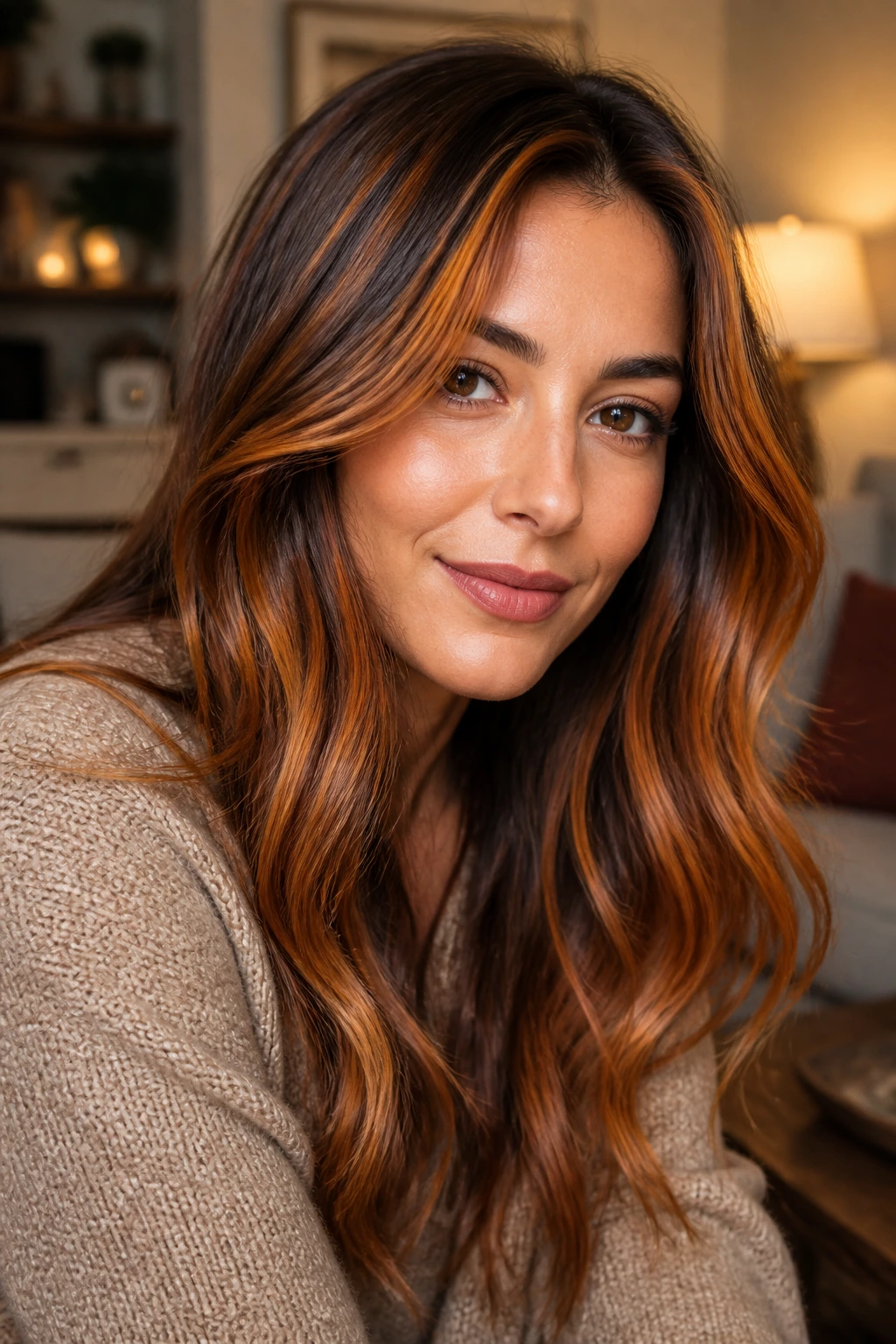
Saffron brunette glow has a little spice to it. The saffron tone adds a soft gold-orange reflection that sits beautifully on olive and golden skin, especially when the base stays in brunette territory. The look is warmer than bronzed, but less red than auburn.
Good for people who want warmth without turning red
- Base: Medium or deep brunette
- Brightness: One to two levels lighter than the natural hair
- Placement: Concentrate through the top layer and around the face
- Finish: Use a warm beige gloss so the saffron stays refined
This is one of those colors that looks better after a few days of wear. Freshly colored hair can look almost too glossy; after a wash or two, the tone settles and the dimension opens up.
17. Gingerbread Ribbon Highlights
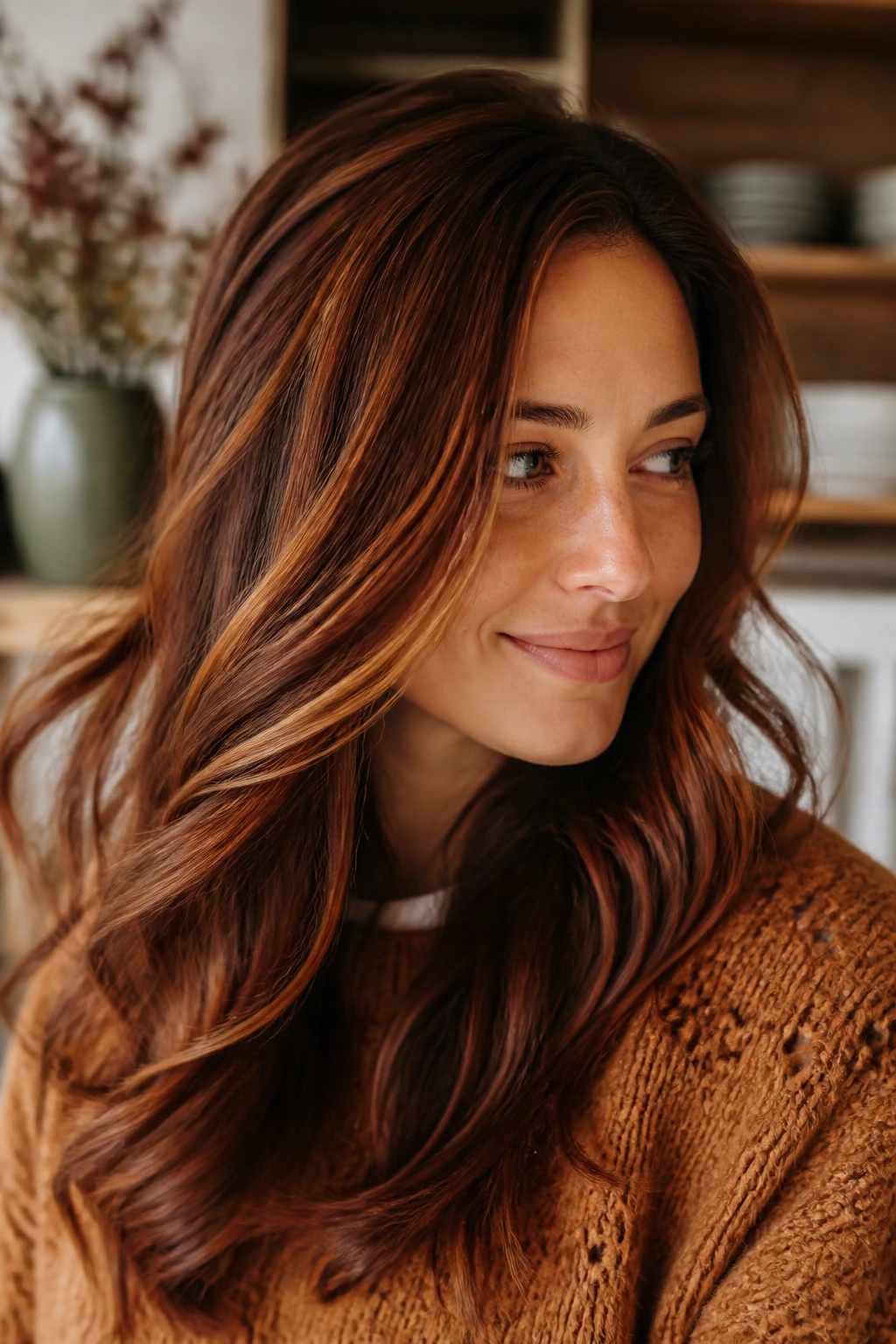
Gingerbread ribbon highlights are quieter than copper and deeper than honey, which makes them easy to wear. The ribbons have a red-brown base with a warm spice note, almost like cinnamon baked into brown sugar. That sounds theatrical, maybe, but the actual effect is grounded.
If your skin is warm and your eyes are brown or hazel, this shade can be a sleeper hit. It adds enough warmth to keep the complexion alive without forcing the hair into a red category. The ribbons should stay narrow and woven through the sides and crown.
This color gets especially good on layered cuts with movement. Straight, one-length hair can make it look darker than it is, so a little shape in the cut helps the highlights show.
18. Warm Vanilla Bronde
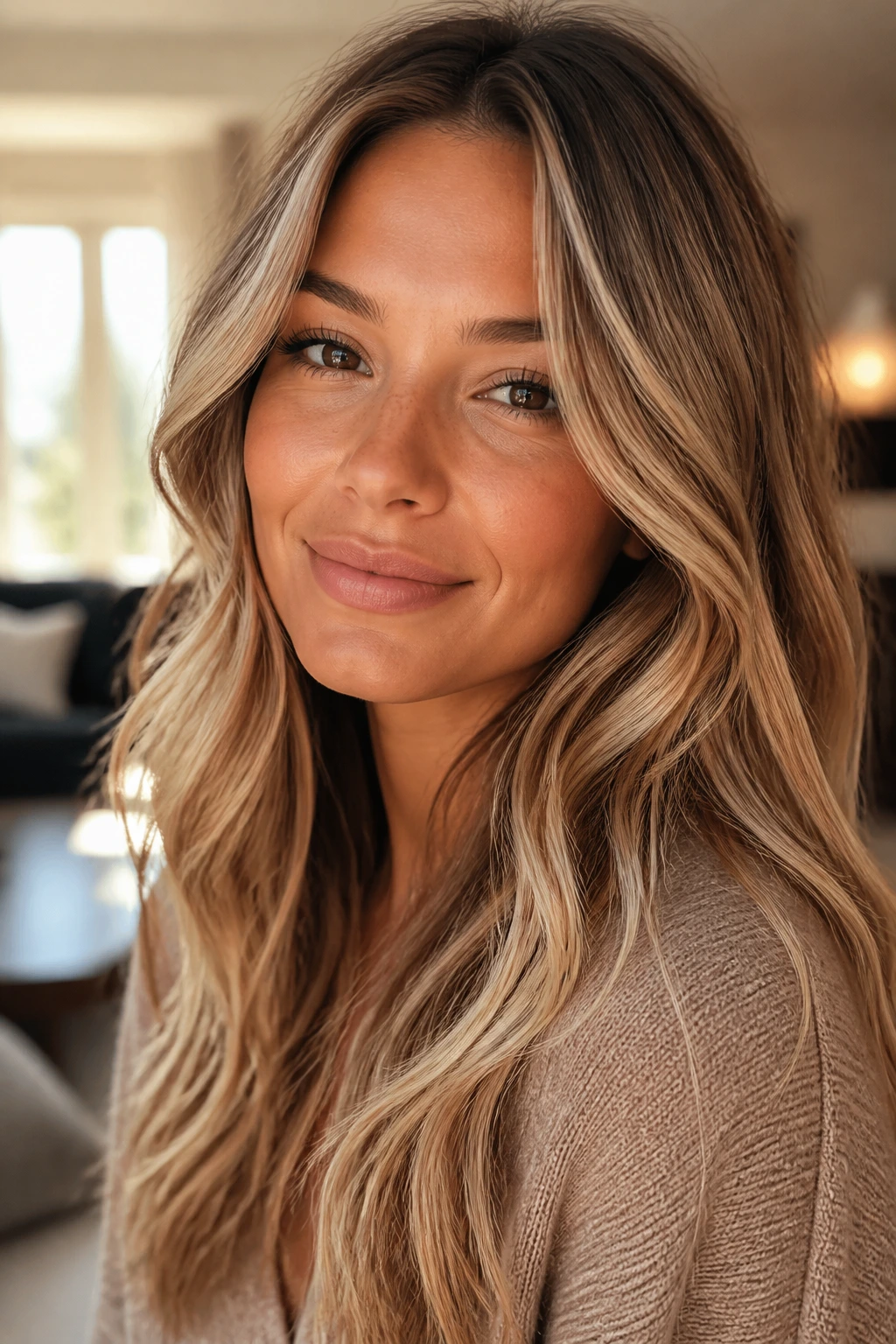
Warm vanilla bronde is the version I’d point a cautious first-timer toward. It sits between brown and blonde, but the vanilla note keeps it creamy and warm instead of beige-cool. On warm skin, that softness matters because it brightens the face without creating a hard contrast.
Compared with a strong blonde balayage, this one leaves more brown in the mix. The result is easier to grow out and less likely to look streaky at the root. It’s good on medium brunettes who want change, but not a full personality shift.
If you live in your hair tied back, this shade still reads well because the brightness is distributed through the mids. It doesn’t rely on perfect styling to make sense, which is more useful than it sounds.
19. Peachy Caramel Pop
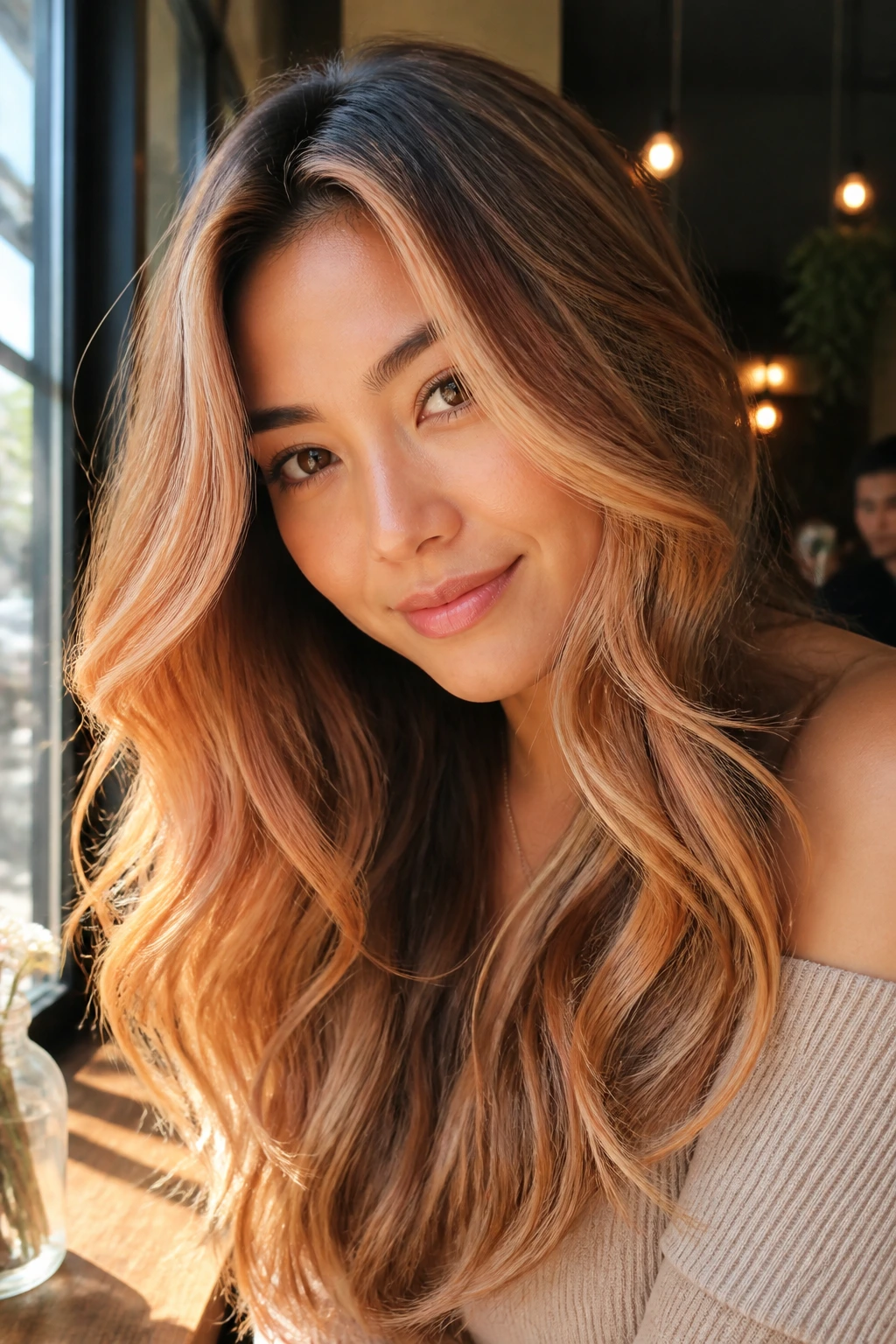
Peachy caramel pop is for the person who wants warmth with a little edge. The peach softens the caramel so the color has more lift around the face and a faint rosy-gold reflection in the ends. On warm skin, that peach note can be excellent as long as it stays muted and blended.
The easiest place to use this shade is in the face frame and the front mids. That gives you the pop without filling the whole head with pastel warmth. If the hair is already light brown, the peach caramel can read playful. On darker hair, it feels a little more editorial.
This is one of the few shades here that looks especially good with textured waves and a lived-in finish. Too much polish can make the peach look too precise.
20. Mahogany Honey Dimension
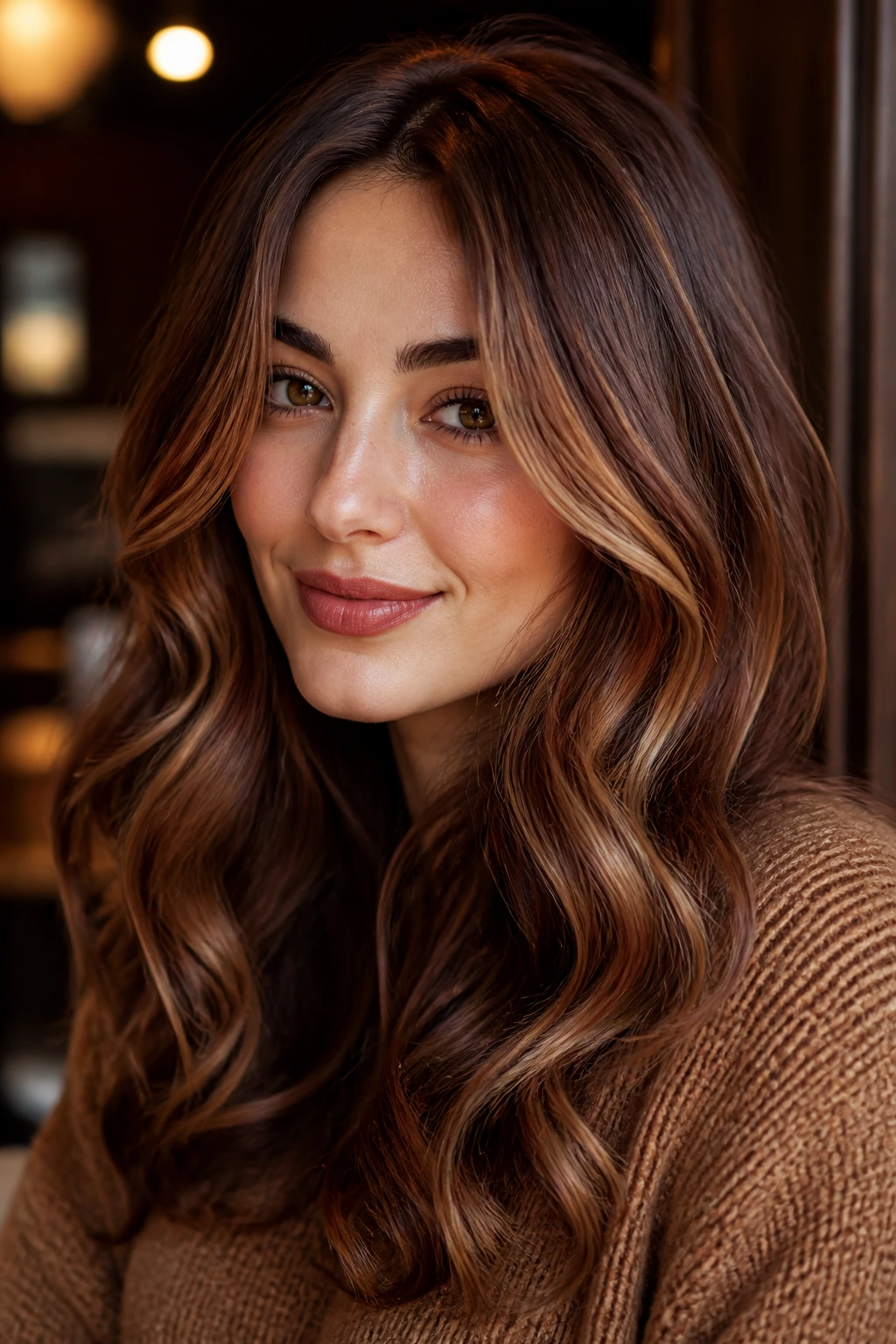
Mahogany honey dimension is rich, deep, and a little moody in the best way. The mahogany base gives you red-brown depth, while honey ribbons keep the hair from sinking into one dark color field. On warm skin, that little bit of honey reflection keeps the face open.
This shade works best when the honey is placed in thin slices rather than big sections. You want the mahogany to stay dominant. The contrast should show up when the hair moves, not when it’s sitting still.
If you wear rich lip colors, gold earrings, or deep neutrals, this color has a natural place in your wardrobe. It’s not loud. It just has a lot of depth.
21. Sunlit Cinnamon Brown
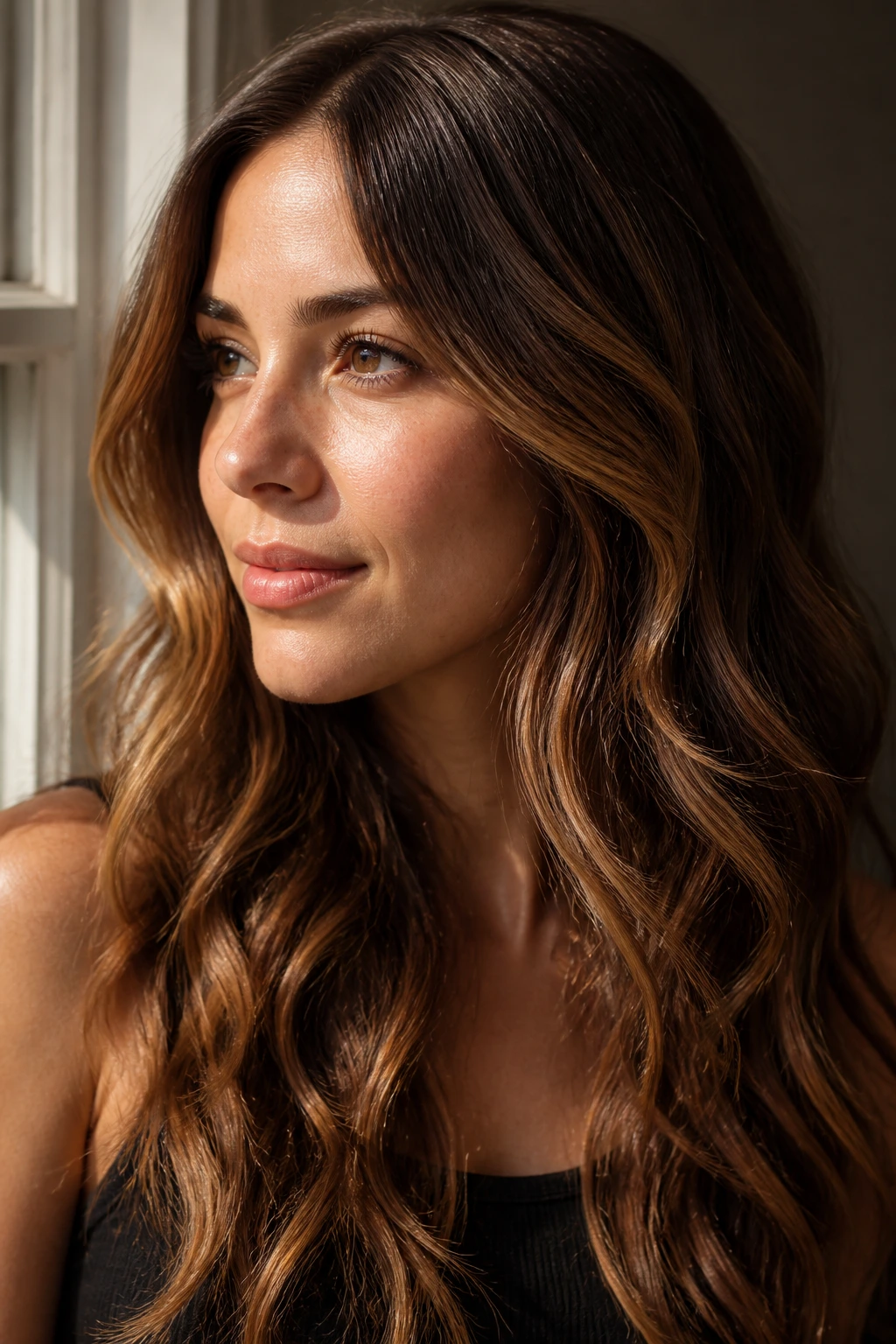
Sunlit cinnamon brown is the subtler cousin of copper. The base stays brown, but the cinnamon warmth threads through the lengths so the hair never looks flat. On warm skin, this can be one of the most flattering options because it keeps everything cohesive without pushing you into obvious red.
A lot of people think dimension has to mean brightness. Not here. This look works because the cinnamon pieces are only a shade or two lighter than the base, which is enough to show movement but not so much that the color shouts.
I’d choose this for someone who works in a conservative setting or just doesn’t want the maintenance that comes with paler highlights. It looks good tied back, worn straight, or waved. That’s rare enough to count.
22. Desert Rose Gold Balayage
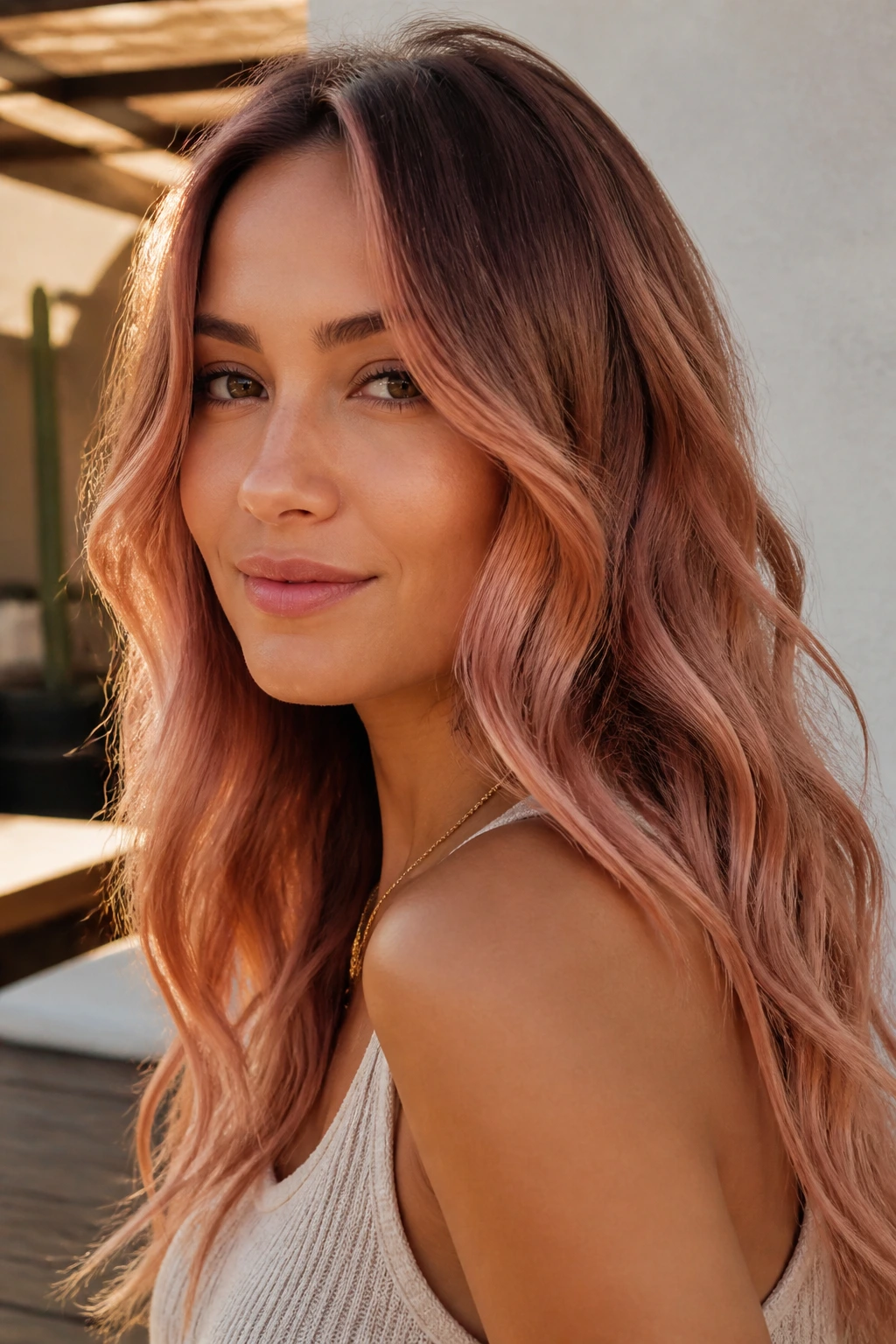
Desert rose gold is tricky, and that’s why I like it. The rose has to lean peachy and warm, not dusty or cool. If the toner slips too far into pink-beige, the warmth in the skin can start looking exaggerated. Keep the gold visible and the rose as a soft undertone.
This works well on medium brown to dark blonde bases where you want a little color play without losing the natural depth. The face frame can be slightly brighter, but the real charm is in the mids, where the peach-gold reflection shows up when the hair bends.
A soft wave or undone blowout gives this shade the most personality. Straight hair can make the rose-gold note look more obvious, which may or may not be what you want.
23. Toasted Pecan Ribbons
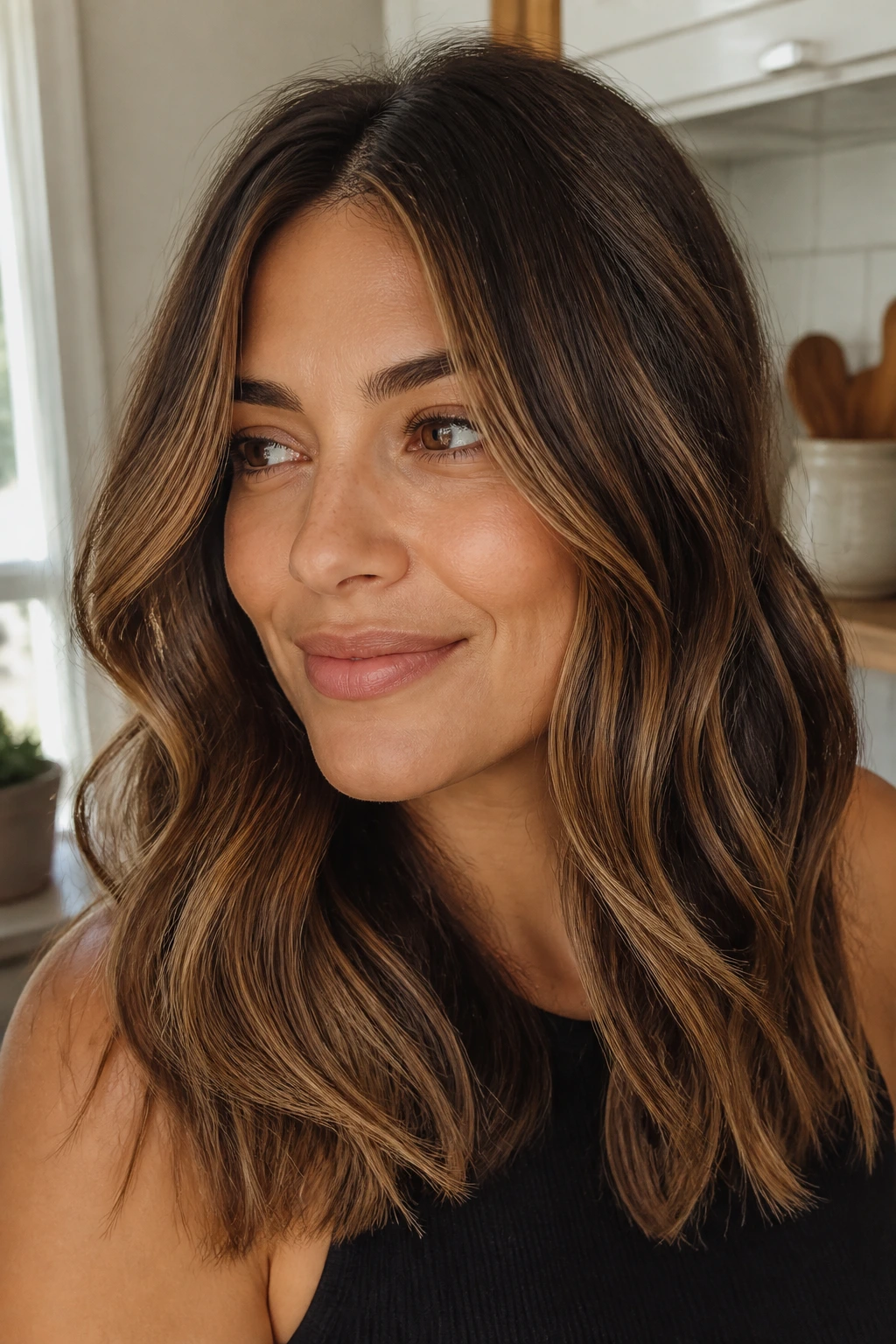
Toasted pecan ribbons are the quiet luxury option, and yes, I know that phrase gets overused, but here it fits. The pecan tone gives you a nutty brown-gold mix that looks expensive because it stays close to natural depth. The ribbons are warm, but not bright.
This is a smart choice when you want balayage that survives a busy life. As the roots grow, the blend stays soft because the color never depended on a dramatic lightness shift. Warm skin likes that kind of restraint. The face looks fresh, not overdone.
If your current color is already brunette and you want to nudge it warmer rather than change it, this is one of the easiest places to land.
24. Amber Gold Sombré
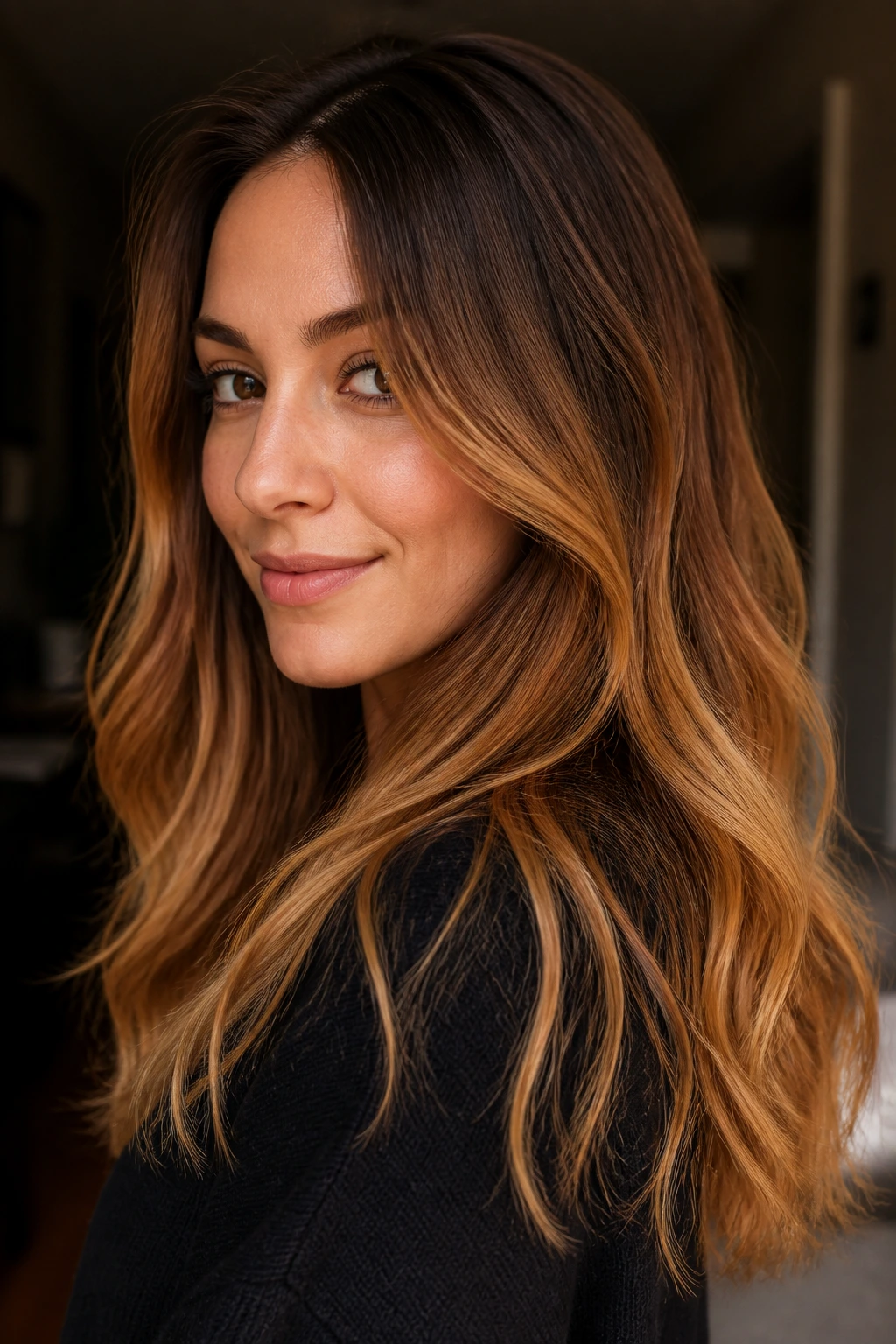
Amber gold sombré is the long fade version of a warm balayage. The root stays rich and shadowy, then the hair opens into amber and gold toward the ends. The shift is gentle enough that you can wear it for a long stretch without the color line becoming obvious.
This is ideal if you want warmth but you don’t want to babysit your hair. The sombré shape gives you visual length and softness, especially on longer hair where a strong line would feel too heavy. On warm skin, the amber keeps the face bright without draining the base.
Ask for a root shadow that sits at least one full shade deeper than the ends. That’s what keeps the gradient readable.
25. Molten Cocoa Copper
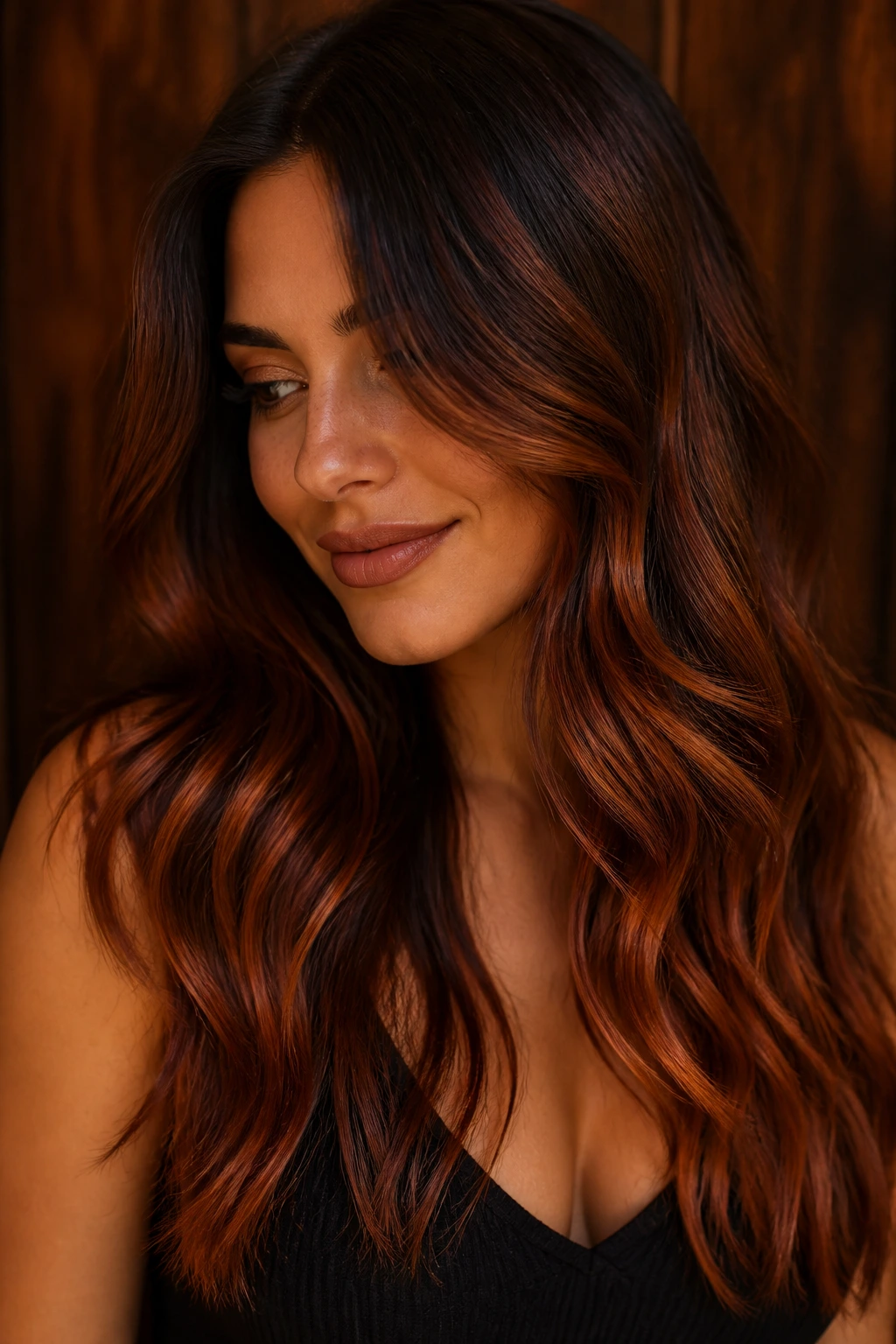
Molten cocoa copper is the bold one. Deep cocoa at the root, copper through the lengths, and enough warmth in the finish that the hair looks like it has heat under the surface. It’s dramatic, but not in a neon way. Think dark chocolate with a copper ember running through it.
This shade is strongest on warm skin because the copper doesn’t have to fight the complexion. It can echo it. If your hair is thick, wavy, or naturally dark, the contrast looks rich rather than noisy. If your hair is fine, keep the copper ribbons fewer and a little broader so the color doesn’t feel busy.
This is the pick for someone who wants people to notice the hair first. The good kind of notice.
Why Warm Balayage and Warm Skin Tones Click
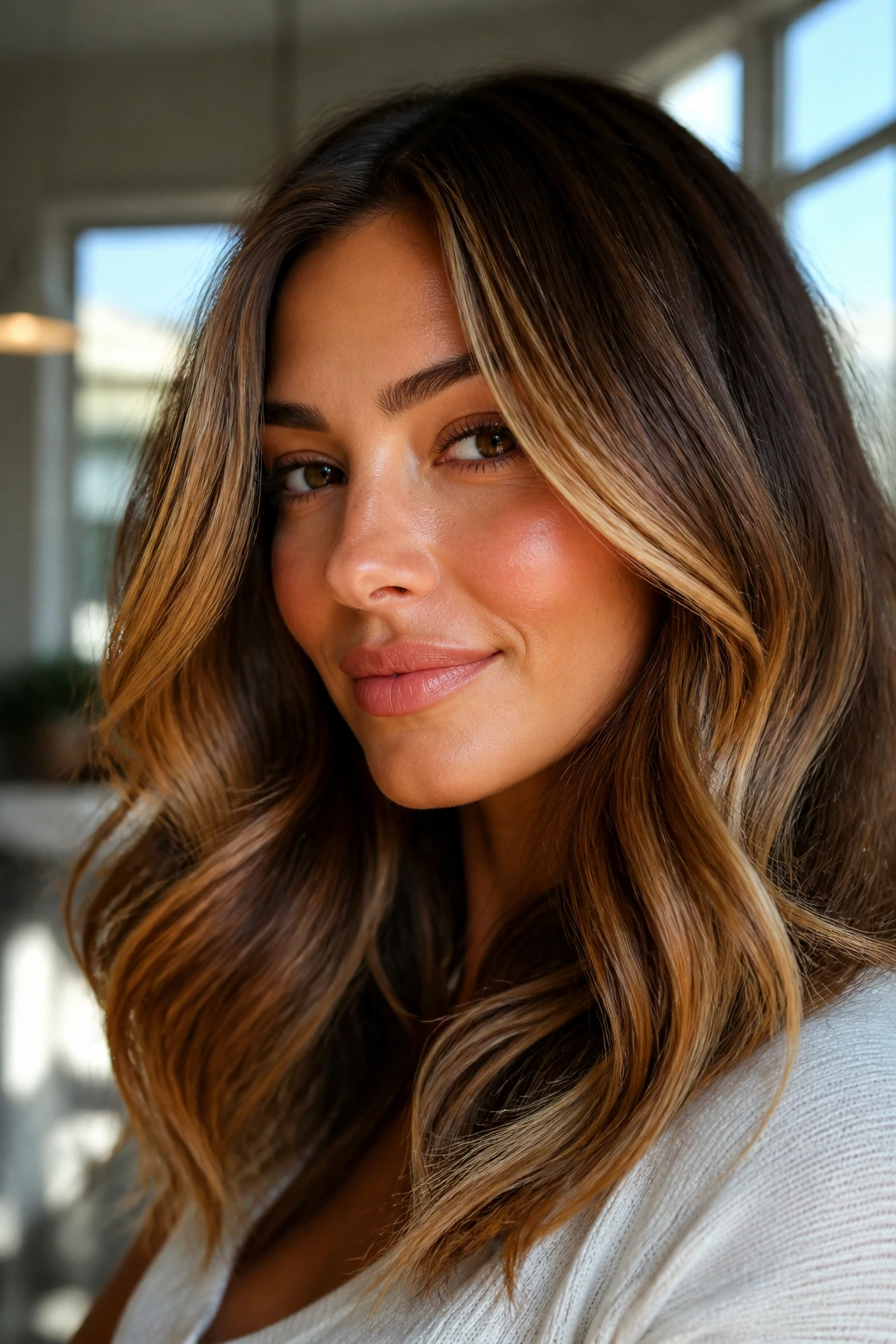
Warm skin doesn’t need cool contrast to look bright. That’s the mistake a lot of people make. They assume “more contrast” equals “more flattering,” but with golden, peach, or olive undertones, too much ash can actually pull the color out of the face. Warm balayage works because it repeats the undertone family already in the skin.
The other part is movement. Balayage doesn’t sit like a block of color, so the eye sees little flashes of honey, caramel, bronze, or copper instead of one flat tone. That movement helps the skin look more even. It’s less about hiding anything and more about giving the face a better frame.
Placement does a lot of the heavy lifting. Brightness around the temples, cheekbones, and outer crown usually does more for warm skin than bright ends alone. And if the hair is very dark, leaving that shadow at the root keeps the highlights from looking pasted on. A little depth is not a problem. It’s the reason the light pieces look expensive.
What to Ask for at the Salon
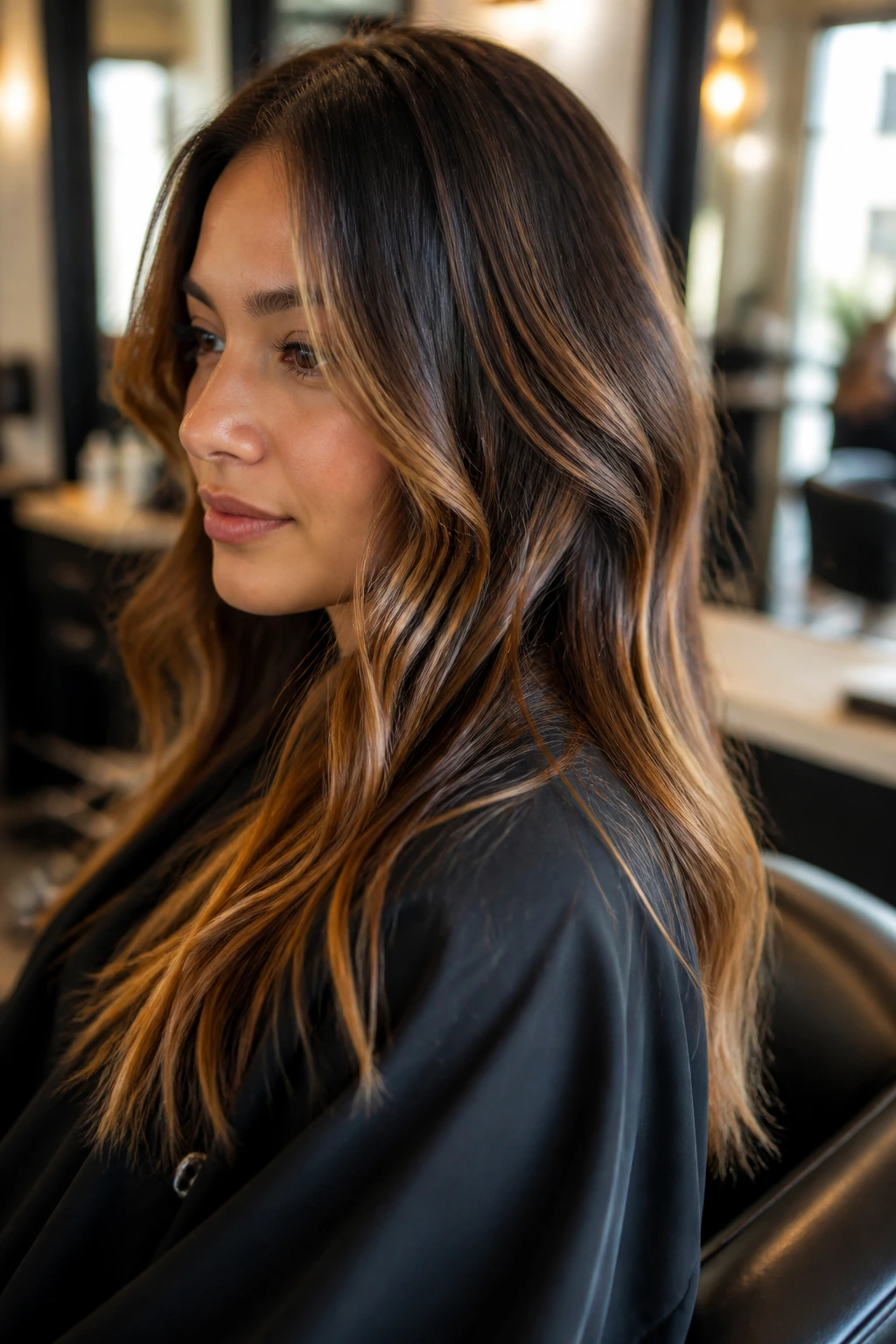
Bring pictures, but bring words too. Photos show the mood; words keep the colorist from guessing at tone. If you want a caramel finish, say caramel. If you want gold, say gold. If you don’t want ash, say that plainly. “Just make it warmer” is too vague to be useful.
A better salon script sounds more like this: “Keep my root shadow soft, lift the ribbons only one to two levels lighter than my base, and finish with a beige-gold gloss instead of ash.” That tells the colorist the depth, the tone, and the maintenance level you want. It also gives them room to adjust for your hair history.
Bring these details with you
- A daylight photo of your current hair color
- One inspiration photo showing the tone you like
- A note about whether you want a bright face frame or soft blend
- Your last color service date and any box dye history
- A clear “yes” or “no” on copper, gold, and ash tones
If your hair has been colored before, don’t hide it. Previous pigment changes how lightener behaves. The more honest you are, the cleaner the result.
Tools and Products Worth Having Nearby
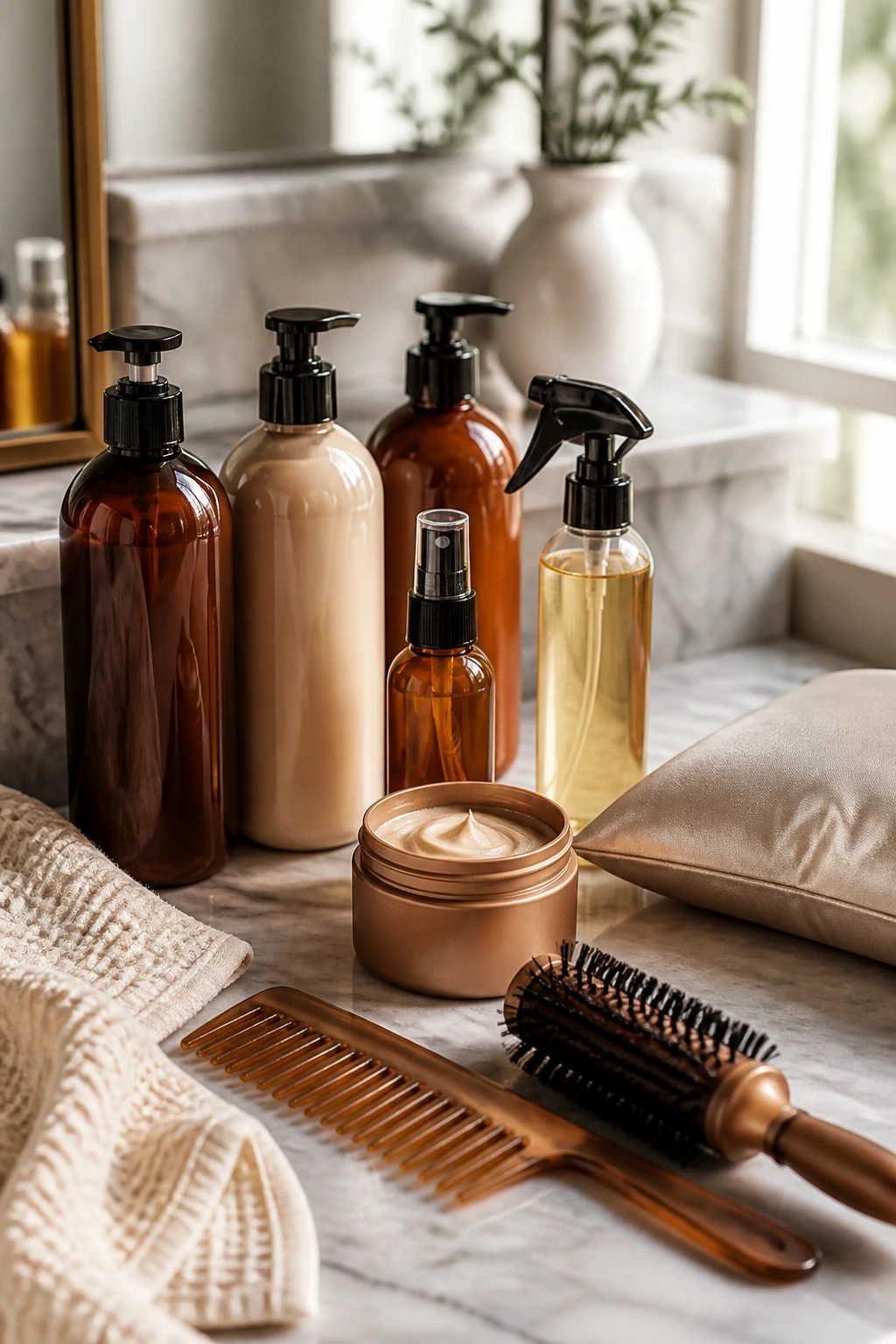
A good color service starts in the chair, but the upkeep happens at home. That means the right tools matter.
- Daylight photo of your hair: Shows your real base color and undertone better than bathroom lighting ever will.
- Inspiration photos with similar depth: A warm brunette can’t always wear the same shade as a dark blonde, so matching base level helps.
- Color-safe shampoo: Use one without harsh sulfates if you want the toner to stay put longer.
- Moisturizing conditioner or mask: Balayage lightens the ends, and the ends usually need the most help.
- Heat protectant spray: Necessary if you use an iron or blow-dryer more than once a week.
- Wide-tooth comb or detangling brush: Keeps the lighter ends from snapping when the hair is wet.
- Microfiber towel or old T-shirt: Cuts down on frizz and roughing up the cuticle after washing.
- Color-depositing gloss or mask in gold/caramel: Useful for keeping warm tones alive between appointments.
- Silk or satin pillowcase: Helps the lighter pieces stay smoother and less fuzzy overnight.
How to Wear These Shades So They Read Warm, Not Brassy
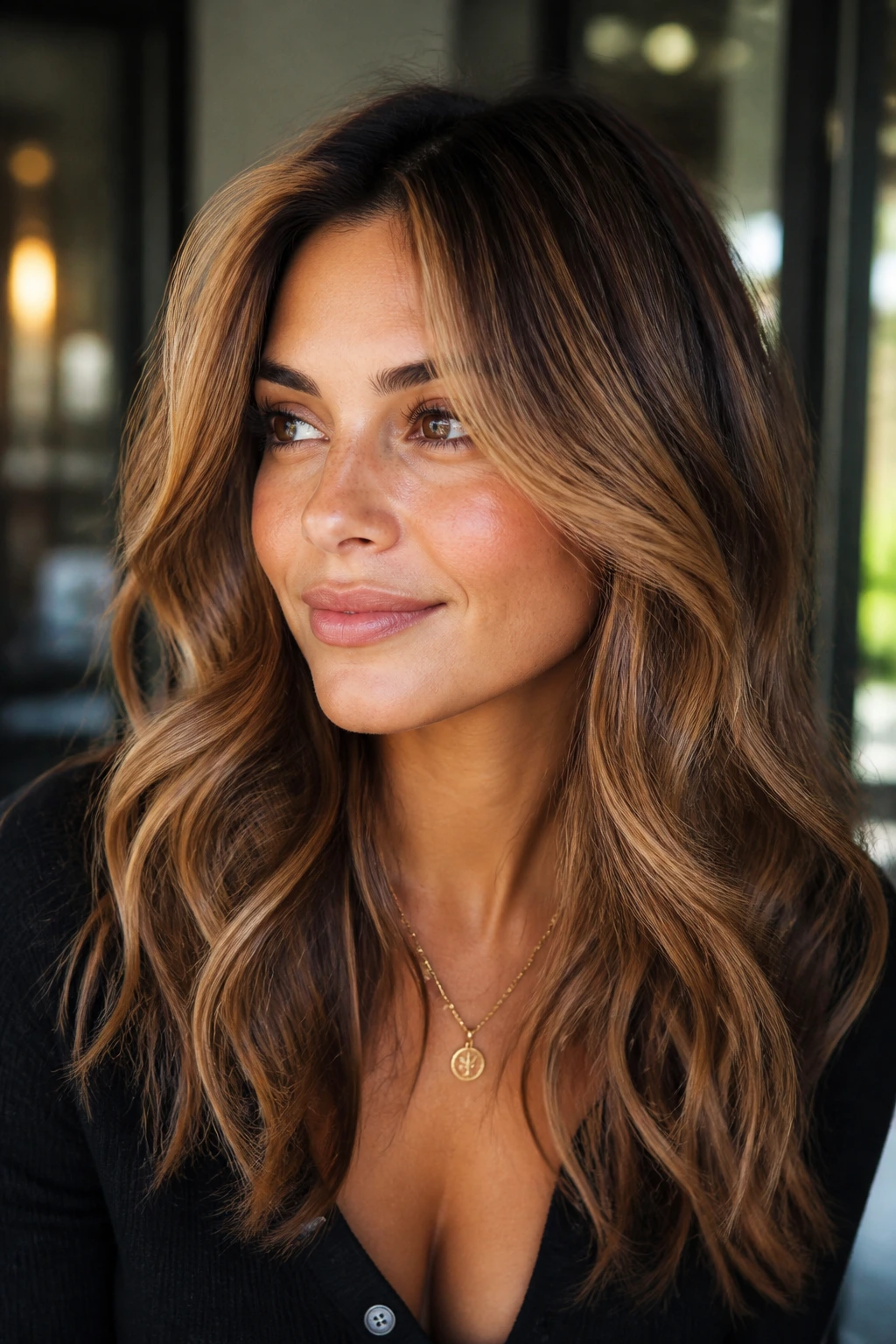
Placement: Keep the brightest pieces around the front, the outer crown, and the top layer that actually moves. If everything is light from root to tip, the warmth loses shape. You want contrast. Not chaos.
Styling: Soft bends from a 1- to 1.25-inch iron show ribboning better than tight curls. If you prefer straight hair, leave a little bend in the front pieces and smooth the ends with a brush. That keeps the lighter strands from turning into one flat sheet.
Wardrobe: Cream, camel, olive, chocolate, rust, and black all play nicely with warm balayage. I’m not saying you need to rebuild your closet. I am saying that icy blue and cool lavender can make a warm gold tone feel louder than it is.
Makeup: Peach blush, bronzed lids, warm browns, and terracotta lipstick tend to echo these shades well. If your hair has copper in it, a cool blue-based pink can make the contrast feel awkward. Warm tones in makeup don’t have to match exactly. They just need to stop fighting.
Additional Tips and Tone Boosters
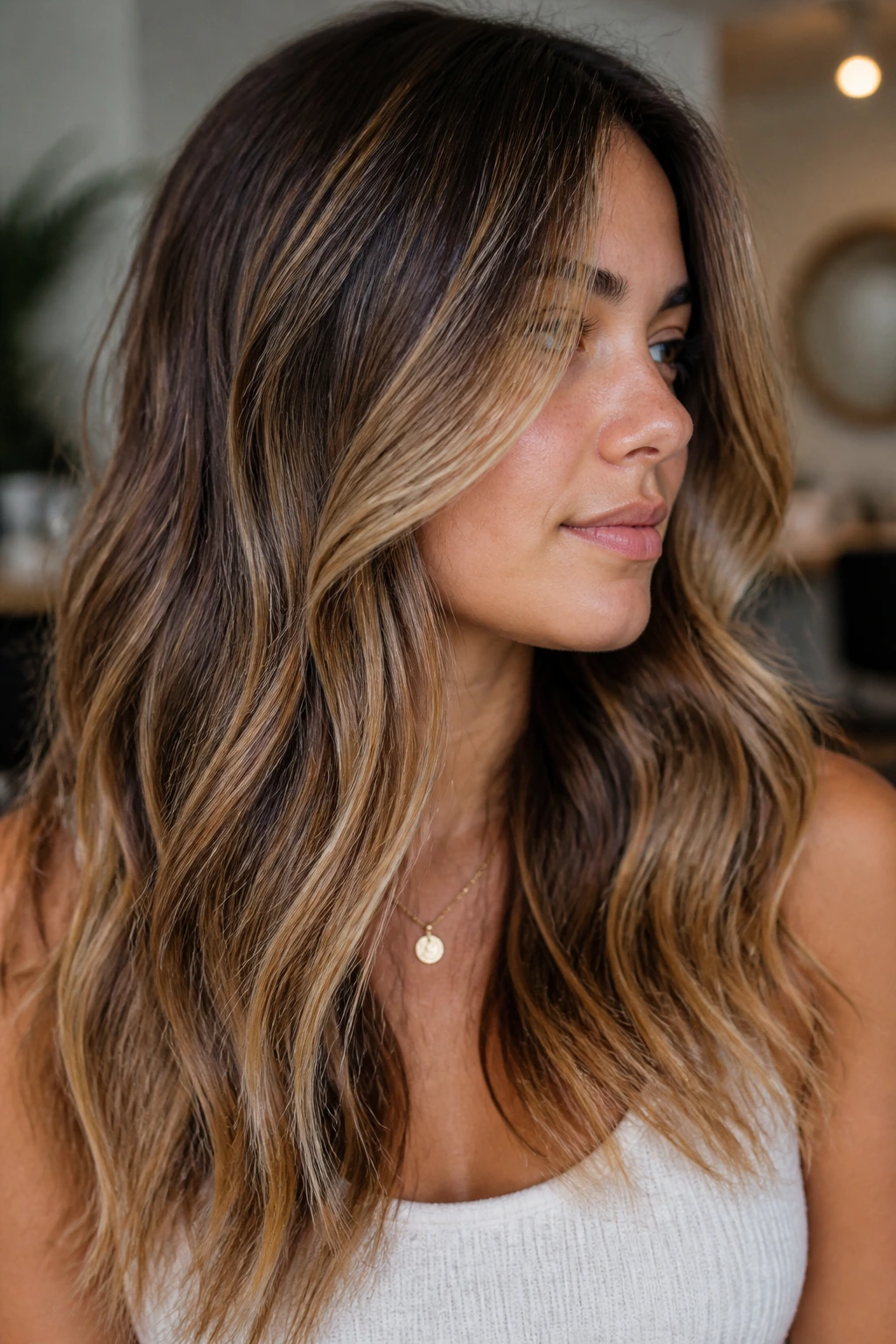
Gloss Boost: Ask for a beige-gold, amber, or copper-gold gloss every 6 to 8 weeks. Gloss is the difference between warm and dull once the first few washes are gone.
Customization: Leave the crown and inner layers one shade deeper than the outer face frame. That depth keeps the hair from looking thin, especially on straight or fine hair.
Finish: Put a pea-sized amount of serum on the last 2 or 3 inches only. Too much product at the root makes the top look limp and hides the dimension you paid for.
Make-It-Yours: For curls, use wider ribbons so the color shows between the bends. For a bob, keep the lighter pieces a little higher so they don’t disappear when the hair flips inward. For a long layered cut, let the lightest pieces live in the moving sections, not just the very ends.
Common Mistakes That Can Flatten the Whole Look
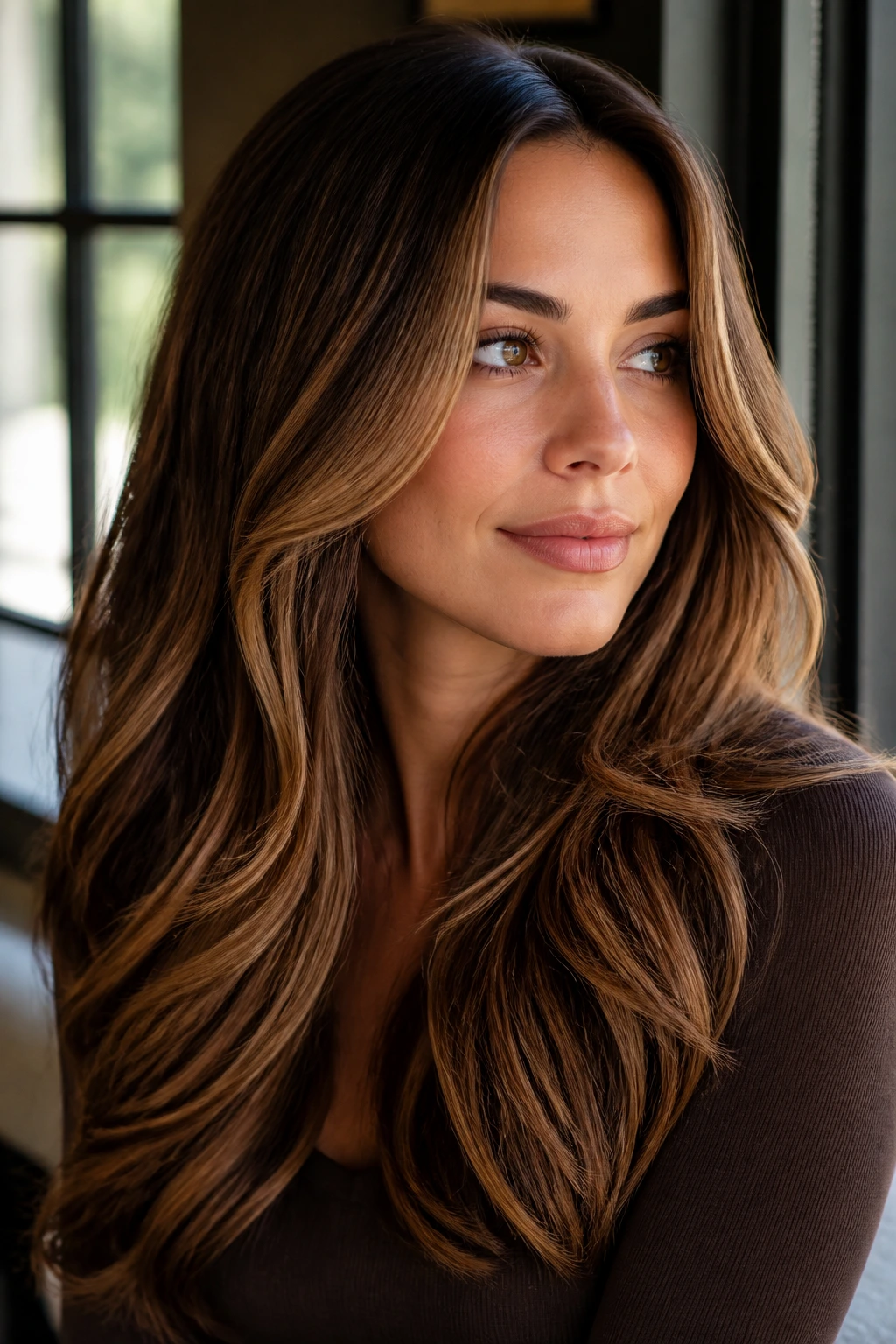
-
Choosing ash when your skin wants warmth. The face can look a little gray or tired. Fix it by asking for gold-beige, caramel, amber, or copper-gold instead of a cool beige toner.
-
Lifting the front pieces too far. A money piece that’s two or three levels lighter than the rest can take over the face. Keep the contrast to one level brighter unless you want real drama.
-
Painting everything evenly. Balayage needs depth. If every strand gets the same amount of lightening, the hair loses the shadow that makes the highlights look expensive. Leave some panels untouched.
-
Forgetting about the root shadow. A hard line near the scalp turns a soft blend into a stripe. Ask for a root melt that stays soft and narrow, especially if your base is dark.
-
Overusing purple shampoo on warm blonde and copper. It can mute the gold and leave the ends looking dull or khaki. Use it sparingly, and only if the pale blonde pieces are drifting too yellow.
-
Skipping a trim. Dry, split ends make warm color look fuzzy. A small trim every 8 to 10 weeks keeps the lighter pieces clean and shiny.
Variations and Alternative Approaches to Try
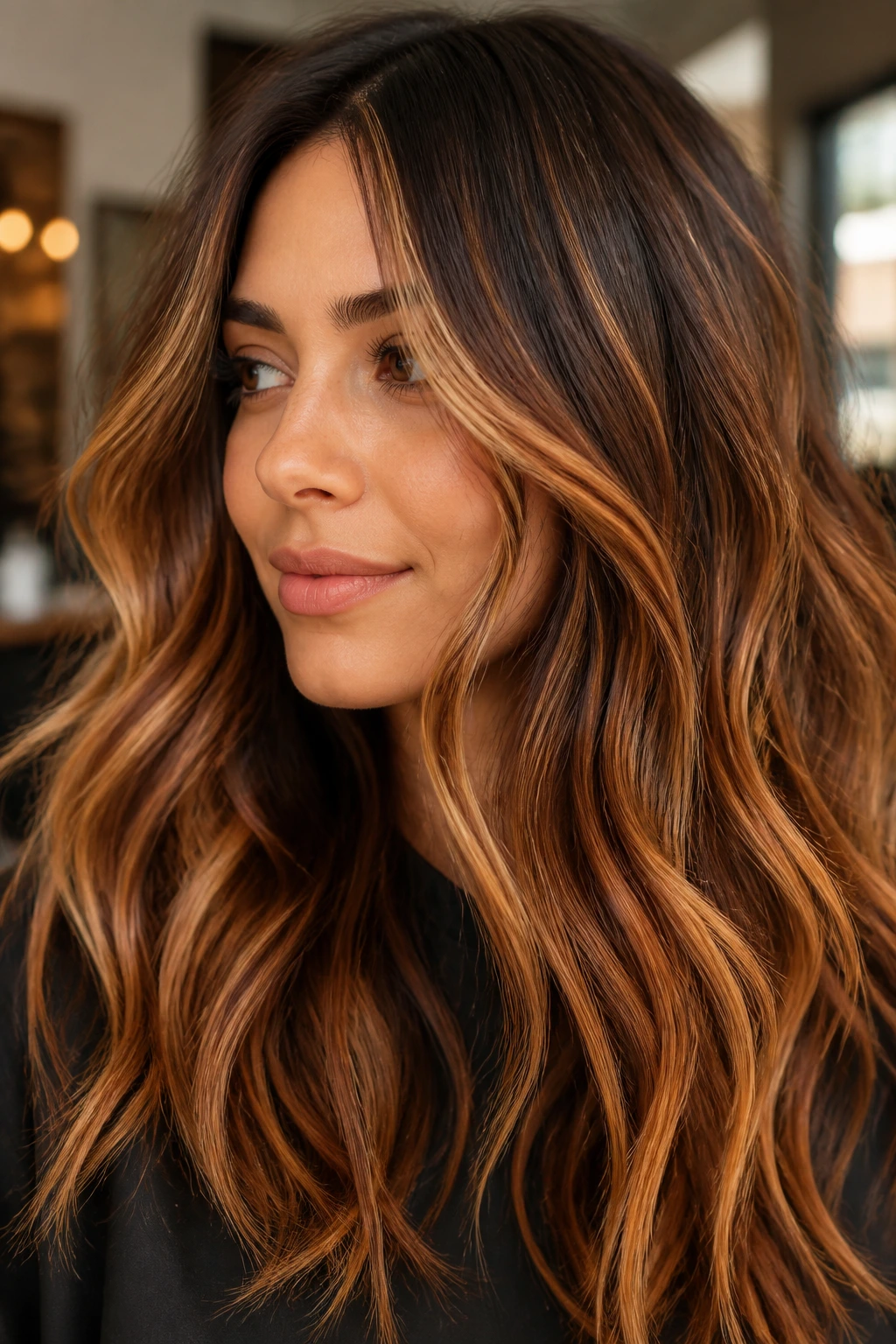
Low-Contrast Honey Veil: This version keeps the lift very soft, usually just one shade lighter than the base. It’s the best pick if you want warm dimension without obvious highlights. The grow-out is easy, and the color stays believable on very warm skin.
Bright Face-Frame Drama: If you want the front to do the talking, brighten the money piece and outer temples while keeping the back quieter. This works well on layered cuts and long waves. It gives the skin instant light without bleaching the entire head.
Curly Ribbon Mapping: Curly hair needs wider painted sections so the color shows between spirals. Thin lines disappear into the curl pattern. Wider ribbons keep the warmth visible when the hair expands.
Gray-Blending Amber Melt: A warm amber melt can soften first grays without forcing full coverage. The lighter strands blend with the silver and create a softer grow-out than traditional dye. It’s a smart choice if you want the gray to disappear into the color, not fight it.
Short Bob Sweep: On a bob, keep the balayage concentrated through the surface and around the front pieces. Too much lightness underneath gets hidden by the shape of the cut. Surface brightness gives a clean, expensive look.
Maintenance, Glossing, and Between-Appointment Care
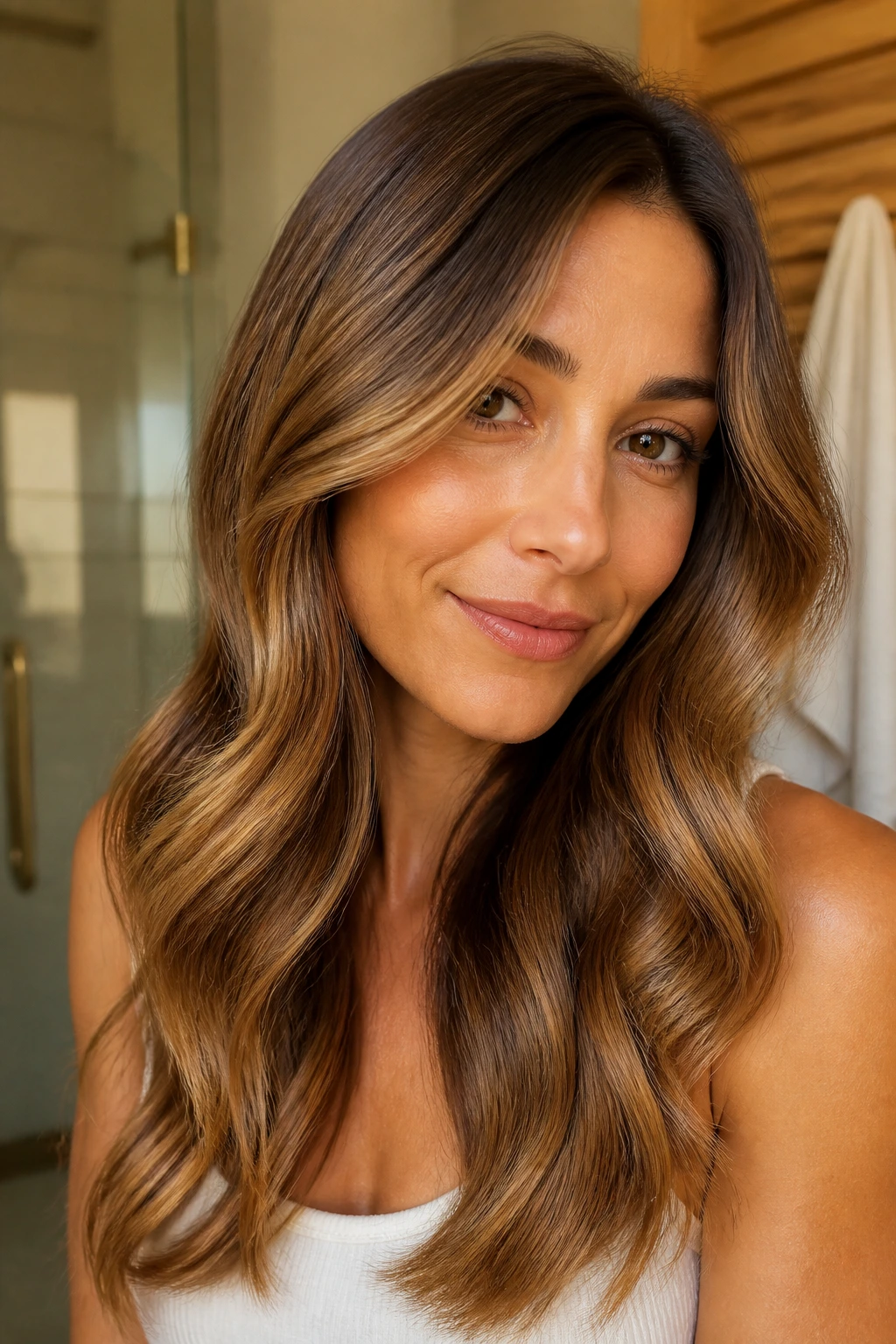
Balayage has a reputation for being low maintenance, and that’s mostly fair, but it still needs a little discipline. Warm tones fade first at the ends, especially if you wash often or use hot tools. If you want caramel, copper, or honey to stay rich, don’t treat the hair like it’s indestructible.
After a color service, try to wait 48 hours before shampooing if your stylist used a fresh toner or gloss. After that, wash with lukewarm water, not hot. Hot water opens the cuticle and lets the warm pigment slip out faster. Two or three shampoos a week is usually enough for most balayage looks, especially if you use dry shampoo on the roots between washes.
For refresh timing, caramel and honey shades often do well with a gloss every 6 to 8 weeks. Copper-heavy looks may need a little more attention, sometimes around 4 to 6 weeks, because red and copper fade fast. Darker amber and bronze blends can stretch longer, especially when the base is rich.
Heat protection matters more than most people want to admit. If you blow-dry or curl often, use a protectant every single time. Keep the iron around 300 to 325°F for normal hair; if the ends are already dry, go lower. And if you swim, wet the hair with clean water first and add leave-in conditioner before hitting the pool. That simple step keeps the strands from soaking up as much chlorine.
Frequently Asked Questions About Warm Balayage
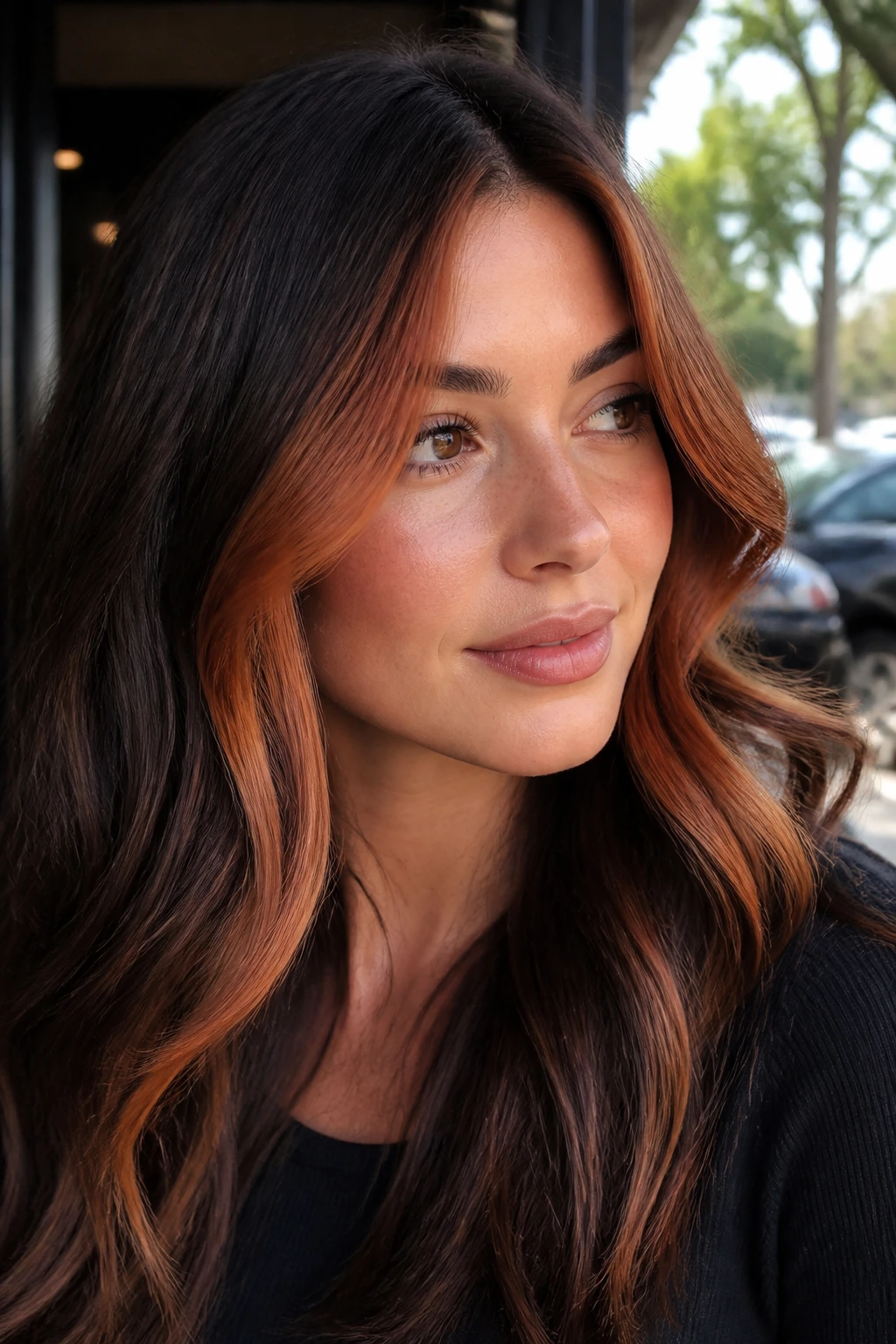
Can balayage highlights work on olive skin, or is it only for golden undertones?
Olive skin often looks excellent with warm balayage, as long as the tone leans caramel, bronze, amber, or soft copper rather than yellow-gold. Olive undertones usually need warmth with depth, not pale brightness. A shadow root helps the color sit naturally.
Should I choose honey or caramel if I want something subtle?
Caramel is usually the safer subtle option because it has more brown in it and fades more softly. Honey can be lovely, but if it gets too bright it starts to read lighter and higher contrast. If you want low maintenance, caramel is the easier call.
What if my highlights turn orange after a few washes?
That usually means the tone was lifted too far or the gloss was too warm. A salon gloss in the right beige-gold family can rebalance it, and at home you can switch to a color-depositing mask that leans caramel rather than copper. Don’t scrub the color harder; that makes the problem worse.
Does balayage cover gray hair?
It can blend gray beautifully, but it doesn’t behave like full coverage dye. Warm balayage softens the look of gray strands by mixing them into the dimension instead of hiding them completely. If you want full coverage at the root, you may need a different service or a hybrid approach.
Can I do warm balayage on dark brown or black hair without it looking chunky?
Yes, if the lift stays controlled and the placement is right. Bronze, cocoa, amber, and deep caramel usually work better than very light blonde on dark bases. Wider ribbons and a good root shadow keep it from looking stripy.
How often should I refresh the toner?
Most warm balayage shades need a gloss every 6 to 8 weeks, though copper and red-brown tones can need it sooner. If the hair starts looking flat, dull, or too yellow, that’s usually your cue. Don’t wait until the color looks tired.
Is warm balayage good on curly hair?
It can be excellent because curls show dimension in layers. The trick is to paint wider sections so the color doesn’t disappear into the curl pattern. Tight, thin streaks usually vanish once the hair dries.
What should I avoid if I want the color to stay warm but not brassy?
Avoid over-lightening and avoid ash toners that strip the warmth out of the hair. Use gentle shampoo, low heat, and the occasional gloss instead. Warm color needs maintenance, but it does not need to be smothered in purple shampoo.
The Warmth That Grows Out Well
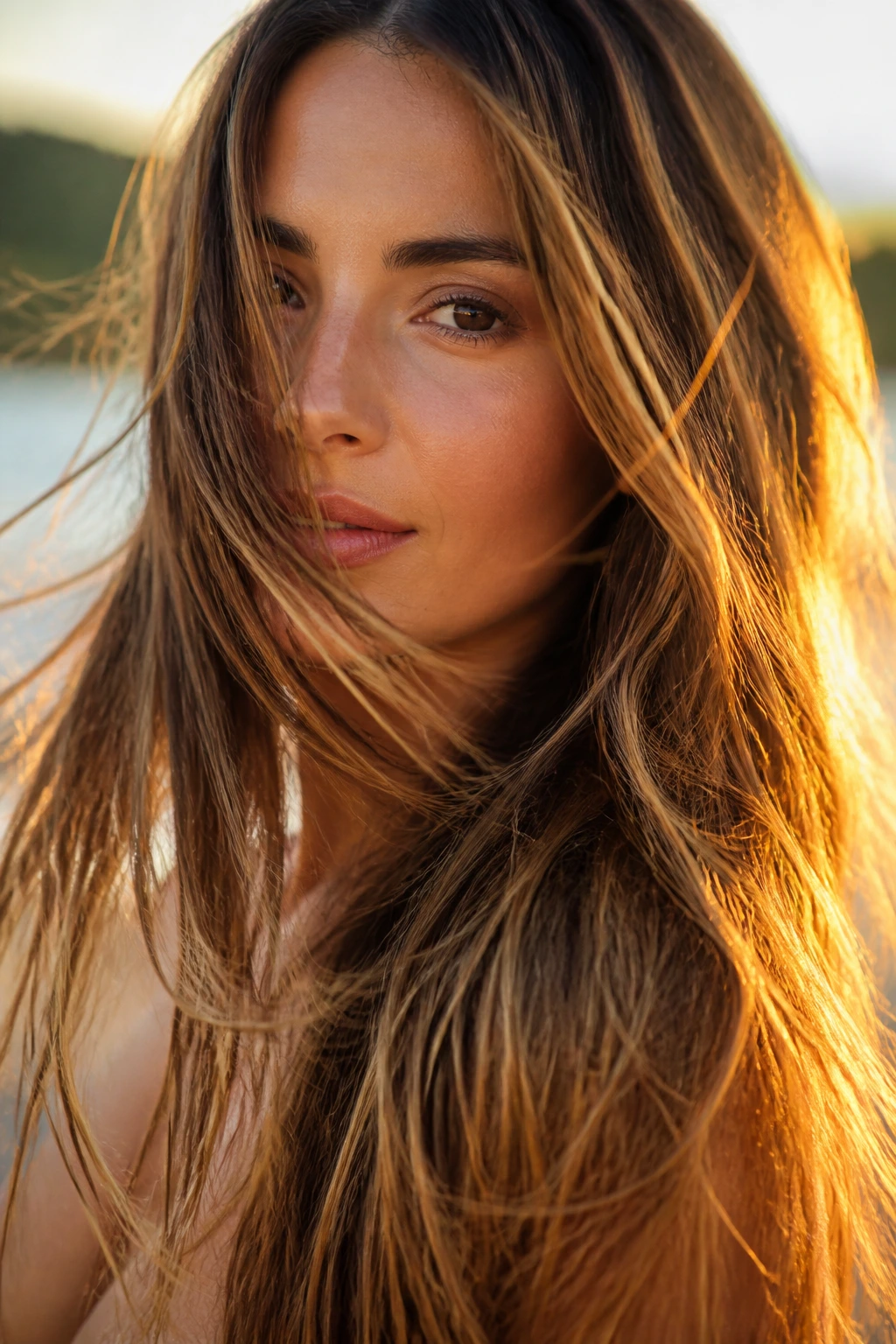
The best thing about warm balayage is how forgiving it can be when it’s done with some restraint. A soft root, a controlled lift, and a tone that matches the skin’s temperature give you hair that still looks good after a few washes and a few weeks of real life. That’s the whole appeal, honestly. It should move, not sit there waiting for perfect lighting.
If you’re deciding between golden, caramel, copper, or bronze, start with the shade that looks richest in daylight and the placement that frames your face without flooding it. A good warm balayage does not need to scream to be noticed. It just needs to sit there looking right, which is harder than it sounds and worth every careful decision.