



Thick hair can look expensive in the best way and boxy in the worst. On an oval face, the danger usually isn’t that the cut will look wrong. It’s that the hair will take over the face line — ballooning at the sides, hanging heavy at the bottom, or sitting flat at the crown while the ends do all the talking.
The upside is that an oval face gives you room. Middle parts, side parts, bangs, short cuts, long cuts — the shape can handle more than people think. Thick hair gives you body to work with, which means buns hold, braids feel full, and layered styles keep their shape longer than fine hair ever will. The trick is choosing a hairstyle that uses that density instead of fighting it.
I keep coming back to the same rule: the best hairstyles for oval faces and thick hair don’t try to erase volume. They direct it. Sometimes that means a blunt edge. Sometimes it means long layers that start below the cheekbone. Sometimes it means a ponytail pulled high enough to show off the face without making the head look top-heavy. The styles below do different jobs, but they all respect the same basic fact — thick hair wants a plan.
Why These Hairstyles Work So Well Together
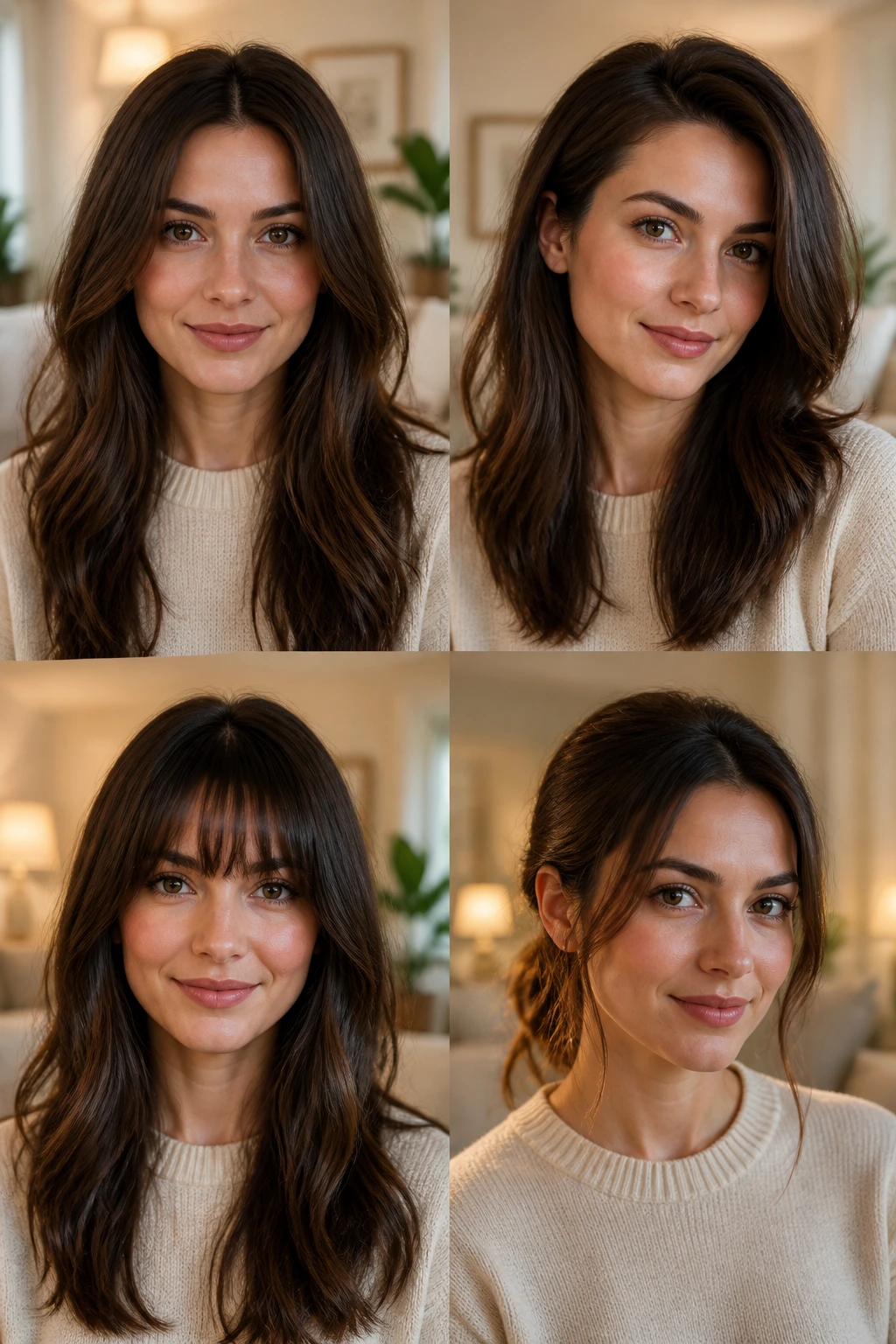
-
Oval faces can handle more than one “right” answer: The face shape is already balanced, so a middle part, side part, fringe, or pulled-back style usually works if the rest of the cut has shape.
-
Thick hair needs a direction, not a fight: These styles either remove weight in the right places or keep the perimeter clean so the hair doesn’t puff out at the sides.
-
Bangs are on the table here: Curtain bangs, side-swept fringe, and soft fringe all sit well on an oval face because they frame without swallowing the forehead.
-
Short hair does not have to look wide: A textured pixie, French bob, or blunt lob can all work on thick hair when the weight line is placed carefully.
-
Styled looks are easier to keep full: Ponytails, buns, braids, and half-up styles hold their shape better on thick hair, so they look intentional instead of limp.
-
You can lean polished or messy: The same cut can wear straight, wavy, blown out, or air-dried, which matters when your mornings are not always cooperative.
1. Long Layers with Curtain Bangs
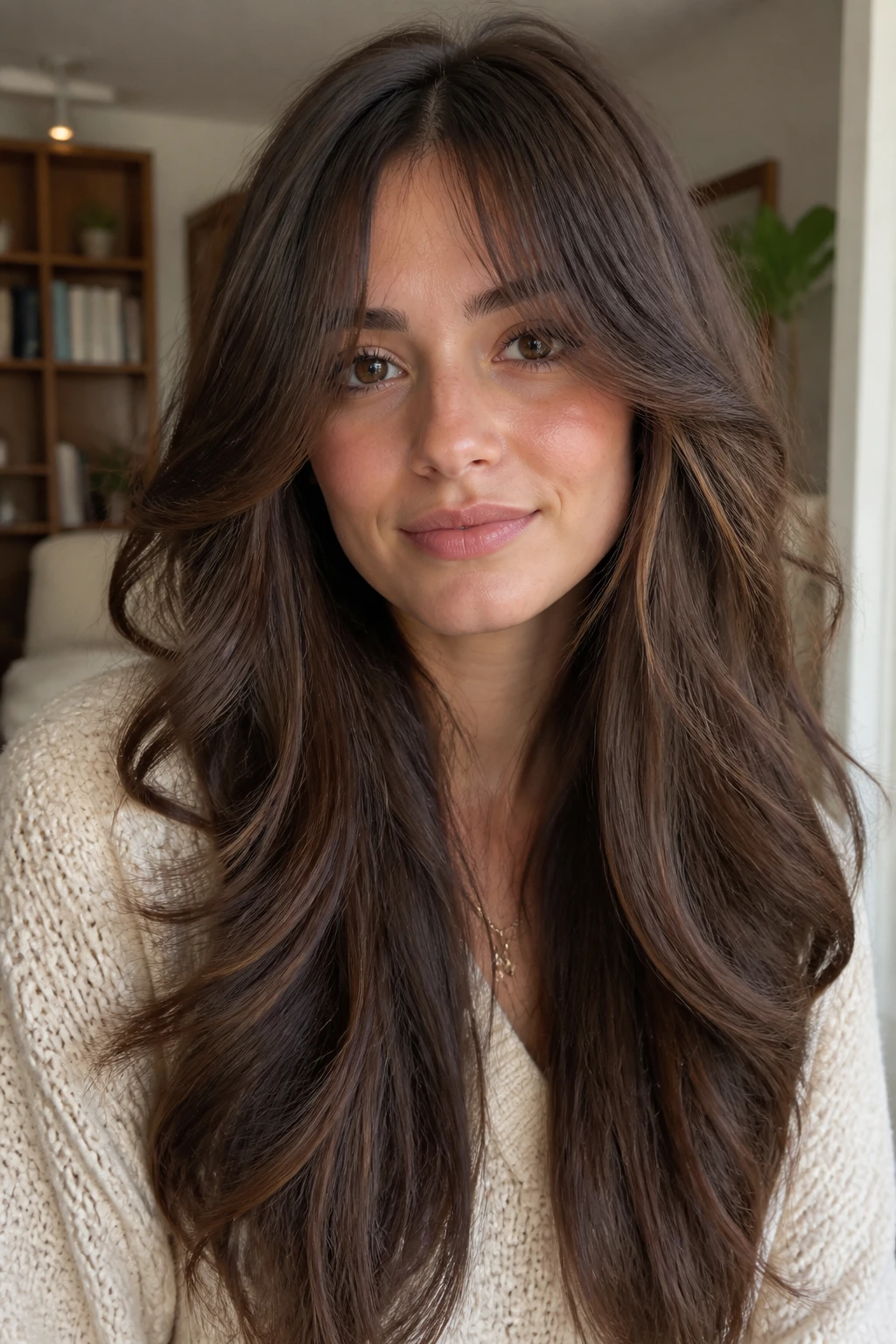
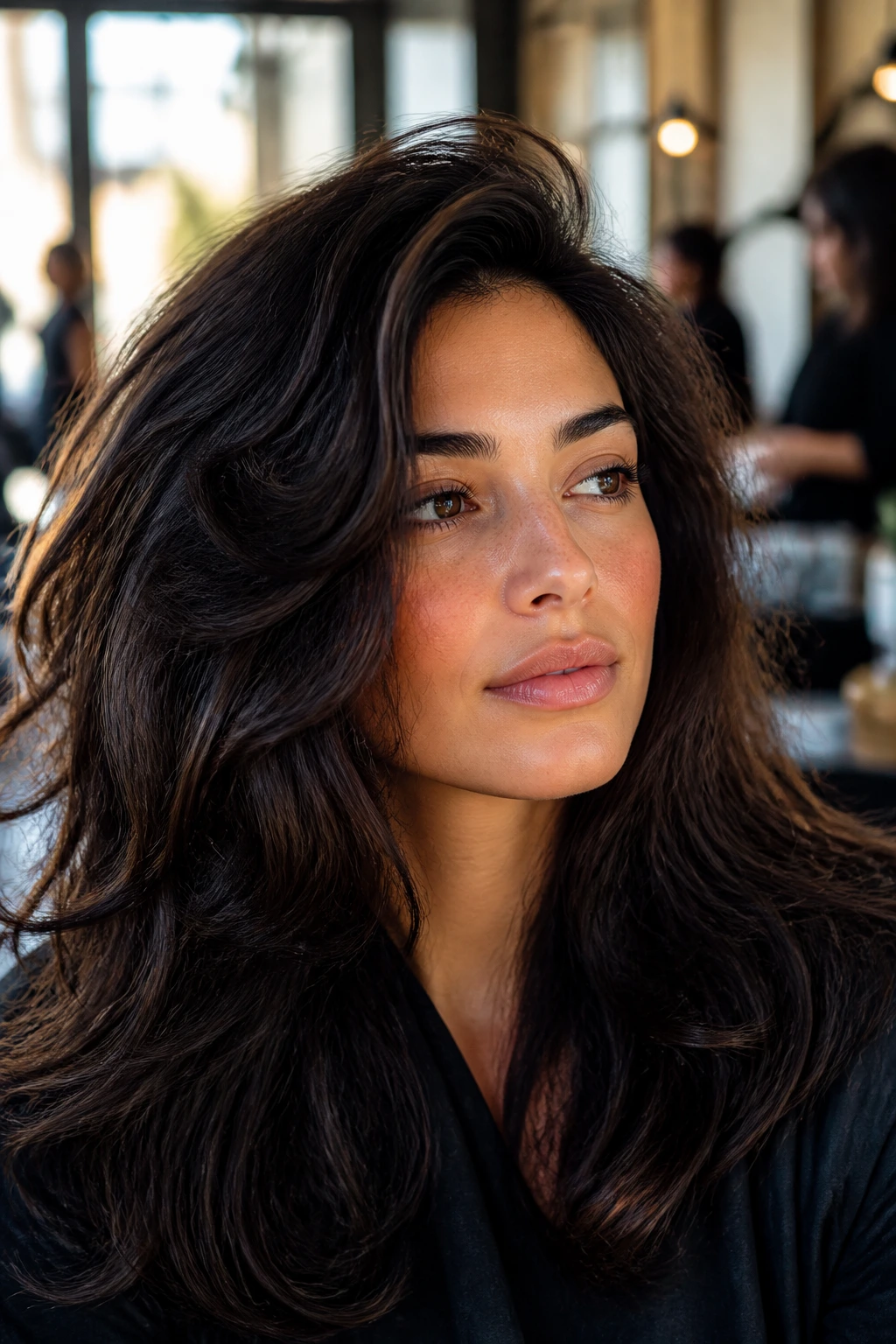
This is the style I reach for when thick hair needs to look controlled without losing swing. Long layers keep the ends from piling up into one heavy wall, and curtain bangs open the face right where an oval shape likes a little softness — around the cheekbones, not halfway up the forehead.
The best version starts the shortest face-framing pieces around lip level or just below. That gives you movement without creating the fluffy triangle that thick hair sometimes turns into. Blow-dry the bangs away from the face with a round brush, then let the lengths fall loose or add a soft bend with a 1.25-inch iron. The result is polished, but not stiff.
What I like here is the balance. The face stays open, the ends stay controlled, and the cut still looks good when the day gets a little messy. Ask for layers that remove weight through the mids, not a lot of choppy slicing at the ends. That one detail makes the difference between movement and frizz.
2. Collarbone Lob with Soft Ends
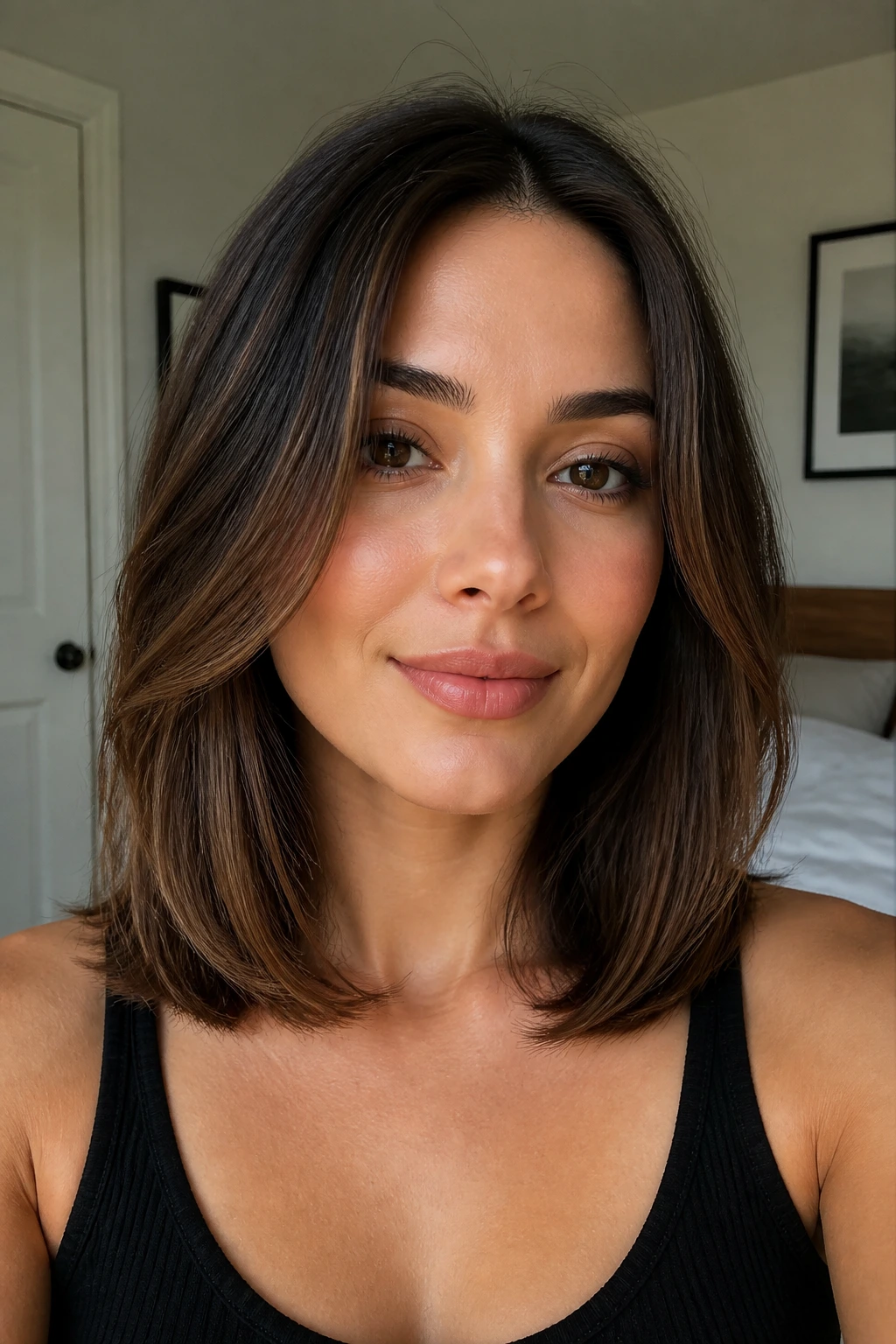
Why does a collarbone lob work so well on thick hair? Because it stops the hair from dragging everything down. A lob that hits right at the collarbone gives thick strands a place to sit, and on an oval face it keeps the line long enough to look sleek without going heavy at the jaw.
The soft-end version matters. You do not want a hard, blunt block if your hair is dense and prone to puffing. Ask for a slightly beveled finish at the bottom — not razor-thin, not wispy, just enough to keep the edge from acting like a shelf. That tiny angle helps the hair tuck in instead of flaring out.
What to Ask Your Stylist For
- Length: Collarbone-grazing, or a touch longer if your hair is very dense.
- Perimeter: Clean and even, with soft beveling at the ends.
- Layers: Minimal, placed low so the body stays intact.
- Styling note: Works best when blown smooth with a paddle brush or given a loose bend with a flat iron.
This cut is one of those quiet winners. It looks expensive with almost no drama.
3. Butterfly Cut with Big Face-Framing Pieces
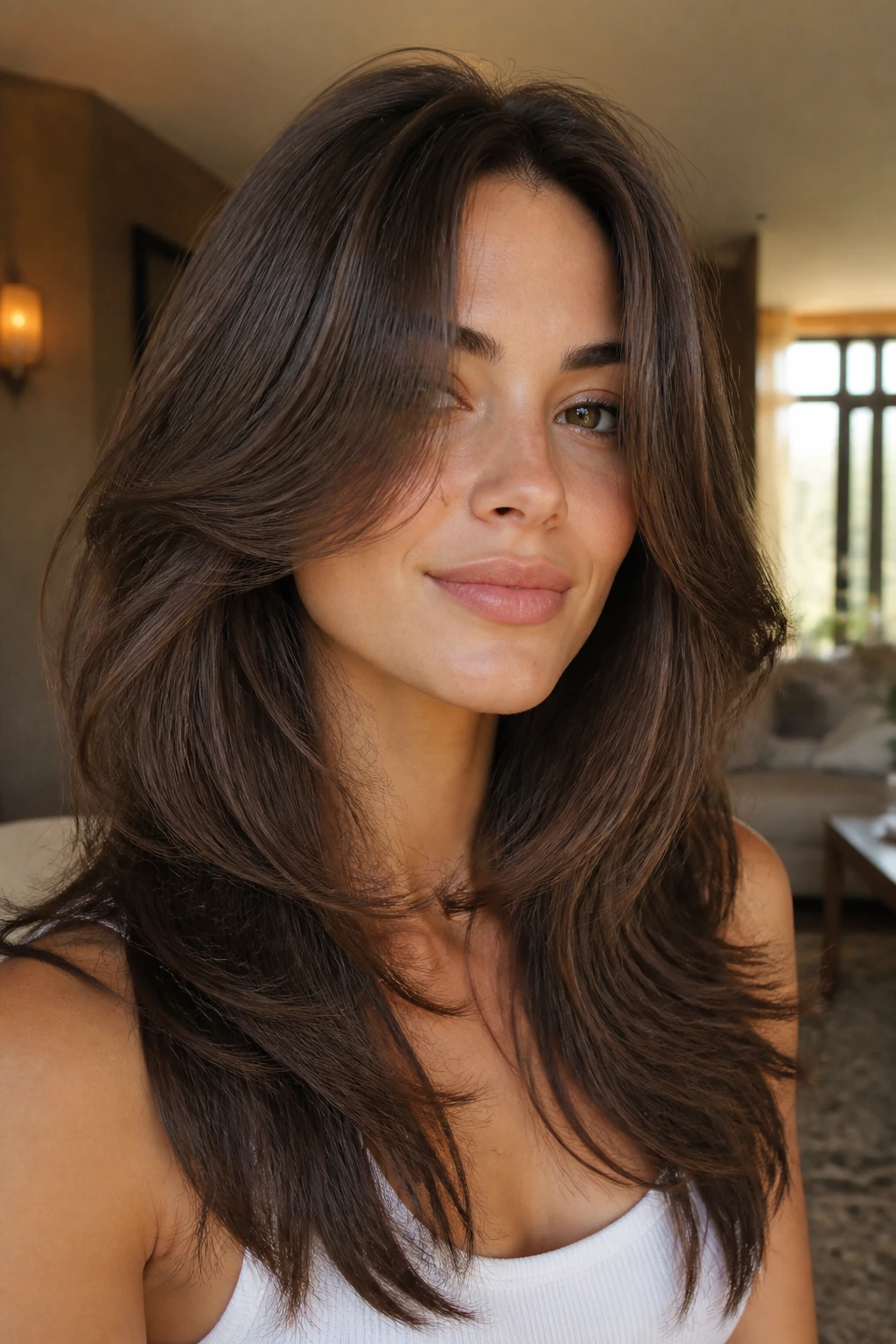
I remember the first time I saw a butterfly cut on thick hair that was actually done well — the hair moved in two distinct zones, and the whole head looked lighter without losing length. That’s the charm here. The shorter face-framing layers create lift around the cheeks and jaw, while the longer underlayers keep the bottom from turning into a curtain.
On an oval face, the butterfly cut gives you width where you want it and length where it counts. The shorter pieces should start around the chin or a little below it. If they start too high, the face can feel crowded. Thick hair benefits from this cut because the layering is visible without having to carve the whole head to pieces.
- Best for: Hair that feels heavy at the mids and flat at the crown.
- Watch for: Too many short layers near the top — that can make thick hair puff upward.
- Style it with: A round brush and large rollers, or a soft blowout with the ends turned under.
The butterfly cut has a little drama. That’s the point.
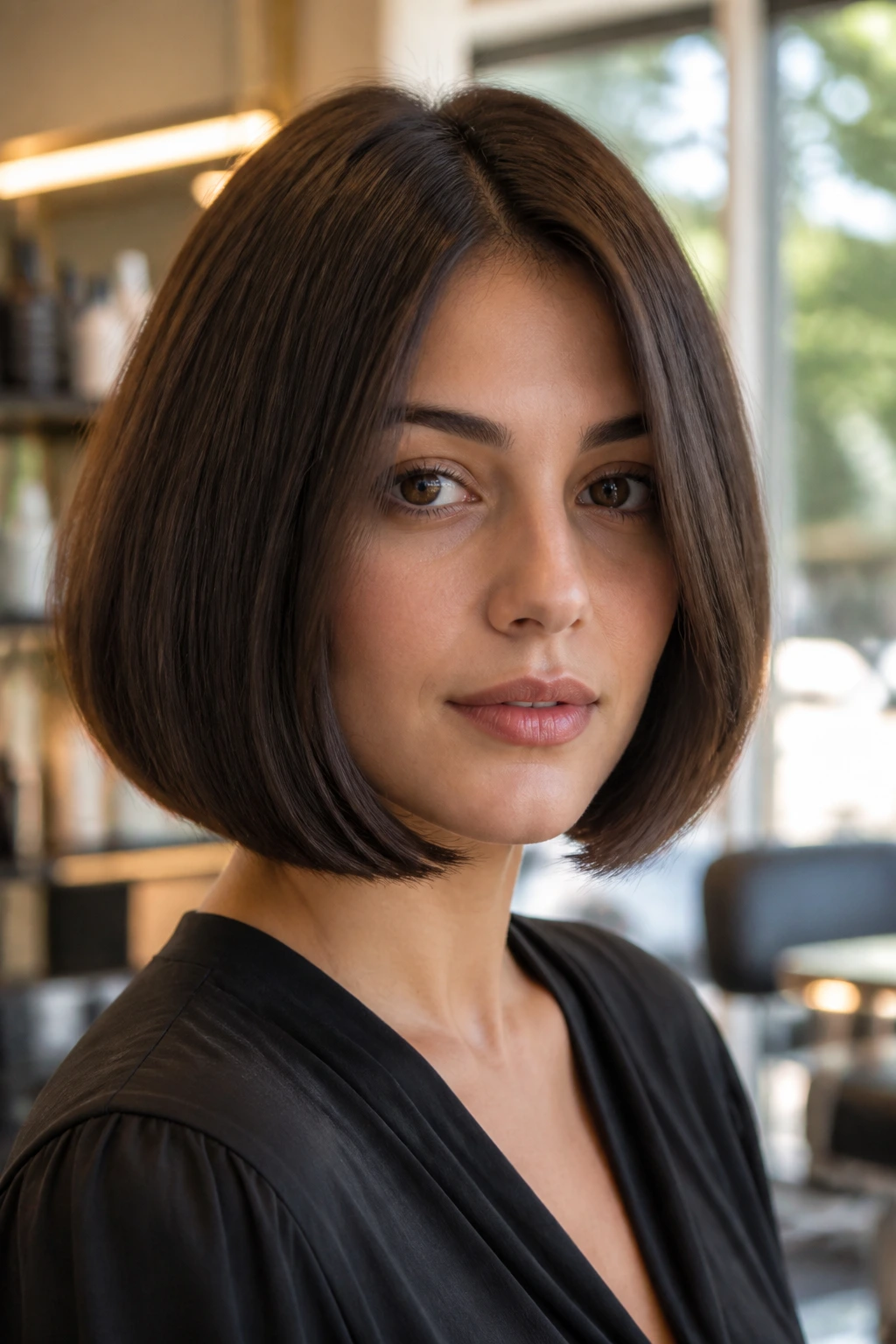
4. Blunt Mid-Length Bob with a Center Part
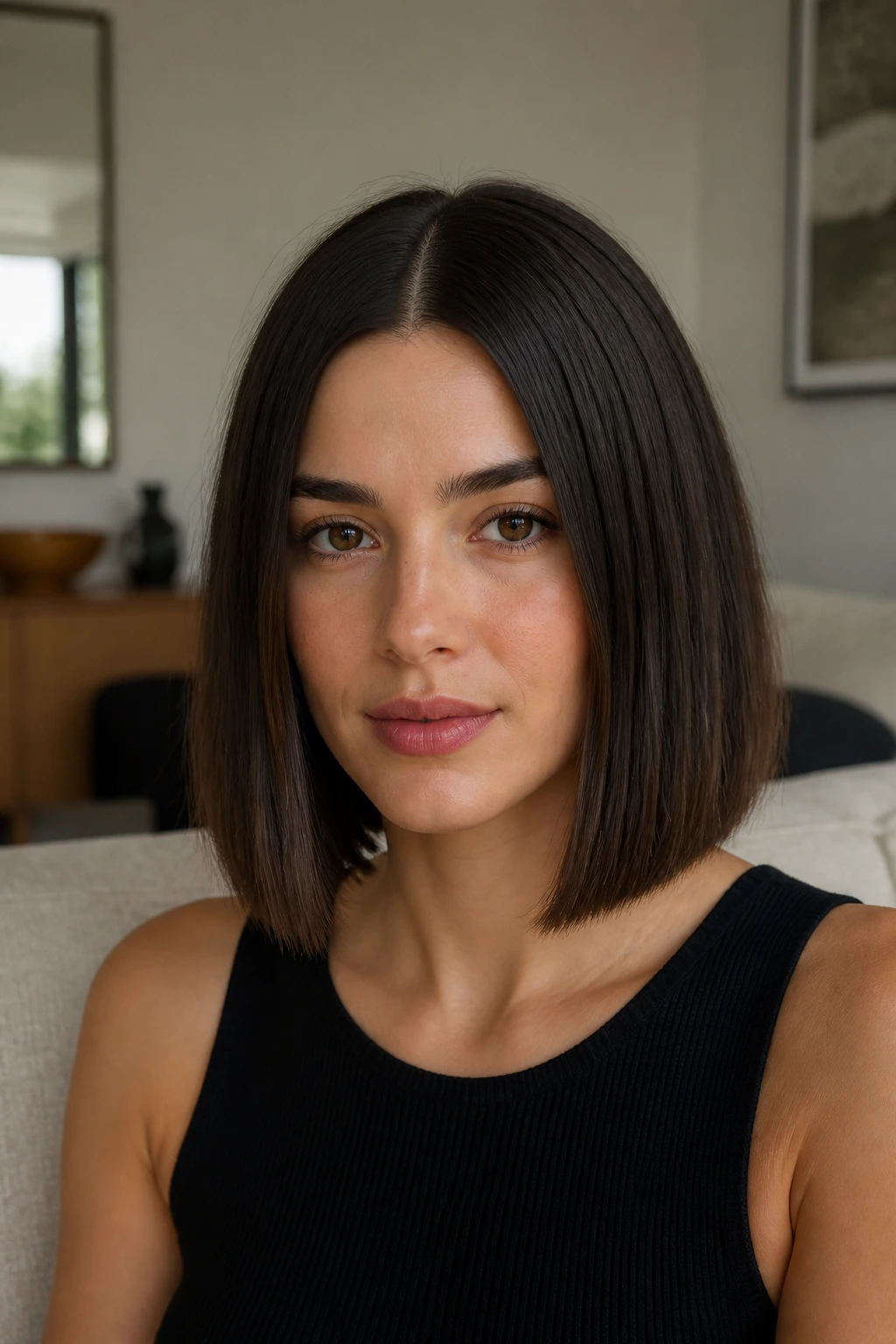
A blunt mid-length bob is one of the few short cuts that can make thick hair look calmer instead of bigger. The straight line gives the density a boundary, and on an oval face that clean shape doesn’t feel harsh the way it might on a rounder face.
The trick is keeping the length right around the collarbone or just above it, not riding high at the jaw unless you want a more graphic look. Thick hair needs enough weight to lie down; if the bob is too short and too blunt, it can sit like a bell. A subtle underbevel or tiny interior debulking keeps the bottom edge from flaring out.
This cut is also a nice fit if you like a middle part. The symmetry looks sharp on an oval face, and the thick hair keeps the part from disappearing by noon. Use a smoothing cream and one slow pass of the flat iron if your strands are coarse. No need to steamroll it flat. A bit of bend at the ends still looks better than board-straight hair that has no movement at all.
5. Deep Side-Part Waves
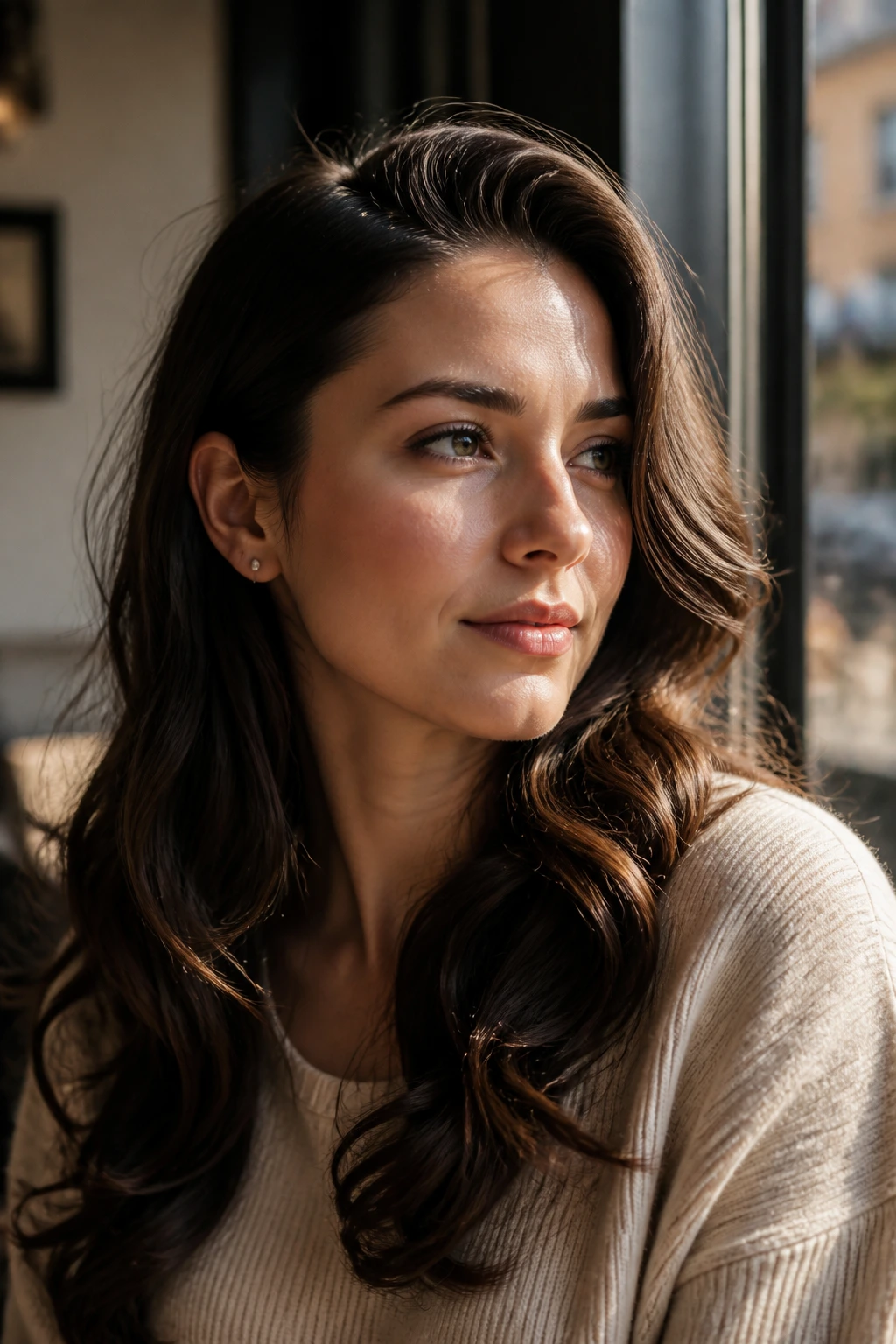
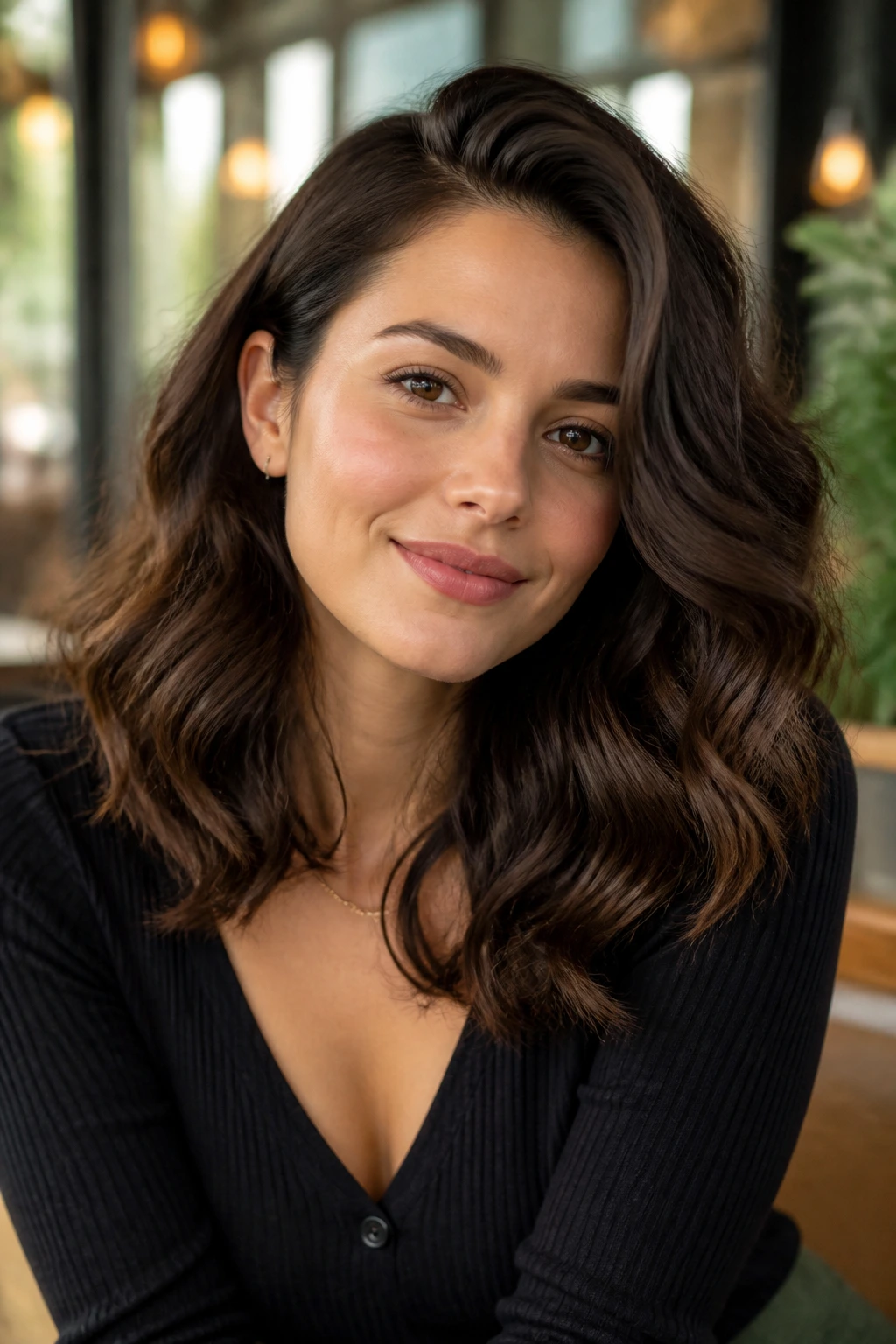
A deep side part changes the whole mood of thick hair. It creates asymmetry, gives the crown a little lift, and keeps the sides from feeling too wide. On an oval face, that offset shape is flattering because it adds interest without fighting the natural balance of the face.
The best part is how forgiving it is. If your hair is a little too full at the roots, the side part helps redirect the bulk. If the ends need a little softness, loose waves do the job without making the style feel overdone. I like this look on shoulder-length or longer thick hair, especially when the wave starts mid-shaft and not all the way at the root.
A 1.25- or 1.5-inch curling iron makes a soft bend that holds, then relaxes into that lived-in wave thick hair does so well. Finish with a light hairspray, not a crunchy one. You want movement. You do not want the hair to freeze in place.
6. Choppy Shag with Wispy Ends
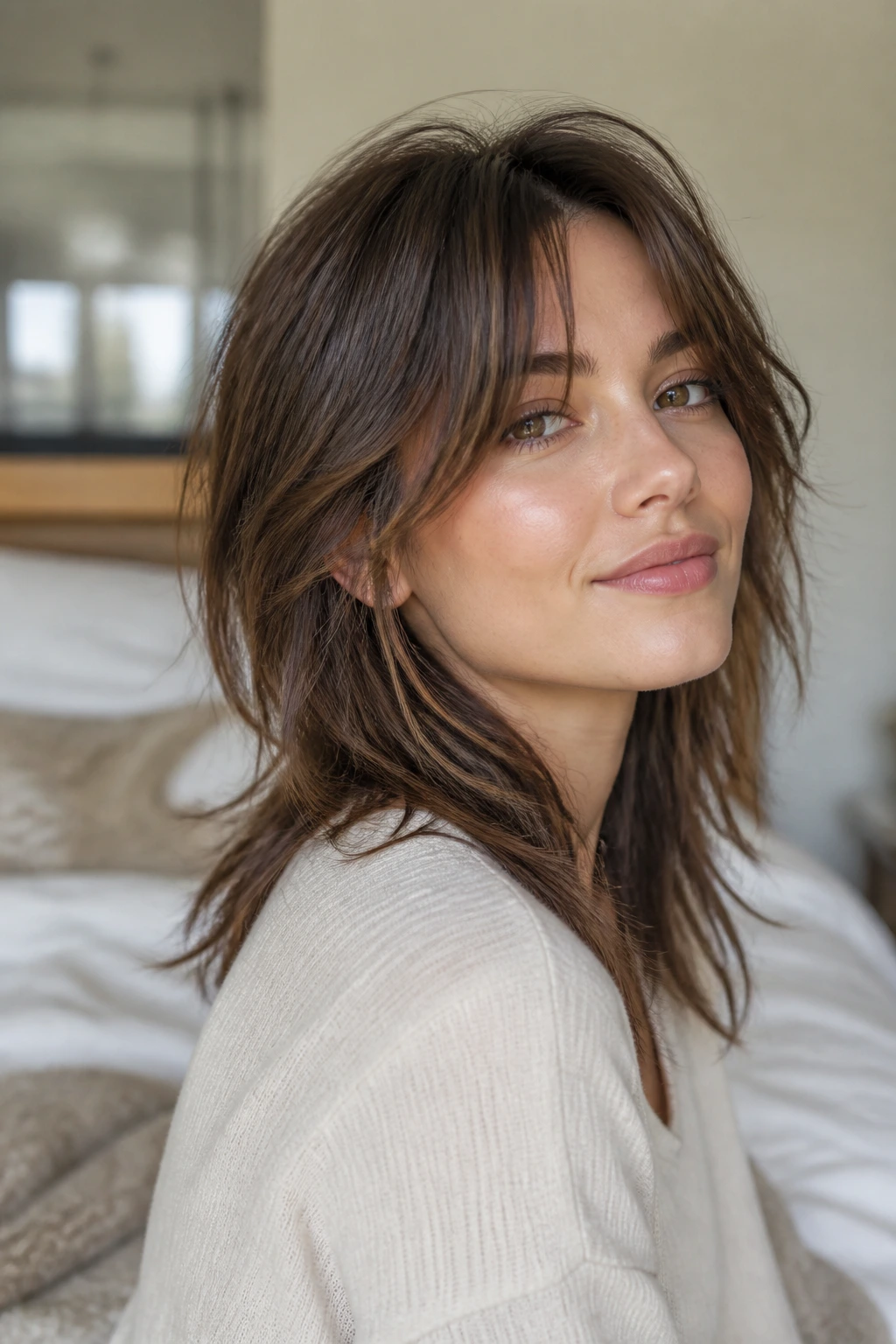
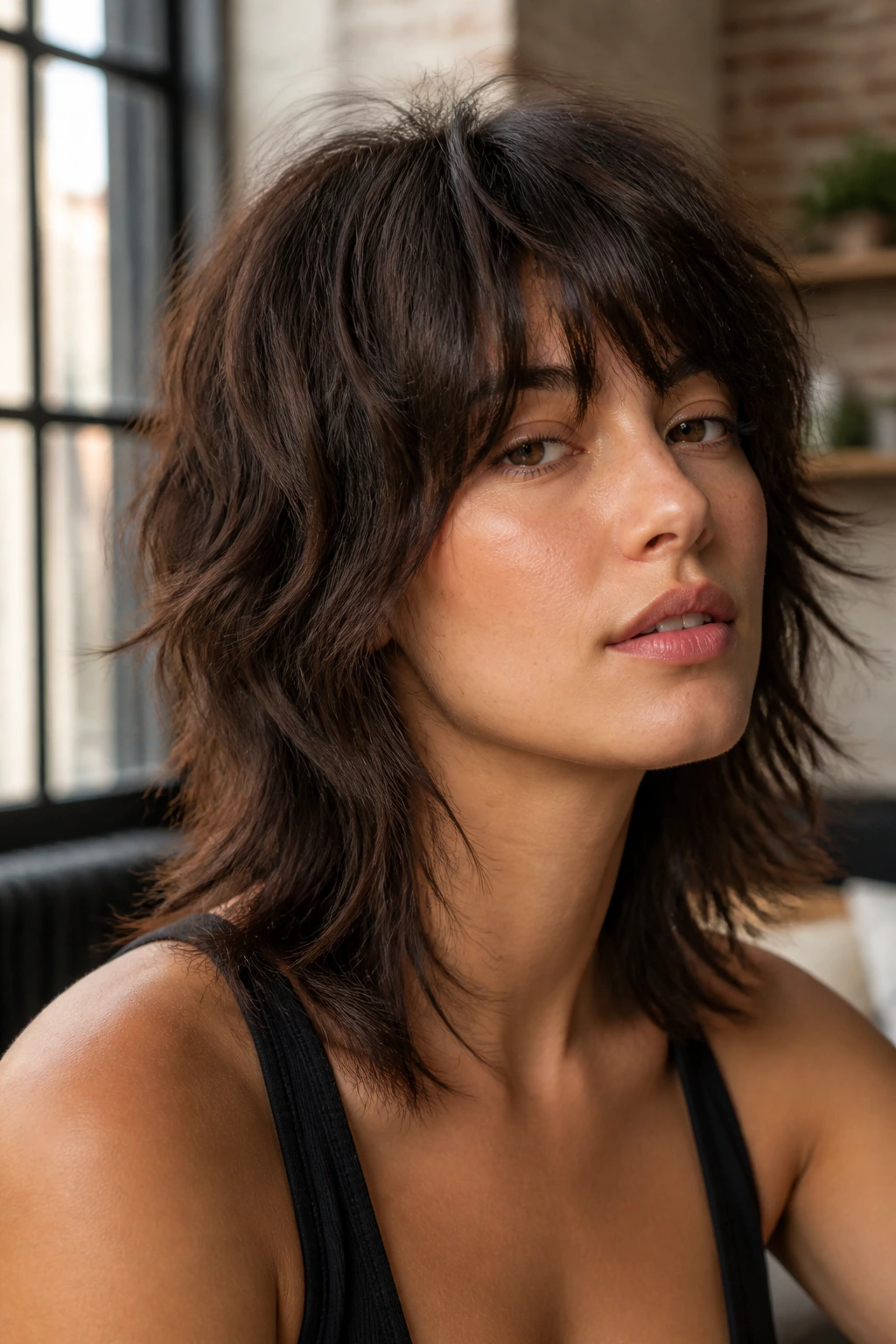
The shag is one of those cuts people either love immediately or avoid because they’ve seen a bad version. Thick hair is where it starts to make sense. The layers break up the density, and the texture keeps the cut from feeling too polite.
Where the Movement Goes
The movement should sit through the crown, sides, and a little around the cheekbones. That keeps the face open on an oval shape and stops the hair from looking bottom-heavy. Wispy ends help, but only if they’re controlled — on coarse thick hair, too much razor work can turn into frizz by the second hour.
What to Ask For
- Point-cut texture, not aggressive thinning.
- Layers that start around the cheekbone or mouth.
- A fringe that can be worn center-parted or swept aside.
- Enough length to tuck behind the ears if you want a cleaner look.
The shag is not neat. That’s why it works. It gives thick hair a little edge and keeps the silhouette from getting too round.
7. Sleek Straight Hair with Tucked-Behind-Ears Detail
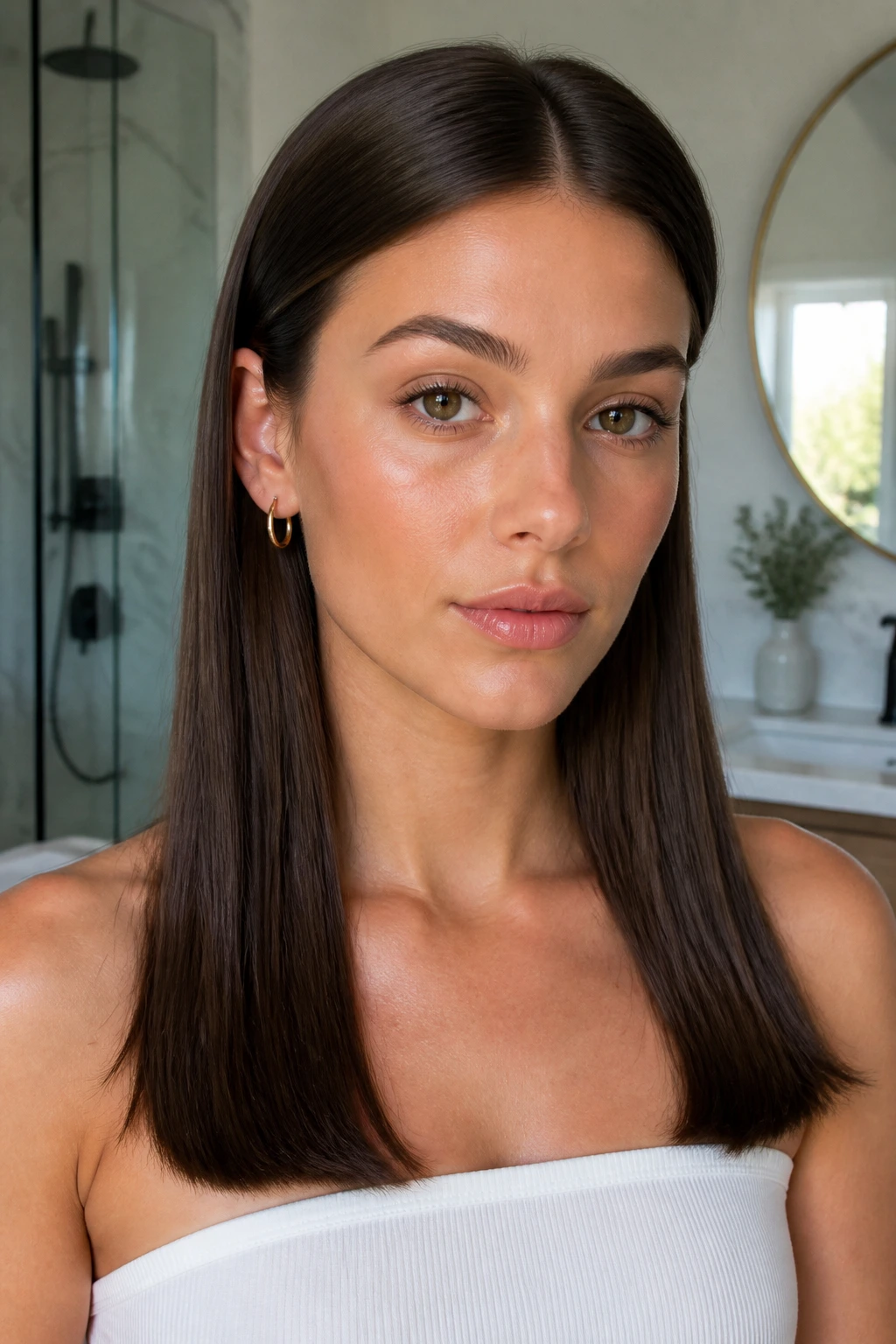
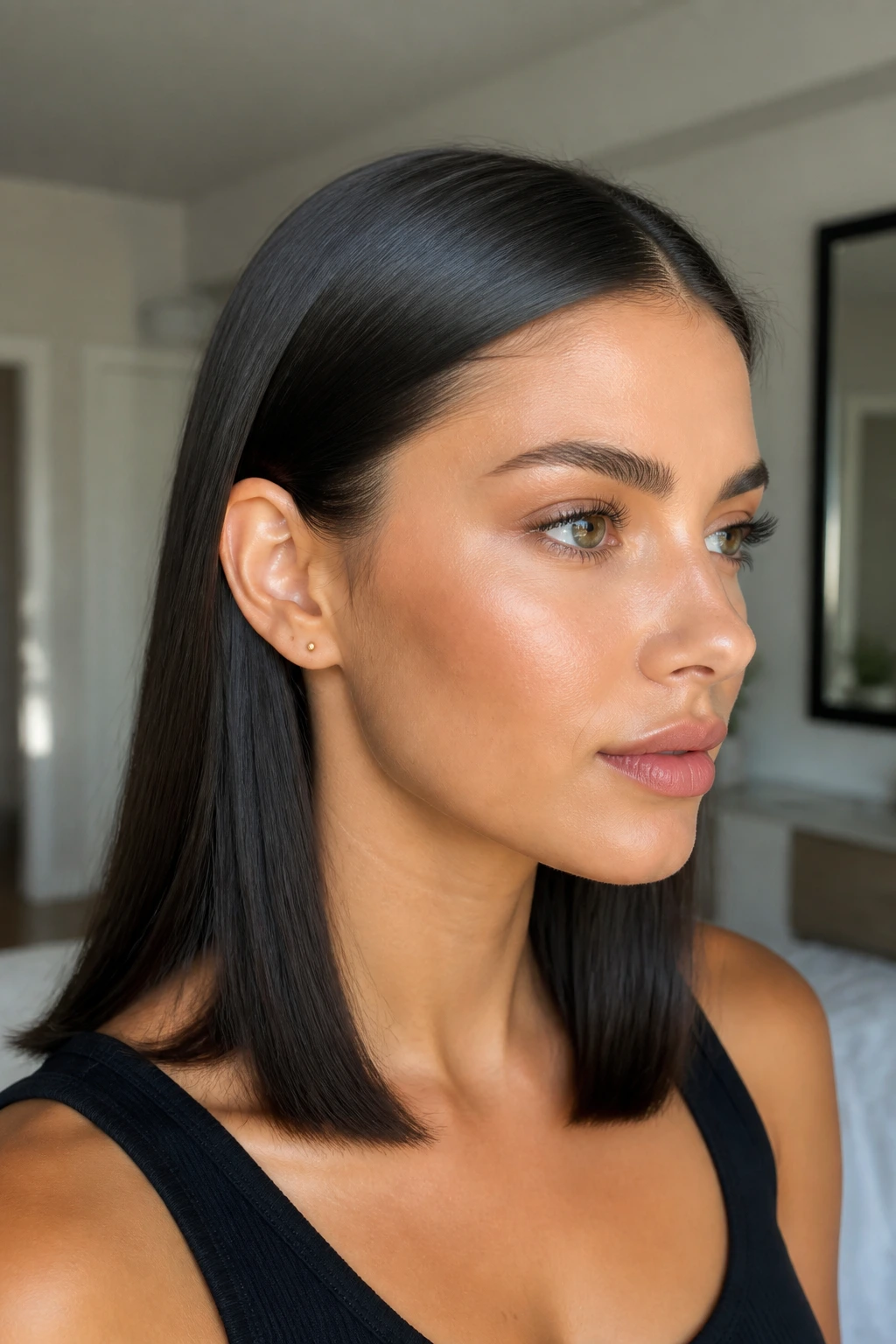
There’s something satisfying about thick hair when it’s smoothed down and tucked behind the ears. It shows the cheekbones, cleans up the side profile, and lets the oval face do its job without extra clutter.
This style works best when the hair is cut with a blunt or softly layered perimeter. If the ends are too chipped up, the sleekness falls apart fast. Start with a center part, work in a heat protectant, and use a flat iron in slow, steady passes. You’re not chasing bone-straight perfection here. You’re trying to remove puff and keep the line crisp.
The tucked-behind-ear detail matters more than people think. It creates an instant face frame, especially if the hair is long enough to skim the collarbones. Thick hair holds the shape well, so even a slight bend at the ends can look deliberate.
And yes, this is one of the few looks where shine matters. A small amount of serum through the mids and ends does more than another pass with the iron.
8. High Ponytail with a Wrapped Base
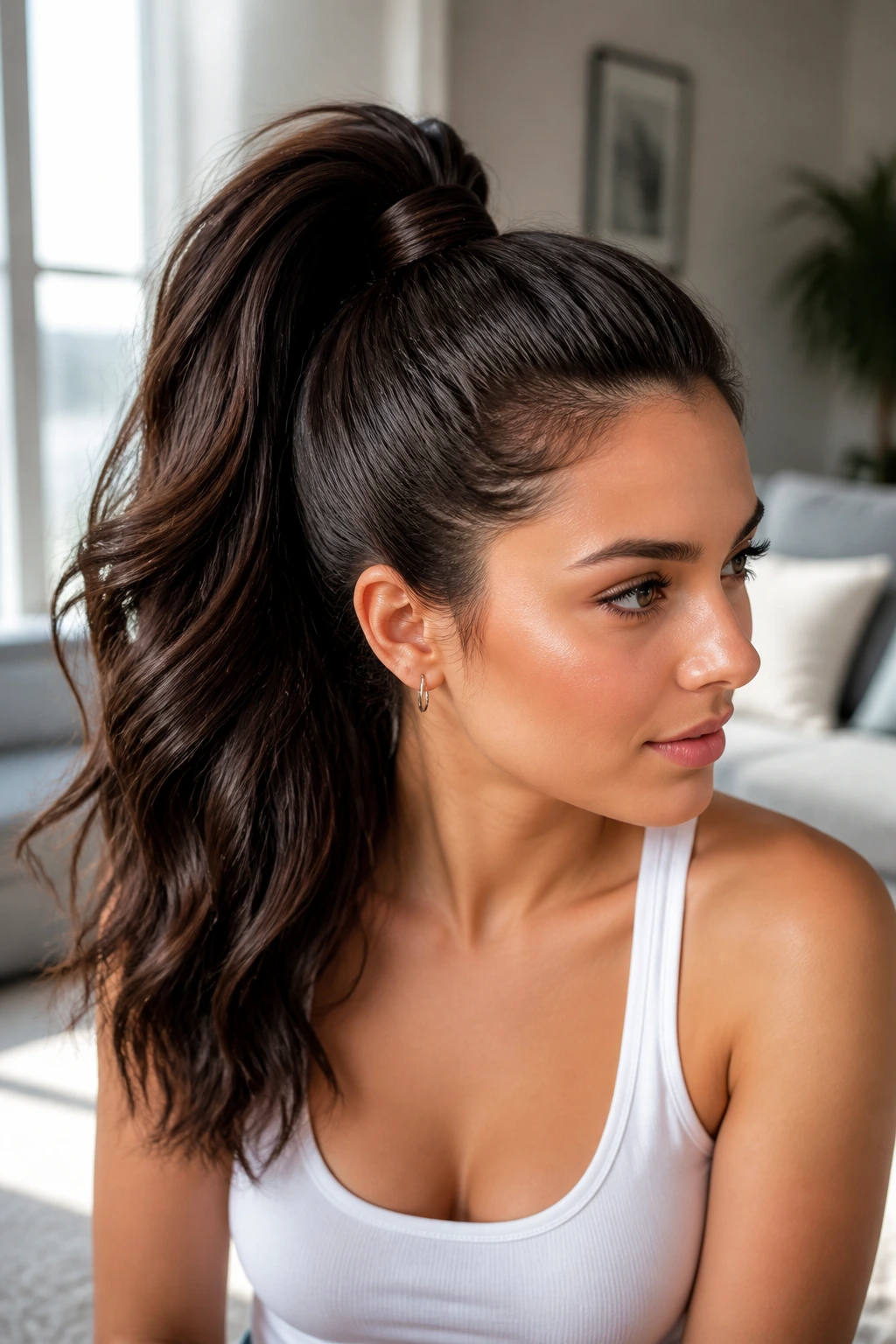
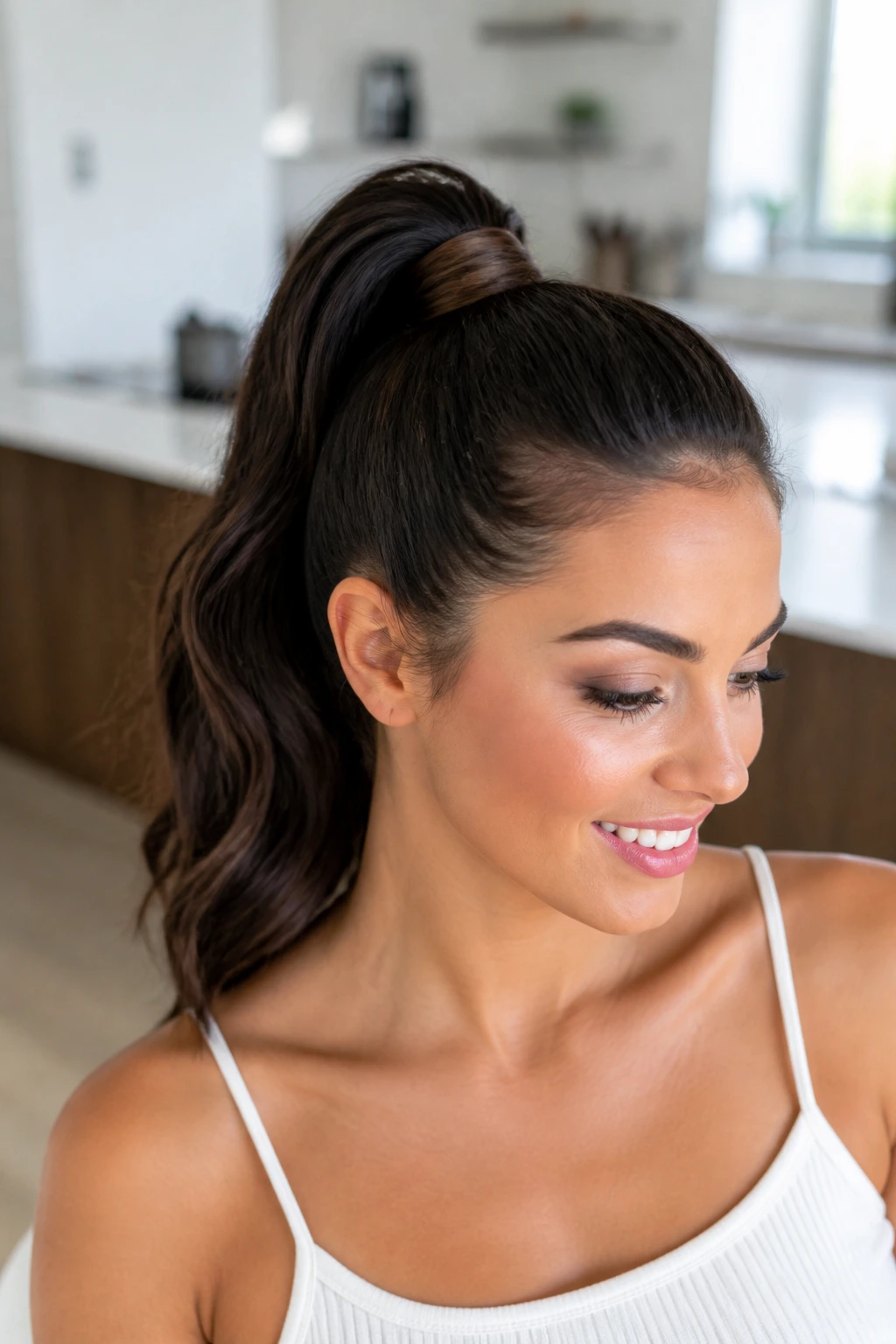
If thick hair has one natural advantage, it’s a ponytail with presence. A high ponytail on an oval face lifts the eye line upward and keeps the features open, which is exactly why it feels so clean. It also uses thickness as a feature, not a problem.
The best version sits at the crown or just above it. Brush the top section smooth, but do not flatten the roots completely — a little height keeps the style from looking severe. Secure the pony with a strong elastic, then wrap a small strand around the base to hide the tie. If your hair is very heavy, stack two elastics on top of each other. That keeps the ponytail from drooping by noon.
This style can be sleek or a little softer. Sleek works well for polished days. Softer works when you pull a few face-framing strands free around the temple and cheekbone. Either way, thick hair gives the ponytail enough body to look full without teasing it into a knot.
Tip: mist the finished ponytail with a flexible spray and smooth the surface with a boar-bristle brush. That keeps flyaways from exploding around the crown.
9. Claw-Clip Twist with Lifted Crown
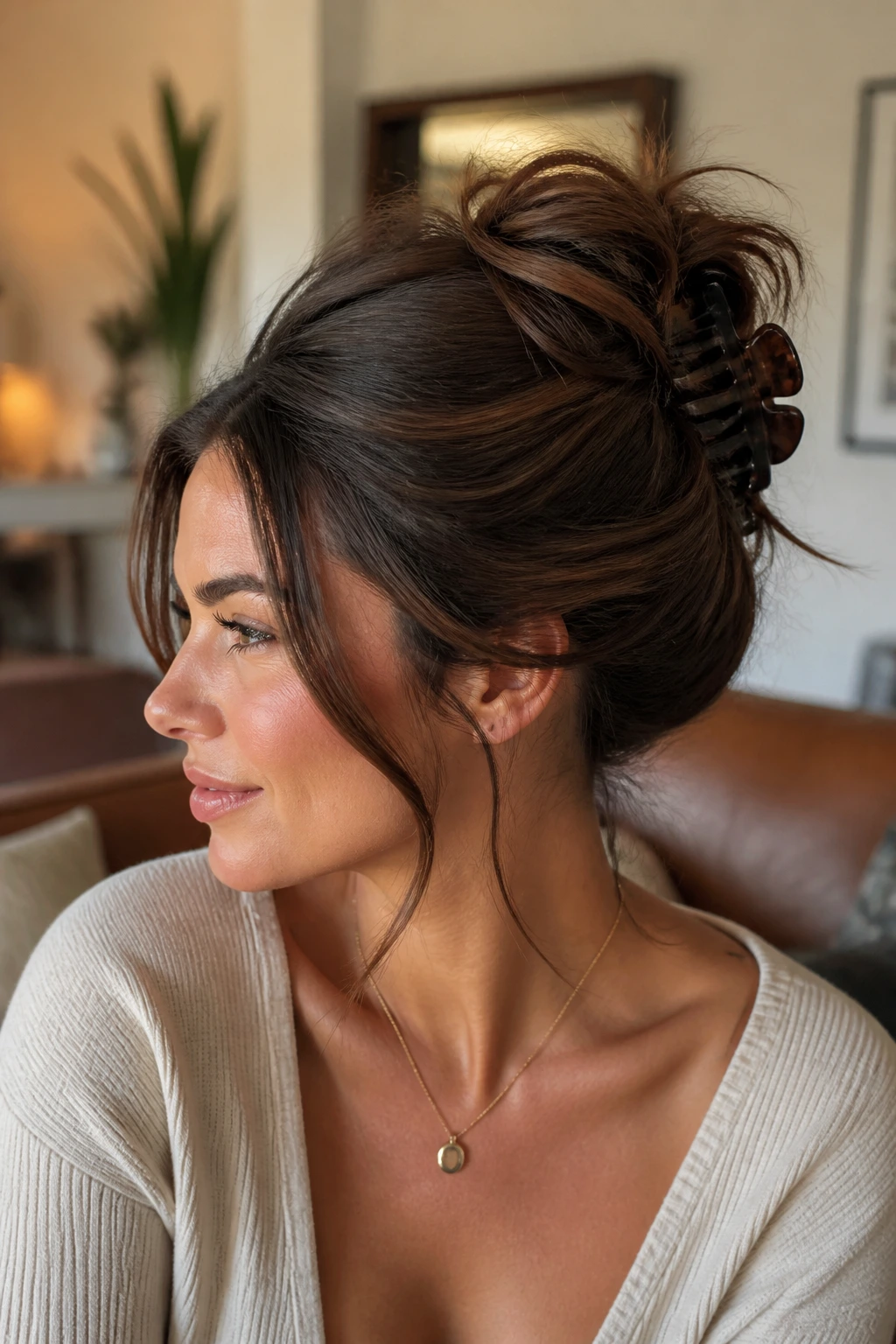
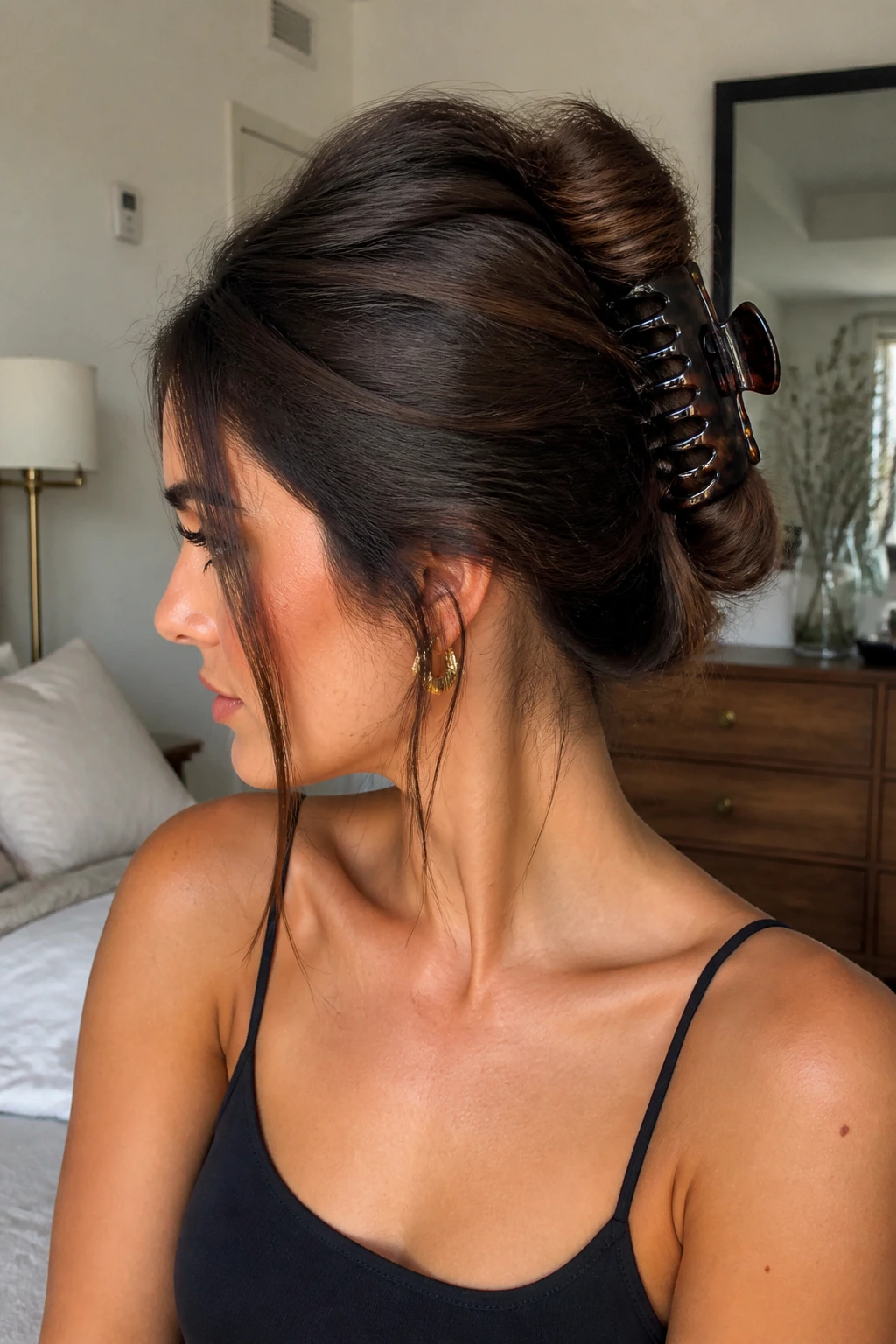
This is the lazy-day style that still looks like you paid attention. Thick hair makes a claw-clip twist feel sturdy instead of flimsy, and on an oval face the lifted crown keeps the style from flattening the head shape.
The best way to wear it is high enough to open the face, low enough that the clip doesn’t dig into the scalp. Twist the hair once, fold it upward, and let the ends fan out a little. That little bit of looseness is part of the charm. If every strand is tucked in too tightly, the style loses the relaxed shape that makes it work.
Why It’s So Useful
- It holds thick hair without a dozen pins.
- It keeps the sides away from the face.
- It gives the crown some height, which oval faces usually wear well.
- It works with second-day texture instead of fighting it.
Use a large claw clip, not the tiny decorative kind that snaps shut and gives up. If your hair is very dense, twist the midsection first and tuck the ends under before clipping. That keeps the twist from slipping.
10. Half-Up, Half-Down with Polished Ends
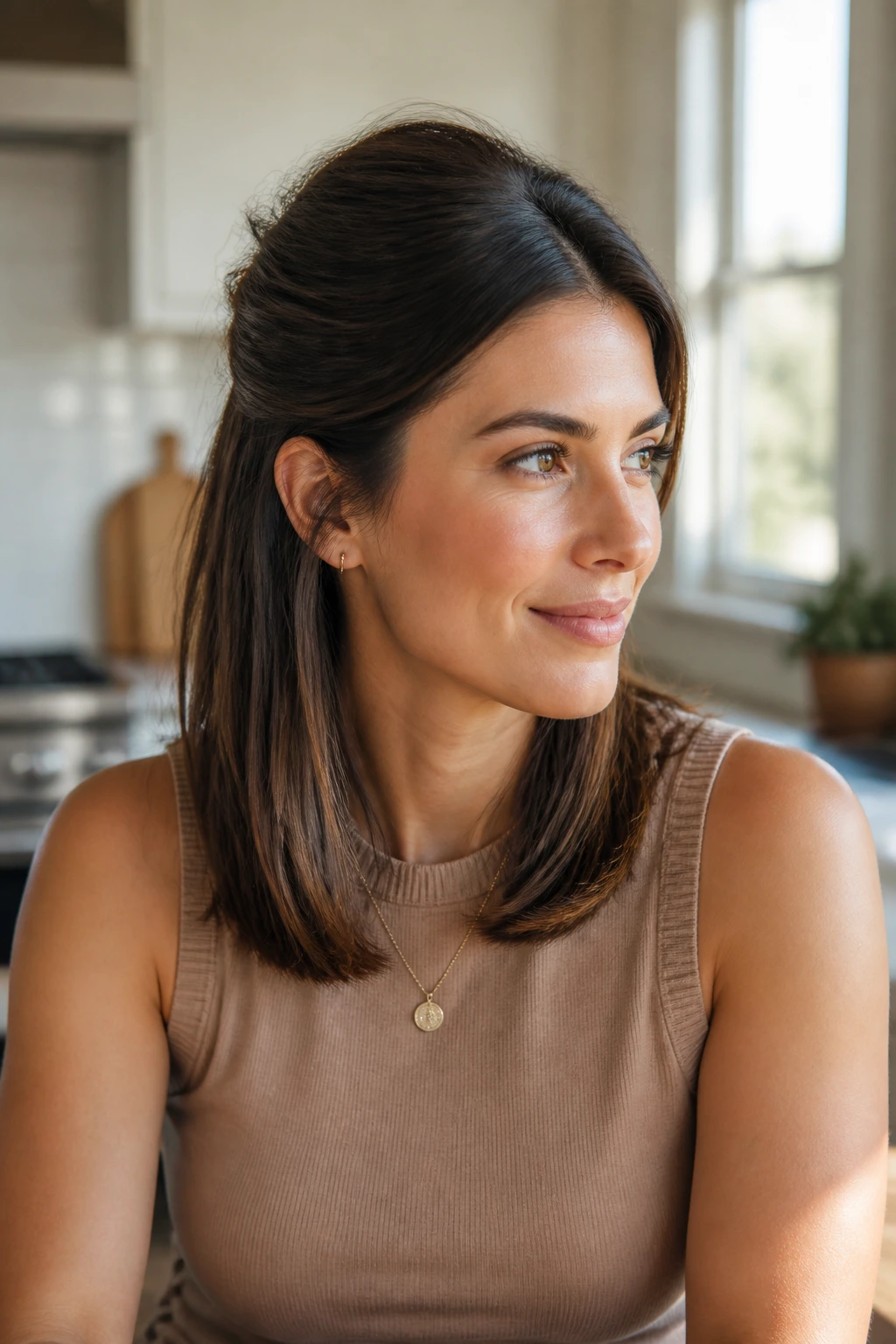
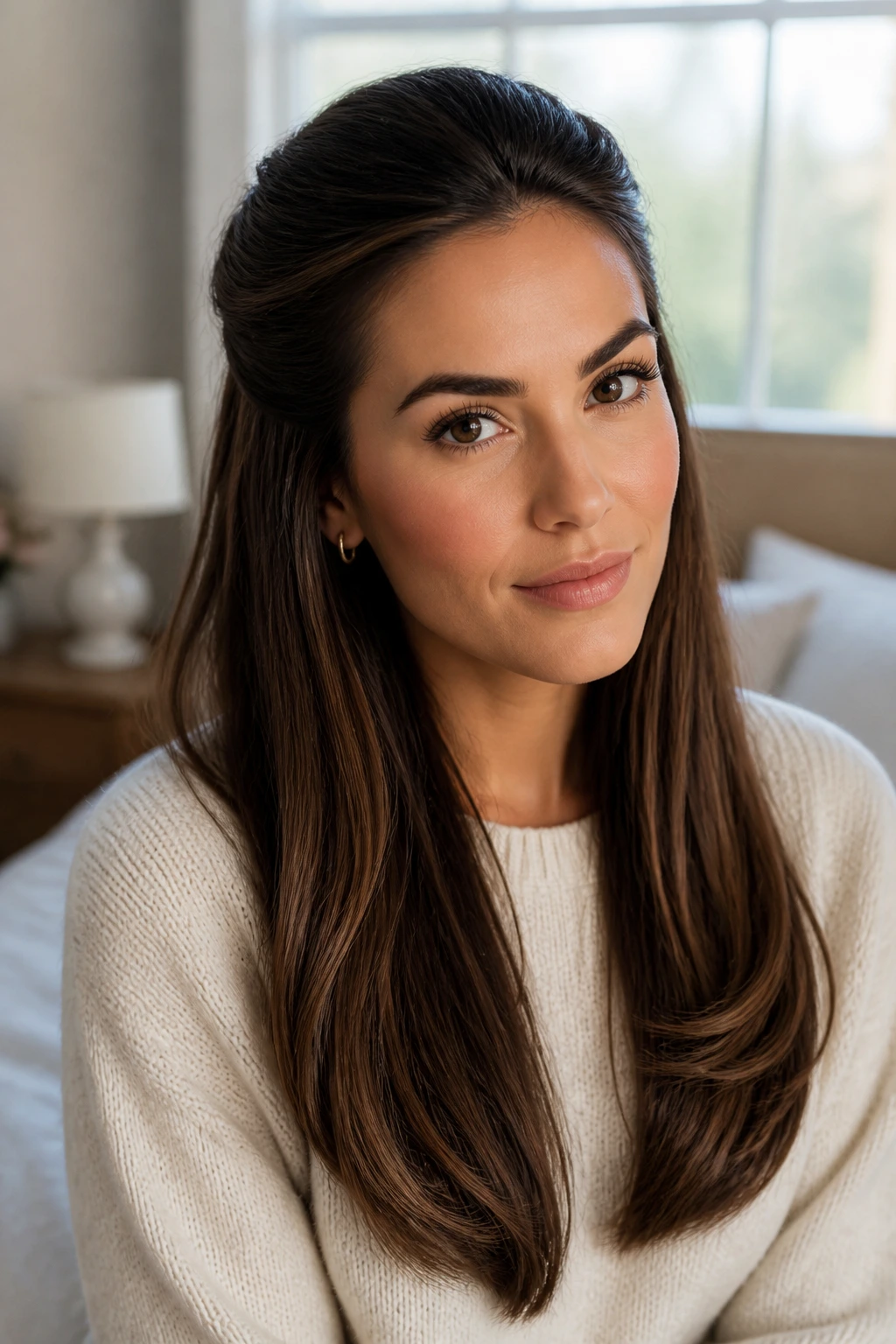
Why does half-up, half-down work so neatly on thick hair? Because it lets you keep the fullness in the lengths while taking some of the pressure off the crown. On an oval face, the top section lifts the features and leaves enough hair around the jaw to keep the look soft.
The part line can be center or slightly off-center. Gather the top half from temple to temple, or just above the ear if you want a smaller lift. Smooth that top section first, then decide what you want the ends to do. Straight ends feel modern. Soft bends feel a little gentler. Either one works.
This is one of my favorite styles for thick hair that has been growing out between cuts. It hides uneven layers better than a full updo and gives you enough structure that the hair doesn’t feel loose and shapeless. A barrette, a small claw clip, or a wrapped elastic all work here.
If your ends are blunt, the style looks cleaner. If they’re layered, the bottom section looks softer. Both are valid. Just keep the top section neat enough that the eye sees the shape first.
11. Shoulder-Length Layers with Side-Swept Bangs
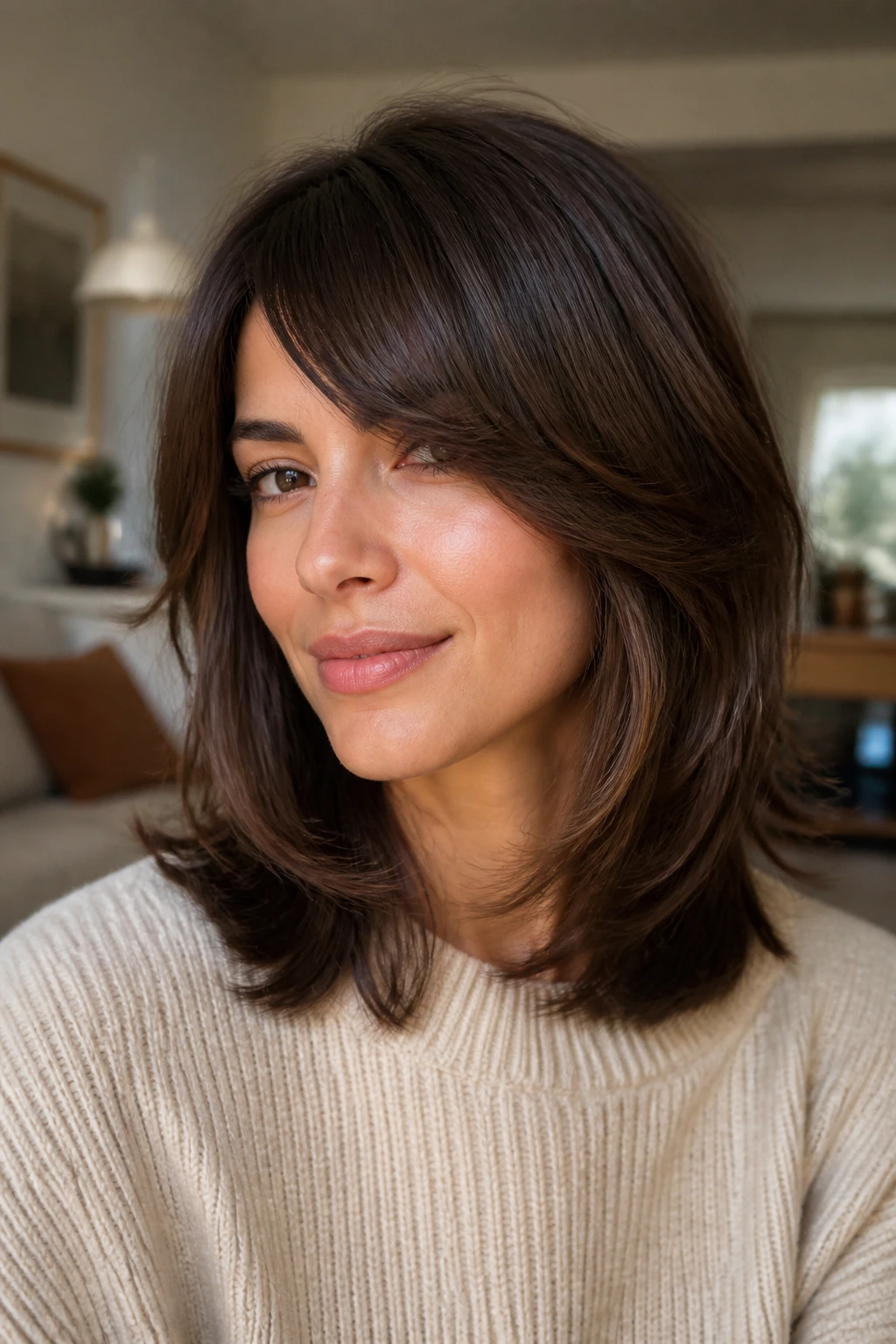
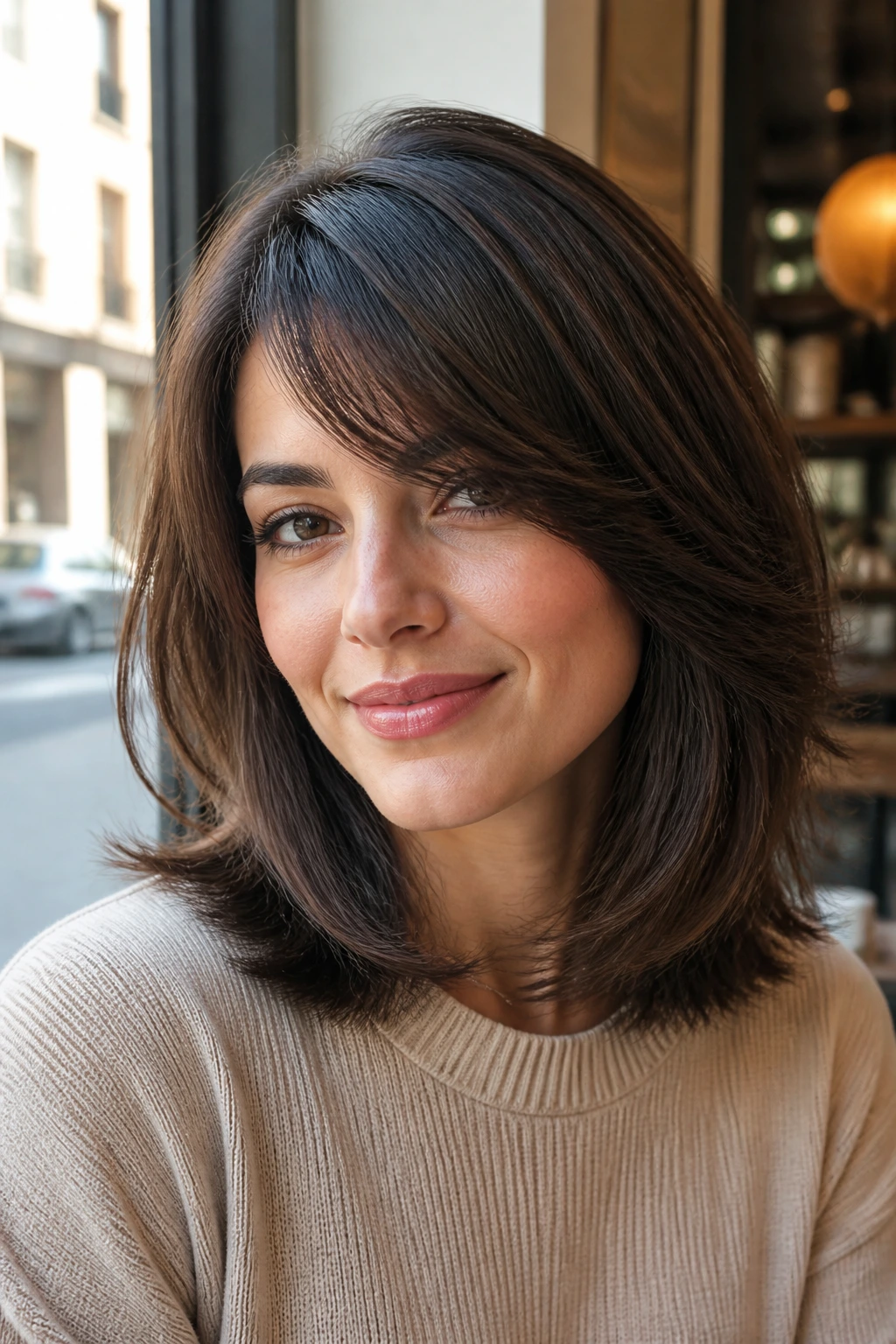
Shoulder-length hair can be tricky on thick strands. Too blunt, and it sits like a block. Too many short layers, and it turns fluffy. The sweet spot is shoulder-length layers with side-swept bangs, because the bangs soften the forehead while the layers keep the sides from puffing out.
The side-swept bang is a quieter choice than curtain bangs, and sometimes that’s the right call. It slides across the forehead instead of splitting down the middle, which works well if you prefer a softer shape or if your hair tends to collapse at the part line. On an oval face, the angle adds a little movement without hiding the face.
This cut also grows out neatly. The bangs can be pushed to the side, pinned back, or blended into the rest of the hair as they get longer. Thick hair helps the fringe hold its sweep, which means less fuss on wash day. Use a round brush or a large Velcro roller at the front for a few minutes, and the shape settles in fast.
One small warning: keep the layers below the ear line if your hair is very dense. High layers can make the shoulders look wider than they are.
12. Rounded Blowout with Flipped Ends
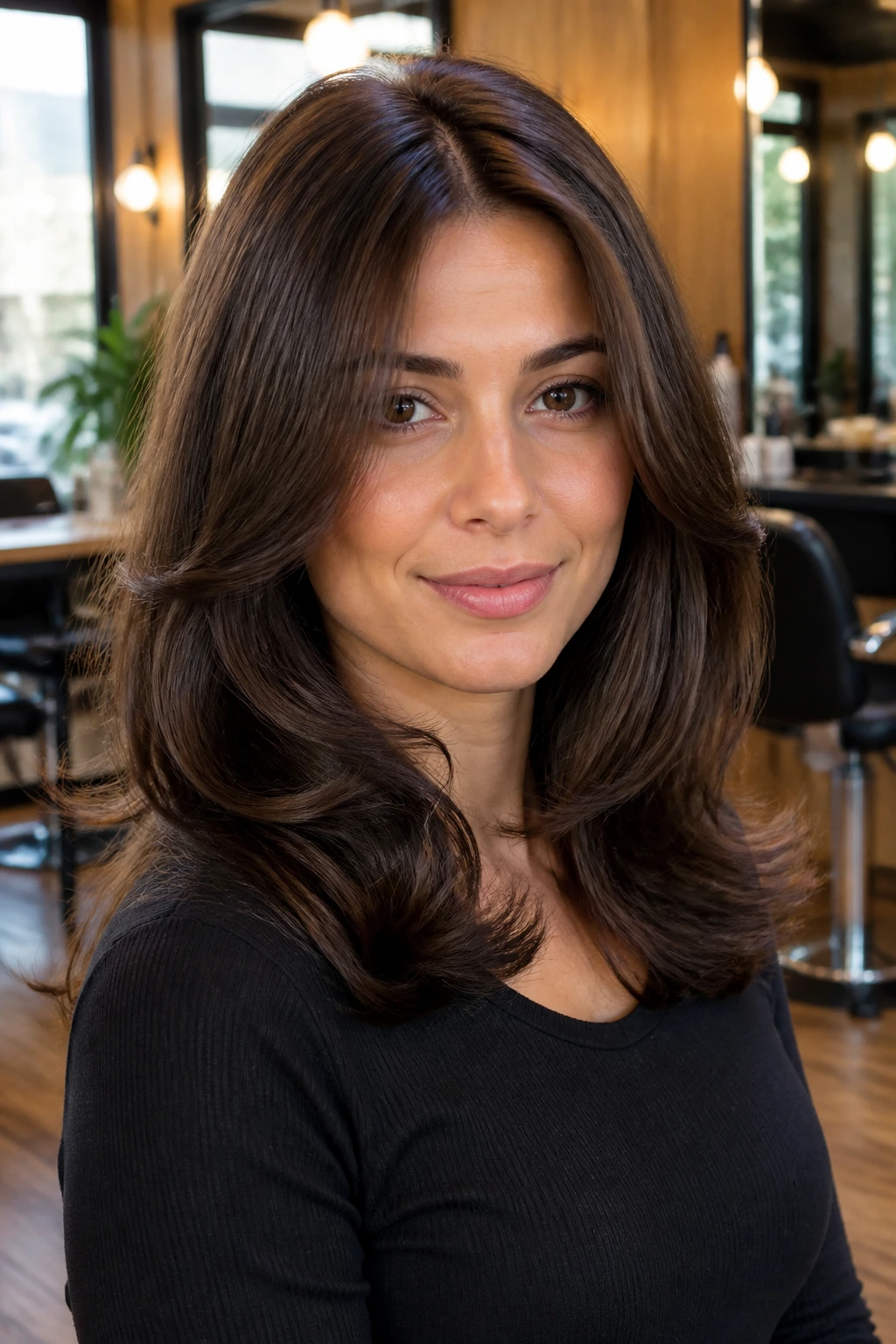
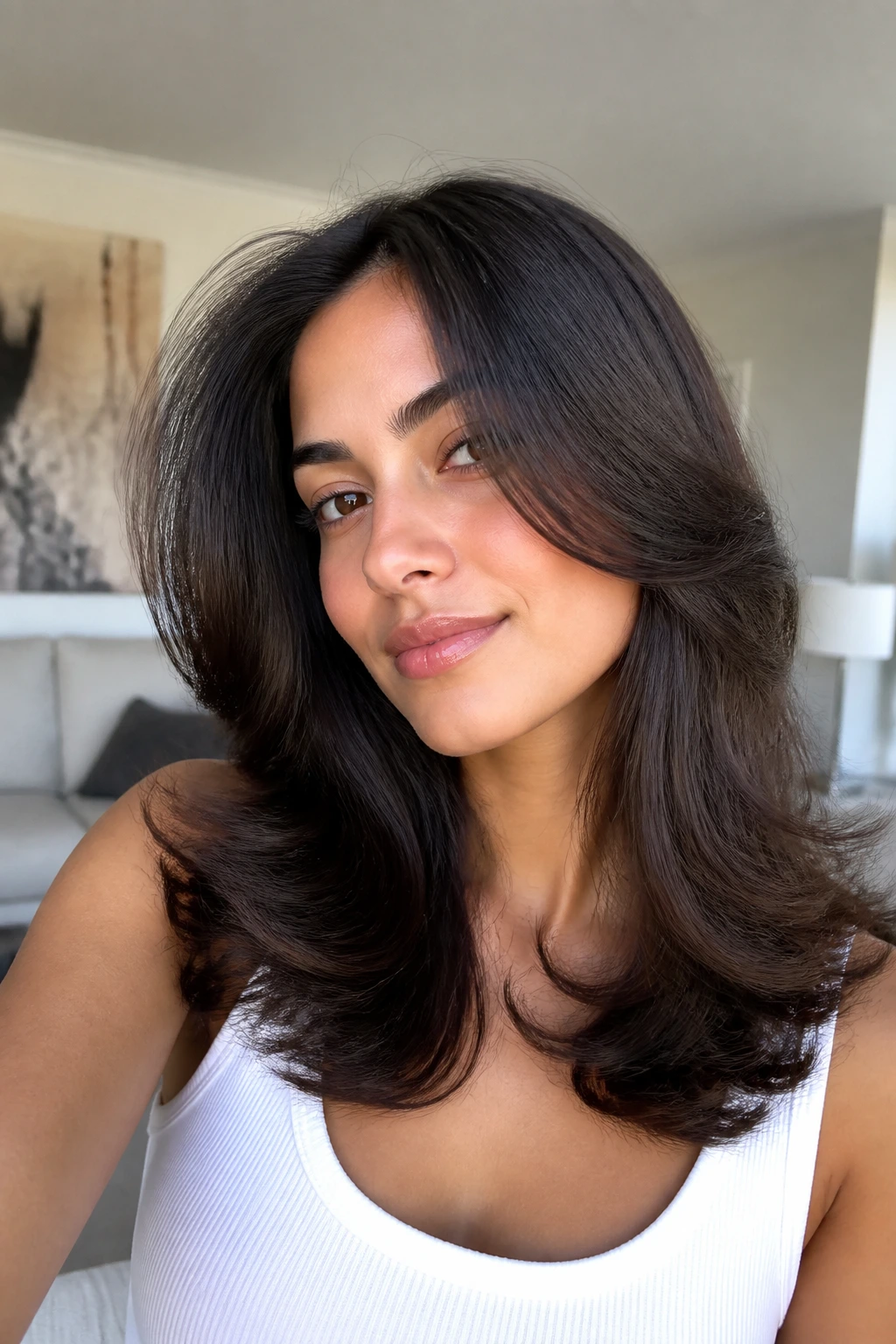
A rounded blowout gives thick hair that polished, soft-edged shape that seems to sit in place all day. The reason it works on oval faces is simple: the curve mirrors the face shape without crowding it. There’s lift at the roots, body through the mids, and ends that turn under or flip out just enough to keep things lively.
The Shape the Brush Makes
Use a medium round brush — around 1.5 to 2 inches if your hair is long — and focus on the top half of the head first. Pull each section up and slightly away from the scalp before turning the brush under at the ends. That keeps the crown from falling flat. If you like a little bounce, flip the ends outward on the last inch of hair. It feels less formal and still clean.
Thick hair usually holds a blowout better than fine hair, but it also takes longer to dry. Rough-dry until the hair is about 80% dry before you pick up the brush. That saves time and stops the root area from getting overworked.
Best match: mid-length to long thick hair with some natural body. Skip it if: you hate heat styling and want a wash-and-go shape.
13. Textured Pixie with a Longer Top
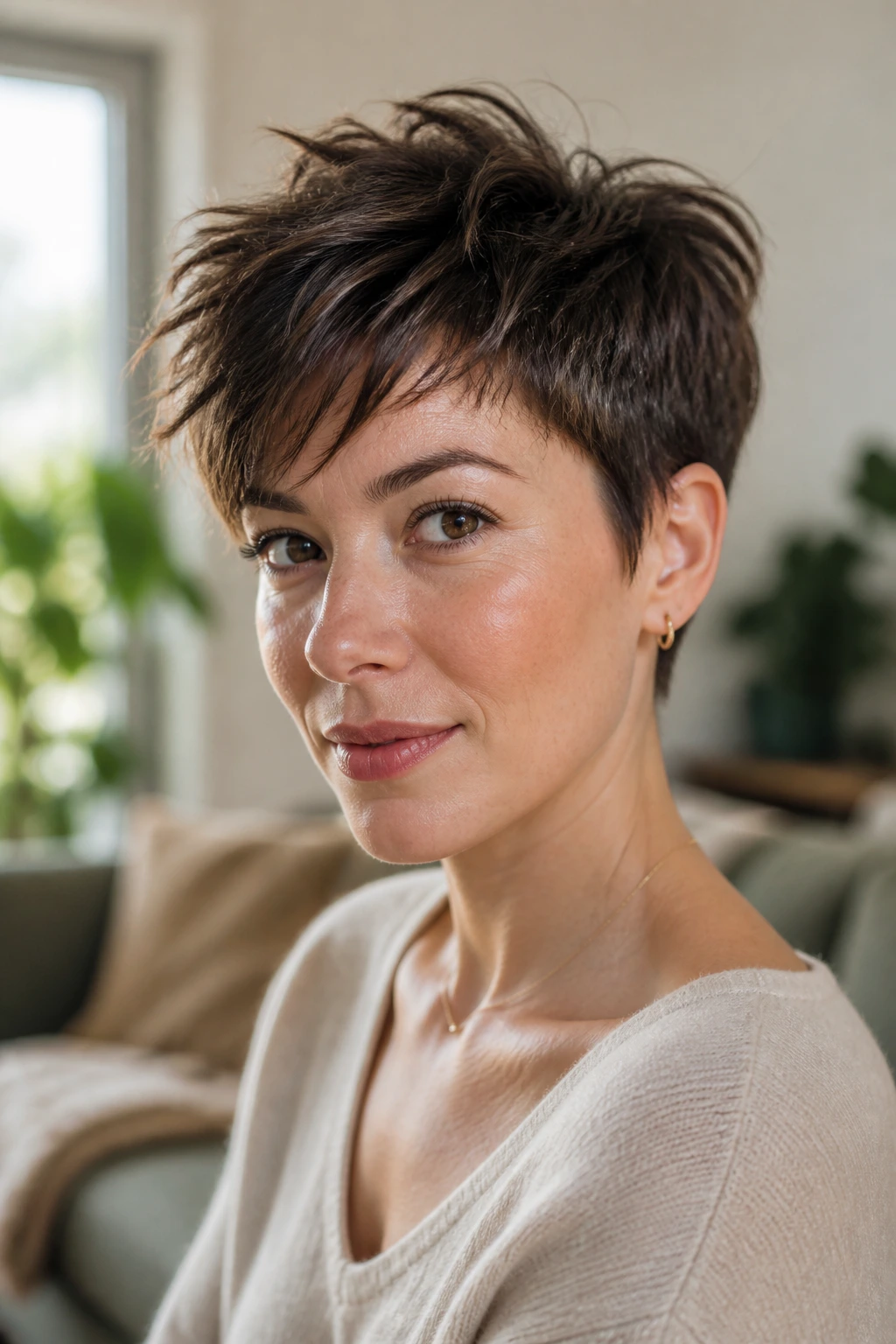
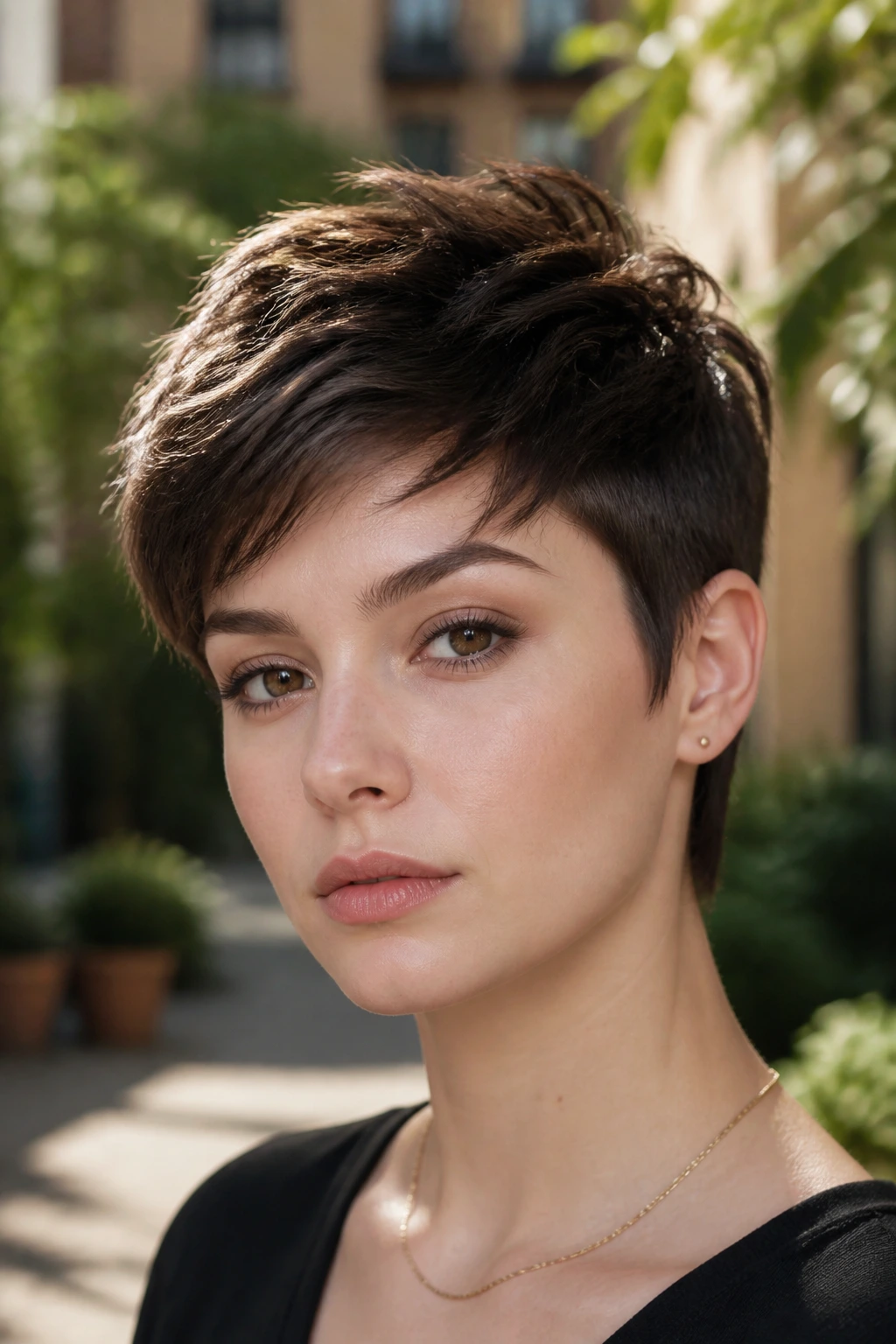
Short hair on thick strands can go one of two ways: chic or helmet-like. The textured pixie lands on the right side of that line when the top is kept longer and the sides are tapered just enough to reduce bulk.
An oval face can handle the short length because the proportions are already balanced. The longer top keeps the cut from looking too severe, and it gives you enough hair to push forward, part to the side, or lift with a bit of paste. The key is leaving some softness around the hairline. Too much clipper work and the whole thing starts to feel boxy.
This cut is especially good if your thick hair grows straight out from the head and refuses to lie flat. A pixie uses that energy instead of arguing with it. You can rough it up with styling cream or smooth it back for a cleaner shape.
There’s a catch, though. You do need regular shaping. Thick hair grows fast in a pixie, and the outline can lose its edge sooner than you expect. If you do not want to be in the salon often, this may not be your cut.
14. Modern Wolf Cut
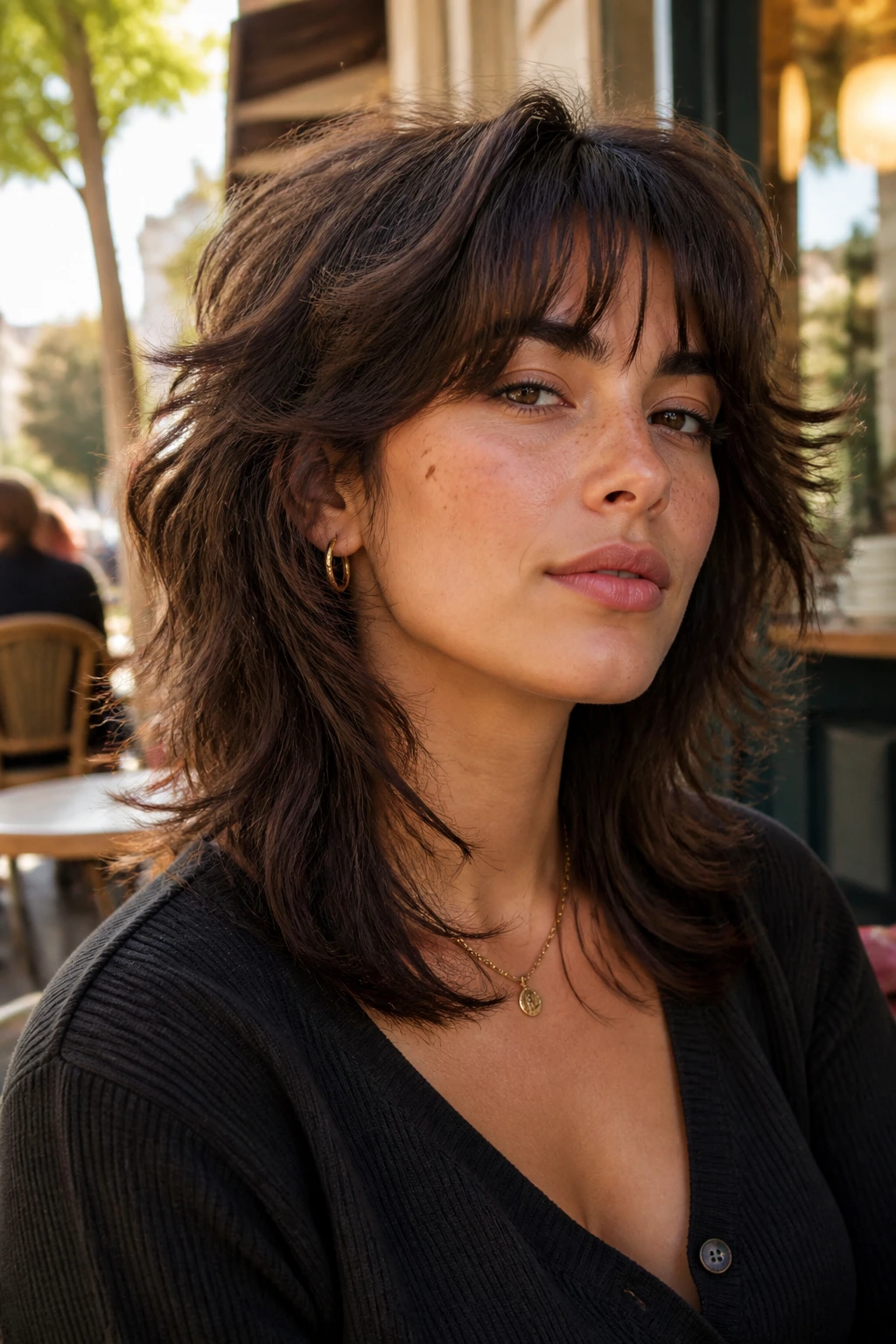
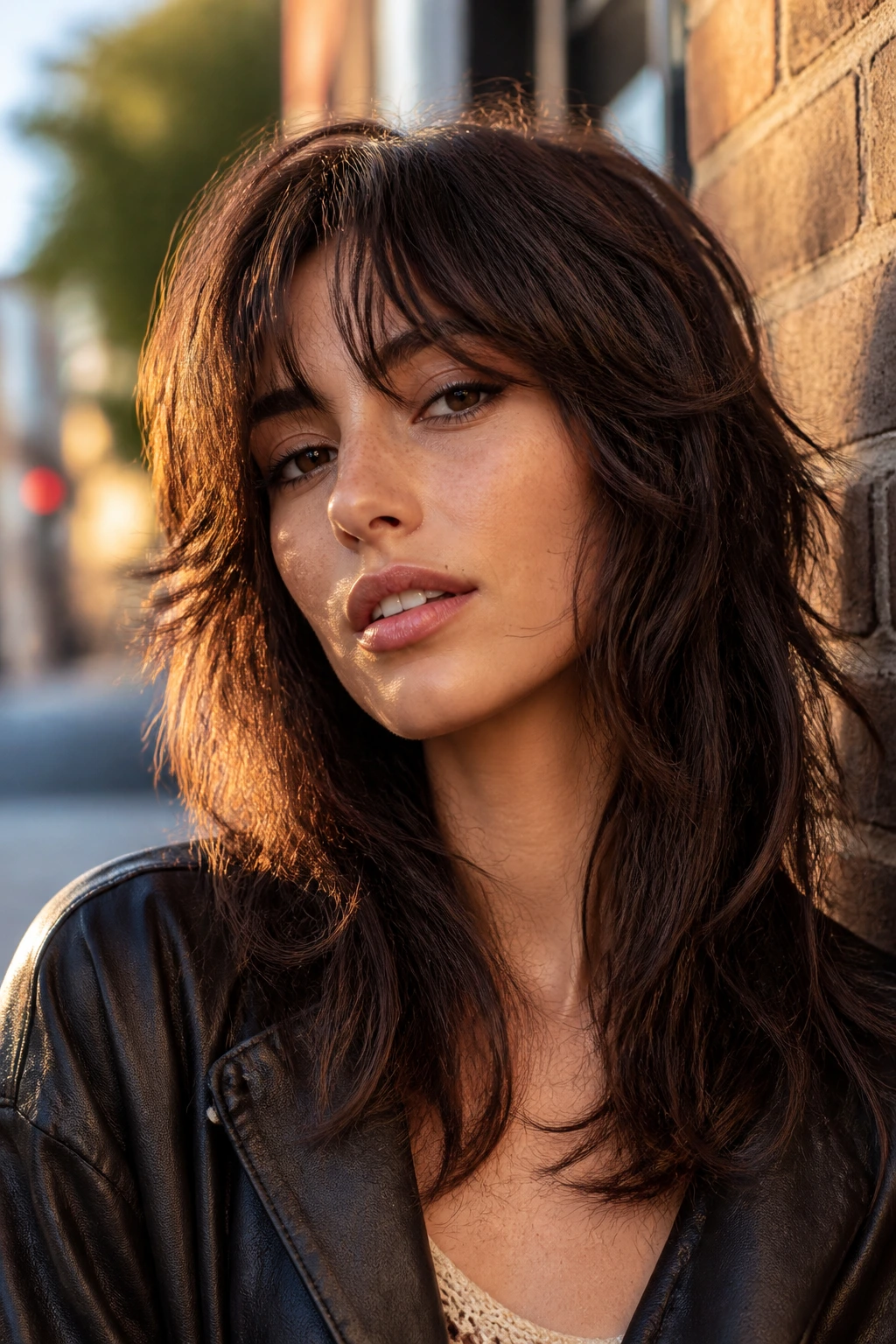
The modern wolf cut is the shag’s louder cousin, but with better manners. Thick hair gives it the volume it needs to look intentional, and an oval face can handle the extra movement around the cheeks and jaw as long as the shortest pieces aren’t cut too high.
What makes this version work is restraint. You want a lot of texture, but not a random chop job. The top should have lift, the mids should carry the shape, and the ends should stay piecey enough that the cut doesn’t collapse into a block. On thick, wavy hair, the shape almost builds itself. On straight, dense hair, you’ll need mousse or texturizing spray to keep the layers separated.
I like this cut for people who want a little edge without going full mullet. It looks strongest when air-dried with a bit of bend, then roughened with fingers instead of brushed to death. If you want softness, keep the face-framing layers below the cheekbone. If you want more drama, let them sit a little higher.
Either way, this is not a timid cut. That’s part of the appeal.
15. Chin-Length French Bob with Soft Fringe

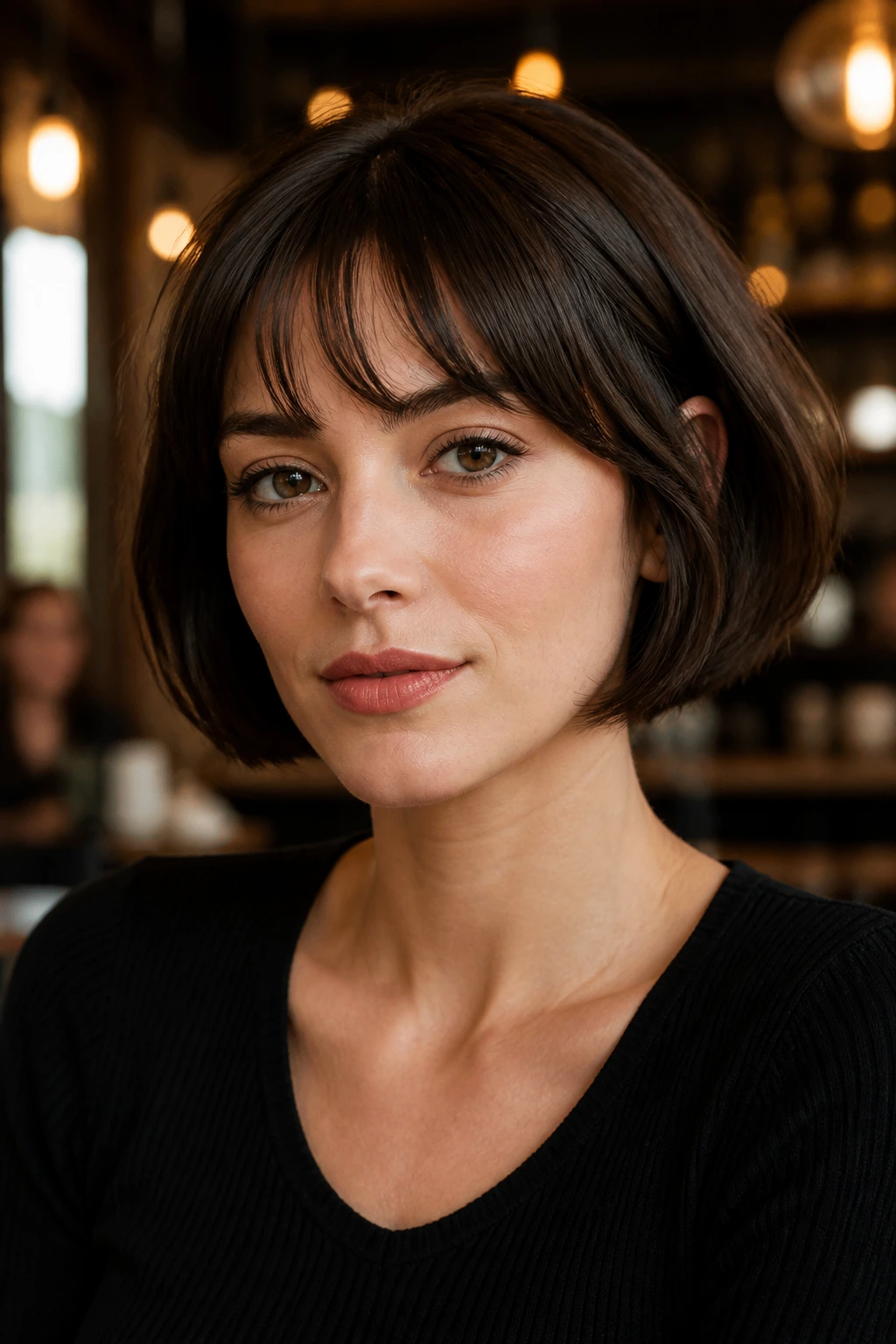
A chin-length French bob on thick hair has attitude, but it has to be cut with care. On an oval face, the short length can look sharp and elegant, yet thick strands will try to expand outward if the perimeter is too blunt or the bulk isn’t controlled.
The soft fringe keeps the front from feeling hard. It can be wispy, slightly curved, or a little piecey, but it should not be heavy enough to close off the face. I also like a subtle underbevel at the ends — not a harsh angle, just enough to stop the bob from becoming a triangle. If your hair is very dense, a tiny bit of internal weight removal helps the shape sit closer to the head.
This cut looks especially good with a little texture. You do not need perfectly smooth styling here. A quick bend with a flat iron or a loose air-dry can keep it from feeling too stiff. The charm of the French bob is that it looks deliberate even when it isn’t perfect.
One honest warning: if your hair grows wide at the jaw and you hate styling, this may demand more maintenance than you want.
16. Long Hair with Invisible Layers
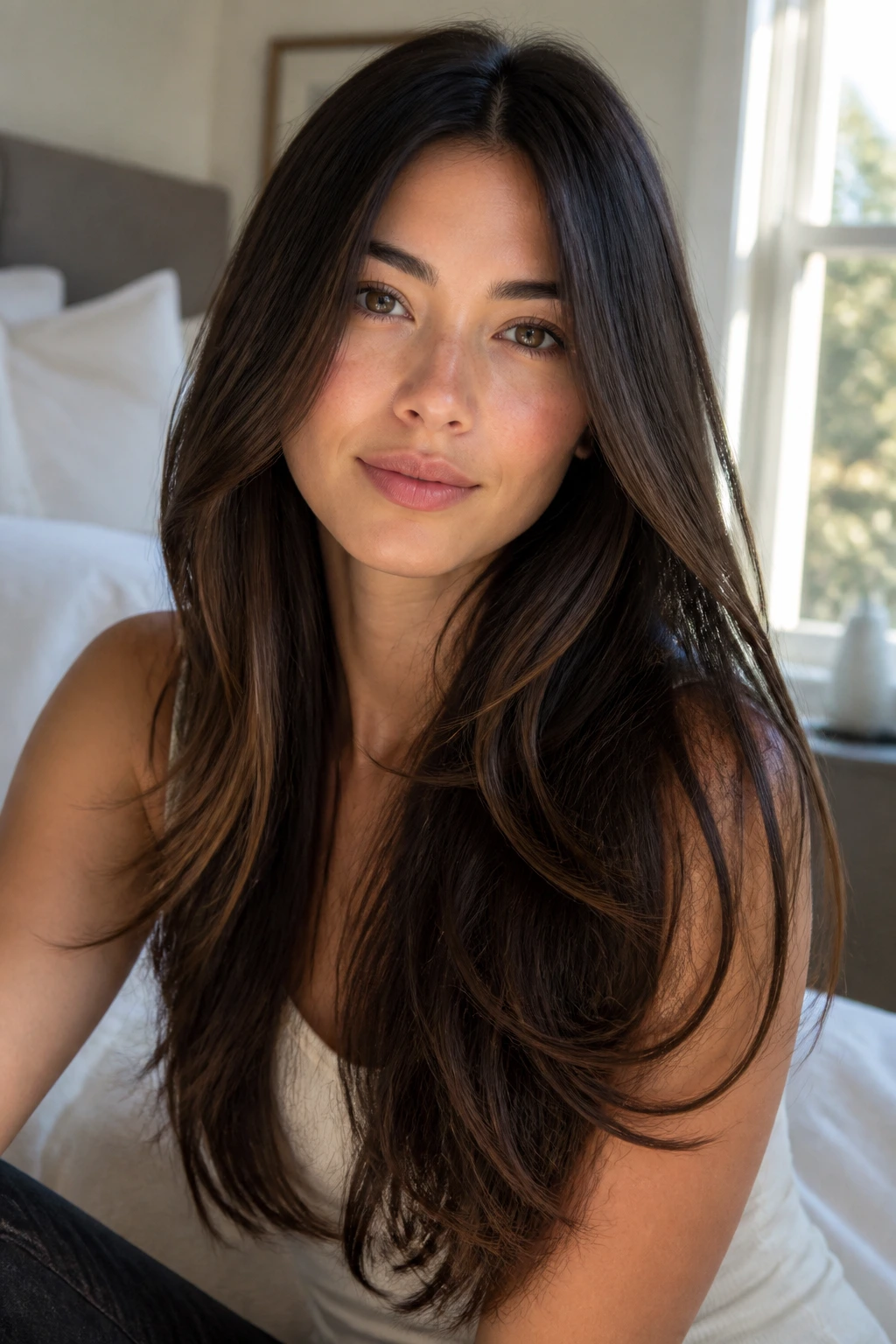
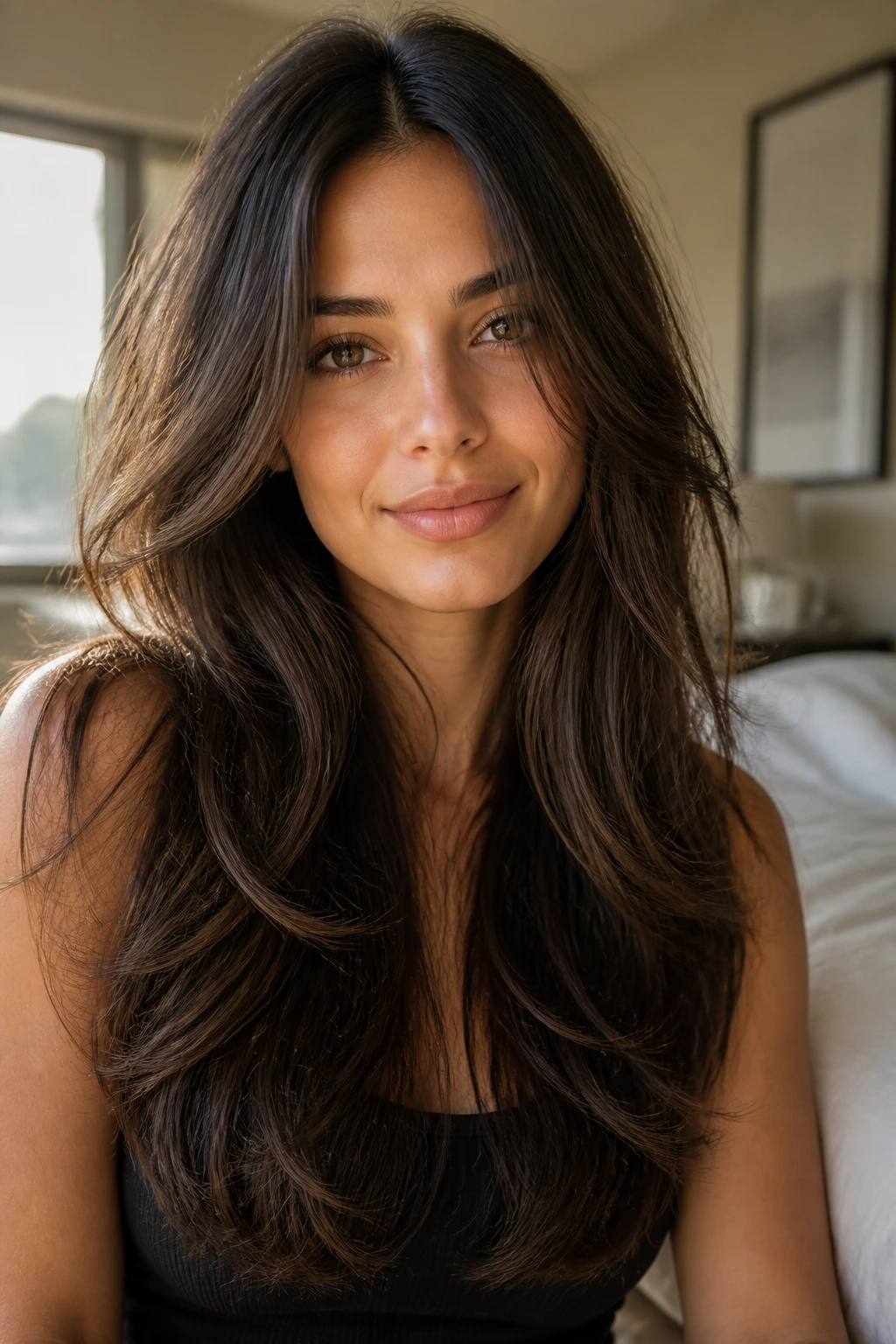
Want to keep the length? Invisible layers do the heavy lifting. They’re one of the best answers for thick hair because they remove weight without making the cut look obviously choppy. On an oval face, that matters because the face already has nice balance — you don’t need a dramatic frame to make it work.
The idea is simple: keep the outside line long and clean, then sneak in layers through the interior so the hair moves instead of sitting like one heavy sheet. That keeps the ends from looking blunt in a bad way and helps the hair fall closer to the head. You still get length. You lose the mushroom effect.
Best For
- Thick hair that feels heavy but not coarse.
- People who wear their hair down more than half the week.
- Anyone who wants easy grow-out.
- Hair that gets bulky at the ends before the roots feel full.
Invisible layers are especially nice if you don’t want your haircut to announce itself from across the room. They’re quiet. In the best way.
17. Low Bun with Loose Face-Framing Pieces
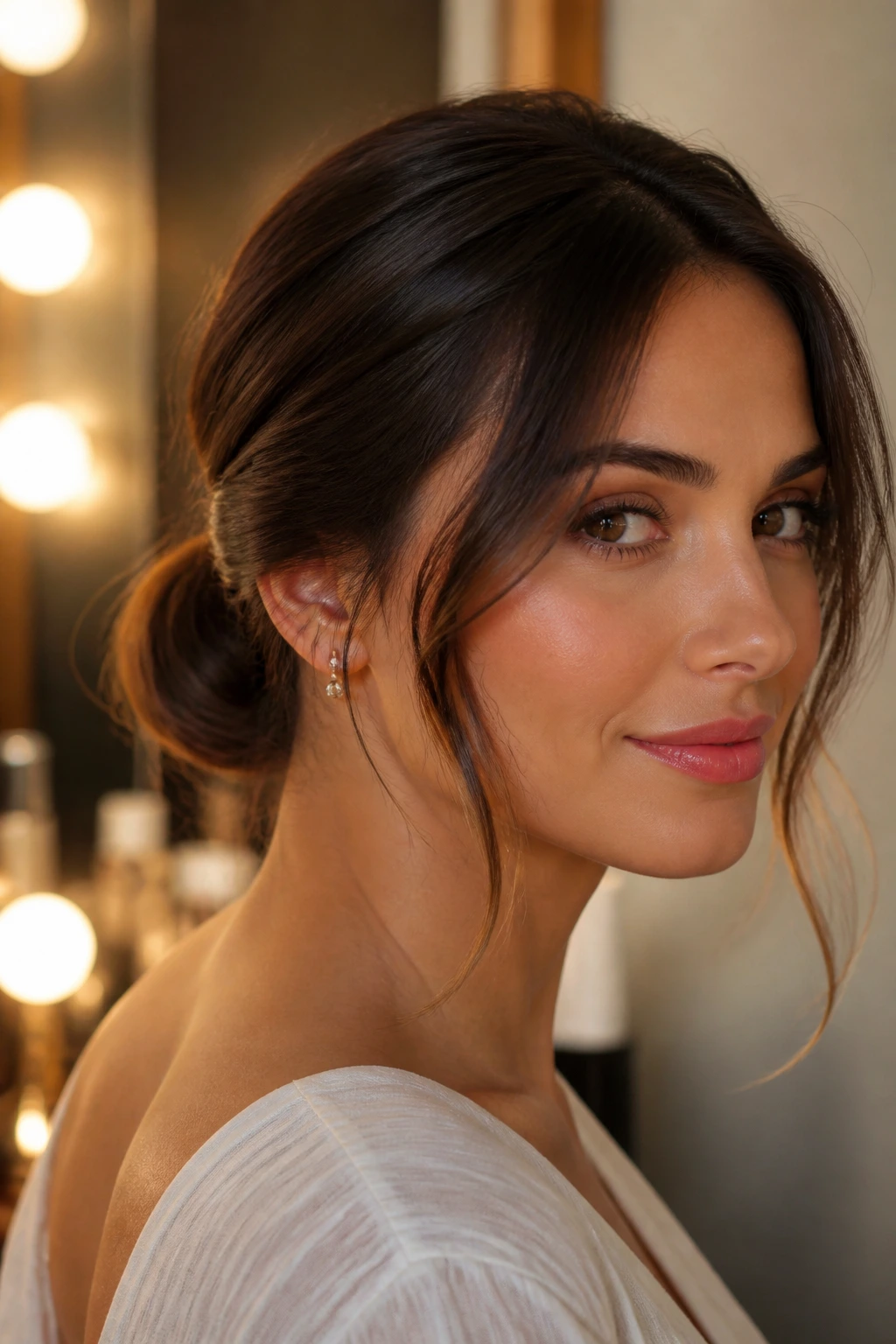
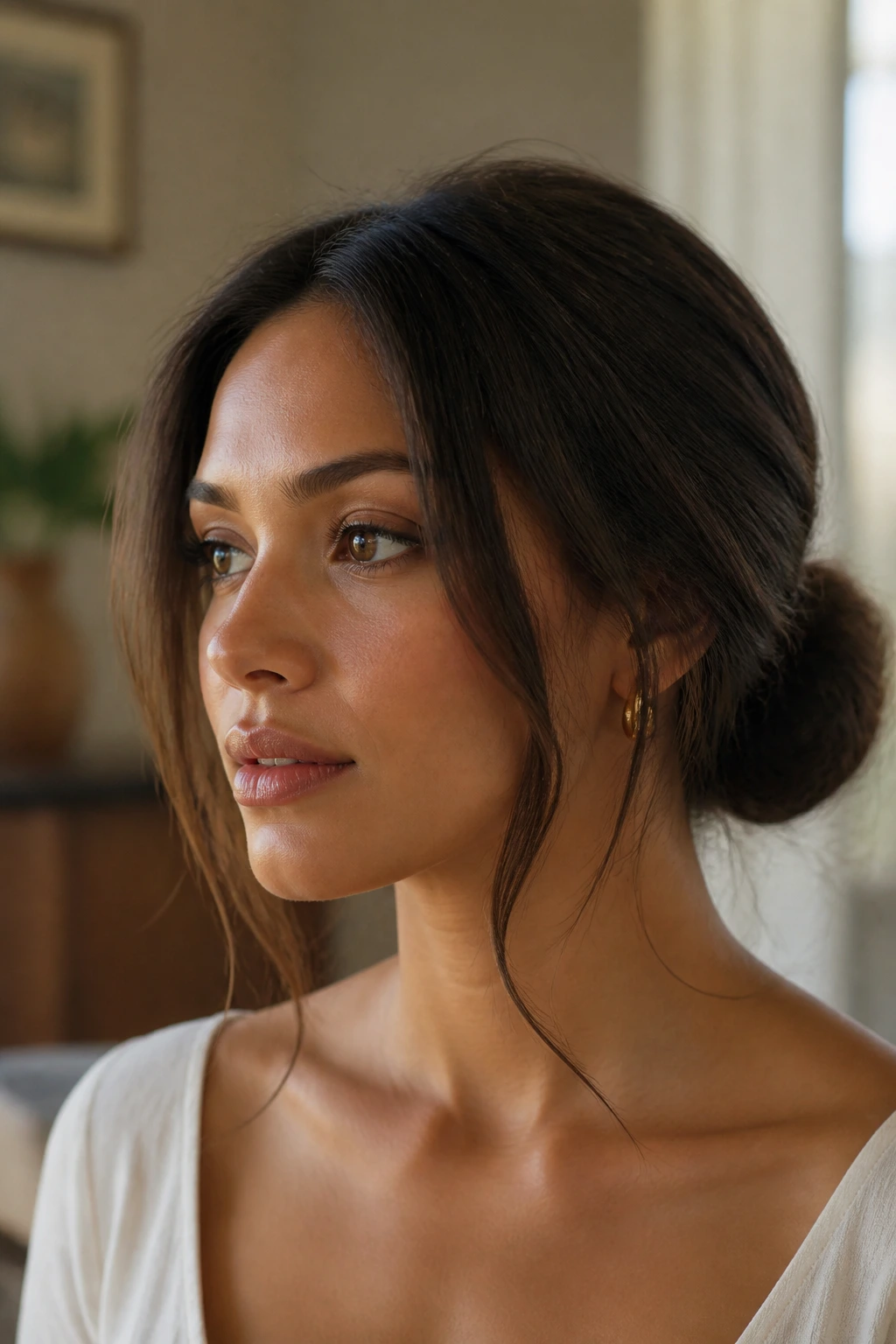
A low bun can look severe on some faces, but on an oval face it tends to sit exactly where it should. Thick hair gives the bun enough substance that it doesn’t look thin or sad, and the loose pieces around the face keep the style from feeling too polished.
The bun works best when the base is smooth and the bun itself is tucked just above the nape. Leave a few pieces out around the temples and cheekbones if you want softness. If your hair is very full, split it into two sections before twisting — one section wraps easier than one giant coil. U-pins can help anchor it better than only using one elastic.
This is one of those styles that looks elegant without being precious. The face stays visible, the neck gets a clean line, and the thick hair gives the bun some shape from the side. If you like, you can pull the crown up a little before securing it. That tiny lift matters more than people think.
Best finishing move: rub a drop of serum over the surface and pinch the face-framing pieces into place. It keeps the bun from looking too dry or frayed.
18. Bubble Braid for Thick Hair
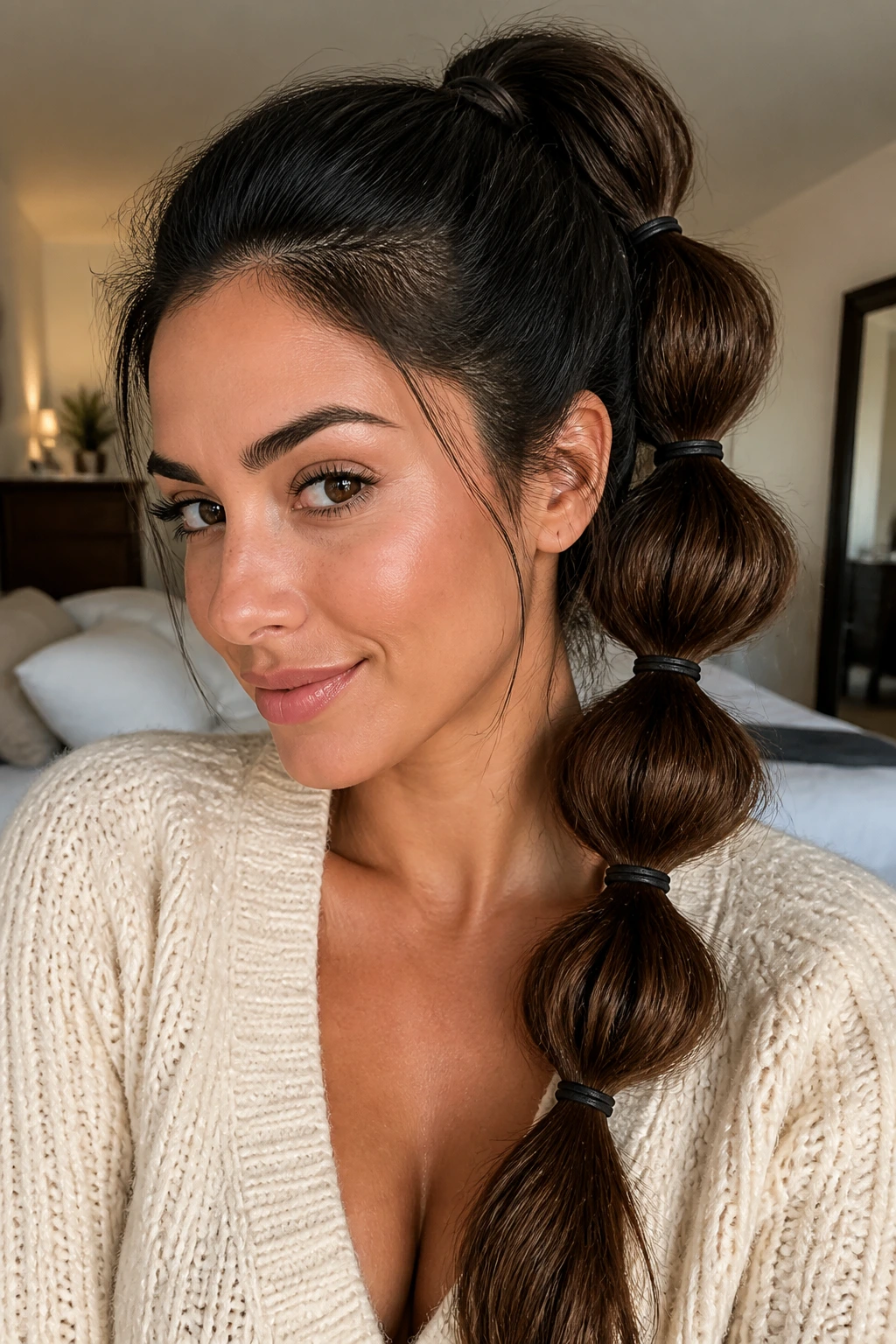
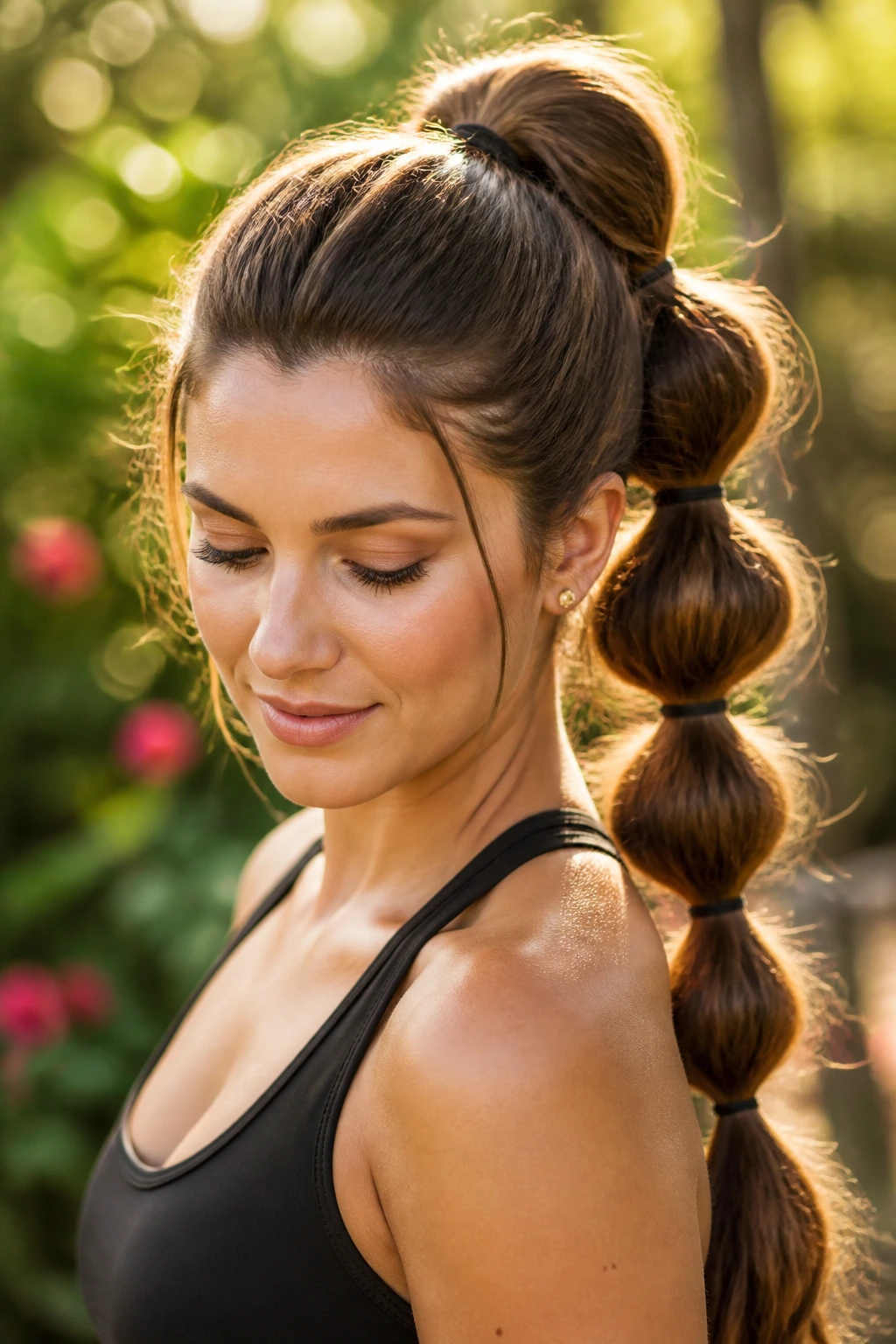
Bubble braids are almost unfair on thick hair. They need fullness to look good, and thick strands give them that in spades. On an oval face, the style works because it pulls the eye vertically and keeps the sides from feeling overloaded.
The braid can sit high, low, or down the back. I prefer a high-to-mid ponytail with elastic ties placed every 2 to 3 inches, then gently puffing each section into a rounded bubble. The bubbles don’t have to be identical. In fact, a little unevenness makes the braid look more relaxed and less like a gymnast’s warm-up style. Thick hair naturally gives the bubbles a better shape, so you do not have to over-tease them.
Why It Holds So Well
- Dense hair fills out the sections.
- The braid doesn’t look skimpy at the crown.
- The shape lasts better than it would on fine hair.
- It works with straight, wavy, or curly texture.
A bubble braid is also one of the easier styles to wear on second-day hair. A little dry shampoo, a brush-through, and a few elastics are enough.
19. Braided Crown with a Soft Middle Part
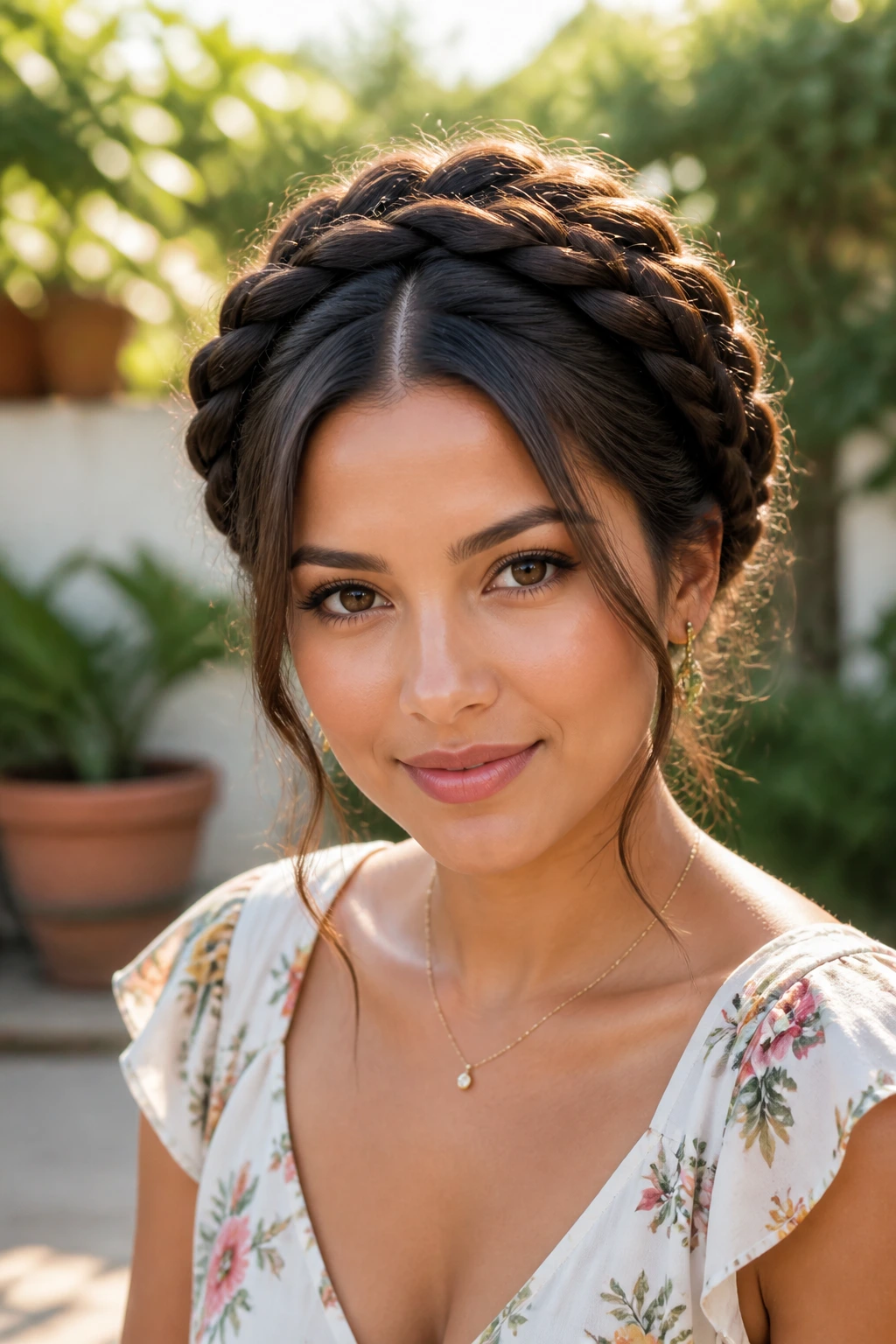
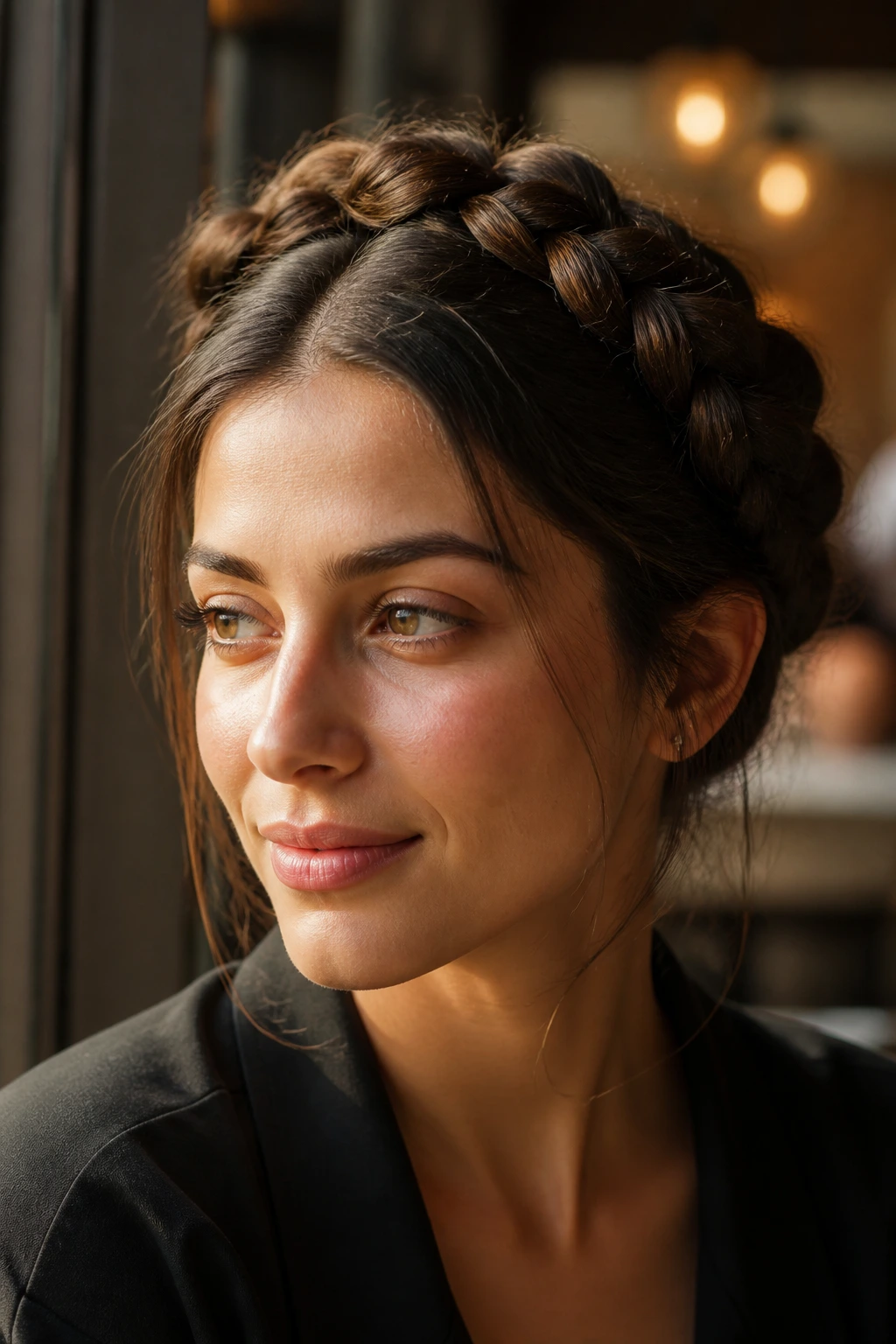
A braided crown can look costume-like if it’s too tight or too perfect. On thick hair, though, it gets this lovely built-in fullness that makes the shape feel substantial. The oval face benefits from the soft middle part because it keeps the center open while the braid wraps the sides.
The braid should start near the temples and move back around the head, either as a halo braid or a pair of braids meeting behind the crown. If you pancake the braid slightly — just tugging the outer edges to widen it — the style looks fuller and less severe. Thick hair helps here because the braid keeps its body instead of shrinking into a skinny rope.
I like this look when you want your hair off your face but still want some softness around the head. It’s neat enough for a dressier day, but it doesn’t need hot tools. That alone makes it worth keeping in the rotation.
One small note: if your hair is very heavy, prep the roots with a little mousse first. It gives the braid a bit more grip and stops the front from slipping.
20. Defined Curls with Diffused Volume
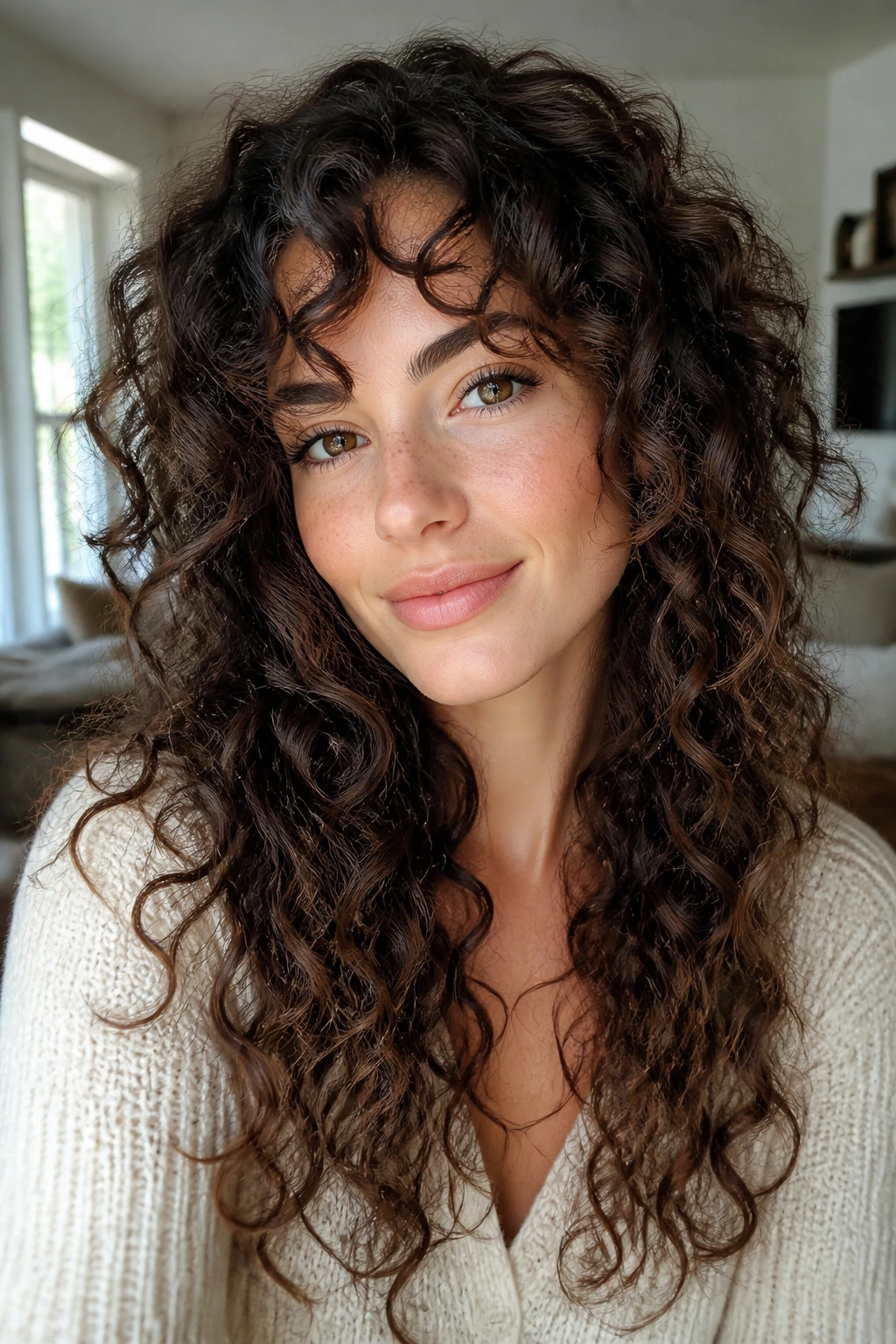
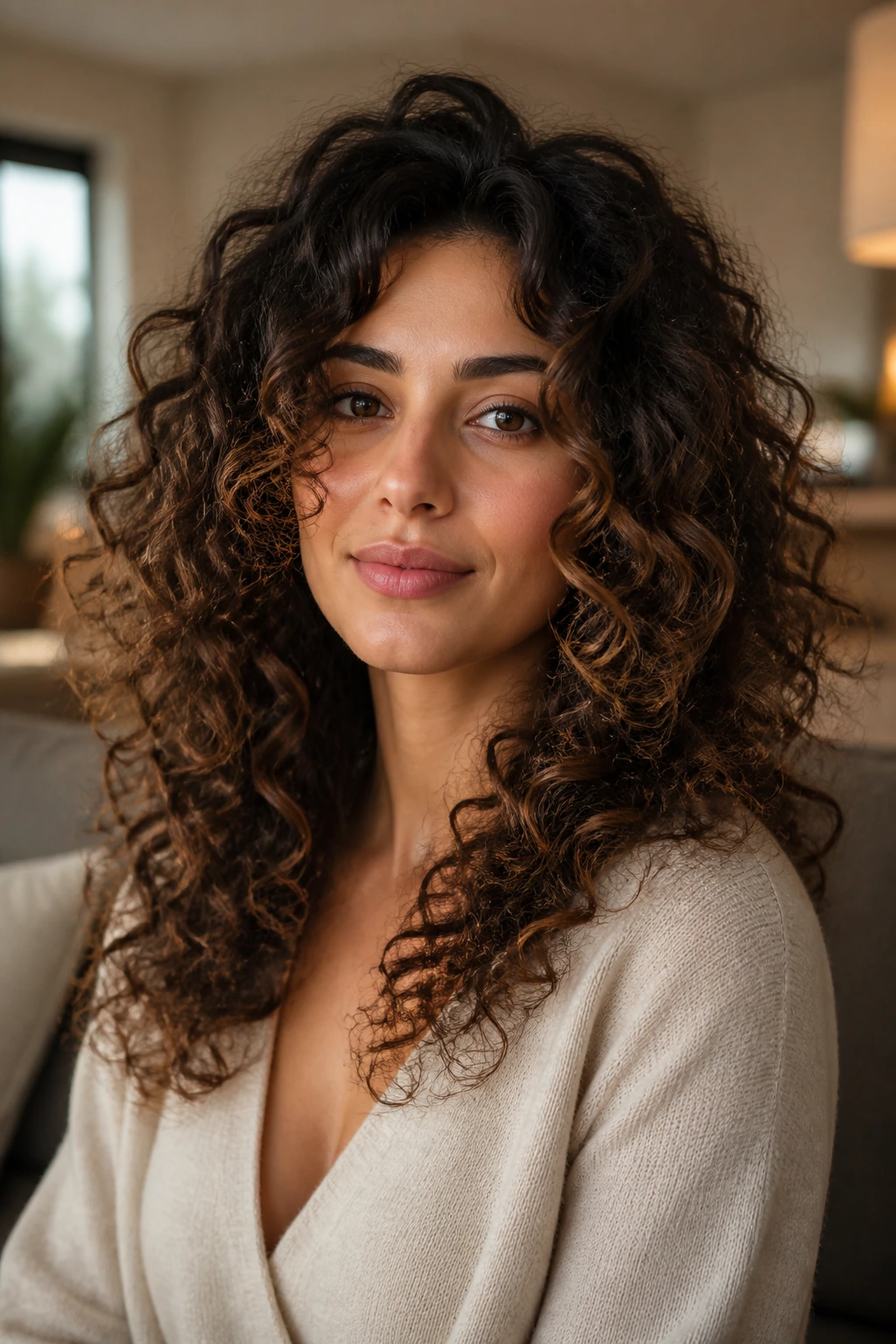
When thick hair is naturally curly, the best hairstyle is often not a cut that forces it into submission. It’s a shape that respects the curl pattern and gives the face room to breathe. On an oval face, defined curls with diffused volume can look balanced and alive, especially when the layers are long enough to keep the curl clusters from stacking too tightly.
The cut should follow the curl’s natural spring, not fight it. Long face-framing pieces around the cheekbones work well, and the overall shape should be rounded but not wide at the sides. Diffuse on low heat and low airflow. High heat frays the surface and can make thick curls expand in all the wrong directions. A good curl cream or gel cast helps the shape hold once it’s dry.
This style is at its best when the curls are touched as little as possible. Scrunch, diffuse, then stop. Let the hair set. Thick curls carry enough body on their own, which means the shape comes from the cut as much as the styling.
That is the nice part. You get volume with a frame, not volume with chaos.
Why Thick Hair Needs a Different Shape Strategy
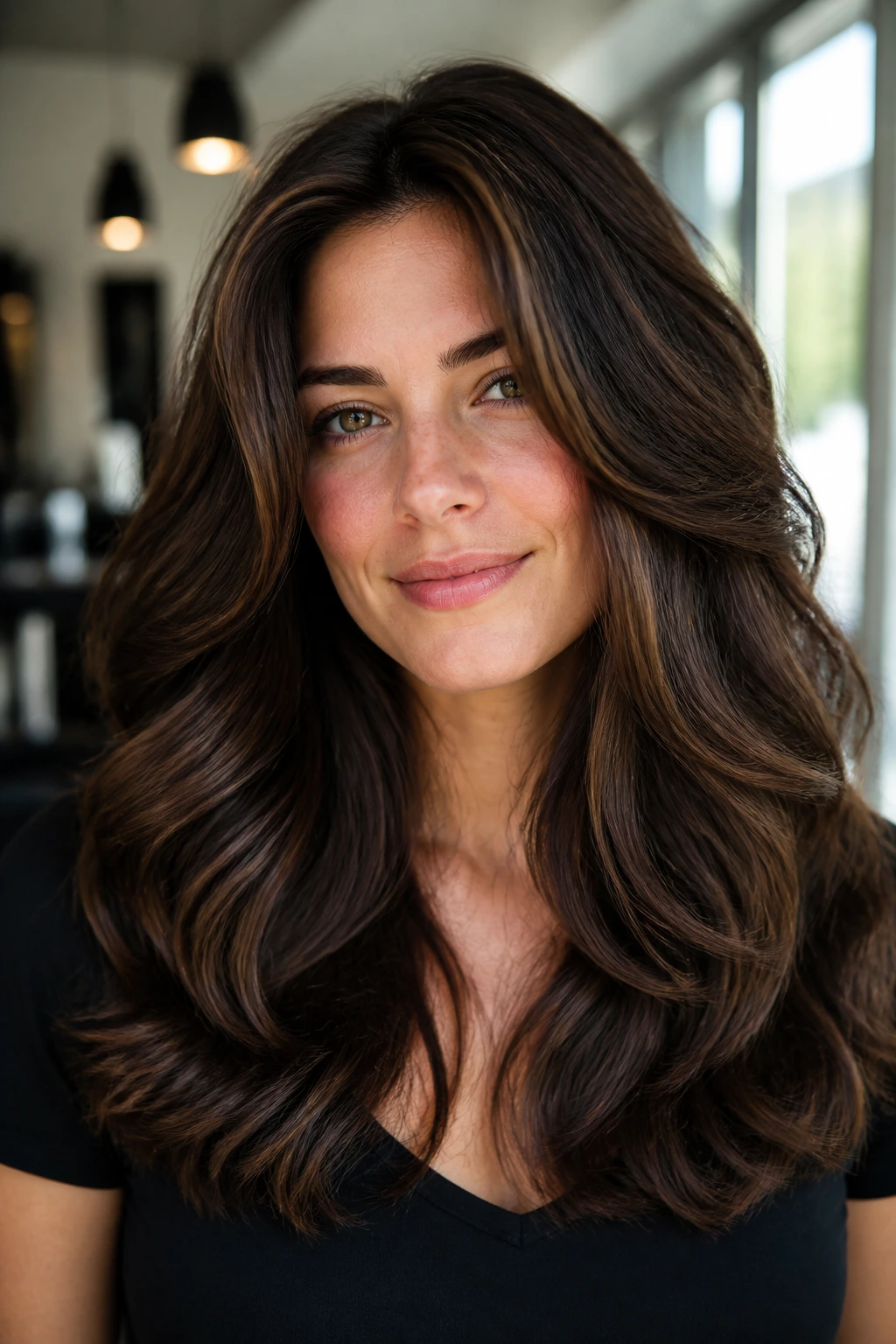
Thick hair is not one thing. Dense hair behaves differently from coarse hair, and wavy thick hair behaves differently again. Some thick hair expands from the root; some expands through the mids; some keeps its bulk in the ends like it’s hoarding it. That is why the same haircut can look soft on one person and huge on another.
Oval faces give you a little breathing room, but that does not mean any shape will behave. A blunt bob can look clean and expensive, or it can puff out like a helmet. Long layers can create movement, or they can make the ends look thin while the crown stays heavy. The difference usually comes down to where the weight is removed and how much of the perimeter is left intact.
Dense vs. Coarse: Not the Same Problem
Dense hair is about quantity. Coarse hair is about strand thickness and texture. Dense hair often needs internal weight removal. Coarse hair may need a cleaner perimeter and less aggressive slicing so it does not frizz up. If your hair is both dense and coarse, ask for shape in the mids and softness only at the ends.
That one distinction saves a lot of bad cuts.
The Tools That Make Thick Hair Easier to Shape
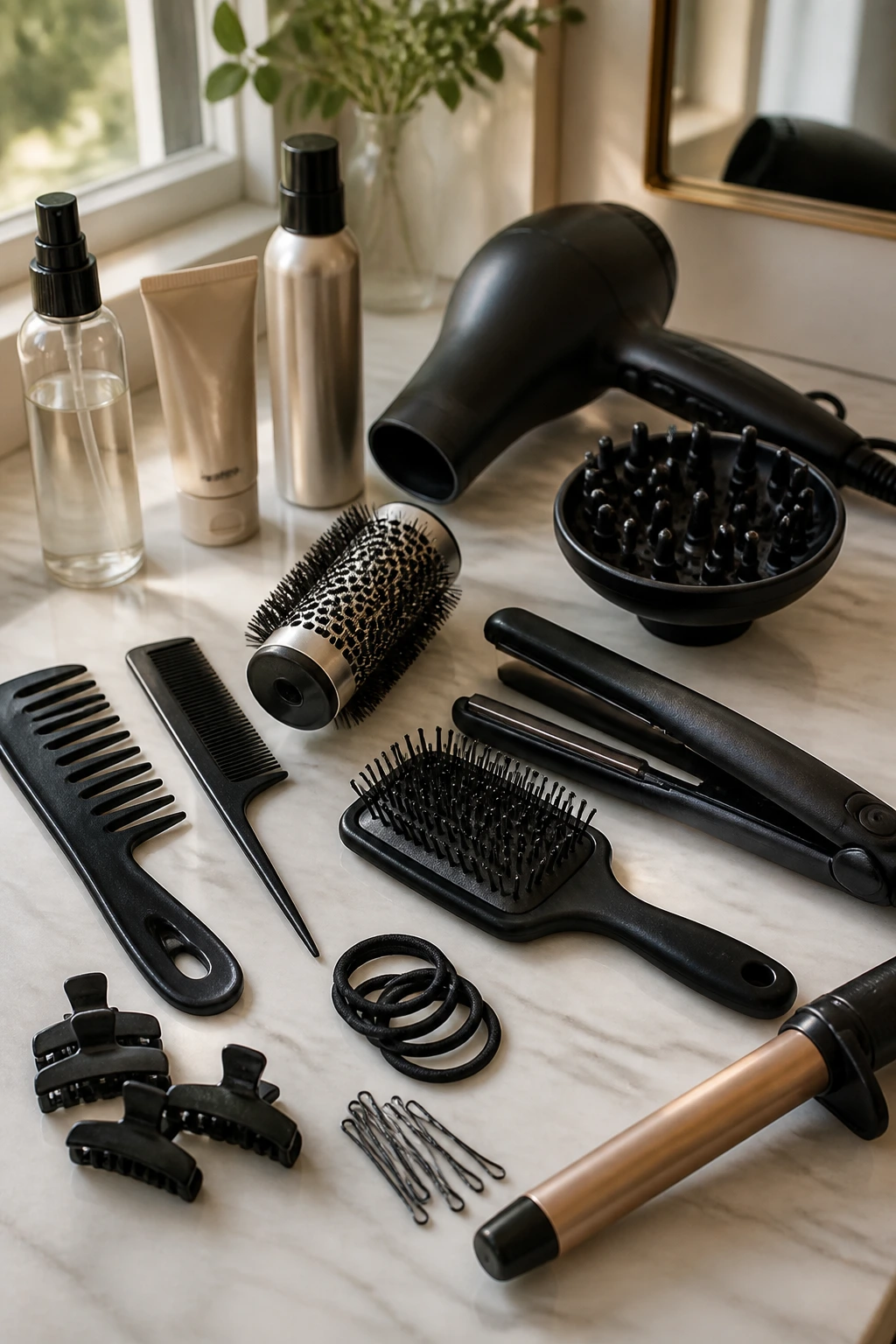
- Wide-tooth comb: Good for detangling wet hair without ripping through knots.
- Tail comb: Helps create clean parts and section hair evenly for blowouts or braids.
- Blow dryer with a concentrator nozzle: Directs airflow so thick hair smooths faster instead of puffing around the head.
- Round brush, 1.5 to 2 inches: Best for lift, bend, and a rounded blowout on medium to long hair.
- Paddle brush: Useful for smoothing lobs, blowouts, and sleek styles on dense hair.
- Flat iron: A single slow pass can tame coarse thick hair without flattening the whole look.
- 1.25-inch curling iron or wand: Good for loose waves that hold shape in thick lengths.
- Duckbill clips: Keep sections out of the way while styling; much better than trying to wrestle all the hair at once.
- Strong elastics: Thick hair needs a tie that will not stretch out after one use.
- U-pins and bobby pins: Better for buns and twists than relying on one clip.
- Heat protectant: Non-negotiable if you use any hot tool, even on low heat.
- Smoothing cream or serum: Tames frizz and gives thick hair a cleaner finish.
- Dry shampoo: Helps lift roots and take down oil before the shape gets heavy.
- Diffuser: Useful for curls and waves that need volume without roughing up the surface.
What to Say at the Salon So the Cut Comes Out Right
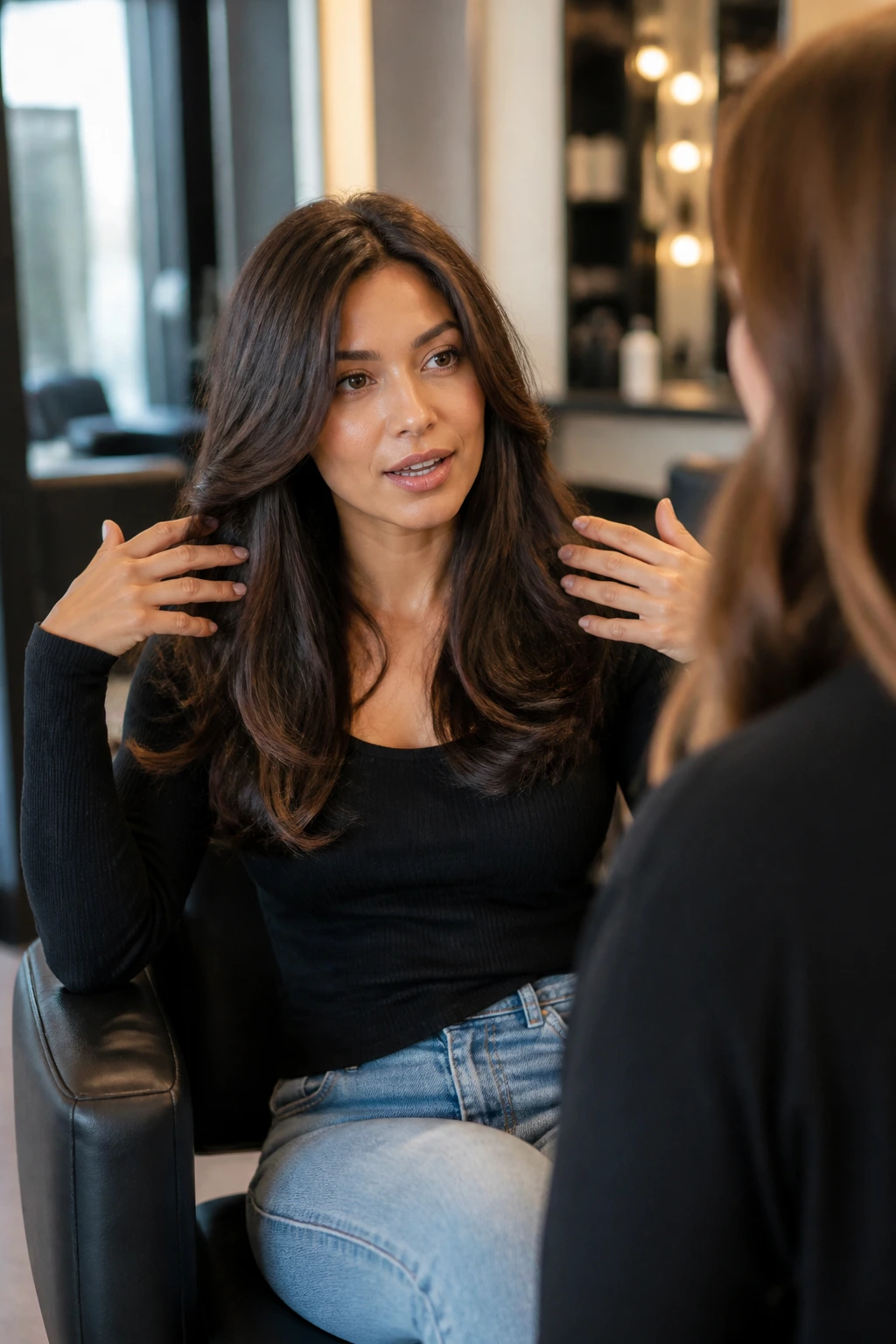
Be specific. Seriously. Thick hair punishes vague instructions. If you say “I want layers,” you may get a cut that removes the wrong kind of weight in the wrong place. If you say “I want movement but I still need the ends to feel full,” that gives the stylist a real job to do.
Start with the length line. Point to where you want the hair to sit — collarbone, chin, below the jaw, past the shoulders. Then explain where your hair gets bulky. Some people swell at the sides. Some at the bottom. Some only at the crown. That detail matters more than a Pinterest photo that only shows the front.
Say how you style it. If you air-dry, tell them. If you blow it out once a week and ignore it the rest of the time, say that too. A cut that looks terrific with a round brush can fall apart when it air-dries. And if you want bangs, tell the stylist how much work you’re willing to do. Curtain bangs that get a quick dry with fingers are not the same as a blunt fringe that needs trimming every few weeks.
Bring two or three photos, not twelve. One for the length. One for the texture. One for the bang shape, if you want bangs. That’s enough.
Quick Styling Moves That Keep Thick Hair Looking Intentional
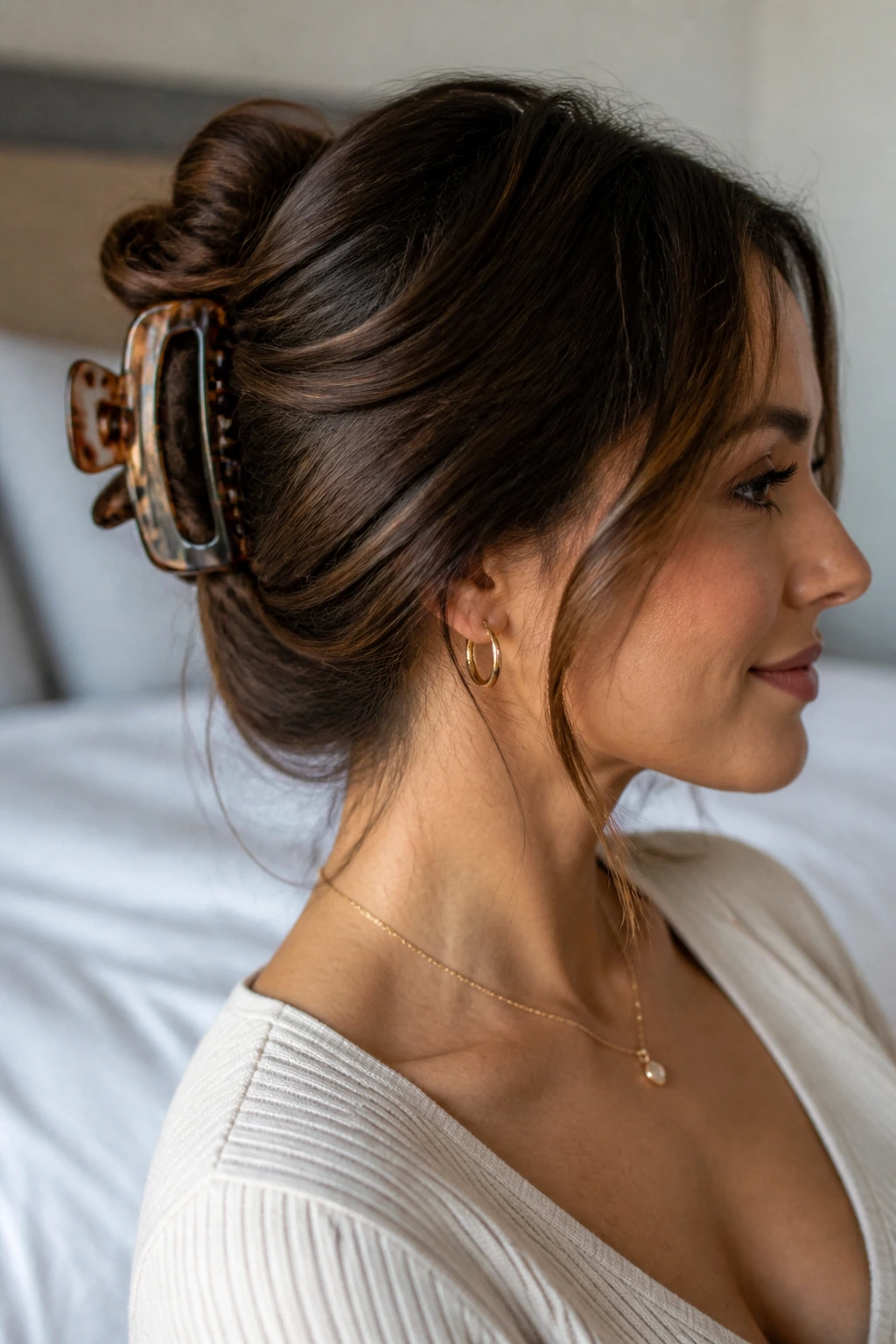
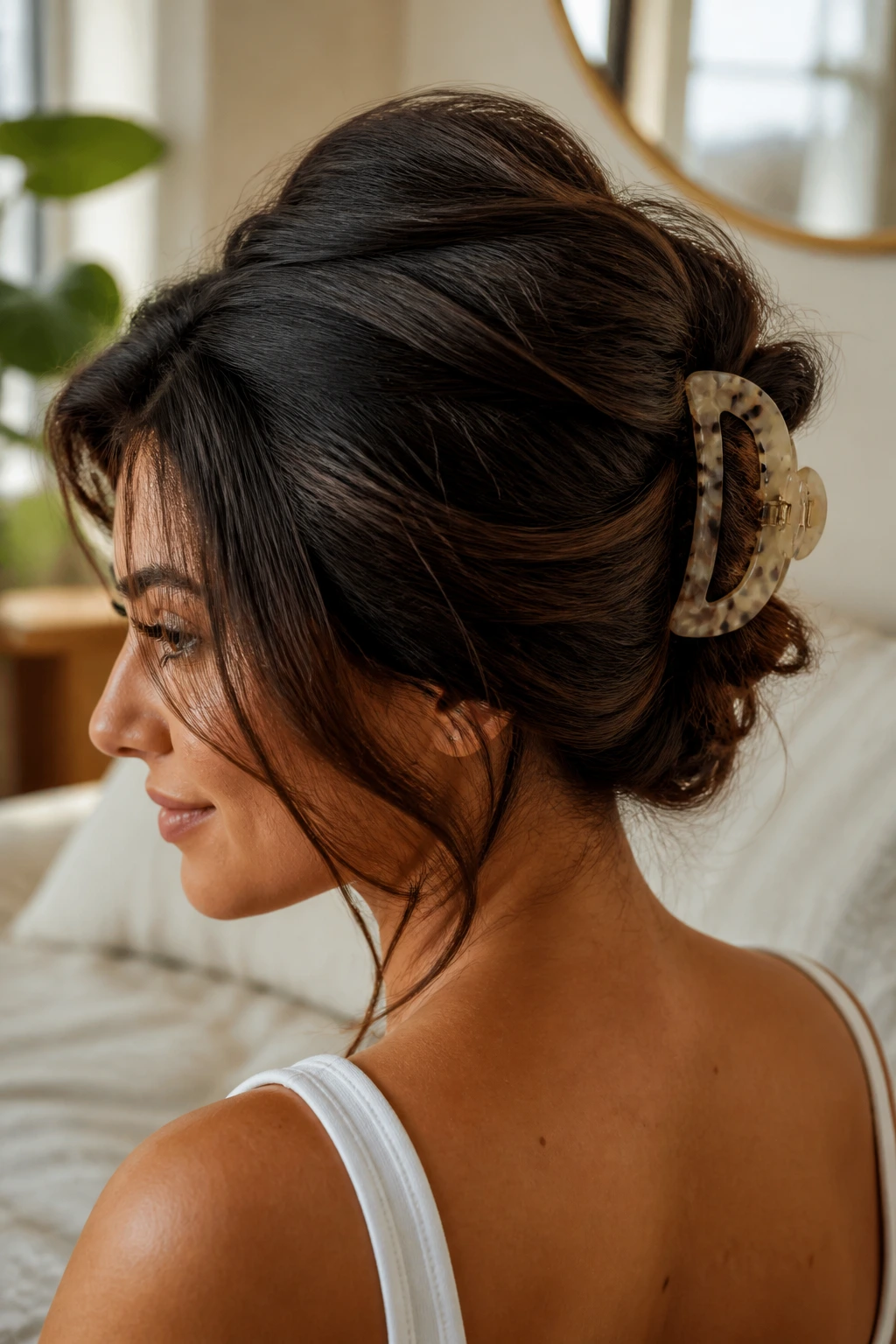
Fastest option: If you’re short on time, choose a style that works with second-day texture — a claw-clip twist, low bun, bubble braid, or high ponytail. Thick hair tends to hold shape overnight better than fine hair, so you can often get away with a little dry shampoo at the roots and a quick brush through the ends.
Best for air-drying: Use a light mousse on the roots and a cream through the mids, then let the hair dry in loose sections. Thick hair likes structure while it dries. If you pile it into a wet knot, the shape will usually come out uneven.
Best for a smoother finish: Rough-dry until the roots are mostly dry, then go back with a round brush or flat iron only where the bulk sits. You do not need to heat the entire head every time. That is how thick hair gets frizzy and tired.
Humidity plan: Keep a small anti-frizz serum or flexible spray on hand. A tiny amount at the ends and the hairline can save a style that was almost there.
The Mistakes That Make Thick Hair Look Bigger Than It Is
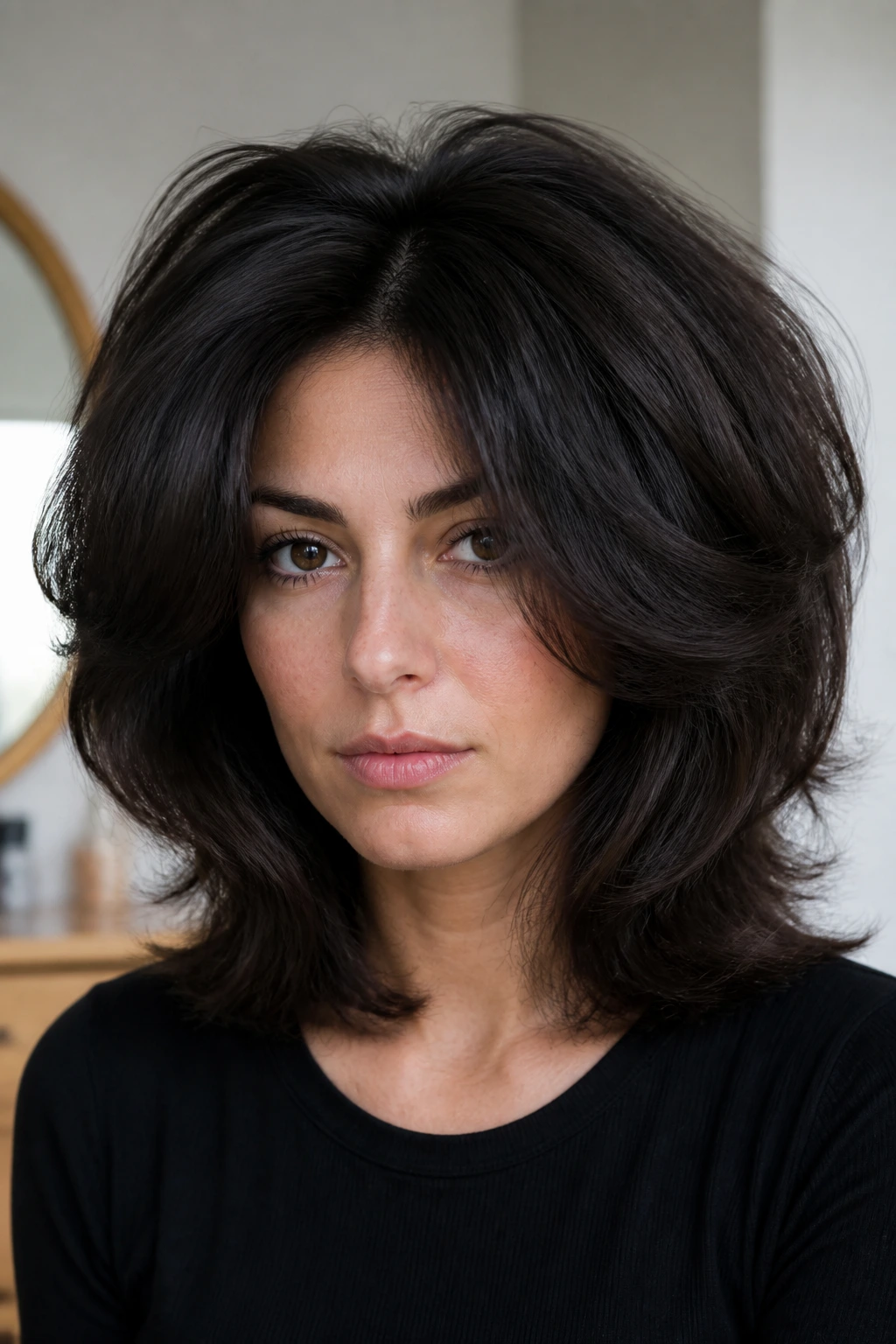
Over-thinning with texturizing shears: This is the classic bad call. The hair may feel lighter in the chair, but the outer shape often frizzes up or separates too much once it’s dry. The fix is to remove weight in controlled sections, not hack into the perimeter and hope for the best.
Choosing too many short layers near the crown: Thick hair already has lift. Add short layers too high up and the top can puff while the ends look sparse. Ask for layers that start lower, especially if your hair is dense and wide.
Ignoring the perimeter: A blunt bob or lob looks good only when the edge is clean. If the bottom line is chopped unevenly, thick hair reads as bulky. Keep the line deliberate, even if you want softness inside the cut.
Skipping root lift: Thick hair can go heavy at the crown, which makes the face look lower and the style feel less open. A little mousse, blow-dry lift, or a side part can fix that fast.
Trying bangs without a maintenance plan: Thick bangs can be gorgeous, but they need regular trimming and daily styling. If you hate that kind of upkeep, choose curtain bangs or side-swept fringe instead.
Forcing a sleek look with the wrong products: Heavy creams and oils can make thick hair look greasy before it looks smooth. Use a small amount, then build only if needed.
Easy Adjustments for Wavy, Curly, and Straight Thick Hair
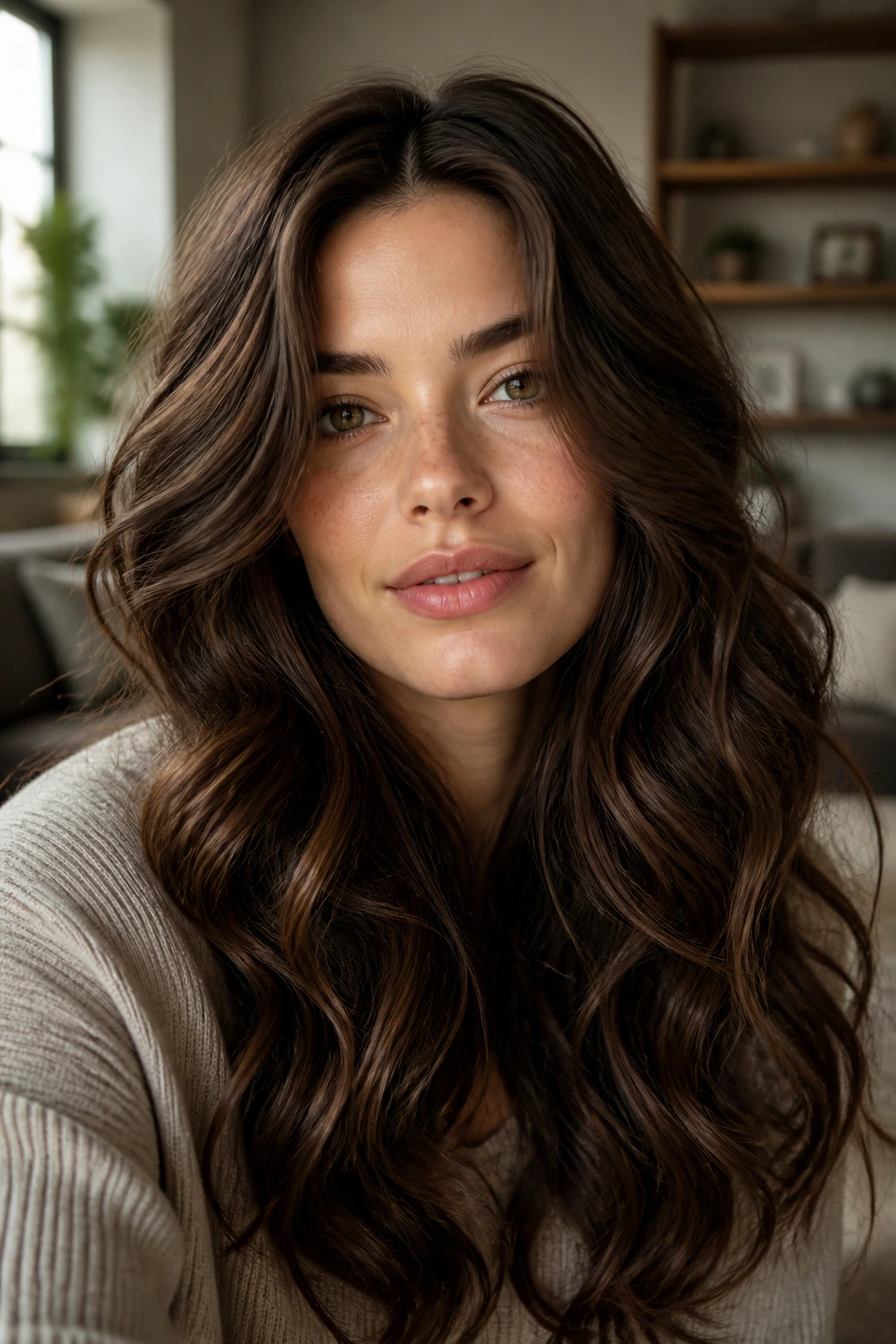
Soft Wave Edit: If your hair bends easily, lean into styles with loose layers, curtain bangs, and round brushes. The wave itself will do half the work, and the cut only needs enough structure to keep the sides from spreading.
Curl-First Version: For curly thick hair, keep the front longer and the layers more rounded. A strong shape around the cheekbones usually looks better than a lot of short pieces at the top, which can create a halo you did not ask for.
Straight-Hair Clean Line: If your thick hair is pin-straight, blunt cuts and polished lobs usually look strongest. The straight texture shows the line clearly, so a clean edge can look sharp instead of heavy.
Low-Maintenance Grow-Out: Choose long layers, invisible layers, or a collarbone lob. These grow out without losing the shape overnight, which matters if you do not get trims often.
Dress-It-Up Version: Take any of the styles above and add a round-brush finish, a ribbon, a barrette, or a soft bend through the ends. Thick hair holds accessories well, and that makes the style feel finished fast.
Keeping the Shape Between Washes and Trims
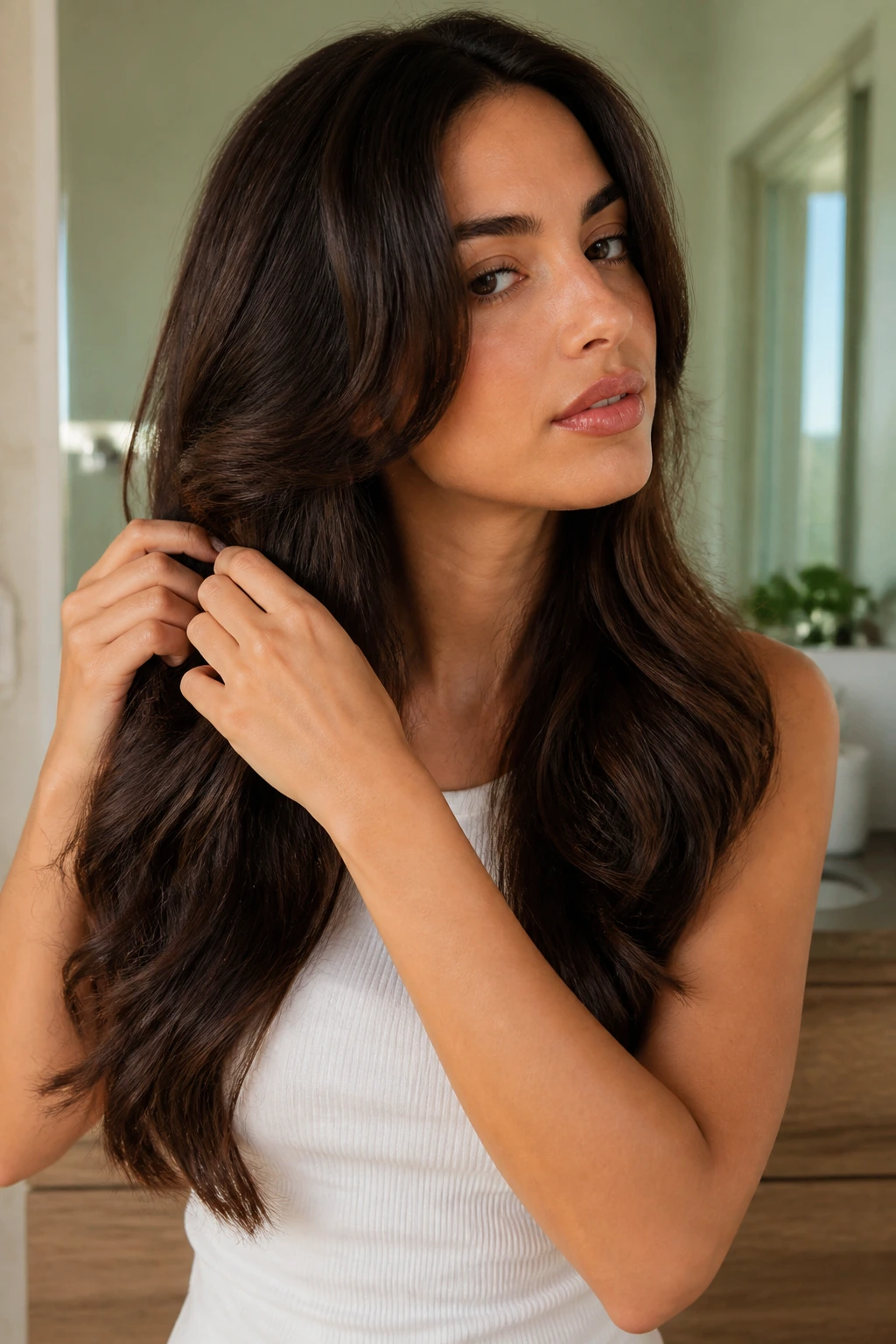
Thick hair can stay looking good longer than fine hair, but only if you keep the shape from collapsing under product buildup and grown-out layers. For short cuts like pixies and bobs, plan on trimming every 4 to 8 weeks if you want the line to stay crisp. Curtain bangs usually need attention every 3 to 5 weeks if you wear them straight across the forehead. Long layered cuts can go 8 to 12 weeks before the shape starts getting fuzzy around the face.
Wash-day habits matter too. A clarifying shampoo every 2 to 4 weeks helps when mousse, dry shampoo, and serum start stacking up. Thick hair can hold a lot of residue without looking dirty right away, which is exactly why the roots can stop lifting. Follow with conditioner only from mid-length to ends if your roots go flat easily.
Sleep care makes a bigger difference than people admit. A satin pillowcase or bonnet cuts down on friction, which keeps waves from puffing and curly hair from haloing out. If the style is a bob or lob, tuck the ends loosely or sleep with the hair in a low, soft braid so it does not kink in odd places.
When a style needs refreshing, think small. A little water, a touch of leave-in, and a quick blast of heat at the roots can revive the shape. You usually do not need to start over.
Questions People Ask Before Cutting Thick Hair
Is a middle part good on an oval face with thick hair?
Usually, yes. An oval face can carry a center part without looking too long or too narrow, and thick hair gives the part enough body to stay visible. If the roots fall flat, a slight off-center part can be the easier option.
Should thick hair be layered or blunt?
Both can work. Blunt cuts keep the bottom edge tidy, while layers remove bulk and add movement. If your hair is very dense, a blend of the two is often best — a clean perimeter with controlled internal layers.
Are bangs a bad idea with thick hair?
Not at all, but the style of bang matters. Curtain bangs and side-swept fringe are easier to live with than a heavy straight fringe because they grow out more gracefully and need less daily fuss.
What is the most low-maintenance option here?
Long invisible layers, a collarbone lob, or a claw-clip twist probably rank highest. They grow out softly and do not demand hot tools every single day.
Can thick hair work in a pixie cut?
Yes, if the top is left long enough and the sides are shaped to remove bulk. A thick-haired pixie needs regular trims, though, or it loses its edge fast.
What if my thick hair is frizzy?
Pick styles with cleaner lines and fewer short layers around the crown. A blunt lob, long invisible layers, or defined curls with a diffuser usually behave better than an aggressively textured shag.
How do I stop thick hair from looking too wide at the sides?
Keep the layers lower, remove weight through the mids, and avoid too much volume right at the temples. A side part or tucked-behind-ear finish can also pull the eye inward.
Which styles work best if I never heat-style my hair?
Long layers, invisible layers, textured shags, low buns, braids, and claw-clip twists all do well without much heat. The cut has to do most of the work, so ask for shape that holds when air-dried.
A Shape That Keeps Its Line
Thick hair on an oval face gives you more room than most people think. That does not mean every haircut behaves on autopilot. It means you get to choose between polished, relaxed, short, long, curly, braided, and pinned-up — as long as the shape has a reason for being there.
The styles that last are the ones that respect the weight of the hair. Clean lines. Smart layers. Bangs that open the face instead of boxing it in. That’s the whole trick, and once you see it, the options stop feeling random.
Pick the version that matches how you actually live, not the one that looks best in a salon mirror under bright lights. Your hair will tell you pretty quickly whether the shape works.