



A good swoop haircut on thick hair does not need a lot of drama. It needs the right weight in the right places. Leave the front too blunt, and the hair falls like a curtain. Remove too much bulk, and the top goes wispy and loses the whole point of the sweep.
That’s why thick-haired boys are such a good match for this look. The density gives the hair something to lean on, so the shape can hold through a school day, a soccer game, or a half-hour in the back seat with the windows down. The trick is picking a version that works with the hair’s natural push instead of fighting it.
And thick hair has opinions. It sticks up where you want it flat, flares out where you want it narrow, and ignores bad direction like a stubborn toy. The cuts below handle that headstrong texture in different ways, from clean and school-safe to sharper and more styled.
Why These Swoop Cuts Work So Well on Thick Hair
-
Dense hair keeps the sweep visible: Thin hair can vanish into the scalp when it’s brushed over; thick hair gives the swoop enough body to read from across the room.
-
Bulk removal matters more than length alone: A strong swoop is built by taking weight out of the sides, temples, and interior top, not by hacking the front shorter.
-
These cuts give you options: Some versions stay neat with nothing more than a comb and water, while others can be pushed harder with a dryer and matte paste.
-
They grow out better than blunt bangs: When the front is texturized instead of cut in one straight line, the shape softens instead of turning boxy after two weeks.
-
They can be cleaned up without losing the style: A taper, fade, or scissor-over-comb side keeps the cut tidy even when the top starts stretching out.
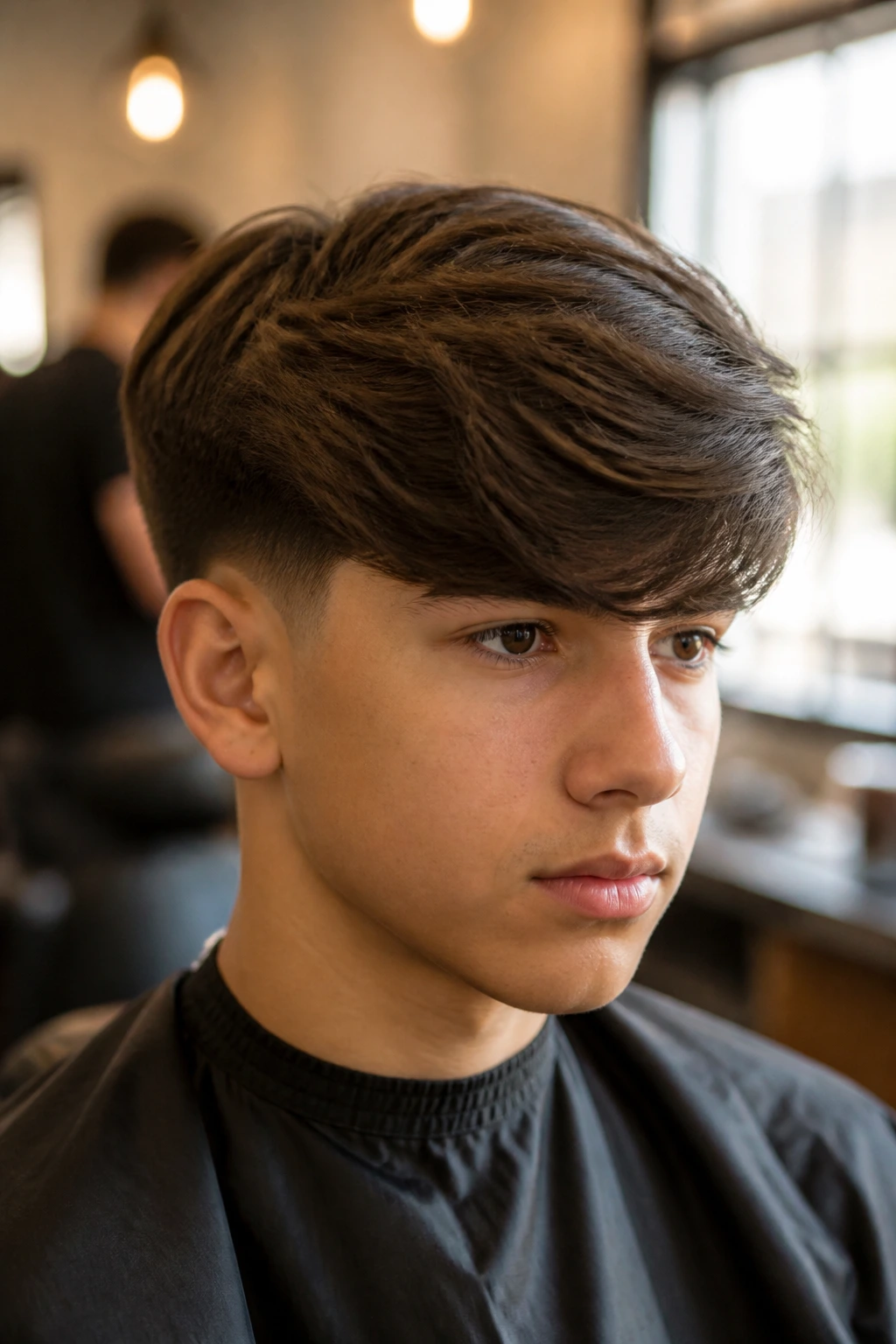
1. The Low Taper Side Swoop
A low taper is the version I reach for when I want the swoop to look intentional without shouting about it. The top keeps enough length to move across the forehead, but the sides stay close enough to the head that the whole cut feels balanced. On thick hair, that balance is doing a lot of work.
Why It Works on Dense Hair
The low taper takes the visual weight off the bottom half of the haircut. That matters because thick hair tends to puff at the temples and above the ears first, and once that happens the swoop starts looking round instead of diagonal. Keep the top around 3 to 4 inches, taper the nape and sideburns cleanly, and the hair falls where you want it.
If you want something a younger boy can wear without a morning wrestling match, this is one of the safest bets. The swoop is there, but it doesn’t need a slick finish to stay recognizable.
Best barber note: ask for the top to be left longer at the front and lightly texturized through the ends, not thinned all over. Thick hair looks better with controlled weight than with random holes in it.
2. The Hard-Part Swoop Fade
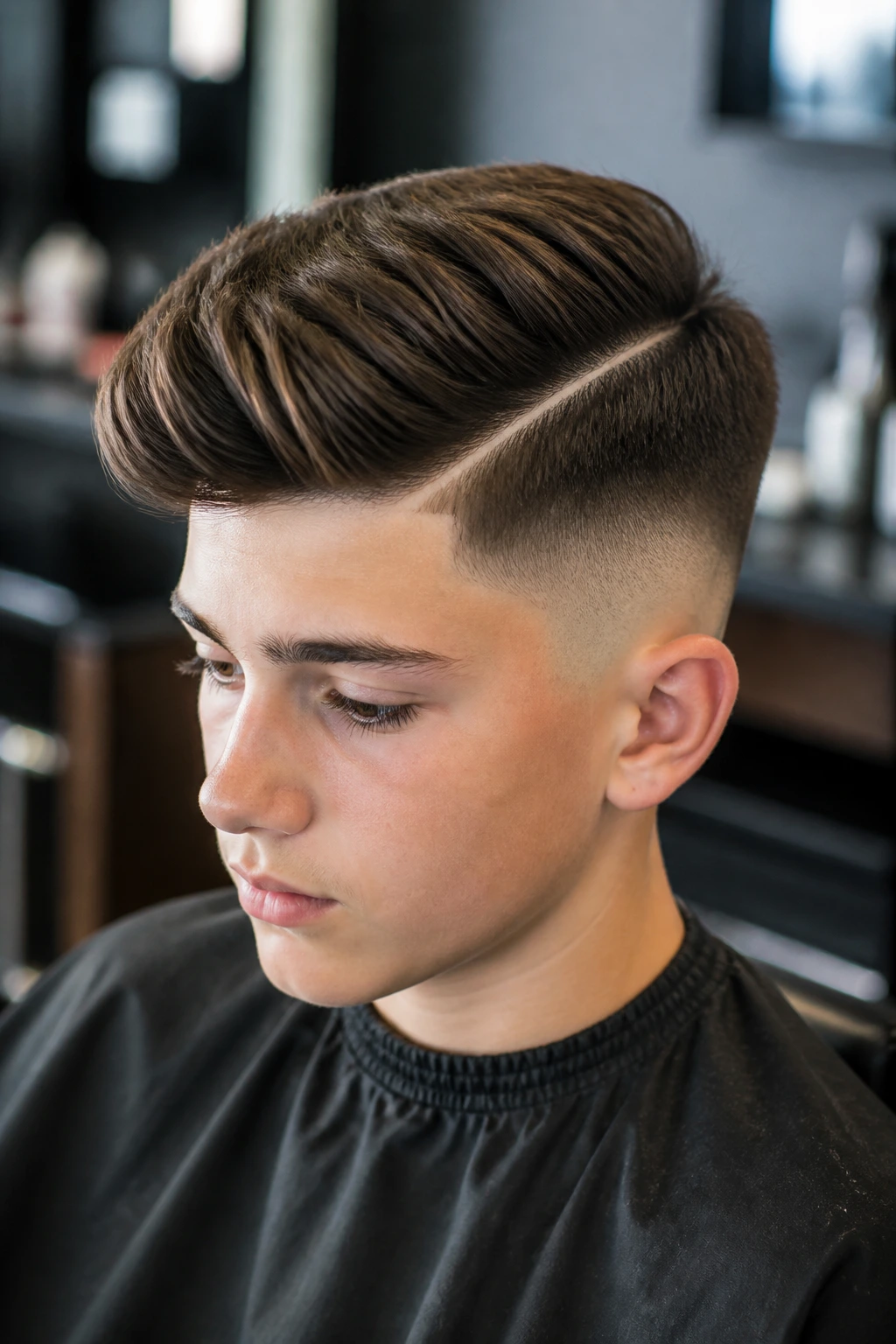
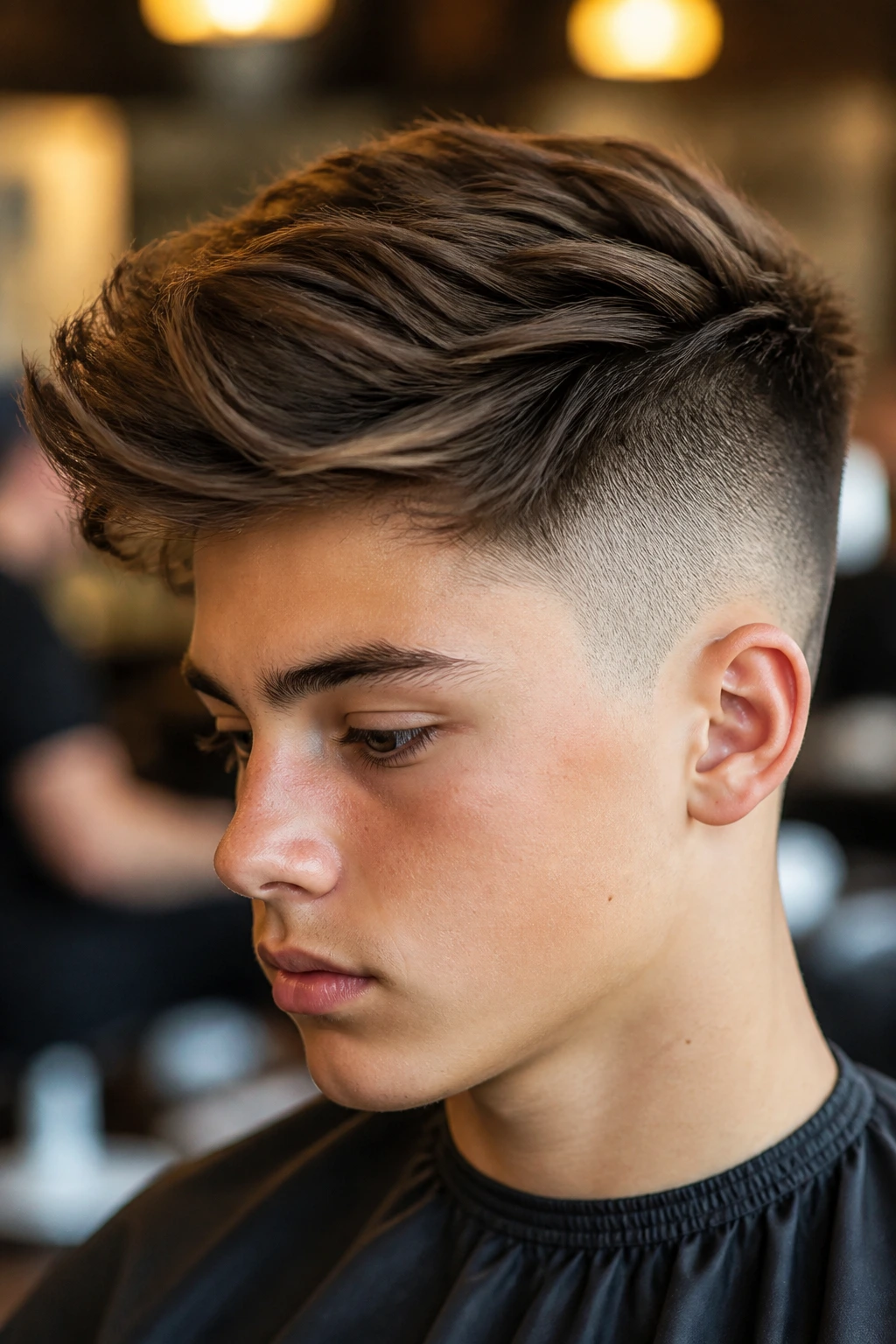
A hard part gives thick hair a lane. That’s the whole appeal. When the hair naturally wants to spread in two directions, a clean shaved part line tells it exactly where to travel, and the fade below that line keeps the sides from swelling out.
The result feels sharper than a plain side sweep. Not fussy. Just defined. If the boy likes a haircut that looks crisp right after a trim, this one holds its shape especially well for the first 10 to 14 days, which is usually when the outline matters most.
The catch is that the part has to be placed carefully. Too far back, and the top can look separated from the face. Too shallow, and thick hair just bulldozes over it. I like this cut best when the top has a little texture and the fade stays mid-to-low rather than climbing too high.
3. The Textured Fringe Swoop
What if the hair wants to fall forward instead of sideways? Then let it. This cut works with a thick fringe, but it breaks the front into pieces so the sweep looks soft, not like a helmet visor.
What to Ask For
Ask the barber for point-cutting through the front 2.5 to 4 inches, depending on how much forehead coverage you want. Point-cutting means the ends are snipped at an angle instead of across in a straight line, which stops the fringe from forming one heavy shelf. On thick hair, that shelf is the enemy.
This style looks best when the front has a little movement and the top is not over-blended into the sides. A light matte cream or paste is enough. If you pile on product, the texture disappears and the whole cut goes flat in a strange, sticky way.
4. The Ivy League Swoop
This is the neatest version in the bunch, and I mean that as praise. The Ivy League swoop keeps the top short enough to stay tidy, then nudges the front diagonally so the cut still has motion. It suits boys who need a haircut that looks good in a classroom, on stage, and in the car line.
Thick hair makes this cut look fuller than it does on fine hair. That helps. Instead of lying limp, the top has a little lift at the front and a clean collapse to one side. The sides should be cut with a conservative taper or soft fade, because if they’re too short, the top starts looking like a separate object sitting on the head.
I like this version for families that want low fuss but not low style. It’s the haircut equivalent of a clean hoodie and good sneakers.
5. The Messy Crop Swoop
Some boys will not sit still for anything polished. Fine. Give them the messy crop swoop and let the hair look lived in on purpose. The front still sweeps, but the top is chopped in a broken, choppy way so it moves when fingers run through it.
This cut is useful when thick hair grows straight up at the crown or sticks hard at the hairline. The shorter length prevents the hair from turning into a sideways shelf, and the texture keeps it from looking too perfect. I’d keep the top around 2 to 3 inches and leave the fringe slightly longer than the crown so the shape still reads as a swoop.
One thing I like here: it survives a rough day. If the hair gets pushed around by a hoodie or a backpack strap, it usually falls back into a decent shape with a damp hand and a quick reset.
6. The Undercut Swoop
The undercut swoop is louder. The sides are disconnected from the top, which means the swoop has a clean stage to sit on. Thick hair can handle the drama because it has enough density to keep the top from looking see-through.
The danger with this cut is weight. If the top is left too long and not texturized, thick hair can balloon over the undercut and start looking like a mushroom cap. That is not the mood. Keep the top at a manageable 4 to 5 inches, and make sure the barber removes some interior bulk so the hair bends instead of standing up as one solid block.
This one works best for boys who like a more obvious style change and don’t mind combing or drying the front into place. It’s also the version most likely to look completely different after a few days of growth, which can be either a feature or a headache.
7. The Drop Fade Swoop
A drop fade follows the curve of the head, dipping lower behind the ear and rising slightly toward the front. On thick hair, that shape can be a small miracle. It keeps the sides from going square, which is exactly what dense hair likes to do when it’s left too full.
Because the fade drops behind the ears, the top gets more visual emphasis without needing a giant fringe. That makes the swoop look cleaner from the side. It also helps if the boy has a rounder head shape, because the fade draws the eye downward and breaks up the width.
- The top should stay textured, not blunt.
- The front should be long enough to travel sideways without flopping.
- The neckline needs to be trimmed cleanly, or the whole cut loses its polish fast.
I’d use this for boys who want style but not a lot of product. A little cream, a quick comb, and it’s out the door.
8. The Blowout Swoop
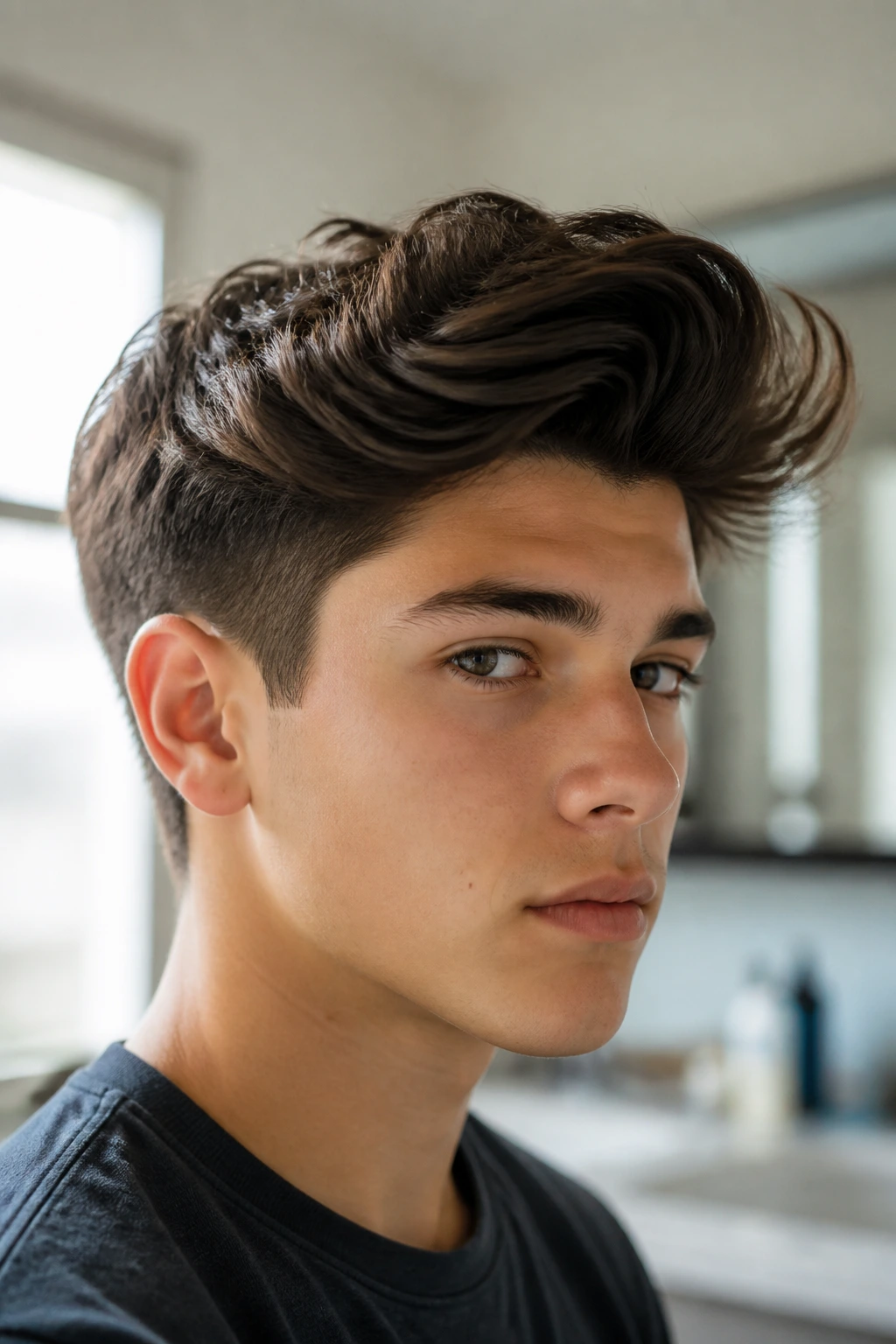
This is the haircut that looks like it has air under it. The front lifts first, then bends over into a side sweep, which gives thick hair a lighter, taller shape. It’s a little flashier than the low taper or Ivy League versions, but it still makes sense on a young head if the rest of the cut is kept tight.
The blow dryer does the real work here. Brush the front up and across while the hair is damp, then hit it with cool air at the end so the shape sets. If you skip the dryer, thick hair usually settles back into its own gravity and the swoop gets short and stubborn.
A blowout swoop looks best with a matte product instead of shine. Heavy gel tends to freeze the front in place, and frozen hair is not the same as controlled hair. Not even close.
9. The Curly Hair Swoop
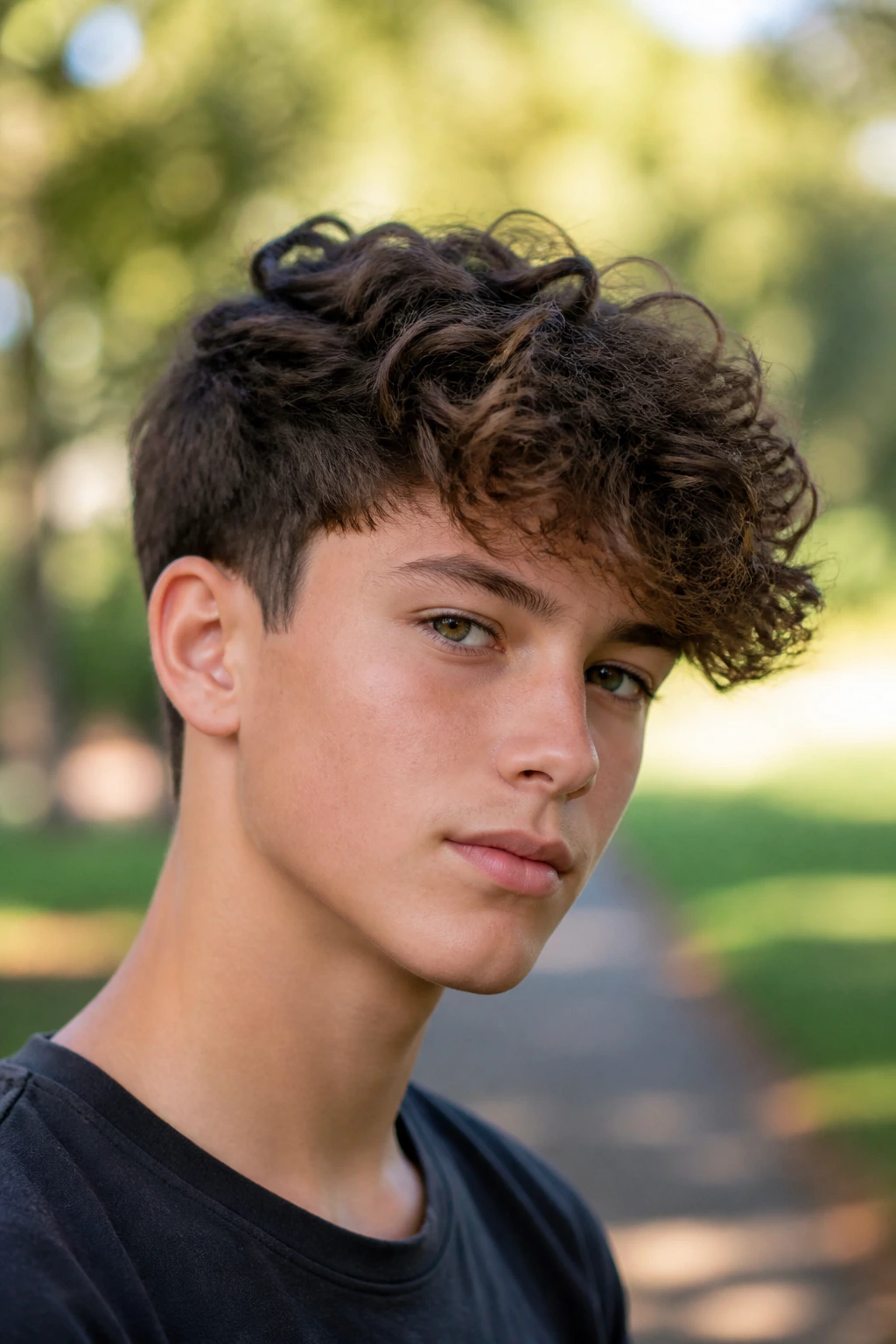
Curly thick hair can do a swoop, but it should be allowed to stay curly. That sounds obvious, yet a lot of bad haircut choices come from trying to flatten curls into straight-hair shapes. The better move is to leave enough length on top that the curl pattern can bend sideways instead of puffing straight out.
Work With the Curl, Not Against It
I’d ask for the top to be cut with the curl in mind, usually dry or mostly dry, so the barber can see where the bulk sits. The front can be a little longer than the rest of the top, and the sides should be tapered softly so the curl doesn’t explode around the ears. A curl cream or light leave-in makes more sense here than a dry clay.
The swoop appears when the curls are guided, not forced. A side part helps. So does raking the hair across with damp fingers instead of a comb, which often separates curls too hard and creates frizz.
10. The Wavy Swoop with Temple Fade
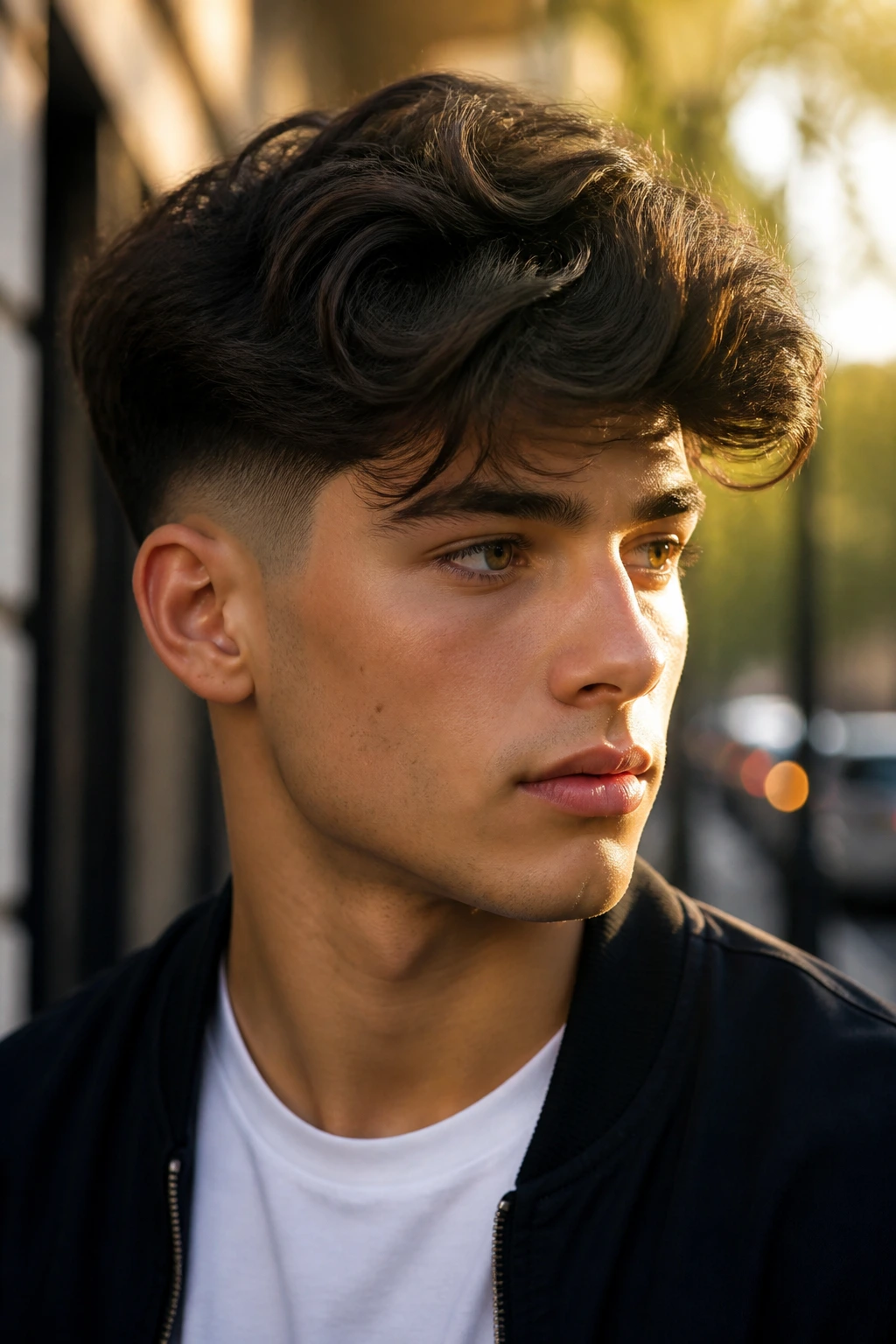
Wavy thick hair sits in a nice middle zone. It has enough bend to hold a sweep, but not so much volume that every strand fights back. Add a temple fade, and the cut gets that tidy edge around the face that keeps the whole look from feeling heavy.
This is one of those cuts that looks good in motion. When the boy turns his head, the front moves. When he stops, it settles. That little bit of motion is what makes a swoop look alive instead of shellacked.
The temple fade matters more than people think. It clears the area around the temples and sideburns, which are exactly where wavy thick hair likes to puff. Keep the top longer near the front, but don’t let the crown stay bulky. A scissor-over-comb cleanup there usually works better than a blunt clipper line.
11. The Scissor-Only School Cut Swoop
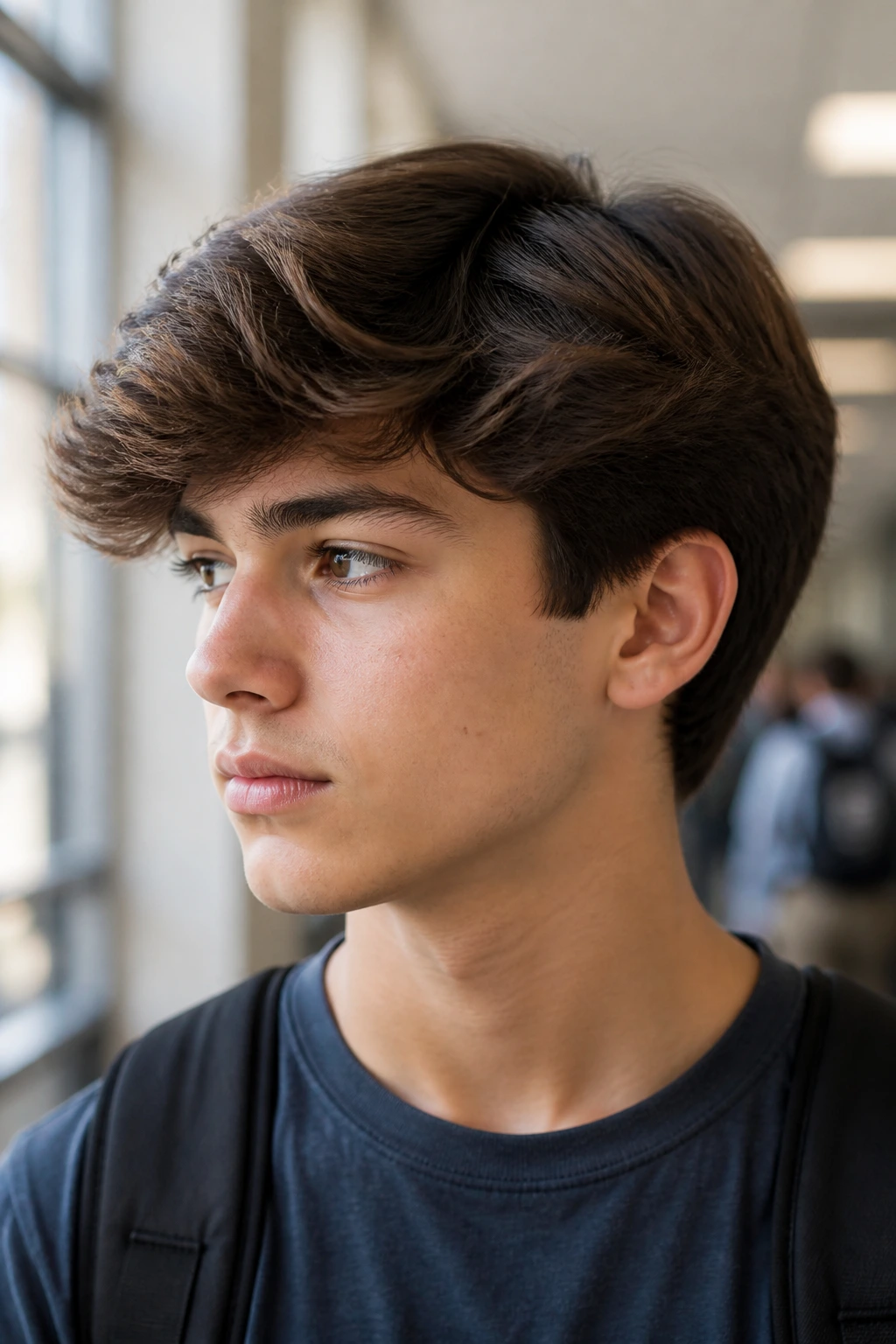
No clippers. No skin fade. Just scissors, clean lines, and a swoop that behaves well in school settings. This cut is a quiet one, but I like it because it grows out gently. Thick hair can be rough when it starts to lose shape, and scissor work softens that problem.
The top is left long enough to sweep, but the barber should take the weight out through layering rather than attacking the sides with a machine. The result is a softer outline, especially around the ears and neckline. It’s the kind of cut that doesn’t start screaming for a trim after two weeks.
If a child hates the feeling of a big clipper fade or if a school has stricter grooming rules, this is a strong middle path. It still has a swoop. It just wears a tie to school.
12. The Burst Fade Swoop
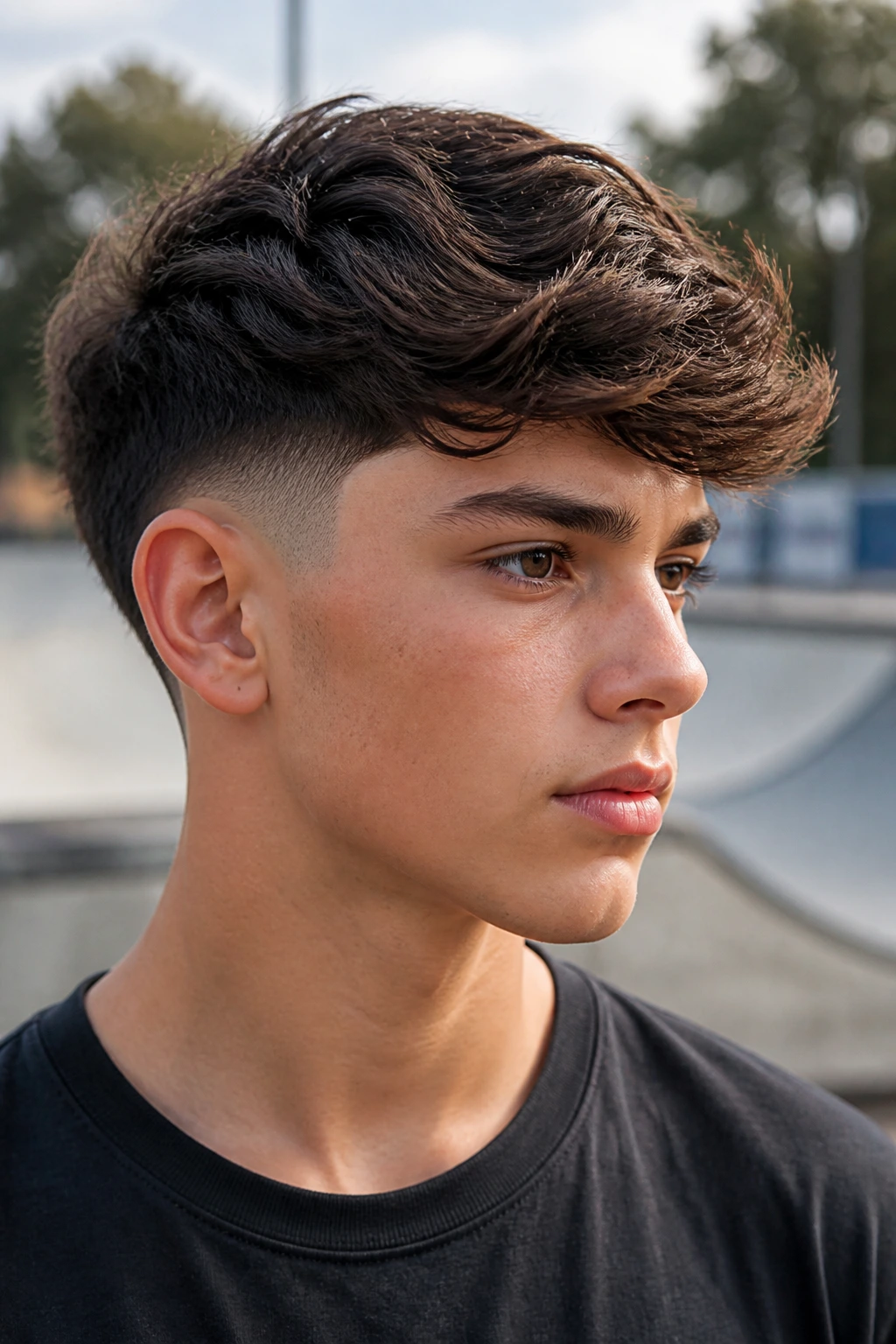
A burst fade curves around the ear like a little sun flare, and on thick hair that curved shape does a nice job of preventing the sides from looking square and boxy. The top can then sweep off to one side without fighting a bulky frame underneath.
This style has a sporty edge. Not because it’s loud, but because it looks like it was built to move. Boys with dense hair often end up with puff around the ear first, and the burst fade knocks that out while leaving enough top length to keep the swoop readable.
I’d keep the top medium length and textured, especially if the hair naturally grows forward. Too much length on top turns this into a floppy style. A little less length keeps it crisp and easier to reset with water.
13. The Long-Top Swoop
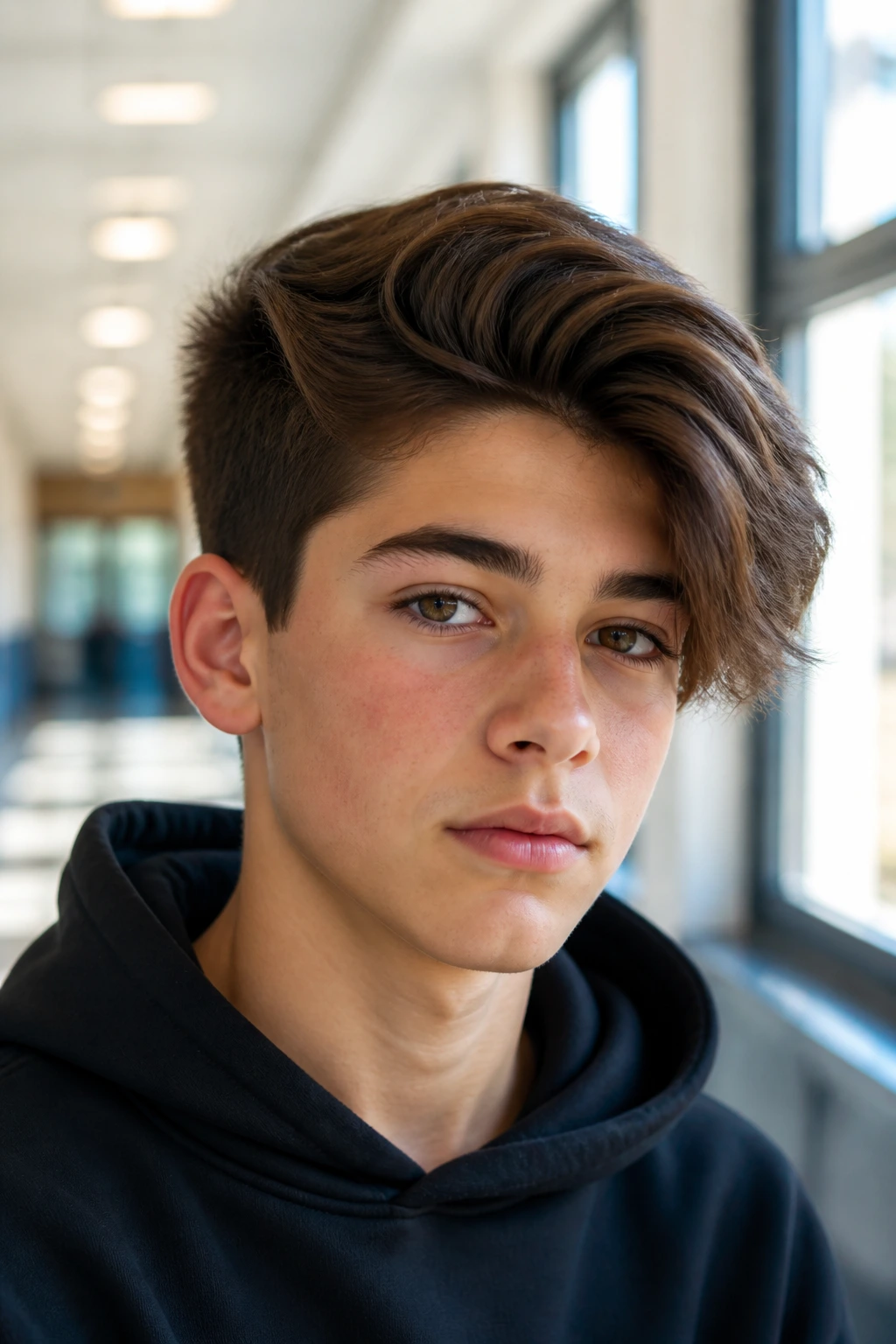
Long top swoops are for boys who like hair that moves. A lot. The front stays long enough to really travel across the forehead, and the weight of thick hair gives it presence. When it’s cut well, this version has a nice, almost athletic flow.
But the top cannot be left heavy all the way through. That’s the common mistake. Thick hair with no interior removal turns into a roof, not a swoop. Ask for layering inside the top and lighter ends at the front so the hair bends instead of hanging in one flat slab.
This cut is not the lowest-maintenance choice. It looks better with a dryer and a little product, and it needs regular cleanup around the ears and neckline to avoid drifting into shag territory. If the boy likes the feeling of longer hair but still wants a shape, this is the version to try.
14. The Mini Quiff Swoop
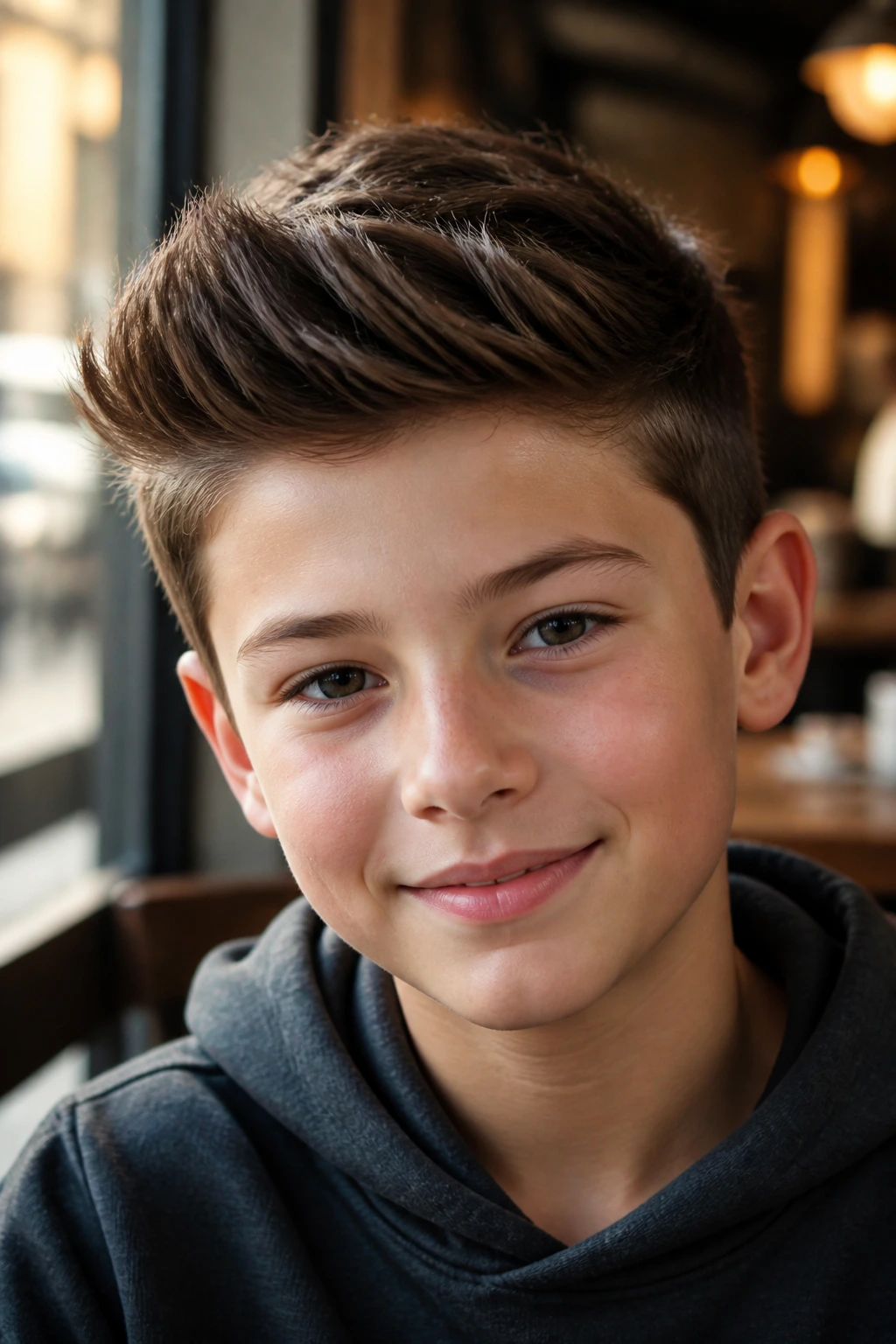
Think of this as a cross between a small quiff and a side sweep. The front gets lifted first, then pushed diagonally, which gives thick hair a bit of height before it moves. That extra lift is useful when the hairline sits low or the forehead needs a little breathing room.
The mini quiff swoop works best when the hair is dried forward and up, then guided to the side with a brush or fingers. If you try to sweep it sideways while it’s soaking wet, the front usually collapses before it sets. A matte cream with a touch of hold keeps the shape flexible.
I like this one for boys who want a little style without looking too grown-up. It’s neat, but not stiff. That matters.
15. The Sport-Ready Swoop
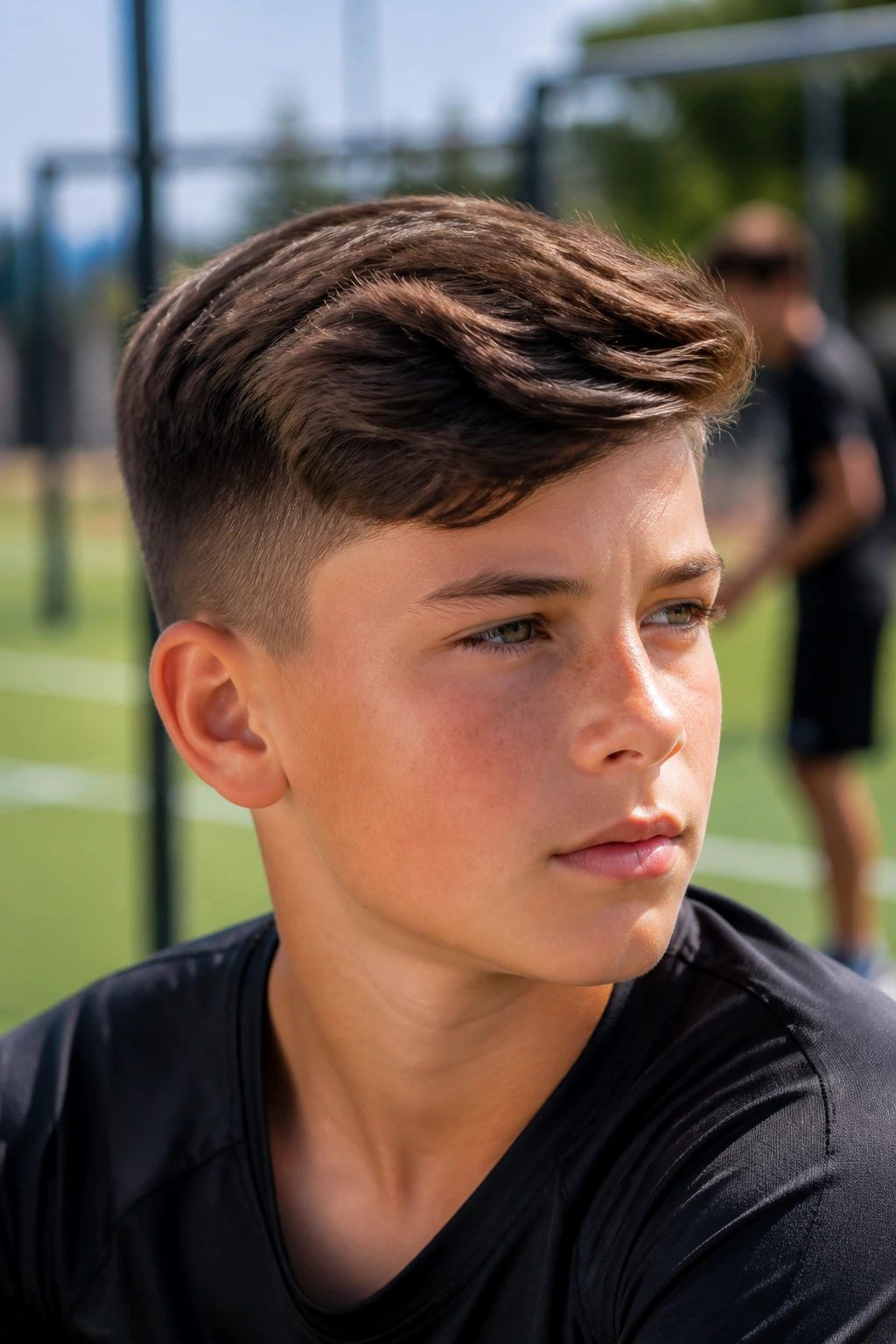
Some cuts need to survive hats, helmets, and a lot of movement. This is that cut. The sport-ready swoop keeps the top shorter, the sides tighter, and the front just long enough to sweep without falling into the eyes the second the kid starts running.
Thick hair is useful here because even at a shorter length it still shows shape. You don’t need a giant top to read as a swoop. You just need direction. A low taper or soft fade helps a lot, because the cut stays clean under sweat and doesn’t bulk up after a day of wear.
I’d use this for boys who are in and out of sports gear or who simply hate long styling time. Five minutes in the morning is too much for some kids. This cuts that down fast.
16. The Asymmetrical Swoop
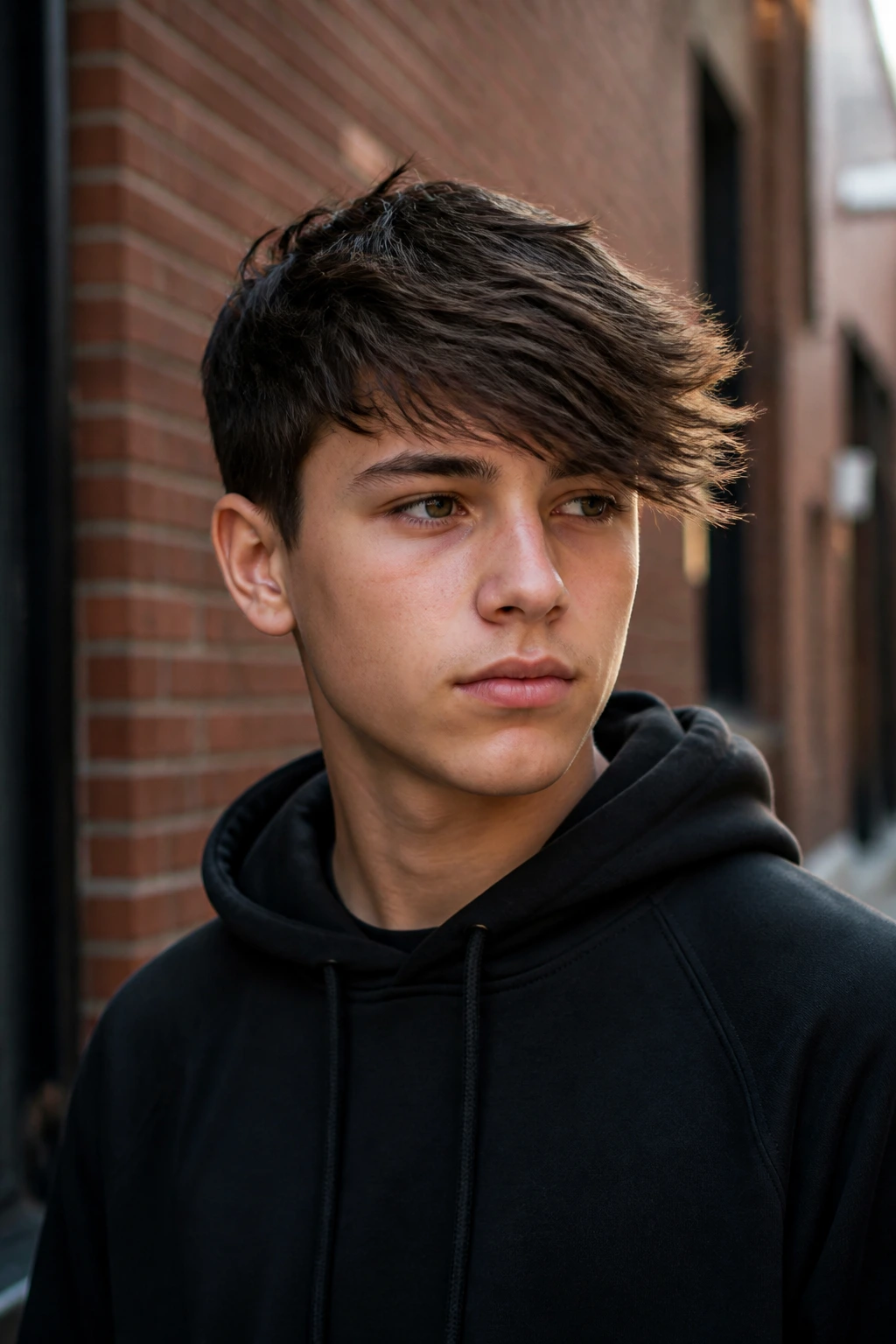
This one is for the boy who wants the swoop to feel a little more deliberate. One side travels farther than the other, which creates a stronger diagonal line across the forehead. On thick hair, that asymmetry can be striking without looking overdone.
The key is to keep the difference subtle enough that the haircut still feels wearable. One side should be longer, yes, but not so long that it droops into the eyebrow while the other side sits high and weird. The barber can use the natural part line or a slight off-center section to help the shape land where it should.
This style looks especially good on hair that naturally falls one way anyway. Fighting that natural direction is a waste of time. Use it.
17. The Heavy Fringe Swoop
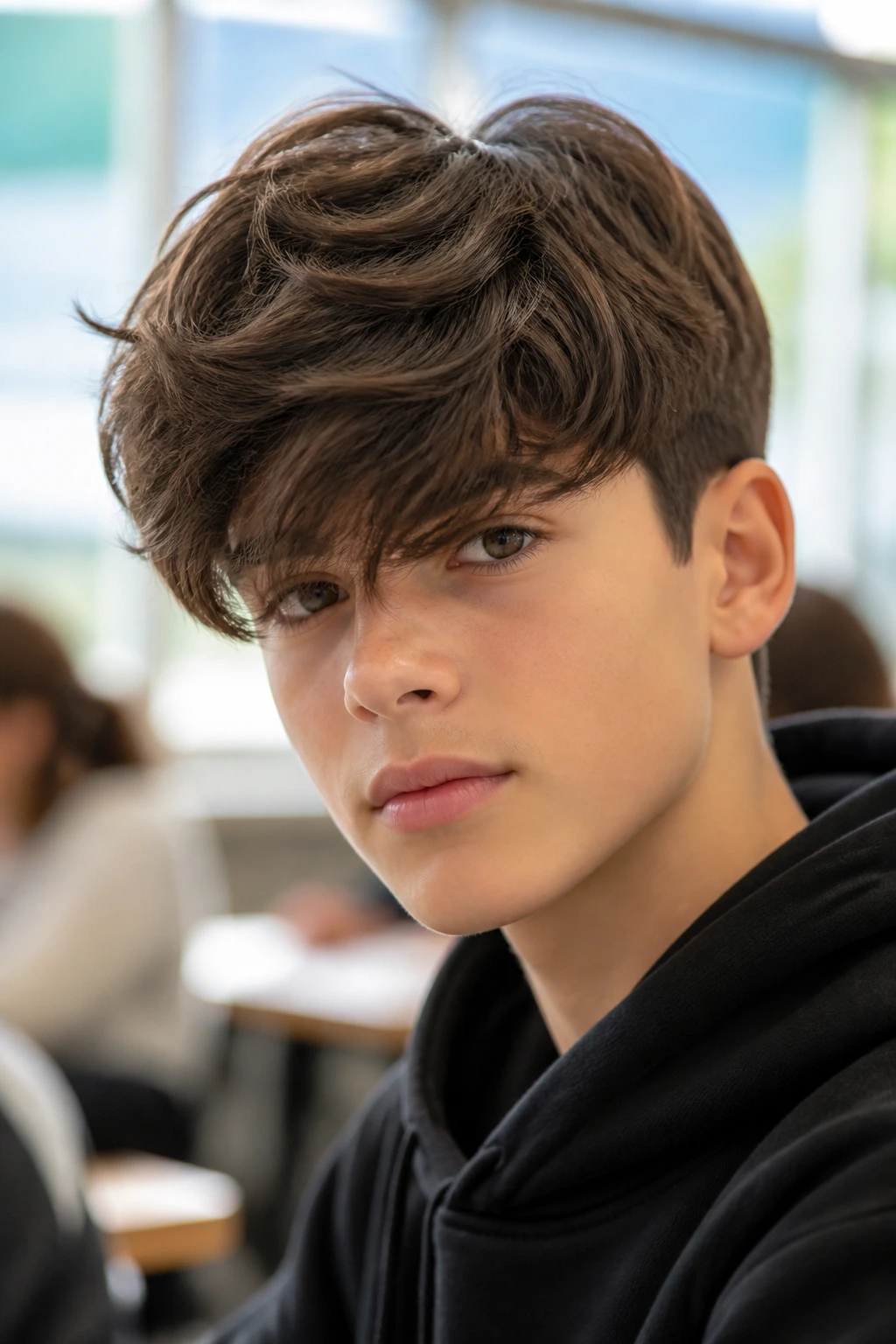
A heavy fringe swoop gives thick hair one job: move forward, then bend. The front stays longer and fuller than in most of the other cuts here, which makes it a nice pick for boys with a high forehead or a strong cowlick that wants to push up at the front.
The challenge is bulk. Too much of it, and the fringe blocks the face instead of framing it. The barber should cut internal weight out of the top and use texture at the ends so the front can split and fall across the forehead instead of forming one thick curtain.
This cut benefits from a sideward dry finish. Blow it forward first, then sweep it over with fingers and a touch of paste. If the hair is left to air-dry completely in the wrong direction, it will usually stay there.
18. The Clean Classic Swoop
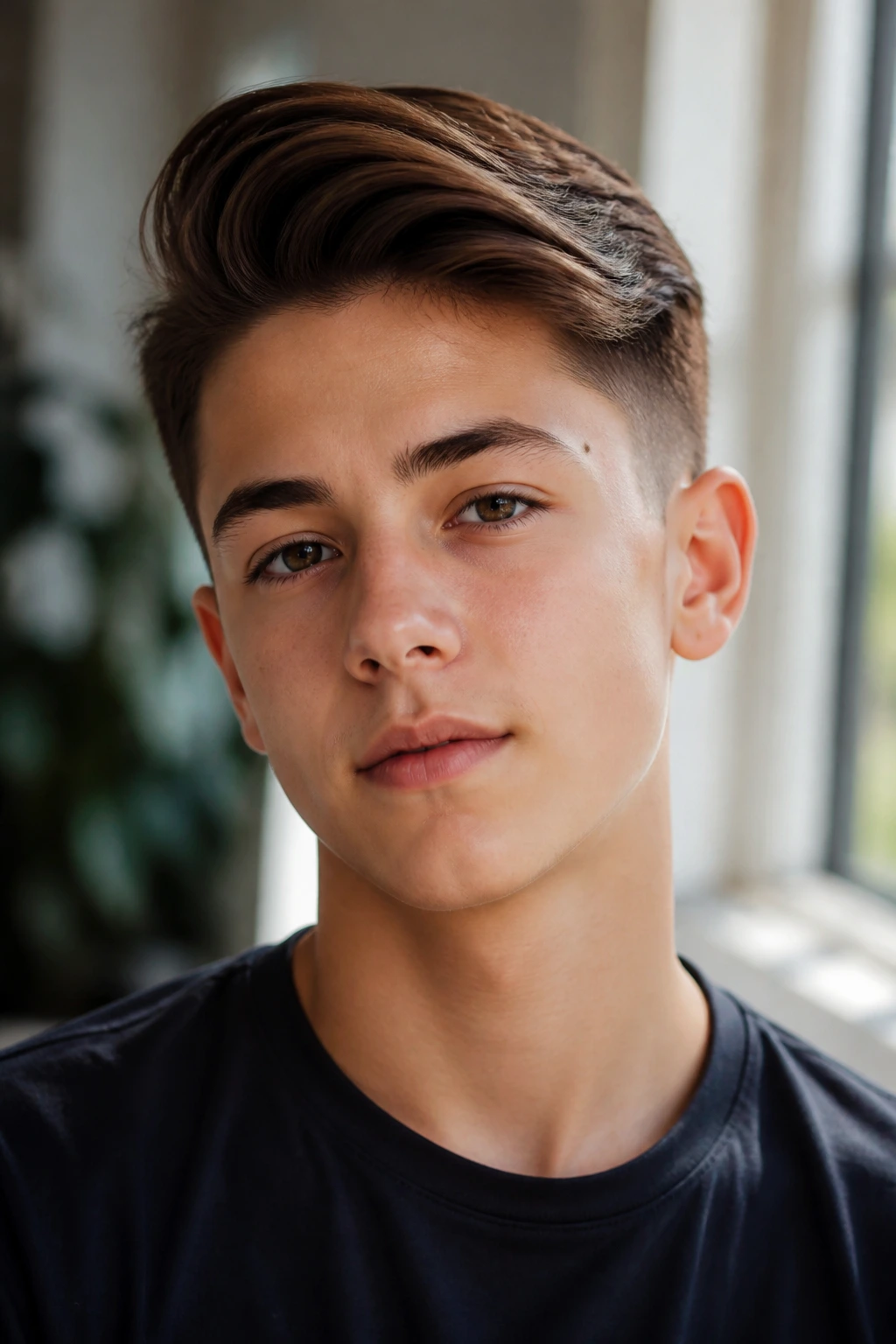
This is the one that keeps working after the novelty wears off. Clean sides, a soft side sweep, and no extra drama. Thick hair makes it look fuller than a similar cut would on fine hair, so the shape still has presence even when the styling is minimal.
I like this for boys who need a haircut that can go from school to dinner without a second thought. The top is long enough to sweep, but short enough that it won’t get ugly when it grows out a little. The sides should stay neatly tapered, and the outline around the ears needs regular cleanup.
If you only want one swoop style to test before branching into sharper versions, start here. It’s the safest version, and on thick hair, safe is not a bad word.
Why Thick Hair Changes the Barber’s Job
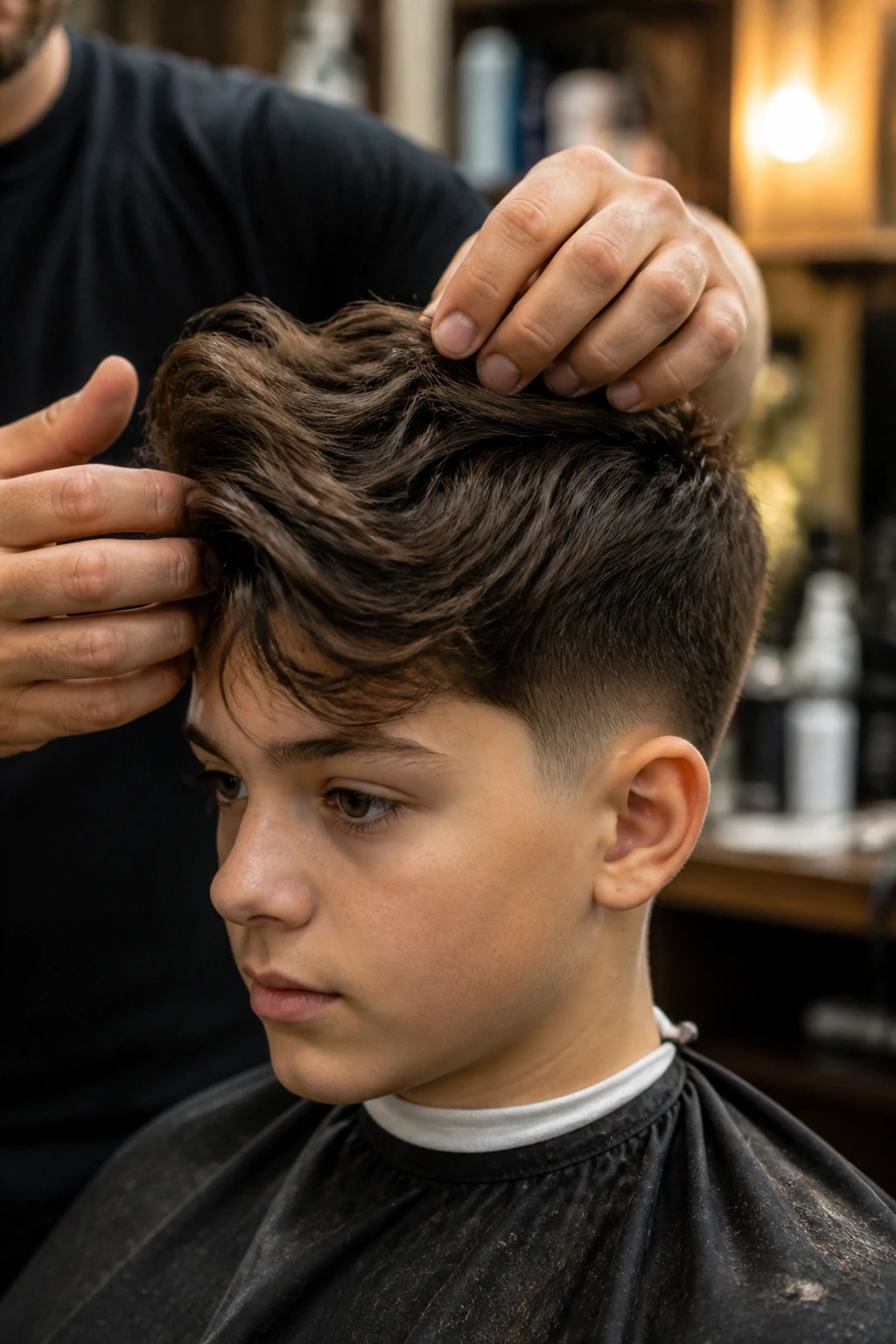
Thick hair is generous. It gives body, shape, and hold. It also gives you bulk, and if that bulk is left in the wrong places, the haircut starts doing its own thing by lunchtime.
The barber’s real job is not to make thick hair “smaller.” It’s to decide where the hair should be heavy and where it should collapse. The front often needs length and some texture so it can sweep. The sides usually need more restraint so they don’t flare out. The crown needs honesty too; if it sits too high, the swoop can look disconnected no matter how well the fringe is cut.
I prefer a dry or mostly dry consultation for thick hair whenever possible. Wet hair lies. It looks shorter, flatter, and more cooperative than it really is. Once it dries, the truth shows up fast. A good barber knows this and cuts with the natural bend in mind, especially around cowlicks and the front corners where thick hair can kick outward.
There’s also a difference between removing bulk and thinning for the sake of it. Too much thinning creates a rough, see-through surface that frizzes out as soon as the boy sweats or brushes it. Better to remove weight with controlled layering and point cutting, then leave enough substance for the swoop to hold its line.
What to Ask for at the Barbershop
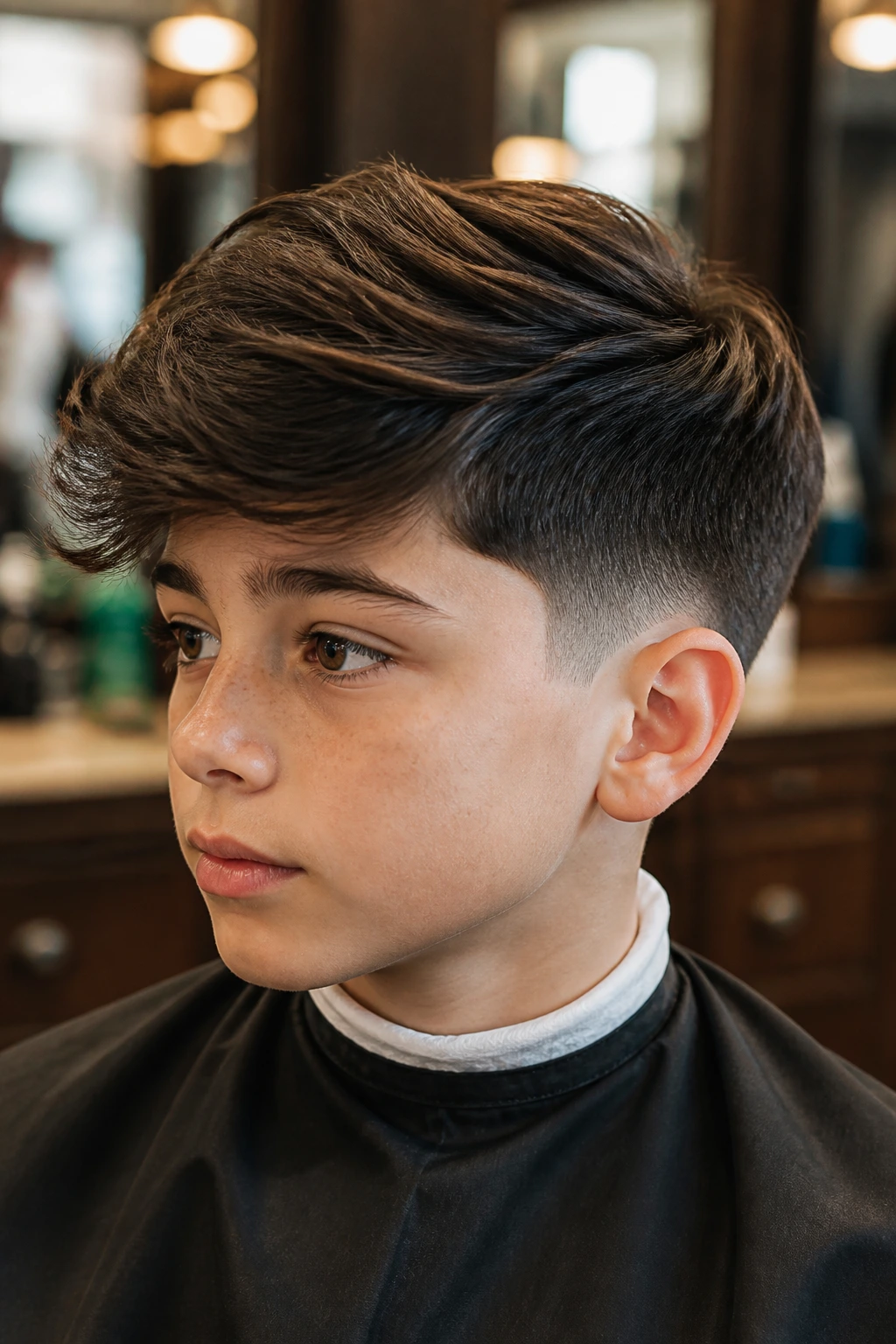
Bring a photo, but bring the right kind of photo. One picture of a model with fine hair and a different head shape is nearly useless. Try to find a reference with hair density that looks closer to your child’s, because the same cut can sit completely differently on thick hair.
Be specific about the top length. If you want a tighter swoop, ask for roughly 2.5 to 3.5 inches in the front. If you want more movement, ask for 4 to 5 inches at the fringe and slightly shorter through the crown. On the sides, a low taper, temple fade, or soft scissor blend usually works better than an aggressive high fade, especially for younger boys who need the cut to grow out cleanly.
Ask the barber whether they’ll cut it dry or wet. Dry cutting is often better for dense hair because the shape shows up in real time. And if the barber reaches for thinning shears, ask where they plan to use them. Interior bulk removal is one thing. Thinning the top surface into fuzz is another.
The Right Tools Make Thick Hair Easier to Shape
You do not need a drawer full of products. You need a few things that actually help.
- Blow dryer with a nozzle: Directs airflow so the front can be pushed across instead of puffing up.
- Vent brush or round brush: Useful for lifting the front and setting the sweep while the hair is damp.
- Matte paste or clay: Adds hold without the helmet shine that makes thick hair look greasy.
- Light styling cream: Better for curls or waves when you want movement and softness.
- Fine-tooth comb: Helps define the part and smooth the front before the final sweep.
- Wide-tooth comb: Safer for detangling thick, wavy, or curly hair without pulling the shape apart.
- Spray bottle with water: Handy for resetting the front in the morning or after sports.
- Good barber scissors and clippers: If you’re cutting at home, guard choices matter more than most people think; a #1 or #2 on the sides is a common starting point for tighter versions.
How to Wear These Cuts So They Stay Neat
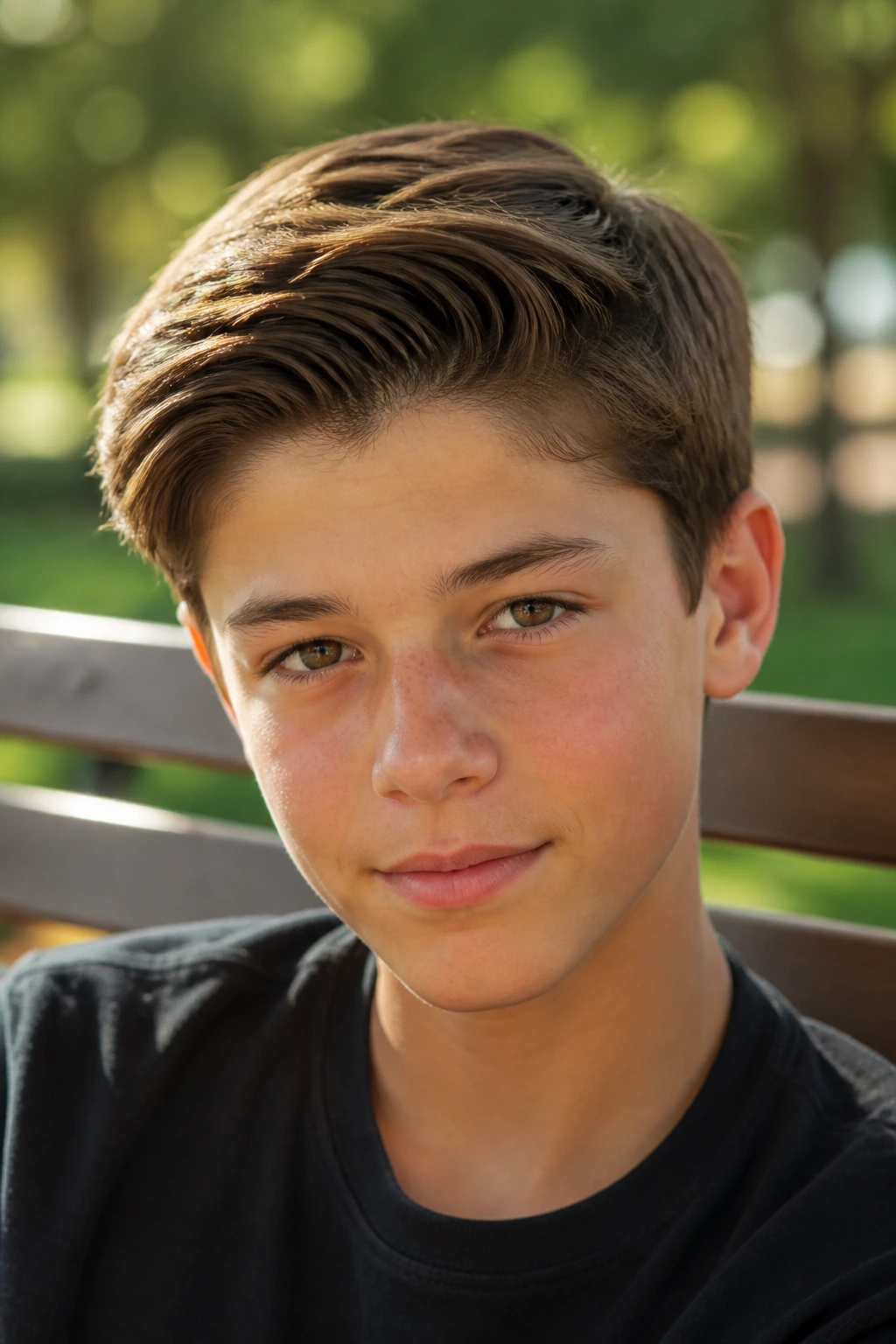
Presentation: Keep the front traveling in one clear direction. A swoop reads best when the part is a little off-center and the front doesn’t split into two equal blobs. The whole trick is getting the eye to follow the line across the forehead.
Accompaniments: These cuts pair well with clean necklines, tidy sideburns, and clothes that don’t fight the haircut. Hoodies, polos, and school uniforms all make sense because the style isn’t so formal that it needs dress clothes to explain itself.
Portions: For a tighter look, leave the top around 2.5 to 3 inches. For a fuller swoop, 4 inches gives the hair enough room to bend without collapsing. If the hair is extremely dense, too much length can make the style feel heavy before it even gets styled.
Finish: Matte is your friend for most boys. A pea-size amount of paste warmed between the palms usually does the trick. If the hair is wavy or curly, a light cream gives a softer finish and keeps the sweep from becoming crunchy.
Small Styling Tweaks That Change the Whole Cut
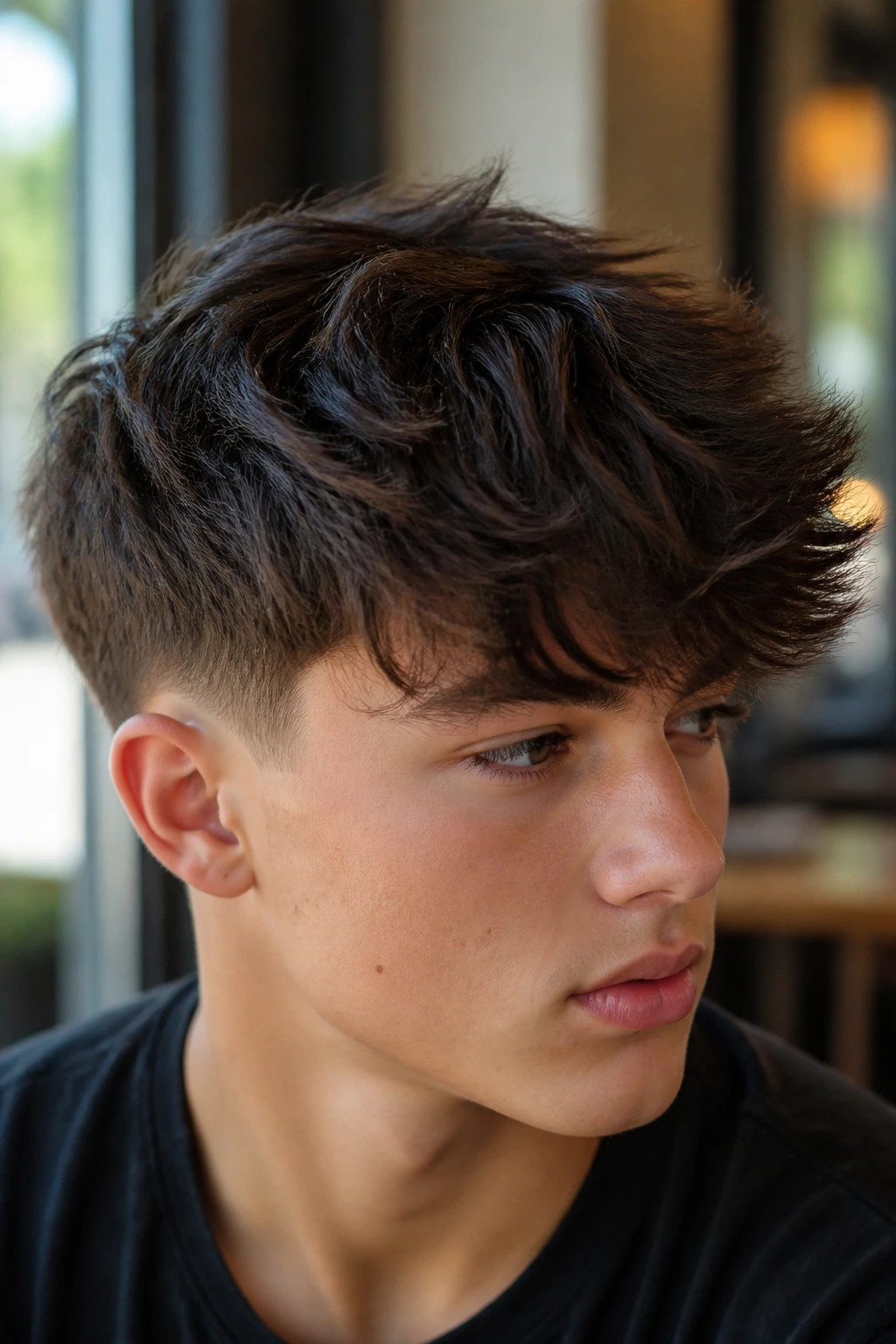
Direction: Blow-dry the hair in the direction you want it to sit before you add product. That sounds almost too simple, but thick hair remembers the first shape you give it.
Texture: If the front looks too solid, work a little product into the ends rather than the roots. That keeps the swoop from drooping while still breaking up the outline.
Reset: A damp hand is often enough to fix a flat front. Wetting the whole head is unnecessary and usually strips away the shape you already had.
Finish: Use less shine than you think you need. Thick hair already has presence. It does not need help looking heavy.
Cowlick control: If the hair kicks up at the front, brush it in the opposite direction while blow-drying for 20 to 30 seconds, then redirect it across. That tiny detour can save the whole morning.
Common Mistakes That Make a Swoop Look Heavy
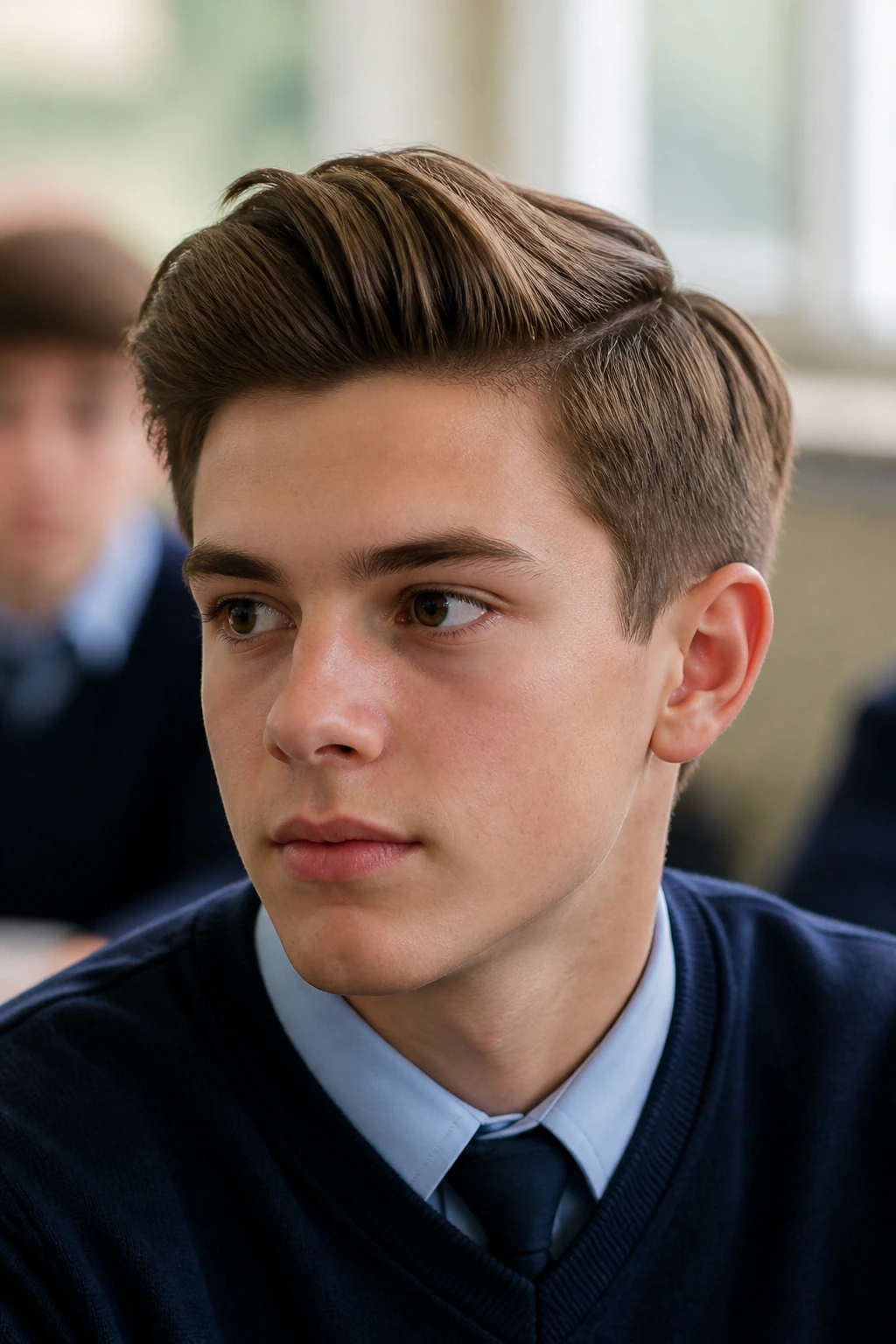
The first mistake is leaving the front too blunt. Thick hair cut straight across at the fringe tends to fall like a shelf. The fix is point cutting or soft texturizing so the sweep has some give.
Another problem is fading the sides too high. That can make the top look like a cap floating above the head, especially when the crown is dense. A lower taper or a more gradual fade usually keeps the shape grounded.
Then there’s the product mistake. Shiny gel can glue thick hair into a hard shell, and once the day gets warm or sweaty, that shell starts to separate in ugly pieces. Use a matte product unless the style is intentionally short and sharp.
People also over-thin the interior. The hair looks lighter for five minutes, then the ends get fuzzy and the top loses structure. Better to remove weight carefully than to carve random air pockets into the cut.
Variations and Adaptations to Try
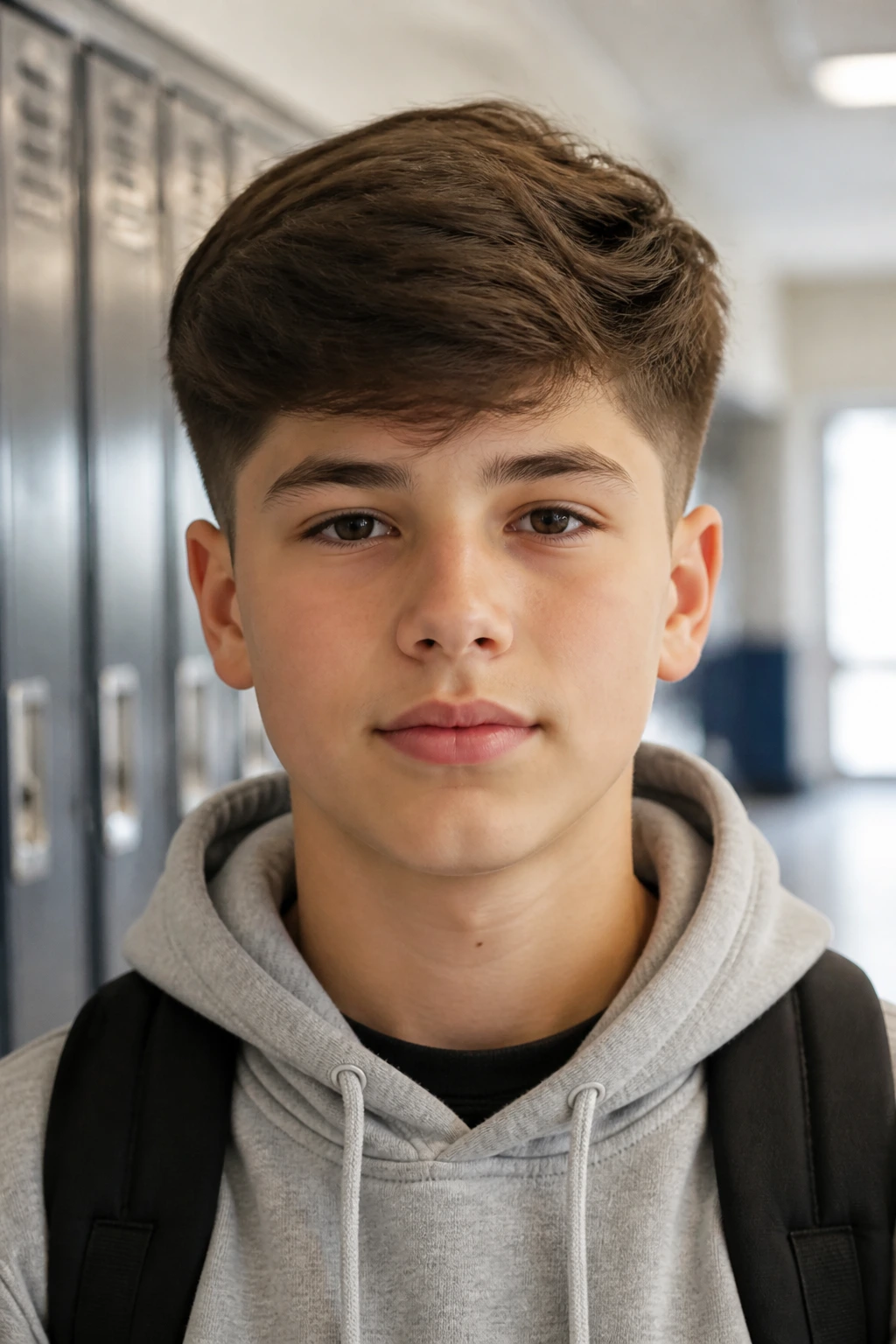
The Soft School Swoop: Keep the top short, use a low taper, and style with only water or a tiny bit of cream. This version works when you want the shape without any obvious product.
The Sharp Part Swoop: Add a defined part line and a cleaner fade for a dressier finish. It’s a good pick for picture day, performances, or any time the cut needs to look extra neat.
The Curly Sweep: Let the curls keep some spring and use cream instead of clay. The sweep will be looser, but the movement looks more natural than trying to press curls flat.
The Sport Swoop: Shorten the top and keep the sides tight enough to survive helmets and sweat. This one is built for repeat wear, not high drama.
The Grown-Out Swoop: Leave more length through the crown and use a softer scissor blend. It buys you a longer stretch between cuts without the haircut turning shapeless.
Keeping the Shape Sharp Between Haircuts
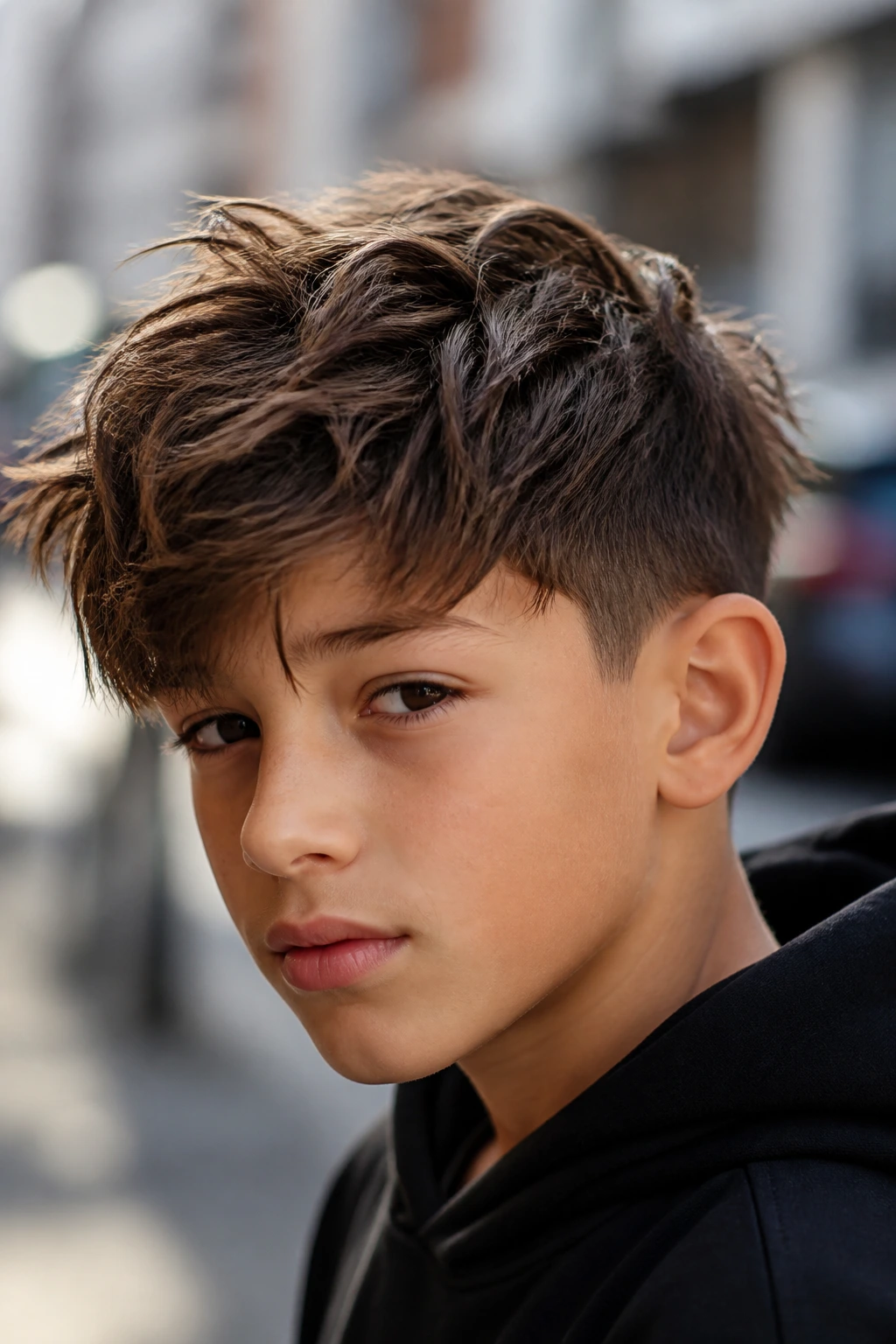
Thick hair grows out with confidence, which is another way of saying it gets big fast. Most boys wearing a swoop will need a cleanup every 3 to 5 weeks if they want the outline to stay neat. The fringe itself may need attention sooner, especially if it starts dipping into the eyes after a month.
A quick morning routine helps a lot. Mist the front lightly, comb or finger it into the intended direction, then add a small amount of product if needed. If the hair gets flattened from a hat, a blow dryer on low heat for 20 to 30 seconds can wake it back up without starting from scratch.
Sleeping on thick hair with too much product in it is a bad trade. The hair wakes up bent in strange places and usually needs more water than you wanted. If the child is old enough to care about the look, teach a simple reset: dampen, direct, and dry for a minute. That habit keeps the swoop from turning into a morning argument.
If you’re growing the style out, let the top get longer before widening the sides. That way, the haircut transitions into a longer side-swept shape instead of ballooning at the temples.
Questions Parents Usually Ask About Swoop Haircuts
How short should the sides be on thick hair?
For most boys, a low taper or a #1 to #3 guard range works well, depending on how bold you want the contrast to be. The shorter the sides, the sharper the style looks, but the grow-out also shows faster.
Will a swoop work if my child has a cowlick at the front?
Yes, but the front length has to respect the cowlick instead of fighting it. Leave enough weight at the fringe, blow-dry in the intended direction, and keep the cut textured so the hair can settle.
What product is best for a thick swoop?
Matte paste or clay is the easiest starting point for straight thick hair. Wavy or curly hair usually behaves better with a light cream or curl cream, because the goal is control without stiffness.
Can boys with curly thick hair wear a swoop?
Absolutely. The trick is to let the curls keep some shape while guiding them sideways. Cutting the hair too short or trying to flatten it usually makes the front puff out.
How do I stop the fringe from falling into the eyes?
Either shorten the front a half-inch or increase the texture so the hair breaks up and bends instead of hanging heavy. A quick blow-dry across the forehead helps too, especially if the hair is still damp.
Is a hard part necessary for a swoop?
No. A hard part makes the style sharper, but a soft side part can look better on younger boys or on hair that grows unevenly. The part should support the sweep, not boss it around.
Can this haircut be done at home?
Yes, if you’re comfortable with clippers and scissors and you keep the plan simple. Start conservative, keep the sides tidy, and don’t take too much length off the front at once.
How often should thick hair with a swoop be trimmed?
Every 3 to 5 weeks is the sweet spot for most boys. If the fringe starts losing its line before that, a light cleanup around the front and sides can buy more time.
A Swoop That Doesn’t Fight the Hair
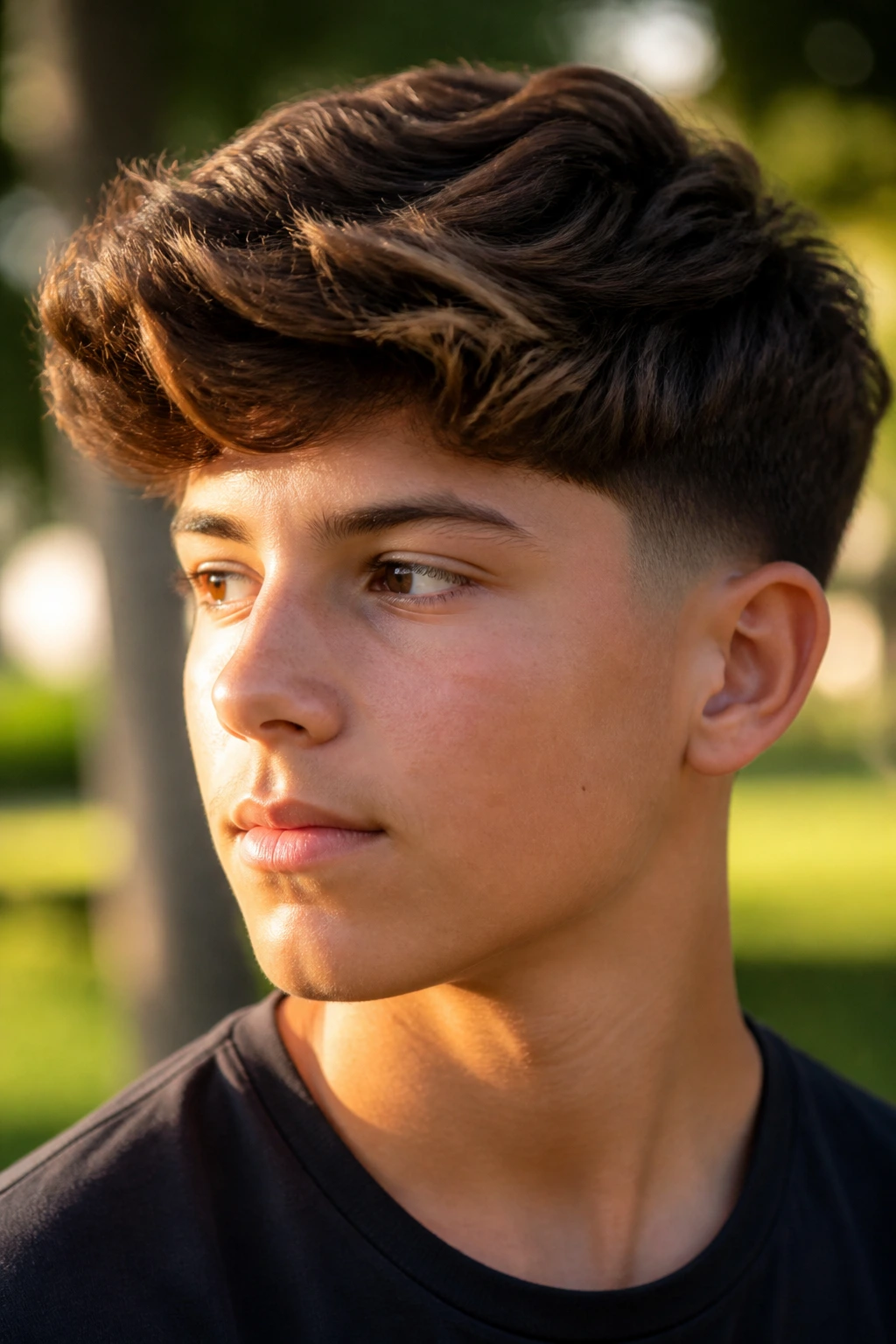
The best swoop haircuts for boys with thick hair do one thing well: they make dense hair look planned instead of accidental. That means controlling the sides, respecting the front, and picking a version that fits the child’s daily life instead of chasing a photo that only looks good in one pose.
My favorite cuts here are the low taper side swoop and the clean classic swoop, mostly because they keep working after the first perfect day fades. They grow out honestly. They don’t go weird at the temples. And they still leave enough personality in the front that the haircut feels like a swoop, not just a trimmed mop.
Pick the version that matches the hair’s natural direction, keep the bulk in check, and the shape does the rest. Thick hair can carry a lot of style when the cut gives it a place to go.
Quick Reference
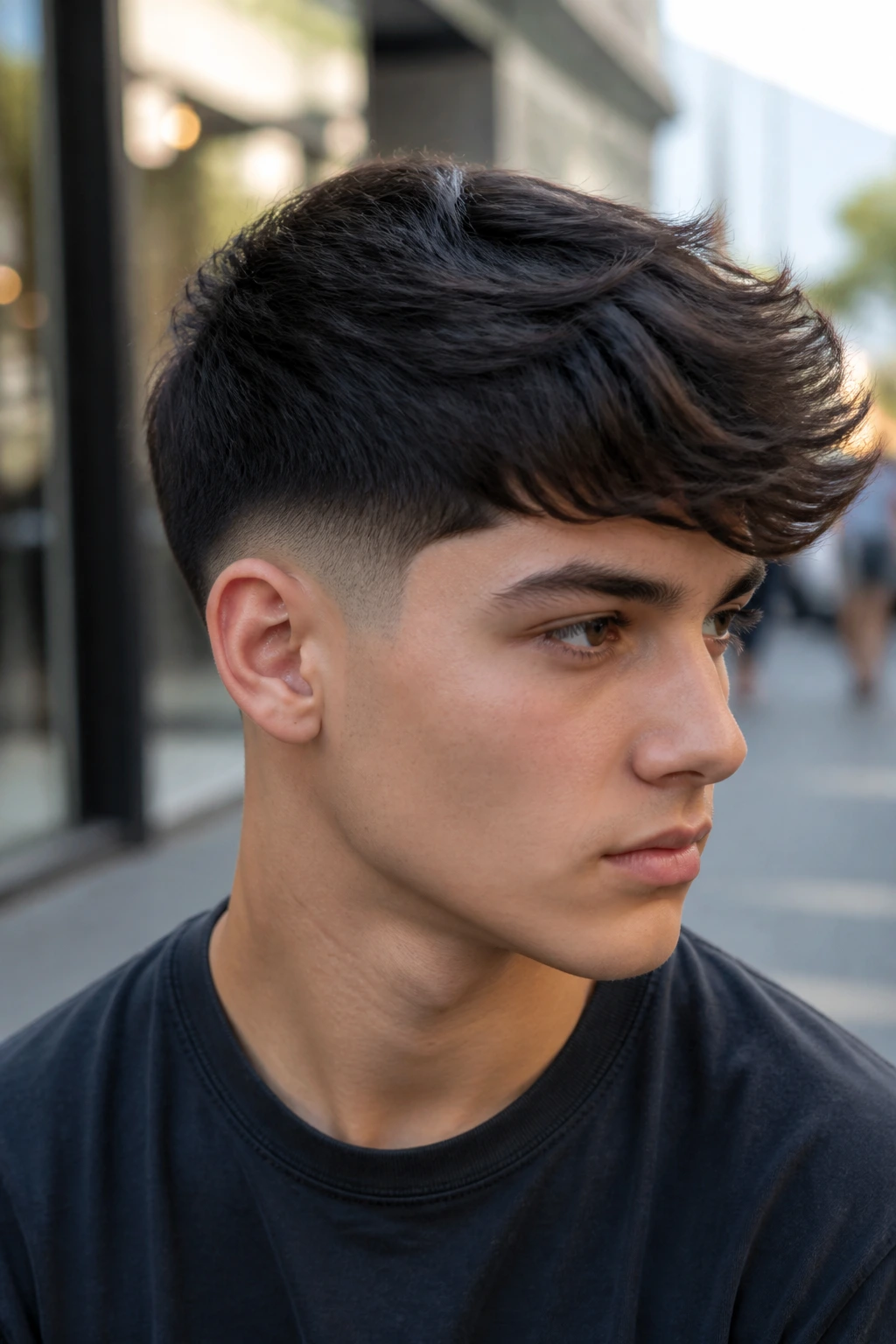
Why thick hair helps: It gives the swoop body and visible shape.
What matters most: Bulk control at the sides, texture at the front, and enough length to bend.
Best styling tools: A dryer, a brush, and a matte product.
Trim schedule: Every 3 to 5 weeks keeps the shape honest.
Easiest starting point: A low taper or clean classic swoop.