



Thick hair can make a braid look rich and full, or it can make the whole thing feel like a wrestling match at the scalp. The difference usually comes down to section size, tension, and whether the style respects density instead of fighting it. For older women with thick hair, that matters even more. You want braids that sit neatly, hold their shape, and don’t leave your temples sore by lunchtime.
That’s why older braids for women with thick hair are worth a closer look. The good versions don’t chase tiny parts or overcomplicated patterns that collapse under their own weight. They use the hair’s volume on purpose. A clean part, a balanced braid size, and a finish that doesn’t puff out by day two — those are the details that turn a style from “pretty in the chair” into something you can actually live in.
There’s also a real style question here, one that gets ignored in too many braid roundups. Mature hair often needs a little more grace at the hairline, a little less pulling at the nape, and a shape that feels polished without looking stiff. The styles below lean into that balance. Some are low and sleek. Some are fuller and more decorative. A few are plain in the best possible way.
Why This Collection Is Different
- Built for density, not against it: Thick hair needs room in the sectioning, so these styles favor medium and larger braid paths that keep the roots from ballooning.
- Kind to the hairline: Several options use knotless or feed-in starts, which spreads tension more evenly and feels better on tender edges.
- Polished without fuss: These braids skip the tiny, fussy parts that take forever and can look overworked on mature hair.
- Flexible for real life: You’ll find styles that work for office days, church, travel, errands, and those rare events where you want the hair to do the talking.
- Extension optional: Some styles stand on natural hair alone, while others get extra length or fullness from braiding hair only where it helps.
- Easy to personalize: Side parts, face-framing pieces, cuffs, buns, and tucked ends change the mood fast without rebuilding the whole style.
1. Sleek Knotless Box Braids
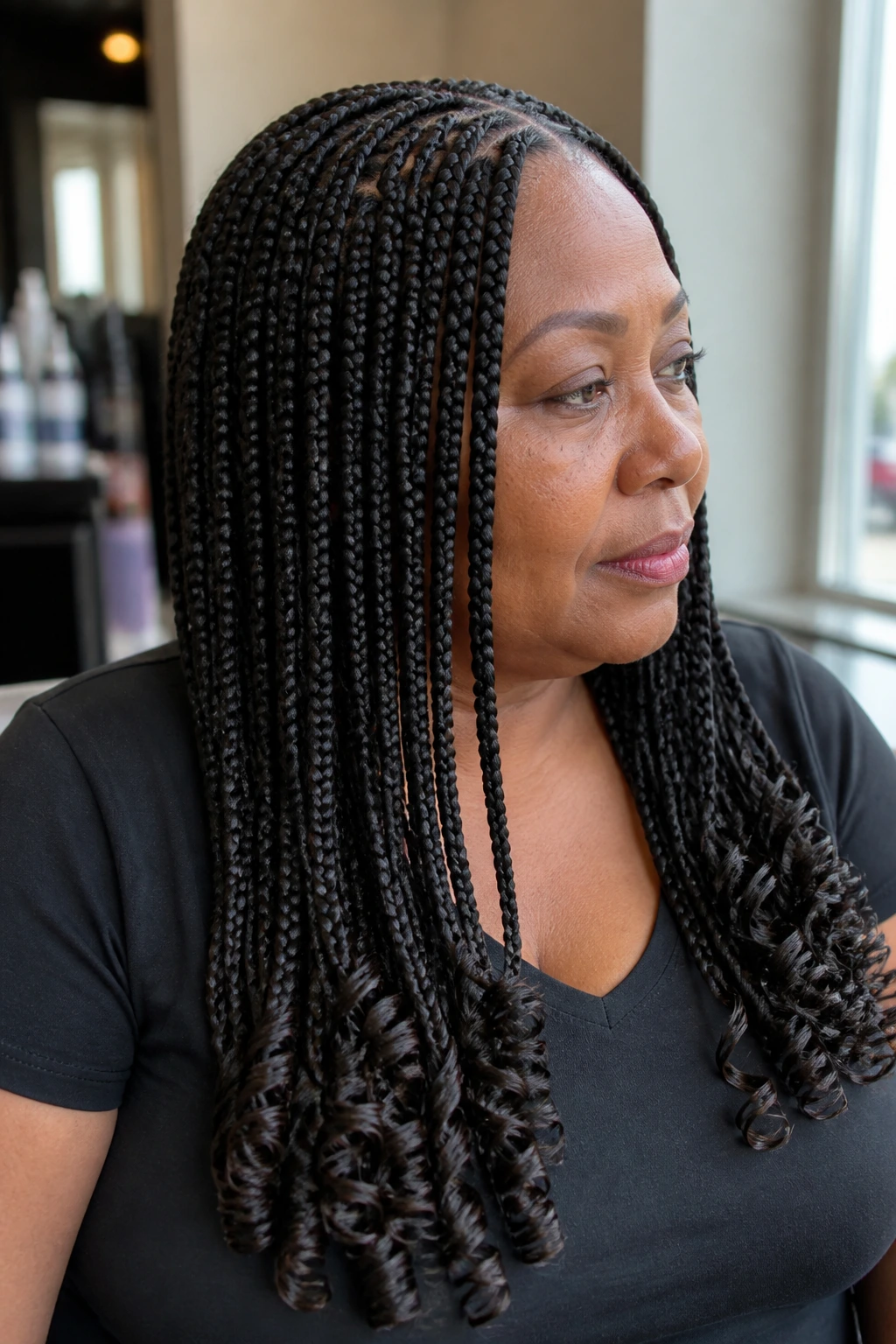
Knotless box braids are the calmest place to start if your hair is thick and you want the roots to feel sane. The braid begins with your own hair and the added hair is fed in gradually, so the base does not sit there like a tight little knot announcing itself to your scalp. On dense hair, that gentler start matters. A lot.
Why It Works on Thick Hair
Knotless braids spread the weight better than a hard-start braid, which is why they feel easier for longer wear. On mature hair, that matters even more if your hairline is sensitive or your edges have thinned a bit. The braid still looks full, but the base feels less boxed in.
- Ask for medium sections. Tiny parts can make thick hair look overworked and can turn the install into an all-day ordeal.
- Use pre-stretched braiding hair. It speeds up the process and gives the ends a cleaner fall.
- Keep the finish blunt or softly curled. That keeps the shape neat instead of frizzy at the bottom.
Quick tip: If you like a cleaner silhouette, stop the length at collarbone or bra-strap level. Longer braids can get heavy fast on thick hair.
2. Medium Box Braids with a Soft Side Part
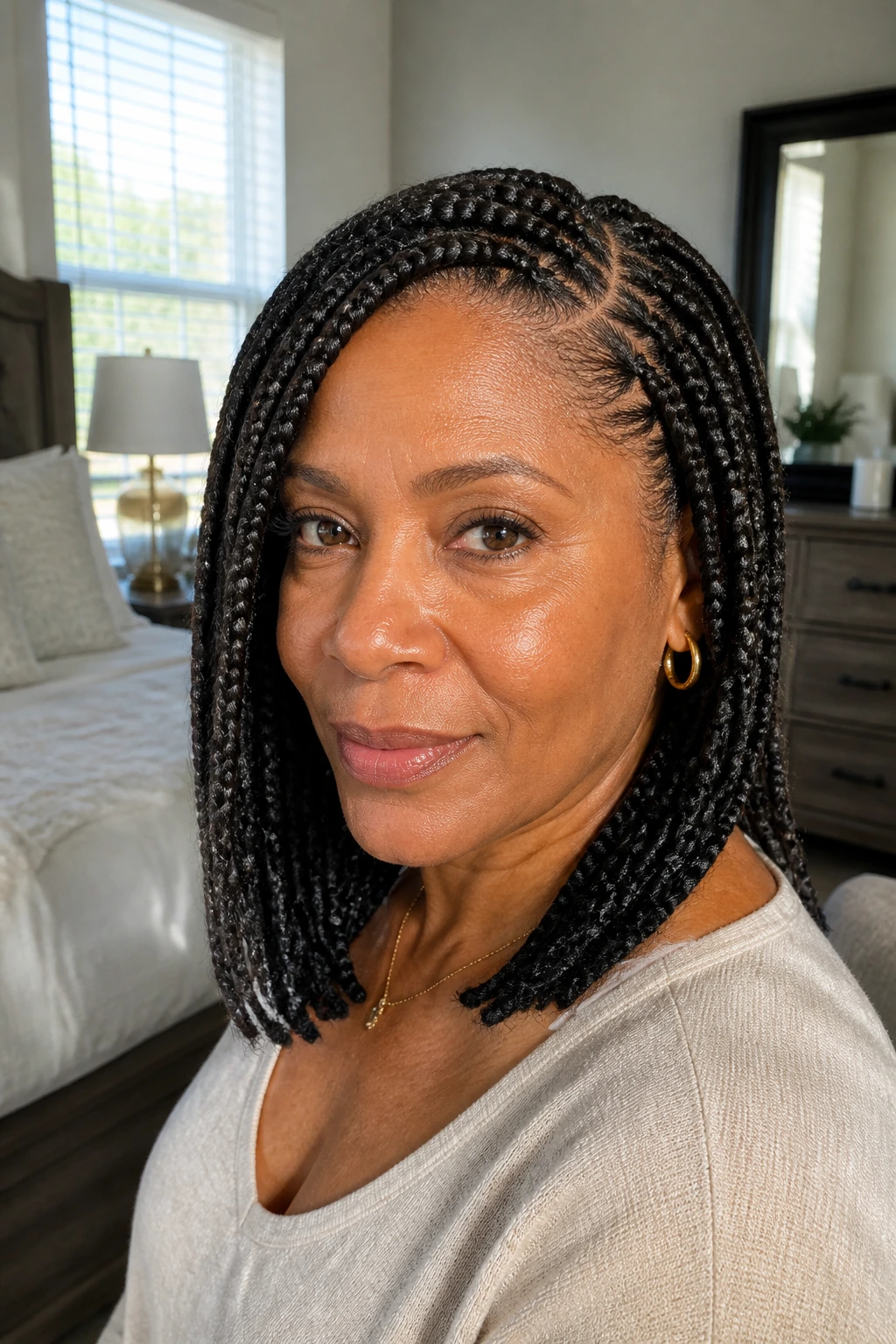
A side part changes the whole personality of box braids. On thick hair, it breaks up the bulk at the crown and gives the front a little movement, which is a nice fix if you don’t want a straight-down, center-part look every time. Medium box braids have enough body to look elegant without turning into a wall of hair.
The sweet spot here is size. Too small, and thick hair starts to look busy instead of neat. Too large, and the style can feel blunt in a way that’s hard to soften. Medium braids sit right in the middle, which is why I keep coming back to them for mature wearers.
If your face shape feels sharper than you’d like, slide the part slightly off center and let the front braids arc down toward one cheek. It softens the whole frame without any extra styling. Simple. Useful.
3. Straight-Back Cornrows
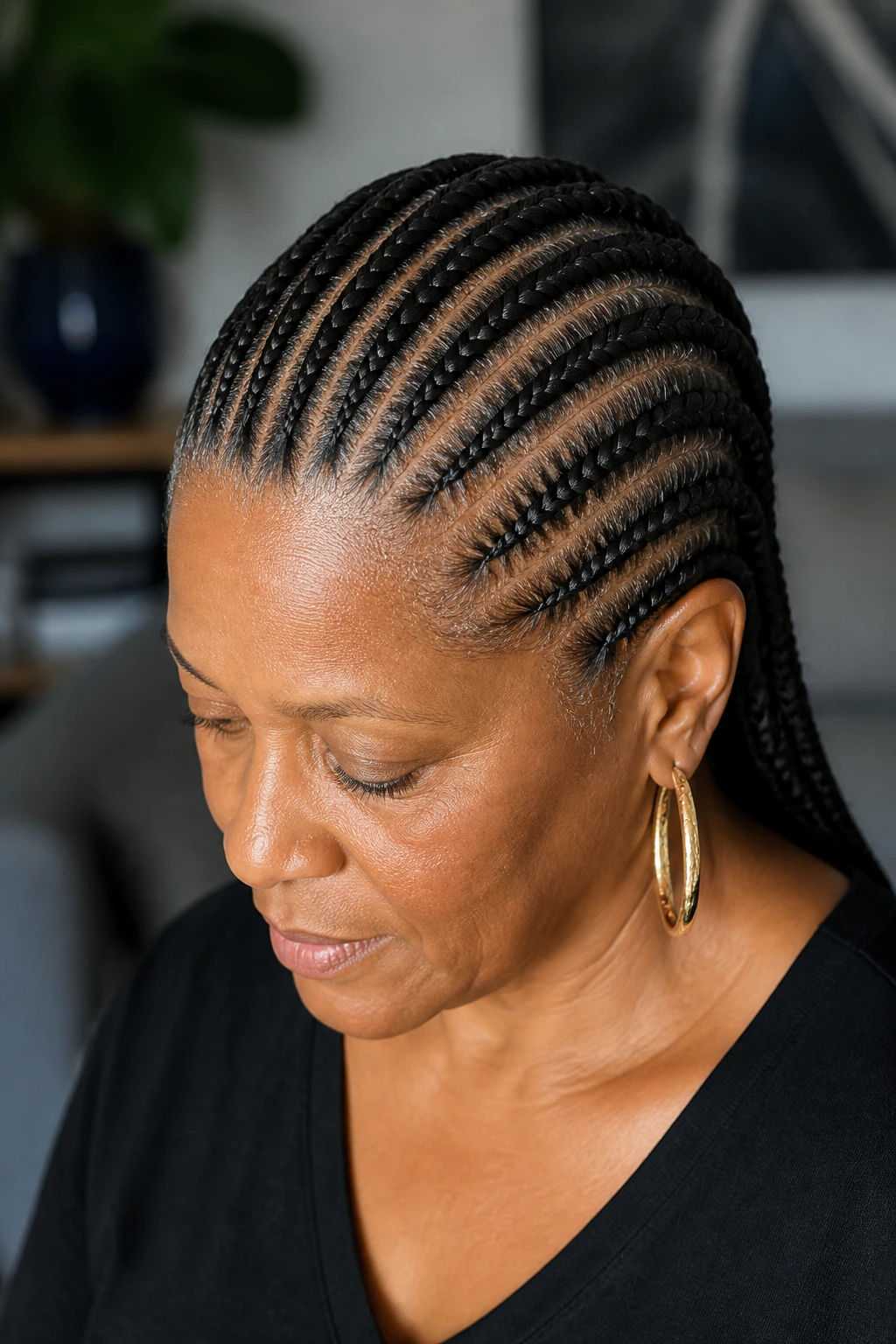
Do you need a braid style that gets the hair off your face, stays low at the scalp, and still looks polished under a jacket collar? Straight-back cornrows do that job without a lot of drama. On thick hair, they can sit beautifully because the rows lie close and the density gives the pattern real depth.
What Makes Them a Good Match
The straight-back layout keeps the shape clean from front to nape. That’s helpful if you wear glasses, work around scarves, or just don’t want strands brushing your cheeks all day. They also make a good base for wigs, buns, or simple ponytail add-ons later.
- Go for 6 to 10 rows if you want a balanced look on thick hair.
- Keep the parts straight and clean so the style doesn’t look uneven once the hair starts to settle.
- Finish with a light mousse, not a soaking gel. Heavy product builds up fast in close-to-scalp styles.
My take: Cornrows look best when the parting is crisp and the braid size is even. That part matters more than people think.
4. Side-Swept Lemonade Braids
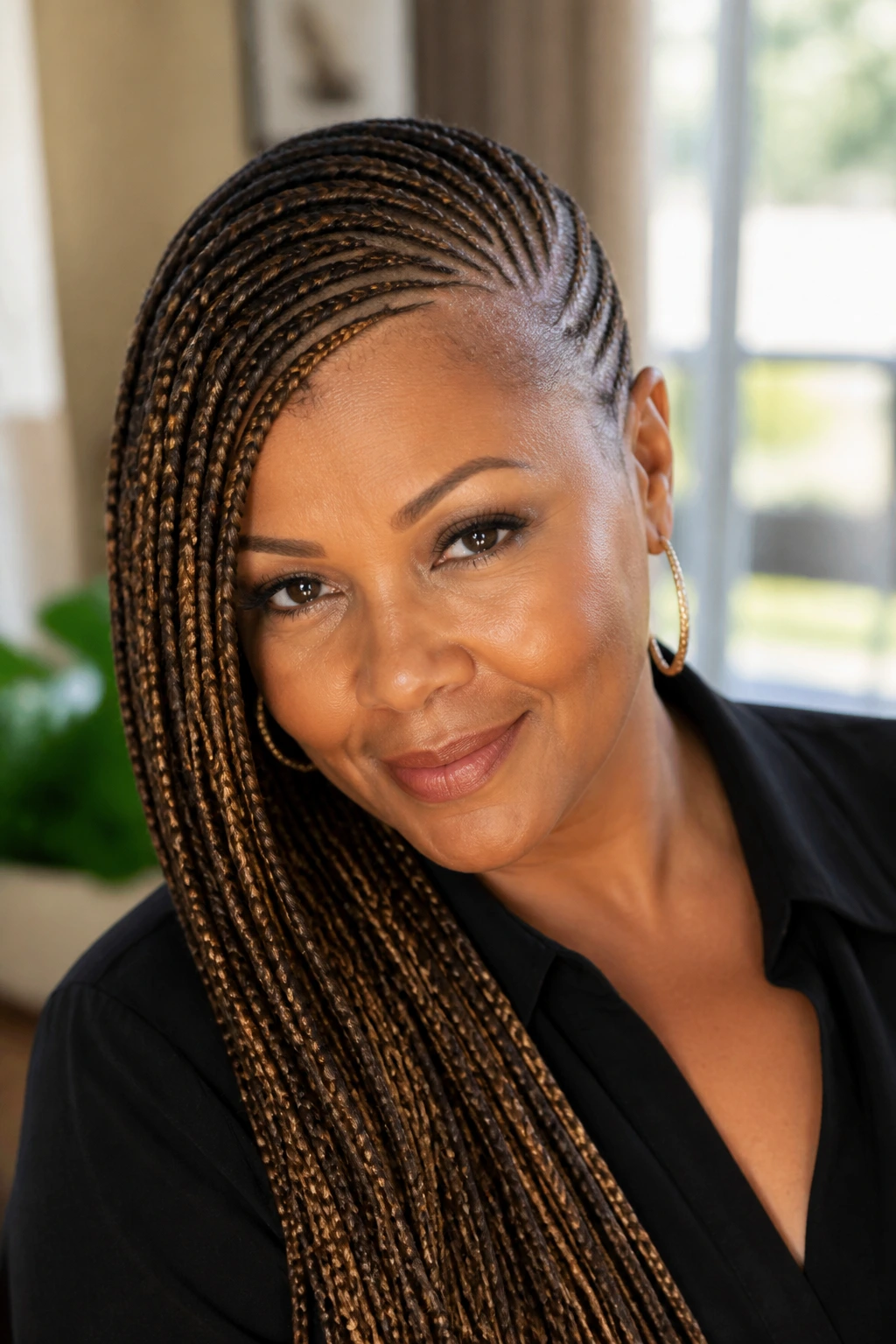
Side-swept lemonade braids are for the days when you want motion. The diagonal sweep makes thick hair look intentional instead of simply abundant, and the angle pulls the eye across the face in a softer way than a rigid center part. If your thick hair tends to puff at the temples, this pattern is a useful trick.
They also handle volume well because the braids move away from the face instead of stacking in a straight line. That reduces the heavy-top feeling that some thick-haired women get with symmetrical styles. The result is cleaner around the forehead and more relaxed at the ends.
A good lemonade braid set should feel balanced, not crowded. Too many skinny diagonal rows can look fussy. Fewer, smoother braids usually read better on mature faces, especially if you want the style to frame rather than overpower.
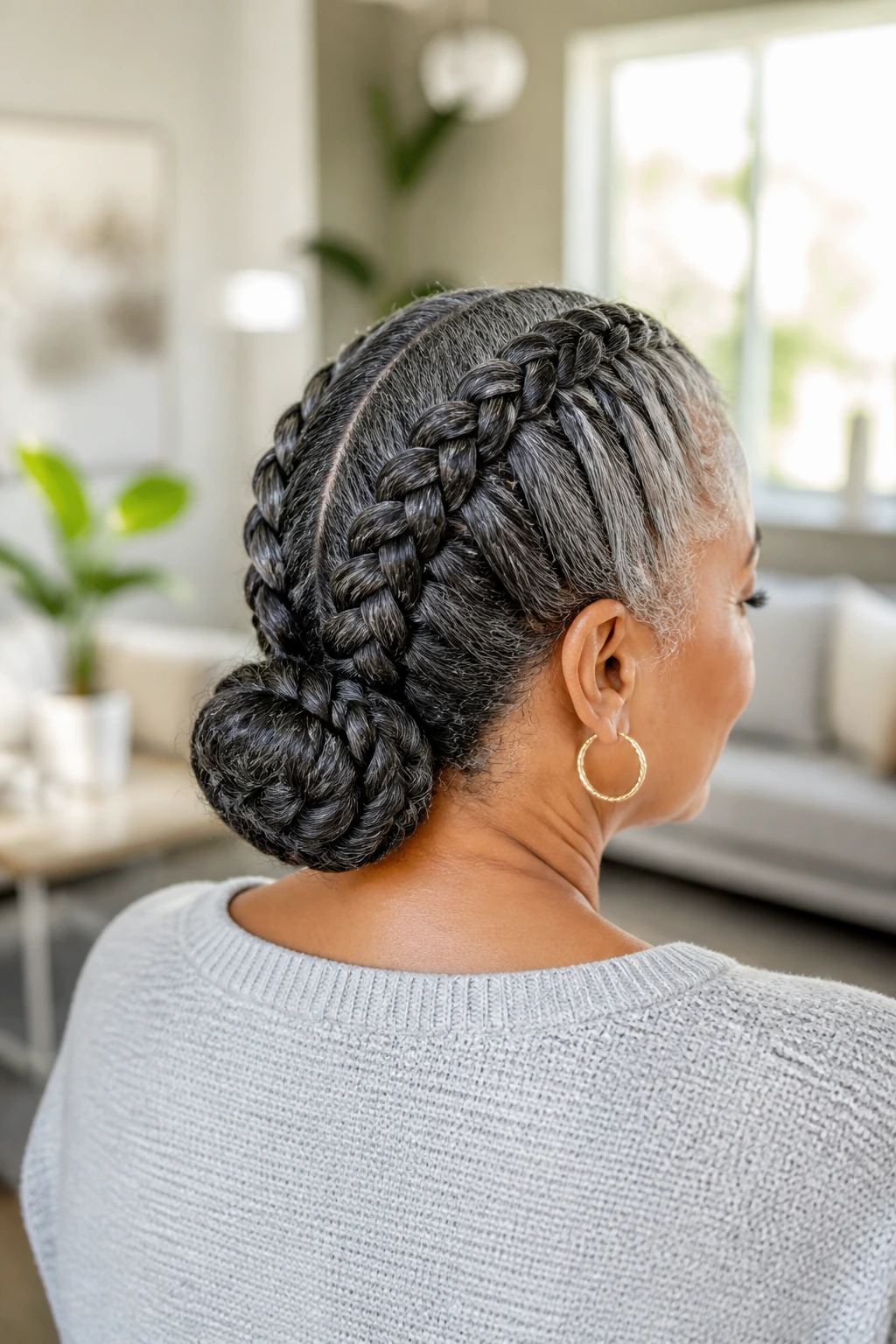
5. Ghana Braids into a Low Bun
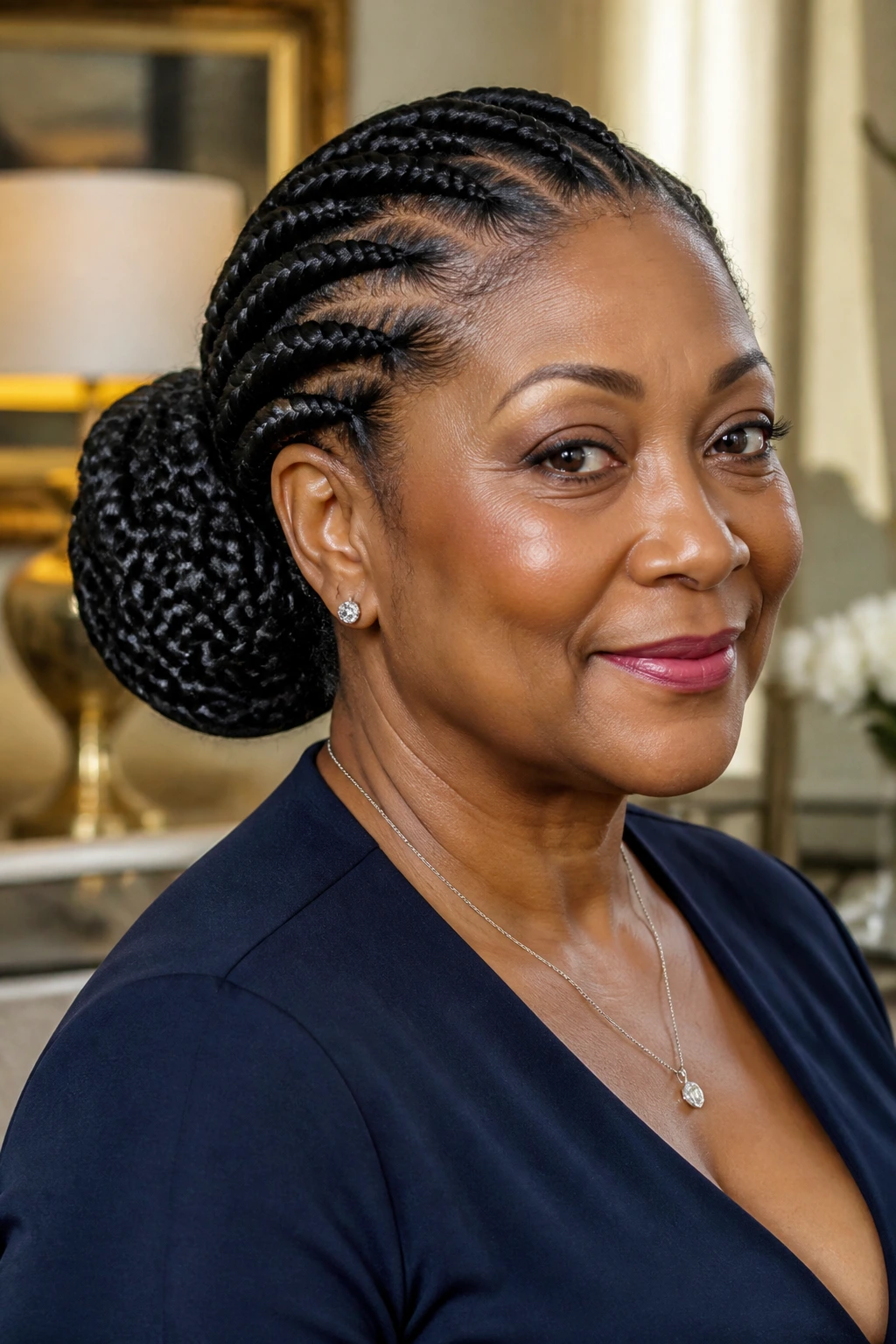
Ghana braids have a strong, sculpted look, and that structure is exactly why they work so well on thick hair. The feed-in sections create a gradual start, then the braids gather into a low bun that keeps the weight close to the head. That shape is tidy, low drama, and easy to wear with a blazer or a dress that shows the neck.
On dense hair, the bun at the base is doing a lot of the visual work. It contains the fullness instead of letting it explode outward. The style feels especially smart if you want something that stays neat in humid weather or during a long day out.
I like this braid pattern best when the bun is compact. If it gets oversized, the whole shape can start to look top-heavy. Keep the crown smooth and let the braid pattern be the feature.
6. Fulani Braids with Slim Face-Framing Pieces
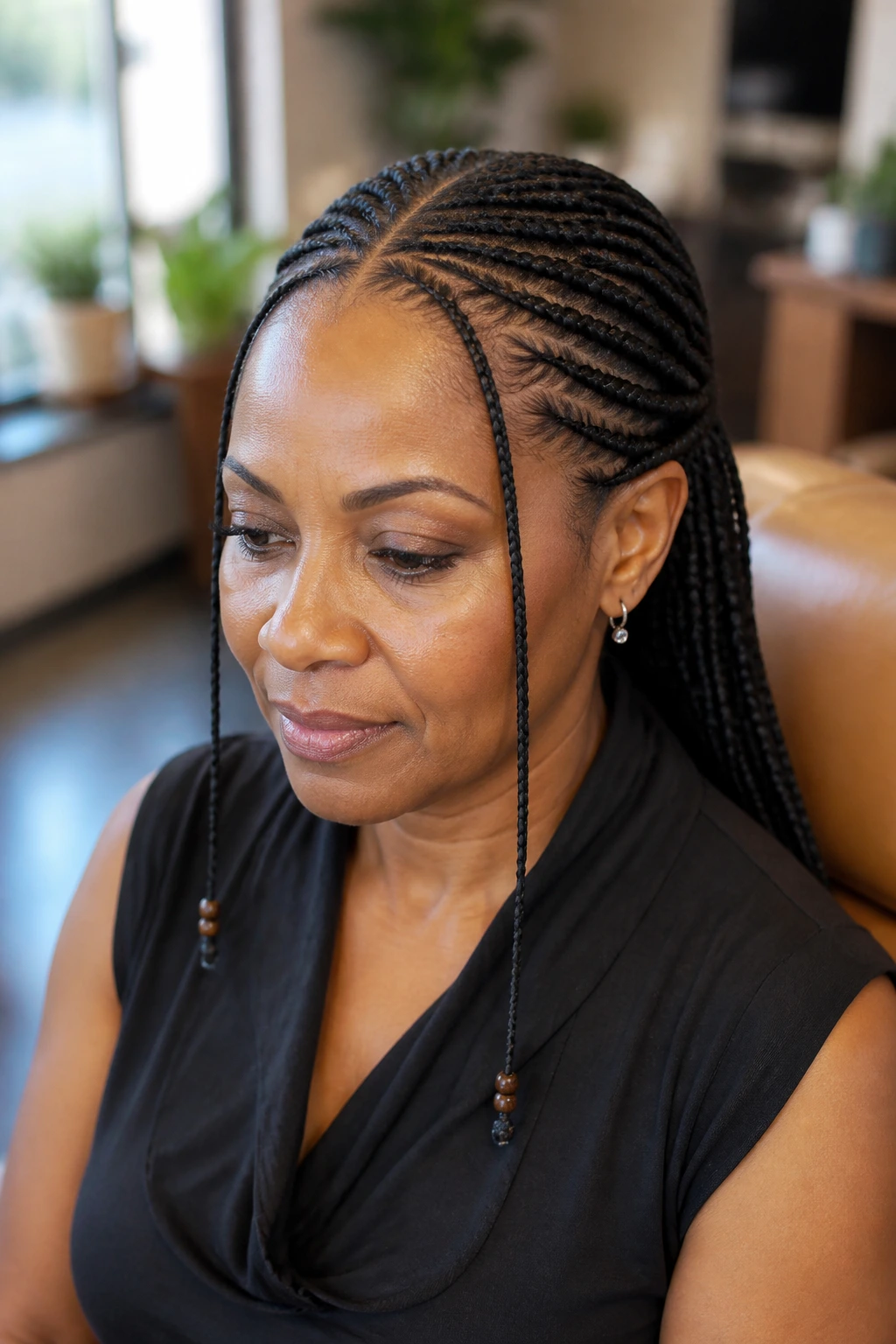
Fulani braids can be decorative without becoming loud, and that’s why they fit mature thick hair so nicely. The central braid line and the slim side pieces create structure around the face, while the rest of the hair stays contained. It’s a good answer if you want detail but not a lot of bulk hanging everywhere.
Why It Feels More Balanced Than Full-On Ornament
A few thin face-framing braids are enough. You do not need beads from root to end for the style to register. On thick hair, restraint usually looks better anyway because the hair already brings its own fullness.
- Keep the center braid clean and medium-sized.
- Use one or two slim face-framing braids, not six.
- Place beads low, if you use them at all, so the front stays light.
Specific recommendation: If you wear glasses, ask for the front pieces to sit just outside the frames. It saves constant brushing and keeps the style from fighting your face.
7. Jumbo Feed-In Braids
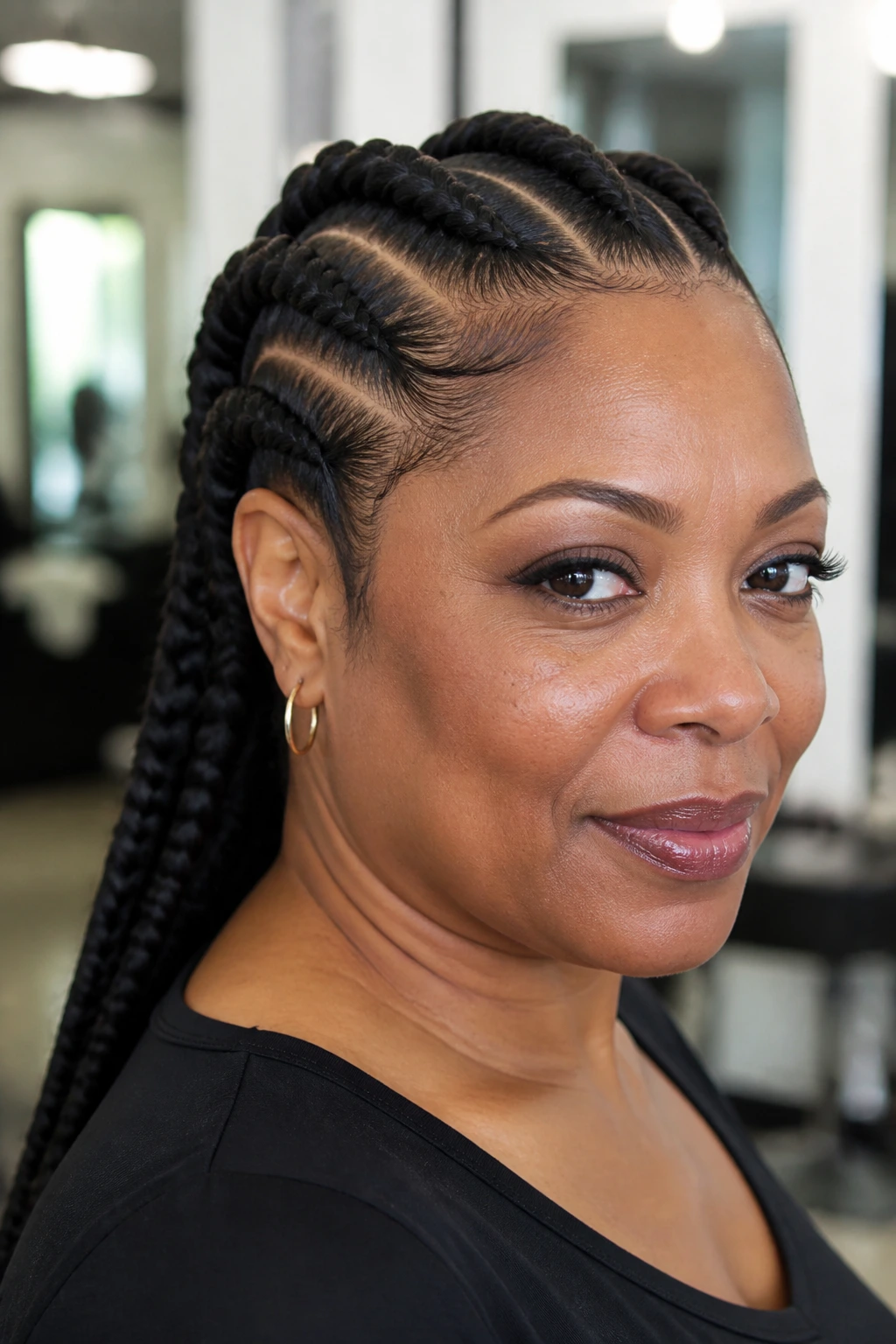
Jumbo feed-in braids are the shortcut many thick-haired women secretly want. Fewer braids, bigger sections, less time in the chair. And because the hair is already dense, the large braid size doesn’t look skimpy. It looks confident.
How to Get the Proportions Right
The trick is to keep the base feed-in smooth so the braid doesn’t start as a thick lump and then shrink awkwardly. You want the braid to grow in width gradually, almost like the style is unfolding as it moves back. That keeps the shape neat at the crown.
- Ask for fewer, larger braids if your scalp gets tender during long installs.
- Choose pre-stretched hair so the ends do not feel bulky.
- Let the braids rest flat at the scalp before you pull them into a bun or ponytail.
A good jumbo set works best when the braid line is clean and the parts are consistent. Messy spacing is much more visible with larger braids.
8. Goddess Braids Crown
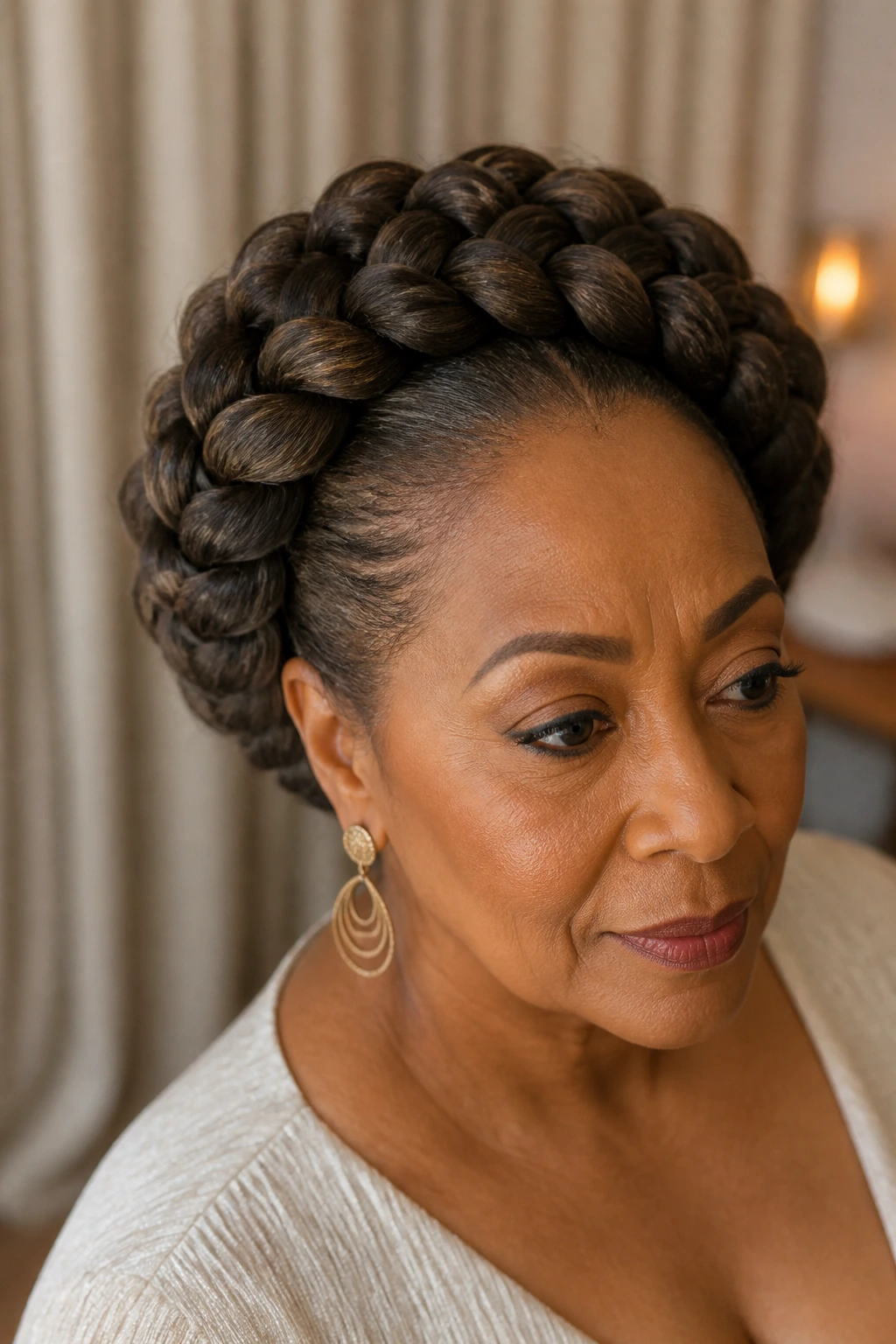
A goddess braid crown gives thick hair a lifted shape that feels elegant without being stiff. The braid wraps around the head like a band, which means the fullness of your hair becomes part of the architecture instead of something you’re trying to hide. That’s a nice shift, especially if you have strong features and want a style that frames them instead of competing with them.
This one works best when the crown sits slightly above the hairline, not smashed down onto it. Leave enough room for the braid to breathe. If you press it too tight, the style starts to look severe, and thick hair can make that look even harsher.
I’d reach for this style when I want something polished for a dinner, a family event, or a dressy day that still needs comfort. It reads formal without being stiff. That’s the sweet spot.
9. Halo Braid Updo
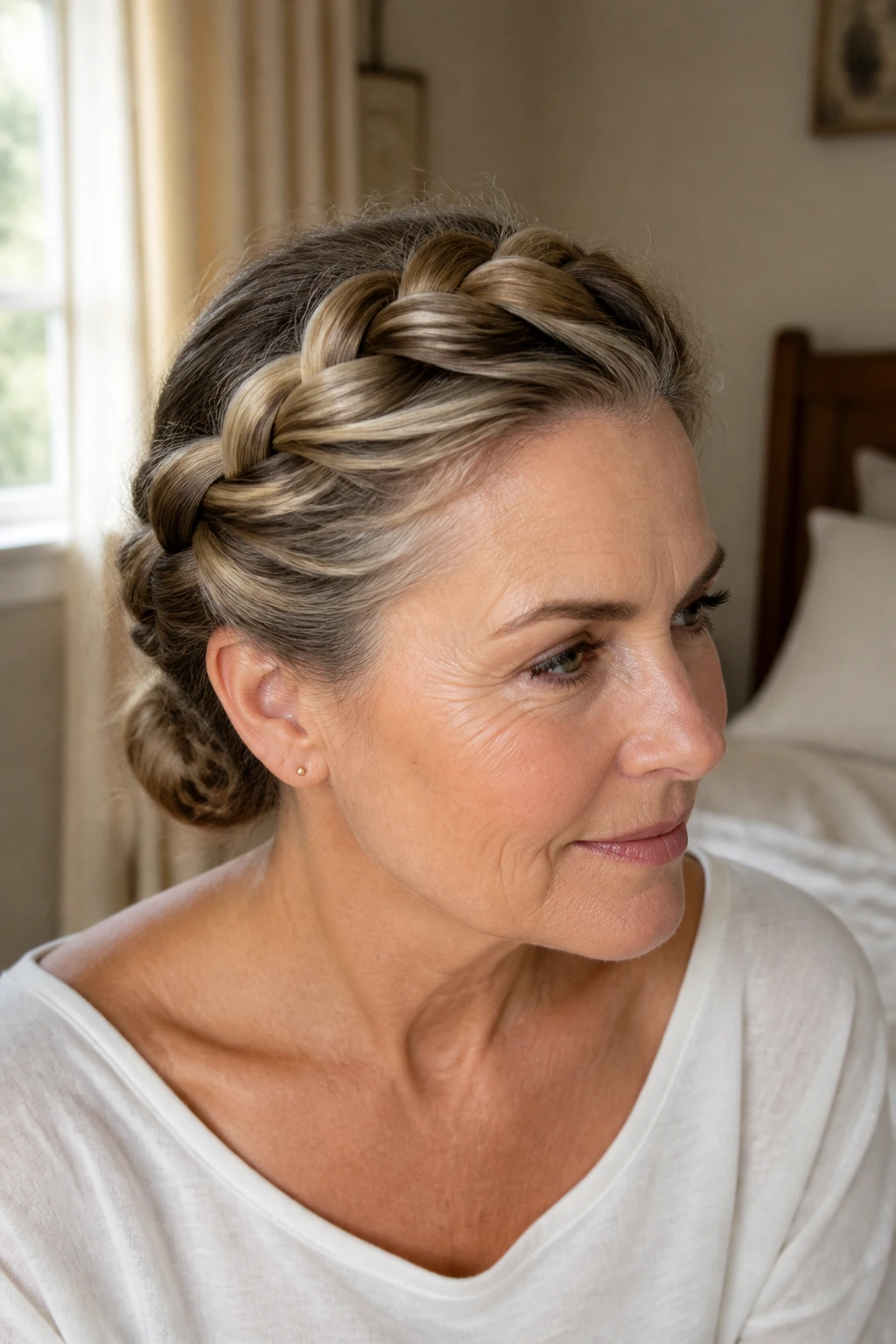
Why does a halo braid look so good on thick hair? Because the density gives the braid actual substance. Thin hair can make a halo look wispy. Thick hair turns it into a solid ring with shape.
How to Wear It
The braid should circle the head cleanly and tuck in at the nape or behind one ear. If your hair is long and thick, stretch it first so the braid doesn’t fight itself while you build the loop. A little mousse helps, but too much product will make the hair slippery and harder to pin.
- Start on stretched hair. Air-dried dense hair can be too puffy for this one.
- Use discreet pins that match your hair color.
- Keep the finish smooth at the crown so the halo reads as elegant, not messy.
The halo braid is the style I’d choose when I want the face completely open. It shows earrings well, too.
10. Classic French Braid
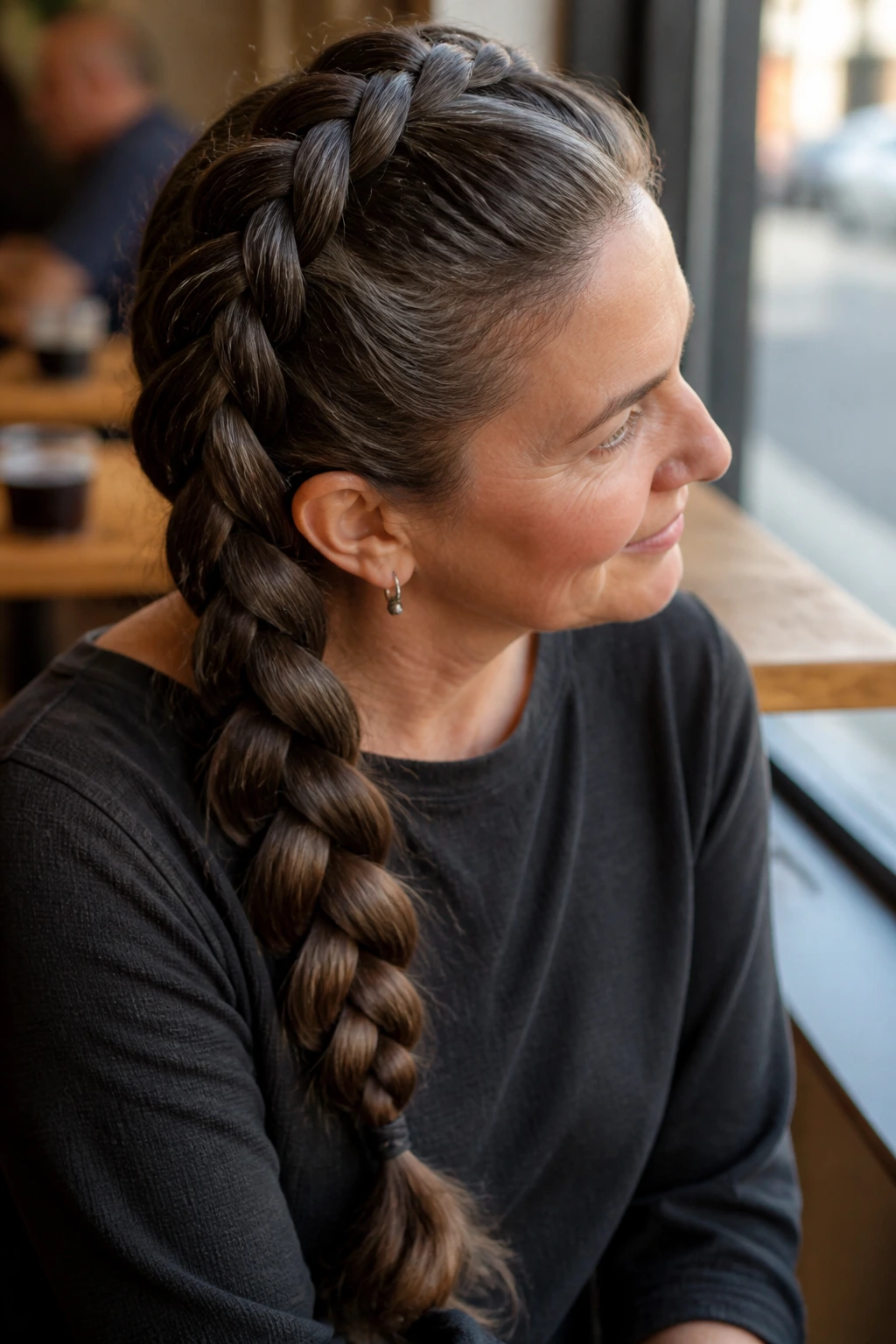
A French braid can feel almost too familiar until you put it on thick hair and watch the texture settle into a smooth, broad rope. It is one of the best styles for showing off density without letting the hair spread everywhere. The braid gathers as it moves down, which makes the top look controlled and the length look full.
What matters most here is tension. Keep it snug enough to hold the shape, but not so tight that the scalp starts complaining halfway through the day. On mature hair, that line is worth respecting. The braid should lie down and stay down.
A French braid is a reliable option for days when you want one braid and no fuss. It works with a T-shirt, a wrap dress, or a trench coat, which is more than I can say for some of the fussier styles on this list.
11. Dutch Braids into a Bun
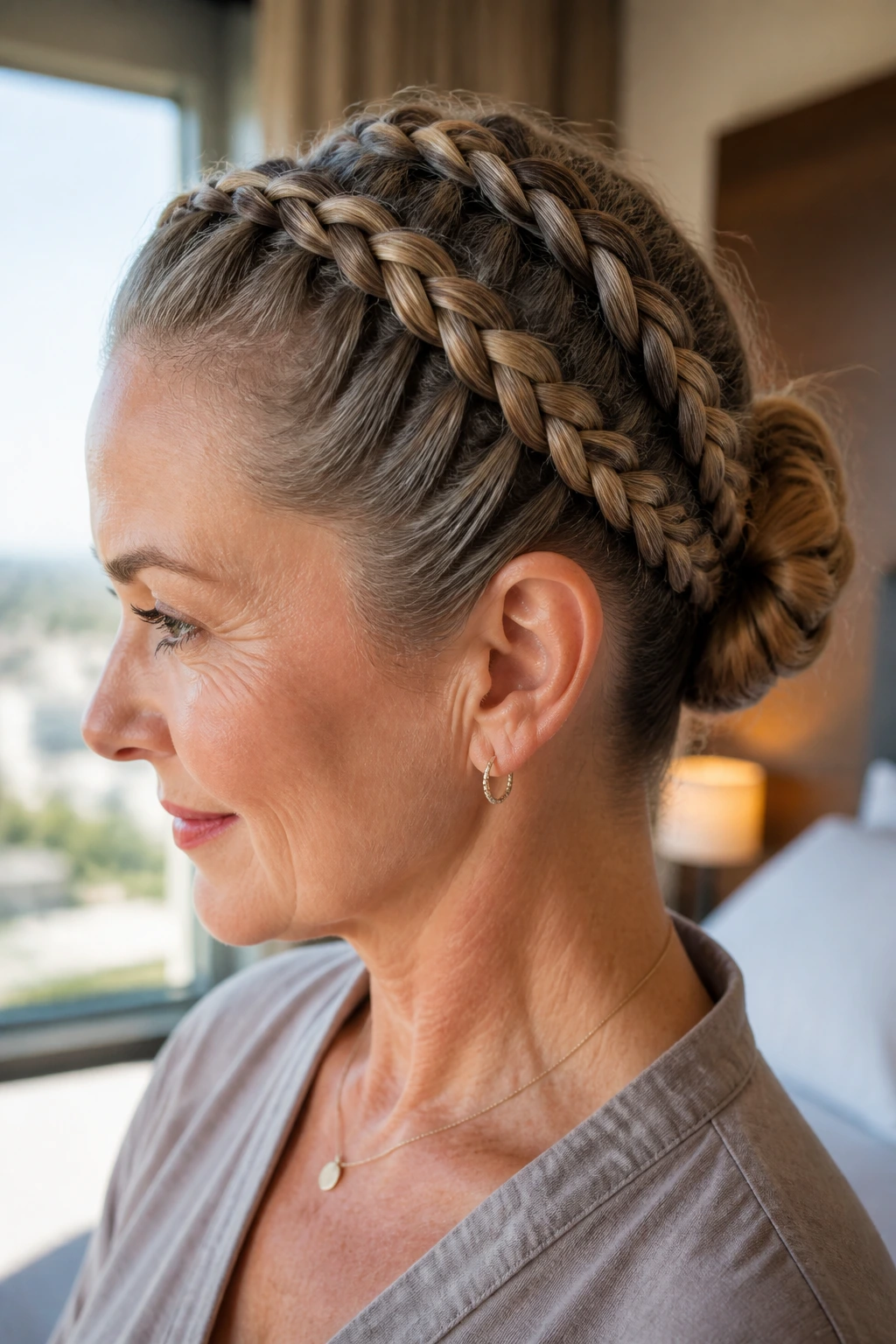
Dutch braids pop off the scalp a little more than French braids, and thick hair makes that effect stronger. That can be a good thing. The braid pattern shows up clearly, and when the two braids tuck into a bun, the final shape feels secure without looking bulky.
This style is especially useful if you want a braid that stays in place during a full day of movement. Thick hair can pull its own weight here. The braid grips the hair well, and the bun keeps the ends contained so you’re not fighting loose pieces all afternoon.
I like Dutch braids into a bun for travel, busy workdays, or any day when you need your neck clear. It’s practical, but it still has enough texture to keep it from looking plain.
12. Fishtail Braid Ponytail
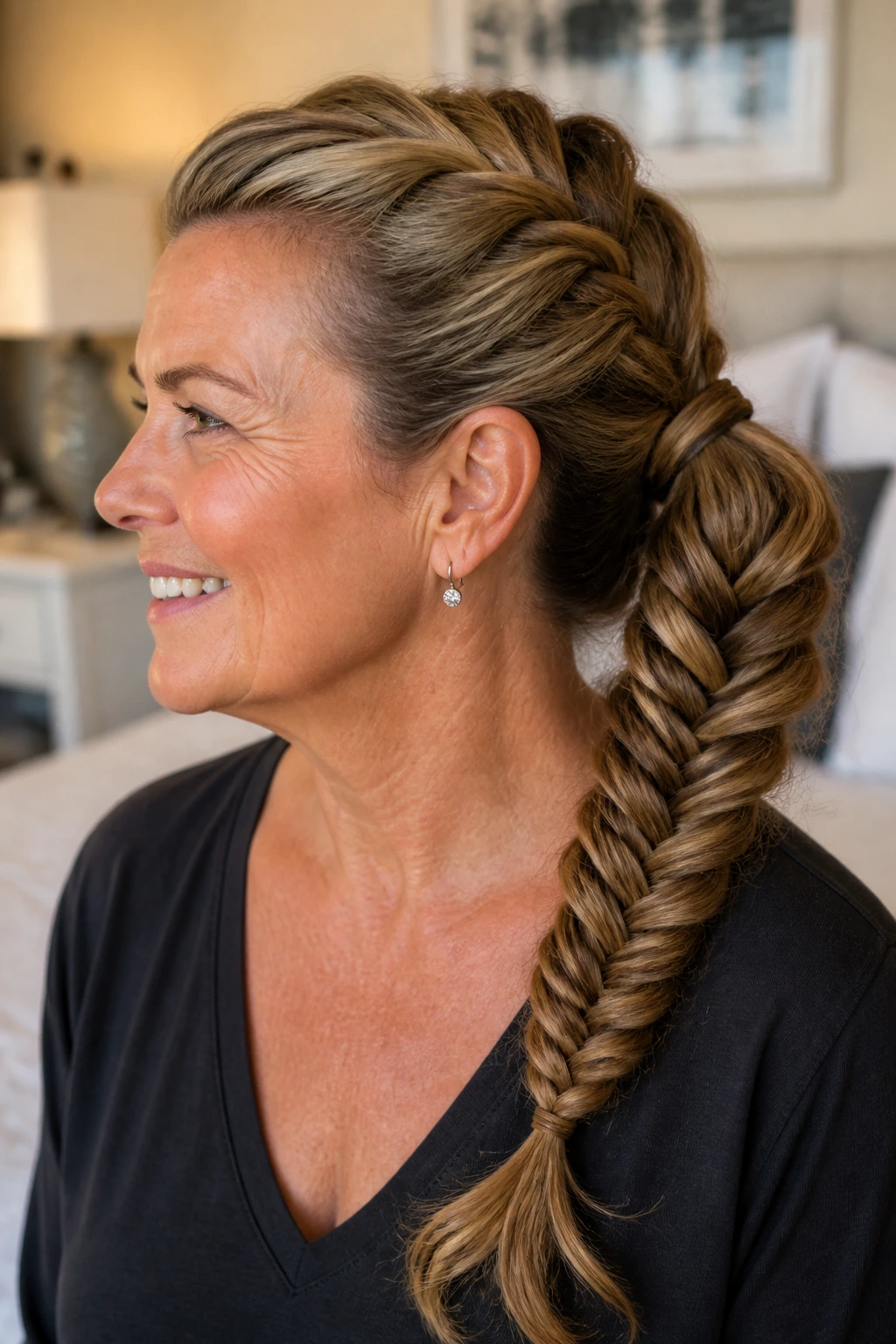
The fishtail braid is one of those styles that looks far more detailed than it is complicated. On thick hair, the woven pattern becomes extra visible because the strands have enough body to hold the small over-under rhythm. Put it in a ponytail and the whole thing feels modern without tipping into overstyled territory.
Why It’s a Smart Pick
A fishtail works best when you want the braid itself to be the focus. It does not need beads or extra accessories to read well. A clean elastic at the base and a little smoothing around the crown are usually enough.
- Keep the ponytail low or mid-height so the weight doesn’t tug at the crown.
- Use a small clear elastic first and wrap a thin strand over it if you want a cleaner finish.
- Gently pancake the braid if you want the weave to look fuller.
Best for: thick hair that you want to show off in a single long line, especially if you like texture more than ornament.
13. Rope-Twist Braids
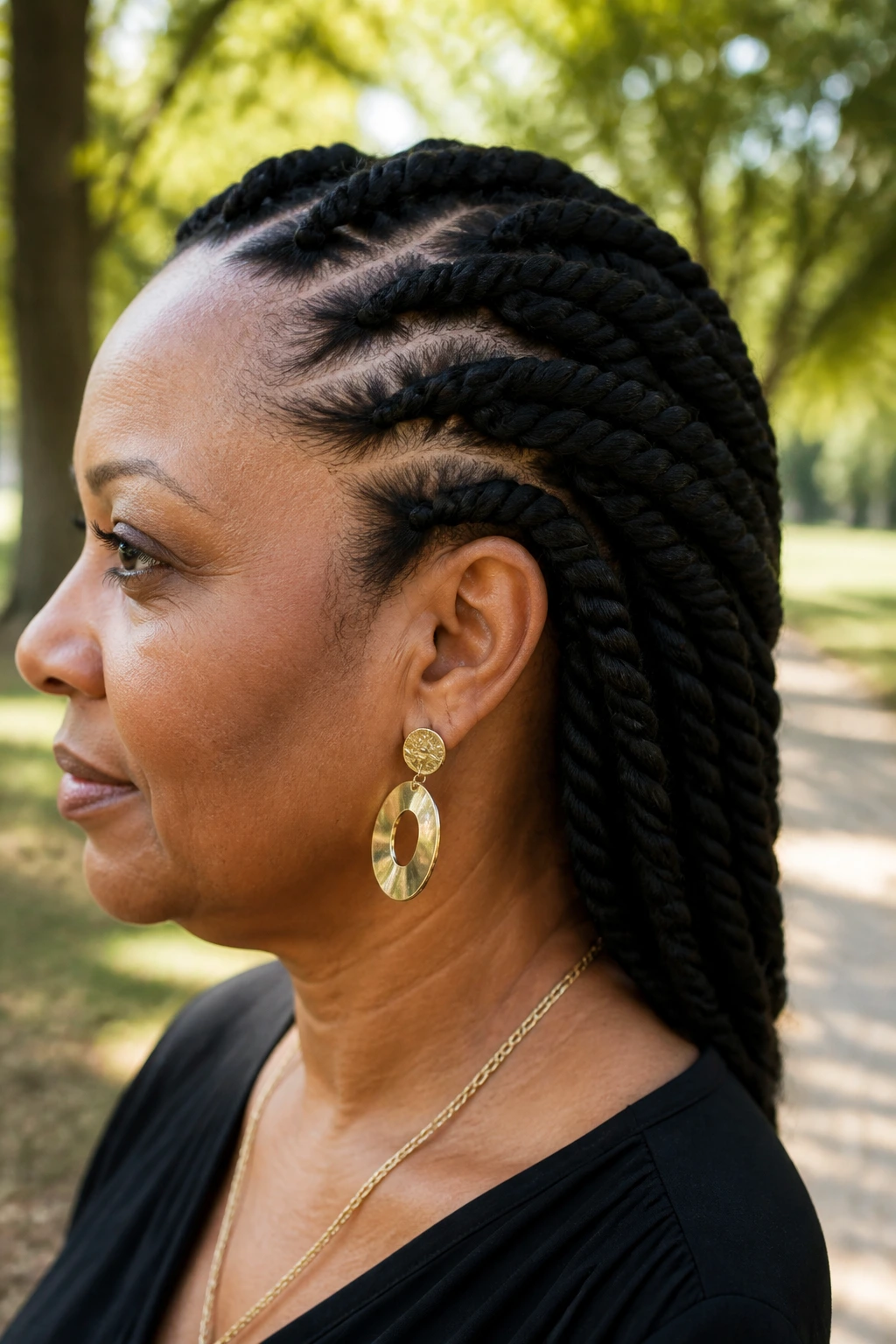
Rope-twist braids are underrated, and I say that as someone who likes a braid with a little structure. Two strands twisted around each other can feel easier on coarse, thick hair than a traditional three-strand braid, especially when you want something lighter on the scalp. The finished look is smooth, glossy, and a little more relaxed than a tight braid pattern.
What Makes Them Useful
They’re also faster to refresh. If one twist starts to unravel at the ends, you can usually rework that section without pulling apart the whole style. On thick hair, that matters because the hair itself already gives you enough body.
- Use medium sections so the twists don’t shrink into tiny ropes.
- Set the ends with a small elastic or sealed finish if your hair frays easily.
- Pair them with a side part if you want the style to feel softer around the face.
Quick opinion: Rope twists are a good choice when you want braid energy without the stiffness of a heavier install.
14. Flat-Twist Updo
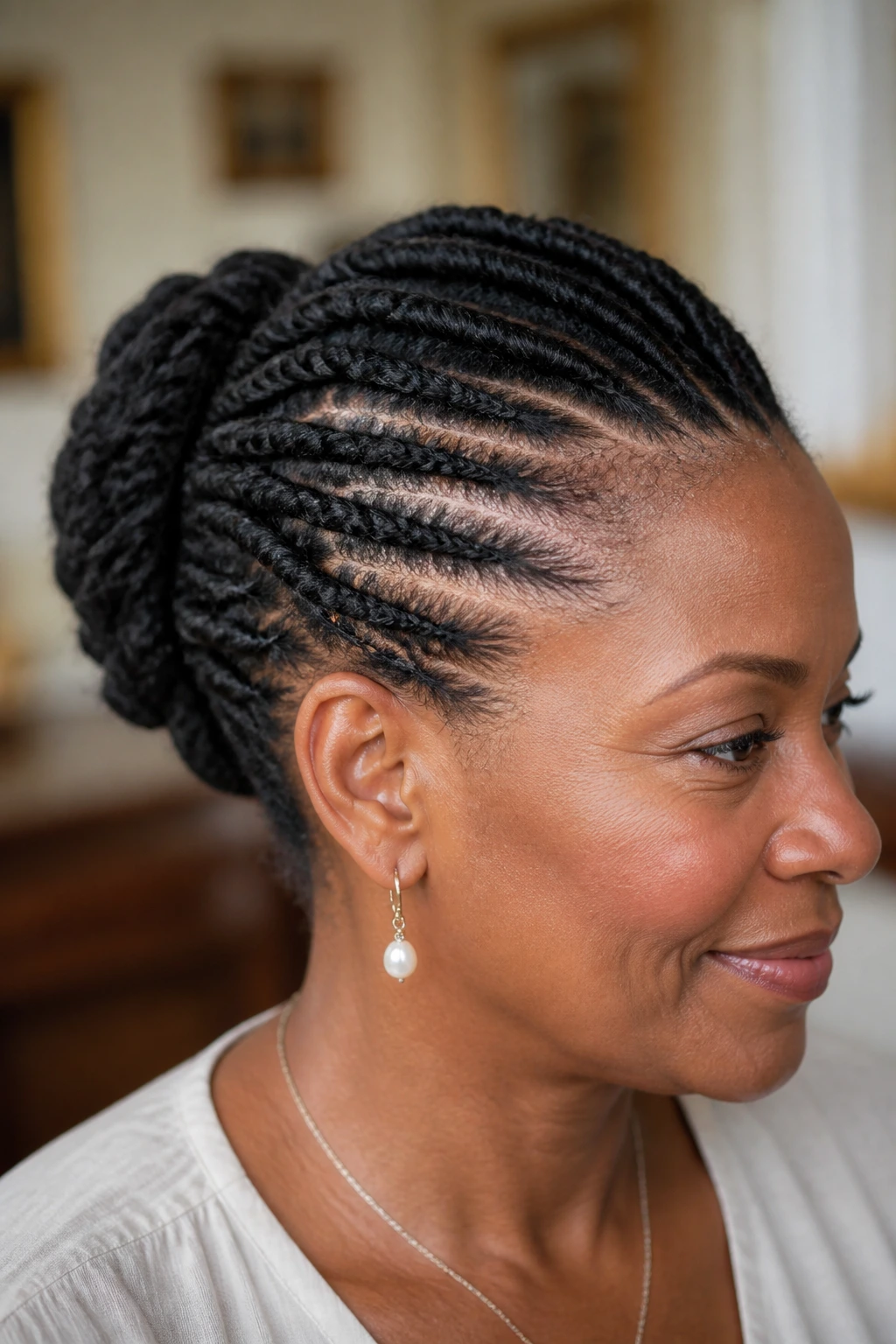
Flat twists are gentler than a lot of people expect, and on thick hair they can be a relief. The hair is laid close to the scalp in two-strand sections, which keeps the style low and gives the nape a clean finish. If your scalp gets irritated by heavier braids, flat twists are worth a serious look.
The updo version keeps the twist ends tucked away, so the whole style sits neatly at the back of the head. That works well for mature faces because it lifts the eye upward and keeps the jawline open. The shape is simple, but it has good lines.
I’d choose this style when I want hair off my neck and no extra weight swinging around. It’s not flashy. It’s useful, and it looks cared for.
15. Stitch Braids with a Low Tail
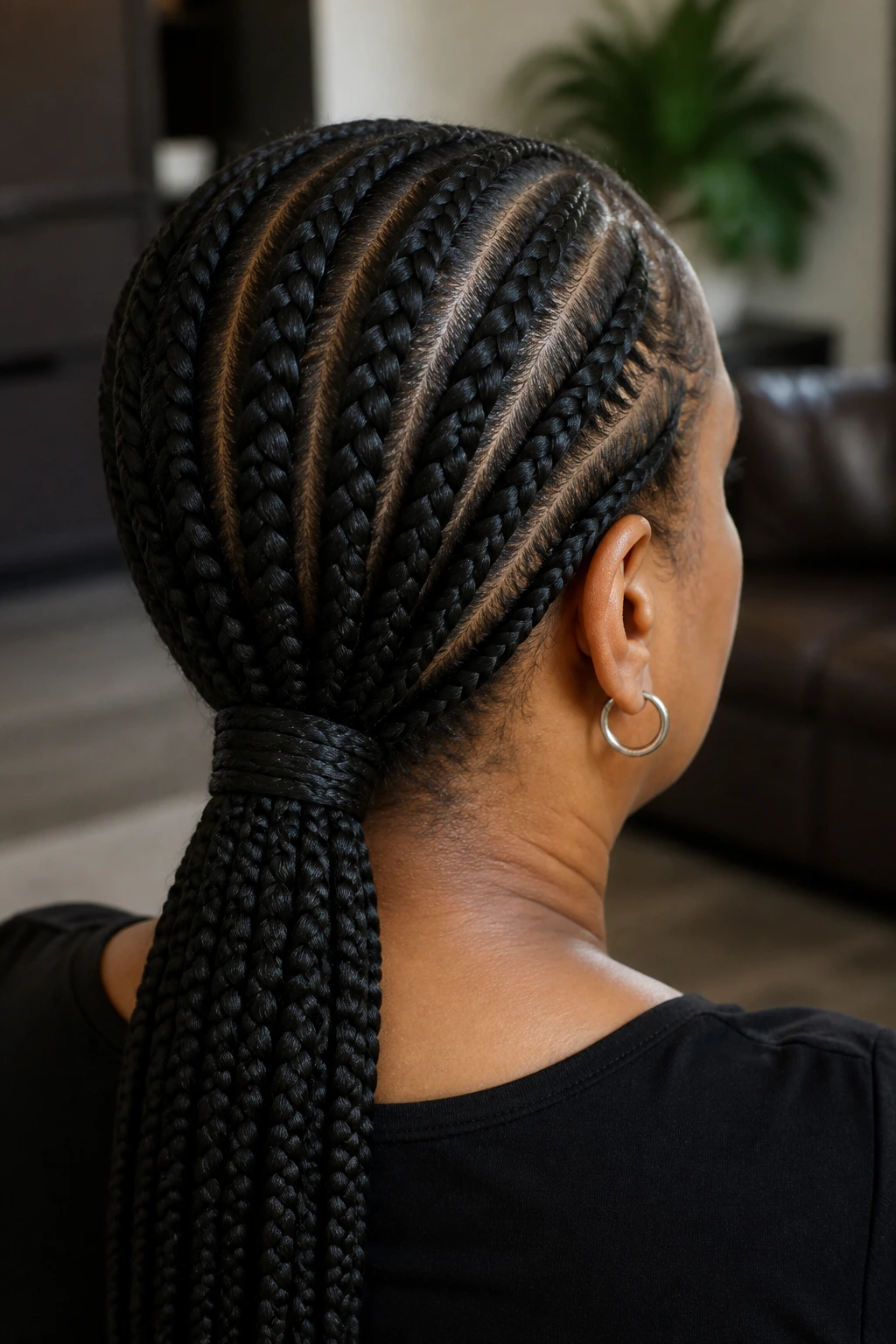
Need crisp lines without a heavy silhouette? Stitch braids do that nicely, especially on thick hair, because the parting is the real feature. The little “stitch” sections show up clearly, and the density of your hair gives the braid definition that finer hair sometimes lacks.
Best Way to Ask for It
Ask for straight, even stitch lines and a low tail that sits at the nape instead of halfway up the head. A high tail can pull too much on thick hair if the base is overpacked. The low version looks calmer and wears easier.
- Keep the parting symmetrical if you want the design to read clean.
- Avoid overloading the base with gel. Too much product makes the scalp look greasy and can flake.
- Wrap the elastic with a small braid strand for a finished look.
How it wears: This is a style that looks sharp in the front and sensible in the back, which is a nice combination when you want polish without drama.
16. Triangle-Part Box Braids
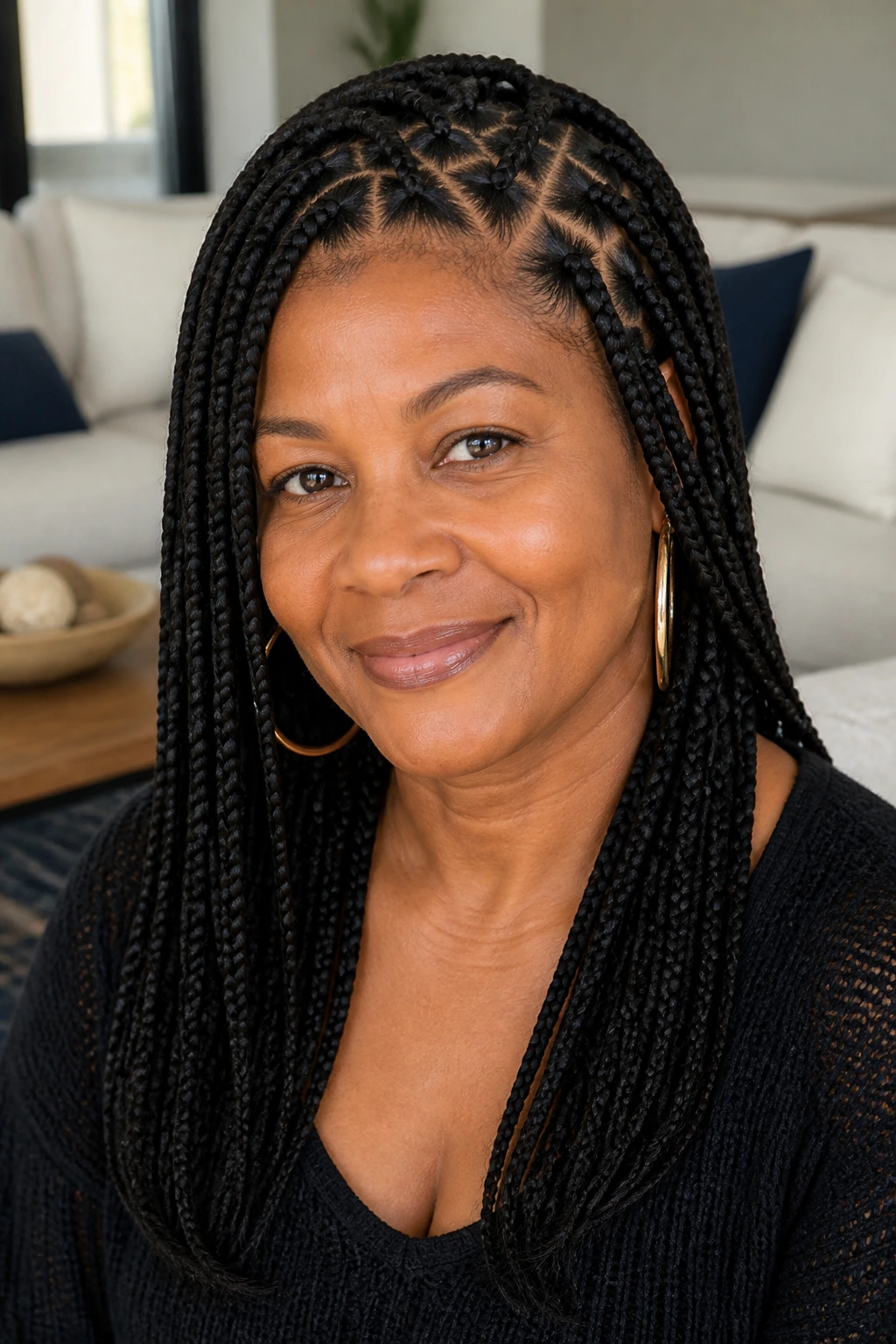
Triangle parts change the mood of box braids fast. On thick hair, the angular parting breaks up the surface in a way that looks deliberate rather than busy. It’s a small design choice, but it gives the whole head more movement because the parts catch the eye differently than a plain grid.
I like triangle parts when I want the braid itself to be familiar but the finish to feel a little more styled. You get the reliability of box braids and the extra detail of a geometric pattern. That is a good trade.
The main thing is to keep the triangles consistent in size. If the parting gets random, the whole effect loses its edge. Clean triangles on thick hair look crisp and modern, not childish. That’s the goal.
17. Boho Knotless Braids with Curly Ends
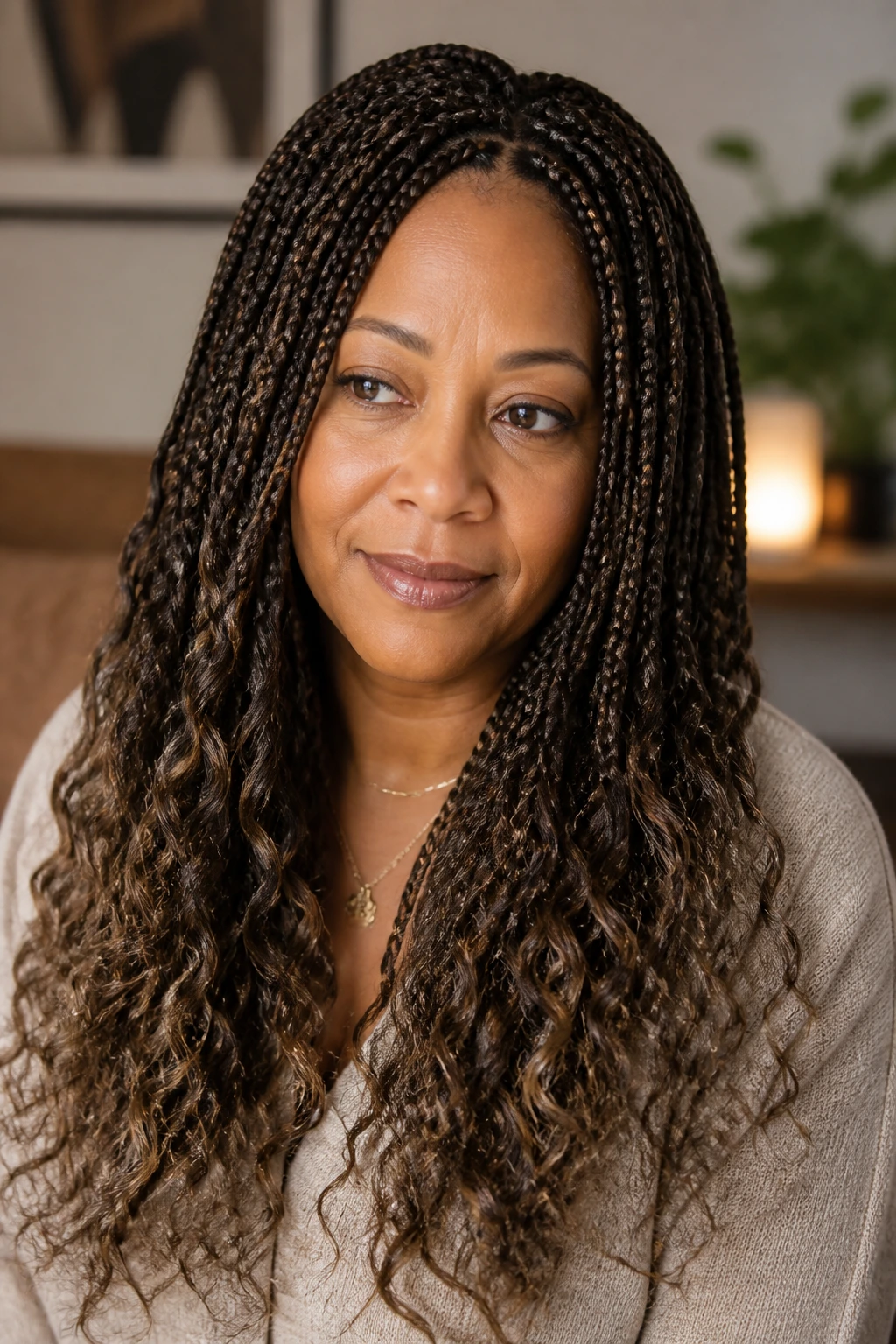
Boho knotless braids soften the whole idea of braids for older women with thick hair. The loose curly pieces woven through the braids make the style move more, and the ends keep a bit of texture instead of sitting in a blunt line. If your hair tends to feel heavy, the airy finish can be a nice change.
Purely practical note: this look needs a little more care than a standard knotless set. The curly pieces can frizz sooner, especially if you sleep rough or use heavy creams on them. Still, the softness is worth it if you like a less rigid finish.
This is the style I’d point to for someone who wants braided hair but doesn’t want to look like the hair has been pressed into submission. It has shape, but it also has softness.
18. Braided Bob with Tucked Ends
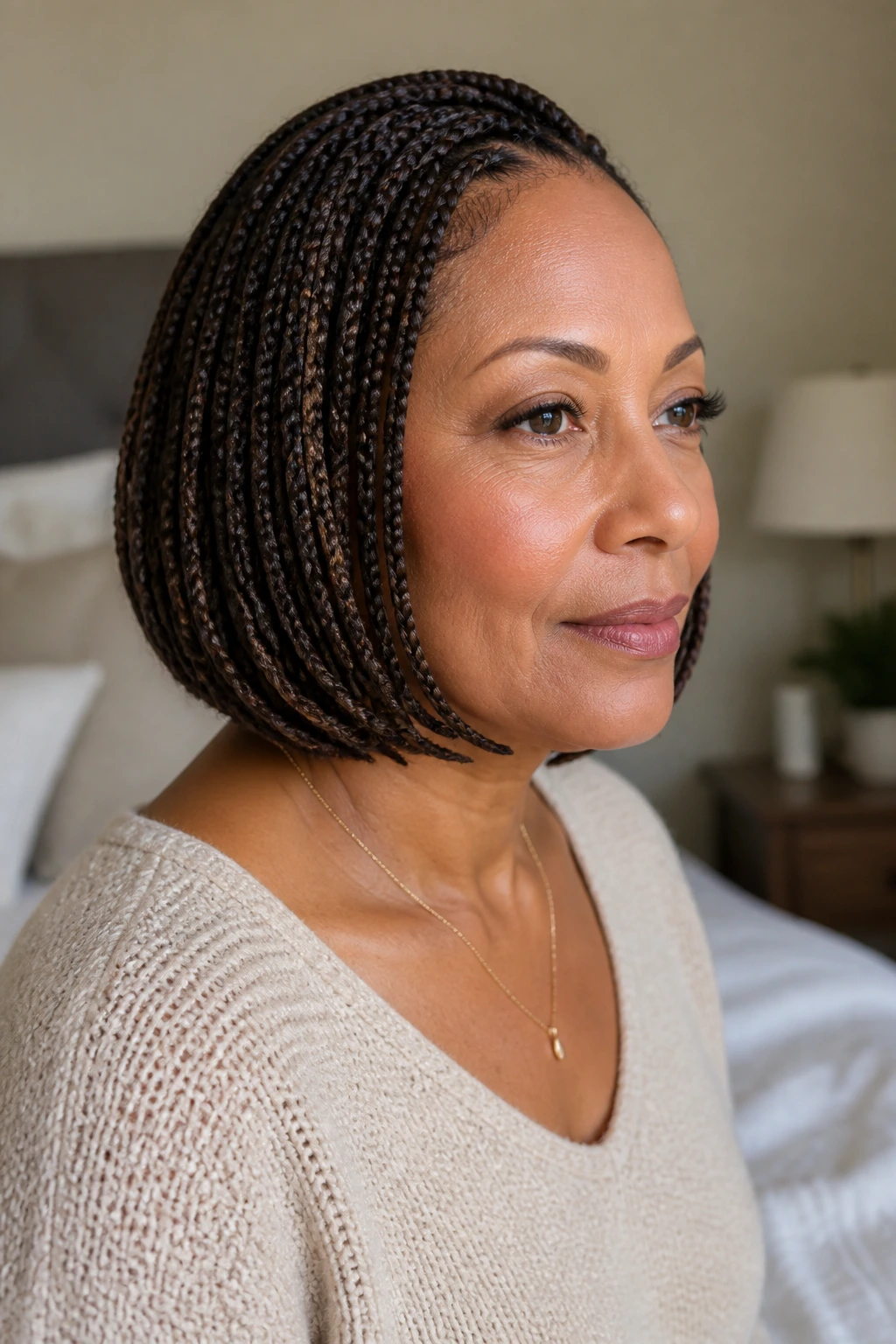
A braided bob is one of the smartest ways to cut the visual weight of thick hair without actually cutting the hair. The shorter shape keeps the ends from dragging, and tucked ends give the finish a neat edge. It is a good answer when you want braids that sit close to the face and neck without the long-swinging bulk of waist-length styles.
Why It’s Better Than Going Long
Long braids can be gorgeous, but they can also get hot, heavy, and a little bossy. A bob feels more controlled. On mature hair, that can make the style look cleaner around the jaw and shoulders, which is usually where thick braid styles either sing or get clumsy.
- Keep the bob length around chin to collarbone for the cleanest line.
- Tuck the ends inward or curl them under so they don’t fan out.
- Use a side part if you want the shape to feel softer.
Specific recommendation: If you wear statement earrings, this is one of the best braid styles on the list. It gives them room.
19. Half-Up Braided Crown
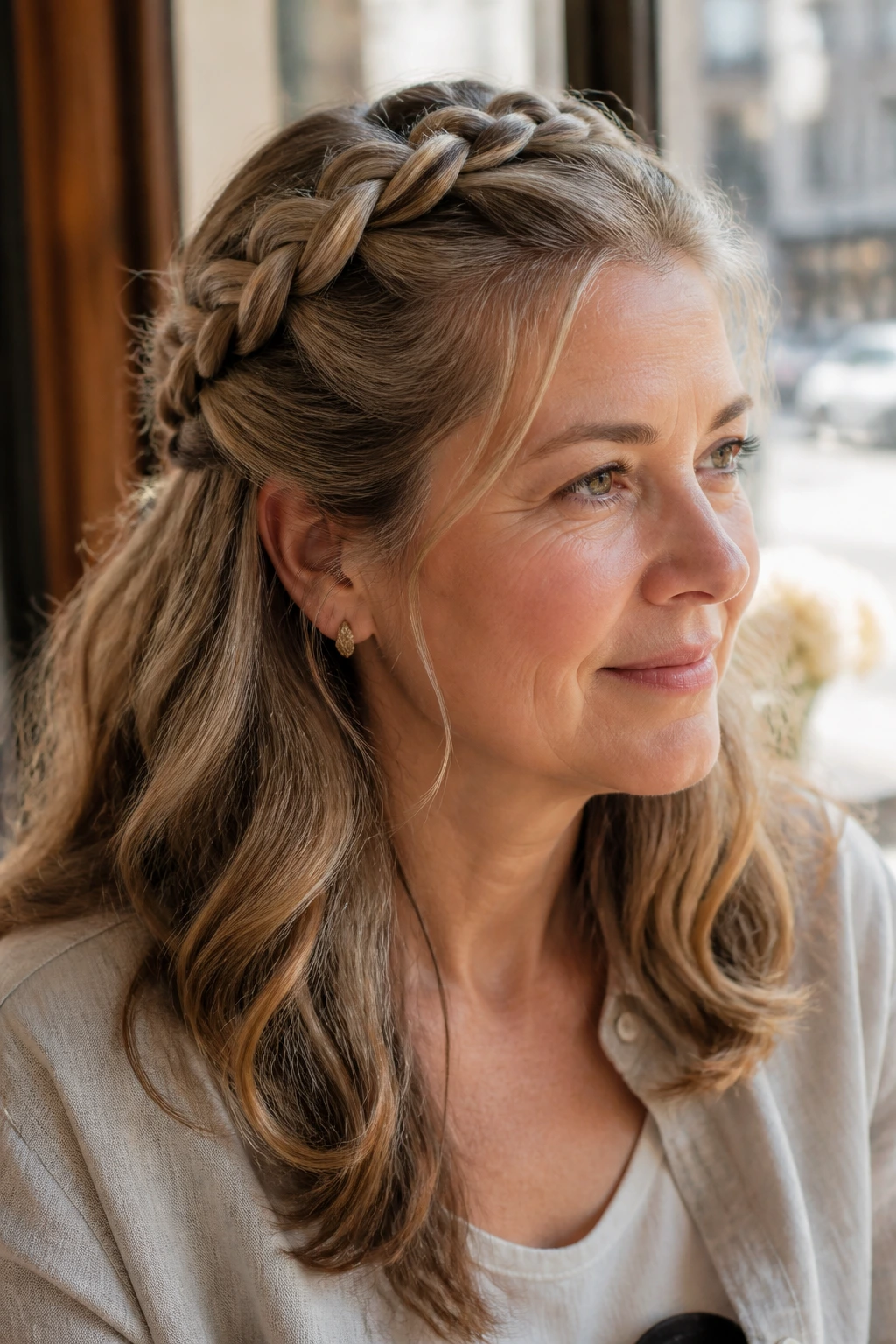
A half-up braided crown gives thick hair a bit of lift without asking you to put every strand away. That’s the appeal. The crown section frames the face, while the back stays loose or lightly braided, which keeps the style from feeling too severe. It works especially well when the hair is dense enough to support the crown without collapsing.
Why It Flatters Thick Hair
The top section should be broad, not tiny. Thick hair looks more elegant when the braid has enough width to read as a deliberate shape rather than a narrow strip. If you leave a few softer pieces near the temples, the whole style gets gentler.
- Make the crown braid wider than you think.
- Let the back fall in loose waves or stretched texture if you want softness.
- Pin the crown low enough that it doesn’t feel like a hat band.
A half-up crown is one of those styles that can wear to brunch, a meeting, or a family dinner without needing a costume change. Nice range.
20. Braided Mohawk with Tapered Sides
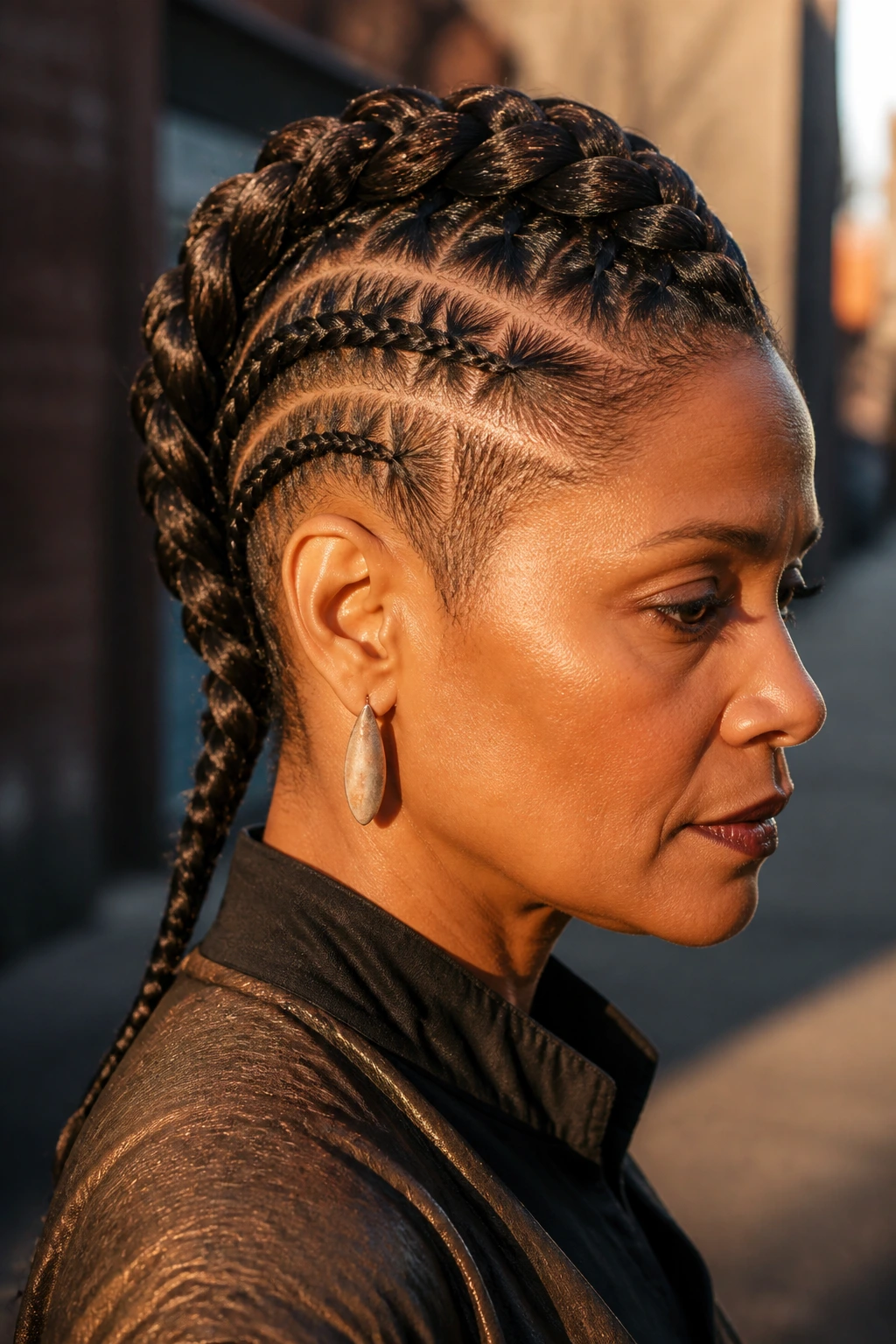
A braided mohawk sounds loud, but on thick hair it can look sleek and sharp instead of wild. The middle braid line gives the style height, while the tapered or closely braided sides keep the bulk under control. The result is more architectural than messy.
This is a strong choice if you like a little edge but do not want a full head of long braids falling everywhere. The mohawk shape gives the illusion of lift, which can be flattering if you want the face opened up and the profile stretched slightly upward. It is not timid. That’s part of the charm.
If you’re choosing this style later in life, keep the finish clean. One or two strong braid lines are usually enough. Too many side details start to fight the shape.
21. Four-Section Braided Updo
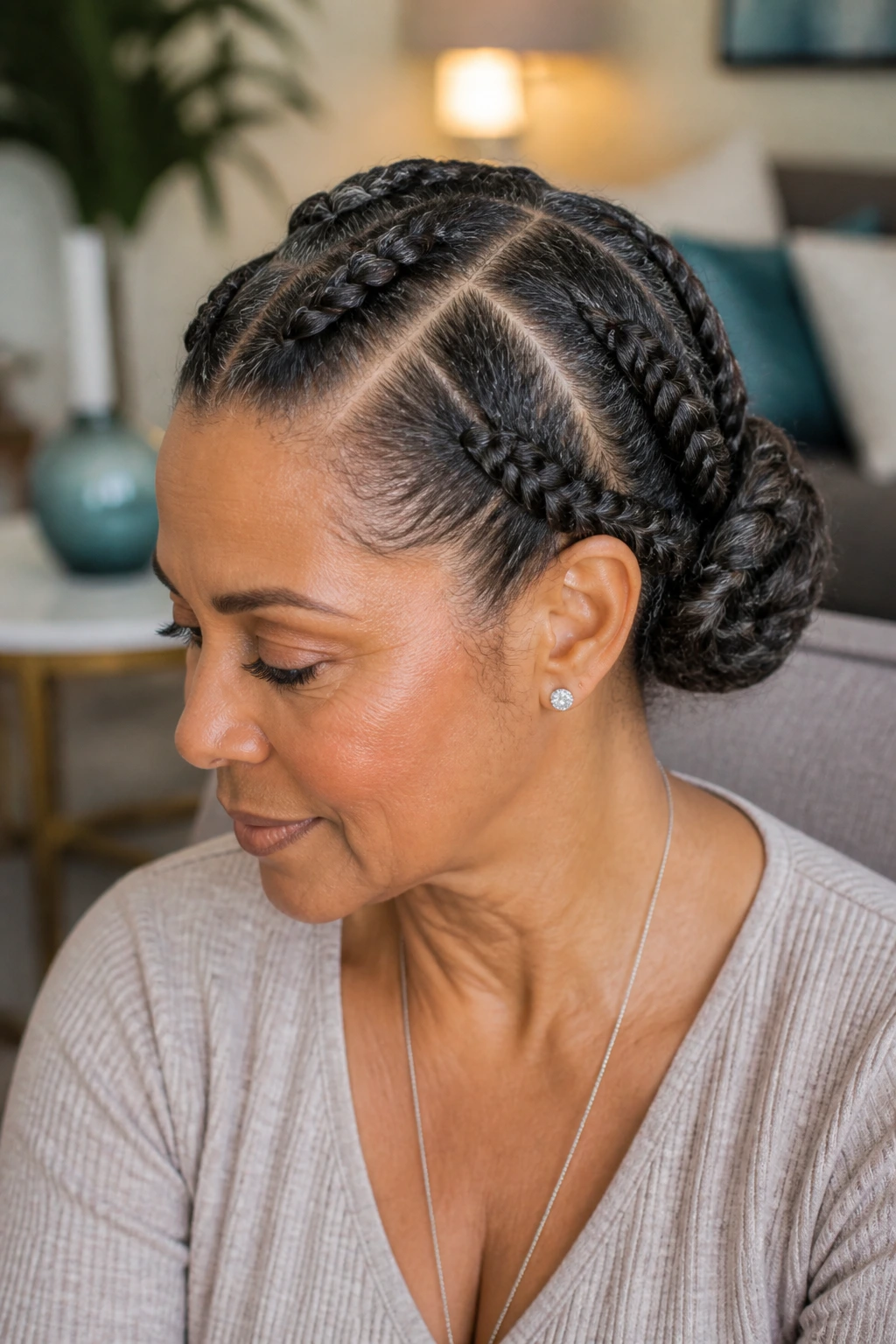
What if your thick hair is too much to tackle in one sitting? Break it into four. The four-section braided updo does exactly that, dividing the head into manageable zones and then folding the braids into a pinned style at the back or crown. It’s practical in a way that feels almost old-school, which I mean as a compliment.
How to Make It Work
Each section should be neat and similar in width so the final updo doesn’t sag on one side. Thick hair can carry the style well, but only if the base is balanced. If one quadrant is tighter than the others, you’ll feel it by the second day.
- Section from ear to ear, then down the center, so each quadrant has a clear job.
- Keep the pinned finish low and secure so the weight sits close to the head.
- Use bobby pins in a crisscross pattern if the style needs extra hold.
This style is a good one for women who like control. It keeps the hair out of the way and still looks finished.
22. Waterfall Braid on Thick Hair
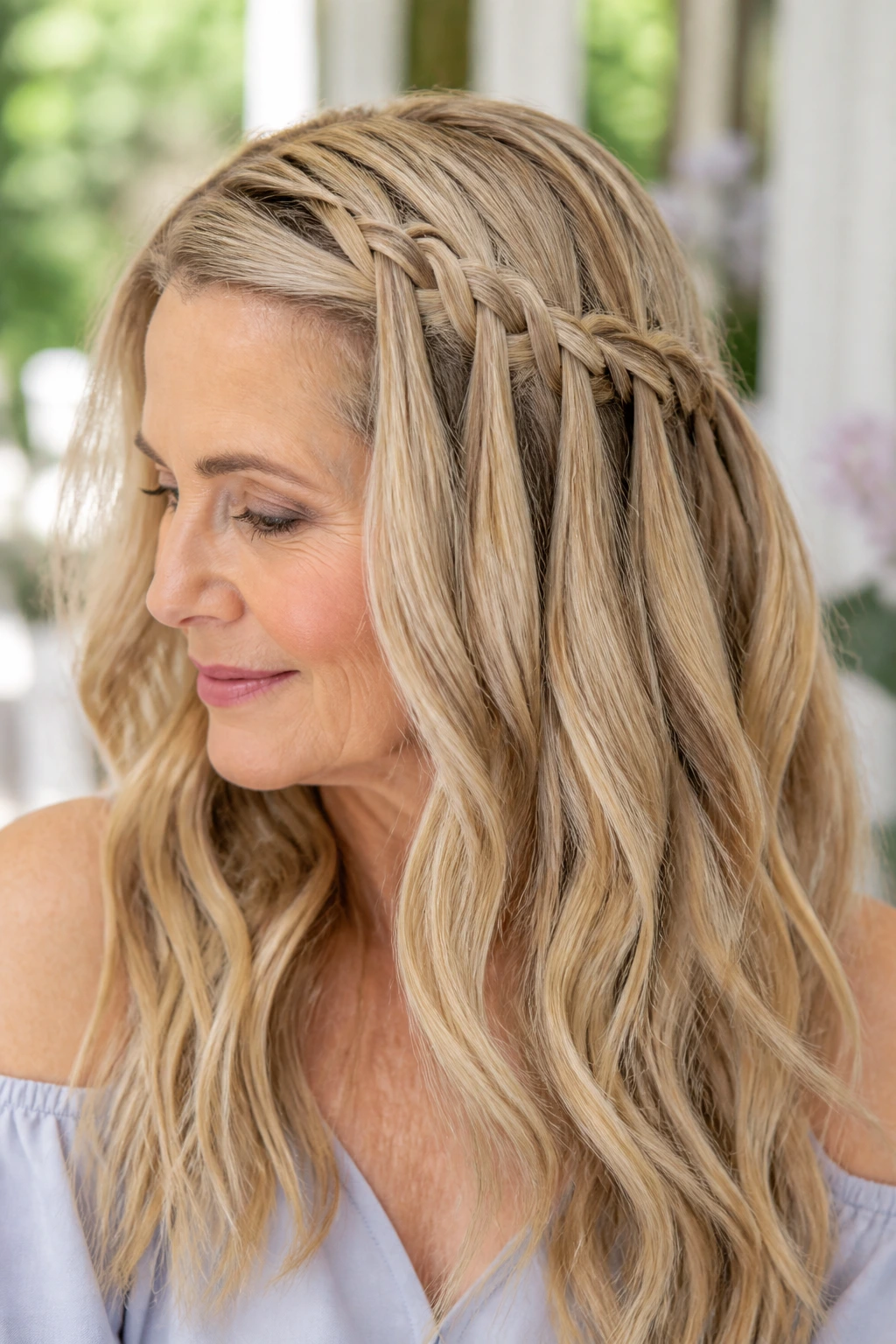
A waterfall braid is more decorative than protective, but thick hair gives it enough body to look substantial. The braid steps across the head and lets sections fall through, which creates a soft line that can frame the face without pinning every strand away. On dense hair, the pattern is easier to see because the hair has enough weight to hold the shape.
It works best on stretched or smoothed hair. If your hair is very puffy, the falling sections can blur the pattern fast. The braid itself should stay close and neat while the loose pieces stay controlled. That contrast is what makes it pretty.
I’d use this for a special outing or a dressier day, not as an all-week style. It’s more of a polished accent than a hard-working protective set. Still, it’s lovely when you want something softer than a full updo.
23. Twisted Crown with Nape Braid
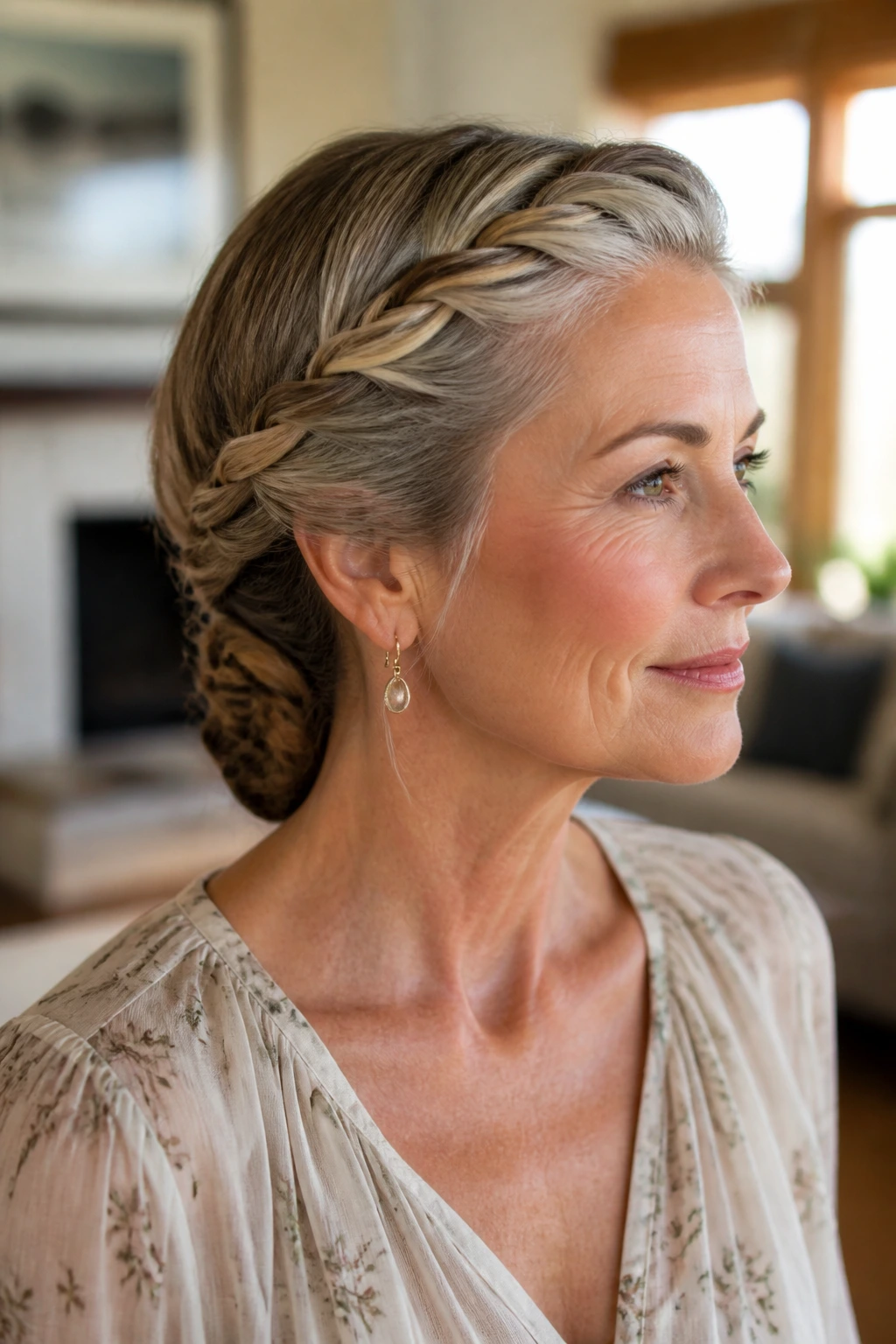
The twisted crown with a nape braid is one of the best low-tension looks in the group. The crown twist keeps the front neat and open, while the braid at the nape gathers the weight where it’s least annoying. On thick hair, that balance feels smart. It keeps the style anchored without loading the temples.
The shape has a gentle, romantic quality that suits mature hair better than some of the more fussy braid styles. It doesn’t try too hard. It just frames the head in a clean arc and lets the texture do the work. That’s the sort of style that ages well on its own.
If you need a braid that can handle daytime wear and still look good after a long dinner, this is a strong pick. The line is simple, but the silhouette has real presence.
24. Low Braided Ponytail with Wrapped Base
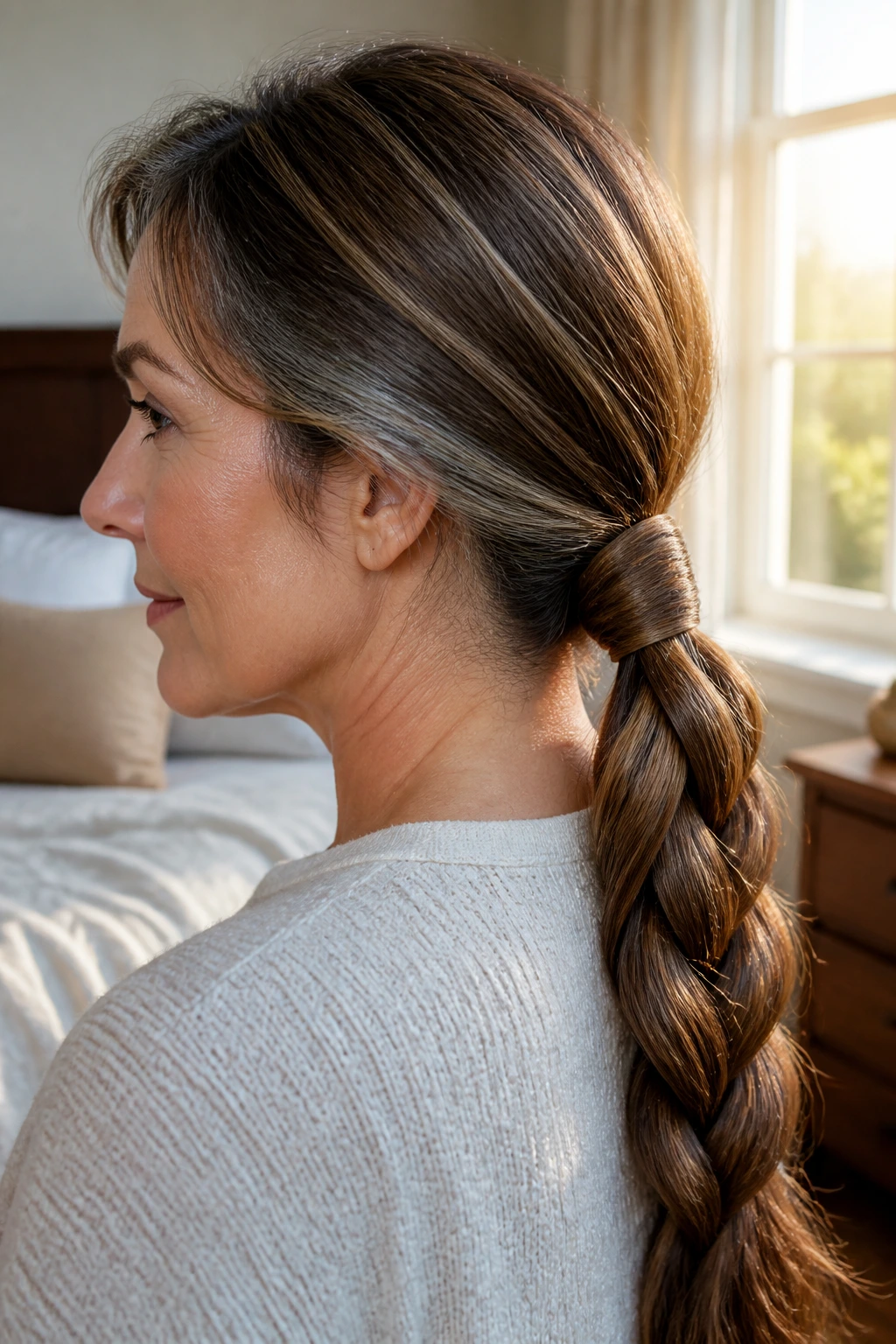
A low braided ponytail is the kind of style that quietly gets everything right. It pulls the hair back, keeps the weight low, and leaves the face open. On thick hair, the braid itself has enough mass to look polished without extra decoration. Wrap the base with a small strand and it reads finished instead of casual.
Why It’s So Practical
The low placement matters. High ponytails can tug, especially if the hair is dense and the braid is long. A low tail sits closer to the neck and moves less, which makes the whole style feel calmer.
- Anchor the base with a firm elastic first.
- Wrap a thin braid strand around the base to hide the band.
- Keep the tail smooth before braiding so the finish looks deliberate.
Best for: workdays, travel, and any time you want your hair to cooperate without asking for a whole production.
25. Two Feed Braids with a Folded Bun
Two feed braids can look deceptively simple, but on thick hair they create one of the cleanest low-bun shapes you can wear. The feed-in start keeps the front gentle, then the two braids fold into a bun that stays compact and neat. It’s the sort of style that looks calm from every angle.
What Makes It Hold Its Shape
Because there are only two main braids, the style keeps the scalp lighter than a full braid set. That is a nice break if your hair is dense and you want less time under tension. The bun itself should be folded close to the nape so it doesn’t balloon outward.
- Ask for smooth feed-ins at the front so the braids start without a hard ridge.
- Keep the bun tucked low and centered for the cleanest finish.
- Use pins sparingly but firmly so the shape doesn’t loosen by midday.
My take: This is one of the most quietly elegant braid looks for thick hair. Nothing extra. Nothing strained.
Why Thick Hair Changes the Braiding Game
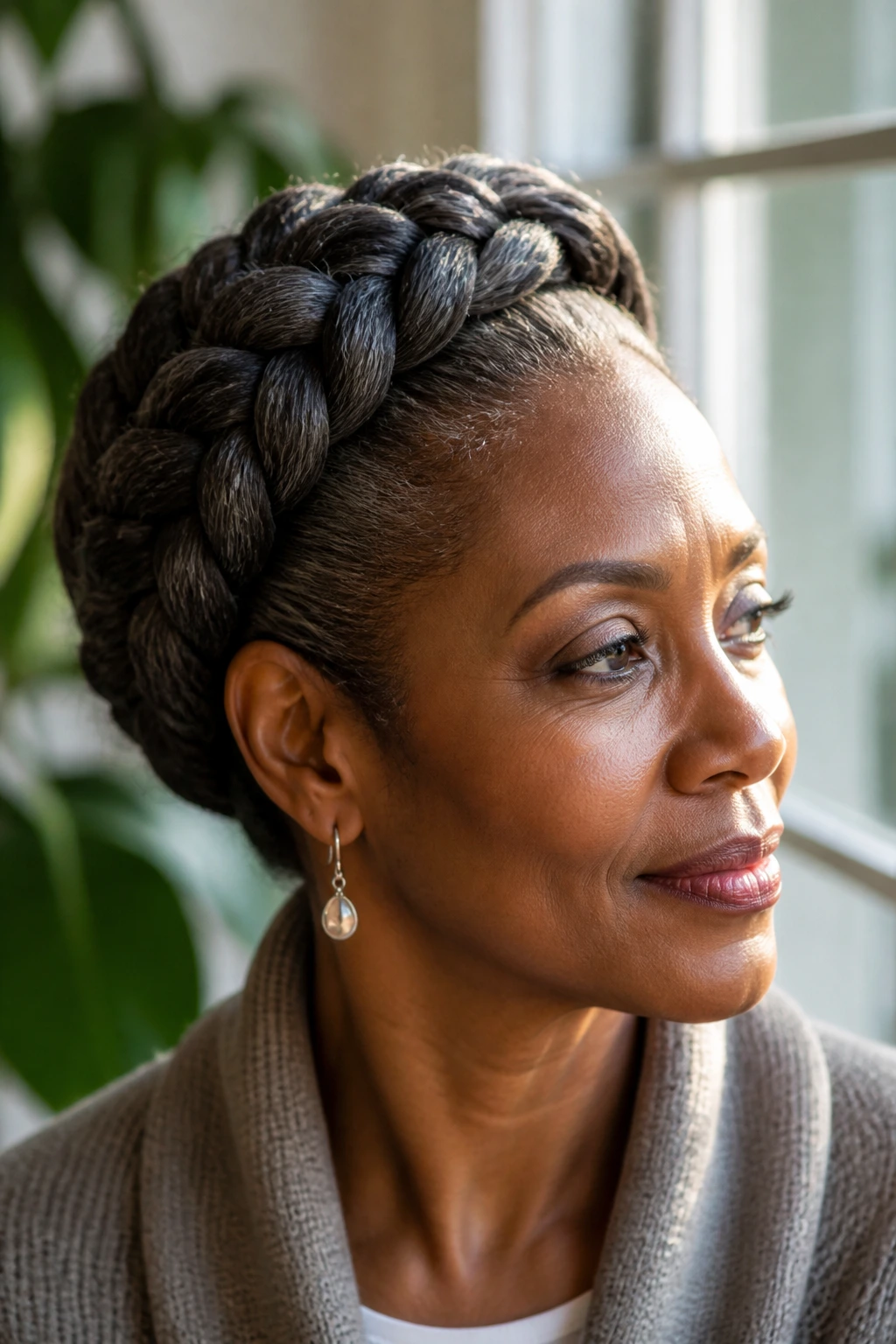
Dense hair asks for a different braid plan. Tiny sections can make the head look overpacked, and they can also turn the installation into a long, tiring sitting marathon. Bigger, cleaner parts usually look better on mature thick hair because they let the braid pattern breathe. You see the shape. You do not just see a wall of hair.
Weight matters too. Thick hair already carries more mass, so a style that looks fine on finer hair can feel heavy at the roots when the density goes up. That’s why knotless starts, feed-in rows, and low buns show up so often in this list. They spread the stress out. They also tend to last longer because the base isn’t fighting the hairline all day.
There’s one more thing people forget. Thick hair usually needs a clearer drying and prep step before braiding. If the hair is damp, full of old product, or still tangled near the nape, the braid has to work around that mess. And dense hair never hides a bad prep job. It magnifies it. Which is why the prep sections below matter more than the accessories.
The Tools That Make Dense Hair Easier to Braid
A good braid day starts with the right tools on the counter, not with panic halfway through parting the first section.
- Rat-tail comb: For parting clean sections, especially on cornrows, stitch braids, and triangle parts.
- Wide-tooth comb or detangling brush: Helps move through thick hair without snapping the ends.
- Sectioning clips: Keep the rest of the hair out of the way while you work one row at a time.
- Spray bottle with water or leave-in mix: Useful for rehydrating a dry section before braiding.
- Light-hold mousse: Tames flyaways and helps set braids without a greasy finish.
- Braiding gel or cream: Best for roots and part lines; use it sparingly so buildup doesn’t creep in.
- Pre-stretched braiding hair: Saves time and gives extensions a more natural look on box braids, Ghana braids, and feed-ins.
- Satin bonnet or scarf: Keeps the braid surface smooth overnight.
- Edge brush: Handy for softening the front without scraping the skin.
- Hooded dryer or cool blow-dryer: Helpful if you’re setting braids on stretched natural hair and need everything fully dry first.
Smart Hair Prep and Product Picks
Thick hair can forgive a lot, but it does not forgive sloppy prep. Start with a clean scalp and a full detangle. If there’s old grease, dry gel, or sandpapery buildup sitting at the roots, the braid won’t lay properly and the style will start itching sooner than it should. A clarifying wash helps when product has piled up. A moisturizing wash works better when the hair is dry or coarse and needs slip.
The biggest decision is whether you’re braiding dry-stretched hair or working on fully natural texture. For a sleek style, stretch the hair first with a low-heat blow-dry or banding. That makes parting easier and keeps the braid from puffing while you work. For a softer, natural finish, you can braid on well-moisturized hair, but it will shrink more and the parts may not stay as crisp.
Braiding hair matters too. Pre-stretched synthetic hair is usually the easiest choice for box braids, Ghana braids, and feed-in styles because it lightens the install and keeps the ends tidy. If you want boho pieces or curly ends, choose hair that matches your own texture level instead of something ultra-shiny and obviously synthetic. That shiny plastic look reads cheap fast.
Products should help with slip and hold, not coat the hair like paint. A light leave-in, a small amount of gel at the roots, and mousse at the finish are usually enough. Thick hair already brings body. It does not need a gallon of product.
How to Wear These Braids With Dresses, Glasses, and Gold Hoops
Presentation: Thick hair looks best when the braid shape gets a little room to breathe. A side part softens the front, while a center part sharpens it. If your braids are full and long, keep the crown smooth so the style doesn’t sit too high and crowd the face.
Accessories: Gold hoops, slim scarf ties, and a good pair of glasses can work with almost every style here. If you wear beads or cuffs, keep them lower on the braid so the front stays light. Heavy pieces near the hairline can pull in a way you’ll notice by the second day.
Sizing: Medium and jumbo braid sizes usually flatter thick hair better than tiny ones. That doesn’t mean small braids are off-limits. It means the scale should match the amount of hair you actually have. If the braid size and density fight each other, the style starts to look busy.
Where It Fits: The polished styles — knotless box braids, Ghana braids, low buns, halo braids, and straight-back cornrows — slide into office days, travel, family events, and dressier evenings without changing much. The softer styles — waterfall braids, boho knotless braids, and half-up crowns — read more relaxed. Pick the tone you need, not the trend you saw on someone with a completely different hair texture.
Small Styling Moves That Keep Braids Looking Clean
Shape: A crisp part line matters more than extra decoration. On thick hair, a straight center part or a clean diagonal sweep can carry the whole style. If the base is messy, no amount of cuffs will fix it.
Customization: Add one thing, not six. A few cuffs on a Fulani braid, a wrapped base on a ponytail, or a soft curl on boho ends is enough. Piling on beads, clips, and decorative thread can make thick hair look heavy instead of styled.
Finishing Touch: Mousse plus a scarf is still one of the best combinations. Smooth the surface, tie it down for 10 to 20 minutes, and let the braid set. It’s a small step, but it knocks down little frizz bits that make the style look older faster.
Make-It-Yours: If your scalp is tender, choose knotless starts, flat twists, or low buns. If you want more drama, choose side sweeps, braided crowns, or triangle parts. If you wear glasses, keep the front braids from stacking over the temples. Tiny adjustments like that change the whole feel of the style.
Night Care, Wash Days, and Rebraiding Rhythm
Braids on thick hair can stay neat for a while, but they do not run on autopilot. At night, a satin bonnet or scarf is non-negotiable if you want to keep the surface smooth. A satin pillowcase helps too, especially if the bonnet slips off.
For scalp care, think light and targeted. A little diluted shampoo or scalp cleanser along the part lines every 1 to 2 weeks is usually enough for extension styles. Follow with a careful rinse and dry the roots fully. Wet braids trapped under a bonnet smell bad fast. No way around that.
Most braided styles on thick hair do well for about 2 to 6 weeks, depending on size, tension, and how much product you used at the start. Larger styles often need refreshing sooner because the roots puff more visibly. Tighter styles may hold shape longer, but they can’t be kept in just because they’re still pretty. If the edges start to ache, the style has already overstayed.
When it’s time to take braids down, do it in sections and work a little oil or conditioner through the ends first. That reduces breakage. Rushing removal on thick hair is a fast way to create knots where you never wanted them.
Ways to Adapt These Braids for Different Lifestyles
Soft-Edge Office Edit: Choose medium knotless box braids, straight-back cornrows, or a low braided ponytail. Keep the parting clean and the accessories minimal. The result is neat enough for work without feeling severe.
Gray-Blend Highlight Version: Let silver strands show through in braids that use your natural hair, or match extension color to the salt-and-pepper mix instead of forcing a solid dark look. Gray hair can make braid texture look sharper, and that contrast is often beautiful.
Sensitive-Scalp Swap: Lean on knotless starts, flat twists, and low buns. Skip micro parts and very heavy extension sets. Your hairline will thank you for the reduced pull.
Travel-Ready Braids: Straight-back cornrows, Dutch braids into a bun, and two-feed braided buns stay put in a car or on a plane. They also make it easier to sleep without waking up to a nest.
Dress-Up Version: Halo braids, goddess crowns, and Fulani braids with slim front pieces work well when you want the hair to feel special. A few cuffs or a wrapped base is enough. Don’t overload the style.
Short-Length Solution: Braided bobs, tucked buns, and low crown styles suit thick hair that isn’t very long. You get the polish of braids without the drag of extra length.
Common Mistakes That Turn Thick Hair Into a Fight
The first mistake is going too small. Tiny parts on thick hair look neat in the chair and chaotic by day two, and they take forever to install. The fix is simple: match the braid size to the density of the hair. Medium and jumbo sections usually look better and wear more comfortably.
A second problem is tension at the hairline. If the front braids pull the skin, the style is too tight. You may feel it right away, or you may only notice it after a few hours when the temples start throbbing. Either way, loosen the front or choose a knotless or feed-in start.
Overusing gel is another one. A slick root can look sharp for a moment, then it dries into flakes or leaves the scalp sticky. Use just enough product to control the part, not enough to glaze the whole head.
People also leave thick-hair braids in while the roots puff and the scalp gets itchy. That’s the point where the style stops looking fresh and starts looking tired. Refresh sooner, or take them down.
And yes, sleeping bareheaded ruins braid surfaces fast. Cotton roughs up the outer layer, especially on boho ends and fine curly pieces. Satin is boring but effective. Boring wins here.
Braids Questions Women Ask Before They Book the Appointment
Which braid styles last the longest on thick hair?
Knotless box braids, straight-back cornrows, Ghana braids, and low braided buns tend to hold shape well because the weight is distributed cleanly. The larger the style, the easier it is to maintain, as long as the parts are neat and the scalp isn’t being pulled.
Are knotless braids better than traditional box braids for mature hair?
Often, yes. Knotless starts feel softer at the root and usually put less pressure on the hairline. If your scalp is tender or your edges are fragile, that gentler start is a smarter bet.
Can I wear these styles if my hair is shoulder-length?
Absolutely. Styles like flat twists, crown braids, low buns, Dutch braids, and knotless braids can work on shorter thick hair with the right sectioning. You may need fewer extensions or a more tucked finish, but the shape can still be excellent.
How often should I wash braids?
Every 1 to 2 weeks is a good rhythm for most braided styles, especially if you use product or sweat a lot. Keep the scalp clean and dry the roots fully afterward so buildup doesn’t get trapped.
What if my roots puff up fast?
That usually means the braid size is too small for your density, or the hair wasn’t stretched enough before installation. A mousse refresh can help, but if the puffing is severe, the style may need to come down and be redone with a larger sectioning pattern.
Do beads and cuffs make thick hair too heavy?
They can, if you place too many near the front or load them high on the braid. A few pieces placed lower down usually look fine. Keep the hairline light.
Which styles are best if I hate tension?
Flat twists, halo braids, low buns, and knotless box braids are the easiest starting points. They keep the structure but don’t clamp down hard on the scalp.
Can these styles be worn with glasses?
Yes, and some work better than others. Side parts, halo braids, low buns, and straight-back cornrows usually play nicest with frames because they keep the temples clear.
Braids That Sit Right
The best braided styles for thick hair don’t try to flatten it into submission. They let the hair stay full, then shape that fullness with a clean part, the right braid size, and a finish that doesn’t feel heavy at the scalp. That’s the whole trick, really. Once you stop asking thick hair to act thin, everything gets easier.
Older women do not need fragile-looking braids or styles that seem designed for someone else’s texture entirely. They need structure, comfort, and a line that still looks good after a long day. The styles in this lineup do that in different ways — some are soft, some are sharp, some are plain, and a few are quietly elegant in a way that gets better the longer you wear them.
Pick the shape that fits your routine, your scalp, and your patience. The right braid will feel settled from the start, and that feeling is worth paying attention to.