



Medium skin is where brown streaks can look rich instead of muddy, but only if the shade matches the undertone. The phrase brown streaks hairstyles for medium skin tones covers more ground than people think: caramel money pieces, mocha ribbons, chestnut lowlights, ash-brown panels, and those barely-there highlights that only show when the hair moves. None of it works by accident.
The mistake most people make is chasing lightness. On medium skin, a streak that is two or three levels lighter than the base often reads cleaner than a dramatic blonde strip, and it grows out with less fuss. Get the warmth or coolness wrong, though, and the whole head can look off by a mile. Orange on top of golden skin is one thing; orange on olive skin is another, and neither is the look most people are after.
I like brown streaks because they do a lot of work without shouting. They bring shape to curls, break up heavy straight lengths, and give braids a little more depth at the edges. Some of the styles below are soft enough for an office chair and a grocery run. Others are sharper, with real contrast. Both have a place.
Why These Brown Streak Styles Work So Well on Medium Skin
Face-framing lift: Brown pieces placed around the temples and cheekbones brighten medium skin without forcing the rest of the hair lighter. That little frame matters more than people expect.
Soft grow-out: Keeping the base deeper means new growth hides better than high-contrast blonde highlight lines. You can stretch the time between touch-ups without the color looking tired.
Texture-friendly: Brown ribbons show up on straight hair, curls, braids, and blowouts because the shade adds depth rather than fighting the cut. The style changes; the logic stays the same.
Undertone control: Caramel, chestnut, mocha, walnut, and ash-brown each lean warm or cool enough to suit different medium skin undertones. That gives you options without going into full color-correction territory.
Low-commitment options: Peekaboo panels and money pieces let you try dimension without painting the whole head. If you’re cautious with color, that matters.
1. Caramel Money-Piece Layers
The front pieces do the talking here. Caramel streaks start at the part line and drift down the cheekbone, so medium skin gets a warm frame without the rest of the hair losing depth. On layered hair, that little bit of brightness makes the cut look more deliberate, not just lighter.
Why It Works
The money piece sits where light hits first, which matters more than the total amount of color. If you wear your hair behind one ear a lot or part it slightly off-center, the brighter streaks show movement instead of sitting like a stripe.
- Keep the streaks thin at the hairline and wider below the temple.
- Ask for a beige-caramel tone, not a yellow one.
- A round-brush blowout or loose bend makes the placement read softer.
Best move: finish with a drop of glossing serum on the ends, not the roots.
2. Chocolate Balayage Lob
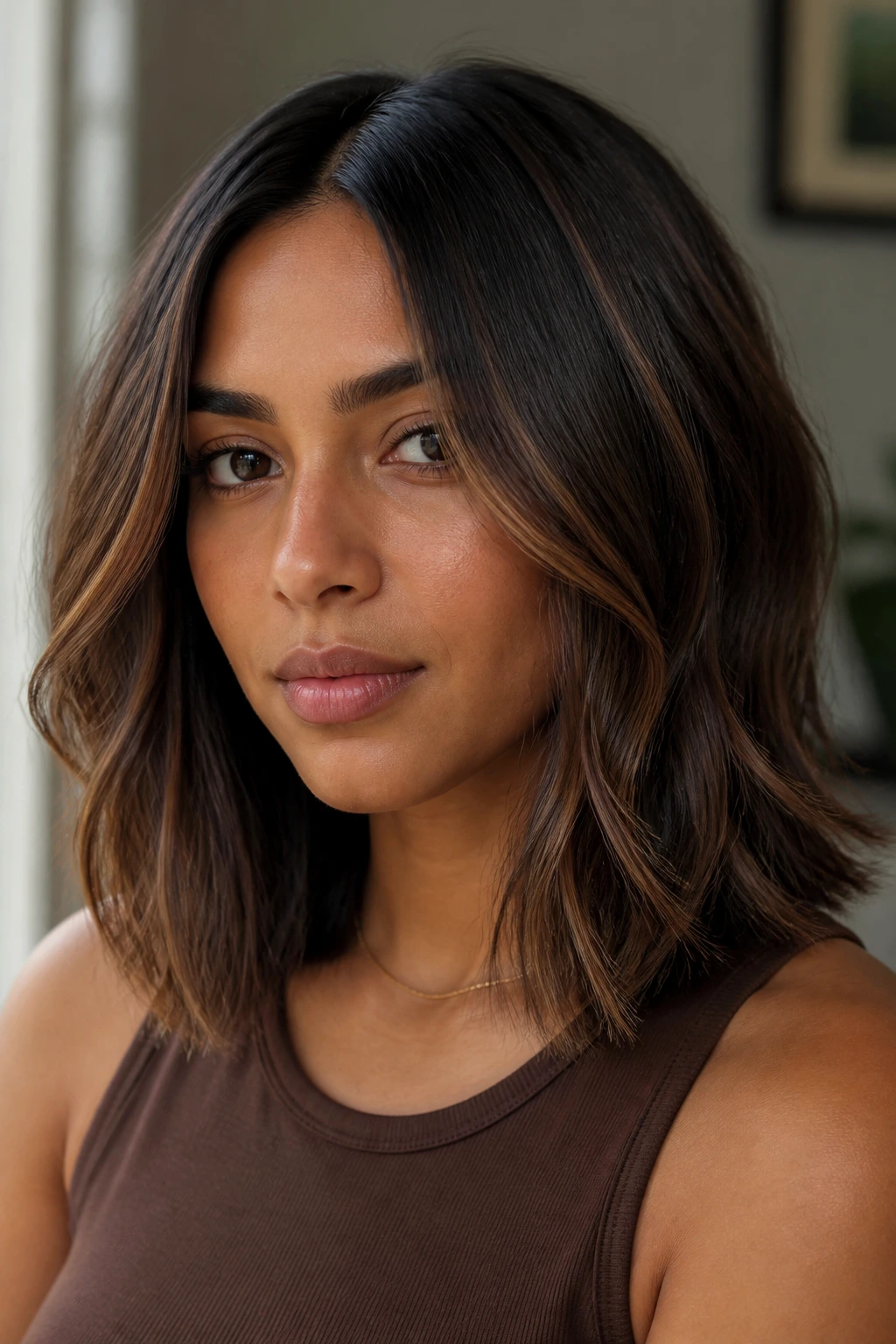
A lob with chocolate balayage has a steadier, quieter feel than a high-contrast highlight job. The brown streaks melt through the mid-lengths, so medium skin doesn’t get chopped up by harsh light bands. It looks especially good when the cut skims the collarbone and the ends are blunt enough to hold shape.
I prefer this on hair that sits somewhere between straight and wavy. The color shows up in those bends without needing a ton of styling. If your hair is thick, ask for more spacing between painted ribbons. If it is fine, keep the streaks narrower so the cut doesn’t lose weight at the bottom.
Styling note: a center part keeps the balayage quiet; a deep side part makes the chocolate ribbons show up more boldly.
3. Mocha Curtain Bang Waves
Why do curtain bangs work so well with brown streaks? Because they make the color move first. The bangs split around the face, and the mocha pieces catch the eye before the rest of the wave pattern does.
The result is soft but not sleepy. On medium skin, mocha sits close enough to the natural base to look believable, yet the bend at the fringe keeps the hair from blending into one flat block. If your hairline is lighter than the rest of your head, ask the colorist to keep the front pieces slightly deeper near the root. That avoids the “two bright slashes” problem.
How to Wear It
Use a 1.25-inch curling iron or a large round brush, then bend the bangs away from the face with your fingers. Don’t overdo the curl. The streaks need a little slack to show.
4. Chestnut High Ponytail with a Wrapped Base
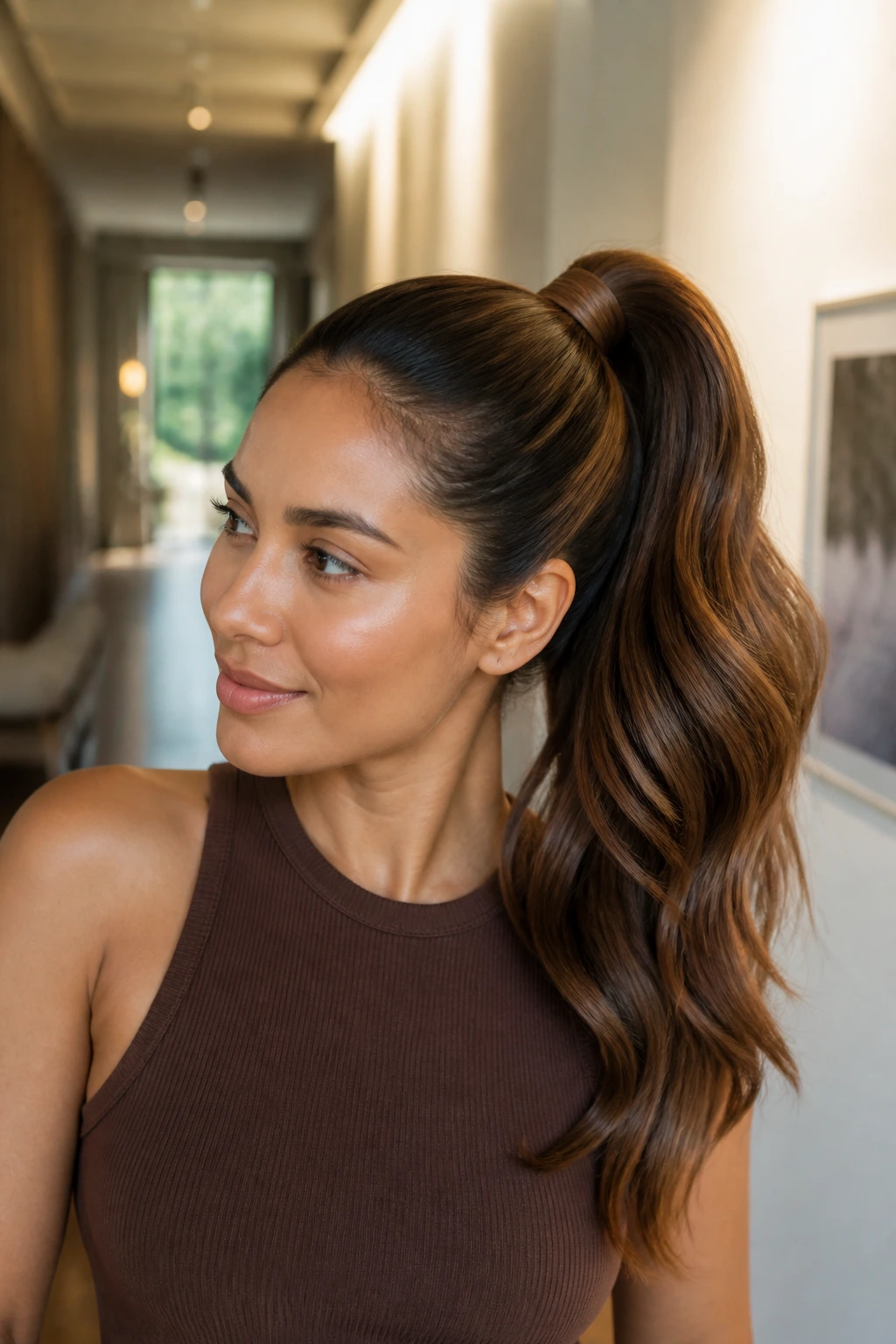
A chestnut high ponytail is a clean answer when you want dimension without wearing your color loose all day. The streaks sit in the ponytail length and around the crown, so the shine lands high and the face stays open. On medium skin, chestnut reads polished instead of loud, which is why it works for both casual days and dressier ones.
The wrapped base is the part people skip, and I think that’s a mistake. Wrapping a small section of hair around the elastic hides the hardware and makes the color look finished, especially if the streaks are concentrated through the tail. If your hair is layered, mist the tail with a light hold spray so the shorter pieces don’t pop out.
Quick tip: leave two thin front pieces out if you want the ponytail to feel softer around the jaw.
5. Cinnamon Curly Shag
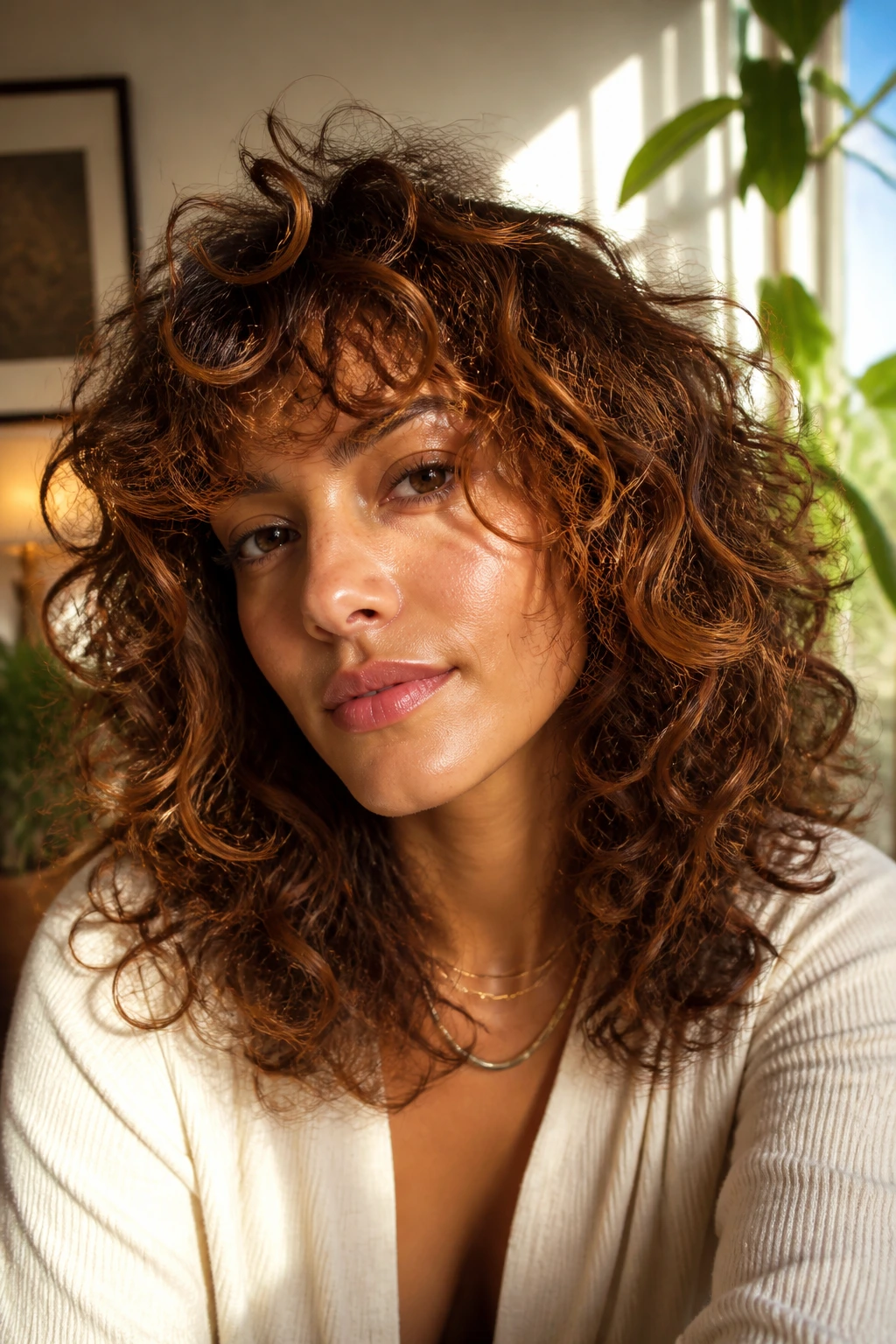
A curly shag can take a lot of color, and cinnamon brown is the one that usually makes sense. The layers break up the curl pattern, so the brown streaks catch on the bends instead of sinking into the mass of hair. Medium skin picks up the warm spice in the shade without needing the curls to be overstyled.
This cut is one of my favorites for people who hate fuss. It wants air-drying, a diffuser, and maybe a curl cream with a decent slip. That’s it. The streaks do the rest.
What to Ask For
- Layered crown with weight kept through the perimeter.
- Cinnamon ribbons around the face and through the top curls.
- A gloss that leans warm, not copper.
Pro move: scrunch the curls once after drying, then stop touching them. The streaks look better when the curl pattern stays loose.
6. Walnut Sleek Bob
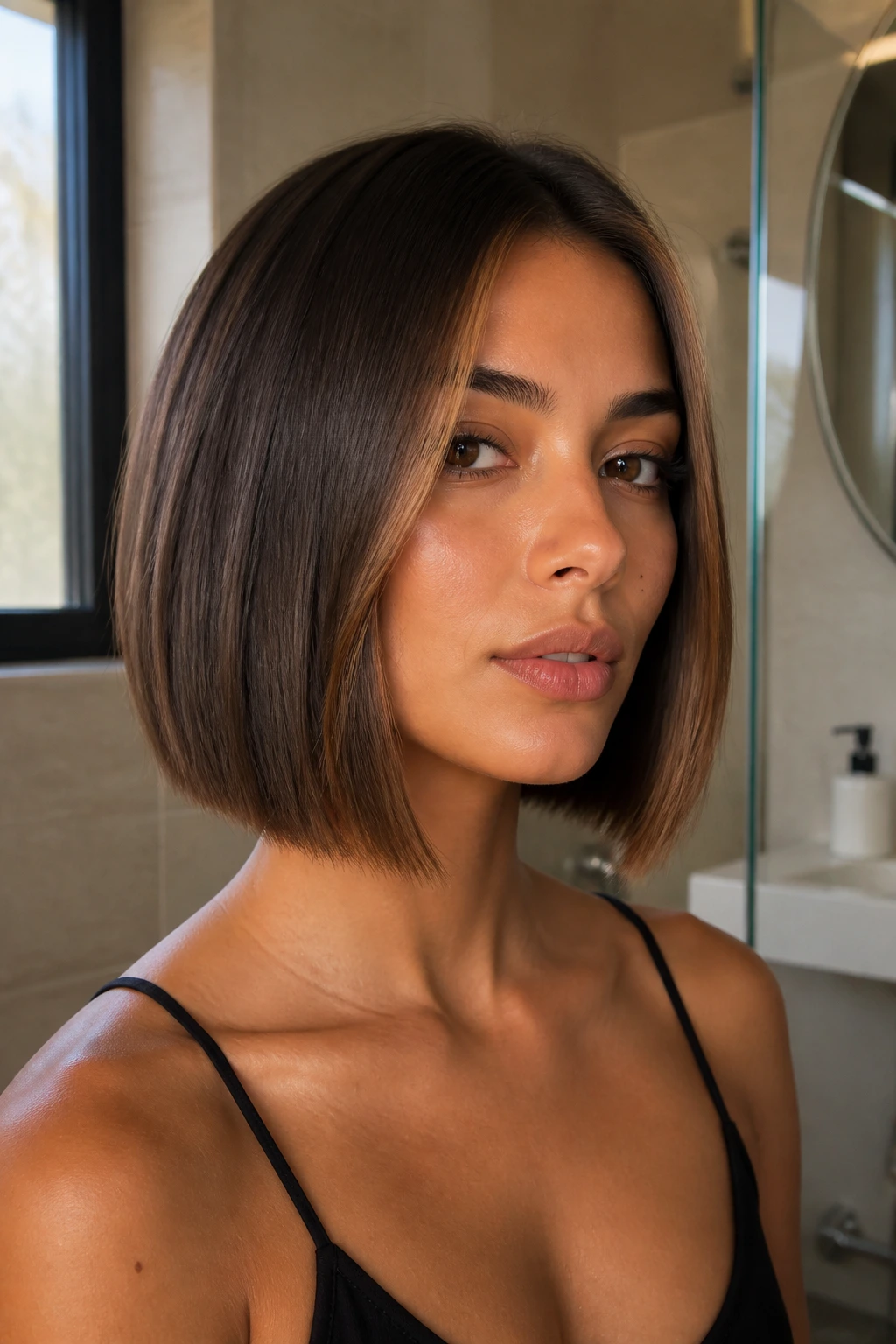
The walnut bob is all about restraint. A blunt bob with walnut streak panels can look almost architectural on medium skin, especially if the base stays a shade deeper than the pieces near the face. The color reads as shape, not decoration.
This style is for someone who likes clean lines. Use a paddle brush while blow-drying, then flat iron only the top layer if you want the streaks to show without making the whole cut too glossy. Too much shine can flatten the dimension, which is a shame here because the color placement is the entire point.
If your bob sits at the chin, keep the front pieces just a touch longer. That tiny angle gives the walnut streaks room to fall instead of tucking under the jaw.
7. Espresso Curls with a Bold Money Piece
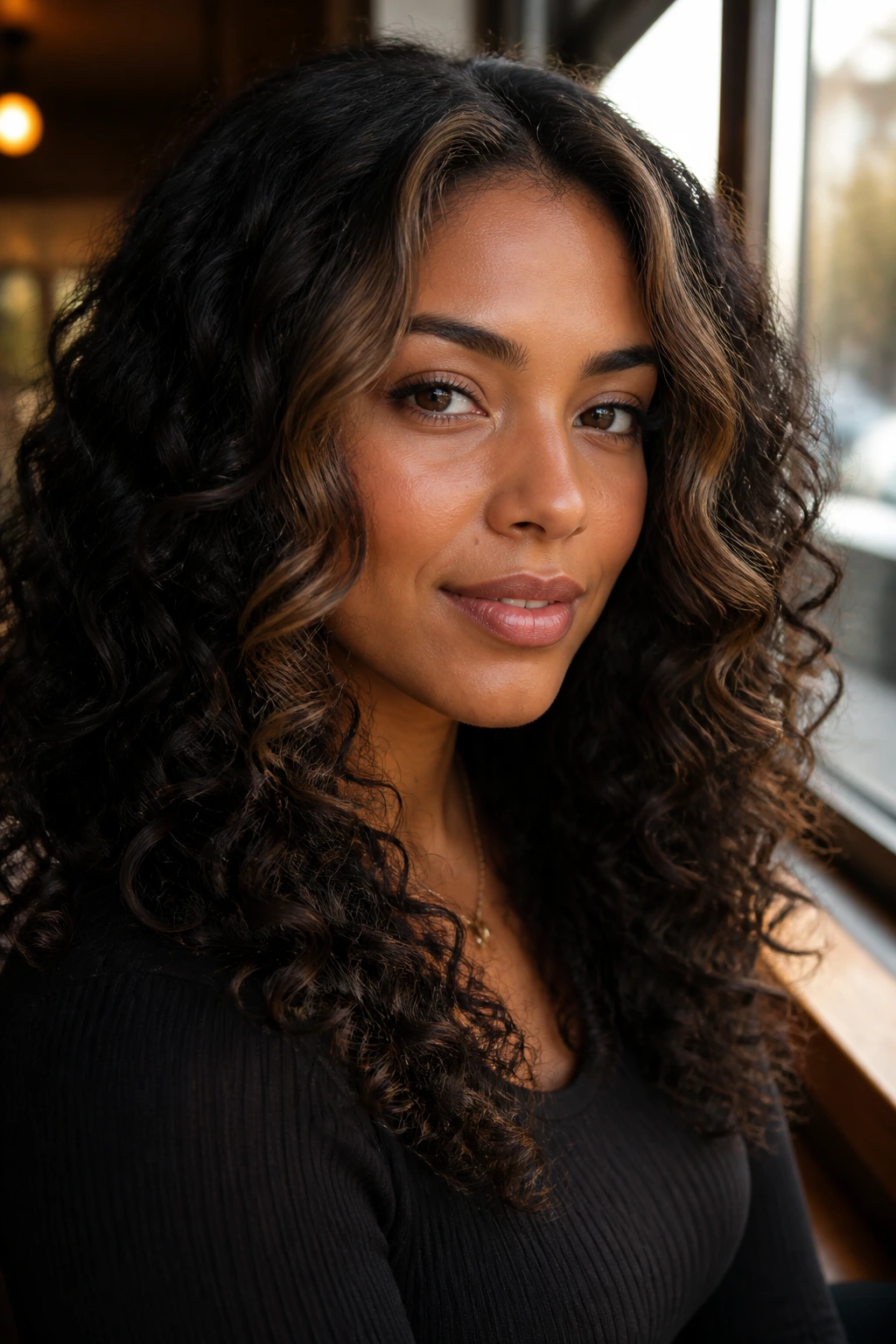
Can darker brown streaks still show on medium skin? Absolutely, if you place them with intention. An espresso base with one brighter brown money piece around the front creates contrast without tipping into a high-drama blonde moment. The effect is crisp on curls because each bend catches the difference in tone.
This is the style for someone who wants depth, not brightness. The rest of the hair stays anchored and rich, while the front pieces open the face. If your skin leans olive or neutral, keep the money piece in a cool mocha or taupe-brown range so it doesn’t go orange.
How to Use It
Ask for the front streaks to start a half-inch off the hairline, not right at it. That keeps the color from reading blocky. A curl-defining gel helps the front pieces separate enough to show the contrast.
8. Toffee Braided Crown
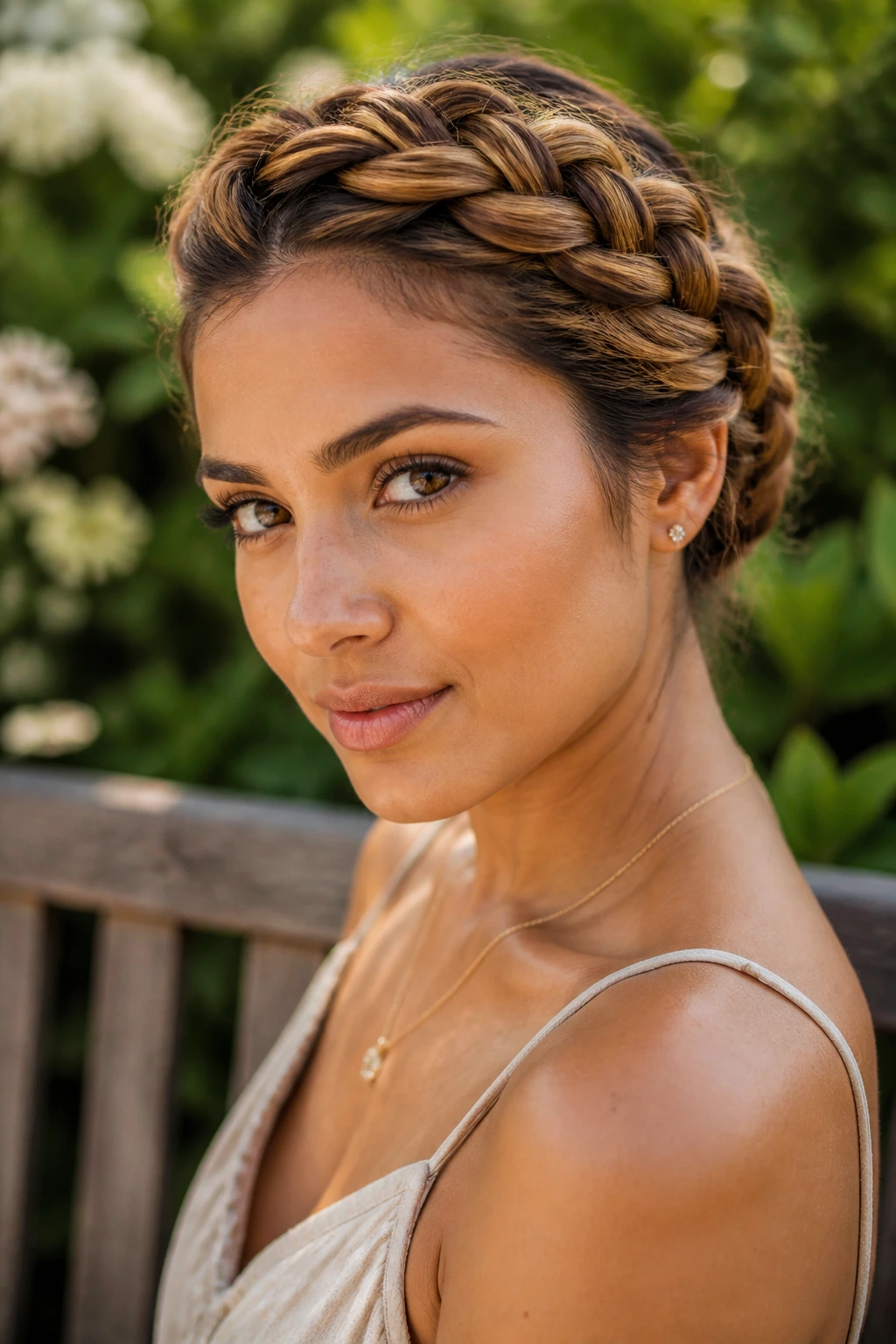
A braided crown gives brown streaks a place to show off in a very specific way: every plait reveals a little shift in shade. Toffee streaks woven through medium-brown hair create movement along the braid path, which keeps the style from feeling too flat or too formal. Medium skin likes this because the warmth sits beside the face without stealing the whole look.
This works best when the color is spread through the braid and not packed only at the top. If the front row is lighter than the rest, the braid can look like it’s wearing a stripe. A softer mix of toffee and medium brown looks better and lasts longer visually.
Best for: weddings, dinners, or any day you want your hair pinned up but not stiff.
9. Honey-Brown Feathered Blowout
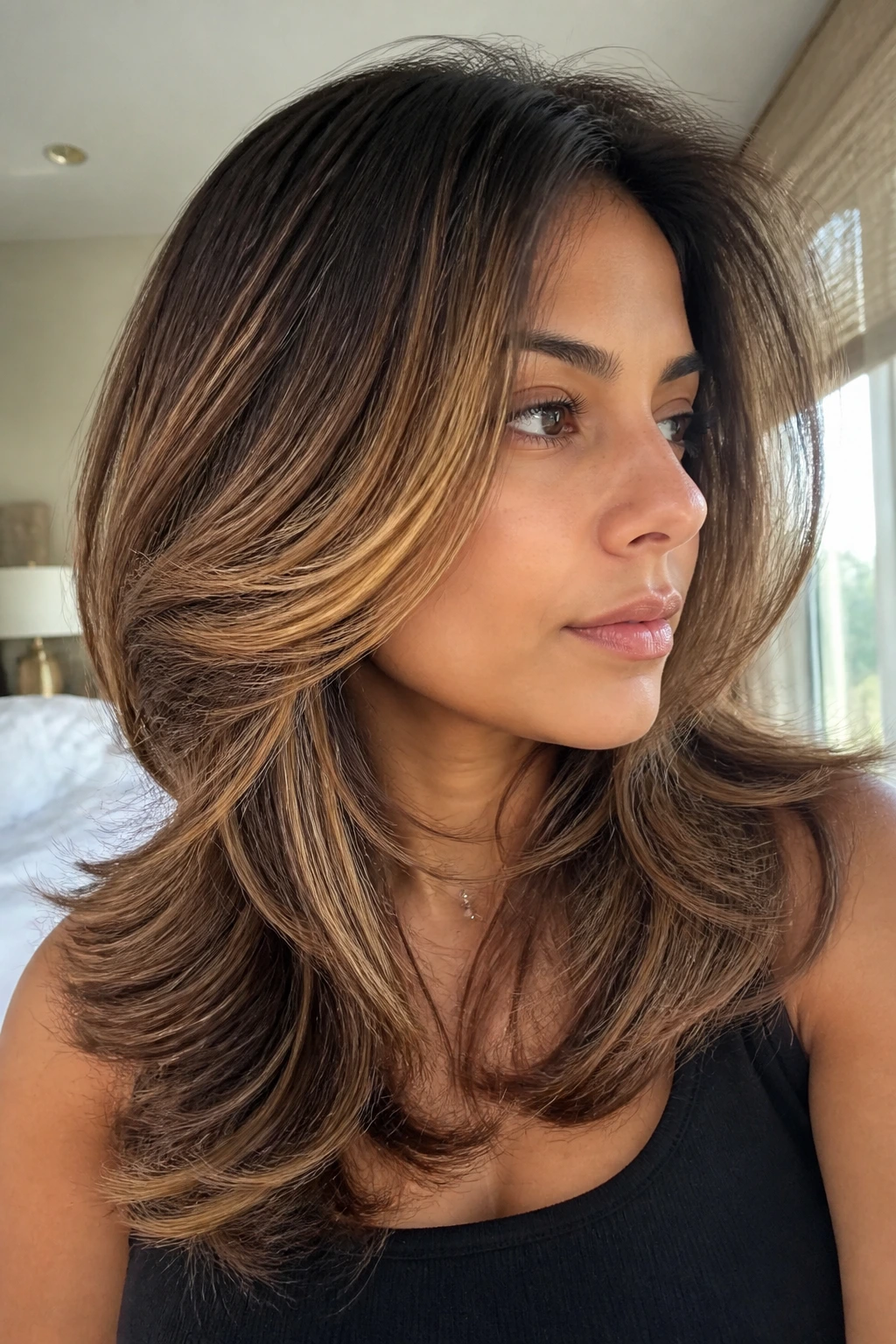
There’s something old-school about a feathered blowout, and I mean that as a compliment. Honey-brown streaks through feathered layers make the hair look airy, especially when the ends flip a little away from the face. On medium skin, honey tones add brightness without pushing the whole head into blonde territory.
The key is the cut. If the layers are too blunt, the streaks sit there and do nothing. If the layers are feathered and brushed out with some tension, they start moving. A round brush, a decent blow-dry, and a light serum are all this style wants. Keep the serum to the ends. Too much near the roots and the lift disappears.
10. Soft Brunette Pixie with Brown Ribbons
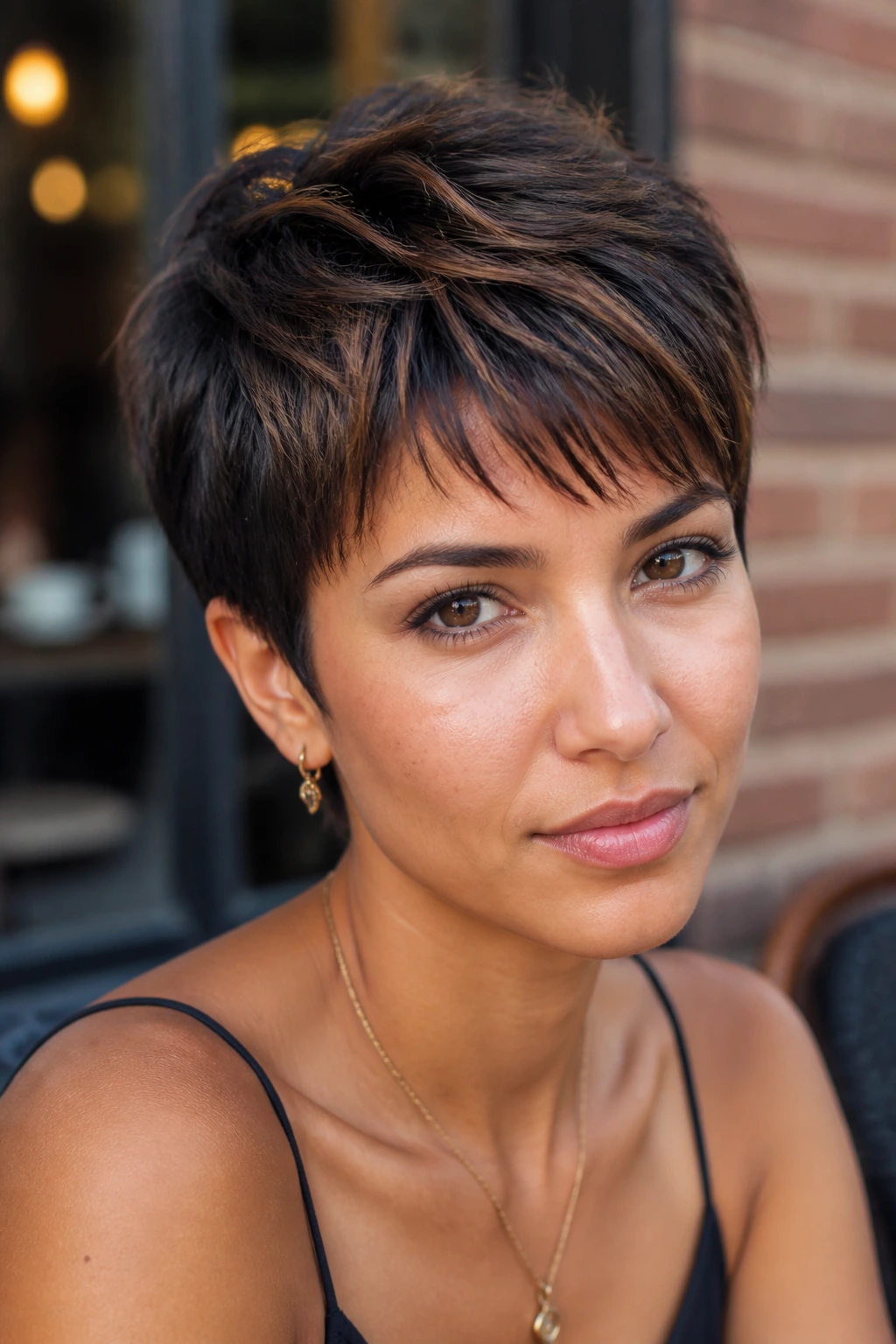
Short hair is where people get lazy with color, and that’s a shame. A pixie with soft brown ribbons can be more interesting than longer hair because the streaks fall across the crown and fringe in quick little flashes. On medium skin, that movement gives the face energy without a heavy color job.
Why It Works
The cut does half the work. Short layers expose the darker base and the lighter brown pieces at the same time, which keeps the style from looking like one solid cap of color. If you want it to feel modern, ask for the streaks to be concentrated on top and around the sideburn area.
- Use a matte pomade, not a greasy wax.
- Keep the streaks narrow at the top for cleaner texture.
- Brush the fringe forward or sideways depending on how much contrast you want.
Opinionated note: this looks best when it’s a little piecey, not shellacked.
11. Ash Brown Wavy Lob
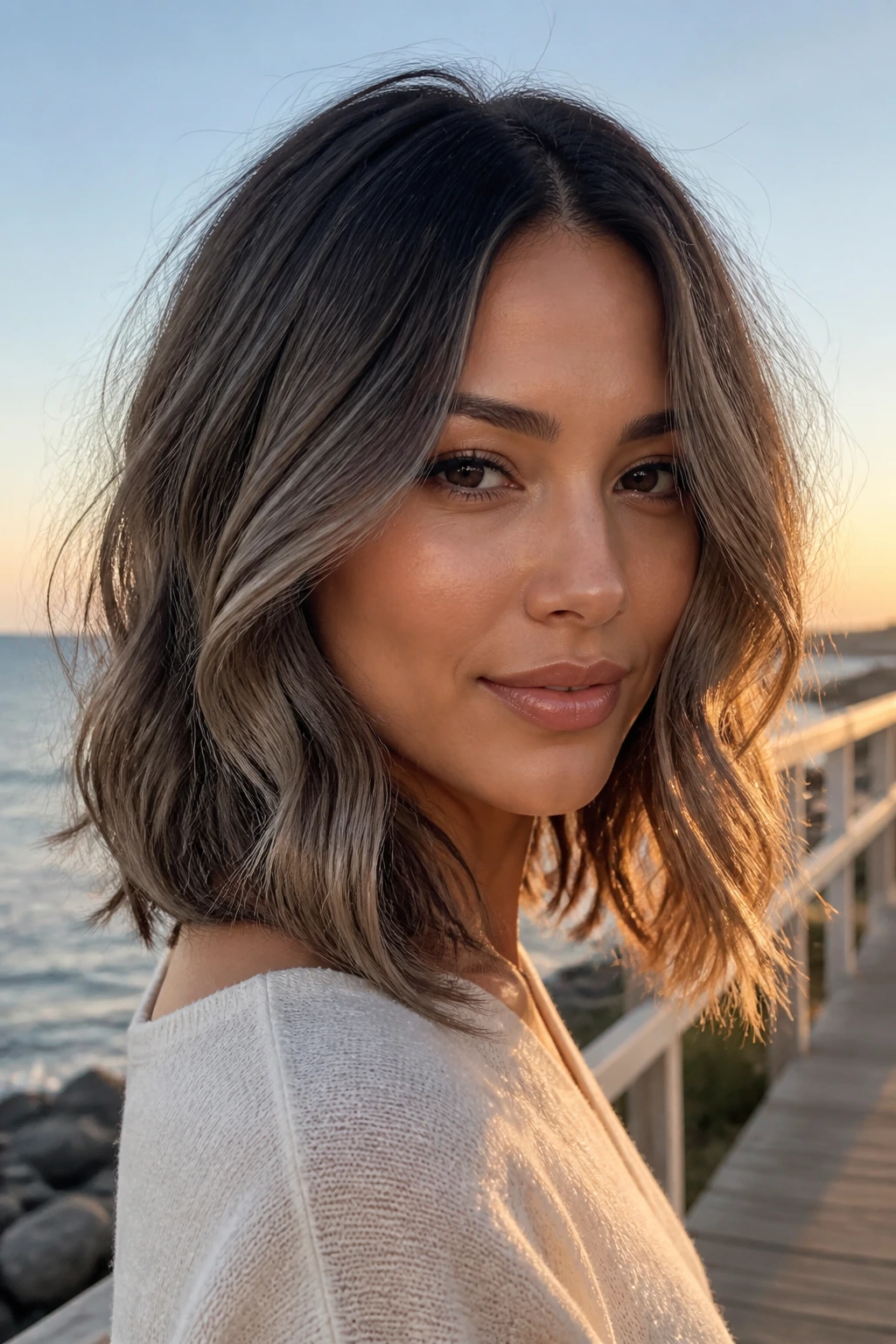
Ash brown on medium skin can go wrong fast if it gets too gray or too flat. Done right, though, it has a cool softness that looks especially clean on olive or neutral undertones. A wavy lob gives that cooler brown some texture to cling to, and the waves stop the color from reading dull.
I’d ask for ash pieces through the mid-lengths with a deeper root shadow. That root shadow keeps the head from looking washed out and gives the color some contrast. If your hair tends to pull warm, this is one of the few shades where a gloss matters a lot. Without it, the brown can drift toward brass by the third wash.
Best wear
A loose wave, a soft side part, and no heavy oil near the front. Keep it light. The tone already does the work.
12. Brown-Streak Knotless Braids
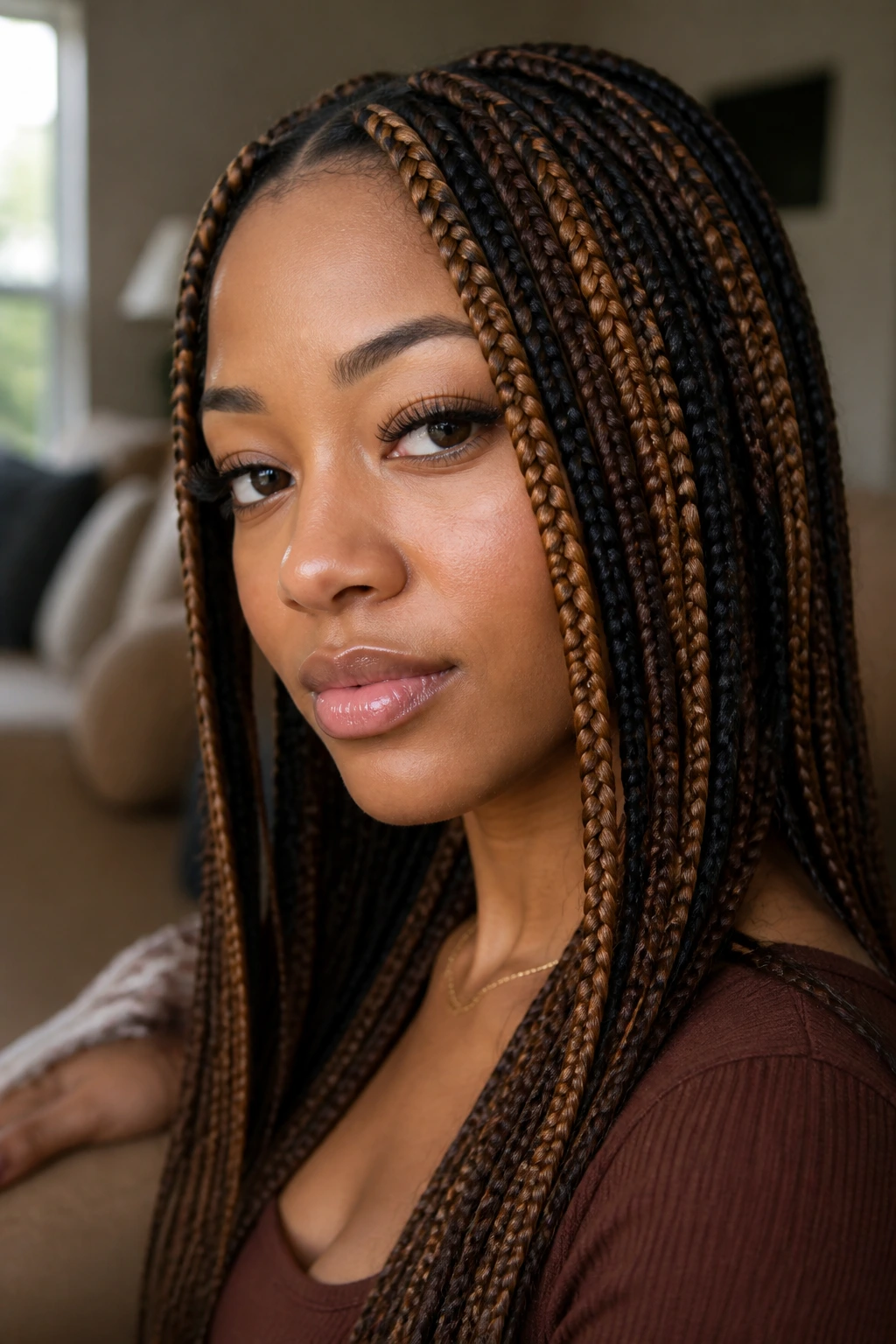
Knotless braids with brown streaks are one of the cleanest ways to build dimension into a protective style. The streak effect comes from mixing extension shades—dark chocolate, medium brown, and one lighter caramel-brown strand here and there—so the braid itself becomes the pattern. On medium skin, that mix keeps the face from getting swallowed by a single dark block.
The trick is spacing. If the lighter braids are packed together, the color looks busy. Spread them out with some intention, especially around the front and the top crown. That gives the eye a rhythm to follow.
Good call: choose braiding hair that is close to your natural root color, then let the lighter brown show up in the lengths. It grows out better and looks more expensive in the practical sense.
13. Auburn-Brown Side-Part Curls
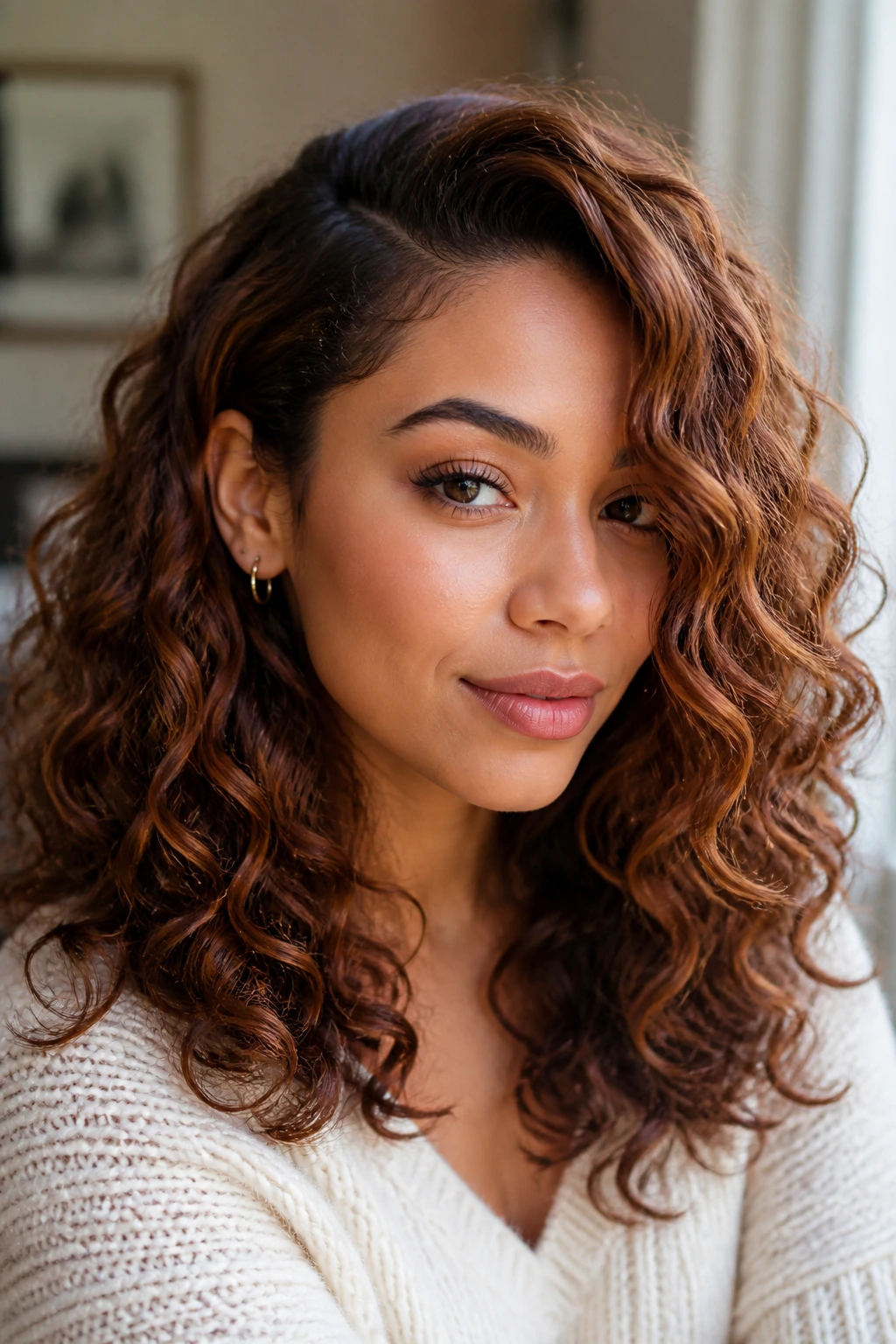
A side part changes everything. With auburn-brown streaks, the deeper side gets weight and the lighter side gets lift, so medium skin sees both warmth and shape at once. The red-brown note in auburn matters here; it keeps the curls from looking too flat under indoor light.
This is one of those styles that needs a little confidence. Not because it’s loud, but because the side part commits. If you tuck one side behind the ear, the contrast gets even cleaner. Keep the curls defined, not crunchy. Soft coils let the auburn tones move, and that is the point.
How to Wear It
Use a medium-hold cream or foam, then finger-coil the front pieces if they need help sitting in the right direction. A touch of shine spray on the surface, not the whole head, finishes it off.
14. Mocha Twists with a Side Sweep
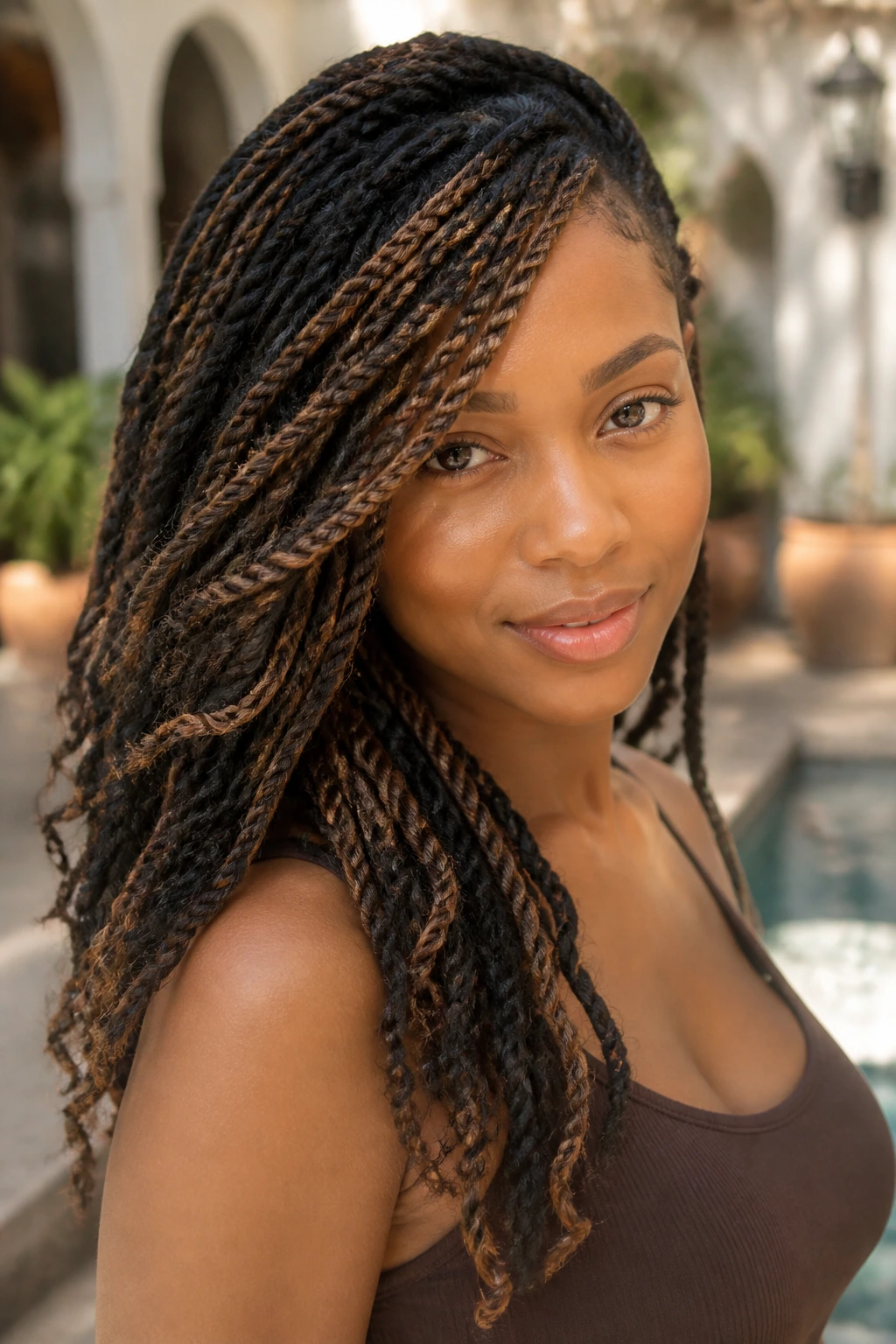
Mocha twists have a calm, grounded feel, and the side sweep keeps them from looking too symmetrical. Brown streaks in twists show up differently than they do in loose hair; you see the color on the twist ridges, which adds a little texture all by itself. Medium skin tends to like mocha because it sits in that middle zone between warm and cool.
If your twists are long, let the lighter brown pieces cluster toward the front and lower lengths rather than scattering them everywhere. That way the style still reads as one look, not three competing shades. A side sweep or side pinning motion gives the color a clear path.
Best for: natural hair that needs protection and a little polish at the same time.
15. Chestnut Half-Up Knot
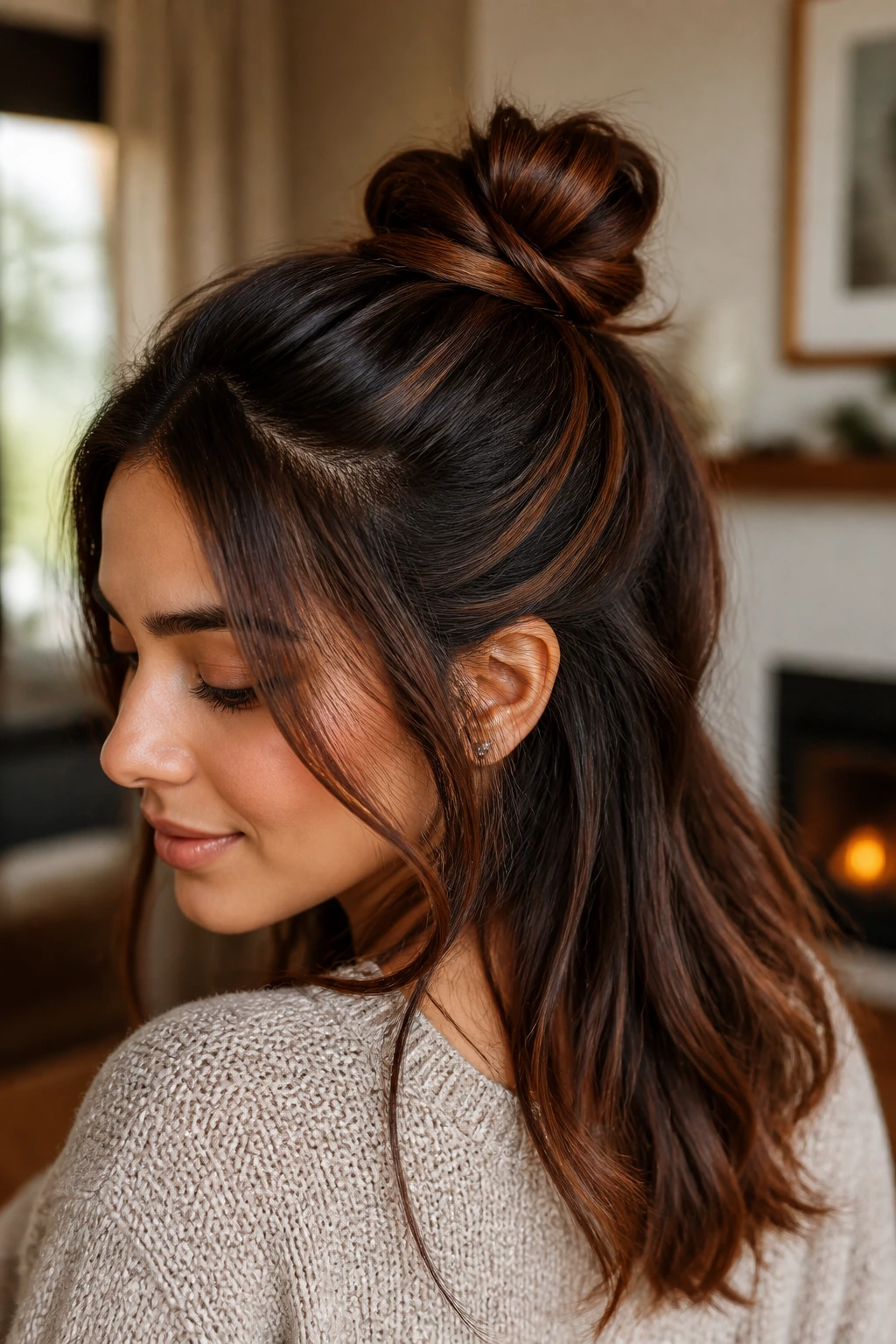
A half-up knot gives chestnut streaks a place to show without taking the whole length off your shoulders. The top section lifts the color near the crown, while the loose lower half keeps the rest soft. On medium skin, chestnut can feel warm and steady rather than sugary, which is why this style works across a lot of outfits.
The small knot matters more than the size of the streaks. If the knot is oversized, it steals attention. Keep it compact, let a few pieces fall loose around the face, and the streaks will look intentional. A little texture spray at the roots helps the crown stay lifted.
Quick read: this is the kind of style that looks better after a few hours of wear, when the hair loosens a bit and the color settles.
16. Caramel Feathered Shag
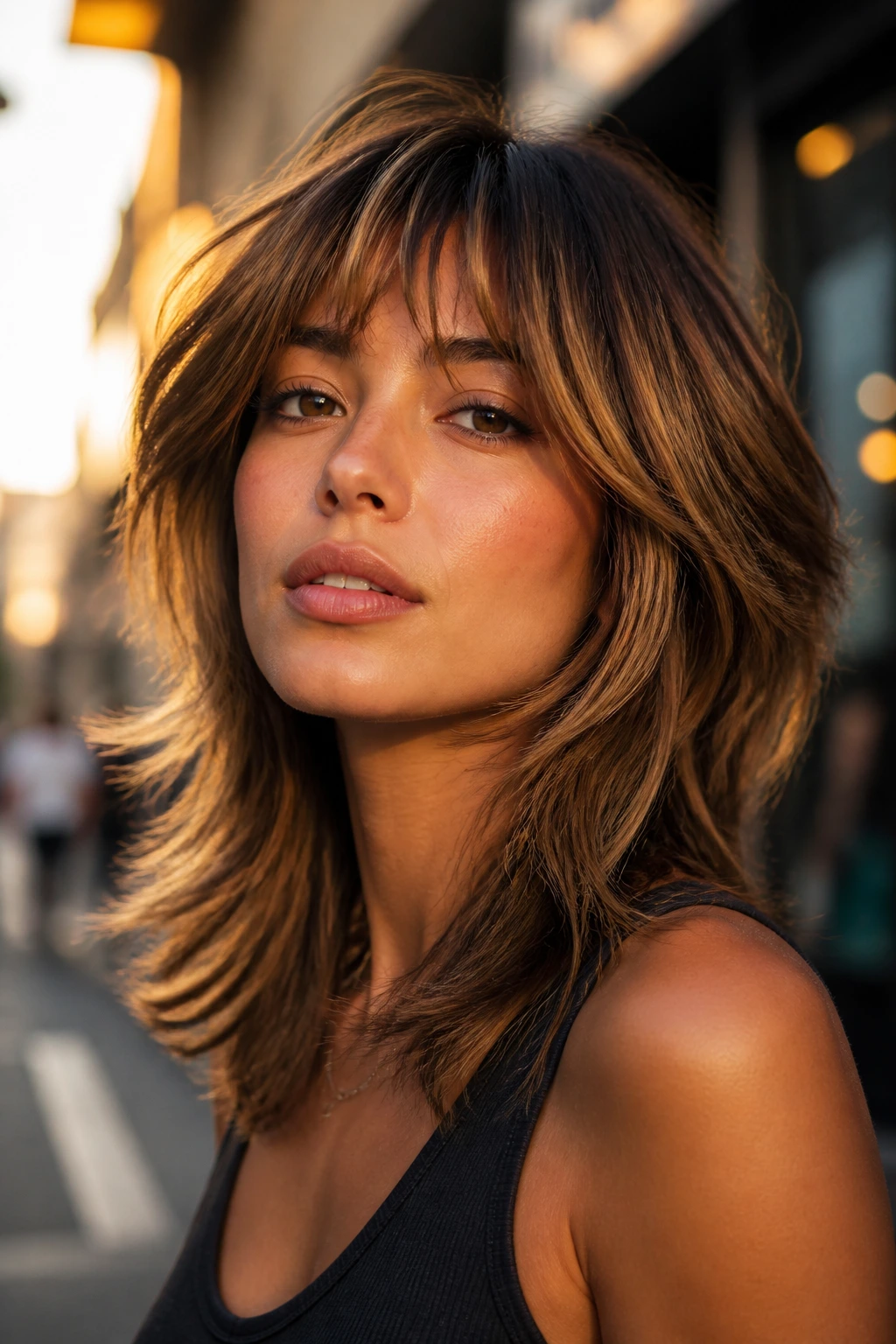
A feathered shag with caramel streaks is one of the easiest ways to make brown color look alive. The layers feather away from the face and neck, so the caramel pieces catch movement on the outer edges instead of hiding in the mass of hair. On medium skin, that warmth adds light without going yellow.
I like this cut because it forgives imperfect styling. If the blowout is not perfect, the shape still works. That matters. Ask for the streaks to sit mostly through the top layers and around the front, with a few pieces hidden underneath for depth.
What Makes It Different
The cut and color are doing the same job: both are breaking up bulk. That’s why it feels lighter than it is. A good shag should look like hair that knows where to fall.
17. Walnut Straight Long Layers
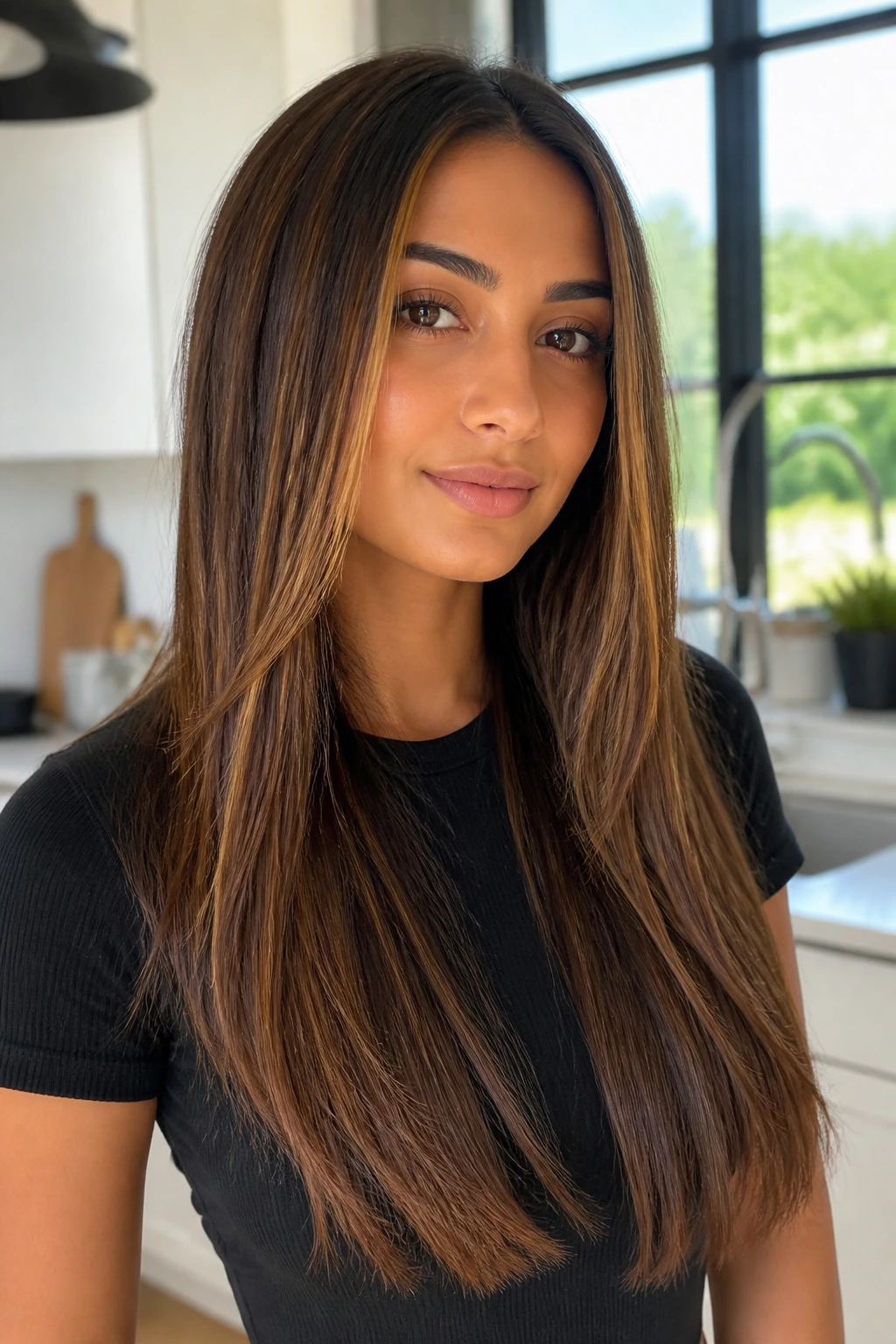
Straight hair can look too uniform if the color is one flat brown. Walnut streaks through long layers solve that by giving the length some shadow and shine changes. Medium skin handles walnut well because it’s rich without being too red, too golden, or too cool.
The key is keeping the streaks long enough to read across the hair. Tiny pieces can disappear on straight hair unless the style is pin-straight and highly polished. A center part makes the walnut bands look calm; a soft off-center part gives them a little swing. Use a heat protectant before you flat iron. Straight styles show damage fast, and dull ends will flatten the color.
18. Latte Braid-Through Ponytail
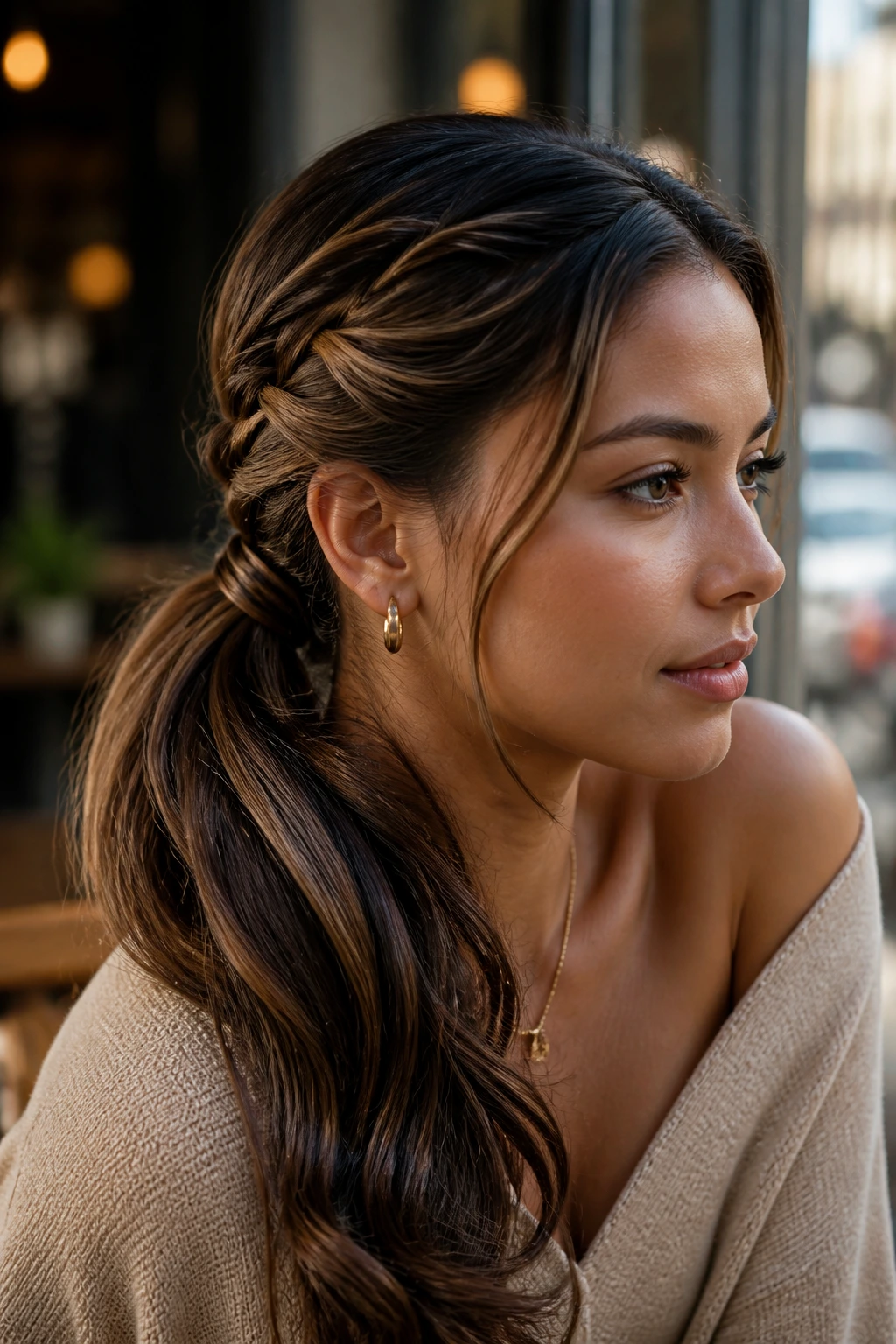
What makes a braid-through ponytail work is the repetition. Each section reveals the latte streaks again, so the color doesn’t need to be loud to be noticed. On medium skin, latte brown reads soft and clean, which helps the style feel refined instead of fussy.
You want the sections to stay even. If one braid segment is too thick, the streak placement gets messy. A rat-tail comb and a few small elastics make the difference here. If you have layered hair, tuck the shorter pieces in as you go or they’ll break up the braid path.
Best move: pull the braid slightly apart after securing it. That small bit of fullness lets the streaks show in the folds.
19. Cocoa Natural Curls with Streaked Ends
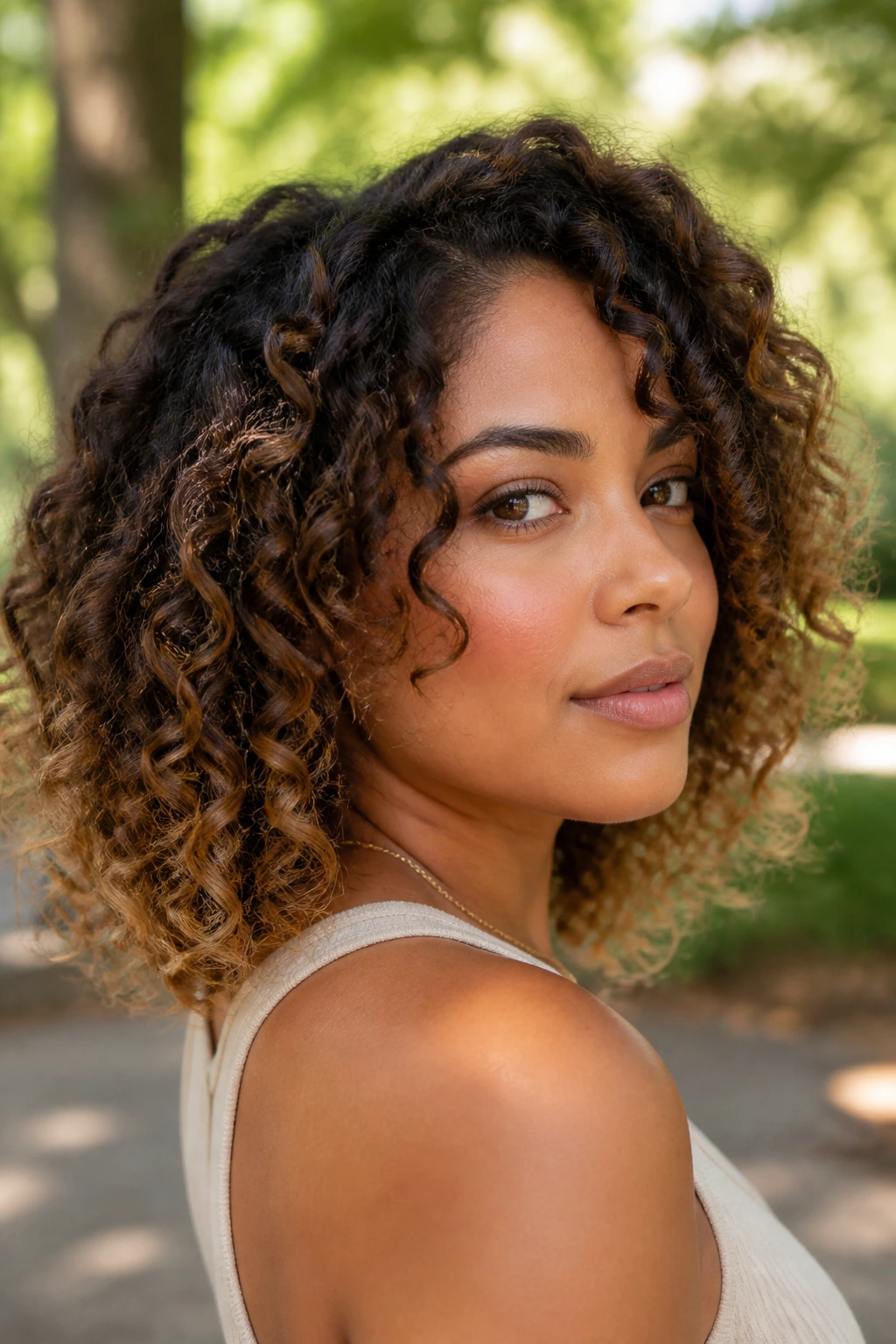
Cocoa brown through the body and slightly lighter brown at the ends gives natural curls a shape that feels finished, not heavy. The streaked ends catch light at the bottom where curls tend to gather, which stops the hair from looking like one dark dome. On medium skin, cocoa keeps the base rich while the lighter ends bring the movement forward.
This one is especially good if your curls are dense. The ends need relief. A curl cream with a light hand is better than a heavy butter here; too much product can make the streaks disappear into the curl clump. If you want definition, scrunch with a microfiber towel and let the pattern dry without touching it too much.
Best for
Medium-to-tight curls that need shape at the perimeter. The color is doing part of the contouring, which is half the battle.
20. Bronze Textured Bob
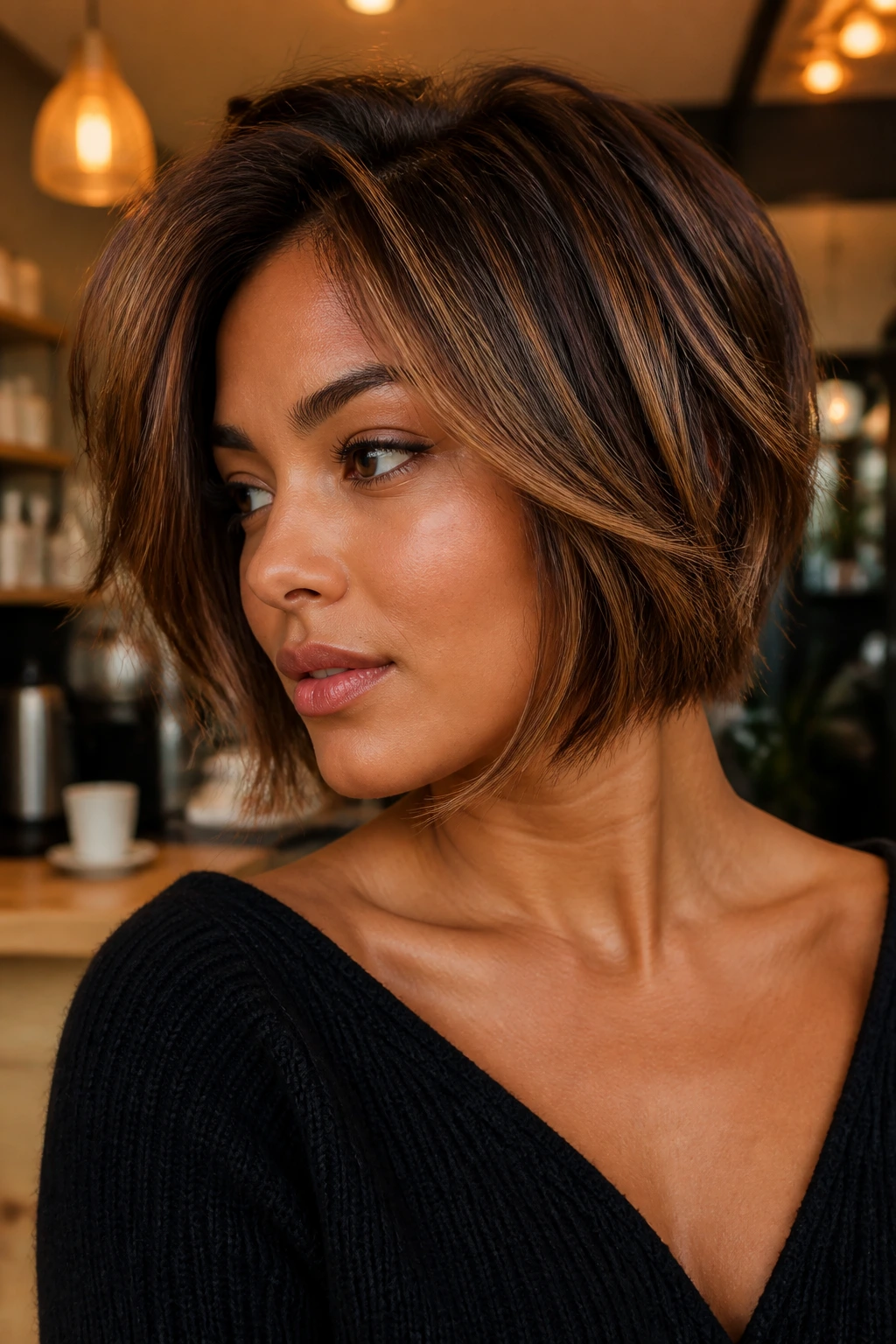
Bronze is the shade people forget about, and that’s a mistake. It sits between brown and warm metallic, which means it can give a textured bob some glow without drifting into blonding. On medium skin, bronze carries warmth in a way that feels grounded, not flashy.
The cut has to be choppy enough to show the streaks. If the bob is one blunt line with no movement, bronze reads as a flat sheen. Texture spray, a bit of bend at the ends, and a side part can wake it up fast. Keep the bronzy pieces around the outer layer and front corners so they frame the face instead of sitting in the middle of nowhere.
Opinion: this looks better a little imperfect. Too polished and the bronze loses its character.
21. Butterscotch Beach Waves
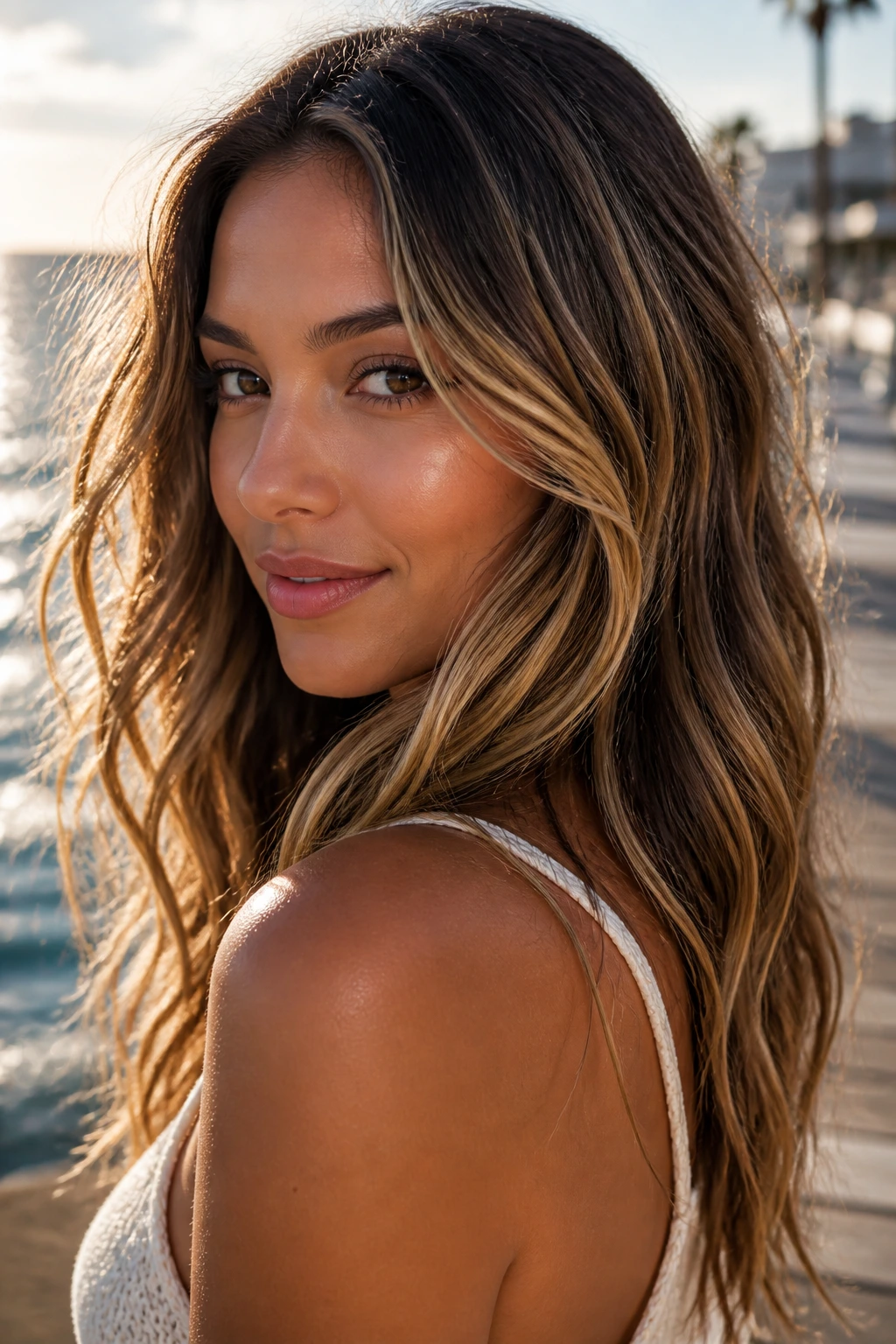
Butterscotch brown is warmer than mocha and softer than true caramel, which makes it a good middle ground for medium skin. In beach waves, the streaks break across the bends in a way that feels easy, not stiff. The color looks casual, but there is a lot of shape in it.
If your hair is long, keep the streaks wider through the mid-lengths and lighter toward the ends. That keeps the waves from looking like stacked stripes. A one-inch wand, a little salt spray, and finger-combing are enough. Don’t brush the waves out too much or the streaks will blend into one beige blur.
What to watch for
If the shade gets too gold, it can start looking brassy under daylight. A beige gloss helps that. The goal is buttery, not yellow.
22. Smoky Brown Wolf Cut
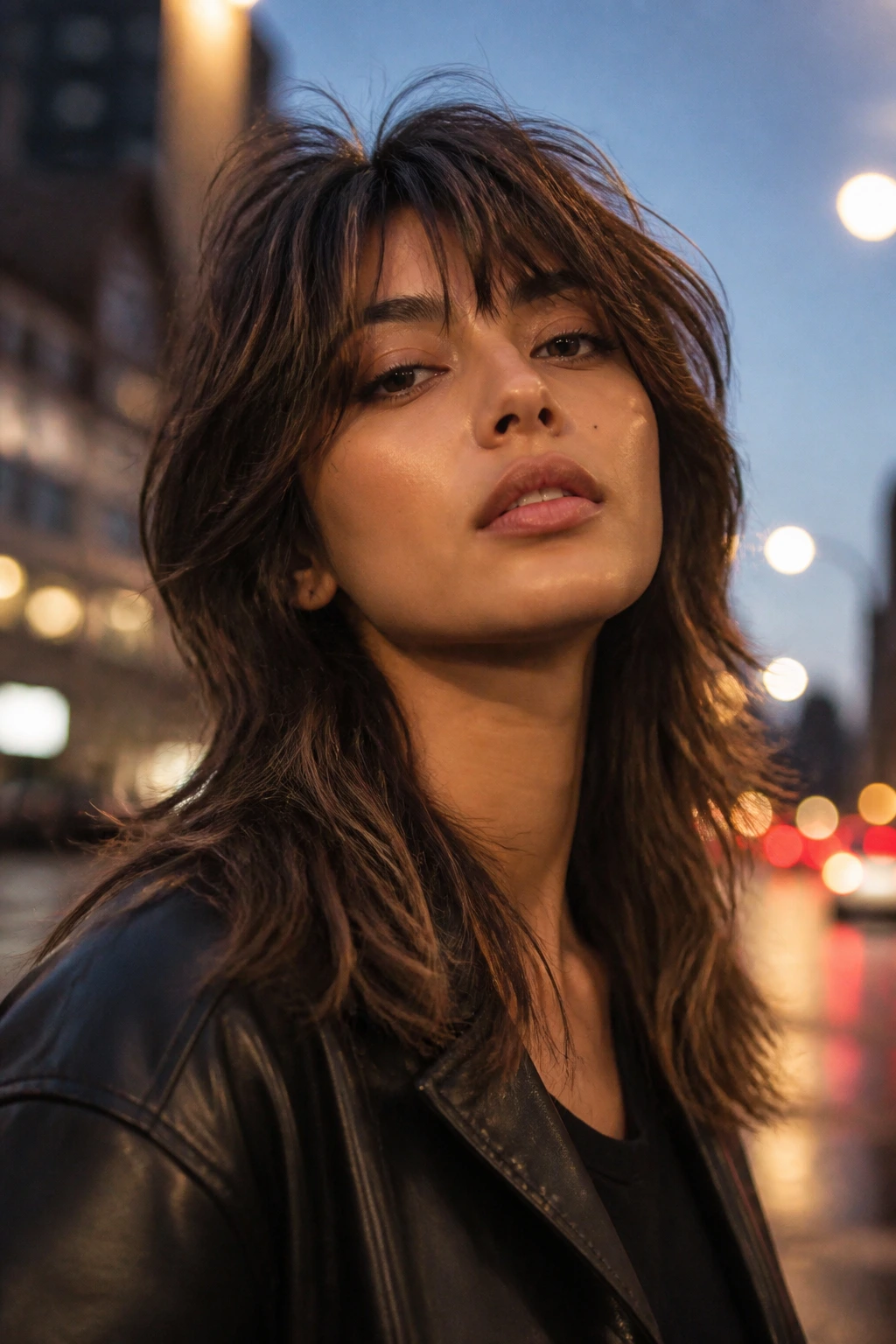
The wolf cut loves contrast, but not the loud kind. Smoky brown streaks add a cool haze to the chopped layers, and medium skin can handle that better than people think, especially if the undertone leans neutral or olive. The whole cut feels a little messy on purpose, which is exactly why the color works.
This style needs lift at the crown and texture through the ends. If the top is too flat, the layers collapse and the streaks lose their edge. A dry shampoo at the roots and a small round brush at the fringe can help. I’d keep the smoky pieces near the top layers and face frame, with deeper lowlights underneath.
Why It Works
The cut already gives the hair movement. The color just sharpens the edges. You don’t need much more than that.
23. Maple Low Bun
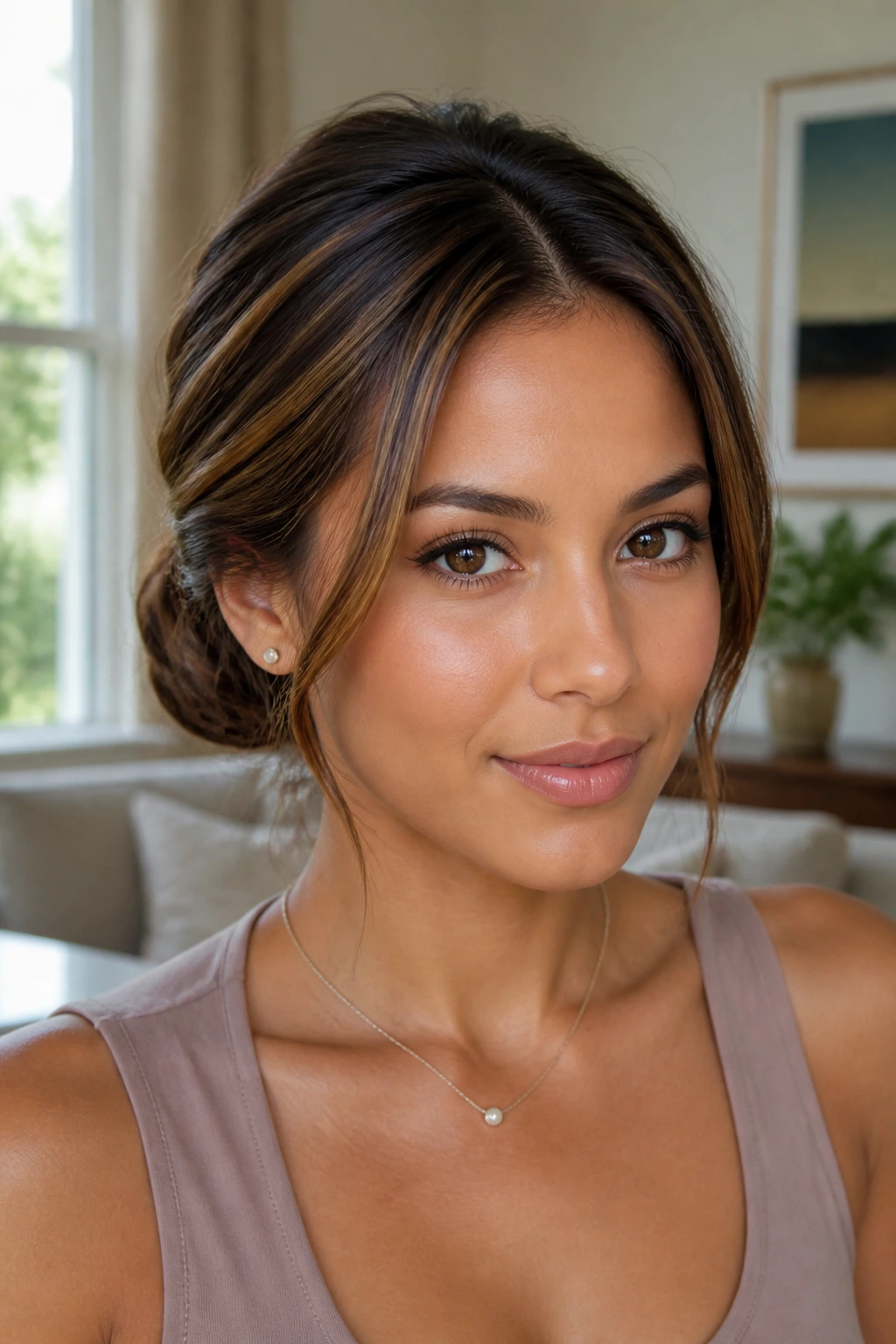
A low bun sounds simple until the color starts doing the talking. Maple brown streaks around the hairline and through the tucked sections give the bun shape and depth, especially on medium skin where warm brown reads clean instead of orange. The bun itself can stay smooth or slightly undone.
I like this style for days when you want the face to be the focus. Leave a few soft pieces near the ears or across the temples if the bun feels too severe. A touch of shine cream on the surface helps the maple tone show up under indoor light. Keep the bun low enough to sit at the nape. High buns can pull the color out of the frame.
Best for: events, work, or any day when you want your hair out of the way but not forgotten.
24. Hazelnut Long Sleek Layers
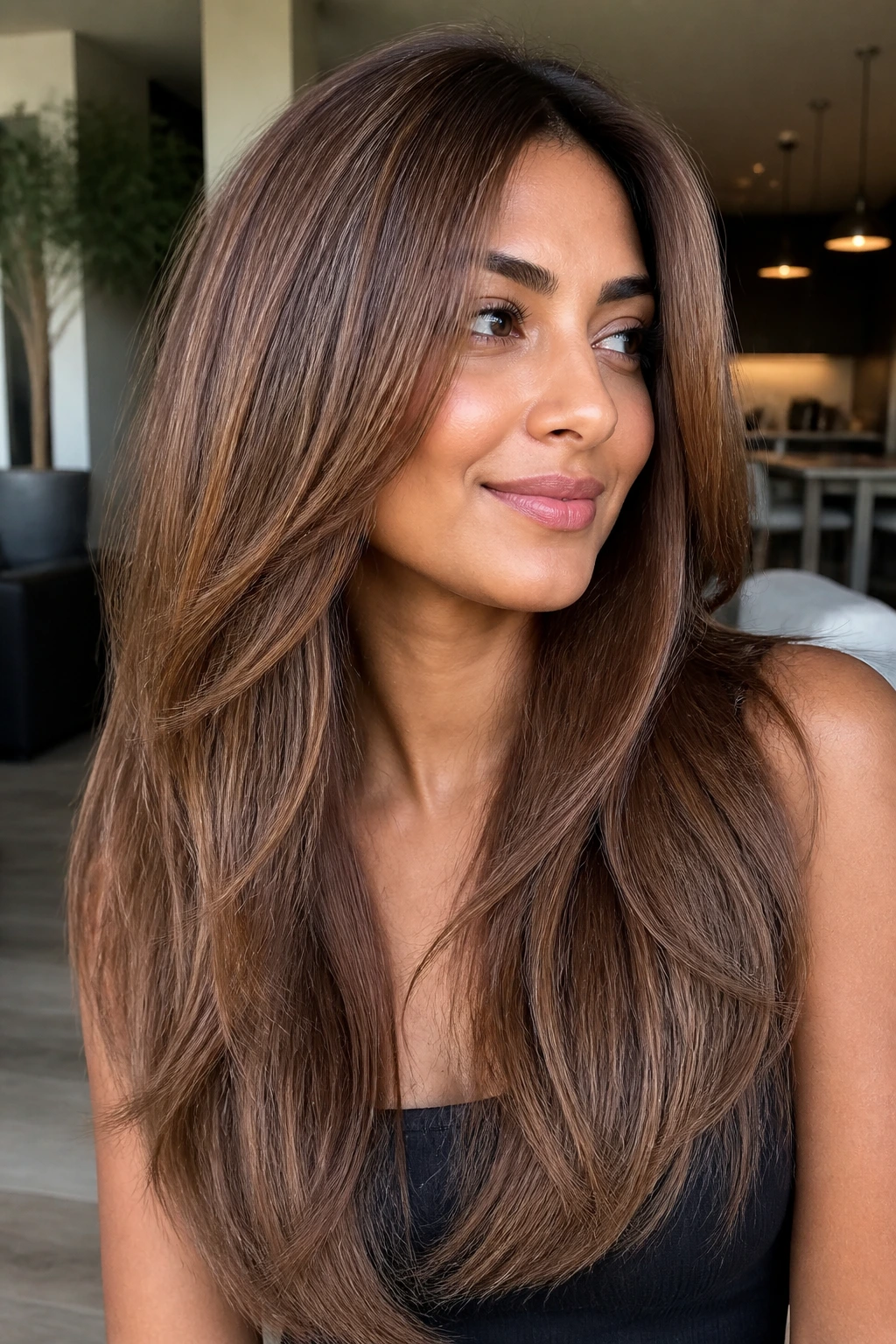
Hazelnut is one of the safest brown tones for medium skin because it sits in that balanced middle ground. Not too warm. Not too cool. On long sleek layers, it shows up as soft streaks that move with the shape of the cut rather than interrupting it. That’s why it looks calm.
The sleek finish matters. You want the strands to lie flat enough that the hazelnut pieces can reflect light, but not so flat that the whole style turns one-dimensional. A center part and a lightweight glossing spray are enough. If your hair tangles easily, work a leave-in through the mid-lengths first, then smooth the surface after blow-drying.
25. Mushroom Brown Shoulder-Length Curls
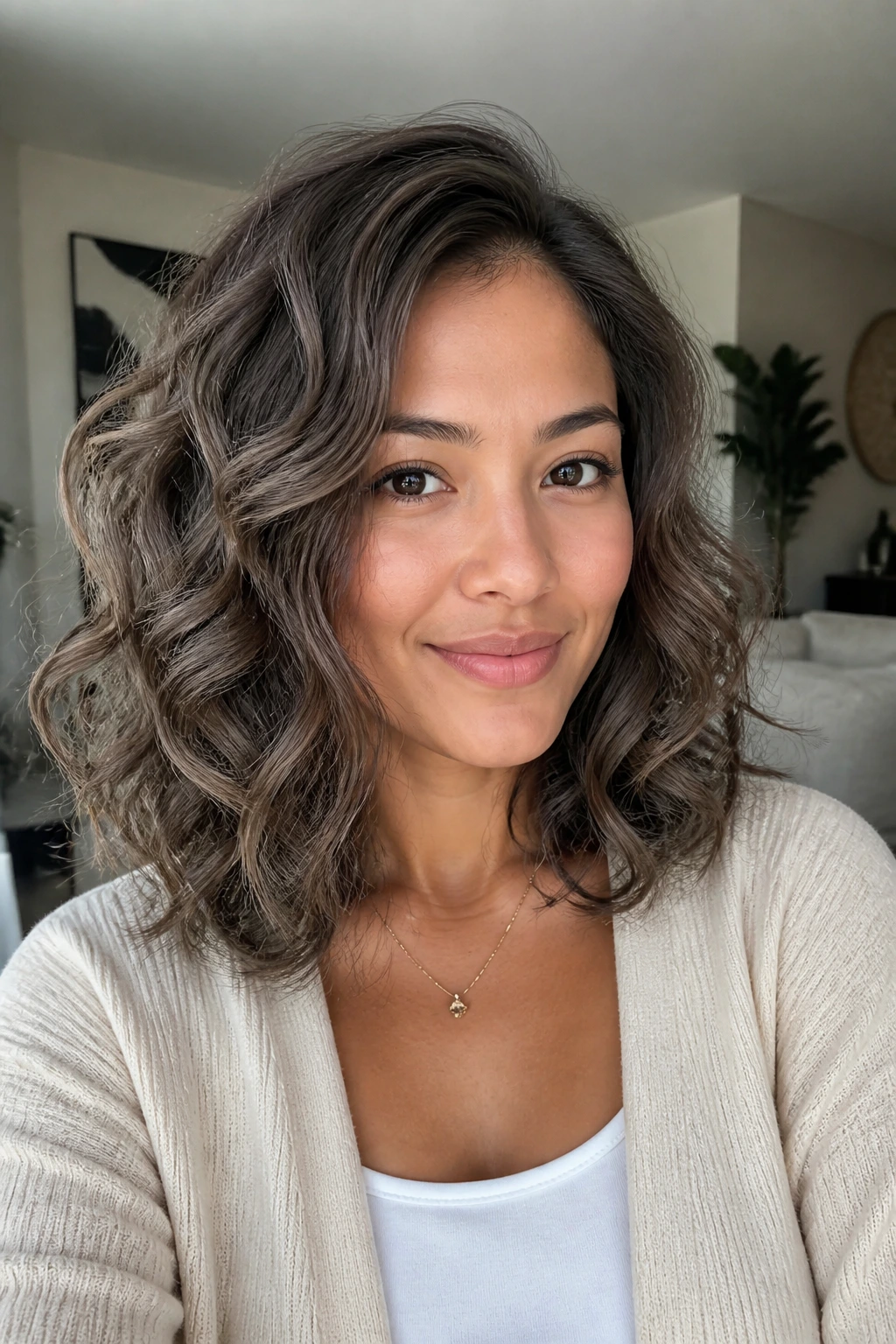
Mushroom brown has a cooler cast, almost a little taupe-gray in the right light, and shoulder-length curls are a good place for it. On medium skin with olive or neutral undertones, that cooler brown can look elegant without feeling severe. The curls keep it from going flat.
This color is not for someone chasing warmth. That’s the whole point. If your skin already runs golden and you love glow, this may feel too quiet. But if you want a brown that leans modern without screaming about it, mushroom brown is the one to test. Keep the streaks soft through the outer curls and a little deeper underneath so the shape has depth.
Styling cue
Use a diffuser on low heat. High heat tends to make cool brown look harsh. Soft curls keep the tone civilized.
26. Reddish Chestnut Flip-Out Ends
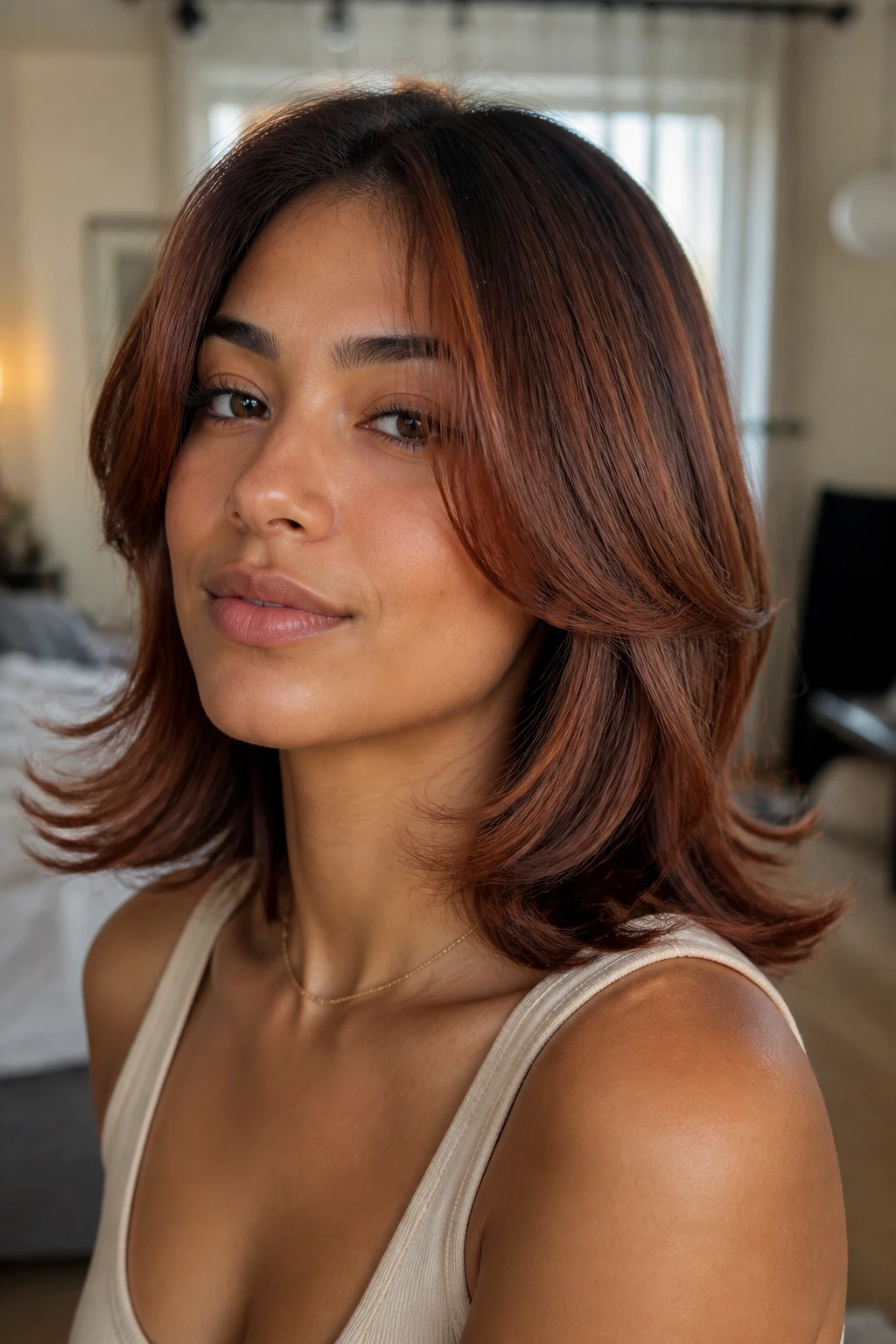
A flip-out end on medium-length hair can make chestnut streaks feel playful instead of traditional. The reddish note in chestnut adds warmth beside medium skin, and the turned-out ends give the color a little swagger. It has a retro feel, sure, but not a costume feel.
The trick is the bend. Use a round brush or a flat iron twist at the ends only. If the whole head is curled, the flip-out loses its point. Keep the streaks through the mid-lengths and ends, not just near the top. That way the shape and color land together.
Best move: pin the crown flat for a minute after styling so the ends can keep their flip without the roots puffing up.
27. Espresso Cornrows into a Bun
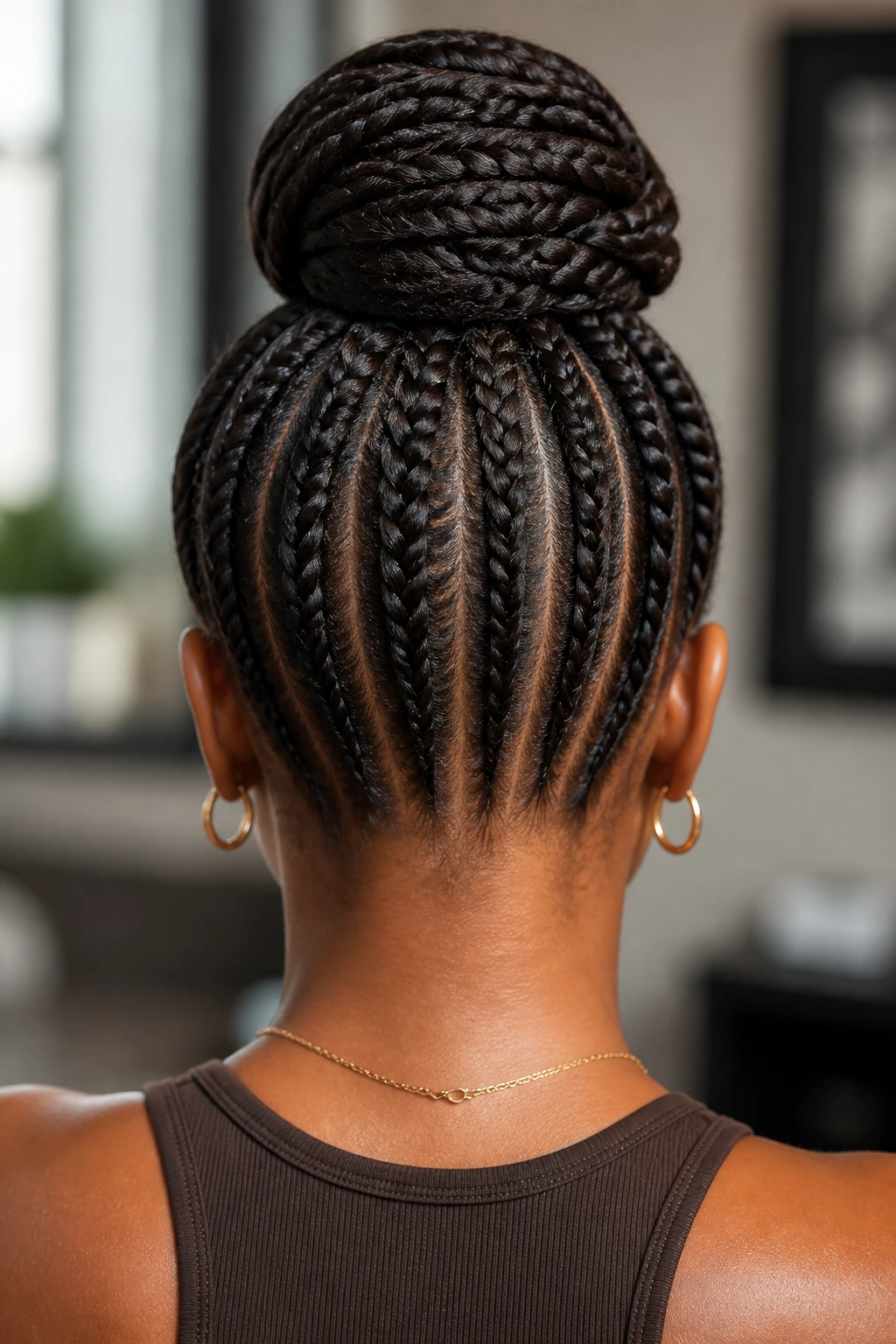
Espresso cornrows into a bun give you a very clean canvas for subtle brown streaks. The darker brown strands can run through feed-in sections or braid extensions, and the finished bun keeps the color contained and polished. On medium skin, espresso keeps the whole look grounded, while the lighter brown pieces give the braids enough depth to avoid a flat black wall effect.
This style thrives on precision. The parting matters. So does the tension. Keep the rows clean and the bun compact, and the color reads intentional. If you like a little shine, use a tiny amount of oil on the braid surface only. Too much and the pattern gets slippery.
How to Wear It
This is one of the strongest looks in the group if you want protective styling with clear structure. It’s neat, lasts, and never looks accidental.
28. Warm Brown Layered Blowout with Curtain Bangs
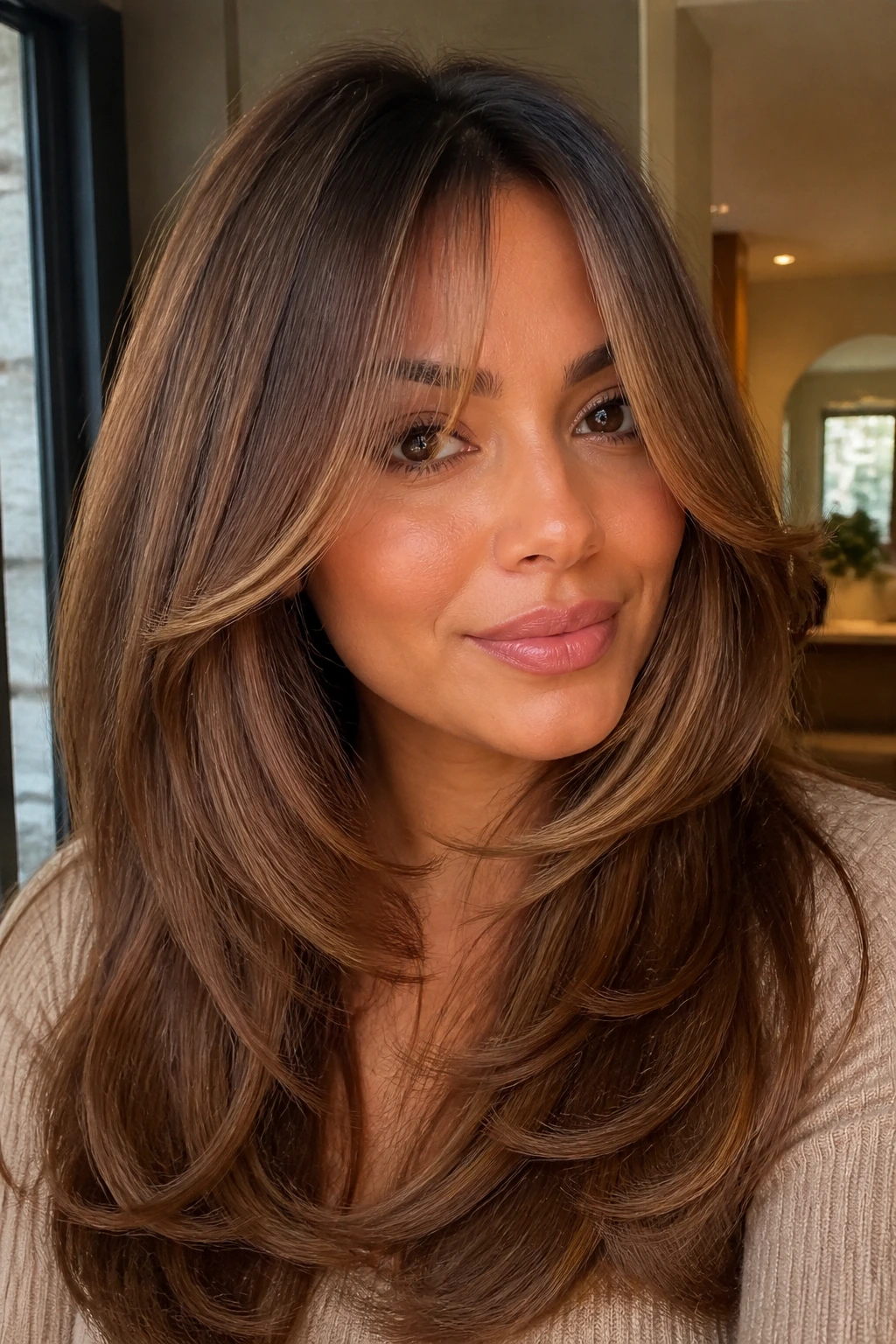
Warm brown layers plus curtain bangs are a very practical pairing. The bangs give the face a soft frame, and the streaks through the layers make the blowout look fuller than it is. Medium skin tends to like warm brown when it’s kept beige or chestnut rather than orange.
I’d ask for the lightest pieces to sit just below the bangs and around the front layers. That keeps the face bright without turning the fringe into a light strip. A round brush with a 2-inch barrel works well here because it creates bend instead of curl. That bend is what lets the streaks blend into the cut.
Best for: someone who wants color that reads on camera and in real life without needing a heavy styling routine.
29. Deep Mocha Glossy Curls
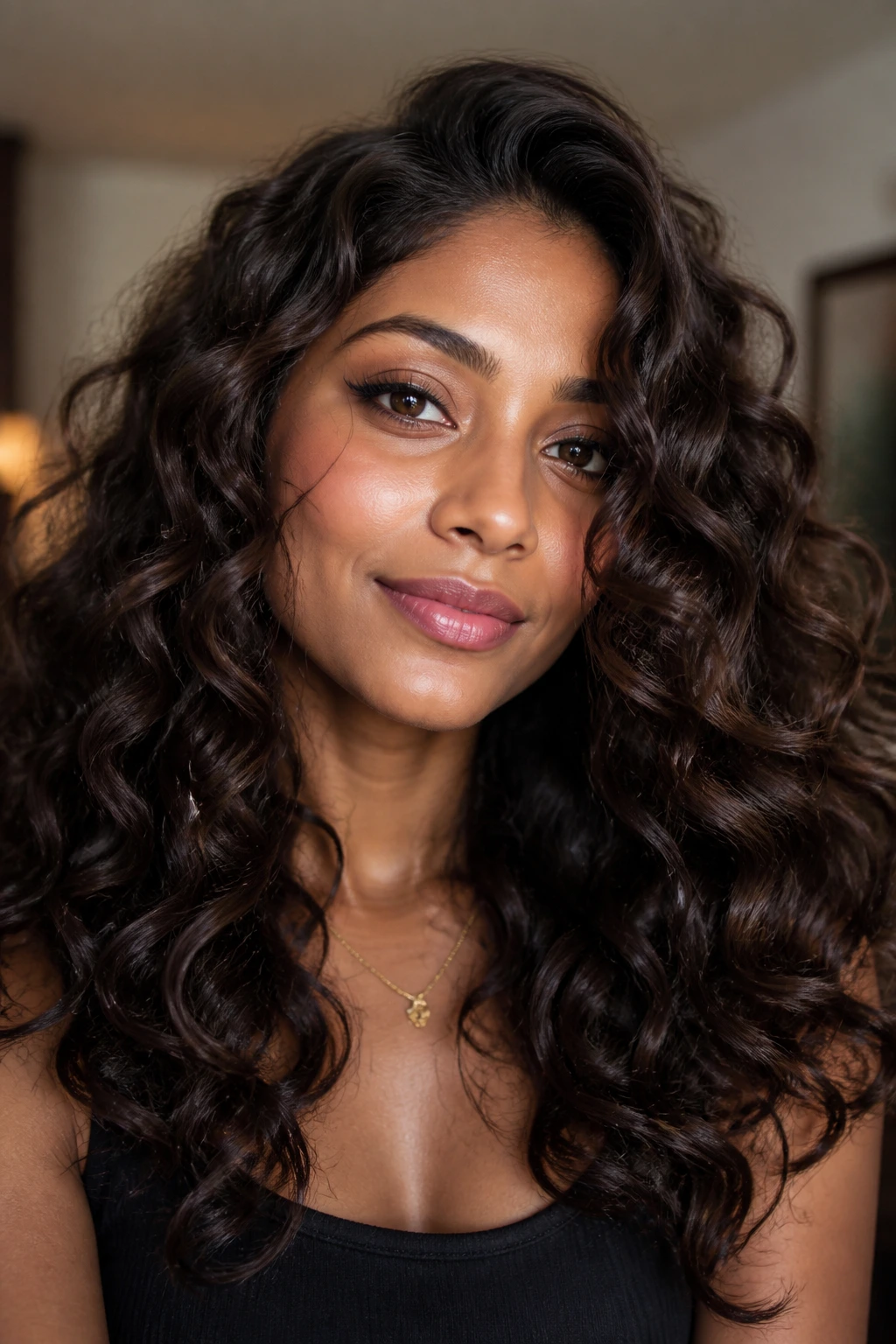
Deep mocha can be subtle to the point of disappearing if the styling is weak, so the gloss matters. On glossy curls, though, the streaks show up as shifts in tone rather than obvious stripes. Medium skin benefits from that kind of low contrast because the color feels rich and controlled.
This is a good option if you don’t want people pointing at your hair and naming the color. You just want the curls to look better. A sheen spray or a salon gloss every so often keeps the mocha from looking flat. Use a diffuser or flexi rods to preserve curl shape. The less frizz you have, the more the brown tones can move.
Quick note
If the curls are very tight, keep the streaks slightly wider so they don’t vanish into the pattern. Tiny highlights disappear fast on dense texture.
30. Brown-Streaked Braided Topknot
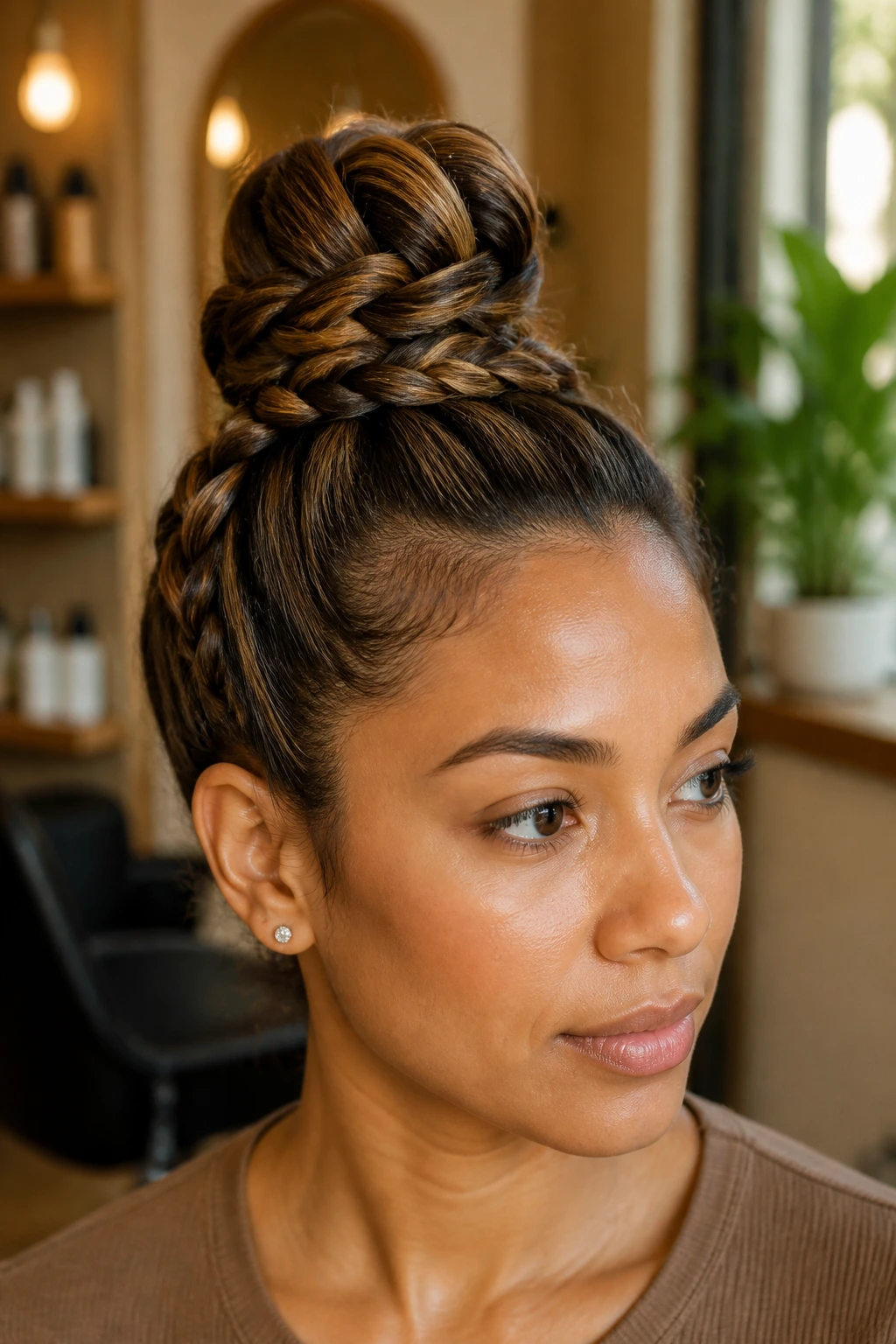
A braided topknot with brown streaks is the kind of style that feels special without needing a lot of fuss. The braids pull the color upward, then the bun holds it all in one place, which means every shade has a role. On medium skin, mixed browns around the face and crown stop the style from looking too severe.
This works best when the brown strands are not all the same brown. Use one deeper shade, one medium shade, and one lighter brown if you want depth around the knot. That little variation gives the bun a woven look instead of a flat one. Secure the knot with pins that disappear into the braid pattern, and leave the hairline smooth.
Best move: wrap a thin braid around the base instead of a plain elastic. It looks finished and holds the shape better.
Why Brown Streaks Work on Medium Skin Without Fighting the Face
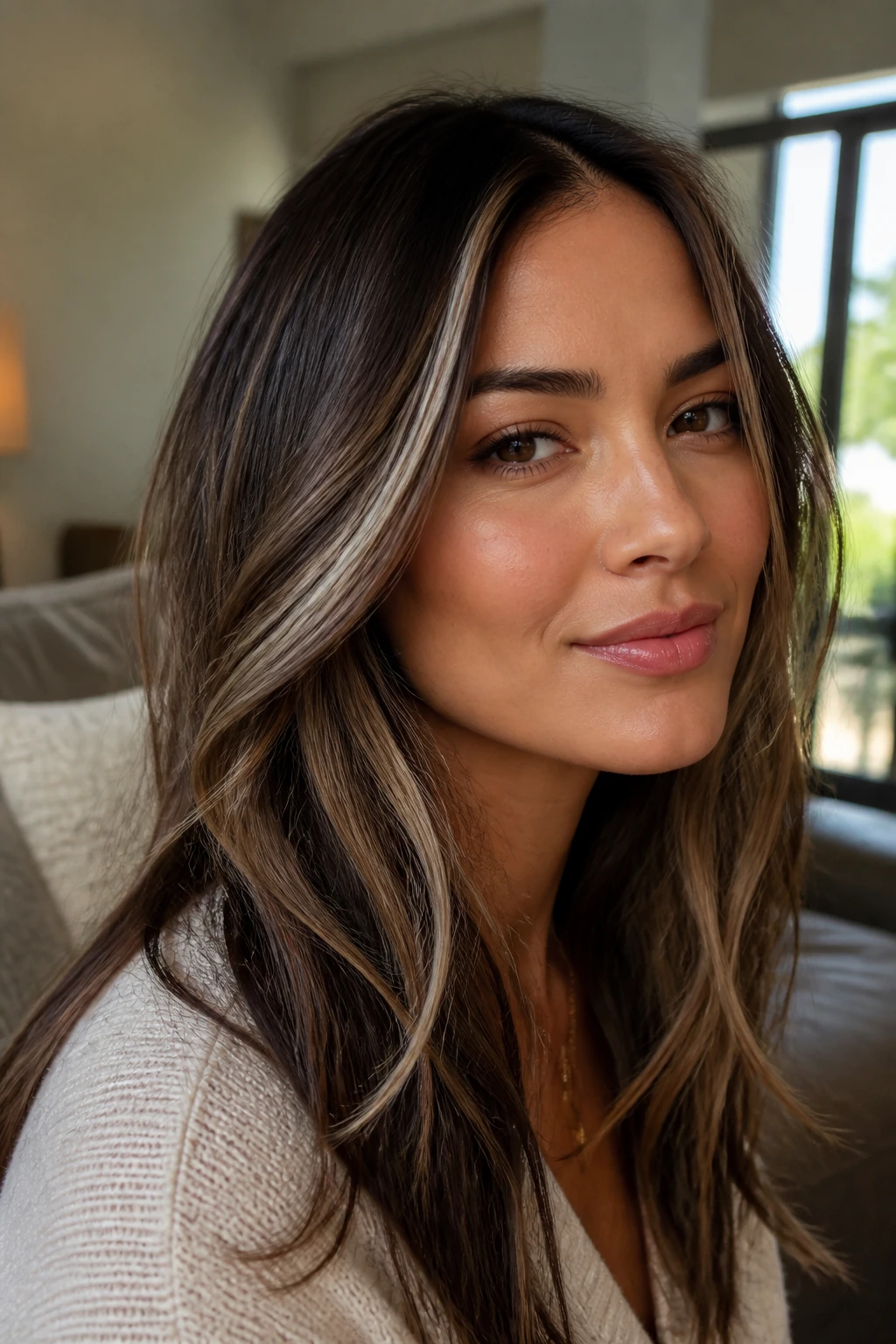
Medium skin has enough depth to carry brown-on-brown color without washing out. That sounds obvious, but it’s the reason these styles work. A streak that looks barely noticeable on lighter skin can read as plush and dimensional on medium skin, especially when the base color stays close to the natural shade.
The trick is temperature. Warm brown—caramel, toffee, chestnut, hazelnut—usually looks good on golden skin because it echoes what is already there. Cooler brown—mocha, mushroom, smoky espresso, ash—tends to sit better beside olive or neutral undertones because it keeps the color from turning brassy. If your undertone is mixed, which happens a lot, the safest path is a neutral brown with a soft gloss.
Placement matters too. Brown streaks should not all live in the same place unless you want a very specific stripe effect. Face framing gives lift. Mid-length ribbons give movement. Underlayers give depth when the hair moves. That three-part approach is why some brown color jobs look expensive in the ordinary, practical sense. They’ve got shape.
Choosing Brown Streaks for Warm, Olive, and Neutral Undertones
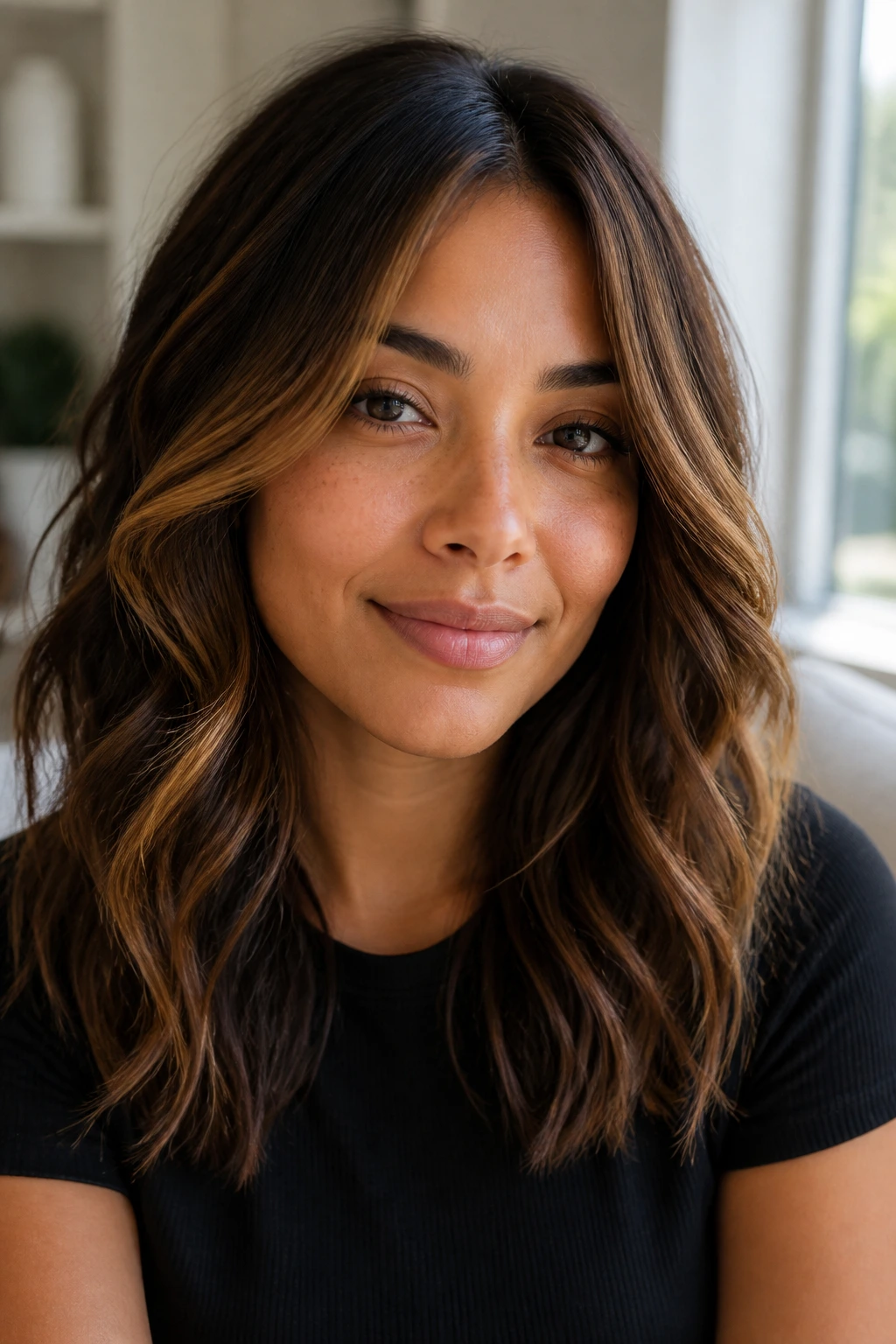
The easiest way to choose a shade is to stop thinking about “brown” as one color. It isn’t. Warm browns lean gold, red, or beige. Cool browns lean smoky, mushroom, or taupe. Neutral browns sit in the middle and usually cause the least drama.
Warm or Golden Medium Skin
Caramel, honey brown, chestnut, and toffee usually sit nicely here. They echo the skin’s warmth without making the hair look orange, as long as the streaks are softened with a beige or neutral gloss. If your skin already glows warm in daylight, you do not need a super-yellow highlight.
Olive or Neutral Medium Skin
Mocha, walnut, ash brown, and mushroom brown tend to behave better here. Olive skin can turn some warm browns a little coppery, and that’s where the “why does this look off?” feeling starts. Cooler ribbons solve that. Neutral skin can wear either direction, which is convenient and mildly annoying, because the wrong tone can still flatten the whole face.
Deeper Medium Skin
Espresso with lighter cocoa or bronze accents often looks clean, especially when the streaks stay in the front and outer layers. Too much contrast can get busy fast. A root shadow helps the lighter brown pieces look expensive in the practical sense: they grow out without a hard line.
What to Say at the Salon So You Get the Shade You Mean
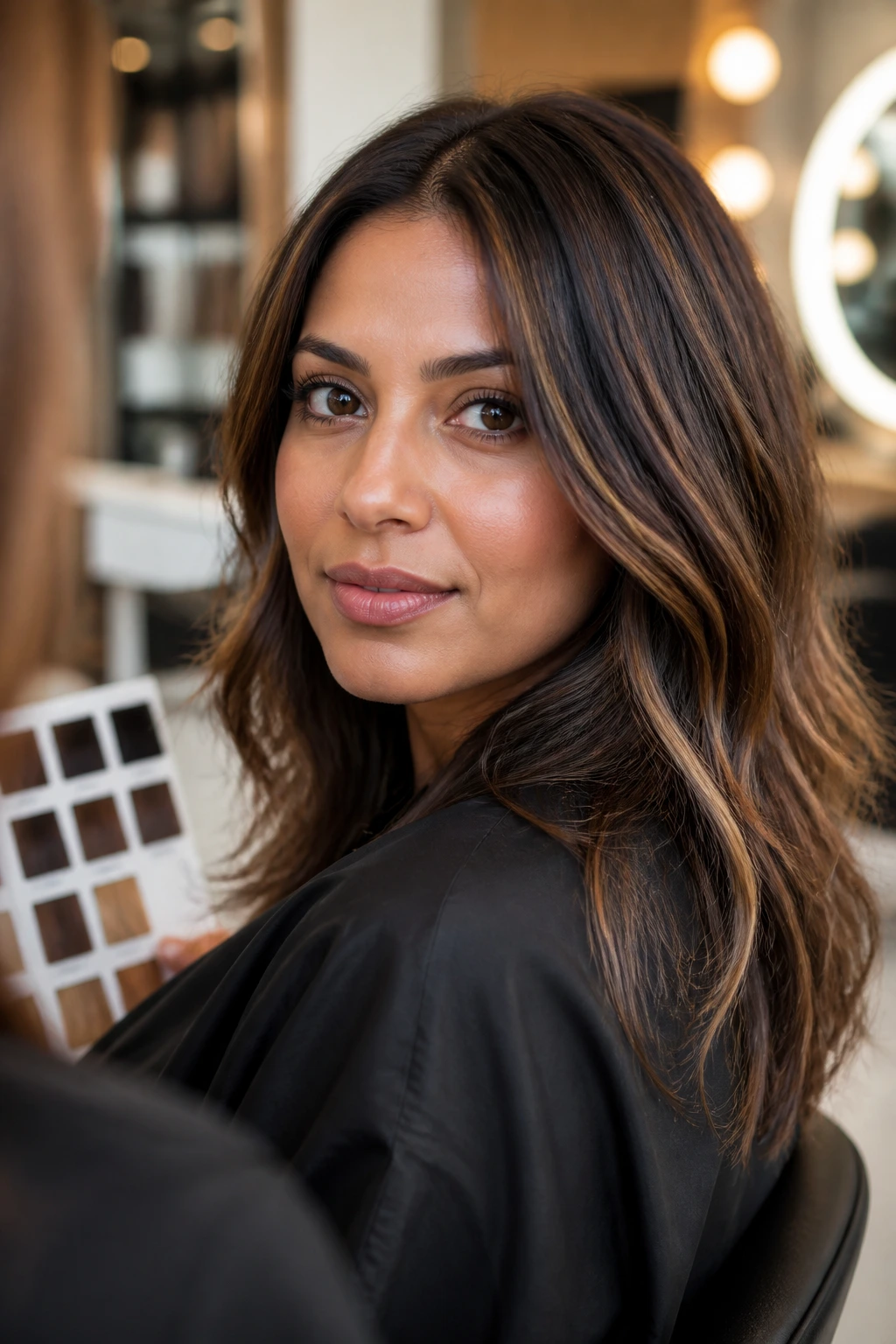
Bring photos, yes. But bring the right photos. One should show the color in daylight. Another should show the placement from the front or side. A single filtered picture of someone with a different undertone can send the whole appointment sideways before the foil even comes out.
Use plain, direct language. Say how light you want the streaks relative to your base. Say whether you want them concentrated around the face, broken through the ends, or scattered in narrow ribbons. If you want a soft grow-out, ask for a root shadow or smudge. If you want dimension on curls, ask for the color to be placed where the curl opens, not just where the hair is stretched flat.
A few useful salon words help:
- Money piece: brighter front pieces around the face.
- Babylights: fine, narrow streaks that stay soft.
- Lowlights: deeper pieces that add contrast.
- Root smudge: softened root color for easier grow-out.
- Gloss: a clear or tinted finish that changes the tone without a heavy dye job.
Do not worry about sounding technical. What matters is that you describe where the color lives.
Where to Place the Streaks So They Don’t Look Stripey
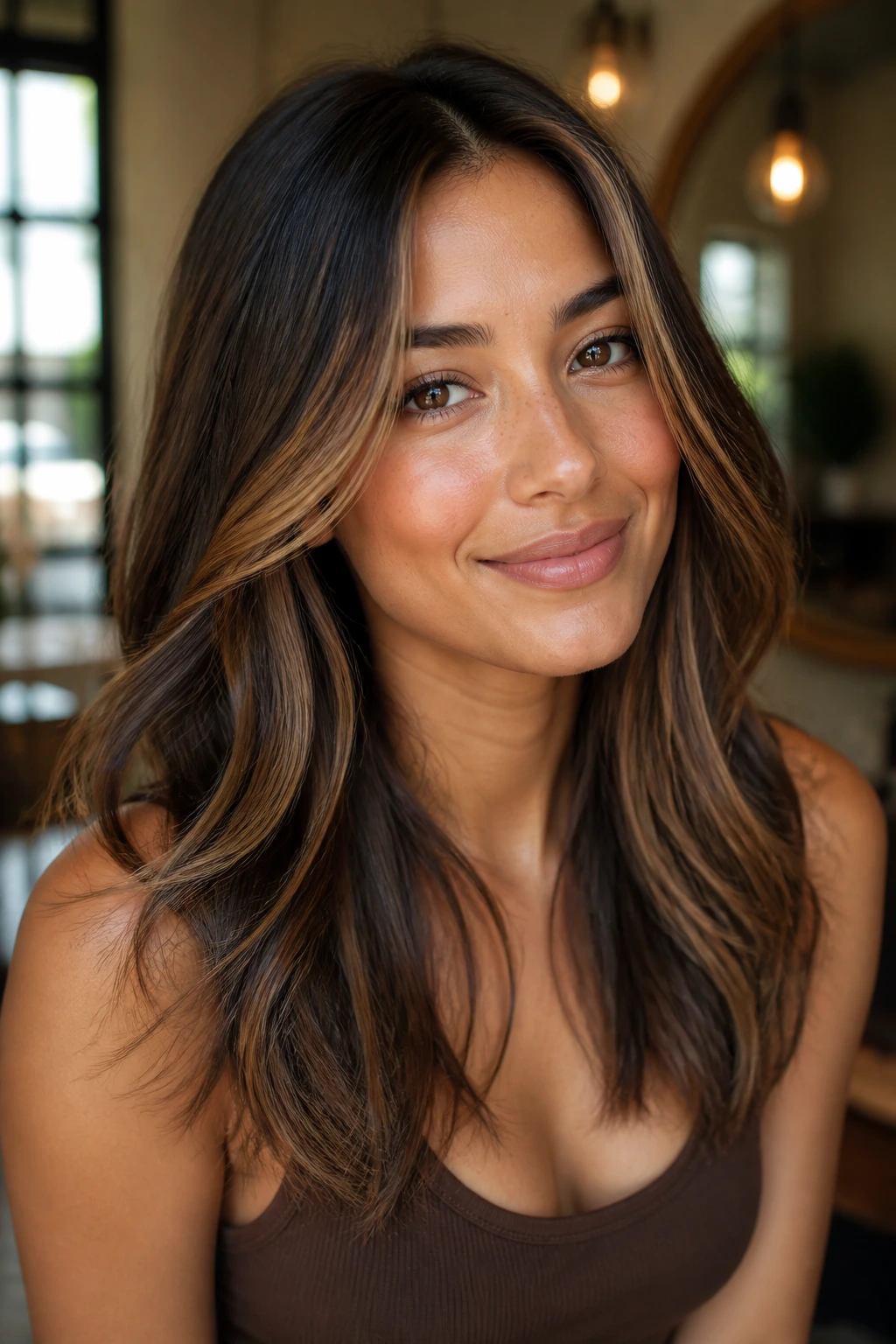
Face Frame: Put the lightest brown near the temples, cheekbones, and the first bend of the hairline. That’s the quickest way to wake up medium skin without lighting up the whole head.
Mid-Length Ribbons: These matter on straight and wavy hair because they keep the color visible after the first wash. If all the lightness lives only at the ends, the hair can look bottom-heavy. A few ribbons through the middle solve that.
Underlayers: Thick hair needs depth underneath. Otherwise the top layer steals all the shine and the rest disappears. Underlayer streaks help when the hair swings or gets tucked behind the ear.
Ends: Feathered ends and curled ends catch light fast, so a little lighter brown here can be enough. Don’t overpack the ends or they will look dry and overprocessed. Just enough to show the cut.
Crown: If your hair is flat at the top, a few narrow pieces at the crown can add lift. Use this carefully. Too much and you get a helmet effect. Too little and nothing changes.
Tools That Make the Color and Styling Easier
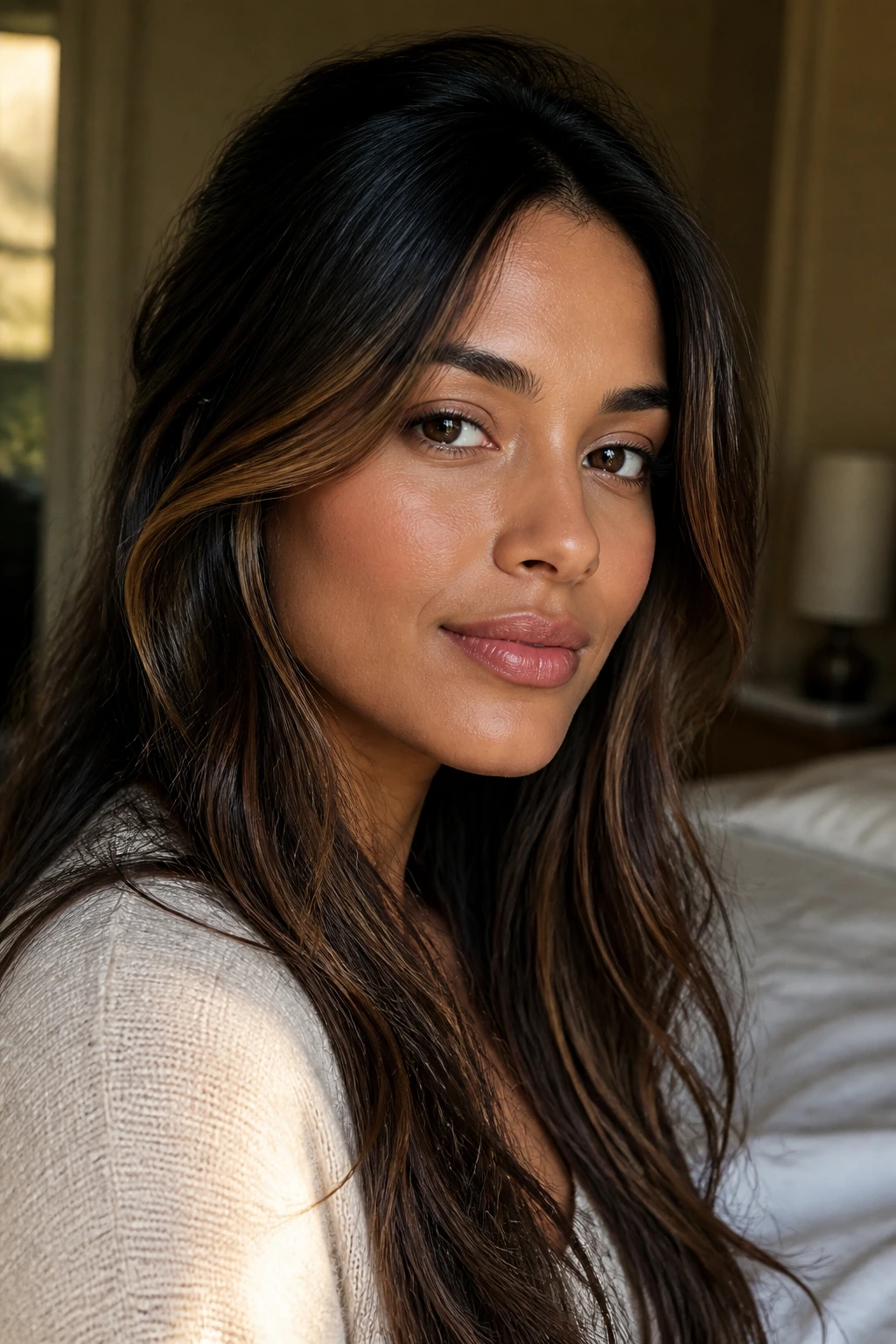
- Color-safe shampoo: A sulfate-free formula helps brown tones stay richer between washes.
- Moisture mask: Use it once a week if the hair has been lightened or glossed.
- Heat protectant spray or cream: Essential before blow-drying, curling, or flat ironing.
- 1-inch and 1.25-inch curling wand or iron: Useful for showing off brown ribbons in waves and curls.
- Round brush: Best for blowouts, curtain bangs, and feathered layers.
- Tail comb and sectioning clips: Helpful when parting hair cleanly or explaining placement to a stylist.
- Wide-tooth comb: Better than a brush on curls, twists, and braids.
- Gloss or color-depositing conditioner: Good for refreshing tone without a full color appointment.
- Satin bonnet or pillowcase: Keeps the streaks smoother and helps the style last longer overnight.
Little Moves That Make Brown Streaks Look Sharper
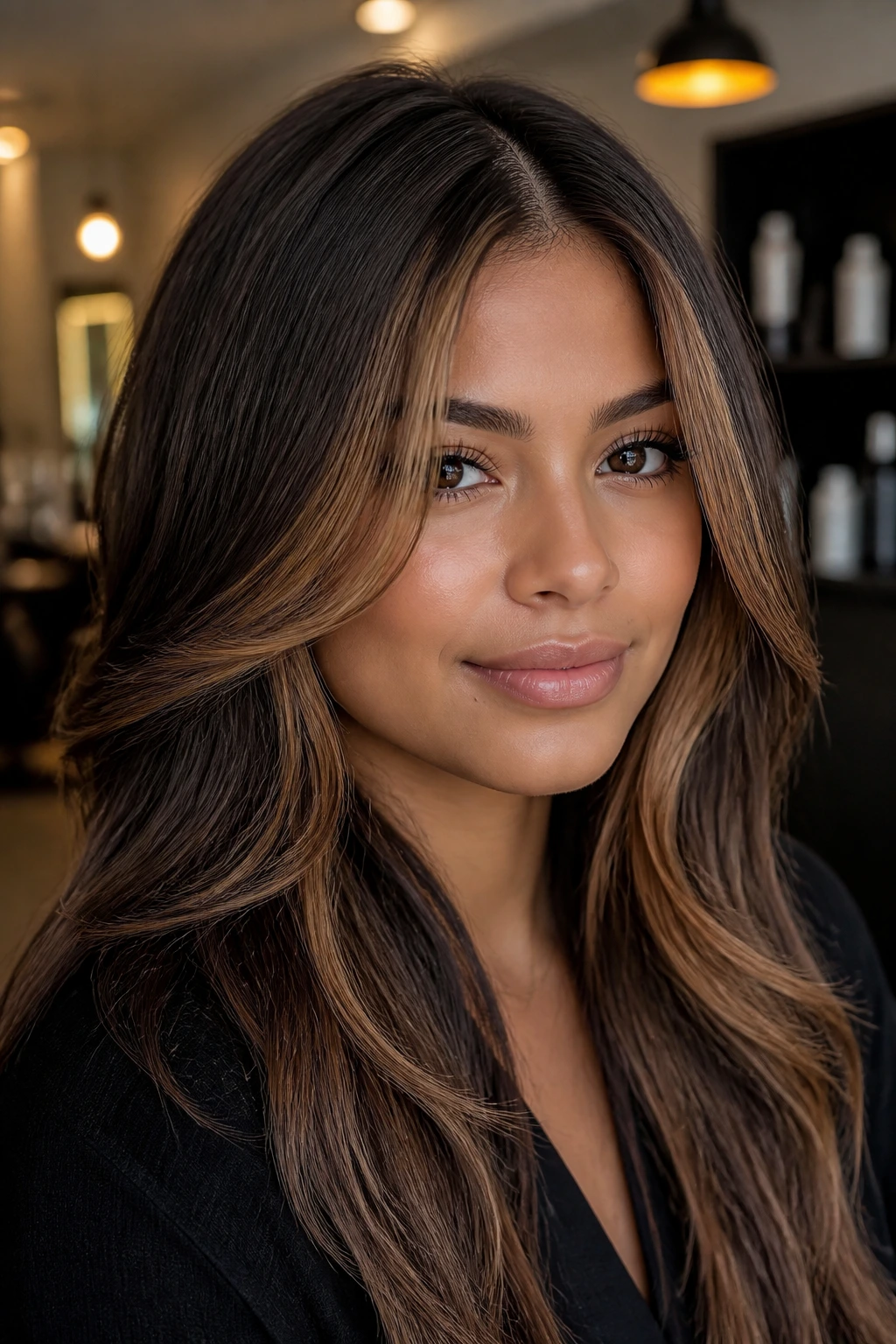
Placement rule: Put the lightest brown where the hair bends, not only where it falls flat. On curls and waves, that means the outer curve. On straight hair, that means the front panels and top layers.
Tone rule: If the color leans too warm, a beige gloss can cool it down without killing the warmth completely. If it turns too smoky, a warm glaze can bring the life back. One toner can change the mood more than another round of highlights.
Finish rule: Dry hair reflects streaks better than damp hair. Sounds simple. It matters. A finished blowout, soft wave, or smooth braid always shows the tone more cleanly than hair that is still puffing in humidity.
Personalization: Fine hair usually looks better with narrow ribbons and less contrast. Thick hair can handle wider streaks and a deeper root shadow. Curly and coily hair often benefits from placement on stretched sections so the stylist can see the pattern before the color is rinsed out.
Common Mistakes That Make Brown Streaks Look Flat
-
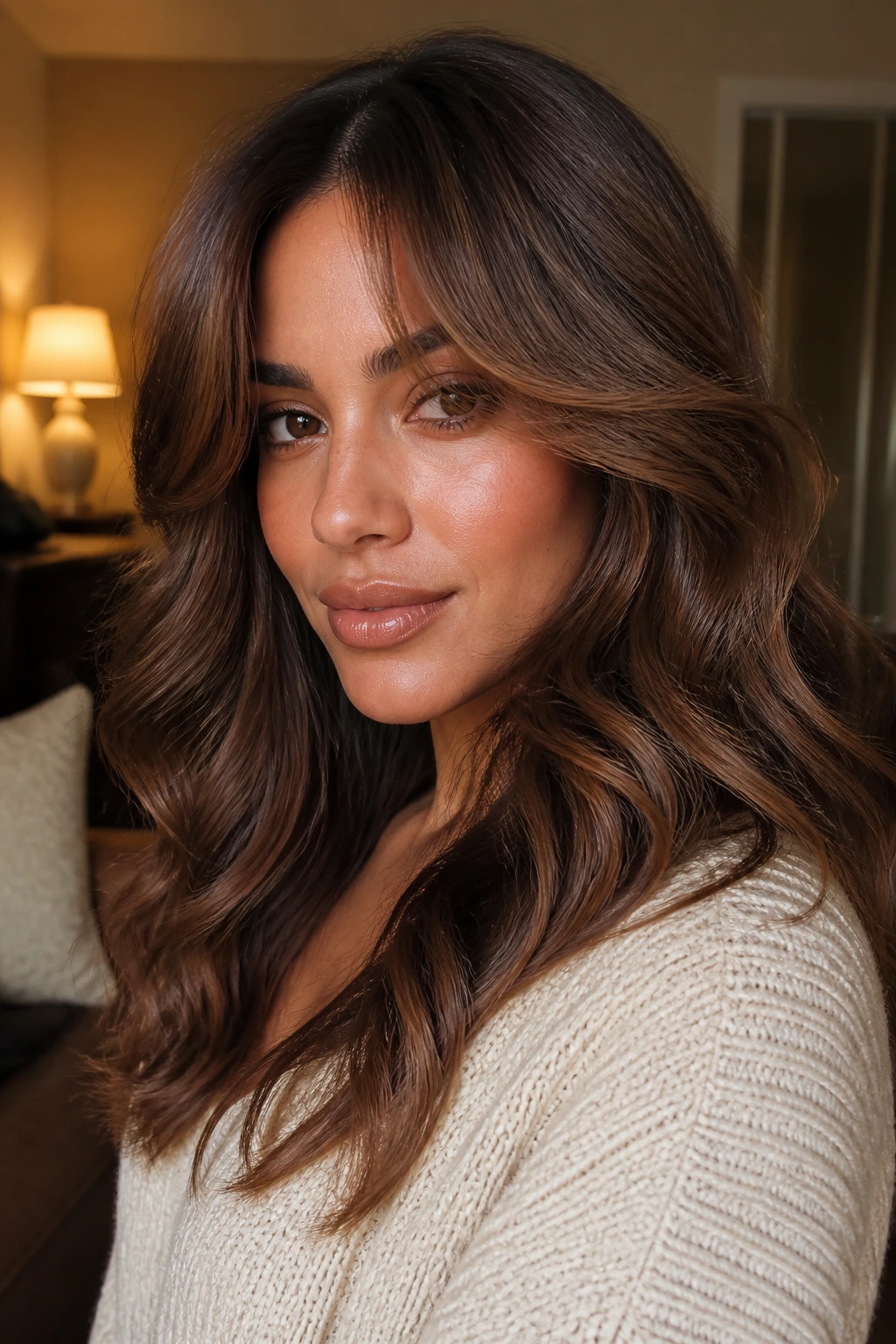
Going too light too fast: A streak that is several levels lighter than your base can look stripy on medium skin, especially in indoor light. The fix is to stay closer to your natural brown and add contrast with placement, not just brightness.
-
Picking the wrong temperature: Warm brown on already golden skin can drift orange. Cool brown on olive skin can go muddy. Match the undertone first, then choose the shade family.
-
Coloring only the ends: If the light pieces live only at the bottom, the hair can look heavy at the roots and thin at the ends. Add some face-framing and mid-length ribbons so the whole shape feels balanced.
-
Skipping a gloss: Brown fades in a dull way when it is left alone. A clear or tinted gloss keeps the tone richer and softens any rough edges after a few washes.
-
Using too much heat: Hot tools strip shine fast, and brown streaks depend on shine to show. Use heat protectant and keep the iron reasonable. If the hair starts to feel rough, the color will look rough too.
Variations and Shade Swaps to Try
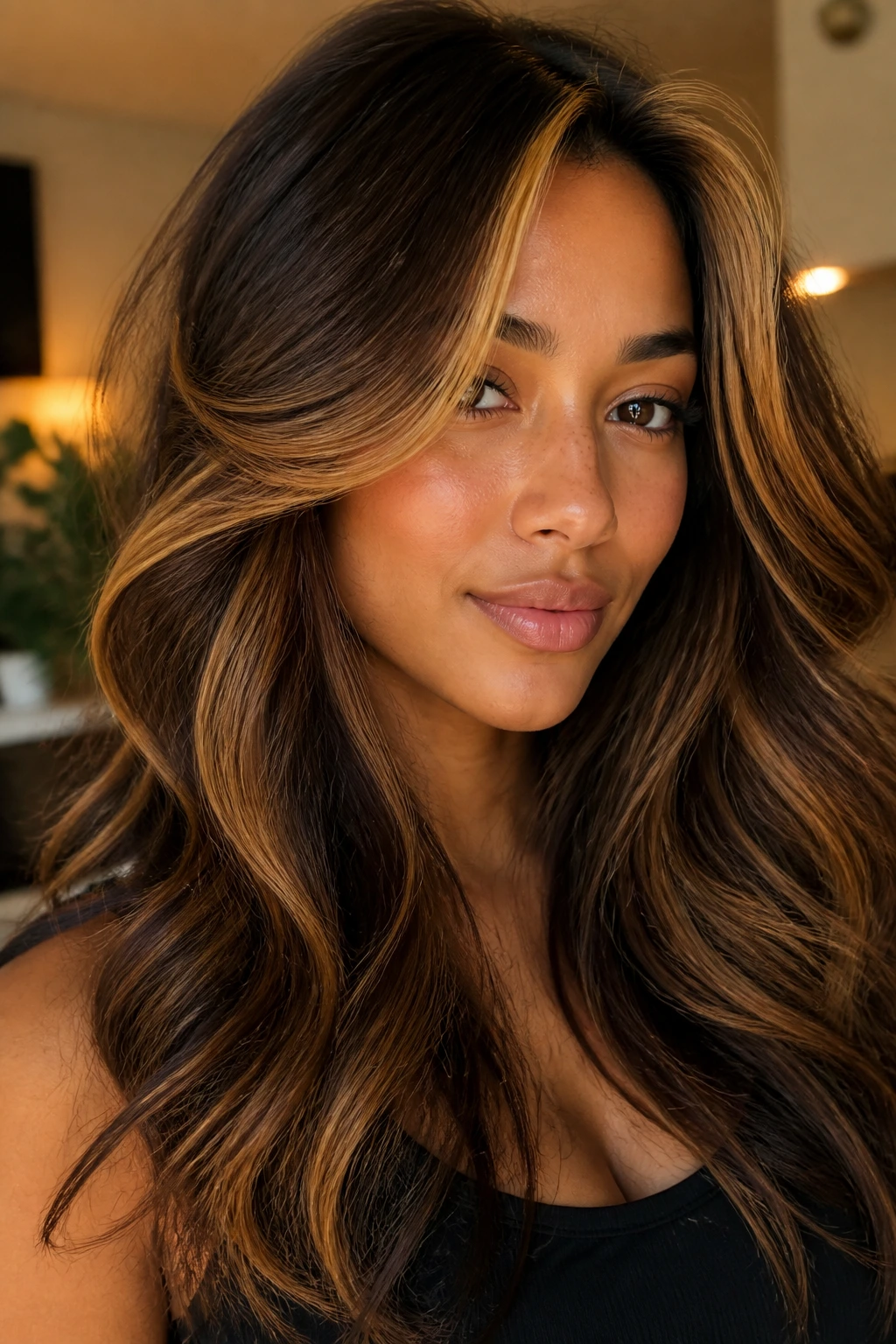
Golden Caramel Frame: Keep the base medium brown and place caramel streaks only at the front and around the top layers. This works best if you want warmth without changing the whole head.
Smoky Mocha Shift: Swap warm browns for mocha and mushroom brown, then add a root shadow. It suits olive or neutral medium skin and gives the style a cooler, more muted finish.
Auburn Chestnut Lift: Add a little red-brown to chestnut pieces, especially around bangs and temple layers. The warmth can make medium skin look livelier, but it needs a gloss to stay rich instead of brassy.
Peekaboo Brown Panels: Hide the streaks under the top layer so they only show when the hair moves or gets tucked behind the ear. This is the low-commitment choice if you like the idea of dimension but not constant visibility.
Protective Brown Blend: Mix two or three brown extension shades in braids, twists, or loc styles. It gives texture a deeper look without needing chemical color on the natural hair.
Brown Streak Questions People Ask All the Time
Will brown streaks show on dark hair?
Yes, if the streaks are placed with enough contrast and the hair is styled with movement. On very dark bases, a mocha, walnut, or caramel-brown ribbon will show better than a nearly identical brown.
Are caramel streaks safe for olive medium skin?
They can be, but only if the tone stays beige and not orange-gold. Olive skin usually prefers a softer caramel or a mocha-beige mix, especially near the face.
How often do brown streaks need a touch-up?
Most brown highlights stay tidy for about 8 to 12 weeks, depending on how much sun, heat, and washing they get. Glosses can often be refreshed sooner without changing the whole color.
Can curly hair wear brown streaks without losing shape?
Absolutely. The trick is to place the color where the curl opens and to avoid overprocessing the full strand. Curly hair usually looks better with ribbons and lowlights than with one heavy highlight pattern.
What if my brown streaks turn orange?
That usually means the tone was too warm for your base or undertone. A blue-toning shampoo can help with brass, but a salon gloss or toner usually fixes the problem better because it addresses the actual shade, not just the surface.
Is balayage better than foils for brown streaks?
Balayage gives a softer fade, while foils give more lift and sharper contrast. If you want natural movement, balayage often wins. If you want clear front pieces or a stronger pop, foils usually do the job better.
Do short cuts still work with brown streaks?
They do, and sometimes they work even better because the color has less hair to hide behind. Pixies, bobs, and lobs can show brown dimension cleanly when the streaks are placed around the top layers and front corners.
Can I keep my natural base and still add dimension?
Yes. That is often the smartest move. Keeping the base close to your natural color makes the streaks easier to maintain and keeps the whole look from turning into a color correction project later.
The Brown That Holds Up
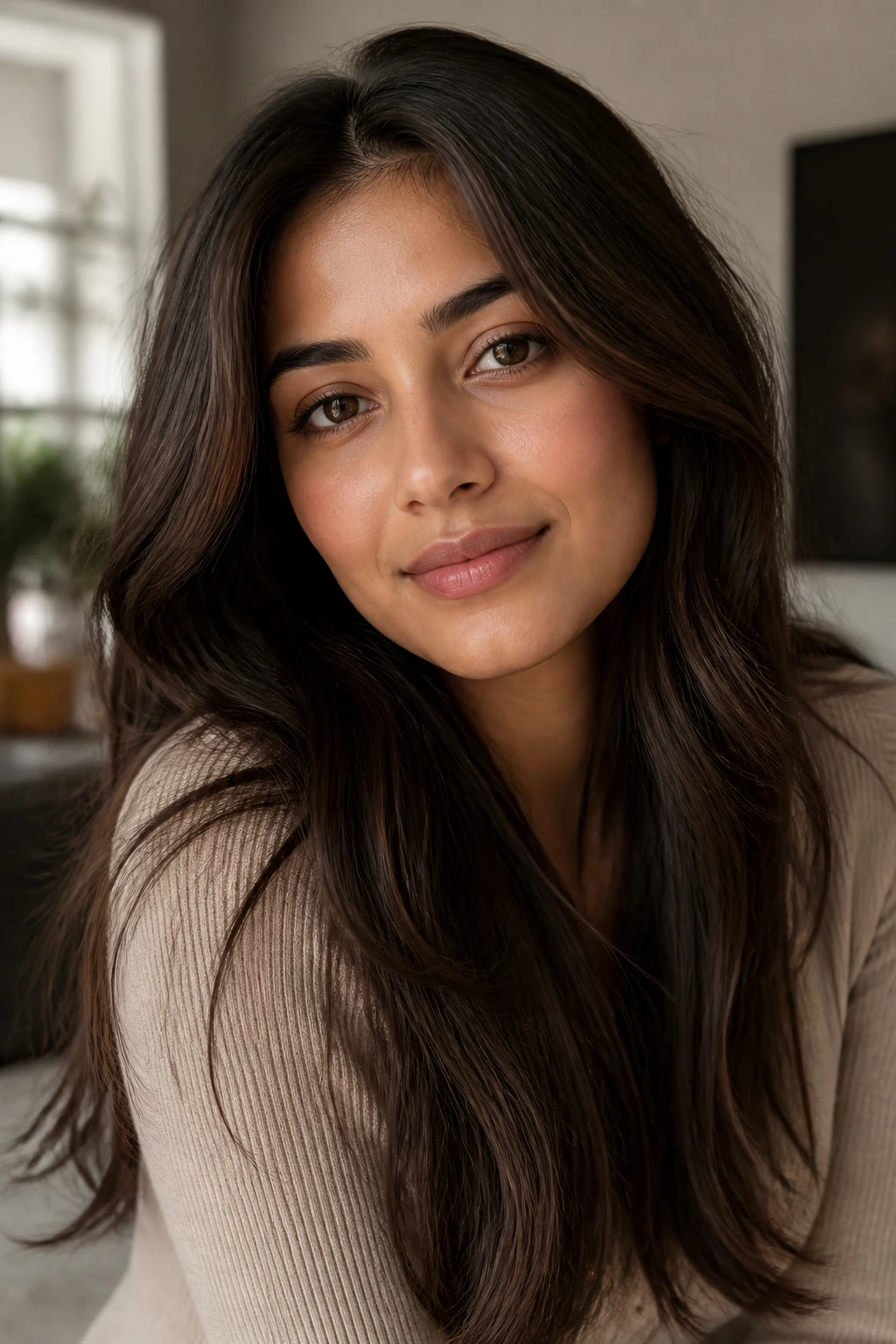
Brown streaks work on medium skin because they respect the face instead of fighting it. The good ones add shape, not noise. They sit in the hair like they belong there, and that is harder to pull off than people think.
If you’re choosing between too-light highlights and a more grounded brown, I’d reach for the grounded brown most of the time. It grows out better, it looks better in ordinary light, and it gives medium skin the kind of depth that never feels overdone. Start with one style that fits your haircut and texture, then adjust the shade family from there. The right brown is rarely the flashiest one.