



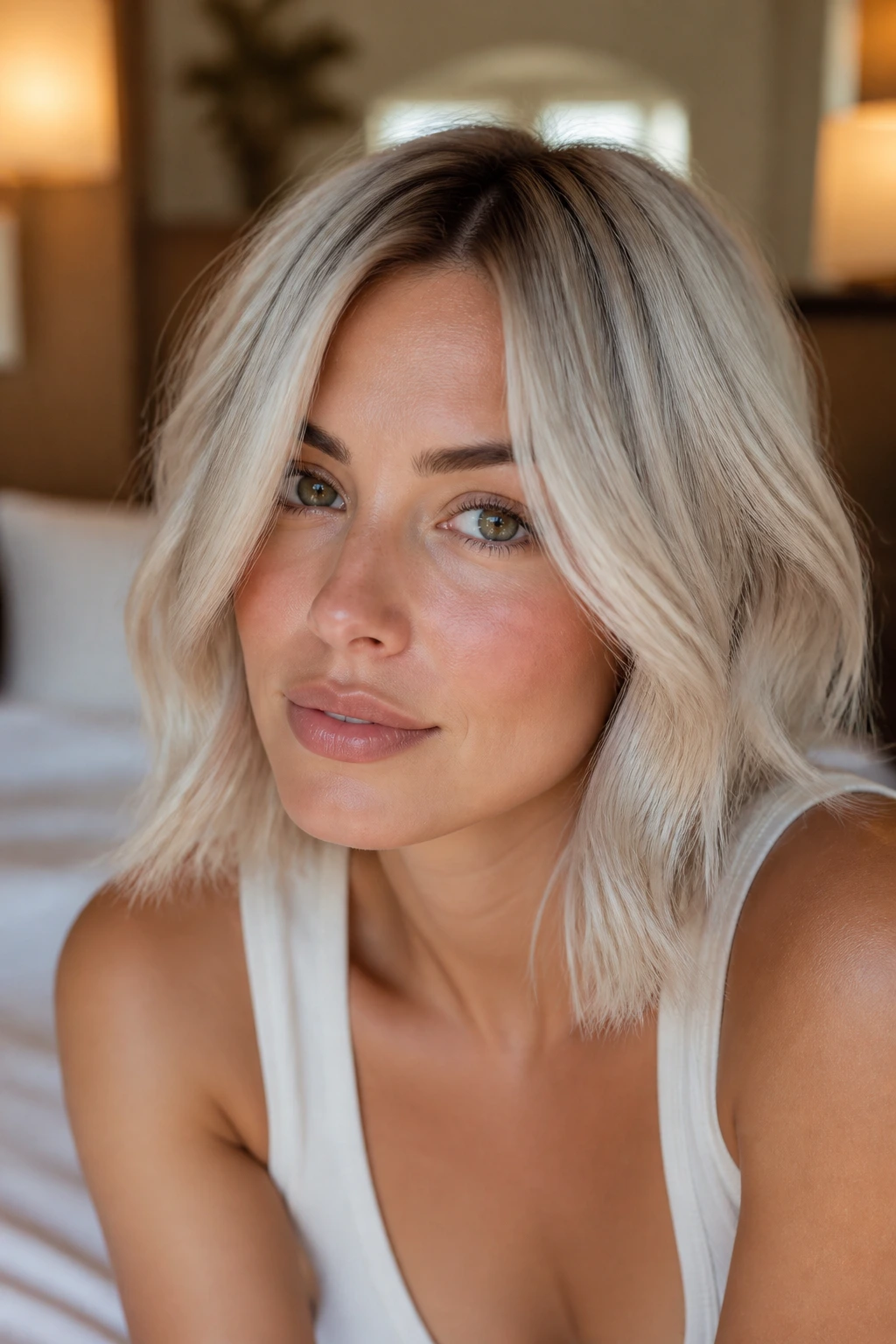
Icy blonde on warm skin tones works best when the color has a little architecture. A flat sheet of white-platinum across every strand can make golden, peachy, or olive undertones look tired; a smarter cut, a root shadow, or a face frame with some shape gives the blonde somewhere to live. That’s the difference between “frosted” and “washed out.”
The trick is not avoiding cool blonde altogether. It’s choosing a style that builds contrast in the right places: a chin-length bob that shows off the jaw, long layers that break up the light, a ponytail that keeps the top sleek while the ends stay pale and bright. Warm skin can wear icy blonde beautifully when the shade is placed with intent, not sprayed over every inch like frost on a windshield.
And the details matter more than people admit. A toner that leans silver can be gorgeous on one head and a little harsh on another; a pearl-beige finish often plays nicer with gold or peach in the skin, while the whitest pieces work better in small doses around the face. The best looks in this group use shape, shine, and a touch of depth at the root. That’s the thread running through every style below.
Why This Collection Feels Different for Warm Skin
-
Root depth keeps the face alive: A soft shadow at the scalp stops icy blonde from floating above warm undertones like a paper cutout.
-
Placement does more work than saturation: Money pieces, ribbons, and dipped ends usually look smarter on golden skin than an all-over ice bath.
-
Texture changes the temperature of the color: Waves, bends, and feathered layers make cool blonde feel softer and less severe.
-
Short, medium, and long cuts all have a place: The right icy blonde can look sharp on a pixie, glossy on a lob, or expensive on waist-length waves.
-
Maintenance can be controlled: A toner schedule, a good gloss, and one heat-protectant spray keep the shade cool without turning it dull.
-
Warm skin still gets to keep its glow: The point is contrast, not erasure. Your skin should still read warm; the hair should frame it, not fight it.
1. Root-Shadowed Icy Blonde Bob with Soft Ends
A chin-length bob is one of the easiest places to start if you want icy blonde without the whole thing swallowing your face. The short length keeps the color close and crisp, while the soft bend at the ends stops the cut from looking helmet-straight. On warm skin, that tiny bit of movement matters. It lets the blonde feel deliberate instead of loud.
Why It Flatters Warm Undertones
Ask for a root shadow that sits about one level deeper than the icy pieces through the mids. That small dip in depth keeps the jawline clear and gives golden or peach skin a little breathing room around the face. I like this version best when the ends are beveled under with a round brush or a 1-inch iron, not left stiff.
A bob also makes the bleach job look cleaner than it is. The eye reads the shape first, then the color. That’s useful when you want bright blonde but don’t want every strand near the hairline to be the same shade of white.
2. Curtain Bang Lob with Frosted Face Frames
A collarbone lob with curtain bangs is the kind of cut that makes icy blonde feel wearable on skin with warmth in it. The bangs break up the forehead, and the face-framing pieces can sit a touch brighter than the rest of the hair without looking harsh. That contrast is the whole point.
What Makes It Work
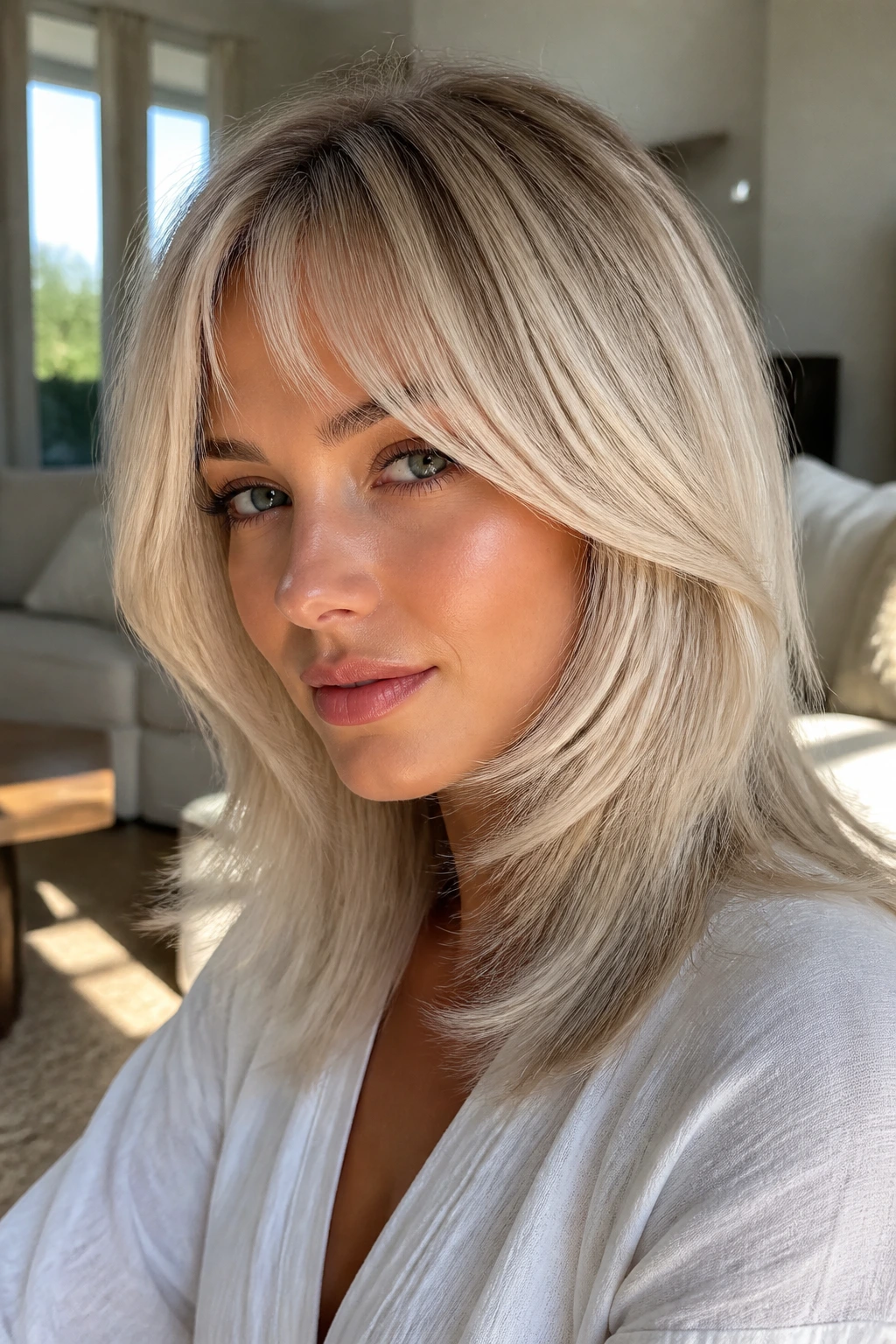
The best version has the brightest blonde starting around the cheekbone, not right at the roots. That placement lifts the eyes and keeps the skin from looking flat. If your undertone leans peach, this cut is especially kind because the softer fringe gives you a little color around the face instead of a hard, pale strip.
Style it with a blowout that bends the bangs away from the center and flips the lob ends under just enough to show shape. Flat and blunt can work, but a tiny bit of curve makes the icy pieces feel softer and more expensive.
3. Sleek Center-Part Long Layers with Cool Beige Light
A middle part and long layers can make icy blonde look refined rather than brittle. The clean line down the center gives the eye structure, and the layers keep the length from turning into one flat curtain of pale color. Warm skin usually looks better with this version when the blonde is cool-beige, not stark blue-white.
The Detail That Saves It
I’m partial to a soft root melt here. Nothing heavy. Just enough depth at the top so the lengths can go bright without the scalp area stealing the show. It’s the kind of small color choice that makes the style look intentional in daylight, which is where bad blonde usually tells on itself.
Keep the finish smooth with a paddle brush blow-dry or a flat iron pass. A little serum on the ends is fine, but don’t load the hair with oil. You want shine, not grease.
4. Tousled Shoulder-Length Waves with Airy Dimension
This is the lazy-looking style that takes the most thought. Shoulder-length waves keep icy blonde from sitting too close to the skin in one solid sheet, and the bends create tiny shifts in tone that help warm undertones stay alive. It’s a good one for anyone who wants movement without a lot of visible styling effort.
Why I Keep Reaching for It
Because it hides the seam between tones. Seriously. If your blonde has a slightly deeper root, a brighter face frame, and a cooler mid-length, the wave pattern stitches those pieces together. A straight style can show every transition. A wave makes the color read as one clean, expensive block.
Use a 1.25-inch wand and alternate the direction of the curls, leaving the last inch out so the ends stay modern. Then brush it out once with a soft bristle brush. The result should look light and bendy, not overdone.
5. Butterfly Cut with Platinum Ribbons
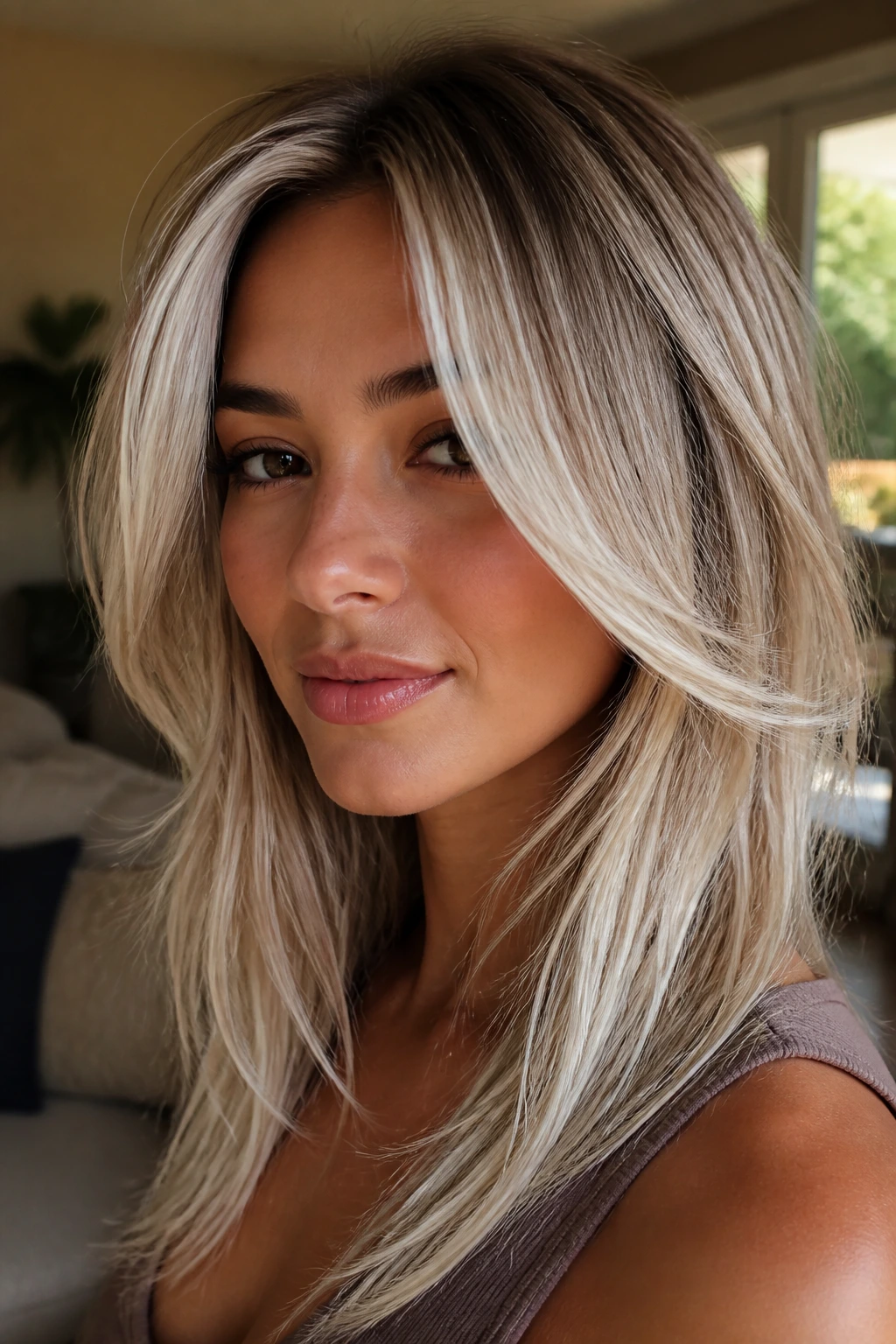
The butterfly cut gives icy blonde a built-in lift. Shorter face-framing layers around the front lighten the look, while the longer back layers keep it from turning fluffy. On warm skin tones, the trick is to keep the platinum in ribbons instead of saturating every section. That way the brightness comes forward in motion, not all at once.
Where This Cut Earns Its Keep
The shorter front pieces should skim the cheekbones, because that’s where the blonde can wake up the face without washing it out. The longer layers at the back hold the weight and stop the style from feeling too feather-light. If your hair is thick, this cut can take a lot of bulk out without making the color feel sparse.
I’d ask for a cool toner with a beige finish instead of a hard silver. Platinum ribbons are already high impact. They do not need extra shouting.
6. Blunt Collarbone Cut with Bright Money Pieces
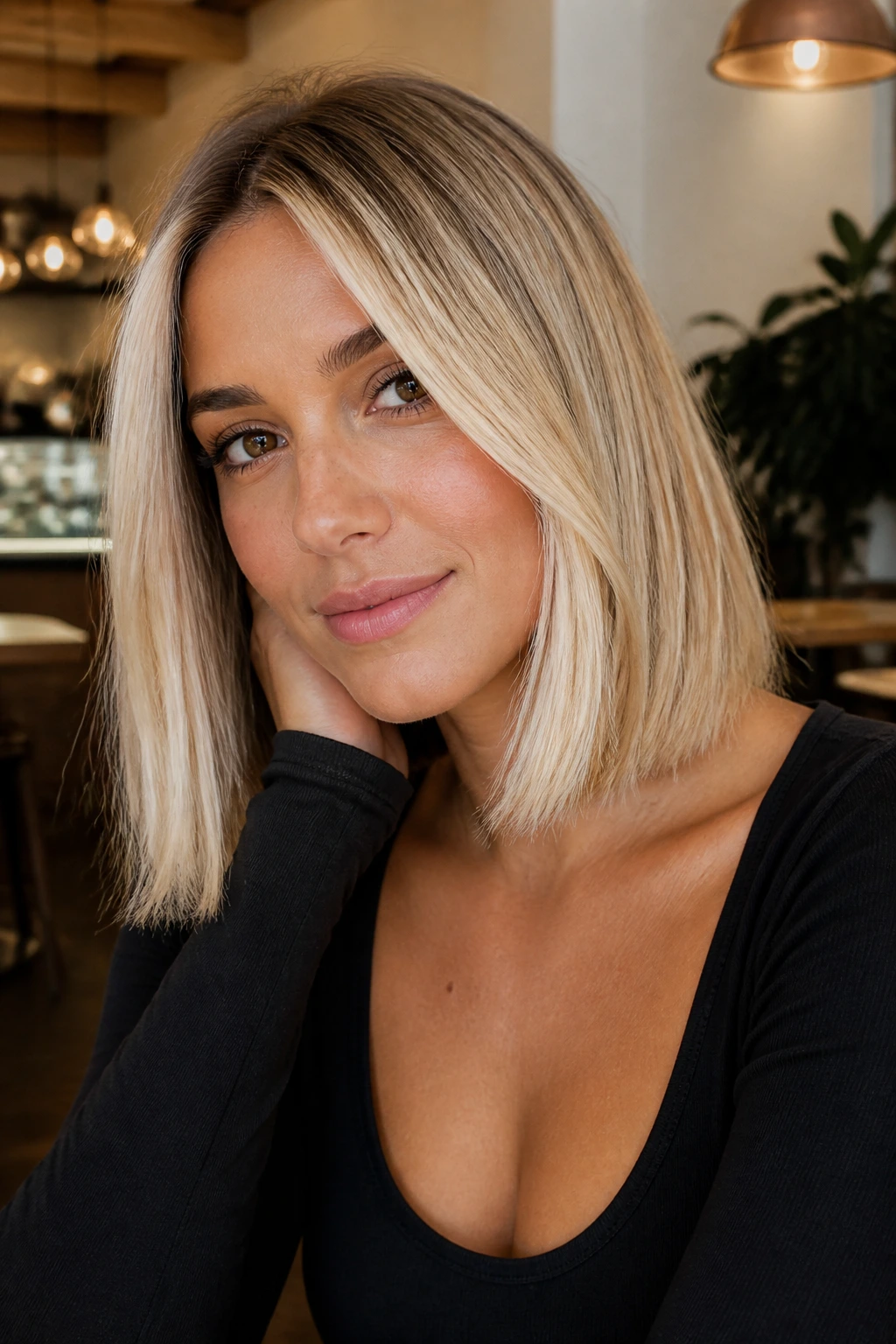
A collarbone blunt cut has attitude. The edge is clean, the line is clear, and the icy blonde can look almost graphic when the money pieces around the face are a shade brighter than the rest. Warm skin gets a useful boost from that contrast because the bright front sections pull the eye up and away from any redness or unevenness in the complexion.
A Cut That Likes Precision
This style works best when the ends are blunt but not heavy. If the line is too thick, the blonde can start to feel like a sheet of paint. Keep the interior a touch softer, with subtle lowlights underneath if your hair is fine. That gives the front pieces room to shine.
If you want one of the most flattering versions for warm undertones, this is high on my list. The face frame does the flattering, not the whole head trying to be the same brightness.
7. Half-Up Knot on Ultra-Long Icy Blonde Hair
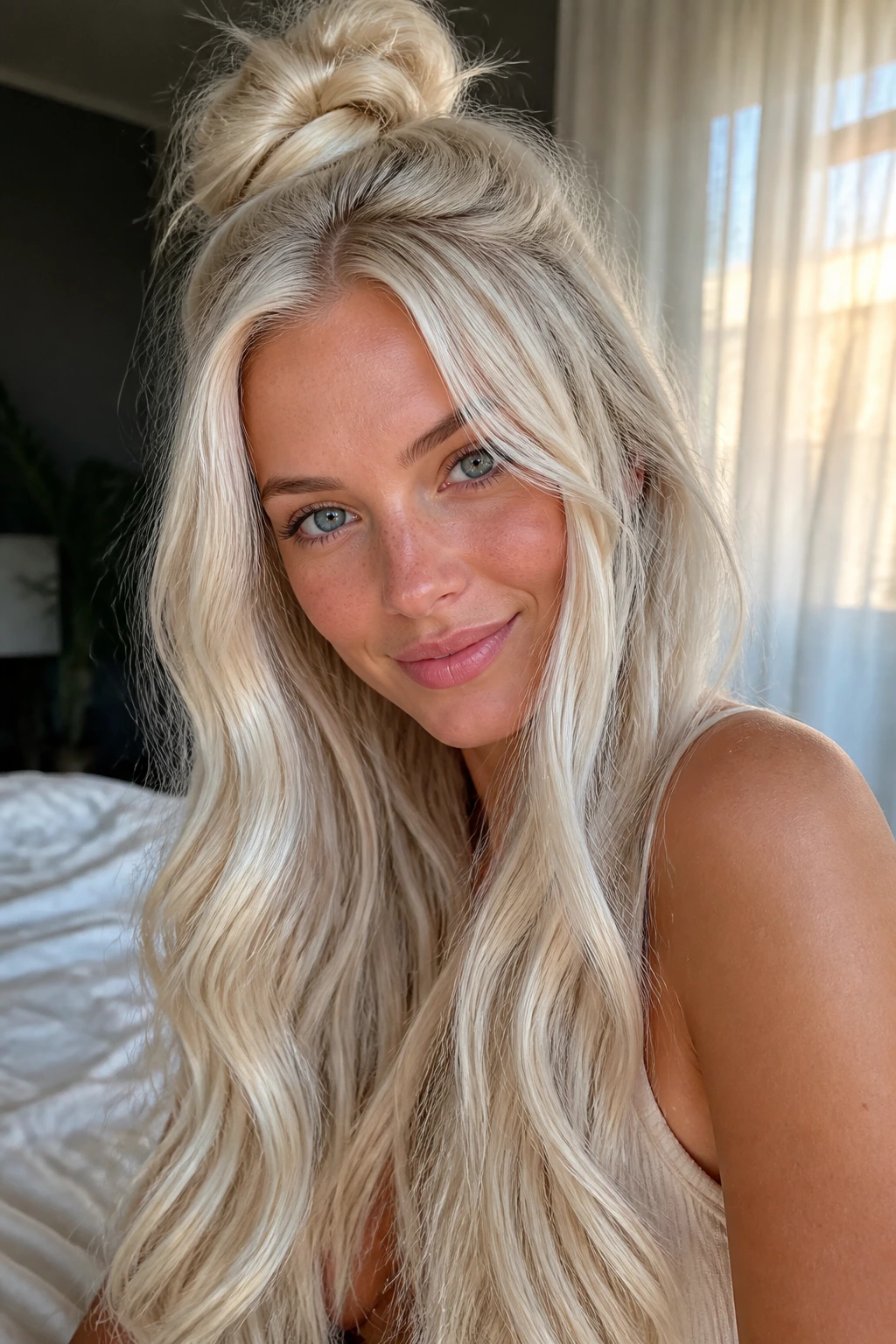
A half-up knot is the fast answer when you want the lengths to stay dramatic but the face to stay open. Pulling the top section back gives the eye a clean line at the temples, which is useful on warm skin because it stops the icy color from crowding the cheeks. The loose lengths can stay bright and almost liquid.
Why It’s Better Than It Sounds
The knot also shows off dimension. You see the root depth at the top, the cool mids, and the pale ends all in one look. That movement is what makes long icy blonde work on warm skin; it needs layers of tone so it doesn’t sit there like one huge color block.
Keep the knot loose enough that it doesn’t crease the crown. A little texture spray at the roots helps. Too polished, and the style can start looking severe.
8. High Ponytail with a Wrapped Base
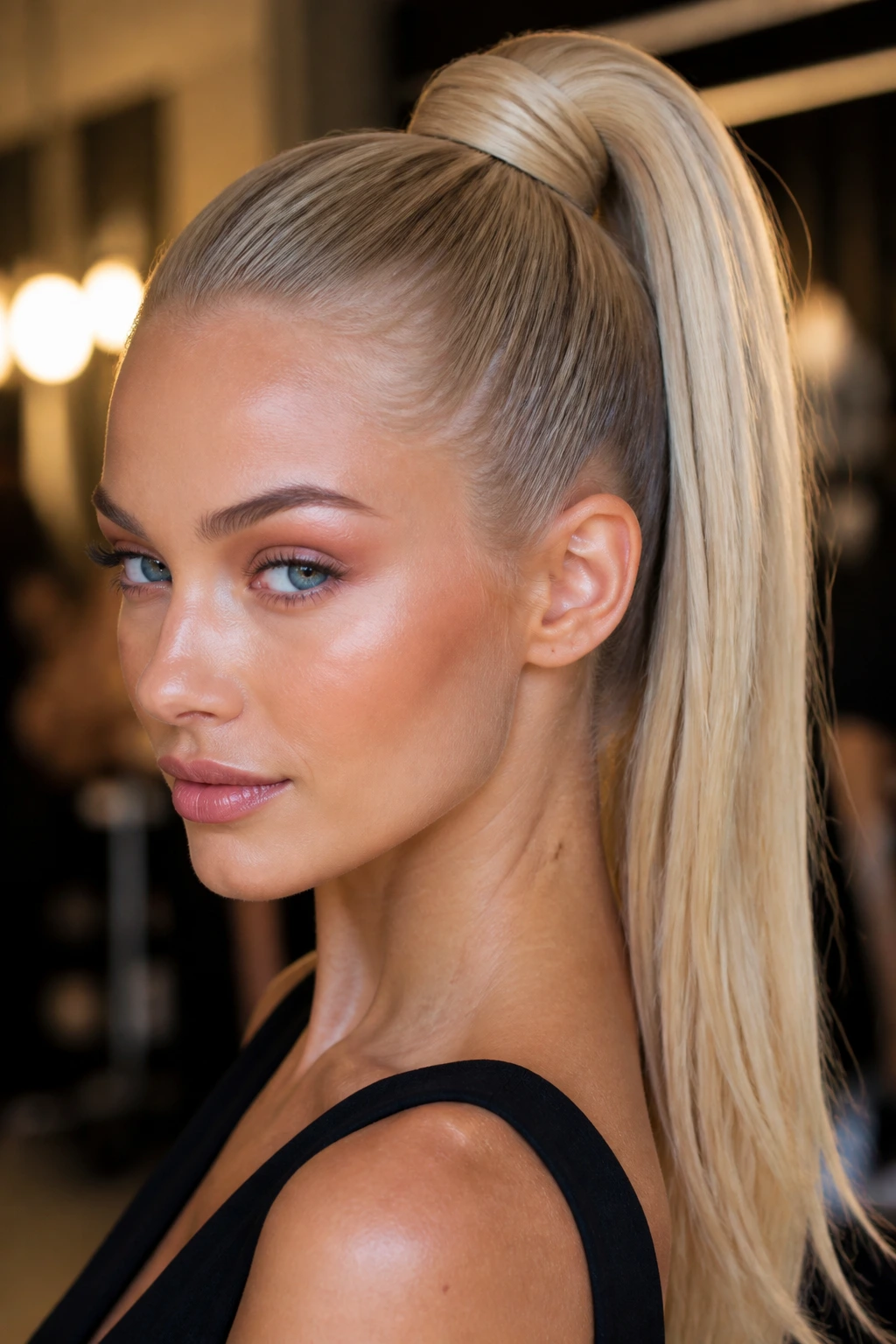
A high ponytail is bluntly flattering. It lifts the face, exposes the cheekbones, and turns icy blonde into one sleek line instead of a cloud of light around the head. On warm skin, that lift matters. The color feels bright, not flat.
The Part People Miss
The wrapped base. Always. A strip of hair around the elastic makes the ponytail look finished instead of gym-adjacent, and it gives the eye one more neat detail to land on. If your lengths are ultra-light at the ends, this style makes them look polished rather than fragile.
Use gel or styling cream only at the crown, and brush the top smooth before you secure it. A ponytail that’s too tight can pull the hairline into a hard shape, which is not what you want when the blonde is already cold.
9. French Bob with Soft Bend and a Cool Fringe
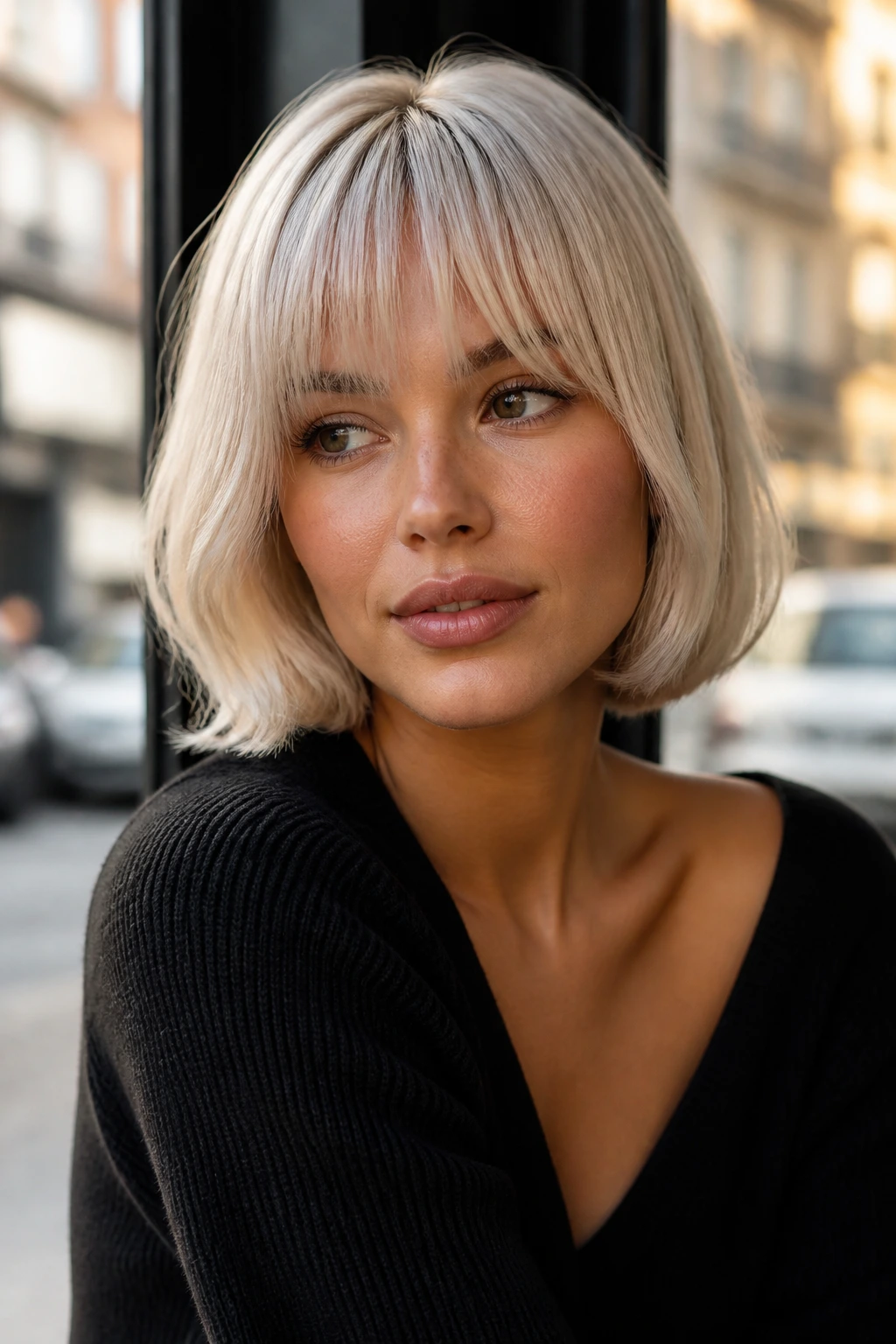
A French bob has that easy, cheekbone-skimming shape that makes icy blonde feel far less severe than it can on longer hair. The slight bend in the ends and a fringe or side sweep soften the face, which is handy if your skin leans warm and needs a little air around the hairline. This style has bite, but not ice-cold bite.
How to Wear It Without Losing the Softness
Keep the fringe a touch airy. A fringe that’s too blunt can make the blonde look hard against the skin, especially under indoor lighting. A piecey finish is better. It gives the haircut a lived-in feel and keeps the tone from sitting like a block around the eyes.
This is one of those styles that looks more expensive when it’s slightly imperfect. A little separation in the fringe, a tiny bit of texture at the ends, and the whole thing wakes up.
10. Mermaid Waves with Pearl Blonde Ends
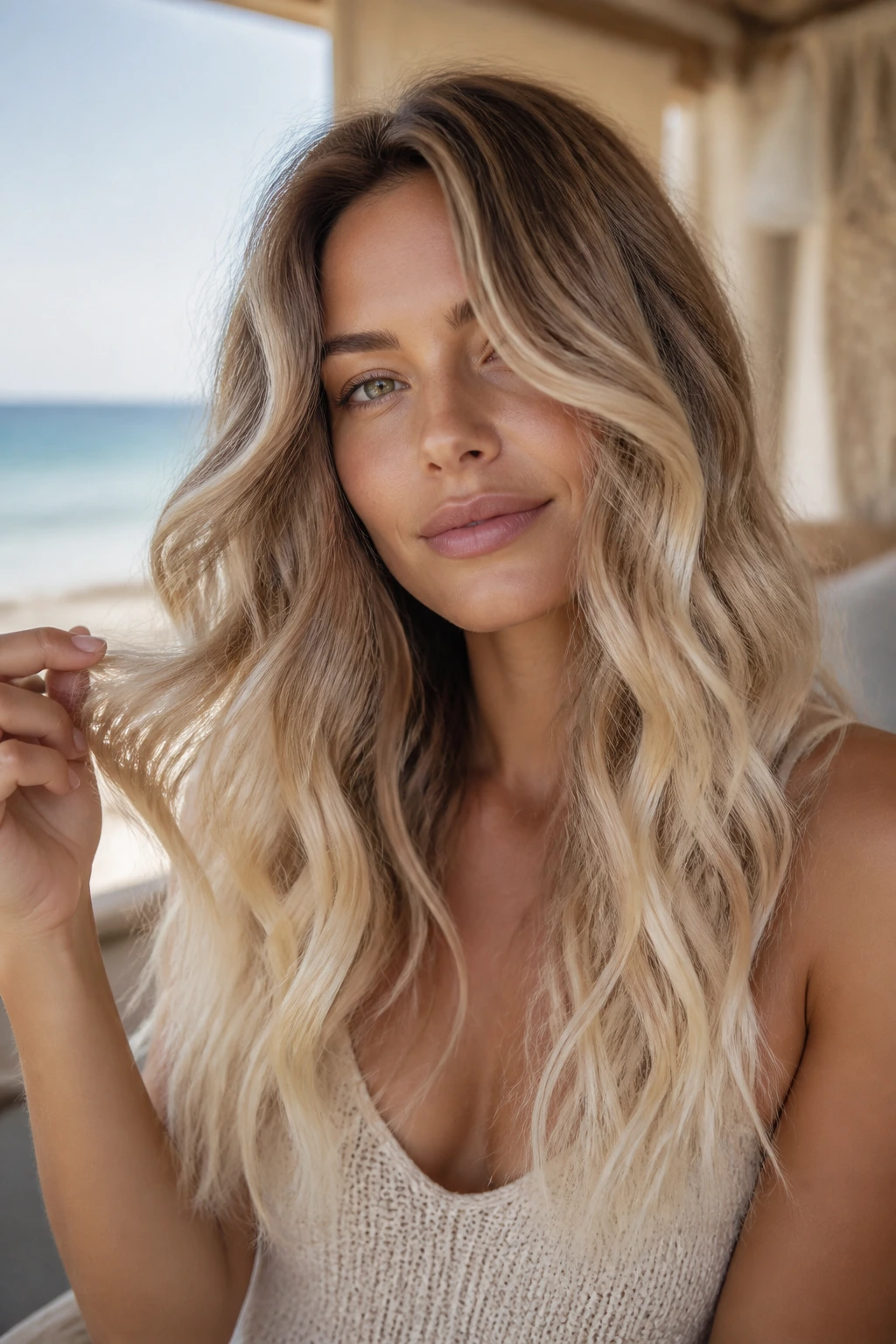
Long, loose mermaid waves let icy blonde feel romantic instead of clinical. The pearl ends catch the eye, while the deeper root and softer mids keep warm skin from being swallowed by brightness. If you like length and don’t want a severe look, this is the version I’d point you toward first.
Why the Ends Matter So Much
The ends should be the brightest part, not the roots. That reverse emphasis gives the hair a little glow as it moves. Warm undertones usually look better when the face is framed by a softer cool shade and the lightest blonde lives a few inches below the part.
Use a large-barrel iron or heatless bends, then separate the waves with your fingers rather than a brush. The goal is soft movement, not pageant curls. Pearl blonde looks best when it moves.
11. Layered Shag with Chilled Platinum Highlights
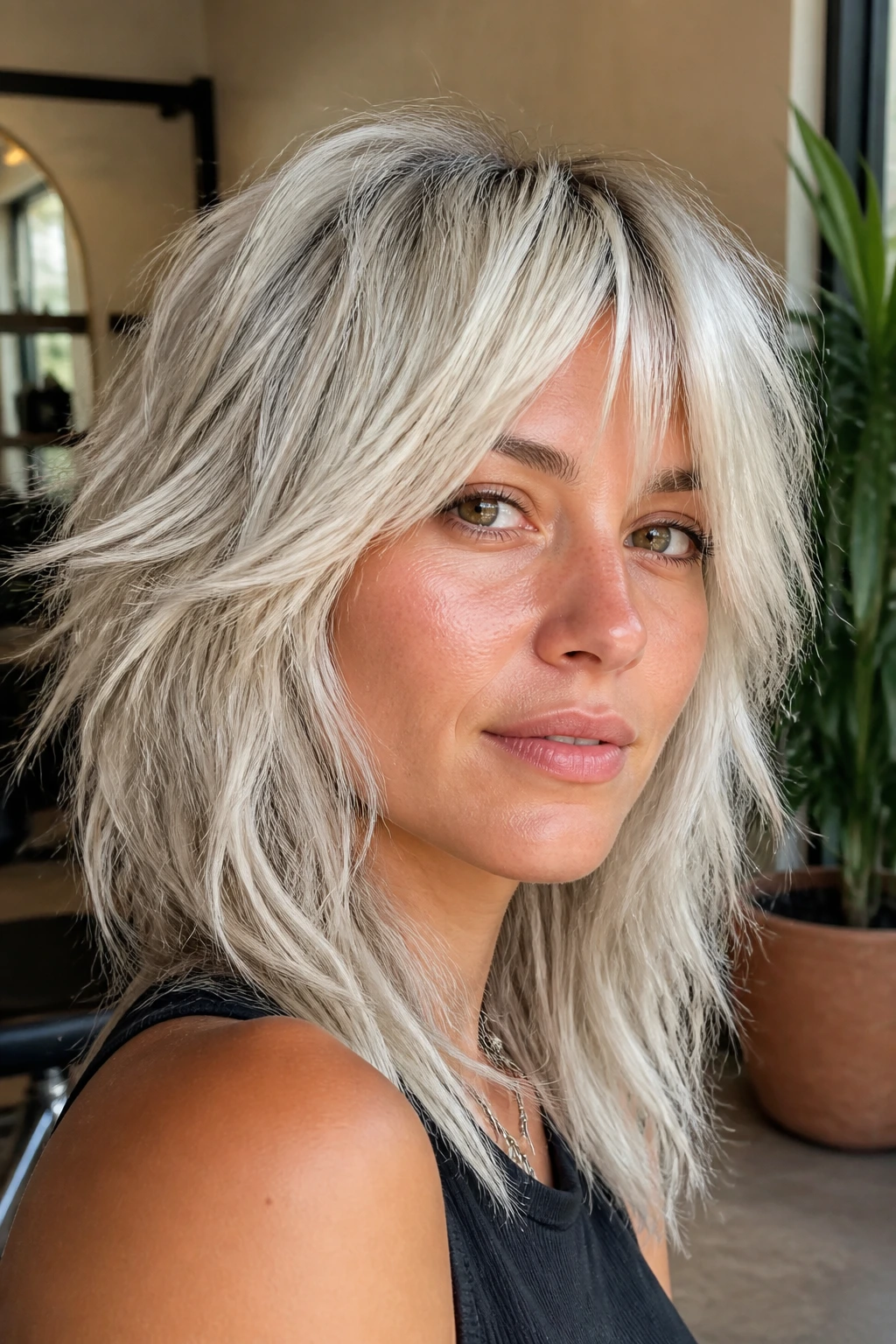
A shag gives icy blonde a little edge, and edge is useful on warm skin. The disconnected layers and broken fringe stop the color from reading as one flat white surface. Instead, you get little flashes of brightness around the temples, cheekbones, and crown.
What Makes It Different
The shag is less about perfection and more about texture. That’s good news if your blonde has cool highlights and a softer base, because the cut itself creates shade between the brighter pieces. Warm skin usually handles that balance better than one-note platinum.
A little texture spray at the roots and a rough-dry with your fingers is enough. Don’t smooth this one into submission. The mess is the point.
12. Pixie Cut with Frosted Top Layers
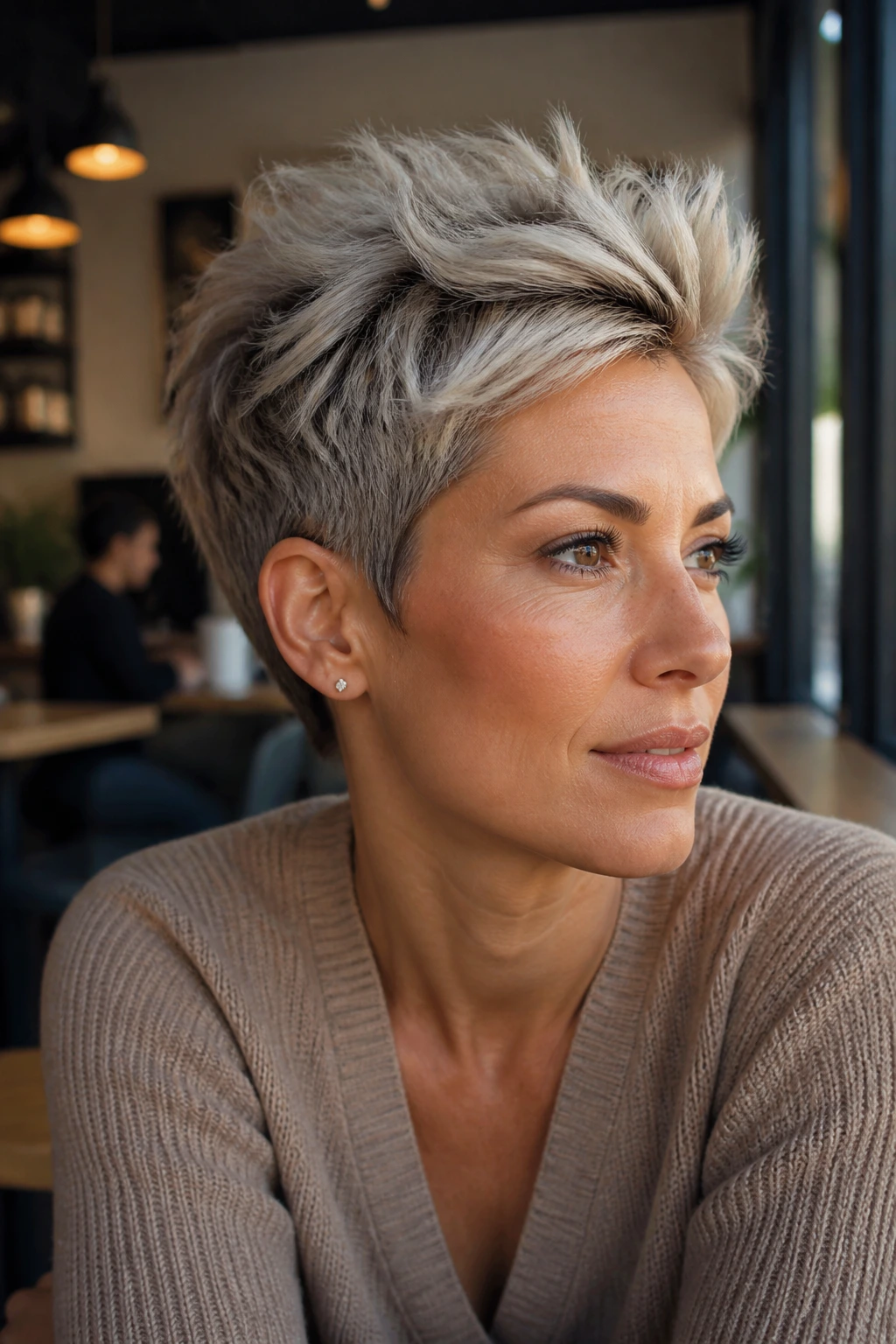
A pixie can be brutally flattering with icy blonde, provided the top isn’t too white and the sides keep a whisper of depth. The short length lets the bone structure do the talking, which tends to be kind to warm skin because the face gets room to breathe. You notice the eyes, the brows, the cheekbones. Not just the color.
A Small Cut with a Lot of Personality
The frosted top layers should have a little lift, almost like a soft quiff or textured sweep. That keeps the blonde from sitting close to the scalp in one hard sheet. If your hair grows fast or tends to lie flat, this style needs some shape cream or paste to stay alive.
I like this one best with a subtle root shadow. A tiny bit of depth at the base makes the blonde look intentional, not like it’s floating above the head.
13. Asymmetrical Bob with a Cool Side Sweep
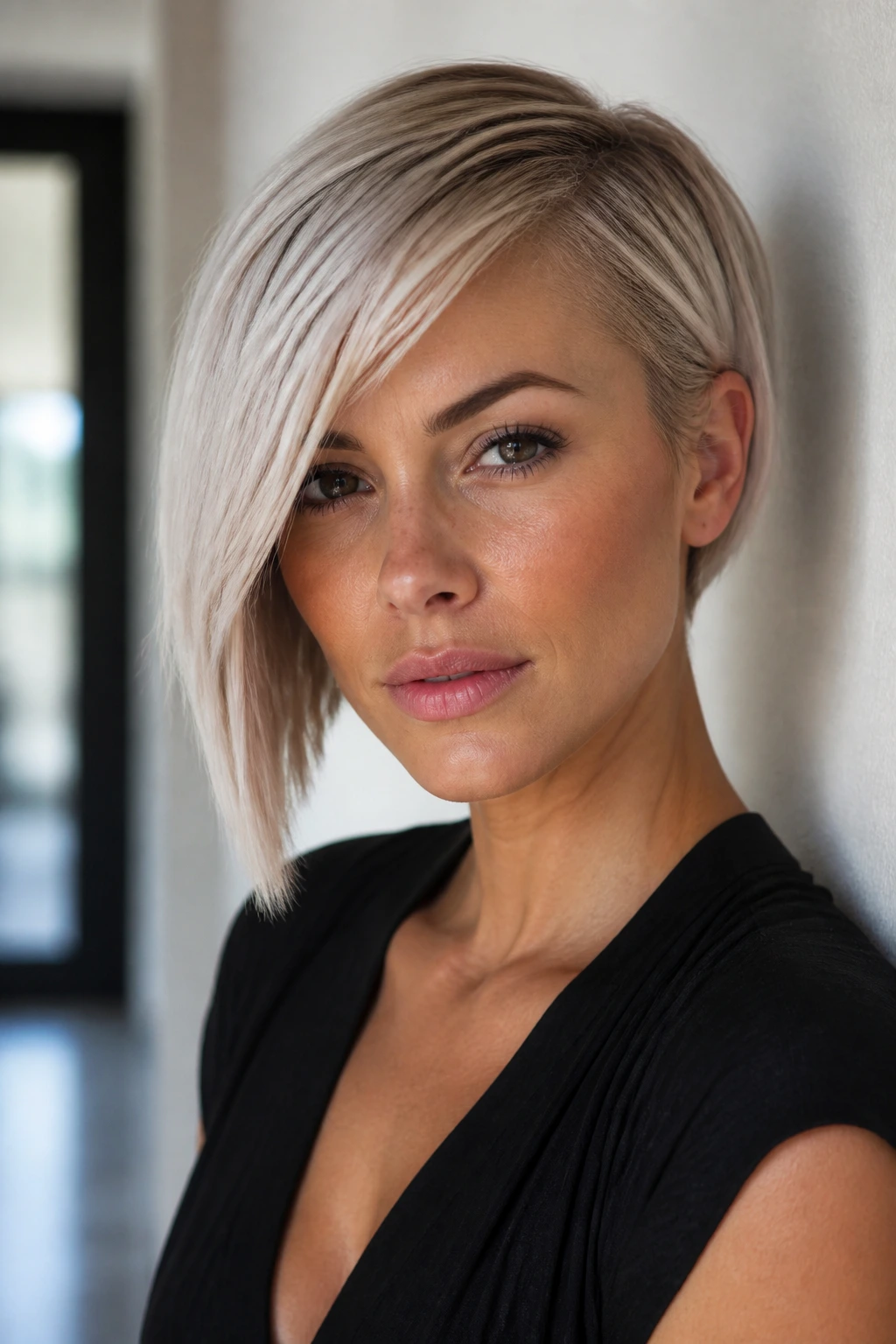
An asymmetrical bob has drama built into the cut, so the color can stay cool and still feel wearable. One side grazing the jaw and the other tucked just a little shorter creates motion before you even style it. Warm skin gets a nice lift from the side sweep because the diagonal line breaks up the face in a flattering way.
The Angle Does the Work
This isn’t the place for a heavy, opaque blonde. You want lightness through the front and slightly more depth underneath, especially if the hair is fine. That contrast helps the shorter side look sharp instead of severe.
A flat iron bend through the ends is enough. Keep the movement subtle. Too much curl and the asymmetry gets lost.
14. Braided Crown with Icy Strands Woven Through
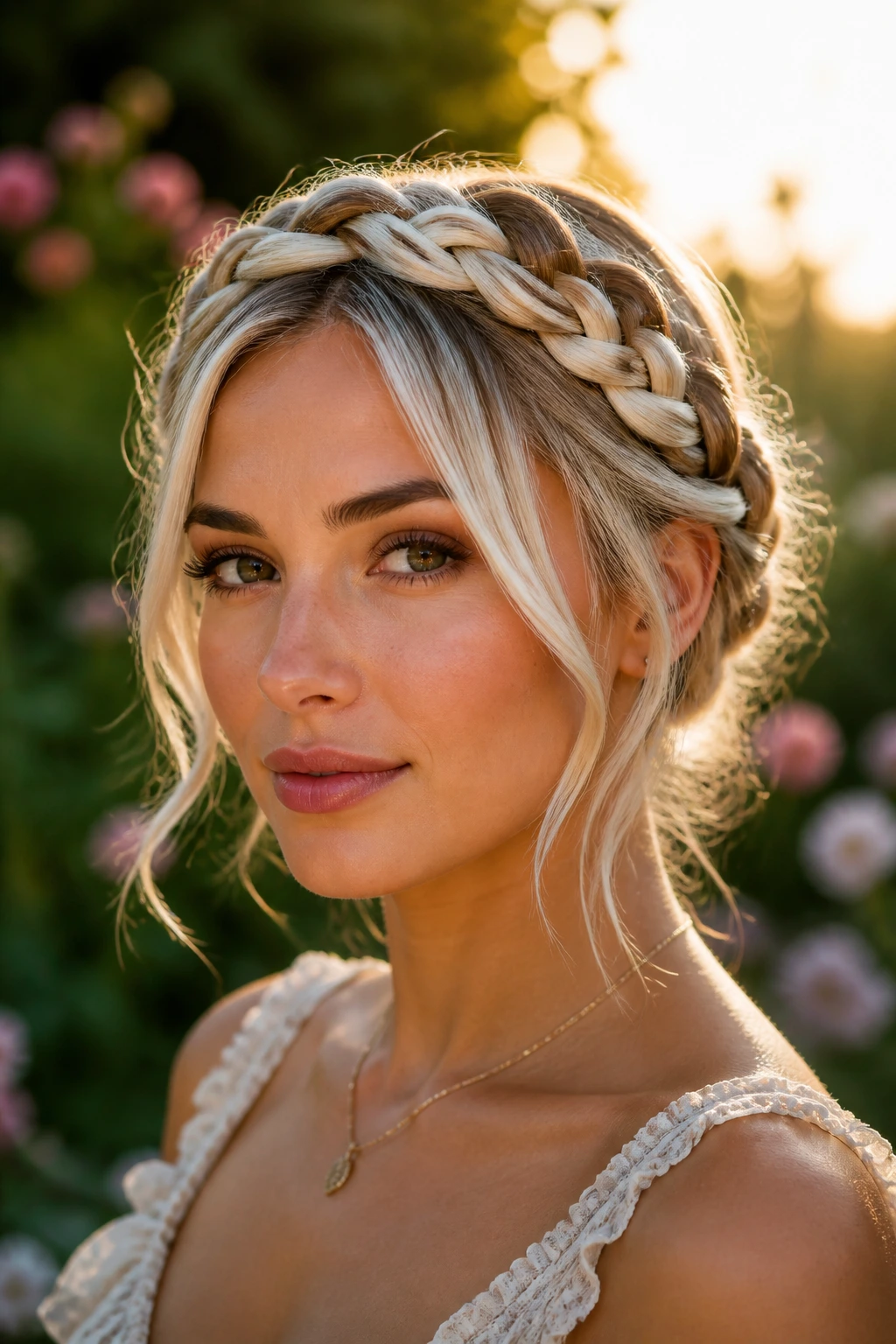
A braided crown softens icy blonde in a way that straight styling can’t. Braids create tiny shadows, and those shadows are gold for warm skin tones because they keep the pale color from sitting too hard against the face. If you’ve ever felt that bright blonde made your features look sharper than you wanted, this is the fix.
Why It Works for Events
The braid gives the color a pattern. The eye moves along the weave instead of locking onto one pale section at the hairline. I also like this look when a few icy tendrils are left out around the temples, because that softens the whole thing without making it messy.
This is a strong choice for weddings, dinners, or anywhere you want the blonde to feel detailed. It looks deliberate from every angle, which is a rare thing in braided styles.
15. Soft Curls with a Root Melt
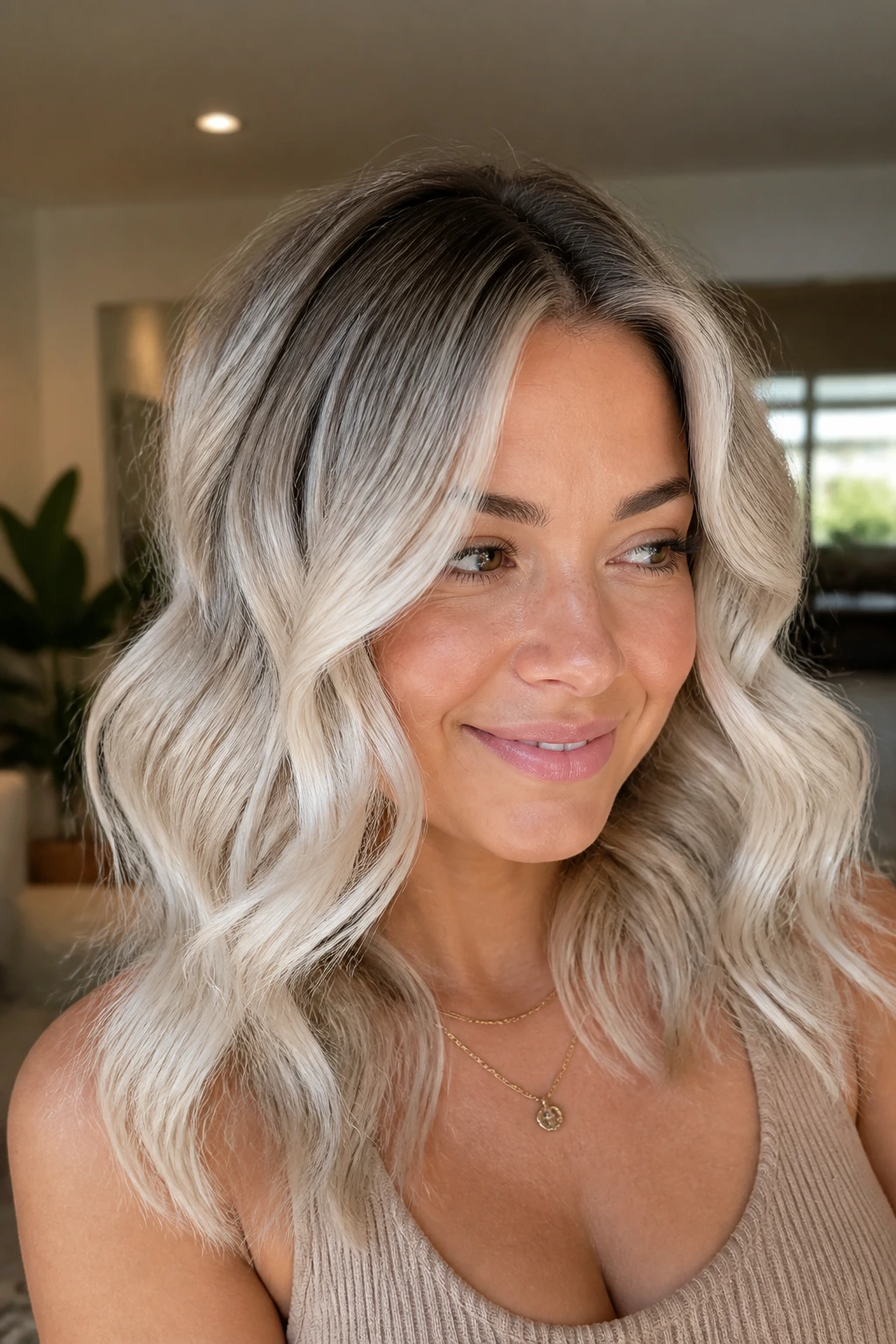
Soft curls are one of the easiest ways to make icy blonde friendlier on warm skin. The curl pattern breaks up the brightness, and a root melt keeps the top from feeling too stark. If you want movement and softness more than sharp contrast, this is the style to keep in your pocket.
The Trick Is in the Blend
The root melt should fade gradually, not in a hard line. That little blur gives the curls a softer base so the ends can stay bright. If the tone is too white at the root and too flat through the mids, the curls can turn into a puff of pale hair with no shape. Nobody needs that.
Use a 1.5-inch iron and brush the curls out once they cool. You want a round, touchable wave pattern with light that shifts as you move.
16. Sleek Low Bun with Bright Face-Framing Pieces
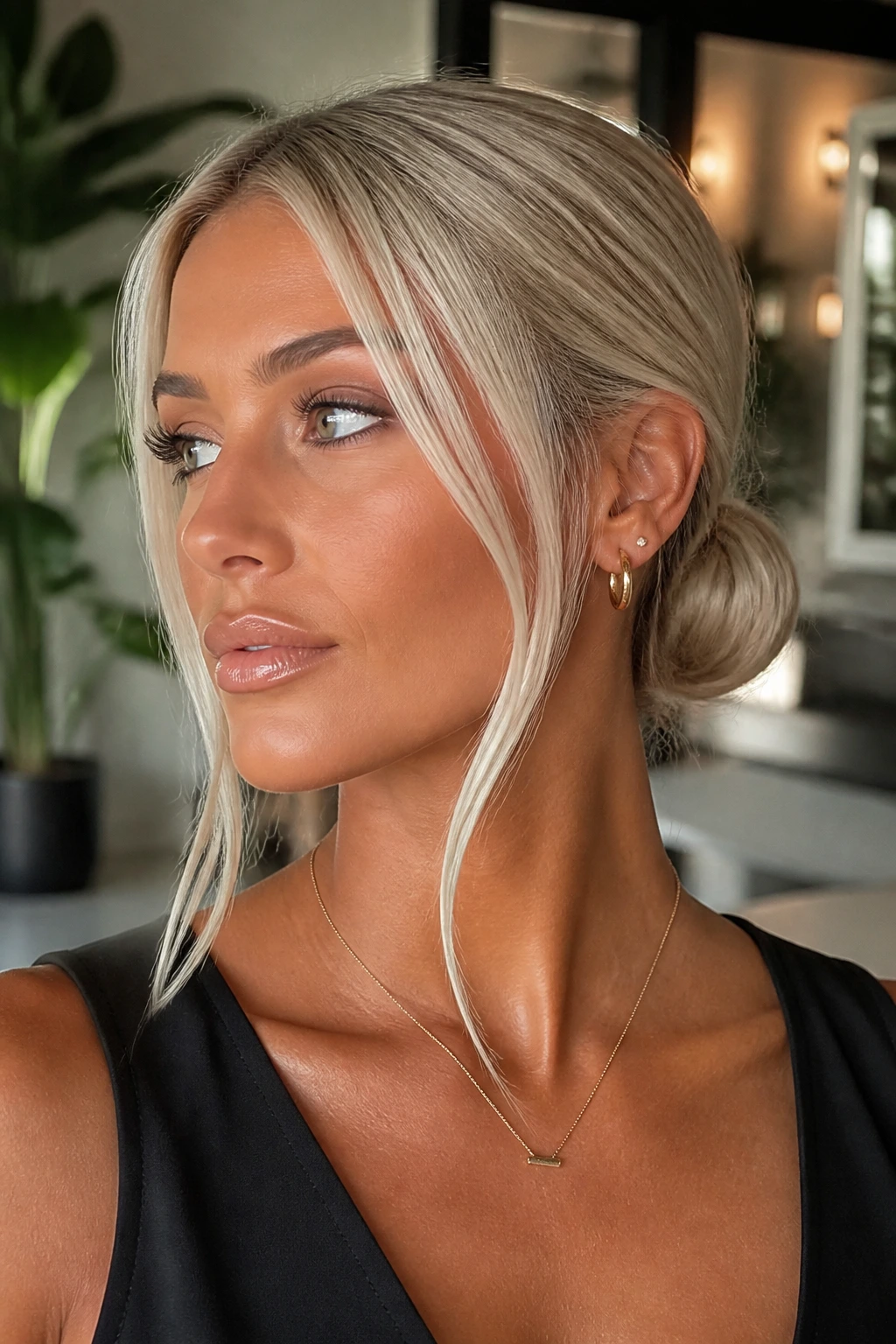
A low bun is tidy, but it does not have to be strict. The best icy-blonde version leaves a thin veil of brightness at the front, which keeps warm skin from being boxed in by a slick back. That little bit of face framing makes a formal style look softer right away.
Where the Balance Sits
Keep the bun smooth at the nape and let the front pieces fall just in front of the ears or cheekbones. If those pieces are the palest part of the color, they’ll brighten the face without forcing the rest of the hair to do too much. It’s efficient. I like efficient hair.
Use gel or cream to keep flyaways in check, but stop before the hair looks lacquered. A low bun with a clean finish and a few bright strands around the face looks polished without feeling severe.
17. Wolf Cut with Smoke-Platinum Layers
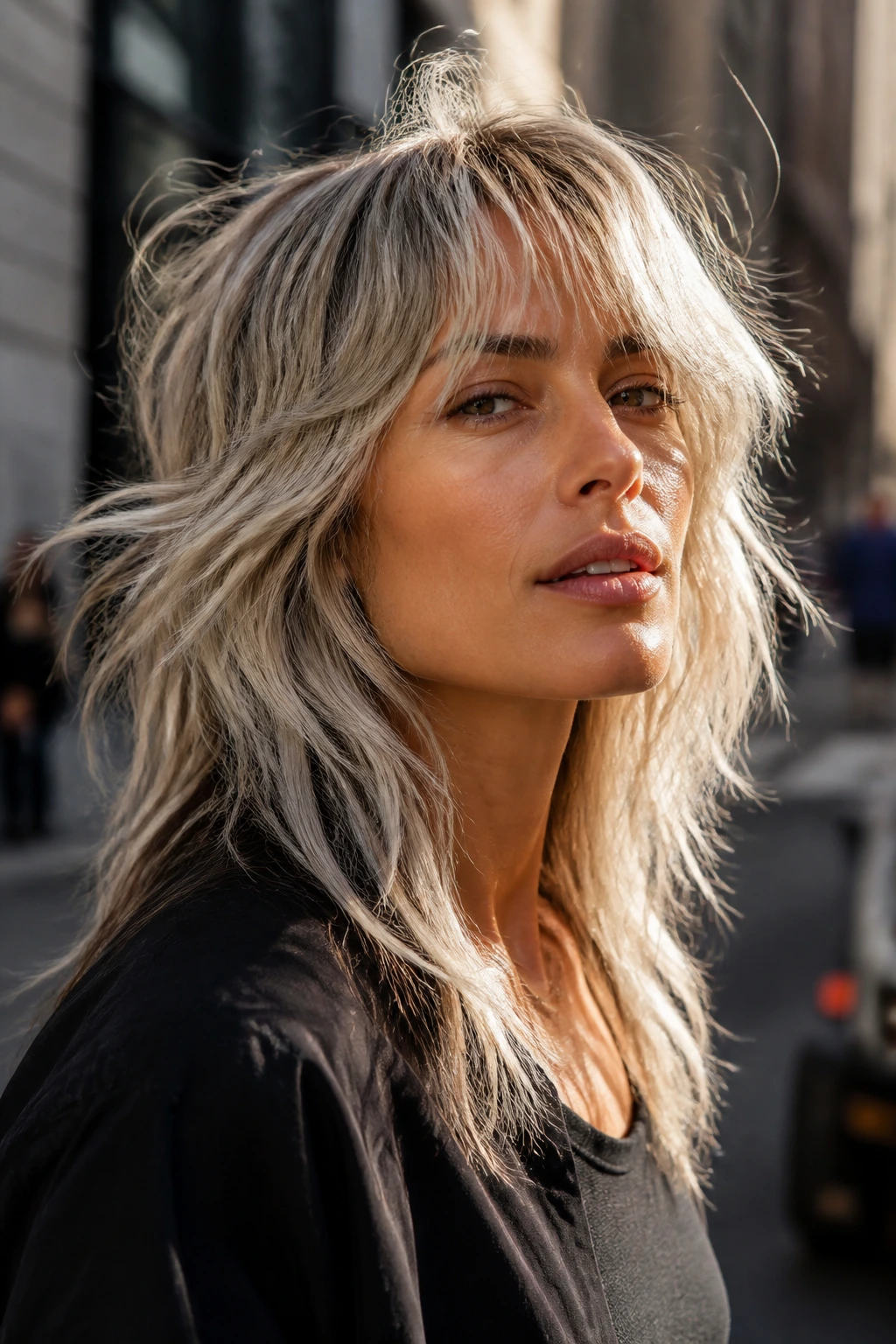
A wolf cut gives icy blonde a little grit, and that grit helps on warm skin. The heavy texture, broken fringe, and choppy layers keep the pale color from reading as one solid sheet. Instead, the blonde moves in chunks, which is far easier on a face with golden or peach undertones.
Why the Mess Works
The smoke-platinum tone should lean a touch gray-beige rather than white-white. That softer cool note lets the cut keep its edge without turning icy in a cold, flat way. If your hair is thick, this is a smart shape because it removes weight and still gives you room for brightness.
A little dry texture spray is enough. Don’t over-polish it. The wolf cut is happiest when it looks like it was styled in five minutes and survived a windy day.
18. Straight Long Hair with Hazy Lowlights
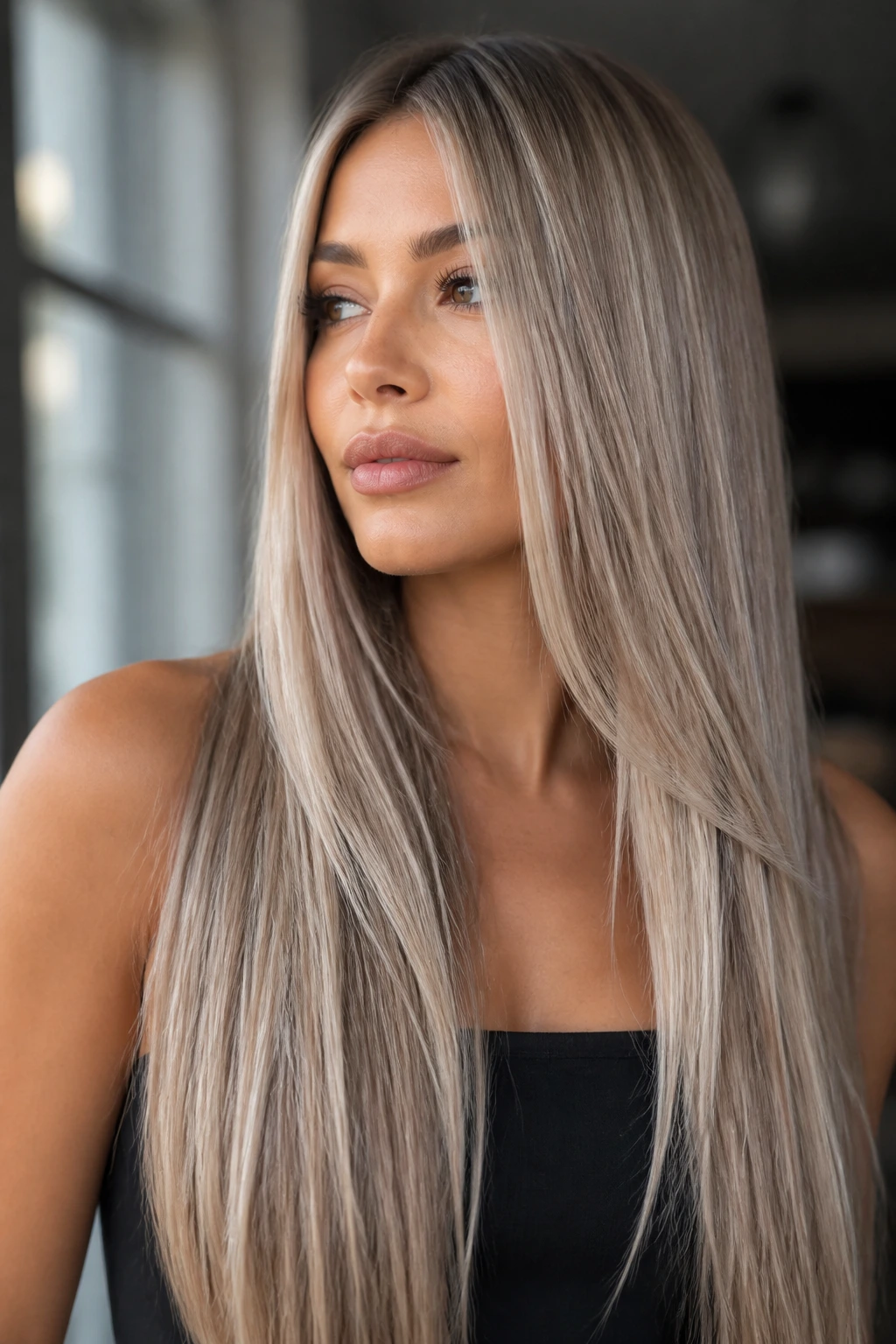
Straight long hair can be unforgiving, so the color has to do some of the heavy lifting. Hazy lowlights tucked under the top layer give icy blonde a cushion, which is useful when the skin is warm and needs a softer transition near the face. The result is long, sleek hair that doesn’t glare.
Clean, But Not Harsh
This is the style for someone who likes long lines and wants the blonde to feel calm. The lowlights stop the lengths from flattening out in daylight, and the straight finish makes every tone shift visible in a controlled way. That visibility is useful if you want a refined result instead of a beachy one.
A middle part or a very soft off-center part both work. Skip heavy serums near the roots. Keep the shine through the mids and ends where the light catches.
19. Flip-Out Lob with Frosted Ends
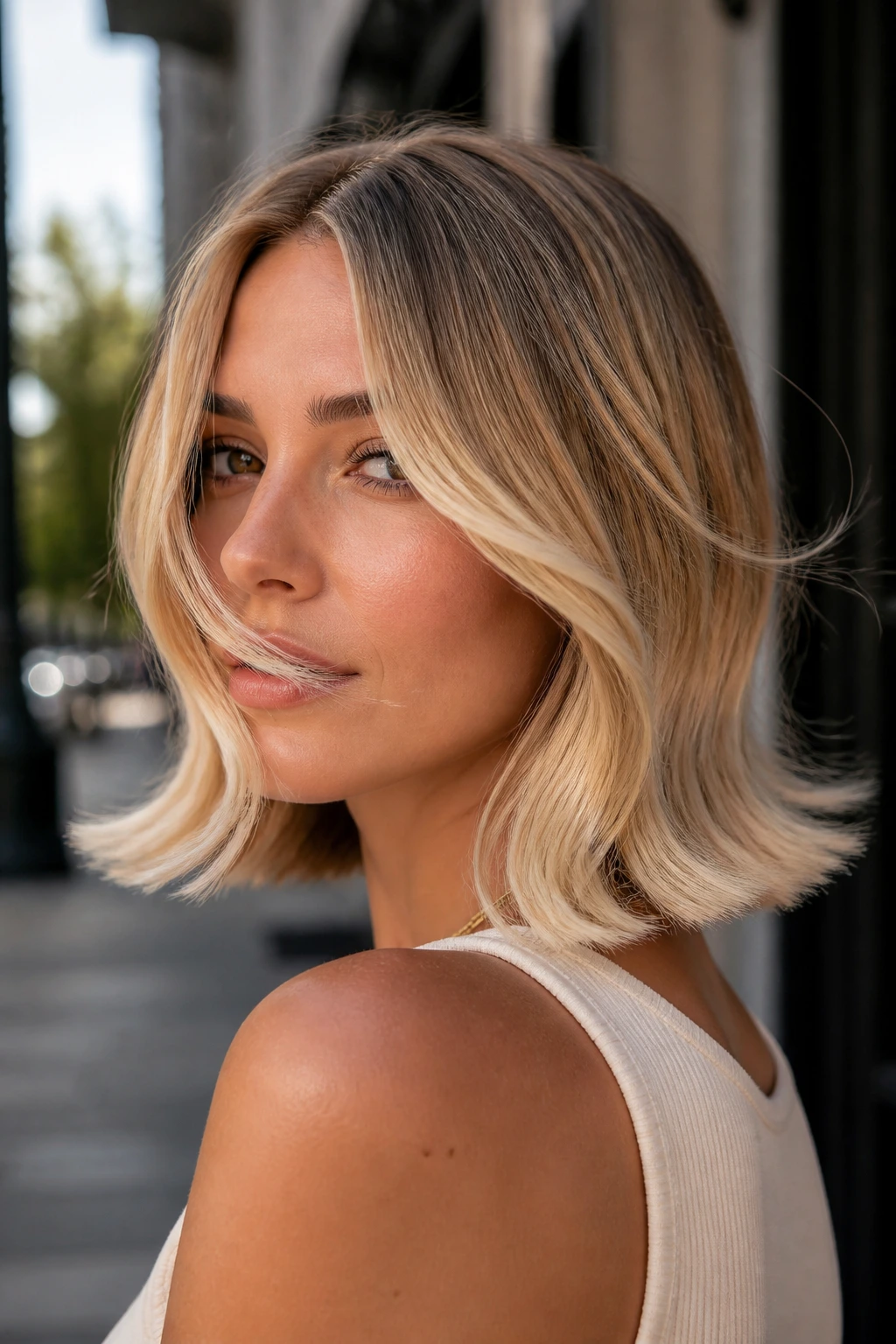
A flip-out lob has a retro edge that makes icy blonde feel lively. The flipped hemline keeps the cut from looking too plain, and the frosted ends pull the eye down so the face doesn’t get overwhelmed by bright color near the scalp. On warm skin, that little bit of structure helps a lot.
The Small Shape Change That Matters
A rounded brush or a flat iron flip at the ends is enough. You don’t need giant 60s volume. The point is to make the shape visible. When the ends kick out, the blonde gets a little bounce, and that bounce keeps the color from feeling static.
This is a good cut if your hair has a tendency to lie flat. The flip gives it personality fast, and the icy tone keeps it modern instead of nostalgic.
20. Side-Part Hollywood Waves with Deep Root Shadow
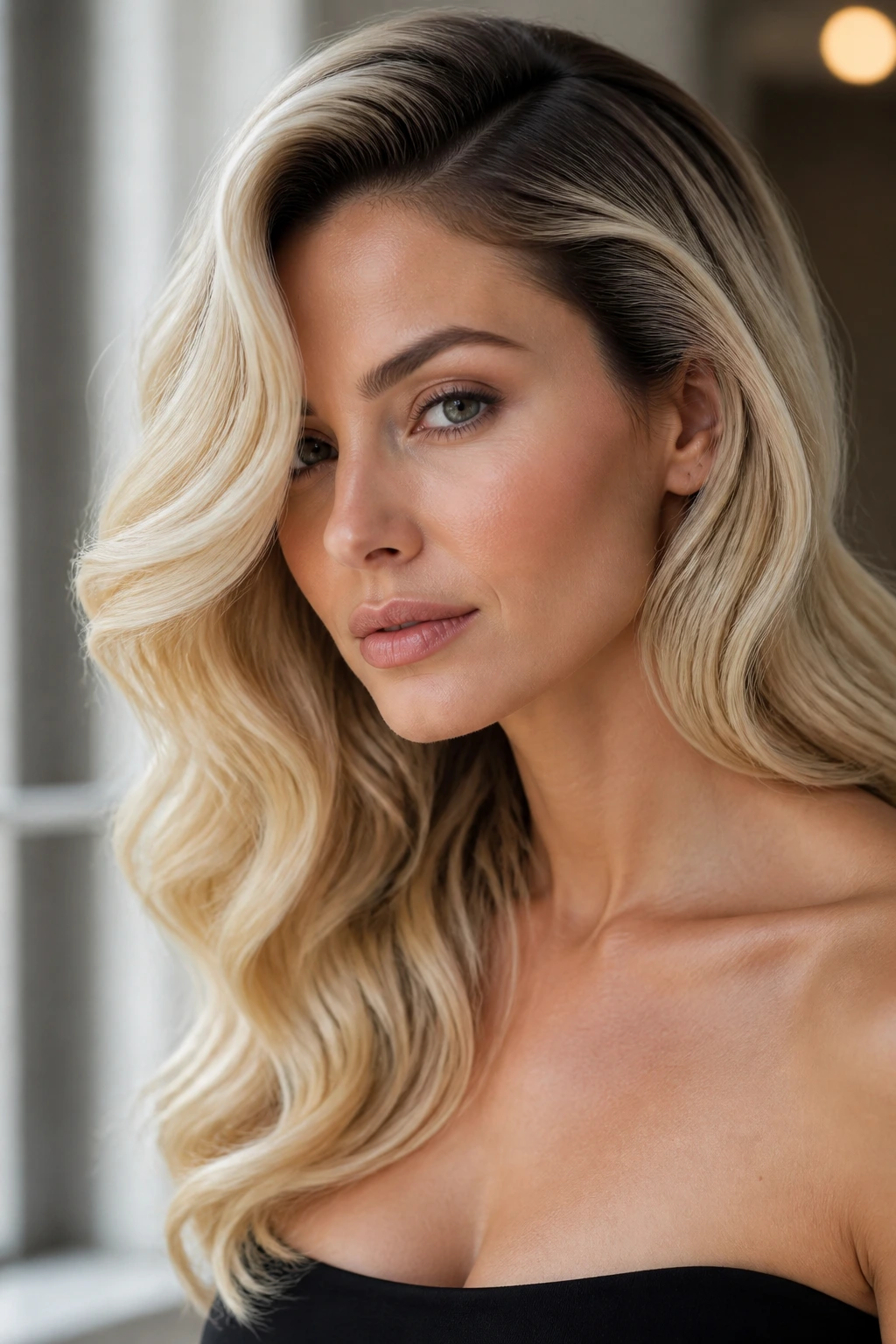
A side part and polished waves are dramatic in a way that icy blonde can use. Warm skin often looks better when the color is paired with strong shape, because the contrast feels purposeful. A deeper root shadow under Hollywood waves keeps the blonde from becoming one pale mass.
Why This Version Feels Luxe
The side part creates asymmetry, which is flattering on a lot of face shapes, especially if you want the cheekbones to show a little more. The waves should be smooth and big, not tight. That scale gives the icy pieces a glamorous finish instead of a frozen one.
I’d keep the hairline softer here, maybe with a few baby pieces around the temple. That stops the look from getting too severe and keeps the warm skin from disappearing behind the color.
21. Feathered Mid-Length Cut with Airy Icy Ribbons
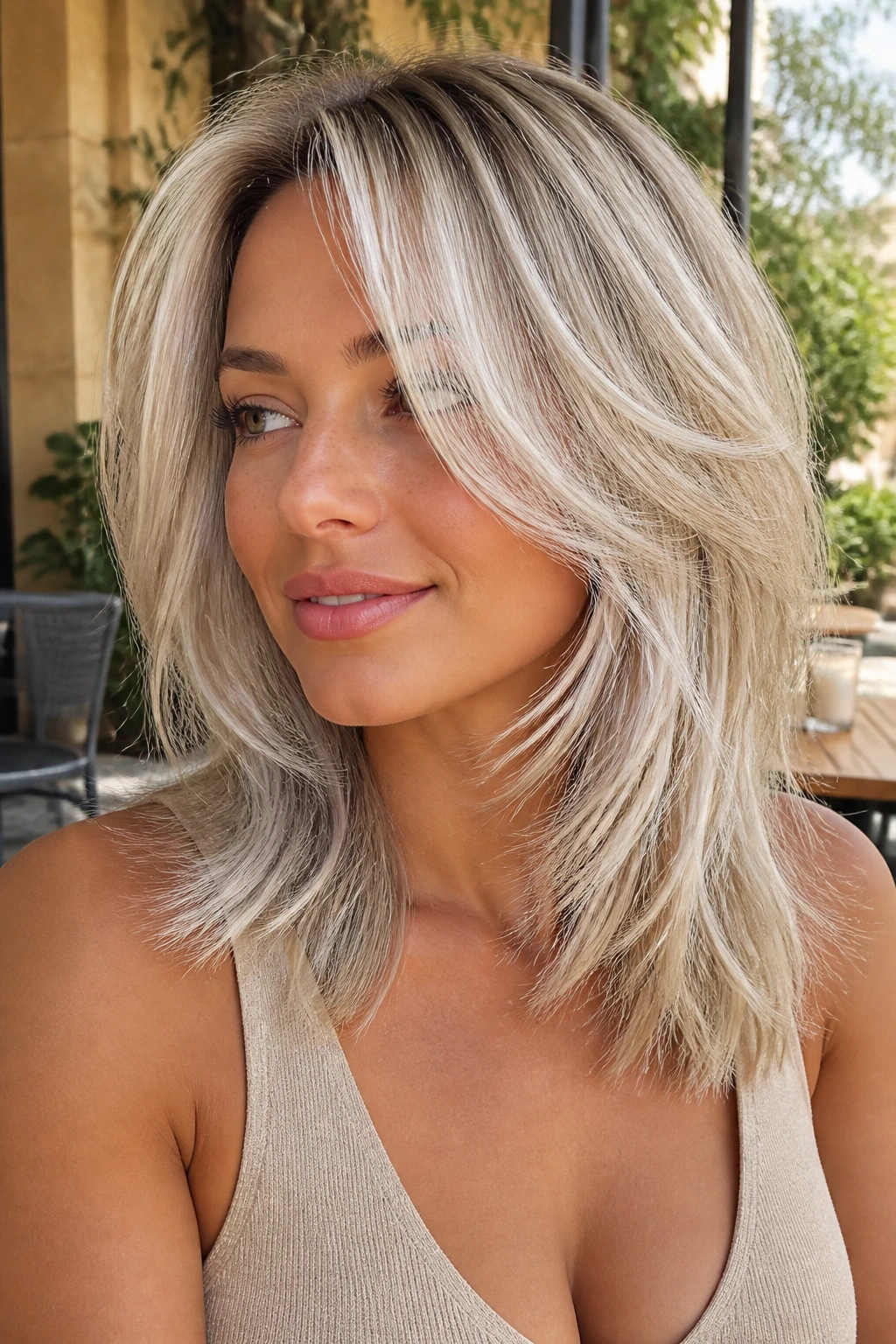
Feathering is underrated. It breaks up the outline of the haircut, and that means the blonde can move in lighter, smaller sections instead of one thick sheet. Warm skin usually looks more alive with this kind of cut because the hair feels lighter around the face.
A Cut That Doesn’t Ask for Much
The ribbons of icy blonde should be distributed through the mid-lengths and front, with a slightly softer finish underneath. That keeps the hair from puffing out. If your hair is medium density, this can be one of the most forgiving shapes on the list.
A round brush and a touch of mousse at the roots are enough to keep the feathering visible. The style should feel airy, not fluffy. There’s a difference, and it matters.
22. Textured Crop with Micro Fringe
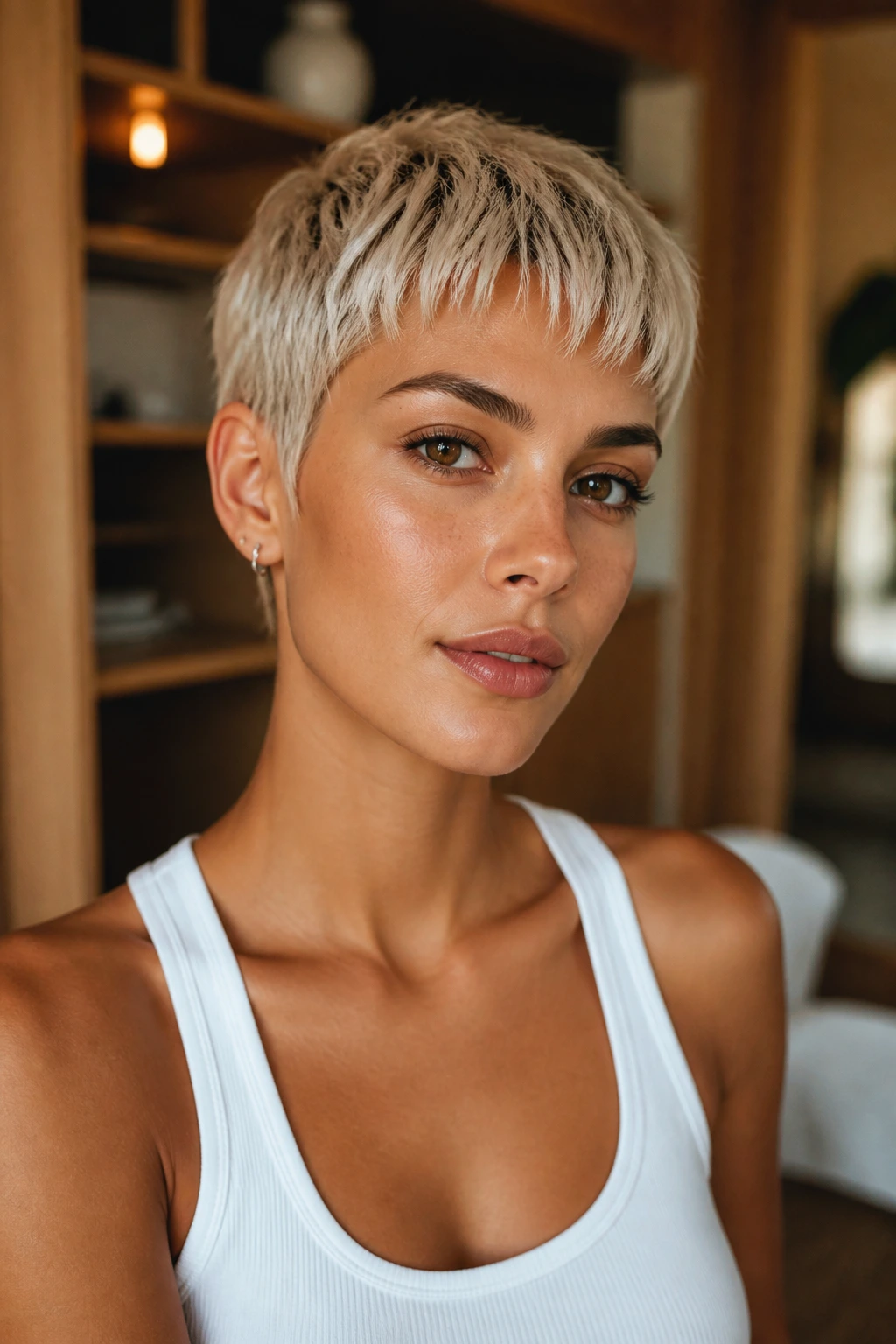
A textured crop is sharp, modern, and surprisingly kind to warm skin if the blonde is placed carefully. The short length gives the color confidence, and the micro fringe puts focus on the eyes and brows instead of flooding the whole face with light. That balance can be excellent on golden undertones.
Keep the Root Slightly Deeper
This style wants a little root shadow and a lot of texture through the top. The crop looks best when the hair isn’t too smooth, because the texture keeps the icy shade from feeling sterile. If you’ve got fine hair, this cut can make it look denser with less product than people expect.
Use a matte paste or a light cream. Too much shine erases the choppy detail, and the choppy detail is the thing that makes this cut work.
23. Waterfall Braid with Platinum Threads
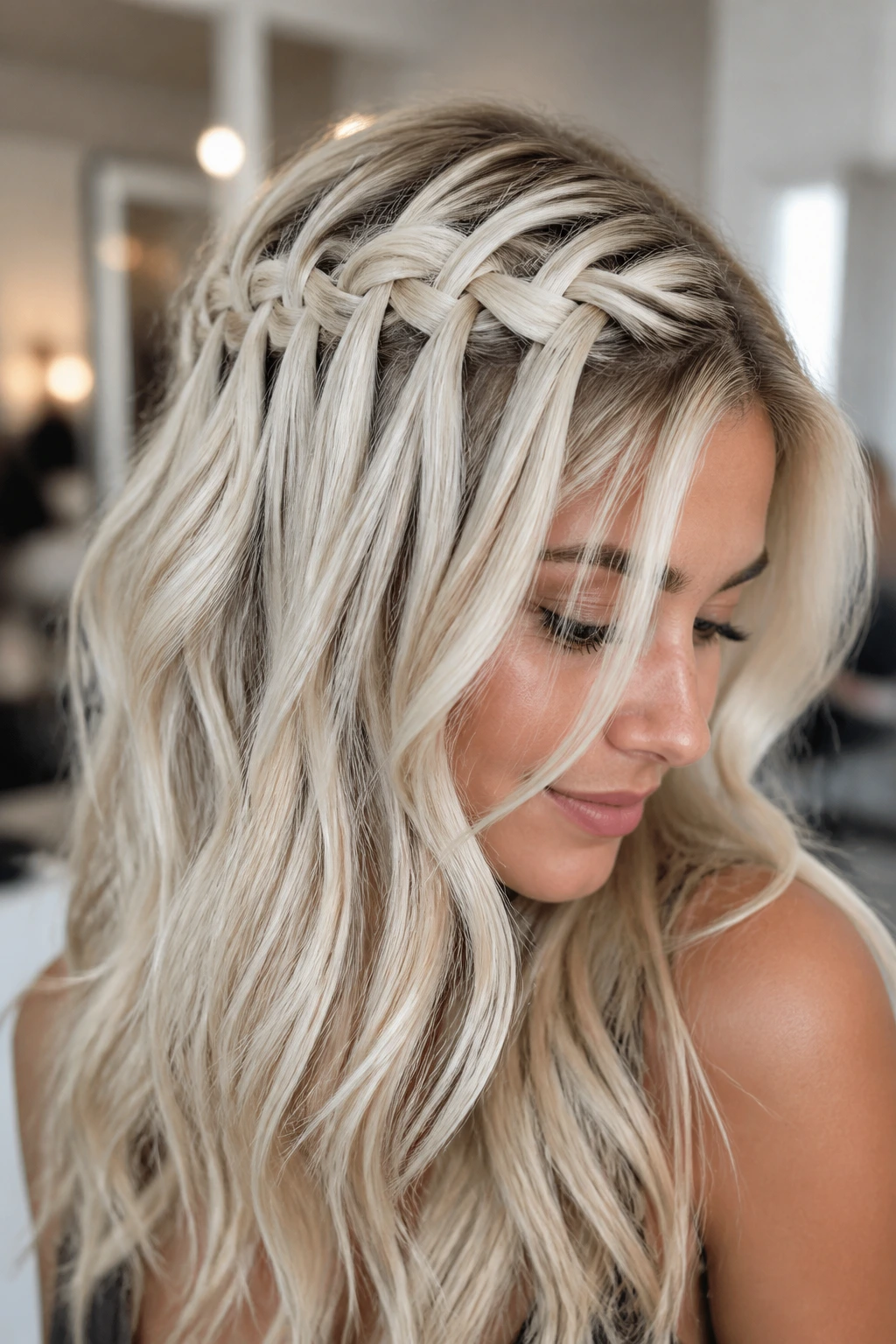
A waterfall braid is one of those styles that turns icy blonde into an actual design. The loose pieces falling through the braid show off different tones at once, and warm skin benefits from all that movement around the face. It’s not a style that sits still. That’s the point.
Best for Special-Occasion Hair
Platinum threads woven through the braid make the lightest pieces visible without needing a full head of white blonde. If your hair has dimension, this style will show it. If your blonde is one-note, the braid can still work, but it looks better when there’s a bit of depth underneath.
Keep the braid loose enough that the texture stays soft. Tight braids can pull the color into a harder line than you probably want.
24. Low Chignon with Bright Veil Pieces
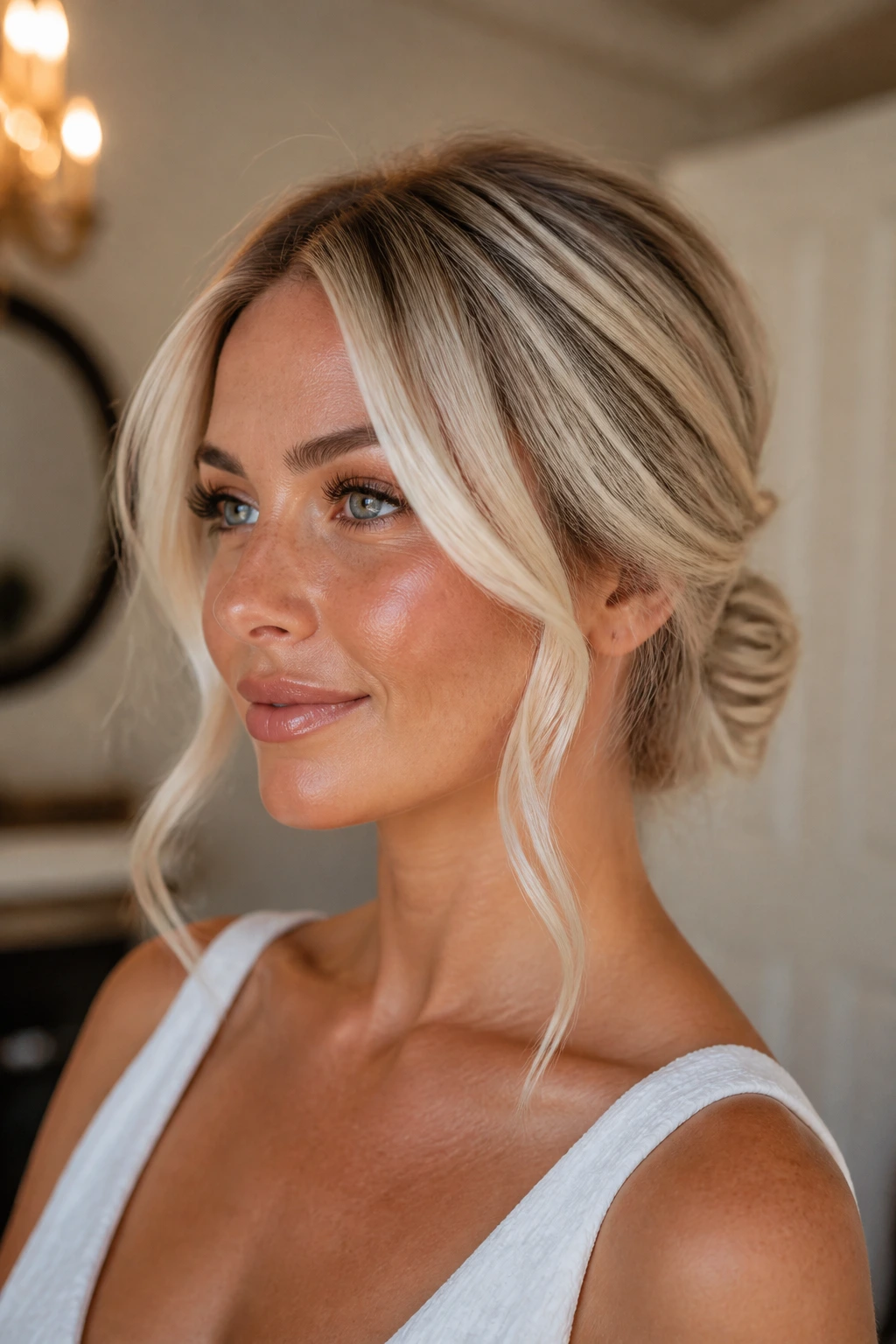
A low chignon can look severe if every strand is pinned back, so I prefer it with a veil of bright pieces at the front. Those front strands are the part that saves the style for warm skin tones. They let the icy color frame the face without freezing it in place.
Elegant, Not Stiff
The bun should sit low and smooth, with enough softness around the ears that the style doesn’t feel tight. A little root lift at the crown keeps the head shape pretty. If the hair is too flat, the pale color can wash out the profile. Tiny detail, big difference.
This is a strong option for events where you want the blonde to look polished and the skin to keep some warmth. It’s cleaner than loose curls, but not nearly as severe as a slicked-back knot.
25. Long Layers with a Silver-Tea Root Shadow
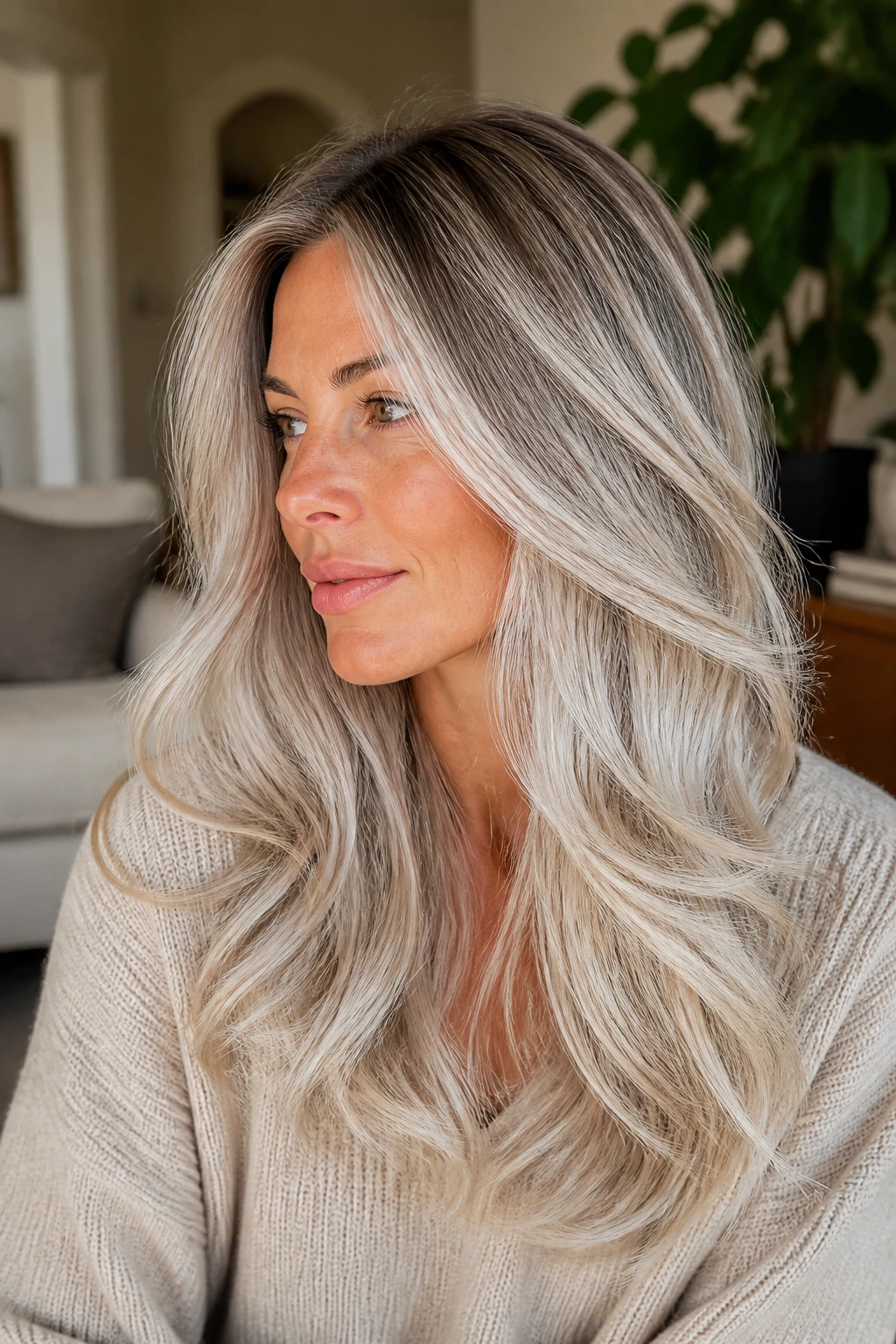
If I had to pick one icy blonde version that feels the easiest to wear on warm skin, this might be it. Long layers give the color space to move, and the silver-tea root shadow adds enough depth to stop the blonde from flattening the face. It’s cool, yes. But not cold in a harsh way.
The Most Balanced Version in the Bunch
The longest pieces can stay nearly white through the ends, while the mids hold a softer pearl or beige-silver tone. That shift is what makes the look work. It keeps the eye moving from top to bottom instead of locking on a single shade of bleach.
Style it with loose bends or a smooth blowout. Either one works. What matters is that the layers stay visible, because the layers are doing the heavy lifting here.
How Icy Blonde and Warm Undertones Play Together
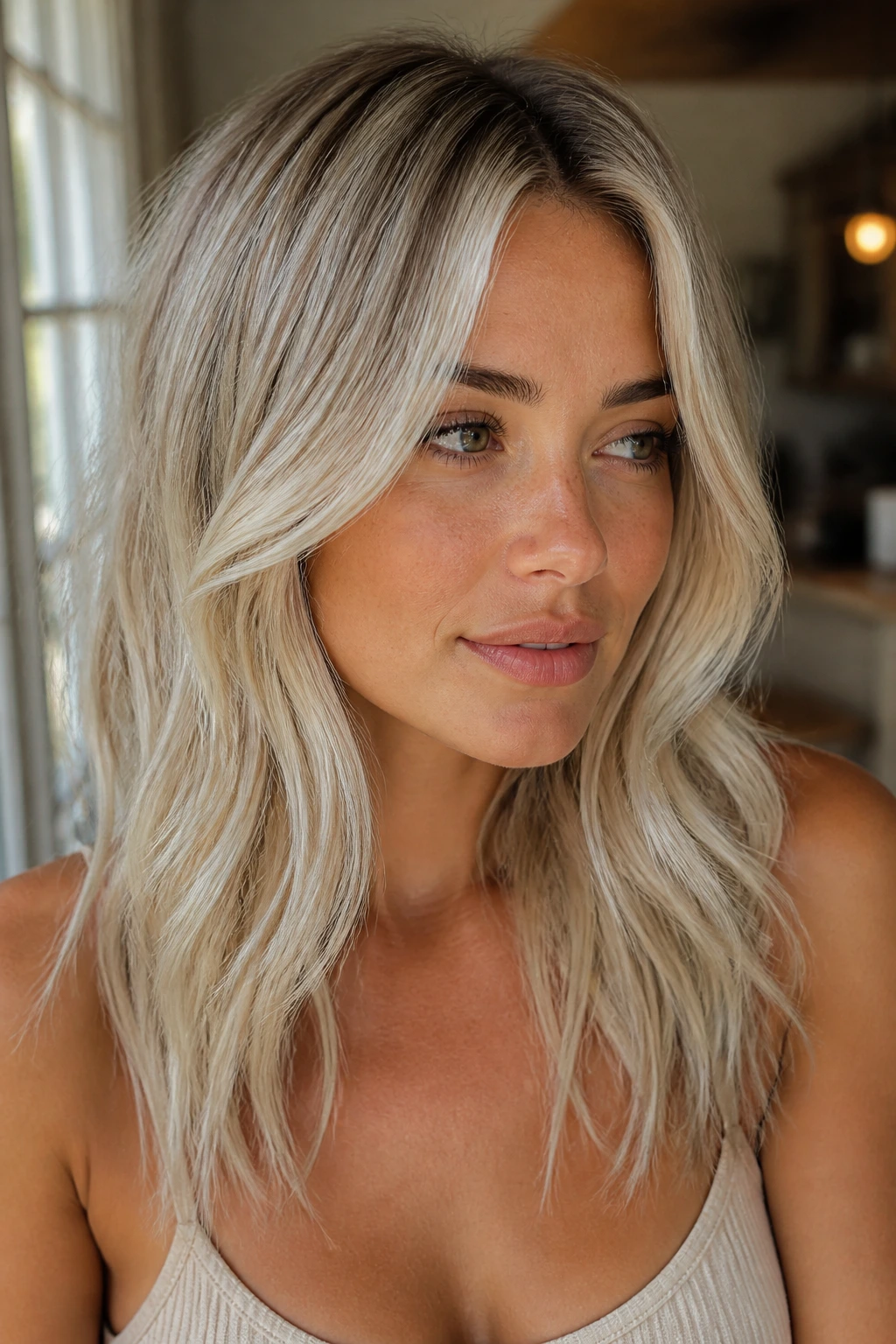
Warm skin does not need to avoid cool blonde. It needs a plan. A root shadow, a face frame that starts in the right place, or a cut with real movement can keep icy blonde from flattening out the complexion. That’s the part most people skip, and then they blame the shade instead of the placement.
The best versions usually leave a little depth somewhere. At the root. Under the top layer. Through the nape. Somewhere. When the blonde has a place to rest, it looks intentional and clean rather than pasted on.
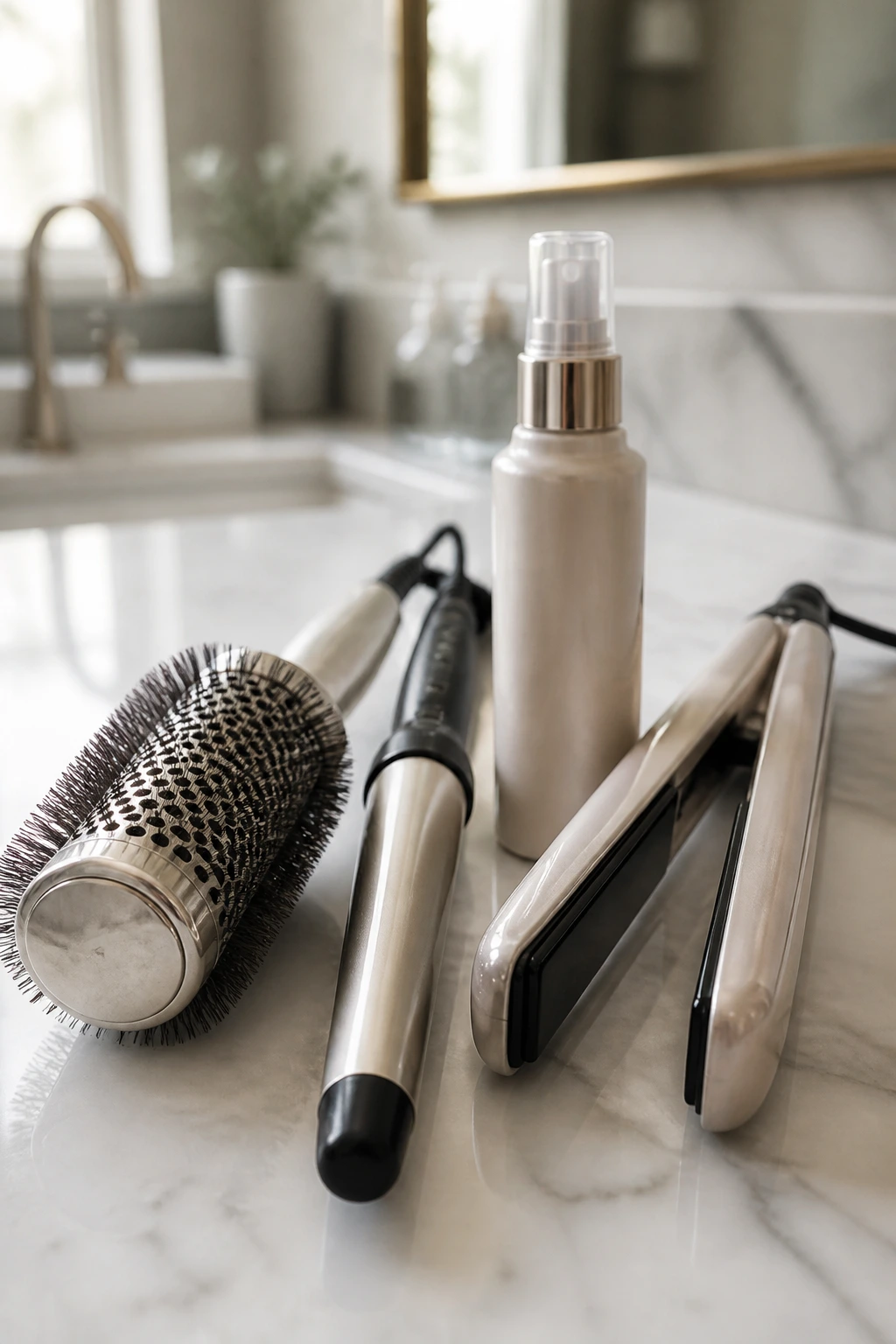
The Tools That Keep the Blonde Clean and the Style Shaped
-
Heat protectant spray: Use it before any flat iron, curling iron, or blow-dry. Lightened hair takes heat damage fast, and dry ends make icy blonde look dull.
-
Purple shampoo: Good for knocking back yellow tones, but don’t overdo it. Once every 2-3 washes is usually enough; leave it on for 1-3 minutes, not half the shower.
-
Bond-building mask: Helpful if your hair has been lightened more than once. Use it weekly or every other week, depending on how dry the hair feels.
-
Round brush: Best for bobs, lobs, bangs, and soft bends. A 2-inch brush gives smoother movement; a smaller one gives more flip.
-
1-inch curling iron or wand: Useful for defined waves, curled bobs, and smaller ribbon texture.
-
Flat iron with rounded edges: The better choice for sleek styles, polished ends, and gentle flips.
-
Blow dryer with concentrator nozzle: Helps keep the cuticle smoother, which makes the cool tone look cleaner.
-
Wide-tooth comb and section clips: Worth having for wet detangling and for keeping bleach or toner application neat if you’re doing salon-style prep at home.
How to Choose the Right Icy Tone for Golden, Peach, or Olive Skin
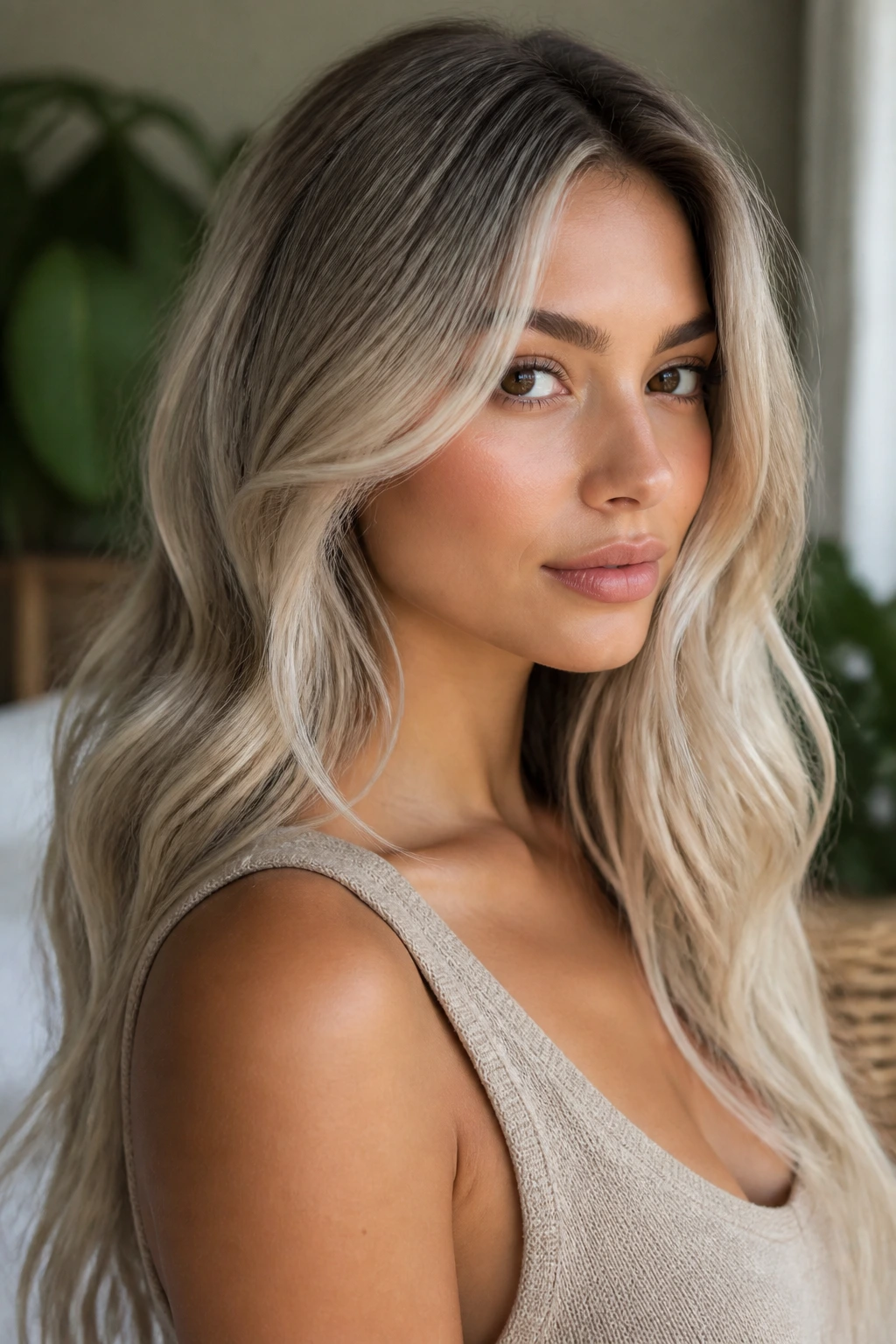
The shade itself matters, but not as much as people think. Warm skin usually looks better when icy blonde leans pearl, beige-ice, or silver-smoke rather than bright blue-white across the whole head. That softer cool note still reads frosty. It just doesn’t chew up the complexion.
Golden skin tends to like a little root depth and a brighter face frame. Peach skin usually does better with a soft pearl finish that doesn’t go too ashy around the cheeks. Olive skin can handle a cleaner cool tone, but it still needs dimension or the color can read flat and a bit chalky.
Bring photos, yes, but bring the right ones. Show your colorist the placement you like, not only the tone. A great icy blonde on a bob will not look the same on a waist-length cut, and the best salon conversations usually start there.
How to Wear These Looks So the Blonde Doesn’t Overpower You
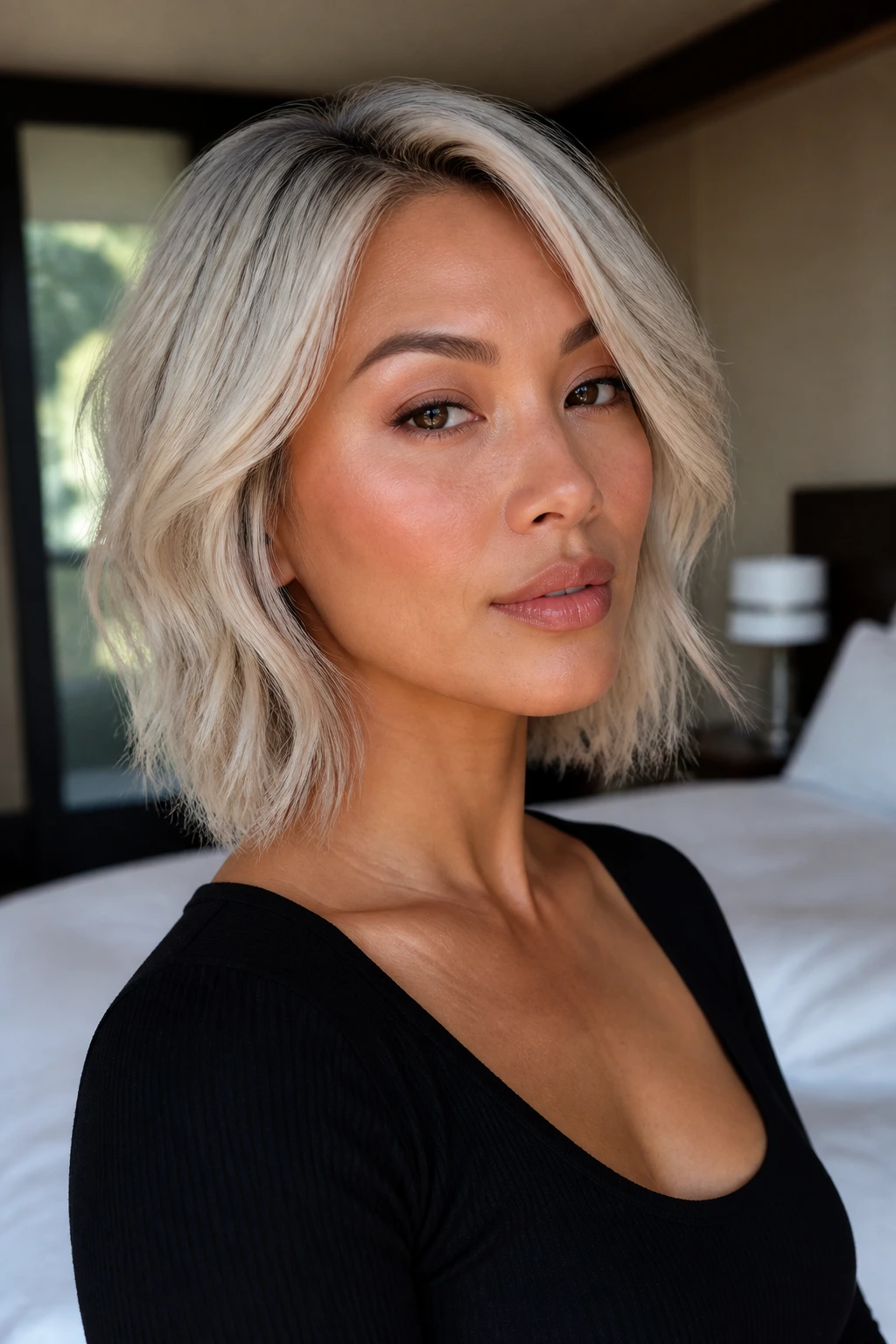
Placement: Keep the brightest pieces where the eye needs lifting most — around the cheekbones, crown, or ends, depending on the cut. If the hairline is too light and the rest is flat, warm skin can disappear under the contrast.
Wardrobe: Ivory, black, charcoal, deep navy, rust, olive, and rich brown all help icy blonde look deliberate. Pale yellow and washed-out beige can make the tone feel thinner. I like a clean black tee with bright blonde; it looks crisp without trying too hard.
Makeup: Peach blush, soft bronzer, brushed-up brows, and a nude lip with a little warmth usually beat gray lips and overdone contour. The hair is already cool. Let the face stay alive.
Accessories: Silver hoops, white gold, brushed metal, and clear frames tend to play nicely with the shade. Heavy yellow gold can work too, but it needs more intention. Otherwise it can pull the whole look warmer than you planned.
Extra Tips That Keep the Finish Sharp
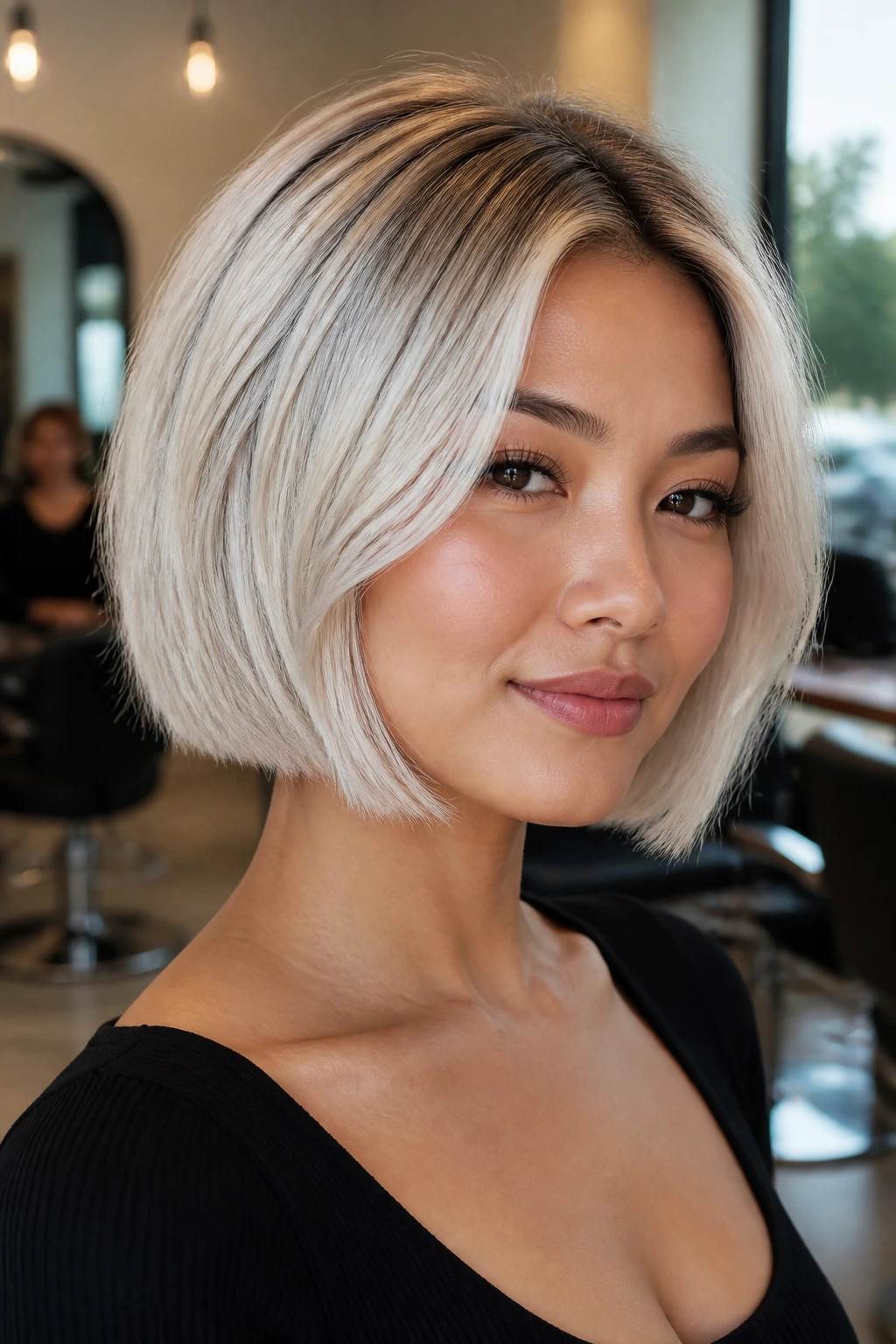
Gloss Trick: A clear or beige gloss every 4-6 weeks keeps icy blonde shiny without making it icy-white in a harsh way. Gloss is where a lot of blondes quietly get better.
Texture Trick: If the color feels too cold, add bends. Waves, flips, and feathered ends soften the visual temperature fast.
Face-Frame Trick: Brighten the pieces starting at the cheekbone or chin, not right on the scalp, if your skin reads very warm. That keeps the blonde from fighting your natural tone.
Make-It-Yours: Fine hair usually benefits from narrower highlights and soft layering. Thick hair can take chunkier ribbons, deeper root shadow, and stronger shape. Curly hair usually looks best when the icy blonde follows the curl pattern instead of sitting on top of it like paint.
Finish Trick: A tiny bit of serum on the ends, not the roots, keeps the pale pieces glossy without flattening volume.
Common Mistakes That Make Warm Skin Look Washed Out
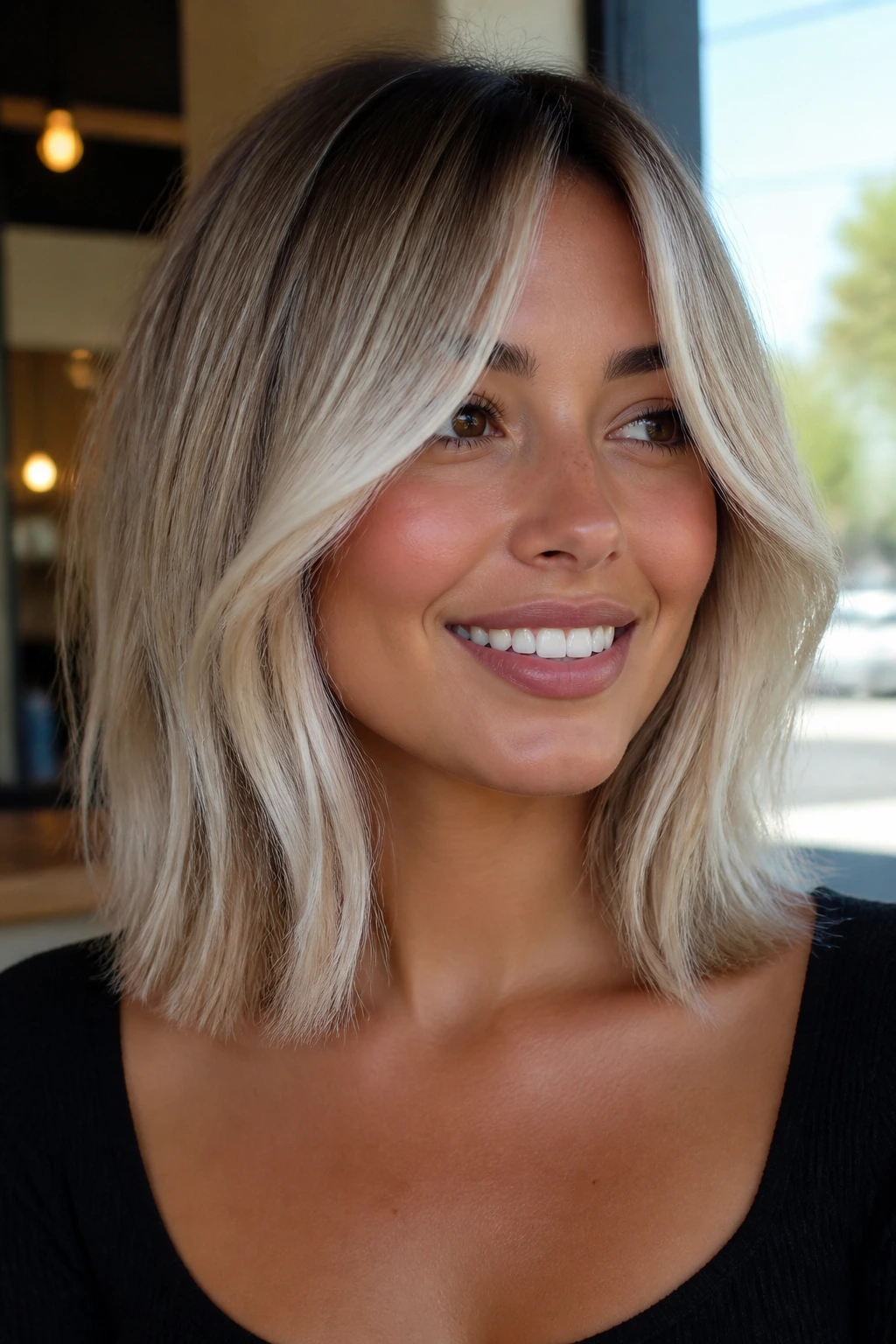
Going white from root to tip: That’s the fastest way to make warm undertones look flat. If every inch is the same icy level, the face has nowhere to breathe. Fix it with a root shadow or a softer glaze through the mids.
Using too much purple shampoo: The hair starts to look dull, dusty, or slightly lavender-gray. Use it sparingly, rinse well, and follow with moisture. Purple shampoo is a tool, not a lifestyle.
Skipping shape: Straight, hanging hair with a cold tone can turn severe fast. Add a bob, layers, waves, or even a soft bend at the ends so the color has movement.
Blowing out the hairline with bleach: Brightest pieces right against warm skin can make redness or unevenness more obvious. Move the lightest blonde just a touch away from the edge of the face.
Ignoring heat damage: Dry ends make icy blonde look brittle, and brittle blonde never looks expensive. Use heat protection every time, and cut off split ends before they travel.
Variations and Adjustments to Try
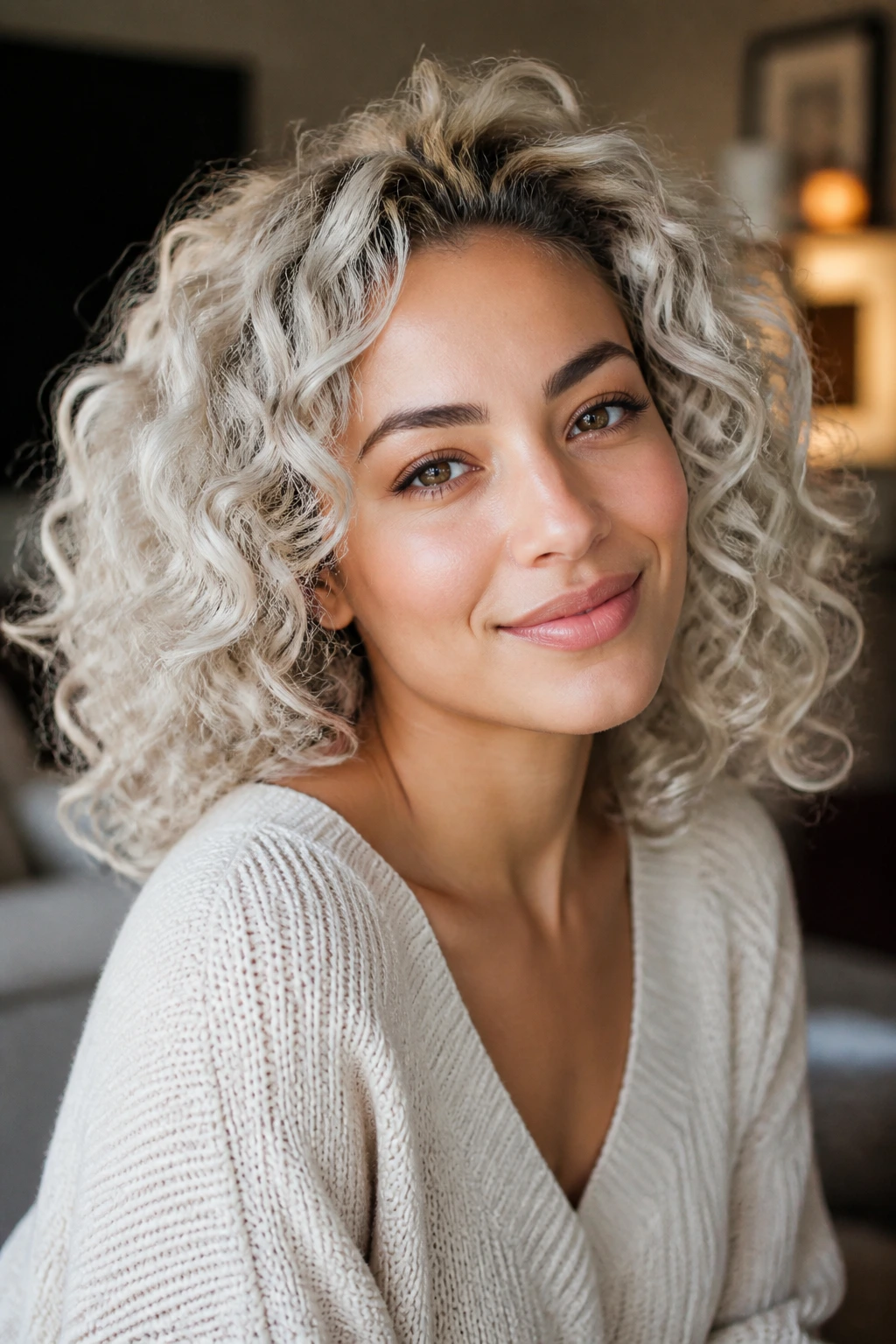
Golden-Skin Pearl Blonde: Keep the icy tone closer to pearl than silver and leave a soft beige shadow at the root. This version is kinder if your skin runs very golden and you still want the cool look.
Olive-Skin Smoke Blonde: Use a smoky root melt and cooler ribbons through the mids, but avoid over-toning the whole head to one flat silver. Olive skin usually likes the contrast, not the chalk.
Fine-Hair Feather Blonde: Ask for thinner highlights and airy layers so the blonde looks dimensional instead of sparse. Fine hair can lose body fast if the lightened sections are too chunky.
Thick-Hair Ribbon Ice: Chunkier face-framing pieces and stronger internal lowlights help thick hair hold shape. This version keeps the color lively instead of turning into one giant pale mass.
Curly-Icy Dimension: Keep the curl pattern intact and place the lightest pieces where curls naturally turn toward the face. A curl that’s colored with its shape in mind always looks better than one that’s been forced straight in the salon chair.
Low-Maintenance Root Melt: If you don’t want frequent touch-ups, choose a deeper root and brighter ends. It grows out cleaner and gives warm skin a little more softness near the scalp.
Keeping the Tone Cool Between Salon Visits
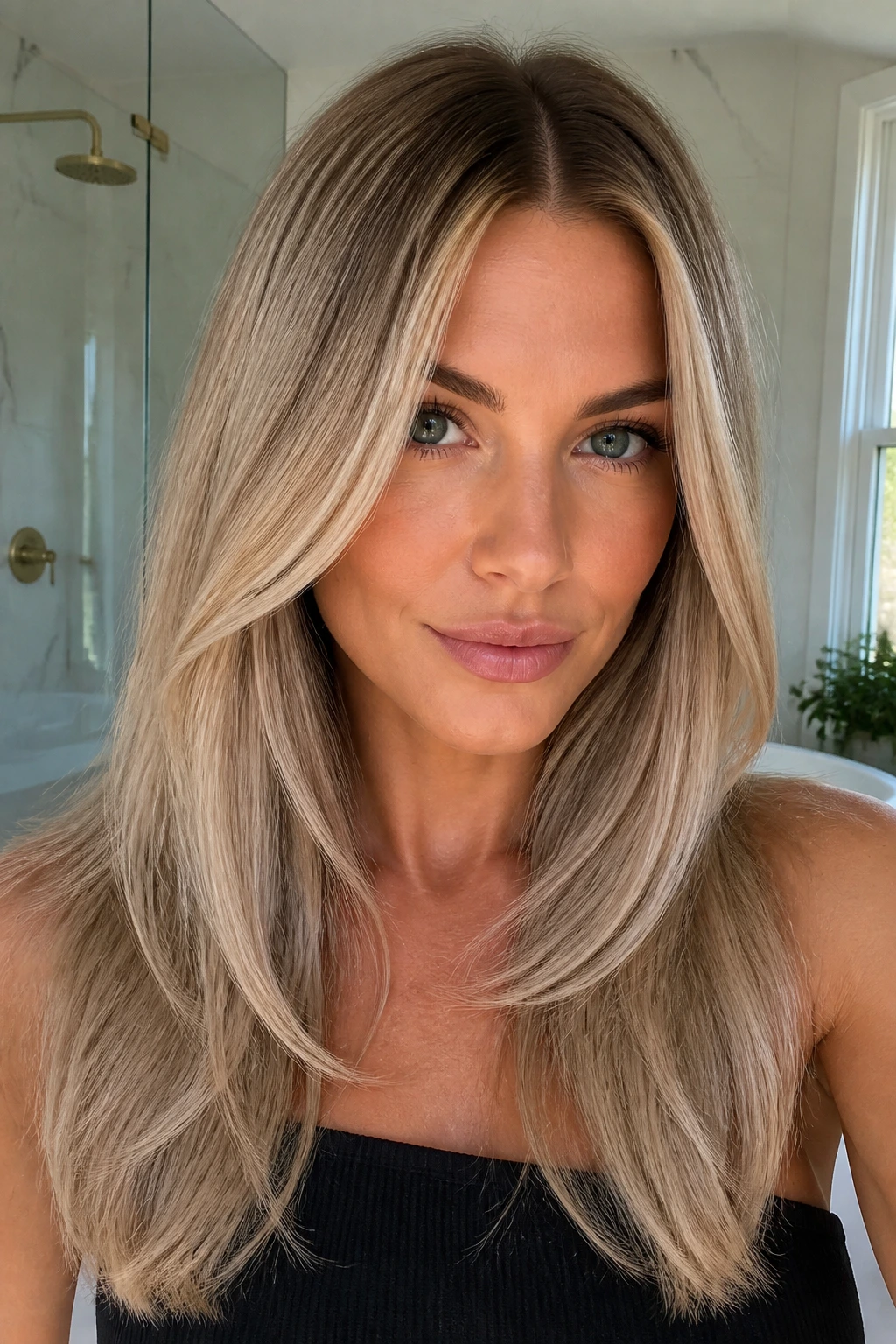
Wash less often if you can manage it. Two to three shampoos a week is plenty for most lightened hair, and it gives the toner a longer life. Use lukewarm water, not hot; hot water opens the cuticle and helps the color slip away faster.
Purple shampoo works best as a maintenance tool every second or third wash. Leave it on for one to three minutes, then rinse thoroughly. If the hair starts feeling stiff or smoky, back off. That means the blonde is getting too matte.
A gloss or toner refresh every 4-6 weeks keeps the color from turning yellow at the edges. Root touch-ups usually land somewhere around 6-10 weeks, depending on how much contrast you like and how fast your hair grows. If your hair is porous, a weekly mask is not optional. It’s the difference between cool shine and dry haze.
Questions People Ask About Icy Blonde on Warm Skin
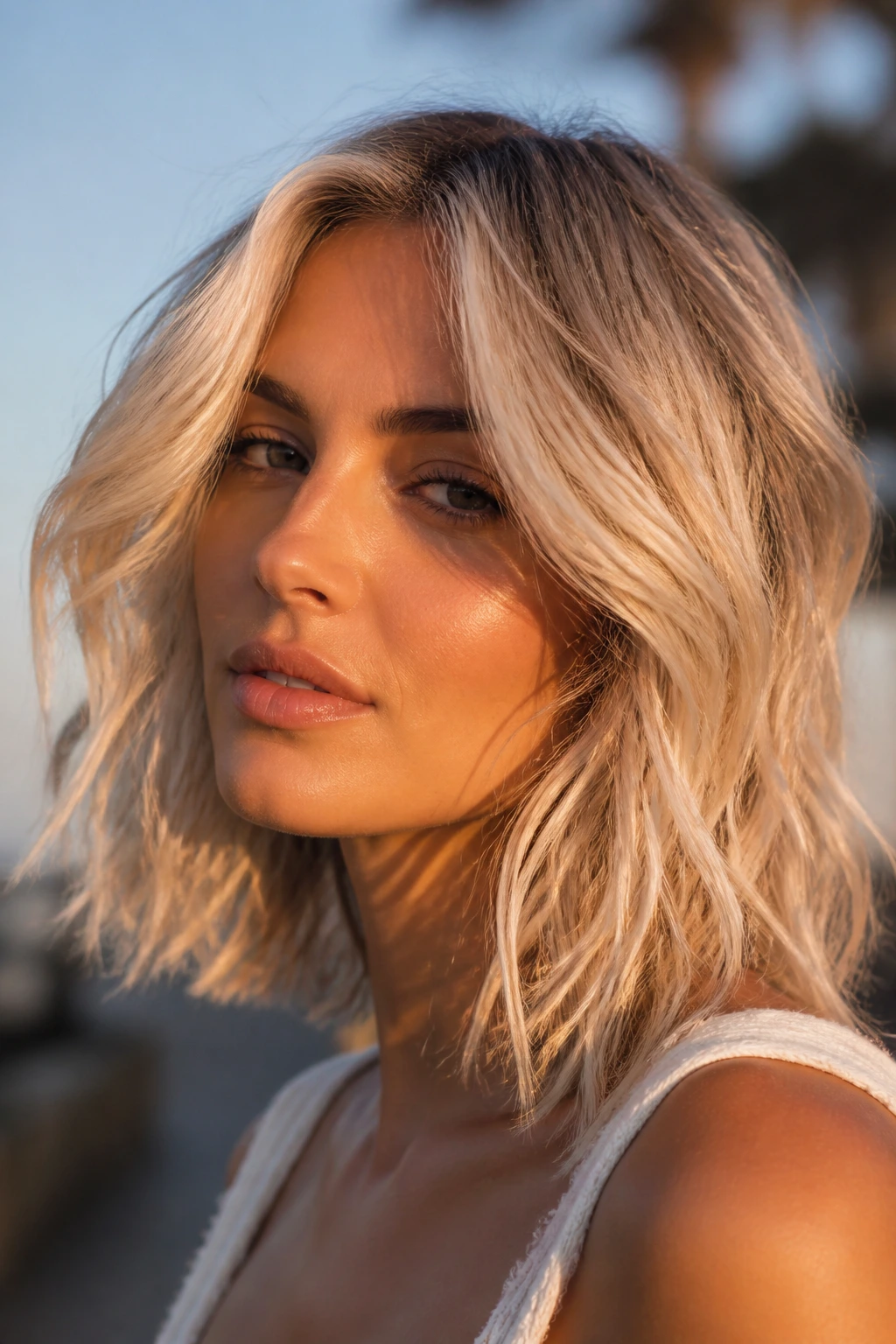
Can warm skin tones wear icy blonde without looking washed out?
Yes, if the cut and placement are doing some of the work. A root shadow, a face frame, or a textured shape keeps the blonde from flattening the complexion.
Is beige blonde better than icy blonde for warm undertones?
Beige is easier, but icy blonde can look sharper and more modern. The best choice depends on how much contrast you want and how bright you’re willing to go near the face.
How dark should the root shadow be?
Usually one to two levels deeper than the lightest blonde is enough. You want depth, not a strip of brown at the scalp.
What if my blonde turns yellow fast?
Use a purple shampoo once a week at most, keep heat low when you style, and ask for a gloss between major appointments. Yellow usually shows up faster when the hair is dry or overexposed to heat.
Can curly hair wear icy blonde on warm skin?
Absolutely. Curly hair often looks better with icy blonde than pin-straight hair because the curl pattern breaks up the brightness. Ask for the lightest pieces where the curls frame the face.
Which cut is easiest to maintain?
A lob with soft waves or a rooted bob tends to be easier than ultra-long platinum hair. Shorter shapes usually need less daily styling and less product to keep the tone looking clean.
Will silver makeup or cool-toned clothes help?
Sometimes, but don’t overdo the cool palette. A warm skin tone still needs warmth in the face — a peach blush, soft bronzer, and neutral lip color usually work better than a fully cool makeup look.
Should I avoid full platinum if I have a warm complexion?
Not necessarily, but full platinum asks for sharper maintenance and better styling. If you want the look without the constant upkeep, a partial icy blonde placement usually wears better.
Frost That Fits
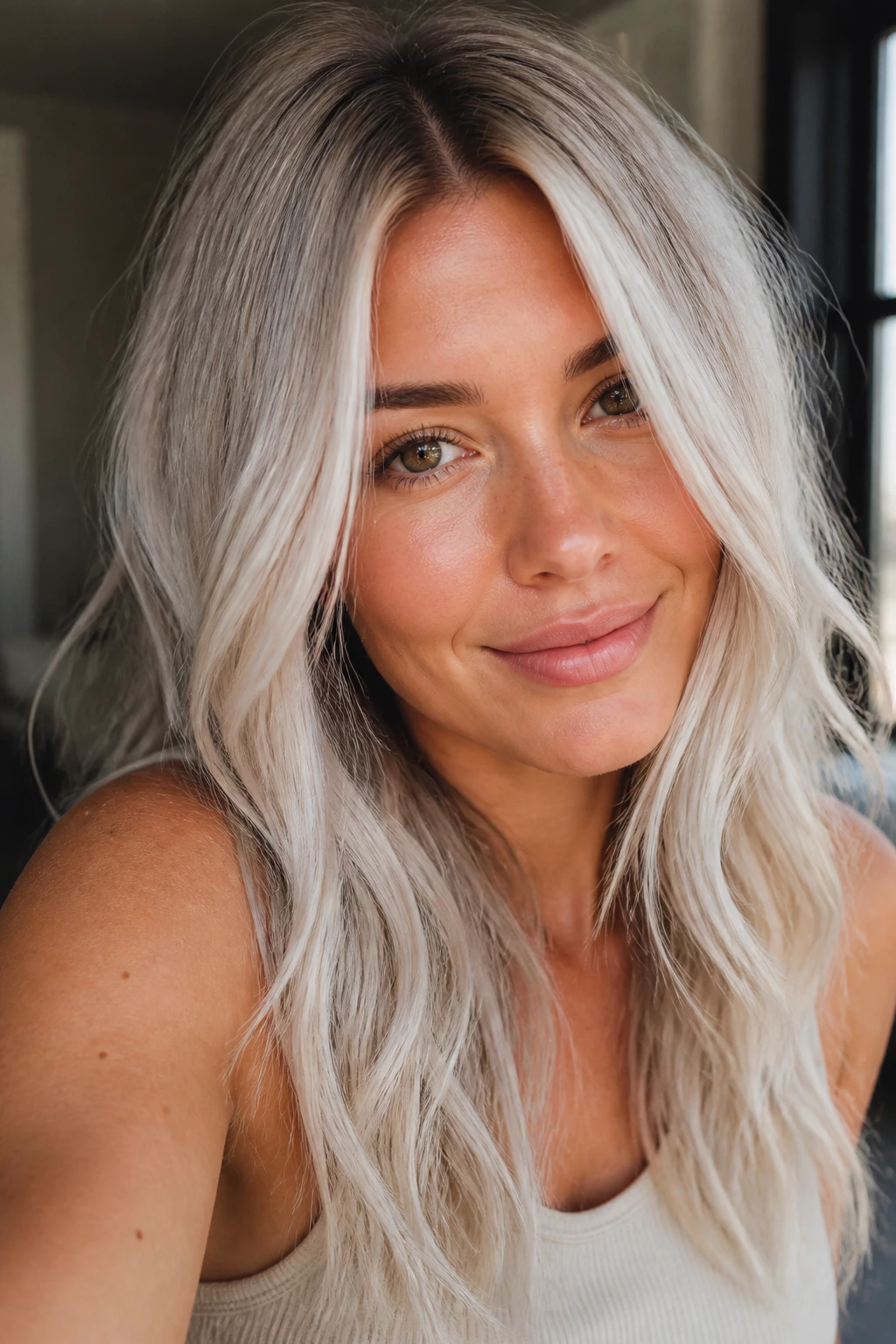
The strongest icy blonde looks for warm skin tones are the ones with some depth left in the hair. Not much. Just enough. A little root shadow, a cut with movement, and a brighter piece placed where it can lift the face without bleaching out the whole front.
That’s the real trick behind all 25 styles here. They don’t try to erase warmth. They work with it, then give it something cool and crisp to bounce against. If you choose the shade with the cut in mind, the whole thing starts to look deliberate — and that’s where icy blonde gets good.