



Dark hair can wear strawberry blonde, but only when the color is handled like a whisper instead of a shout. On brunette bases, the prettiest results usually come from thin ribbons, soft glazes, and placement that lets warm light do the heavy lifting. Push the tone too hard and it slides into orange. Keep it restrained and you get that glossy peach-copper glow that looks expensive in daylight and even better when the hair moves.
That’s why subtle strawberry blonde hairstyles for dark hair are so useful: they give you warmth without erasing your natural depth. The dark base stays in charge. The strawberry tone just threads through the cut — around the face, through the ends, in a few carefully chosen panels — so the whole look feels dimensional instead of flat.
I’ve always preferred this family of color to a full red transformation on brunettes. A little copper-gold sheen against deep brown hair can do more than a loud, saturated red ever could, especially if your hair is layered, wavy, curly, or cut into a blunt bob that needs softening at the edges. The looks below stay on the wearable side: apricot, cinnamon, rose-gold, warm honey, and copper-tinted blonde rather than neon red or stripey highlights. Let’s get into the shades that actually make dark hair glow.
Why These Strawberry Tones Work So Well on Dark Hair
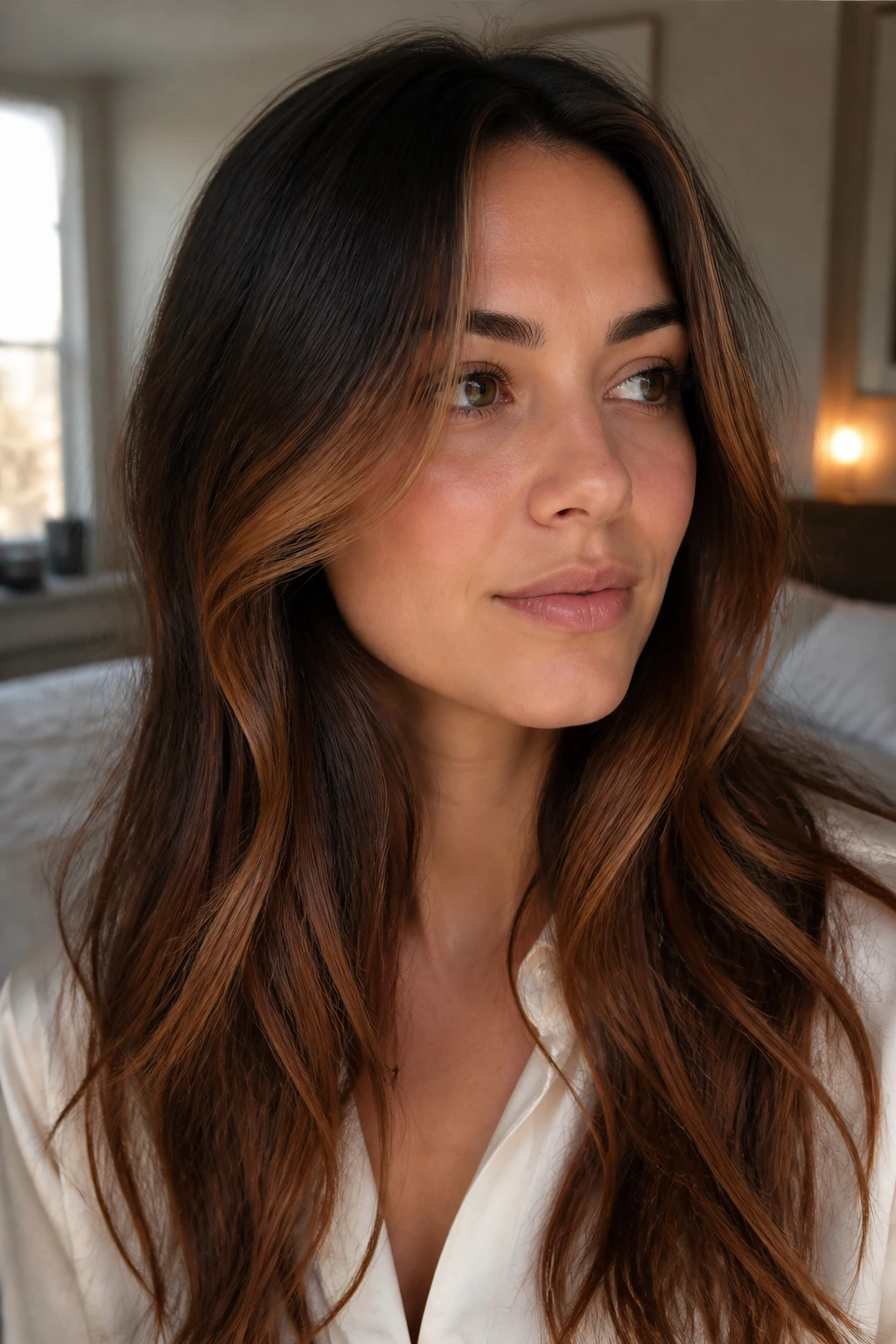
Low-contrast placement: Thin ribbons and face-framing pieces keep the strawberry tone from fighting with the brunette base, which is where a lot of DIY color goes wrong.
Warmth without a full bleach commitment: Many of these looks can be done with partial lightening and a gloss, so the result stays softer than a full blonde job.
Movement matters: Waves, curls, and layered cuts make the color read as dimensional, not streaky, because the warm pieces catch light as the hair shifts.
Grow-out is kinder: Because the color is scattered or shadowed at the root, you’re not left with a hard line two weeks later.
Easy to tune up or tone down: A colorist can make the strawberry note more peach, more copper, or more rose just by changing the gloss and placement.
1. Cinnamon Money Piece
A cinnamon money piece is the kind of front-of-hair color that makes dark brown hair look awake before you’ve even curled it. The pieces sit around the face, usually one to two shades lighter than the base, with a copper-caramel wash that leans strawberry instead of red.
Why it works on dark hair
The front section gets the most light, so you can go a touch brighter there without the whole head needing a heavy lift. I like this one on long layers and curtain bangs because the warmer strands fall where people actually look first. The rest of the hair stays deep, which keeps the look from tipping into costume territory.
If you want the strawberry note to stay subtle, ask for a soft level 7 to 8 lift and a warm gloss, not a copper formula that screams from across the room.
2. Rose-Gold Balayage Ends
Do you want warmth without the face-framing drama? Rose-gold ends are the quiet answer. The color is painted low and soft through the mid-lengths and tips, where the darker root keeps the look grounded.
What makes it different
This style works especially well on medium to long dark hair because the lighter ends move like satin when you wear waves. The rose tone keeps the blonde from looking beige or too sunny, and the strawberry warmth shows up best when the ends bend under a curling iron.
I’d call this one the “keep your brunette, but make the finish prettier” option. It’s less obvious than front pieces and easier to grow out, which is useful if you hate coming back to the salon every few weeks.
3. Apricot Face-Framing Ribbons
Apricot is one of my favorite tones for brunettes because it reads soft, not brassy. With this look, the colorist places a few slender ribbons around the face and temple area, then leaves the rest of the hair almost untouched.
How to use it
It’s a smart choice if your hair is dark enough that full strawberry blonde would need too much lifting. The apricot pieces should look like they were kissed in by sunlight, not painted in blocks. On straight hair, the ribbons show clearly; on waves, they blur in a nice way and look even more natural.
If your cut has face layers, this one is a cheat code. The warm pieces land right where the hair flips, so you get movement and color at the same time.
4. Copper Honey Babylights
Babylights are tiny. That’s the whole point. On dark hair, ultra-fine copper-honey foils can create a strawberry-blonde haze without any chunkiness, especially if the base is deep chocolate or espresso brown.
Why this one stays subtle
The pieces are so narrow that the eye reads the overall shift as glow, not highlight. That matters on dark hair, because thick blonde streaks can look stamped on. With babylights, the dimension builds slowly — a little around the crown, a little through the sides, a little through the ends.
This is the look I’d choose for someone who says, “I want people to notice something is different, but I do not want a dramatic color story.” Exactly. That’s the right instinct.
5. Strawberry Gloss Over Brunette Waves
A glossy glaze can do more for dark hair than people expect. If your brunette base is already healthy and you only want a warm strawberry sheen, a demi-permanent gloss over waves can create that strawberry-blonde shimmer without heavy lightening.
What it looks like in real life
The hair stays dark, but the light catches a soft peach-copper reflection when it moves. That reflection is strongest on mid-lengths and ends, especially after a blowout or loose bend with a 1¼-inch iron. It’s subtle enough for office life, but it stops short of being boring.
I like this option because it keeps the haircut visible. On thick hair, a gloss can soften the whole silhouette in a way full highlights sometimes can’t.
6. Peachy Curtain Bang Highlights
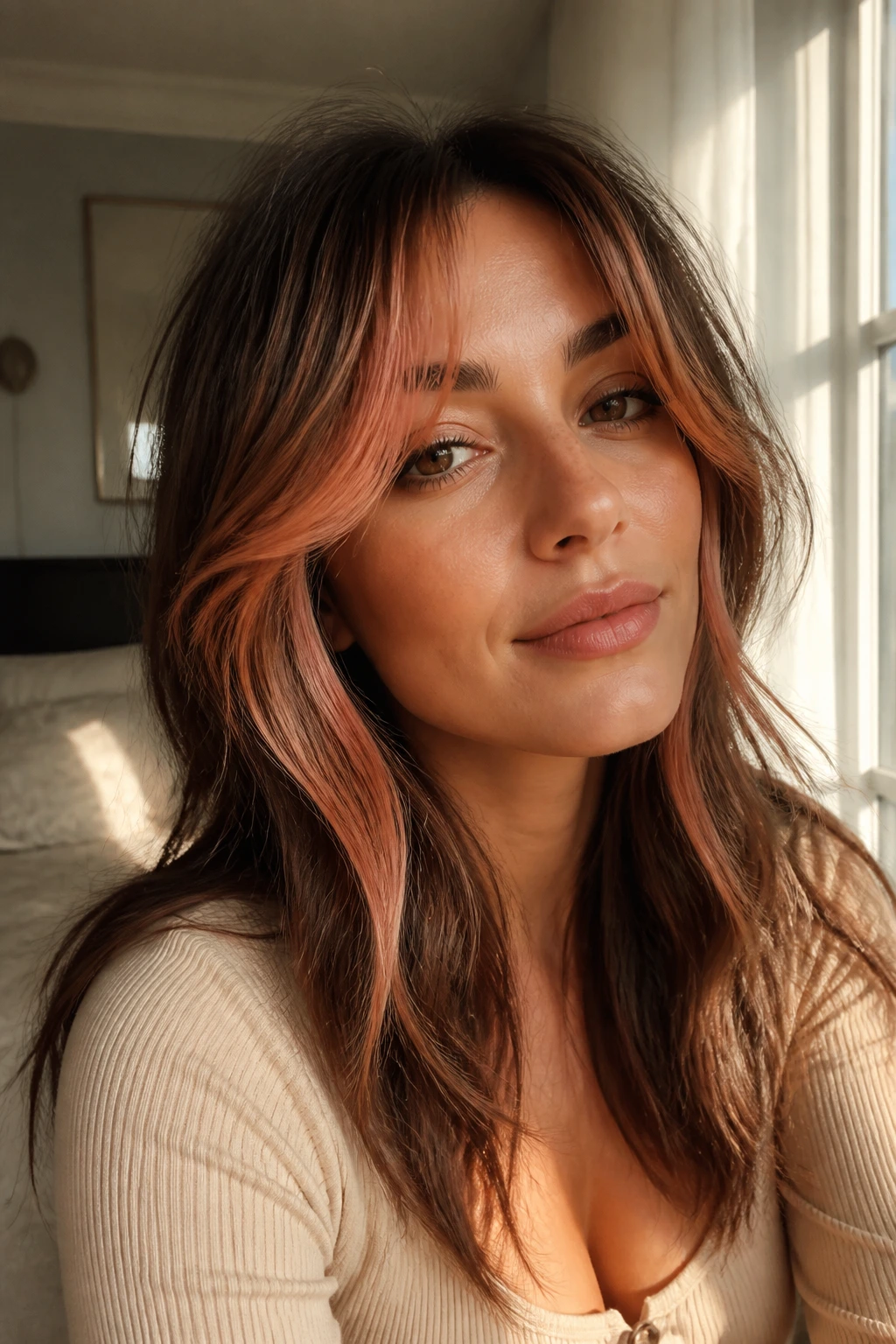
Curtain bangs are already doing a lot of visual work. Add a few peachy strawberry pieces around the bangs and the front of the haircut suddenly has shape, lift, and a little attitude.
What to watch for
The trick is not to over-lighten the bang area. You want the highlight to be noticeable when the hair parts, not so bright that it looks disconnected from the rest of the head. A warm peach gloss keeps the tone soft, while a level 8 highlight gives it enough lift to separate from dark brown roots.
This is one of the best choices for layered shags and long face-framing cuts. The bangs get the spotlight, but the color still feels part of the whole haircut.
7. Caramel-Strawberry Melt
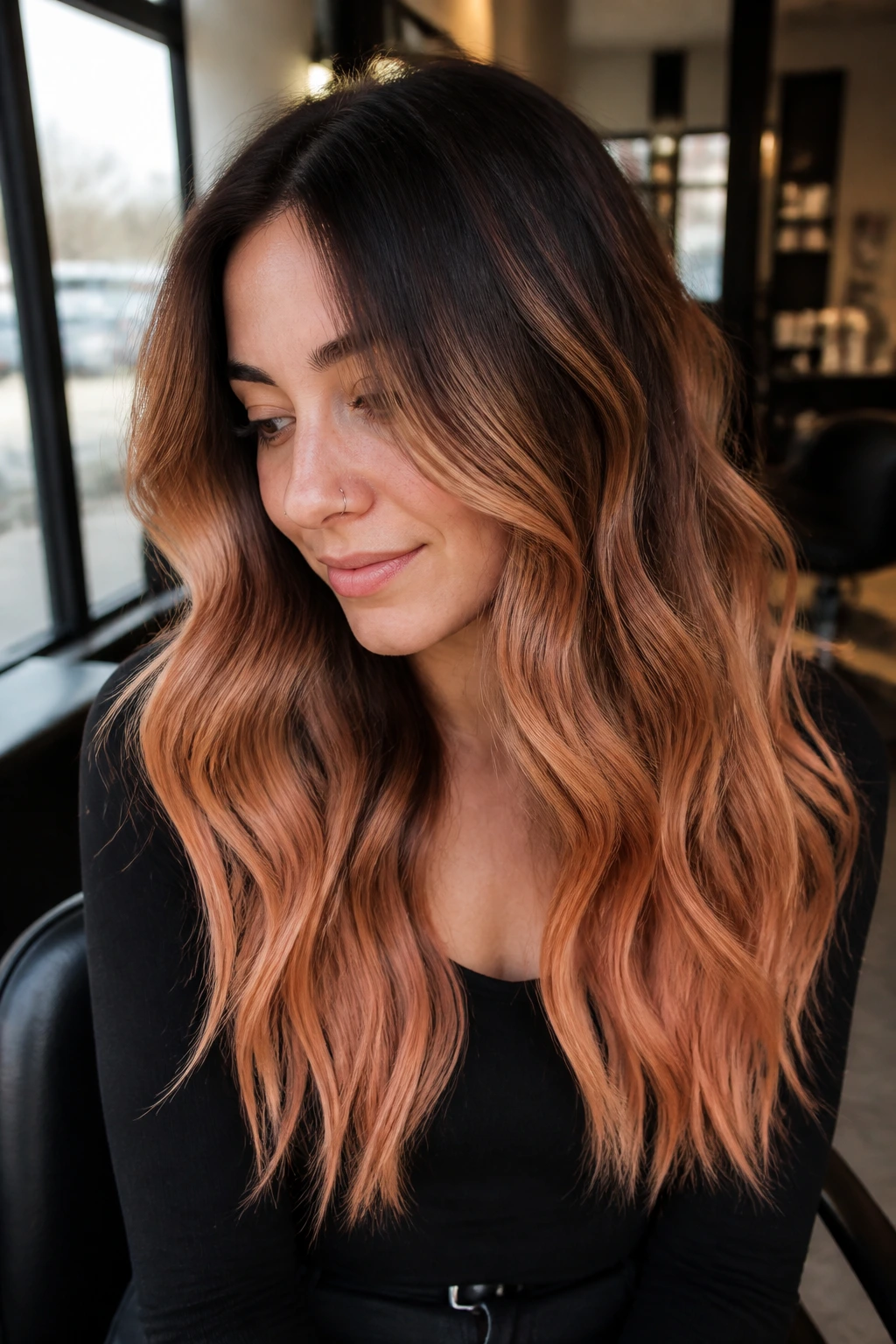
A melt is all about the transition. Here, dark roots slide into caramel mids and then into strawberry-blonde ends, but the shift is blurred so you never get a hard line where the colors meet.
Why it’s so wearable: the root shadow keeps maintenance sane, and the caramel bridge between brunette and strawberry prevents the ends from looking too pale too fast. On medium-length hair, the melt reads rich and expensive because the eye moves smoothly from dark to warm to lighter warm.
I prefer this to a blunt ombré on dark hair. The blunt version can look dated fast. A soft melt still looks deliberate when it grows out.
8. Auburn-Infused Lob
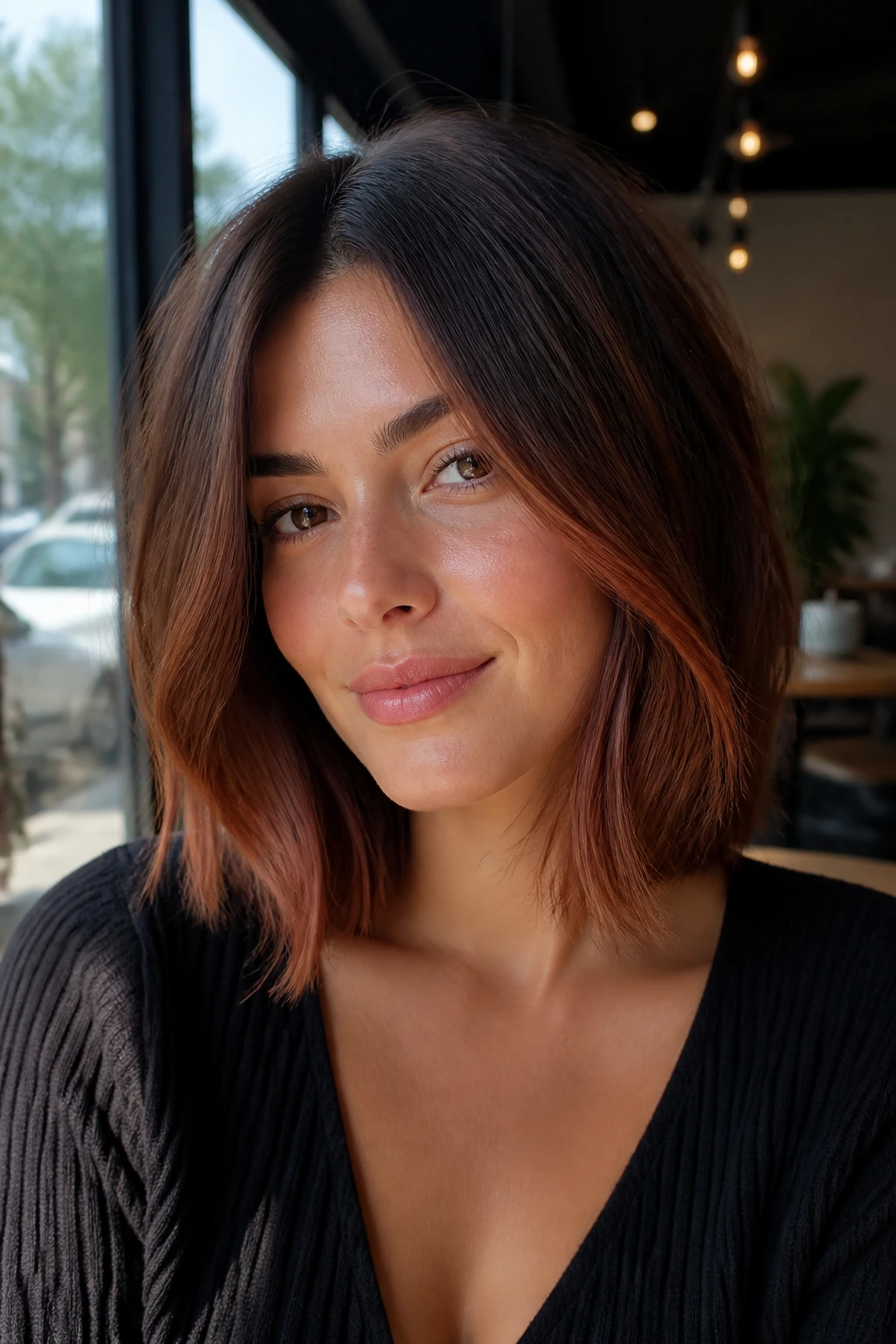
A lob gives you a clean shape, and auburn-infused strawberry tones give that shape some warmth at the edges. If the cut is blunt, even a little copper detail can keep the line from feeling too heavy.
Best for
This is a smart pick if your hair is naturally straight or you like to wear it sleek. A bit of strawberry warmth through the lower half prevents the lob from looking like one flat dark curtain. The finish should be polished, not fire-engine red, so ask for a muted auburn glaze rather than a strong copper formula.
On a lob, the color often matters more than the cut. That’s the part people forget.
9. Soft Copper Peekaboo Layers
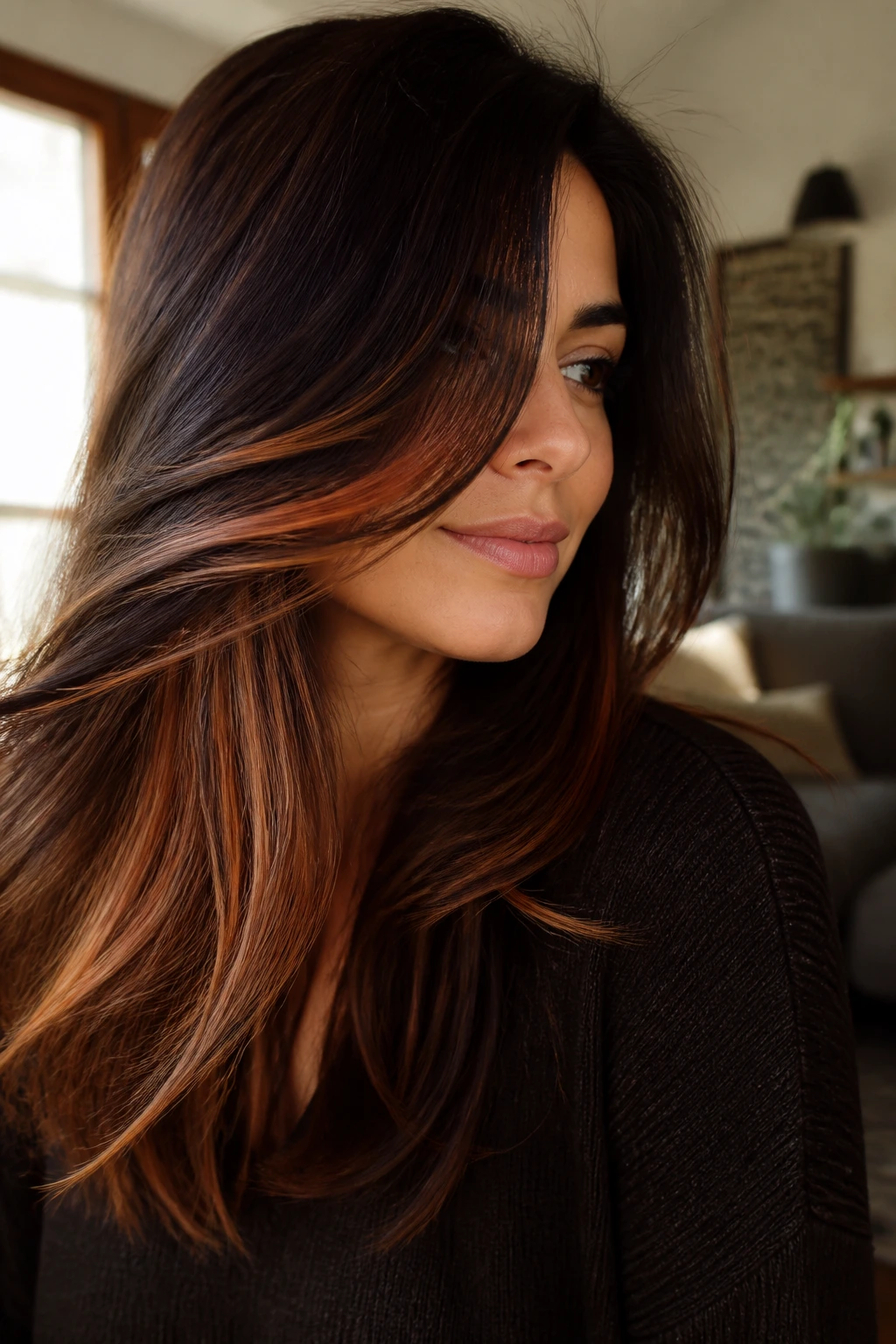
Peekaboo highlights live under the top layer of hair, which makes them ideal if you need your brunette to stay brunette most of the time. The copper-strawberry tone flashes when the hair moves, but it hides politely when the hair lies flat.
Why this look works
You get the fun of color without the constant visibility. That’s a big deal if your workplace is conservative or if you just prefer hair that rewards movement instead of shouting from the root. On layered cuts, the hidden warmth shows through the bends and feels almost like a private detail.
I’d call this the “for you, not for the room” version of strawberry blonde. Subtle. Clever. Not precious.
10. Warm Strawberry Curls
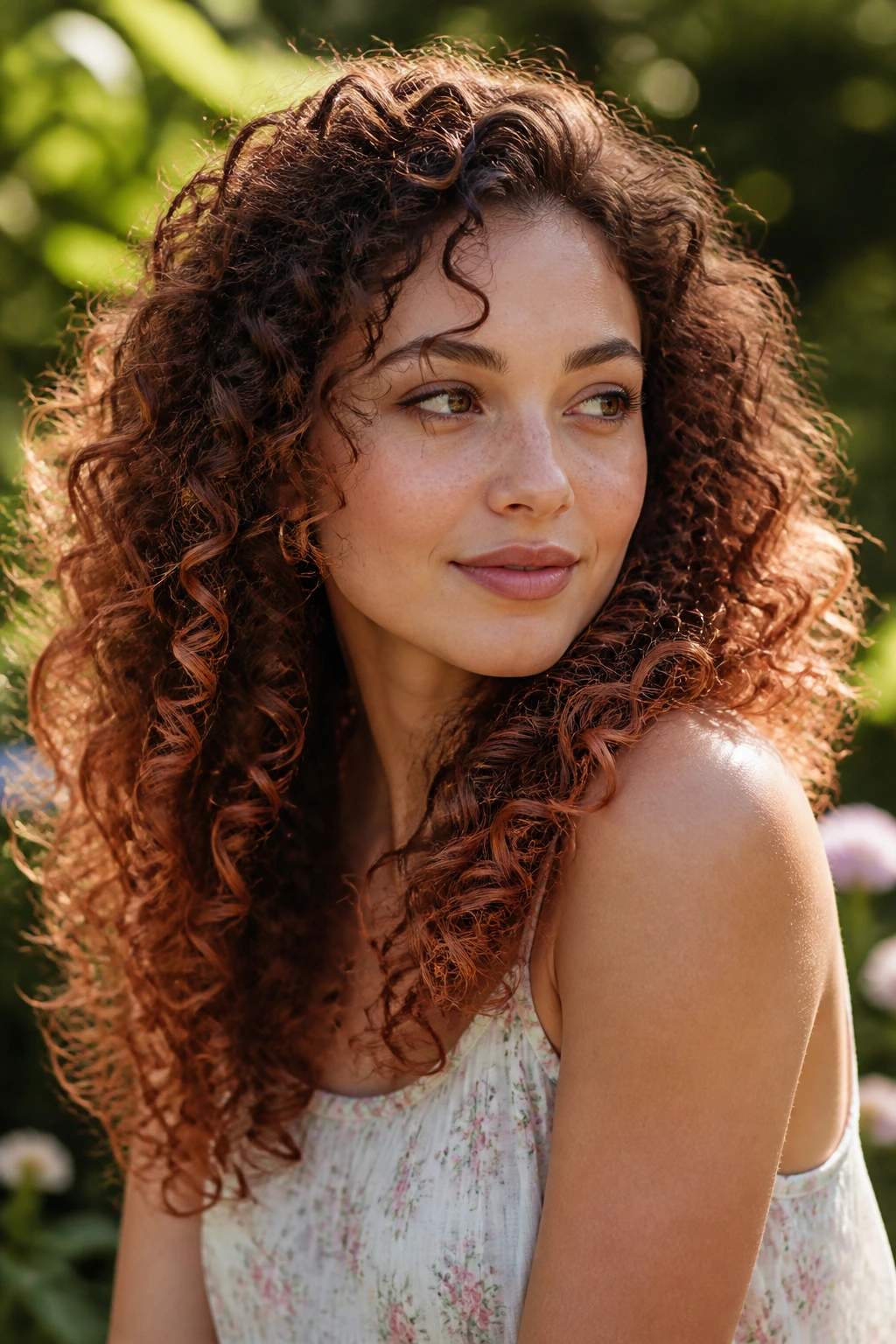
Curly hair makes strawberry tones look richer because each coil catches light in a slightly different place. With this look, the colorist places warm strawberry pieces through the outer curl pattern so the whole shape picks up a soft glow.
The important part
Don’t flood the curls with too much lightening. You want a few brighter strands, not a patchy halo. On dark curls, a warm copper-gold gloss can make the curl pattern stand out without drying the hair out visually. The finish should look plush, not crispy.
This is one of those styles that looks better on day two, after the curls have separated a bit. That little bit of frizz? Fine. It actually helps the color move.
11. Dimensional Toasted Rose Balayage
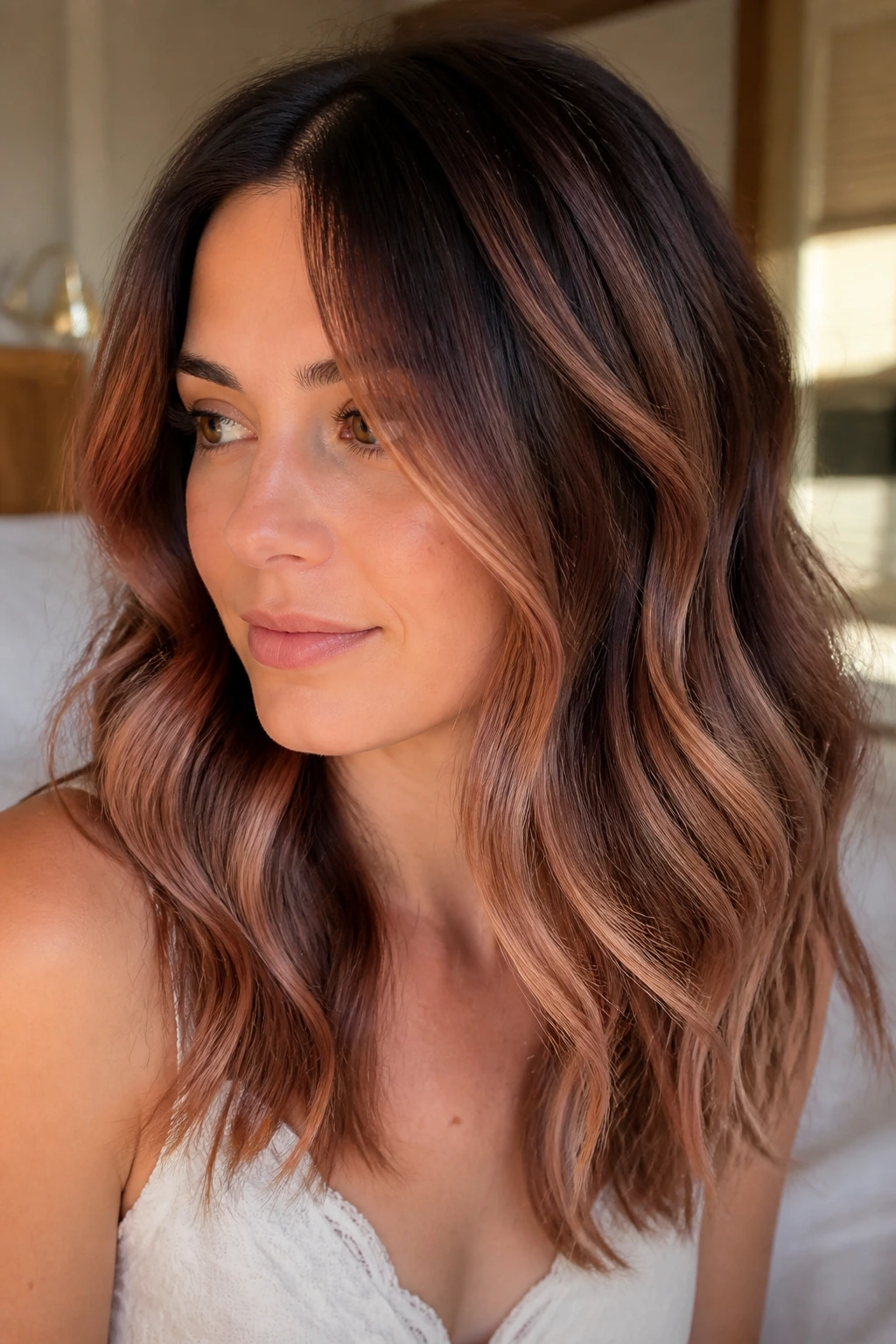
Toast the rose, don’t roast it. That’s the difference here. The balayage is painted in soft sweeps with rose-copper warmth layered over a dark brunette base, which gives you a pretty, slightly muted strawberry effect.
Why it stands out
A rose tone softens the copper edge, and the balayage keeps the placement irregular enough to look hand-painted instead of striped. It’s a strong option for medium-length hair with bends or loose curls because the color shifts from warm to warmer as the hair turns.
If your usual red tones feel too loud, this is the gentler lane. It’s not pink. It’s not auburn. It sits in that narrow, lovely space between the two.
12. Bronze-to-Strawberry Ombre
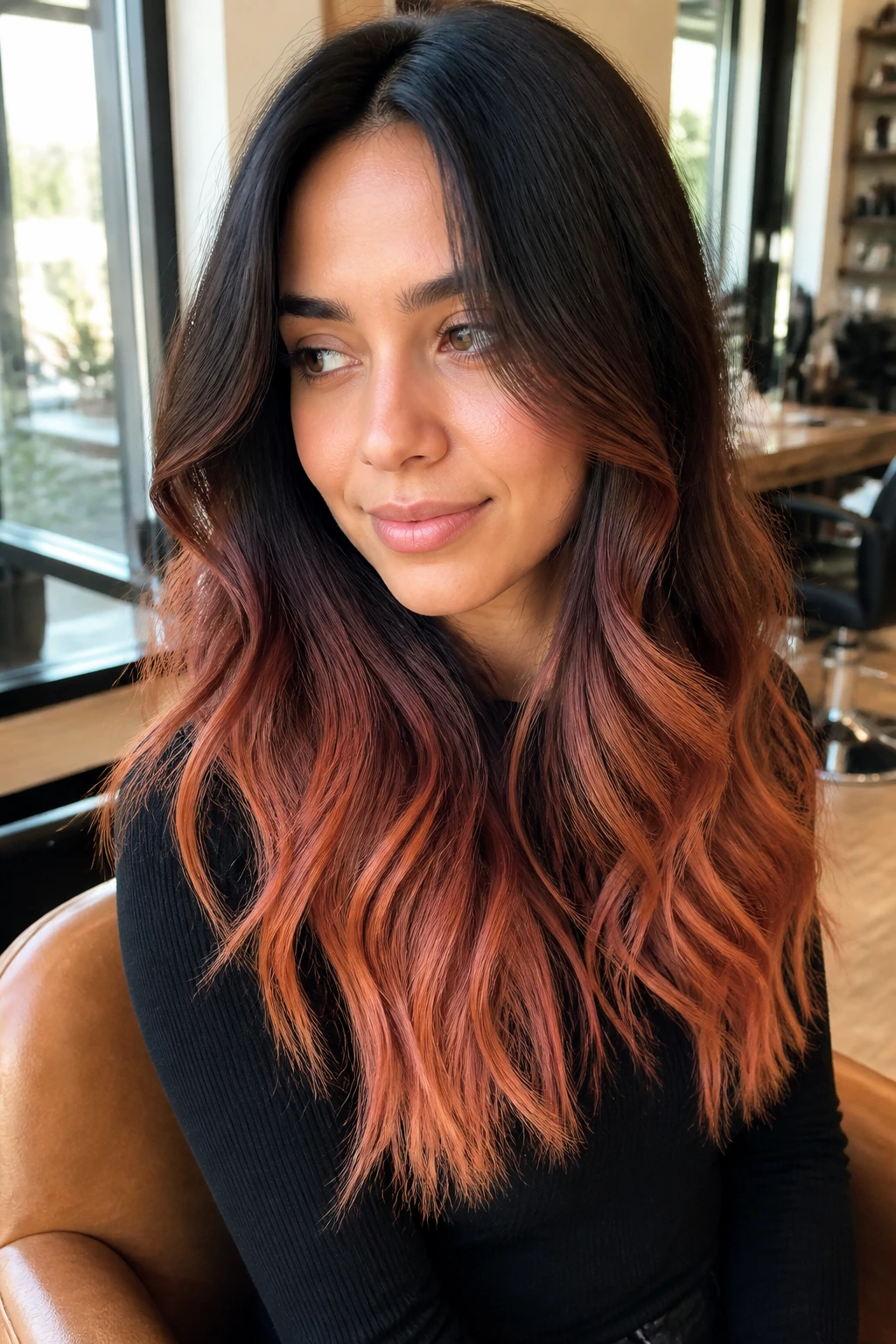
Ombre gets a bad reputation because people usually think of the hard dip-dye version. Done softly, though, a bronze-to-strawberry fade on dark hair can look warm and polished.
What makes it different
The bronze mid-tone acts as a buffer between the dark root and the strawberry-blonde ends. Without that middle step, the lightened ends can look disconnected. With it, the whole style feels like one long gradient.
This fits longer hair best. You need enough length for the fade to actually show. On a short cut, the color shift happens too quickly and loses the softness that makes it work.
13. Feathered Chestnut with Apricot Veils
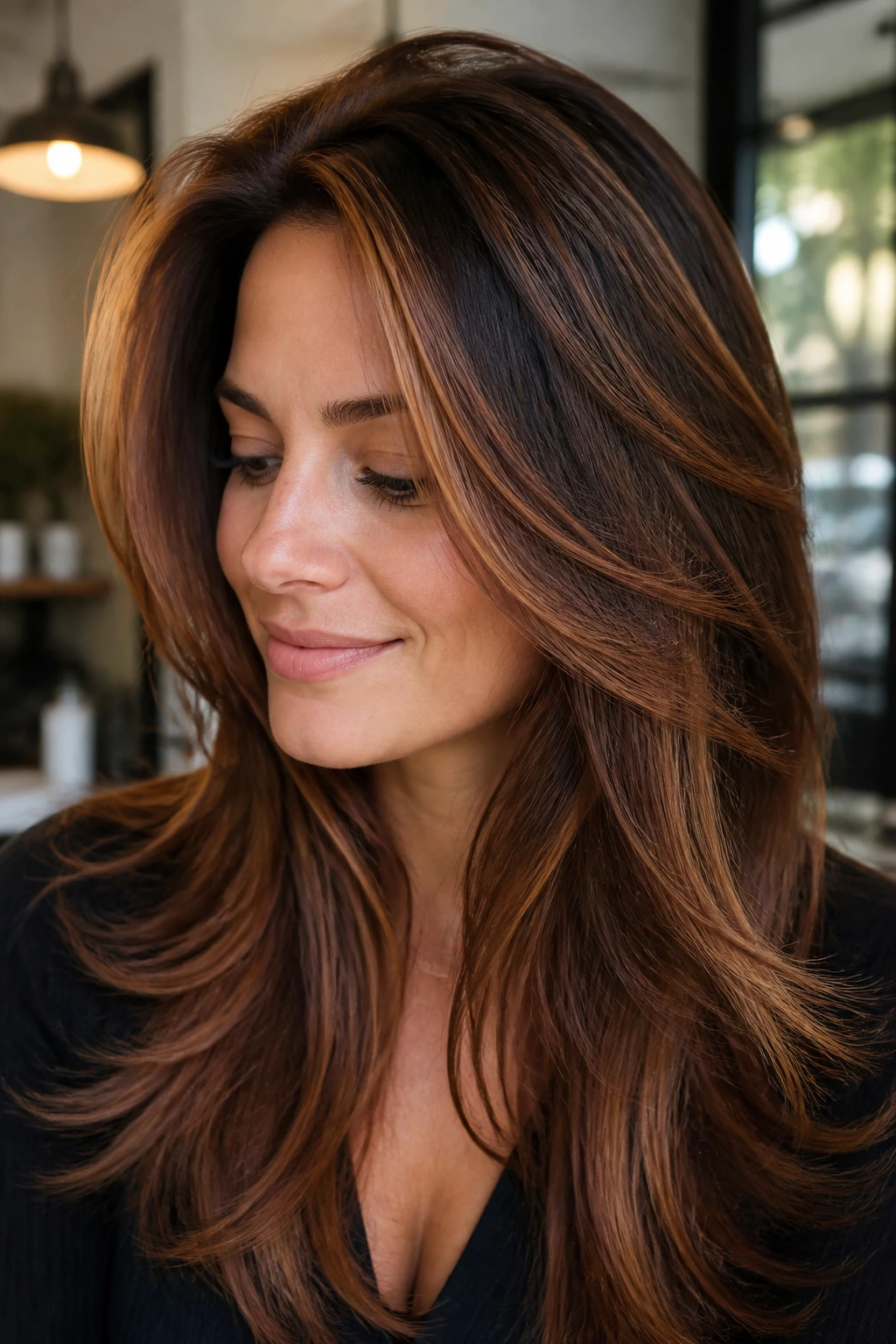
Feathered layers love color that isn’t too heavy. Apricot veils sprinkled through chestnut hair give the cut a lighter edge without taking away the depth that makes chestnut such a good base color.
A small detail that changes everything
The word veils matters here. These are not chunky pieces. They’re whisper-thin, semi-transparent strands of warmth that sit over the darker fabric of the hair. On a feathered cut, that means the movement comes first and the color follows.
I like this choice for people who want the hair to look fuller, not lighter. The apricot pieces break up the chestnut in a way that adds motion without stealing the shape of the cut.
14. Smudged Root Strawberry Highlights
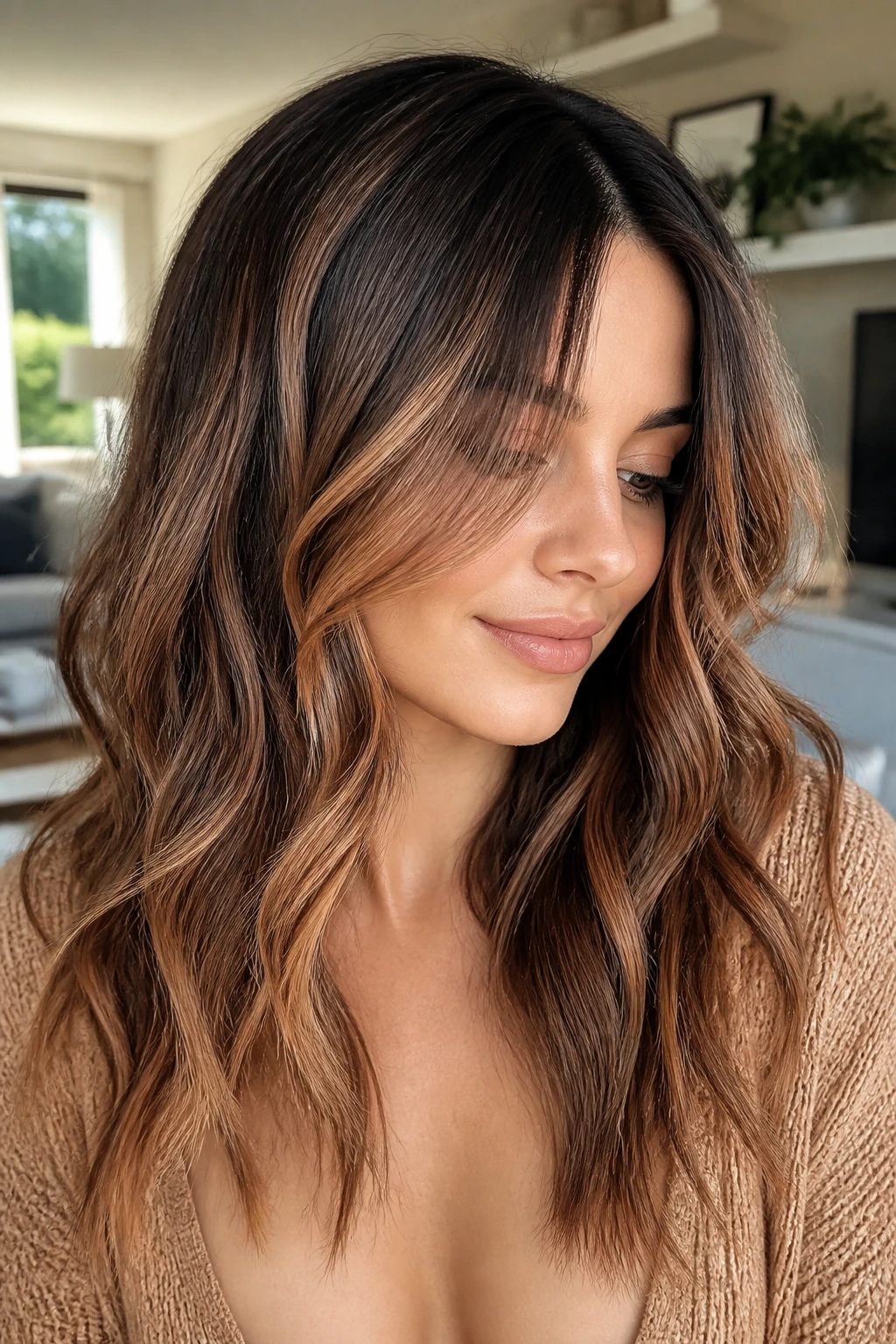
Root smudge is one of the quiet heroes of modern color. A dark, softly blended root keeps strawberry-blonde highlights from looking too fresh or too stark, especially on dark hair that needs depth to feel natural.
Why I like it
The smudge makes the lighter pieces start a little lower, which helps them blend better around the crown. It also buys you time between salon visits because the grow-out line is softer. If you’ve ever seen highlights turn stripy after a few washes, this is the fix.
This look is especially good if your hair is thick or coarse. The root shadow gives the color more body and keeps the strawberry pieces from floating on top of the hair like separate threads.
15. Golden Copper Air-Touch
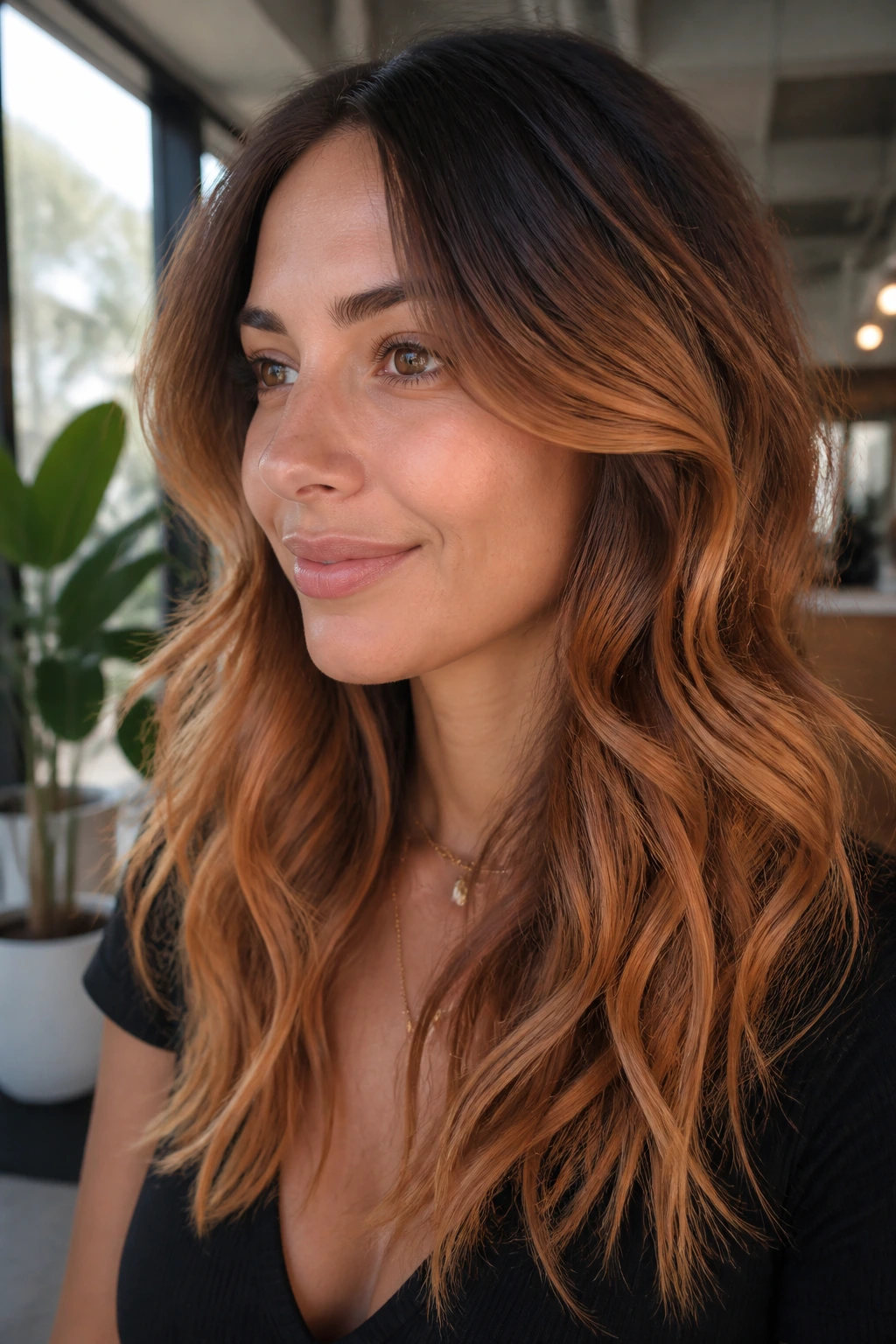
Air-touch color is for the person who wants softness without obvious foil lines. The stylist uses airflow from a dryer to separate shorter hairs before painting, which leaves the lightened pieces incredibly blended.
Best for a soft finish
On dark hair, golden copper air-touch creates a diffused strawberry effect that feels smooth from root to tip. Because the lighter hairs are selected with such care, the result is less blocky than traditional highlights. It’s not a DIY look, frankly. It needs a colorist who knows how to read the hair’s natural density.
I’d choose this for long, layered brunettes who hate anything streaky. The motion in the cut and the motion in the color work together.
16. Sunlit Strawberry Shag
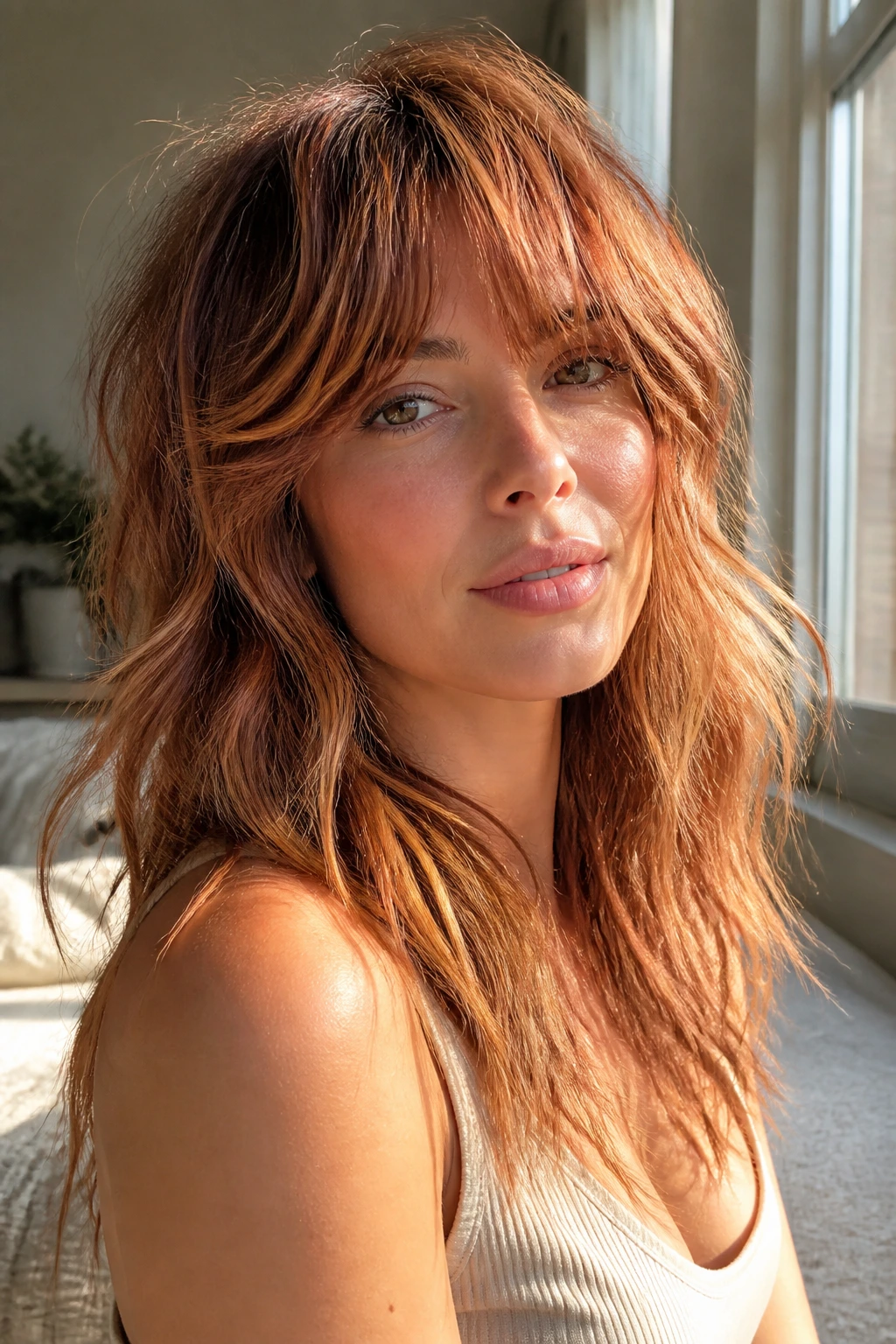
A shag is already a little rebellious, so the color doesn’t need to be loud to do its job. Soft strawberry threads through a shag cut give you that sunlit, slightly lived-in look that makes the layers look more deliberate.
Why it works
The shag has short, medium, and long pieces all in one cut, which means the color doesn’t have to cover much ground before it starts to read as dimensional. A few brighter ends near the cheekbones and collarbone are enough. On dark hair, those warm points create texture even when the hair is air-dried.
This is one of my favorite combos for anyone who wears their hair messy on purpose. The color should look a little broken up. That’s the charm.
17. Barely-There Apricot Slices
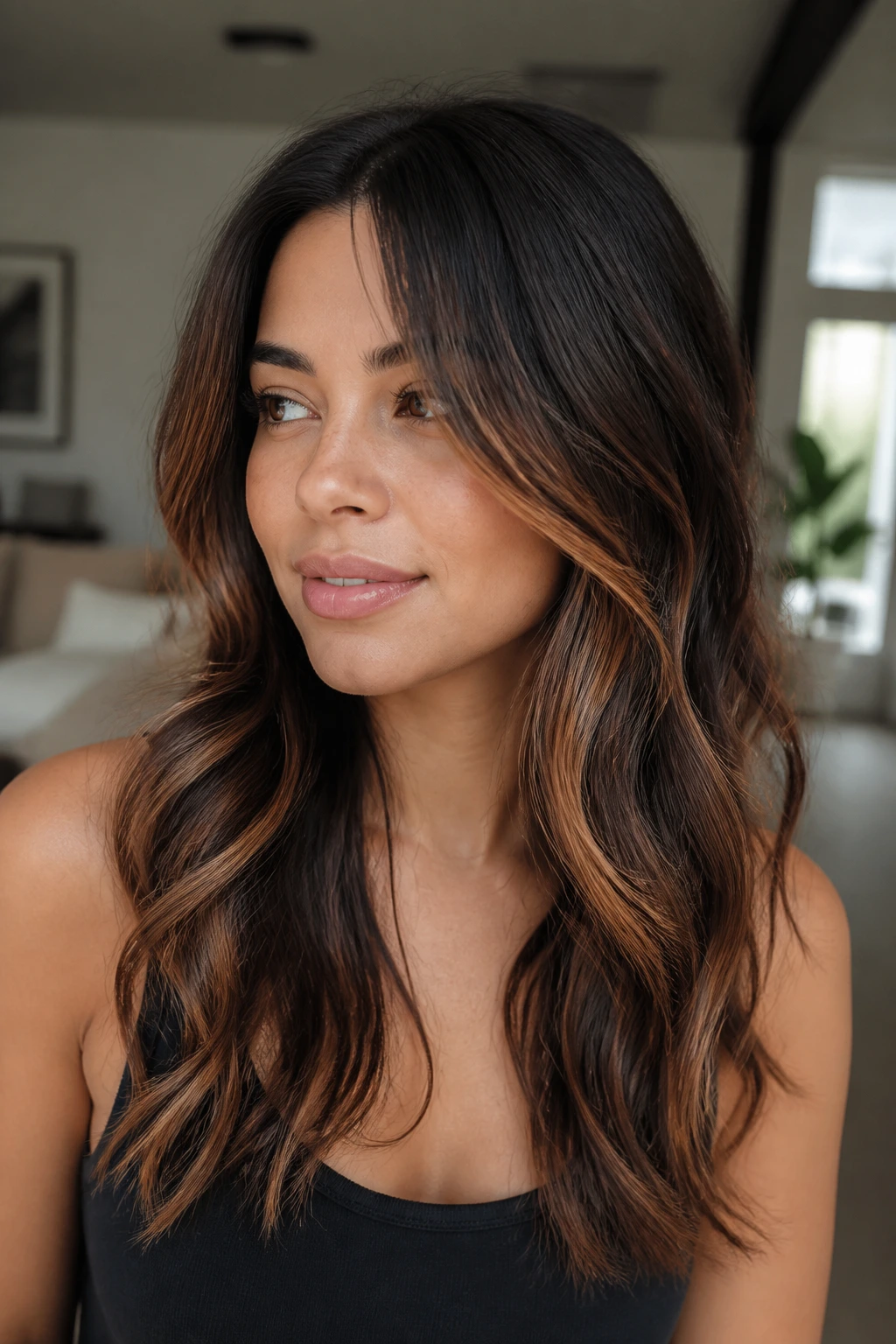
If you want the lightest possible entry into strawberry blonde, this is it. Apricot slices are tiny placements tucked through the outer layer, mostly around the mid-lengths, so they catch light without announcing themselves.
The subtle part
A slice is wider than a babylight but narrower than a full highlight, which makes it a useful middle ground. On dark hair, a few apricot slices can make the whole cut look warmer. You might not even clock the individual strands at first. You just notice the hair has more life.
This works especially well on straight or slightly wavy hair because the slices show up in the flat planes. If your hair is very curly, I’d go a touch brighter so the warmth doesn’t disappear into the texture.
18. Sable Hair with Copper Veil
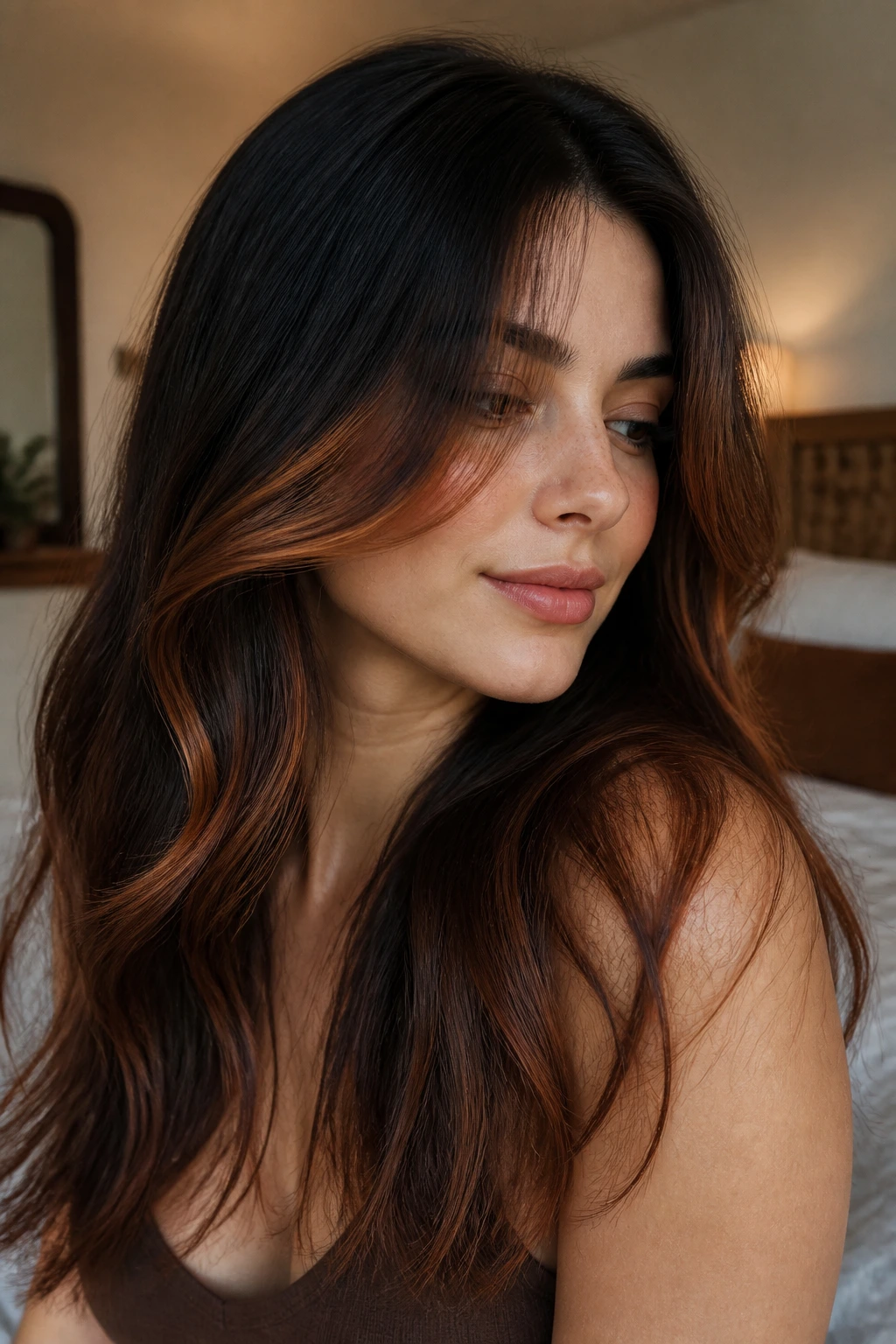
Sable hair has that deep, inky brown richness that can swallow color if the placement is too timid. A copper veil solves that by laying warm translucent strands over the darker base instead of fighting it.
Why this is a smart move
The veil reads like light, not blocks of dye. That gives the style a softer finish than highlight-heavy brunette color, and it’s much kinder to hair that’s already been colored before. The best versions sit along the top layer and the ends, where the light would hit naturally.
I’d recommend this for long dark hair with minimal layering. The veil gives the cut shape without making it look chopped up.
19. Glossed Strawberry Ribbon Ends
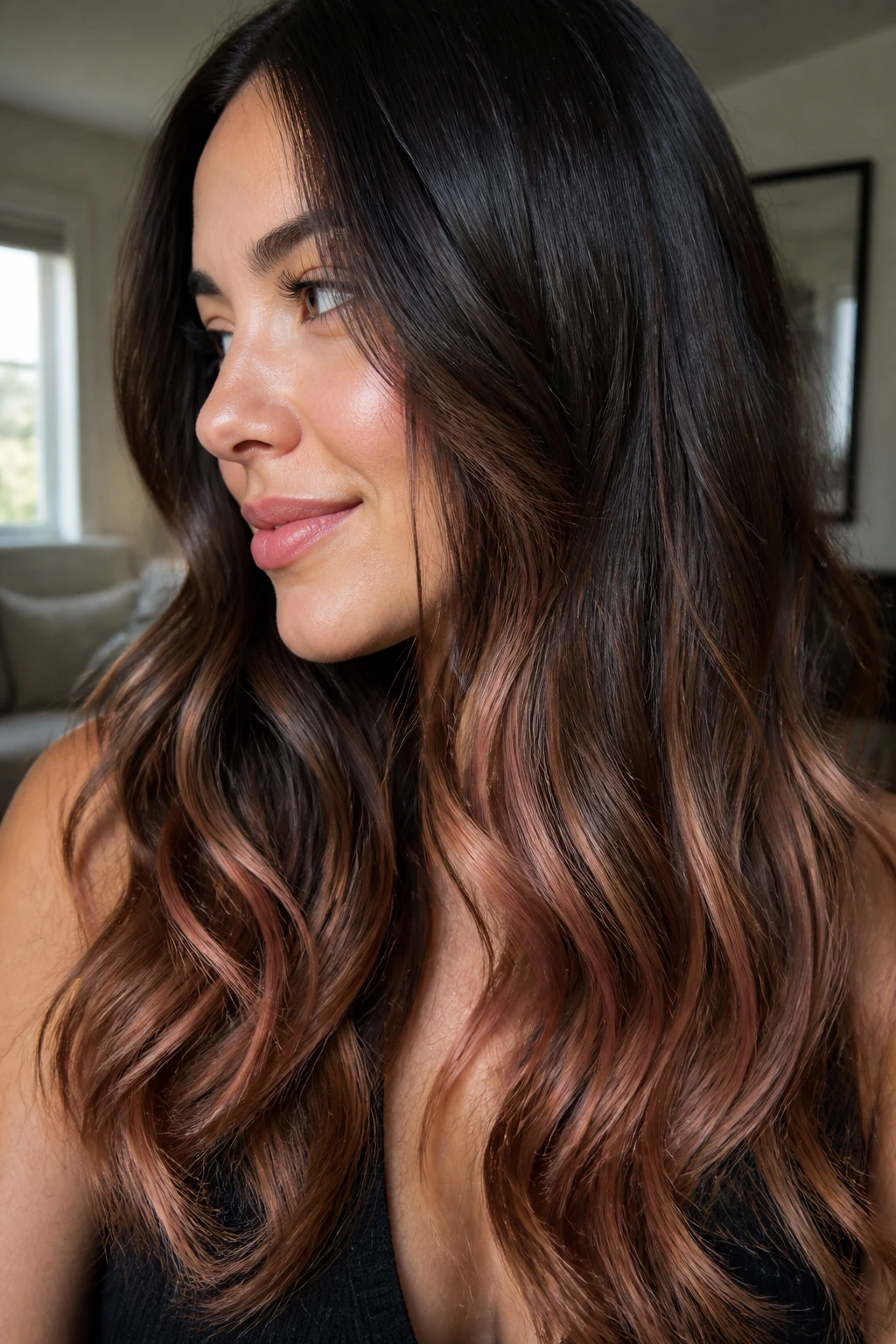
Ribbon ends are exactly what they sound like: thin warm pieces that run through the lower half of the hair, usually after a partial lift and a glossy finish. On dark hair, that movement at the ends creates a lovely ribbon effect when the hair swings.
Why it feels polished
Because the roots stay dark, the color looks intentional even if the ends are the only place you really see the strawberry tone. The gloss keeps the finish shiny enough that the lighter pieces don’t look dry or damaged. That’s a real issue with warm blondes on brunettes; shine makes the color look expensive, dullness makes it look accidental.
If your haircut has blunt ends, a ribbon finish softens the line. If it’s layered, the ribbons make the movement more obvious.
20. Smoky Brunette with Warm Peach Panels
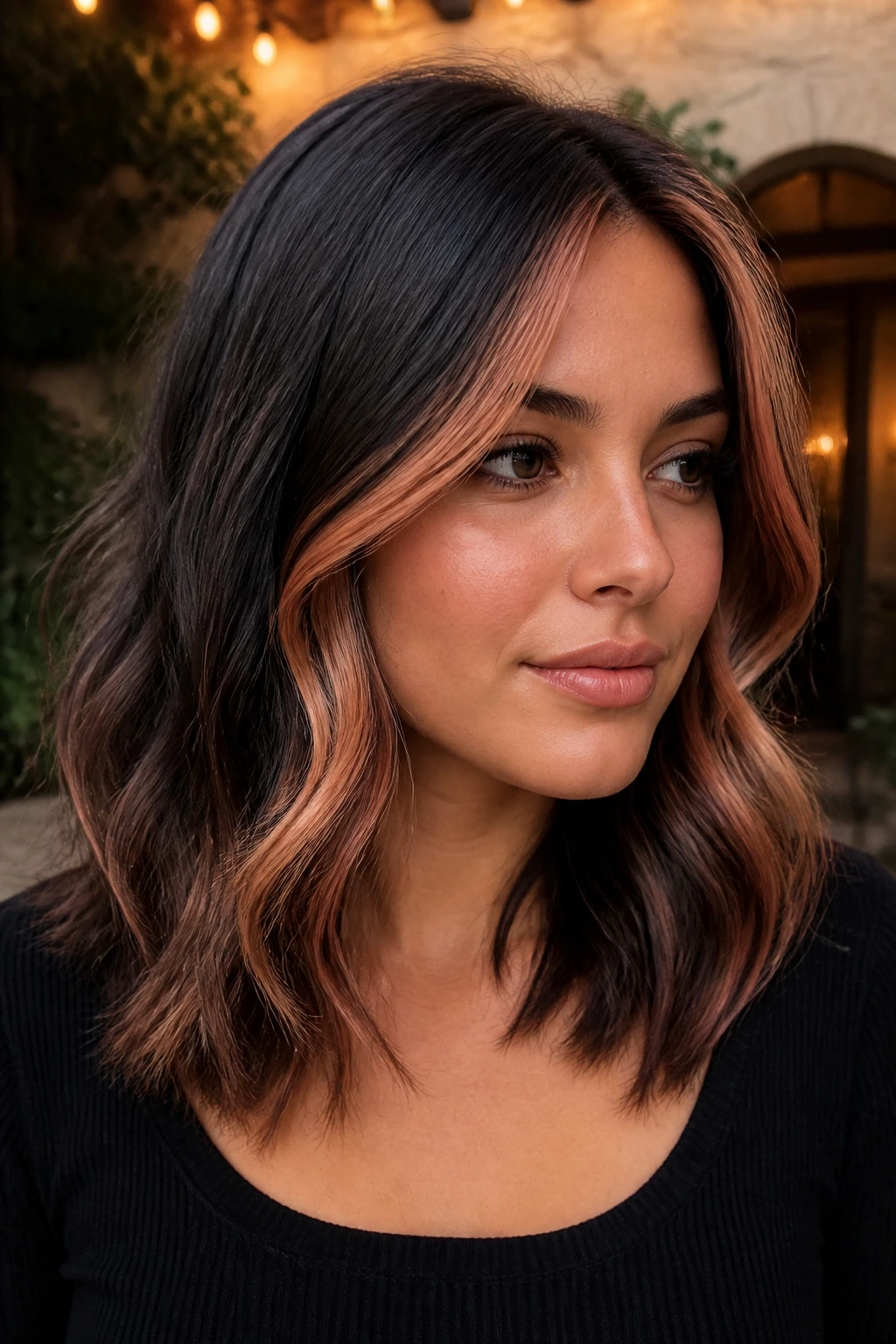
Who says strawberry blonde has to stay sweet? Warm peach panels against a smoky brunette base give the whole style a cooler edge, even though the color itself stays warm.
What makes it different
The smoke comes from keeping the base deeper and less golden, while the panels bring in that peachy strawberry lift. The contrast is gentle, not stark. It suits people who like a little mood in their hair — darker roots, soft warmth, no sugary finish.
This is a strong choice for shoulder-length cuts because the panels can sit around the face and through the back without overwhelming the shape. You get color, but the brunette still feels like the main event.
21. Soft Strawberry Pixie Textures
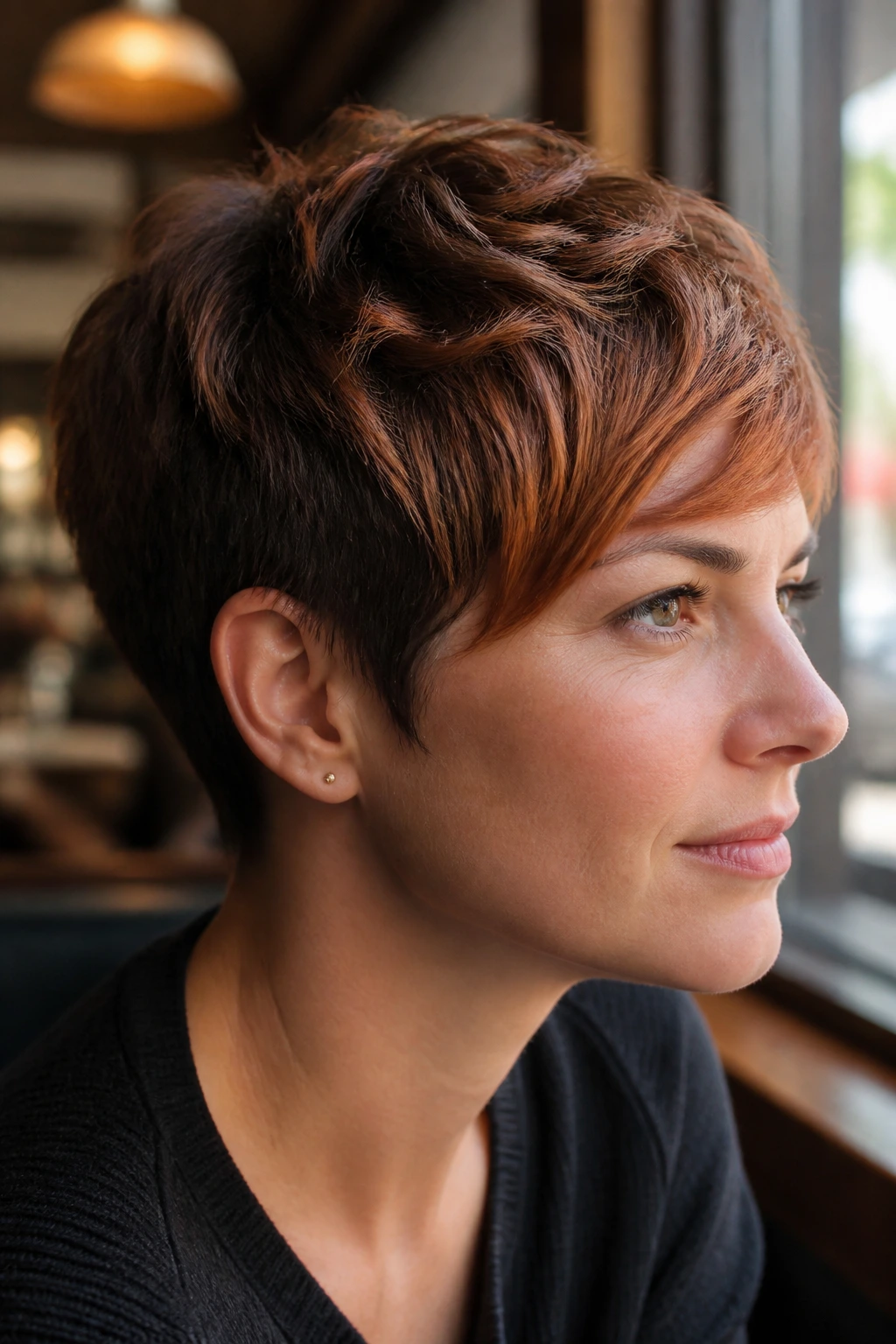
Short hair and strawberry tones can be a great pairing when the placement is restrained. A pixie with soft strawberry pieces on the top and fringe area gives the cut more lift without making it fussy.
How to think about it
With short hair, every strand counts. That means the strawberry tone has to be deliberate — a few lighter tips, a warm fringe, maybe a tiny halo through the crown. Too much lightening and the cut loses its crisp shape. Too little and the color vanishes.
I like this look with a piecey finish and a matte cream, not a shiny helmet of product. The color should break up the texture, not glue it together.
22. Lob with Tinted Honey-Copper Ends
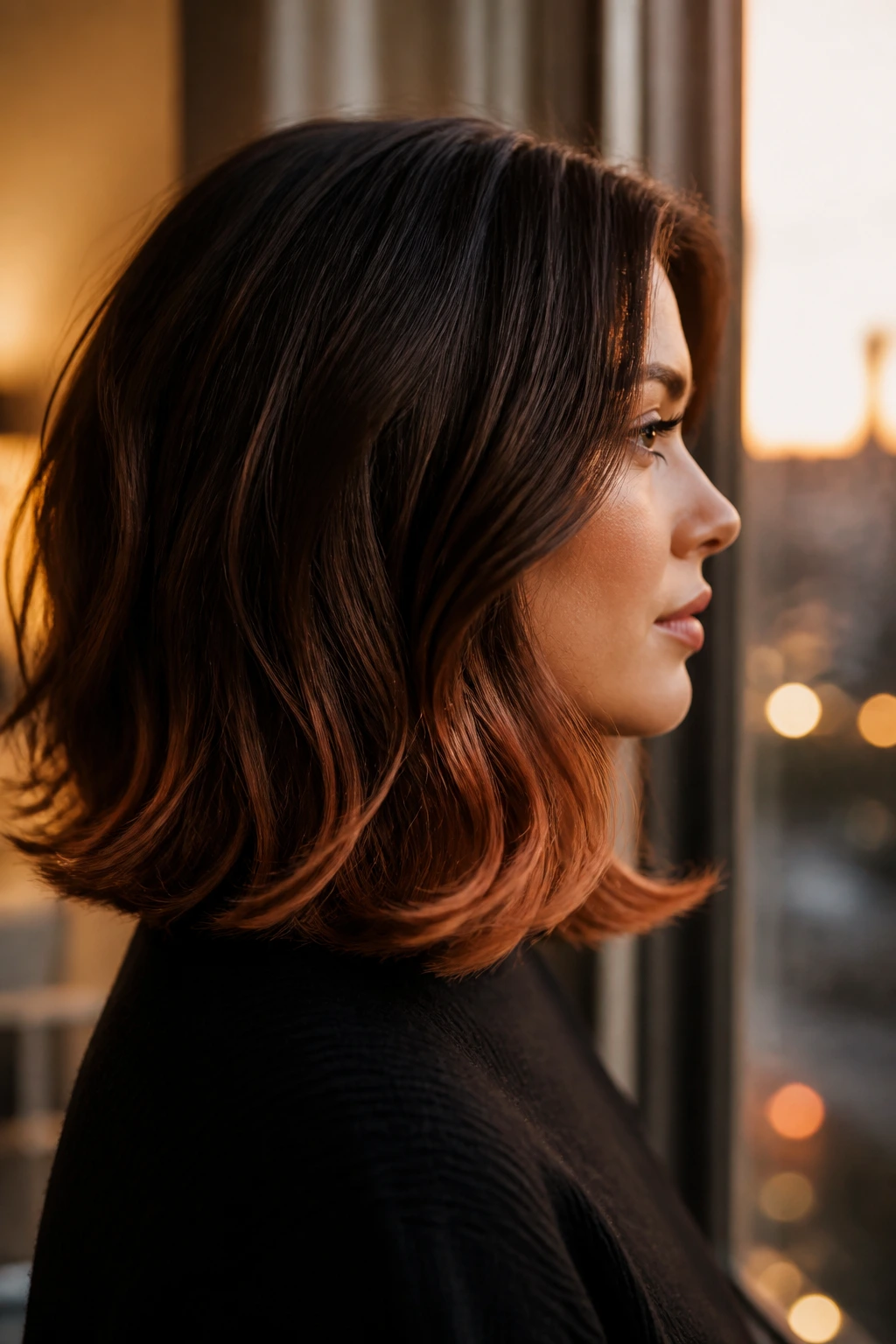
Honey-copper ends sit in a very friendly zone. They’re warm enough to read as strawberry-blonde adjacent, but soft enough that the dark root still does most of the visual work.
Best for
A lob needs movement, and tinted ends give it that movement without relying on layers. If the ends are just one tone lighter than the mids, the effect stays subtle. This is the kind of color that looks especially good in side profile, where the ends flip out and reveal the warm underside.
It’s a practical option if you want to test the strawberry-blonde waters without committing to a full highlight service. The ends can be refreshed with gloss instead of a complete recolor.
23. Dark Chocolate with Rose Copper Swoops
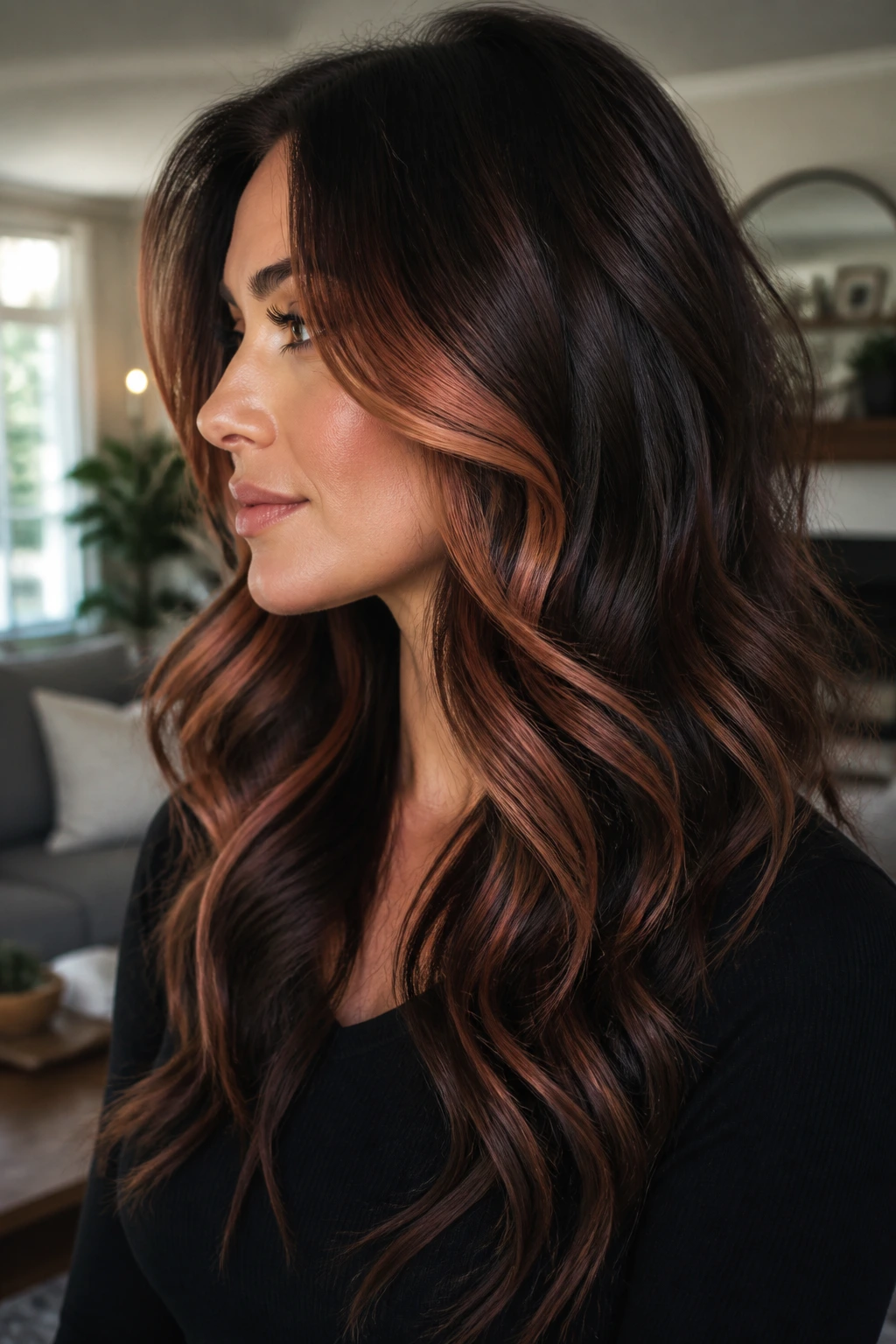
Rose copper swoops are long, curved pieces that arc through the hair instead of sitting in straight foils. On dark chocolate hair, those swoops add warmth in a way that feels fluid and polished.
Why swoops matter
Straight lines can look rigid on dark bases. Curved placement follows the haircut, especially if the layers around the face are rounded or if the back has a soft bend. Rose copper keeps the warmth from reading too orange, which matters a lot on rich brown hair.
This is one of those looks that benefits from a side part. The swoops fall across the line of the face, and the color reads as part of the haircut rather than a separate effect.
24. Soft Strawberry Braided Accents
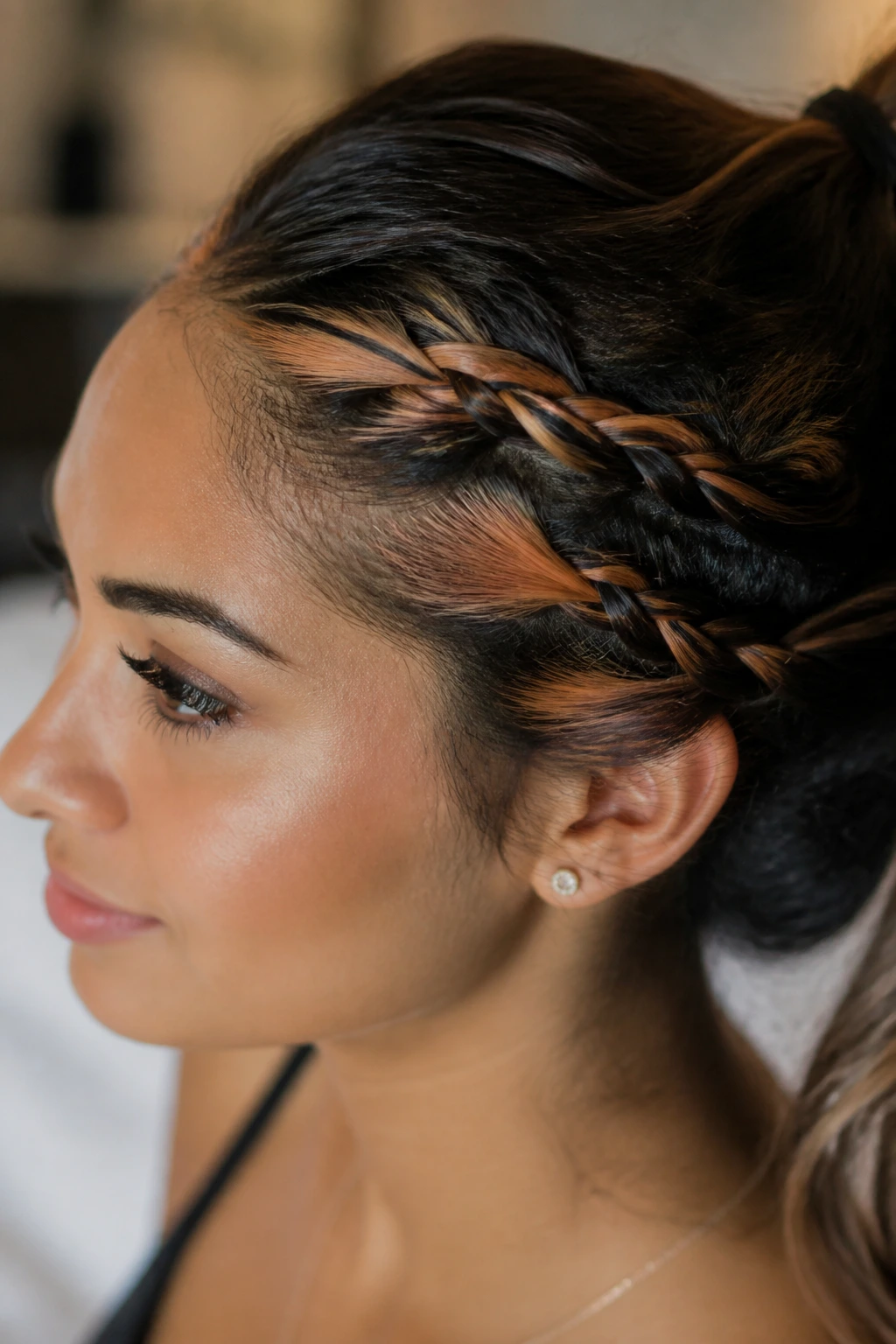
Braids change how color shows up. Even small strawberry-blonde accents can pop once the hair is woven together, because the braid exposes different pieces at different angles.
What to expect
This works best when the warm strands are scattered through the outer layers or around the temples. The braid picks them up and turns them into little flashes of copper and peach. On dark hair, the contrast is enough to be seen, but the effect stays quiet.
I like this for long hair that’s usually worn down. The color does its best work when you pull it back. That’s not a flaw. It’s part of the appeal.
25. Wavy Cut with Micro-Foiled Copper Threads
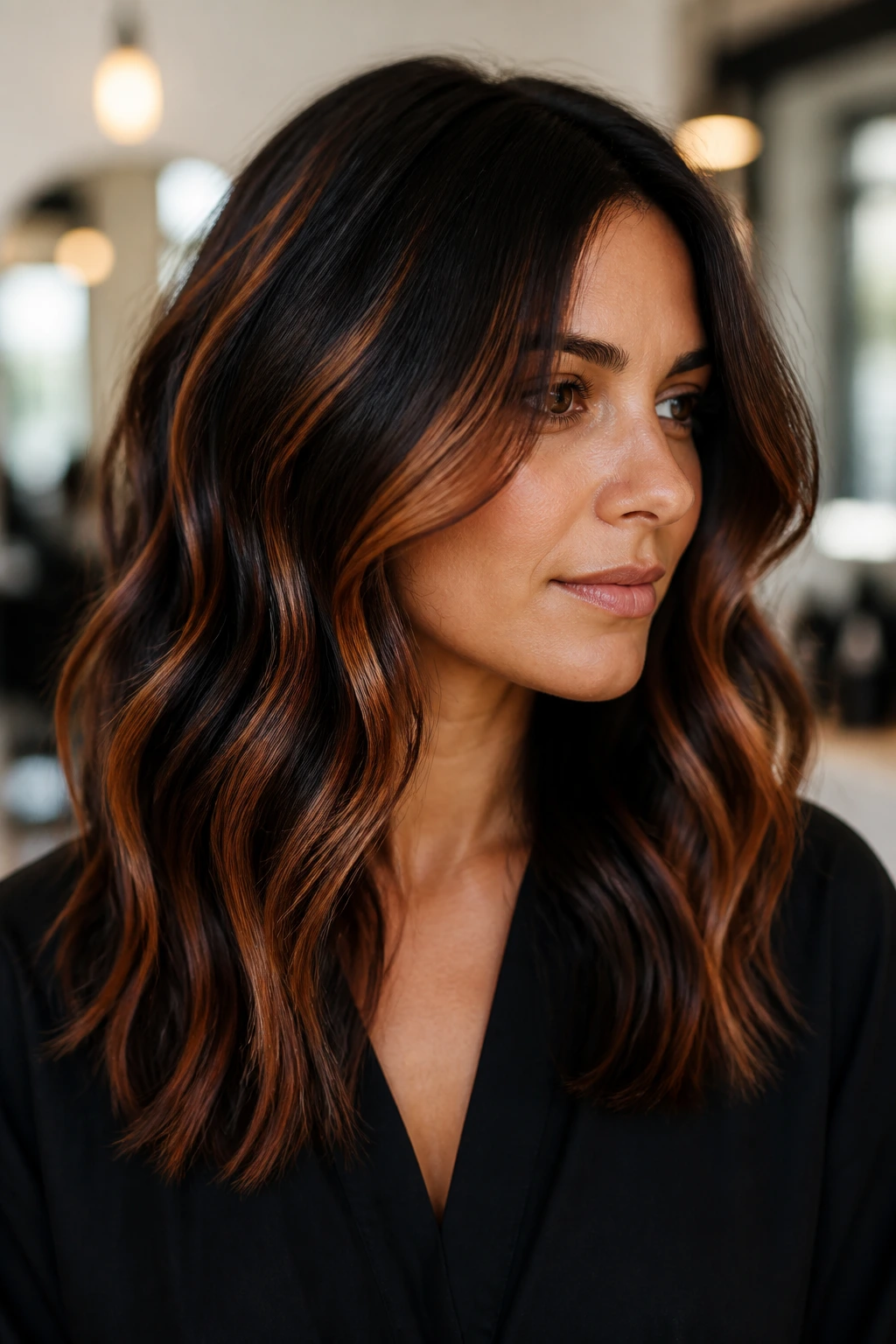
Micro-foils are tiny foil sections, and on dark hair they can create the most believable strawberry-blonde finish of all. Copper threads placed through a wavy cut add lightness in narrow, controlled lines.
Why it’s useful
The foil gives the colorist more precision, which matters when you want warmth but not a big lift. Wavy hair turns those fine lines into moving ribbons. The result is far softer than broad streaks and much easier to blend into the base color.
If your hair is dense, micro-foils are especially helpful because they let the warmth peek through instead of sitting on top. You get dimension with less visible contrast.
26. Brushed-Out Rose Blonde Layers
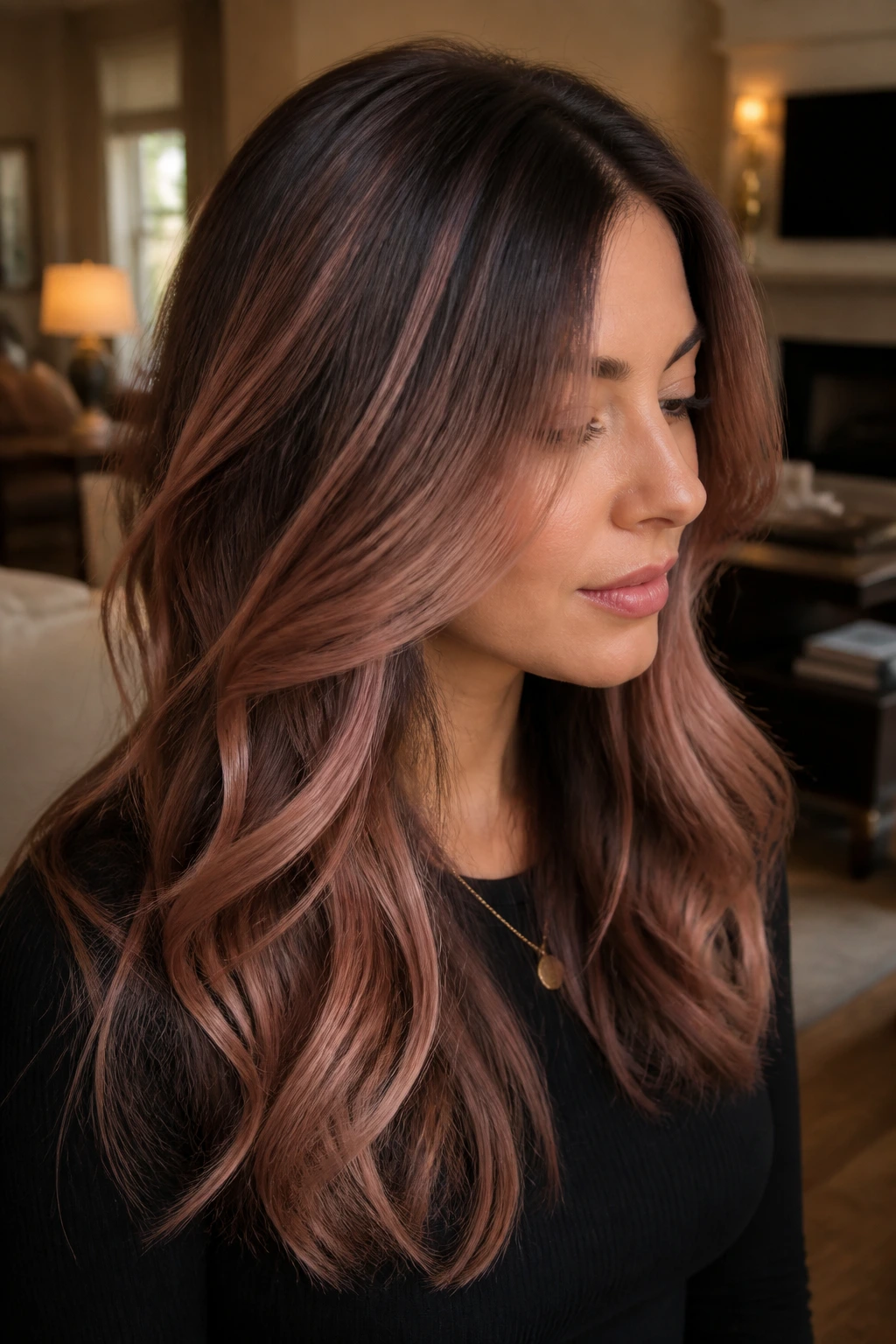
Sometimes the trick is not the color itself, but how softly it’s finished. Brushed-out waves take rose-blonde highlights and mute them just enough that they sit quietly in layered brunette hair.
Why this one feels expensive
A fresh curl can make highlights look louder than they really are. Brushing the waves out spreads the light and turns a bright ribbon into a soft blush. That’s where the strawberry tone gets refined instead of flashy.
This style suits layered hair with medium density. The layers keep the brushed-out shape from collapsing, and the rose-blonde pieces soften the silhouette around the ends.
27. Muted Coral Glow on Long Hair
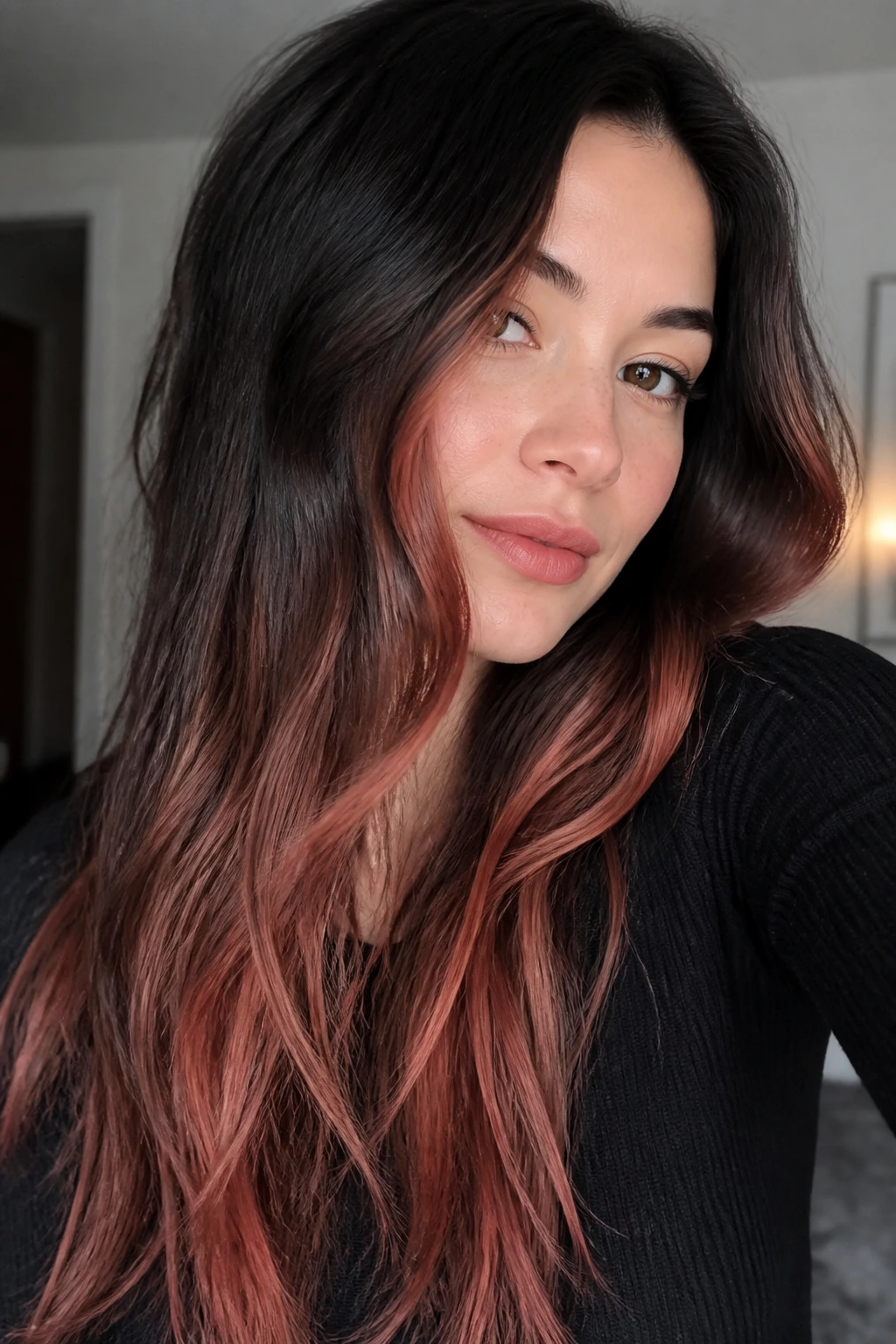
Coral is a useful bridge color because it lives between peach, pink, and copper. On long dark hair, a muted coral glow can feel like strawberry blonde with a little more warmth in the undertone.
The subtle part
The glow should be concentrated through the lower thirds and around a few face pieces. If it starts at the root, the coral can look louder than intended. On long hair, though, that soft warm haze through the lengths creates a really nice effect when the hair is pulled over one shoulder.
This is a good pick for someone who wants the color to read differently in different light. Indoors it stays soft. Outside it opens up.
28. Tousled Espresso with Golden Strawberry Tips
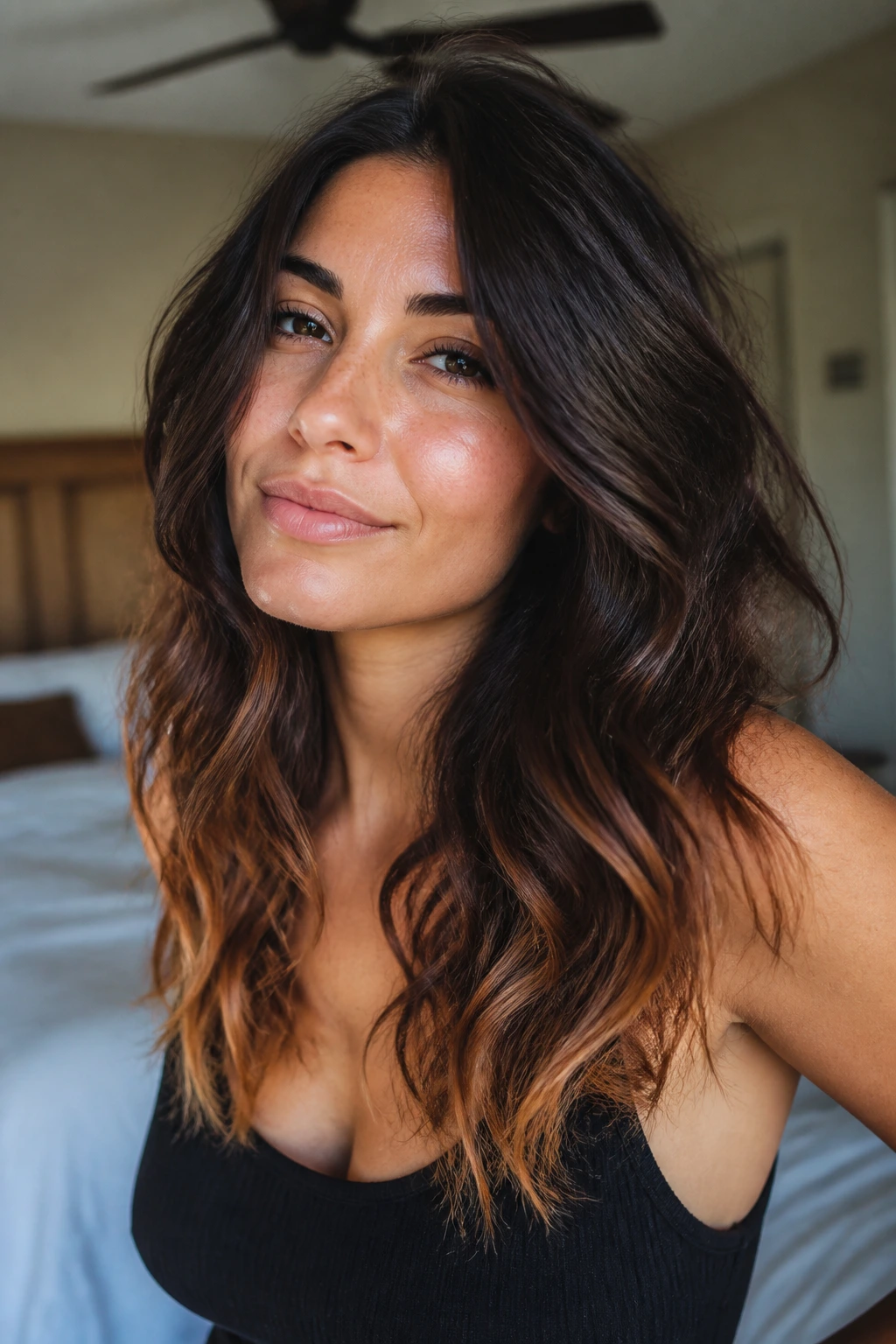
Espresso hair gives you a deep, almost black-brown base that makes golden strawberry tips stand out with almost no effort. The tips should be just light enough to catch the eye when the hair is tousled, not so light that they look bleached.
What makes it work
The contrast lives at the ends, which is why this style feels casual rather than formal. If the cut is choppy, the tipped pieces land in uneven places and look even more natural. A little wave helps too, because it breaks up the dark mass and lets the warmth show through.
I’d use this for someone who wants a color that feels low-key on day one and richer after a few washes. The dark base keeps the whole thing grounded.
29. Volumized Curls with Copper Halo
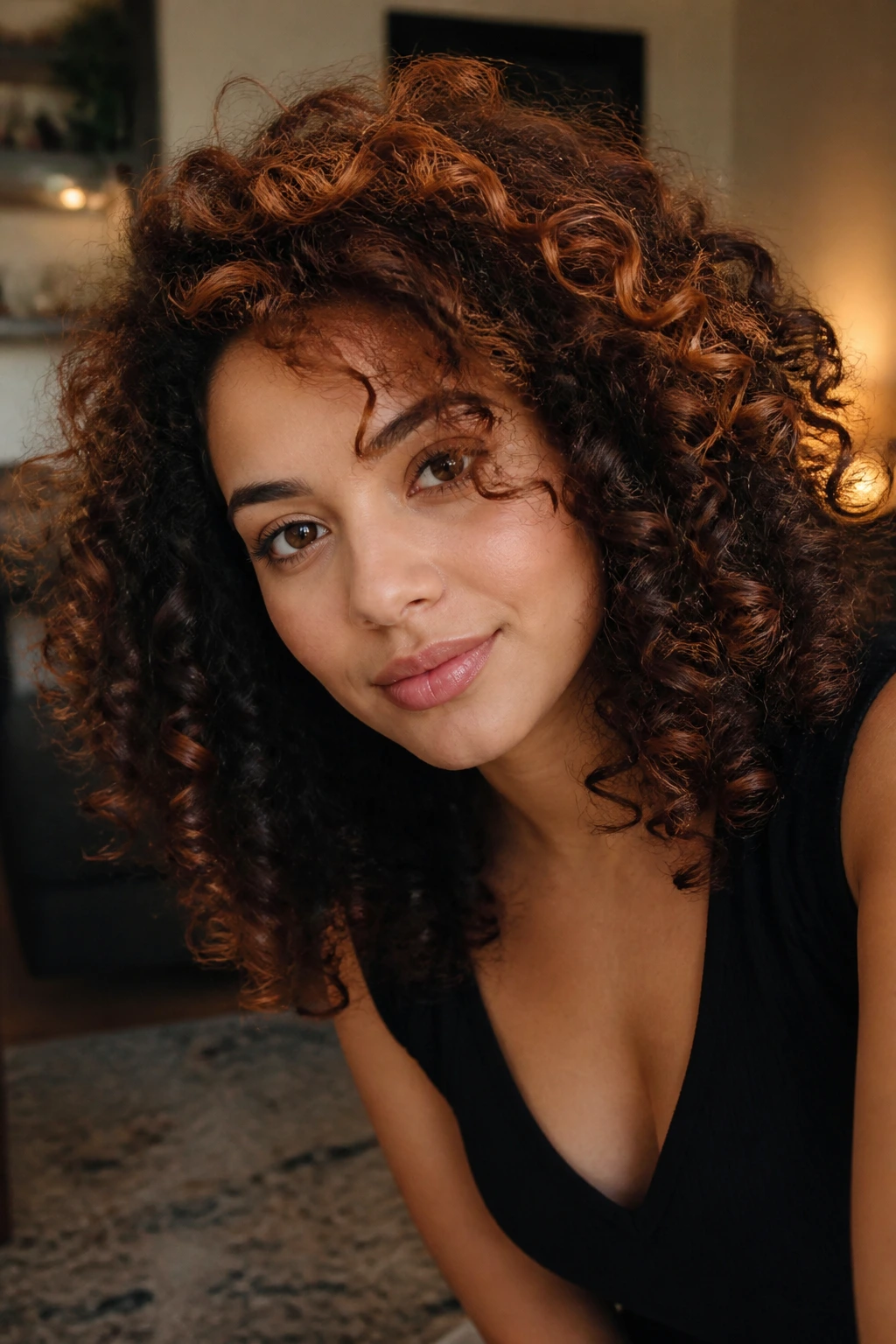
A copper halo gives curly hair a warm outline around the crown and upper layers, which can make the shape look fuller. The trick is to keep the halo soft and airy so it blends into the curl pattern instead of sitting on top of it.
Why I like it
On dark curls, a halo of strawberry-blonde warmth makes the outer ring of the hairstyle glow without changing the whole head. That means less maintenance and less risk of dryness from repeated lightening. The curl pattern does the rest.
If your hair tends to shrink up, ask for the warm pieces to be placed where the curls stretch the most. That way the color doesn’t disappear once the hair dries.
30. Shaggy Fringe with Strawberry Blonde Ribbons
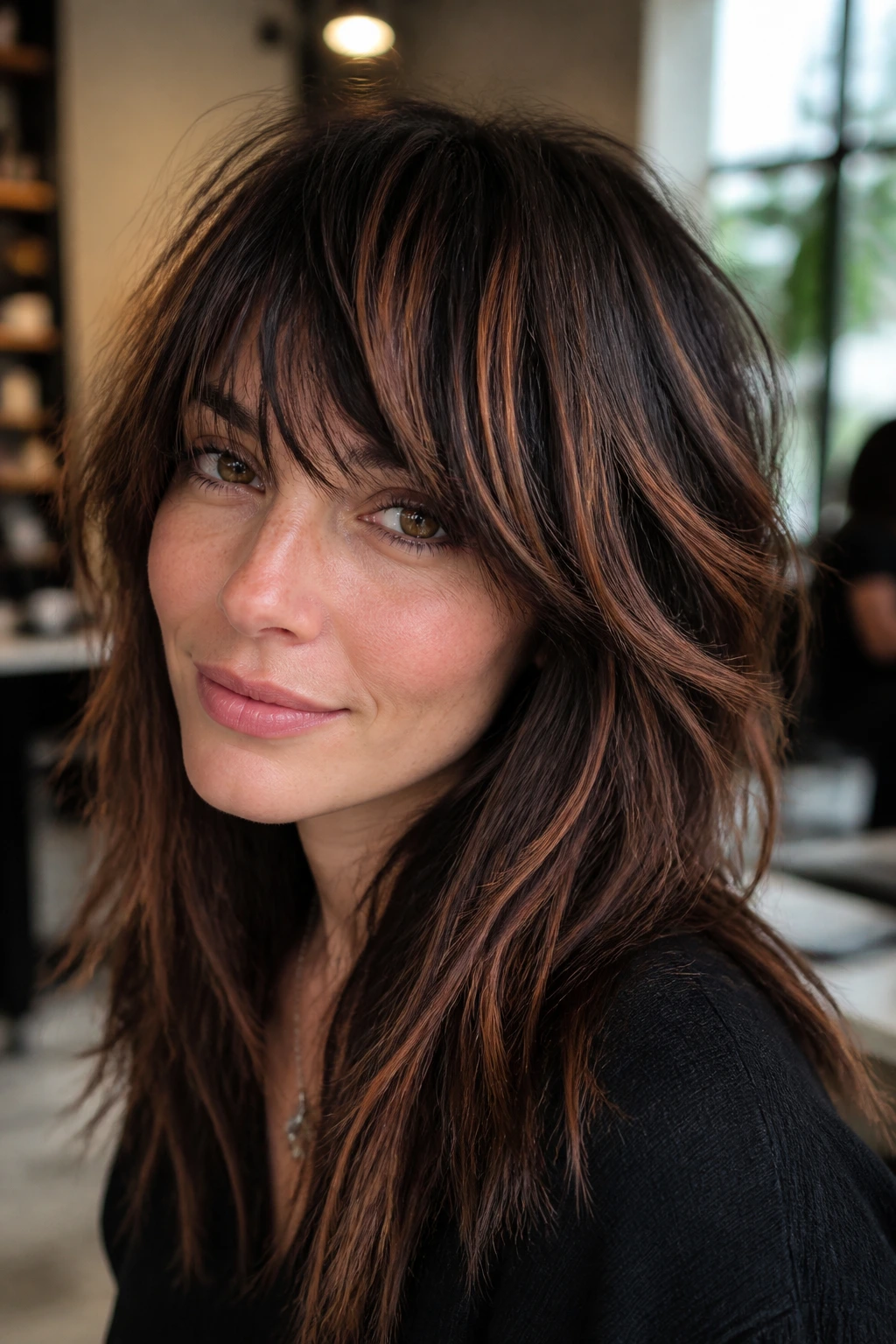
A shaggy fringe can handle more color than a blunt bang because the texture breaks up the line. Thin strawberry-blonde ribbons through the fringe and crown give the cut a slightly undone, airy look that works especially well on dark bases.
Best for a soft, edgy finish
This is the one I’d point to if you want the strawberry tone to show in motion, not in a static mirror photo. The ribbons should be light enough to lift the fringe, but still warm enough to feel like part of the brunette family. Too bright and the fringe steals the show. Too dark and the effect disappears.
The overall result is casual, dimensional, and a little bit cool without trying too hard.
Why These Strawberry Tones Stay Soft Instead of Looking Stripey
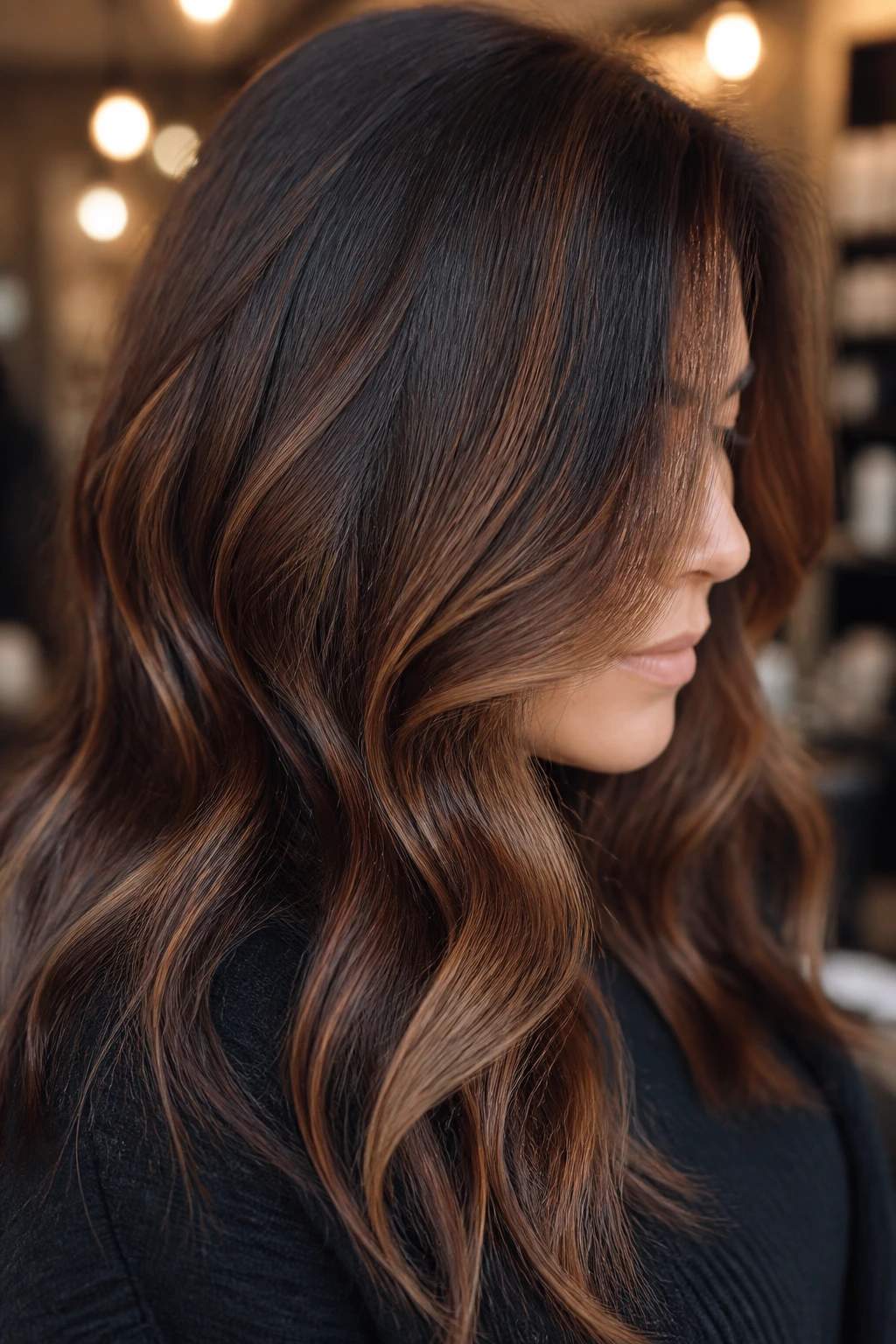
A subtle strawberry blonde finish on dark hair lives or dies on placement. Thin sections, soft root shadow, and warm glossing are what keep the color from reading like a set of obvious highlights. When the bright pieces are too wide, the eye sees stripes. When they’re narrow and irregular, the hair reads as warm and dimensional.
There’s also a tonal rule worth respecting: dark hair usually needs warmth in the lifted pieces, not ash. Ashy toner on a brunette base can make strawberry color collapse into a flat beige or muddy peach. A warm beige-gold, copper-gold, or rose-copper gloss tends to hold the tone in a much prettier place.
The haircut matters too. Waves, layers, curtain bangs, shags, lobs — all of them give the color places to bend and break. Straight, one-length hair can still wear strawberry blonde, but the placement has to be cleaner and more deliberate or the result gets too obvious.
What Your Colorist Needs to Know Before Mixing the Formula
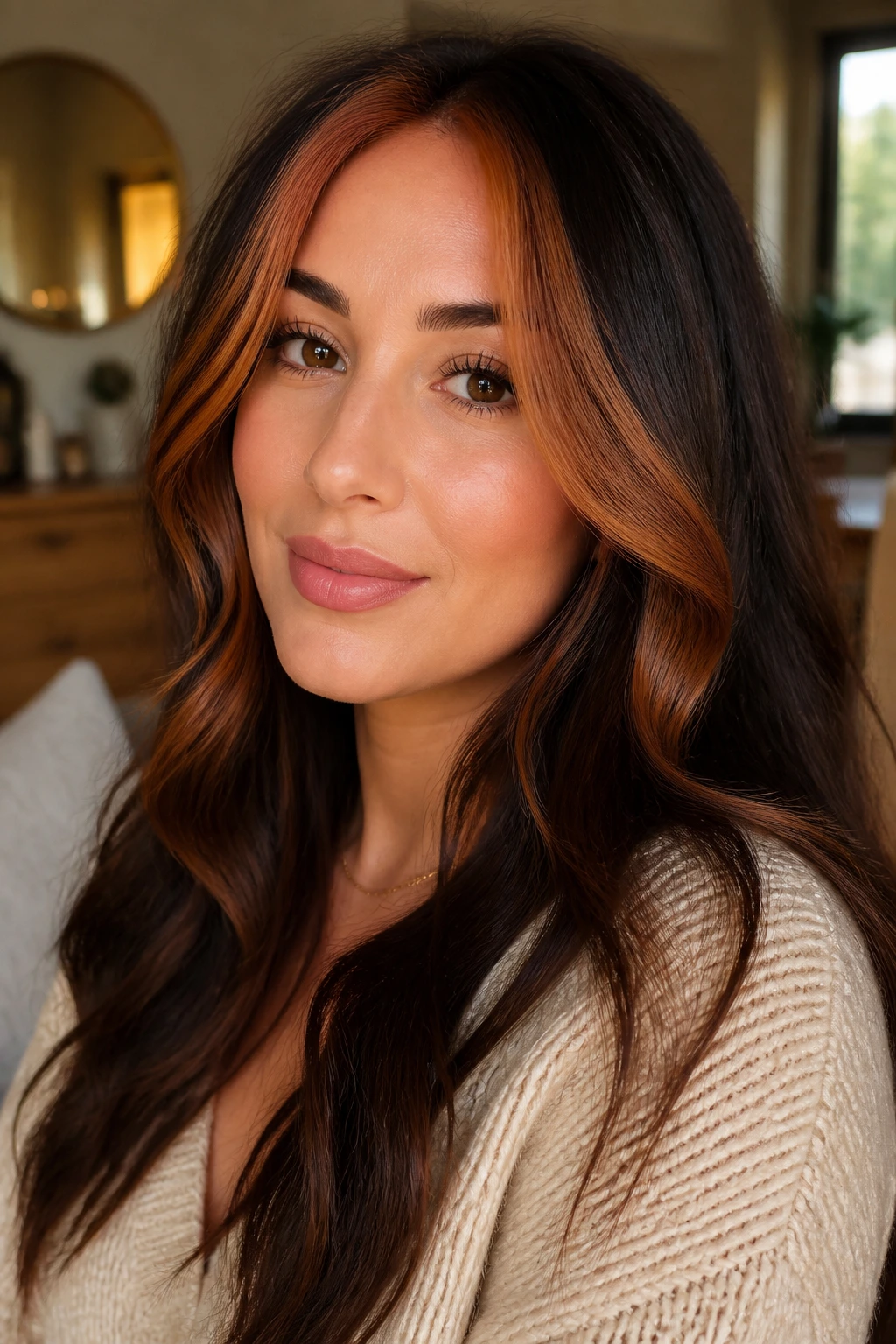
Bring a photo, yes, but bring the right kind of photo. You want examples shot in daylight, under indoor light, and from a side angle if possible. One image on a phone screen tells half the story; two or three images tell the tone story much better.
A good briefing usually includes your natural base level, how often you’re willing to come back, and whether you want the strawberry to sit mostly around the face or through the whole head. Say things like “I want warmth, not red-red” or “keep my roots dark and let the ends do the work.” Those sentences help more than vague words like “soft” or “pretty,” which mean different things to different people.
If your hair is very dark, ask about a strand test. Seriously. It can save you from a surprise orange result and tells you how much lift your hair can handle before it gets thirsty.
What To Bring to the Salon Chair
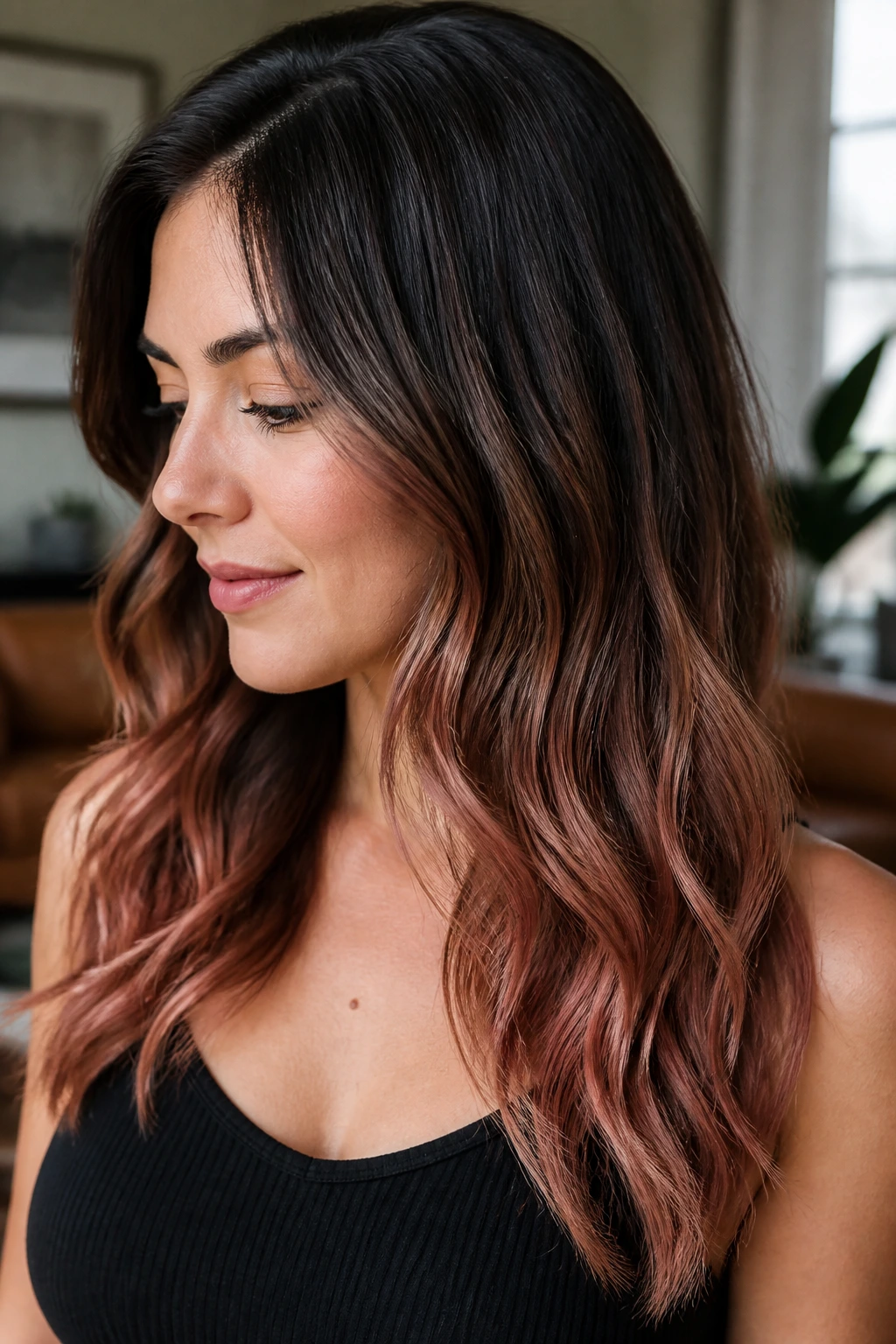
- Inspiration photos: Bring 3 to 5 images showing the same tone from different lighting; one glossy photo alone can mislead the colorist.
- Notes on your roots: Tell them how often you want to come back for maintenance, because that changes whether they choose a smudge, gloss, or heavier highlight.
- A picture of your usual styling: Straight, wavy, curly, air-dried — the color placement should match how the haircut actually lives.
- Color-safe shampoo and conditioner: If you already use them, bring the names or a photo of the bottles so your stylist can flag anything too stripping.
- Bond-building treatment: Useful if your dark hair needs lifting; it helps keep the strands from feeling rough after lightening.
- Wide-tooth comb and sectioning clips: Not glamorous, but handy for post-color care and salon prep if you style at home often.
- Tint brush and bowl: If you’re doing a gloss refresh at home with a pro, these make the color apply more evenly than a random kitchen brush.
How to Wear and Style These Shades
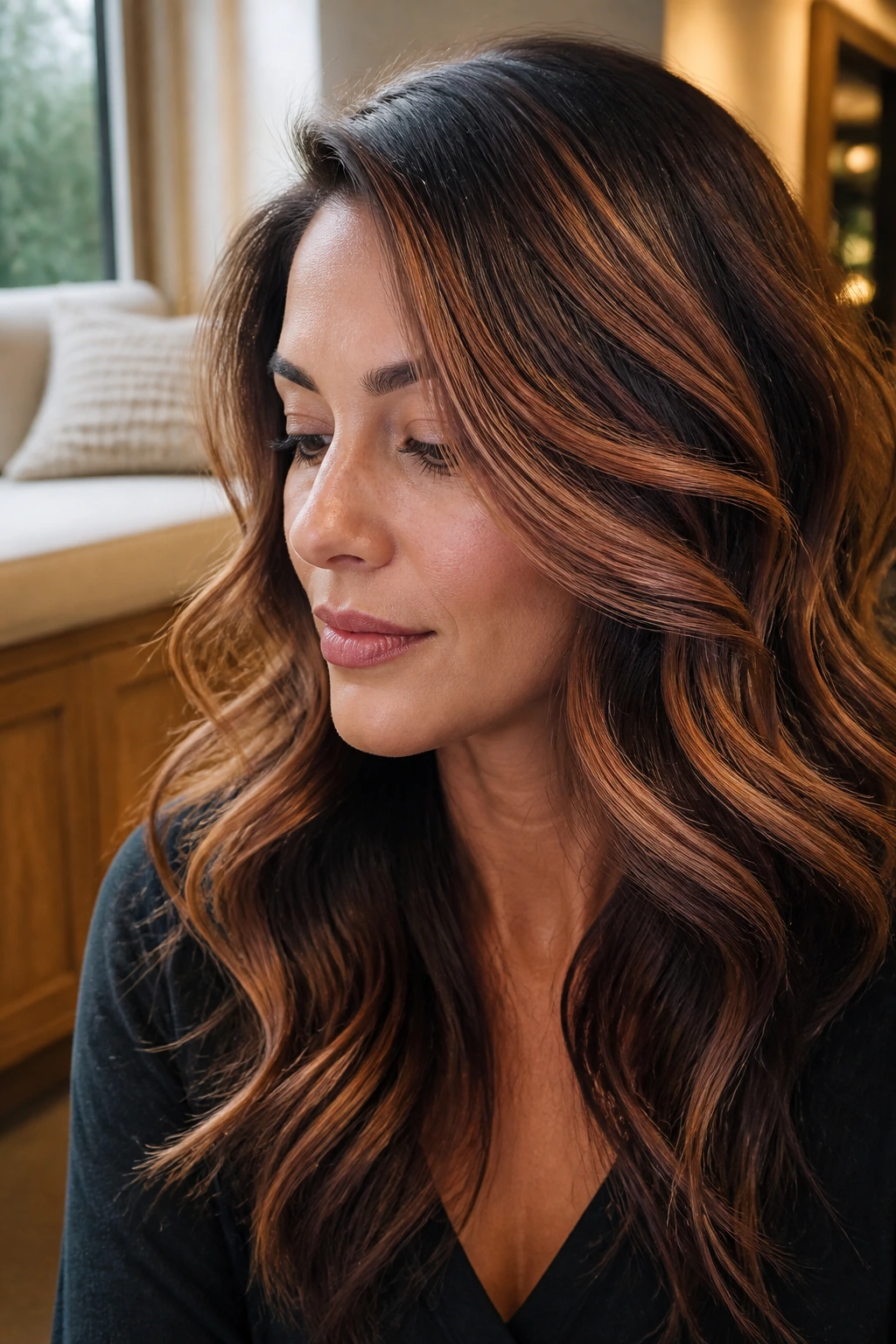
Presentation: Soft waves, a blowout with movement, or a loose bend through the mids will show off strawberry pieces better than pin-straight hair. A side part usually exposes the warm ribbons more clearly than a dead-center part, especially on dark bases.
Accompaniments: Cream, camel, rust, ivory, and olive all play nicely with strawberry blonde hair. Gold hoops, warm blush, and a terracotta lip make the color look intentional instead of accidental. Silver isn’t forbidden, but warm metals usually flatter these tones faster.
Portions: On shorter cuts, a few brighter pieces are enough; the haircut already gives you shape. On long, dense hair, the warm color needs to be spread with a lighter hand or it can disappear into the weight of the length. If your hair is very thick, ask for placement through the outer layer and around the face first.
Beverage Pairing: At the salon, water in a bottle with a cap is your friend. Herbal tea works too. I’d skip anything that stains teeth or demands two hands while your stylist is sectioning foils — a haircut cape and a hot coffee cup are a sloppy mix.
Additional Shine and Tone Boosters
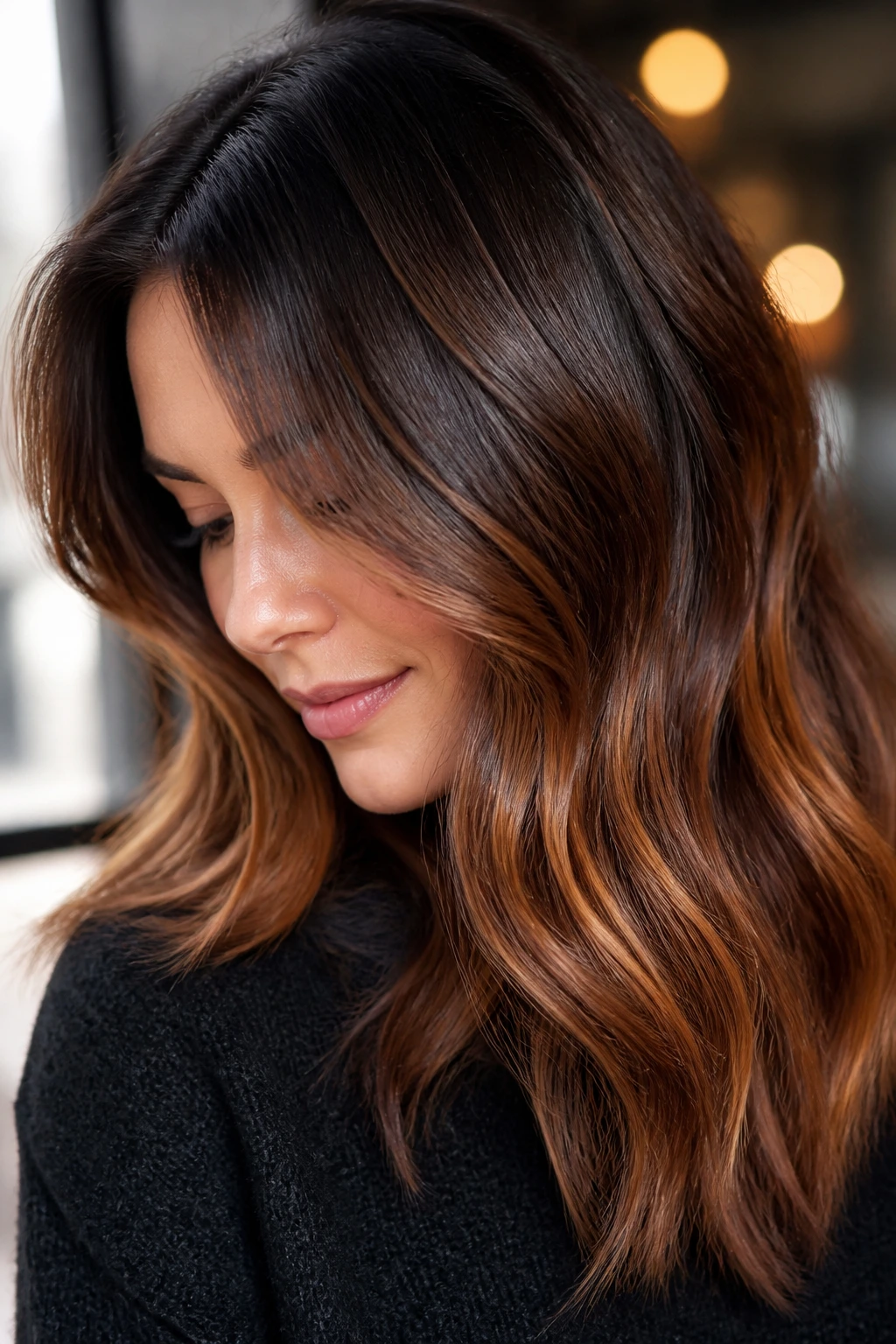
Tone Booster: A clear or slightly warm gloss every few weeks can revive faded strawberry tones without reopening the hair with more lightener. That’s the move I like best when the color starts leaning dull instead of warm.
Customization: If you want the look softer, keep the lighter pieces near the crown and face. If you want more movement, push a few warm strands through the ends and underneath layers so the color shows when the hair swings.
Styling Touches: A lightweight oil on the mids and ends makes the copper notes look richer because shine helps warmth read as polished rather than brassy. Use a small amount — half a pump is often enough on shoulder-length hair.
Make-It-Yours: Curly hair usually benefits from fewer but brighter placements. Fine hair often looks fuller with more micro-highlights. For very dark brunettes, a root smudge is your best friend because it stops the color from looking pasted on.
Common Mistakes That Make Strawberry Blonde Fall Flat on Dark Hair
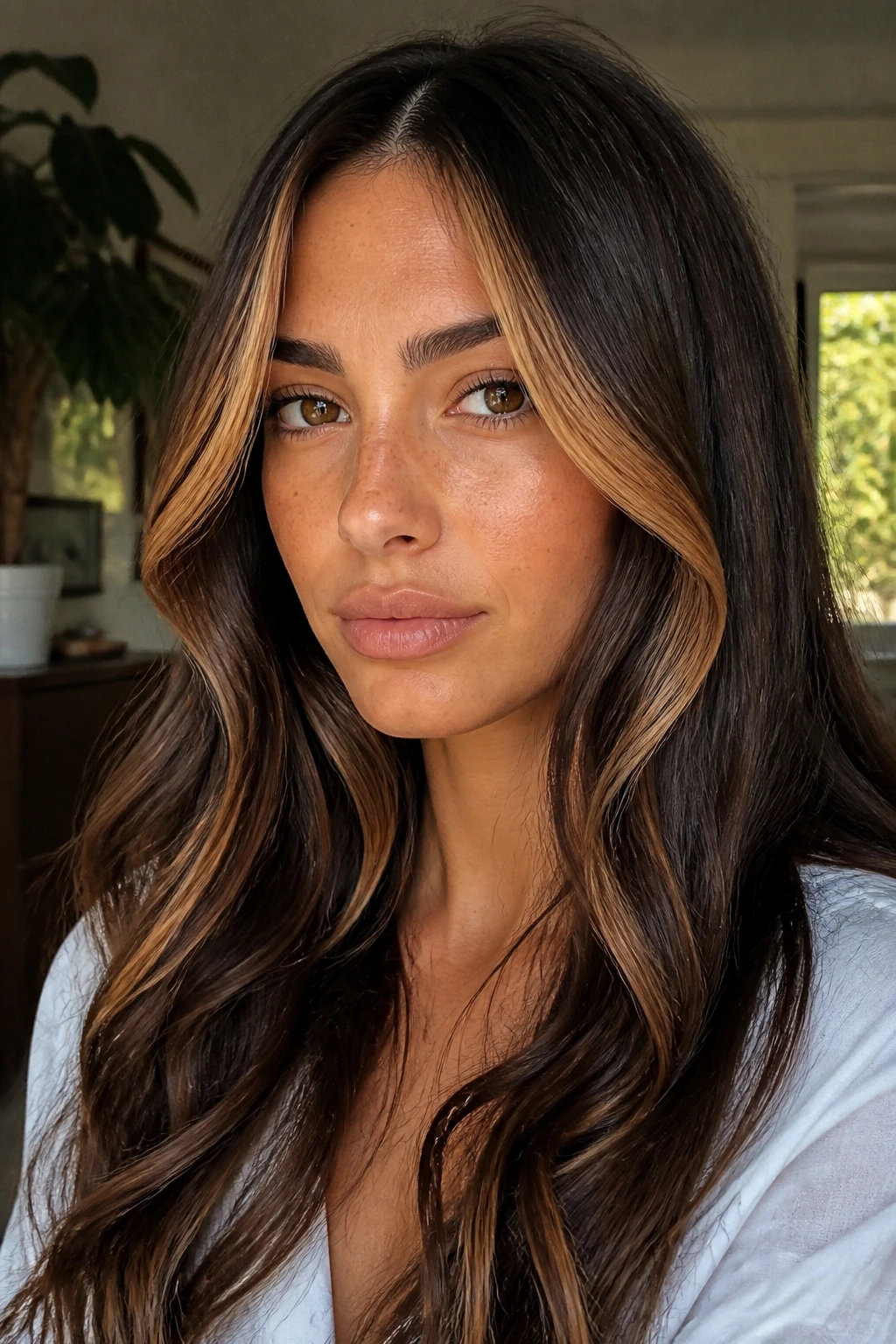
The first mistake is chasing too much lightness too fast. If the dark base has to be pushed up several levels in one appointment, the hair can end up dry and the strawberry tone can tilt orange. The fix is slower lift, fewer foils, and a warmer gloss at the end.
Another problem is using ash toner to “clean up” the warmth. That sounds sensible, and it often backfires. Ash can mute the strawberry note until the whole thing looks beige or muddy. Ask for a warm beige or copper-gold finish instead, unless you specifically want the tone cooler.
Stripey placement is the third trap. Thick, even highlights on dark hair can look chunky the moment the hair parts. Thin ribbons, babylights, or soft balayage sweeps solve that by blurring the contrast.
People also forget that copper fades. Fast. If you love the shade when you walk out of the salon, build a plan for gloss refreshes and sulfate-free shampoo or the pretty warmth gets washed down the drain. And if the color ends up too orange? Don’t panic. A quick salon gloss can usually steer it back toward peach, rose, or honey.
Soft Rosy Variations Worth Trying
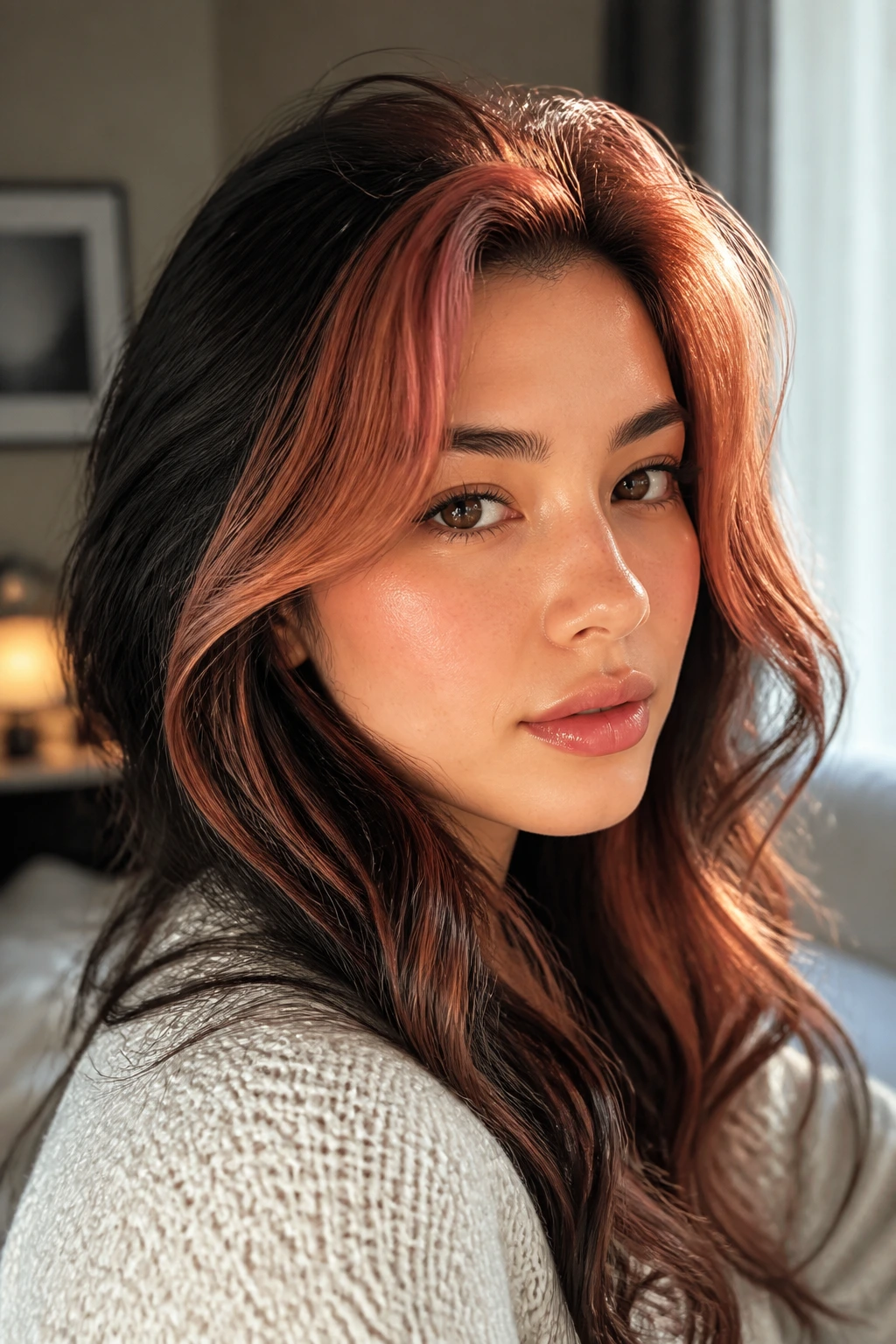
Cinnamon Swirl Melt: This variation leans warmer at the mids and tips, with a darker root and soft cinnamon-copper ends. It’s a good fit if you want strawberry blonde that reads rich instead of pastel.
Rose Gold Halo: A halo of rose-gold pieces around the crown and front hairline gives dark hair a lifted, luminous frame. Choose this if you want the color to show most in ponytails, buns, and half-up styles.
Apricot Money Piece: The front strands get a touch of apricot warmth while the rest of the hair stays nearly untouched. It’s the fastest way to test the tone without committing to a full-head change.
Copper Latte Balayage: This one uses a beige-brown bridge color between the brunette base and coppery strawberry ends. It’s softer than a straight red or orange route and works well on shoulder-length hair.
Strawberry Dust on Curls: Tiny warm placements through the outer curls give dark curly hair a misted, glowing finish. Ask for less lift and more scattered placement if you want the effect to stay subtle.
How to Keep the Color Fresh Between Salon Visits
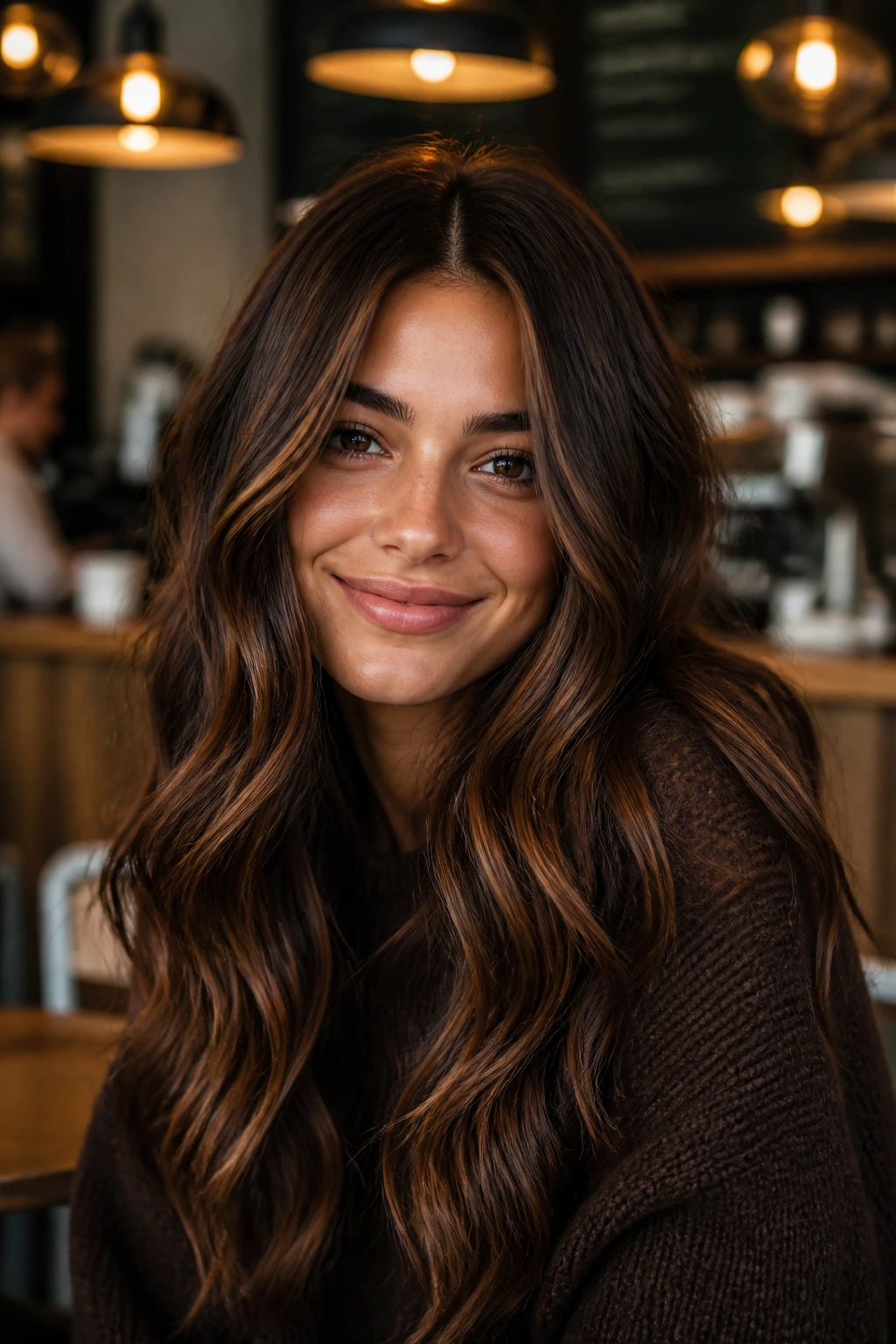
Color like this lives or dies by washing habits. Use lukewarm water, not hot water, because hot water strips the warm gloss faster than people expect. A sulfate-free shampoo helps, especially if the strawberry tone is sitting on lightened sections that already want to fade.
If the color has been glossed rather than fully highlighted, you may need a refresh every 4 to 6 weeks. If you’ve got balayage or babylights, the color can last longer, but the warmth around the face often needs a quick tone-up sooner. Dry shampoo is useful here, but don’t let buildup sit at the roots for days on end; it can make the hair look dull and mute the strawberry reflection.
Heat styling is fine, but use a protectant and keep the iron in the medium range. High heat can flatten the warm tone and make the ends look fried before the color itself has even faded.
Frequently Asked Questions
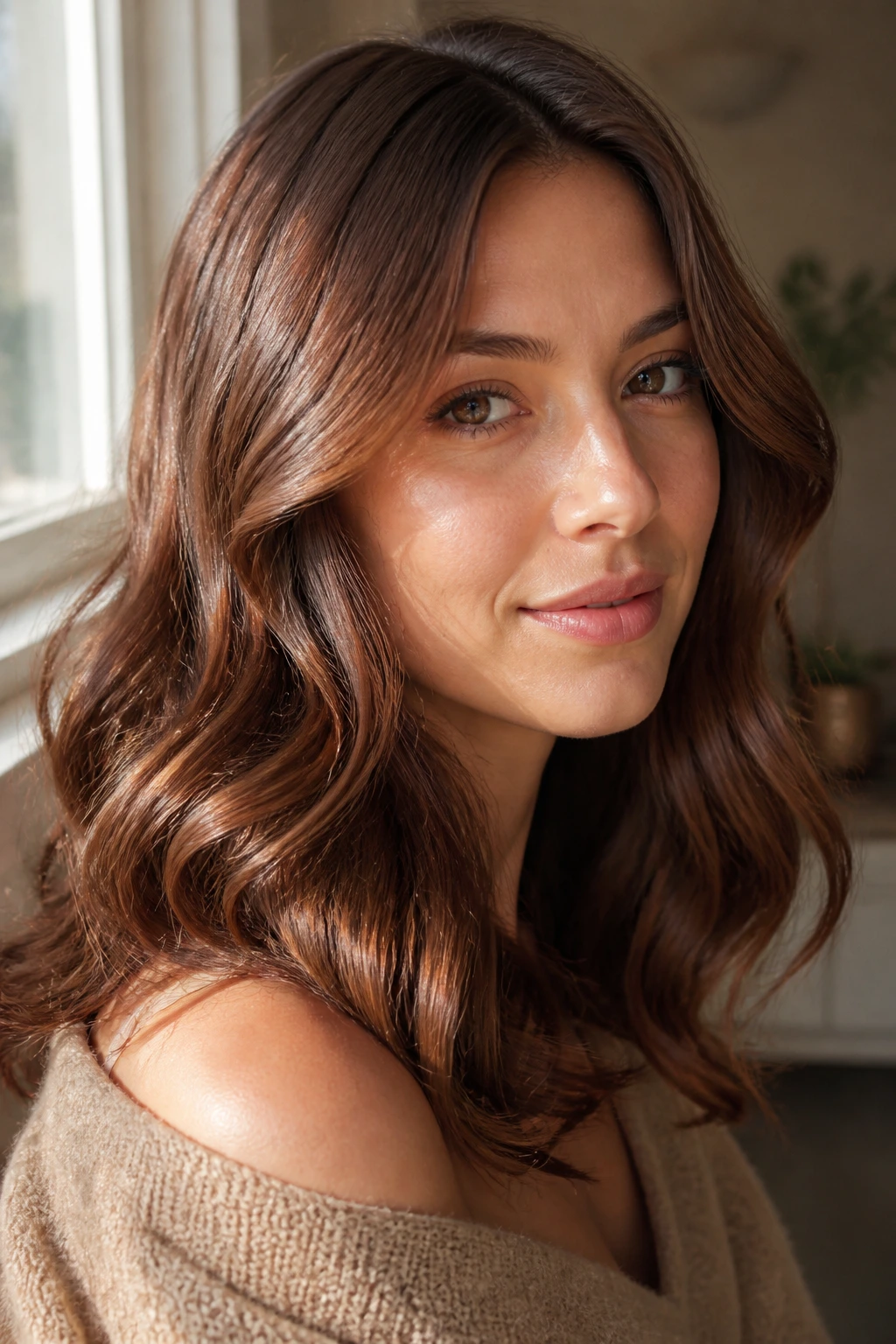
Can strawberry blonde work on very dark brown or black hair?
Yes, but it usually works best as a partial look rather than a full lightening job. On very dark hair, the prettiest version often comes from face-framing pieces, thin ribbons, or a glossy warm finish instead of trying to take the entire head several levels lighter.
Do you need bleach for subtle strawberry blonde on dark hair?
Most of the time, some lightening is needed if you want the strawberry tone to actually show. A gloss alone can give warmth and reflection, but true strawberry-blonde ribbons usually need partial bleaching or fine foils.
What’s the difference between strawberry blonde and copper?
Copper is usually deeper, richer, and more red-orange. Strawberry blonde sits softer, with more peach, rose, or gold in the formula, so it reads lighter and less intense on dark hair.
How often should the color be refreshed?
Glosses often need a tune-up every 4 to 6 weeks, while balayage or babylights can stretch longer between appointments. If the warmth around your face fades first, ask for a quick toning service instead of a full redo.
Can this be done on curly hair without making it look patchy?
Yes, and curly hair often wears these tones especially well. The key is to place the lighter pieces where the curls naturally separate and catch light, not to saturate every curl evenly.
What should I ask for if I want it subtle?
Say you want a brunette base with warm strawberry face-framing pieces, a soft root shadow, and no chunky highlights. Those words steer the colorist toward placement and glossing instead of a big blonde change.
Will it work on cool skin tones?
It can, but the strawberry tone should be kept muted — think rose-copper, apricot, or beige-gold rather than strong orange copper. The right balance keeps the warmth flattering instead of harsh.
What if my hair turns too orange?
A salon gloss can usually calm it down. The fix is often less about removing color and more about shifting the tone toward rose, peach, or soft gold so the orange edge gets blurred.
The Shade That Grows Out Gracefully
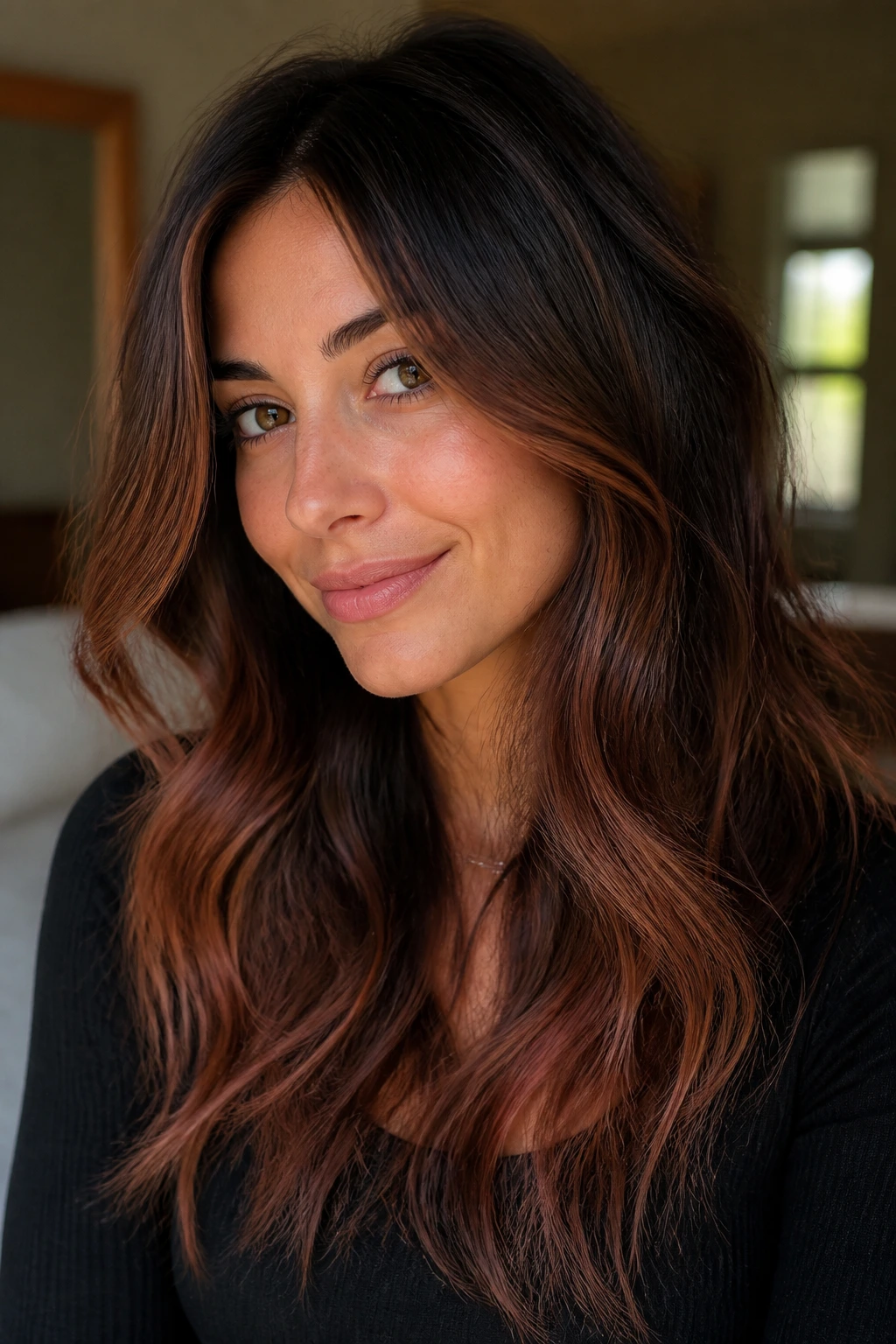
The best thing about these looks is that they don’t fight the dark base; they work with it. That’s why they feel wearable. The brunette depth keeps the color grounded, and the strawberry note just gives the hair a warm pulse around the face, through the ends, or in a few carefully chosen ribbons.
If you’ve been circling strawberry blonde but worried it would look too bright, too orange, or too maintenance-heavy, start with the smallest version that still gives you movement. A money piece. A gloss. Babylights. The color doesn’t need to be loud to change how the hair reads in the mirror.
And once you find the right balance of copper, rose, and gold, dark hair starts doing a very nice trick: it looks like itself, only warmer, softer, and a little more alive.