



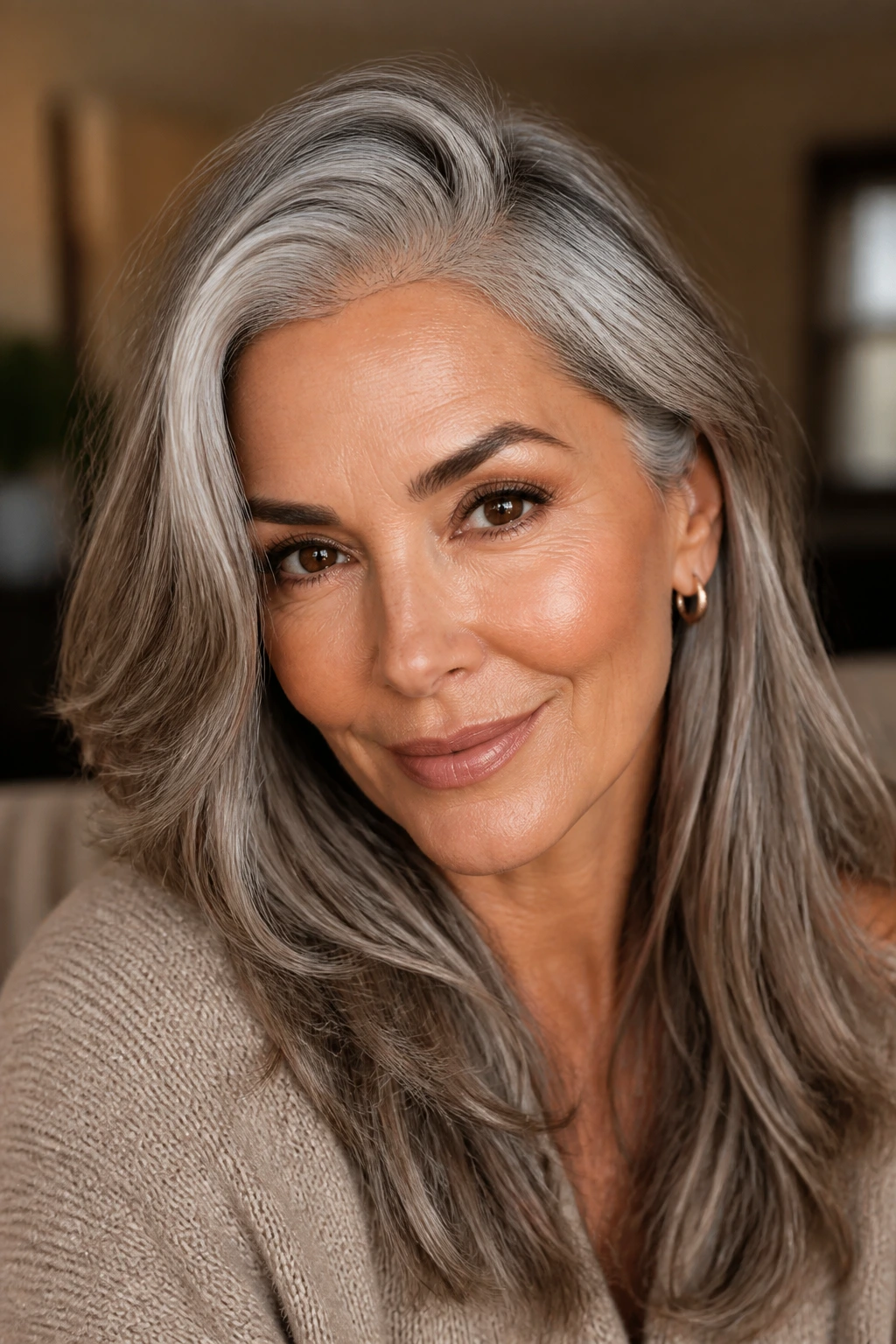
Grey hair color ideas for warm skin tones work best when the grey has some softness baked into it. Pure blue-silver next to peachy, golden, or olive skin can go flat in a hurry; a grey with beige, mushroom, pewter, or smoky brown in the base does the opposite and makes the face look brighter instead of washed out.
I’ve always liked grey more when it behaves like fabric than paint. Think cashmere, smoke on glass, weathered pewter, the soft shine of a well-worn ring. The shades in this list lean that way — dimensional, rooted, and warm enough around the edges that they don’t fight the skin.
If your undertone runs golden, peach, or olive, the trick is not to avoid grey. It’s to choose a grey that has somewhere to land. Some of these are soft and wearable. Some are louder, cleaner, and sharper. A few walk the line between silver and brunette, which is often where the smartest color lives.
Why These Grey Shades Work on Warm Undertones
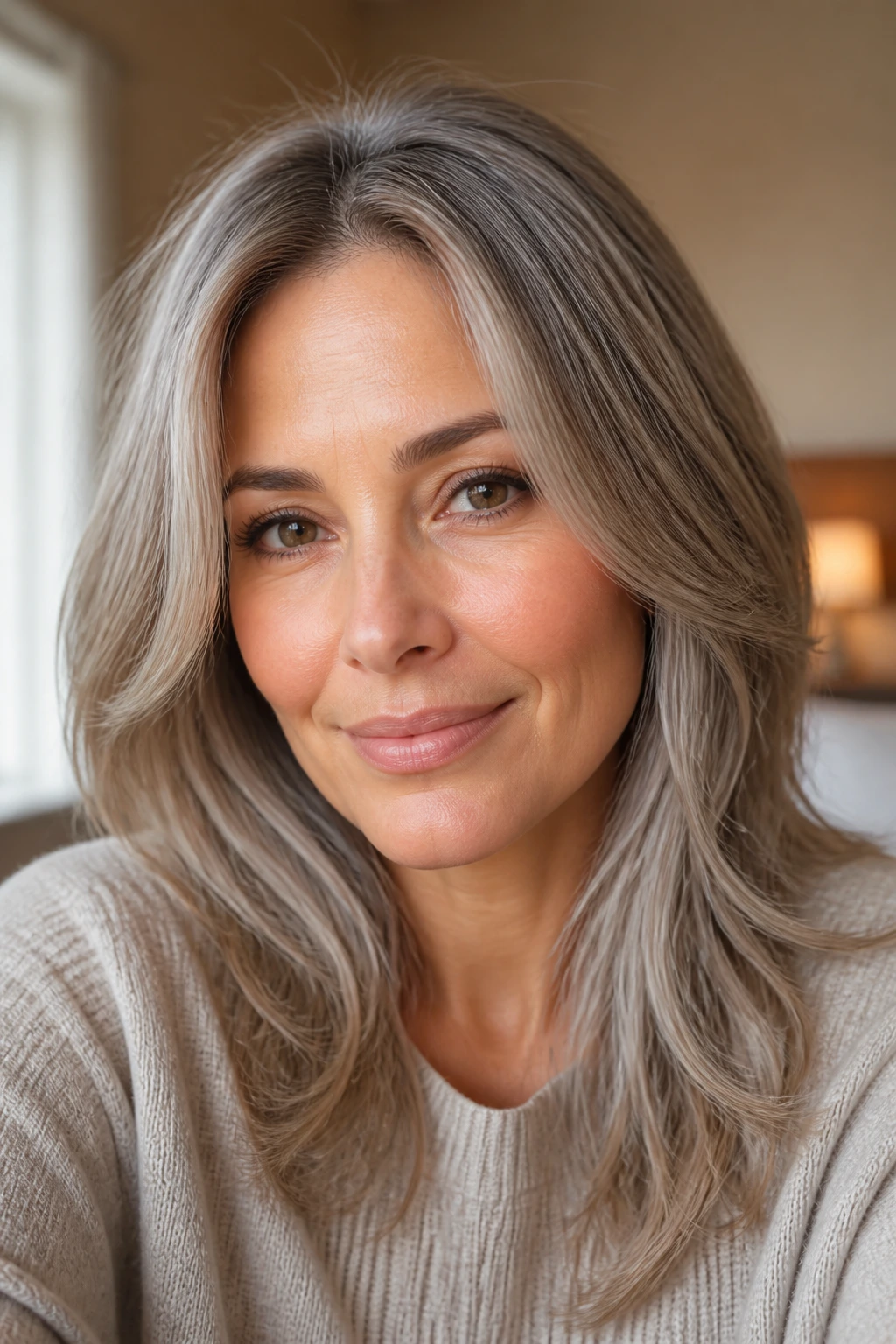
- Beige and mushroom bases soften the chill: A little beige in the toner keeps grey from turning icy or chalky against warm skin.
- Root shadow makes the color look deliberate: Deeper roots give silver, pewter, and charcoal some depth instead of letting them sit flat on top of the head.
- Placement changes everything: A grey money piece or a smoky face frame can flatter warm undertones even when the overall color reads cool.
- Not every grey needs to be metallic: Greige, taupe, pearl, and champagne smoke are all grey-adjacent shades that feel softer on golden skin.
- Maintenance varies a lot: Some of these looks need only a gloss refresh; others need pre-lightening, toning, and a stricter shampoo routine.
- Movement helps the color: Waves, layers, and textured cuts make grey shimmer in pieces instead of turning into one hard block.
1. Mushroom Grey Melt
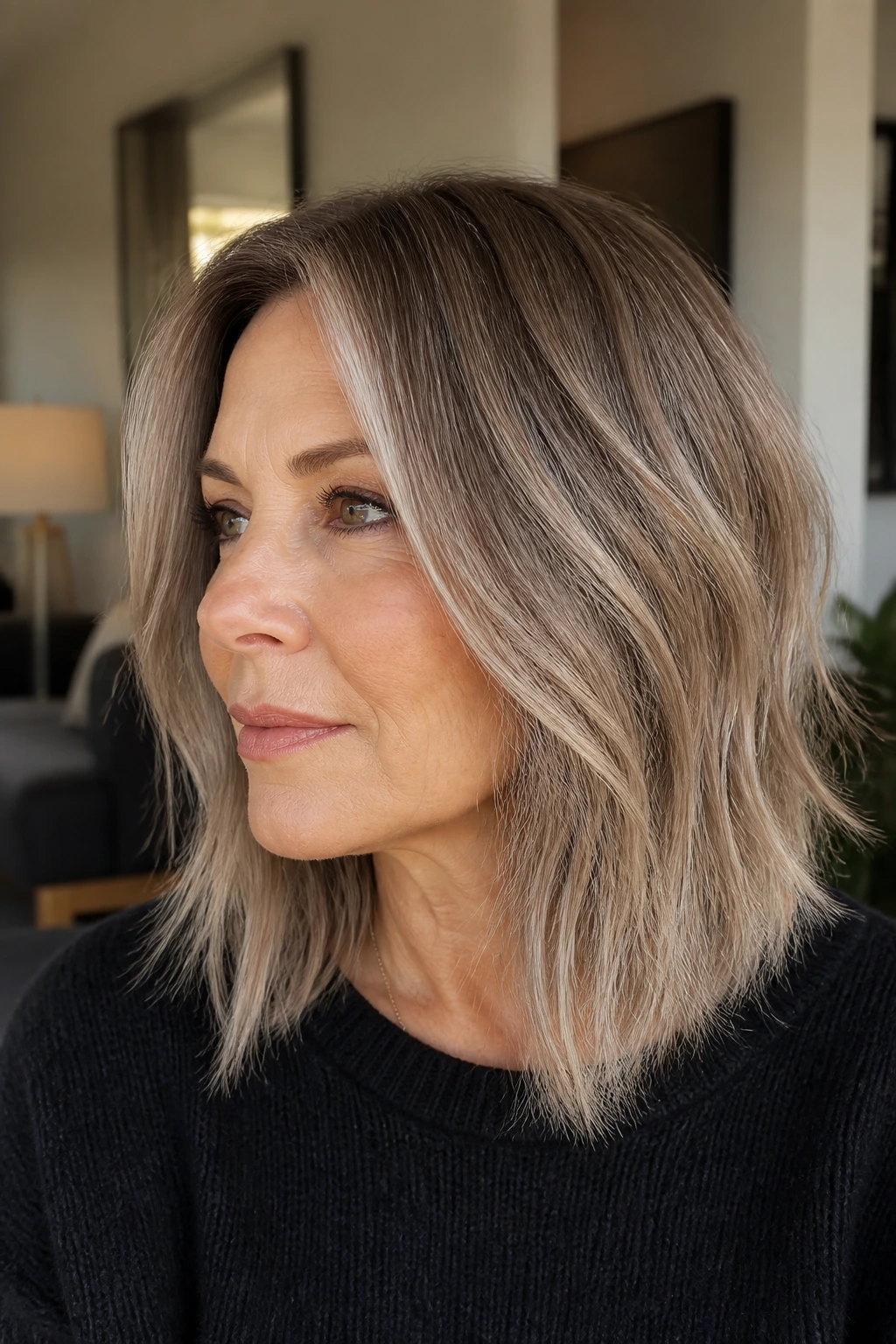
Mushroom grey is the shade I reach for when someone wants grey hair color ideas for warm skin tones without the face going pale. It sits in that sweet spot between taupe, beige, and soft silver, so the color feels smoky rather than frosted. On a layered lob or long bob, it looks especially good because the ends catch a slightly lighter grey while the root stays shadowed.
Ask for a level 6-7 root shadow, mushroom-toned mids, and silver-beige ends. That combination keeps the look dimensional. If the toner goes too blue, the whole thing can look chilly fast.
This shade flatters peach and golden undertones because the beige in the mix acts like a buffer. The color still reads grey. It just doesn’t argue with the skin.
2. Smoky Beige Bob
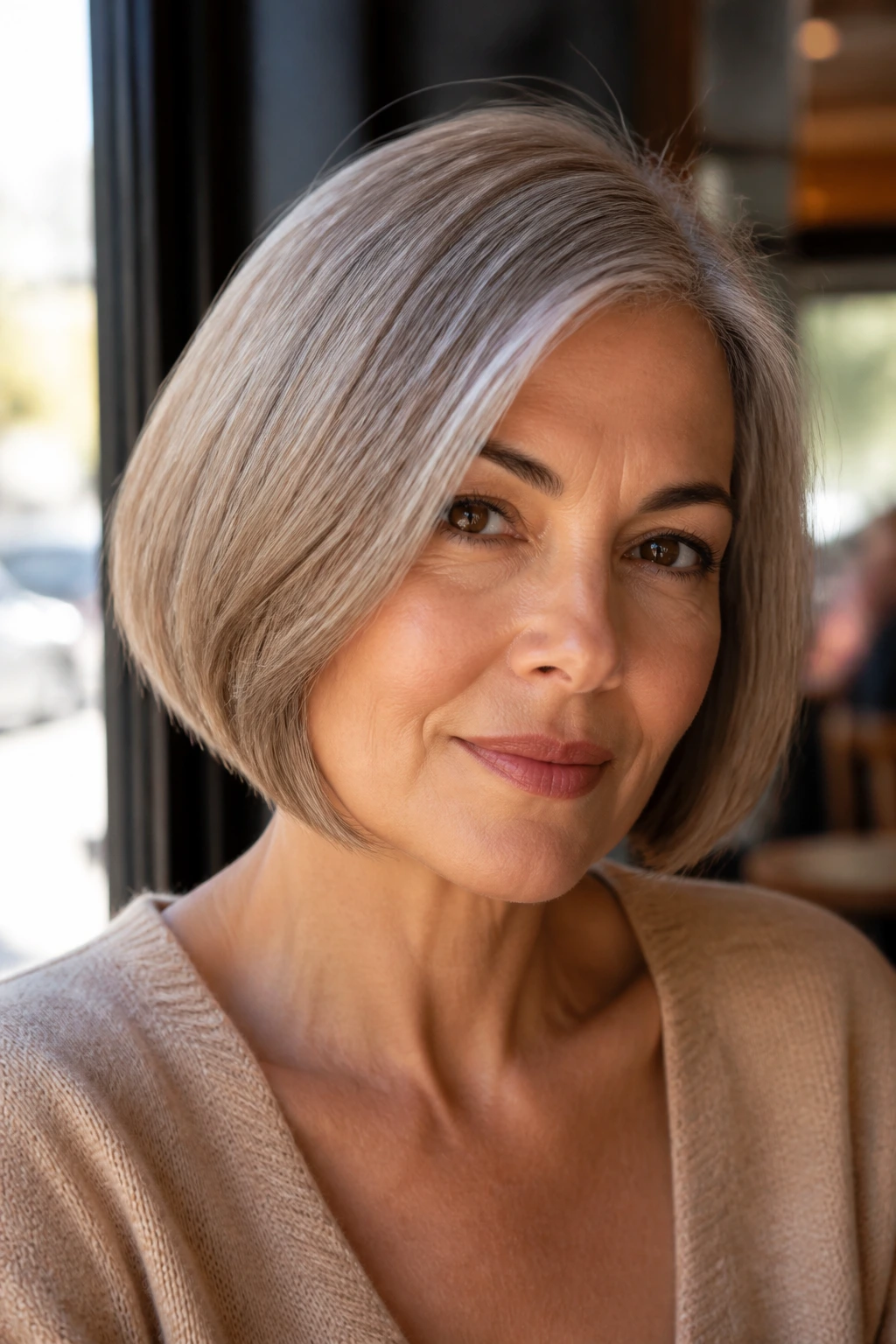
A bob can carry more grey than long hair, because the cut does half the work. With a clean line at the jaw or just below it, smoky beige grey reads polished instead of severe. The beige keeps the silver from feeling icy, and the short shape gives the color a crisp edge.
This is a smart choice if you like hair that looks neat even when you do almost nothing to it. Blow it smooth, tuck one side behind the ear, and the shade looks intentional. Leave it rough and wavy, and the smoky tones soften further.
Warm skin likes this one because the color isn’t fighting for attention. It just sits there with a soft shine, which is often the whole point.
3. Pearl Silver Balayage
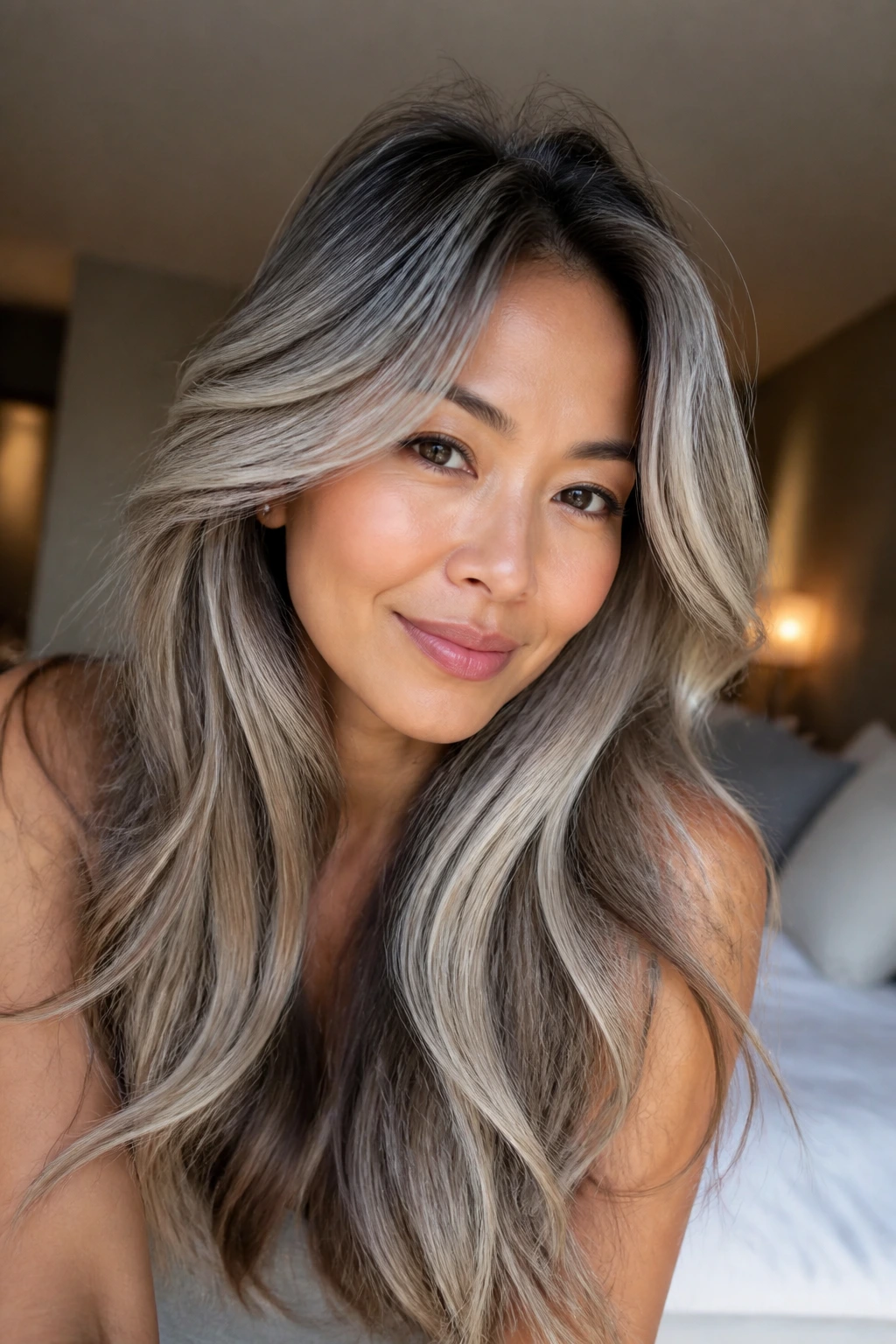
Pearl silver works because it has light in it, not just coolness. A good pearl balayage has ribbons of silver, cream, and a faint opalescent sheen that keeps the hair from turning flat. On warm skin, that tiny bit of softness matters more than people think.
A full head of pearl silver can be too much if the base is lifted all the way to white. Better to keep the root a touch darker and let the pearl live in the mids and face frame. That way, the silver reflects light while the complexion keeps its warmth.
If your hair is long and layered, this shade looks best when the pieces are broad enough to show movement. Thin highlights make pearl silver look busy. Wider ribbons let it breathe.
4. Taupe Grey Lob
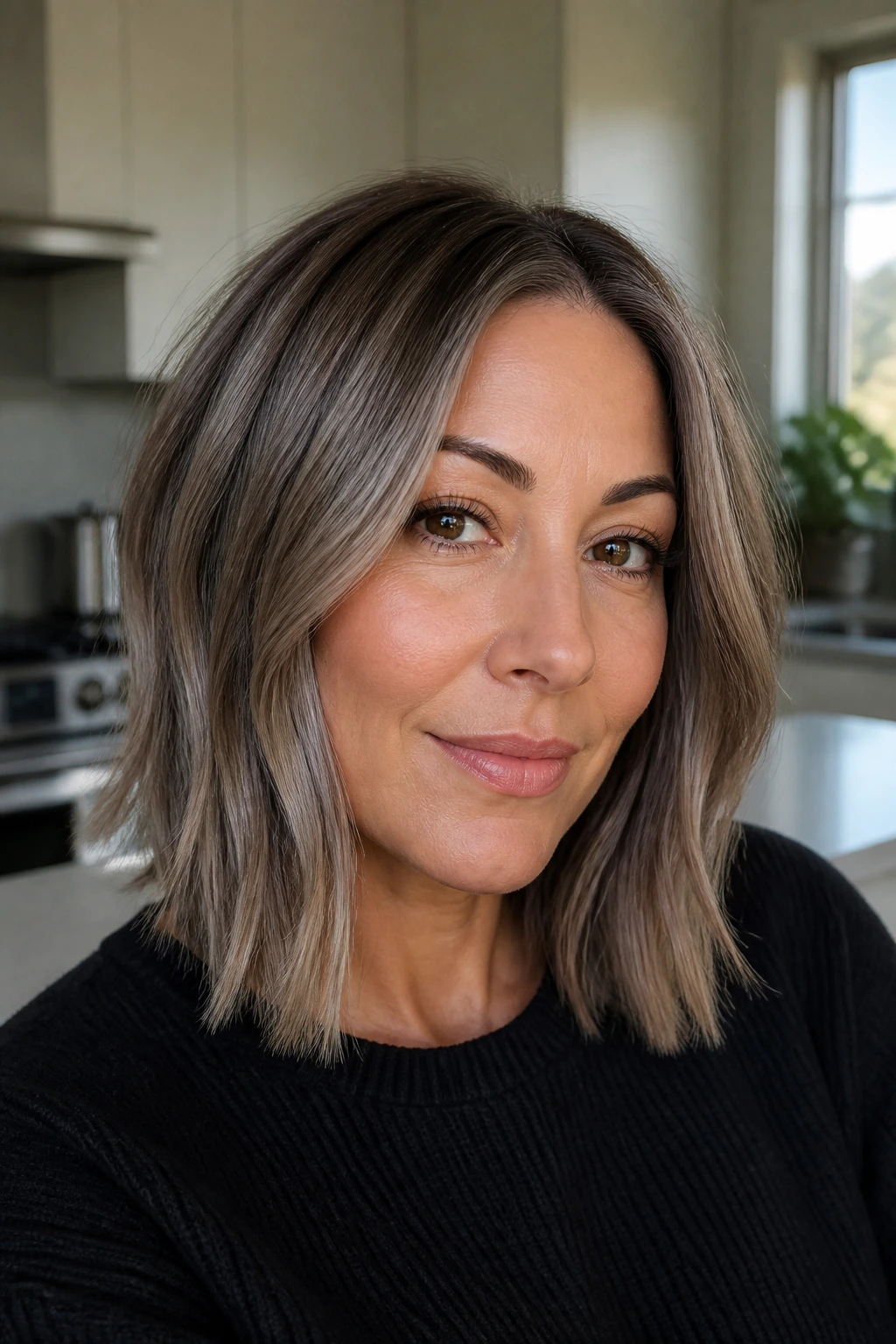
Taupe grey is the bridge shade. It’s not quite brown, not quite silver, and that middle ground is exactly why it works so well on golden or olive skin. On a lob, it feels clean and modern without drifting into that hard, flat silver some people regret after a week.
The best version has a soft root melt and slightly lighter ends. No harsh line. No cookie-cutter stripe. The color should look like it grew that way, even if it took several rounds to get there.
I like taupe grey for people who wear a lot of camel, olive, cream, or rust. The color doesn’t compete with warm clothes, and it doesn’t disappear into them either. That balance is tricky. This shade gets it right.
5. Charcoal Root Shadow
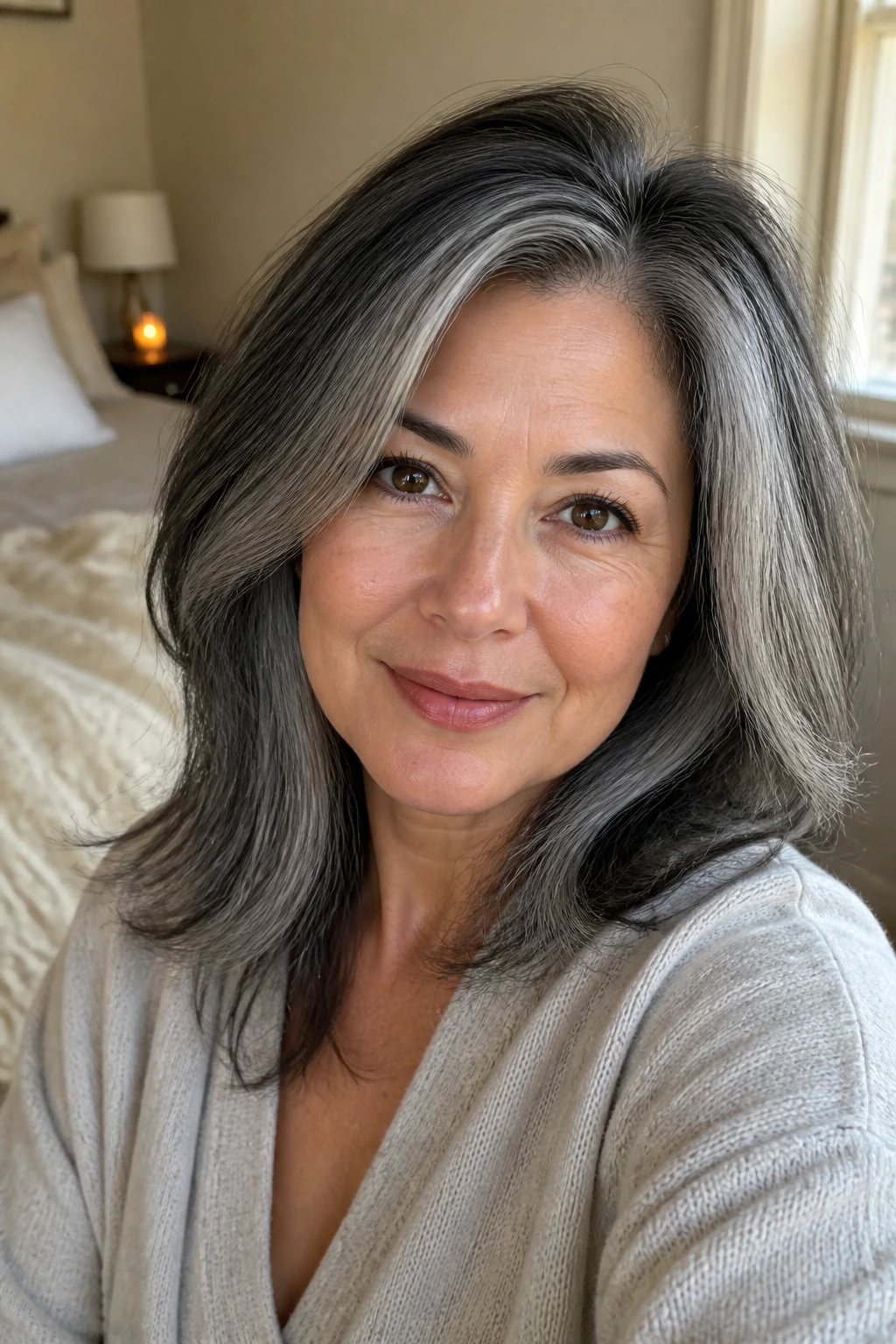
Charcoal doesn’t have to be harsh. In fact, on warm skin, a charcoal root shadow can be the most flattering way to wear grey because the darker base keeps the color grounded. The trick is to blur the transition so it feels smoky, not chunky.
Leave the top inch or two deeper, then melt the grey into softer graphite through the mids. Around the face, ask for a whisper of lighter silver so the color doesn’t close in. That tiny brightening does a lot.
This shade is especially good if you like dark brows, deeper lashes, or bold lipstick. It gives the face enough contrast to keep warm undertones looking alive. Flat grey does not do that. Charcoal with depth does.
6. Steel Silver with Caramel Ribbons
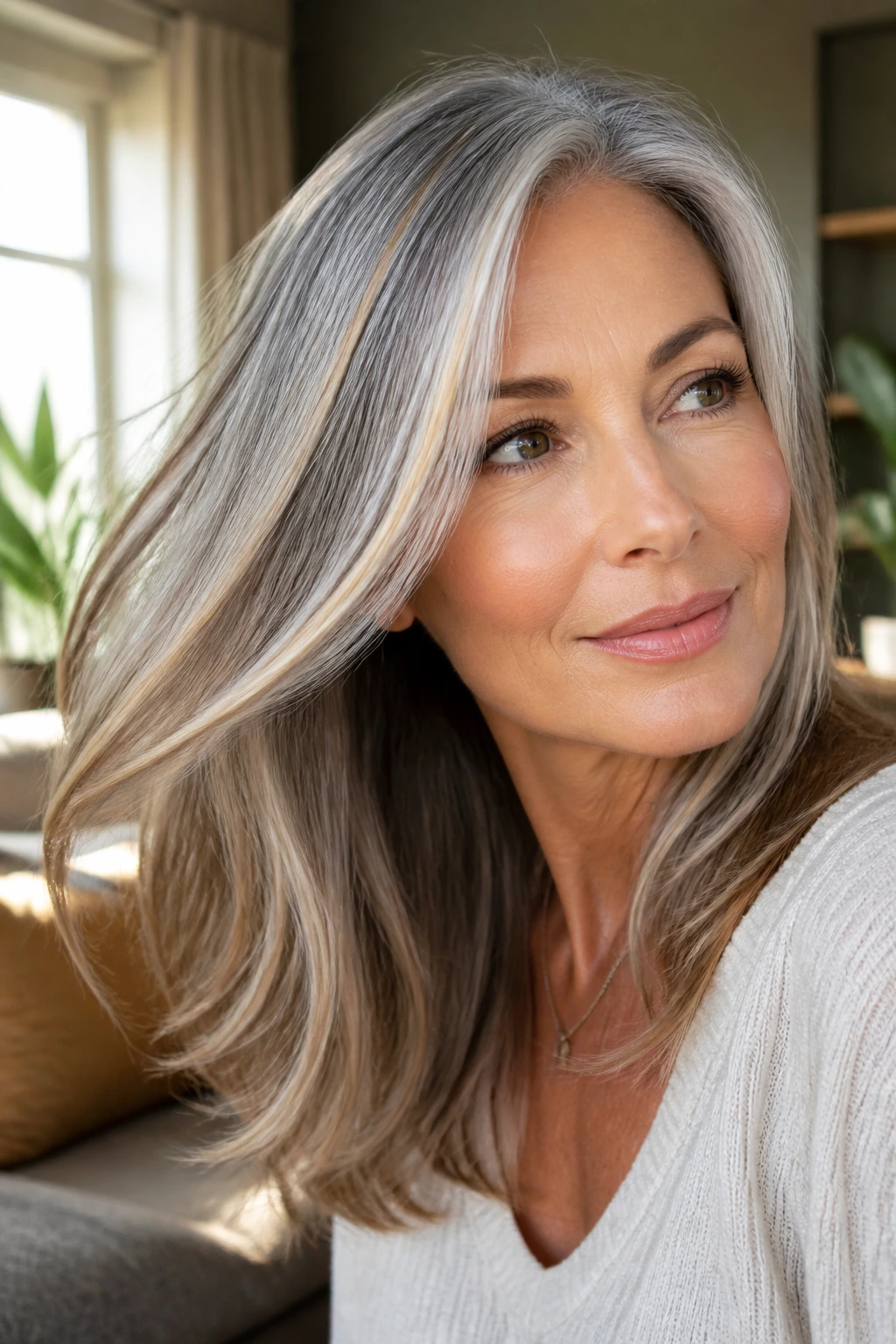
Steel silver can feel cold on its own; add caramel and it suddenly has somewhere warm to land. The caramel ribbons don’t need to be wide. Thin, glowy pieces are enough to stop the color from turning metallic in a way that fights the skin.
This is one of my favorite options for layered cuts because the light catches the two tones differently. The silver reads first. The caramel shows up when the hair moves. That little shift makes the whole look less one-note.
If you’re nervous about a full grey transformation, this is a gentle on-ramp. You still get the silver effect, but the warm ribbons keep the face from getting drained.
7. Dove Grey Curtain Layers
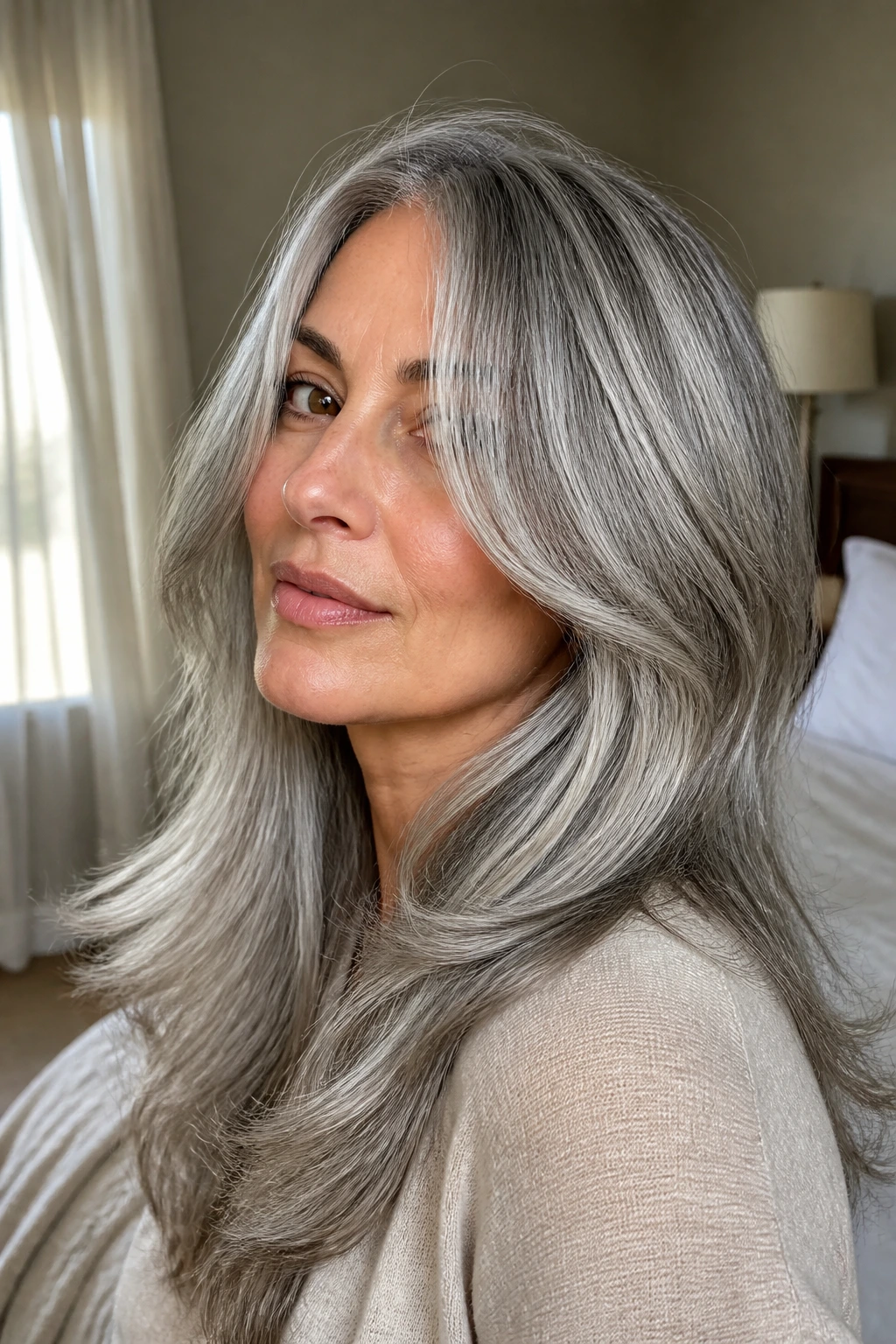
Want grey that moves when you turn your head? Dove grey is the answer. It’s softer than pewter and lighter than charcoal, with a pale, feathered look that works especially well on curtain layers.
The cut matters here. Long face-framing layers let the grey swing around the cheekbones instead of sitting in one heavy sheet. On warm skin, that movement matters because the shade looks airy, not heavy.
A few well-placed lighter pieces near the front keep the whole look awake. Too much cool tone through the ends can flatten it, so I’d keep the root slightly deeper and the face frame a touch brighter. Subtle. But not invisible.
8. Graphite Pixie
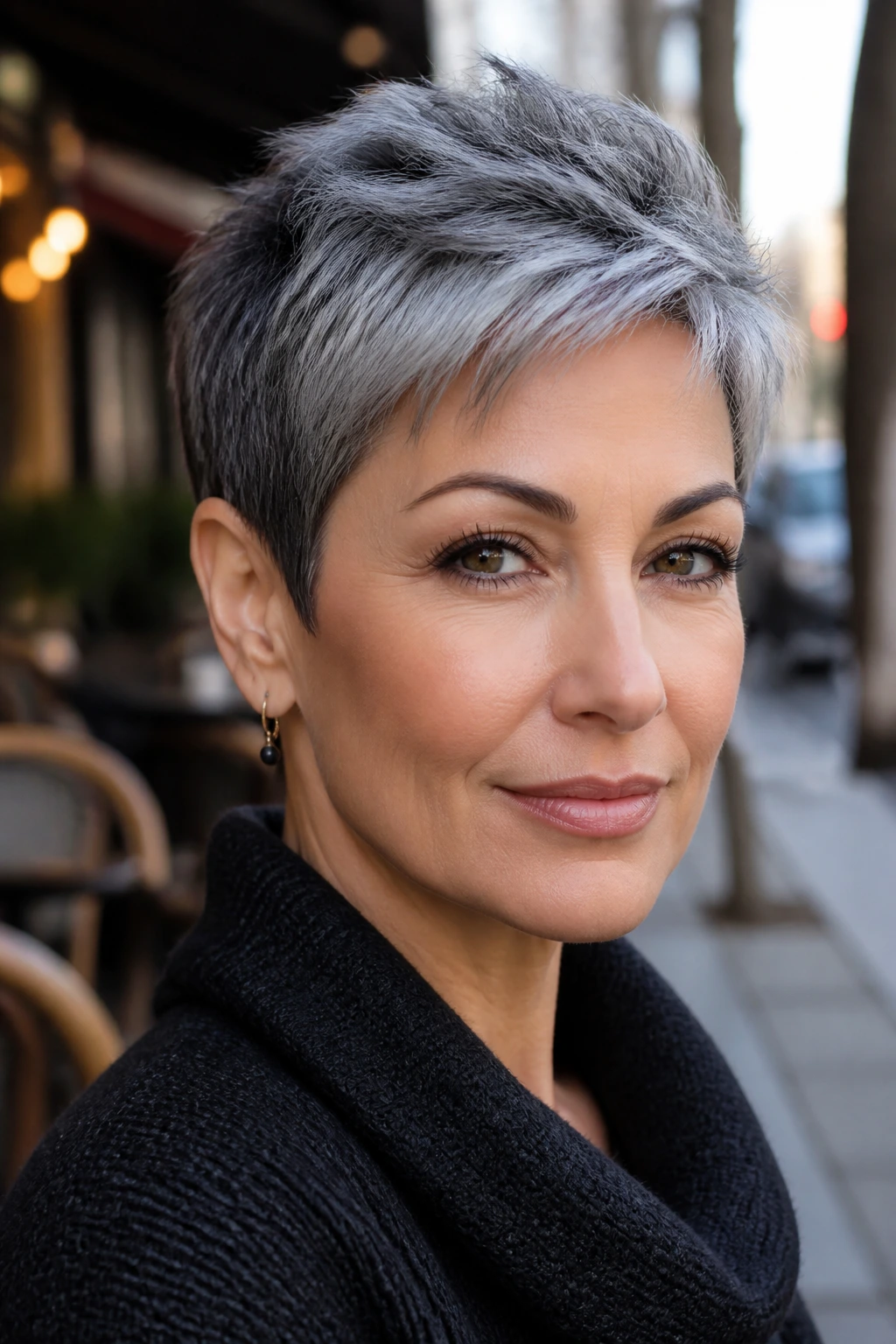
Short hair lets grey act louder. A graphite pixie is sharp, confident, and much easier to wear on warm skin than people assume, because the cut gives the color structure before the tone even enters the room. The best version has soft silver on top and deeper graphite at the sides.
This shade looks especially good if your brows have some strength to them. The contrast keeps the face from disappearing under the color. Warm skin often needs that contrast more than extra warmth in the dye.
Keep the texture piecey, not helmet-like. A little styling cream or matte paste breaks the shade up and makes the grey move instead of sitting there like lacquer.
9. Greige Money Piece
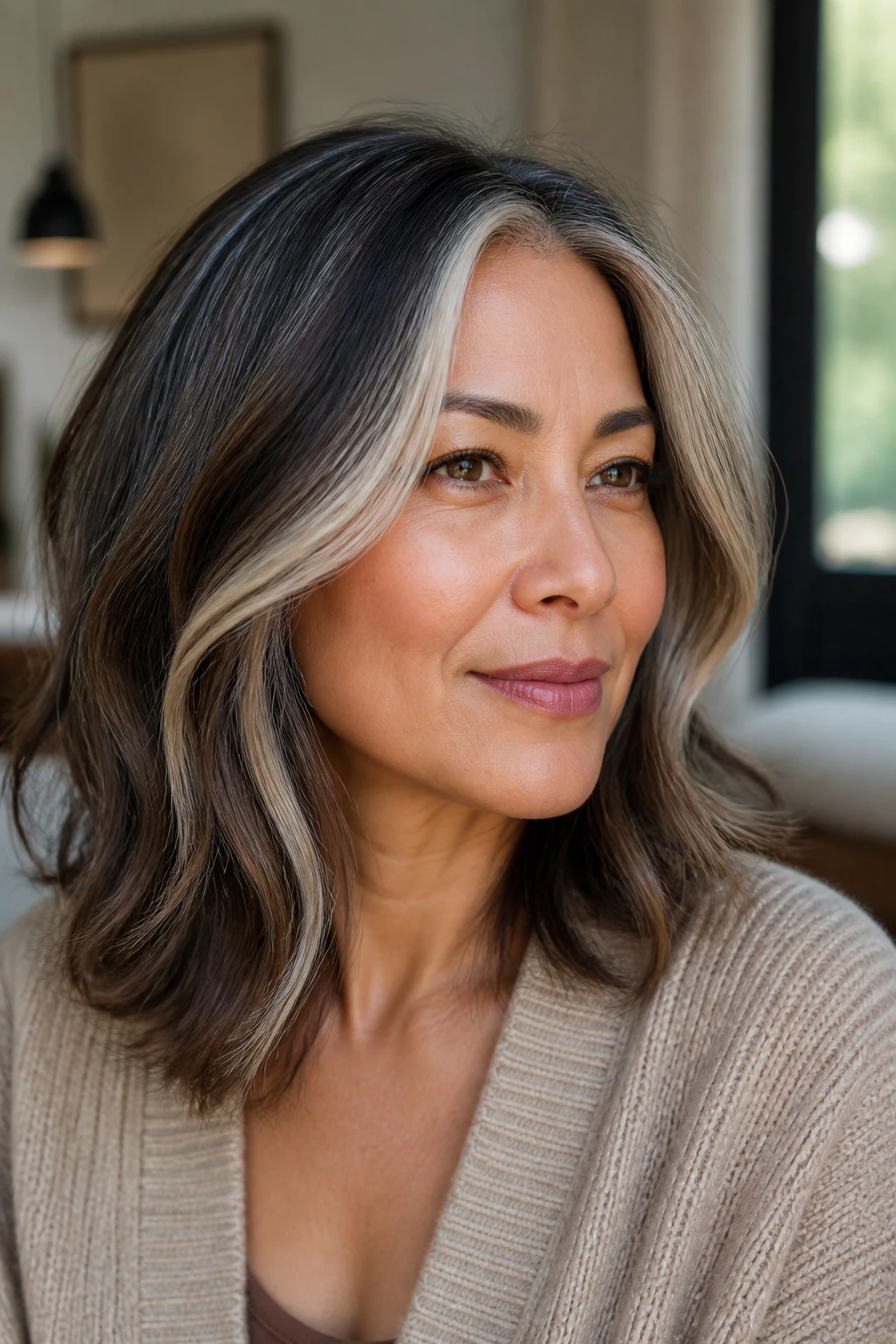
If you want to test grey without bleaching the whole head, a greige money piece is the smartest first move. Greige sits between grey and beige, which means it brightens the face without throwing a cold spotlight on warm skin. Around the temples and cheekbones, that little hit of color can change everything.
I’d keep the money piece no lighter than two levels above the base if you want the result to stay soft. Too much lift and it starts to look striped. Too little and it disappears.
This is a good choice for brunettes who want grey in the conversation, not the whole headline. The rest of the hair can stay deeper and richer while the front does the work.
10. Smoky Mocha Balayage
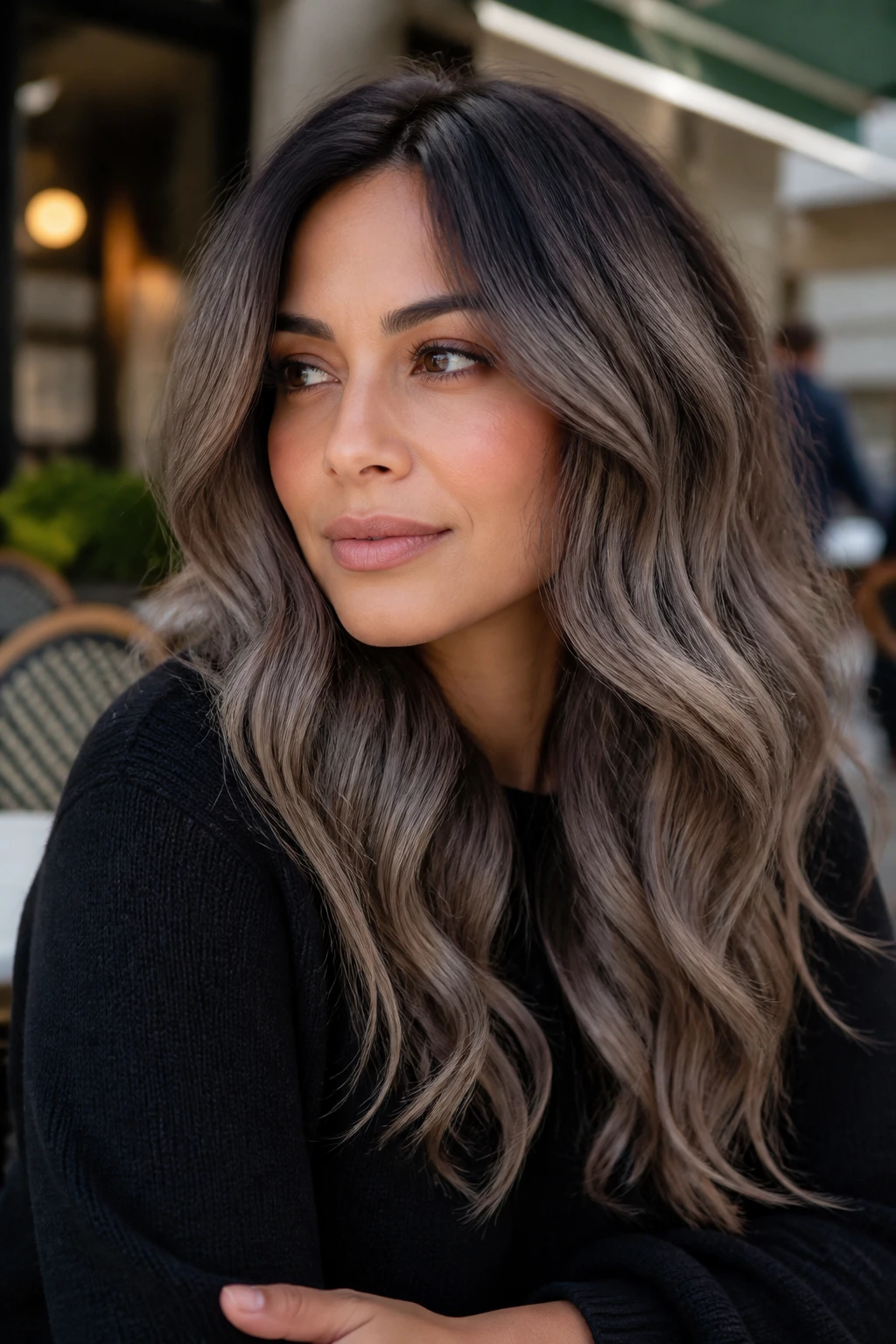
This is the grey-adjacent shade for people who still like looking brunette. Smoky mocha balayage uses brown as the anchor and overlays it with cool smoke, so the color reads grey in daylight and deeper at night. That’s why it flatters warm skin so easily.
There’s no hard freeze here. The mocha keeps the face from looking washed out, and the smoky ribbons add just enough contrast to feel modern. On wavy hair, it looks especially good because the tone shifts as the strands bend.
If you want grey without committing to a full silver look, this is the easy answer. It’s understated, but not boring. There’s a difference.
11. Antique Silver Waves
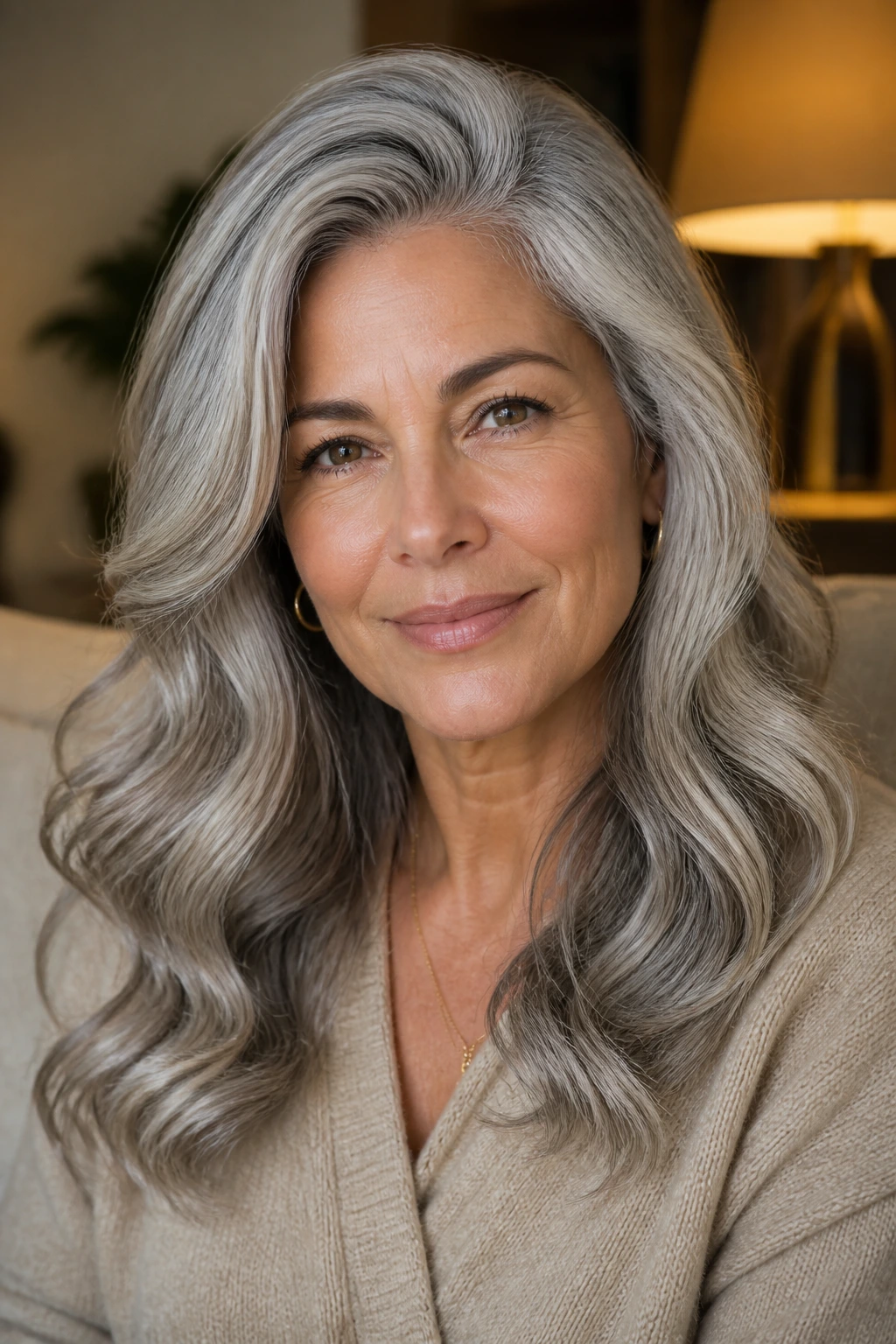
Antique silver has a satin finish that feels older-world rather than frosty. That slight softness is exactly why it sits so well on warm skin. It doesn’t flash blue. It glows more like tarnished jewelry that’s been cleaned, not polished to a mirror.
Soft waves are the right home for this shade. The bends in the hair catch the light and keep the silver from reading as a single flat sheet. I’d avoid over-toned, ultra-blue silver here. The antique effect lives in the restraint.
If your skin leans peachy, antique silver is one of the easiest metallic greys to wear. It has enough light to lift the face, but it doesn’t cancel out the warmth underneath.
12. Pewter Bob
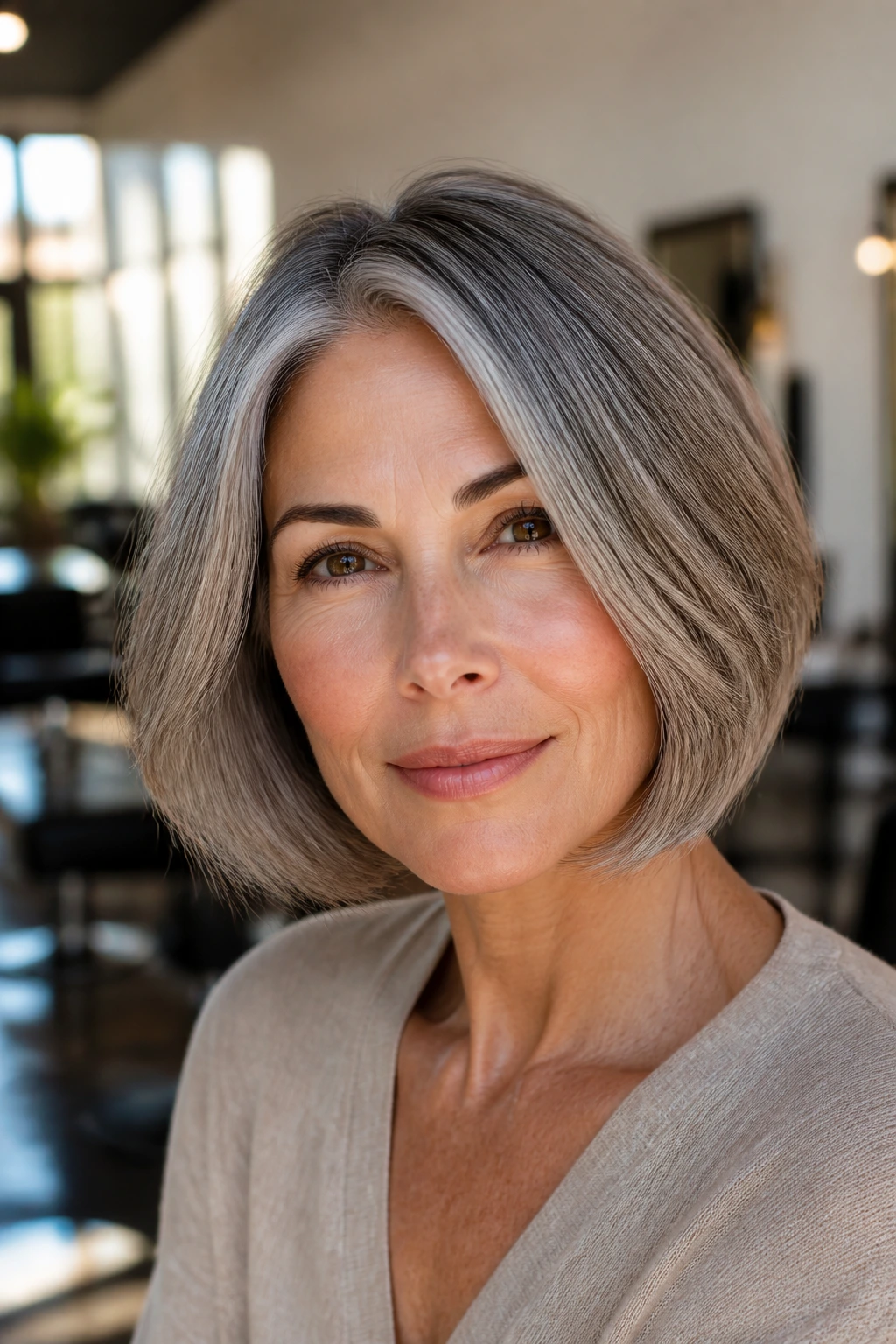
Why do some metallic greys look polished and others look flat? Pewter is the answer to the first problem. It has a muted metal finish, which means it reads expensive without screaming for attention.
On a bob, pewter feels crisp and controlled. That shape keeps the shade from spreading into mush. Warm skin benefits from that control because the color stays defined, and the face keeps its color instead of getting buried under too much cool pigment.
Ask for a slightly deeper root and a cool-gloss finish through the mids. If the ends are too pale, pewter can drift into chrome territory. Better to keep a little darkness in the mix.
13. Rose-Silver Sheen
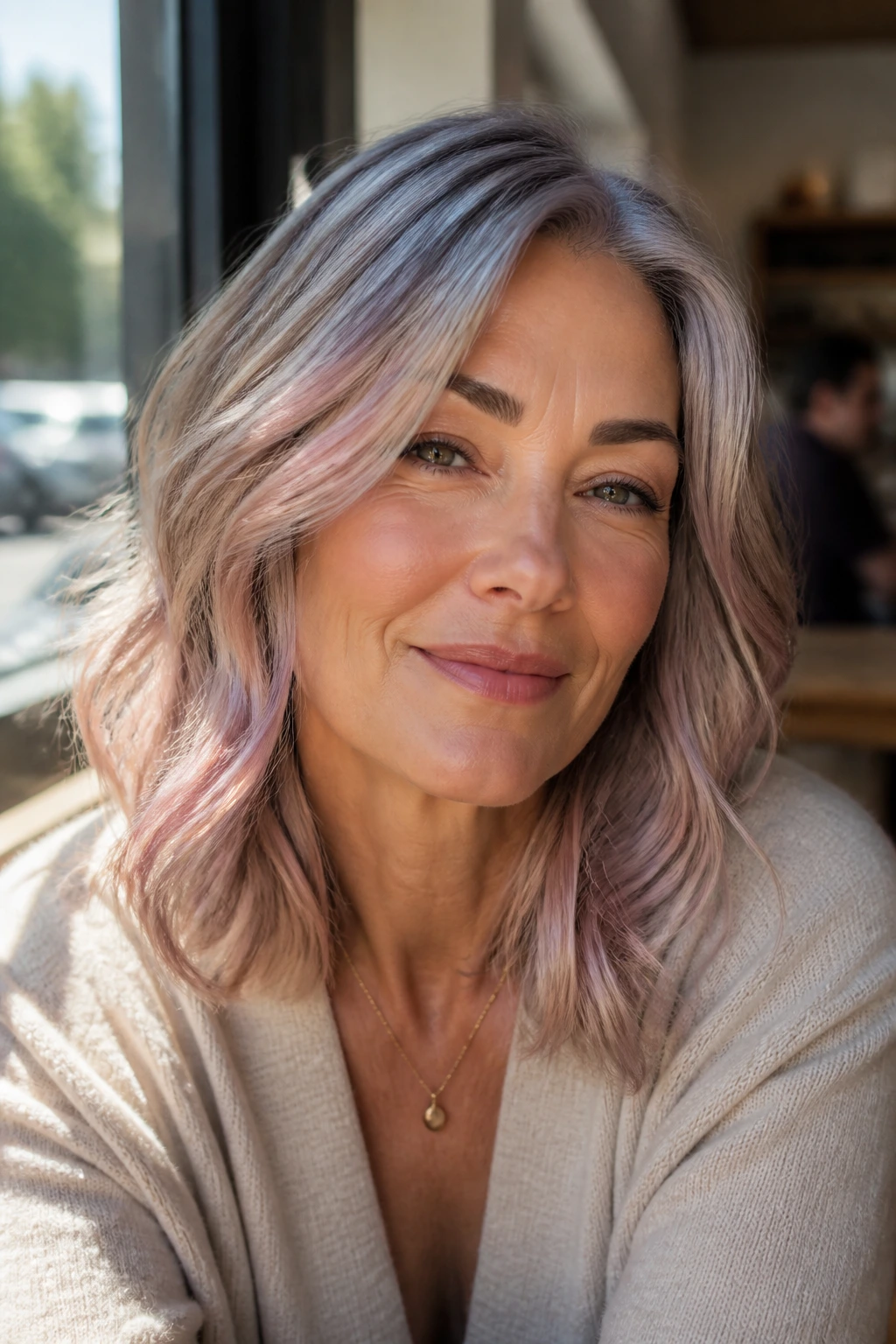
A whisper of rose can rescue grey on warm skin faster than another round of toner. Rose-silver is not pink hair. It’s a silver shade with the faintest rosy veil, enough to keep the face from looking stark and enough to feel soft in daylight.
This one works best when the pink is barely there. If it gets too obvious, the whole shade starts to drift fantasy. Keep it muted and the result feels delicate rather than sugary.
I like this on medium-length hair with loose bends. The rose shows up when the light hits, then slips away again. That movement is the entire point.
14. Sandstone Smoke
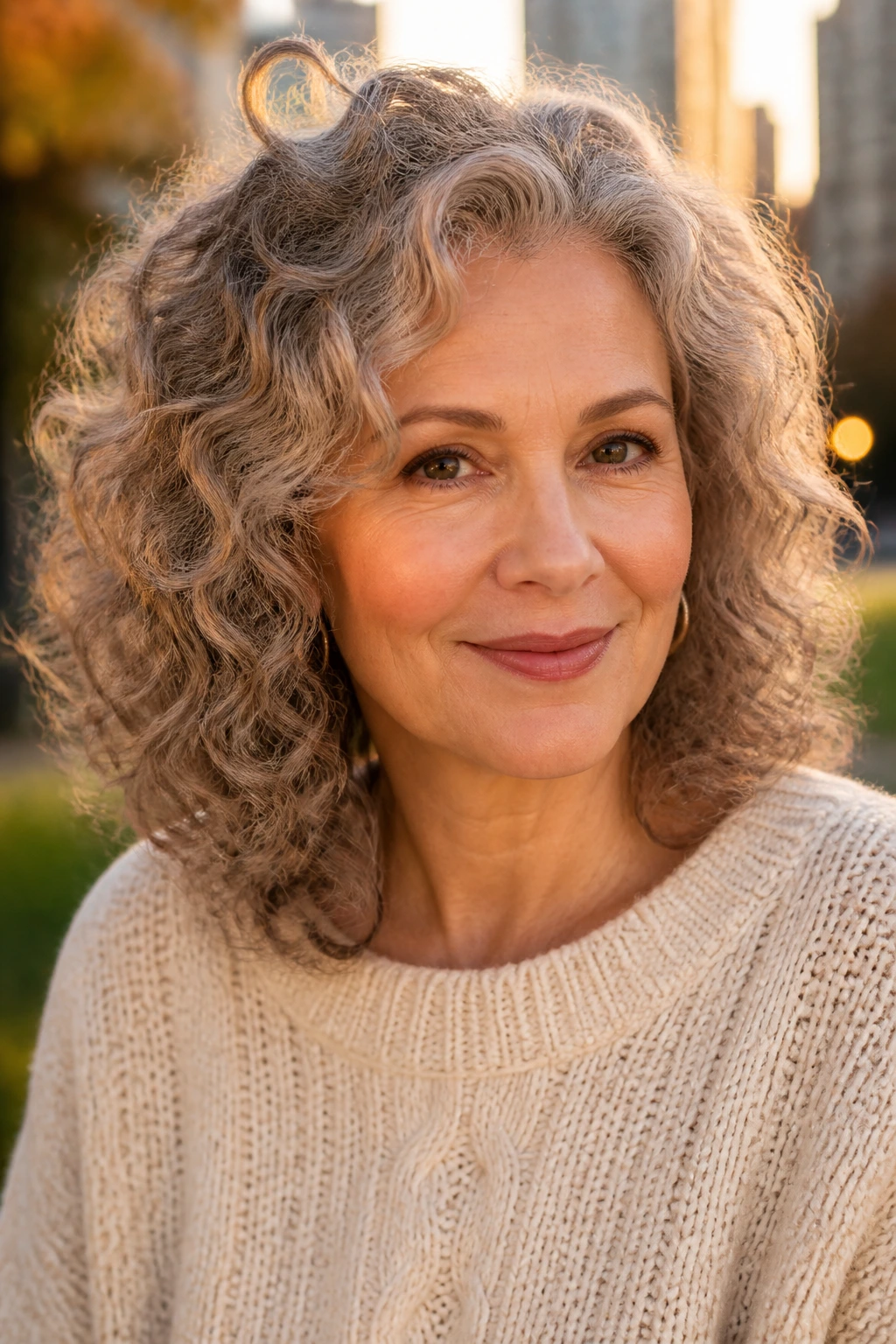
Sandstone smoke is one of the easiest grey hair color ideas for warm skin tones because it doesn’t start from cold silver. It starts from sand, beige, and a little smoke layered over the top. The result is soft, wearable, and much less fussy than a bright metallic shade.
On curls or loose waves, sandstone smoke looks almost velvety. The texture helps the beige and grey blend together instead of separating into bands. That’s good news, because warm skin usually prefers depth to glare.
This is the shade for someone who wants people to notice the hair, not the toner. Quiet. But not plain.
15. Frosted Copper-Grey Blend
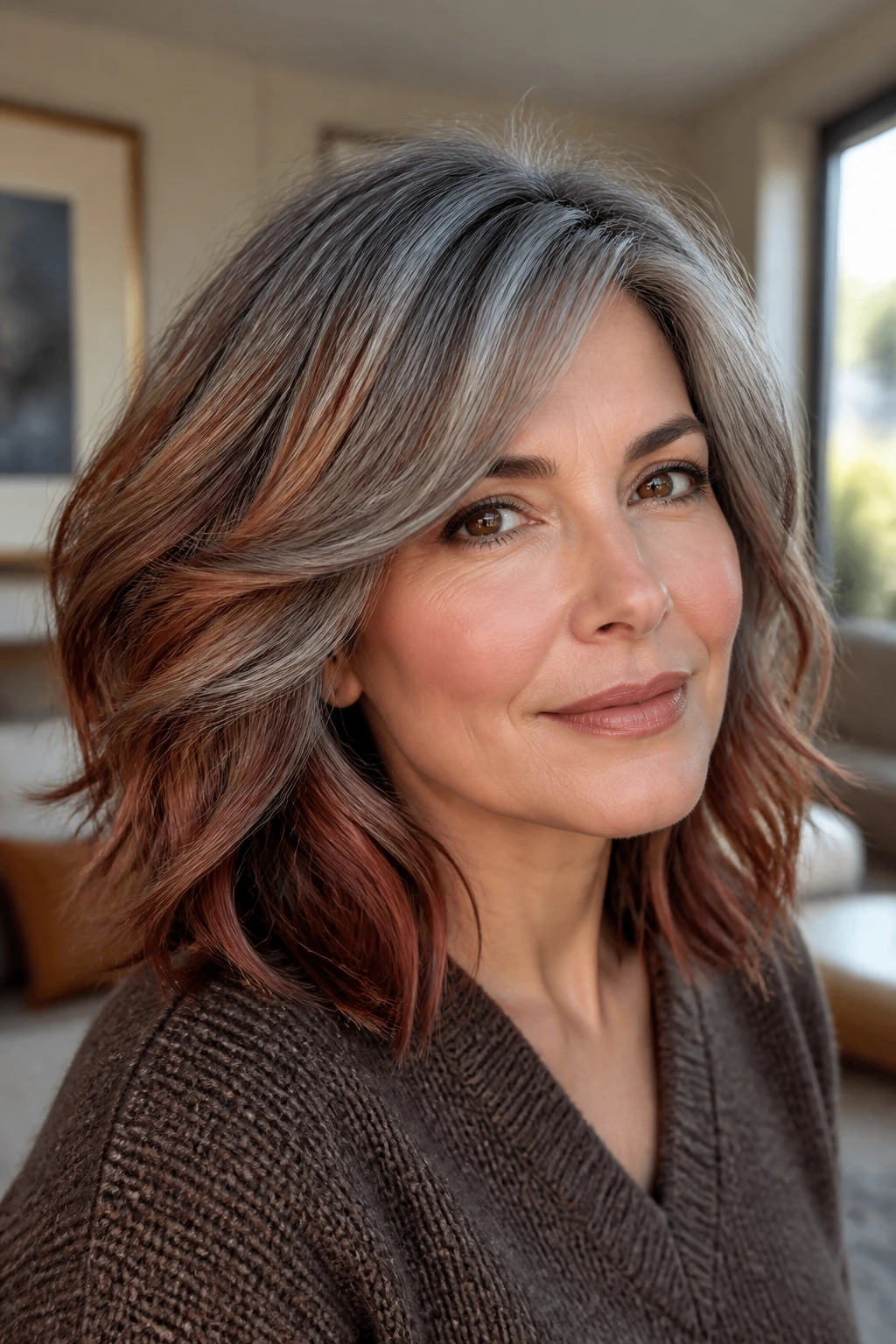
Copper and grey are not enemies when the grey sits on top like mist. Frosted copper-grey blends a warm underlayer with cool veil pieces, which gives warm skin the exact thing it often needs: temperature. Not all warmth, not all coolness. Some of each.
The copper should stay subtle, almost like a reflection under the grey rather than a bright stripe. If the copper gets too bold, the look stops reading grey. If it gets too faint, the whole point disappears.
This shade is especially strong on layered brunettes who want dimension without losing richness. The hair looks alive from every angle, which beats flat silver every time.
16. Moonstone Grey Lob
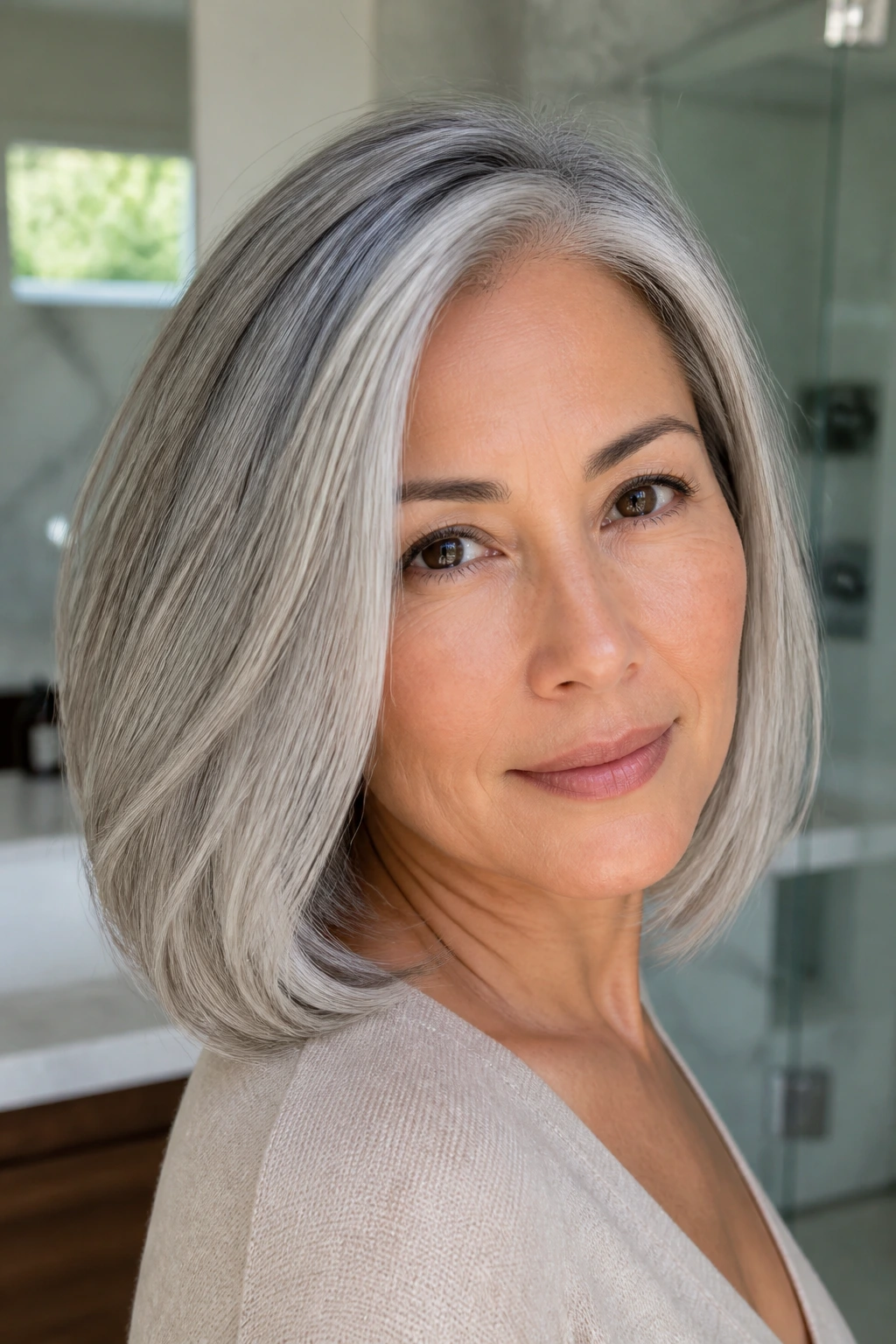
Moonstone grey is the pale end of the spectrum, but the milky finish keeps it from going sterile. On a lob, it feels modern and smooth, especially when the root is shaded just enough to keep the color from floating away from the face.
Fine hair likes this shade because the light reflect makes the hair look fuller than a matte tone would. Warm skin can wear it if there’s enough softness in the root and enough shape in the cut. The mistake is going too white through the ends.
Keep the shine clean, not greasy. A lightweight gloss or serum is enough. Moonstone should gleam, not slick.
17. Bronze-Edged Silver
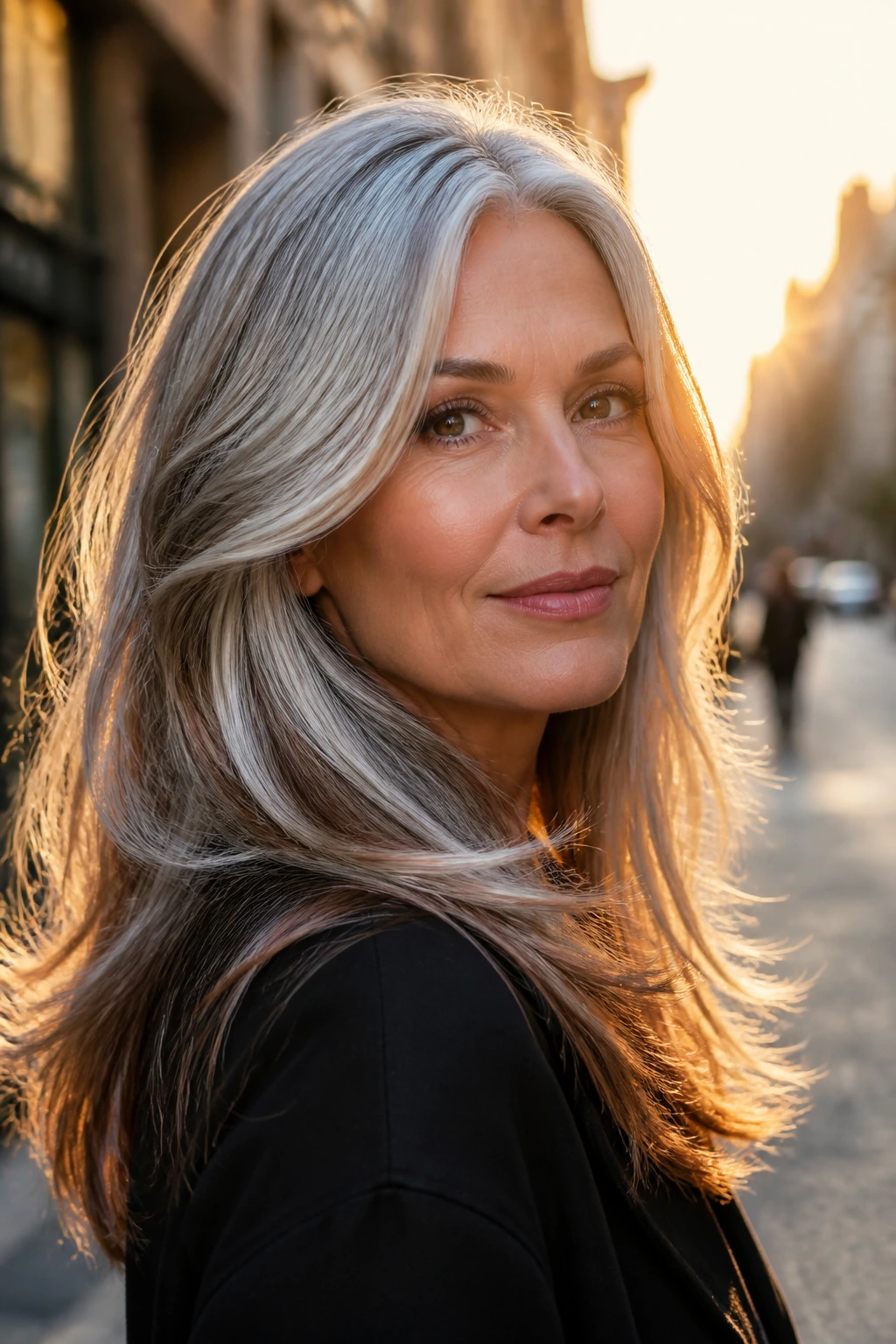
Ever notice how silver gets friendlier when there’s a warm edge hiding underneath? Bronze-edged silver does exactly that. The bronze can live at the root, in hidden lowlights, or just under the top layer so it peeks through when the hair moves.
This shade is useful if you want grey with a little depth left in it. Pure silver can get sharp fast. Bronze at the edges softens that line and helps warm skin keep its glow.
It’s a strong choice for long layers or a soft shag. The movement makes the bronze appear and disappear, which keeps the color from reading too engineered.
18. Cashmere Grey Bob
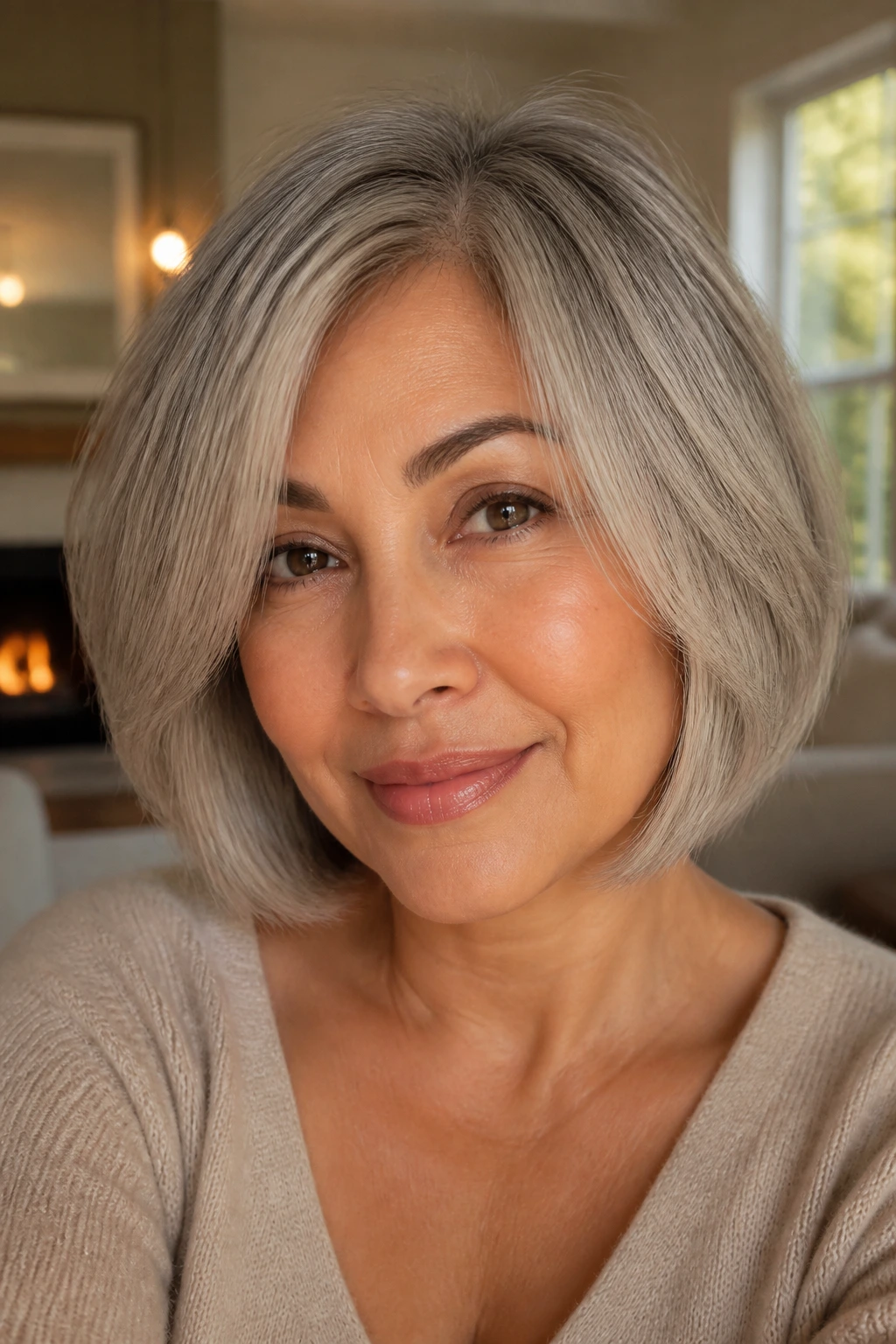
Cashmere grey is soft on purpose. It has a creamy, almost touchable quality that sits between silver and beige, and that makes it one of the most forgiving greys for golden skin. On a bob, the shape gives the shade enough structure that it doesn’t drift into looking washed out.
This is a good pick if you want a calm grey rather than a high-drama one. It doesn’t flash hard in sunlight. It just glows.
I’d choose cashmere grey for anyone who wants to look polished without looking severe. There’s a reason soft neutrals stick around. They age better on the face and on the cut.
19. Gunmetal with Toffee Lowlights
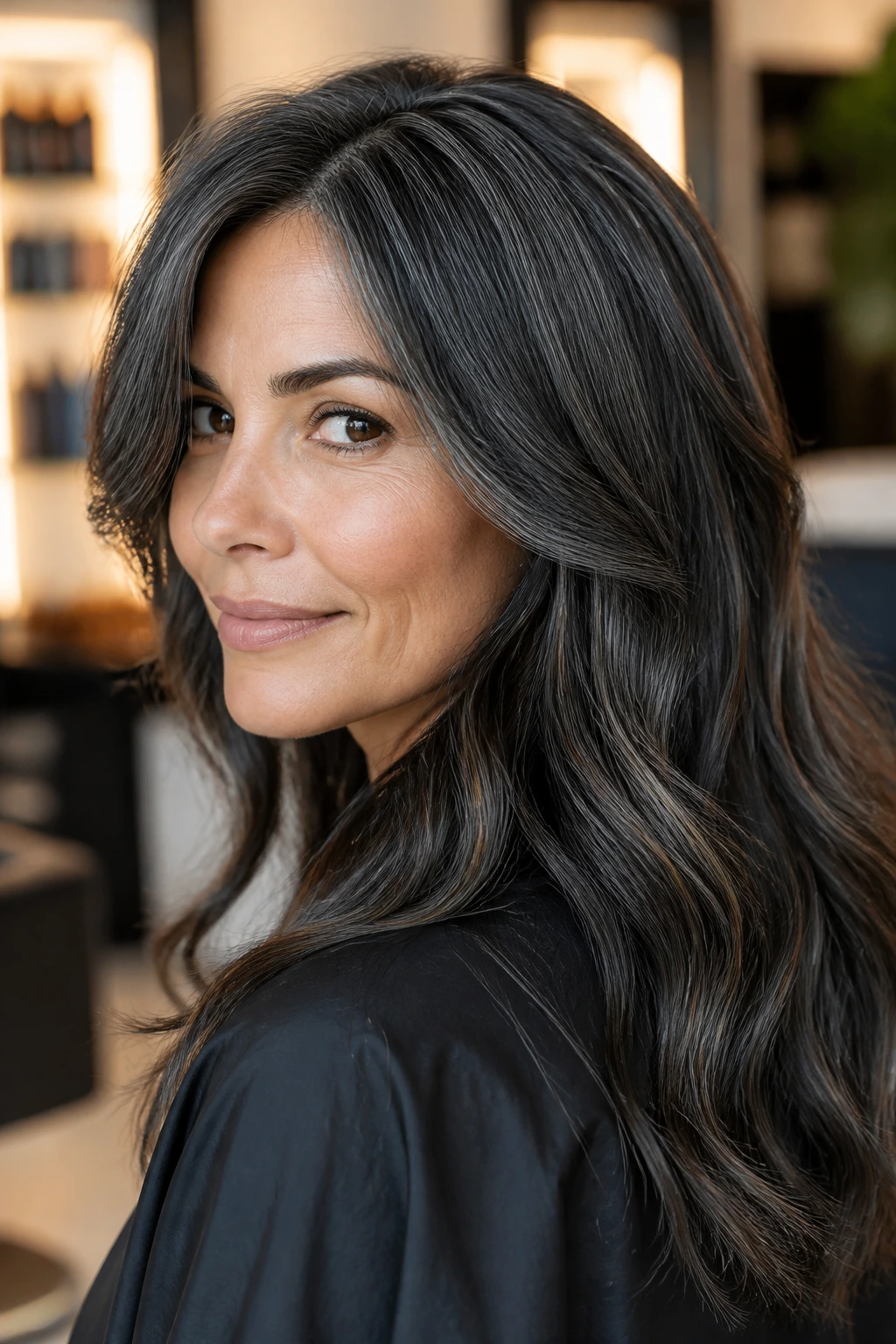
Dark grey can be the most wearable grey of all. Gunmetal with toffee lowlights keeps the depth strong while sneaking in warmth where warm skin needs it most. The toffee pieces should be thin and layered under the surface, not laid on top like stripes.
This shade is especially good on dark brunettes who don’t want to spend forever chasing a pale silver result. It gives you a grey mood without stripping away all the richness. That matters.
If the hair is thick or coarse, the darker gunmetal base can look luxurious instead of heavy. The lowlights break the block of color and keep the finish from feeling flat.
20. Soft Platinum Smoke
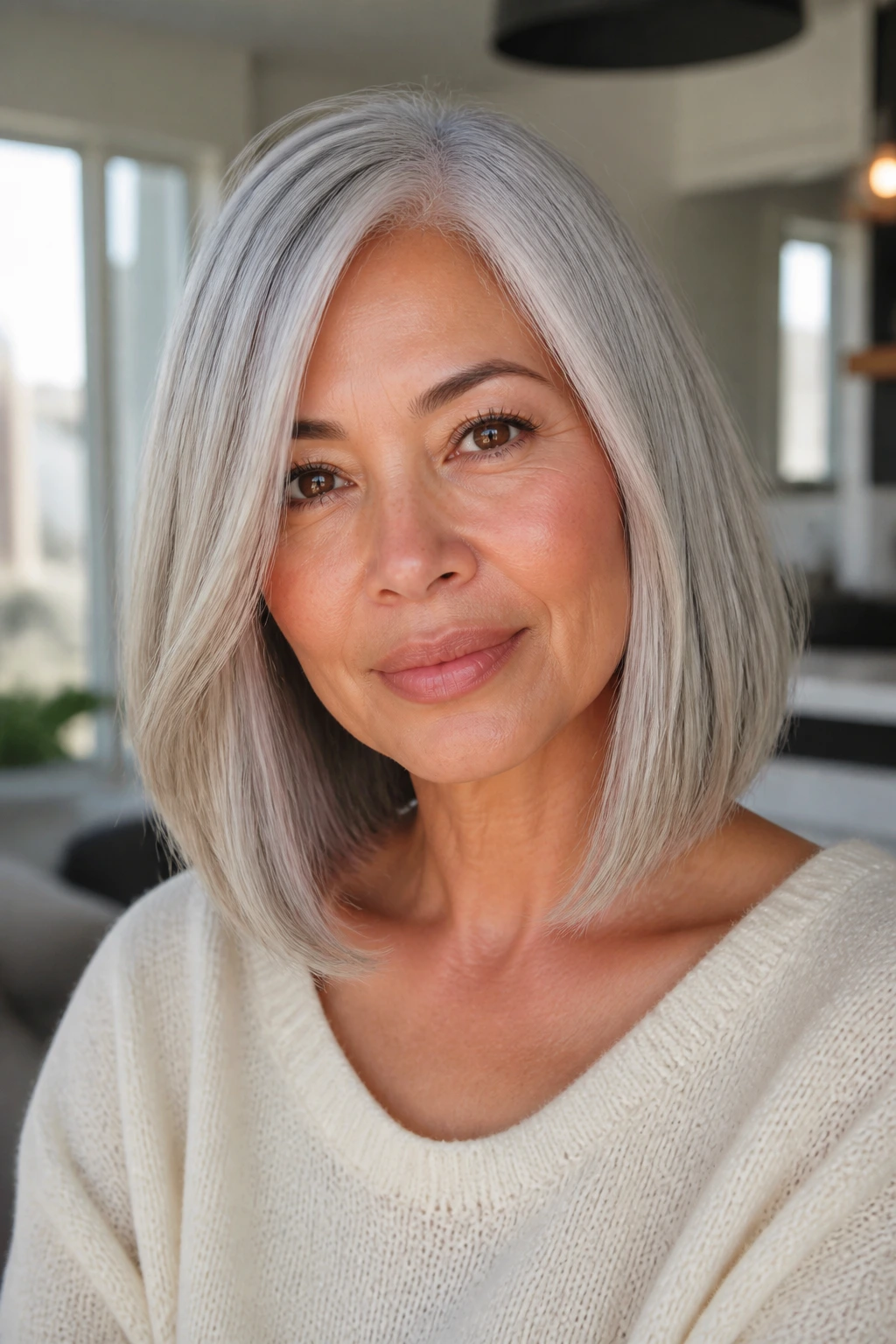
Platinum only works here when the smoke keeps it from screaming. Soft platinum smoke has enough grey in the toner to pull the color back from white, which is what makes it easier on warm skin than harsh ice blonde.
This shade needs a good cut. A blunt lob, a sleek long bob, or a clean layered shape all help the color look intentional. If the hair is frizzy or overly processed, the platinum can get noisy fast.
A warm blush and a deeper brow help this one along. The hair can be cool. The face should not be.
21. Olive-Toned Grey Balayage
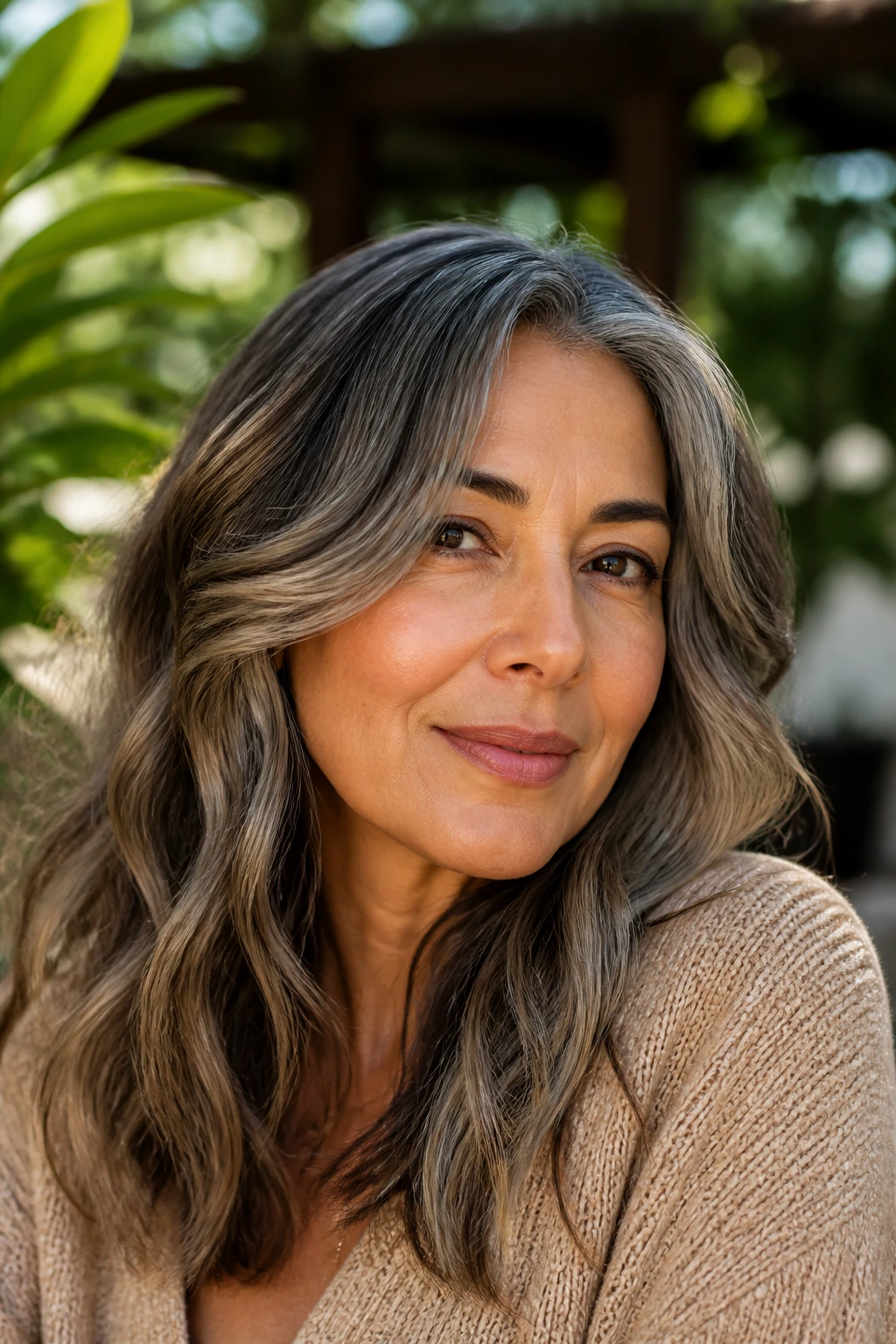
Olive skin and grey are closer cousins than people think. Olive-toned grey balayage uses neutral-smoky pieces that sit beautifully on green-gold undertones without turning sour. The key is balance: not too blue, not too beige, not too muddy.
Keep the lightest strands away from the scalp and let the natural base do some of the work. That makes the grey look embedded rather than painted on. On wavy hair, the effect is especially good because the olive-neutral mix shifts with the light.
If your skin is both warm and muted, this is one of the safest ways to go grey. It flatters without trying too hard.
22. Mulled Wine Grey
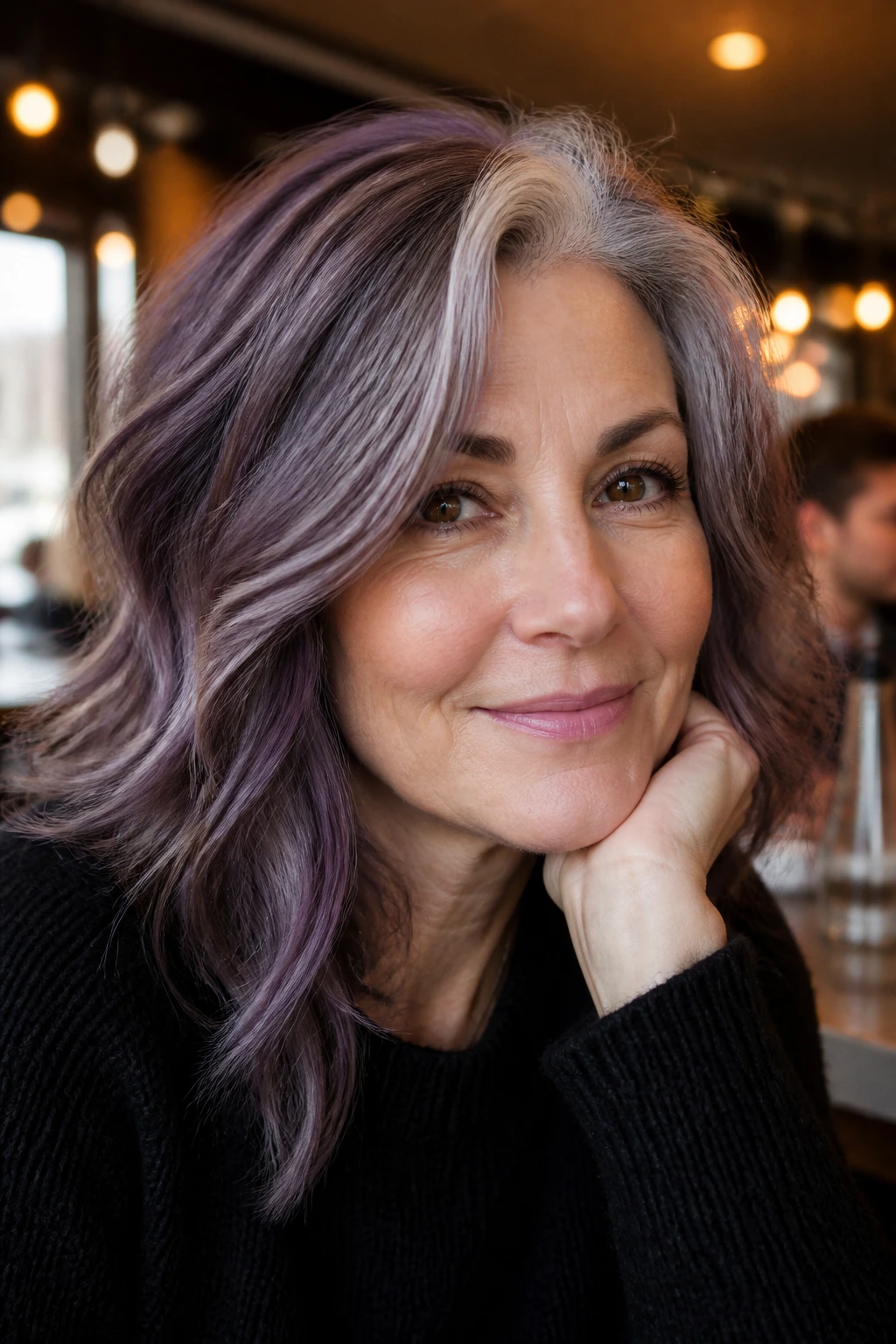
A berry-tinted grey can warm the face without tipping into pink hair. Mulled wine grey uses a smoky berry glaze over a grey base, which gives the color a richer, slightly romantic feel. It’s not loud. It just has more flavor than plain silver.
This shade works well when you want grey but also want the skin to keep some color. The berry note pulls the eye toward the face instead of away from it. On medium skin tones, that can be a nice correction.
Keep the wine tone soft and diluted. Too much red in the mix and the shade stops reading grey altogether. The sweet spot is a smoky flush, not a bright fashion color.
23. Satin Silver with Chestnut Root
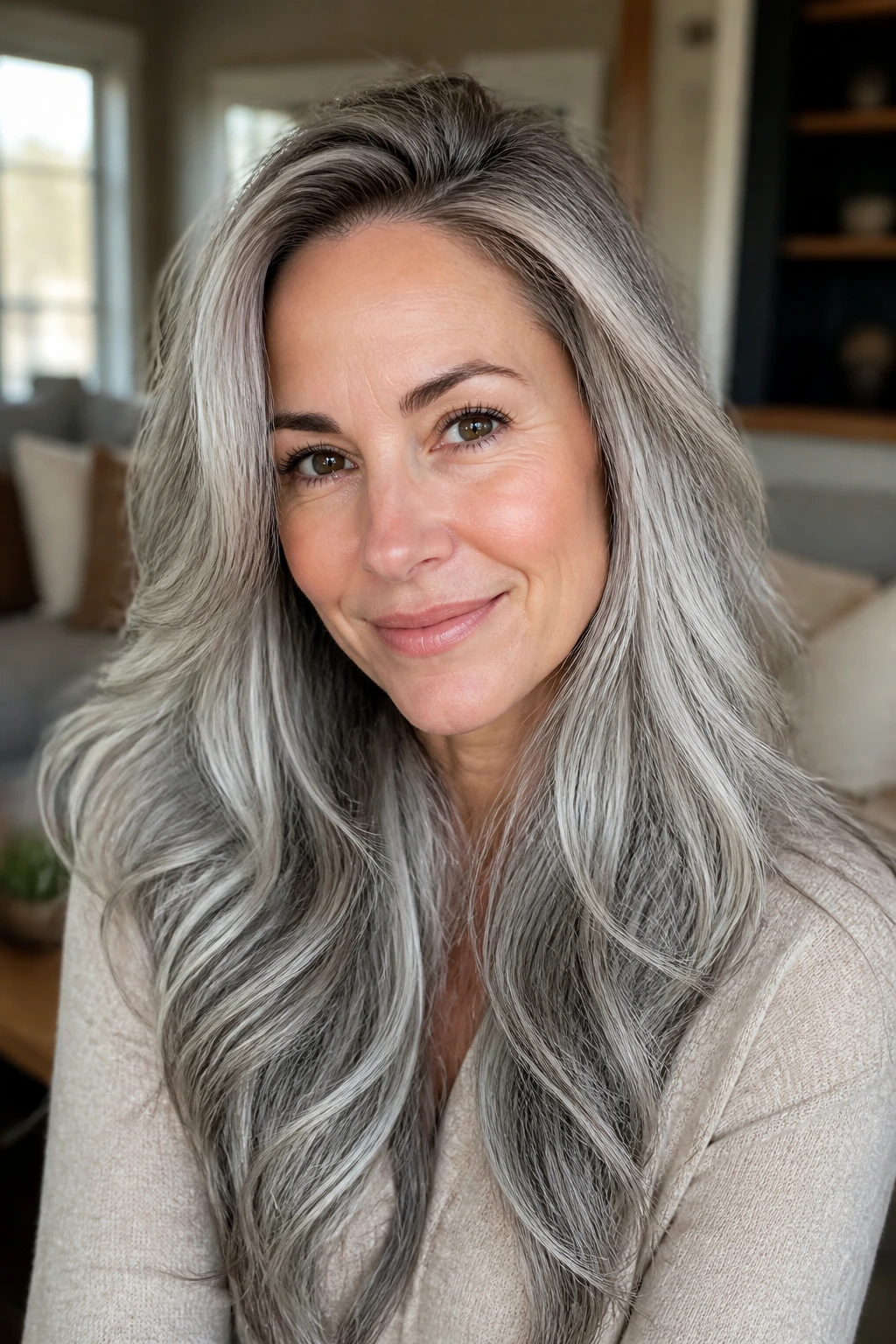
Chestnut at the root makes silver easier to wear. That deeper base gives satin silver somewhere to rest, which is why this shade looks so good on warm skin and why the grow-out is kinder than a full bleach job. The contrast is there, but it doesn’t shout.
This is a strong option for long hair, where root shadow can stretch and blend naturally. It also works if you wear your hair in waves or a loose blowout, since the shape shows the root melt without making it look harsh.
If you like low-maintenance color with a silver finish, this is one of the better choices in the bunch. It ages in place.
24. Slate Grey with Honey Face Frame
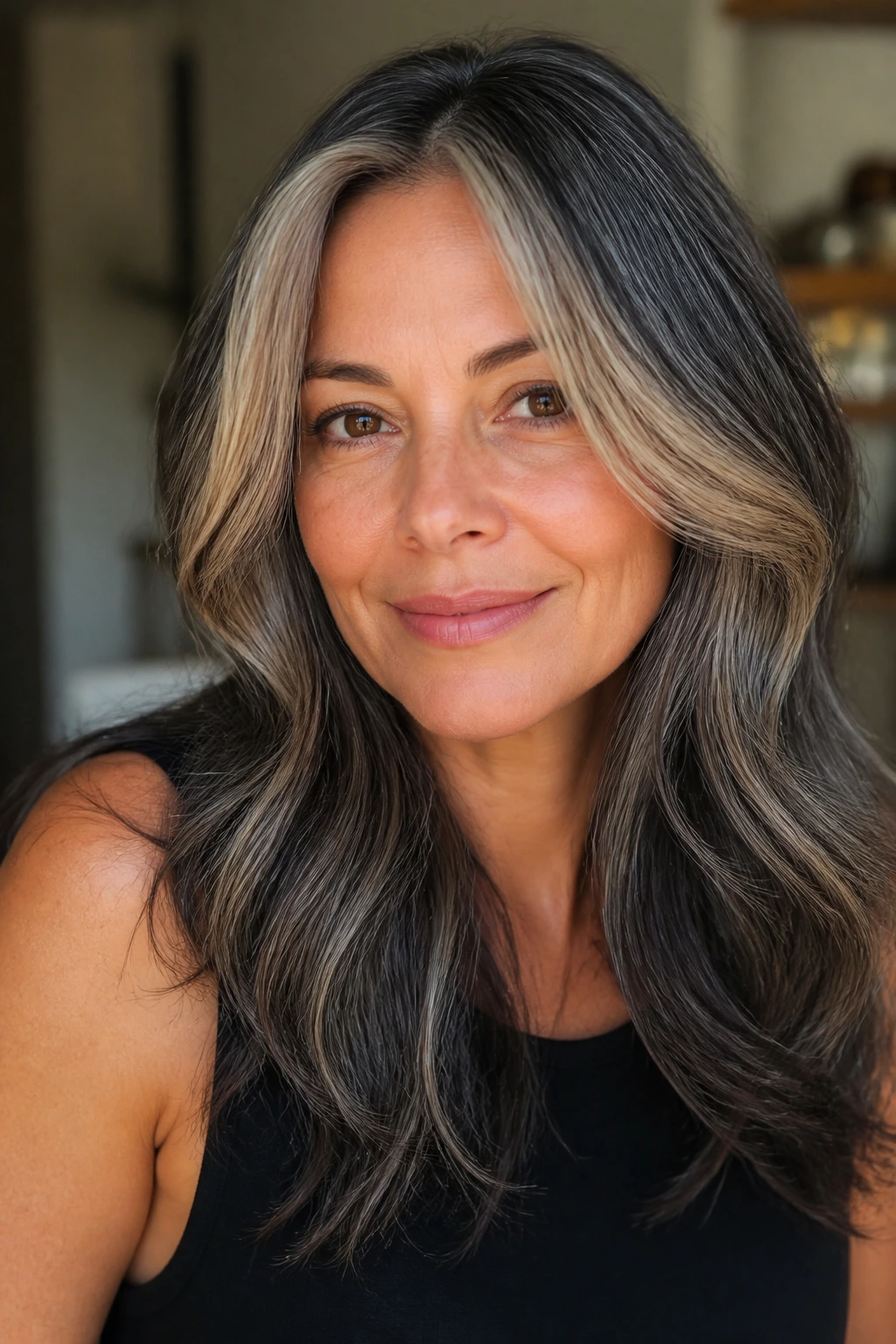
If full silver feels too cold, put the warmth at the edges instead. Slate grey with a honey face frame lets the main body stay deep and smoky while the front pieces carry enough warmth to flatter golden skin. It’s a clever trick, and it works.
The honey shouldn’t be thick. A few front ribbons are enough. Too much and the whole thing loses its grey identity. Too little and the warmth gets lost in the rest of the color.
This shade is good for people who want drama without the skin going flat. The contrast around the face keeps the eye moving.
25. Champagne Smoke Ends
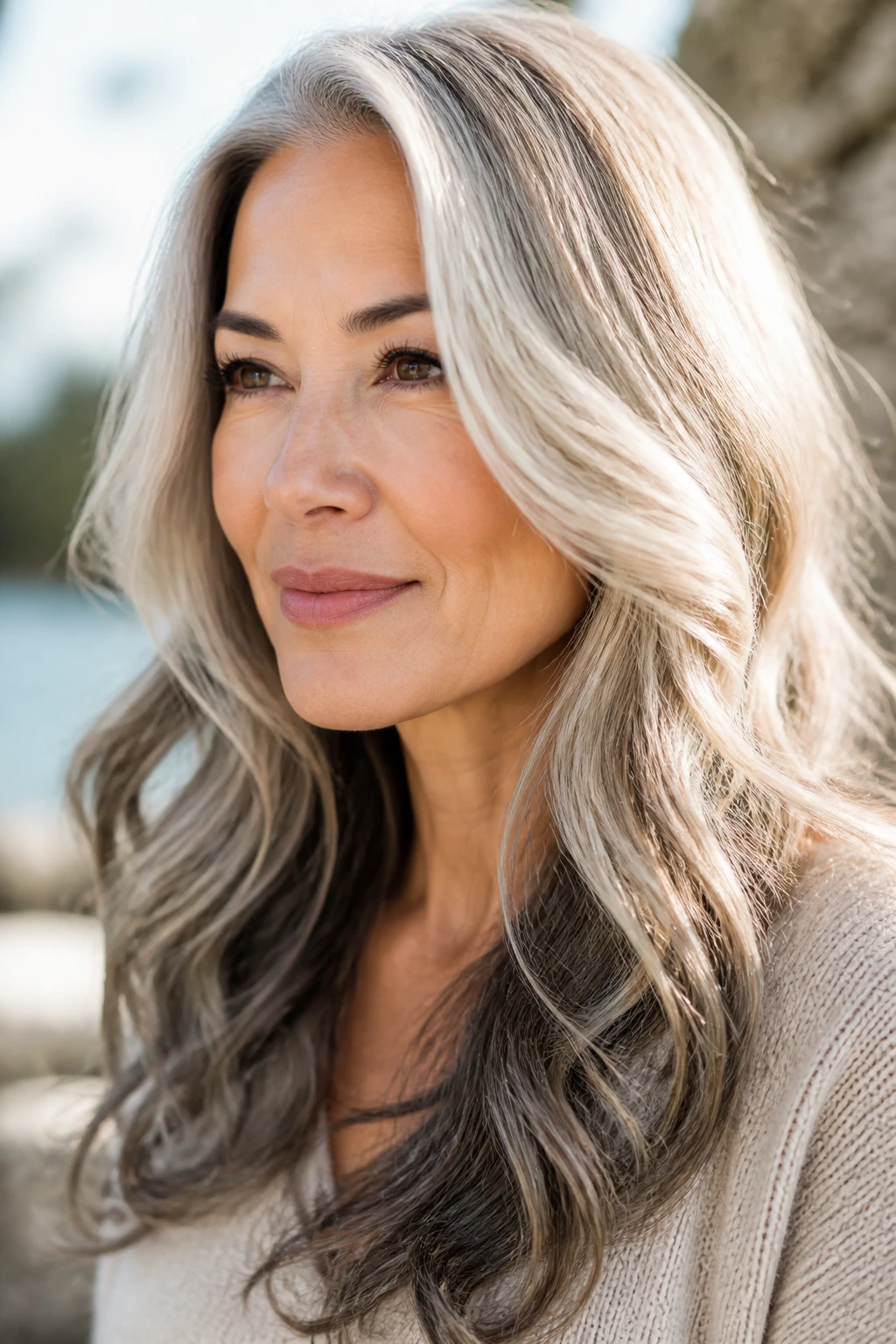
Champagne smoke looks best when the hair moves. The color starts with a soft champagne tone through the mids and melts into smoky ends, which gives the overall effect a bright-but-muted finish. On warm skin, that little bit of pale warmth keeps the grey from feeling icy.
This one shines on long layers or beachy waves. Straight hair can wear it too, but the gradient becomes more obvious when there’s motion. That’s what makes it feel expensive rather than accidental.
If you want a grey look that still has softness and a bit of shine, champagne smoke is a clean final stop. It’s pale, but not cold. That difference matters more than people think.
Why Grey Needs a Warmer Base on Golden Skin
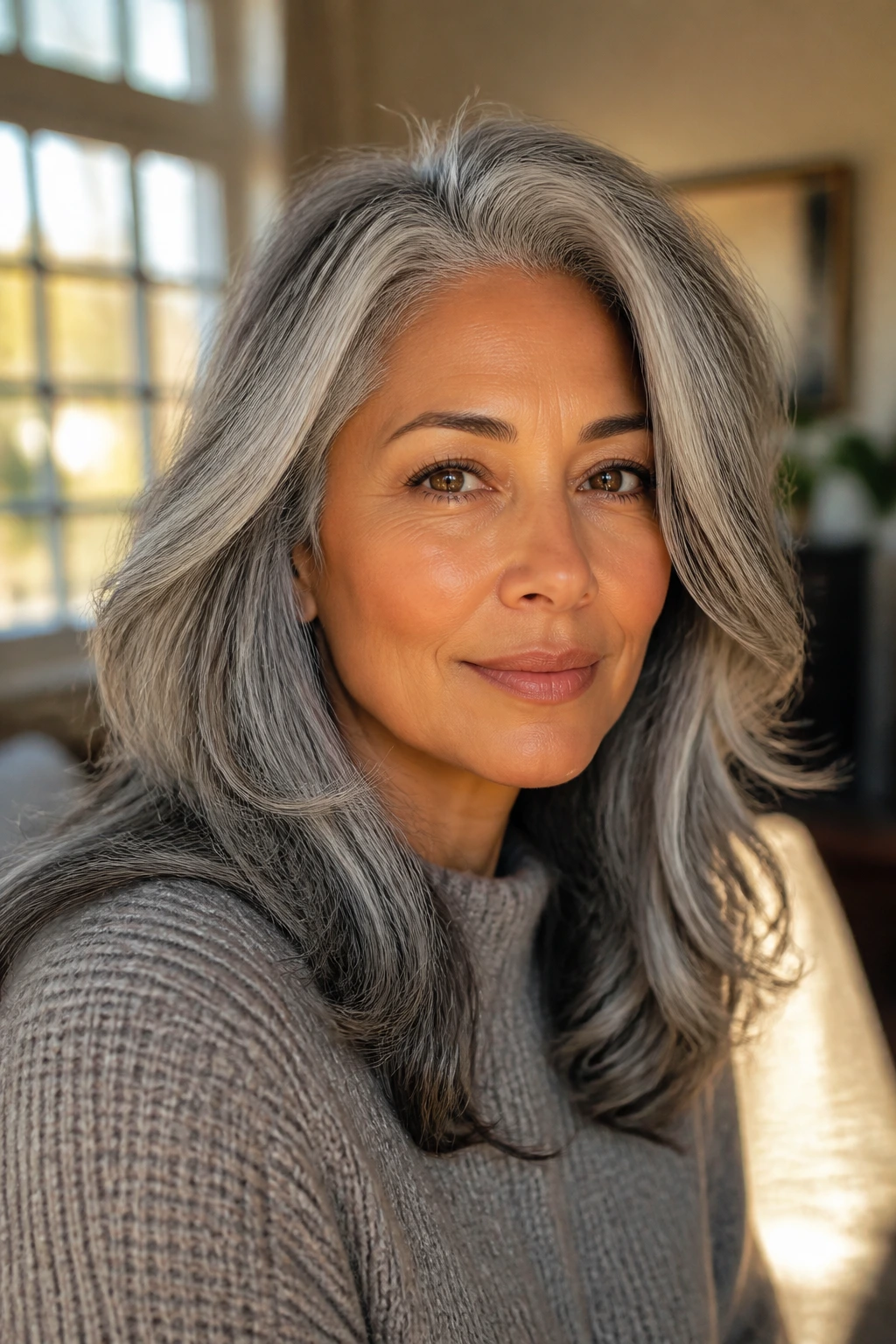
Grey is not one shade. It’s a whole family, and some members behave much better on warm skin than others. The shades that sit closest to beige, mushroom, taupe, or smoky brown usually look calmer because they reflect a little warmth back into the face instead of shutting it out. That tiny bit of warmth is often the difference between “silver hair” and “I think this color is washing me out.”
There’s also the matter of contrast. Warm skin usually looks best when the hair has some depth at the root or some softness around the face. A flat, all-over grey can be too much if the brows are light, the lashes are soft, or the complexion already leans golden. Add root shadow, lowlights, or a face frame, and the color starts working with the face instead of against it.
I’m not anti-icy silver. I just think it needs a reason to exist on warm undertones. A sharp cut, deeper brows, stronger makeup, or a deliberate platinum-gloss finish can all make it work. Without those things, beige-grey and smoky silver usually look better in real life than the cooler fantasy shades do under salon lights.
Tools That Make Grey Easier to Wear
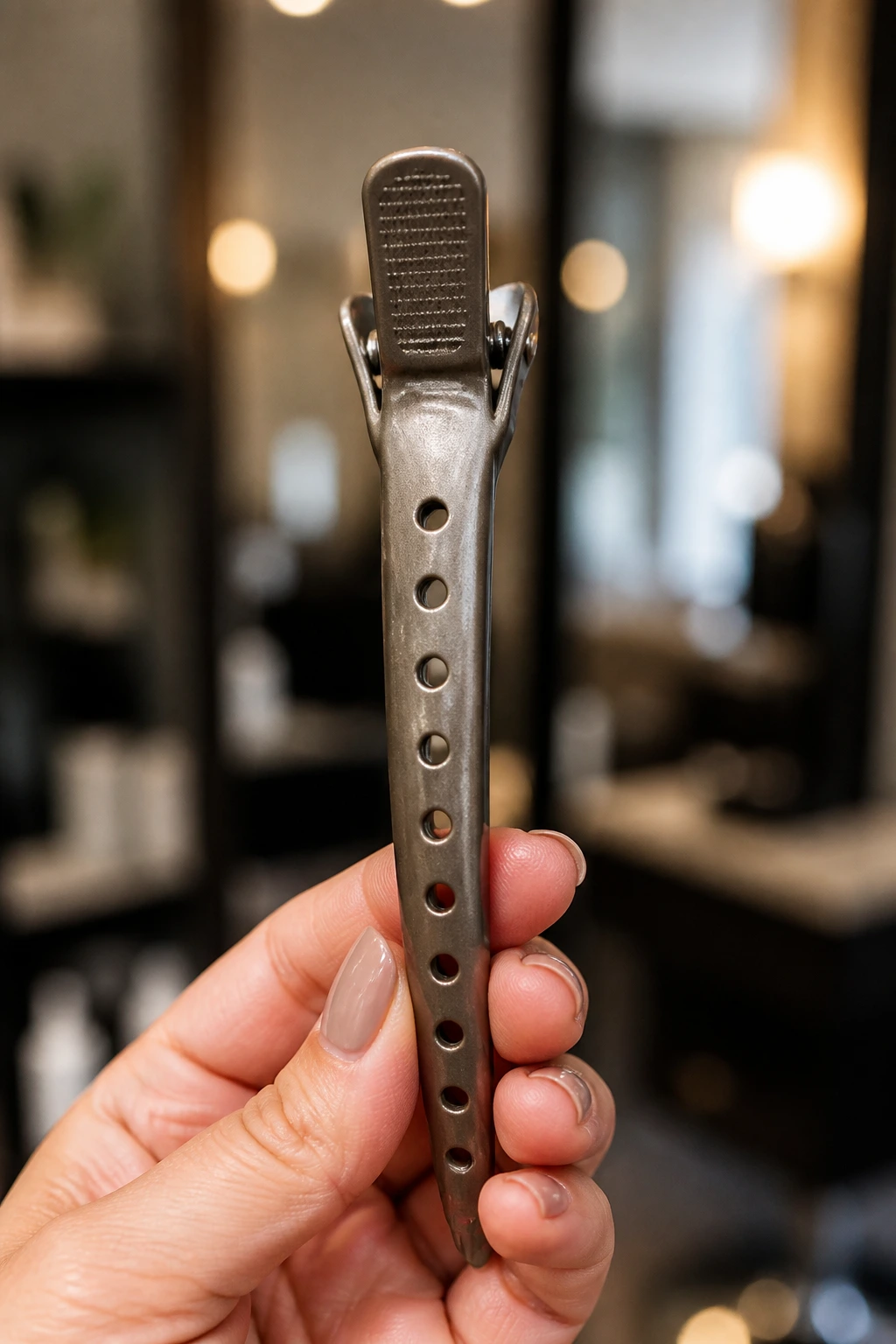
- Color inspiration photos in daylight: Take screenshots that show the shade outdoors, not only under salon lighting, because grey changes fast under warm bulbs.
- Tint bowl and brush: Handy if you’re refreshing with a demi-permanent gloss or toner at home.
- Sectioning clips: Grey placement depends on clean sections, especially for face-framing pieces and money pieces.
- Tail comb: Helps map out thin ribbons so the lighter pieces don’t get too chunky.
- Foils or balayage board: Useful for brighter silver or pearl highlights that need control.
- Gloves: Non-negotiable if you’re mixing toner or handling purple shampoo.
- Sulphate-free shampoo: Keeps cool tones from fading as fast and helps with dryness after lightening.
- Purple or silver shampoo: Good for brass control, but only when the grey starts leaning yellow.
- Deep conditioning mask: Grey hair, especially lightened grey, can feel dry and rough if you skip moisture.
- Heat protectant spray: Required if you blow-dry or style with hot tools, because silver tones look rough fast when the cuticle gets fried.
How to Choose the Right Grey Formula for Warm Skin Tones
Start with your base level. If your hair is dark brown and you want a true silver or pearl grey, the hair usually needs to lift to a pale yellow first. Not orange. Not gold. Pale yellow. If the lift stops too early, the toner can slide muddy or greenish, and that’s a hard mess to love.
Then decide how much contrast you want. Warm skin often looks better with either a softer grey like mushroom, taupe, or greige, or a deeper grey with some root shadow. A full chrome silver can work, but only when the face has enough contrast to hold it. The sharper the grey, the more careful the formula needs to be.
Read the reflect, not just the name
A color called “silver” can come out beige. A color called “pewter” can read cooler than it sounds. What matters is the reflect: violet, beige, pearl, smoky brown, or blue. If your undertone is peach or golden, ask for something that sits between pearl and beige rather than one that leans blue-white.
Match the shade to your hair type
Fine hair usually likes moonstone, cashmere, and pearl because those shades catch light and give the illusion of fullness. Thick hair often looks better in charcoal, gunmetal, or smoky mocha because the depth helps control bulk. Curly hair needs dimension more than flat color, so ribbons and melts usually beat all-over silver every time.
Bring more than one photo
One photo is a wish. Three photos tell a story. Bring a bright-daylight shot, an indoor shot, and a cut that looks close to your own length and texture. That gives your colorist something real to work with instead of a fantasy filter.
How to Wear Grey Hair So It Flatters Warm Undertones
Placement: Put the brightest grey pieces around the temples, cheekbones, or crown where the light naturally catches. A little brightness near the face does more for warm skin than blasting every strand the same level.
Makeup Balance: Bronze, peach blush, brown mascara, soft terracotta lips, and a defined brow keep the face from going flat. Grey hair can look chic with almost no makeup, but warm undertones usually need some color back in the cheeks.
Wardrobe Pairings: Cream, camel, olive, rust, deep denim, and black all sit nicely beside grey. Stark white can feel harsh if the grey is very icy; softer off-white usually works better.
Maintenance Rhythm: Plan for gloss refreshes every 4 to 6 weeks if you’re wearing pearl, silver, or champagne shades. Root touch-ups depend on how visible your natural growth is, but a deliberate shadow root can make the grow-out look neat rather than neglected.
Small Changes That Make Grey Look Richer
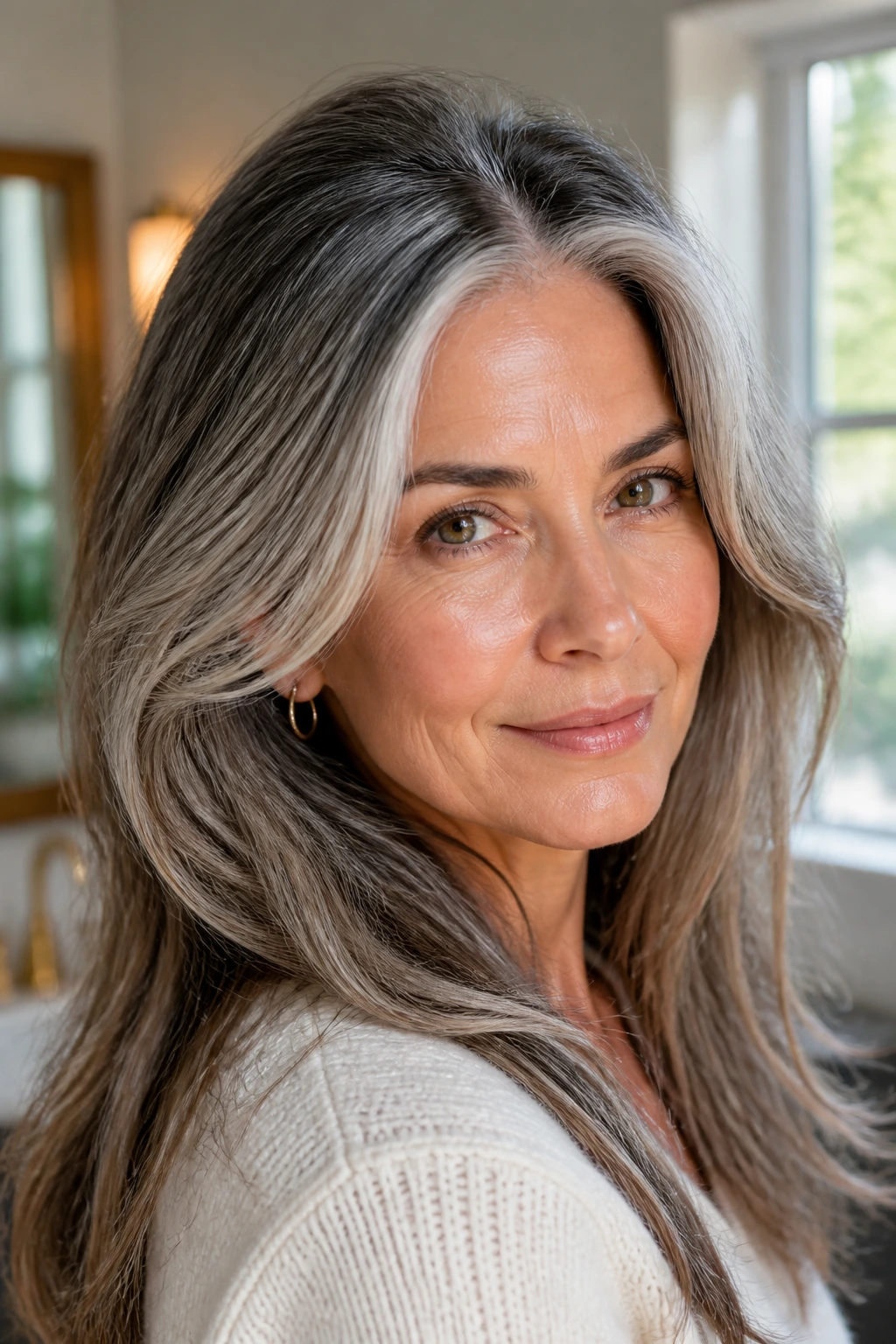
Root Smudge: A deeper root, even by one or two levels, keeps grey from floating away from the face. It also hides regrowth better, which is one of those boring practical perks that turns into a big one.
Gloss Finish: A clear or pearl gloss every few weeks can bring back shine without changing the color much. Grey hair goes dull fast when the cuticle gets rough, and shine is half the job here.
Face Frame: A slightly lighter front section is often enough to brighten the whole cut. I like this more than a blanket of lighter silver because it feels smarter and less costume-like.
Make-It-Yours: If you wear curls, keep the ribbons broad so the color shows through the bend. If your hair is straight, sharper placement can look cleaner. If your skin is very warm, lean into mushroom, taupe, or champagne instead of the coldest silver in the bowl.
Keeping Grey Bright Between Appointments
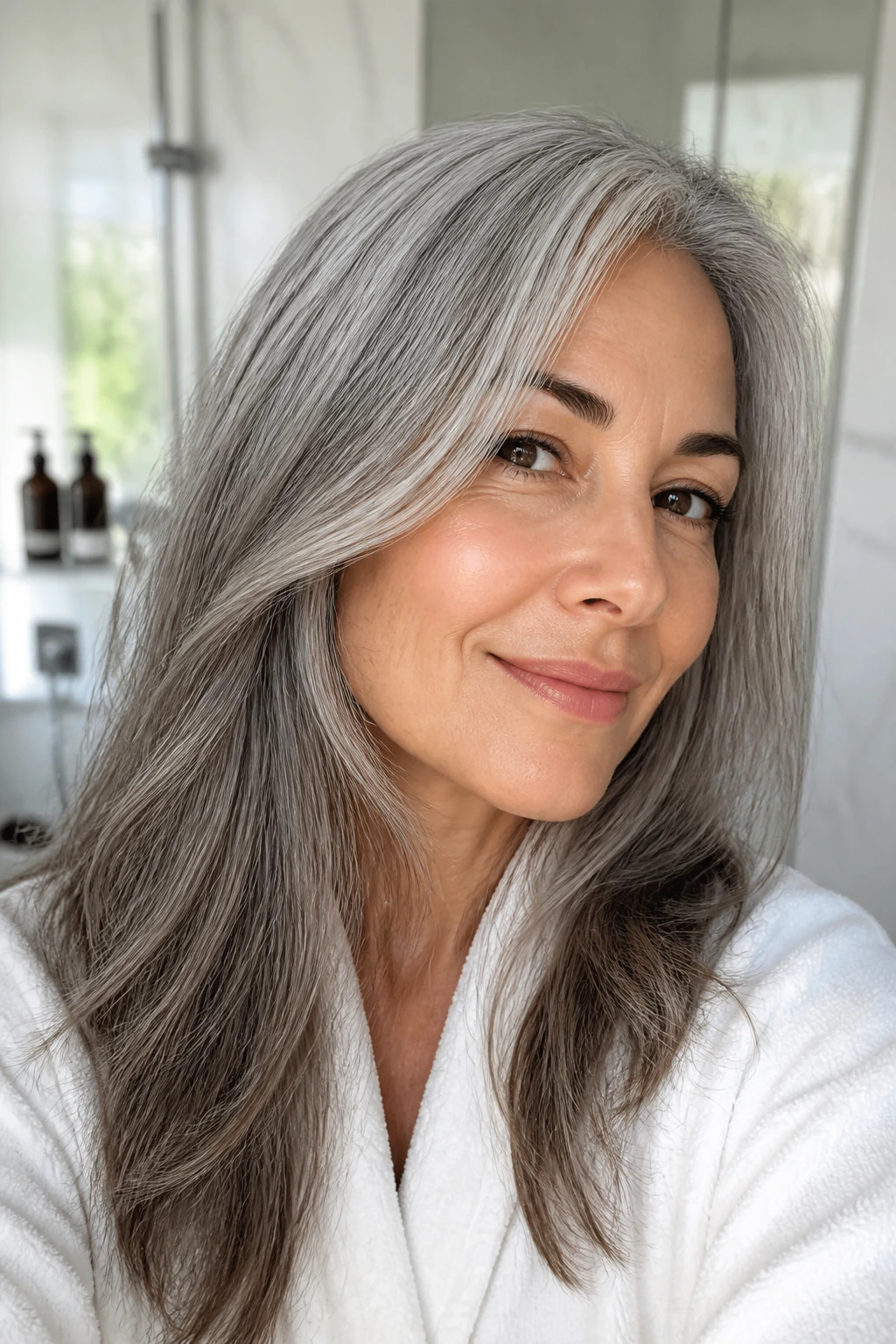
Grey shades fade in a few predictable ways. They go yellow from sun, brass from mineral water, dull from too much shampoo, and dry from heat styling. The fix is not complicated, but it does need discipline. Use cool or lukewarm water when you wash, because hot water opens the cuticle and lets the tone slip out faster.
Purple shampoo helps, but only when the hair starts drifting yellow. Once a week is usually enough for light grey, and even that can be too much on porous ends. If the color is already soft and beige, swap in a moisturizing color-safe shampoo and leave the stronger toners alone. More is not better here.
What to do between glosses
- Wash 2 to 3 times a week if you can.
- Use a deep mask once a week on the mids and ends.
- Dry with a microfiber towel or a soft T-shirt instead of rough rubbing.
- Protect the hair from heat every single time you blow-dry or curl it.
- Use a clarifying wash every 2 to 4 weeks if hard water is dulling the grey.
If you mix toner or semi-permanent color at home, don’t save the leftovers. Mixed color has a working window, and once that window closes, it’s useless. Store unopened products in a cool, dark cabinet and keep them away from steam and sunlight. That part sounds boring. It matters anyway.
Variations and Adaptations for Different Hair Types
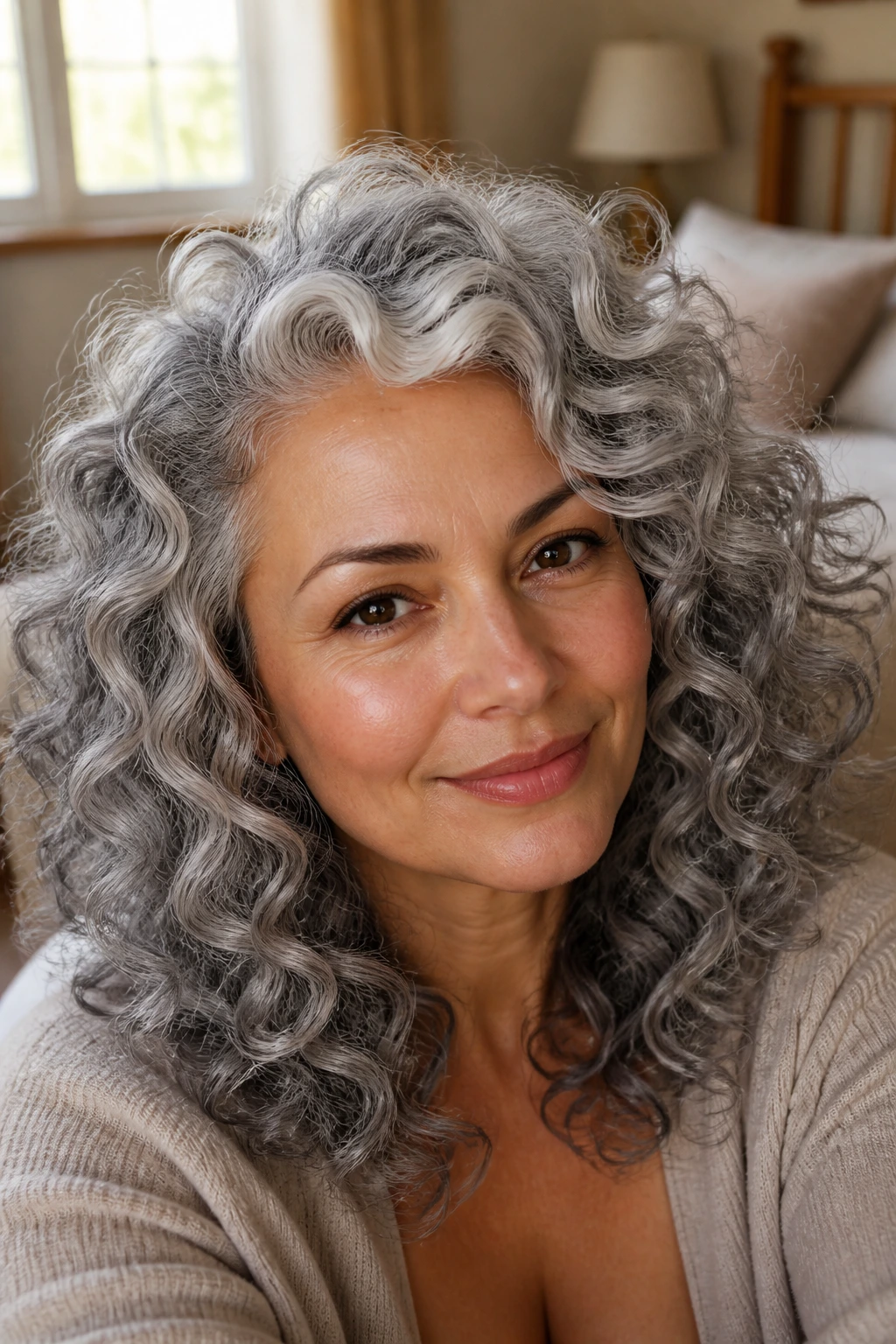
Curly Cloud Grey: On curls, grey looks best in broad ribbons or soft melts, not thin sliced highlights. The curl pattern already gives you movement, so the color should follow that shape instead of fighting it. Mushroom, sandstone, and greige all work well here.
Low-Commitment Glossed Grey: If your hair is already light or naturally silvering, a demi-permanent gloss can shift it toward pearl, champagne, or pewter without full bleaching. This is the easiest path for warm skin because it keeps the natural softness of the hair intact.
Dark Brunette Smoke: For deep brown hair, charcoal root shadow and smoky mocha balayage give you the grey mood without forcing the hair all the way to white. It’s a better pick if you want depth and less breakage.
Short-Cut Steel: Pixies, bixies, and sharp bobs can take more contrast. Graphite, gunmetal, and pewter look clean on short hair because the cut already has edges. Keep the sides neat and the top piecey so the color doesn’t read blocky.
Warm-Glow Silver: If you love silver but need warmth, ask for silver with chestnut, caramel, or honey nearby rather than a pure blue silver. That tiny warmth can make the difference between flattering and too cold.
Common Mistakes That Flatten Warm Skin
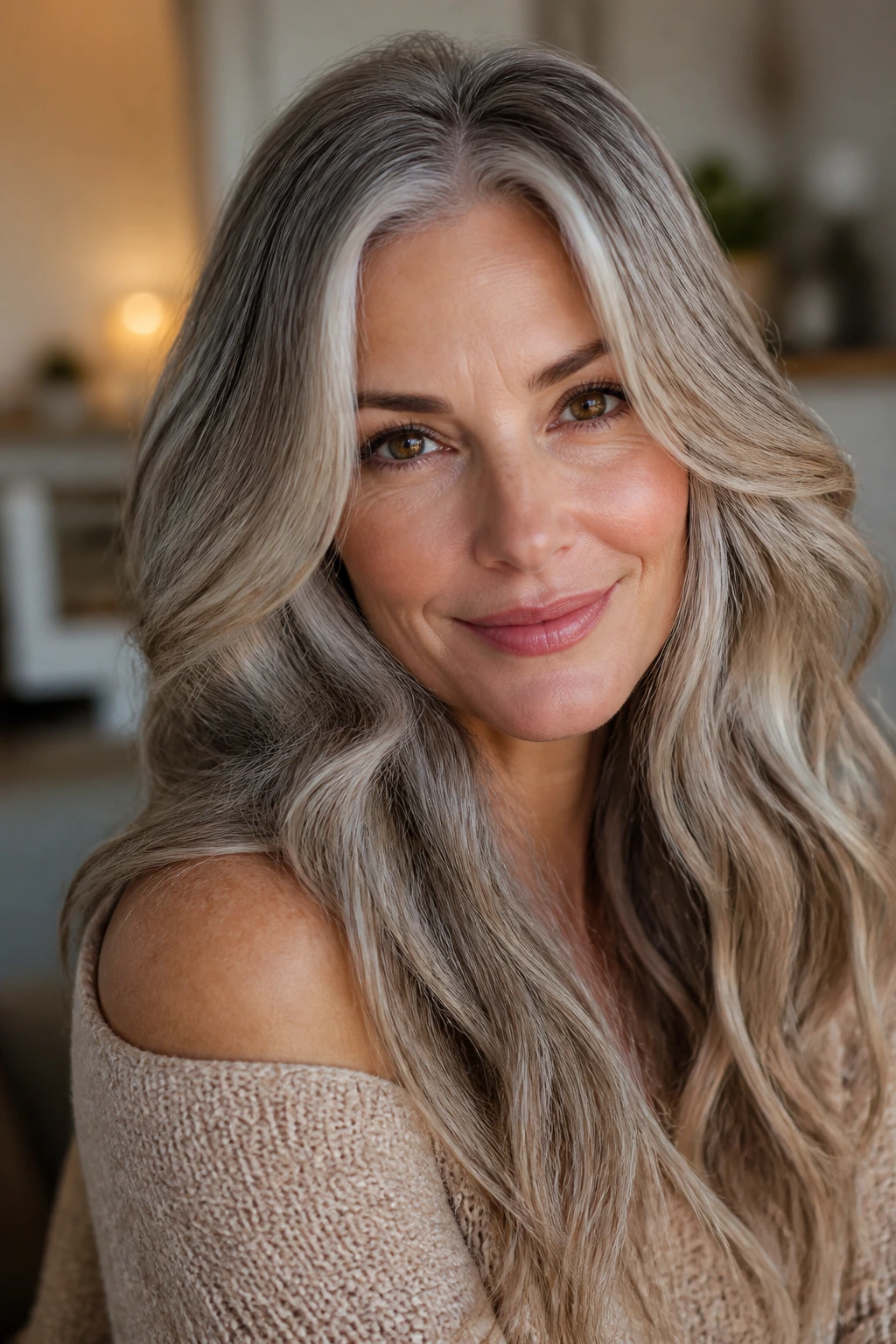
- Choosing the iciest silver in the book: The symptom is a face that looks washed out or suddenly red around the nose and cheeks. The fix is a beige, mushroom, or greige base with less blue in the toner.
- Stopping the lift too early: If dark hair only reaches orange-gold, the grey toner can go muddy. Lift to pale yellow first if you want true silver or pearl.
- Overusing purple shampoo: Too much can leave the hair dull, dusty, or even faintly violet. Use it only when brass shows up, and switch back to a moisturizing shampoo once the tone is under control.
- Ignoring brows and makeup: Grey hair needs some balance on the face. A little brow definition and a warm cheek color usually bring the whole look back into focus.
- Going too flat at the root: One solid grey from scalp to ends can look wiggy. A root shadow or lowlight keeps the color from sitting like a sheet.
- Forgetting porosity: Dry ends grab toner harder and fade faster. Treat porous hair with filler, masks, and careful timing so the mids and ends do not go dark and dull.
Grey Hair Questions People Ask Most
What grey shade looks best on warm skin tones?
Mushroom, taupe, greige, pewter, and smoky beige usually flatter warm undertones first. They keep a little softness in the base, which stops the complexion from looking drained.
Can warm skin wear icy silver?
Yes, but it usually needs help. A sharper cut, stronger brows, warmer makeup, or a shadow root can make icy silver work where it would otherwise look too severe.
Do I need bleach to get grey hair?
If your hair is dark and you want a true silver or pearl grey, usually yes. Hair often has to reach a pale yellow level before the grey toner can sit cleanly.
How do I keep grey hair from turning yellow?
Use cool water, avoid over-shampooing, and bring in purple shampoo only when the tone starts to warm up. Hard water and sun also cause yellowing, so a clarifying wash and UV protection help.
Will grey hair make my face look tired?
It can if the shade is too flat or too cool. A root shadow, a brighter face frame, and a little warmth in the makeup usually fix that fast.
Is grey easier to maintain on short hair or long hair?
Short hair often looks cleaner because the cut gives the grey structure. Long hair can still work beautifully, but it usually needs more placement and more gloss work to keep the color dimensional.
Can I do grey without full coverage?
Absolutely. A money piece, balayage, face frame, or smoky ends can give you the look without committing to a full silver head.
What if the grey turns muddy after toning?
That usually means the hair was either lifted too little or toned too cool. Add depth back at the root, soften the toner, and let the hair recover before trying another round.
The Grey Shade That Feels Like You
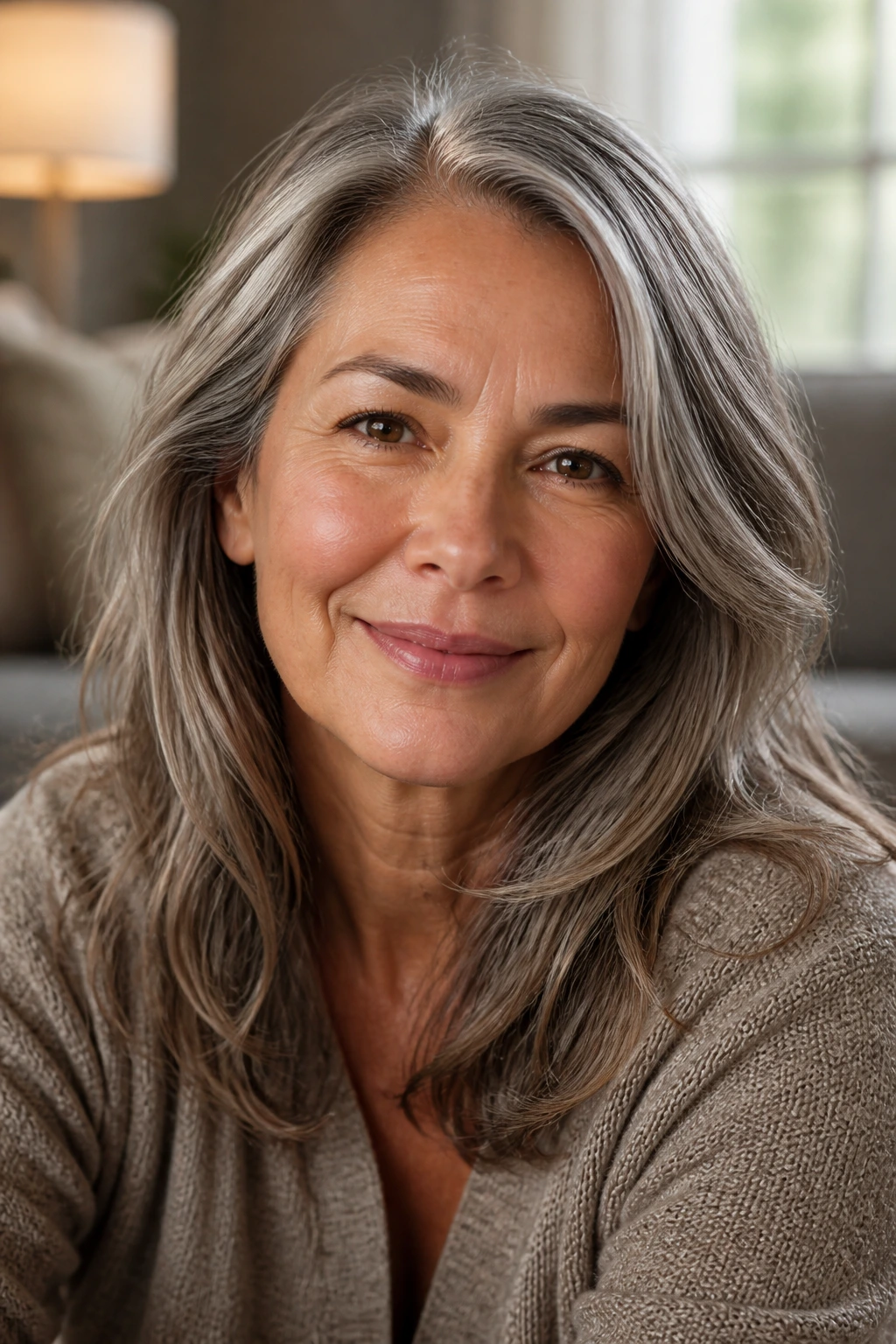
Grey hair on warm skin does not have to look frosty, severe, or high-maintenance in the wrong way. The shades that work best usually have a little beige, mushroom, taupe, smoke, or chestnut tucked inside them. That softness is what keeps the skin alive.
The good news is that grey has a wide range. You can wear it as a soft bob, a rooted silver melt, a smoky brunette blend, or a sharp charcoal pixie. Pick the version that matches your haircut, your brows, and your patience level, and the color starts to feel like part of your face rather than a costume.
If you’re choosing one place to start, I’d start with mushroom grey, taupe grey, or a greige money piece. Those shades tend to be the least fussy, and they usually tell you fast whether you want to go cooler, darker, or brighter from there.