



Platinum blonde on a brunette base is a high-wire act, not a casual color change. The best platinum blonde hair color ideas for brunettes respect the way dark pigment lifts: red shows up first, then orange, then yellow, and only then do you get anywhere near that icy, pale finish people save on mood boards.
That middle stretch is where a lot of bad blondes happen. The hair is light enough to look expensive from a distance, but close up it still carries warmth that a toner can’t fully erase, or it’s been pushed so hard that the ends feel fragile and look see-through. The good versions solve both problems at once. They use placement, root depth, haircut shape, and tone like parts of the same plan.
Brunette hair can wear platinum in a dozen different ways, and that’s the fun of it. A sharp bob can carry a crisp shadow root. Long waves can handle ribbon highlights. Curls need a different map than straight hair because the blonde sits and moves differently once the hair dries. The versions below cover the whole range, from low-commitment face-framing brightness to full-on arctic white.
Why These Platinum Blonde Hair Color Ideas Work on Brunettes
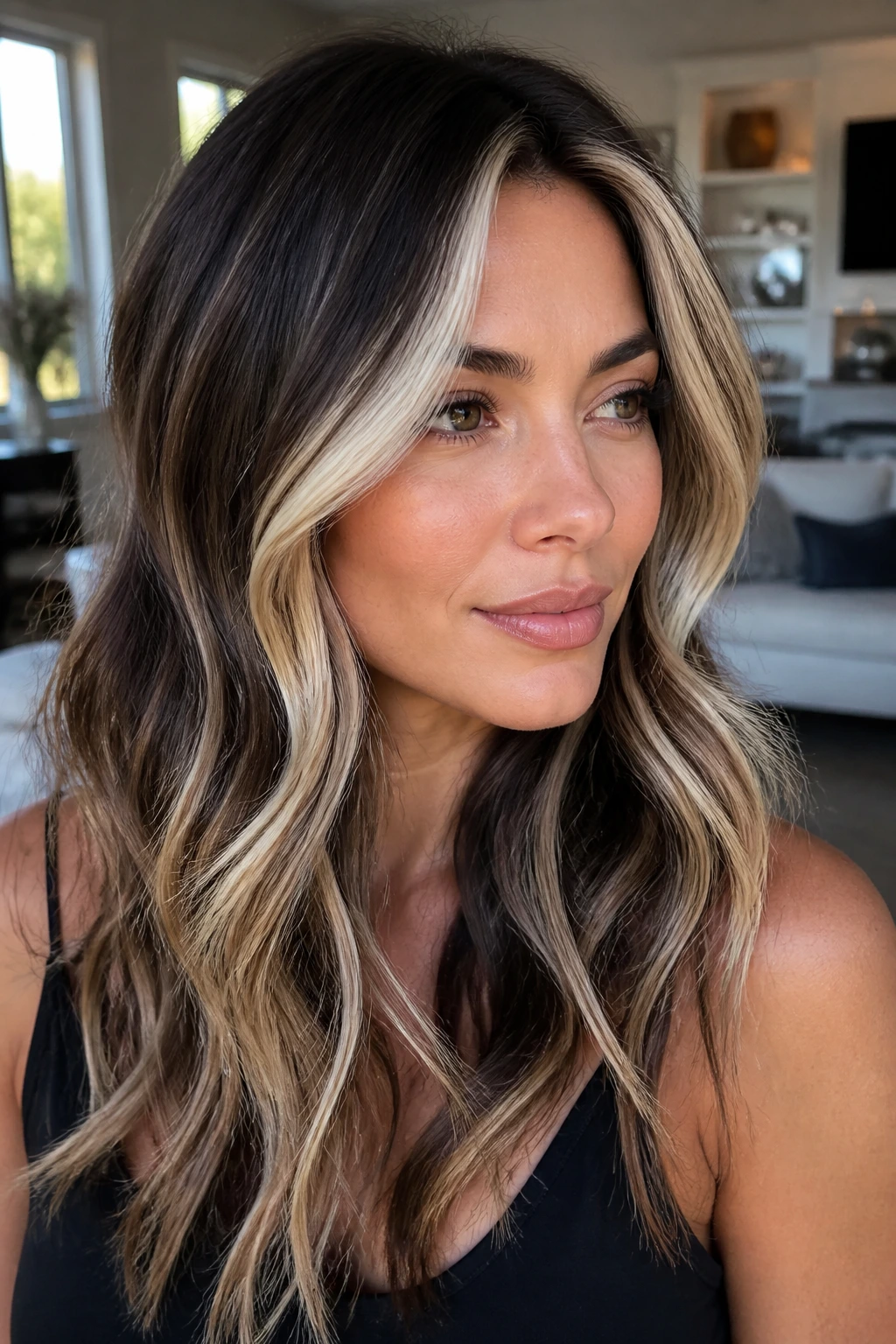
-
Placement does half the work: Thin face-framing pieces, crown highlights, and hidden underlights give you brightness where people actually notice it, instead of forcing every strand to survive a full bleach session.
-
Root depth buys you wear time: A shadow root or root smudge makes regrowth look intentional, which matters a lot when your natural base sits three or four levels deeper than the blonde.
-
Cool tones keep the lift from going orange: Icy, silver, beige-platinum, and smoky finishes each calm different stages of brass, so the final result looks cleaner than a flat yellow blonde ever will.
-
Haircut shape changes the color story: A pixie, bob, shag, or wolf cut makes platinum read sharper because the layers break up the light; long one-length hair usually needs more dimension to avoid looking skimpy.
-
There’s a version for every maintenance tolerance: Some of these ideas ask for frequent toner and root work. Others grow out softly and let you breathe between appointments.
-
Texture matters more than most people think: Curls, waves, and glass-straight hair all reflect platinum differently, so the same formula can look polished on one head and patchy on another.
1. Arctic-White Full Platinum
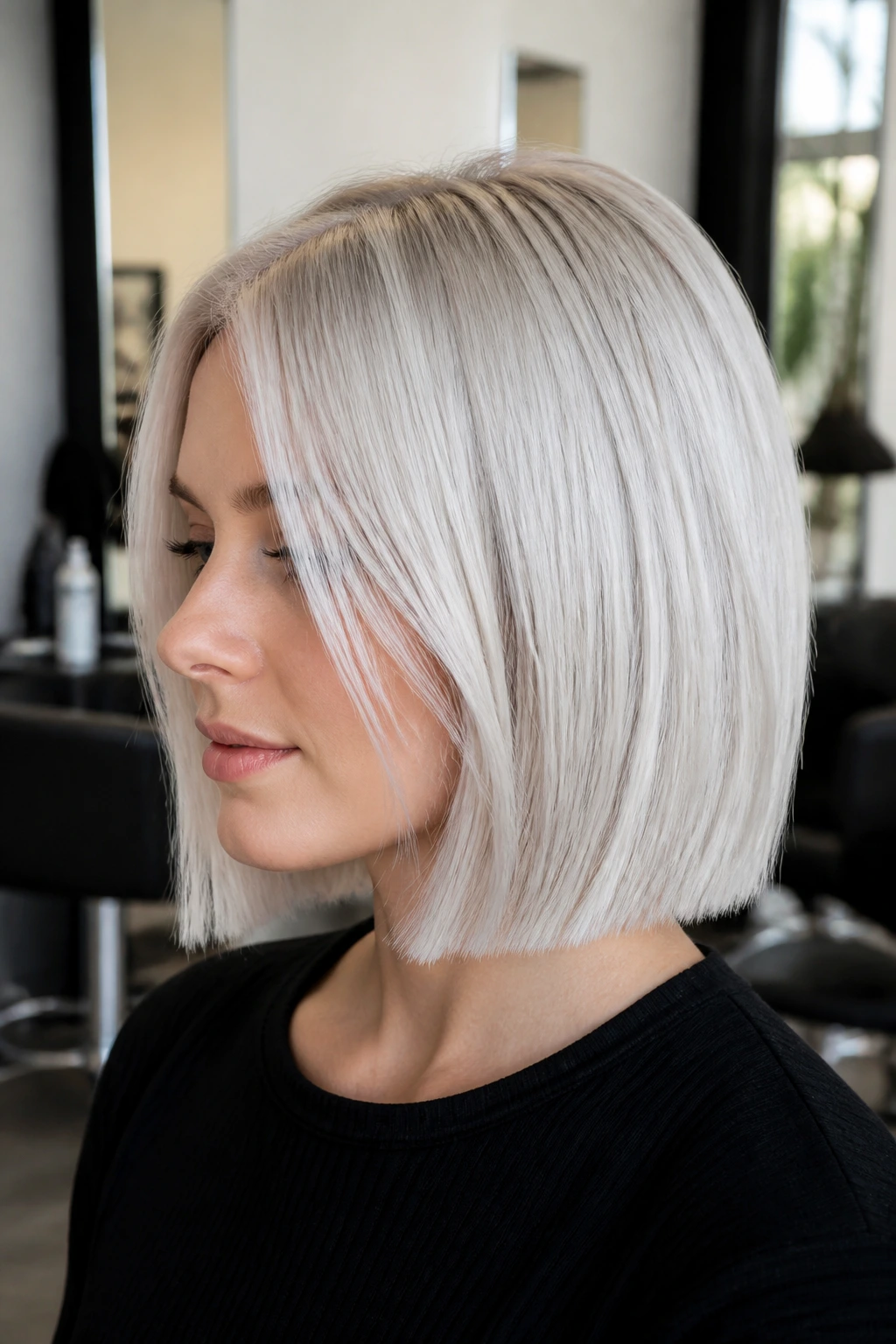
This is the bluntest version on the board. No smoky veil, no beige softness, no hidden brunette to lean on. The hair has to lift to a clean level 10 or 11, then get toned until the yellow is nearly gone, which is why this look works best on hair that can handle a careful, staged lightening process.
On brunettes, the payoff is almost metallic. It looks strongest with a simple shape — blunt bob, soft crop, or long ends that have been trimmed recently — because the color is already doing the loud part. If the cut is shaggy and the ends are dry, the white tone can turn harsh fast. Healthy-looking ends make this shade sing.
Best for: medium-brown to light-brown bases that lift evenly and don’t have a lot of box dye history.
Watch for: the roots need to stay clean and cool. If they go yellow, the whole look loses its edge.
2. Root-Smudged Platinum Bob
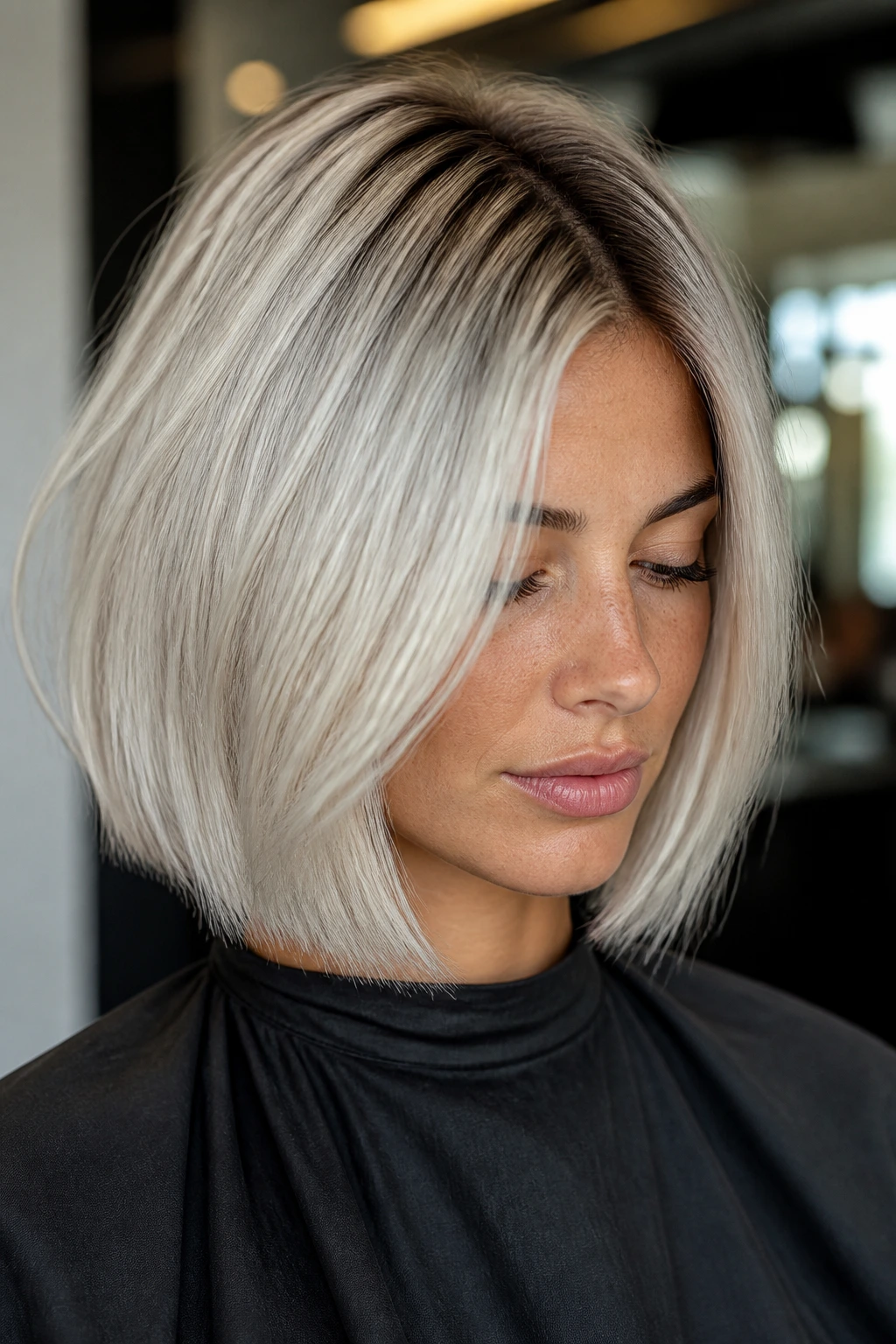
A bob changes the whole math. A root-smudged platinum bob keeps a little depth at the scalp — usually about half an inch to an inch — so the grow-out doesn’t shout the minute it appears. On dark brown hair, that shadow gives the blonde a frame instead of a hard stop.
The shape matters here. A blunt bob looks sharp with a cool platinum finish, while a slightly beveled end keeps the style from feeling helmet-stiff. Ask for the root area to sit one or two levels deeper than the lengths, then let the toner stay icy rather than creamy. It’s a clean, polished look that doesn’t need constant babysitting.
3. Platinum Money Piece on Dark Brunette Layers
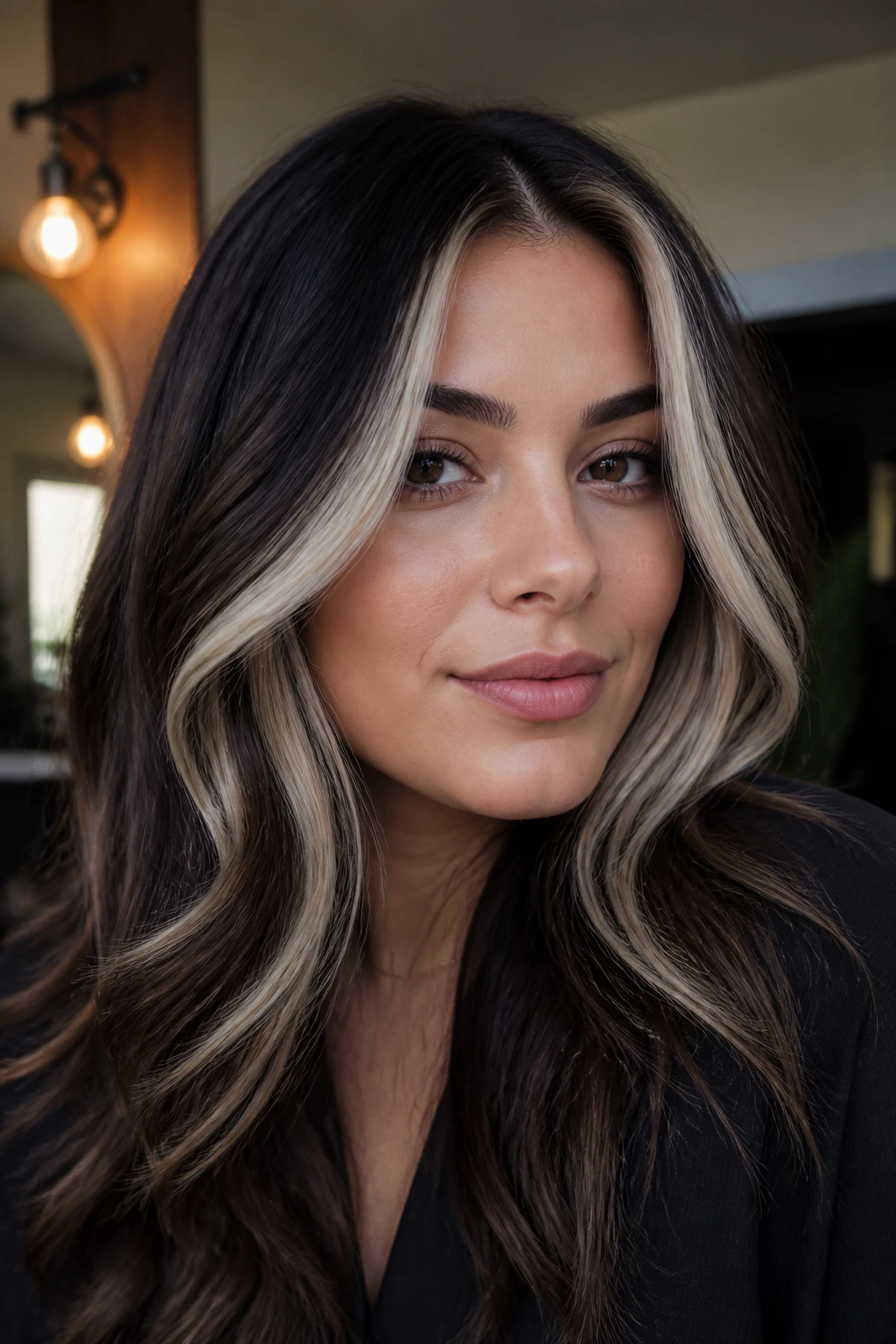
If you want the fastest visual payoff, start at the front. A platinum money piece brightens the two face-framing sections around the hairline and leaves the rest of the brunette base intact, which means the contrast feels deliberate instead of all-or-nothing.
This works especially well on layered cuts because the lighter front pieces echo the movement in the lengths. The trick is width: too skinny and it looks accidental, too wide and it starts to dominate the whole haircut. I like a version that lands just under the cheekbones, then softens into the rest of the brunette with waves or a round-brush blowout.
4. Smoky Platinum Balayage
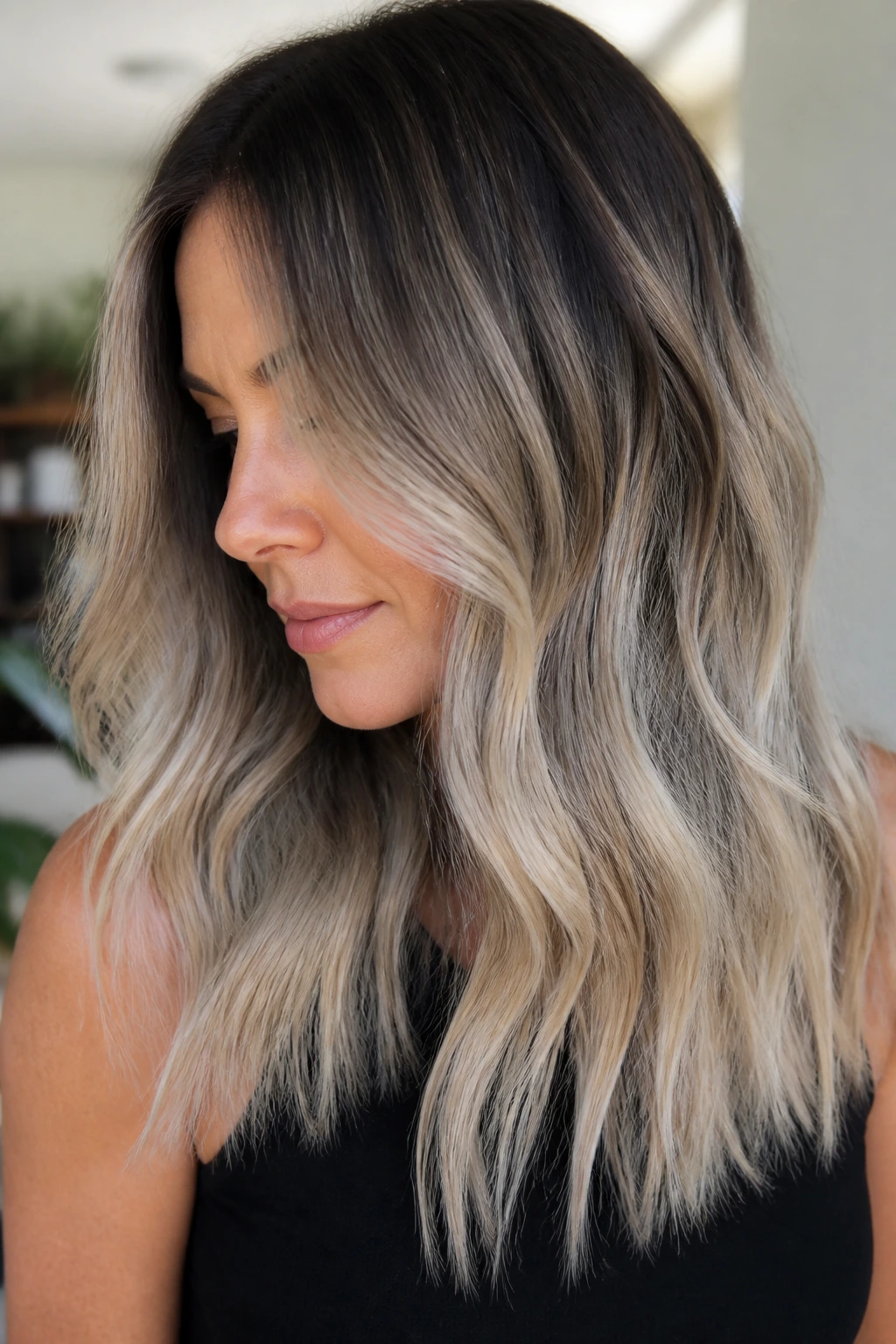
Smoky platinum balayage is what you reach for when you want brightness but you do not want a blocky highlight pattern. The lightener is painted where the hair would naturally catch sun, then toned to a cool beige-gray finish that sits between icy and soft.
On brunettes, that smoky note matters. It keeps the blonde from floating too high off the base, which makes the whole color look more expensive and less stripey. Add a few deeper lowlights if your hair is very thick or very dark; that extra shadow keeps the platinum from flattening out on long lengths.
5. Mushroom Brown to Platinum Melt
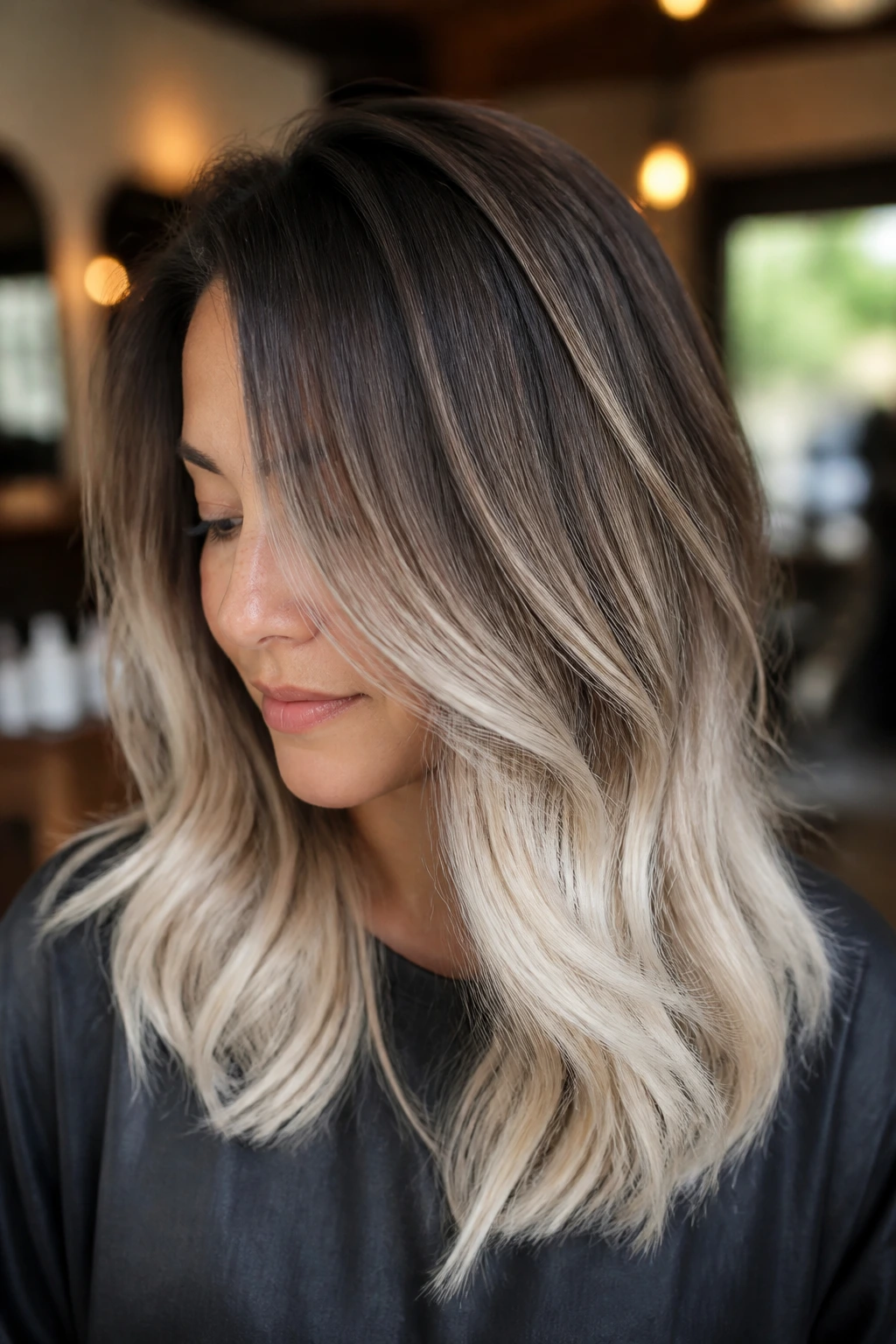
This one is for people who hate harsh lines. A mushroom-to-platinum melt starts with a cool brunette root zone, then shifts through taupe and smoky beige before landing in pale blonde at the ends. The transition feels slow on purpose.
It’s a smart move if you have medium-brown hair and want platinum without a loud scalp contrast. The mushroom tones make the grow-out look softer, and the blonde ends still give you that lifted, airy finish when the hair moves. The cut helps here too — loose layers or a soft U-shape keep the gradient visible instead of swallowing it.
6. Shadow-Root Platinum Pixie
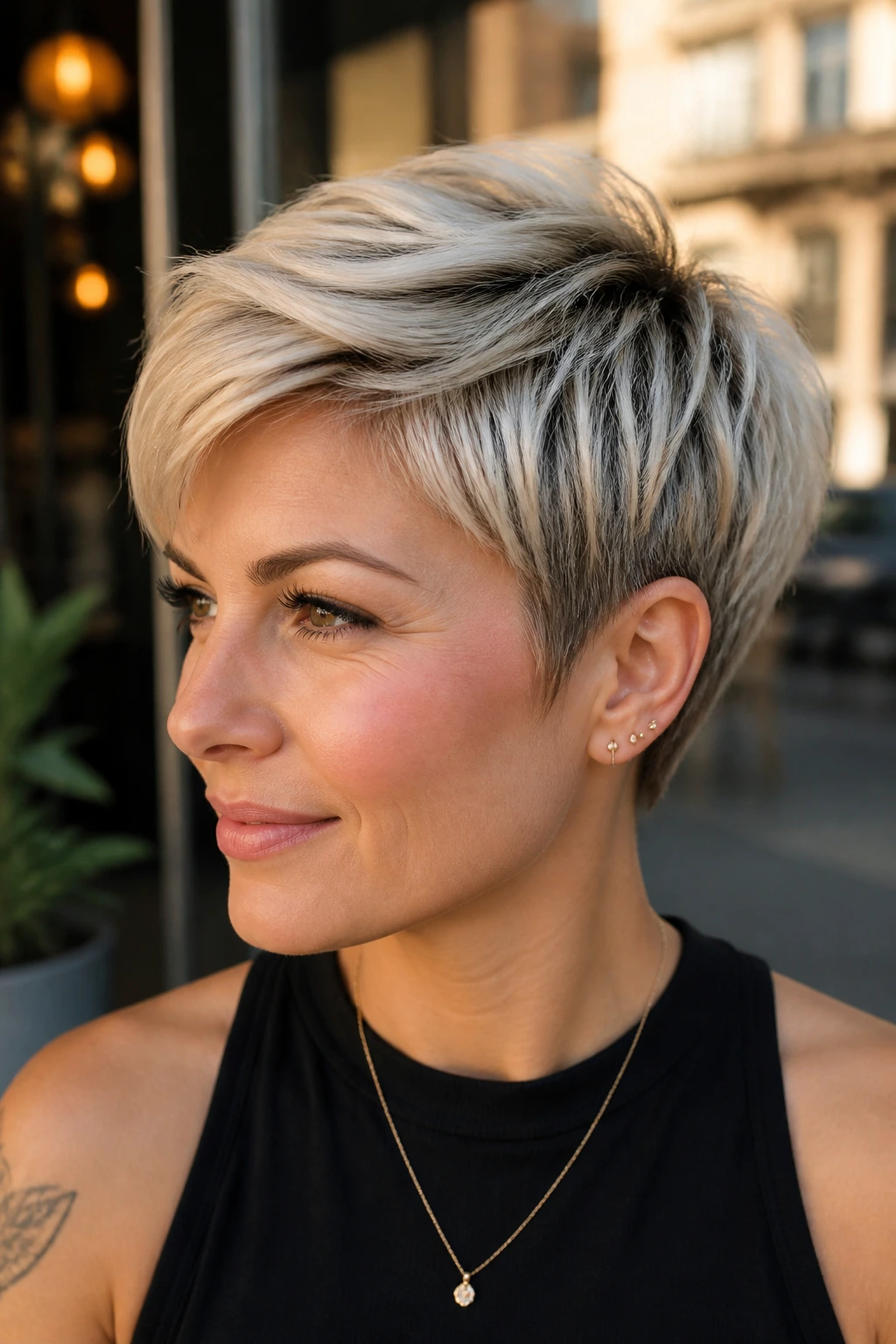
A pixie makes platinum look fearless. Short hair gives the color room to be bright without dragging long, fragile ends into the equation, and the shadow root keeps the regrowth from taking over the whole style three weeks later.
On a brunette base, that darker root adds grit and shape. Ask for a cool shadow that’s only a couple of levels deeper than the platinum top, not a heavy brown cap. The top and fringe can go nearly white, which is where the drama lives. This is one of the rare platinum looks that can feel both sharp and low-maintenance at the same time.
- Best for: thicker hair that gets bulky at the crown.
- Ask for: a soft root shadow, bright top layers, and piecey texture.
- Why it works: short hair gets trimmed often, so the lightest ends stay healthy longer.
7. Vanilla-Platinum Lob
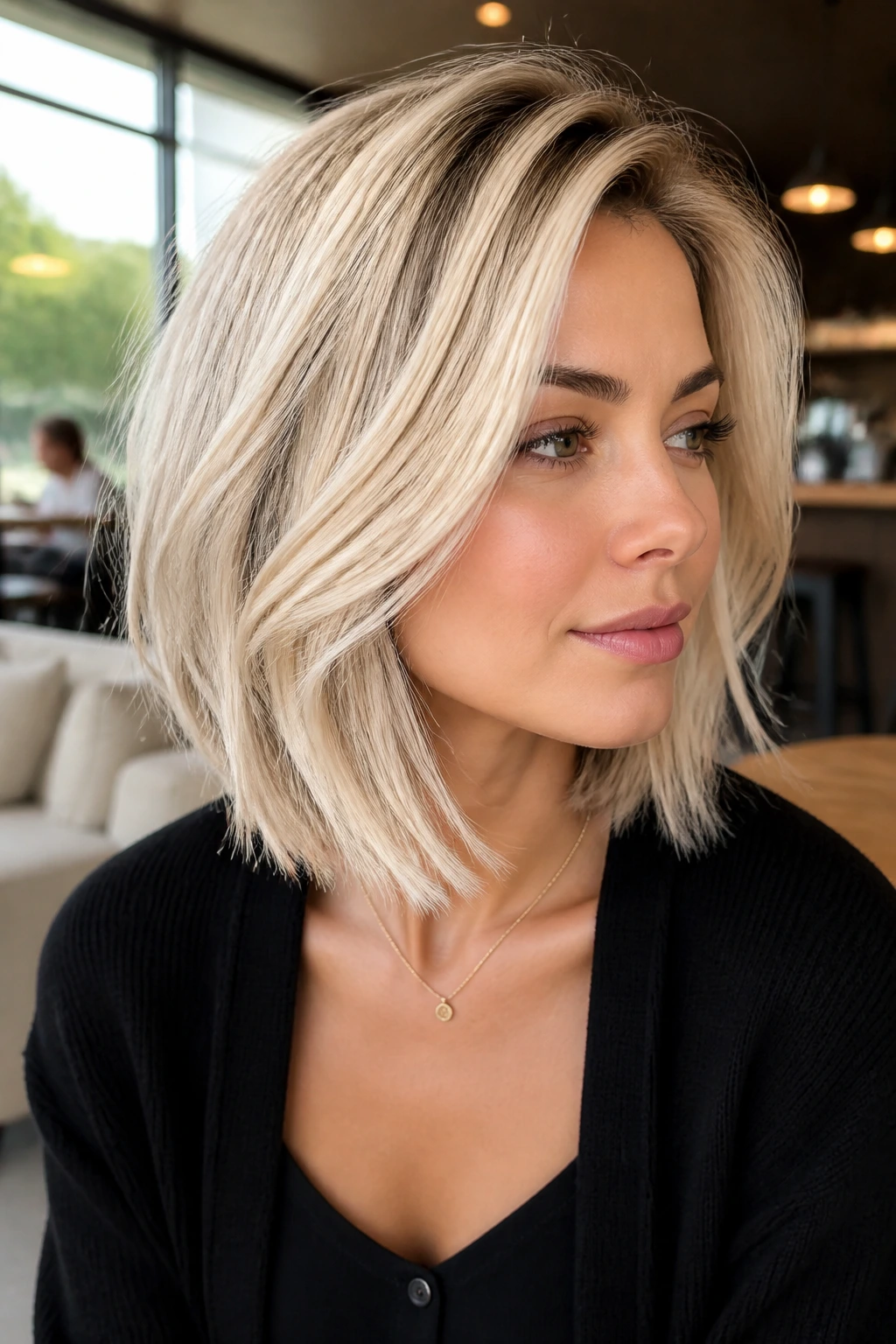
Not every platinum needs to look icy enough to scare the neighbors. A vanilla-platinum lob softens the tone with a creamy, pale beige finish that still reads blonde but doesn’t lean gray or silver. It’s the kind of shade that flatters brunettes who want lightness without the stark edge.
The lob length is part of the appeal. It gives the color enough surface area to show off the shift from root to end, but it doesn’t drag the platinum down like waist-length hair can. Ask for a tone that stays cool-neutral rather than warm-gold; vanilla should feel soft, not buttery.
8. Platinum Veil Highlights Around the Face
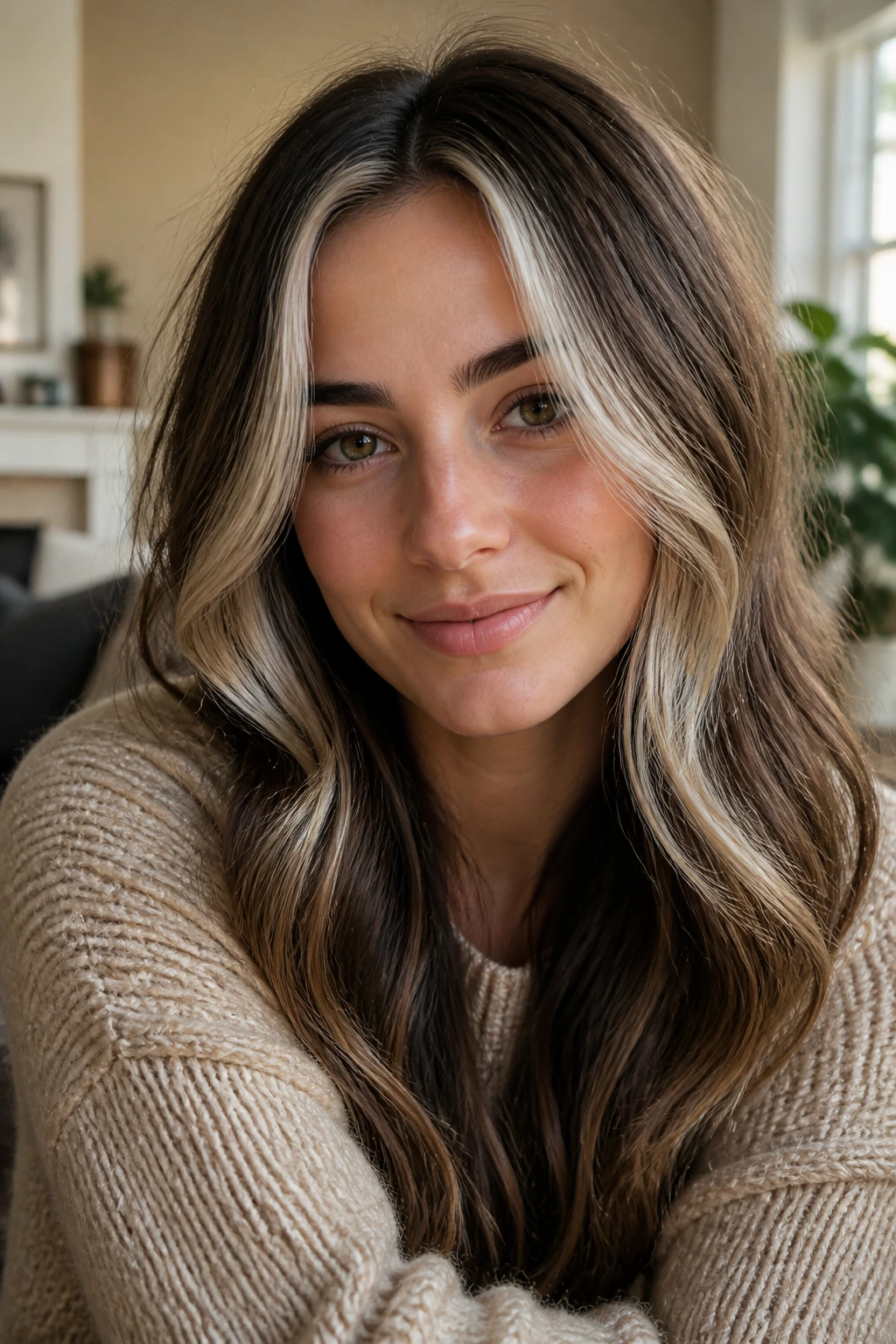
This is the gentler cousin of the money piece. Instead of two obvious front panels, a platinum veil places fine, bright strands around the face and hairline so the light looks woven rather than painted on. It’s especially good if you want brightness without the obvious stripe effect.
On brunettes, veil highlights can make skin look more awake without changing the entire head. They also work well with a center part, curtain bangs, or soft waves because the pieces move in and out of view. The goal is a glow at the perimeter, not a neon frame.
9. Silver-White Platinum Shag

A shag and platinum have the same energy: a little undone, a little cool, and never too tidy. Silver-white toner gives the blonde a bright reflective finish, while the shaggy layers break up the shape so the color looks lived-in rather than overworked.
This cut is kind to brunettes because the layers create built-in dimension. The ends can be lighter, the crown can stay a hair deeper, and the whole thing still reads as one clear style. If your hair is straight and stubborn, use texture spray or a light wave to keep the layers visible. Flat shag equals wasted blonde.
10. Beige Platinum Sombre
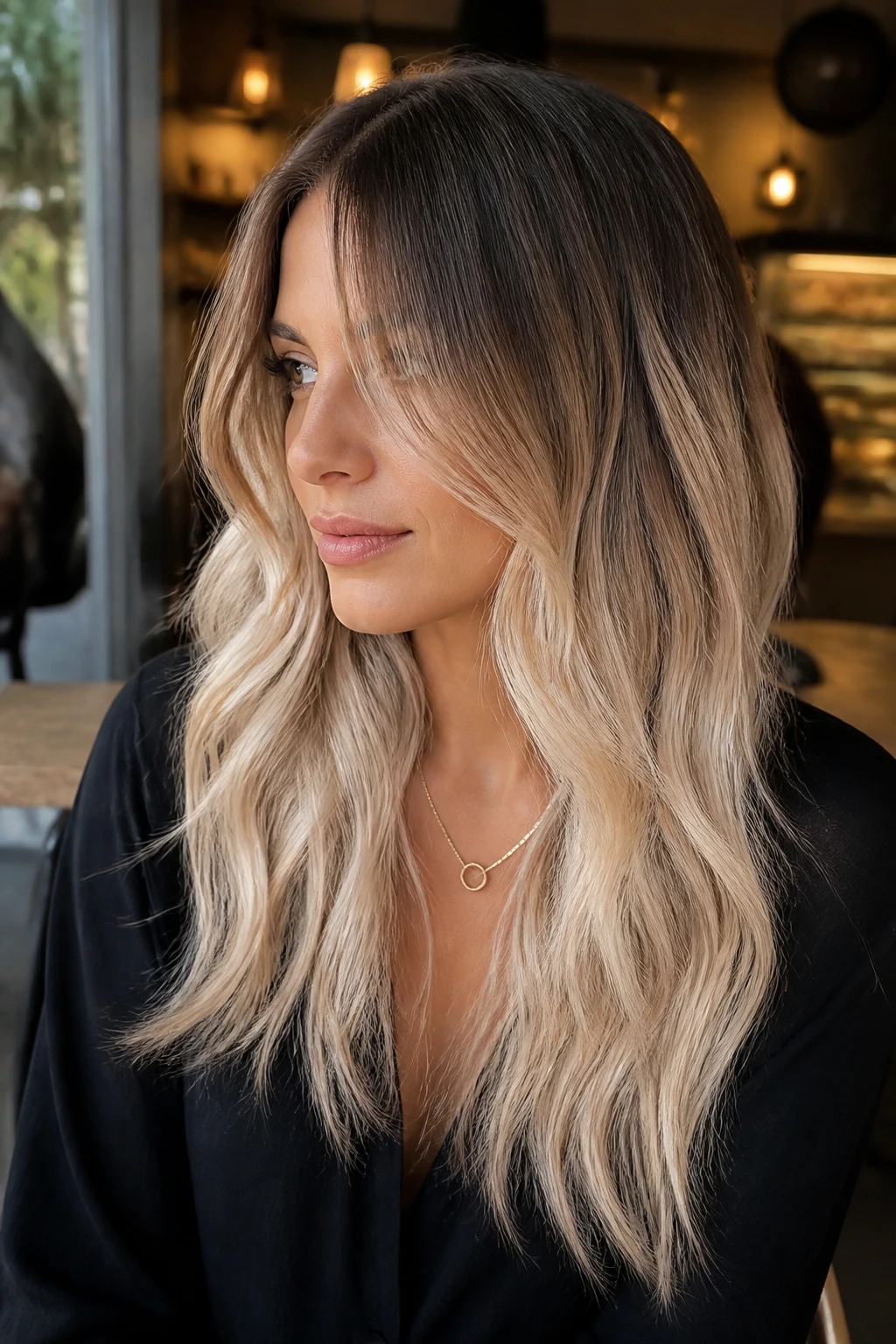
Beige platinum sits in that useful middle zone where the blonde is light enough to feel dramatic but soft enough to wear every day. A sombre — soft ombré — keeps the root and mid-lengths deeper, then eases into pale beige ends.
This is one of the easiest platinum ideas for brunettes who want a gradual change. The color doesn’t jump from dark to white in one step, so the grow-out is friendlier and the hair usually needs less total lightening than a full-head platinum. Beige works best when the blonde is kept cool enough to avoid brass, but not so icy that it drains the face.
- Best for: first-time blondes who want softness over stark contrast.
- Ask for: a root-to-end fade with beige toner through the mids.
- Watch for: the transition zone. If it’s too abrupt, the whole look loses the melt.
11. Chunky Platinum Highlights, Nineties Style
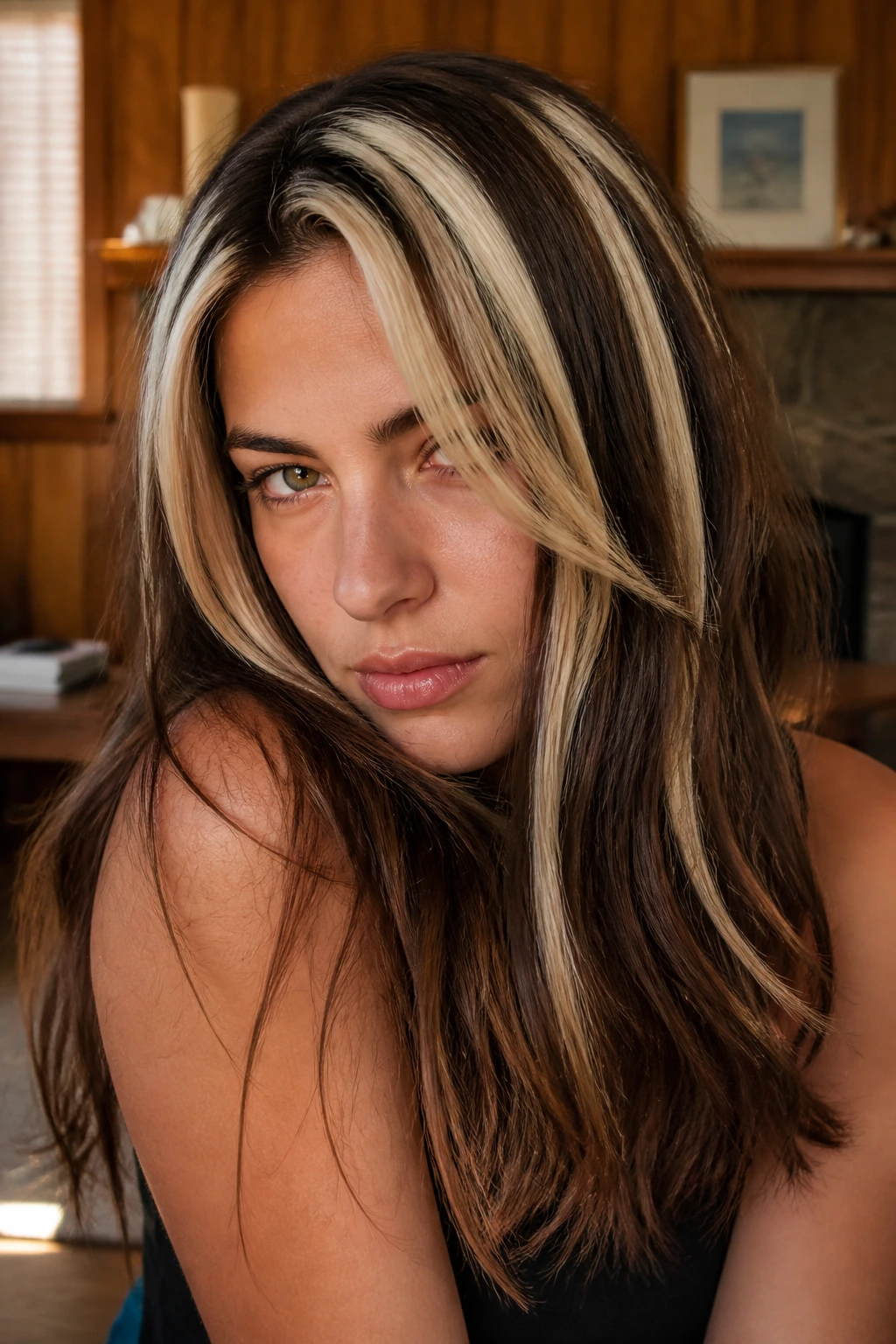
Chunky highlights are back because they do one thing well: contrast. On a brunette base, thick platinum pieces can look bold, cheeky, and deliberate in a way that fine babylights can’t. The key is placement — you want visible ribbons, not random stripes.
This style works best when the haircut has some structure. A layered blowout, a shoulder-length cut, or a flipped-out finish makes the streaks feel fashion-forward instead of dated. Keep the blonde pieces bright and the brunette base deep enough to show the separation. If both shades drift too close together, the whole point disappears.
12. Long Brunette Ombre to Platinum Ends
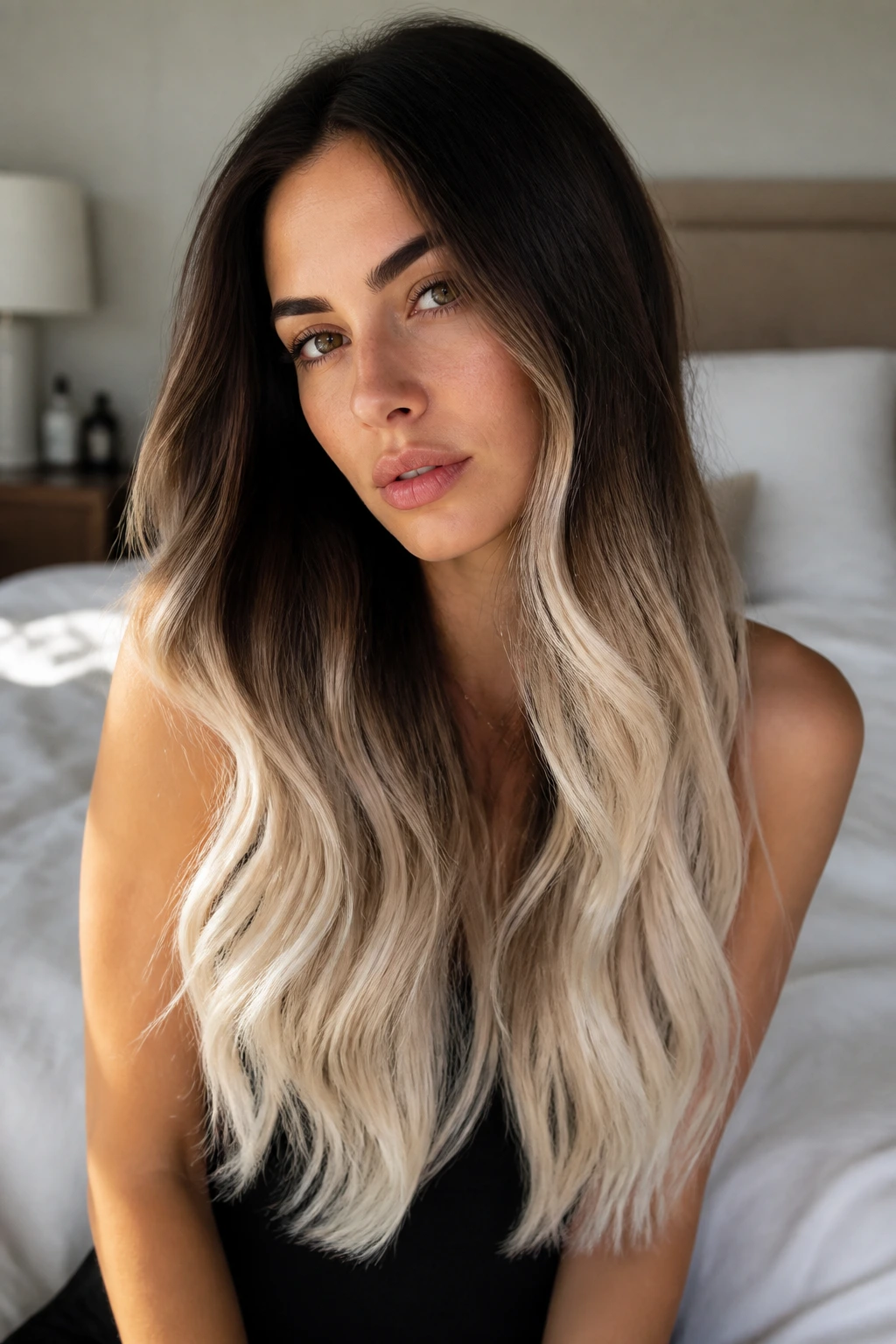
Long hair can carry more dramatic transitions, which is why an ombré works so well here. The brunette stays richer at the roots and mids, then the ends open up into pale platinum. You get the brightness where hair usually looks heaviest.
This is a good choice if your ends are in decent shape but you don’t want to bleach every inch of length. The lower third of the hair does the work, so the top can stay strong and full. Loose waves show the shift best; straight hair makes the gradient cleaner, while curls blur the line and make it softer.
13. Sleek Glass-Hair Platinum
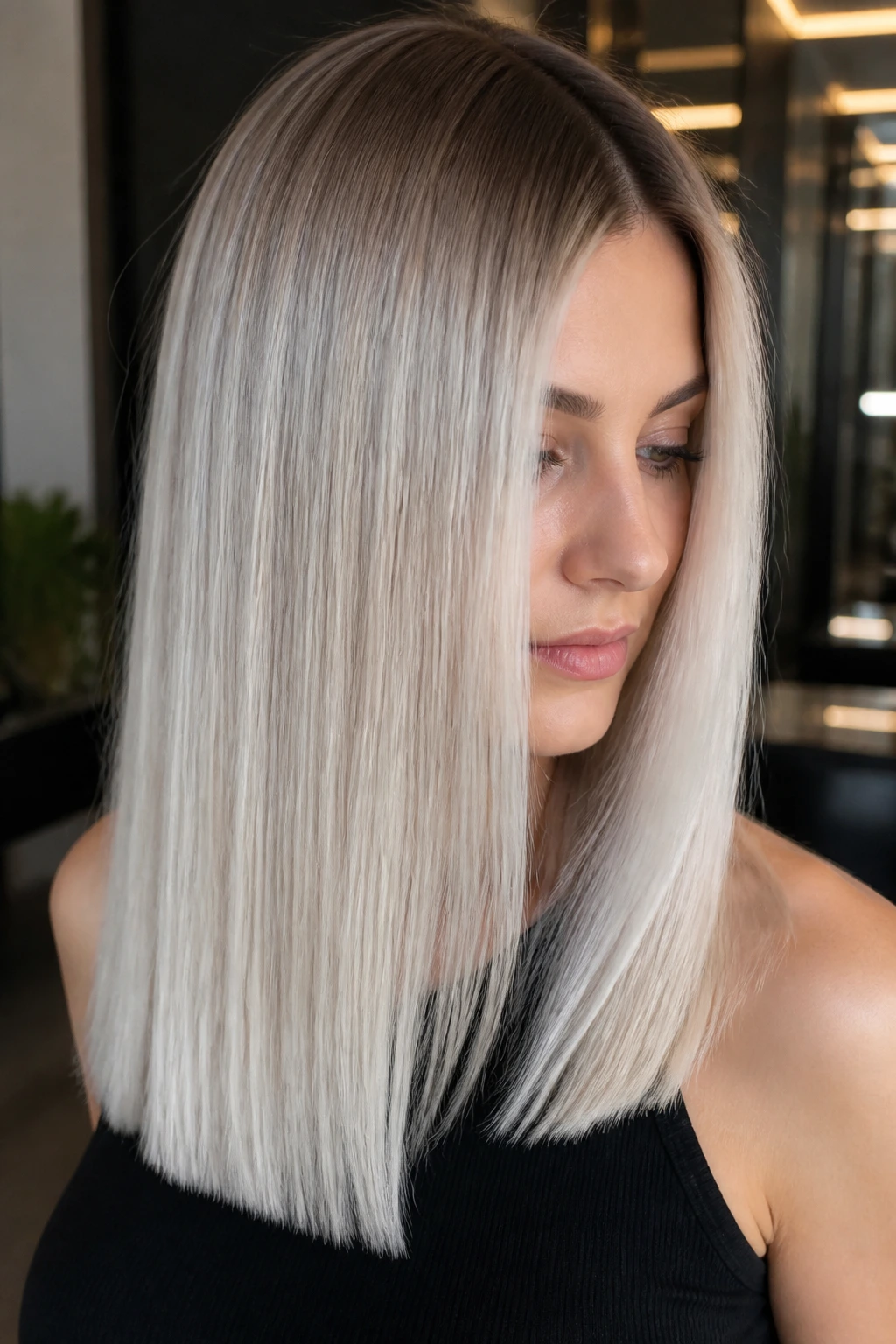
This is platinum with a mirror finish. Sleek glass-hair blonde depends on a very clean lift, a cool toner, and a cut with blunt, healthy ends. On brunettes, the contrast between deep roots and reflective blonde lengths can look razor-sharp in the best way.
It’s not a forgiving style if the hair is fried or layered unevenly. The shine exposes everything, which is exactly why it looks so good when it’s done right. Keep the tone on the icy side and avoid too much texture at the ends; the whole point is that smooth, polished surface.
14. Curly Halo Platinum Brightening
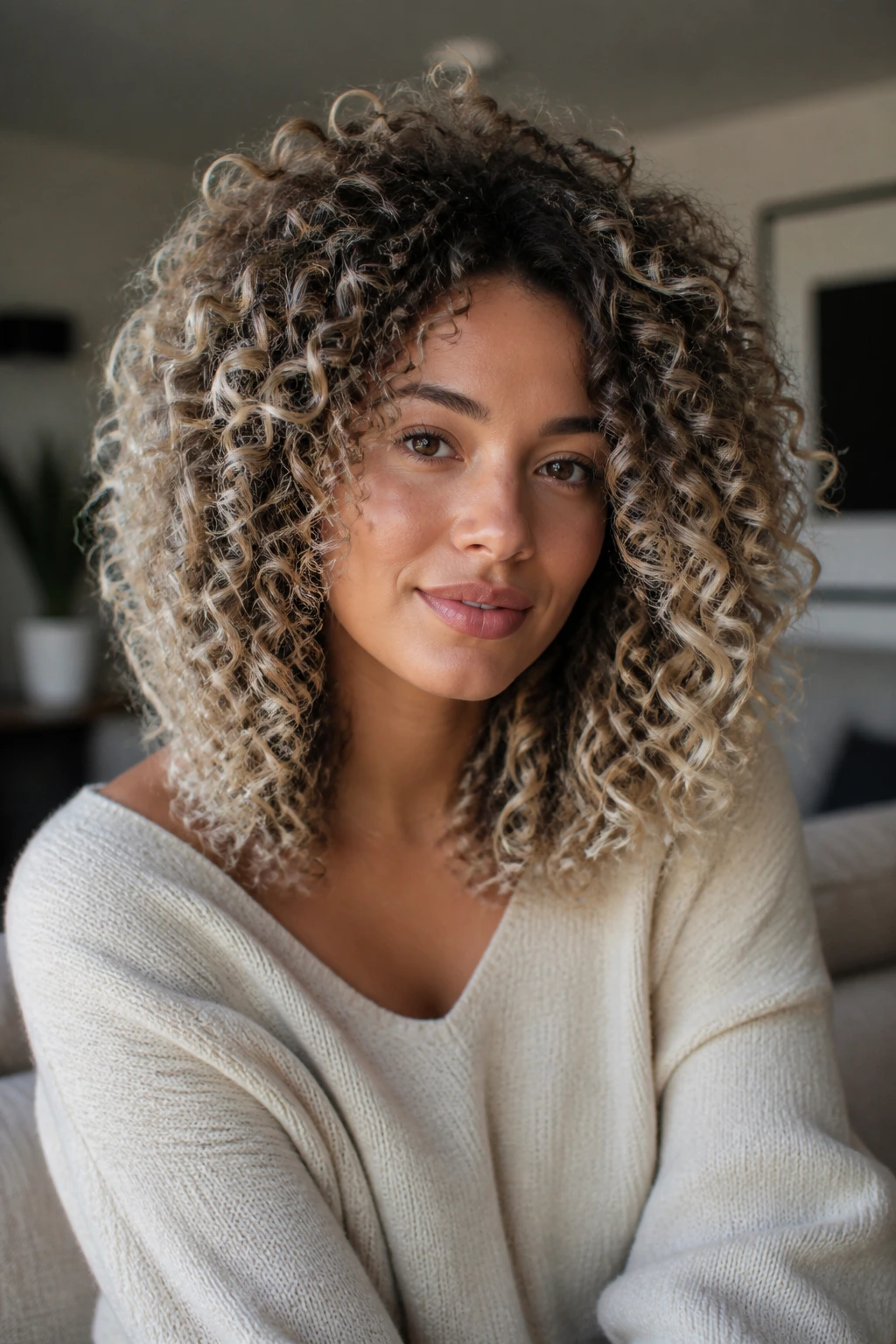
Curly hair needs a different map. A halo of platinum brightness around the outer ring of curls catches light where the shape actually reads, instead of burying pale pieces under layers that no one sees. That makes the color feel intentional on wash day and day three.
The best version of this idea leaves the interior darker so the curls keep their depth. Lightening only the outer ring and some face-framing spirals can give you a platinum effect without turning the entire head fragile. It also grows out more gently because the lighter pieces are spread across the shape instead of packed into one harsh band.
15. Hidden Platinum Underlights
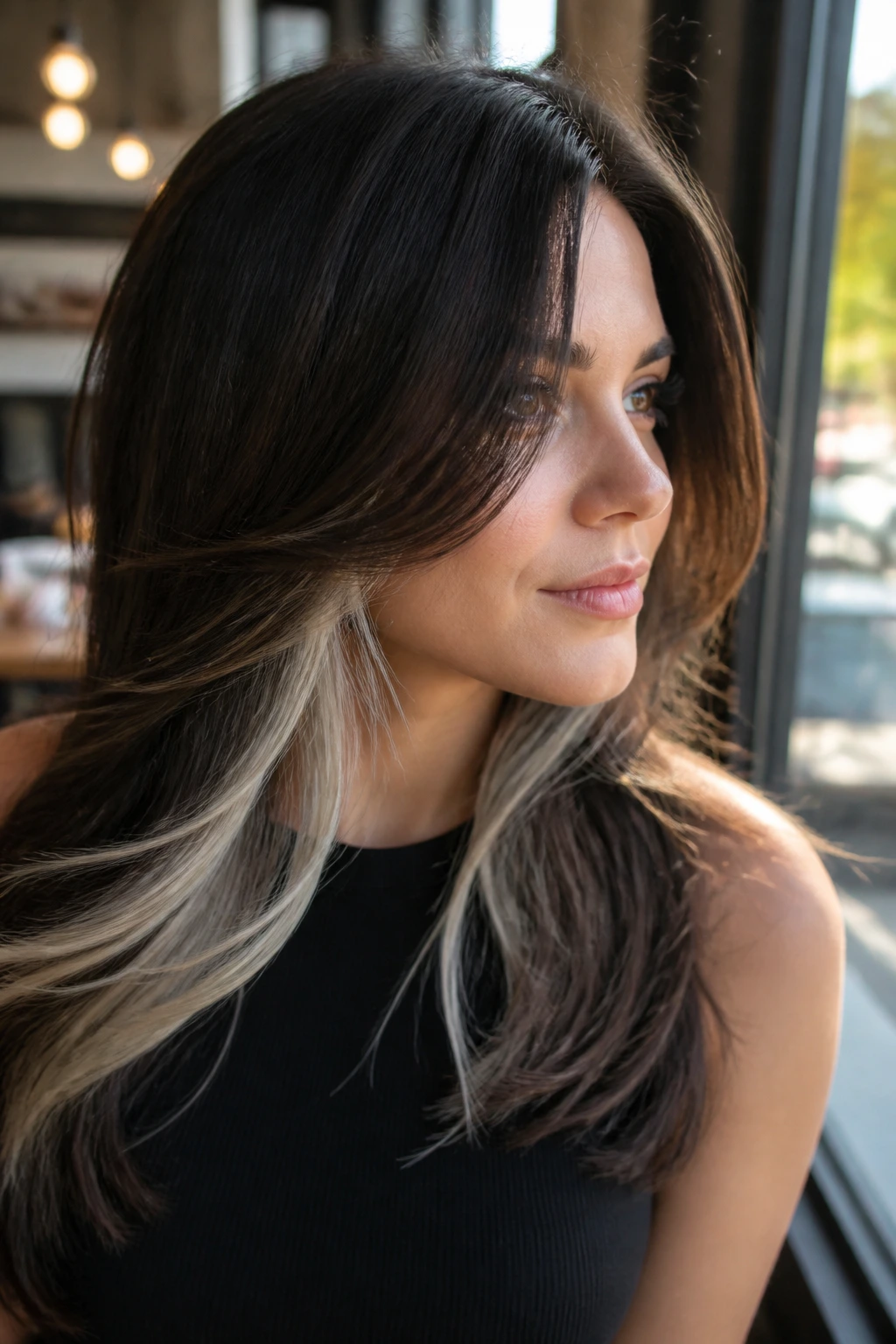
Hidden underlights are the quiet little trick I always like on brunettes who want surprise brightness. The top layer stays rich and dark, while the sections underneath are lifted to platinum. When the hair moves, the blonde flashes through.
This is especially good on layered cuts, ponytails, braids, and half-up styles. You get impact without making every day feel like a full bleach commitment. Ask for the underlayers to sit cleanly at level 10, then keep the top brunette glossy and deep so the contrast stays crisp.
16. Soft Babylight Platinum
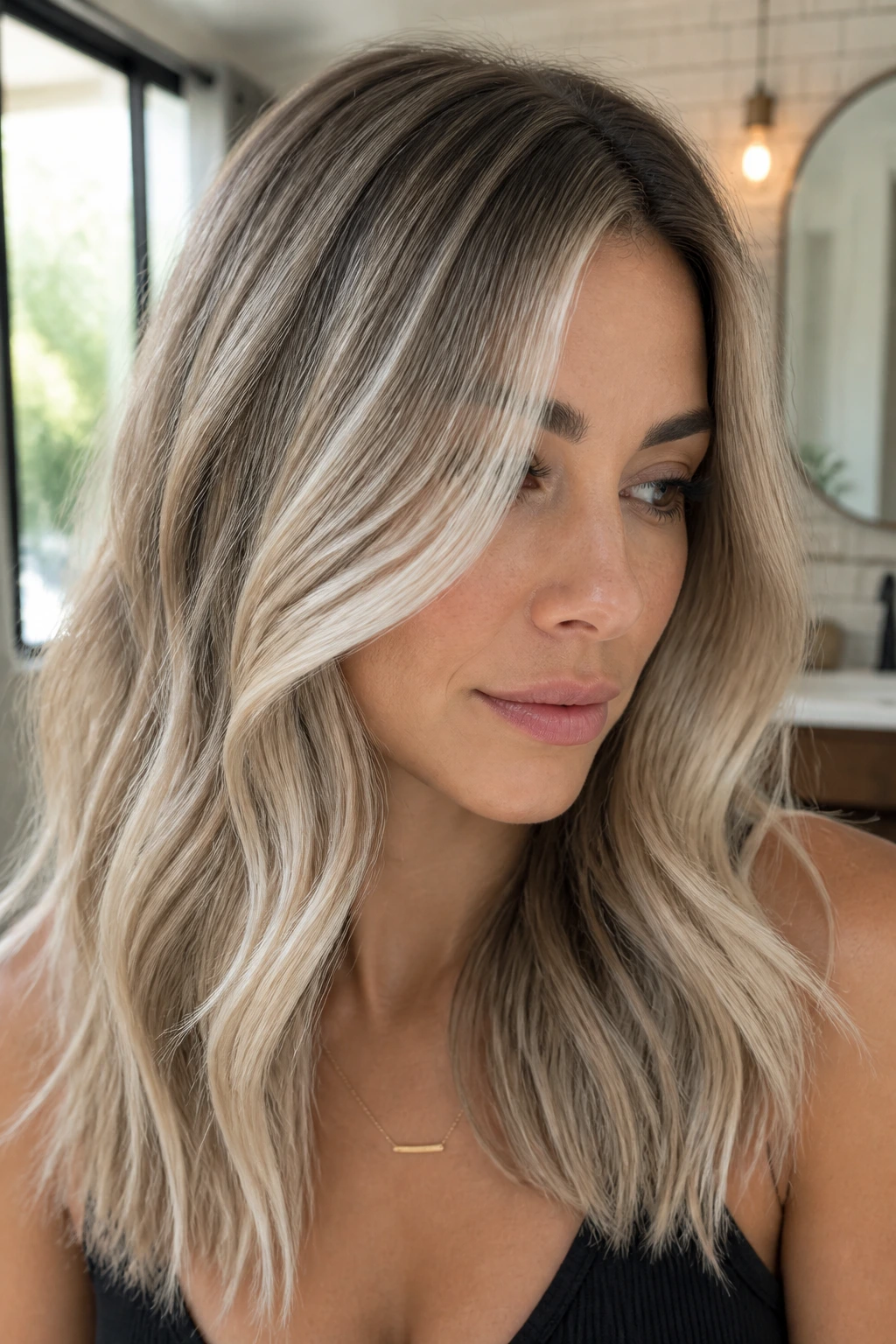
Babylights take patience. The strands are tiny, the placement is fine, and the result looks like the hair has been dusted with brightness instead of striped with it. On brunettes, this is one of the nicest ways to reach platinum without the bluntness of large highlights.
The look only works if the lift is even. Those tiny sections need enough processing to reach a pale yellow stage before toning, otherwise the result reads as warm and fuzzy instead of cool and bright. Because the highlights are so fine, the grow-out stays soft, which is why this is one of the more wearable platinum ideas in the whole group.
- Best for: people who want a blended, expensive-looking blonde.
- Ask for: micro-fine sections, not chunky slices.
- Why it lasts: the regrowth line is broken up by all those thin strands.
17. Platinum Peekaboo Panels
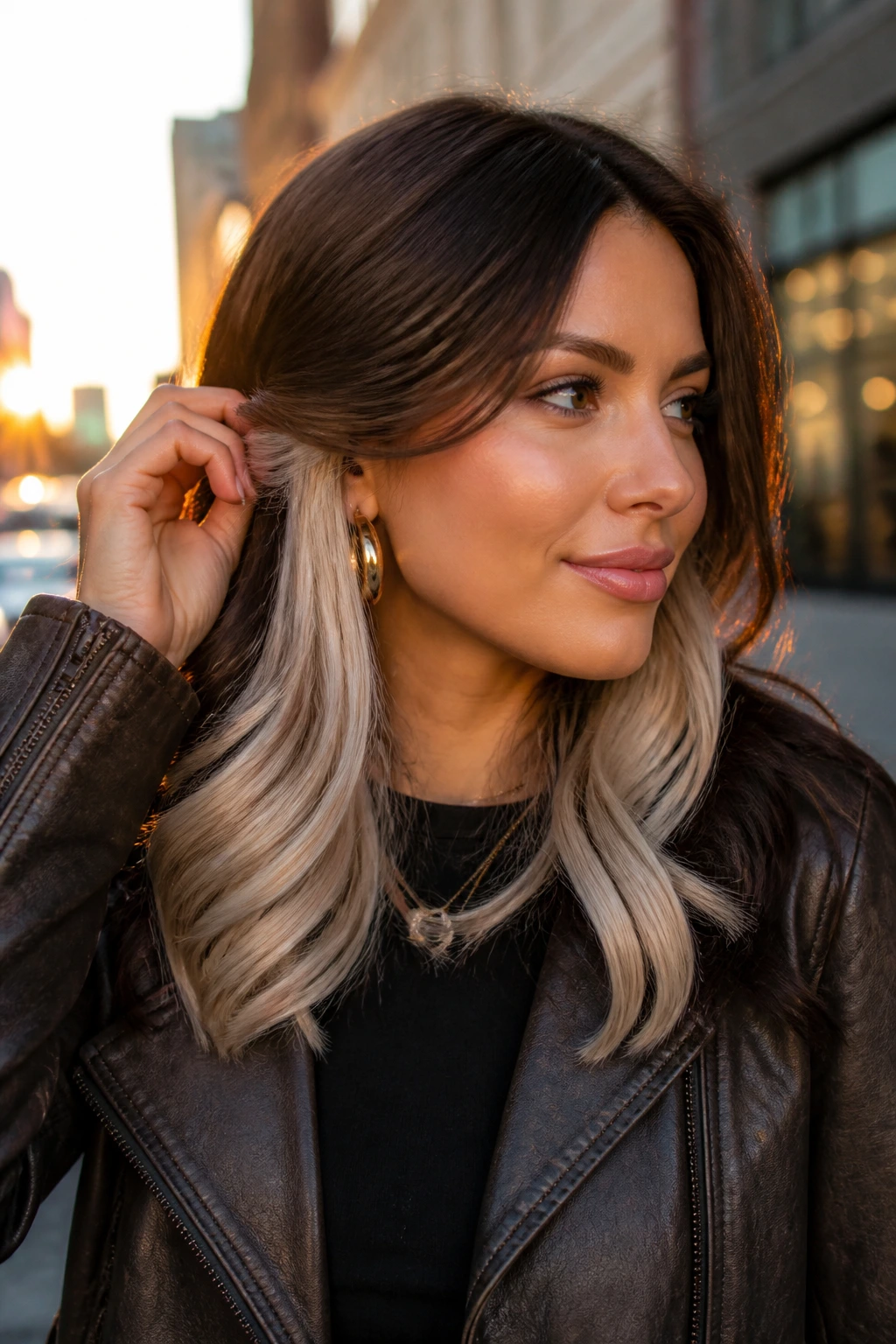
Peekaboo panels give you the fun of platinum with a little control. Bright sections are tucked beneath the top layers, so the blonde shows when you curl, twist, or tuck your hair behind one ear. On a brunette base, the effect feels playful rather than obvious.
This style is handy if you work somewhere conservative, or if you want to test platinum before committing to a whole-head lift. Because the top layer stays dark, the platinum can be very pale and still feel wearable. It also buys you a bit of time between touch-ups, since the grow-out is partially hidden.
18. Ash-Platinum Wolf Cut
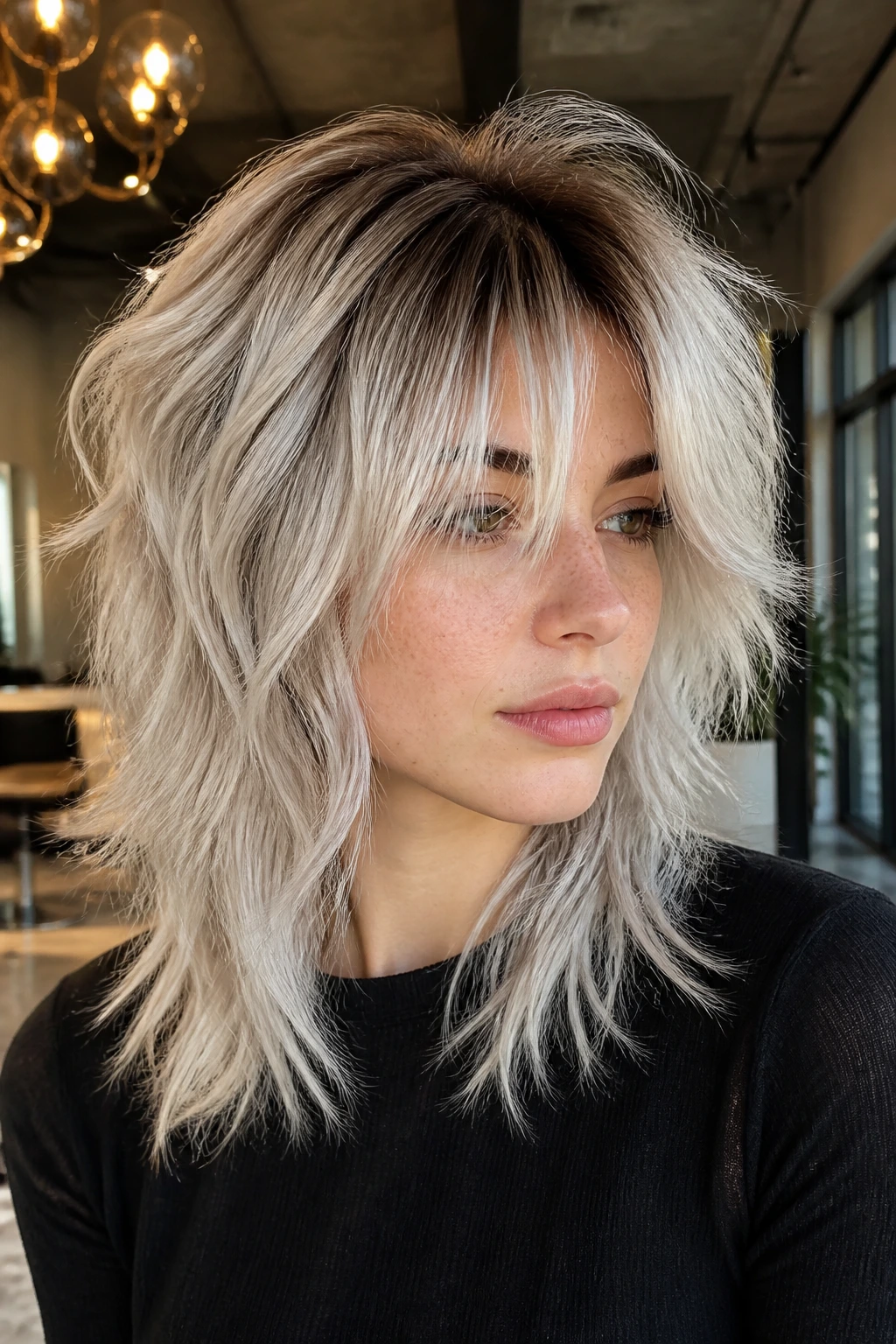
A wolf cut loves a cold tone. The choppy layers, shaggy crown, and airy ends make ash-platinum look rebellious without crossing into costume territory. Brunettes usually need a darker root stretch here so the top doesn’t disappear into the rest of the blonde.
The shape does a lot of the heavy lifting. Shorter top layers catch light fast, while the longer perimeter keeps the style grounded. If you want the color to show movement, this is one of the best cuts in the whole lineup. Flat hair will mute the effect, so a little texture paste or rough drying helps.
19. Frosted Ends on Layered Brunette Hair
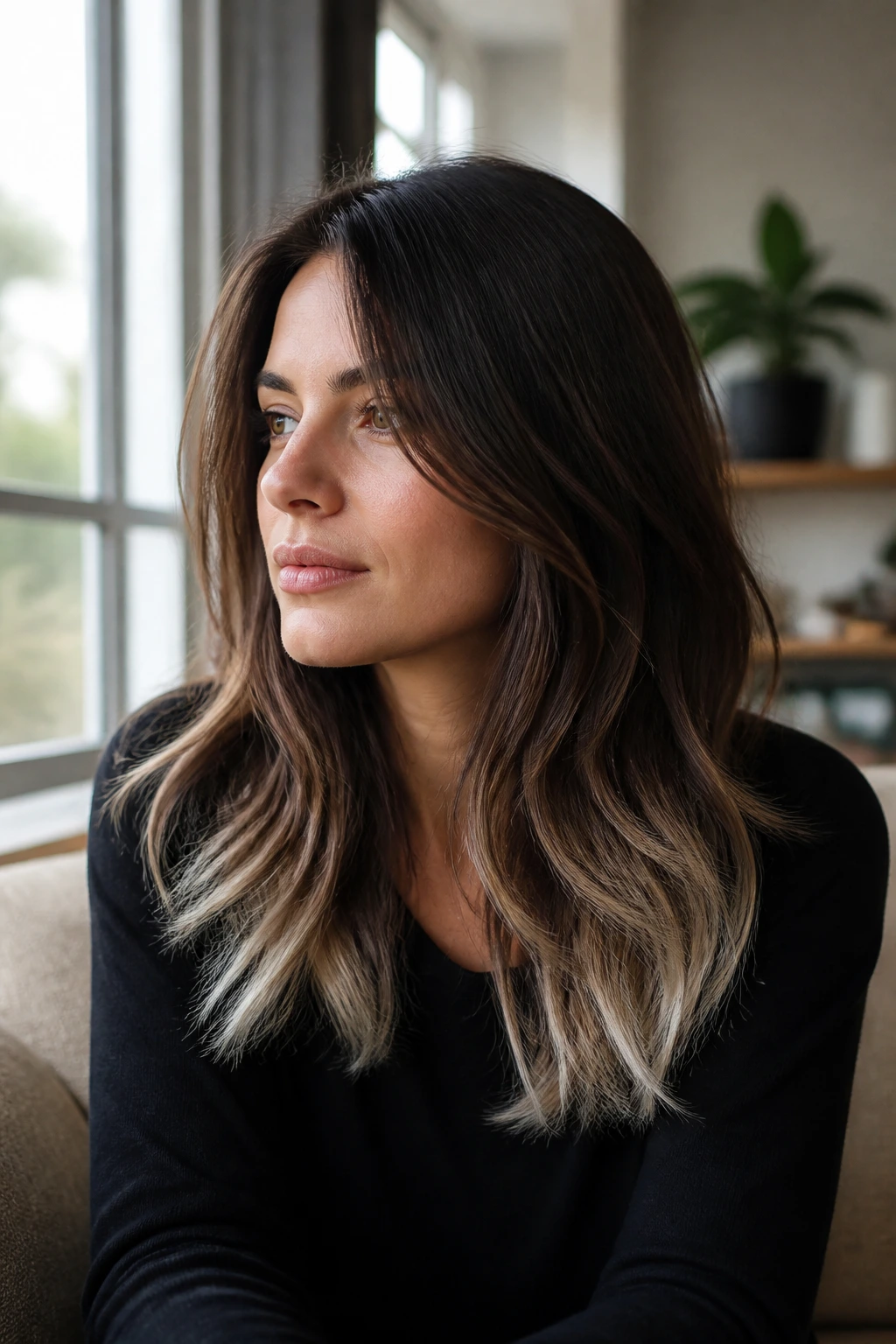
Frosted ends are the easiest way to flirt with platinum while keeping the base mostly intact. Only the last two or three inches of the hair get pushed to a pale, icy tone, which means the length looks lighter without turning the whole head into a maintenance project.
This works especially well on layered hair because the light ends can sit on top of deeper pieces and create movement. It’s also a smart fix if the lengths have already been through one too many lightening sessions. You get the platinum note where it counts, and you avoid overprocessing the mids and roots.
20. Champagne-Platinum Waves
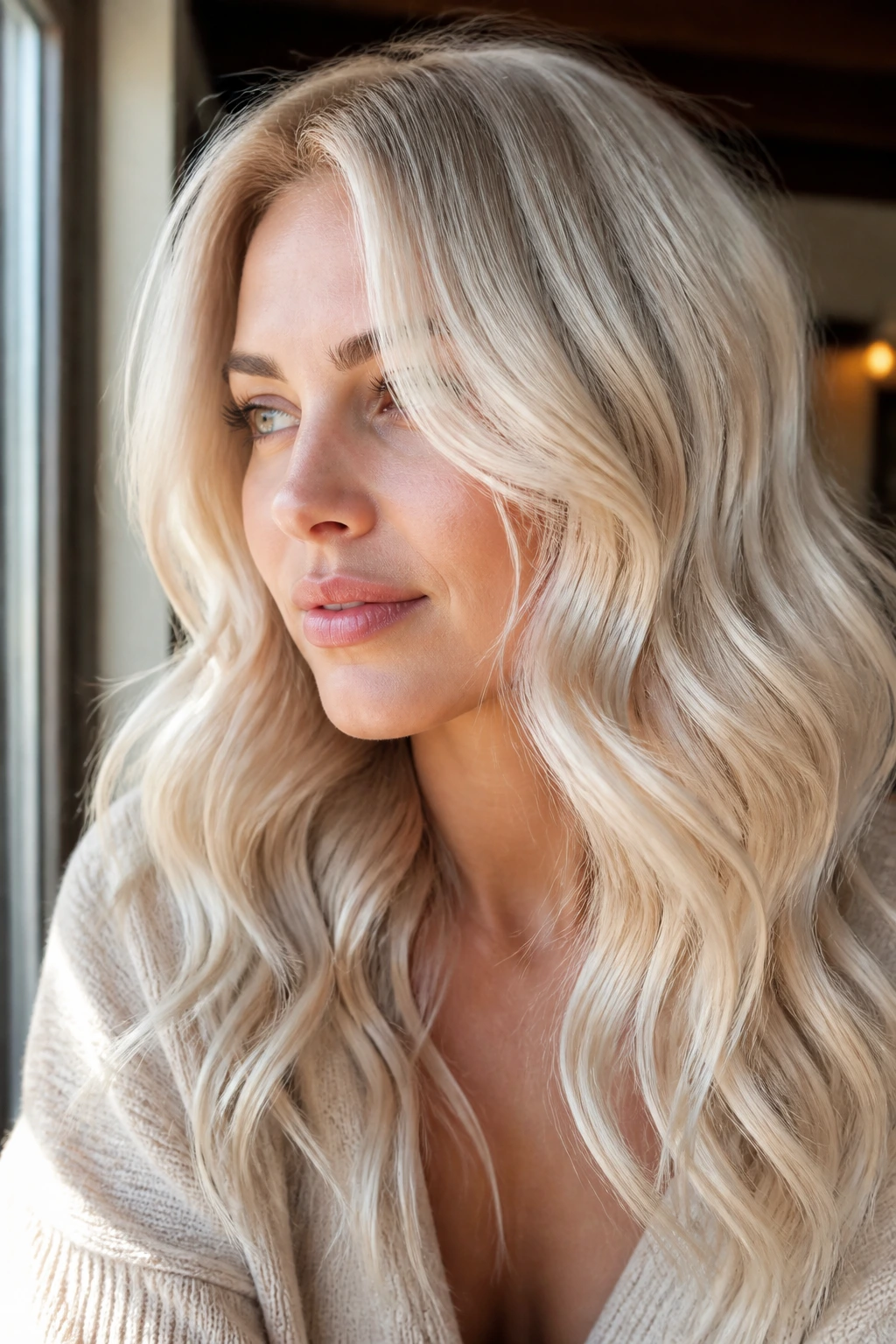
Champagne platinum sits between cool blonde and soft beige, which makes it a nice bridge shade for brunettes who fear looking too gray. On waves, the tone catches light with a pale, reflective finish that still feels warm enough to flatter more neutral skin.
The trick is not to let it go gold. Champagne should feel like a muted sparkle, not a buttery blonde. This is one of those colors that looks best with gentle movement — loose S-waves, brushed curls, or a soft bend with a flat iron. The tone needs the motion to show its nuance.
21. Ultra-Light Platinum Crop
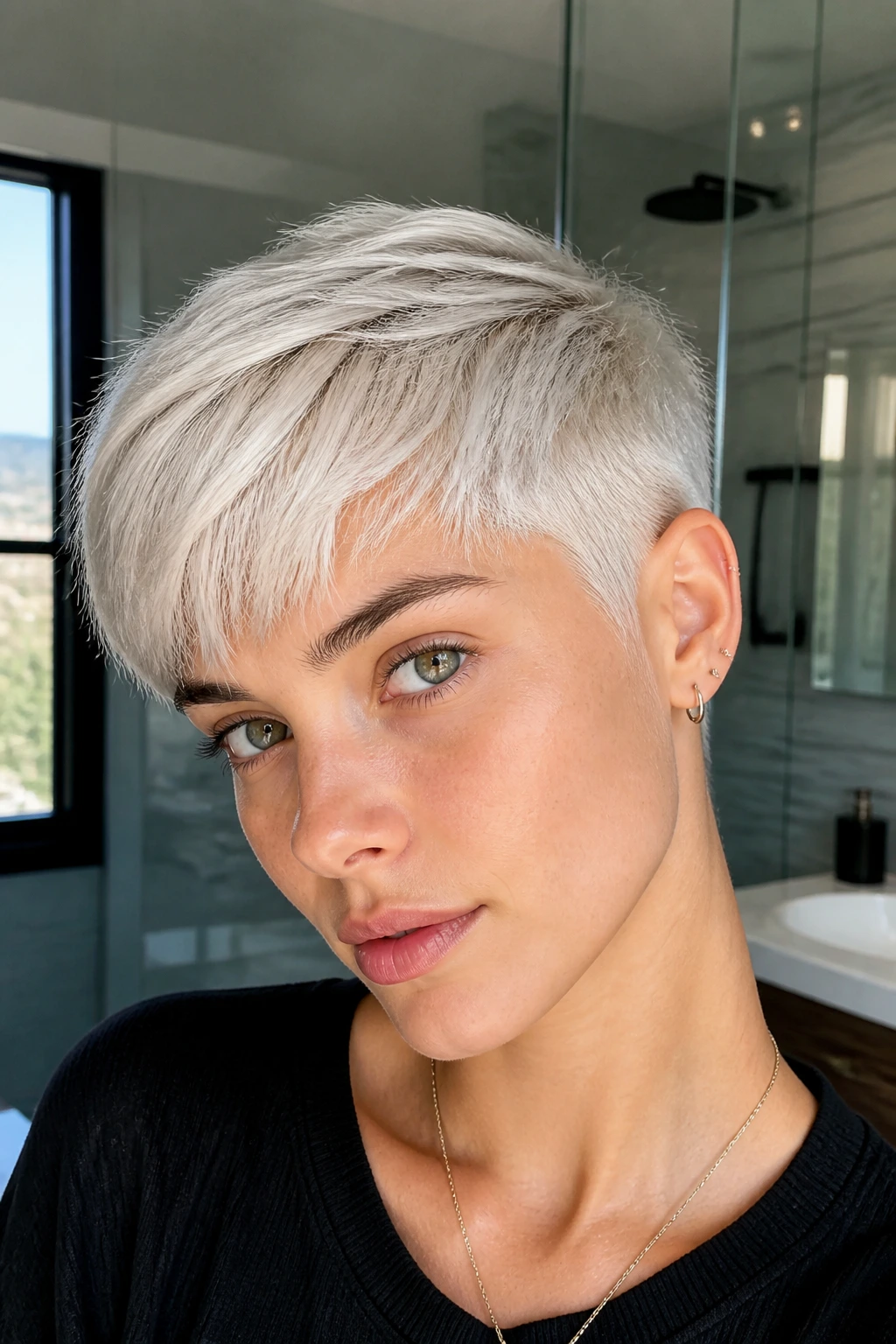
A crop can take a lot of light without looking overdone. When the hair is very short, even a near-white platinum stays crisp because there isn’t much length to show damage or unevenness. On brunettes, that makes the whole style feel confident and clean.
This is one of the safest ways to go very light if your hair is healthy enough to lift but you don’t want to drag long ends through repeated processing. The cut can be a pixie, a buzzed taper, or a short rounded crop. Keep the tone icy and the shape precise; the haircut is half the look.
22. Platinum Curtain-Bang Frame
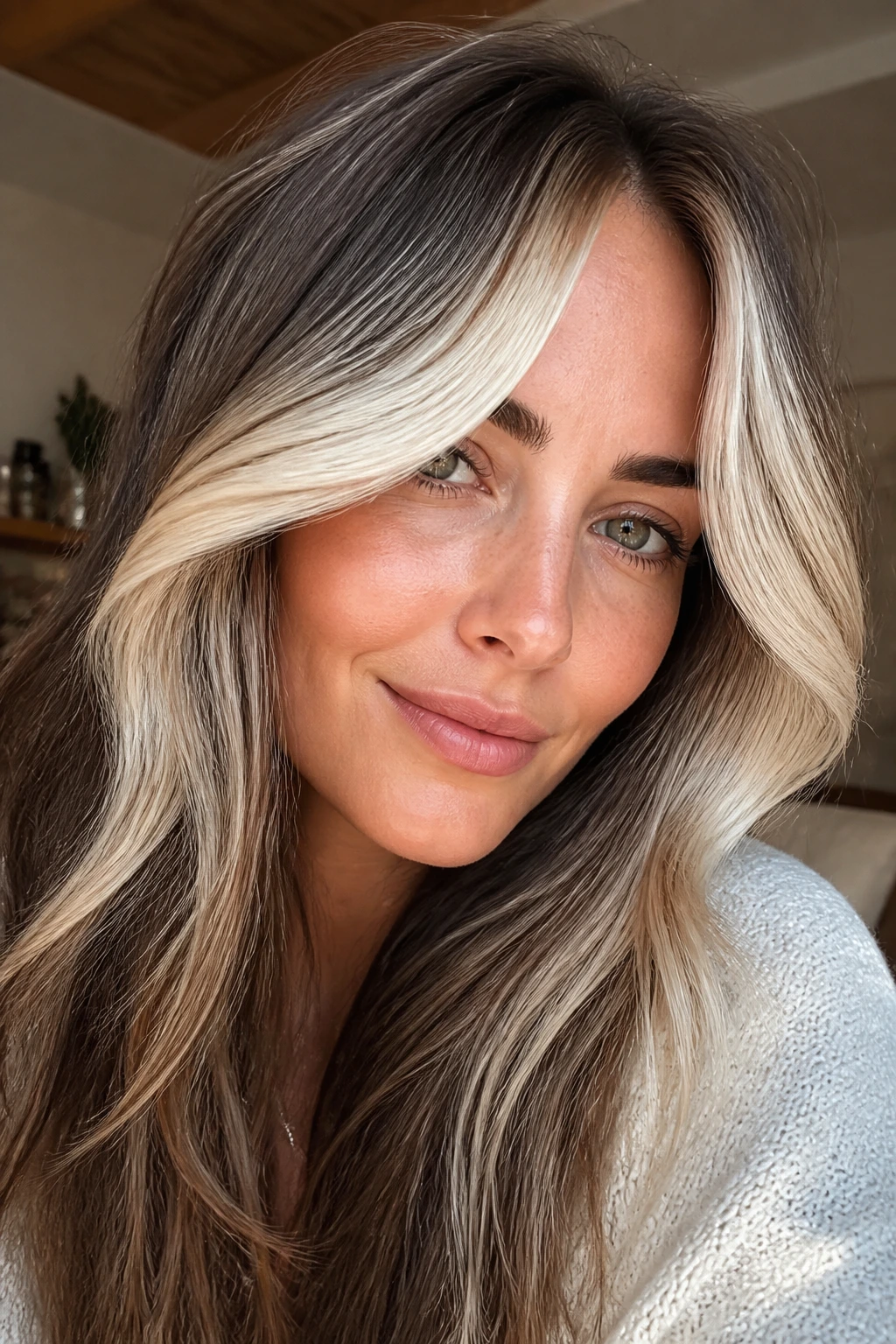
Curtain bangs change the face of platinum, literally. Brightening the bangs and the front panels around them pulls the eye upward and makes the color feel softer than a full-head lift. On a brunette base, it’s a clever way to add light where it flatters most.
This look works best when the bangs are long enough to sweep open, not cut bluntly across the forehead. That movement gives the platinum a veil effect, especially if the lengths stay deeper. Ask for the brightest pieces to sit at the fringe and cheekbone level, then let the rest of the hair fade back into brunette.
- Best for: long faces, round faces, and anyone who wants brightness near the eyes.
- Ask for: a soft fringe, not a hard line.
- Why it works: the bangs carry the platinum so the entire head doesn’t have to.
23. Ribbon Platinum Through Long Layers
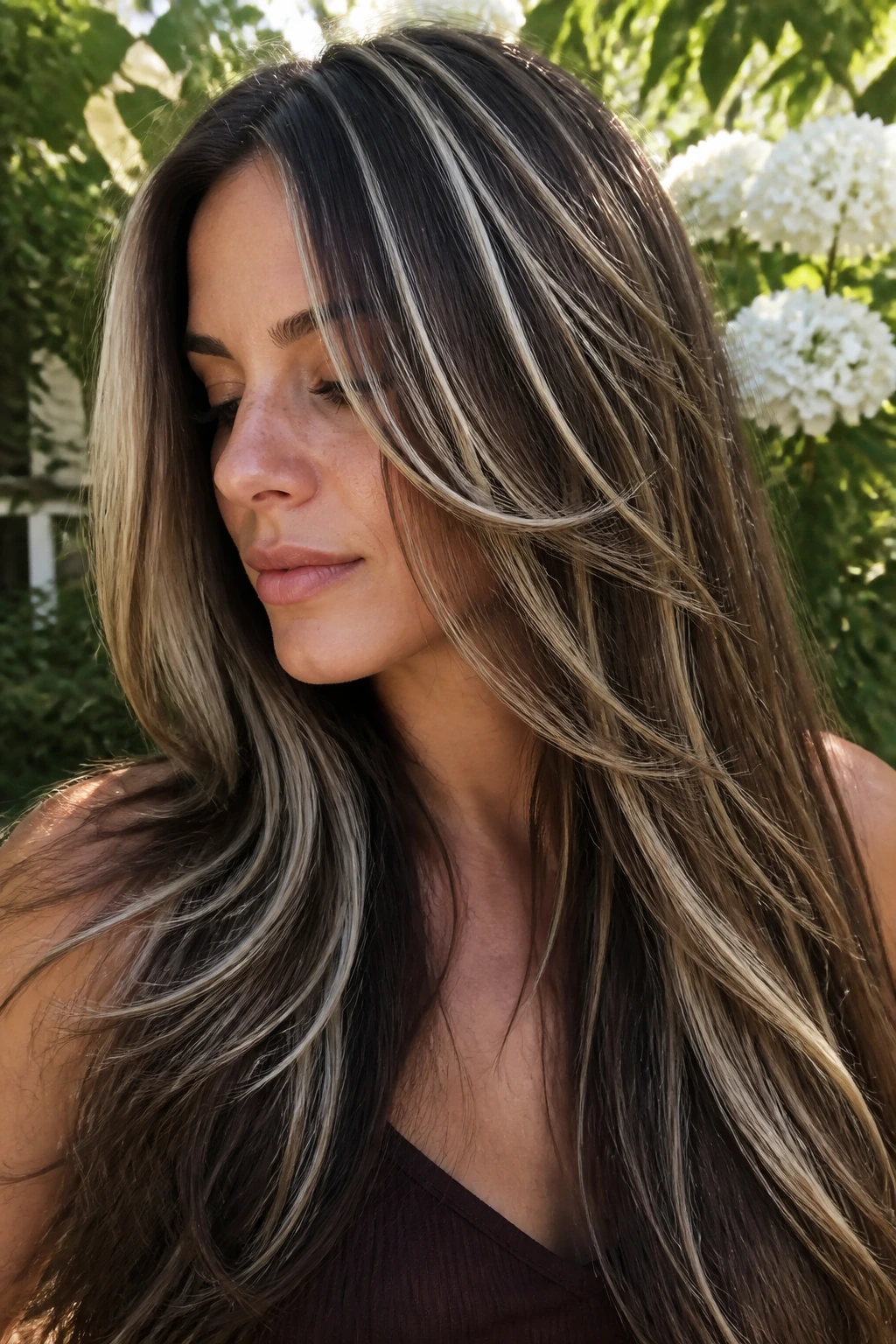
Ribbon highlights are thinner than chunky streaks but more visible than babylights. They wind through the lengths in soft, deliberate lines, which means long brunette hair gets movement instead of a flat blonde sheet. It’s a lovely middle ground if you want dimension with some punch.
This version depends on placement. Put too many ribbons too close together and the color blurs; put too few and the blonde disappears. The sweet spot is enough spacing to let the brunette breathe between the pieces. On waves, the ribbons separate and shimmer. On straight hair, they read cleaner and a little more graphic.
24. Platinum Dip-Ends for Braids and Waves
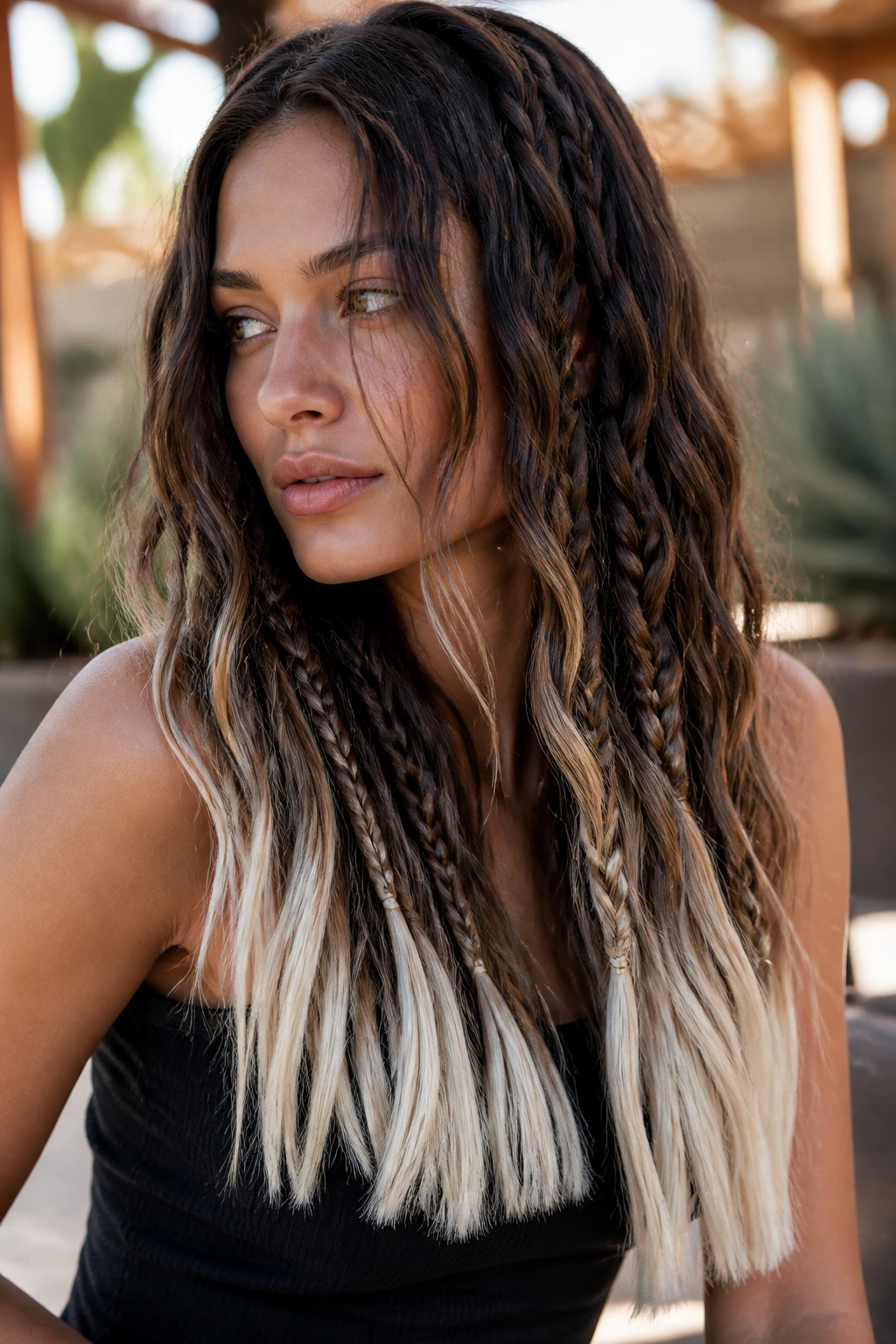
Dip-ends are exactly what they sound like: darker brunette at the top, platinum at the very tips. The effect is especially good on long hair that gets braided, twisted, or worn in loose waves, because the light ends show up in motion.
This is one of the lowest-commitment ways to wear platinum on a dark base. You don’t need to lift every strand, and the regrowth is mostly invisible because the roots stay rich. The cut matters less here than the finish; keep the ends trimmed and blunt enough to look intentional, not frayed.
25. Creamy Beige Platinum Melt
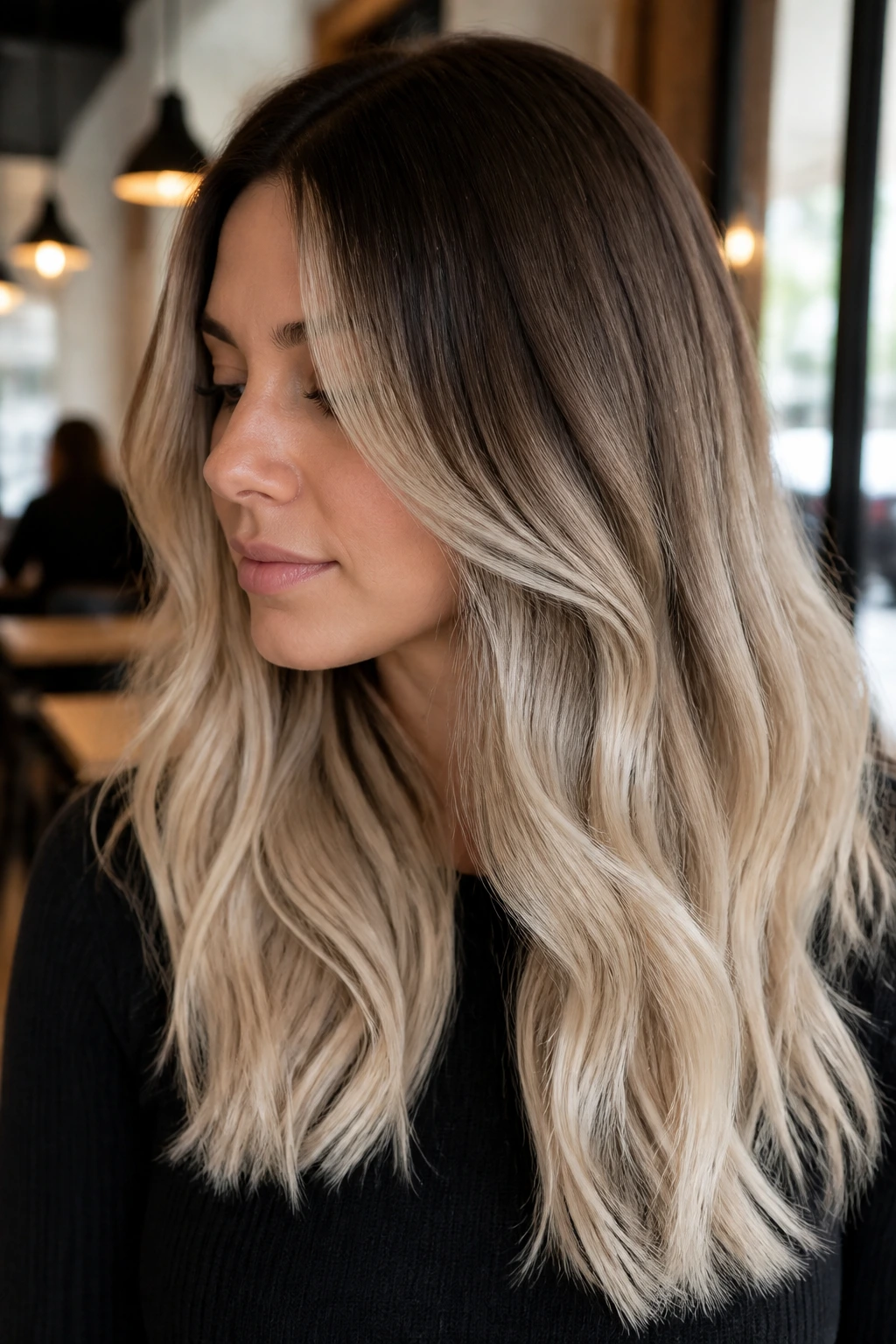
A creamy beige melt sits a little warmer than icy platinum, which can be a relief on brunettes with neutral or golden undertones. It still looks light and blonde, but the finish feels softer and less stark than a white-silver version.
This is a smart choice if pure ash tones make your skin look flat or if you want a blonde that’s easier to wear with makeup and everyday clothes. The melt should move gradually from brunette roots to beige platinum ends, with no hard line in the middle. That middle section is where bad blondes usually die. Keep it smooth.
26. Mocha Shadow-Root Stretch with Platinum Ends
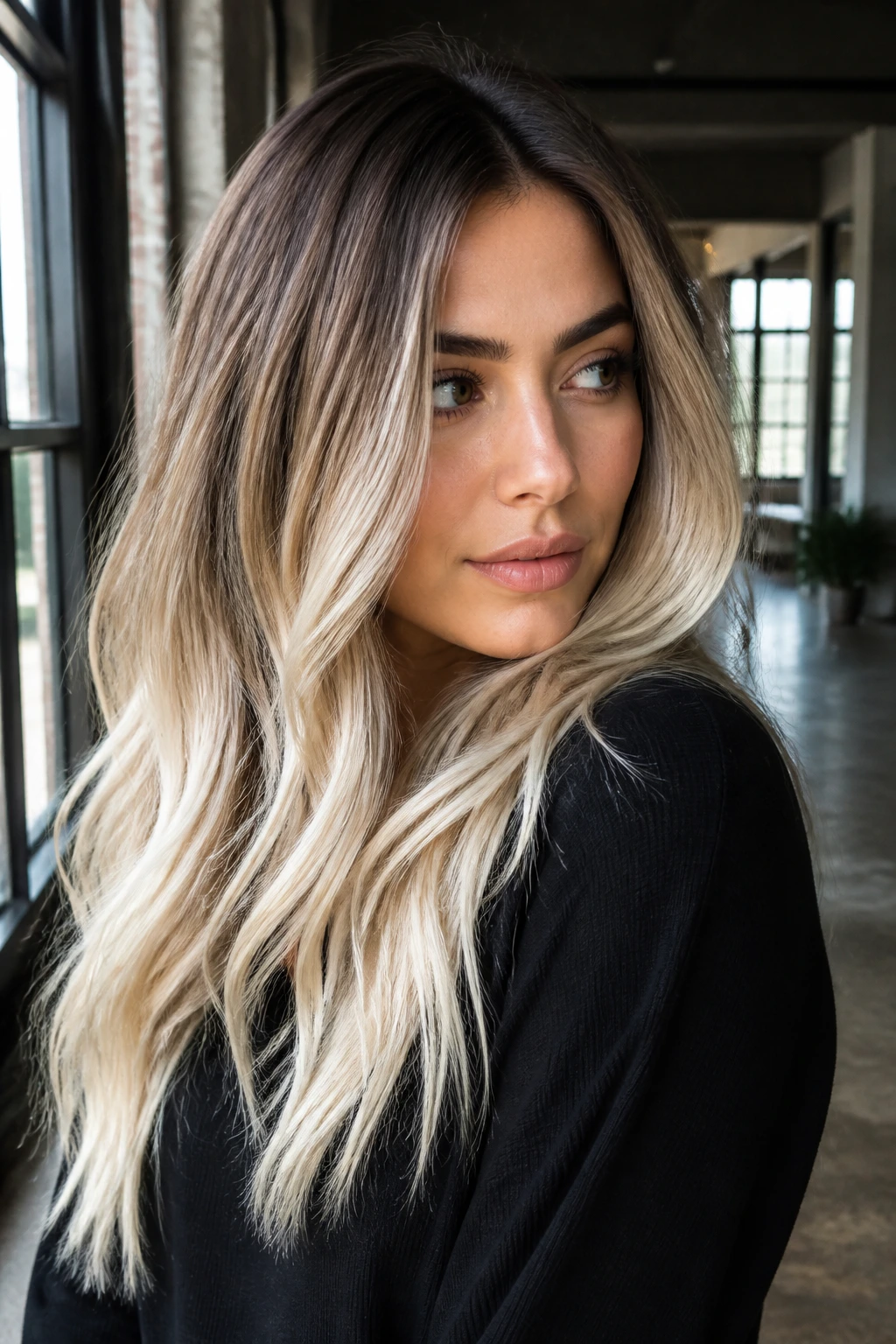
This one is for people who want longevity. A mocha shadow root stretches the brunette deeper at the scalp, then blends through a soft transition before landing in platinum ends. The darker root gives the blonde a richer frame and makes regrowth much less aggressive.
The mocha tone should still feel brunette, not warm red. That’s the mistake to avoid. Too much warmth near the root makes the platinum look disconnected. When the stretch is done right, the hair has depth at the top, brightness at the bottom, and enough contrast to look polished even after several weeks of wear.
27. High-Contrast Platinum Streaks on Dark Brunette
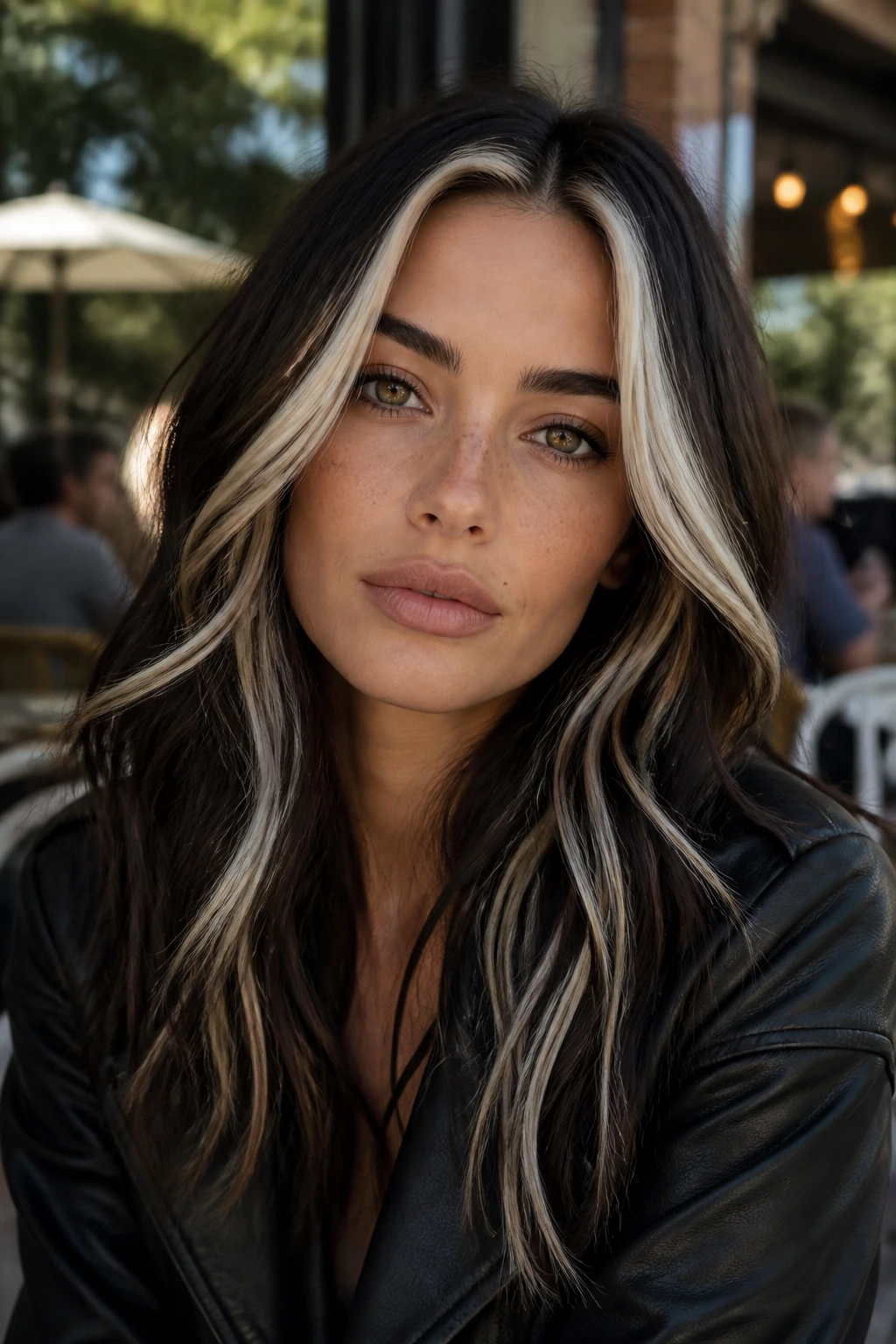
This is the loud one. Think graphic streaks, clear separation, and very visible light pieces against a dark base. On brunettes, it has a runway feel that works especially well with blunt cuts, sharp parts, or straight styling.
The success here depends on confidence in the placement. Streaks need to land where the haircut already creates lines — around the face, through the top layers, or in bands that echo the shape of the cut. If you scatter them too randomly, the whole thing turns messy. Done right, the contrast is the point, not a side effect.
28. Feathered Platinum Layers
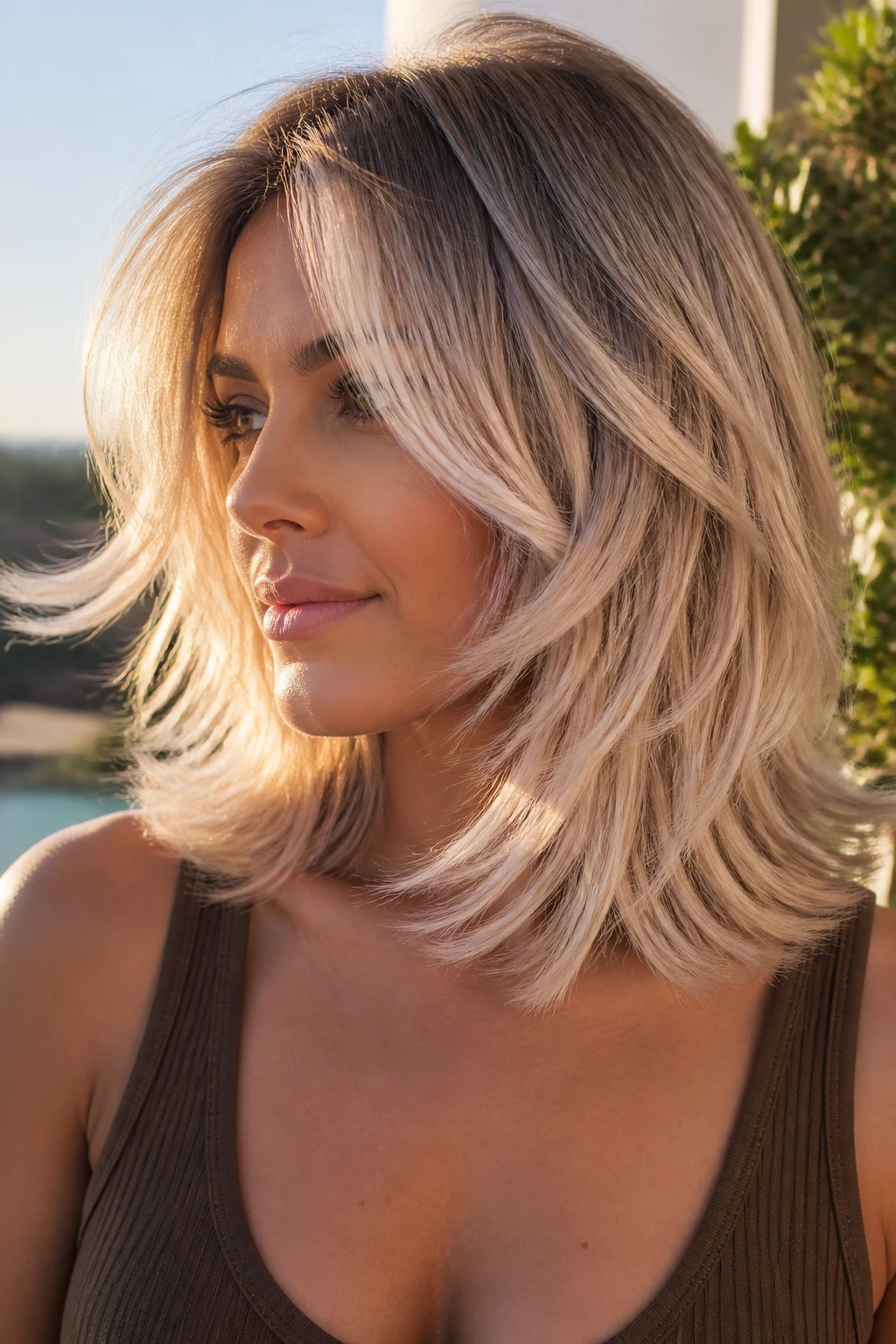
Feathered layers make platinum feel airy rather than heavy. The lighter pieces sit through the mid-lengths and ends, then flick outward when the hair is styled, which gives brunettes a brighter finish without the solid wall of blonde you get in one-length cuts.
This works especially well on shoulder-length to long hair with some natural bend. The feathering keeps the color moving, and that movement is what stops platinum from looking flat. If the toner is too icy, the layers can look brittle; a soft neutral-cool finish usually wears better here.
29. Platinum Crown Highlights for Updos
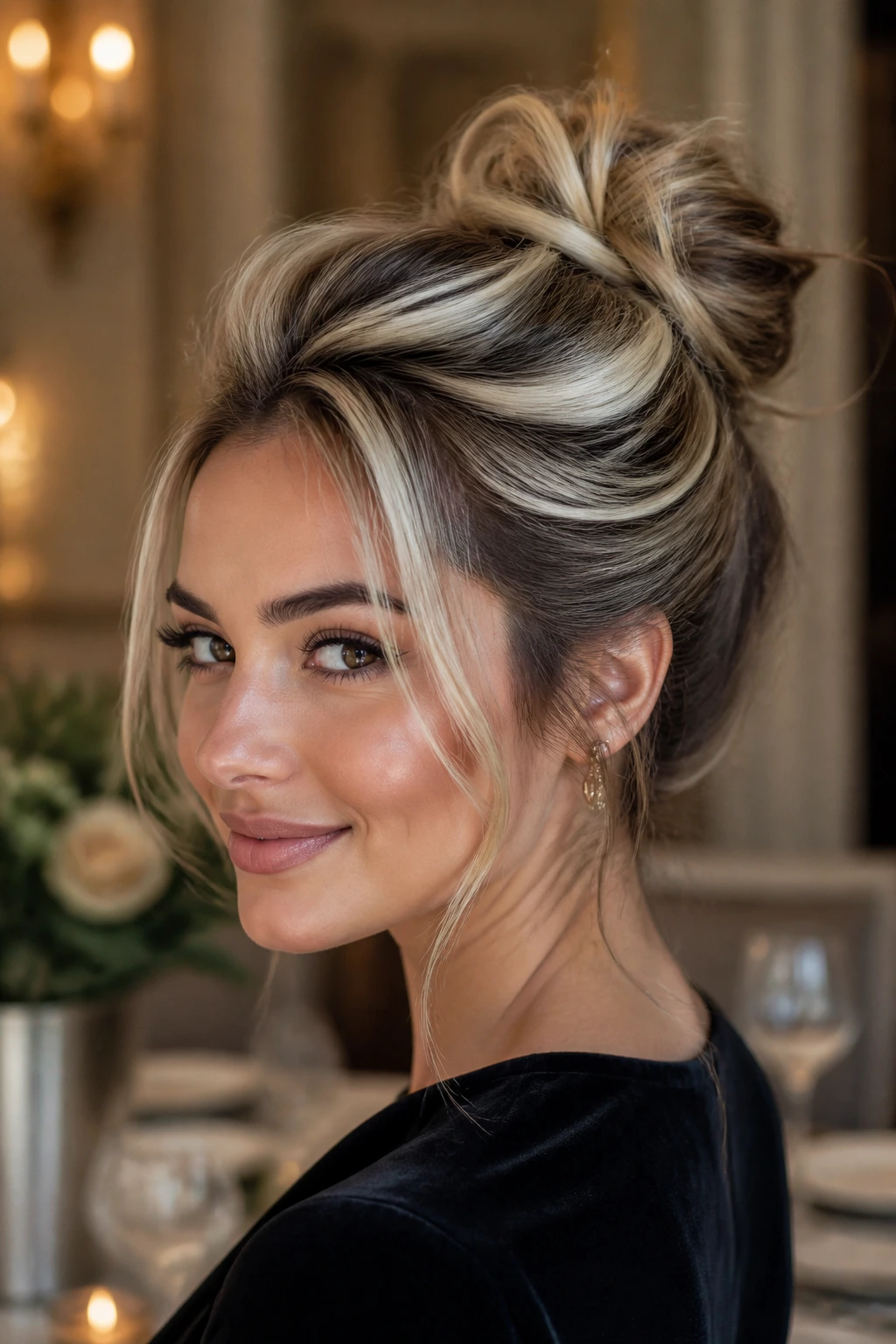
A lot of blonde ideas only make sense when the hair is down. Crown highlights are different. They place platinum brightness through the top and crown, so buns, twists, ponytails, and claw-clip styles show off the lightest pieces even when the length is tucked away.
This is a smart choice for people who wear their hair up often. The brunette base underneath stays intact, which means less overall lightening and a little less stress on the ends. The crown pieces should be bright enough to show in movement but fine enough that the head doesn’t look patchy when the hair is down.
- Best for: people who live in messy buns, claw clips, or half-up styles.
- Ask for: concentrated brightness through the top third of the head.
- Why it’s clever: the color shows up in your real life, not just in mirror selfies.
30. Lived-In Platinum with Soft Regrowth
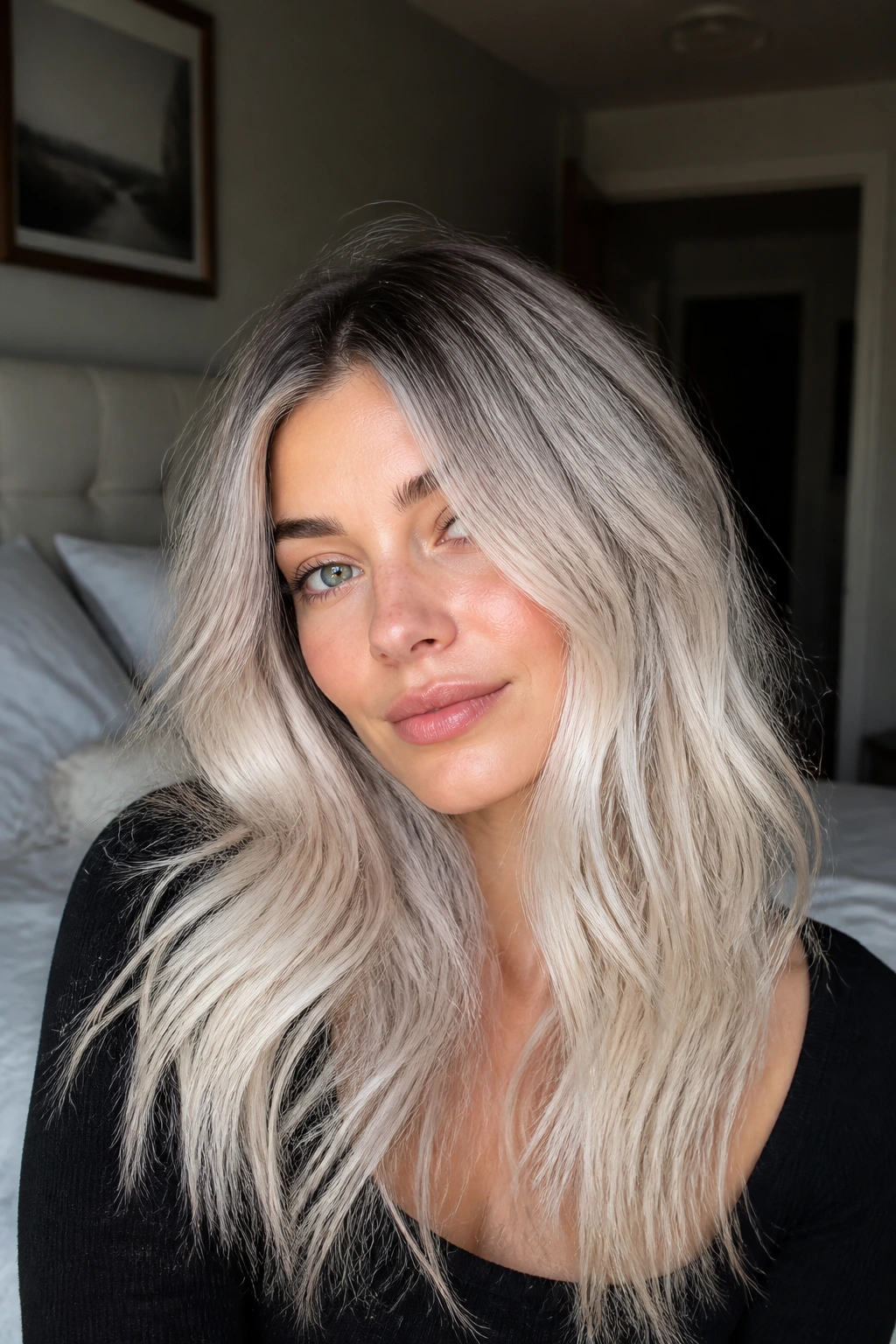
This is the version I’d point a cautious brunette toward first. The root stays a touch deeper, the mid-lengths blend smoothly, and the platinum ends are bright without looking freshly processed every minute. It’s deliberate grow-out, not neglect.
The style works because it accepts that hair changes after the appointment. A little regrowth is part of the design, not a mistake to hide. That makes it easier to wear between toning sessions and gives the hair a softer line overall. If you want platinum that still feels like brunette at the roots, this is the compromise I’d trust.
How to Bring Platinum Home Without Frying the Hair
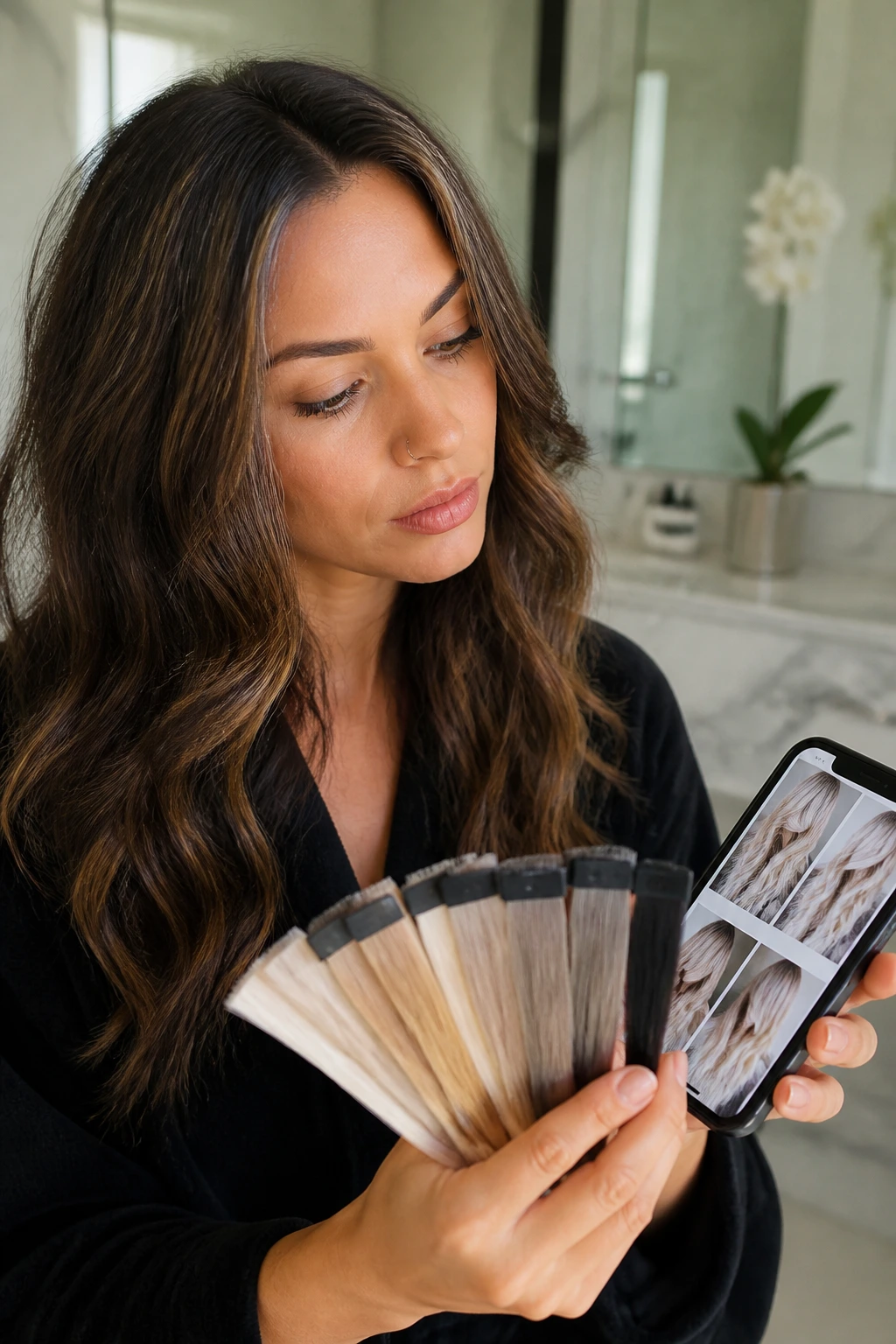
The smartest platinum plan starts before color touches the hair. Bring your colorist photos that show the haircut you actually want, not just the blonde tone, because placement changes when hair is curly, blunt, layered, or chopped into a bob. A filtered selfie can trick you into asking for a tone that only looks good under phone light.
Be specific about the finish. Ask for level 10 or 11 blonde, not just “light blonde,” and say whether you want a shadow root, a money piece, a melt, or a fully bright face frame. Those words matter because they tell the colorist where the contrast should live. If your hair has been dyed dark before, say so without trying to minimize it. Old color changes the lift, and it changes the timing too.
Listen for the words the colorist uses back. If they talk about banding, porosity, or a staged approach, that usually means they’re thinking about the hair’s condition instead of chasing a single appointment miracle. Good blonde takes patience. I’ve never seen a rushed brunette-to-platinum job look better on week three than it did in the chair.
Common Mistakes That Make Platinum Blonde Go Flat
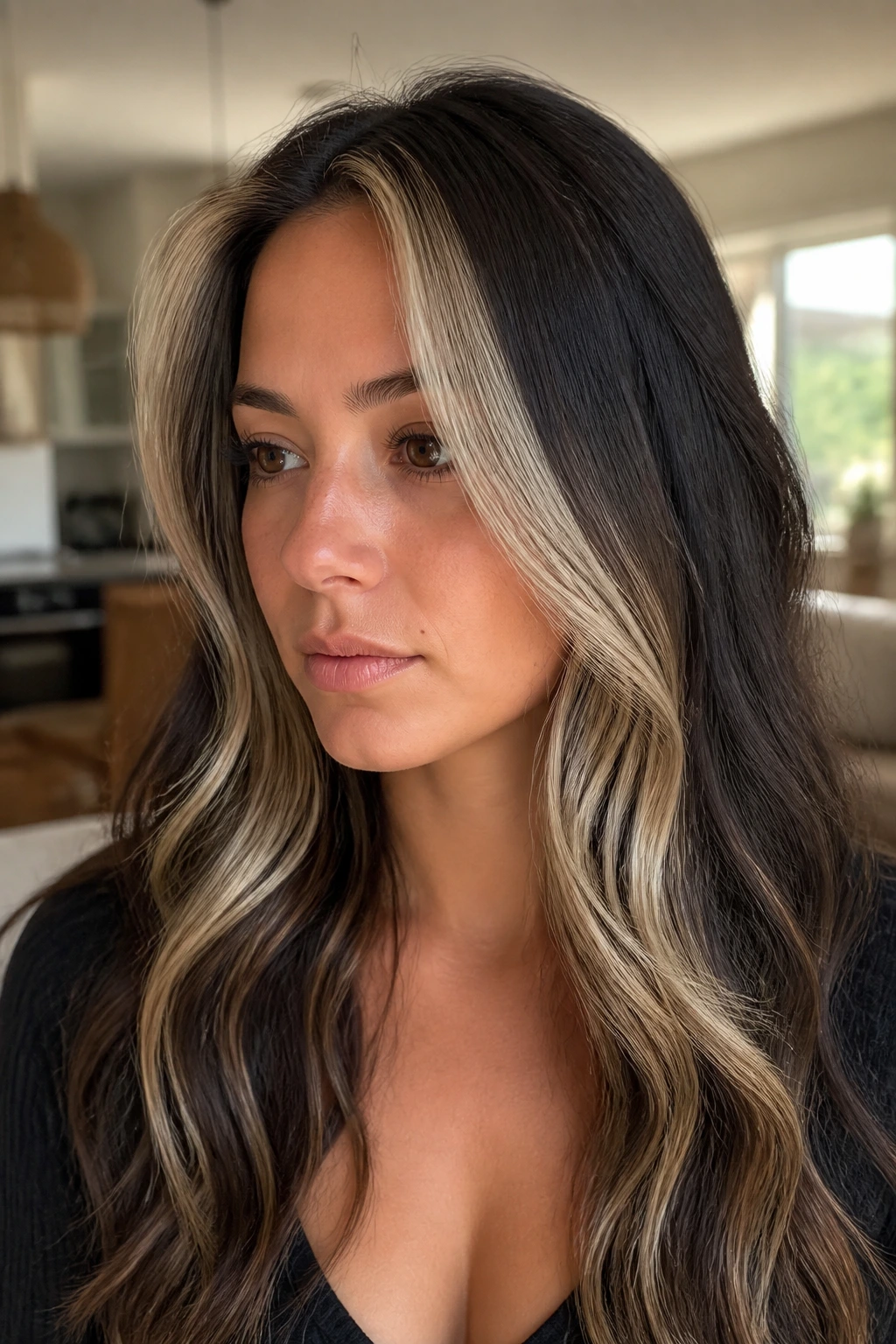
The biggest mistake is trying to get all the way to white in one sitting when the hair starts deep brunette. The symptom is familiar: pale ends, hot roots, and breakage where the lightener sat longest. The fix is almost always a staged process, often with bond-building treatment and a realistic stop point for the first appointment.
Another trap is choosing the wrong tone for the lift you actually have. Yellow blonde needs a different toner than orange-gold blonde, and toner does not lift dark pigment. If the color looks muddy, it usually means the hair never made it far enough up the lightness scale before toning.
Purple shampoo can also wreck the finish if you use it like soap. Too much, too often, and the blonde starts to look dull, lavender, or chalky. Once a week is enough for most people. Two or three minutes is plenty. More is not more here.
Then there’s the haircut problem. Dry, split, over-thinned ends make platinum look weak, even when the tone is good. Trim first. Lighten second. A neat line at the bottom makes pale blonde read cleaner every single time.
Variations and Alternatives If Full Platinum Feels Too Much
Soft Money Piece Only: Brighten just the front panels and keep the rest of the brunette base intact. It gives you the platinum effect around the face without the upkeep of full-head blonde, and it’s one of the smartest first steps if you’re nervous.
Creamy Beige Blonde: If icy silver feels too sharp, soften the finish with a beige gloss. The result is still light, but it sits closer to neutral and tends to flatter a wider range of skin tones.
Curly Halo Blonde: Curly hair doesn’t need to be platinum everywhere to read blonde. Lifting the outer ring and a few face-framing curls can create plenty of brightness while protecting the interior shape.
Short-Cut Reset: If the ends are too compromised for a big blonde project, cut them off and go platinum on a bob or pixie. Less length means less damage to manage and a cleaner final shape.
Low-Light Platinum Mix: Keep a few deeper lowlights in the mix if you want dimension and a little more depth near the scalp. It stops the hair from looking too pale and gives the blonde something to sit against.
Tools and Products That Make the Look Easier to Keep
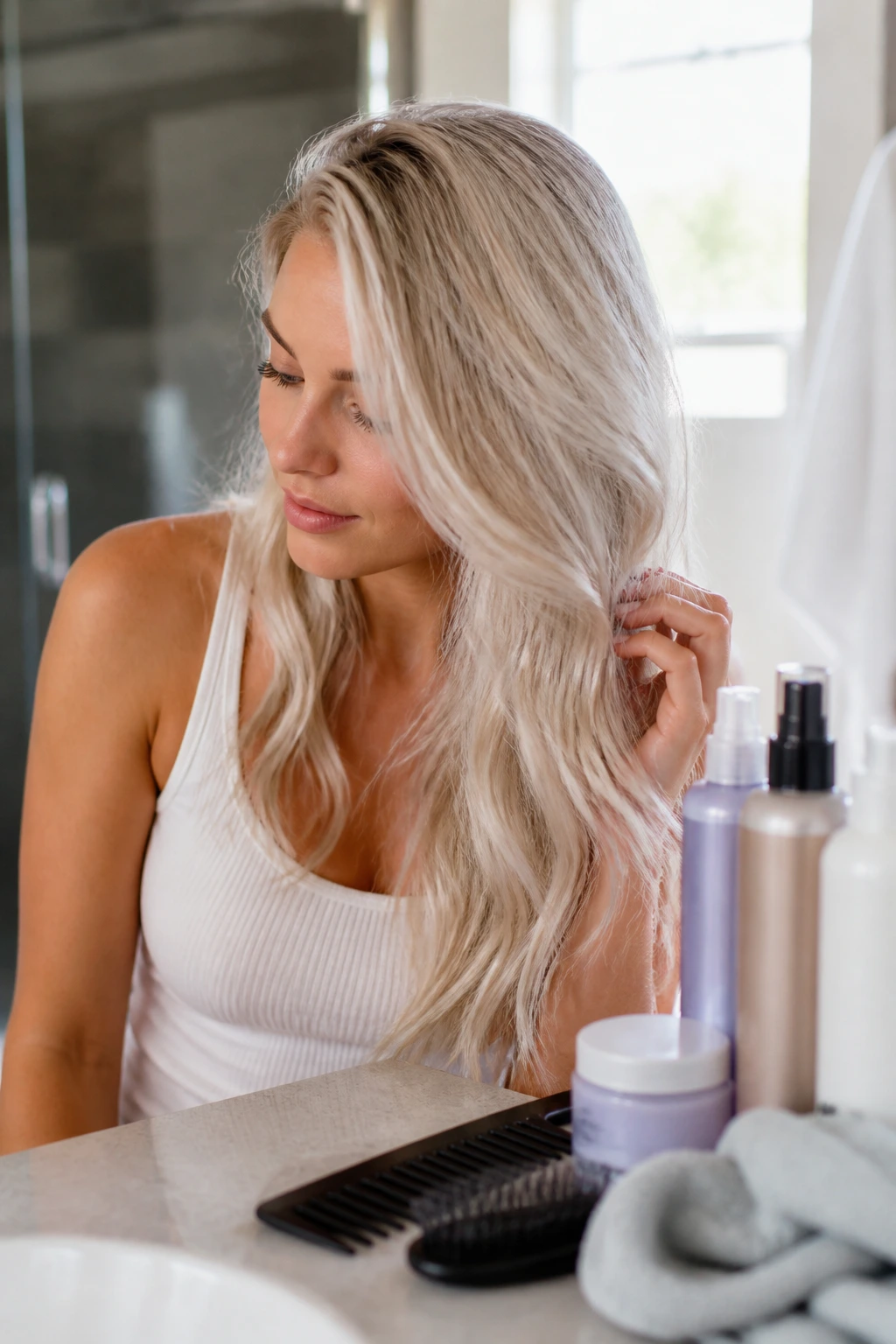
-
Color-safe shampoo: Use a sulfate-free formula so the toner doesn’t vanish in two washes.
-
Purple shampoo: Keep it for once-a-week tone control, not daily washing.
-
Bond-repair treatment: Helpful if the hair has been lifted more than once or feels weak when wet.
-
Heat protectant spray: Use it before every blow-dry, flat-iron pass, or curling session.
-
Wide-tooth comb: Gentler on lightened ends than a brush that yanks through knots.
-
Microfiber towel or cotton T-shirt: Cuts down on friction while the hair dries.
-
Sectioning clips: Useful for styling platinum pieces cleanly, especially around the face and crown.
-
Shower filter: Worth considering if your water leaves mineral buildup that makes blonde look dull.
-
Silk or satin pillowcase: Helps keep fragile lightened ends from getting rough overnight.
Keeping Platinum Blonde Bright Between Appointments
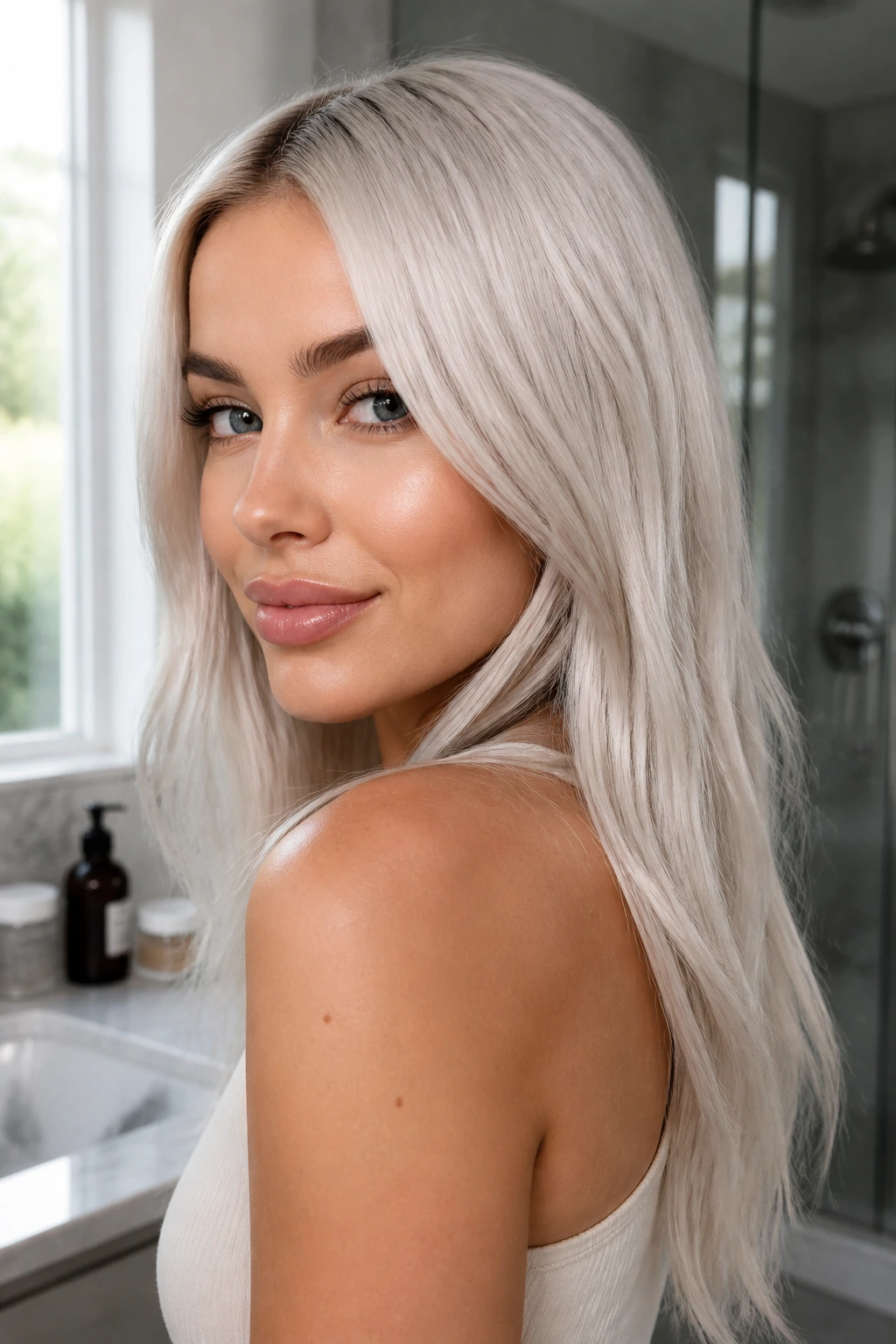
Washing less often helps more than people want to admit. Two to three washes a week is enough for most brunettes who’ve gone platinum, and lukewarm water is kinder than hot water if you want the tone to hang on. The blonde fades faster when the cuticle stays open, and hot water opens it up fast.
Toner needs a rhythm, not panic. For most platinum brunette transformations, a gloss or toner refresh every 4 to 8 weeks keeps the shade clean. If the hair is porous, the toner may fade sooner at the ends than at the root, which is why a root shadow or melt often wears better than a solid all-over icy finish.
Use purple shampoo sparingly. Once a week, maybe twice if the blonde is pulling yellow, and only leave it on for a short stretch — usually 1 to 3 minutes. Longer doesn’t magically turn brass into white. It usually just leaves the hair dull and slightly purple at the lightest spots.
Deep conditioning matters, but so does restraint. A heavy mask every week is fine; a heavy protein treatment every week is not. Overdoing protein makes some lightened brunettes feel stiff and straw-like. If the hair starts snapping or feeling rough when wet, switch to moisture first and let the stylist decide when stronger repair is needed.
Questions People Ask Before Going Platinum
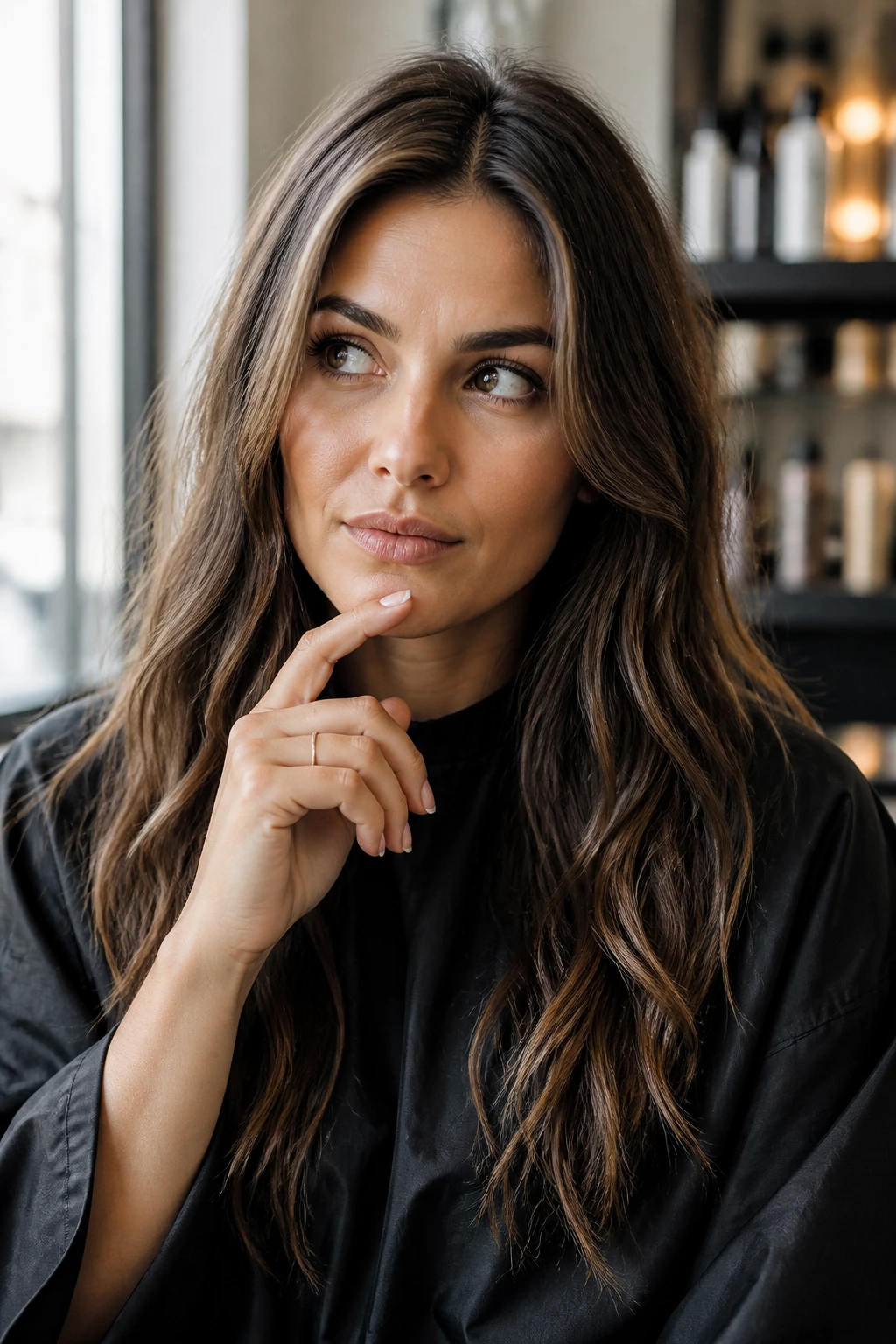
Can dark brown hair go platinum in one appointment?
Sometimes, but I wouldn’t count on it if you want the hair to stay strong. Dark brunette hair usually has to pass through orange and yellow stages, and pushing too hard in one visit can leave the ends compromised. A staged approach is slower, but it usually looks better and lasts longer.
Which platinum shade looks best on warm brunettes?
Creamy beige platinum and vanilla-platinum usually sit more naturally on warm or neutral brunettes than stark silver-white tones. They soften the contrast at the scalp and keep the blonde from fighting your undertone. If you love icy shades, ask for a toned version that still has a hint of beige.
Is a shadow root the same as balayage?
No. A shadow root is a root-toning technique that keeps the scalp area a little deeper, while balayage is a placement method where lightener is painted by hand. You can absolutely use both in the same look, and that’s often the most wearable route for brunettes going platinum.
How do I stop platinum from turning yellow?
Use cool water, a sulfate-free shampoo, and a purple shampoo only when the blonde starts looking warm. Heat styling without protectant will speed up fading, and hard water can leave mineral residue that makes blonde look dirty. If the yellow is strong, a toner refresh is usually more useful than piling on more purple shampoo.
Can curly hair pull off platinum blonde?
Yes, but the placement has to respect the curl pattern. A halo, veil highlights, or strategic face-framing pieces often work better than full-head saturation because curls hide and reveal color as they move. Over-lighting the entire head can make curls lose bounce if the hair isn’t strong enough.
What if my hair has old box dye on it?
Say that up front. Old box dye can change how evenly the hair lifts, and black or dark brown dye often needs a color-removal step before platinum becomes realistic. Sometimes the safest answer is a few lighter panels first, then a second appointment after the hair tells you how it behaves.
Which idea is the lowest maintenance?
The shadow-root bob, the money piece, and the peekaboo or underlight options usually grow out more gently than full platinum. They keep more of your brunette base intact, which means fewer emergency appointments and less stress on the lengths.
Can I go platinum at home?
I wouldn’t recommend it on a brunette base unless you’re only working with a tiny section and you already understand how your hair lifts. The jump from dark brown to level 10 is where at-home mistakes get expensive in a hurry. If the hair has been colored before, it’s even less forgiving.
A Platinum Finish That Still Looks Like You
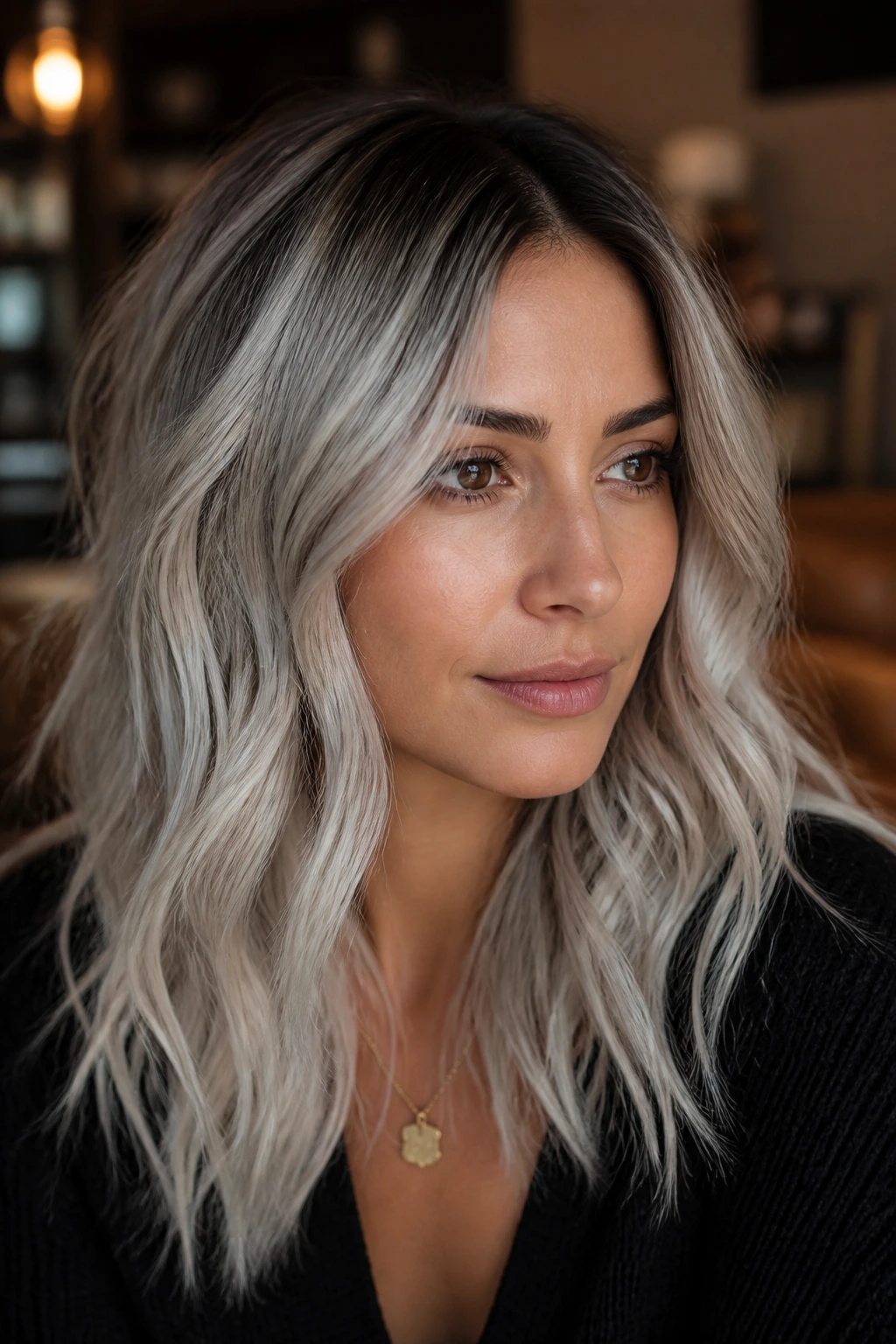
The best platinum brunette looks are the ones that understand restraint. A full white blonde crop can be electric. A rooted bob can look sharper. A money piece can do more for your face than a whole head of pale color ever could.
Pick the version that matches your haircut, your maintenance tolerance, and the amount of contrast you actually want to live with. Platinum is not one shade, and it does not have to flatten your brunette base to count. Get the placement right, keep the tone clean, and the whole thing starts to feel less like a leap and more like a smart edit.