



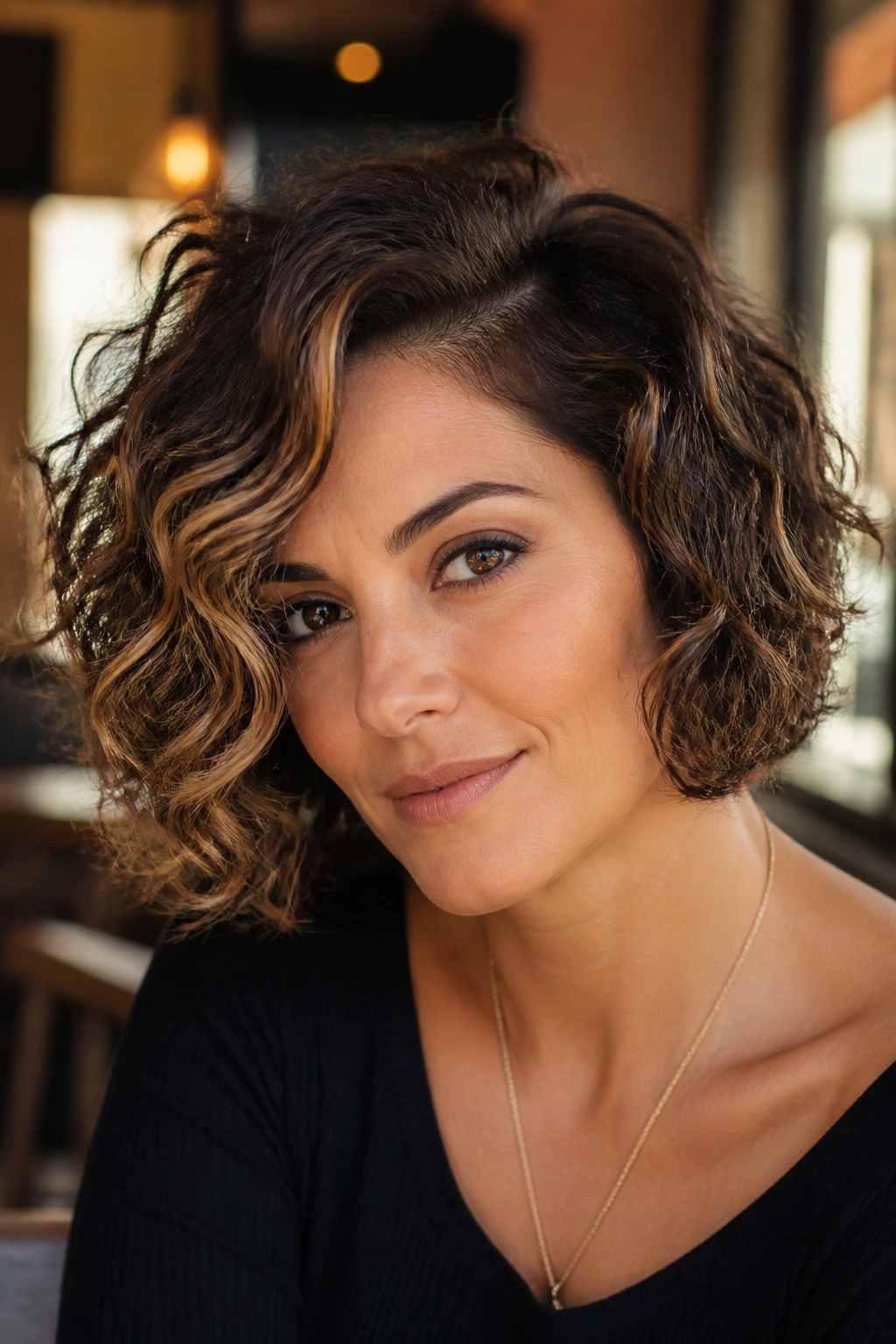
Short curly bobs are unforgiving in the best way. If the layers are off by half an inch, the shape can flare at the cheeks, puff at the nape, or collapse into a triangle that nobody asked for. Add caramel highlights, though, and the whole haircut changes character: the curl pattern reads clearer, the edges look softer, and the cut gets a warm, sun-kissed depth that flat one-length bobs never manage.
That’s why layered short bobs for curly hair with caramel highlights keep showing up on women who are done fighting their texture. The trick isn’t piling on more color. It’s placing the color where curls bend, then carving the bob so the shape has room to move. A good version of this cut looks considered from every angle — especially when the light hits the outer curls and the warmer pieces flash through the darker base.
And yes, lowlights matter here too. A few deeper strands under the top layer keep the caramel from floating on top like stripes. That balance is what makes these styles feel rich instead of loud, polished instead of fussy, and wearable long after the salon mirror gets forgotten.
Why These Bobs Feel So Different
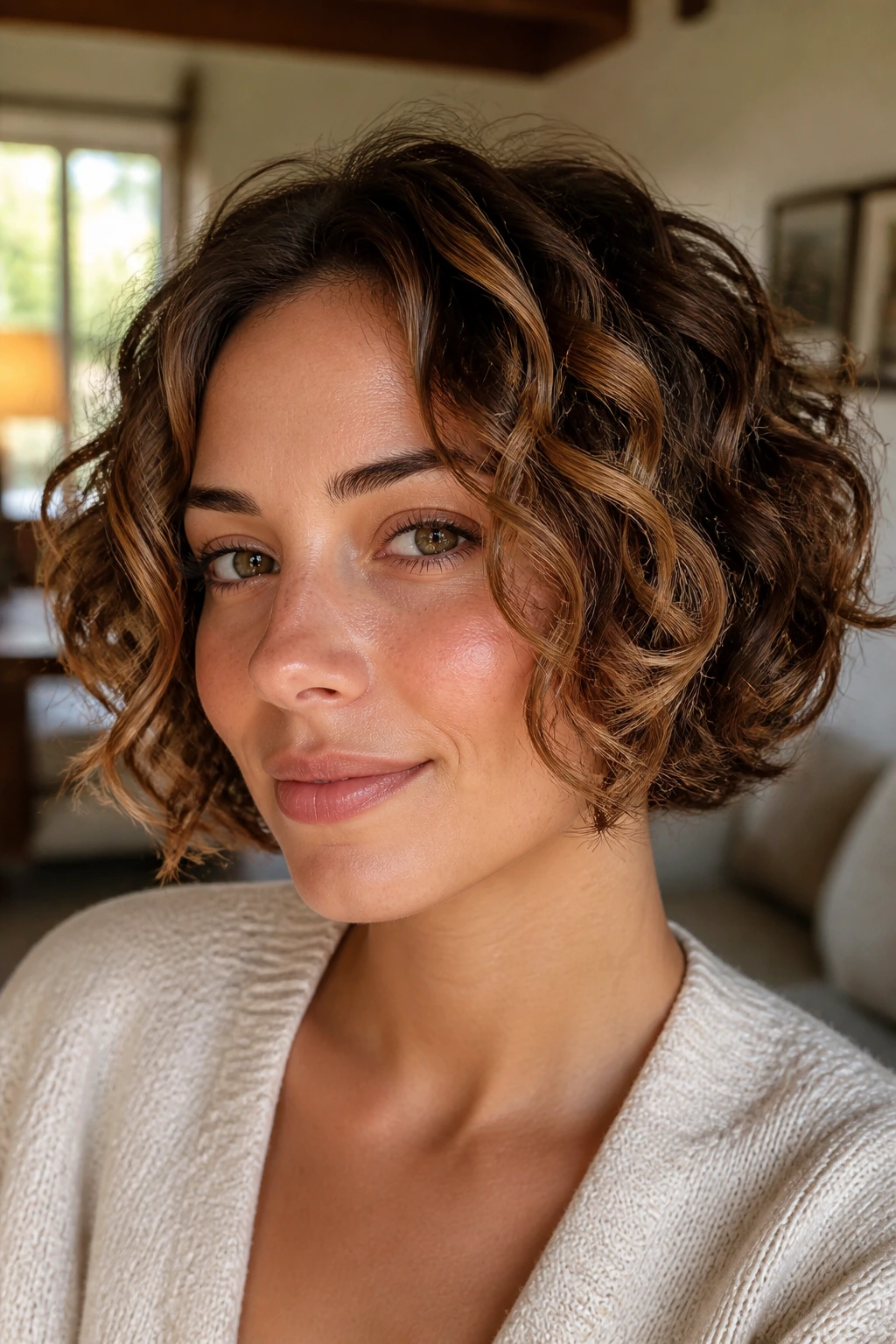
-
Caramel placement does the visual lifting: On curly hair, a few warm ribbons around the face and crown make the bob look lighter and more lifted, even when the curl pattern is dense.
-
Layers matter more than length: A short bob can look airy or boxy based on the internal layers alone, which is why the same haircut can look soft on one head and helmet-like on another.
-
Lowlights keep the color from shouting: Deeper strands tucked under the top layer stop caramel from reading as one flat band and give the curl pattern more depth.
-
Shorter curls show every decision: Once the hair sits above the shoulders, the outline, part, and highlight placement are all visible at once, so the cut has to be deliberate.
-
The grow-out can be part of the look: A rooty caramel bob can stay attractive for weeks because the darker base blends into the highlight path instead of fighting it.
1. Layered Short Bob for Curly Hair with Caramel Highlights and a Rounded Finish
This is the bob I reach for first when someone wants shape without drama. The outline curves softly along the jaw, the layers are cut to follow the curl pattern, and the caramel highlights sit mostly on the outside bends of the curls so the whole style reads as one full, rounded shape.
Best for: medium curls that shrink up cleanly and need a little lift around the cheeks.
Ask for: dry-cut layers that start near the cheekbone, plus a few caramel ribbons just off the root so they don’t turn stripey as the curls spring.
Skip if: you want a blunt edge that sits still; this cut is about movement.
The rounded finish works because the eye follows the curve. That makes the bob look intentional even on days when the curls aren’t behaving perfectly. If your hair tends to puff at the sides, a soft lowlight under the outer layer keeps the top from looking too bright.
2. Stacked Curly Bob with a Lifted Nape and Warm Caramel Depth
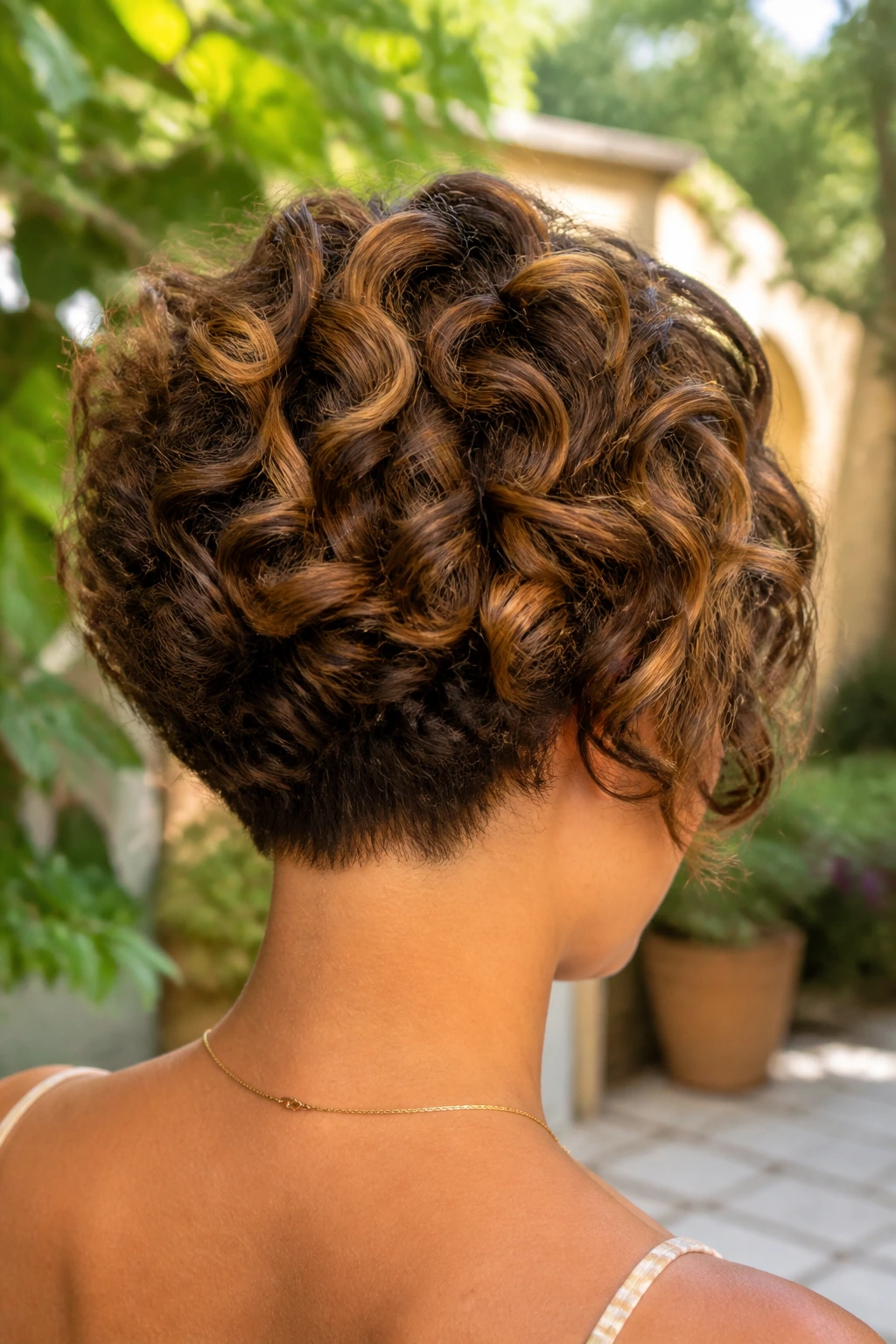
A stacked bob gives you a strong profile in the best way. The back sits shorter and tighter, the crown gets a little height, and the caramel color is concentrated on the upper layers so the lift shows up even when the hair is dry and a little frizzy.
This is the cut for anyone who likes a sharper outline. The short nape keeps bulk under control, which matters if your curls are dense or your hair swells after the first hour in humidity. Caramel pieces through the crown and upper sides stop the back from looking dark and heavy.
If your hair sits flat at the top and explodes at the bottom, this shape fixes both problems at once. It needs a hand that understands curl shrinkage, though. Cut too high in the back and it turns into a mushroom. Cut with the curl in mind, and the silhouette lands exactly where it should.
3. Side-Part Curly Bob with Cheekbone Highlights
What happens when the part line carries the color? The whole haircut starts leaning in one direction, which is exactly what a side-part curly bob does best. The caramel highlights get painted along the front sweep and at the cheekbone, so the face gets framed before the eye even notices the rest of the cut.
This version is especially good if your hair has one side that always wins and one side that always sulks. A deep side part gives the flatter side some lift, and the brighter face-framing pieces make the style feel deliberate rather than lopsided. The key is to keep the highlight bands thin near the root and a touch wider at the mid-lengths, where the curl actually opens.
I’d choose this over a centered bob when a client wants softness around a stronger jaw or a wider forehead. The diagonal line works harder than people expect.
4. Center-Part Airy Bob with Internal Layers and Fine Caramel Veils
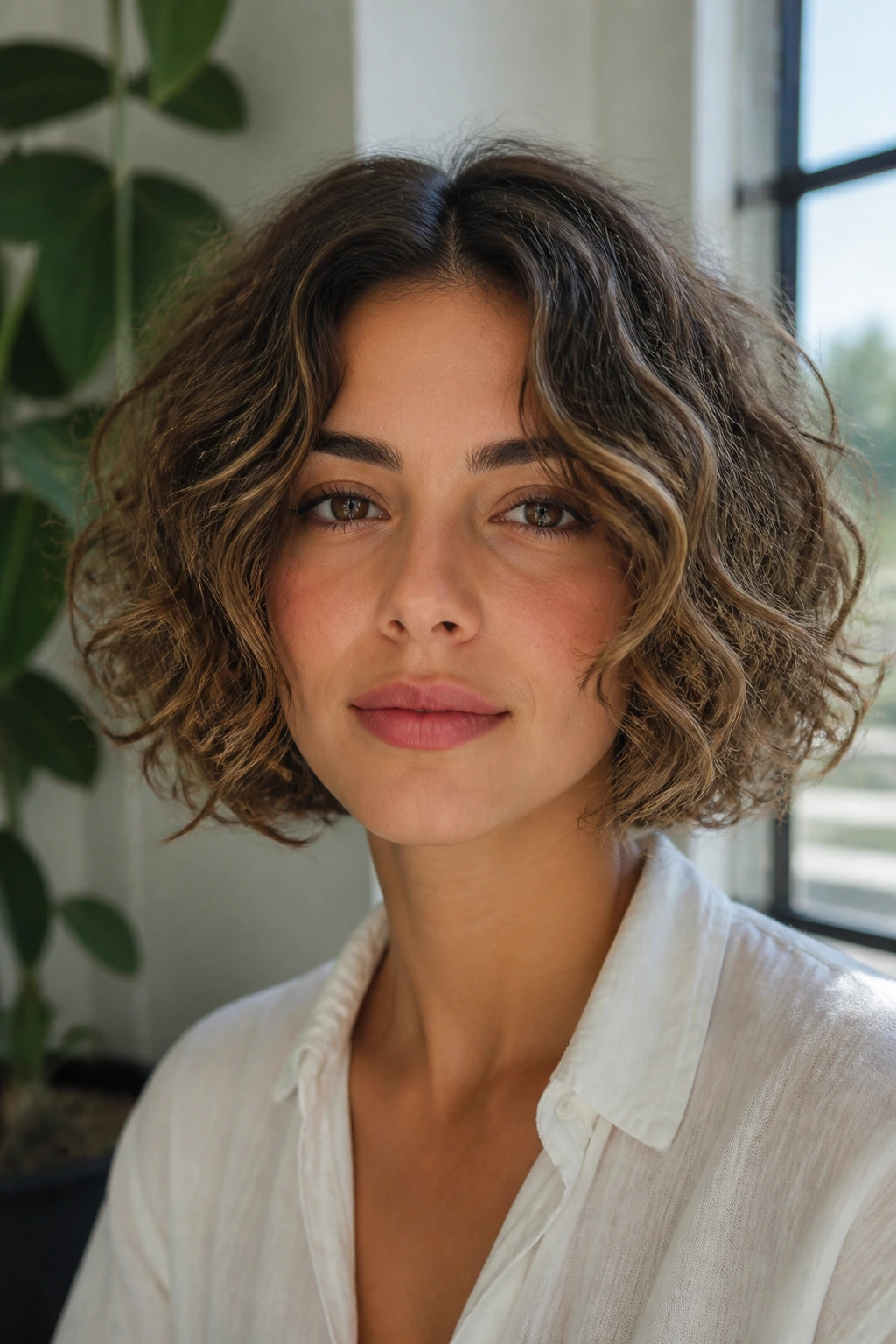
A center part on curly hair can look severe if the cut is too blunt. Here, the internal layers take the weight out from underneath, and the caramel shows up as fine veils rather than thick streaks. The result is lighter, cleaner, and a lot less fussy than a heavily layered shag.
This style is at its best when the curls are a little loose and the density is medium. You get a symmetrical shape, but it never feels stiff because the layers are hidden inside the bob instead of cut all over the surface. The color placement matters more than the amount of color — thin ribbons through the outer top layer, a few lighter pieces at the temples, and just enough lowlight underneath to anchor the shape.
If you want a curly bob that still feels calm and tidy when the hair air-dries, this is the one. It does not need to look messy to look textured.
5. Tapered Curly Bob with a Longer Front Edge
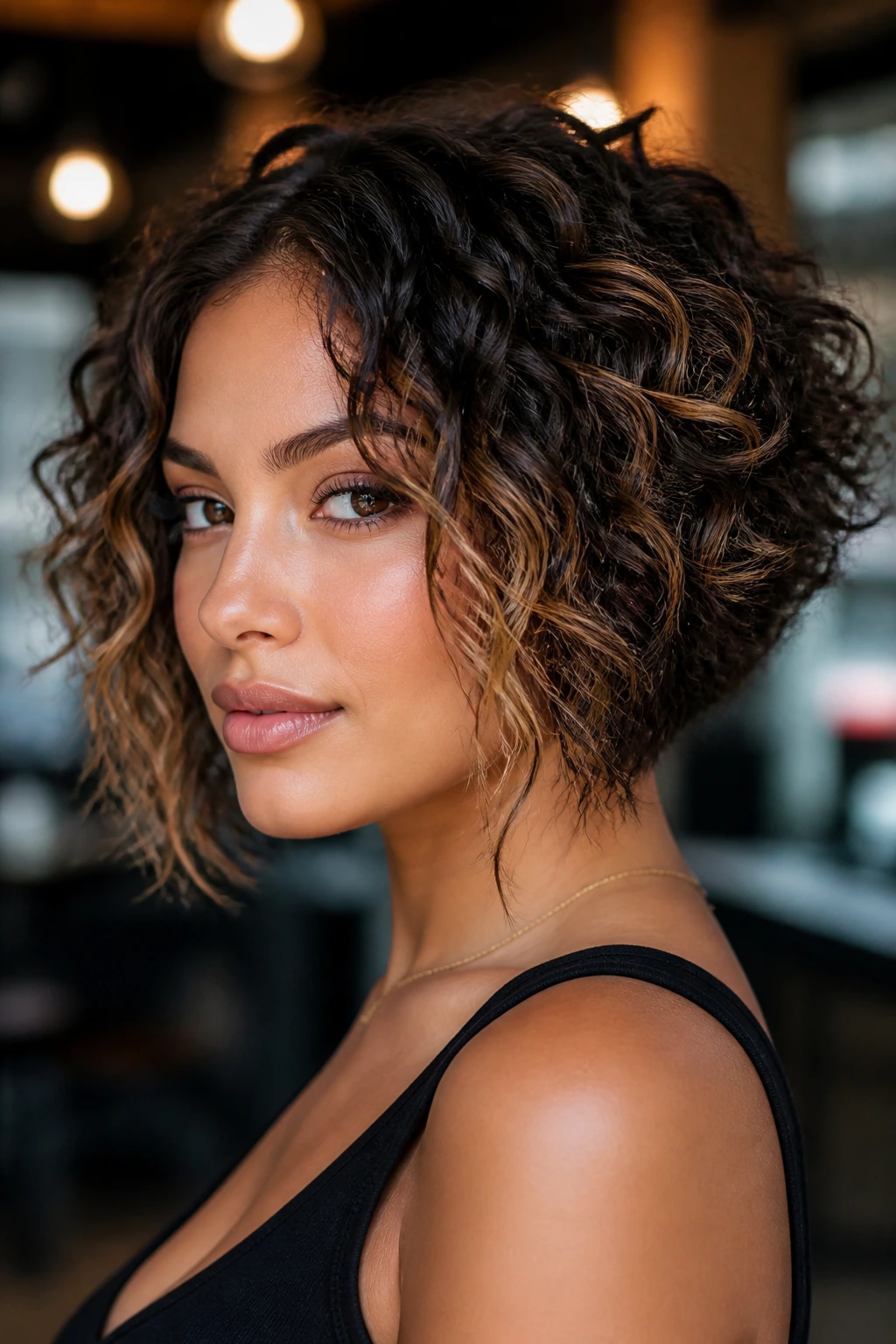
The tapered bob solves a problem many curly cuts ignore: the front needs a little room to breathe. Short in the back, longer toward the chin, the shape stretches the face just enough to keep the bob from feeling boxy. Caramel highlights along the front edge make that taper obvious, which is part of the appeal.
This is the haircut I’d hand to someone with a strong jaw or a short neck. The longer front pieces pull the eye downward, while the shorter nape keeps the silhouette neat. If your curls tighten hard at the back, ask for the taper to be cut with shrinkage in mind — the front should still skim the jaw after it dries, not climb up to the cheek.
The color works best when it follows the line of motion. Brighten the front edge, deepen the underside, and the bob starts looking sculpted instead of just short.
6. French Bob with Brow-Grazing Bangs and Tiny Caramel Sparks
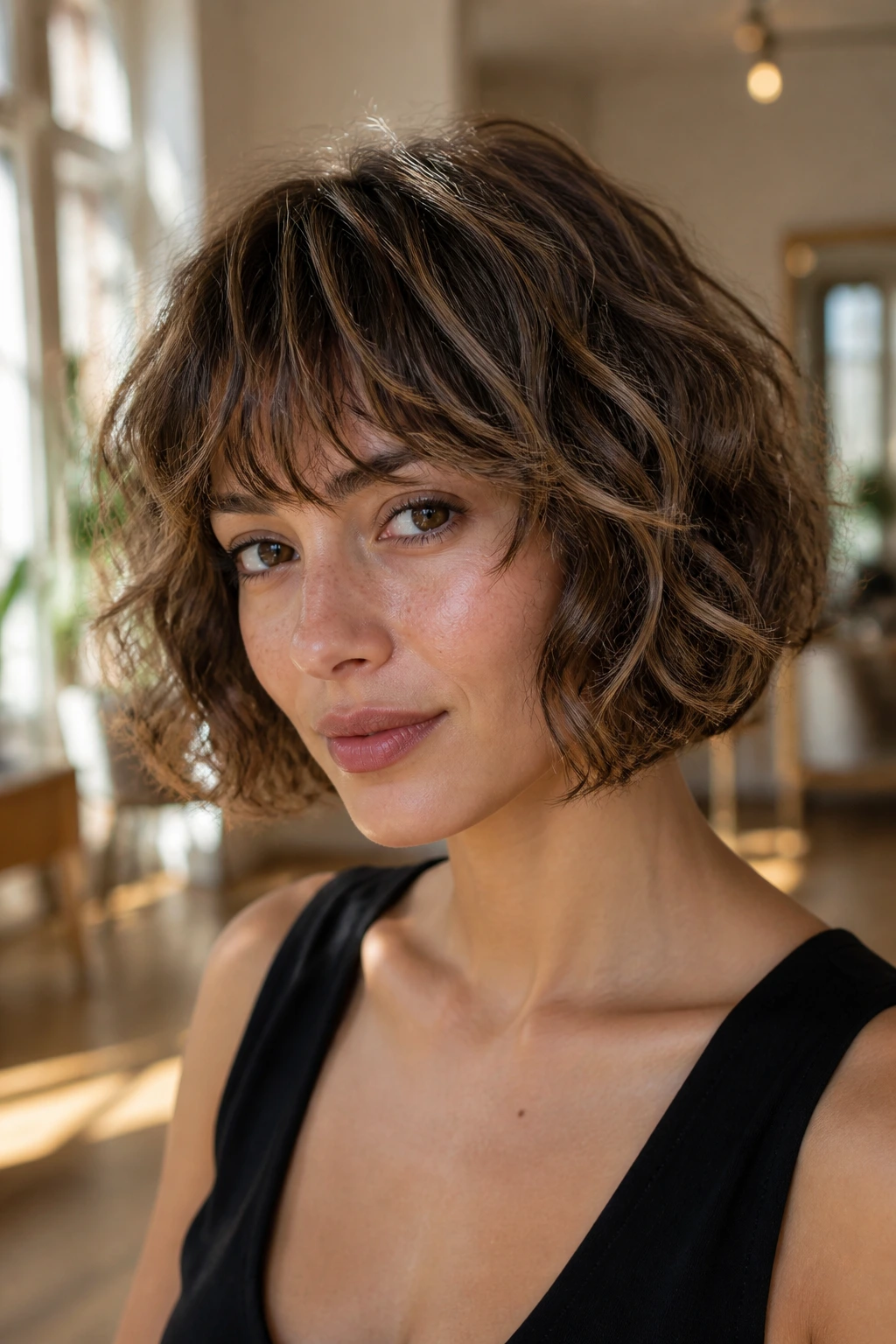
The French bob on curly hair lives or dies by the fringe. Too short, and the bangs bounce up awkwardly. Too thin, and they disappear into the rest of the cut. The sweet spot is a brow-grazing bang that lands a little longer than you think it should, because curls almost always spring shorter once they dry.
Why the Fringe Needs Restraint
Tiny caramel sparks around the fringe keep the front lively without turning it busy. I prefer a few delicate pieces at the temples and around the bang line rather than bright streaks through the whole front. That keeps the shape soft and avoids the helmet effect.
Who This Suit Favors
Loose curls and compact ringlets both work here, but the haircut needs regular trims. The fringe grows fast, and once it starts dropping into the eyes, the whole style loses that crisp little frame that makes it interesting.
If you like a bob that feels a bit Parisian without trying too hard, this one delivers. It’s small, sharp, and better with a touch of imperfection than a lot of people expect.
7. Curved Undercut Bob for Thick Curls and a Clean Nape
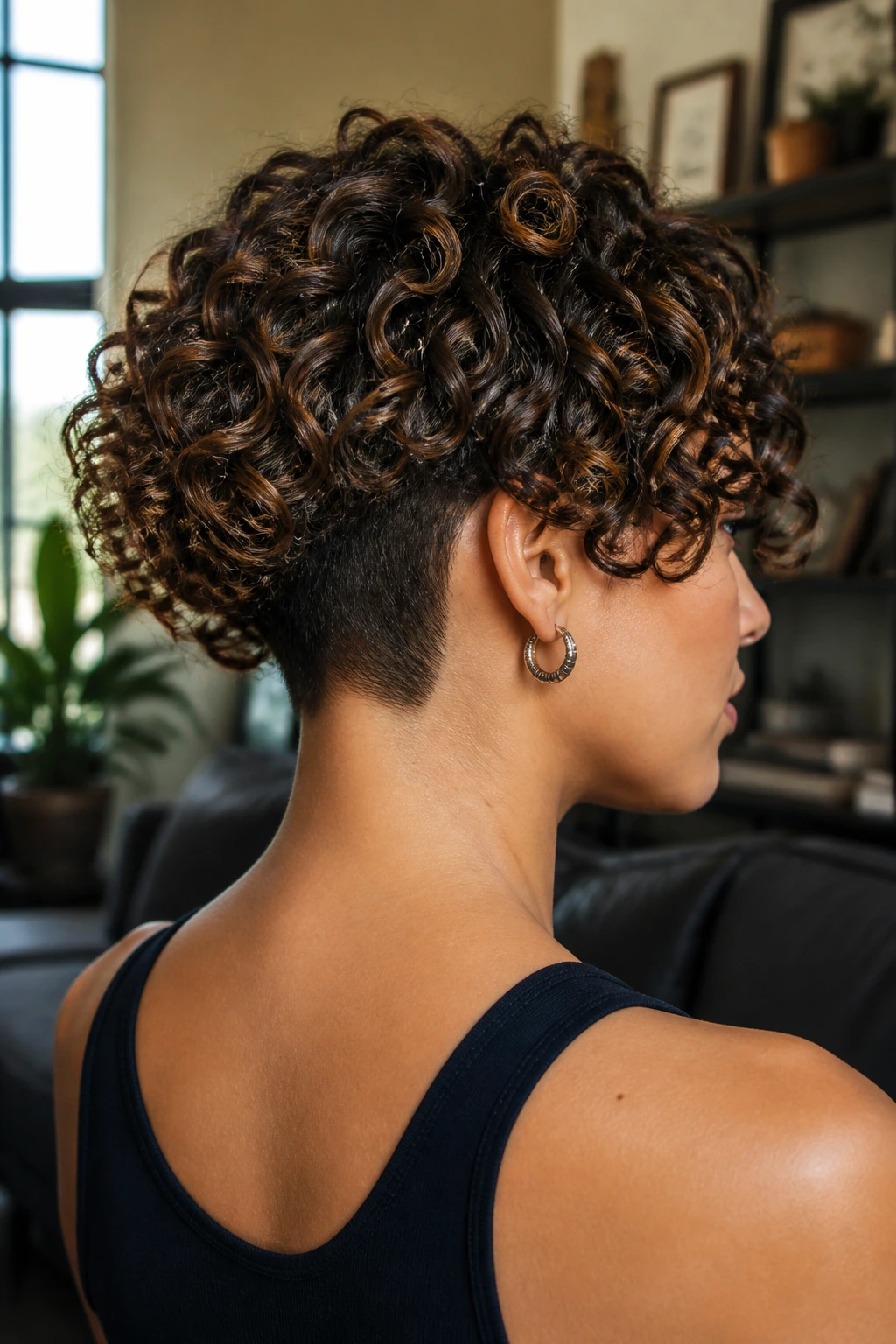
Thick curls can make even a good bob look like a pyramid if the bulk is left alone. A curved undercut trims the underside at the nape and around the lower edge, which removes weight where it tends to pile up. The caramel highlights stay on the outer sheet of hair, so the color reads cleanly instead of getting swallowed by density.
This cut is a relief for anyone whose curls feel hot around the neck. The undercut stays hidden when the hair is down, but it changes the whole way the bob sits. The back lies closer to the head, the top layer pops up a little more, and the profile looks neat from the side.
It does need maintenance. Hidden undercuts grow fast, and when they do, the bob starts to swell in the wrong places. If you want a thick curly bob that stays shaped longer than a week, this is one of the smarter ways to do it.
8. Jawline Bob with Chunky Caramel Panels

Sometimes subtle color is not the point. A jawline bob with chunkier caramel panels gives curly hair a bolder, more graphic look, especially on a darker base. The pieces should be broad enough to show against the curl pattern — think painterly swaths, not tiny ribbons lost in the texture.
This style works when you want the cut to read fast from across the room. The jawline length keeps it crisp, while the stronger highlight placement makes the curls separate into visible clumps instead of one blended mass. It’s a good choice for people whose hair tends to disappear in low light.
The catch is balance. Too many bright panels make the bob look stripey, which is a common problem on curls because the bends break up the light in odd ways. Keep the highlights deliberate, not crowded, and let a few deeper lowlights sit between them. That gap is what gives the color room to breathe.
9. Asymmetrical Curly Bob with a Swept Side
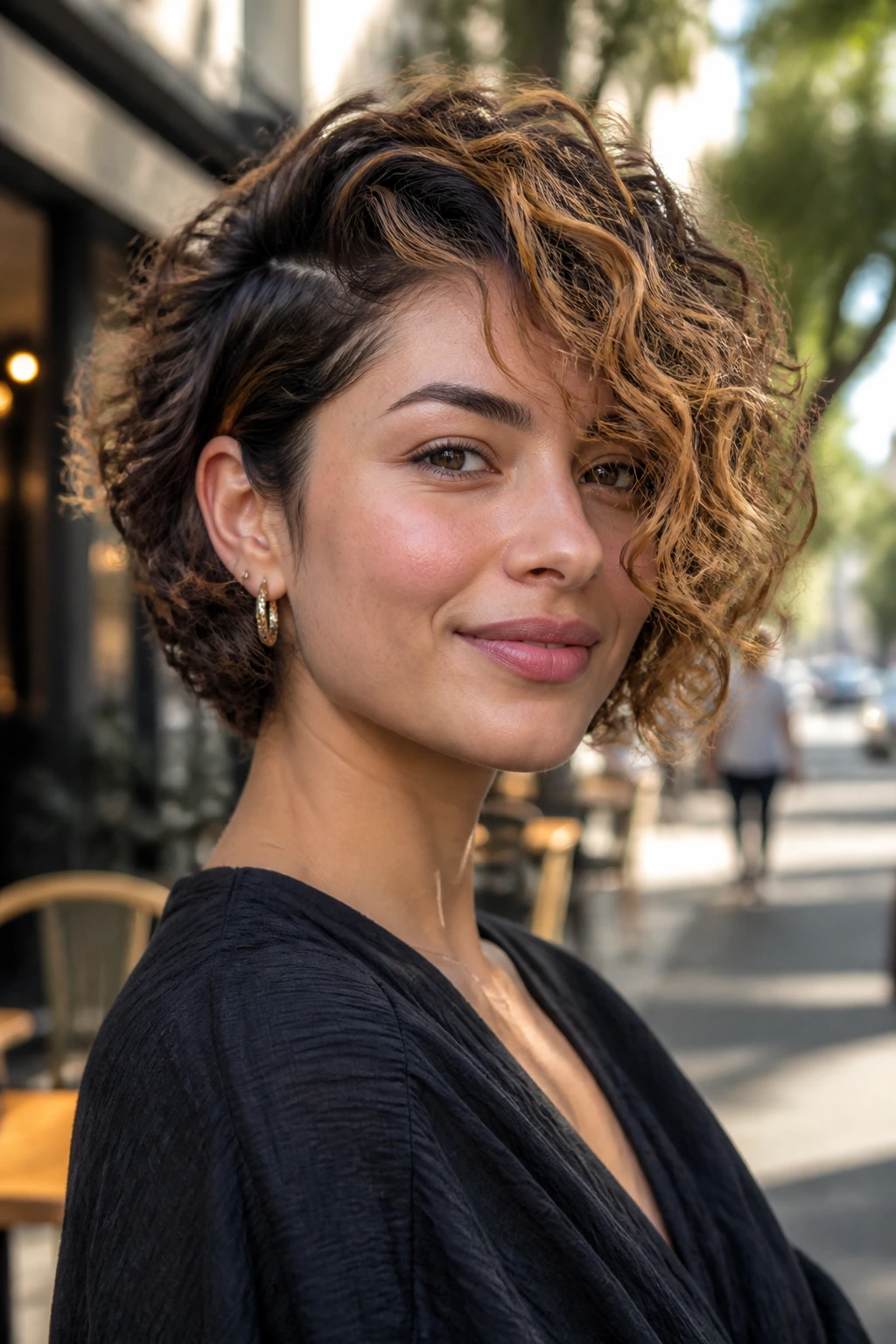
An asymmetrical bob does one thing really well: it gives curly hair a shape with attitude. One side sits a little longer, the other side gets a cleaner crop, and the caramel highlights follow the longer sweep so the cut feels connected instead of chopped in half.
This is a strong look for anyone who likes a side profile that changes as they turn. The longer side can skim the jaw or even the top of the neck, while the shorter side keeps the whole style from feeling heavy. If one side of your curl pattern always stands up more than the other, asymmetry can work with that instead of fighting it.
I’d keep the color rooted a touch darker and paint the brightness through the longest side. That gives the eye a clear path to follow. It also helps the haircut look intentional on days when the curls flatten a little on one side.
10. Layered Short Bob for Curly Hair with Caramel Highlights and a Deep Side Part
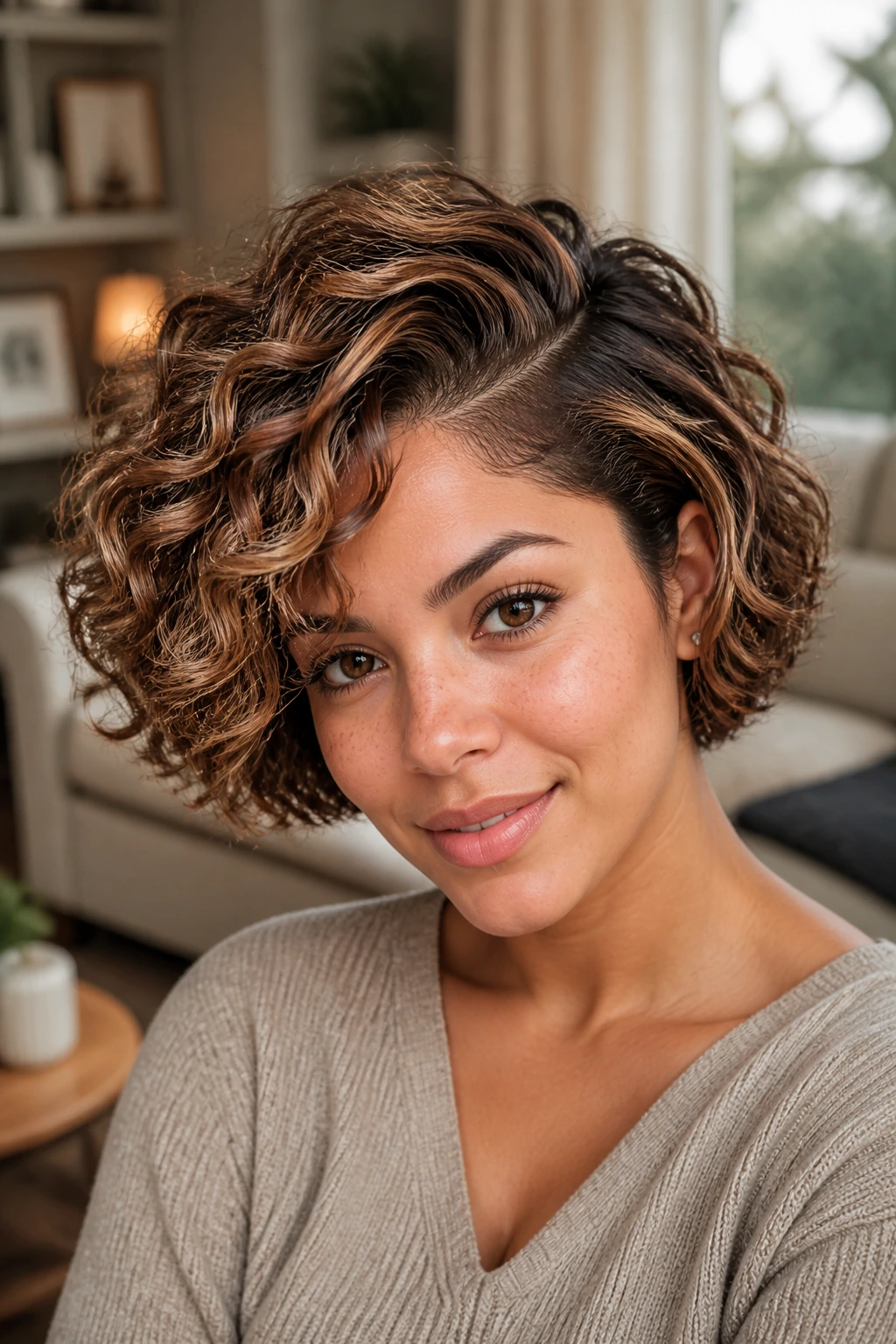
A deep side part can rescue a short curly bob that feels too even. The off-center line gives the roots lift, the front falls in a flattering sweep, and the caramel highlights can be concentrated right where the part opens up the curl pattern. It’s one of the easiest ways to make a short cut feel fuller without adding more length.
The magic here is diagonal movement. Instead of reading as a circle around the head, the bob gets a strong direction, which keeps the curls from sitting too symmetrically. A few brighter pieces near the temples and through the top layer make the lift obvious. If your crown is flat, this is a much better fix than cranking up the mousse until the hair gets crunchy.
It’s also one of the more forgiving bob shapes for second-day hair. The part can shift a little, the curls can loosen, and the shape still looks like it was meant to do that.
11. Shaggy Curly Bob with Piecey Ends and Lightly Textured Bangs
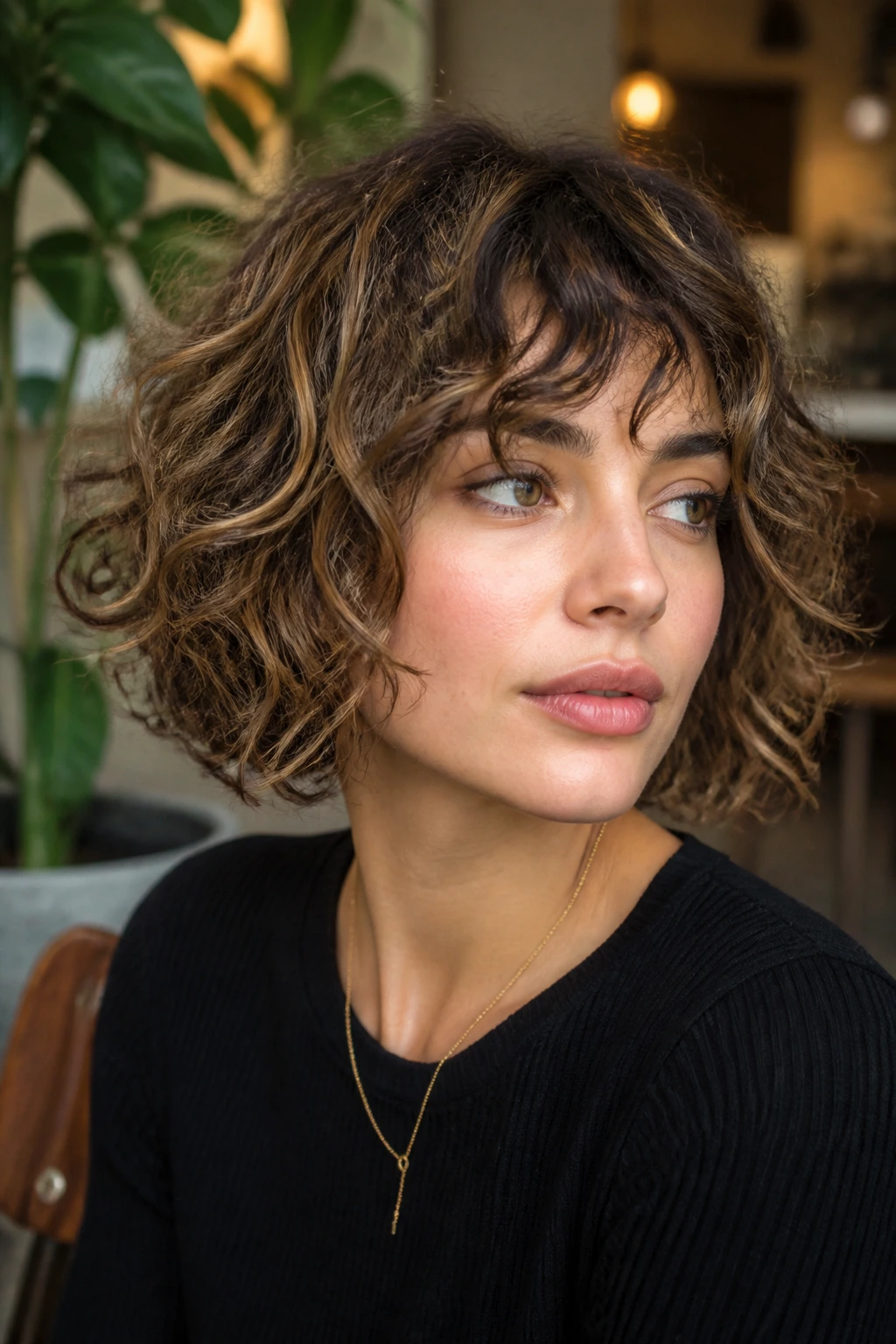
This is the most casual look in the bunch, and that’s the point. The ends are lightly textured, the bangs are soft and a little irregular, and the caramel highlights are scattered so the curls separate into pieces instead of merging into one puff. It has a lived-in shape that works best when the styling stays loose.
Good for: curls that want movement more than polish.
Ask for: soft internal layers, not heavy thinning at the perimeter.
Watch out for: over-layering the bangs; they can vanish into the bob if the cut gets too aggressive.
The color placement matters here more than people realize. A few warm ribbons through the top and around the fringe keep the shag from reading gray or washed out. If the base is dark, a little lowlight underneath makes the caramel pop harder without needing extra brightness everywhere.
12. Inverted Curly Bob with a Lifted Crown
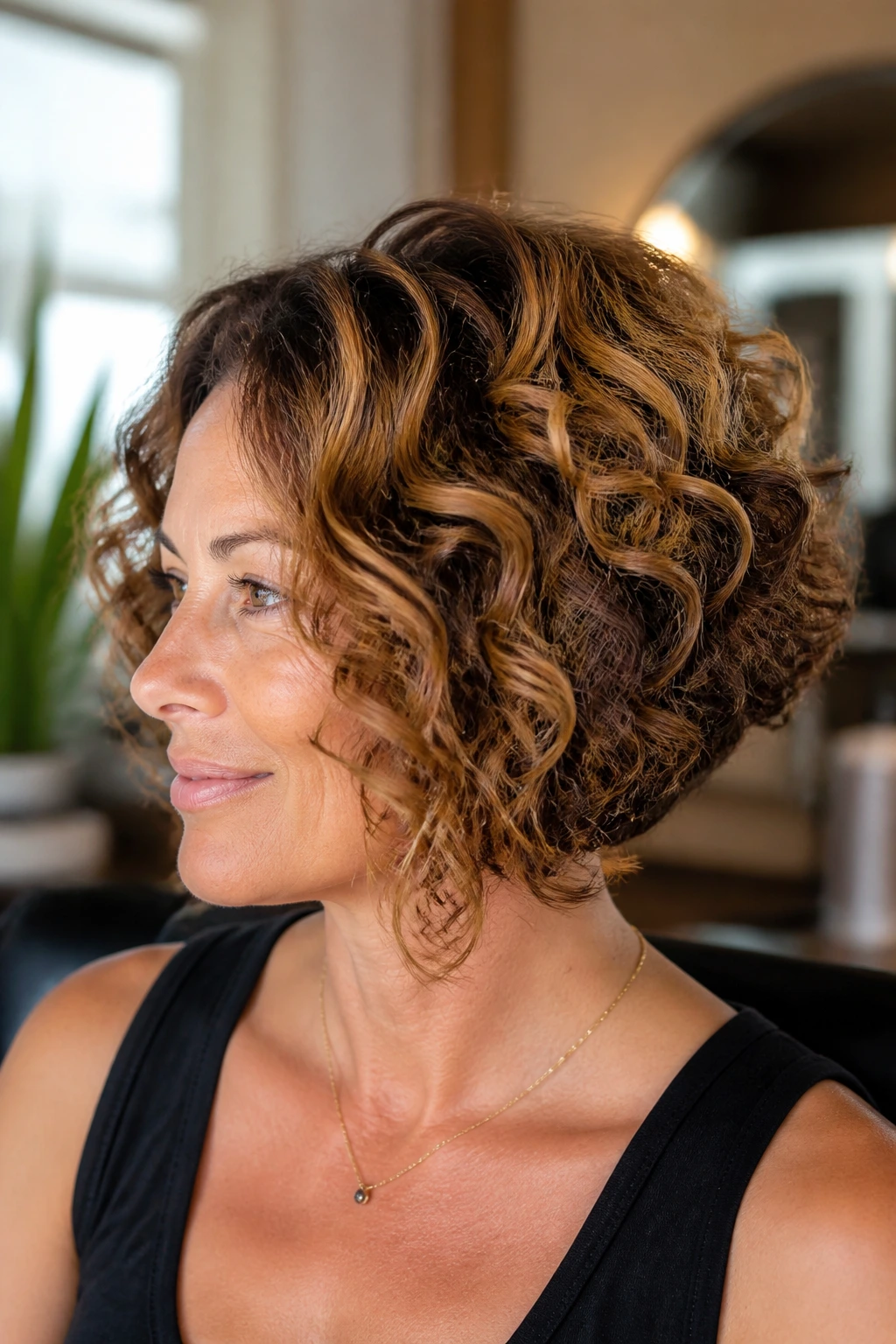
An inverted bob gives the back of the head a clear shape. Shorter in the back, longer in the front, it creates a clean curve that curly hair can wear beautifully when the crown gets a touch of lift. The caramel highlights should sit higher on the head and along the upper side sections, because that’s where the shape needs light.
This cut is especially useful if the back of your bob tends to look wide or heavy. The inversion removes that bulk and makes the front do the talking. The color helps, too: bright pieces near the top stop the crown from looking flat, while a few deeper strands underneath keep the shape grounded.
The style looks best when the curl clumps are intact. If the hair gets brushed apart or over-diffused, the crisp line between back and front can blur. Keep the curl pattern soft but defined, and the shape holds.
13. Soft A-Line Bob with Blended Caramel Balayage
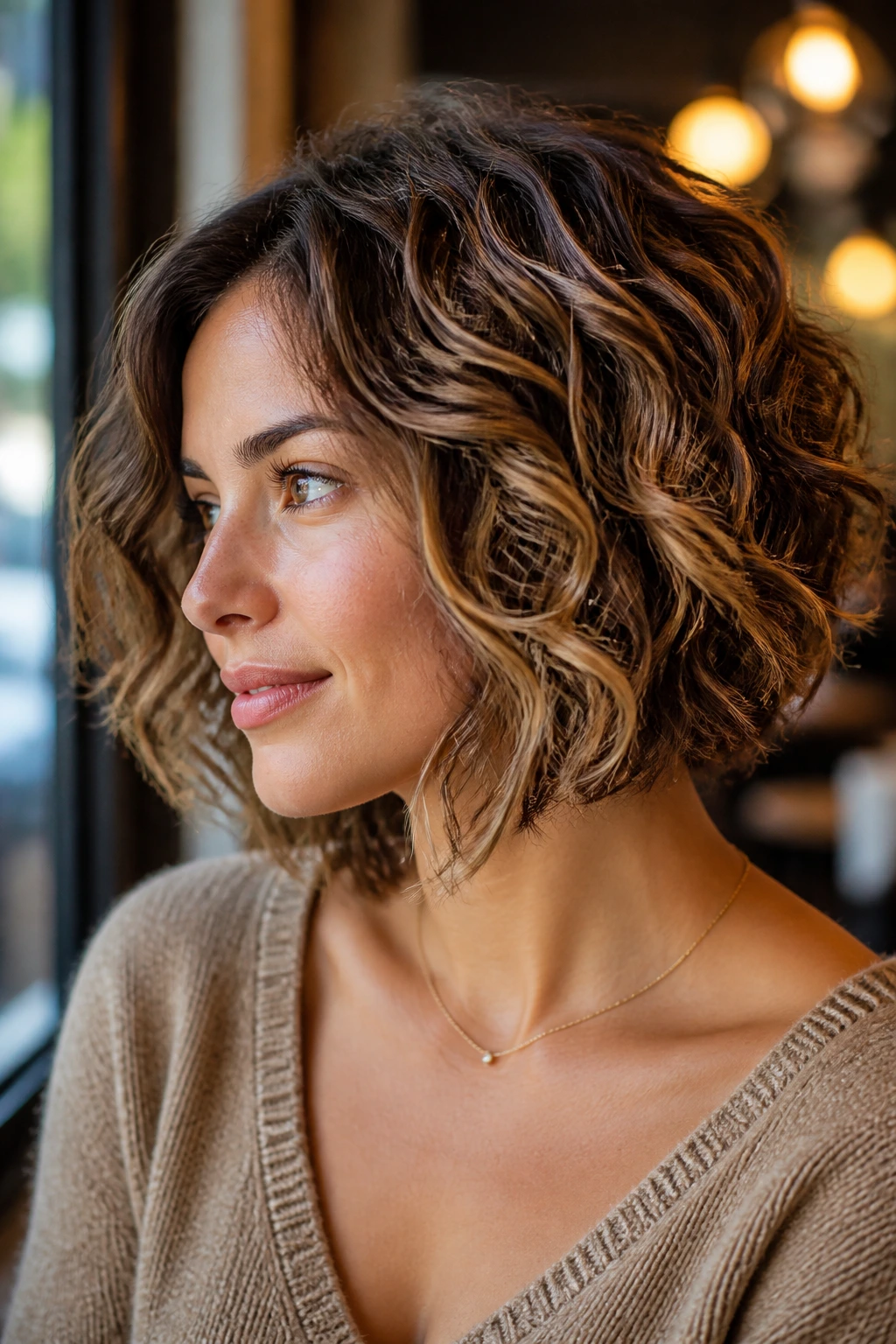
A soft A-line bob is the cautious cousin of the inverted cut. The front is a little longer than the back, but the slope is gentler, which makes the whole style easier to wear day after day. Caramel balayage blends through the mid-lengths and ends so the grow-out stays smooth instead of showing a hard line.
This is the cut for someone who wants movement but doesn’t want the bob to feel sharp. The front pieces brush the jaw, the back stays tidy, and the color lightens the ends enough to keep the silhouette from looking blocky. On curly hair, that softer slope can be a lifesaver because the curls themselves already create plenty of texture.
If you tend to wear your hair down more than up, this is one of the easiest shapes to live with. It looks finished even when you’ve only spent five minutes on it.
14. Curly Bob with Curtain Bangs and Warm Dimension
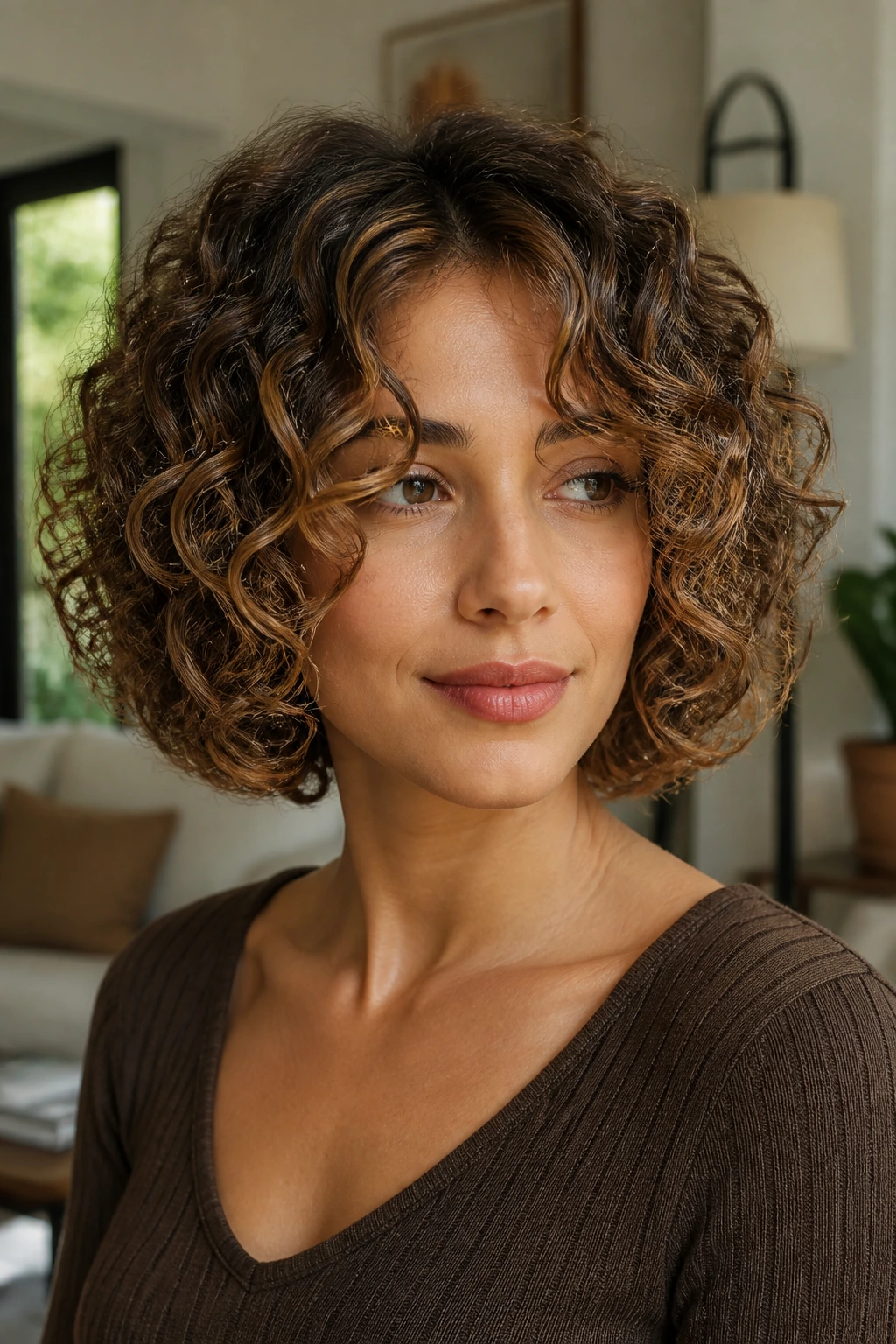
Curtain bangs and curls are a tricky couple. When they’re cut with enough length and a little softness, though, they frame the face better than blunt bangs ever could. The caramel highlights should sit around the bang opening and through the front curl group, where they brighten the eyes and keep the fringe from feeling heavy.
This style works because curtain bangs break up the forehead area without boxing it in. The bob underneath can stay short and rounded, while the bang pieces swing away from the face. Warm dimension through the front keeps the whole look from going flat under indoor lighting, which is where many curly bobs lose their charm.
The upkeep is real. Bangs need trimming more often than the rest of the cut, and curly bangs need a stylist who understands how much they bounce. If you’re willing to maintain them, the payoff is a softer, more face-aware bob.
15. Espresso Curly Bob with Fine Caramel Veils
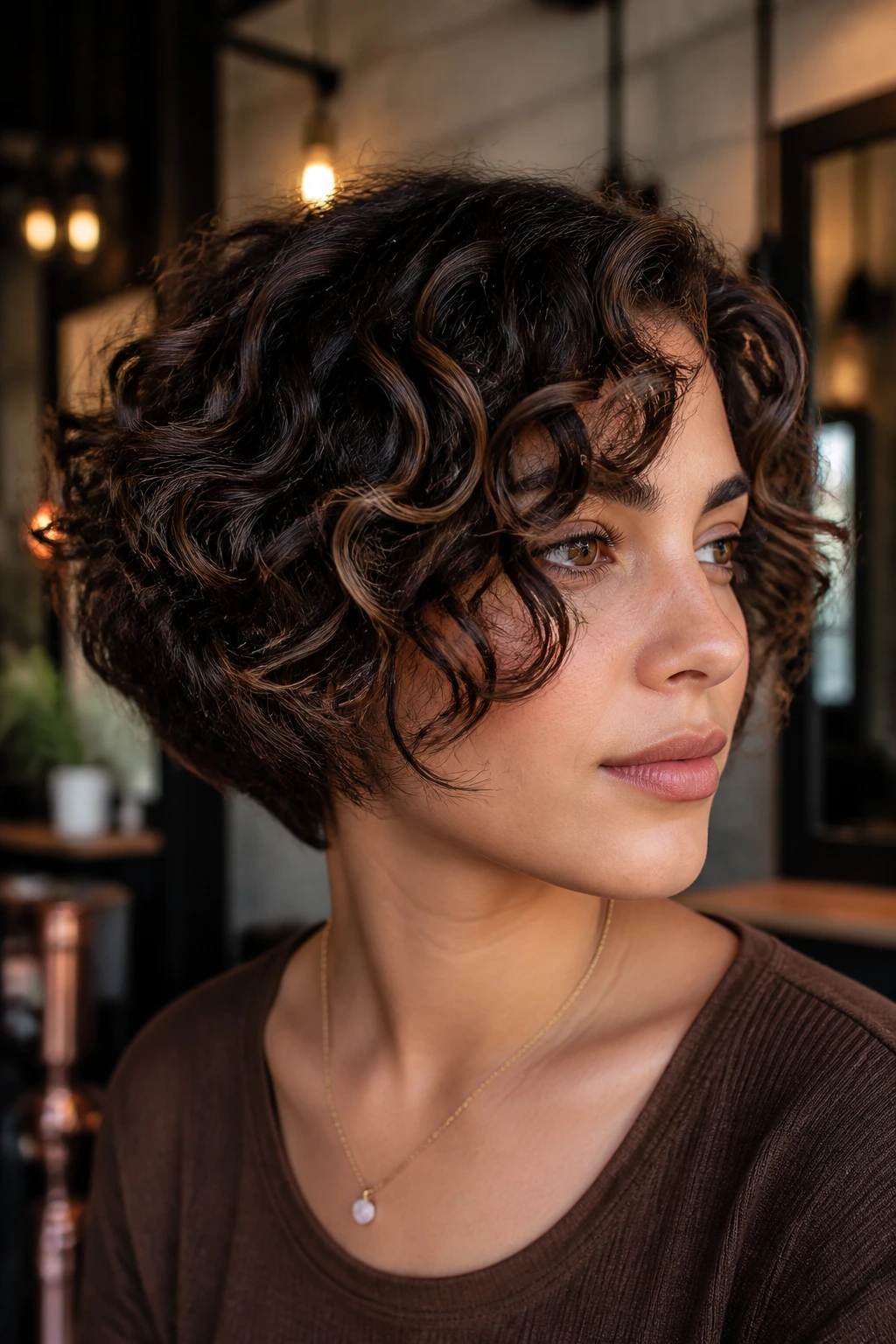
This is the subtle one. The base stays deep and rich, while fine caramel veils thread through the outer layer like thin lines of light. On curly hair, that kind of color reads as depth rather than contrast, which is often the better move if you want the bob to feel expensive without looking overworked.
It’s a strong choice for tighter curls, because strong highlight bands can break apart too much inside the pattern. Fine veils keep the shape readable and let the curls themselves do the talking. A few lowlights underneath are even more useful here than elsewhere, because they keep the caramel from floating on top of the head.
I like this style when the cut itself is clean and the color is meant to support it, not steal the whole show. Quiet does not mean boring. It means the bob still looks good from ten feet away.
16. Layered Short Bob for Fine Curly Hair with Feathered Ends
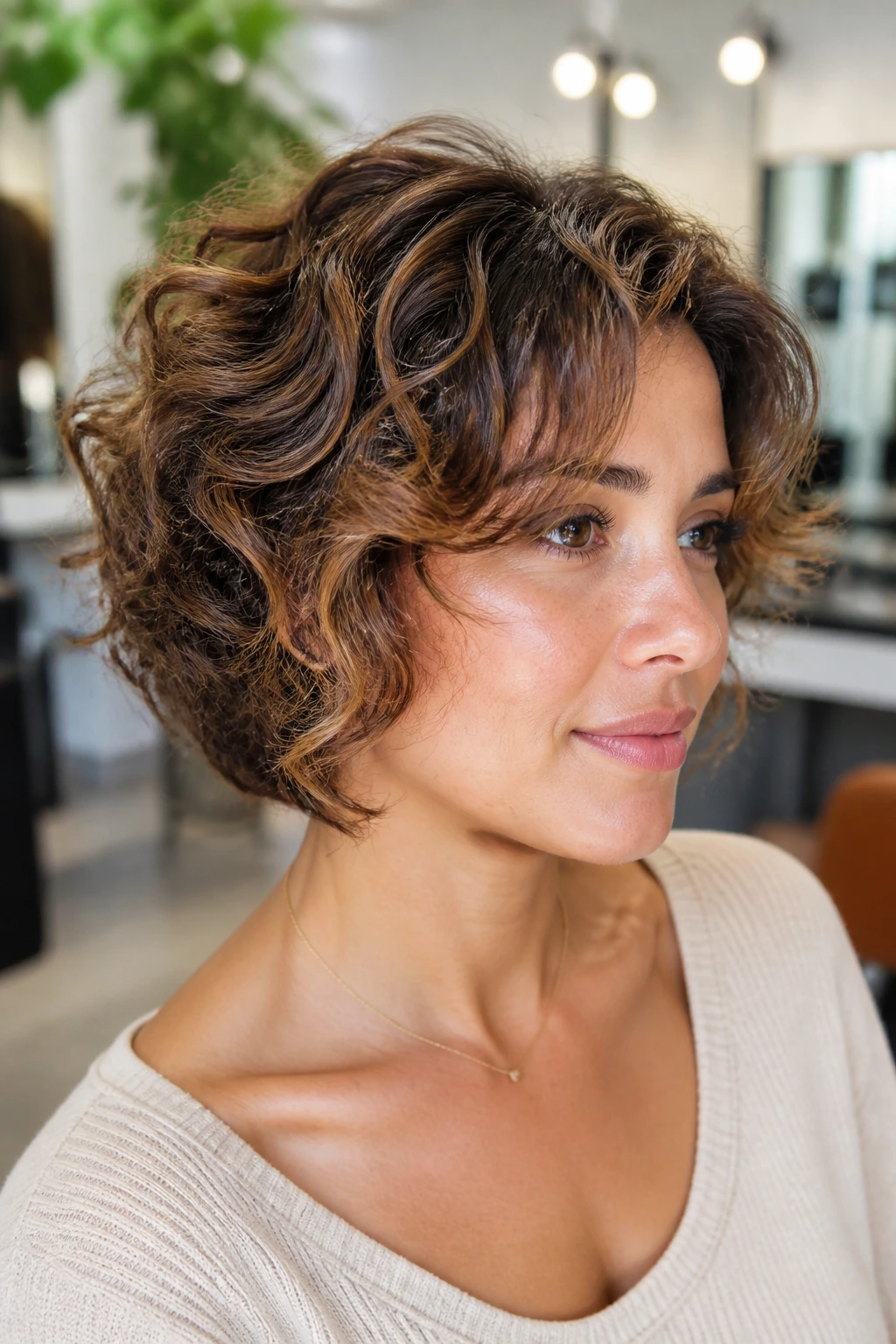
Fine curly hair needs a gentler hand. Too much layering and it loses body; too little and it hangs there like wet ribbon. Feathered ends solve that middle ground by removing just enough bulk to keep the bob moving while preserving the density at the perimeter.
Why Fine Hair Needs a Softer Cut
The caramel highlights should stay light and sparse, mostly around the face and upper surface. Heavy color can make fine curls look thinner, especially if the base is already soft in texture. A few warm ribbons give the bob dimension without stealing the fullness.
What to Ask For
Ask for interior layers that support the curl, not razor-thin ends. On fine hair, the bob should still look like a bob after it dries, not a cloud with no edge. That means the stylist needs to respect the shape more than the trend.
A good fine-hair bob feels light, but not empty. That’s the line.
17. Layered Short Bob for Thick Curly Hair with Internal Debulking
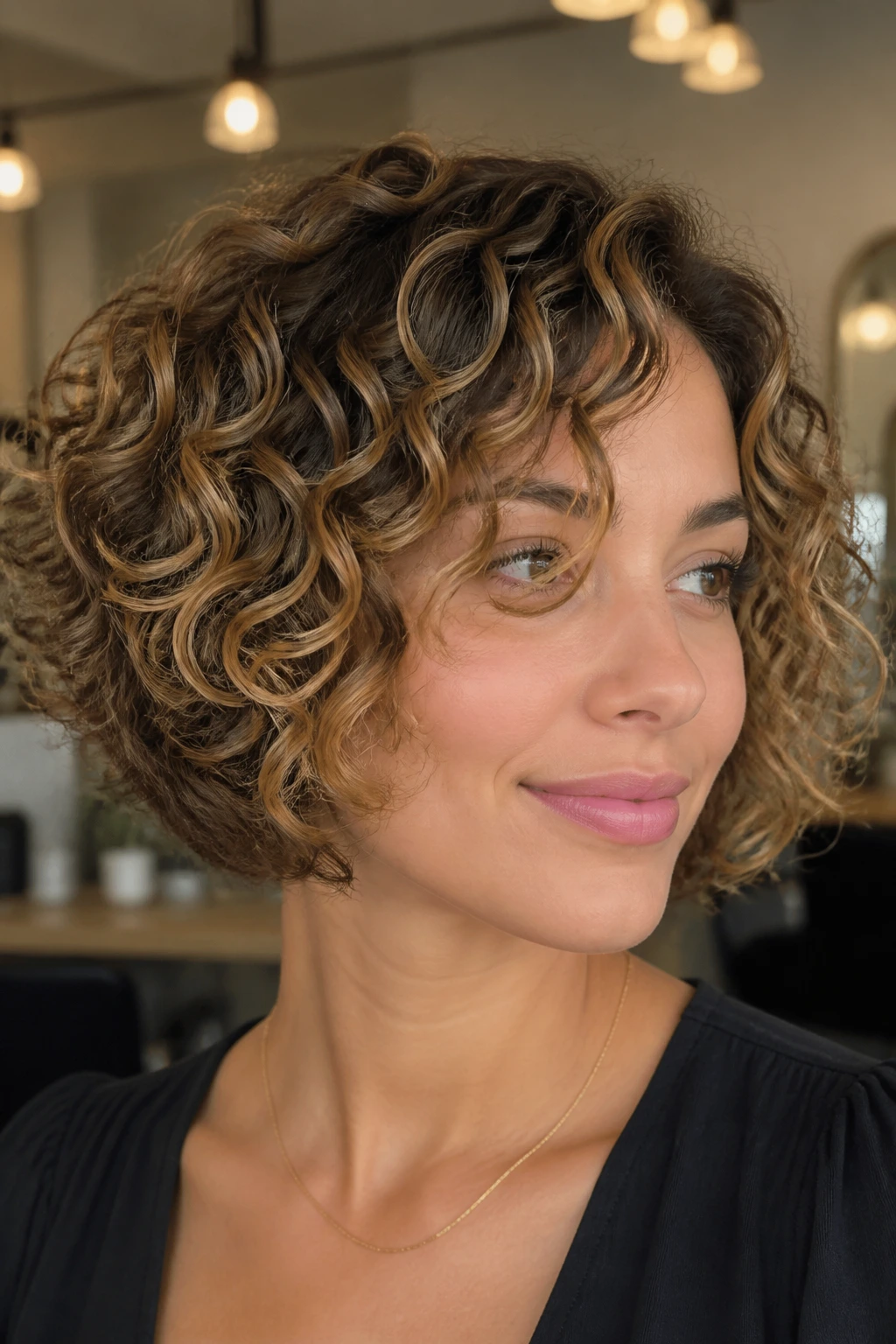
Thick curls want room. If the bulk stays packed under the top layer, the bob can turn broad and boxy by noon. Internal debulking removes weight from the middle of the shape while keeping the outline intact, which is far more useful than just thinning the ends and hoping for the best.
The caramel highlights work best when they sit on the surface layers and around the face. That gives the cut movement without forcing the color to fight through all the density underneath. If the base is dark and the curls are large, a few lowlights inside the shape can keep it from looking too bright on top and too heavy at the bottom.
This is not a style for lazy cutting. It needs structure. But when it’s done well, thick hair suddenly stops acting like a problem and starts looking like the whole point.
18. Loose-Wave Bob with Face-Framing Caramel Ribbons
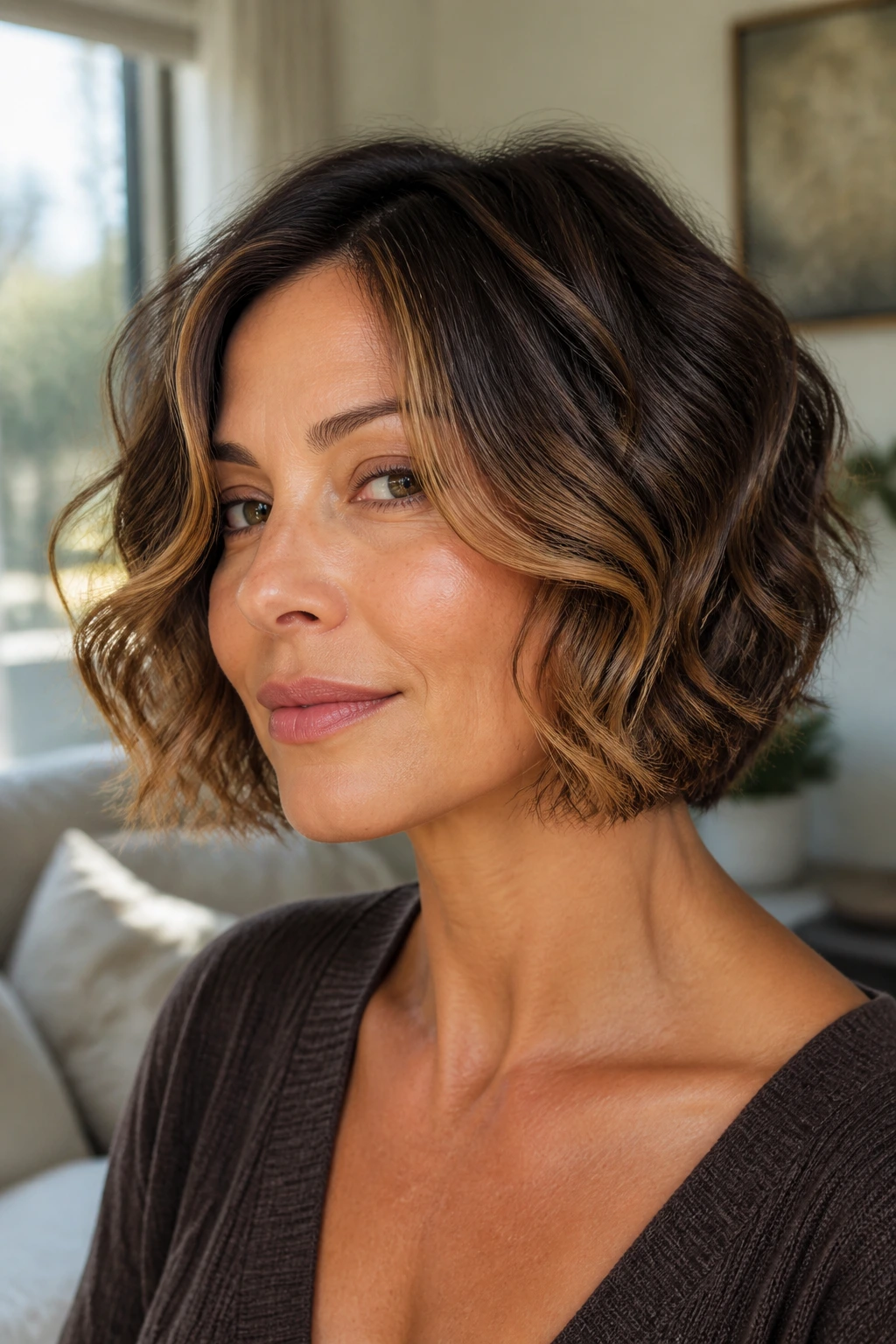
Loose waves behave differently from tighter curls, and the bob should respect that. The length can sit a little softer, the layers can be lighter, and the caramel ribbons can start a bit farther down from the root so the front doesn’t frizz up at the first sign of humidity.
This is a smart move if your hair lives between curly and wavy. You get the bob shape without overloading the cut with too many layers. The face-framing pieces are the best place for the caramel to show up because that’s where the waves bend most visibly. A soft side part helps too, especially if the hair likes to collapse straight down the center.
It’s a relaxed style, but not a careless one. The edges should still be shaped. Loose hair can fool people into cutting too much off, and then the bob starts skimming the wrong spots once it dries.
19. Tight Ringlet Bob with Hand-Painted Highlights
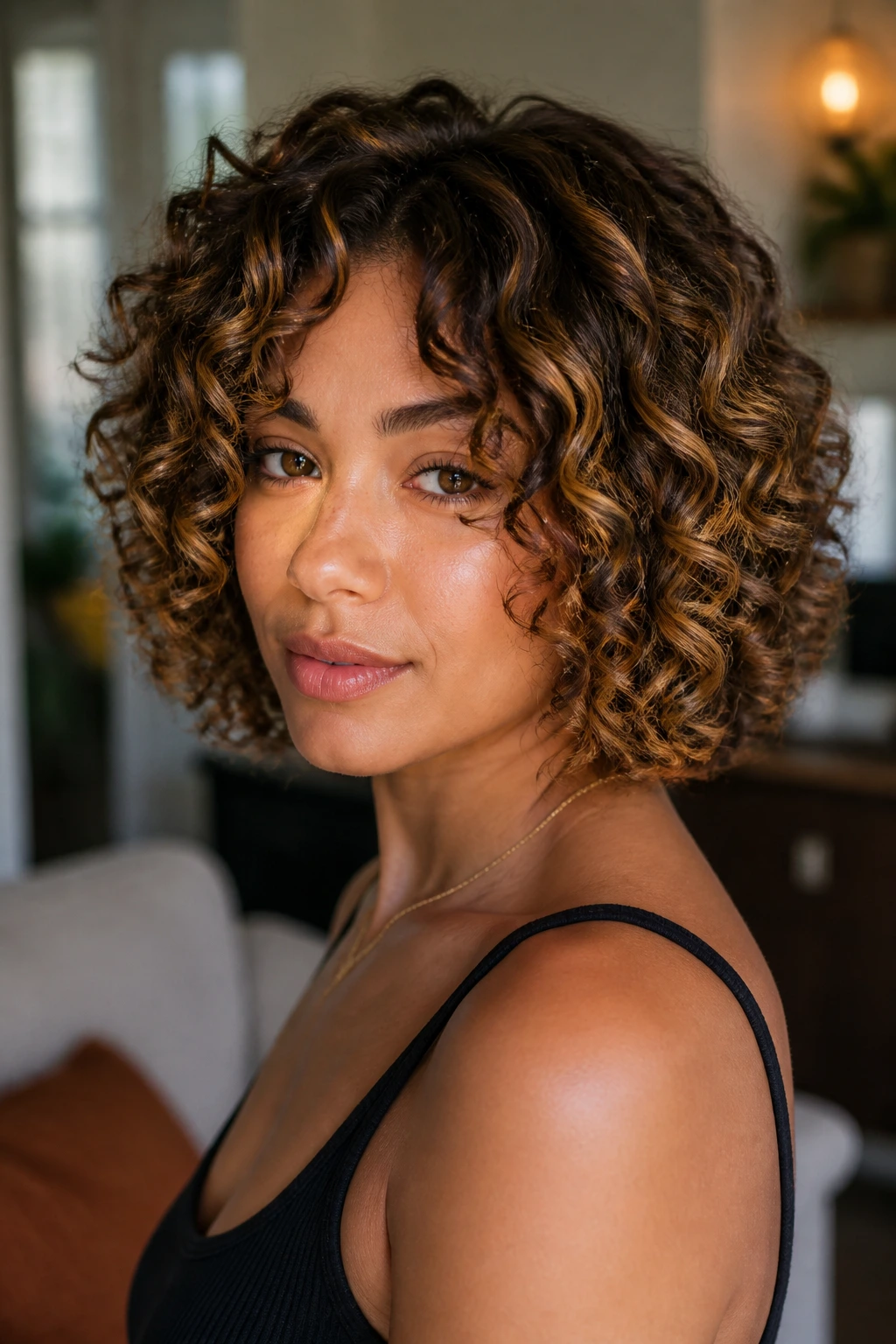
Tight ringlets need highlight placement with some patience. Tiny sections painted too close together can vanish into the curl, so the caramel has to be placed in larger, more deliberate pieces. That gives the ringlets enough contrast to show the color without turning the head into a patchwork.
This bob looks best when the shape is rounded and the ends are kept neat. The curls already create a lot of visual detail, so the cut should not compete with them. A few lowlights between the brighter pieces keep the pattern from reading as one flat warm tone.
If your curls are small and springy, don’t let anyone talk you into over-lightening the whole head. You want the color to look like it belongs inside the ringlets, not sitting on top of them like a costume.
20. Glossy Curly Bob with Caramel Ends and a Wet Finish
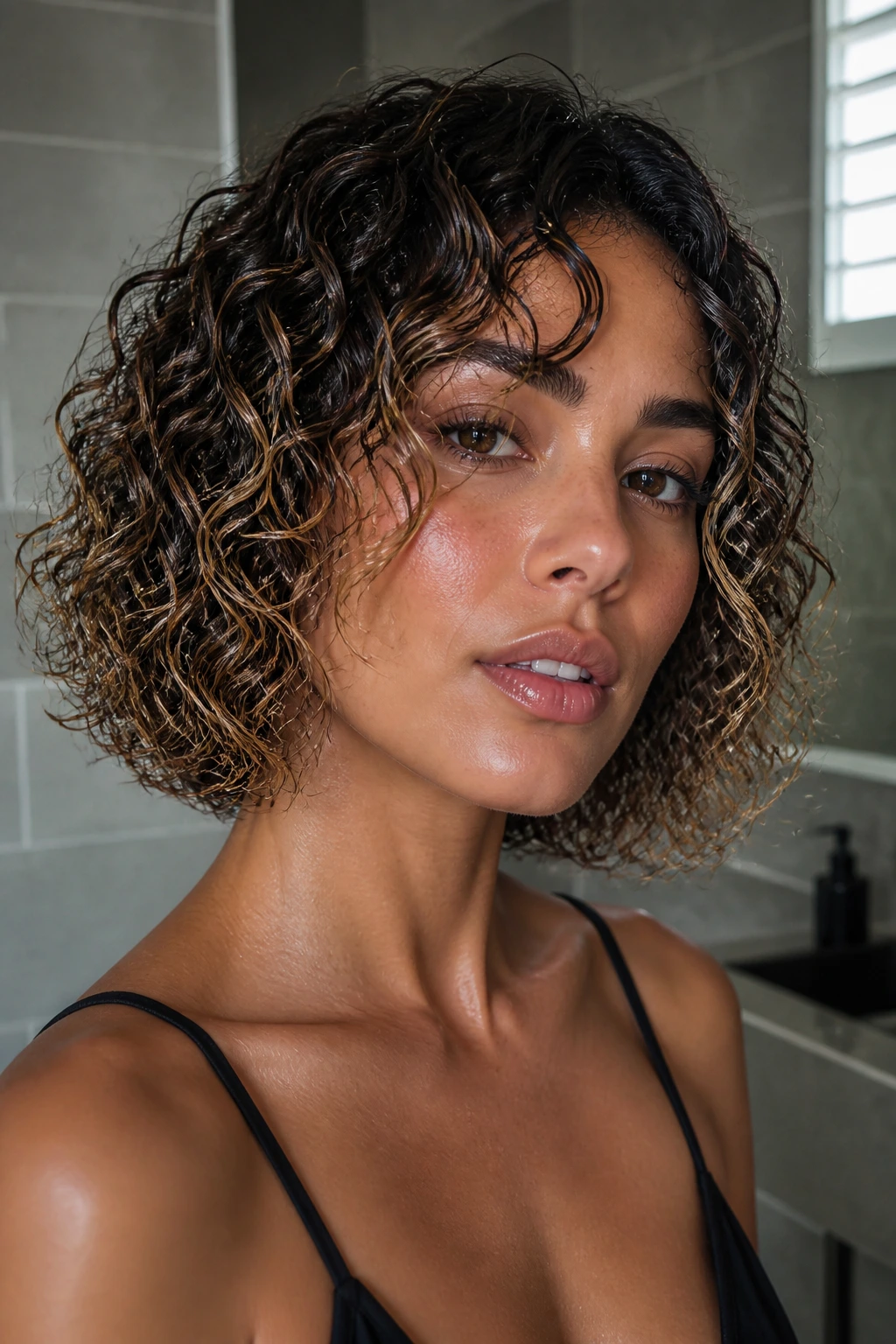
A wet finish changes the mood completely. The curls look slicker, the outline looks sharper, and the caramel ends catch the light in a way that reads more editorial than soft. This is the bob for people who like definition and a little edge, not fluffy volume.
The cut should stay compact enough that the shape holds when the gel cast settles. Caramel at the ends keeps the eye moving downward, which helps short curls feel longer and more deliberate. If the ends are too light, though, the style can look dry instead of glossy, so the color needs a warm tone rather than a pale blonde one.
I’d use this look for nights out, photo days, or any time you want the curls to look sculpted. It asks for more product than the other bobs here. That is the tradeoff, and it’s worth it when you want the shine.
21. Shoulder-Skimming Curly Bob with a Soft Collarbone Curve

This is the long end of short, and that matters. A shoulder-skimming bob gives curly hair a little more swing while still reading as a bob, especially when the ends curve softly toward the collarbone. Caramel highlights can start at the front and continue through the lower third of the cut, which keeps the whole shape bright without overdoing the roots.
Why the Extra Length Helps
The added half-inch or inch gives the curls room to form before they bounce up. That can be a gift if your hair shrinks hard or if you want to wear the style both curly and stretched. The outline stays feminine and soft, not blunt.
What to Keep in Mind
Because the length sits near the shoulders, the hair can catch and flip if the layers are wrong. Keep the outer line soft, and don’t let the color get too concentrated at the very bottom or the ends will feel disconnected from the rest of the bob.
This is the easiest version to grow out, which is no small thing.
22. Rounded Bubble Bob with High Shine and a Tucked-In Edge
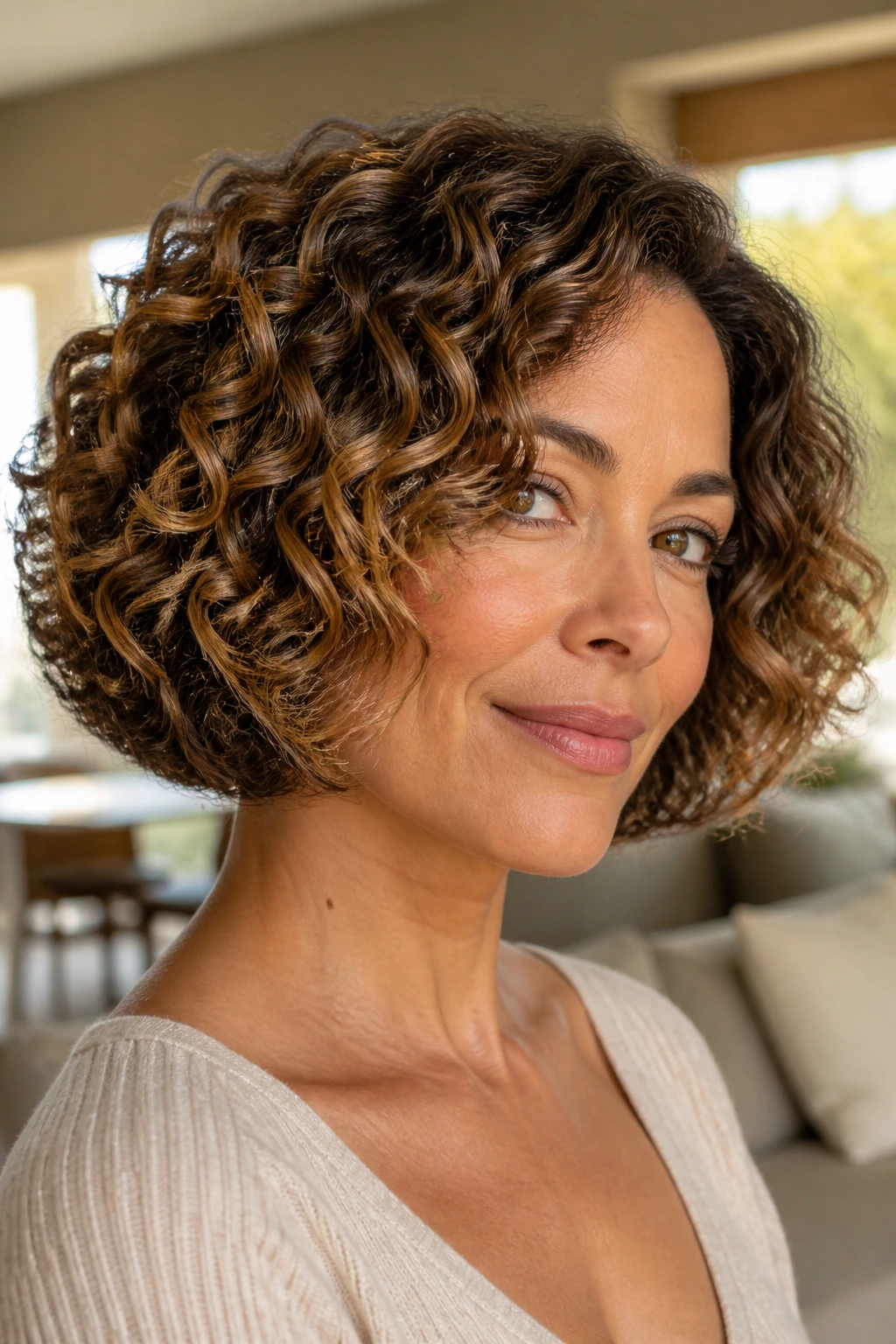
A bubble bob has a controlled curve. The ends tuck in slightly, the middle of the silhouette carries the width, and the overall shape reads rounded rather than angular. Caramel highlights on the upper curve of the bob help that bubble effect show up without needing heavy styling.
The shine matters here. A dull bubble bob can look puffy. A glossy one looks deliberate. That means the color needs to stay warm, the ends need moisture, and the cut has to respect the curl pattern instead of forcing it into a straight line.
This style works especially well when the curls are medium to tight and you want structure without stiffness. It’s neat without being severe, and the rounded line makes the highlights look smoother than they would in a jagged shag.
23. Airy Micro-Bob with Tiny Caramel Lifts
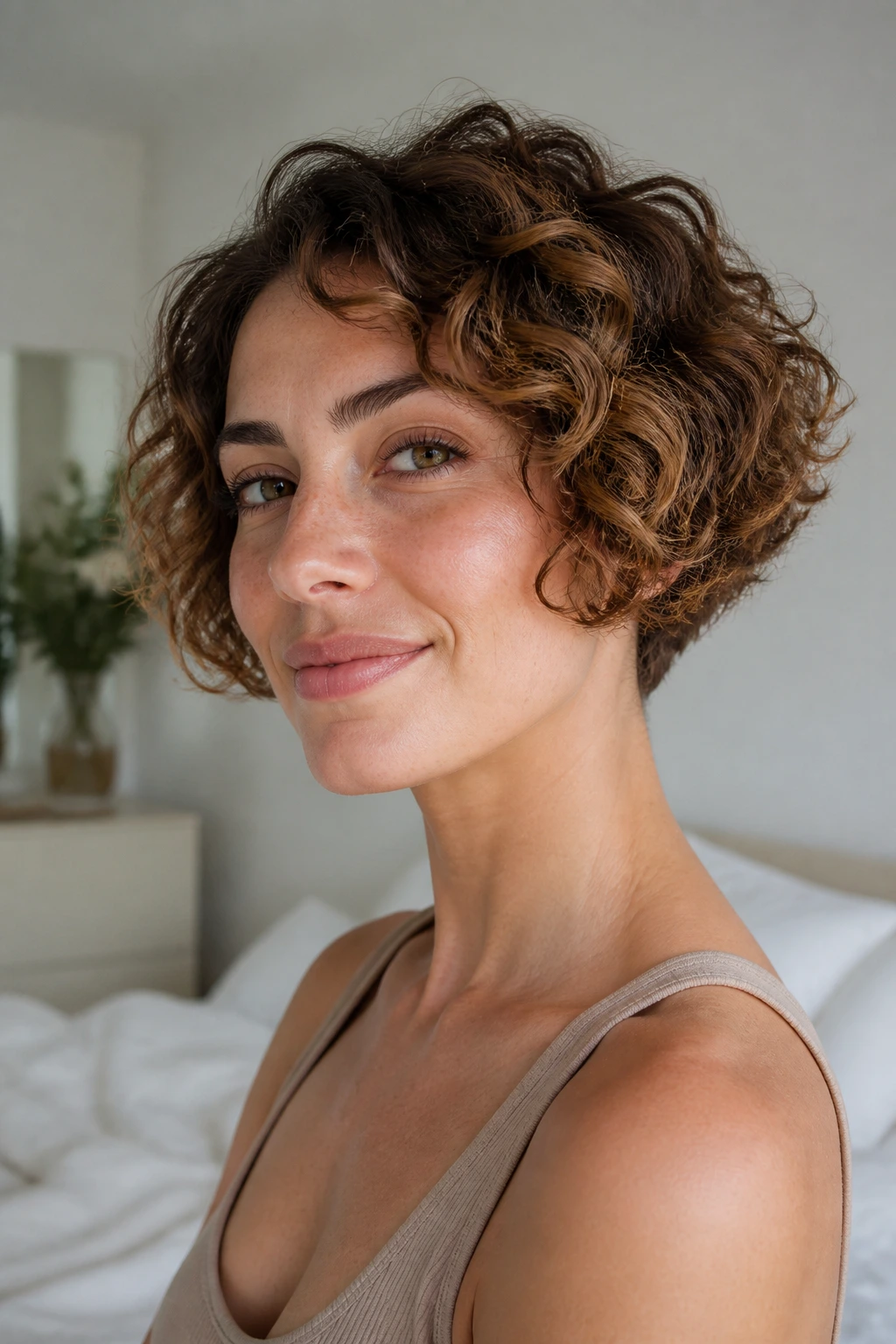
A micro-bob is not for anyone who wants to hide behind their hair. It sits high, shows the neck, and puts the curl pattern on display. The caramel highlights should be tiny lifts rather than large swaths, because a short cut this small can look overcolored fast.
The appeal is the freshness of it. The bob feels crisp, open, and a little daring, but still wearable if the curl shape is strong. A few lighter pieces around the front and temple area give the face a clean frame. Keep the nape tidy, or the whole cut loses the sharpness that makes it work.
I’d only recommend this if you’re willing to trim often. Micro-bobs grow out fast, and curl shrinkage can change the outline within days. When it’s maintained, though, it has a clean, confident line that longer bobs can’t match.
24. Retro Curly Bob with a Side-Swept Fringe
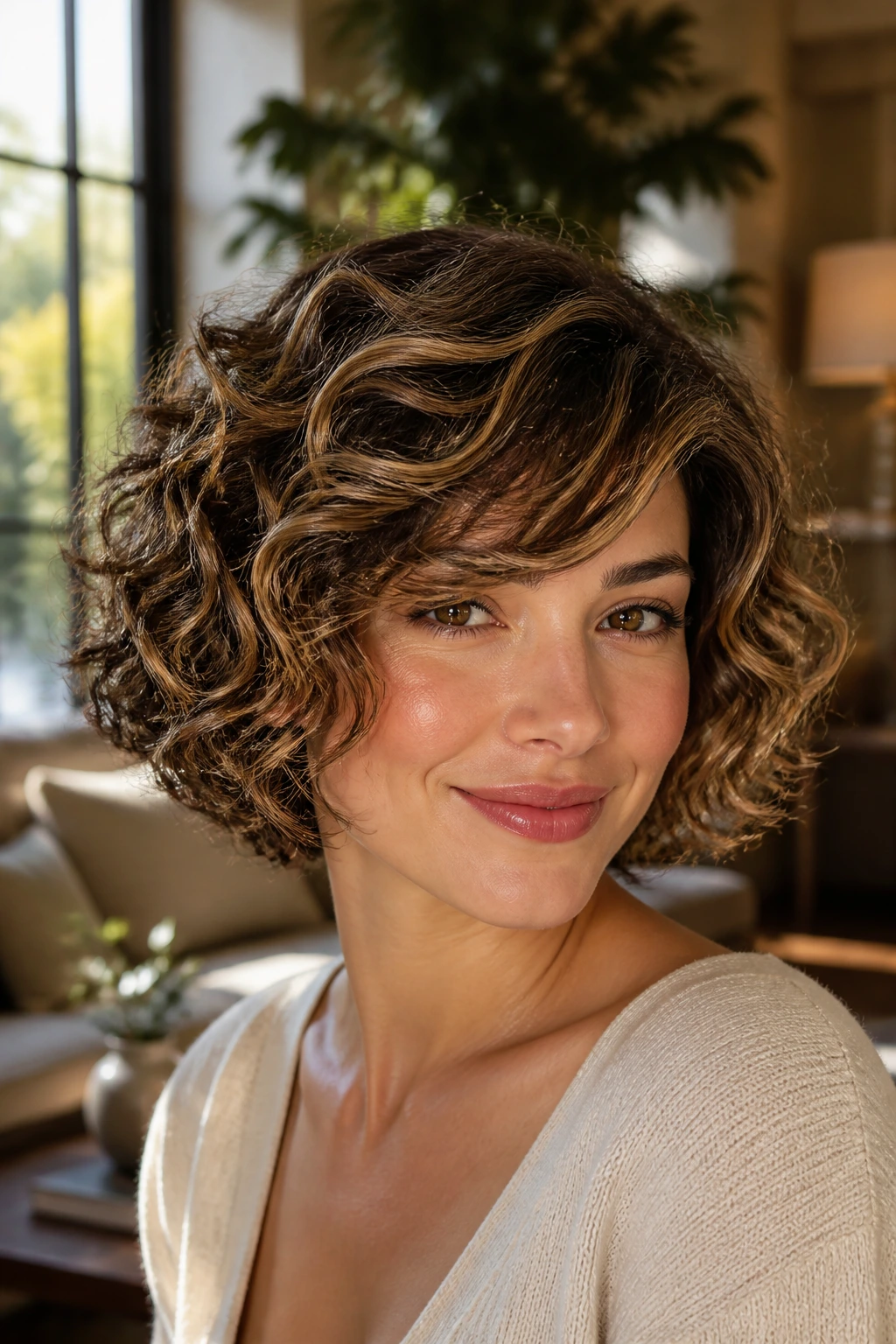
There’s something satisfying about a curly bob that leans a little retro. A side-swept fringe, rounded ends, and warm caramel highlights through the top give the style a classic feel without making it look dated. The curl shape should be soft and full, not too broken up, so the silhouette reads as one piece.
This version is good for anyone who likes a little polish with their texture. The fringe softens the forehead, the rounded shape balances the cheeks, and the highlight placement brightens the top without making the ends look thin. I’d keep the caramel warmer rather than ashy so the whole look stays rich.
If your curls have enough spring to hold a side sweep, this can be one of the most flattering versions in the whole set. It feels familiar in the best way.
25. Rooty Grow-Out Bob with Soft Caramel Balayage
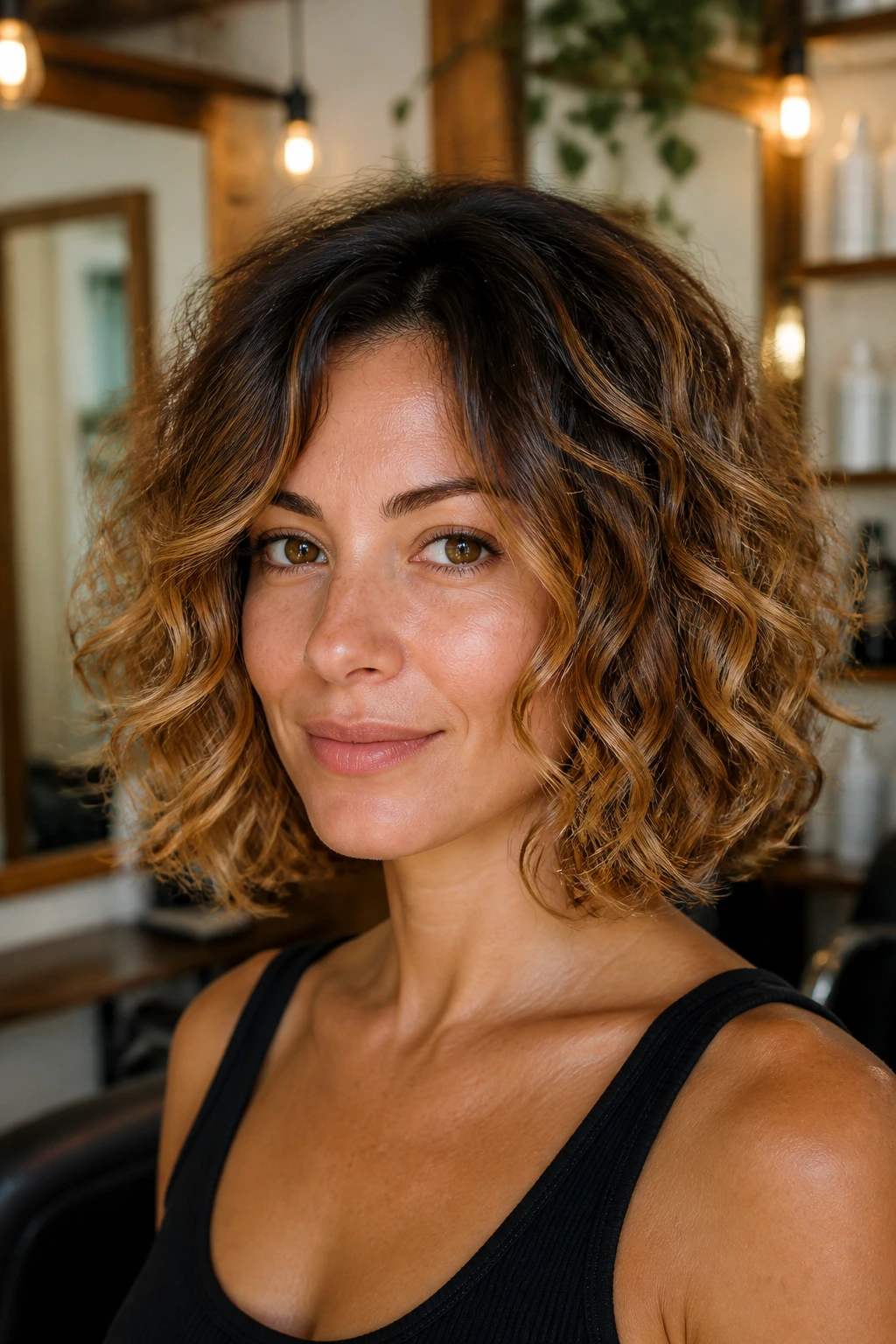
A rooty grow-out bob is the practical finish here, and honestly, it may be the smartest one of all. The base stays deeper at the roots, the caramel balayage starts a little lower, and the layers are cut so the shape still looks tidy even as the color softens over time. That means less obvious regrowth and fewer salon emergencies.
The best part is how forgiving it is on curly hair. As the curls expand and settle, the color doesn’t need to stay perfect to look good. A little root shadow makes the highlight pattern look natural, and a few lowlights underneath keep the bob from becoming too bright on top.
If you want a layered short bob for curly hair with caramel highlights that can survive a busy week, this is the one I’d point to first. It’s not the flashiest option. It’s the one that keeps making sense after the novelty wears off.
Why Caramel Highlights Change the Shape of a Curly Bob
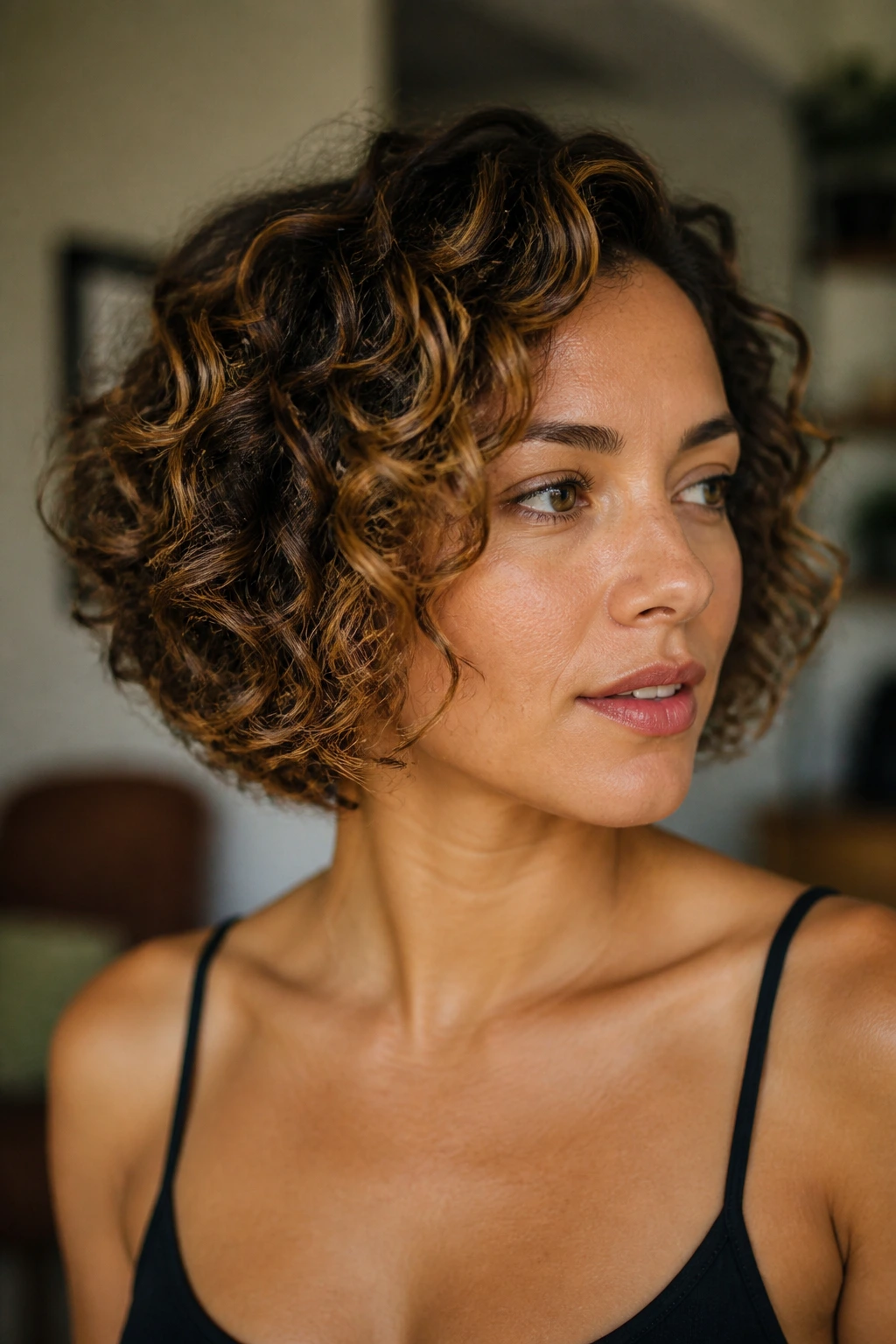
Caramel highlights do more than brighten curly hair. They change the way the eye reads the haircut. On a short bob, the lighter pieces land on the outer curve of the curl and create movement even when the actual cut is fairly compact. That’s why a well-placed highlight can make a bob seem taller, softer, or wider in exactly the right places.
The placement matters more than the amount of color. Thin ribbons around the face, a few brighter pieces at the crown, and deeper strands underneath give the bob dimension without turning it striped. If the color sits too high and too close together, the cut starts looking busy. If it’s spaced well, the curls separate in a way that feels natural, almost like the shape built itself.
Around the Face
The face frame should usually carry the brightest caramel. A piece at the temple, another at the cheekbone, and one or two near the jaw are usually enough to soften the outline of the bob. That works especially well on curly hair because the bends in the hair already break up the light.
At the Crown
A short bob can go flat at the top fast. A little brightness through the crown keeps the hair from looking like one dark cap sitting on the head. You do not need a lot. You need enough to make the top layer separate from the rest.
Underneath for Depth
A few lowlights under the outer layer keep the caramel from floating on top and shouting. They also make the curls look fuller, because the darker pieces behind the lighter ones create contrast. That contrast is what makes short curly hair look rich instead of puffy.
The Tools That Make the Look Easier to Wear
-
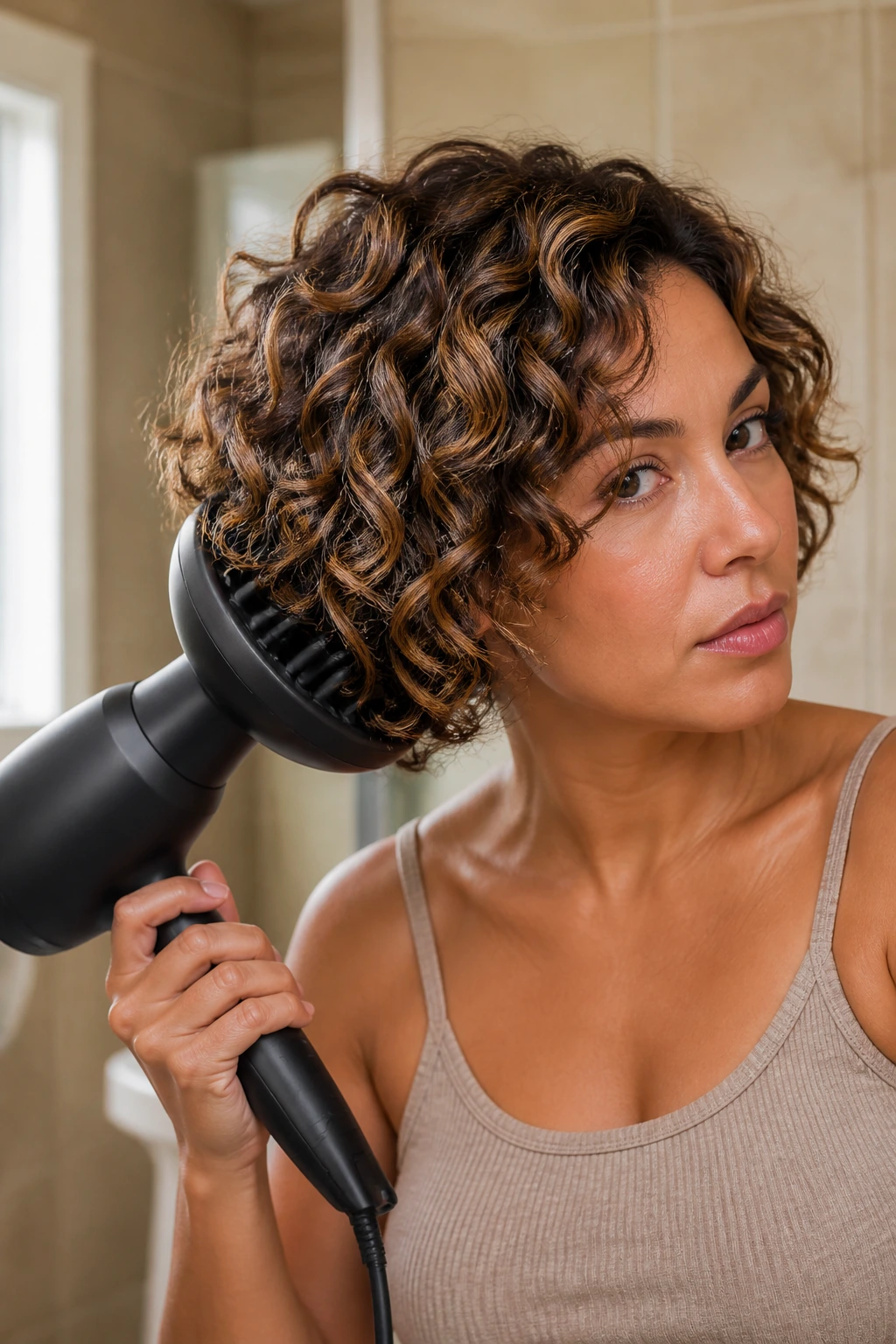
A diffuser attachment: It helps set curl shape without blasting the bob into a frizzy triangle, especially around the crown and nape.
-
A microfibre towel or cotton T-shirt: Rough terry cloth can rough up the cuticle and make caramel highlights look duller than they are.
-
A wide-tooth comb: Use it in the shower with conditioner so the curls stay grouped instead of getting ripped apart.
-
Sectioning clips: They make wash-day styling and color consultations easier, because you can separate the top layer from the underlayer without guessing.
-
A light curl cream or foam: Heavier creams can collapse short curls; foam or a light cream gives shape without the limp finish.
-
A flexible-hold gel: Good for the bob that needs a cast, especially if the highlight placement only looks right when the curls stay clumped.
-
Color-safe shampoo and conditioner: Caramel tones dull faster when harsh cleansers strip the hair, so a gentler pair matters more than people think.
-
A silk or satin pillowcase: It reduces frizz and keeps the outline from puffing up overnight.
-
A salon gloss or toner service: Optional, but useful when you want the caramel to stay warm instead of drifting brassy or flat.
What to Tell Your Stylist in the Chair
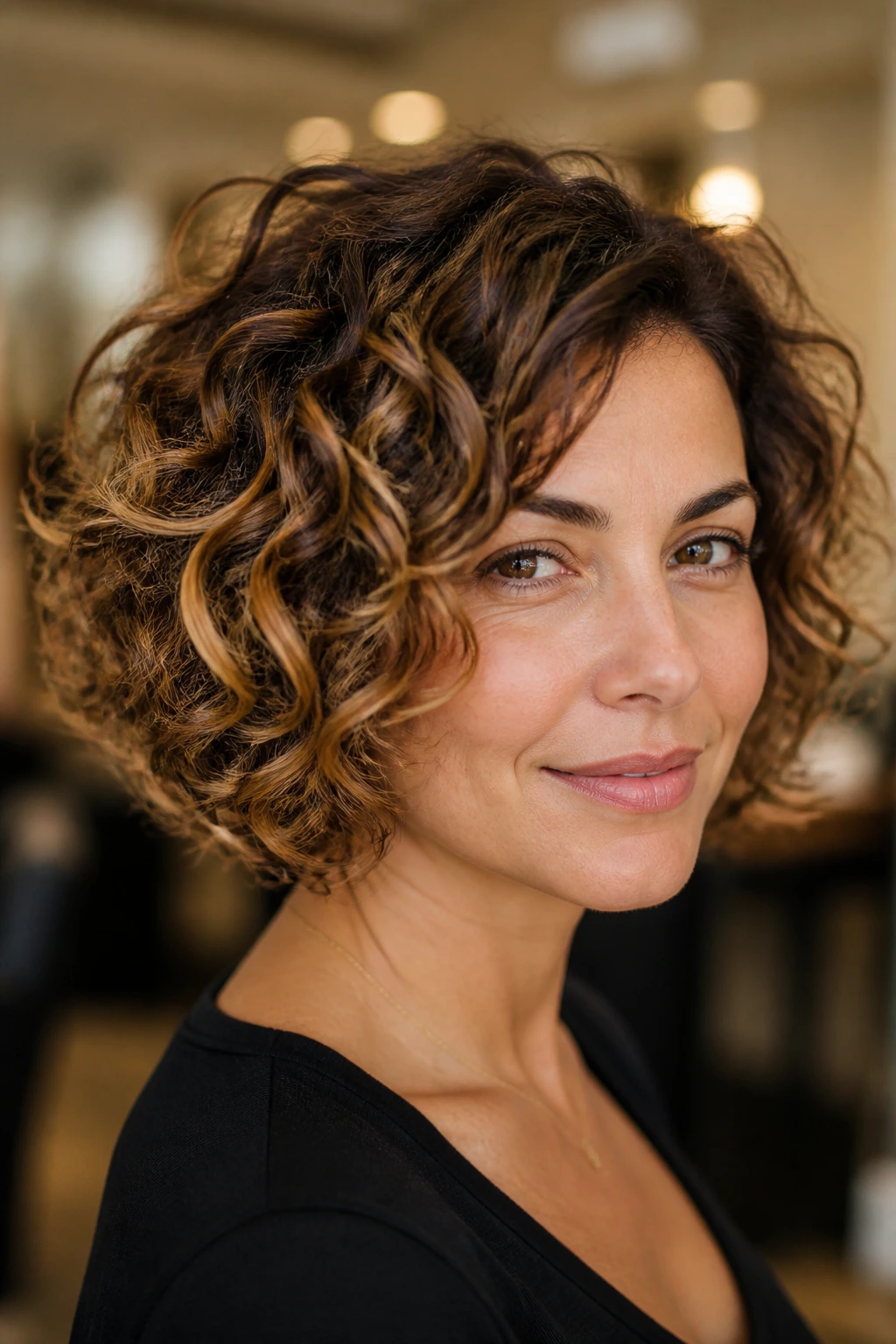
The best bob consultations are annoyingly specific. Bring photos, yes, but also tell the stylist how much your curls shrink, where your hair gets wide, and whether you want the color to read as soft ribbons or visible pieces.
Shrinkage: Say how much length you lose when the hair dries. If your curls spring up two inches, the haircut should be planned for that, not for the wet length.
Layering: Ask for internal layers if you want movement, but be cautious about over-thinning the perimeter. A bob needs an edge, even a soft one.
Highlight placement: Point to the parts of the photo you like. If the caramel sits around the face and crown in the picture, say that. If you want lowlights underneath so the color stays rich, say that too.
Tone: Warm caramel can lean gold, honey, or toffee. Pick one. If you say “caramel” and leave it there, you might end up with something brighter than you wanted.
Maintenance window: Be honest about how often you’ll come back. A sharp stacked bob needs more trims than a soft grow-out version, and the color should match your schedule.
How to Wear It on Wash Day and Day Two
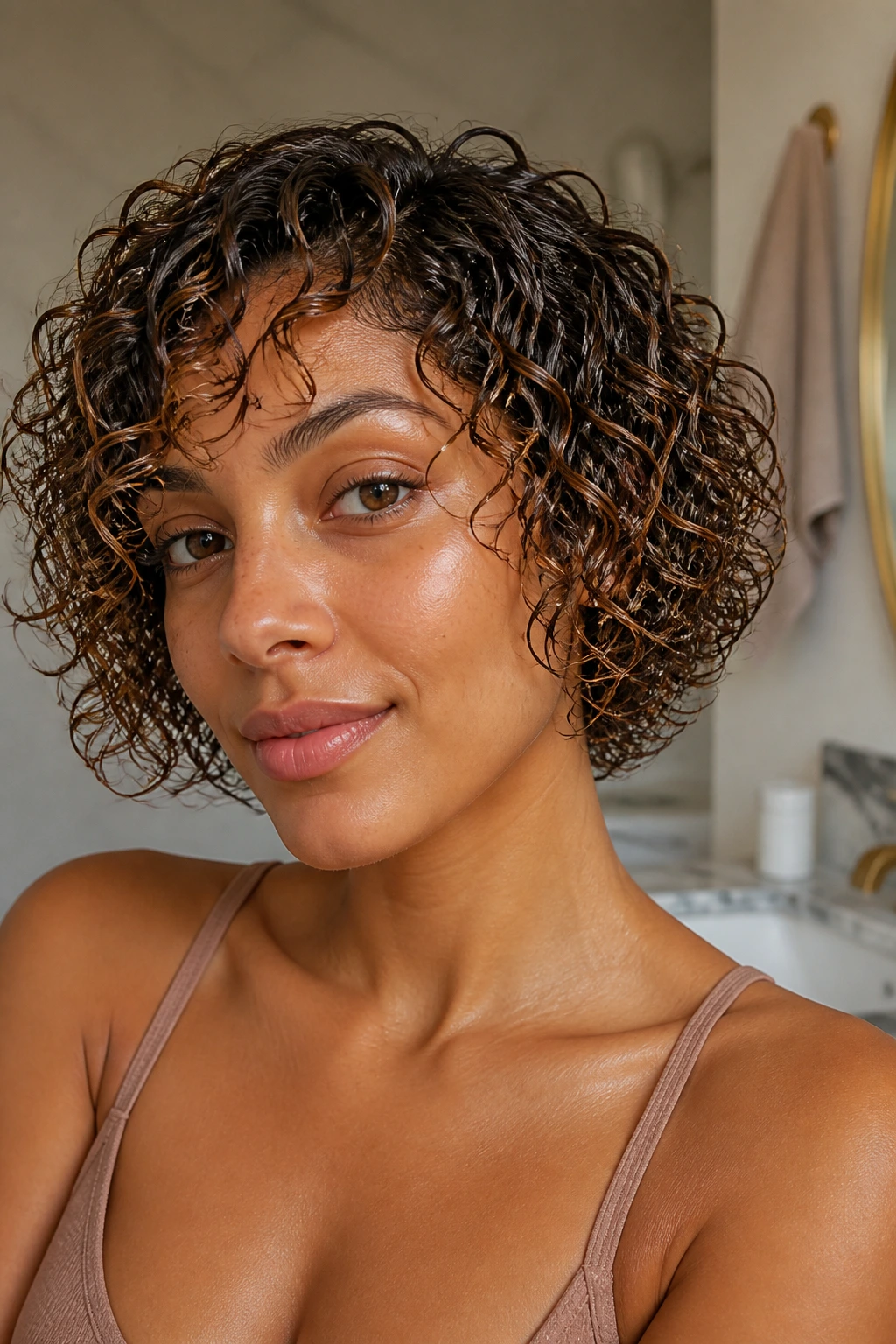
Wash Day: Start on soaking-wet hair. Short curly bobs need product distributed while the curls are still clumped, not after they’ve started to dry into little separate frizz clouds. Work in a leave-in, then a curl cream or foam, and finish with a light gel if you want hold. Scrunch upward, then diffuse on low heat until the hair is about 80 percent dry. Stop touching it early. That’s the part people ignore.
Day Two: Use a spray bottle to mist the bob lightly, then wake the curl clumps back up with damp hands. You do not need to drench the hair again. Usually a pea-sized amount of cream or a drop of serum on the ends is enough. If the root has collapsed, flip the part, finger-lift the crown, and let the curls settle before you overcorrect.
For Shine: A tiny amount of lightweight oil on the ends makes the caramel pieces look richer. One or two drops, no more. Too much product flattens the top layer and makes the color look dirty.
For Hold: If your curls are loose, mousse often works better than heavy cream. If they’re tighter, a gel cast can keep the bob shape crisp through the day.
Keeping the Shape and Color Between Appointments
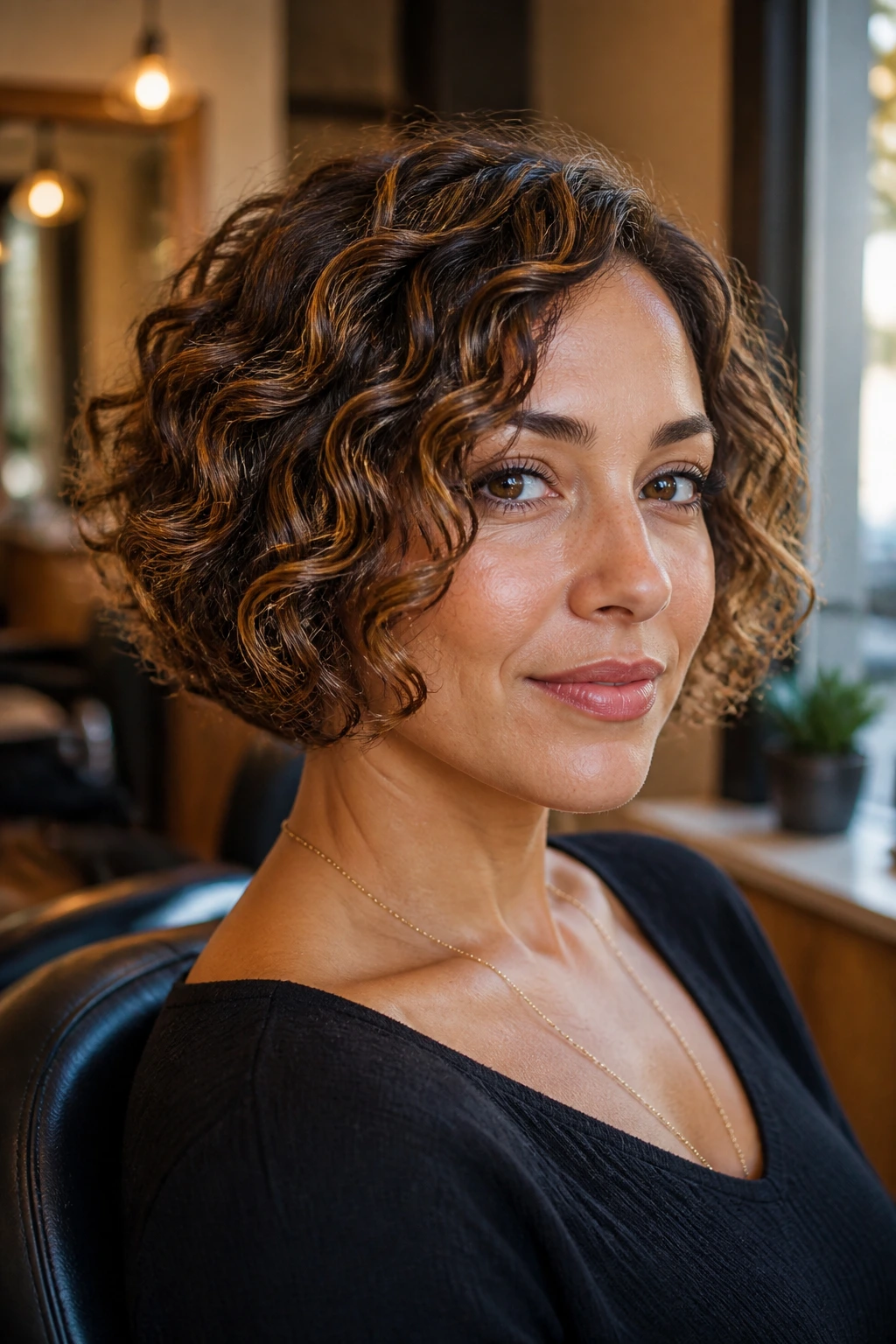
Curly bobs do not forgive neglect. The cut grows out faster than people expect because the shape changes before the actual length feels dramatic. A trim every 8 to 10 weeks keeps the line clean; if your hair is dense or your bob is stacked, 6 to 8 weeks is safer.
The color needs a rhythm too. Caramel highlights stay nicest when they get a gloss or toner refresh every 6 to 10 weeks, depending on how warm your base runs and how much sun your hair sees. If the caramel starts to turn dull or muddy, a salon gloss usually fixes it faster than trying to wash it back to life at home.
Between visits, use a deep conditioner once a week and a clarifying shampoo every 2 to 4 weeks if product builds up. Build-up is sneaky on short curls. It makes the roots heavy, the highlights flat, and the bob less rounded than it should be. Sleep on a satin pillowcase or bonnet, and the back of the cut will thank you the next morning.
Common Slip-Ups That Flatten the Whole Look
-
Cutting the bob to the wet length only: Curly hair springs, often more than expected. If the cut is planned on stretched hair alone, the finished bob can land far above the jaw and lose its balance. Fix it by cutting with shrinkage in mind or by working dry.
-
Overloading the hair with bright pieces: Too many caramel sections can make a short curly bob look striped instead of dimensional. Keep the brightest pieces in the face frame and crown, then soften the rest with deeper lowlights.
-
Thinning the ends too aggressively: The bob may look airy for an hour, then turn wispy and uneven. Internal weight removal is safer than carving up the perimeter.
-
Using heavy butters on fine or loose curls: The hair clumps, then collapses. A light cream or foam often gives a cleaner shape, especially on short cuts that can’t carry a lot of product.
-
Ignoring the part line: A center part, side part, or shifted part changes where the weight falls. If the part never gets adjusted, the bob can start looking lopsided or flat at the roots.
Variations Worth Trying Next
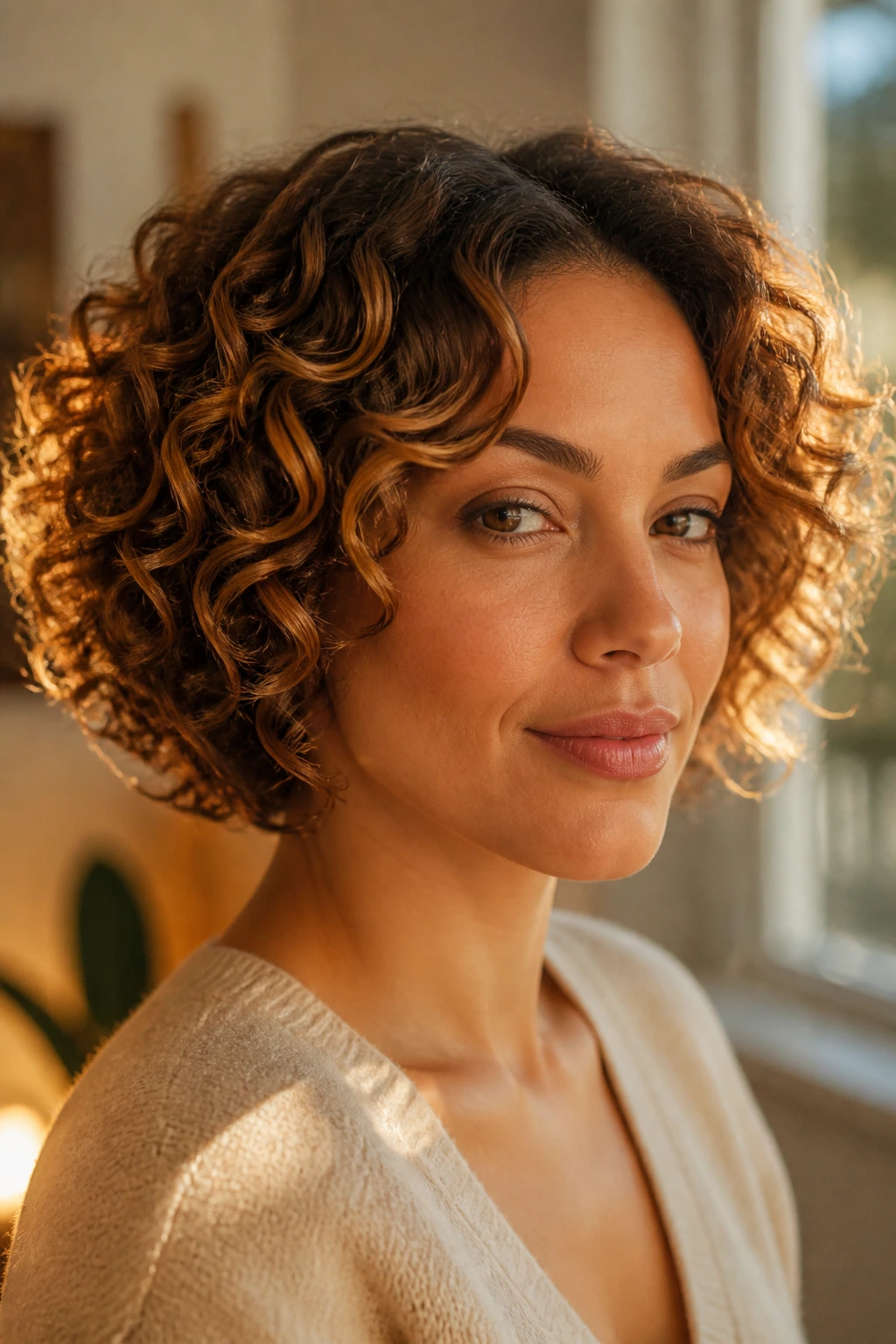
Sunlit Halo Bob: Brighten only the top outer curve and the money piece near the face. This works when you want caramel to feel light and airy rather than clearly streaked.
Espresso-and-Caramel Bob: Keep the base deep and thread just enough warm highlights through the crown and sides. Add a few lowlights under the top layer if you want the curl pattern to look richer and heavier in a good way.
Soft Fringe Bob: Add longer curtain bangs or a light French fringe, then keep the highlight line around the eyes and temples. It softens a strong forehead and gives the bob a more relaxed shape.
Root-Melt Balayage Bob: Start the caramel lower and let the root stay darker for a longer stretch. This is the one to pick if you hate hard regrowth lines and want the cut to age quietly.
Glossed Honey Bob: Warm the caramel tone a notch and finish with a clear gloss so the highlights reflect more light. It’s a strong choice for darker bases that need warmth without going blonde.
Frequently Asked Questions About Curly Short Bobs and Caramel Highlights
Can curly hair really pull off a short bob without looking puffy?
Yes, if the layers are cut for your curl pattern and not just for a shape on a hanger. The bob needs internal structure, especially around the nape and sides, so it bends instead of spreading.
Do caramel highlights work on dark curly hair?
They do, but the placement matters more than the shade name. On very dark bases, thin ribbons with a few deeper lowlights usually look richer than a big block of brightness.
Is balayage better than foils for curly bobs?
Balayage usually gives a softer, more blended look, while foils can create brighter, more defined pieces. If you want a gentle grow-out, balayage wins. If you want clear face-framing pops, foils can be the better move.
How short is too short for tight curls?
That depends on shrinkage and density, but anything above the jaw can get tricky if the curl pattern is very tight. A good stylist will show you where the curls sit once they’re dry instead of guessing from wet length.
Will fine curly hair look thinner with a bob?
Not if the cut is balanced. Fine hair usually needs fewer layers, not more, plus lighter color placement so the ends keep their body.
How often should I refresh the caramel color?
A gloss or toner every 6 to 10 weeks is a reasonable rhythm for most curly bobs. If the highlight placement is soft and rooty, you can stretch it longer without the look falling apart.
What if one side of my curly bob dries flatter than the other?
Shift your part, clip the flatter side at the root while it dries, and avoid piling product where the curl already collapses. The issue is often root direction, not the cut alone.
Can I wear this style without heat styling?
Absolutely. A good curly bob should air-dry into shape if the cut and product load are right. Diffusing helps, but it should support the curl, not create the whole look from scratch.
Why This Cut Keeps Working

What makes these bobs stick around is not trend noise. It’s the way they solve actual curly-hair problems: too much width at the sides, flat roots, frizzy ends, color that disappears into the pattern, or a bob that turns boxy the minute it dries. Caramel highlights help by giving the eye a path through the texture. The layers help by letting the curls sit where they want without swallowing the shape.
If you’re taking one idea to the salon, make it this: the best short curly bob is cut and colored as a unit. The shape should make the highlights look richer, and the highlights should make the shape look more alive. Save a photo that matches your curl type, say how much your hair shrinks, and ask for the caramel to sit where the curl bends hardest. That’s where the style starts to make sense.