



Olive skin and ash blonde can be a gorgeous pairing when the tone is handled with a little restraint. Push the blonde too icy, and the face can go flat. Keep it too golden, and you lose the point of going ash in the first place. The sweet spot sits in that smoky middle zone — beige, pearl, taupe, mushroom, silver-beige — where the hair looks cool, but your skin still looks awake.
That balance matters more on olive skin than on almost any other undertone. Olive complexions often carry a green-gold cast that can fight with harsh platinum or overly blue toner. A level 8 ash beige, a soft shadow root, or a pearl gloss can make the whole face look cleaner and more lifted, while a hard white-blonde can drag everything down. It’s a small difference on the color wheel. On the face, it’s huge.
The 25 cool ash blonde hair color ideas for olive skin below range from low-maintenance rooty looks to brighter, more polished blondes that still keep their cool. Some lean smoky and soft. Some lean crisp and frosted. A few are for people who want barely-there brightness, and a few are for the ones who want the room to notice the hair before they notice the shoes. Start with your base color, your maintenance tolerance, and how much contrast you want around the face.
Why These Cool Ash Blonde Shades Work on Olive Skin
-
Muted tones beat hard silver: Beige-ash, taupe, and pearl blondes keep olive skin from looking gray or washed out the way an ultra-white tone often does.
-
Root depth is your friend: A level 5 to 7 shadow root gives the blonde shape and keeps the color from sitting like a pale cap on top of the head.
-
Placement changes the whole mood: Babylights, balayage, and face-framing pieces all land differently on olive skin, even when the toner is the same.
-
Not every olive undertone wants the same ash: Warm olive skin usually likes more beige and sand; neutral olive can handle pearl and silver-beige; deeper olive often looks best with smoky bronde and dimension.
-
Cool doesn’t have to mean stark: The prettiest ash blondes for olive skin keep a little softness in the mids and ends, which is why they still look good after a few weeks of grow-out.
-
The best versions have contrast: Even the lightest shades look better when they leave some root shadow or lowlight underneath. Flat blonde is the enemy here.
1. Smoky Sand Ash Blonde
Smoky Sand Ash Blonde sits right between beige and gray, which is exactly why it flatters olive skin so well. The shade has enough softness to keep the face from looking chalky, but enough coolness to read as ash instead of warm blonde. Ask for a level 8 beige-ash gloss over fine highlights, then keep the root a shade or two deeper so the color has shape.
This one looks especially good on medium olive skin with a muted gold cast. It gives you that expensive-looking, sunless-summer feel without pushing the hair into silver territory. On waves, the tone looks soft and sandy. On straight hair, it reads cleaner and more modern.
2. Rooted Beige Ash Blonde Bob
A rooted beige ash blonde bob is the low-drama answer for people who want ash blonde without the constant salon panic. The darker root gives the cut weight, while the beige-ash lengths keep the color cool enough for olive skin. The bob shape helps too; it makes the tone feel intentional, not washed out.
This works best when the root stays at least one full level deeper than the lightest pieces. That contrast keeps the cheek area bright and the crown grounded. If your skin leans warm-olive, this is one of the safest blondes to try because the beige softens the ash before it gets too icy.
3. Mushroom Blonde With Soft Lowlights
Mushroom blonde has that earthy, smoky thing that olive skin tends to love. It pulls in taupe, beige, and a little gray-brown, which makes it feel richer than a plain ash blonde. The soft lowlights are the part that keeps it interesting; they stop the hair from becoming a single flat pale mass.
If your natural base is dark blonde or light brown, this is one of the easiest cool-blonde directions to wear. It doesn’t scream bleach. It whispers dimension. And on olive skin, that whisper is often more flattering than a shout.
4. Pearl Ash Blonde Lob
Pearl ash blonde has a smoother, brighter finish than mushroom blonde, but it still stays cool enough to suit olive skin. The pearl note softens the ash so it doesn’t turn chalky, especially around the temples and cheekbones. On a lob, the clean lines make the color feel polished instead of fussy.
I like this one for neutral olive skin because it gives a little brightness without crossing into stark platinum. It also works well if your hair has a natural bend. Loose waves show the pearl dimension better than poker-straight hair, which can make the tone look flatter than it really is.
5. Icy Babylights on a Dark Root
Want brightness without fully bleaching the whole head? Icy babylights on a dark root do the job. The tiny highlights create a soft frost effect, while the deeper base keeps olive skin from going ghostly. This is one of those looks that seems subtle in a mirror and a little more sparkly in daylight.
The trick is spacing. Babylights should be fine enough that the darker root still shows through, especially near the part and hairline. On olive skin, that contrast keeps the face from disappearing into the blonde. It’s a neat fix for anyone who wants a lighter look but not the upkeep of a full platinum job.
6. Ashy Balayage With a Shadow Melt
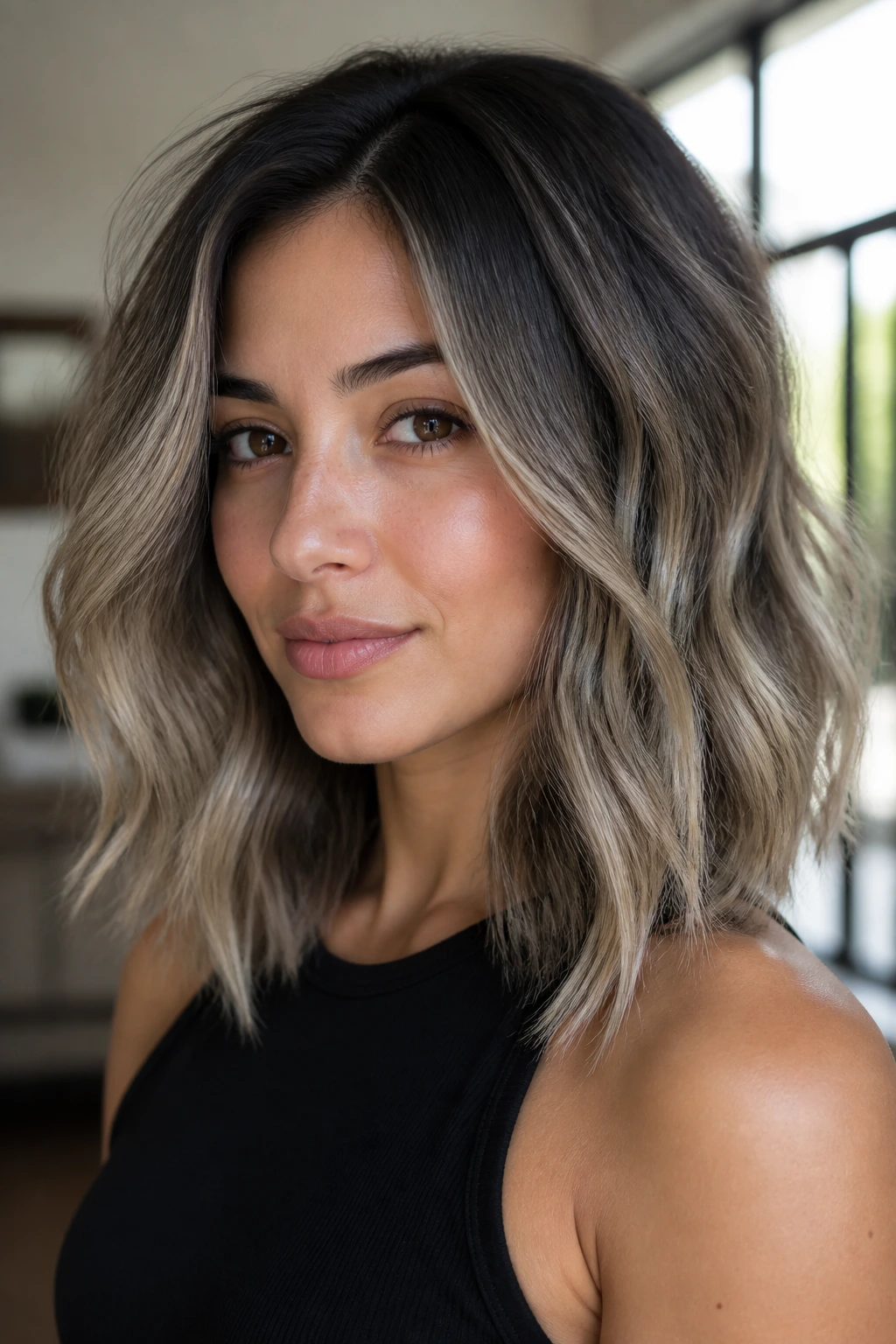
Ashy balayage with a shadow melt is the color I’d hand to someone who wants movement more than brightness. The hand-painted pieces lighten the mid-lengths and ends, then the shadow melt blurs everything near the root so the grow-out looks soft. On olive skin, that blur matters. It keeps the blonde from sitting too sharply against the face.
This is especially good on shoulder-length layers and long waves, where the different tones can slide through the hair instead of sitting in hard stripes. If your natural color is brunette, this gives you a cool blonde finish without erasing your base. That’s usually the smarter way to go.
7. Silver-Beige Face Frame
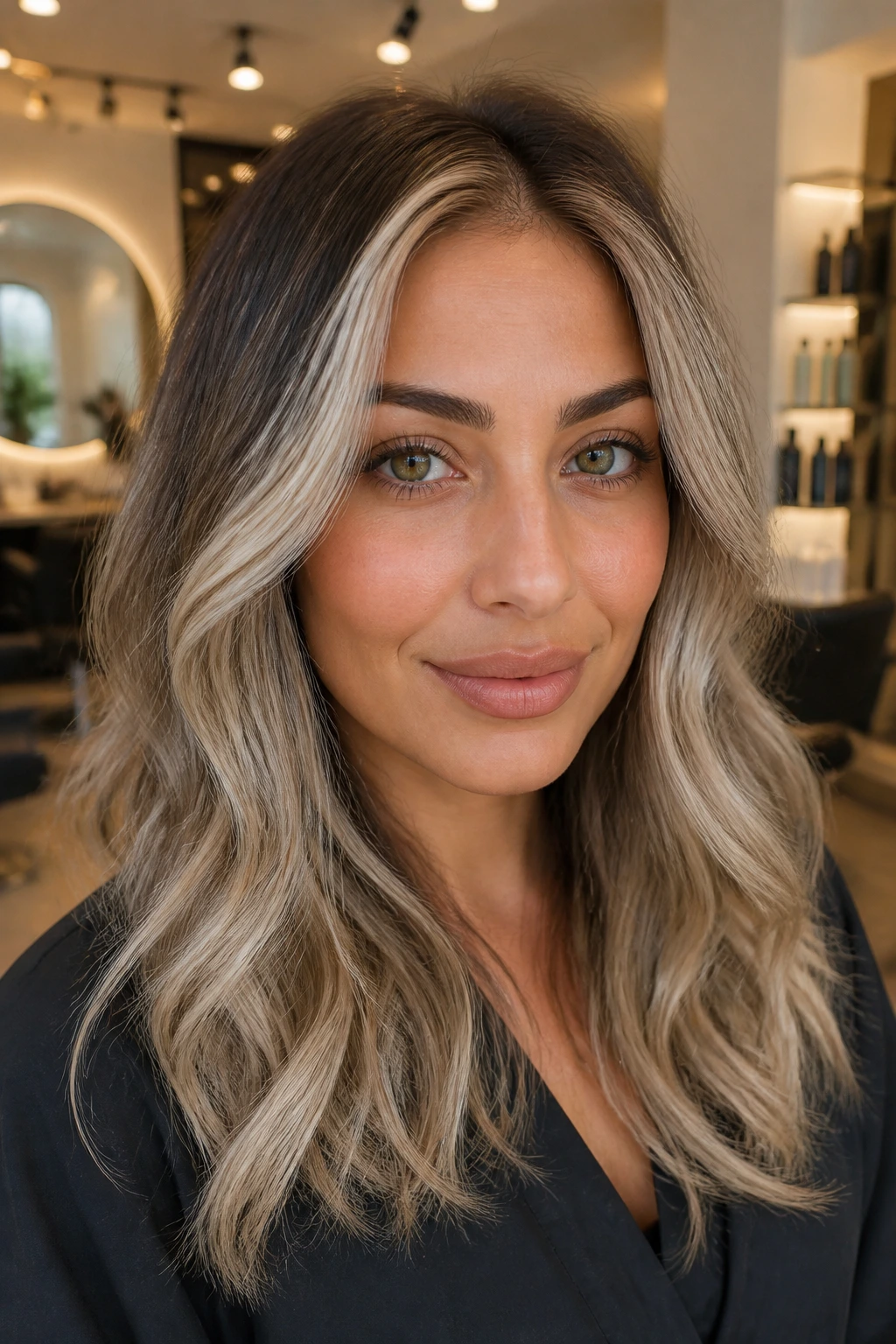
A silver-beige face frame gives olive skin a quick hit of brightness without the commitment of going all over light. The face-framing pieces are lighter than the rest, but the silver-beige tone keeps them from looking cold in a harsh way. It’s a good choice if you like a clean front section and darker depth underneath.
This works best when the front pieces are blended with a soft root shadow, not dropped in as chunky streaks. The effect is cleaner and more modern that way. And if your skin is medium olive, these lighter front pieces can make the eyes and cheekbones pop without forcing the rest of the hair to go ultra-pale.
8. Bronde With Cool Ash Ends
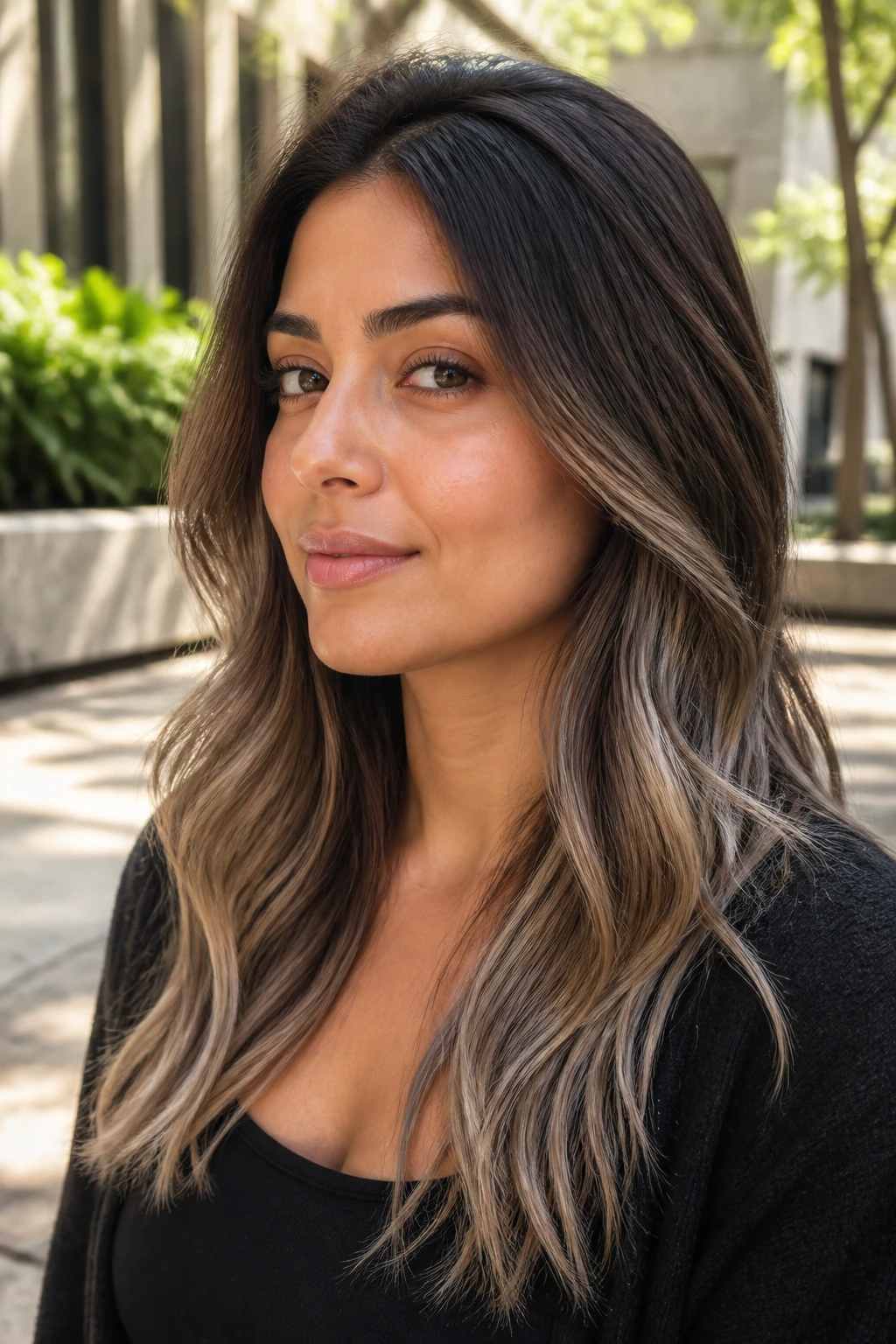
Bronde with cool ash ends is for the person who likes blonde, but not enough to give up brown entirely. The brunette base keeps the hair anchored; the ash ends add just enough lightness to feel fresh. On olive skin, that darker foundation usually looks more natural than an all-over pale blonde.
This is one of the easiest shades to live with because the grow-out stays pretty. You can push the blonde lighter at the tips and keep the crown soft and dark, which gives the face shape and prevents the ends from looking brassy. If you hate obvious salon lines, start here.
9. Frosted Champagne Blonde
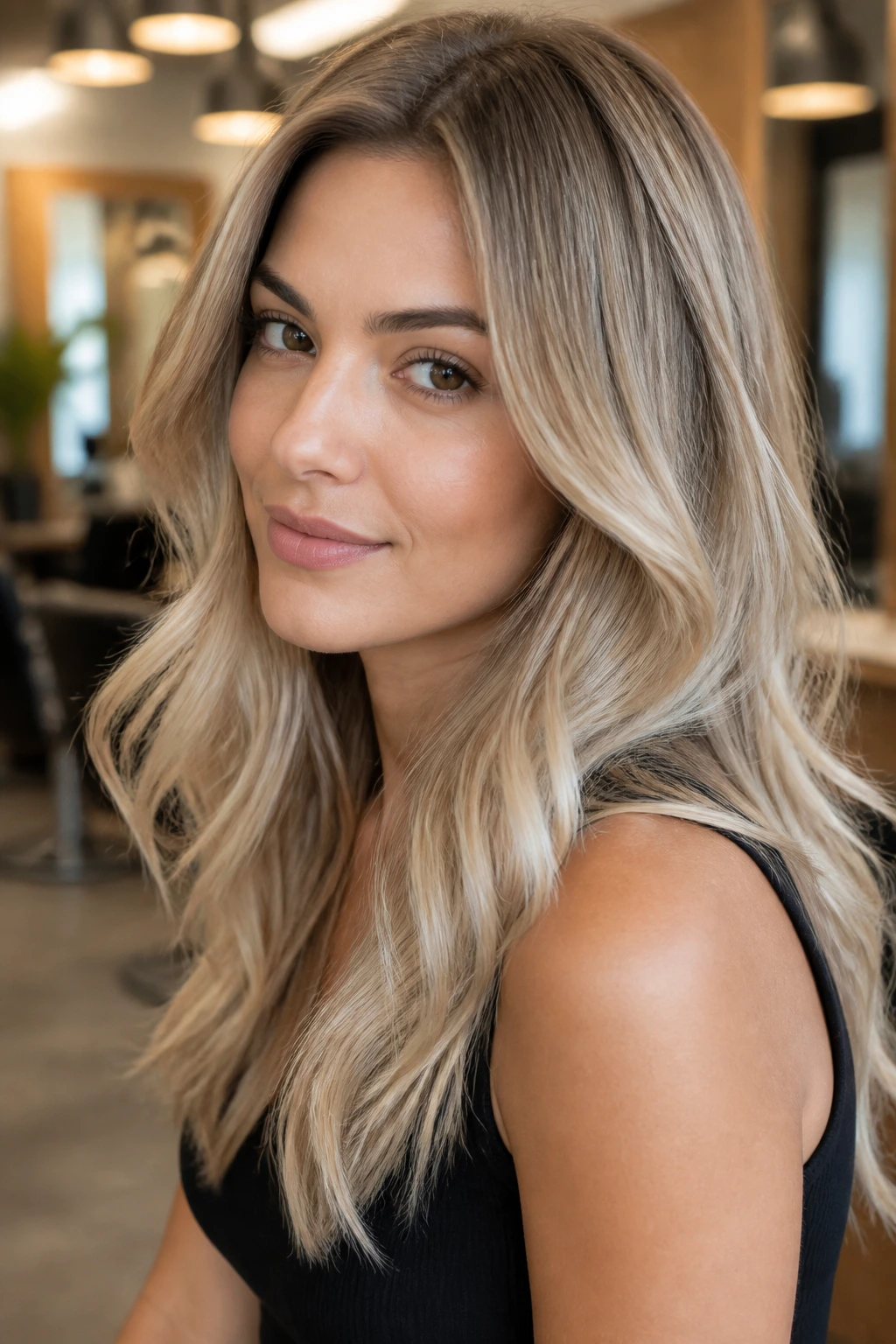
Frosted champagne blonde sounds warmer than it actually is. The “frosted” part cools the champagne so it sits closer to beige-pearl than gold, and that’s what makes it useful for olive skin. It gives you a little shine, a little glow, and none of the orange risk that comes with a truer champagne tone.
This shade is good for olive skin that leans neutral or slightly warm, especially if you want softness around the face. It looks pretty on layered cuts because the light catches the bends in the hair instead of flattening out. Keep the toner cool but not gray. Gray is where this gets weird.
10. Vanilla Ash With Curtain Bangs
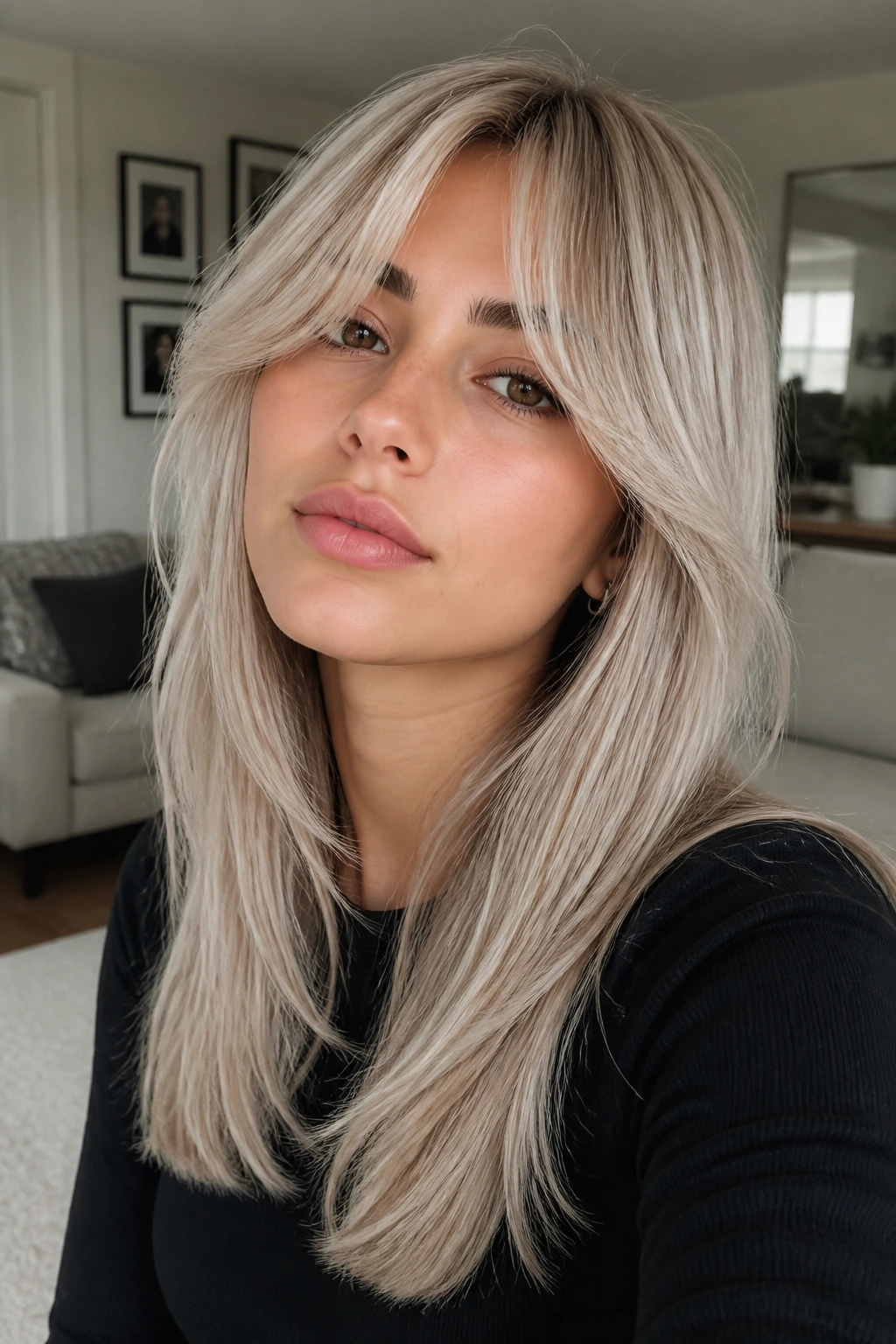
Vanilla ash blonde is softer than platinum and cleaner than warm vanilla blonde, which makes it a smart middle ground for olive skin. The curtain bangs matter here. They break up the forehead area and give the color a place to sit without overwhelming the face.
Ask for a pale ash-beige glaze rather than an icy toner that strips all warmth. That tiny beige note keeps the hair from going flat under indoor light. It’s a nice option if you want a lighter blonde that still feels approachable on weekdays, not just in a salon mirror.
11. Oyster Blonde Money Piece
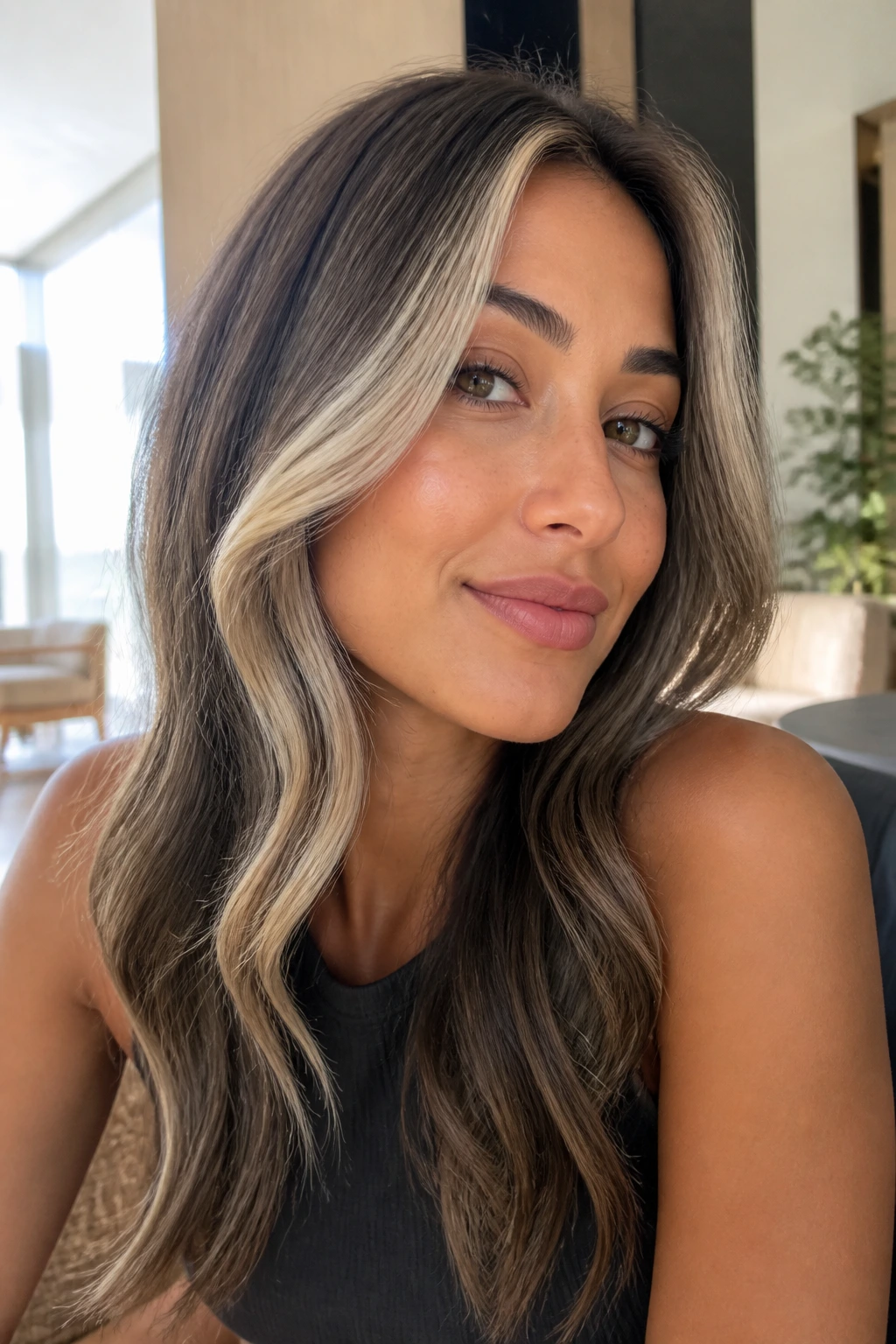
Oyster blonde has a shell-like mix of pearl, smoke, and soft beige, which makes it one of the prettiest cool tones for olive skin. With a money piece, you get the brightest color right at the front, where it can lift the complexion the most. The rest of the hair can stay a little deeper and softer.
This is a strong choice if you wear your hair up a lot or like seeing brightness around the face without committing to full-head lightening. The money piece should be blended, not sliced in like a stripe. If it looks like a white band, it’s too harsh. If it melts into the rest of the hair, you’ve got the right idea.
12. Taupe Blonde Ribbon Highlights
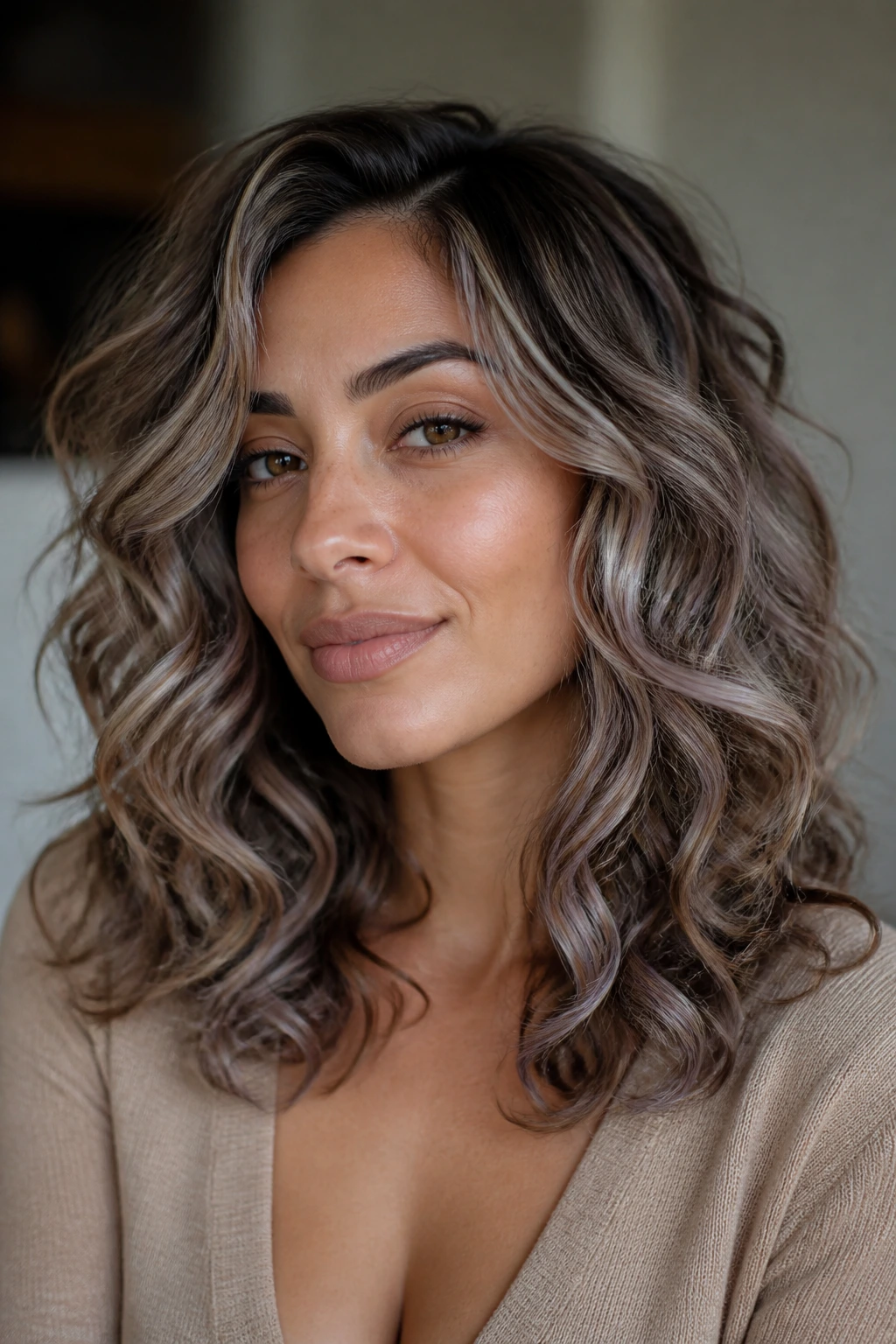
Taupe blonde ribbons work especially well on curls and loose waves because the color moves through the hair instead of sitting on top of it. Taupe sits between brown and blonde, which is why olive skin tends to like it. It gives dimension without the brashness that can come with a pure ash highlight.
This shade is a good answer for medium-to-deep olive skin that wants coolness but still needs some richness near the base. The highlights should be painted in soft ribbons, not packed in too densely. You want the hair to look threaded with light, not frosted in every direction.
13. Soft Platinum Pixie
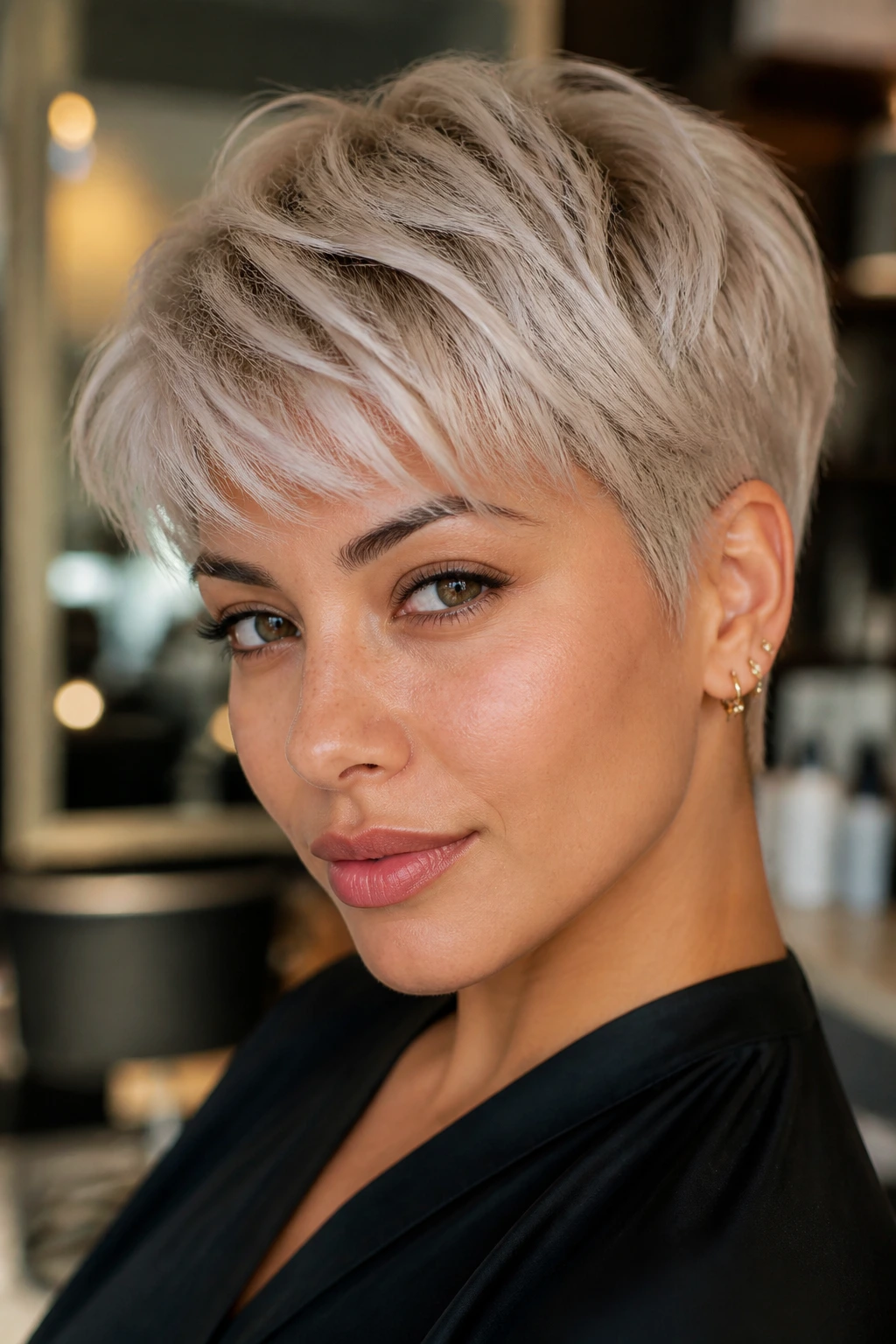
A pixie can handle a bolder ash blonde than a long layered cut because there’s less hair to read as pale all at once. Soft platinum on a pixie still needs a little beige or pearl in the toner, though, or olive skin can start to look tired fast. The short shape keeps it chic instead of severe.
I like this best when the crown is kept slightly darker and the top layers are a shade lighter. That tiny shift gives the cut texture. If you want a high-impact blonde that doesn’t drag the face down, this is one of the sharpest choices in the whole group.
14. Dusty Linen Blonde Waves
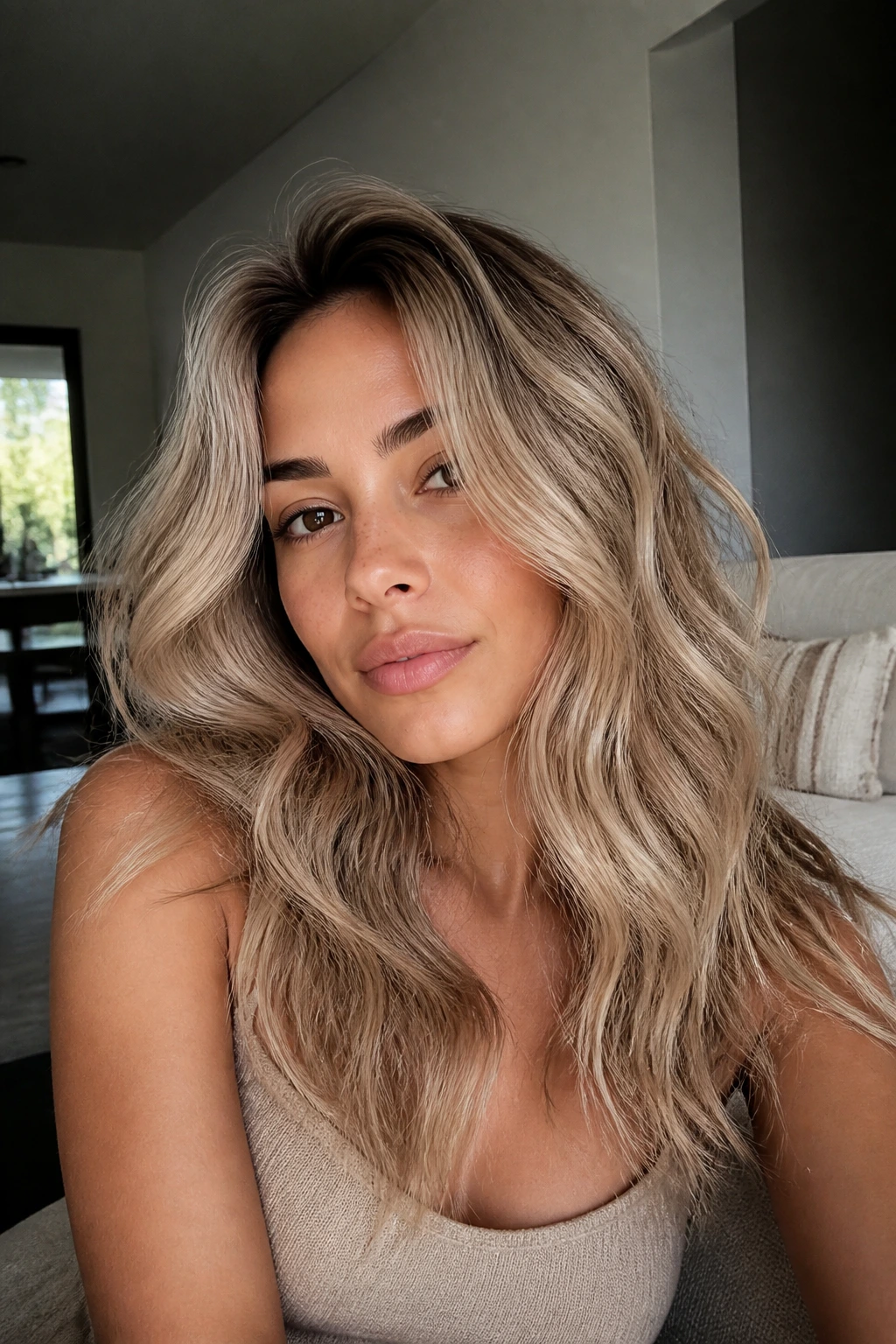
Dusty linen blonde has that faded-fabric quality that feels calm rather than flashy. It’s lighter than mushroom blonde but softer than icy platinum, which makes it a nice fit for olive skin that looks best in muted tones. The word I keep coming back to is soft. It never feels hard.
Waves help this color more than pin-straight styling does. The bends in the hair make the dusty beige notes show up, and the result looks lived-in instead of overprocessed. If your natural color is already a level 7 or 8, this shade can be a gentle step into blonde without the full commitment of white-blonde upkeep.
15. Smoke-Gray Blonde Bob
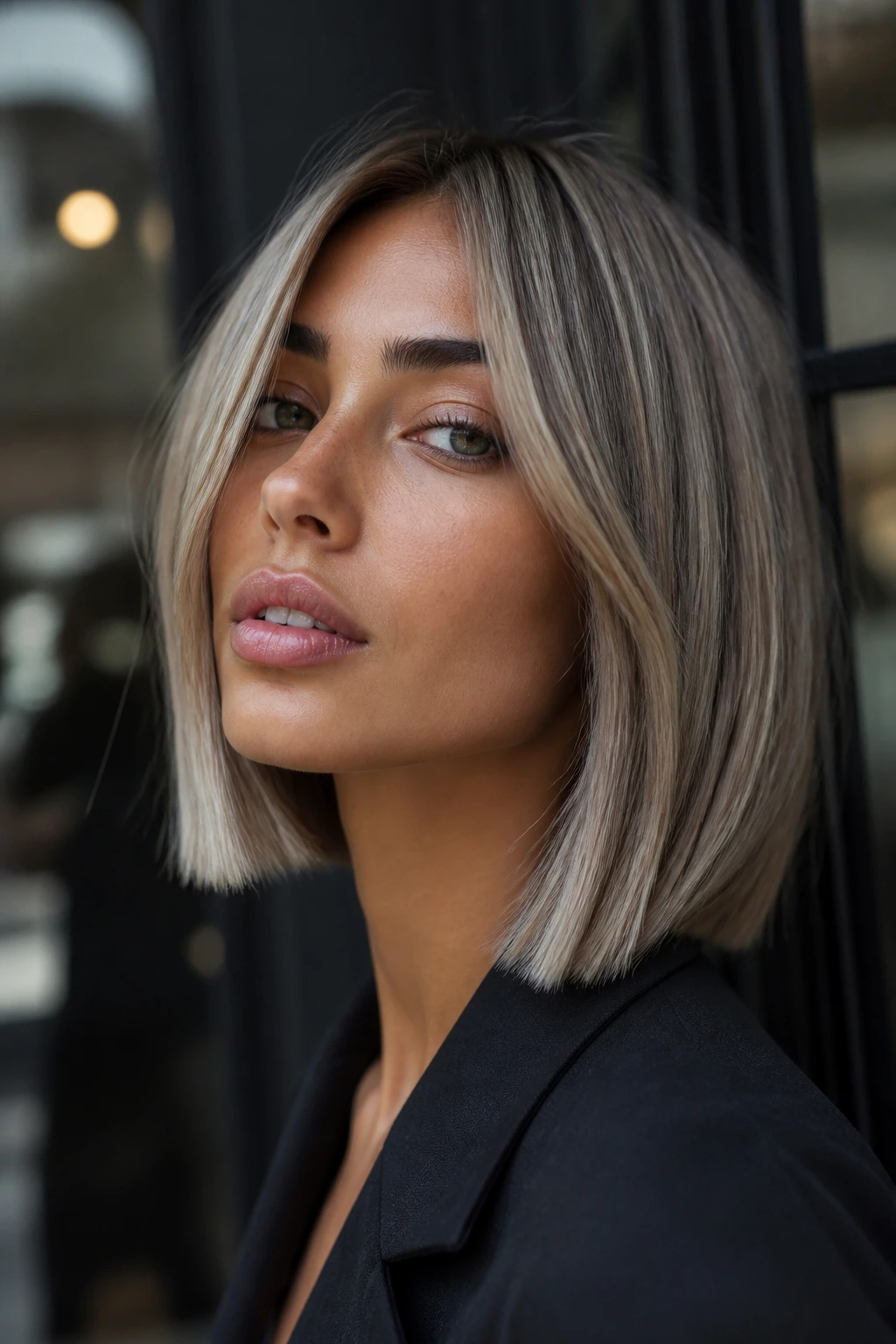
Smoke-gray blonde sits on the cooler side of ash, but it keeps a little depth so it doesn’t become flat silver. On a bob, that smoky edge feels crisp and modern. Olive skin often likes the contrast, especially if the complexion has a muted undertone that can handle gray-beige rather than gold.
This shade needs a careful hand with toner. Too much violet and it turns lilac; too much blue and it can look muddy. The right version lands in that smoky, expensive-looking middle zone where the hair color seems calm and deliberate. A blunt bob makes it even cleaner.
16. Smoked Bronde With Ash Ends
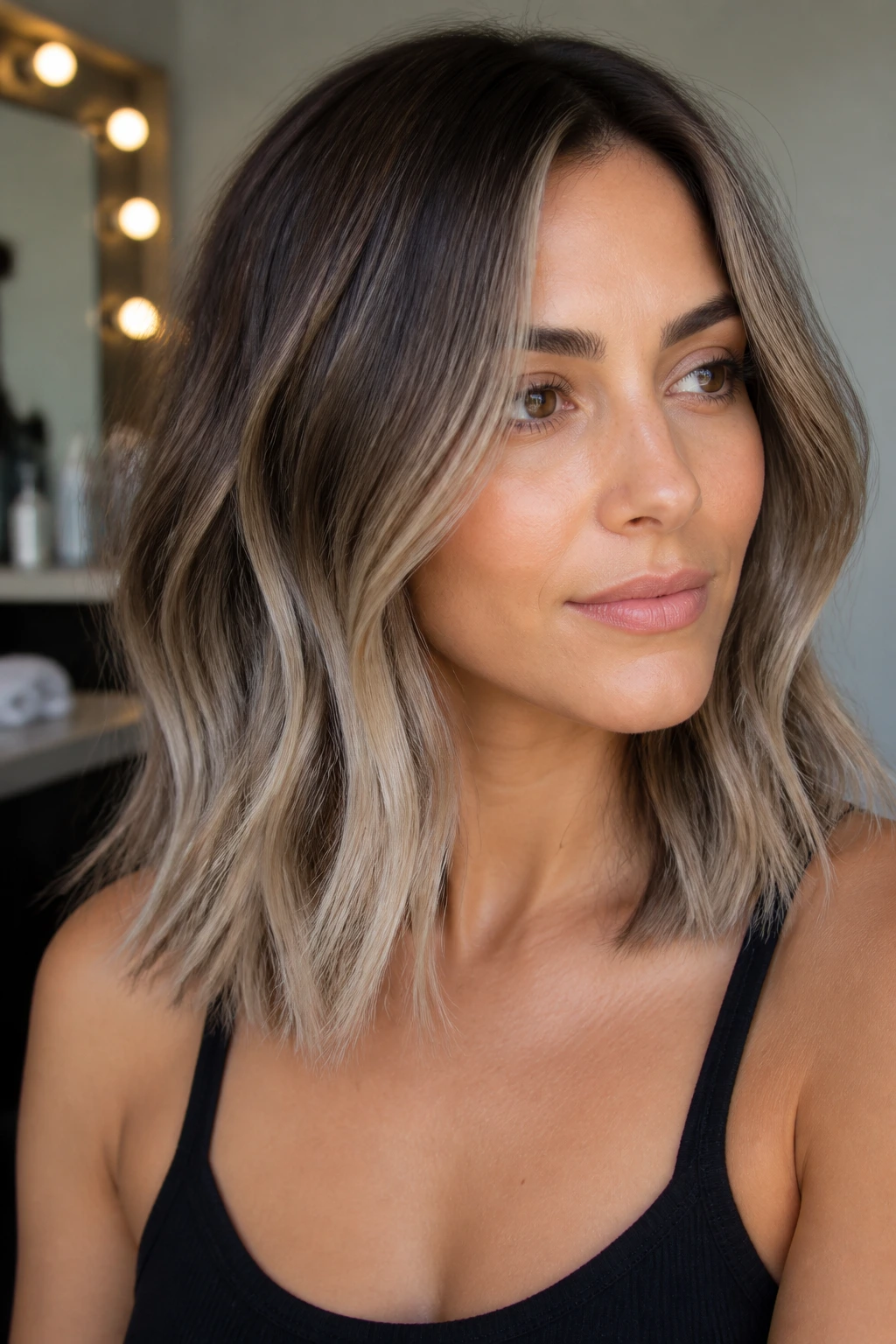
Smoked bronde is what you reach for when you want the blonde to be visible but not dominant. The brunette base gives the color structure, and the ash ends keep the finish cool enough for olive skin. It’s one of the most forgiving options in the whole set because it grows out well and doesn’t demand constant root work.
This is a smart move if your hair is naturally dark and you don’t want to spend hours lifting it to the ceiling. The smoked finish also keeps the ends from looking porous or too light, which matters if your hair has been colored before. Bronde can look dull when it’s under-toned; smoked bronde looks intentional.
17. Arctic Beige Layers
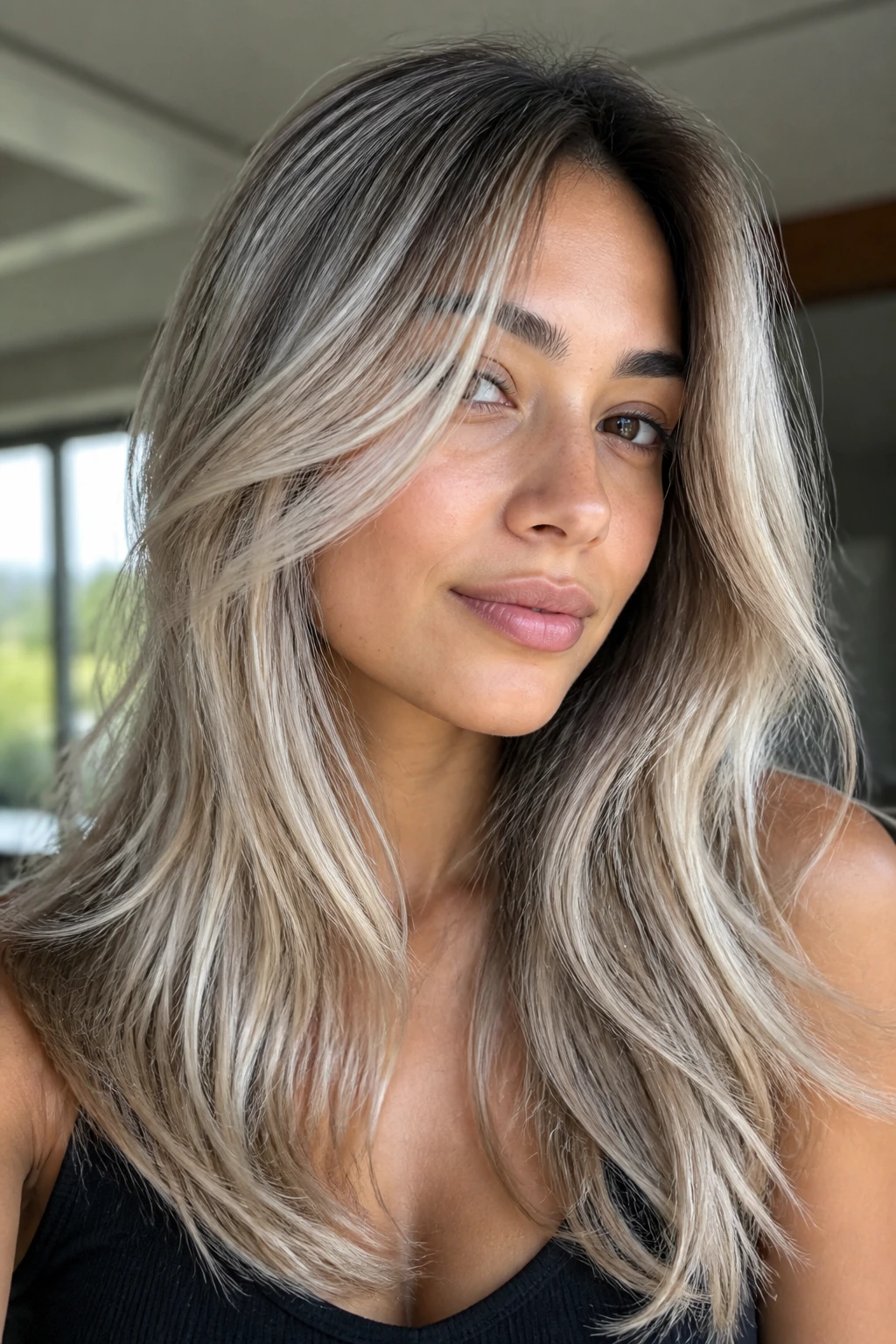
Arctic beige sounds fierce, but the beige part is what makes it wearable. Pure arctic blonde can look too stark on olive skin. Add beige into the mix, and the shade softens enough to flatter the face while still reading as very light. Layers help because they let the tone show in strips rather than one big sheet of color.
This one is for people who want to be noticeably blonde. No pretending. The best version still keeps a root shadow or darker lowlights underneath, so the hair doesn’t lose shape as it fades. If your skin is neutral olive, this can be stunning with the right contrast around the eyes and brows.
18. Glazed Ash Blonde Shag
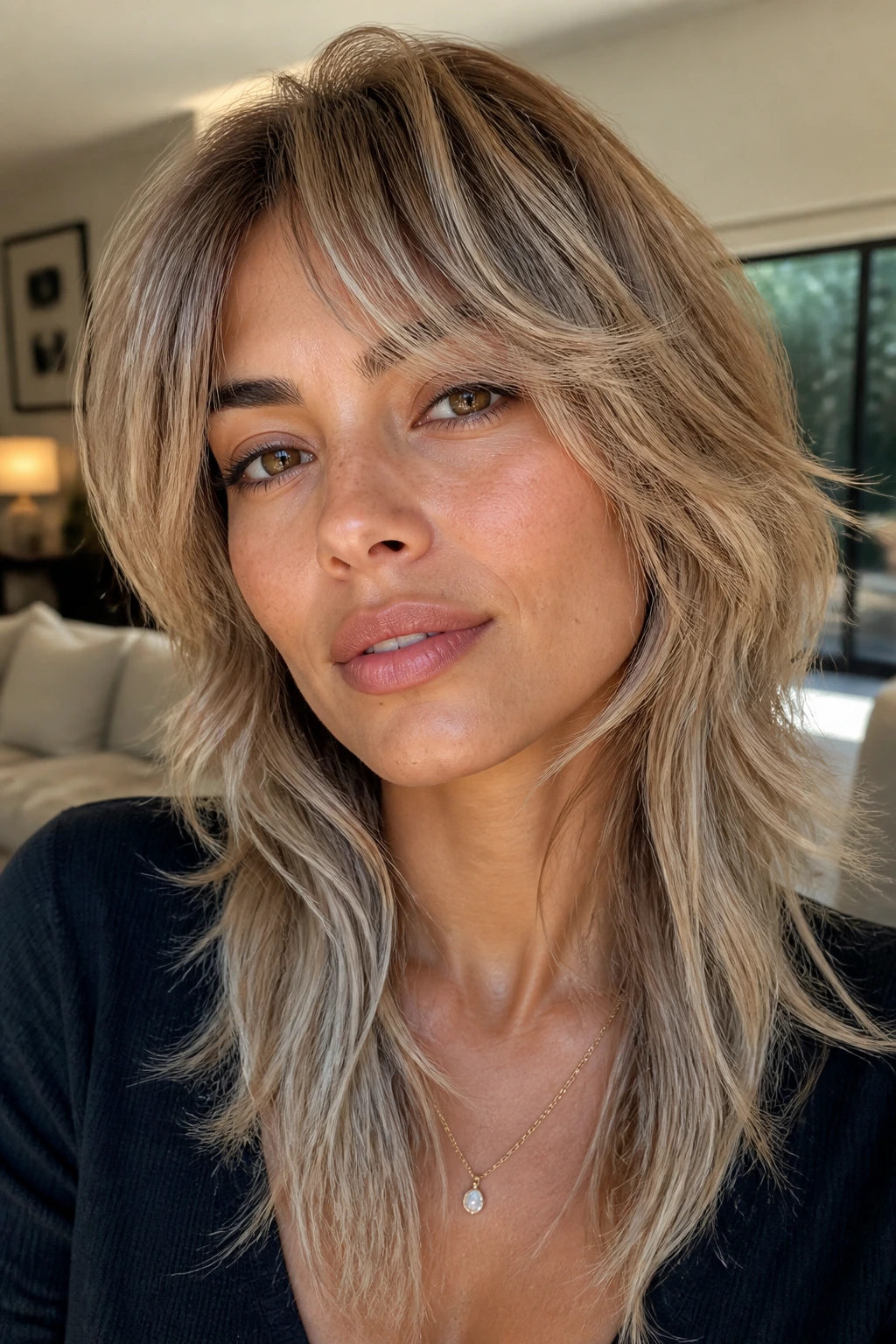
A shag loves texture, and ash blonde loves movement, so this pairing makes sense. The glaze takes the edge off the blonde and adds that cool beige finish olive skin tends to wear well. On a shag, the different lengths stop the color from feeling too neat, which is part of the charm.
This is a great cut-color combo if you want something a little gritty rather than polished. The shorter layers around the face catch the light, while the longer pieces keep the cool tone from overwhelming the whole look. It’s a little rock-and-roll, but not in a costume way.
19. Pale Pearl Balayage
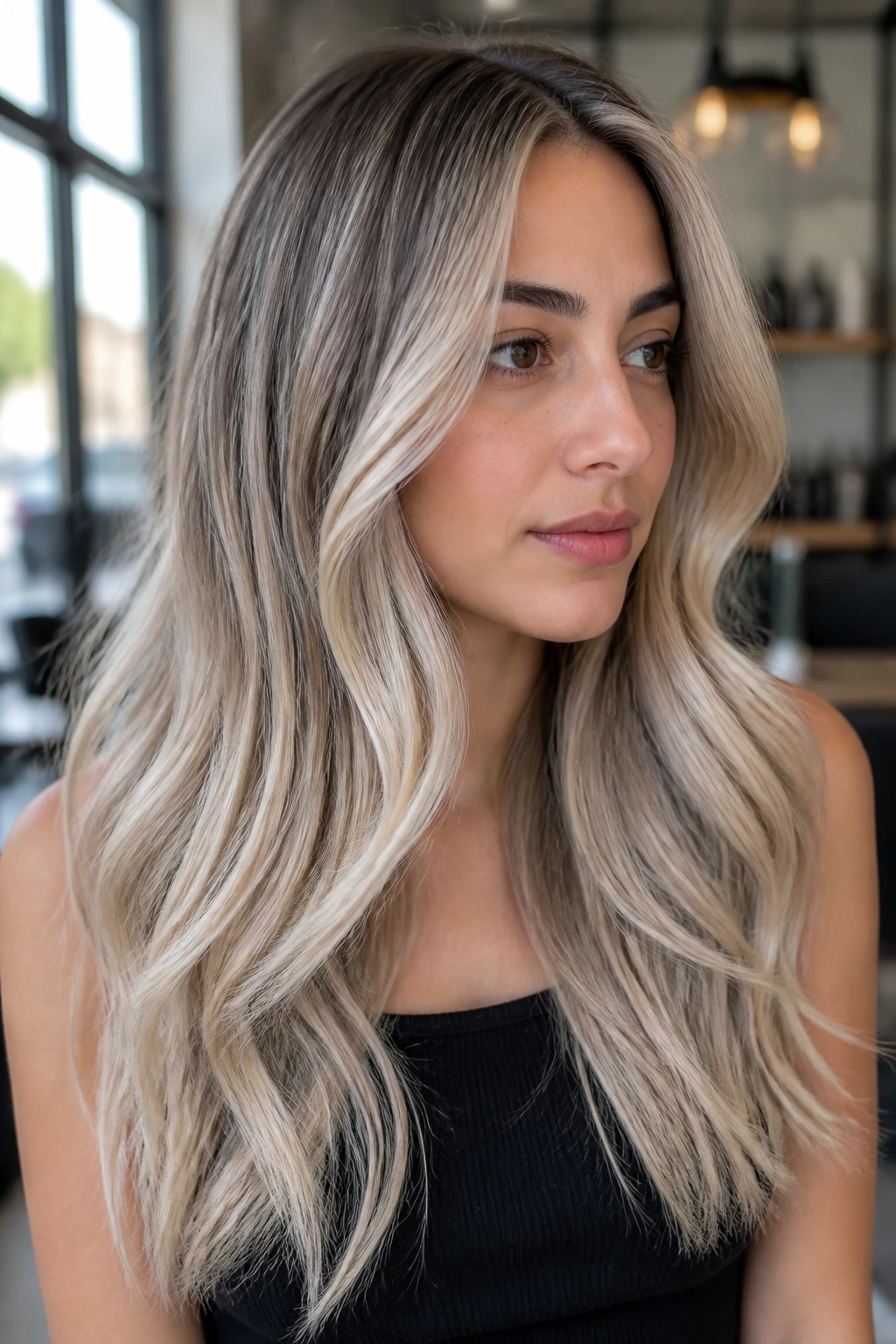
Pale pearl balayage gives you brightness with a softer edge than flat platinum. The pearl tone is key. It keeps the blonde looking luminous instead of icy-blue, which is usually kinder to olive skin. Because the highlight is balayaged, the transition from dark to light feels smoother and more expensive-looking.
This is a strong choice if you like airy, almost translucent color on the mids and ends. It looks especially good on longer cuts where the tone has room to spread out. If the base is left slightly deeper, the pearl shade on top looks cleaner and the skin underneath doesn’t lose warmth.
20. Slate Blonde Crop
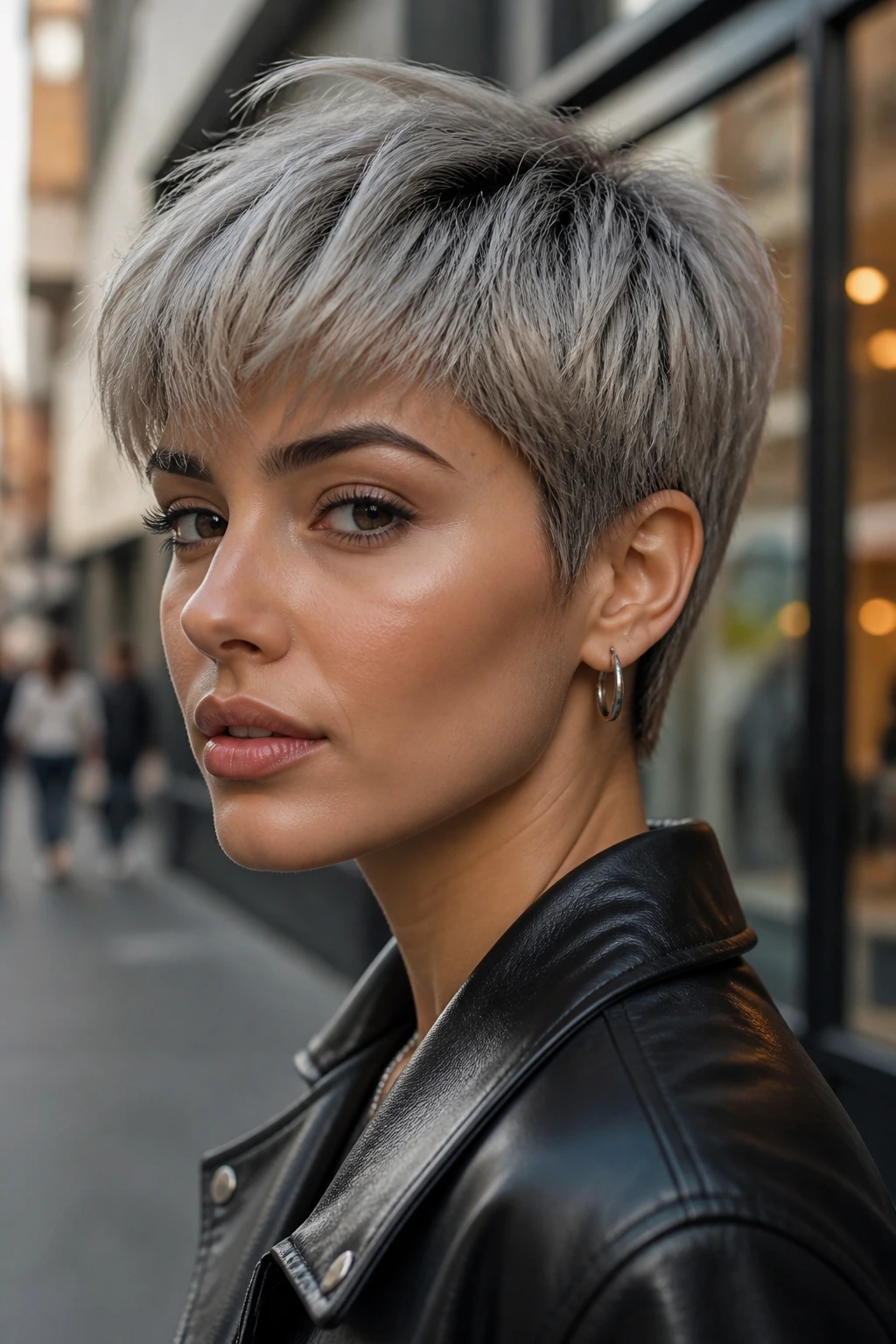
Slate blonde is one of the coolest, most editorial options here. It has a gray-beige tone that can look stunning on olive skin when the cut is short and the shape is sharp. On a crop, the color reads intentional. On long hair, it can look heavy if the tone goes too flat.
This is a choice for someone who likes strong lines and doesn’t mind a shade that leans a little fashion-forward. Keep the root shadow visible and the ends softly diffused. A crisp crop with slate-blonde texture can make olive skin look polished rather than washed out, which is the whole point.
21. Creamy Ash With Root Shadow
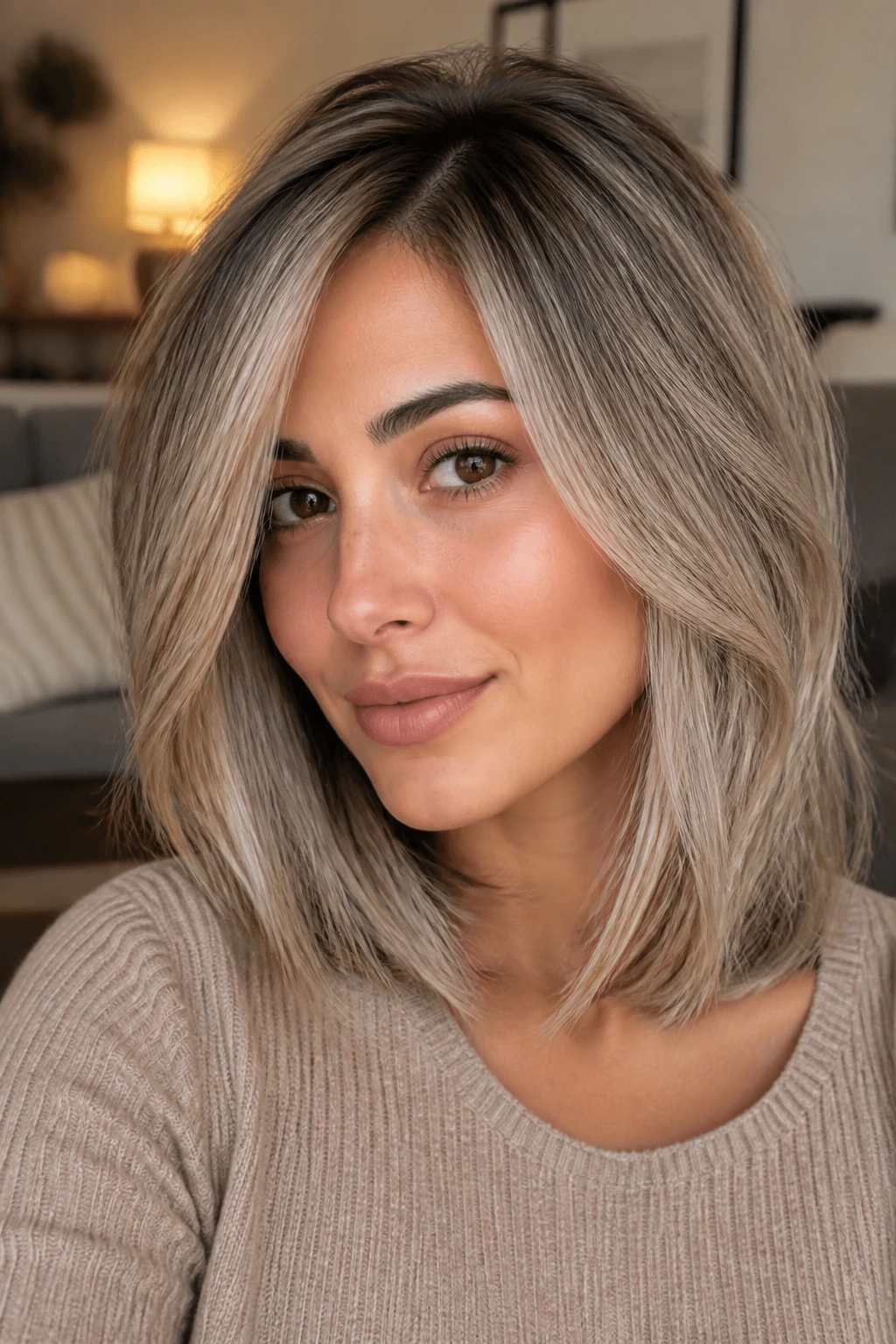
Creamy ash is the version of blonde for people who want cool, but not dry-looking cool. The cream note softens the ash, and the root shadow gives the whole style a little depth at the scalp. On olive skin, that combination is one of the safest because it avoids the harsh contrast that can make the face look tired.
This works beautifully on medium-length cuts and layered blowouts. The creaminess keeps the blonde from turning chalky in indoor light, while the shadow root keeps it from looking overbleached. If you want something wearable for everyday life, not just salon photos, this is one of the smarter picks.
22. Champagne Taupe Midlength Cut
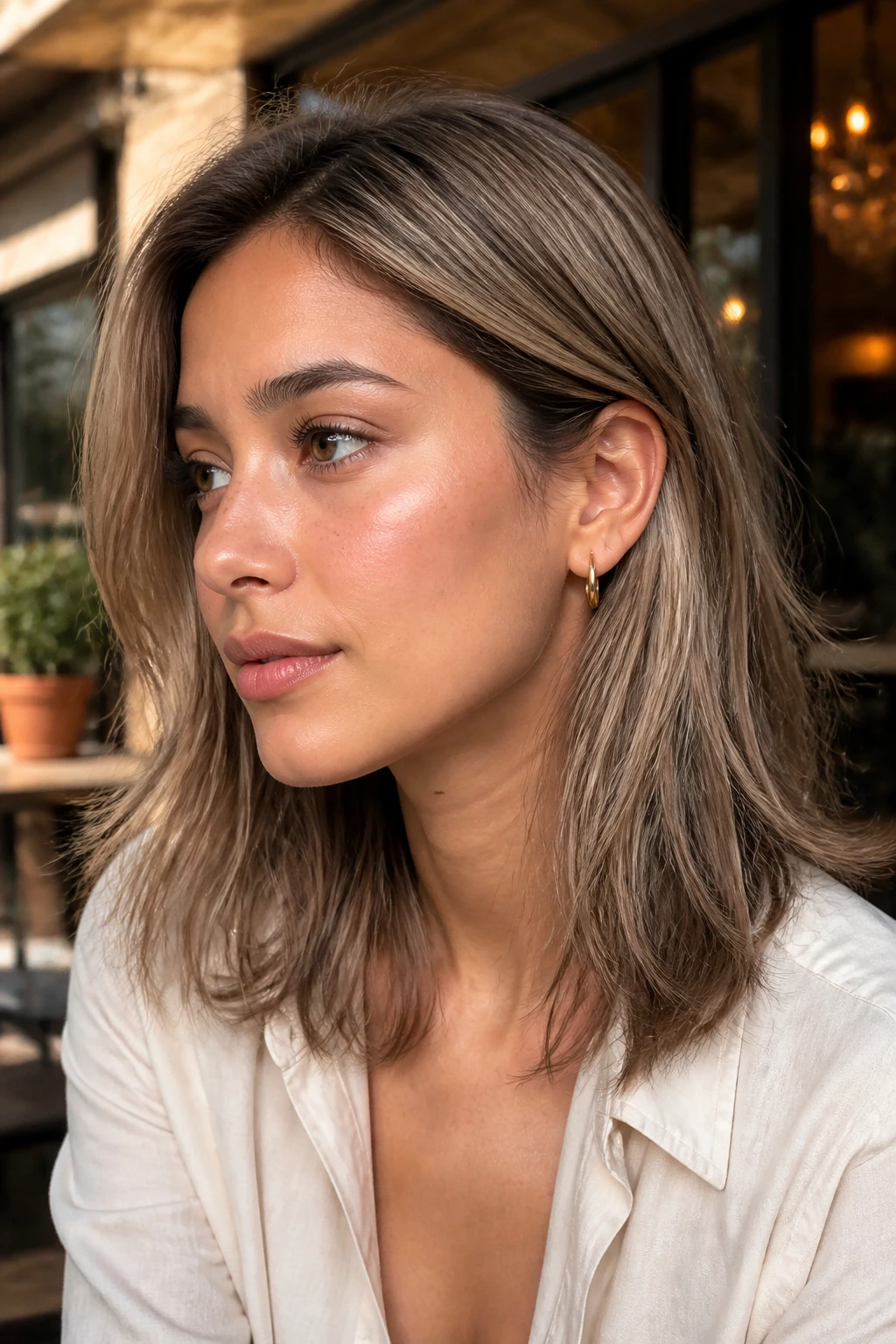
Champagne taupe sits between soft beige and smoky brown, which gives it a calm, grown-up look. On olive skin, that middle ground usually reads better than a colder silver blonde or a warmer golden blonde. The midlength cut lets the shade breathe without becoming too polished.
I like this one for people who wear their hair tucked behind the ears, clipped half-up, or worn in loose bends. The taupe keeps the blonde grounded, and the champagne note adds enough shine to stop it from looking dull. It’s understated, but not forgettable. That’s a useful lane.
23. Frosted Mushroom Pixie
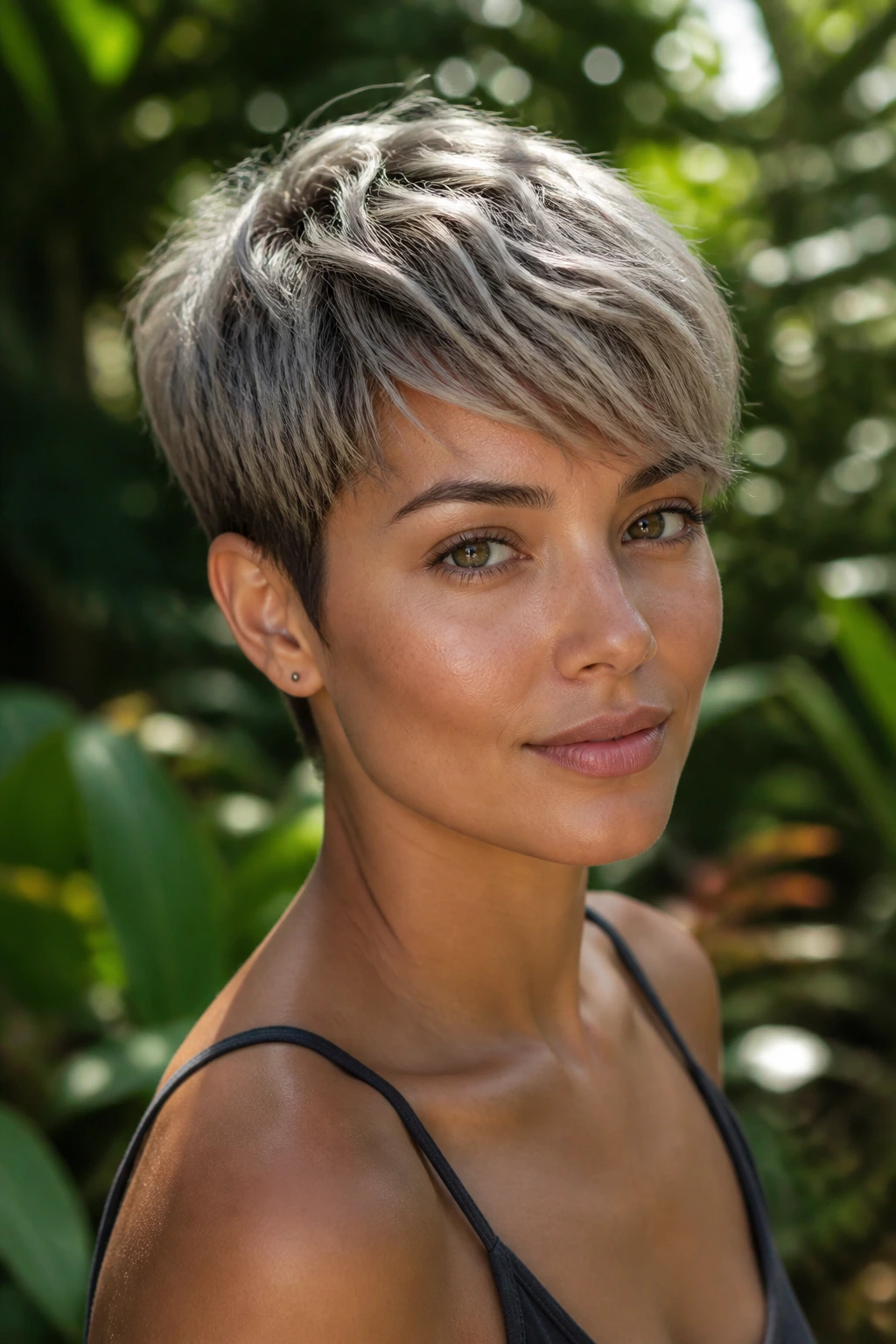
A pixie with frosted mushroom tones is a little softer than a full platinum crop and easier on olive skin. The mushroom base gives you that earthy undertone, while the frost adds brightness around the crown and fringe. Together, they make the short cut look dimensional instead of blocky.
This is one of the easiest ways to wear ash blonde if your hair is naturally thick or coarse. Short hair can handle a stronger cool tone because the cut itself creates movement. If you’ve wanted something playful but not sugary, this hits that note.
24. Dimensional Ice-Tea Blonde
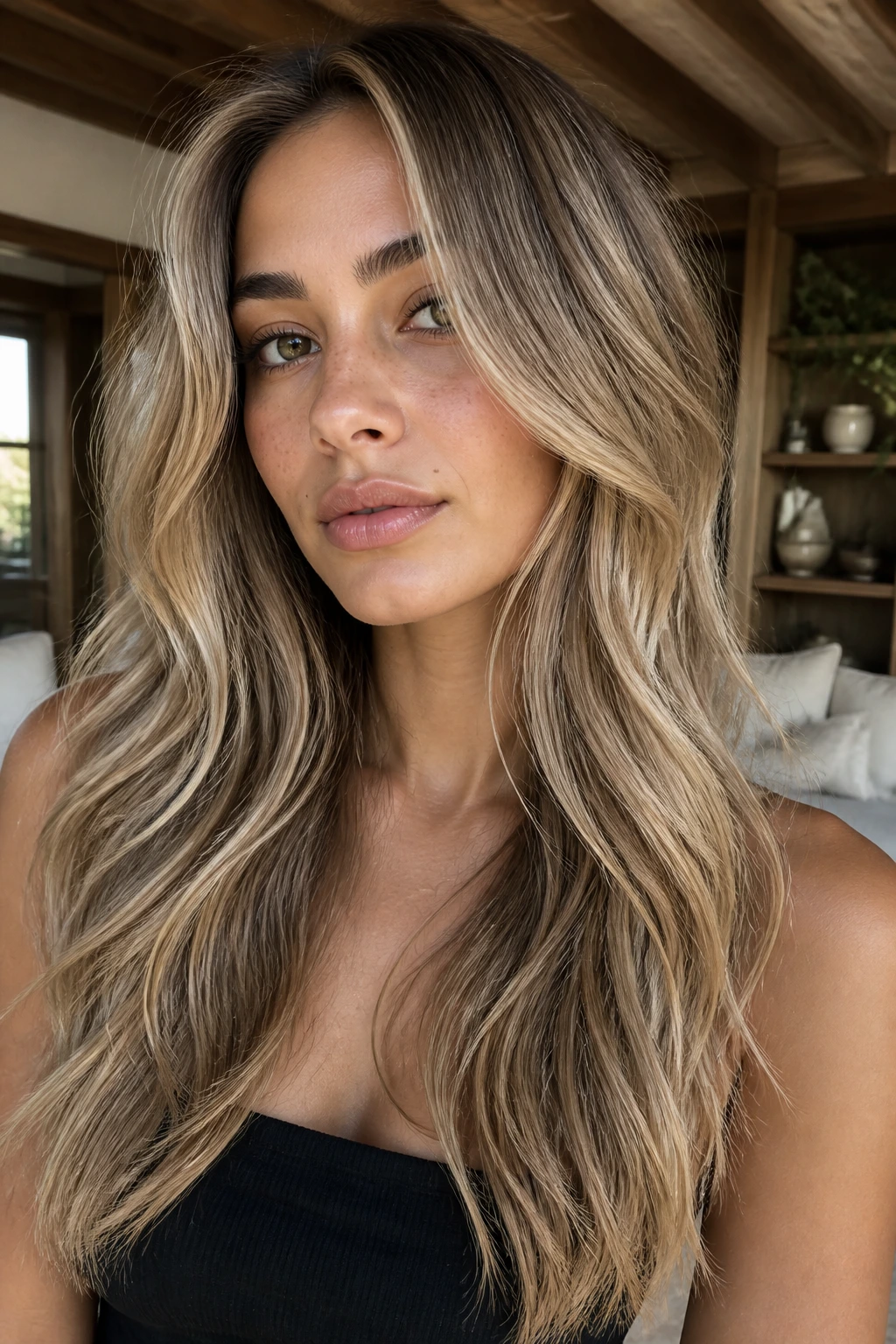
Ice-tea blonde sounds delicate, but the dimensional version has more depth than people expect. Think smoky blonde with a little brown tea note underneath — cool, translucent, and softly layered. Olive skin often looks best when the blonde has more than one level in it, and this does that job well.
This shade works especially well on long hair because the dimension shows up in the wave pattern. The darker undertones stop the color from going flat, and the lighter ribbons keep it from feeling heavy. If you hate that one-note blonde look, this is where to land.
25. Lived-In Ash Blonde With Gloss Finish
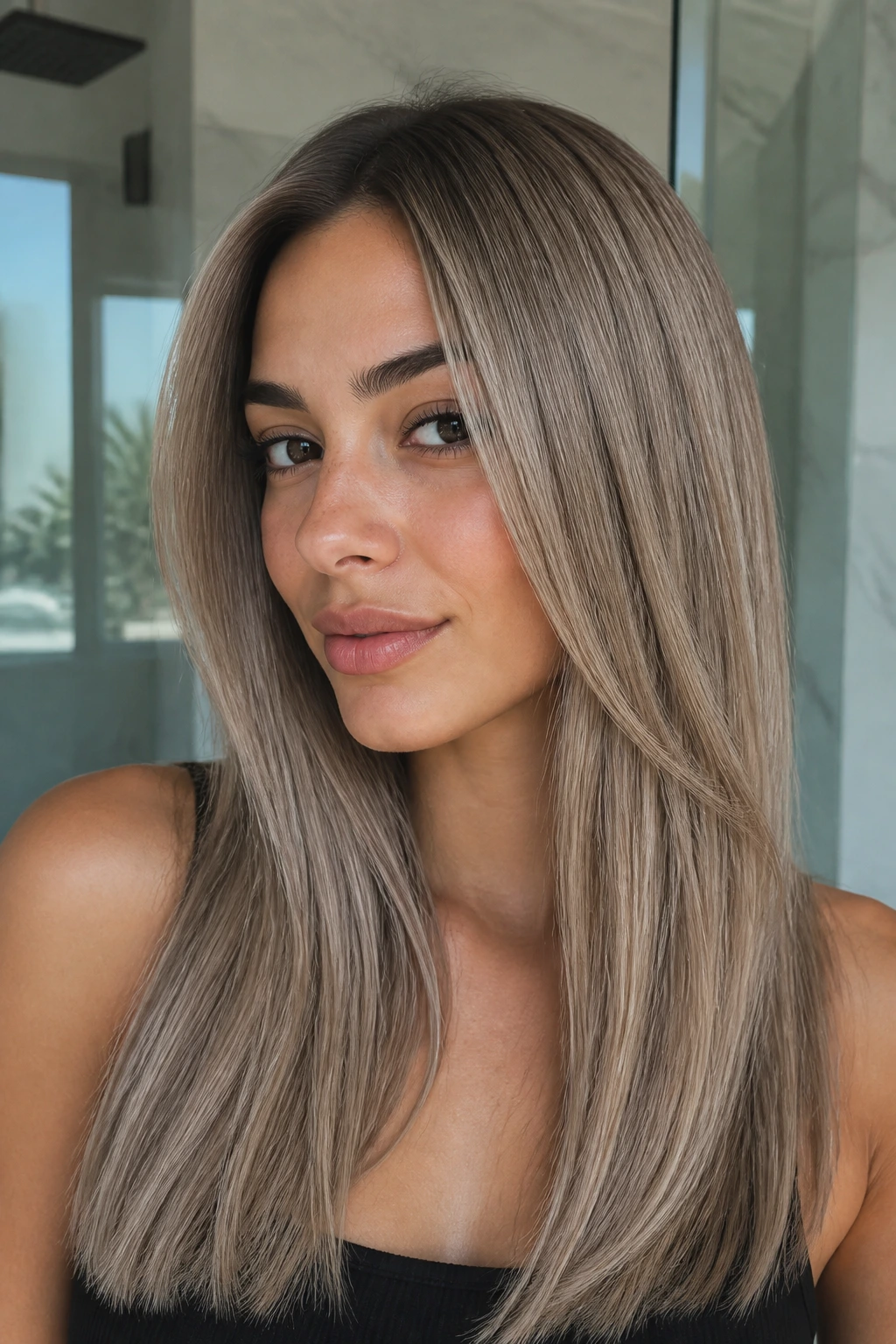
If you want the least fussy version of all, this is it. A lived-in ash blonde with a gloss finish gives olive skin a cool tone without making the hair look overworked. The gloss is the real secret here — it softens everything, adds shine, and keeps the blonde from looking dry or brittle.
I’d call this the most wearable ash blonde in the group. It works on straight hair, waves, bobs, long layers, and almost any starting base that can be lifted evenly. Keep the roots slightly deeper, the mids cool, and the ends polished with a beige-ash gloss. That mix ages well between salon visits, which is more useful than chasing a perfect icy tone that only lasts four days.
What Makes Ash Blonde Read Right on Olive Skin
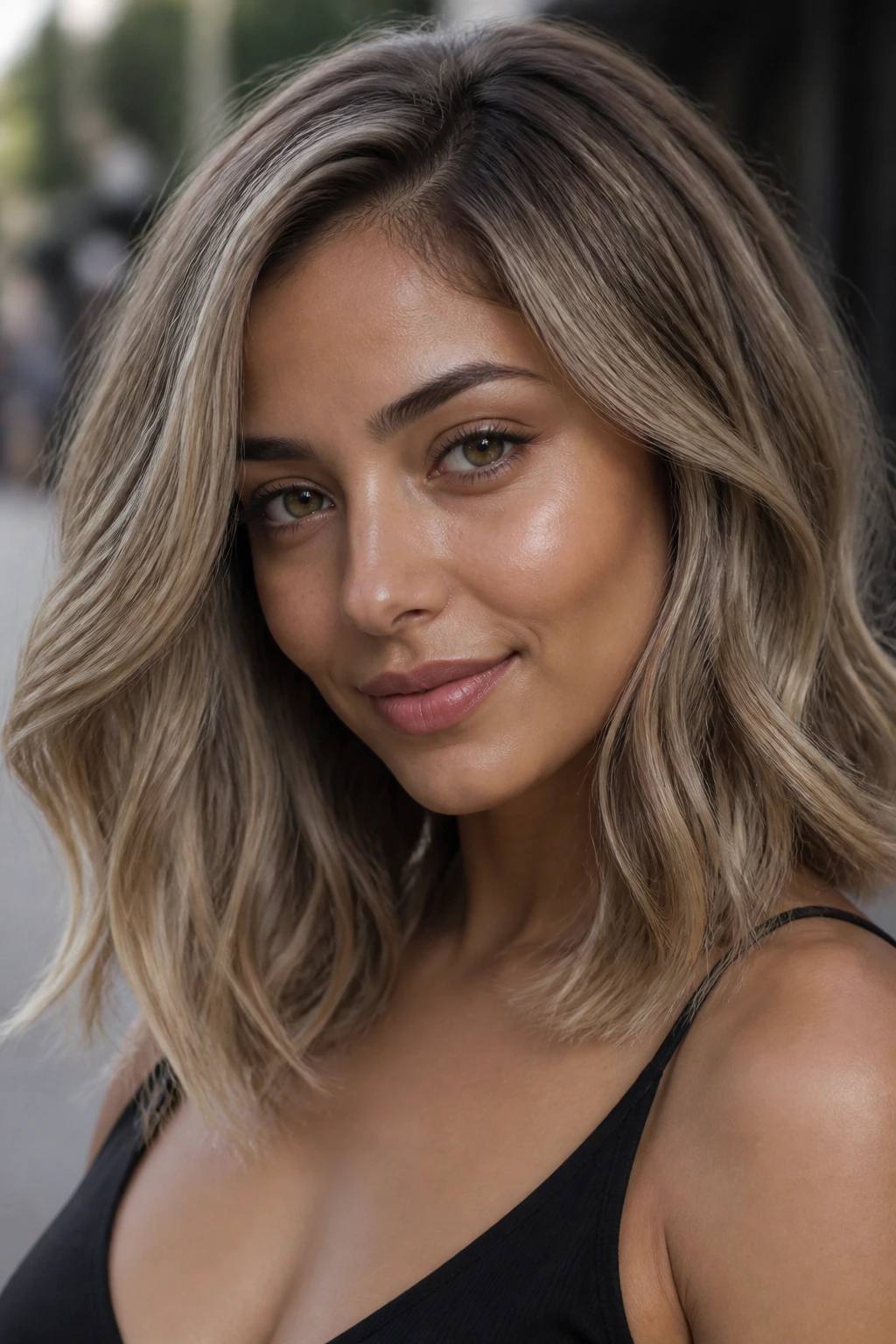
Olive skin usually looks best when the blonde respects its natural depth. That means staying away from hair color that is too white, too yellow, or too blue. Beige, taupe, pearl, and mushroom tones sit in the middle and give the face a cleaner frame without making the complexion lose color.
The other thing people miss is contrast. Olive skin often needs a little shadow near the root or along the underside of the hair so the blonde has something to lean on. Without that depth, even a pretty blonde can look detached from the face. With it, the whole style feels balanced.
If your olive undertone leans warm, think sand and beige first. If your skin is neutral, pearl and silver-beige usually behave well. If your complexion is deeper and more muted, smoky bronde, taupe ribbons, and rooty ash blondes often look richer than high-lift platinum.
The Salon Notes That Save Ash Blonde From Looking Off
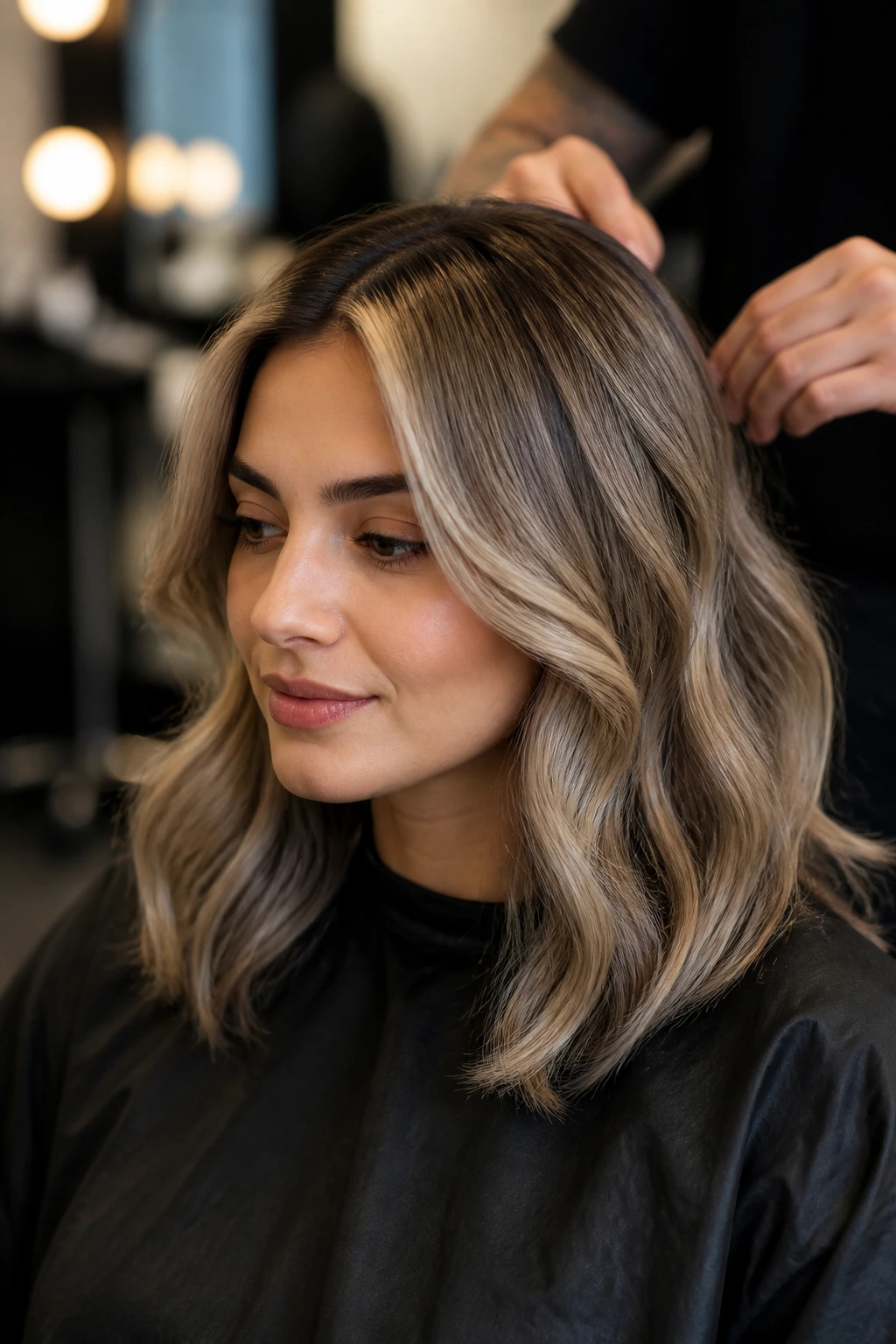
Bring photos, but don’t stop there. Photos show the mood. They do not show the level, toner, or grow-out plan. Tell your colorist whether you want a root shadow, how light you’re willing to go around the face, and whether you want the blonde to read more beige, pearl, or silver.
Use the words that matter: level, shadow root, babylights, balayage, gloss, and toner. Those tell a stylist much more than “cool blonde.” If your starting color is darker than a level 6, ask how many appointments it will take to reach your target shade without frying the ends. That conversation takes five minutes. It saves weeks.
If you know your hair pulls yellow, say so. If it turns dull fast, say that too. Hair history matters here — old box dye, henna, heat damage, and hard water all change how ash blonde behaves. A good colorist will adjust the formula, not pretend your hair has never been colored before.
Tools and Products That Keep the Tone Clean
-
Color-safe sulfate-free shampoo — Keeps ash and gloss from stripping out too fast; use it for most washes.
-
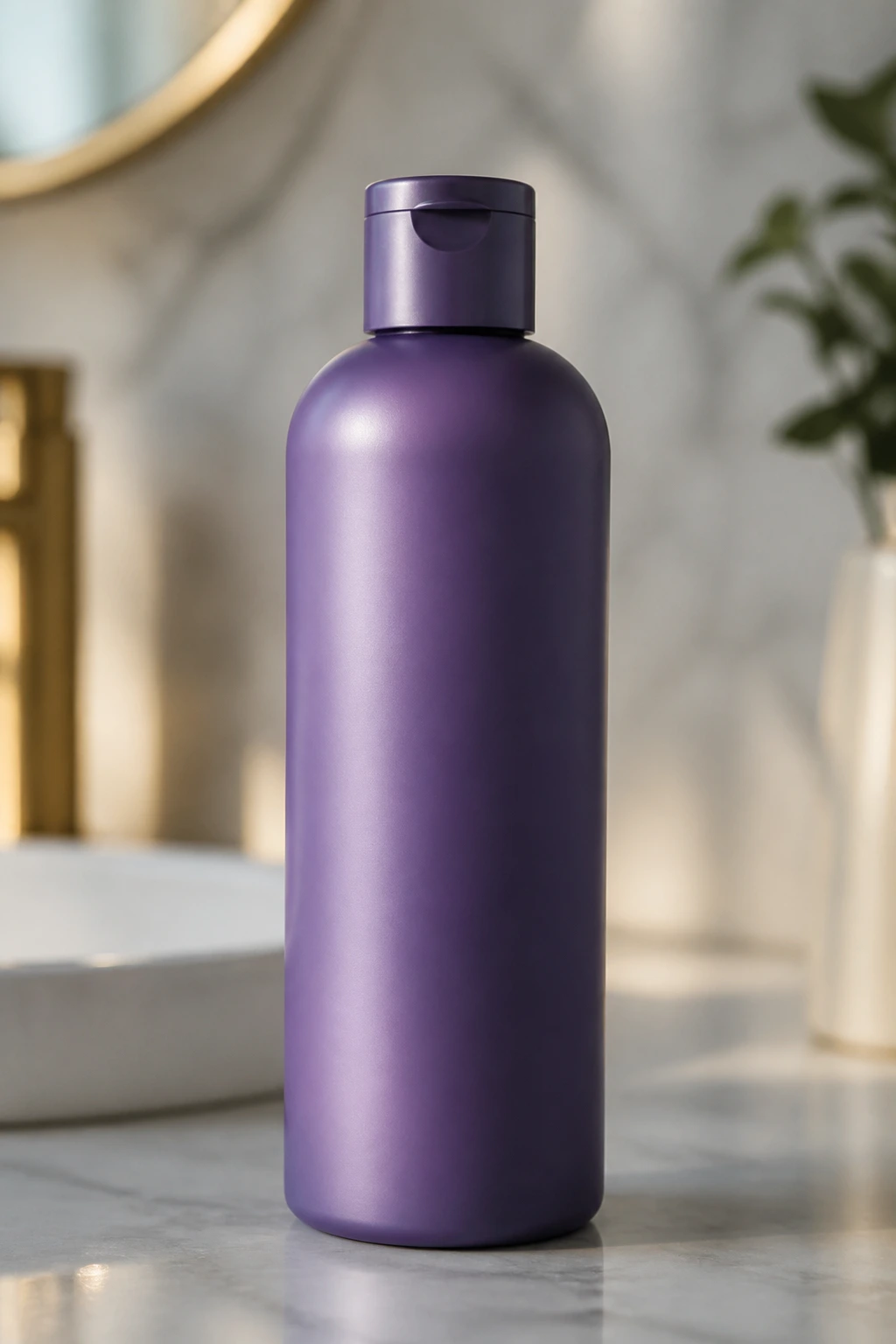
Purple shampoo — Helps neutralize yellow on light blondes, but don’t overuse it or the hair can look dull and dusty.
-
Blue-violet conditioner or mask — Useful for slightly deeper blondes that need brass control without going too silver.
-
Demi-permanent gloss or toner — A salon gloss every few weeks keeps pearl, taupe, and smoke tones looking fresh.
-
Bond-building treatment — Helpful if the hair has been lightened more than once or feels stretchy after washing.
-
Heat protectant spray — Non-negotiable before blow-drying or hot tools; ash blonde shows heat damage fast because shine is the whole point.
-
Wide-tooth comb — Less breakage on wet, lightened hair.
-
Silk or satin pillowcase — Cuts down friction so the lighter ends don’t rough up overnight.
-
Shower filter — Optional, but worth it if hard water leaves blonde looking dull or slightly green.
How to Keep Cool Ash Blonde from Going Muddy
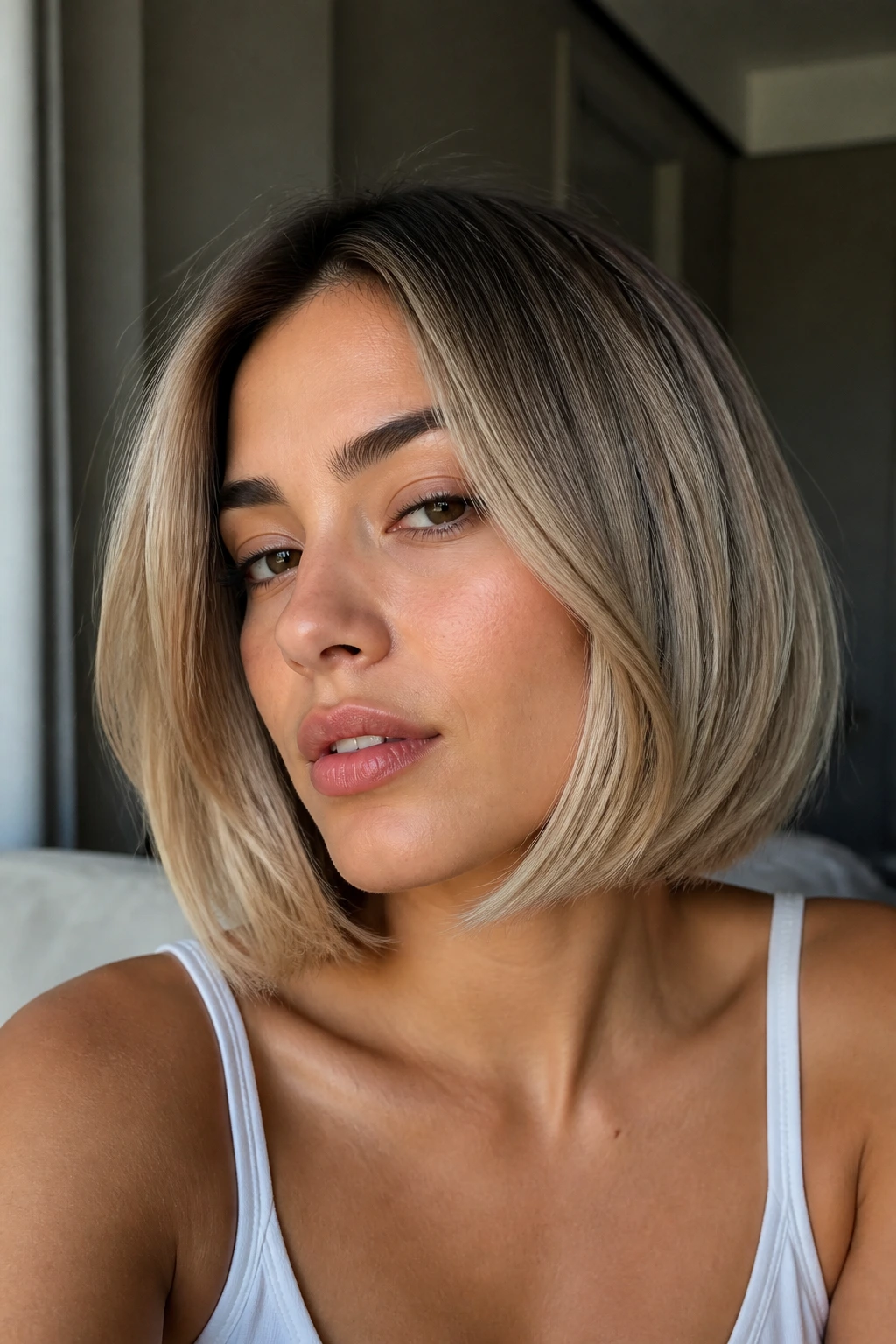
Ash blonde on olive skin usually fails in one of two ways: it gets too yellow, or it gets too gray. The fix is not endless purple shampoo. The fix is balance. Use a toning shampoo once every 1 to 2 weeks, not every wash, and rely on glosses or salon refreshes to restore tone.
Heat matters more than people think. Keep your blow-dryer on medium, not scorch mode, and use a flat iron setting that matches your hair’s condition. Fine lightened hair usually behaves better under 300°F to 320°F. Coarser hair can take a little more, but not much if the ends are porous.
Water plays a role too. If your shower water is hard, blonde can lose clarity fast. A filter won’t fix everything, but it can keep the finish cleaner between appointments. And if you swim, rinse the hair before and after; dry blonde soaks up pool water like a towel.
Common Mistakes That Make Ash Blonde Look Wrong
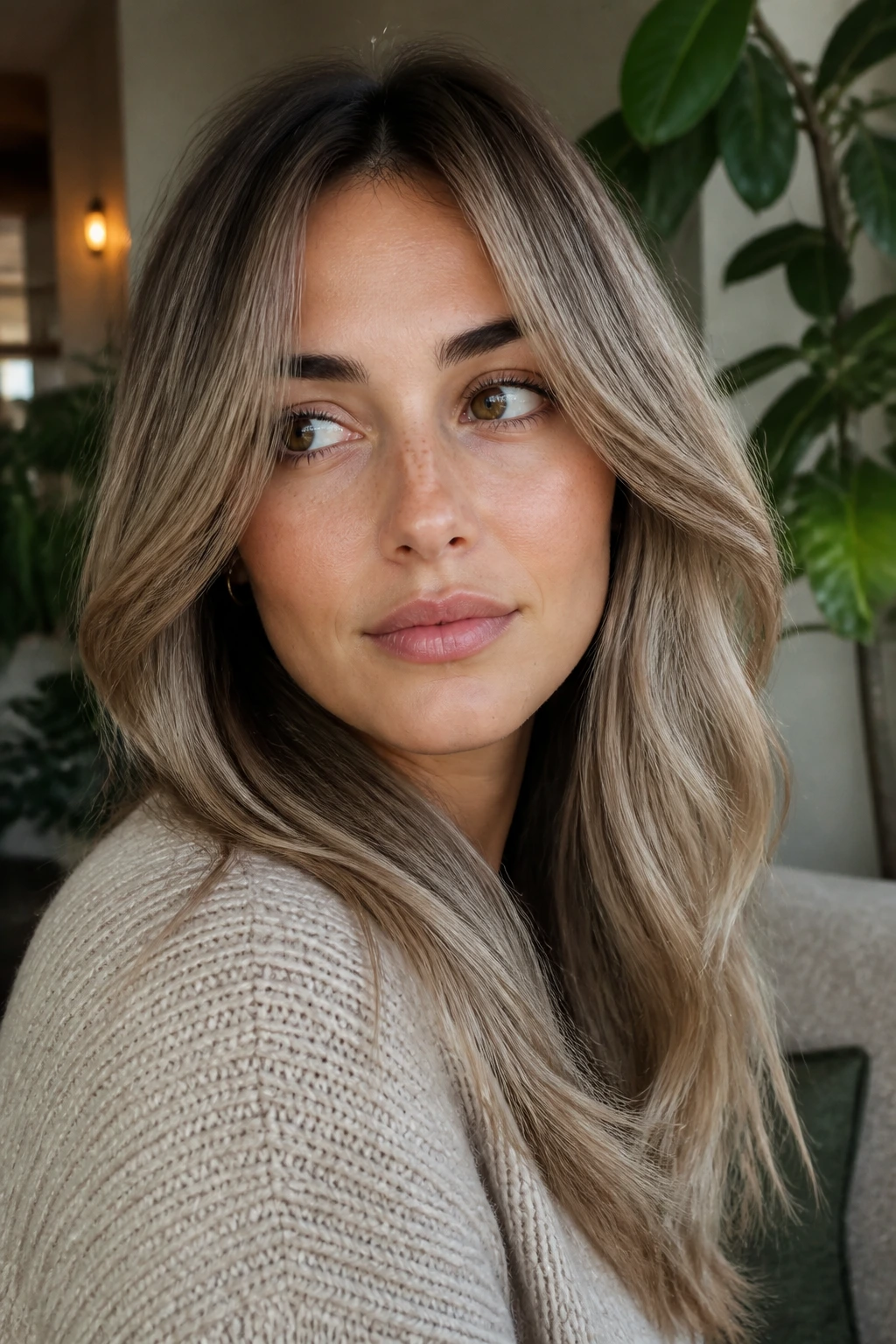
The biggest mistake is going too pale too fast. On olive skin, a stark level 10 platinum can look detached unless the skin is very neutral and the brows have enough definition. A softer level 8 or 9 often looks better and is easier to maintain.
Another common problem is over-toning. Hair that has been hit with purple shampoo too often can pick up a dusty violet cast, especially on porous ends. If the color starts looking lifeless instead of cool, step back from the toner and add moisture with a mask that is made for colored hair.
People also skip the root shadow, then wonder why the blonde feels flat. The depth at the scalp gives the style shape. Without it, even expensive color can look like one pale sheet. And if your hair is already fragile, bleaching all the way to icy blonde in one appointment is a fast way to get breakage, not brightness.
Variations and Alternatives to Try
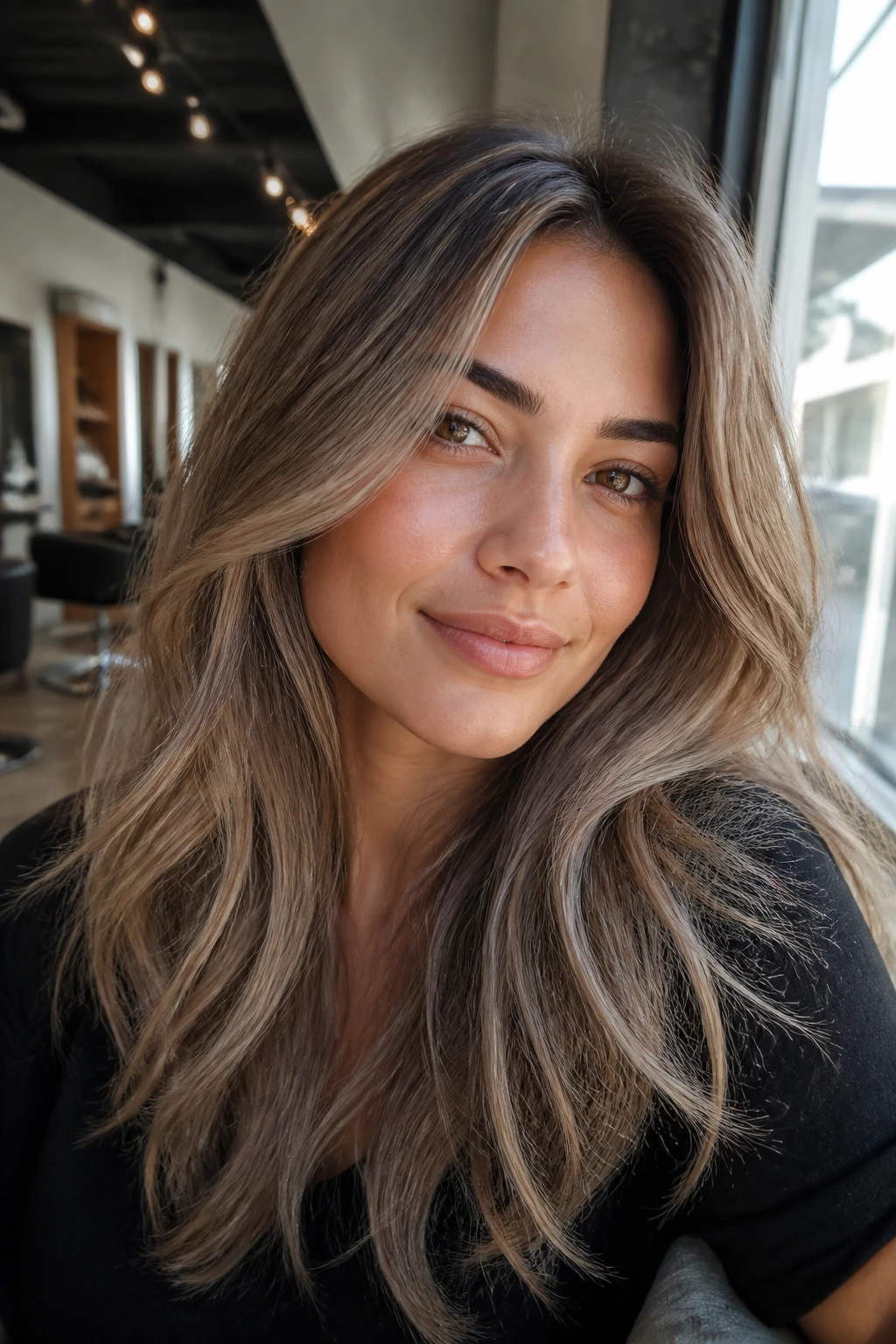
Soft Beige Ash for Warm Olive Skin: If your skin leans more golden than green, keep the blonde beige-heavy and save the silver tones for tiny ribbons or the ends. It’s softer on the face and grows out with less contrast.
Deep Olive Bronde: A brunette base with smoky ash lights usually looks richer than an all-over blonde on deeper olive skin. It keeps the complexion grounded and still gives you the cool finish people want.
High-Contrast Platinum Fronts: If you like drama, keep the back and root darker and push the money piece lighter. The face gets the brightness, but the whole head doesn’t have to commit to it.
Curly Ash Ribbon Lights: Curly hair benefits from ribbons of ash placed through the bend pattern instead of full saturation. The curls show dimension better that way, and the tone stays softer around the face.
Low-Maintenance Glossed Blonde: For anyone who hates frequent salon trips, stay one or two levels darker and refresh with a cool gloss rather than repeated lightening. The result is easier to wear and easier to keep healthy.
Frequently Asked Questions
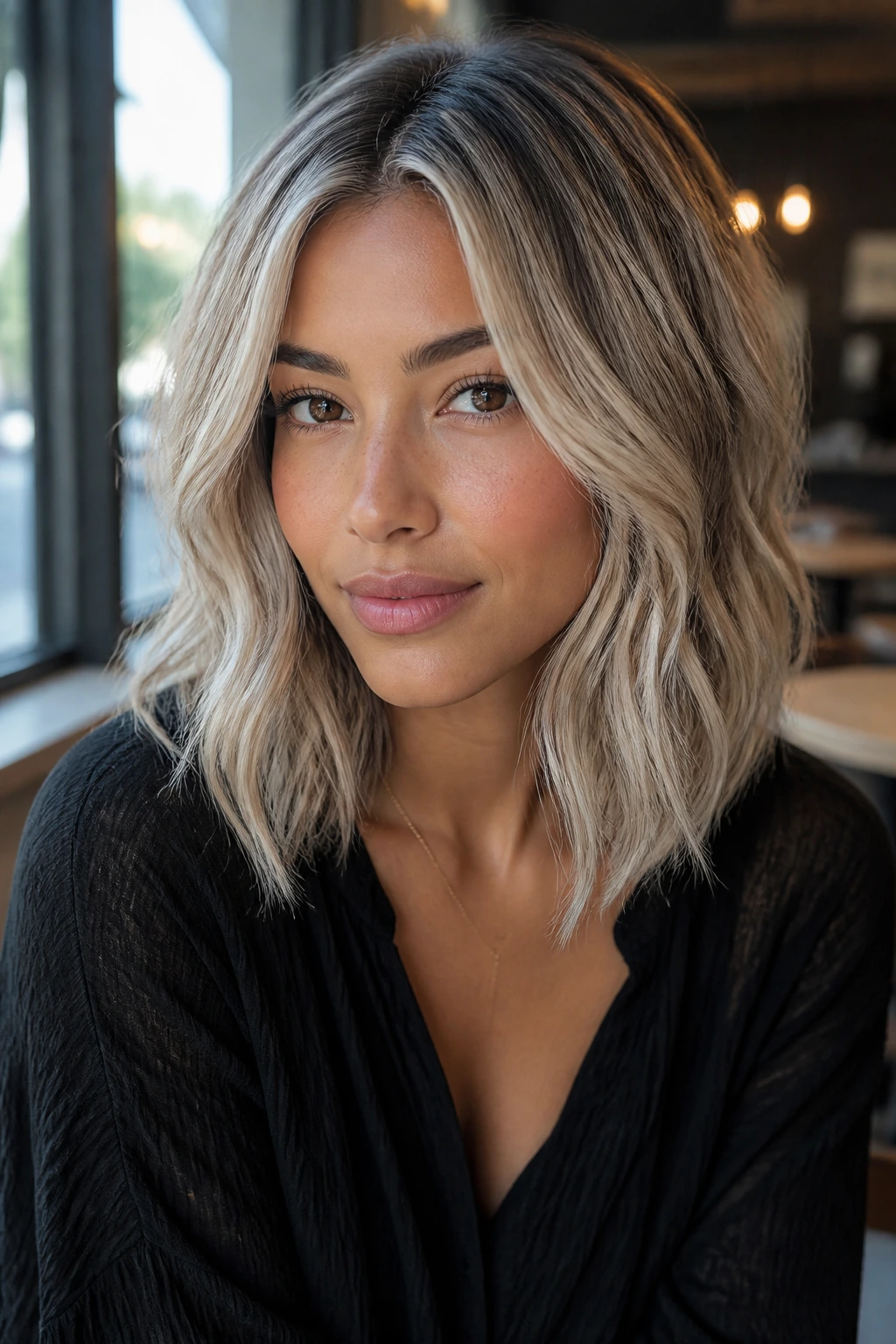
Can olive skin wear platinum ash blonde?
Yes, but it usually works best when the platinum is softened with a root shadow or a pearl-beige glaze. Pure white platinum can make some olive complexions look flat, especially if the brows are very light or the skin has a muted cast.
What ash blonde shade is safest for warm olive skin?
Beige ash, smoky sand, and taupe blonde are usually the easiest places to start. They keep the cool tone without stripping away the warmth that helps the skin look alive.
Why does ash blonde sometimes look green on olive skin?
It usually happens when the toner is too cool for the hair’s porosity or when purple-blue shampoo is used too often. The fix is to add a beige or pearl gloss and ease up on toning products.
How often should ash blonde be toned?
Most people need a toner or gloss every 4 to 8 weeks, depending on how light the hair is and how fast it fades. The paler the blonde, the more often it tends to shift.
Is balayage better than all-over ash blonde for olive skin?
Balayage is easier to wear if you want softness and grow-out that doesn’t shout at you. All-over ash blonde can look striking, but it demands more upkeep and a more careful toner formula.
Can dark brown hair go ash blonde in one session?
Usually not without a lot of damage. Darker hair often needs a staged lift, especially if you want the blonde to stay cool rather than orange or brittle.
What should I do if my ash blonde looks dull?
Use a clarifying wash sparingly, then follow with a color-safe conditioner and a cool gloss if the tone has gone flat. Dull ash blonde often needs shine and balance more than it needs more pigment.
Can I keep some warmth in the formula and still call it ash blonde?
Absolutely. A beige-ash blend is often prettier on olive skin than a hard gray tone. The blonde can stay cool overall while still carrying enough softness to flatter the face.
The Shade That Stays Soft
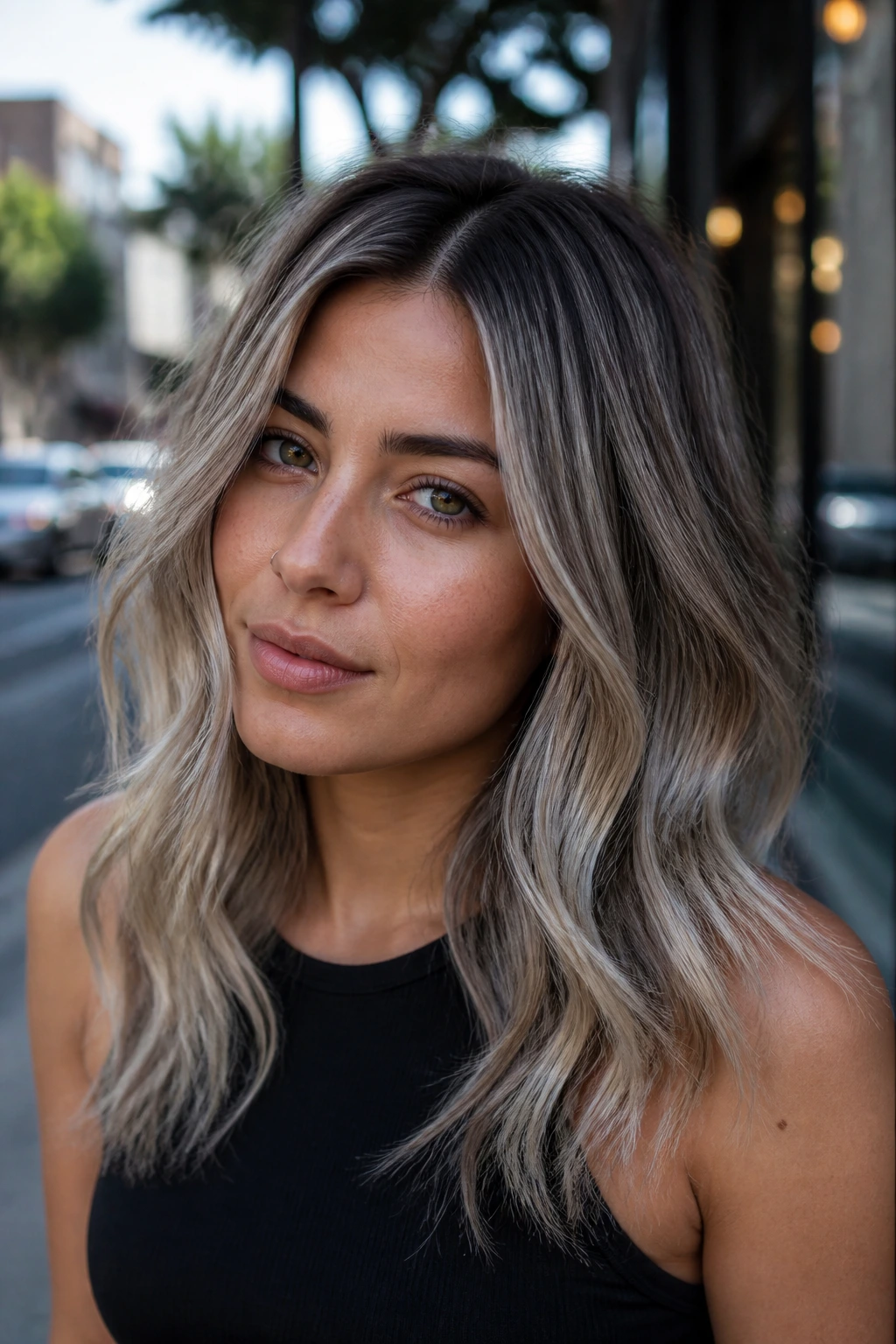
The best ash blondes for olive skin don’t fight the complexion. They work with it. Beige ash, pearl smoke, mushroom blonde, and rooted balayage all keep the face from disappearing into a cold wash of color, which is where a lot of blonde formulas go wrong.
If you want the safest place to start, pick the version with the most depth near the root and the softest tone through the mids. That gives you room to go lighter later if you still want more contrast. And if you already know your skin likes muted shades, trust that instinct. Hair color looks best when it feels like it belongs on your face, not like it was borrowed for the afternoon.