



Pale skin can make warm brown hair look sharper, richer, and a little less forgiving than the salon photos suggest. The sweet spot in warm golden brown hair color ideas for pale skin is not a flat brown and not a coppery blonde; it’s the middle ground where honey, caramel, amber, and chestnut all do a small job at once. They warm the face, catch light along the cheekbones, and keep fair complexions from disappearing next to deep espresso.
The problem is that warm brown can go sideways fast. Too much orange and your hair looks brassy. Too little warmth and it reads muddy, like someone dimmed the color at the mixer. The shades below stay on the useful side of that line: soft, glossy, and built to work with porcelain, ivory, rosy, and freckled skin instead of fighting them.
And the details matter. A level 5 chestnut with honey reflect does not behave like a level 7 caramel balayage, and a golden brown bob does not need the same placement as long waves. That is the part most photo galleries skip, which is why so many people leave the chair with color that looks fine for two washes and odd in daylight. These ideas are built for real hair, not just a good filter.
Why These Warm Browns Earn Their Place
-
They soften pinkness without flattening the face: Honey, almond, and caramel tones warm pale skin in a way that looks intentional, not orange or sunburned.
-
They give fair features a frame: A level 5–7 brown creates enough contrast for brows, lashes, and eyes to stand out without the harsh line that deep espresso can create.
-
They age out better than all-over blonde: Roots show less aggressively when the base lives in brunette territory, especially if the brightness sits through the mids and ends.
-
They work in daylight and indoor light: Golden reflects can look creamy near a window and deeper under warm bulbs, which keeps the color from feeling one-note.
-
They play nicely with freckles and light eyes: The right warm brown lets freckles show through and makes blue, green, and hazel eyes look less washed out beside pale skin.
-
They leave room for maintenance choices: You can go glossy and subtle, or build in ribbons, money pieces, and lowlights without losing the warm-brown mood.
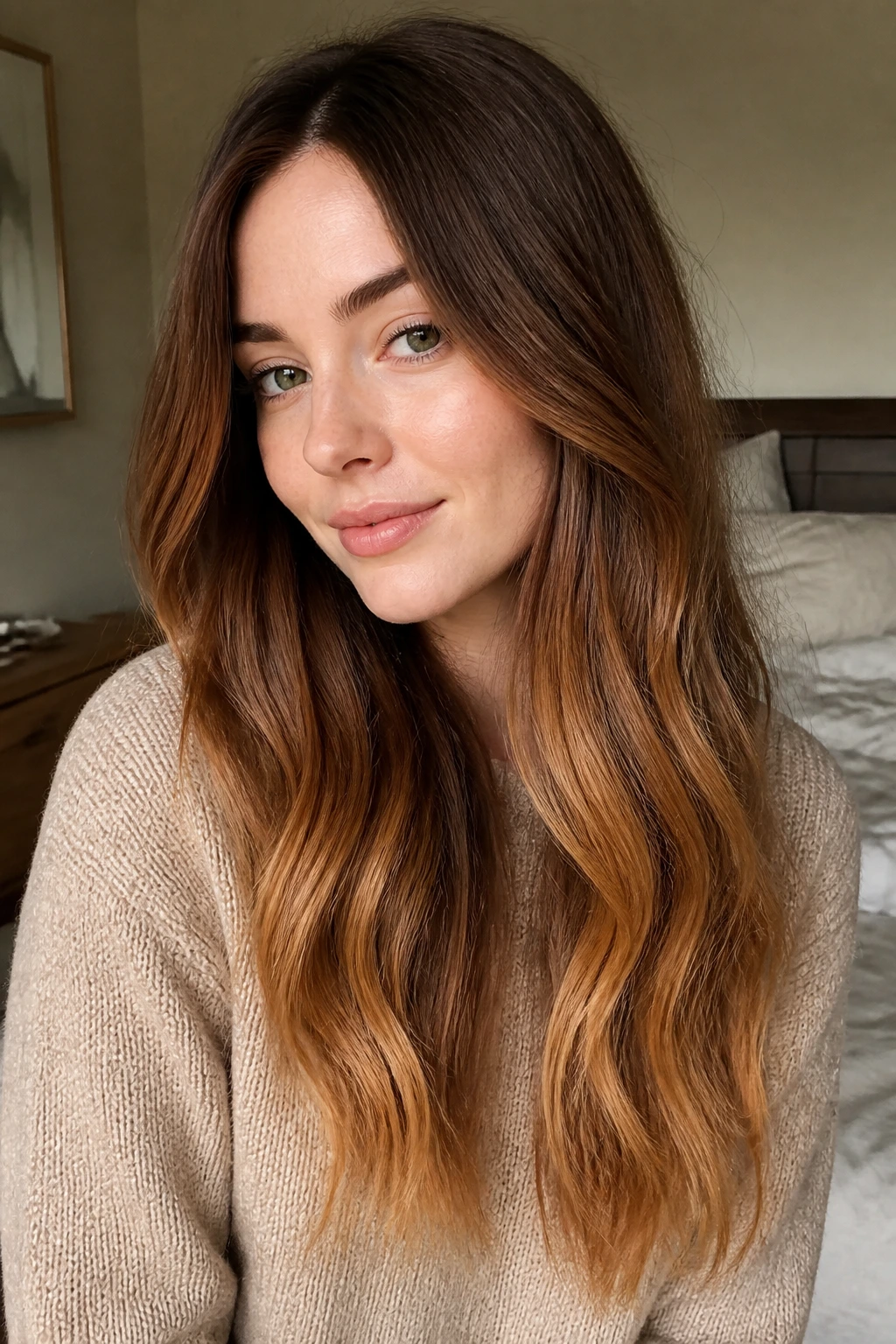
1. Soft Honey Chestnut
Soft Honey Chestnut is the shade I reach for when pale skin needs warmth but not drama. The chestnut base keeps the color grounded, while a thin honey glaze gives the ends a faint gold sheen that looks clean instead of coppery.
Best for rosy or freckled skin
If your skin flushes easily, ask for a level 5 chestnut base with a sheer honey gloss through the mids and ends. Keep the root neutral; that keeps the color from turning too bright around the scalp, which can read dated fast.
A loose wave or soft bend shows this shade best. Straight hair still works, but the chestnut looks more dimensional when the gold has a little curve to sit on.
2. Toasted Almond Brown
Toasted Almond Brown sits lighter than chestnut and softer than caramel. It’s the kind of brown that does not shout; it just gives fair skin a warmer edge so your face doesn’t look like it’s floating next to the hair.
Why it works on very fair skin
The almond note matters. It keeps the brown from getting too red, which is the mistake that turns some warm shades into a fake tan effect on cool-pale skin. Ask for a level 6 beige-brown with gold-beige reflect, not a copper brunette.
This one is especially nice on fine hair because the tone looks airy even when the cut is simple. A blunt bob, a collarbone lob, or a chin-length crop can all wear it without needing big highlights.
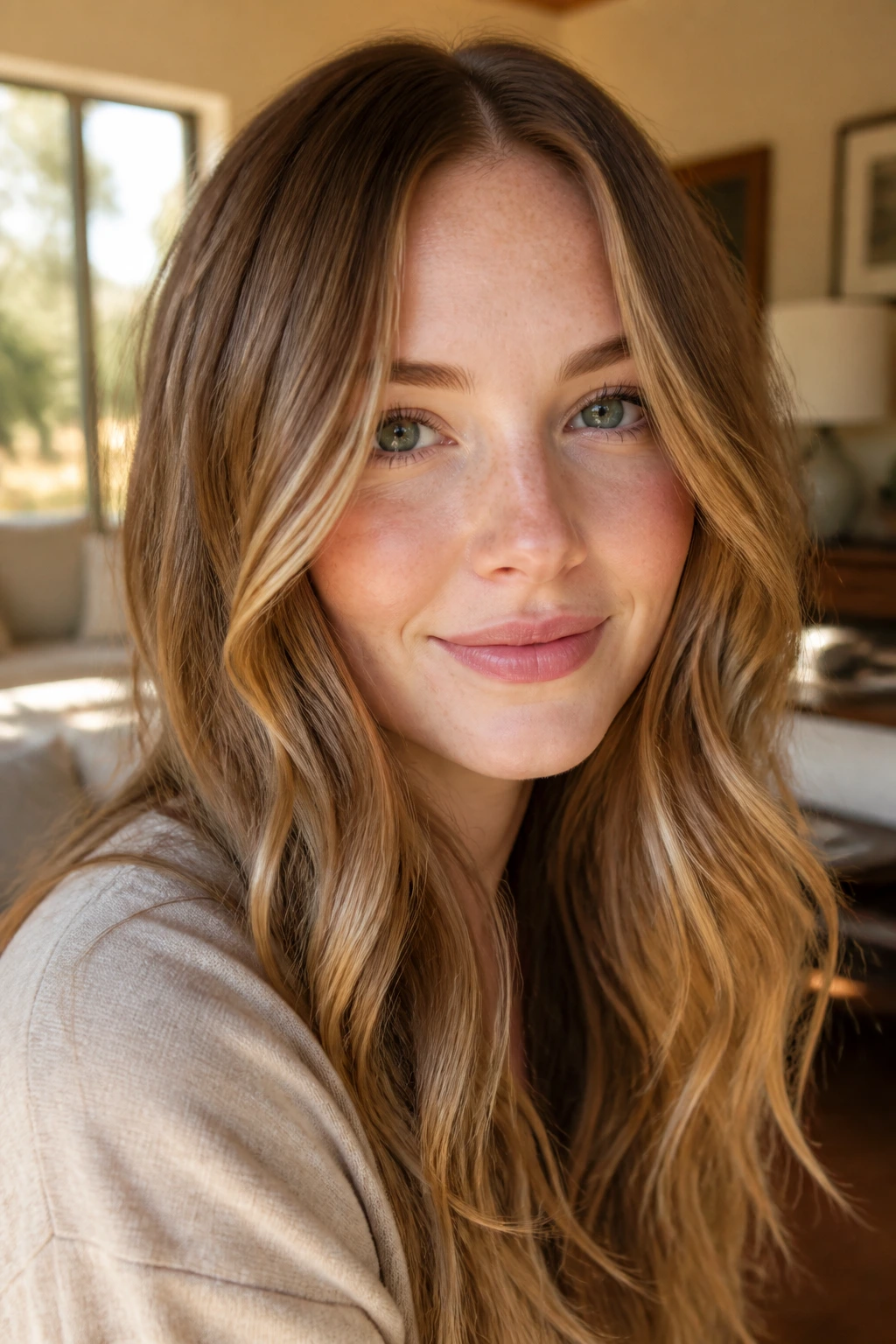
3. Caramel Ribbon Balayage
Caramel ribbon balayage gives pale skin brightness in motion, not in blocks. Instead of one flat brown sheet, you get thin caramel pieces that move through the hair like warm threads.
What to ask for at the chair
Tell your colorist you want caramel ribbons that stay one to two levels lighter than the base and start below the root shadow. That spacing matters. If the lightest pieces start right at the scalp, the whole thing can look stripy, and stripy is not the goal here.
This idea shines on long waves and layered cuts, where each bend catches a different ribbon. If your hair is straight, keep the highlights finer and closer together so the color still looks blended rather than spotted.
4. Golden Walnut Brunette
Golden Walnut Brunette is deeper and a little moodier, which makes pale skin look even clearer by contrast. It’s still warm, but the walnut keeps the shade from wandering into orange territory.
For people who want brown to stay brown
This is the better choice if you like brunette depth and only want the light to hit the surface. The golden reflect should live inside the brown, not sit on top of it. Ask for a neutral walnut base with subtle gold lowlights if your hair tends to grab red.
It works especially well with blue or gray eyes. The contrast is crisp without looking severe, and the hair keeps a polished, expensive finish even when it grows out for a few weeks.
5. Butterscotch Brown Melt
Butterscotch Brown Melt is sweeter than a standard brunette and softer than a blondish bronde. The root stays brown, then the color melts into a buttery, warm finish near the ends.
The trick is the transition
You want the fade to feel gradual, not like two separate colors sitting next to each other. Ask for a root shadow in medium brown and a butterscotch tone through the lower half of the hair. That lower-light placement keeps pale skin from looking drained at the root line.
This is one of those shades that looks especially good on medium to thick hair, because the melt has room to show. A blowout with round-brush volume makes the gradient easier to read.
6. Cinnamon Mocha Glow
Cinnamon Mocha Glow has a little spice in it, but not the loud kind. The mocha base keeps things grounded, while a cinnamon-brown reflect warms the surface and gives pale skin a healthier look.
A good pick if your skin is cool and your eyes are light
This shade can be a lifesaver for green or hazel eyes. The subtle cinnamon warmth pulls the eye color forward without making the whole head look red. Ask for a mocha brunette with cinnamon glaze, not a red-brown overlay.
It works well when you want warmth that shows up in sunlight but stays quieter indoors. That’s the sweet spot. Too much warmth can look coppery under warm lighting, and this version keeps some restraint.
7. Maple Bronde
Maple Bronde sits right on the border between brown and blonde, and that border is useful on pale skin. It keeps enough brown to stop the face from disappearing, while the maple tones add a soft golden lift.
For the person who cannot pick between brunette and blonde
This is the bridge shade. No hard line, no heavy commitment. Ask for a dark blonde to light brown base with maple-gold balayage, and keep the root only slightly deeper than the mids so the contrast stays calm.
This idea works when you want a lower-contrast look around the hairline. It is especially good on medium-length cuts, where the color can breathe a little instead of getting swallowed by long layers or chopped up by a short crop.
8. Chestnut Gloss with Warm Ends
Chestnut Gloss with Warm Ends is one of my favorite quiet choices. The roots and mids stay chestnut-rich, then the ends get a touch more warmth so the whole head does not look like one flat block.
Why gloss matters here
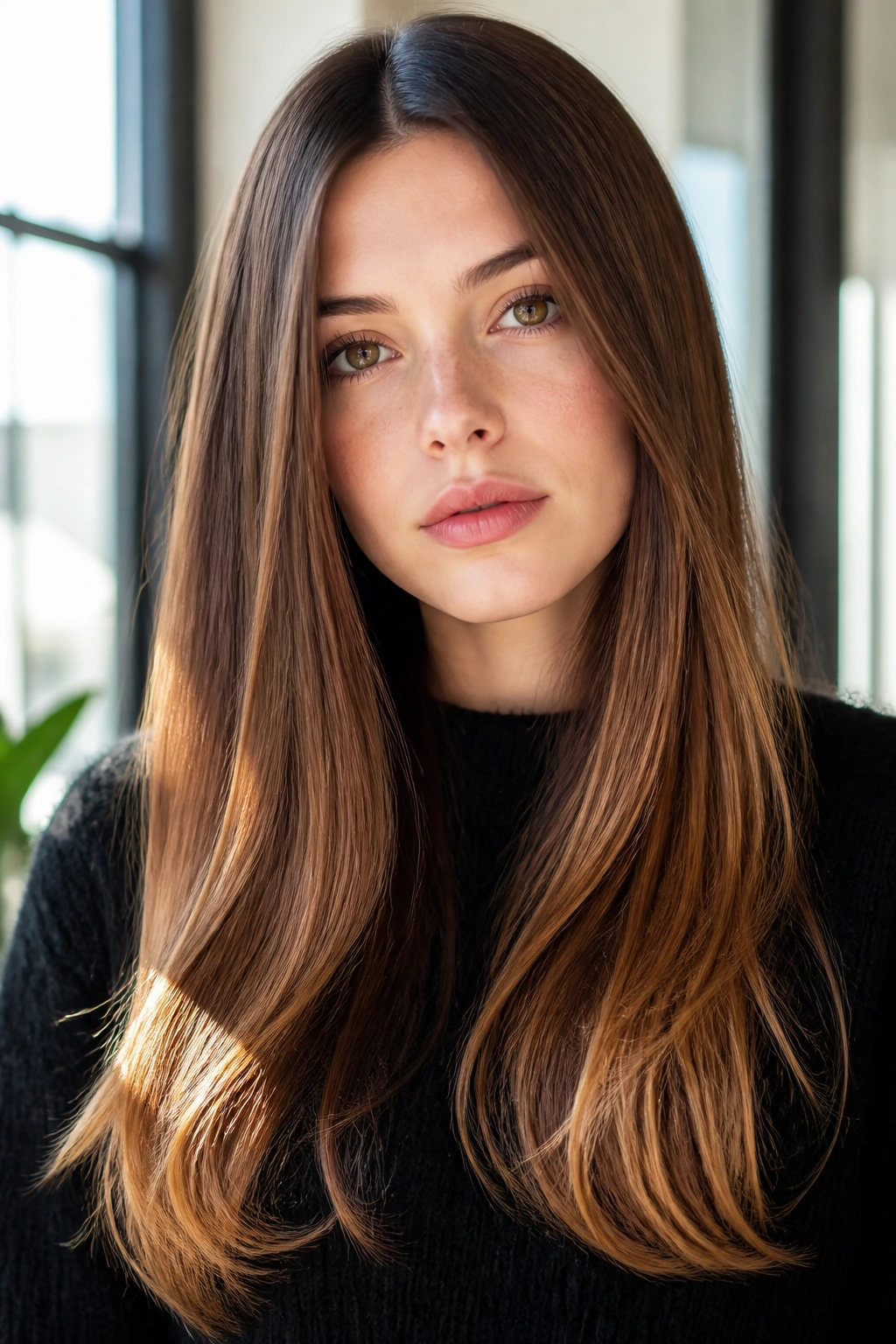
A gloss is doing a lot of the heavy lifting. It smooths the cuticle, deepens shine, and keeps the brown from turning dull after two or three washes. Ask for a demi-permanent chestnut gloss with warm beige-gold on the ends if you want softness without obvious highlights.
This is a smart move for straight hair, especially if you wear center parts. The gloss gives the hair enough surface reflection that pale skin looks fresh instead of drained.
9. Amber Brown Bob
Amber Brown on a bob is sharp in the best way. Short hair shows tone fast, so that little amber warmth can make pale skin look more awake without needing lighter pieces everywhere.
Keep the depth close to the scalp
A bob can go brassy fast if the amber is too orange. Ask for amber-brown reflect rather than amber-red pigment, and keep the finish glossy. The cut itself does a lot of the work, so the color should stay clean and even.
This looks especially good with blunt ends or a tucked-behind-the-ear style. The amber catches on the curve of the bob and keeps the haircut from feeling too severe against fair skin.
10. Honeyed Cocoa Layers
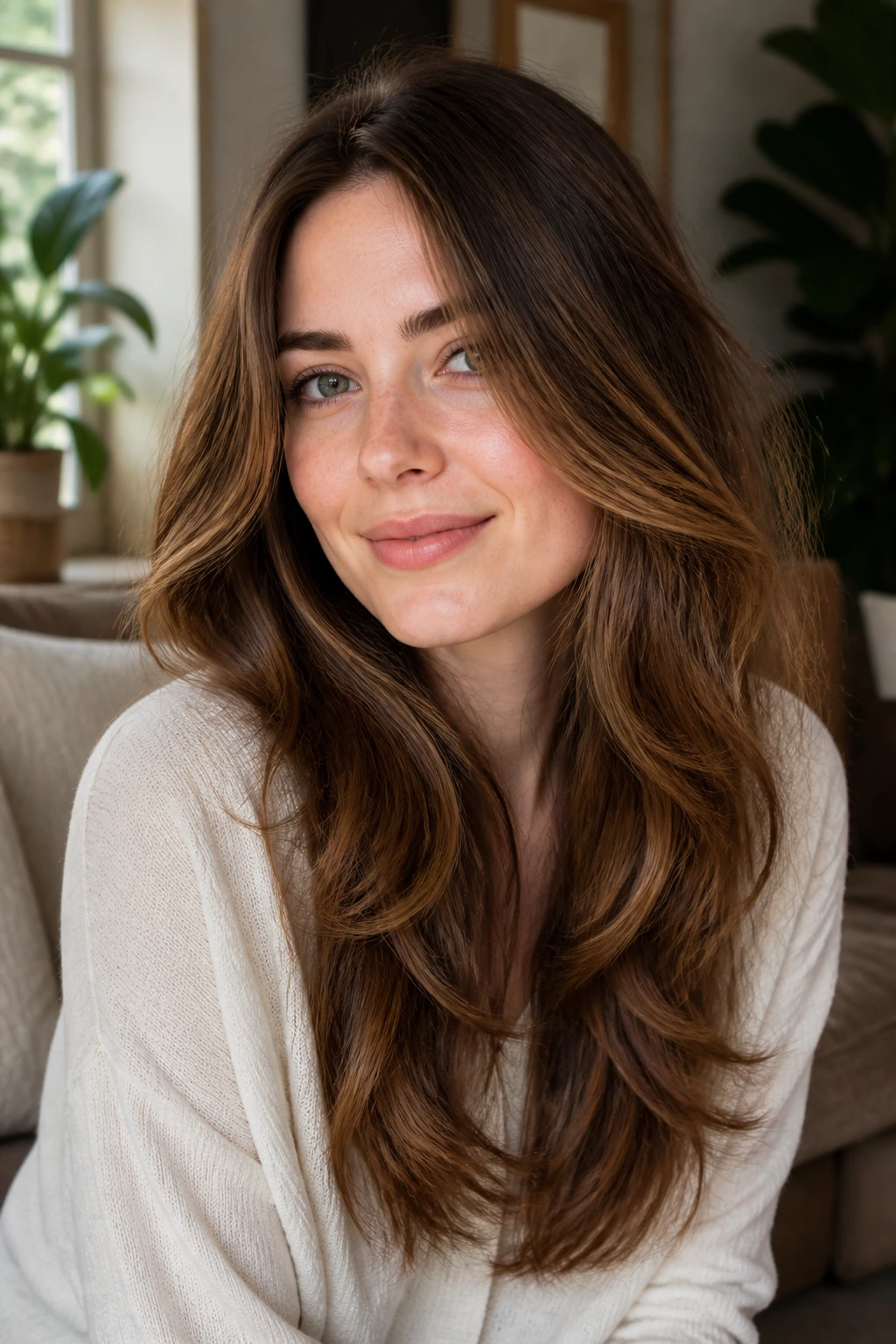
Honeyed Cocoa Layers give you the comfort of cocoa brown with a little gold hidden inside. The honey pieces are not meant to shout. They should peek out when the layers move.
A layered cut changes everything
On pale skin, layer placement matters almost as much as tone. If the honey sits only on top, the color can flatten. If it threads through the lower layers, the warmth reads richer and less striped.
This one is good for thick hair because layers keep the brown from feeling heavy. Ask for fine honey lights through the interior layers, not chunky face-frame pieces unless you want the front to be brighter than the rest.
11. Sunlit Espresso Brown
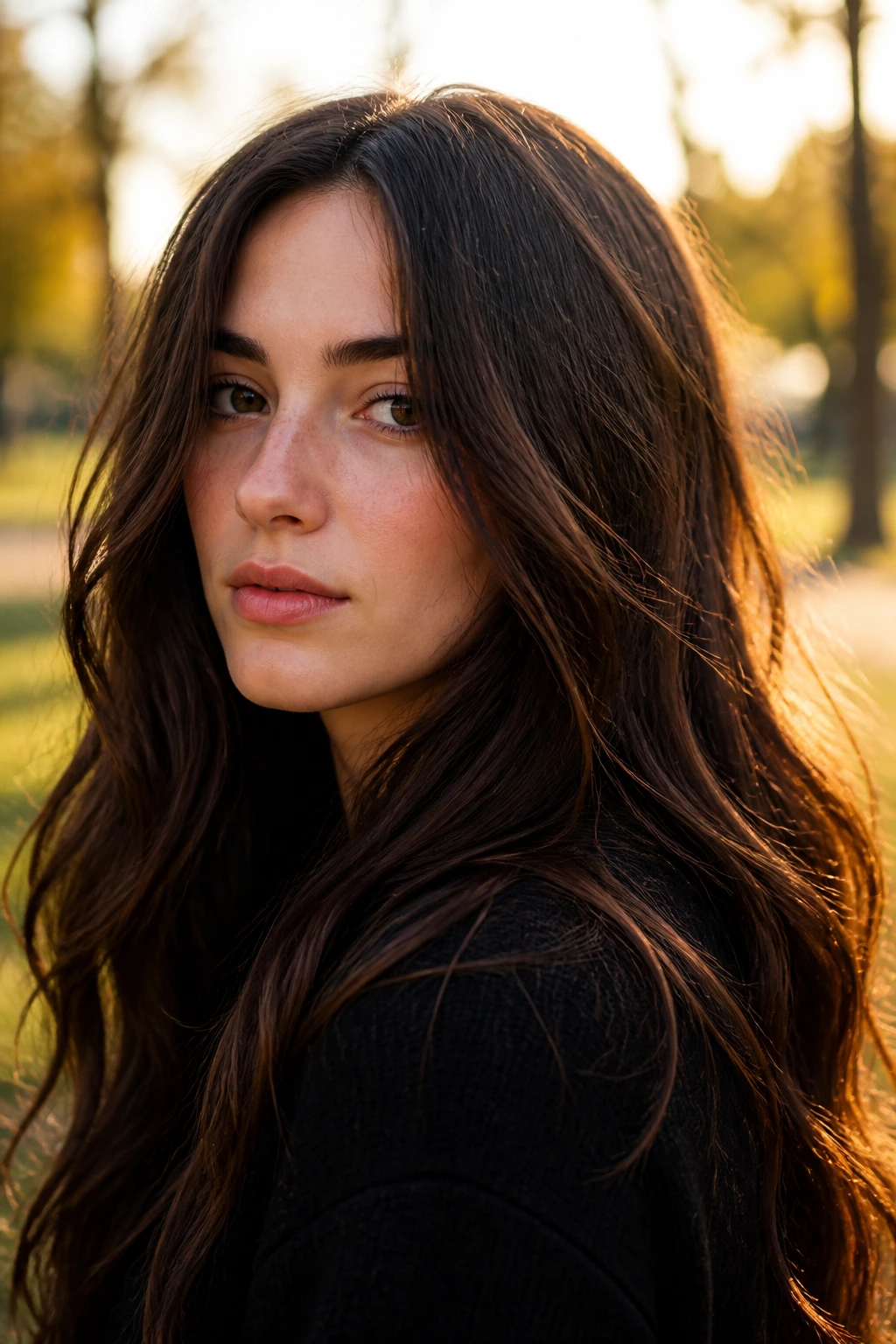
Sunlit Espresso Brown is for pale skin that likes contrast. It stays deep, almost dark brunette, but tiny warm highlights keep it from looking like a black-brown helmet.
The smallest highlights do the most work
This is not the place for wide blonde streaks. Keep the highlights micro-fine and warm, the way sunlight would naturally catch a few strands around the crown and temples. The effect should be soft enough that you notice shine before you notice color.
If your eyebrows are naturally dark, this shade can look especially balanced. It frames light skin without draining it, and it works well when you want a more polished, slightly dramatic feel without moving into full black-brown territory.
12. Toffee-Toned Curly Brown
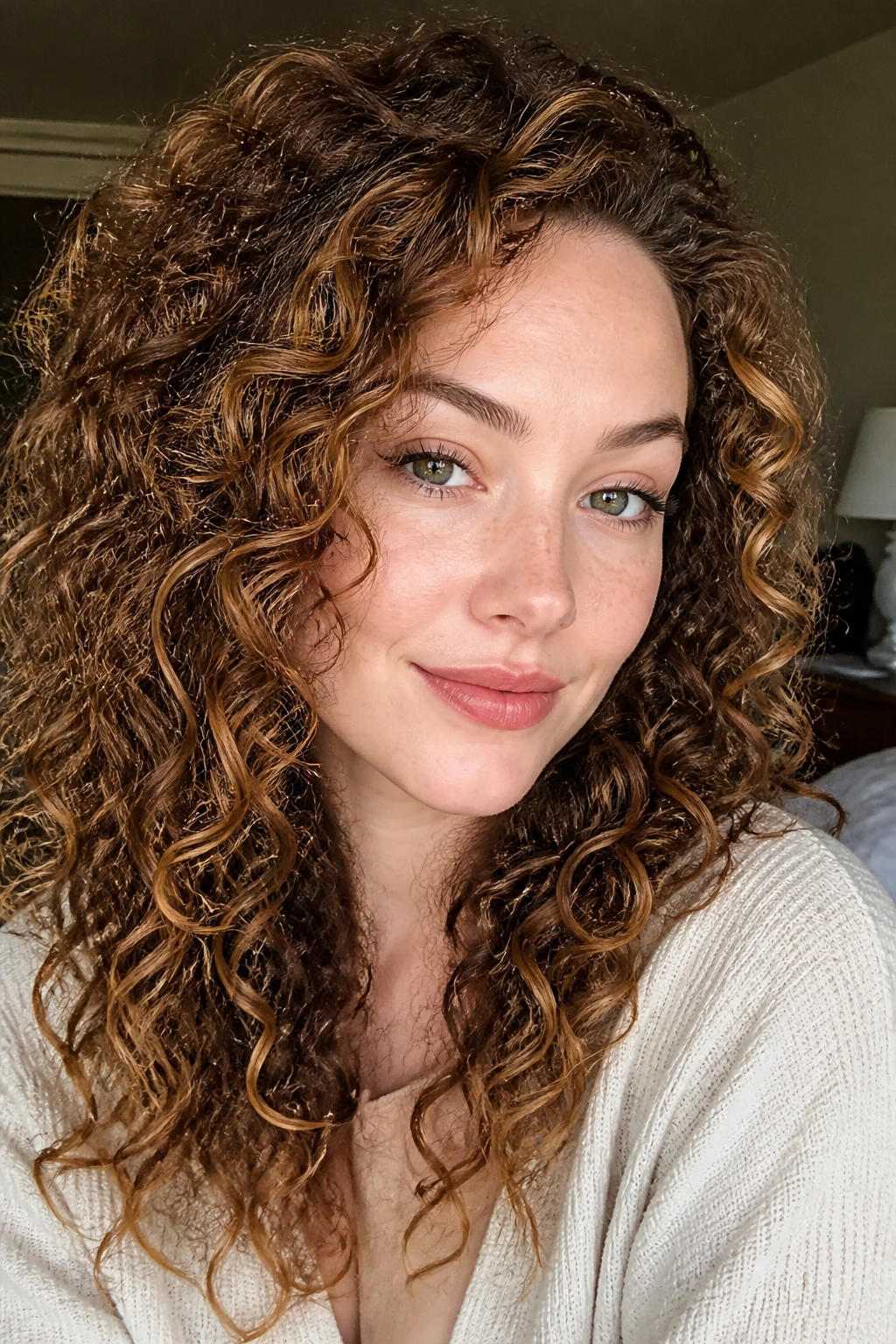
Curly hair and warm brown are a good match when the tone is placed with care. Toffee-Toned Curly Brown keeps the base brown and drops toffee warmth where the curls bend and flare.
How placement changes on curls
Curls shrink. They also reflect light differently from straight hair. That means you want warmth placed a little higher on the surface and a little lower underneath, so the color does not disappear once the curl pattern tightens.
Ask for toffee ribbons painted where the curl clumps open up, not all over. It creates movement without losing the natural shape. On pale skin, that gives the face a soft halo instead of a flat ring of color.
13. Biscotti Brunette
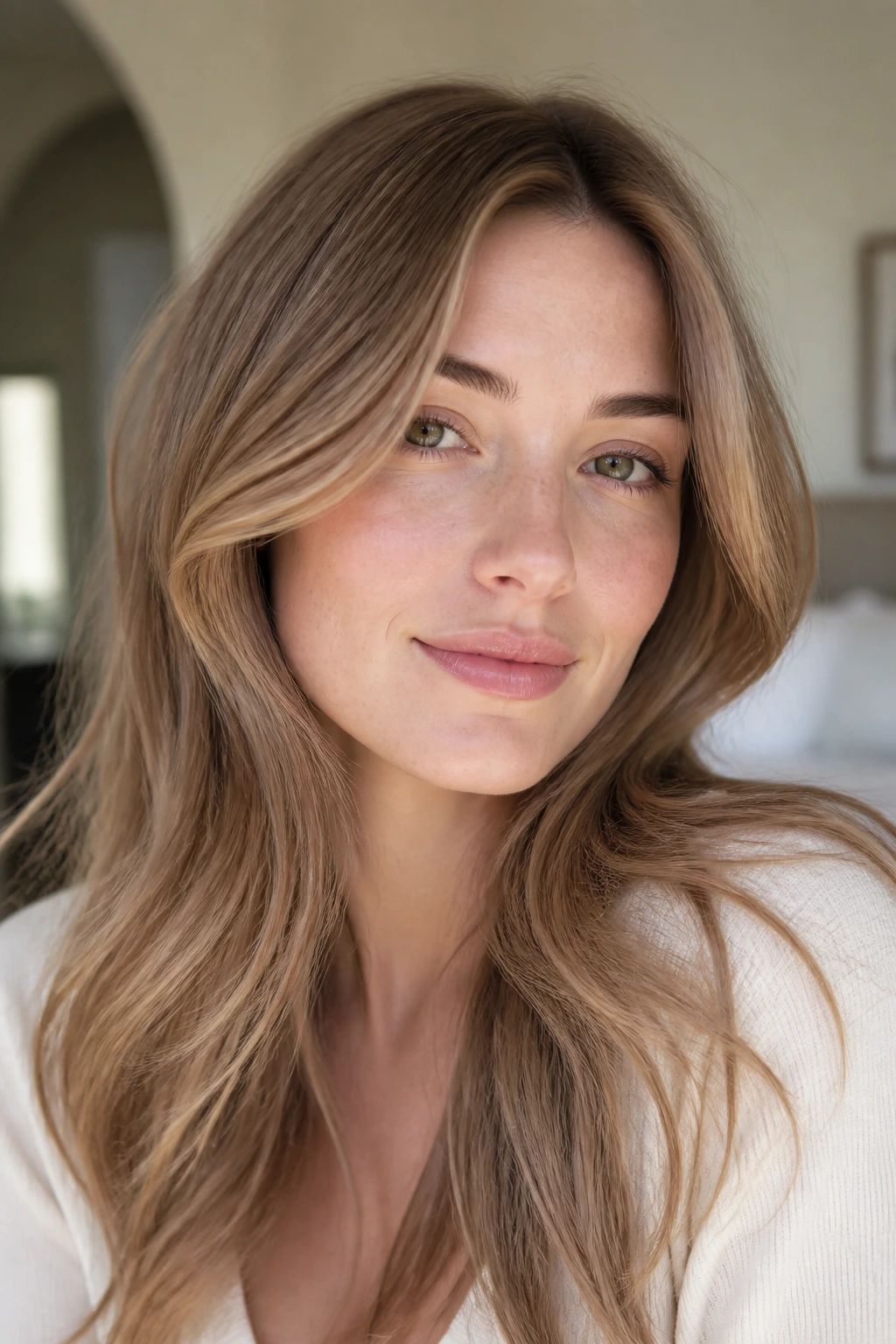
Biscotti Brunette is creamy, slightly beige, and far less heavy than a classic dark brown. It’s one of the easiest warm browns to wear on pale skin because the beige note keeps the color from getting too red or too dark.
Think creamy, not muddy
The whole point is softness. If the brown starts to look chocolatey and dense, it loses the biscotti effect. A level 6 creamy brown glaze with gold-beige reflect keeps the shade light enough for fair skin without turning it blonde-adjacent.
This is a clean choice for straight hair, sleek blowouts, and simple cuts. There’s no need for big texture. The color itself carries enough interest.
14. Golden Beige Brown
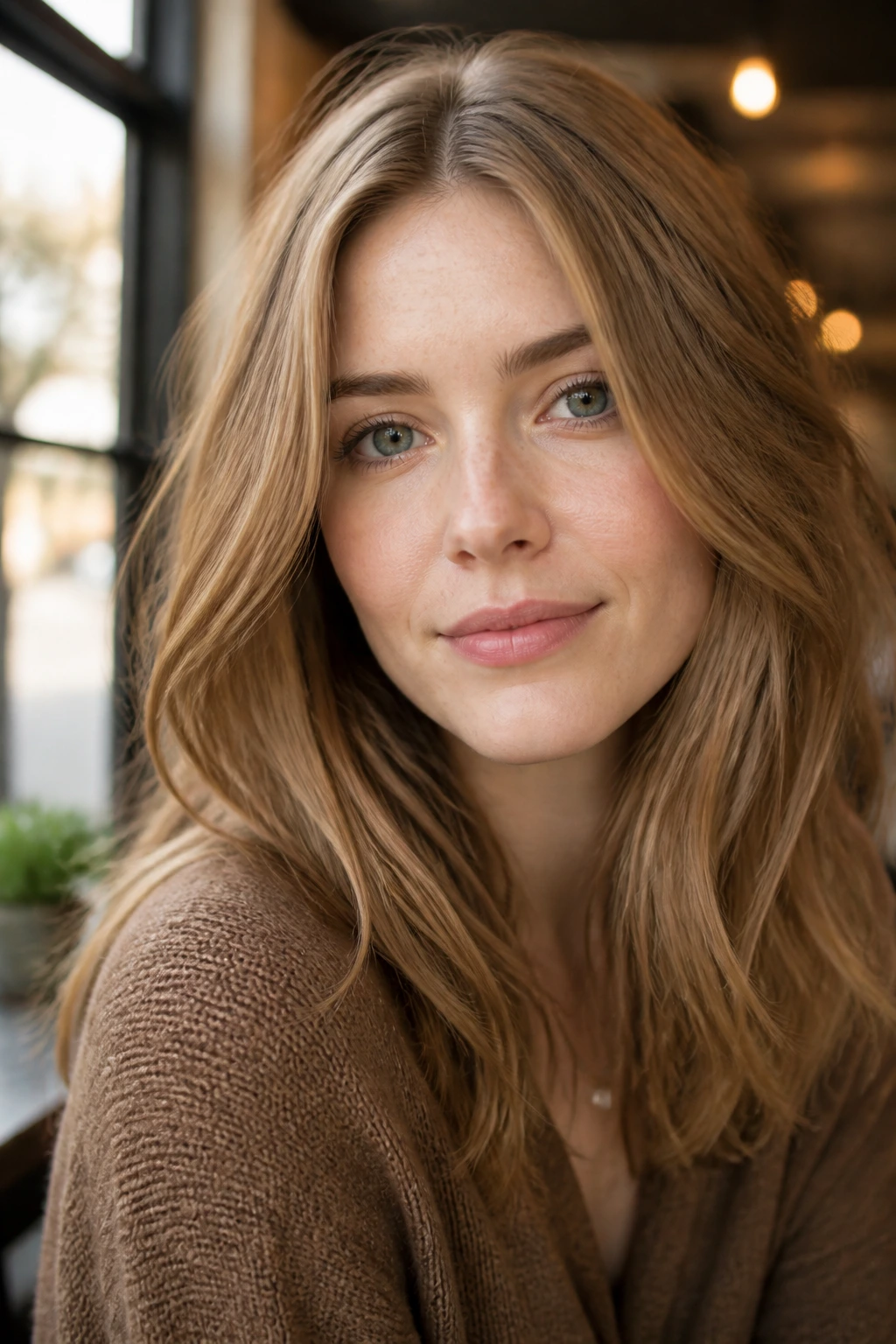
Golden Beige Brown is the gentlest warm brunette in the bunch. It has enough gold to keep pale skin from looking gray, but the beige base stops it from becoming too orange.
The safest warm pick for pink skin
If your skin flushes red, this shade is often kinder than caramel or amber. The beige softens the warmth. Ask for a beige-brown base with soft gold reflect, and keep the color a touch cooler at the root than at the ends.
This works well if you want warmth you can wear with little makeup. No heavy bronze blush required. The hair does the brightening on its own.
15. Warm Hazelnut Lowlights
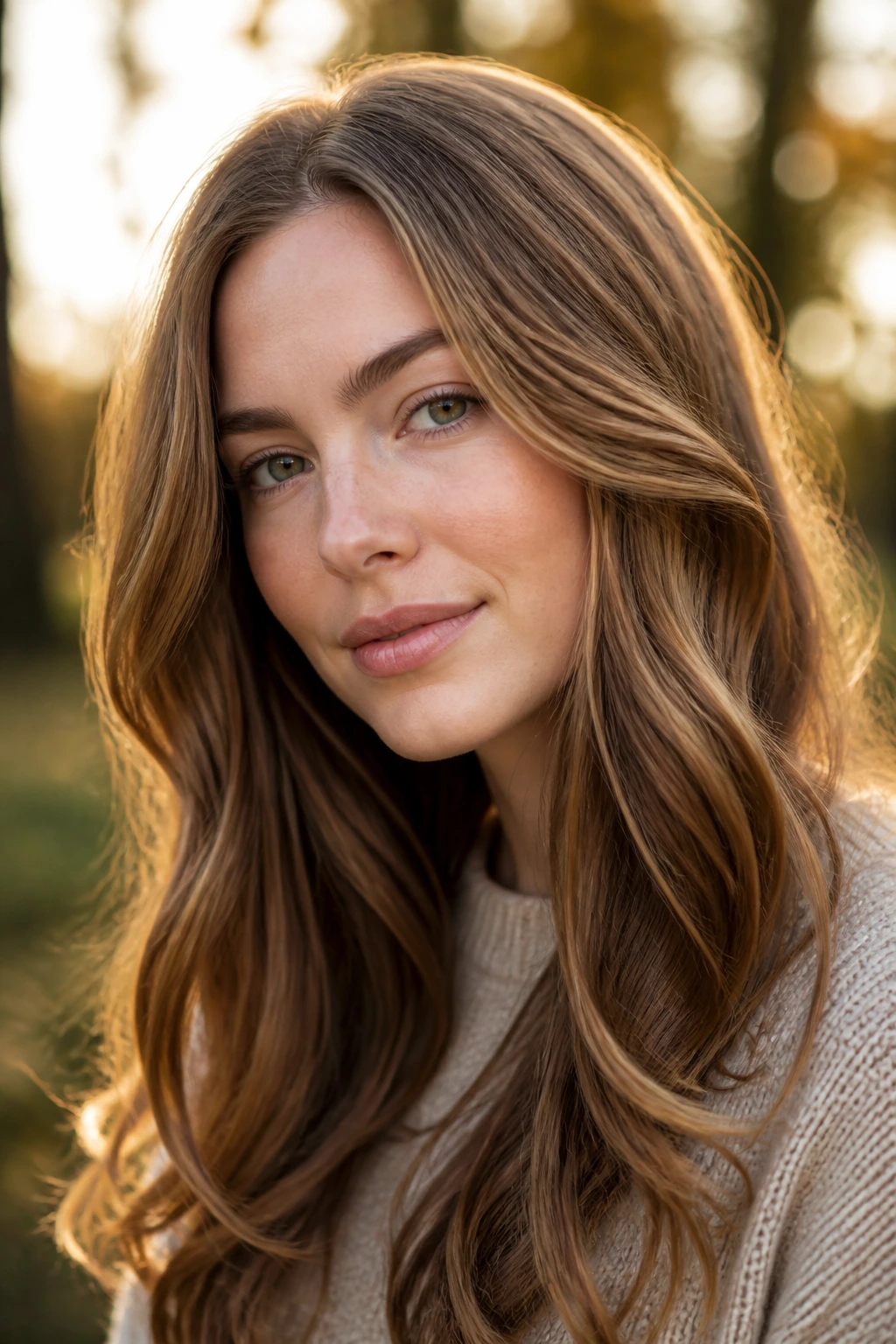
Warm Hazelnut Lowlights are a smart answer if your hair is already light brown or dark blonde and feels a little washed out. Instead of pulling everything lighter, you deepen some sections with hazelnut warmth.
Depth can be flattering on pale skin
People often assume pale skin always needs brightness. Not true. Sometimes the skin looks better when the hair gains a little depth, because that extra contrast makes the face read more alive. Hazelnut lowlights do that without plunging the whole head into dark brunette territory.
This is especially useful if your hair has gone brassy from too much sun or old highlights. Lowlights can clean up the tone and give the color structure again.
16. Brown Sugar Balayage
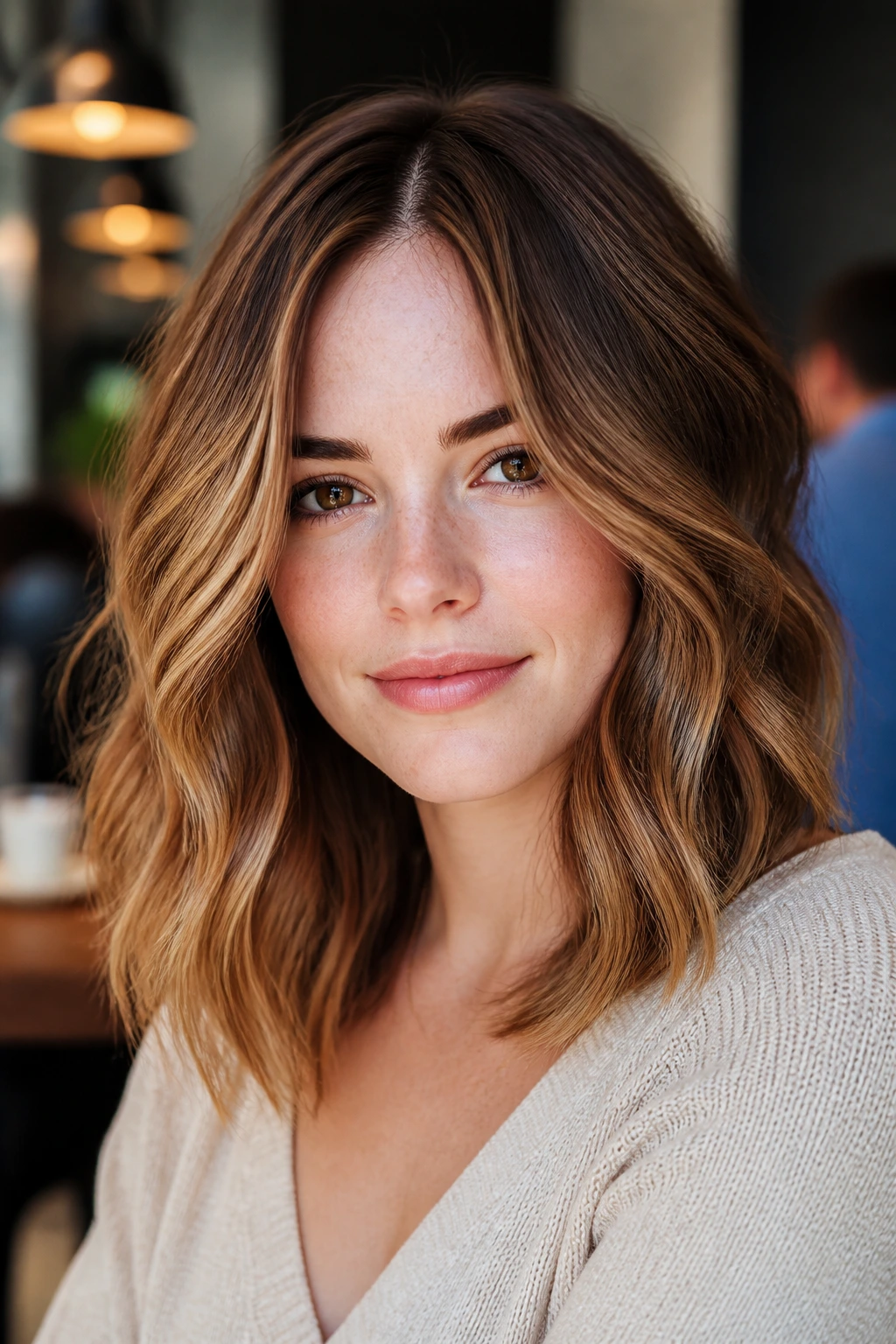
Brown Sugar Balayage has a soft sweetness to it, but the shade itself is richer than the name suggests. The balance between medium brown and caramel-gold keeps fair skin from looking flat.
A good choice if you like movement
The balayage should be hand-painted in a way that follows the haircut. That means more brightness on the pieces that sit around the face and top layer, less on the underlayers. When it’s done well, the hair moves without looking streaky.
I like this one on shoulder-length cuts because the color can travel from root to end in a visible way. Too much length can make it feel stretched out. Too little and the sugar effect disappears.
17. Apricot-Kissed Chestnut
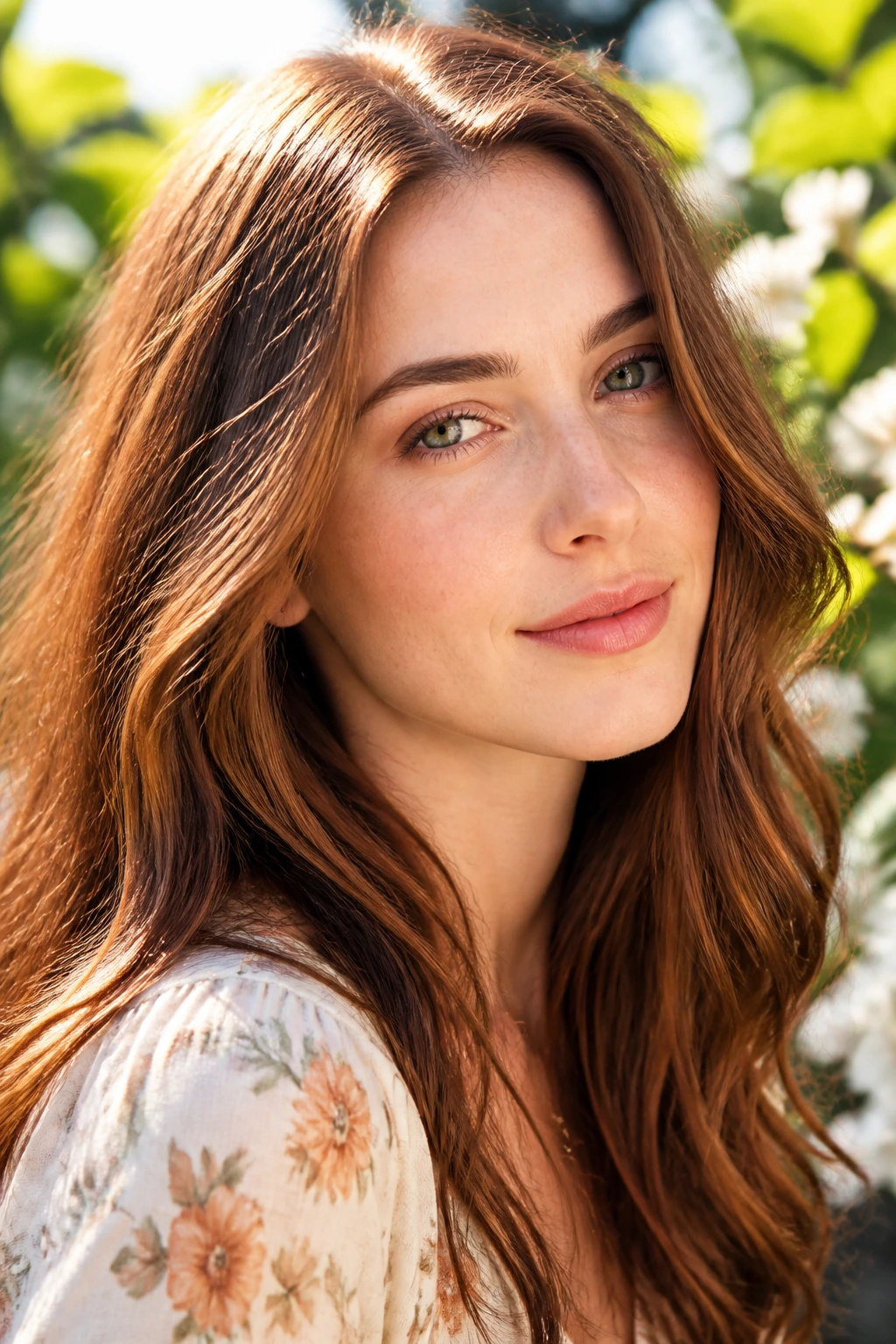
Apricot-Kissed Chestnut sounds playful, and it is. The chestnut base keeps the brown wearable, while the apricot reflect adds a tiny lift that makes pale skin look fresher.
Use apricot with restraint
This is not copper. That would be a different story. Apricot should show as a soft warmth, especially in sunlight, not as a bright orange cast. Ask for a chestnut glaze with apricot-gold reflect, and keep the saturation low.
This shade is especially good on pale skin with a bit of pink in the cheeks. It brings warmth up without making the face look flushed. That balance is tricky, and this one gets close.
18. Smoked Caramel Brunette
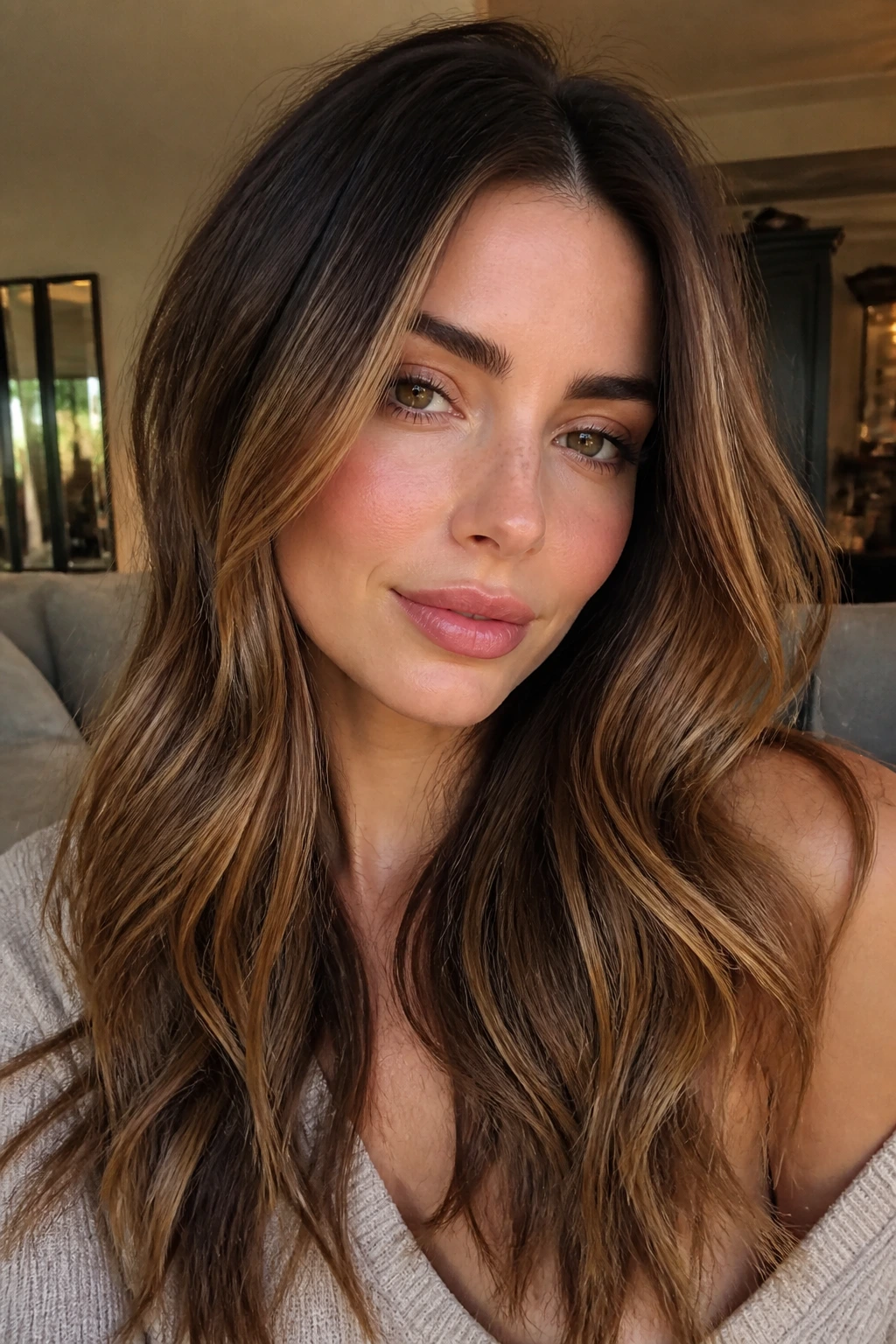
Smoked Caramel Brunette is for people who want caramel without the sugar rush. A smoky root keeps the base grounded, and the caramel mids keep the hair from going flat.
A little shadow makes the caramel look richer
The smoky root matters because it gives the lighter pieces something to sit against. If every strand is bright, the hair can look fuzzy. A deeper base sharpens the color and helps pale skin handle the warmth better.
This version is a good fit if you wear waves, curls, or a layered cut. Straight hair can wear it too, but you’ll want the face frame kept especially soft so the contrast doesn’t get too hard.
19. Golden Mocha Sombre
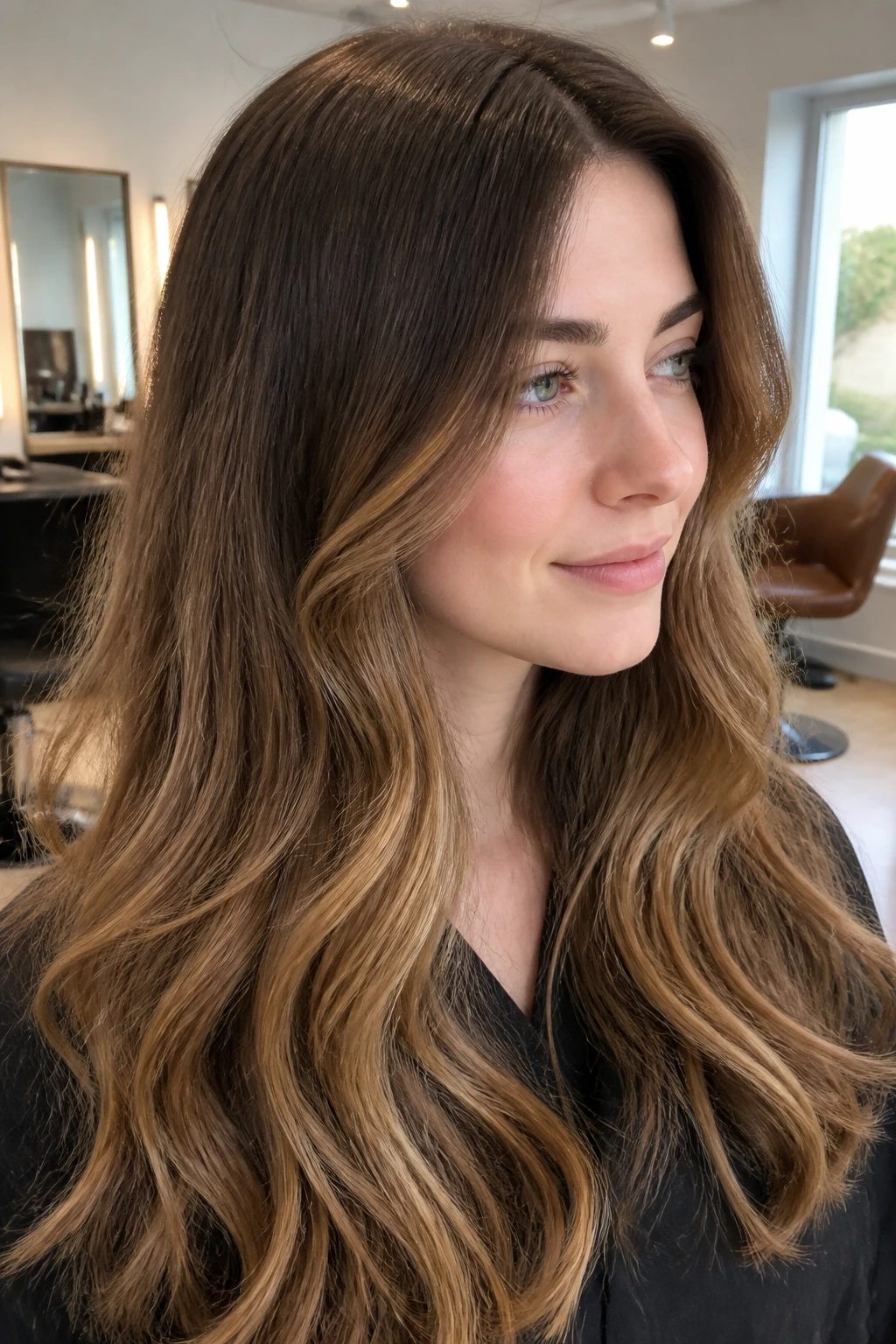
Golden Mocha Sombre is a softer cousin to balayage. The transition is slow, almost imperceptible, which is exactly why it works so well on pale skin.
Why the slow fade matters
A sombre gives you less visible regrowth and a calmer overall read. The mocha root keeps the color rooted; the golden mids prevent the shade from looking dusty. Ask for a soft transition from mocha brown to warm gold-brown through the lower two-thirds of the hair.
This works especially well if you’re growing out blonde or want a brown that doesn’t feel harsh at the root. It’s polished without trying too hard. That matters.
20. Espresso with Honey Money Piece
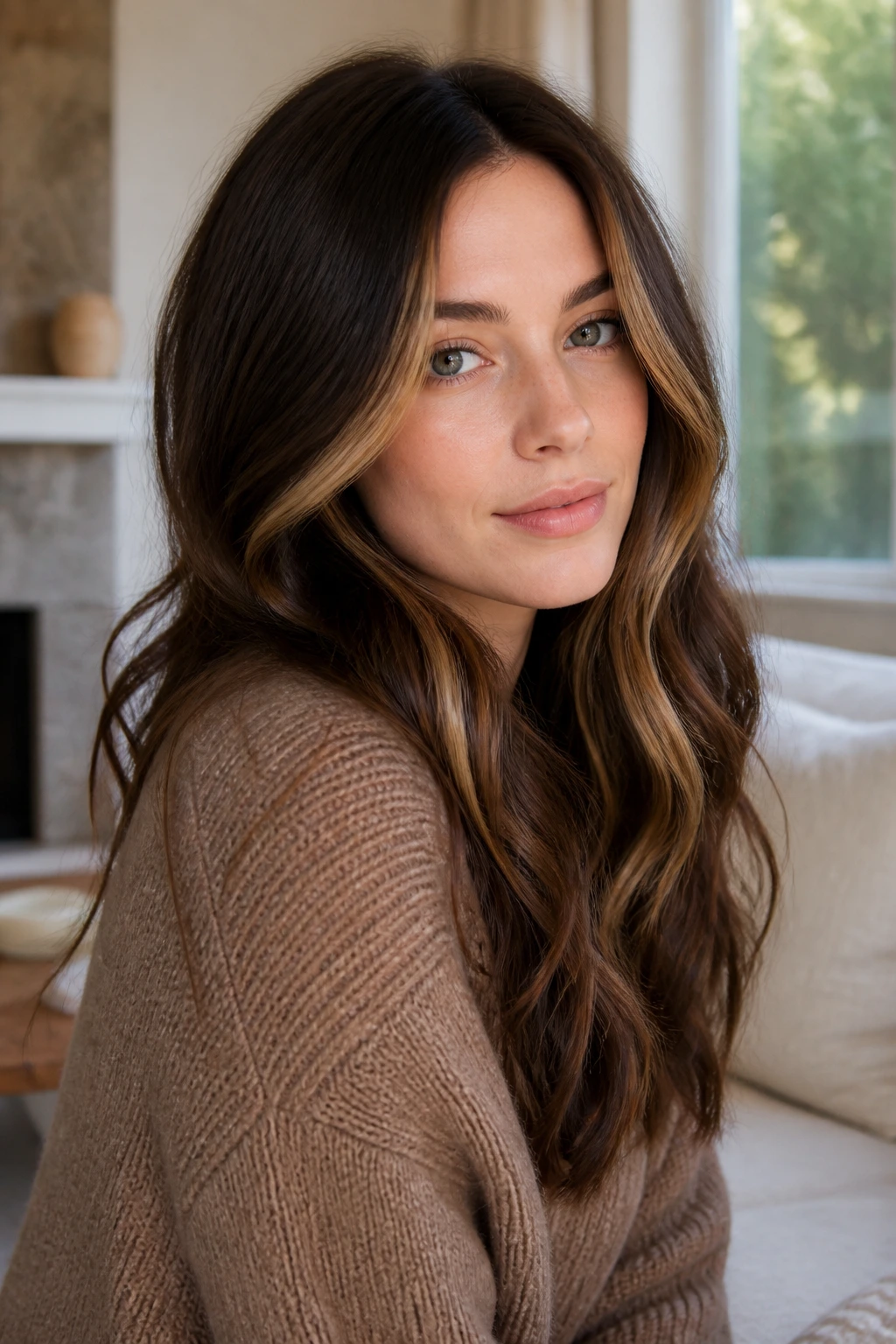
Espresso with Honey Money Piece is for people who want the base deep and the face bright. The espresso around the head gives structure, while the honey money piece pulls light right where pale skin needs it most.
The face frame does the work
Keep the money piece thin enough to blend but bright enough to be visible in daylight. Usually, that means one to two levels lighter than the base, with a soft golden tone rather than pale blonde. If the pieces are too light, the hair starts to fight the skin instead of supporting it.
This is a good match for strong brows, dark lashes, and simple makeup. The contrast reads intentional and crisp, not accidental.
21. Roasted Chestnut with Face-Framing Layers
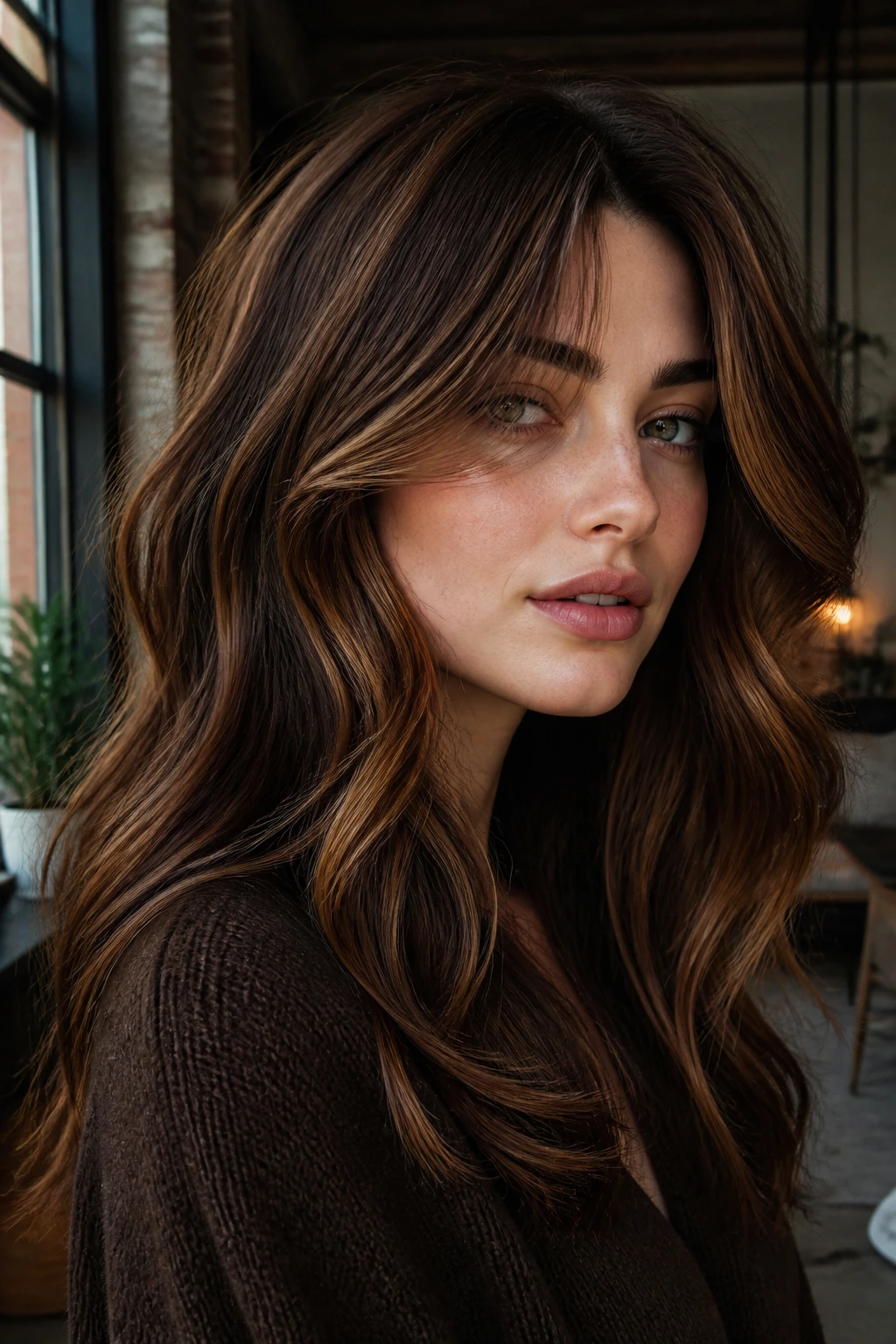
Roasted Chestnut is deeper than soft honey chestnut, but the face-framing layers keep it from becoming heavy. That’s the part that matters on pale skin: brightness placed where the face actually needs it.
Layer shape and color should talk to each other
If the layers are long and swoopy, the light should land on the bends. If the cut is shorter and more angular, keep the highlights closer to the face and the ends. Color placement that ignores the haircut always looks off in motion.
This shade is one of the better options if you like wearing your hair back. The chestnut keeps the ponytail from looking flat, and the framing pieces soften the skin at the temples.
22. Honey Toffee Melt on Long Waves
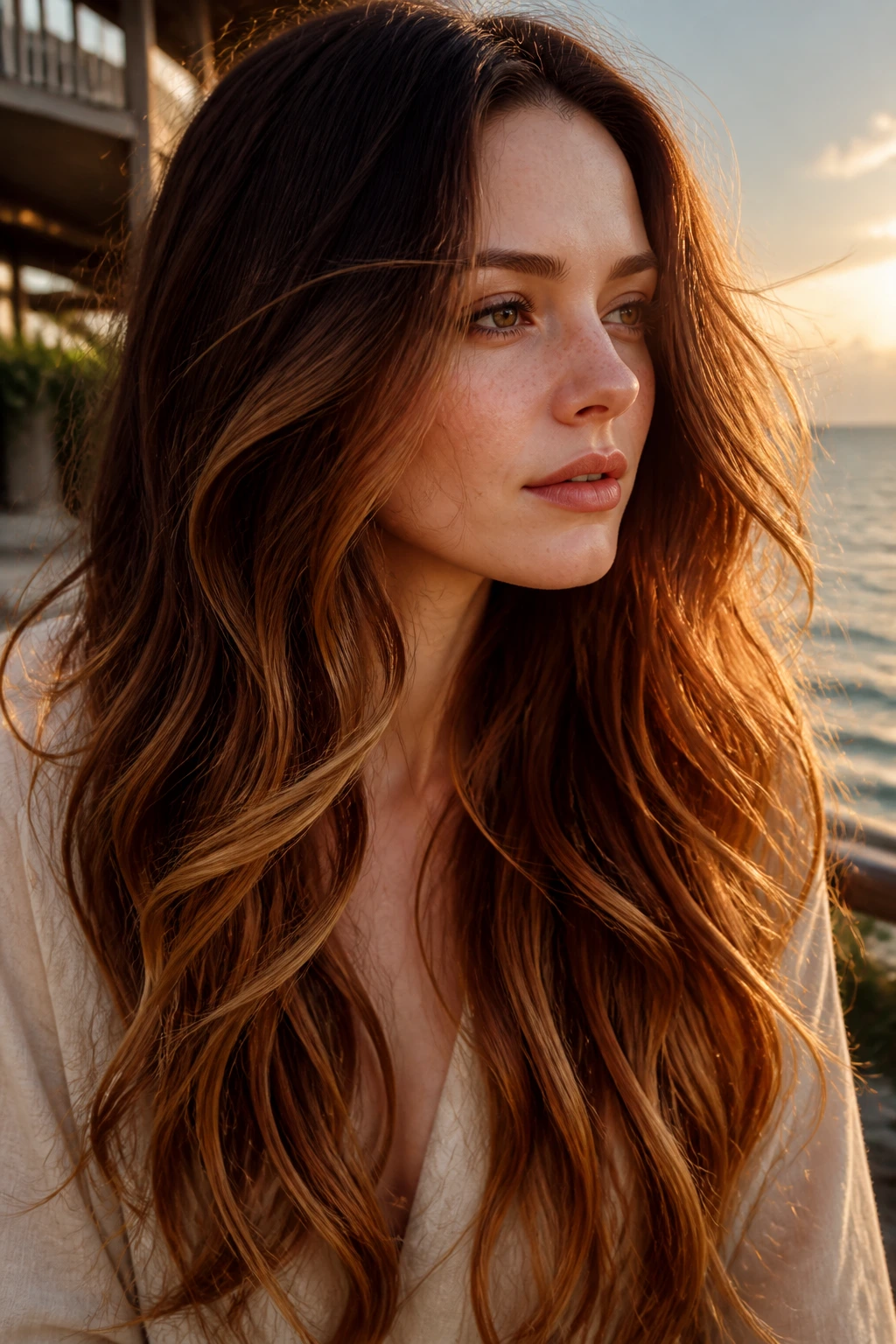
Honey Toffee Melt gets room to breathe on long hair. The color travels from a brown root into honey and then toffee at the ends, which gives pale skin warmth without a harsh line.
Length makes the gradient easier to read
Long waves help the melt look smooth. Each bend reveals a slightly different tone, and that movement keeps the shade from feeling static. Ask for a root shadow, honey mids, and toffee ends if you want the progression to stay obvious but soft.
This is not the best choice if you hate maintenance. Longer gradients need glosses and tone refreshes to stay clean. But when the tone is right, it’s one of the richest-looking browns on fair skin.
23. Amber Latte Brown
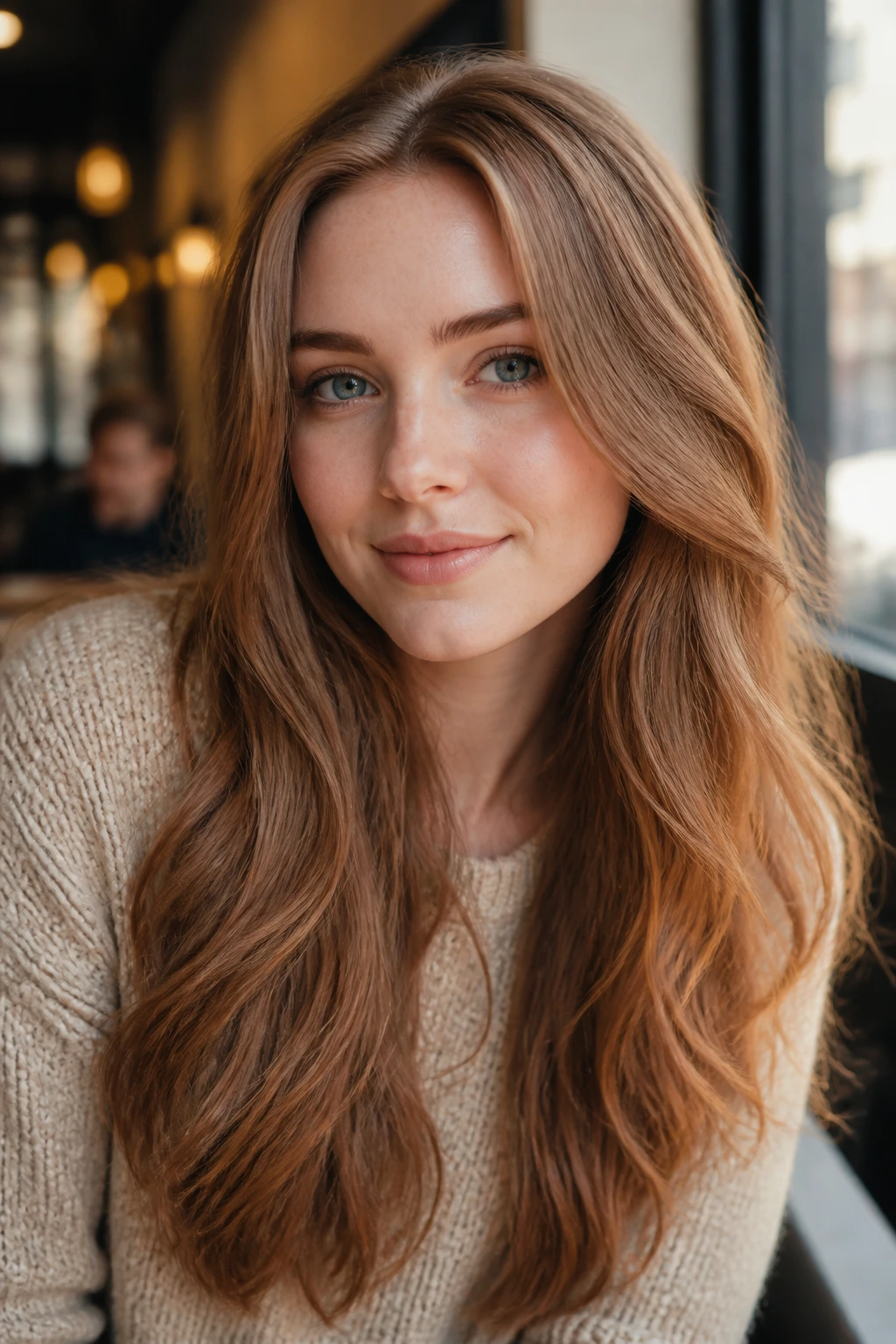
Amber Latte Brown is creamy, soft, and easy on pale skin that needs a little warmth but not a full golden blast. It has the softness of latte foam with a tiny amber finish underneath.
Better than high-shine caramel for fine hair
Fine hair can lose dimension fast. Amber latte brown avoids that by keeping the shade light in reflect, not light in depth. The result is a color that looks warm in a smooth, even way rather than streaky.
If your hair tends to show every color mistake, this is a safer route. It stays elegant in a low-key way, and the pale skin connection is subtle enough that the whole look feels calm.
24. Maple Chestnut Gloss
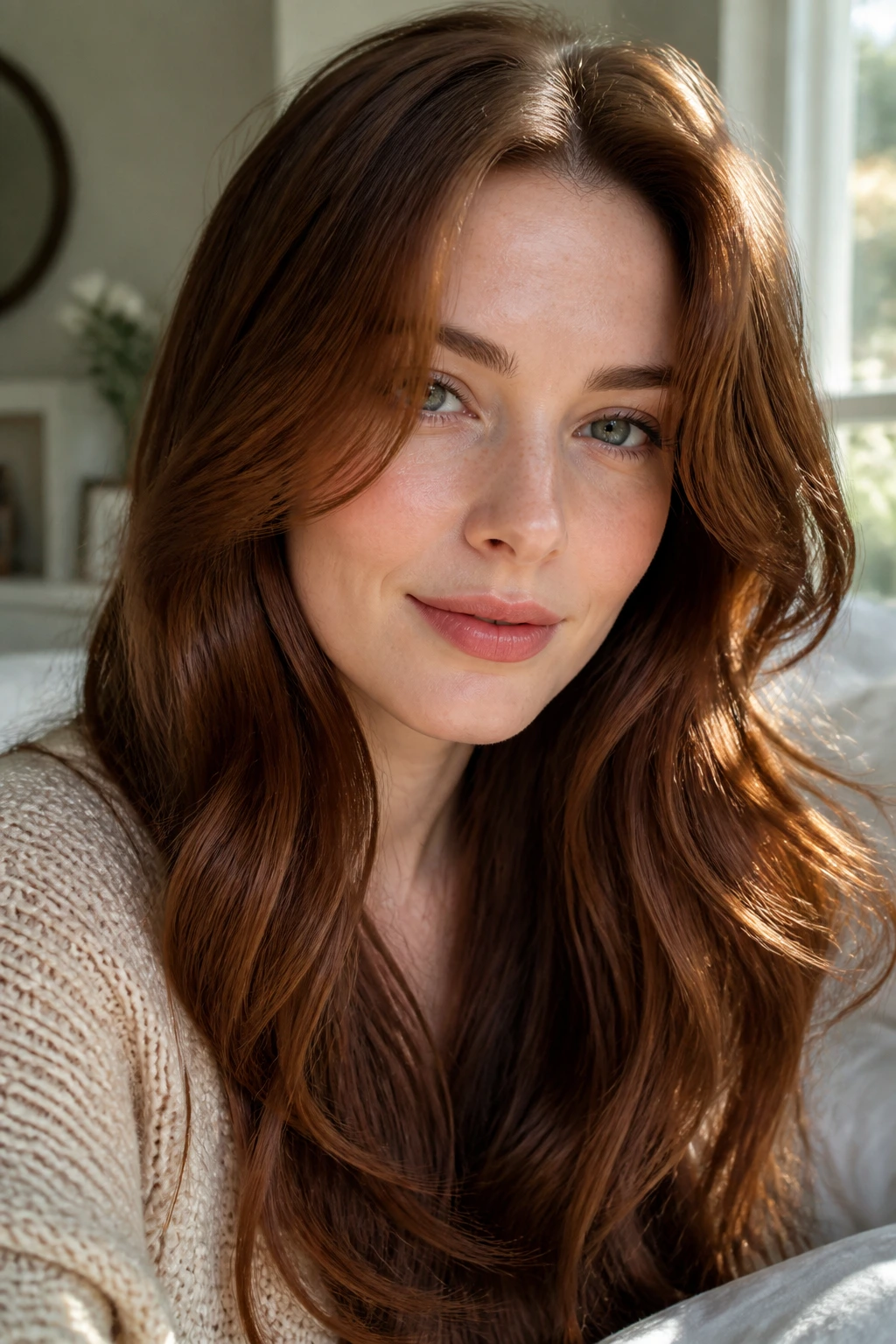
Maple Chestnut Gloss is for the person who wants a brown refresh without a major color service. It’s rich, warm, and mostly about shine.
Glosses are underrated
A good maple gloss can revive old chestnut tones and make them read expensive again. The hair looks smoother, the color reflects more cleanly, and pale skin gets that warm frame without extra lightening. Ask for a clear or maple-toned gloss over a chestnut base if you want dimension with minimal damage.
This is one of the easiest maintenance choices in the bunch. It’s also one of the most wearable. If you want your hair to look healthy first and colored second, this is the one.
25. Soft Bronze Brown Crop
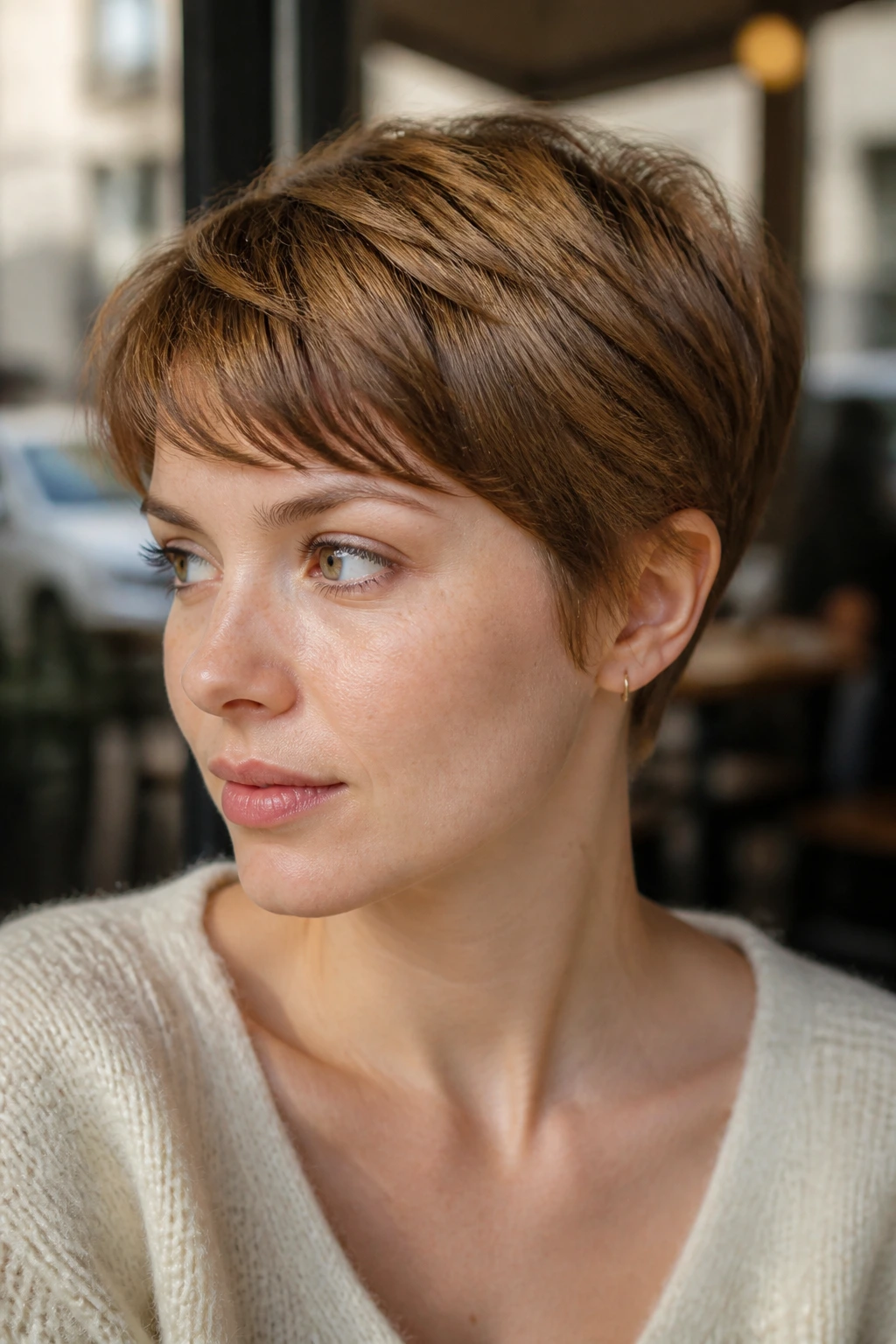
Soft Bronze Brown turns a crop or pixie into something warm without making it loud. Bronze is the right amount of shine here—enough to wake up pale skin, not so much that the color feels metallic.
Short hair needs clear tone, not clutter
On a crop, every millimeter shows. That means the color has to be clean. Ask for a neutral bronze-brown glaze with no heavy red cast, and keep the finish glossy rather than matte. Matte bronze on pale skin can go a little dull; glossy bronze looks deliberate.
This is a strong choice if you want a short cut with personality. It’s neat, warm, and surprisingly soft around fair skin.
How Warm Brown Changes Depending on Your Undertone
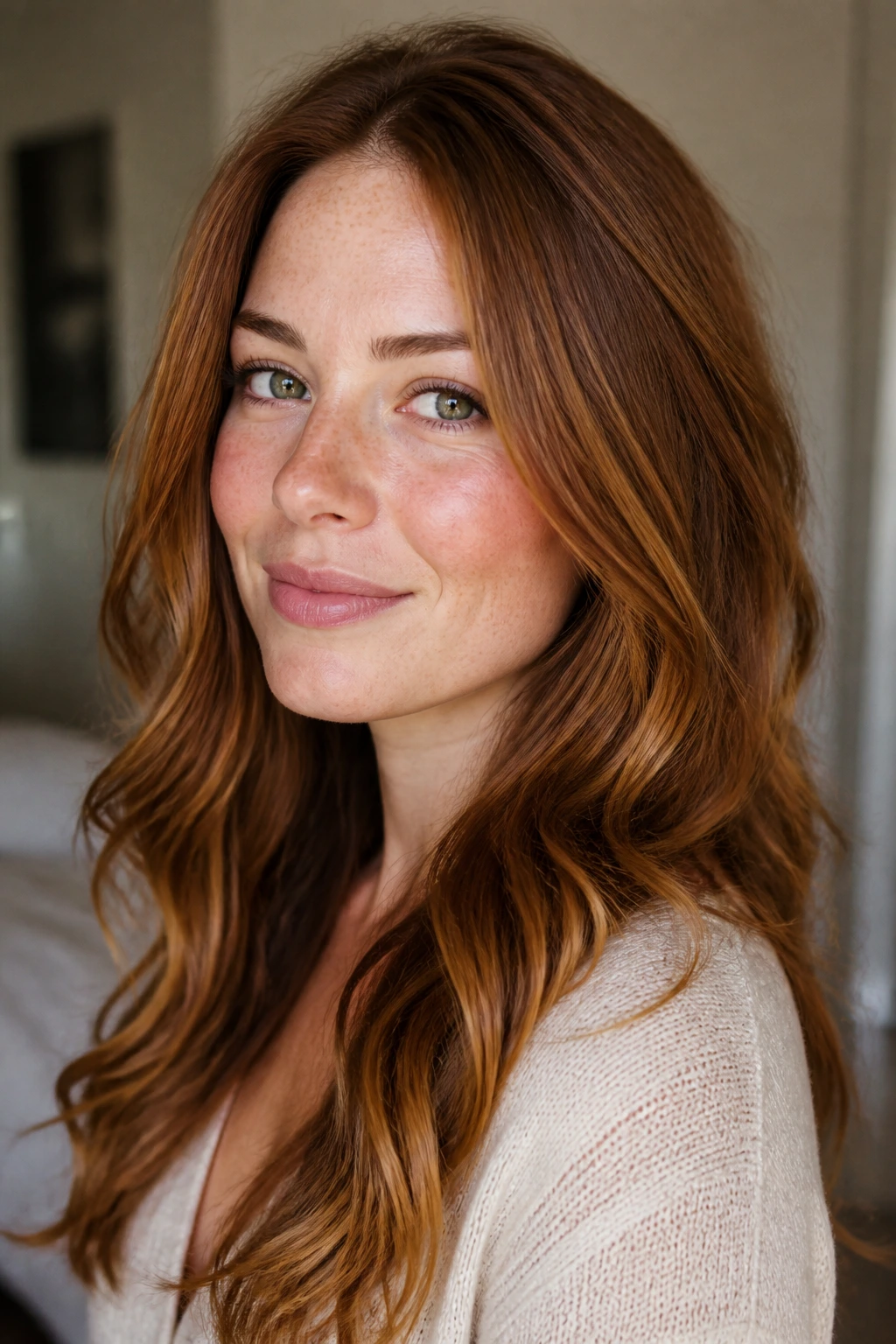
Pale skin is not one thing, and the shade that flatters one fair complexion can look odd on another. Cool-pale skin usually does better with honey, almond, beige-gold, and chestnut because those tones add warmth without turning the hair orange. Rosy cheeks can handle a little more gold, but they still need restraint at the root.
Neutral-pale skin has more room. That’s where caramel ribbons, amber browns, and maple bronde start to shine. The warmth looks natural instead of forced, and the face keeps its own color instead of getting swallowed by the hair.
If your skin leans olive, keep the warmth softer and a touch beige. Olive-pale skin can go sallow fast when the brown is too yellow. A golden beige brown or smoked caramel brunette usually behaves better than a bright coppery caramel.
What to Tell the Colorist Before the Bowl Comes Out
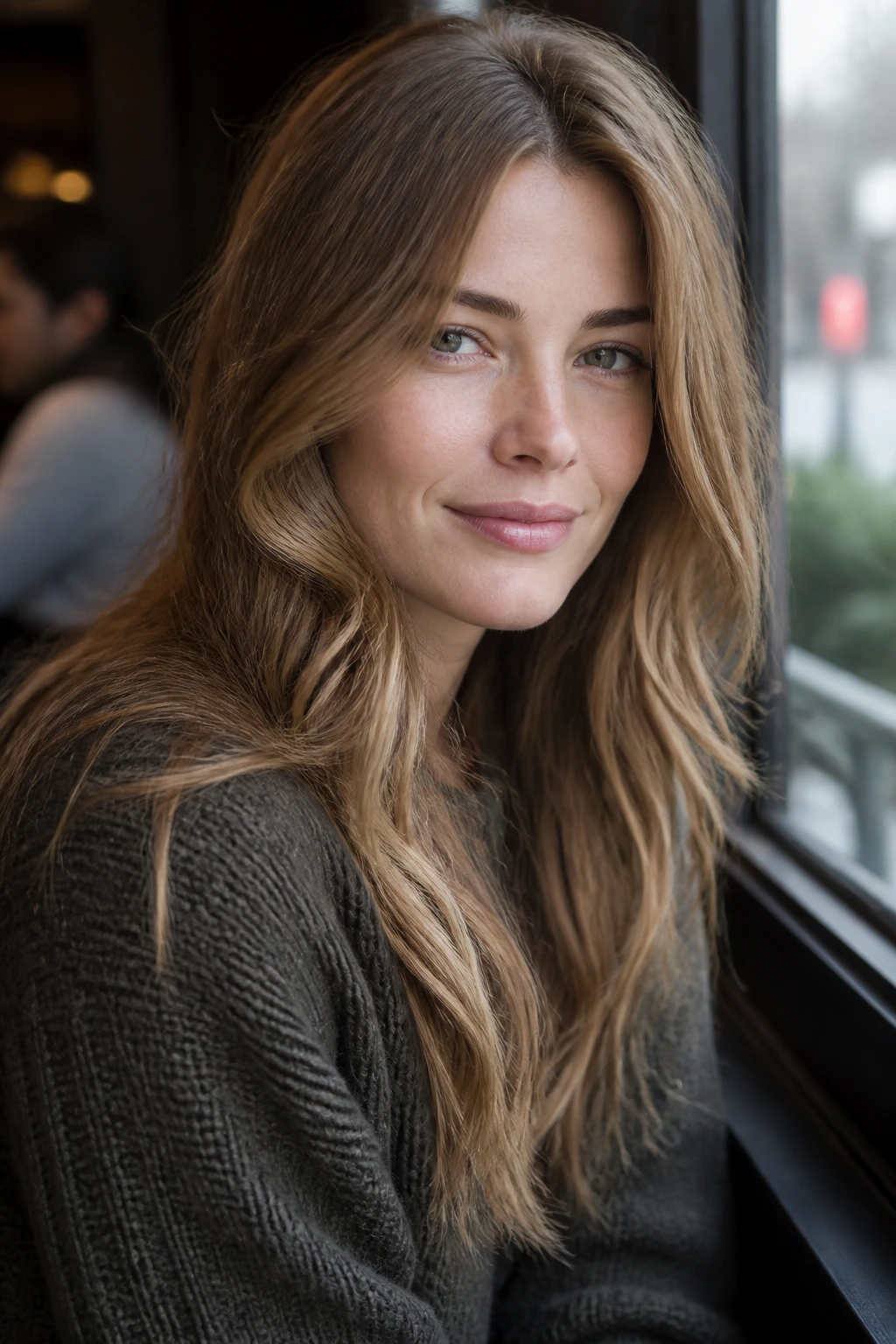
Bring two or three photos, but do not stop there. Say what you want the color to do. That matters more than saying the color name. “I want warmth that looks soft in daylight, not orange indoors” is useful. “I want a level 6 chestnut with honey reflect and a root that stays neutral” is even better.
If you’re nervous about maintenance, ask for a shadow root or a demi-permanent gloss instead of all-over permanent color. Those choices fade more softly and give you a chance to adjust the tone if the gold feels too strong. And if your skin is especially fair, ask for brightness around the face only. That small move can change the whole result.
One more thing. Tell the colorist how often you wash your hair. Twice a week and every day are not the same story. The tone plan should match your life, or it becomes a high-maintenance shade in a hurry.
Essential Tools and Products for Keeping the Shade Glossy
-
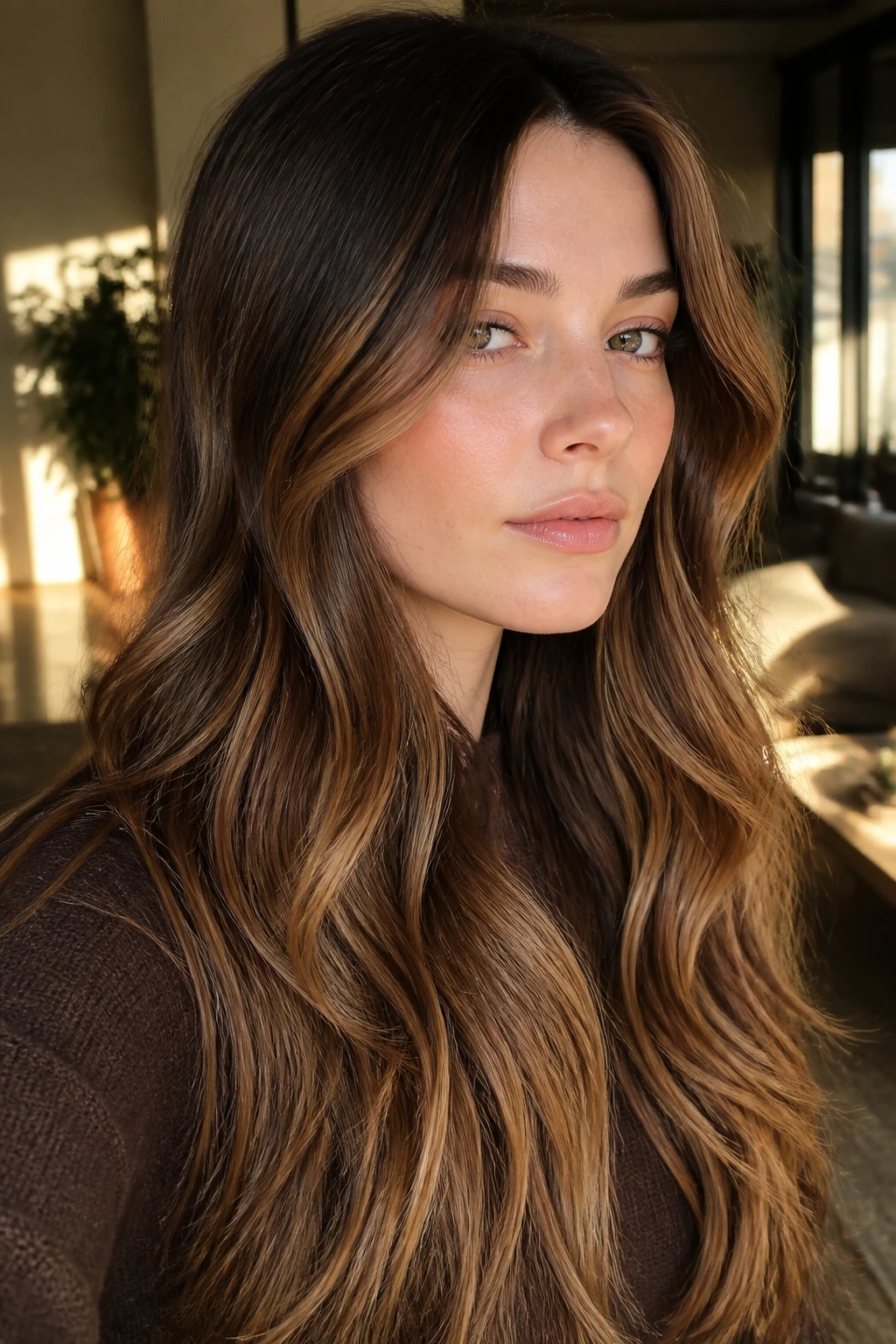
Color-safe sulfate-free shampoo: Keeps warm brown from fading fast and helps the gloss last longer between washes.
-
Hydrating conditioner: Warm brunette shades look flat when the cuticle is rough, so moisture matters more than people think.
-
Color-depositing gloss or mask in honey, caramel, or beige-brown: Use this when the warmth starts to look tired or washed out.
-
Heat protectant spray: If you use a blow-dryer, flat iron, or curling wand, this is non-negotiable.
-
Wide-tooth comb: Helps preserve wave pattern and keeps wet hair from breaking when it’s most fragile.
-
Microfiber towel or soft T-shirt: Rough towel drying can rough up the cuticle and make the color look dull faster.
-
Tint brush and bowl: Useful if you apply a demi-permanent gloss at home or around the hairline only.
-
Shower filter: Worth it if your water runs hard or leaves mineral film. Warm brown can go muddy under hard water faster than blonde usually does.
Practical Tips for Making the Color Look Expensive
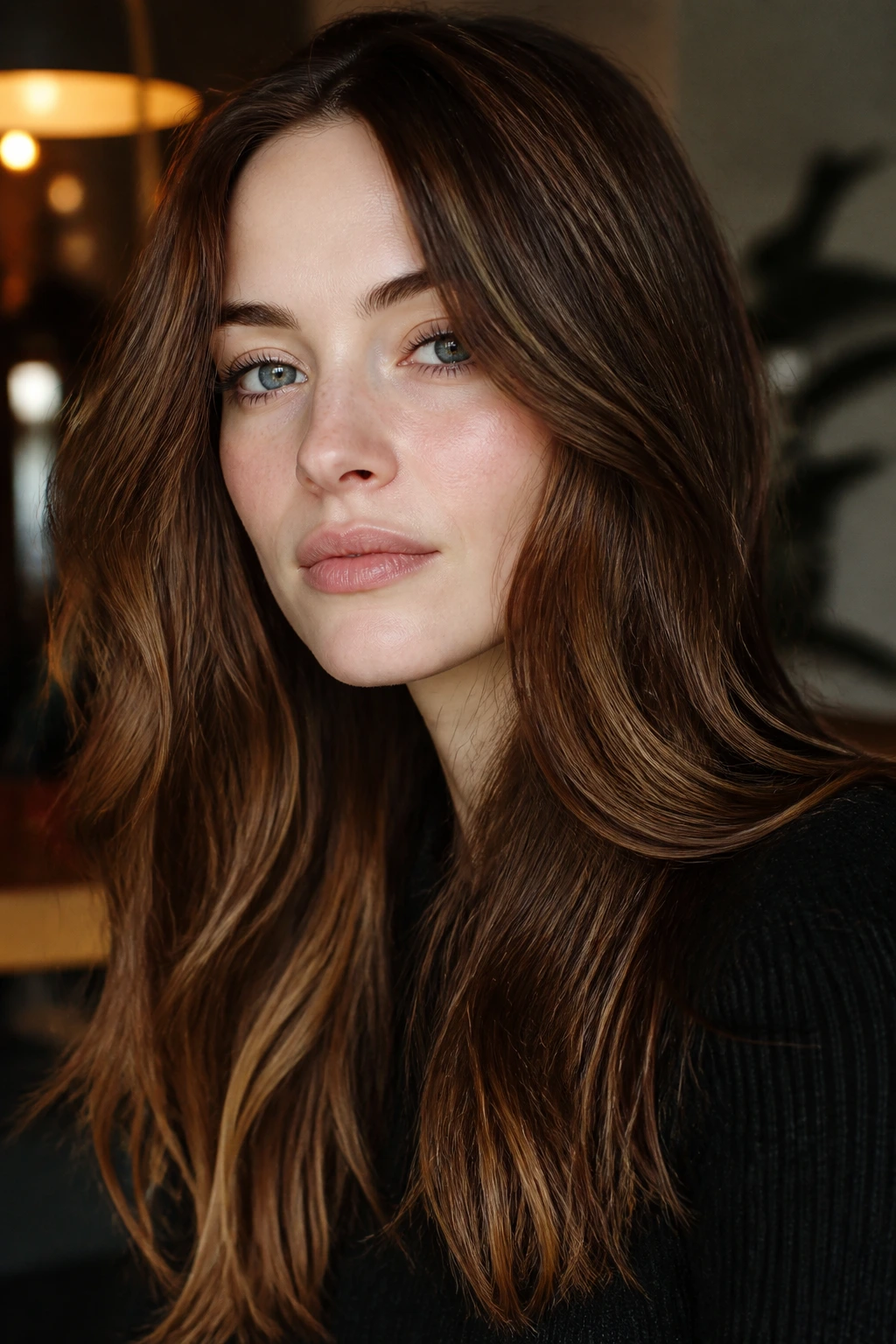
Gloss Trick: A clear or beige-gold gloss every 4 to 6 weeks can do more for warm brown than another round of highlights. It tightens the tone, smooths the shine, and keeps pale skin from looking tired next to dull hair.
Face-Framing Rule: Keep the brightest pieces within the first two inches around the face and through the very ends. That is where pale skin gets the most lift, and it keeps the rest of the hair from looking striped.
Root Trick: Let the root sit one shade deeper than the mids. It gives the color a soft shadow and makes regrowth less obvious. A flat, same-tone brown can look harsh on fair skin because there’s nowhere for the eye to rest.
Daylight Check: Judge the shade by a window before you decide it’s done. Warm browns can look buttery indoors and redder outside, or the other way around depending on the light. If it reads too orange in daylight, ask for a beige or chestnut glaze to quiet it down.
Common Mistakes That Turn Soft Warm Brown Into Brass
-
Choosing orange when you wanted gold: On pale skin, copper-heavy brown can make the face look flushed or even sunburned. Ask for honey, caramel, or beige-gold reflect instead.
-
Going too light from root to end: When every strand is bright, the hair loses shape and the face can look washed out. Keep the base at least one level deeper than the brightest pieces.
-
Using purple shampoo too often: Purple can cool down blonde, but on warm brunette it can leave a dusty, murky finish. Use it only when brass shows up, not as a weekly habit.
-
Ignoring brow color: Hair that is much warmer or lighter than your brows can look disconnected on fair skin. Sometimes all you need is a softer brow powder or a slightly warmer brow tint.
-
Skipping maintenance for hard water: Mineral buildup steals shine fast and can make a golden brown look flat by the third or fourth wash. A shower filter and a monthly clarifying wash help more than people expect.
Variations and Adaptations to Try
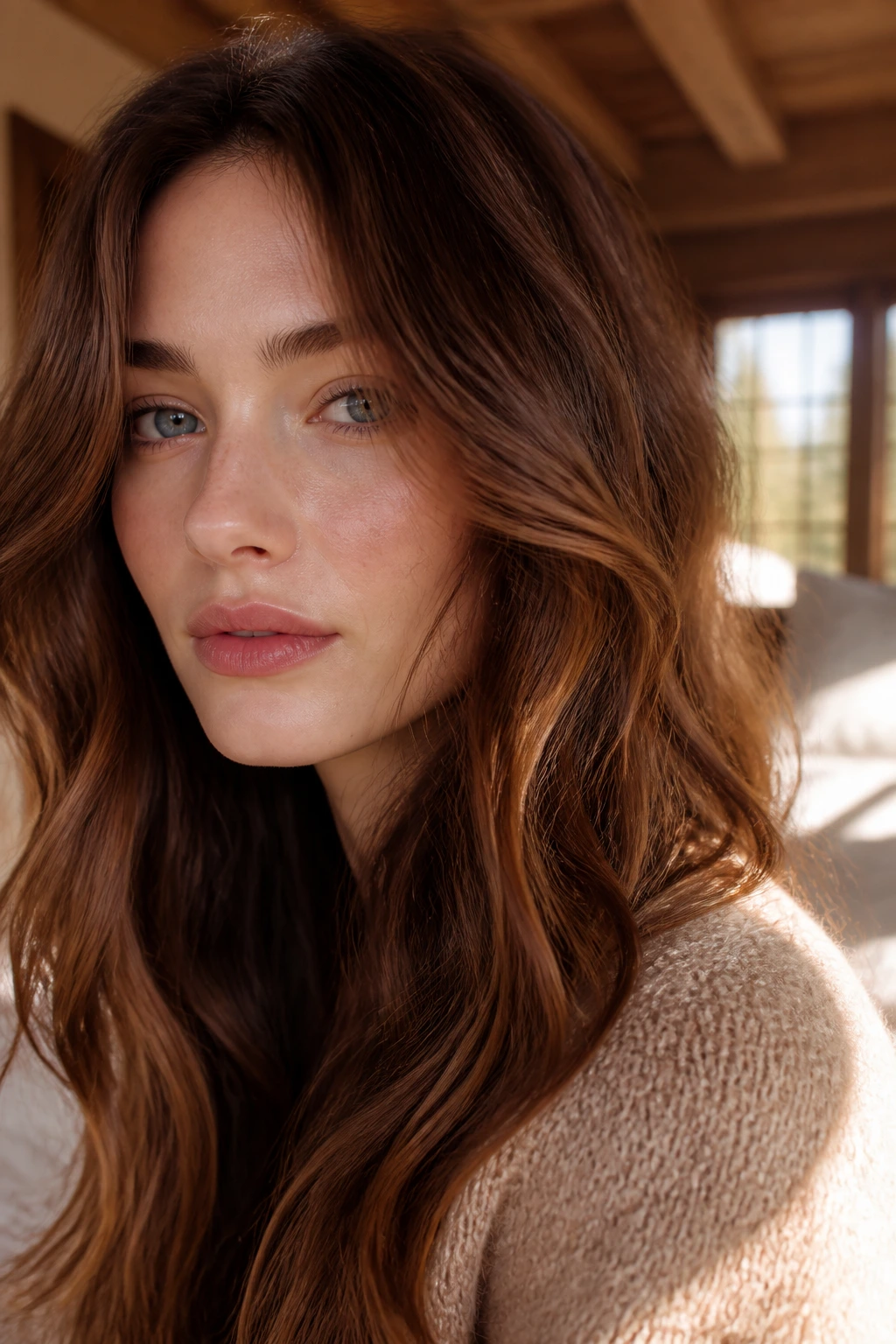
Rosy-Skin Honey Melt: Keep the base in honey chestnut territory and skip orange-heavy pieces near the hairline. This version cools down redness without taking the warmth away.
Freckle-Friendly Chestnut: Use a deeper chestnut base with only a few caramel ribbons through the mids. Freckles stay visible, and the face gets a soft frame instead of a bright halo.
Low-Maintenance Shadow Root: Ask for a root that is one to two levels deeper than the mids, then fade into caramel or maple ends. It grows out quietly and works well if you do not want a strict touch-up schedule.
Curl-First Toffee Ribbons: Paint the warmth where curls open up and where the pattern catches light. This keeps the color from vanishing into the curl clump and gives pale skin a softer, more natural glow.
Short-Crop Bronze Finish: On a pixie or cropped bob, choose bronze-gold reflect instead of chunky highlights. The short shape shows tone fast, and a gloss keeps the cut looking crisp instead of fuzzy.
How to Keep Warm Golden Brown Looking Fresh
Warm brown usually fades in the wrong direction for fair skin: the shine goes first, then the gold gets dull, and what’s left can look flat. Wash two or three times a week if you can, and use lukewarm water instead of hot. Hot water lifts the cuticle and strips the gloss faster than most people realize.
A demi-permanent gloss or color mask every 4 to 6 weeks keeps the tone clean. If your hair is porous from lightening, lean toward the shorter end of that window. If your base is natural brunette with only a few highlights, you can usually stretch it a little farther.
For heat styling, use protectant every time you pick up a dryer or iron. If your tools run hot, keep them under 400°F and usually lower than that for fine hair. And if your water is hard, use a chelating shampoo about once a month to pull out mineral buildup before it turns the color dusty.
Frequently Asked Questions
What warm golden brown shade looks best on very fair skin?
Soft honey chestnut and golden beige brown are usually the easiest places to start. They warm the face without creating a hard line against porcelain skin, and they’re less likely to go copper than stronger caramel tones.
Will warm brown hair make pale skin look sallow?
It can if the brown is too yellow or too flat. The safer versions have honey, chestnut, or beige-gold reflect, which add life without turning the face green or tired.
Is balayage better than all-over color for pale skin?
Balayage gives you more flexibility because the brightness can sit near the face and ends, where it helps the most. All-over color works too, but it needs more control at the root so the brown does not look heavy.
Can I go from blonde to warm golden brown without a weird green cast?
Yes, but the hair needs enough pigment underneath. Very light blonde often needs a filler or a warm pre-tone before the brown goes on, or the result can look hollow. That step matters more than people think.
How often does warm brown need toning?
Glosses and demi-permanent tones usually need refreshing every 4 to 6 weeks. If your hair is porous or you wash often, expect the warm reflect to fade sooner.
What if my hair pulls red every time I try brunette?
Then stay closer to almond, beige, or walnut and avoid copper-heavy formulas. Red-prone hair usually needs a softer gold-brown balance, not a stronger orange-brown push.
Can I wear warm golden brown on a short haircut or pixie?
Absolutely. Short hair often looks better with a clean bronze, amber, or chestnut gloss than with chunky highlights. The cut shows every color shift, so tone matters more than placement.
Do I need to change my brows with this color?
Sometimes, yes. If your hair is a level or two lighter and much warmer than your brows, a softer brow powder can help the whole look feel connected. You do not need to match exactly; you just do not want the brows to fight the hair.
The Shade That Keeps Pale Skin from Looking Flat
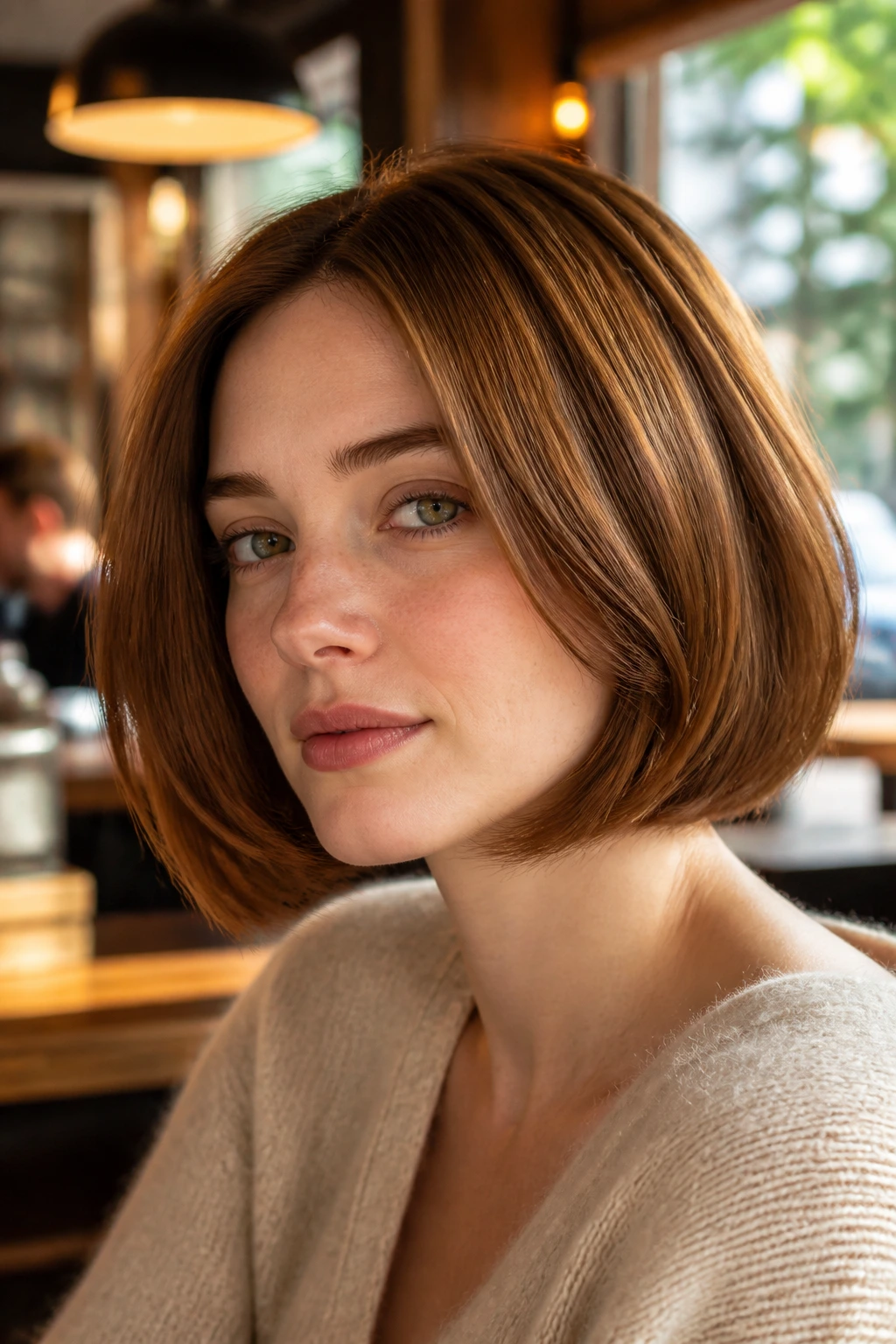
Warm golden brown works on pale skin when the tone is placed with some restraint. That’s the whole game. A little honey at the ends, a chestnut root, a caramel ribbon around the face—those small moves do more than a blanket of color ever will.
The best result usually looks soft in the chair and richer a week later. If you are torn between two shades, choose the one that looks a touch muted under salon lights. Hair nearly always reads warmer once it hits daylight, and that tiny bit of caution is what keeps the color flattering instead of loud.