



Soft highlights for dark hair and oval faces sit in a narrow, satisfying lane: enough light to wake up the face, not so much that the hair stops looking rich. On a deep brunette base, a few caramel or bronze ribbons can make the cheekbones look sharper, the eyes look brighter, and the whole cut look more deliberate. Push the contrast too far and the result turns stripey. Keep it too close to the base and the color disappears under indoor lighting.
Oval faces get called “easy” all the time, which is lazy shorthand. The shape can wear a lot, yes, but placement still matters. Bright pieces at both temples can widen the face in a way you may not want, while a softer sweep from brow to collarbone keeps the line long and calm. That’s why the best versions here are usually lived-in, not loud.
What I like most about this category is that the color keeps its composure. It can move in sunlight, bend through a wave, and still look polished when the hair is tied back. The right highlights and lowlights don’t fight the dark base; they let it do the heavy lifting.
Why These Looks Work on Dark Hair
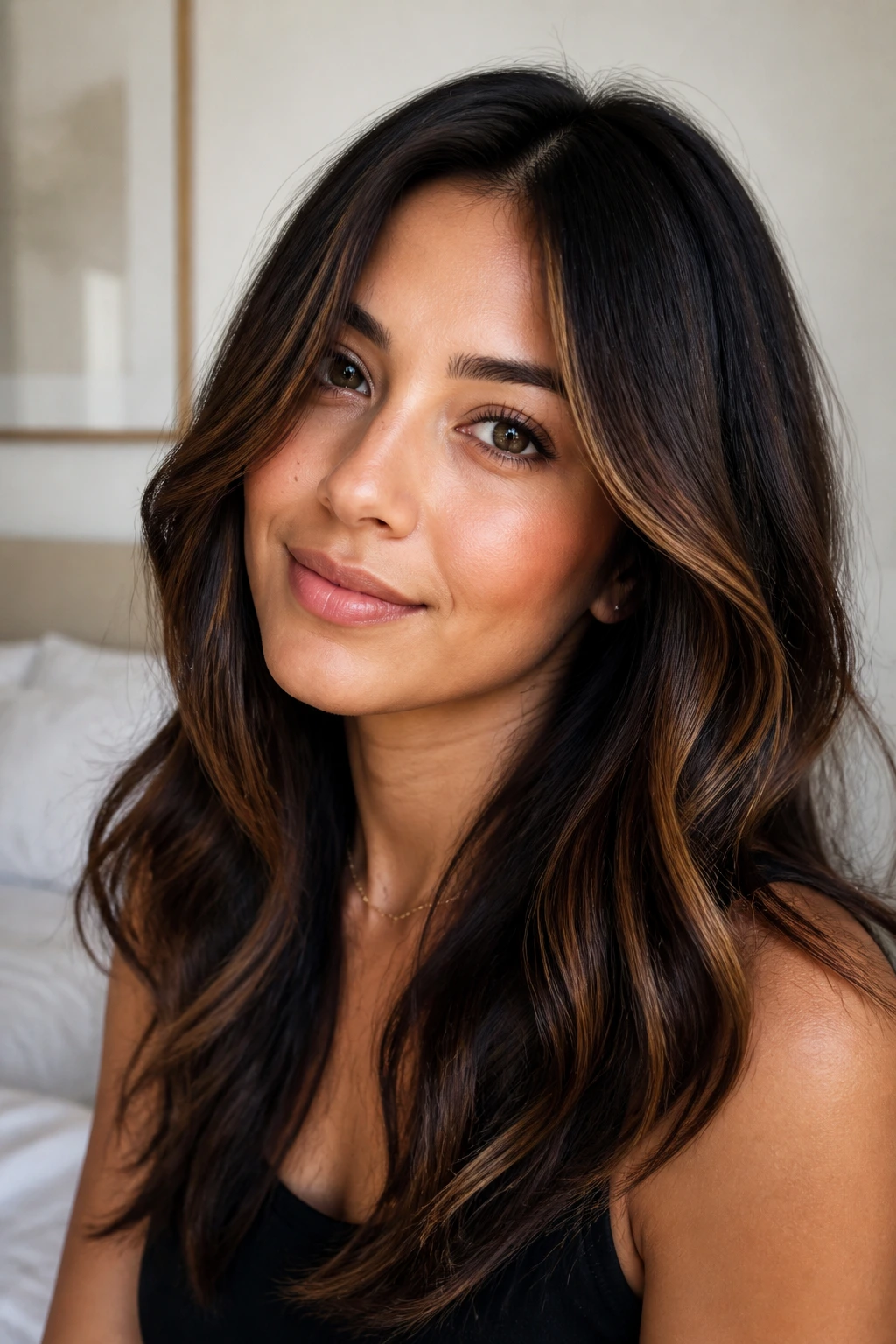
Dark hair has a built-in advantage: depth. That depth gives highlights something to sit against, which is why a few carefully placed ribbons often look richer than a full-head lightening job. The eye reads contrast first, then tone. If the contrast is controlled, the whole style feels expensive without trying too hard.
Warm brunettes usually love caramel, honey, toffee, amber, and bronze because those tones stay believable against a level 3 to 5 base. Cooler brunettes can take mushroom brown, beige, taupe, and smoky mocha, but the lift has to stay soft or the hair starts looking flat and dusty. That’s the part people get wrong. They chase lightness when they really need dimension.
The part that matters most
A highlight that’s one or two levels lighter than your base can look far more dimensional than a chunky piece that’s four levels lighter. It’s the blur at the edges that makes the color read as natural. Babylights, ribbon balayage, and glossed lowlights all help soften the transition.
Dark hair also reflects light differently once the finish is polished. A demi-permanent gloss or toner can turn a decent highlight job into a good one, because it smooths the tone and takes the raw edge off the lift. That sheen matters. A lot.
The Placement Map That Flatters an Oval Face
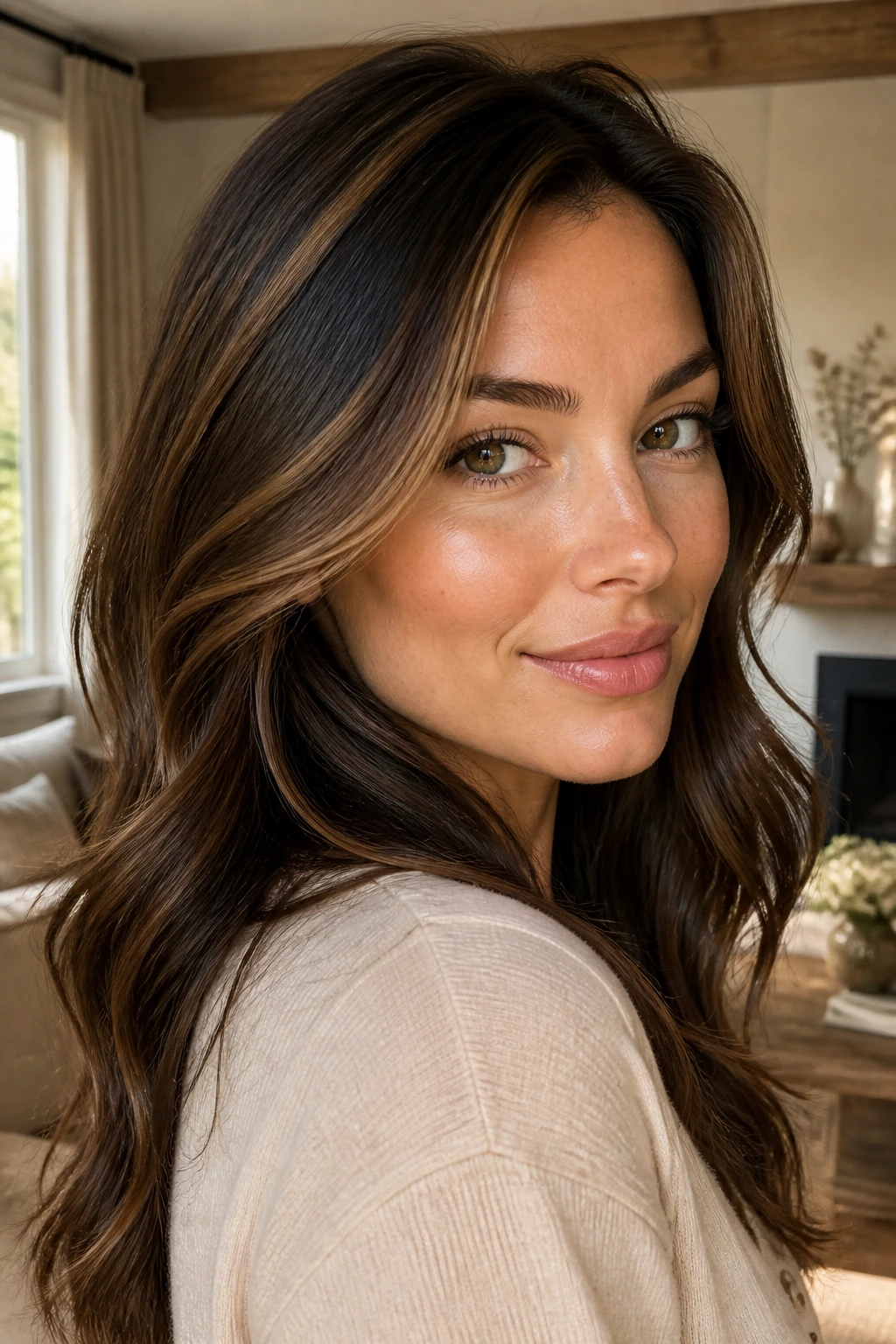
Oval faces can wear a center part, a side part, or a loose wave without collapsing the overall shape. Still, highlight placement decides whether the face looks lifted or just brighter everywhere. The goal is to guide the eye, not scatter attention.
Cheekbone sweep
The best face-framing pieces usually start around the outer brow or eye level and travel down past the cheekbone. That line acts almost like a soft contour. It pulls the eye inward, then downward, which keeps the face from looking broader at the temples.
Temple restraint
Too much brightness right at the temples can widen an oval face more than people expect. I prefer keeping those pieces thin and airy, with the strongest light a little lower. It feels subtler in a mirror and looks better in photos taken from the side.
Jawline echo
If the front pieces end around the jaw or upper collarbone, the color reinforces the face’s vertical line. That matters on dark hair because the base already carries weight. You want the highlights to move that weight downward, not fan it sideways.
Crown lift
A soft touch of brightness at the crown helps the hair look fuller without stealing focus from the face. Think of it as a quiet halo, not a spotlight. On oval faces, a little lift up top can keep the whole style from feeling too flat around the part.
1. Caramel Ribbon Balayage
Caramel ribbon balayage is the easiest place to start if you want movement without losing the dark base. The lighter pieces are painted in long, broken strokes, so the color stays soft at the root and warmer toward the ends. On oval faces, those vertical ribbons keep the eye moving up and down instead of out to the sides.
The best version sits about 1 to 2 levels lighter than the base, with a shadow root that keeps the grow-out from looking blunt. I like this on medium to long hair, especially if you wear loose bends. Straight hair works too, but the ribbons show best once the ends pick up a little curve.
Best for: brunettes who want warmth, shine, and low drama at the salon.
2. Mocha Money Piece
Want brightness right where the face opens up? Mocha money pieces do that without yelling for attention. The front strips stay in the mocha family, so they frame the face with lift but don’t jump to blonde.
How to keep it soft
Ask for two face-framing sections, each about ¾ inch to 1 inch wide, starting near the brow and fading through the cheekbone. The key is keeping the tone close to the base—just a shade lighter, maybe two at most. On an oval face, that gives structure without making the hairline look boxed in.
I prefer this look when the rest of the hair stays darker and quieter. It gives you a little brightness around the eyes, and that’s often enough. More than that can start to look overworked.
3. Chestnut Babylights
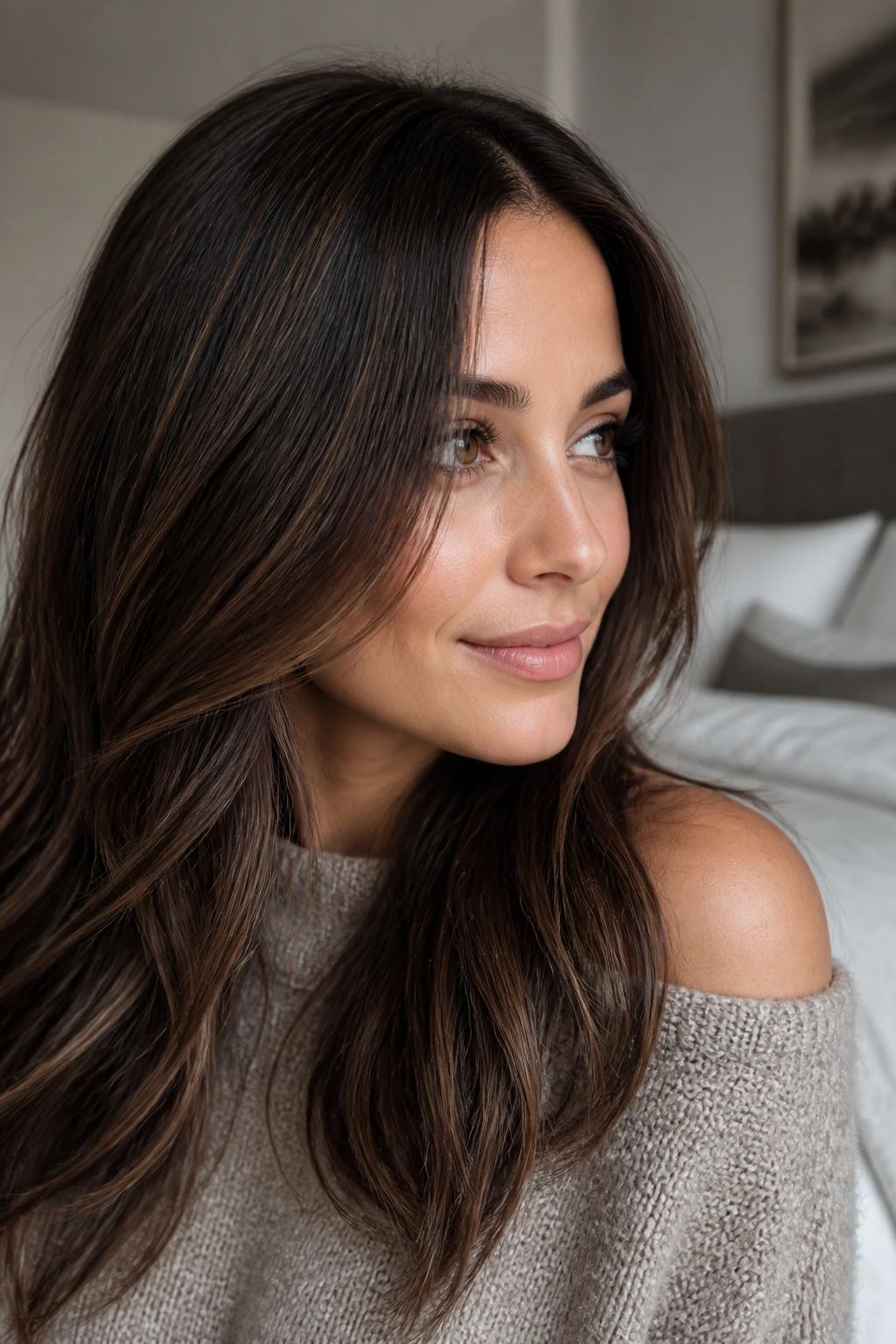
Chestnut babylights are the sneaky-good option. You barely see individual strands, which is the point. The color reads as shimmer, not streaks, and that shimmer is gold on dark hair.
- Use fine, needle-thin sections so the base stays visible.
- Keep the lift around 2 levels lighter than the natural hair.
- Concentrate the brightest pieces around the part and upper crown.
- Let the ends carry more light than the roots.
This is the look for someone who wants dimension up close, not a dramatic before-and-after. On an oval face, chestnut babylights soften the cheeks and keep the overall shape balanced. No stripes. No hard lines. Just movement.
4. Honey-Brown Face Frame
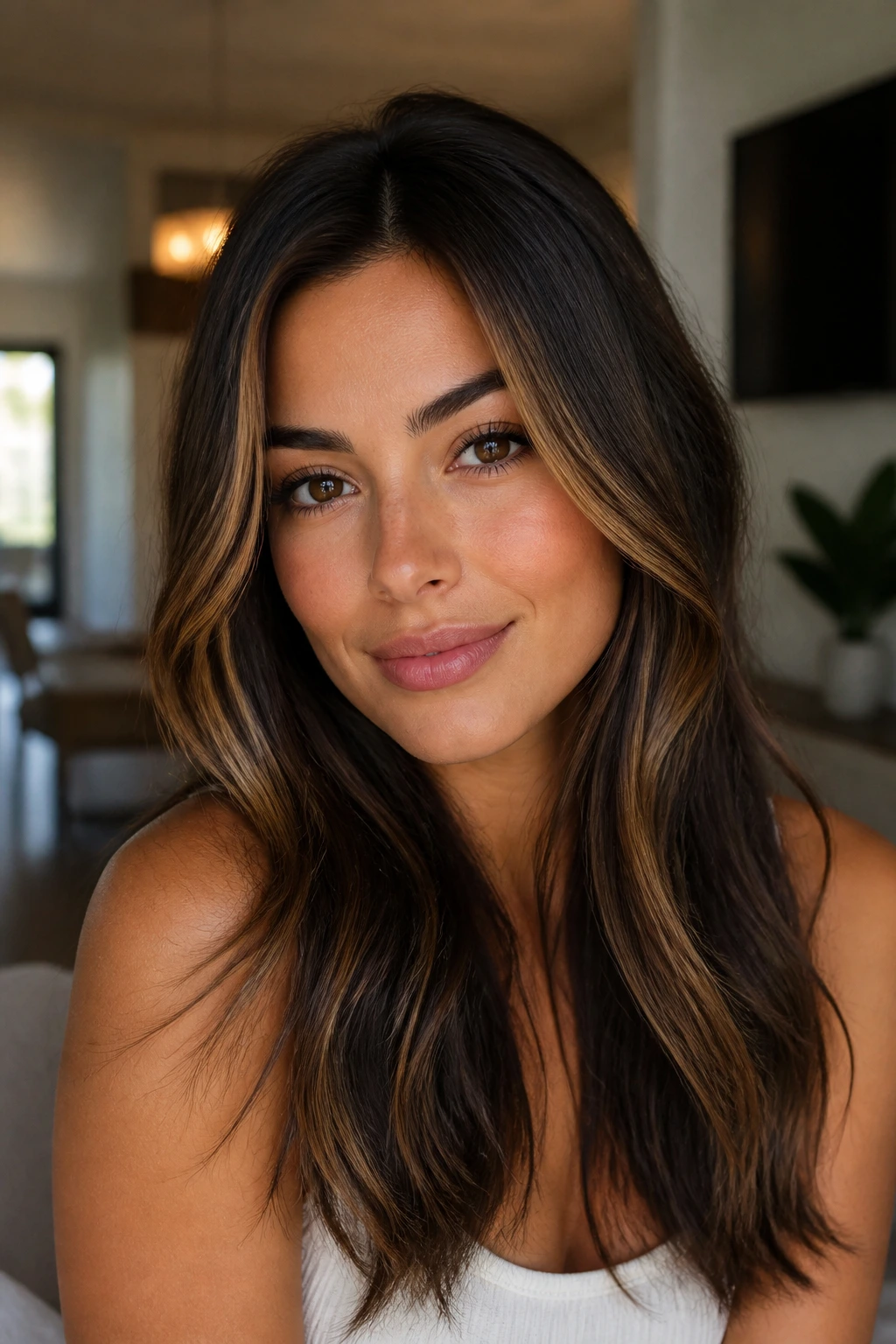
Honey can go loud fast, so the trick is width control. Keep the face-framing pieces narrow and the honey tone muted, and the result stays soft instead of brassy. That sweetness at the front makes dark hair look warmer without flattening the rest of the color.
Oval faces do well with this because the brightness sits where the face naturally wants attention: outer eyes, cheekbones, and the first sweep of hair near the jaw. I’d choose this version over a full honey balayage if you want to keep the base rich.
The finish works best with a soft blowout or one bend from a round brush. Air-dried hair can wear it too, but the face frame needs a little polish to show its shape.
5. Smoky Bronze Melt
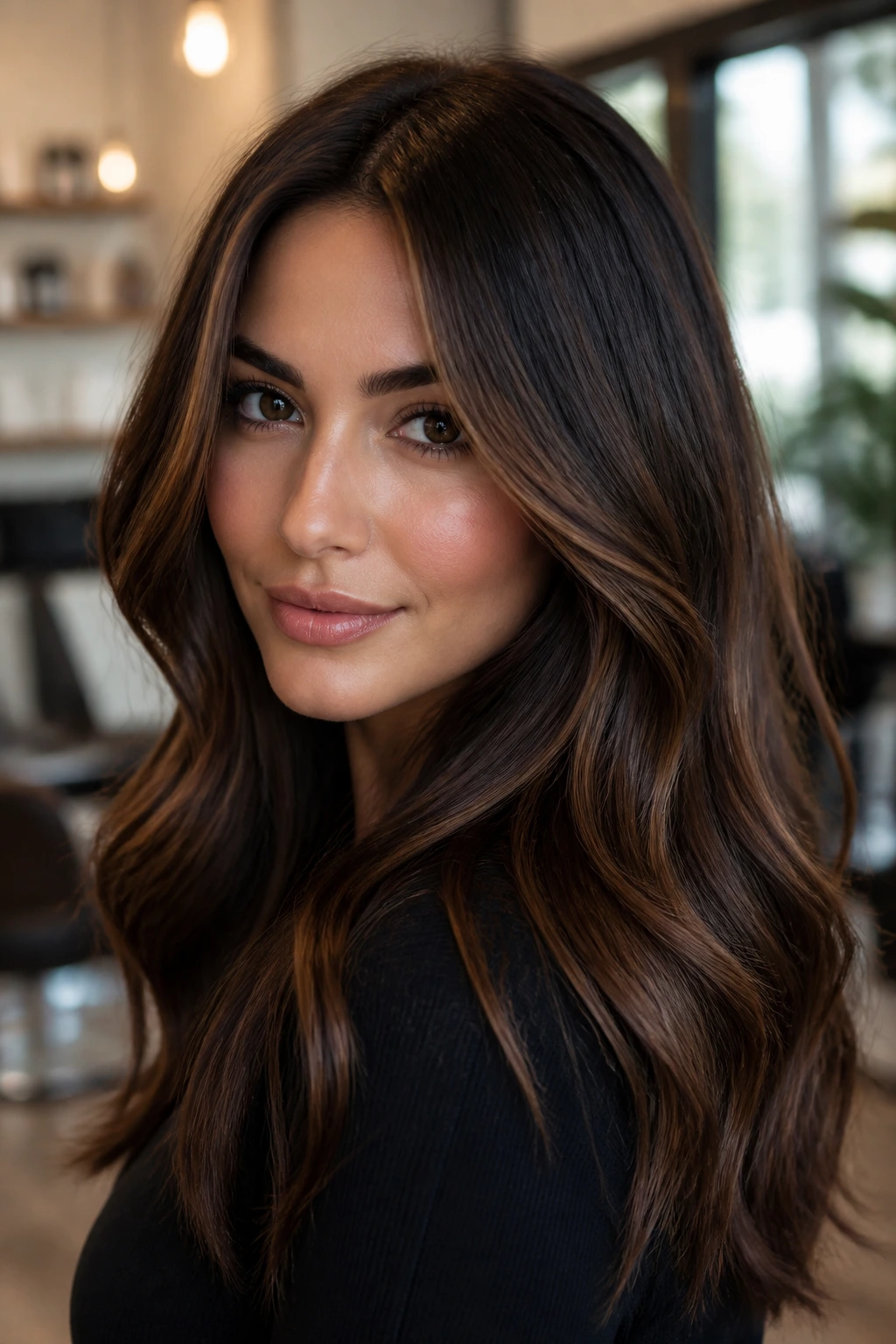
Smoky bronze is for people who like shine more than obvious lightness. The bronze tone keeps the highlights warm, while the smoky depth stops them from looking orange against dark brown hair. It feels a little more refined than caramel.
Unlike a blonde-leaning brunette, this version keeps the ends from going too pale. That’s good news if your hair is thick or your face shape benefits from controlled contrast. On an oval face, the darker root melt preserves length and prevents the front from swelling out at the sides.
If you wear gold jewelry, this tone usually sits well. If you lean toward silver, ask for a cooler bronze with a beige gloss so it doesn’t get too rusty.
6. Cinnamon Contour Pieces
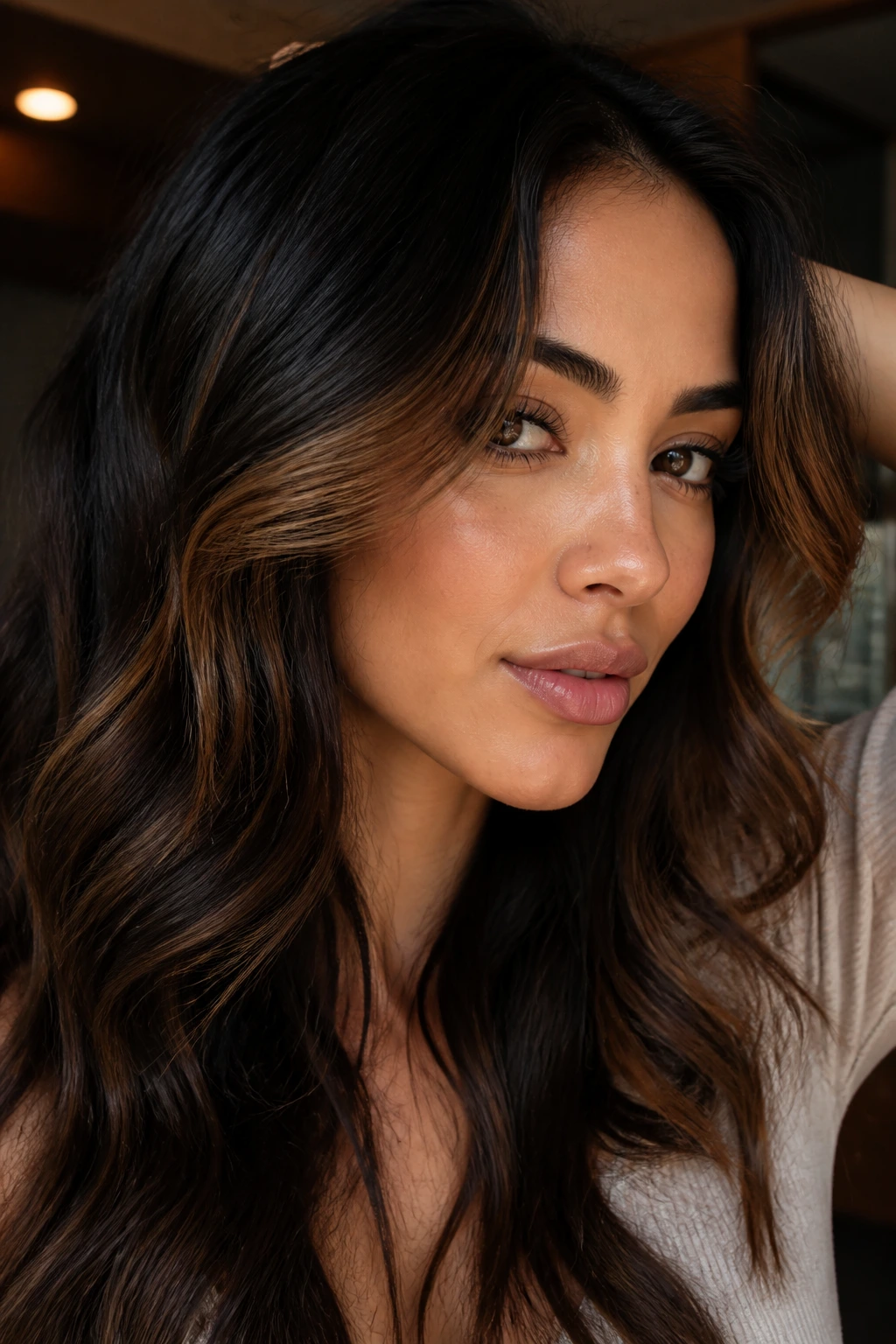
Cinnamon contour pieces have a very specific job: they warm the face and trace the shape without turning into loud red streaks. The color sits somewhere between auburn and toasted brown, which makes it useful on dark hair that needs energy.
Where to place it
I like cinnamon around the outer face line, just behind the front hairline and through the top layers that skim the cheeks. That gives an oval face a little contour effect without changing the overall balance. The light should sit where a blush would, not where a helmet stripe would.
The strongest pieces can peek through waves and curls. On straight hair, keep them ultra-fine. Cinnamon is easiest to wear when it’s broken up by movement.
7. Mushroom Brown Lowlights
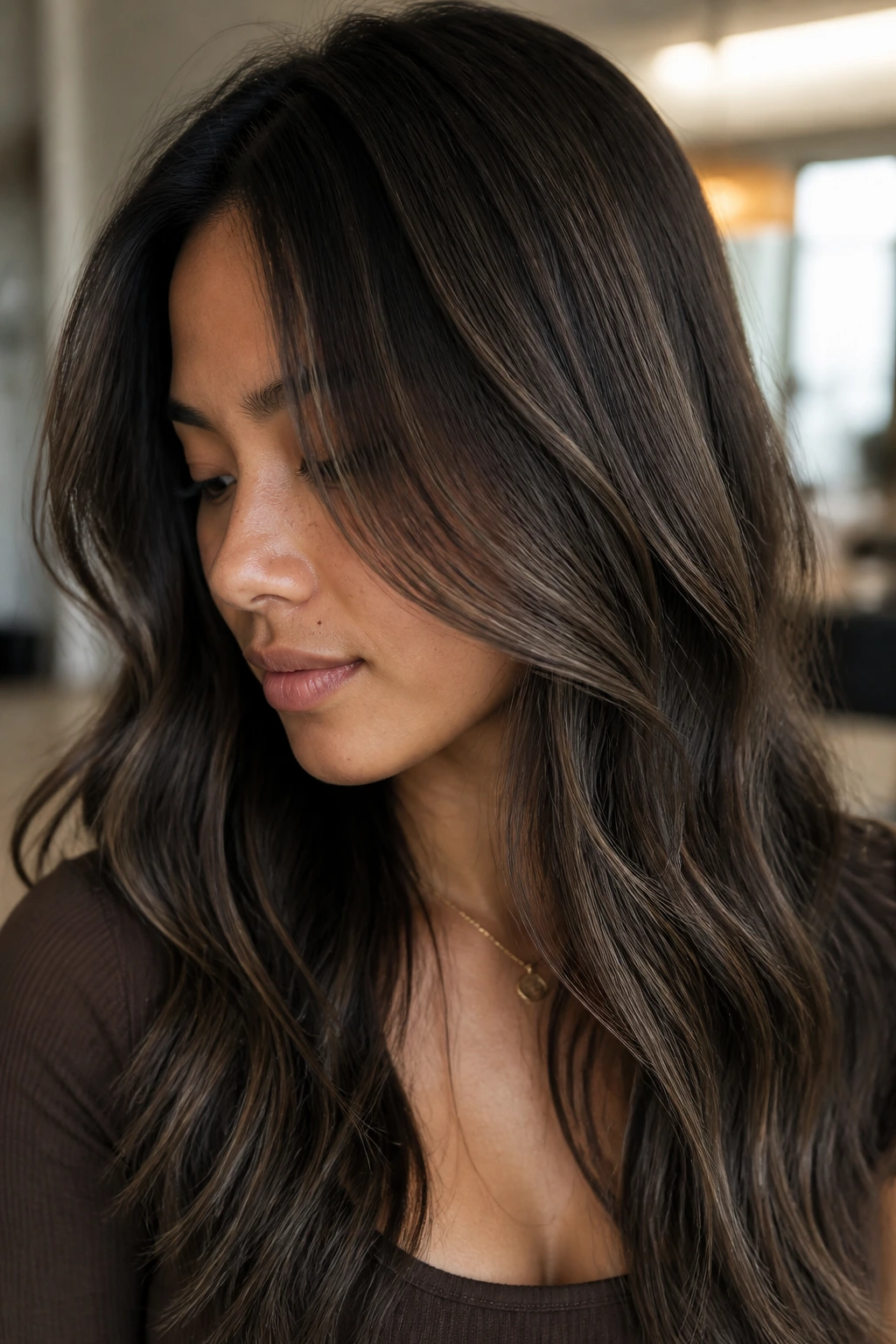
Sometimes the smartest move is not adding more light. Mushroom brown lowlights can ground over-lightened brunette hair and bring back that plush, shaded look that dark bases do so well. The taupe-brown depth gives the haircut shape.
This is especially useful if your hair is fine or has been lifted too aggressively in the past. Oval faces benefit because the lowlights add shadow along the sides, which keeps the face from looking too broad. It’s a quiet fix, but a good one.
If you already have caramel pieces, mushroom lowlights can make them look richer by contrast. That little bit of cool depth is what keeps the whole palette from turning warm and flat.
8. Toffee Curtain Highlights
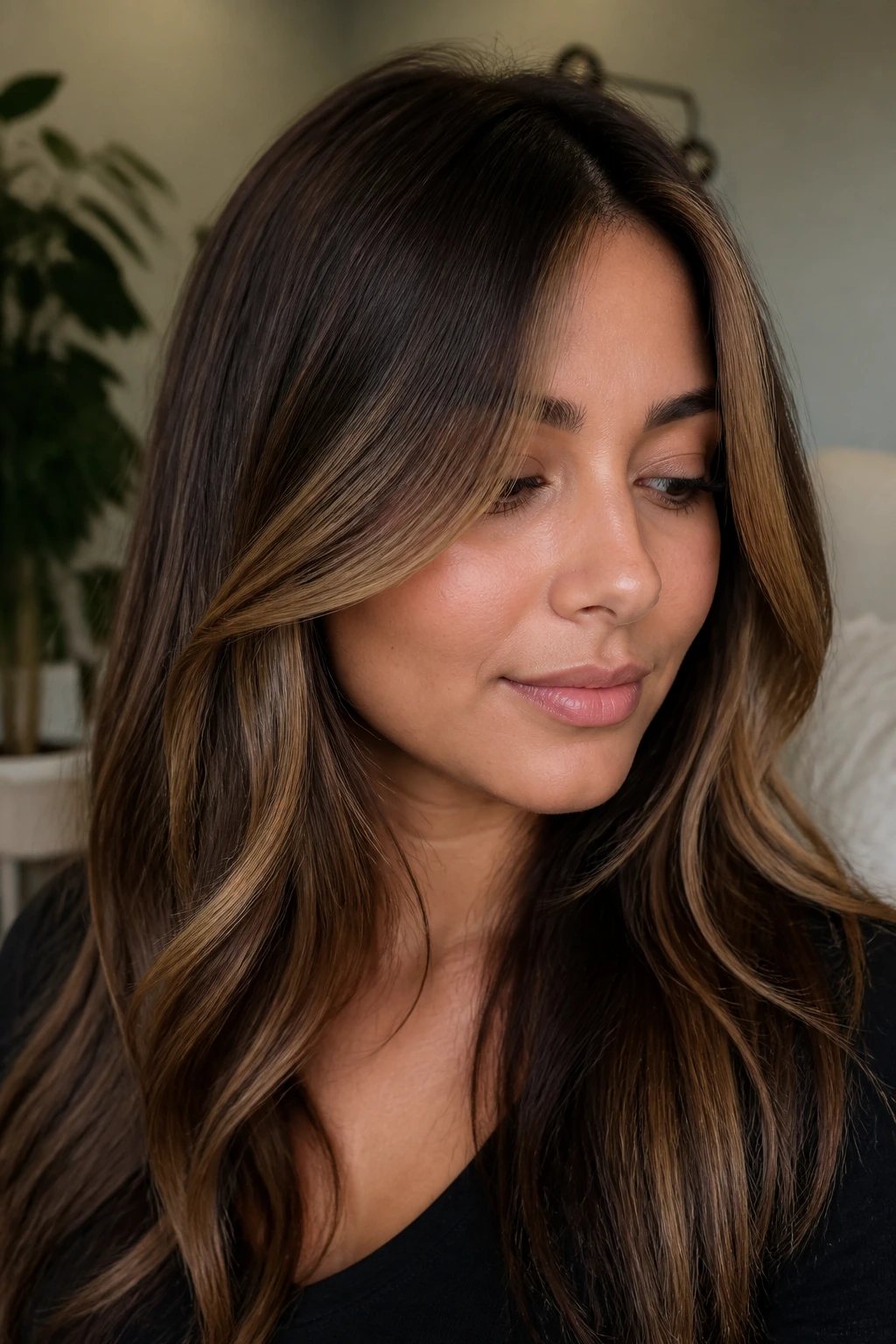
Toffee curtain highlights are the salon version of soft framing done right. The front pieces open from a center part or a gentle off-center part, then drift down like curtains along the sides of the face. The toffee tone adds warmth without the sticky brightness of true blonde.
Why it works: the hair moves away from the face in a soft arc, which flatters an oval shape without widening it. The best versions keep the light concentrated on the mid-lengths and ends, not the root.
If you wear glasses, this look is especially good. The highlights sit above and beside the frames instead of fighting them.
9. Amber Veil Balayage
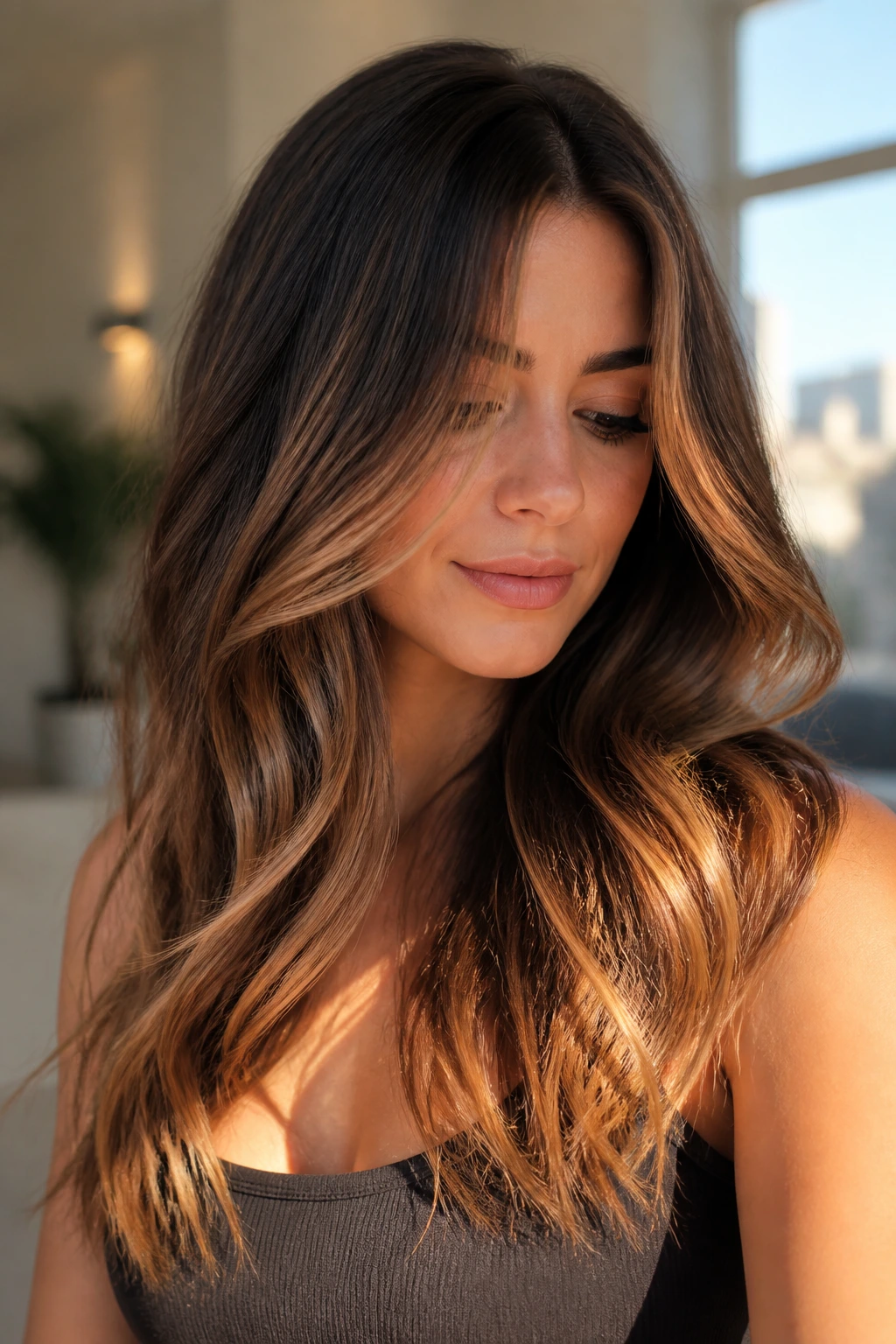
Amber veil balayage looks like the color got caught in the light and stayed there. It’s more mist than streak. The amber tone gives dark hair a sunlit warmth that still reads brunette first.
- Best on layered cuts, where the light can break across different lengths.
- Keep the face-framing pieces thinner than the back sections.
- Ask for a gloss that leans gold, not orange.
- Let the ends take the brightest lift.
I like this look on oval faces because it makes the cheek area glow without carving a hard frame around it. It’s one of those styles that looks calm in a mirror and even better when the hair moves.
10. Espresso Root Melt
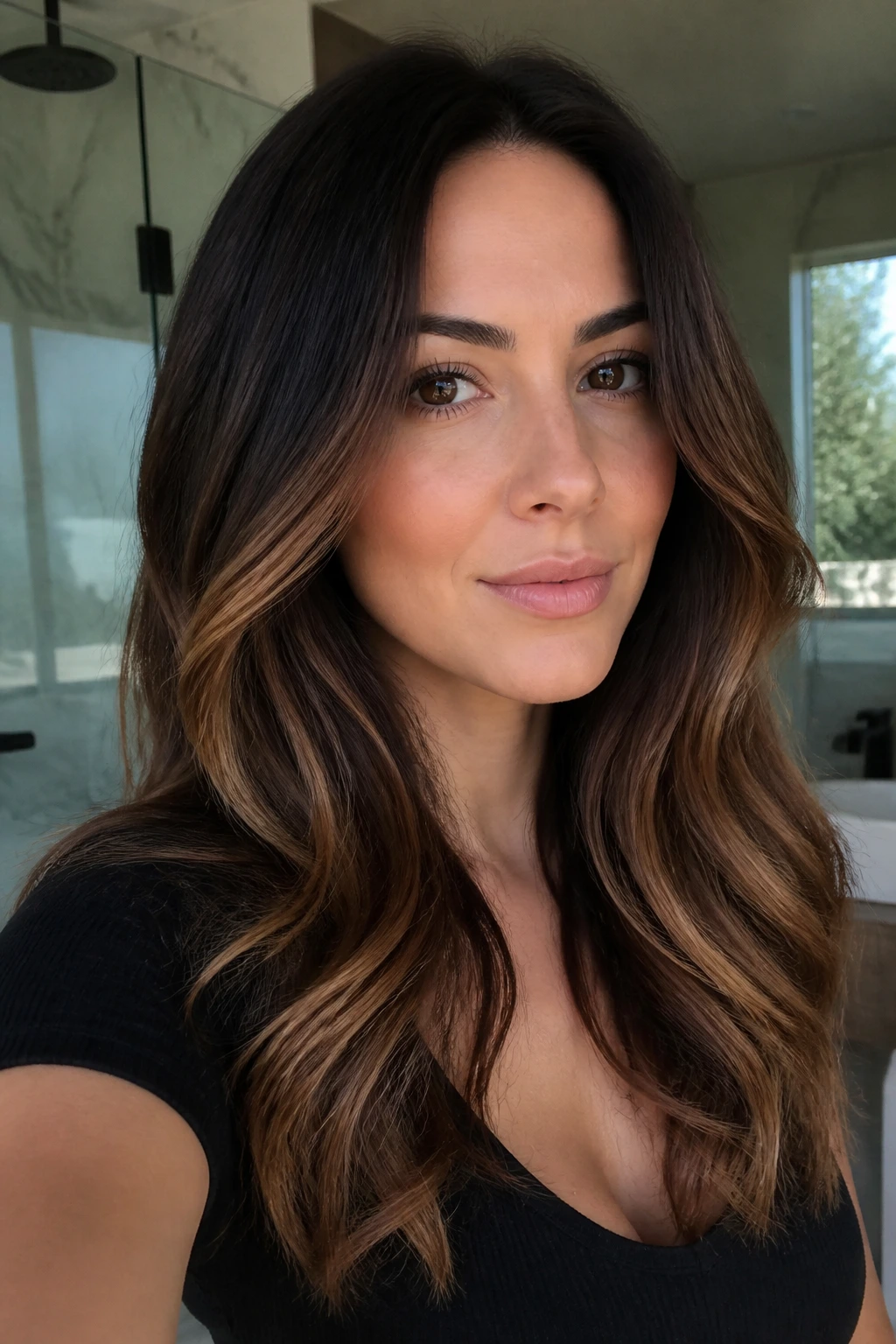
Espresso root melt is for people who want the color to grow out like it was meant to be there. The roots stay deep and inky, then melt into soft brown ribbons that show up more at the ends. Nothing about it feels abrupt.
Compared with a traditional highlight job, this approach keeps the face from being over-framed. That matters on oval faces, where too much brightness around the hairline can steal the clean line of the shape. The root melt preserves that balance.
The finish also buys you time between salon visits. When the regrowth comes in, it blends into the darker root instead of sitting there like a line you have to stare at.
11. Hazel Halo Ribbons
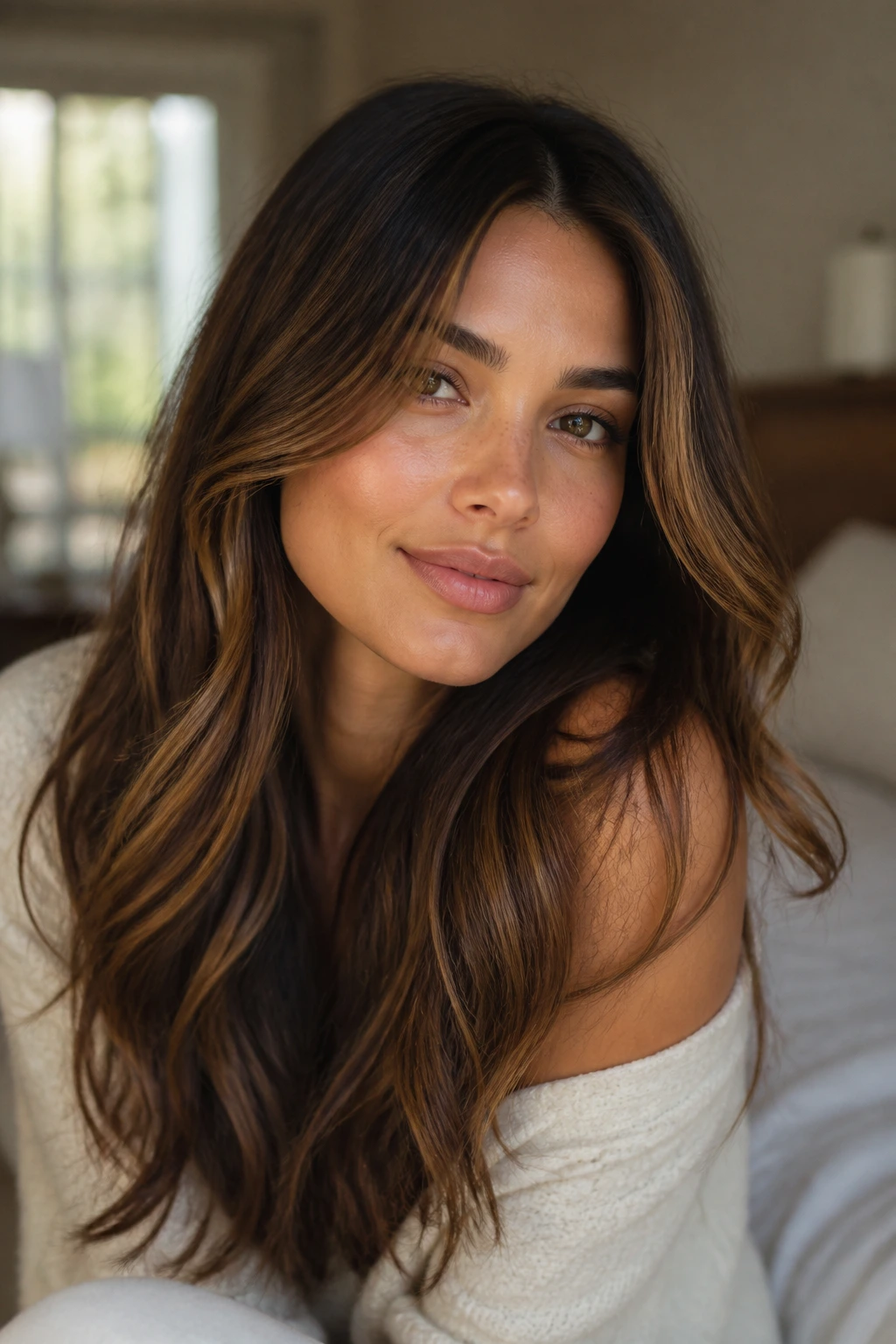
Hazel halo ribbons sit in that useful middle ground between warm and cool. The hazel tone keeps the highlight from looking yellow, while the halo placement around the crown gives the hair lift where it needs it most. It’s a smart move if your base is dark brown rather than jet black.
I especially like this for oval faces with a center part. The brightness lifts the top of the head a little, which keeps the long lines of the face feeling open. You still get dimension near the cheeks, but the halo keeps the look from collapsing flat at the crown.
This one also works nicely on shoulder-length hair. The ribbons show up without needing huge length.
12. Latte Swirl Highlights
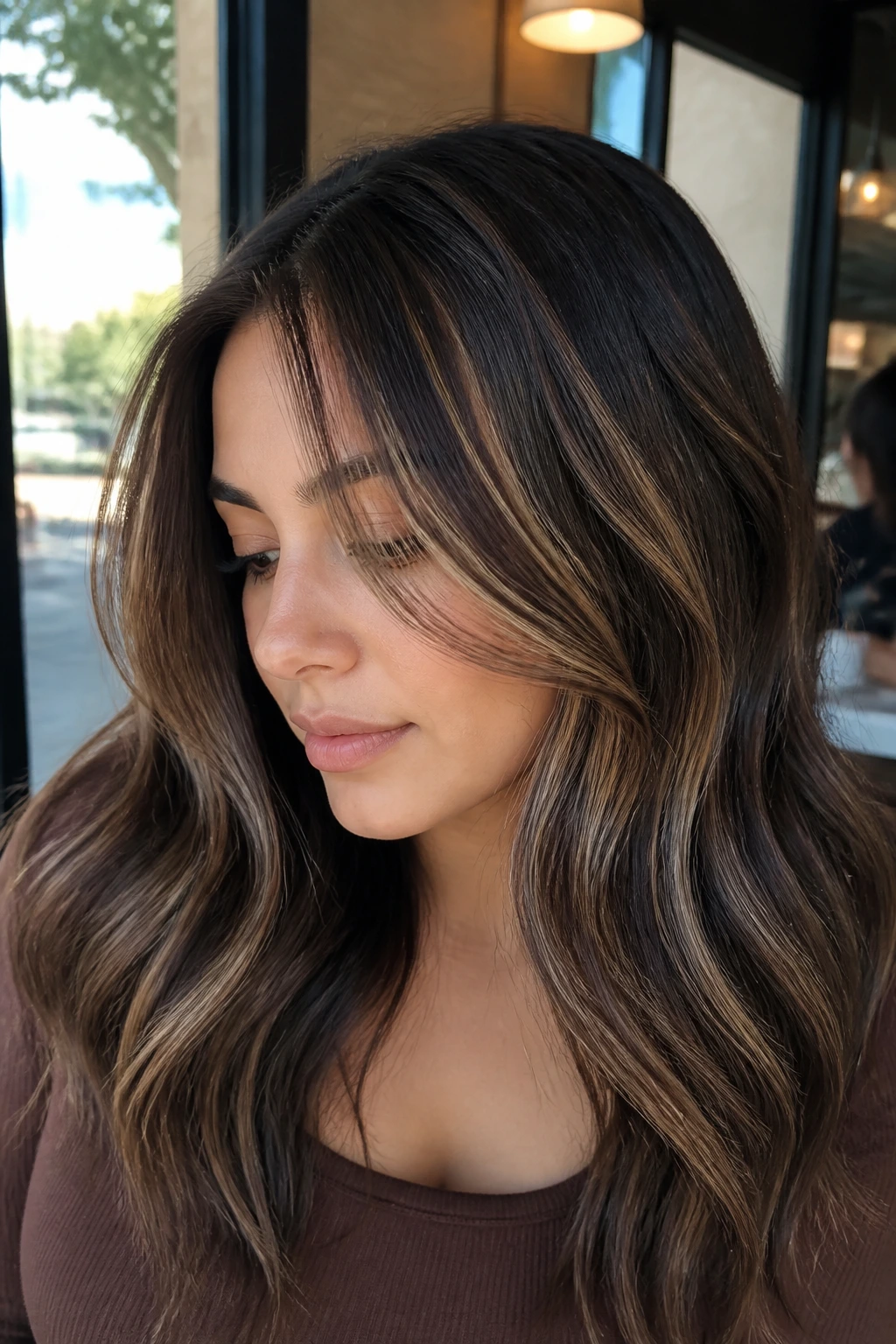
Latte swirl highlights look creamy, but not pale. The color sits in a beige-brown lane that softens dark hair without making it look sun-bleached. A few well-placed swirls through the top layers can change the whole haircut.
The reason I like this on oval faces is simple: it doesn’t compete with the face. It follows the movement of the hair instead. The highlight drifts from the part line into the side panels, so the eye gets guided rather than pushed.
This is one of the better choices if you wear your hair wavy most of the time. The swirls show up in bends and disappear just enough in flatter sections. That kind of movement makes the color look more expensive than it is.
13. Soft Copper Threads
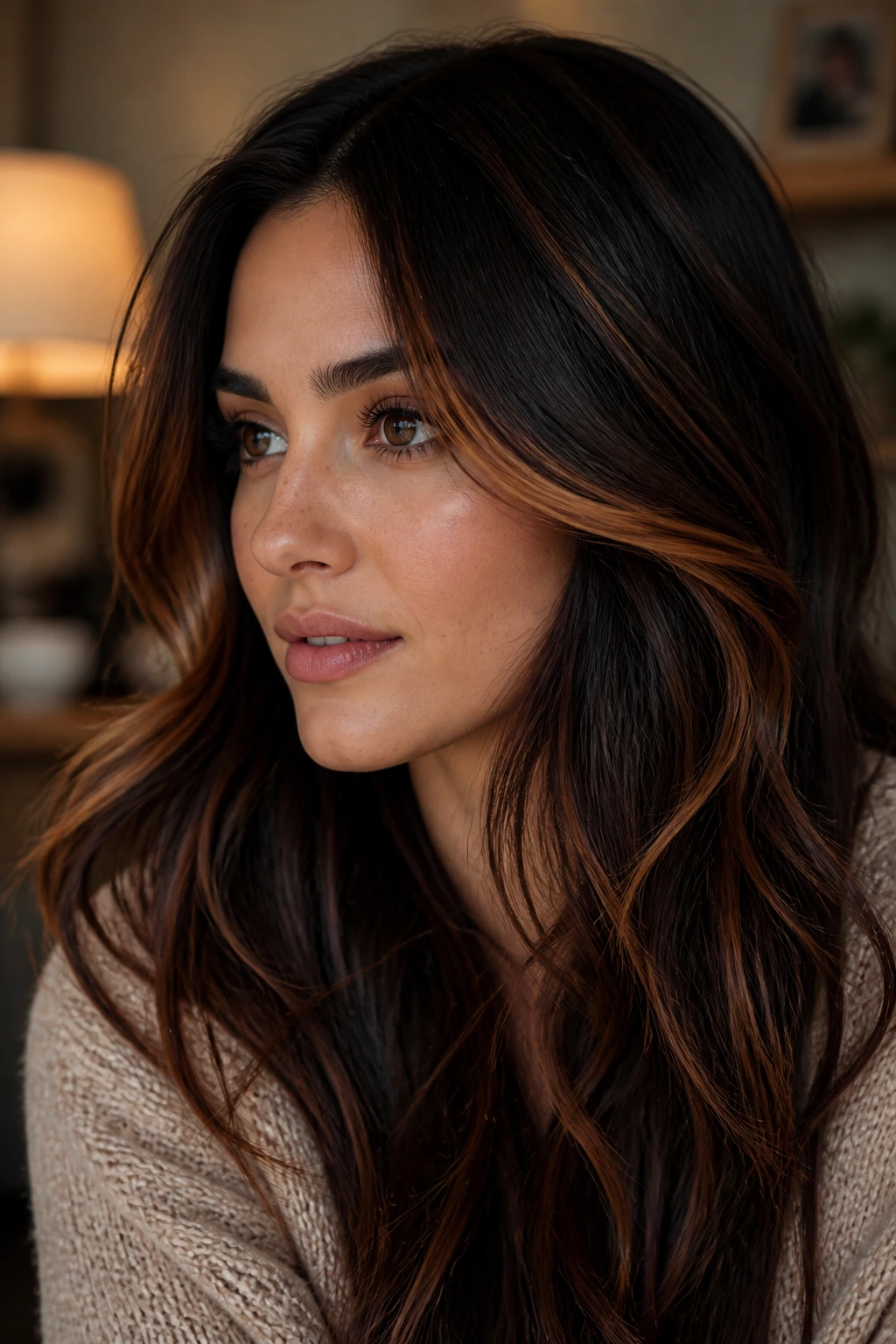
Soft copper threads are tiny, warm flashes that keep dark hair from going flat in dim light. They’re not bold red pieces. They’re more like a whisper of heat running through the lengths.
Best placement
Use copper where the hair naturally catches light: around the face, in the top layers, and in a few pieces through the ends. On an oval face, the copper should be narrower at the temples and a little fuller below the cheekbones. That keeps the face shape clean.
This is a good choice if your skin has peach, olive, or golden undertones. Copper can wake up the complexion fast, but it needs restraint or it starts to dominate. Thin strands. Soft gloss. No chunky red panels.
14. Toasted Almond Ends
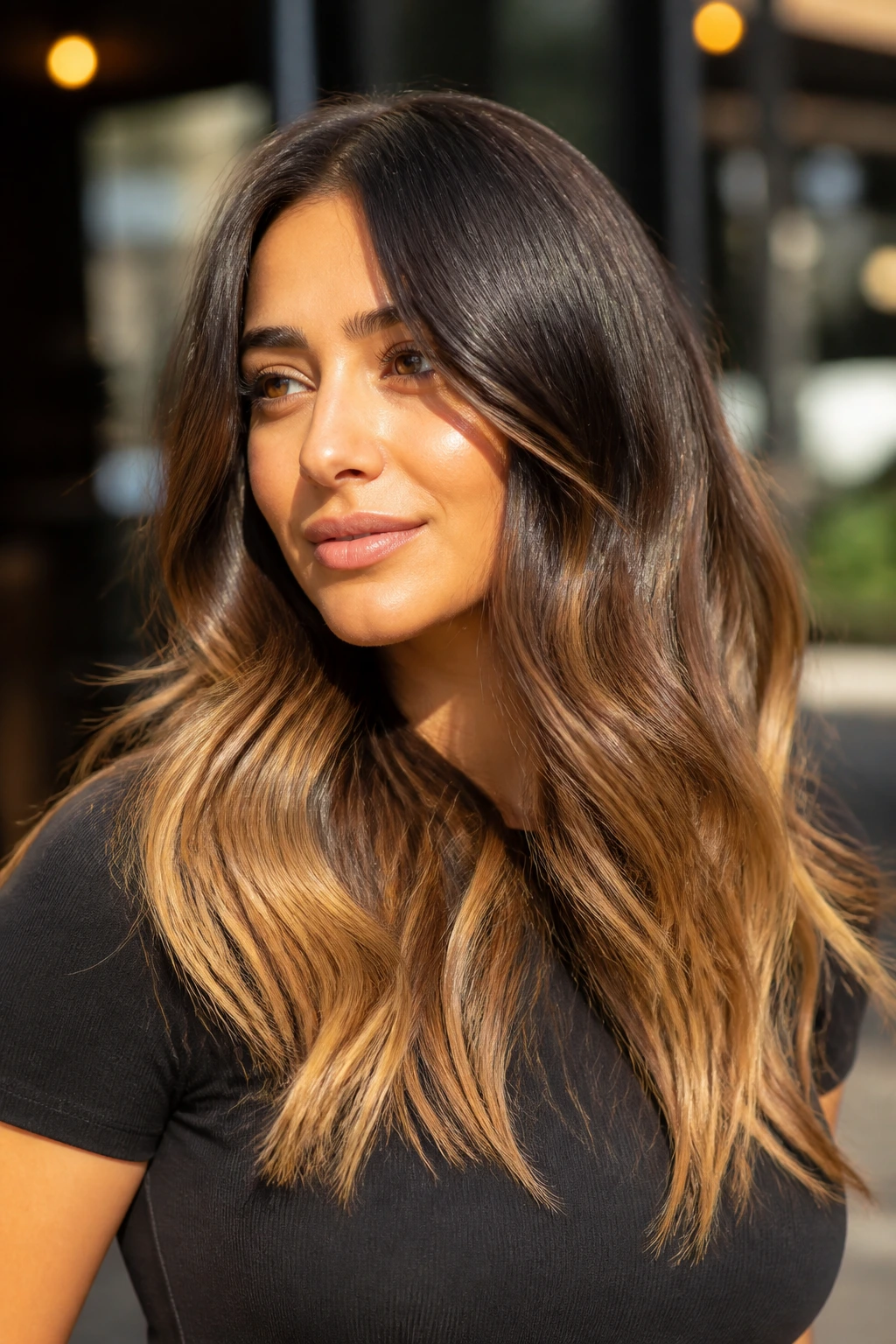
Toasted almond ends make the lower half of the hair feel lighter without lifting the whole head. The top stays dark and grounded, while the ends get a soft almond-beige finish that catches the eye. It’s a clever way to add brightness without crowding the face.
- Keeps the root area rich and easy to maintain.
- Pulls the eye downward, which flatters oval faces.
- Works well on long layers, blunt lobs, and soft waves.
- Ask for the lightest pieces on the outer lengths, not right at the root.
The strength of this look is restraint. The face stays open because the color starts lower, but the hair still feels fresh and dimensional.
15. Maple Glaze Ribbons
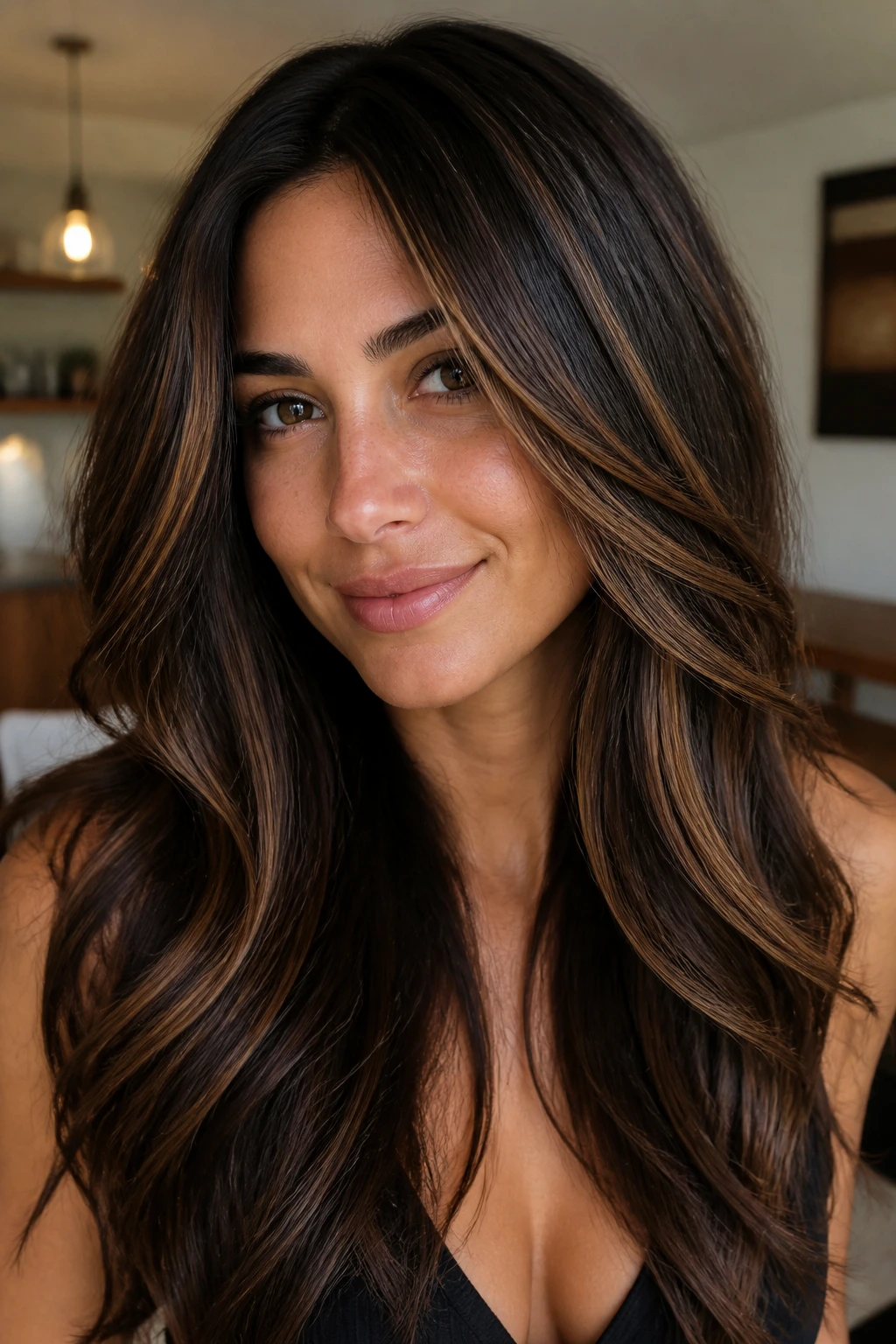
Maple glaze ribbons bring warmth without the sticky orange cast some brunettes end up fighting. The maple tone is deeper than caramel and more grounded than honey, which makes it useful on dense dark hair.
Compared with brighter highlights, maple stays kind to the base. It doesn’t interrupt the dark brown; it sits on top of it like a thin glaze. On oval faces, that matters because the placement can stay long and vertical rather than spreading brightness too wide around the hairline.
This is a good option if you like your color to read soft in daylight and rich indoors. It doesn’t need to shout to be visible.
16. Cocoa Contour Lowlights
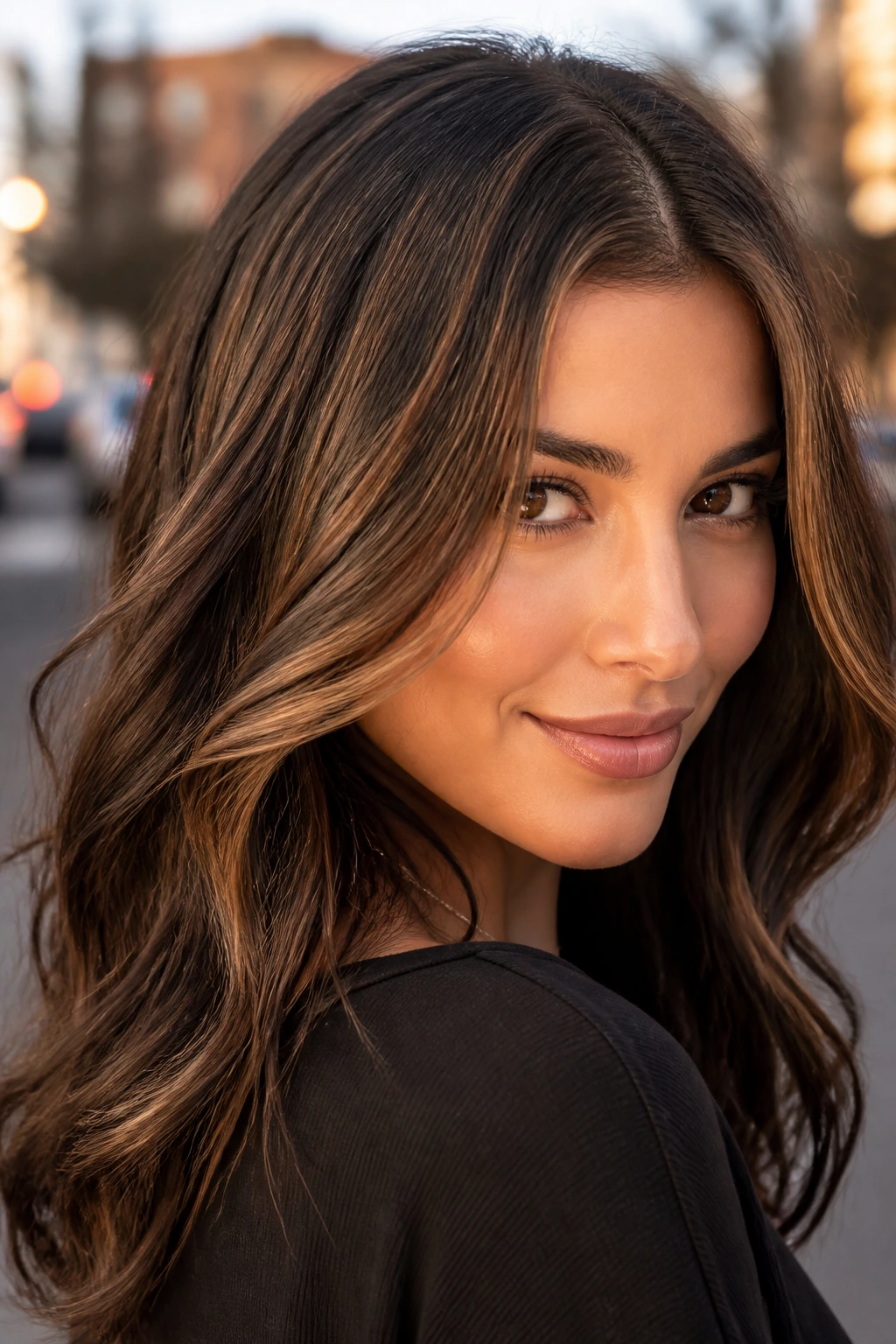
Cocoa contour lowlights are the answer when hair needs shape more than lightness. The deeper cocoa strands tuck under the surface and along the sides, creating shadow where the face benefits from it most. Think sculpting, not coloring for its own sake.
On an oval face, those shadows keep the silhouette from looking puffy at the sides. I like them paired with a few lighter threads through the top so the hair has both lift and depth. Without that balance, lowlights can go too dark and feel heavy.
This is especially useful if the hair has been highlighted one too many times and needs a visual reset. A couple of rounds of lowlights can make the whole head look healthier.
17. Champagne Brown Highlights
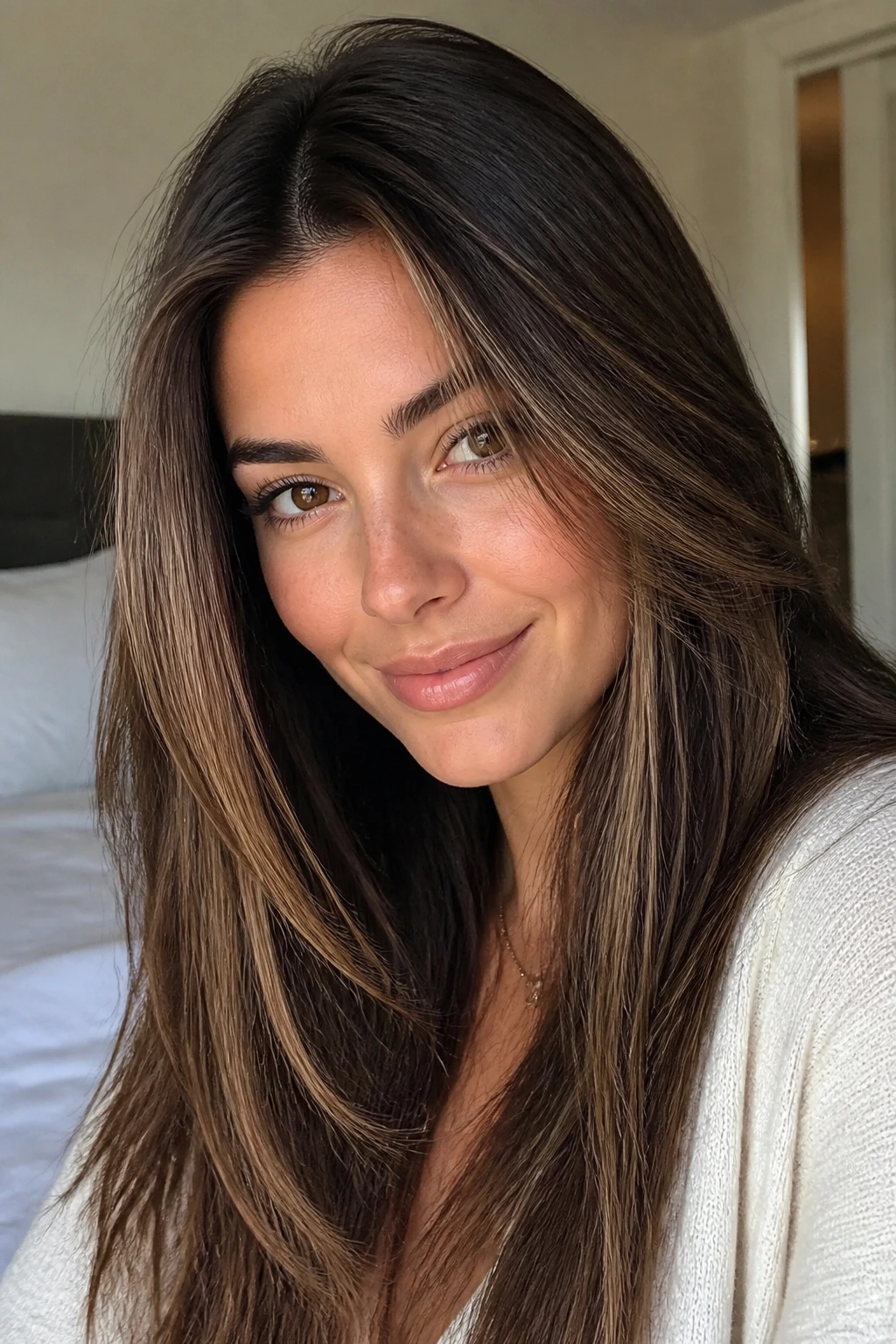
Champagne brown sits on the cooler side of brunette brightness, which makes it useful if caramel feels too warm on you. The tone has a beige, slightly sparkling edge, but it still belongs in the brown family.
The feel is soft and airy rather than sunny. On an oval face, champagne pieces around the front can brighten the eyes without making the cheeks look fuller. That’s the useful part. The highlights change the light, but not the shape.
This is one of the better choices for straight hair because the reflective tone shows even when the hair isn’t curled. If your hair is wavy, it gets even better.
18. Sable Shine Balayage
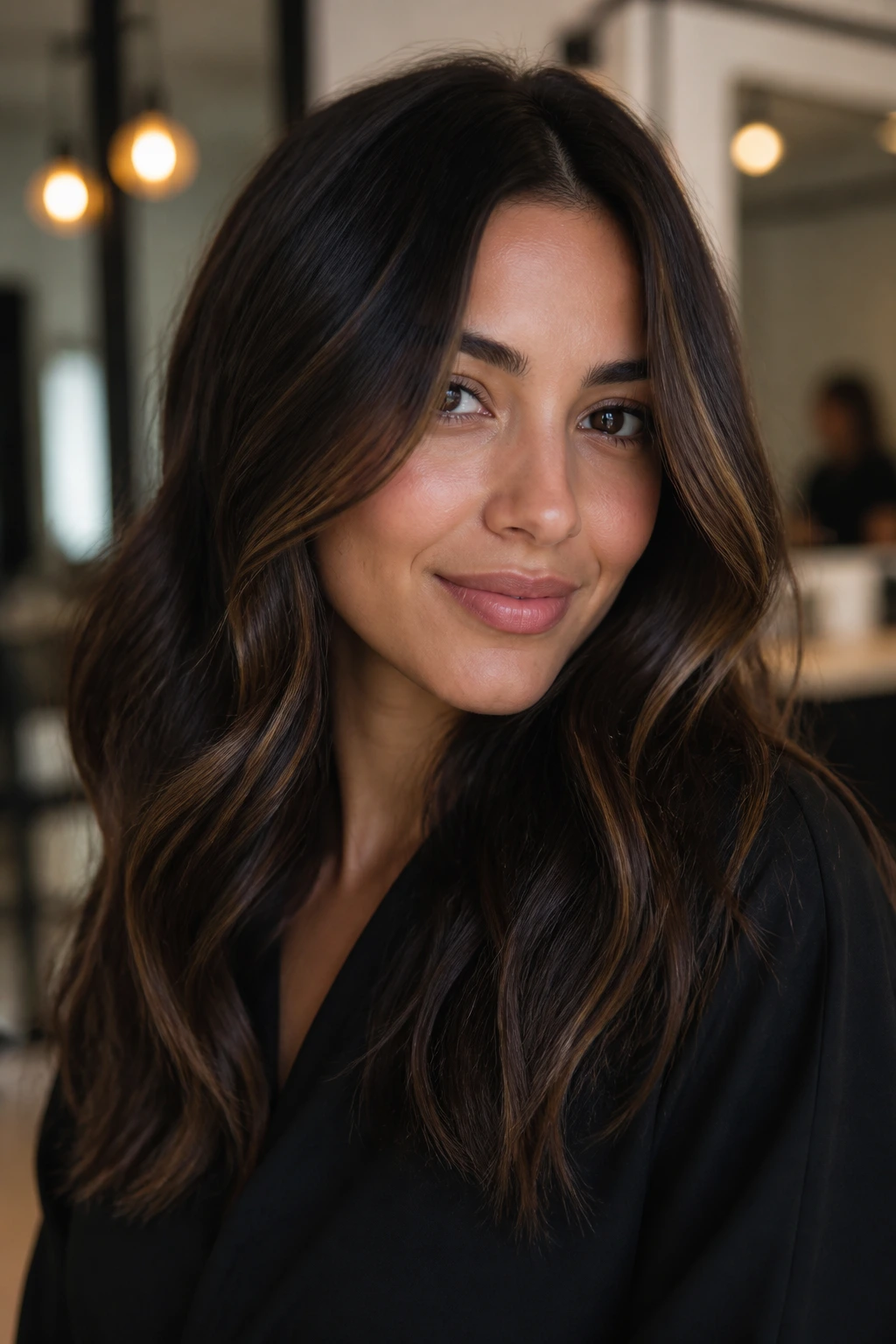
Sable shine balayage is for very dark brunettes who don’t want to leave the brunette lane. The light pieces barely step out of the base, which keeps the color polished instead of obvious. It’s subtle, but the sheen is there.
Want a soft result without a dramatic salon shift? This is the one. The difference between sable and the base can be as small as one shade, and that’s enough when the placement is right. Around an oval face, that quiet contrast preserves the shape and keeps the style sleek.
I’d choose this if you wear minimal makeup and want your hair to do quiet work. It’s understated in the best sense.
19. Auburn Whisper Lights
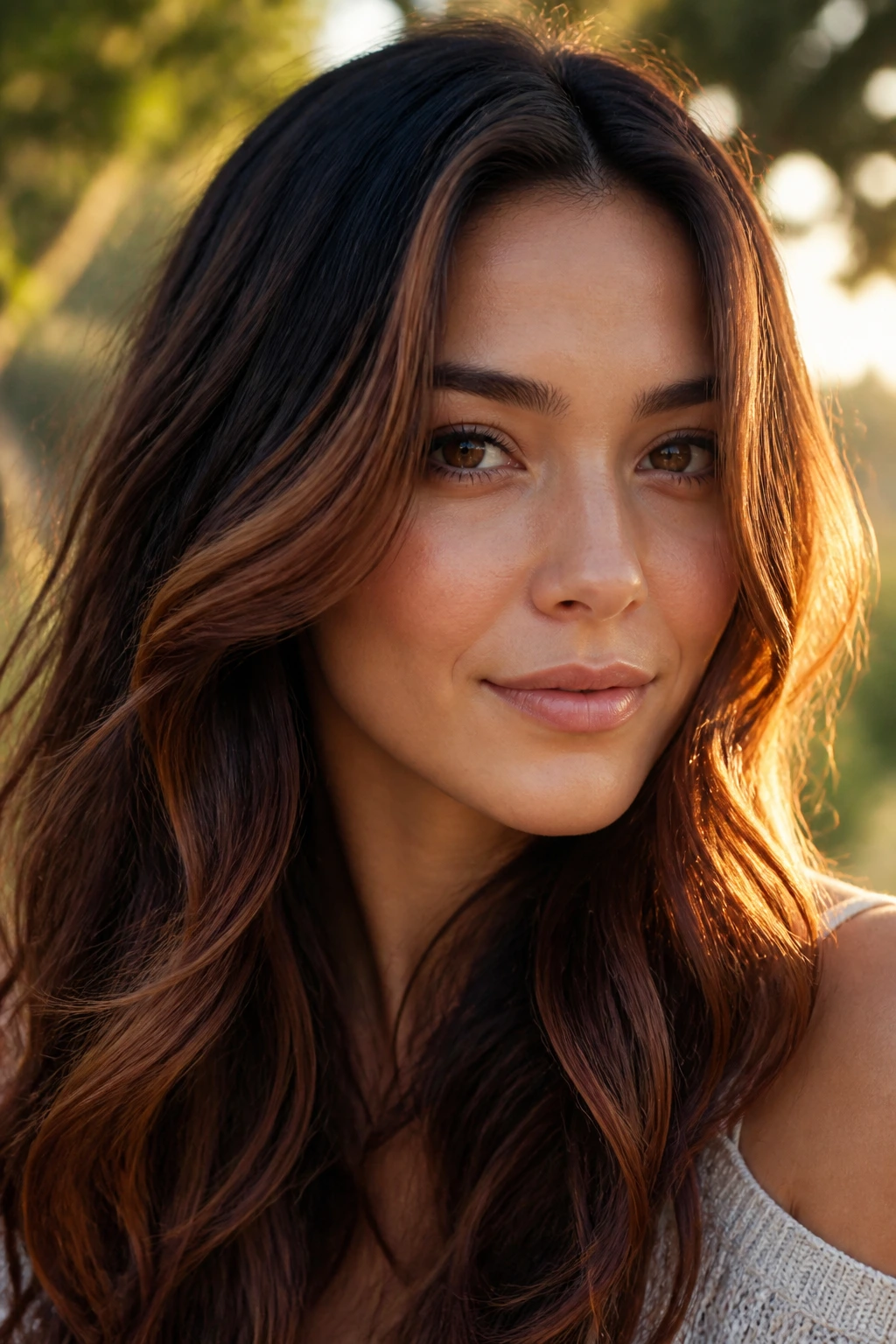
Auburn whisper lights give dark hair a little red-brown lift without moving into copper territory. The tone feels warm, but not fiery. It looks especially good when the light hits the hair from the side.
When to choose it
If your base has any natural warmth at all, auburn can look richer than caramel. It softens an oval face by adding color near the eyes and cheekbones, then disappearing into the lengths. That makes the hair feel alive without changing the outline of the face.
- Best on medium to thick hair.
- Works well with layered cuts and soft waves.
- Ask for a glaze that keeps the red-brown muted.
This is a strong pick for autumn-like brunette depth, though that phrase hardly does it justice. It’s more about warmth that doesn’t turn brash.
20. Golden Brunette Sweep
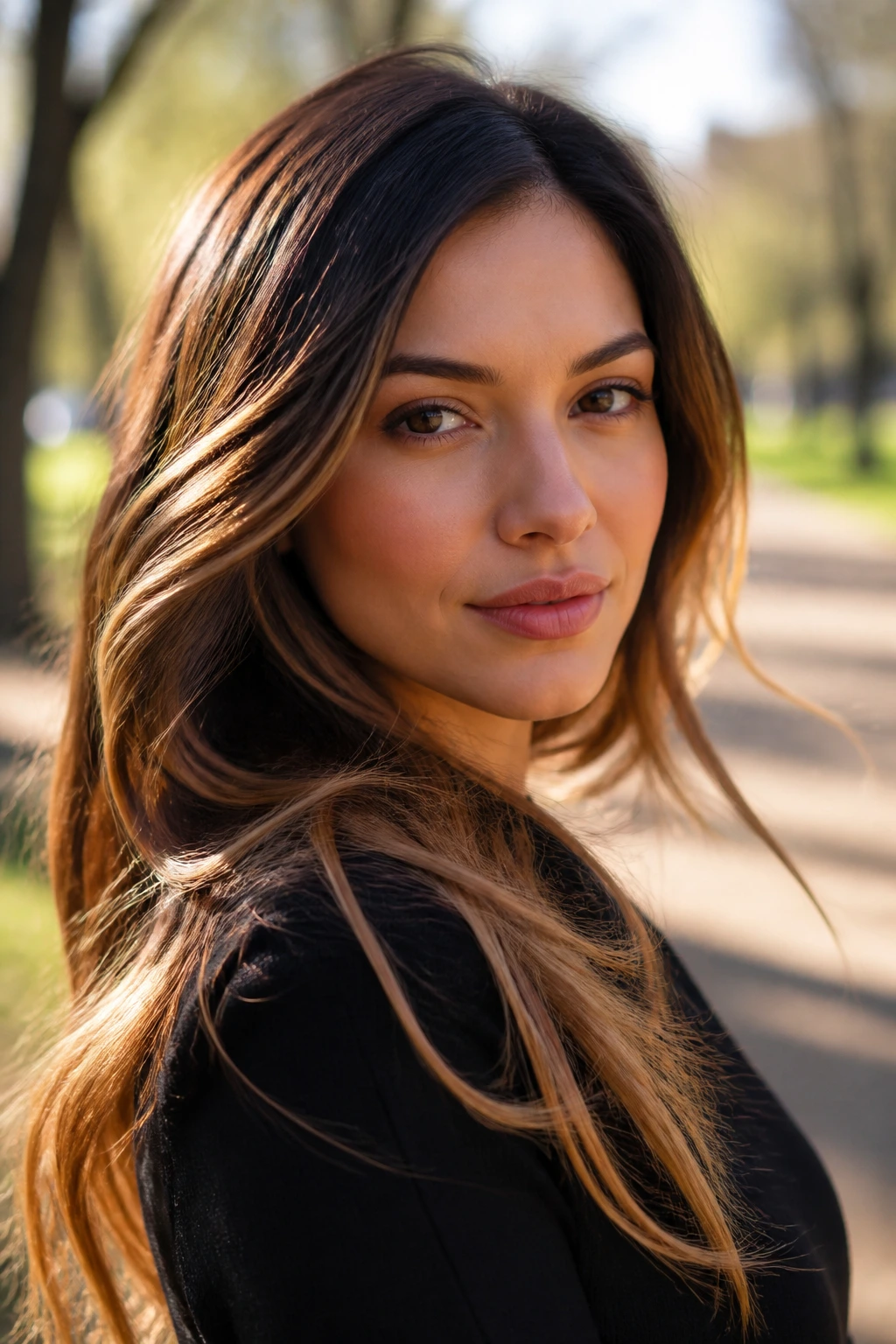
Golden brunette sweep is exactly what it sounds like: a sweep of light that stays in brunette territory. The gold is diluted enough to avoid blonde territory, which keeps dark hair looking full. It’s one of the easiest ways to brighten a haircut without bleaching it to pieces.
Compared with face-framing money pieces, the sweep is broader and gentler. It runs through the mids and ends, so the face gets reflected light without being boxed in. On an oval face, that keeps things balanced and soft.
This works especially well on hair that already has a lot of movement. The sweep catches bends and layers, and the result is better than trying to force brightness into every strand.
21. Tawny Face-Frame Pieces
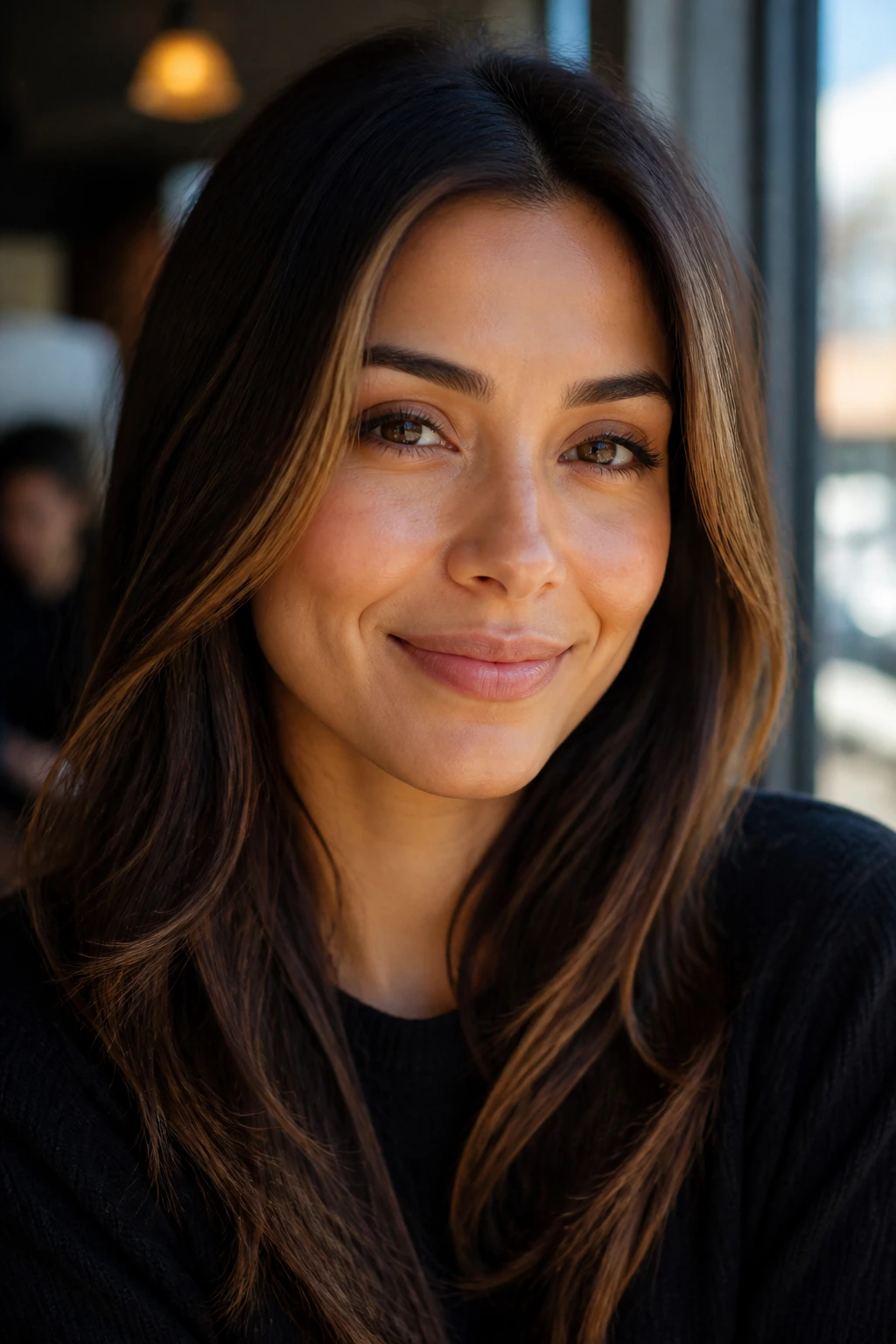
Tawny face-frame pieces are warm, slightly earthy, and much easier to wear than high-contrast blonde streaks. The tawny tone sits between gold and brown, which makes it useful if you want brightness that still looks like it belongs on a brunette base.
The placement should stay close to the outer eye line and drift down toward the jaw. That keeps the face open without throwing light across the widest part of the cheeks. Oval faces like that kind of control.
I’d pair this with a slightly darker root shadow, especially if the hair around the crown is fine. It keeps the face-framing pieces from floating too much.
22. Butterscotch Ends
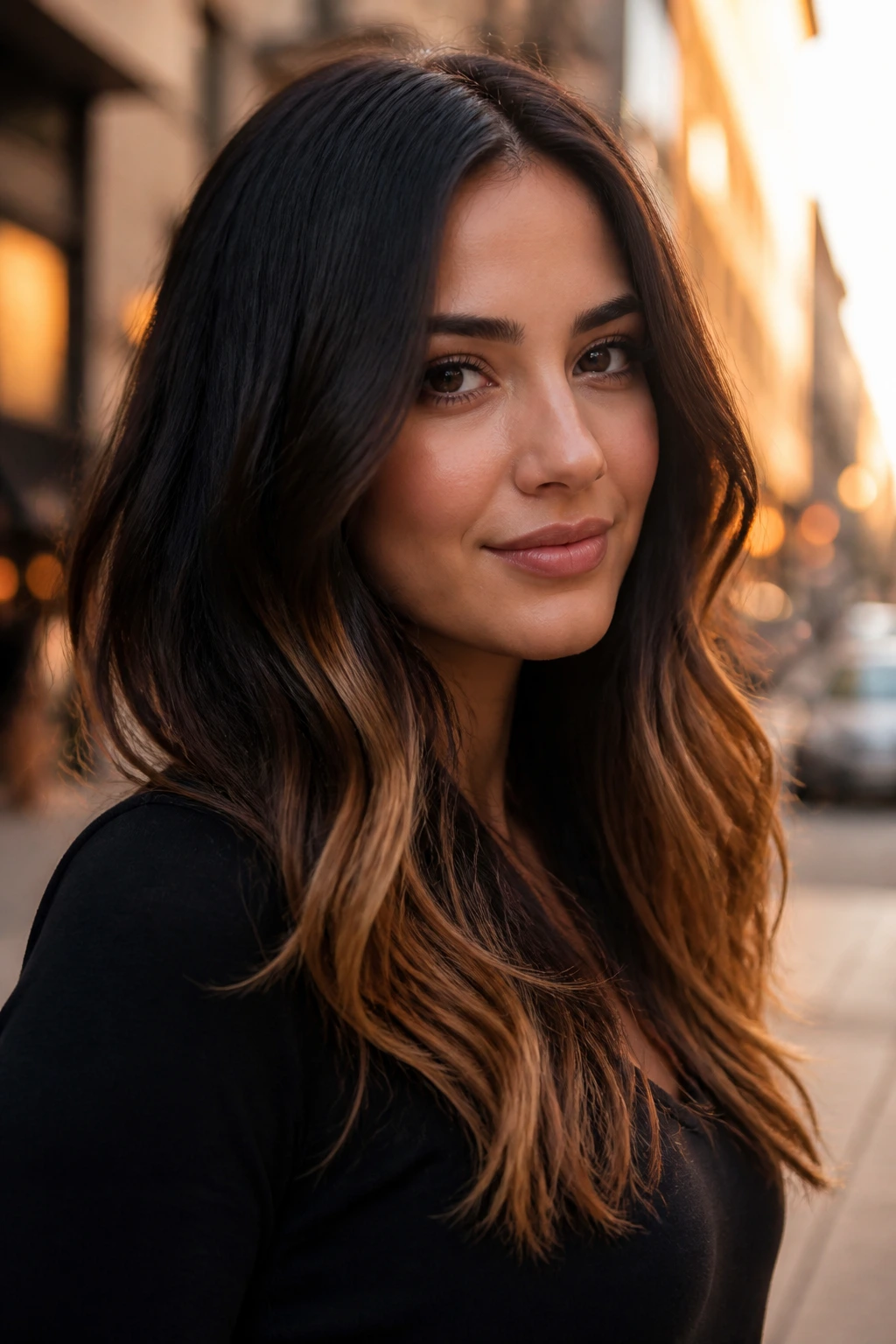
Butterscotch ends are for someone who wants the lower half of the hair to carry the light. The tone is soft and sweet, but it has enough brown in it to stay believable against a dark root. It’s less sunny than honey and less red than caramel.
The upside is the shape it creates. By putting more brightness at the ends, the face gets a cleaner outline and the hair looks longer. That’s why this works so well on oval faces: it extends the line rather than spreading it out.
If your ends are dry, ask for a glossed finish rather than a raw lift. Butterscotch should look smooth, not thirsty.
23. Mahogany Glint Highlights
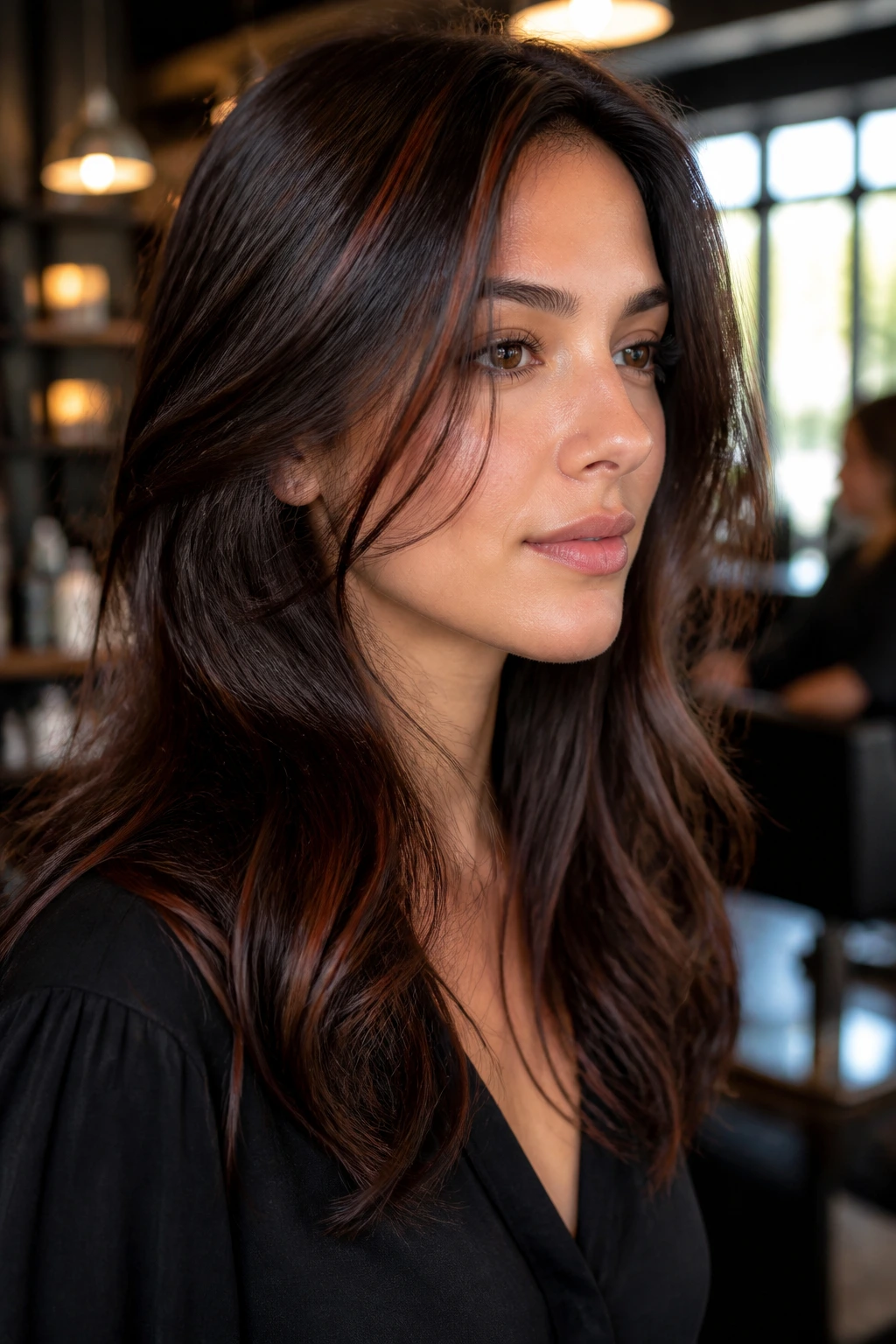
Mahogany glint highlights bring depth with a red-brown edge. They’re a little darker and moodier than auburn whisper lights, which makes them a strong fit if you want soft dimension without stepping into copper or gold.
A good fit when you want richness
Mahogany shines when the hair moves. A few glints around the crown and front layers give the cut shape, while the darker undertone keeps the face from looking over-framed. On an oval face, that subtle red-brown note adds interest without widening the silhouette.
If your wardrobe leans black, cream, denim, or olive, mahogany often looks surprisingly good. It feels grounded. Not loud. Just alive.
24. Mink and Mocha Dimension
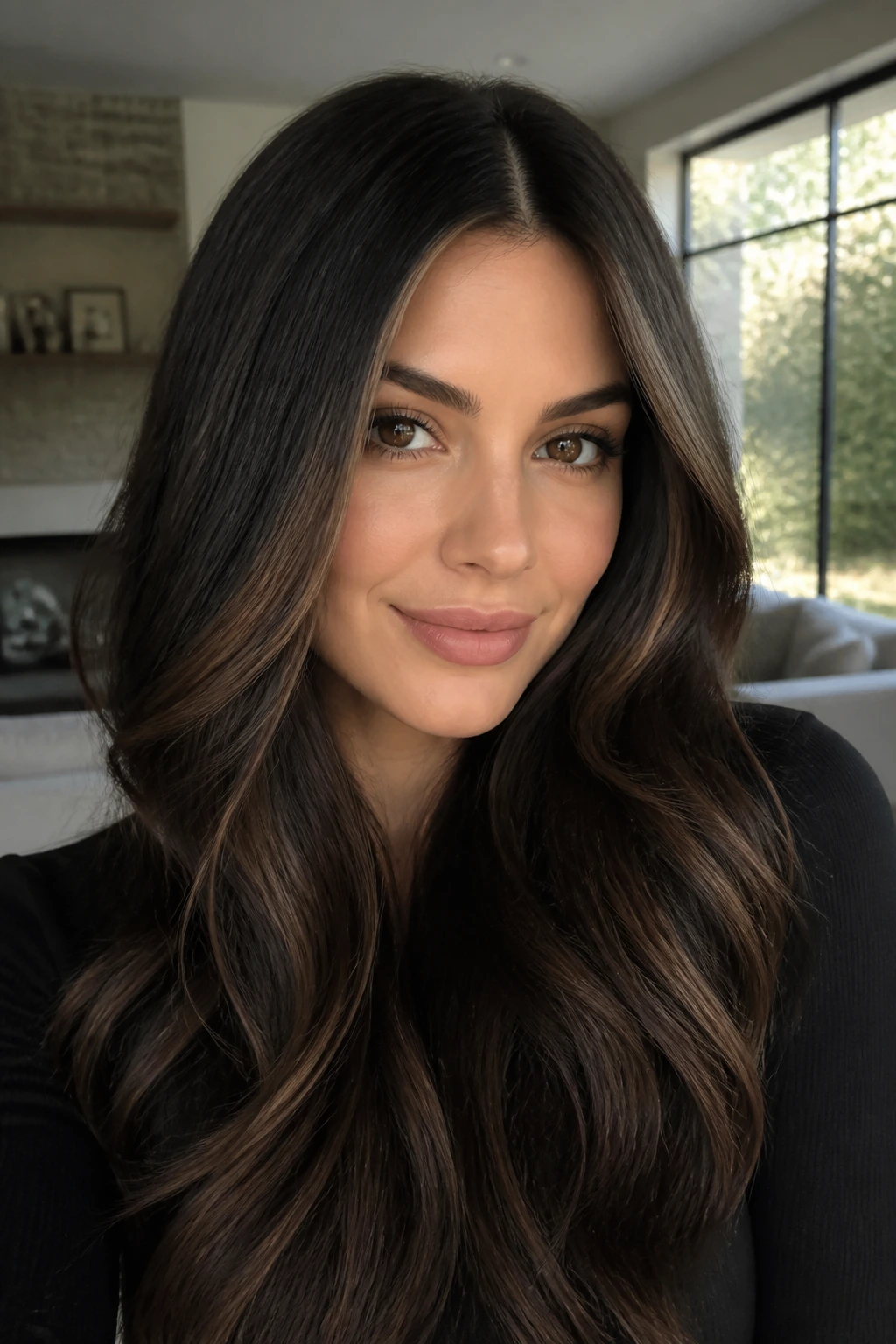
Mink and mocha dimension is the cooler, quieter cousin of caramel balayage. Mink keeps the lighter pieces soft and smoky; mocha gives them a little more depth than beige would. Together they create a plush brunette effect that never looks harsh.
This is one of the best options if your hair is thick and naturally dark. The dimension breaks up weight without making the color too light. On an oval face, that matters because the hair stays sleek along the sides while still showing movement through the mids.
- Good for brunettes who dislike warmth.
- Works well with a center part.
- Needs glossing to keep the tones clean.
25. Rosewood Reflective Threads
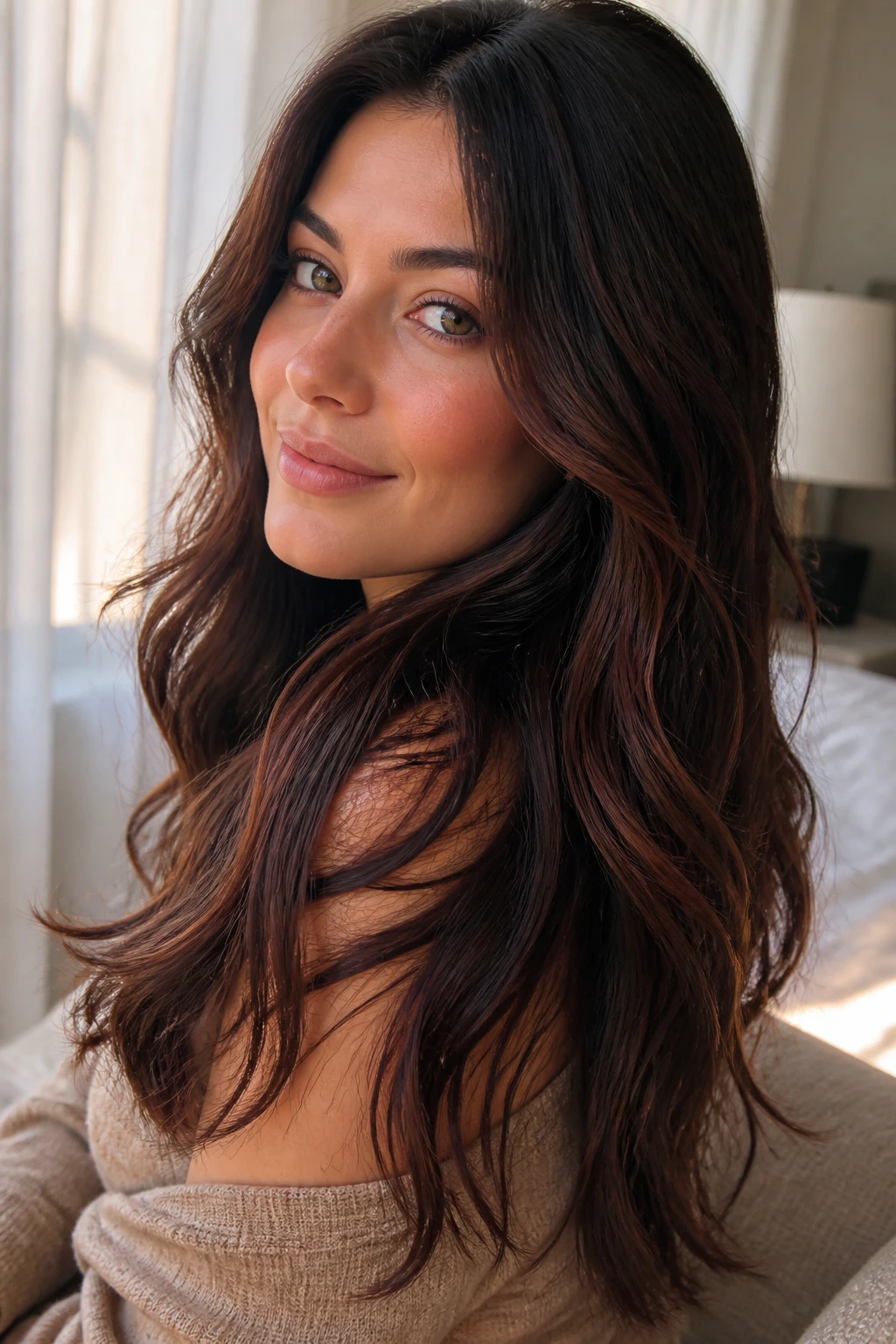
Rosewood reflective threads are subtle, rosy-brown strands that look elegant without trying to be pink. The rose note stays deep and muted, so the hair remains brunette first. It’s one of the nicer ways to add softness if caramel feels too expected.
The effect around an oval face is gentle but noticeable. The color warms the cheeks and eyes, then fades into the lengths without creating a heavy frame. I like it most when the threads are scattered rather than packed together.
If the base is very dark, the rosewood should be more brown than rose. That keeps the look refined and wearable for everyday light.
26. Sanded Caramel Highlights
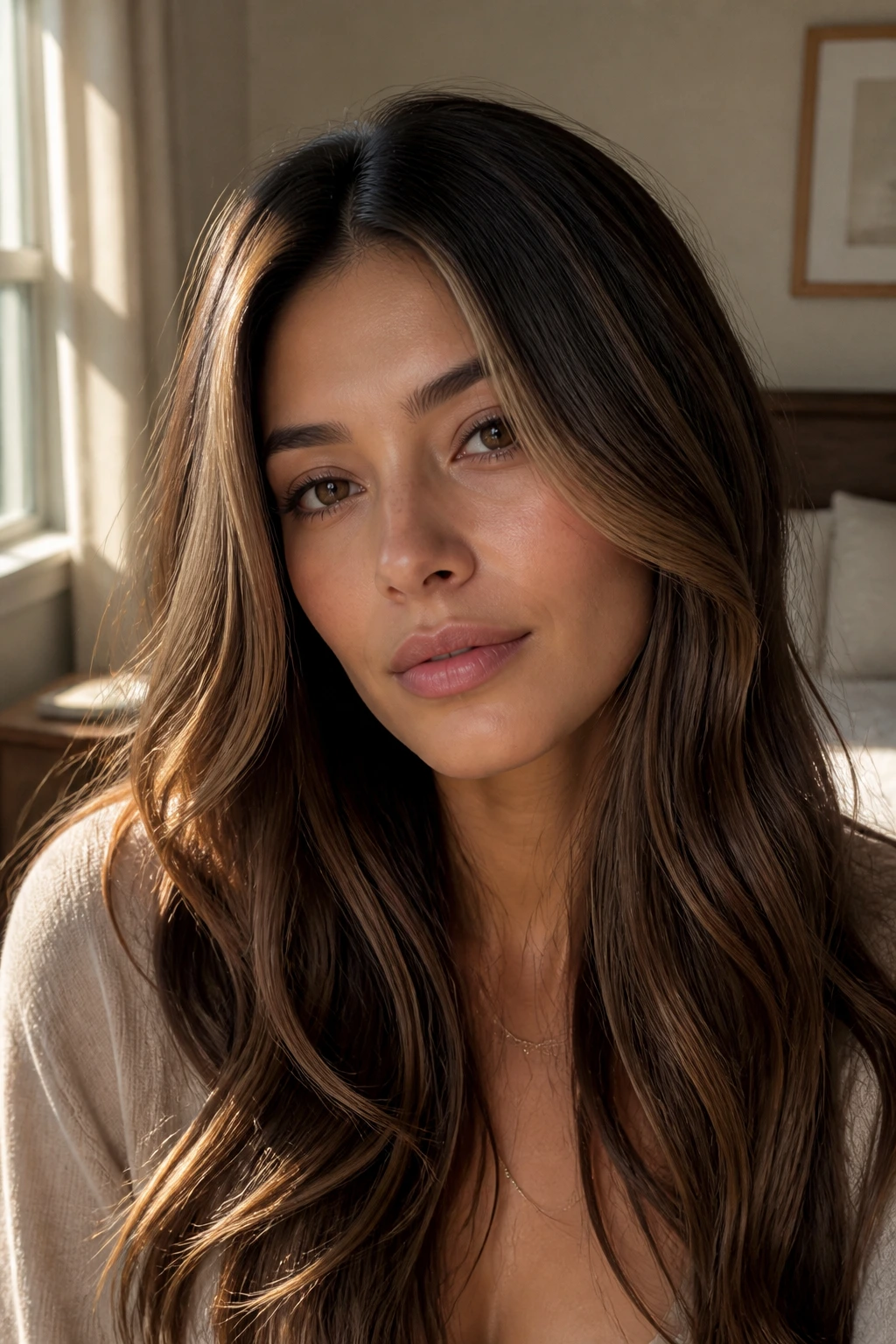
Sanded caramel takes classic caramel and tones it down with beige. That one change matters. It keeps the highlights from going too orange against dark hair and makes the finish feel more matte and expensive.
The shape reads well on oval faces because the brightness can sit in broad, soft ribbons without feeling chunky. The beige edge keeps the face from getting washed out, especially if the skin tone is neutral or cool. Warm caramel is lovely. This version is easier to live with.
I’d ask for this if you like low-maintenance color that still shows up in photos. It wears well for weeks.
27. Hazelnut Halo Lights
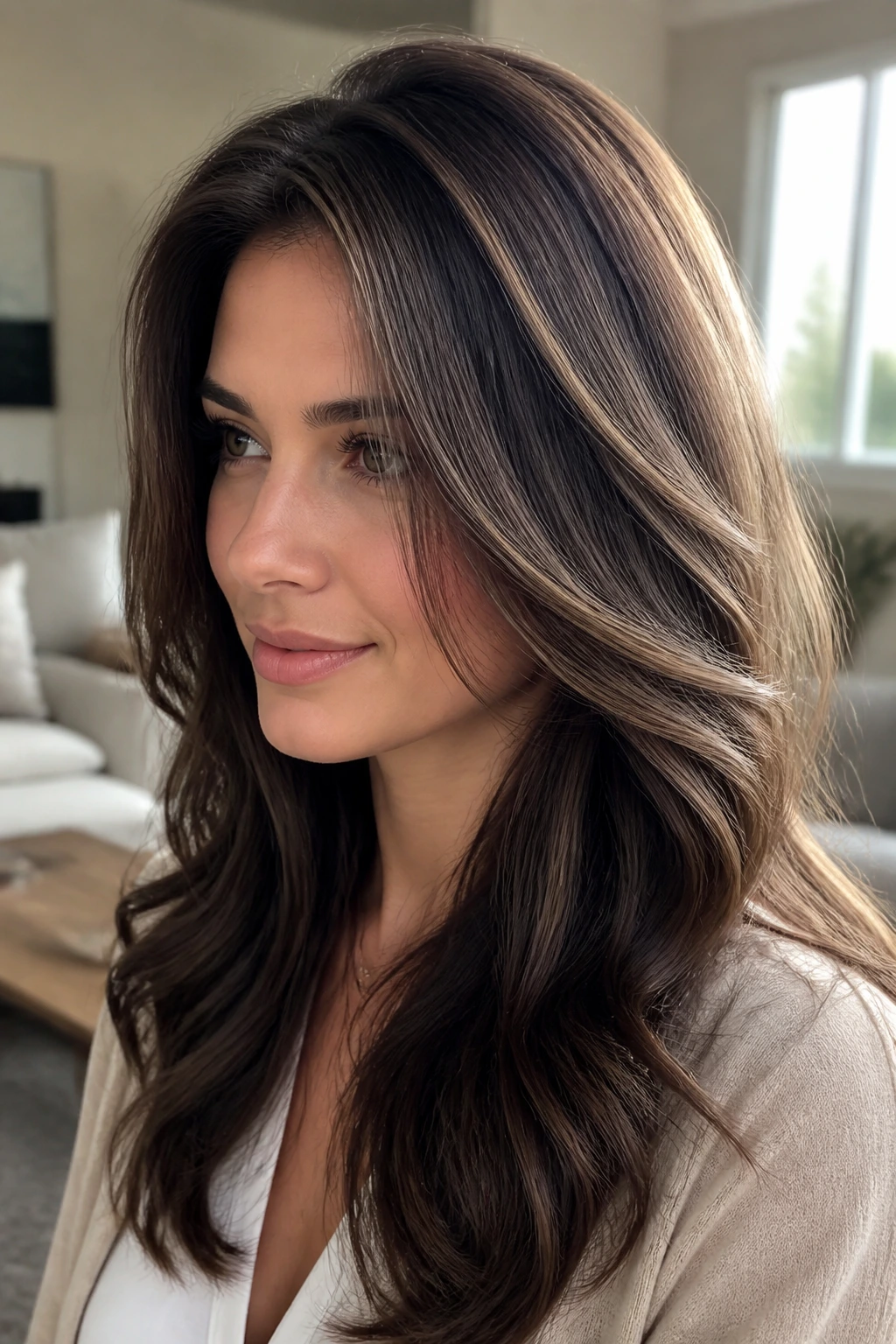
Hazelnut halo lights are a smart answer for anyone who wants lift without face-framing streaks. The highlights ring the crown and upper side layers, giving the hair a soft halo that works from several angles. It’s subtle until the light hits it, then suddenly the shape shows.
Oval faces benefit because the brightness sits higher, which keeps the face balanced and avoids over-emphasizing the cheek width. The color looks especially good on layered cuts and softly waved hair.
This is a solid choice if you want your hair to look fuller at the top. A little lift near the part can change the whole read of the cut.
28. Bronze-Kissed Curtain Pieces
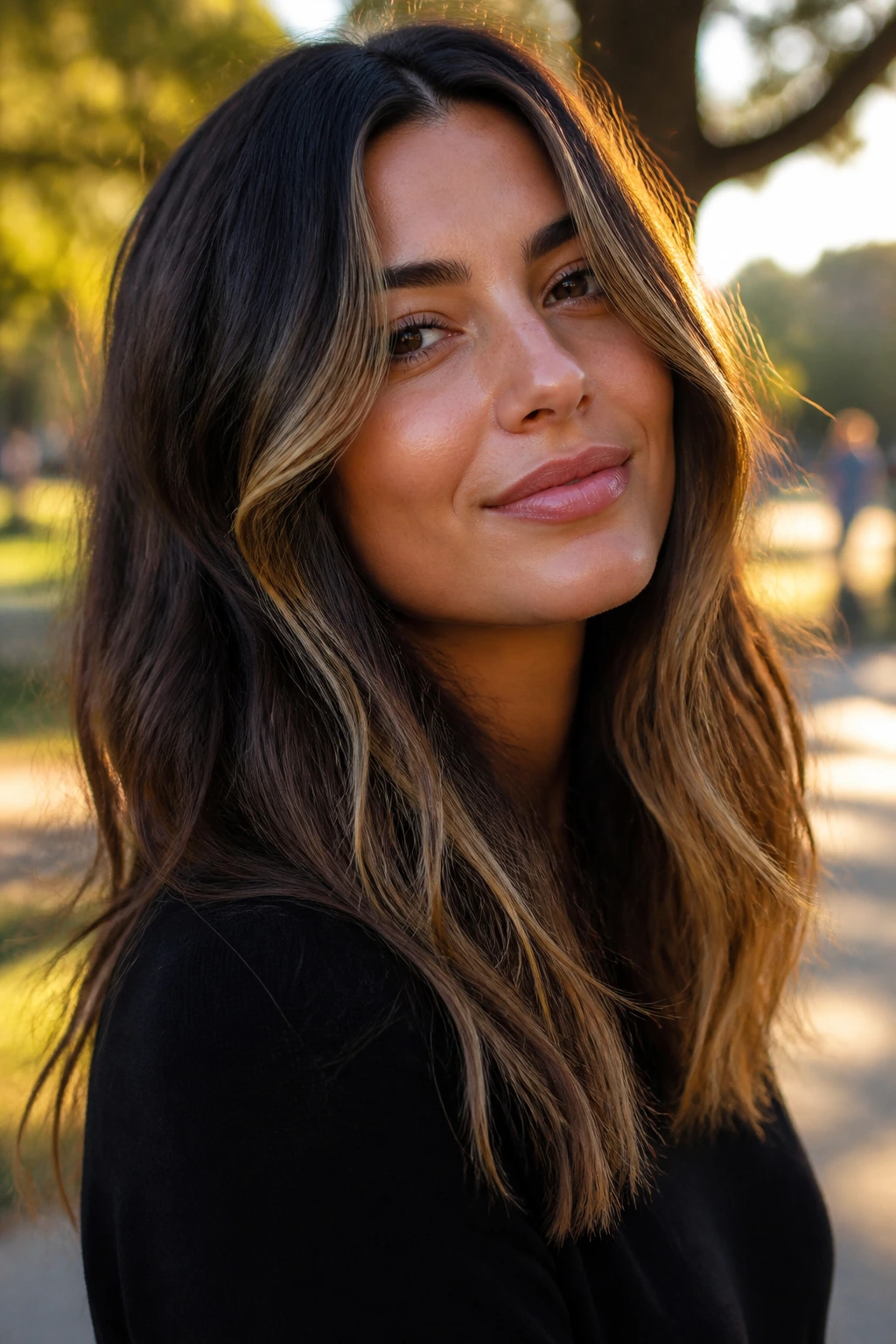
Bronze-kissed curtain pieces sit between caramel and smoky gold, which makes them a useful in-between shade. The front sections open around the face, then the bronze tone runs through the mid-lengths in soft, sloping pieces.
Why they flatter oval faces
Curtain placement naturally draws the eye down the sides of the face, and the bronze tone keeps that motion warm instead of stark. On an oval shape, that combination preserves length while adding enough light to wake up the eyes. I prefer this on longer layers or a collarbone cut.
If you wear the hair tucked behind one ear, the bronze still reads well. That’s one reason this style has staying power. It works from every angle.
29. Espresso-to-Toast Ombre
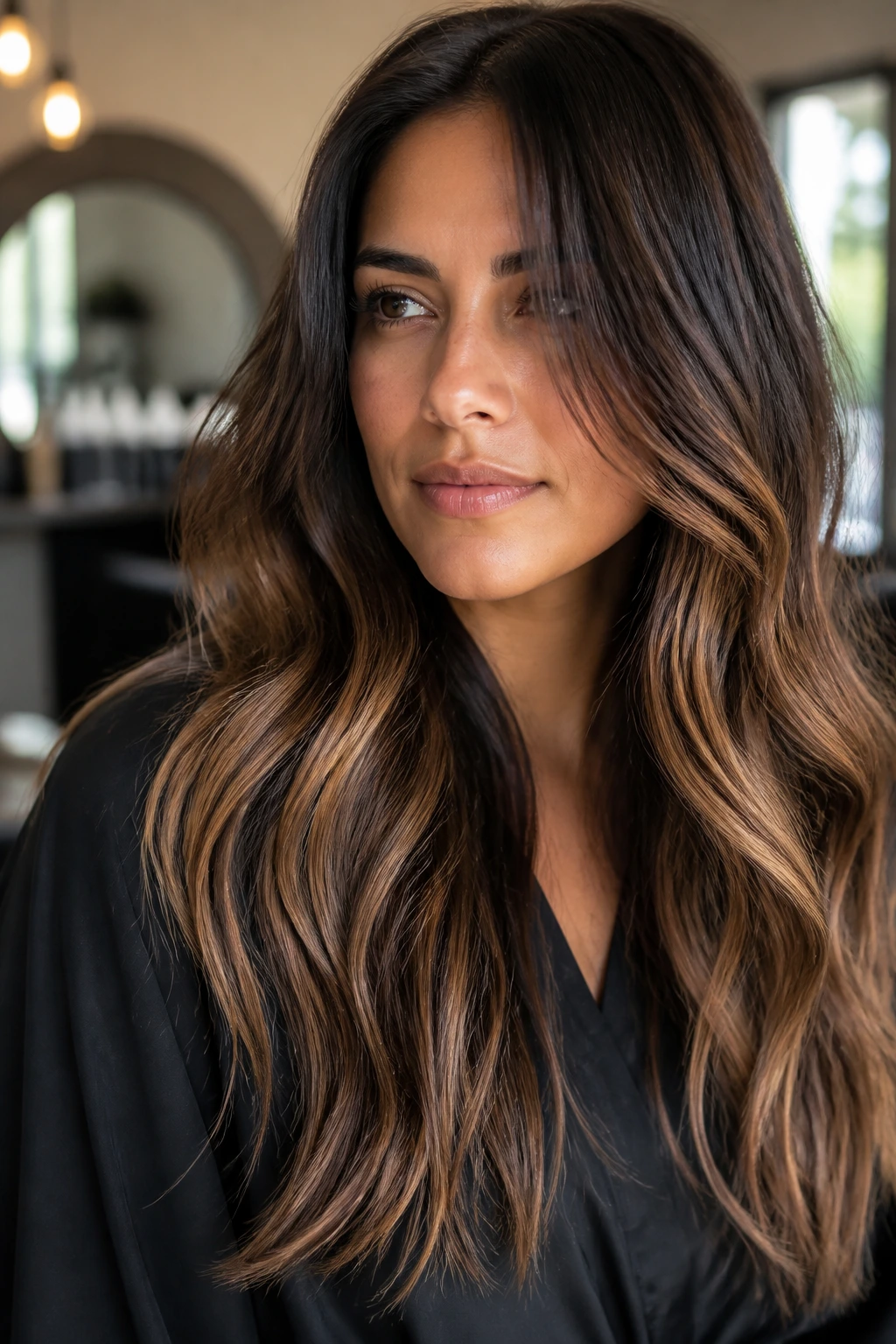
Espresso-to-toast ombre is the strongest contrast in this group, but it can still stay soft if the transition is blurred well. The roots remain dark espresso, then the color melts into toasted brown through the mids and ends. No hard line. No dip-dyed finish.
Because the brightness starts lower, the face shape stays intact. That’s a gift for oval faces, which don’t need extra width around the hairline. The color creates length and movement instead.
- Best on long hair.
- Looks strongest in waves or a blowout.
- Ask for a very soft transition zone near the mids.
This is the look for someone who wants a little drama while still staying in brunette country.
30. Soft Almond Smoke
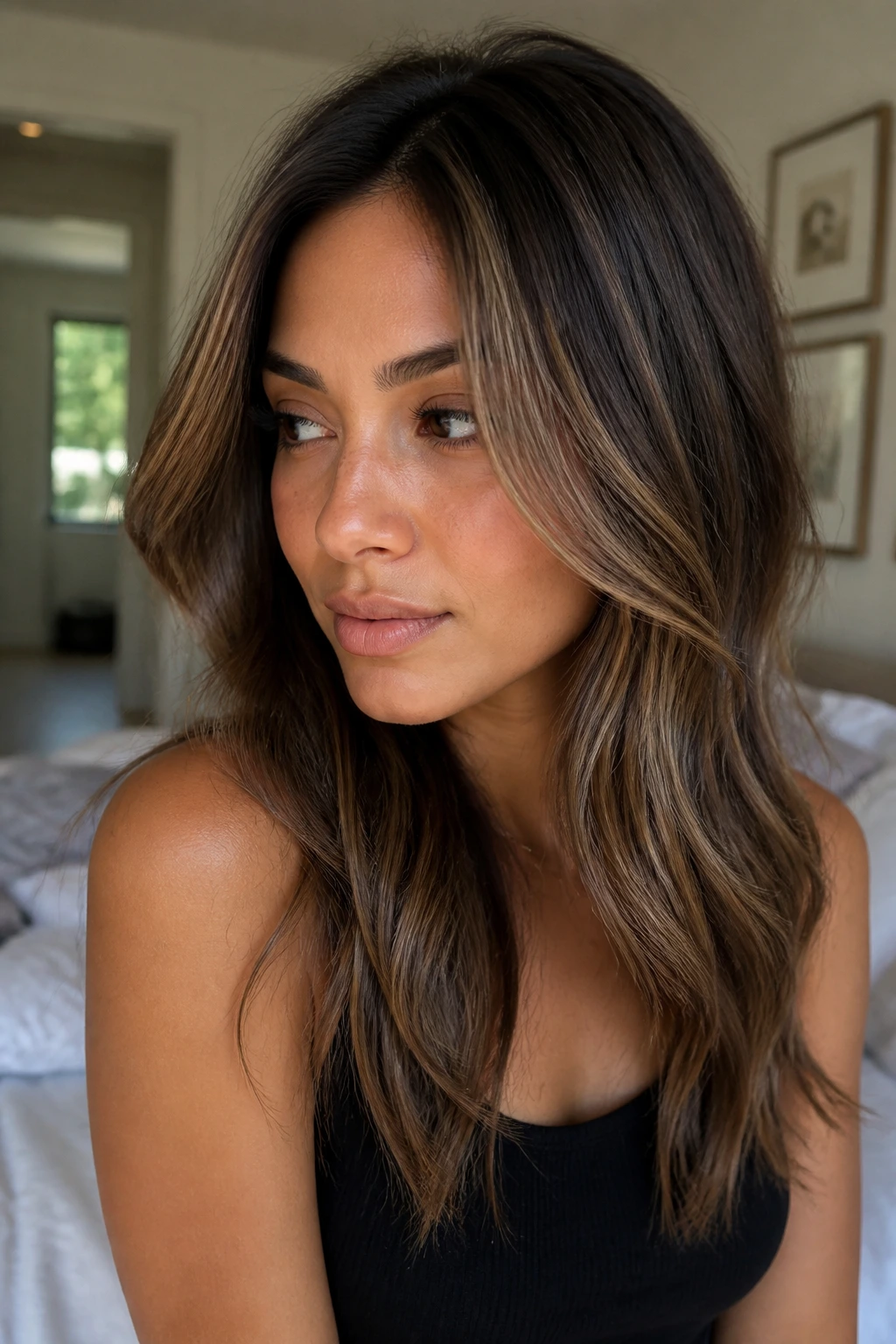
Soft almond smoke is the most feathered, airy option in the bunch. The almond tone gives the highlights a beige-brown softness, while the smoky finish keeps them from reading yellow. It’s quiet, polished, and a little cool around the edges.
The placement should stay light around the front and crown, then fade into the darker base near the ends. That helps an oval face keep its clean line while the hair gains movement. I like this if your wardrobe is full of gray, cream, navy, or black.
It’s the kind of brunette highlight that doesn’t demand attention but earns it anyway. And that distinction matters.
Why Dark Hair and Oval Faces Need Different Handling
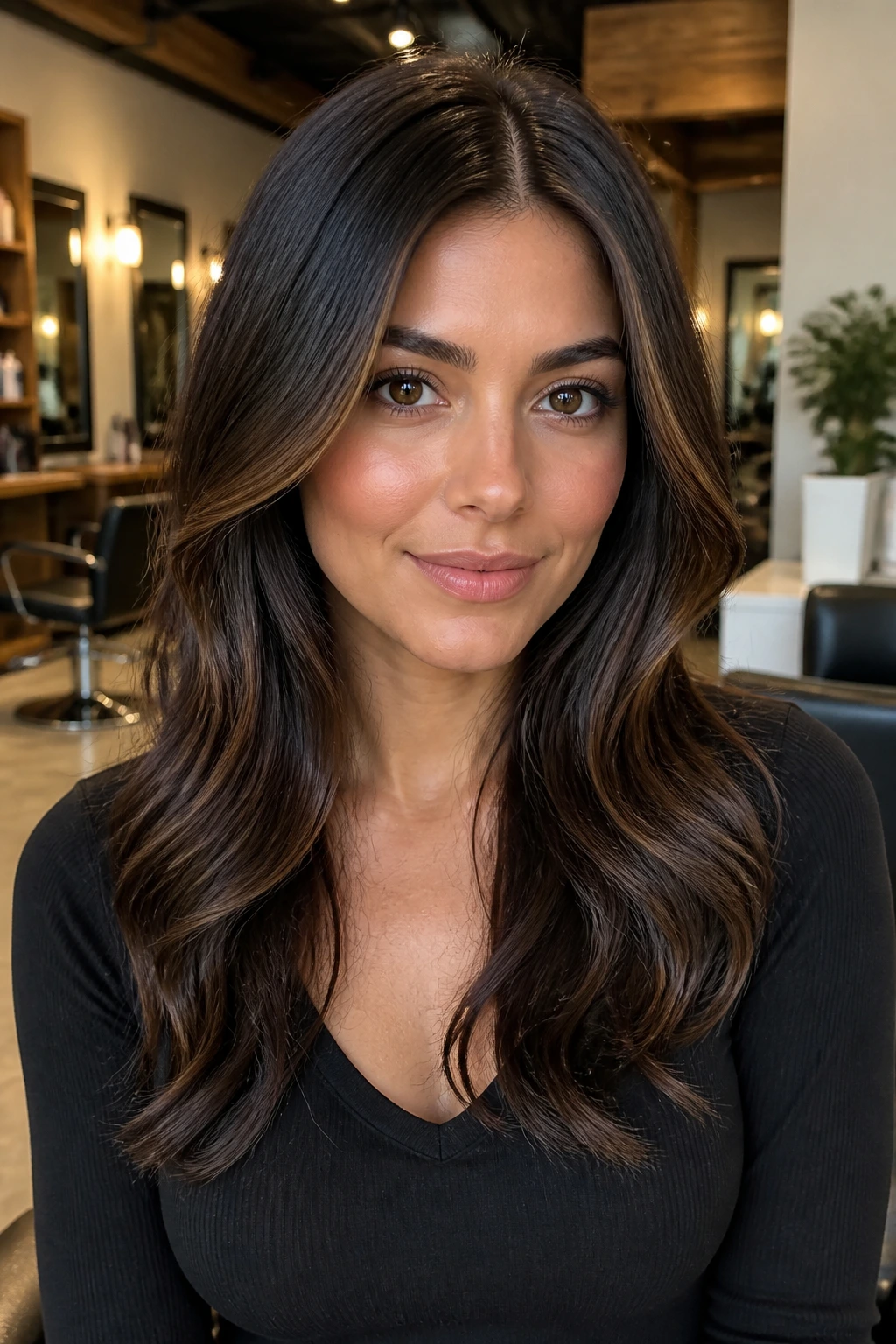
Dark hair and oval faces are a useful pairing because both can carry a lot of visual weight without collapsing. But they need different kinds of restraint. The hair needs light that moves; the face needs shape that stays clean.
A dark base looks best when the highlights are broken up, softened at the root, and glossed into the mids and ends. Oval faces, meanwhile, usually look strongest when the brightest pieces avoid the widest part of the temples and instead skim the cheekbone and drift downward. That’s the trick. Keep the light in motion, but don’t scatter it everywhere.
What I’d tell a colorist
Ask for soft dimension, not a full blonde shift. Mention where you part your hair, whether you wear it straight or wavy, and how much upkeep you can stand. Those details matter more than saying you want “something natural.” Natural can mean ten different things in a salon chair.
If your hair is very dark, a slow lift and a warm or beige gloss usually beat an aggressive lightening service. If the base is already brown, you can often go a little cooler. Tone should follow the base, not fight it.
How to Ask for the Right Tone in the Salon Chair
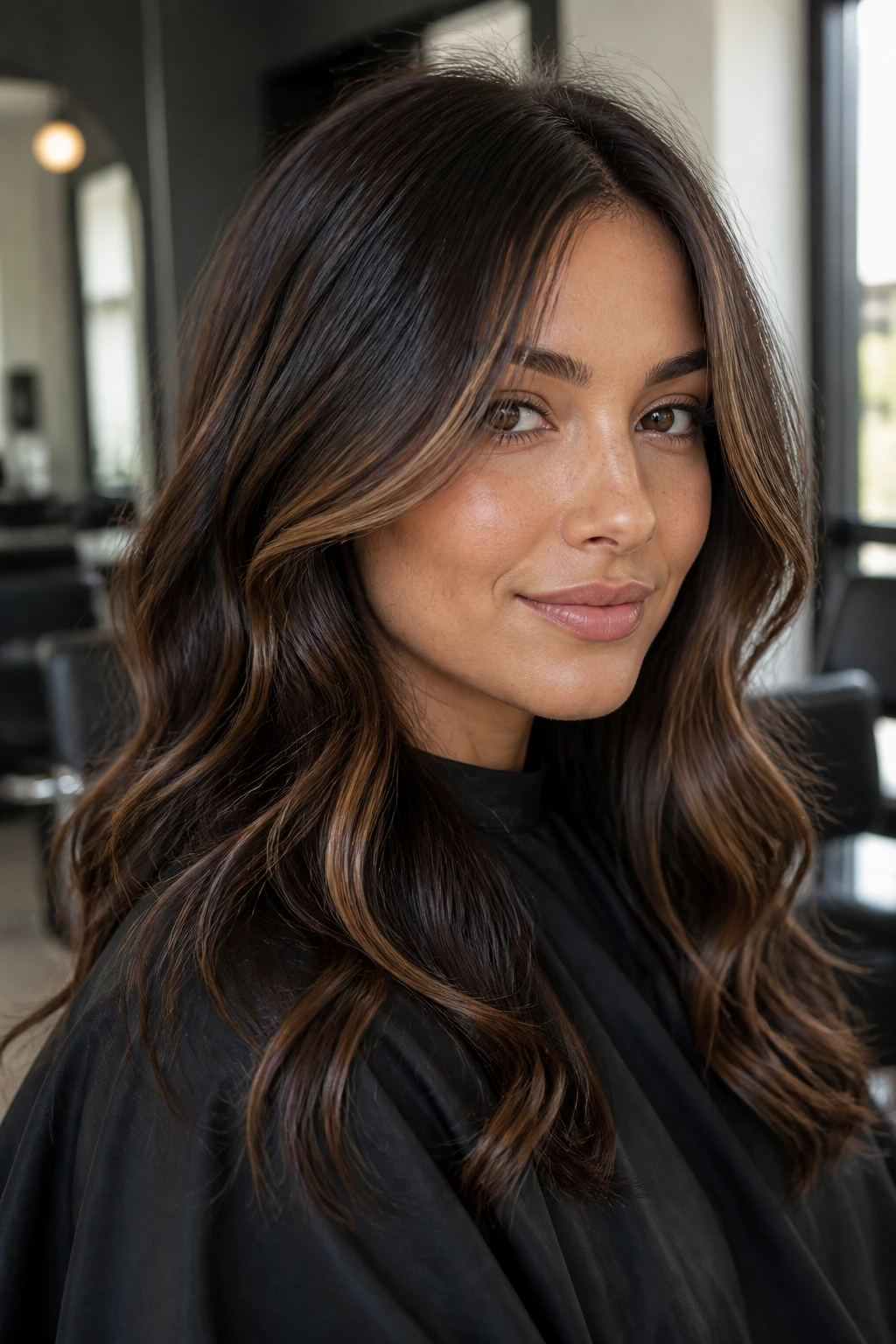
A good consultation starts with one plain sentence: “I want soft highlights that keep the hair dark and frame my face without widening it.” That tells the colorist more than “brighter” ever will. Then get specific about the feel you want—caramel, mocha, bronze, mushroom, copper, beige. Those words point in different directions.
Bring one photo for placement and one for tone if you can. That helps because the shade and the pattern are not the same thing. A caramel balayage can be painted like a money piece, and a money piece can be kept as subtle as babylights. People forget that part.
If your hair is close to black, ask how much lift is realistic in one appointment. Overreaching here is how you end up with orange mids and stressed ends. A slower path usually looks better, especially if you want the result to grow out with grace.
Essential Equipment for Salon Visits and At-Home Care
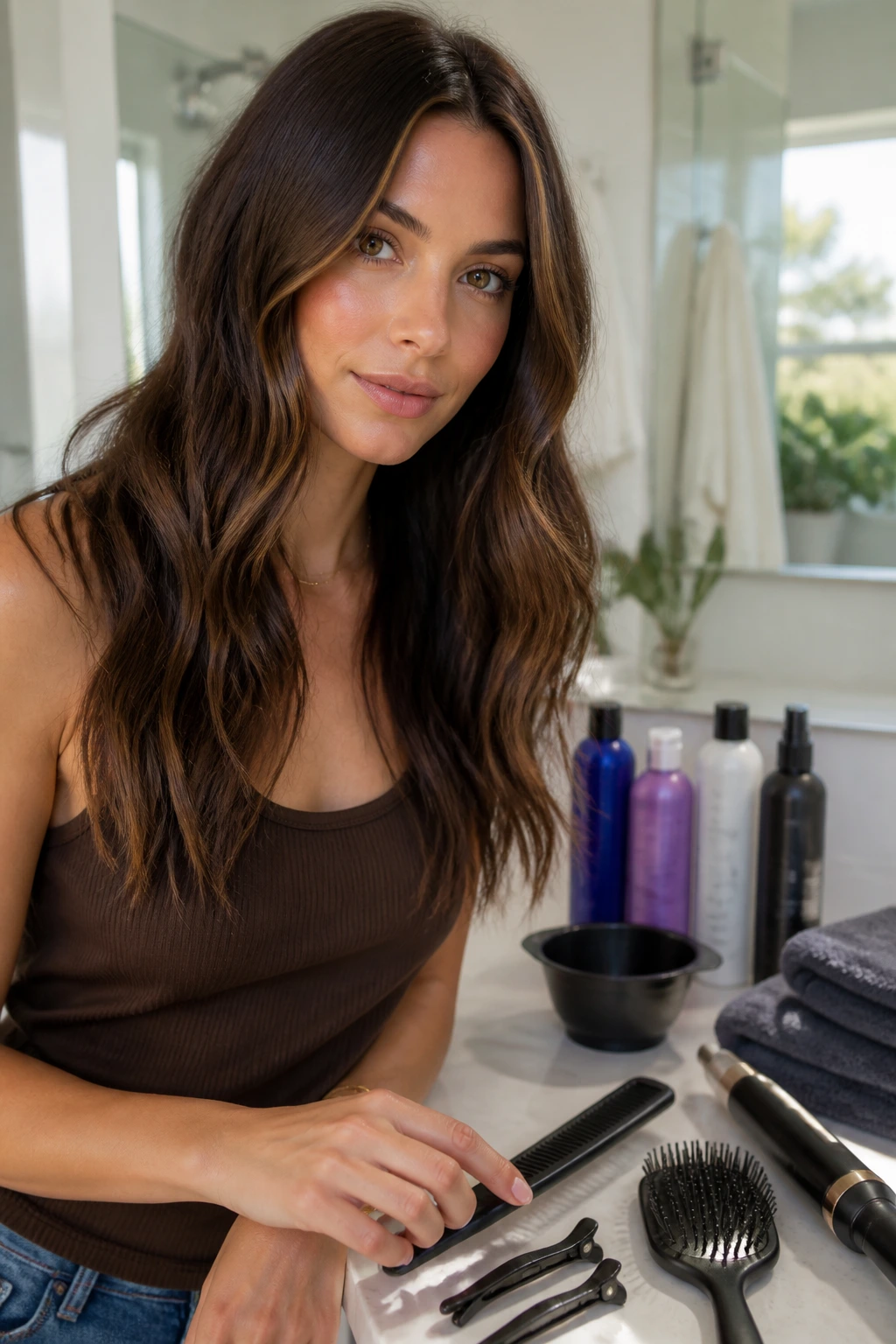
- Tail comb: Useful for parting photos, sectioning, and showing exactly where you want the front pieces to sit.
- Sectioning clips: Keep face-framing hair out of the way while you style or tone at home.
- Balayage board or foil sheets: More relevant for salon work, but worth knowing if you talk through the technique.
- Color-safe shampoo: Helps the toner last longer and keeps dark brunette tones from looking muddy.
- Blue shampoo: Handy for brunettes who pull orange after lightening; use sparingly so the hair doesn’t go dull.
- Heat protectant spray: Non-negotiable if you blow-dry or curl the ends to show off the ribbons.
- Microfiber towel: Cuts frizz and keeps the front pieces smoother while they dry.
- 1.25-inch curling iron or wand: Good for soft bends that let the highlights catch light.
- Round brush: Useful if you want the face-framing pieces to curve away from the cheeks.
- Gloss or demi-permanent toner: Great for refreshing beige, caramel, or smoky tones between appointments.
Smart Shade-Picking and Consultation Tips
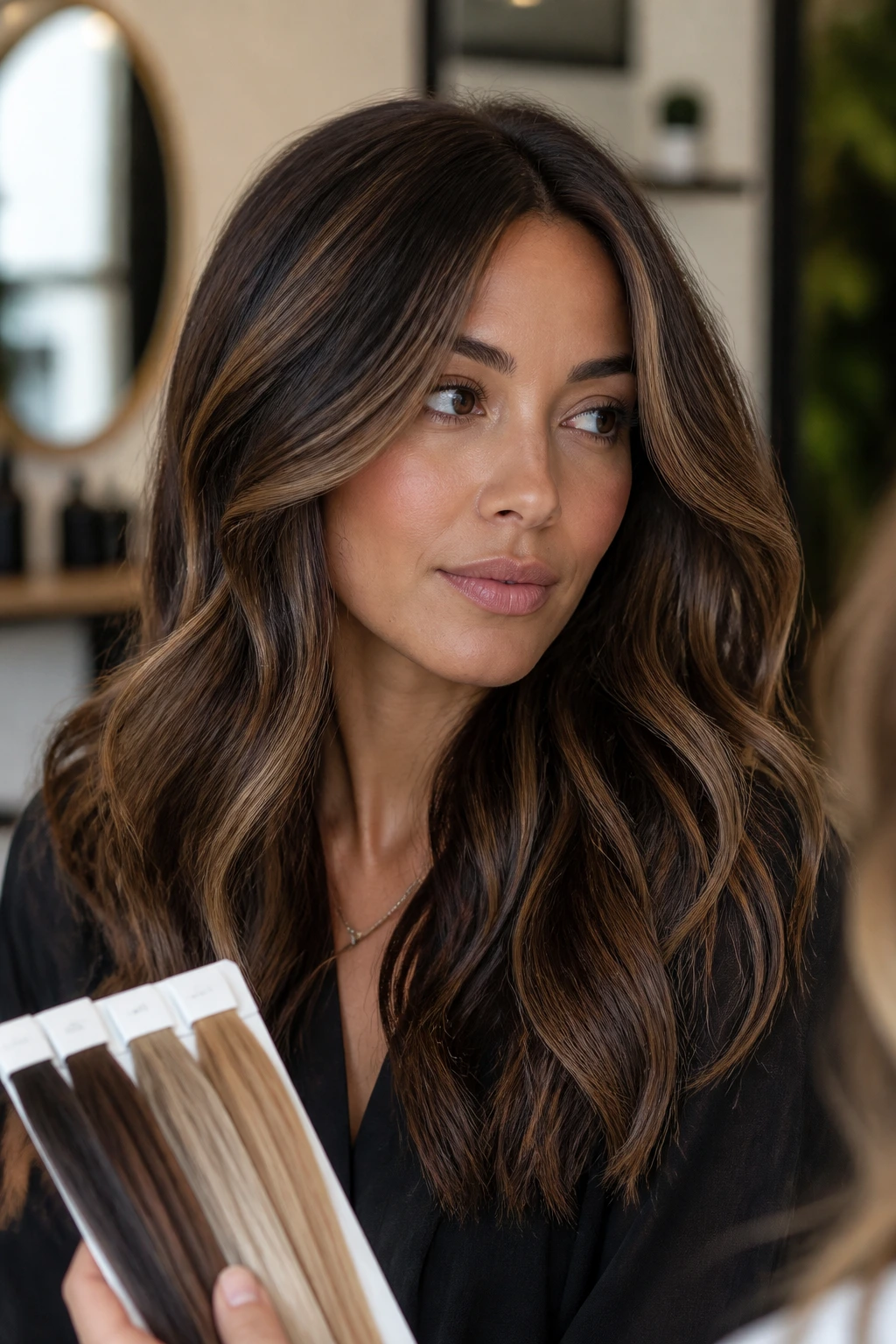
The shade you choose should follow your undertone, not a trend board. Warm skin usually plays well with caramel, honey, amber, bronze, and tawny. Cooler skin often likes mushroom brown, sable, champagne beige, soft mocha, and almond smoke. Neutral undertones can wear both, which is convenient and mildly annoying in the best way.
Base level matters too. If your hair is a level 2 or 3, asking for a level 8 blonde ribbon is usually where things start to go sideways. The lift can be beautiful, but it takes maintenance and often more than one session. A level 5 or 6 target usually keeps the color soft, which is the whole point here.
Pay attention to your haircut. Heavy one-length hair needs more placement near the ends to avoid looking thick and dark at the bottom. Layered cuts can take babylights through the crown and front pieces more easily. A blunt lob often looks best with fine face-framing accents and a shadow root, because the cut itself already does a lot of the visual work.
How to Style Soft Highlights So the Shape Still Shows
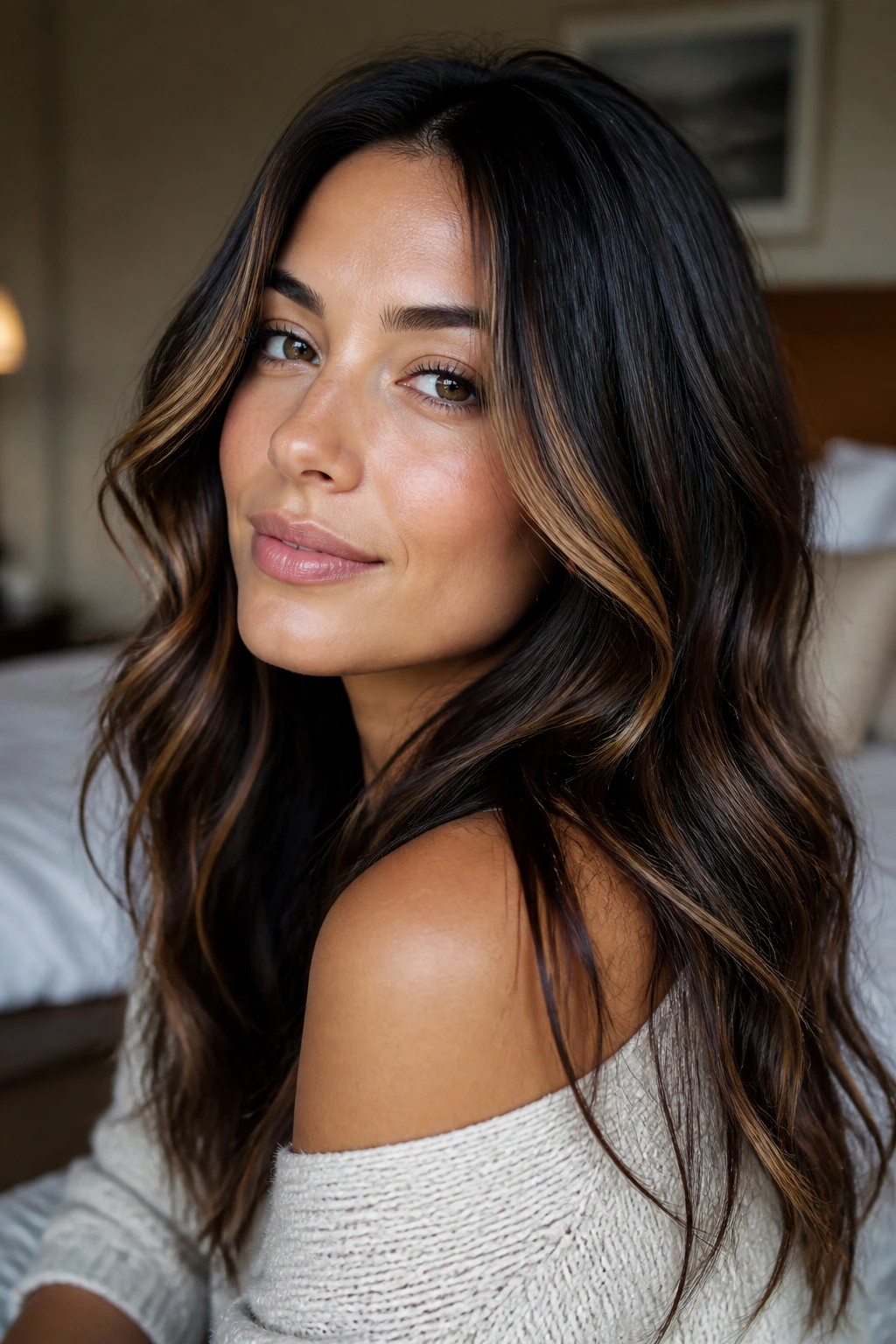
Loose styling lets these colors breathe. A flat iron can work, but a slight bend from a curling wand or round brush usually shows the ribbons better. Wrap away from the face on the front sections if you want a lift at the cheekbones. Wrap toward the face only if you want a softer, cocooned edge.
A center part can look sleek on an oval face, but a slight off-center part often keeps the front highlights from falling too symmetrically. That tiny shift can change the whole mood. Straight hair should get a little bend at the ends so the highlight placement reads clearly. Curly hair needs less manipulation; the color already moves on its own.
If your hair looks flat after styling, the fix is usually not more product. It’s better placement at the root and a cleaner bend through the front. Too much cream or oil can mute the whole effect.
Additional Tips and Color Boosters
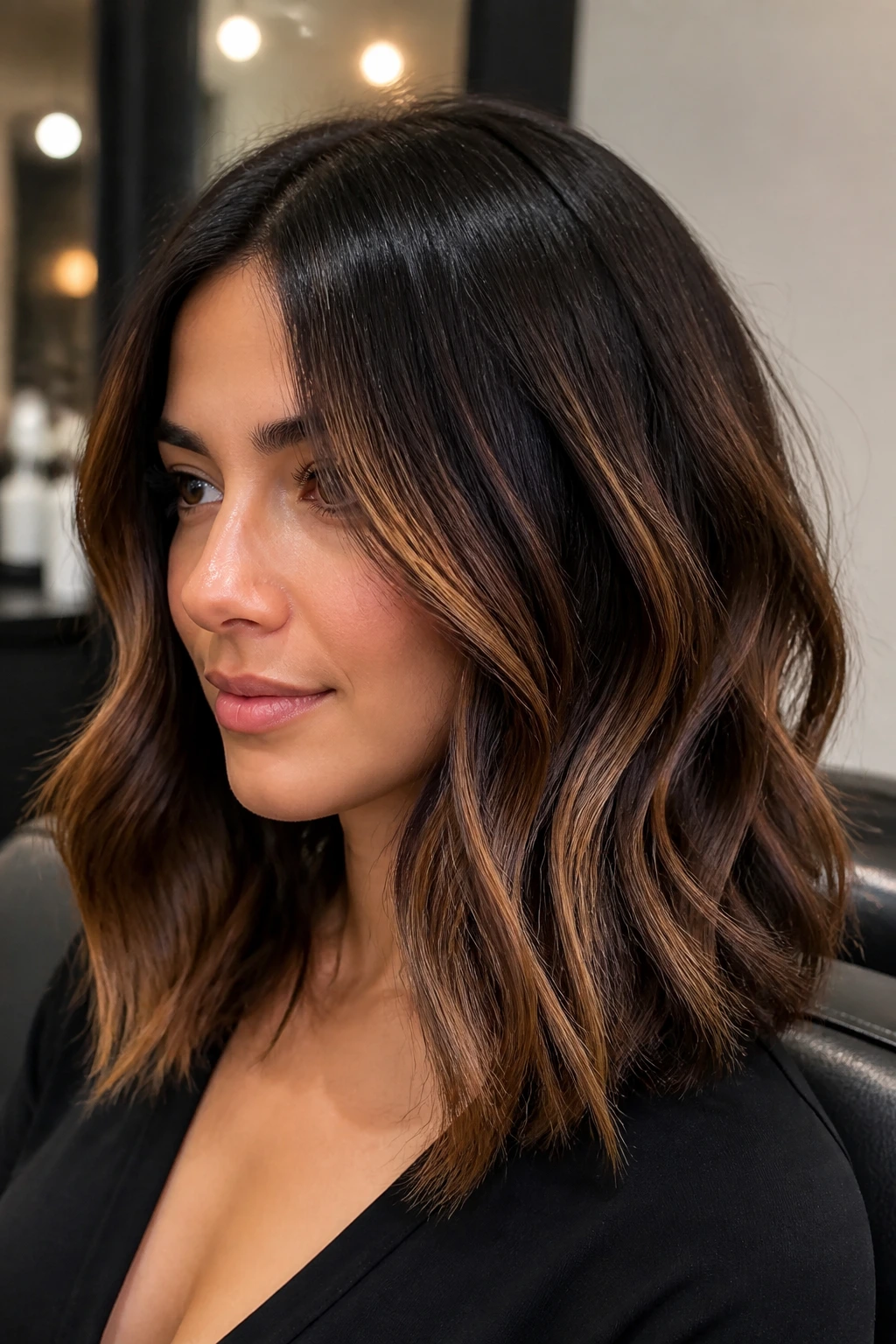
Tone Choice: Beige and caramel tones flatter dark hair when they stay muted. If the color starts looking orange, a cooler gloss can bring it back down. If it starts looking ashy and tired, a honey or amber refresh usually helps more than a brighter highlight appointment.
Placement Trick: Ask for the brightest pieces to sit just below the outer brow and through the top of the cheekbone. That placement lifts the face without making the temples too light. It sounds small. It isn’t.
Styling Boost: A loose wave with ends left out of the iron makes ribbons show up better than tight curls. Tight curls bunch the color together. Soft bends spread it out.
Make-It-Yours: Fine hair usually needs thinner sections so the color doesn’t look chunky. Thick hair can take wider ribbons and still look blended. Curly hair often benefits from lower-placed brightness because shrinkage pulls the lighter pieces upward.
Common Mistakes to Avoid
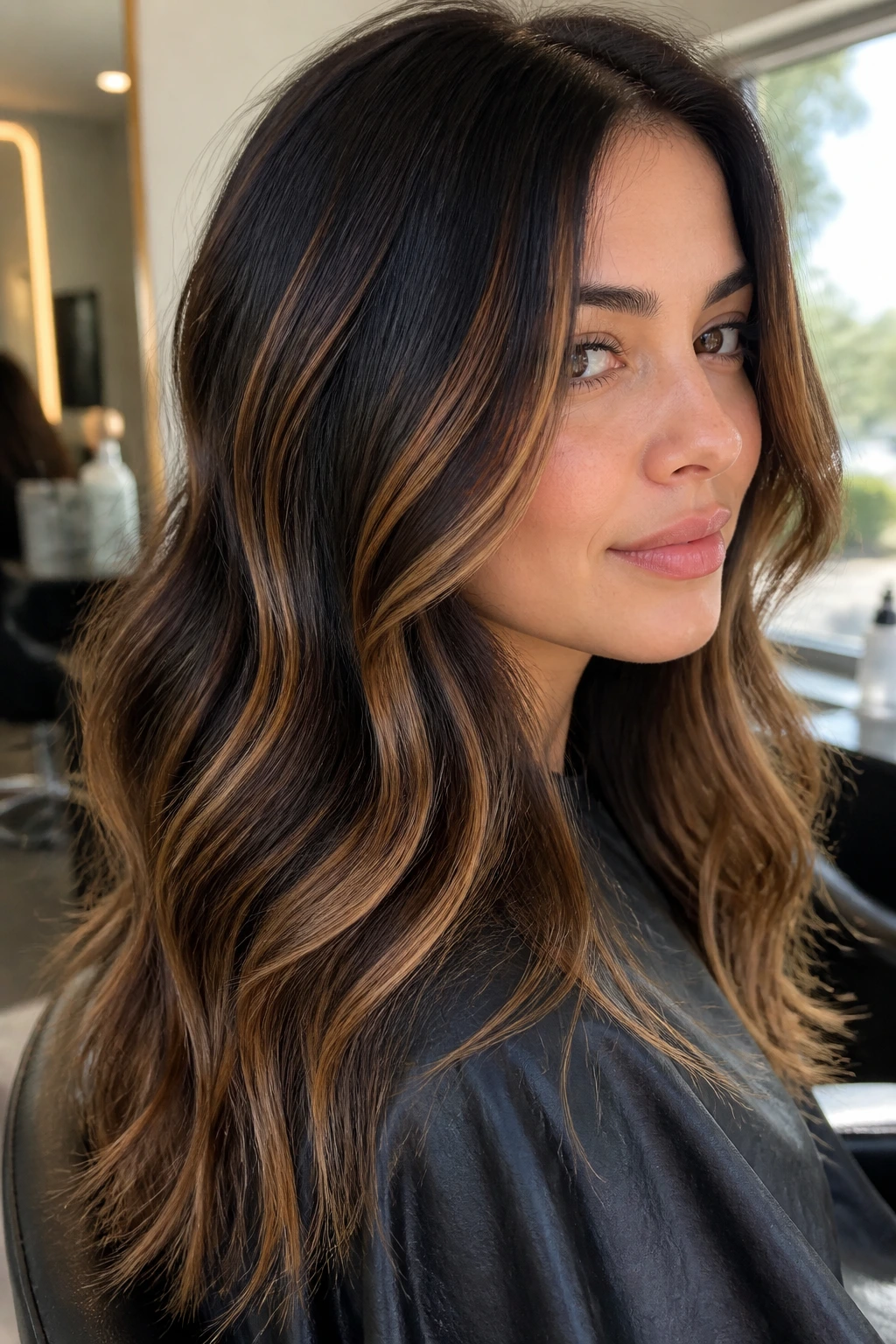
The first mistake is putting too much light at the temples. The symptom is easy to spot: the face starts looking wider, especially in photos. The fix is to keep the brightest bits a little lower, around the cheekbone and jawline, and leave the root zone quieter.
Another problem is choosing a highlight shade that fights the base. Too warm on cool hair turns orange. Too cool on warm hair goes muddy. When in doubt, ask for a gloss you can tweak later instead of chasing the exact tone with the first lift.
Skipping lowlights is another one. Without a few darker strands, dark hair can lose its richness and look fuzzy at the surface. A brunette needs shadows the way a face needs contour. Not a huge amount. Just enough.
A fourth mistake is ignoring maintenance. If you want soft highlights to stay soft, they need toner, color-safe shampoo, and less heat abuse than people usually admit. The hair can handle a lot. The tone usually cannot.
Variations and Alternatives to Try
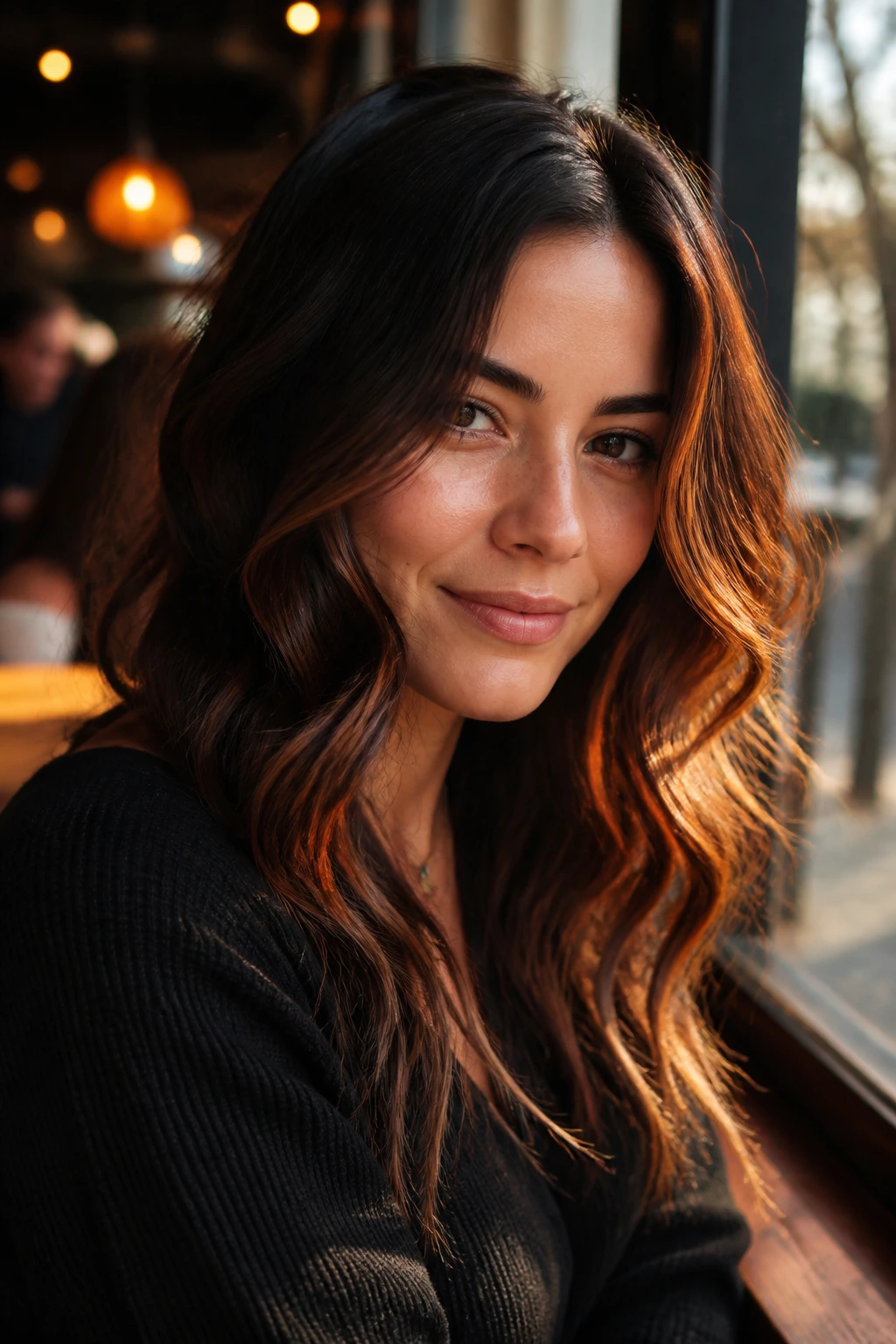
Cool Espresso Blend: This version swaps caramel for smoky beige and mushroom tones. It works best on cool undertones and naturally dark hair that pulls red when lightened. The result is quieter, cleaner, and easier to wear under indoor lighting.
Warm Caramel Spiral: Add warmth through the mids and ends of wavy or curly hair. The spirals catch the caramel in a way straight hair can’t, so the color feels richer with less contrast. This is the friendliest option if your skin likes gold jewelry.
Copper Whisper Upgrade: Trade the brown-gold family for a restrained copper glaze. Keep the pieces narrow and the red soft, or the look will get loud fast. Good for olive and peach undertones that can take warmth without going orange.
Gray-Blending Brunette: Use babylights and lowlights together to soften silver strands rather than hide them. The effect is polished and low-drama, especially on dark brown hair with a few stubborn grays at the part line. It grows out neatly, which is half the point.
Shadow-Root Bronde: If you want brightness but hate root upkeep, this version keeps the top deep and the mids a touch lighter. It’s a sensible choice for anyone who likes the idea of highlights but not the chore of frequent touch-ups.
Keeping Soft Highlights Fresh Between Salon Visits
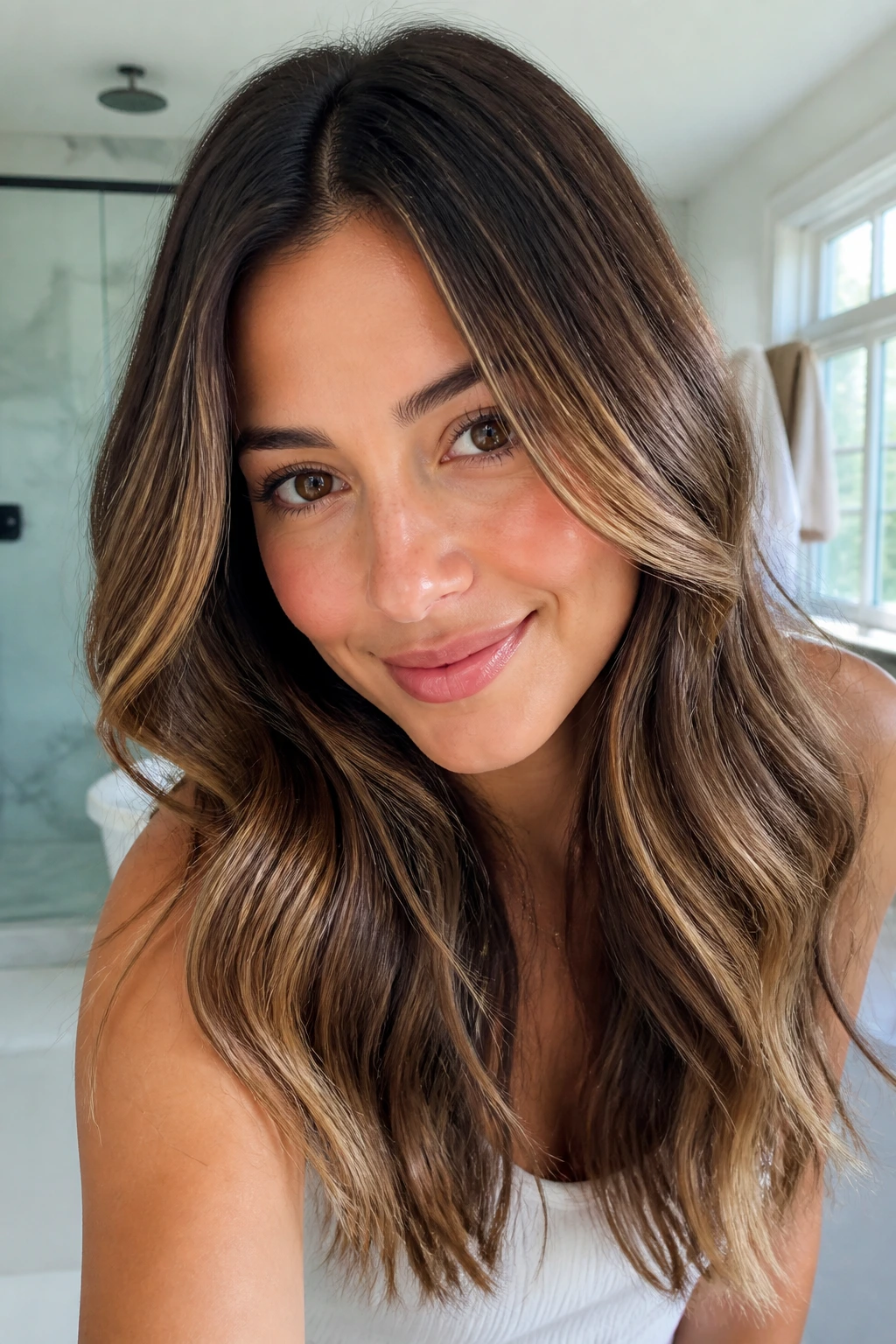
The color lasts best when the hair stays hydrated and the tone stays protected. Use a color-safe shampoo two or three times a week, not every day unless your hair gets oily fast. If your brunette leans warm, a blue shampoo once every one to two weeks can keep brass from taking over. If your highlights are beige or champagne, be gentle with the blue product or you’ll knock the warmth out too far.
A gloss every 6 to 8 weeks keeps the finish polished. That’s often enough for most soft highlights, because the goal is tone refresh, not a full rebuild. Root touch-ups usually stretch to 10 to 14 weeks if the placement is soft and the shadow root was done well. Face-framing pieces may need a little sooner attention if you wear your hair parted the same way every day.
Heat protection matters more than people think here. A quick blast from a dryer or iron can rough up the cuticle and make soft highlights look drier than they are. If you style often, use a heat protectant every single time. And if the ends feel fuzzy, a trim beats another round of oil.
Frequently Asked Questions
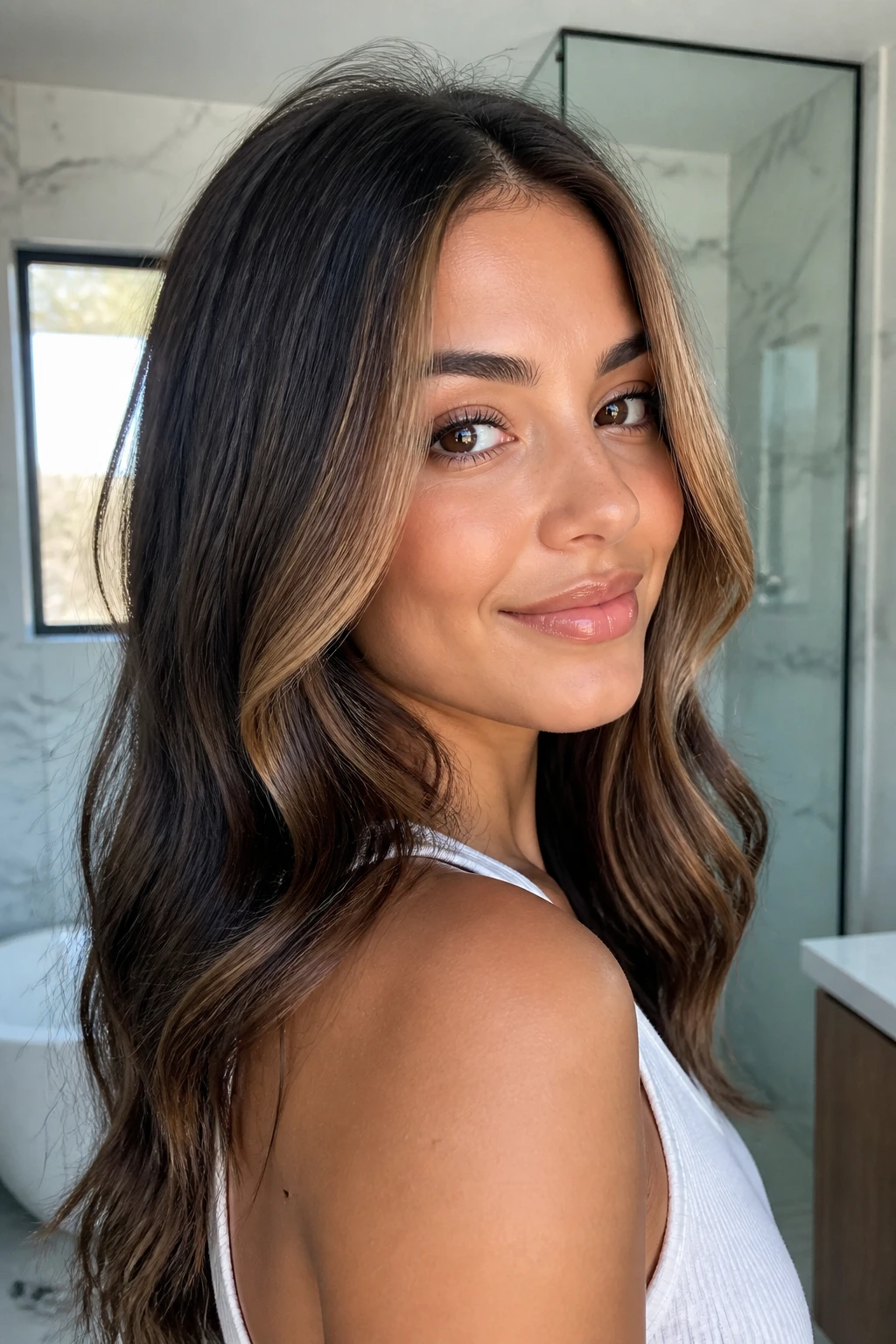
What highlight shade is safest for dark hair if I want something soft?
Caramel, mocha, beige-brown, and smoky bronze are usually the safest places to start. They sit close enough to the base that the contrast stays gentle, especially if your hair is naturally dark brown or black-brown.
Will highlights make an oval face look wider?
They can, if the brightest pieces are packed at the temples. The fix is simple: keep the light a little lower, around the cheekbone and down through the lengths, so the eye reads vertical movement instead of width.
Are babylights or balayage better for this look?
Babylights give you softer, more diffused brightness. Balayage gives you broader ribbons and a more lived-in finish. If you want the quietest result, babylights win. If you want the light to be easier to see, balayage usually does more work.
How light should the highlights be compared with the base?
For a soft result, one to three levels lighter usually looks better than a huge jump. Once you go far beyond that, the contrast stops feeling subtle and starts drawing attention to the streaks themselves.
Can black hair get soft highlights without looking brassy?
Yes, but the lift has to be careful and the toner has to be chosen with real restraint. On very dark hair, warm brown, bronze, and mahogany tones are often easier to keep clean than pale blonde pieces.
Do lowlights matter if I already have highlights?
They do. Lowlights put the shadow back into dark hair, and that shadow keeps the color from looking thin or striped. If the hair feels washed out, lowlights usually fix more than another round of brightening.
How often should I refresh toner?
Most soft brunette highlights benefit from a gloss or toner every 6 to 8 weeks. If your hair pulls orange quickly or you use a lot of heat, you may need it a little sooner. If the tone is holding steady, there’s no reason to rush it.
What if the highlights turned too orange?
That usually means the lift was warm and the toner wasn’t cool enough, or the toner has faded. A blue-based gloss can calm the orange, but don’t overcorrect; too much blue makes brunette hair look dull. A colorist can usually bring it back in one visit.
The Grow-Out Worth Keeping
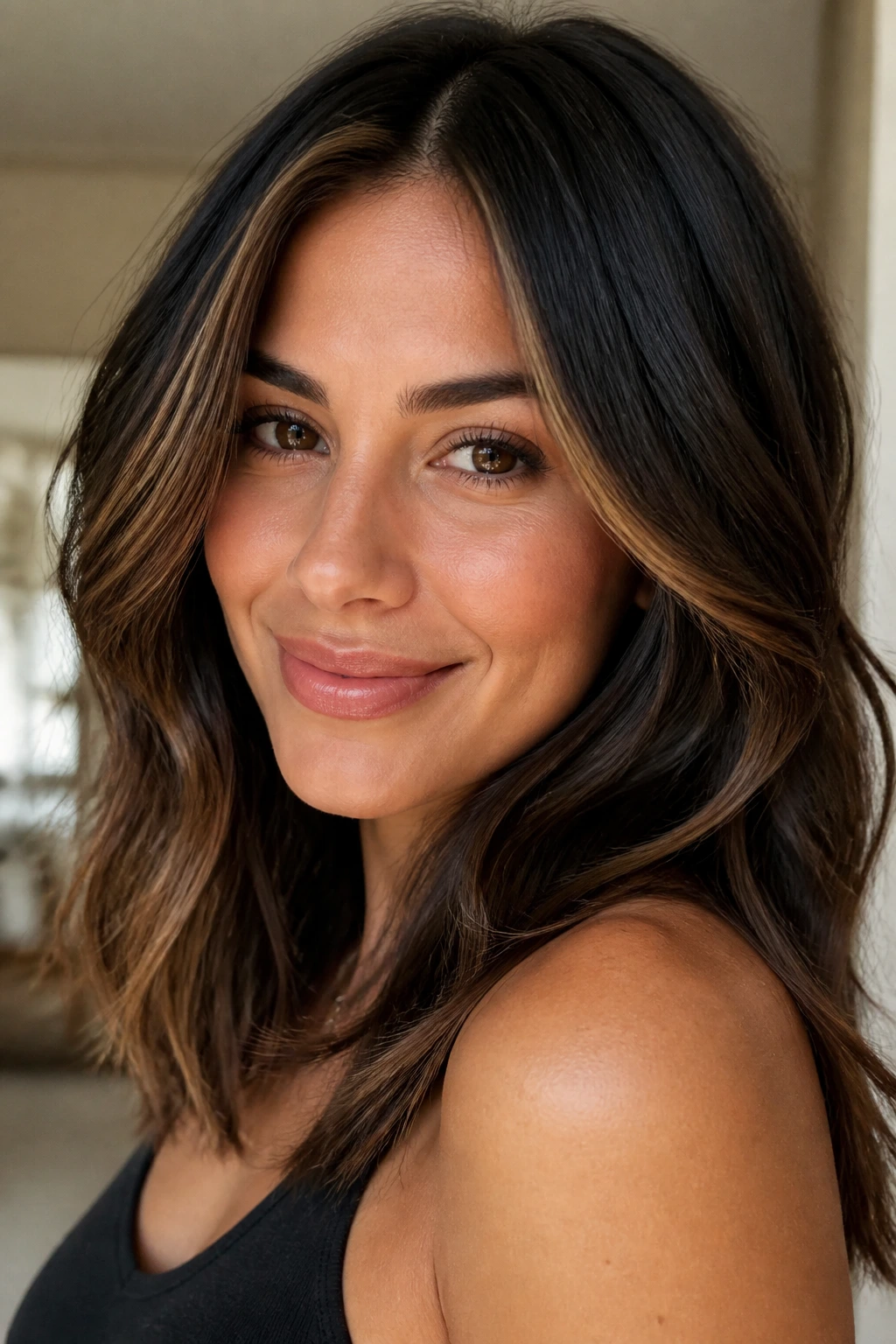
Soft highlights on dark hair work because they respect the base. They don’t fight it, and they don’t try to turn every brunette into a blonde in disguise. That’s why the best versions—caramel ribbons, mocha face-framing pieces, smoky bronze melts, chestnut babylights—look better after a few washes, not worse.
Oval faces make that approach even more useful. Clean placement around the cheekbone, a little restraint at the temples, and enough shadow at the root to keep the shape intact—that combination rarely misses. The hair feels lighter, the face stays balanced, and the grow-out doesn’t demand a panic appointment.
If you’re choosing a direction, start with the tone that sounds closest to your natural hair and the placement that follows your face rather than fighting it. That’s the version that keeps earning its place every time you look in the mirror.