



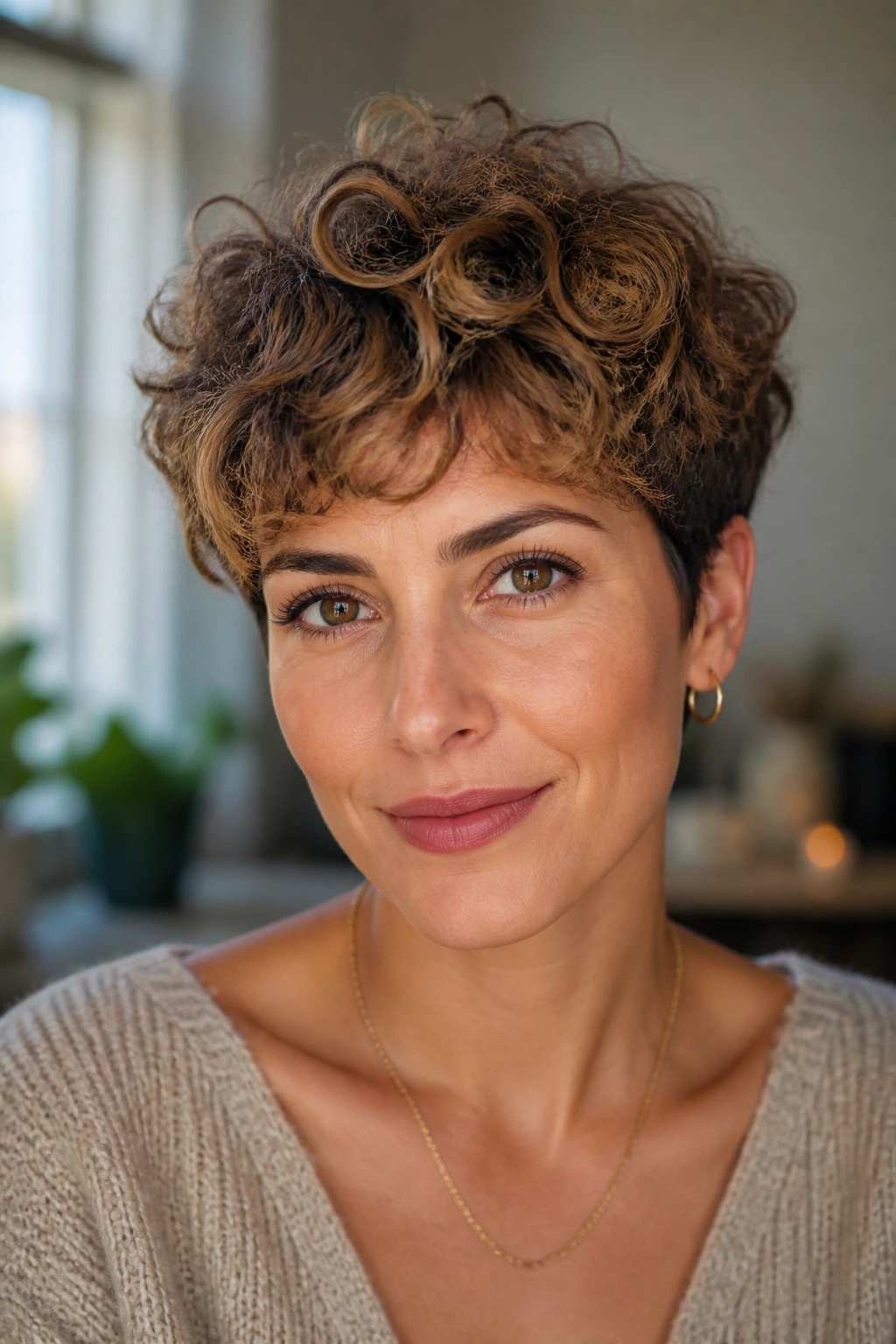
Curly pixie cuts for oval faces with caramel highlights have a sneaky advantage: they do two jobs at once. They give the face shape a clean frame, then break that frame up with warm, bend-following color so the curls don’t collapse into one dark helmet. That matters more than people think. A pixie on curly hair lives or dies by shape, and shape is where oval faces can be either gloriously easy or frustratingly plain.
What I like about this pairing is how fast it gets to the point. You can keep the sides neat, let the crown breathe, and place caramel ribbons exactly where the curls catch light and movement. The effect is sharper than a bob, lighter than a shag, and far less fussy than it sounds. The wrong version of this cut is easy to spot, too: the sides are taken too close, the fringe is chopped too blunt, and the highlights sit in chunky stripes that fight the curl pattern instead of following it.
The sweet spot is much better. Soft volume at the top. Tapered edges. Tiny flashes of toffee and honey around the temples, fringe, and crown. On an oval face, that balance feels almost unfair—in the best way. The face already has enough symmetry to support a short shape, so the cut can play with texture and color instead of trying to fake structure from scratch.
Why This Collection Works So Well on Oval Faces
-
Oval faces can carry short sides without looking over-edged. The cheekbones and jaw stay visible, so a pixie can be cropped close while still looking balanced.
-
Caramel highlights separate curls in a useful way. Warm ribbons break up the mass of the cut, which keeps dense curls from reading as one solid shape.
-
Crown volume adds lift without length. A little height at the top gives the haircut movement and keeps the face from looking visually stretched.
-
Tapered napes make grow-out less annoying. When the back is neatly blended, the style stays tidy even after a few weeks.
-
Lowlights matter as much as highlights. A few deeper strands under the surface stop the caramel from looking flat, especially on fine or porous curls.
-
These cuts work with glasses, earrings, and collars. The hair stays short enough to show your face, but textured enough to feel styled instead of severe.
1. Soft Curly Pixie with Crown Lift
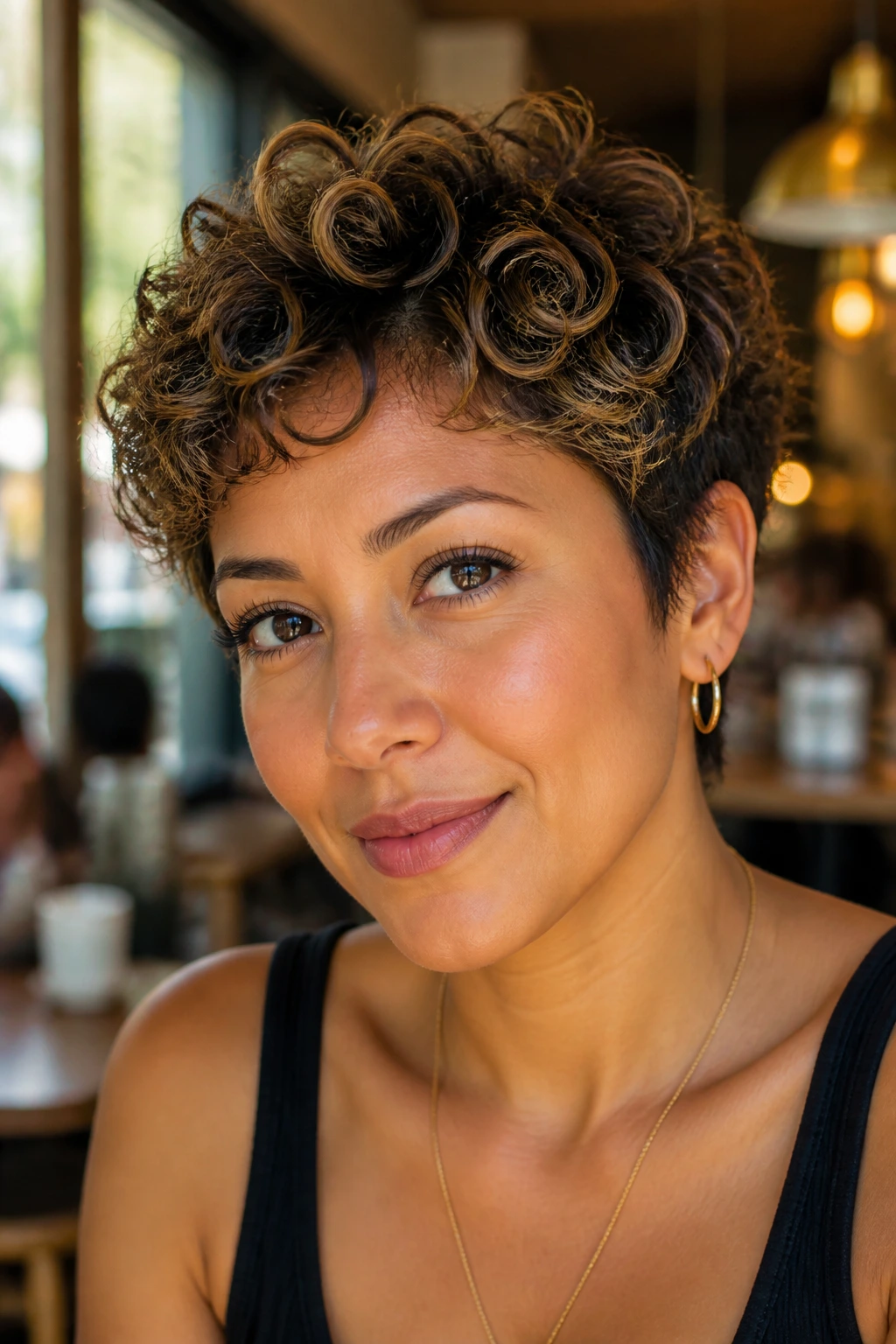
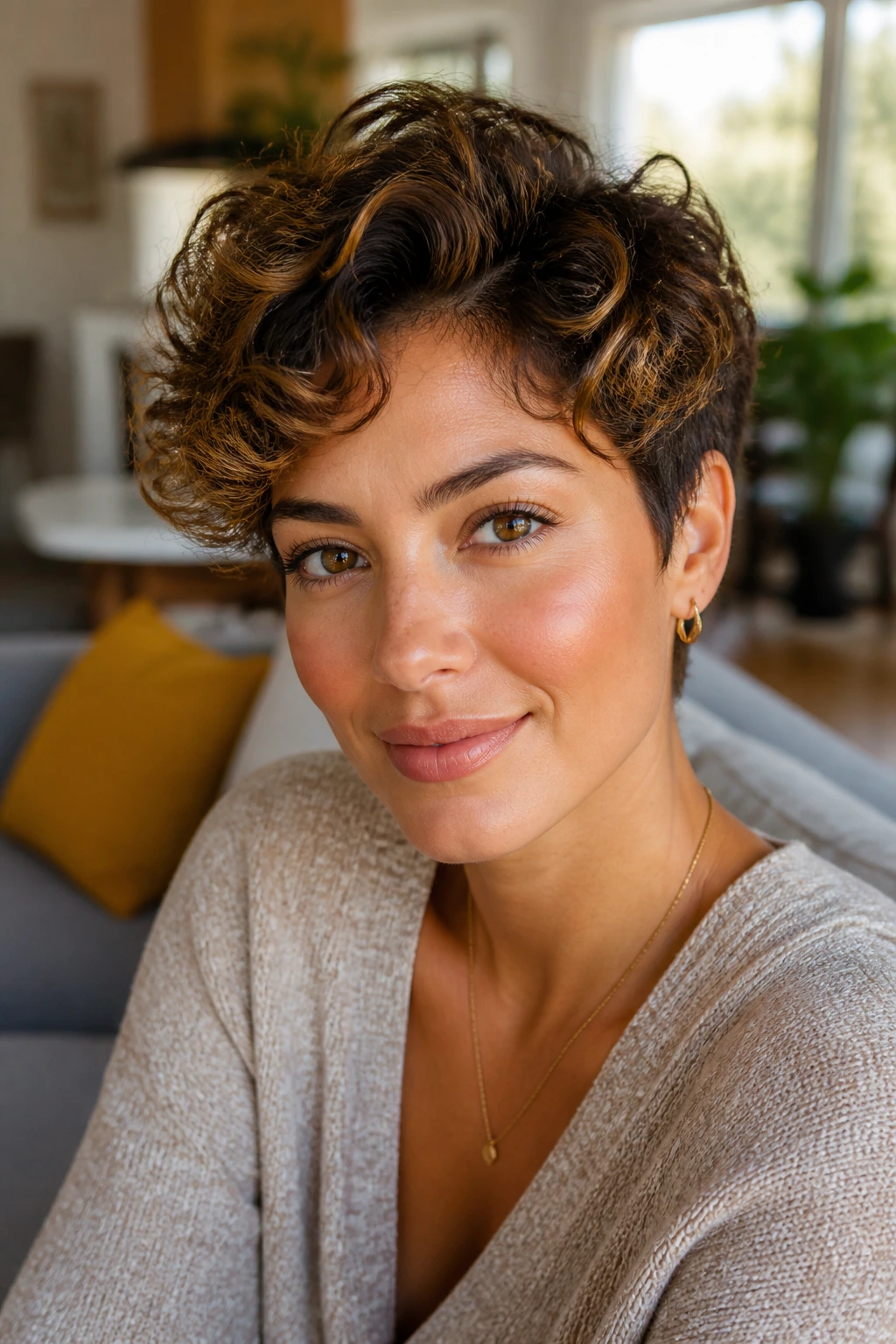
Soft curls piled a little higher at the crown make this version feel airy instead of boxy. The caramel highlights sit best around the upper curve of the head and just above the ears, where the curls bend and the color flashes instead of shouting.
Why It Flatters an Oval Face
An oval face can take a bit of height on top without tipping out of balance, and that is exactly where this cut spends its volume. The sides stay close enough to keep the cheekbones visible, while the lifted crown keeps the whole look from going flat after a few hours.
- Keep the back softly tapered, not shaved.
- Ask for face-framing caramel pieces, not streaks.
- Let the top stay 1 to 1½ inches longer than the sides if your curl pattern shrinks a lot.
Best detail: if your hair is dense, ask your stylist to remove bulk inside the shape so the outside line stays smooth.
2. Asymmetrical Curly Pixie with a Side Sweep
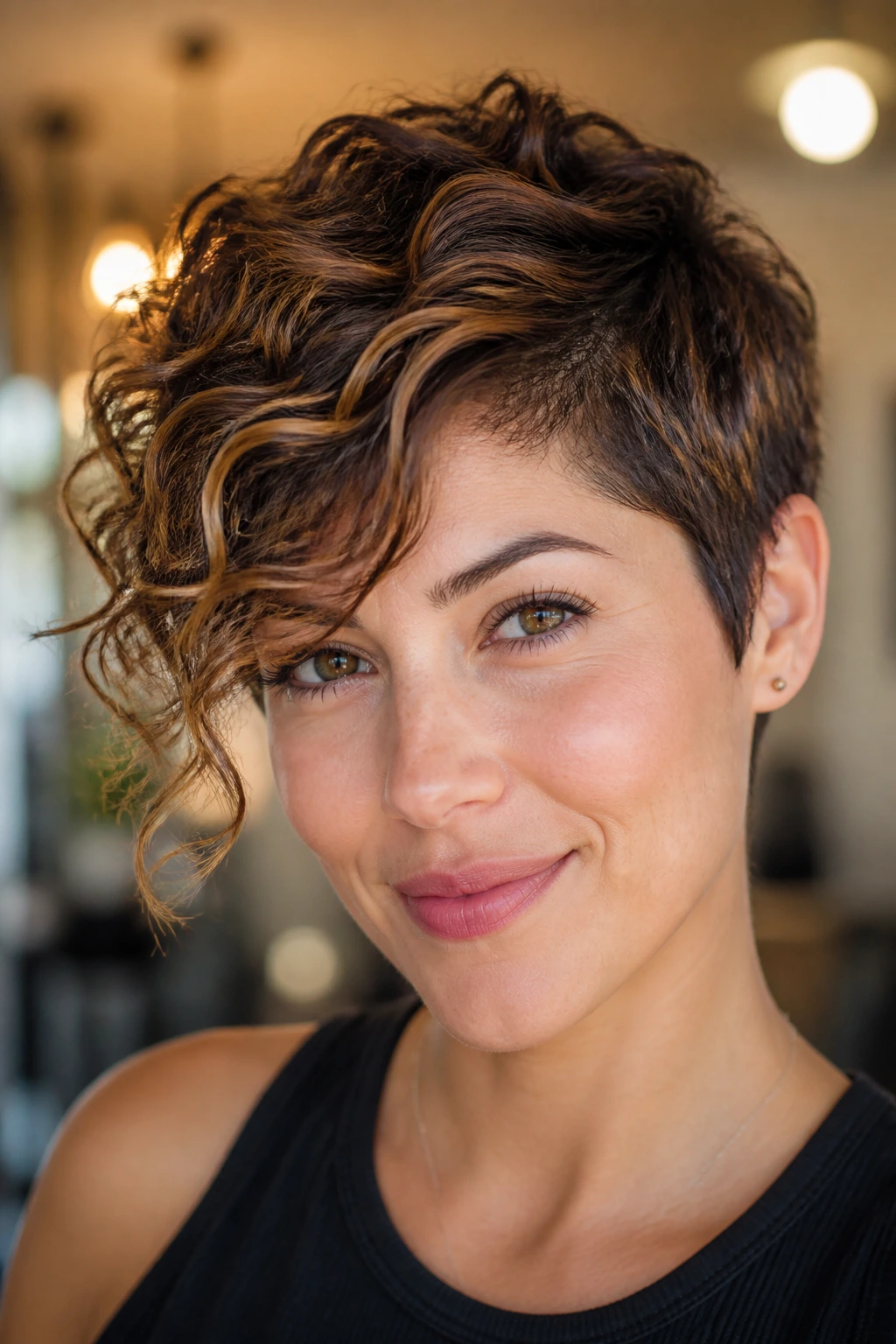
This one has attitude, and I mean that in a good, clean-lined way. One side stays a touch longer, the fringe sweeps across the forehead, and the caramel highlight placement follows the longer curve so the cut looks deliberate, not lopsided.
The asymmetry pulls the eye diagonally, which is useful on an oval face because it keeps the shape lively without needing extra length. I like this version on people who wear one side tucked behind the ear all day; it creates a little reveal, then a little fall back into place.
Caramel works here best as a thin ribbon through the sweeping front, plus a couple of brighter bits near the temple. If the highlight lands only in the crown, the shape can feel top-heavy. Put the warmth where the eye moves first. That’s the trick.
3. Tapered Curly Pixie with Toffee Ends
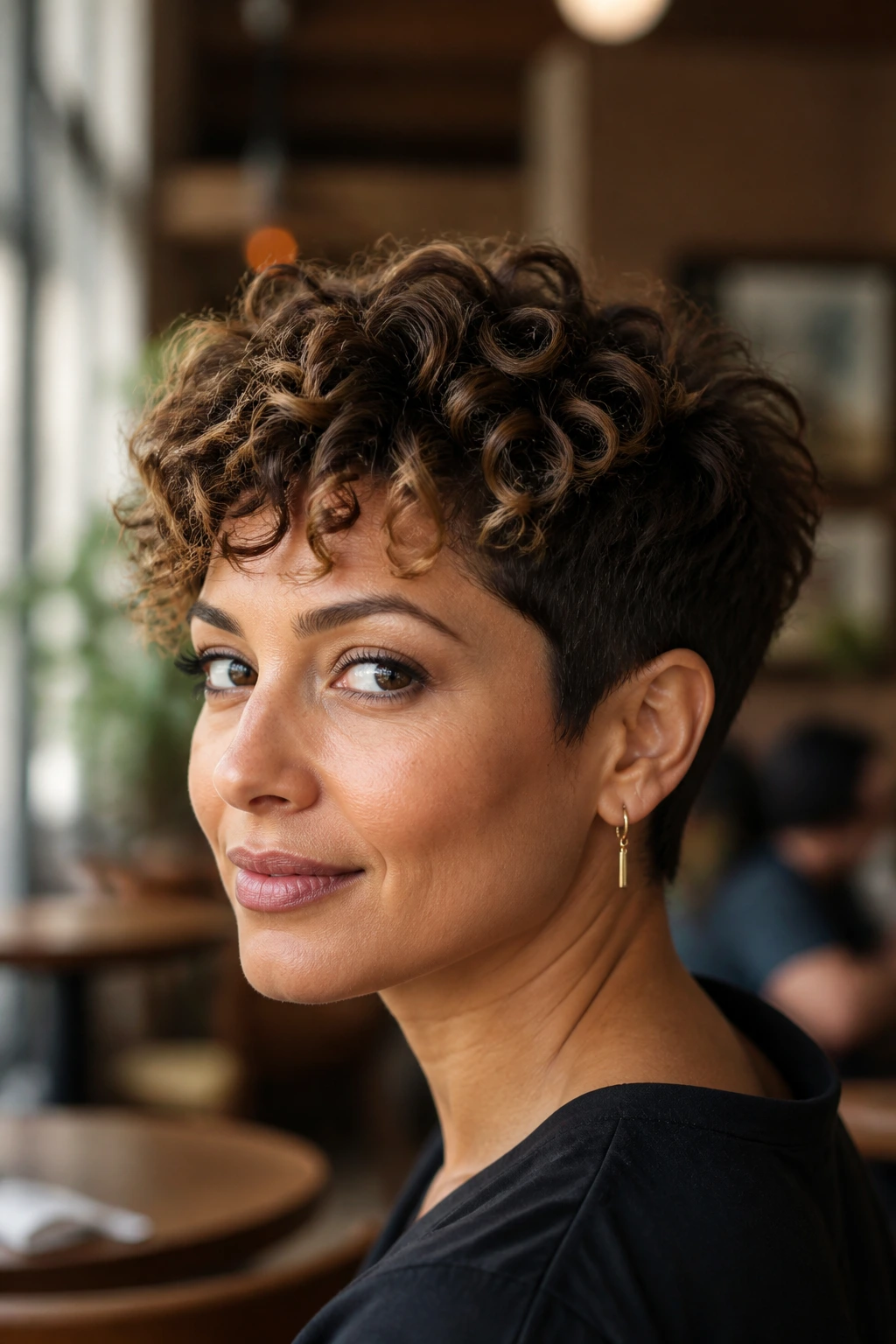
Why does this version work so well? Because it takes weight out of the bottom and leaves the top free to move. The nape is closely tapered, the sides are clean, and the curls at the ends pick up toffee-colored light like little sparks.
How to Style It
A tapered curly pixie is happiest when you don’t drown it in product. Use a small palmful of curl cream on soaking-wet hair, then scrunch in a light mousse at the roots. Diffuse on low heat until the curls are about 80 percent dry, then stop. The last bit of air-drying keeps the shape springy.
For an oval face, this is one of the safest short cuts because it doesn’t widen the jaw or crowd the forehead. The caramel ends give the perimeter some softness, which keeps the taper from looking too sharp. If your curls are tight, leave a little more length at the top than you think you need. Shrinkage is not polite.
4. Piecey Micro-Bang Pixie
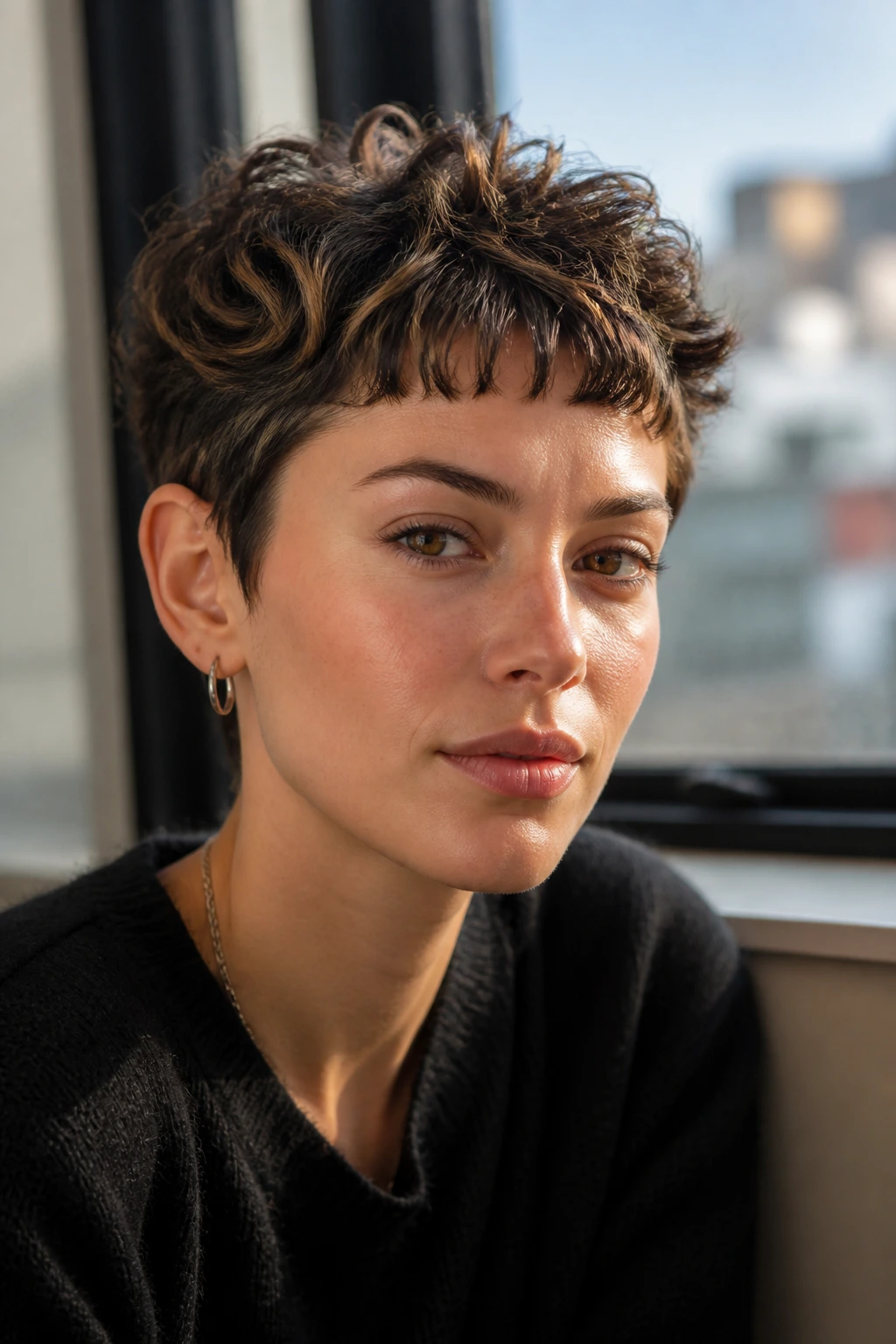
A friend once described this kind of cut as “tiny curls with a mischievous front,” and that’s not far off. The micro-bang sits short and fragmented, the curls separate into small clumps, and the caramel highlight placement keeps those little pieces visible instead of disappearing into one dark block.
What Makes It Interesting
- Micro-bangs on curly hair need to be cut dry, because wet curls lie.
- Caramel should sit lightly through the fringe, not all the way to the roots.
- The sides work best when they are tucked close so the front stays in charge.
That front piece can be a love-it-or-leave-it detail, and I respect that. On an oval face, it doesn’t have to balance anything; it just gives the haircut a sharper personality. If you wear makeup or glasses, the micro-bang can be the best part of the whole look because it frames the eyes without hiding the face.
5. Rounded Curly Pixie with Tucked Sides
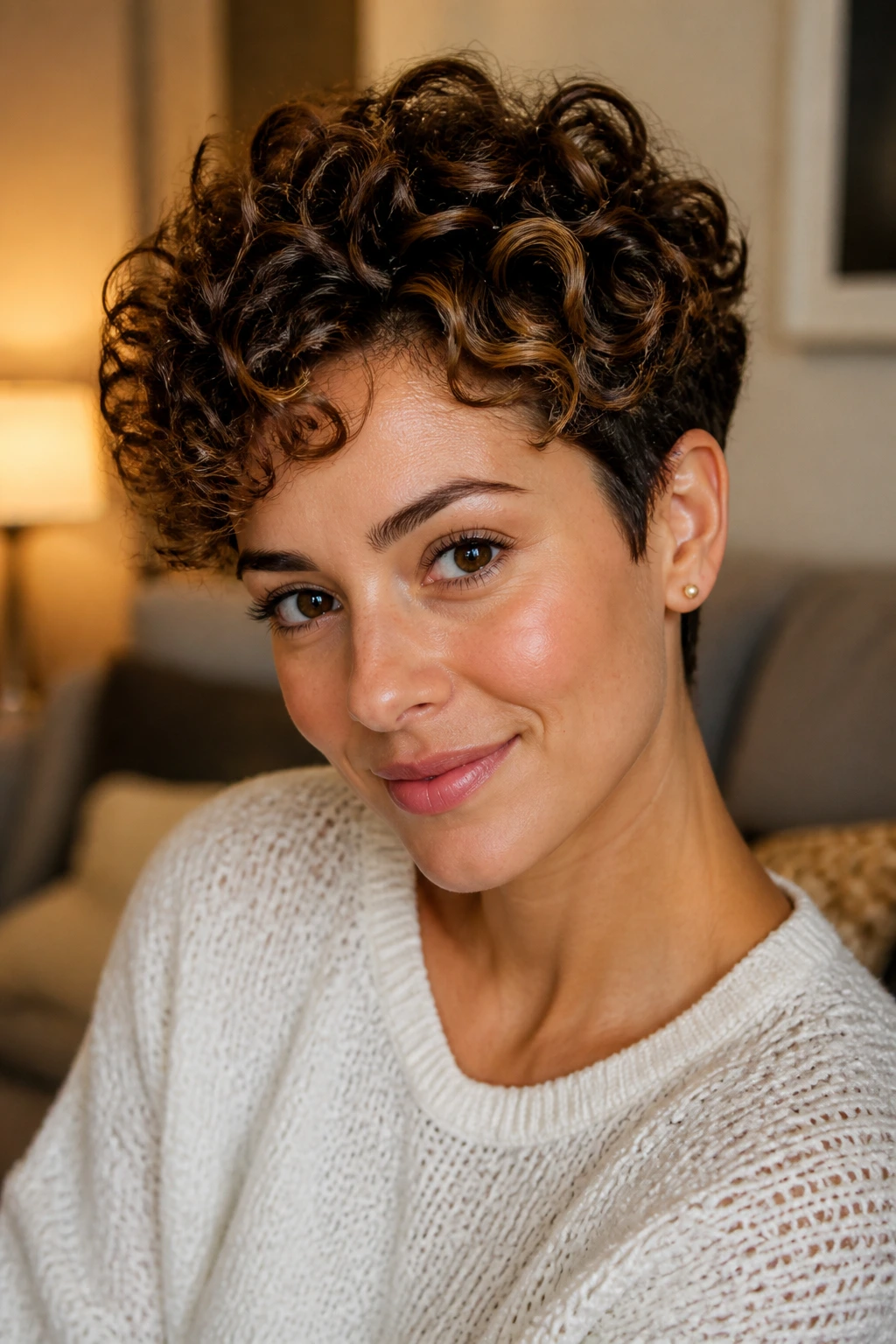
This is the one for people who want softness first and edge second. The shape rounds gently over the head, the sides tuck in close to the cheek, and the caramel highlights are woven through the interior so the color flickers when the curls move.
The rounded outline is kind to an oval face because it follows the natural length of the face instead of exaggerating it. I’d call this the most “quiet” of the group, but quiet is not the same as plain. If the curls are healthy and the highlight tone is warm enough, it has a polished, almost plush look that works especially well with thick brows and simple earrings.
One thing I like here is the grow-out. The shape can soften over four to six weeks without turning unruly, which is more than you can say for a lot of pixies. Keep the nape tidy and the top fluffy, and it stays handsome.
6. Messy Crop with a Deep Side Part
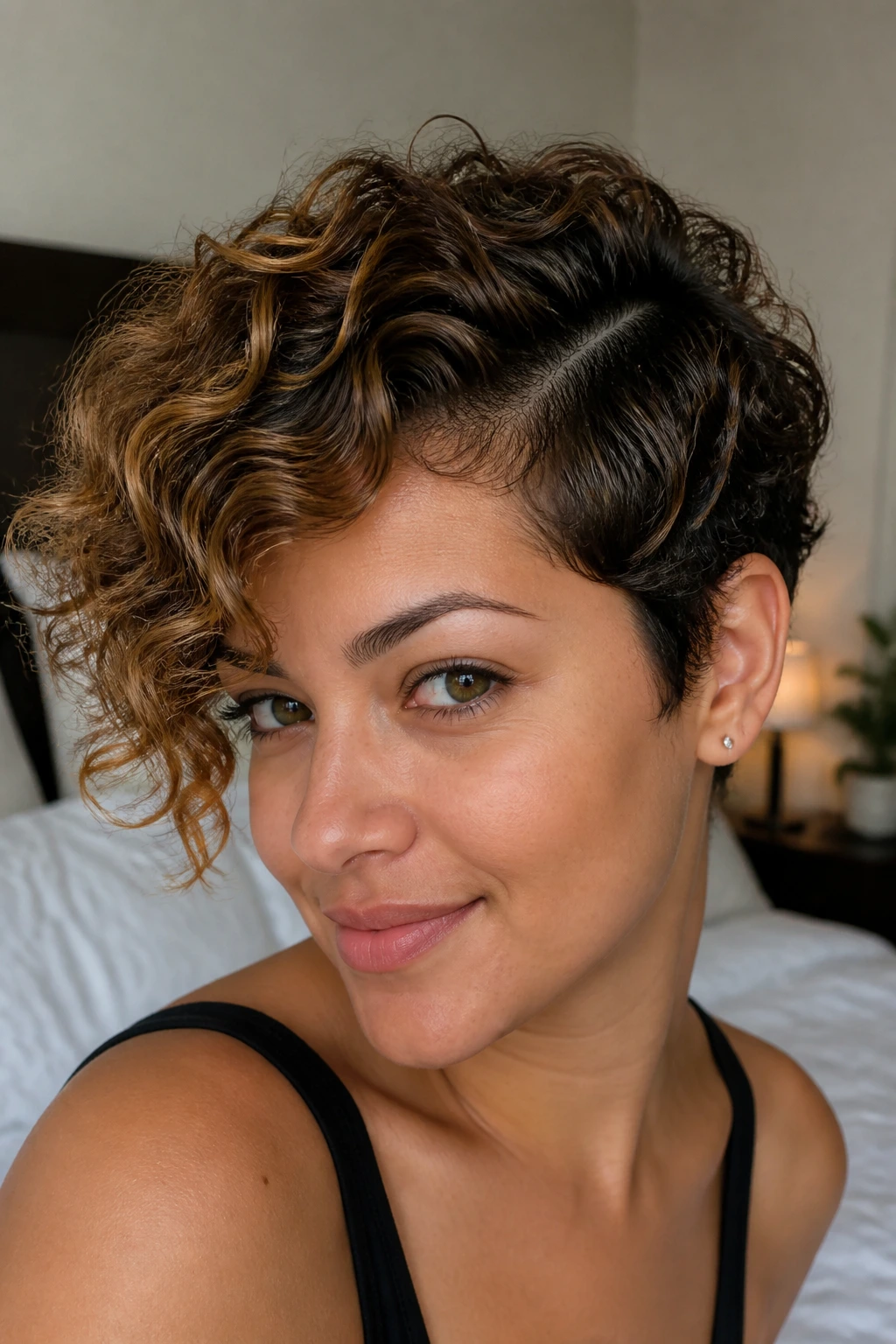
Unlike a blunt little crop, a deep side part gives curly pixie hair somewhere to go. The longer side leans forward, the shorter side stays tucked back, and the caramel highlights land across the bend in the part so you get movement before you even touch the hair.
This version is best when you want the cut to look casual but not accidental. The part creates a line, the curls break it up, and the color makes the whole thing easier to read from across a room. On oval faces, the deep part is useful because it shifts the eye sideways rather than letting everything run straight down the center.
If your hair is fine, this may be the most flattering way to build volume without teasing. A little root spray, a diffuser, and a few finger-coiled front pieces can give you more shape than a heavier product ever will. Heavy cream is the enemy here. You want lift, not limpness.
7. Curly Undercut Pixie with Hidden Caramel Ribbons
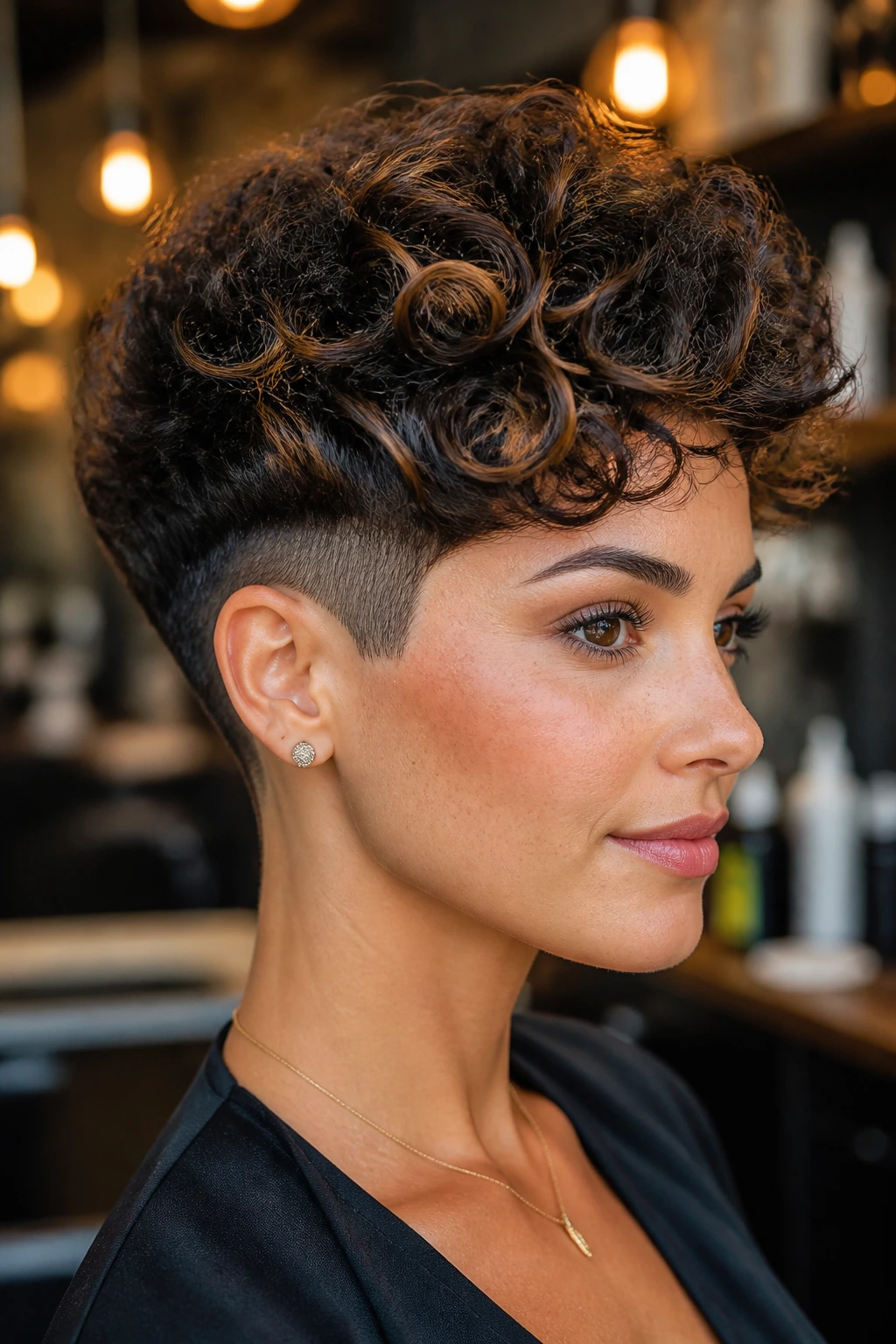
This is the bold one. The undercut removes bulk at the sides and back, while the top stays full enough to show off curls that bounce over the cropped sections. The caramel is often hidden in the top layers, so the color only flashes when the hair shifts.
That hidden-color effect is the reason I like this style more than a loud all-over lightening job. It feels richer. When the top curls separate, you get little flashes of warm brown and gold instead of a constant bright stripe. On an oval face, the undercut sharpens the jawline without making the face look wider.
If you wear this cut, make peace with upkeep. The undercut needs regular cleanups, and the top needs enough moisture to keep the curls from frizzing into a puff. Still, there’s a payoff: it photographs with crisp edges and looks even better when the top has a second-day bend.
8. Layered Pixie-Bob Hybrid
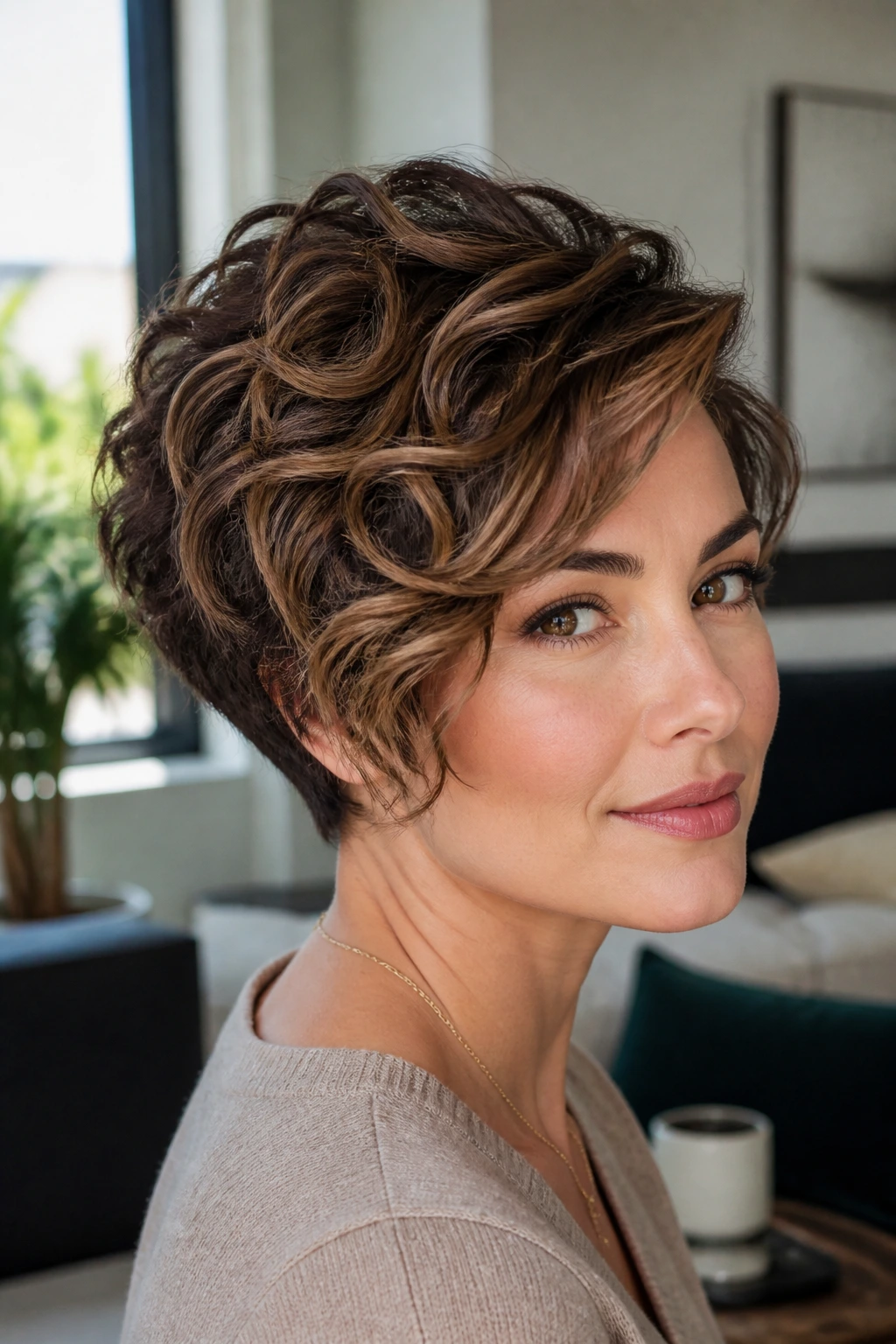
This one sits in the middle between a true pixie and a very short bob, which is handy if you like short hair but hate feeling exposed at the nape. Layers soften the outline, and the caramel highlights can run through the longer front pieces and around the crown to keep the shape bright.
What makes it different is the extra swing. The front can skim the cheekbone, the back can stay cropped, and the whole cut has enough length to tuck behind one ear or push forward with a side sweep. On an oval face, that flexibility is gold. You can adjust the line depending on whether you want the face to feel shorter, narrower, or simply more textured.
I’d recommend this for someone who is nervous about going full pixie. It gives you the short-hair feeling without the sharpest edges. The highlights soften the transition even more, especially if the base color is deep brown or dark blonde.
9. Shaggy Curly Pixie with Feathered Fringe
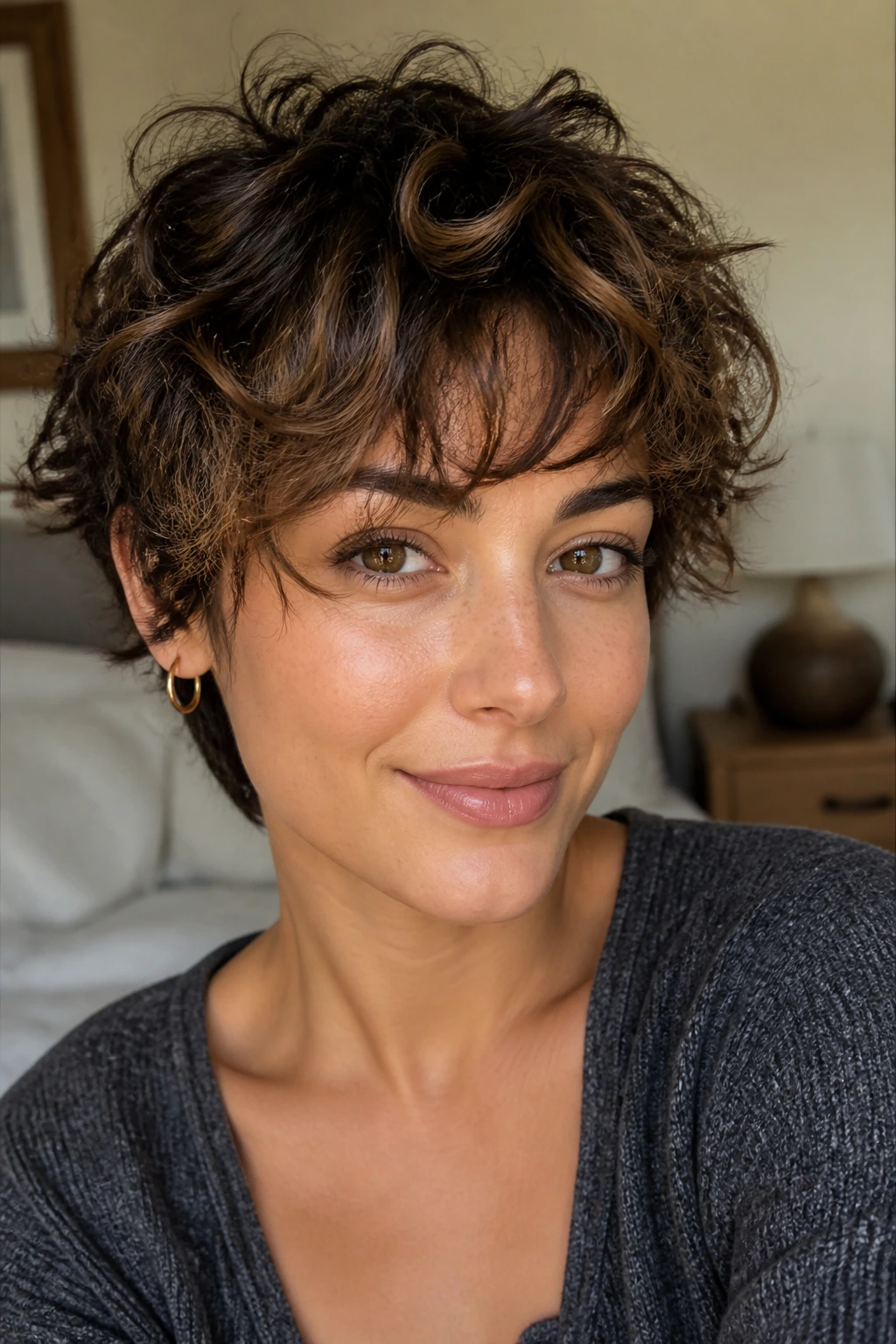
The shaggy version is all about looseness. The fringe is feathered instead of blunt, the sides break into soft pieces, and the caramel highlights sit in a scattered pattern so the whole style looks lived-in, not drilled into place.
It’s a good choice when you want the hair to look a little wild but still shaped. That feathered fringe keeps the forehead light, which matters on an oval face if you prefer less visual weight at the front. A blunt fringe can sit there and boss everybody around. Feathering lets the curls breathe.
The color helps here more than people expect. Put a few brighter pieces through the fringe, plus some lowlights under the top layer, and the haircut instantly looks deeper. Without that contrast, shaggy curls can go a little mushy. With it, every bend has a job.
10. Nape-Tapered Curly Pixie
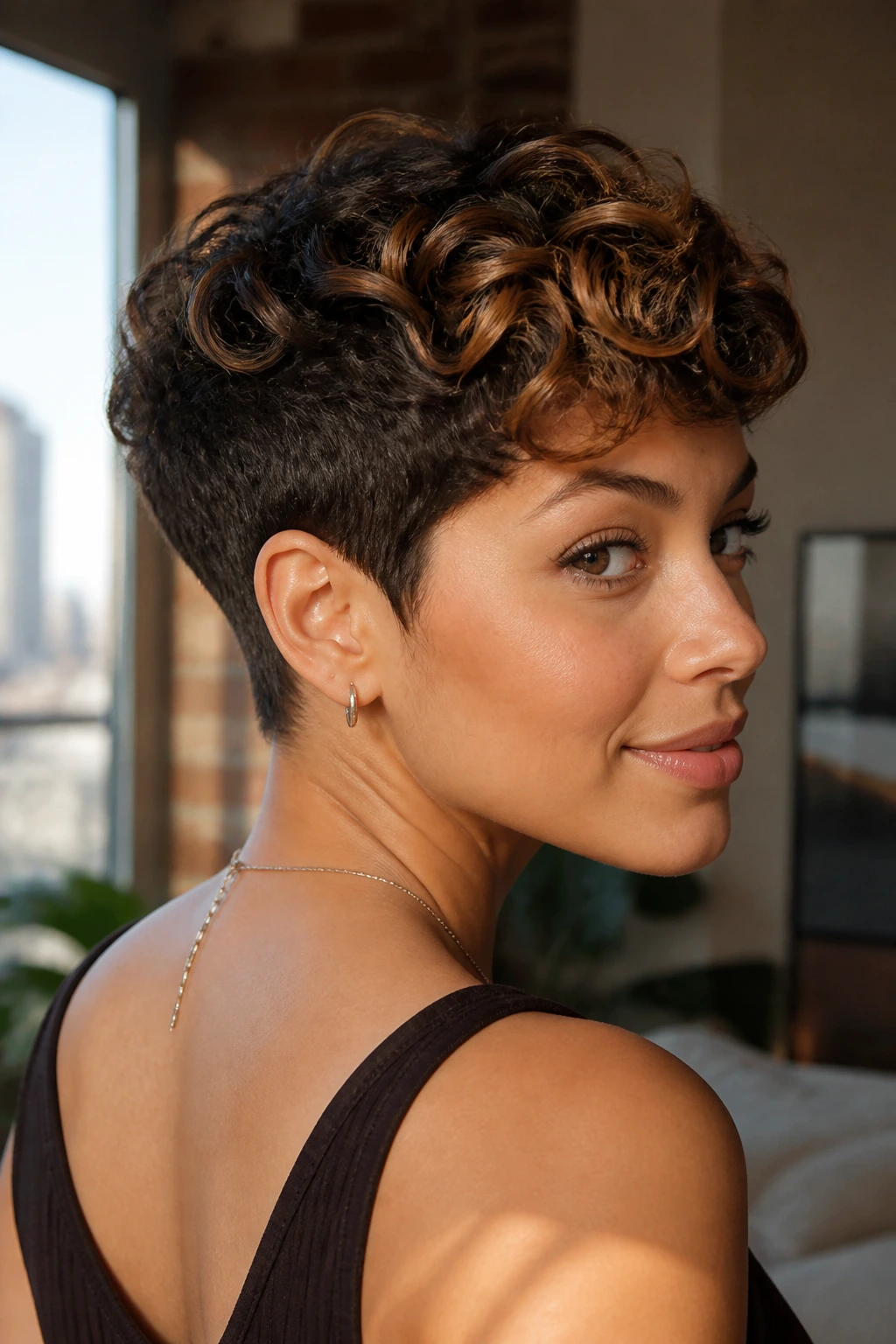
A nape-tapered pixie is one of those cuts that looks more expensive than it is, mostly because the back is so clean. The neck sits open, the sides hug the head, and the curls on top get all the air they need to spring up. Caramel highlights work well here when they’re placed high and a touch forward, not buried at the neckline.
Why the Shape Stays Sharp
The taper creates a neat base, which keeps the short curls from mushrooming out. That matters on an oval face because the silhouette should add texture, not bulk. If the back is too heavy, the whole head starts reading wider than it really is.
This version is also a good fit for people who want a low-fuss weekday cut. The back dries fast. The top can be refreshed with a spritz bottle and a tiny bit of cream. No drama. Just shape.
11. Voluminous Top-Heavy Pixie
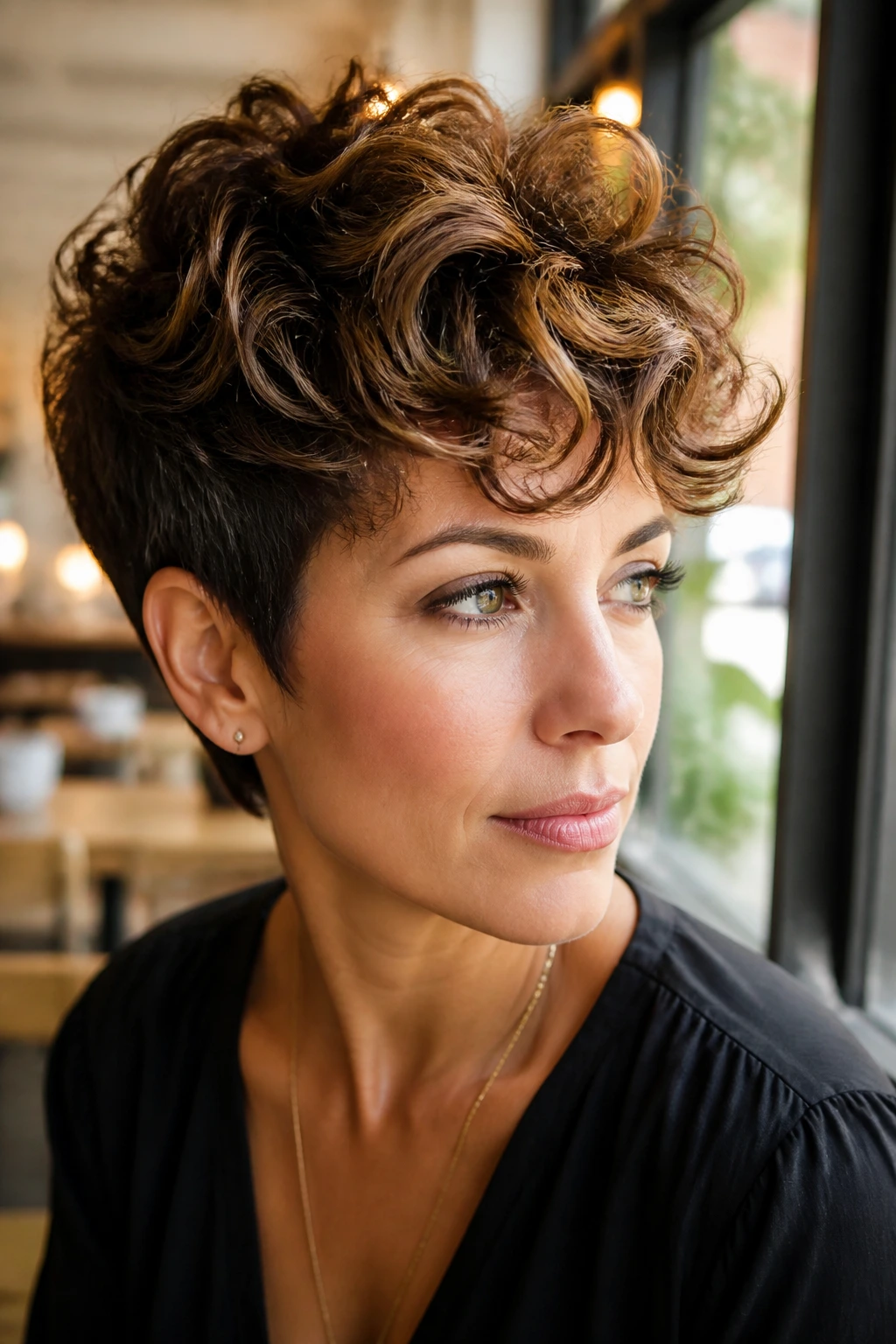
Picture a cut that gives the top room to bloom while keeping the sides disciplined, almost tailored. That’s the top-heavy pixie. It’s a little bolder than the soft crown-lift version, and the caramel highlights should climb through the upper layers so the height doesn’t look like a dark mound.
The face shape question matters here. On an oval face, this works because the extra volume doesn’t need to correct anything; it just creates a stronger style line. If your hair is thick, this can be a blessing. If your hair is fine, the cut should stay layered enough to fake fullness without getting stringy.
I’d keep the front pieces soft and the crown textured. The goal is height with movement, not a literal little helmet. That distinction sounds minor. It isn’t.
12. Soft Fauxhawk Pixie
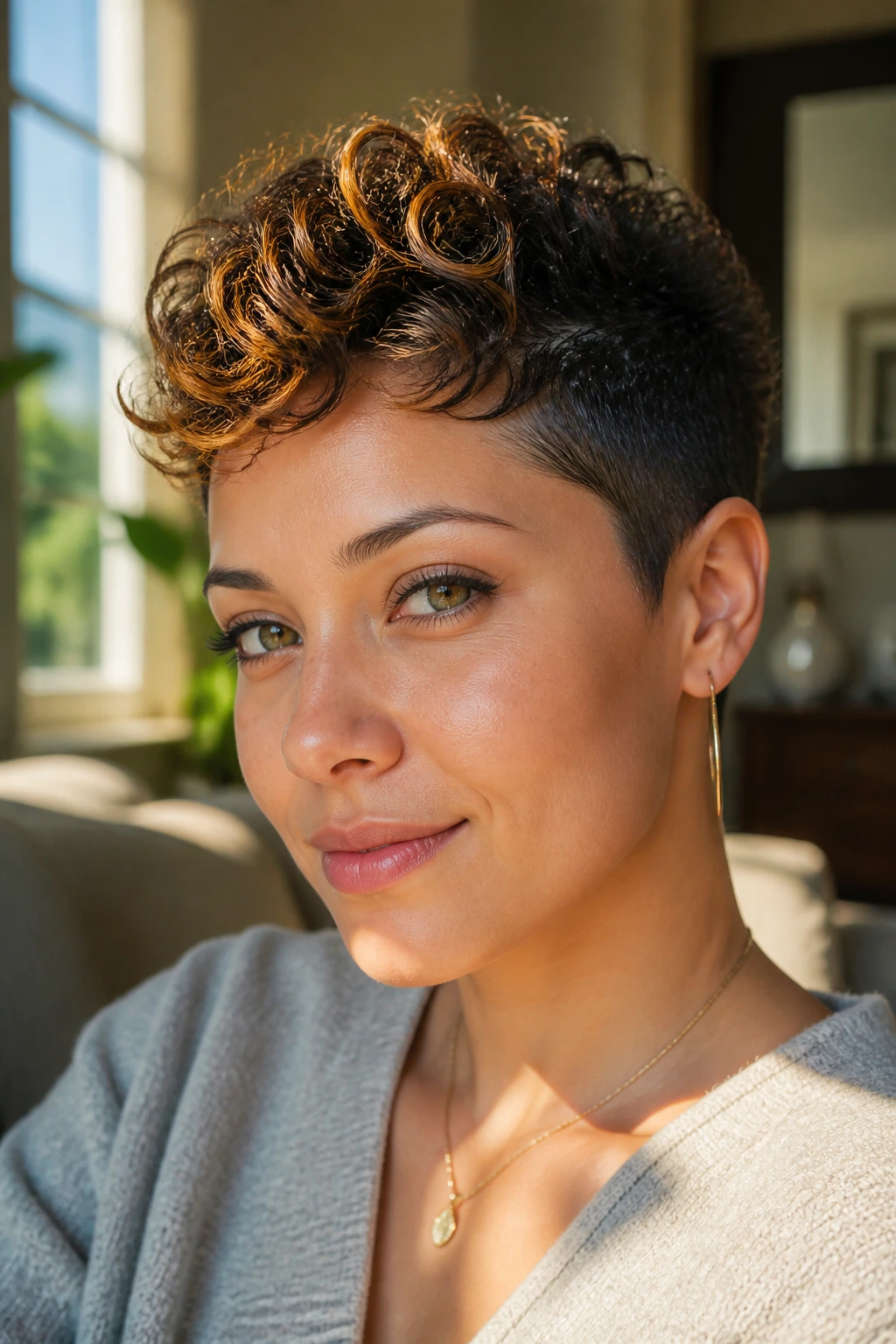
A curly fauxhawk can sound aggressive on paper, then look surprisingly soft in real life when the curls are rounded and the sides are faded gently. The center strip carries the height, the sides taper down, and the caramel highlights streak through the middle where the eye naturally lands.
This cut has a nice tension to it. On one hand, it’s sleek at the sides. On the other, the curls keep it from feeling hard. Oval faces can wear that contrast well because the shape already has balance built in; the fauxhawk just nudges it in a sharper direction.
If you like clothes with clean lines—blazers, square-neck tops, jackets with a collar that sits flat—this haircut plays well with them. It also pairs nicely with a darker root and brighter caramel on top, because the color depth makes the center shape look intentional instead of spiky for no reason.
13. Baby Fringe Curly Pixie
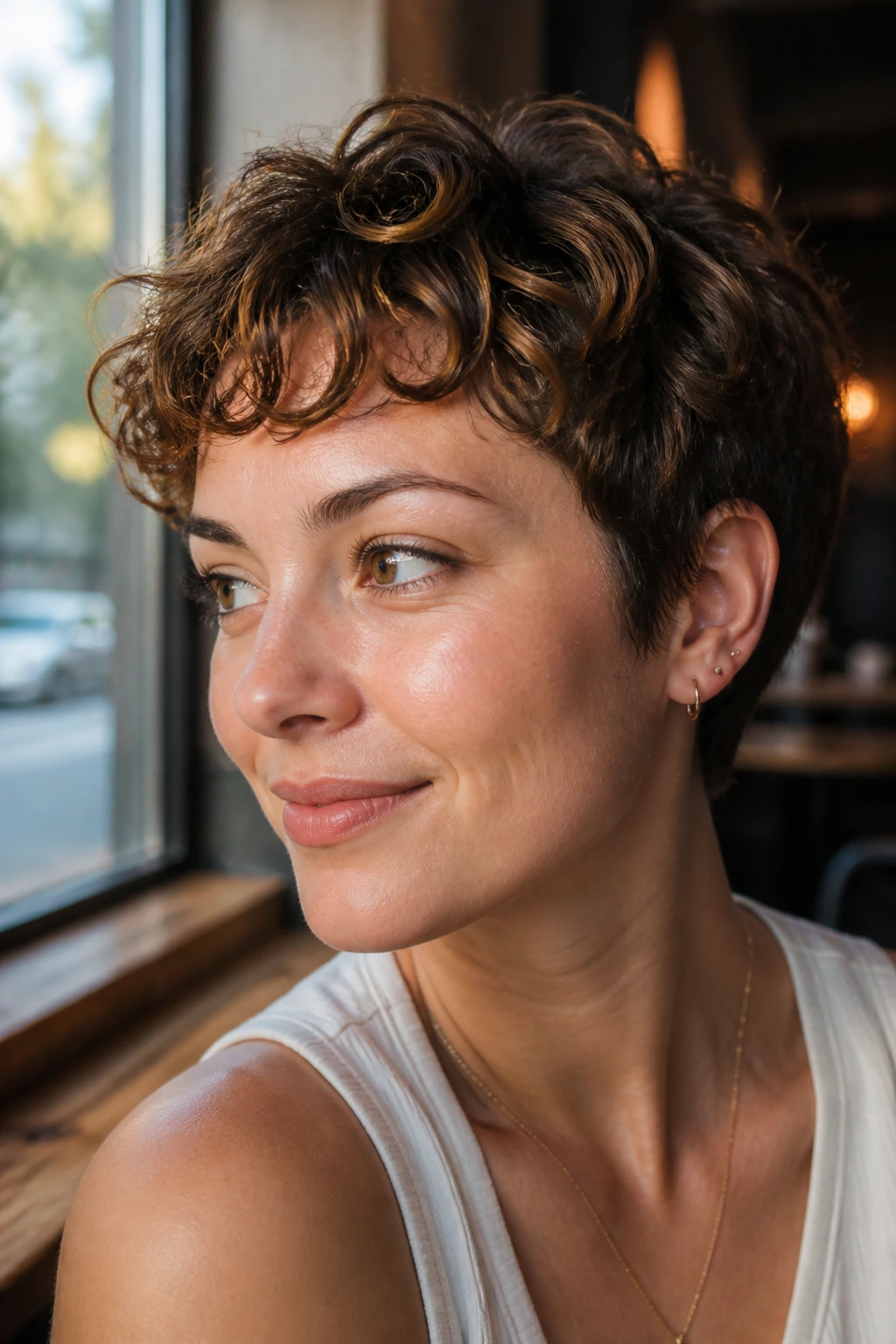
Why does this little fringe keep showing up in curly pixie photos? Because it gives the face a point of focus without swallowing the forehead. The baby fringe is short, fragmented, and usually cut with the curl pattern in mind, not against it. Caramel pieces through the fringe keep it visible, which is half the battle.
How to Make It Work
Cut the fringe longer than you think you need, then let it dry before judging the final length. Curly bangs contract fast. A quarter inch can disappear in an afternoon. If the fringe is too short, it can jump up and leave the face looking abrupt.
On an oval face, the baby fringe creates a nice little interruption in the length of the forehead. That can be useful if you like a cut with a lot of personality but not a lot of bulk. I’d skip this if your curl pattern is extremely unpredictable. The maintenance can get annoying.
14. Honeyed Root-Melt Pixie
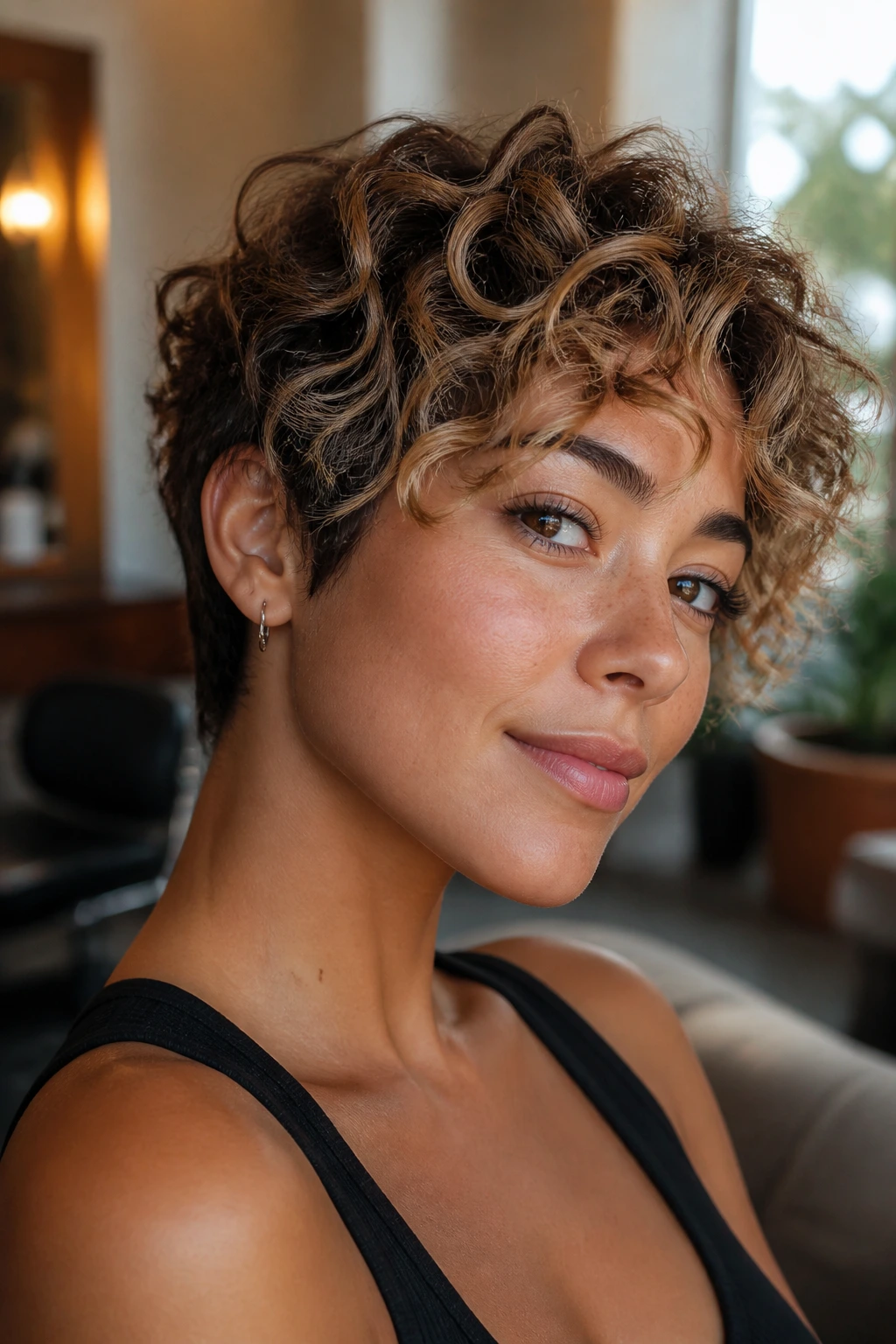
This is the softest color story in the group. Darker roots melt into honey-caramel mids, and the curls do the rest. The point is not contrast for its own sake. The point is making the haircut look fuller at the base and lighter where the curls move.
A root melt works especially well on curly pixies because the roots are often the first place where regrowth shows. Instead of making that a problem, the color turns it into part of the design. On an oval face, the softer color transition keeps the cut from looking too hard around the perimeter.
I like this version for people who want a short style but don’t want to book constant color touch-ups. The grow-out stays friendly. The highlight pattern is forgiving. And when the curls get a little frizzy on day two, the color depth still reads clearly.
15. Salt-and-Caramel Curly Pixie
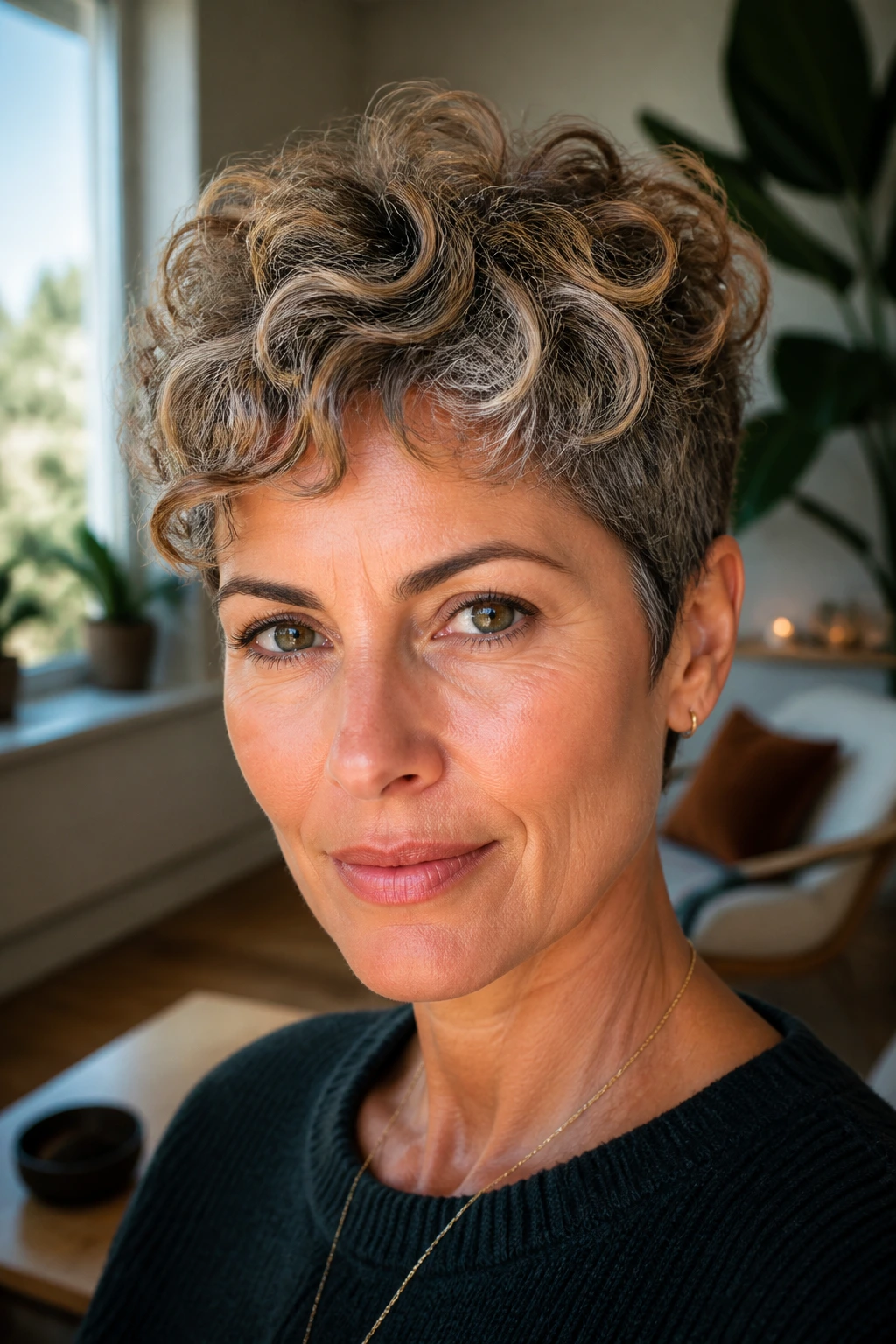
Gray blending can be gorgeous in a pixie, and caramel is one of the few warm tones that plays well with silver without turning muddy. The trick is to keep the highlights fine and the lowlights slightly deeper, so the gray strands look like part of the plan rather than something being hidden.
This cut is less about pretending age-related color changes don’t exist and more about making them look sharp with a short, textured shape. Oval faces are especially good candidates because the face shape already carries a lot of softness. The haircut can stay crisp at the edges while the color stays soft in the body of the curls.
A salt-and-caramel pixie looks best when the highlight placement follows the natural curl clumps. If the light pieces are too wide, the silver can look striped. If they’re too tiny, the whole thing can disappear. Fine weaving wins here. Always.
How to Ask Your Stylist for the Right Curl Balance
A good curly pixie starts long before the scissors touch your hair. If you walk in and say “short, but not too short,” you’ll probably get a guess. That’s not enough. Bring photos that show the front, the side, and the back, because a curly pixie is really three haircuts living on one head.
Length Map
Tell your stylist where you want the shortest point to sit at the nape and how much curl you want left on top. If you have tight curls, ask for dry cutting or at least a dry check before the final length is locked in. Wet curls lie. They stretch, they soften, and then they spring up later and surprise everybody.
Color Map
Ask for caramel highlights that follow the curl pattern rather than crossing it in thick stripes. Fine ribbons around the temples, fringe, and crown usually look richer than blocky foils. If you want deeper lowlights, mention that too. A few darker threads under the top layer keep the color from looking one-note.
Texture Map
Say how much styling you actually want to do. If you’re a five-minute person, the cut should be compact and controlled. If you’re happy to diffuse and finger-coil the front, you can go softer and a little longer on top. That honesty saves bad haircuts.
Essential Tools for Styling and Color Care
-
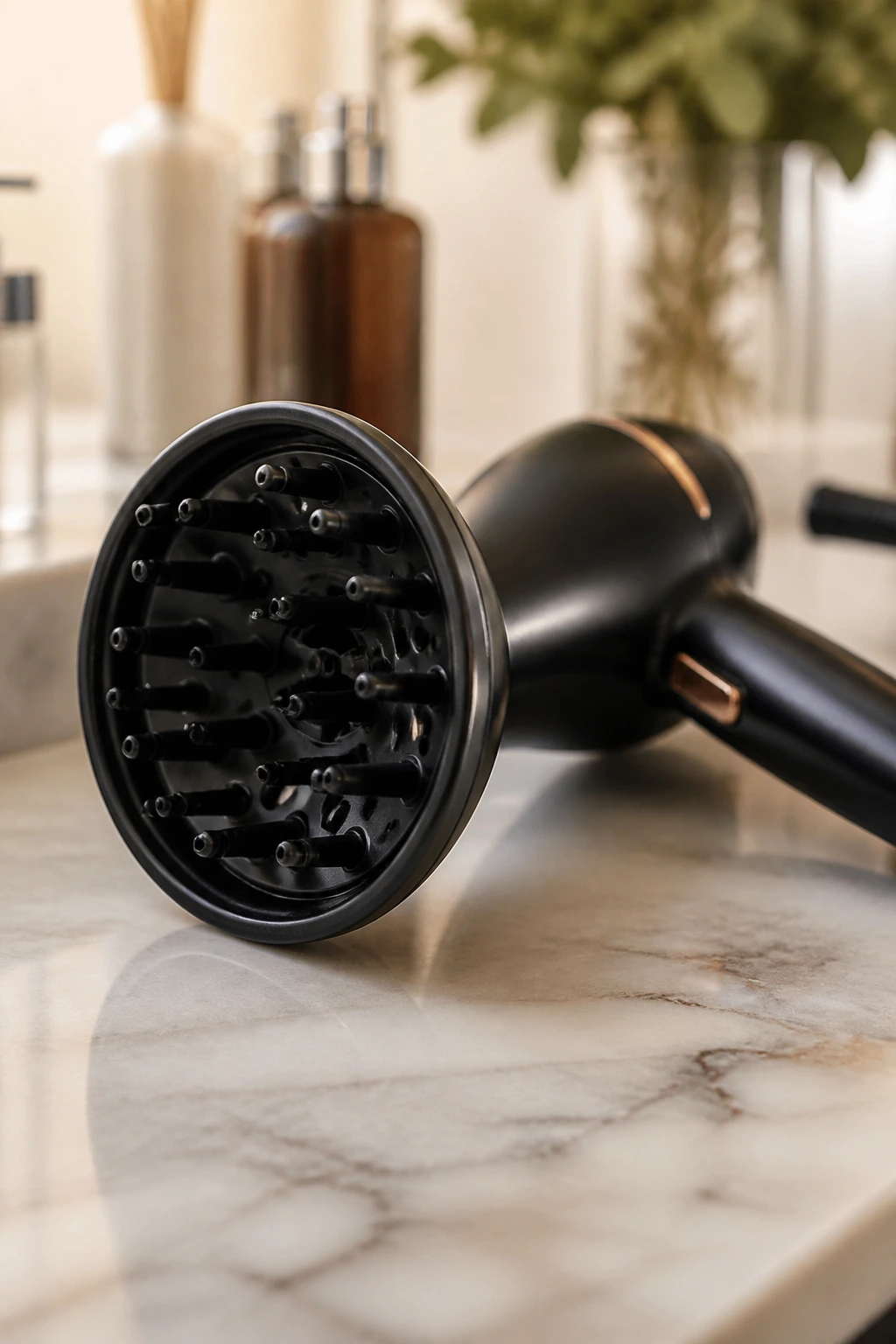
Diffuser attachment: This is the piece that keeps curls from getting blasted into frizz; use low heat and low airflow.
-
Microfiber towel or cotton T-shirt: Regular bath towels rough up the cuticle and wreck the curl clumps.
-
Wide-tooth comb: Good for distributing product through wet curls without pulling the pattern apart.
-
Curl cream: A small amount gives shape and keeps the top from looking fuzzy, especially on porous hair.
-
Light mousse: Best for crown lift and memory; it helps the pixie keep its shape after drying.
-
Edge wax or lightweight pomade: Use this for piecey ends, sideburns, and the nape when you want a sharper finish.
-
Color-safe shampoo: Helps keep caramel tones from fading too quickly and keeps the hair from drying out.
-
Satin pillowcase or bonnet: Short curls still need night care, especially around the fringe and crown.
-
Root clips: Small clips can lift the top while it dries, which matters if your hair falls flat fast.
-
Round brush or Denman brush: Optional, but useful if you want to coax the fringe or front section into a smoother sweep.
How to Wear These Pixie Cuts So the Shape Reads Clearly
Shape: Keep the tallest point of the cut just behind the hairline or slightly off-center if you want softness. On an oval face, too much height straight up can make the style feel taller than it needs to be.
Accessories: Small hoops, slim studs, and narrow clips work better than bulky headbands that crush the crown. If you wear glasses, let the side pieces graze the frame instead of fighting it.
Outfit Pairings: Open collars, crew necks, square necks, and clean lapels all let the haircut show. Heavy scarves can flatten the sides, so if you like them, choose softer fabrics and wear them loose.
Occasion Fit: The same cut can look sharp for work and easy for weekends. A little mousse and a defined part makes it feel polished; a scrunched, air-dried finish makes it look more relaxed. That range is half the appeal.
Small Tweaks That Change the Whole Look
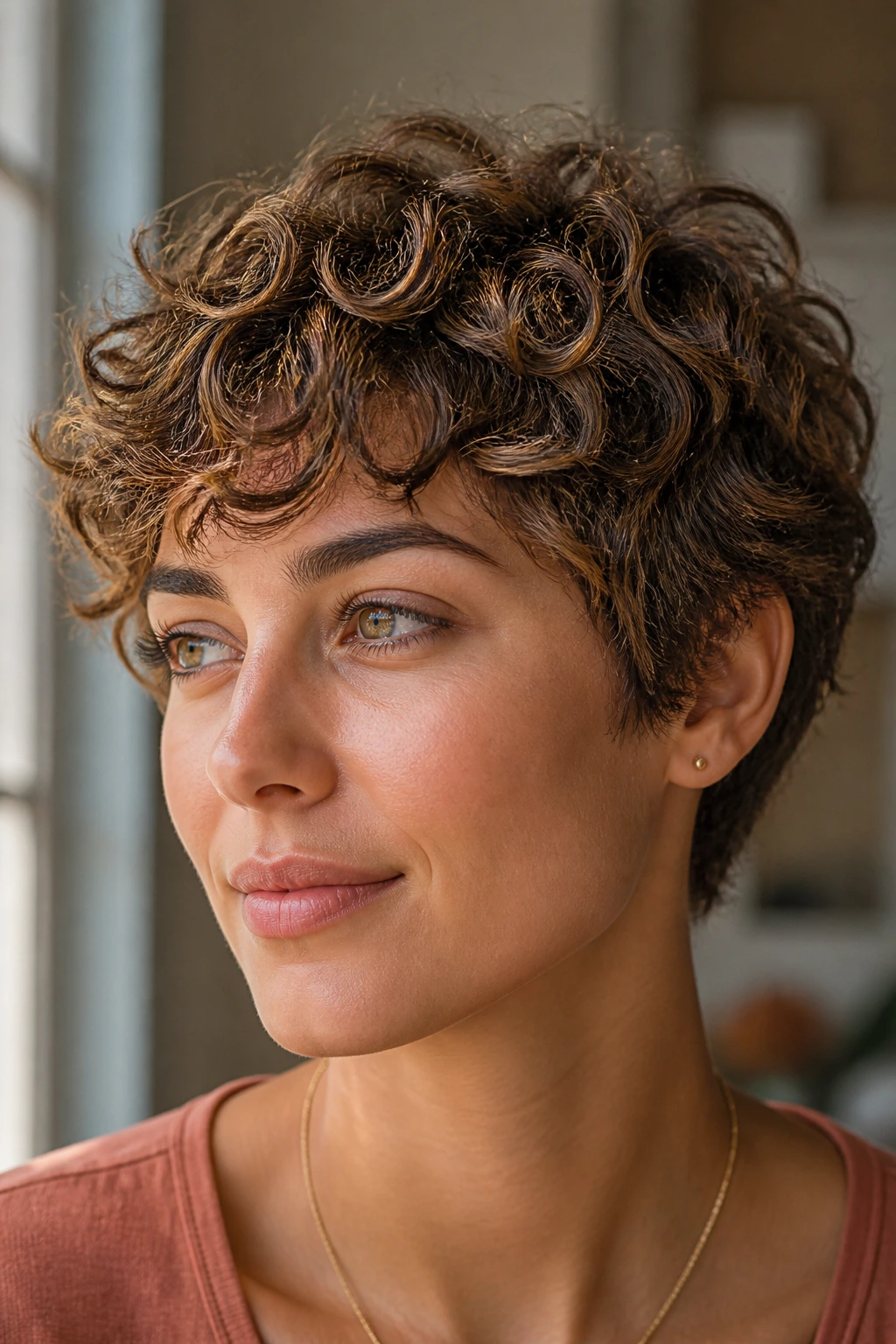
Shape Boost: Ask for point cutting at the front edges if you want the pixie to sit softer around the cheeks. A blunt perimeter can look too tidy on curly hair, while a feathered edge gives the curls somewhere to break apart.
Color Boost: Keep the caramel pieces one to three levels lighter than your base. That range usually gives warmth without turning brassy or stripey. If your base is very dark, a few lowlights are worth asking for so the highlights have something to sit against.
Texture Boost: Scrunch in mousse before any cream you might use on the ends. That order gives the curls a little structure before the softer product goes in, which helps the top hold its shape longer.
Make-It-Yours: Fine hair usually benefits from a slightly longer top and lighter layers. Thick hair usually wants more internal debulking and a tighter nape. Coily hair can wear this shape too, but the silhouette needs to be cut with shrinkage in mind and the color placement should stay clean and selective.
The Mistakes That Flatten Curly Pixies Fast
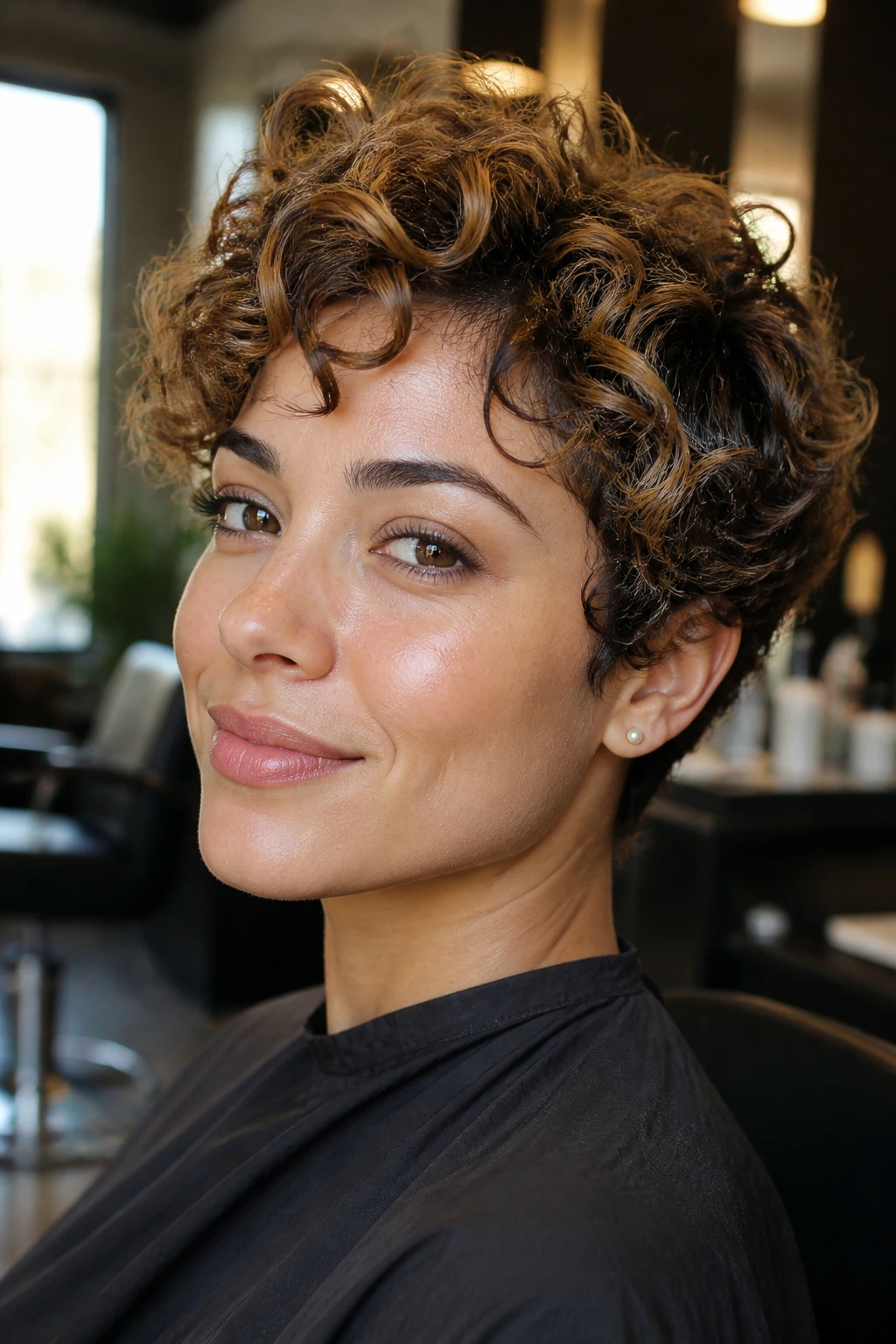
The first mistake is taking the sides too short on dense curls. The symptom is a puffed-up top sitting on top of a tiny base, which makes the head look wider and less balanced. The fix is a tapered side, not a shaved one, unless you actually want an undercut.
The second mistake is cutting the fringe based on wet length. Curly bangs shrink. A lot. If the front is cut too short, the face can look unfinished and the whole style starts to bounce awkwardly. Cut longer, dry, then refine.
Third: too much cream. Heavy product can make the highlight dimension disappear and leave the curls hanging in soft clumps that never quite wake up. If your hair feels slick or greasy by noon, you used too much. Start with a dime-sized amount, then add only if needed.
Fourth: chunky highlights. On curly pixies, thick color blocks can fight the movement of the cut and make the top look streaky. Tiny ribbons or fine balayage pieces usually look richer because they follow the curl pattern instead of crossing it.
Fifth: ignoring the nape. A pixie with curly texture grows out fast at the back, and a fuzzy nape can ruin the shape from behind. A clean trim every four to six weeks keeps the haircut from drifting into awkward territory.
Fresh Ways to Bend the Look Without Losing the Point
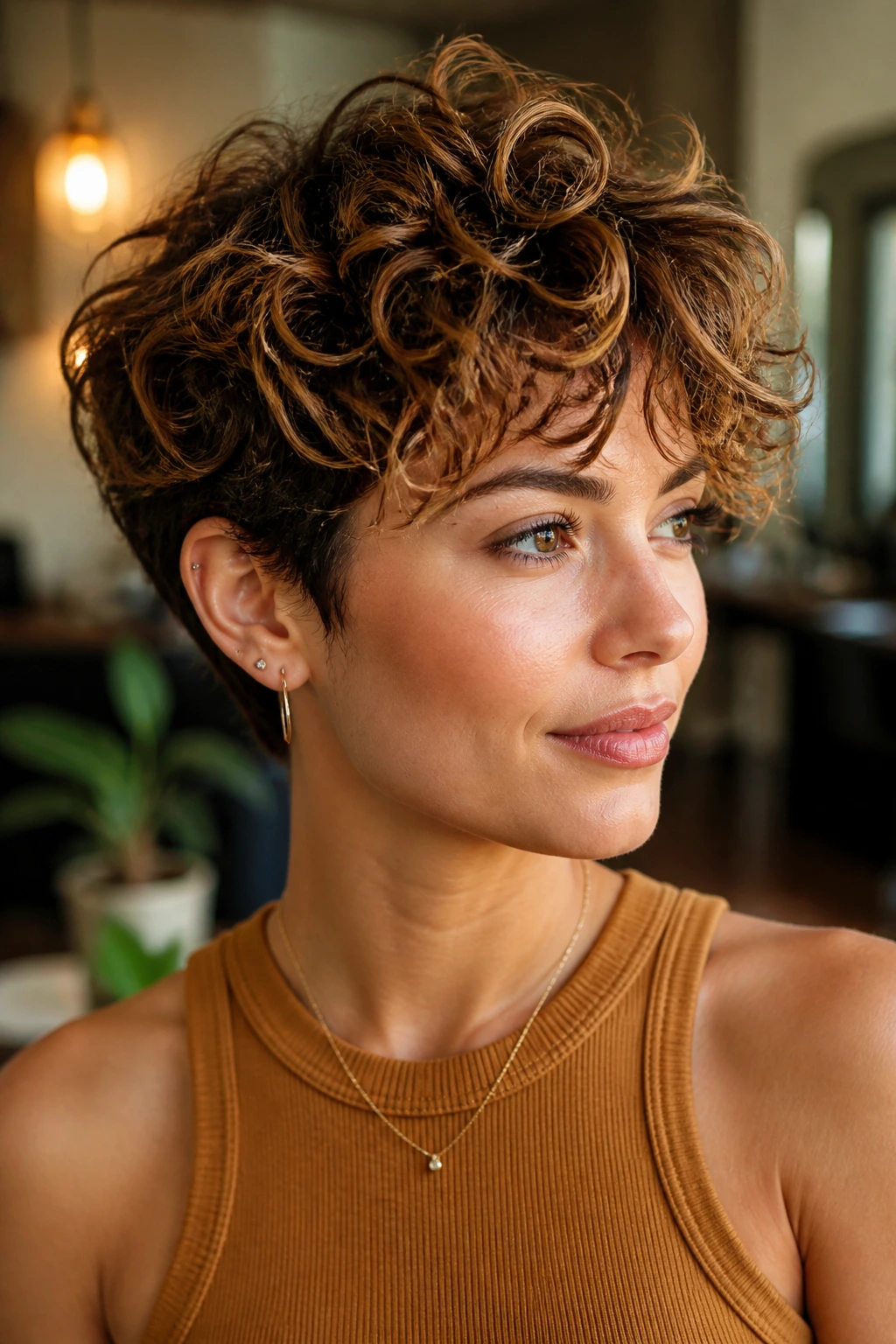
Bronze Whisper: Swap bright caramel for a softer bronze-caramel mix if your base is dark brown. The result is warmer and less contrasty, which suits people who want dimension without visible streaks.
Toffee Fringe: Keep the fringe a touch lighter than the crown and sides. That pulls light toward the eyes and works well if you wear makeup or glasses.
Shadow-Root Softie: Leave the roots deeper and let the caramel appear mostly through the mid-lengths and ends. This is the easiest version to grow out and one of the kindest if you don’t love frequent color appointments.
Salt Blend: Add fine lowlights through silver or white curls so the caramel doesn’t look pasted on. This version looks especially good on oval faces because the face shape can handle a little contrast without needing extra framing.
Tighter Coil Crop: Shorten the top just enough to keep tight curls springy, then place the caramel in narrow, selective ribbons. The goal is definition, not brightness everywhere. Better too subtle than too loud.
Keeping the Cut in Shape Between Trims
A curly pixie does not forgive neglect for long. The good news is that upkeep is simple if you stay on a schedule. A shape trim every four to six weeks keeps the nape, sideburns, and fringe from wandering off in different directions. If your hair grows fast or your curls swell in humidity, shorten that interval a little.
Color wants its own rhythm. Glosses or toners can help keep caramel from looking flat or washed out, and many people do well with a refresh every six to eight weeks. If the highlights start leaning orange, your stylist can cool them down a bit. If they go muddy, they probably need warmth, not more ash.
At home, wash less aggressively than you think you need to. Short curly hair can still dry out fast, especially around the ends where the color sits. A satin pillowcase helps the top keep its shape overnight, and a quick morning mist with water can bring the curls back without restarting the whole routine. If you sleep on one side every night, pinning the front away from the pillow does more than a fancy cream ever will.
Frequently Asked Questions
Will an oval face suit a curly pixie cut if my curls are very tight?
Yes, and often better than people expect. Tight curls create their own architecture, so an oval face can support a cropped shape without needing much correction. The main thing is to leave enough length on top for the curl to form cleanly and not shrink into a flat puff.
Where should caramel highlights sit on a curly pixie?
The best placement usually follows the curl pattern: fringe, temple pieces, crown, and sometimes the upper sides. That keeps the color from looking striped and makes each curl clump read separately. If you want low drama, keep the brightest pieces away from the nape.
Do caramel highlights damage curls more than darker color?
Lightening can dry curls out if it’s overdone or poorly cared for, but caramel usually stays gentle when the lift is moderate. Fine ribbons are safer than full bleaching. Pair the color with moisture masks and color-safe shampoo, and the curls can stay springy.
How short can the sides go without making the cut look harsh?
That depends on curl density and face length, but the safest answer is usually “shorter than the top, not shaved to the bone.” An oval face can handle close sides, yet too much scalp exposure can make the style feel severe. A soft taper often looks better than a hard clipper line.
Can I wear bangs with this haircut?
Yes, but the bang shape matters. Side-swept, feathered, or baby fringe styles tend to work better on curly pixies than a blunt straight-across line. Curly fringe should be cut with shrinkage in mind and refined dry.
How often should I trim a curly pixie?
Most people need a clean-up every four to six weeks to keep the outline neat. If the nape grows fast or the fringe starts poking into the eyes, book sooner. Short curls show every inch of growth more quickly than longer cuts.
What if my hair puffs out after I cut it short?
That usually means the cut removed weight in the wrong places or the curls need more internal layering. It can also happen when too much cream is used and the shape collapses instead of clumping. Ask for a softer taper, lighter product, and a dry check before any final trimming.
Can this look work on fine hair, or does it need thick curls?
Fine curls can wear a pixie beautifully because the short length removes weight and lets the hair lift. The trick is not to over-layer it. Keep some length at the crown, use light mousse, and place the caramel strategically so the color adds depth instead of making the hair look thinner.
The Pixie That Keeps Its Edge
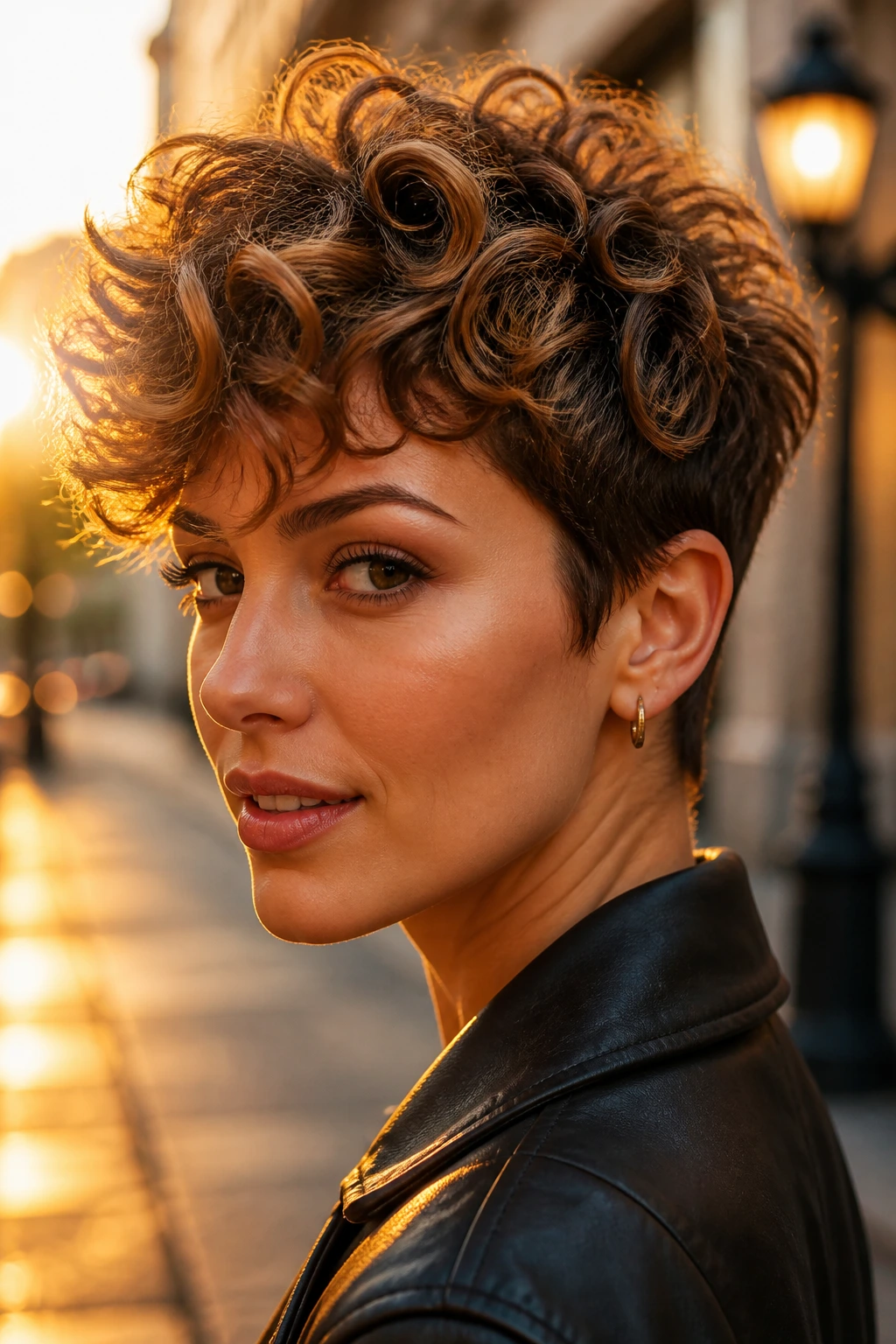
The reason these curly pixie cuts for oval faces with caramel highlights stay so useful is simple: they respect the face shape instead of trying to rebuild it, and they use color to make texture visible. That’s a smarter move than piling on length or chasing brightness everywhere. The best versions look intentional from the front, the side, and the back, which is harder to pull off than people think.
If you’re taking this to a stylist, bring one photo for the silhouette, one for the color placement, and one for the fringe. That tiny bit of preparation usually gets you much closer to the haircut you meant to ask for.