



Protective styles for curly hair with caramel highlights can do something most color ideas can’t: they warm the face, catch on every bend of the curl, and keep the ends tucked away while the color does the talking. Done well, the look reads soft and expensive-looking without feeling stiff. Done badly, it turns into a loud stripey mess with tight roots and dry ends. The difference is almost always placement, tension, and whether the caramel tone actually suits the base color.
That warm shade matters more than people think. On curls, especially tighter textures, caramel doesn’t sit flat the way it can on straight hair. It moves. A few lighter strands near the temples, a honeyed ombré through the length, or a single money piece can make the whole style look fuller because the eye keeps catching different shades as the hair shifts. If you’ve ever seen braids or twists that looked a little muddy in photos, chances are the highlight tone was too pale, too ashy, or packed in without enough breathing room.
The best versions of these styles feel calm on the scalp and intentional at the ends. Not overworked. Not crunchy. And definitely not so tight that you can feel your temples arguing with the braid pattern by day two. The styles below cover classic braids, twists, locs, wigs, sew-ins, and a few curlier hybrids that let caramel streaks show up in ways that look natural rather than forced.
Why These Styles Earn a Spot in Your Rotation
- Warmth Without Bleach: Caramel-highlighted extension hair gives you the color shift without asking your own curls to survive lightener, toner, and weeks of recovery.
- Less Daily Handling: Braids, twists, locs, and wigs cut down on combing, detangling, and heat styling, which is where a lot of curl breakage sneaks in.
- Better Shape as Hair Grows: A warm highlight pattern hides some new growth and keeps the style looking finished even when the roots start to loosen a little.
- Color That Moves With Curls: Caramel reads especially well on textured hair because it catches on bends, edges, and layered strands instead of sitting like a solid block.
- Easy to Dress Up or Down: Add cuffs, beads, a silk scarf, or a clean part and the same style can move from errands to a wedding without a full restyle.
- Works Across Curl Types: Loose curls, dense coils, and stretched natural hair all have a place here, which is why the list ranges from tiny twists to fuller updos.
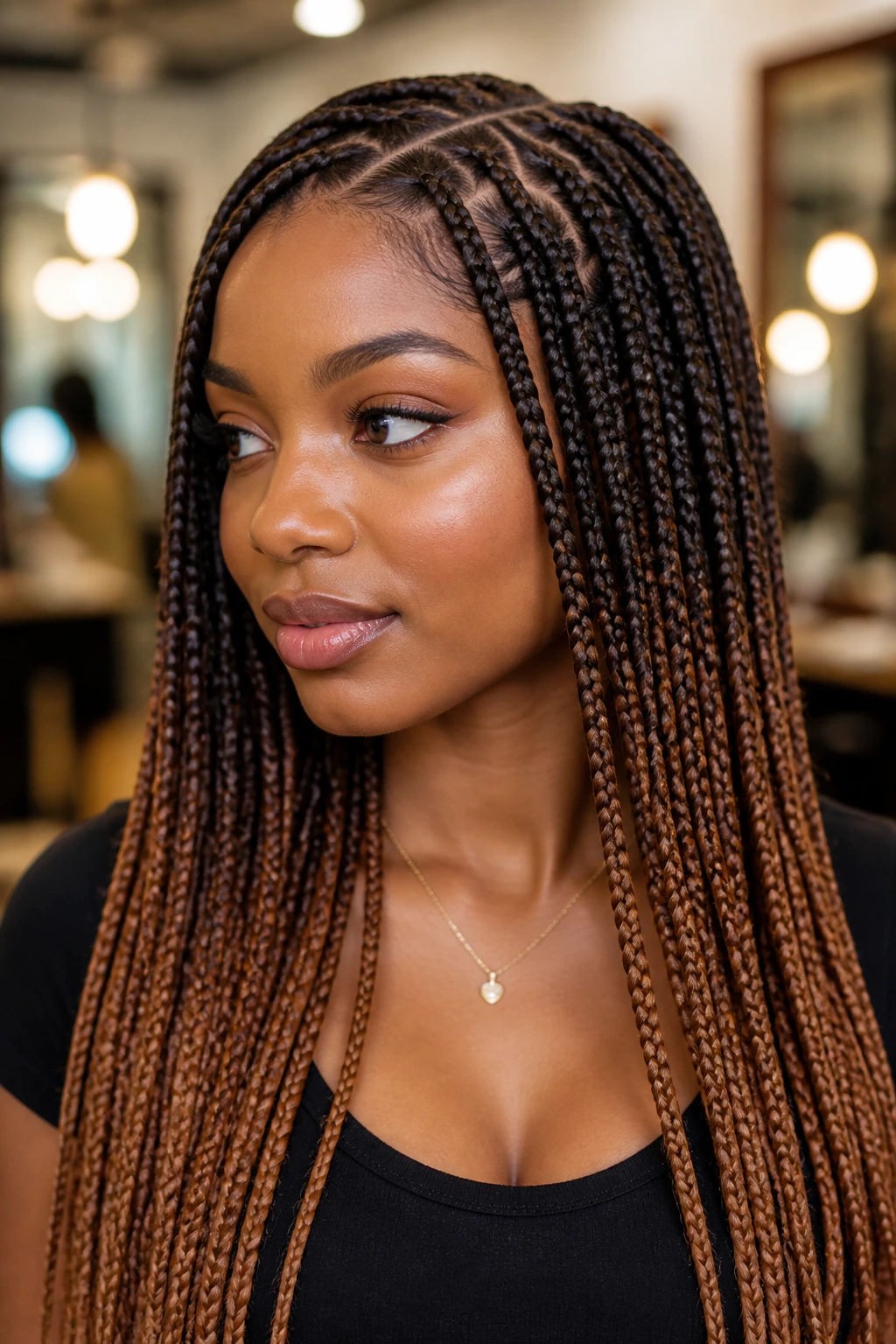
1. Knotless Box Braids with Caramel Ombré
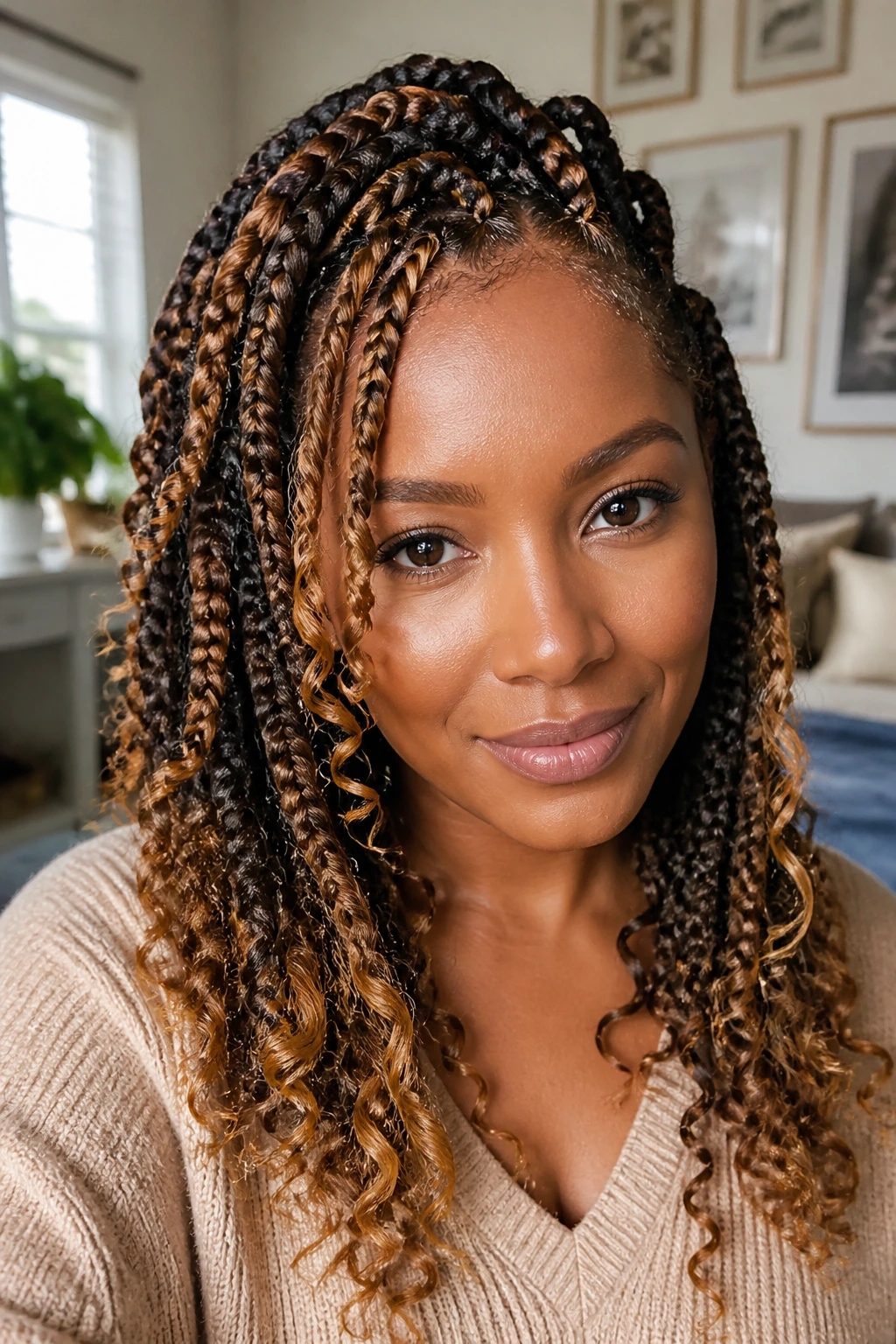
Knotless box braids are one of the cleanest ways to wear caramel on curly hair because the color can melt from dark roots into warmer ends without looking chunky. The braid itself stays light at the scalp, which matters if your hair is fine or your edges are sensitive. And the ombré gives the style a little movement even when the braids are still.
What makes it work: The gradual shift from a deeper base to a caramel finish keeps the look from reading flat. If you want the color to show, ask for medium or small parts and keep the lightest shade in the last third of the braid. That gives you contrast without making the whole head look striped.
Best for: Anyone who wants a classic protective set with visible color but not a loud chunk of blonde near the face. Shoulder-length to waist-length braids both work; longer braids show off the gradient better, while shorter ones feel lighter and easier to sleep in.
Tip: Use pre-stretched braiding hair in two tones—deep brown and warm caramel—so the braid pattern itself helps blend the shade.
2. Passion Twists with Caramel Threading
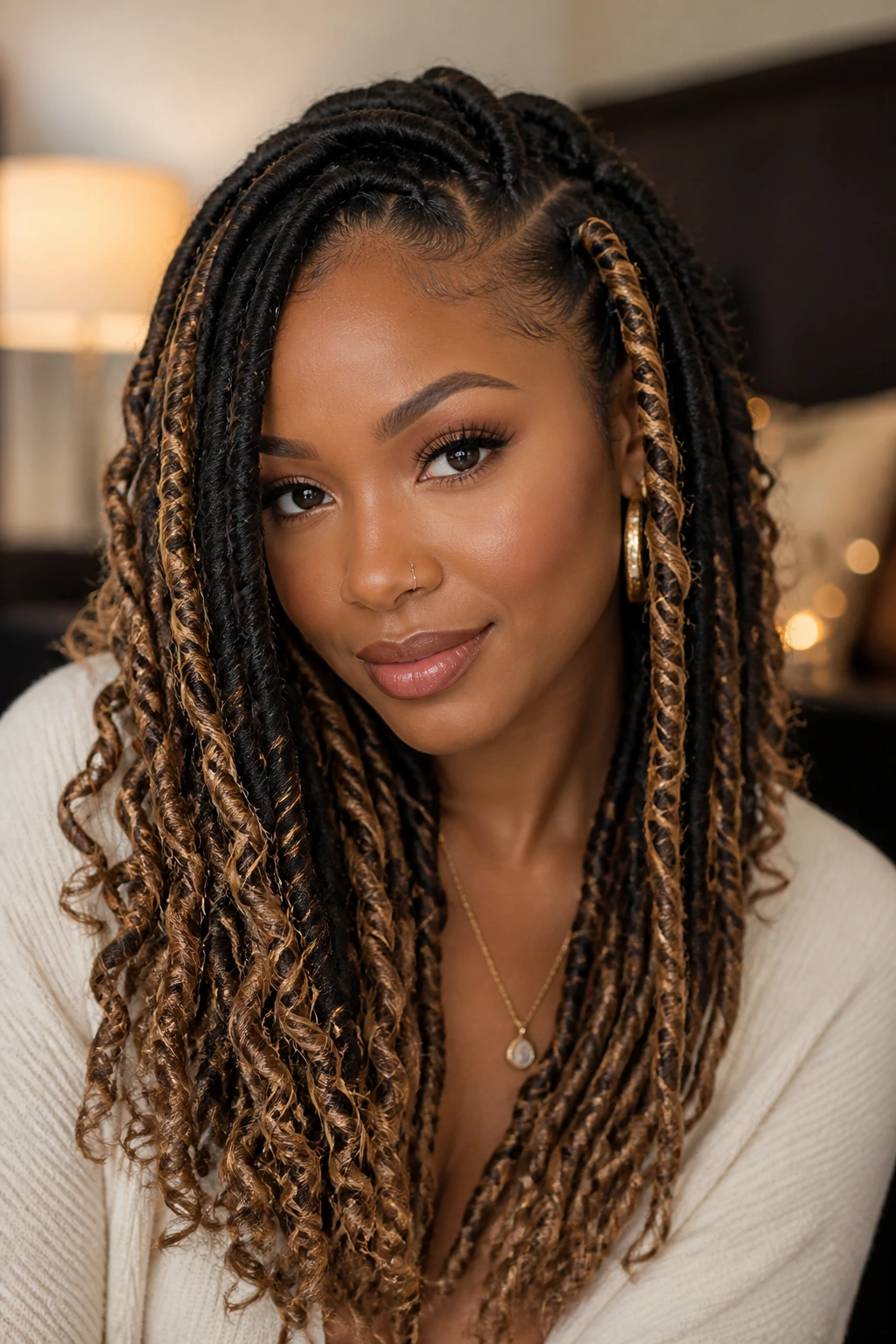
Why do passion twists look so good in caramel? Because every coil already has a little twist and shadow built in. The color doesn’t sit on top. It winds through the strand, which makes honey tones and amber pieces look softer than they do in a straight extension.
The style is also kind on the scalp if you keep the parts modest. Loose to medium parts usually hold the shape better than tiny, overpacked sections. I like this style most at collarbone length, where the twists still move but don’t drag the roots down by day five.
What to ask for
- A dark brown base with one pack of caramel or golden-brown hair mixed in.
- Medium twists if you want the color to read from across the room.
- A slightly messy finish near the ends so the highlights don’t look too perfect.
- A light mousse set after installation to keep the twists from frizzing out early.
3. Fulani Braids with Curly Ends
Fulani braids give the caramel pieces somewhere to land. The side braids and center part create a built-in map, and that makes color placement feel deliberate instead of random. Add curly ends and the style softens fast, which is useful if you want the finished look to feel less severe than a straight-back braid set.
The caramel can live in the side braids, the hanging beads, or the curly extension ends. I prefer keeping it around the face and at the ends. That’s where the light hits first, and it lets the rest of the style stay grounded in a darker base.
Small detail, big payoff: translucent amber beads or gold cuffs make the caramel read warmer, especially if your braids are on the longer side. Cheap plastic beads can flatten the whole thing. Glass or polished wooden accents do more with less.
4. Goddess Locs with Honey-Caramel Wrap
Goddess locs have a built-in softness that regular faux locs sometimes lack, and caramel tones fit that texture better than icy light blond ever will. The wrapped pieces catch a little shine, then the loose curly bits at the ends keep the style from looking too heavy. It’s one of the easiest ways to wear warm highlights without turning the whole head into a color test.
The best version uses a dark root and a honey-caramel wrap that’s just a shade lighter than you think you need. Too much brightness can make the locs look dusty. A richer caramel sits deeper in the twist and looks better after a week of wear, when the style has relaxed a little.
If you like a fuller look, ask for mid-back length. If you want the locs to feel lighter and easier to wash, keep them at the shoulder or just past it. That extra inch changes the weight more than people expect.
5. Boho Knotless Braids with Free Curls
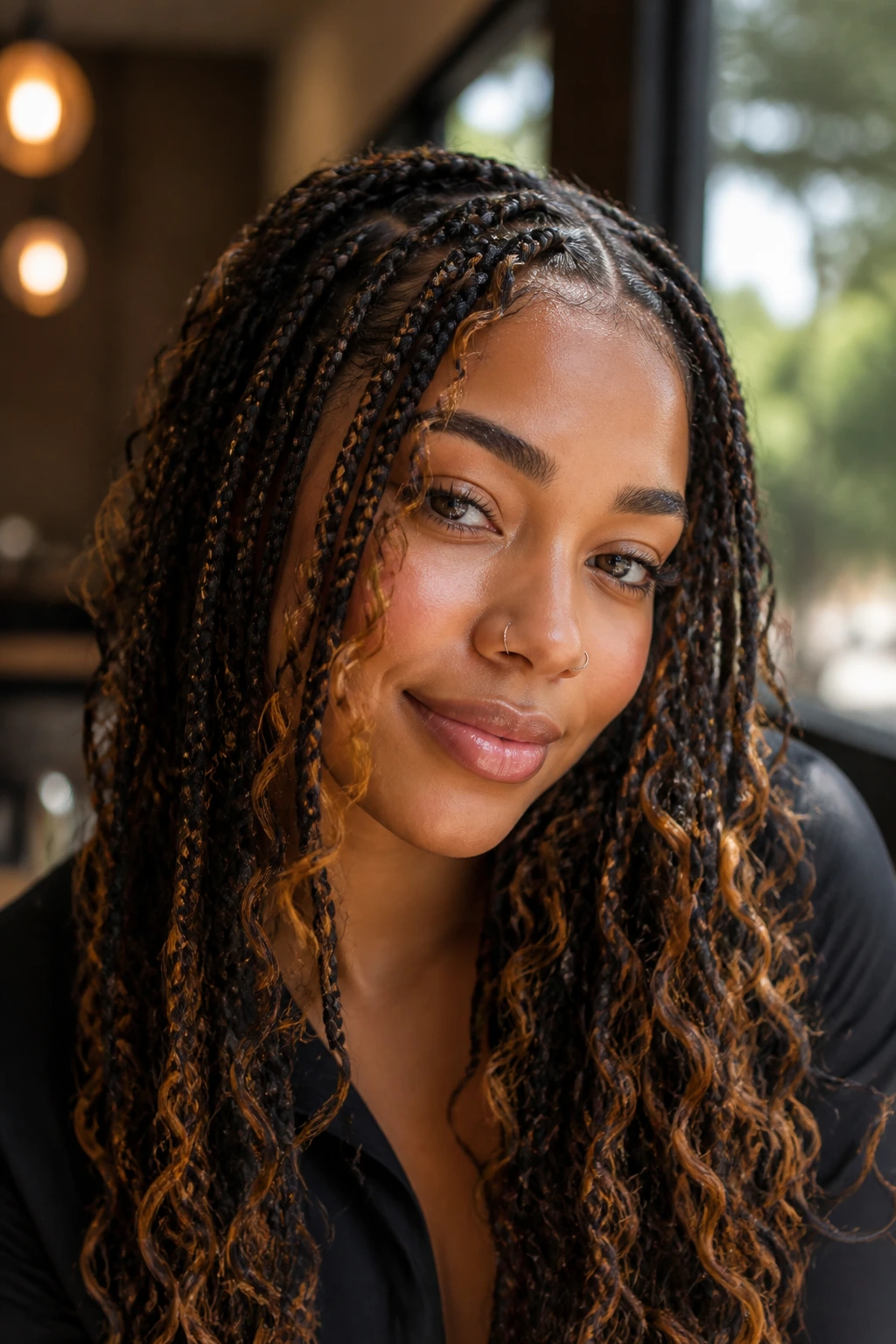
Boho knotless braids are the style I reach for when I want a protective look that doesn’t feel too sealed up. The free curls break up the braid structure, and caramel highlights make those loose strands look intentional instead of like stray pieces. The whole thing feels softer around the face, which matters if your curls are already dense.
A dark braid base with caramel curly pieces scattered through the length gives the best result. If every loose curl is the same shade, the style starts to look costume-like. A mix of darker and lighter spiral pieces does a better job of mimicking how natural sun-lightened curls behave.
Best kept in mind
- Keep the loose curls mostly near the front and mid-lengths.
- Use a curl-defining mousse on the free pieces, not on the braids themselves.
- Ask for enough braid length that the curls don’t overpower the whole style.
- Refresh with a satin bonnet at night; these styles get fuzzy faster than plain knotless braids.
6. Halo Crown Braid with Face-Framing Caramel Pieces
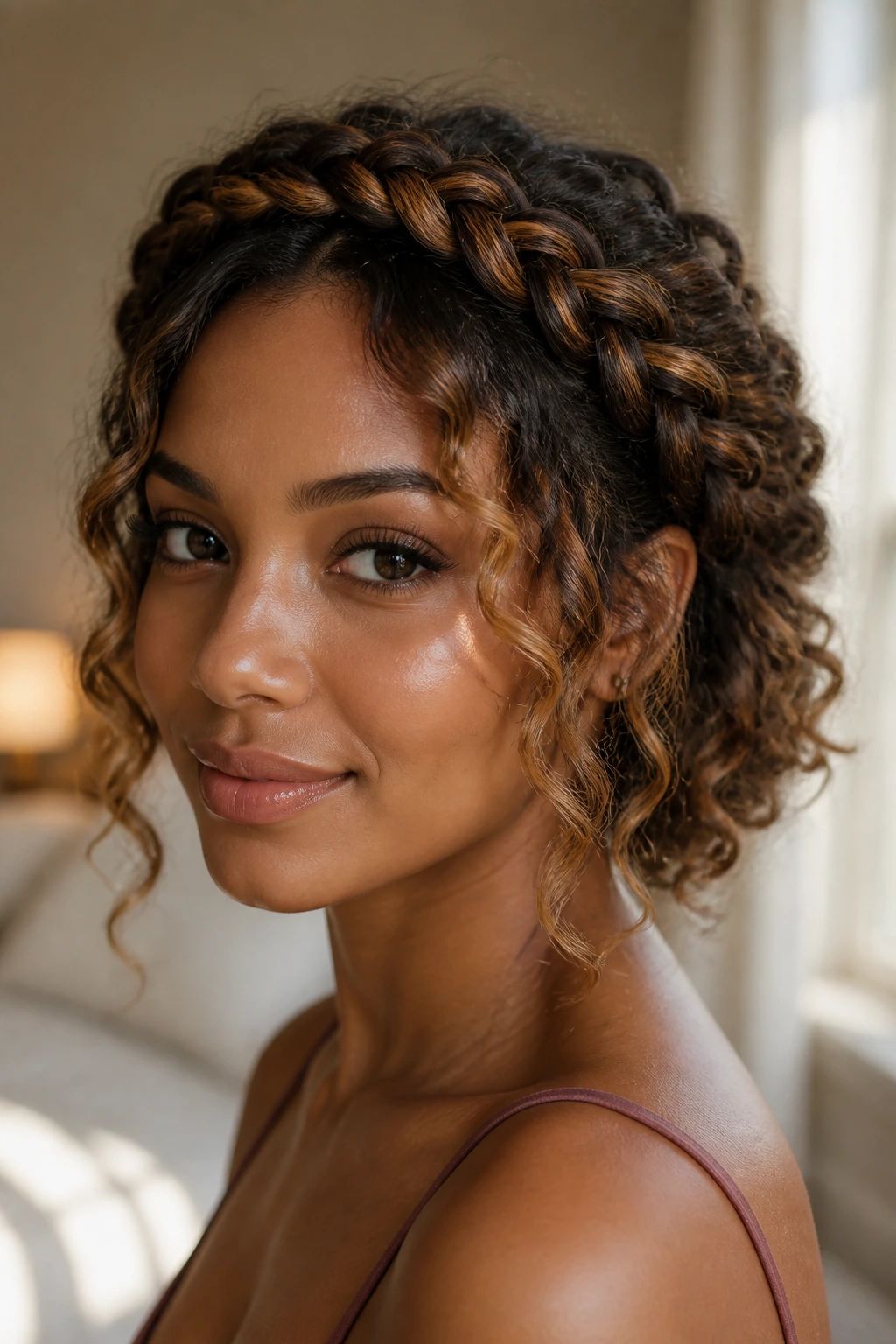
A halo braid already feels polished, and caramel pieces near the front keep it from looking too severe. The warm strands soften the line around the temples and cheekbones, which is where most people want the eye to go anyway. If you’ve got curly hair that shrinks up or puffs at the crown, this style keeps that texture controlled without flattening it into nothing.
The trick is restraint. Put the caramel in the face-framing pieces, not all the way around the braid unless you want a brighter, more decorative finish. I like this look best on medium-length hair where the braid sits securely and the loose strands can curl under naturally.
What to ask for: one clean crown braid, a few highlighted tendrils, and a little volume at the back so the style doesn’t sit glued to the head.
7. Mini Twists with Tipped Caramel Ends
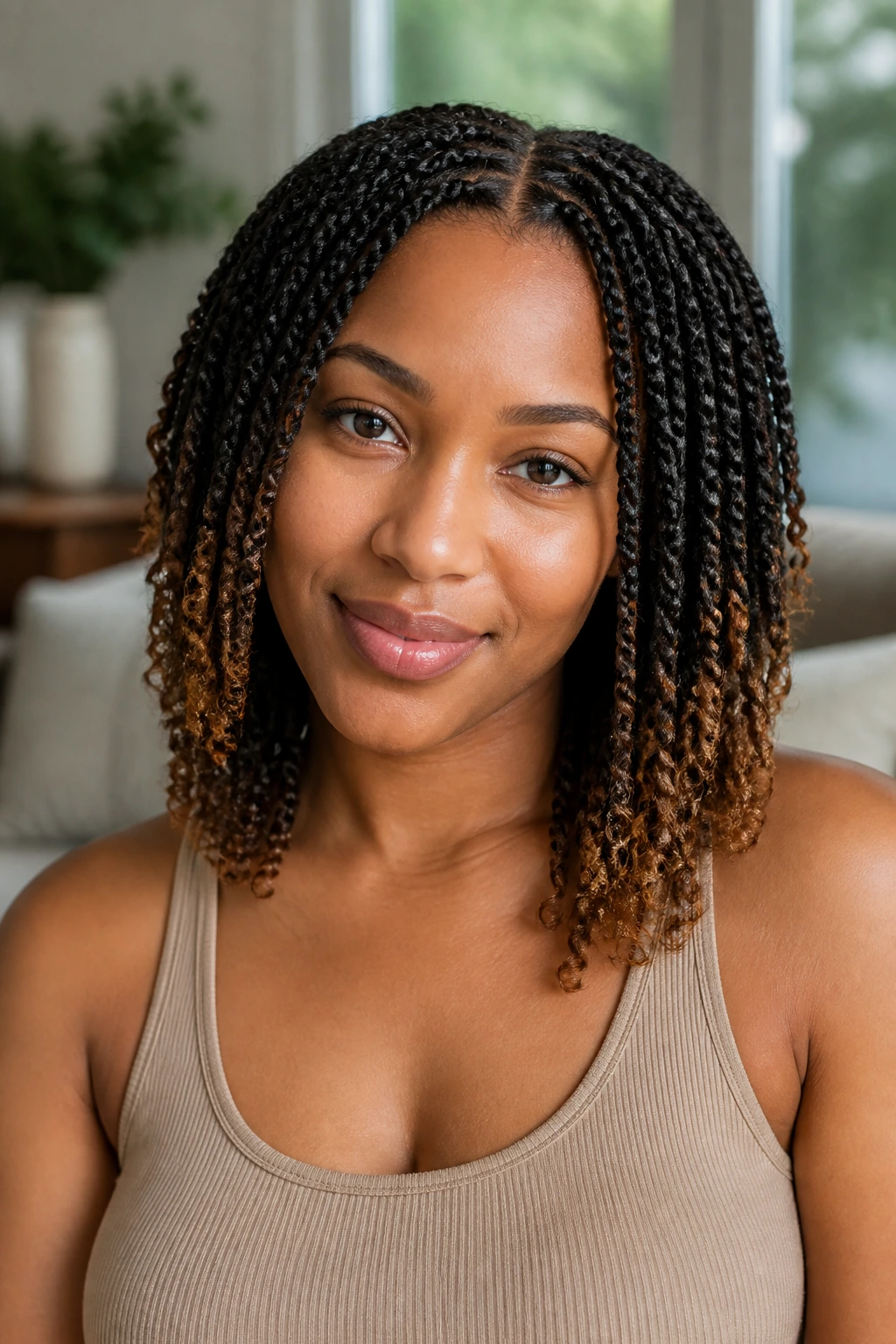
Mini twists are one of the most underrated protective styles for curly hair with caramel highlights because they’re simple, light, and easy to keep neat. Add caramel only to the tips and the style gets a lift without needing a dramatic color block. That tiny detail matters. It keeps the look subtle while still giving you something to notice when the twists swing.
This is a good option if you hate heavy installs or if your scalp gets tired quickly. Mini twists sit flatter than thick rope twists, and the color at the ends makes the overall shape look longer. Keep the twists shoulder-length or a bit below if you want the tipped color to show clearly.
No fancy extras needed here. A clean part, a soft hold mousse, and a satin wrap at night do most of the work.
8. Flat Twists into a Low Bun
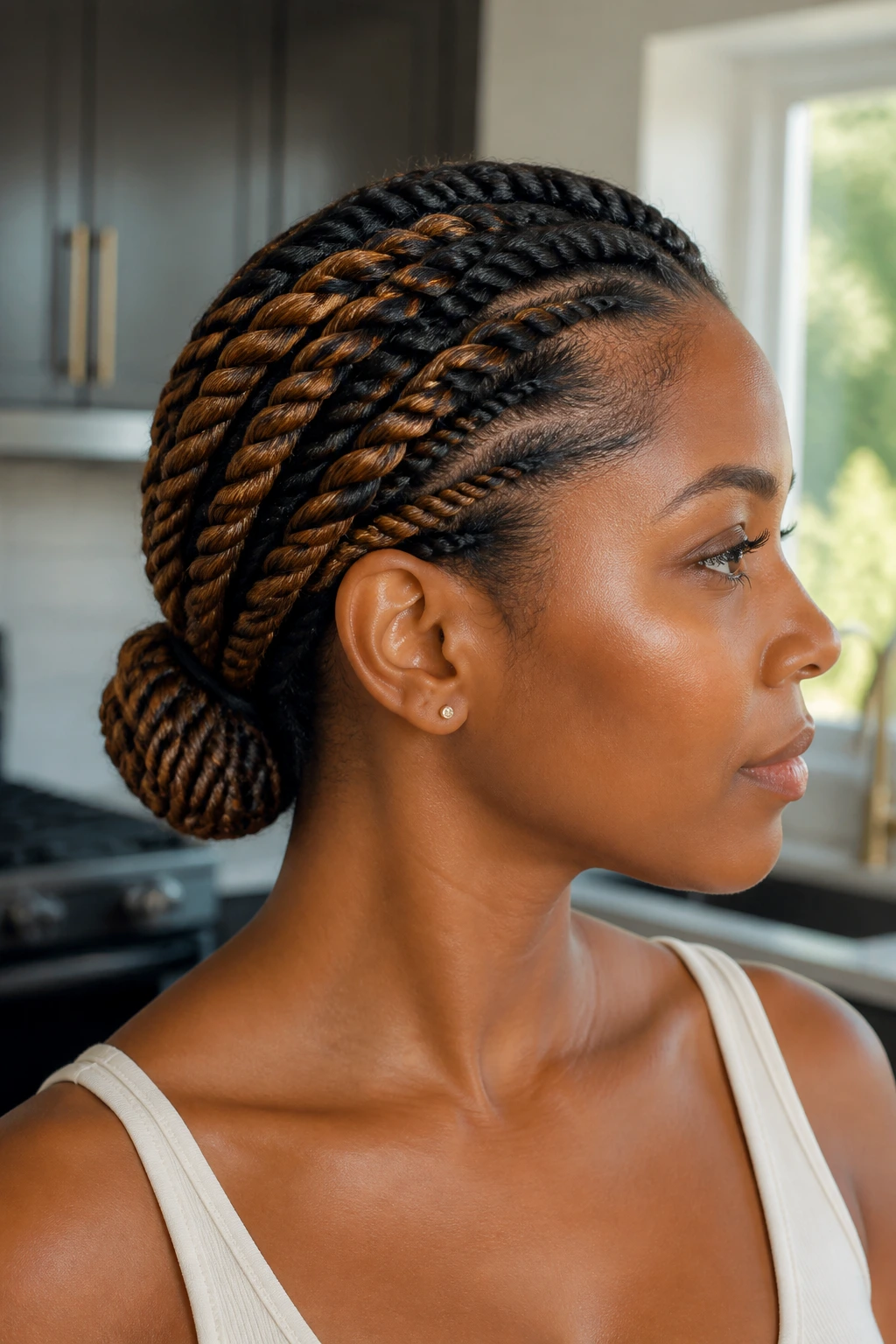
Flat twists into a low bun are the sort of style people underestimate until they see the finish in person. The scalp work keeps the roots neat, and the bun gives your ends a place to disappear. Add caramel to a few outer twists or to a wrapped extension bun, and the whole style looks warmer without needing a full head of color.
This works especially well when you need a style that can handle errands, work, and a formal event without changing shape. The bun stays controlled, the twists keep tension low if they’re installed correctly, and the color peeks out only where it matters. If your hair is thick, ask for a slightly wider bun base so the style doesn’t feel like a tight little knob at the nape.
A little sheen spray on the twists is enough. Heavy oil just makes the scalp look greasy.
9. Senegalese Twists with a Caramel Money Piece
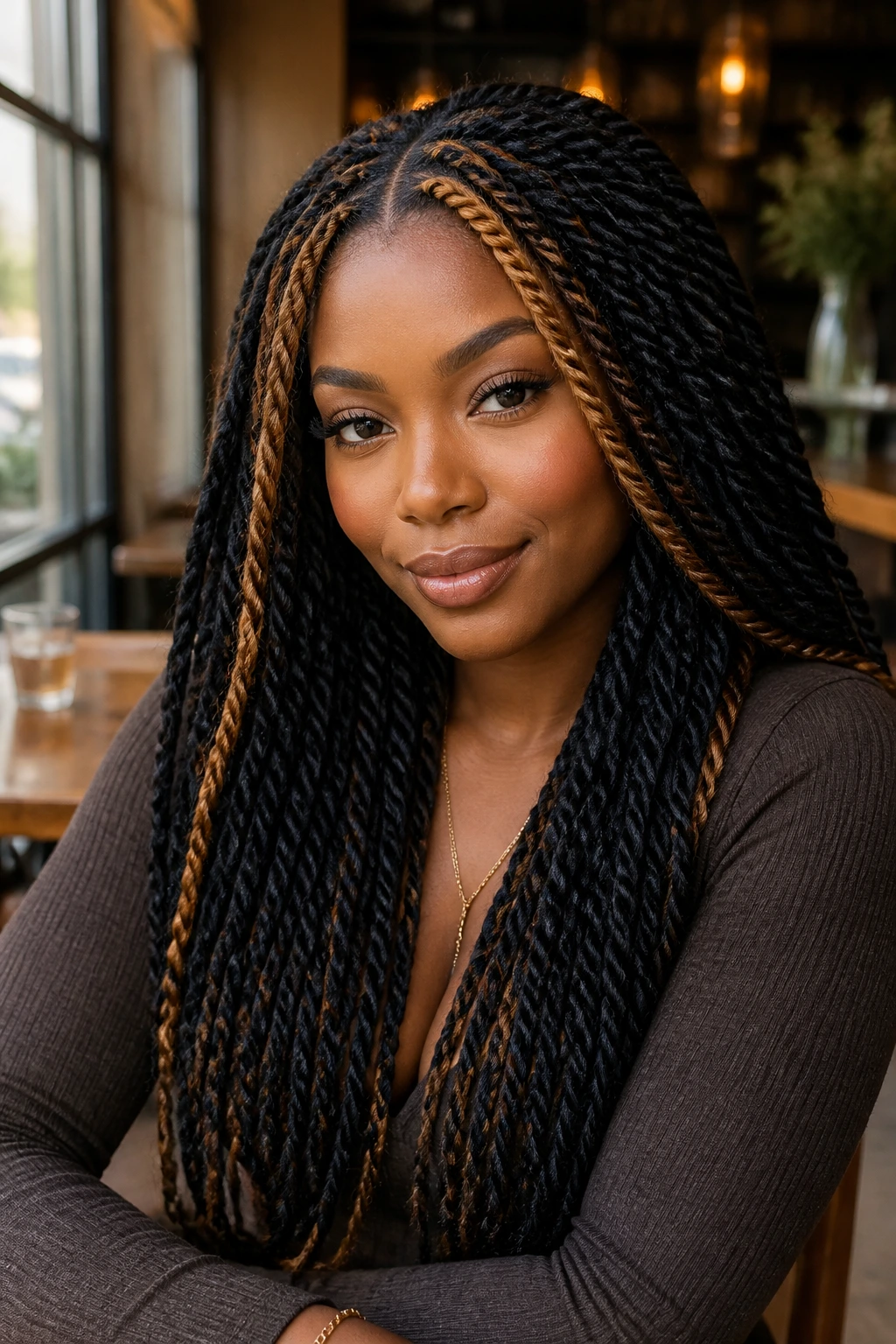
Senegalese twists bring a smoother, shinier finish than Marley or passion twists, which makes caramel highlights look cleaner. Put a money piece in the front and the whole style wakes up fast. That front section gives you the brightness you want without flooding the entire head with light color.
This style looks especially sharp when the base is deep brown and the front pieces are a warm caramel or soft bronze. The contrast is what does the work. If the front is too light, the style can start to look harsh near the hairline, so I’d keep the brightest sections no lighter than a true caramel blond.
The money piece also buys you flexibility. Wear the twists center-parted for a bolder effect, or sweep them to one side so the color falls in a softer arc.
10. Crochet Faux Loc Bob
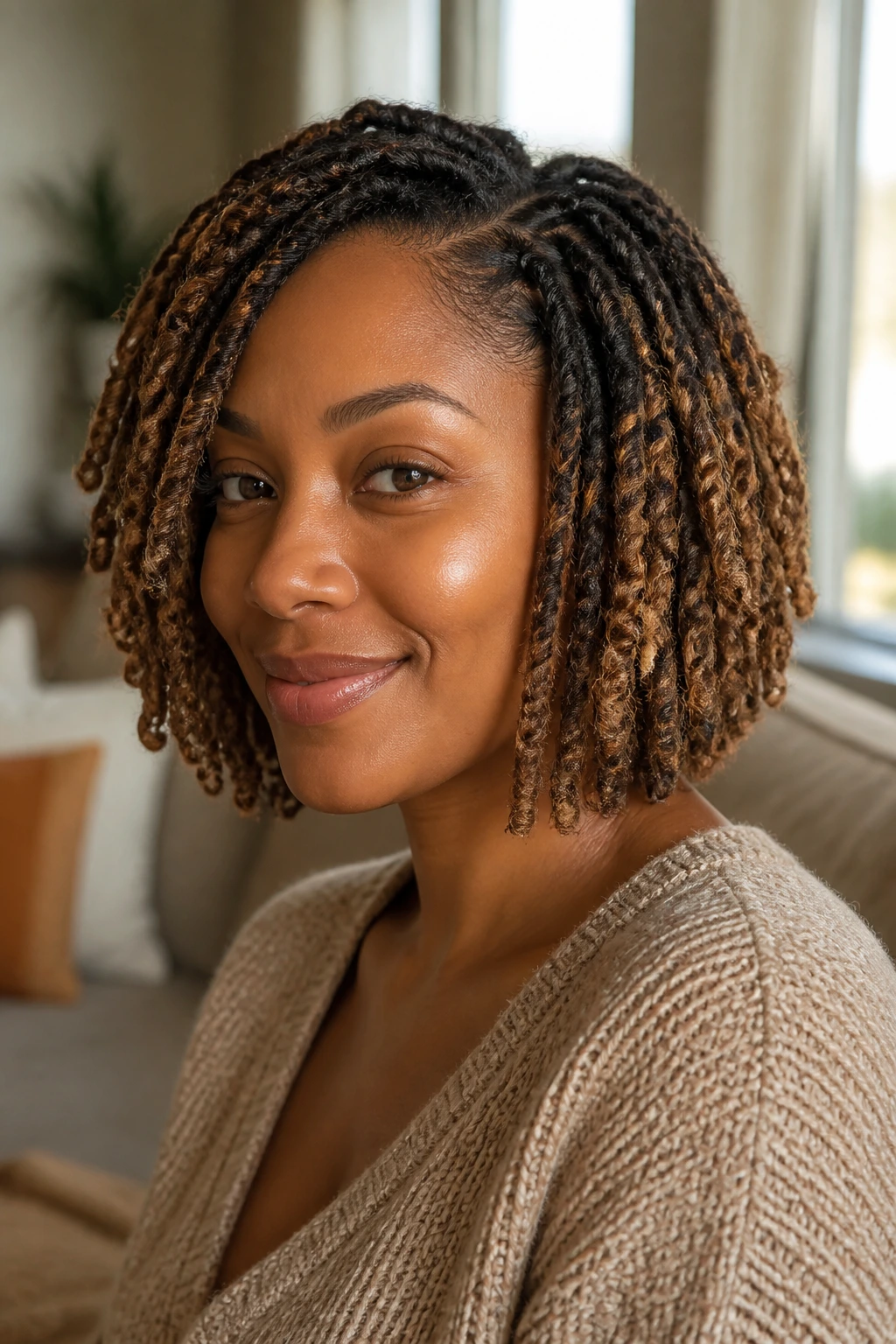
A crochet faux loc bob is compact, quick to wear, and much easier to keep looking fresh than a long set of locs. Caramel highlights help the bob avoid that dense, helmet-like feel some short protective styles can develop. The warm color breaks up the shape and makes the layers read more clearly.
I like the bob length because it shows off texture around the jawline. If you want movement, ask for a few lighter locs around the front and sides rather than scattering caramel everywhere. That gives the bob a lived-in look instead of a studio set.
Why it holds up
- Shorter length means less tug on the scalp.
- The color placement is visible even when the hair is tucked behind the ears.
- Crochet installation is fast, which matters if you hate sitting for braids.
- The blunt cut at the bottom gives the highlights a cleaner edge.
11. Braided High Ponytail with Curly Base
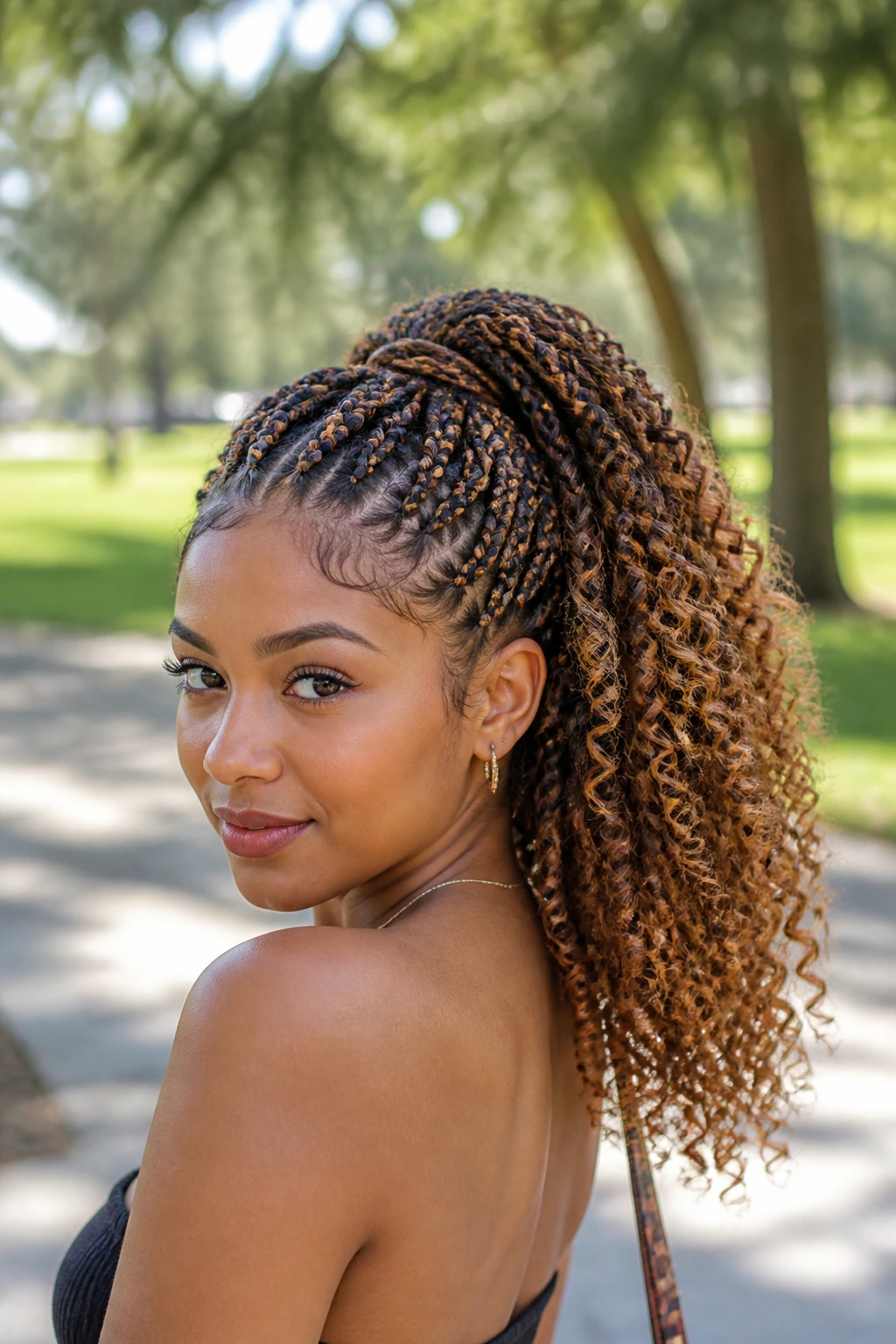
A high ponytail looks a lot more expensive when the braid base is neat and the ponytail itself has a curly tail with caramel streaks. The lift pulls the face up, while the warm streaks keep the ponytail from reading too sporty. It’s one of the better options if you want a style that feels dressed up without spending hours on a full install.
The caramel should sit in the tail, not crowd the roots. That way the scalp remains clean and the color shows when the pony swings. If your curls are dense, a wrapped braid base under the pony keeps everything anchored. If the hair is finer, a smaller braided base with a clip-in curly ponytail usually holds better.
Best for
A night out, a dressy event, or any day you want your curls off your neck but still visible. A low-density pony can look limp; this one needs enough body to actually move.
12. Stitch Braids into a Low Bun
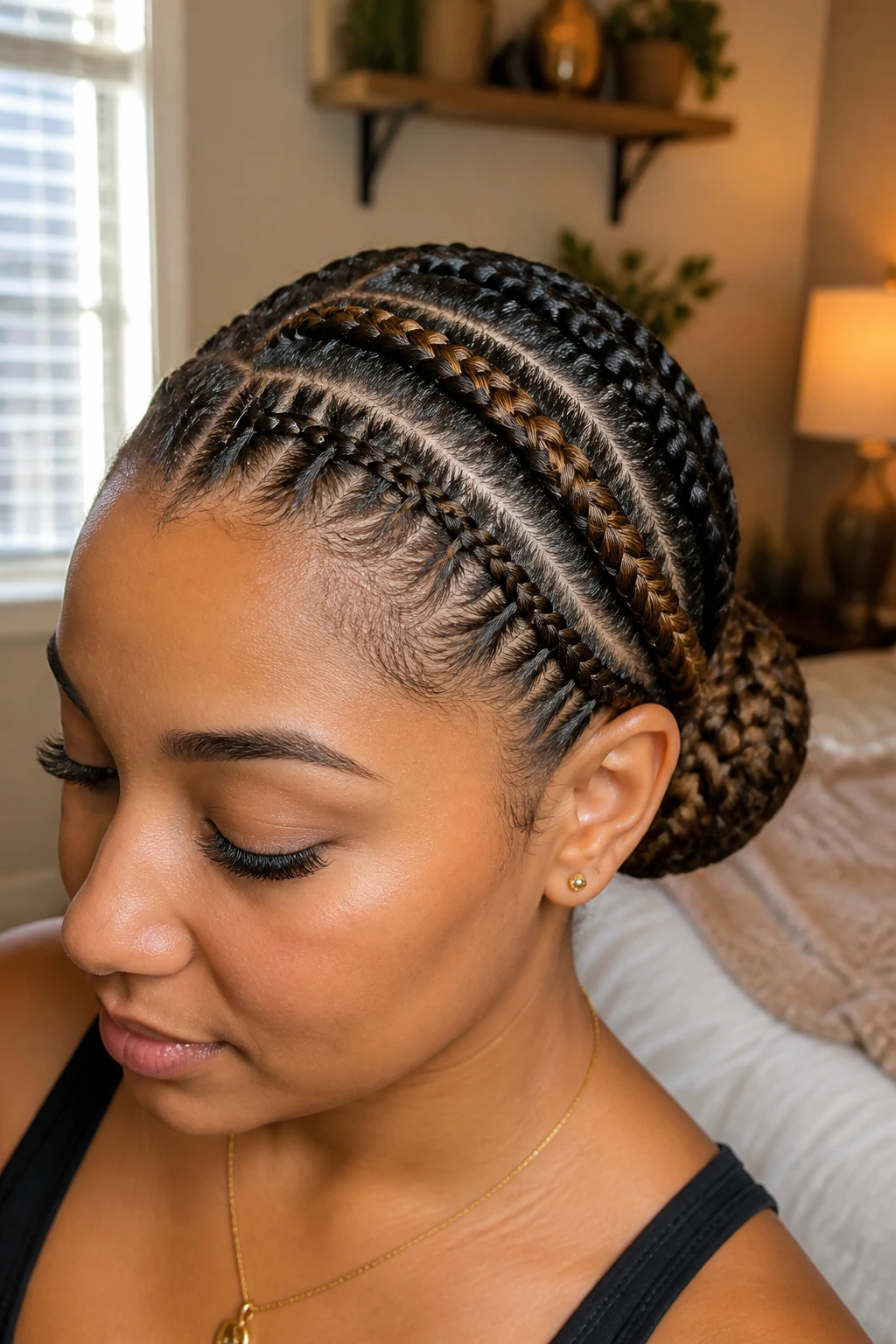
Stitch braids are crisp, and that crispness gives caramel highlights a cleaner edge than looser braid styles do. If you gather the lengths into a low bun, the color ends up concentrated where the eye falls first: the crown, the temple lines, and the bun itself. That makes the look feel neat instead of busy.
I like a single caramel track through one braid row and a softer highlight through the bun wrap. Too many bright pieces can make stitch braids feel loud in a way that doesn’t suit the style. A low bun is already a strong shape. Let the color support it instead of shouting over it.
If you wear glasses or small earrings, this is a good one. The hairstyle stays out of the face and leaves room for the rest of the look to breathe.
13. Marley Twists with Chunky Highlight Panels
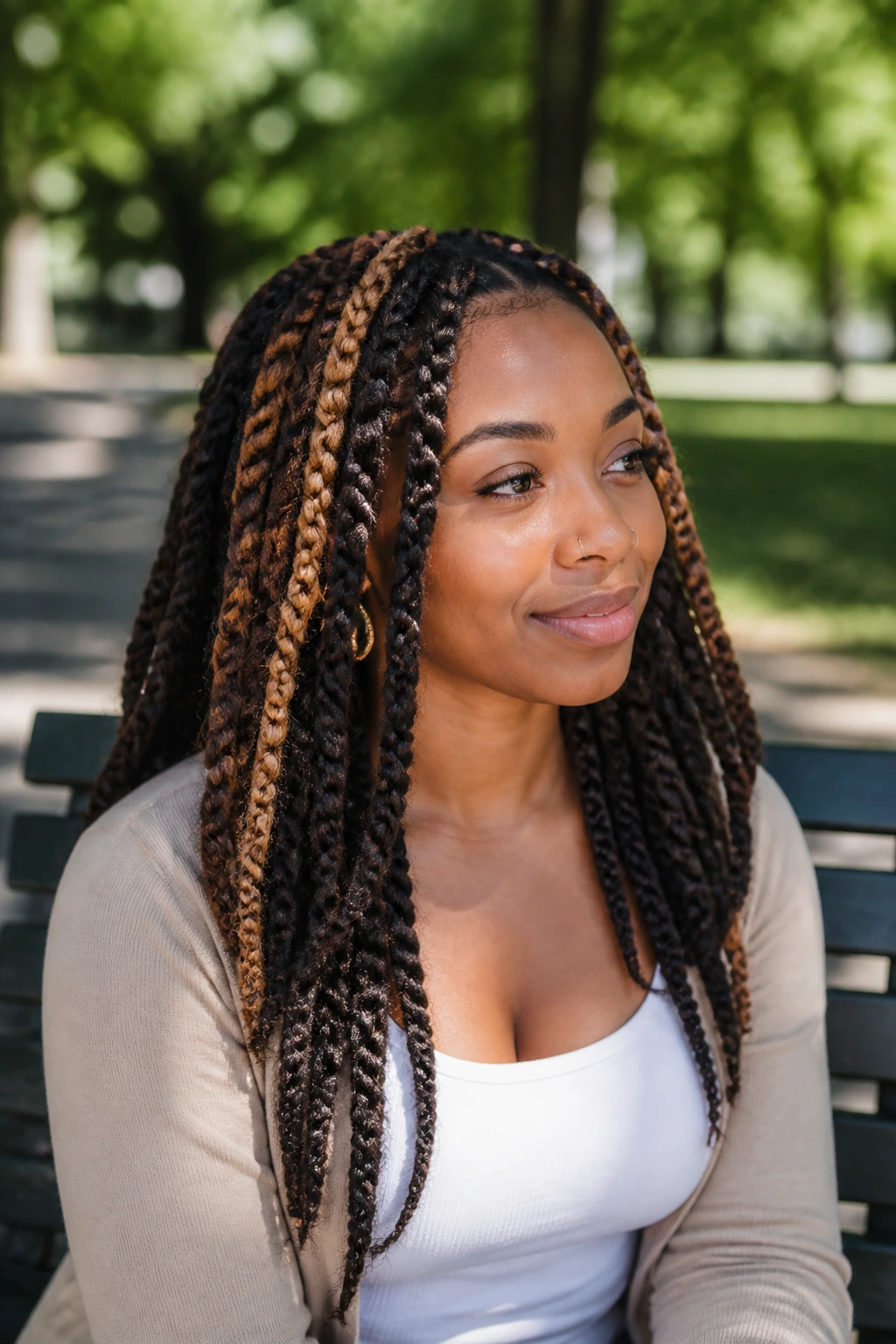
Marley twists take color well because the fiber is matte and thick. Caramel panels show up as blocks of warmth instead of thin streaks, which gives the style more depth. If your hair is dense and you like a fuller silhouette, this is one of the easier ways to add color without making the whole set look overworked.
Chunky panels work better than tiny random highlights here. The twist pattern already creates enough movement. I’d place the lighter sections in the outer layers and around the face, then keep the back mostly dark so the style doesn’t lose its shape.
This is one of those styles that looks best a little imperfect. The texture should read soft and touchable, not polished to the point where every twist is identical.
14. Lemonade Braids with Side-Swept Caramel Ribbons
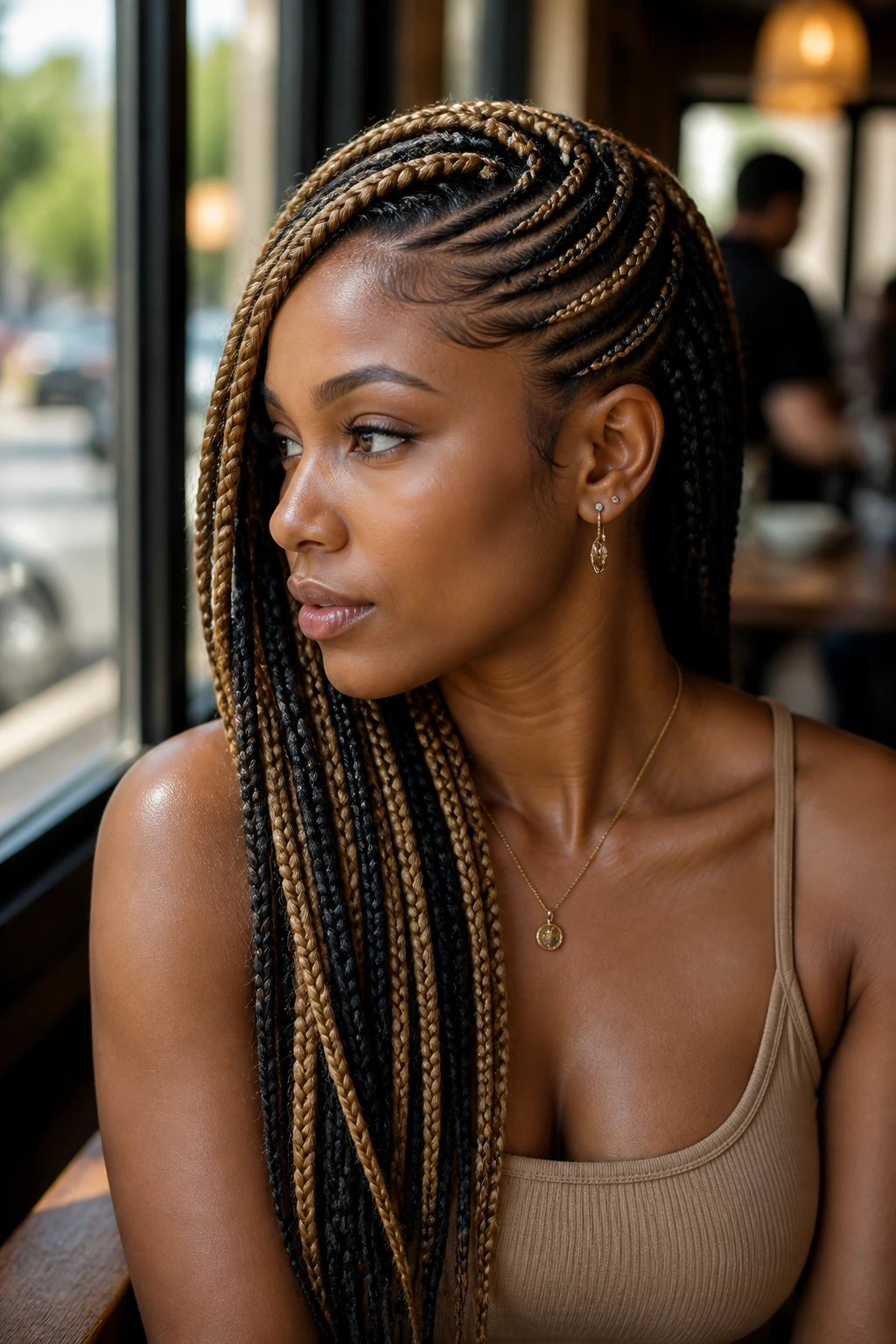
Lemonade braids are side-swept by design, so caramel ribbons have a built-in stage. The color falls across the curve of the braid line, and that’s what makes the style feel alive rather than static. If the braids are installed with a deep side part, the highlight pieces can follow the sweep and look very deliberate.
I’d keep the caramel concentrated in the longer side, then leave the tighter side darker. That contrast gives the braids a cleaner graphic line. The style works especially well on medium to long hair because the sweep needs enough length to look intentional.
A small gold cuff every few braids is enough. More than that starts to clutter the line. The braid pattern itself should stay the main event.
15. Cornrow Updo with Curly Chignon
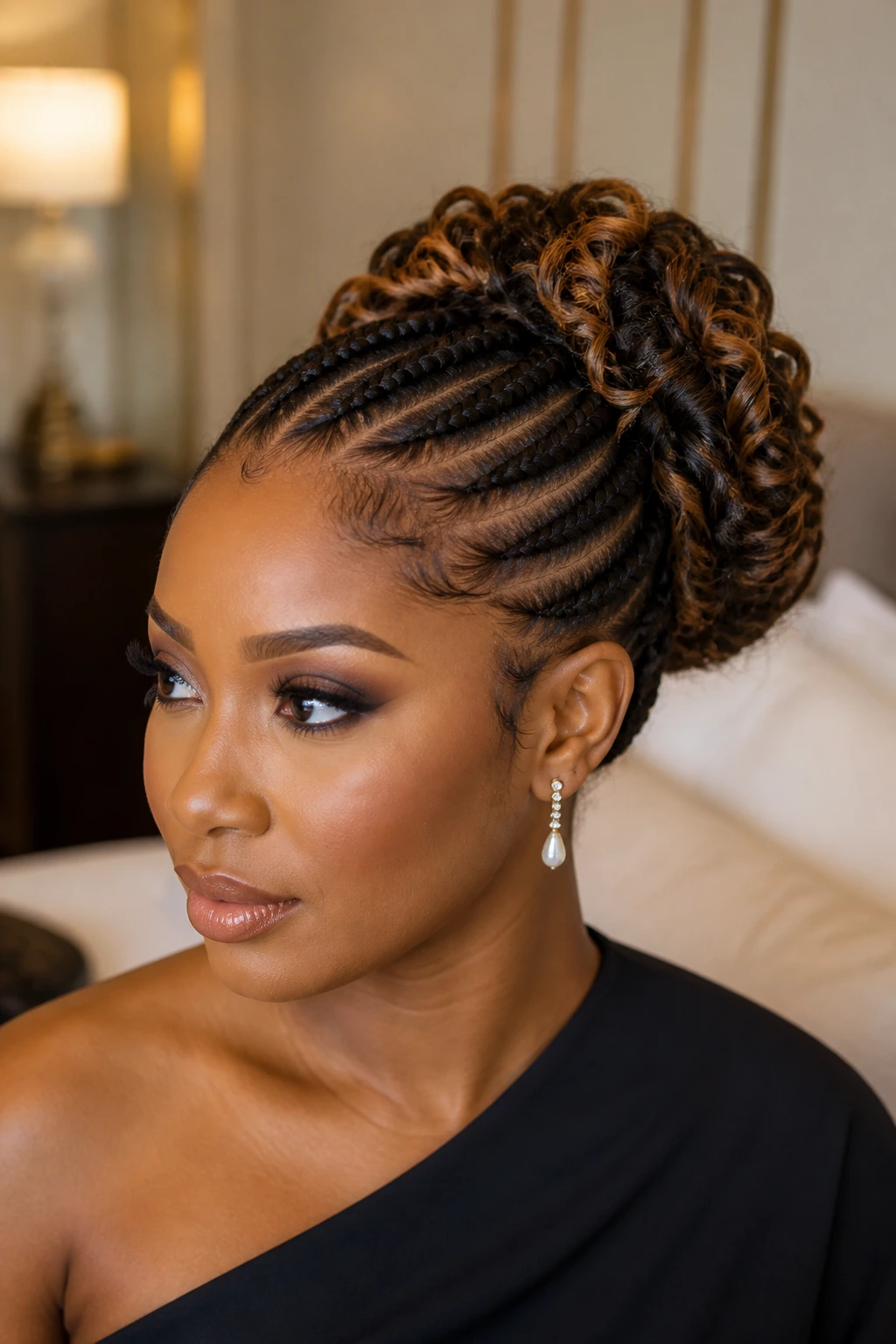
A cornrow updo with a curly chignon is one of the best options if you want something formal without losing all texture. The cornrows keep the scalp flat and controlled, while the chignon gives you a soft shape at the nape or crown. Caramel pieces woven into the knot or chignon add warmth where the eye naturally lands.
This style is especially useful for curls that need a break from daily manipulation but still need to look neat for events. The highlights don’t have to cover much surface area to matter. A few caramel loops in the chignon can change the entire tone of the style.
If your hair is on the shorter side, pin the chignon lower and use a bit of matching extension hair to build the knot. The shape matters more than the size.
16. Micro Braids with Ombré Ends
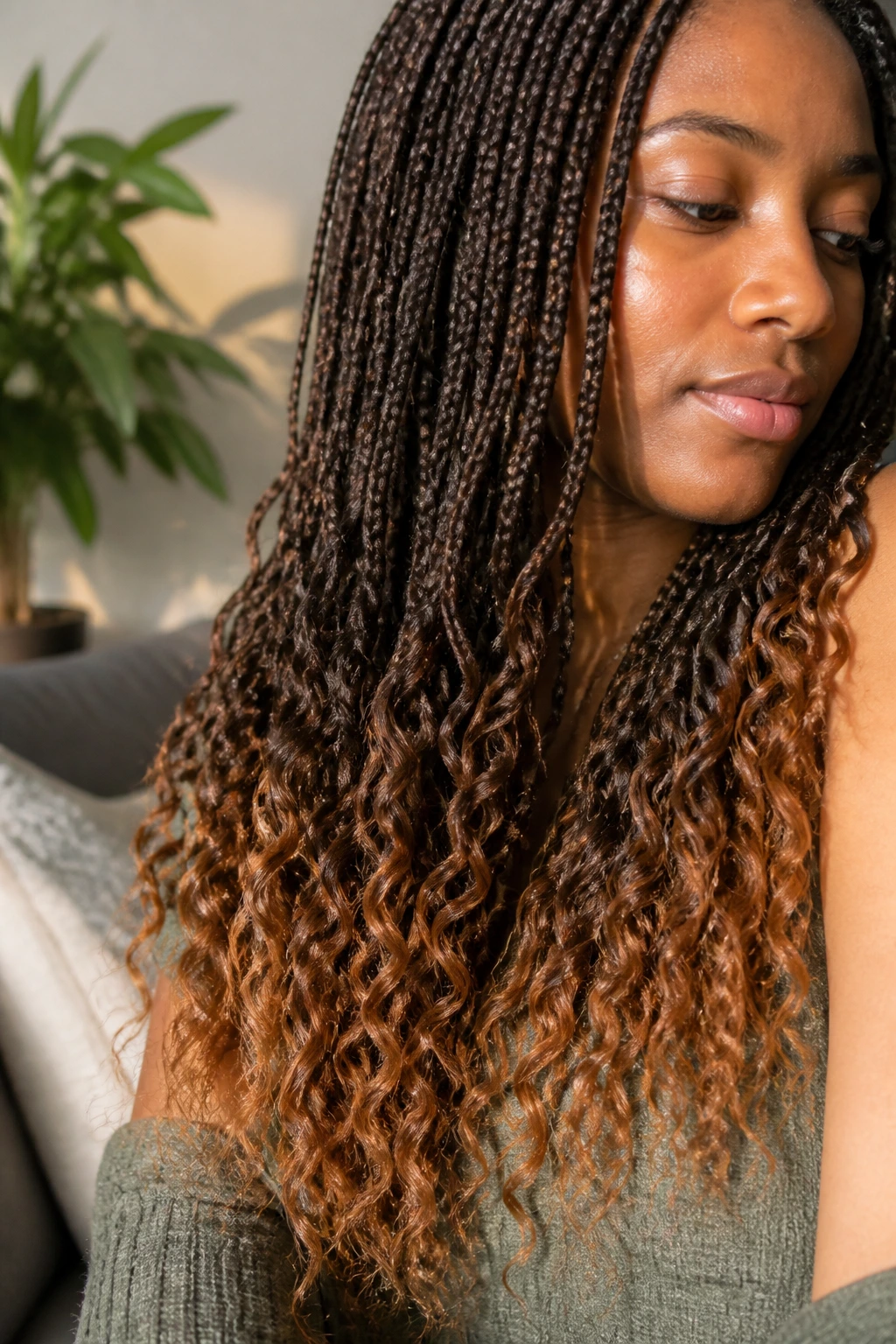
Micro braids are a patience test, no question. But the payoff is the amount of color movement you get. A caramel ombré at the ends makes the whole head look lighter and more layered without having to bleach your natural curls. Because the braids are tiny, the gradient reads almost like woven thread.
Why patience pays off
The smaller the braid, the smoother the color transition. That’s the part people miss. If the ends shift gradually from dark brown into caramel, the style looks expensive and a little old-school in the good sense. If the color jumps too quickly, the braids start to look busy.
I’d keep micro braids medium length unless you’re used to heavy installs. Long micro braids can stress the scalp, and there’s no point in wearing a gorgeous color fade if you’re counting the minutes until you can take it out.
17. Curly Sew-In with Leave-Out and Caramel Face Frame
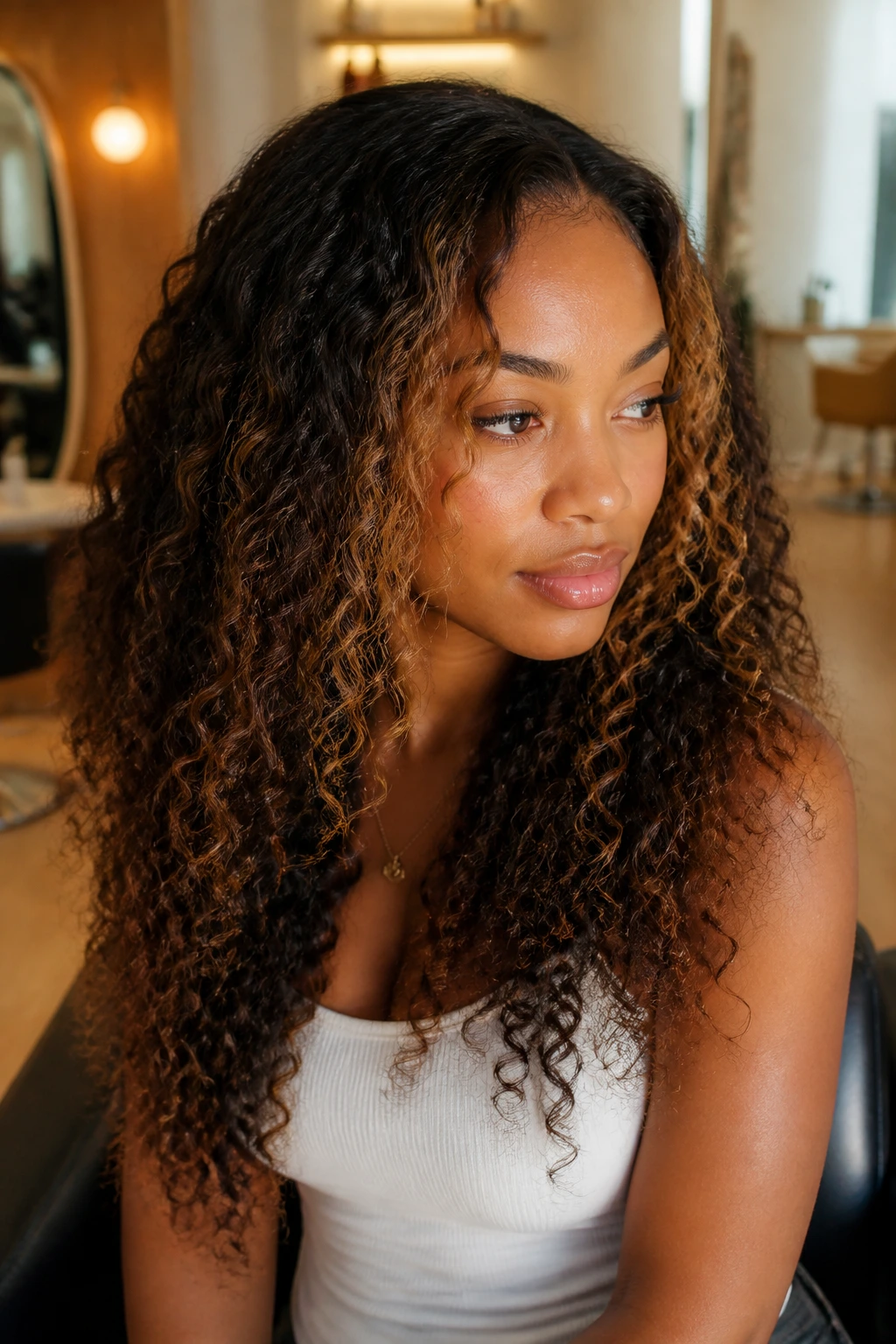
A curly sew-in with a leave-out can be one of the most natural-looking ways to wear caramel highlights, especially if your own texture and the extension texture are close. The face frame does the heavy lifting. It gives you color where people actually look first, while the rest of the sew-in blends into the base and stays protective.
The best sew-ins don’t try to hide the fact that they’re extensions; they just keep the edges clean and the finish believable. Pick a curly pattern close to your own and keep the caramel in the front layers or around the part. That way the style still moves like curly hair, not like a sheet of synthetic shine.
If your leave-out frizzes easily, braid the perimeter at night and use a light curl foam instead of re-curling every morning. Less heat. Better results.
18. Half-Up Knotless Braids
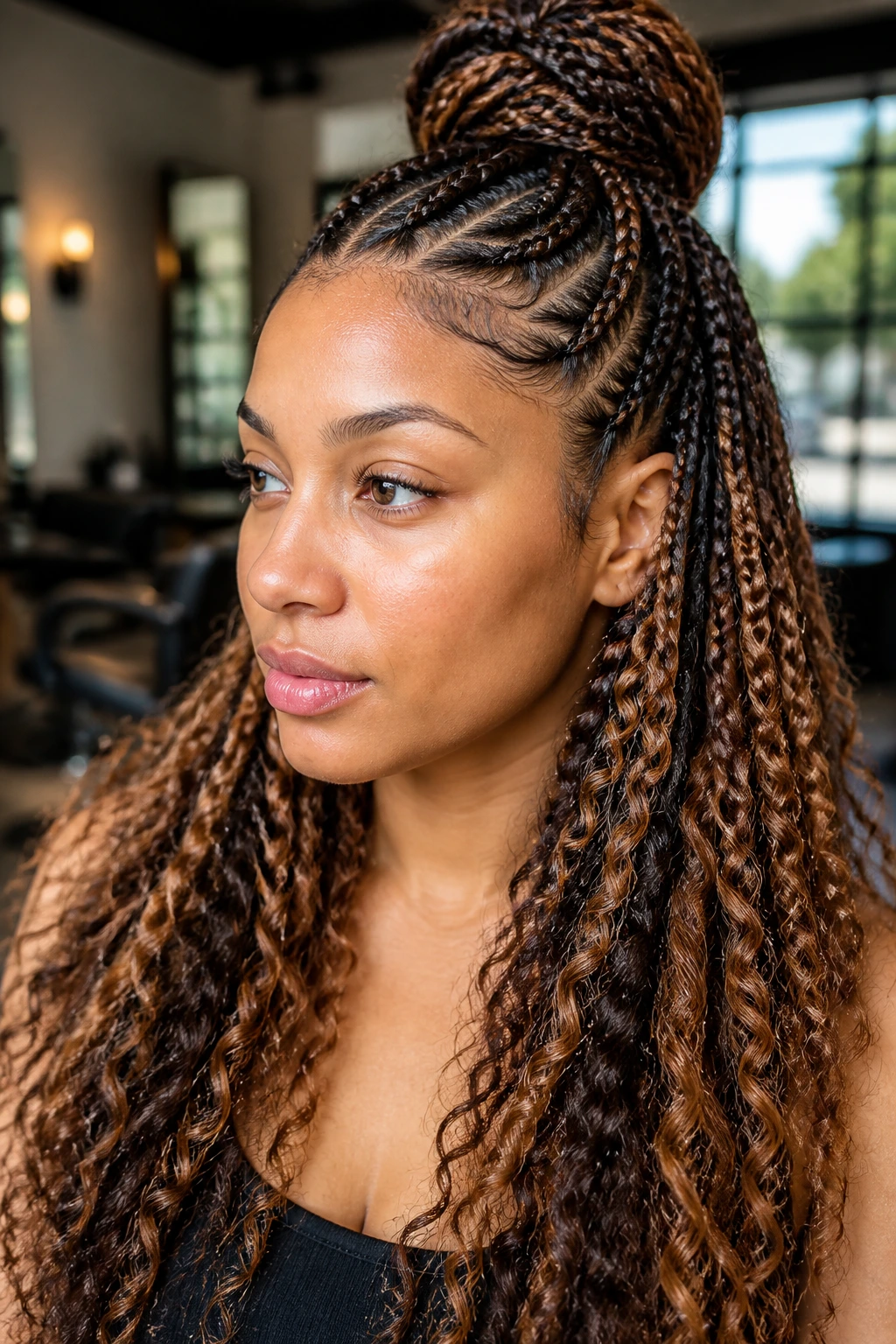
Half-up knotless braids give you two things at once: the security of tucked-away lengths and the looseness of a curly tail or braid fall. Caramel highlights work here because the top half can stay darker and neat, while the lower half carries the lighter movement. That contrast looks especially good on long hair.
I like this style when someone wants to keep the face open but doesn’t want the whole head pulled back. It’s cleaner than a full ponytail and softer than wearing all the braids down. The caramel pieces also help define the split between the top and bottom sections, which makes the style read a little more intentional.
If you’re going to add beads or cuffs, keep them on the lower section only. The top should stay sleek so the shape doesn’t get noisy.
19. Bantu Knot Set with Caramel Coil Ends
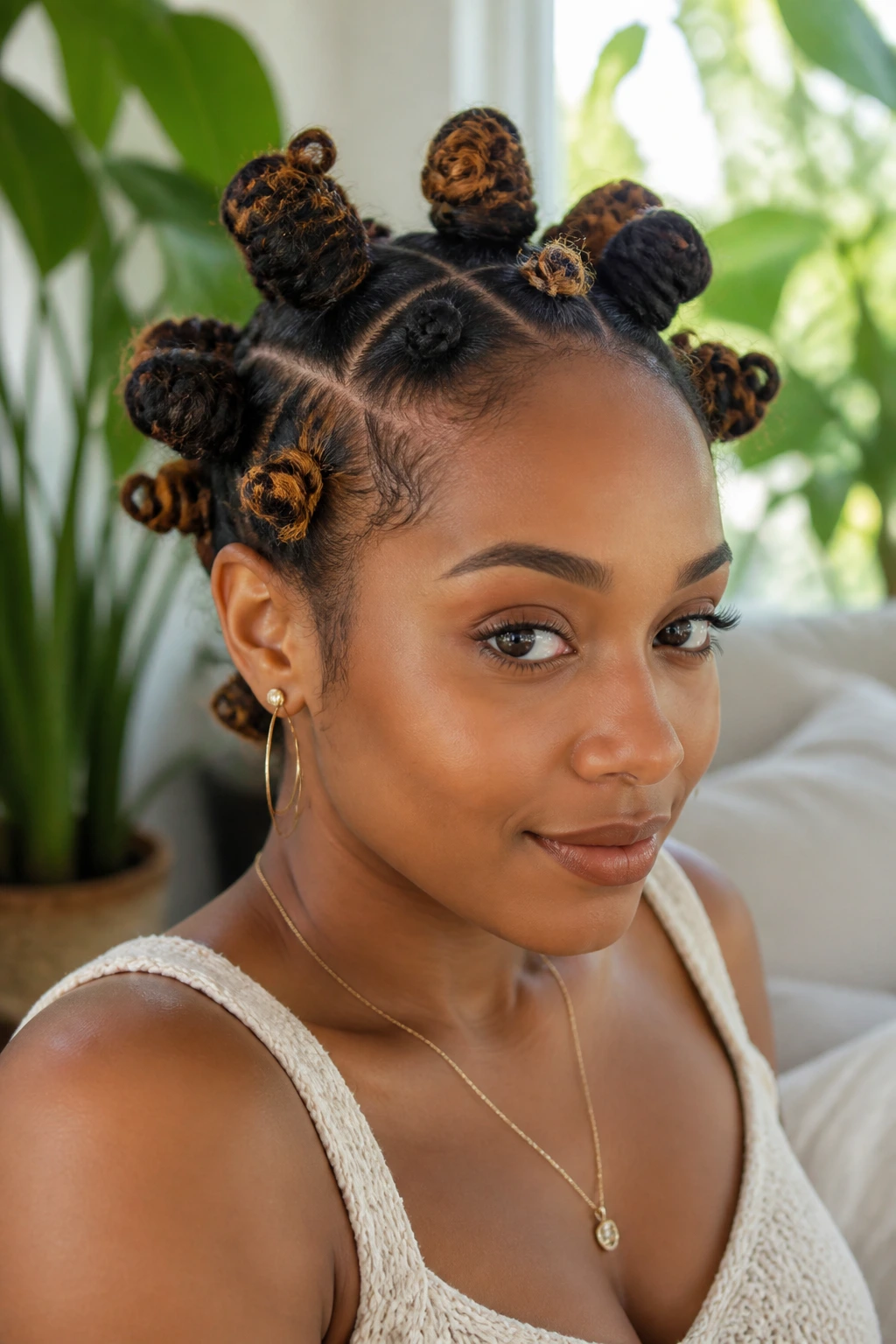
A Bantu knot set is not the first style people think of for highlights, and that’s exactly why it works. The knots themselves create sculpted little domes, and caramel on the coil ends or in the twist feed-in adds enough contrast to make the pattern stand out. It’s playful without being messy.
This style shines on natural hair that wants to be tucked but still visible. If you’re wearing extended knot sets, keep the highlight placement near the outer rings so the color shows once the knots are unwrapped or rearranged. You can also wear the knots for a few days and then release them into a curly set with warm tips.
A small note: the cleaner the parting, the better the color reads. Jagged parts make the whole thing look rushed.
20. Faux Hawk Braids with Curly Topper
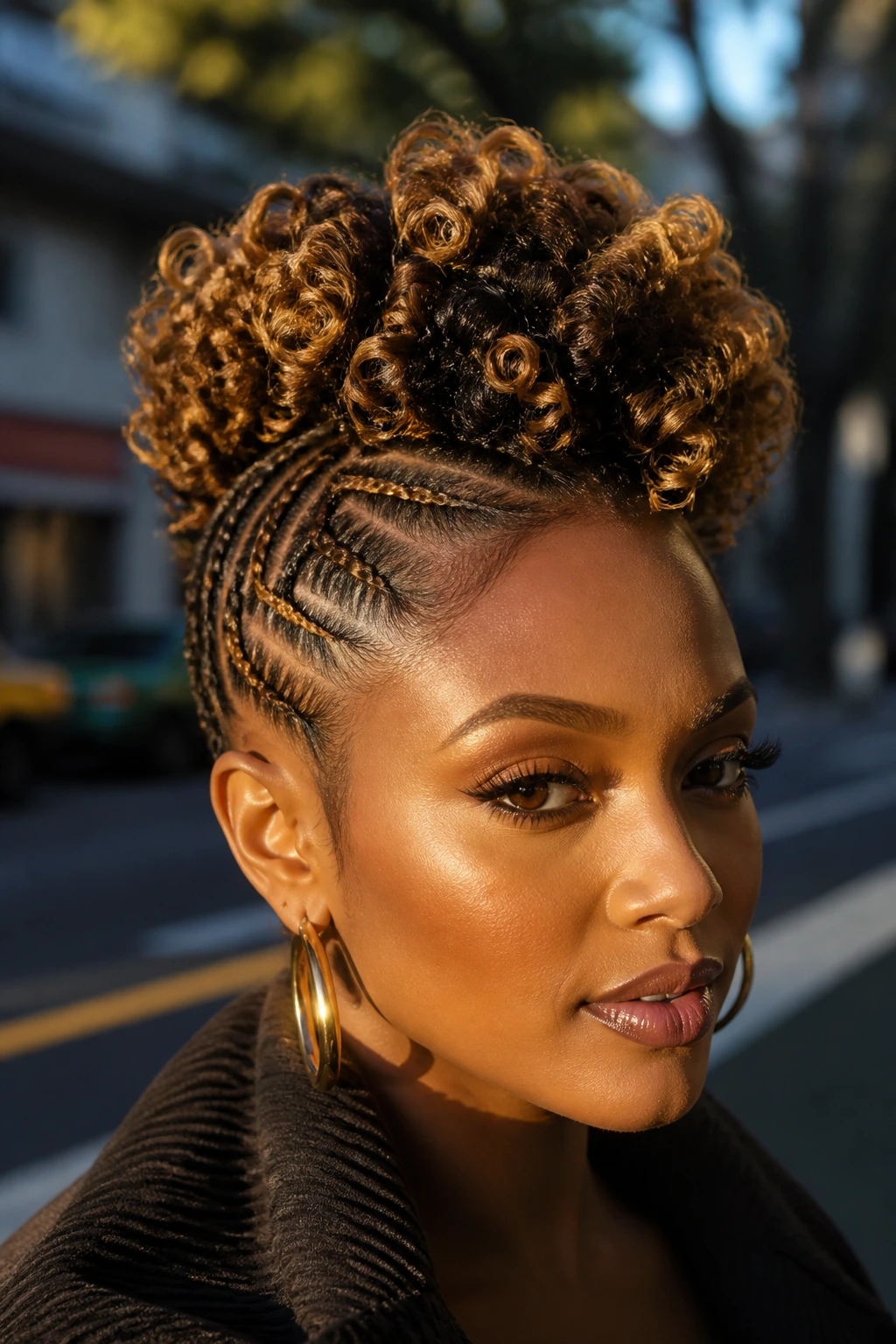
A faux hawk braid style gives caramel highlights a strong shape to live in. The sides stay sleek or braided close, while the center ridge carries the color and the movement. Add a curly topper or curly ends and the whole thing gets height without needing a lot of extra length.
This is the style I’d pick if you want something a little bold but still practical. It pulls the hair away from the face and keeps the caramel where it can be seen. If the highlight sections are placed only in the center ridge, the style looks sharper and more balanced than if the color is scattered everywhere.
The one thing to watch is tension. A faux hawk can look dramatic without feeling tight. If your scalp hurts, the style has missed the point.
21. Side-Swept Braids with Curly Fringe
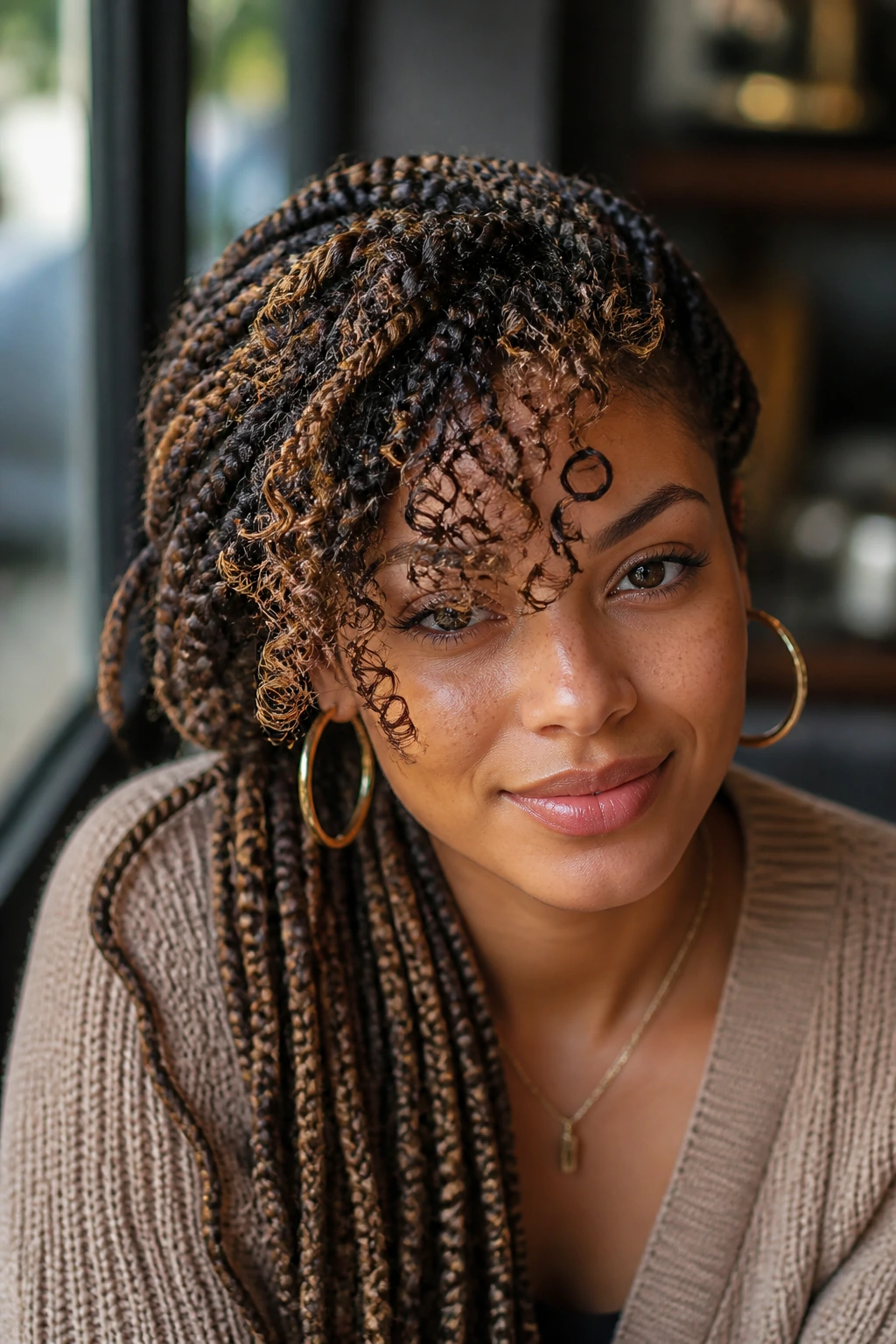
Side-swept braids with a curly fringe are a good answer when you want protection but don’t want the front to feel sealed off. The braids keep the length tucked, the fringe softens the face, and caramel pieces in the fringe keep the look from going too dark around the eyes. That little bright patch changes the whole mood.
Who should ask for this
People with medium to long curly hair who like a romantic shape but hate heavy installs. The side sweep gives you a natural place for the caramel to sit, and the fringe makes the style feel lighter. If you wear it with a deep side part, the highlight line becomes part of the shape instead of an extra detail.
Keep the fringe piecey, not dense. Too much hair at the front starts to look like bangs, and that shifts the style into a different lane.
22. Rope-Twist Low Bun
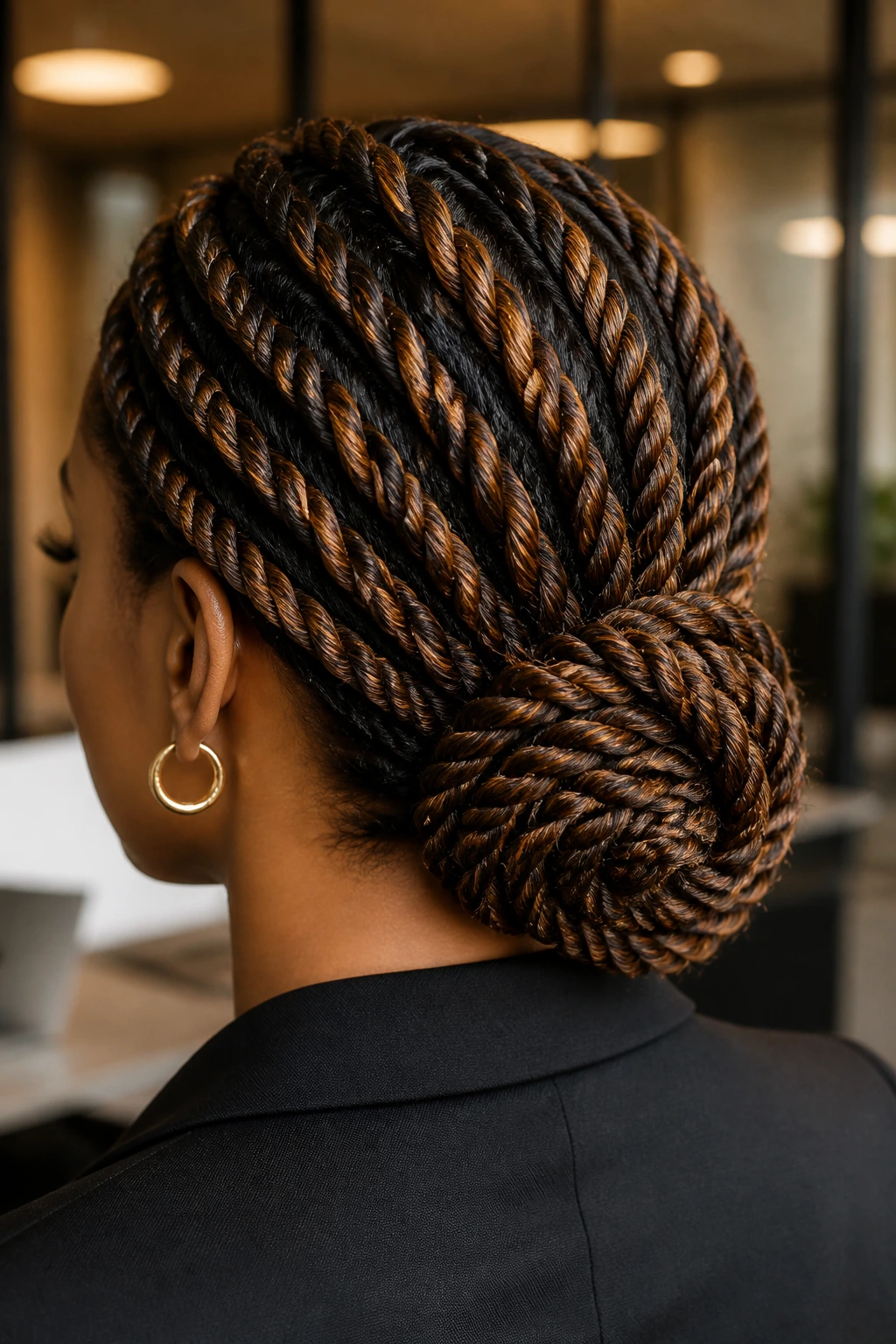
Rope twists make a low bun look smoother than plain braided hair because the twist pattern adds a quiet spiral to the surface. Caramel in the outer rope strands gives the bun a warm sheen, especially when the light hits the curve at the nape. It’s a good choice if you want something polished that still protects the ends completely.
This style suits work settings, formal events, and those days when you want your hair to stay put for twelve hours without a second thought. Keep the bun low and full enough that the highlights show as bands of warmth, not as random lines. A bun that is too tiny can hide the color entirely.
A soft brush at the hairline and a tiny bit of gel are enough. Resist the urge to lacquer the whole thing down.
23. U-Part Wig with Defined Curls and a Caramel Money Piece
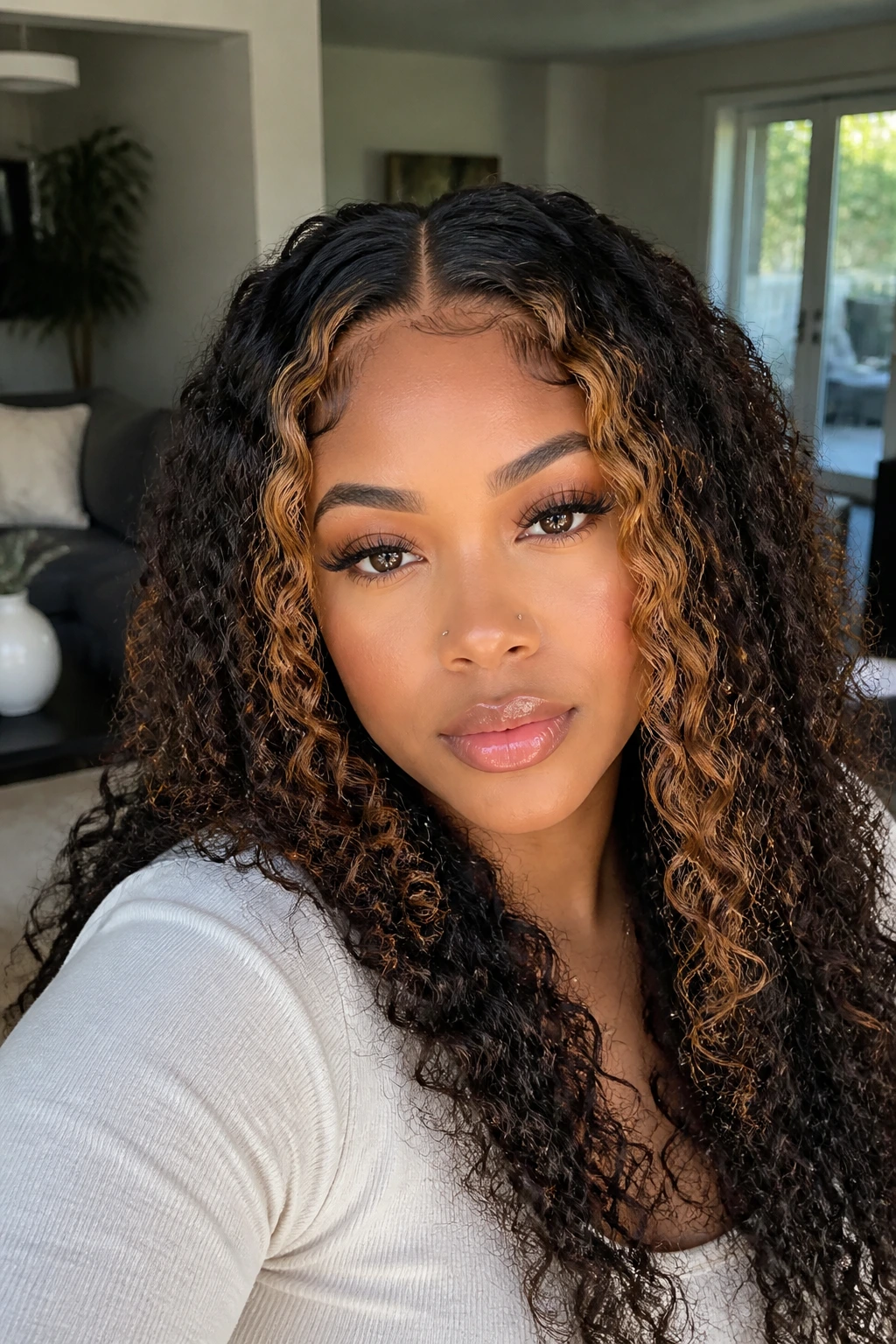
A U-part wig is one of the easiest ways to wear caramel on curls without committing your own hair to a full color change. Your natural leave-out blends around the part, and the highlighted wig pieces do the visual work. A money piece near the face gives the style a bright frame and keeps the wig from feeling wiggy.
The good versions of this style depend on texture match. If your leave-out is a tight coil and the wig is a loose wave, the blend will fight you every morning. Match the curl pattern as closely as you can, and keep the caramel concentrated near the front or top layer so the brightness feels believable.
This is a smart option if you want quick volume, lighter upkeep, and zero braid-taking-down drama at the end.
24. Feed-In Crown Braids with Curly Back Length
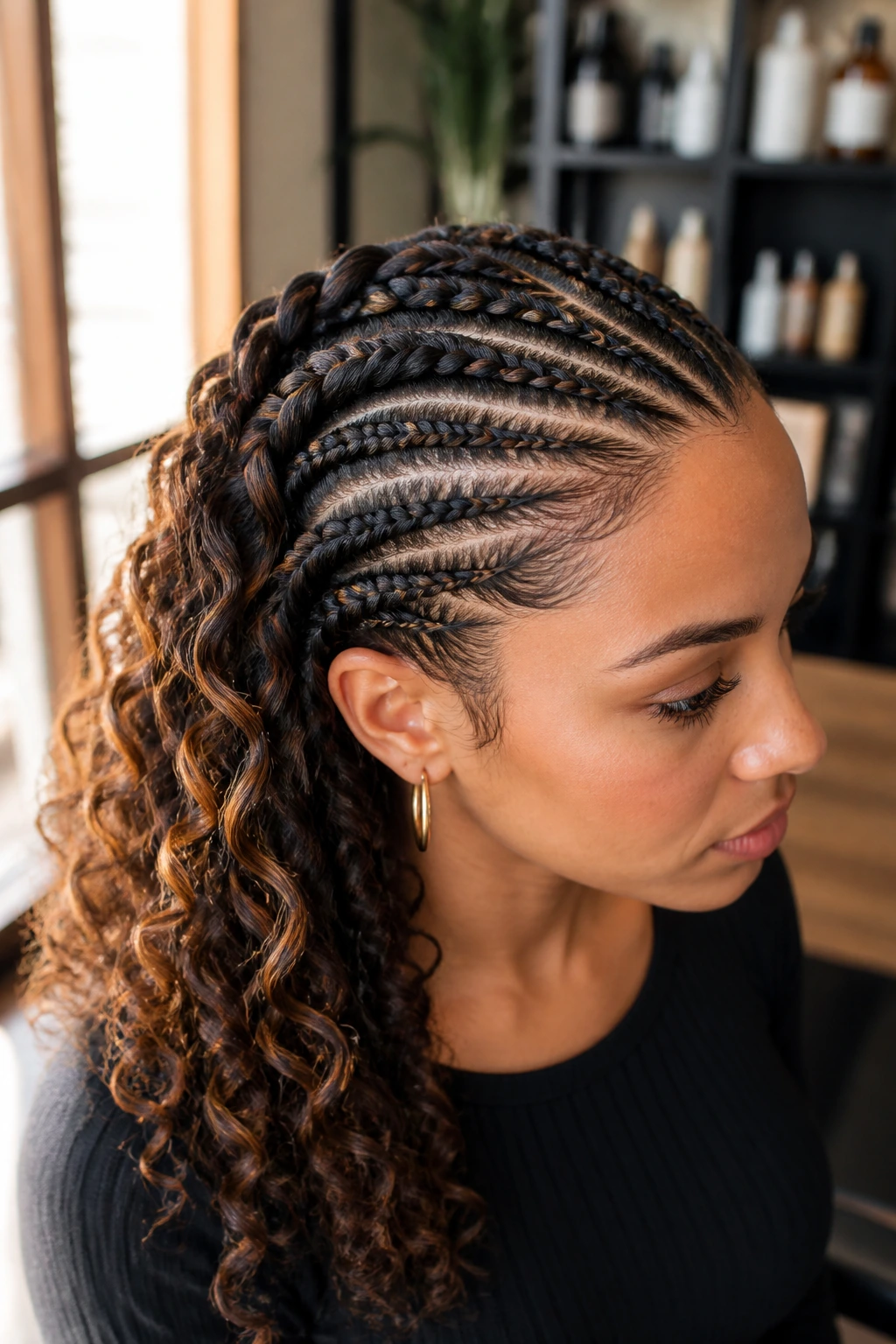
Feed-in crown braids give you a clean scalp path and a strong shape around the head, while the curly back length softens the finish. Caramel highlights do their best work here in the feeding pattern and the back curls. The result is tidy from the front and a little freer from behind, which is a nice balance.
I like this style because it respects the head shape. The braids trace the crown, then the curls fall away and keep things from feeling too rigid. If you add caramel to the feed-in sections only, the braids stay graphic without turning the whole style into a color block.
This is one of the most wearable options in the list if you need something that can last and still look elegant when you turn your head.
25. Braided Ponytail with Clip-In Curls and Caramel Streaks
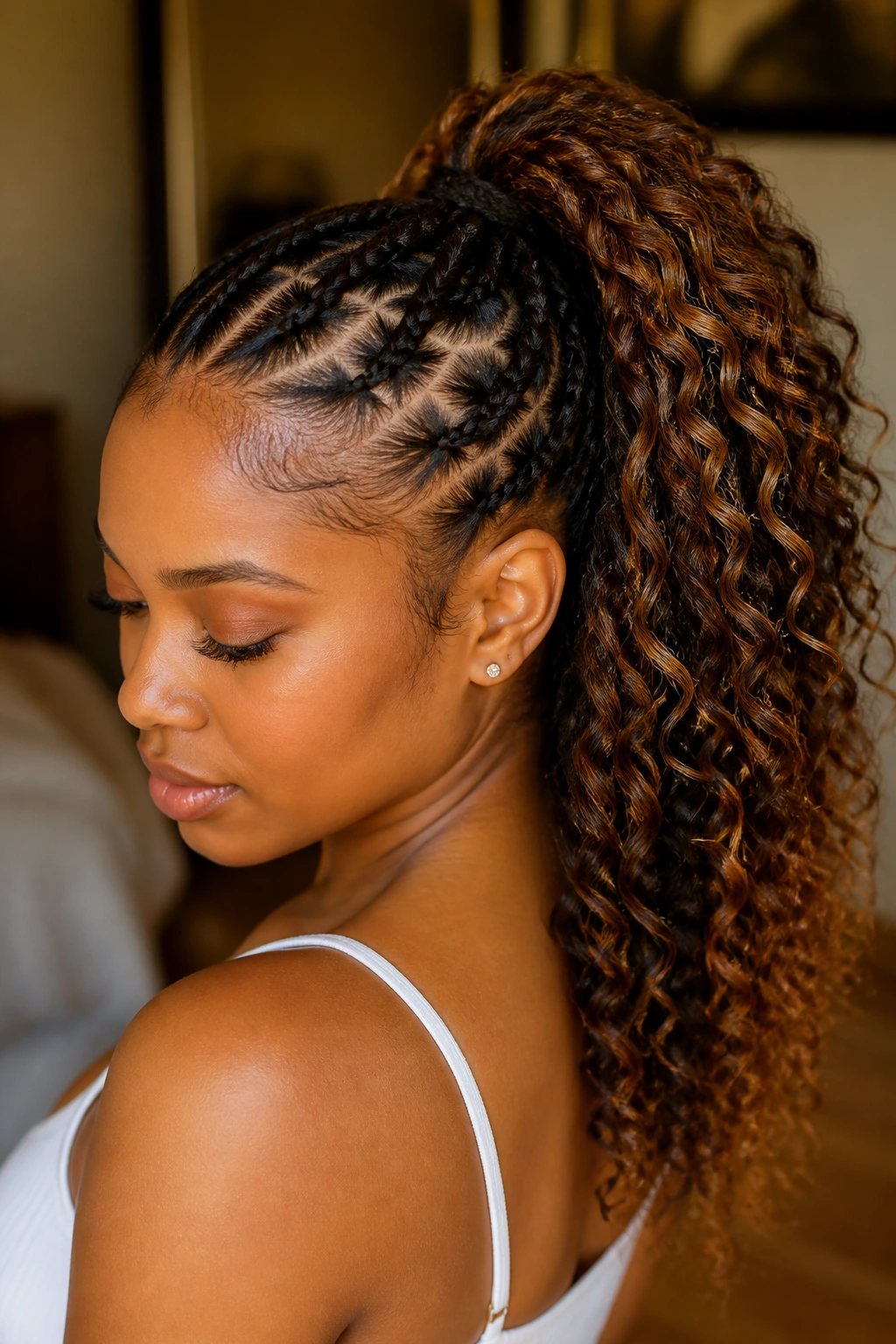
A braided ponytail with clip-in curls is easy to underestimate. The braid keeps the base secure, the clip-ins bring body, and the caramel streaks make the ponytail look fuller because the eye follows every curl. If you want a style that gives you height and movement without a full install, this is a good place to land.
The safest version uses your own hair braided into a firm base, then clip-ins added at the tail rather than near the scalp. That keeps tension off the edges and lets the highlighted curls sit where they can actually be seen. I’d keep the streaks soft and irregular, not evenly spaced like a zebra stripe. Hair never grows that neatly.
A little shine spray on the clip-ins and a clean wrap at the base are enough to make it look finished.
Why Protective Styles and Caramel Highlights Work So Well on Curly Hair
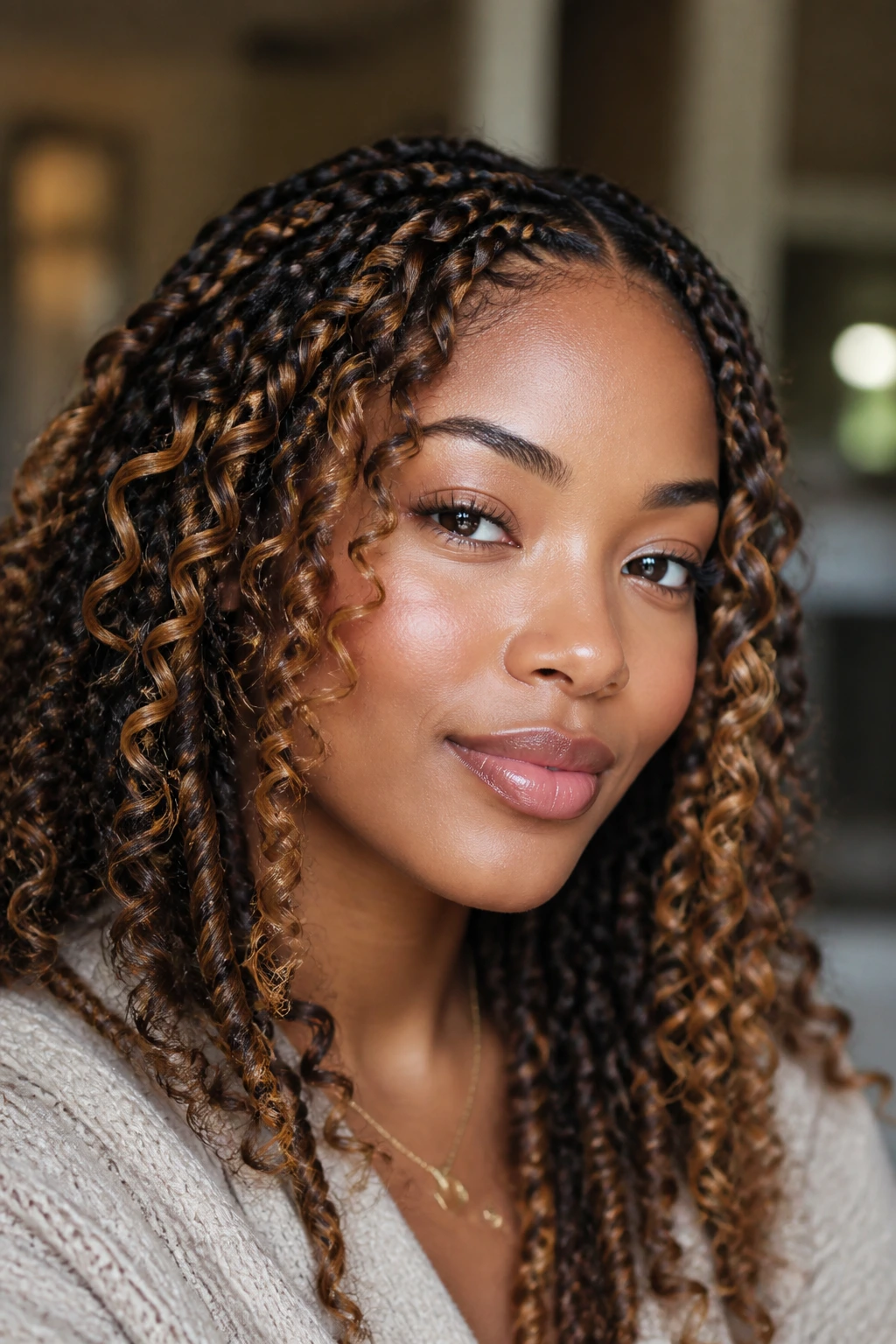
The real magic here is that curls already make color look dimensional. A straight section of hair shows one tone; a coil gives you several. Caramel highlights ride that texture instead of fighting it, so the shade looks richer even when you use a fairly small amount of it. That’s why a few warm strands around the face can change a style more than a full head of lighter pieces in the wrong place.
Protective styling does the other half of the job. Braids, twists, locs, sew-ins, wigs, and tucked buns all reduce how often your own hair gets combed, stretched, or hit with heat. Less handling means fewer snapped ends and less frizz at the crown and nape, which are usually the first places to give people trouble. If your hair is color-treated, that matters even more.
And caramel is a forgiving shade. It doesn’t have to be pale to be visible. A deep honey-brown or bronze caramel can still read clearly against dark curls, especially when the color sits on the ends, the front pieces, or the outermost braid rows. That flexibility is why these styles age better than loud blond streaks that only make sense on day one.
How to Choose the Right Caramel Tone for Curly Hair
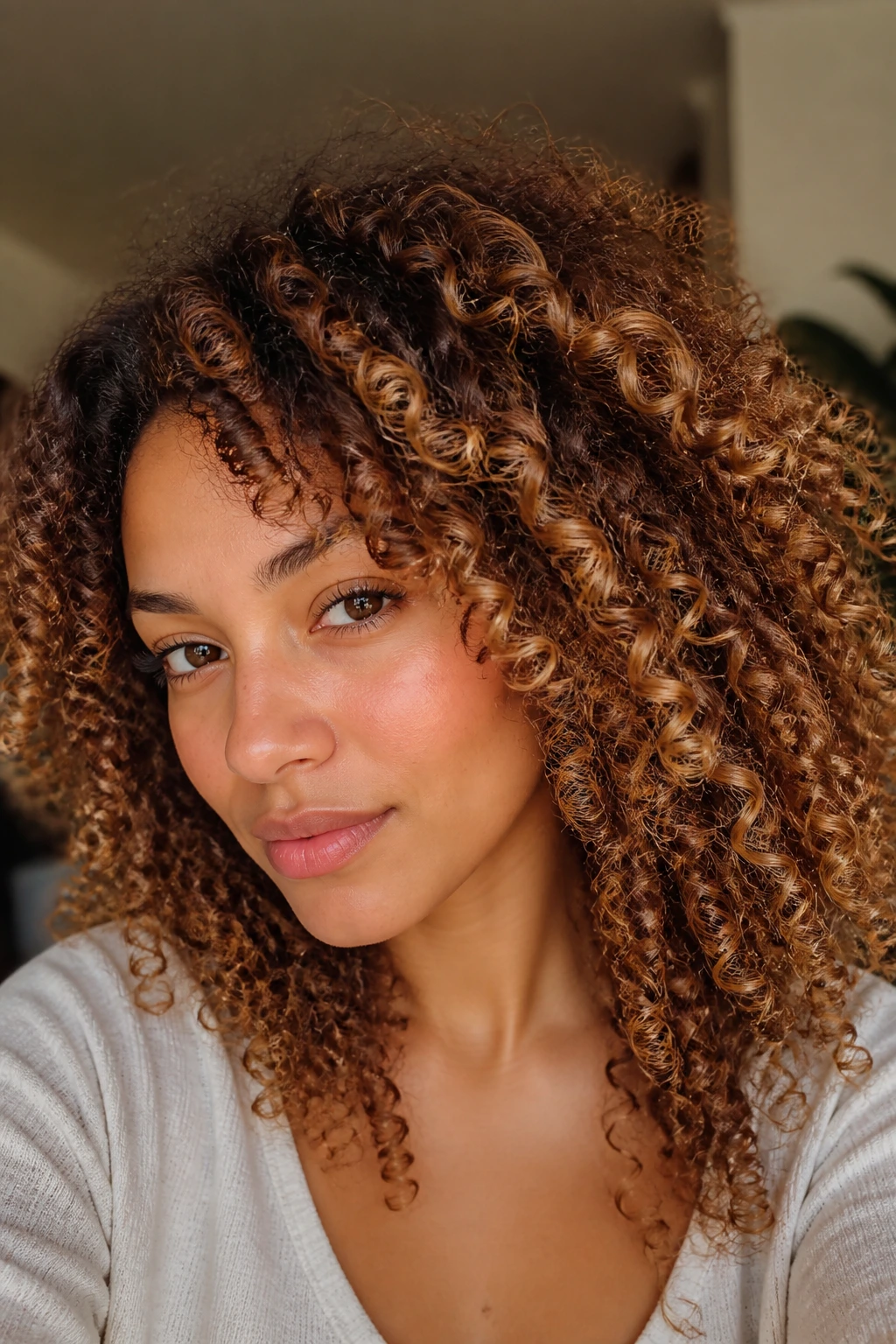
A good caramel blend starts with your base color, not the picture on the box. If your natural hair or extension base is very dark, a caramel that lands in the medium-brown to soft-gold lane will look richer than a pale blond tone that flashes too hard. On lighter brown curls, you can go a touch brighter and still keep the look believable.
Match the shade to the shape
- Deep bases: chestnut caramel, toffee, and warm bronze tend to blend better than icy beige.
- Medium brown bases: honey-caramel, amber, and golden brown create enough contrast without looking harsh.
- Curly wigs and extensions: choose hair that has at least two tones in the pack so the style doesn’t read flat under indoor light.
Textured hair doesn’t need a huge amount of brightness to show dimension. That’s the part people overdo. One strong caramel streak near the temple or a soft ombré on the last third of a braid often looks better than trying to cover the whole head in highlight pieces. If you’re unsure, choose the darker shade first. Dark curls with a little warmth almost always look more natural than curls that have been pushed too light.
The Tools That Make These Looks Easier to Wear
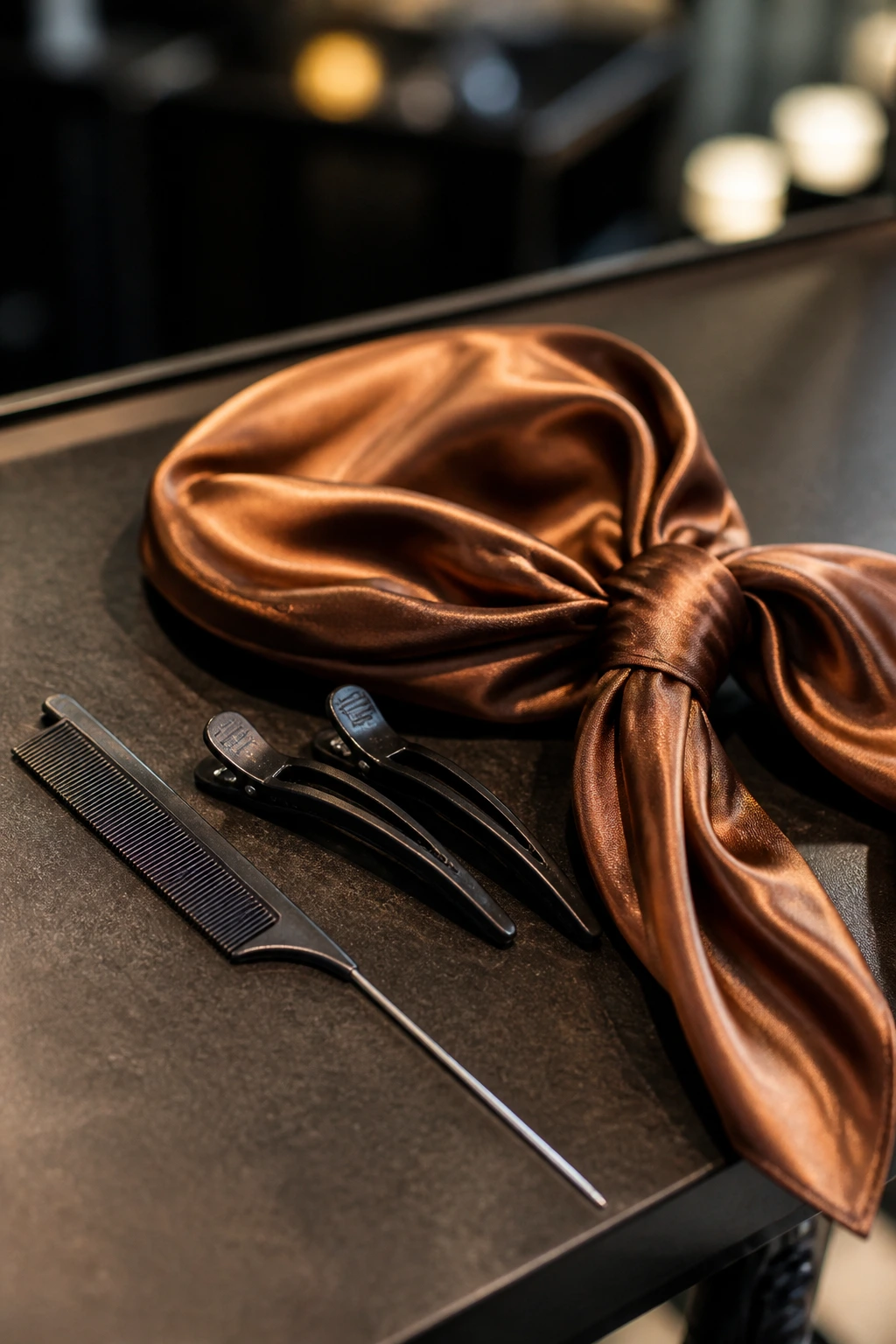
- Rat-tail comb: Clean parts matter, especially for braids, stitch rows, and side-swept styles.
- Sectioning clips: These keep curls and extension hair from tangling while you work through the head in small sections.
- Silk or satin scarf: Useful for laying edges, preserving part lines, and keeping highlighted curls from roughing up overnight.
- Satin bonnet: Better than cotton for braids, twists, and locs; it cuts down on frizz and lint.
- Lightweight mousse: Helps set twists, calm flyaways, and keep caramel pieces looking fresh rather than fuzzy.
- Braid spray or diluted leave-in in a spray bottle: Good for refreshing the scalp without drowning the roots.
- Edge brush and small gel: Enough to smooth the hairline; you do not need a hard-shell helmet of product.
- Crochet hook: Needed for faux locs, crochet braids, and some feed-in installs.
- Hair cuffs and beads: Best used sparingly so they support the caramel tones instead of competing with them.
- Wide-tooth comb: Handy for detangling your own curls before an install or wig prep.
- Diffuser: Useful if you’re leaving curls out around braids, sew-ins, or U-part wigs.
- Clarifying shampoo: Helps reset the scalp between installs, especially if you use mousse and oil regularly.
How to Keep the Style Fresh Between Wash Days
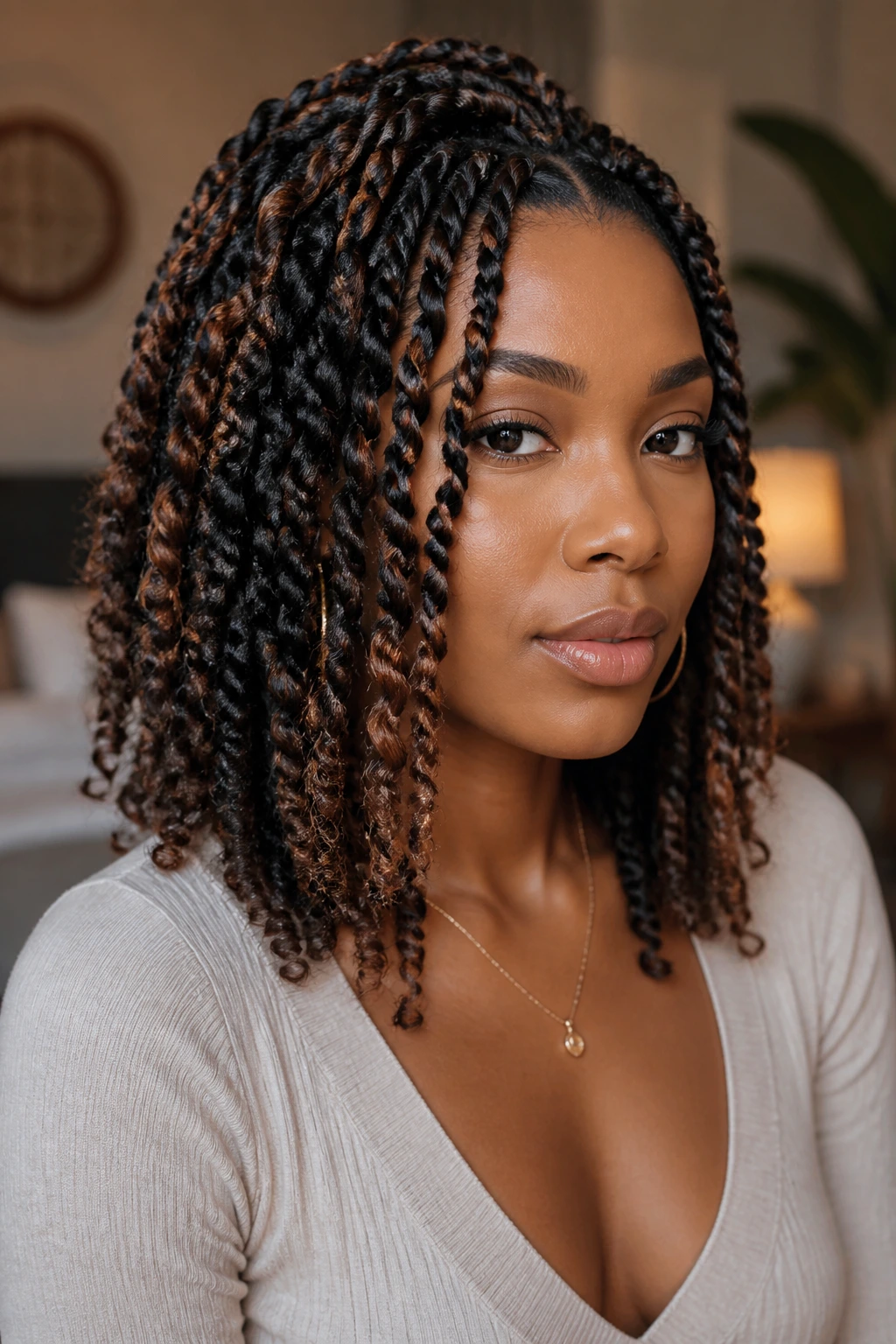
Most of these styles hold their shape longest when you treat the first 24 hours like a settling period. Sleep with a satin scarf or bonnet, keep the hair loose instead of yanking it into a tight ponytail, and don’t pile on oil right away. Fresh installs often look dull only because they’ve been overloaded with product.
For braids, twists, and locs, a light scalp refresh every 5 to 7 days is usually enough. Use a nozzle bottle or braid spray along the parts, then let the scalp dry before you add anything else. Full wash days can happen every 1 to 2 weeks if the style can handle it, but the key is drying completely. A damp scalp under dense extensions is asking for trouble.
Wigs and sew-ins need a different rhythm. A U-part or leave-out style may need the front pieces smoothed more often, while a sew-in will stay nicer if you keep the perimeter clean and use a heat-free curl refresher. Braided styles generally last 4 to 8 weeks depending on size and tension. Smaller twists and locs can stretch longer; tighter braid installs usually look best when you take them down sooner rather than pretending they’re still fresh. That part is boring. Also non-negotiable.
Ways to Make the Caramel Pop Without Overdoing It
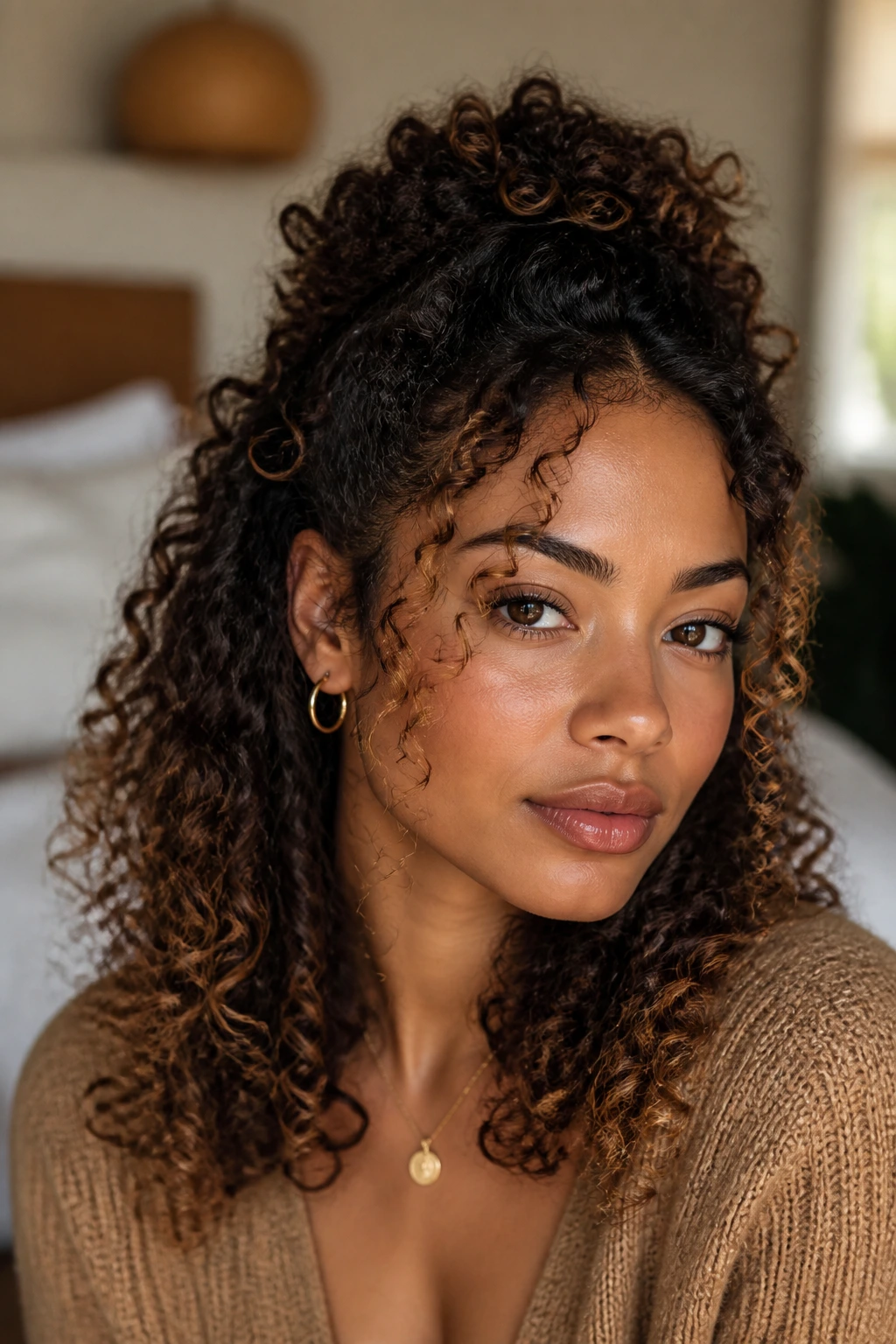
Color Placement: Put the brightest caramel near the face, at the ends, or on the outermost layer of the style. That’s enough to create contrast without flattening the braid pattern.
Texture Contrast: Pair smoother braids with curlier ends, or matte twists with a shinier money piece. The difference in texture makes the highlight read richer.
Accessory Shift: Gold cuffs, amber beads, or a warm-toned scarf can pull the caramel forward. Silver can work too, but it cools the look fast.
Soft Finish: A light mousse or foam wrap product keeps the highlighted pieces from puffing up too much. Caramel shows best when the surface still has some definition.
Make-It-Yours: If you like low-maintenance, choose darker caramel. If you want more drama, add one brighter face-framing section and keep the rest grounded.
Common Mistakes That Make the Style Fall Flat
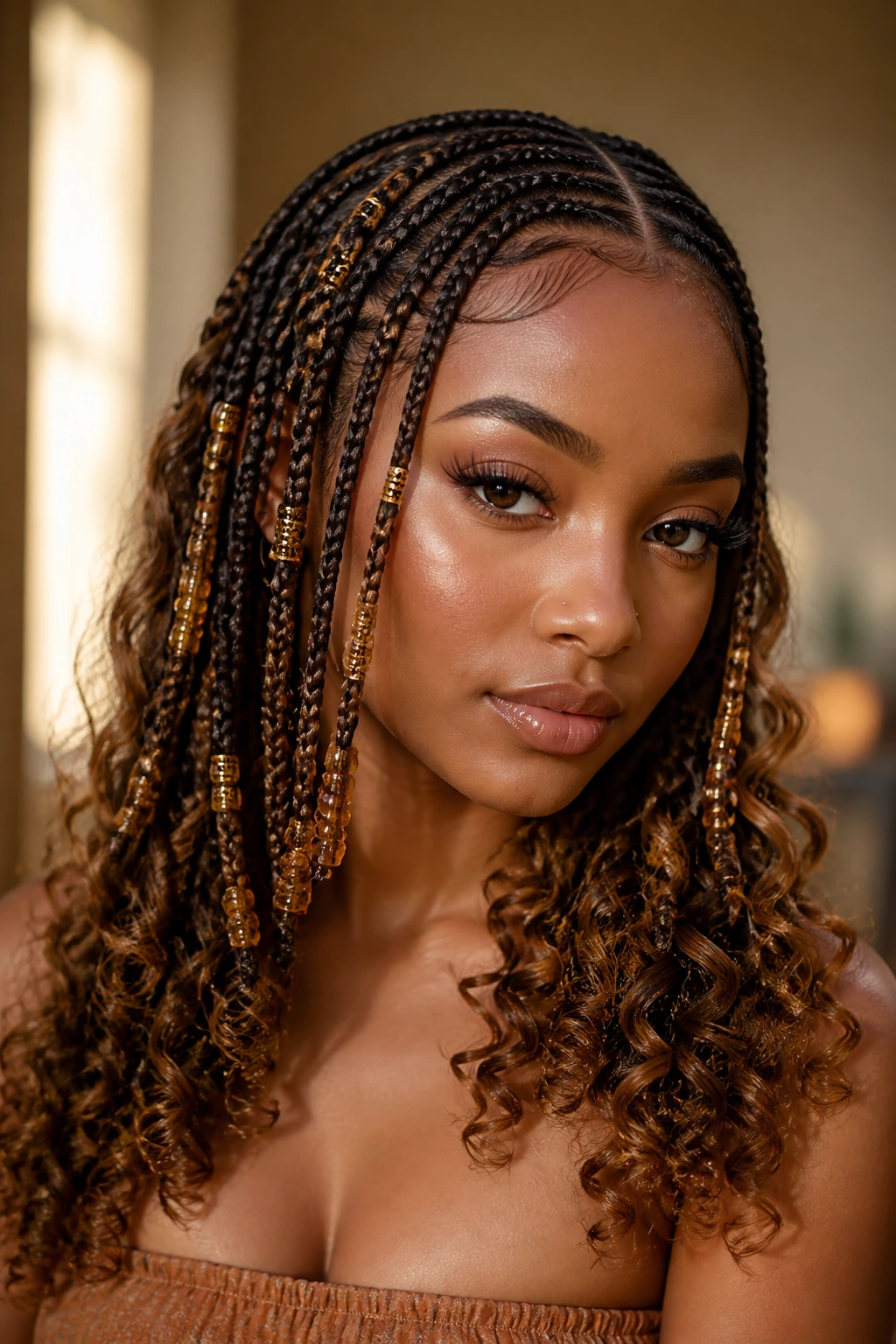
Going too light too fast. Pale blond pieces on a very dark curly base can look stripey, especially under indoor lighting. The fix is a warm caramel that lives one or two steps above your natural shade, not five.
Pulling the style too tight. A braid that feels fine in the chair can still cause soreness the next day, especially around the temples and nape. If your scalp aches, the install is too snug. Loose enough to move, firm enough to hold. That’s the sweet spot.
Using too much product on highlighted hair. Heavy oils and thick creams make synthetic caramel pieces look dirty and clump the curls. Use a light mousse or a water-based refresher instead.
Ignoring texture matching. A curly leave-out with a straight wig or a coarse braid extension next to soft twists looks off right away. Match the texture as closely as you can, or keep the mismatch hidden in a bun, ponytail, or tucked shape.
Leaving the style in too long. Once frizz builds at the roots and the color starts to lose its clean contrast, the style stops looking protective and starts looking worn out. Take it down before the scalp gets irritated.
Skipping the nighttime wrap. Satin is not optional if you want the caramel pieces to keep their shape. Cotton steals moisture and roughs up the lighter strands first.
Variations and Adaptations to Try
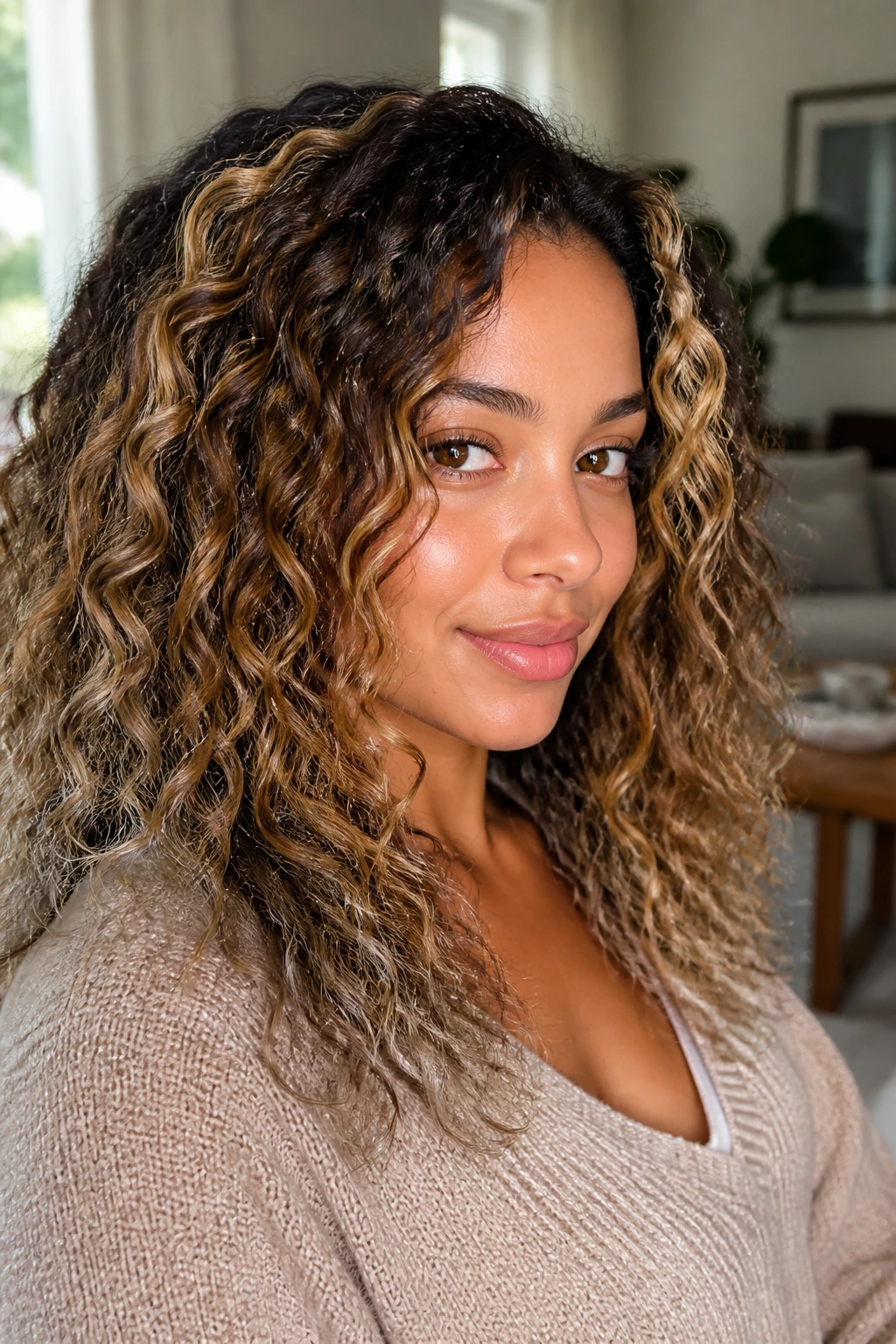
Soft Honey Blend: Swap bright caramel for a gentler honey-brown mix if you want the style to read warm but not high contrast. This works well on dark brown bases and on styles with lots of movement, like passion twists or boho braids.
Face-Frame First: Keep the caramel only in the front pieces, money piece, or top layer. That gives you color without crowding the whole head, which is useful if your job or schedule calls for something more understated.
Chunky Highlight Panels: If you like Marley twists, faux locs, or larger braids, use wider color panels instead of tiny streaks. The thicker texture can carry the contrast better and won’t look overworked.
No-Bleach Version: Use highlighted extension hair instead of lightening your own curls. That’s the cleanest route for fragile ends, color-treated curls, or anyone who wants the tone without the maintenance of actual dye.
Cooler Caramel Wash: If your skin tone or wardrobe leans cool, choose a caramel with a little beige in it instead of an orange-heavy gold. The warm tone stays, but it won’t fight the rest of your look.
Shorter Wear, Cleaner Finish: For styles like micro braids or goddess locs, keep the length moderate and the highlight placement simple. Shorter versions are easier on the scalp and less likely to fuzz out at the ends.
Questions People Ask Before Committing
Can I wear caramel highlights on curly hair without bleaching my own hair?
Yes. The easiest route is highlighted extension hair, a wig, or a sew-in with color already built in. That gives you the warm tone without putting your natural curls through bleach or toner.
Which protective style lasts the longest?
Micro braids and some twist styles usually last longer than crochet bobs or braided ponytails, but longevity depends on size, tension, and how often you manipulate the hair. Smaller styles can last longer, though they also take more time to install.
Do caramel highlights work on very dark curly hair?
They do, but the tone matters. Deep brown, bronze, and honey-caramel shades show up better than pale blond because they sit closer to the natural depth of the hair and look less harsh.
How do I keep braids from getting fuzzy so fast?
Wrap the hair every night, use mousse sparingly, and avoid piling on heavy creams. The ends usually frizz first, so a light re-twist or a small amount of setting foam can help refresh the shape.
Can I wash my scalp while wearing braids or twists?
Yes, if the style is installed well and you dry it fully afterward. Use a diluted shampoo or scalp cleanser, focus on the parts, and give the roots enough time to air-dry or sit under a hooded dryer.
What if my scalp feels tight after installation?
That’s a sign the style was installed too tightly. Don’t wait it out for days and hope it relaxes. A little soreness can happen, but sharp pulling or bumps along the hairline means the tension needs to be released.
Are synthetic caramel extensions okay for these looks?
For many braid and twist styles, yes. Synthetic hair is often lighter and easier to install, though human hair is better for some wigs, sew-ins, and styles where you want more natural movement or heat styling.
How do I keep the highlight pieces from looking fake?
Mix tones. A single flat caramel shade can look obvious, while a blend of dark brown, bronze, and warm honey reads more natural on curly textures. Placement matters too; the face frame and ends usually carry the color best.
The Styles That Age Well
The nicest thing about caramel on curly hair is that it doesn’t have to scream to be seen. A few warm pieces at the front, a soft gradient on the ends, or a brightened braid row can change the whole tone of a style without making you fight with your own texture. That’s a useful thing to remember, especially if your hair has already been through enough heat, color, or tight installs.
Pick the style that fits your real life, not the one that looks most dramatic in a screenshot. The good ones will still make sense on day ten, not just day one. And if the caramel is placed well, the curls and the protective style do what they should: hold shape, keep the ends safe, and look better the longer they settle in.