



A curly bob can look expensive or it can look like a haircut that gave up halfway through drying. The difference usually comes down to two things: where the light lands, and how the shape is cut around the curl. On brunette hair, especially, highlights can either trace every bend in the curl and make the whole cut move, or they can sit there like pale stripes and fight the texture. The good versions are all about rhythm. The bad ones are loud in the wrong places.
That is why highlighted bobs for brunettes with curly hair work so well when the color is placed with a little restraint. You want brightness that follows the curve of the hair, not a solid block of tone sitting on top of it. Caramel, bronze, honey, walnut, copper, and soft beige tones all behave differently on brown bases, and each one changes the way the curl pattern reads from across the room. A bob on curls already has movement; the highlight job should support that movement, not freeze it.
The other thing people miss is shrinkage. A chin-length curly bob can sit at the jaw when wet and graze the cheekbones when dry, and that shift changes where the color needs to be visible. Put the brightness too low and it disappears under the top layer. Put it too high and the cut can look puffy at the crown. The sweet spot is usually somewhere around the outer curve of the curls, with a little extra light around the face and crown.
Why These Cuts Keep Their Shape and Color
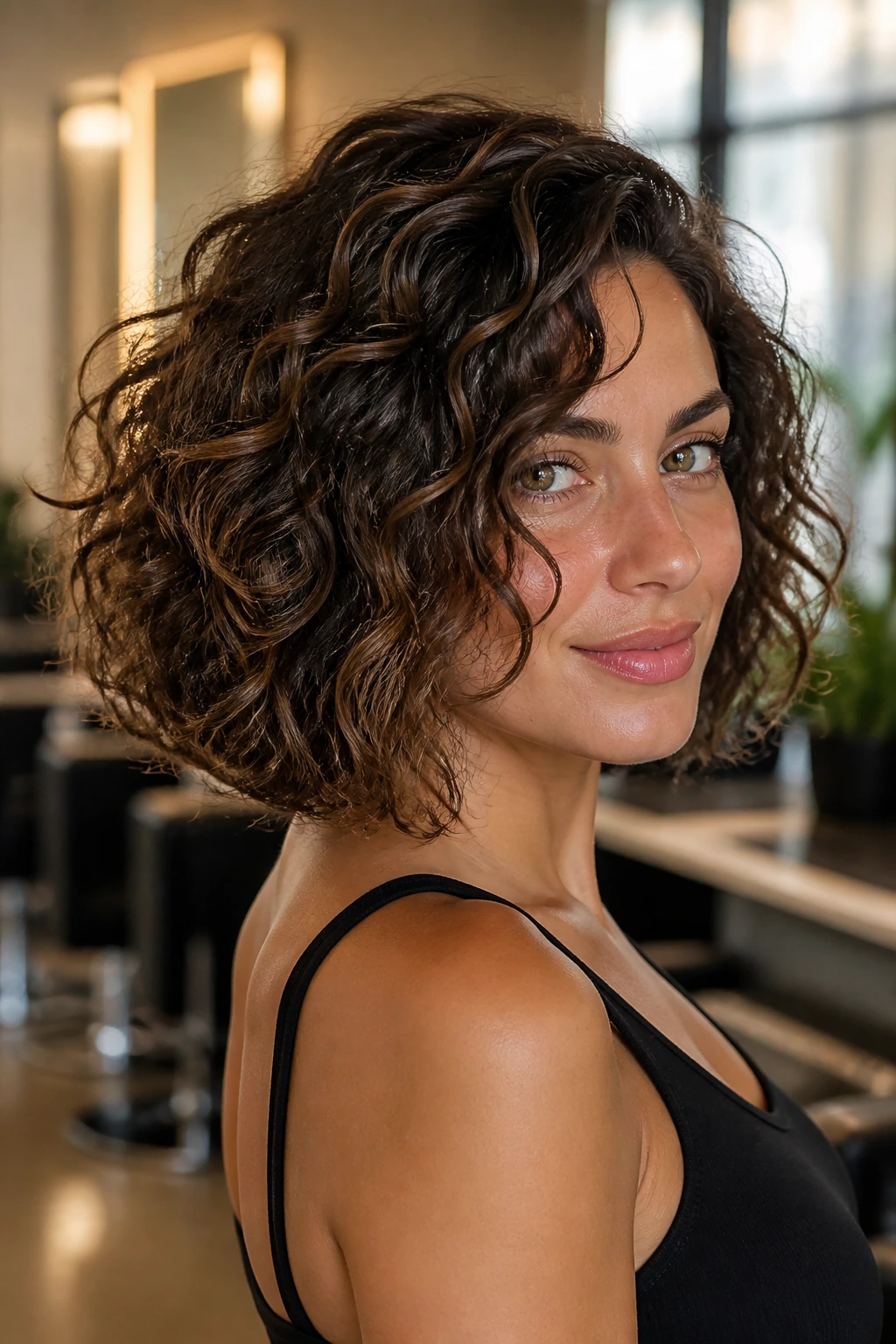
- Curly hair creates natural windows: The bend of the curl breaks up color, so even a small ribbon of caramel can look fuller and brighter than it does on straight hair.
- Bob length keeps the color readable: When the hair stops around the jaw, cheekbone, or collarbone, the highlight placement has a clear frame instead of disappearing in long layers.
- Brunette bases give highlights more contrast control: Dark brown, chestnut, mocha, and espresso all let you decide whether you want a soft glow or a sharper streak.
- Growth-out is easier on a bob: Shorter lengths hide root shadow better, which matters when you do not want to live at the salon.
- Curl pattern changes the finish: Loose waves, springy ringlets, and tighter spirals all reflect light differently, which is why the same color can look flat on one head and gorgeous on another.
1. Caramel Ribbon Bob
A caramel ribbon bob is the one I reach for when someone wants visible brightness without giving up the brunette base. The color sits in loose, painted ribbons through the outer curls, so every twist catches a different note of gold. On a medium-brown base, it reads warm and glossy. On deeper brunette hair, it feels richer and more dimensional.
Why It Works
Caramel behaves nicely on curly hair because it softens the edge of the cut instead of drawing a hard line through it. Ask for ribbons around the face, the top layer, and the ends that sit near the collarbone if your bob is a little longer. That gives the cut movement even when the curls are tight on wash day.
Best for: 2C to 3B curls that need visible brightness without a high-contrast blonde effect.
- Keep the ribbons about 1/2-inch to 1 inch apart so the color doesn’t blur into one giant light band.
- A soft side part helps the caramel show up near the cheekbones.
- Pro tip: Ask for the lightest pieces to land on the curls that sit on top when your hair is dry, not the curls hidden underneath.
2. Honey Money-Piece Curly Bob
This one puts the brightness exactly where people look first. The honey money-piece curly bob frames the face with lighter pieces that sit just in front of the temples and cheekbones, then the rest of the bob stays brunette and calm. It’s a clean trick. No fuss. And it keeps the cut from looking heavy near the front.
The honey tone matters here because it gives a lifted look without veering icy or stripey. On a curly bob, that front brightness looks especially good when the curls fall apart a little instead of clumping into one section.
What makes it different: the color is concentrated at the front, so the bob reads brighter even if the rest of the head stays low-contrast.
A center part makes the face-framing pieces symmetrical. A side part pushes one bright panel forward and can make the whole cut feel sharper. If your curls are loose, ask for the money piece to taper into the side layer rather than stop abruptly at the chin.
3. Chestnut Balayage French Bob
Why does this look so good on curls? Because the French bob already has attitude, and chestnut balayage gives it a polished, lived-in edge. The cut sits short, often around the cheek or jaw, and the balayage keeps the top from looking like one solid brown helmet.
I like chestnut here more than blonde. It looks expensive without shouting. The color is close enough to the base that the grow-out line stays soft, but warm enough to show when the hair flips at the ends.
Best for
- Shorter curl patterns that swell at the sides
- Anyone who wants the bob to feel neat, not fluffy
- Brunettes who want dimension but hate obvious contrast
If you’re booking this, ask for a dry curl-by-curl shape on the cut and very soft, hand-painted light pieces on the surface. That combo keeps the bob from getting boxy.
4. Espresso and Toffee Jaw-Length Bob
A jaw-length bob needs a little visual break or it can feel blunt in a hurry. Espresso and toffee solve that by keeping the roots deep and placing warmer pieces just where the curls turn outward. The result looks sculpted, not busy.
This cut is especially good if your curls have a strong spring to them. The toffee pieces sit like tiny reflectors along the outer ringlets, and the darker espresso root keeps everything grounded. You end up with contrast, but not the kind that makes the hair look stripy.
Why It Works
The jaw length shows off the line of the haircut. Toffee highlights near the face and at the ends create a small lift that makes the shape look deliberate. That matters more than people think. Without that contrast, short curly bobs can merge into one round shape.
If your curls are thick, ask for internal debulking rather than a lot of surface layering. The color will show more cleanly when the shape isn’t fighting itself.
5. Bronze Curly Lob with Soft Layers
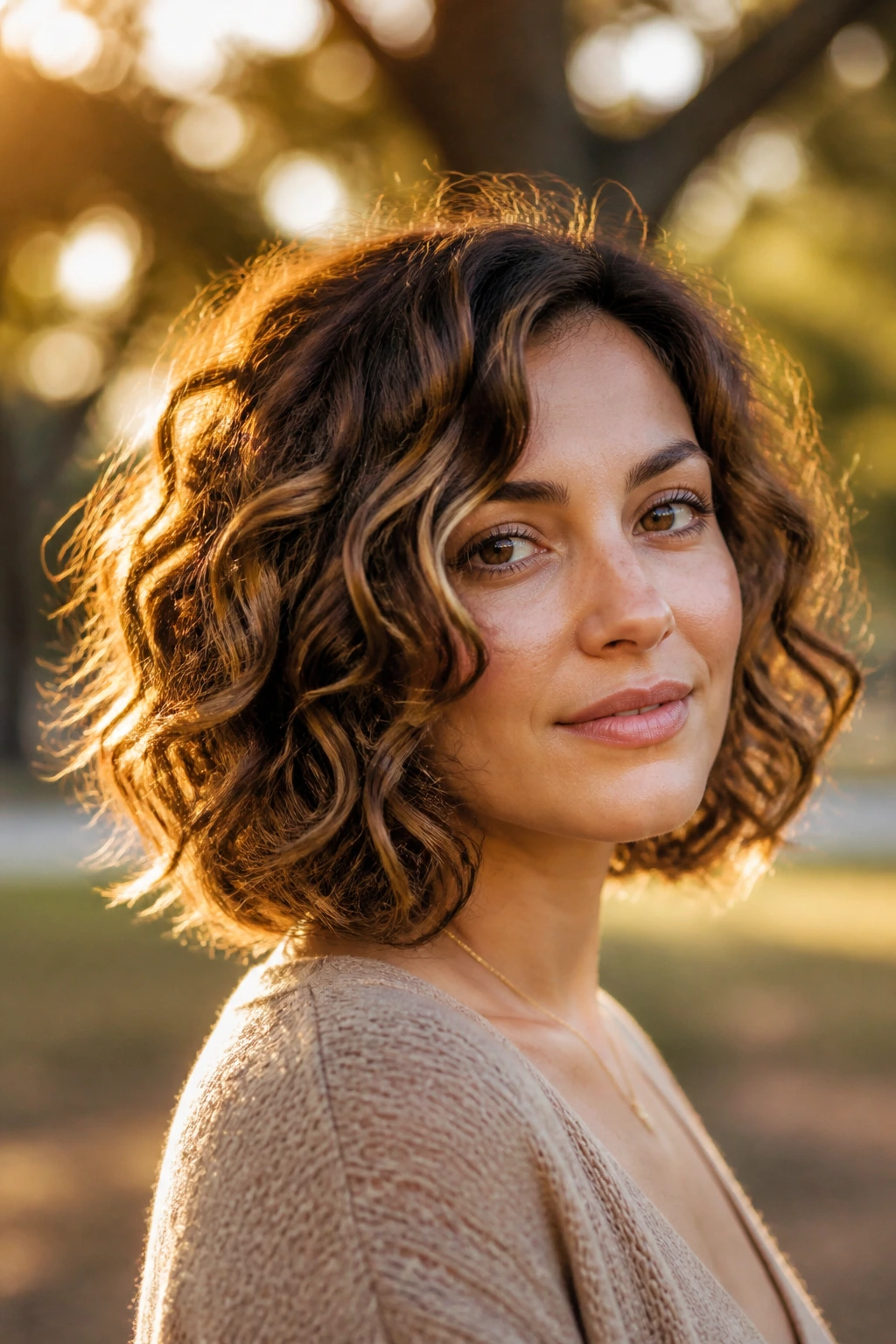
A bronze curly lob gives you a little more room to play. The length falls near the collarbone, which means the curls can stretch, swing, and show off bronze highlights without the haircut feeling too precious. I like this one because it looks good from the front, the side, and the back. Some bobs only behave from one angle. This one doesn’t.
Bronze is the sweet spot between gold and brown. On brunette curls, it adds warmth without becoming copper-heavy. If you like your hair to look sun-touched rather than dyed, this is the shade to keep in your back pocket.
Style note: soft layers matter here because a lob with no shape can go heavy at the bottom. Bronze pieces around the longest curls stop that from happening.
6. Cinnamon-Glazed Rounded Bob
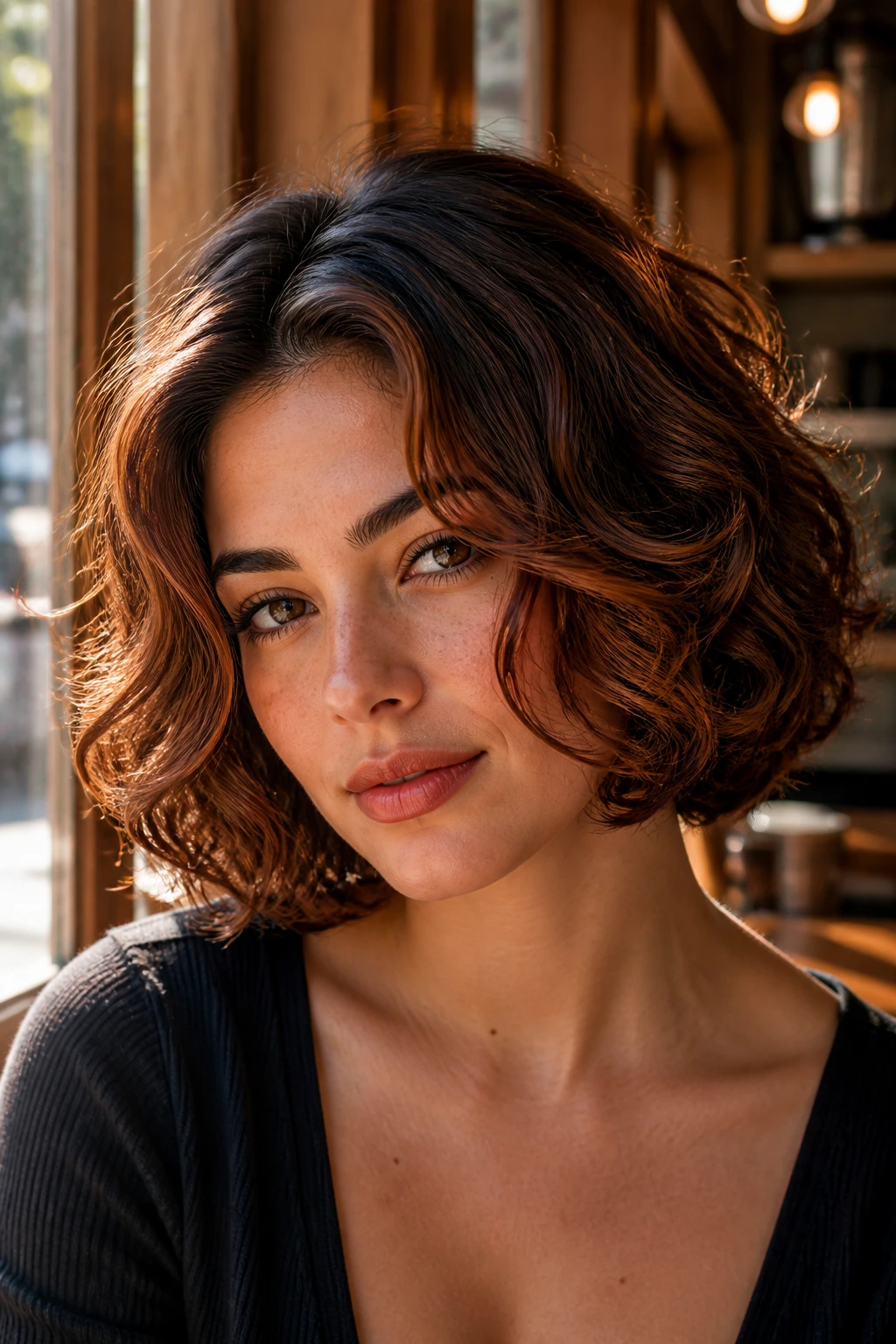
This bob is for people who want softness around the face and a little warmth that reads almost edible. Cinnamon-glazed color works beautifully on a rounded bob because the shape already curves inward; the highlights just follow that line and make it look intentional.
The cut should sit fuller through the sides, with the ends tucked under or naturally curling in. Cinnamon gives you a richer version of auburn, but without the full copper commitment. On darker brunettes, it pops. On mid-browns, it blends into a glossy warmth.
Who it suits best: curls that are naturally round rather than triangular.
- Keep the highlights concentrated on the outer shell of the bob.
- Ask for a light glaze after lifting so the cinnamon tone stays rich, not orange.
- A center part can make this look modern; a side part makes it feel softer.
7. Mocha Peekaboo Bob
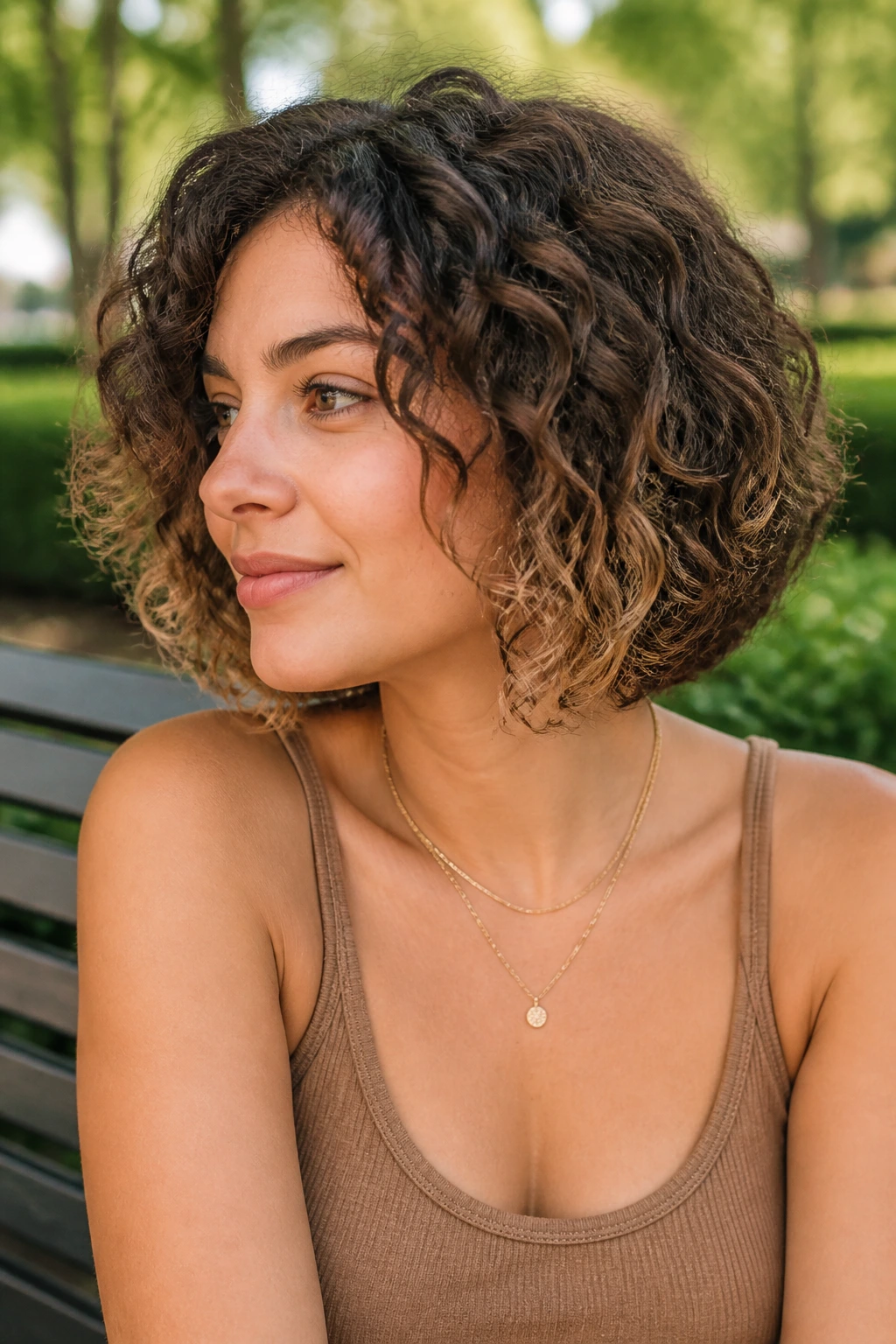
The whole point of a peekaboo bob is surprise. The top layer stays mocha and shadowy, while the lighter pieces hide underneath and flash out when the curls move. It is a very good choice if you want color that feels private until the light hits it.
I especially like this on denser curls. The hidden brightness gives the cut dimension without making the exterior look too busy. When the curls separate, you get a little flicker of lighter tone beneath the darker surface. Nice. Subtle, but not boring.
Best for: people who want lower-maintenance brightness and don’t want every grow-out to look obvious.
Ask for the underlayer to be painted in soft panels, not little random dots. Panels move better on curly hair and they read as deliberate instead of scattered.
8. Auburn Halo Bob
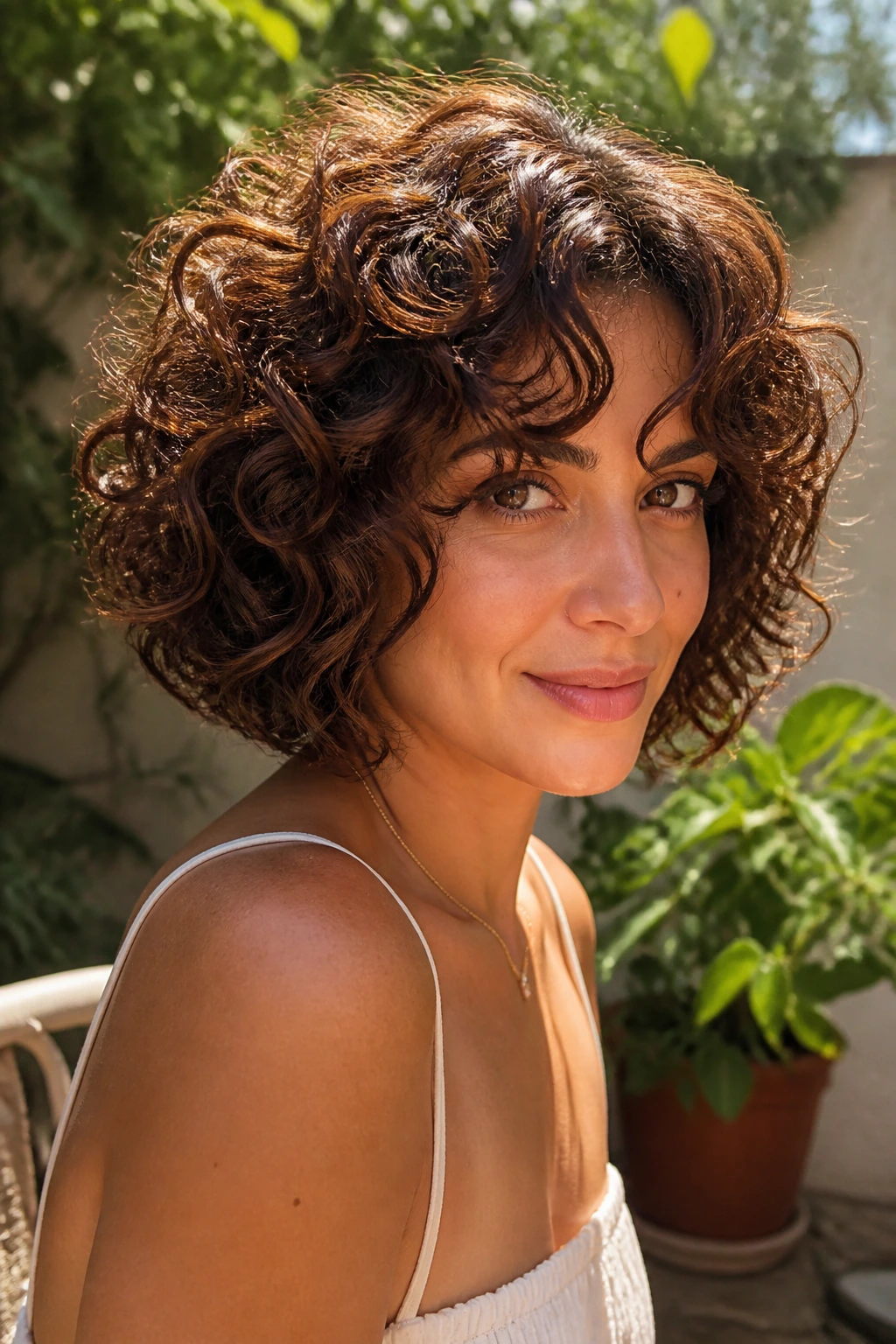
Auburn halo highlights sit high on the crown and outer top layer, where the hair catches light first. That creates a kind of warm glow around the head, which is flattering on brunettes with curl volume at the top.
This works best when the bob is shaped with a little lift at the roots and not flattened down. Auburn can go too red if it’s overdone, so the trick is keeping it thin and airy. Think veil, not blanket.
What to Watch For
If your curls are tight, the halo needs to sit farther apart or it’ll disappear into the texture. If your curls are looser, the auburn can be a touch richer because the pattern will hold the color in broad swirls.
A short bob with this placement can look almost like the hair is lit from above. That is the whole point.
9. Mushroom Brunette Bob with Cool Beige Lights
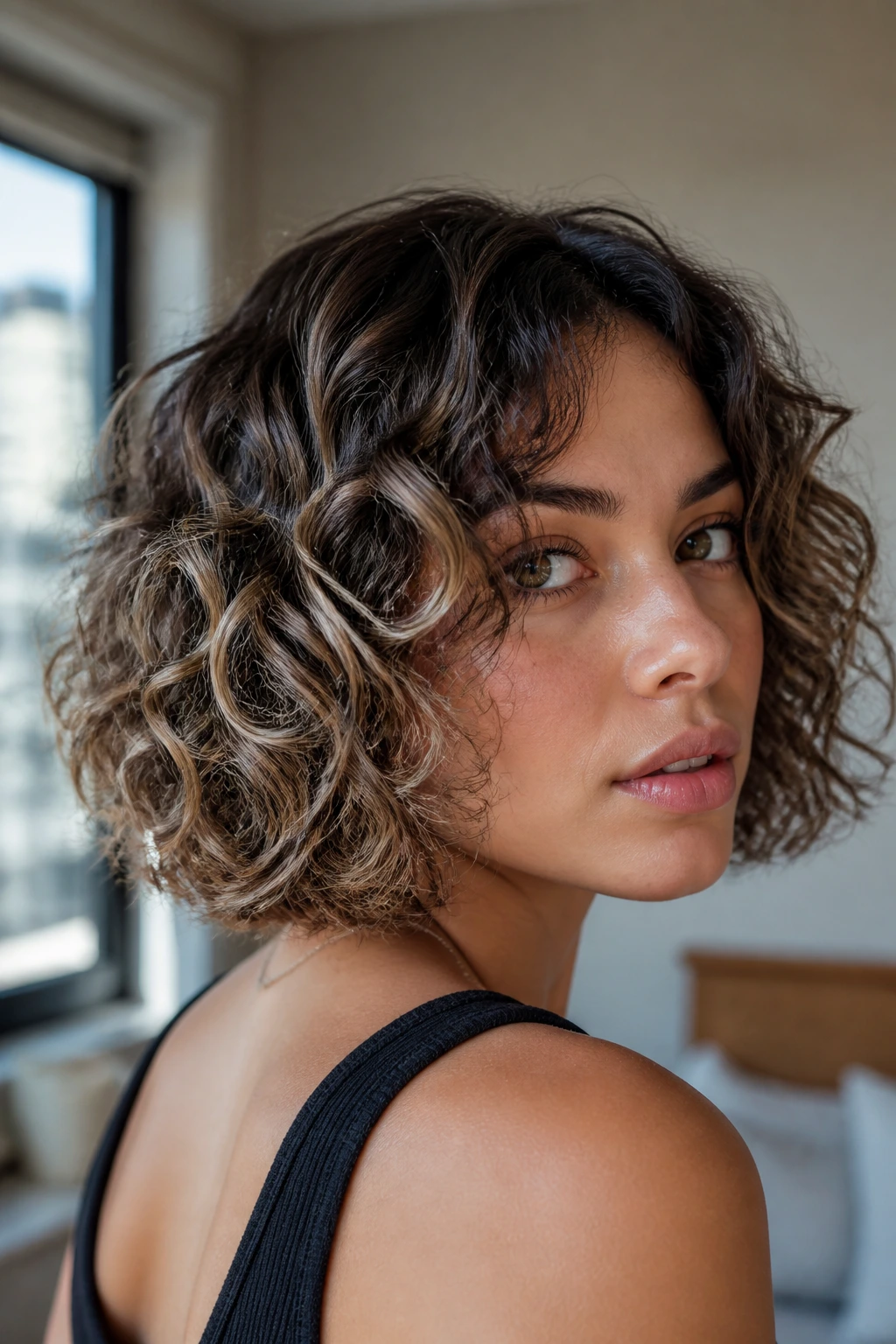
Not every brunette highlight has to be warm. A mushroom brunette bob leans cool, almost smoky, and the beige lights keep it from looking flat. The result is understated and a little editorial, especially if your natural base is deep brown.
This style is a smart move if warm tones pull orange on your hair. The beige pieces soften the face without tipping into gold, and the mushroom root makes the whole cut feel grounded. Curly texture keeps the cool tones from looking severe. The bends in the hair break them up just enough.
If you wear a lot of black, charcoal, or soft neutrals, this one tends to look especially clean. It has that crisp, polished edge that works when the haircut is simple and the color is doing the talking.
10. Walnut Layered Bob with Face Frames
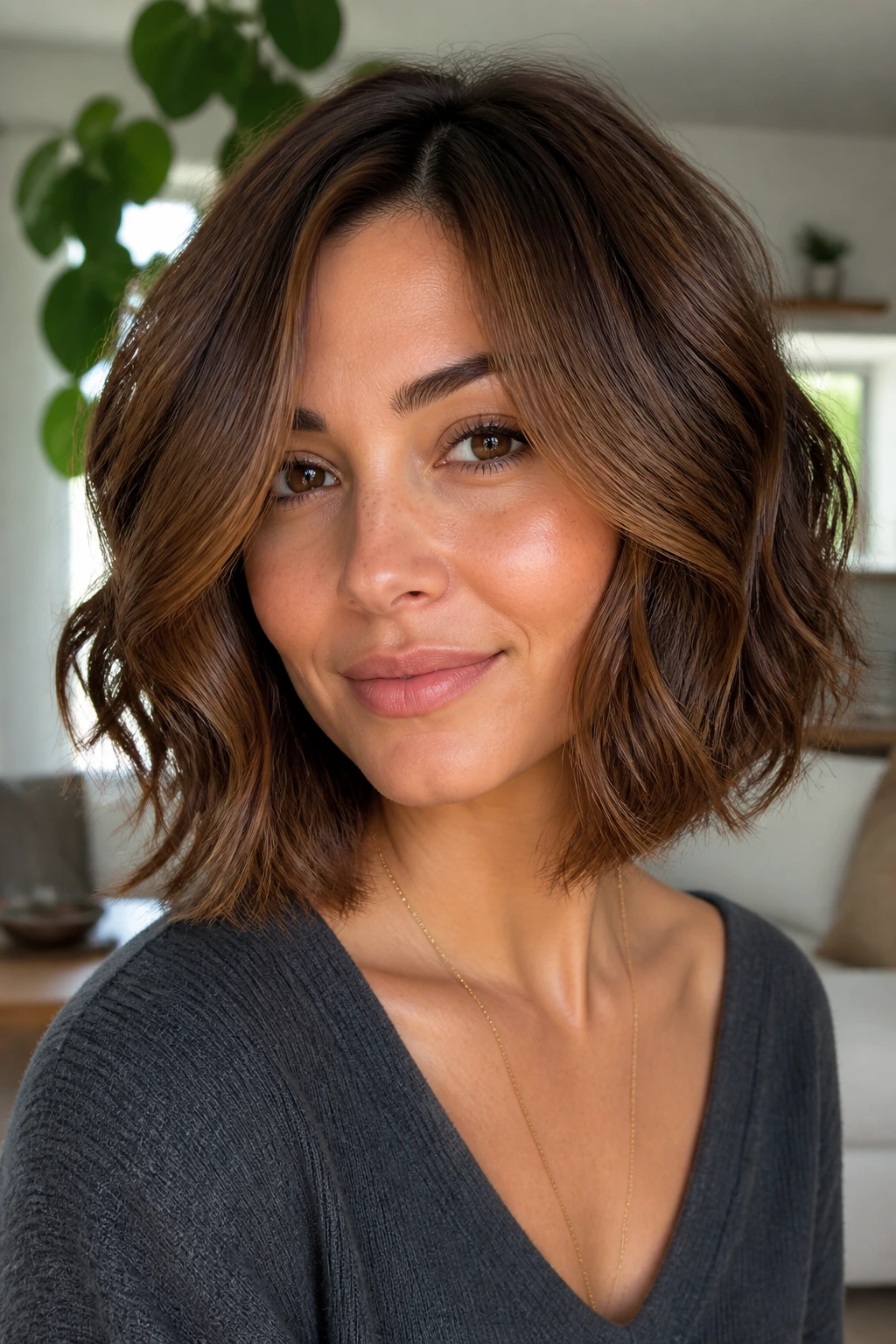
Walnut is one of those shades that does a lot without acting like it. On a layered bob, it gives the curls depth, and the face-framing pieces brighten the front without taking over the whole style.
The layers should be soft and curved, not chopped. That way the walnut tones sit on top of each curl cluster and show movement. If the haircut is too blunt, the color can’t breathe. And then the whole thing loses its shape.
Best for: medium-density curls that need a bit of lift near the cheeks.
A slight off-center part helps the face frames fall in a flattering way. Ask your stylist to keep the brighter walnut pieces a touch longer around the jaw so the bob doesn’t close in on the face.
11. Copper-Touch Curly Bob
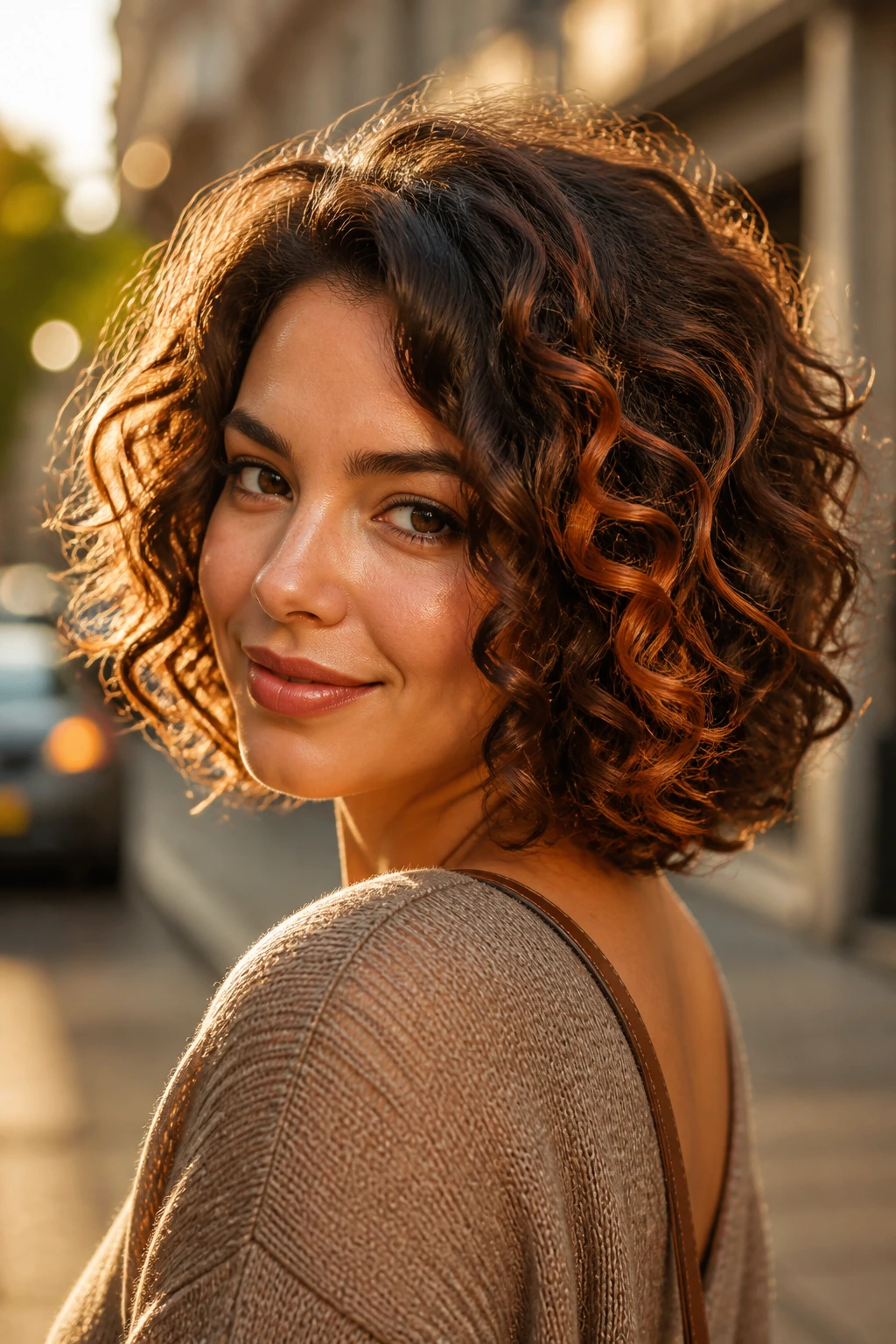
Copper touches are for people who want warmth with a little spark. Not a full redhead shift. Just enough copper to make brunette curls look awake. The color shows best in the outer bends of the hair, where the light can hit each coil or wave.
Copper can be a tricky shade on curls because it can turn loud fast. The fix is restraint. Keep it woven through a few panels instead of all over. That way the bob stays brunette first and copper second.
A good cue: if the color starts looking neon in the bowl, it’s probably too bright for the style. Copper should glow, not shout.
This works especially well on shorter bobs with lots of texture at the ends. The copper pieces make the edges of the haircut pop.
12. Chocolate Babylight Bob
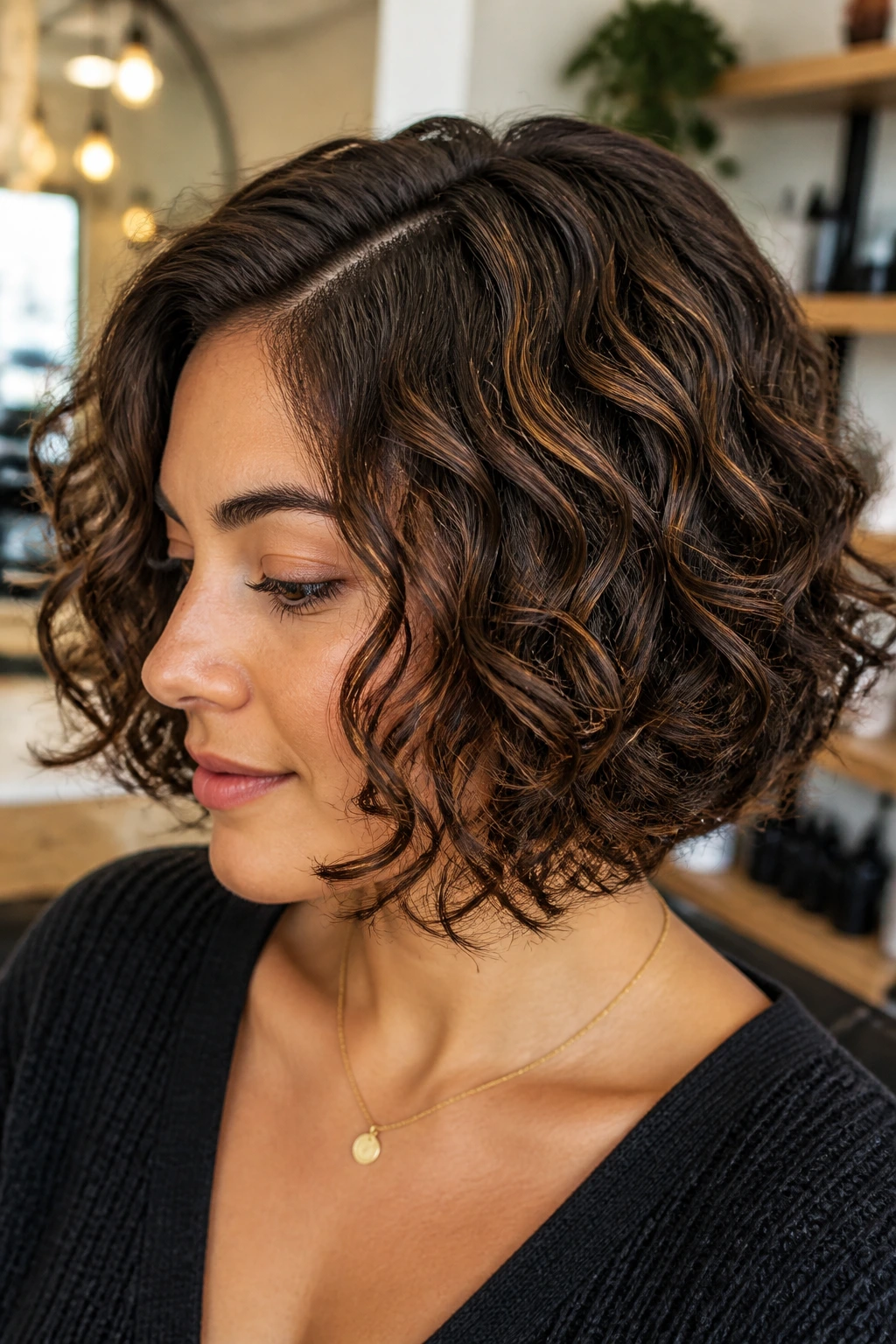
Babylights are tiny, and that’s the whole point. A chocolate babylight bob keeps the base rich and dark while adding hairline-thin brightness through the top layer. On curls, those tiny pieces can look surprisingly full because the pattern catches them from different angles.
This is one of my favorite options for someone who wants dimension but does not want to see a lot of color when the hair is up. It’s quiet from a distance and detailed up close. That makes it easy to wear in both casual and dressy settings.
Why It Works
The thinness of the highlights prevents the bob from getting chunky. If your curls are fine, babylights can give you the illusion of density. If your curls are thick, they keep the cut from looking heavy.
It’s low drama, but not plain. That’s a useful lane.
13. Sunlit Inverted Bob
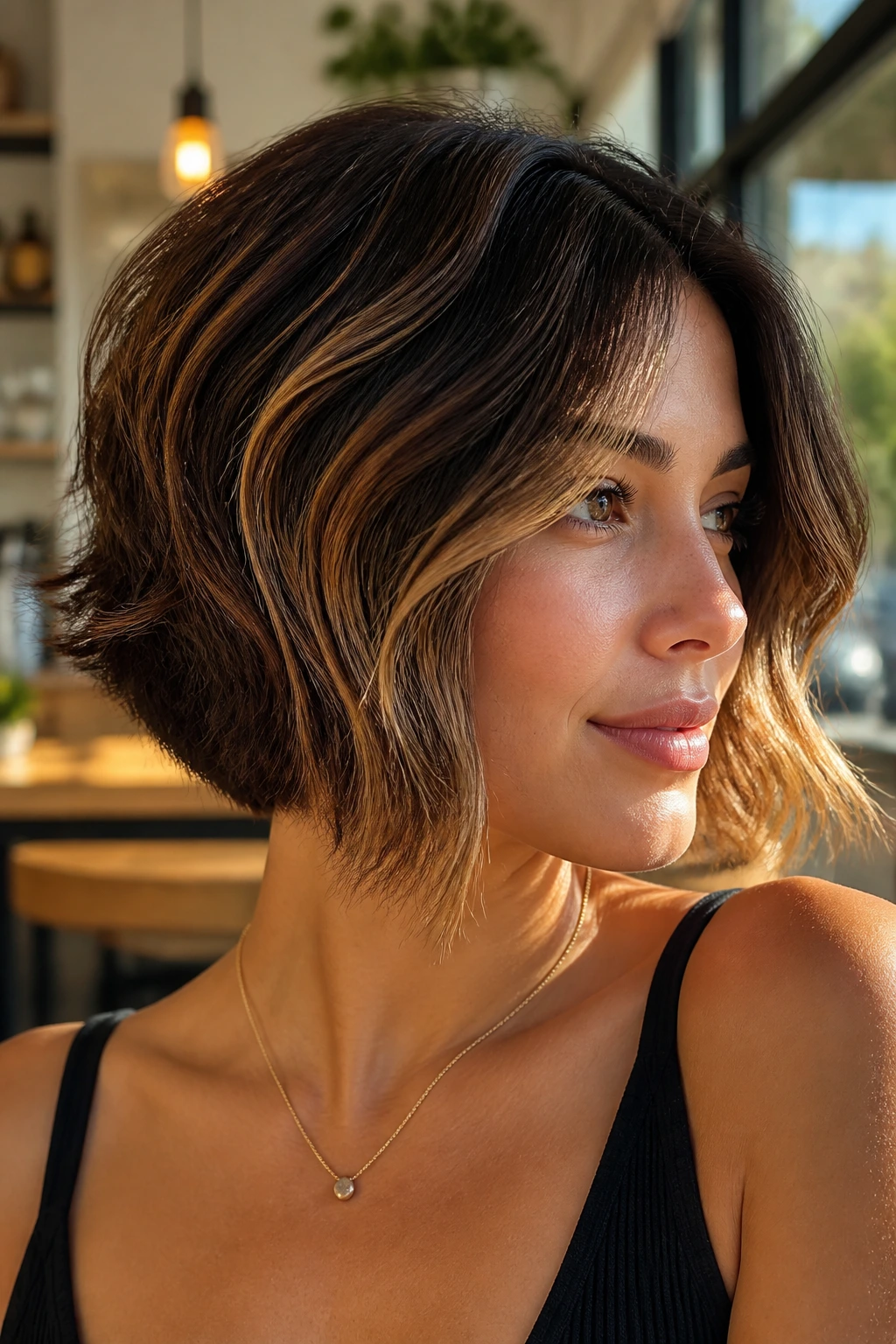
An inverted bob gets shorter in the back and longer in the front, which gives the curls a built-in angle. Add sunlit highlights, and the whole shape looks like it’s moving even when it’s still.
The brighter pieces should land where the front angle begins, then ease out toward the ends. That keeps the front from looking disconnected. On brunette curls, this kind of placement gives a very clean frame to the face.
Pro tip: if your hair shrinks a lot, keep the front a touch longer than you think you need. Curly inverted bobs can pop up fast after drying.
This cut is best when the back has enough stack to support the front length. Otherwise the color can’t save the silhouette.
14. Rooted Bronzed Lob
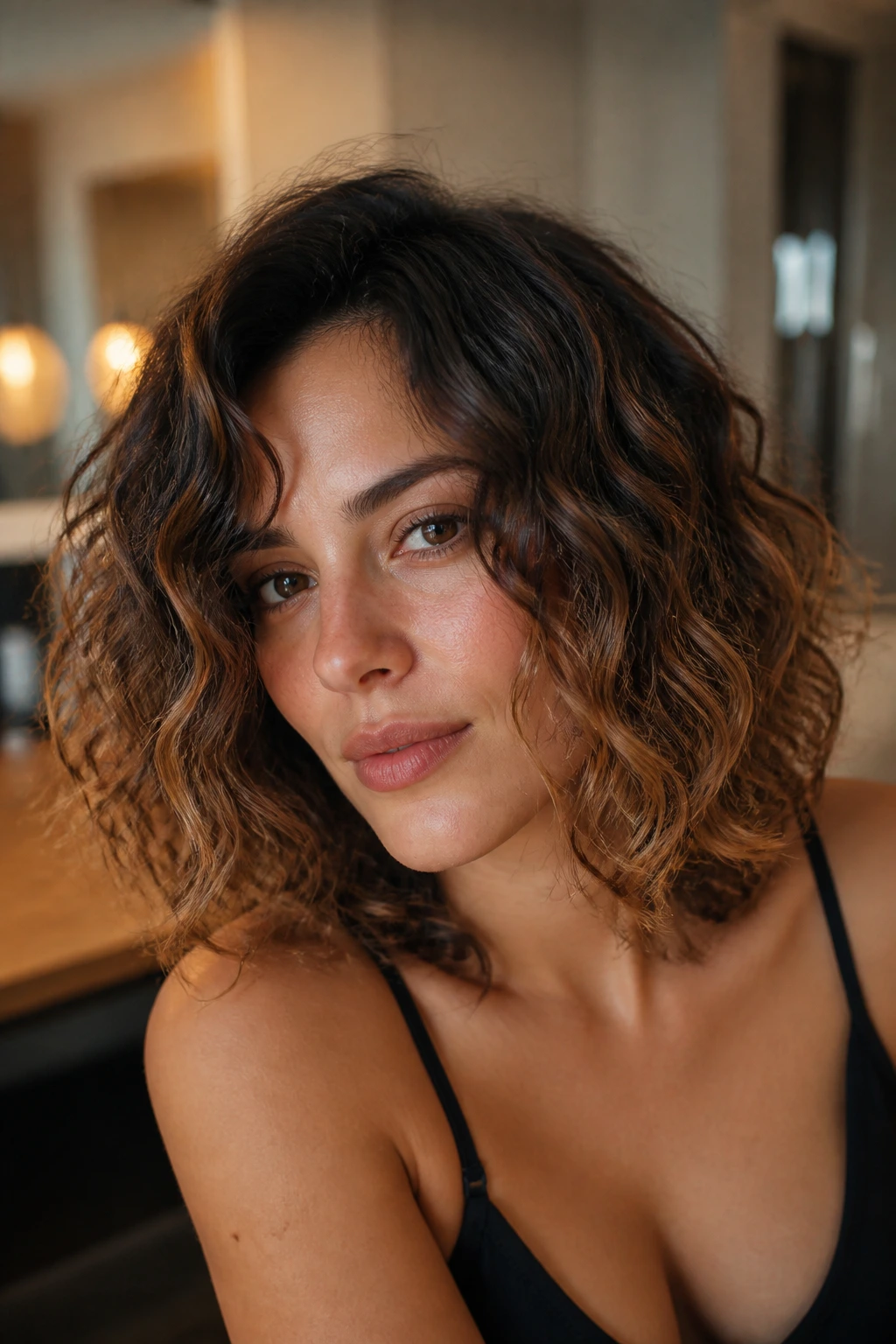
A rooted bronzed lob is a friend to anyone who hates hard grow-out lines. The root stays deep brunette, the mid-lengths hold the bronze, and the length gives the color room to soften. It looks especially good on loose curls that fall into broad S-shapes.
The root shadow matters because it keeps the style from looking freshly dyed in an obvious way. Bronze at the ends catches movement and gives the lob a little glow when the hair flips over the shoulders.
If your hair is porous, ask for a gloss after lightening. Bronzed ends can turn matte fast on porous curls, and matte is not the same thing as dimensional.
15. Carved Shag Bob with Veil Highlights
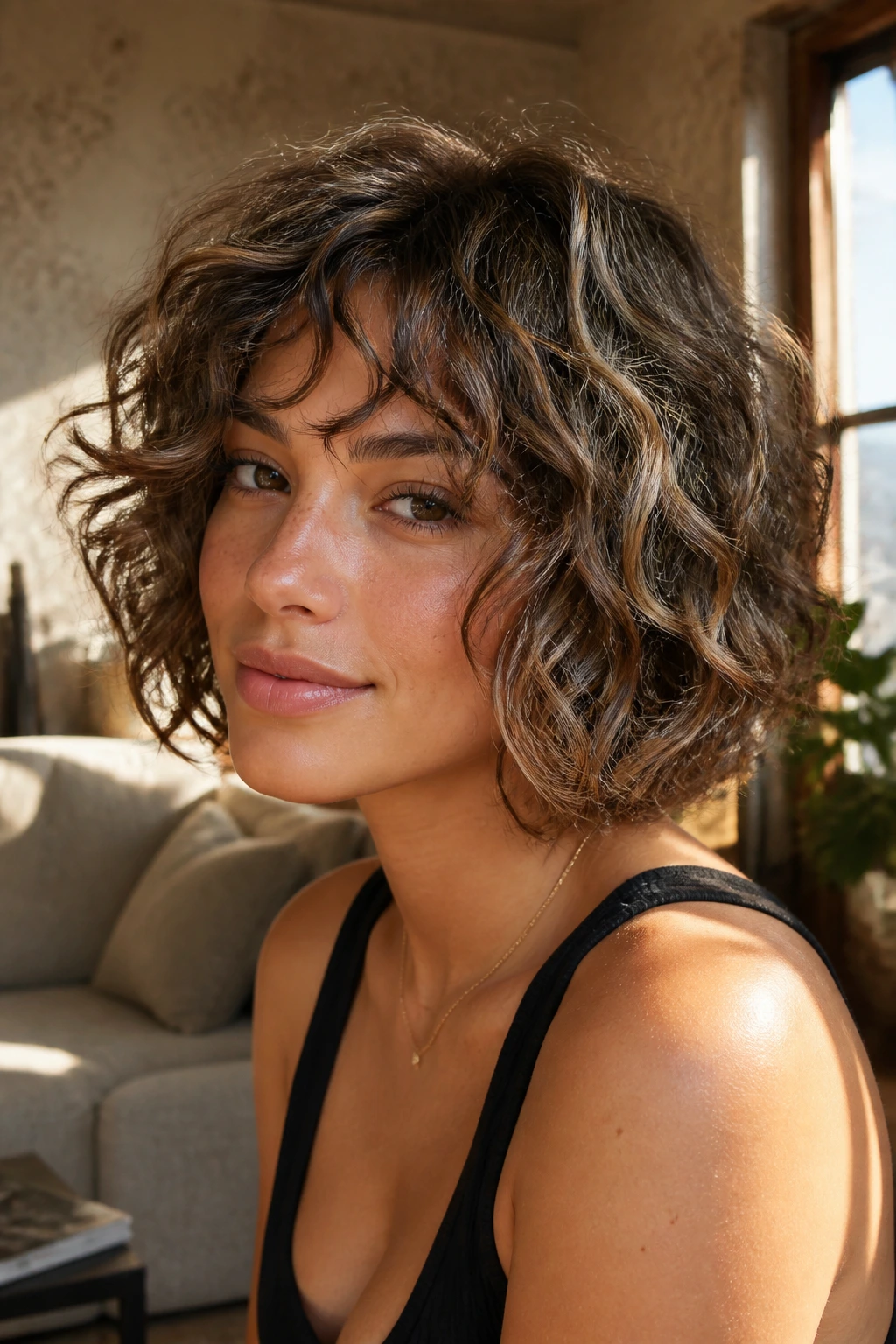
This is the messy-cool one. A carved shag bob has airy layers and a little roughness at the edge, so the veil highlights should be soft and brushed on the surface. The result feels lighter than a blunt bob, which is exactly what you want if your curls pile up at the sides.
The highlights need to float over the top, not drop down in heavy chunks. That keeps the shag from getting fuzzy. I’d call this one the best choice for people who like texture first and polish second.
How It Wears
It looks best when the curls are scrunched and air-dried enough to keep some frizz in the mix. Too much smoothing and the whole point disappears.
Ask for layers that remove bulk without turning the bob into a triangle. That’s the balance.
16. Hazelnut Side-Part Bob
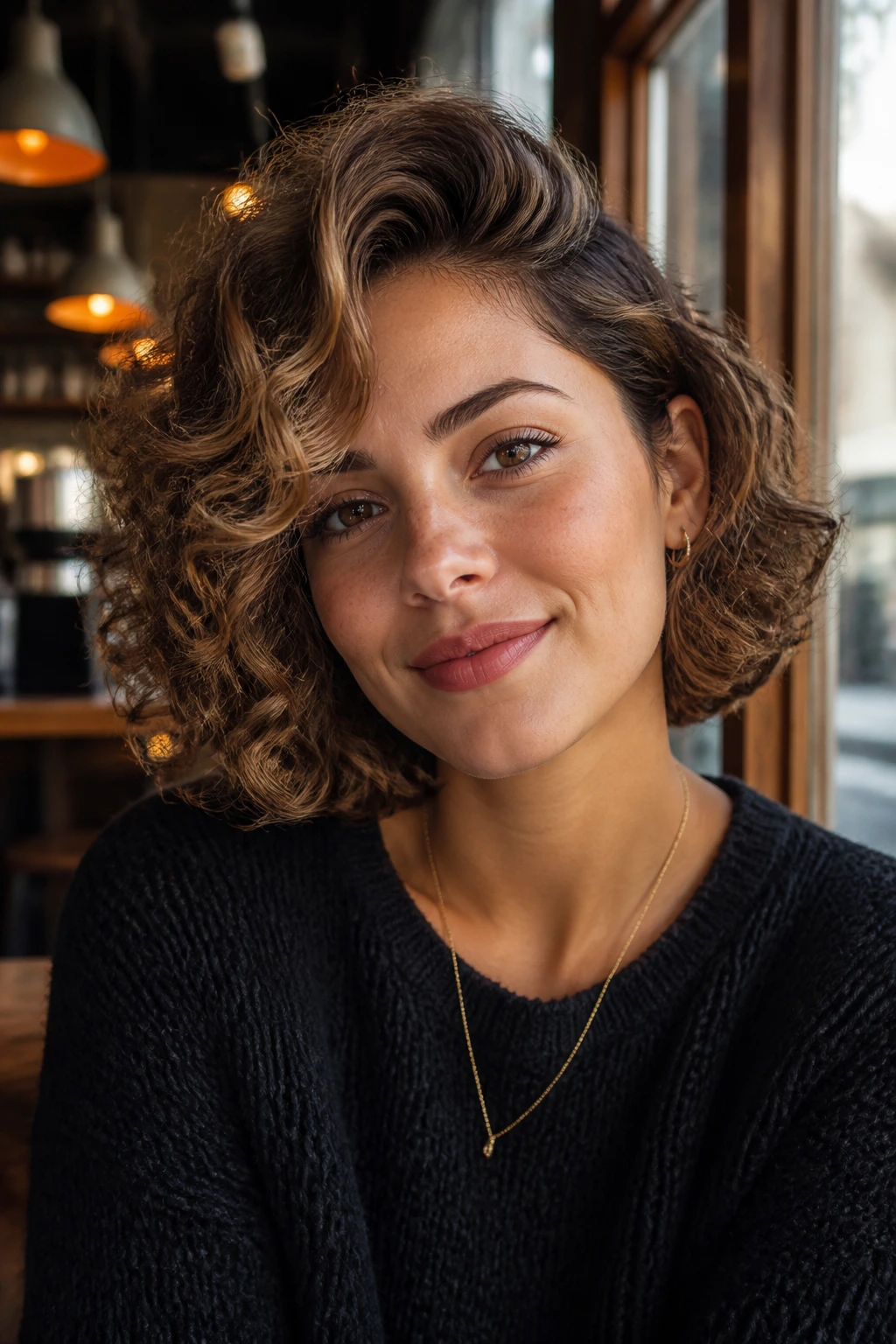
A side part changes everything. On a hazelnut bob, it shifts the weight, lets the curls fall with a little drama, and opens up one side for brighter pieces to frame the eye and cheekbone.
Hazelnut is a nice middle shade for brunettes who want warmth but not gold. It sits between chestnut and caramel, which makes it very wearable. On curly hair, that range is useful because the hair can swing between soft and bold depending on how it dries.
If you want more lift at the crown, use the side part on the heavier side and let the lighter pieces land on the opposite temple. Small trick. Big payoff.
17. Soft Ombré Curly Bob
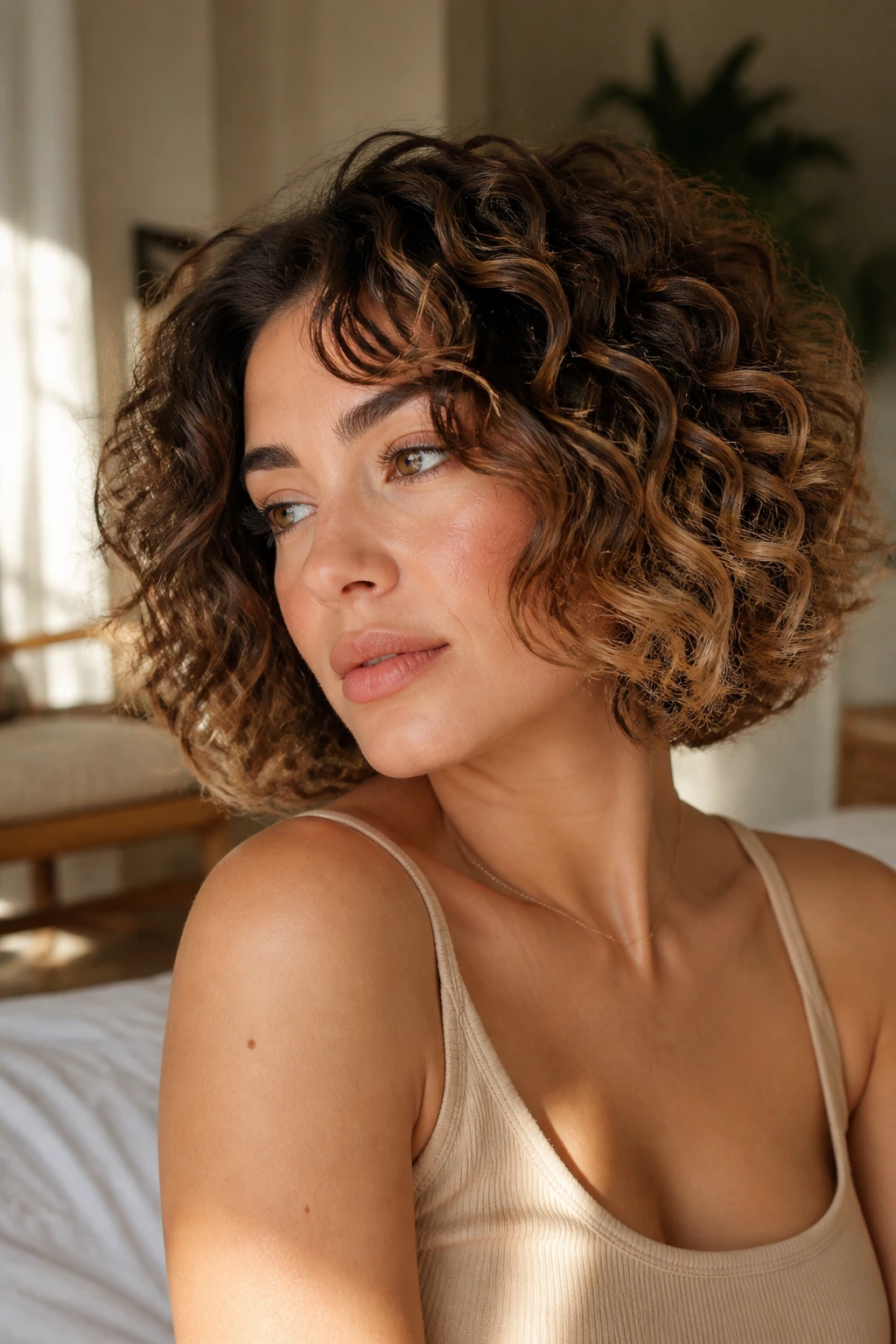
Ombré on a bob only works when the shift is soft enough to respect the curl pattern. On brunette hair, that means a gradual move from deep mocha at the roots to a lighter caramel or bronze at the ends. Nothing harsh. Nothing blocky.
The ends of curly bobs tend to catch the eye anyway, so ombré makes sense there. It gives you brightness without flooding the whole cut with highlights. That’s useful if your scalp gets oily fast or your roots are naturally darker than the rest of your hair.
Keep the transition zone around the mid-lengths blurred. If you can see exactly where one tone stops and the next starts, the effect gets too stripy for curls.
18. Deep Cocoa Bob with Micro-Foils
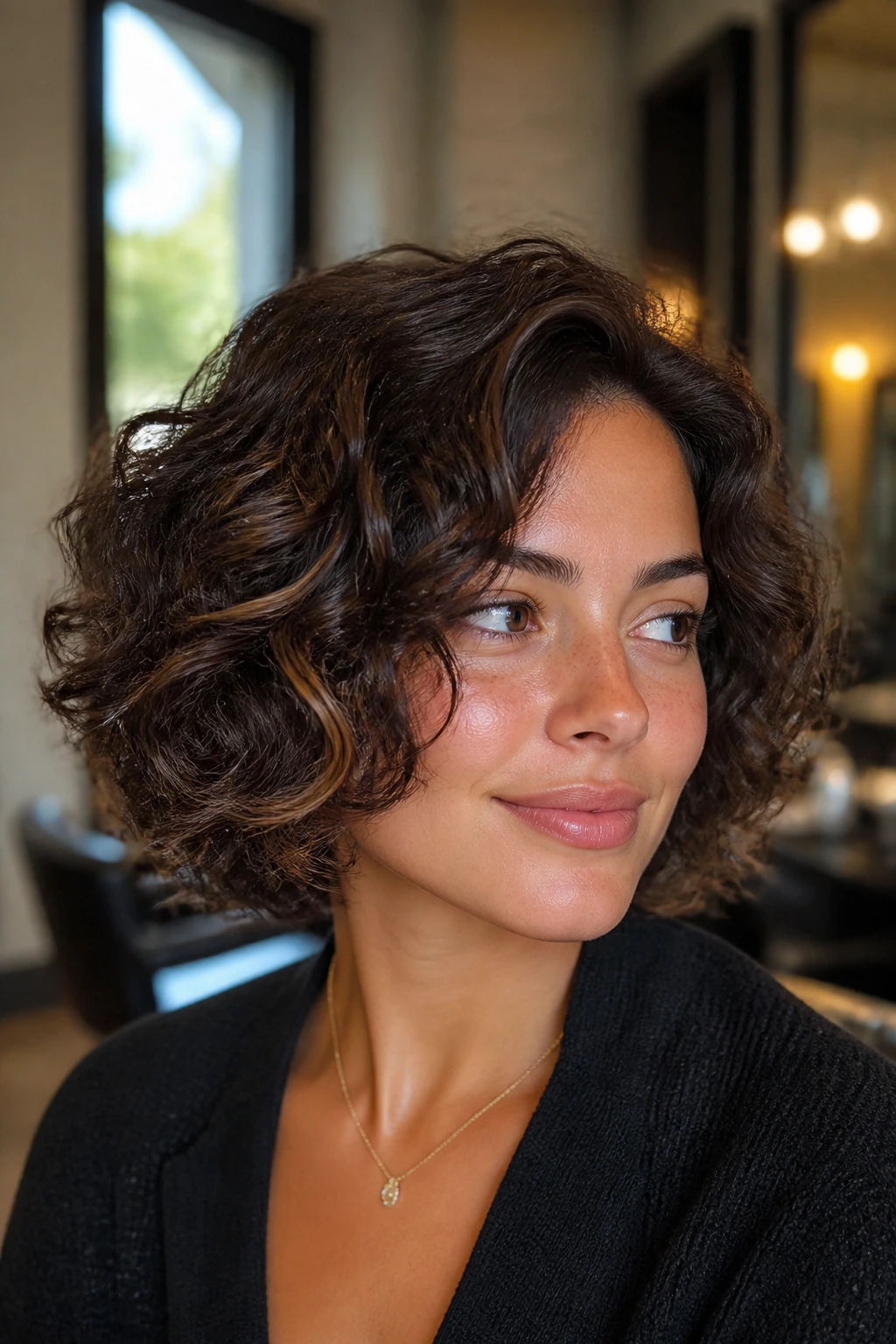
Micro-foils are tiny, fine-weave highlights that add shimmer instead of chunks. On a deep cocoa bob, they’re perfect when you want the haircut to look denser and more expensive, not lighter in a dramatic way.
This style is all about the change in sheen. The curls move, the tiny foils catch light, and the brunette base stays rich. It’s especially nice on shorter bobs where big stripes would feel too loud.
What makes it different: the brightness is spread out in such small sections that it reads like natural reflection, not salon color.
If you’re nervous about highlights on dark hair, this is one of the safest places to start.
19. Buttery Collarbone Bob
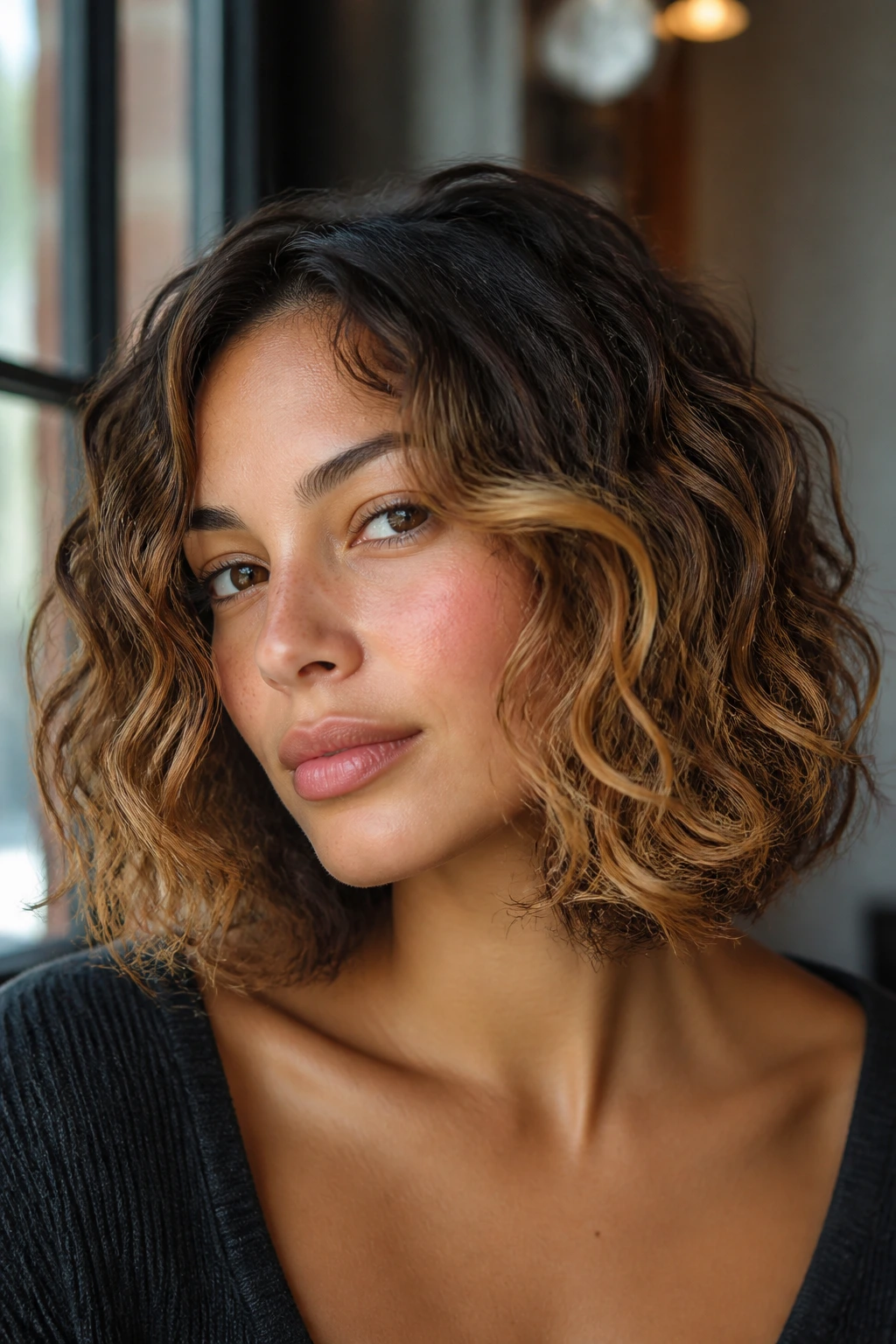
A buttery collarbone bob is softer than it sounds. The color has a warm, creamy tone, but the base stays brunette enough to keep the whole thing grounded. The extra length gives the curls some swing, which helps the buttery pieces show up at the bottom.
This one flatters curls that are looser near the ends and fuller at the crown. The collarbone length keeps the hair from ballooning too high, and the buttery tones stop the shape from looking heavy around the face.
Ask for the lightest pieces to sit just under the cheekbone and through the first few inches of the ends. That’s where the light will move when you turn your head.
20. Rounded Bob with Hidden Underlights
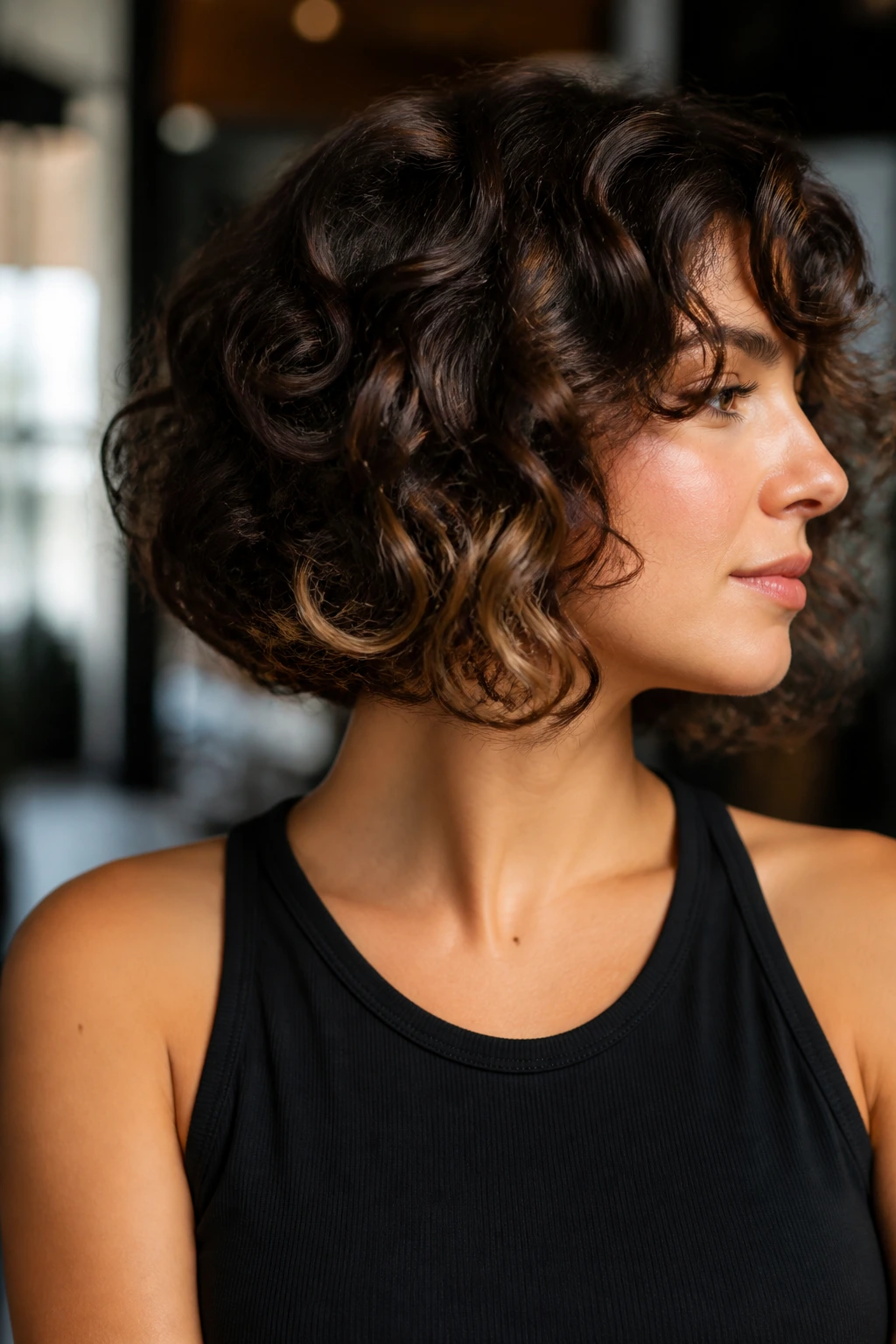
Hidden underlights are sneaky in the best way. The top layer stays brunette and rounded, while the lighter pieces sit underneath and flash out when the curls separate or swing.
This works beautifully on a rounded bob because the shape already has a soft dome. The underlights add a little edge without breaking the silhouette. It’s a smart choice if you need your hair to look polished for work but want something more playful when it’s down and moving.
A warm beige or soft caramel underlight usually works better than a pale blonde on brunettes. It gives the same surprise effect without fighting the rest of the hair.
21. Toasted Almond Curly Bob
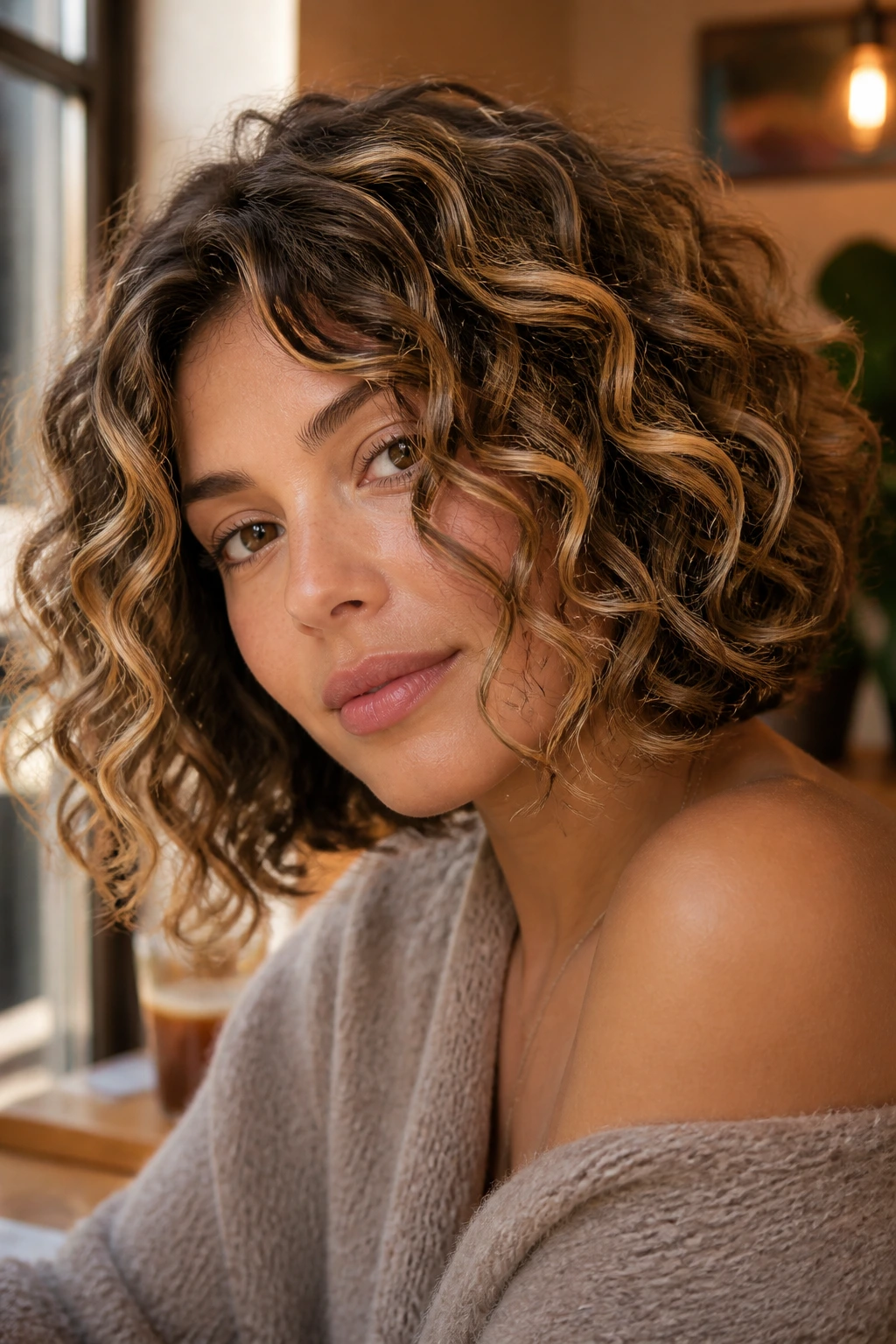
Toasted almond sits in that sweet zone between beige and warm brown. On a curly bob, it gives the hair a soft glow that feels natural even though it’s clearly color. I like it because it doesn’t try too hard.
The toasted almond pieces should be placed where the curls open up, especially around the upper sides and front. That keeps the shape airy. If you put too much brightness low in the hair, the bob can start looking wider than it is.
This is a good call for someone who wants a lighter brunette look but still wants the color to feel anchored.
22. Ash Brown Ribbon Bob
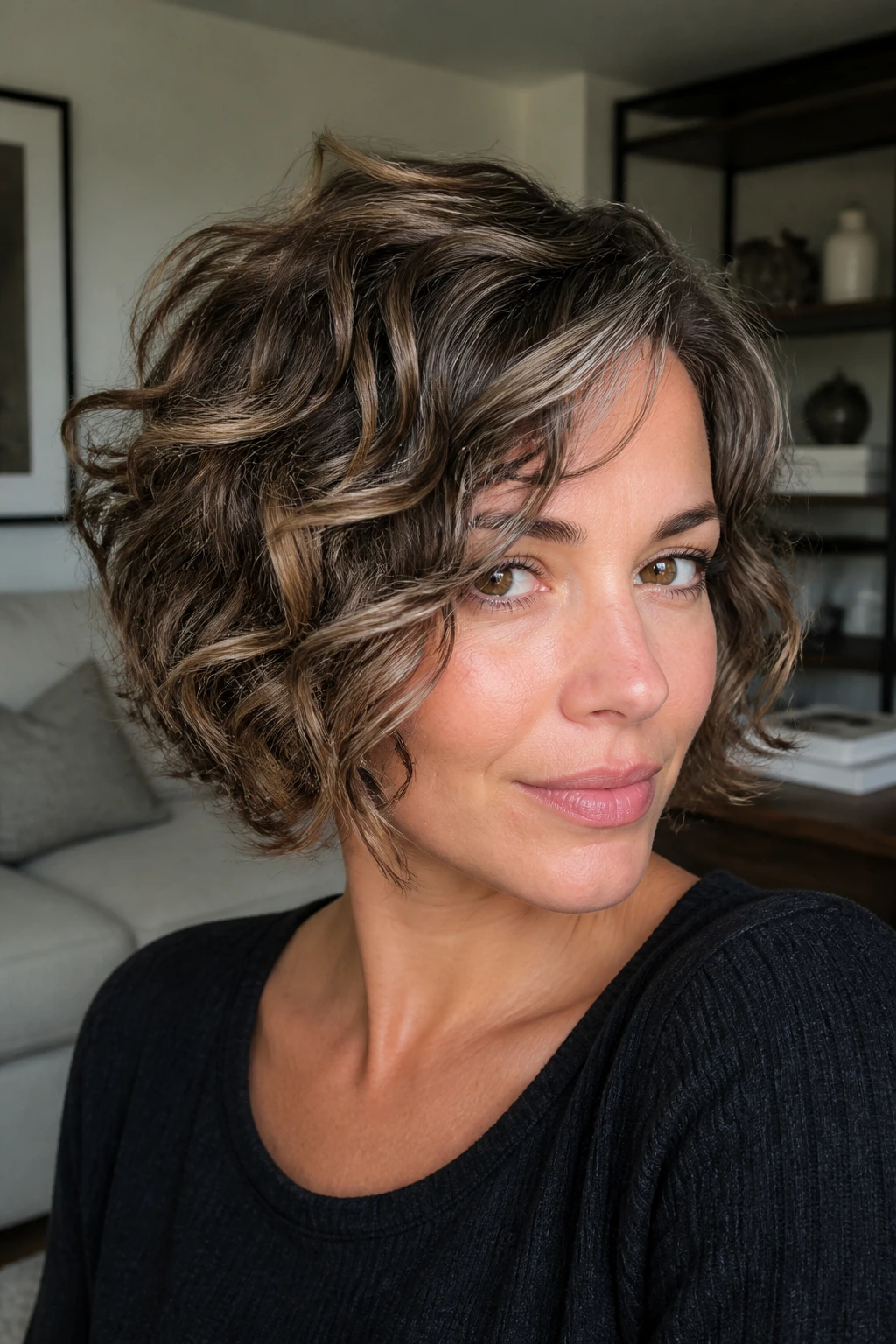
Ash brown ribbons are for brunettes who run cool and don’t want any copper or gold sneaking in. The ribbons should be thin and softly painted, then toned enough to keep the warmth out. On curly hair, that cool tone can look elegant without becoming flat.
The key is placement. Ash brown works best when it shows in pieces, not in broad swathes. A few narrow ribbons on the top layer, around the temples, and through the ends are enough to change the whole read of the bob.
If your base is already medium brown, this can make the haircut feel crisp and modern without a major color shift.
23. French Bob with Honey Slices
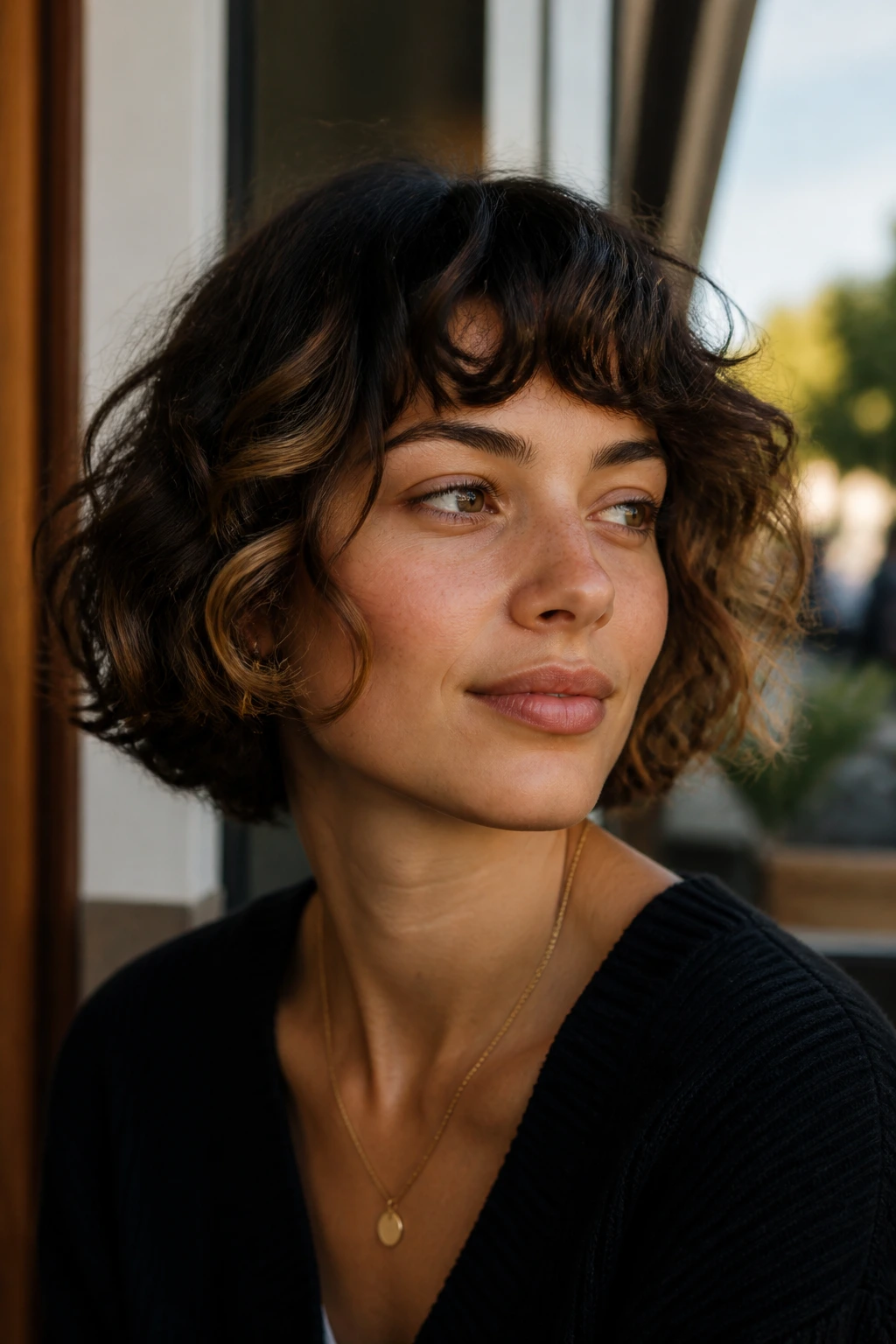
Honey slices on a French bob can be gorgeous, but only if they’re kept sparse. The cut is short enough that the color is visible almost immediately, so a few carefully placed slices around the cheeks and fringe area do more than a whole head of highlights would.
The honey tone lifts the expression of the face. That’s the real reason to use it. On curls, the slices show up when the hair moves, which keeps the short length from feeling static.
If you wear bangs or a fringe, this is one of the best ways to make them feel connected to the rest of the cut.
24. Stacked Curly Bob with Warm Panels
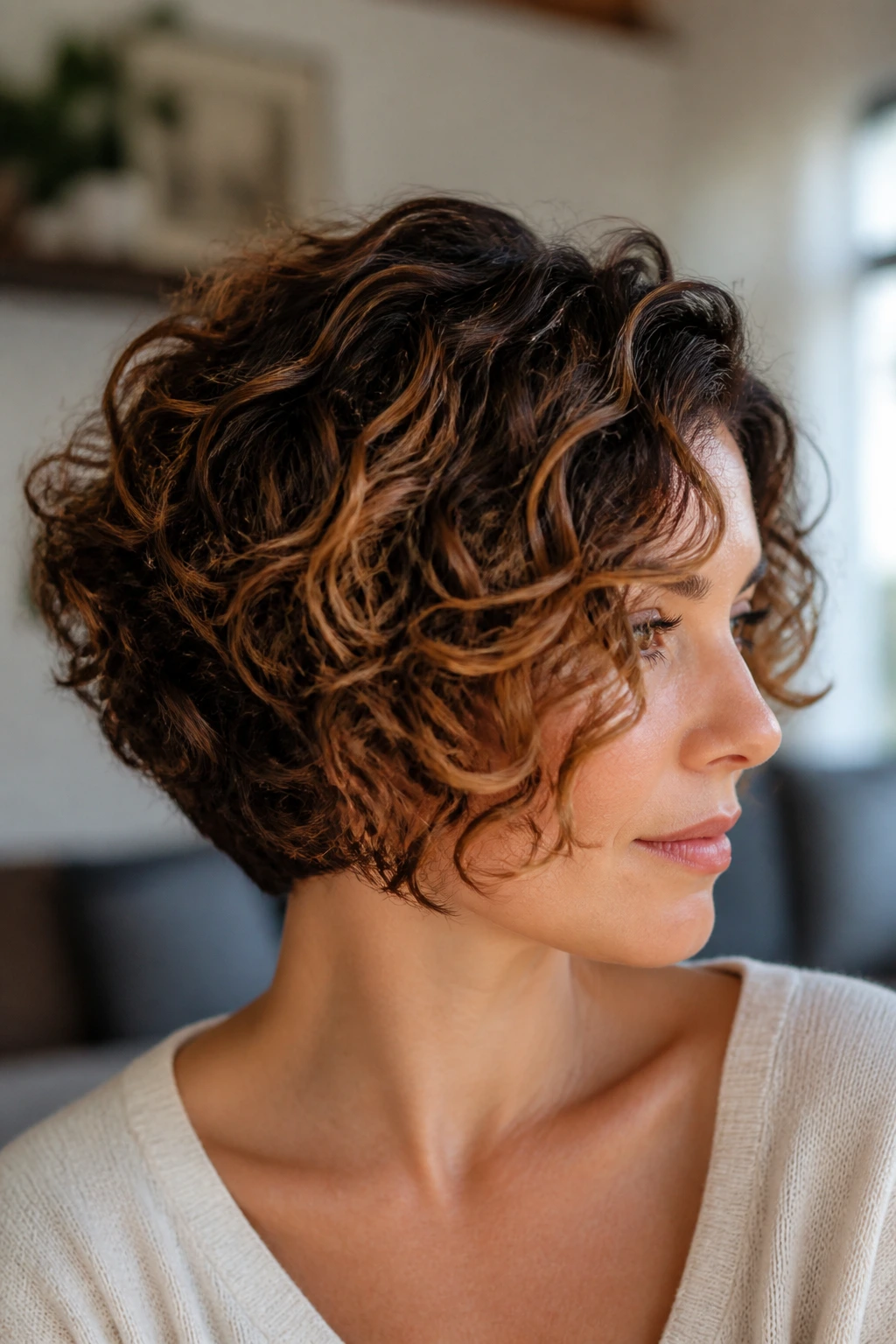
A stacked bob needs structure in the back, and warm panels help show it. The shorter layers at the nape create lift, and the caramel or bronze panels on top make that lift visible.
This is the style I’d pick for someone whose curls collapse when they get too long. The stack keeps the back from dragging, and the warm color around the crown prevents the shape from looking too dense.
The haircut should be clean through the perimeter, not ragged. The highlight placement does the movement; the cut needs to hold the line.
25. Ribboned Lob with Side-Swept Fringe
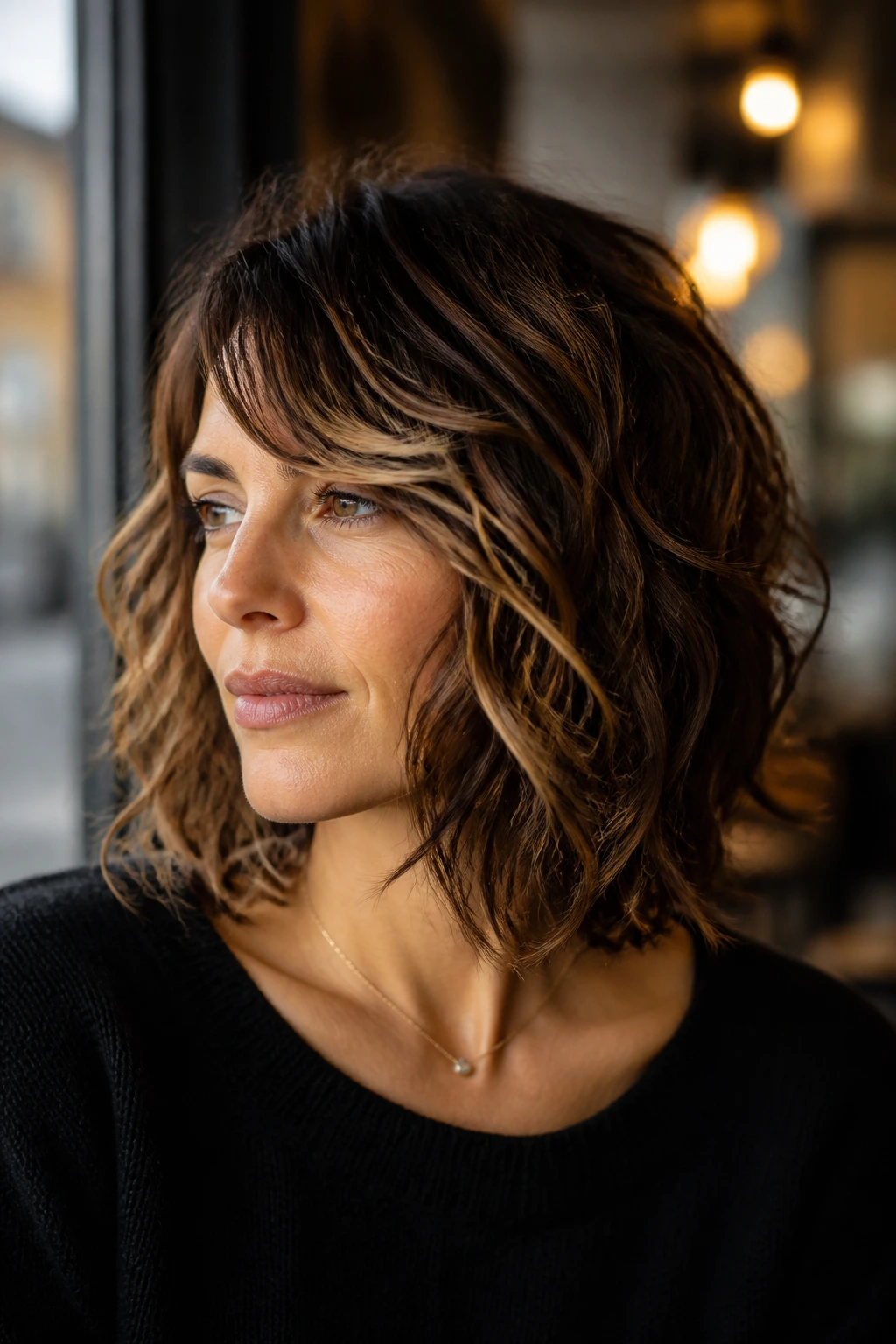
A side-swept fringe changes the mood of a lob immediately. Add ribboned highlights, and the whole look becomes softer around the face while still keeping the brunette base in charge.
The ribboning should follow the direction of the fringe, not fight it. That means the lighter pieces should move diagonally, with a little extra brightness where the fringe bends into the rest of the haircut. On curls, that diagonal placement keeps the front from feeling bulky.
This is a nice option if you like a bit of romance in your cut without going full retro.
26. Cocoa Curl Bob with Sand Ends
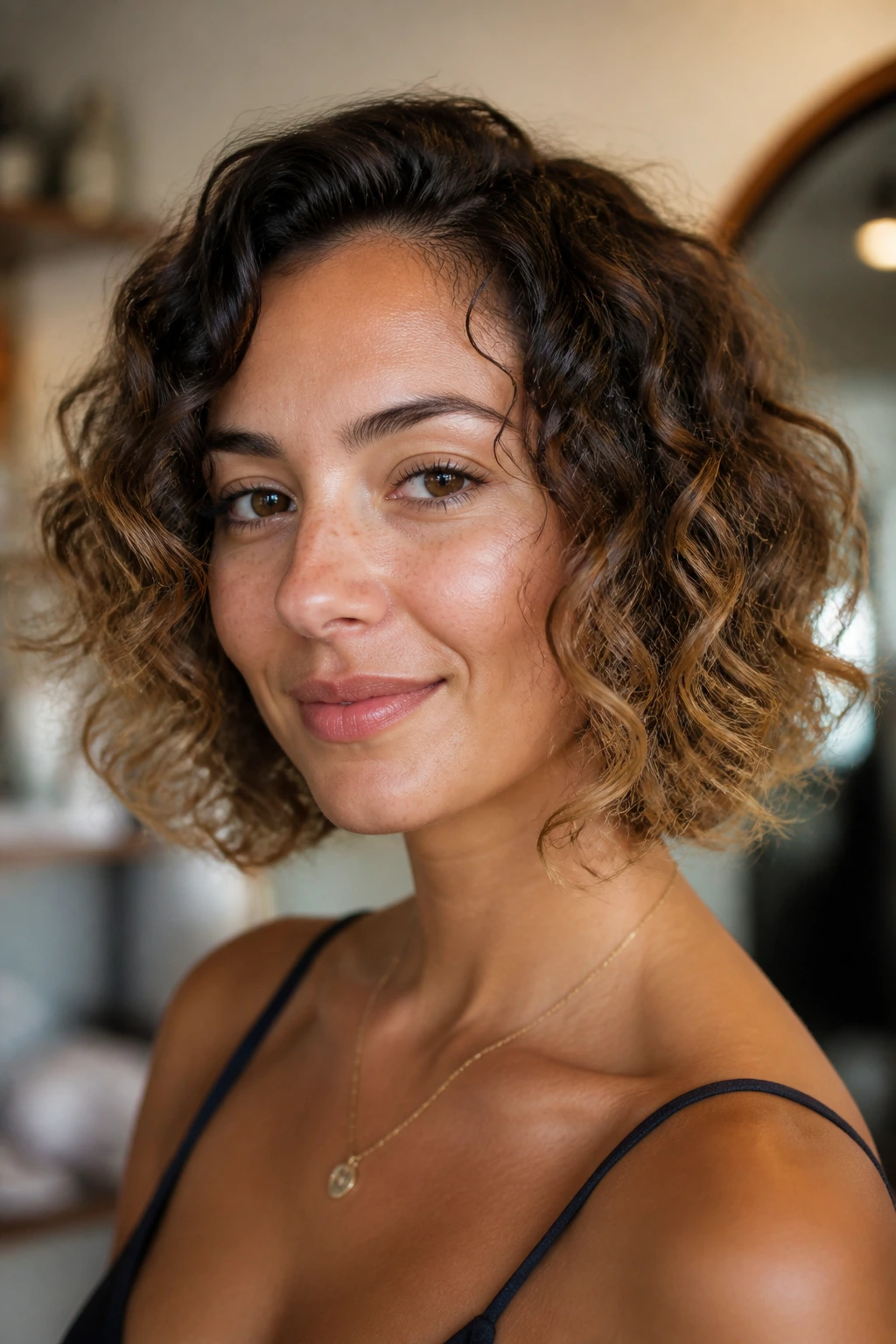
Sand ends are lighter than cocoa, but they shouldn’t look bleached. Think warm beige with a touch of brown still hanging on. On a curly bob, that gradual lightening at the ends can make the shape feel sun-worn in a good way.
The ends are where curls tend to fray a bit, so a brighter finish there can make the hair look intentionally textured. Keep the root and mid-lengths cocoa-dark so the contrast stays soft.
If your hair is dry at the ends, ask for the lightening to stop a little higher than the very tips. That avoids making the ends look see-through.
27. Copper Maple Curly Bob
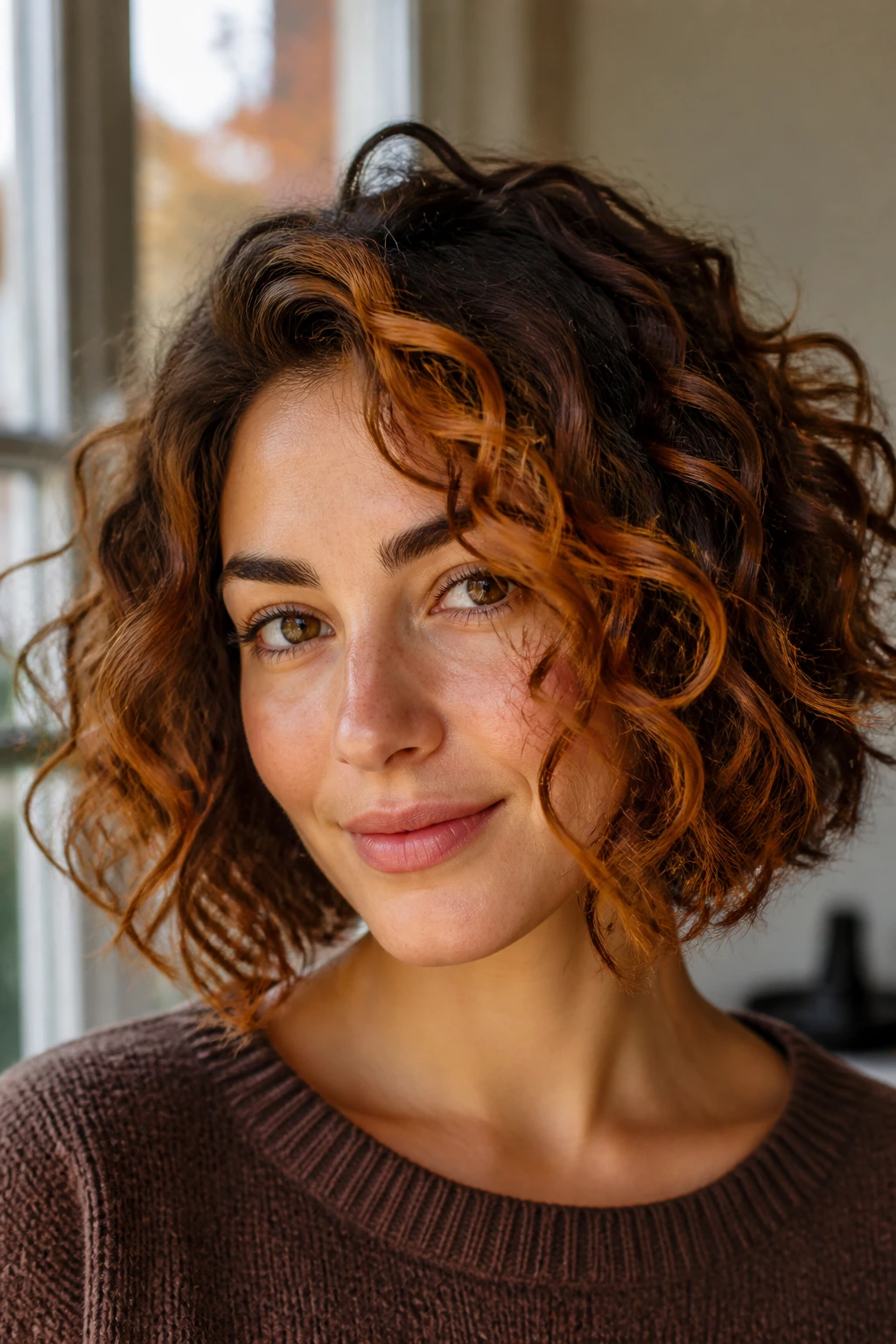
Copper maple is warmer and deeper than a bright copper, with just enough red to wake up brunette curls. On a bob, it reads like autumn light on brown leaves — yes, that’s a little poetic, but the color really does behave that way when the curls move.
This shade works best if your skin tone likes warmth and if your base is around medium brown. The copper should sit in small slices and around the front, then soften through the rest of the bob. Too much copper and the whole cut starts to look loud. A little goes a long way.
It’s a good match for thicker curls because the richness of the color keeps the shape from looking too airy.
28. Dimensional Bob with Smoked Roots
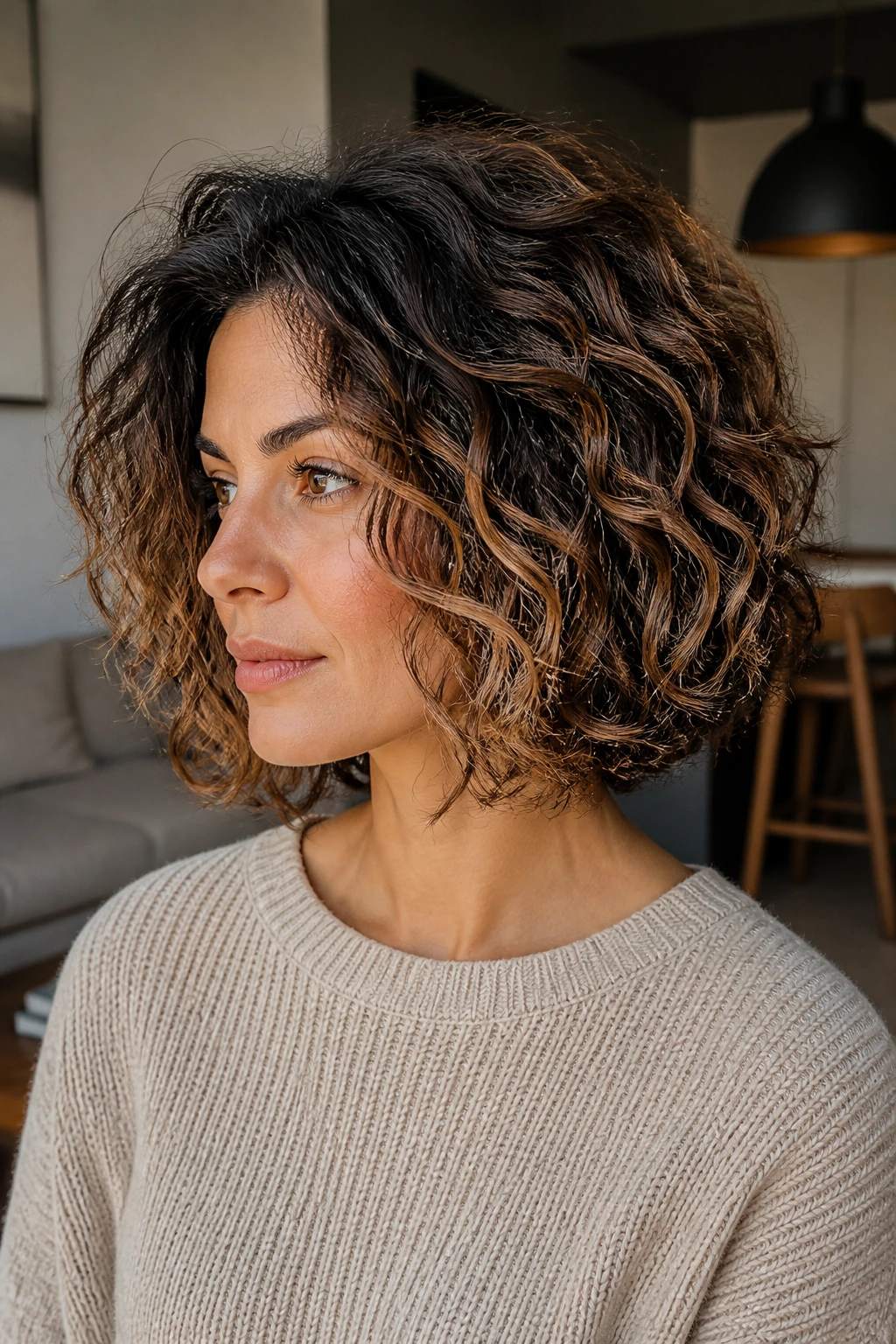
Smoked roots are a clever fix for brunette curls that need brightness but hate frequent salon upkeep. The roots stay deep and cool, while the lower layers get lighter in a way that still feels blended.
What makes this different from basic root shadow is the contrast between the dark root and the softly lit mids. The curl pattern breaks that contrast apart, so it reads as depth instead of a hard line. That’s useful if your bob is layered and you want the shape to hold up for more than a couple of weeks.
If your hair grows fast, this is one of the most forgiving looks in the bunch.
29. Rounded Lob with Bright Crown Pieces
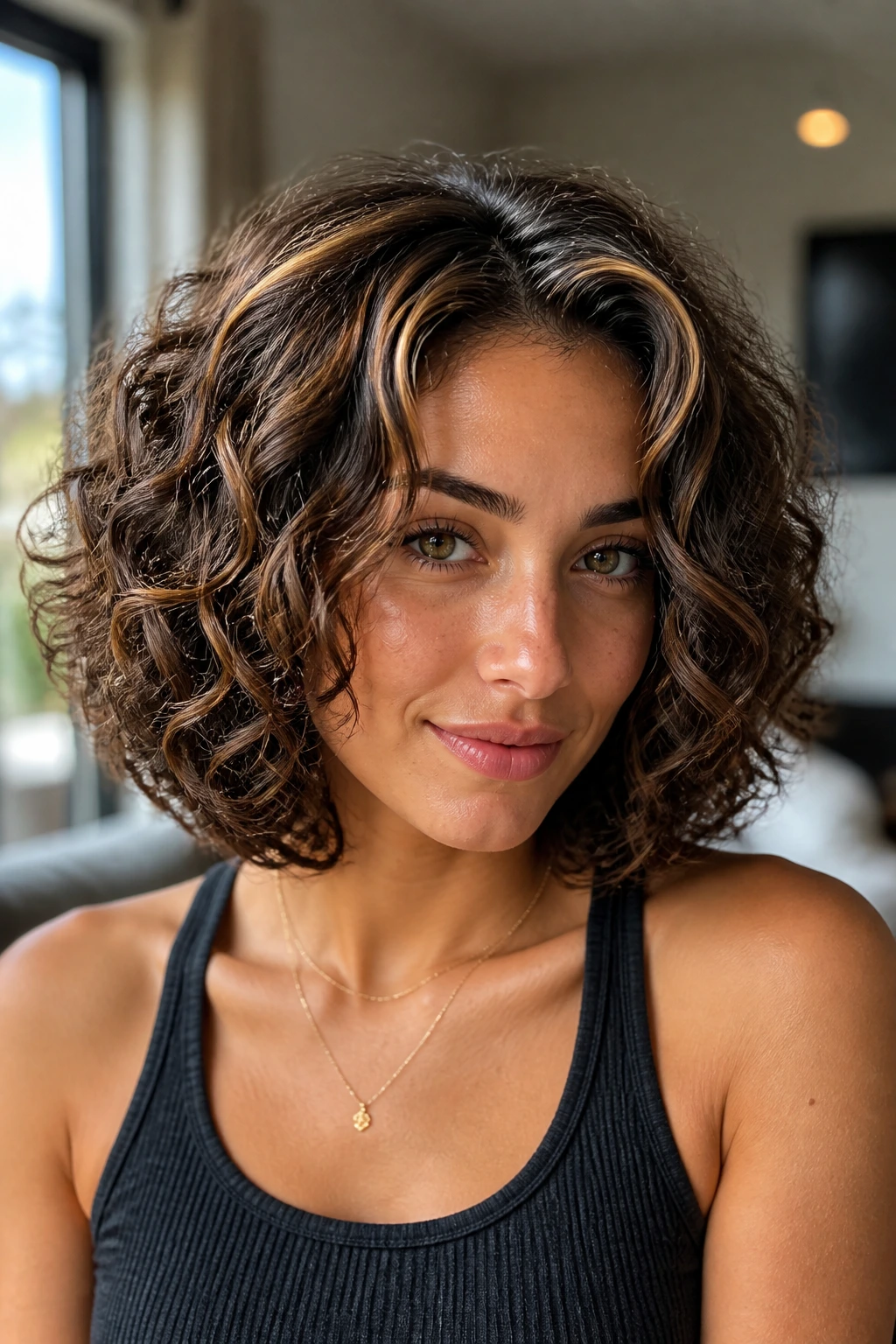
Bright crown pieces are where this style earns its place. The rounded lob gives the haircut a soft, full outline, and the brighter pieces near the crown keep the top from looking heavy.
I like this on brunettes with a lot of natural volume. The crown lights create lift right where the eye lands first, which can make the whole head shape look more open. If the front is too bright, the style can get noisy. Keeping the light up top and around the part is cleaner.
This one works well when the hair is worn with a natural bend rather than polished to perfection.
30. Tousled Espresso Bob with Caramel Ends
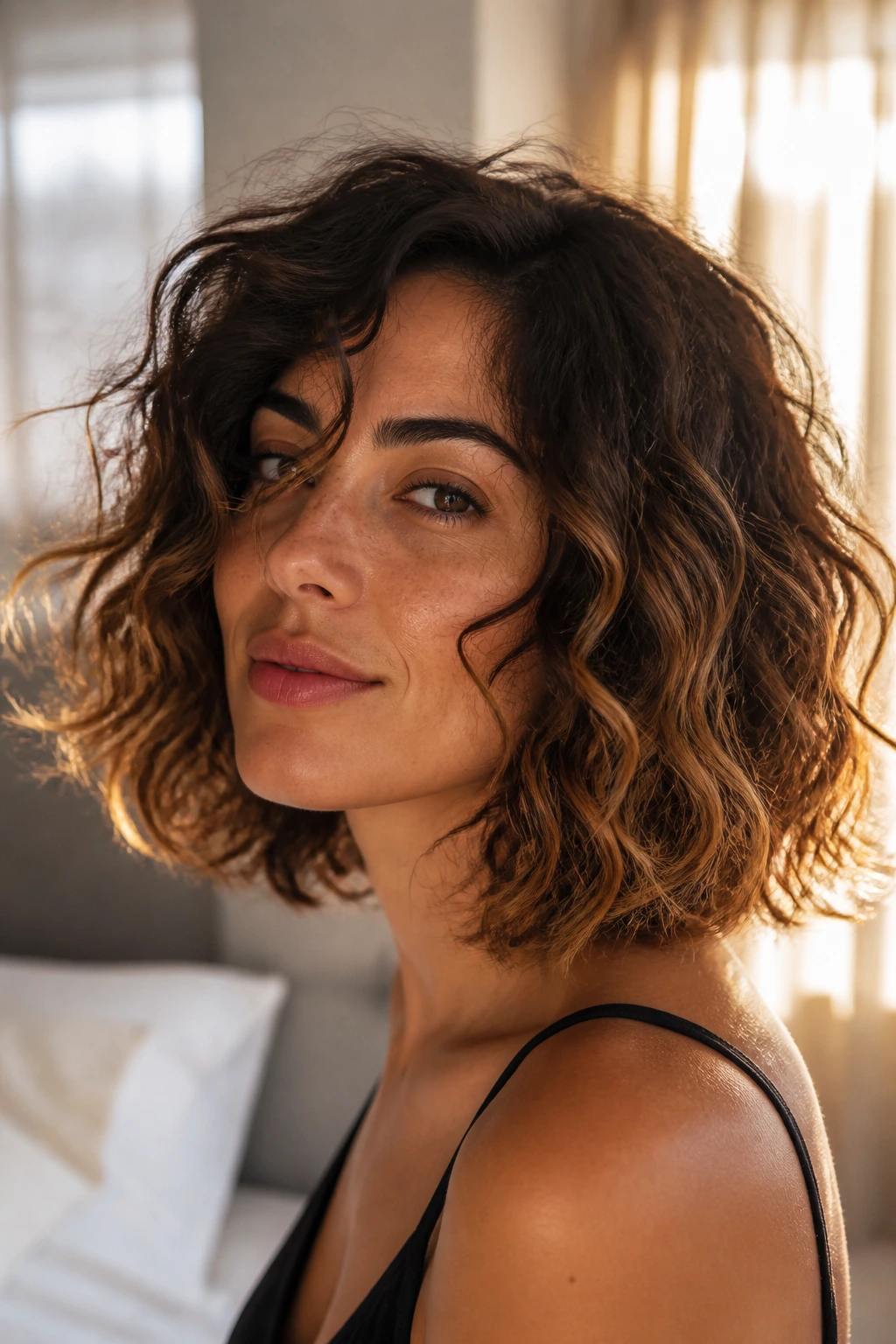
Espresso roots with caramel ends is the cleanest way to end this list. The contrast is enough to see from across the room, but the transition stays soft if the caramel is painted through the curls rather than slapped on like a stripe.
The tousled finish matters. This bob should look a little undone, with ends that flip and separate instead of sitting in one tidy line. That motion makes the caramel glow. On straight hair, it might look basic. On curly hair, it has life.
If you want a cut that feels easy to wear and still looks deliberate, this is the one I’d put first on the salon reference photo pile.
Why Highlight Placement Changes Everything on Curly Brunettes
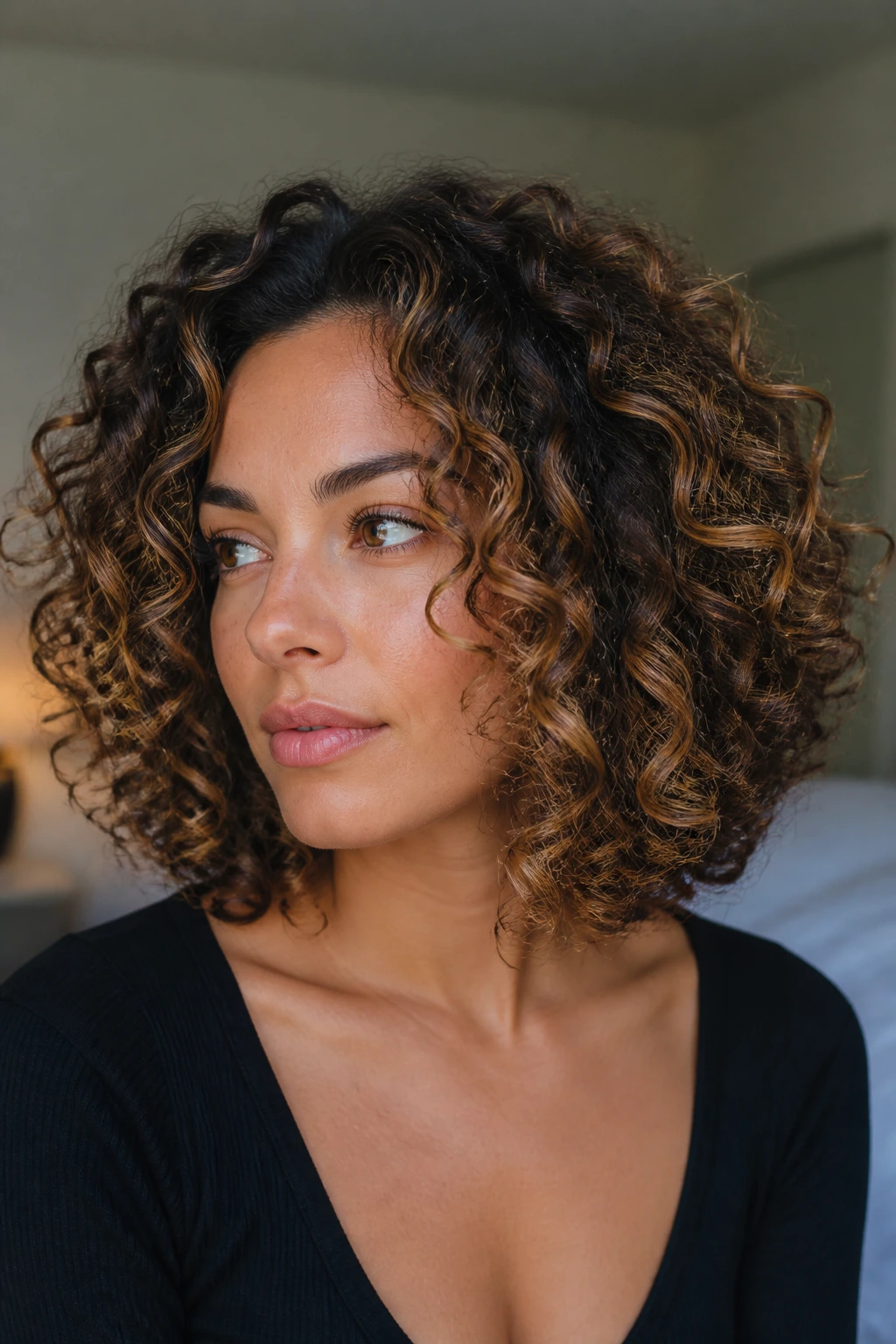
A highlighted bob lives or dies by where the light lands. Curls do not hold color the way straight hair does. They bend it, hide it, flash it, and sometimes swallow it whole. That is why a careful placement plan matters more than the shade name on the foil.
On brunette hair, the best highlights usually sit where the curl opens up: the outer curve, the face frame, the crown, and the ends that move. Put the brightness too deep and it disappears. Put it too evenly across the head and the cut loses its shape. The trick is to work with the curl clumps, not against them.
A good colorist will think about shrinkage too. A bob that lands at the chin when wet may sit higher when dry, which means the bright pieces need to be placed with the final shape in mind. That one detail changes everything. It’s the difference between a bob that glows and a bob that looks like it needs another appointment before it can relax.
Tools That Keep the Cut and Color Looking Clean
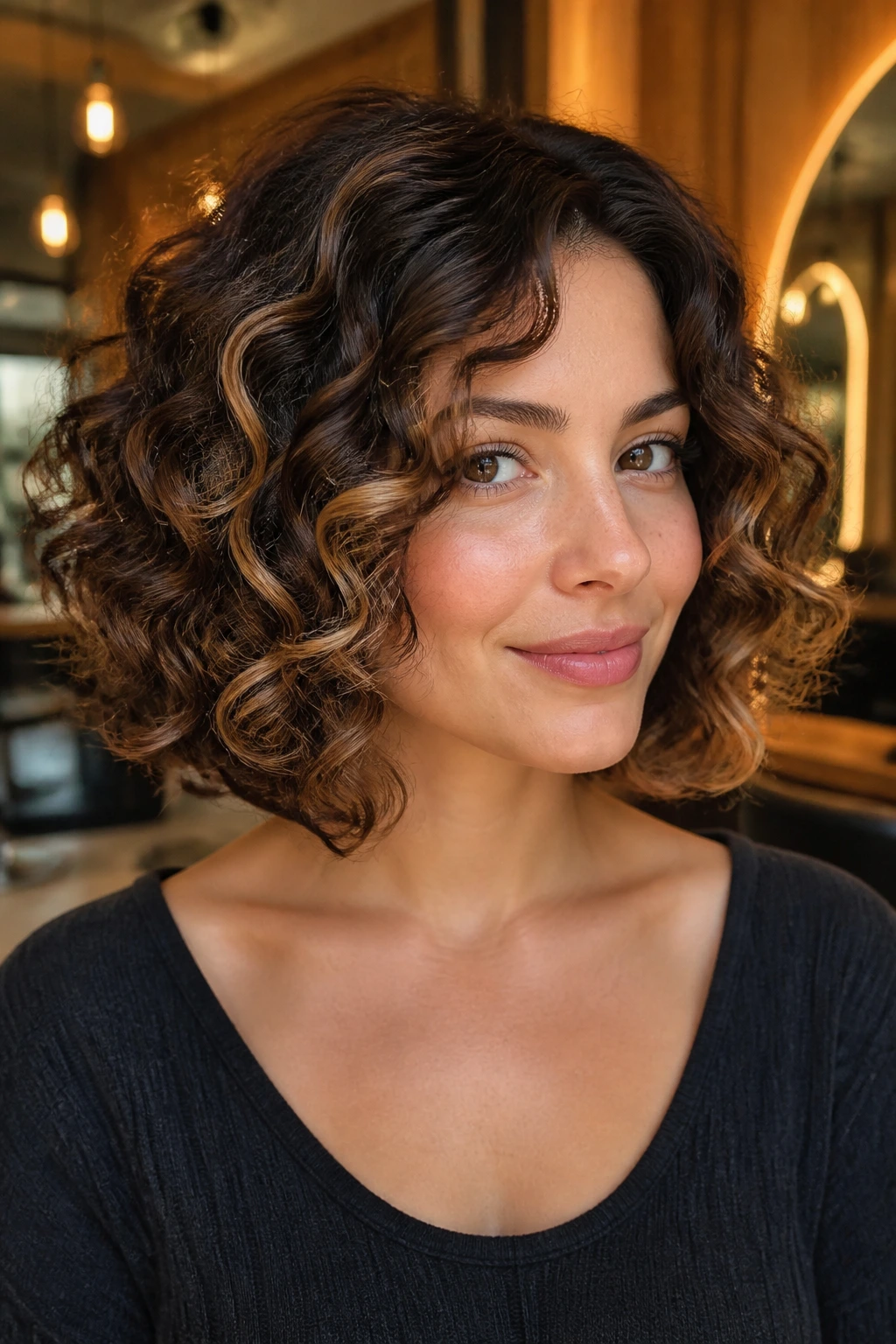
- Wide-tooth comb: Use it on wet hair with conditioner so you don’t split curl clumps before styling.
- Microfiber towel or cotton T-shirt: Both cut down on frizz better than a rough bath towel.
- Curl cream or leave-in conditioner: Pick one that gives slip without turning the bob greasy at the roots.
- Diffuser attachment: A low-heat diffuser keeps the shape round and helps the highlights show through the curls instead of getting blown apart.
- Color-safe shampoo: Helps the brunette base stay rich and keeps caramel or bronze pieces from dulling fast.
- Clarifying shampoo: Use it once every 3 to 4 weeks if product buildup makes the color look muddy.
- Satin pillowcase or bonnet: Keeps the bob from getting crushed overnight, which matters more when the highlights are placed on the outer layer.
- Styling clips: Handy for setting the front pieces while they dry in the direction you want.
Picking the Right Shade, Length, and Placement
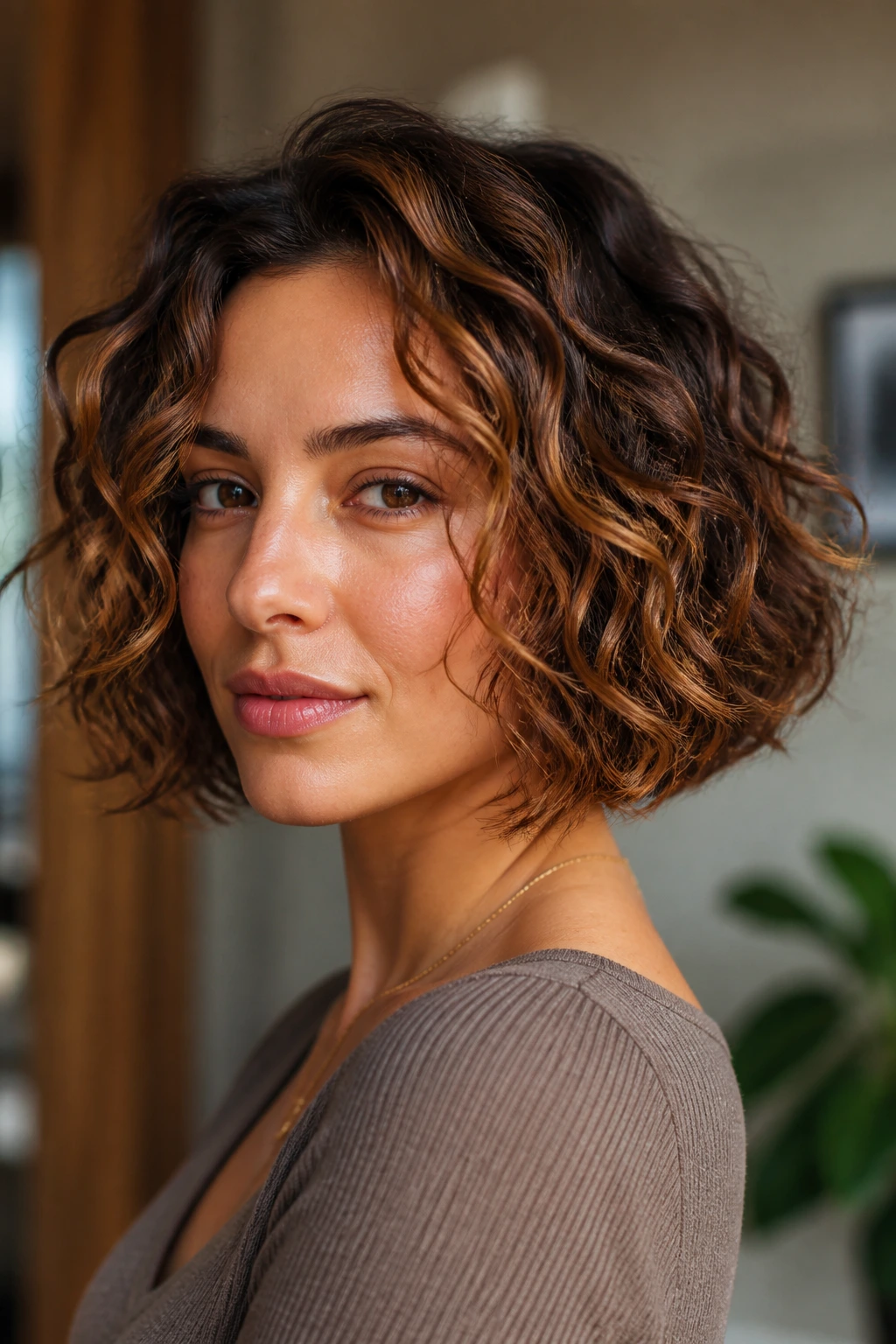
The brunette base should set the direction. If your hair is a deep espresso or dark chocolate, caramel, bronze, and warm honey usually show better than pale beige. If your base is medium brown, you can get away with cooler taupe or mushroom tones without the result feeling muddy. That’s the part many people miss. The starting depth matters as much as the highlight tone.
Length changes the whole read of the color. Chin-length bobs make face-framing pieces feel bold because they sit right next to the skin. Collarbone bobs can take softer, more spread-out highlights because there’s more room for the color to travel. Shorter shapes usually want tighter placement near the crown and sides. Longer bobs can handle ombré, ribbons, or a root shadow with more breathing room.
The curl pattern should decide how dense the highlights are. Loose waves can carry more visible streaks. Tighter spirals usually look better with thinner pieces, softer toning, and fewer hard contrast lines. If the color has to fight the curl pattern to be seen, it’s the wrong placement. A clean highlight job should look like it belongs there from the first glance.
How to Wear and Style the Finished Bob
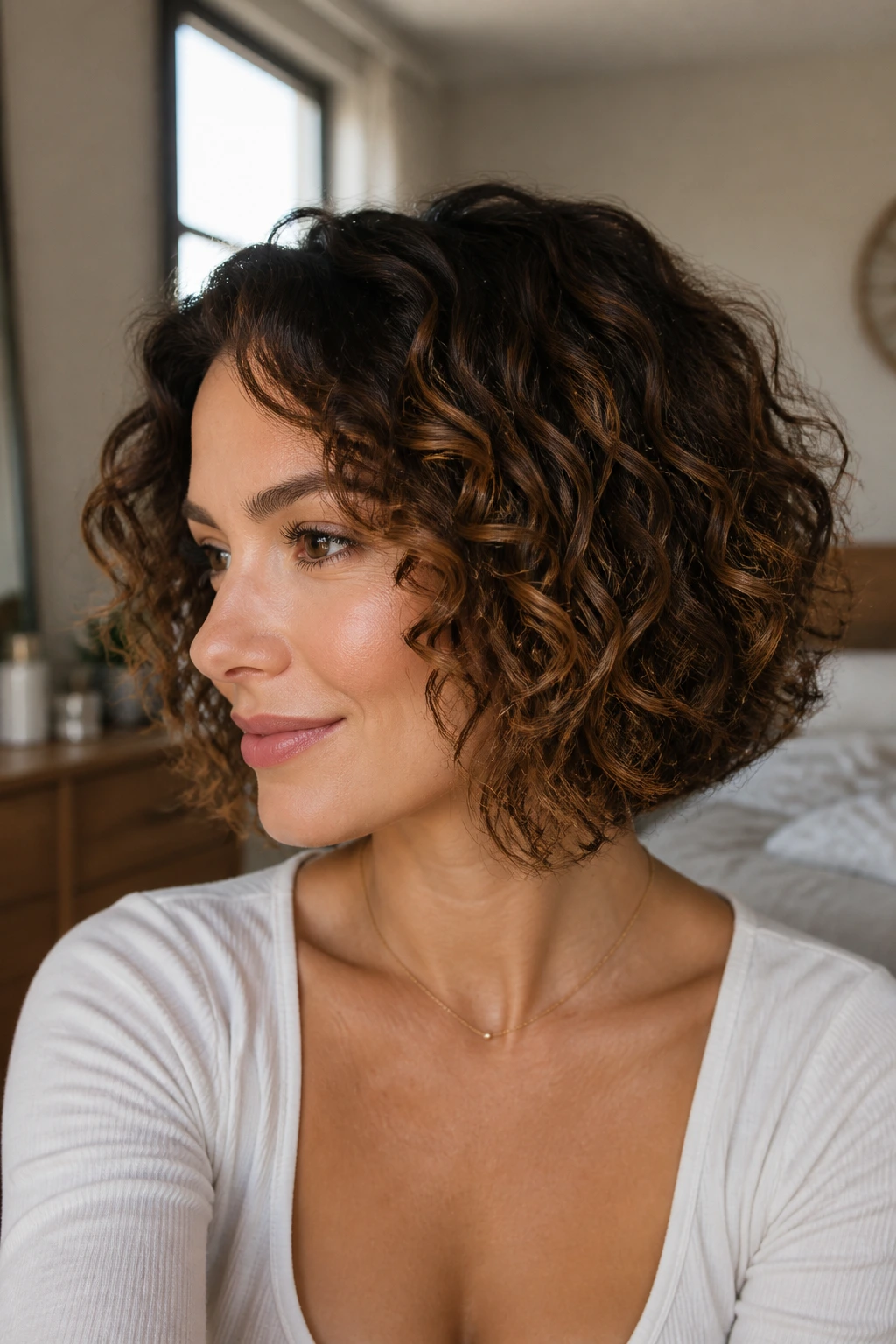
Silhouette: Keep the outline crisp enough to show the bob shape, but not so stiff that the curls lose their bounce. A dry cut or shape-up every so often helps the ends sit where they should.
Accessories: Hoops, small studs, and glasses with clean lines tend to play nicely with a curly bob because they don’t compete with the volume. High necklines can crowd the shape. Open necklines give the hair more room to sit.
Texture: Scrunch in a curl cream, then diffuse until the hair is about 80% dry. That last 20% can air-dry. If you blast the curls with heat until they’re bone dry, the highlight placement gets hidden under frizz.
Parting: Center parts show off money pieces and symmetrical highlight work. Side parts make ribbons and face frames feel softer and a little more dramatic. Pick the part based on where the brighter pieces were placed, not out of habit.
Extra Polish and Personalization
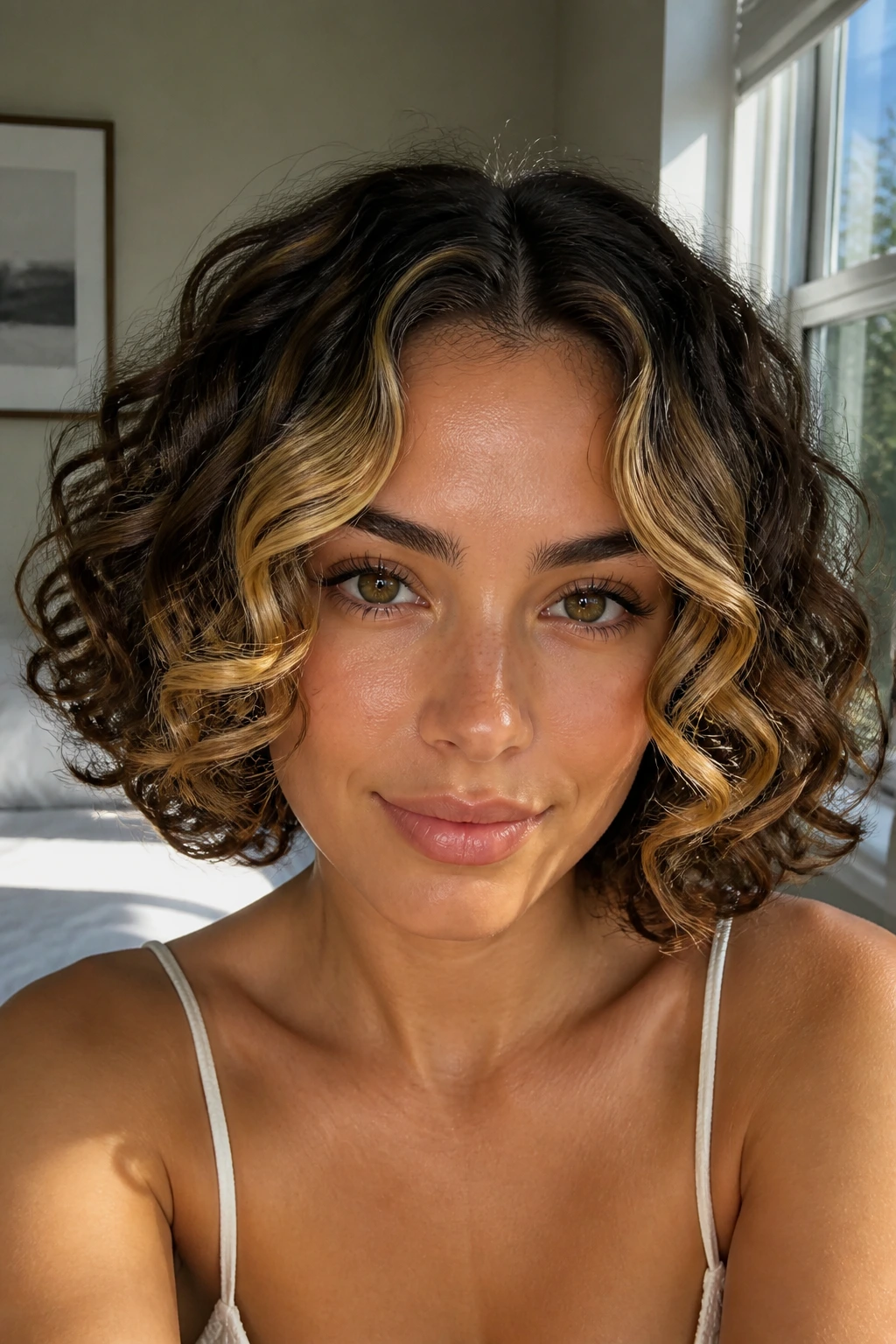
Gloss Boost: A clear or tinted gloss every 4 to 8 weeks keeps caramel, bronze, and honey pieces from looking chalky. On brunettes, a gloss can make the whole bob look deeper without changing the cut.
Texture Tweak: If your curls are coarse, use a cream with a little more slip and finish with a light gel. If they’re fine, keep the product lighter so the highlights don’t disappear under residue.
Color Refresh: If the warm tones start leaning brassy, ask for a tone refresh rather than a full rehighlight. That keeps the hair healthier and the shade cleaner.
Make-It-Yours: Want lower drama? Ask for fewer foils and more hand-painted pieces. Want more punch? Push the face frame brighter and keep the rest rooted. That one decision changes the whole mood of the cut.
How to Keep the Shape Between Salon Visits
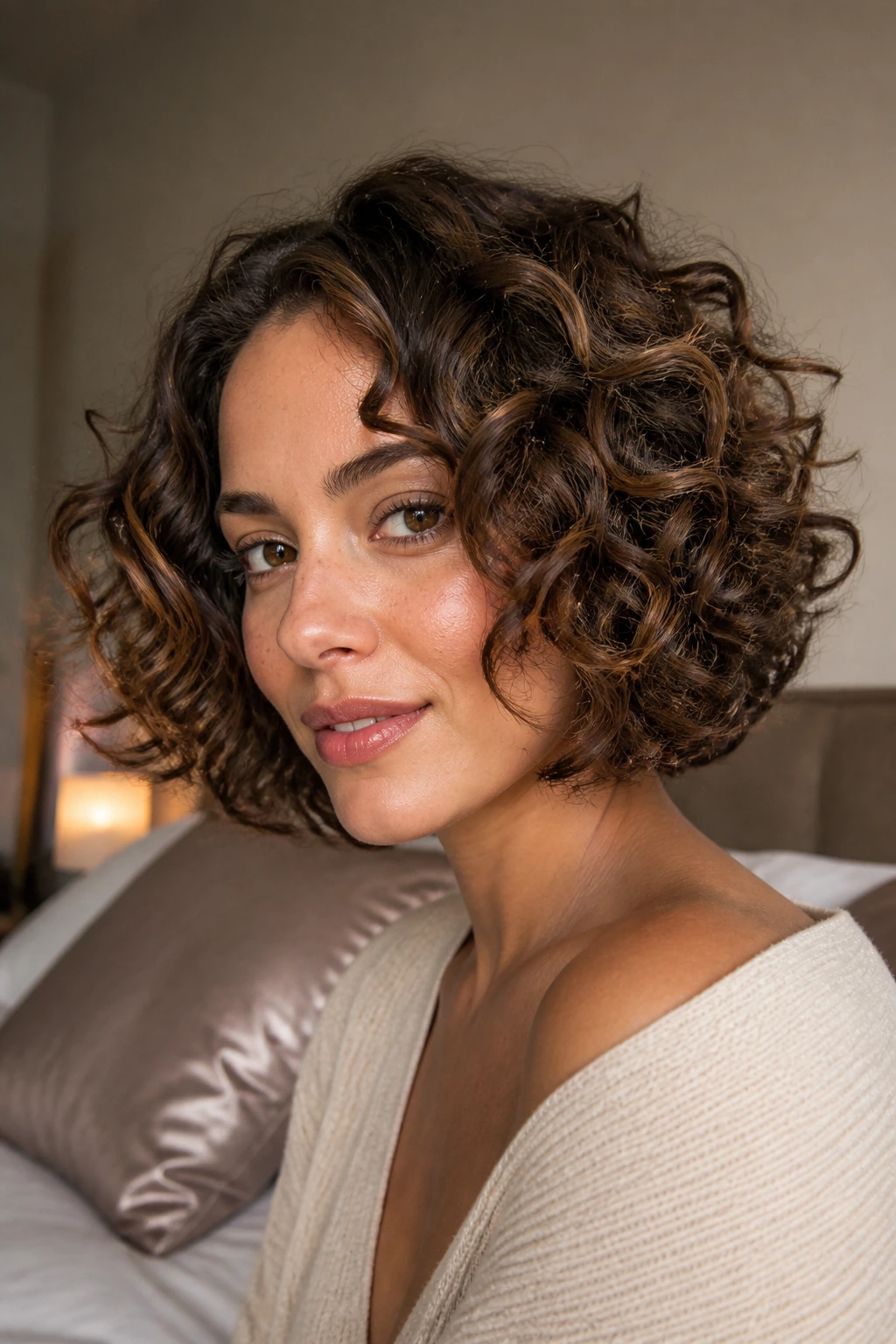
Curly bobs do not like being ignored for months. The shape starts to slide, the ends get fuzzy, and the highlights lose their clean separation. A trim every 8 to 10 weeks usually keeps the silhouette under control. If your hair grows fast or your bob is very short, 6 to 8 weeks is better.
Color maintenance depends on how light the highlights are. Soft caramel, bronze, and honey tones can often go 8 to 12 weeks between refreshes if you use color-safe shampoo and don’t overload the hair with heavy oils. Cooler ash tones may need a toner or gloss a little sooner because they fade faster on porous curls.
Nighttime care matters more than people admit. A satin pillowcase or bonnet keeps the bob from flattening at the crown, which protects the highlight pattern as much as the curl shape. In the morning, mist the hair lightly with water, add a pea-sized amount of curl cream to the ends, and scrunch the bob back into place. If the front pieces need extra direction, clip them while they dry for 10 to 15 minutes.
Common Mistakes That Flatten Curls or Blur Color
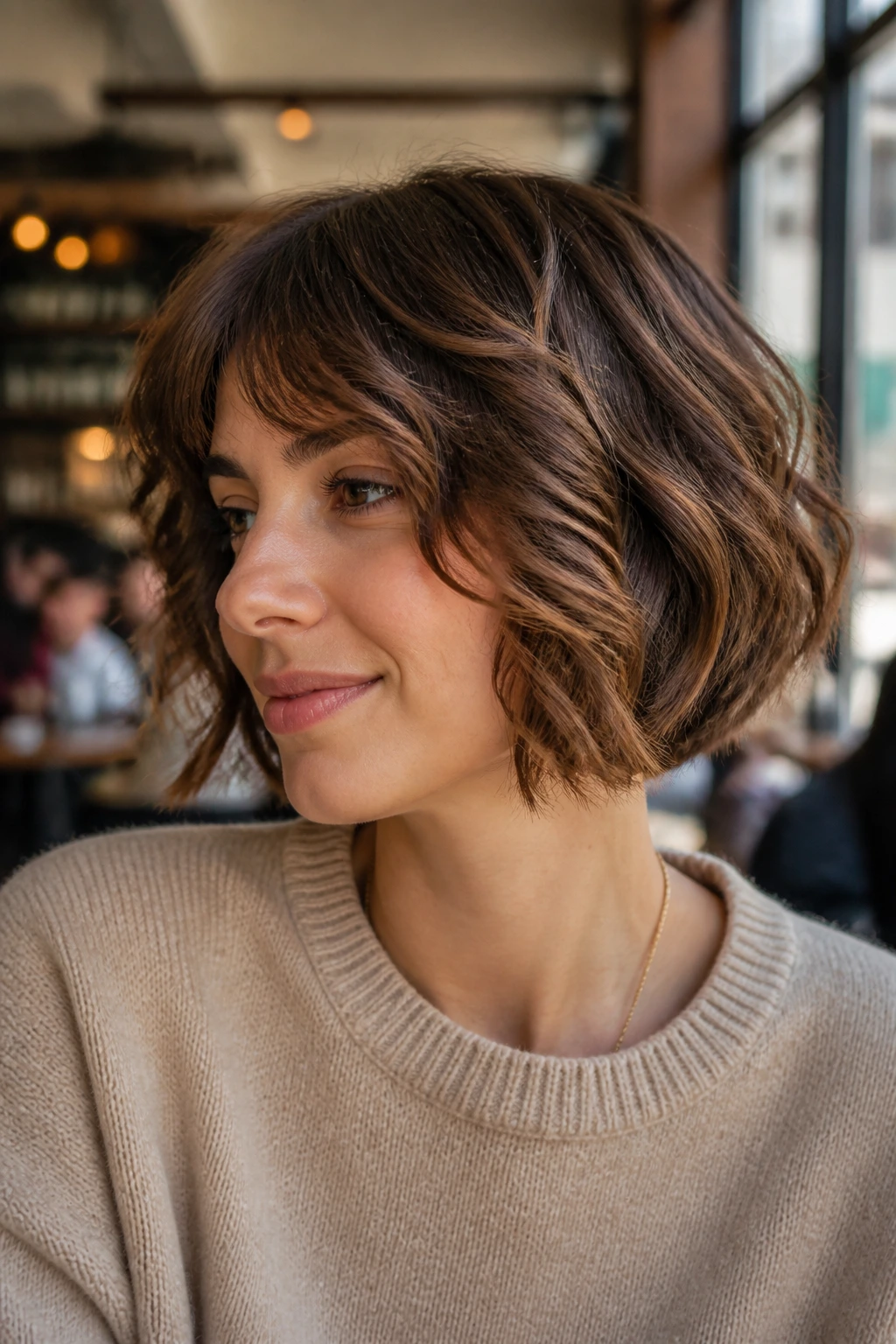
- Packing in too many highlights: The bob starts looking patchy or frizzy instead of dimensional. The fix is fewer, better-placed pieces on the surface and around the face.
- Choosing blonde that’s too pale for the base: On dark brunette hair, ultra-light blonde can look harsh and wear out the curl pattern. Warm caramel, bronze, or honey usually behave better.
- Ignoring shrinkage: A cut that looks balanced when wet can jump too high when dry, which makes the color land in the wrong place. Always ask the stylist to shape it dry or account for shrinkage.
- Using too much product: Heavy creams and oils can make highlights look dull and separate the curls in a greasy way. Start with a small amount and build only if you need it.
- Letting the perimeter go blunt with no movement: A hard line at the bottom can make the bob feel heavy and blocky. A little internal shaping helps the color breathe.
- Skipping gloss or toner after lightening: Raw highlights can look brassy or unfinished on brunette curls. A toner or gloss keeps the shade clean and polished.
Variations for Different Curl Types and Routines
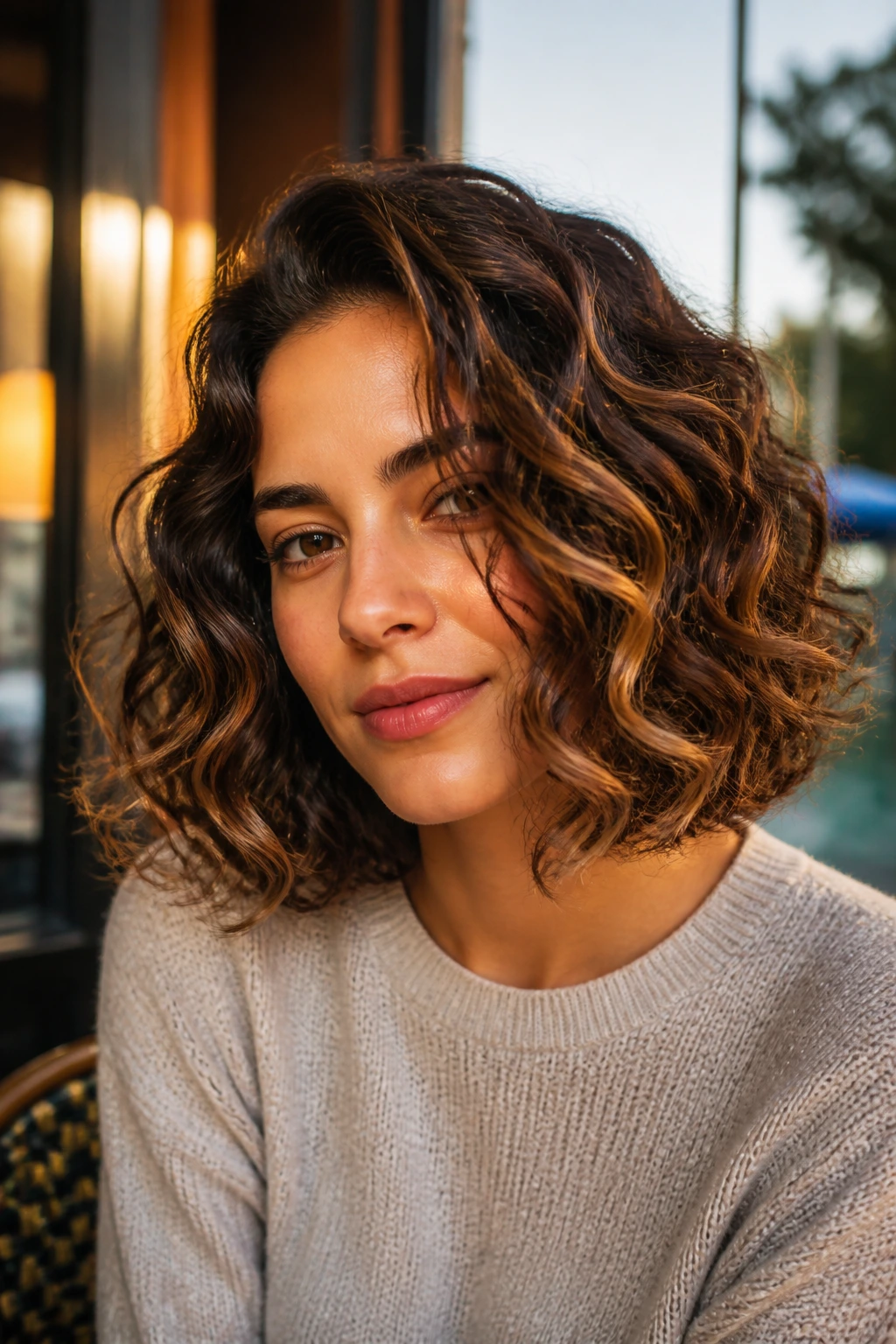
Loose-Wave Glow: If your hair sits more in the 2C to 3A zone, go a little bolder with ribbon highlights and a side part. Loose curls show longer color streaks well, so you can get away with a brighter front frame and a slightly lighter end color.
Dense-Ringlet Dimension: For 3B to 3C curls, thin out the highlight placement and keep the tones a touch warmer. Dense curls can swallow color if the pieces are too small, but they also get frizzy fast if the lightening is overdone.
Low-Maintenance Root Shadow: Keep the root deeper and place the brightness in the mid-lengths and ends. This is the version for people who want to stretch salon visits without the bob looking grown out.
Copper Accent Version: Swap caramel for a muted copper or copper maple if your skin tone likes warmth and you want the cut to stand out more. Keep the copper in small panels so it does not overwhelm the curl pattern.
Cool Brunette Edit: Use ash brown, mushroom, or beige-toned lights if golden shades turn orange on your hair. This version looks sharp on darker bases and tends to pair well with cleaner, sleeker styling.
Questions People Ask Before They Book This Cut
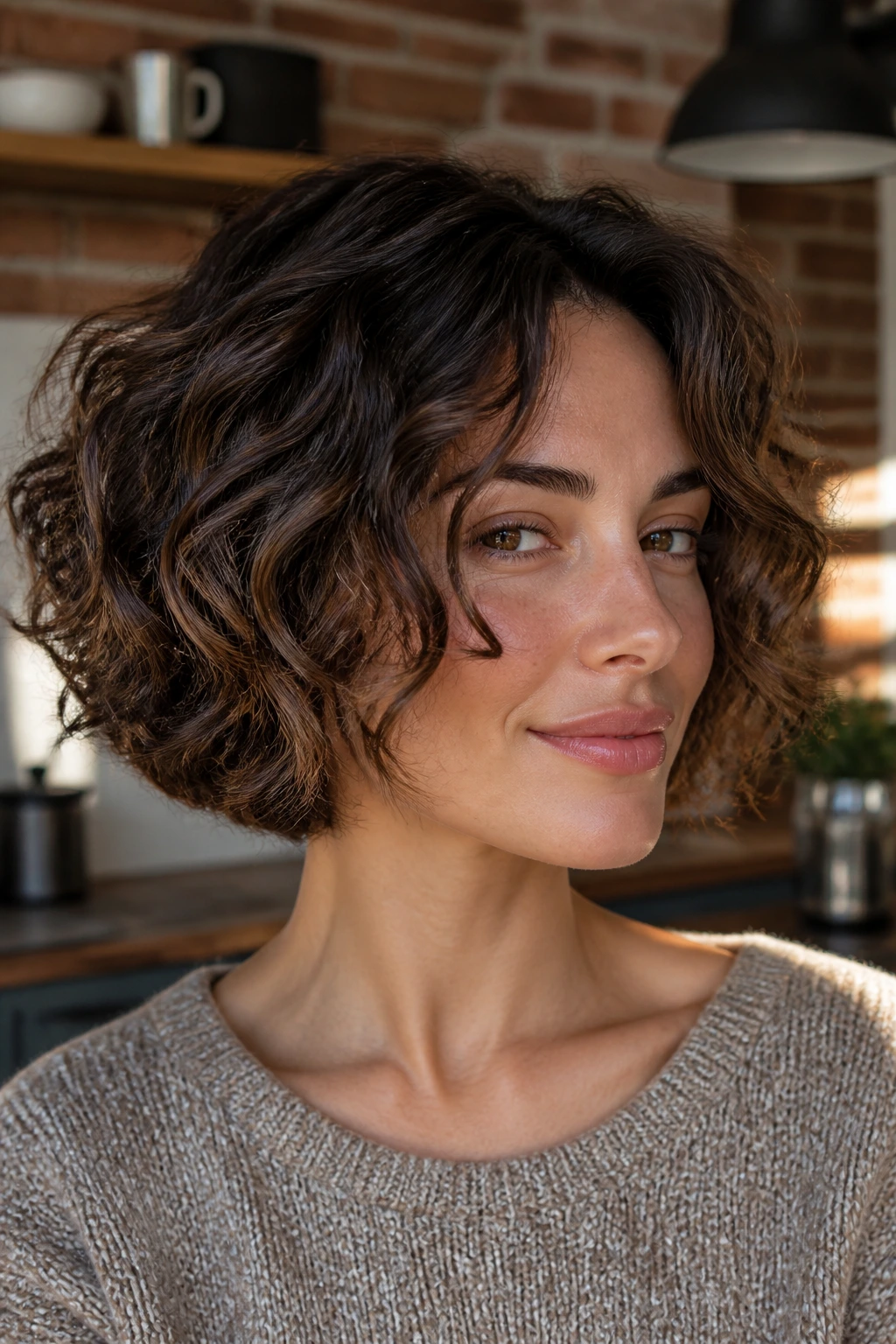
Will a bob make my curly hair triangle-shaped?
Only if the shape is cut badly. A good curly bob uses layers, internal weight removal, and smart highlight placement so the sides don’t balloon out while the crown goes flat.
Are balayage or foils better for curly bobs?
Balayage gives a softer grow-out and works well for ribbons, while foils can give more lift and brighter contrast. For curly brunettes, a mix of both often works best because you get softness around the face and cleaner brightness where you want it.
How light should brunette highlights go on curly hair?
Usually one to three levels lighter than the base is enough for a soft effect, and a little more if you want a stronger contrast. Going too pale can make curls look dry unless the hair is in excellent shape.
Can fine curly hair wear a highlighted bob?
Yes, but the highlight placement needs to stay light and delicate. Fine curls look best with babylights or thin ribbons, because chunky streaks can make the hair look sparse.
How often should I trim a highlighted curly bob?
Every 8 to 10 weeks is a solid rhythm for most curls. Shorter bobs and tighter curl patterns may need a shape-up sooner so the outline doesn’t drift.
What if my highlights turn brassy?
Use a color-safe shampoo and ask for a gloss or toner at the salon instead of piling on purple shampoo every wash. Too much toning product can dry out curls and make the brunette base look flat.
Can I wear bangs with a highlighted curly bob?
Yes, and they can look excellent. Curtain bangs, curly fringe, or a side-swept piece all work, but the highlight placement needs to support the fringe so it doesn’t disappear into the rest of the hair.
Do these looks work on darker brunette hair too?
They do, but the tone choice matters more. Dark espresso bases usually look better with caramel, bronze, copper, or soft honey than with very pale beige or icy blonde.
Why This Pairing Stays Fresh
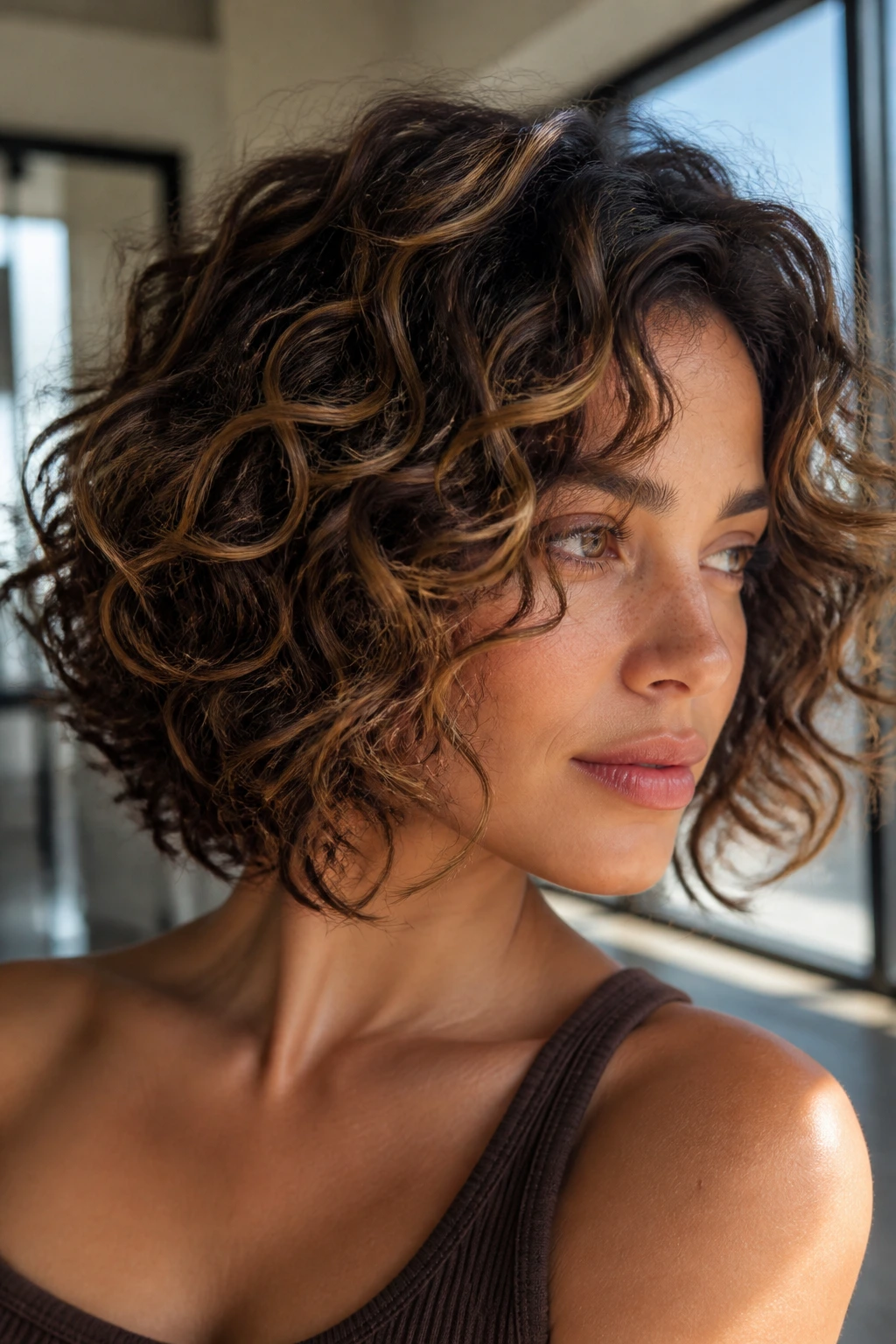
A curly bob already has movement. The right highlights give that movement a visible shape. That is why this haircut-color pairing keeps showing up in different forms: it doesn’t depend on one exact curl type or one exact brunette shade. It just needs smart placement and a little restraint.
If you take anything from these 30 looks, let it be this: the best highlighted bobs for brunettes with curly hair do not fight the curl. They follow it, brighten it, and leave enough depth underneath for the shape to hold. That is where the good stuff happens, and it’s why a well-cut curly bob can look sharper on day three than a flat, overworked blowout ever could.