



Fine hair can collapse in a minute, and a round face will show that collapse faster than almost any other face shape. Add the wrong highlight pattern—chunky caramel stripes, color sitting too low, or a cut that ends right at the cheeks—and the whole thing can feel wider instead of lighter. The fix is not more hair everywhere. It’s better shape.
That’s why hairstyles for round faces with caramel highlights need to work like small pieces of architecture: a little lift at the crown, a cleaner line through the perimeter, and warm ribbons of color placed where the eye should travel. Caramel is a smart choice here because it softens the face instead of hardening it. Done well, it looks like toasted sugar, light coffee, or amber glass catching a bit of sun. Done badly, it looks stripey and flat. There’s a difference.
The good looks in this collection all do the same basic job in different ways. Some pull the face downward with length. Some carve out cheekbone space. Some build the illusion of density at the ends so fine hair doesn’t disappear into wisps. And a few of them—especially the shorter ones—lean on caramel highlights to supply the movement that the haircut alone can’t give.
Why These 25 Styles Earn Their Keep
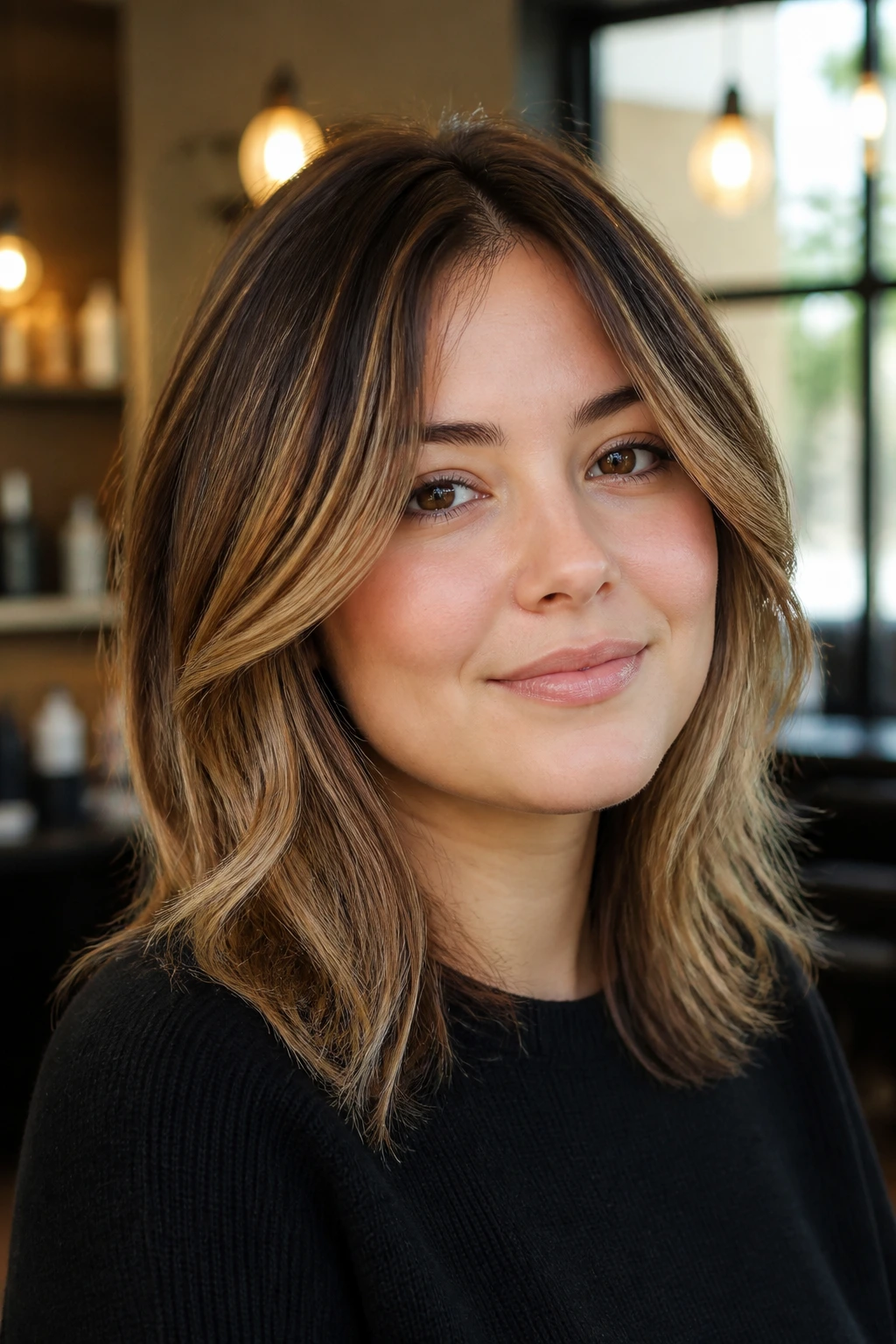
- They add shape without overstuffing the sides. Fine hair can’t take endless layering; these looks keep enough perimeter weight to avoid that see-through, frayed finish.
- They use caramel like contour, not decoration. Strategic brightness around the hairline, cheekbones, and ends makes a round face look a little longer and a lot less boxed in.
- They work at different lengths. If you hate short hair, there are long cuts here. If you want less hair on your neck, there are bobs and pixies that still read polished.
- They don’t depend on a perfect blowout. Several of these styles still look good with a bend from a round brush, a quick wave, or even an air-dry and a little product.
- They respect fine hair’s limits. The best cuts here avoid chewing up density with too many internal layers, which is the fastest way to make fine hair look tired.
- They give you room to tweak the tone. Caramel can run beige, golden, honeyed, or deeper toffee, so the same haircut can look softer, warmer, or sharper depending on the highlight placement.
1. Collarbone Lob with Cheekbone Ribbons
This is the safe bet for a reason. The collarbone length gives fine hair enough swing to move, but it stops before the ends turn skinny and sad. The caramel ribbons sit just in front of the cheekbones, which is the right place if you want a round face to look a little longer without screaming, “I had contour applied by a colorist.”
Why It Works
The clean line at the collarbone creates a vertical break below the face, and that matters more than people think. A lob that ends right at the jaw can make a round face feel boxed in; a lob that drops a few inches lower gives the eye somewhere else to go.
Ask for soft face-framing pieces that start below the cheekbone, not at it. That one detail changes the whole mood. The caramel should be fine-woven through the front sections and feathered lightly toward the ends so the color reads as movement, not stripes.
Best styling note: a 1.25-inch curling iron and a slight bend away from the face keep this cut from looking heavy at the cheeks.
2. Deep Side-Part Blowout Layers
A deep side part is a blunt little trick, and I mean that in the best way. It gives fine hair a visible lift on one side, which helps a round face look longer in a single move. Caramel highlights placed at the part line and front bend of the hair catch the light when the hair shifts, so the style looks alive instead of helmet-flat.
What to Ask For
- Parting and lift: Ask your stylist to keep the part flexible, but cut the layers so the side part has support.
- Highlight placement: Keep the brightest caramel around the front quarter of the head, especially near the temple and top layer.
- Layer shape: Long, gradual layers are better than choppy ones here; too much shredding will thin out the ends.
I like this look because it gives you polish without needing a huge amount of hair. A round brush, a concentrator nozzle, and a cooling blast at the end are enough. If your roots collapse by noon, use a root-lift spray at the crown before blow-drying, not after. That part matters.
3. Curtain Bangs with Soft Ends

Can curtain bangs work on a round face? Yes—if they open low and stay soft. The whole point is to split the fringe and let it drift down the sides of the face instead of stopping in one blunt line across the widest point. Caramel highlights near the fringe make the opening feel lighter, almost like a soft frame around the eyes.
The Shape Rule
Keep the shortest part of the curtain bang below the eyebrows and taper the sides into the cheekbones. If the fringe lands too high, it can make the face seem shorter. If it lands too heavy, it can eat the forehead and drag the whole style down.
- Best for fine hair: Use airy, face-framing layers that blend into the bang.
- Best color move: A subtle caramel money piece at the front keeps the fringe from disappearing into the base color.
- Best styling tool: A medium round brush, rolled away from the face for 10–15 seconds of heat, then pinned while it cools.
This is one of those styles that looks softer on day two. The bangs settle, the caramel shows more texture, and the cut gets a little easier to live with.
4. Angled Chin-Length Bob
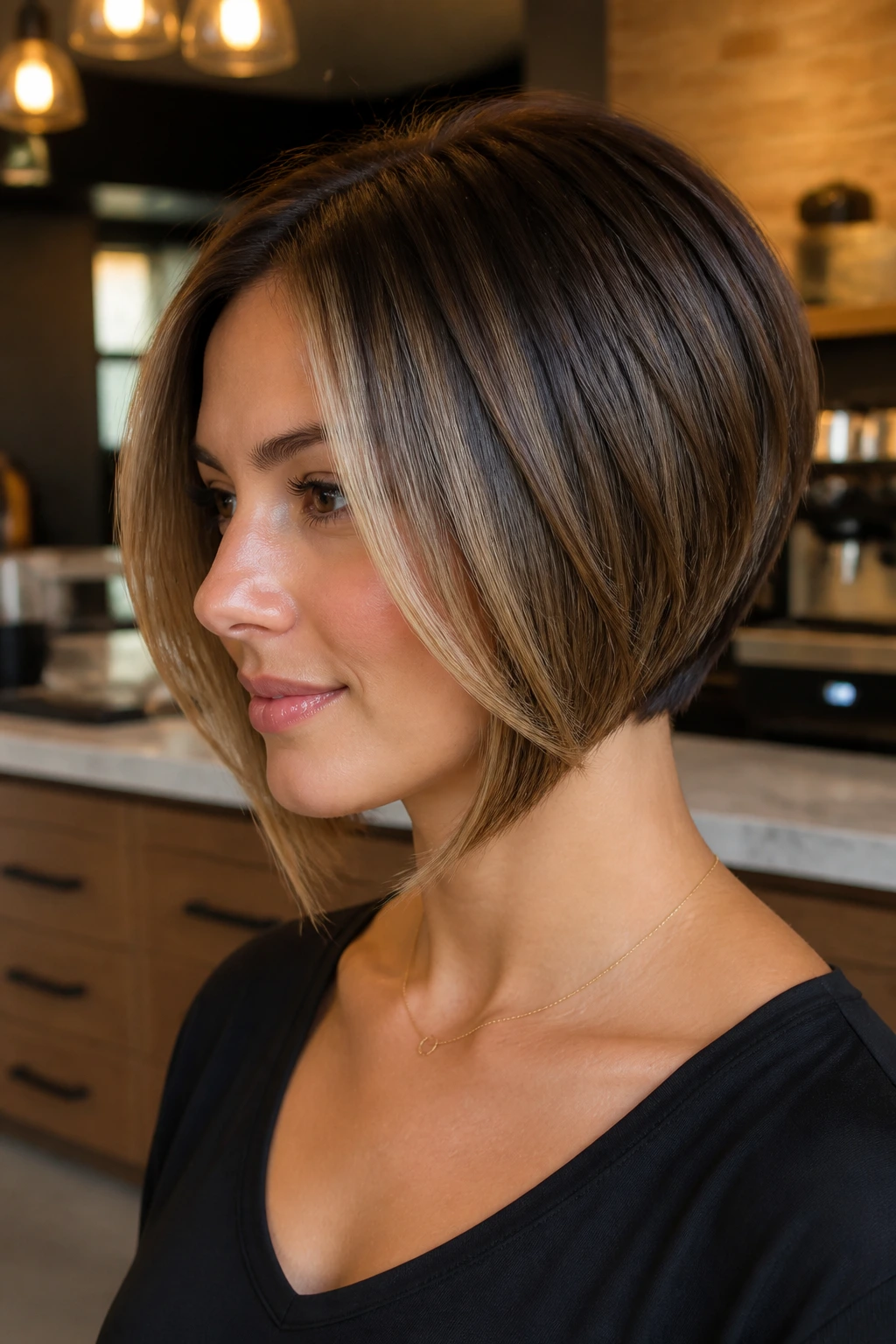
A chin-length bob is tricky on a round face. The wrong version ends right at the widest point and makes the cheeks feel bigger than they are. The right version tilts forward, with the back slightly shorter and the front skimming below the chin. Add caramel around the front edge, and the angle becomes visible even when the hair is tucked behind one ear.
What Makes It Sharp Instead of Harsh
The cut needs a clean diagonal line. Not severe. Just enough tilt to give the eye a direction. Fine hair actually likes this, because a strong outline can make the whole shape look denser.
If you want this bob to feel modern, not hard, ask for soft beveling at the ends and a few whisper-light highlights through the front panels. That keeps the face bright without turning the bob into a block. It’s neat. It’s tidy. And it does the job.
5. Feathered Shag Lob
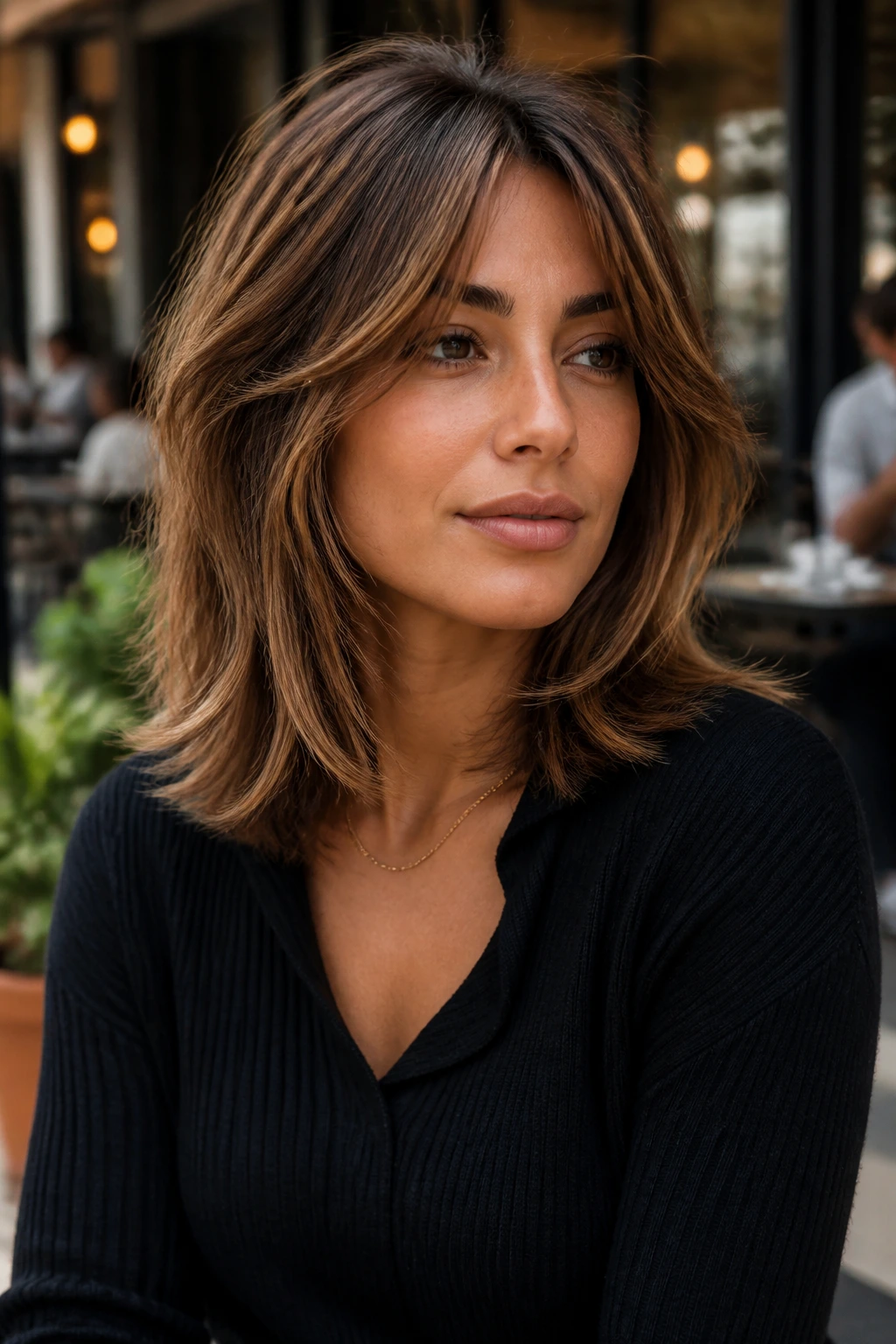
A shag on fine hair can go wrong fast if the stylist gets too enthusiastic with the razor. But a feathered lob, cut with restraint, gives you movement where fine hair usually needs help most—around the cheeks and collarbone. Caramel babylights scattered through the top layers make the texture read from across the room, which is helpful if your hair tends to disappear into the background.
Why It Works Better Than a Heavy Shag
The layers stay soft, not chopped. That matters because round faces already carry width; if the sides of the cut puff out too much, you lose the elongating effect. The feathering should happen mostly through the mid-lengths and ends.
A little texture spray is enough. Seriously. You do not need a full arsenal of styling products here. If your hair is pin-straight, wrap random sections around a wand for 5–7 seconds each, then break them up with your fingers. The caramel catches the bends and the lob suddenly has some nerve.
6. Blunt Lob with Invisible Layers
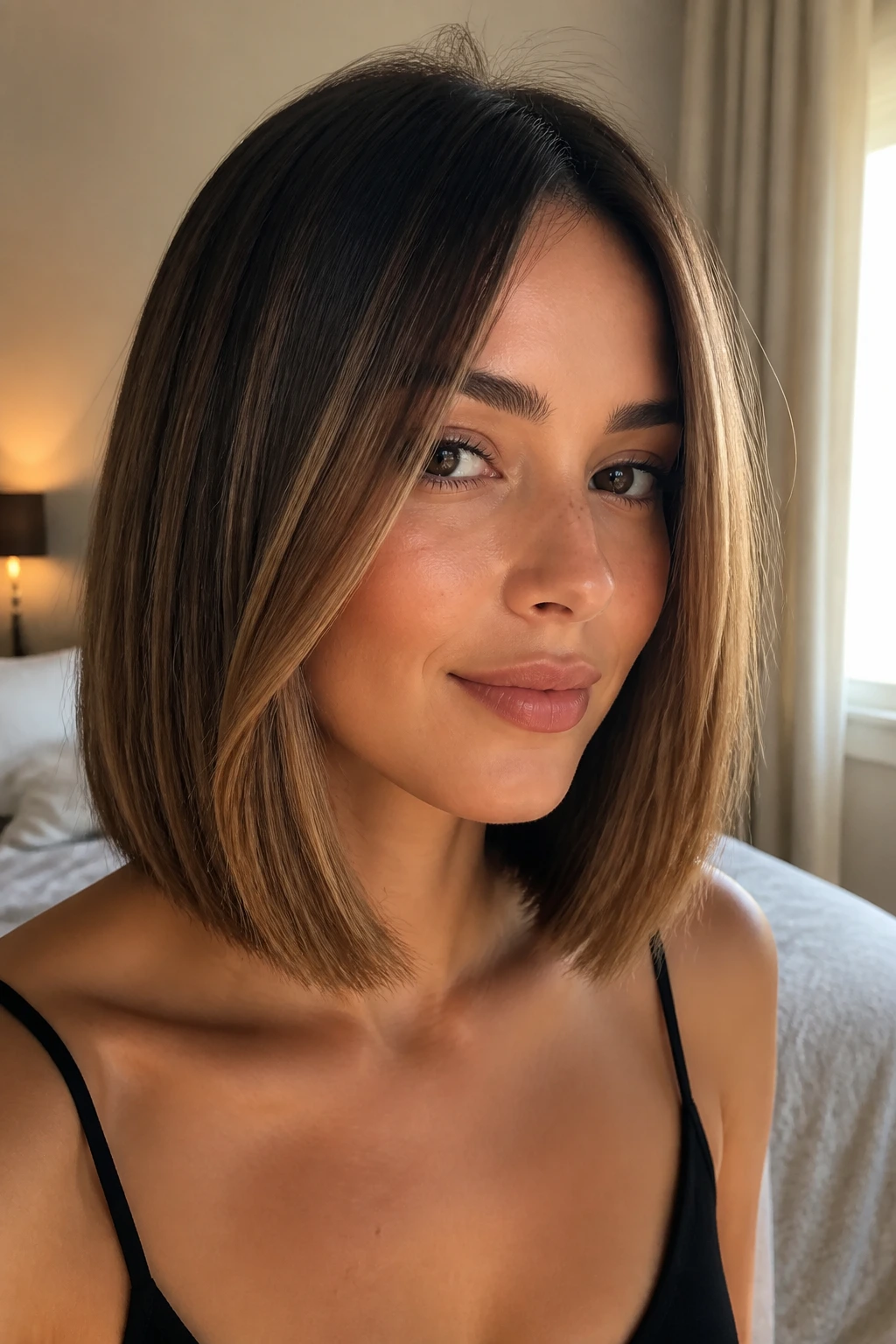
This is one of my favorites for fine hair, and not because it’s dramatic. Quite the opposite. A blunt lob keeps the perimeter thick, which is a gift if your ends tend to look wispy by the end of the day. The invisible layers are tucked inside the shape, so you get movement without losing that solid edge.
The Color Move That Makes It Work
Caramel should be subtle here—more ribbon than stripe. Ask for fine balayage pieces under the top layer and a few brighter strands around the face. That way the hair looks fuller when it swings, but still reads polished when it’s straight.
If you hate over-styled hair, this one is a solid pick. It air-dries into a decent shape, and a flat iron can make it look sleek without much effort. The blunt outline also keeps roundness from blooming sideways, which is exactly what you want when the face already has soft curves.
7. Butterfly Cut on Mid-Length Hair
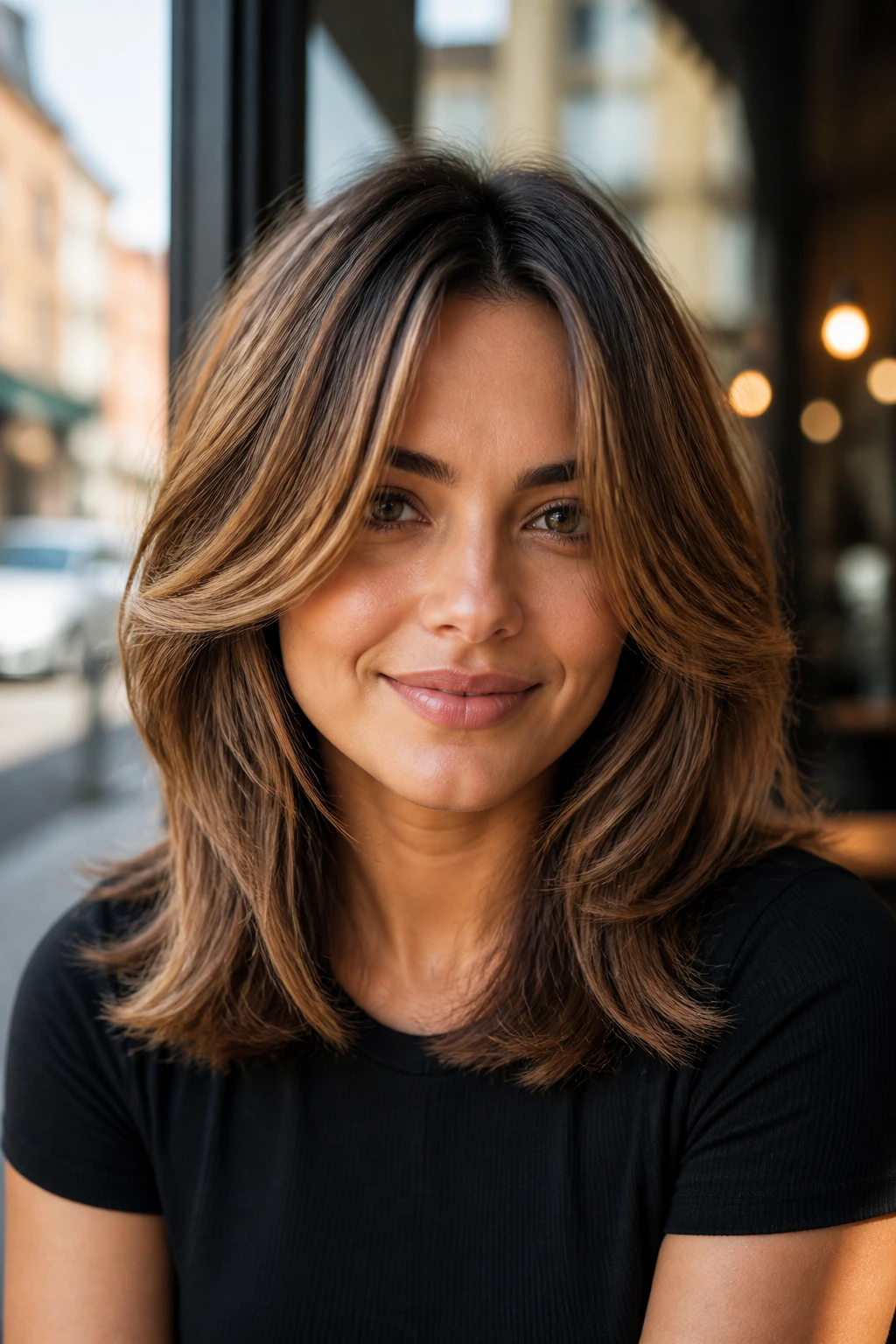
The butterfly cut can be terrific on fine hair if it’s done with a light hand. The shorter upper layers create lift around the cheekbones and crown, while the longer bottom length keeps the hair from looking sparse. Caramel highlights through the top pieces make the lift visible, especially when the hair moves.
Best for Someone Who Wants Volume Without Losing Length
This is the cut for the person who likes a blowout but doesn’t want a full haircut every time the weather changes. The face-framing pieces should land just below the cheekbone and blend into the longer lengths, not sit as a hard curtain.
A round face benefits from the separation between the top and bottom sections because it breaks up the horizontal spread. If you have fine hair, ask for soft layering only—no aggressive thinning. The shape should feel buoyant, not shredded. And yes, the caramel should be brightest around the top framing layers, because that’s where the movement lives.
8. Tapered Pixie with Caramel Crown
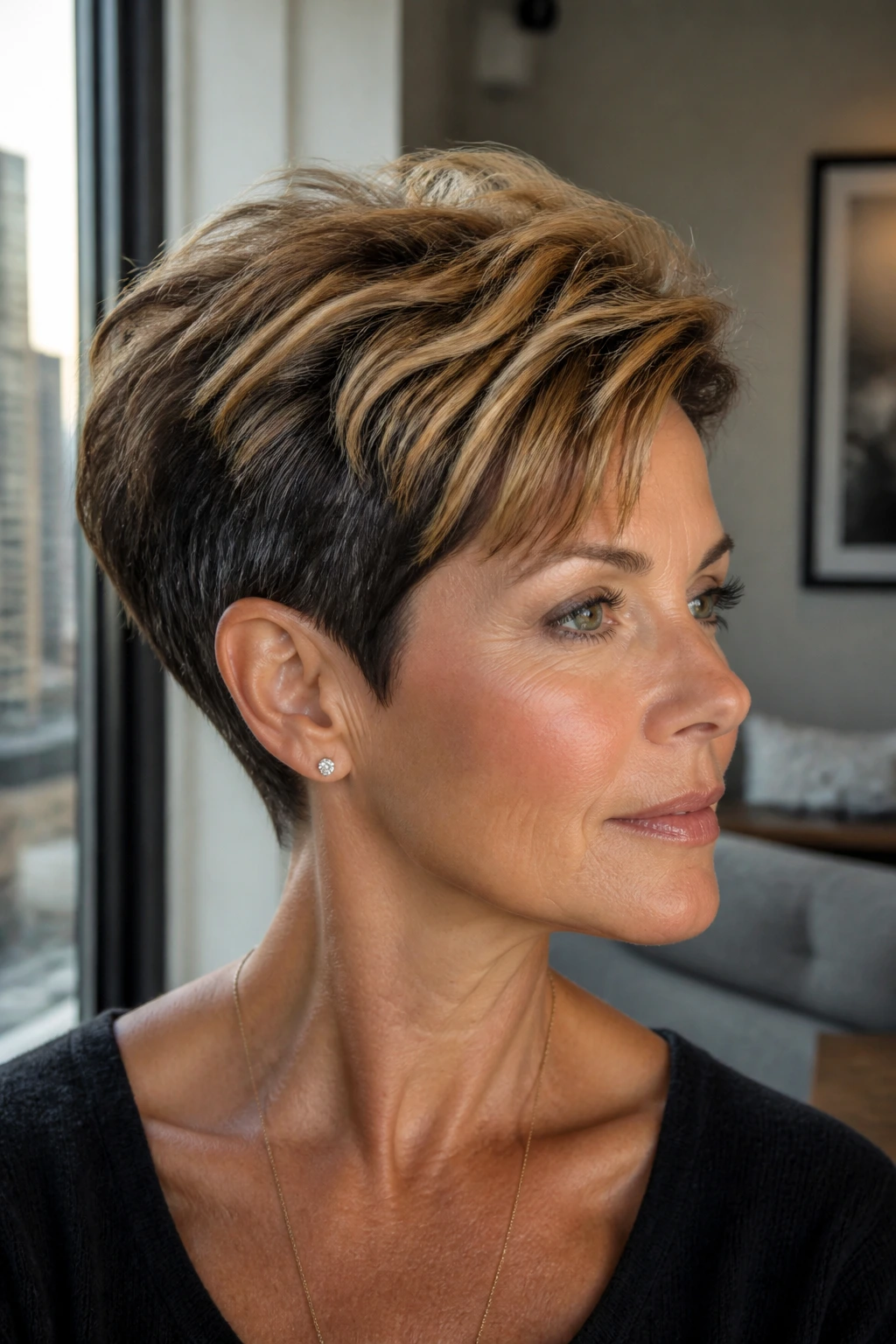
Short hair and a round face can be a fantastic match, but only when the top has enough lift. A tapered pixie keeps the sides neat and close while leaving the crown long enough to build height. Caramel highlights concentrated on the top layers pull the eye upward, which is the whole game with this cut.
The Details That Save It
- Keep the nape tight: It stops the cut from getting boxy.
- Leave length on top: You need that extra inch or two to create shape.
- Brighten the crown: Caramel here makes the head look longer from front to back.
This is not the cut for someone who wants to brush and go in total silence. It needs a little paste or foam to separate the top. But once it’s set, it’s elegant in a sharp, slightly mischievous way. If you’re tired of hair that sits on your face, this is the cleanest exit.
9. French Bob with Swept Fringe
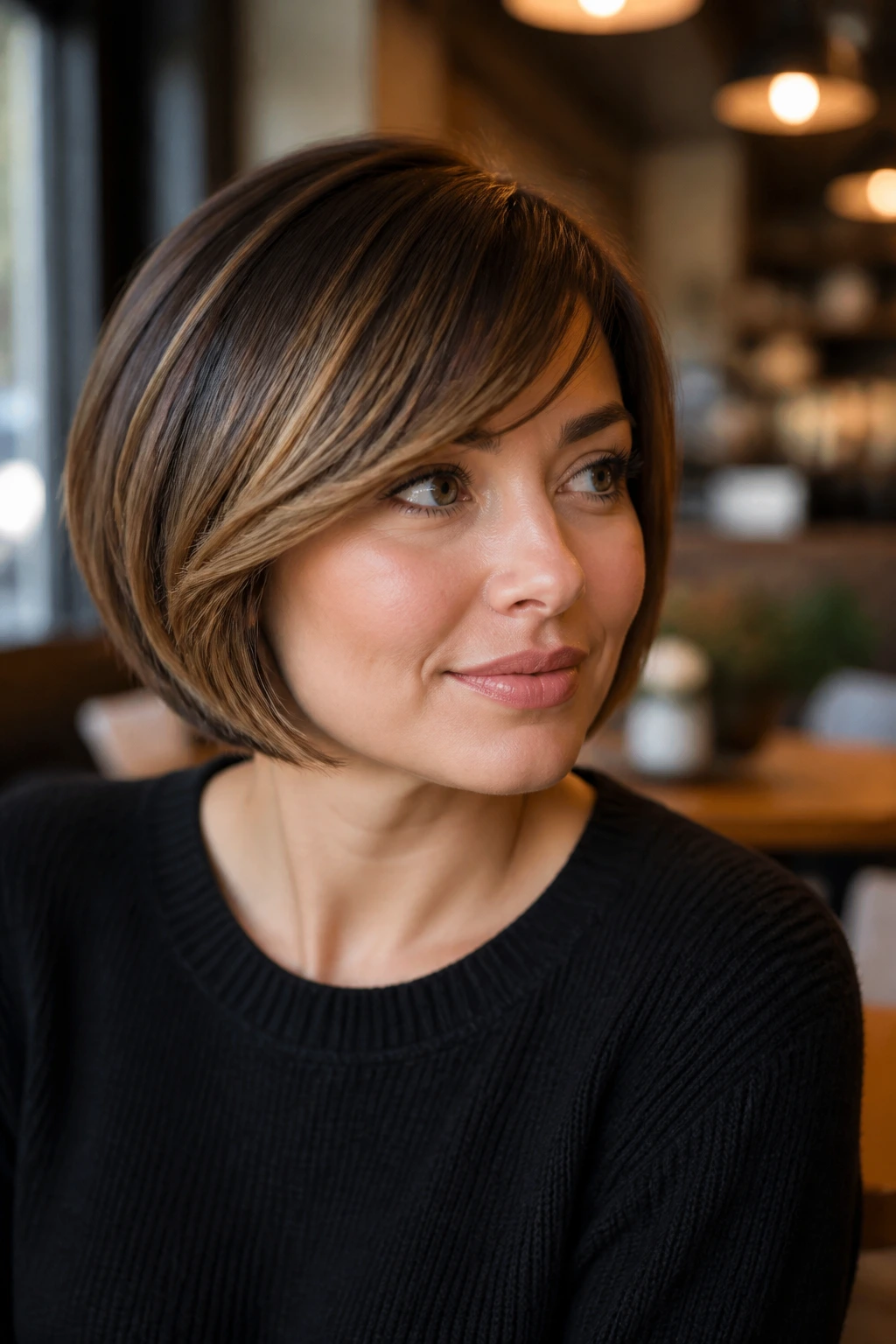
There’s a reason the French bob keeps coming back. It’s cheeky, compact, and softer than it looks in photos. On a round face, the key is the fringe. Swept to one side or broken into a loose curve, it avoids the full-width effect that a blunt bang can create. Caramel highlights at the fringe and temple area give the cut a little lift and keep it from feeling flat.
The length should hover around the jaw, but not land dead even with it. A tiny bit of movement below the jawline helps. I’d rather see this bob skimming a little lower than a perfect chin stop that just sits there and stares back at you.
10. Money-Piece Midi Cut
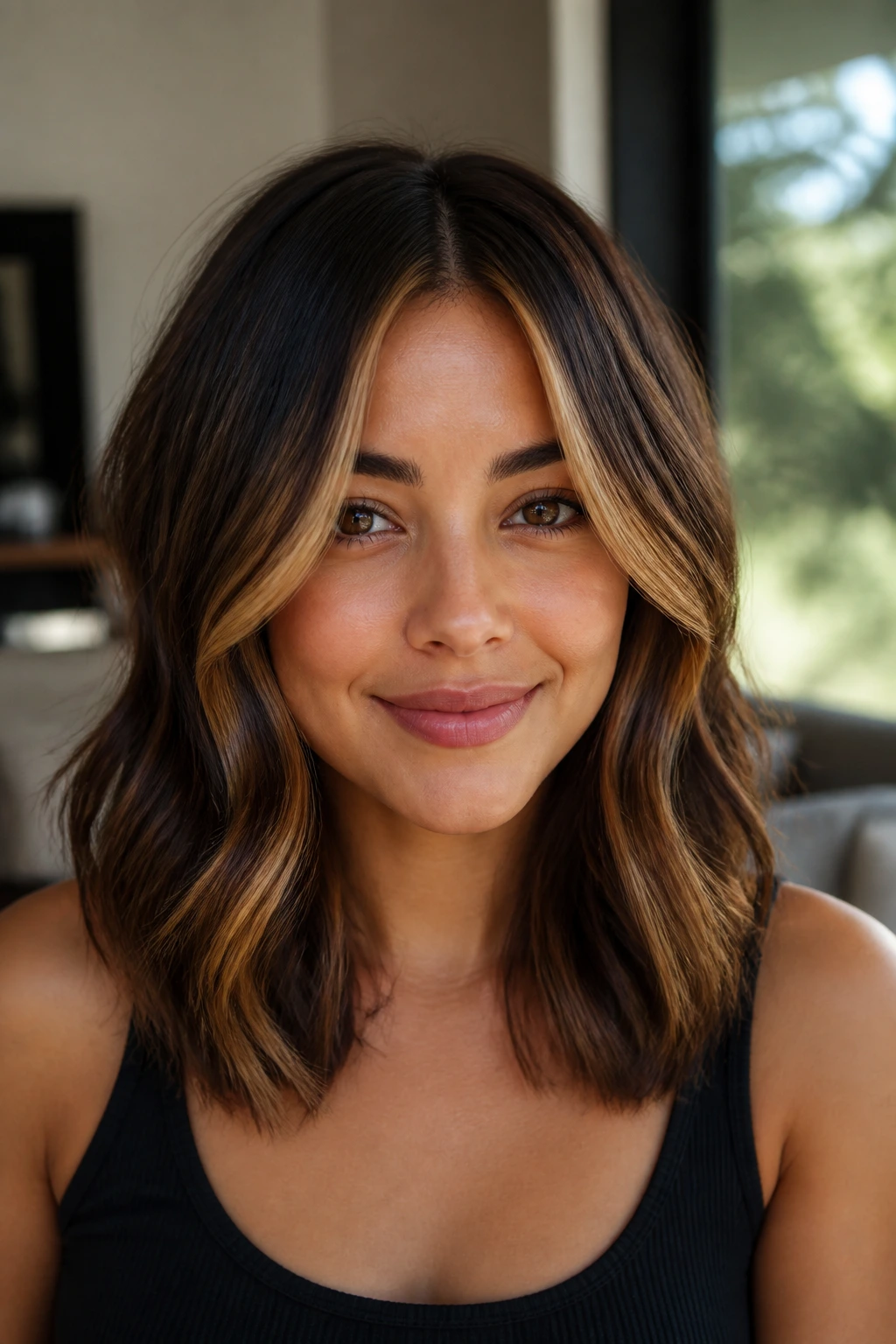
If you want brightness without going all-in on blonding, this is the one to show your colorist. Keep the base a natural brown or soft brunette, then place a caramel money piece through the front two sections and a few delicate ribbons through the mid-lengths. On a round face, that front light draws the eye down and in, which is more flattering than scattering brightness everywhere.
A Smart Choice for Fine Hair
The midi length gives you enough weight to hold a wave or bend, but it won’t drag the face down the way extra-long hair sometimes can. Fine hair also benefits from the visible contrast of the money piece; it creates the illusion of thickness right where the eye lands first.
Use a glossing serum on the ends only. Not the roots. The roots need lift; the ends need shine. If that sentence sounds fussy, it is, but the difference shows up fast in the mirror.
11. Rounded Bob with Beveled Ends
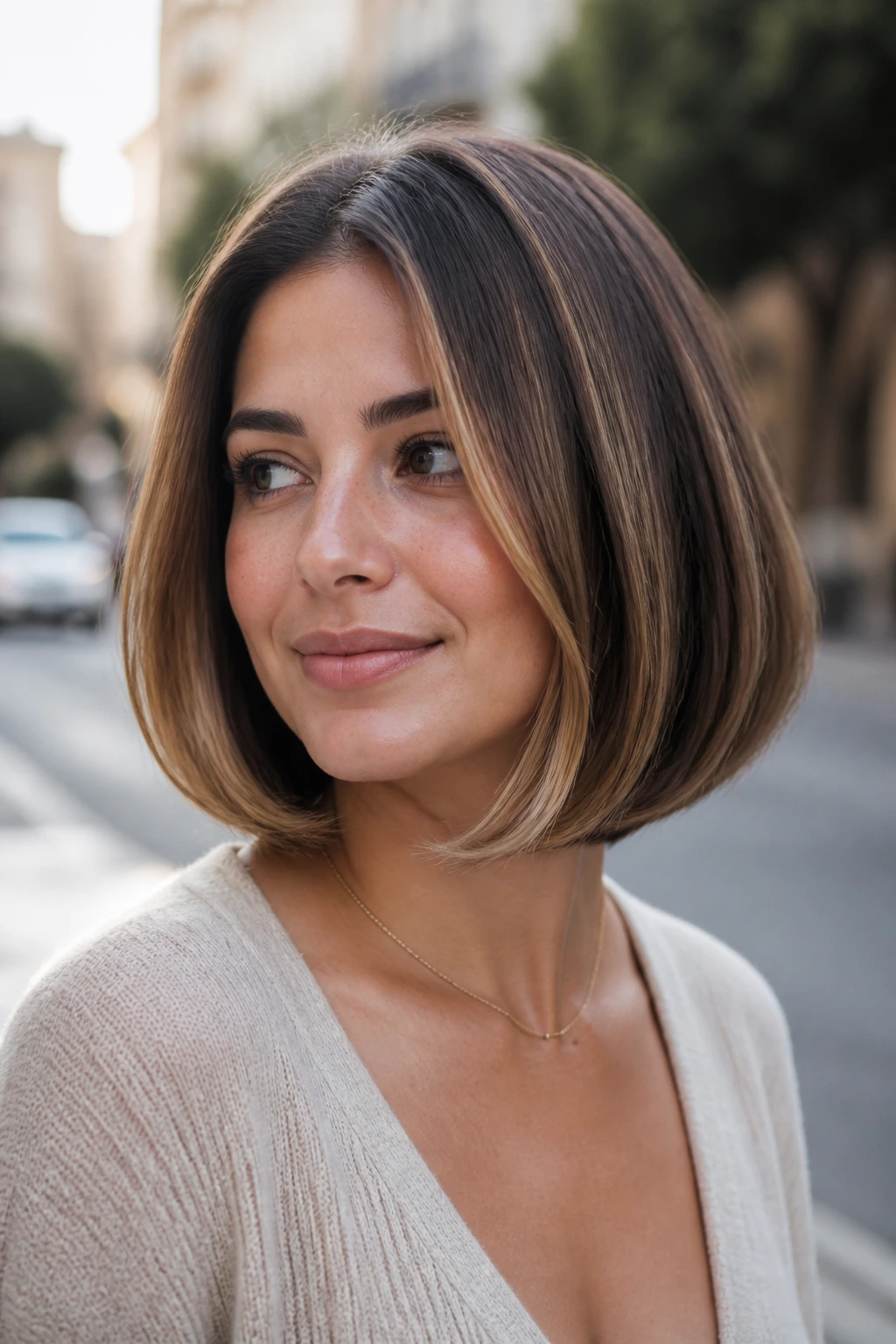
A rounded bob gets a bad reputation when it’s too bulbous, but a soft bevel at the ends can be beautiful on a round face. The trick is to keep the curve subtle and lower than the cheekbones, so the shape hugs the jaw without widening it. Caramel highlights worked through the curve make the movement visible even when the hair is tucked or windy.
The Look in Practice
The bob should sit slightly under the chin, then turn inward just enough to feel finished. Fine hair likes that kind of control because it creates a denser outline. If the ends flare out too much, the whole cut loses discipline.
Ask for color to be brighter near the front perimeter and softer through the back. That bit of contrast keeps the bob from reading like one flat sheet. It’s neat, tidy, and a little more feminine than a harsh straight line.
12. U-Shape Long Cut
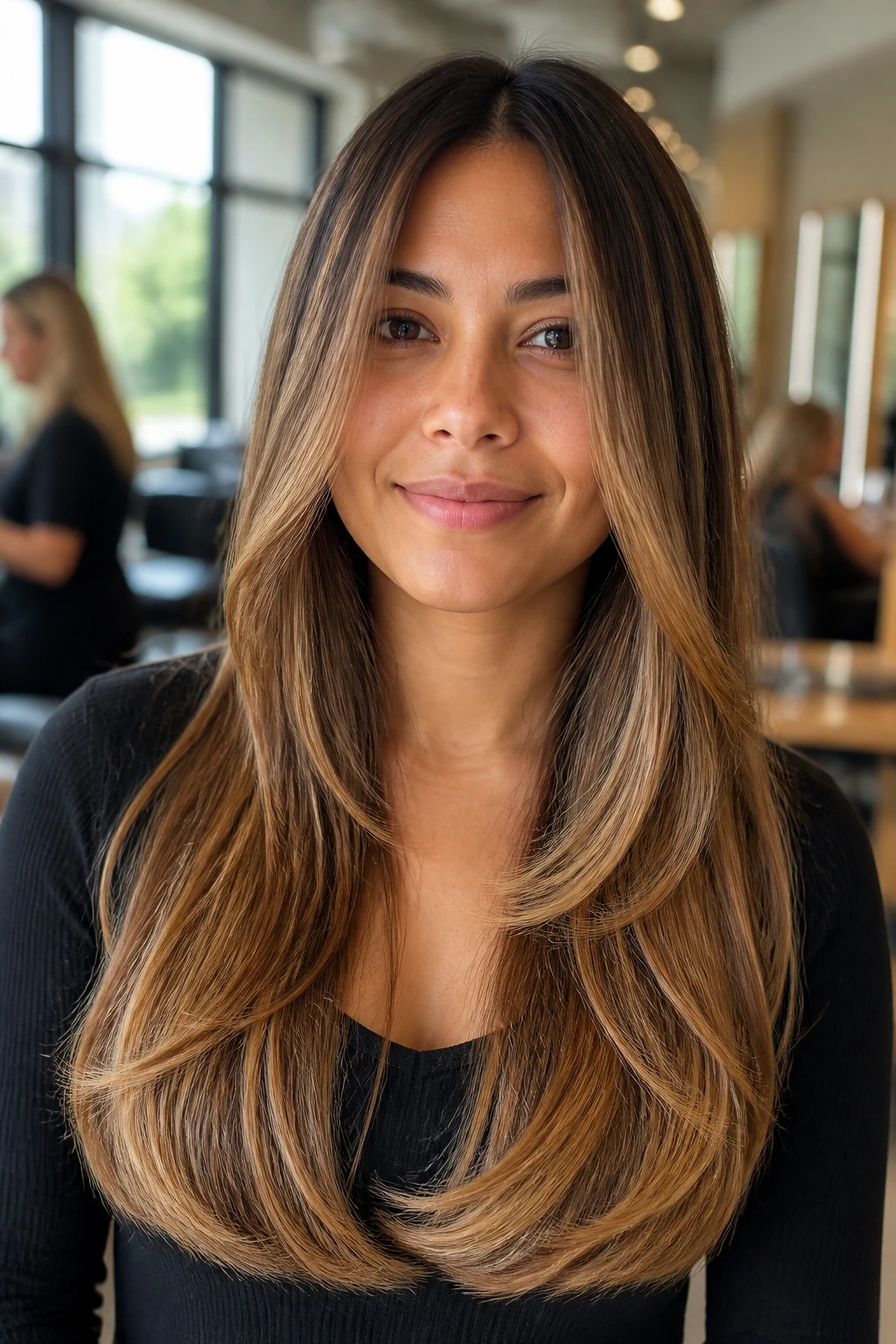
Long hair on fine strands can look stringy if the weight is chopped away too aggressively. A U-shape cut solves part of that by preserving length at the center while softly curving the sides. For a round face, it creates a longer vertical line and avoids the blunt width that a straight-across hem can cause. Caramel through the mid-lengths and ends gives the cut depth so the layers don’t vanish.
I like this shape when someone wants long hair but doesn’t want it to sit like a curtain. The U keeps movement at the edges and some density in the back. If you add a few brighter pieces just below the cheekbone, the face looks more sculpted without any obvious contour trickery.
13. Bottleneck Bangs with Wispy Layers
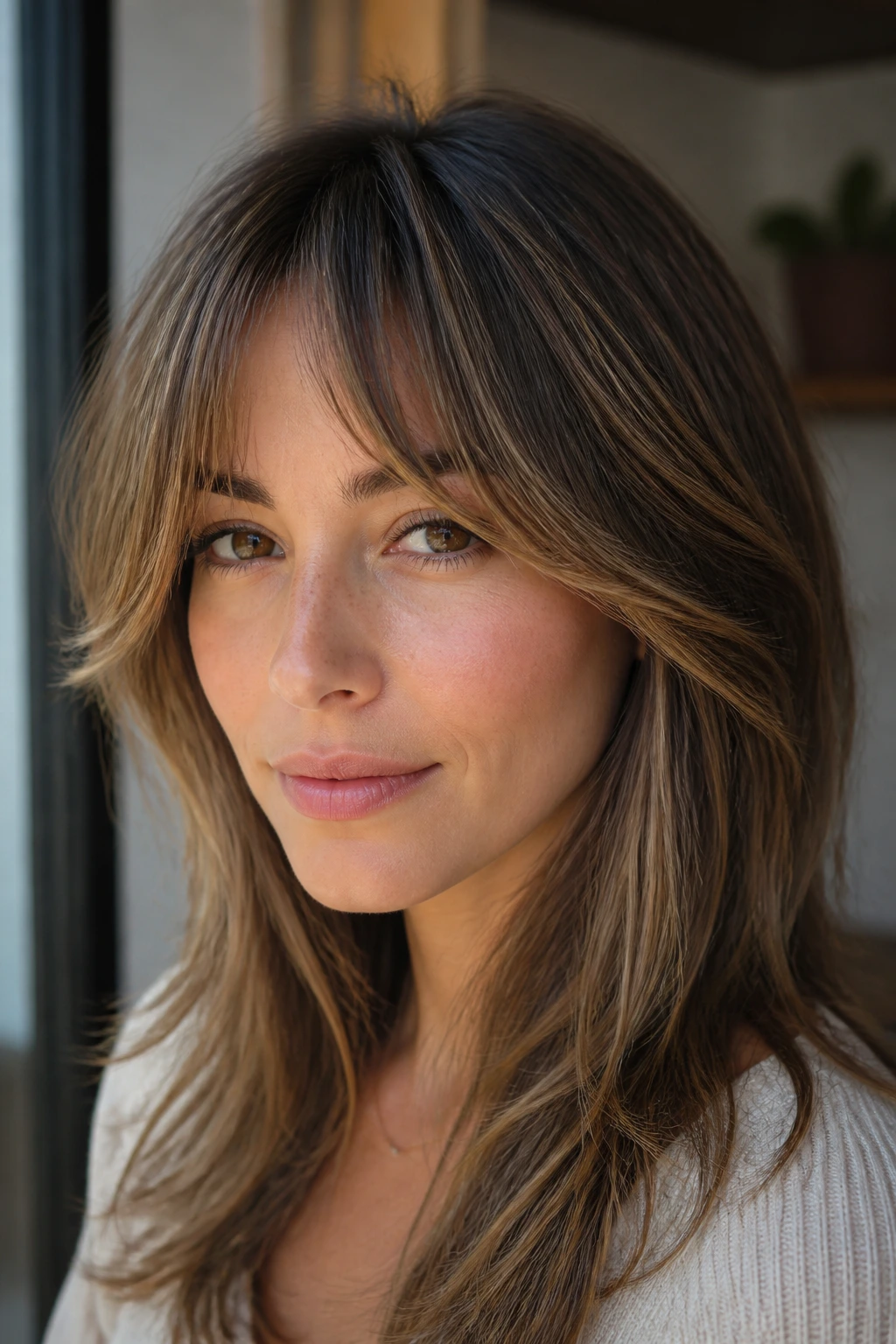
Bottleneck bangs are flattering because they start a little fuller in the center and open out softly at the temples. On a round face, that opening matters. It breaks up the width through the cheeks and gives the forehead a more gradual frame. Caramel highlights around the temple area and the outer bang pieces make that opening look airy, not heavy.
How to Keep Them Soft
The bang should not stop abruptly at the cheeks. That’s the mistake. Let it taper into wispy layers that blend with the rest of the haircut, especially if your hair is fine and tends to separate. A tiny round brush and a touch of heat from the dryer are enough to teach the bang where to sit.
This is a good option if you want fringe without the stiffness of blunt bangs. It moves. It softens. It doesn’t try too hard.
14. Shoulder-Length Flip Cut
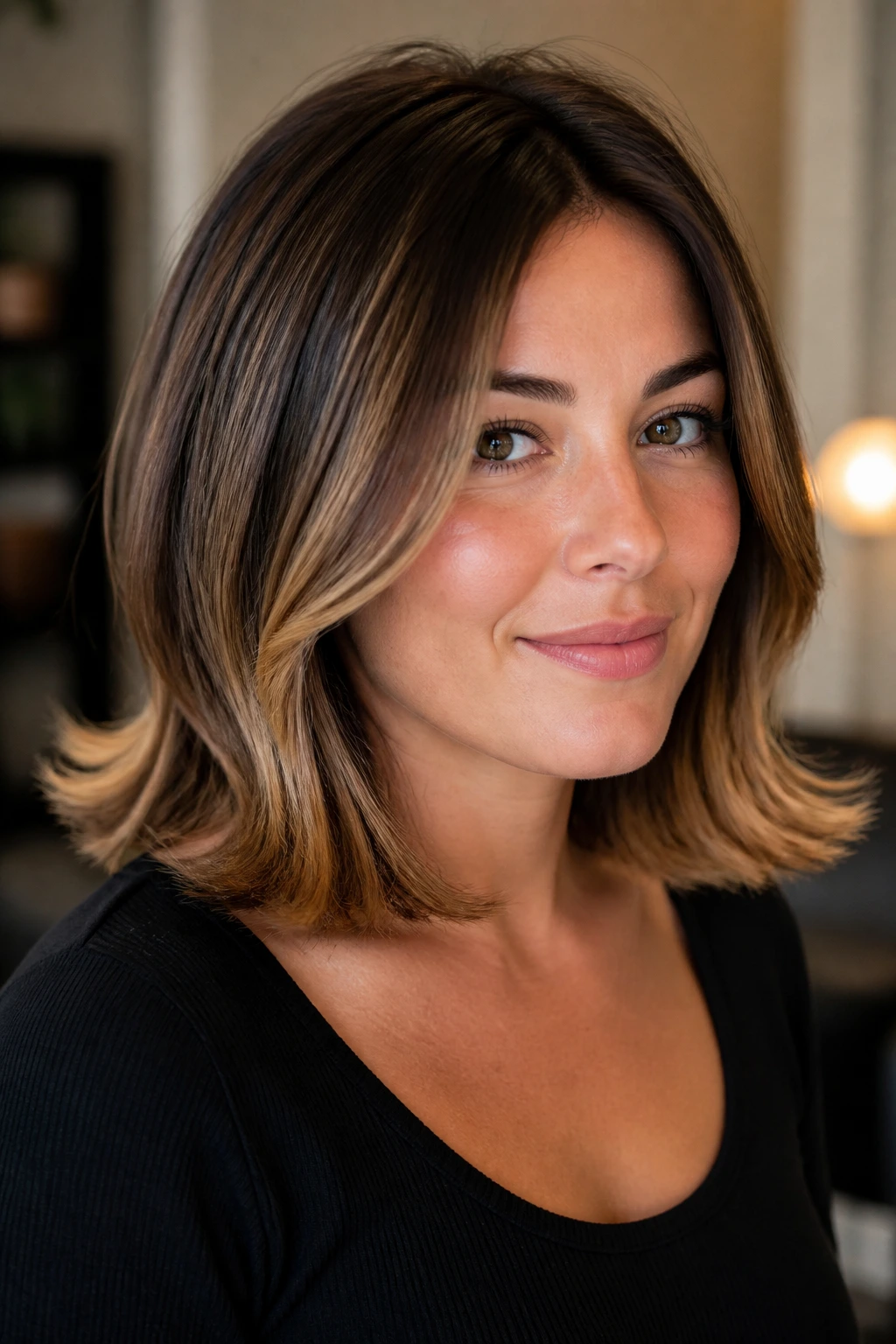
A shoulder-length cut with ends that flip out just a touch can be surprisingly good on a round face. The outward movement breaks the straight horizontal line that can make a face look wider. Caramel highlights at the ends help the flip show up, especially when the hair has a little bend from a brush or iron.
There’s also a practical upside: shoulder length gives fine hair enough weight to behave, but not so much that it hangs flat. If your ends are thin, this length is often the sweet spot. I’d keep the face-framing pieces slightly longer than the rest, though. It keeps the cut from looking like a helmet with a joke attached.
15. Piecey Crop with Long Top
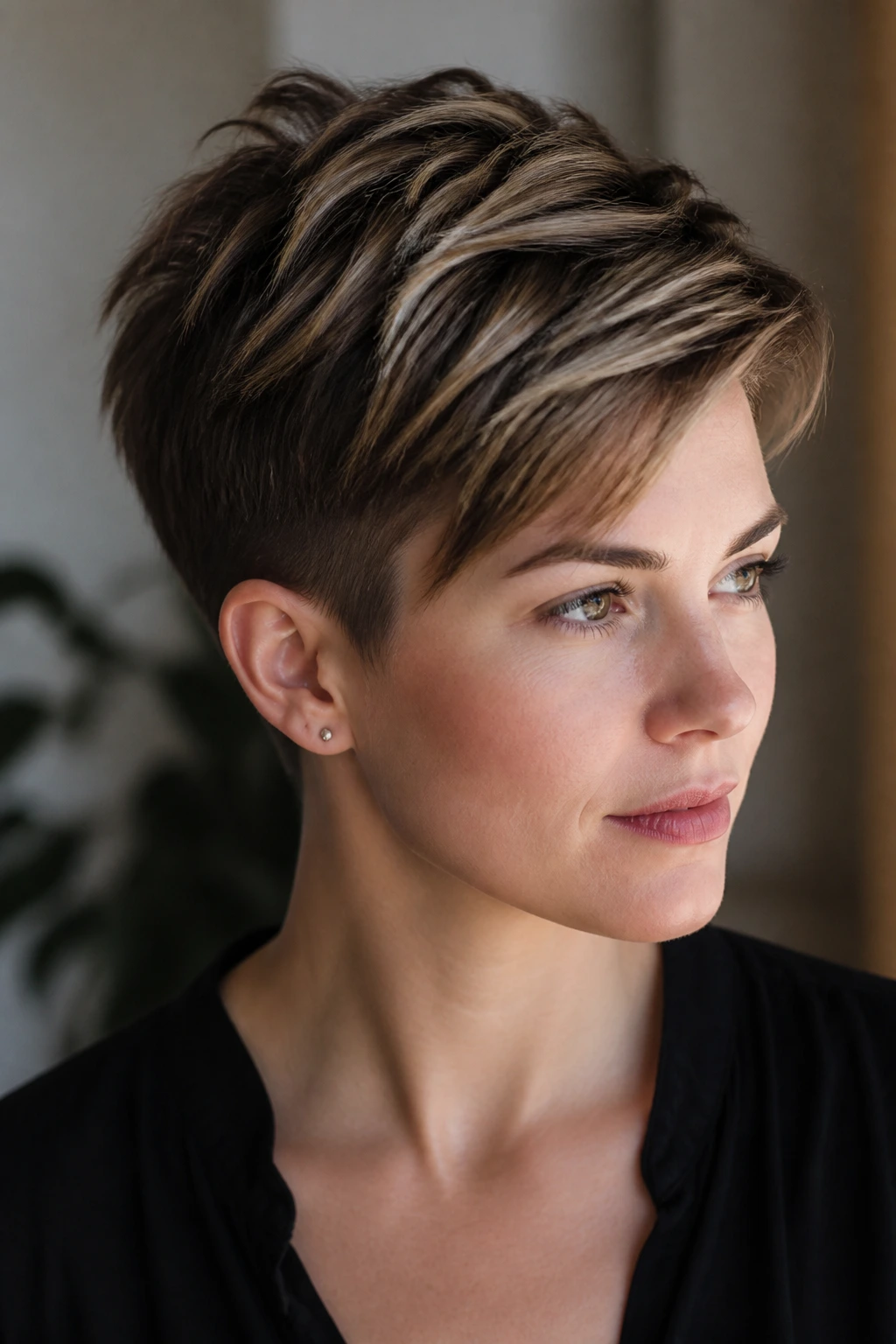
A piecey crop works when the top has length and the sides are controlled. The top gives you vertical height, and the shorter sides keep the shape clean around the face. Caramel highlights painted through the crown and fringe make the texture obvious, which is useful if your fine hair tends to sit too close to the scalp.
Good for a Little Attitude
This is not a shy haircut. It wants paste, finger-combing, and some separation. The payoff is that it makes a round face look sharper without relying on length at all.
- Use matte paste: It gives grip without making the hair greasy.
- Keep the sides narrower: That’s where a lot of short cuts go sideways on round faces.
- Brighten the top only: Too much light on the sides can widen the head shape.
It’s neat. It’s a little punk. And it looks better when the color is imperfect and lived-in.
16. A-Line Bob with Contoured Highlights
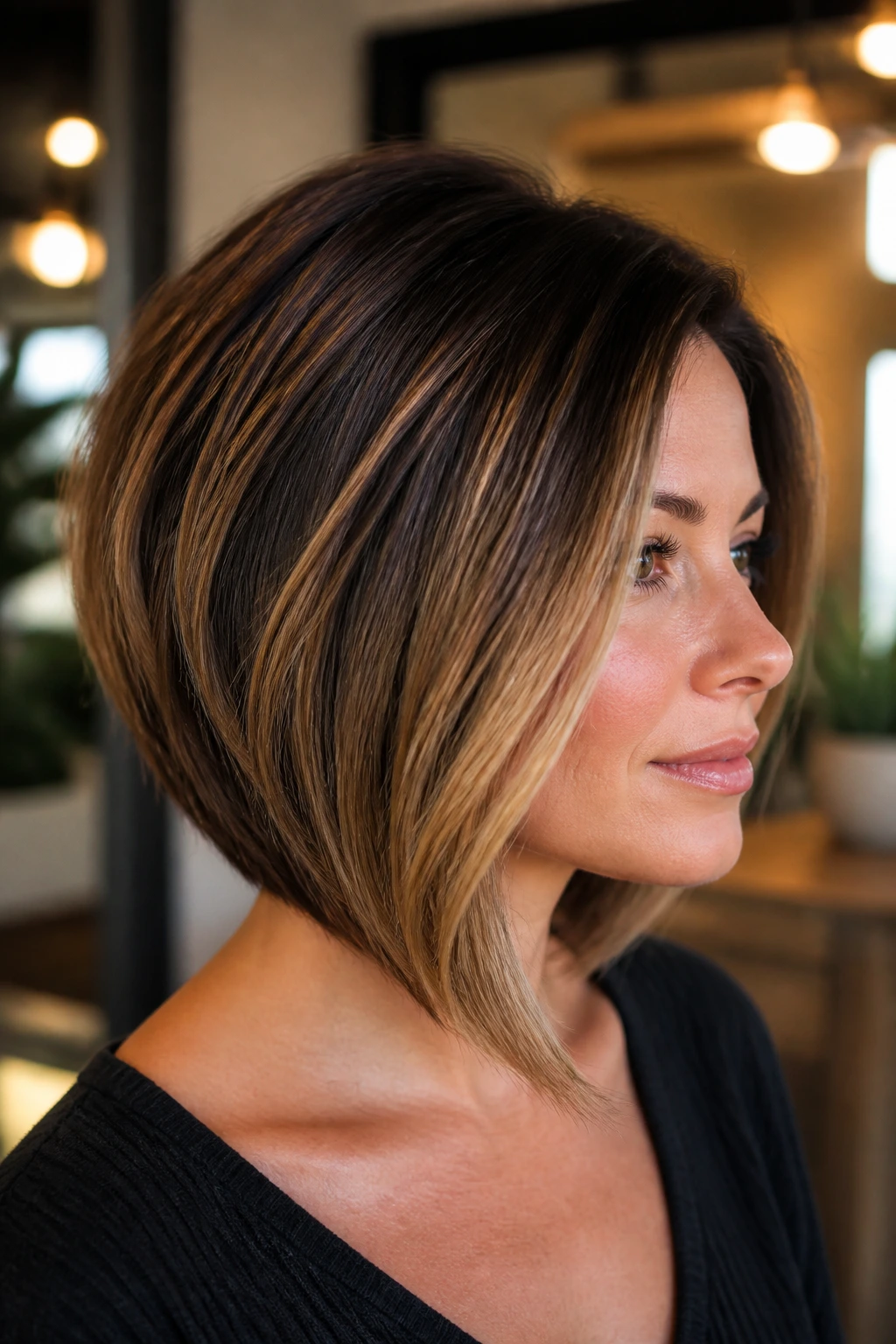
The A-line bob is one of the easiest ways to stretch the face visually. The back stays shorter, the front grows longer, and the diagonal line naturally pulls the eye down. On a round face, that diagonal is gold. Add caramel highlights concentrated along the front edge and under the top layer, and you get a shadow-light pattern that makes the cut look more deliberate.
This bob works especially well on fine hair because the front length creates the illusion of density, while the shorter back prevents the style from hanging limp. Ask for a soft A-line, not a rigid one. If the angle is too steep, the haircut starts to feel dated. A gentle slope is cleaner.
17. Long Layers with Subtle Fringe
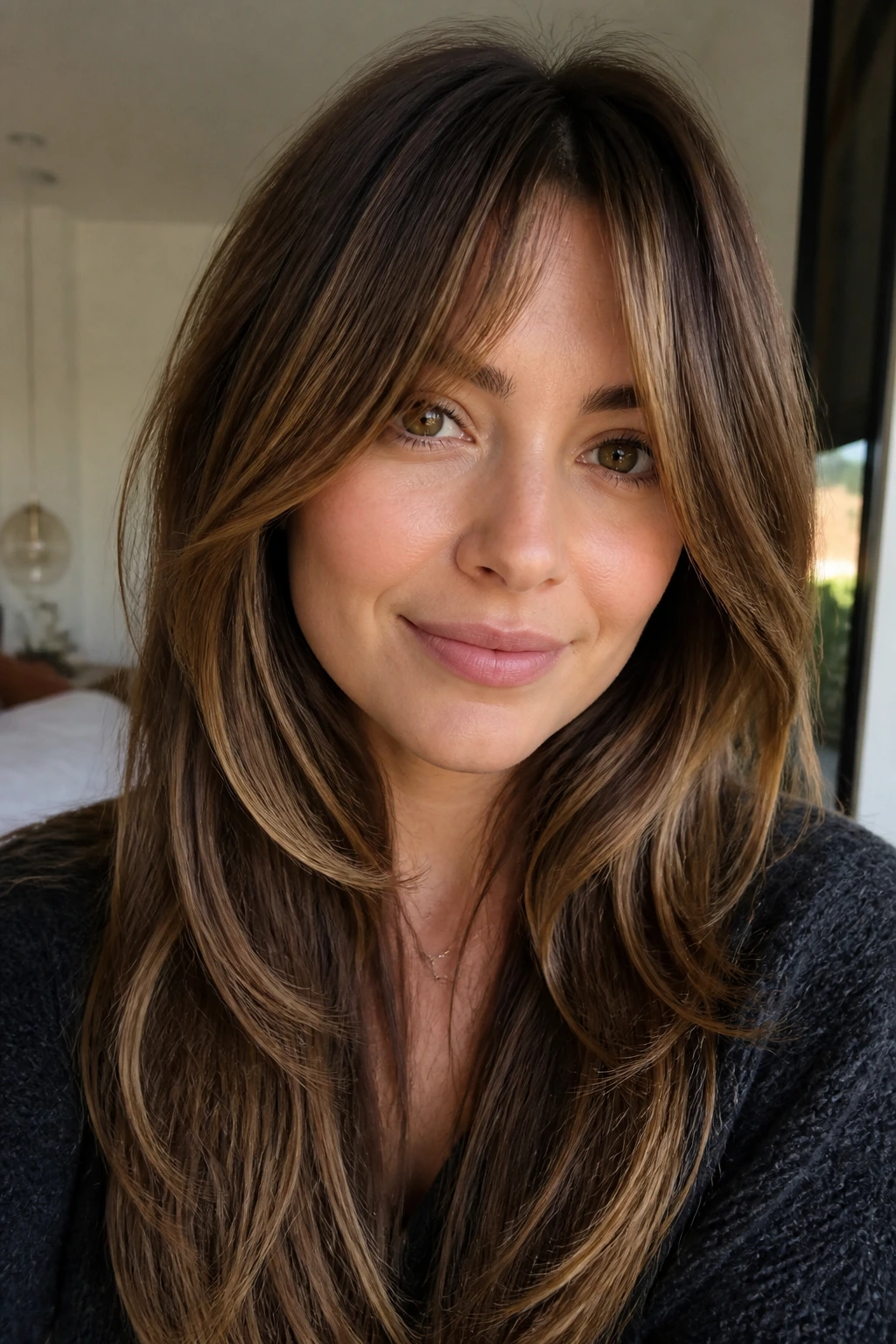
Long layers can absolutely work on a round face, but they need restraint. The goal is to keep length while opening enough space around the cheeks and jaw. A subtle fringe—something between a curtain bang and a whisper fringe—breaks up the width without turning the forehead into a blank wall. Caramel highlights should stay soft here, woven into the front and the lower lengths so the hair reads airy, not striped.
When This Is the Right Call
If you love your length and refuse to cut it, this is one of the few shapes that won’t fight you. Fine hair keeps its movement because the layers are long and blended, not chopped into little pieces that fall flat by lunch.
A center part can work, but I often prefer a soft off-center part with this cut. It gives the fringe a little direction and stops the face from feeling too symmetrical. A small bend through the ends helps, too. Nothing fancy. Just enough to keep the layers awake.
18. Soft Wolf Cut
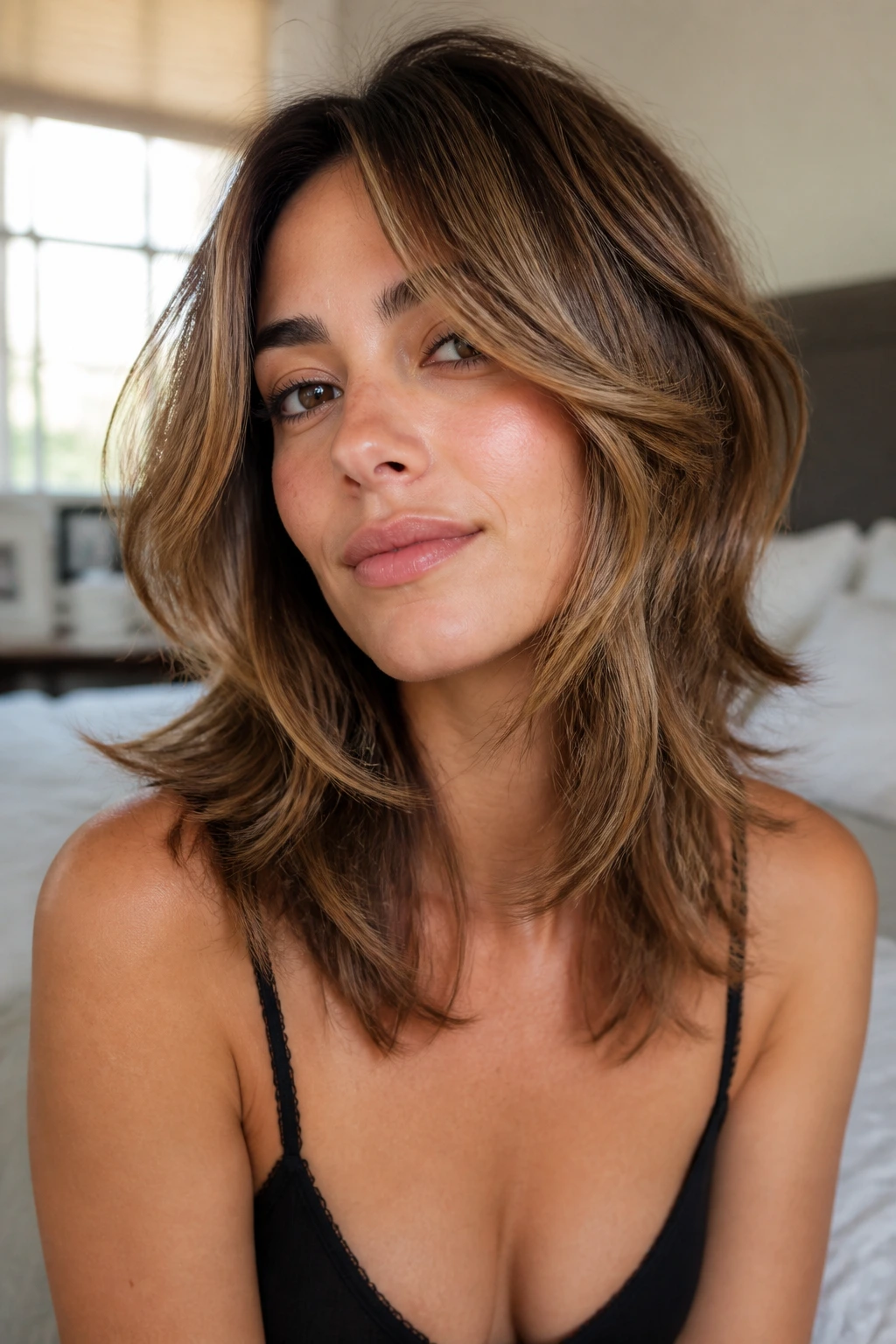
The wolf cut can be a mess on fine hair if it’s taken too far, so this is the softened version. Keep the crown lifted, keep the length at the bottom, and avoid stripping out too much weight through the sides. Caramel balayage through the top and front sections makes the layers visible without needing huge chunks of hair.
I like this for someone who wants something modern but not precious. It looks best a little imperfect, with a lived-in wave and a texture spray that adds grit. On a round face, the height at the crown matters most. That’s what stops the style from puffing outward around the cheeks.
19. Half-Up Friendly Layered Length
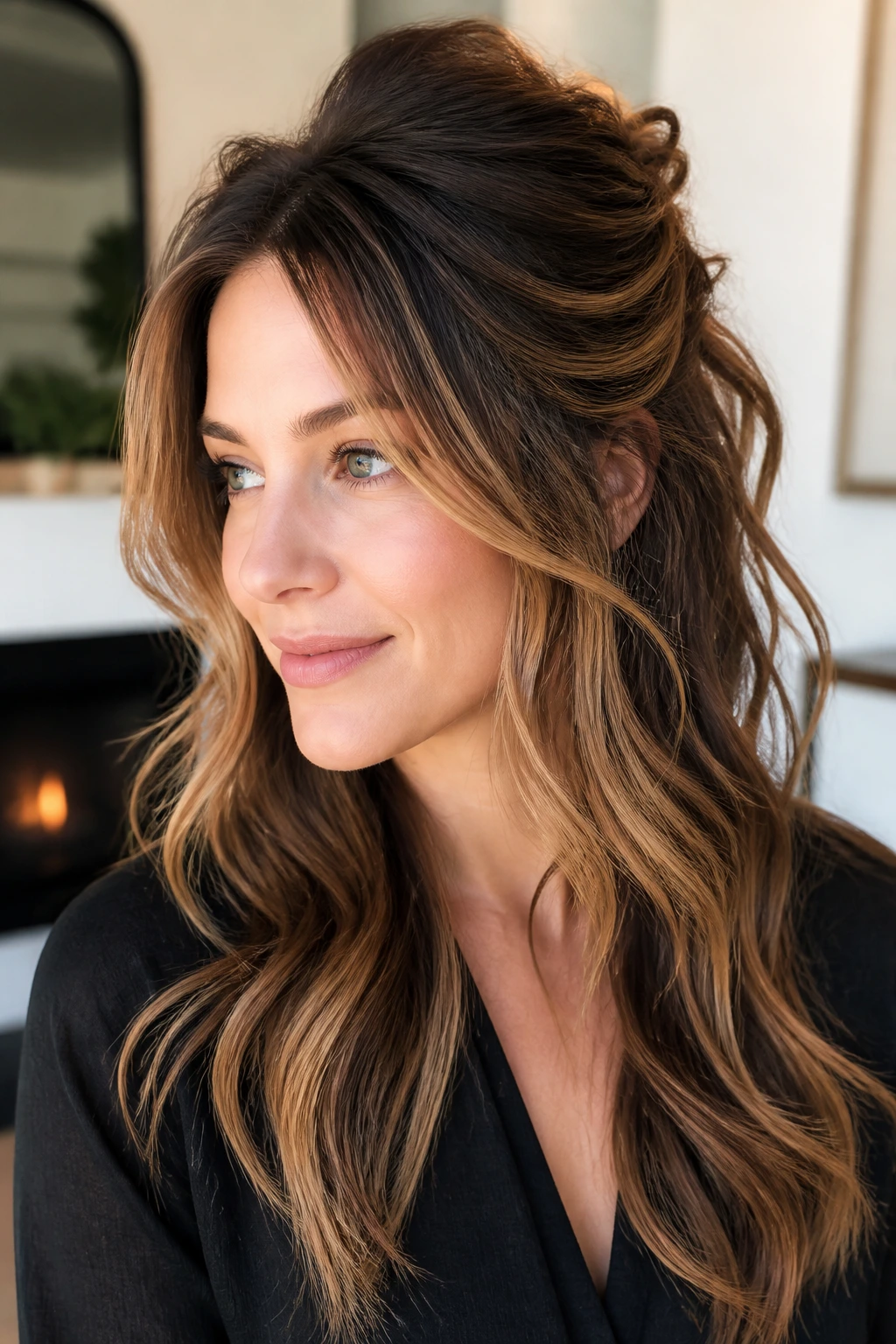
This is a practical cut disguised as a pretty one. The layers are long enough to sweep into clips, half-up knots, and loose ponytails without collapsing, and the caramel highlights stay visible even when the hair is pulled back. That matters more than people admit. A lot of long cuts look good down and boring up; this one behaves in both positions.
Why It Helps Fine Hair
Fine hair often needs a little planning if you wear it up often. Pieces around the face should be short enough to escape the tie and soften the jawline, but not so short that they frizz out in every photo. The caramel around those front bits gives you an instant bright frame.
If you’re on the fence between short and long, this is the compromise I’d usually suggest first. It gives you flexibility without turning the ends into dust.
20. Razored Collarbone Cut
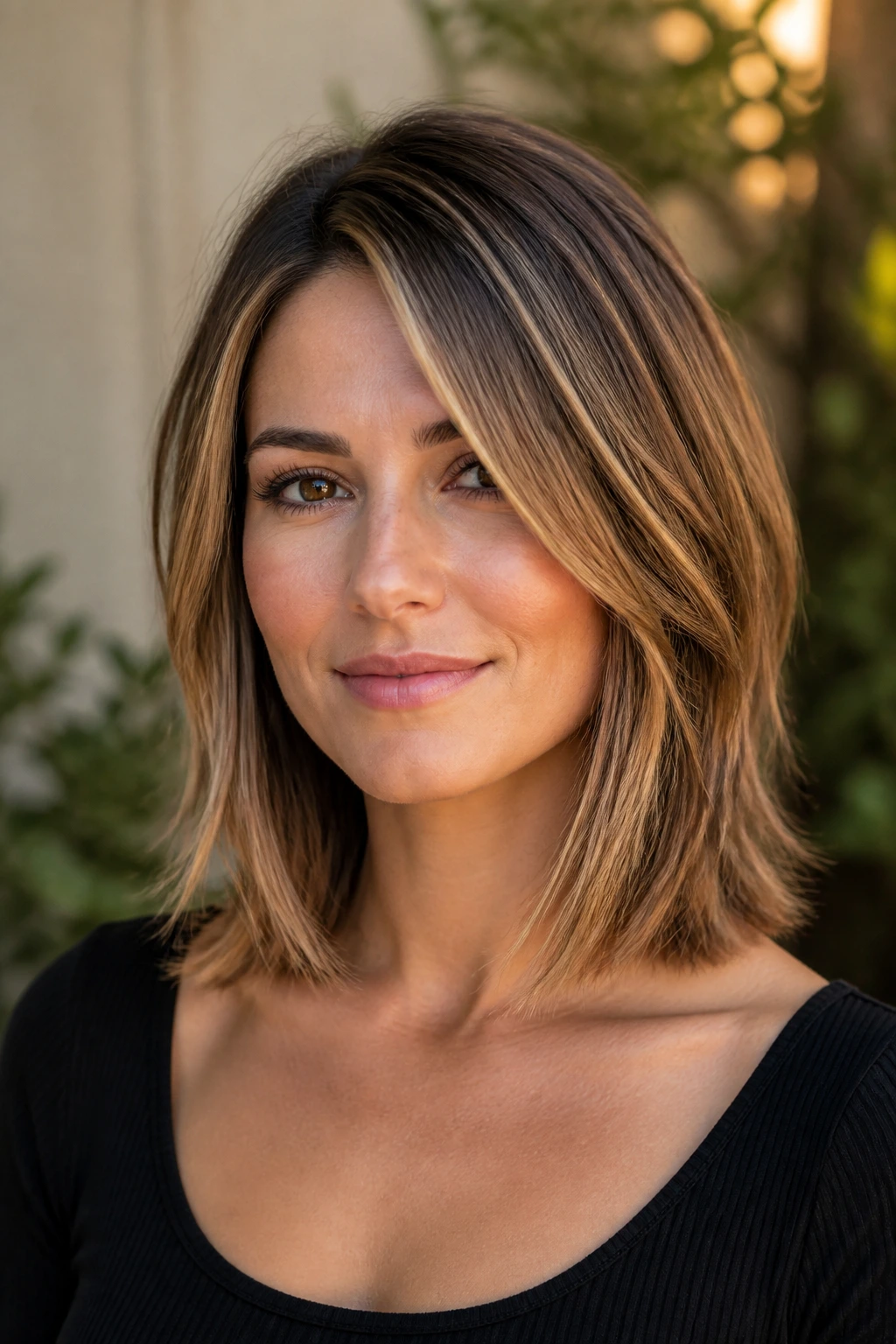
A razor can be a dangerous tool in the wrong hands, but on the right fine hair, it creates a soft, airy collarbone cut that doesn’t look blunt or blocky. The ends get just enough texture to move, and the caramel highlights can spread through the lighter edges so the whole shape seems a little lighter and more fluid.
The Caveat
Don’t let anyone shred the ends into see-through pieces. That’s the line. You want softness, not fraying. If your hair is already fragile or very fine, ask for point cutting instead of heavy razor work.
This cut is best when you like a little swing around the shoulders and don’t want a strict geometric shape. It’s especially good with a side part and a quick bend from a flat iron, because the texture is there but not loud.
21. Curly Shag with Caramel Ribbons
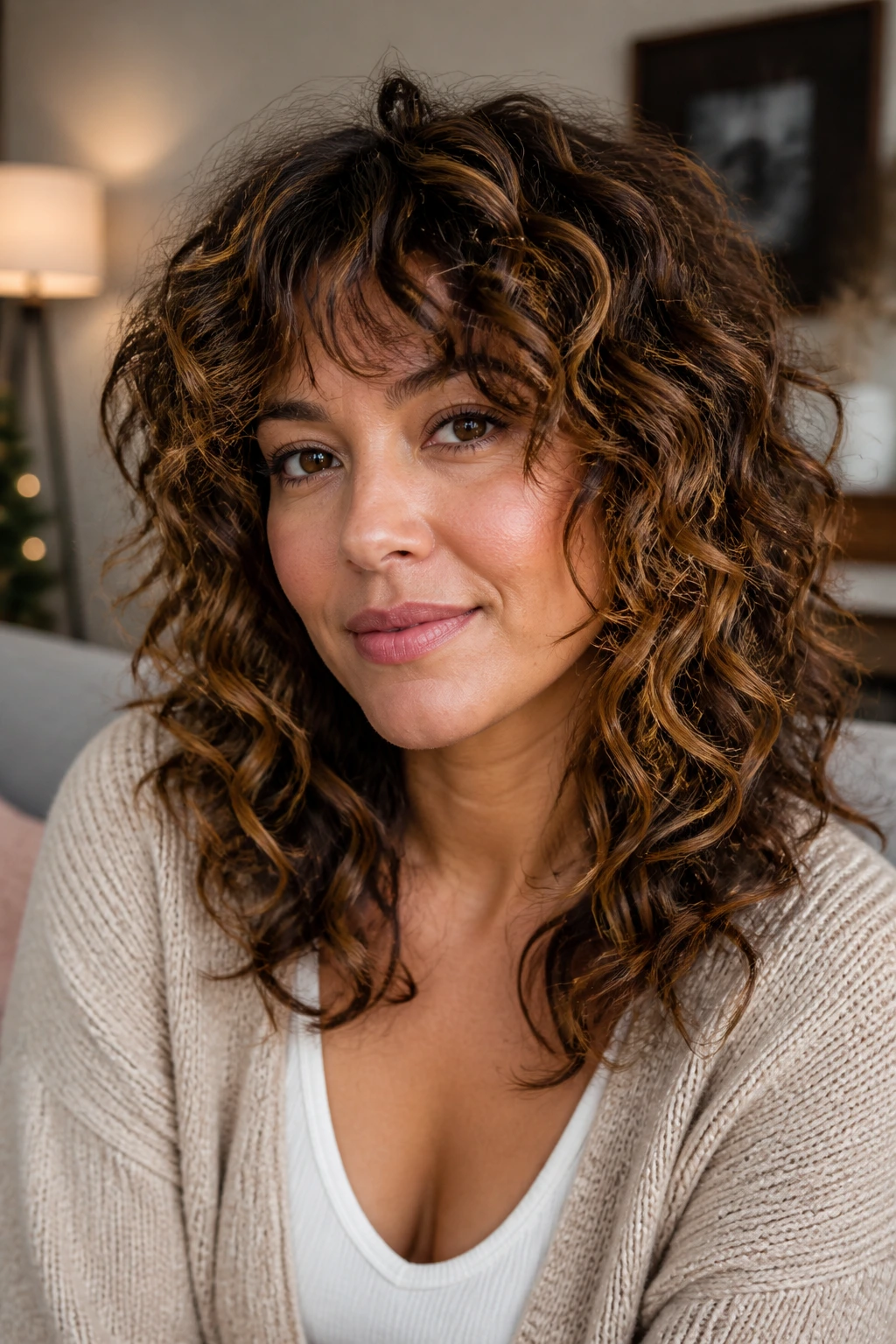
Fine curly hair is its own beast, and it needs respect. A curly shag can work beautifully on a round face if the layers are shaped while the hair is dry or diffused, so the curl pattern keeps its spring. Caramel ribbons placed through the outer curl family—not scattered everywhere—create movement and help the curls separate instead of clumping into one round cloud.
Best when the curls are loose to medium
Tighter curls can wear this too, but the shape has to be adjusted. You want height at the crown and length around the jaw and neck so the face stays open. If the stylist cuts the layers too high, you get puff. Nobody asked for puff.
Use a diffuser on low heat and stop drying when the hair is about 80 percent dry. Let the rest air-dry. The caramel will show the curl pattern better than a flat, all-over color ever could.
22. Air-Dry Midi with Diffused Shine
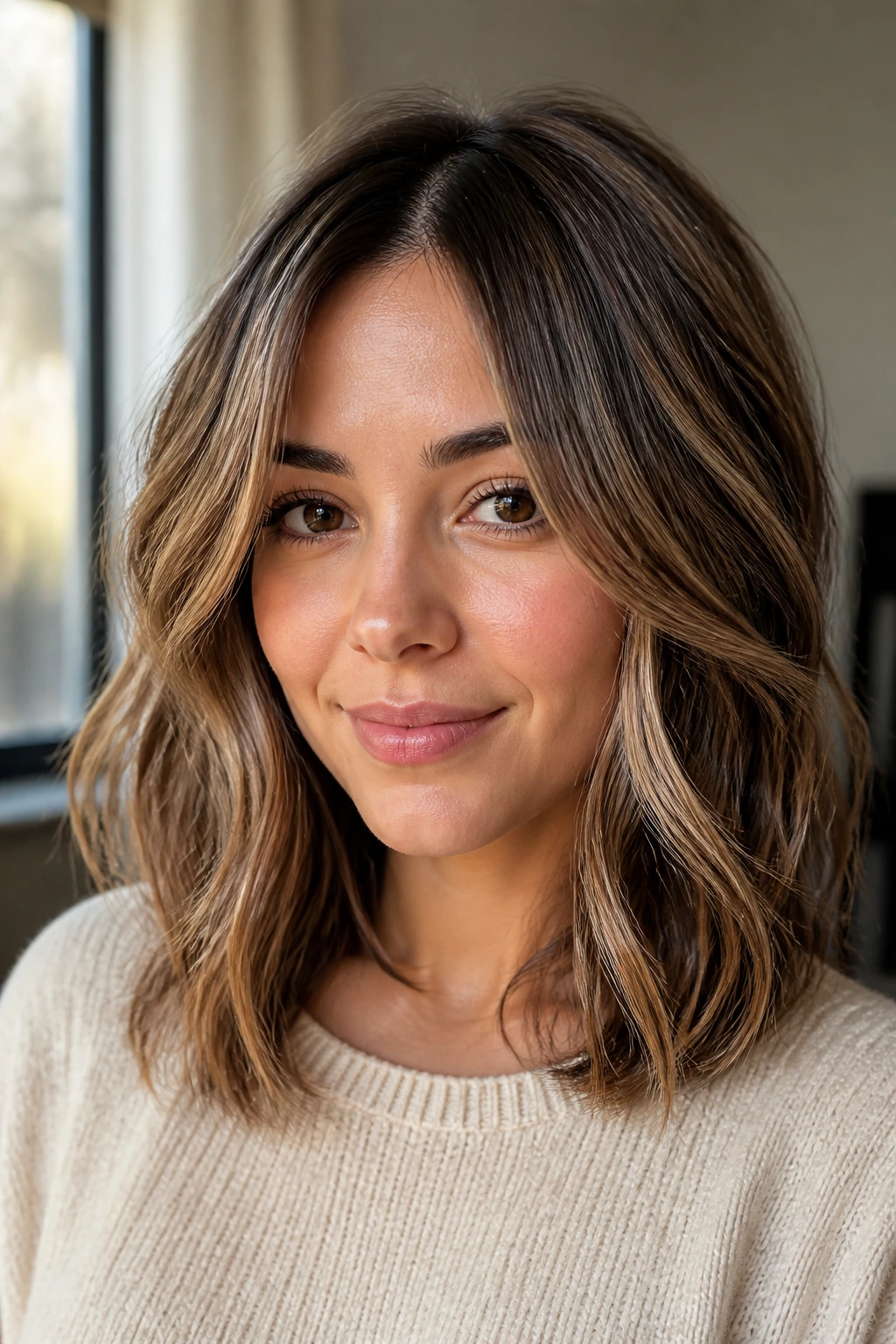
If you’re not a heat-styling person, this is the one to bookmark. The cut sits around the shoulders or a touch below, with enough internal shape to let the natural bend do the work. Caramel highlights are kept diffused, so when the hair dries on its own, the color looks like soft light moving through the lengths rather than painted streaks.
The best version of this cut starts with a realistic read on your texture. If your hair bends under at the ends, the stylist should keep some weight there. If it waves at the cheek level, the face-framing pieces should be long enough not to kick out awkwardly. It’s a calm haircut. Nothing fussy. And that’s its strength.
23. Sleek One-Length Lob with Hidden Glow
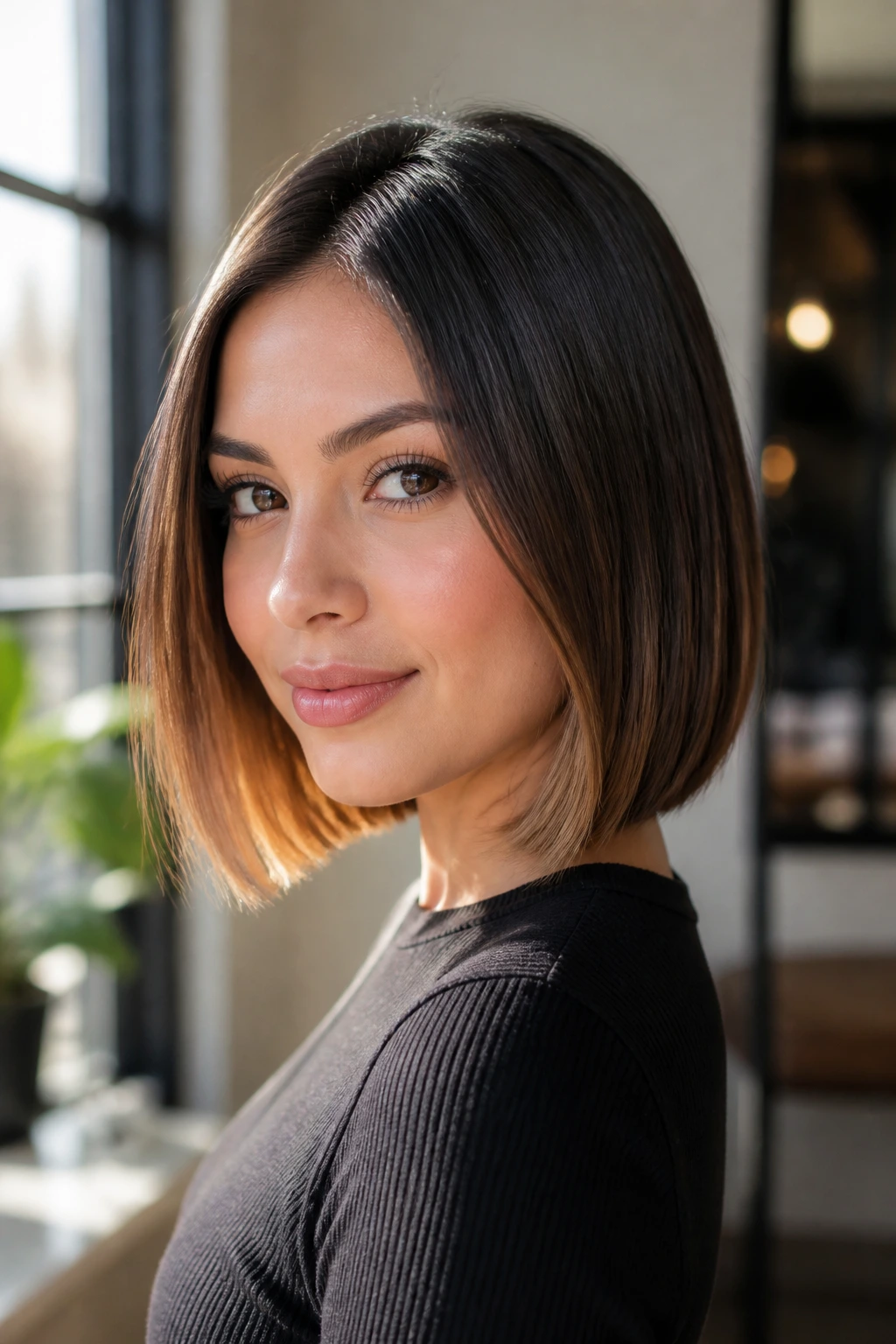
A sleek lob doesn’t need to be boring. In fact, on a round face, the clean line can be very strong if the length sits just below the chin. The trick is to keep the caramel hidden in the underlayers and around the front edge so the shine shows when the hair moves, not only when you’re standing under bright salon lights.
Why It Flatters Fine Hair
One-length cuts make fine hair look thicker because they preserve the edge. The ends look more solid, which is a huge win if your hair tends to feather out. A flat iron can polish the surface, but the color gives the style depth so it doesn’t read as one flat sheet.
If you like minimal styling, this is a sensible choice. It’s neat enough for work, simple enough for weekends, and just warm enough from the caramel to keep it from feeling severe.
24. Asymmetrical Lob
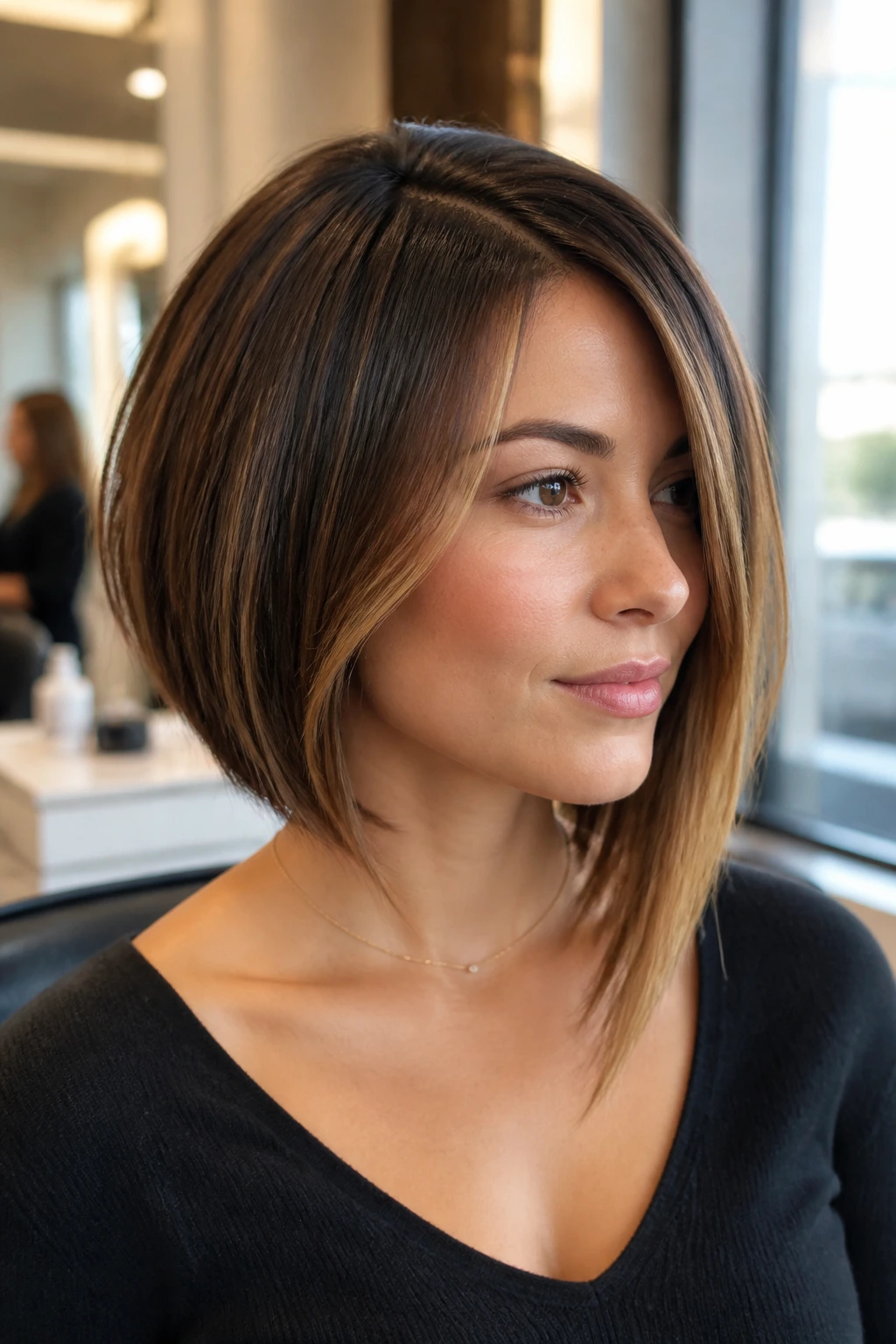
An asymmetrical lob is a quiet way to cheat the face shape. One side is kept a little longer than the other, which creates a diagonal line across the cheek area and pulls the eye downward. Fine hair benefits from that slanted shape because it looks intentional even when the hair is not packed with volume. Caramel highlights on the longer side make the asymmetry obvious without being loud.
This is a good cut if you want a little edge without going full experimental. The difference in length should be modest—maybe one to two inches. Any more than that and it starts to look costume-y. Keep the color soft at the back and brighter at the front so the shape reads from every angle.
25. Polished Long Cut with S-Waves and Face Framing
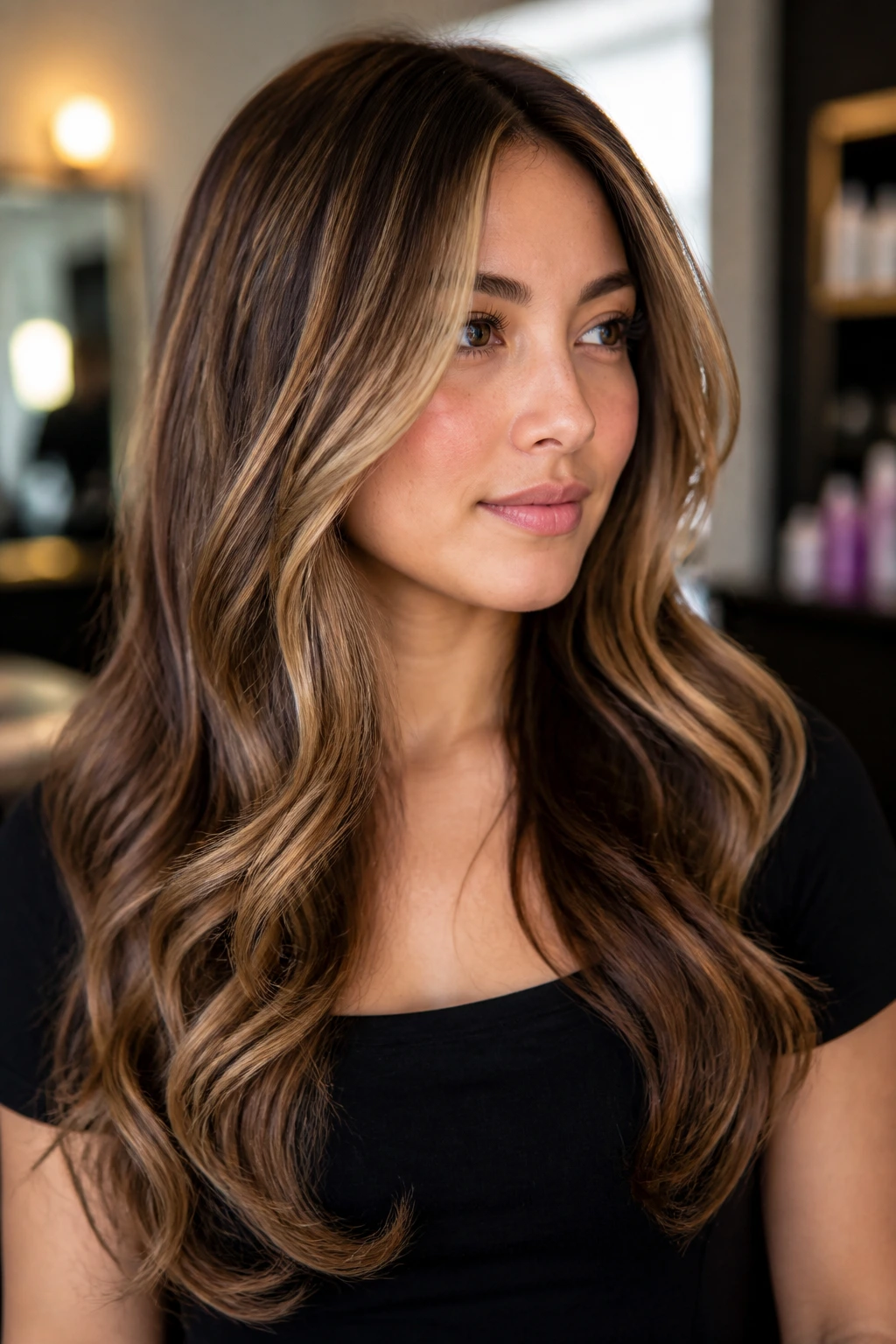
Long hair can be gorgeous on a round face, but only when the length is doing a real job. This version uses long face-framing pieces, gentle S-waves, and caramel highlights woven through the mid-lengths so the whole shape feels softer and more vertical. The waves should start below the cheekbone, not right at it. That’s the little detail that keeps the face from looking broader.
I like this cut for anyone who wants to keep their length but still show some structure. The caramel should be a touch brighter near the front and slightly deeper underneath, which gives the hair depth when it’s down and dimension when it’s tucked behind the shoulder. It’s polished, but not stiff. That matters.
Why Caramel Highlights Change the Shape of Fine Hair
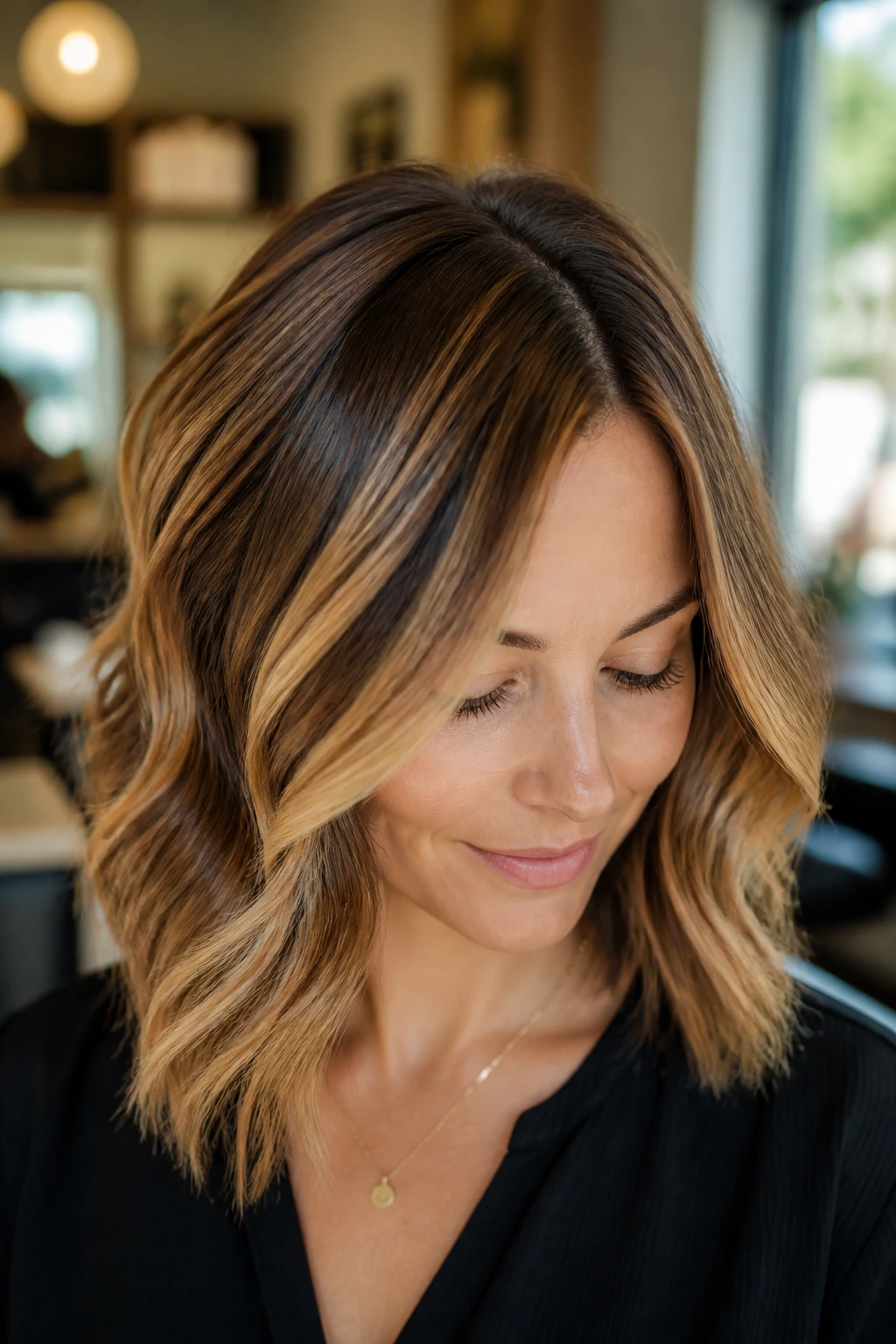
Fine hair has a habit of going flat right where you need it to do something useful. Caramel highlights help by breaking up the surface, giving the eye places to land, and making the hair look like it has more movement than it really does. On a round face, that movement should travel vertically or diagonally. Sideways movement is the enemy.
The best caramel placement isn’t one-size-fits-all. A money piece brightens the front and draws the eye down. Babylights through the top layer add shimmer without obvious lines. A soft root shadow keeps the scalp from flashing through fine hair, which is one reason some blondes look sparse and others look fuller. It’s not magic. It’s placement.
I’m also partial to caramel because it behaves better than harsher blonde on most brunettes and dark blondes. The warmth makes the grow-out less shouty, and that matters when you don’t want to be in the salon every few weeks. If your hair is very fine, too much contrast can make each highlight feel separate from the rest of the hair. Caramel keeps the whole thing connected.
Essential Tools for These Looks
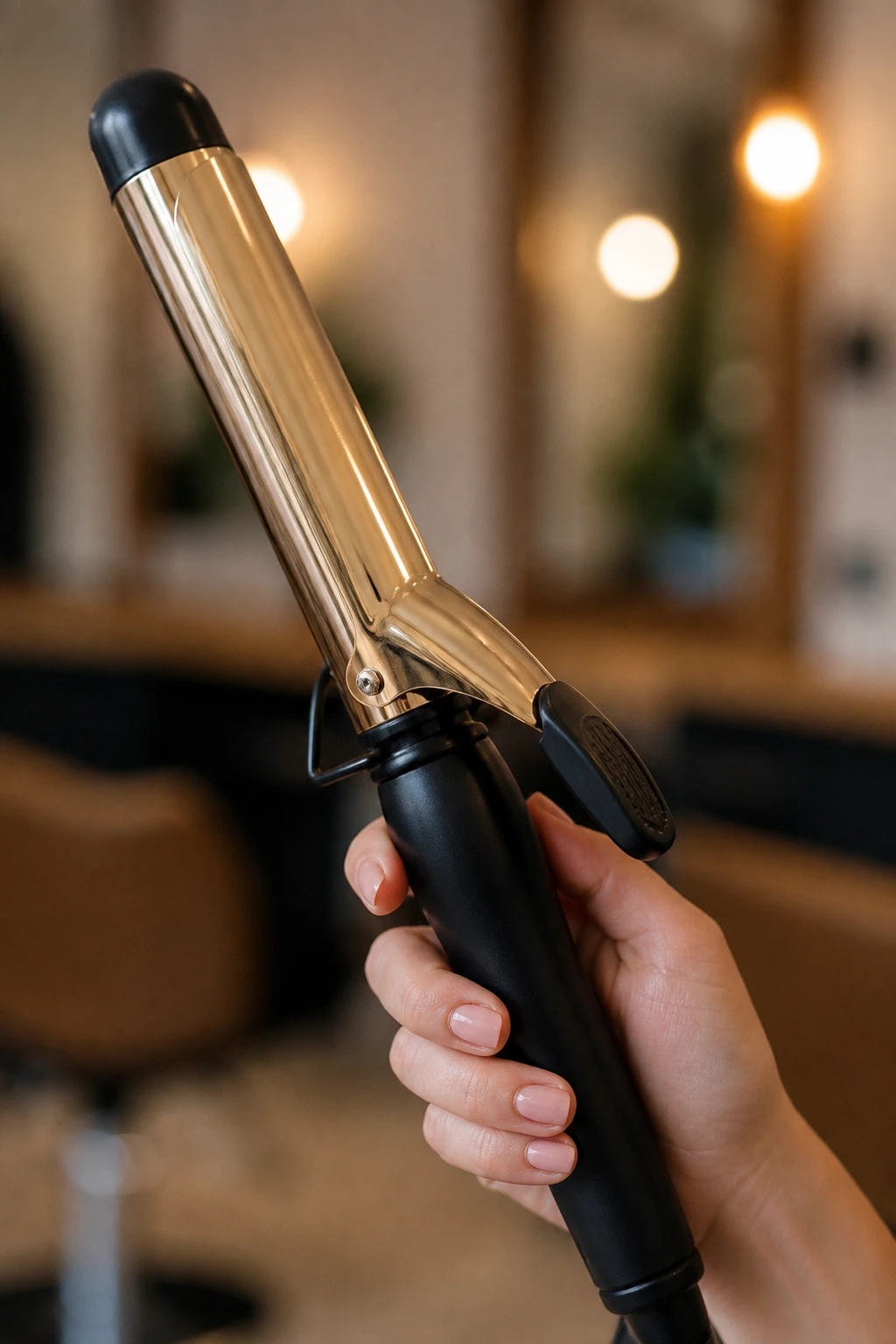
- Blow-dryer with a concentrator nozzle — Useful for directing the air at the roots instead of blowing the cut apart.
- 1.25-inch round brush — The sweet spot for collarbone lobs, curtain bangs, and shoulder-length blowouts.
- 1-inch curling iron or wand — Good for creating bends and S-waves without making the hair too fluffy.
- Tail comb — Helps place parts cleanly and section out the front pieces for highlighting or styling.
- Sectioning clips — Keep fine hair organized while you dry, curl, or round-brush it.
- Root-lift spray or mousse — Gives the crown some backbone so the face looks longer.
- Heat protectant — Non-negotiable if you use hot tools; fine hair burns faster than people expect.
- Lightweight texturizing spray — Adds grip without turning the ends into dry straw.
- Color-safe shampoo and conditioner — Keeps caramel from fading too quickly or turning dull.
- Microfiber towel or soft T-shirt — Cuts down on rough frizz, especially for wavy or curly versions.
Smart Salon Notes for Fine Hair and Round Faces
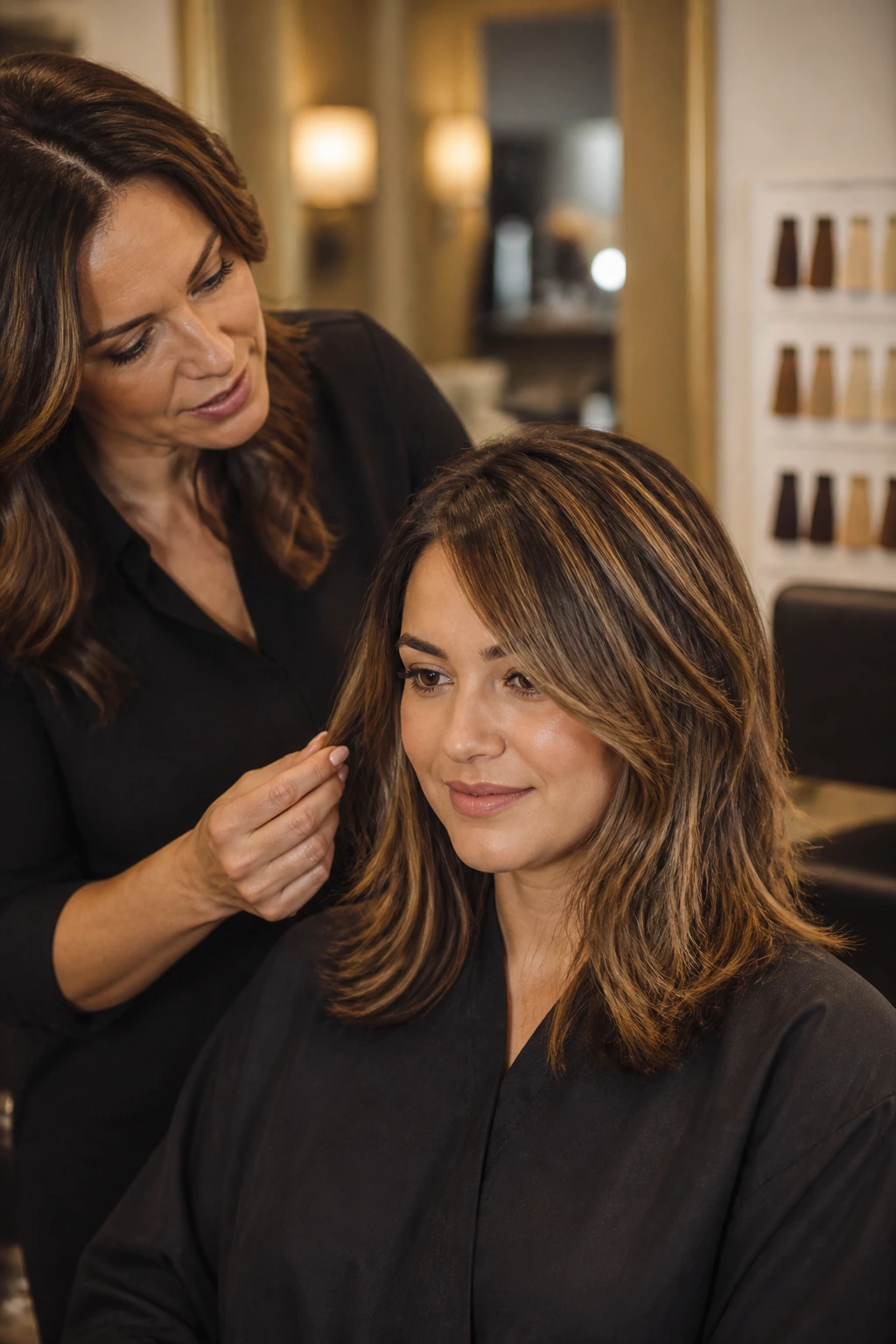
Bring two reference photos if you can. One should show the cut from the front, and one should show the color. That sounds fussy, but it saves a lot of confusion, because a bob photo with the wrong color placement can make the whole haircut look heavier than you planned. A good stylist will read the haircut and the color separately, then merge them.
For caramel highlights, ask what level sits closest to your base. If your hair is medium brown, a caramel in the level 6 to 8 range usually reads warm without turning orange. Beige caramel is softer. Golden caramel reads richer. If your undertone is cool, too much gold can fight your skin and make the hair look more yellow than warm.
Fine hair needs a cut that preserves a solid perimeter. That’s the line I’d hold onto. Internal texture is fine when it’s used sparingly, but if someone starts taking out too much weight with the shears, the hair can turn transparent near the ends. That problem is hard to undo at home.
How to Wear These Styles Without Fighting Your Hair
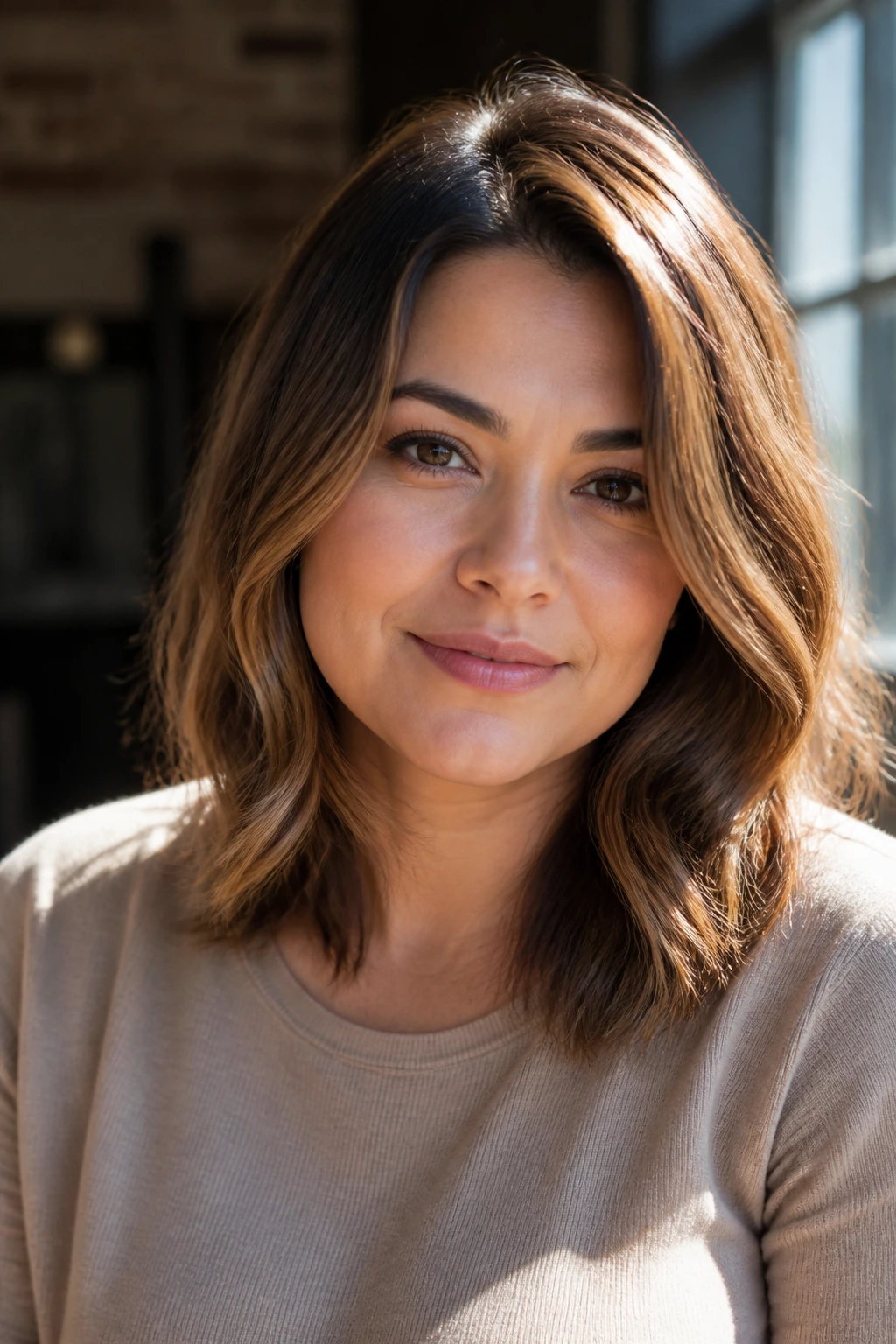
Parting: A soft side part or off-center part usually gives a round face the most length, especially on lobs, pixies, and curtain-bang cuts. A center part can still work, but it tends to need bangs or strong face-framing to avoid making the face look wider.
Finish: Choose the finish that matches your hair’s density. Sleek and polished suits blunt cuts and A-line bobs. Loose bends and S-waves are better for layered mid-lengths. Air-dried texture works when the cut has enough internal shape to hold itself up.
Accessories: Small hoops, slim clips, and tucked-behind-the-ear styling are useful because they expose the cheekbone area and let the caramel front pieces do their job. Heavy headbands and thick bands can crush fine hair fast, so keep the accessory weight light.
Best With: Soft necklines, simple earrings, and makeup that keeps the cheek area fresh rather than heavily contoured. The point is to show the cut, not bury it under a lot of competing detail.
Extra Lift, Softness, and Shine
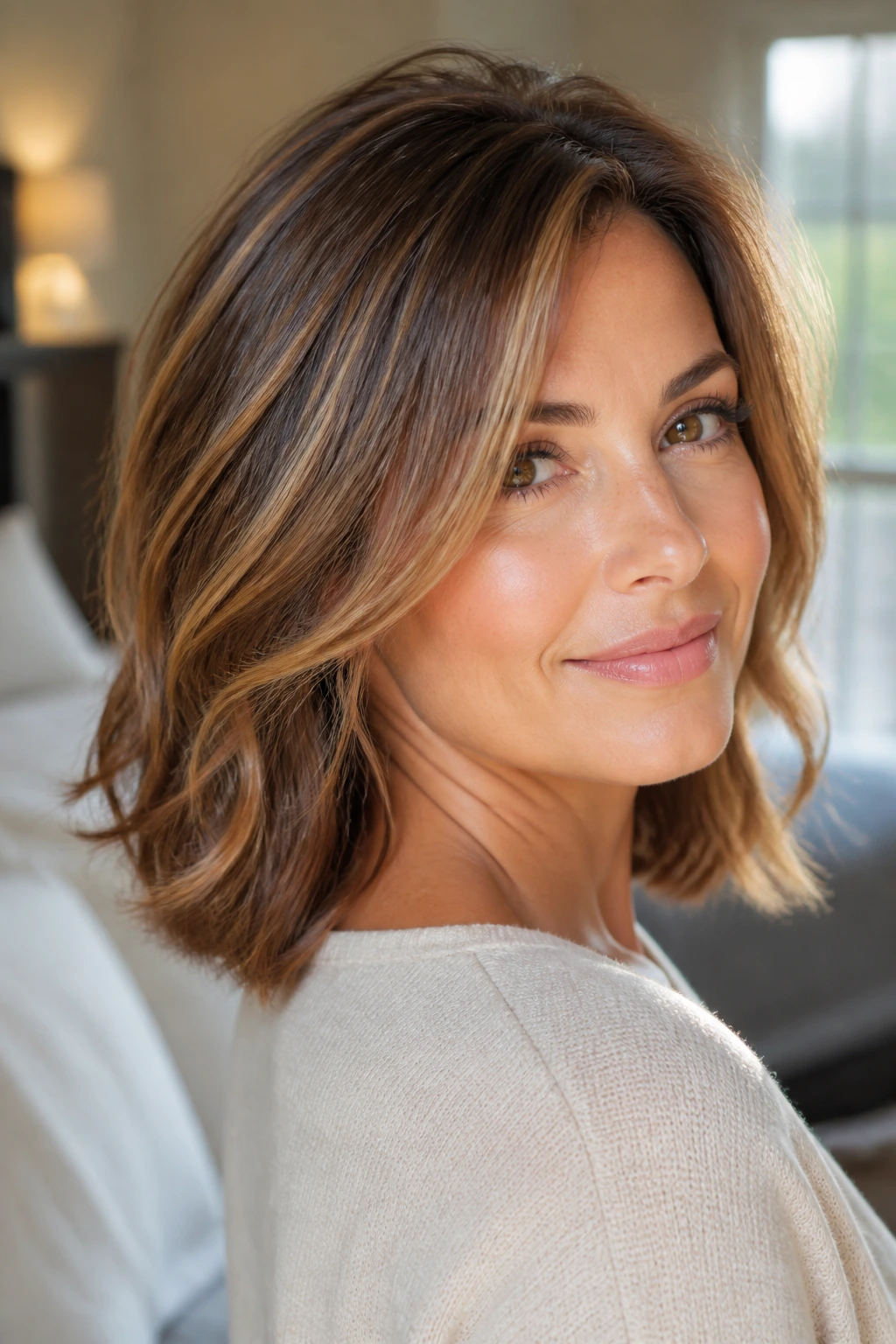
Tone Control: If your caramel starts leaning orange or brassy, a gloss or toner every 6 to 8 weeks usually keeps the shade in the right lane. Don’t wait until it looks muddy; that’s harder to fix.
Volume Trick: Clip the crown up in two sections while you finish your makeup. Letting the roots cool in a lifted position gives fine hair a little memory, and that memory matters for the first half of the day.
Texture Boost: Use dry shampoo before the roots look greasy. Waiting too long means the hair already collapsed, and then you’re just trying to rescue shape instead of preserving it.
Make-It-Yours: If you like straight hair, keep the highlights more linear and the ends cleaner. If you prefer waves, ask for softer ribbons and slightly more internal movement. If your hair is curly, keep the highlight spacing wider so each curl reads separately instead of blending into one color block.
Keeping the Cut and Color Fresh
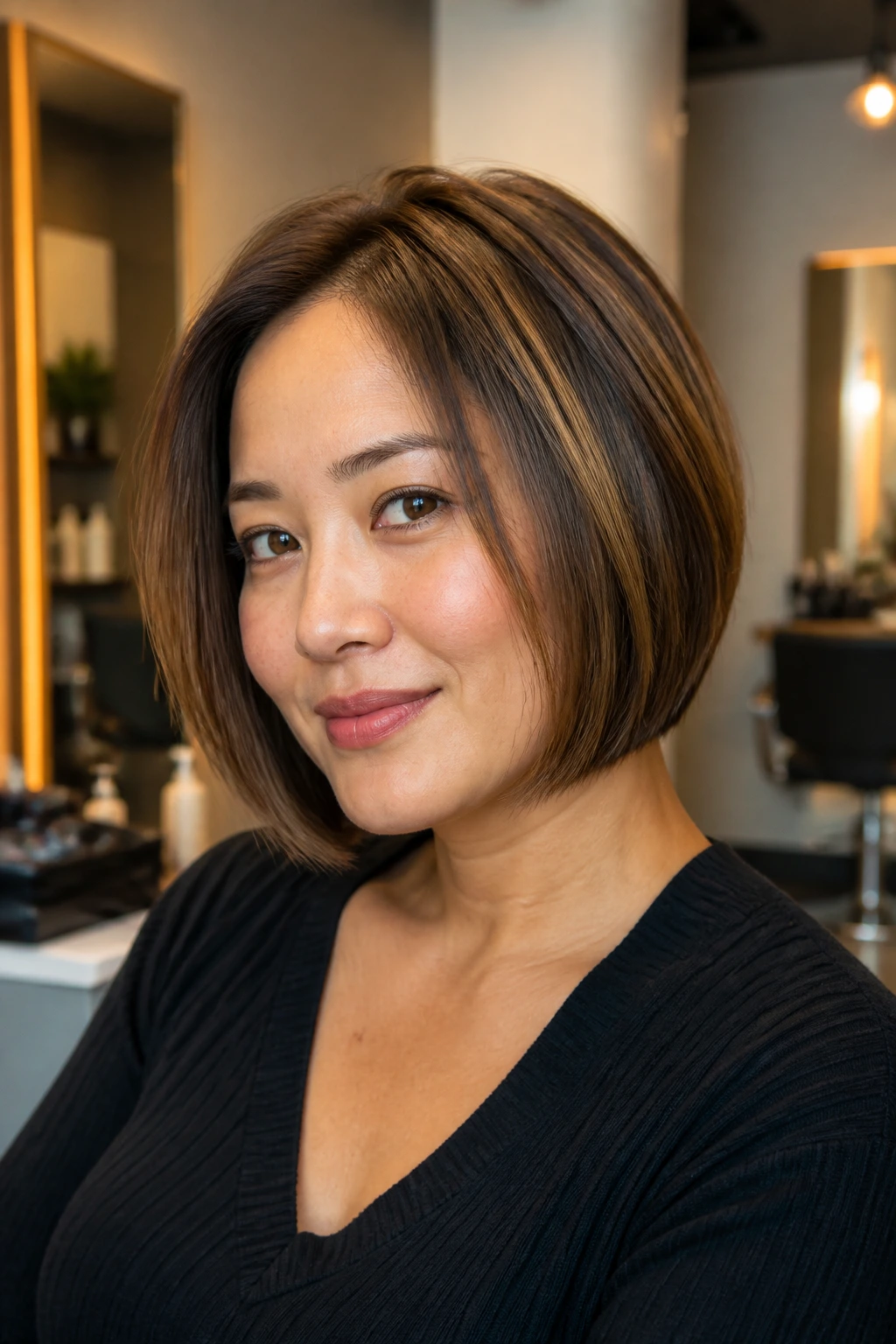
Fine hair usually loses its shape before it loses its length, so trims matter more than people think. Bobs and pixies often need a shape refresh every 4 to 6 weeks. Lobs and longer layers can stretch to 8 to 10 weeks if the ends are still healthy. If you wait much longer on a short cut, the clean lines that make it flattering start to blur.
Caramel highlights need their own rhythm. A full refresh isn’t always necessary, but a gloss or toner every 6 to 8 weeks keeps the warmth from flattening out. If your highlights are soft and blended, you can often push the color longer; if they’re brighter around the face, they show grow-out sooner. Darker root shadows are more forgiving. Chunkier light pieces are not.
At home, keep the wash routine gentle. Hot water strips the tone faster than cold or lukewarm water. Use conditioner from the mid-lengths down, not on the roots, because fine hair gets weighed down fast. On nights when the style matters the next morning, sleep on a silk pillowcase or tie the hair loosely with a silk scrunchie so the ends don’t kink into odd shapes.
Variations and Adaptations to Try
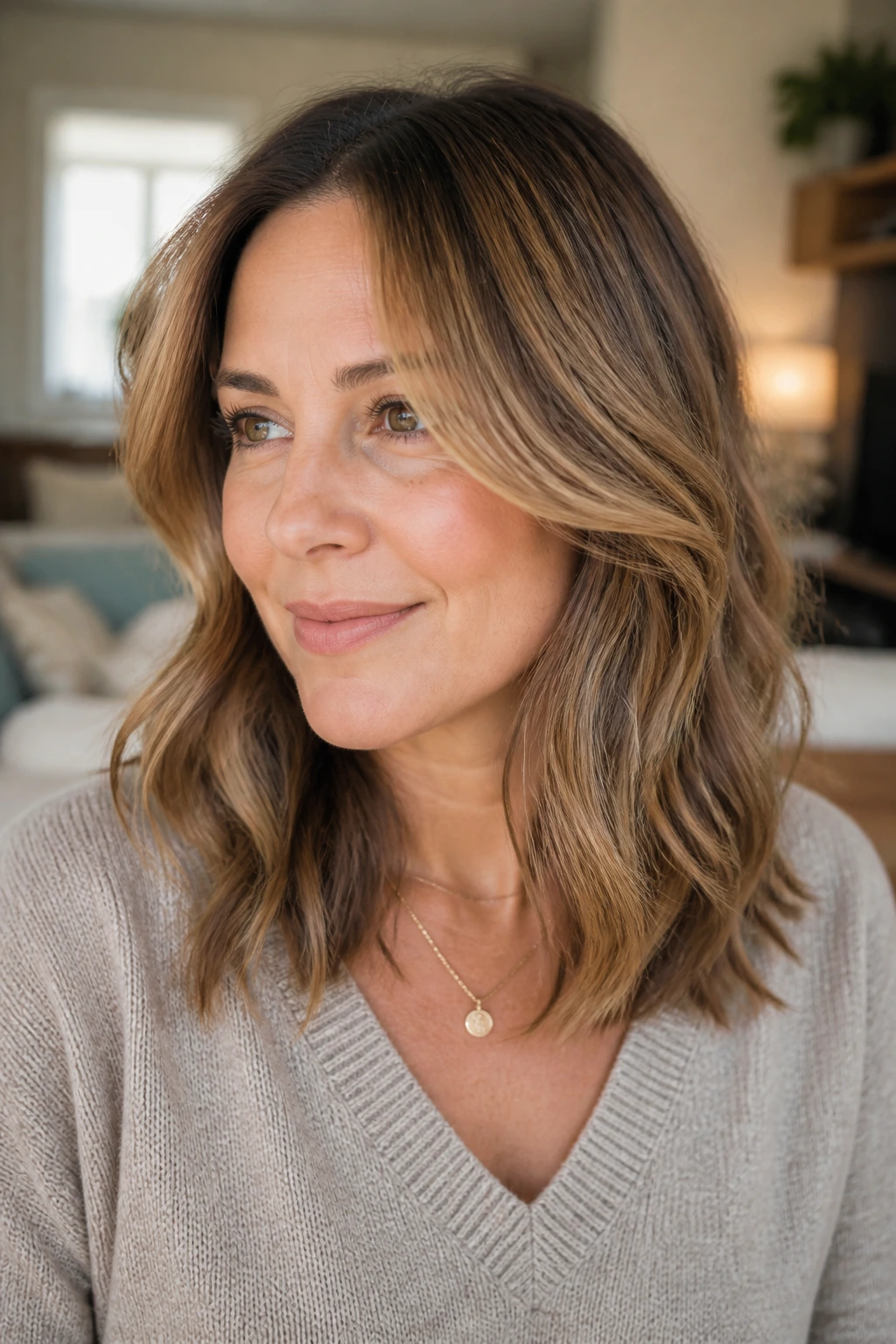
Cool Caramel Contour: If golden highlights pull too warm on your skin, ask for beige caramel or soft toffee with less orange in it. The haircut can stay the same; only the tone shifts. That one change can make the color feel more expensive and less brassy.
Low-Maintenance Air-Dry Version: Keep the same face-framing map, but ask for longer layers and softer highlight ribbons. This version grows out well and doesn’t demand a hot tool every day. It’s a smart pick if your fine hair already has a bit of bend.
High-Contrast Evening Version: Add a deeper root shadow and brighter caramel around the front two sections. The face gets a sharper frame, and the rest of the hair stays grounded. I like this when someone wants a little drama without going blond all over.
Curl-Friendly Adaptation: For wavy or curly hair, keep the layers longer and cut them to follow the curl pattern. Caramel should be painted in ribbons that sit on the outer curl shape, not sprayed randomly through the whole head. That keeps the hair from looking frizzy.
Short-Crop Translation: If you want less hair, take the pixie, French bob, or piecey crop ideas and keep the caramel concentrated on the top and front. Brightness at the crown adds lift, while darker sides keep the face from widening.
Common Mistakes to Avoid
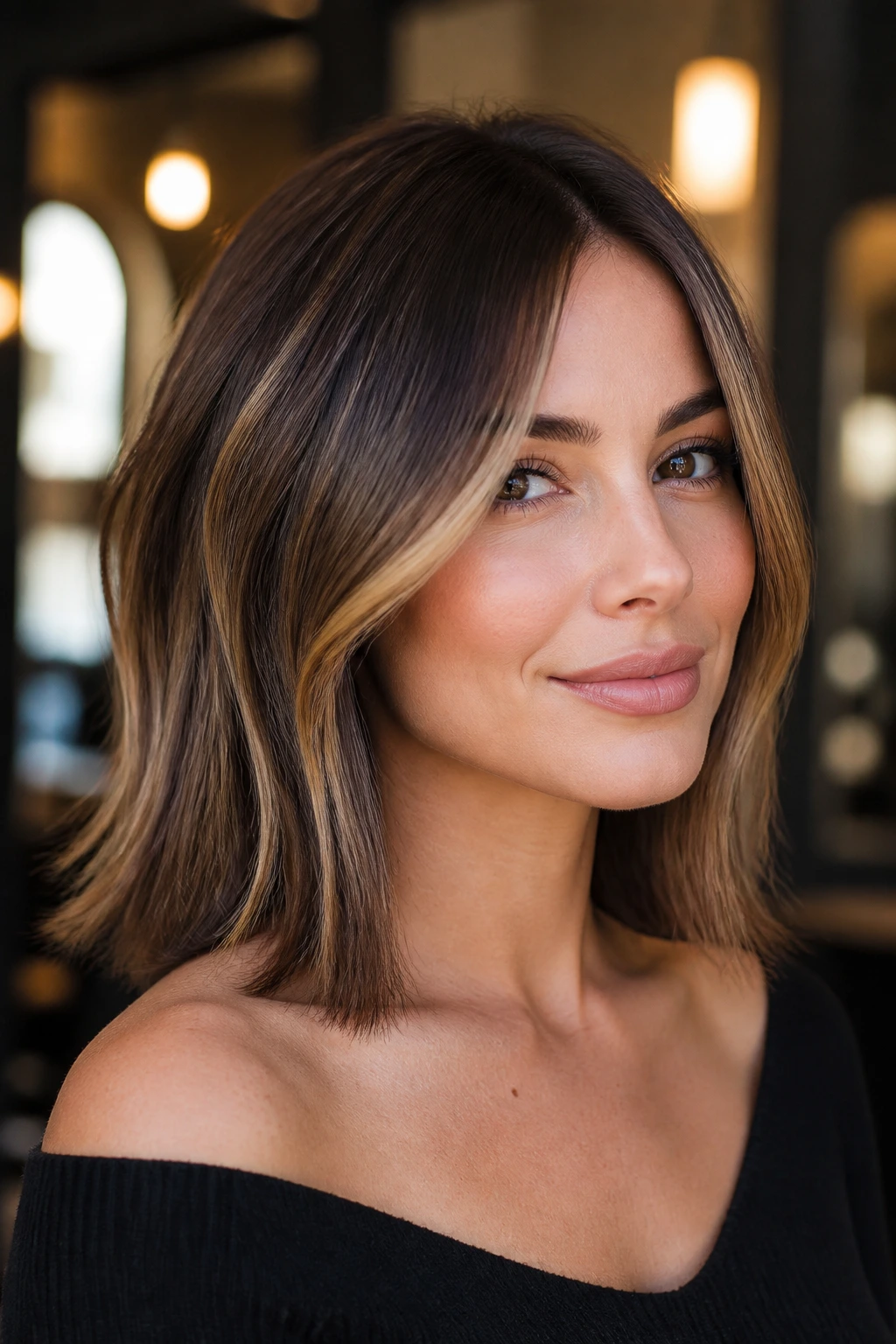
- Too much layering through the sides: Fine hair can lose its body fast when the stylist takes out too much weight at the cheek level. The fix is to keep the perimeter fuller and let the movement happen in the front or lower sections.
- Highlight stripes that are too wide: Big caramel panels can make a round face look wider and make fine hair look thinner between the pieces. Ask for finer weaves, especially near the hairline.
- A blunt cut that stops at the widest point of the face: Chin-length hair can be flattering, but only if the line is angled or softened. If it lands exactly at the cheeks, it can widen the face instead of lengthening it.
- Using heavy oil near the roots: Fine hair collapses under too much serum, cream, or oil. Keep the product on the ends and use a light hand.
- Ignoring toner upkeep: Caramel can drift yellow, orange, or muddy if it’s left too long. A quick gloss keeps the tone clean and the whole haircut looking deliberate.
- Center part with no lift or fringe: A flat middle part can split a round face right down the widest zone. If you like the center part, balance it with curtain bangs, bottle-neck bangs, or real root lift.
Frequently Asked Questions
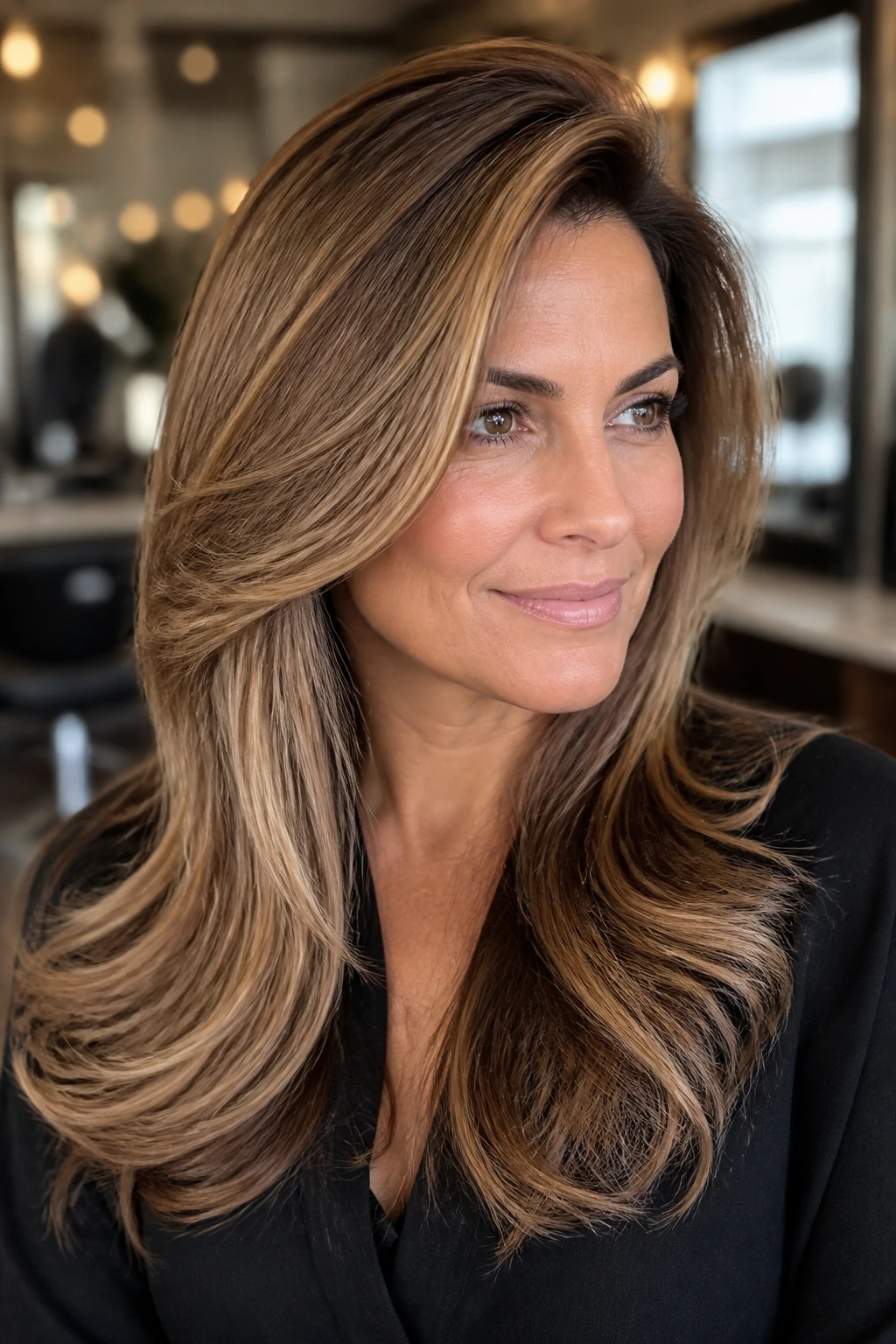
Do caramel highlights make fine hair look thicker?
Yes, when they’re placed well. Fine ribbons of caramel break up flat color and create the illusion of depth, especially around the front and the upper layers. Chunky streaks do the opposite, so the placement matters more than the shade name.
What haircut is best for a round face if my hair is very fine?
A collarbone lob, an A-line bob, or a blunt lob with soft internal movement are all strong options. They keep enough weight at the ends to make the hair look fuller while avoiding the wide, side-heavy shape that can flatten a round face.
Is a center part bad for a round face?
Not automatically. A center part works best when the cut has bangs, longer face-framing pieces, or real crown lift. Without those, it can make the face seem broader because it doesn’t create the same diagonal line as a side part.
Should I choose balayage or foils for caramel highlights?
Balayage gives a softer, more blended look, which is usually kinder to fine hair because it doesn’t create obvious blocks of light. Foils are better if you want a brighter money piece or more contrast near the face. A lot of the best results come from mixing both.
How often do caramel highlights need refreshing?
A gloss every 6 to 8 weeks keeps the tone clean, but the full highlight service can often stretch to 8 to 12 weeks depending on how bright the pieces are. If the highlights frame the face heavily, you’ll notice the grow-out faster.
Can I wear bangs with a round face and fine hair?
Yes, and curtain bangs or bottleneck bangs are usually the safest bets. Keep the fringe soft and slightly longer at the sides so it opens the face rather than cutting it into a short horizontal line.
What if my hair is flat no matter what I do?
Then the cut matters even more than the styling. Ask for a perimeter that keeps its weight, use root-lift spray before drying, and avoid heavy creams. A little caramel at the crown or front also helps the hair look less dense in a flat, lifeless way and more full in a dimensional one.
Which style here is easiest to live with?
The blunt lob, the collarbone lob, and the air-dry midi tend to be the most forgiving. They don’t demand perfect curling or constant touch-ups, and they still look intentional if the hair dries with a little bend and a little movement.
The Shape That Wins
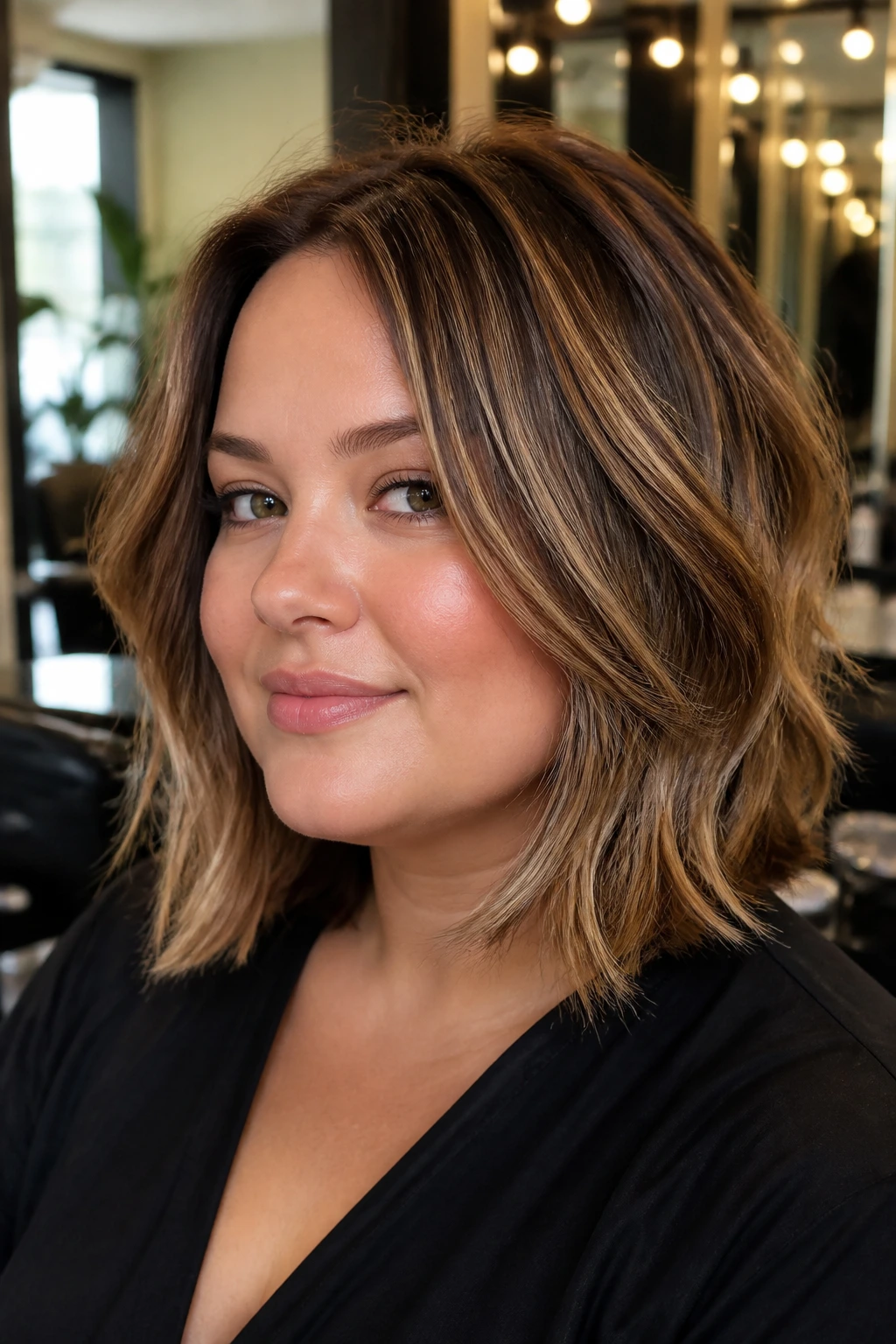
The best haircuts for a round face do not try to hide the face. They guide it. That’s the difference between a style that flatters for a day and a style that becomes your default because it keeps working when you’re tired, rushing, or two days past a wash.
Caramel highlights are the quiet piece that ties the whole thing together. They lift the crown, soften the cheeks, and keep fine hair from disappearing into one flat color block. If you’re headed to the salon, bring one photo for the cut and one for the color, because those are two separate decisions—and when they’re both right, the result has a lot more backbone than it looks like on paper.