



Short shaggy hairstyles for round faces work because they change the direction of the eye. A blunt line sits still. A shag moves — around the cheekbones, through the crown, across the fringe — and that movement is what keeps a round face from reading wider than it is. You do not need to hide your cheeks. You need to give them some shape to talk to.
The cuts that work best here usually do one of three things: add height at the top, break up the widest part of the face with soft layers, or create a diagonal line with bangs and side pieces. That sounds technical, but in the chair it becomes simple fast. A chin-length shag with curtain bangs. A pixie shag with piecey fringe. A bob with razored ends that don’t form one hard edge. Tiny decisions. Big payoff.
And yes, the details matter. If the shortest layer lands right at the cheek’s fullest point, the cut can widen the face. If the fringe is too thick and straight, the forehead gets boxed in. If the layers are too soft and too round, the whole style loses the edge that makes a shag a shag. The sweet spot is movement with intent. Messy, but not mushy.
Why These Cuts Earn Their Keep
-
Crown Lift: A little height at the top lengthens the face visually, which is the easiest way to keep roundness from taking over the whole haircut.
-
Broken Edges: Choppy ends and razored pieces interrupt a strong horizontal line, so the haircut feels lighter around the cheeks.
-
Face-Framing Drift: Curtain bangs, side-swept fringe, and long side pieces pull the eye down and outward in a softer, more flattering way.
-
Low-Fuss Grow-Out: Shags usually look better than blunt cuts once they start growing, because the texture reads as intentional instead of overdue.
-
Texture Friendly: Wavy, straight, thick, and curly hair can all wear a shag well — the placement changes, but the basic shape still works.
-
Styling Flexibility: You can air-dry a lot of these cuts, rough-dry them, or give them a quick bend with a brush and a small iron. No single routine owns them.
Why Shag Layers Change the Shape of a Round Face
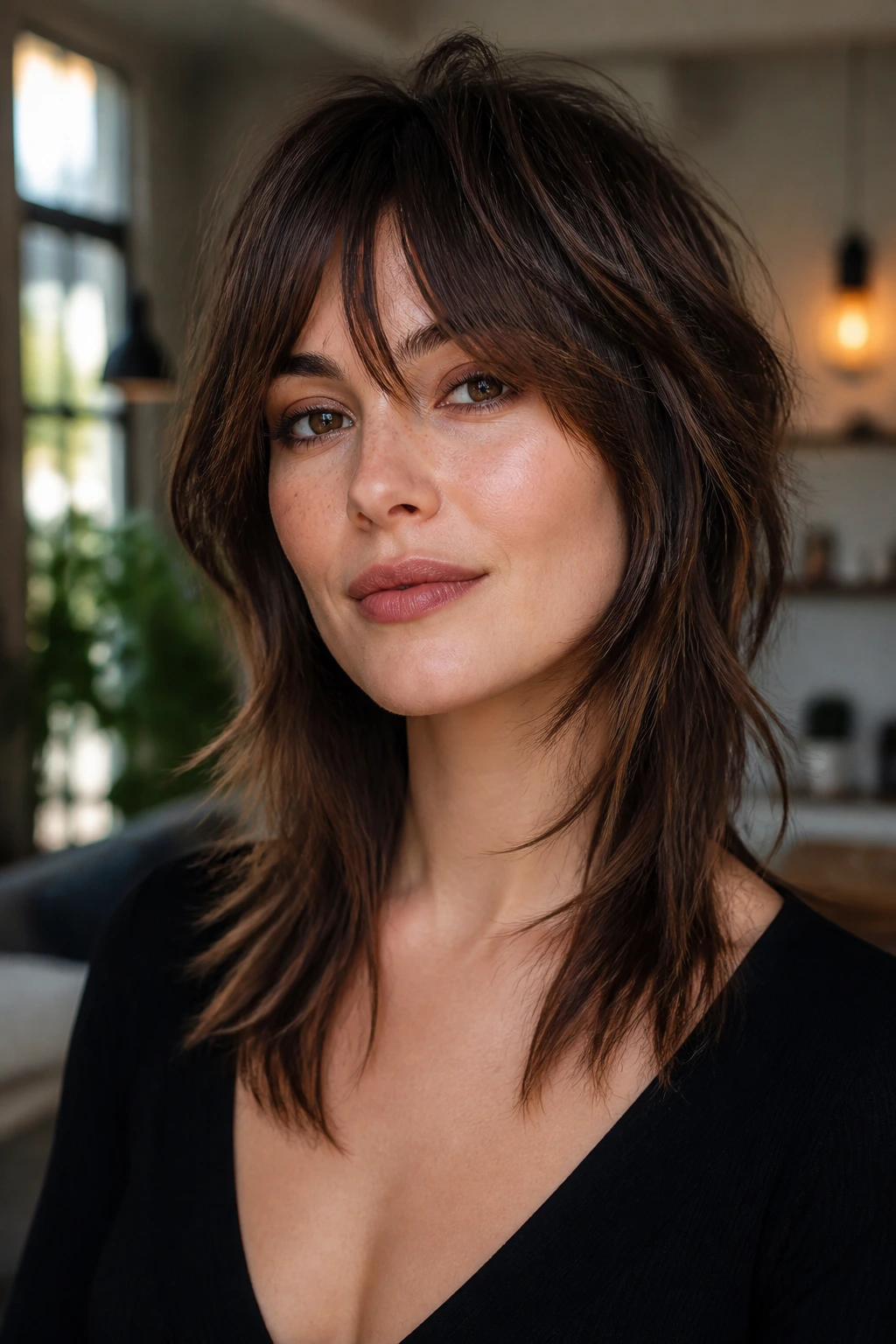
A round face usually has about the same width and length, plus soft curves through the jaw and cheek. That’s not a problem. It just means a haircut has to create line where the face naturally gives you curve. A good shag does that without turning severe.
The smartest shags on round faces keep the bulk away from the widest point. I prefer layers that start below the cheekbone or just above the chin, then continue downward in broken pieces. That way the cut frames the face instead of wrapping around it like a bowl. Round faces can wear short hair beautifully, but the perimeter cannot be too even or too puffy.
Bang choice matters more than people think. Curtain bangs, bottleneck bangs, and soft side fringe all give you a little vertical line in the middle and a little diagonal movement at the sides. Straight-across bangs can work, but they need texture and a light hand. Heavy fringe plus cheek-level volume is where the haircut starts fighting the face shape instead of working with it.
One more thing. Round faces do not need extra width near the temples or jaw. They need relief. That relief can come from a deeper side part, a slightly longer front, or layers that flick outward rather than curl inward. Tiny changes. You feel them immediately when the cut is right.
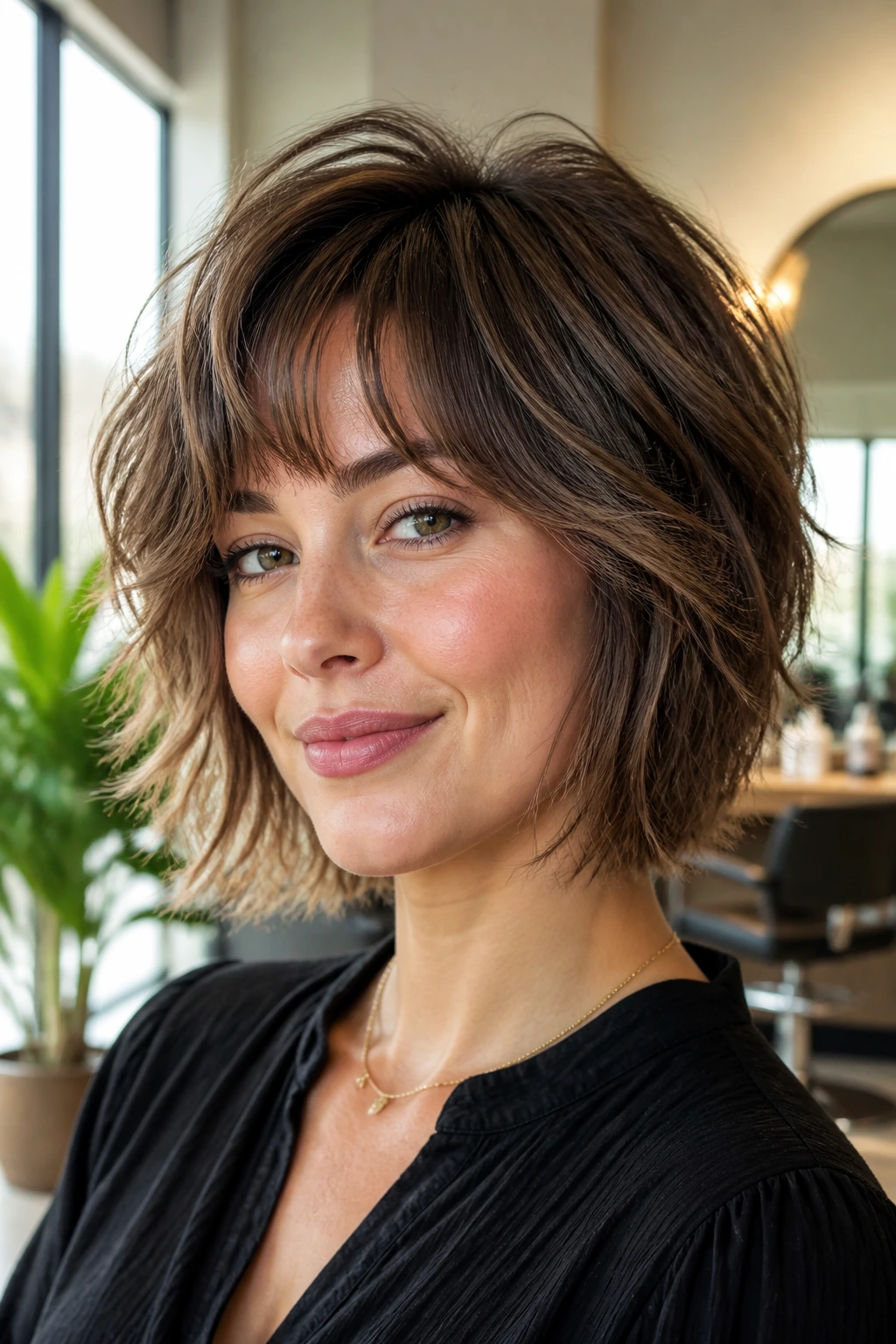
1. Chin-Length Shag with Curtain Bangs
This is the haircut I reach for when someone wants short hair but still wants their face to feel a little longer. The chin-length perimeter gives enough structure to stay polished, while the curtain bangs split the forehead and draw the eye down the center line. It’s soft, but it has shape.
Why It Works
Curtain bangs do the heavy lifting here. They open in the middle, skim the cheekbones, and keep the cut from sitting like a helmet around the face. The shag layers underneath add movement without stealing all the length from the front.
A blunt chin-length bob can feel boxy on a round face. This version avoids that by keeping the ends broken and the fringe airy. If your hair bends easily, this is one of the easiest shags to wear with very little styling.
- Best for: medium density hair that needs shape without too much bulk.
- Ask for: a softly layered perimeter and fringe that lands around the brow or upper cheek.
- Styling note: a 1-inch bend with a flat iron keeps the face-framing pieces from collapsing inward.
Best tip: keep the shortest face-framing layer a touch below the cheekbone, not right on it.
2. Pixie Shag with Piecey Fringe
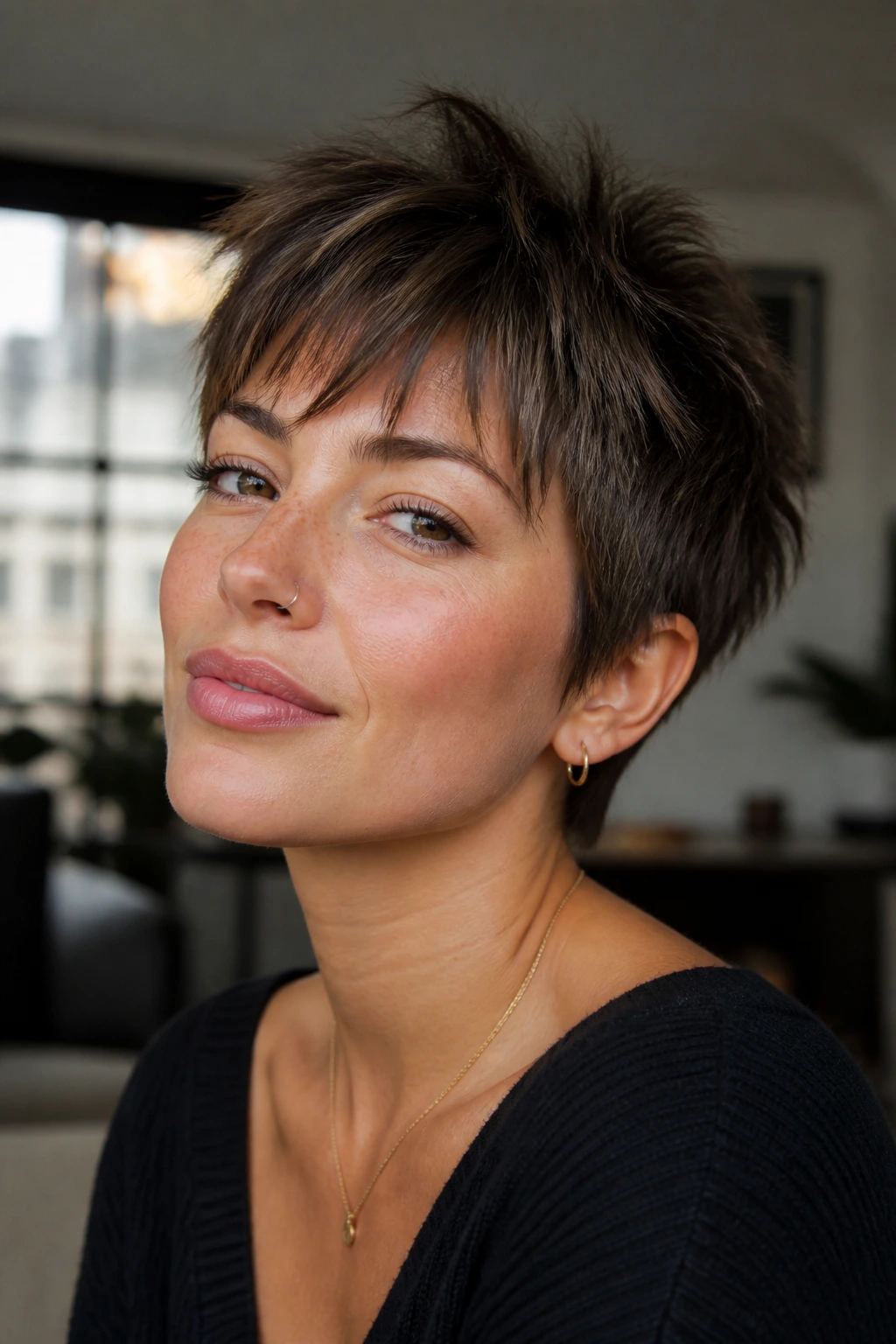
A pixie can go wrong on a round face when it gets too neat. This version fixes that by making the top choppy and the fringe broken into little pieces instead of one smooth line. It feels sharp without looking severe.
The key is contrast. The sides stay close, the crown keeps some height, and the front is soft enough to move. That little bit of lift changes the whole profile. If your hair is fine, this cut can make it look thicker. If your hair is dense, it takes the bulk out fast.
It’s also a good cut for anyone who hates spending ten minutes shaping the front every morning. A little mousse, a quick finger-dry, and a dab of paste at the ends is often enough. No giant round brush required.
This is especially good if you like jewelry, bold glasses, or a strong brow. The haircut clears space around the face, so the rest of the features get more room to show up.
3. Razored Bob with Airy Ends
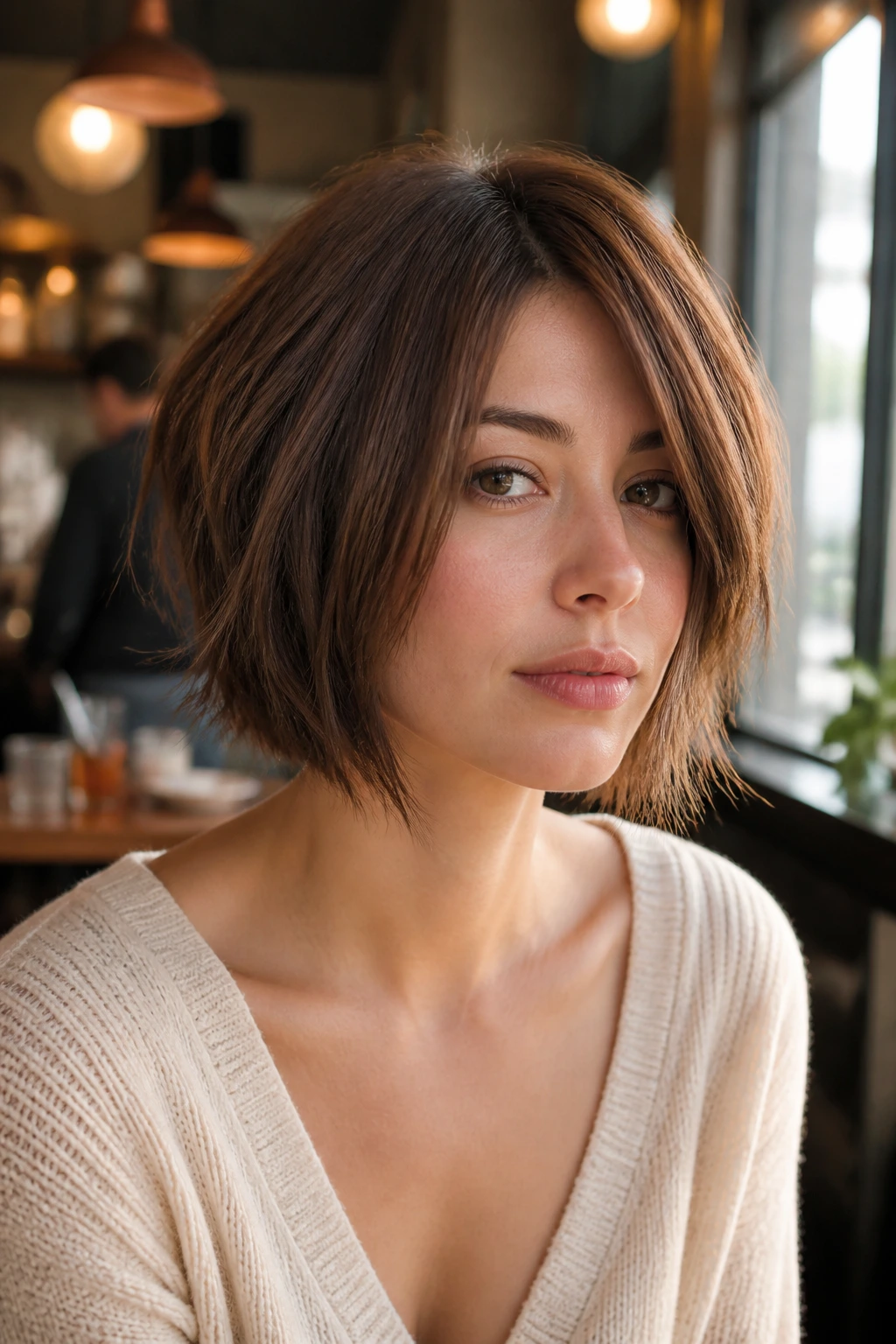
Why does this bob work when a blunt one doesn’t? Because the ends don’t stop in one hard line. They feather out, which keeps the lower half of the face from feeling boxed in.
The razor creates a bit of slide through the ends, so the bob feels lighter and less compact around the cheeks. That matters on a round face, where a dense edge can make the widest point look wider. Keep the part slightly off center and the front pieces a little longer than the back.
How to Wear It
A small round brush and a blow-dryer nozzle will give this cut enough bend to look deliberate. If you air-dry, use a lightweight cream and squeeze the ends outward with your fingers.
This one is for someone who wants a classic shape but does not want the haircut to sit still all day. It moves when you turn your head. That’s the charm.
4. Wolf Bob with Choppy Crown
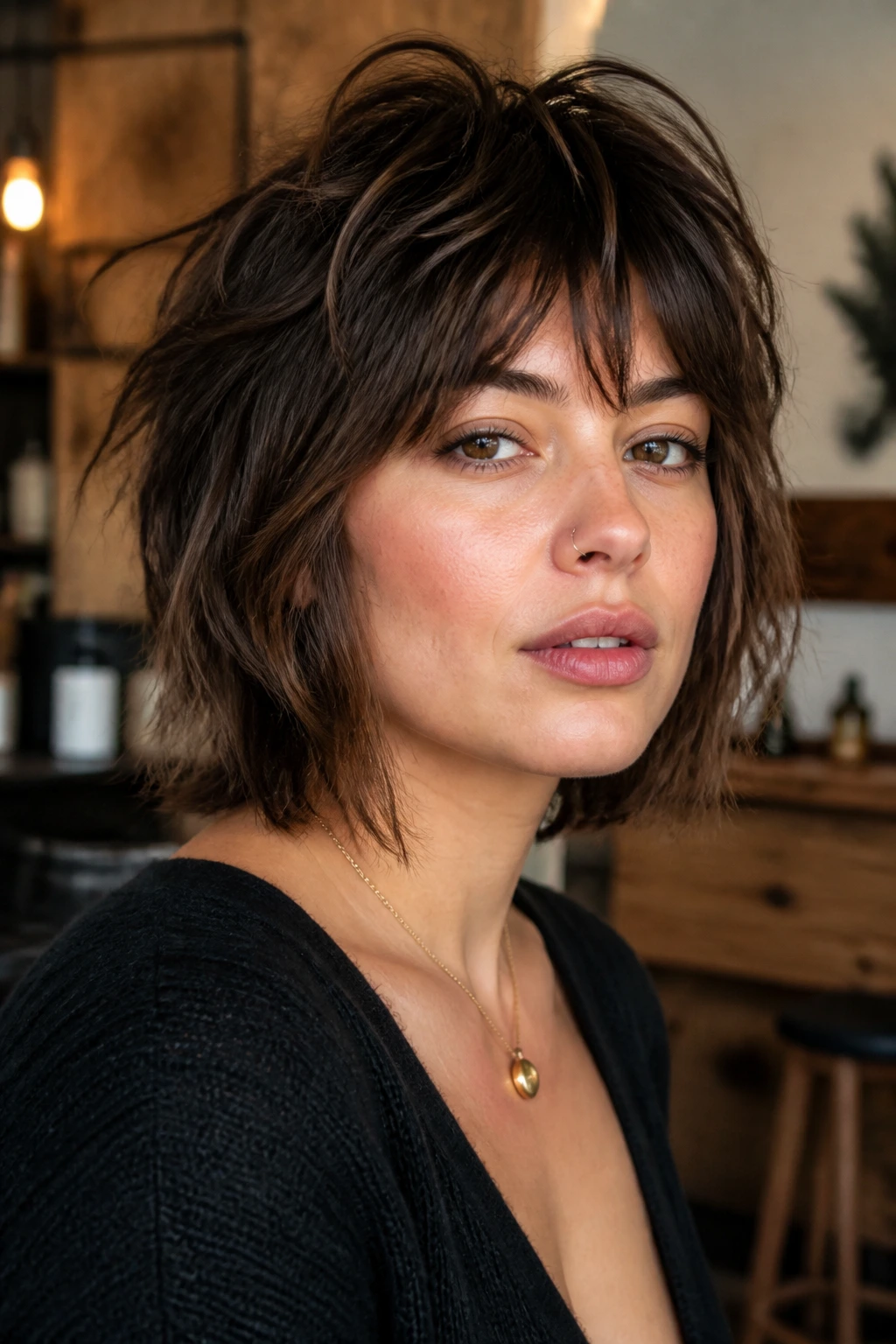
You know that cut that looks a little rebellious but still works in a meeting? This is it. The wolf bob keeps the top layered and a bit shaggy, then lets the bottom stay short enough to feel neat.
The reason it suits round faces is the crown. The height at the top stretches the head shape, while the broken layers around the front stop the face from looking full at the sides. The result is messy in a very controlled way.
If you like a haircut that looks better after you mess with it, this one belongs near the top of your list. It does not need perfect blow-drying. In fact, a little imperfect texture helps.
- Try it if: your hair is thick, wavy, or naturally puffy and you want shape without losing movement.
- Skip the heavy cream: it can collapse the crown and make the style sit flat.
- Use instead: a light mousse at the roots and a dry texturizer through the ends.
The best version keeps the front slightly longer than the nape. That tiny imbalance is the whole point.
5. French Shag with Brow-Skimming Bangs

The French shag has a certain loose confidence to it. The bangs skim the brows, the layers fall softly around the face, and nothing feels overworked. On a round face, that relaxed line is a gift.
A lot of people think bangs are risky on a round face. Thick, square bangs can be. These are not that. Brow-skimming fringe gives you a horizontal line high on the face, then the shag layers break up the rest. The trick is keeping the fringe light enough that you can see some forehead through it.
The best way to wear this cut is a little undone. Blow the bangs forward with a small round brush, then separate them with your fingers once they cool. If they look too neat, they lose the point.
It’s one of the easiest cuts to dress up or down. A crisp shirt makes it feel tailored. A sweater and denim make it feel casual. The haircut does the linking work in both cases.
6. Asymmetrical Shag Crop
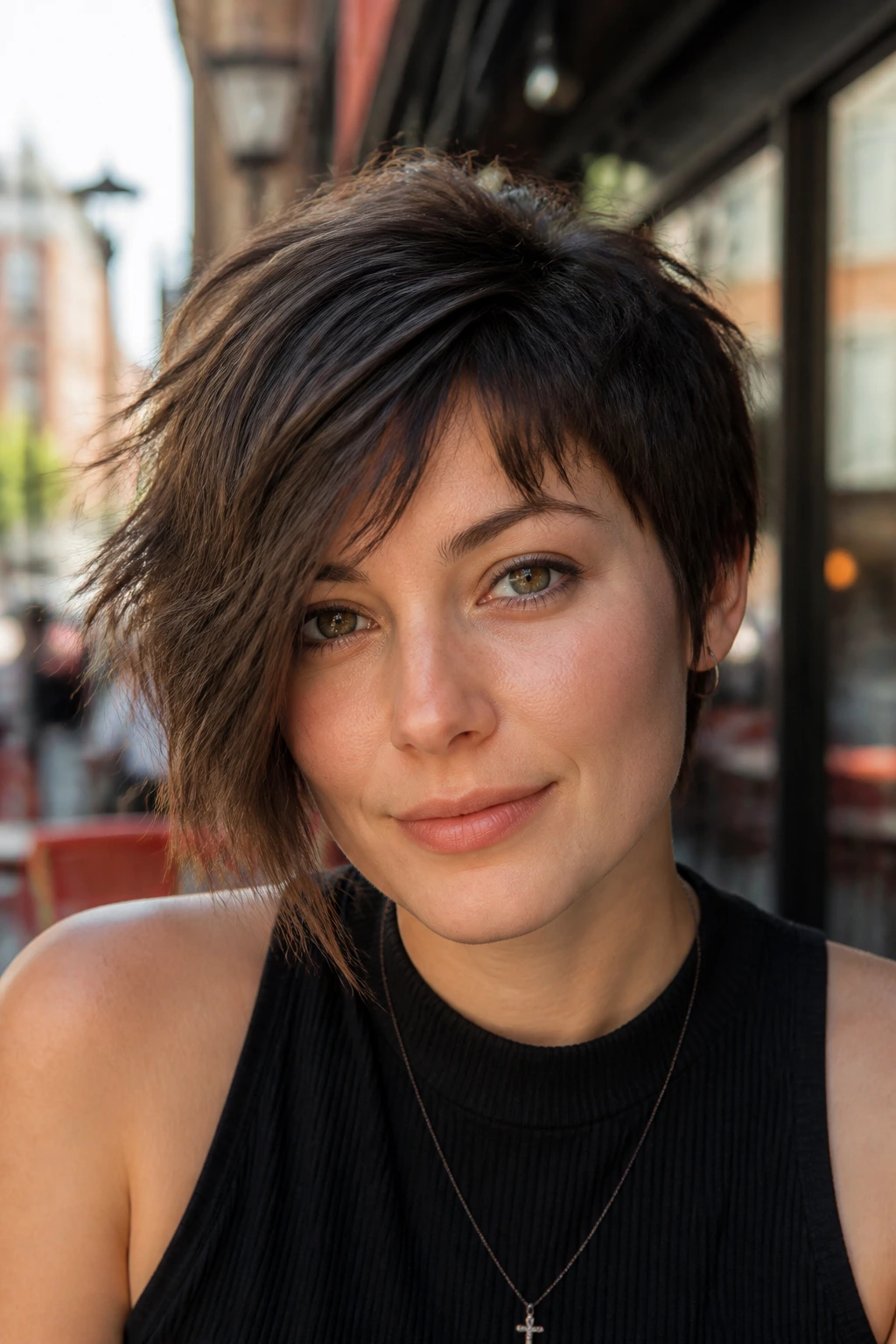
A perfectly even haircut can make a round face feel even rounder. This is where asymmetry earns its place. One side sits a little longer, the part shifts off center, and the eye gets a path that isn’t straight across.
That slight imbalance is flattering because it interrupts symmetry. It also keeps the haircut from settling into the same shape every day, which matters if your hair has any natural bend. On a round face, that break in rhythm can make the whole look feel longer and leaner.
The best version keeps the shorter side close to the cheekbone and the longer side grazing the jaw or neck. Nothing harsh. Just enough difference to matter.
If you like a little edge — and I mean actual edge, not “I bought a leather jacket once” edge — this is a strong pick. It looks clean, but it never looks safe.
7. Curly Shag with Soft Crown Lift

Curly hair and round faces get along well when the curl pattern is allowed to rise at the crown instead of puffing out at the cheeks. This shag does exactly that. The layers are placed to encourage lift above the widest point, then let the curls fall in softer ribbons around the lower face.
The best curly shags are never cut too blunt at the bottom. That hard edge makes curls sit like a shelf. Here, the ends are broken and shaped so the whole cut reads lighter. The face gets framing without getting boxed in.
Use a diffuser if you want the curls to keep their spring. Keep the product light, too. A heavy cream can pull the layers down and erase the height you just built.
This cut is also one of the most forgiving. If one curl decides to do its own thing, the shag absorbs it. That’s not a flaw. That’s why people keep coming back to this shape.
8. Tapered Pixie Bob
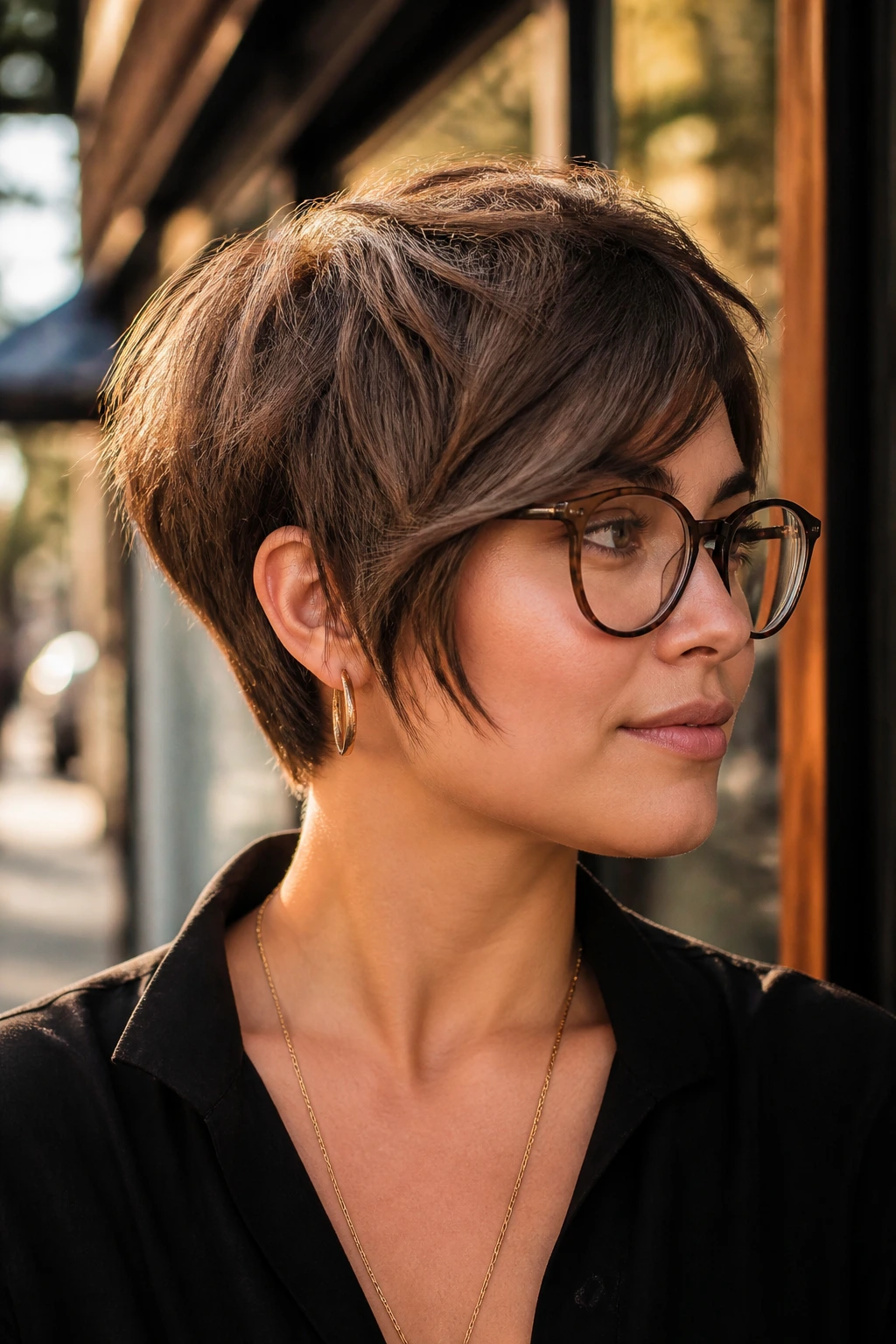
The tapered pixie bob sits right between a cropped cut and a mini bob, which makes it a strong option if you want short hair without going full pixie. The taper at the nape keeps the neck clean, while the longer top and front pieces create enough line to flatter a round face.
What I like here is the balance. The sides stay neat, but the top keeps movement. That combination gives you height without too much bulk at the temples. It’s tidy in the back and lively in the front.
This cut works especially well if you wear glasses or have a softer jawline. The shape frames the face without swallowing it.
It’s also easier to grow out than a strict pixie. The top can slide into a shaggy bob later, which means you are not trapped in an awkward in-between stage for long.
9. Bottleneck Bangs with Feathered Ends

Are bangs on a round face a bad idea? Not when they open in the middle and taper out at the sides. Bottleneck bangs do exactly that. They give you a soft center point, then release into the cheek area instead of cutting the face in half.
The feathered ends matter just as much. If the bottom edge is too heavy, the whole haircut can feel dense. But when the ends are broken up, the bangs and the rest of the cut feel connected. That connection keeps the style from looking piecemeal.
This is a good option if you want fringe but don’t want to commit to a full curtain bang. It’s a little more tailored, a little less breezy.
How to Wear It
Blow the center fringe down first, then sweep the sides outward with your fingers while they cool. A small flat brush works if your hair is straight; a diffuser works better if it bends on its own. Either way, the shape should read soft and angled, not blunt.
10. Mini Shullet
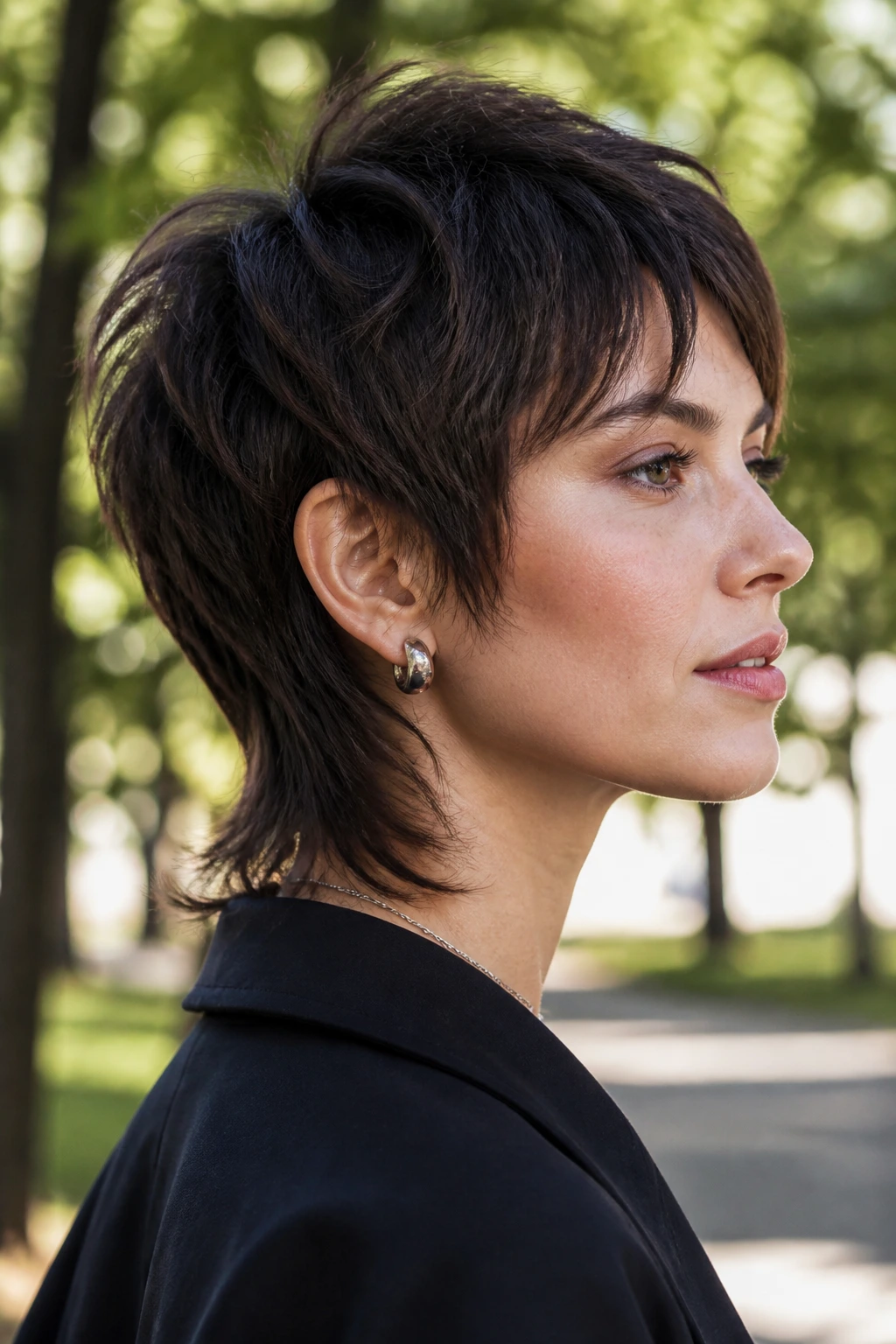
This is the one for people who want a little attitude in their haircut. A mini shullet keeps the shag at the top and the mullet influence in the back, but in a trimmed-down, wearable version that still flatters a round face.
The reason it works is the back length. A touch more length at the nape creates vertical line, which helps stretch the face visually. The front stays shaggy and broken, so the cheeks do not get boxed in. It sounds odd. It looks good.
If you are nervous about mullet territory, keep the difference subtle. The best mini shullet is more “grown-up texture” than “costume from the wrong decade.”
- Best for: wavy or slightly curly hair with natural body.
- Styling trick: scrunch the back and crown separately so the shape does not turn into one puff.
- Salon request: ask for short layers on top and a softer, tapered length at the nape.
The cut is a little cheeky. That is part of the appeal.
11. Ear-Grazing Feathered Crop
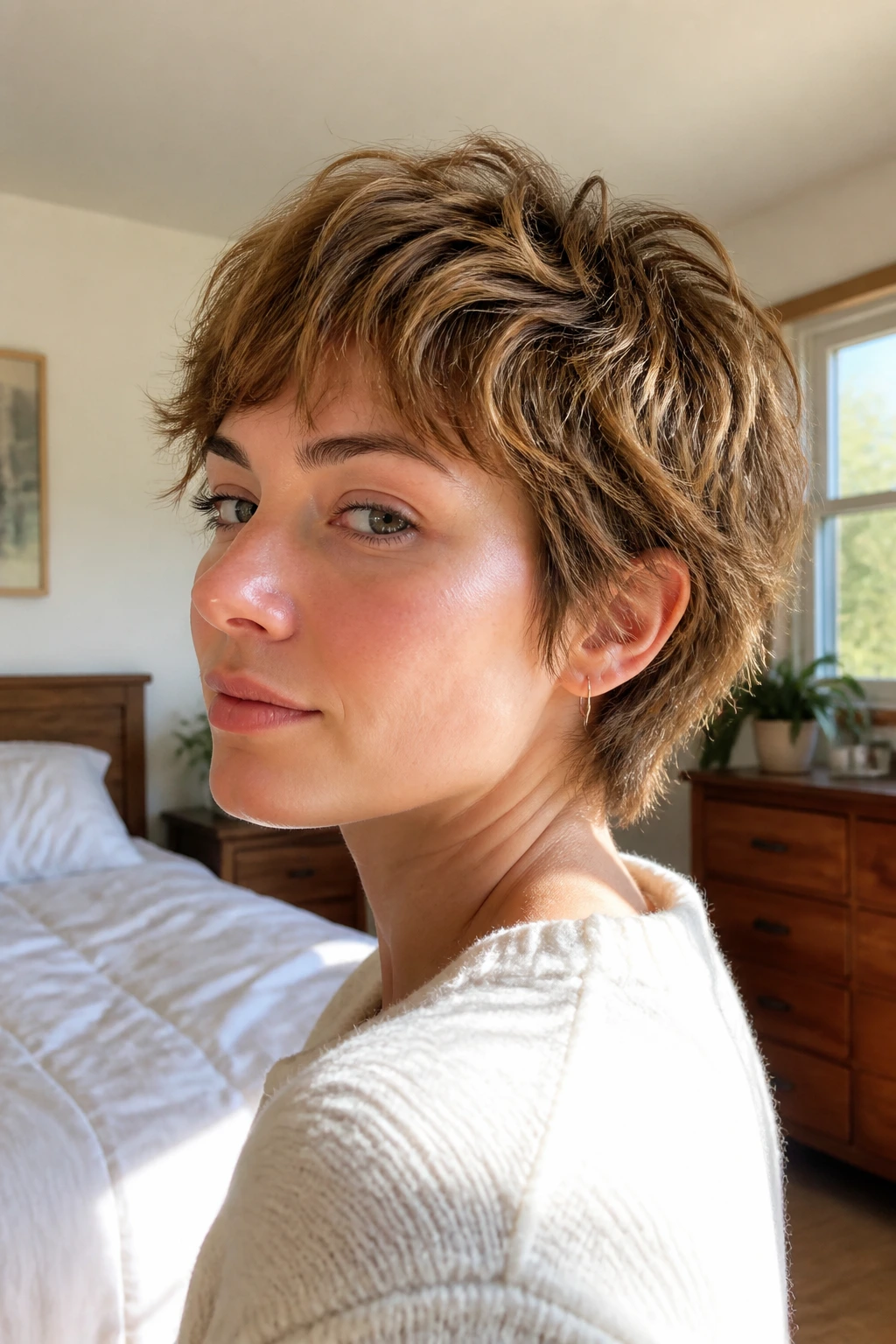
This crop keeps the length tight around the ears and the nape, then uses feathered top layers to avoid a hard box shape. On a round face, that combination keeps the outline neat without adding width where you do not want it.
A lot of short crops get too round. This one does the opposite. The top pieces lift and separate, which gives the silhouette some air. It works especially well if your hair is fine and tends to fall flat by lunchtime.
There is a nice practicality to this cut too. It dries quickly, it needs less product than a longer shag, and it still looks intentional if you miss a wash day. A little dry shampoo at the roots and a dab of paste on the ends usually does the job.
It’s one of the easiest styles to wear with sharp features, bold lips, or a strong pair of earrings. The haircut stays small, but the effect does not.
12. Neck-Length Shag with Face-Framing Ribbons

This one sits just long enough to brush the neck, which gives you a little more room for face-framing pieces. Those front sections — I like to call them ribbons because that’s what they behave like — pull the eye downward and soften the sides of the face.
Compared with a chin-length bob, this version feels less compact. That extra inch or two matters. It lets the layers fall in a more vertical way, which is exactly what round faces benefit from.
If your hair grows fast, this is a smart cut. It keeps its shape for longer before it starts looking heavy. And if your hair is thick, the neck length gives your stylist enough room to remove weight without making the whole head look too puffy.
Wear it with a side part if you want even more asymmetry. Wear it with a center part if the front pieces are long enough to graze the cheekbones. Both work.
13. Deep Side-Part Texture Bob
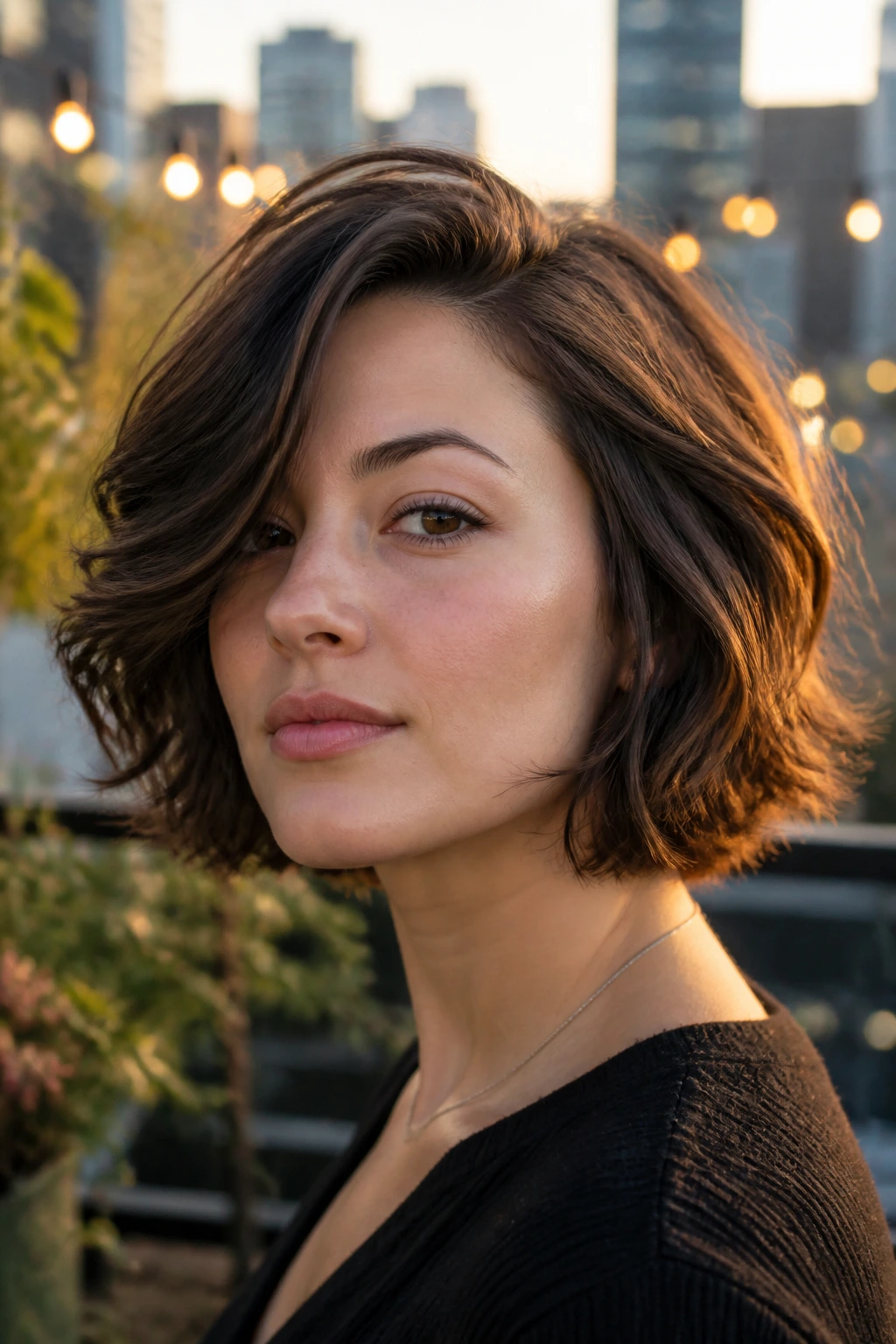
A deep side part is one of the cheapest shape tricks in hair. It costs nothing, and it can change the face in seconds. On a round face, that extra sweep across the forehead creates a diagonal line that cuts through all the softness.
The bob itself stays textured and loose, so it doesn’t sit like a solid block. I like this cut for straight or slightly wavy hair because the side part does most of the visual work. You do not need a huge amount of texture. You need the right amount in the right place.
Why It Works
The heavy side gives one side of the face a little more vertical coverage, which narrows the face visually. The opposite side stays lighter and can tuck behind the ear. That asymmetry keeps the haircut from feeling too centered and too round.
A side part is also one of the fastest ways to make a short shag feel less sweet and more stylish. Tiny shift. Big difference.
14. Grown-Out Pixie Shag
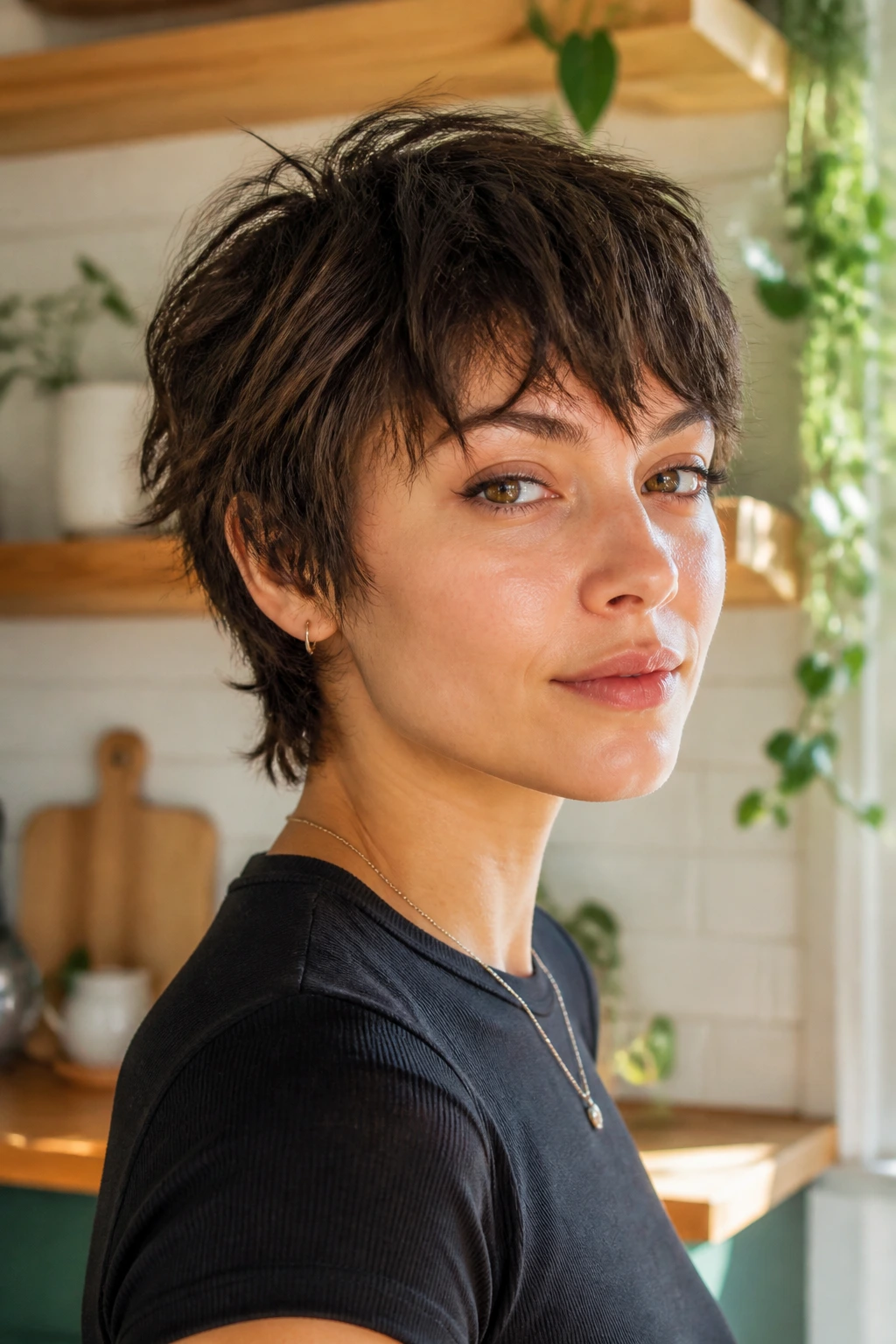
A grown-out pixie can look awkward if the top loses shape and the sides puff out. But when it is cut as a shag from the start, that in-between length becomes the point. The top keeps movement, the fringe stays piecey, and the sides don’t balloon.
This is a strong choice if you like short hair but do not want to schedule trims every few weeks. The grow-out tends to be kinder than a super-precise pixie because the shape already has texture built into it.
The round-face advantage comes from the soft length in front. Instead of exposing the face in a hard, circular outline, the cut drifts forward in little fragments. That keeps the face from reading wider.
It also has that nice lived-in quality that some cuts chase and miss. This one gets there with less effort because the haircut itself is doing half the styling.
15. Soft Mullet with Tapered Nape
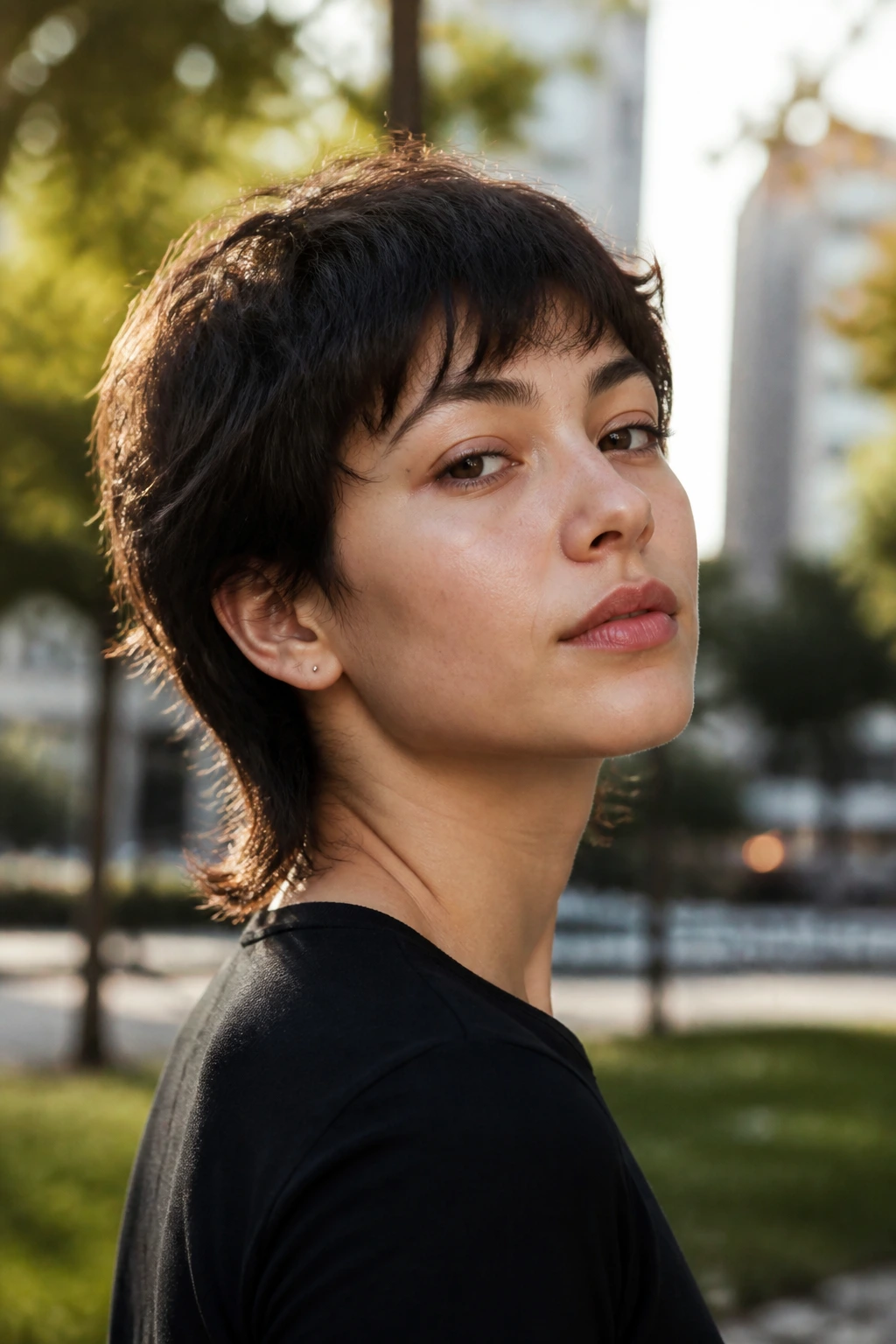
A soft mullet is not the same thing as a loud mullet. The soft version keeps the top shaggy, the sides broken, and the nape a little longer than a classic crop. For a round face, that extra length at the back helps pull the eye downward.
The taper matters because you do not want a heavy curtain at the neck. You want the outline to narrow gently as it drops. That keeps the haircut from feeling wide through the jaw and ear area.
This cut works best when the top has enough texture to move, but not so much that it frizzes into a halo. Think controlled disorder, not chaos. If your hair is wavy, it often lands in the sweet spot naturally.
Some people will call this edgy. Fine. The better word is interesting. It has shape, and shape is the whole game here.
16. Rounded-Edge Bob with Hidden Layers
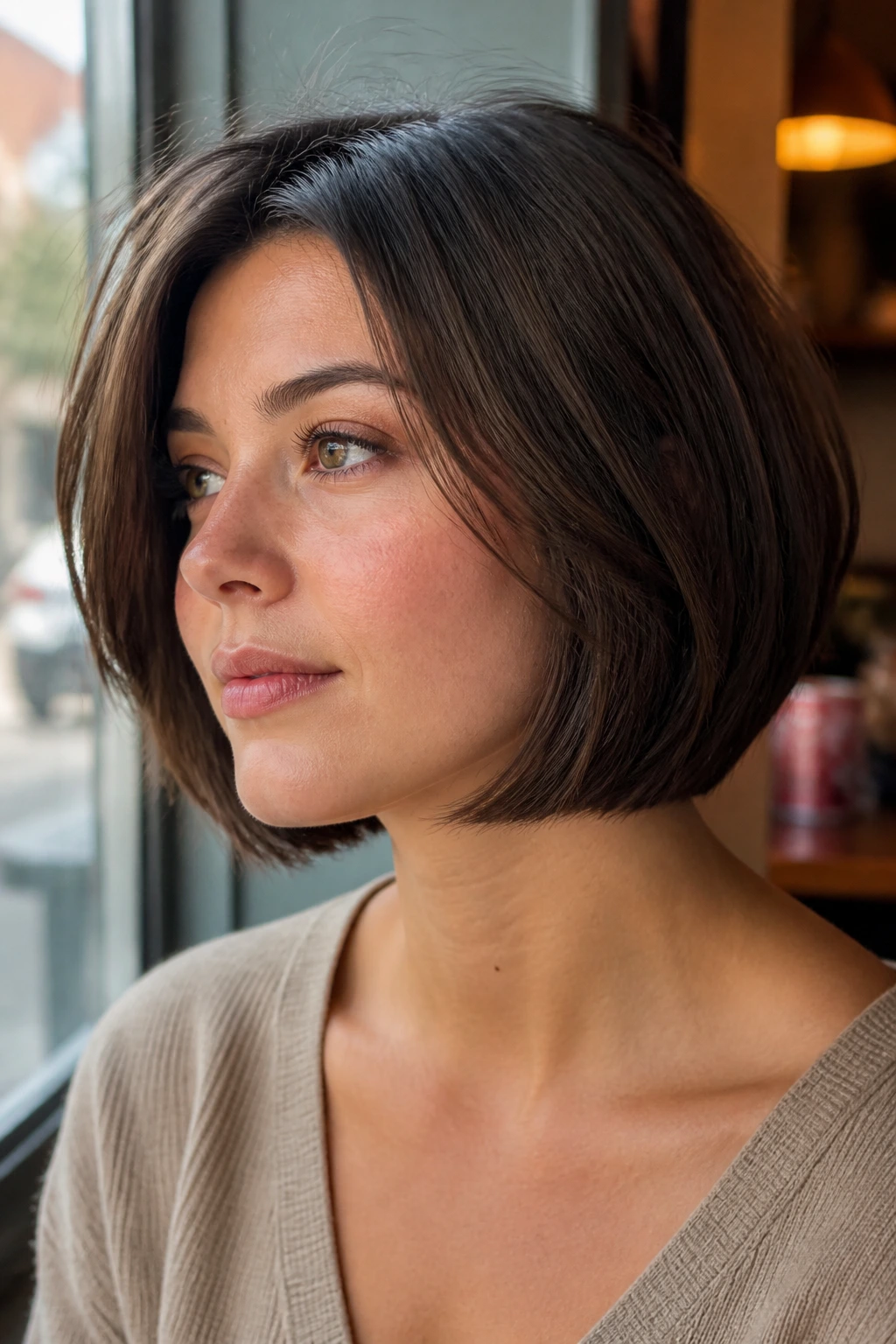
What if you like a bob but hate the way razor-sharp lines sit on your face? Keep the bob, hide the layers, and soften the edge. This version gives you the polished outline of a bob with internal texture that doesn’t announce itself.
The hidden layers remove weight from the middle and lower sections, so the hair doesn’t puff at the cheeks. The surface still looks neat, which is useful if you want something more restrained than a full shag.
On a round face, this works because it keeps the line long enough to skim the jaw without adding extra width. The bob stays controlled; the inside stays light. That balance is harder to get than people think.
It’s the haircut I’d point to for someone who likes clean clothes, simple makeup, and a no-fuss morning routine. It’s textured, but not messy.
17. Curly Pixie Shag with Long Fringe
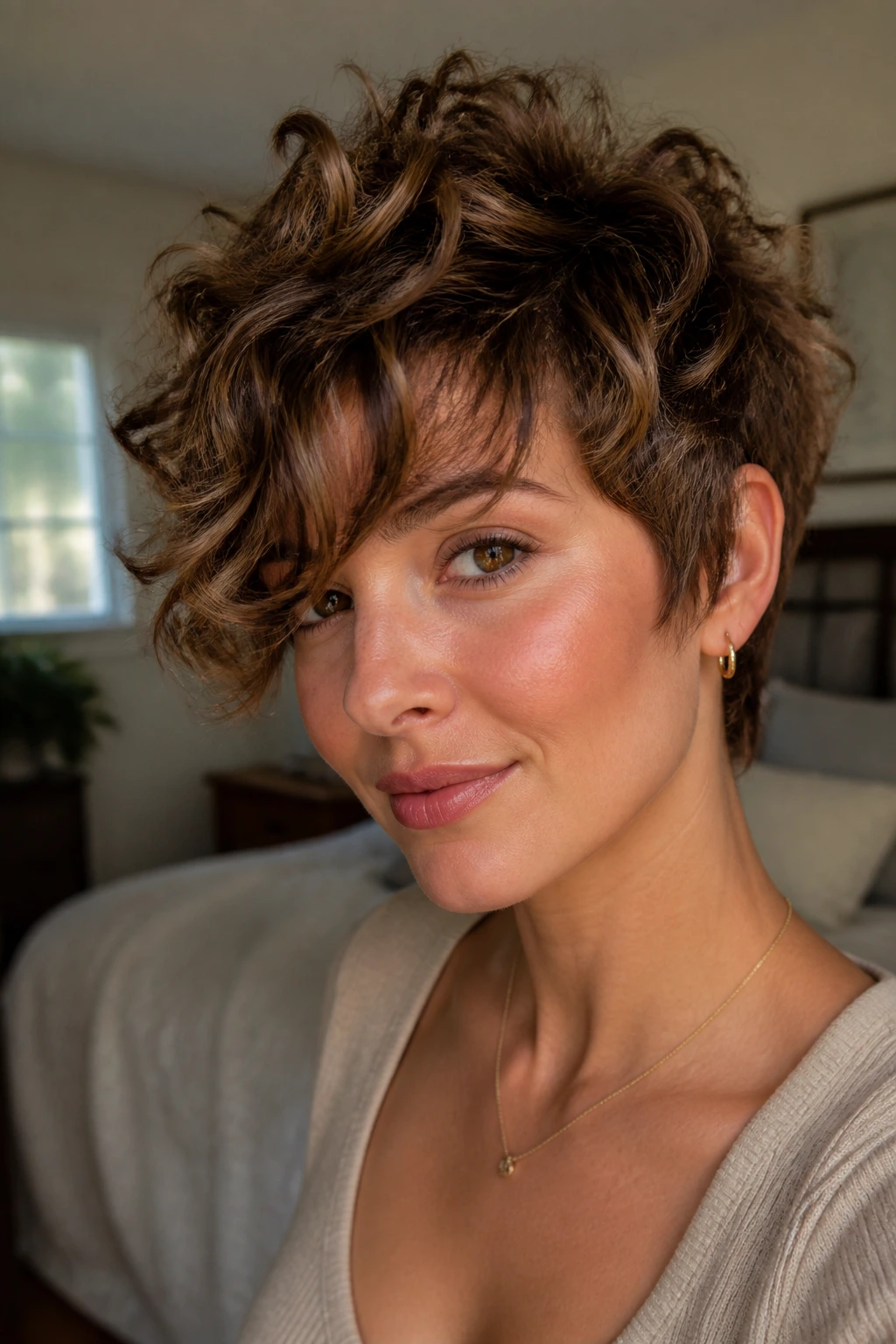
Curly hair in a pixie shape can either look airy or explode outward. The long fringe is what keeps this version balanced. It gives the front some weight, which helps anchor the curl pattern and frames the face without puffing the cheeks.
The crown stays layered so the curls can rise, and the sides stay close enough to keep the outline compact. That matters on a round face because too much width at the sideburn area can erase the benefit of short hair.
Use a diffuser, yes, but do not over-dry the curls into a shell. Stop while they’re still a little soft, then separate the pieces with a small amount of oil on your fingertips. The cut should move.
This one is especially good if you want your curls visible and not flattened into a generic short shape. The fringe gives the style personality. The layers give it room.
18. Long Sideburn Shag Crop
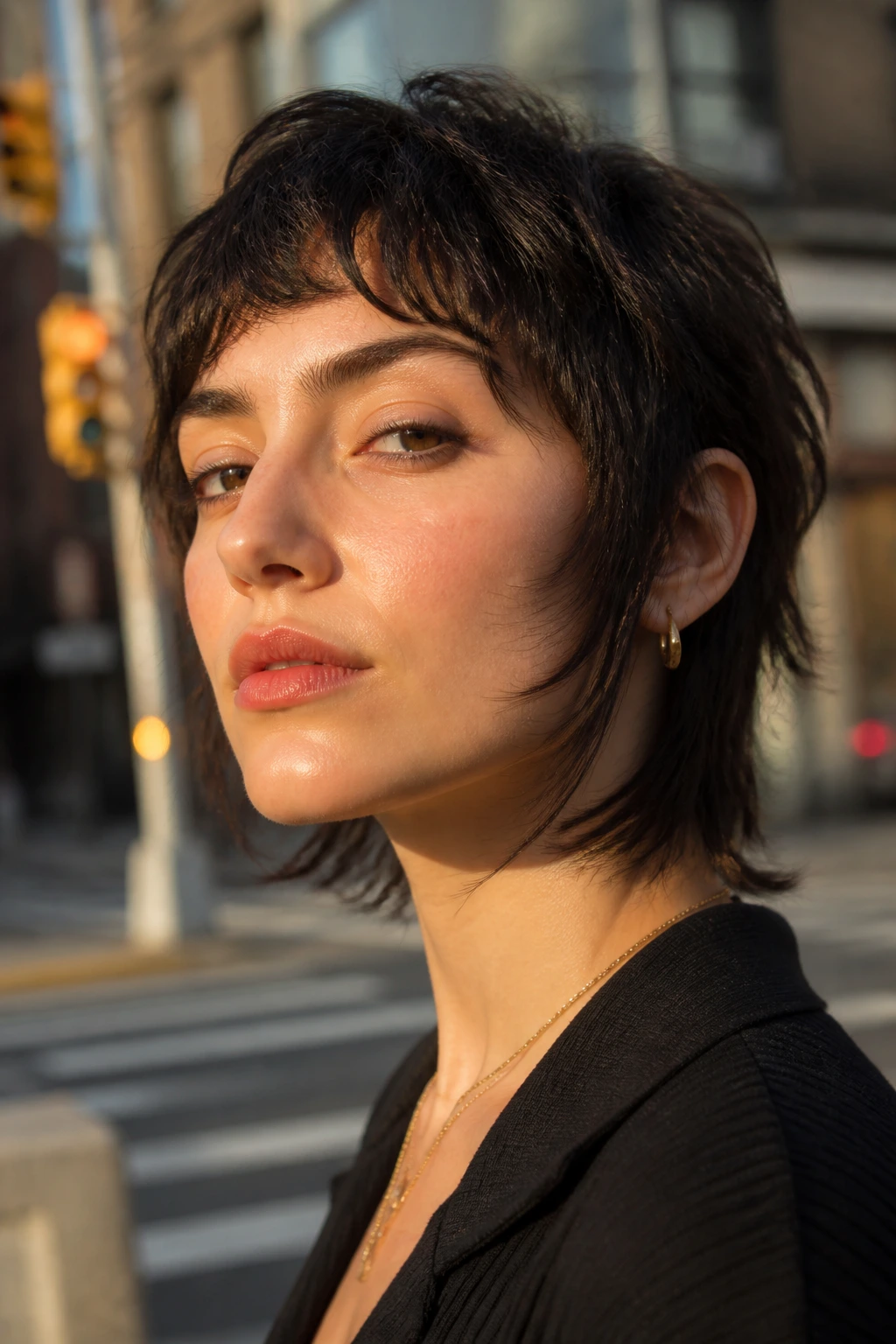
Sideburn pieces can do more for a round face than people expect. Long sideburns create a vertical frame near the jaw and ear, which interrupts the curve of the face in a useful way. That is the whole job here.
The rest of the crop stays shaggy and light, so the long side pieces do not feel like an afterthought. They become part of the silhouette. I like this shape for anyone who wants a little softness near the face without a full fringe.
Compared with a heavier bang, sideburn pieces leave the forehead open. That keeps the haircut from shrinking the face. It also makes the style easier to wear with glasses, headbands, or a lot of forehead movement when you talk.
Keep the pieces slightly feathery, not blunt. You want them to blend into the rest of the haircut, not sit like two separate strips.
19. Razor Bob with Crown Lift
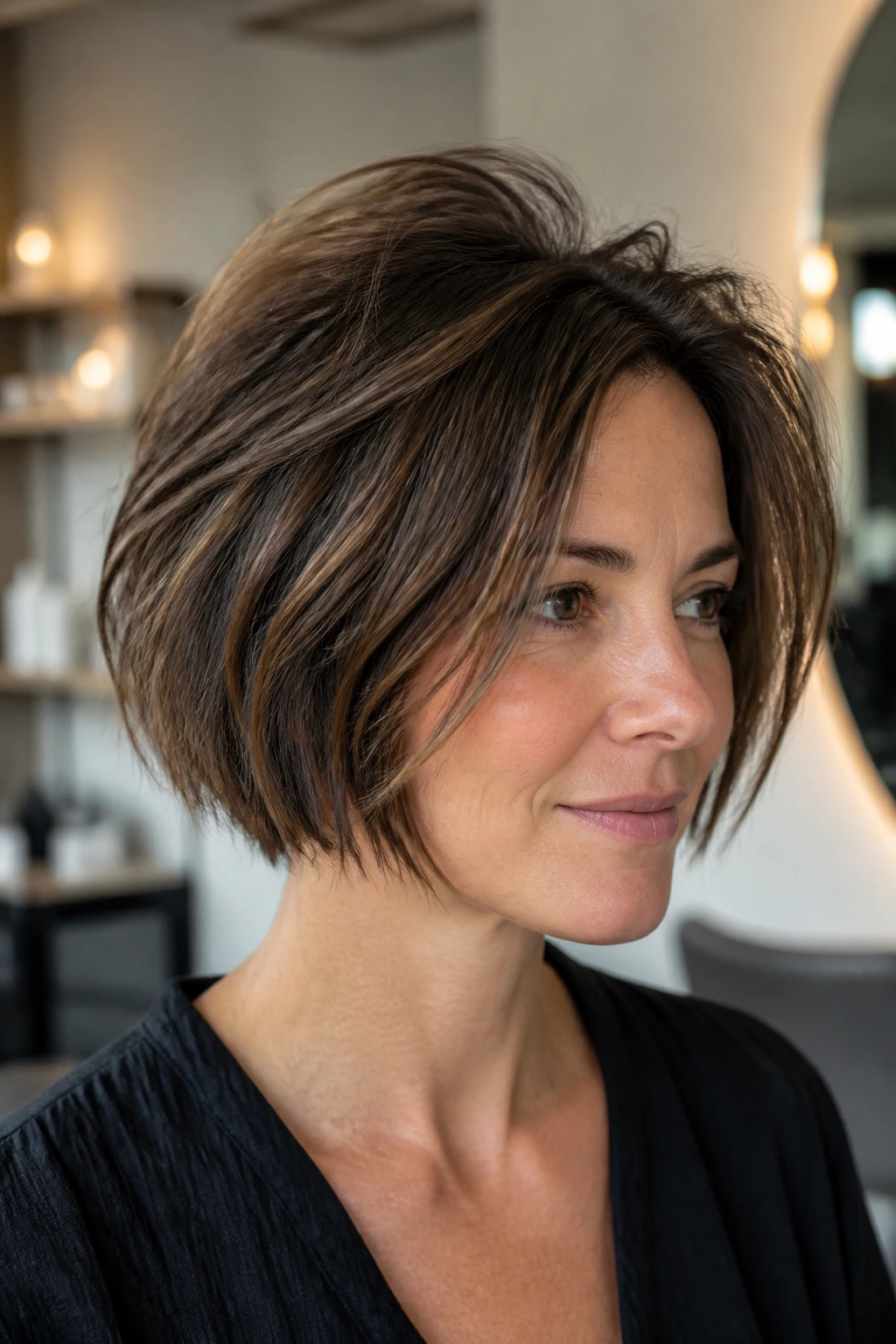
A razor bob can look flat if the crown is ignored. On a round face, that flatness is a problem because the eye settles right back onto the cheeks. Give the crown some lift and the whole shape changes.
The razored ends keep the perimeter soft and mobile, while the crown height adds a little length through the top of the head. That one-two combo is why this version works better than a standard chin-length bob.
What Makes It Different
The crown is not teased into a stiff bump. It is cut to want to sit higher, with layered movement that naturally lifts at the roots. That keeps the style modern rather than puffy.
If your hair is thick, this is one of the better ways to remove weight without sacrificing shape. If it is fine, keep the razoring light so you do not lose too much density.
20. Tousled Pageboy Shag

A pageboy usually sounds rigid. This version isn’t. The ends are broken, the surface is tousled, and the whole thing keeps enough softness to avoid that old-school helmet feel. On a round face, that matters a lot.
The pageboy shape is useful because it can keep the jawline covered just enough to soften the lower face. The shag layers keep it from getting too neat. It’s a neat idea with some rebellion in it.
This cut works especially well if your hair naturally flips under. Instead of fighting that bend, the haircut uses it. The result is a shape that sits close to the head but never feels stiff.
It’s a good middle ground for someone who likes structure but does not want a crisp bob. Less polish. More movement. Better for this face shape.
21. Wavy French Bob Shag

Why do wavy French bobs keep showing up in face-flattering hair conversations? Because they know when to stop. The length is short enough to feel sharp, the wave breaks up the line, and the front pieces usually land just where the cheekbone wants some relief.
The shag element gives the bob a looser edge. Without that, the shape can feel too square or too tidy. With it, the cut lands somewhere between elegant and casual, which is the whole appeal.
If your hair has a natural S-wave, do not fight it into a polished blowout every morning. Use a light mousse, twist the sections while they dry, and let the texture stay visible. The movement is the point.
This is one of the few short cuts that can look equally good with a white T-shirt or a sharp blazer. The haircut does not care which one you pick.
22. Tucked-Nape Shag Crop
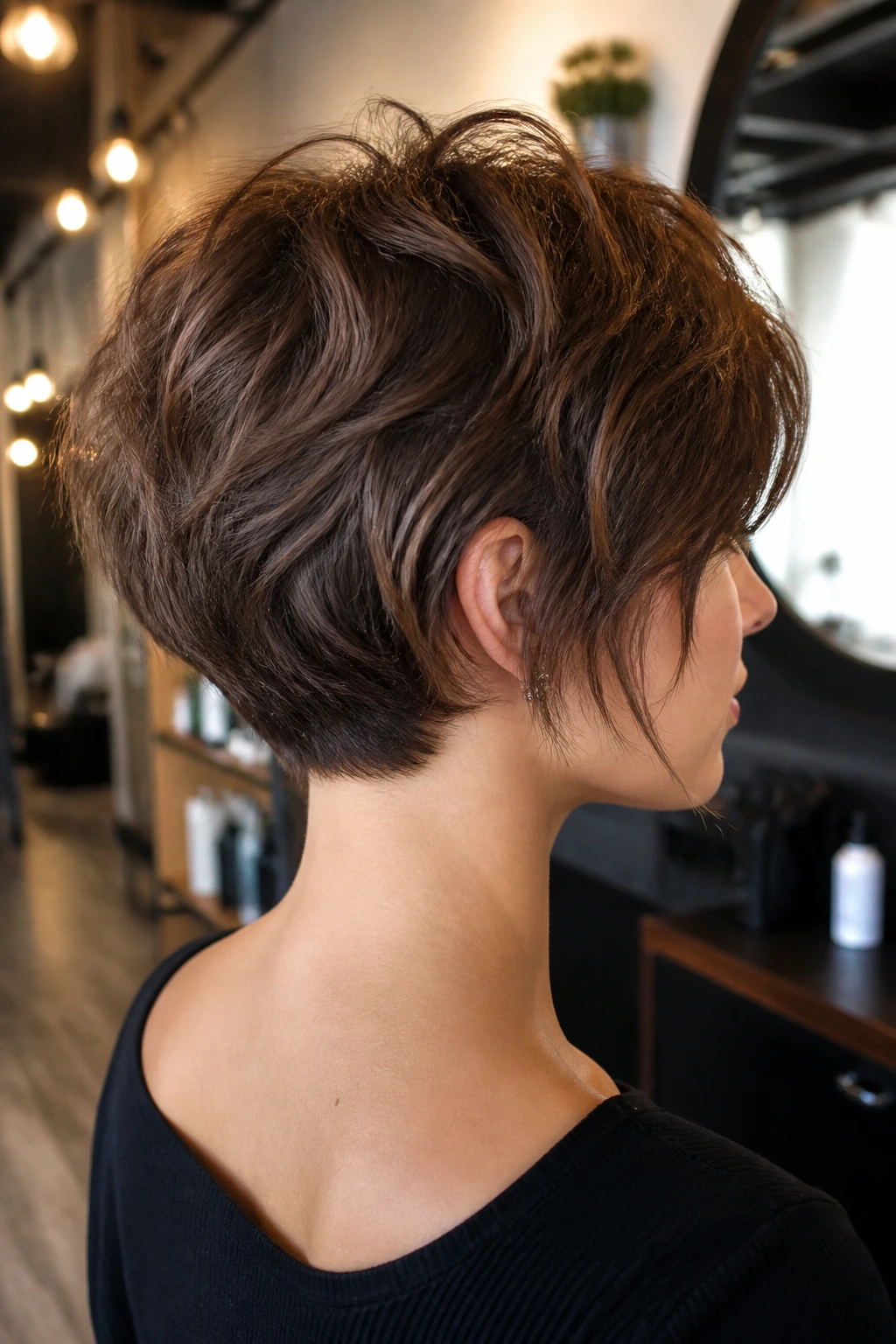
A tucked nape gives a short shag a cleaner back line, which keeps the head shape from ballooning. That’s especially useful on round faces, where too much width through the lower back of the head can make the whole silhouette feel bigger.
The front stays shaggy and broken, with enough length to frame the cheekbones. The back is tighter and neater. That contrast creates a longer visual line from front to back.
How It Works
The nape sits close to the neck, so the haircut feels airy from behind. The front layers stay soft and a little longer, which pulls attention forward. It’s an efficient little shape trick.
This is a nice option if you work in a setting where you want short hair that still looks controlled. It never gets too fluffy at the neckline, and that alone makes it easier to live with.
23. Undercut Shag with Long Top
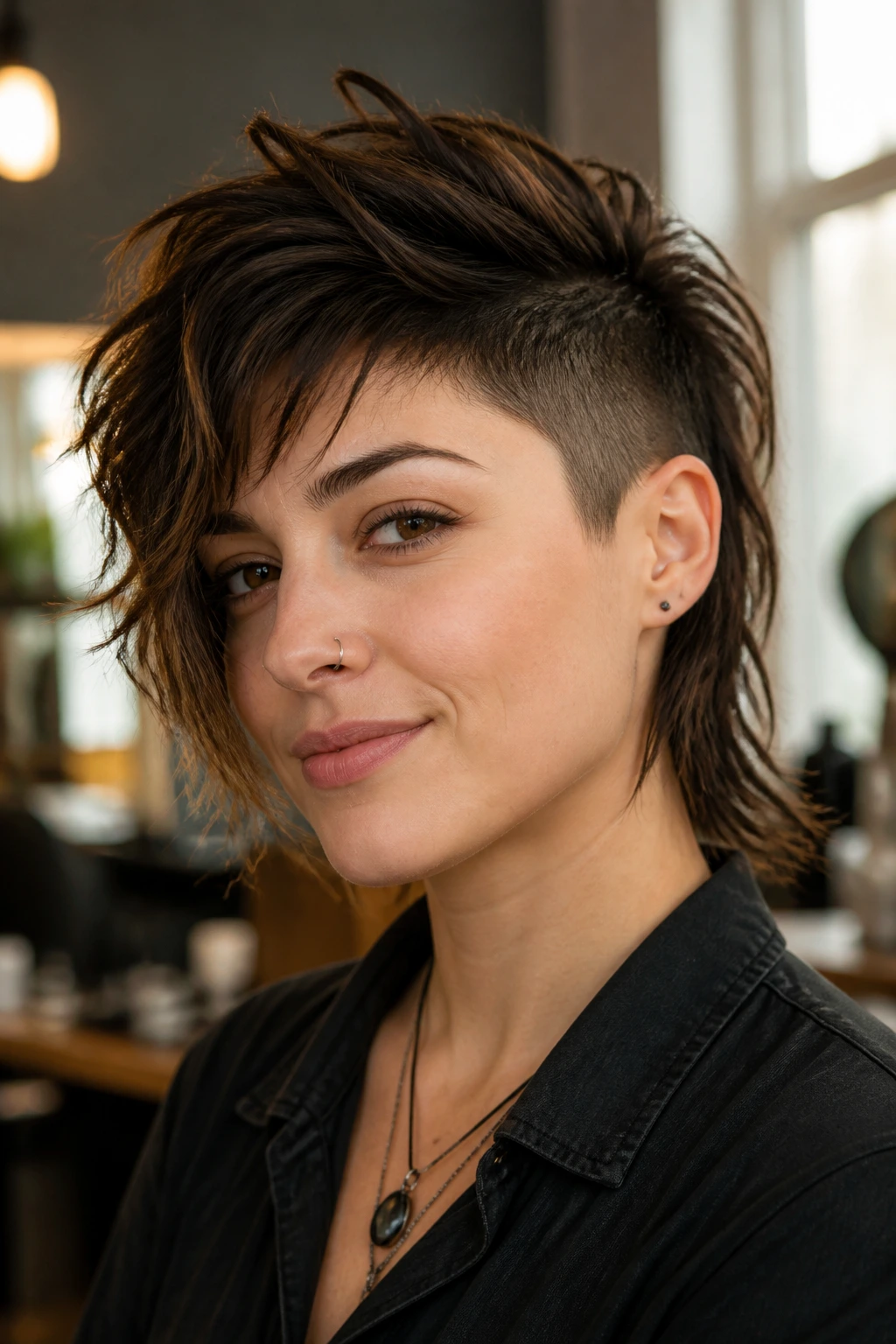
An undercut can sound dramatic, but on a round face it can be a smart fix when the hair is dense and wants to widen outward. Removing bulk underneath lets the top layers fall in a more vertical way.
The long top keeps the softness you need around the face, while the undercut keeps the sides from puffing. That means the haircut can be shaggy without becoming a triangle. The shape stays narrow where it should.
If your hair is thick, especially at the sides and back, this cut can feel like taking off a heavy coat. Everything moves easier afterward. If your hair is fine, you probably do not need this much removal.
It’s not a shy haircut. It’s practical with a little attitude. Sometimes those are the best ones.
24. Piecey Crop with Micro Bangs
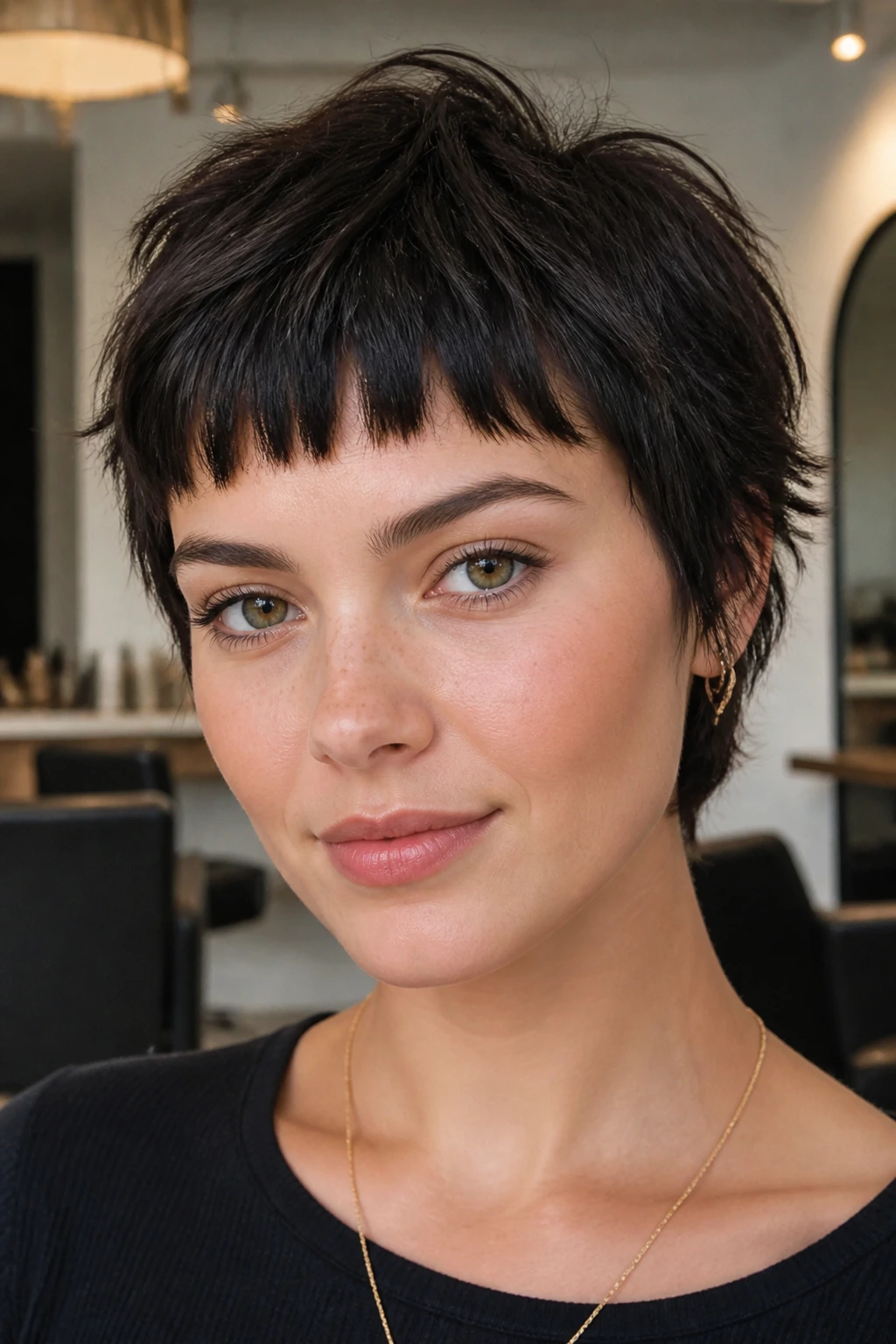
Micro bangs are tricky on round faces, which is exactly why texture matters so much here. A blunt micro fringe can look harsh. A piecey one gives the forehead some openness and keeps the cut from turning into a rigid block.
The crop underneath stays short and shattered through the ends, so the micro fringe becomes part of a larger, livelier shape. I’d only choose this if you like bold features in your haircut. It is not a background player.
This version works better with a little mess in it. Finger-combed texture softens the fringe and keeps the forehead line from feeling too severe.
If you want short hair with personality, this is one of the boldest options in the bunch. It tells the truth fast.
25. Layered Bob with Flip-Out Ends
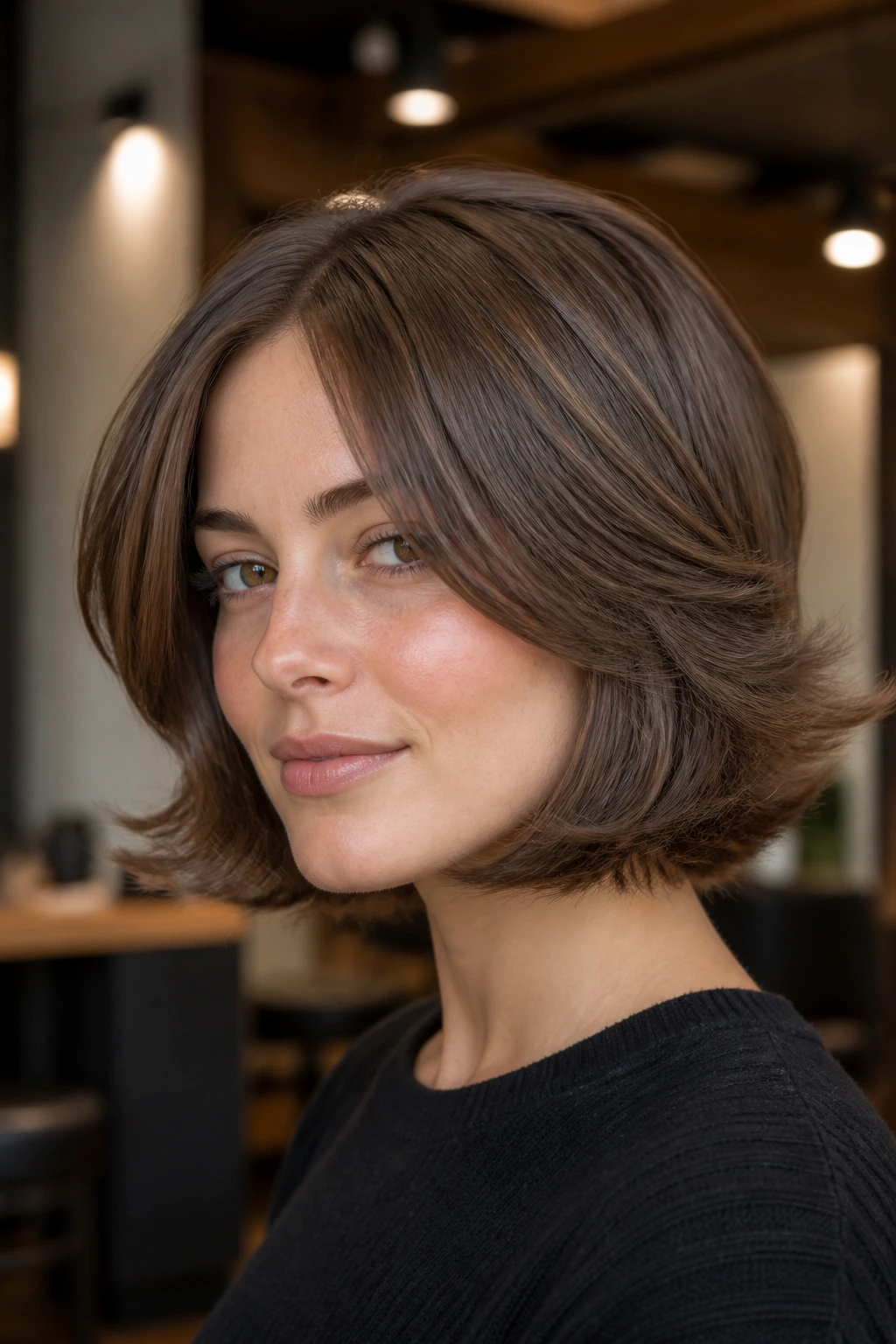
Flip-out ends can make a short cut feel lighter around the face, which is useful on a round face where inward curves can echo the cheek shape too much. The outward bend gives the haircut a little lift and direction.
The layers underneath support the movement, so the flip-out does not look random. It looks built in. That’s the difference between a smart shag and a haircut that just happened to turn out wavy in the wrong places.
Why It Works
The outward bend breaks the visual line at the jaw. Instead of wrapping around the face, the ends flick away from it. That tiny angle is what gives the shape breathing room.
If you use a round brush, roll the ends away from the face and let them cool there. A flat iron can do the same job in a quicker, sharper way. Either approach keeps the silhouette from collapsing inward.
26. Short Wolf Cut with Air-Dried Texture
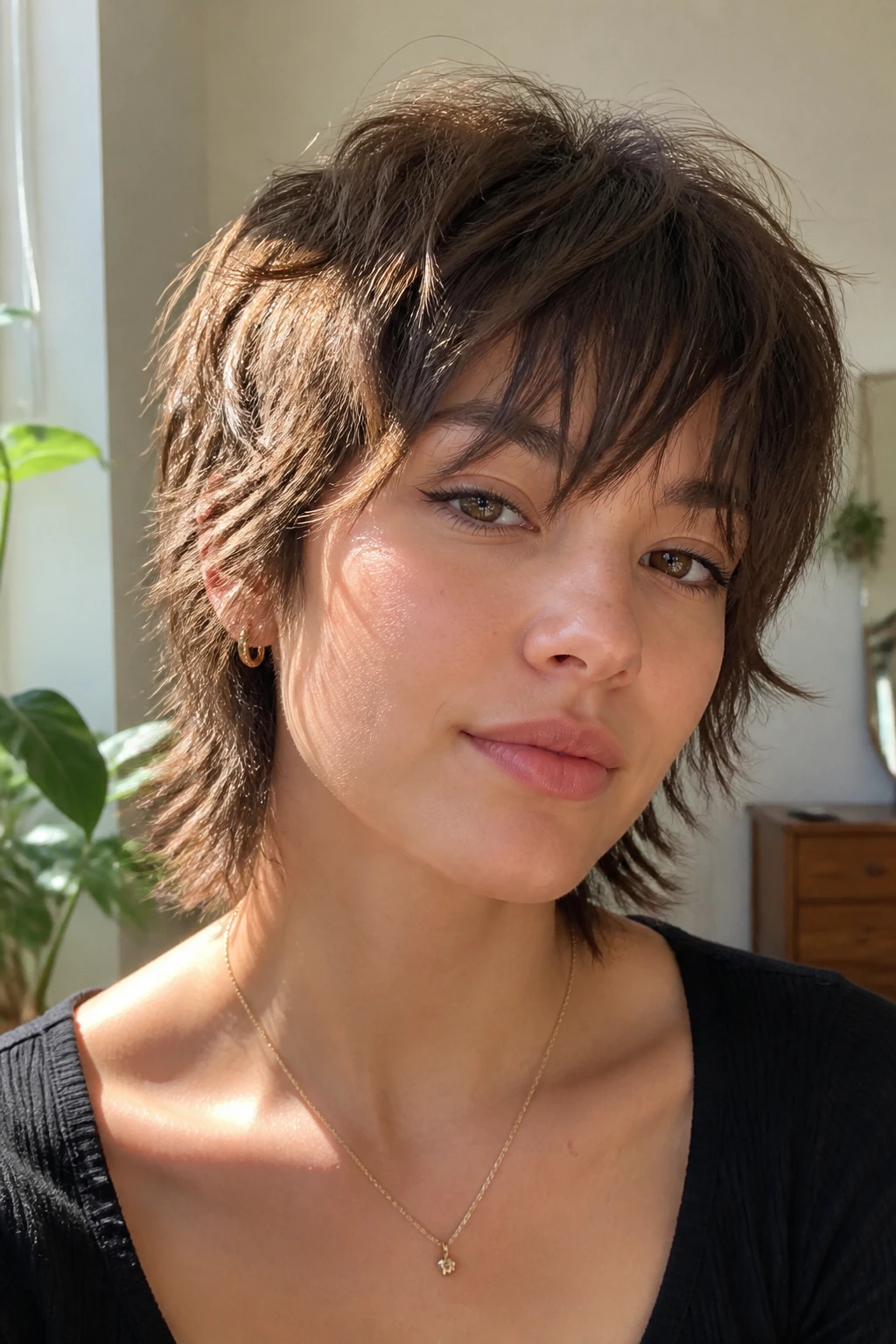
A short wolf cut is one of the easiest ways to make texture do the work for you. The top is choppy, the sides are lighter, and the back has just enough length to keep the silhouette from getting boxy. On a round face, that unevenness is your friend.
The real gift here is how well it air-dries. A little curl cream or foam, a rough part, and some scrunching can be enough. The cut does not need perfection; it needs separation.
This is the one I’d suggest to someone who wants a shag with edge but not a lot of mirror time. The shape can look intentionally undone in a way that feels current without being fussy.
If your hair has any natural bend, this cut wakes it up. If your hair is straight, you may need a bit more product to stop it from falling flat.
27. Thick-Hair Shag with Internal Debulking
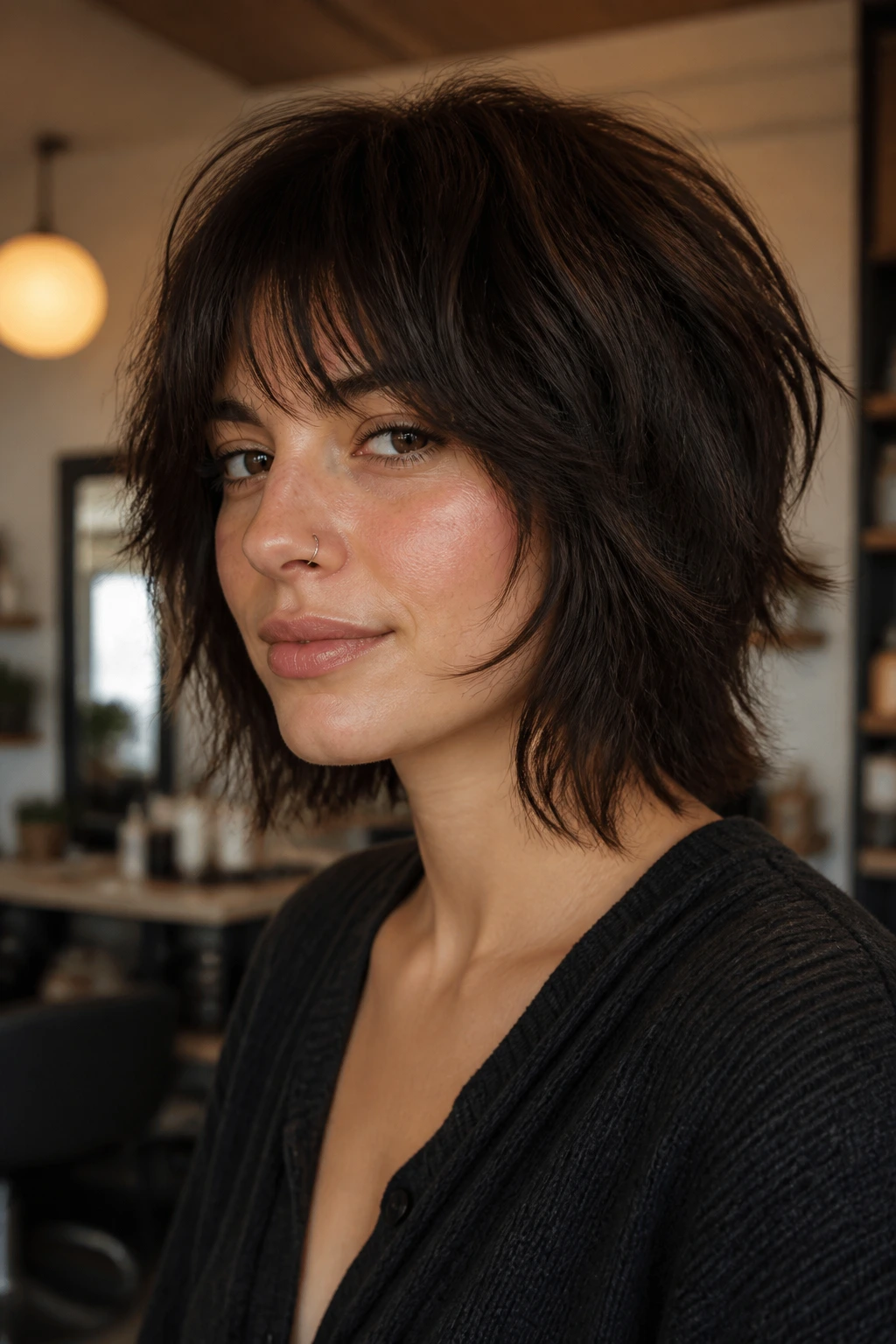
Does thick hair need more layers? Yes, but not the wrong ones. If the layers are cut too high and too wide, the haircut balloons. Internal debulking solves that by taking out weight from the inside instead of carving a bunch of visible holes near the cheeks.
That makes this shag much better for a round face. The outline stays controlled, the volume gets redistributed upward and inward, and the haircut stops sitting heavy at the sides.
You will probably feel the difference the second the stylist removes weight in the right places. The head stops feeling dense. The hair starts to swing instead of sit.
This is the version to save if your hair is both thick and naturally broad through the jaw. It can turn a lot of hair into a shape that behaves.
28. Fine-Hair Shag with Crown Layers
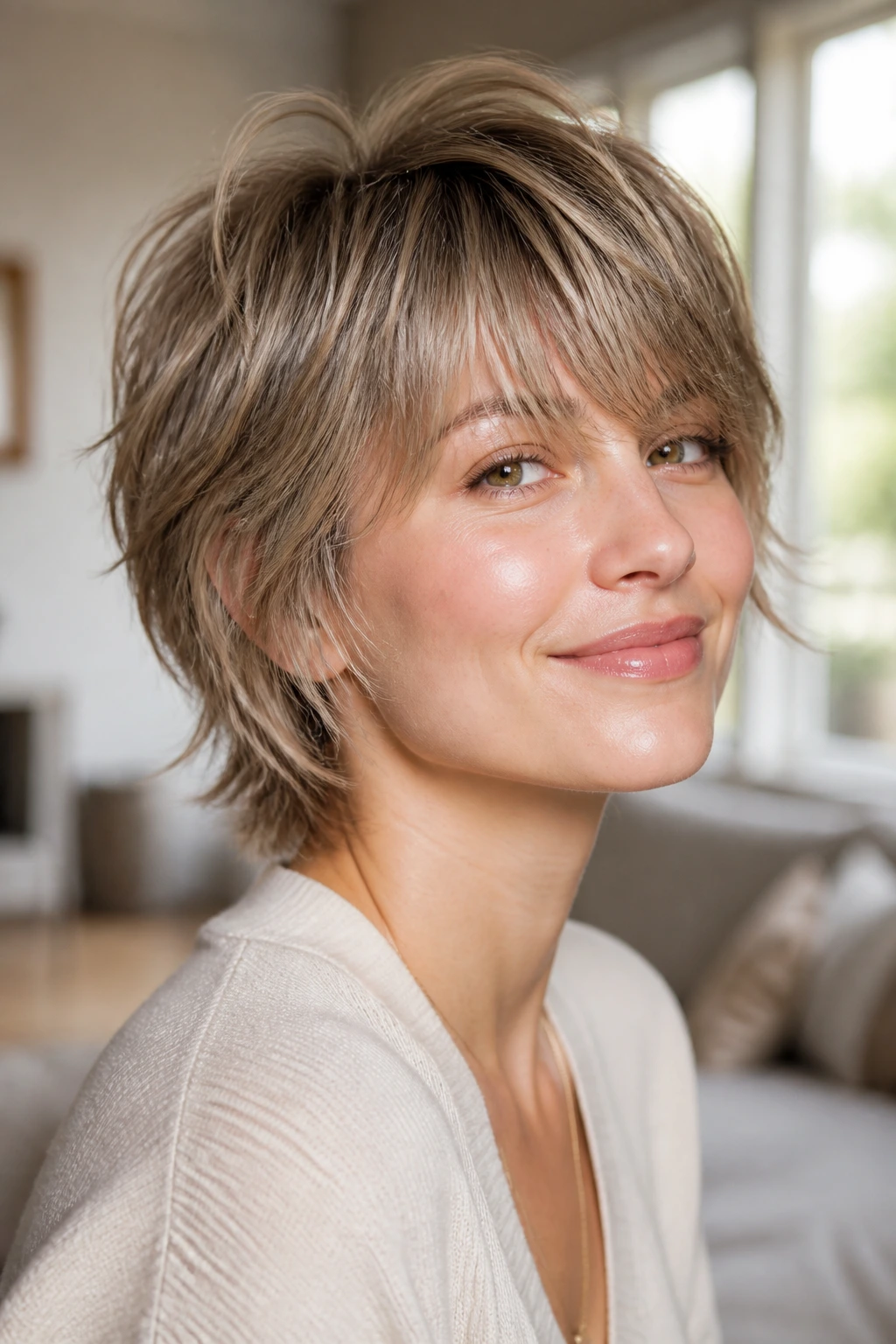
Fine hair needs a different game plan. Too many short layers can make it look wispy and thin. This version keeps the crown layers high enough to create lift, while the ends stay a little denser so the haircut does not disappear.
The round-face advantage comes from that crown height. A little volume up top stretches the face visually, which is useful when the hair itself is not giving much width to work with.
A root spray at the top and a light texturizing mist through the mids are usually enough. Do not drown fine hair in heavy cream. It will fall fast and look limp by lunch.
This is a good cut if you want movement without losing the sense of body. It is soft, but it is not sparse.
29. Wavy Shag with Piecey S-Bends
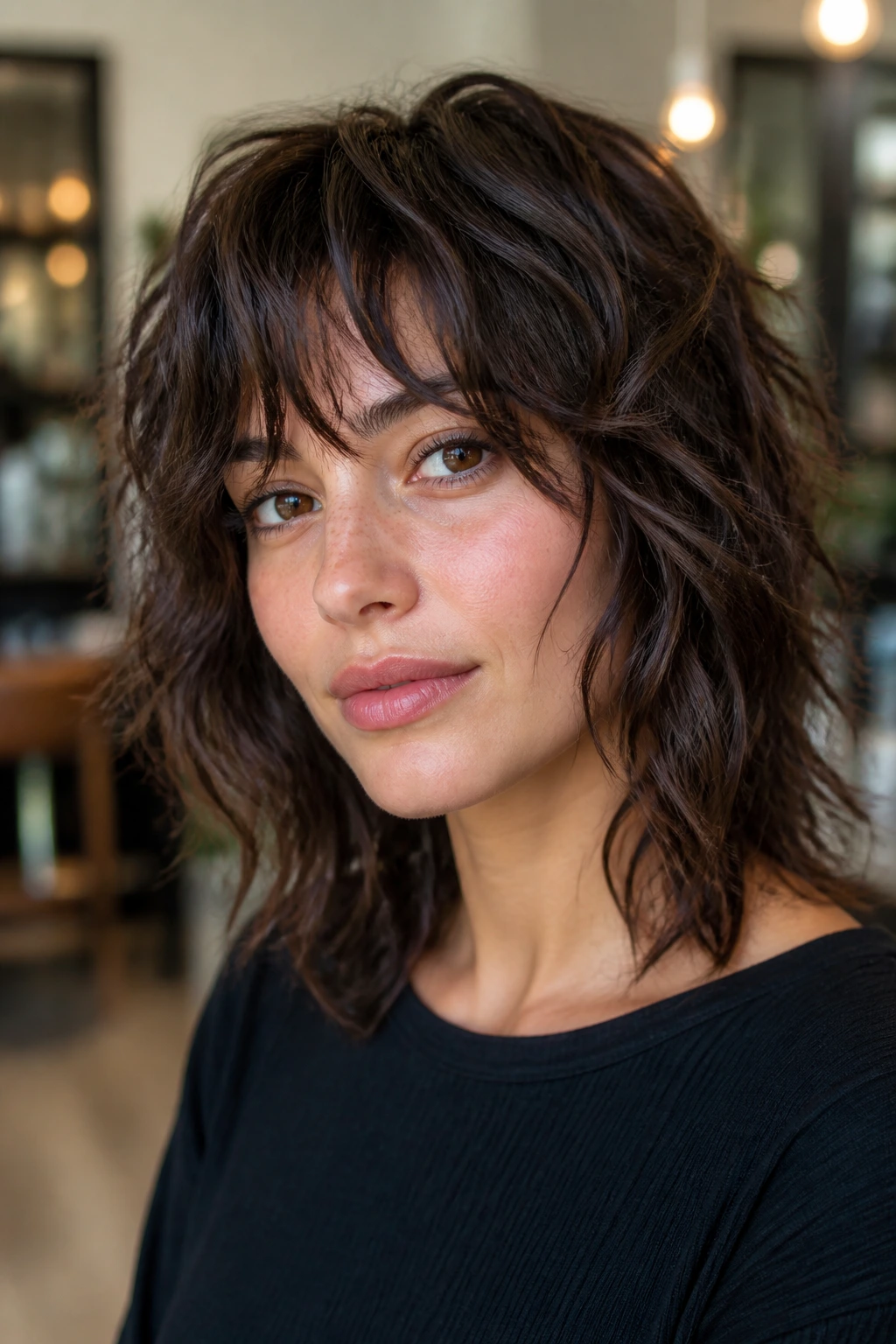
Some hair wants to wave, and the cut should let it. A wavy shag with piecey S-bends keeps the texture visible without letting it puff into one wide shape. On a round face, the pieces need room to fall down, not out.
The layers are important here because they separate the wave pattern into vertical sections. That stops the hair from becoming one large, round halo around the head. The face gets shape, the hair gets movement, and nobody has to fight the texture.
A sea salt spray can help, but a little goes far. The goal is grit, not crunch. If the hair feels tacky in a bad way, you used too much.
This is one of those cuts that looks more expensive when it is slightly messy. That’s not a flaw. It is the design.
30. Straight-Hair Shag with Razored Movement
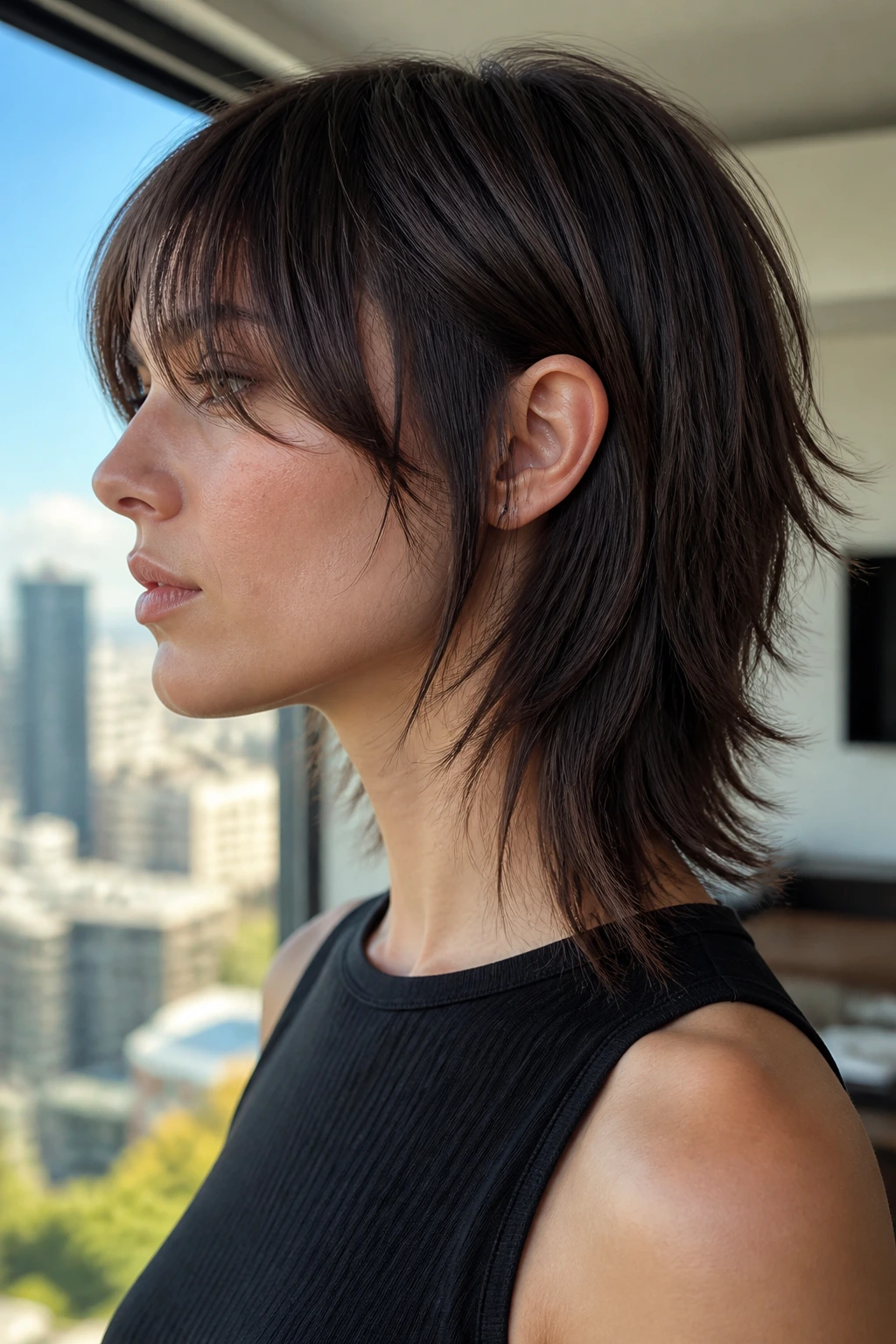
Straight hair can look flat in a shag if the layers are too heavy or too even. Razoring changes that. It creates little bits of movement in the ends so the haircut does not sit like a ruler around the face.
On a round face, that movement matters because straight hair can otherwise emphasize width. The razored sections create texture without making the cut fluffy. The shape stays lean, which is exactly what you want.
This version works best with a side part or a soft curtain fringe. Both keep the front from reading too blunt. If your hair is pin-straight, a small bend at the ends with a flat iron can stop the haircut from looking too crisp.
It’s a clean cut with a messy finish. That contrast is where it comes alive.
What Makes a Short Shag Work on a Round Face
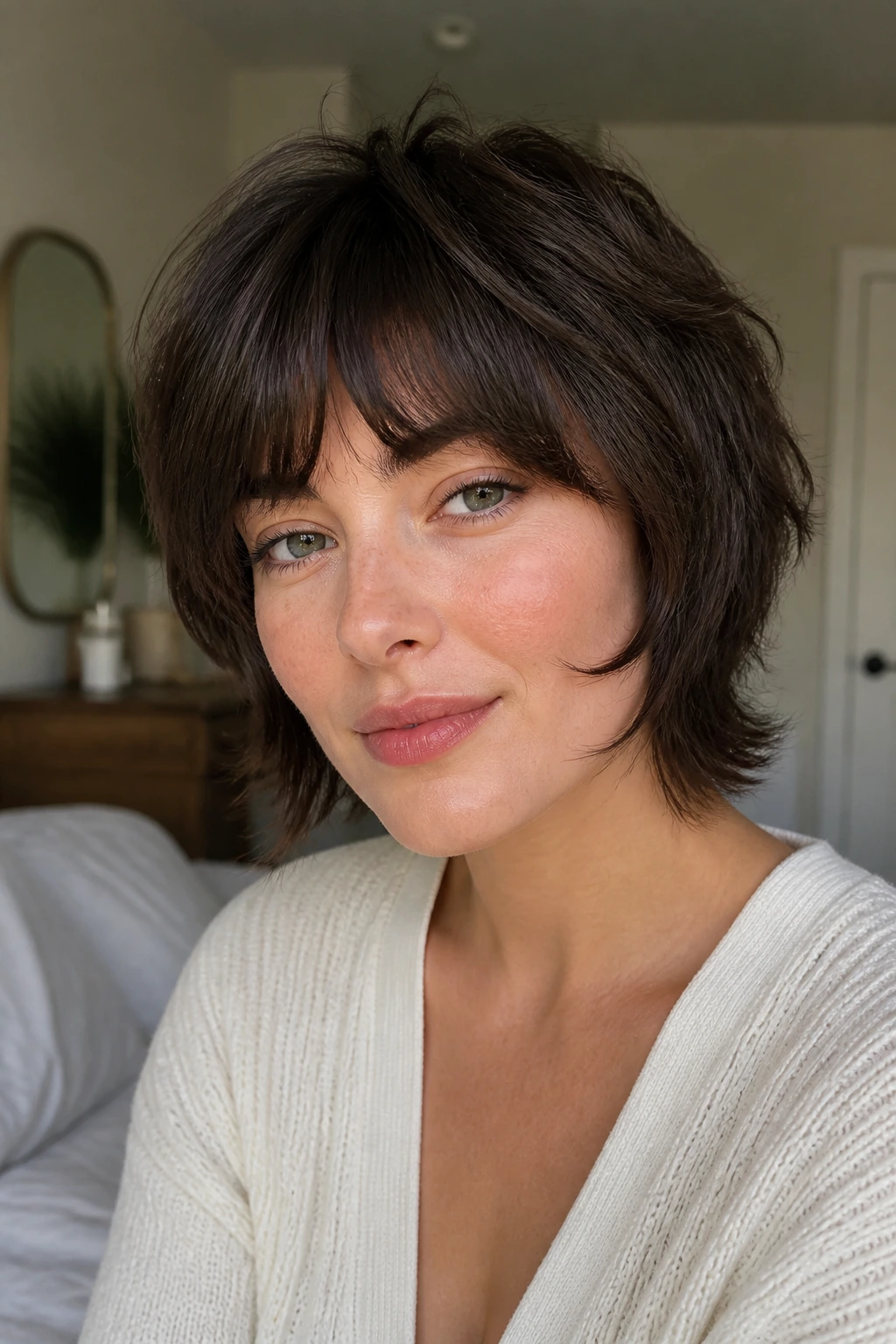
A short shag flatters a round face when it changes the outline, not just the texture. Texture on its own is not enough. You can have all the choppy ends in the world and still end up with a puffball if the layers sit in the wrong place.
The safest placement is usually around the cheekbone and below, with a little lift at the crown. That gives the eye a vertical route to follow. It also keeps the widest part of the face from getting the thickest part of the haircut. Simple rule. Hard to overstate.
I also like shags that have a clear front story. A fringe that opens, a side part that sweeps, a longer front section that angles toward the jaw — any of these can break the roundness without making the haircut look forced. The face needs line, not camouflage.
If you remember one thing, make it this: the best shag for a round face is the one that makes the face look longer by moving hair upward, outward, or diagonally instead of letting it sit in one even ring. That’s the real trick.
Tools and Products That Make These Cuts Easier to Wear
-
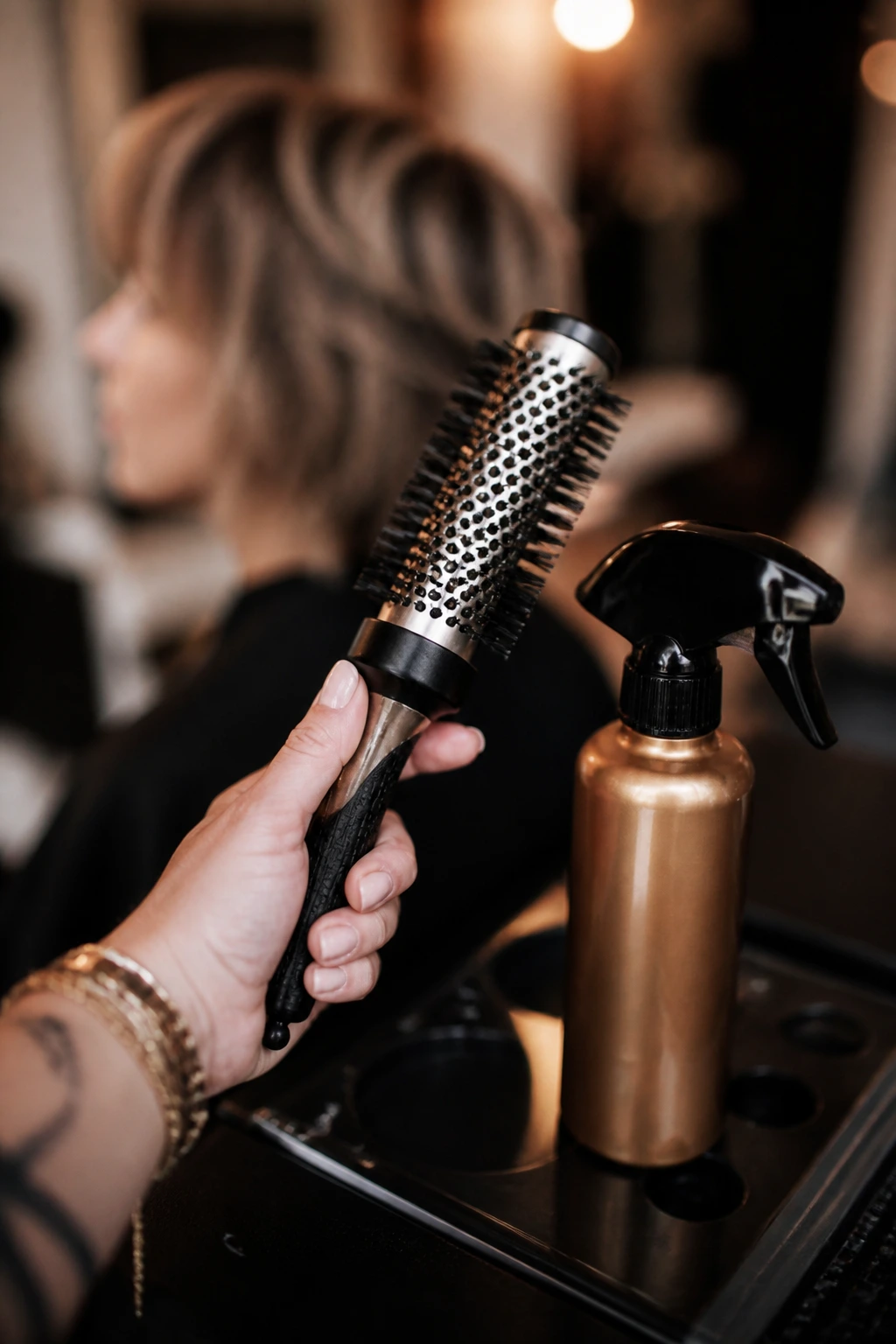
Blow dryer with a nozzle: The nozzle directs air at the roots so you can lift the crown without blasting the layers into fuzz.
-
1-inch round brush: Best for curtain bangs, side pieces, and flipping the ends away from the cheeks.
-
Wide-tooth comb: Useful on wavy or curly shags when you want to separate the hair without breaking up the texture too much.
-
Texturizing spray: Adds grit and separation to piecey cuts, especially on straight hair that wants to fall flat.
-
Light mousse or root lift foam: A good choice when you want crown height without the stiffness of heavier sprays.
-
Matte pomade or cream wax: Use a tiny amount to define the ends of pixie shags, crops, and micro-fringe styles.
-
Diffuser: A must for curly shags and helpful for anyone who wants their wave pattern to dry with less frizz.
-
Flat iron, 1/2-inch to 1-inch plates: Optional, but handy for bending the front pieces and making short layers flick in the right direction.
How to Choose the Right Version for Your Hair Texture
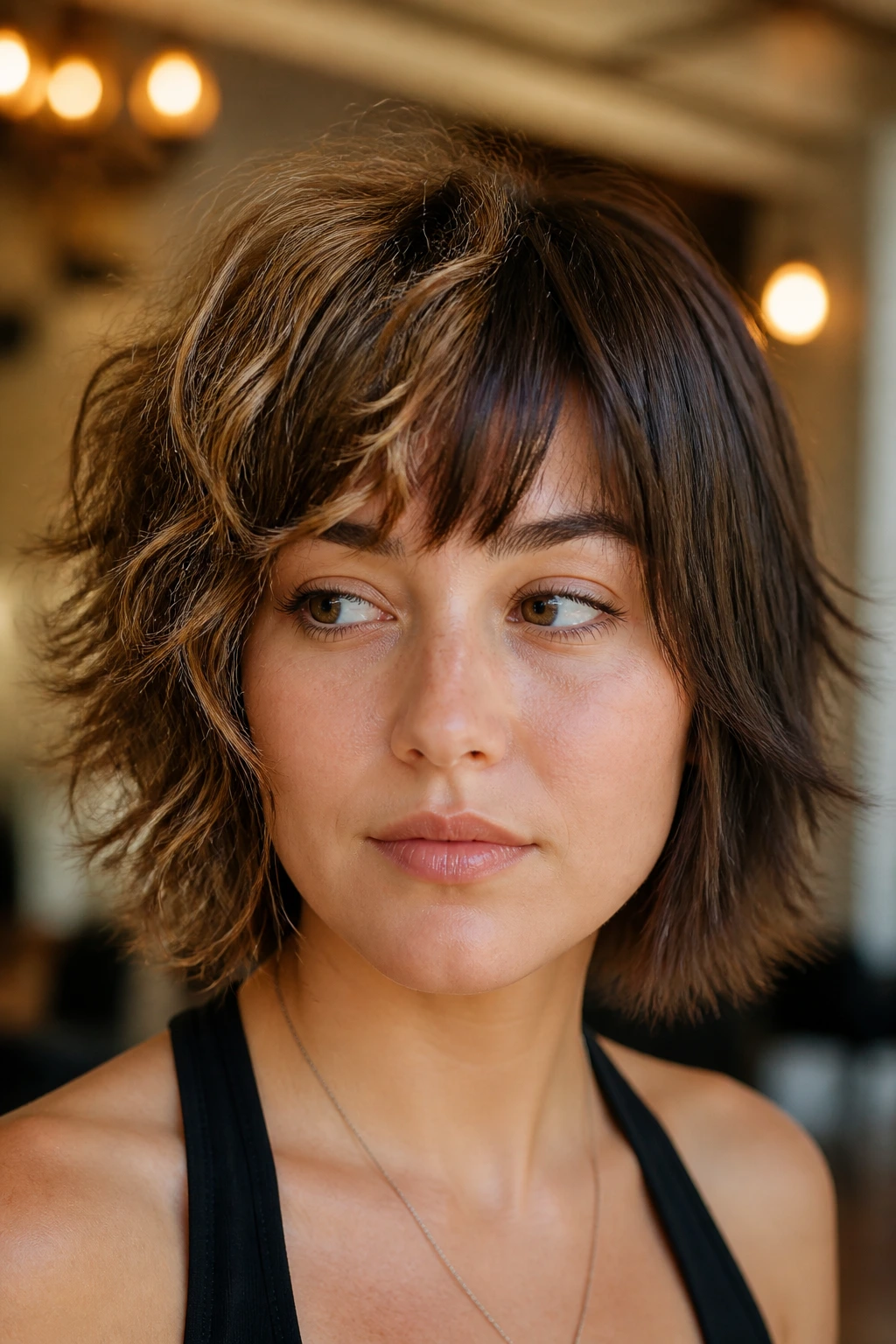
The same shag does not land the same way on every head of hair, and that’s not a flaw in the haircut. It’s the nature of texture. Thick hair wants more debulking, fine hair wants more structure, and curly hair needs layers that respect the curl pattern instead of cutting it into random springs.
If your hair is thick, ask for internal layers and a lighter perimeter. You want movement without a mushroom effect around the cheeks. If your hair is fine, keep some density at the ends so the cut does not disappear. Too much razoring can make the style look wispy in a bad way. And if your hair is curly, make sure the shortest layer doesn’t land where the curl flares widest. That placement mistake is how a flattering shag turns into side volume you never asked for.
Face shape still matters, but texture decides how the shape behaves. Straight hair shows every line. Wavy hair bends into softness. Curly hair expands and contracts, which means your stylist has to think about shrinkage, not just length. Ask where the layers will land when the hair is dry, not only when it’s wet.
This is one of those places where a photo helps, but a conversation helps more. Bring at least two references: one for the overall shape and one for the fringe or side detail. Haircuts are built in inches, not vibes.
How to Style These Cuts at Home
Parting: A slight off-center part is the easiest shape trick in the book. It creates asymmetry, and asymmetry is your friend on a round face.
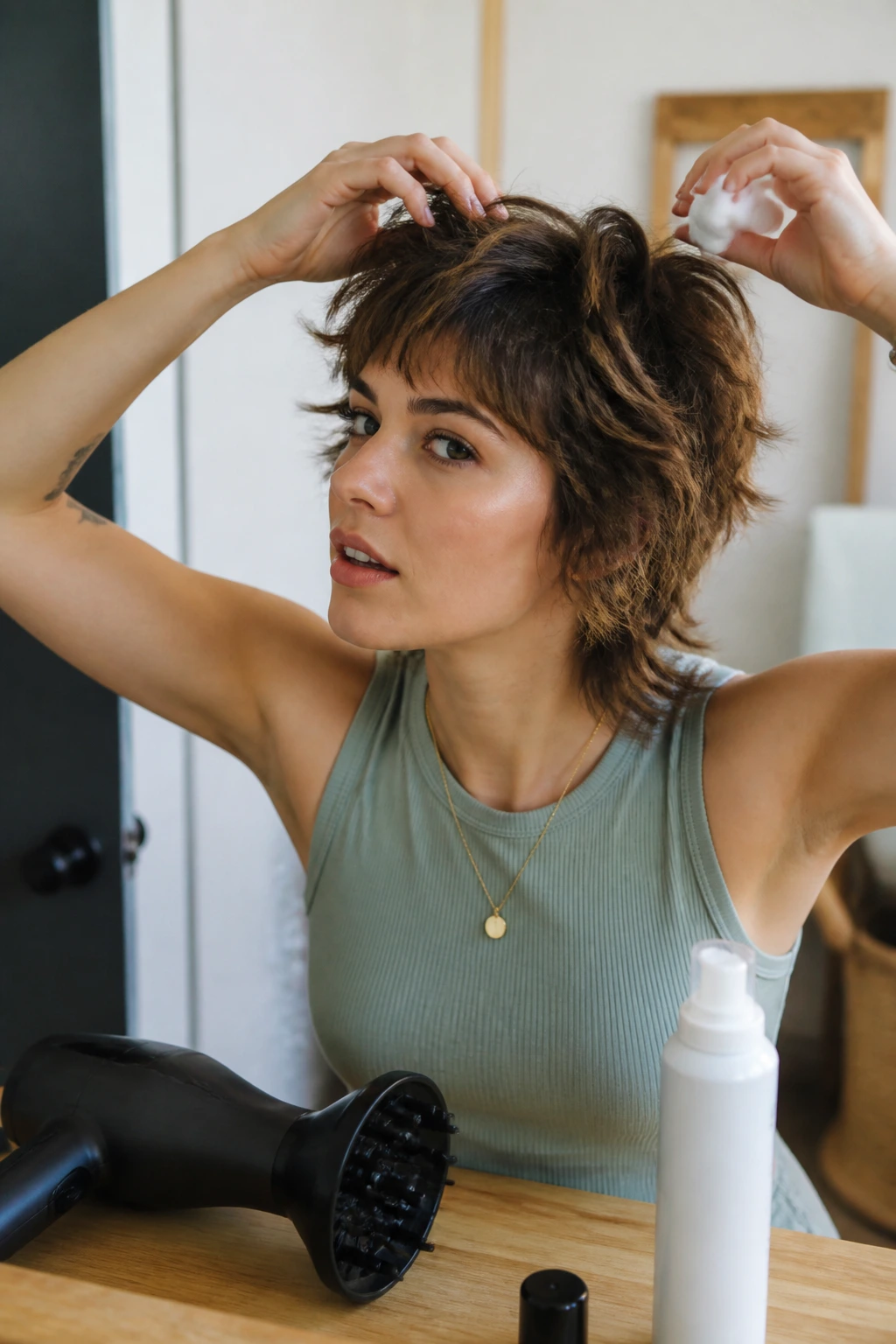
Drying: Blow-dry the crown first if you want lift, then move to the fringe and sides. If you start by flattening the front, the rest of the shape tends to follow that mistake.
Product: Use mousse or root lift at the roots, then texturizer or a tiny bit of paste on the ends. Heavy creams can make short shag layers collapse.
Finish: Tuck one side behind the ear when you want a cleaner line. Leave the other side loose. That small imbalance sharpens the whole haircut.
Accessories: Small clips, slim headbands, and matte barrettes work better than bulky pieces. Anything too wide can fight the shape and add extra width where you do not want it.
Small Tweaks That Change the Whole Cut
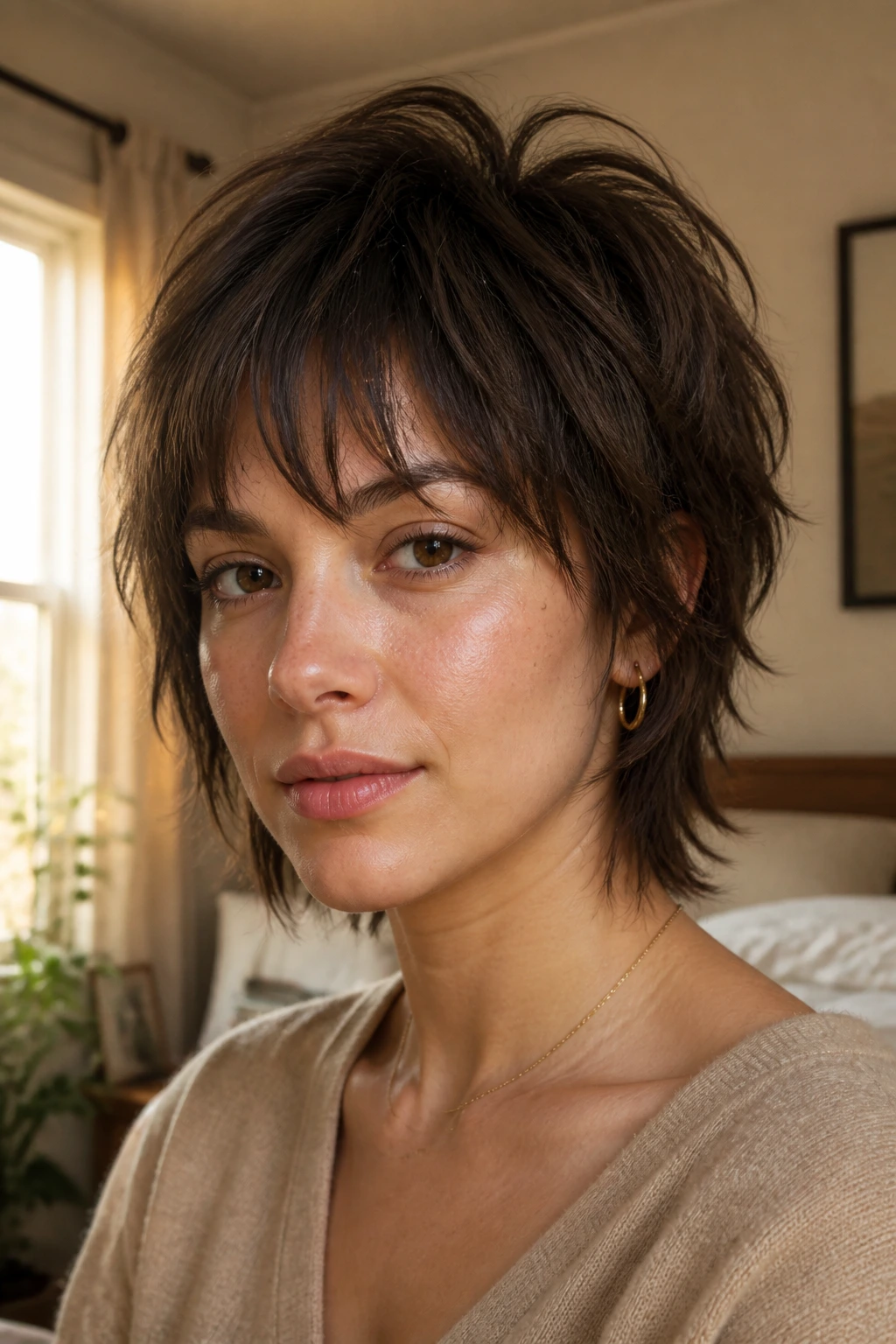
Crown Lift: If your face needs more length, lift the root at the top with a round brush or a dab of root spray. Two extra centimeters of height can change the whole silhouette.
Cheekbone Break: Ask for the shortest face-framing layer to land just above or just below the cheekbone, not directly on it. That avoids the widest point of the face.
Bang Softening: If your bangs feel heavy, have them thinned lightly at the center and softened at the sides. Hard bangs on a round face can close the whole expression down.
Edge Control: Keep the perimeter broken. A blunt bottom edge can look nice in photos, but it often makes the face feel wider in motion.
Texture Contrast: Pair a smoother crown with piecey ends, or a more textured top with cleaner sides. A little contrast keeps the cut from reading as one big round shape.
Keeping the Cut Sharp Between Salon Visits

Short shaggy hairstyles do not need perfect maintenance, but they do need a plan. The fringe grows first, then the cheek pieces start drooping, and then the whole cut can lose the shape that made it work. A trim every 6 to 8 weeks keeps the layers from collapsing into each other.
For day-to-day upkeep, dry shampoo is useful even on clean hair. It gives the roots some grip, which helps the crown stay lifted. On wavy or curly textures, a spray bottle with water and a small amount of leave-in can wake the layers back up without starting from scratch.
If the front gets heavy between appointments, trim only the tiniest bit at home if you truly know what you’re doing. Otherwise, don’t. Bangs can drift from “slightly too long” to “why did I do this” in under a minute. Safer to clip them up and wait.
At night, sleep with the hair loosely pinned up or on a silk pillowcase if your texture frizzes easily. Short shags hate being crushed. They lose shape fast.
Variations and Adaptations to Try
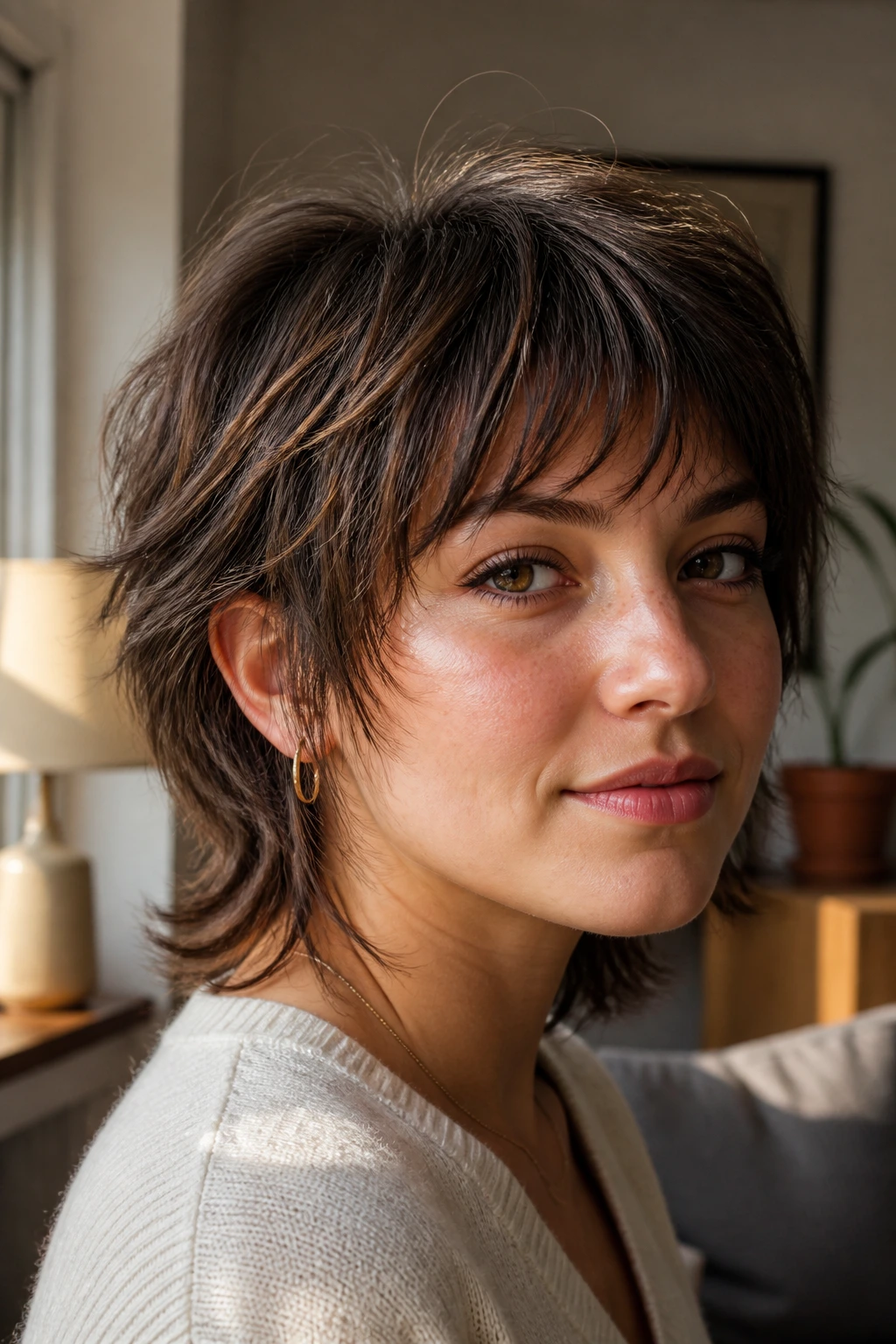
The Softer Fringe Swap: If full curtain bangs feel like too much, move to a lighter side sweep. You still get forehead break-up, but the style opens up more around the eyes.
The Curl-Friendly Edit: For curly hair, ask for longer layers than you think you need. Curl shrinkage can steal an inch or two, and the cut has to account for that.
The Low-Maintenance Version: Keep the perimeter cleaner and the layers slightly longer. You’ll lose a little edge, but you’ll gain easier grow-out and less morning styling.
The Bold Crop: If you like a sharper shape, go shorter at the nape and around the ears while keeping the top shaggy. That gives you a strong outline with texture on top.
The Softer Office Version: Keep the fringe longer, the layers less jagged, and the side part deeper. It still reads shaggy, but it won’t feel too wild for a conservative setting.
Common Mistakes That Make the Face Look Wider

The first mistake is putting the shortest layers at cheek level. That’s the widest point on most round faces, so the haircut ends up emphasizing the very thing you wanted to soften. Move those shortest pieces a little higher or lower.
The second mistake is over-rounding the entire cut. A shag should have movement, not a perfect circular outline. If the sides puff out equally on both ends, the face gets lost in the shape.
The third mistake is using too much heavy product. Creams and oils are fine in small amounts, but they can pull a short shag down and make it sit wider than intended. Light products are usually enough.
The fourth mistake is a blunt fringe with no texture. Straight-across bangs can work, but they need air in them. If they’re thick and dense, the face can look shorter and broader.
The fifth mistake is skipping trims. A shag grows into its own shape, but that shape still needs shaping. Once the fringe covers the eyes and the layers collapse at the cheeks, the style stops flattering and starts just hanging there.
Frequently Asked Questions
Can a round face wear a short shag without bangs?
Yes, and sometimes that’s the cleaner option. If you skip bangs, make sure the front still has a diagonal line — a side part or longer face-framing pieces can replace fringe very well.
Are curtain bangs the best choice for round faces?
They’re one of the safest choices, but not the only one. Curtain bangs work because they open the face in the middle and drift outward near the cheeks, which creates shape without a hard edge.
What short shag length is most flattering on a round face?
Chin length and just below the jaw are both strong options, depending on your texture. Very short crops can work too, but they need height at the crown so the face doesn’t read too wide.
Do short shaggy hairstyles work on fine hair?
Yes, if the layers are controlled. Fine hair usually needs more crown structure and less aggressive thinning, or the cut can fall flat and look sparse by midday.
What about thick hair?
Thick hair often benefits the most from a shag, especially when the stylist removes weight from the inside. That keeps the sides from puffing and gives the haircut some swing.
Can curly hair pull off a shag on a round face?
Absolutely. Curly shags can be some of the best options for round faces because the shape gives curl room to move while still placing lift where the eye needs it.
How often should I trim a short shag?
Every 6 to 8 weeks is the sweet spot for most people. Bangs may need a touch-up sooner, especially if they hit your eyes or start stealing the shape of the front.
What should I ask my stylist for?
Ask for texture through the ends, crown lift, and face-framing layers that avoid the widest point of the cheeks. Bring photos, but also say what you do not want — too much bulk at the sides, a heavy fringe, or a blunt bottom line.
A Shape That Keeps Its Edge
The best short shaggy hairstyles for round faces do not try to erase the face shape. They sharpen it a little. They add line, they add lift, and they give the hair some places to move besides straight outward. That is the whole trick, and it never gets old.
Pick the version that fits your hair density first, then your styling patience, then your mood. A good shag should feel like it belongs on your head even when it is slightly messy, slightly slept on, slightly real. That’s where these cuts shine.