



Wavy hair has a funny way of rebelling the minute you cut it into one blunt line. It either balloons at the sides, drops flat at the crown, or turns into a triangle that looks like it was built in a hurry. A good short shag haircut fixes that by moving weight around on purpose. It gives loose curls room to bend, split, and stack without fighting the shape.
That’s why short shag haircuts for wavy hair keep coming back. They don’t ask your texture to behave like straight hair, and they don’t need ringlets to make the cut work. The right shag can be soft and airy, a little gritty, a little romantic, or blunt in the fringe and feathered everywhere else. The wrong one can look puffy in the back or chopped to bits on the ends, which is why the details matter more than the label.
I’m biased toward shags that still look good after a nap, after a humid walk, and after you’ve only half-styled them with a diffuser. That means layers placed where the wave wants to lift, not where a haircut chart says they should go. The good versions grow out in a way that feels intentional; the bad ones just look like someone got overexcited with thinning shears. Start with the shapes that actually respect your wave pattern.
Why This Collection Works So Well on Loose Curls
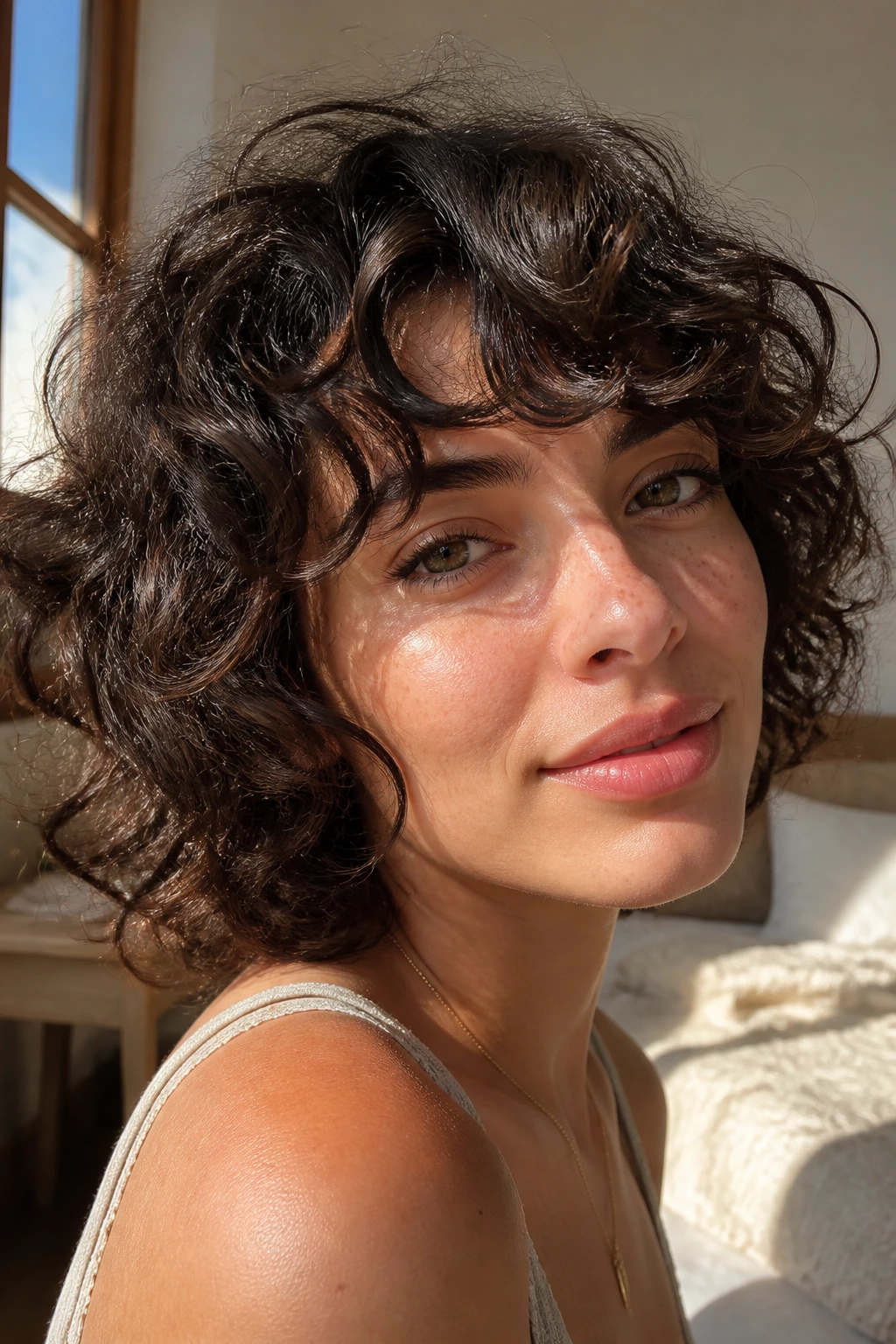
- Weight gets removed where waves bend: Short shag haircuts for wavy hair stop the bottom half from dragging the top flat, which is usually where that sad, triangular shape starts.
- The crown gets a little air: A few smart layers around the top make loose curls lift without turning the whole head into a frizz cloud.
- The fringe has options: You can go curtain, wispy, side-swept, or nearly invisible, and the haircut still makes sense.
- Day-two hair gets better, not worse: Loose curls often clump a little more after they’ve had time to settle, so this cut usually wakes up looking more interesting.
- Grow-out is part of the plan: A shag doesn’t need to be perfect at eight weeks. A good one softens gradually, which is half the appeal.
1. Chin-Length Cloud Shag
A chin-length cloud shag is the haircut I reach for when loose curls need more lift than length. It sits right at the jaw, then breaks into soft, uneven layers that keep the outline from feeling boxy. On wavy hair, that chin point is magic. It gives the face a clear frame, but the rest of the cut stays light enough to move.
The best part is the balance. You get enough length to tuck one side behind the ear, enough structure to show off the wave pattern, and enough texture that it doesn’t look helmet-like when it air-dries. I like this one on fine to medium hair because the chin line makes the whole head look fuller without adding bulk at the ends.
If you diffuse it for five to seven minutes at the roots and stop before the ends get puffy, the shape reads clean instead of chaotic. It’s one of those short shag haircuts for wavy hair that looks like you meant to have body, not volume by accident.
2. Curly Curtain-Bang Shag
Curtain bangs and loose curls get along better than people expect. The split fringe breaks the forehead line, then melts into cheekbone layers that keep the front from looking chopped. On a short shag, that front piece is doing a lot of the visual work, so the bang has to be soft enough to move but not so wispy that it disappears.
This shape flatters people who want something face-framing without committing to a dense fringe. The center part gives the cut a little openness, which helps wavy hair avoid that heavy, shelf-like look around the brow. If your waves tend to spring tighter when they dry, ask for the bangs slightly longer than you think you need. They’ll bounce up.
A pea-sized amount of mousse at the root and a light cream through the front is usually enough. Anything heavier will make the fringe collapse into strings, and that ruins the whole point.
3. Rounded French Shag

A rounded French shag feels softer than the choppier versions, and that softness matters on loose curls. Instead of building corners and hard edges, the shape curves around the head, then falls in feathered pieces that sit near the cheek and jaw. It has a slightly polished look, but not in a fussy way.
This is the short shag for people who want texture without the “I took a razor to my hair in a parking lot” energy. The round silhouette keeps the ends from flipping out too far, which is useful if your wave pattern is wide rather than tight. It also makes the back look full without making the sides bulky.
I like this cut on medium-density hair because it keeps the profile neat. If you air-dry it with a side-to-center part and scrunch once at the ends, the shape comes out looking deliberate, not overdone.
4. Collarbone Wolfy Shag

This one lives right on the edge between shag and wolf cut. The collarbone length keeps it in short-hair territory for anyone who wants movement without a cropped feel, while the top layers create that slightly wild, lifted crown the wolf cut is known for. Loose curls can carry this shape well because they naturally stack on each other.
The trick is restraint. If the layers get too aggressive, the front pieces can separate and the bottom can look stringy. A better version keeps the outer shape a little softer, with face-framing strands that start near the cheekbones and taper gently. That gives you edge without turning the haircut into a costume.
It’s a good fit if your hair is thick, bends easily, or gets puffy at the ends when it’s all one length. Collarbone length gives you a little more room to breathe than a chin cut, which is useful if your waves have some spring to them.
5. Soft Bixie Shag
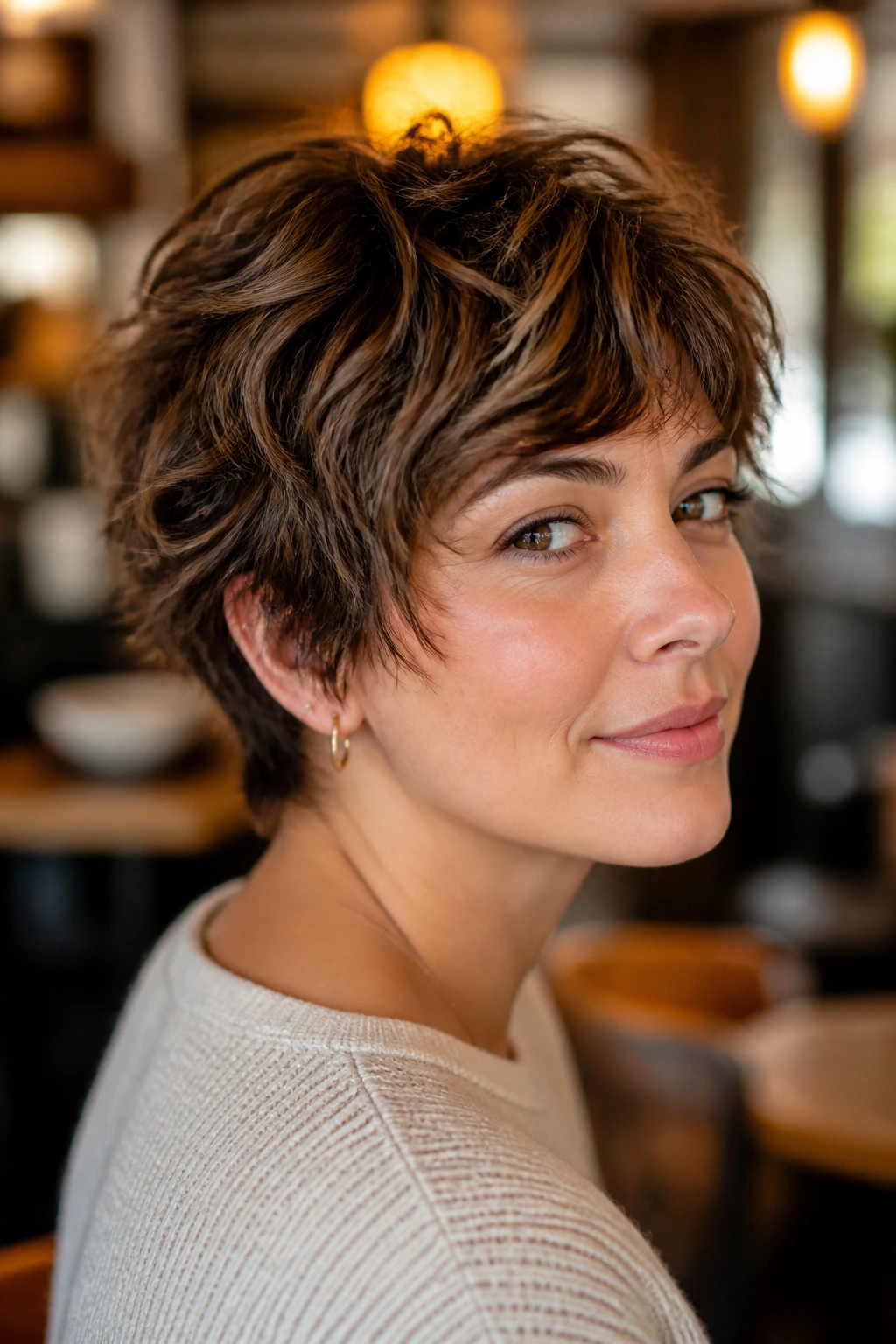
A bixie shag sits between a bob and a pixie, which is exactly why it works on loose curls. The back stays short enough to feel light, the top stays long enough to show texture, and the layers give it that slightly tousled, lived-in look without asking for much styling time.
This cut is excellent for people who want shorter hair but hate the feeling of a full pixie around the ears. The shaggy top keeps the silhouette from going flat, and the tapered nape makes it easy to tuck scarves, collars, and sweaters underneath without the whole shape puffing up. There’s a practical side to that, which I appreciate more than a salon photo ever will.
Ask for the crown to stay a little longer than the sides. That small difference is what gives the cut its movement. If the whole thing is chopped evenly, it loses the charm fast.
6. Feathered Pixie Shag
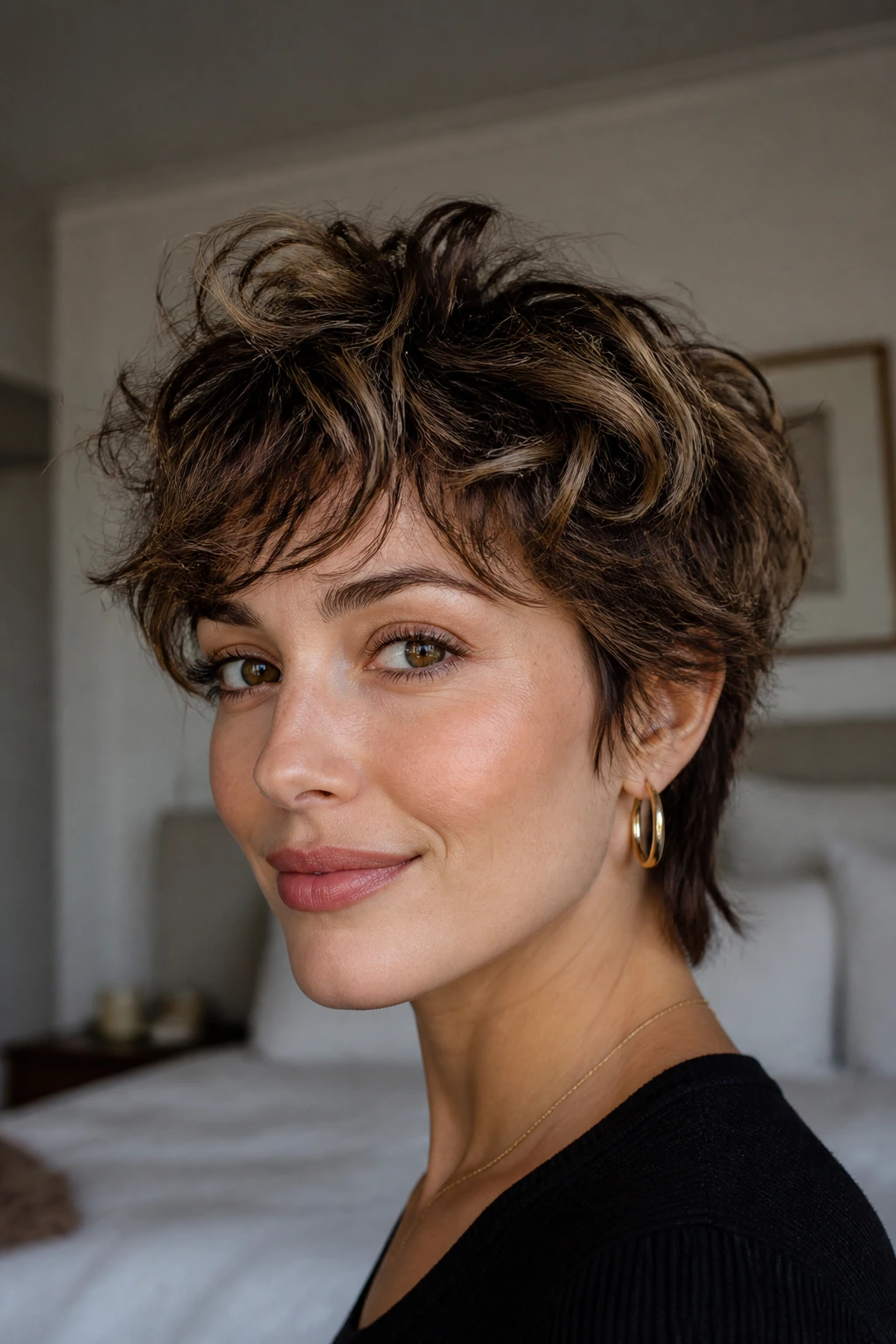
A feathered pixie shag is not shy. It’s short, airy, and a little bit mischievous, with feathered pieces at the top that let loose curls curl up instead of lying in one direction. It works best when your wave pattern has some spring in it already. Straightish waves can still wear it, but they’ll need a bit more styling.
The feathers matter because they keep the top from looking helmet-flat. At this length, even half an inch makes a difference, so the layering has to be careful. Too much thinning and you get fuzz. Too little and it looks like a plain pixie with a bad day.
I like this cut on smaller faces and on people who want the neck and ears to show. It’s also one of the easier short shag haircuts for wavy hair to refresh in the morning: damp hands, a dab of mousse, a quick scrunch, done. No drama.
7. Side-Part Piecey Shag
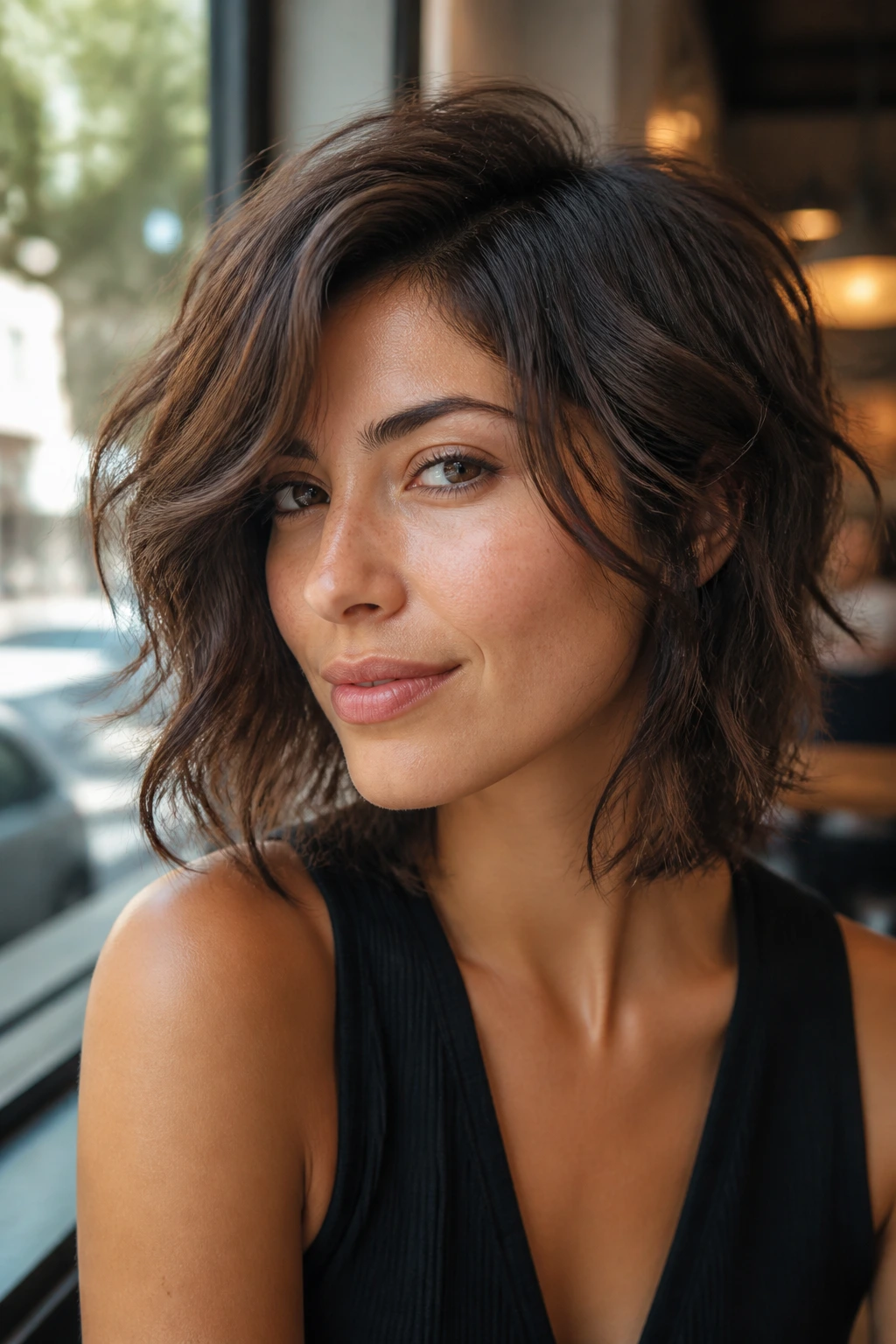
A deep side part can rescue a shag that feels too symmetrical. The longer front side gives loose curls a place to fall, while the shorter side creates lift at the root and a little swing near the cheek. It’s a simple move, but it changes the whole mood of the haircut.
This version is especially useful if your wave pattern naturally clumps on one side or if one temple always goes flatter than the other. A side-part shag lets that asymmetry work for you. It also softens a wider forehead without hiding it completely, which is a nice middle ground.
Best detail to ask for
Keep the front layers long enough to tuck behind the ear on the heavier side. That gives you options on styling days, and options matter more than most people admit.
A satin pillowcase helps this cut more than people expect. The side part stays cleaner overnight, and the piecey front doesn’t get crushed as badly.
8. Razored Crop Shag
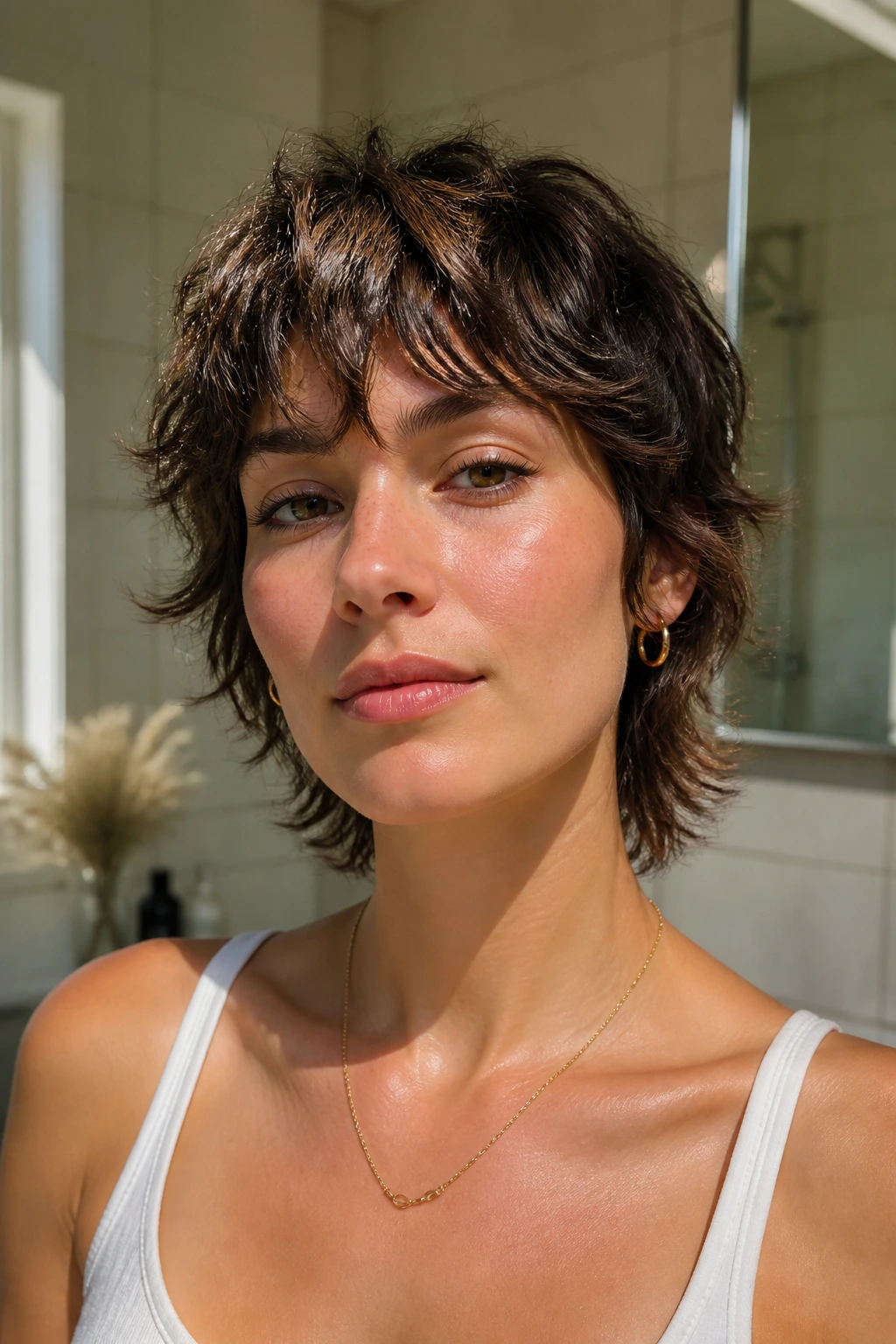
A razored crop shag has a sharper, cooler finish than the feathered versions. The ends look a little sliced, a little airy, and a little irregular in a way that makes loose curls stand out. That separation can be lovely on soft waves, but it needs a stylist who knows when to stop.
I’m picky about razor cuts on coarse hair. Done well, the shape gets light and touchable. Done badly, the ends fray and the whole head looks thirsty. If your hair is dense and bends in strong S-shapes, a razor can remove some of the puff that scissors sometimes leave behind. If your hair is already dry or fragile, ask for point-cutting instead.
This cut reads best when the styling stays minimal. A small amount of curl cream through the mid-lengths and a diffuser on low speed keep the texture visible. High heat and too much brushing will erase the whole point.
9. Crown-Lift Shag
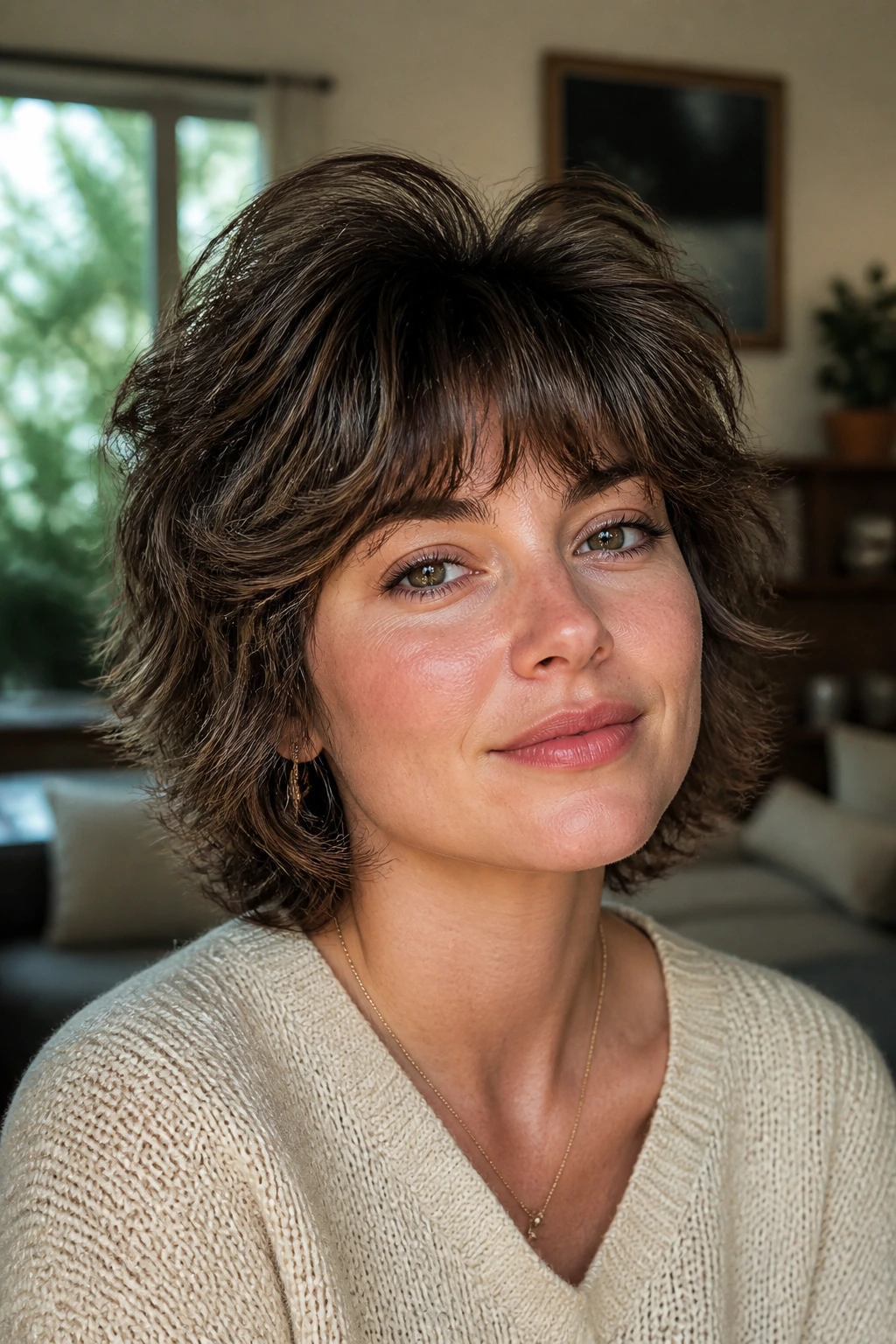
Flat roots have a way of ruining a good wave. A crown-lift shag fixes that by concentrating the shortest layers where the head starts to curve, so the top rises while the sides keep some weight. It’s subtle, but subtle is what makes it wearable.
This is one of the smartest short shag haircuts for wavy hair if your hair falls limp at the crown and puffs out at the ends. The layers don’t need to be dramatic. They just need to be placed with intent. Ask for the top to be elevated a little more than the rest, and for the lower perimeter to stay softer.
A root clip during drying helps this cut hold its shape. Even ten minutes of lift at the crown can change the silhouette. That’s the kind of detail that separates a shapeless shag from one that looks expensive for no obvious reason.
10. Ear-Length Tapered Shag

Ear-length tapering gives this shag a neat little edge. The sides sweep around the ears, the back hugs the neck, and the top stays fluffy enough to show movement. It has a clean outline, which makes the texture look more deliberate than messy.
I like this one for people who want a short cut but still need it to look polished enough for work. The taper keeps the haircut from spreading sideways, which is a common problem with waves at this length. You get softness without a mushroom effect. That matters.
If your hair is thick, the tapered nape helps a lot because it stops the back from building weight. If your hair is finer, the shorter perimeter can make the ends look fuller. Either way, it’s a neat little compromise.
11. Grown-Out Mullet Shag
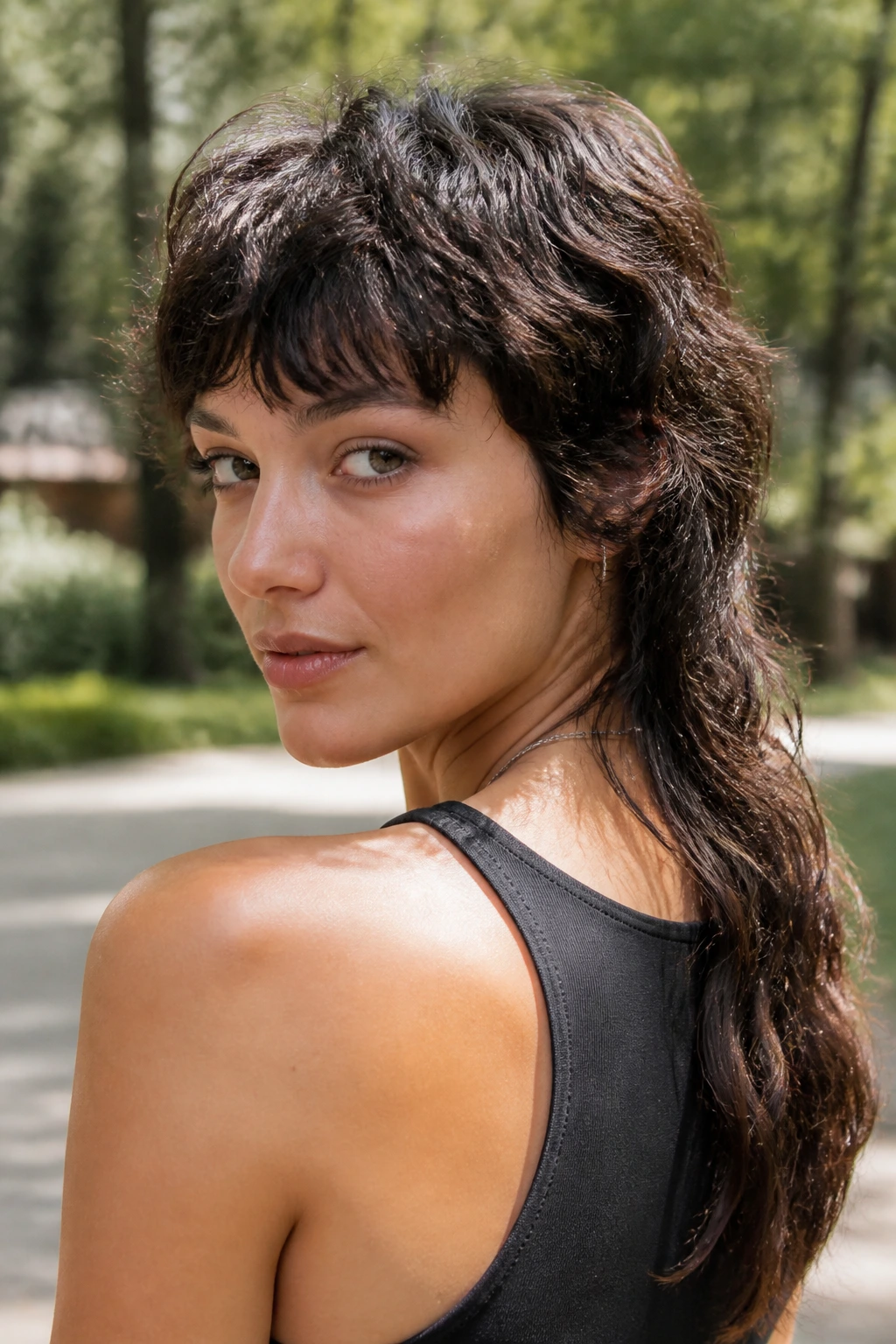
A grown-out mullet shag walks right up to the line of “edgy” and then steps back a little. The top and sides stay shorter, the back hangs a touch longer, and the whole shape keeps enough softness that it doesn’t read as costume hair. Loose curls are good at blurring the transition, which helps.
This cut is for people who want movement with some attitude. It looks especially good when the wave pattern is uneven or when the hair naturally kicks out at the nape. Instead of fighting that, the grown-out mullet shape leans into it and gives the back a little extra length to play with.
It’s one of the few short shag haircuts for wavy hair that can look sharp with a little gel at the root and a scrunched cream through the ends. Clean at the top, messy at the bottom. That contrast is the whole point.
12. Wispy Fringe Shag
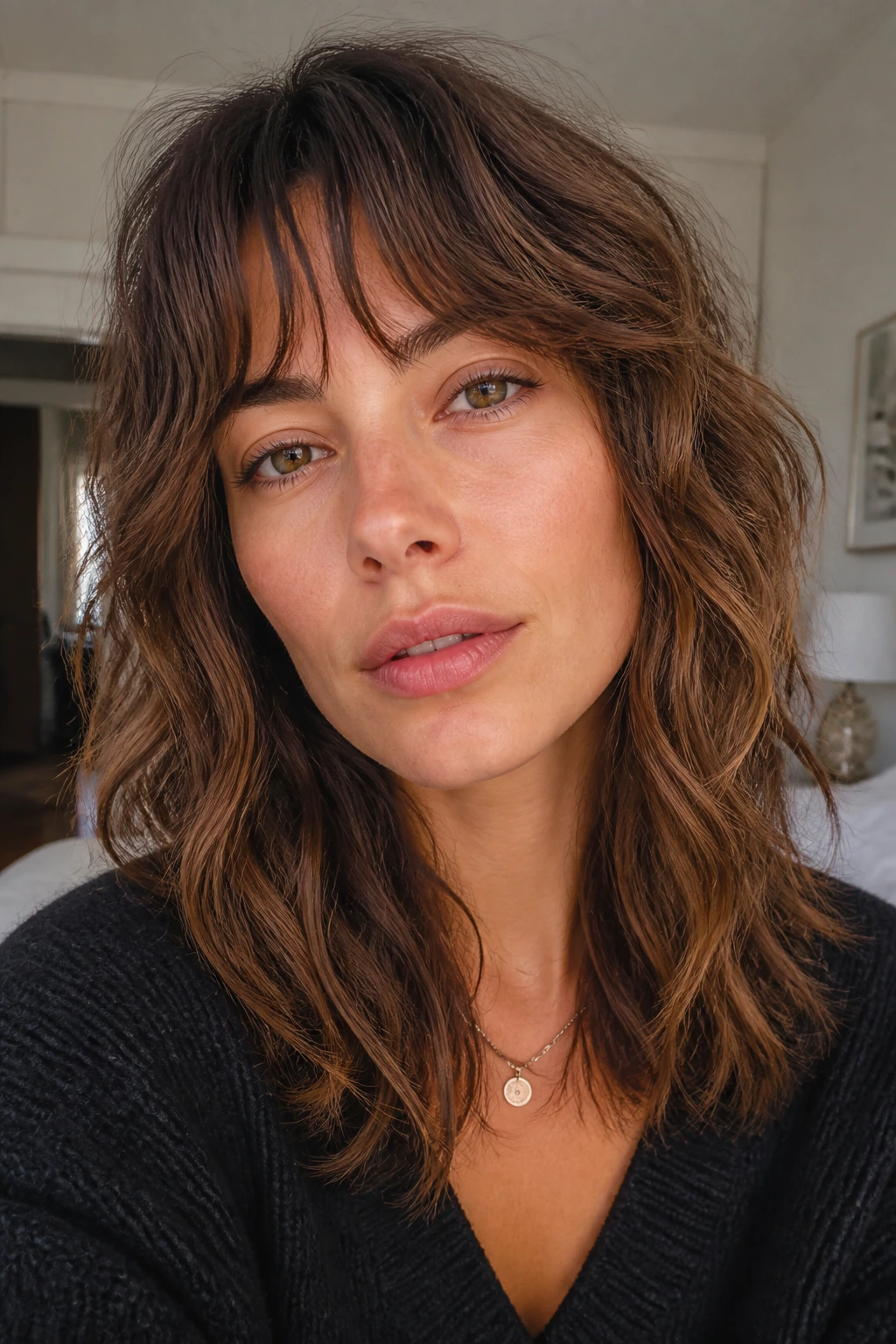
A wispy fringe can save a short shag from feeling too open through the front. The bangs sit lightly on the forehead, then break apart into loose pieces that blend into the sides. On wavy hair, that airy finish is better than a thick fringe because it keeps the front from shrinking up too much when it dries.
This cut is useful if you want bangs but don’t want a heavy block of hair sitting on your brows. The fringe should feel soft enough to separate with your fingers. If it looks dense in the chair, it will probably feel too dense later. That’s a helpful little warning sign.
A little mist of water and a round brush just at the bang area can keep the fringe from twisting weirdly as it dries. I don’t love overstyling the rest of the head, though. Let the shag do the work.
13. Face-Framing Collarbone Shag
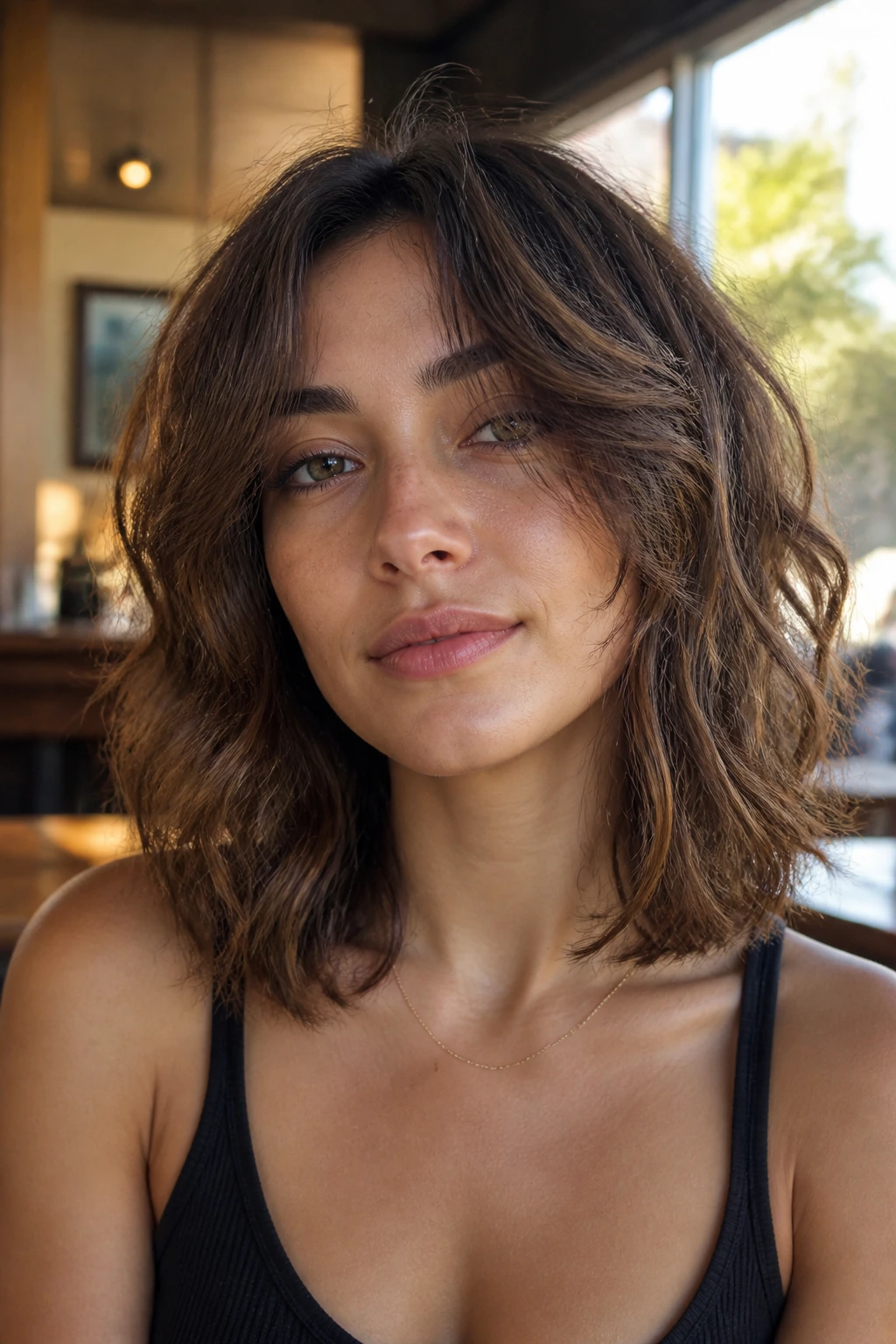
If you’re nervous about going too short, this is the safe door with a bit of personality. The collarbone length gives you room, while the face-framing layers open around the cheekbones and jaw. Loose curls land on the shoulders, which creates a soft, easy shape instead of a hard perimeter.
It’s especially good for someone growing out a bob or trying a shag for the first time. You still get movement, but you’re not losing the ability to pull the front back with a clip on busy mornings. That kind of flexibility is underrated.
The face-framing should start high enough to matter — around the cheekbone or just below — otherwise the cut can slip into plain long layers, which is not the same thing. Keep the perimeter blunt-ish and let the layers do the softening.
14. Mushroom Shag
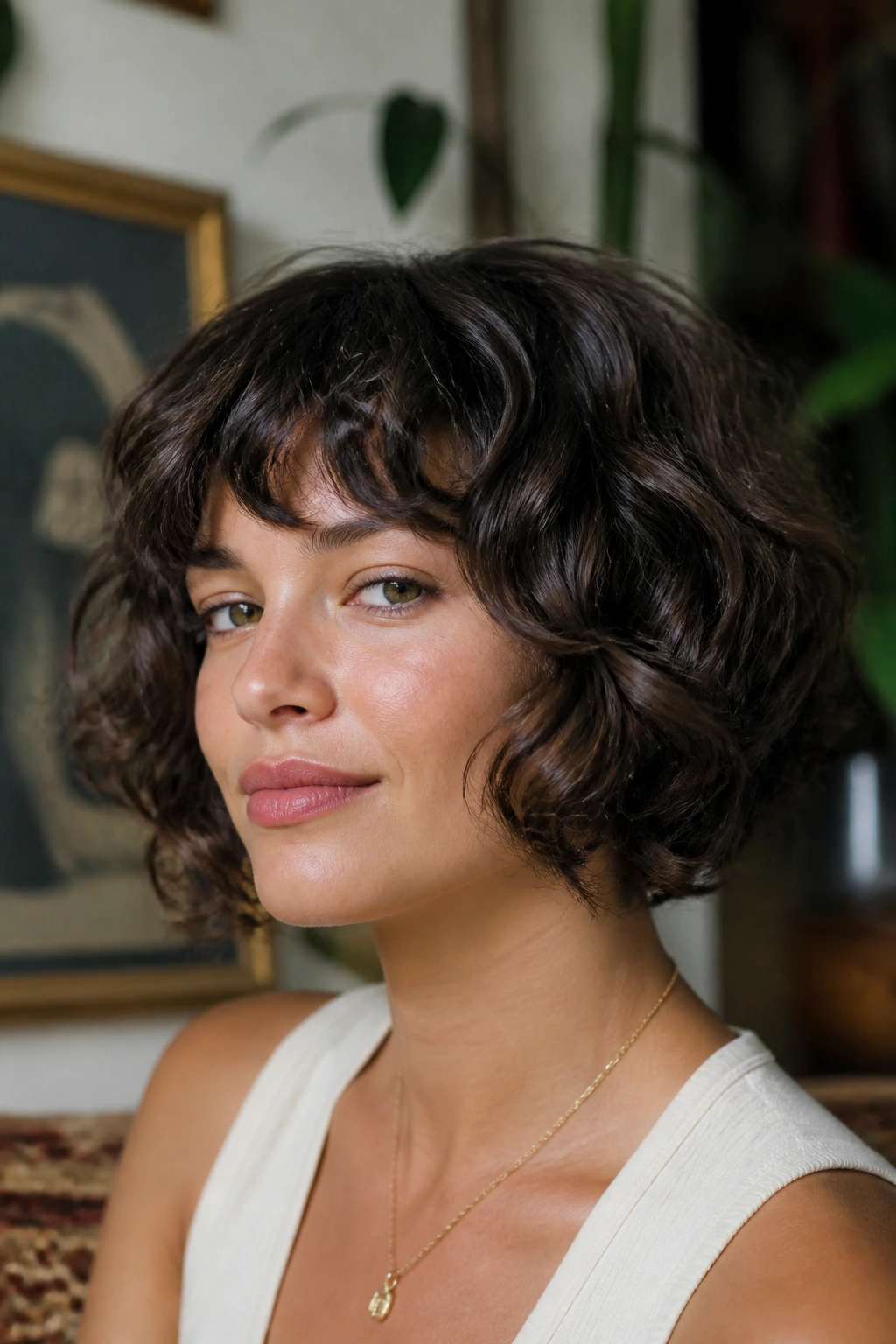
A mushroom shag sounds odd until you see it on loose curls. The outline rounds out softly around the head, giving the style a fuller cap shape with shorter top layers and a controlled perimeter. It’s a little retro, a little artsy, and much better than the name suggests.
This works best when the wave pattern is loose enough to expand the round shape without turning it puffy. If your hair already balloons at the sides, a mushroom silhouette may be too much unless the stylist keeps the interior light. On the right head, though, it looks playful and balanced.
I’d call this a good choice for people who like a distinct silhouette. It doesn’t fade into the background. You’ll either love the shape or know quickly that you don’t. That’s useful information, honestly.
15. Asymmetrical Shag
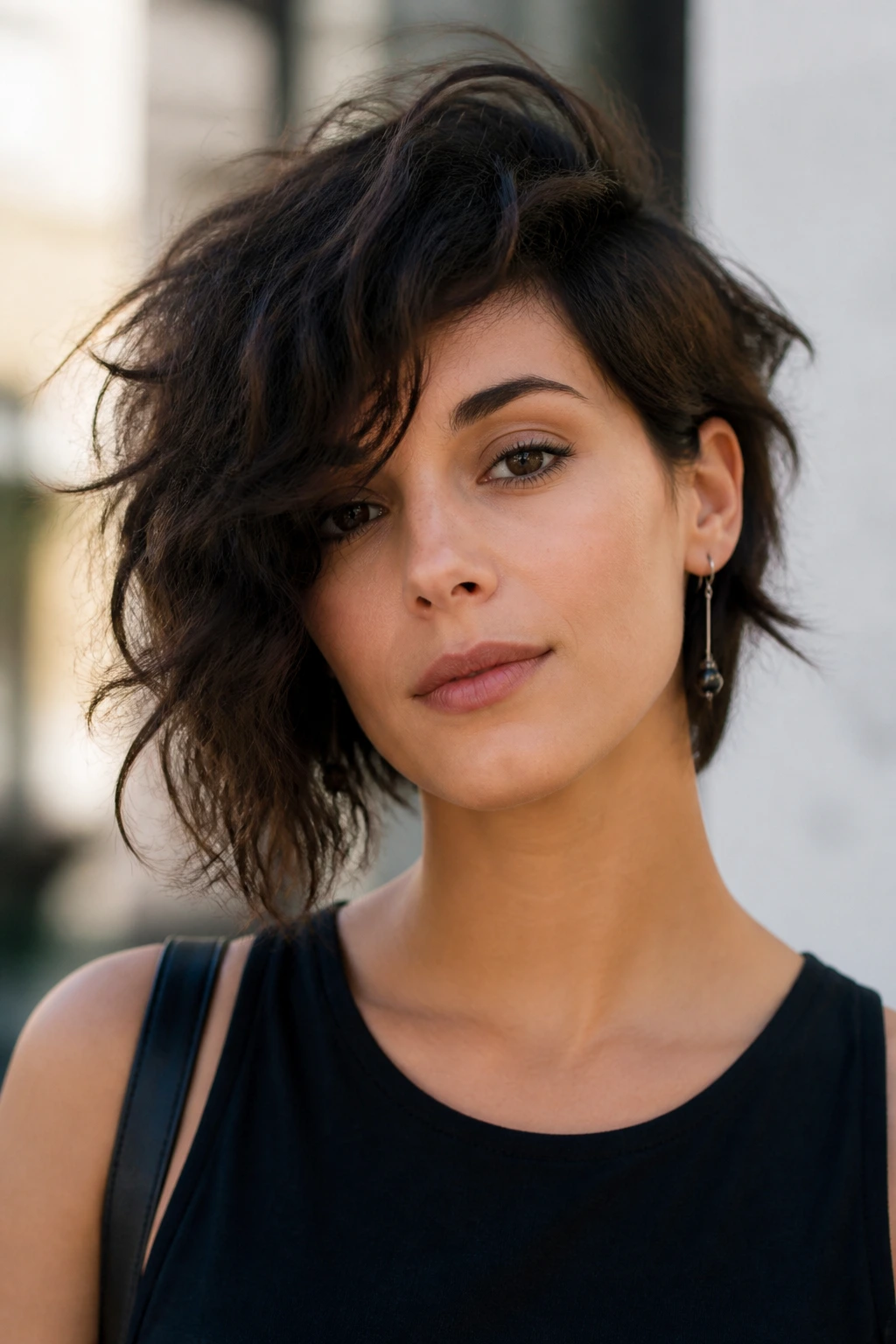
One side longer than the other gives a shag some nerve. The asymmetry doesn’t need to be extreme; even a small difference in length can change how loose curls fall and how much space the haircut takes up around the face. The shorter side lifts, the longer side drapes, and the result feels intentional.
This is a strong option if your hair has one stubborn part line or if one side tends to flatten while the other blooms. Instead of forcing symmetry, the asymmetry lets the wave pattern choose its own lane. That can be surprisingly flattering on wavy hair because the texture already has movement built in.
Keep the shortest side long enough to tuck behind the ear. Once it gets too cropped, the cut can tip into novelty territory. A little restraint keeps it wearable.
16. Tucked-Behind-the-Ear Shag
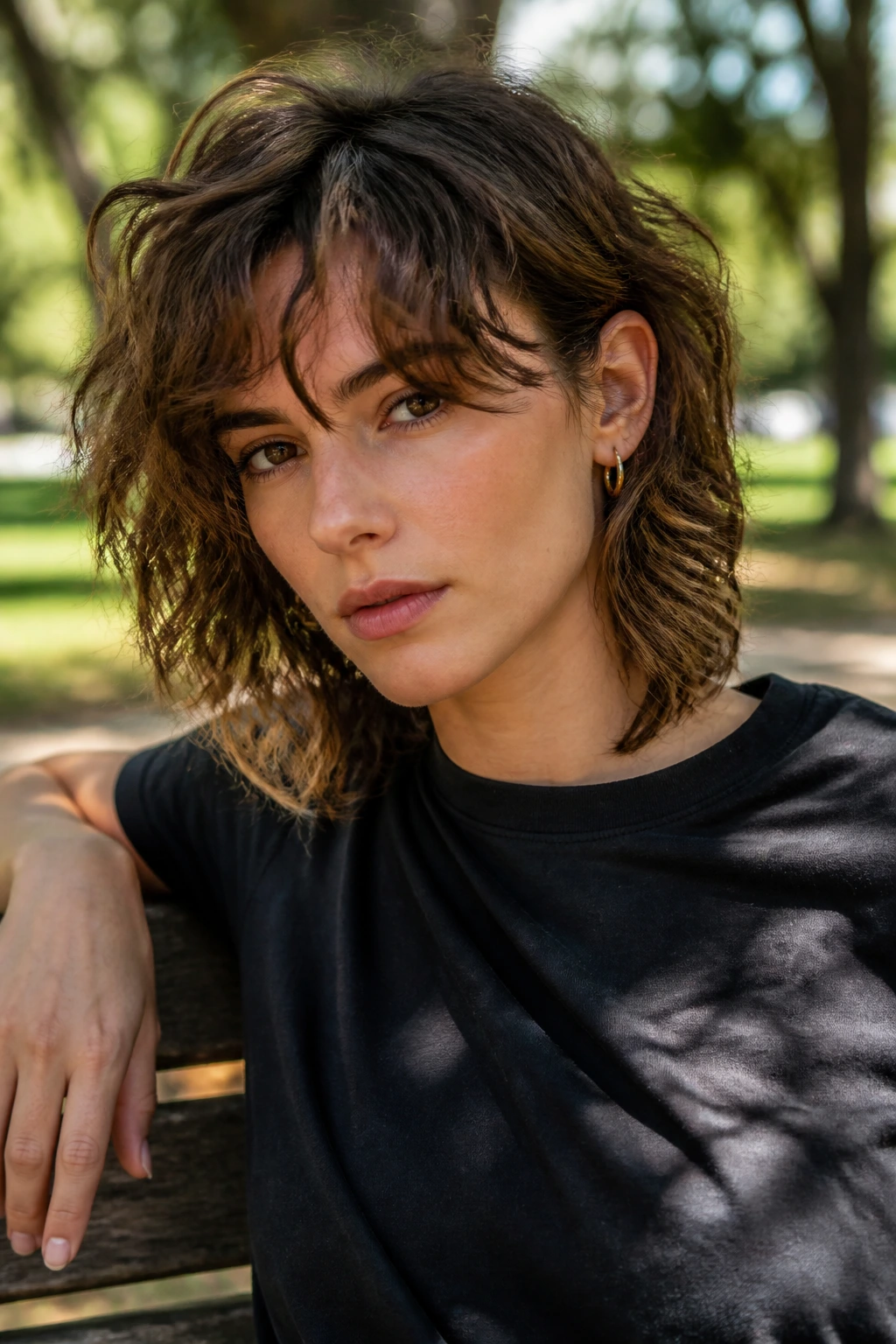
There’s a calm, easygoing feel to a shag that looks good tucked behind one ear. The layers on top stay loose, the front pieces are long enough to slide back, and the cut still keeps enough shape around the jaw to avoid sloppiness. It’s understated, but not boring.
This style is great if you need your hair to cooperate during the day without looking stiff. The tucked side opens the face. The loose side keeps the texture visible. That small contrast makes the haircut feel more styled than it really is.
A light styling paste on the ends can help the tuck stay put without making the hair feel sticky. I’d avoid heavy oils near the front, though. They make the tuck fall forward, and then the whole look collapses.
17. Deep Side-Part Shag
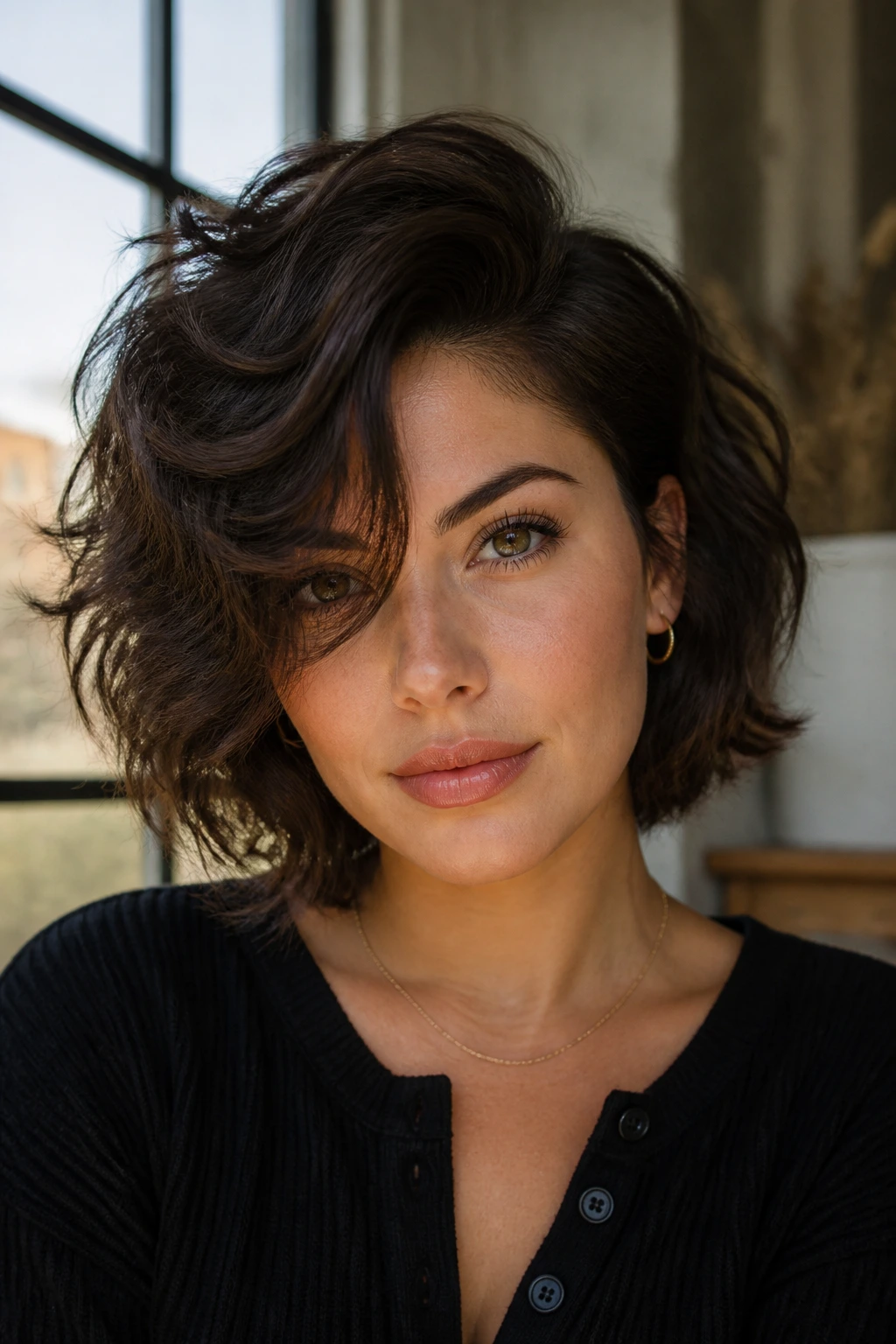
A deep side part does two things at once: it gives the roots instant lift, and it creates a dramatic sweep across the forehead. On loose curls, that sweep can be gorgeous because the texture catches on itself instead of lying flat. The cut doesn’t need to be severe to read as intentional.
This is one of the best short shag haircuts for wavy hair if the top tends to go limp by lunchtime. A deep side part changes the weight distribution, which is half the battle. It can also make the cheekbone area look sharper, especially when the front layers skim the face instead of hanging straight down.
If you’re styling it at home, blow-dry just the roots opposite the part for a minute or two. That little bit of lift stays longer than people expect. No need to wrestle the whole head.
18. Hushed Retro Shag
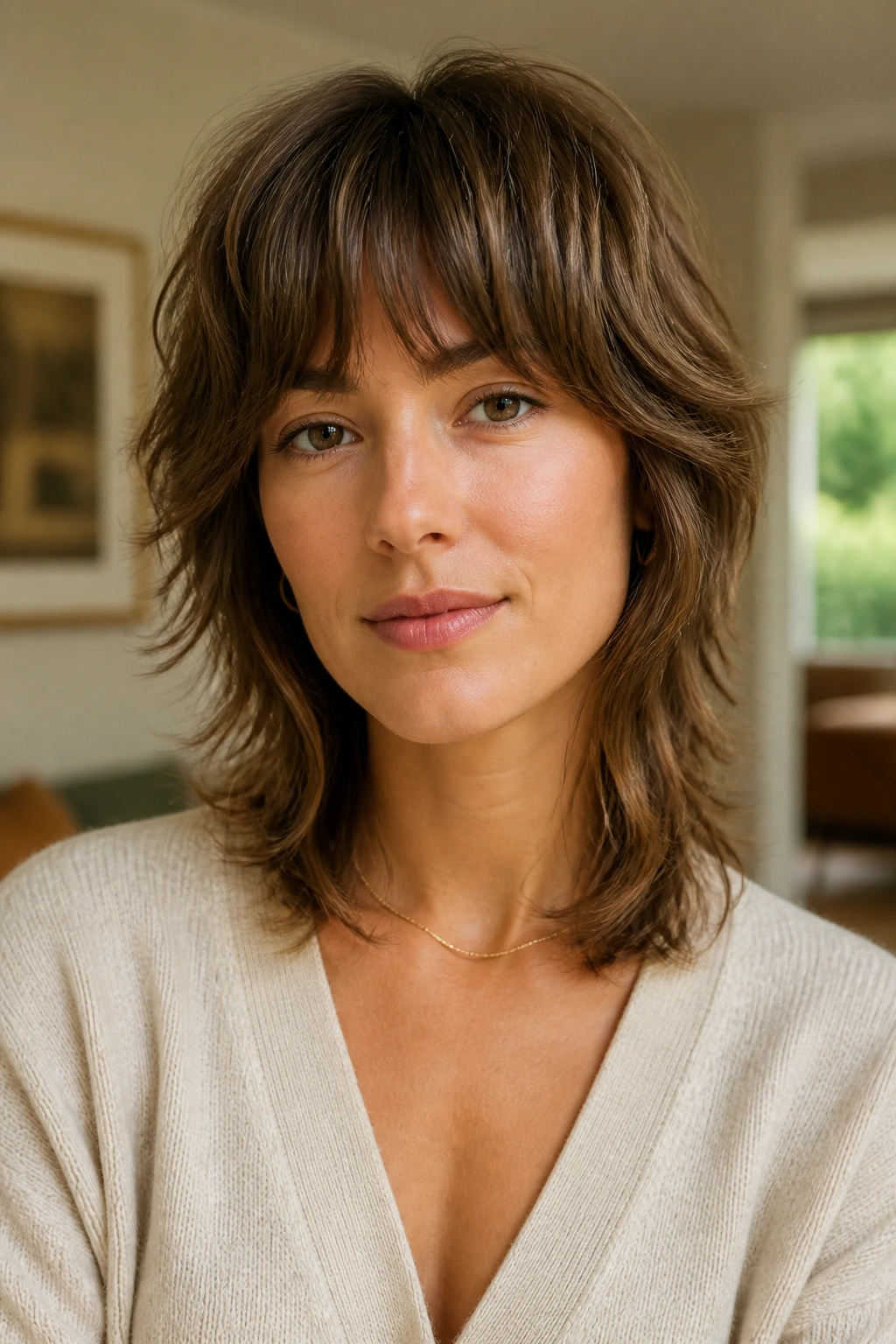
A hushed retro shag borrows the feathering and movement of the 70s without turning into a costume. The layers are softer around the cheeks, the fringe is a little airy, and the ends flick just enough to give the style personality. Loose curls make it easier to wear because they soften the vintage shape.
I like this version when someone wants softness with a little polish. It’s less jagged than a modern wolf cut, less blunt than a bob, and easier to dress up than many cropped shags. The key is to keep the feathering visible but not overbuilt.
A round brush at the front and an air-dried back can be a good mix here. That gives the fringe shape while leaving the rest of the hair loose. It’s a small cheat, and a good one.
19. Wet-Look Shag
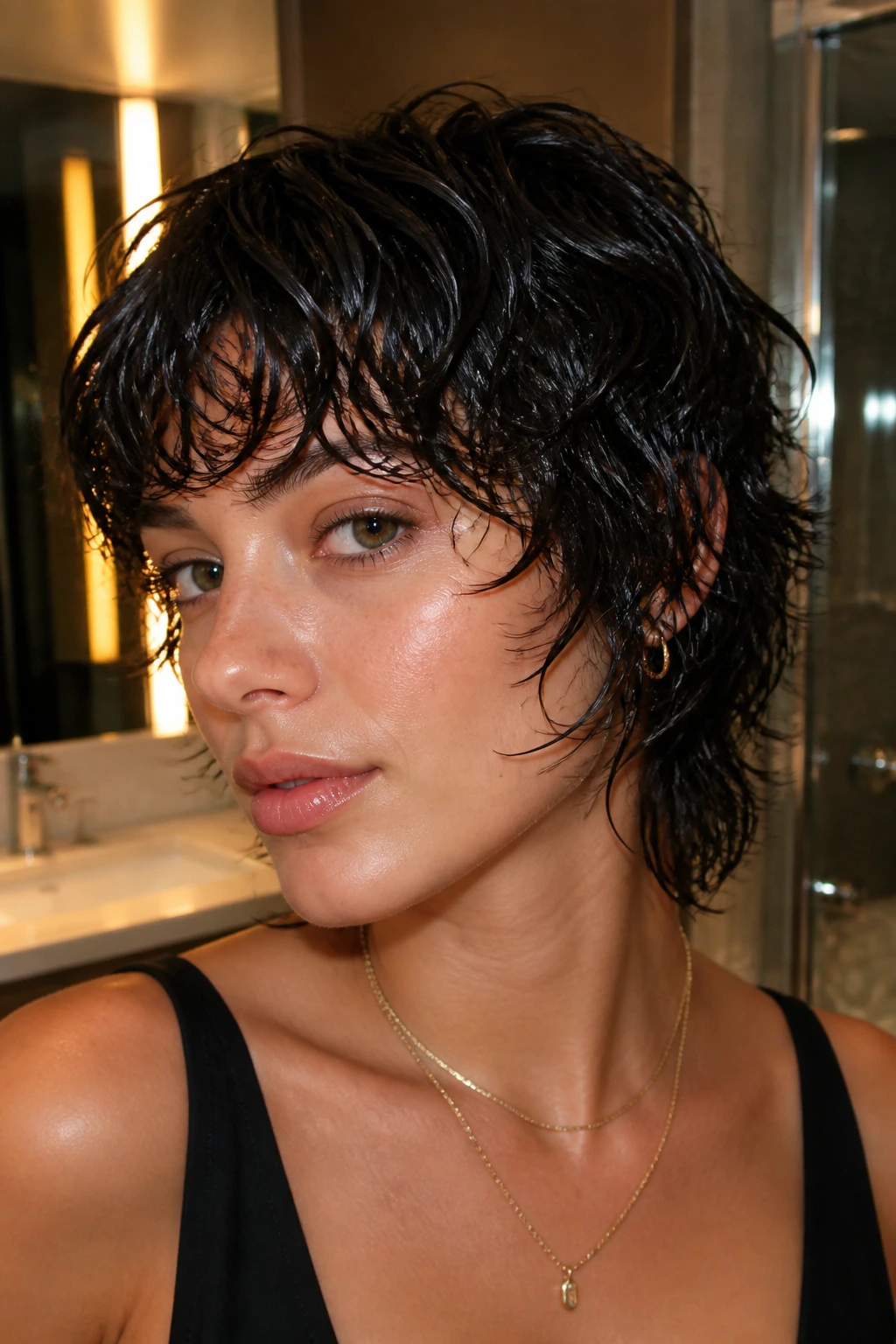
A wet-look shag changes the mood of the haircut more than the cut itself does. The shape stays shaggy, but the styling uses gel or cream to hold the roots close and let the ends stay separated and shiny. On loose curls, that contrast can look sharp in a way air-dried texture doesn’t.
This is a smart move for evenings, humid weather, or days when you want the texture to look edited rather than fluffy. The trick is not to overdo the product. Use enough to coat the surface, not enough to soak the hair and make the shape heavy.
Work the product in from the mid-lengths down, then use your fingers to direct the front pieces where you want them. If the roots are too slick, the cut loses lift. If the ends are too dry, the style looks unfinished. That balance matters.
20. Neck-Hugging Shag
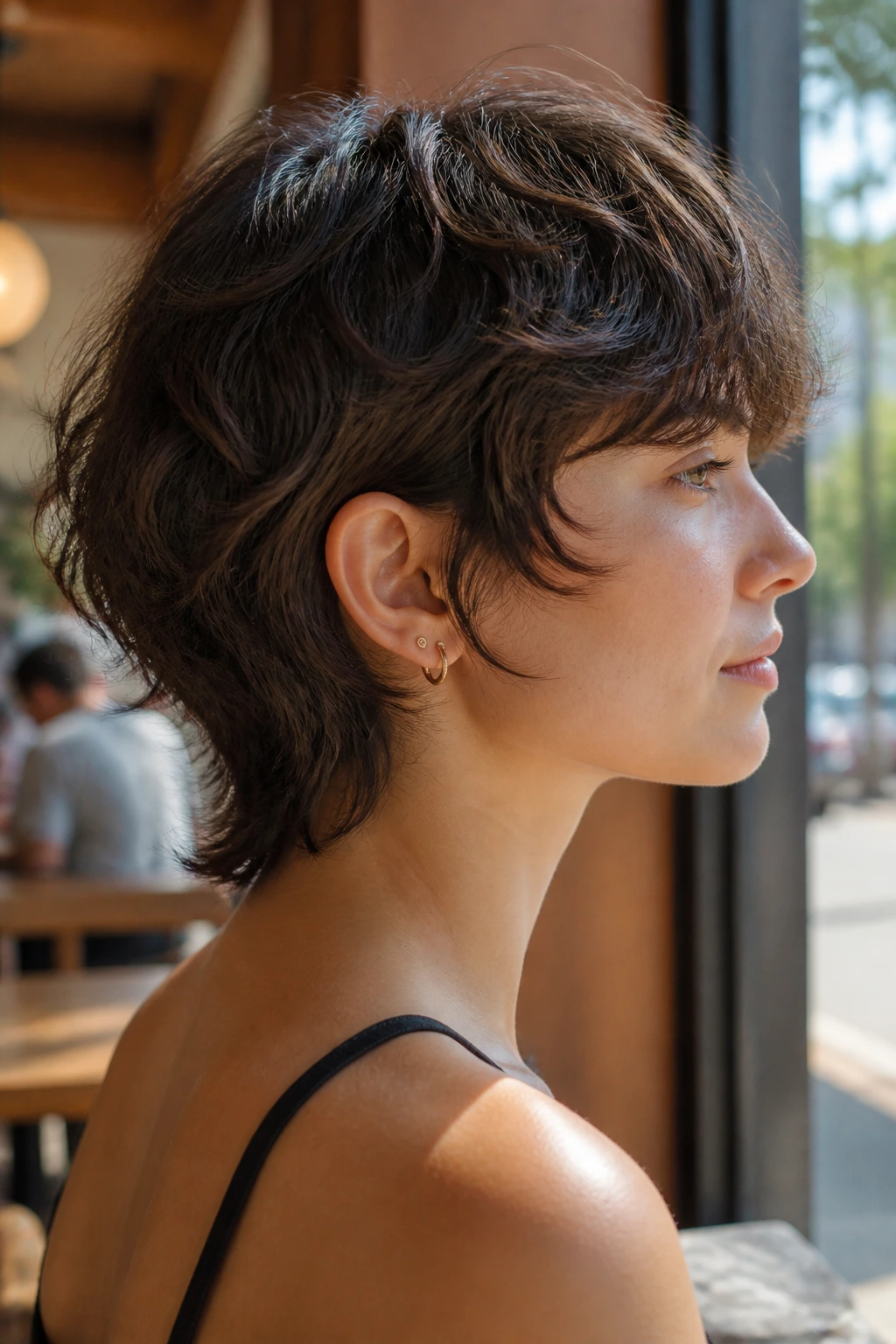
A neck-hugging shag keeps the back close to the nape so the haircut doesn’t flare out under collars and jackets. That alone makes it useful for people with loose curls that get bulky at the neckline. The top still has texture, but the lower shape is controlled.
This cut is a practical little workhorse. It’s short enough to feel airy, but not so short that every curl becomes its own event. It suits people who want something neat from behind and textured from the front, which is a combination I see more often than people admit.
If your hair grows thick at the nape, ask for the shortest layers there to be tapered rather than chopped bluntly. That keeps the back from building up into a shelf. It sounds small. It isn’t.
21. Choppy Edge Shag
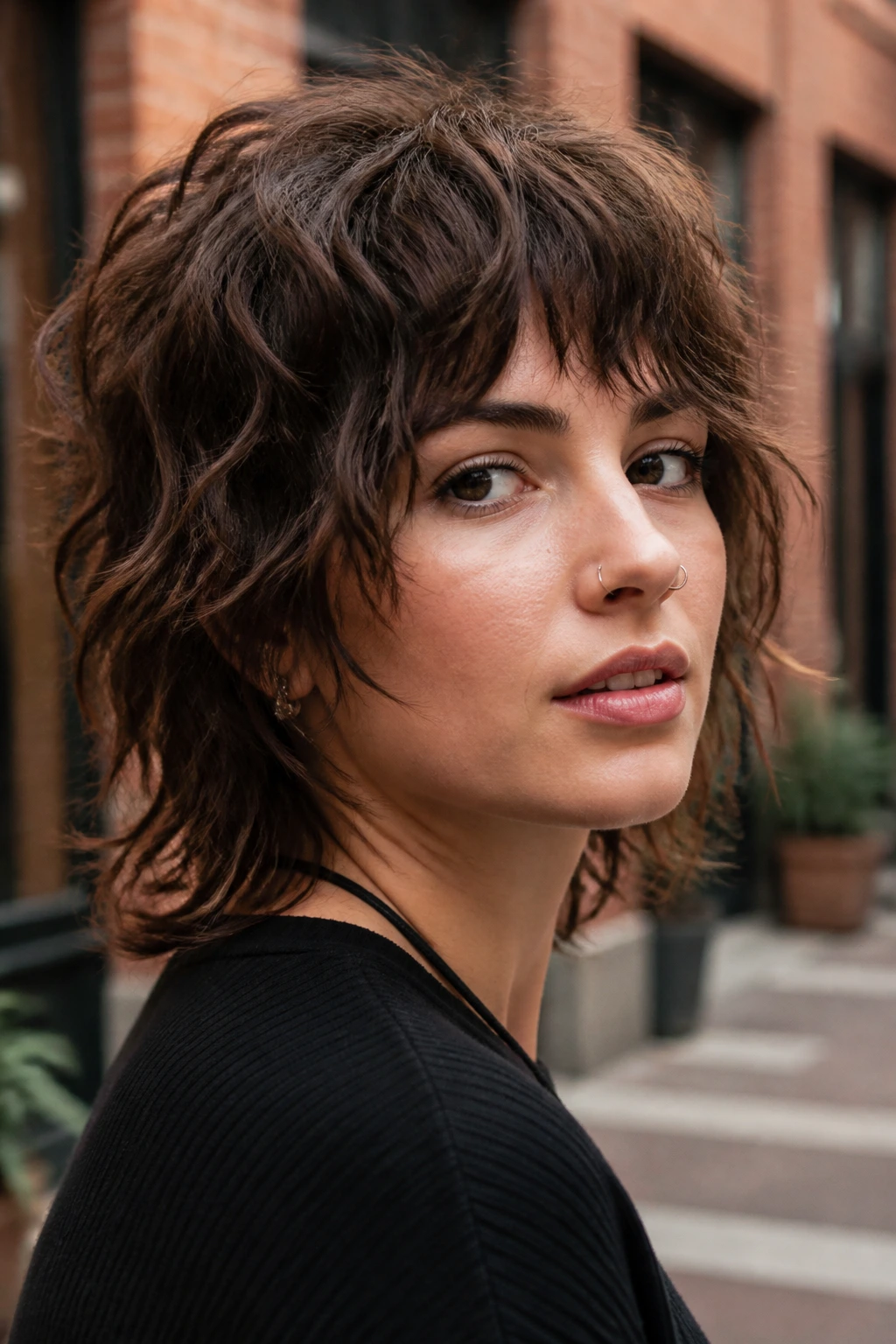
A choppy edge shag is for the people who like their texture to look broken up on purpose. The layers are more obvious, the ends are more separated, and the whole cut has a little grit to it. On loose curls, that can look fantastic if the hair naturally likes to clump in pieces.
The danger is over-chopping. Too much can make the ends look thin and the shape look hungry. A better version keeps the perimeter thick enough to hold together while still giving the front and crown some roughness. The haircut should look lived-in, not shredded.
This is one of the more style-forward short shag haircuts for wavy hair, so I’d pair it with a matte cream or light mousse rather than glossy oils. Shine can make the piecey effect look wet in the wrong way. Texture needs room to breathe.
22. Minimal-Maintenance Shag

A minimal-maintenance shag is the one I recommend when someone wants movement but not a lot of upkeep. The layers are there, but they’re subtle. The perimeter is soft, the fringe is optional or very light, and the whole thing grows out without screaming for attention.
This version is ideal if you style your hair in ten minutes or less. Loose curls do enough work on their own, so the haircut doesn’t have to carry the entire show. A gentle shape around the face and a little crown lift are often enough.
It also helps if you hate the feeling of frequent salon visits. Because the layers aren’t extreme, the cut keeps its shape for longer and doesn’t turn weird the second it grows half an inch. That makes it one of the most forgiving short shag haircuts for wavy hair.
Why Short Shags and Loose Curls Get Along So Well
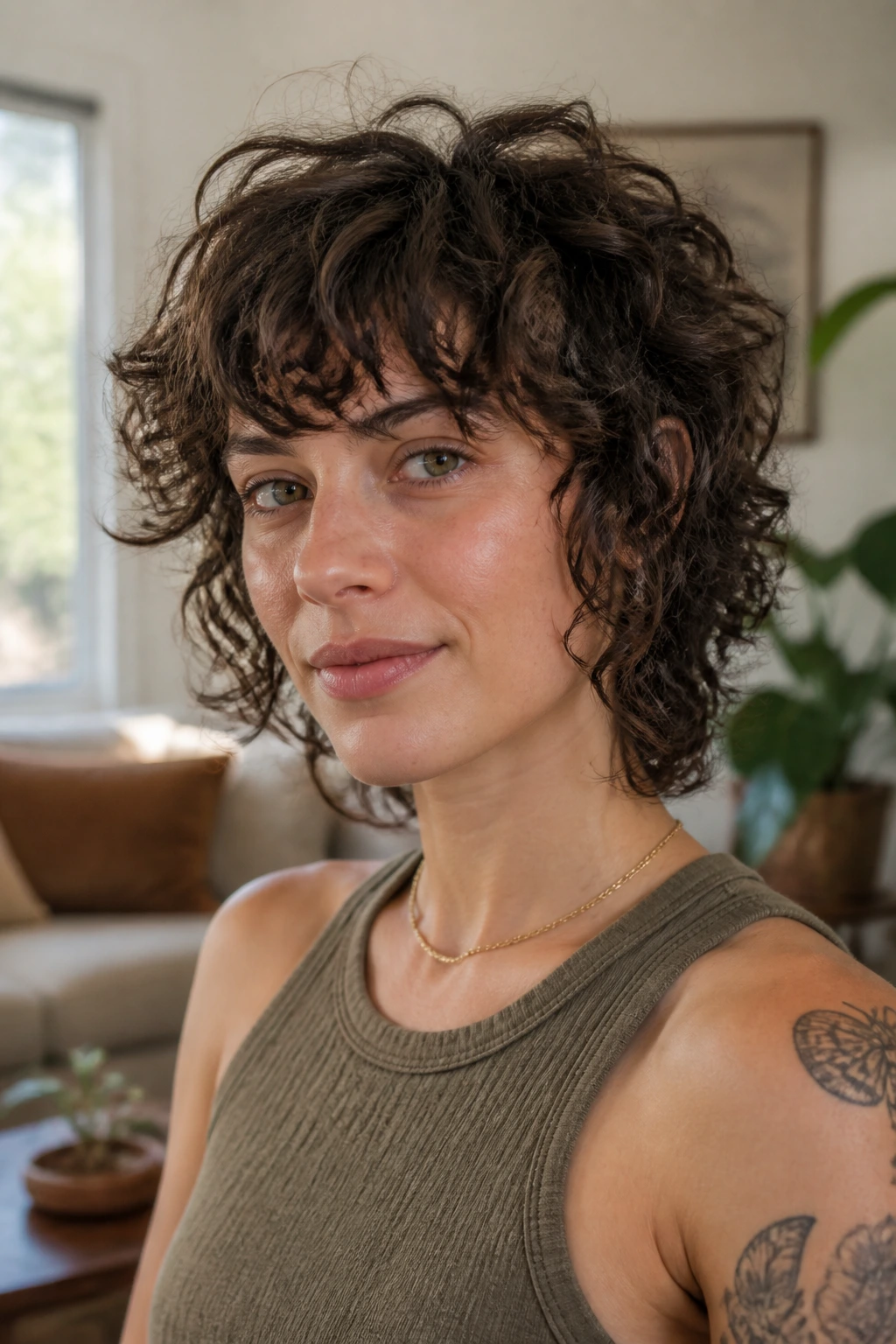
Loose curls need space. That sounds obvious, but it’s the part people miss when they ask for layers and end up with a puffy outline instead of movement. A shag works because it removes weight in the middle and around the top while leaving enough shape at the perimeter to anchor the silhouette. No anchor, no haircut. Just fuzz.
The other thing is shrinkage. Wavy hair looks longer when wet, then bounces up and shifts once it dries. A blunt cut often overpromises in the chair and underdelivers at home because the wave pattern lifts the ends in odd places. Shag layers let that lift happen on purpose. You’re not fighting the texture. You’re giving it a place to land.
Dry cutting helps here. Not always, not for every head of hair, but often enough that it’s worth asking about. When a stylist can see how your waves sit naturally, they can place the layers where the hair actually folds rather than where it looks straight in a damp section. That one change can save you from the classic triangle.
How to Choose the Right Version for Your Hair Density and Face Shape
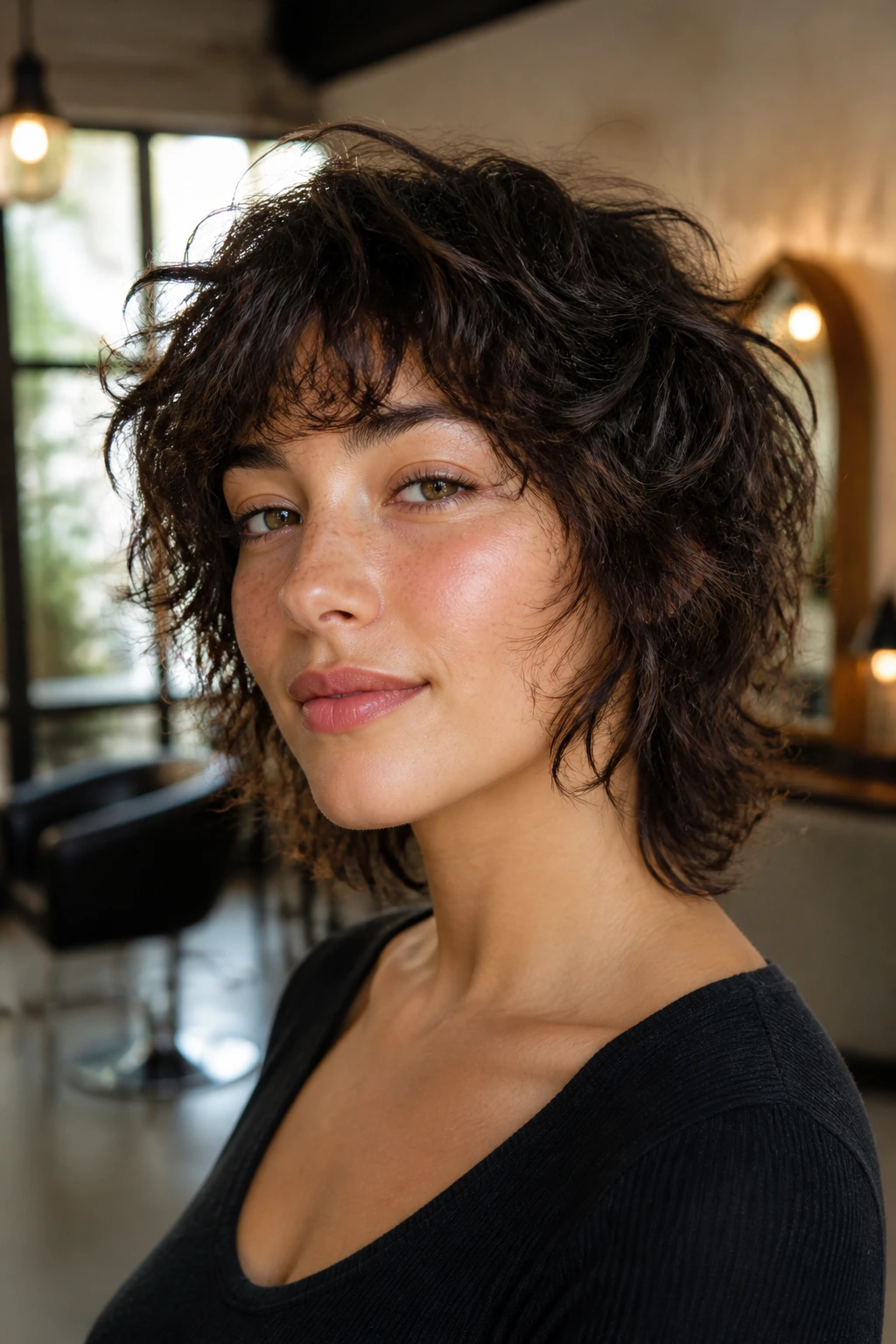
The best short shag haircut for wavy hair is not the one with the coolest name. It’s the one that fits your density, your face, and how much effort you’ll actually put into styling it. Fine hair usually needs more strategic crown lift and less thinning. Thick hair often needs heavier debulking through the interior so it doesn’t balloon outward at the cheeks.
Face shape matters, but not in a rigid, rules-heavy way. A longer front layer can soften a square jaw. Curtain bangs can make a longer face feel more balanced. A shorter crown and fuller sides can widen a narrow face a bit. Those are starting points, not laws carved into stone.
Bring photos, but bring the right photos. A picture of a model with straight hair is not much help if your hair bends into loose curls by lunch. Bring images of similar texture, similar density, and similar length. The haircut conversation gets better fast when everyone is looking at the same kind of hair.
Tools, Brushes, and Products That Make the Shape Behave
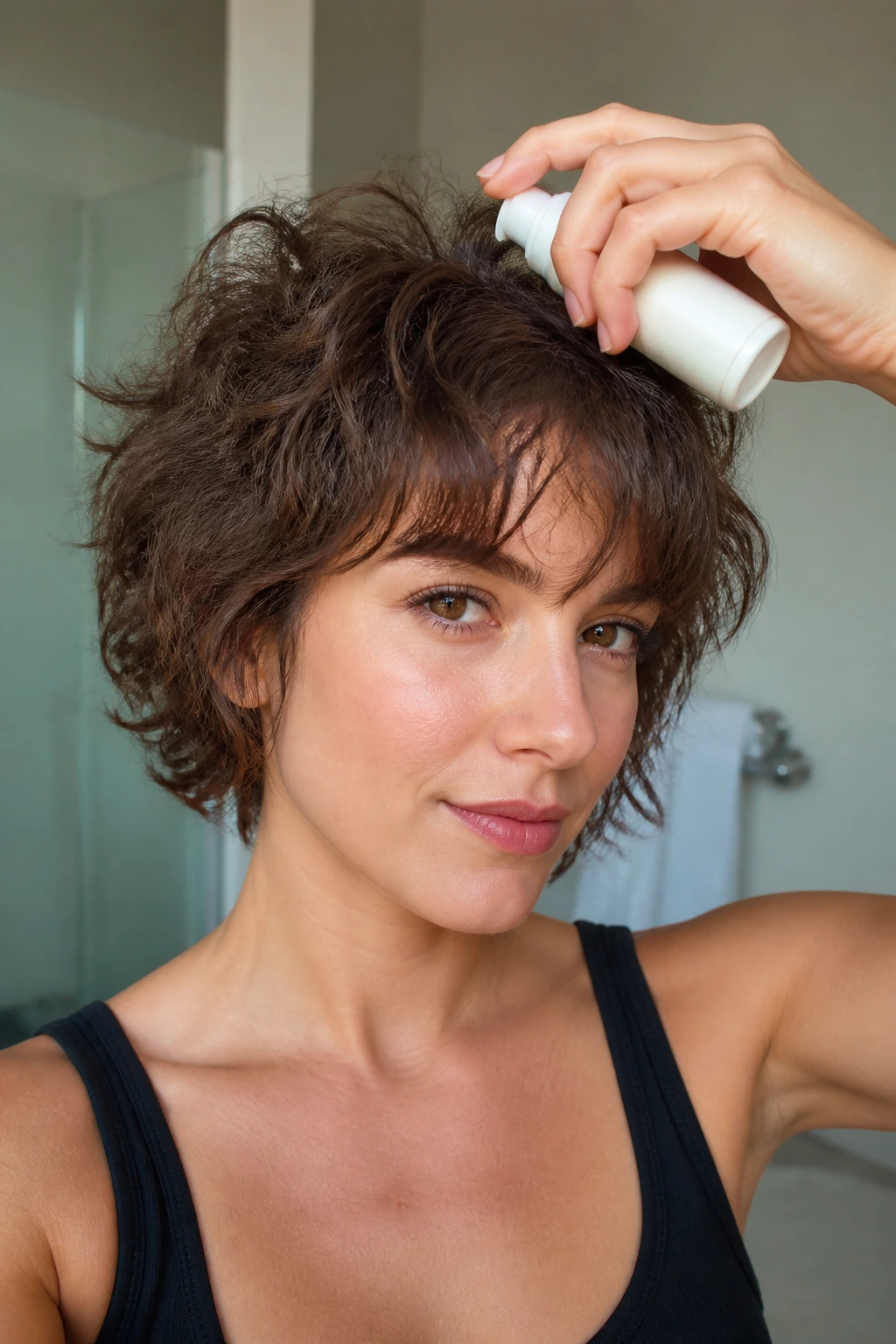
You do not need a bathroom shelf that looks like a salon back room. A short shag with wavy hair usually needs a few reliable things and not much else.
- Wide-tooth comb: Good for detangling in the shower or after applying conditioner without ripping apart your wave clumps.
- Microfiber towel or cotton T-shirt: Cuts down on rough drying and keeps the top layer from frizzing before you even style it.
- Diffuser attachment: Useful if you want root lift without blasting the wave pattern flat.
- Lightweight mousse: Adds hold near the roots and helps loose curls keep their separation as they dry.
- Leave-in conditioner: Good for dry ends, but use a small amount so the haircut doesn’t collapse.
- Curl cream: Best on medium to thicker hair when the waves need a little control and shine.
- Styling paste or matte cream: Handy for the front pieces, fringe, and any shag that needs a little grit.
- Duckbill clips or root clips: Small thing, big effect. They give the crown time to dry lifted instead of glued down.
- Spray bottle: Useful for day-two refreshes without soaking the entire head.
- Round brush: Optional, and mostly for the bangs or front face-framing pieces if you want a smoother finish.
The product you skip matters as much as the one you use. Heavy oils, thick butters, and glossy serums can flatten the layers fast. On a short shag, less is usually smarter.
How to Style a Short Shag Without Smothering the Texture

Air-Dry Setup: Start with damp hair, not dripping hair. Scrunch in a small amount of mousse at the roots and a light cream through the middle, then leave the ends mostly alone so the wave can form its own clumps.
Diffuse Without Frizz: Use low heat and low speed. Hover the diffuser at the roots for lift, then cup sections for 10 to 20 seconds at a time instead of shaking the whole head around. If you keep touching the ends, they’ll frizz faster than you can fix them.
Front Pieces First: The fringe and face-framing layers deserve more attention than the back. Smooth them with your fingers or a small round brush while they’re still damp, because once they dry crooked, they stay crooked.
Day-Two Reset: Mist the top lightly, twist a few front pieces around your fingers, and add a tiny bit of paste to the ends if they’ve separated too much. You are refreshing, not redoing.
A short shag looks better when it’s slightly imperfect. That’s not an excuse for messiness. It’s just the nature of the cut. If it looks too polished, you’ve probably overworked it.
The Mistakes That Flatten the Shape
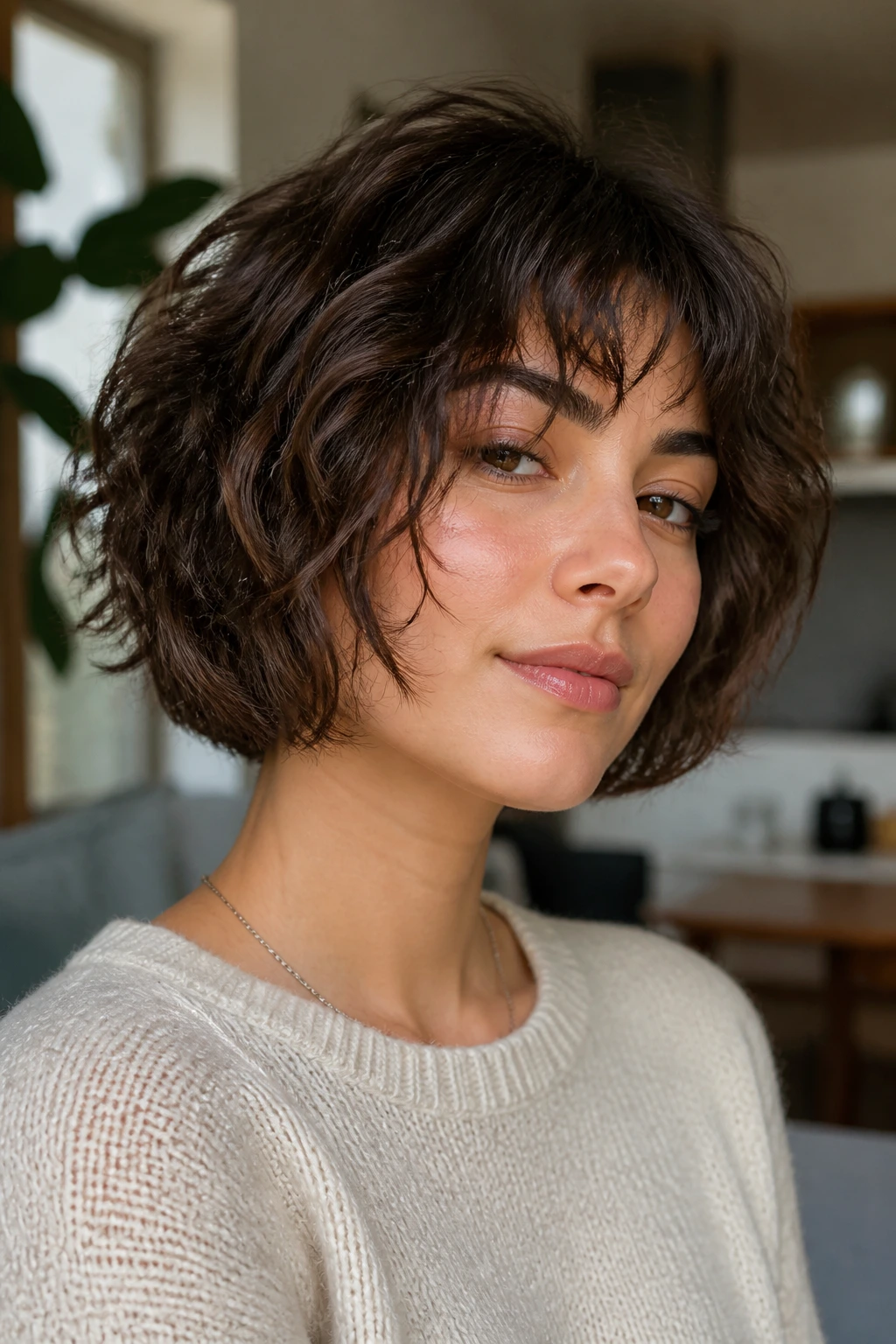
The first mistake is asking for too much thinning. Hair that gets over-thinned around the ends starts to look wispy and separated in a bad way, especially once loose curls dry and shrink. The fix is simple: ask for shape, not emptiness. A stylist can remove weight with layers and point-cutting without making the ends see-through.
The second mistake is cutting the bangs too short on wet hair. Waves jump up as they dry, and a fringe that looks eyebrow-length in the chair can end up sitting halfway to the hairline. Leave a little extra length. You can always trim more.
The third mistake is using heavy product right at the root. That’s the fastest way to kill the lift that makes a shag look alive. Keep creams and oils lower on the shaft, then use mousse or light spray at the crown if you want support.
The fourth mistake is forgetting the neck and back. Short shag haircuts for wavy hair need a balanced silhouette. If the back gets too bulky, the whole head reads square. If the nape is cut too bluntly, the shape can poke out under collars and hoodies. Both are easy to avoid with the right taper.
Variations and Alternatives to Try
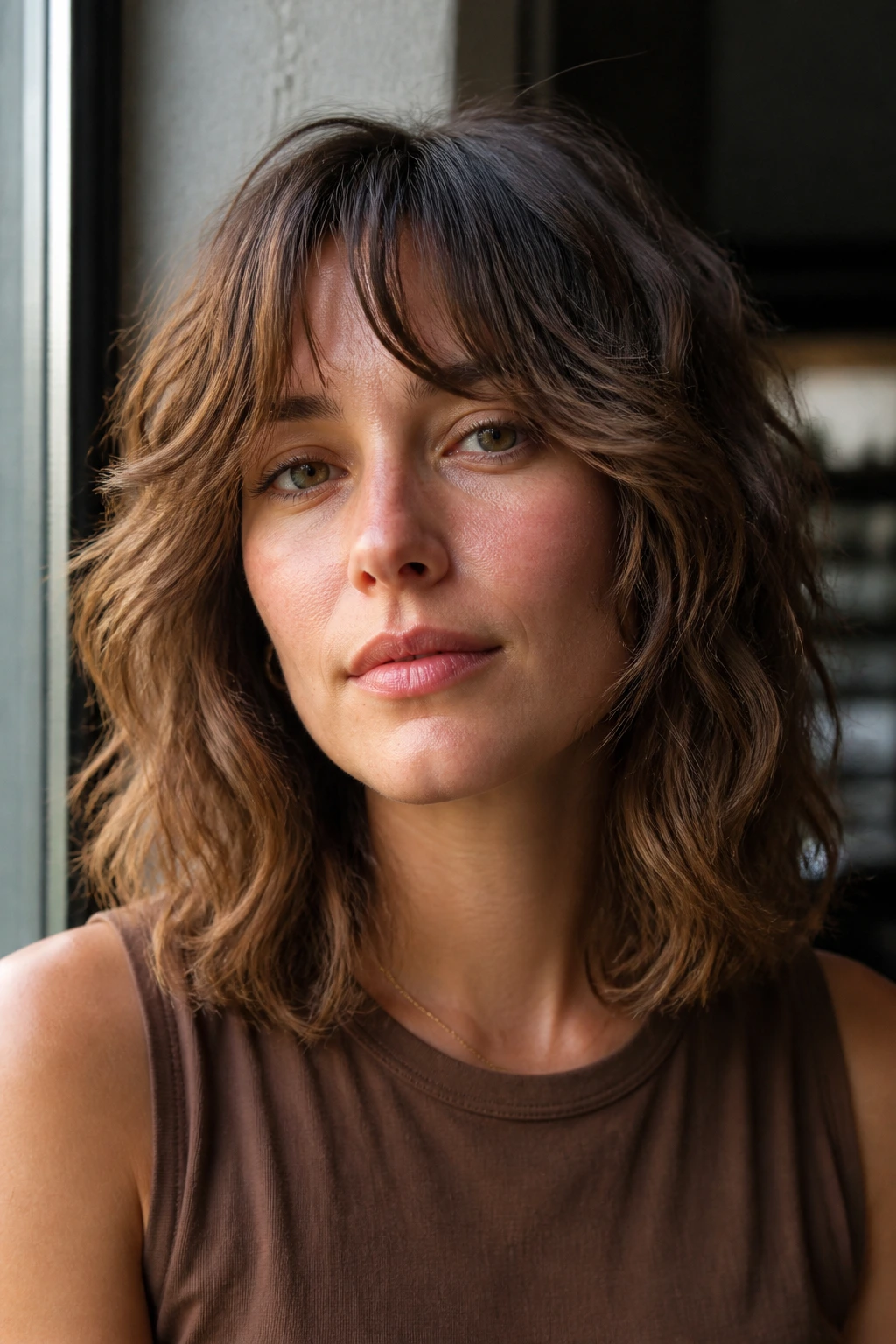
The Fine-Hair Float: Keep the layers softer, the ends fuller, and the crown lightly lifted. This version gives fine waves movement without stripping away too much bulk, which is the part that keeps the cut from looking thin.
The Thick-Hair De-Bulked Shag: Use stronger interior layering and a cleaner nape taper. This works when the hair expands outward instead of falling down, and it keeps the profile from turning boxy.
The Fringe-Forward Version: Build the haircut around curtain bangs or a wispy fringe. It shifts the attention to the front and makes the rest of the cut feel lighter, especially when the back is short.
The Soft Wolf Shift: Let the back run a little longer and keep the crown more lifted. It’s the better choice if you want edge without full mullet energy.
The Grown-Out Friendly Version: Keep the layers subtle and the perimeter soft. This one is for people who don’t want a salon visit every six weeks and would rather let the haircut relax over time.
Keeping the Cut Looking Good as It Grows
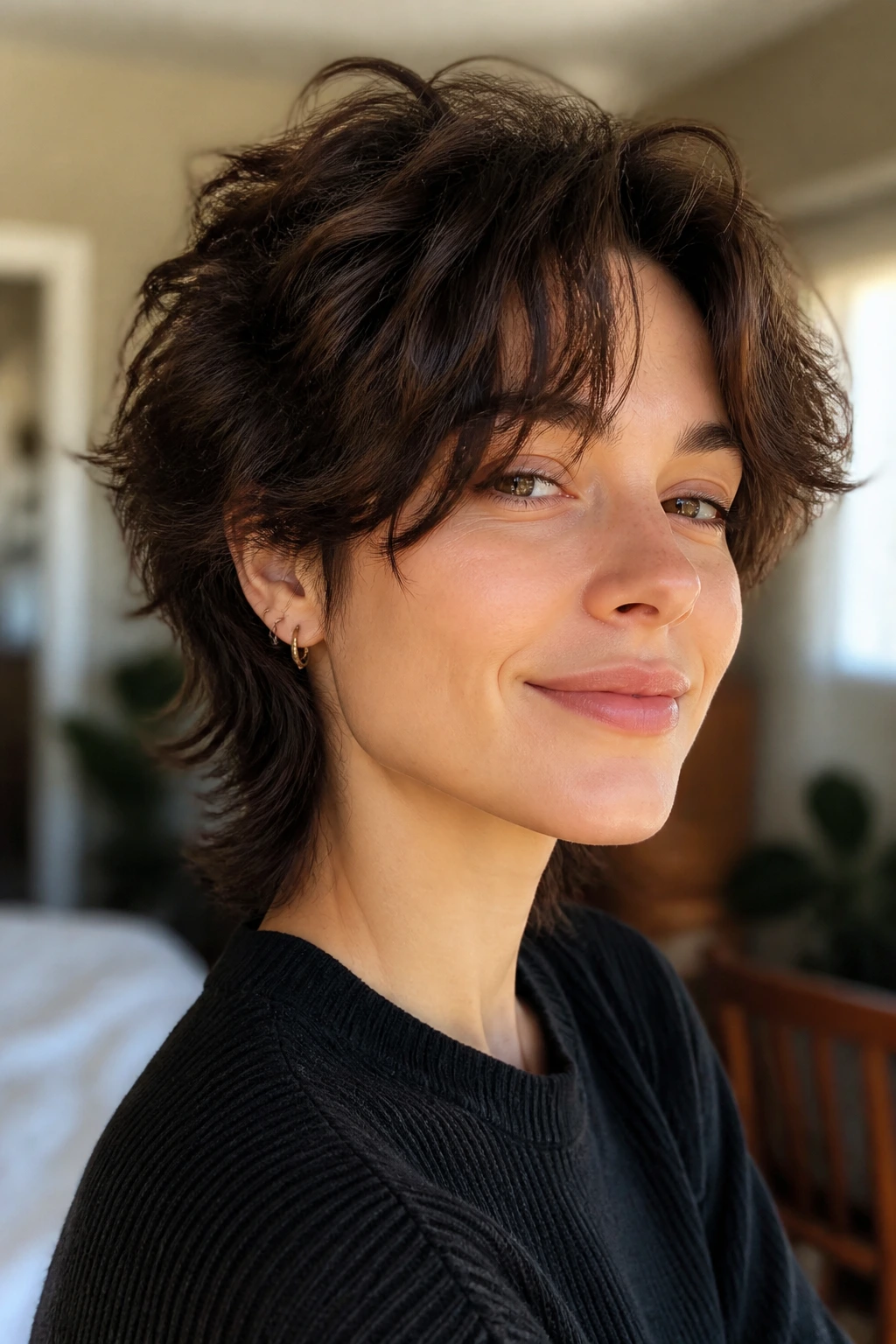
A short shag usually needs a trim every 8 to 12 weeks if you want the shape to stay crisp. Bangs may want a dusting every 4 to 6 weeks, especially if they’re curtain-style or wispy. If you’re okay with a softer, slightly wild finish, you can stretch that out a bit longer.
The grow-out phase is where a shag earns its keep. A blunt bob can go strange fast. A good shag just gets softer. The crown may settle, the fringe may shift, and the sides may lose a little snap, but the haircut still reads as intentional if the original layers were placed well.
Night care matters more than people think. A loose pineapple, a satin pillowcase, or even just flipping the part before bed can save the front pieces from waking up crushed. If your waves are especially temperamental, refresh with a spray bottle in the morning and keep your hands off the roots until they dry.
Frequently Asked Questions About Short Shag Haircuts for Wavy Hair
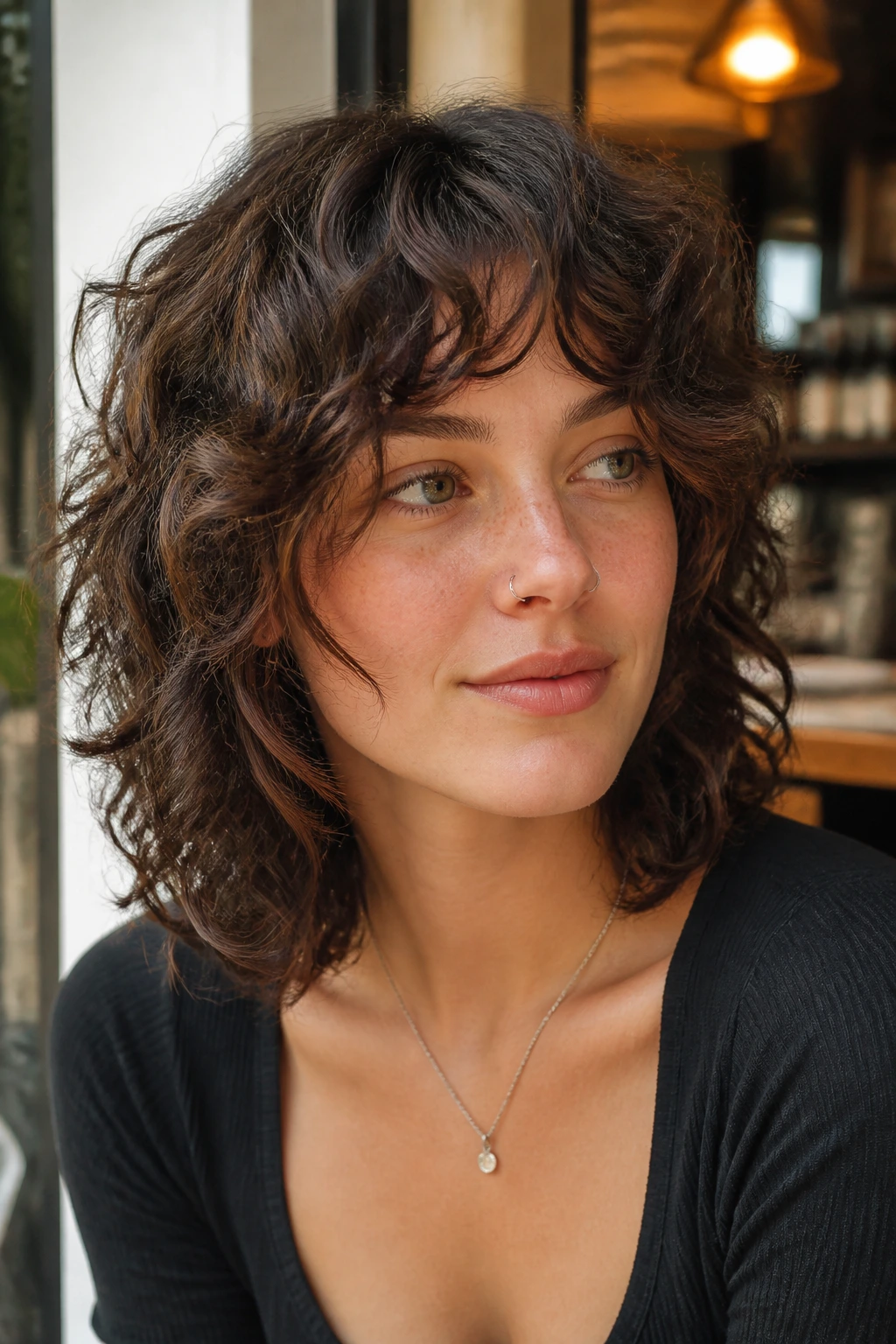
Will a shag make my wavy hair frizzier?
Only if it’s cut too aggressively or styled with too much friction. A good shag actually reduces frizz in the long run because it removes the heavy sections that pull waves apart. The trick is to keep the layers soft enough that the hair still clumps.
Can loose curls handle a very short shag?
Yes, but the shorter you go, the more the curl pattern shapes the result. If your waves spring up a lot when dry, leave extra length in the fringe and crown so the cut doesn’t shrink too high.
Should I ask for a razor cut or scissors?
That depends on your hair texture. Razor work can make soft waves look airy, but thick or dry hair may fray at the ends. Point-cutting with scissors is safer if your hair gets fuzzy easily.
How often do short shag haircuts need trims?
Most need a trim every 8 to 12 weeks to keep the layers from losing their shape. Bangs and very short napes may need touch-ups sooner.
What if my hair is fine and flat?
Ask for a lighter shag with crown lift and fewer heavy layers at the bottom. Too much layering can make fine hair look sparse, so the cut should keep enough perimeter to hold the shape.
Can I wear a short shag without bangs?
Absolutely. A bang-free shag can use face-framing layers, a side part, or a short crown to keep the haircut from feeling plain. The fringe is optional, not required.
How do I explain the cut to a stylist?
Bring photos of hair that matches your texture, then describe what you want the cut to do: more crown lift, softer cheeks, shorter neck, less bulk, or easier day-two styling. That gives the stylist a job to solve instead of a style name to guess at.
What if the cut feels too puffy after I wash it?
Check the weight at the bottom and the amount of product near the roots. Puff usually means the ends are too light or the crown has too much moisture and not enough support. A trim or a smaller amount of mousse can help fast.
The Cut That Lets the Wave Do the Talking

Short shag haircuts for wavy hair work because they respect the bend in the hair instead of trying to iron it out. That’s the quiet brilliance of the whole shape. The right version gives you lift at the crown, movement through the sides, and a face frame that still looks decent when the day gets messy.
I like a shag that can survive real life. Sweaters, humidity, second-day waves, the whole lot. If the cut still looks good when you stop fussing with it, you’ve found the right version. That’s the one worth taking to a stylist, and it’s probably the one you’ll keep coming back to.