



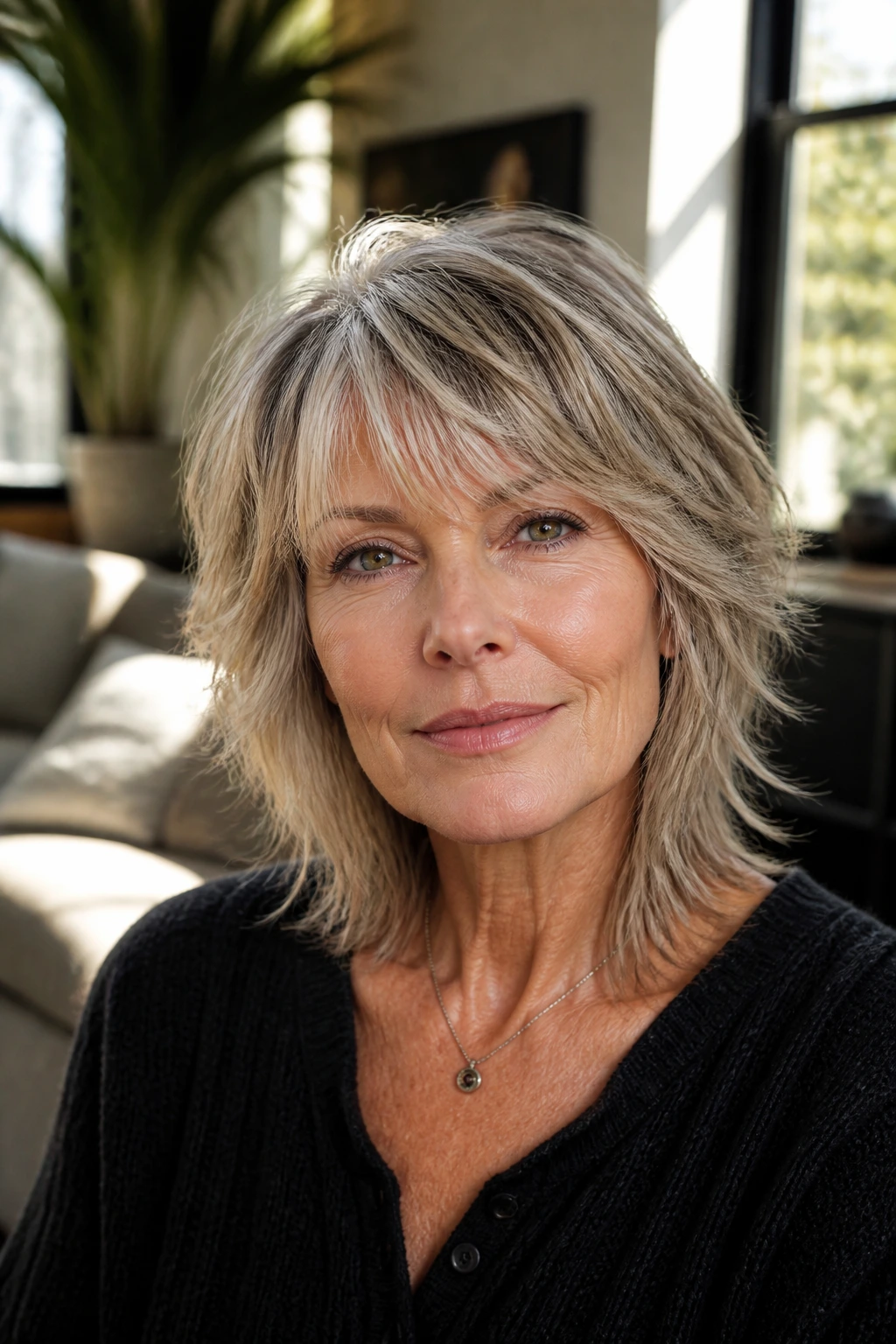
A good shag after 50 doesn’t try to hide the face. It opens it.
That’s why a classic shag haircut for women over 50 can look so sharp when it’s cut with intent: the layers move, the bangs soften the forehead, and the ends don’t sit there like a blunt shelf. The cut does some of the work for you. On hair that’s gotten finer at the temples, coarser in the gray strands, or flatter at the crown, that matters more than people think.
And yes, the shag has range. A chin-length feathered version can make short hair look airy instead of boxy. A long shag can keep length but still take out the heaviness that drags the whole style down. A curly shag, a silver shag, a razor-sharp shag bob — they all share the same basic idea, but the mood changes with the length, the fringe, and how much weight the stylist removes from the interior.
Why These Shags Work So Well After 50
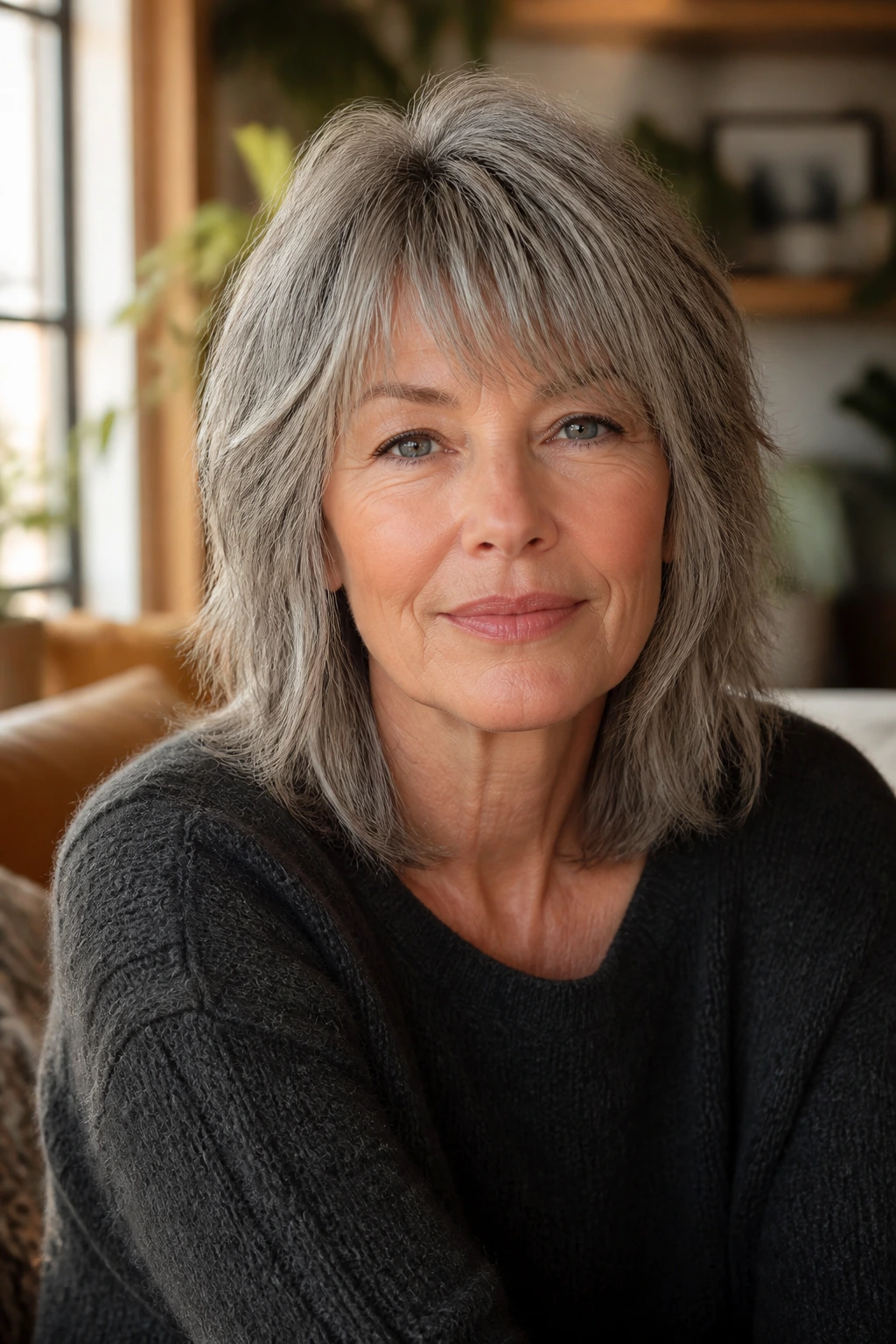
- They move instead of sitting flat: Layering around the crown and cheekbones keeps the cut from collapsing into a helmet shape by noon.
- They play nicely with gray hair: Gray and silver strands often look coarser; shattered ends and feathering keep them from looking blocky.
- They can lighten heavy hair without making it look thin: The best shags remove bulk where it puffs out and leave enough perimeter to hold shape.
- They work with real-world styling time: A shag is forgiving when you skip the perfect blowout and let some bend and separation do the job.
- They soften features without swallowing them: Bangs, face-framing layers, and cheekbone-length pieces keep the haircut from feeling stern.
- They grow out with less drama: A shag tends to blur into the next phase better than a blunt cut, which is useful when you don’t love constant salon visits.
What Makes a Good Shag Look Intentional Instead of Ragged
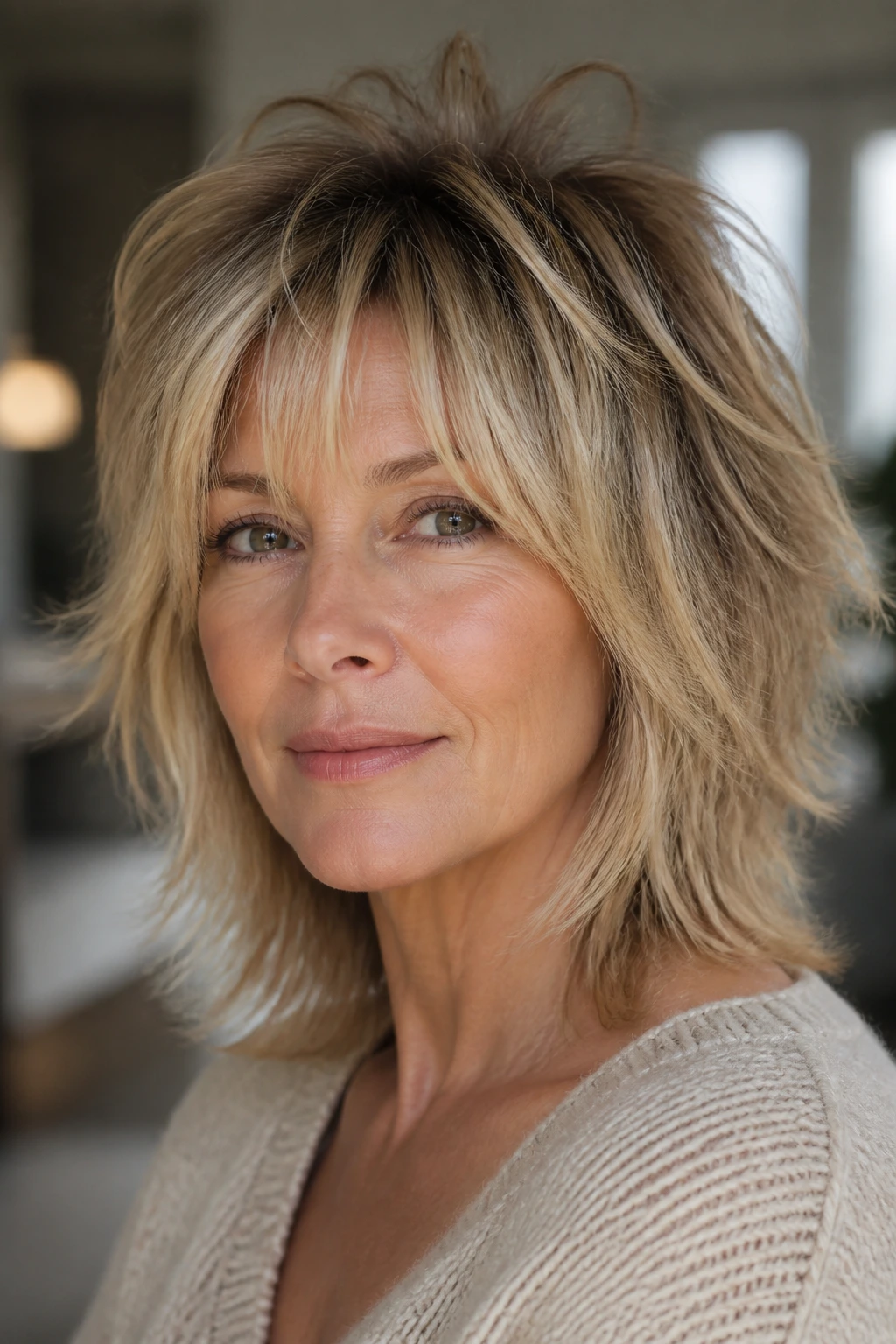
A shag goes wrong when the layers look chopped without direction. The cut needs a shape. Crown lift, face-framing pieces, and a perimeter that still has enough weight to hang properly — that’s the balance. Without it, the hair can flare out at the sides and feel oddly disconnected from the rest of the head.
The smartest way to ask for a shag is to talk about where you want movement. Around the eyes? At the jaw? Through the crown? Those details matter more than asking for “lots of layers,” because lots of layers can mean almost anything. If your hair is fine, you want soft internal layering and not a ton of thinning. If your hair is dense, you want bulk removed underneath so the shape doesn’t spread wide.
Bring a few photos, yes, but also say what your hair actually does after it’s washed. Does it puff at the sides? Go flat on top? Split at the crown? That’s the real conversation.
1. Chin-Length Feathered Shag with Wispy Bangs
This is one of the easiest shags to wear when you want movement near the face without losing the clean feel of a shorter cut. The feathering around the jaw keeps it light, and the wispy bangs stop the forehead area from looking bare. On fine hair, the shape can do more than the density ever could.
The trick is to keep the layers soft, not shredded. Ask for enough texture to make the ends flick instead of sitting as one line. A touch of mousse at the roots and a small round brush around the face will keep it from looking too flat.
- Best on straight to slightly wavy hair.
- Works well with glasses because the bangs don’t fight the frames.
- Good if you want a shorter cut that still has a little swing.
2. Collarbone Shag with Curtain Bangs
If you like hair that brushes the shoulders and moves when you turn your head, this is the sweet spot. Curtain bangs split the face neatly and keep the front from feeling heavy, which is useful when the rest of the cut has a lot of layering. It’s soft without turning precious.
This length is also easy to live with. You can blow it smooth, bend the ends with a large brush, or let it dry with a little natural wave and still look finished. The collarbone length gives you enough weight that the layers don’t escape and puff outward.
A center part helps the curtain fringe fall the right way. If your hair leans flat at the front, clip the bangs to each side while they cool. Small thing. Big payoff.
3. Short Pixie Shag with Choppy Top Layers
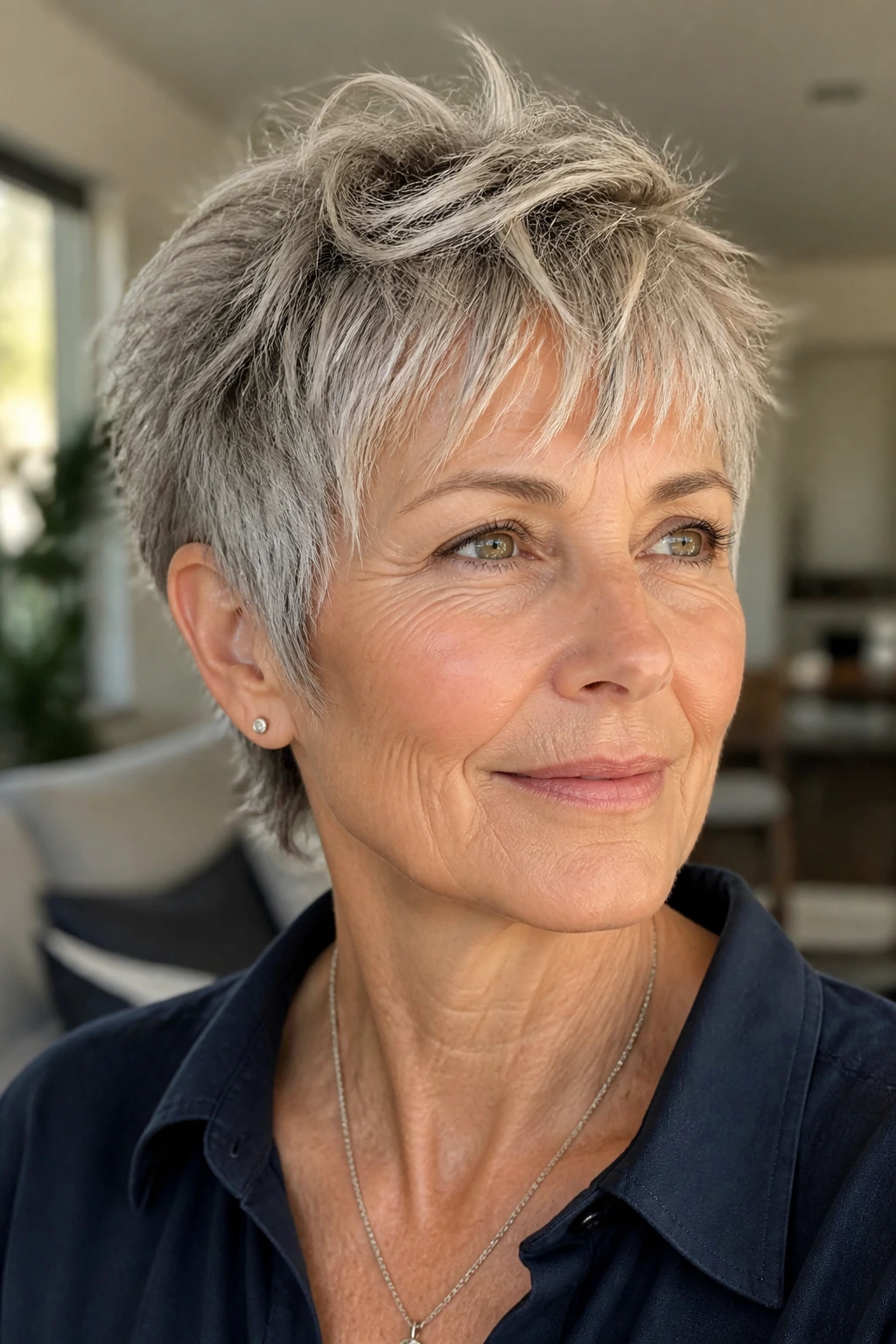
A pixie shag is for the woman who wants hair off the neck but doesn’t want a severe crop. The top stays piecey, the sides stay soft, and the back is usually tapered close enough to show the nape. It has a little attitude, but not the kind that needs a lot of styling theater.
The best version leaves enough length on top to sweep forward, spike a bit, or brush into a side part. That’s what keeps it from looking like a standard short cut from the salon chair. A dab of matte paste between the fingers is usually enough.
Skip heavy creams here. They flatten the top, and then the whole shape loses its point. Keep this cut airy, and it will do the rest.
4. Shoulder-Length Razor Shag with Broken Ends
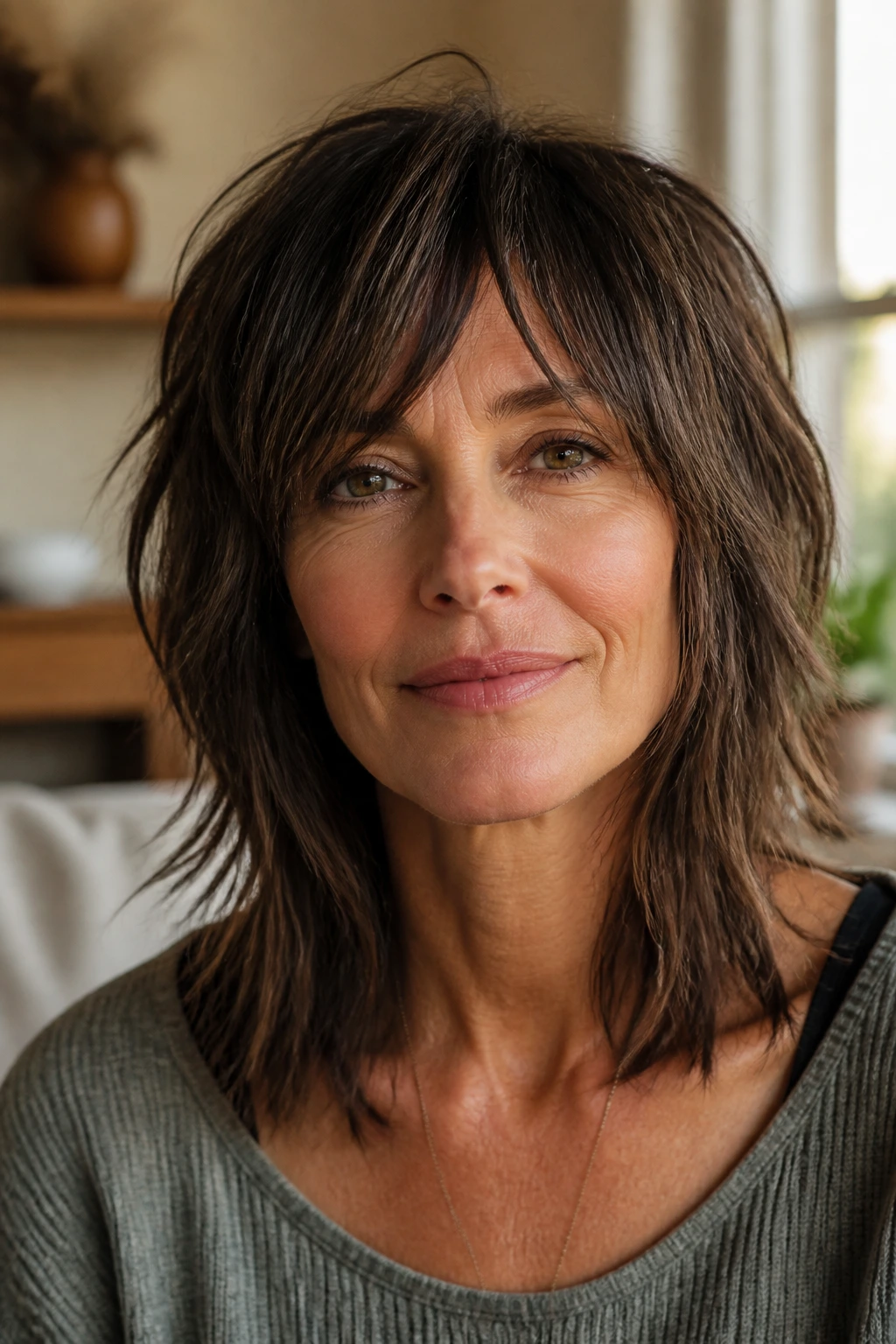
Razor cutting gives shoulder-length hair a more lived-in edge, especially if your hair is straight or only slightly wavy. The ends look chipped in a good way — not blunt, not heavy, just soft enough to move. It’s a strong choice if you want your layers to show even when you skip a blowout.
This version works best when the stylist keeps the interior loose and the perimeter a little longer. Too much razor work on fragile hair can make the ends look wispy in a bad way, so this is one cut where restraint matters. You want texture, not fraying.
A touch of texture spray through the mids and ends will wake up the cut. That’s enough. You don’t need a full can.
5. Silver-Enhanced Shag with Side-Swept Fringe
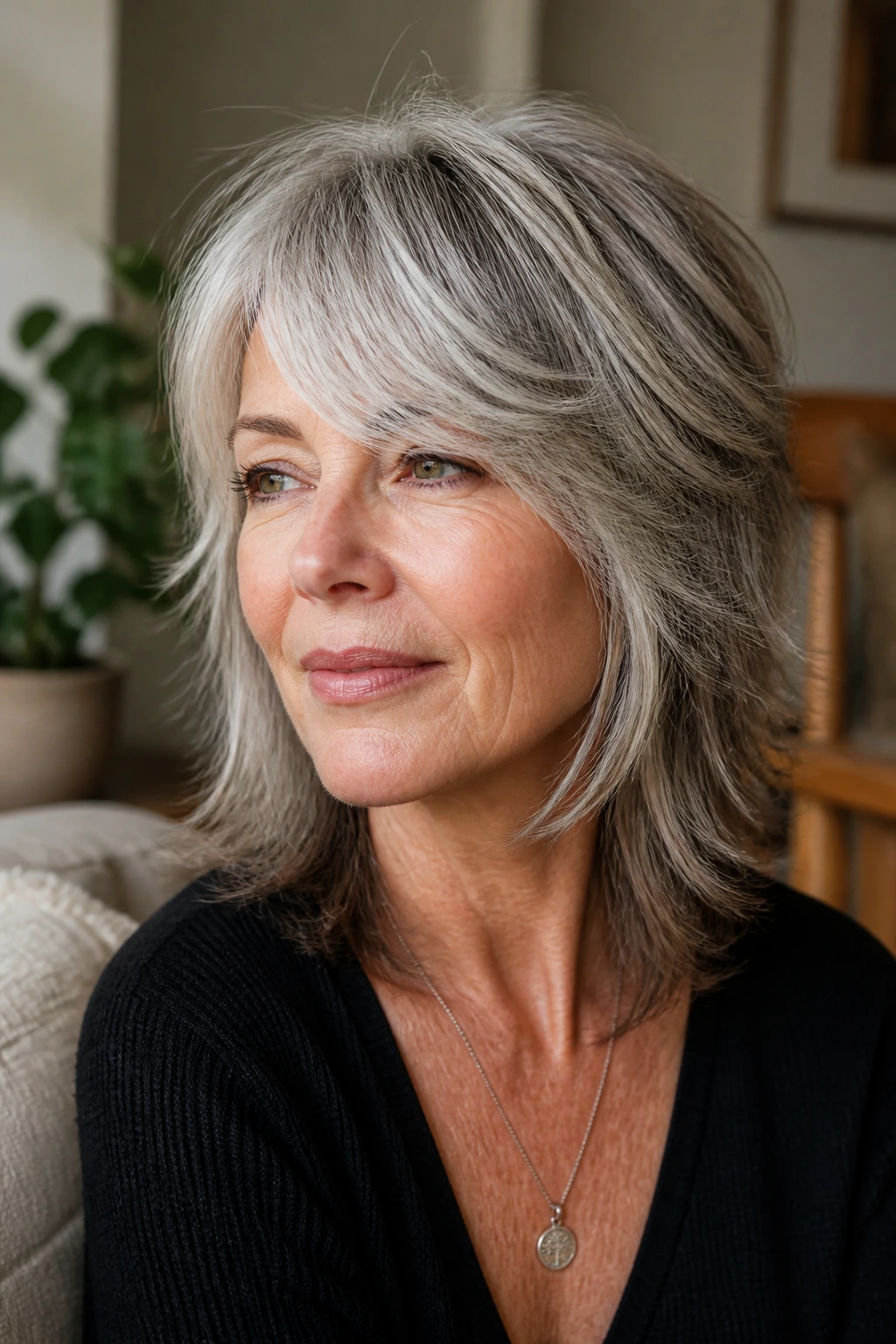
Gray hair loves a shag when the cut is clean. The reason is simple: silver strands can look blunt and bulky if they’re all one length, especially near the temples. A side-swept fringe softens that line and gives the front some motion without covering the face too much.
This cut is especially good when the gray is mixed — part silver, part white, part darker base. The layers catch the light at different angles, and the whole thing looks more dimensional. A little smoothing cream on damp hair helps the fringe fall instead of sticking up.
If your gray hair has gone wiry, keep the layers light around the ends and avoid over-thinning. Gray doesn’t need to be “managed” into submission. It needs shape.
6. Wavy Lob Shag with Soft Layering
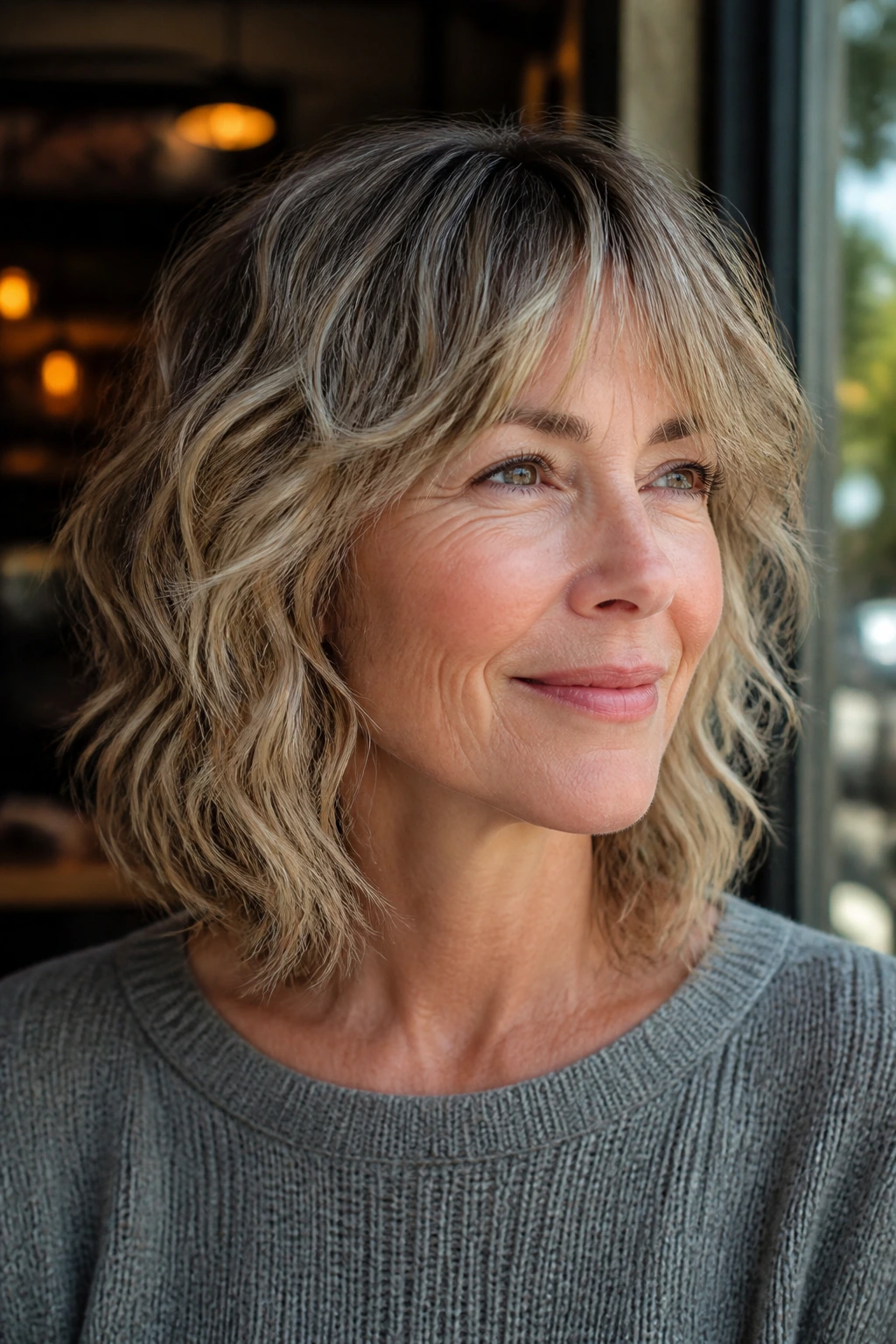
A lob shag is the easygoing cousin in this group. The length sits somewhere between the chin and the shoulders, and the layers are cut to encourage wave instead of fighting it. On hair that bends naturally, this can look almost too easy. That’s the point.
The nicest thing about this cut is how it handles second-day texture. A quick mist of water, a squeeze of mousse, and a few scrunches are often enough to bring it back. No elaborate styling ritual. No temper tantrum from the mirror.
It’s a smart cut if you want something that feels current but not severe. The line stays soft, the movement stays visible, and you can still tuck it behind the ear on one side.
7. Cropped Tapered Shag for the Neckline
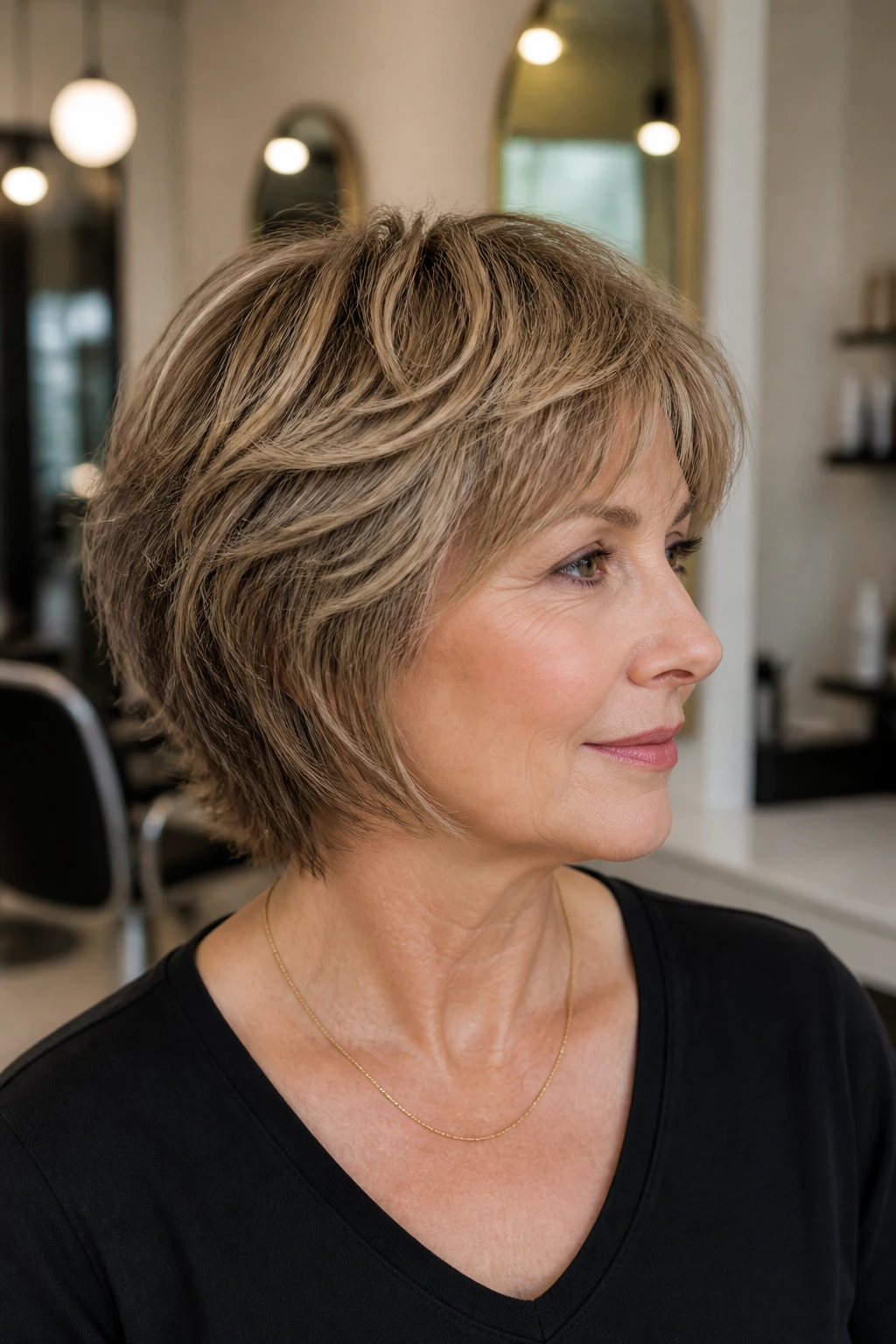
This is the short shag for someone who hates hair brushing the collar all day. The neckline is tapered close, the crown has enough height to keep the head shape balanced, and the front pieces stay a little longer so the style doesn’t feel clipped off. It’s neat without being stiff.
The key is keeping the top alive. If the crown is cut too short, the whole thing goes helmet-fast. If the top is left with a little length, the cut can be pushed forward, separated with fingers, and worn with a side part or a loose fringe.
This is a good choice for warmer climates, gym-heavy routines, or anyone who wants less hair around the neck but still wants softness at the face. Practical. Clean. Not boring.
8. Mid-Length Shag with Bottleneck Bangs

Bottleneck bangs are a nice middle ground when straight-across bangs feel too heavy and curtain bangs feel too split. They start narrower between the brows, then open a little at the cheekbones. That shape pulls attention upward without boxing in the forehead.
On a mid-length shag, this fringe keeps the cut from wandering into “just layers” territory. The bangs give it a point of focus. The rest of the hair can stay tousled and loose, which balances the face instead of crowding it.
Use a medium round brush or a flat brush with a quick bend under the fringe. If the bangs stick to the forehead, they were cut too heavy or dried too flat. That’s fixable, but it’s better to get the cut right.
9. Long Shag with Face-Framing Layers
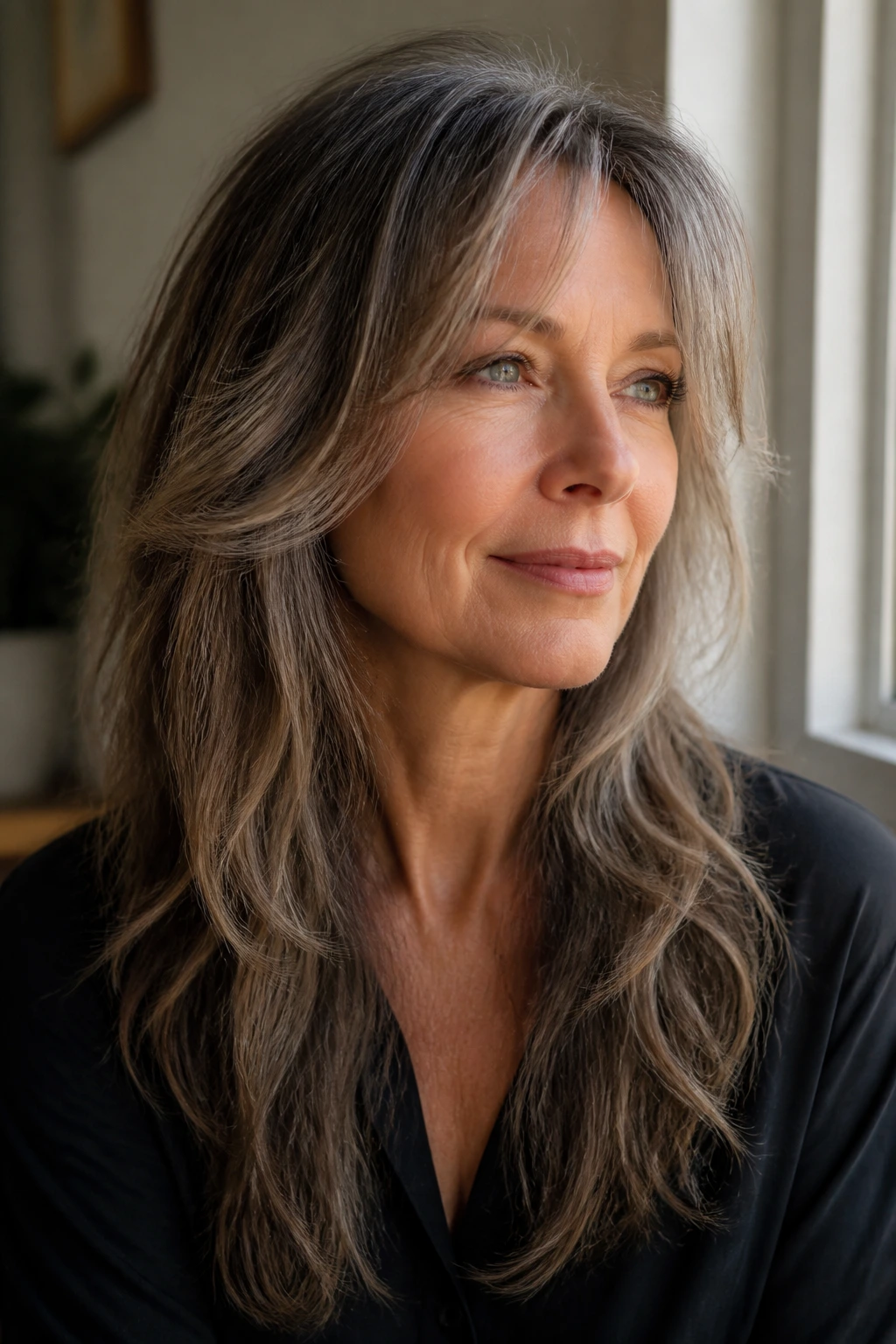
Some women over 50 don’t want short hair. Fair enough. A long shag keeps the length but removes the curtain effect that happens when long hair gets heavy and hangs straight from the head. The face-framing pieces matter here. They pull the eye inward and stop the ends from feeling like one big block.
This cut works best when the first layer starts around the chin or collarbone, not the ear. If the layers start too high, long hair can lose its shape fast. If they start too low, the shag barely shows. That spacing is the whole game.
You can air-dry this cut, braid it overnight, or give it a loose wave with a wand. It’s flexible, which is why it suits people who like length but don’t want the maintenance of very long one-length hair.
10. Rounded Curly Shag with Lift at the Crown
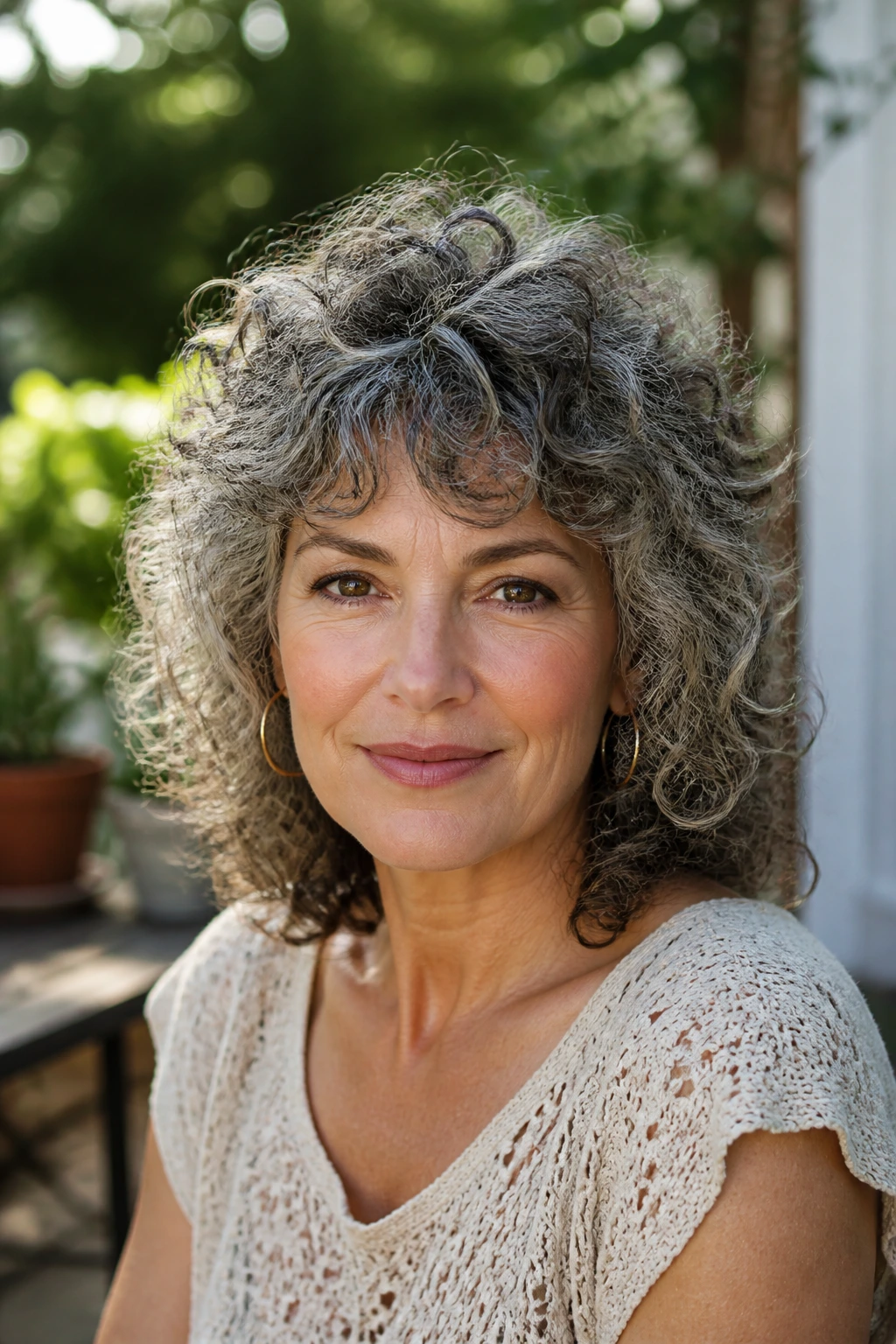
Curly hair and shag layers get along when the cut respects the curl pattern. A rounded curly shag keeps the silhouette from turning into a triangle. The crown has lift, the sides are shaped, and the bottom doesn’t drag too hard.
A good curly shag is cut curl by curl, or close to it. That matters because curls spring up in different ways. If the stylist chops it dry without watching the curl pattern, the result can land lopsided. Ask for shape that follows the natural bend.
Diffuser dry this one on low heat and low speed. A little curl cream, then a light gel cast if your hair frizzes easily. Nothing heavy. Curly shag hair looks best when each coil can still move.
11. Sleek Shag with Piecey Ends
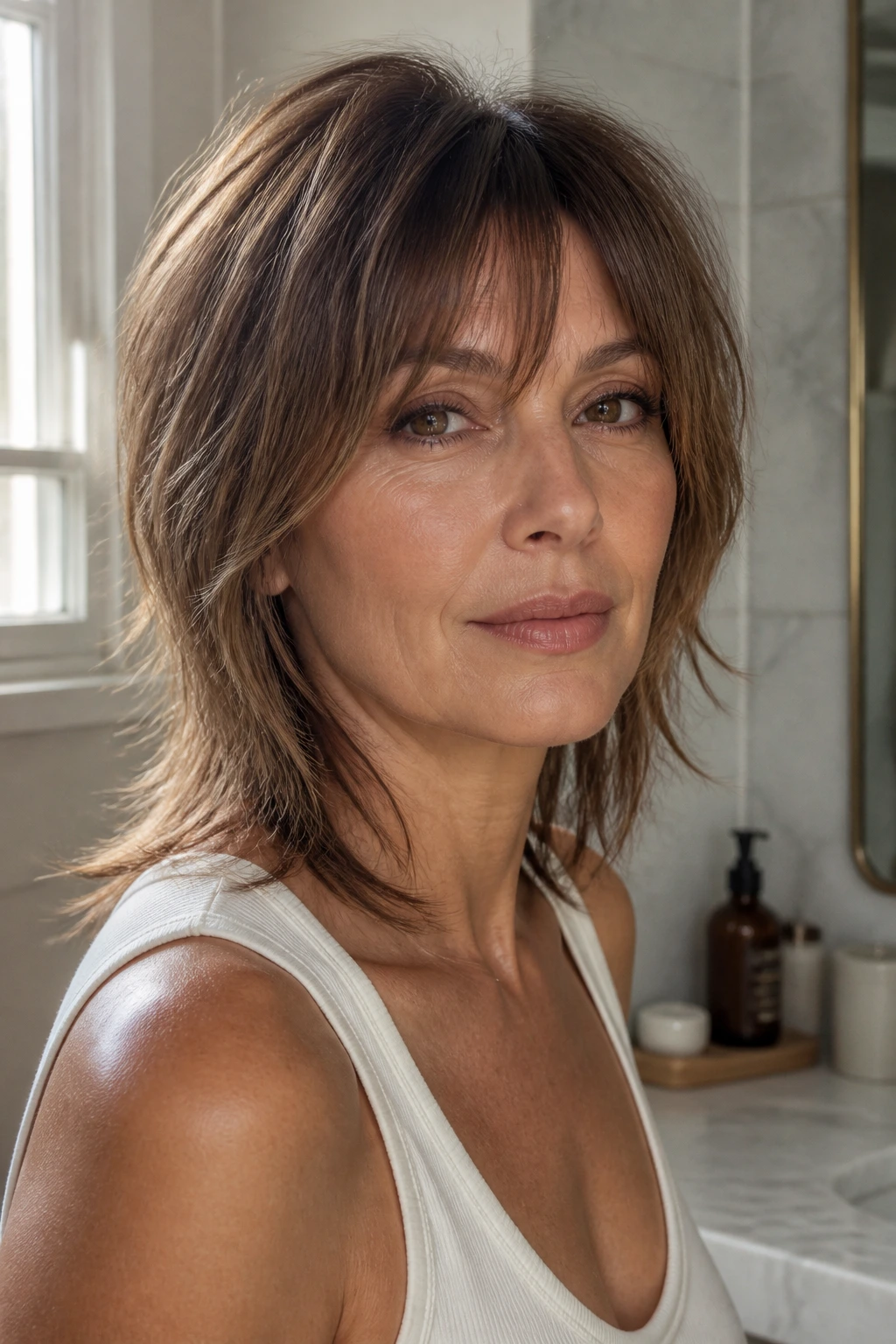
Not every shag has to be big and messy. A sleeker version keeps the layers, but the finish is smoother and the ends separate into thin, deliberate pieces rather than a cloud of texture. It’s a nice answer for straight hair that needs interest without extra volume.
This version depends on a precise cut. The perimeter should still have some weight, or the style can look too thin by the time you brush it out. A little bend at the ends with a flat iron or a medium brush gives it shape without turning it into a full blowout.
A pea-sized amount of lightweight styling cream is enough here. Too much product makes the layers clump, and then the whole point of the piecey finish disappears.
12. Voluminous Crown Shag with Lift Through the Top
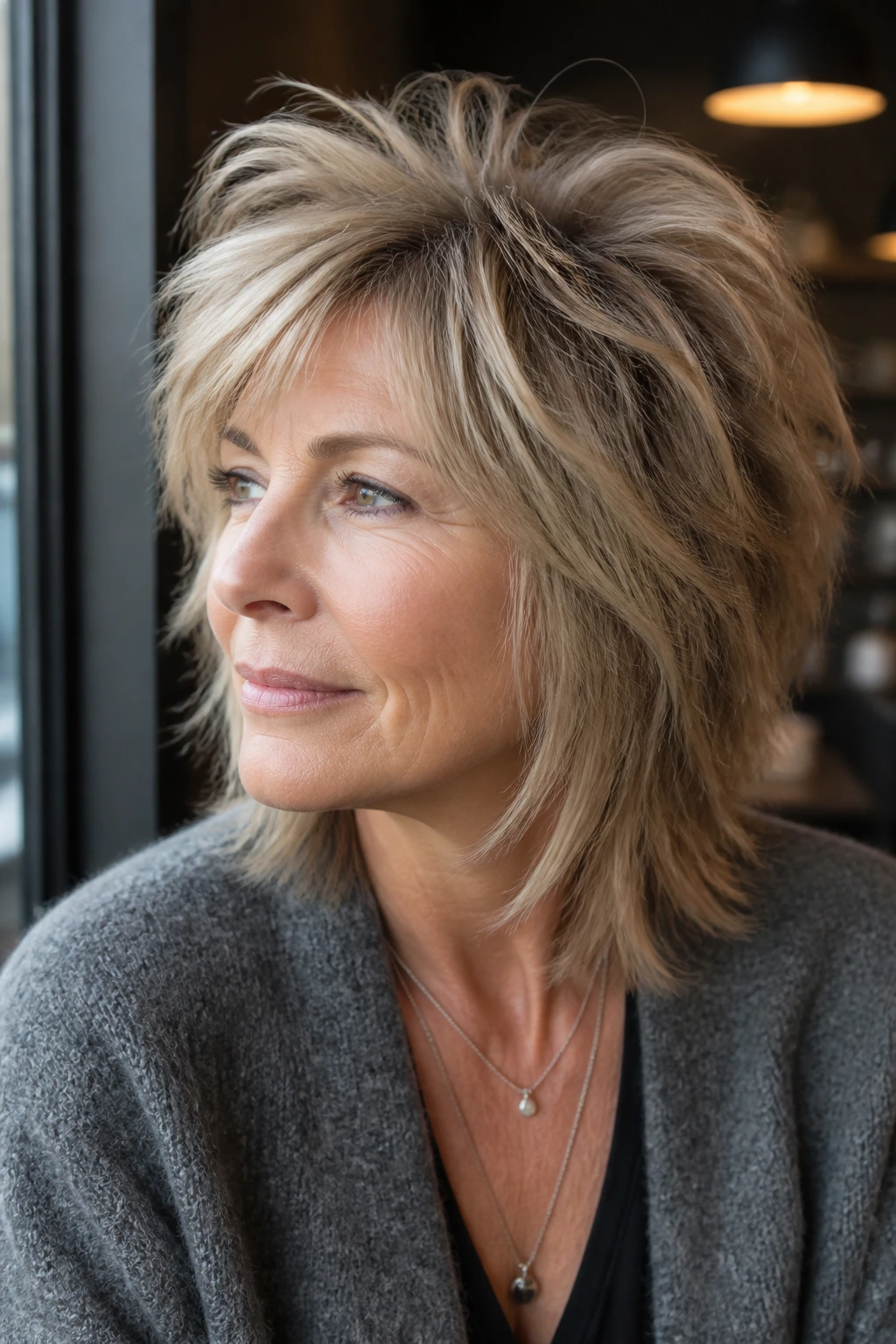
Flat crown? This is your cut. A voluminous crown shag puts the emphasis where it counts: on top. The upper layers are shaped to lift away from the scalp, while the sides and back stay controlled enough to keep the silhouette from blowing wide.
This one often looks best with a side part, because the offset part gives the roots a little push in one direction. Blow-dry the crown first, not last. People skip that step all the time, then wonder why the top falls by lunch.
- Best for hair that collapses at the roots.
- Good if you like a bit of height at the front.
- Works with medium to thick hair especially well.
The styling is simple, but the sequence matters. Set the roots first. Then finish the mids and ends.
13. Salt-and-Pepper Layered Shag with Soft Temples
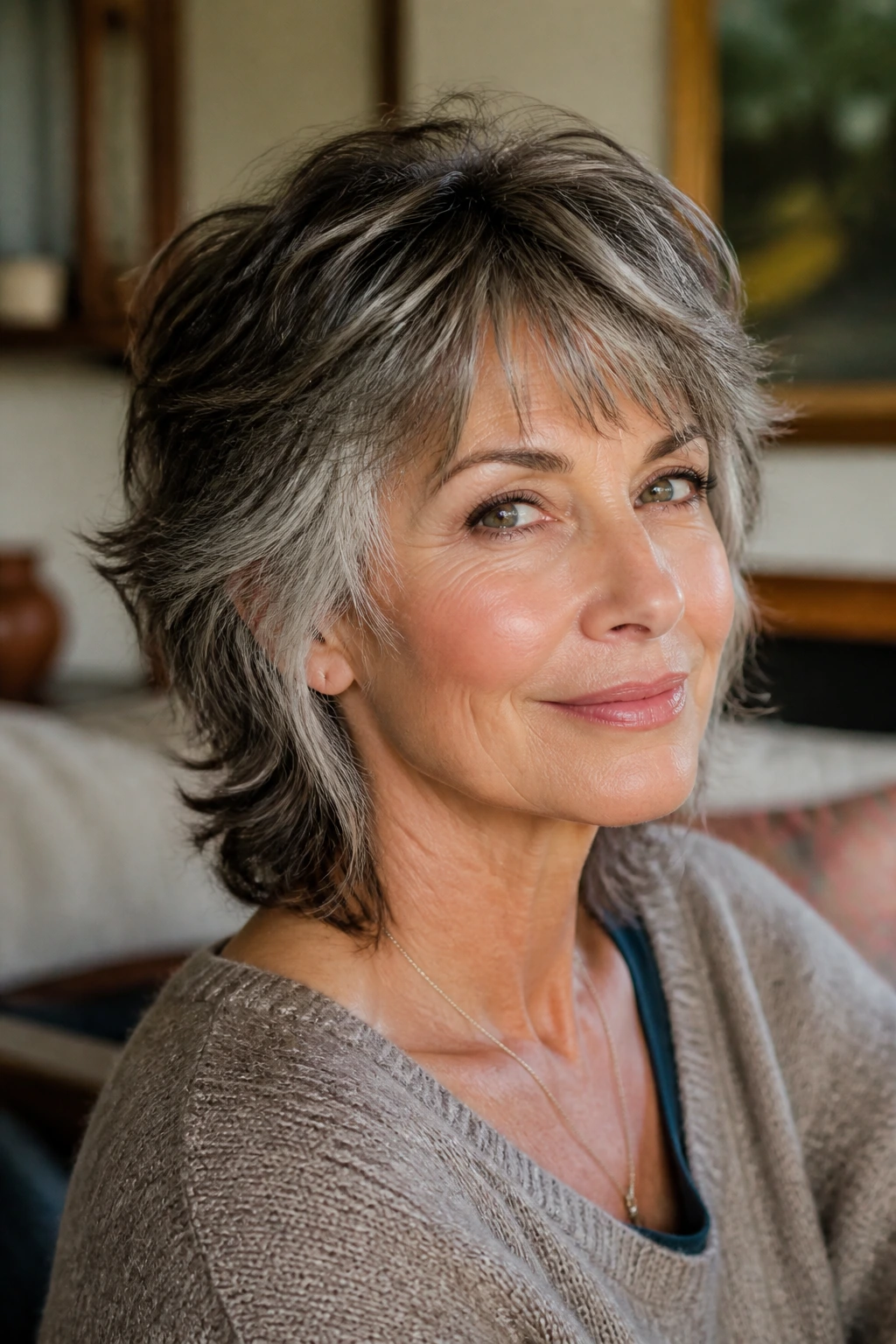
Salt-and-pepper hair has a built-in contrast that a shag can show off beautifully. The trick is to soften the temples and keep the layers around the ears from getting too bulky. That lets the silver and darker strands mingle instead of forming hard bands.
A layered shag on mixed-color hair often looks richer than a flat cut because the light hits the lighter pieces differently. There’s movement in the color itself. That’s part of the appeal, and it’s why heavy styling can actually work against it.
Choose a light styling foam or cream, then let the cut do the heavy lifting. If you pound it with shine serum from root to tip, you’ll lose the airy separation that makes the color look alive.
14. Shag with Micro Bangs and Choppy Layers
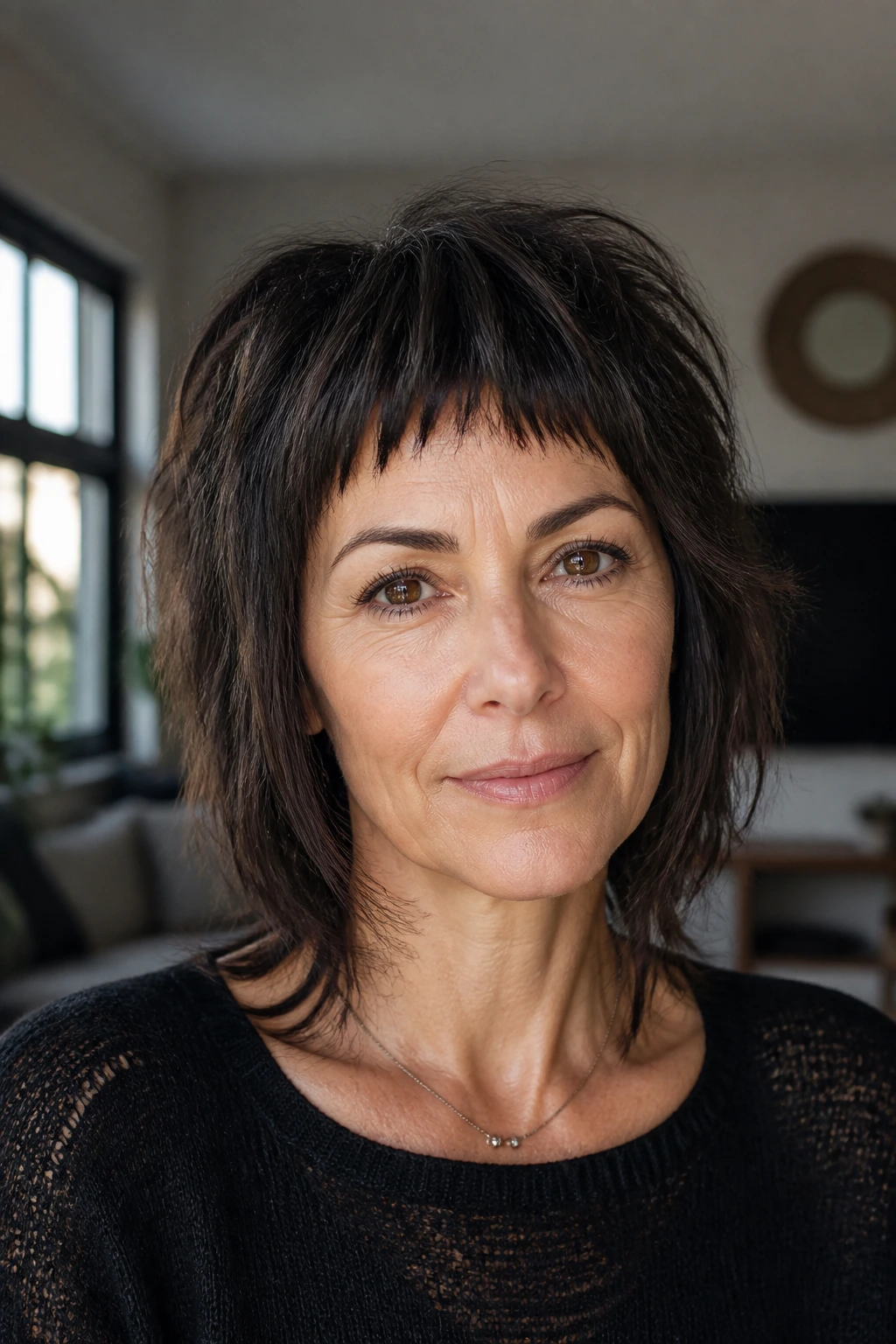
Micro bangs are not subtle. They sit high on the forehead and bring the eyes into focus fast. Paired with shaggy layers, they create a cut that feels sharp, modern, and a little theatrical in the best way. If you like your hair with a point of view, this one has one.
The rest of the cut should stay soft enough to balance the short fringe. Otherwise the whole thing can feel too severe, too editorial, too much. You want contrast: short in front, movement elsewhere.
This is a better choice if your forehead is not especially sensitive to fringe or if you like wearing your makeup with a strong brow. It’s also the shag I’d skip if you hate touching your bangs every ten minutes. That front line asks for attention.
15. Soft Wolf-Inspired Shag
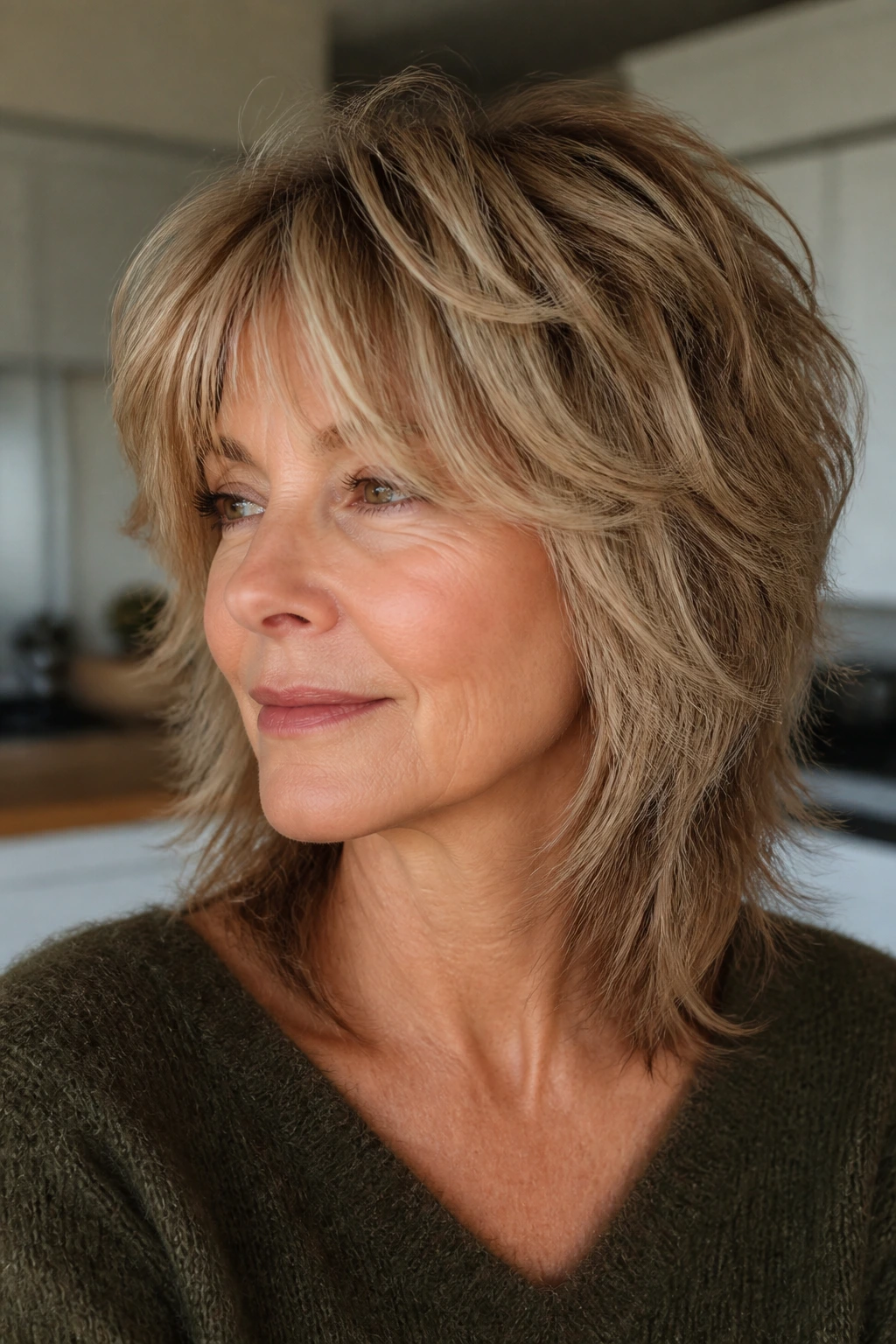
The wolf cut gets the spotlight, but the softer shag version is far easier to wear after 50. You still get the shorter crown, the fuller top, and the tapered length through the back, but the edges aren’t as extreme. The result feels current without becoming a costume.
This version is useful if you want more edge than a traditional shag but less drama than a full wolf cut. The layers should be blended enough that the cut can grow out without a hard line around the ears. That grow-out matters. A lot.
Ask your stylist to keep the shape soft around the face and not overly disconnected at the nape. The cut should look like it belongs to your head, not like it was borrowed from a different decade and shoved on.
16. Shoulder-Grazing Shag with Flip-Out Ends
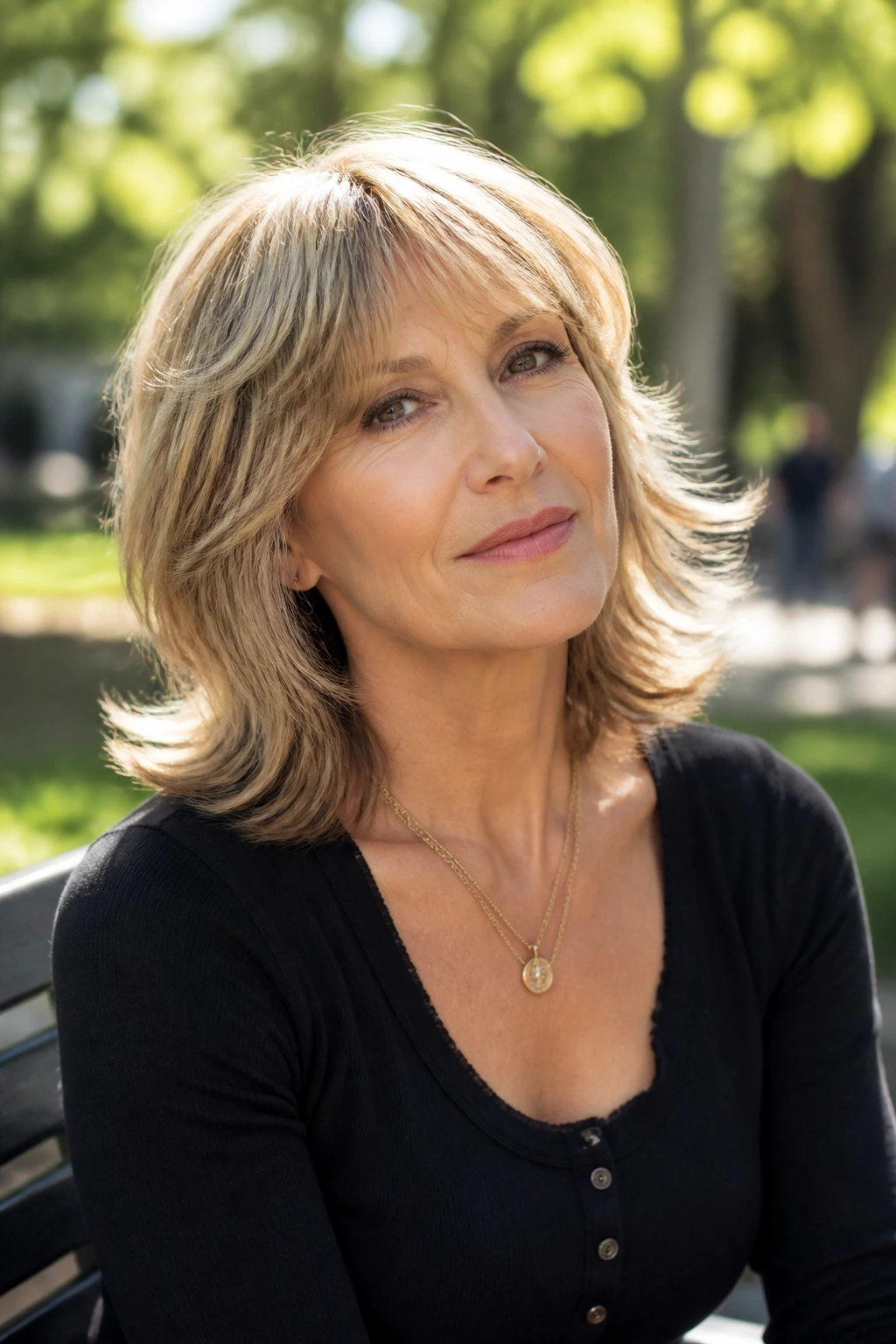
There’s something satisfying about a shoulder-grazing shag that flips just a little at the ends. It feels retro, but not in a costume way. The flip gives the shape width, which is useful if your hair has gone a bit flat on the sides.
The secret is the layer placement. If the ends are cut with enough movement, a round brush or even a quick wrist turn with a flat iron will send them outward a touch. Not curl. Flip. That’s a different look, and it reads softer.
This cut tends to flatter women who want some fullness around the jaw without a big round blowout. It has a little swing when you move, which is half the point.
17. Airy Shag for Fine Hair
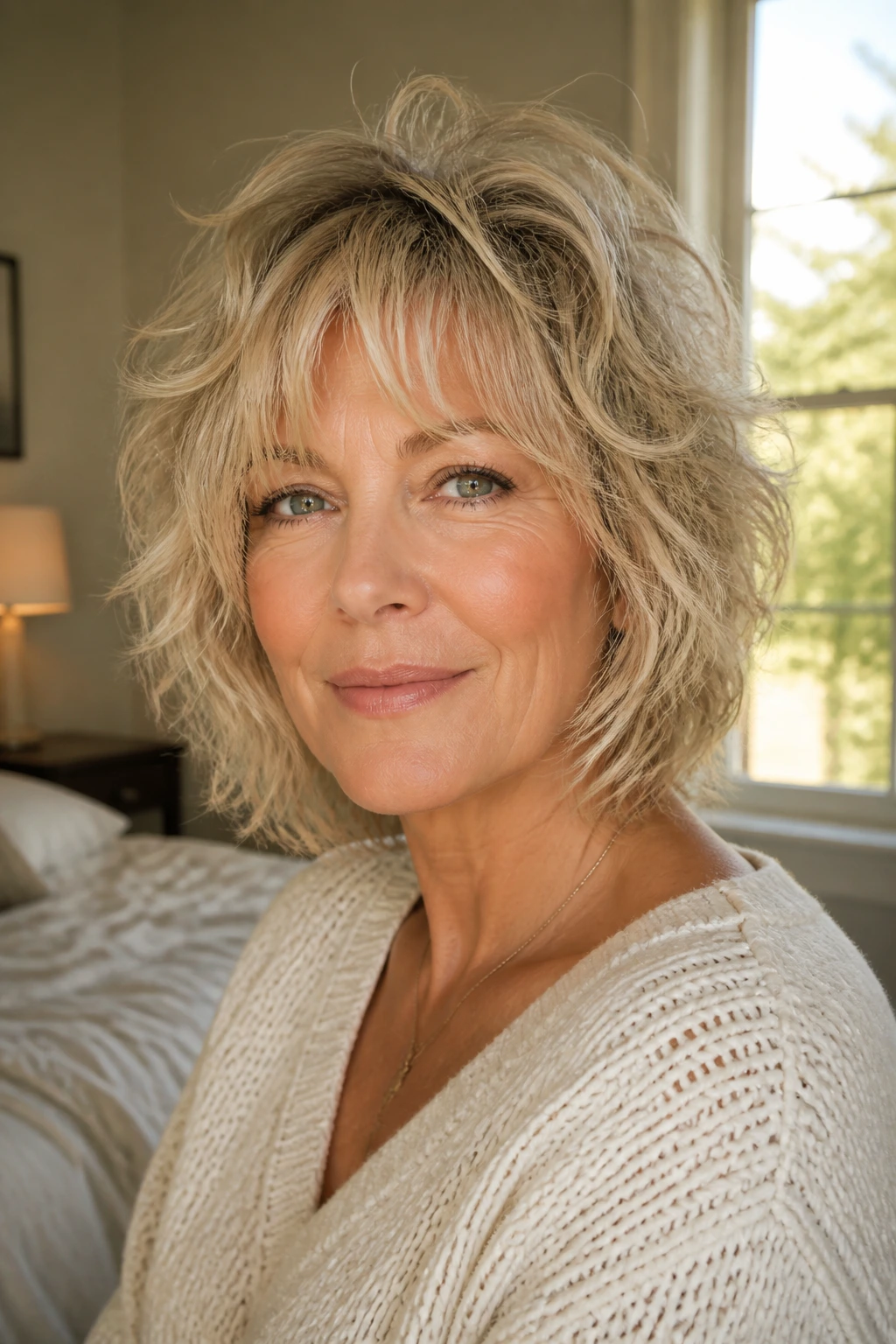
Fine hair needs a shag that knows when to stop. Too much texturizing and you can see the scalp. Too little and the hair sits like paper against the head. The airy shag lives in the narrow gap between those two mistakes.
Ask for soft internal layers, not aggressive thinning. Point-cutting can help the ends look broken up without stripping the body out of the hair. That distinction matters more than any product bottle on the shelf.
- Keep the perimeter a little fuller.
- Use a root-lift spray before blow-drying.
- Avoid heavy oils near the top.
A cut like this can make fine hair look wider, not thinner, if the shape is respected. That’s the whole job.
18. Thick-Hair Debulked Shag with Controlled Layers
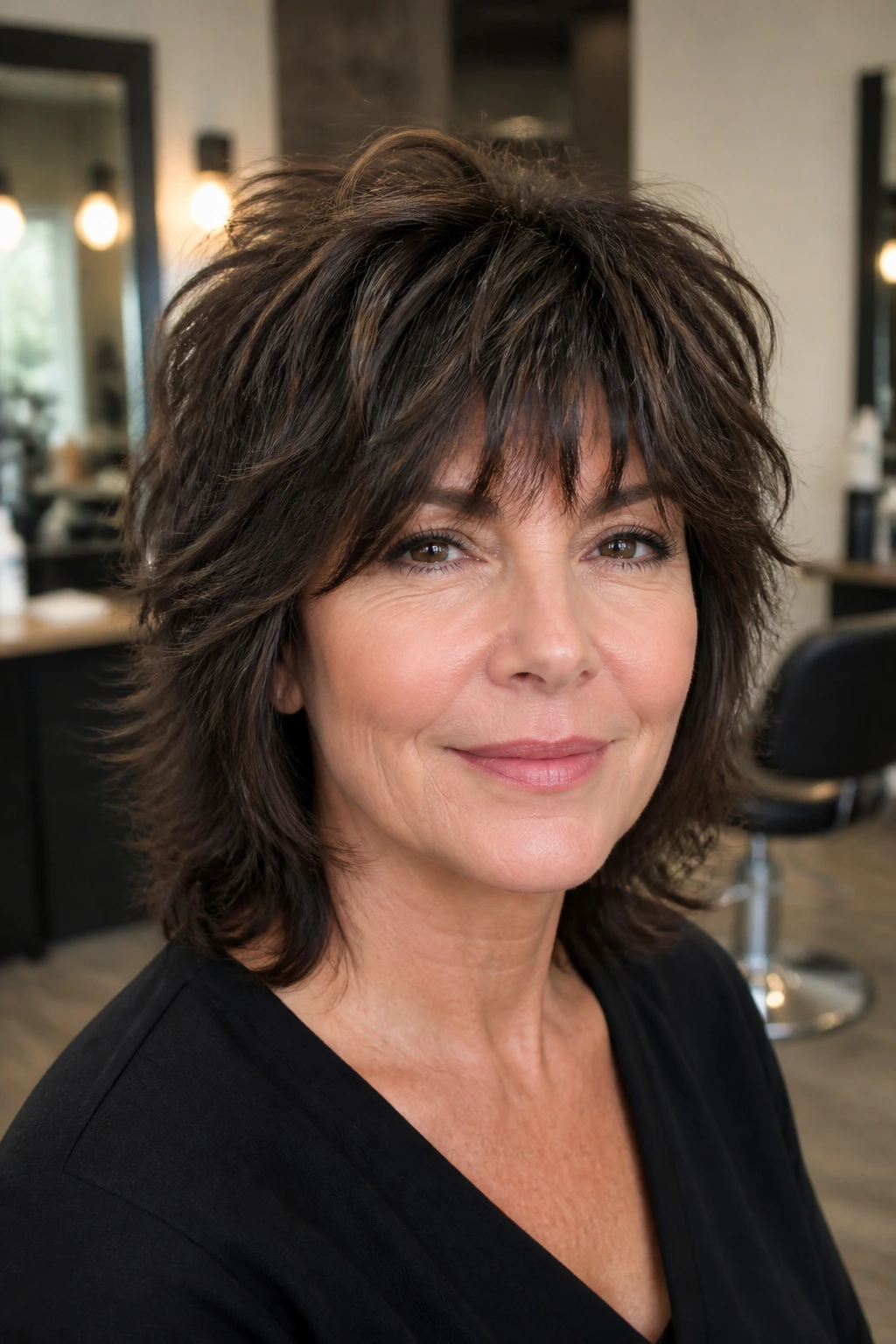
Thick hair can look magnificent in a shag — if the weight is handled properly. The best thick-hair version removes bulk from the inside, not just the surface, so the hair falls instead of standing out in a triangle. If your hair has a mind of its own, this is the cut that tells it where to go.
The danger here is overdoing the thinning. Too much and you get frizzy ends with no body underneath. Better to have a stylist cut strategic layers that relieve heaviness at the crown, sides, and underneath sections while preserving enough length to keep the shape anchored.
A cream with light hold is your friend. Thick hair often needs control more than volume. That’s the real difference.
19. Silver Pixie Shag with Feathered Sides
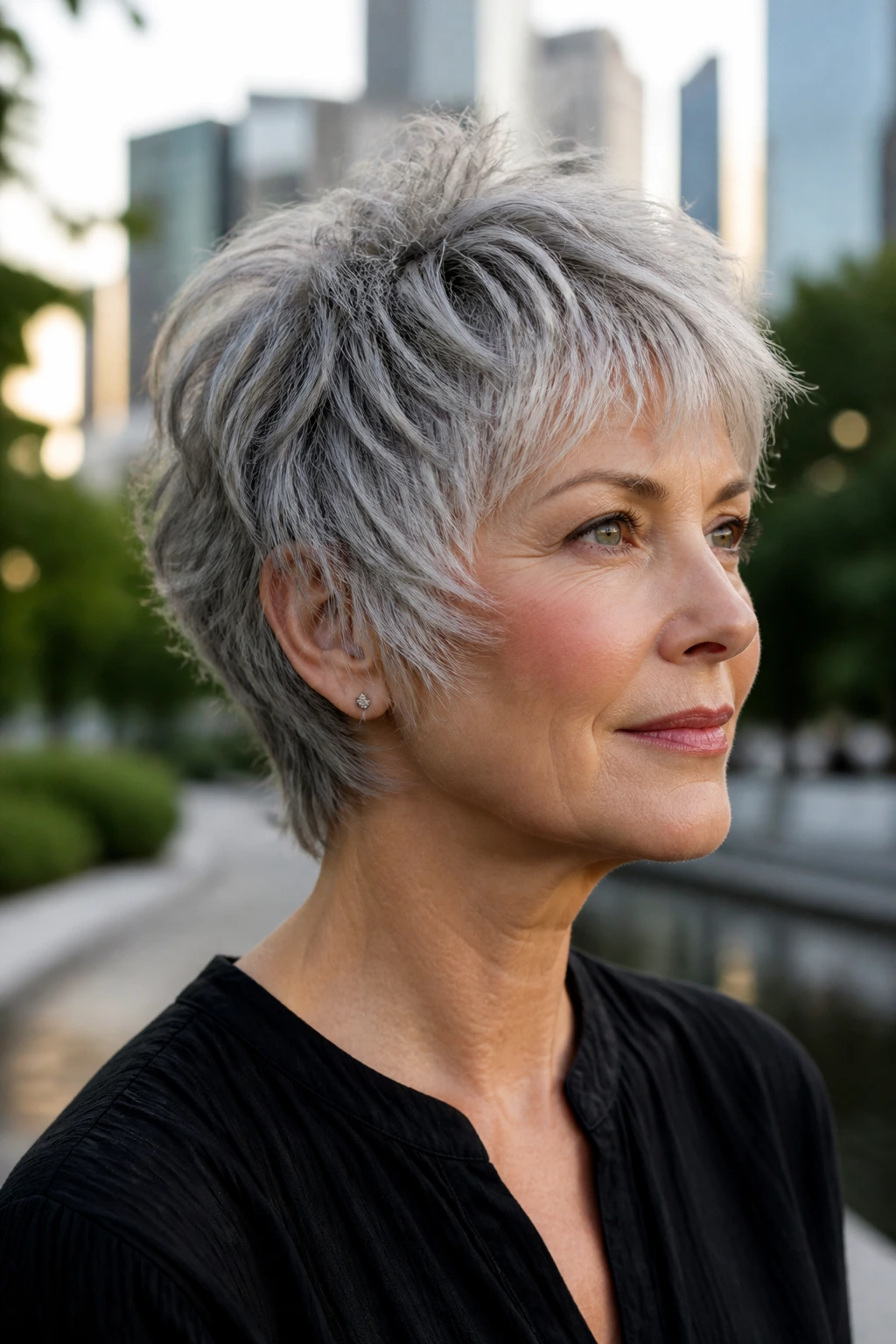
A silver pixie shag has a crisp, polished feel, but the feathering keeps it from looking helmet-like. The sides stay soft around the ears, the top has a bit of lift, and the silver color gets to do what it does best: show every bit of texture and light.
This is one of those cuts that can look more expensive than it is. Not because of the price tag, but because the shape is clean and the styling doesn’t need much. A small amount of paste, rubbed between the palms, is enough to separate the top.
If you wear earrings, this cut plays well with them. The ears stay visible, the neck looks longer, and the whole silhouette feels sharp.
20. Tousled Shag Bob with Soft Edge

A shag bob is a nice compromise when you want the neatness of a bob and the movement of a shag. The perimeter stays around the chin or just below it, but the texture inside keeps it from feeling boxy. It’s a sensible cut that still has personality.
This style likes a little separation. Finger-dry it with mousse, or rough-dry the roots and bend the ends under or out depending on your mood. The idea is to avoid the stiff, over-brushed bob that looks like it’s waiting for a job interview.
A shag bob is also easy to tuck behind the ear for a cleaner line on one side. That asymmetry can be surprisingly flattering, especially on fuller cheeks.
21. Mid-Length Shag with Tucked-In Layers
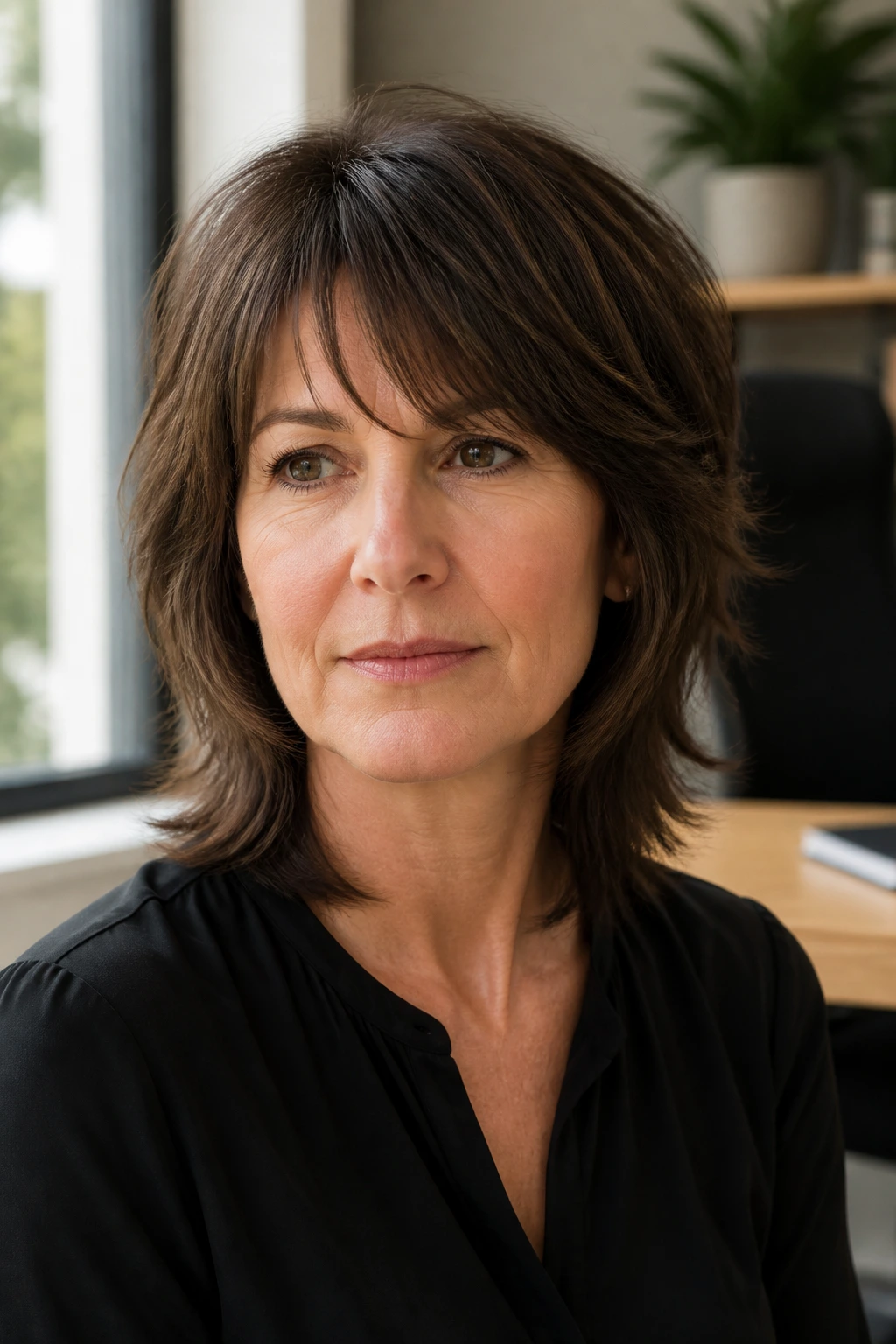
Some shags look wild. This one looks controlled. The layers are cut to sit close enough to the neck that you can tuck them behind the ears, smooth them down with a round brush, or wear them loose without a puffed-out halo. It’s a calmer version of the shape.
That calmness makes it useful for people who want movement but still need a haircut that behaves in a blouse collar, under a blazer, or around glasses. The layers should curve inward rather than kick out too hard. That subtlety is what keeps it refined.
If your hair tends to frizz at the ends, a tiny bit of smoothing cream on the last two inches can help. Keep it off the roots.
22. Long Layered Shag with Soft Waves
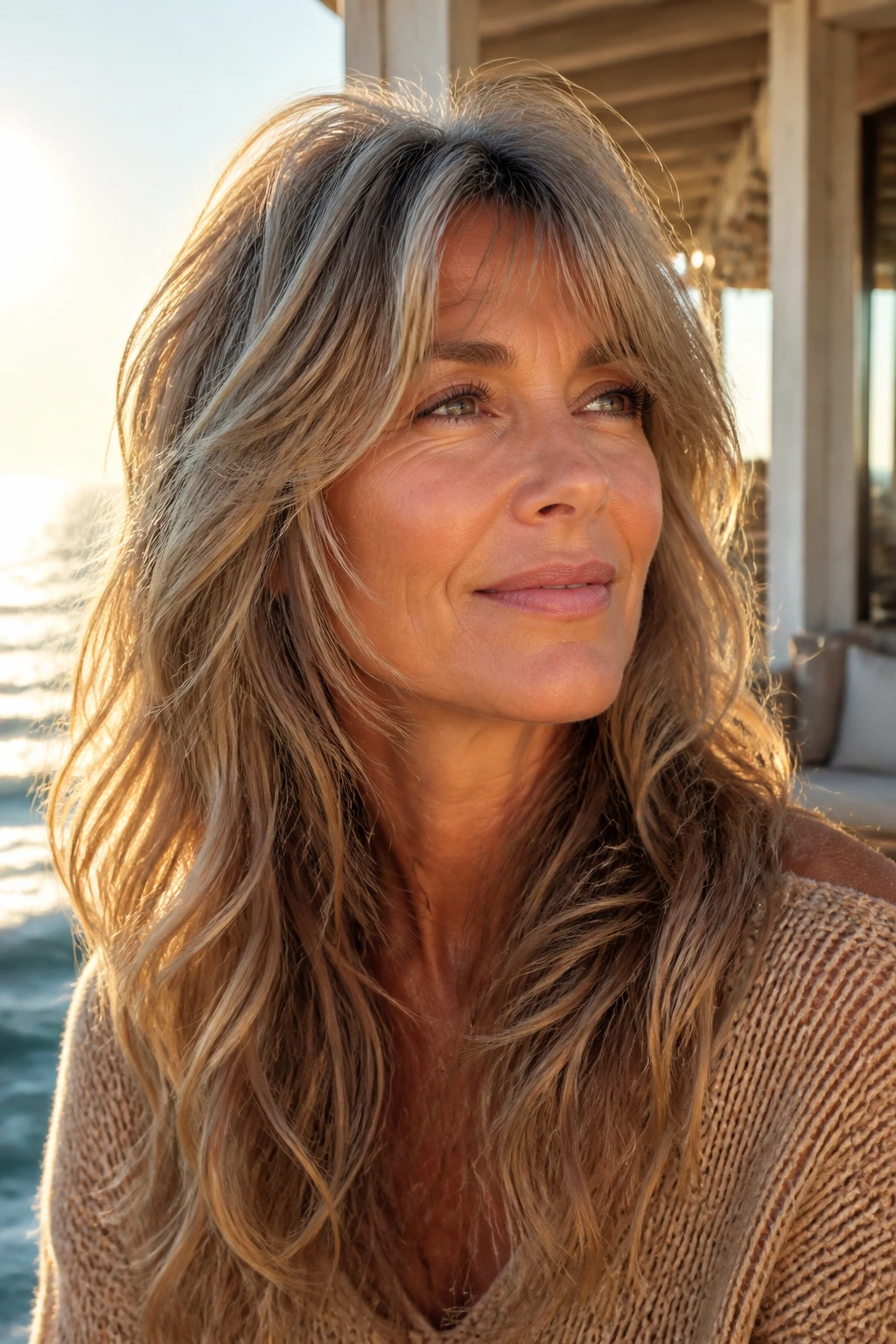
Long hair after 50 can look heavy fast if it doesn’t have internal shape. A long layered shag solves that by breaking up the length and putting movement where the eye wants it. Soft waves help, but the cut should still work if you wear it straighter.
This is a good cut for someone who likes hair that can go up, down, or half-up without the ends feeling like dead weight. The layers around the face keep the style from dragging downward, while the longer back preserves the length you want.
A large barrel wand or overnight braids can wake this cut up without making it look overdone. The goal is bend, not curls with hard edges.
23. Choppy Shag with Curtain Fringe
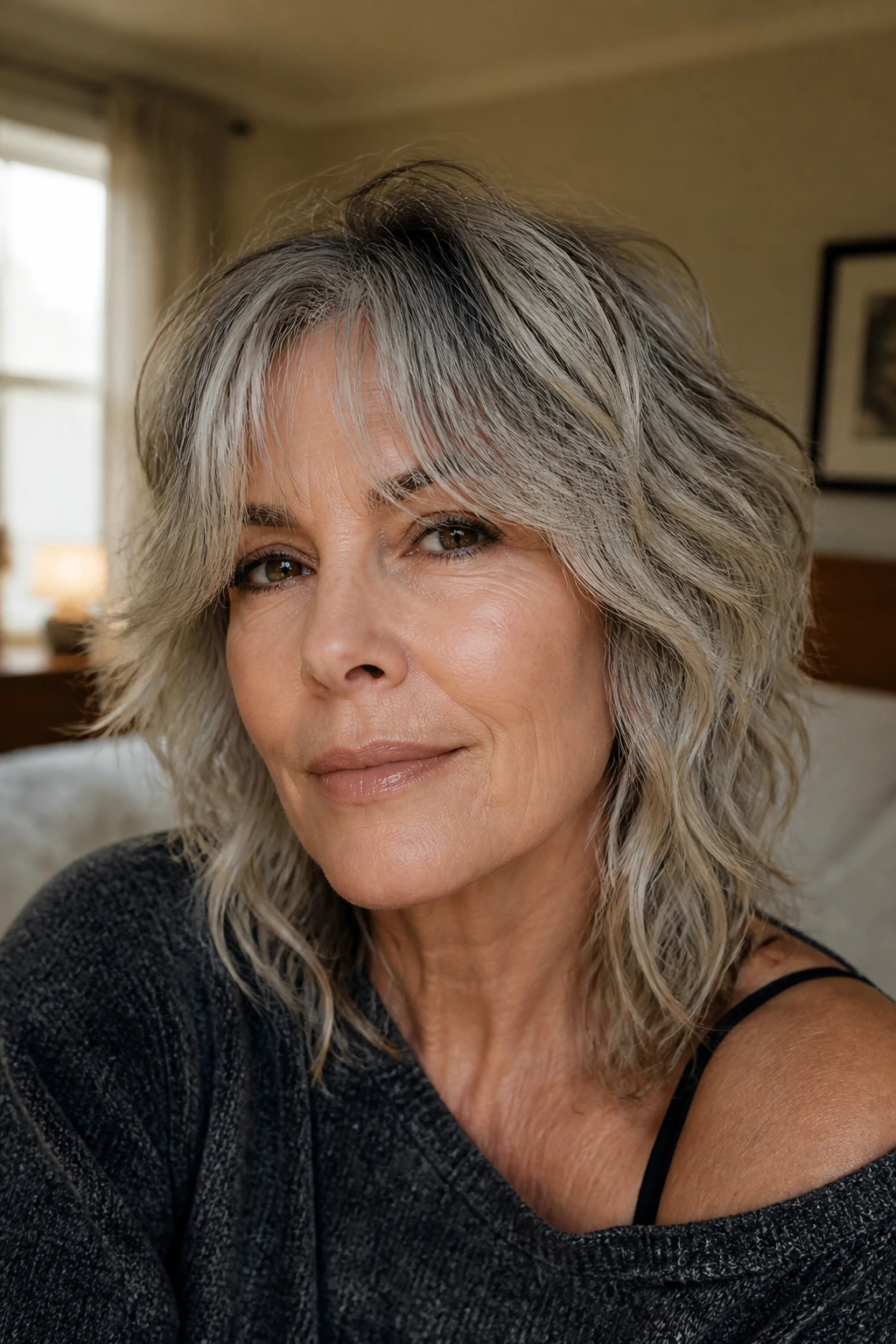
The choppy shag is a little more casual and a little less polished, which can be a relief if your hair naturally wants texture. Curtain fringe softens the front while the uneven layers give the rest of the cut some grit. It doesn’t try to be sleek. Good. It shouldn’t.
This version usually looks best on hair that has some natural bend, but straight hair can wear it too if the ends are broken up with a texturizing spray or a quick pass of a flat iron. The key is to keep the layering visible without turning it into static fuzz.
If you like hair that looks better after it’s been lived in for a few hours, this is the one.
24. Air-Dry Shag That Behaves Without Heat
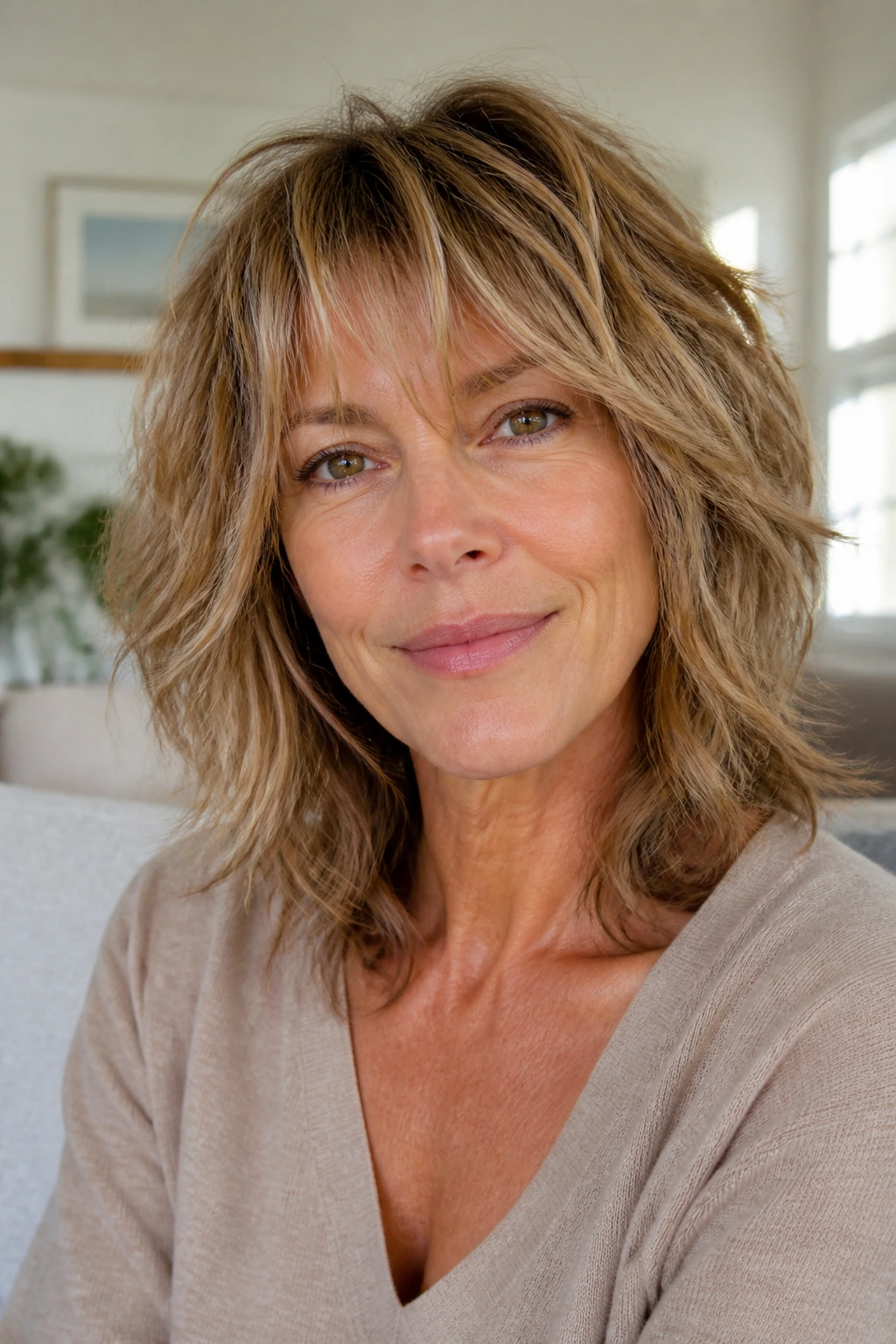
A true air-dry shag is cut with the dry-down in mind. The layers should land in a way that makes sense once the water leaves the hair, not just when it’s styled hot off the brush. That means controlled layers, not random chops.
This is one of the best options for women who want less heat damage and less time in front of a mirror. A light leave-in, a touch of mousse, and a scrunch or two can be enough if the cut was done properly. If the shape only works after a 30-minute blowout, it is not really an air-dry shag.
The best ones have a relaxed, slightly imperfect finish. That’s not a flaw. That’s the point.
25. Brushed-Out Glam Shag with Soft Volume
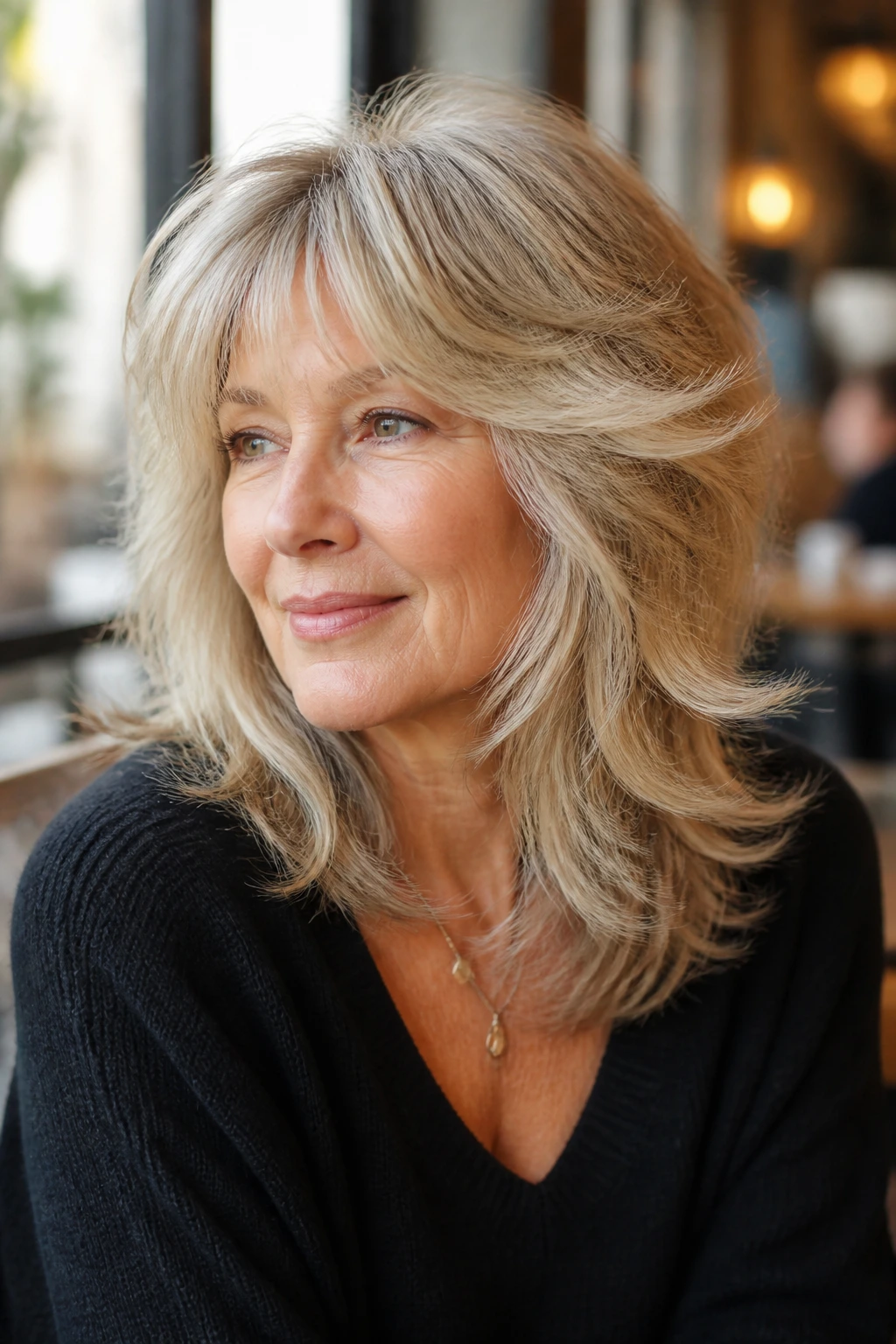
This shag is for the woman who likes movement but wants a smoother finish than the messy versions. The layers are still there, but when you brush them out, they fall into a soft, airy shape instead of a choppy one. It has a little old-school glamour in it.
A medium round brush and a blow dryer with a nozzle make all the difference. Set the roots, bend the face-framing pieces away from the face, then brush the ends lightly so they move rather than curl hard. The style should look full, not puffy.
It’s especially nice for dinners, events, or any day you want the haircut to feel polished without going stiff.
26. Soft Fringe Shag That Skims the Brows
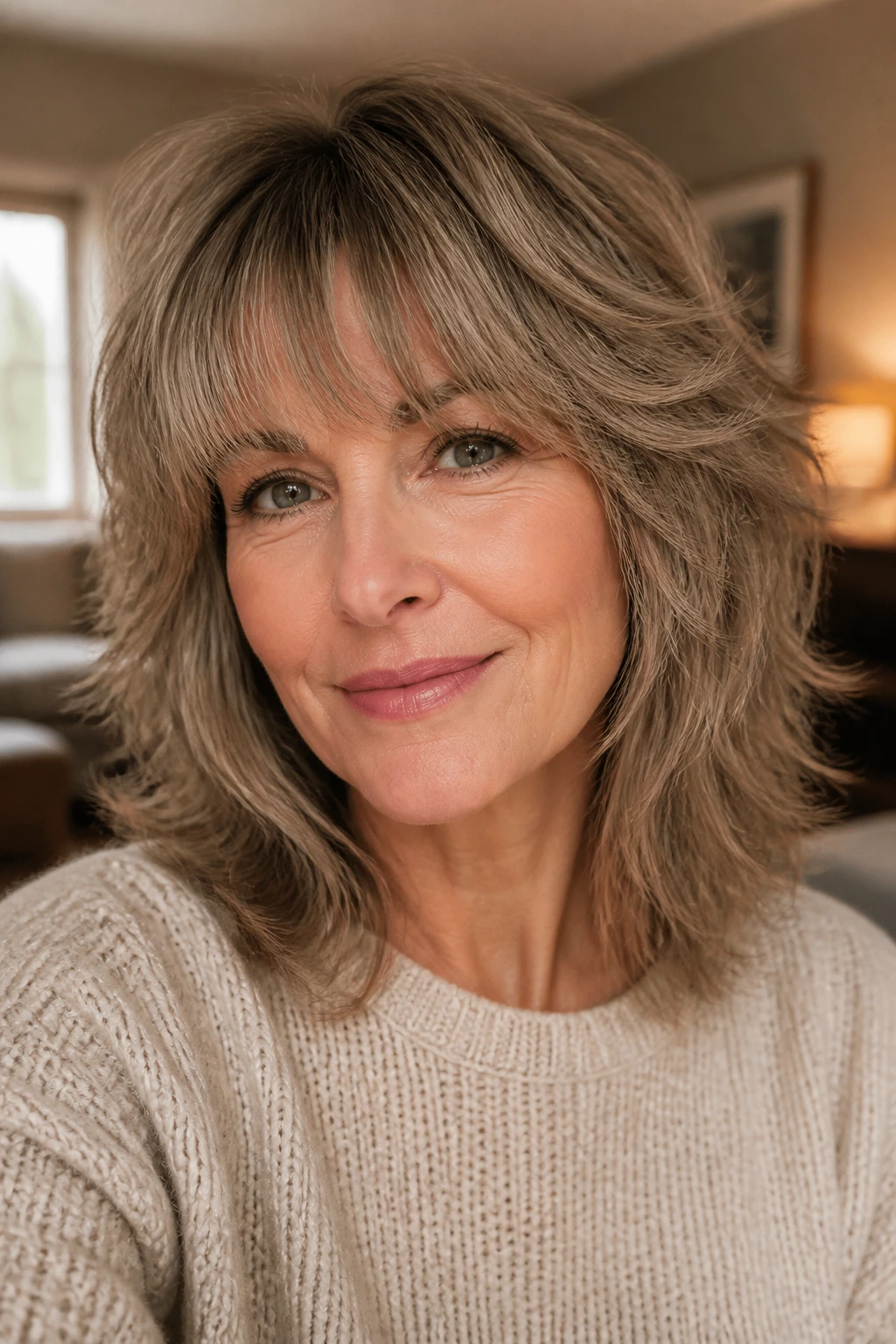
A soft fringe can do a lot of quiet work. It makes the forehead area less open, helps balance longer faces, and blends nicely into the side layers so the front never feels chopped off. The fringe should skim, not crowd.
This is a cut I like on women who want softness near the eyes without committing to a heavy bang. It’s also useful if you’re growing out a shorter fringe and need the middle ground that doesn’t scream “awkward stage.”
Keep the fringe light and the surrounding layers soft. If the bangs get too thick, the cut loses that easy, feathered feeling.
27. Naturally Curly Shag with Real Shape
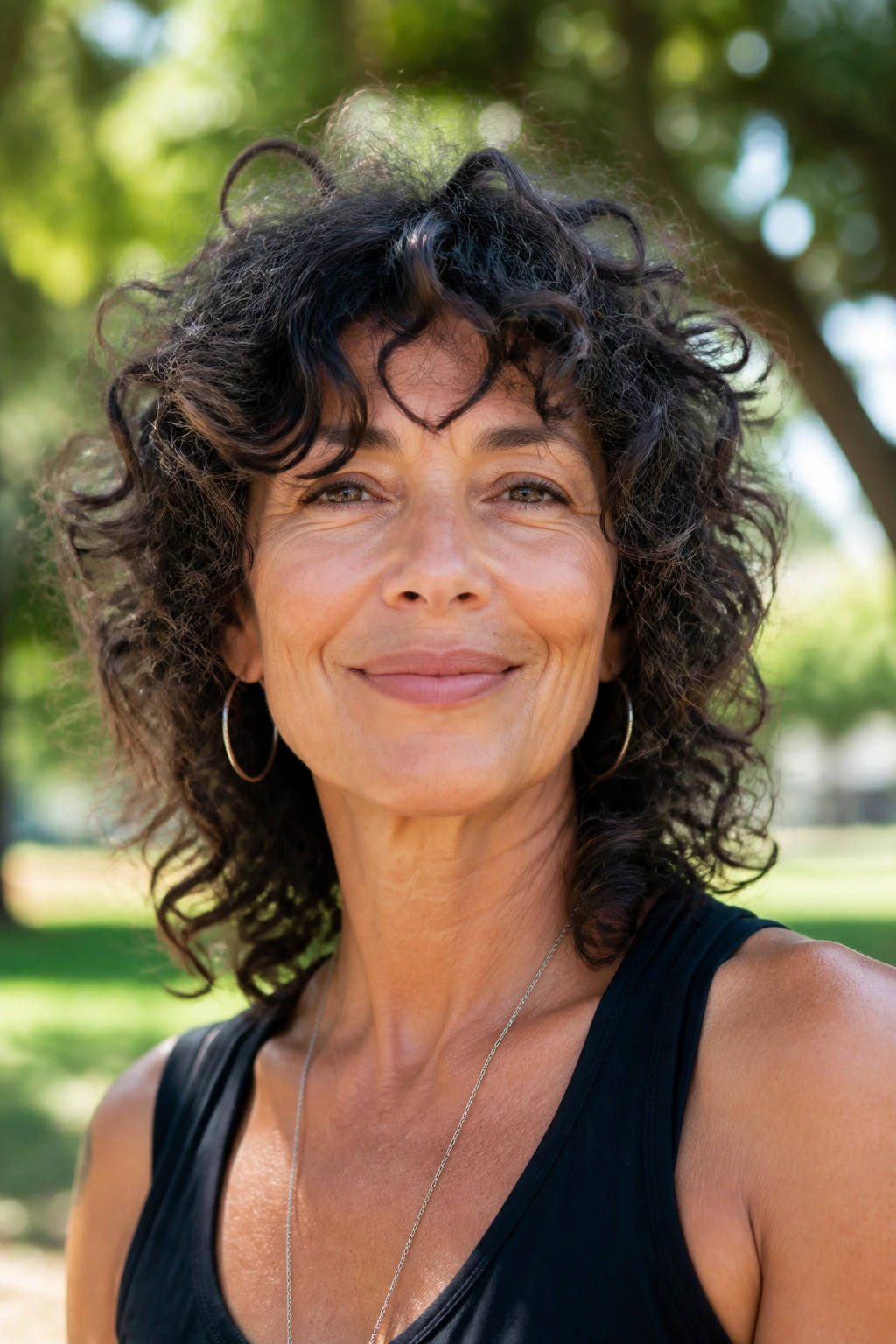
Curly hair needs a shag that respects the spring and the shrinkage. The cut should shape the curls around the head so the sides don’t balloon out while the top collapses. That balance is what makes curly shag cuts look intentional instead of wild.
Dry curl pattern matters here. Some curls need more length at the crown; others need bulk removed from the sides. A stylist who understands curl-by-curl cutting can build the shape around your exact pattern instead of forcing it into a generic template.
Diffuser drying with a little gel or cream gives the cut structure, and then you can break the cast when it’s fully dry. Soft, springy, and not crunchy. That’s the sweet spot.
28. Elegant Mature Shag with Soft Movement
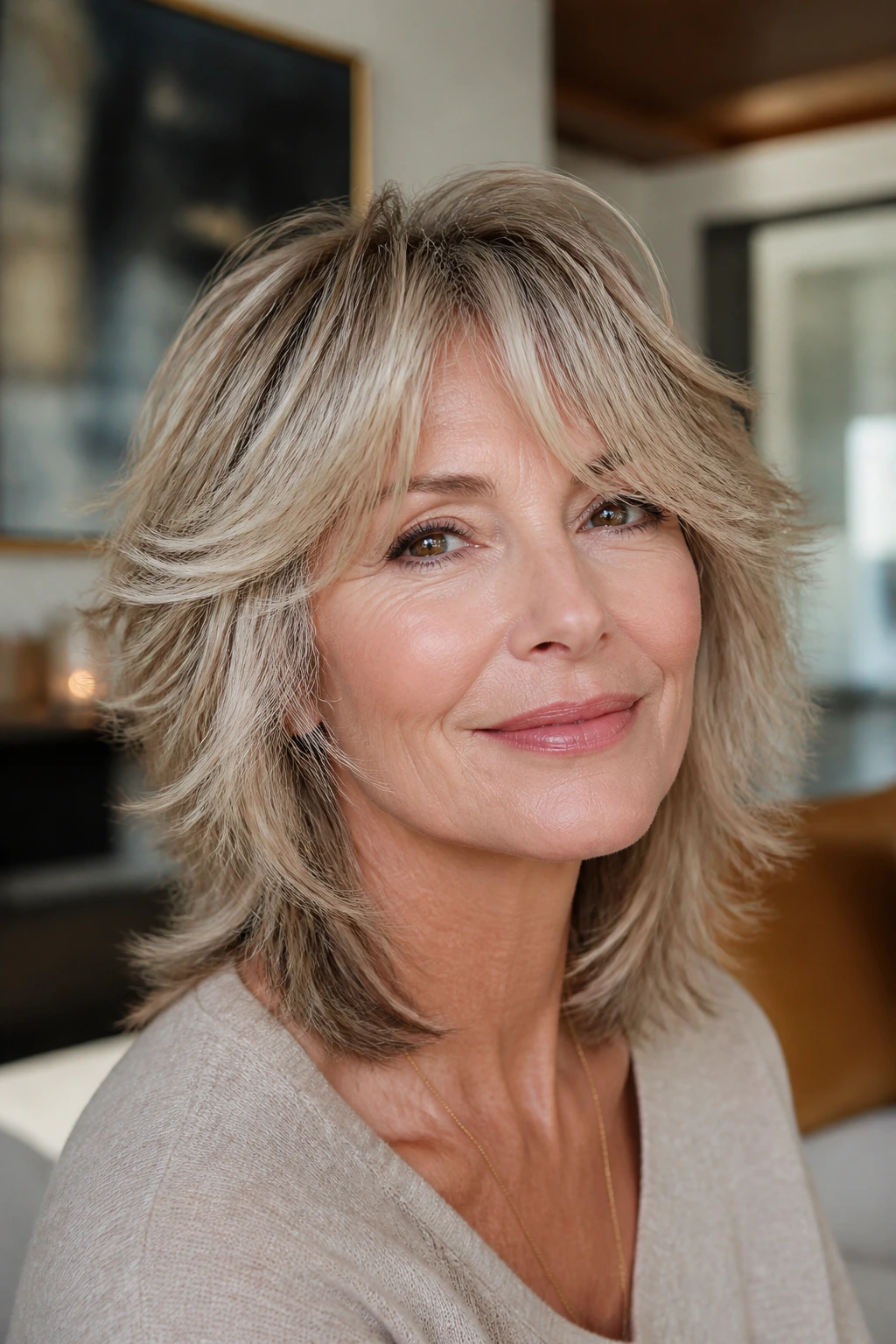
This is the polished ending point of the shag family: clean layers, soft movement, and enough fringe or face framing to keep the haircut from feeling severe. It’s not loud. It doesn’t need to be. The shape does the talking.
What makes it feel elegant is restraint. The ends aren’t overly shredded, the crown isn’t overbuilt, and the face-framing pieces are cut with enough thought that they fall naturally. That’s the difference between a shag that looks styled and one that looks startled.
If you want a classic shag haircut for women over 50 that reads refined instead of edgy, this is the version to keep in mind. It’s the one that tends to age best with you, because it doesn’t depend on one perfect styling day.
Why the Shag Flatters Hair After 50
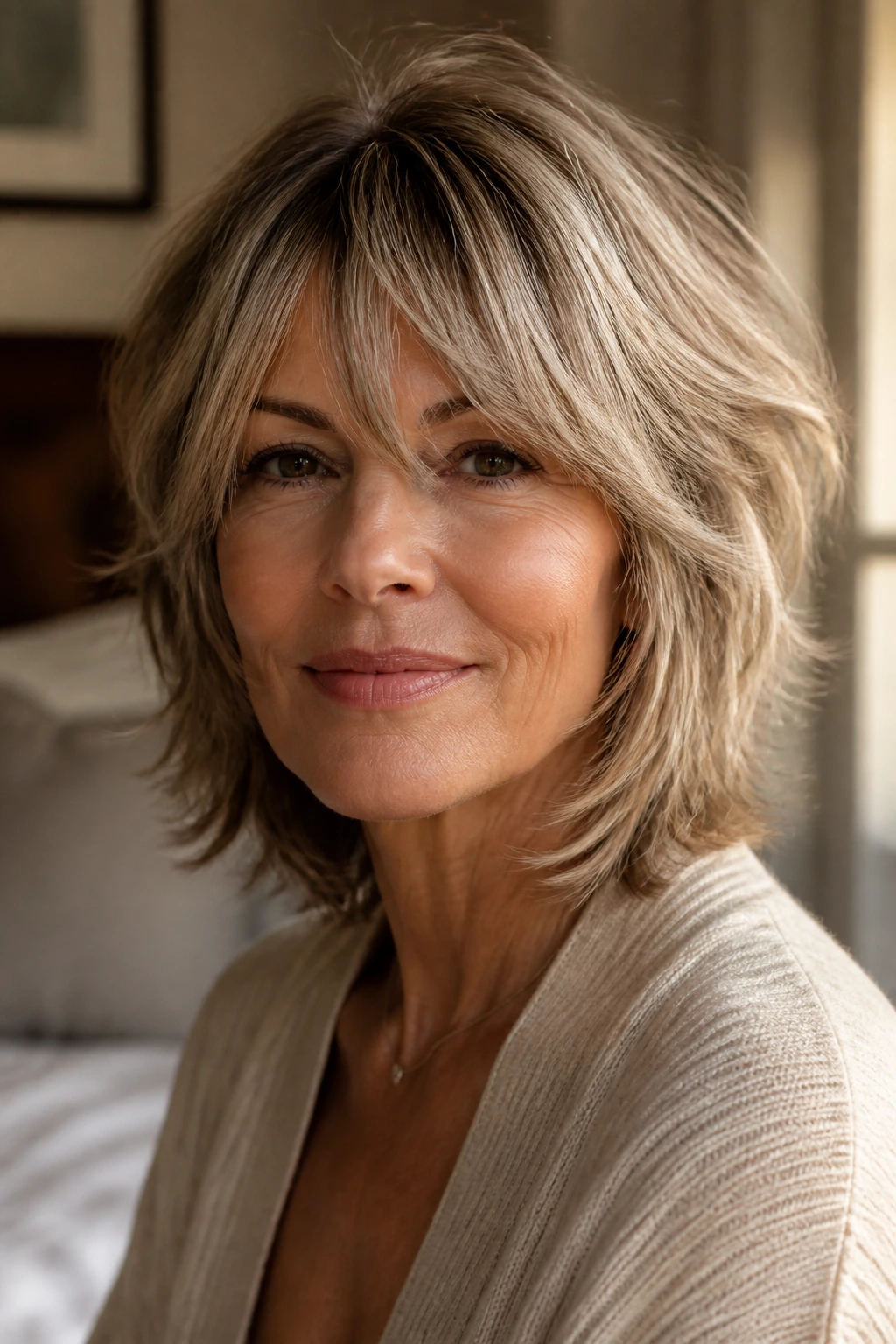
Hair changes shape over time. That part is ordinary, not tragic. The crown can get flatter, the ends can get drier, the gray strands can come in coarser, and the same blunt cut that once sat neatly can start to feel heavy or stubborn. A shag answers those changes by redistributing weight instead of pretending they’re not there.
The cut also works with the face in a smarter way than a one-length style. Layers around the cheekbones, jaw, and temples can keep the eye moving. That movement matters because it softens hard edges and makes the haircut feel alive instead of frozen in place.
There’s another practical reason this cut keeps showing up. It’s forgiving. A shag can look good with a round brush, with a diffuser, with a bit of dry shampoo, or even with a little texture and a rushed morning. Not every hairstyle can survive that kind of honesty.
Essential Tools for Styling These Cuts
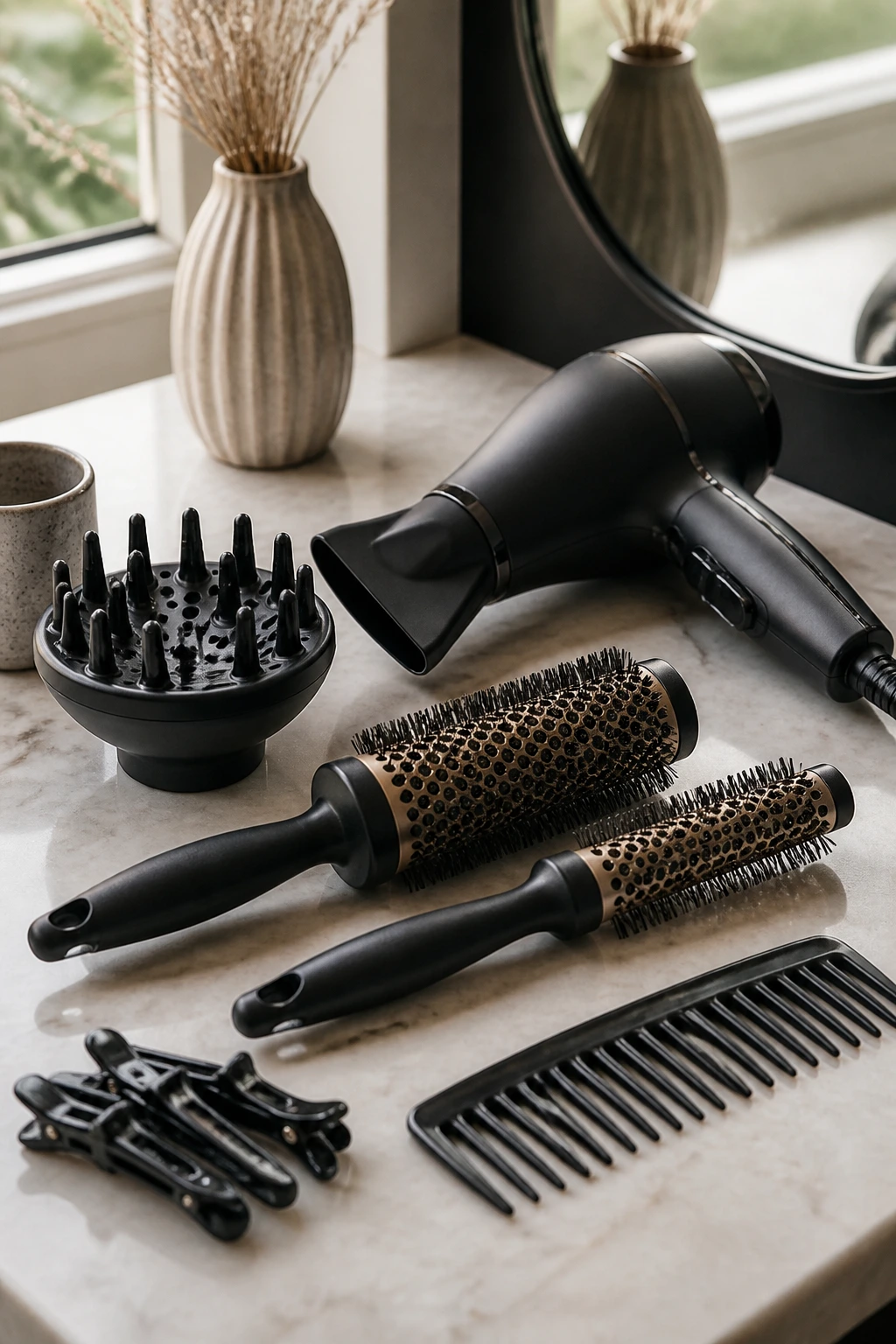
- Blow dryer with a concentrator nozzle: Helps direct the airflow at the roots instead of blowing the layers everywhere.
- Small round brush: Best for bangs, face-framing pieces, and short shags that need bend.
- Medium round brush: Useful for collarbone and shoulder-length shags when you want soft volume.
- Diffuser attachment: Essential for curly and wavy shags that need shape without frizz.
- Sectioning clips: They make crown work and bang styling much easier.
- Wide-tooth comb: Good for distributing product through damp hair without roughing up the cut.
- Light mousse or root-lift spray: Gives the layers a bit of hold before blow-drying.
- Texturizing spray: Adds separation to shag ends without making them sticky.
- Heat protectant: Non-negotiable if you use a dryer, brush, wand, or flat iron.
- Matte paste or soft wax: Best for pixie shags and piecey finishes where you want definition.
Smart Product Choices for Texture, Hold, and Shine
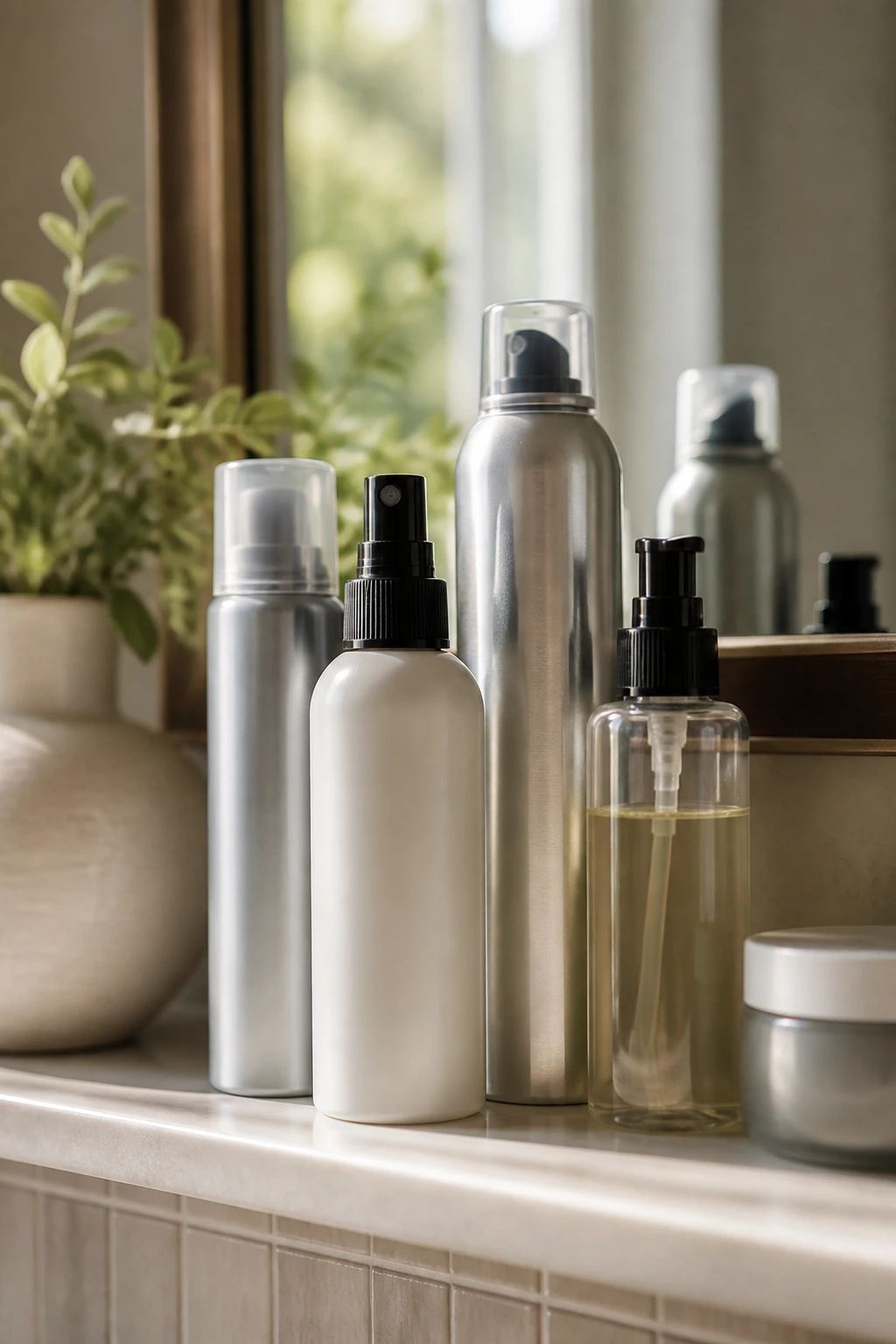
Heavy products can ruin a shag fast. A thick cream on the roots turns the layers sleepy, and too much oil on the mids makes the whole style hang in clumps. What usually works better is a light mousse at the root, a small amount of leave-in through the ends, and then a finishing spray that adds texture rather than glossing everything flat.
If your hair is fine, look for products that say volumizing foam, root lift, or lightweight thickening. They should feel almost airy in your hands. If your hair is thick or coarse, use cream in the mids and a little serum on the ends, not the scalp. That keeps the cut from ballooning while still softening dryness.
Gray hair often likes a bit of shine, but not grease. A drop of serum rubbed between the palms and barely touched to the surface is enough. Too much and the layers lose their broken-up shape.
How to Style a Shag on Busy Mornings

The easiest shag routine is the one you can repeat without thinking. Start with damp hair, not soaking wet hair. Work a little mousse or styling cream through the roots and mids, then use your fingers to rake the hair in the direction you want it to fall. That part matters more than the tool.
Air-Dry Days
Scrunch the ends lightly, tuck the front pieces behind the ears if they want to puff, and let the layers dry with as little touching as possible. If one side dries weird, mist it with water and reset it. Don’t keep fiddling.
Blow-Dry Days
Dry the roots first. Always. Once the crown has some lift, move to the bangs and face frame with a small brush, then rough-dry the rest of the cut to keep it from looking too neat. A shag likes a bit of bend, not a lacquered finish.
Second-Day Fixes
Dry shampoo at the roots, a mist of water on the ends, and a quick pinch of texturizing spray can revive the shape without washing it again. If the bangs split, dampen them and roll them under for 30 seconds with the brush. That tiny reset changes everything.
Additional Tips and Texture Boosters
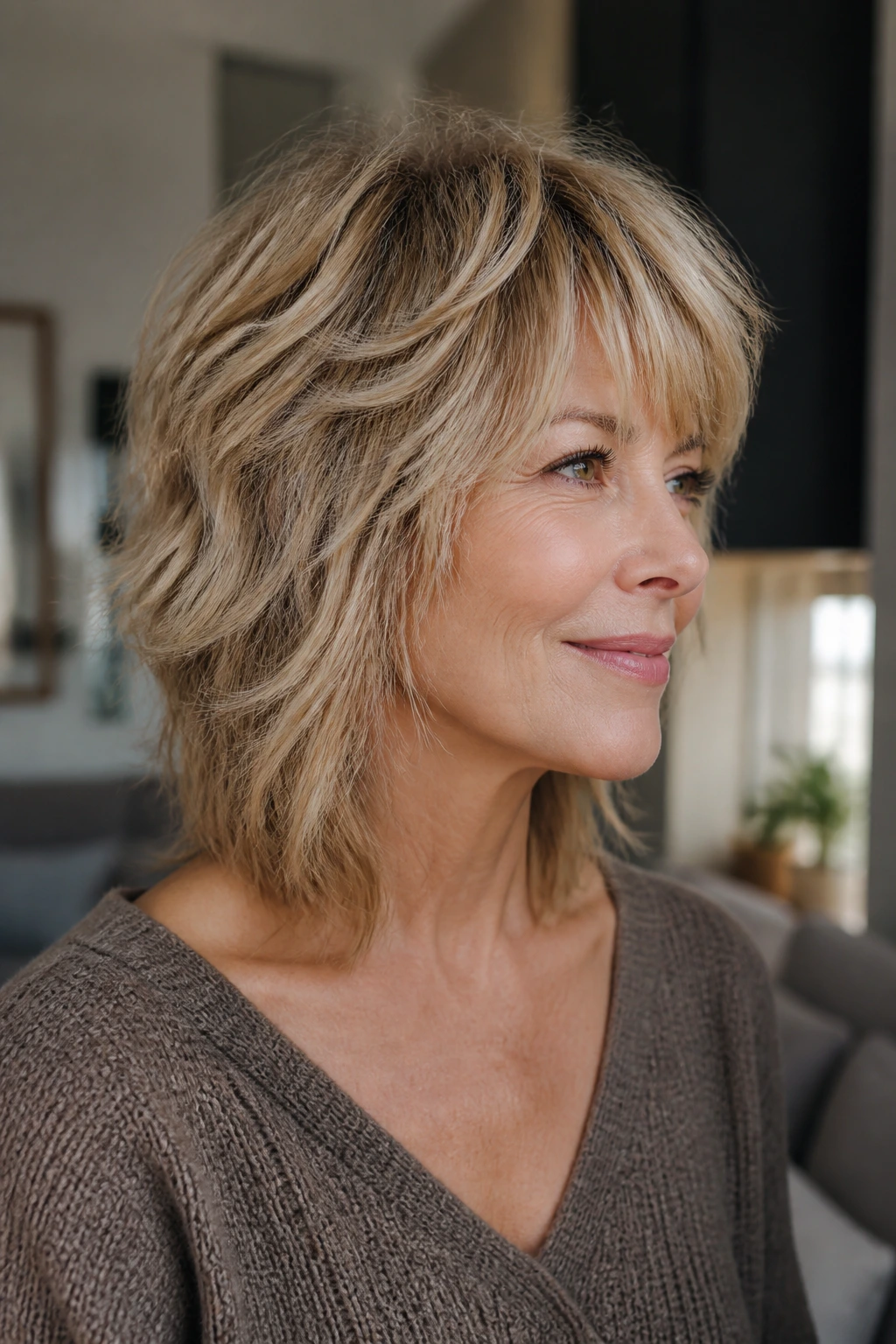
Root Lift: Put lift spray only where the hair is flat — usually the crown and upper sides. If you spray the whole head, the cut can get too puffy and lose its clean shape.
Flirty Bend, Not Full Curl: Shags look better when the ends flick or turn a little, not when every strand curls the same way. Use a brush or wand just at the last inch or two.
Bang Control: Bangs in a shag should be trimmed before they block your eyes, not after. Once they start sitting in your glasses or brushing your lashes, they need a small reset.
Tiny Change, Big Payoff: Move your part one inch to the left or right. On a layered cut, that can give instant lift at the crown and make the whole style feel new.
Common Mistakes to Avoid
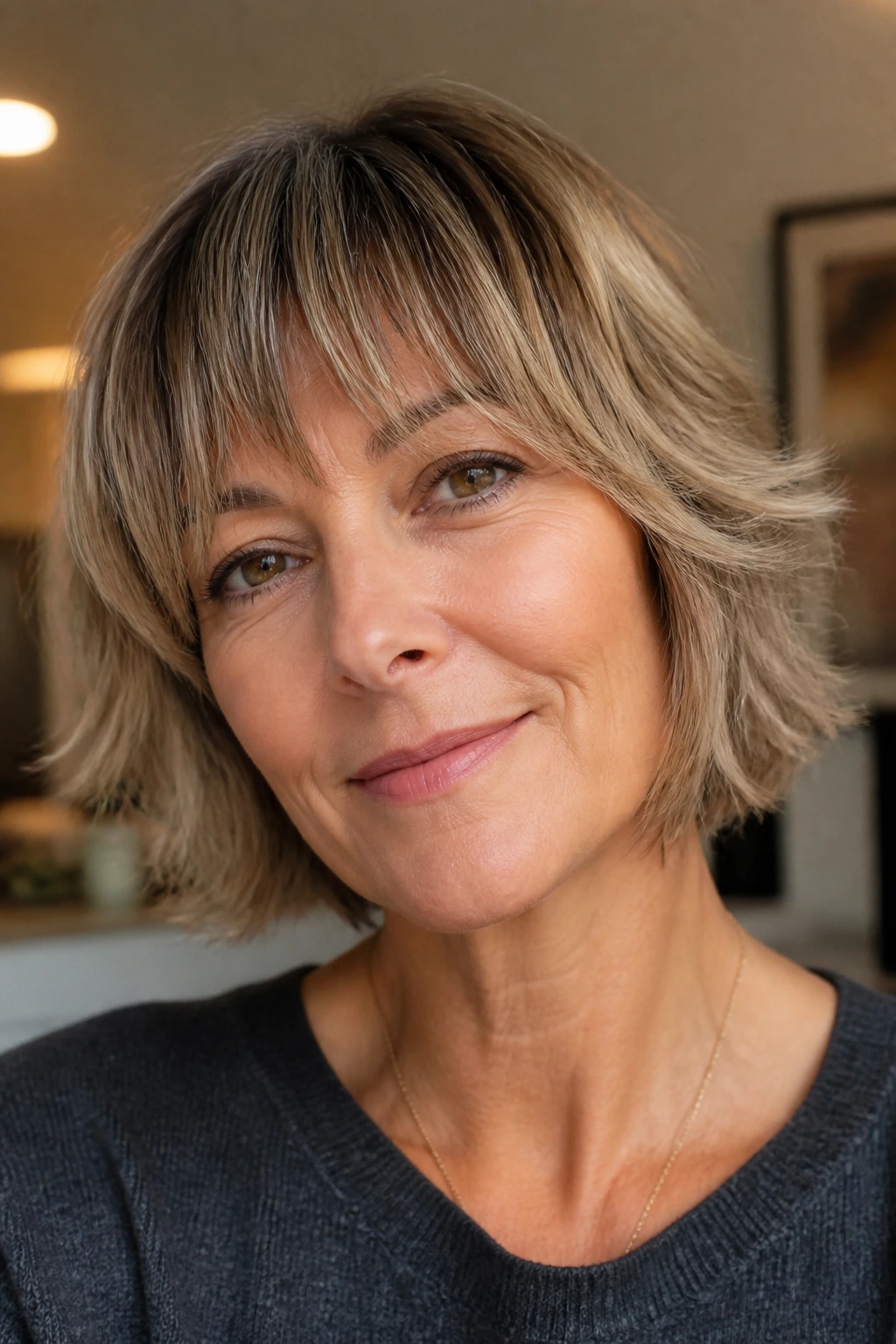
The first mistake is asking for too much thinning. A shag is not the same thing as a shredded haircut. When the interior gets over-cut, the hair can puff at the sides and look see-through at the ends. The fix is to keep some weight in the perimeter and let the shape come from placement, not from aggressive razor work.
The second mistake is cutting the fringe too heavy. A thick bang can make the face feel boxed in, especially if the rest of the cut is already layered. Wispy, bottleneck, or side-swept fringe usually age better because they move.
Another common problem is forgetting the crown. If the top is flat, the rest of the shag can fall limp, no matter how good the ends look. That is why root direction and blow-dry sequence matter.
And one more: using too much smoothing cream. A shag needs some separation. If every layer is glued together, the haircut loses its point.
Variations and Adaptations to Try
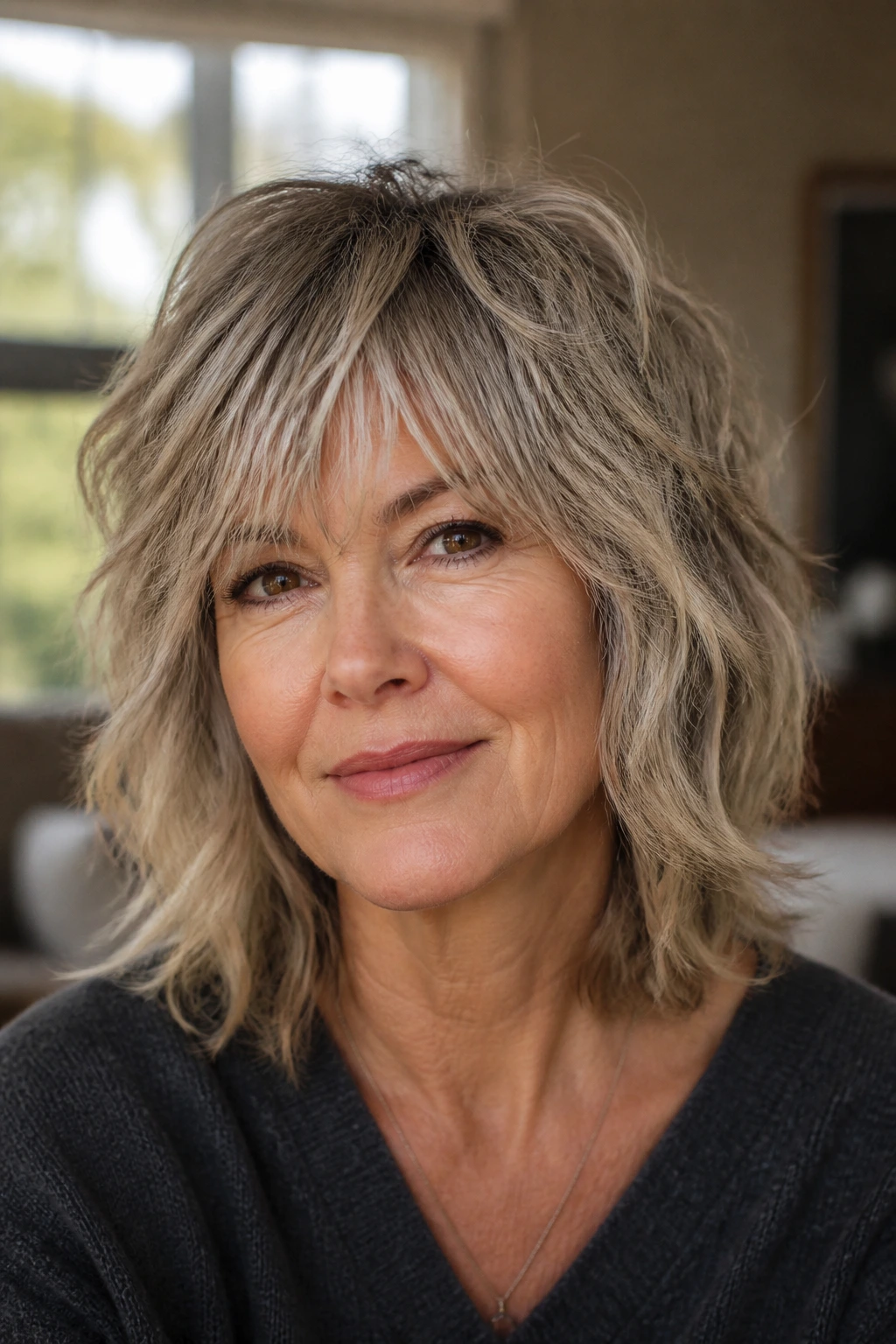
The Fine-Hair Version: Keep the layers soft and the perimeter full. This version is about lift, not drama, and it usually looks best with mousse and a quick blow-dry at the roots.
The Thick-Hair Version: Remove bulk from underneath and around the crown, but leave enough length in the ends to stop the cut from flying out. It should feel lighter, not feathery to the point of fuss.
The Curly Version: Cut with the curl pattern in mind and shape the silhouette after the curls dry. That keeps the cut from becoming round in the wrong spots.
The Glasses-Friendly Version: Keep the fringe lighter and the temple pieces softer so the frames don’t compete with the haircut. Shorter front pieces can work, but they need movement.
The Low-Maintenance Version: Choose a cut that air-dries well and avoid fringe that needs daily round-brush work. This is the one for people who want good hair with the least decision-making.
Keeping the Shape Between Salon Visits
A shag needs trimming more often than a one-length cut if you want the layers to stay crisp. Shorter versions usually want a cleanup every 6 to 8 weeks. Mid-length and longer shags can stretch a little longer, but the fringe often needs attention before the rest of the haircut does.
The fastest sign that it’s time is this: the top goes flat, the sides start kicking out, or the bangs reach your eyes and won’t behave. That’s not failure. That’s the haircut telling you it needs a small reset.
In between visits, don’t over-wash it into submission. Dry shampoo at the roots, a quick restyle of the fringe, and a touch of water on the ends can buy you another day or two. If the shape has grown out well, a stylist can often just refine the layers and leave the length alone.
Frequently Asked Questions

Does a shag haircut work on fine hair over 50?
Yes, but the cut has to be handled gently. Fine hair usually needs soft internal layers and a fuller perimeter so it doesn’t turn wispy at the ends. A little root lift and a light mousse do more than heavy product ever will.
Is a shag too messy for professional settings?
Not if it’s cut with shape. A brushed-out shag with soft layers can look polished, especially when the fringe is controlled and the ends are shaped rather than torn apart. The messier versions are just one branch of the family.
What bang shape is easiest to live with?
Curtain bangs and soft side-swept fringe are usually the least fussy. They grow out well, play nicely with glasses, and don’t need as much daily trimming as a blunt fringe.
Can curly hair wear a shag without looking wide?
Yes, if the layers are placed with the curl pattern in mind. The goal is to shape the curls so they stack in a controlled way, not balloon out at the sides. A good curl cut matters more than the styling product.
How often should I trim a shag?
Short shag cuts usually need a tidy-up every 6 to 8 weeks. Longer ones can often go a little longer, but the fringe and face-framing pieces may need a touch-up sooner if they start hitting the eyes or collapsing into the cheeks.
What if my hair is very straight?
A shag still works. Straight hair benefits from piecey ends, razor-soft layering, or a little bend at the tips so the cut doesn’t fall into a flat curtain. A texture spray or light wand work helps it hold shape.
Can I let a shag air-dry most days?
Absolutely, if the cut was designed for it. A proper air-dry shag should still have shape when it dries without heat. The trick is choosing a cut that doesn’t rely on a perfect blowout to make sense.
How do I grow out a shag without it looking awkward?
Keep the fringe trimmed and have the stylist clean up the layers around the face while leaving the length alone. That way the haircut keeps its outline while the rest of it gets longer. It’s a slower, calmer grow-out.
A Cut That Moves With You
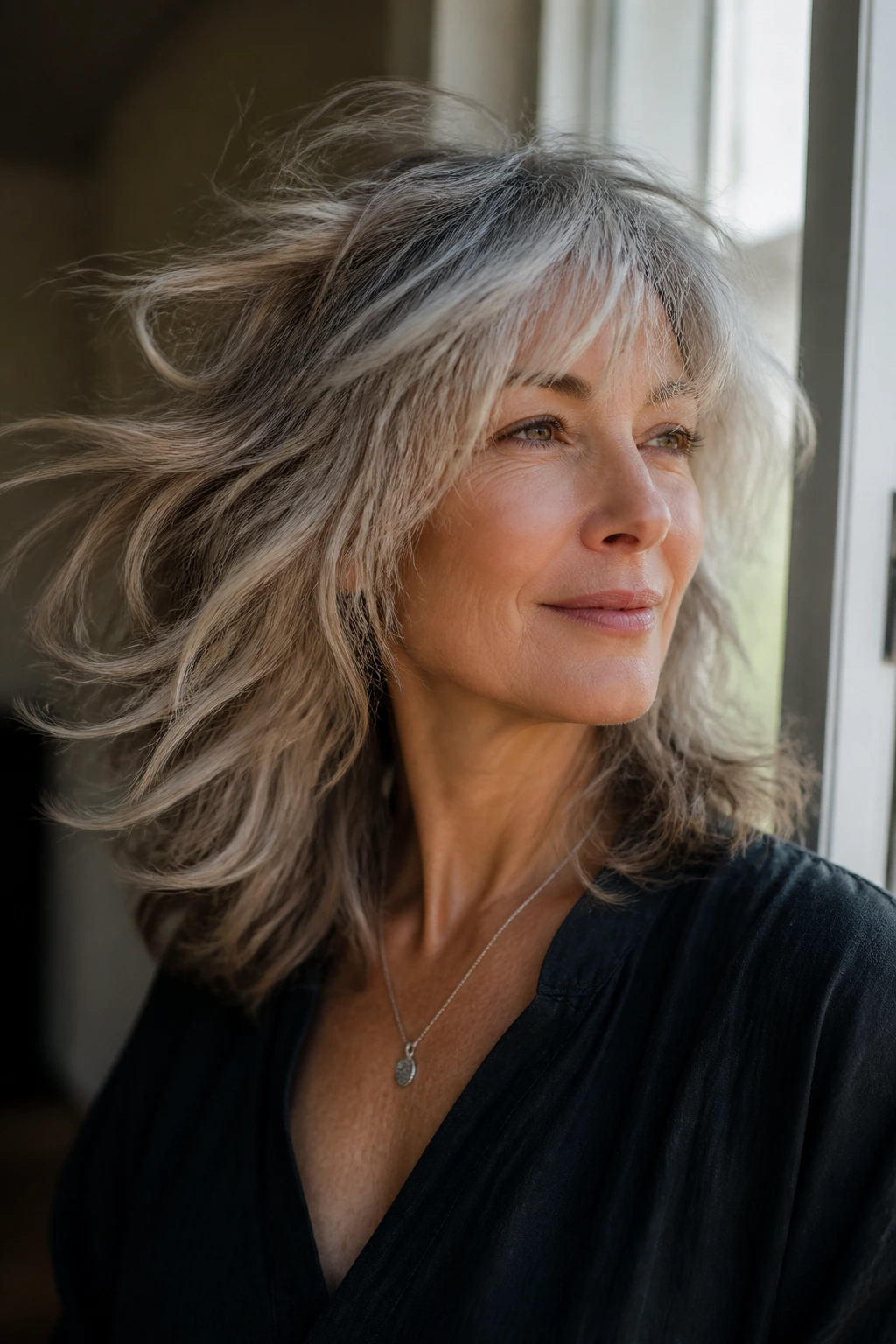
A classic shag haircut after 50 works because it respects what hair actually does instead of trying to force it into one rigid shape. That’s a good deal. The cut can be soft, sharp, silver, curly, short, long, or somewhere in between, and still keep the same basic promise: movement where you want it, weight where you need it.
The best version is the one that fits your texture and your habits, not the one that looks loudest in a salon mirror. If you know your crown goes flat or your bangs get annoying by the third day, build the cut around that reality. That’s where the good hair lives — not in the fantasy version, but in the one that behaves when you’ve got errands, glasses, humidity, and a normal morning.