



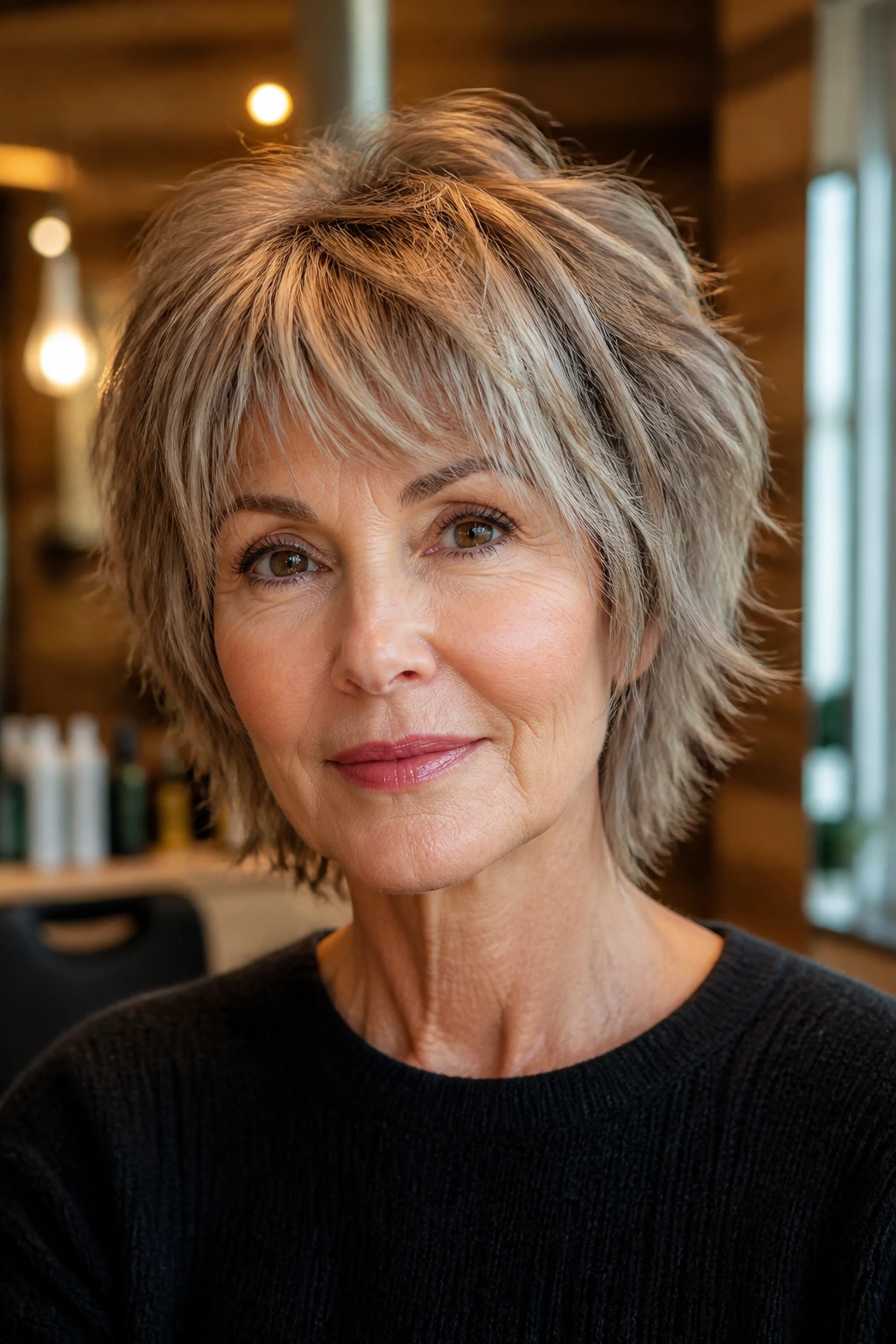
A good short choppy shag does three jobs at once: it lifts the crown, softens the jaw, and keeps the ends from sitting like a helmet. That’s why short choppy shag haircuts for older women keep showing up in real salons, not just on mood boards. The cut has movement built in, which matters when hair starts to lose density, get wiry at the ends, or lie flatter than it used to.
And the word choppy is doing a lot of heavy lifting here. It does not mean messy, half-finished, or overly razored into wisps that fray by noon. When it’s done well, choppiness gives you broken-up texture, a lighter shape around the face, and enough irregularity that the cut still looks alive on day three.
Older hair tends to change in annoying little ways all at once. The front may get finer while the back stays coarse, one side may kick out at the jaw, and the crown may go flat no matter how much you tease it. A short shag works because it doesn’t fight those changes head-on. It folds them into the shape. The right version can look sharp, soft, or a little edgy — without turning into a styling project every morning.
Why These Short Choppy Shag Haircuts Stand Out
-
Built for changing texture: The chopped layers stop the cut from looking heavy when hair gets finer at the ends and fuller near the roots.
-
Easy to personalize: A few inches off the fringe, a softer nape, or a different part can shift the whole vibe without changing the haircut’s bones.
-
Works with silver and gray: Those colors show off texture better than flat color, so the broken-up ends and feathered layers read clearly instead of disappearing.
-
Short enough to behave: You get lift and movement without the constant tug of long hair hanging around the shoulders or collapsing under its own weight.
-
Glasses-friendly and face-framing: The right fringe length can sit above frames, skim the cheekbone, or break at the brow without poking into everything.
-
Better than “just a trim”: This isn’t a polite cleanup. The shape does real work, especially if your hair has lost some density at the temples or crown.
1. Feathered Pixie Shag with a Soft Crown
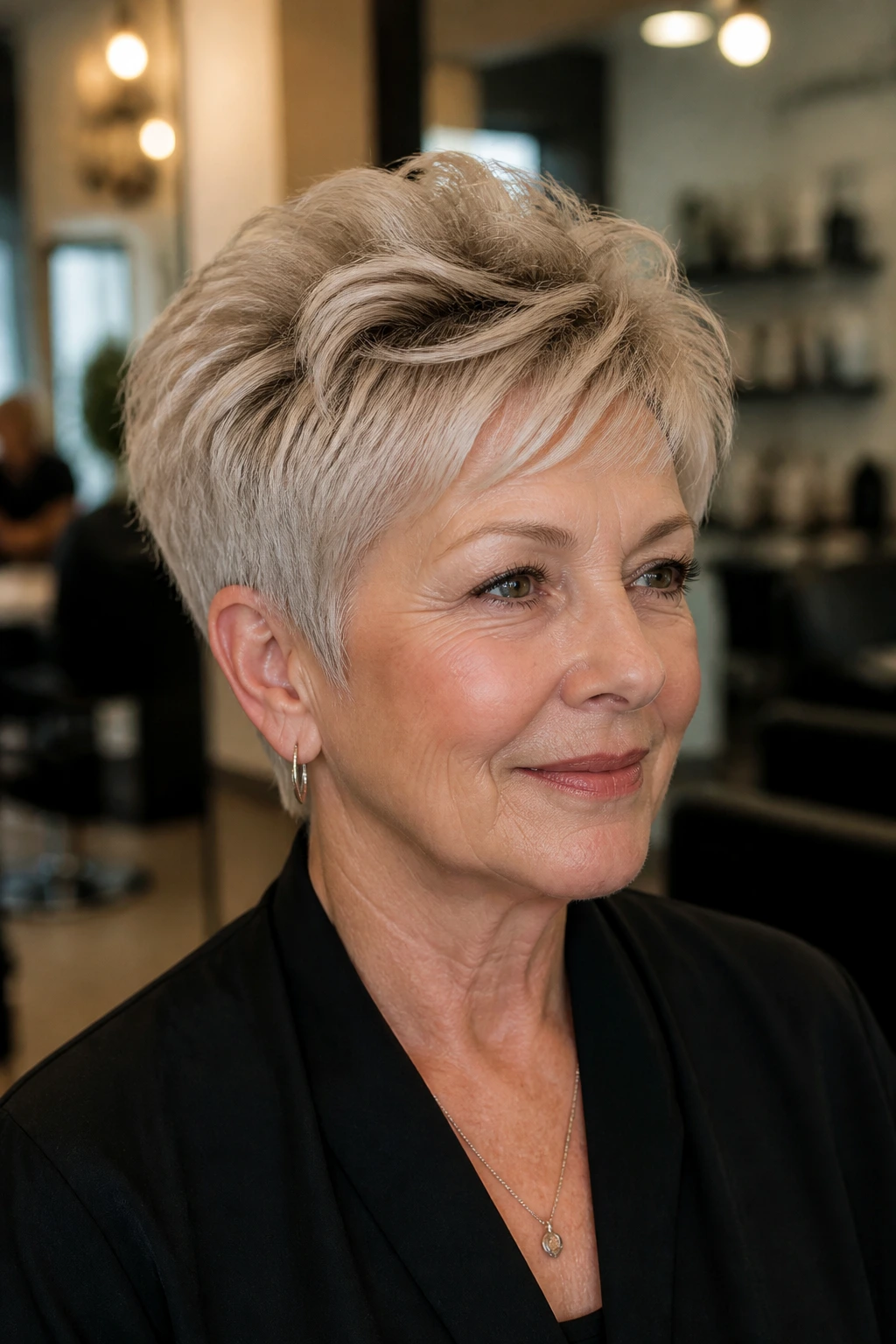
A feathered pixie shag is what happens when a pixie stops being severe and starts having some fun. The top stays short — usually around 2 to 3 inches — but the layers are point-cut so they separate instead of sitting in one solid block. Around the ears, the line stays light. Around the crown, the lift is the whole point.
Why It Flatters So Many Faces
This cut gives the impression of fullness without piling weight on top of the head. If your hair has gone thinner at the crown, those short, lifted layers help the top look more buoyant instead of flat and collapsed. It also opens up the face fast, which is useful if you wear statement glasses or don’t want bangs sitting in your eyes all day.
Best For
- Fine to medium hair that needs a little push at the roots.
- Women who want a low-mass cut that still has texture.
- People who can commit to a quick blow-dry or a bit of mousse.
Pro tip: Ask your stylist to keep the fringe piecey, not blocky. A solid fringe line can make this cut feel too helmet-like fast.
2. Jaw-Length French Shag with Choppy Ends
This one sits right at the jaw or just below it, and that length is the magic trick. Too short, and the face can feel exposed in the wrong way. Too long, and the shape starts acting like a bob instead of a shag. At jaw level, the layers can flick outward a little and give the whole cut a softer edge.
The French feel comes from restraint. The ends are broken up, but not shredded. The fringe can be swept to the side or split lightly in the middle, and the silhouette stays neat enough for everyday wear. On gray or white hair, the little bends in the layers catch light beautifully — not in a flashy way, just enough to show the haircut has movement.
I like this one for women who want a grown-up cut that still has a bit of air around it. It looks especially good if your jawline is a feature you want to soften rather than spotlight. Ask for the perimeter to stay slightly uneven so the line doesn’t go blunt at the cheeks.
3. Crown-Lift Crop for Flat Roots
If your hair looks fine from the front and then drops flat at the crown, this is the fix I reach for first. The crop stays short at the back and sides, but the top is layered with a little extra length so you can direct the hair upward instead of straight down. It sounds subtle. It isn’t.
How It Works
The shorter sides stop the shape from puffing out horizontally, while the longer top gives you room to create lift with a round brush or a bit of root spray. That contrast is what makes the crown look fuller. It also keeps the haircut from feeling puffy around the ears, which is a common problem with too much layering in the wrong place.
How to Wear It
- Blow-dry the top forward first, then lift at the roots with your fingers.
- Use a lightweight mousse only at the base.
- Keep the nape close and neat so the upper layers can do the visual work.
This cut is blunt about what it wants: height. If you like a shape that stays close to the head but doesn’t flatten out by lunchtime, it’s a very practical option.
4. Curly Mini Shag with a Soft Fringe
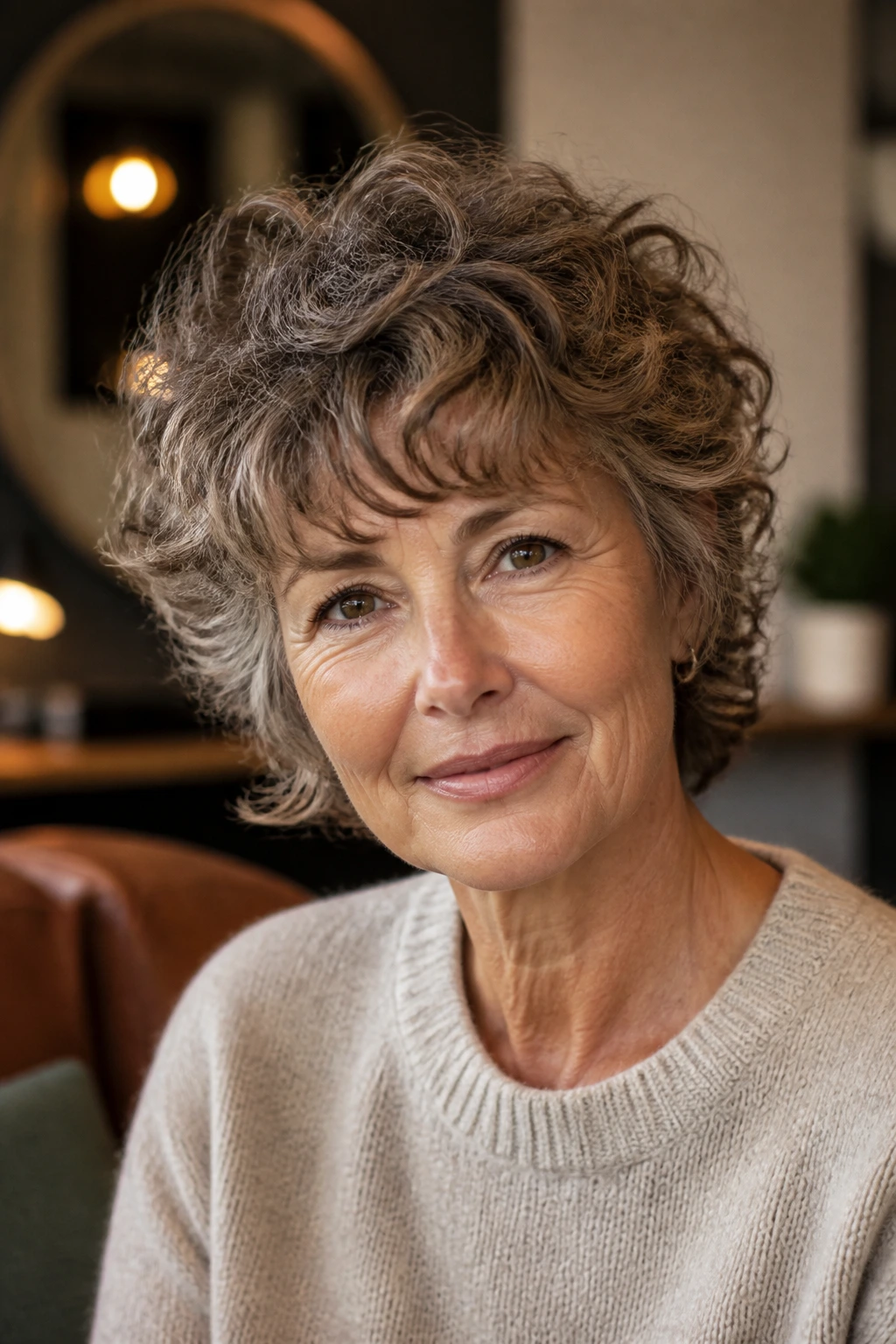
Curly hair loves a short shag when the layers are cut with some respect. That means no aggressive thinning, no random chops, and no one pretending a curl pattern can be forced into a bob shape it doesn’t want. A mini shag for curls keeps enough length for the pattern to spring, while the layers break up bulk around the sides and crown.
The fringe matters here. A curly fringe can look charming and open, but only if it’s cut a little longer than you think. Curls bounce up after drying, and a bang that looked eyebrow-skimming wet may land halfway to the forehead when it’s fully dry. I’d rather leave a curly fringe a touch long and trim it later than cut it too short and spend six weeks regretting it.
This shape is one of the best answers for women whose curls have gotten drier or less dense with age. It preserves body without asking the curl to carry too much weight. Air-dry it, or use a diffuser on low heat. Either way, the movement reads naturally, not forced.
5. Soft Wolf Crop with Choppy Layers
A short wolf crop is the slightly rebellious cousin in the group, but it can still be remarkably wearable. The top is built with irregular layers, the sides are narrowed a bit, and the outline around the neck stays loose instead of cleanly tucked. The result is a shape that feels undone in a deliberate way.
Why It Works Differently
Compared with a standard shag, the wolf crop leans more toward disconnection. The top and lower layers don’t blend as smoothly, which gives you more edge and more visible separation. That makes it a smart choice if your hair is straight or mildly wavy and tends to look too polite when cut into softer layers.
A lot of women are wary of this style because they picture something spiky and overstyled. Don’t. If the layers are kept soft around the cheekbones and the fringe is feathered instead of jagged, the cut reads modern without shouting. It also grows out well, which matters more than people admit.
6. Side-Swept Layered Shag for Gentle Face Framing
A side-swept shag is a sneaky little workhorse. The fringe drapes across the forehead without cutting a hard line, and the layers around the cheekbone create a diagonal that softens the face. If you’ve got a strong brow, a longer nose, or glasses that already make a visual statement, that diagonal matters.
There’s a reason this shape is so forgiving. A side-swept front lets the hair settle with its own movement instead of demanding that it part exactly in the middle. It’s especially nice on hair with a bit of bend, because the front pieces can tuck behind one ear and still leave shape on the other side.
I’d call this the “easy yes” cut for women who want texture but don’t want a fringe that needs constant correction. The styling is simple: a quick bend with a flat iron or a round brush, then stop before it gets too polished. A little unevenness is the charm here.
7. Piecey Gray Pixie Bob with Broken Layers
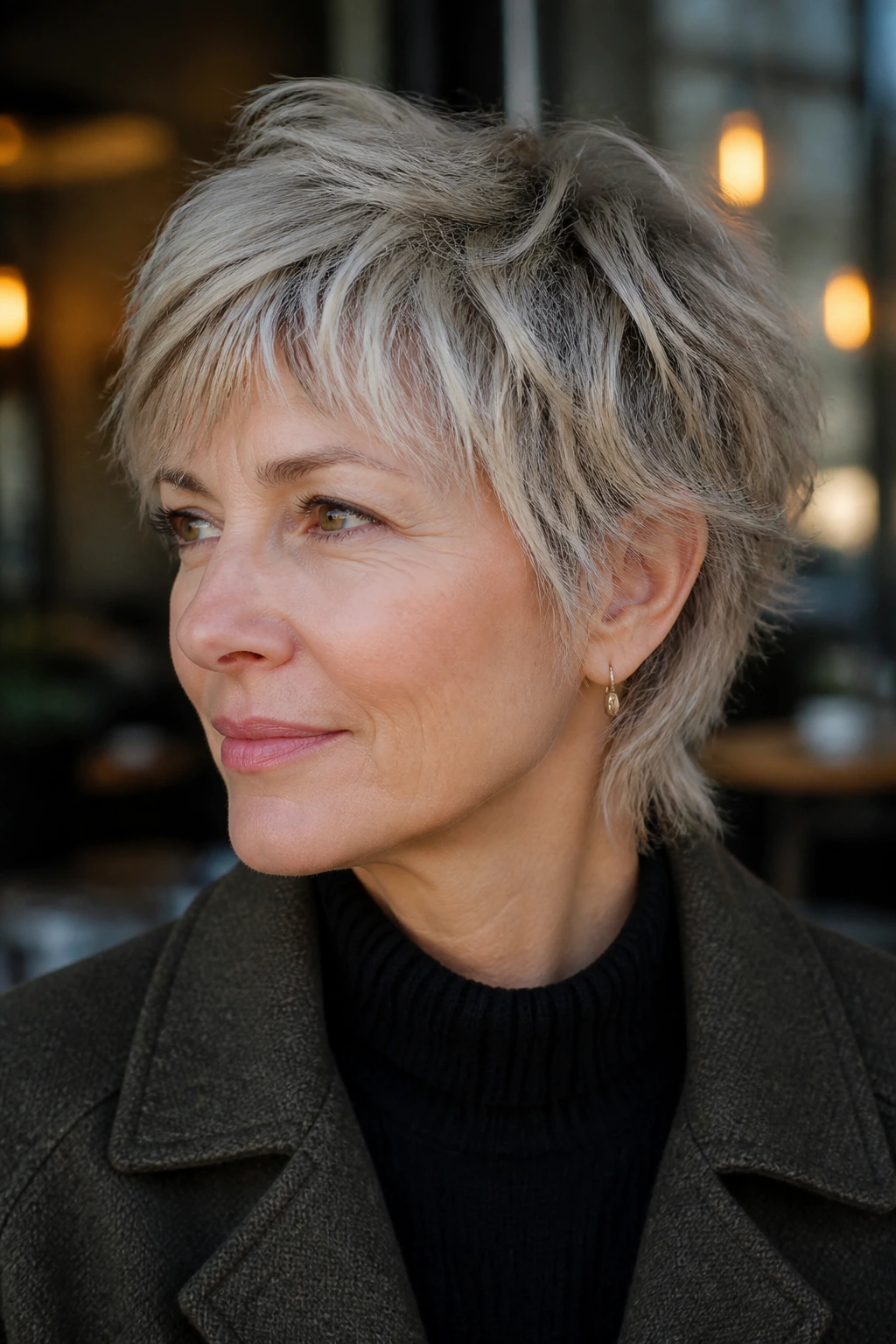
This cut sits in that useful middle ground between a pixie and a bob, which is why it works so well for gray hair. The back stays short enough to feel crisp, while the sides and top keep a little more length so the shape can be piecey instead of snug. Gray and silver hair often shows off texture better than color, and this haircut gives texture plenty of room.
The real trick is the ends. Ask for them to be shattered just enough to separate when the hair moves, but not so much that they fray. Over-thinning gray hair can make the ends look see-through in a bad way. A piecey pixie bob should still feel solid when you run your fingers through it.
This one looks especially good with small hoops, angular frames, or a simple stud earring. The cut does the framing, so the accessories can stay quiet. If you like a cut that looks neat from the back and lively from the front, this is a strong contender.
8. Neck-Length Choppy Shag with Air Around the Collar
Neck-length is a sweet spot for women who want a short cut but don’t want the hair to feel clipped to the scalp. This shag grazes the nape and collar, which gives enough length for movement but keeps the neckline open and tidy. The choppy ends keep it from turning into a heavy triangle.
The best version has layers that start around the jaw and become softer as they fall toward the neck. That way the hair moves when you turn your head instead of sticking in a fixed outline. It also works well if you wear shirts with collars or jackets that sit high at the neck. There’s less hair fighting with the fabric.
Best for daily wear
If you want something that still looks intentional after a quick finger-style and a dab of cream, this is a strong choice. It doesn’t need a lot of volume at the crown to look finished. It just needs shape.
9. Curtain-Bang Crop with Feathered Sides
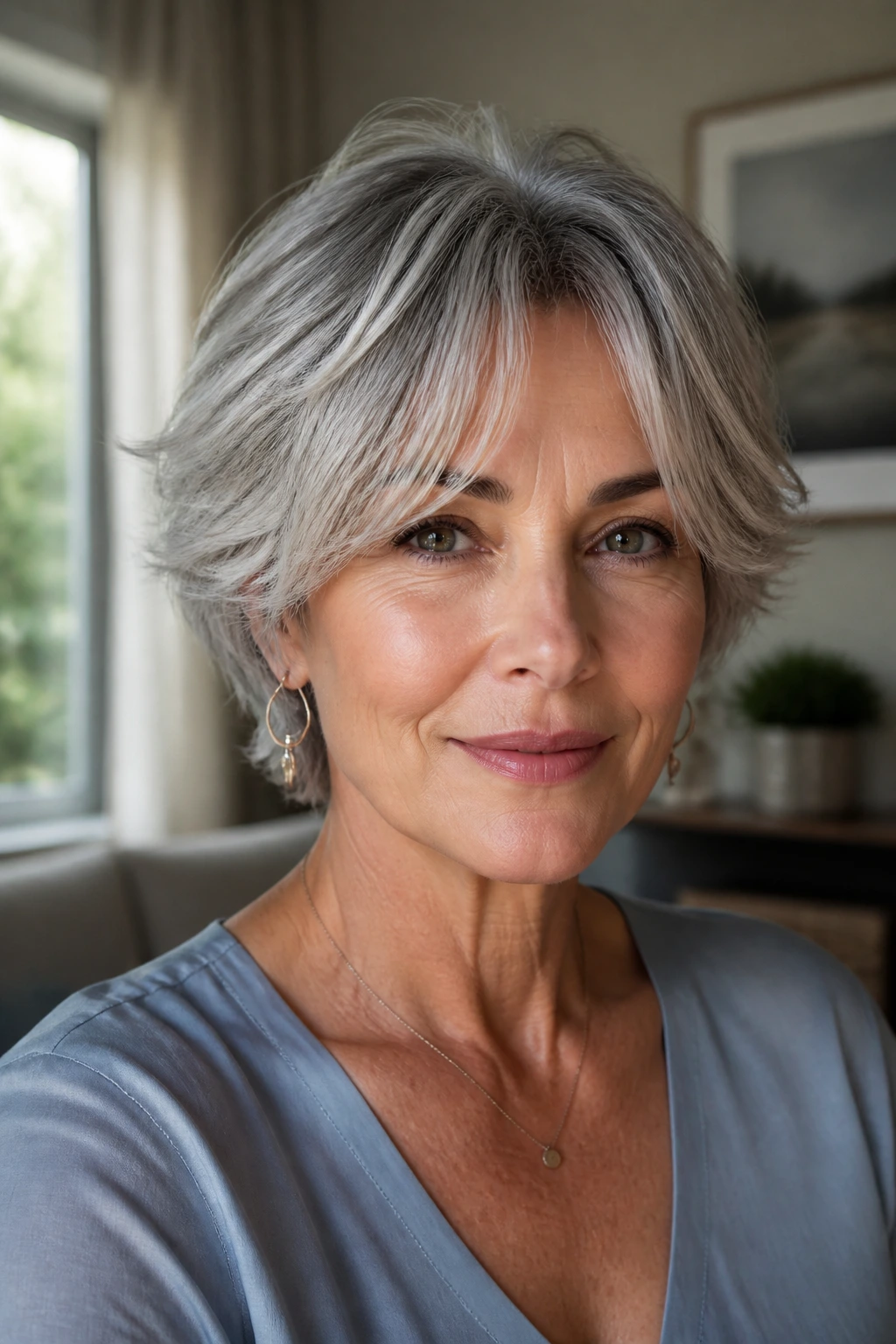
Curtain bangs can be a small miracle on short cuts, but only if they’re cut with enough softness. On a crop, the bangs usually split around the center and open toward the temples, which gives the forehead some air and draws attention to the eyes. The rest of the hair stays short and choppy so the front doesn’t feel too sweet or too tidy.
What I like here is the balance. The fringe gives you face framing, but the crop keeps it from turning fussy. That matters if your hairline has changed a bit or if you want to soften the upper face without hiding it. It’s also one of the better options for women with fine hair because the bangs create the illusion of density at the front.
Keep the sides lightly layered so the fringe doesn’t land on top of a blunt side wall. The whole cut works by moving, not by sitting still.
10. Tapered Nape Shag That Keeps the Back Clean
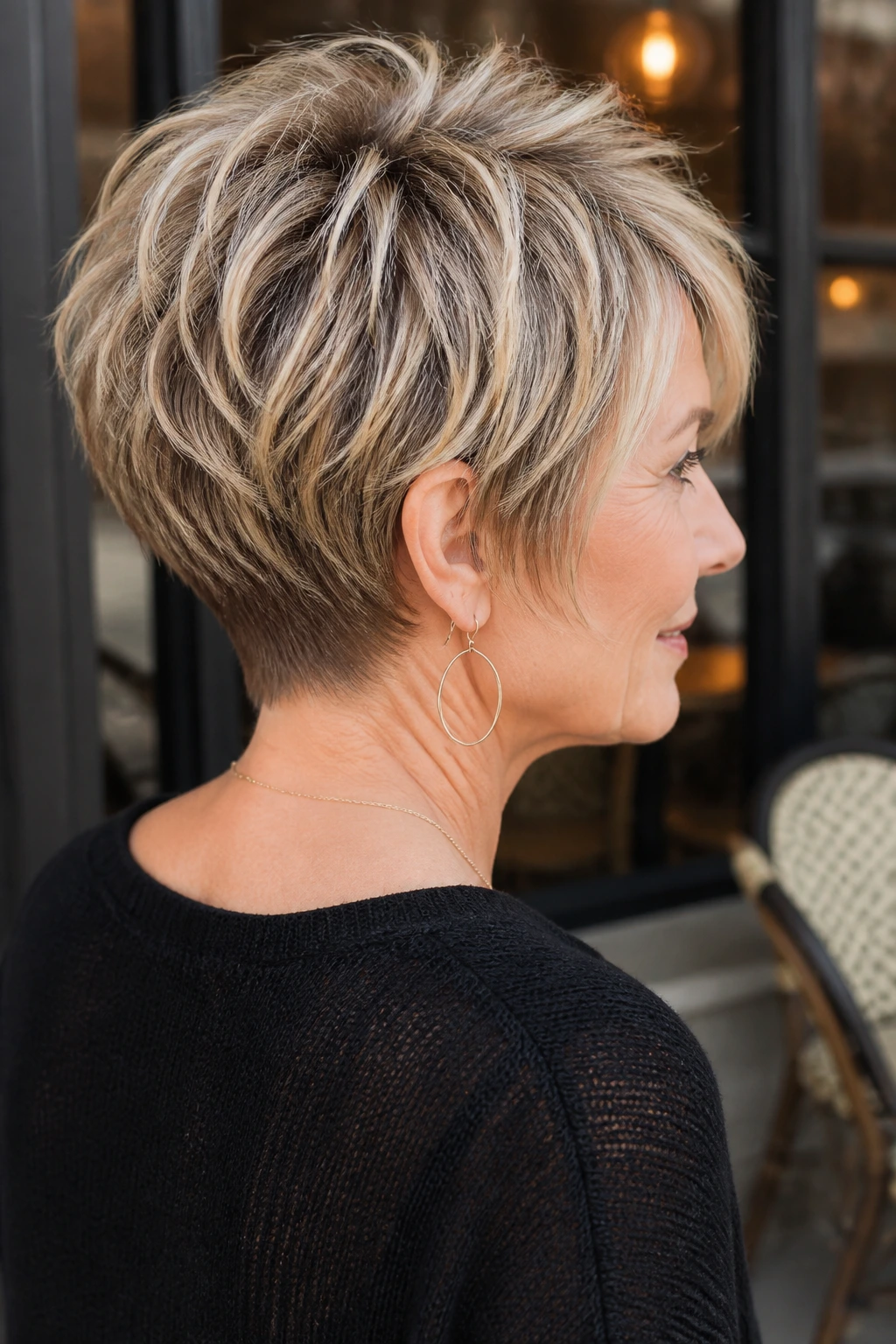
This style is about control in the back and freedom on top. The nape is tapered close to the neck, often with a soft taper rather than a hard clipper line, while the upper layers stay jagged and lifted. That contrast keeps the haircut from puffing out under the ears, which is where many short layered cuts go wrong.
It’s a very good answer if you hate feeling hair brush the neck all day. Some women love that; many do not. A tapered nape also makes the cut look polished from behind, which matters more than people give it credit for. You see the back every time you glance in a mirror.
This shape works on straight, wavy, and lightly curly hair. On coarse hair, the taper helps reduce bulk. On fine hair, it creates the impression of a neater line without sacrificing texture up top.
11. Wavy Air-Dried Shag That Looks Better Slightly Messy

Some haircuts are trying too hard if you style them too much. This one is the opposite. A wavy short shag looks best when the wave pattern is allowed to break naturally, which is a relief for anyone tired of fighting a brush and a blow-dryer every single morning.
The key is the layering. The top is built so it can collapse and spring a little in different directions, which gives that easy bend through the mid-lengths. Around the face, the pieces should be a touch longer so they can curl in or away from the cheek, depending on the day. That kind of randomness is useful.
How to Wear It
Scrunch in a light mousse or wave cream on damp hair, then let it dry with a diffuser or just air-dry if your wave is cooperative. Avoid heavy oils at the root. They kill the lift fast.
12. Razor Bob Shag with a Broken Edge
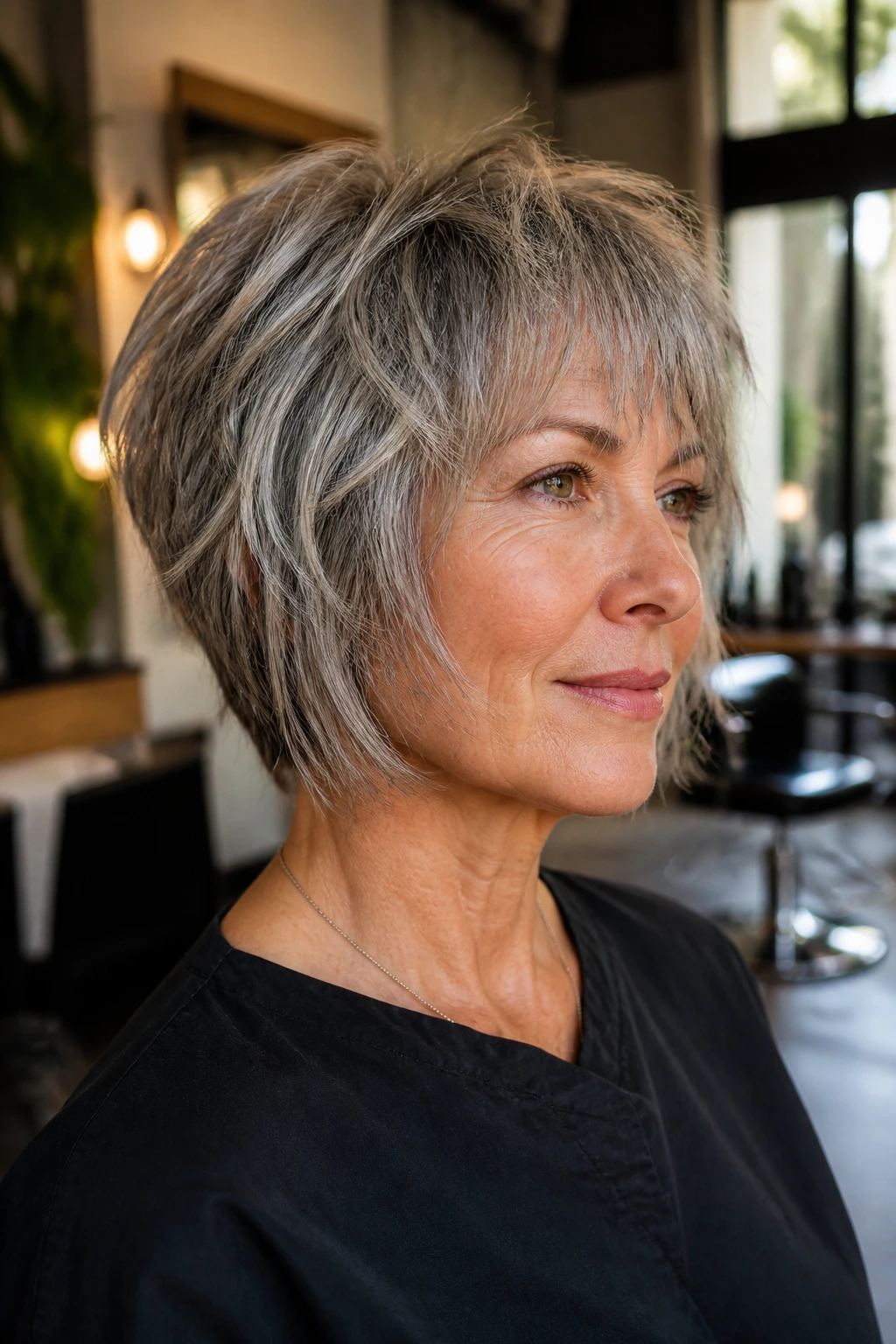
A razor bob shag is for someone who likes the neatness of a bob but can’t stand blunt ends. The perimeter is kept short, often around the jaw or a bit below, and the razor or texturizing shears break the edge so the cut feels lighter. It’s sharper than a soft shag, less shaggy than a wolf crop.
Compared with a classic bob, this version moves more when you turn your head. That movement can make thick hair look less blocky and give straight hair a little friction so it doesn’t fall flat. I’d avoid a heavy-handed razor on very fine hair, though. Too much slicing can leave the ends looking ragged rather than chic.
If you want a cut that still reads clean in a professional setting but doesn’t feel stiff, this is the lane. It’s neat. It’s not boring.
13. Glasses-Friendly Crop That Leaves Room at the Temples
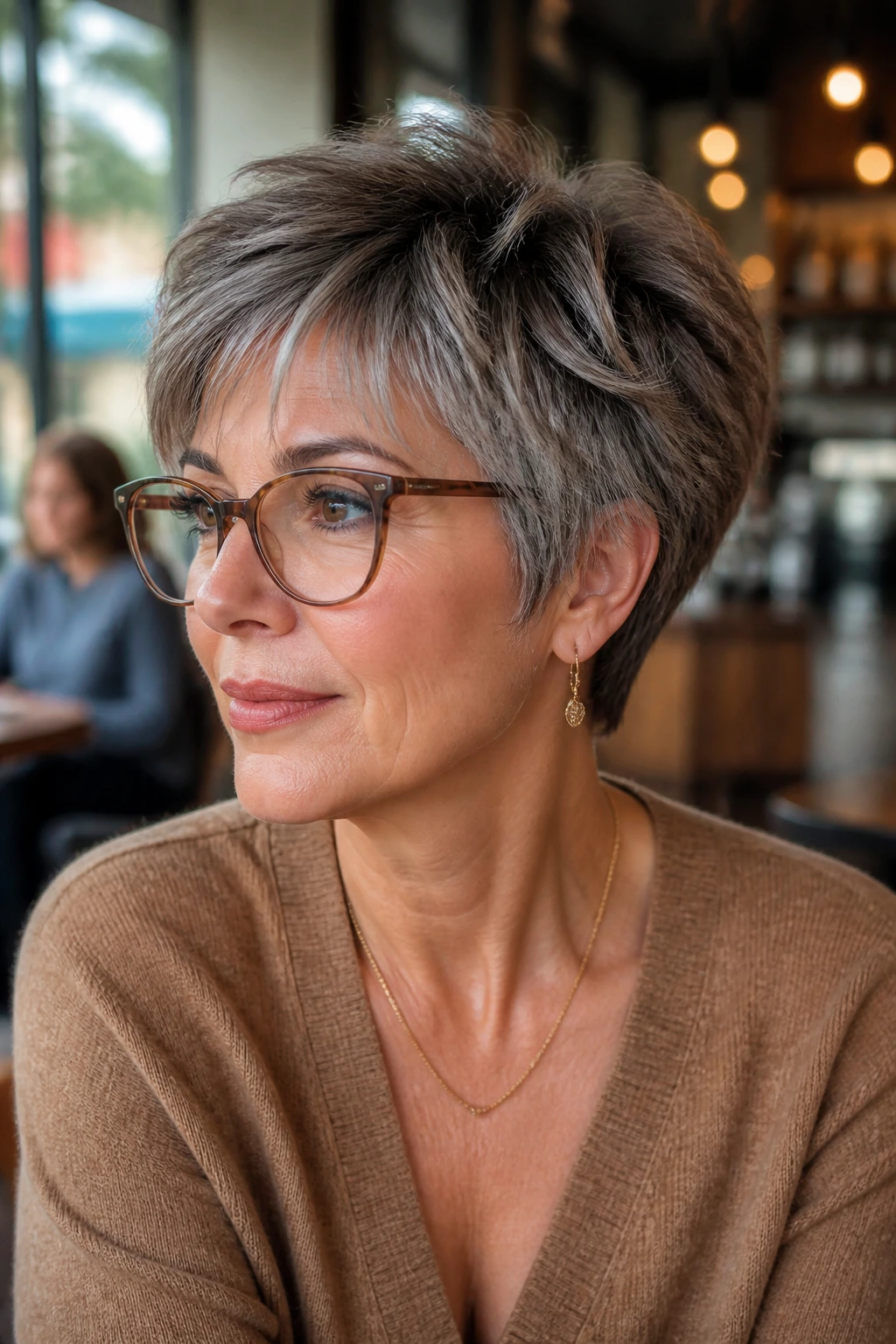
A lot of haircuts look fine until you put on your glasses. Then the temples fight the frames, the fringe pushes into the lenses, and everything starts to feel too crowded. This crop solves that by keeping the side layers a bit shorter and by leaving a small gap around the temples so the frames have visual space.
The front can still have fringe, but it should be soft and movable — not heavy enough to sit on the glasses. The top gets enough texture to keep the shape lifted, while the area around the ears stays light. That balance matters more than people think. Glasses already add structure. The cut should support that, not compete with it.
I like this shape for women who wear their frames every day and don’t want to keep pushing hair back off the lenses. It’s practical, yes, but it still has personality. That’s the part many so-called “easy” cuts forget.
14. Bottleneck Bang Shag with a Narrow Center and Soft Sides
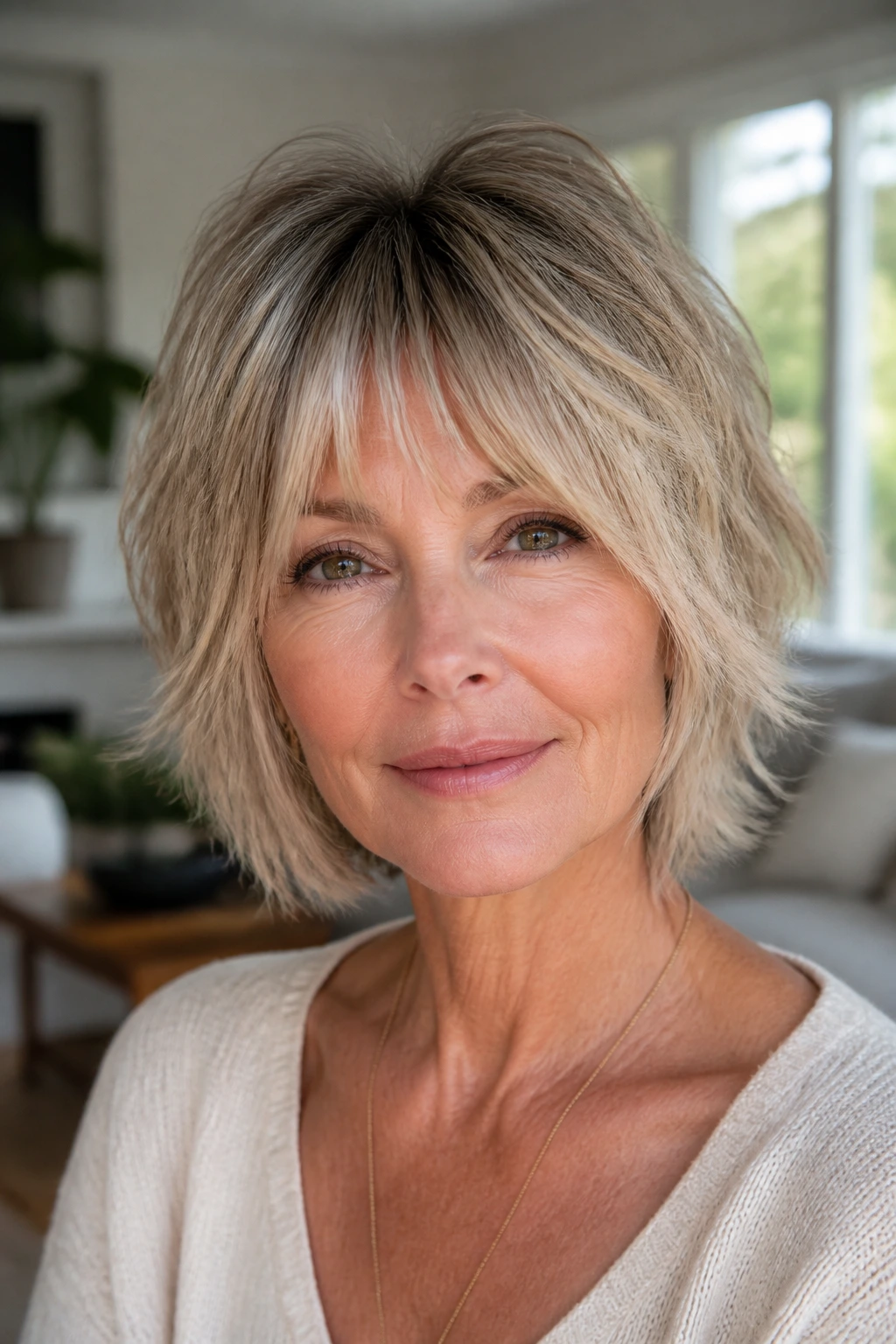
Bottleneck bangs are a smart upgrade when you want fringe without a full curtain across the forehead. They start a little narrow at the center and widen gently as they move outward, which makes the front feel open rather than heavy. On a short shag, that means the bangs frame the face without swallowing it.
This is a really good move if your forehead is smaller or if you’ve had curtain bangs before and found them a bit too broad. The cut gives you softness around the eyes and cheekbones, but it doesn’t flatten the whole front of the haircut. Pair it with choppy layers through the crown and you get a shape that feels balanced rather than overbuilt.
The styling is forgiving. A quick round-brush bend at the front is enough, and you don’t need the fringe to sit in a perfect split every day. That imperfection is part of the appeal.
15. Grown-Out Pixie Shag for Women Who Want a Soft Transition
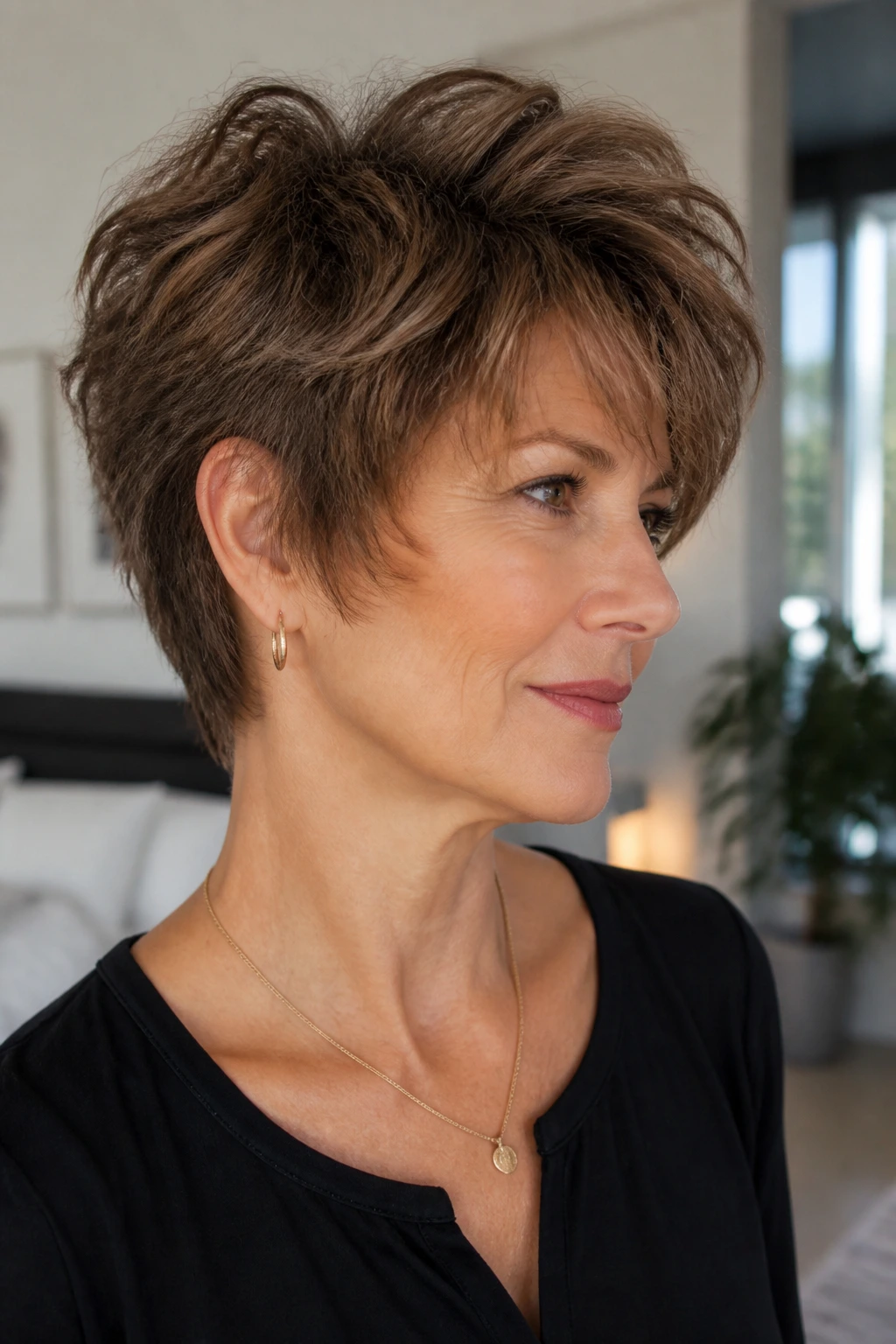
A grown-out pixie shag is one of those in-between cuts that solves a real problem: you want short hair, but you’re tired of the full pixie maintenance cycle. So the top stays longer, the nape stays neat, and the layers grow in a way that looks intentional instead of awkward.
Why It’s Useful
The cut works because it avoids a hard shelf where the pixie ends and the rest begins. The shape moves from short to slightly longer in a gentle slope, which makes it easier to wear while it grows. That’s useful if you don’t want to be back in the salon every four weeks just to keep things from looking lopsided.
It also gives you room to play. You can push the front forward, part it to the side, or tuck one side behind the ear. That flexibility is half the reason people stick with it. Short hair should earn its keep.
16. Stacked-Back Shag with Lift at the Occipital Bone
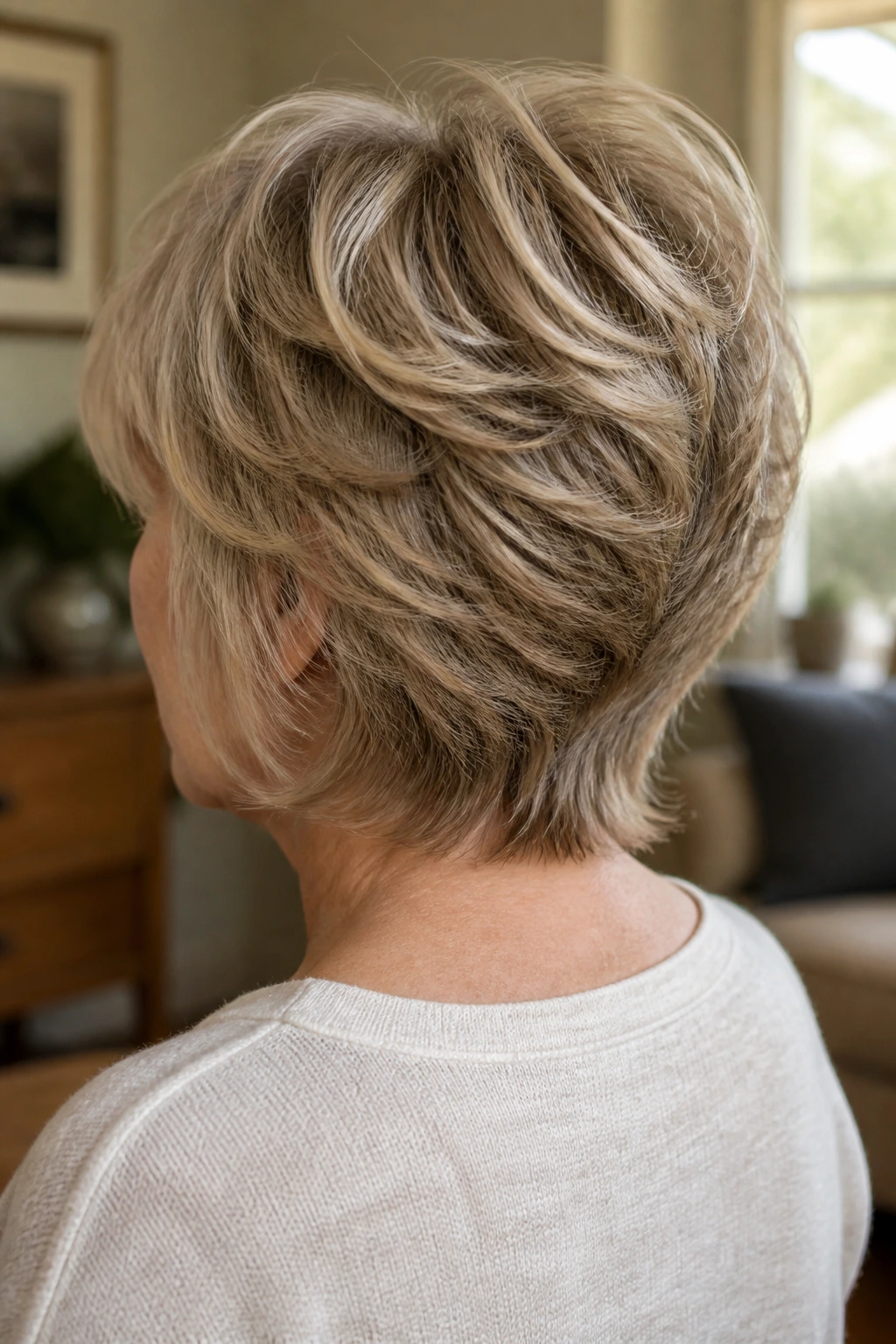
The stacked-back shag is built around volume at the back of the head, right around the occipital bone. That sounds technical, but all it really means is the hair is stacked so it doesn’t flatten into the neck. The layers in back are shorter underneath and slightly longer on top, creating a shape that lifts instead of collapsing.
This cut is useful if your hair grows outward at the crown and then goes limp in the lower back. The stack gives the upper back some internal support. It also looks good with a bit of wave because the layers reveal themselves as the hair moves. Very straight hair can wear it too, but you’ll want a round brush or a quick bend from a blow-dryer.
I’d call this one a good compromise between structure and softness. You get the lift of a short cut, but the whole head doesn’t end up looking clipped too tight.
17. Thin-Hair Choppy Crop That Fakes Density
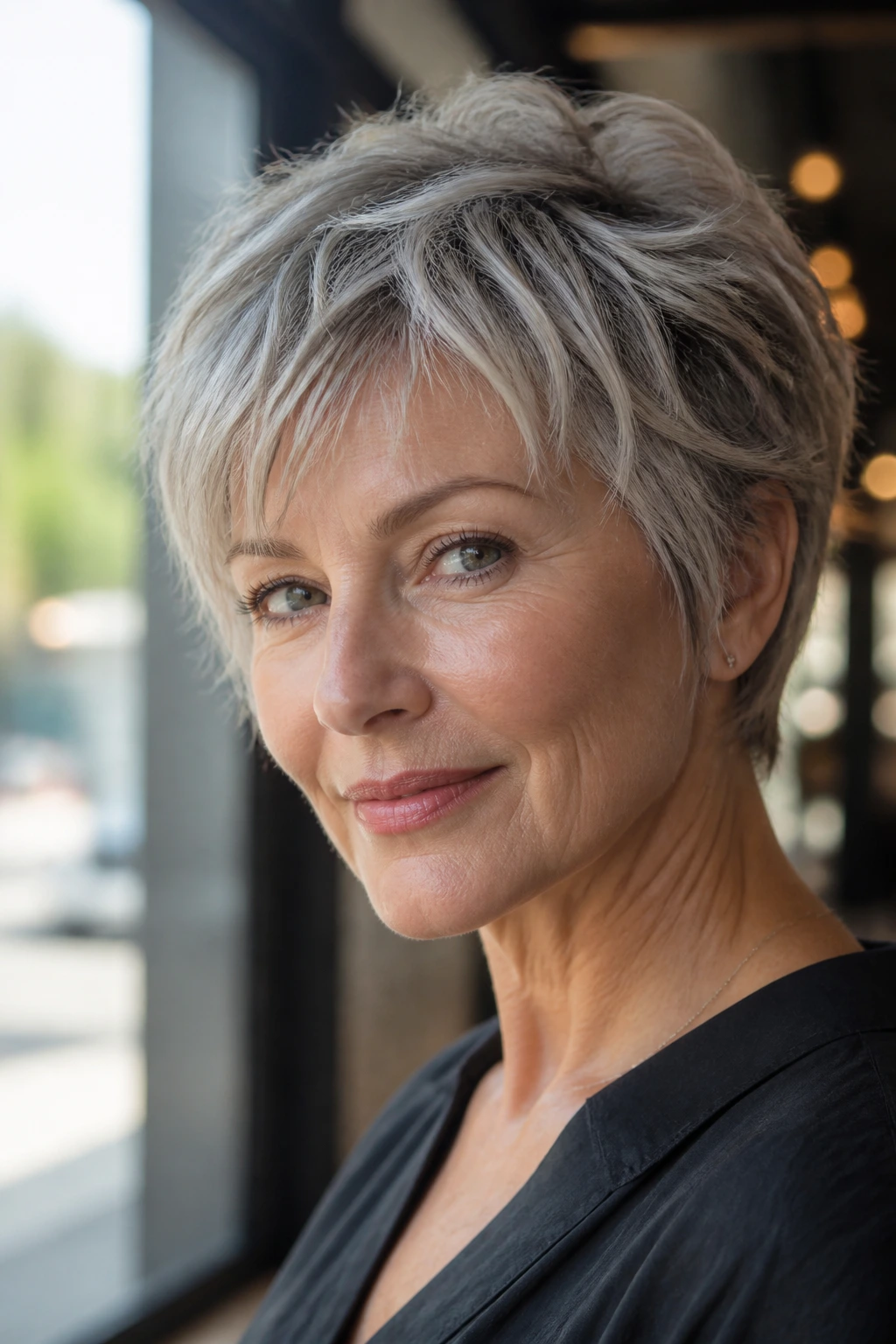
Thin hair needs a different approach than coarse hair, and this cut respects that. Instead of removing too much weight, the stylist keeps the layers soft and strategic, leaving enough bulk at the perimeter so the silhouette still feels solid. The choppiness comes from the surface layers, not from shredding the whole head.
That distinction matters. If thin hair is overtexturized, it can go see-through in the worst places — often at the ends or around the temples. A good choppy crop keeps the top moving while preserving the outline. The result is a fuller-looking shape that doesn’t feel weighed down.
This cut is a favorite for women who want lift without fluff. Use a small amount of mousse at the roots and dry the hair in the opposite direction of where it naturally falls for the first few minutes. That little trick matters more than a lot of expensive products.
18. Straight-Hair Razor Shag with a Sharp Swing
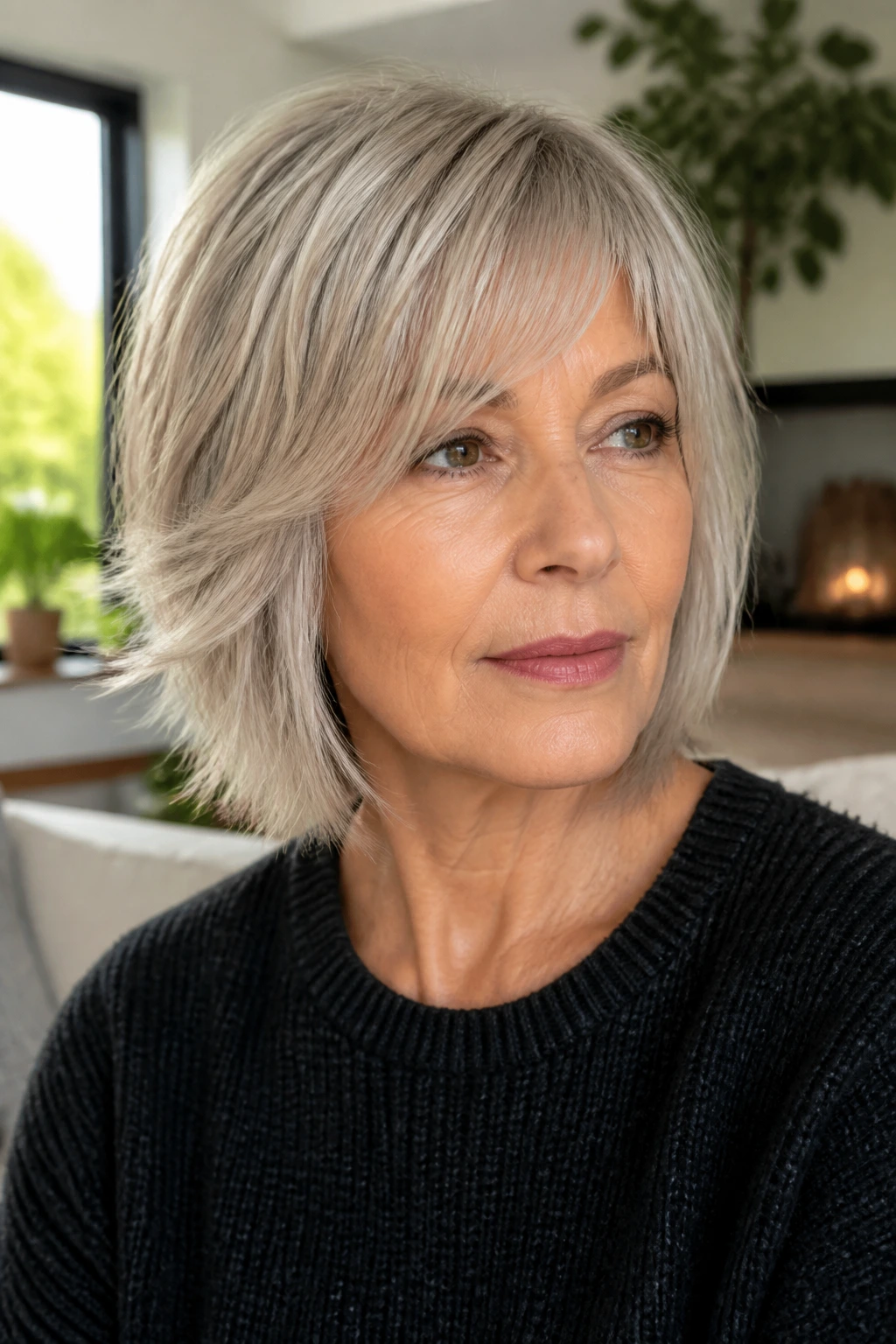
Straight hair can look too plain in a blunt cut, which is exactly why a razor shag feels useful here. The razor breaks the line just enough that the ends swing instead of sitting like a sheet. You still keep a clean outline, but there’s friction and movement baked in.
The best part is how this cut behaves when you move. Straight hair often shows every line, so a little discontinuity at the ends keeps it from looking too rigid. If the layers are cut with a light hand, the front pieces can tuck under the cheekbone and the back can stay sleeker, giving the whole thing a more modern outline.
Be careful with overthinning. Straight hair doesn’t always need more texture; sometimes it just needs the right texture in the right spot. This is one of those cases where less can look more deliberate.
19. Rounded Silver Shag with a Softer Silhouette
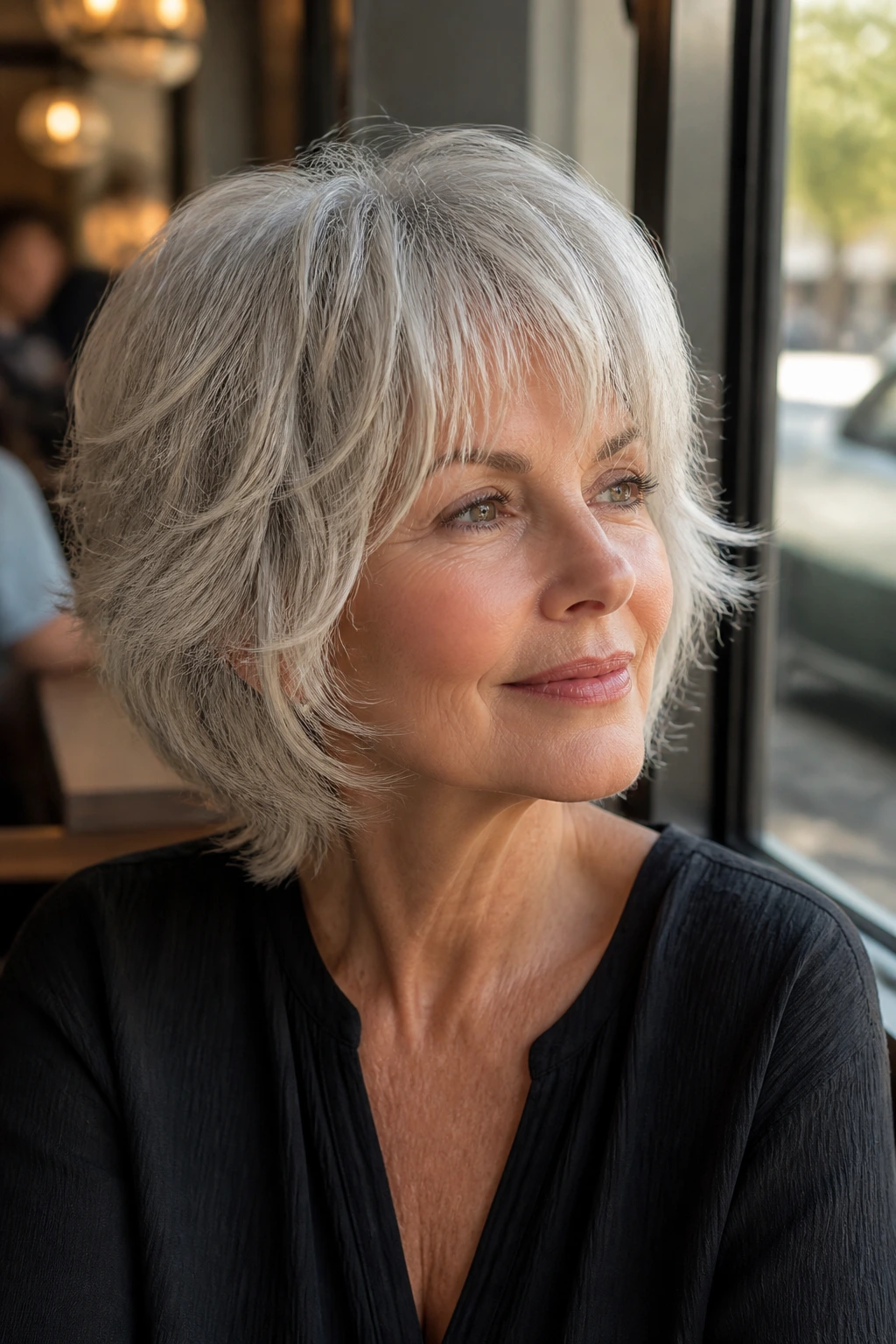
A rounded shag is for women who want movement but not too much edge. The layers curve with the head, creating a softer profile from the side and back. On silver hair, that rounded shape can look very clean because the light catches the layers in a way that flat styles can’t manage.
The reason I like it for mature hair is simple: it doesn’t fight facial softness. Some short haircuts draw too hard a line around the jaw or ears, which can look harsh. A rounded shag eases into the face instead. It can still be choppy, but the choppiness sits inside a gentler outline.
This is also a strong choice if you wear softer makeup or like rounder glasses. The haircut and the accessories can echo each other instead of colliding. Small thing, big difference.
20. Curly Chin Shag That Lets the Curl Bounce
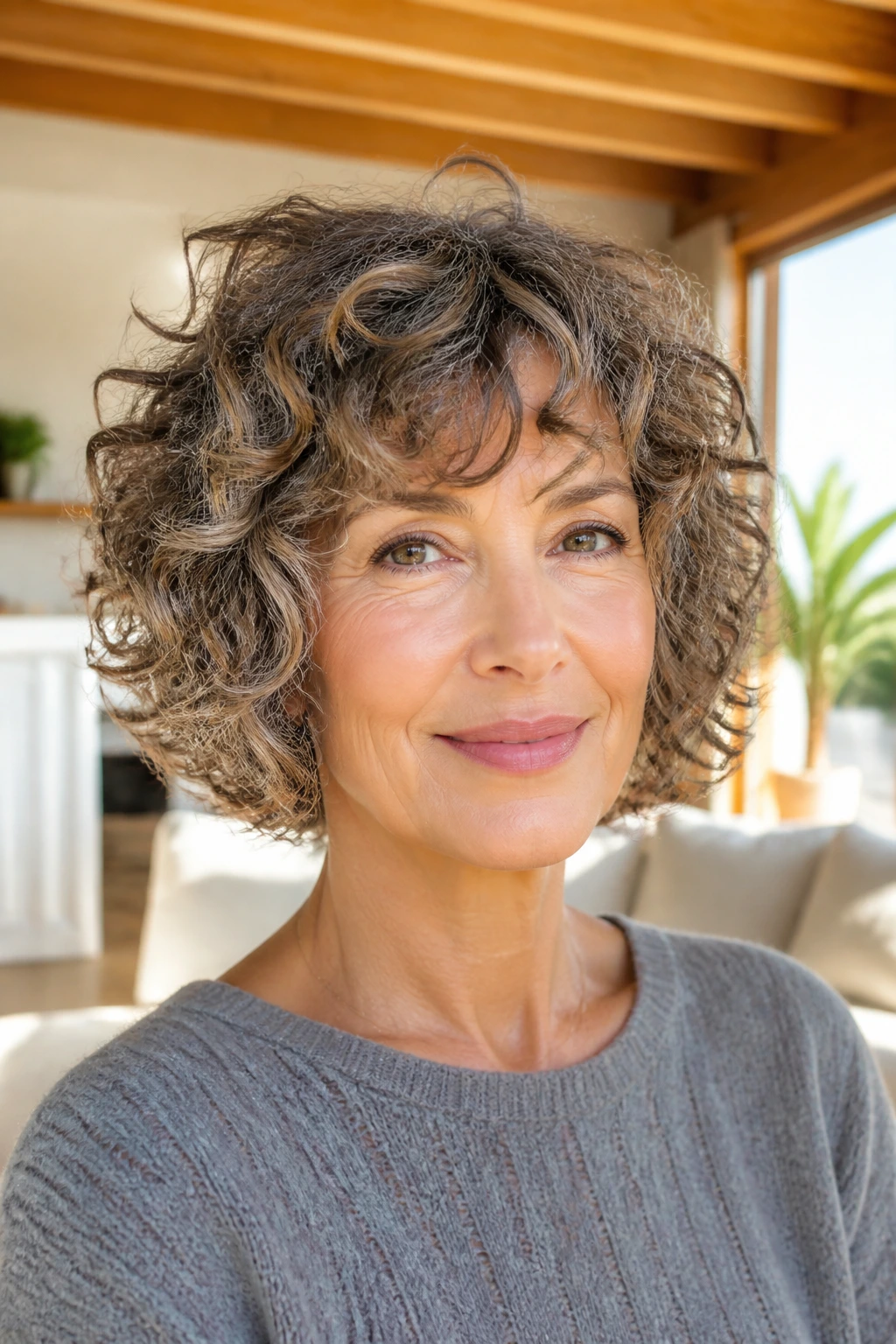
When curls hit the chin, they create a frame that feels lively without taking over the whole face. A chin-length shag lets the curls spring around the jaw while keeping the sides light enough that the shape doesn’t puff into a triangle. That’s the entire balancing act.
The layers should follow the curl pattern, not chop through it blindly. I’d rather see a slightly uneven line than a cut that breaks the curls into odd little hooks. Ask for dry cutting if your stylist is comfortable with it, because curls often reveal their real shape only after they’re fully dry.
This is a lovely option for women whose curls have become looser or drier over time. The haircut brings the bounce forward. The wrong product routine can flatten it again, so keep creams light and avoid piling on gel unless your curl pattern likes it.
21. Messy Crown-Volume Crop for a Little Lift Up Top
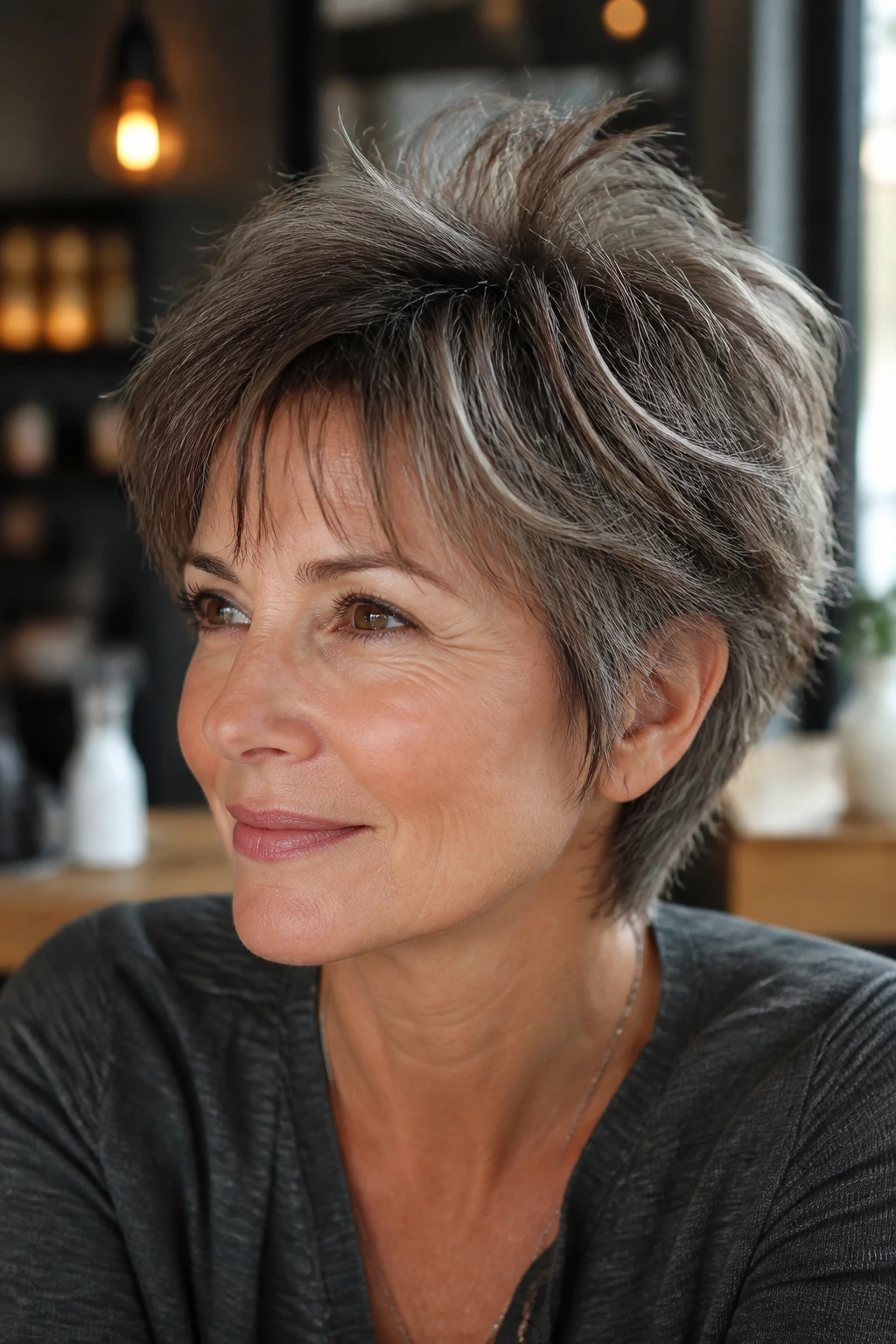
Some cuts are built to look nice when styled. This one is built to look nice when slightly imperfect. The crown gets extra volume through short internal layers, while the rest of the hair stays tousled and broken up. You get lift where it counts and a casual edge everywhere else.
The best part
The shape doesn’t rely on perfect symmetry. If one side lies flatter, the cut still reads intentionally messy. That’s useful for hair with a stubborn cowlick or a crown that doesn’t cooperate. Instead of forcing it, the cut uses the movement.
A little matte styling paste at the root and crown can help, but only a little. Too much product turns the texture sticky. That’s where these short styles go bad fast.
22. Tucked-Ear Shag with Soft Side Length
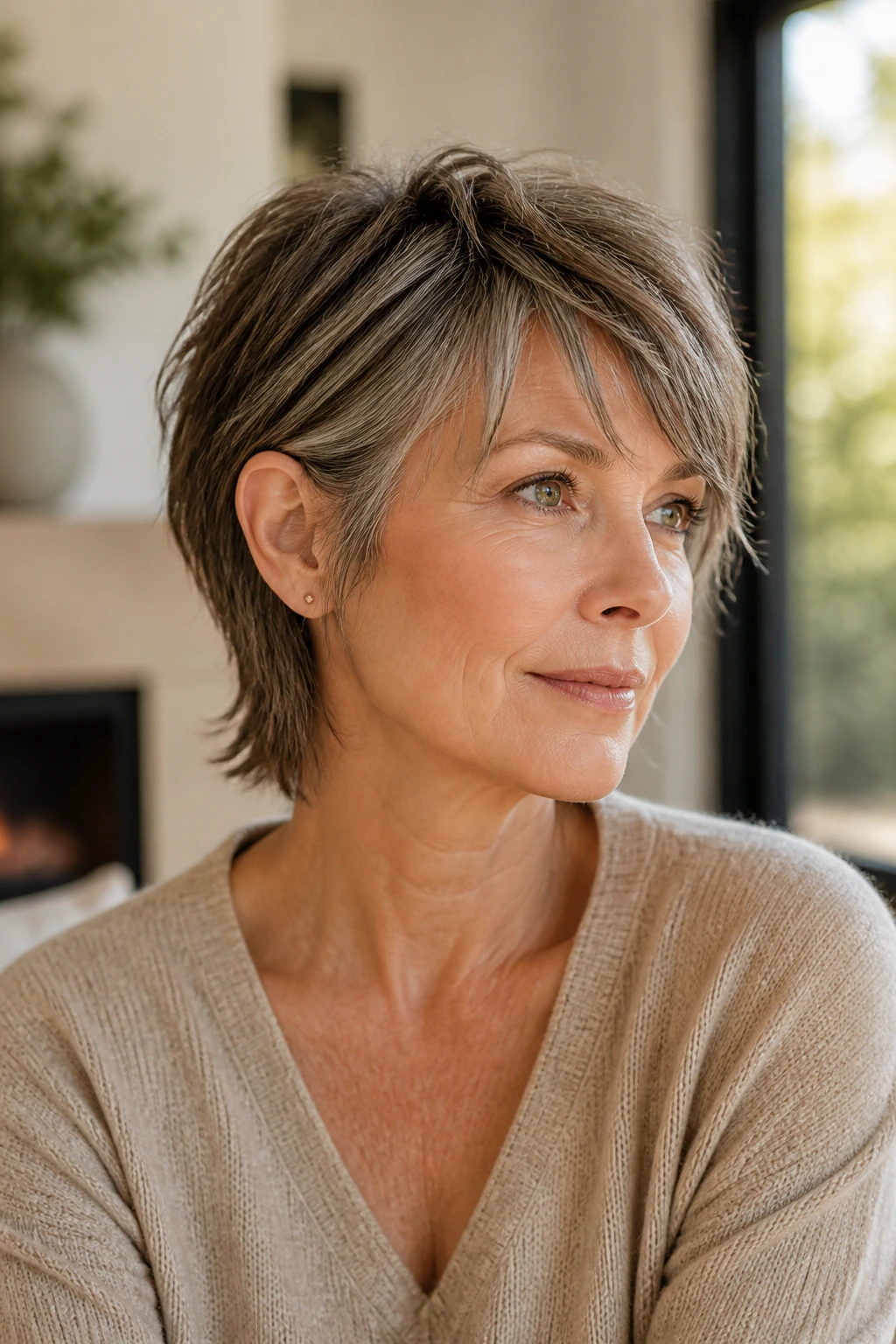
This is a quieter cut, and I mean that in the best way. The sides are long enough to tuck behind the ears, which gives you a bit of control when you want it, but the rest of the cut still has choppy texture and movement. It’s a useful shape for women who like to show earrings, clean cheekbones, or a polished neckline.
The tucked-ear trick also makes the haircut feel lighter without sacrificing structure. You can wear it tucked, half tucked, or loose, and each version gives a slightly different mood. That kind of flexibility matters in a short cut. Nobody wants the same result every single day.
If your hair tends to flip out at the sides, this is one way to work with that rather than against it. The layers can be directed to sit closer to the head without going flat. Nice, clean, done.
23. Mullet-Inspired Micro Shag for a Little Edge
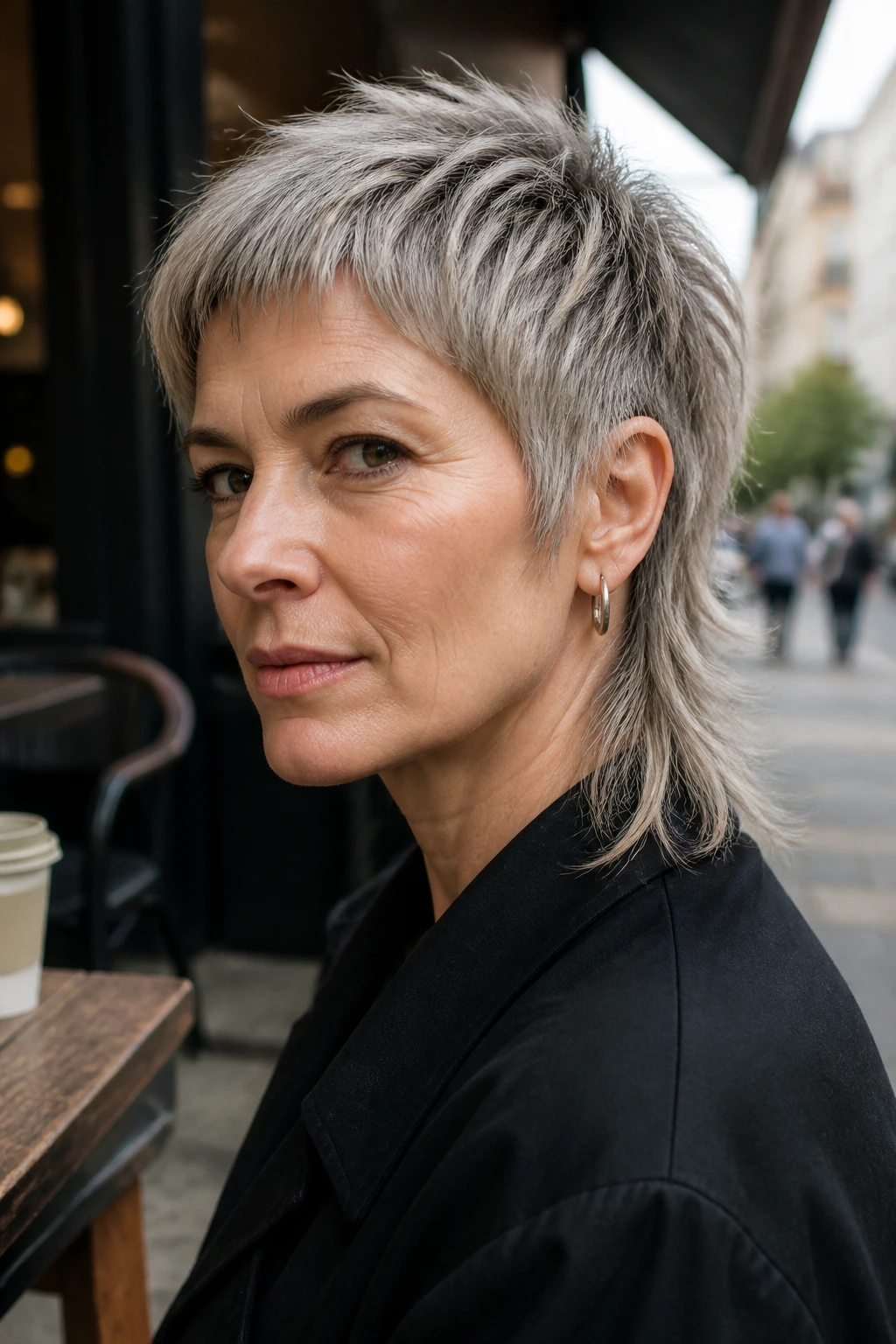
A micro shag with a mullet influence is not for someone who wants to disappear into the background. The front and top stay short and piecey, while the back is left a touch longer to create that subtle tail. The difference is the cut doesn’t need to be dramatic to be interesting.
What makes this version wearable is restraint. The back shouldn’t be long enough to feel costume-like. The side panels should stay soft enough to blend into the face. If the proportions are right, you get a short haircut with a little attitude and none of the awkward heaviness that old-school mullets used to have.
This is a good choice for women who like sharp clothes, bold glasses, or statement earrings. The haircut can handle them. It also grows out in a fairly interesting way, which is more than I can say for many ultra-short styles.
24. Feathered Face-Framing Bob with Choppy Layers

This is the one for women who want bob structure without bob stiffness. The outline stays short, but the front layers are feathered so they curve around the face instead of sitting in a blunt wall. The ends are chipped lightly, which keeps the shape from looking too neat.
That face-framing effect is the whole point. It can soften a strong chin, lengthen a round face a little, or make glasses sit more naturally against the haircut. The layers should start at the cheekbone or just below it so the front pieces can do their work without turning into bangs.
I like this cut because it doesn’t overcomplicate itself. It gives shape where you want it, then gets out of the way. Sometimes that’s the smartest move.
25. Tousled Salt-and-Pepper Crop with Broken Texture
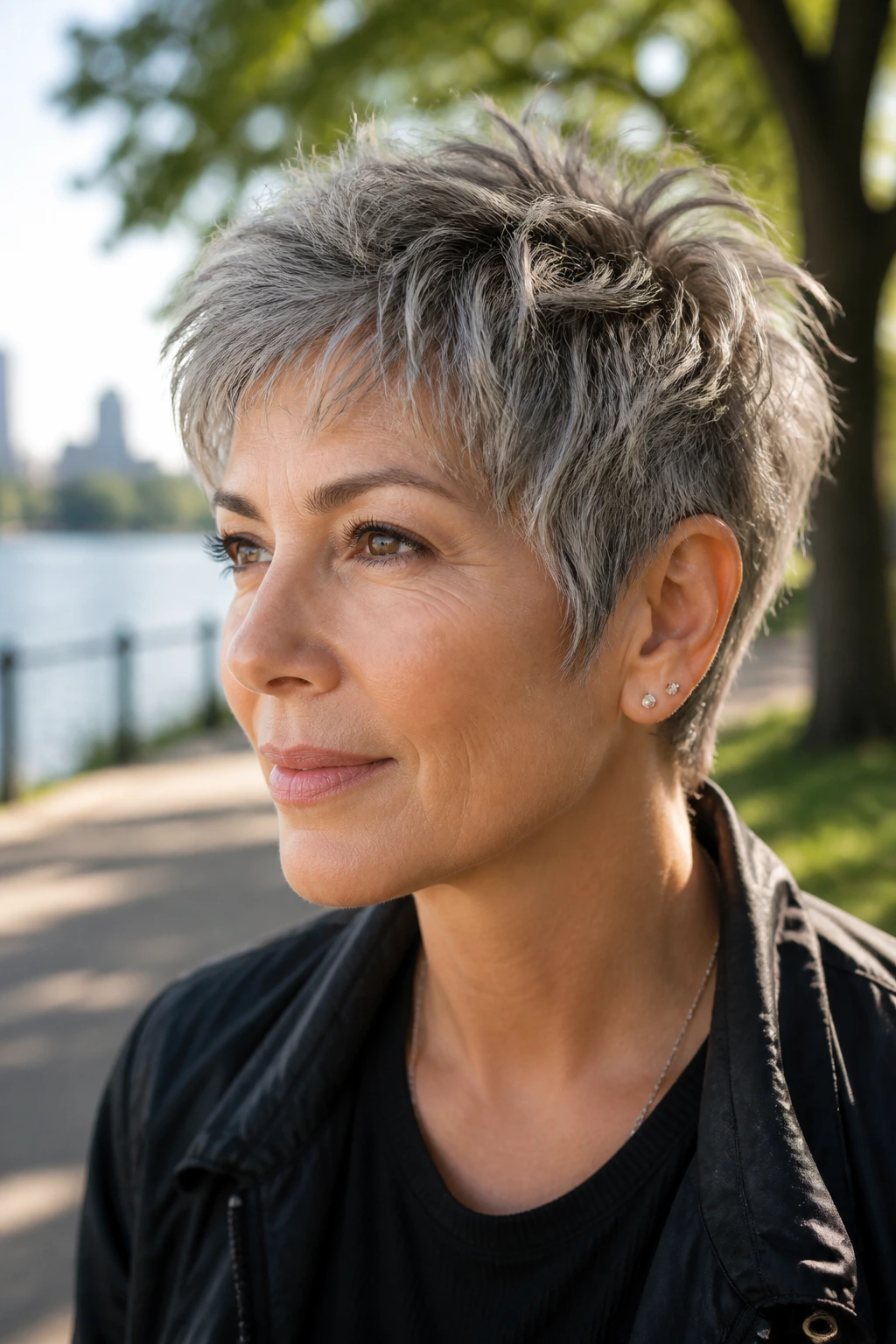
Salt-and-pepper hair has a built-in advantage: the color already creates contrast. A tousled crop takes advantage of that by keeping the texture loose and broken up, so the lighter strands catch the eye and the darker pieces hold the shape. You do not need a lot of elaborate styling for this to look good.
The crop should feel light at the ends and slightly fuller near the top. That contrast helps the color read as dimensional instead of flat. If your hair has some natural wave, even better. The bend adds a second layer of texture on top of the color pattern.
I’d avoid making this cut too symmetrical. Salt-and-pepper hair tends to look better when it feels a little organic, not carved. A soft side part and some finger-drying usually do the job.
26. Wispy Fringe Shag That Keeps the Forehead Light
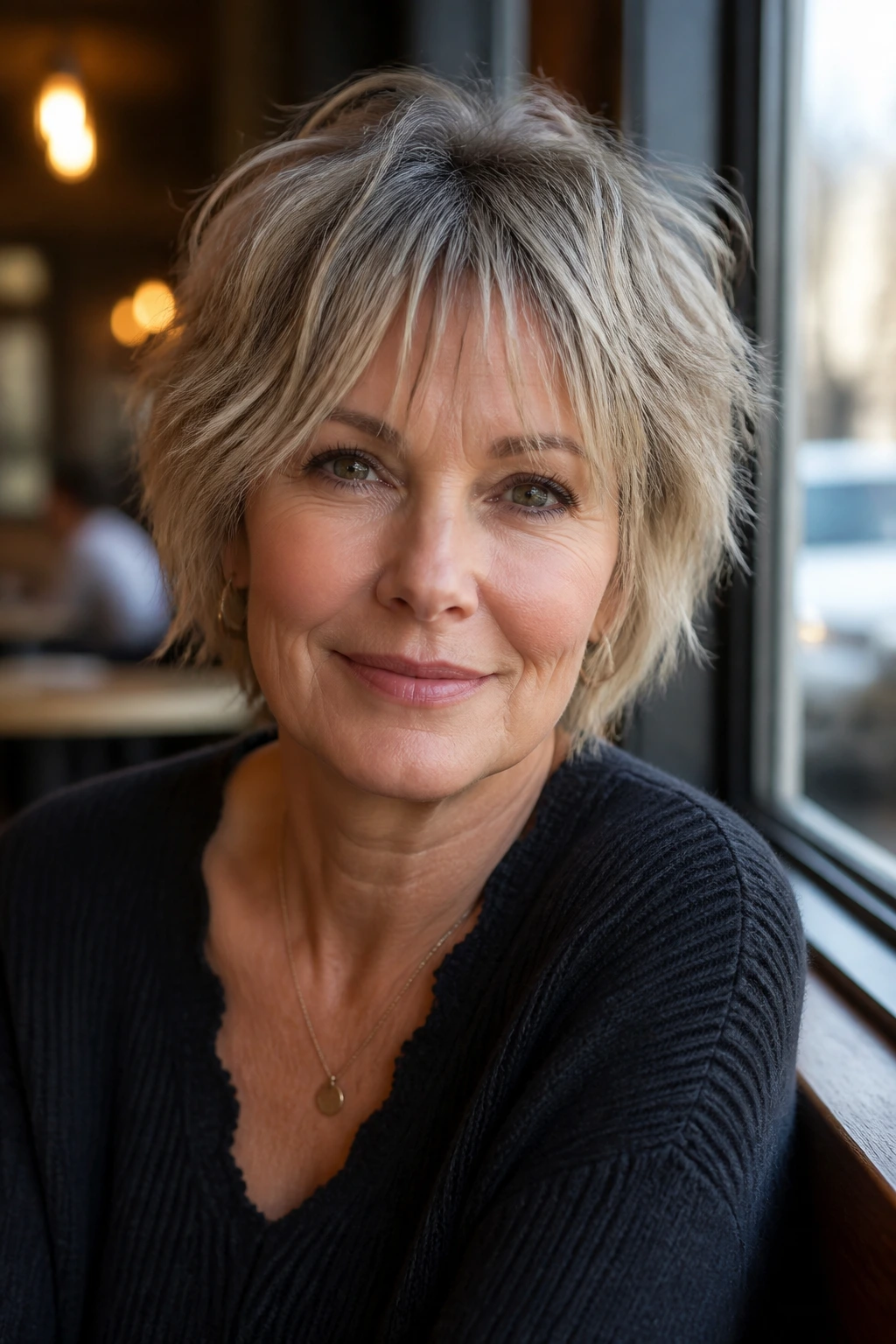
A wispy fringe can be a relief if you want some coverage without the weight of a full bang. On a short shag, the fringe should feel airy and irregular, with little gaps that let the forehead show through. That softness keeps the cut from looking too heavy on top, which is a common problem with denser bangs.
The fringe also gives the haircut a more youthful line without trying too hard. I mean that in a structural sense, not a cosmetic one. It draws the eye upward, then lets it drift through the rest of the layers. There’s no hard stop.
This style works well if your hairline has thinned slightly or if you want a little coverage around the front without getting trapped in daily bang maintenance. Trim it before it gets heavy. Wispy bangs go from charming to floppy faster than people expect.
27. Layered Crop with a Longer Top for Flexible Styling
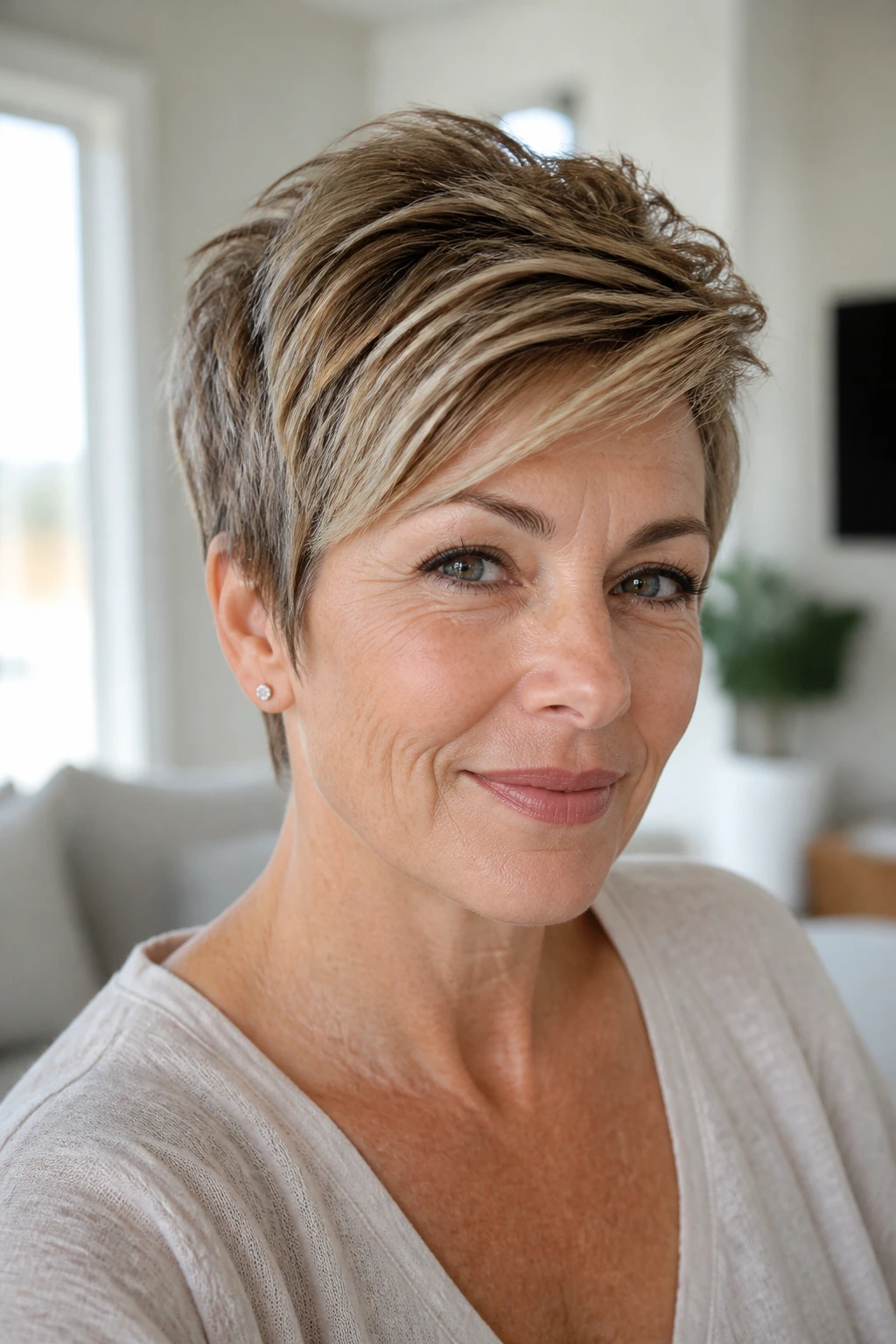
This one is all about options. The sides and back stay short, but the top is left longer so you can style it forward, side-swept, lifted, or slightly messy. That extra length on top gives you more range without forcing the entire haircut into a longer category.
The structure is useful if you’re not sure what mood you want every day. Want neat? Push it to the side. Want more edge? Scrunch it upward with texture cream. Want softness? Let the front fall forward a little and keep the rest controlled. The cut can change personality without changing shape.
It’s also a smart way to move out of a pixie without jumping straight to a bob. The longer top buys you time and styling freedom.
28. Softly Shattered Bob with Choppy Movement
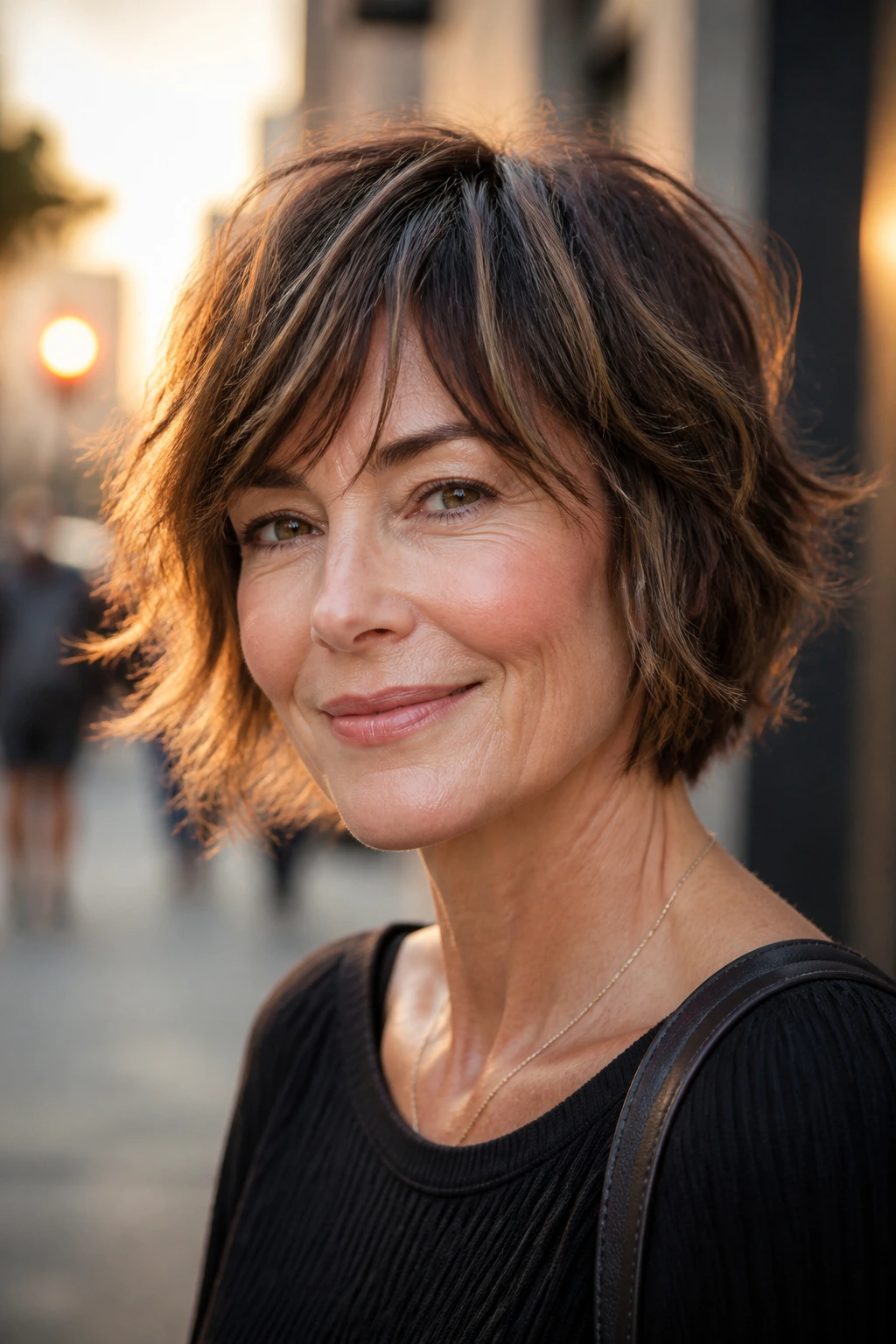
A shattered bob is not just a bob with random layers thrown at it. The ends are broken up with intention so the outline feels light and a little uneven, which keeps the shape from sitting like a solid block. On mature hair, that can make the whole head look more mobile and less heavy.
What I like about this version is the balance between structure and softness. The bob line is still there, so the cut doesn’t drift into a shapeless shag. But the shattered ends keep it from looking stiff. If your hair is thick, this can remove some of the bulk at the perimeter without taking too much off the shape.
It’s especially nice when you want a polished silhouette that still has movement in the mirror. Not stiff. Not sloppy. That middle ground is harder to get than it sounds.
29. Textured Crop for Coarse Hair That Removes Bulk Without Losing Shape
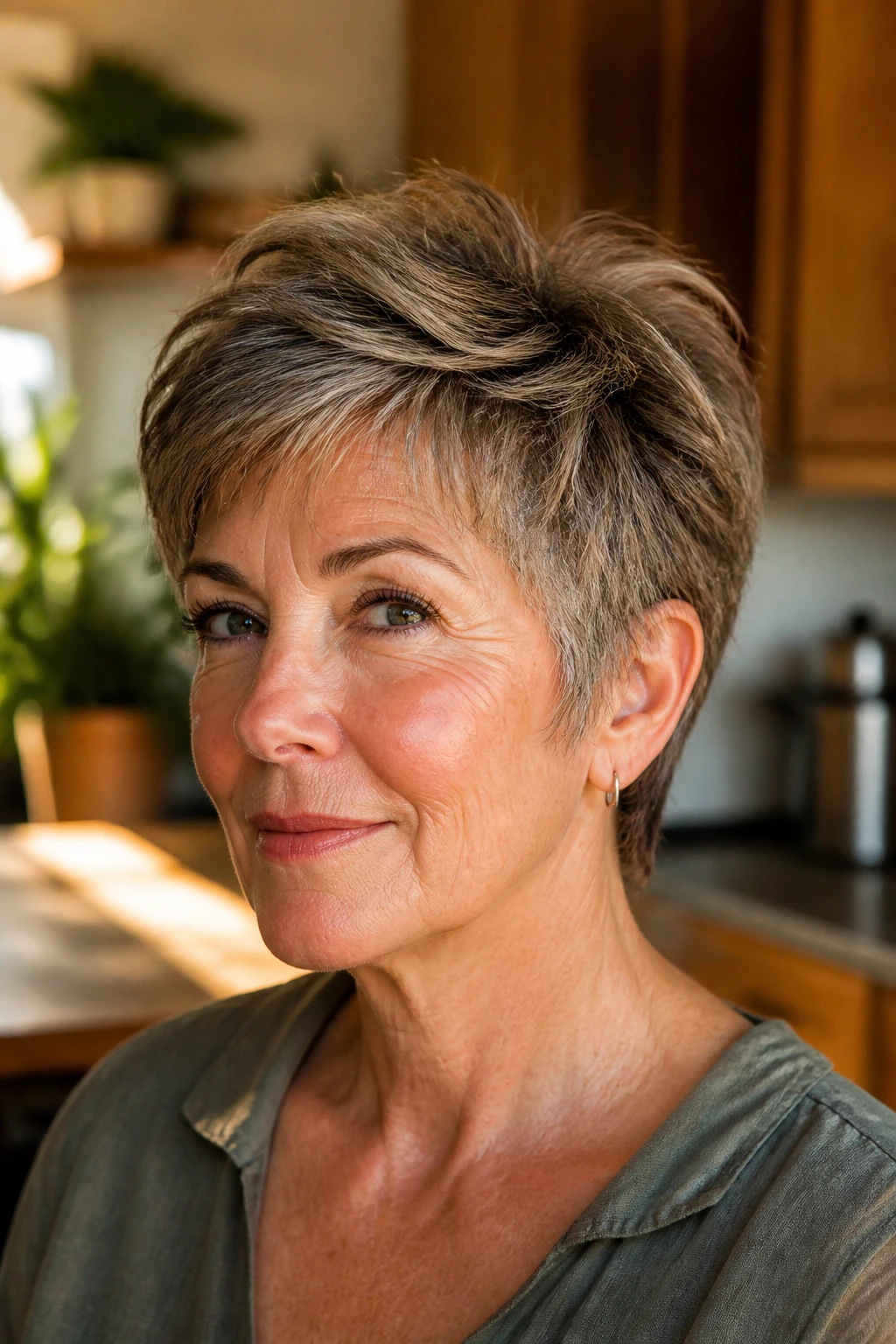
Coarse hair needs control, not just more layers. A textured crop for coarse hair takes out weight in the right places — usually through the interior and around the sides — while leaving enough perimeter to keep the shape from turning fuzzy. That’s the mistake people make all the time: they thin coarse hair until it frizzes out and looks bigger, not smaller.
The best version keeps the top lively and the sides a little slimmer. The cut should move, but it should still have boundaries. Ask for point cutting or careful internal layering instead of aggressive slicing if your hair expands when it dries. The finish matters too; a smoothing cream or light balm can keep the ends from catching and puffing.
This is the one I’d choose if your hair feels too much for shorter cuts that are supposed to be “easy.” Easy only happens when the density is handled properly.
30. Clean-Line Shag with Choppy Ends for a Refined Finish
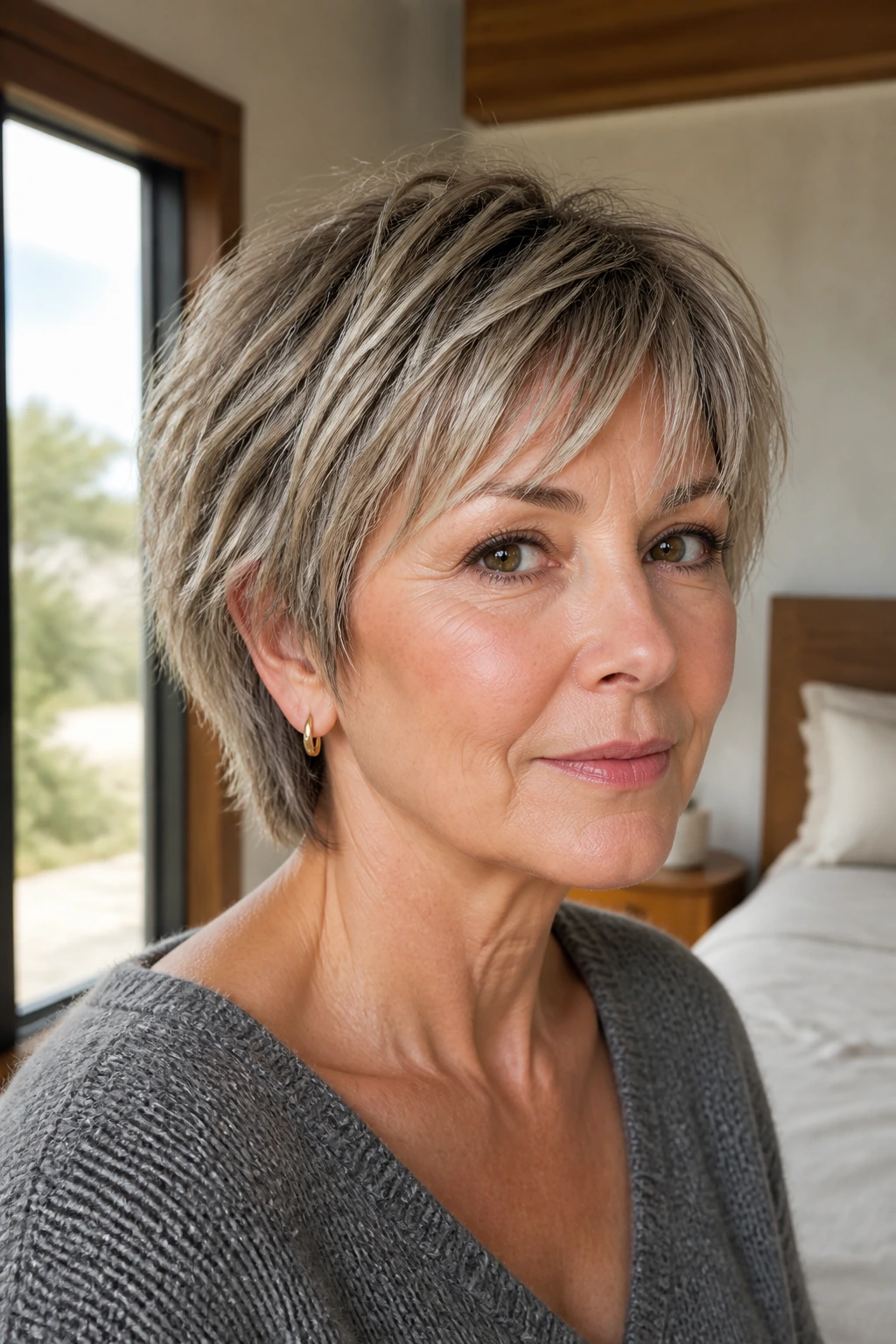
A clean-line shag sounds contradictory, which is exactly why it works. The outline stays neat enough to look intentional and grown-up, while the ends are cut into small, irregular pieces so the haircut still has movement. You get the comfort of a disciplined shape with just enough edge to keep it from turning dull.
This is a strong finale if you want texture but not chaos. The hair can sit close to the head, especially around the nape and sides, while the top and fringe stay a touch more broken up. It’s a quiet haircut, but not a boring one.
I’d recommend it for women who like tailored clothes, simple jewelry, or a more polished finish overall. The cut doesn’t need a lot of product. It needs clean lines, light texture, and a stylist who knows where to stop.
Why Short Choppy Shag Haircuts Work So Well on Mature Hair
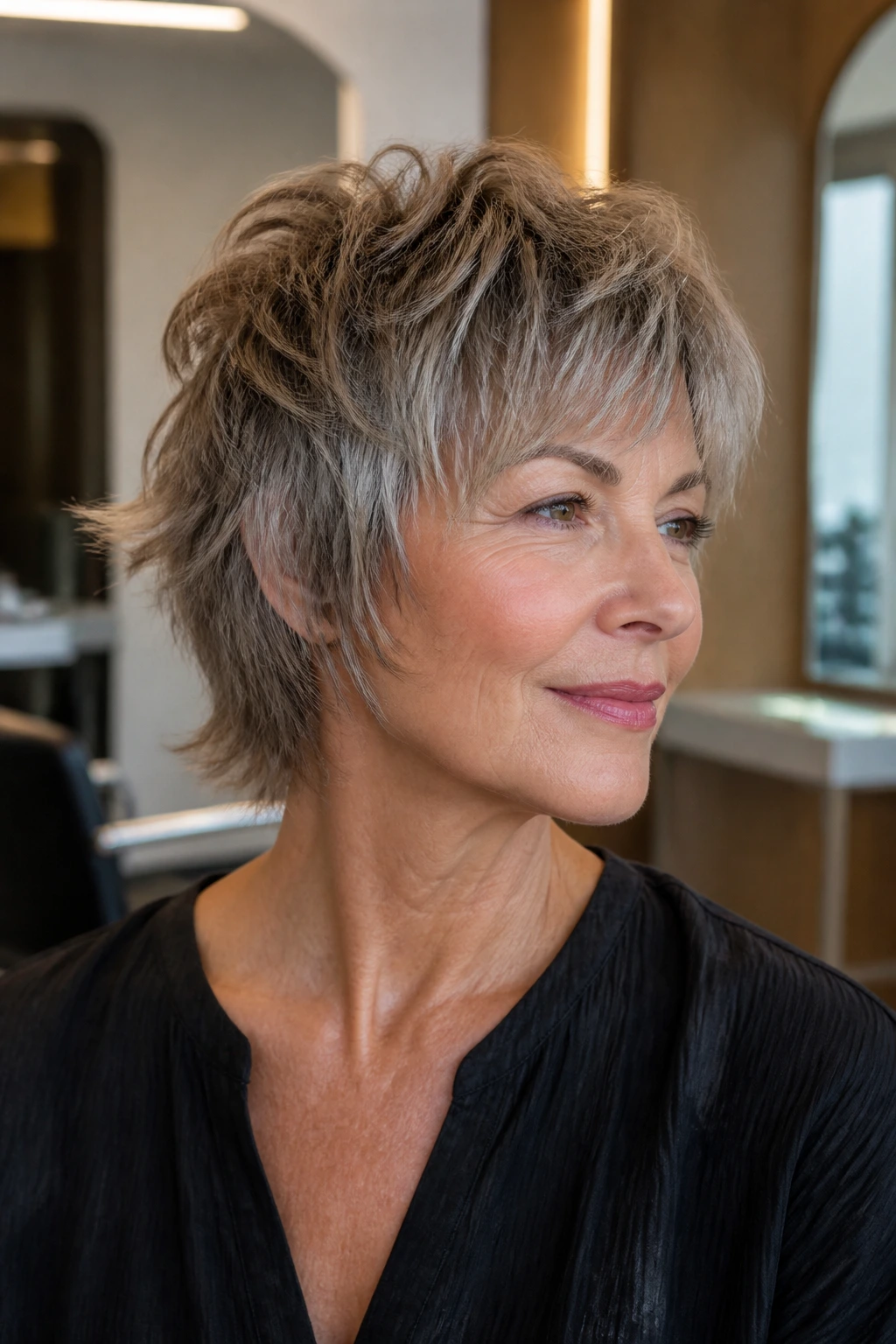
The short choppy shag works because it solves three aging-hair problems at once: flat roots, uneven density, and heavy ends. A blunt cut tends to show every collapse and every thin patch. A shag breaks that outline up, so the eye sees movement instead of weakness.
There’s also a practical side people overlook. Shorter layers dry faster. That matters when you don’t want to spend twenty minutes on a round brush every morning just to get some lift at the crown. With the right cut, a little mousse, a quick blow-dry, and a finger-rake through the top can be enough.
The shape matters even more on silver or white hair, because those colors pick up light and shadow differently. Hard lines can look severe. Choppy layers soften the overall effect and let the color do its own work. That’s why so many of the best versions are not aggressively sculpted. They’re broken up enough to move, but they still know where the edges are.
How to Wear a Short Choppy Shag With Glasses, Earrings, and Necklines

Presentation: Let the haircut frame one feature at a time. If your glasses have thick frames, keep the fringe softer and the side pieces lighter so the face doesn’t get crowded. If your frames are delicate, you can usually wear a little more fringe or side texture without overpowering the face.
Accompaniments: Short earrings, collars, and necklaces all change how a shag reads. A tucked-ear version shows off studs and hoops. A neck-length shag sits well with open necklines and V-necks, while a choppier crop can balance a higher collar or a tailored jacket.
Best Pairings: If you wear glasses daily, pick a cut that leaves room at the temples. If you love statement earrings, keep the sides short enough to clear them. If your style leans simple and clean, a more refined shag with a neat nape will feel at home.
Finish: The cut should sit with your everyday accessories, not fight them. That’s the difference between a haircut that looks styled and one that just looks busy.
How to Choose the Right Cut for Your Texture and Face Shape
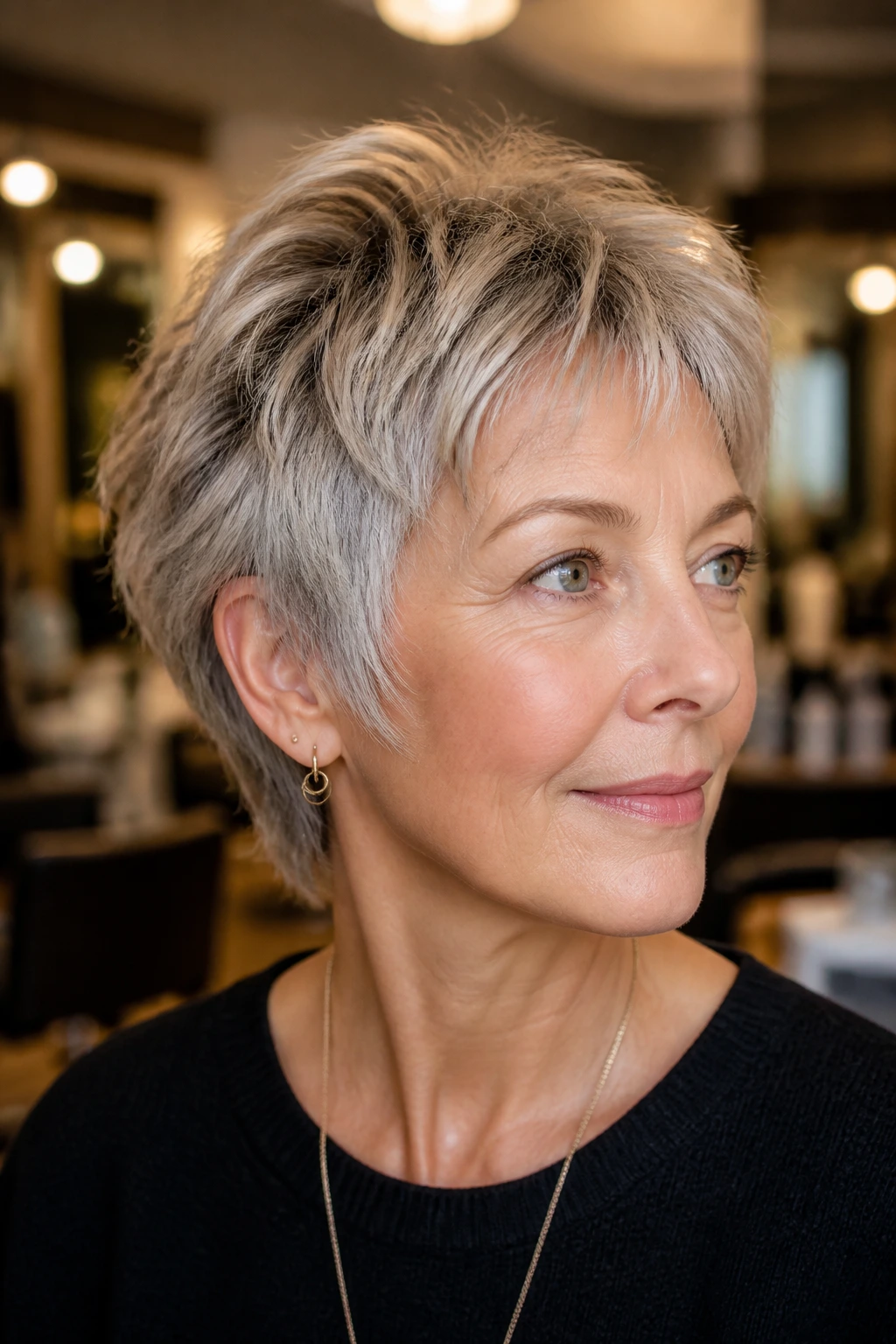
Fine hair usually needs less layering than people think. Too many short layers can make it look wispy at the ends and flat at the roots. Thick hair, on the other hand, often needs the opposite — enough internal removal that the shape doesn’t balloon. That’s why the same shag can look brilliant on one person and unbalanced on another.
Face shape matters, but not in the rigid way old salon charts make it sound. A round face often likes a little length in the front, especially around the cheekbone or jaw. A longer face often benefits from fringe or side pieces that shorten the visual distance between forehead and chin. Square features can soften nicely with feathered sides and broken-up bangs.
Cowlicks, growth patterns, and glasses deserve a mention too. If your hair kicks up at the crown, don’t fight it with a heavy fringe. If your hair flips out at the jaw, ask the stylist to build the layers around that tendency instead of trying to erase it. A good shag works with the way your hair already behaves. That’s the whole point.
How to Ask Your Stylist for the Right Version
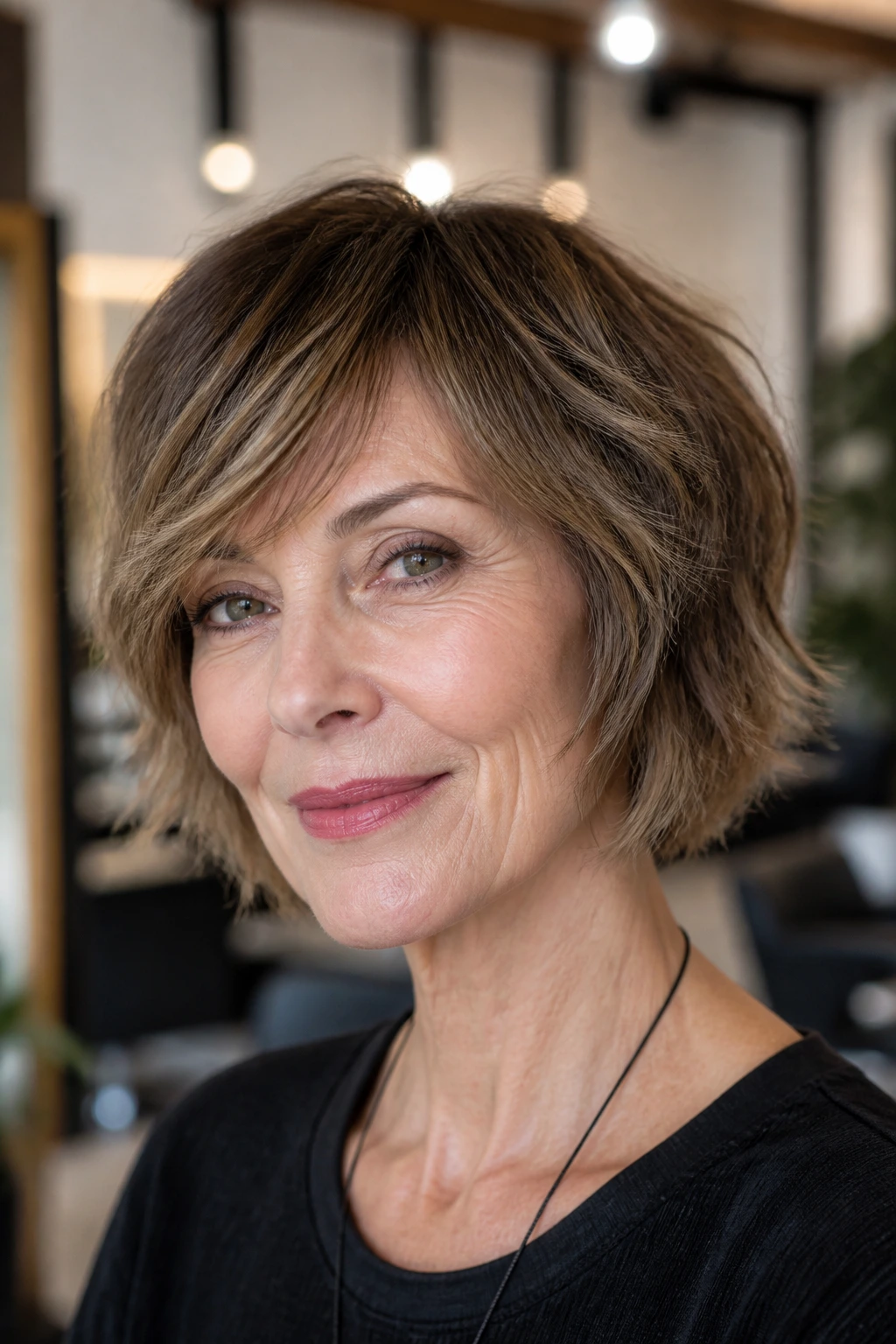
Bring two or three photos, not twenty. Too many pictures create confusion, and most stylists need a clear pattern, not a mood board avalanche. Pick images that share the same length, fringe shape, and finish, then say what you like about each one. Maybe one has the right crown lift, another has the right face framing, and a third has the right nape. That’s useful information.
Then get specific about your hair. Say whether your hair is fine, medium, coarse, straight, wavy, or curly. Mention cowlicks, temple thinning, a flat crown, or a stubborn side part if those things exist in your mirror every morning. They matter more than the photo on your phone.
Ask how the cut will grow out. Seriously. A shag that looks excellent on day one but turns into a triangle by week five is not a good match. You want a shape that still behaves after a few weeks, with layers that soften rather than collapse. If the stylist can explain how they’ll cut the fringe, crown, and perimeter to handle your hair’s real life, you’re in good hands.
Tools, Brushes, and Products That Keep the Shape Light
-
Sharp hair-cutting shears: Dull scissors chew the ends and make choppy layers look ragged.
-
Texturizing shears: Best used carefully on thick or coarse hair; too much can leave holes.
-
Round brush, 1 to 1.5 inches: Useful for lifting the crown and bending the fringe without making the whole head too polished.
-
Vent brush: Good for quick drying on fine hair when you want root lift fast.
-
Blow-dryer with a narrow nozzle: The nozzle helps direct the top layers and keep the nape smooth.
-
Light mousse or root spray: Adds support at the base without turning the hair crunchy.
-
Texture cream or paste: Best for piecey definition through the ends and fringe.
-
Diffuser: A smart tool if your hair is wavy or curly and you want the layers to keep their shape.
-
Dry shampoo: Useful on day two or three when the crown starts to soften and the roots need a little lift.
How to Style a Short Shag in Ten Minutes or Less
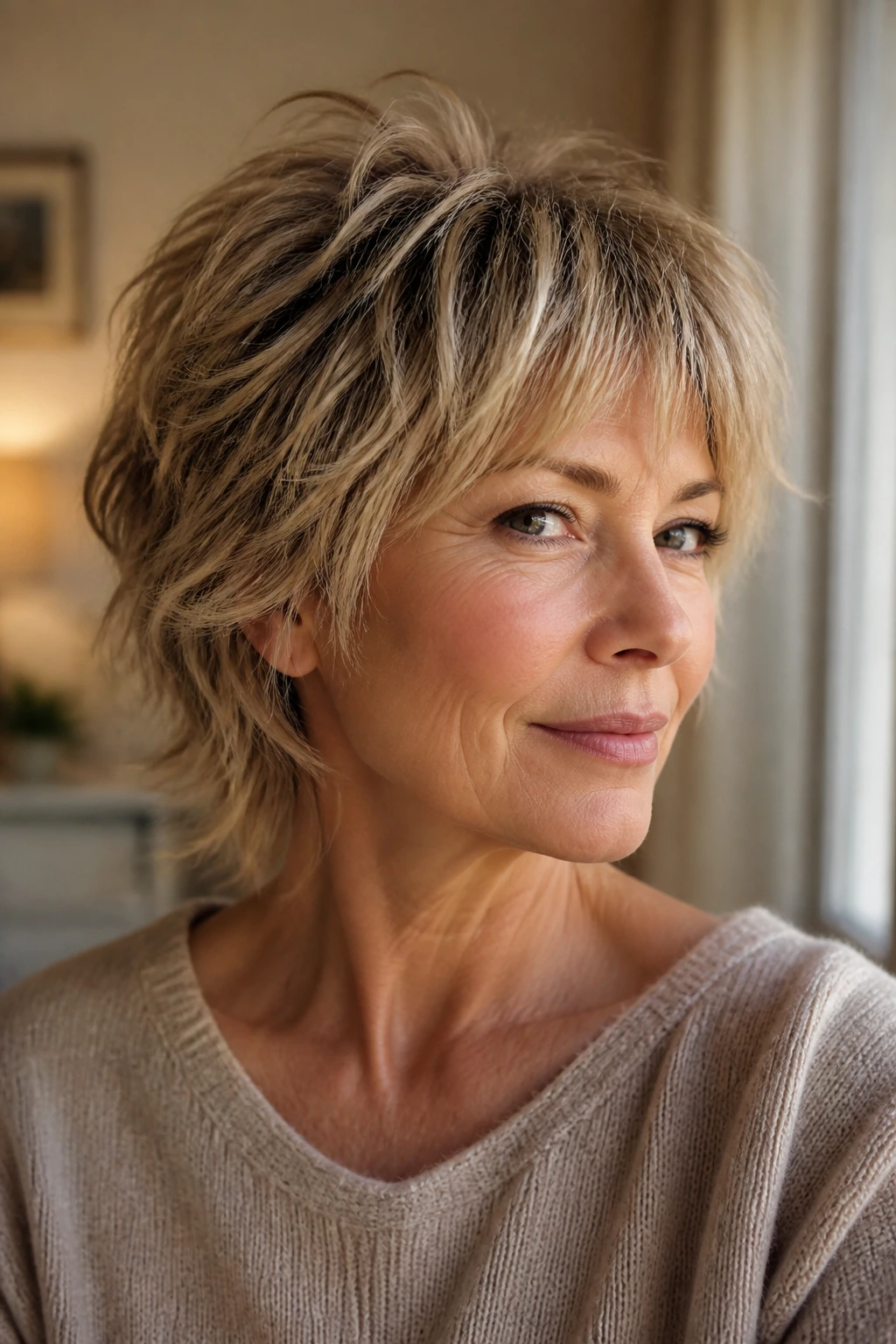
Root Lift: Start at the scalp, not the ends. A small amount of mousse or root spray at the crown gives the shape some memory. Blow-dry the roots first, using your fingers to lift sections away from the head.
Texture: Once the hair is about 80 percent dry, stop chasing perfection. Twist a few pieces around your fingers, scrunch the sides lightly, or bend the fringe with a brush. The point is separation, not curl-for-curl precision.
Finish: Use a pea-sized amount of paste or cream through the ends only. If you can see product sitting on the hair, you’ve used too much. Choppy cuts need movement; they do not need shine plastered over every layer.
Shortcut: On busy mornings, flip your head upside down for 20 to 30 seconds with a little dry shampoo at the roots, then smooth the top with your hands. It sounds almost too simple, but on a shag, that often gives the best version of “done.”
Keeping the Cut Fresh Between Salon Visits
A short shag usually needs a trim every 6 to 8 weeks if you want the layers to stay crisp. If the fringe is a big part of the shape, that front piece may need attention sooner, sometimes around the 4-week mark. Once the bangs start grazing your eyes, the whole cut can feel sloppier than it is.
At home, don’t wash it to death. If your hair is fine, washing every other day may be fine. If it’s dry, stretch the time with dry shampoo and a light re-bend at the front. Sleeping on a silk or satin pillowcase can help the shorter layers keep from puffing up in the back, especially if you have a stubborn crown.
One more thing: the way you dry it matters as much as the cut. If you rough-dry everything from wet to dry in a single motion, the layers can explode outward. Give the crown some controlled lift, then let the rest settle. That little bit of order keeps the shag looking intentional.
Common Mistakes That Make a Shag Look Ragged Instead of Chic
-
Over-thinning the ends: The haircut starts looking see-through and weak, especially on fine or gray hair. Ask for texture in the right spots, not everywhere.
-
Cutting the fringe too heavy: A dense bang can drag the whole face down and make the cut feel older, not fresher. Keep the fringe light and movable unless your hair is very thick.
-
Ignoring your growth pattern: Cowlicks, side parts, and temple density shape how the cut falls. If the stylist doesn’t cut with those in mind, the style will fight you at home.
-
Using the wrong brush: A huge round brush on short shag layers can stretch all the texture out. Use a smaller brush or your fingers when you want movement.
-
Loading on product: Thick cream, heavy oil, and too much paste can collapse the crown and clump the ends. Short choppy cuts need support, not sludge.
-
Trying to make every strand behave: If the shape depends on perfect symmetry, it’s the wrong shag. The best versions have a little mess built in.
Variations and Adaptations to Try Next
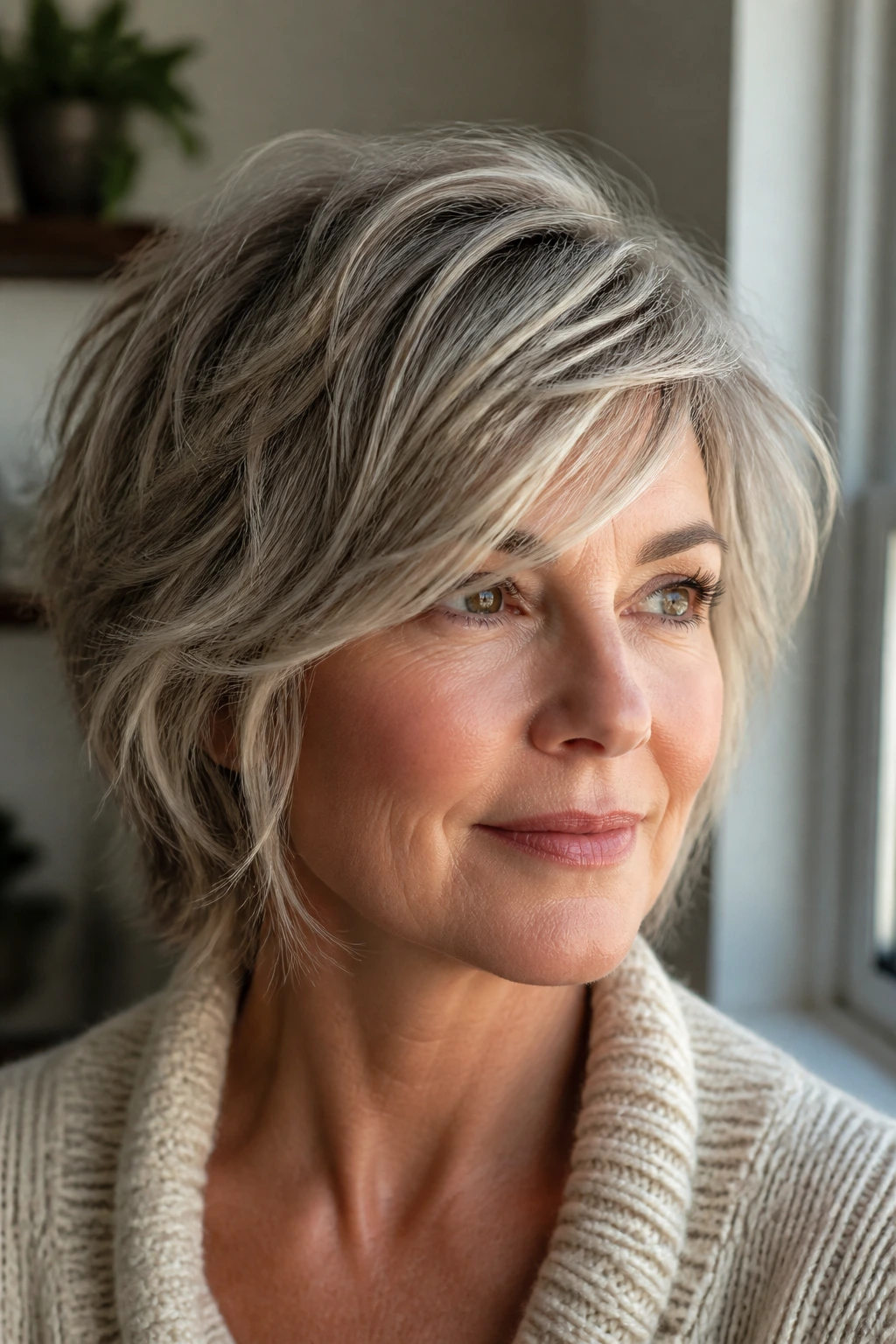
The Soft French Flip: Keep the top and fringe light, then bend the ends outward with a small round brush. This suits women who want a polished finish without a stiff bob shape.
The Curly Halo Crop: Let natural curls form a rounded shape around the head, with slightly shorter layers in the crown and cheekbone area. It’s a strong fit for women who prefer air-drying and don’t want to press the curl flat.
The Sleek Silver Shag: Keep the perimeter cleaner and the layers more refined so silver hair reads elegant rather than overtextured. This one works well if you like tailored clothes and simple makeup.
The Edgy Micro Mullet: Short at the sides, lifted at the crown, and a touch longer in back. The difference in length should be subtle, not theatrical.
The Low-Maintenance Wash-and-Go Crop: Ask for soft layers that hold their shape even when you skip heat styling. This is the one for women who want movement with the least fuss.
The Glasses-First Version: Fringe above the frames, temples kept open, and sides thinned only enough to clear the arms. It’s less about drama and more about daily comfort.
Frequently Asked Questions
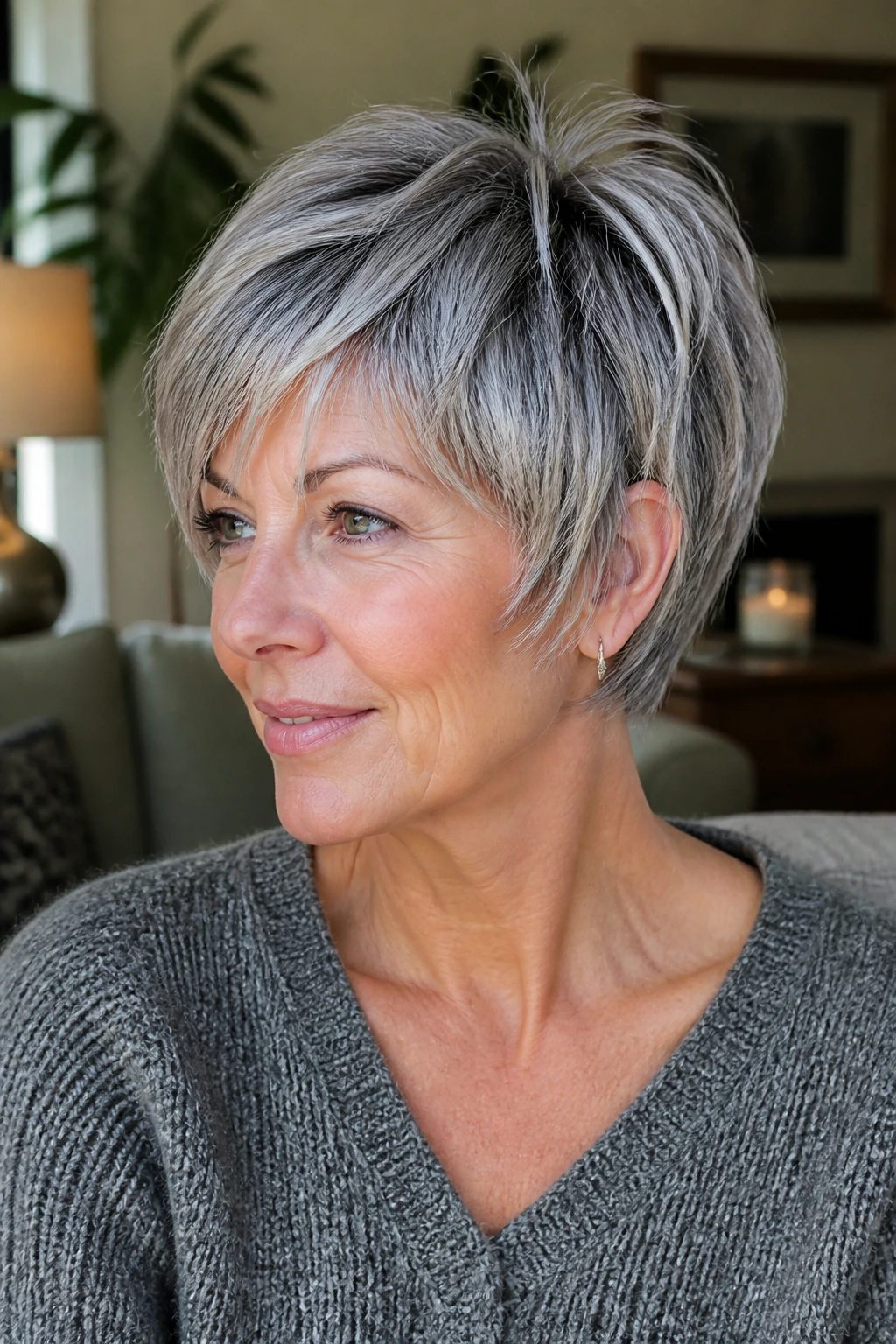
Will a choppy shag make fine hair look thinner?
Not if it’s cut correctly. The problem is usually too much thinning, not the shag shape itself. Fine hair needs a strong outline with texture on top, not shredded ends everywhere.
Can older women wear a wolf cut without it looking too young?
Yes, if the layers are softened and the length differences are modest. The cut should read as textured and modern, not exaggerated. Tone down the disconnect and keep the fringe wearable.
How often should I trim a short shag?
Most short shags need a reshape every 6 to 8 weeks. If you wear bangs, plan for a fringe tidy sooner, because the front changes the whole look when it gets too long.
Is a short shag good for curly hair?
Absolutely, as long as the layers respect the curl pattern. Curly hair needs shape, not over-thinning. A dry cut or curl-by-curl approach can help the haircut land in the right place.
What if my crown is flat no matter what I do?
Choose a version with extra lift at the top and less weight at the back. Root spray, a small round brush, and drying the roots first make a bigger difference than people expect. The cut should also leave room for height.
Can I wear a shag if I always use glasses?
Yes, and you probably should choose a version built around them. Keep the fringe soft, the temples open, and the sides light enough that the frames don’t get crowded.
Does this haircut work on thick, coarse hair?
Yes, but the stylist has to manage bulk carefully. Too much texture can make coarse hair look frizzy or triangular. Ask for strategic removal, not aggressive thinning.
What if I want something short but not too edgy?
Look at the rounded shag, the feathered bob shag, or the neck-length version. Those keep the movement but soften the outline, which makes the cut feel calmer and more classic.
The Shape That Keeps Up With You

The best short shag isn’t the loudest one in the room. It’s the one that still looks like itself when you’ve slept on it, tucked it behind one ear, or had a humid afternoon that tried to ruin everything. That’s why the right version matters so much more than chasing a trend shape off a screen.
If your hair has changed texture, density, or temperament, that’s not a reason to give up on short hair. It’s usually a reason to cut it smarter. A good choppy shag gives you movement without requiring a daily negotiation with the mirror, and that’s a pretty useful deal.
Pick the version that fits your hair’s habits, not the one that fights them. Once the cut starts working with you, mornings get easier in the best possible way.