



Curly shags with side-swept bangs have a very specific kind of charm: the cut looks relaxed, but the shape is doing real work. The layers keep curls from piling up at the sides, and the fringe gives the face a soft diagonal line instead of a hard, straight edge. On the right head, it looks like movement. On the wrong cut, it turns into a triangle in a hurry.
That’s why this style keeps coming back with new variations. A shag on curly hair can fix the “too heavy at the bottom” problem, the “flat at the crown” problem, and the “my bangs have a mind of their own” problem. The trick is not making the hair look chopped up for the sake of it. The trick is putting the weight in the right places, then letting the curl pattern do the rest.
And side-swept bangs are the secret handshake here. They’re more forgiving than blunt fringe, they grow out with less drama, and they let you adjust the face-framing without committing to a full curtain bang. If your curls spring up fast, if your density changes from crown to ends, or if you like a cut that looks better a little undone, the right shag can feel like the hair equivalent of a well-cut jacket: easy to throw on, hard to make look bad.
Why You’ll Love This Collection
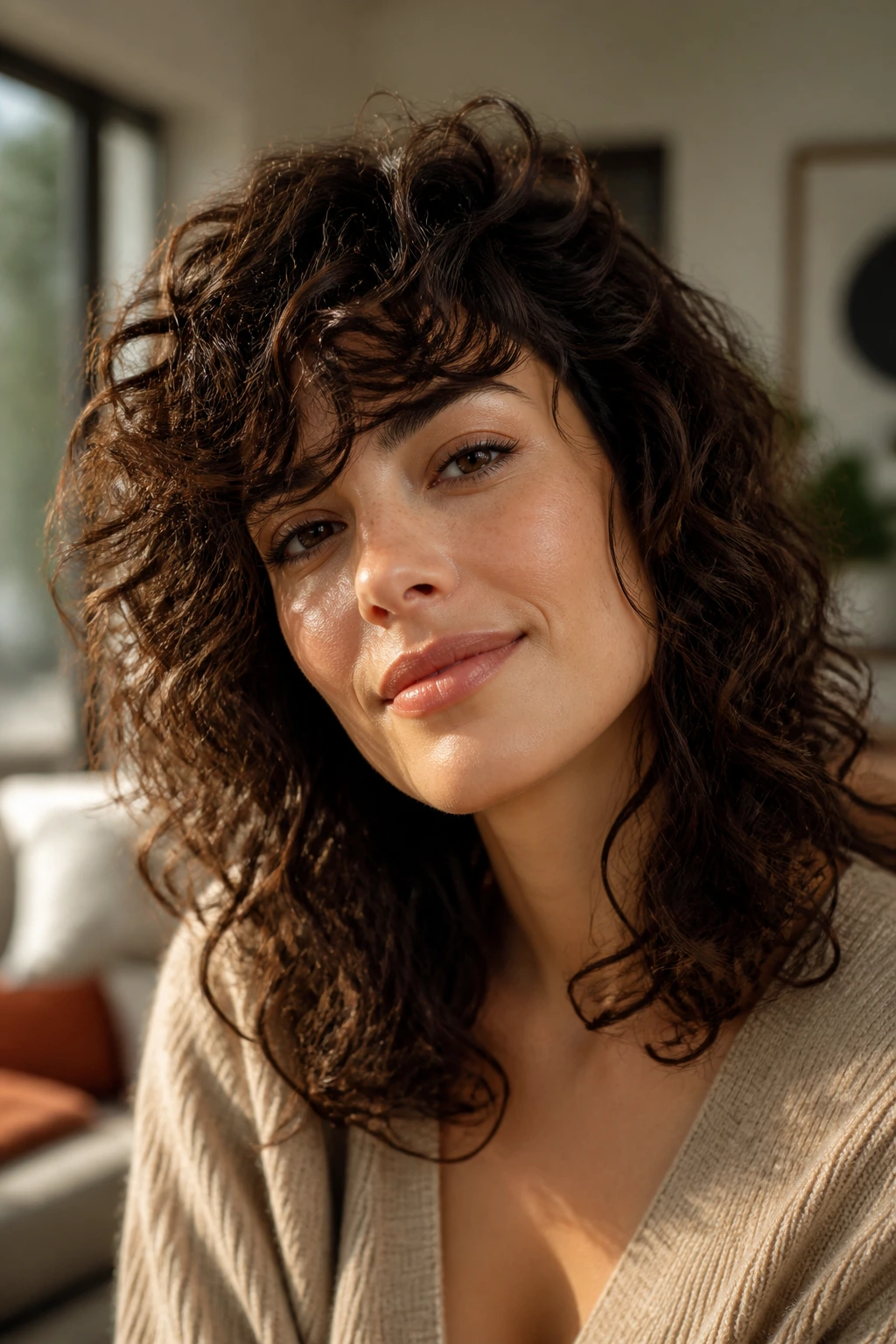
- Shape without helmet hair: These cuts remove bulk in the right places, so the curls move instead of sitting in one heavy block.
- Side-swept bangs that behave better: A diagonal fringe is easier to blend into layers than a blunt bang, especially when shrinkage changes the final length by an inch or two.
- Works across curl patterns: Loose waves, springy ringlets, and tight coils all have a place here when the layering is adjusted for density and spring factor.
- Grow-out stays kinder: The fringe can slide into the rest of the cut instead of growing into a sharp line you suddenly hate.
- Styling gets simpler: A diffuser, a curl cream, and a little root lift can be enough; these cuts don’t need five hot tools and a prayer.
- Plenty of personality: Some versions read soft and airy, others lean rocker, and a few are downright glam when the layers hit at the cheekbone and collarbone in the right spots.
1. The Cheekbone Cloud Shag
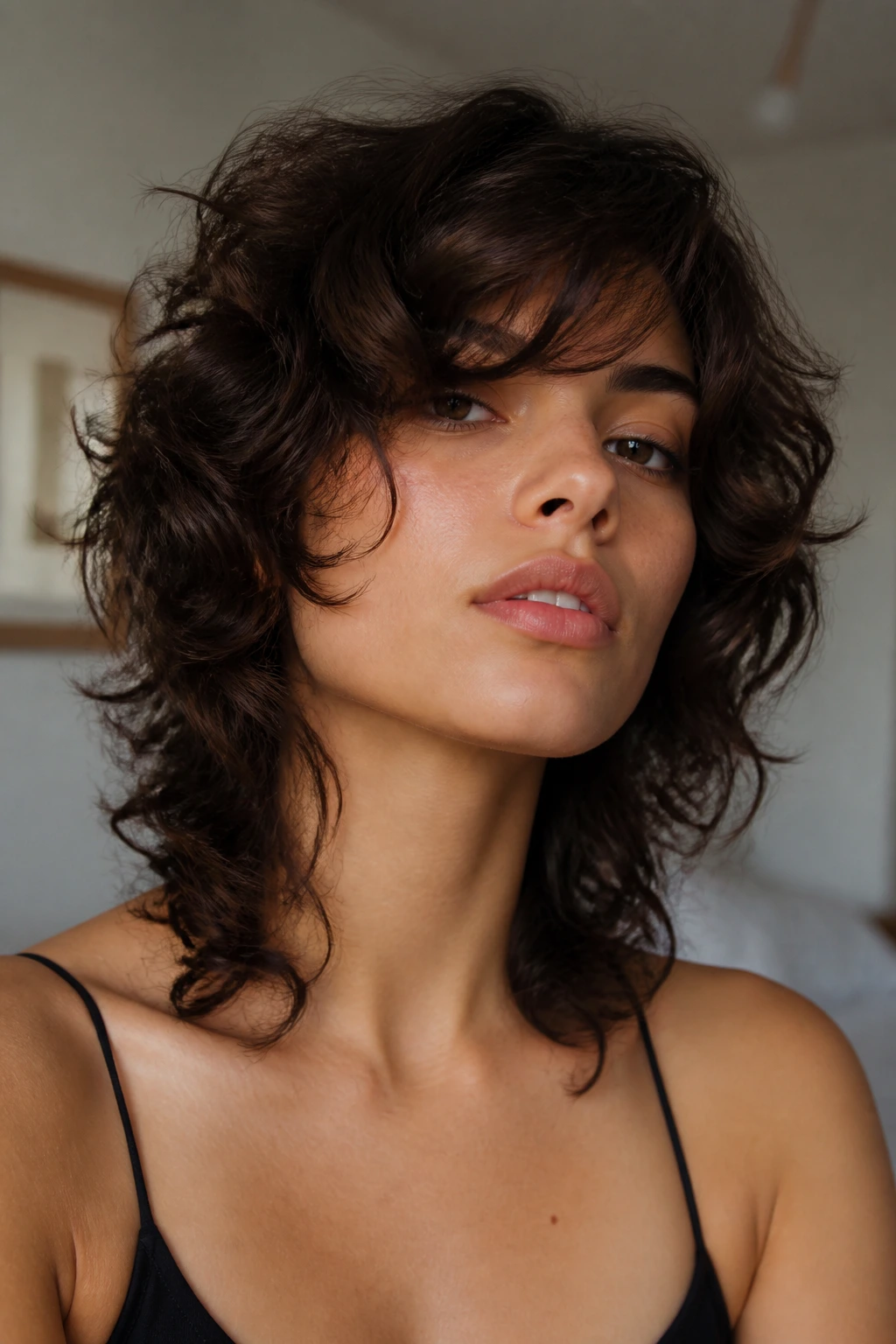
This one is all about that floaty, face-lifting effect. The layers start around the cheekbone, which keeps the sides light without shaving off too much length, and the side-swept bangs drift across the forehead instead of hanging straight down. On loose curls, it looks airy and a little romantic; on tighter curls, it reads as polished and energetic.
The key is keeping the fringe long enough to follow the curl spring. Ask for the shortest bang piece to land around the brow bone when dry, then let it angle down toward the cheek. That diagonal keeps the cut from looking square. It’s a smart choice if your curls are thick around the face but flat at the crown, because the shape pulls the eye upward.
A little root mousse at the top and a diffuser on low heat are enough to keep this shag from collapsing. Skip heavy butter creams here. They weigh down the cheekbone layers faster than people expect.
2. The Collarbone Wolf-Influenced Shag
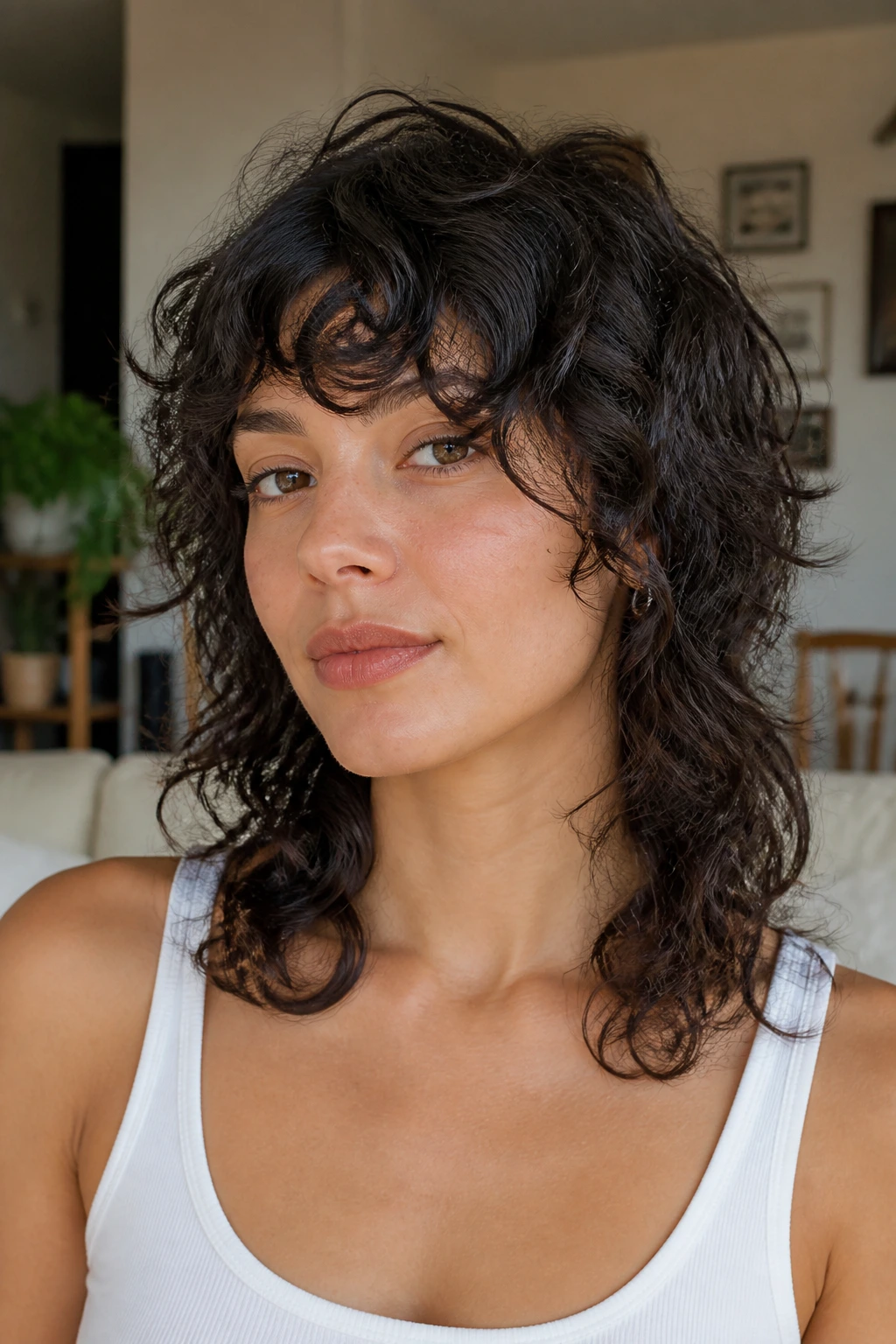
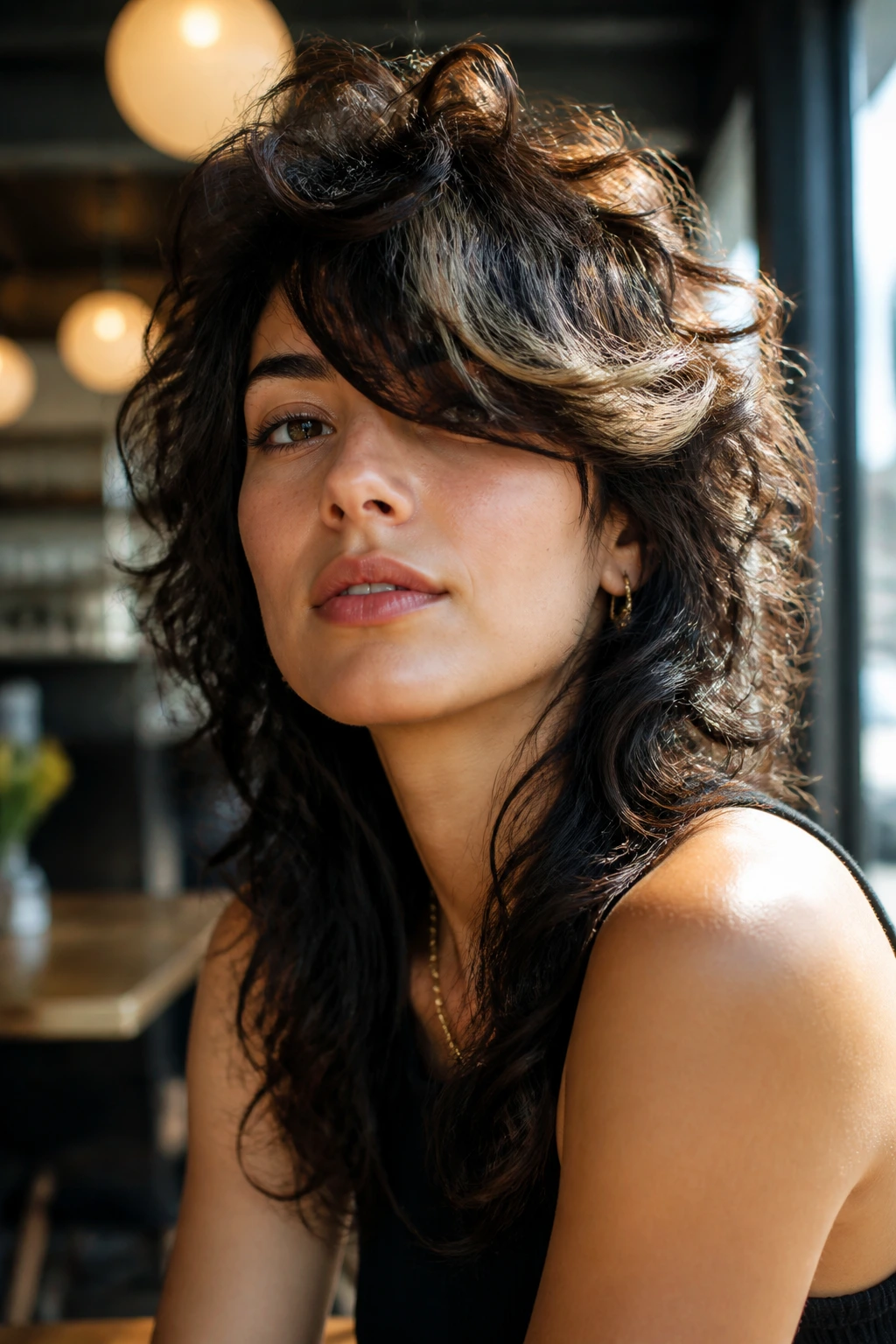
Why does this one feel so current? Because it borrows just enough from the wolf cut to add edge, then stops before the whole thing gets too severe. The collarbone length gives you room for a side-swept bang that can drop into the front layers instead of sitting like a separate piece.
This cut suits curly hair with decent density through the mids and ends. The top layers are shorter, the bottom stays longer, and the result is a deliberate messiness that still has a shape. If you like hair that looks better with a bit of texture spray and finger-fluffing, this is a strong pick.
What to Tell Your Stylist
Ask for a curl-by-curl cut if possible, with the fringe left long enough to sweep across one eye when dry. If your curls shrink a lot, that usually means leaving the side bang longer than your instinct says. Good. That’s how you avoid accidental baby bangs.
3. The Long Spiral Shag with Draped Fringe
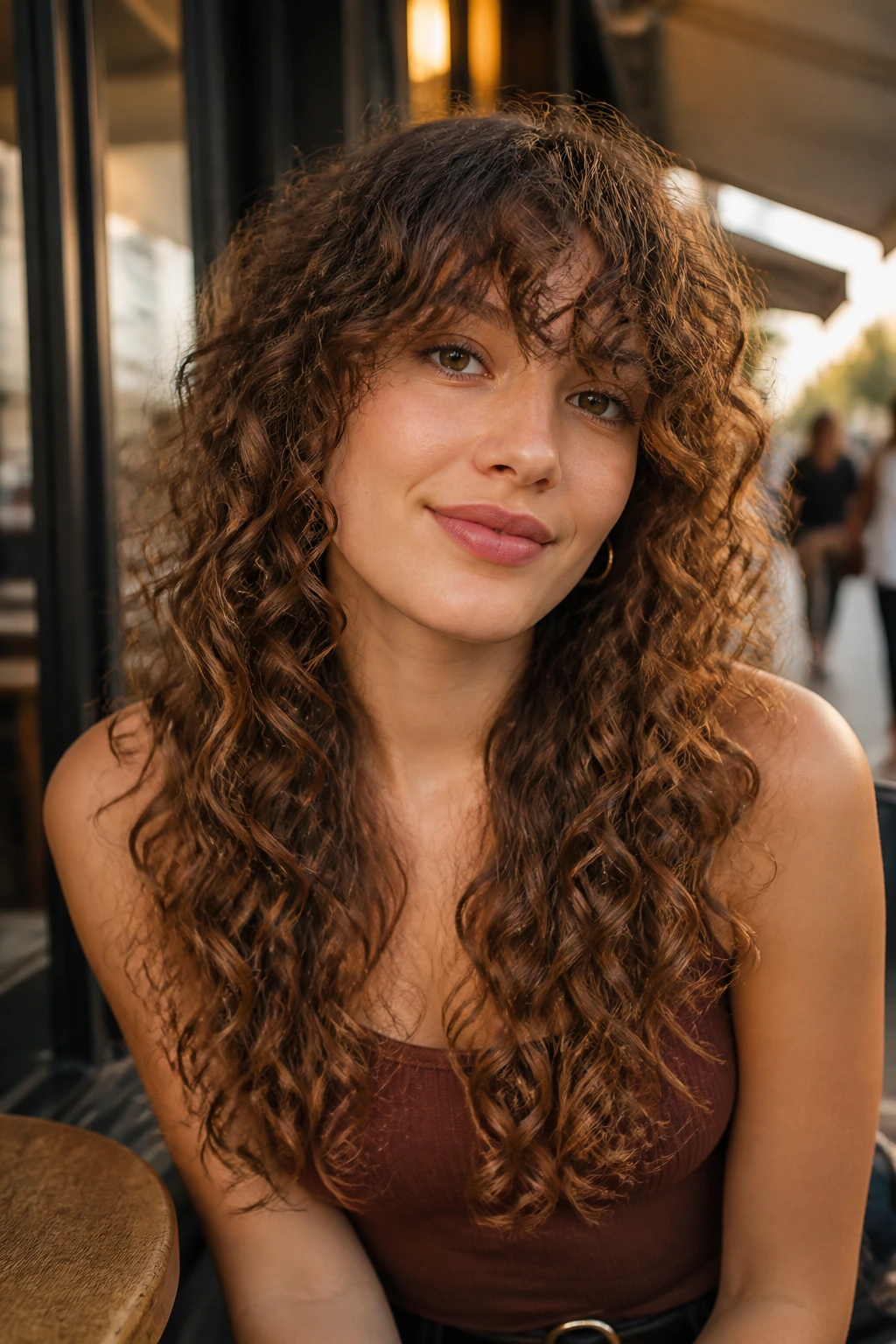
This is the version for people who love length but hate the weight that usually comes with it. The layers are carved into long spirals, so the curl pattern stays visible and the ends don’t turn into a blunt curtain. The side-swept bangs are draped, not chopped—more like a gentle arc than a sharp slice.
It works especially well when your curls make tight ribbons, because the longer length lets the curl form without losing its spring. I like this cut on hair that falls somewhere between shoulder and mid-back. It keeps the silhouette luxurious, but the face doesn’t disappear behind it.
The best part is how easy it is to refresh. Mist the front section, twist the bang side away from the face, and clip it for ten minutes while you get dressed. That tiny habit can keep the fringe from doing the weird middle-part thing that happens when curls dry in the wrong direction.
4. The Shoulder-Grazing Boho Shag
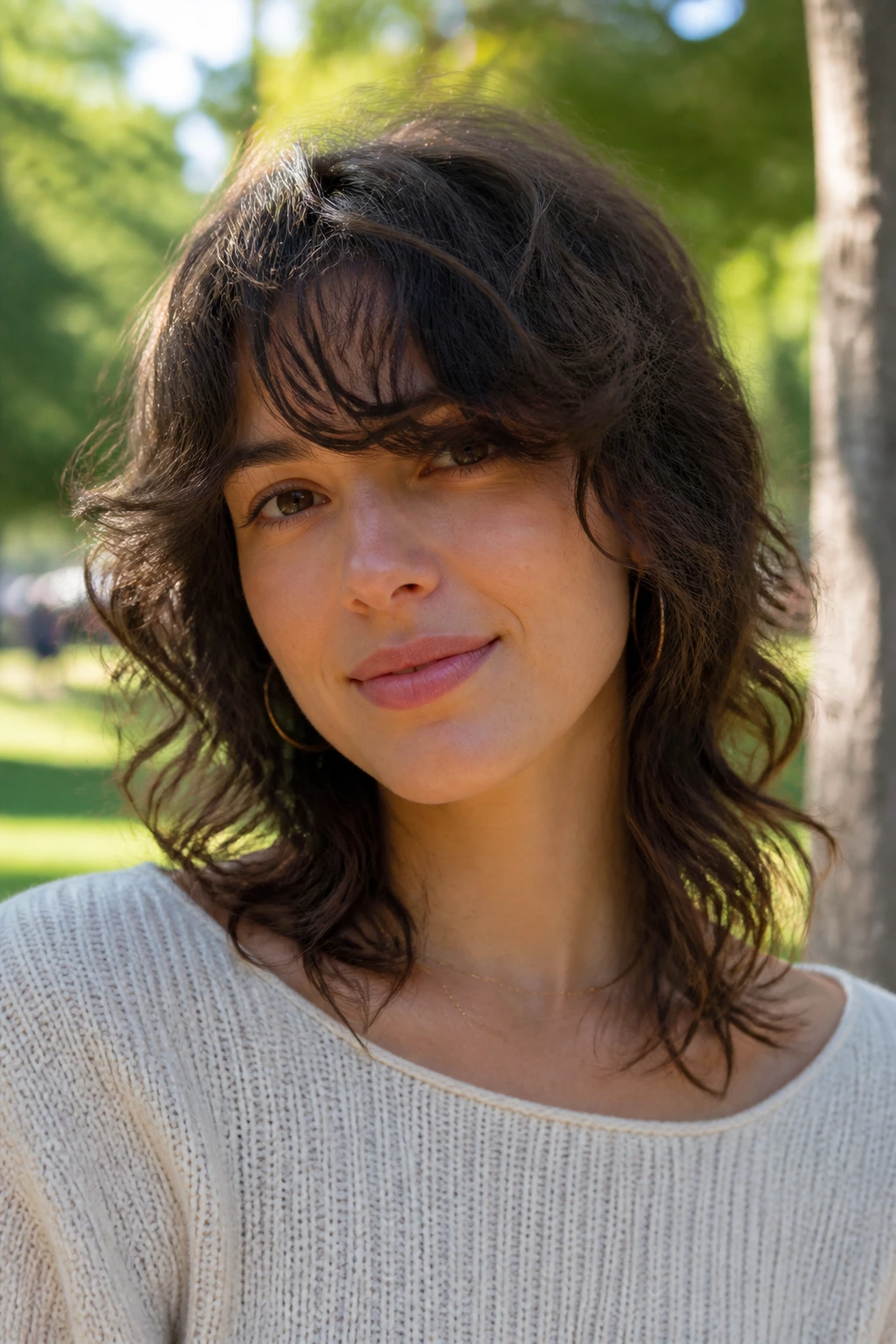
This one has a breezy, lived-in feel without looking sloppy. The shoulder length is short enough to keep the curls springy, but long enough that the layers can stack in a soft, cascading shape. Side-swept bangs keep the front from feeling too round, which matters if your face is naturally soft or full at the cheeks.
A shoulder-grazing shag is usually the sweet spot for people who want movement but aren’t ready for a shorter, more editorial cut. The side bangs can be blended into the cheek layers so the whole front line feels connected. No hard edges. No helmet.
If your hair gets puffy in humidity, this length is easier to manage than a shorter shag because the extra weight helps the curl settle. Use a light gel on wash day and stop touching it while it dries. Seriously. The front pieces need a chance to set in the direction you want.
5. The Chin-Length Curly Shag with Sweep
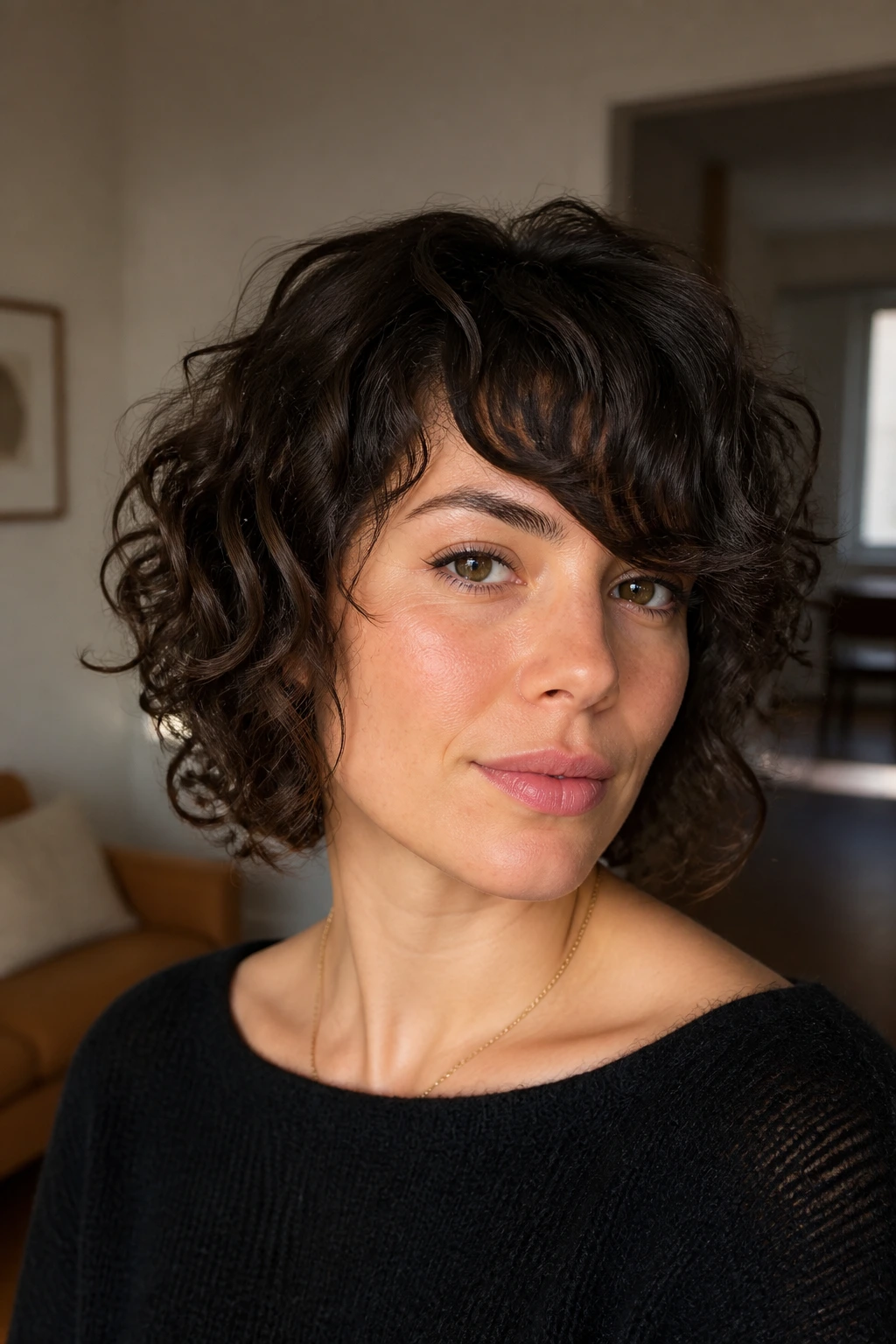
Short hair can be gorgeous on curls, but only if the shape is built with care. A chin-length shag gives you bounce and cheekbone emphasis, and the side-swept bangs stop it from turning into a round puffball. The angle around the face matters more here than almost anywhere else.
This cut is strongest on curls that spring with intention but don’t explode outward. The layers should be soft enough to maintain a little movement, not so short that the shape turns fuzzy by noon. If you wear glasses, this one is worth a close look—the side sweep can clear the frames while still softening the upper face.
Quick Shape Notes
- Leave the bang side a touch longer than the rest of the front.
- Keep the perimeter around the chin, not above it, unless your curls are very loose.
- Diffuse from underneath for lift at the crown.
That’s the difference between chic and mushroom-shaped. Tiny gap. Big outcome.
6. The Rounded Halo Shag for Tight Coils
Tight coils need a different kind of shag. Not more random chopping. Better structure. This version keeps the shape rounded around the head, with layered fullness that follows the natural halo of the curls. The side-swept bangs are longer and softer, usually starting farther back so they can travel across the forehead without looking forced.
The best versions of this cut keep length on the ends while removing weight in the crown and upper sides. That helps the coils stack without ballooning. It’s especially good if your hair tends to shrink a lot after washing, because the finished shape still looks intentional when it dries down.
Do not let anyone over-thin the front. Tight coils can lose their line fast if the bang area gets too much razor work. A controlled cut, done dry, is safer and usually prettier.
7. The Fine-Hair Airy Shag
Fine curly hair can wear a shag beautifully, but only if the layers stay light and the ends don’t get overworked. This version avoids bulky interior weight and keeps the bang sweep feather-soft, so the cut looks fuller instead of stringier. That’s the whole game with fine curls: create lift without carving away the body.
The side-swept bangs should be long enough to blend into the temple layers. If they’re too short, the front loses the illusion of thickness. If they’re too thick, they collapse. It’s a narrow lane, but when it works, it looks effortless in the best possible way.
Best on
- Loose ringlets that need a little shape at the crown
- Waves that fall flat around the temples
- Fine hair that frizzes before it gets voluminous
A small foam at the roots and a light gel through the ends usually beat heavy creams here. Fine curls like support, not syrup.
8. The Big Volume ’70s Shag
There’s a reason people keep coming back to the ’70s reference point. Big curls, big movement, side-swept fringe that skims the forehead and breaks up the volume around the eyes. It’s theatrical without being stiff. When it’s cut well, it looks like the hair is leaning into its own personality.
This version needs strategic layering through the crown and upper sides. The side-bang area should connect to the face frame so the whole front feels swept rather than separate. If your curls have a lot of spring and you like a full silhouette, this is a joyful cut. Not subtle. That’s the point.
A wide-tooth pick at the roots after drying can bring the shape back if it starts to sit too close to the head. The goal is lift, not puffiness, so lift at the scalp and leave the ends alone.
9. The Curly Mullet Shag
The curly mullet gets a bad reputation from the wrong examples. In a good version, it’s sharp, balanced, and weirdly flattering. The front and sides stay lighter, the back keeps a little more length, and the side-swept bangs make the whole thing feel wearable instead of costume-y.
This cut loves strong curl patterns and a bit of attitude. It’s a nice choice if you want your hair to look deliberately textured without losing the sense of shape around the neck. The side sweep softens the transition between the shorter front and the longer back, which is where this style often lives or dies.
If you’re nervous, ask for a softer mullet-shag blend rather than a hard disconnect. That gives you room to grow it out later without the awkward shelf line people dread.
10. The Lob Shag with Side Sweep
A lob shag is the safe bet that still has teeth. The length sits around the collarbone, which gives the curls room to swing, and the layers keep the ends from feeling too blocky. Side-swept bangs help the cut avoid the heavy, square look that lobs can get when they’re all one length.
This one is especially good if you wear your curls both natural and stretched. On wash day, the layers show movement. On day two, the front sweep keeps the face frame from puffing out. It’s practical in a way that doesn’t feel dull.
If you want a version that grows out cleanly, this is one of the easiest. The side bang merges into the front layers, and the collarbone length buys you time between trims. Time matters. So does not having to panic every six weeks.
11. The Rezo-Inspired Balanced Shag
This cut is for people who want curl definition more than choppy drama. The Rezo-style influence shows up in the even distribution of length and the way the layers keep the curl pattern balanced from side to side. The side-swept bangs soften the forehead without stealing volume from the top.
It’s a good choice if your hair tends to grow unevenly or if one side of your curls behaves better than the other. A balanced shag avoids that lopsided triangle some curly cuts drift into. The face frame stays visible, the crown gets lift, and the silhouette feels rounded without looking puffy.
Why It Works
The curve of the layers follows the curl rather than fighting it. That means you get movement without the chopped-up ends that can happen when curly hair is cut too bluntly or too short at the wrong angle.
12. The Deva Cut-Style Curl-by-Curl Shag
This is the version for people who like precision. A curl-by-curl cut looks slow while it’s happening, but the result is a shag that respects the way each curl lands on its own. The side-swept bangs are shaped curl by curl too, which matters a lot if the front section has a different texture from the rest.
The cut usually works best when the hair is dry or mostly dry, because shrinkage is easier to read that way. You can see which curls want to sit forward, which ones fold back, and where the bang should start to create that diagonal sweep. It’s more labor than a rushed salon trim. Worth it.
If you’ve had bangs that looked great wet and ridiculous dry, this kind of cut can spare you the heartbreak.
13. The Triangle-Softening Layered Shag
If your curls widen at the bottom, this is the problem-solver. The layers are placed to reduce bulk through the mid-lengths and keep the shape from flaring out like a bell. The side-swept bangs pull attention up and in, so the overall outline feels more tapered.
It’s a strong option for thick hair that grows wide fast. The trick is not removing so much length that the ends go wispy. You want controlled softness, not a shredded perimeter. Ask for the top and upper sides to be slightly shorter than the lower interior, which helps the silhouette stay vertical instead of sprawling sideways.
A little curl cream at the ends and a gel cast on wash day can help this shape stay put. Air-drying works too, but don’t expect the same precision. Curly hair is honest about this stuff.
14. The High-Contrast Layered Shag
This cut leans into drama. Shorter crown layers, longer outer lengths, and a side sweep that cuts diagonally across the face with real purpose. The contrast gives the haircut a stronger outline, which makes the curls look more sculpted. It’s bold. Not fussy.
I like this on medium-to-thick hair that has enough spring to support the internal movement. If the hair is too fine, the contrast can look sparse. If the hair is dense, the shape can look expensive in a way that straight-line cuts usually can’t.
The downside? It needs a stylist who knows how to balance structure and softness. Too much contrast in the wrong hands turns into disconnected chunks. Too little, and the haircut loses the whole point.
15. The Salt-and-Pepper Curly Shag
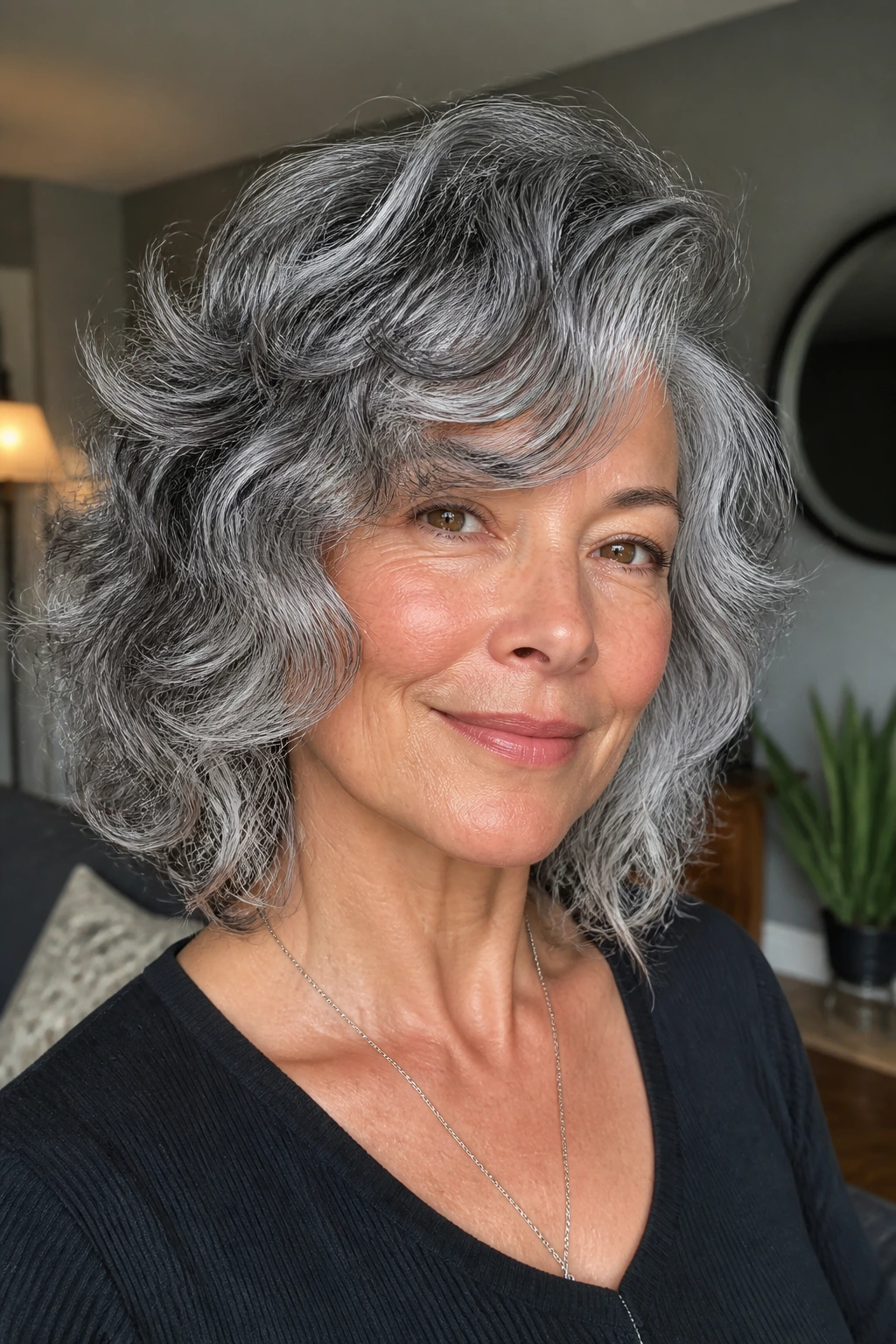
Gray curls catch light in a way that straight hair often doesn’t, and a shag lets that texture show off. Side-swept bangs keep the front lively, which matters when the overall color is already doing a lot visually. The layers stop the cut from looking dated or helmet-like.
This version is gorgeous on silver, white, black-and-salt, or peppered brown curls. The movement breaks up the color in the best way, so the strands don’t read as one flat mass. That matters more than people think, because dimension in curly hair often comes from shape first, then color.
A soft shine serum on the ends can keep the lighter strands from looking dry. Use a tiny amount. Gray curls show product buildup fast, and nobody wants the fringe getting sticky by midweek.
16. The Wet-Dry Diffused Shag
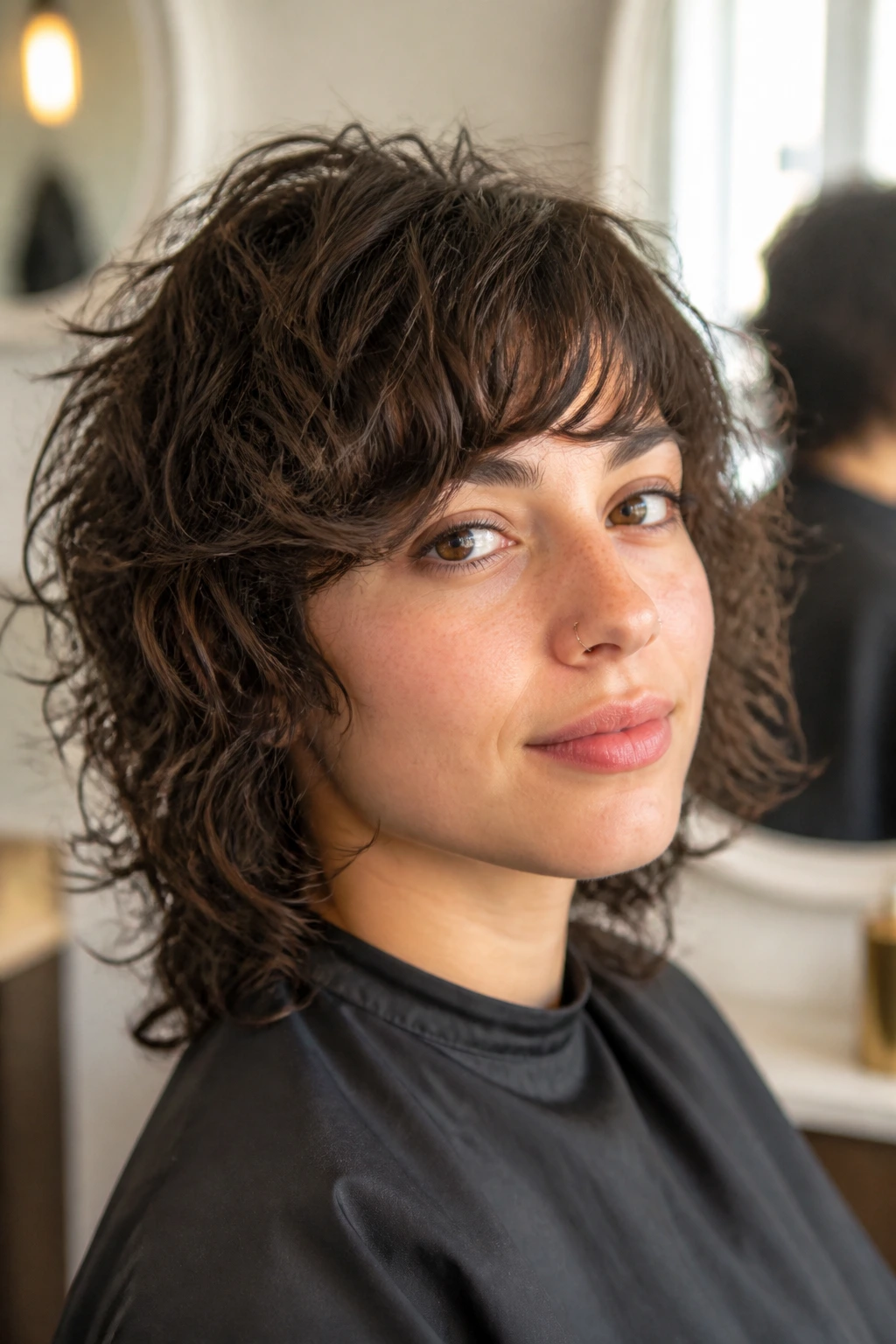
Some cuts look best when they’re polished. This one looks best when it’s half-casual, half-shaped. The layers are meant to be diffused rather than blown smooth, which gives the side-swept bangs enough direction without flattening the curl pattern. The result is a soft outline with a little frizz in the right places.
That frizz isn’t a failure here. It’s part of the texture. The shag benefits from a small amount of roughness, especially around the temple and cheek area, because too much polish can make curly hair look stiff.
How to Get the Most From It
- Diffuse on low heat until the roots are 80% dry.
- Stop touching the fringe while it’s setting.
- Flip the part slightly toward the sweep side before drying.
Small habits. Big difference.
17. The Long and Loose Bohemian Shag
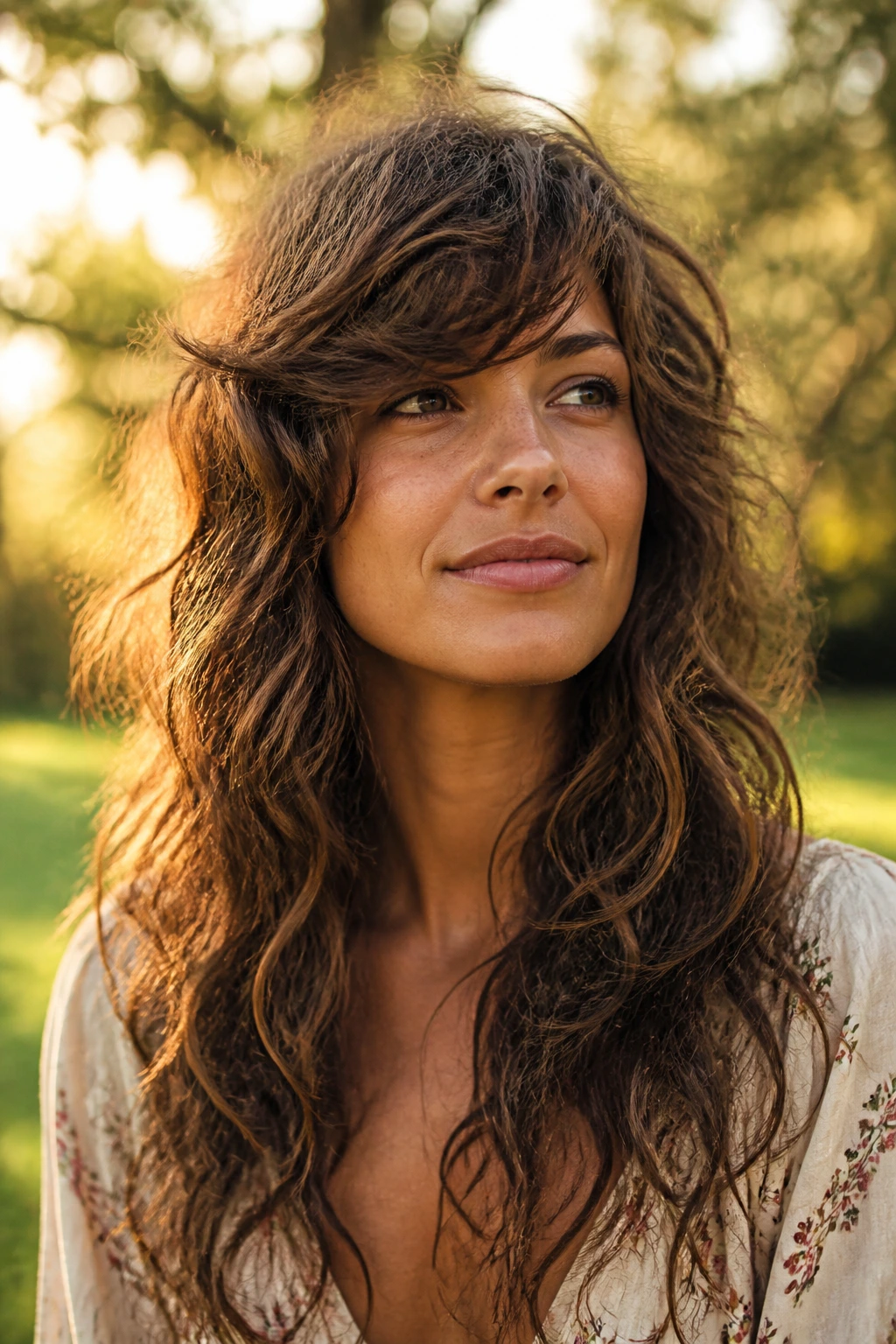
This is the soft-focus version. Long layers, loose movement, side-swept bangs that blend into the rest of the hair instead of announcing themselves. It’s the cut you choose when you want shape but not sharpness. A little romantic, a little undone.
The long length gives curls room to hang with less spring, which can be useful if your texture is somewhere between wave and curl. The side bang keeps the front from falling straight down into the face, especially when the hair is air-dried and doing its own thing. That diagonal makes the whole style look intentional.
If you’re someone who scrunches and goes, this is a friendly cut. It doesn’t need perfect styling to make sense. And honestly, that’s half the appeal.
18. The Crown-Lifted Short Shag
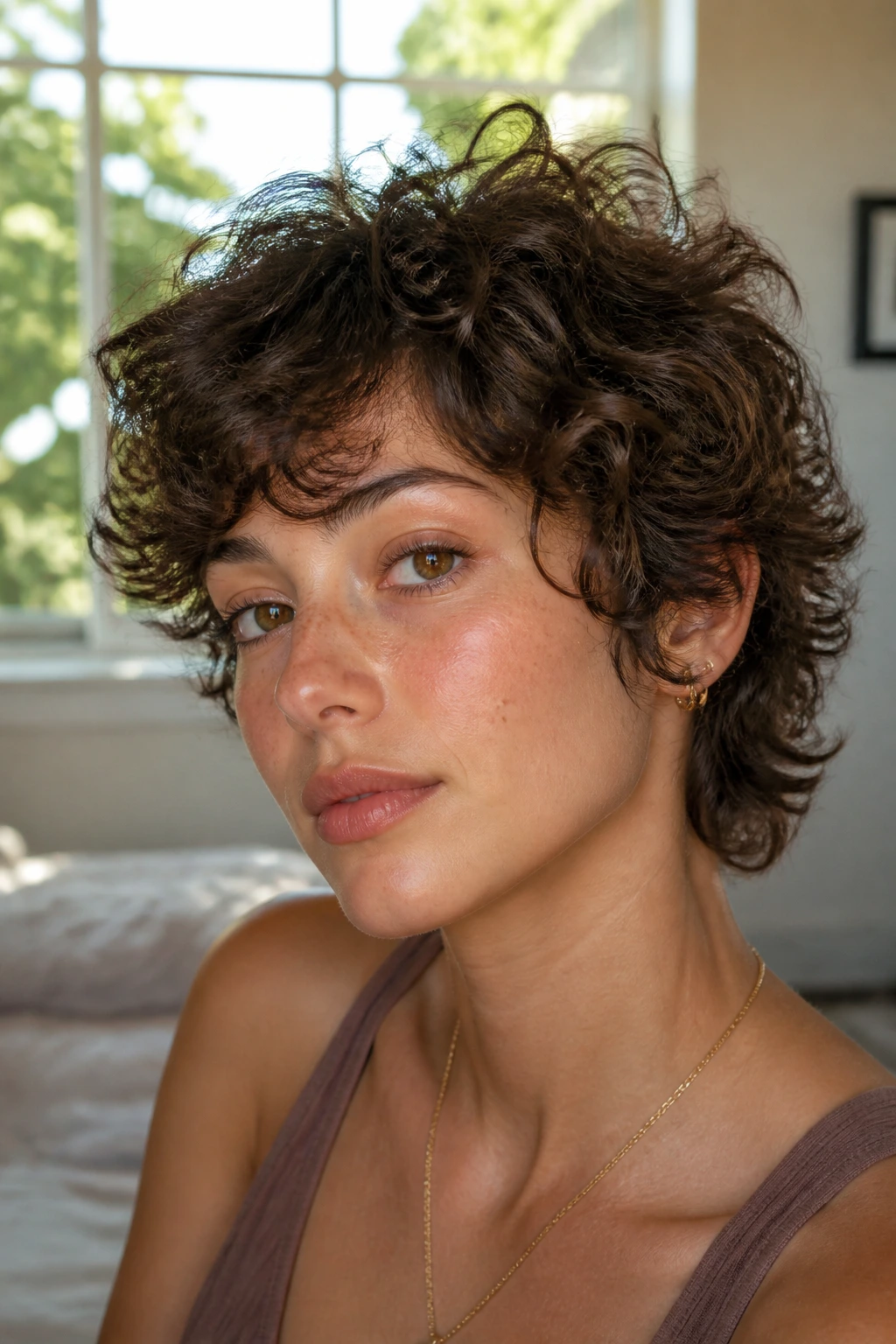
Short shag cuts on curly hair can look incredible when the crown is lifted and the sides are carefully shortened. The side-swept bangs keep the short length from feeling severe, and they add a little softness where the cut comes closest to the face. This is the version for people who want a lot of shape in not much length.
The crown needs a bit of height here. Not a giant pouf. Just enough lift that the hair doesn’t sit flat against the head. If your curls are tight and springy, a short shag can be a relief because the weight comes off fast and the curl pattern gets to show.
It’s not for everyone, though. The shorter the cut, the more important the stylist’s eye becomes. A half-inch off in the wrong place can change the whole line.
19. The Soft Razor Shag
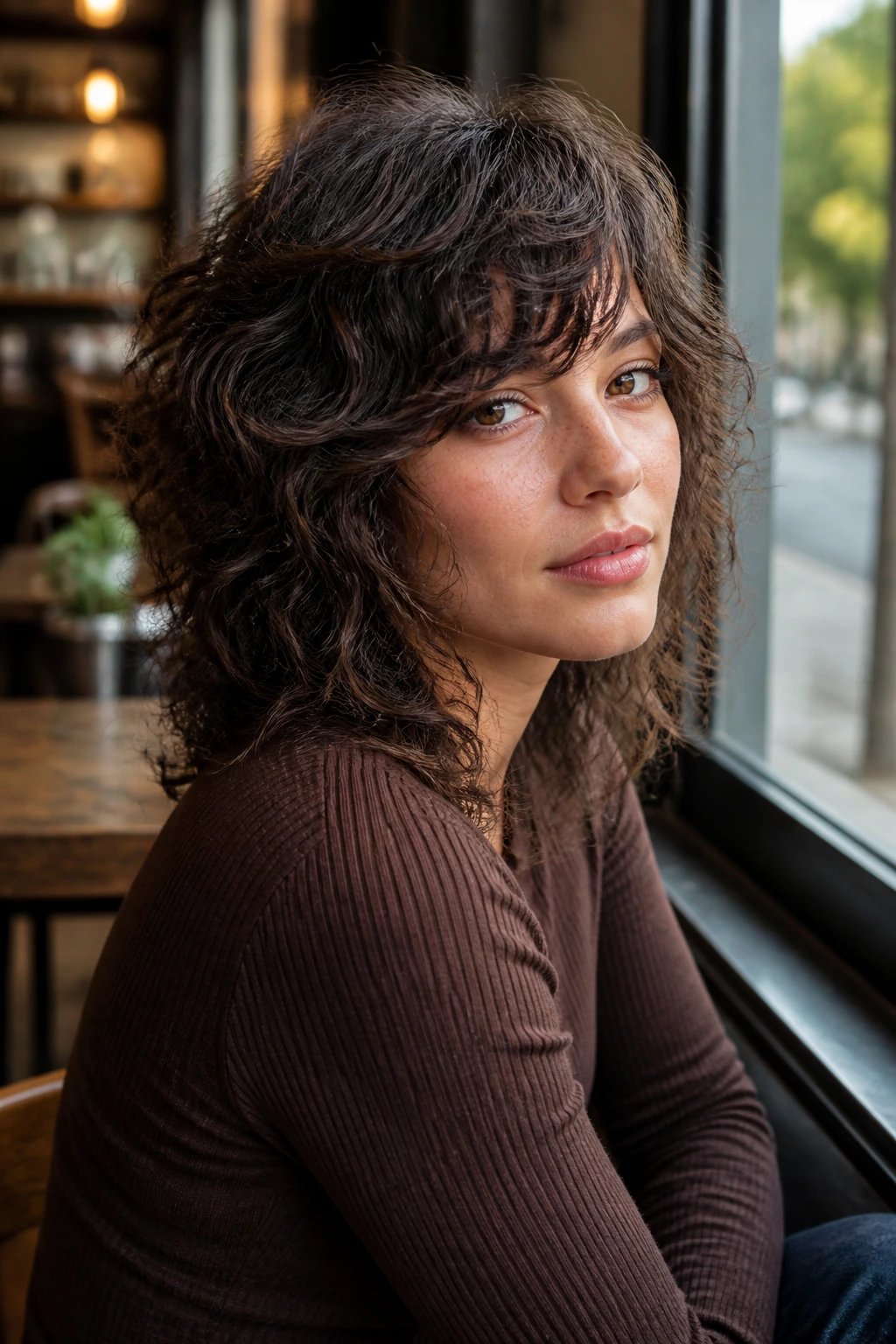
Razor-cut texture can be gorgeous on curly hair, but only when it’s handled with restraint. This version uses a soft razor approach to create movement in the layers and a more feathered side-swept bang. The finish is airy and slightly wispy, not shredded.
It’s best on curls that aren’t too fragile and on hair that can tolerate a little edge around the ends. The razor helps the layers collapse into one another instead of sitting as chunky shelves. That can be a lifesaver if your curls feel dense but not bulky.
The warning is simple: too much razor on dry, fragile curls can make the ends fray. Ask for a light hand, not a dramatic texture chop. Big difference.
20. The Medium-Density Everyday Shag

This is the cut for people who want a shag that behaves on a Tuesday morning. Nothing too extreme. The layers are practical, the side-swept bangs are easy to tuck, and the whole thing looks good with minimal product. It’s not boring. It’s just sensible in the nicest way.
Medium-density curls usually have enough body to hold a shape without needing a ton of internal removal. That means the haircut can stay cleaner at the perimeter and still move. The side sweep keeps the front from closing in around the eyes, which helps on days when your curls are a little bigger than planned.
Best for
- Office-friendly wear
- Low-maintenance curl routines
- People who want a shag but not a statement cut
Sometimes a haircut earns its place by behaving. This is that one.
21. The Oval-Face Side-Sweep Shag
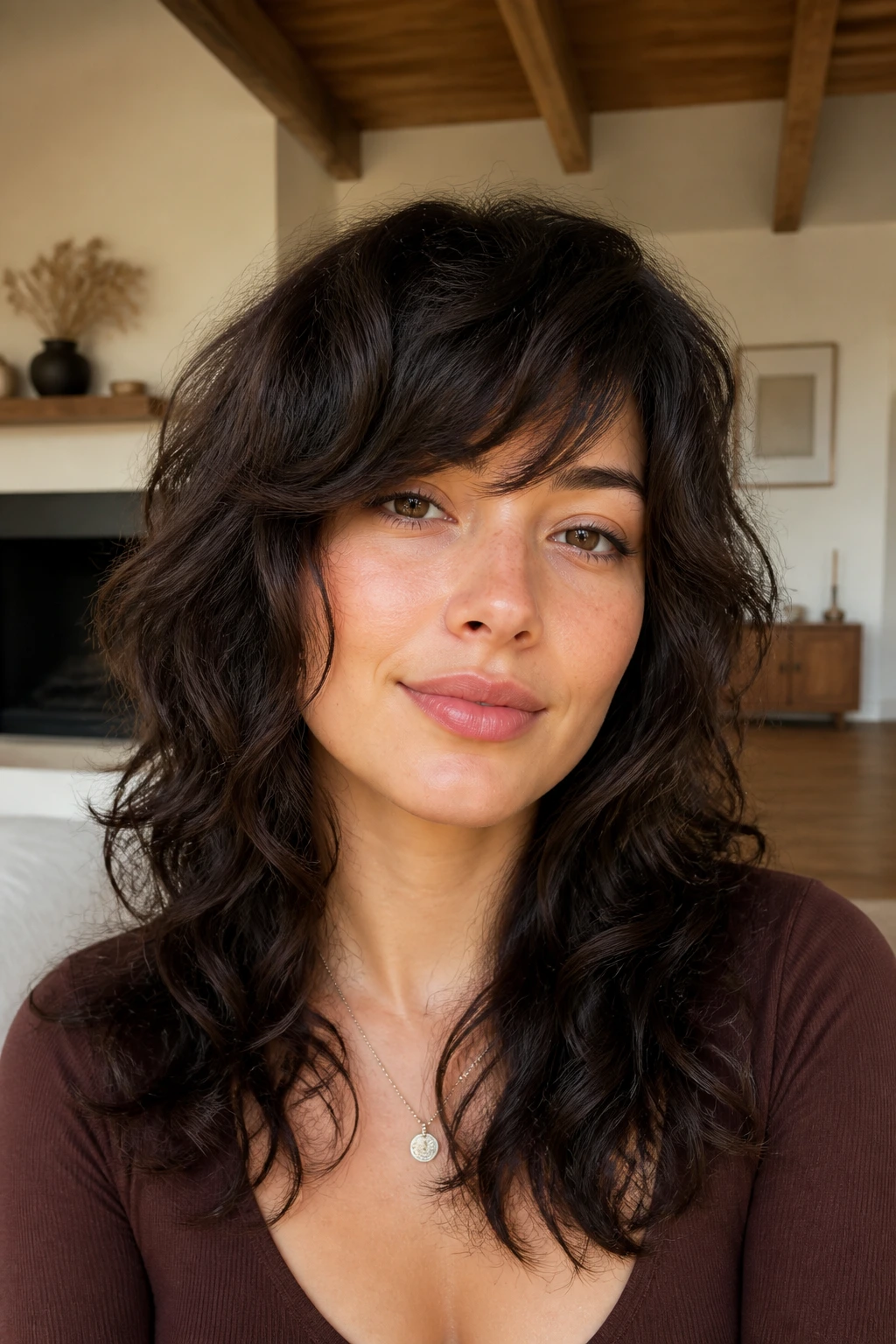
If you’ve got an oval face, you can wear almost anything, but that does not mean every shag is equally flattering. This version uses a longer side-swept bang to frame the eye and cheekbone, with layers that open the shape rather than crowd it. The result is clean and balanced.
The reason it works is simple: the diagonal fringe gives the face a line to follow. Without it, longer curly shags can sometimes blur the features a bit too much. Here, the bangs do the framing, and the layers support them.
What Makes It Different
The face frame stays soft, but it doesn’t disappear. That’s the line to hold onto if you want the cut to look styled without looking staged.
22. The Easy Grow-Out Shag
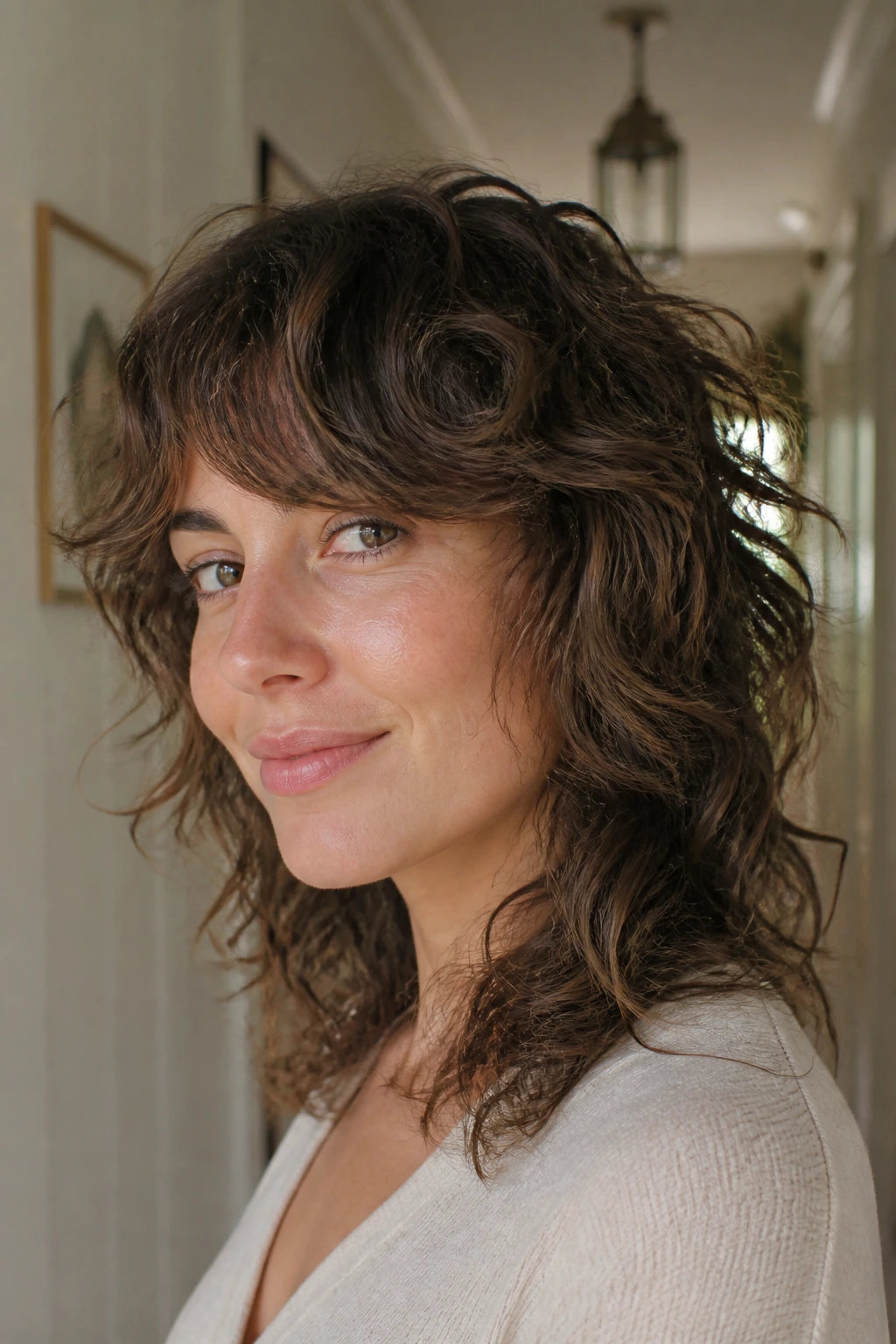
This is the one I’d point to if someone told me, “I want the shag look, but I’m not living in the salon.” The side-swept bangs are left long enough to blend into the layers over time, and the overall shape is built to stay attractive as it gets a little shaggy. That’s the point.
A good grow-out shag doesn’t punish you for skipping one trim. It shifts. The fringe becomes a face frame, the layers lose some crispness, and the cut still works because the shape was built with that in mind. If you move from short to medium or medium to long without wanting a hard restart, this is the best compromise.
It’s also forgiving with curl changes. Dry winter air, humid air, a protein treatment, a deep condition—any of those can change how your curls sit. A flexible shag absorbs that better than a rigid blunt cut ever will.
Why Curly Shags and Side-Swept Bangs Work So Well Together
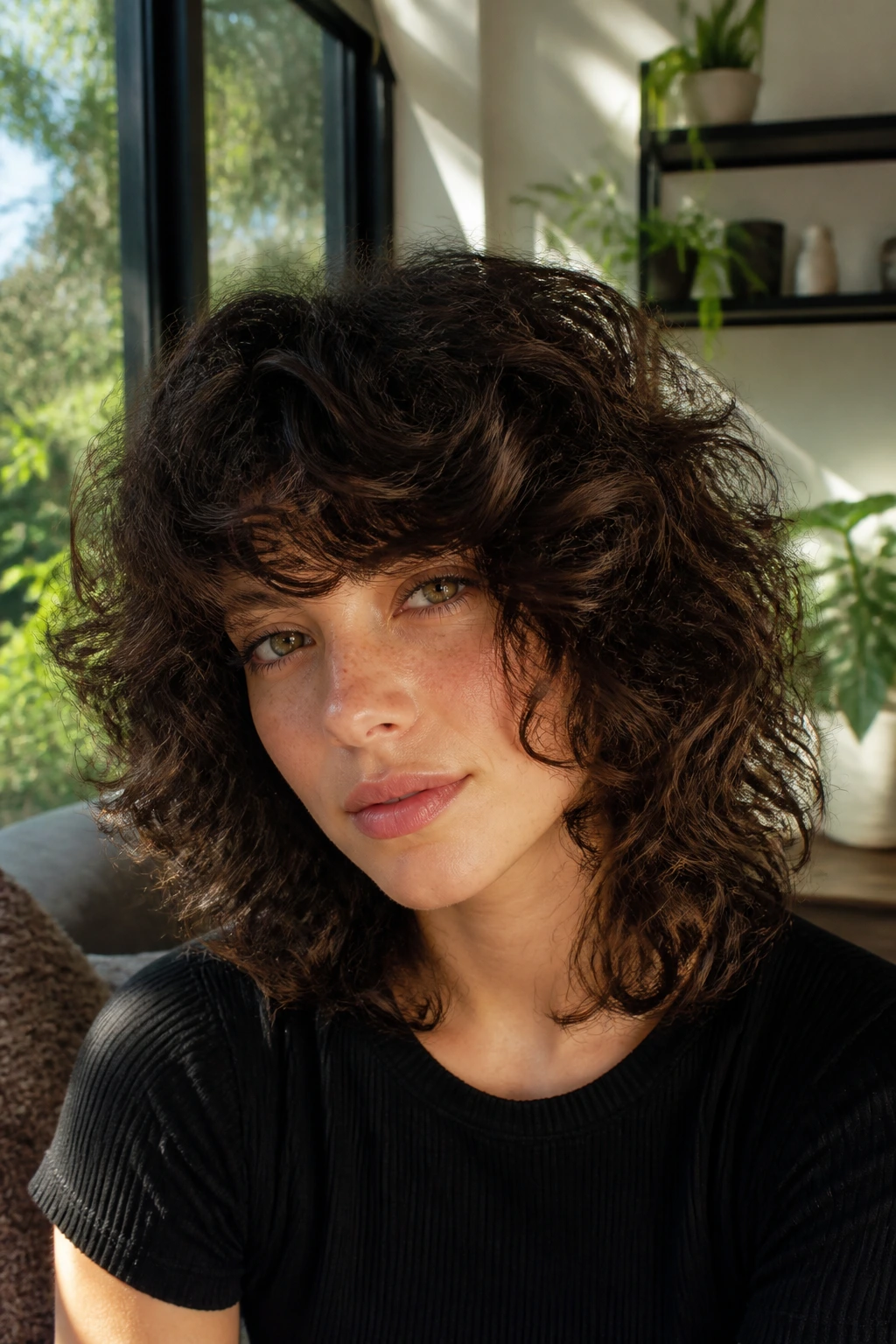
Curly hair wants movement. Straight lines can fight that. A shag accepts it and gives it a shape that makes sense when the curl shrinks, springs, and shifts throughout the week. Side-swept bangs add a diagonal line, which is about as useful as it gets when you want softening without the bluntness of a full fringe.
The other reason this pairing works is weight distribution. Curly hair often carries too much bulk where it starts to widen—around the sides, under the crown, and through the lower half. The right layers remove that bulk without stripping the ends bare. That means the curl can still clump, still bounce, still look like hair instead of fuzz.
There’s also a grow-out advantage people underestimate. Side-swept bangs don’t hit the wall that blunt bangs do. They can slide into the rest of the cut, which buys you time between trims and keeps the front from turning into a strange little shelf. That’s useful whether your curls are loose and fluffy or tight and spring-loaded.
How to Choose the Right Version for Your Curl Pattern
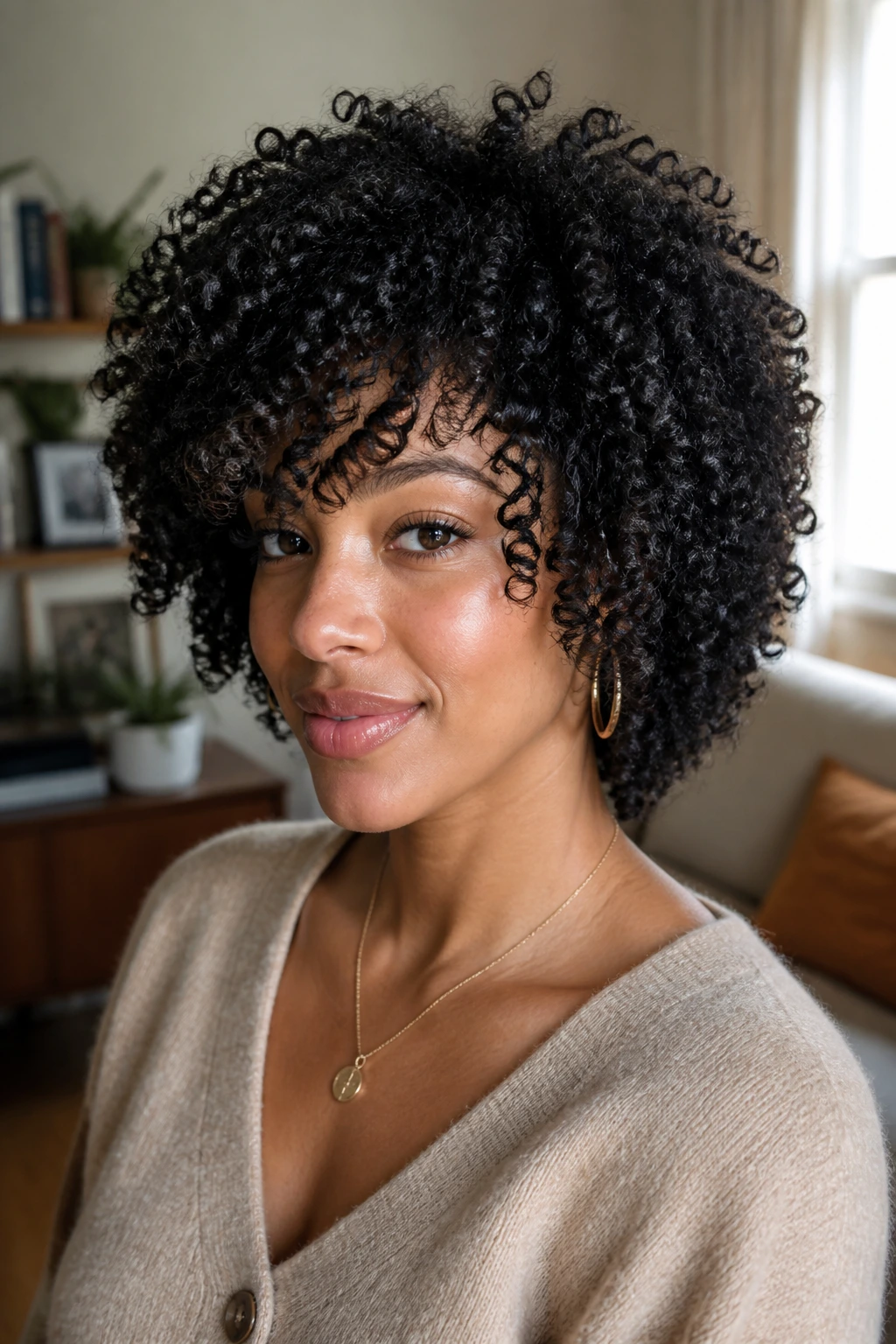
Loose waves and strong ringlets don’t want the same shag. That sounds obvious, but it gets ignored constantly in salons. Waves usually need less weight removed at the top and more help creating shape through the front. Tighter curls usually need more control in the crown and a longer bang so shrinkage doesn’t eat the whole thing.
If your hair is fine, keep the layers softer and avoid over-thinning the fringe. If it’s dense, ask for internal shaping so the haircut doesn’t puff out at the temples. And if your curl pattern changes from root to ends—which happens more than people admit—make sure the stylist checks both zones before cutting. A curl that springs tight at the base and looser at the ends will land differently, and the bang needs to be adjusted for that.
Bring photos, yes. But bring photos of people with a similar curl pattern and a similar face length. A great cut on a different texture can be a trap. The photo is a starting point. The shrinkage is the real conversation.
Curl Pattern Clues
- Loose waves: Better with longer layers and a gentle side sweep.
- Medium curls: Can take sharper layering and more face frame.
- Tight curls and coils: Need more length left in the fringe and a drier cutting method.
Essential Tools for the Cut, Consultation, and Styling
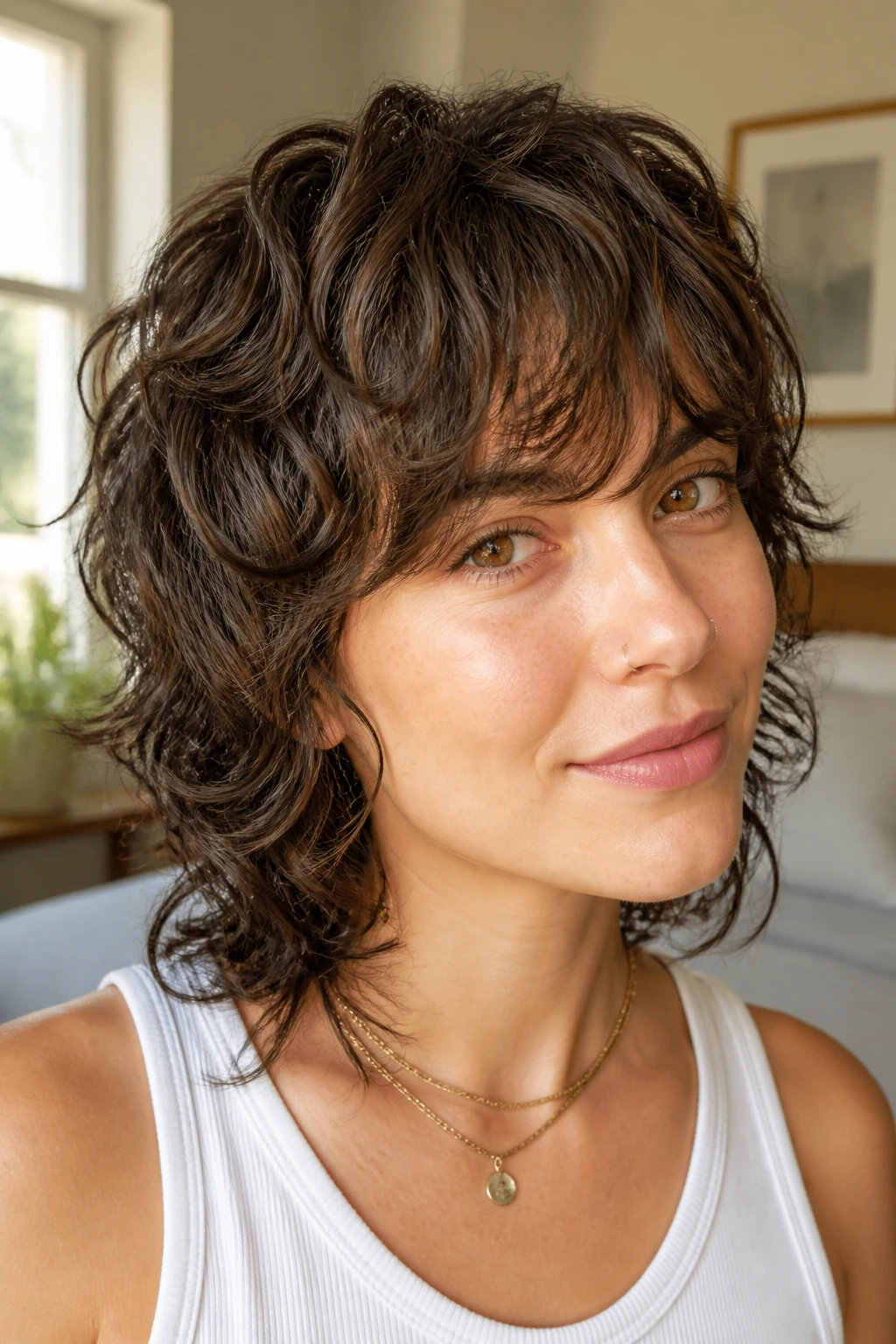
- Wide-tooth comb: Detangles without ripping curl clumps apart.
- Duckbill clips: Useful for sectioning the fringe, crown, and side layers while styling.
- Microfiber towel or cotton T-shirt: Cuts down on frizz during the first squeeze-out after washing.
- Diffuser attachment: The best friend of a curly shag, especially for the side-swept bangs.
- Spray bottle: Handy for re-wetting only the front pieces that start behaving badly.
- Lightweight curl cream or leave-in: Gives the layers slip without stuffing them full of product.
- Gel or mousse with hold: Helps the fringe keep its sweep instead of springing straight up.
- Hand mirror: Worth keeping near the bathroom sink so you can check the back and crown without guessing.
How to Ask for the Cut Without Getting a Surprise
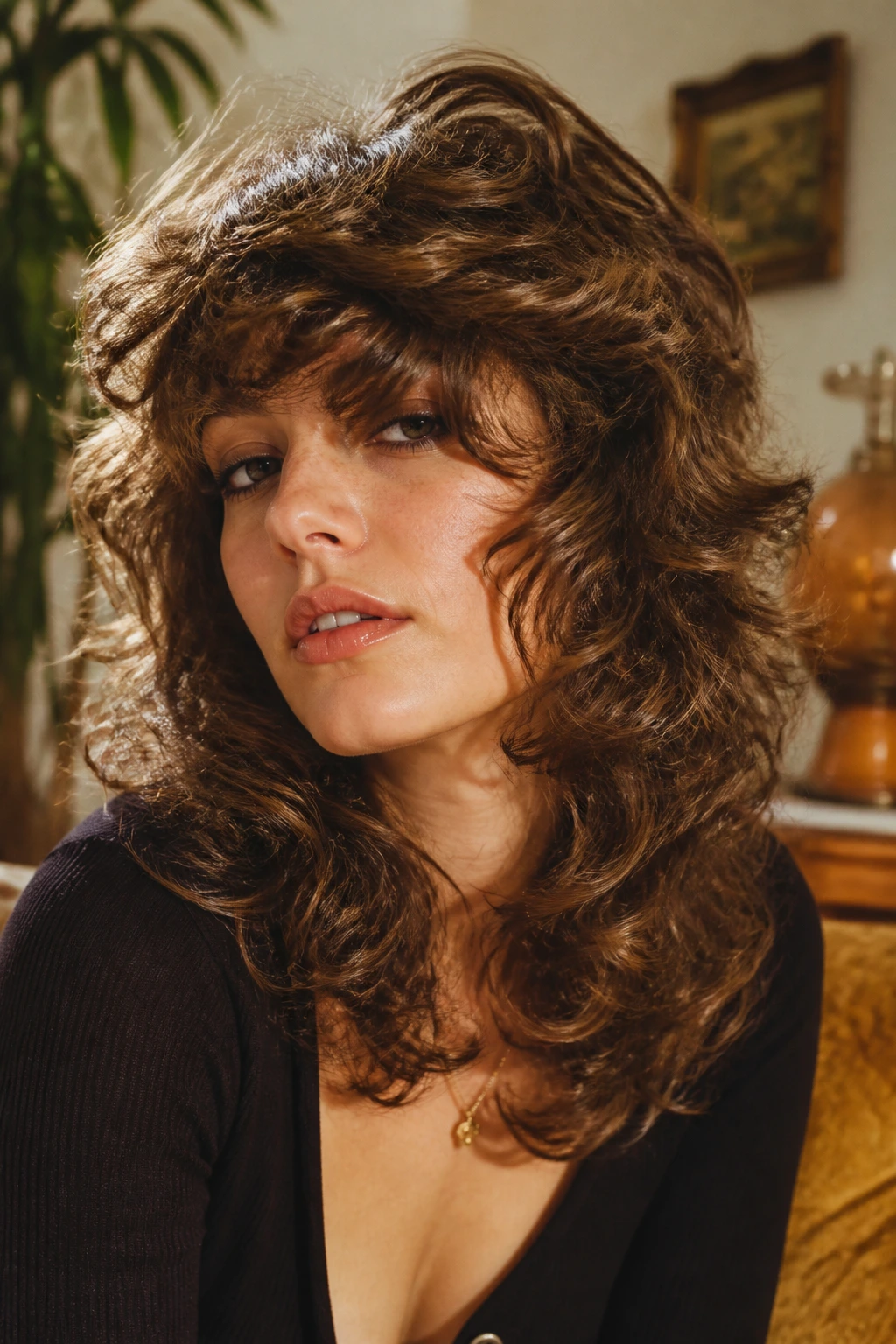
Be annoyingly specific. That’s not rude. It’s smart. Tell the stylist you want the haircut shaped for your dry curl pattern, not just your stretched length. If the fringe is the part you care about most, say exactly where you want the shortest point to land when dry—brow, brow-to-cheekbone, or cheekbone level.
Ask whether the cut will be done dry, wet, or in a hybrid method. For curly shags, dry or mostly dry is usually easier to trust because it lets the stylist see spring and density. If your stylist plans to use thinning shears aggressively, ask why. Sometimes they’re fine. Sometimes they carve out too much and leave the bang area fuzzy.
Bring one photo for length, one for shape, and one for fringe. Yes, three. That’s not overkill. It’s how you stop everyone in the chair from guessing what “side-swept” means.
How to Style and Wear the Shape Day to Day
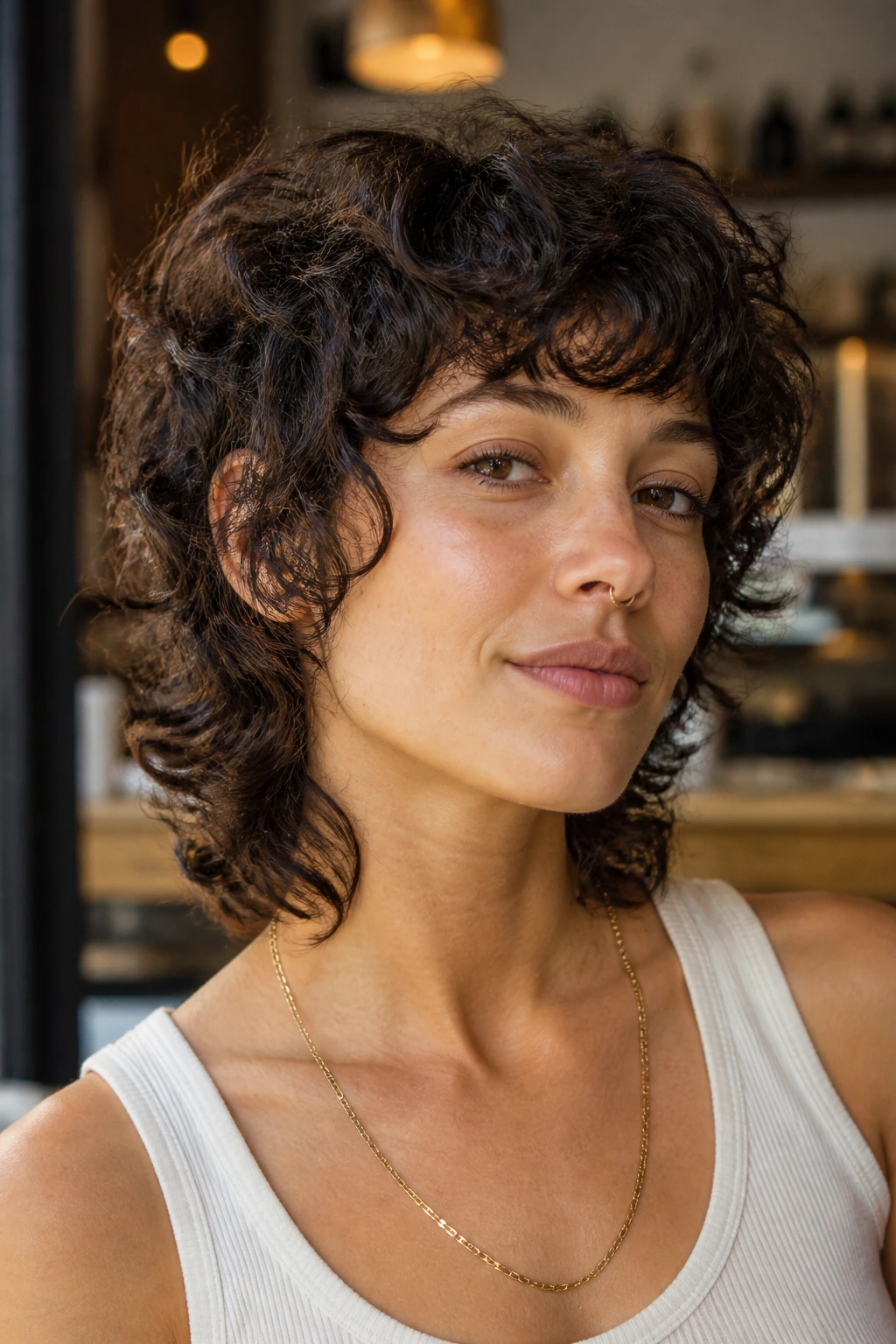
Wash Day: Start with your usual cleanser and conditioner, then work in a leave-in or curl cream only where the hair needs slip. Scrunch in a gel or mousse, making sure the bang section gets the same product balance as the rest of the head. If the fringe is left bare, it will frizz first.
Drying: Diffuse on low heat and low airflow, or air-dry with the front clipped gently to the sweep side. Do not keep flipping the bangs around while they’re drying. That’s how they decide to live nowhere in particular.
Refresh Day: Mist the front section, smooth a pea-sized amount of cream or water-based gel between your palms, and press the side bang back into the shape. A few minutes with a clip can reset it.
When You Want More Drama: Push the part deeper on the sweep side, lift the roots at the crown with a pick, and let the face frame stay looser. The whole cut will read bigger in ten seconds.
Extra Styling Moves That Keep the Shape Crisp

Bang Direction: Train the fringe on the side you want by drying it in that direction from the start. If the hair insists on separating, clip the bang section at the root while it cools.
Root Lift: A small amount of mousse at the crown and a quick root-diffuse can save the haircut from looking too flat. That matters more on day two, when the weight of the curls starts pulling down.
Humidity Backup: Keep a tiny bottle of water mixed with leave-in near the sink. A light mist on the front pieces is often enough. So is re-scrunching with dry hands and leaving the rest alone.
Finishing Touch: Use a dab of serum only on the ends if they look dry. Avoid coating the bang area. That’s where shine products can turn into limp, sticky trouble fast.
Common Mistakes to Avoid with This Kind of Cut
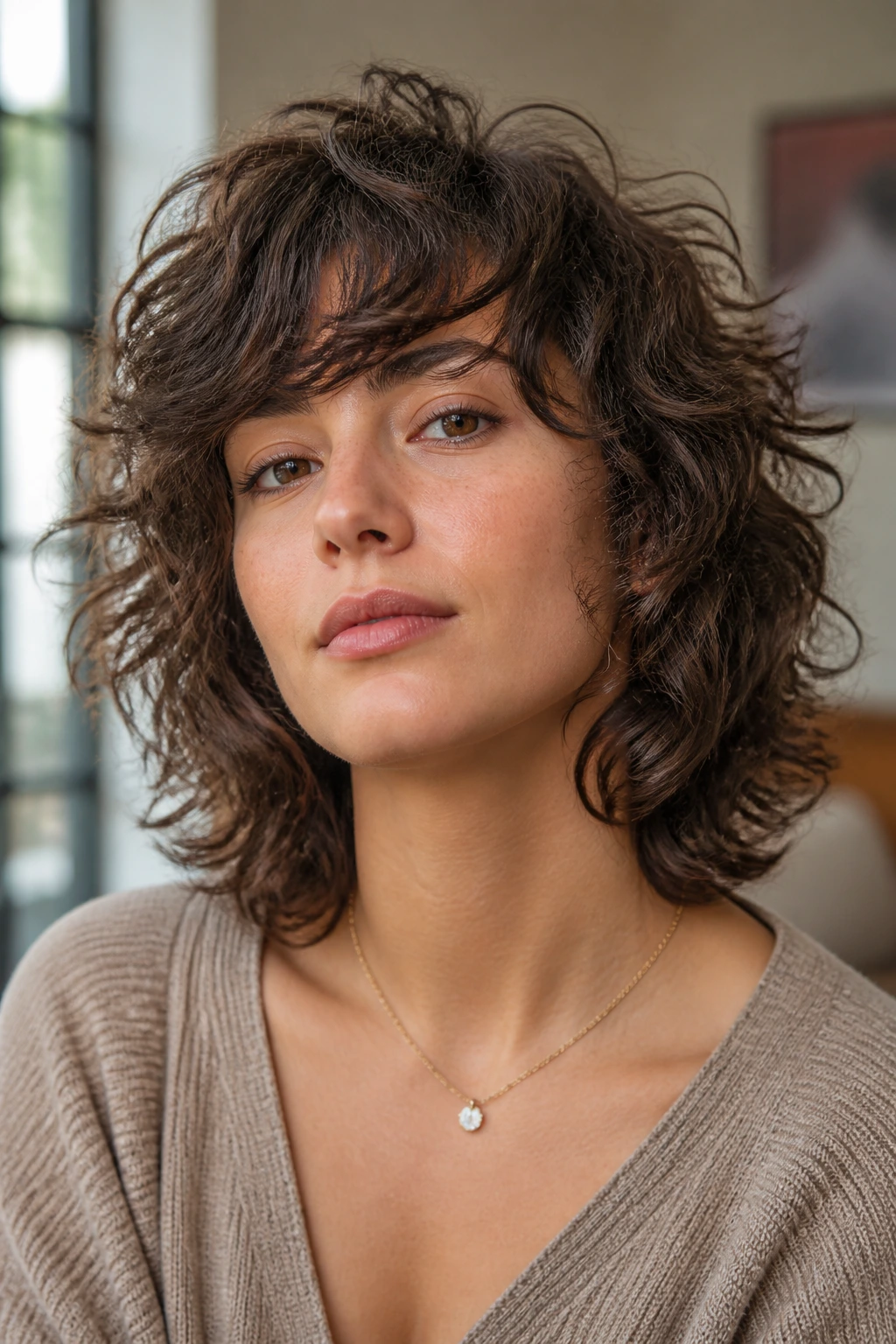
The biggest mistake is cutting the bangs too short. Curly fringe almost always bounces higher than people expect, and once it’s above the brow line, there’s no hiding it for long. Leave room for spring.
Another problem is over-layering fine curls. If the stylist removes too much weight, the shape goes see-through and the bangs stop blending. The fix is softer layering, not more texture. That’s a subtle difference until you look in the mirror.
A third one: loading the front with heavy cream. The bang area is small, so it gets greasy or droopy faster than the rest of the head. Use less product there than you think. Much less.
And finally, don’t ask for a shag without talking about your shrinkage. A curl that looks shoulder length wet may behave like a chin-length cut dry. Those are not the same haircut.
Variations and Adaptations to Try
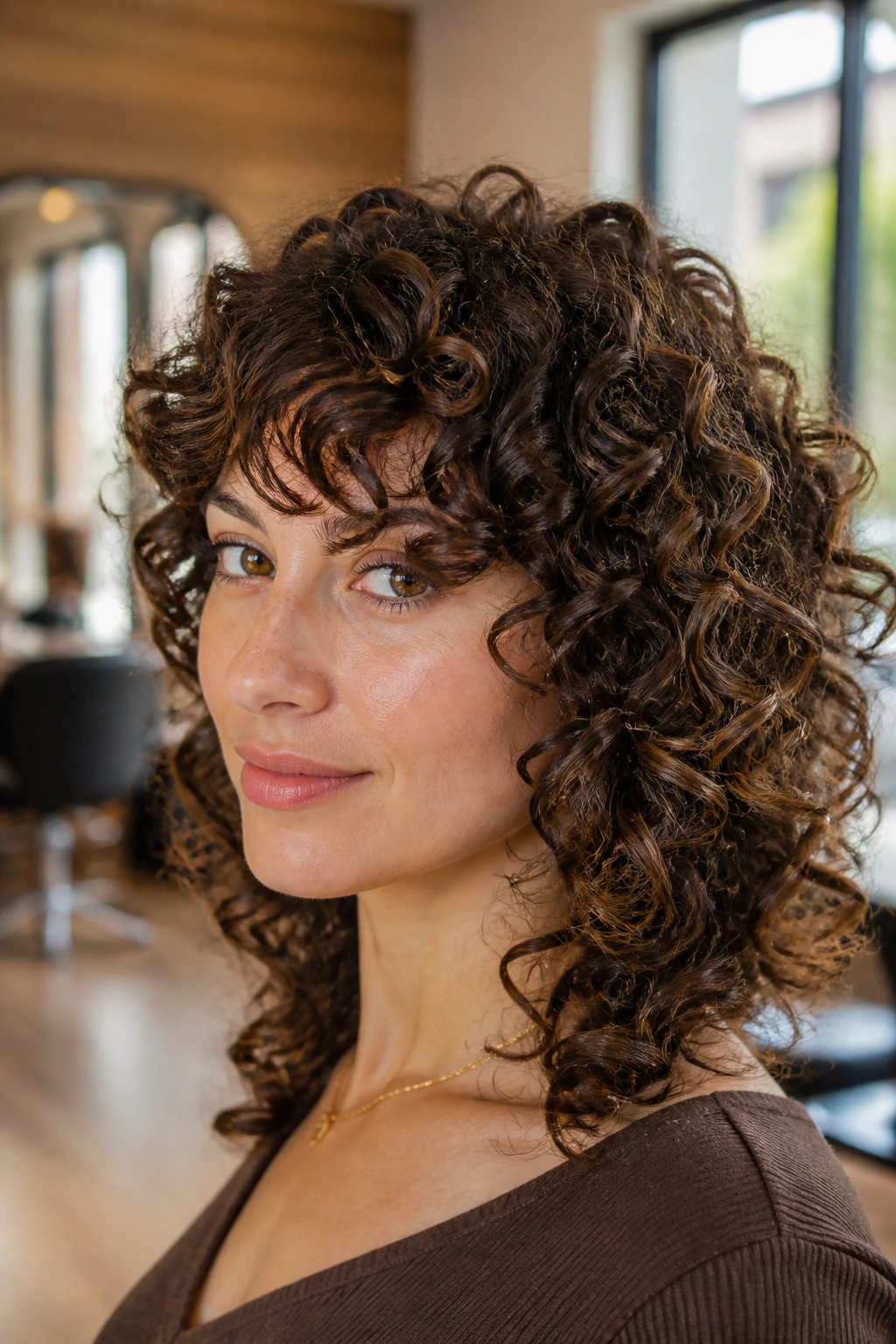
Longer Fringe Blend: Keep the side-swept bangs long enough to tuck behind the ear on low-energy days. This version is useful if you want the face frame but don’t want to babysit bangs every morning.
Shorter Rocker Edge: Pull the layers higher around the crown and let the side sweep skim the eyebrow more closely. This one has more attitude and works best on dense curls that can take it.
Coil-First Rounded Shape: For tighter textures, keep the silhouette round and leave the fringe longer so it arcs across the forehead instead of stopping short. The shape looks polished and keeps shrinkage under control.
Fine-Hair Featherlight Version: Reduce internal layering, keep the ends soft, and use mousse instead of heavy curl cream. The haircut will look fuller and less pieced-out.
Grow-Out Friendly Version: Ask for the side bang to connect smoothly into the temple layers. It’s the easiest choice if you hate awkward phases and trim appointments that arrive too fast.
Make-Ahead, Maintenance, and Grow-Out Rhythm
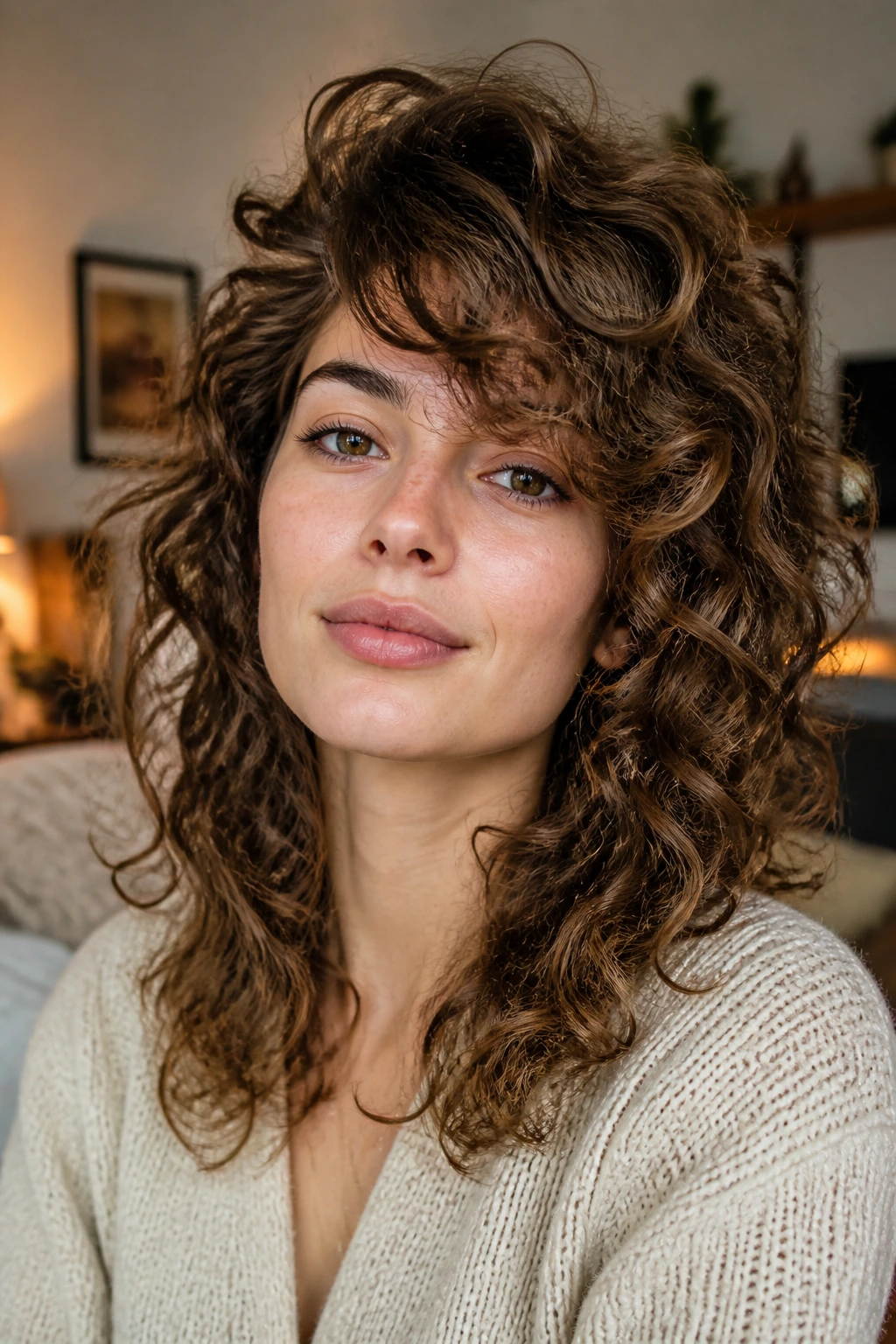
Curly shags don’t “store” like food, but they do have an upkeep rhythm. A bang trim every 4 to 8 weeks keeps the sweep from dropping into your eyes or splitting into weird forks. The rest of the shape can usually go 8 to 12 weeks before it starts losing the line around the cheeks and collarbone.
Between washes, dry shampoo at the roots can help, but use it lightly. Curly bangs get dull fast if you pile on powder. A better move is a small mist of water, a touch of leave-in, and five minutes of clip time on the sweep side. That refreshes the front without disturbing the whole pattern.
If you protect the hair overnight with a satin bonnet or pillowcase, the fringe keeps its direction better. In the morning, you’ll spend less time wrestling the front into a shape it forgot overnight. That tiny routine pays off more than most people expect.
Frequently Asked Questions
Will side-swept bangs work if my curls shrink a lot?
Yes, but the bangs need to be left longer than straight-hair instinct would suggest. A curl that looks perfect at the chair can jump an inch or more once it dries, so the safest version usually lands around the brow or just below it when cut.
Should curly shags be cut dry?
Usually, yes. Dry cutting lets the stylist see how each curl falls on its own, which matters a lot for the fringe and for the side layers. Wet cutting can still work in the right hands, but it’s easier to miss the real final length.
Can fine curly hair wear a shag with side-swept bangs?
Absolutely, as long as the layers stay soft and the fringe isn’t over-thinned. Fine curls need shape, not aggressive removal. A light mousse and a controlled bang sweep usually work better than heavy creams.
What if my bangs keep splitting in the middle?
That usually means the front section is drying in the wrong direction or it’s too heavy with product. Clip the fringe to the sweep side while it dries, then use less cream and more light hold.
How often should I trim the bangs?
Most curly side bangs need attention every 4 to 6 weeks if you want them precise. If you like a softer, grown-in look, you can stretch that farther, especially when the bang blends into the layers cleanly.
Does this cut work on thick, dense hair?
Yes, and dense curls often look best in a shag because the layers remove bulk without killing the shape. The main caution is not to over-thin the front or carve too much from the sides, or the silhouette can get frizzy and uneven.
Can I wear a curly shag without diffusing?
You can, but the fringe and crown may not set as cleanly. Air-drying is fine for looser textures, though a short diffuse at the roots usually gives the side sweep more control and helps the layers hold their line.
What should I ask for if I want a softer version, not a dramatic wolf cut?
Ask for a long shag with blended face-framing layers and a side-swept bang that connects into the temples. That keeps the shape modern without pushing it into mullet territory.
The Shape That Keeps Moving
A good curly shag with side-swept bangs does something that straight-line cuts often can’t: it looks intentional even when it’s a little messy. That’s the charm. The layers give the curls somewhere to go, and the diagonal fringe keeps the face open without turning the front into a blunt wall.
The best part is how personal these cuts can be. Short, long, soft, edgy, rounded, airy—there’s room for all of it, as long as the cut respects shrinkage and the curl pattern underneath. That’s the part people tend to skip, and then they wonder why the haircut never behaves.
Pick the version that suits your density, your length, and your patience for styling. Then let the curls do their thing.