



A bob that sits still for the first hour and then turns into a flat little triangle by lunch is not a haircut I trust. A shaggy bob, though, is different. On wavy hair, it works with the bend you already have, which means the cut can keep moving even when the styling is minimal and the weather is doing rude things to your crown.
For women over 50, that matters more than the glossy salon photos admit. Hair often changes in texture, density, and direction over time — sometimes the wave gets looser, sometimes the crown goes flatter, and sometimes one side decides to live a completely separate life. The right shaggy bob doesn’t fight any of that. It builds shape around it.
What makes this length so useful is the balance: enough layers to stop the ends from feeling heavy, enough perimeter to keep the haircut from looking wispy, and enough softness around the face to make glasses, cheekbones, and jawlines look intentional rather than “fixed.” Some versions are chin-grazers with a curtain fringe. Others skim the collarbone and lean into a softer, grown-out texture. A few are sharper, a few are sweeter, and a few have a little edge. The good ones all have the same thing in common: they let wavy hair do the talking.
Why These 22 Shaggy Bobs Work on Wavy Hair After 50

-
Wave-friendly shape: The layers are placed to follow the bend in the hair, so you get movement without spending 20 minutes forcing it with a brush.
-
Crown lift where it counts: A little shorter layering near the top keeps the style from collapsing at the roots, which is the quickest way a bob starts looking tired.
-
Softer face framing: Curtain pieces, side fringes, and cheekbone layers can lighten the area around the eyes and jaw without swallowing your features.
-
Better grow-out: A shaggy bob still looks intentional when it grows half an inch or an inch, which is useful if you do not want to live on six-week trims.
-
Silver and salt-and-pepper friendly: Texture makes gray strands look dimensional instead of flat, especially when the cut has broken-up ends rather than one blunt line.
-
Lower styling pressure: Most of these cuts can be air-dried, diffused, or rough-blown with a round brush in under 15 minutes if the layers are cut well.
1. Chin-Length Shaggy Bob with Curtain Fringe
This is the cleanest place to start if you want movement without losing the feel of a real bob. The length lands around the chin, where wavy hair tends to swing instead of puff, and the curtain fringe opens the face instead of boxing it in. It has that relaxed, slightly French look that reads polished without being stiff.
The trick is in the balance. Ask for soft, broken layers through the mid-lengths and a fringe that splits near the center, then tapers toward the cheekbones. If your wave is loose, this shape gives you lift without needing a lot of product. If your wave is stronger, the fringe keeps the top from feeling heavy while the chin-length perimeter keeps the ends from flipping into a triangle.
What to tell your stylist
- Keep the shortest face-framing pieces at cheekbone or lip level.
- Use point-cutting or light razor texturizing, not aggressive thinning.
- Check the fringe dry if your wave pattern changes as it dries.
A quick bend with a diffuser or a large-barrel brush is enough. Too much styling ruins the whole point.
2. Shoulder-Skimming Shaggy Lob
Longer than a classic bob, this version is for anyone who wants the shag shape but not the commitment of a shorter neckline. It skims the shoulders, which means it still swings and still gets texture, but it also tucks behind the ear, clips back easily, and grows out with less drama.
I like this one for medium-density wavy hair, especially if the ends tend to feel heavy once they pass the jaw. The extra length lets the layers breathe, and the interior shaping prevents the cut from sinking into a dull block. If your hair gets wider at the ends when it dries, this length usually behaves better than a shorter bob because there’s more room for the wave to settle.
Ask for a shaggy lob with soft, invisible layers through the inside and a slightly longer perimeter in front. That little front drop matters. It keeps the shape from looking too square.
3. Silver Shaggy Bob with Razored Ends
Silver hair and a shaggy bob get along beautifully when the cut is light enough at the ends. Gray and silver strands can look coarse if they’re left in one blunt line, and razored or point-cut ends break that heaviness up fast. The result is a bob that looks airy instead of bulky.
Why it works
The texture catches the bend in the wave, and silver tones show the shape clearly. You can actually see the layers move.
That matters if your hair has turned more wiry than it used to be. A razor-soft finish can help the ends lie flatter, but it should be done with restraint; too much slicing can make the fringe frizzy. The best version has a soft outline, some lift at the crown, and pieces around the cheekbones that keep the whole thing from feeling severe.
A purple shampoo once or twice a week is enough for most silver tones. More than that, and the color can look chalky under indoor light.
4. Jaw-Length French Shag Bob

This one has attitude, but not the loud kind. It sits right around the jaw and leans into a little swing, a little bend, and a little imperfection. The shape feels sharper than a collarbone shag, but softer than a classic blunt bob, which is why it works so well when waves have a mind of their own.
The French influence comes from the way the front pieces sit: light, face-skimming, and never too planned. You want the bob to move when you turn your head. That motion keeps the jawline from looking boxed in. If your face feels narrower with volume around the sides, this shape is a smart one because the texture stays feathered instead of puffing outward.
Ask for this at the salon
- Jaw-length perimeter with broken layering through the crown.
- A soft fringe or long piecey bangs if you want more face framing.
- Enough length at the nape to avoid the triangle effect.
It’s a good cut if you want a little Parisian looseness without losing the clarity of a bob.
5. Side-Parted Shaggy Bob with a Tapered Nape
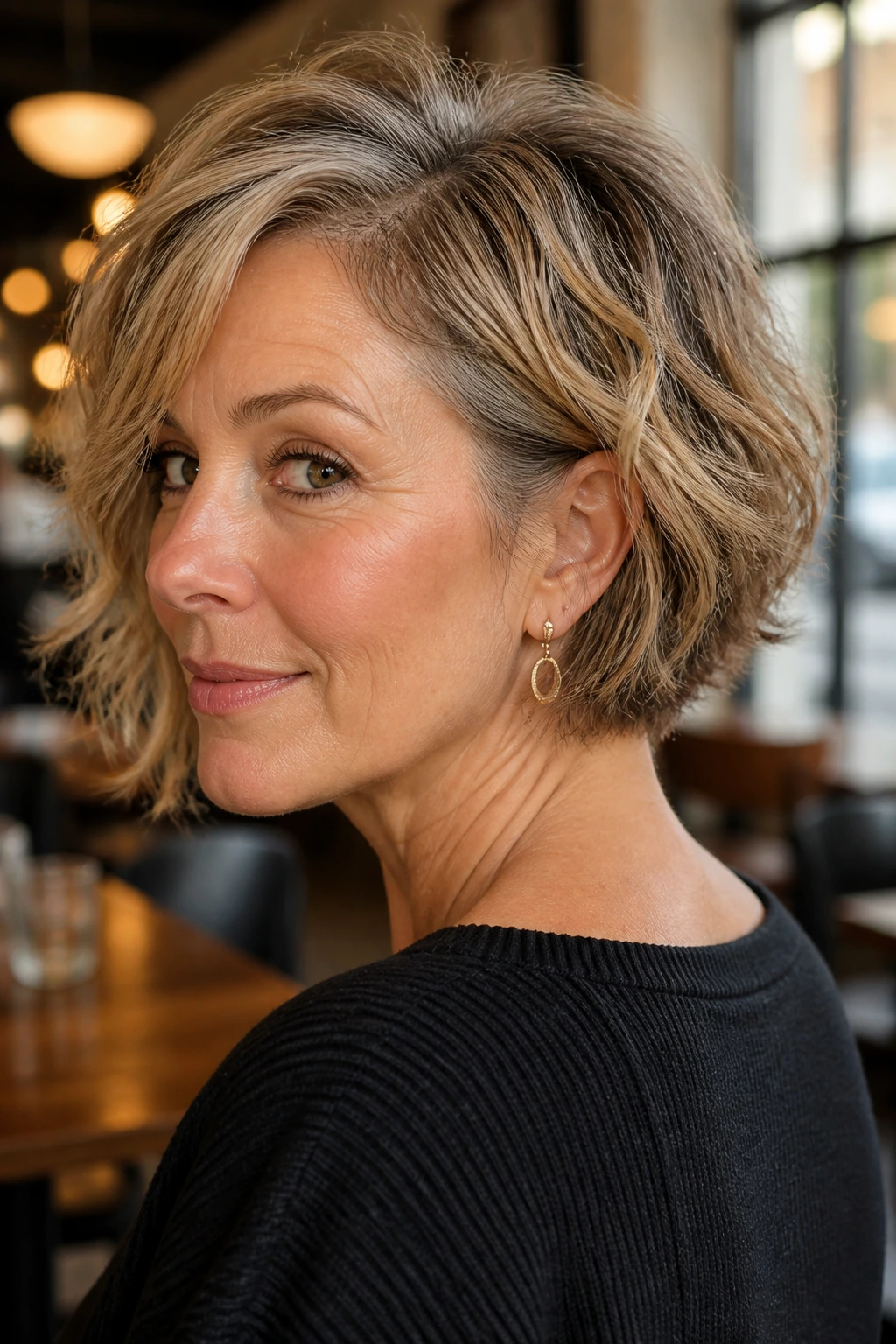
A deep side part changes the whole personality of a bob. It gives the roots somewhere to lift, which is a gift if your crown has started lying flatter than it used to. Add a tapered nape and the back sits close to the neck while the top keeps its air.
The side part is doing two jobs here. It adds volume on one side, and it creates a diagonal line that makes wavy hair look longer and more intentional. The tapered nape is the part people often forget to ask for, and then they wonder why the back feels boxy. A little graduation there keeps the haircut neat without stripping out the softness.
This is especially good if you wear earrings or glasses. The asymmetry gives the face a bit of lift without needing much styling.
6. Wolfy Shag Bob with Choppy Crown Layers
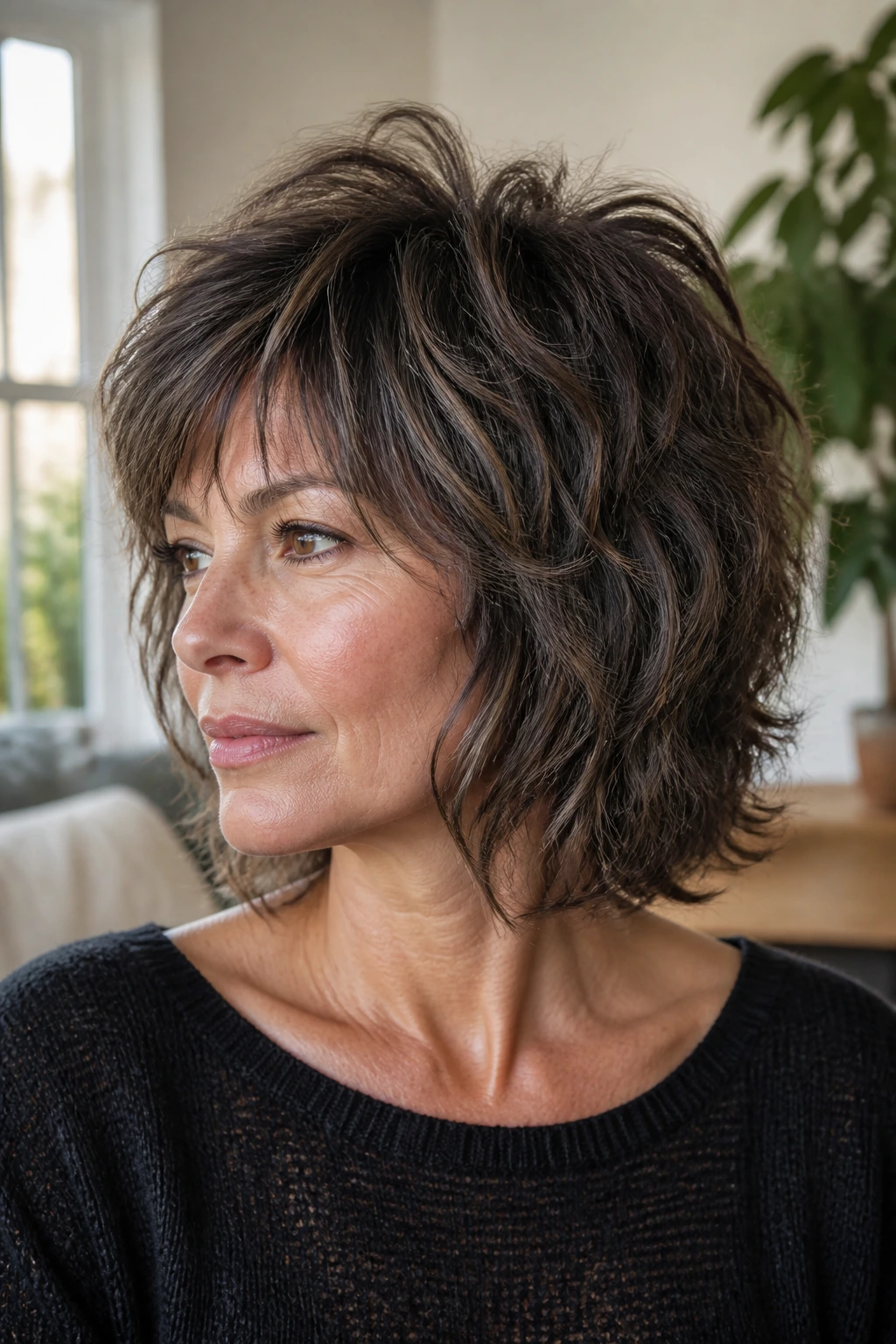
This is the edgier cousin in the group. It takes the shaggy bob and pushes it toward a wolf cut, but stops before it turns unruly. The crown layers are shorter and choppier, which creates height and pieceiness, while the bottom still keeps enough weight to read as a bob.
It’s a strong choice for thick, wavy hair that gets too full if left one length. The layers remove bulk from the middle, which helps the silhouette fall instead of balloon. On finer hair, though, this can go wrong fast if the stylist overdoes the crown. You want lift, not a top-heavy halo.
Best styling move: a mousse at the roots, a tiny bit of cream through the ends, and a diffuser only until the hair is about 80 percent dry. Stop there. Let the rest finish on its own. That rough finish is the point.
7. Piecey Bangs and Face-Framing Layers

If your forehead is the part you’re least interested in showcasing, this cut gives you options without burying the face. Piecey bangs are softer than a full fringe and more flexible than a side bang. They break up the top line of the haircut, then the face-framing layers echo that movement around the cheeks.
What makes it flattering
The layers create vertical movement, which keeps the front from feeling wide.
That’s useful for wavy hair because the front pieces can be the most stubborn part of the head. They either hang flat or puff in the wrong place. Piecey bangs solve that by keeping the hair light enough to separate, not clump. The result is softer around the eyes and more lifted at the temples, which is a nice effect if your hair has started losing some of its natural top volume.
This version looks best when the bangs are cut a little longer than you think you need. Short, dense bangs fight wave. Longer, broken-up bangs cooperate.
8. Beachy Collarbone Shag

This is the easiest style to wear if you like your hair to feel loose and slightly undone. The collarbone length gives the wave room to stretch, and the shag layers keep the ends from looking heavy or stale. It has a casual feel, but the structure underneath matters a lot.
The beachy look only works when the layers are placed well. If the cut is all exterior texture and no interior shaping, it can collapse around the shoulders and look accidental. Good versions have a soft, almost invisible layer stack through the mid-lengths, which lets the wave sit in loose ribbons instead of one thick sheet.
A salt spray can help, but don’t drown it. One to three spritzes, scrunched into damp hair, is enough. Too much, and the ends get crunchy. The best finish here is touchable.
9. Inverted Shaggy Bob with Airy Back
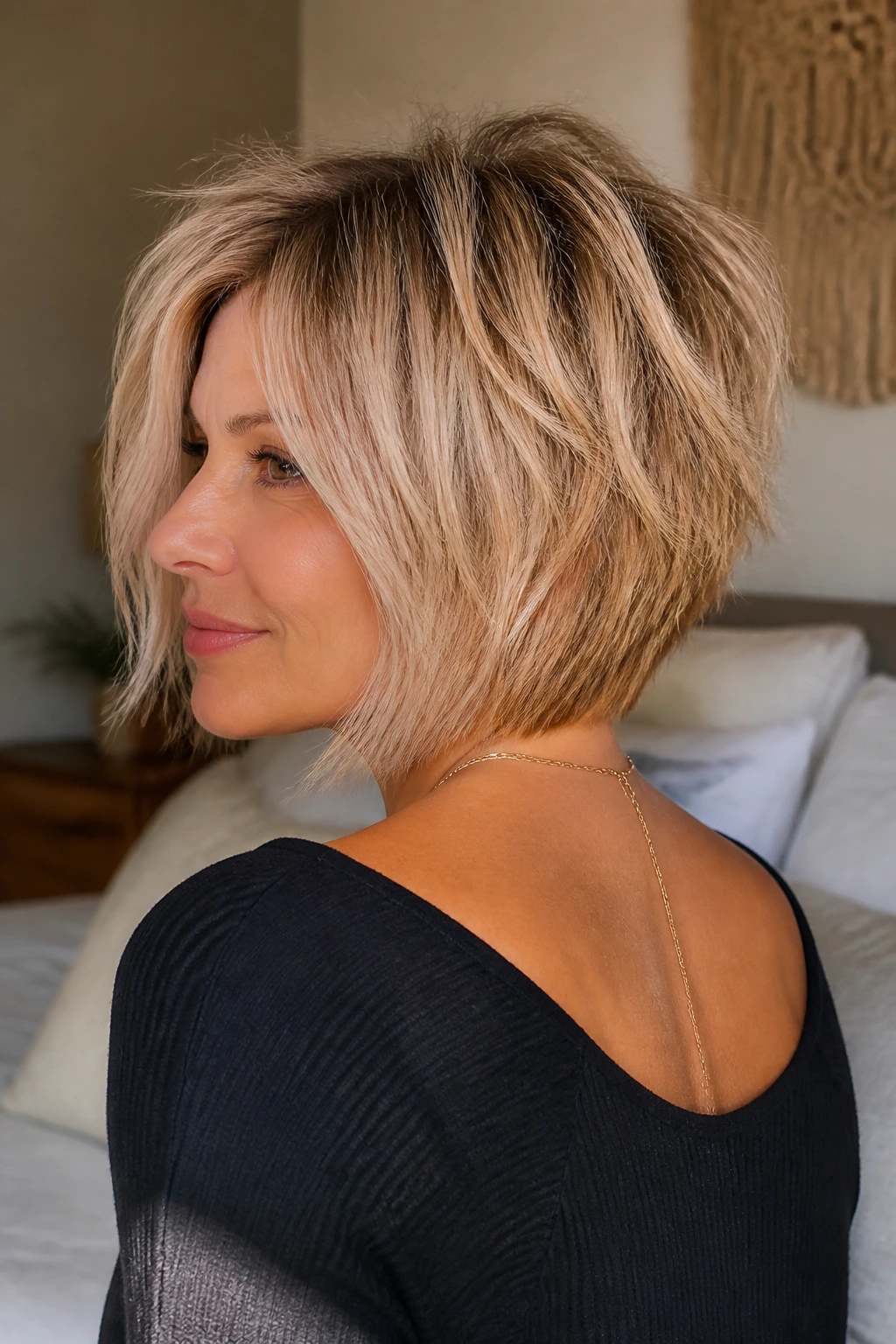
An inverted bob brings a little structure to a shaggy shape. The back is shorter, the front stays longer, and the whole cut gets a clean angle that keeps wavy hair from spreading out at the sides. It’s a smart pick if your neck feels better with less hair brushing against it.
The shag element softens the inversion. Without that, an inverted bob can look too crisp for wave. With the layers, the angle still reads, but the haircut feels looser and less engineered. That’s the sweet spot. It gives you a little lift in the back, a little swing in the front, and enough texture to keep the style from looking like a haircut from a different decade.
If your hair grows fast at the nape, this shape does need regular attention. The back line can start to lose its clean angle after a couple of months.
10. Salt-and-Pepper Rounded Shag Bob

A rounded shag bob is one of the kindest shapes for salt-and-pepper hair. Instead of building sharp corners, it follows the curve of the head and lets the wave create a soft cloud around it. That rounded outline is especially nice if you want fullness without bulk.
Why it’s smart
The curve keeps the perimeter from flipping too sharply, which helps natural wave look controlled.
Gray and dark strands mixed together can look flat if the cut is too blunt. A rounded shag gives the color variation a place to show up. The layers move, the silver pieces catch the light, and the darker strands create shadow underneath. It sounds small. It is not. That contrast gives the haircut depth that a one-length bob usually lacks.
Keep the styling simple: a lightweight cream, a quick scrunch, and either air-drying or a low diffuser setting. Heavy oils will flatten the crown before lunch.
11. Long Side Fringe Wavy Bob

If bangs scare you, this is the gentler version. A long side fringe gives you the face-framing effect without the maintenance of a full front fringe. It also works nicely with glasses because the fringe can slip around the frames instead of sitting on top of them in a clumsy line.
The rest of the bob should stay airy, not over-layered. The side fringe is already doing a lot of visual work, so the cut around the sides can stay softer and less busy. That makes the whole look feel calm, which matters if you do not want your hair announcing itself before you do.
This shape is also useful if one side of your wave is flatter than the other. The fringe can help balance that out with a little diagonal movement. It’s one of those cuts that looks like it took more effort than it did.
12. Invisible Layers Bob
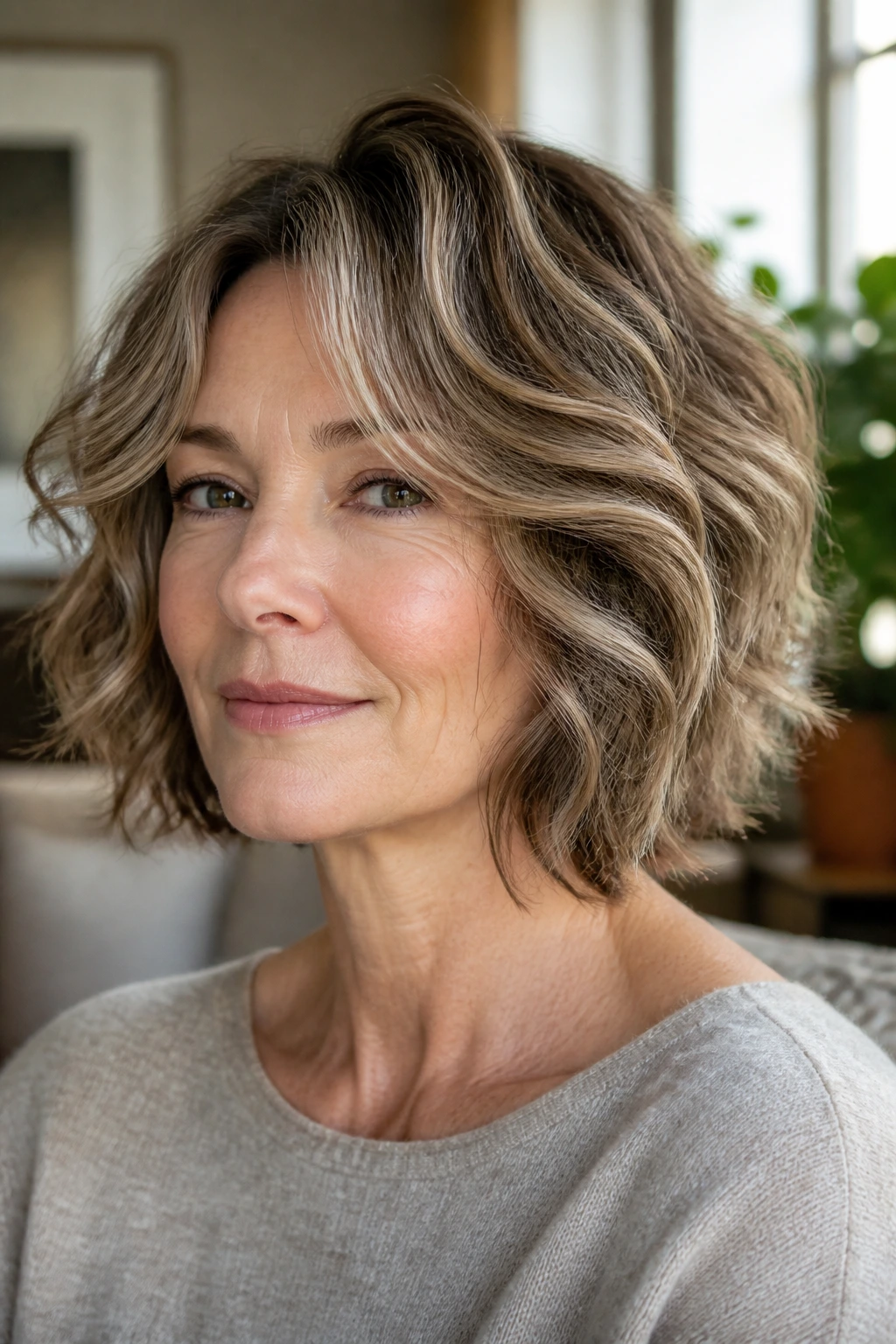
Invisible layers are my favorite answer for fine wavy hair that still wants movement. Instead of cutting obvious short pieces all over the head, the stylist removes weight from the inside. The outside line still looks full, but the hair has room to bend.
That matters because visible layers can make fine hair look scraggly if they’re too aggressive. Invisible layers do the opposite. They keep the outline intact, then quietly give the wave a place to live. The result is a bob that seems thicker at the ends and lighter at the roots, which is exactly what many people want when their hair has become less dense.
If you like a polished finish, this one is a strong choice. It can look smooth with a brush, or loose with a diffuser. Either way, the shape holds.
13. Bixie-Inspired Shag Bob
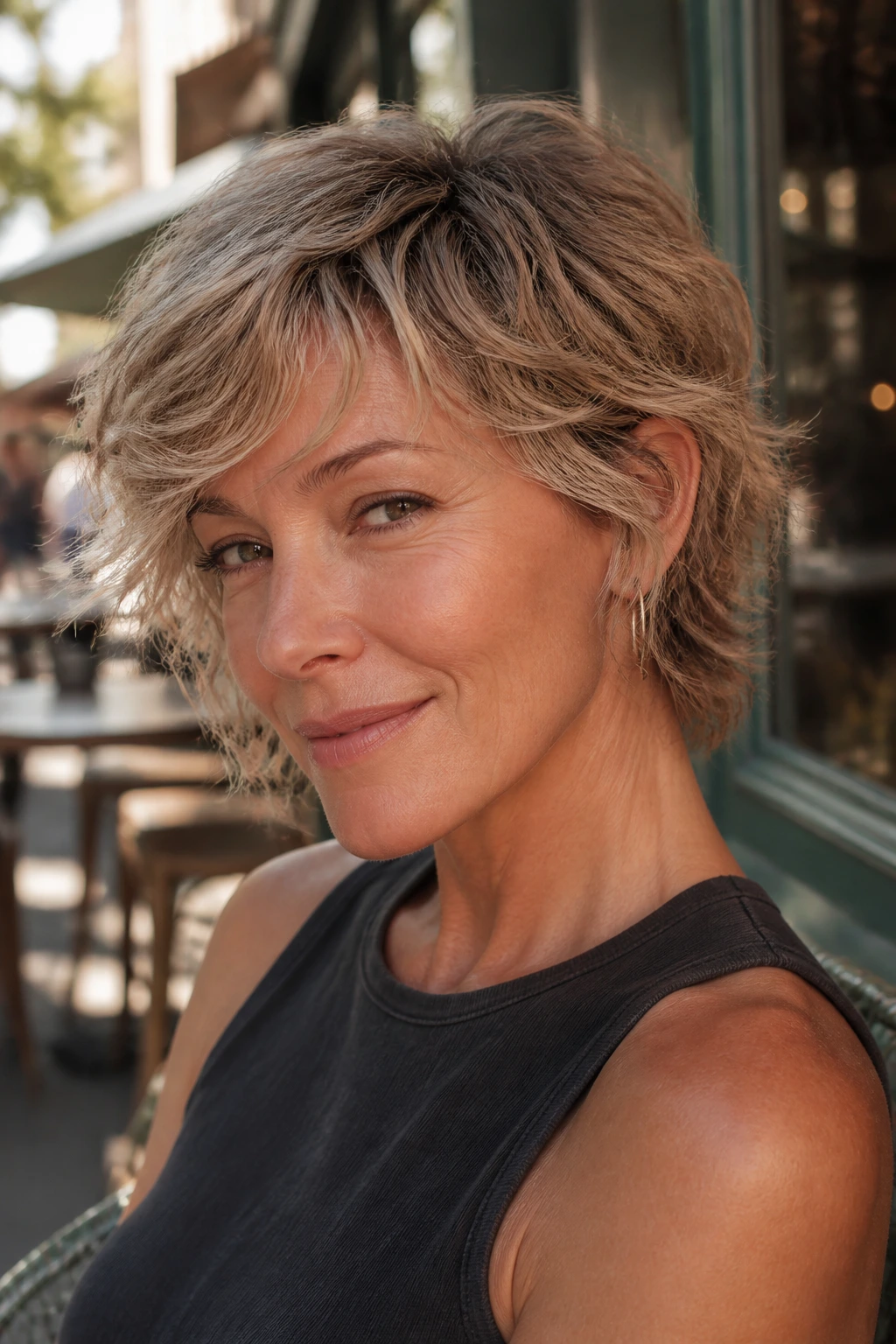
This is the shortest cut in the group for anyone who wants real energy in the shape. It sits between a bob and a pixie, with more neck visible and more texture through the top. On wavy hair, that means the cut can look lively without requiring a lot of length to do the work.
The personality of the cut
It is sharp, but not severe.
The bixie influence shows up in the shorter crown and the cropped side pieces, while the bob part keeps enough length around the face to stay flattering. That combination is useful if your hair is dense and you’re tired of it swallowing your features. It can also be a nice reset if you’ve been wearing your hair longer for years and want something with a little more lift.
Style it with a small dab of paste or texture cream, worked only through the ends and surface layers. Too much product here turns the cut sticky fast.
14. Curly-Wavy Hybrid Shag Bob

Not everyone with wavy hair has the same bend pattern. Some strands fall into loose S-shapes, others hint at curls, and a few pieces behind the ears behave like they got their own memo. This cut is built for that mixed pattern.
The hybrid shag bob keeps enough layering to encourage curl and wave separation, but it avoids over-thinning the perimeter. That matters because tighter pieces need some weight to stay defined. If the bottom gets stripped too much, the style frizzes out instead of shaping up. A good cut will leave enough length at the ends to keep the wave clumped and visible.
Dry it gently. Finger-comb if you must, but don’t brush it out once it starts to set. That’s how you end up with a halo and no shape.
15. Bottleneck Bang Shag Bob
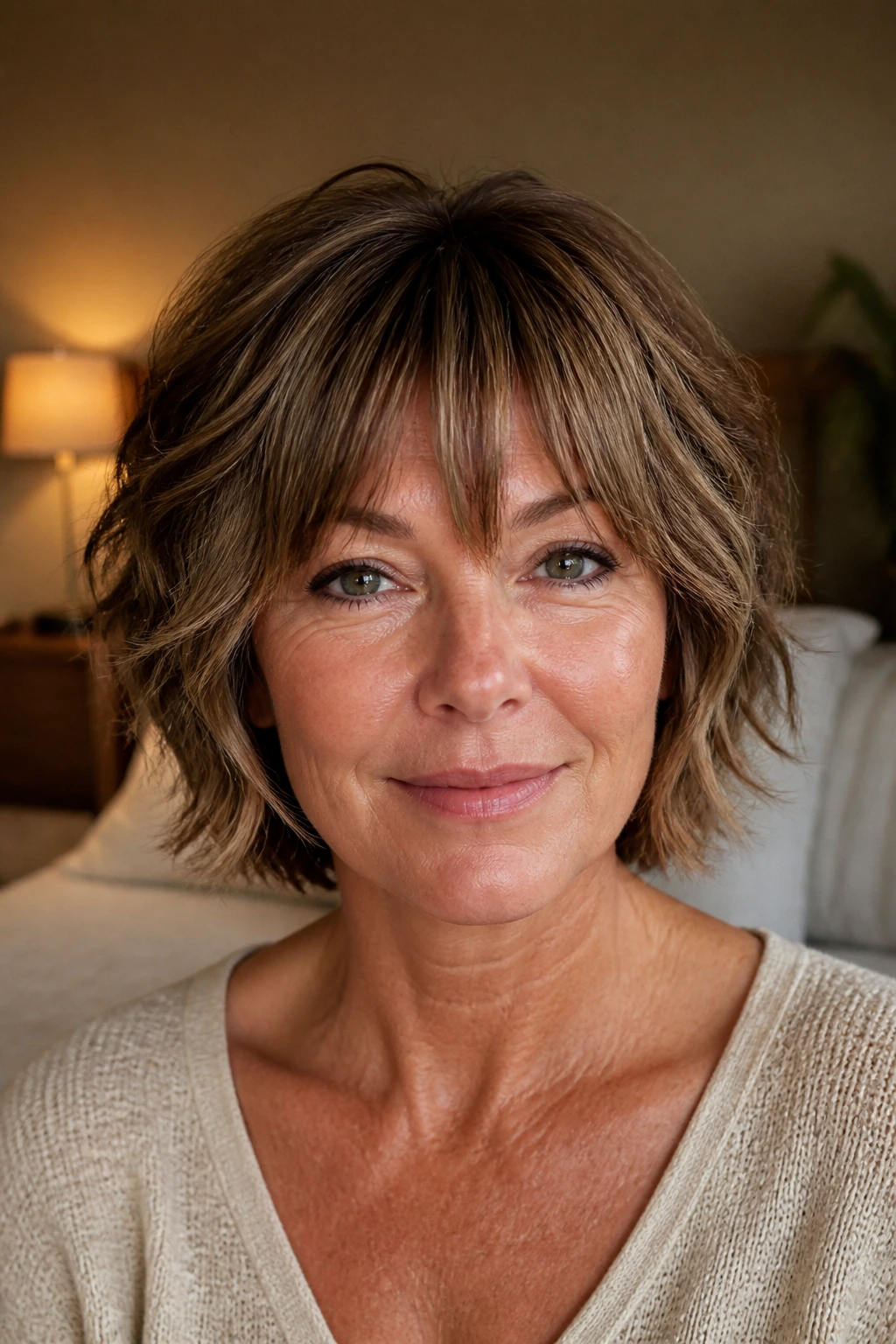
Bottleneck bangs have become popular for a reason: they soften the forehead without creating a hard line. The center is a little shorter, the sides are longer, and the shape tapers into the rest of the bob. On wavy hair, that gives you movement in the fringe that feels natural rather than pasted on.
This version is especially good if your face is longer, or if you want the front to feel lighter without opening everything up completely. The bangs frame the eyes, the longer side pieces brush the cheekbones, and the shaggy layers below keep the cut from looking too precious. It’s a nice middle ground between a full fringe and no fringe at all.
If your hairline is cowlick-prone, ask for the bangs to be cut with the wave pattern in mind. Wet bangs lie.
16. Graduated Shag Bob with Nape Lift
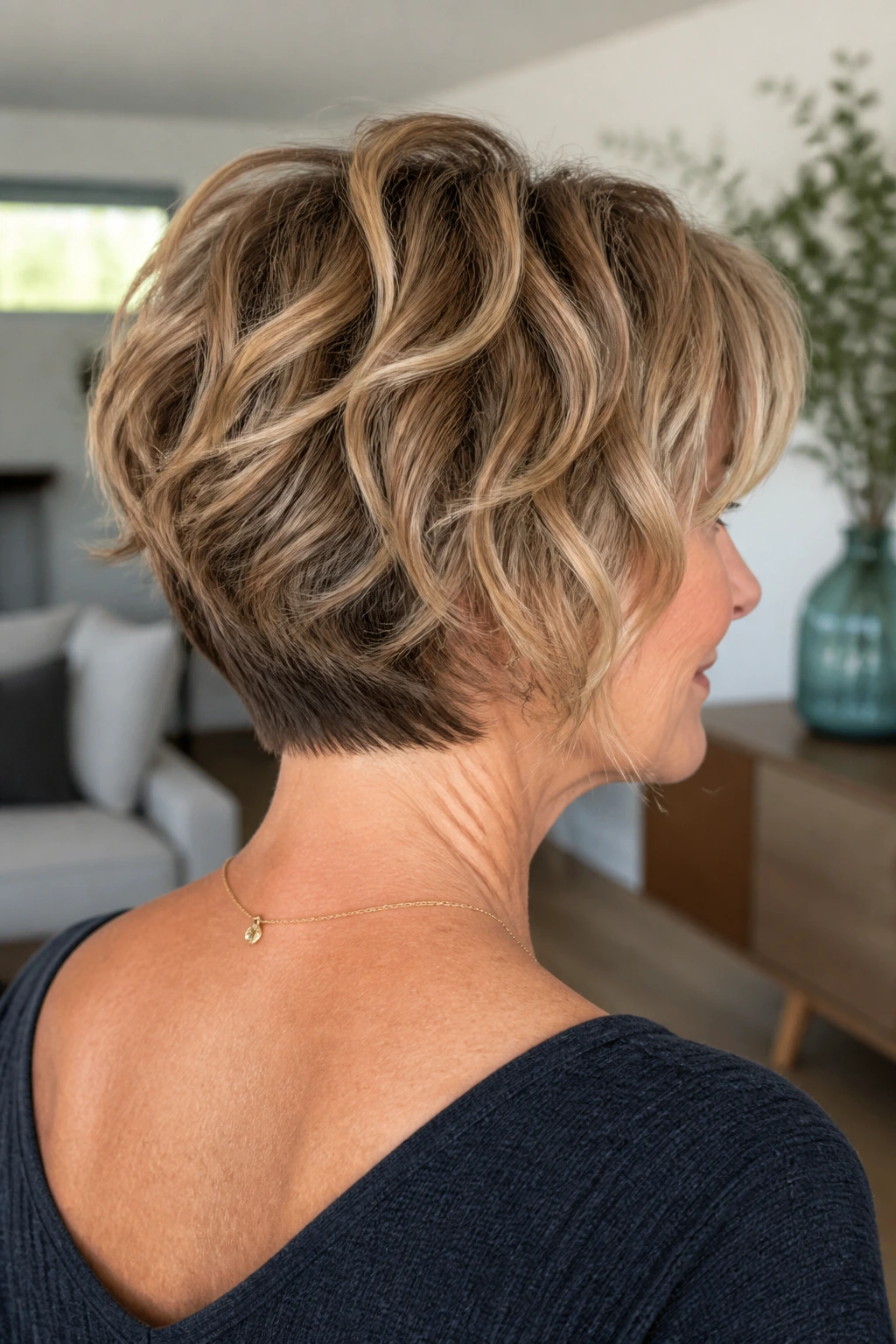
A little graduation at the back can do wonders for wavy hair that falls flat at the crown and puffs at the ends. This cut stacks softly in the nape, then eases into shaggy layers around the sides so the shape stays smooth but not stiff.
Why the back matters
If the nape is too soft, the bob can lose its backbone.
This cut gives you a clean neck line and a little lift where the head naturally needs it. The shag layers keep the top from looking too built, which is important because graduated bobs can turn helmet-like if the surface is over-smoothed. You want curve, not shell.
It’s a good choice for people who like structure but don’t want a formal finish. Wear it with a side part, and it looks more relaxed. Wear it centered, and the cut reads cleaner. Either way, the back keeps the shape honest.
17. Deep Side-Part Shag Bob

Some haircuts ask for volume; this one creates it. A deep side part shifts the weight so the top gets instant height, and the shag layers make the transition feel soft instead of dramatic. It’s one of the fastest ways to wake up a wavy bob that’s started drifting flat.
This shape is excellent for finer hair that still has enough wave to hold a bend. The part creates lift at the root, the longer side frames the face, and the layers stop the ends from looking heavy. If your hair tends to part itself in the same place every day, this cut can break that habit without asking for a completely different routine.
The styling note is simple: set the part while the hair is still damp. Once it dries in the wrong spot, you’ll fight it all morning.
18. Air-Dry Shag Bob

If you have zero interest in round brushes and hot tools, make the cut work for your habits instead of the other way around. An air-dry shag bob is cut to look good when you leave it alone. The layers are arranged so the wave falls into shape while the hair dries on its own.
That doesn’t mean “do nothing.” It means use the right products in a small amount. A light mousse or wave cream through damp hair, a quick scrunch, and then hands off. The result is a bob that looks softer and more lived-in than a heavily blown-out shape.
This version is especially useful for women with busy mornings or hair that frizzes when it’s overhandled. The less you disturb the wave pattern, the better it behaves. That sounds too easy. It is not.
19. Blunt-Edge Shag Bob with Soft Texturing
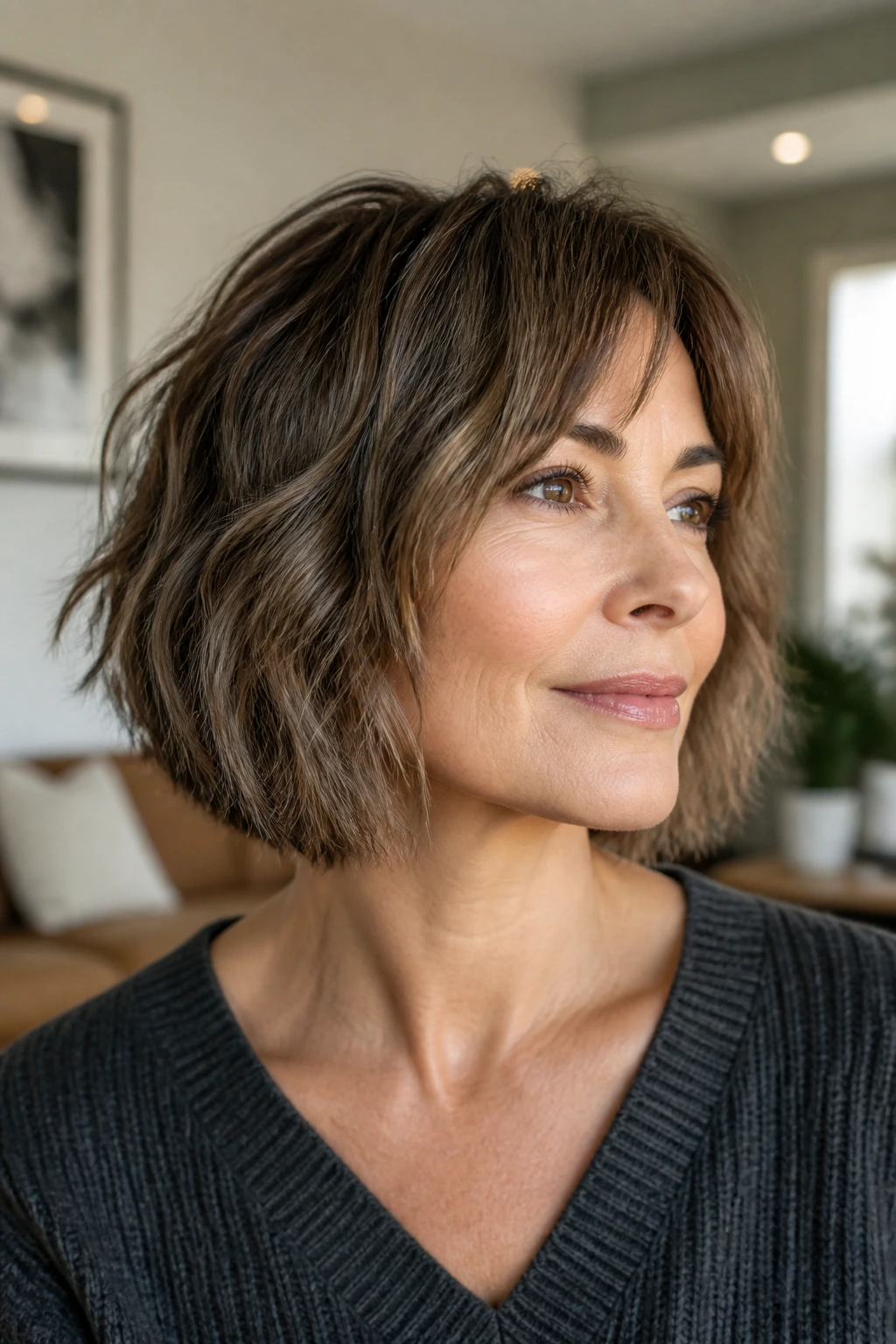
This one keeps a stronger perimeter, which can be useful if your hair is fine and loses body when it gets too layered. The blunt edge gives the bob some visual density, while the interior texturing keeps it from feeling blocky. That combination is sneaky good.
The softer texturing also means the cut still moves. You get the clean line of a bob, but the ends are light enough to bend rather than kick outward. For a lot of women, that’s the missing piece. Too much layering can make fine hair look transparent. Too little makes it collapse. This shape sits in the middle and behaves.
If you want the polish of a more classic bob without the stiffness, this is a strong bet. It can look neat at dinner and still have some air in it the next day.
20. Long-Layer Shag Bob with Wispy Perimeter

This version keeps the layers long and the perimeter soft. Nothing is chopped aggressively. Nothing looks overworked. That makes it one of the most forgiving shaggy bobs in the bunch, especially if your wave pattern changes from one side to the other.
The wispy perimeter gives the ends movement without sacrificing the outline. That is useful when hair starts to feel too dense at the bottom but you do not want a cut that looks feathered to death. A long-layer shag keeps the bob shape present while letting the wave show through.
It’s also one of the easiest shapes to grow out. If you’re between lengths or not sure how short you want to go, this is the safe middle road that still looks like a deliberate haircut.
21. Asymmetrical Shag Bob
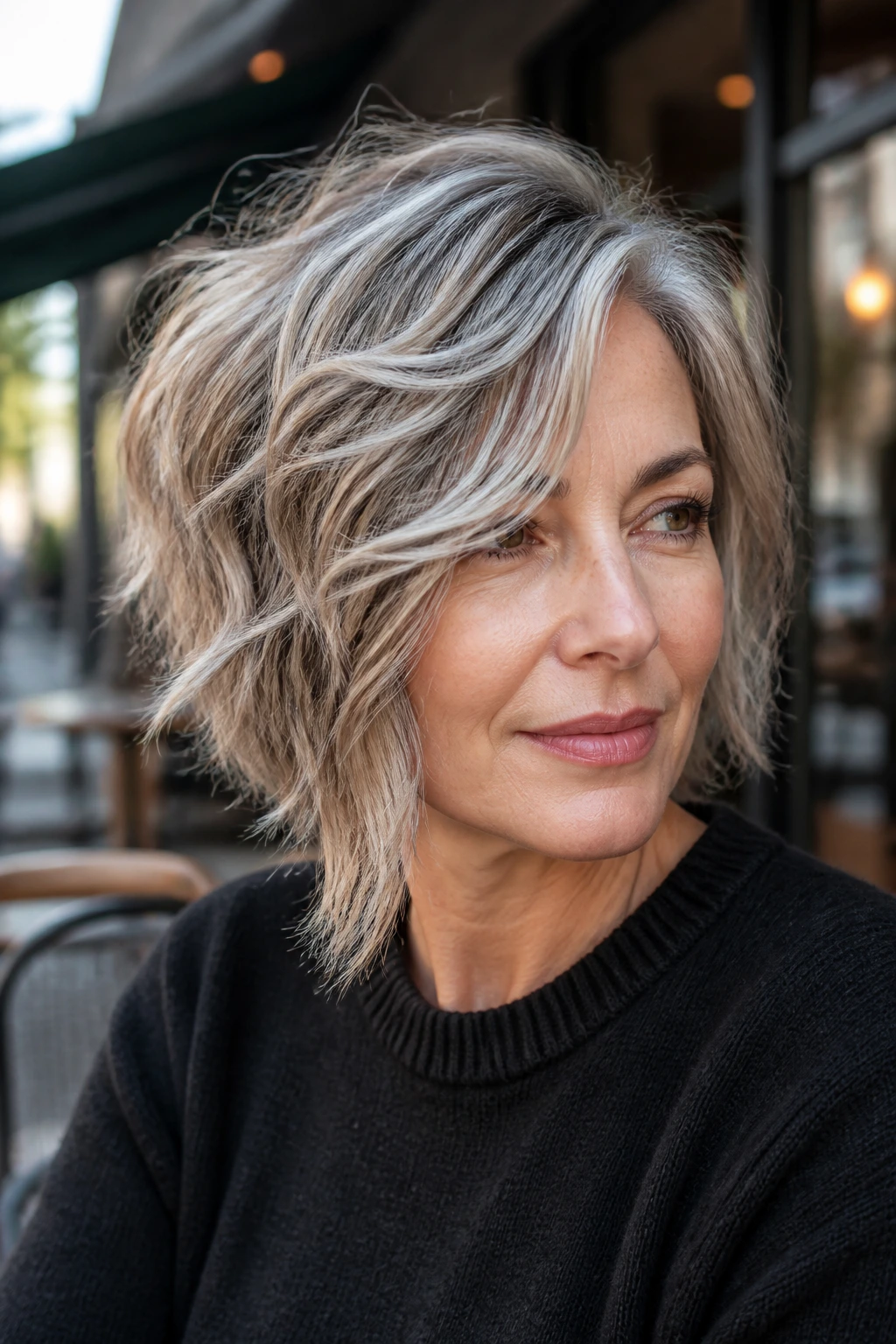
A slightly asymmetrical bob can be a lifesaver if you want something a little less expected. One side stays a touch longer, the other side sits a bit higher, and the shag layering keeps the whole thing from feeling geometric. On wavy hair, that asymmetry softens fast, which is part of why it works.
The shape gives your eye somewhere to travel. That can be useful if you like your hair to have a little statement without drifting into severe fashion territory. It also helps if one side of your wave is naturally looser than the other, because the asymmetry can disguise the difference instead of highlighting it.
Keep the difference subtle. A quarter inch can be enough. More than that and the haircut starts competing with your face.
22. Face-Framing Shag Bob with Sweeping Bangs
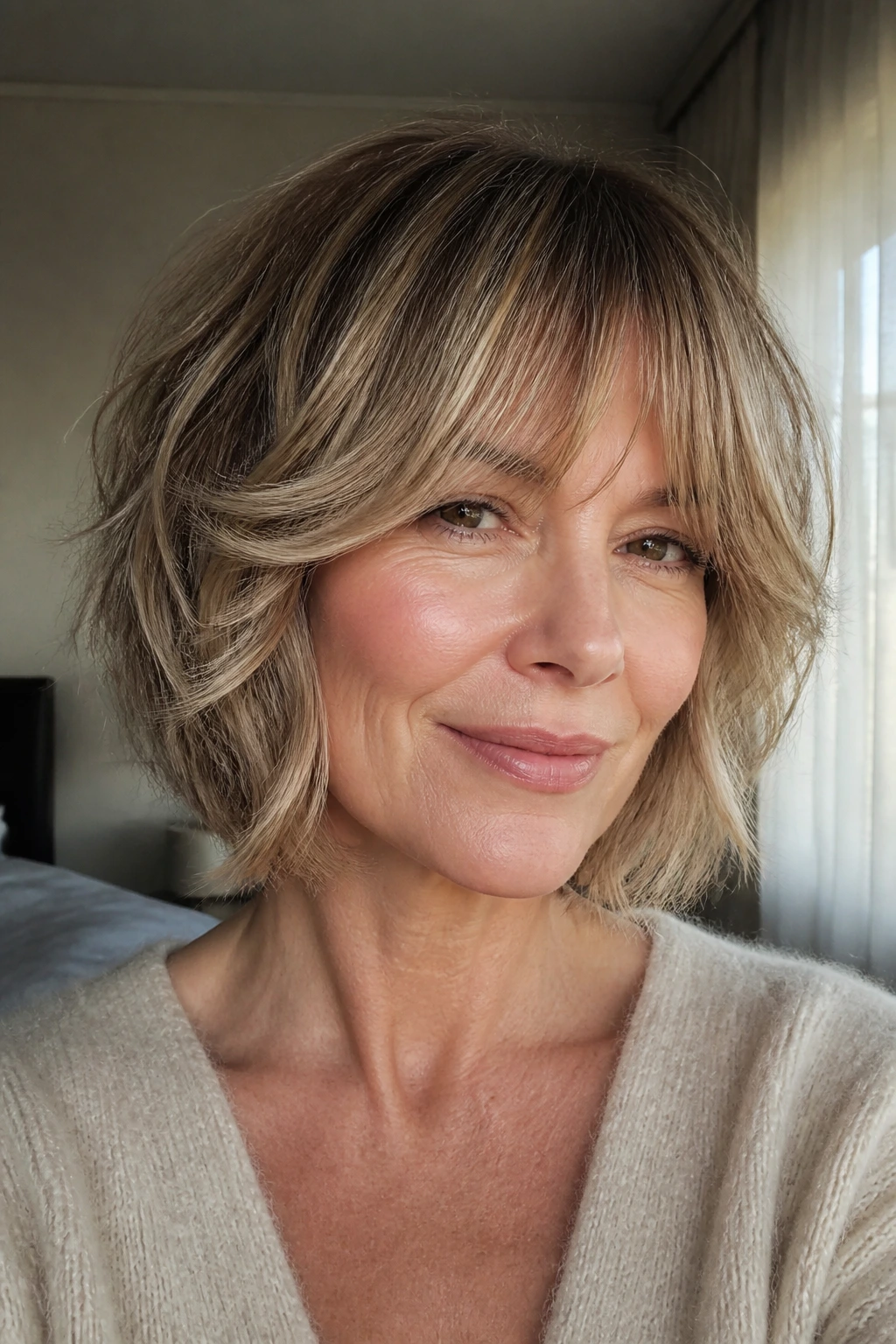
This is the most forgiving version if you want softness around the cheeks and eyes. The sweeping bangs blend into layers that stay light near the front and fuller through the back, so the face looks opened rather than hidden.
Why it hangs together
The bangs and the front layers work as one shape, not two separate ideas.
That matters on wavy hair because disjointed bangs can break the line of the haircut fast. Sweeping bangs create a diagonal that lengthens the face, and the shag layers underneath keep the bob from feeling flat. If your hair has a little frizz at the front, this cut is forgiving because the texture looks intentional instead of accidental.
It’s a strong finish to the list because it suits a wide range of face shapes and hair densities. The haircut does not ask for perfection. Good. Hair never gave us that anyway.
How to Ask for the Cut Without Losing the Shape

The most useful salon conversation is not about buzzwords. It’s about length, weight, and what your wave actually does when it dries. Bring photos, sure, but point out the part of the shape you want to keep: the chin line, the collarbone skim, the crown lift, or the face frame. A stylist can read your reference better when you can say, “I want this much length, but not this much width.”
Ask for the cut to be checked dry if your wave pattern changes a lot from wet to dry. Wet hair stretches, and that can hide a lot of trouble. If your strands spring up more than expected, the final shape can land shorter than planned. Good stylists know this. Still, say it out loud.
The other request worth making: less thinning, more shaping. Over-thinning is the fastest way to turn a wavy bob fuzzy at the ends. Point-cutting, slide cutting, and controlled texturizing are usually kinder than a pair of thinning shears taken everywhere.
Essential Tools for Styling and Refreshing the Cut
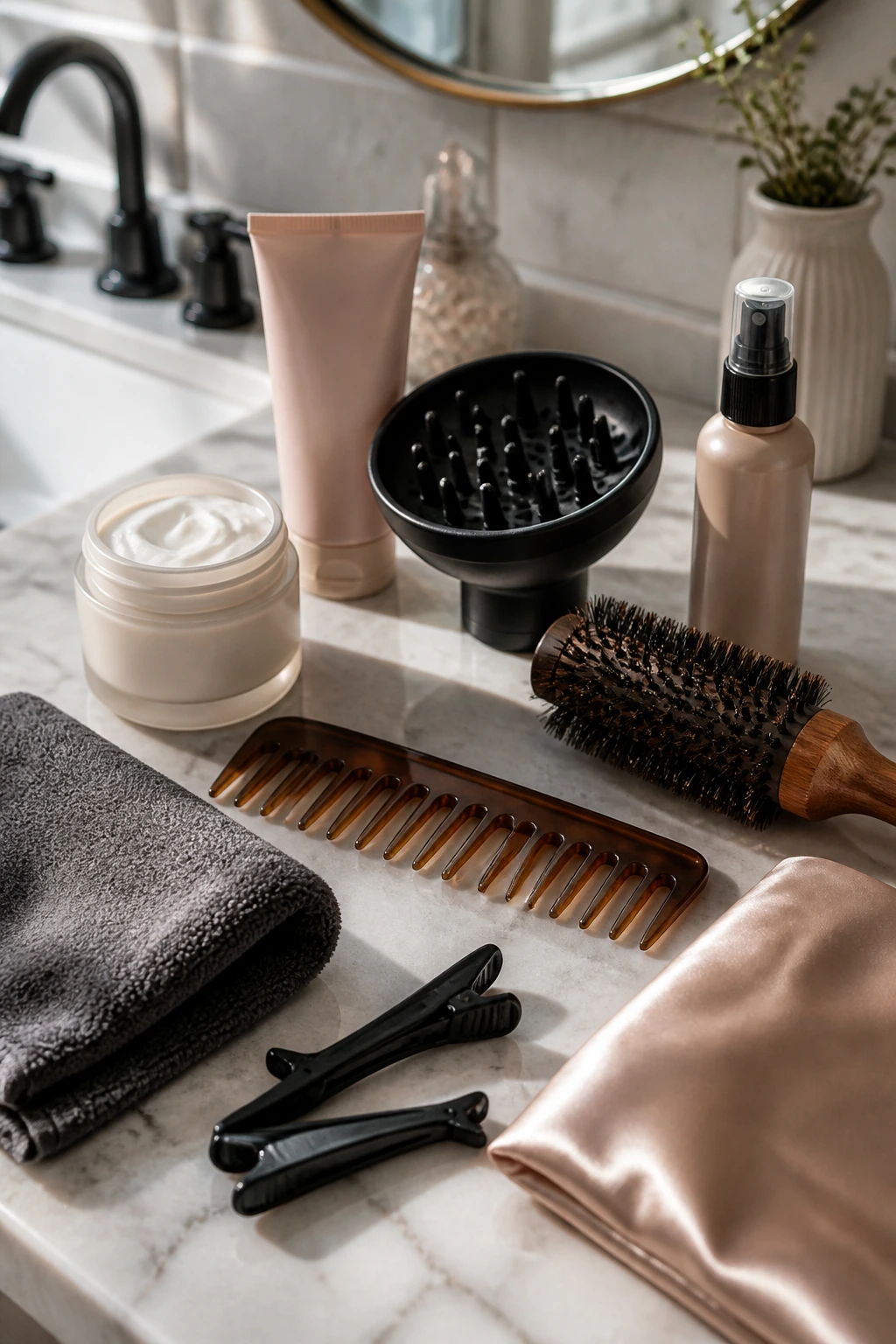
- Lightweight mousse: Gives root lift and a little memory without coating the hair in grease.
- Wave cream or curl cream: Smooths the wave and cuts down on the halo around the ends.
- Diffuser attachment: Helps dry the cut with more shape and less frizz than blasting it bare.
- Wide-tooth comb: Good for distributing product through damp hair without pulling the wave apart.
- Microfiber towel or soft cotton T-shirt: Better than a rough bath towel, which roughs up the cuticle and makes frizz worse.
- Small round brush: Useful for flipping the fringe or nudging the front pieces into place.
- Texture spray or dry shampoo: Handy at the roots when the crown starts to go soft.
- A couple of duckbill clips: Useful for setting the part while the hair is still damp.
- Silk or satin pillowcase: Cuts down on the morning fuzz that can wreck the shape overnight.
How to Style a Shaggy Bob Without Overdoing It
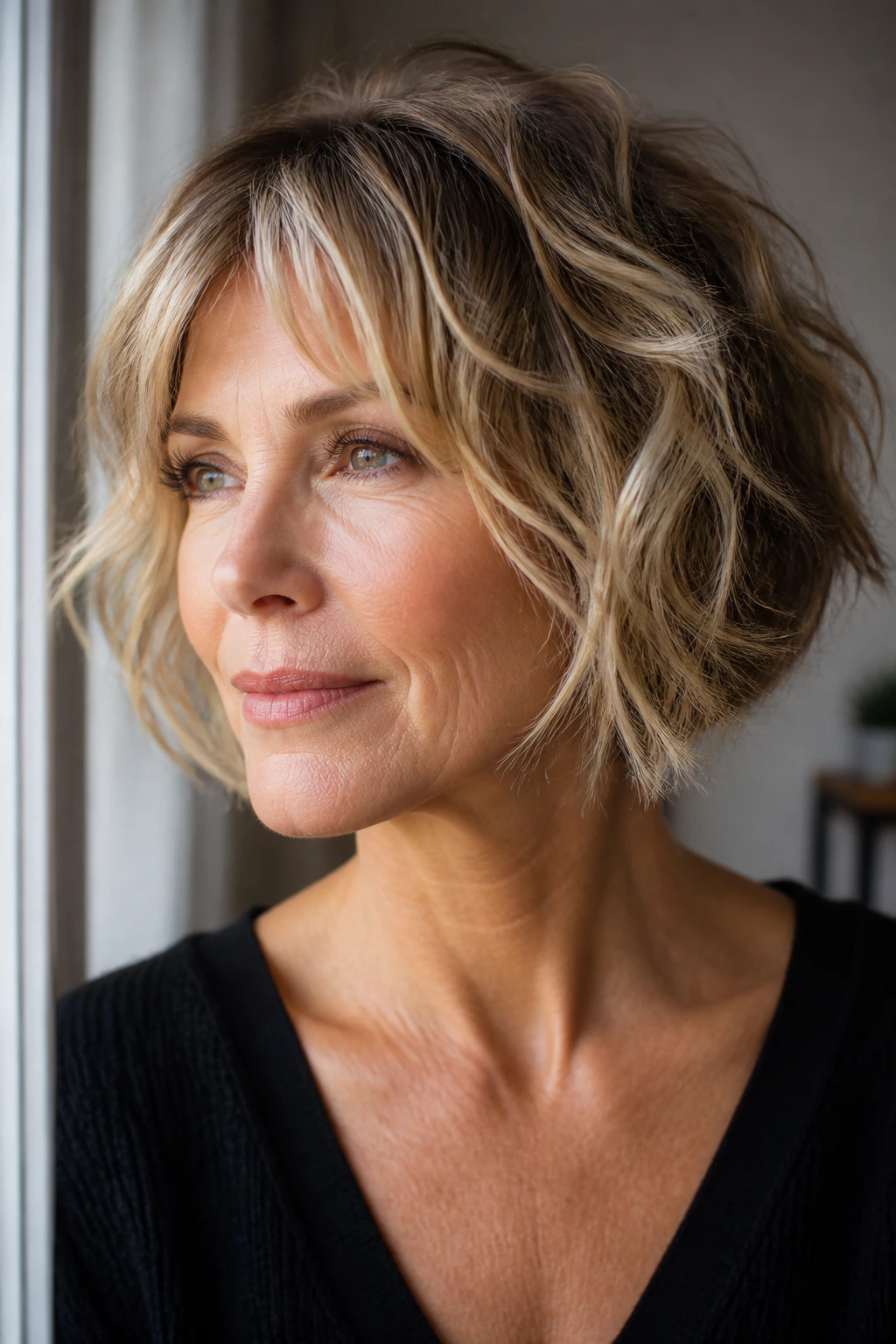
The best shaggy bob styling usually starts while the hair is still wet, not when it has already started doing whatever it wants. Put product in damp hair, squeeze it upward with your hands, and stop touching it. Then either air-dry or diffuse until the roots are set and the ends still feel slightly soft.
Root Lift: Clip the crown up for 10 to 15 minutes while the hair dries. That little pause gives fine or flat hair a better start than a round-brush marathon.
Texture Control: Use a pea-sized amount of cream, not a palmful. Wavy hair remembers everything you put on it, and too much product makes the ends sit like damp rope.
Frizz Taming: Keep a tiny bit of serum on your fingertips and smooth only the outer layer. Don’t rake it through the whole head unless you want the wave pattern to collapse.
Refresh Day Two: Mist the hair lightly with water, scrunch once, then add a touch of mousse at the roots if the crown needs lift. It’s quicker than washing and keeps the cut from losing its shape too soon.
Common Mistakes That Flatten or Puff Out a Shaggy Bob
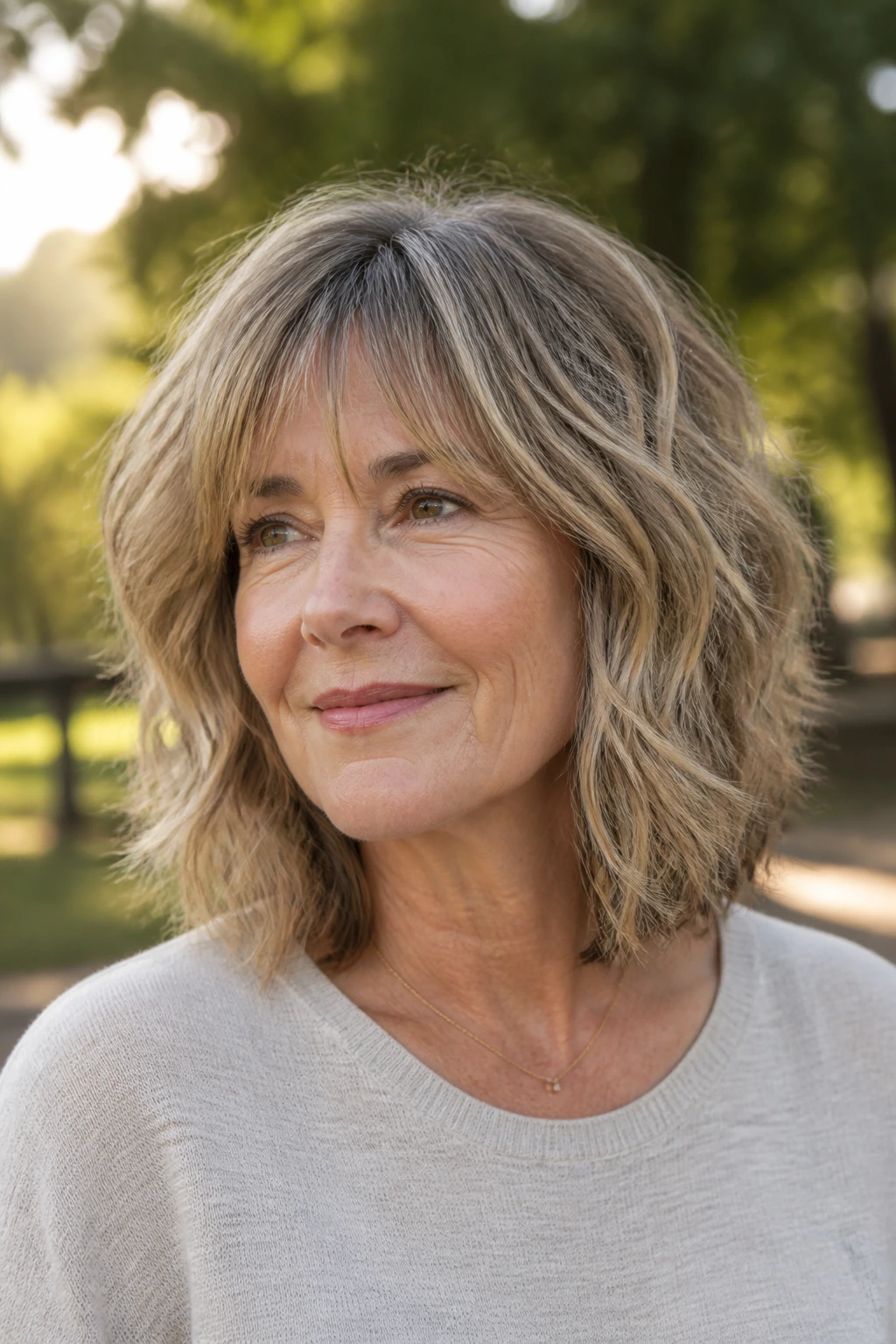
The first mistake is cutting too much weight off the ends. The haircut can look airy in the chair and then start frizzing into a halo once it dries. If the perimeter is too thin, the bob loses its line. The fix is to leave enough density at the bottom so the wave has something to sit on.
The second mistake is making the bangs too short or too dense. Short bangs on wavy hair can split in odd places, and heavy bangs can take over the face. Long, broken-up fringe is usually safer because it moves with the rest of the cut.
Third, skipping the crown plan. If the top is too flat, the whole bob droops. If the top is too short, it puffs. You want a controlled lift, not a mushroom.
Finally, using the wrong product load. Thick creams, heavy oils, and too much hairspray weigh the wave down and make silver hair look sticky. Start small. Add only if the hair asks for more.
Variations and Alternatives to Try
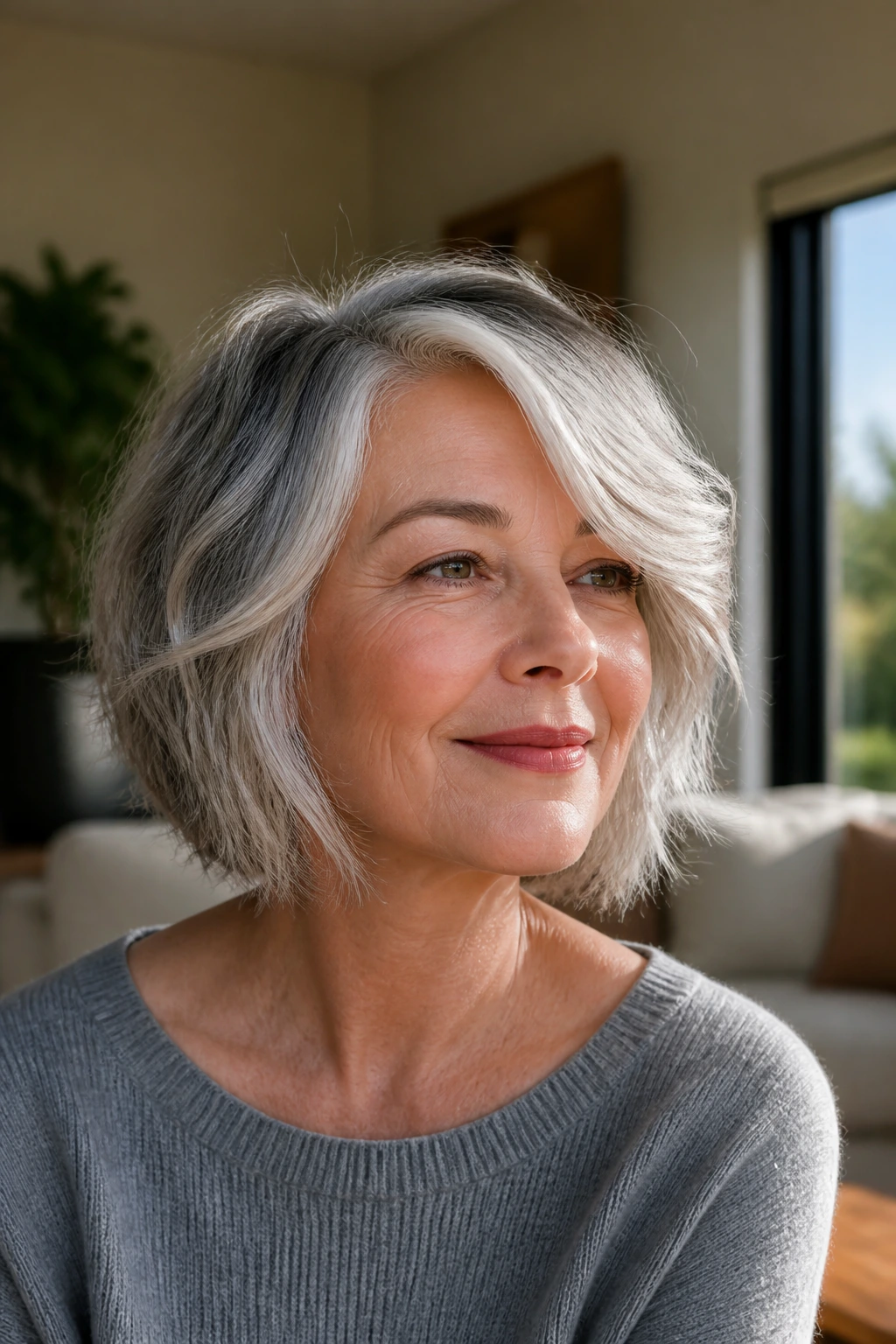
Soft Silver Sweep: Keep the length at the collarbone, lighten the front layers, and let the silver tones do the visual work. This is a good choice if you want movement but not a cut that announces itself from across the room.
Shorter Bixie-Bob: If you like the shag idea but want a little more neck showing, take the length up to the cheekbone and keep the top airy. It feels sharper and dries faster.
Full Fringe Version: Replace curtain pieces with a longer, softer fringe that sits near the brows. Use this only if your wave pattern is cooperative at the front.
Grow-Out Friendly Lob: Leave the perimeter longer and keep the layers internal. It’s the calmest option if you want a shape that can stretch an extra month without looking abandoned.
Razor-Textured Edge: Ask for softer, feathered ends if your hair is dense and you want more swing. This version needs careful cutting, though, because too much razor work can fray the outline.
How to Keep the Shape Between Salon Visits

A shaggy bob survives by staying lightly trimmed, not constantly reshaped. If you have short fringe, plan on a bang trim every 3 to 5 weeks. If the bob sits at the chin or collarbone, a full clean-up every 6 to 10 weeks usually keeps the outline from drifting into a vague medium-length cut.
Product buildup is the other thing that sneaks up on you. If your waves start looking dull or sticky, use a clarifying shampoo about once a month, then follow it with a light conditioner just on the ends. That resets the cut without stripping the life out of it.
At home, let the shape rest when it can. Sleeping on a silk pillowcase, refreshing with a water mist instead of rewashing, and avoiding daily flat-iron touchups all help the layers hold their character. The haircut will look better if you don’t bully it.
Frequently Asked Questions

Will a shaggy bob make fine wavy hair look thinner?
Not if the layering is controlled. The problem is usually over-thinning, not the shag shape itself. Ask for invisible layers or longer texturing so the perimeter still has enough weight to look full.
Can I wear a shaggy bob if my waves are uneven?
Yes, and uneven waves are common. A side part, face-framing pieces, or a little asymmetry can make the difference look deliberate instead of accidental. The cut should work around your texture, not flatten it into sameness.
Do I need bangs for a shaggy bob to work?
No. Curtain fringe, side fringe, bottleneck bangs, and no bangs at all can all work. Bangs are useful if you want softness around the eyes or if the top of your hair needs a little visual lift.
Should the cut be done wet or dry?
A good stylist often uses both. Wet cutting helps establish the shape, but dry checks matter when wave pattern and shrinkage change the final result. If your hair springs up a lot, ask for a dry refinement before you leave.
How often should I trim a shaggy bob?
Most versions need a reshape every 6 to 10 weeks. Shorter cuts and fringes need attention sooner. If the nape starts looking bulky or the crown stops lifting, it’s time.
What if my hair is thick and puffy?
Choose a shaggy bob with longer layers and some internal removal of bulk. Avoid too many short layers at the crown, because that’s how thick wave turns into a triangle. A softer perimeter usually behaves better than aggressive texturizing.
Can I air-dry this cut and still look finished?
Yes, if the haircut is built for it. Use a light mousse or cream, scrunch once, and leave it alone while it dries. The shape needs room to set without being handled every five minutes.
Does this style work with glasses?
It often works very well. Long side fringe, curtain pieces, and cheekbone layers can sit around the frames instead of crowding them. The trick is to keep the front soft enough that the glasses and haircut don’t compete.
A Cut That Keeps Moving
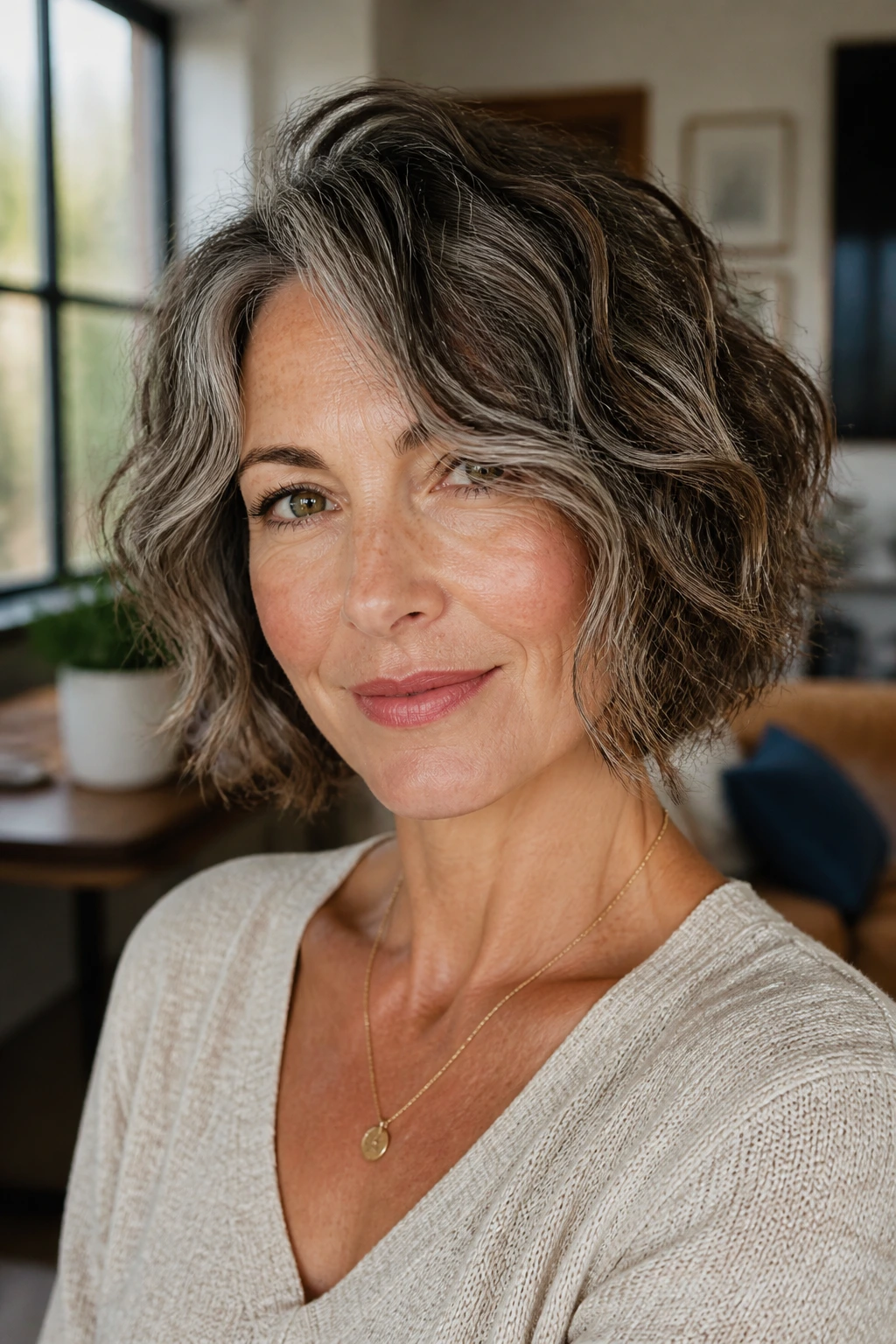
The best thing about a shaggy bob on wavy hair is that it doesn’t ask for a performance every morning. It asks for a good cut, a light hand, and a willingness to let texture do some of the work. That’s a fair trade. Hair that’s had a few decades on its head should not need to be bullied into behaving.
If you pick the version that suits your wave, your density, and the amount of styling you’re willing to do on a weekday, the haircut keeps paying you back in small ways: a better crown, a softer cheek line, a cleaner grow-out, a shape that still looks like itself when it’s slightly imperfect. That’s the kind of haircut worth keeping.