



Strawberry blonde shag haircuts for long hair have a particular kind of charm: the layers move, the color shifts from peach to gold when the light changes, and the whole cut looks lived-in instead of overworked. Long hair gives the shag room to breathe. The fringe can soften, the ends can flick, and the color can show off every piece of texture instead of sitting there in one flat sheet.
The catch is that long shags go wrong fast when the crown is cut too short or the bangs are handled like an afterthought. Then you get the triangle shape, the limp root, or the blunt bottom line that fights the rest of the cut. The good versions keep enough length to feel feminine and wearable, but they carve out space around the face and through the interior so the hair actually moves.
Strawberry blonde helps more than people expect. It is not one color. It’s usually some mix of peach, copper, beige, gold, and a soft rose tone, and that blend makes layered hair look richer. On long hair, especially, the difference is obvious: a single-tone blonde can disappear into the length, while strawberry blonde catches every bend, bend by bend, piece by piece.
Why These Long Strawberry Blonde Shags Feel Different
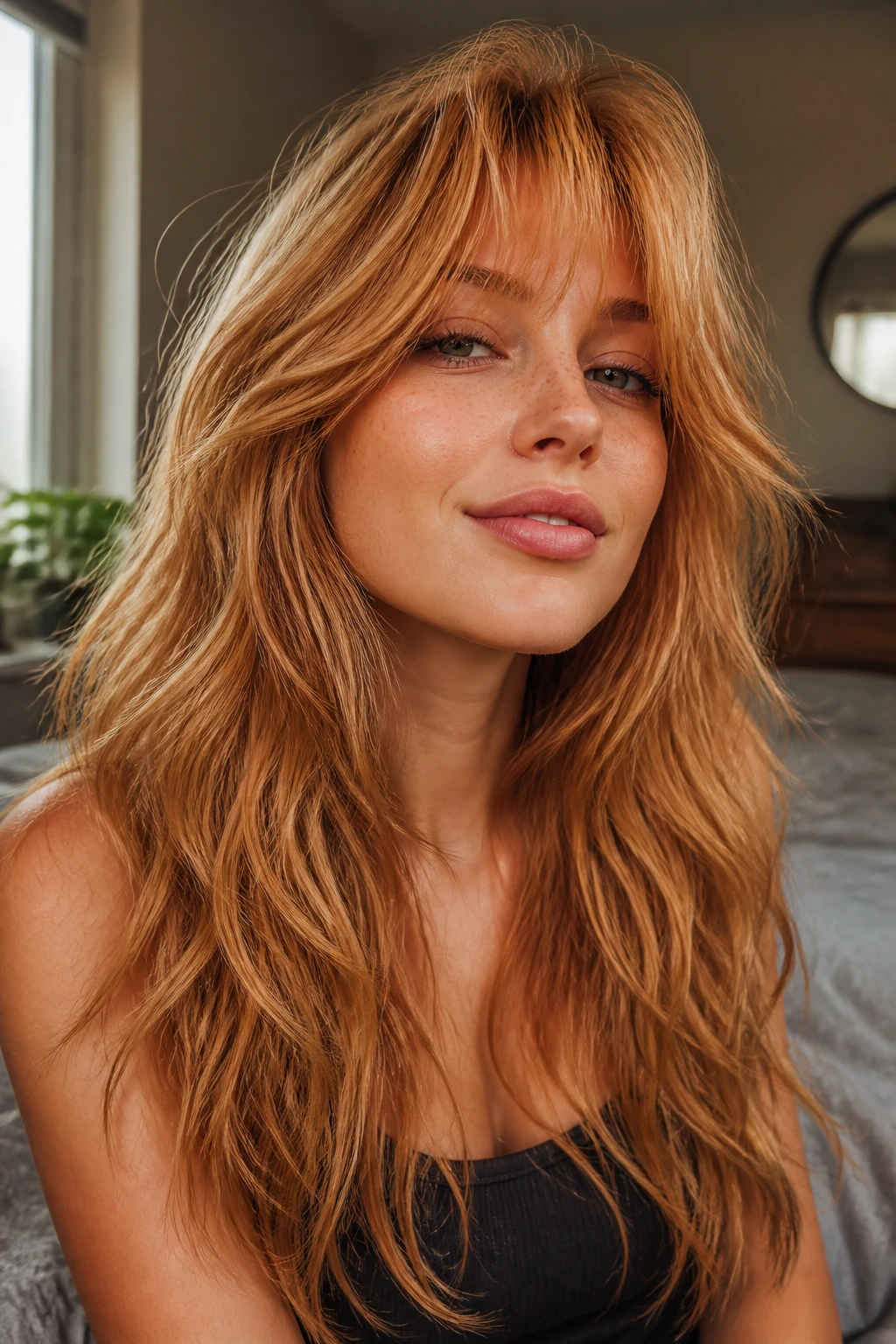
-
They keep the length you worked for. The best versions remove weight through the crown and interior, not by hacking away at the hemline, so the hair still swings instead of collapsing.
-
The color does half the styling. A layered cut with strawberry blonde ribbons looks more textured because the lighter and deeper pieces land in different places as the hair moves.
-
The fringe options are kinder than they look. Curtain bangs, bottleneck bangs, and soft side-swept fringe all grow out into face-framing layers with less drama than a blunt bang.
-
They can lean soft or edgy. Push the finish toward brushed-out waves and you get something romantic; rough up the texture with spray and the same cut reads grungier.
-
They work with air-drying or a blowout. That matters on long hair, because nobody wants a cut that only looks good with 40 minutes of heat styling.
-
The grow-out is part of the appeal. A good shag does not fall apart after six weeks. It loosens, and that looseness can look better than the fresh cut if the shape is right.
1. Soft Curtain Shag with Peachy Ends
This is the version I’d hand someone who wants the shag shape without looking like they borrowed a rock band photo from another decade. The curtain bangs open gently at the center, then sweep into layers that hit around the cheekbones and collarbone. The strawberry blonde tone should stay soft here — peachy at the mids, a little gold at the ends, not too copper-heavy.
What makes it work on long hair is restraint. The crown stays light, but the perimeter keeps enough weight to stop the whole style from going wispy. I like this shape best when the longest pieces still graze the upper chest; any shorter and the cut starts to feel jumpy instead of fluid.
2. Feathered Wolf Shag with Long Crown Layers
Want more attitude without losing the length? This is the one. The crown gets more lift, the sides are pulled in a little tighter, and the back keeps a longer tail so the haircut moves toward wolf-cut territory without tipping all the way into a hard mullet.
The strawberry blonde color helps here because feathered layers can look severe in a dark shade. Peach-copper ribbons soften the edges and make the cut feel deliberate rather than choppy. If your hair is thick, ask for internal debulking under the crown. If it’s fine, keep the texturizing light and let the color do more of the visual work.
3. Bottleneck Bangs and Airy Face Frames
Bottleneck bangs are the sneaky elegant choice. They start a little narrower at the center, then open out around the eyebrows and cheekbones, which means they look lighter than full fringe but more interesting than a basic curtain bang. On long hair, that shape gives the shag a real front edge.
I like this cut on hair that already has some bend, because the face-framing pieces fall in a lazy curve instead of sticking out. Ask your stylist to keep the shortest bits around brow level and let the sides drift down toward the cheekbones. That small difference keeps the fringe wearable when it grows, which is the whole game with long hair.
4. Razor-Cut Shag for Thick Hair
A razor-cut shag can be gorgeous on dense hair, but only when the hair can handle it. The blade removes bulk in a way scissors sometimes can’t, and that makes the long layers move instead of ballooning out at the sides. On strawberry blonde, the sliced edges pick up light in a softer, more broken way than blunt scissors do.
This is not the cut for dry, brittle, over-bleached ends. Razor cutting can make already-rough hair frizz faster, and nobody wants that. If your strands are healthy but heavy, though, this shape can be a relief. Style it with a light cream, not a thick butter-like product, so the ends keep their feathered look.
5. Lightweight Shag for Fine Hair
Fine hair needs a different story. Too many short layers and the whole shape collapses by noon, leaving the ends thin and the top piecey in a bad way. The smarter move is a long shag with fewer, softer layers and a clean perimeter that still has some weight.
The strawberry blonde shade does a lot of the visual lifting here. A mix of pale peach and beige blonde makes the hair read fuller than a flat single tone, especially around the face. If you want volume, ask for layers that start lower — near the collarbone rather than the cheekbone — and keep the fringe wispy. Heavy bangs will steal too much density from the front.
6. Deep Side-Part Strawberry Blonde Shag
A deep side part changes the mood immediately. The roots lift on one side, the fringe sweeps across the forehead, and the whole cut gets a little asymmetry that long hair often needs. It’s a nice fix for people whose center part makes their hair hang straight down like curtains.
This version looks especially good when the strawberry blonde tone has a deeper root shadow. That little bit of contrast makes the side part feel intentional, not accidental. I’d keep the shortest front layers around the jawline and let the back stay long, almost lazy, so the part becomes the main event instead of fighting the layers.
7. Romantic Shag with Cheekbone Layers
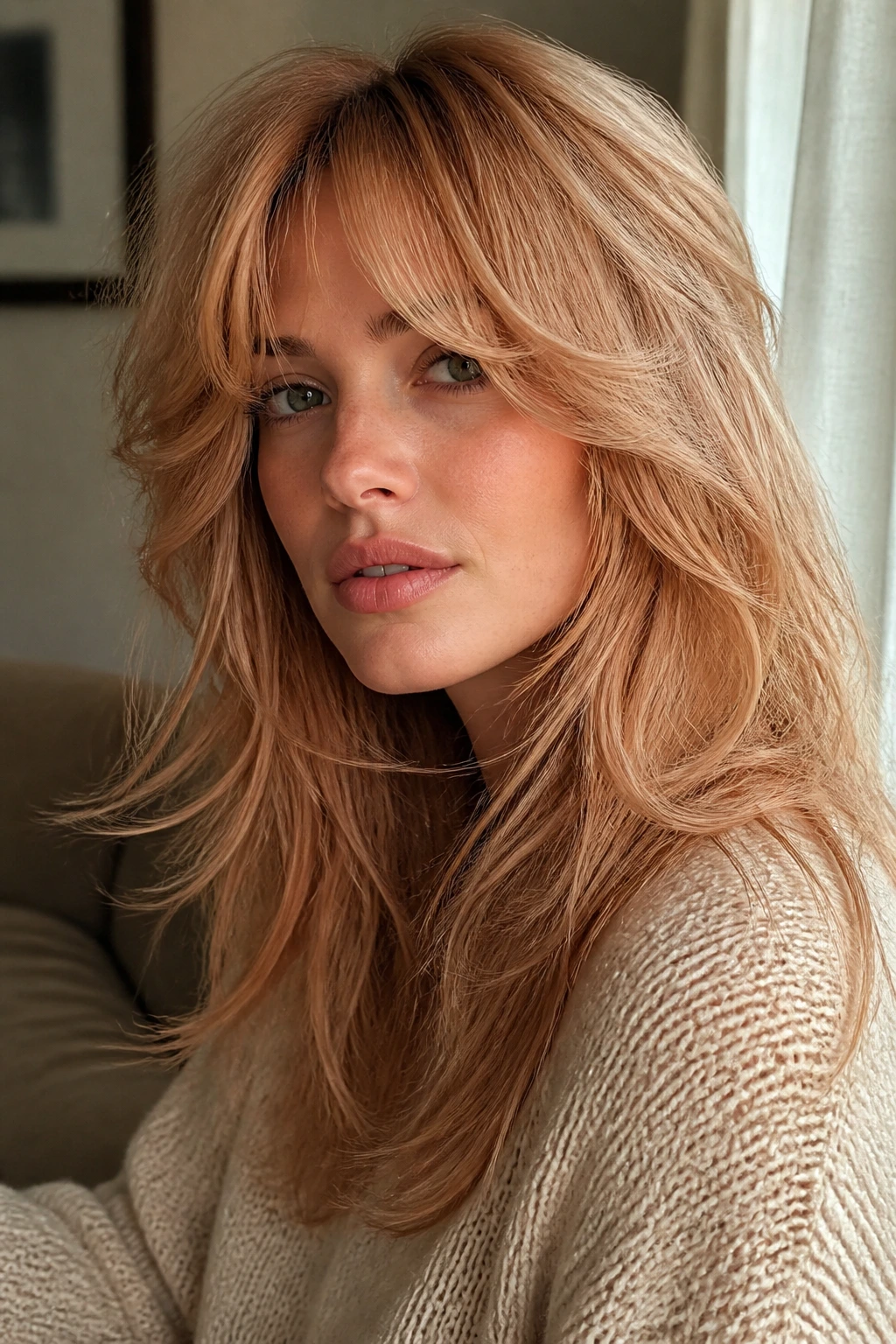
If you want the shag shape but hate anything too punk, this is the softer route. The layers open around the cheekbones, the ends stay brushed-out and airy, and the overall effect is more ribboned than chopped. It’s the kind of cut that looks good with a knit sweater and a messy bun, which is not a small thing.
The color wants to stay creamy here. Strawberry blonde with a little rose-gold warmth works better than a hot copper, because the cut is already doing movement. Use a 1.25-inch curling iron or a large round brush and bend only the middle lengths. Leave the ends a little undone. That slight slack is what keeps the look from turning formal.
8. Lived-In Mullet Shag with Long Back Length
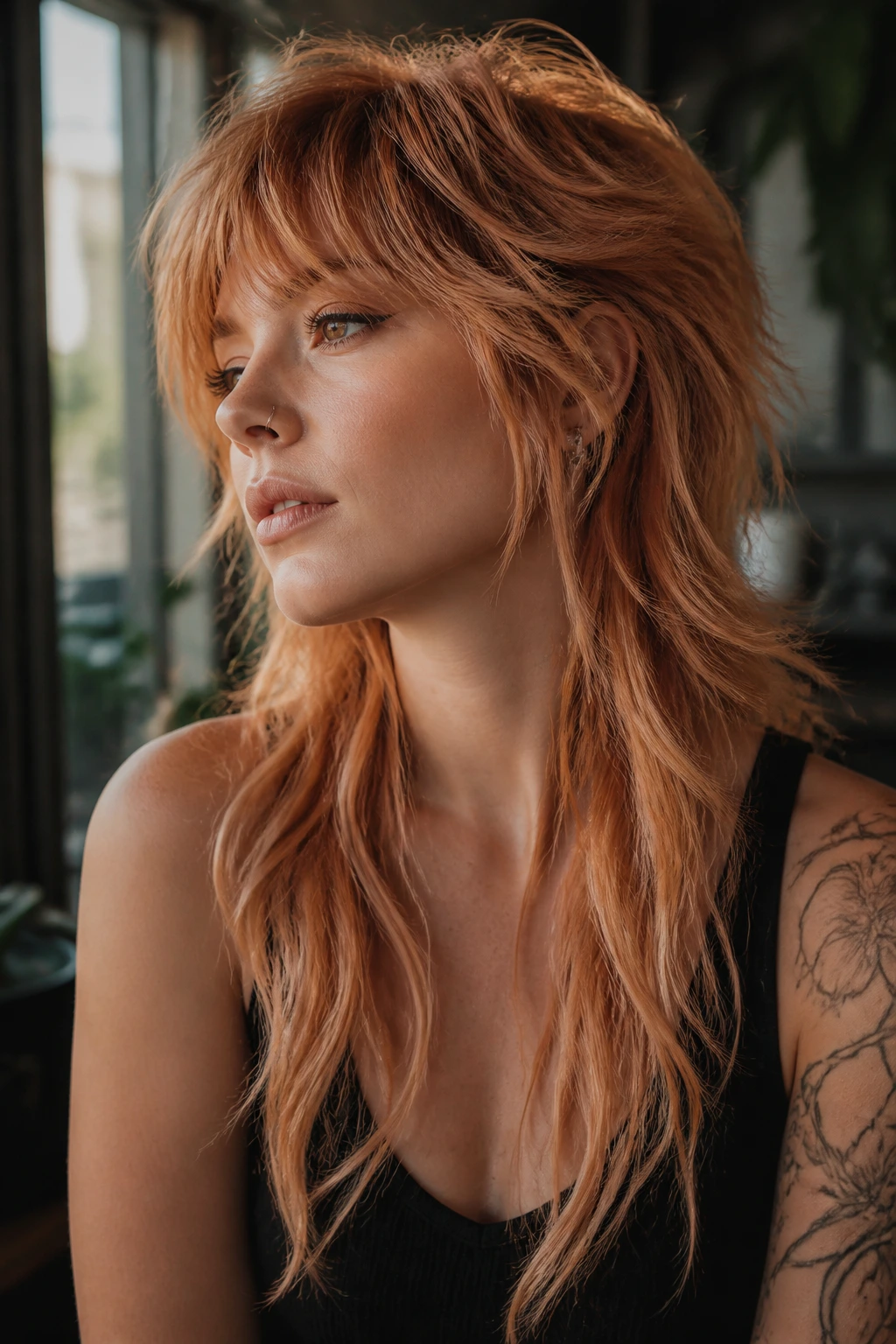
This is the bolder cousin. The front is shorter, the crown is more carved, and the back keeps a longer tail that gives the cut a proper mullet edge. On long hair, that shape can look very cool if the transition between the top and the length is handled well.
The strawberry blonde color keeps it from getting too severe. A warm peach-copper blend softens the line between the short top and the long bottom, which matters because this cut can go from sharp to awkward in a hurry. If you’re wearing this version, keep the styling rough and separated. A little texture spray at the crown and a bend through the mid-lengths is enough. Over-smoothing it kills the whole point.
9. Rounded 70s Blowout Shag
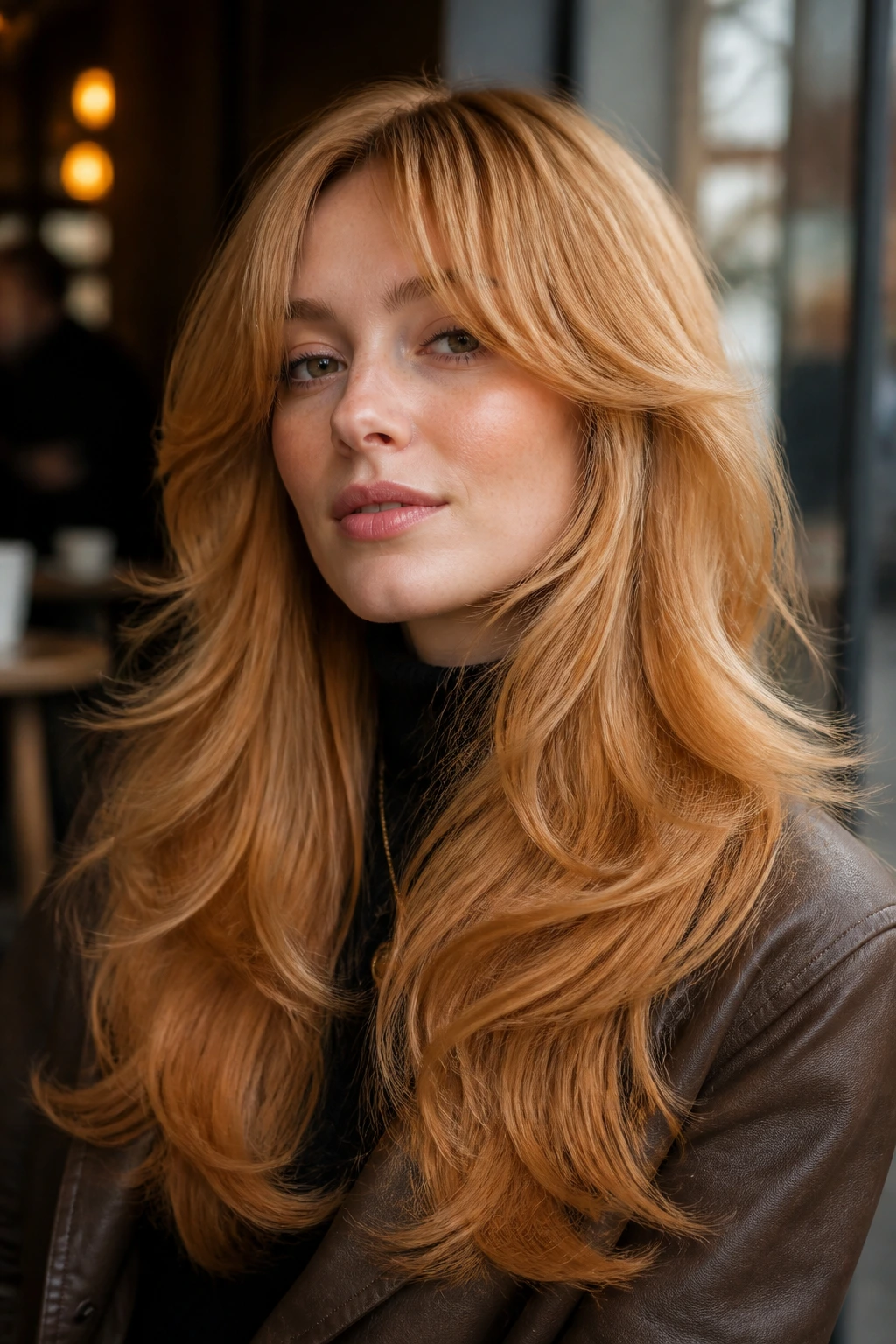
This one has the best posture of the group. The silhouette rounds softly around the head, the fringe flares away from the face, and the ends flip just enough to show the layers. If you’ve got a round brush and patience, this is a gorgeous way to wear long strawberry blonde hair with movement.
The trick is to keep the layers feathered rather than chopped. You want soft edges, not staircase steps. Strawberry blonde shines in a blowout like this because the warm tones catch the curve of each section. When the hair is finished well, the color looks deeper at the roots and lighter along the bends. That little shift is the whole reason the style feels expensive without actually being fussy.
10. Piecey Shag with Micro Curtain Fringe
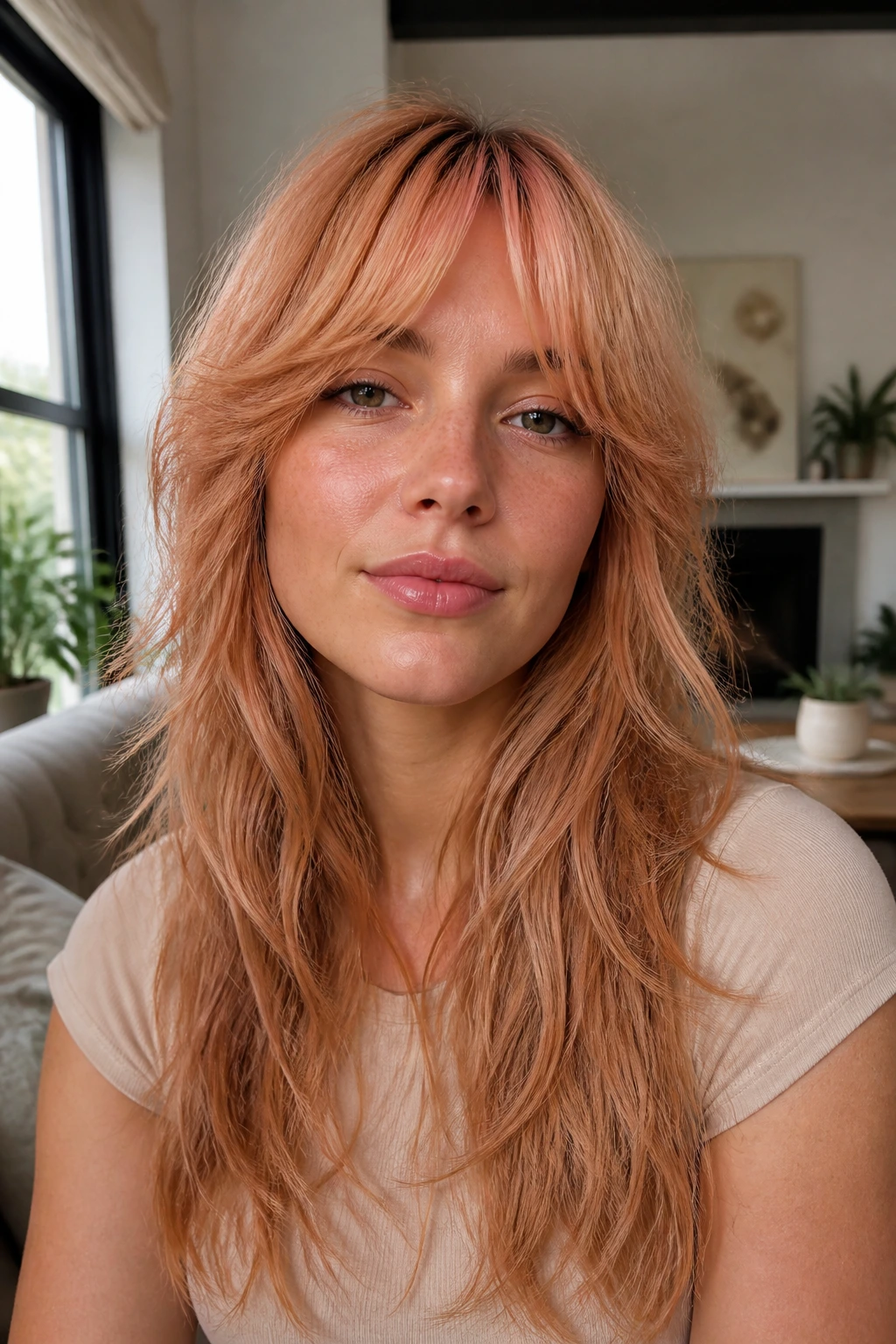
A micro curtain fringe gives the shag a sharper front without committing to a heavy bang. The center is shorter, the outer corners stay longer, and the whole thing sits just above or at the brow line depending on your face shape. It’s a small change, but on long hair it makes the haircut look more considered.
I’d choose this if you like texture and do not mind a bit of maintenance around the forehead. The fringe needs occasional trim work, especially if your hair grows quickly. Pair it with separated, piecey layers through the mids and a strawberry blonde shade that isn’t too pale — a richer peach tone keeps the front from disappearing against the skin.
11. Sunlit Balayage Shag with Soft Contrast
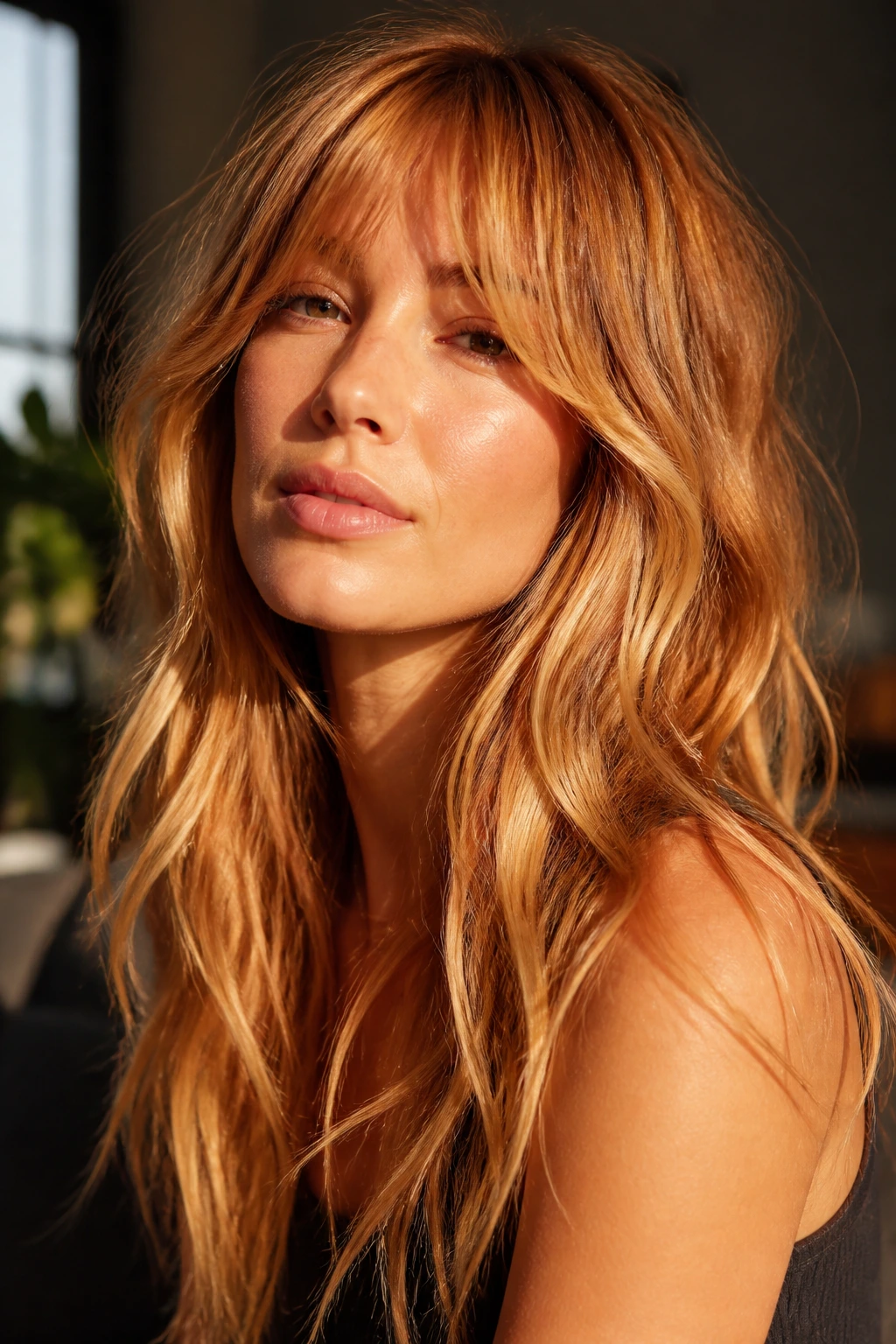
This is the color-first version of the cut. Instead of relying on very aggressive layering, the shape uses soft internal movement and lets the balayage do the drama. A deeper root, lighter ribbons through the face frame, and slightly brighter ends make the shag read dimensional from a distance.
The reason it works is simple: long hair can swallow detail. Balayage stops that from happening. If you ask for this look, keep the lightest pieces around the fringe and upper layers, not just the bottom length. That places the brightest points where the eye lands first. I prefer this style on wavy or loosely curled hair, because the highlights break up beautifully when the bends aren’t identical.
12. Invisible-Layer Shag with Glossy Ends
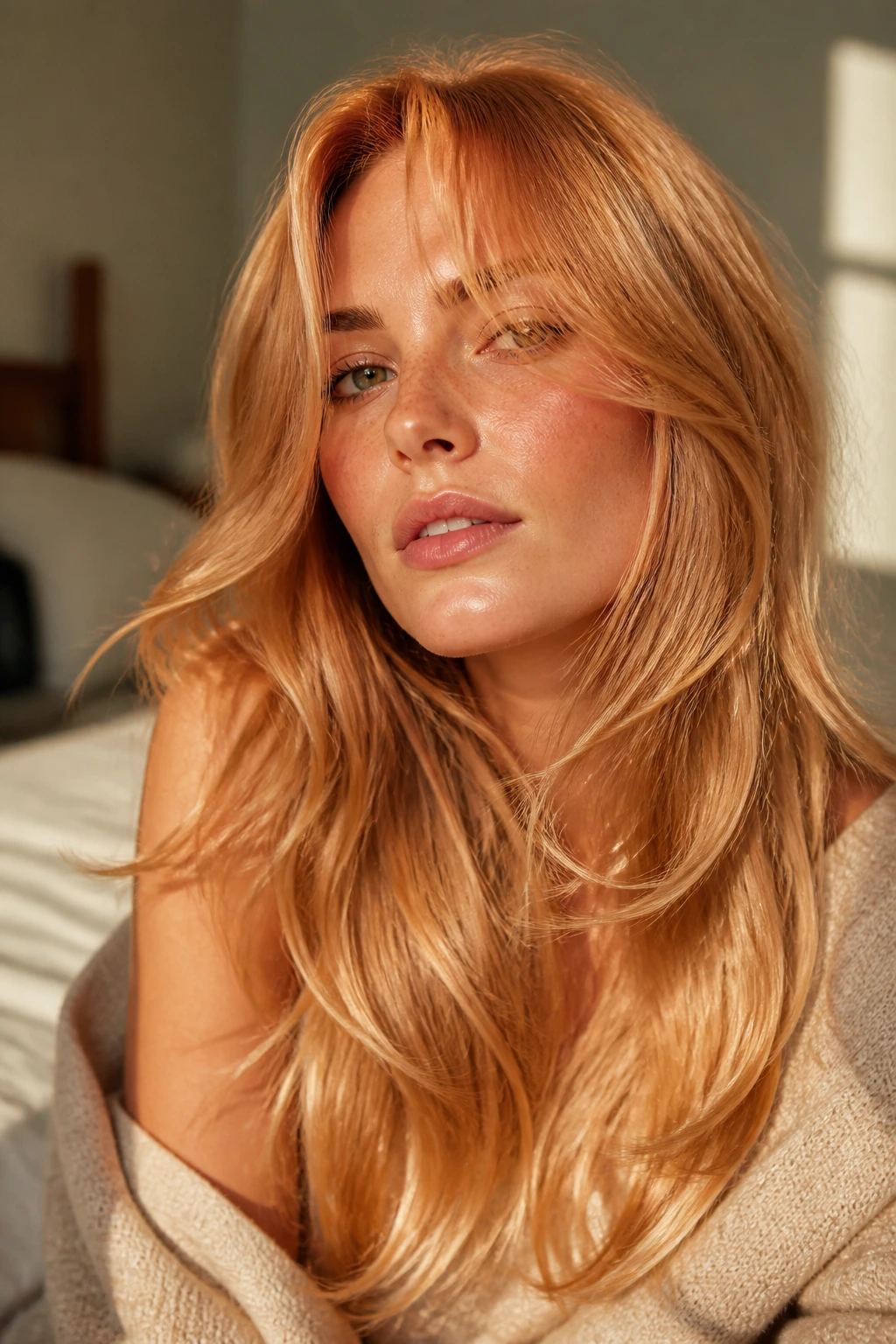
Not every shag has to look chopped up. Invisible layers give you movement without obvious stair steps, which is a nice option if you live in long hair but want it to feel lighter. The perimeter still looks full, but the inside is cut in a way that helps the hair swing instead of hanging in one block.
This version loves a glossy strawberry blonde tone. Think apricot-beige with a clear shine, not a dusty matte finish. I’d keep the ends soft and sealed with a light serum after blow-drying. The final effect is less grunge, more polished motion. It’s one of the best options for someone who wants the shag idea without anyone at work noticing the haircut on purpose.
13. Grungy Choppy Shag with Broken Fringe
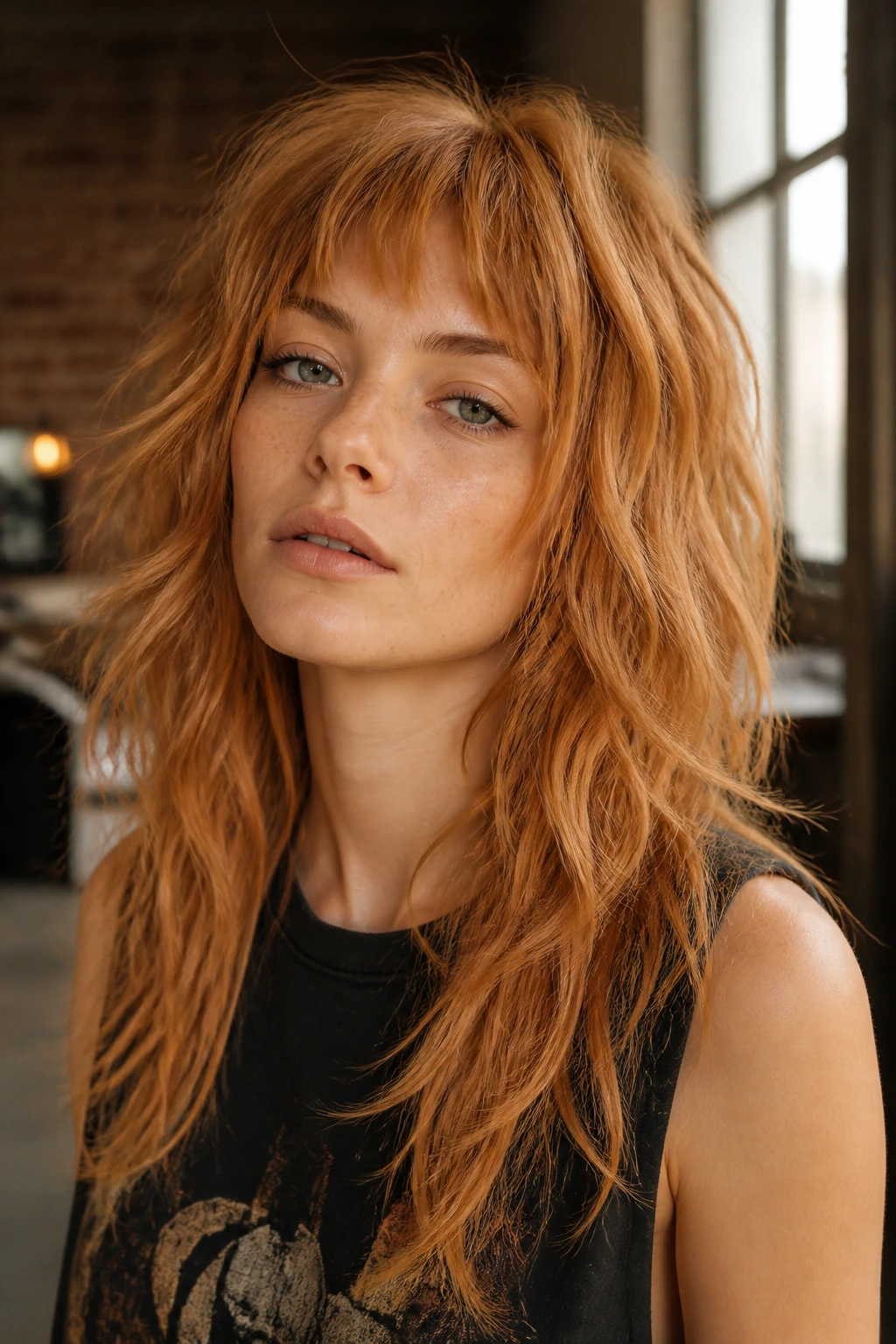
This one has edge. The layers are visibly chopped, the fringe is broken into little pieces, and the finish is intentionally rough rather than brushed into submission. It’s the haircut version of a thrift-store leather jacket that somehow fits perfectly.
On strawberry blonde hair, all that texture can still feel soft enough to wear every day. That’s the nice surprise. Warm color keeps the cut from looking too hard, even when the ends are uneven. I like this shape best when it’s styled with dry shampoo at the roots and a matte texture spray through the mids. Don’t over-curl it. A few random bends are better than polished waves here.
14. Flipped-End Shag with Feathered Sides
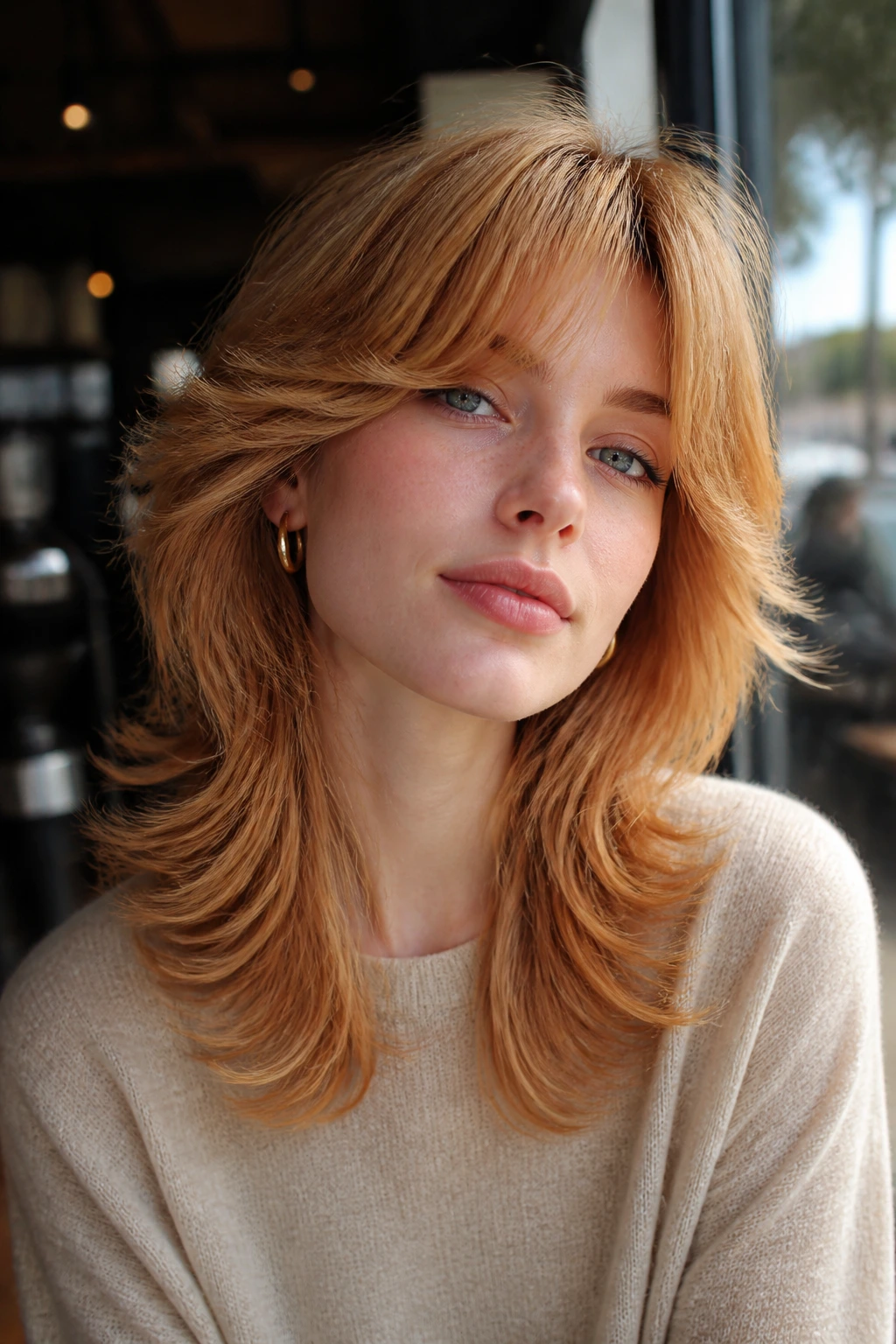
There’s something wonderfully specific about a flipped-end shag. The ends kick outward just enough to show off the layers, and the feathered sides skim the face in a way that feels very 90s without turning costume-y. It’s a good choice if you like a haircut that looks styled even when you didn’t spend forever on it.
Ask for the flip to start low, around the mid-lengths, not way up near the cheekbones. If it starts too high, the cut can get puffy. Strawberry blonde helps because the lighter edges show the curve of the flip. A medium round brush or a flat brush with a slight wrist turn will get you there fast.
15. Creamy Strawberry Shag with Long Layers
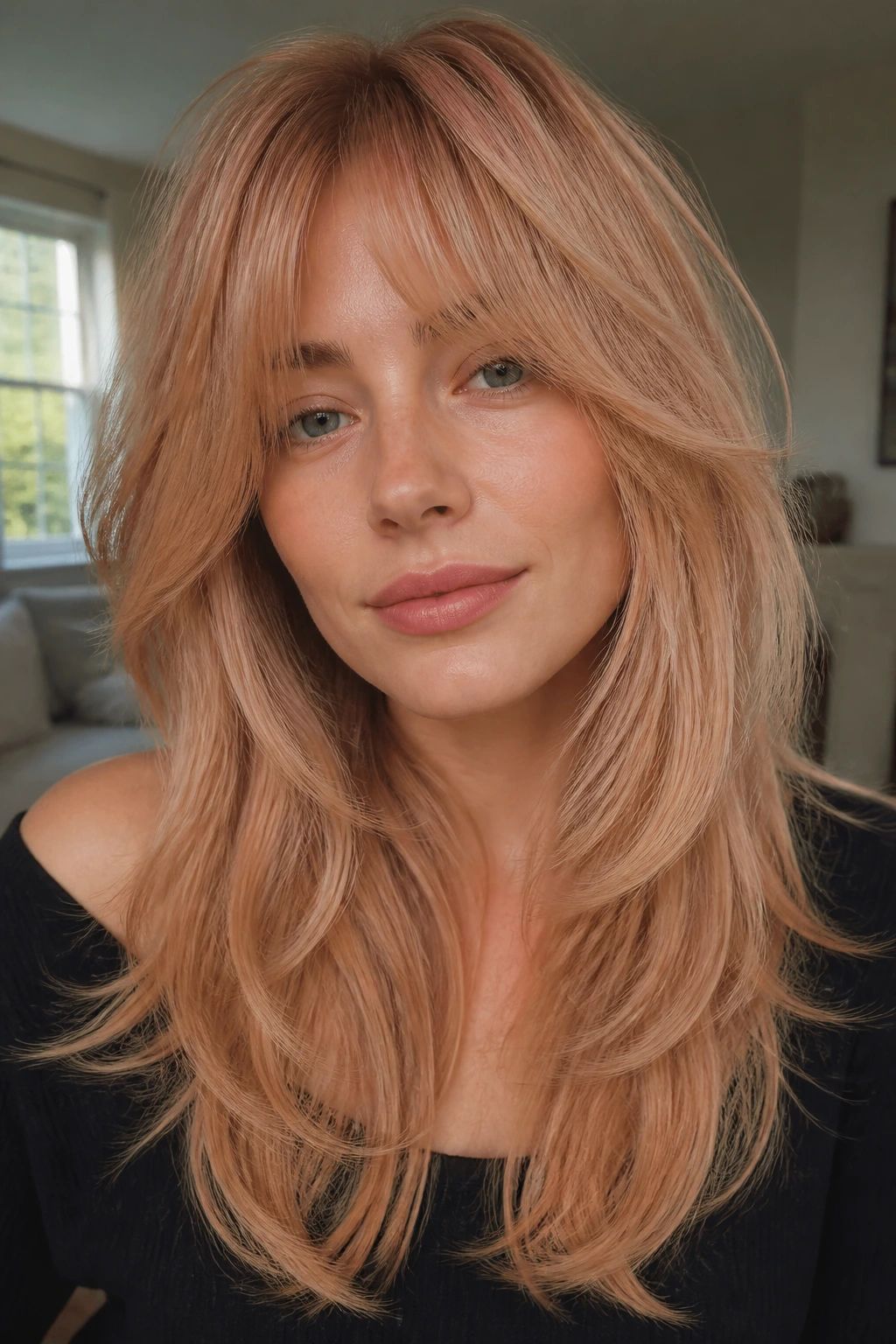
Some people want strawberry blonde, but not the copper punch. This is the softer lane: creamy beige-blonde with a warm blush, almost like the color has been polished by sunlight rather than painted in a hard stripe. The haircut should match that softness with long, sliding layers that keep the hemline full.
It’s a nice option if you wear a lot of neutrals or if you like hair that reads calm rather than edgy. The shag shape is still there, but it’s quieter. I’d keep the face frame long — lip to collarbone — and avoid too much razoring. The creamier the color, the more the cut benefits from gentle movement instead of obvious texture.
16. Heavy-Crown Shag for Dense Hair
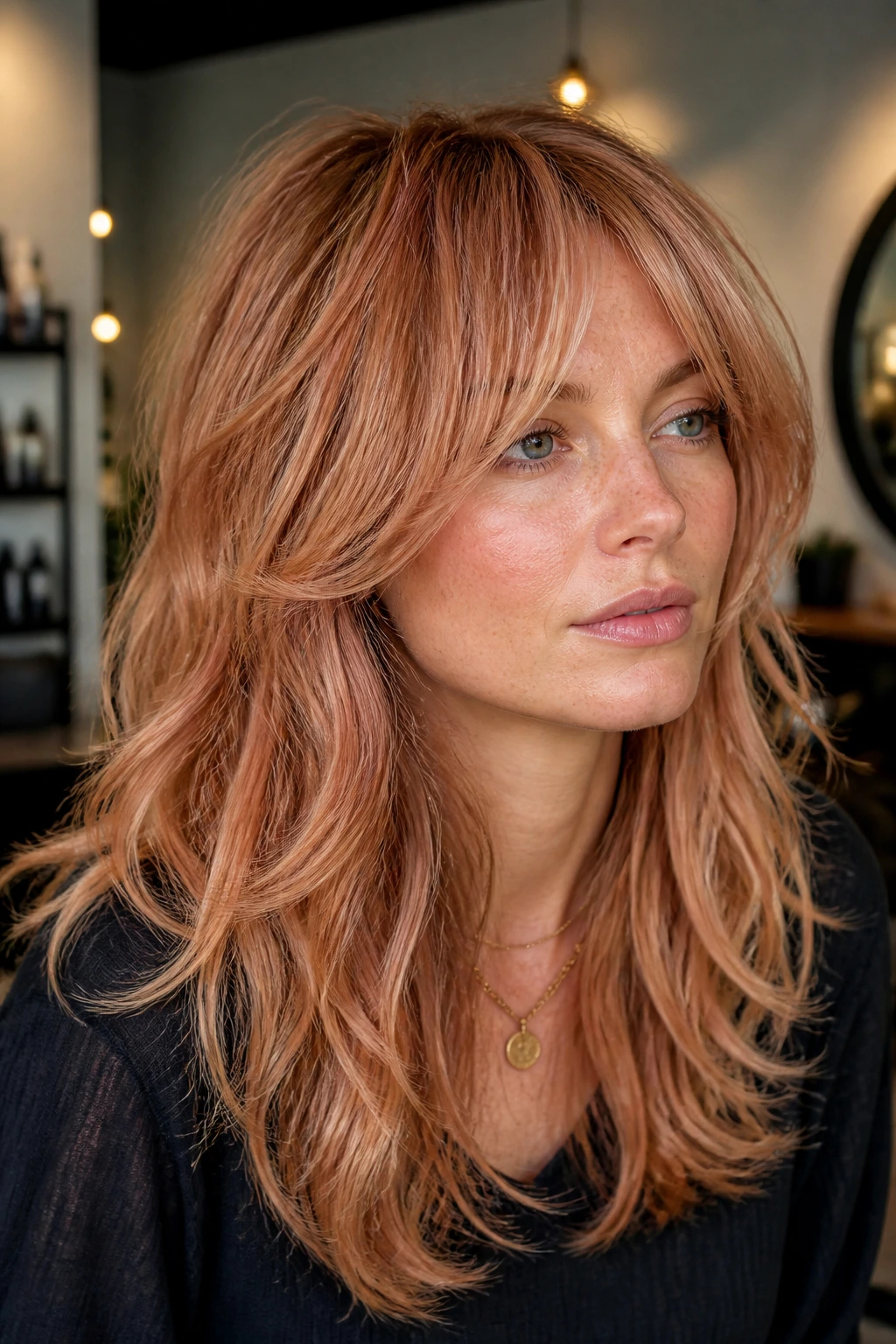
Dense hair needs a different kind of honesty. If the crown is too bulky, the haircut balloons out and the length underneath gets hidden. A heavy-crown shag removes that weight through the top and interior so the lower layers can actually show. It’s not about making the hair thin. It’s about making the shape usable.
The best version keeps the perimeter long and fairly blunt so the ends still feel substantial. Strawberry blonde is useful here because the lighter pieces through the crown and face frame break up the bulk visually. If your hair is thick, ask your stylist where they’re removing weight. If they say “everywhere,” push back. You want strategic reduction, not a hedge trimmed into a triangle.
17. Air-Dry Shag with Face-Framing Ribbons
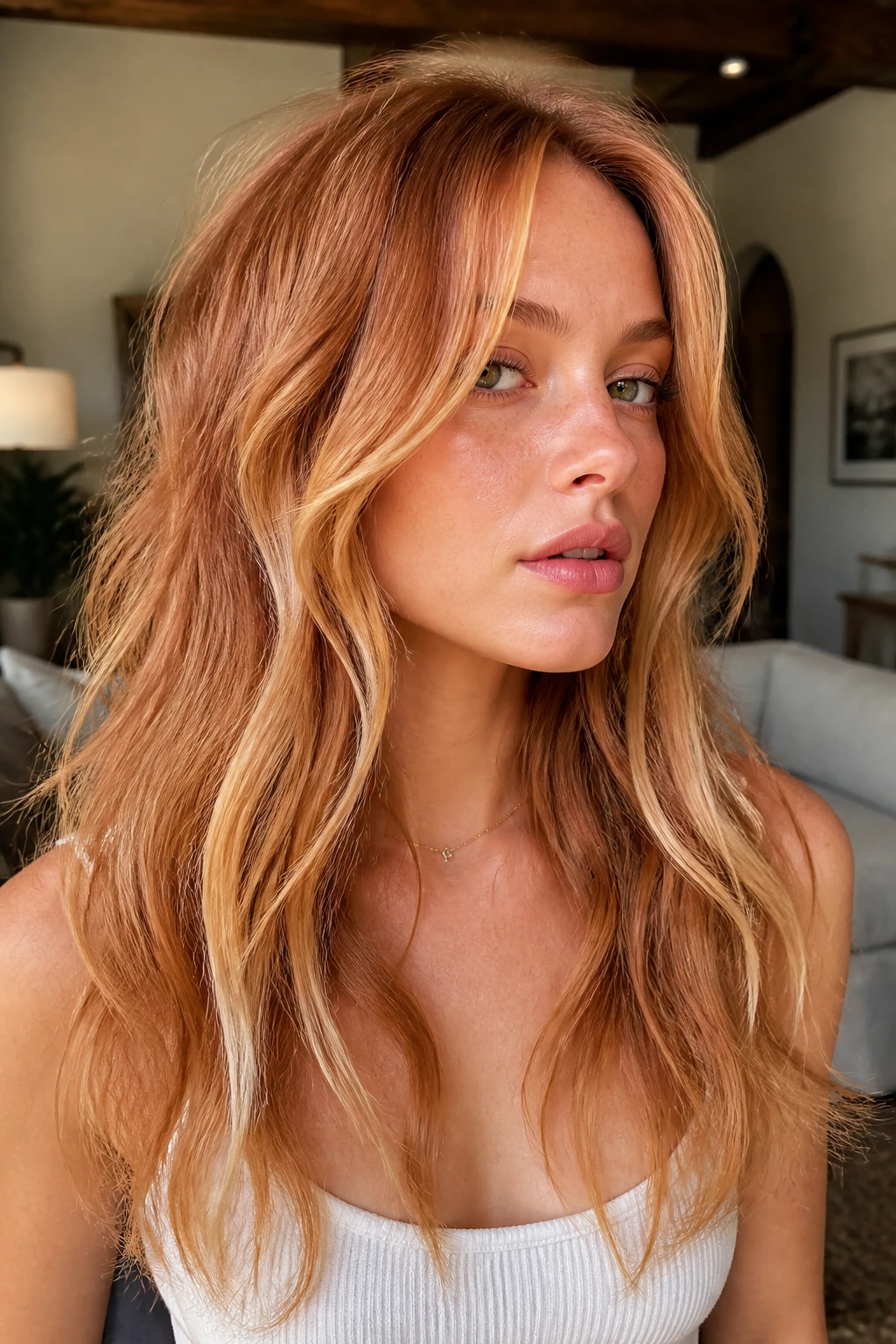
This is the low-effort answer for wavy hair that already wants to do something interesting. The layers are placed to work with the bend pattern, and the face-framing ribbons are kept long enough to dry in a soft curve instead of sticking out in odd angles. When it’s cut well, a little mousse and a scrunch is enough.
The color matters because air-dried texture can look messy if the tone is flat. Strawberry blonde gives the hair enough variation to look intentional. I’d use a lightweight cream or mousse, then clip the crown for a few minutes while it dries. That small lift at the root keeps the top from collapsing and the face frame from attaching itself to your cheeks.
18. Side-Swept Fringe Shag with Soft Edges
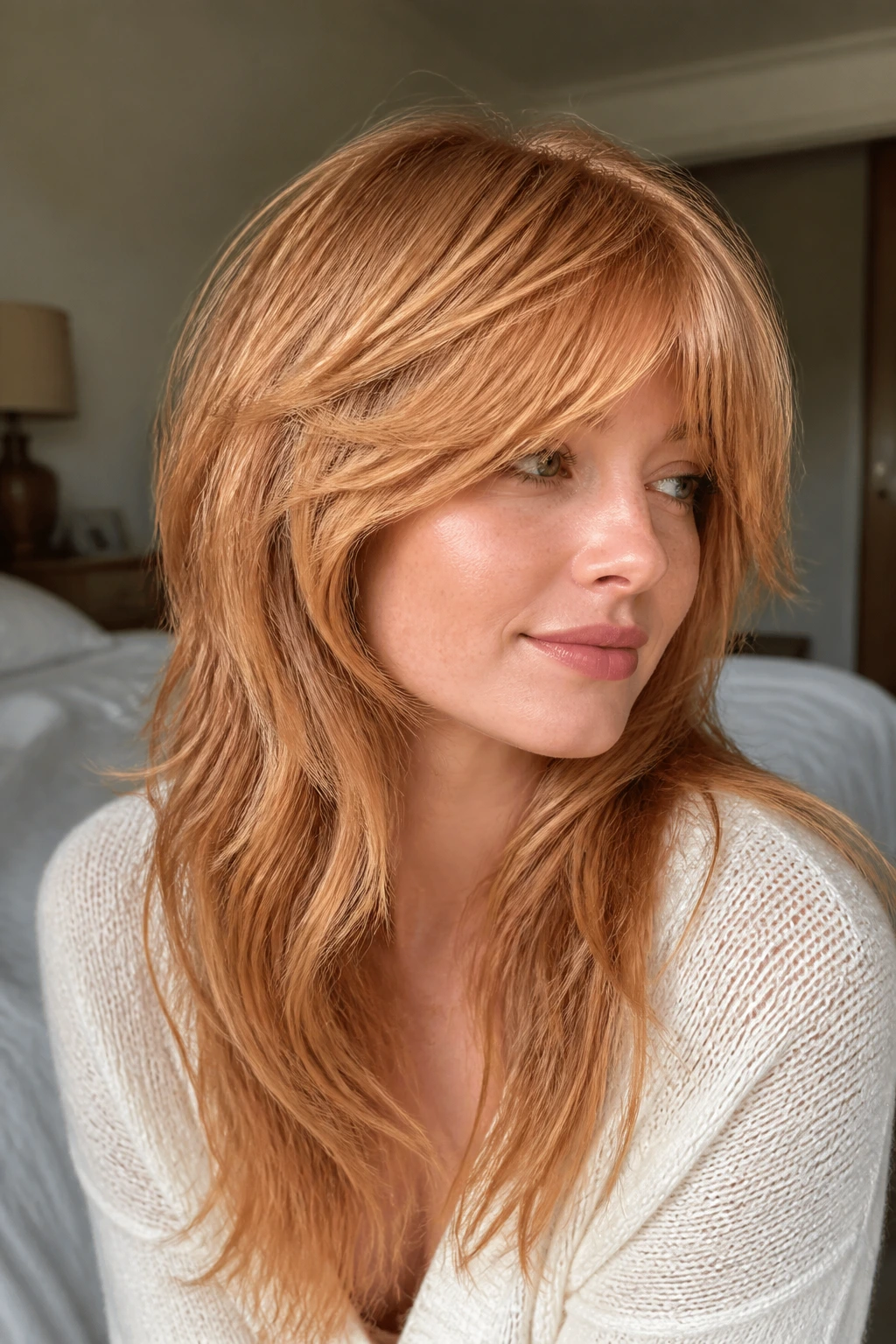
A side-swept fringe is a quieter alternative to curtain bangs. It gives the shag a diagonal line across the face, which is flattering if your forehead is short or if a middle part never sits right. The rest of the cut should stay soft and layered, with the fringe blending into the side pieces instead of ending abruptly.
This version looks especially good when the strawberry blonde has a little contrast at the roots. The side sweep gains shape, and the lighter fringe pieces do their own thing without disappearing into the rest of the hair. If you want a cut that can move from casual to dressed-up quickly, this is a strong pick. Blow-dried smooth or air-dried messy, it still makes sense.
19. Modern Wolf-Leaning Shag with Long Perimeter
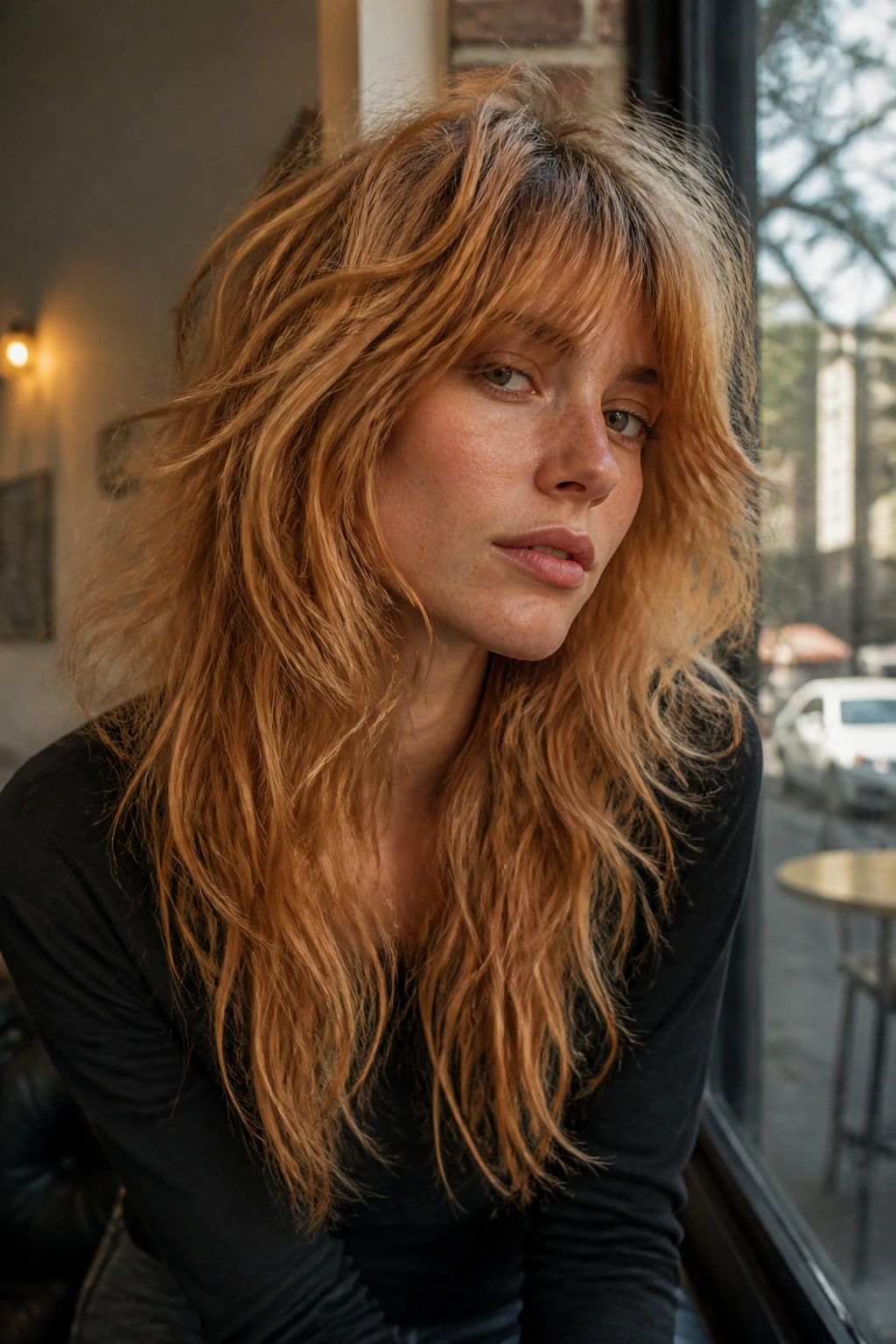
If you like the wolf-cut idea but don’t want to lose the safety net of long hair, this is the compromise worth considering. The crown is lifted, the upper layers are shorter, but the bottom length stays long enough to keep the silhouette anchored. It reads current without looking overdone.
The trick is making sure the transition between the shorter top and long bottom is soft enough. Strawberry blonde helps because the tonal variation disguises some of the harder layer changes. I’d keep the finish a little piecey and avoid overly smooth blowouts. The haircut wants a bit of grit. If it gets too sleek, it starts looking like two haircuts stitched together.
20. Oval-Slimming Shag with Cheekbone Lift
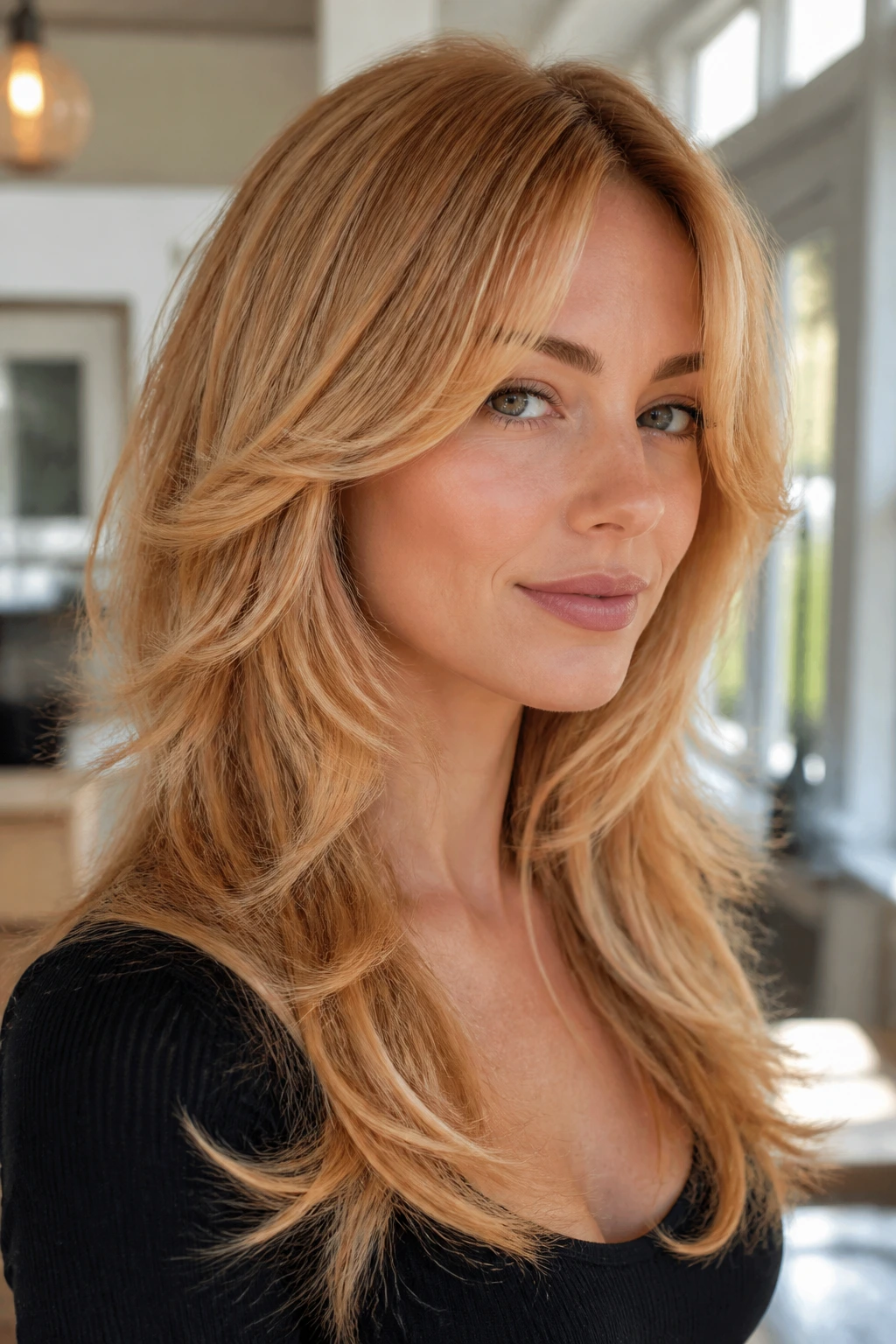
This is the version that opens the face without taking too much width from the rest of the hair. The shortest front layers should land around the cheekbones, then taper down through the jaw and collarbone. That vertical movement can make rounder faces look a touch longer, and it keeps square faces from feeling boxed in.
Strawberry blonde is useful because the brighter face frame draws the eye upward. I like this especially when the roots are a shade deeper than the mids; the little shadow adds lift at the face instead of flattening it. Keep the ends soft and slightly separated. The shape works best when the front feels airy, not heavy.
21. Minimal-Product Shag with Natural Movement
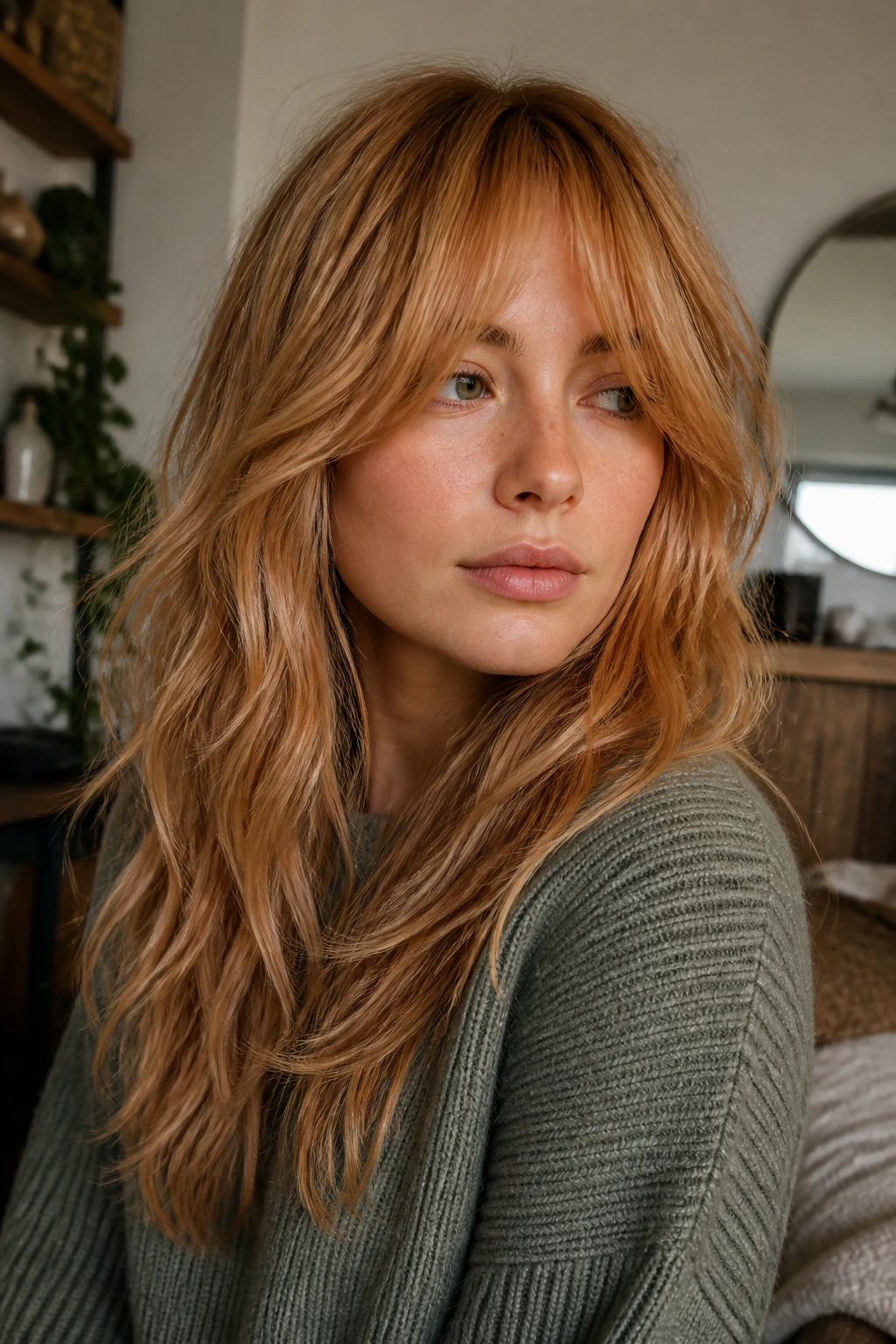
Some shags need product. This one is built to move on its own. The layers follow the hair’s natural bend, the fringe stays soft, and the perimeter keeps enough length to stop the style from puffing out. It’s a smart choice if you hate a sticky finish or if your hair looks better after a few hours than it does right after styling.
The strawberry blonde tone should stay dimensional here. Flat color defeats the point of a cut like this because the movement is subtle, and subtle movement needs visual depth. I’d ask for a cut that respects your natural part and your natural bend, then use only a little mousse or cream. Heavy oils and thick creams will drag it down fast.
22. Full Fringe Strawberry Blonde Shag with Polished Ends
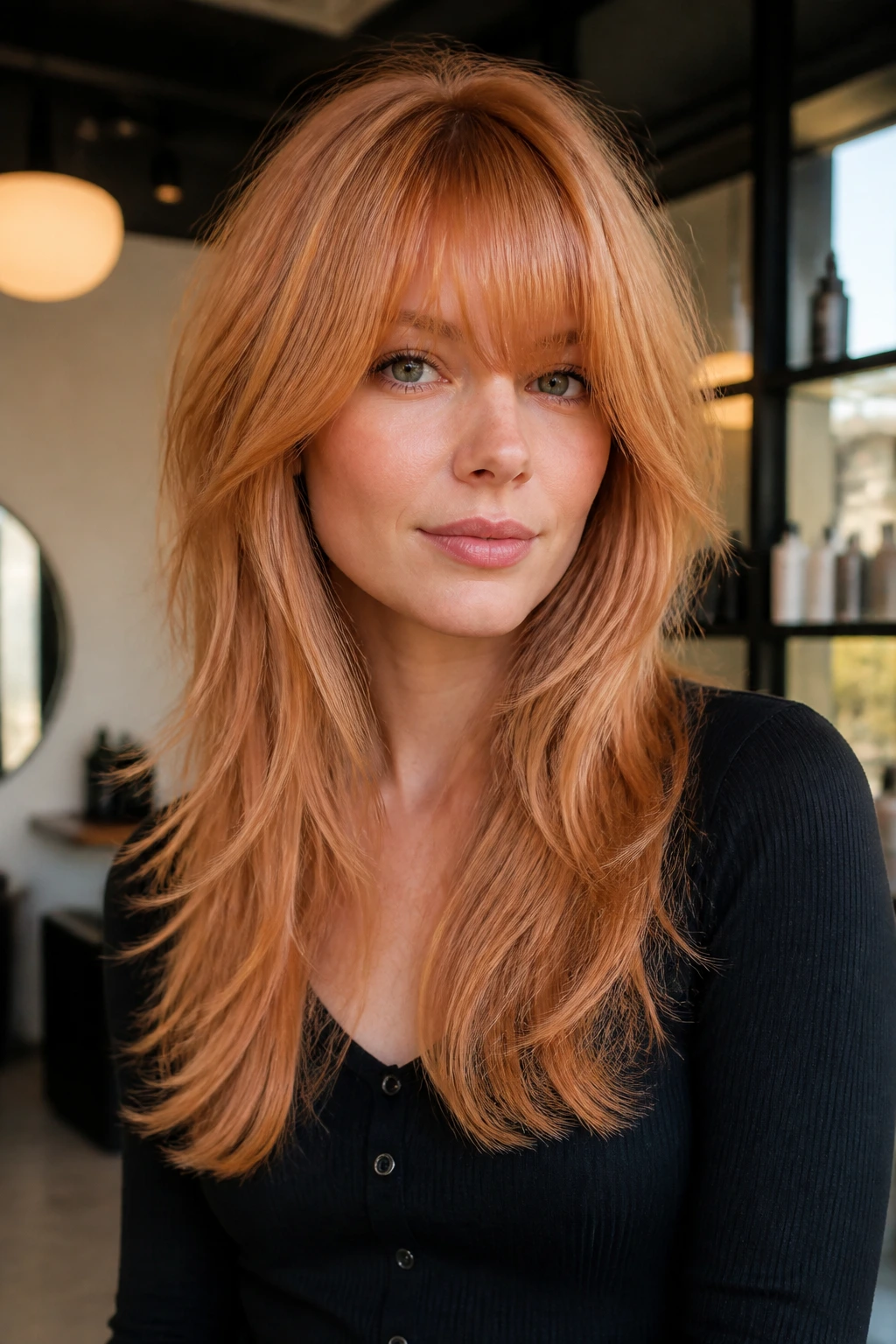
A full fringe changes the whole haircut. Instead of the face opening in the middle, you get a stronger frame at the eyes, and the rest of the layers need to support that decision. On long hair, it can look incredibly sharp if the fringe is soft enough at the edges and the ends are finished cleanly.
I like this version when the strawberry blonde shade is glossy and a little rich — more peach-copper than pale pink. That keeps the bangs from looking flat against the forehead. The ends should be polished with a round brush or a large roller set so the cut feels finished, not feather-duster loose. It’s a good pick if you want a shag that still knows how to show up dressed.
Why Long Strawberry Blonde Shags Keep Their Shape So Well
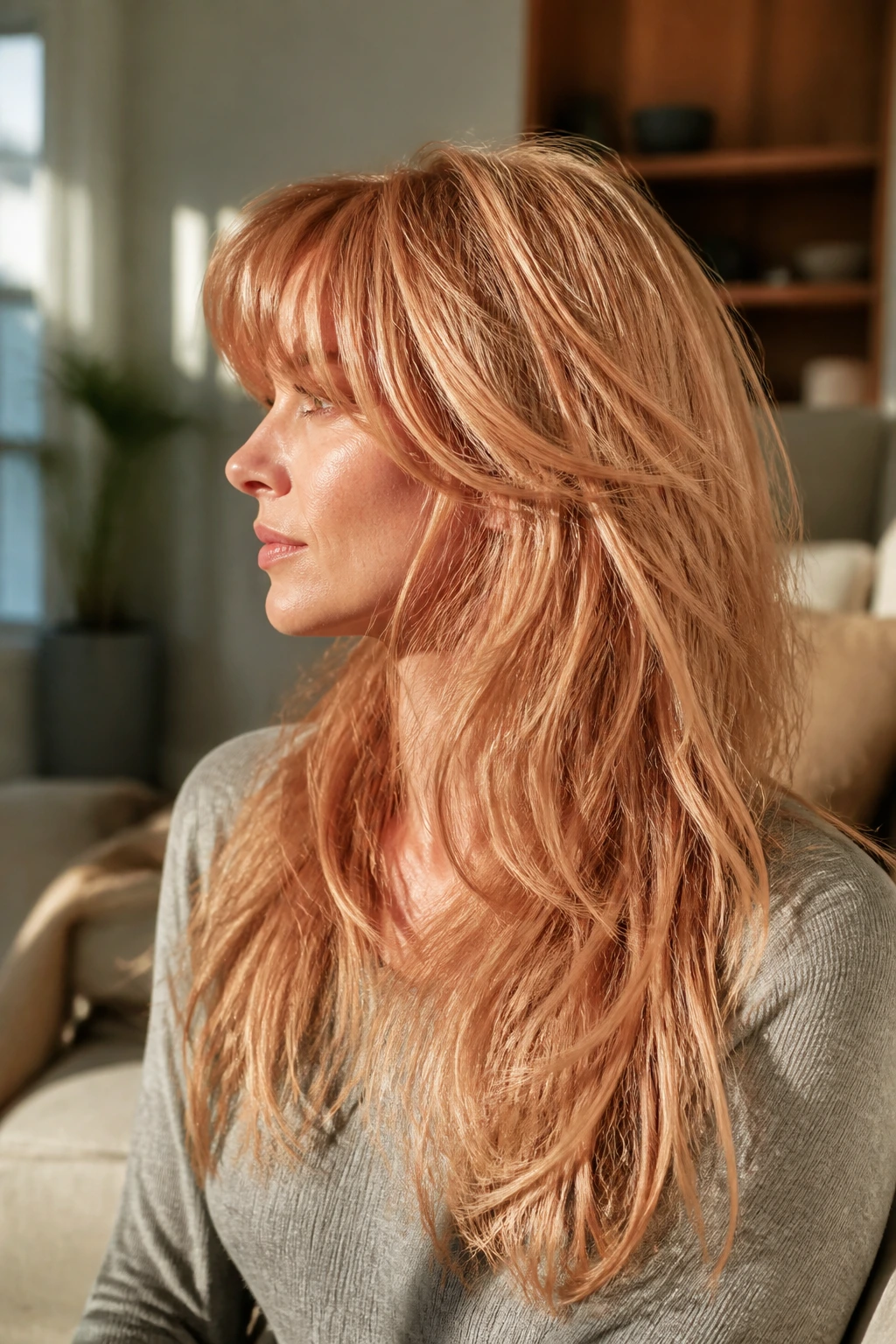
Long hair gives a shag room to do what it’s supposed to do: move. Shorter shags can be cute, but long ones have more range. The weight at the bottom keeps the silhouette from turning spiky, while the internal layers break up the bulk so the hair doesn’t hang in one heavy sheet. That balance is why the haircut grows out better than people expect.
Strawberry blonde earns its place because the color behaves like a built-in highlight map. Peach and copper tones catch the ends; beige and gold make the crown and face frame feel lighter. If the haircut is the structure, the color is the atmosphere around it. Together, they create that soft, shifting look that flat one-tone hair rarely gets.
Long shag haircuts also suit people who hate a high-maintenance finish. A good shag does not need to look perfect. If the ends separate a little or the fringe falls slightly differently from day to day, that can actually help the haircut. What you want is movement with shape, not an overstyled helmet.
What to Tell Your Stylist at the Salon Chair
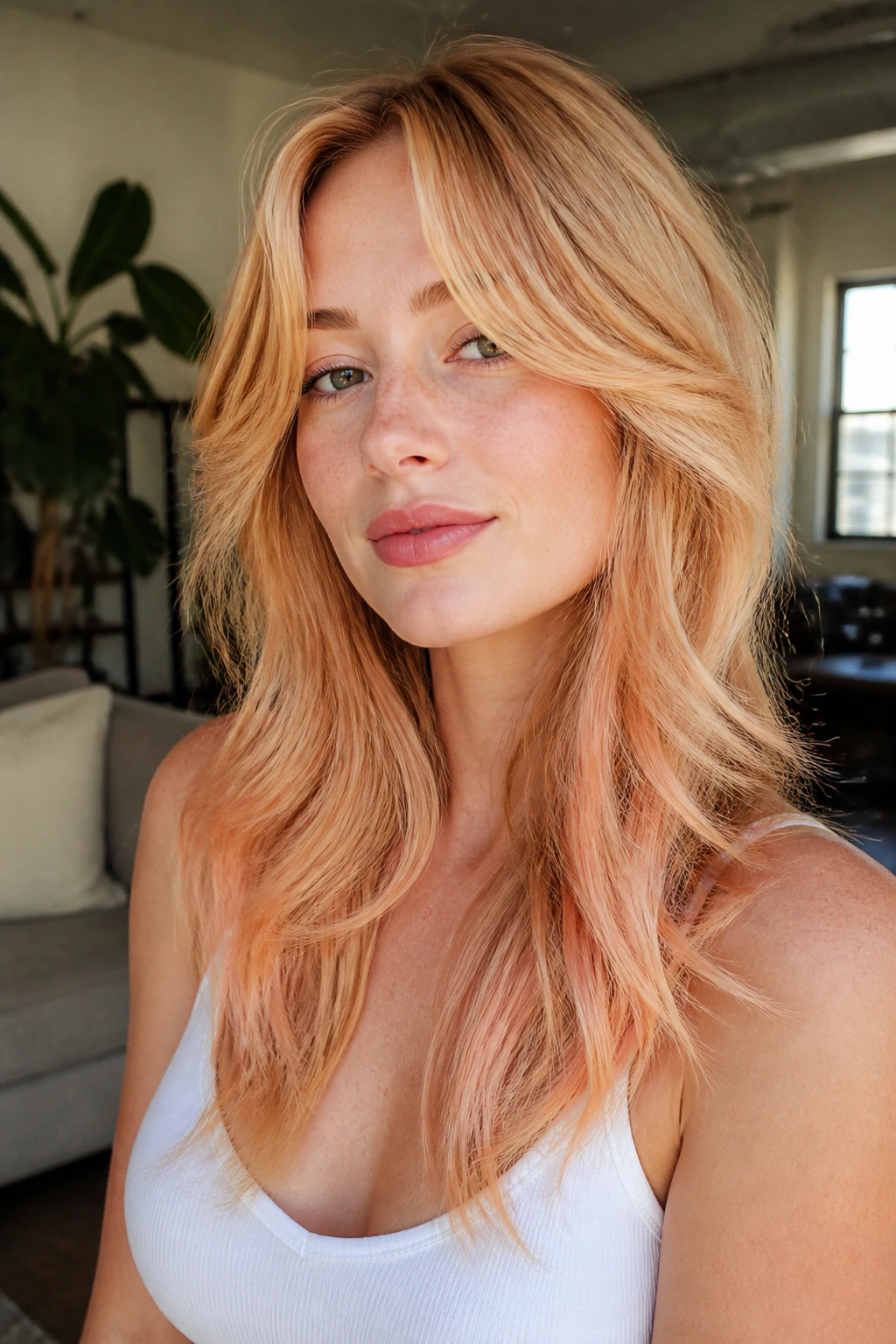
Bring photos, but bring the right ones. One photo of color and one photo of cut is better than a single perfect image that hides the details. A lot of people show a picture where the hair looks great in one angle and then wonder why the result on their head is different. Your stylist needs to see the fringe, the crown, and the longest layer in profile.
Say where you want the shortest layers to land. Cheekbone, jaw, collarbone — those three points change the whole haircut. If you have thick hair, mention that you want internal weight removal rather than a ton of short surface layers. If your hair is fine, ask for a softer shag with more length left in the perimeter so the ends don’t look stringy after the first wash.
Color matters, too. Strawberry blonde can run peachy, coppery, rose-gold, or beige. If you want dimension, ask for a root shadow or a gloss that shifts slightly warmer than the base. If you want something softer, ask them to keep the copper low and let the gold and beige do most of the work. Words like “warm blonde with peach notes” are often clearer than simply saying strawberry blonde and hoping for the best.
The Tools That Make Styling Easier
-
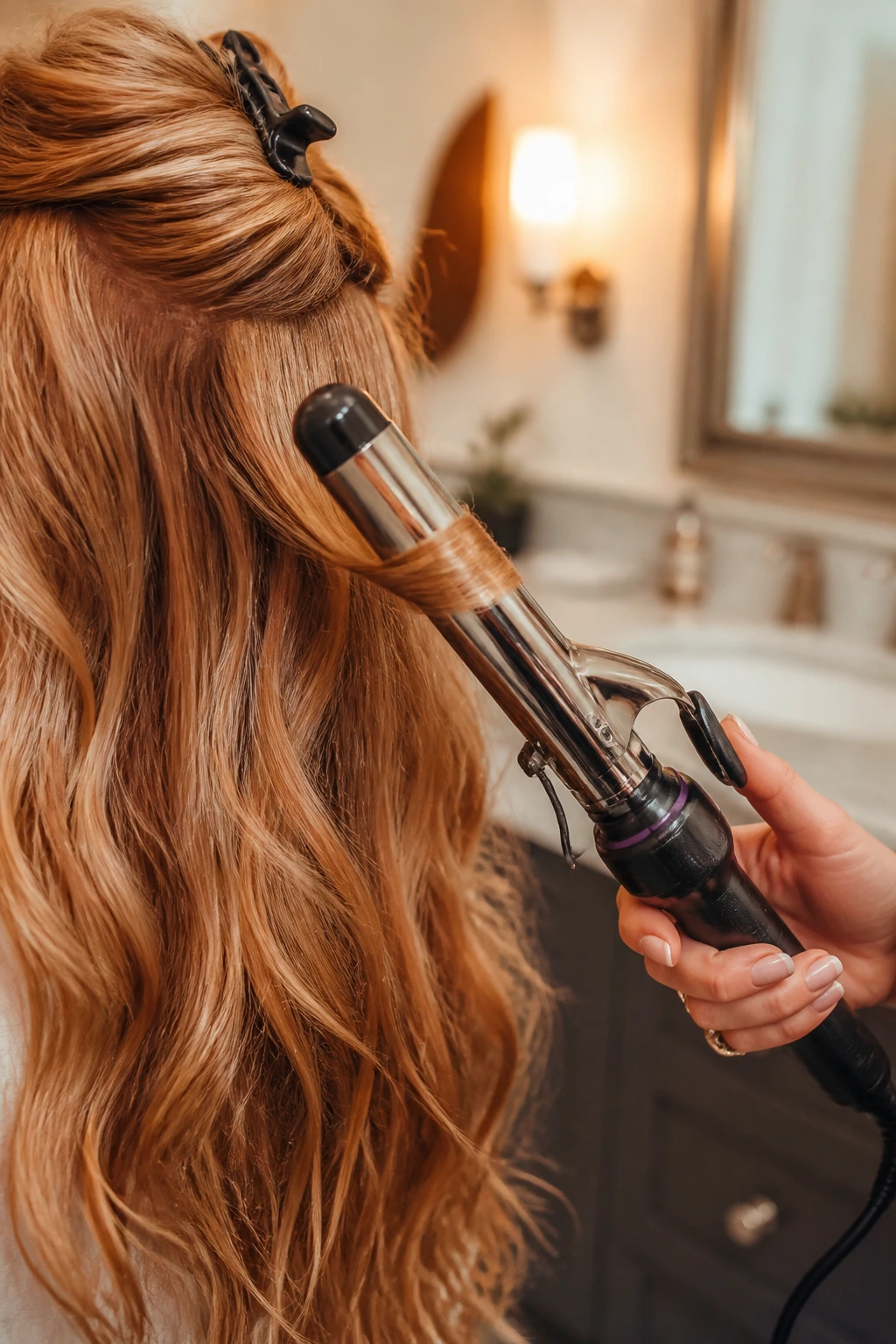
1.25-inch curling iron or wand — This gives the long layers a bend without turning the ends into tight loops.
-
Large round brush, 1.5 to 2 inches — Best for blowouts, especially if you want the curtain fringe or side pieces to sweep instead of kink.
-
Blow dryer with a concentrator nozzle — The nozzle matters. It directs air so the layers smooth out instead of frizzing in every direction.
-
Volumizing mousse — Use a golf-ball-sized amount at the roots on damp hair. Too much and the style turns stiff.
-
Heat protectant — Non-negotiable if you use hot tools. Long hair keeps heat in the ends longer than you think.
-
Texture spray or dry shampoo — Good for second-day lift and that piecey shag finish.
-
Lightweight serum or cream — A pea-sized amount on the ends keeps strawberry blonde hair from looking dry and static-y.
-
Wide-tooth comb and section clips — These make both styling and detangling less annoying, especially with layered hair that knots at the nape.
Choosing the Right Strawberry Blonde Tone for Layers
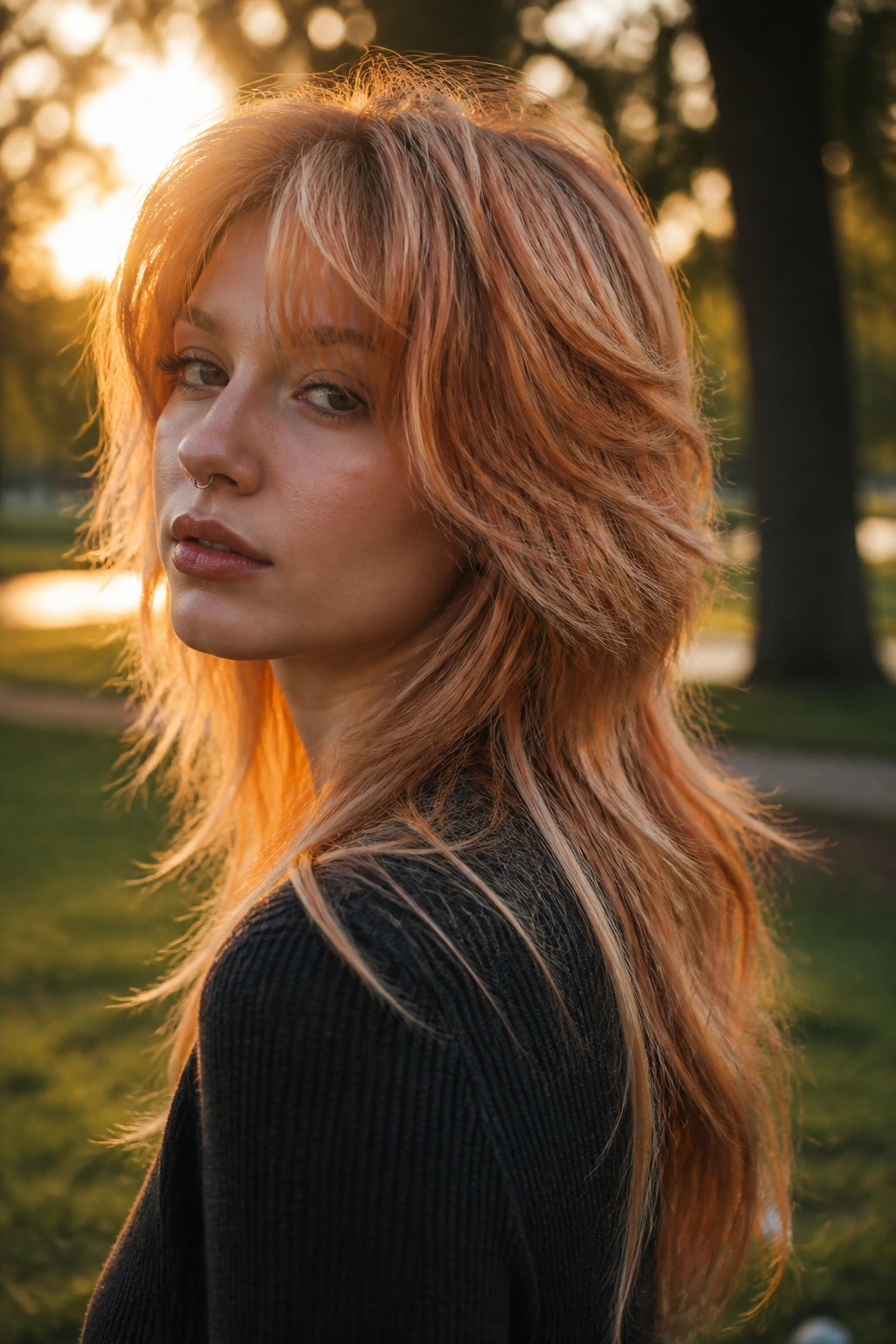
Not all strawberry blonde is the same shade, and that matters more with a shag than with a blunt cut. A blunt line can hide a muddy tone. A shag can’t. The layers expose everything. If the color is too orange, the cut starts looking harsh. If it’s too pale, the warm dimension disappears and the layers lose some of their depth.
Peach and apricot tones are softer and work well if your skin leans cool or neutral. Deeper copper-strawberry shades read richer and help the cut look more defined on darker natural bases. Beige strawberry blonde, which sits closer to warm champagne with a whisper of peach, is the quietest option and usually the easiest to live with if you don’t want constant salon touch-ups.
A root shadow or slightly deeper base can help the whole thing last longer between appointments. It gives the crown some visual lift and keeps the grow-out from looking obvious after a few washes. On long hair, that little bit of darkness at the root can actually make the lighter layers around the face look brighter. Strange, but true.
How to Style a Long Shag So It Still Looks Intentional
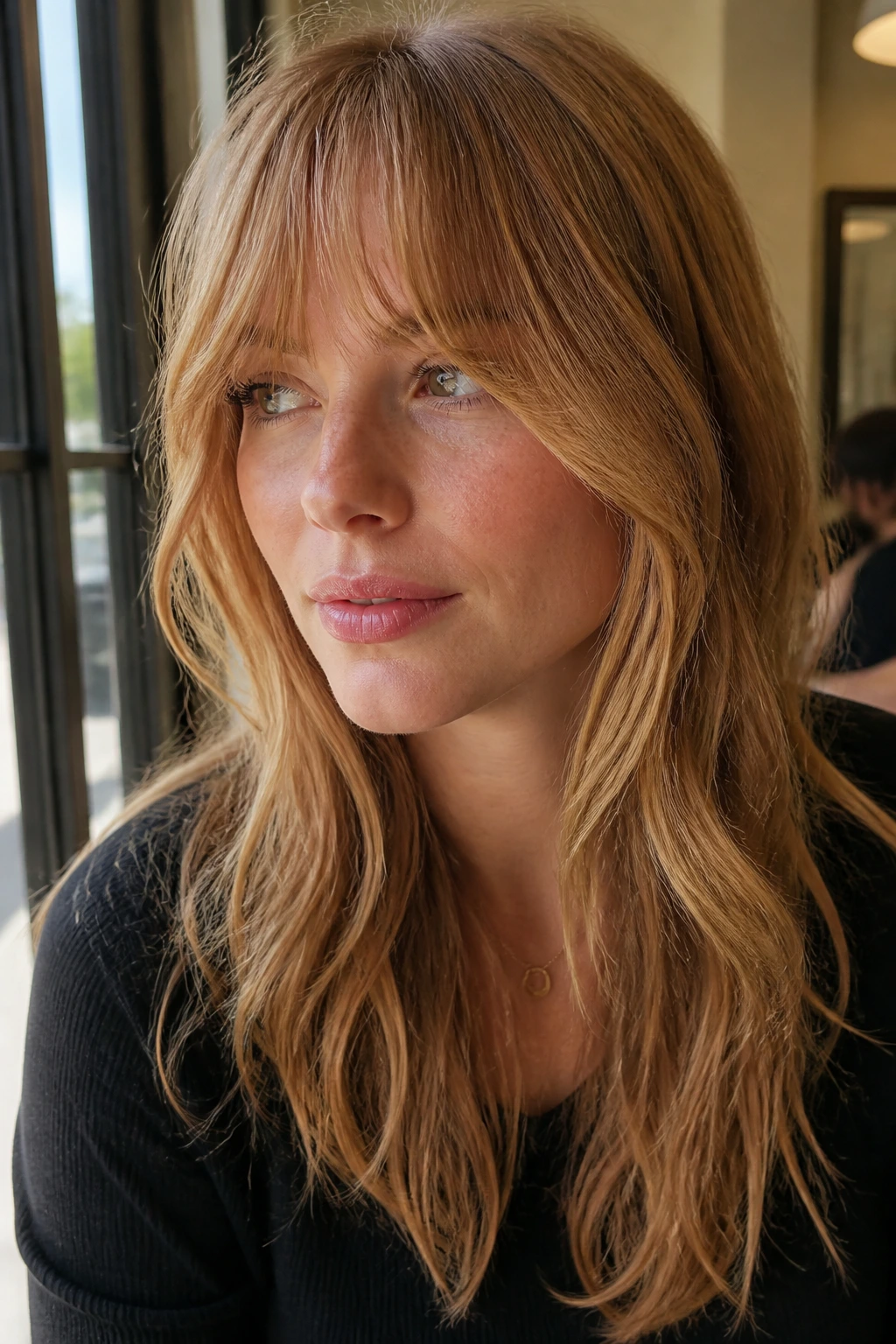
The best long shag styling starts with restraint. You do not need a giant barrel curl on every strand. In fact, over-curling a shag usually makes it look round and dated. What works better is a bend through the mid-lengths, a soft flip at the ends, and a little separation near the face.
Air-Dry Finish: Work mousse through damp roots, scrunch the mids, and clip the crown for ten to fifteen minutes if you want more lift. Let the hair dry without touching it too much. Once it’s dry, break up any crunchy bits with a drop of serum on your palms.
Blowout Finish: Use a round brush to pull the fringe away from the face and the side pieces slightly forward, then flip the ends under or out depending on the style. Finish with the cool shot to lock in shape. That cool blast makes a real difference; skip it and the bend collapses faster.
Second-Day Finish: Dry shampoo at the roots, texture spray in the mids, and a few bends added only where the hair has gone flat. That’s enough. If you heat-style every piece again, the cut stops looking shaggy and starts looking overmanaged.
Small Upgrades That Make a Big Difference
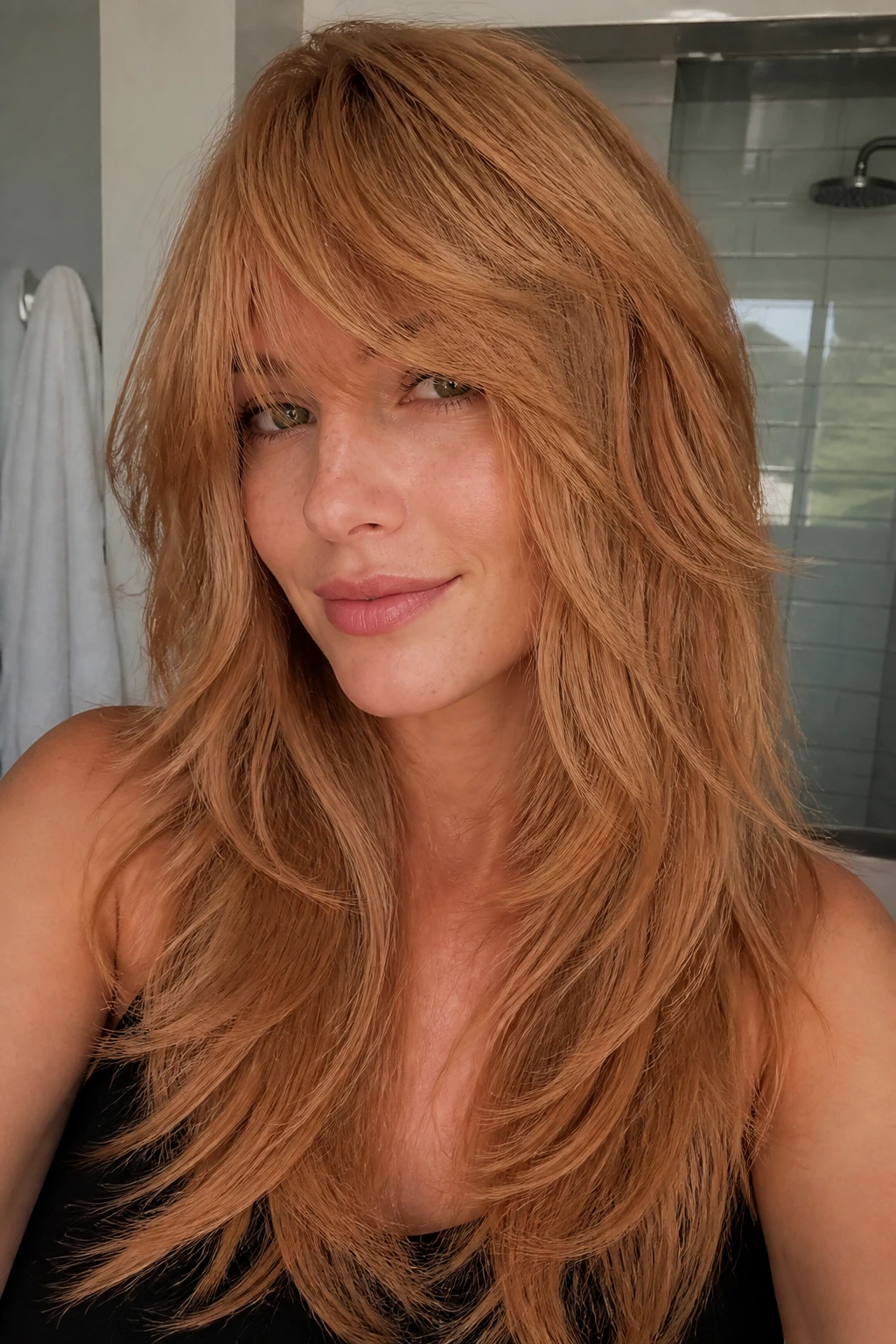
Root Lift: A little mousse at the crown before blow-drying changes the whole silhouette. Use your fingertips to lift the roots while the air hits them, then let them cool before you move on.
Texture: If the hair looks too smooth, pinch a few face-frame pieces with texture spray or a tiny bit of wax between your fingers. Don’t coat everything. You want separation, not grit.
Shine: Strawberry blonde can look dull if the ends are dry. A light serum on the mid-lengths and ends after styling keeps the color looking richer and stops the layered pieces from fraying.
Color Boost: A clear or lightly warm gloss every few weeks keeps the peach and copper notes alive. If the blonde starts turning flat or muddy, a gloss will usually fix the problem faster than another round of highlighting.
Accessory Move: A narrow headband, a metal clip at the back, or a silk scarf can change the line of the haircut without hiding it. Long shags look especially good when one side is tucked and the other side falls loose. Messy, but in a useful way.
The Common Mistakes That Flatten or Frizz the Cut
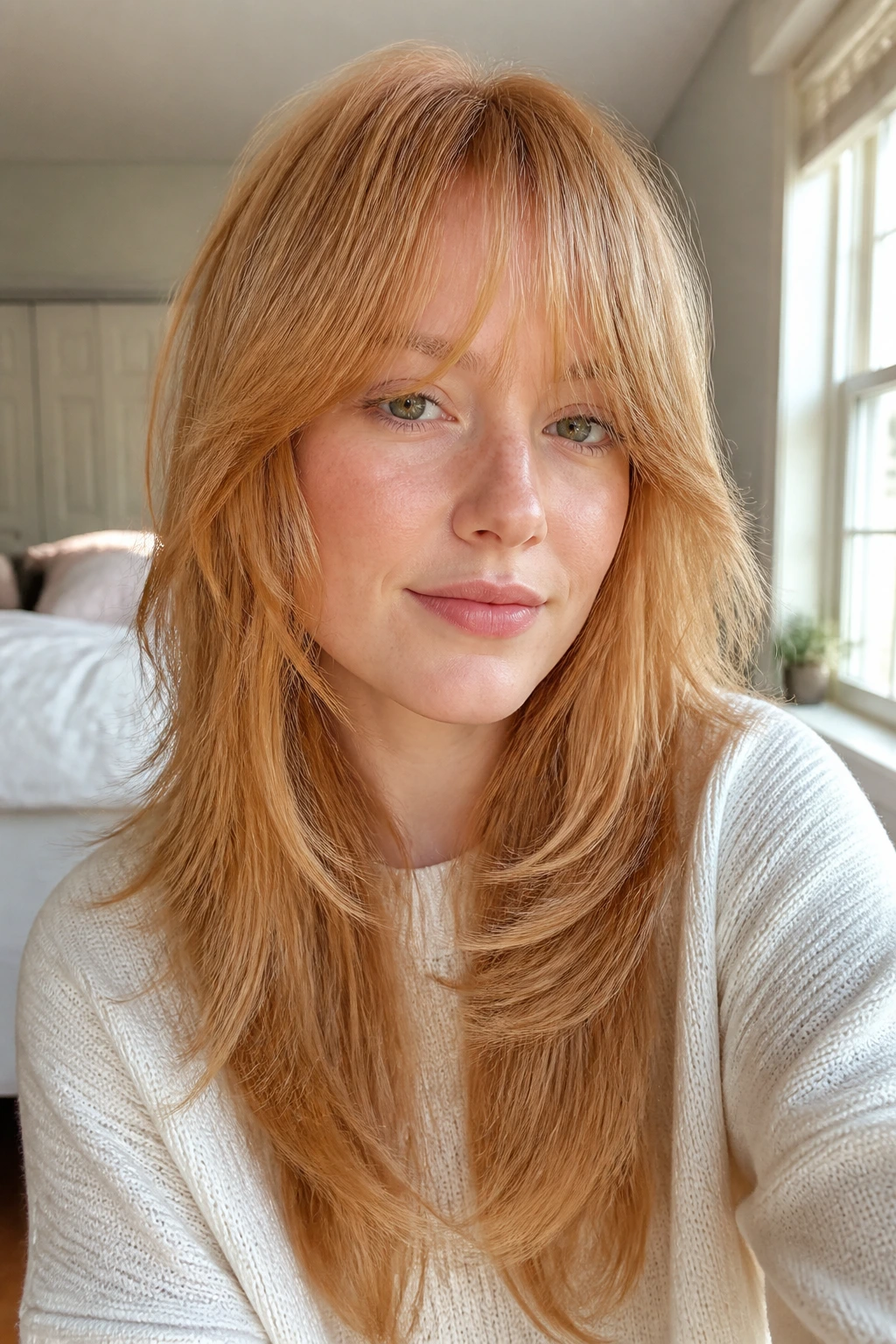
The easiest mistake is cutting the crown too short. The shape gets puffy at the top and thin at the bottom, and suddenly the shag looks more like a bad home haircut than a deliberate style. The fix is to keep the shortest layers controlled and leave enough length in the perimeter to anchor the whole thing.
Another problem is over-thinning fine hair. If the ends look see-through after the first wash, the haircut has been stripped of too much weight. Ask for a softer shag with longer layers and less texturizing. Fine hair needs structure, not extra holes.
Color can also sabotage the cut. A single flat strawberry blonde shade without dimension makes the layers blur together. You lose the movement that makes the haircut interesting. A root shadow, subtle balayage, or even a gloss with two tonal notes solves that.
And then there’s product overload. Heavy oils, thick creams, and too much leave-in conditioner make long shags droop. Use enough to smooth the ends, not enough to soak them. If the pieces stick together in clumps, you’ve gone too far.
Variations and Adaptations to Try
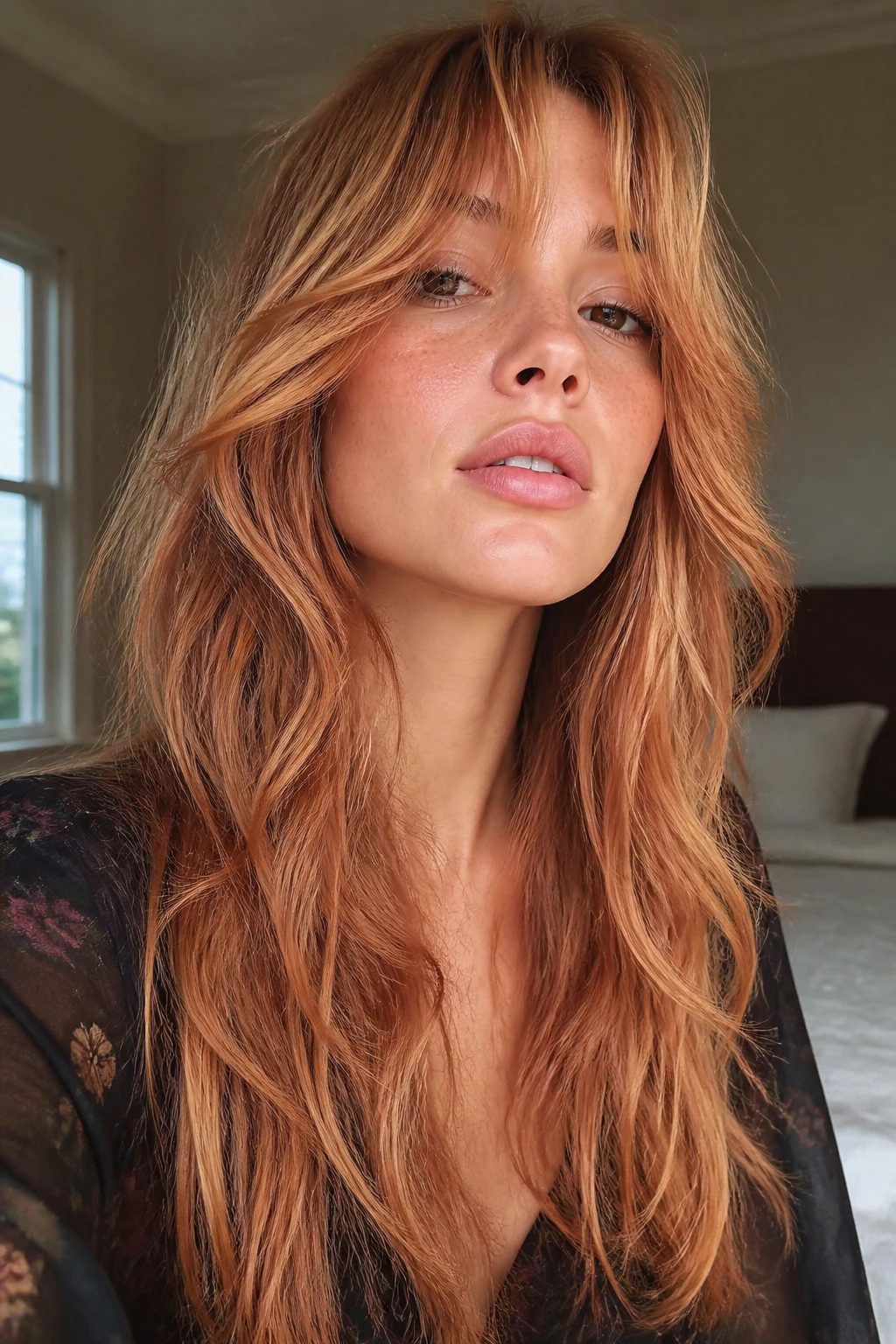
Fine-Hair Feathering: Keep the layers longer, leave the perimeter fuller, and rely on a pale peach-beige strawberry blonde gloss for the appearance of density. This version looks best with root lift and a light blow-dry, not heavy curling.
Thick-Hair De-Bulked Wolf Shag: Ask for interior weight removal through the crown and around the occipital area, then keep the bottom length solid. This version handles dense hair that tends to puff at the sides.
Curly-Wave Shag: Have the haircut shaped to your natural pattern, ideally with the hair in its natural state so the stylist can see where it lives. Longer fringe pieces and gentle face framing help the curls land in a flattering line instead of bouncing up too high.
Low-Maintenance Air-Dry Version: Ask for layers that support the wave pattern and skip the razor-heavy finish. Pair it with mousse and a little gel, then let the hair dry on its own. This is the least fussy route if you hate hot tools.
Glossy Blowout Version: Keep the texture soft and the color creamy, then style with a round brush, rollers, or a large curling iron. It’s the most polished take on the shag family and the one that moves closest to a salon finish.
Keeping the Cut and Color Fresh Between Visits
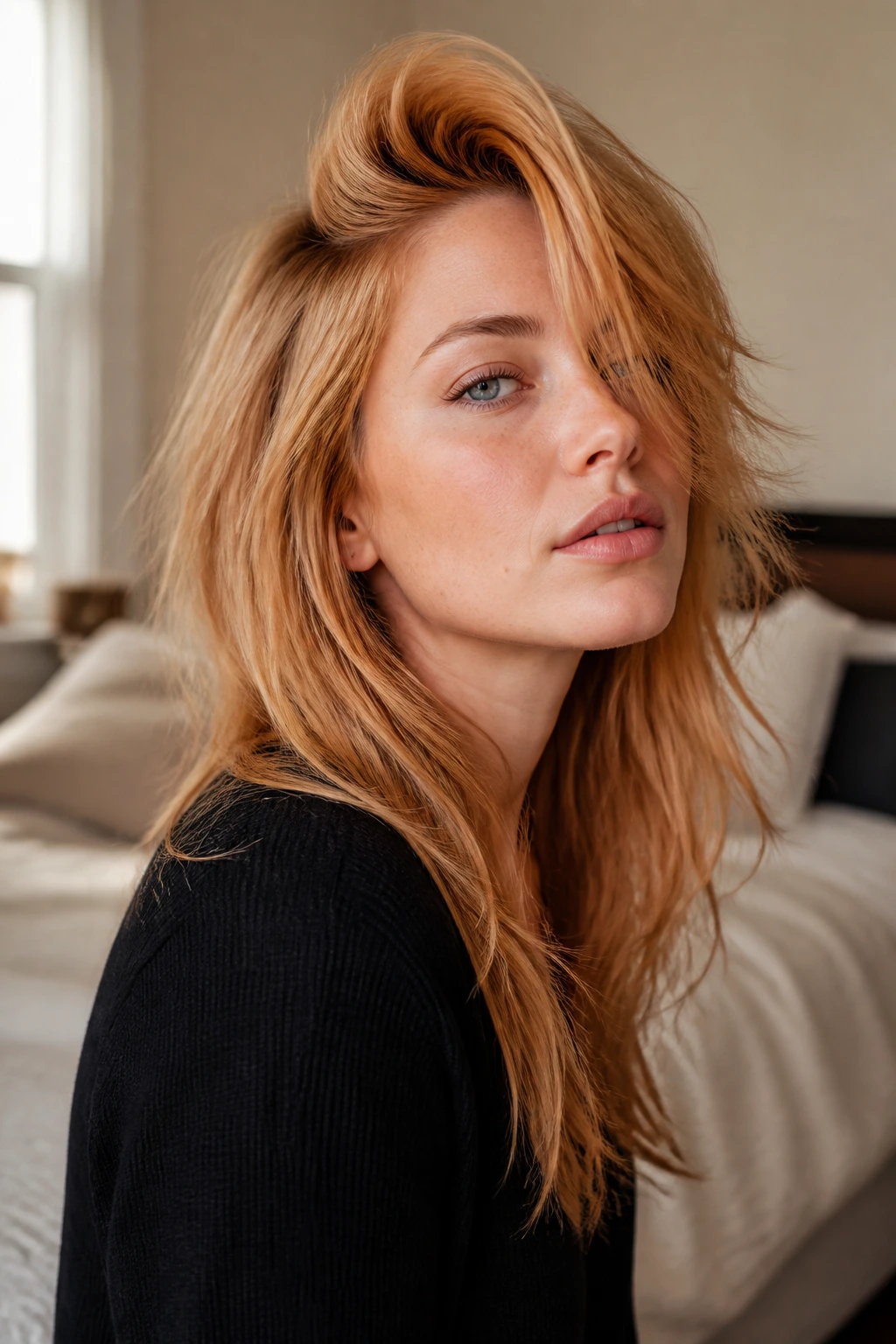
Trim the fringe every 4 to 6 weeks if you wear bangs. That sounds frequent, but bangs grow faster than the rest of the cut and can ruin the shape when they hit the eyes. The rest of the haircut usually does well with a trim every 8 to 10 weeks, especially if you want to keep the layers sharp without losing length.
For color, a gloss or toner refresh every 4 to 8 weeks helps the strawberry tone stay warm instead of fading dusty or brassy. If your hair is porous or highlighted, the fade can happen faster. Sulfate-free shampoo helps, but don’t expect miracles. Warm shades need maintenance. That’s just how they behave.
Once a week, use a light mask on the mid-lengths and ends if the hair feels rough after heat styling. Keep clarifying shampoo for buildup every couple of weeks, especially if you use texture spray or dry shampoo often. Those products can pile up and make a shag feel heavier than it should.
Questions People Ask Before They Book
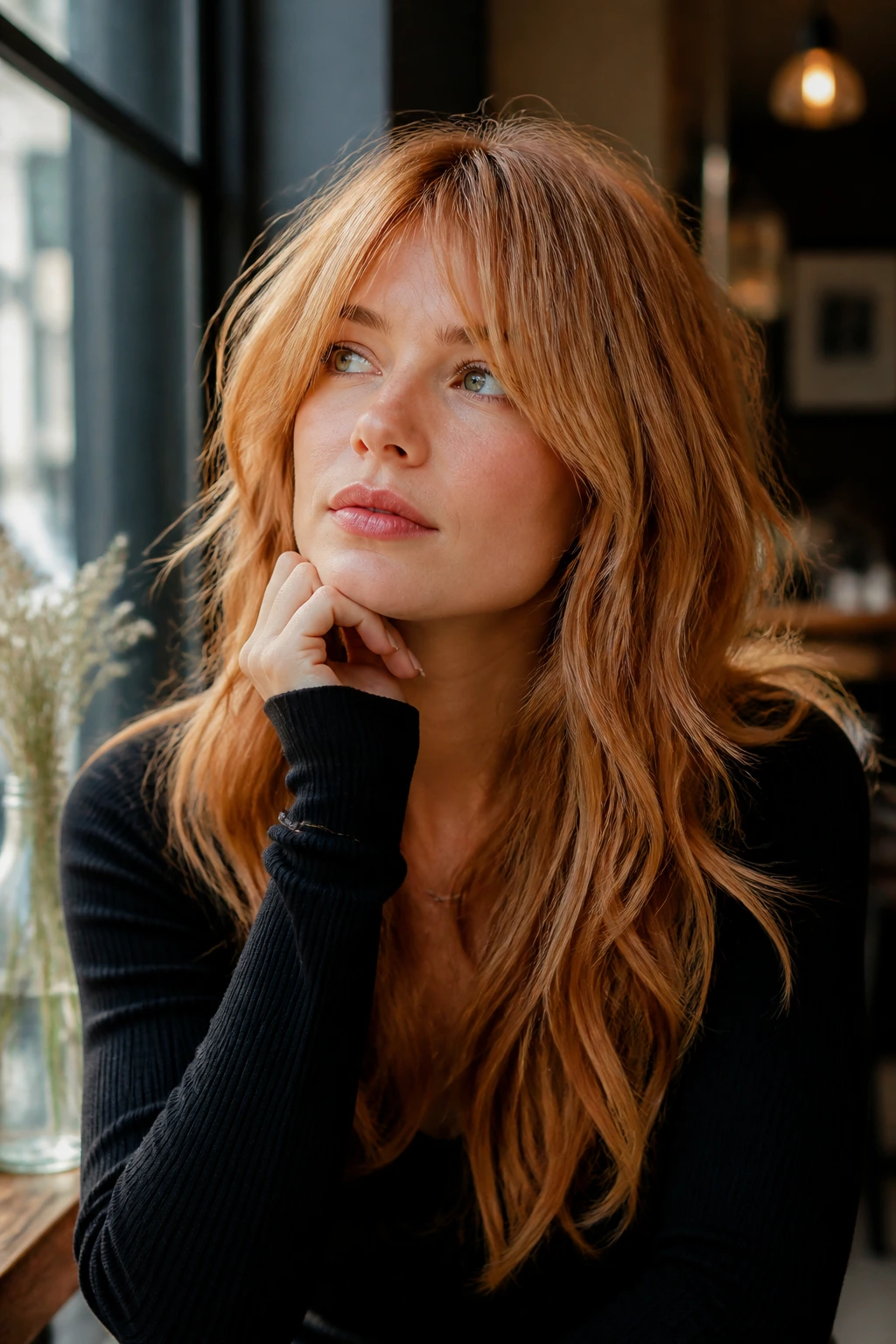
Will a strawberry blonde shag work on naturally dark hair?
Yes, but the color will need a more thoughtful lift. Dark hair usually needs a gradual lightening process, and the finished shade may lean deeper copper or warm apricot rather than pale blonde. That is fine; in fact, the richer tones often look better with the shag shape.
Can I keep my length and still get a real shag?
Absolutely. The cut does not need to live at shoulder length to have shape. The real work happens in the crown, around the face, and through the interior, while the perimeter can stay long and full.
Is this haircut good for fine hair?
It can be, if the layers are kept soft and the ends are not over-thinned. Fine hair needs a long shag that preserves weight at the bottom, or the style can go see-through in a hurry.
What’s the difference between a shag and a wolf cut?
A wolf cut usually has a sharper contrast between the short crown and the long back. A shag tends to feel softer and more blended. Long strawberry blonde hair can wear either one, but the wolf cut leans edgier while the shag usually reads more fluid.
How often will I need to style it?
Not every day, which is one reason people keep coming back to this shape. Most versions look good with a quick refresh on day two and a more polished blowout only when you want it. The more texture your hair has naturally, the less you’ll need to do.
What if my hair goes frizzy in humidity?
Ask for less razor work and keep the finish soft rather than heavily separated. A light anti-humidity cream on the mids and ends helps, but the cut itself matters more. Too many chopped layers around the crown can make frizz worse.
Can I wear this with a full fringe?
Yes, but the fringe should be softened so it blends into the rest of the layers. A blunt heavy bang can fight the shag silhouette unless the rest of the cut is built around that strong front line.
A Soft, Shaggy Finish
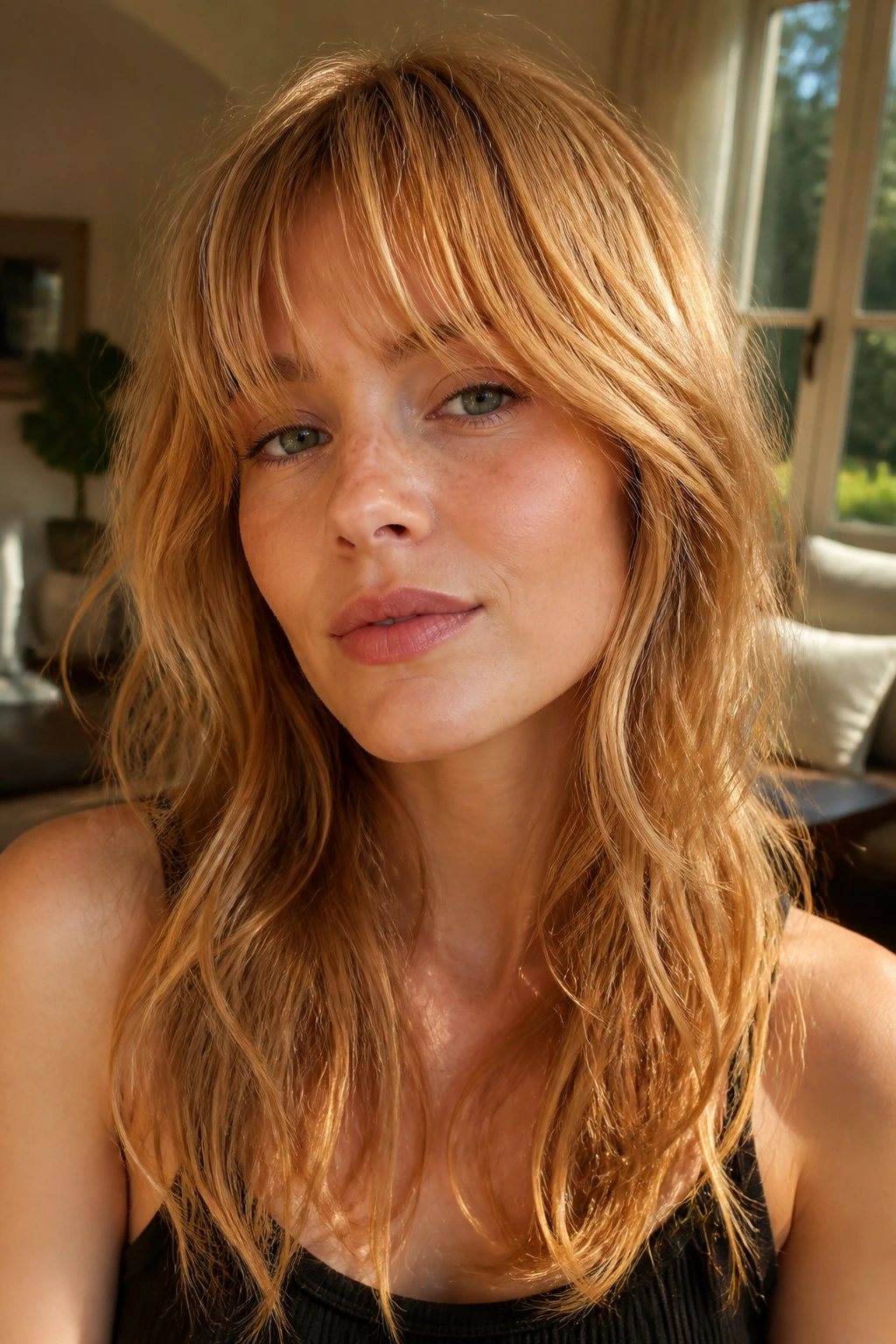
The strongest strawberry blonde shag haircuts for long hair all share the same basic trick: they keep enough length to feel like long hair, then use layers, fringe, and color to wake the whole thing up. That is why the cut can lean romantic, messy, glossy, or a little rebellious without losing its shape.
I’m especially fond of the versions that don’t overdo the crown. Leave some weight at the bottom, soften the fringe, and let the strawberry blonde tone carry the movement through the light. That combination looks good growing out, and it looks even better on a day when the hair is not cooperating as politely as it should.
If you want a long haircut that has some pulse to it — and doesn’t disappear into one heavy sheet by the end of the week — this is a strong place to start.