



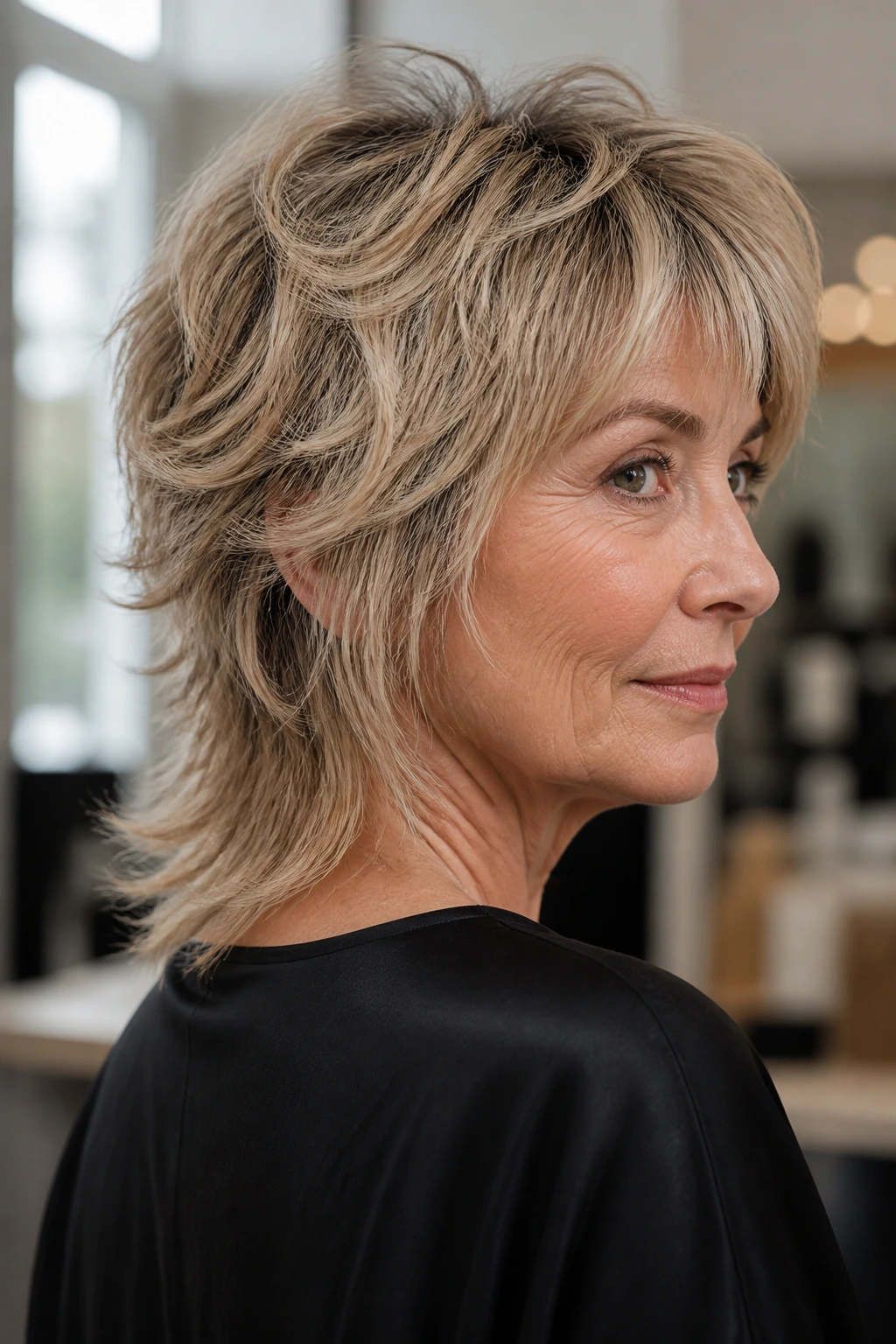
Thick hair has a way of looking expensive and exhausting in the same breath. Medium shag haircuts for older women with thick hair fix that problem by taking weight out of the places that puff up, then leaving enough length for a clean tuck behind the ear, a low clip, or a quick bend with a brush. The trick is not more layers. It’s the right layers, placed where your hair actually fights you.
A blunt cut on dense hair can turn into a shelf. Too many short layers can turn into a triangle. Leave it all one length and the whole head starts to feel heavy by noon. The shag sits in the middle, which is exactly why it works so well here. It loosens the shape without stealing the fullness that makes thick hair worth keeping long enough to matter.
The best versions feel lived-in, not shredded. They move when you turn your head. They still look decent on day two. And they tend to be kinder to gray strands, coarse texture, glasses, and the small daily annoyances that come with hair that has opinions of its own.
Why This Collection Is Worth Your Time
-
Bulk gets moved, not just removed: The cuts here take weight out of the interior and around the neckline, which is what keeps thick hair from ballooning at the sides.
-
The fringe stays soft: Curtain bangs, bottleneck bangs, and long sweepable pieces soften the face without trapping you in a hard bang line.
-
They work with real-life styling: These shags can be air-dried, blown out, clipped up, or left slightly messy and still look like a haircut, not a mistake.
-
They age well with the hair: Medium length gives you enough room for grow-out, so the cut still makes sense six or eight weeks later.
-
Gray and silver hair benefit from the shape: Coarser grays often need movement more than thinning, and these cuts show off the texture instead of fighting it.
-
Glasses, cowlicks, and cowlick-adjacent behavior are accounted for: A good shag can be built around your face shape, your frames, and that one stubborn patch near the part.
1. Collarbone Feather Shag for Heavy Hair
A collarbone-length shag is one of the calmest ways to handle hair that wants to sit like a block. The perimeter lands low enough to keep some weight, but the feathered ends keep the outline from turning into that flat shelf thick hair loves to build at the shoulders. It feels softer the second you tuck one side behind the ear.
Why It Works
Thick hair usually needs the bottom third opened up first. If the crown is cut too short, the top lifts and the sides flare. If the ends are too blunt, the whole cut hangs like a curtain rod. This version keeps the shortest face frame around the mouth or chin and lets the collarbone length do the heavy lifting.
- Ask for the perimeter to graze the collarbone.
- Keep the face-framing pieces at chin or cheek level.
- Use point cutting on the ends instead of aggressive thinning shears.
- Style with a 1.5- to 2-inch round brush for a loose bend.
Best detail: if your hair grows outward at the shoulders, this is the cut that stops the shelf before it starts.
2. Curtain-Bang Shag That Opens at the Cheekbones
A curtain-bang shag is the easiest way to soften a face without making the front feel heavy. The fringe splits away from the center and opens right around the cheekbones, which keeps thick hair from piling up across the forehead. That split matters more on dense hair than people think.
The sweet spot is longer than most first-time bang cuts. Start the center around the bridge of the nose or just below the brow, then angle it out. If the bangs are too short, they bounce up. Too blunt, and they lose the softness that makes this shape work in the first place. A quick round-brush bend and a little root spray is enough to keep it alive.
3. Deep Side-Part Razor Shag
A deep side part changes everything. Seriously. It steals some visual weight from the top and throws it across the cheek, which makes thick hair feel less square and more deliberate. A side-part shag is especially useful when the hair likes to sit flat at the crown but puff out below the ear.
How to Wear It
This works best on straight or slightly wavy dense hair. Razor texture can help, but only if the ends are healthy and not dry enough to fray. If your hair is brittle, ask for slide cutting with shears instead. The goal is movement, not shredded edges. A little root lift on the heavier side of the part wakes the whole cut up fast.
4. Soft Wolf-Edge Shag with a Longer Nape
Picture thick hair with edge, but not attitude for the sake of it. That’s the soft wolf-edge shag. The crown sits a little shorter, the nape keeps a little more length, and the layers are blended hard enough to move, soft enough to wear without thinking about them all day.
The key is restraint. Too much shortness at the top and the hair spikes up. Too much texturing at the ends and it starts looking ragged. Keep the shortest layers low enough that the shape stays calm, then use a small dab of styling paste at the ends. You want separation, not spikes.
- Crown layers should be short, but not tiny.
- The nape should stay longer than the sides.
- The finish should look separated, not spiky.
- Ask for softness around the face, not a hard mullet line.
5. Silver-Lit Feather Shag for Gray and White Hair
Gray and white hair often has more texture than people expect. Sometimes it’s silky. Sometimes it’s wiry. Sometimes it does both on the same head. A silver-lit feather shag works with that by breaking up the shape just enough that the silver shows in soft shifts instead of one heavy block.
This is a strong choice if your natural color has gone gray, salt-and-pepper, or full silver and you want the haircut to feel lively without a lot of heat styling. The biggest mistake is over-thinning the ends. Gray strands can fray fast when they’re sliced too hard. Ask for soft blending, a light fringe, and a perimeter that still looks like a real haircut. If the hair is coarse, a tiny amount of smoothing cream on damp ends goes farther than a heavy oil.
6. Bottleneck Bang Shag with Glasses Room
A bottleneck bang shag is what you wear when a blunt fringe fights your glasses and a long curtain bang feels too wide. The bang starts narrow at the forehead, then opens at the cheekbones, which gives your frames some breathing room and keeps the front from falling straight into your eyes.
Unlike a blunt fringe, this version doesn’t box the face in. Unlike a full curtain bang, it keeps the front cleaner, so the whole cut can look polished even when the layers are textured. If you wear glasses most days, ask your stylist to check the fringe length with your frames on. That small step changes everything about where the fringe should land.
7. Jawline Sweep Shag for Fuller Cheeks
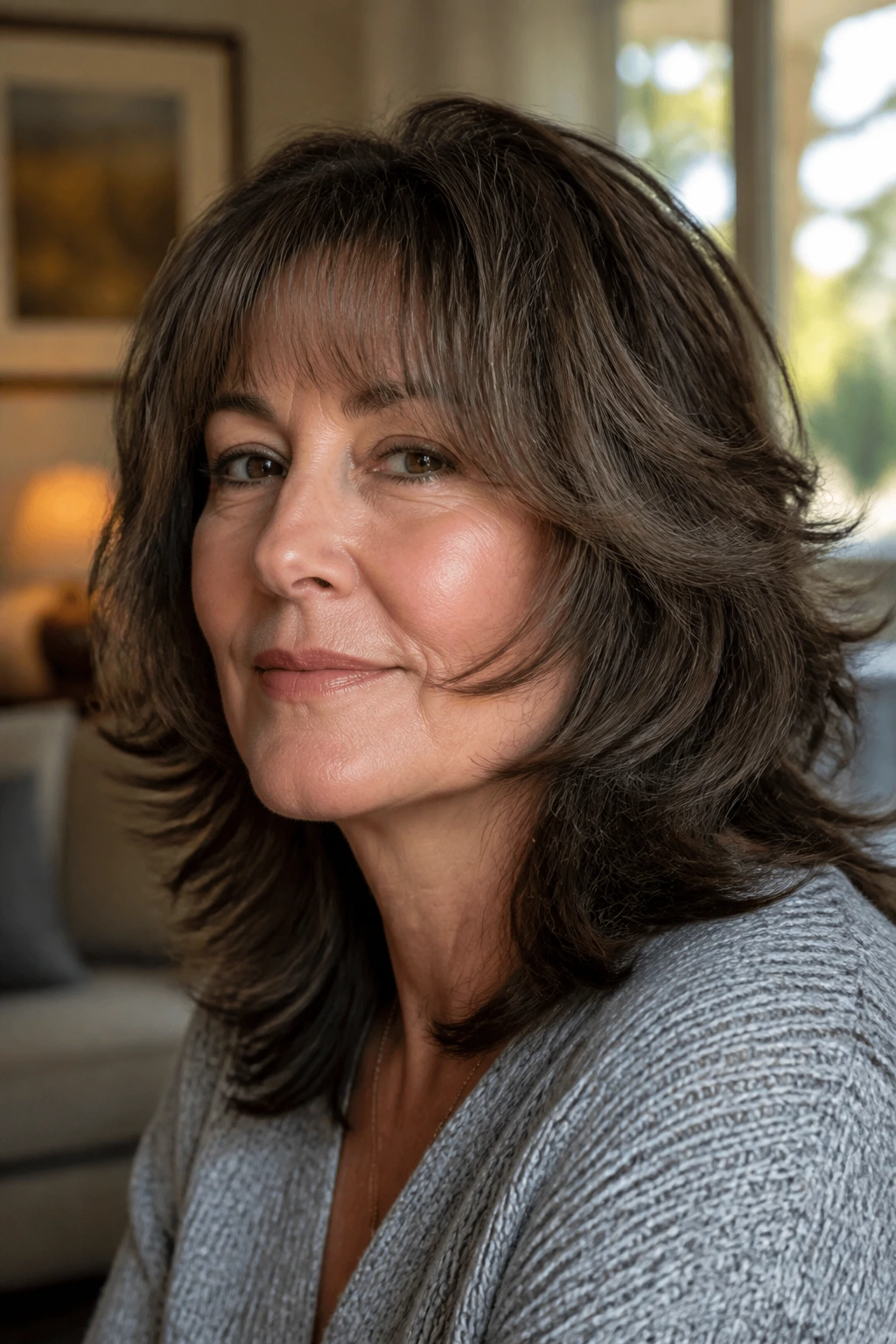
Thick hair sitting at the cheek can make a face look wider than it is. A jawline sweep shag fixes that by starting the face-framing pieces lower, near the jaw or just under it, so the front falls along the line you want to slim instead of crossing the widest part of the face.
Why It Works
The hair keeps its body in the back and sides, then narrows in the front just enough to pull the eye downward. That’s handy if your hair grows out broadly at the cheeks or if you wear a side part. Ask for the layers around the face to begin at the jawline, not the cheekbone, and keep the ends feathered so they don’t sit like a hard edge.
- Best for rounder cheeks and square jawlines.
- Good with a bend from a large curling iron or hot brush.
- Skip a blunt chin-length line; it makes the front look boxy.
- Works well with one side tucked back.
My preference: this is the least fussy way to get a slimmer-looking front without losing fullness.
8. Hidden-Interior Bulk-Removal Shag
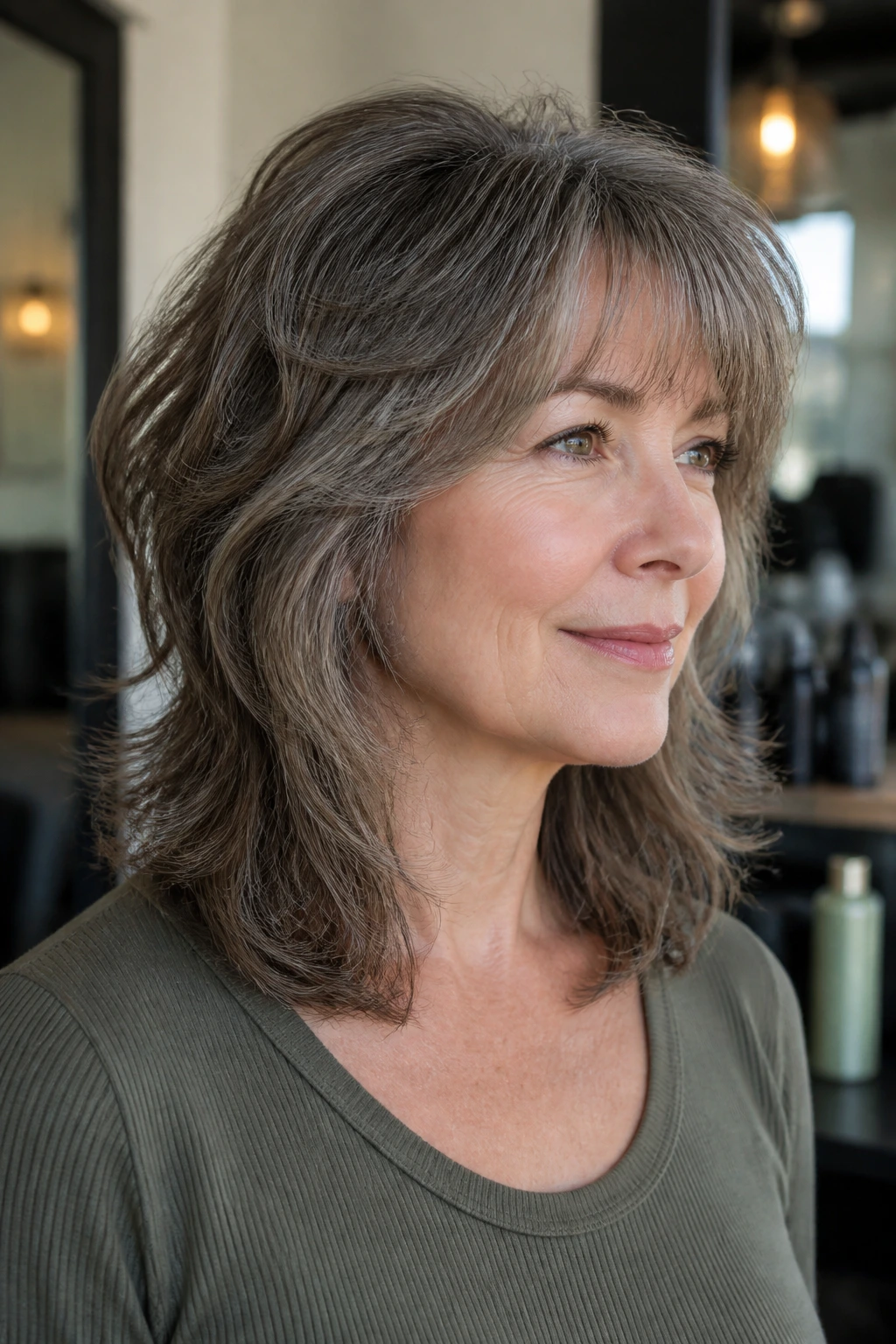
This is the cut for thick hair that looks polished from the outside but feels like a mop underneath. The visible shape stays smooth, while the stylist removes weight from the interior layers where the bulk actually lives. That means less puff at the sides, less heaviness at the back, and fewer moments where your hair seems to be wearing you.
Ask for internal layering, not a chopped-up outline. The perimeter should still look like a real haircut. If your hair is coarse or dense, too much surface texturizing can make the ends frizz before lunch. Interior removal keeps the edge solid and gives you movement where you can feel it, not just where the mirror catches it.
This version suits women who want the advantages of a shag without looking like they’ve lost half their hair in the process. It also behaves well under sweaters, scarves, and high collars because the neckline stays cleaner.
9. Air-Dry Wave Shag for Thick Wavy Hair
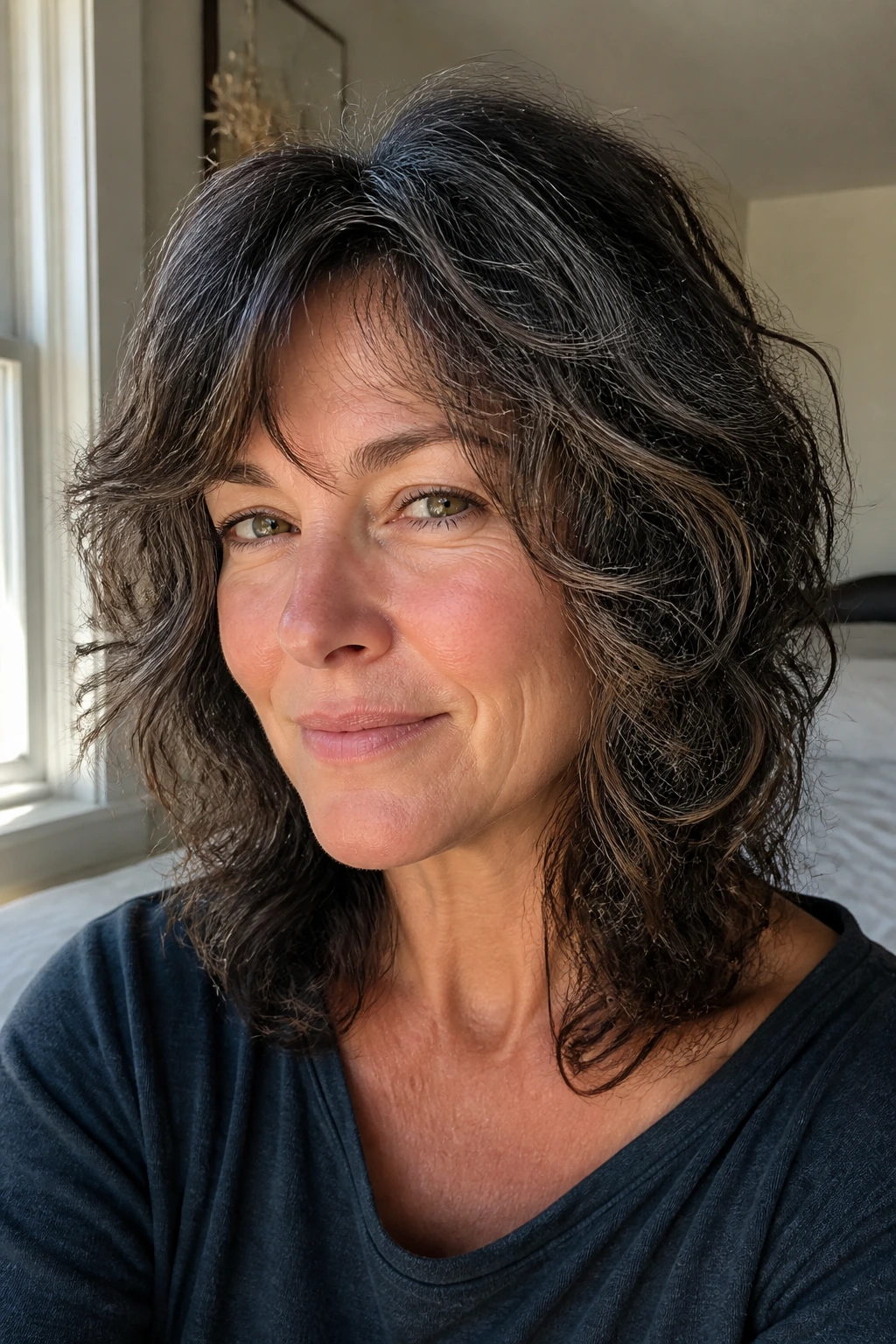
Can a shag look finished without a blowout? Yes, if the cut respects the wave pattern instead of crushing it. An air-dry wave shag uses medium layers to help thick waves settle into shape instead of swelling outward into a triangle. The shortest pieces usually live around the cheekbones or lower, which keeps the top from springing too high.
How to Wear It
Work a light mousse or wave cream through soaking-wet hair, scrunch from the ends up, and leave the crown alone until it starts to dry. Touching thick wavy hair too much is what wakes up the frizz. If you want more definition at the front, twist two small face-framing sections away from your face and let them dry like that. It’s a tiny move, but it changes the whole cut.
This is one of the best choices if you want your hair to look intentional on low-effort days. It should look a little broken up, a little airy, and still shaped.
10. Round-Brush Blowout Shag with Flipped Ends
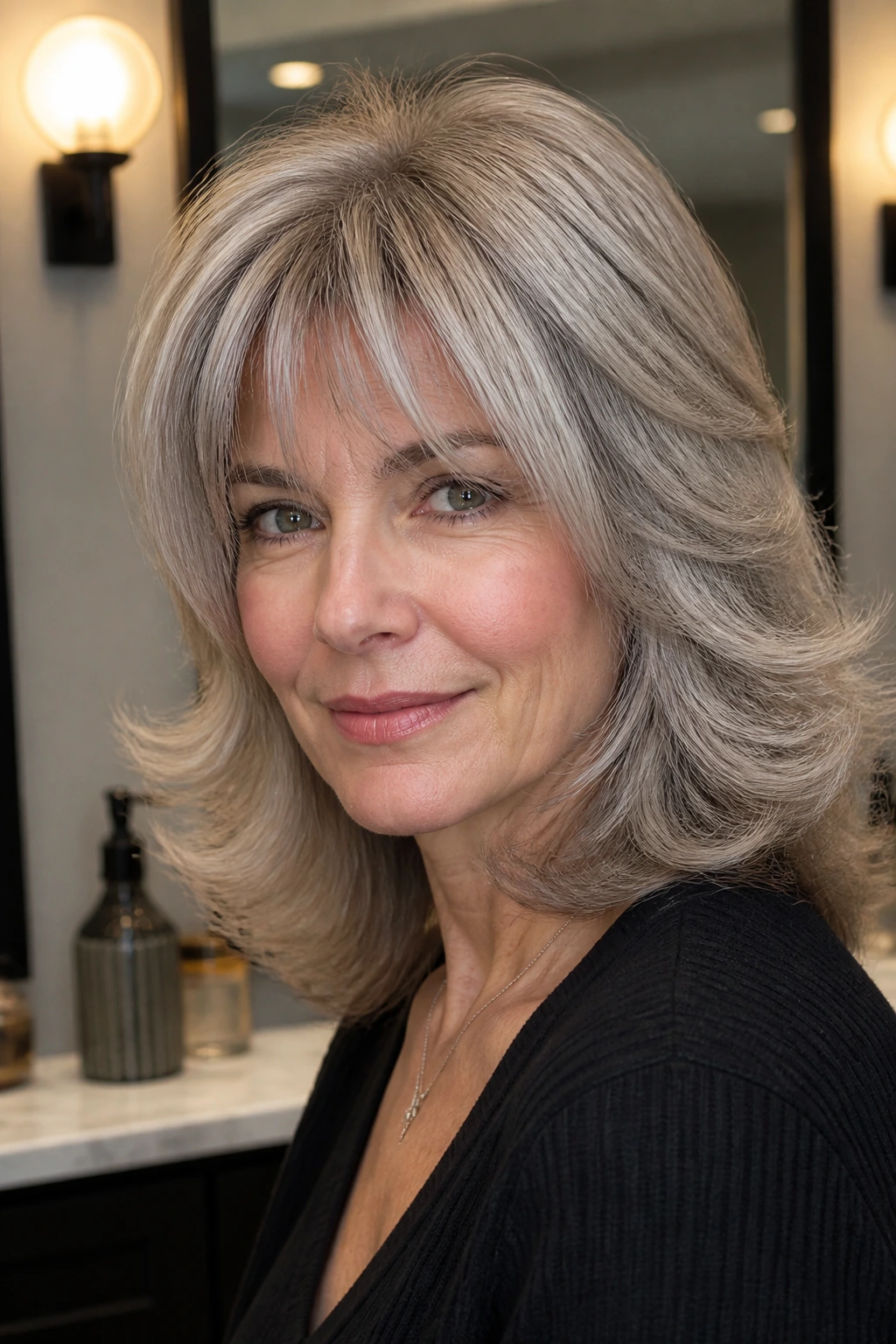
I’ve seen this cut rescue thick hair that looks tired when it hangs straight. The round-brush blowout shag keeps the medium length, but the ends are cut to move outward or under with a brush so the haircut takes shape fast after a wash. When the top layers are softly lifted at the root and the ends flip just a bit, thick hair stops reading heavy.
The point is not to chase a huge salon blowout every day. You want the haircut to accept bend, not require a long styling session. Ask for blended layers around the crown, a soft fringe or face frame, and ends that are lightly point-cut so they take a curve instead of sticking out like blunt sticks.
- Use a 1.5- to 2-inch round brush.
- Blow dry the crown first for lift.
- Finish the ends with a quick turn of the brush away from the face.
- Seal with a cool shot to hold the bend.
11. Temple-Tucked Shag That Clears the Face
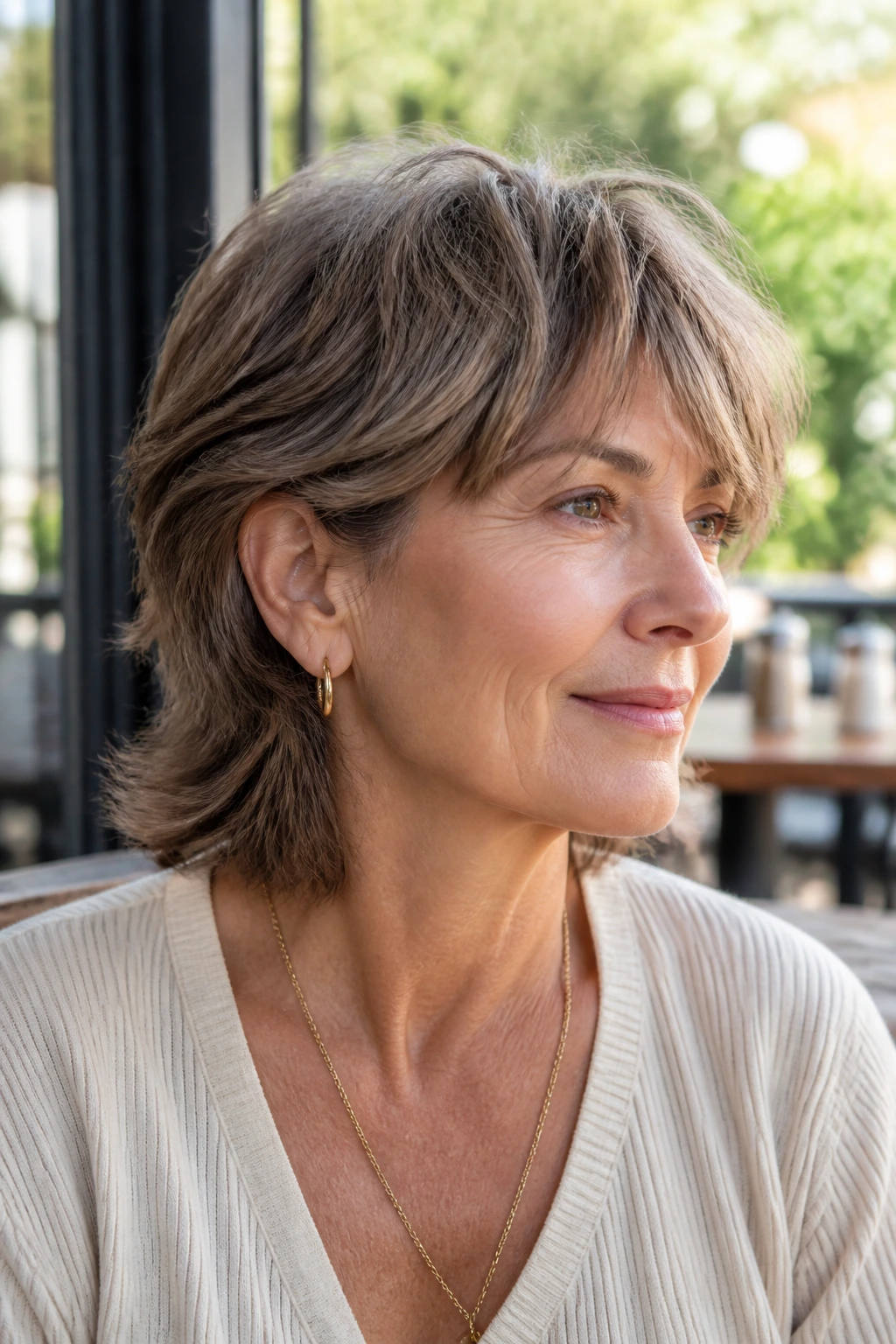
Some shags are about movement. This one is about relief. A temple-tucked shag keeps the hair lighter around the ears and temples, which sounds minor until you wear it all day and realize your hair isn’t brushing your cheeks every time you turn your head. On thick hair, that matters.
The silhouette stays medium and soft, but the sides are cleaned up enough to work with glasses, earrings, and humidity that makes everything swell. Ask for the temple area to be lightly layered and for the front pieces to slide back naturally. I like this cut when someone wants hair off the face without going short. It gives you air around the eyes and cheekbones, but it doesn’t steal the length that keeps thick hair looking rich.
This shape is also kind to women who tuck hair behind one ear all the time. The tuck looks intentional, not like you’re trying to get the hair out of the way.
12. Glasses-Friendly Open-Side Shag

A glasses-friendly shag is not just a fringe decision. It’s a side-panel decision. The front needs enough softness to frame the face, but the hair above and around the frames has to stay open or it will sit on top of your glasses and push the whole style down by lunch. Medium length gives you room to fix that without making the cut too short.
Unlike a heavy curtain cut, this version leaves more air at the temples and a cleaner line around the ear. Unlike a very short shag, it keeps enough length that the sides can tuck or bend around the frame instead of fighting it. If you wear glasses most days, ask your stylist to check the cut with your frames on. It changes where the fringe should land and where the side layers need to stop.
This is the kind of haircut that removes a small daily annoyance. No constant brushing hair off the lenses. No side pieces stabbing into the frame arms.
13. Choppy End-Flick Shag
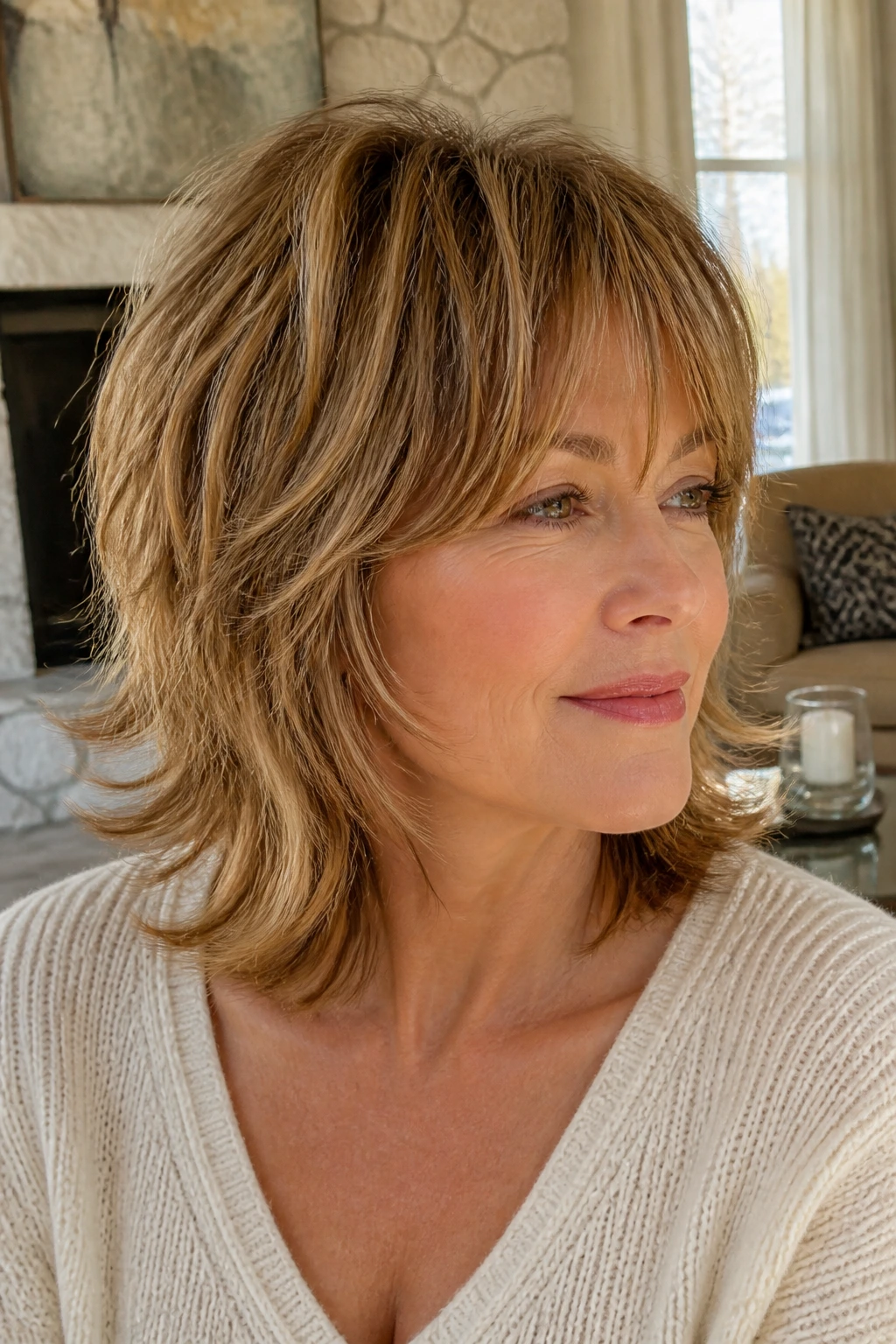
A choppy end-flick shag gives thick hair some attitude without making it look hacked up. The ends are cut to flick outward just a touch, which keeps the shape lively around the shoulders and prevents that heavy, straight-bottomed finish thick hair can develop by the third week after a cut. If you like a little movement when you walk, this one has it.
Why It Works
The flick happens because the layers are placed to create a small bend, not because the hair is severely razored. That matters. Hair that is too aggressively textured at the ends can frizz and lose shape fast, especially if it’s coarse. Ask for soft choppiness, not jagged edges, and use a small round brush or a flat iron bend just on the last inch.
- Great for hair that flips out on its own.
- Works with side-swept or center-parted fronts.
- Needs only a light texturizing spray to stay piecey.
- Avoid heavy sea-salt spray if your ends already feel dry.
14. Narrow-Neckline Shag That Slims the Back View
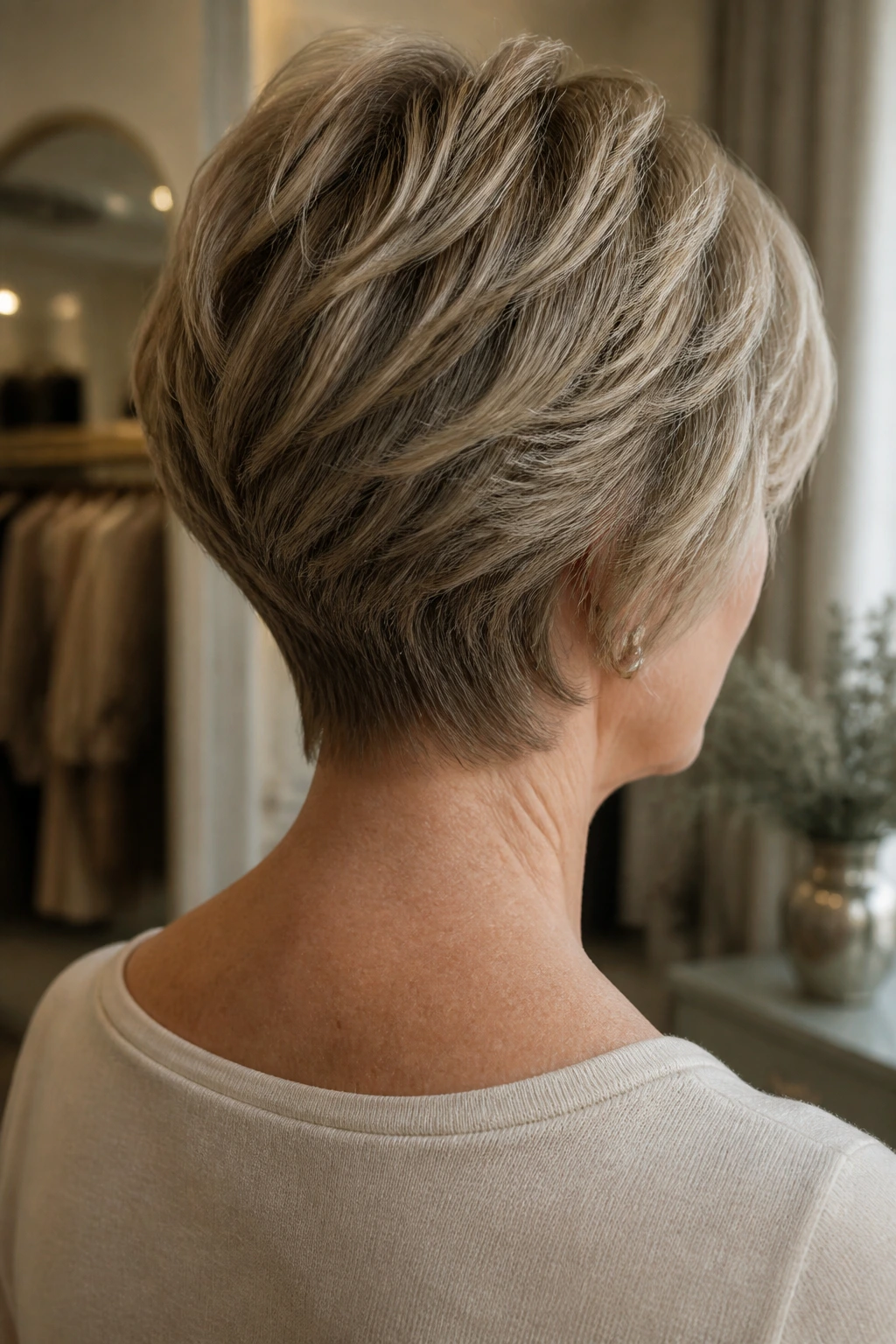
Thick hair often looks biggest from behind. A narrow-neckline shag handles that by clearing bulk from the nape and softening the lower back layers so the silhouette doesn’t spread out like a bell. The top can still have lift, but the neckline stays neat, which makes the whole cut look cleaner in collars, jackets, and scarves.
This is a very good choice if your hair tends to puff at the back of the neck or if a blunt bob makes your head look wider than you want. Ask for weight removal underneath the occipital area and a gentle taper into the nape. Not a buzzed nape. Not a dramatic undercut. Just enough clean-up to stop the hair from sitting like a block. The front can stay soft and flattering while the back quietly does the hard work.
15. Salt-and-Pepper Piecey Shag

Why does salt-and-pepper hair look so good in a shag? Because the layers break up the color just enough to show the silver and darker strands as separate ribbons instead of one solid mass. Thick hair can hide that movement if the cut is too flat. A piecey shag brings it back.
How to Wear It
This version works best when the ends are lightly separated with a cream or a tiny bit of wax. Too much product clumps the gray, and too little leaves the layers fuzzy. Ask for soft internal layering and a fringe that can fall forward or sweep aside. The cut should look finished even when it’s a little messy — that’s the sweet spot for salt-and-pepper hair, because the color itself already carries the story.
16. Long Fringe Shag You Can Sweep Aside
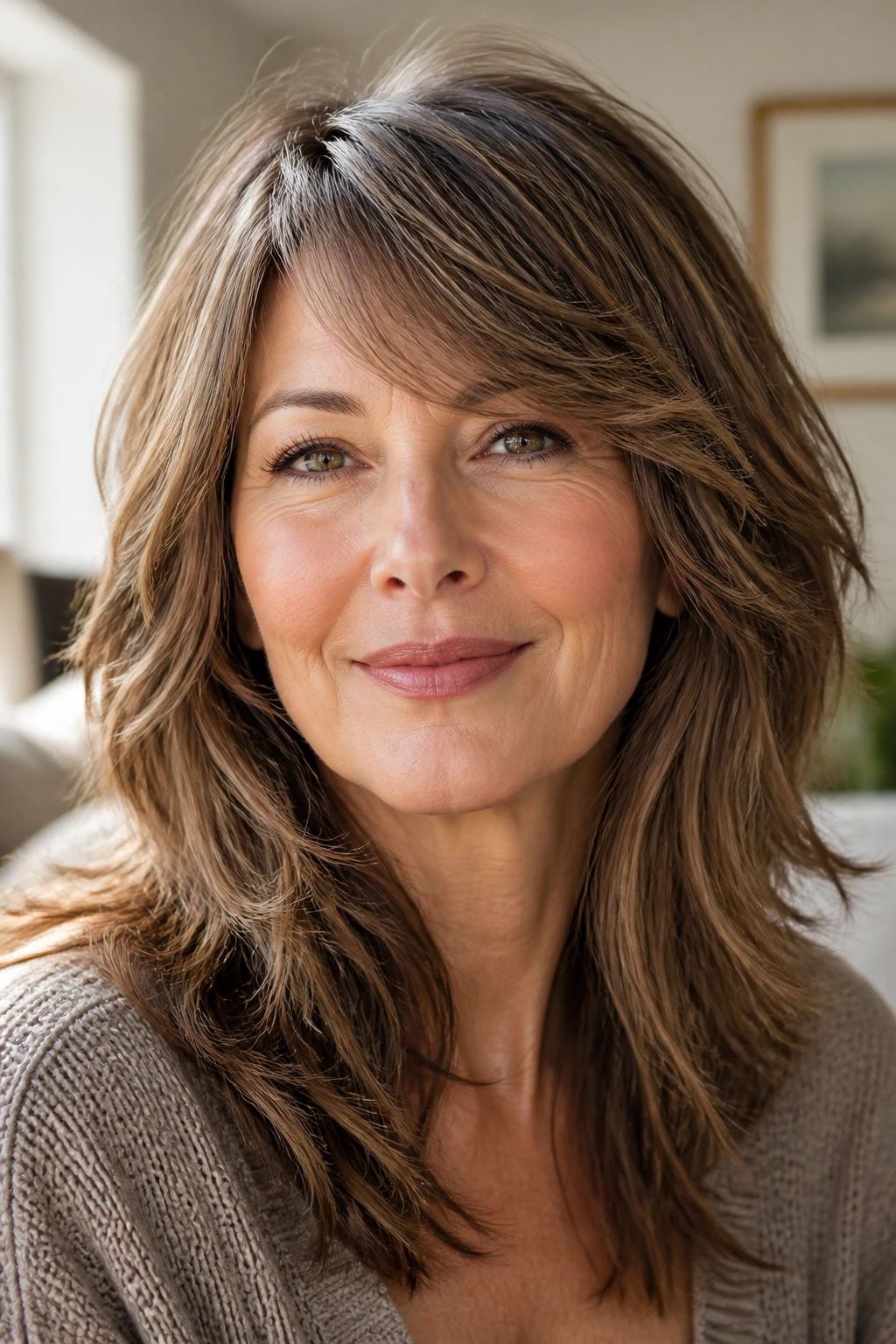
A long fringe shag is the cut for someone who wants the softness of bangs without being trapped by them. The fringe usually lands around the brows or just below, then gets point-cut so it can sweep off to the side instead of hanging in one block. On thick hair, that movement keeps the front from looking heavy.
I like this shape on women who want a little coverage on the forehead but do not want a short fringe that needs attention every morning. The long fringe can hide a cowlick, soften a strong brow, or fold back into the rest of the cut when you’re done with it. That’s the charm.
- Keep the fringe long enough to tuck back if needed.
- Ask for a soft side angle at the temples.
- Style with a flat brush if you want a cleaner sweep.
- Grow it out by blending it into the face frame.
The finish: relaxed, face-softening, and easy to change your mind about later.
17. Razor Shag for Straight, Dense Hair
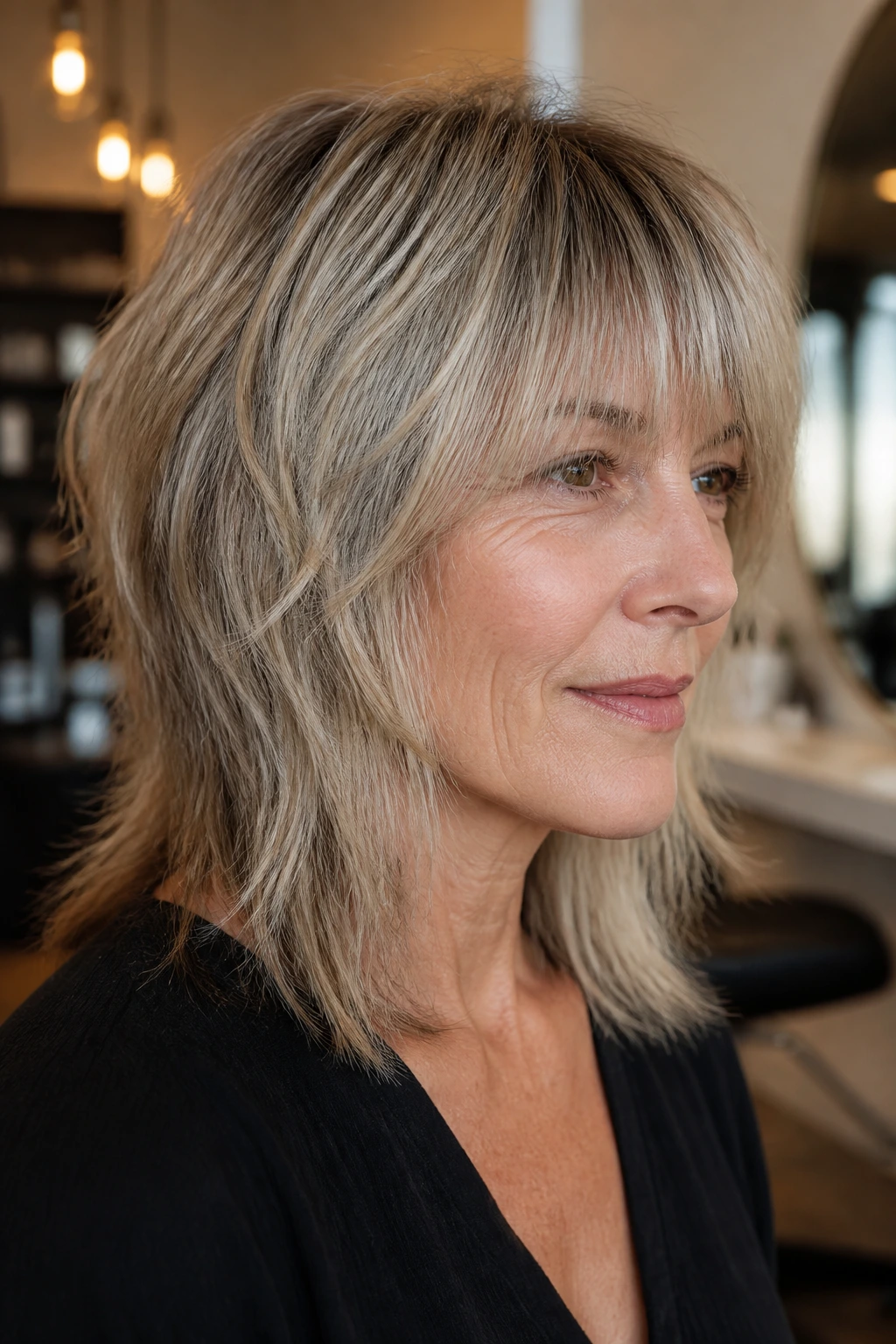
Straight thick hair can be the hardest to shag well, because every line shows. A razor shag handles that by breaking up the edges so the hair does not sit in one hard sheet. The trick is to keep the outline medium and the layers blended enough that the hair still has weight. If the razor work is too aggressive, the ends turn see-through and the shape falls apart.
For this type of hair, I prefer a stylist who knows when to stop. You want texture through the mid-lengths and a soft face frame, not a shredded perimeter that frays after three shampoos. This cut is especially good if your straight hair tends to stick out at the bottom when it gets humid or if it holds a blunt line that makes it look bigger than it is. A shine cream on the ends and a quick flat-wrap blow-dry keep it sleek without killing the movement.
It’s one of the cleanest looks in the bunch. Not the softest. The cleanest.
18. Curl-Respecting Medium Shag

A curly shag is not the same animal as a straight-hair shag, and treating it like one is how people end up with triangle heads and choppy crowns. The curl-respecting version keeps the medium length, but the layers are placed to let the curl pattern spring instead of fight the cut. The perimeter should stay long enough to weigh the curls down a bit, while the top gets enough shaping to stop the whole style from widening.
Unlike a razor-heavy shag, this cut usually needs softer scissors work or even a dry cut so the curl pattern is visible before the stylist removes too much length. It’s best for thick, wavy-to-curly hair that tends to lose shape when it’s cut blunt. Ask for curl-by-curl attention if the curls are uneven, and avoid too much thinning near the crown unless the hair is truly dense. For styling, a diffuser on low heat keeps the bend intact and prevents the frizz halo that curls can throw up when they’re rushed.
19. Soft Mullet-Edge Shag

A soft mullet-edge shag keeps a little extra length in the back and a little extra attitude around the crown, but it trims away the rough edges that make a mullet look too hard. On thick hair, that means the back can still brush the collar while the front and sides stay airy. The cut has movement from every angle, which is the real reason it works.
Why It Works
The slightly longer back helps thick hair fall instead of exploding outward at the nape, and the shorter crown layers keep the top from sitting flat. Ask your stylist to blend the transition carefully so the back doesn’t feel disconnected from the front. The result is modern, but not fussy.
- Good if you like a bit of edge without going full wolf cut.
- Works especially well with wave or bend.
- Needs light styling paste on the ends, not a heavy cream.
- Looks sharper with earrings and a side part.
20. Day-Two Shag That Looks Better After Sleeping on It

Some cuts are made for a perfect blowout. This one is made for real life. A day-two shag is shaped so the layers settle into a bend after you sleep on them, which means it often looks better after a little roughing up than it does the moment you finish styling. Thick hair loves that kind of structure because the cut already has enough body; it does not need to be molded into submission every morning.
The front should have enough softness to move after a pillow crease, and the ends should be lightly broken up so they don’t lock into one blunt line. A mist of water, a small round brush at the crown, and a touch of styling cream on the mids is usually enough to wake it up. If you are tired of hair that only behaves for six hours, this is a smart direction. It gives you a little forgiveness. And that is worth a lot.
21. Office-Ready Polished Shag

Can a shag look polished enough for a blazer and still keep its movement? Yes, if the layers are blended instead of aggressively chopped. The office-ready version keeps the medium length smooth through the ends, with just enough texture at the crown and face frame to prevent the hair from reading stiff. Thick hair benefits from that restraint.
How to Wear It
This is the cut for someone who wants softness, not drama. Ask for subtle face-framing layers, a clean neckline, and a fringe that can be tucked or swept instead of hanging in separated pieces. A paddle brush or a large round brush gets it there fast. Keep the finish satin, not crunchy. The cut should look like it belongs in daylight, not only in a bathroom mirror after a long styling session.
22. Grow-Out-Friendly Transitional Shag

I love a haircut that doesn’t punish you for letting it grow. A grow-out-friendly transitional shag is built for that exact mood. The shortest layers are kept long enough that they don’t stick up after six weeks, and the perimeter stays soft enough to become a lob if you decide to go longer. Thick hair can handle that kind of planning.
The trick is to place the layers where they’ll still make sense when they gain another inch or two. That means no ultra-short crown pieces and no blunt bang line that turns awkward the second it moves. Ask for a shape that can drift into a collarbone cut without losing its balance. If you are undecided, this is the safest bet. It gives you room to live with the haircut before you commit to the next one.
- Shortest layer should stay around cheek or jaw.
- The back should not be over-thinned.
- Ask for soft ends that can sit against the neck later.
- It should still look intentional at eight weeks.
Why Medium Shags Work So Well on Thick Hair
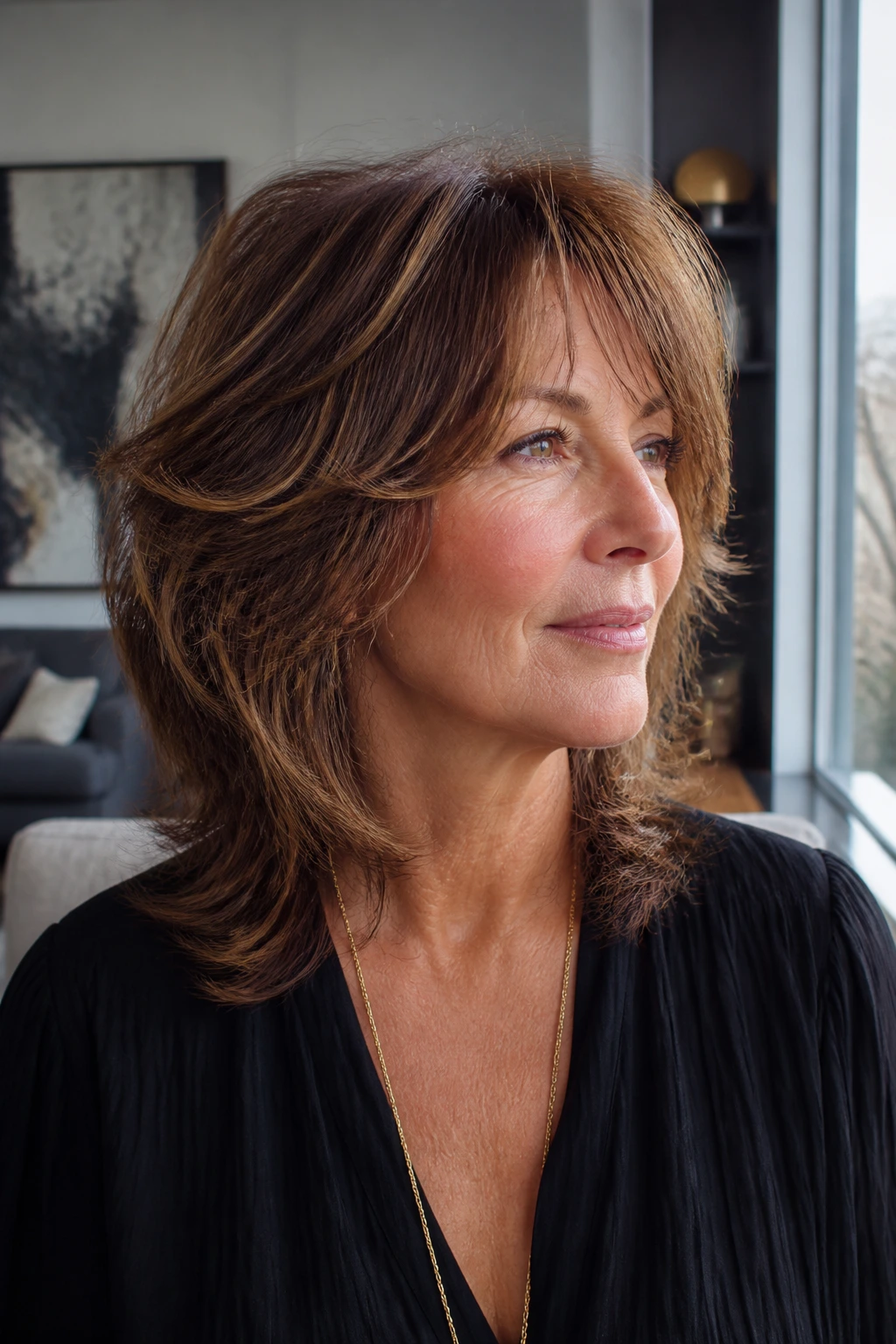
Thick hair is generous until it isn’t. Once the weight starts sitting in one block, the shape spreads sideways and eats your neck, your collar, and half your patience. A medium shag helps because the length is long enough to keep gravity in play, while the layers move the weight off the places where dense hair tends to flare. That mix is the whole trick.
A lot of people think thick hair needs to be thinned to be wearable. Not really. It needs to be redirected. There’s a difference. Internal layers take some of the bulk from the middle, face-framing pieces soften the front, and the medium perimeter keeps the cut from puffing into space. If the shortest layer sits too high, the top can look fluffy. If the layers stay too low, the shape goes heavy again. The sweet spot lives in the middle.
Weight line, crown lift, and the triangle problem
The triangle problem is what happens when dense hair grows wide at the bottom and narrow at the top. A shag interrupts that shape by trimming the internal weight and giving the crown a little lift. The goal is not a sky-high head of hair. The goal is a balanced silhouette that moves when you do.
A good shag keeps the perimeter believable. That line matters. It’s what stops the haircut from looking like it lost its mind after three shampoos. When the ends are too shredded, thick hair turns fuzzy. When they’re too blunt, the haircut turns boxy. The medium shag lives between those two failures, and that’s why it keeps showing up in salons that know how to handle dense hair.
One more thing: thick hair tends to show every mistake at the neckline. Clean nape work, even if it’s subtle, makes the cut look finished from the back. You notice it every time you put on a sweater.
What to Tell Your Stylist Before the First Snip

Bring pictures, yes, but also bring words. A photo shows shape. Your words tell the stylist how the shape has to behave on your head. Say where the bulk lives: at the crown, behind the ears, at the nape, or through the sides. Those are not the same problem, and they do not need the same solution.
Tell them whether you air-dry, diffuse, blow-dry, or mostly let it do its own thing. A shag that looks tidy under a round brush can look much rougher if you never heat-style it. If you wear glasses, wear them to the appointment. If you tuck hair behind one ear all day, say that. If one side has a cowlick and the other side doesn’t, point it out. The better the map, the better the cut.
A few phrases worth using:
- “I want movement, not a lot of thinning.”
- “My hair puffs at the sides.”
- “I need the fringe to work with my glasses.”
- “Please keep enough length to tuck it back.”
- “I want the perimeter soft, not wispy.”
Nope, that is not fussy. It is useful.
Essential Tools for Styling Thick Hair Layers
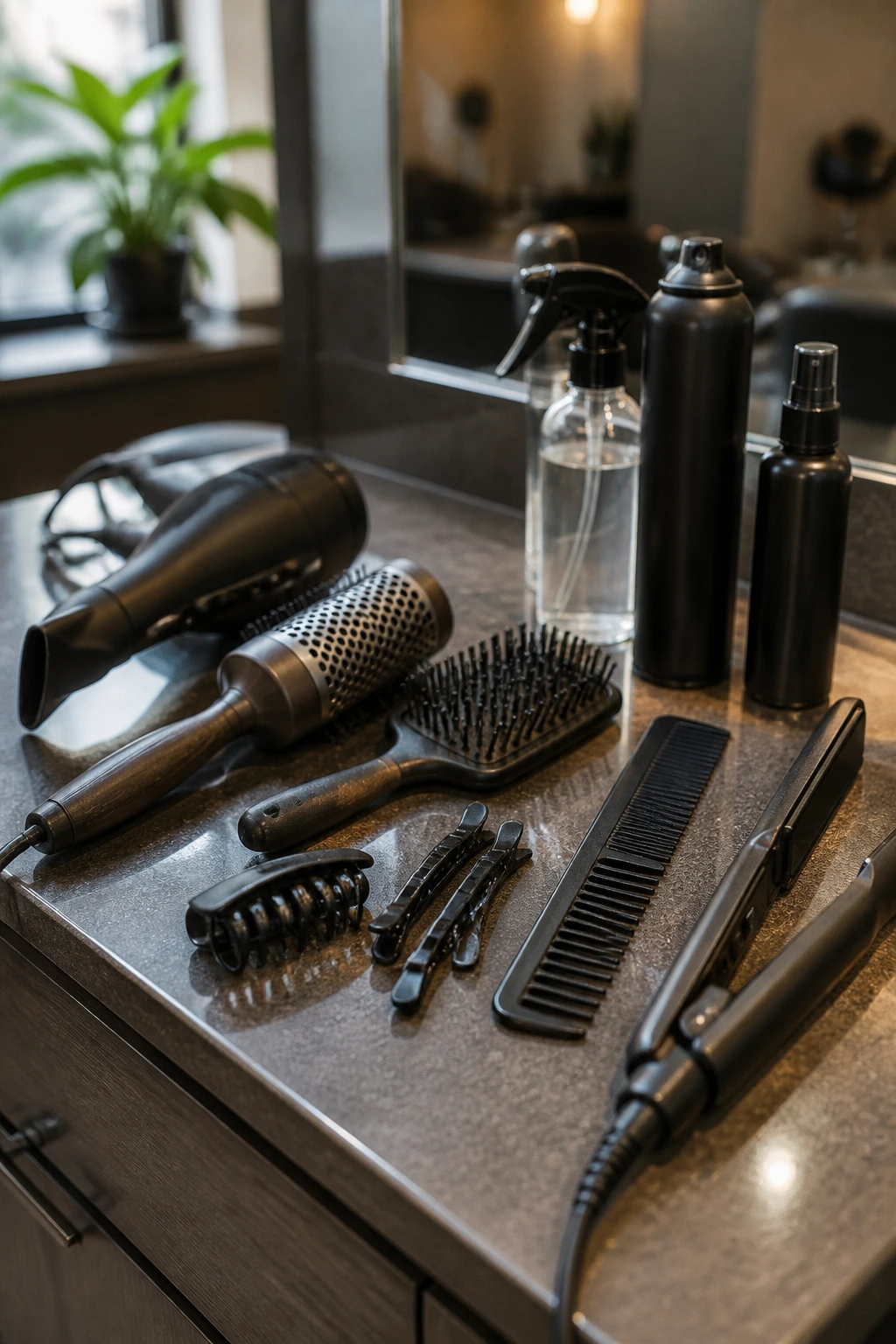
- Blow dryer with a narrow nozzle: Directs air where you want it instead of blowing the cut apart.
- Medium round brush, 1.5 to 2 inches: Gives collarbone layers a bend without creating huge curls.
- Vent brush or paddle brush: Good for rough-drying dense hair fast before you shape it.
- Sectioning clips: Thick hair needs sections. Skipping them is how the top goes smooth and the underlayers stay damp.
- Heat protectant spray: Non-negotiable if you use a dryer, iron, or hot brush.
- Light mousse: Adds grip at the roots when the hair collapses.
- Texturizing spray: Helps day-two layers separate instead of sticking together.
- Wide-tooth comb: Better than a fine comb on wet dense hair.
- Small flat iron or curling iron: Useful for bending just the front pieces or flipping the ends.
Product Choices That Keep Thick Hair Soft Instead of Puffy

The wrong product can ruin a shag faster than a bad cut. Heavy oils and thick creams can flatten the crown and make the ends stringy. Too little product and the layers fuzz up, especially if the hair is coarse or gray. The best choices depend on what the hair does when it dries.
For thick hair that collapses at the root, a light mousse at the crown adds lift without making the ends sticky. For coarse or silver hair, a small amount of smoothing cream on damp mids and ends keeps the cut from fraying. Texturizing spray belongs at the mid-lengths, not at the scalp, where it can make the cut feel dusty. And heat protectant matters even on days when you only plan to touch the front with a brush or flat iron.
Best product types by problem
- Flat crown: use mousse or root-lift spray.
- Puffy ends: use a small amount of cream or serum on the last two inches.
- Day-two separation: use texturizing spray or a tiny wax stick.
- Frizz at the front: use heat protectant, then smooth with a brush and cool shot.
- Dry gray hair: use a light leave-in, then stop there.
If your hair is fine-stranded but dense, go lighter on creams and heavier on sprays. If it is coarse, the reverse usually works better.
Small Styling Moves That Make the Cut Look Intentional
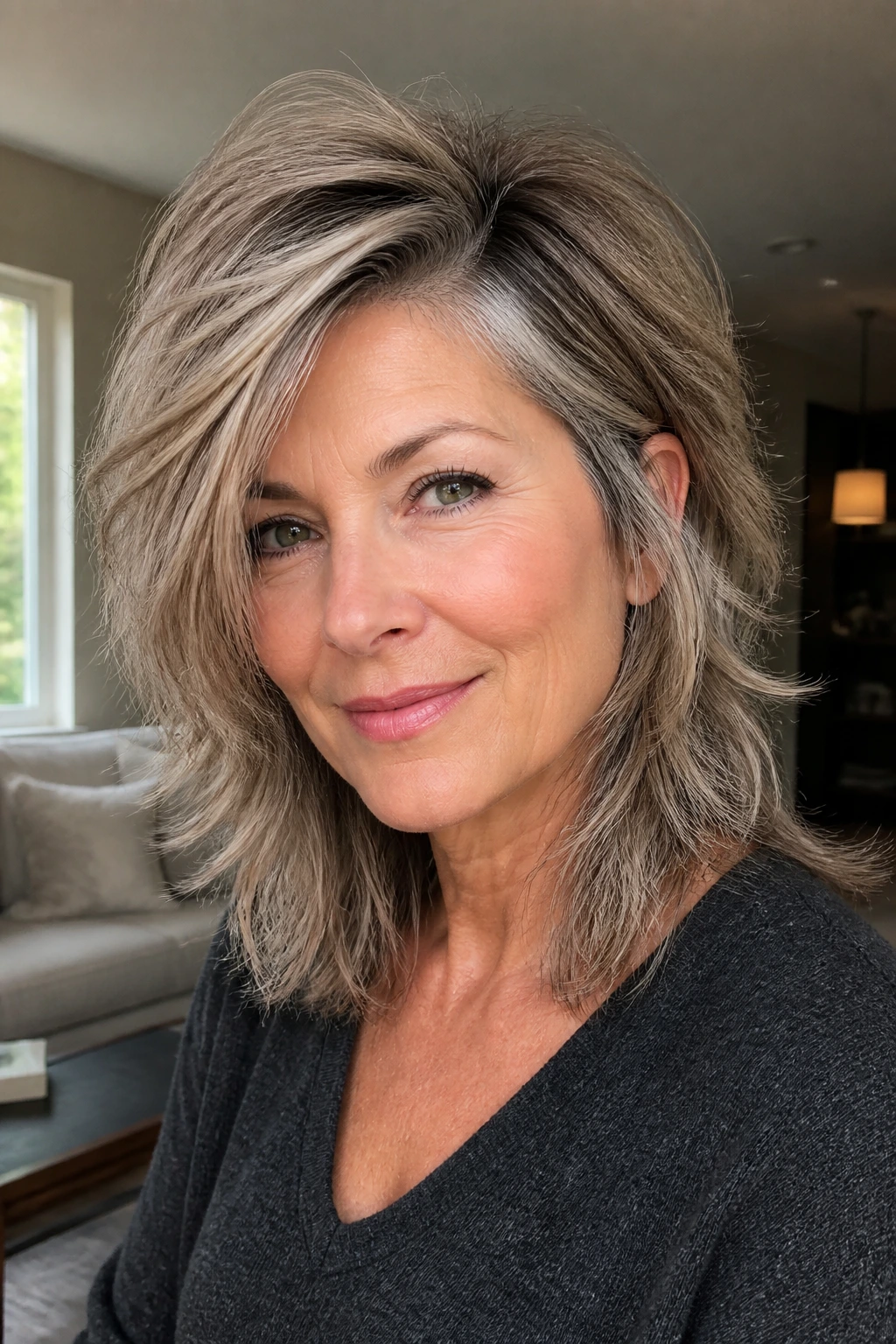
Root Lift: Dry the crown first, with the dryer pointed up and back, so the top does not collapse under the heavier lengths. A lot of thick-hair shag problems start here. If the crown sits flat, the whole cut feels dragged down.
Face Frame: Dry the front pieces away from the face, then let them cool in that direction. That tiny set keeps the fringe from splitting in awkward places.
End Bend: Turn the last inch of the hair under or out with a brush or iron. Don’t curl the whole head. Thick hair needs direction, not a spiral party.
Day-Two Reset: Mist the mids with water, twist two front pieces, and hit the crown with a little dry shampoo if it needs lift. Then leave it alone for five minutes. Touching it too much just wakes the frizz back up.
Finish Lightly: If the cut still looks puffy, resist the urge to pile on cream. Use a half-pump of serum on the ends and stop. The shape should still move when you shake your head.
Common Mistakes That Make Thick Hair Look Boxy
-
Taking too much off the crown: The top goes fluffy and the sides spread out. Fix it by keeping the shortest layers lower, around cheekbone or jaw level, unless you want a stronger wolf-cut edge.
-
Using thinning shears everywhere: The ends can look see-through and frizzy instead of light. Ask for point cutting or internal layering instead of full-on shredding.
-
Cutting a blunt fringe too short: Thick bangs pop up, widen, and start living their own life. A curtain or bottleneck shape usually behaves better.
-
Ignoring the neckline: The back gets wide and square. Clean up the nape so the silhouette narrows before it hits your collar.
-
Putting heavy product at the roots: The crown collapses and the layers lose lift. Keep creams and oils on the mids and ends only.
-
Choosing a photo without matching your texture: A shag on glossy straight hair does not always translate to coarse, wavy, or gray hair. Bring a reference that looks close to your own density and bend.
Variations and Adaptations Worth Trying

Glasses-First Fringe: If your frames are your daily uniform, ask for a fringe that opens above the lenses and side pieces that clear the temples. It keeps the haircut from fighting your face all day.
Coarse-Hair De-Bulk: For thick, coarse strands, ask for interior removal only and keep the surface layers longer. That preserves the shape while removing the heavy feeling that coarse hair can have at the shoulders.
Air-Dry Wave Plan: If you hate round brushing, keep the layers slightly longer and ask for a cut that follows your wave pattern. Use mousse, scrunch, and leave the ends broken up rather than polished.
Soft Silver Shape: On gray or white hair, a feathered fringe and soft face frame keep the color from reading like one flat block. A little shine cream on the ends helps the silver look clean, not fuzzy.
Lived-In Wolf Edge: If you want more attitude, shorten the crown slightly and let the back run longer. Keep the transitions soft so it still feels wearable on an older face, not borrowed from a teen magazine cover.
Trim Schedule and Long-Term Maintenance

A good medium shag can go a little longer between cuts than a blunt shape, but it still needs touch-ups. Plan on a full trim every 8 to 10 weeks if you want the layers to stay visible and the neckline to stay neat. Bangs or curtain pieces may need a smaller cleanup every 3 to 4 weeks if they hit your glasses or drift into your eyes.
If your hair grows fast at the nape, check that line in the mirror every couple of weeks. That is where thick hair starts to look unfinished first. A tiny dusting around the neck and sideburn area can buy you time between appointments. It’s not glamorous. It works.
For product buildup, use a clarifying shampoo every 2 to 4 weeks, depending on how much mousse, spray, or cream you use. Too much buildup makes shag layers limp, and limp layers do not read as shaggy at all. If the ends feel dry, swap in a hydrating mask once a week, but keep it off the roots. The cut should stay light at the top and soft at the bottom.
Questions People Ask Before Cutting Their Hair into a Shag

Will a medium shag make thick hair look thinner?
It should make it look lighter, not sparse. The right shag removes bulk from the interior and keeps enough perimeter weight to preserve fullness. If the cut is over-thinned, that is a bad shag, not a shag problem.
Can I get one if I wear glasses every day?
Yes, and it can work especially well. The fringe and temple pieces just need to be planned around your frame width so the hair does not sit on the lenses or press the glasses down.
Is razor cutting safe for coarse hair?
Sometimes, but not always. Coarse hair can handle razor work if it is healthy and the stylist knows how to stop before the ends fray. If your hair is dry, brittle, or heavily colored, shears are usually the better choice.
How short should the shortest layer be?
For a softer look, keep the shortest layer around the cheekbone or jaw. Higher than that gives more lift and more edge, which can be useful, but it also makes thick hair more likely to puff at the top.
What if my hair is straight and heavy, not wavy?
That is still shag territory. Straight dense hair often needs more internal layering and a cleaner outline, plus a little round-brush bend to keep the cut from lying flat in one sheet.
Can I still put it up?
Absolutely. Medium length gives you low ponytails, clips, half-up styles, and a loose knot at the nape. That flexibility is part of why this length works so well.
How do I keep it from frizzing?
Don’t over-thin the ends, and don’t drown the cut in heavy products. A light leave-in, heat protectant if needed, and a cool shot at the end of blow-drying usually do more than a shelf full of creams.
Will it grow out awkwardly?
Not if the layers are placed with grow-out in mind. Ask for a transitional shape with soft ends and no ultra-short crown pieces, and it will drift into a lob instead of turning into a problem.
The Cut That Keeps Its Lift
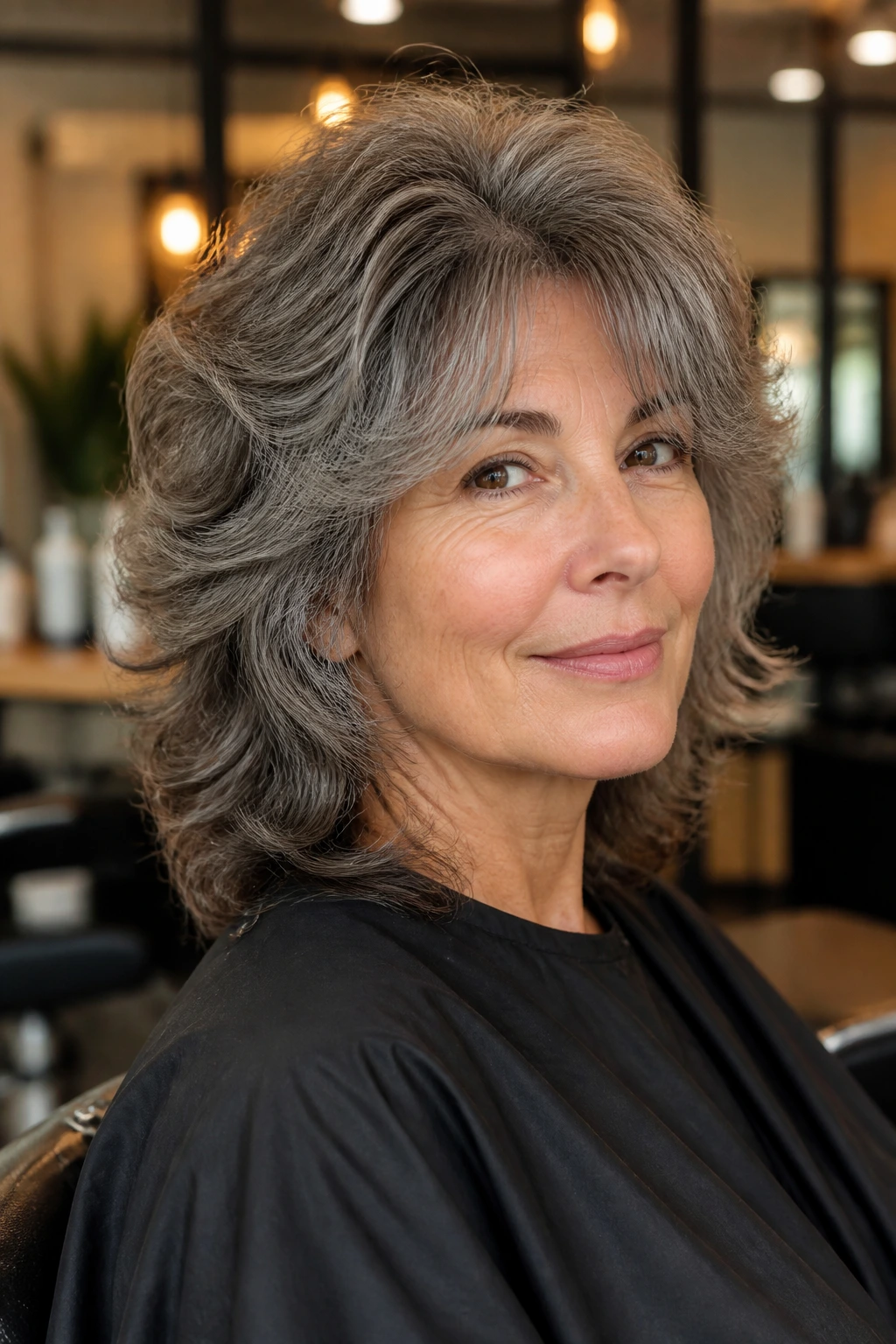
Thick hair does not need to be wrestled into submission. It needs shape, a little room, and a stylist who knows when to stop cutting. That is the real appeal of a medium shag: it removes the parts that fight you and keeps the parts that give your hair its life.
Bring one of these shapes to the chair, ask for the weight to be moved instead of hacked off, and pay attention to where your hair swells, bends, and settles. When the cut is right, it keeps paying you back every time you brush it, tuck it, or let it dry on its own.