



Medium hair gets weird when it’s one length. It can hang heavy at the ends, puff a little at the sides, and somehow still look flat at the crown by noon. A long shag fixes that without forcing you into a full mullet or a chopped-up pixie. The perimeter stays long enough to tuck behind the ear, twist into a claw clip, or fall over the shoulders with a little weight, while the layers do the work of taking out the dull, blocky shape.
That’s why modern long shag haircuts for medium hair keep showing up in salon chairs. The best versions aren’t about looking messy for the sake of it. They use controlled layering, face-framing pieces, soft fringe, and just enough texture around the ends so the haircut moves when you move. There’s a difference between “shaggy” and “accidentally over-layered.” A good shag knows exactly where to stop.
Medium hair is the sweet spot, too. Short shags can get frothy fast, and very long shag cuts can lose their architecture under their own weight. At collarbone to just-below-shoulder length, the shape stays visible, the layers still read, and the grow-out usually looks intentional for a while instead of looking neglected. If your hair is straight, wavy, curly, thick, or fine, there’s a version here that can work with the way your hair already wants to behave.
Why These Long Shags Work So Well on Medium Hair
-
They keep the length you actually use. A long shag gives you movement without sacrificing the part that still goes into a ponytail, bun, or clip.
-
The layers remove drag, not personality. The best cuts carve weight out of the mids and crown so medium hair stops hanging like a sheet.
-
Curtain bangs, bottlenecks, and side fringe change the whole mood. One layer of fringe can make the same haircut read soft, edgy, retro, or polished.
-
They’re forgiving on busy mornings. A bend in the front pieces and a little texture spray can make the shape look intentional even when you didn’t spend much time on it.
-
Grow-out usually looks decent. A shag can look a little lived-in after 8 to 10 weeks; a blunt cut at the same length often looks heavy and unfinished by then.
-
They work with more than one styling method. Air-dried waves, brushed-out volume, or a flat-iron bend can all land in the same family without the cut fighting you.
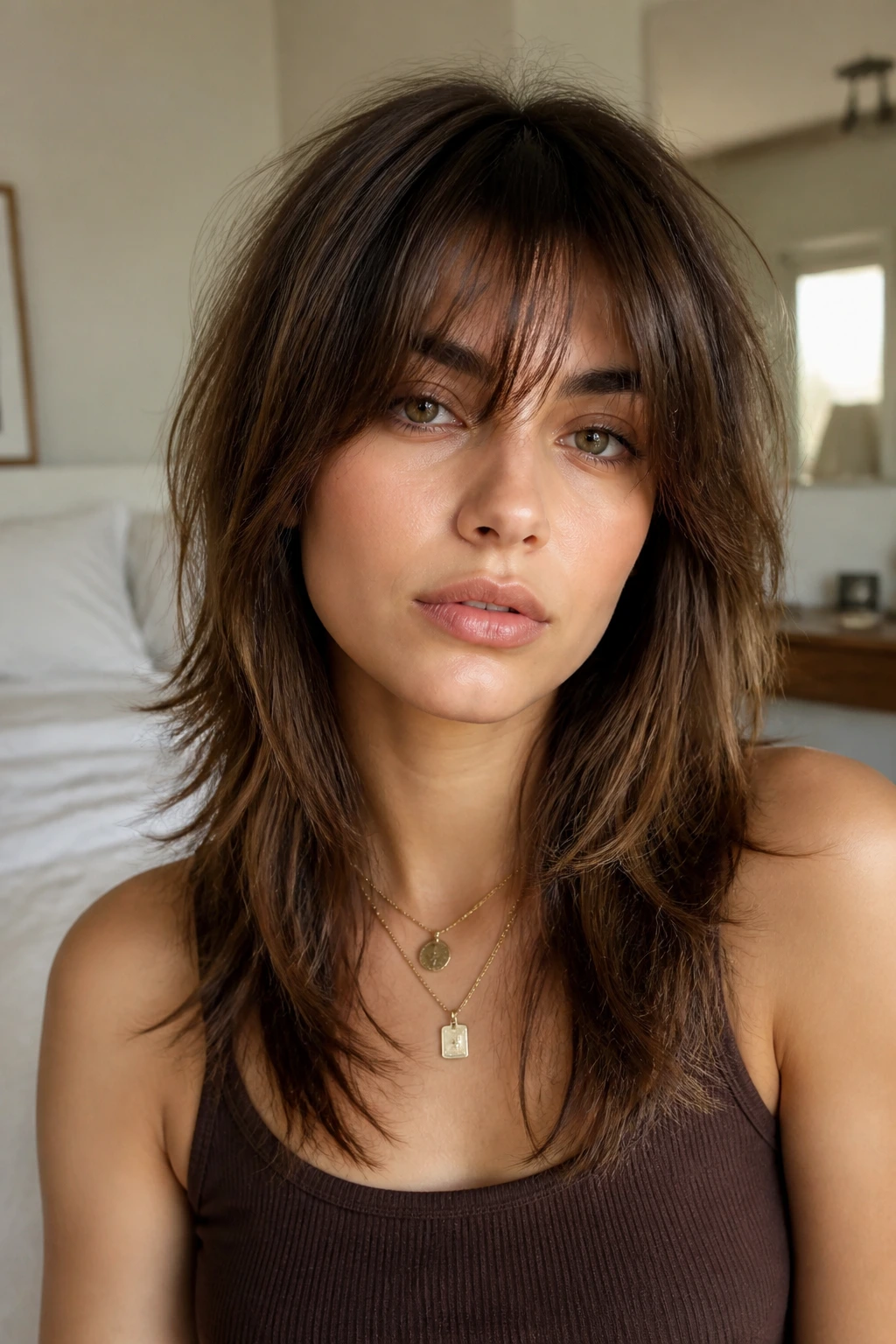
1. Curtain-Bang Long Shag with Collarbone Layers
This is the shag most people picture when they want movement without going full punk. The fringe splits in the middle, the front pieces taper softly at the cheekbones, and the layers settle around the collarbone so the whole cut still feels wearable on a regular day. It’s the kind of haircut that can look polished with a round brush and a little bend, or a little slept-in if you let it dry on its own.
What makes it work on medium hair is the balance. The perimeter keeps enough weight to avoid that puffed-up, overcut feeling, while the curtain bang opens the face without eating up too much length. Ask your stylist to keep the shortest face frame around the nose or lip line if you want the fringe to swing instead of flare. Too short, and it starts acting like a bad grow-out. Too long, and it disappears into the rest of the cut.
A pea-size smoothing cream through the mids and a small round brush at the front are usually enough. Nothing dramatic. Just enough direction to get those front pieces to fall away from the face instead of sitting in a straight line.
2. Razor-Sharp Wolf Shag for Medium Hair
A wolf shag has more attitude in it. The crown is shorter, the ends are wispy, and the whole cut leans a little more directional than a soft shag. On medium hair, that edge is a good thing because it stops the length from feeling sleepy. The result is not a helmet of layers. It’s more like hair that decided to have a backbone.
This version works best if your hair already has some bend or if you don’t mind styling with a diffuser or curling iron. Razor cutting can make the ends look airy, but on very fine hair it can also make the last inch look scraggly if the cut goes too far. I’d keep the perimeter a touch heavier in that case and ask for internal texture instead of aggressive thinning.
If you like the look of a haircut that feels a little lived-in the second day, this one is hard to beat. It loves texturizing spray at the mids and ends, and it gets even better with a loose claw clip on the top half so the layers can fall around the face instead of disappearing.
3. Air-Dry Wavy Shag with Invisible Layers
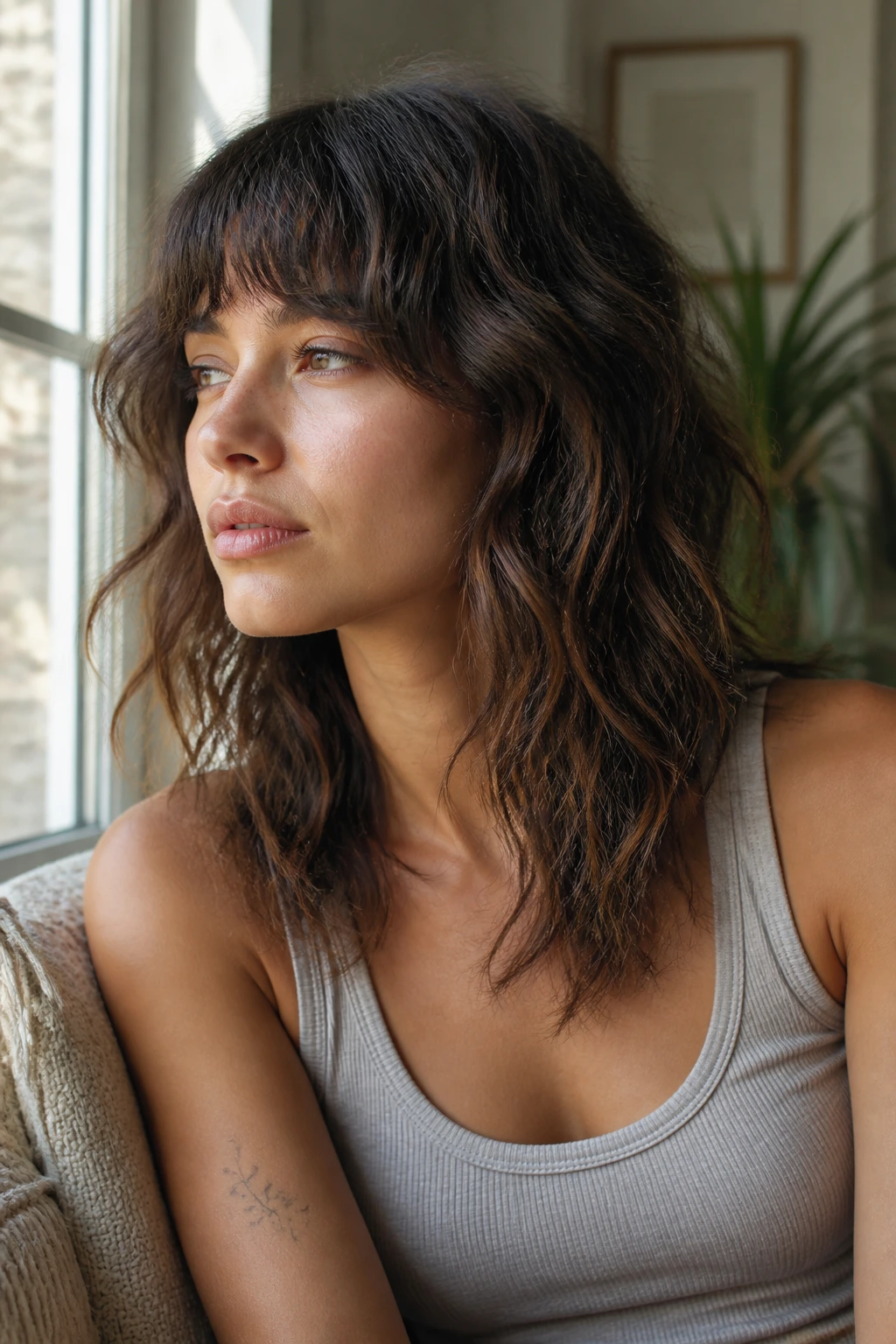
A lot of shag cuts look good in photos and then fall apart when air-dried. This one is built for the real world. The layers are tucked inside the shape, which means the haircut gets movement without broadcasting every layer line. On medium hair, that matters. You want shape, not obvious choppiness.
If your natural wave bends from root to midlength and then drops at the ends, this cut is friendly. The hidden layers let the wave stack a little instead of collapsing into a triangle. A light leave-in cream, a few scrunches, and a diffuser on low heat can bring out the shape without making it crunchy. If you air-dry straight hair, you’ll still get softness, though the result will read more polished than tousled.
Ask for the longest face-framing layers to hit around the bottom of the cheek or just below the mouth. That keeps the cut from feeling too round around the face. It’s a small adjustment, but on this haircut small adjustments do a lot.
4. Feathered Seventies Shag with Soft Crown Lift
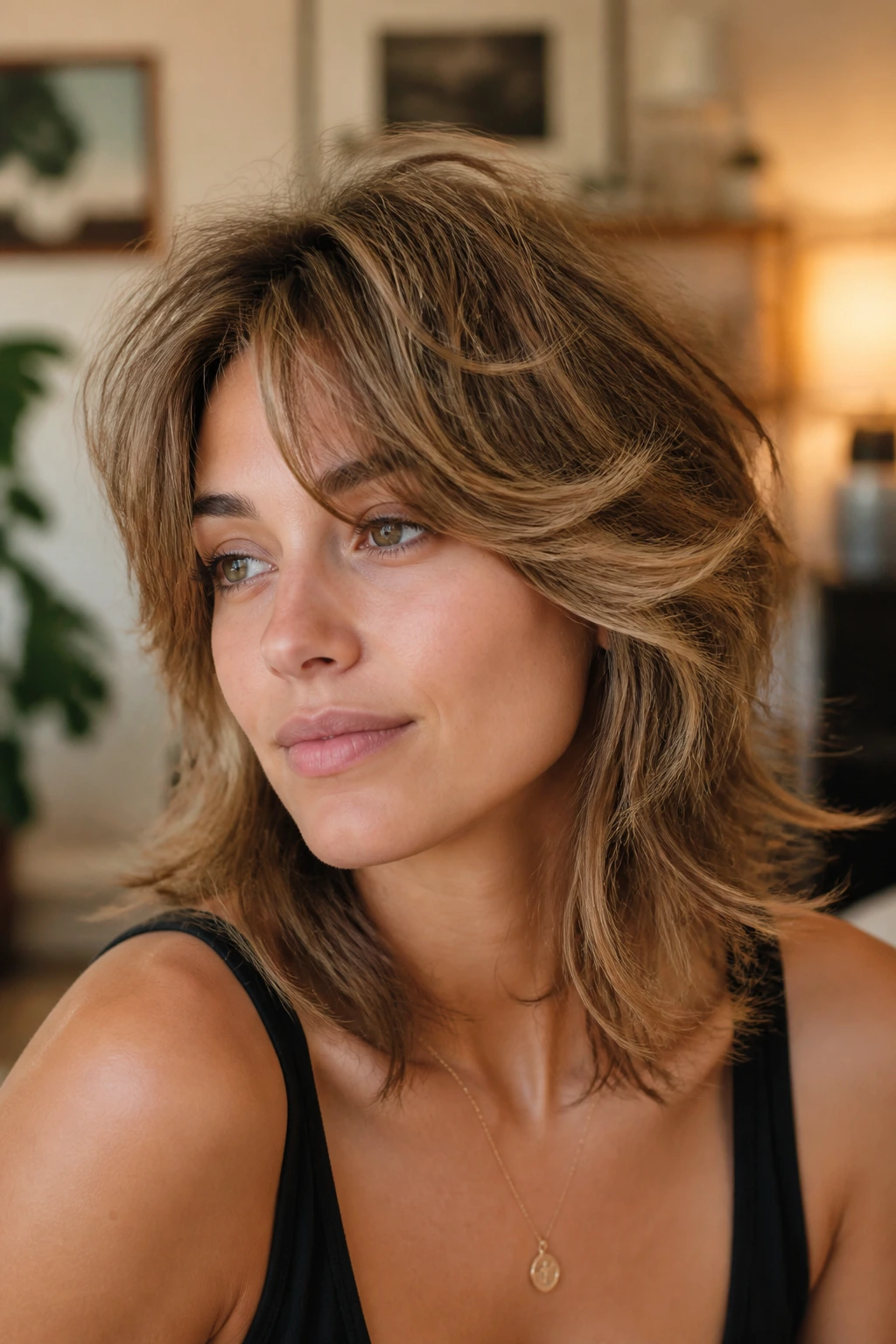
This one has a little glamour baked into it. The crown gets gentle lift, the layers feather out instead of stacking sharply, and the ends move like they’ve been brushed through one hundred times in the best way. It’s retro, yes, but not costume-y. On medium hair, that feathering gives the length a lightness it usually doesn’t have on its own.
The trick is keeping the shape soft. If the top gets too short, the cut can start looking dated fast. If the layers stay too long, you lose the feathered sweep that makes this version special. The sweet spot is a rounder top with soft graduation through the sides and a perimeter that still reaches the collarbone or just below it.
This cut loves a medium round brush, a blow dryer with a nozzle, and a little lift at the roots. You do not need stiff hairspray. A flexible mist is better because the whole point is movement. The hair should bounce, not freeze.
5. Bottleneck Bang Long Shag
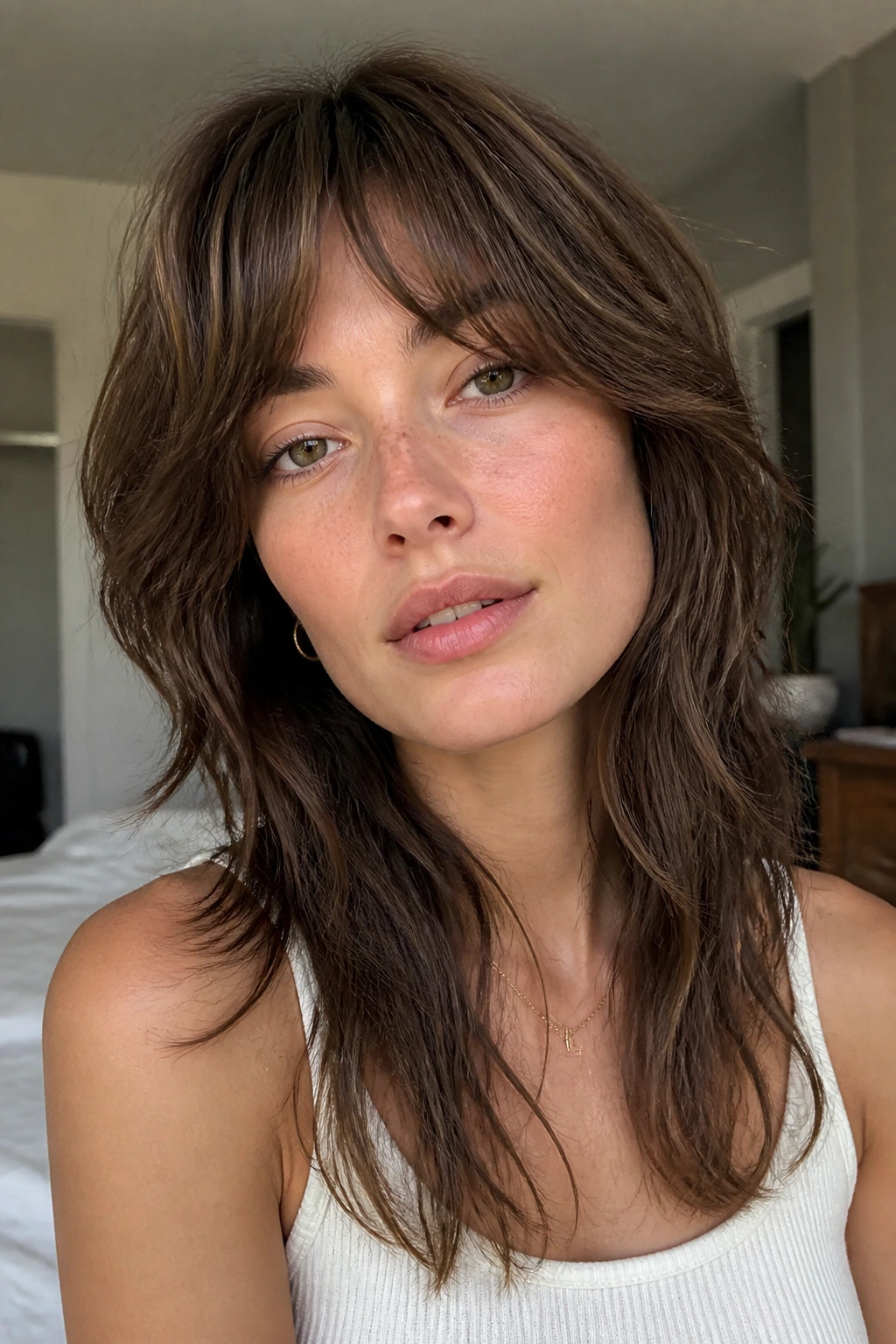
Bottleneck bangs are the more tailored cousin of curtain bangs. They sit a little narrower at the top, then open around the cheekbones, which makes them especially good for medium hair that needs structure near the face. On a long shag, they sharpen the shape without making it harsh.
This is the cut I like for people who want fringe but do not want to feel trapped by it. The bang starts denser at the center, then breaks open as it blends into the side layers. That means you can wear it swept, parted, blown out, or pushed aside on lazy days. It still looks like a haircut, not a styling accident.
Tell your stylist you want the bangs to graze the brows when they’re fresh, because they’ll bounce up a little as they dry. The layers around the jaw and collarbone should stay soft, not chopped into little shelves. A little bend from a flat iron or round brush brings out the shape fast.
6. Face-Framing Shag with Cheekbone Pieces
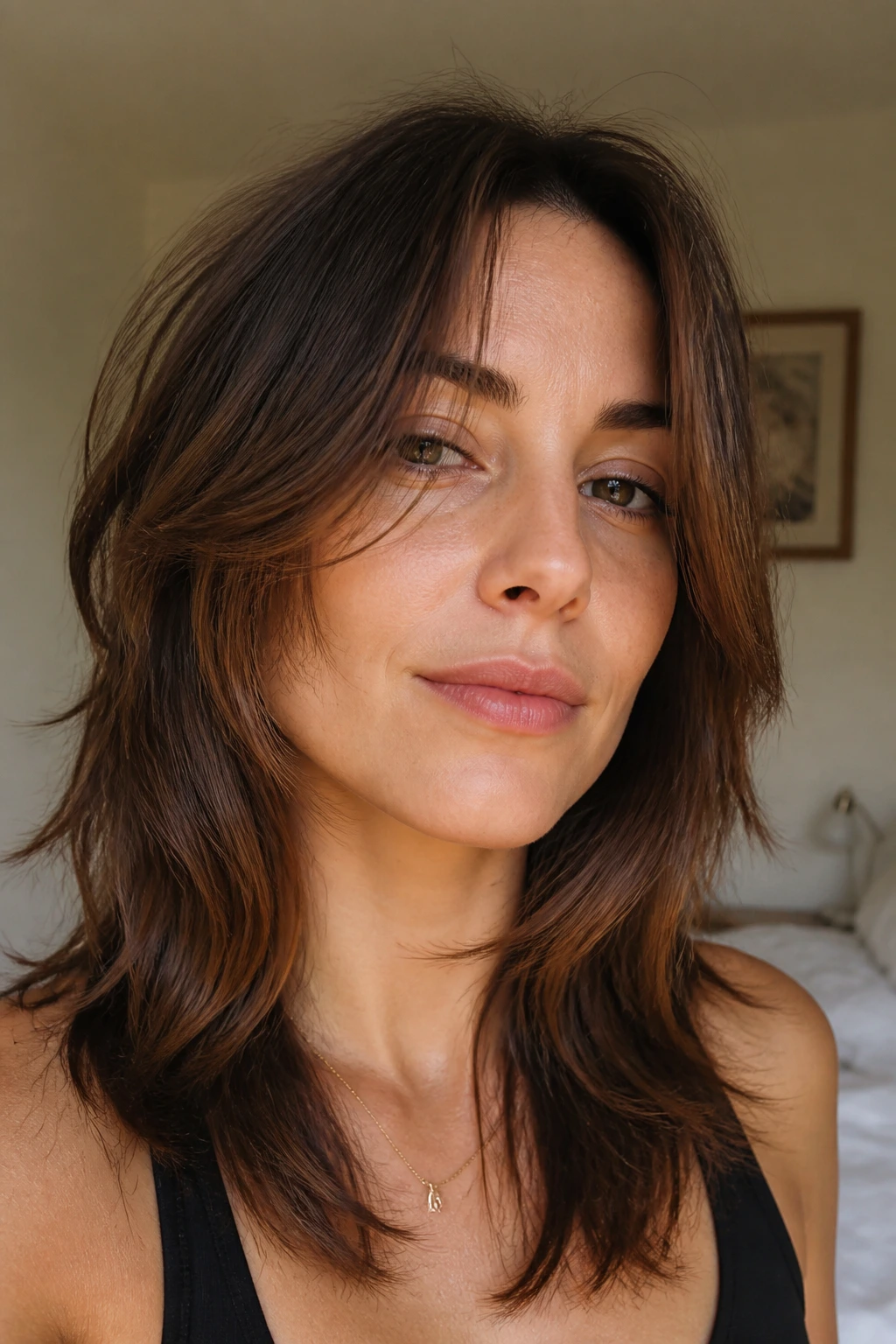
If you like a cut that makes your eyes and cheekbones do the talking, start here. The strongest pieces sit around the face, often starting around the cheekbone and dropping into longer layers near the collarbone. The rest of the haircut stays more restrained, which keeps medium hair from turning into a cloud.
This is one of the easiest long shag haircuts for medium hair to live with because the silhouette stays clean. You get movement where people actually look first, and the rest of the shape can stay fairly simple. It’s good for anyone who wants dimension without heavy fringe. It also works well if you wear glasses, since the front pieces can be shaped to sit just above or around the frames instead of fighting them.
A small detail matters here: the front should angle forward, not just fall straight down. That slight diagonal keeps the cut from looking boxed in. If your hair is thick, ask for internal removal through the back so the front frame can do its job.
7. Thick-Hair Shag with Strategic Debulking
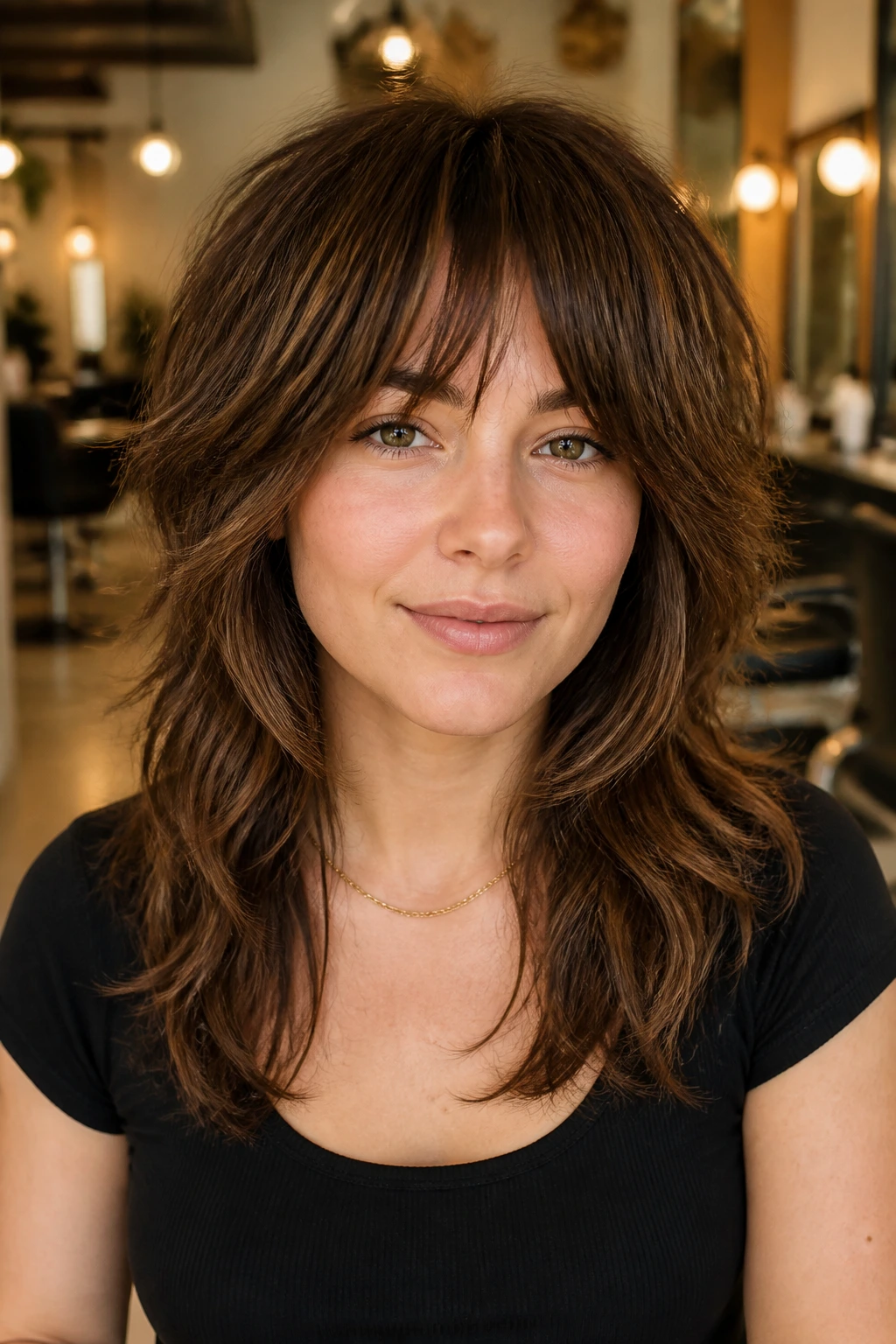
Thick hair can wear a shag better than almost anything, but only if the haircut respects the weight. This version uses internal debulking, which means the stylist removes bulk from inside the shape instead of carving the outside to pieces. That’s the move that keeps medium-length thick hair from puffing out like a triangle.
The perimeter should stay solid enough to hold a line. If the ends get too wispy, thick hair can look frayed instead of textured. What you want is a cut that drops cleanly at the bottom but still has movement in the mids. Ask for the weight to be removed under the top layers and around the back of the crown, where thick hair tends to balloon.
Styling is easier than people think. A blow-dry cream, a brush, and a little extra heat around the roots usually do it. Don’t overload it with heavy oil. Thick hair can take more product, but a shag loses its shape fast when the mids get slicked down.
8. Fine-Hair Shag with Floaty, Barely-There Layers

Fine hair needs a lighter hand. This shag keeps the layers long enough to show movement without slicing the length into thin, see-through pieces. The shape should feel airy, not sparse. That difference matters more than people realize.
On medium hair that’s fine, the danger is over-layering. Too many short internal layers and the ends start looking stringy. Too much thinning, and the cut loses its body by lunch. What works better is a soft face frame, a little crown lift, and a mostly intact perimeter. The haircut should still have something to hang on to.
Use a mousse at the roots, not a heavy cream through the mids. Blow-dry with your head flipped over or use a small round brush at the crown if you need volume there. If your hair is straight, a few loose bends through the front pieces can make the whole cut look fuller without adding much time.
9. Curly Shag with Rounded Shape and Long Fringe
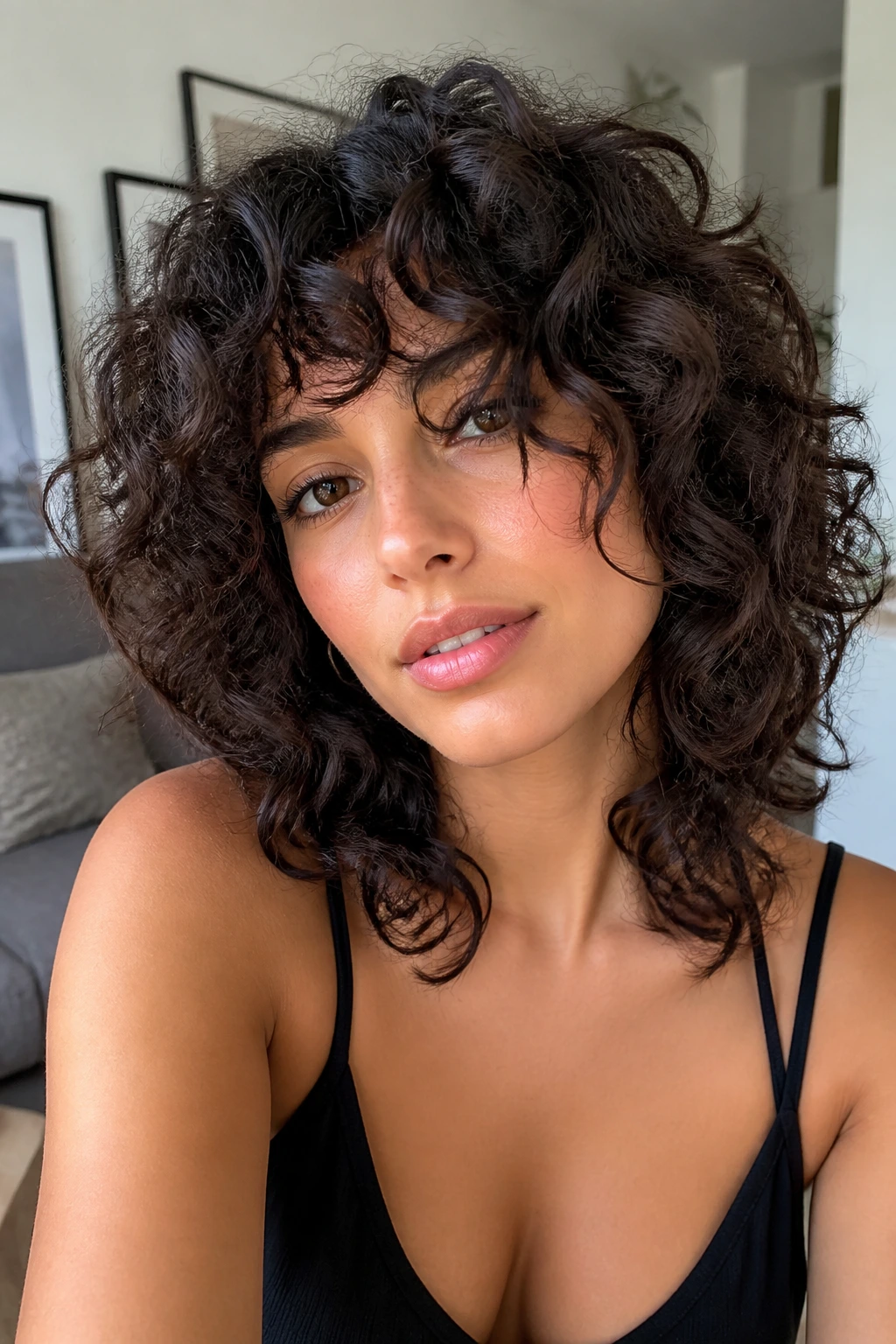
Curly hair and shag layers have a long, happy history together, and medium length is where the relationship makes the most sense. A rounded curly shag lets the curl pattern stack instead of spreading outward. The fringe stays long enough to avoid shrinking into bangs you didn’t ask for, and the rest of the cut keeps the curls from sitting in one heavy block.
This cut is all about dry cutting or at least cutting with the curl pattern in mind. If the stylist cuts curly hair too wet and too straight across, the shape can surprise you in the worst way once it springs up. You want long layers that encourage the curls to fall in sections, not a pile of disconnected puffs.
A diffuser, a light gel, and a leave-in conditioner are the trio here. Scrunch, don’t rake. If your curls are looser on top and tighter underneath, a slightly longer fringe helps the front blend into the rest of the shape without a blunt line cutting across the forehead.
10. Sleek Long Shag with Bendy Ends
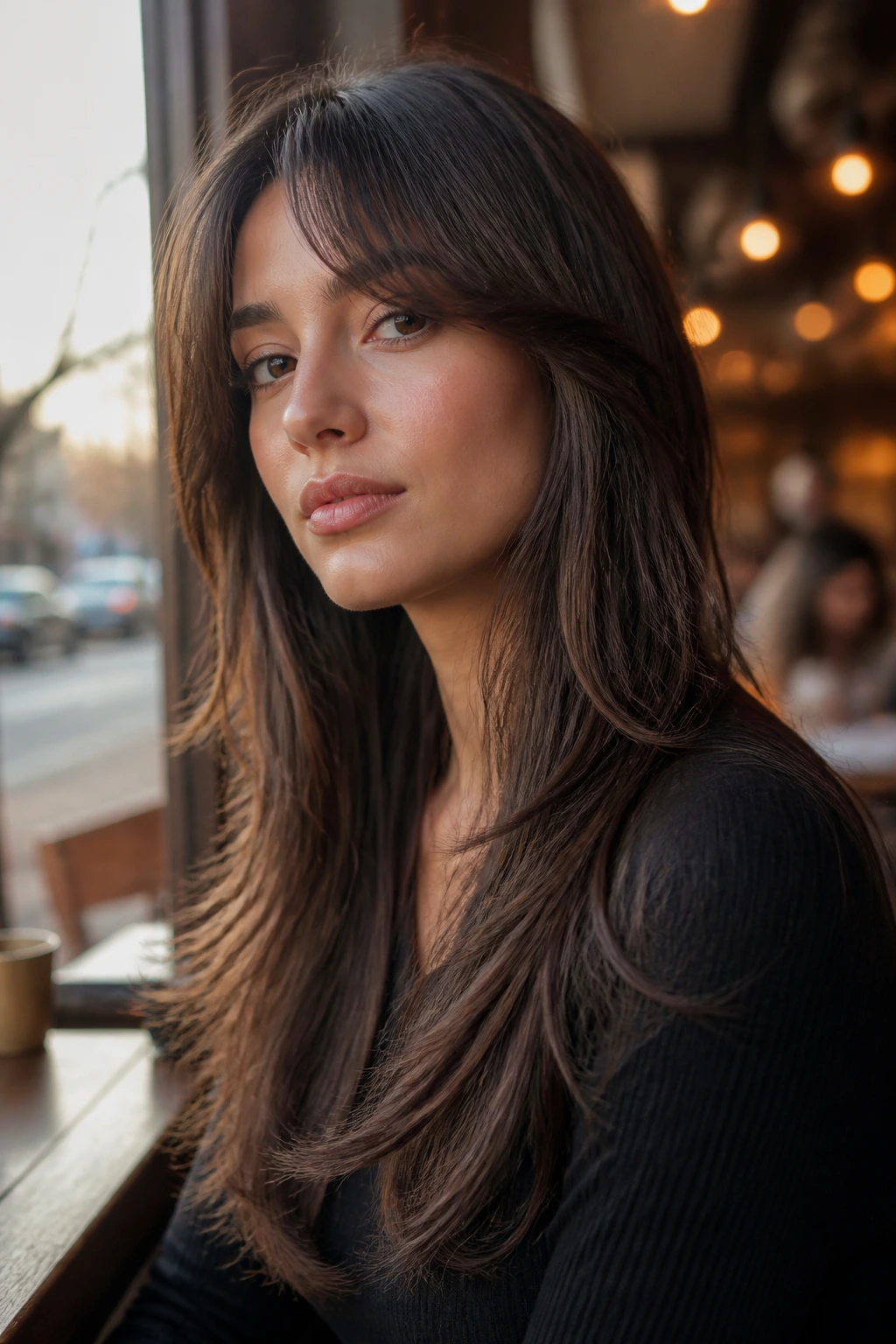
Not every shag has to look messy. This version keeps the top smoother, the outline cleaner, and the ends just bent enough to show movement. It’s a good choice if you want the shape of a shag without the full piecey texture that some versions bring. Medium hair likes this because it keeps the length looking tidy instead of exploded.
The best way to wear it is with a subtle flat-iron bend or a quick brush-out from a blowout. The front pieces should turn away from the face in a soft S-curve. The back can stay straighter, which actually makes the layered front look sharper by contrast. That contrast is the whole point.
If your job or your wardrobe leans more polished, this is one of the easiest long shag haircuts for medium hair to carry into a more dressed-up setting. It still moves, but it doesn’t shout about it. A little shine serum on the ends helps, as long as you keep it away from the roots.
11. Deep Side-Part Shag That Changes the Whole Shape
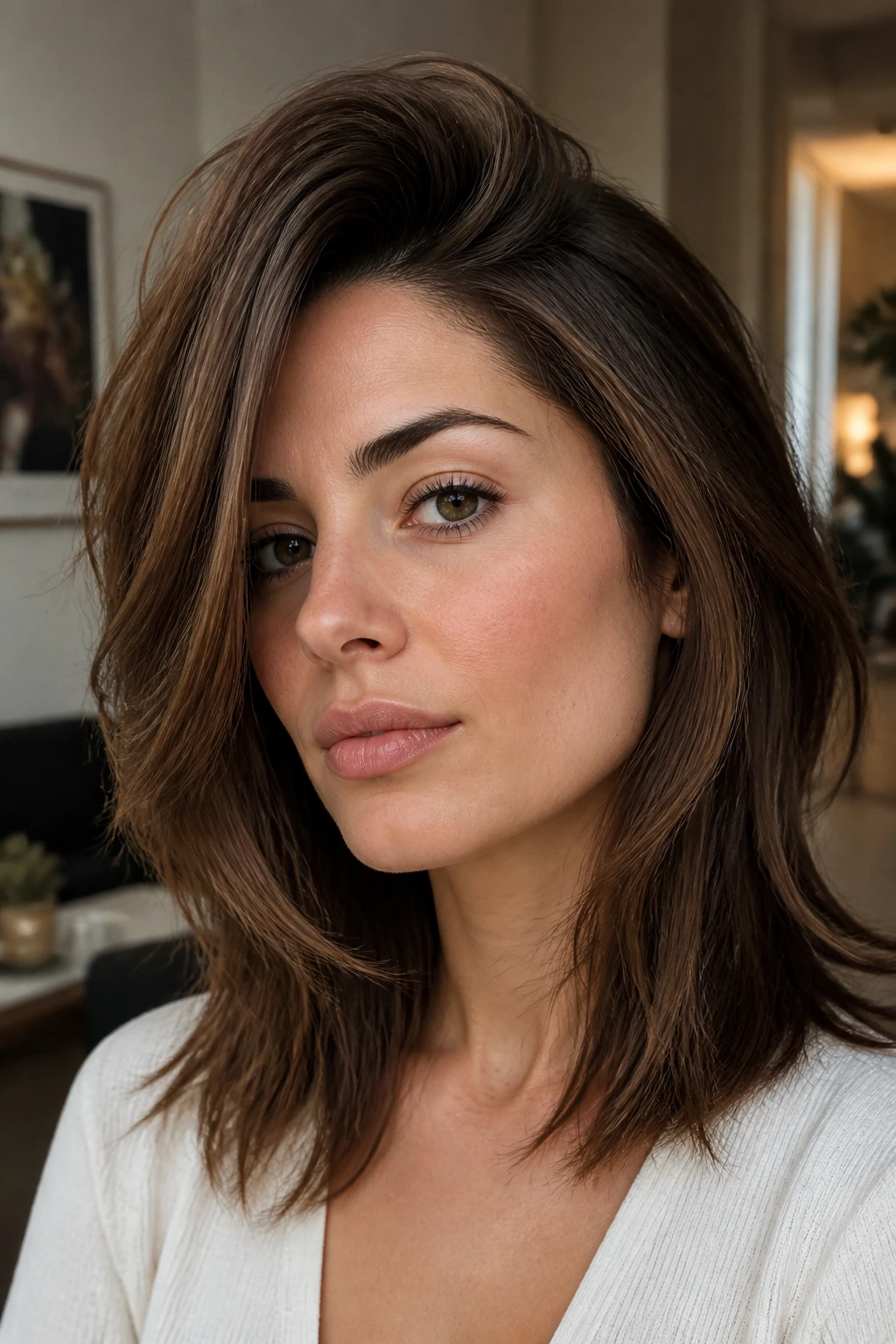
A side part can do half the work of a haircut. On a long shag, a deep side part pushes the front layers into a swing that feels more dramatic than a center part ever could. It also gives medium hair a lift at the crown without needing a lot of product or a fussy blow-dry.
This is a smart move if your face shape feels a little round or if your hair falls flat at the hairline. The part creates height, and the shag layers do the rest. Keep the face frame long enough to sit around the mouth or collarbone so the cut doesn’t collapse into one heavy side. If the shortest layer is too high, the side part can start looking lopsided rather than intentional.
I like this version when someone wants a fast styling trick more than a whole new haircut mood. Flip the part, add a touch of root spray, bend the front pieces away from the face, and you’re done. It’s one of those cuts that looks like you thought harder than you did.
12. Butterfly Shag with Long Front Panels
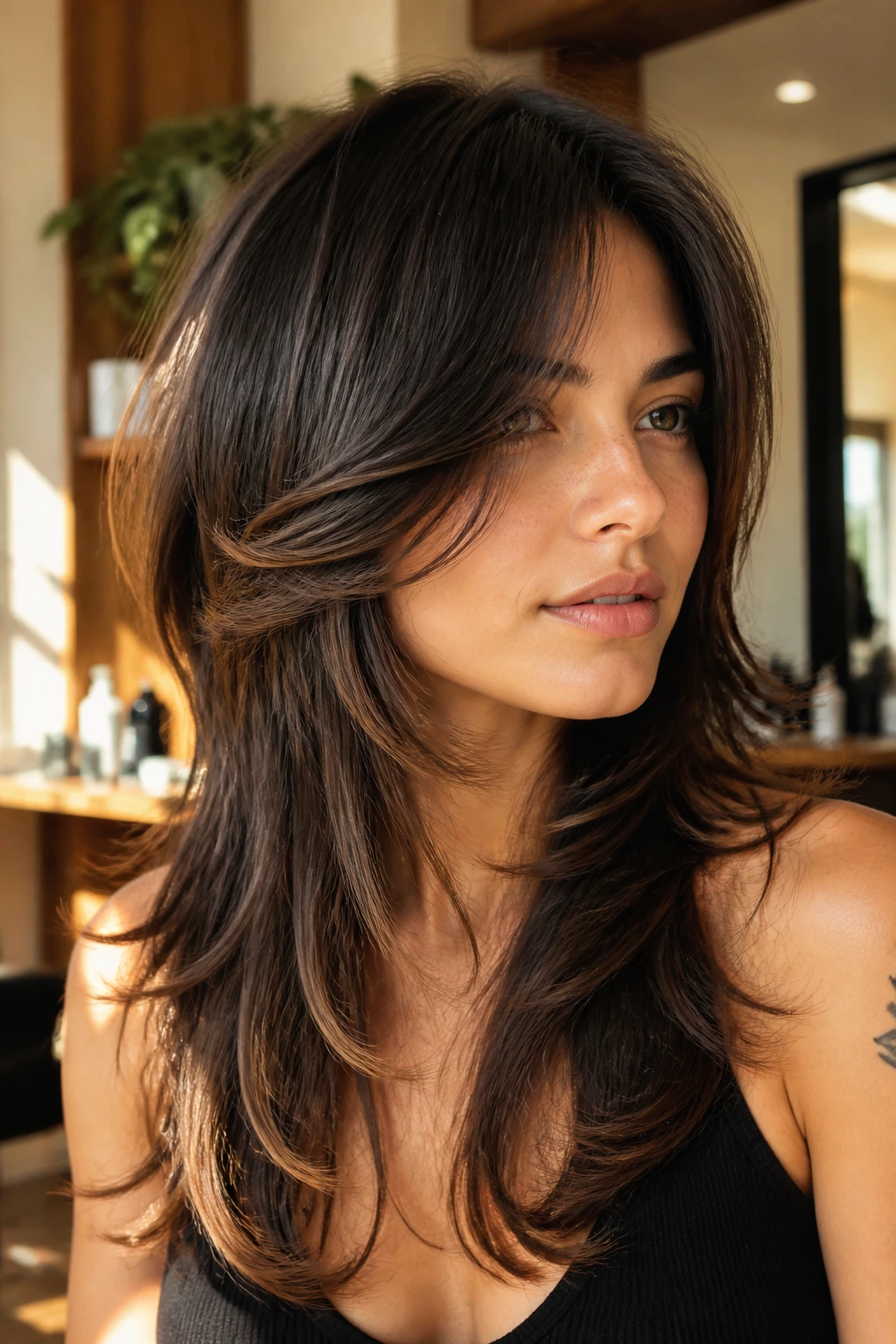
A butterfly shag borrows the big front-panel idea from butterfly layers but keeps the shag’s messier, freer movement. The front stays long and dramatic, almost like curtain wings, while the back and crown are lightened enough to stop the cut from dragging. On medium hair, it gives the illusion of more length and more volume at once.
The key is separation. You want the front pieces distinct enough to frame the face, but not so disconnected that they look pasted on. Ask for long face-framing layers that start somewhere between the cheekbone and jaw, then melt into longer midlength layers. The crown should be lightly lifted, not stripped down.
This cut is especially good if you like brushing your hair out into a soft blowout shape. It also reads well on straight hair, which sometimes needs a bigger shape to feel like it’s doing anything. If you want drama without losing ponytail length, this is one of the better bets.
13. Choppy Piecey Shag with Visible Texture
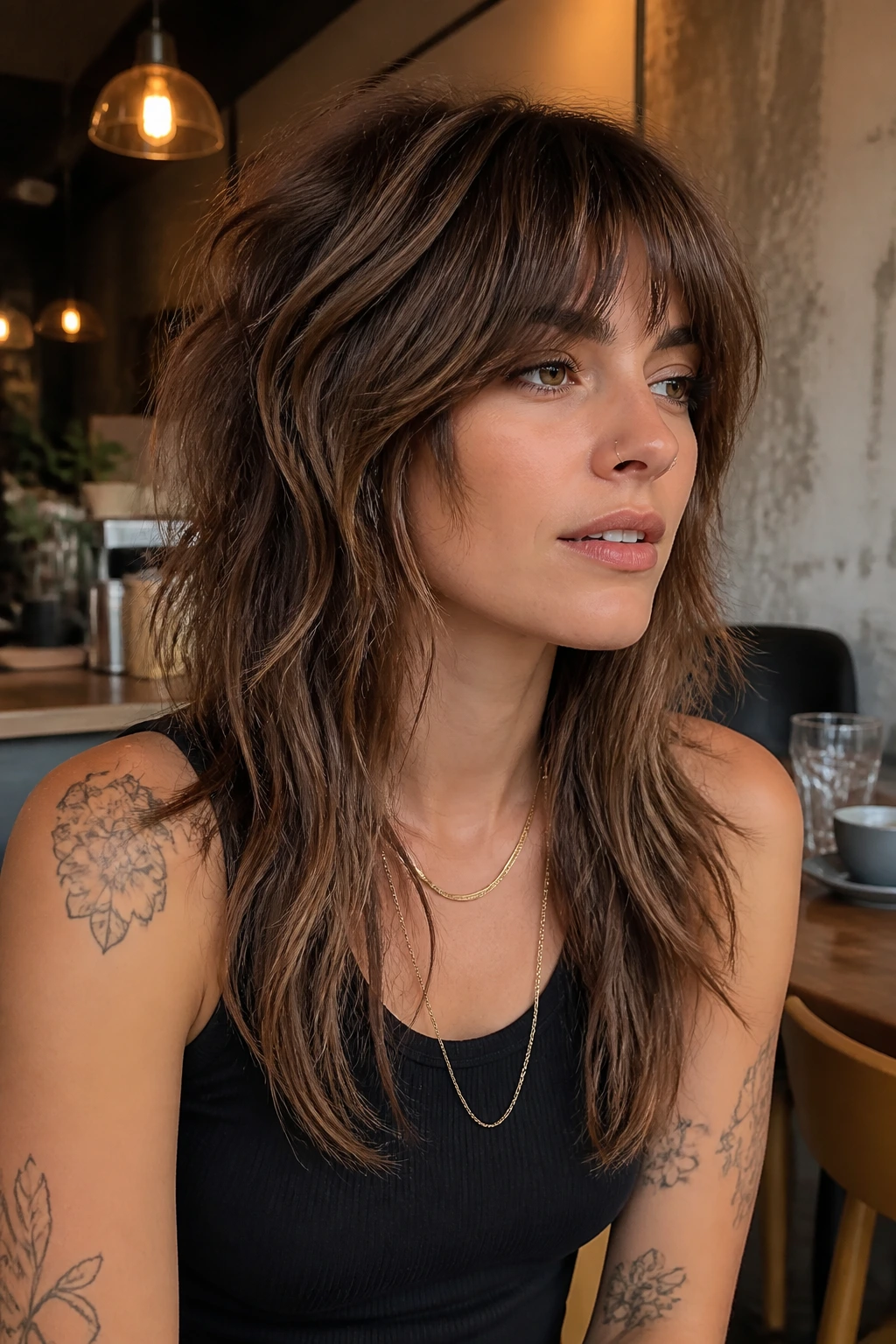
Some shags whisper. This one speaks up. The layers are more obvious, the ends are more broken up, and the whole haircut leans into separation. Medium hair can handle that kind of definition without looking thin, which is why this version is so appealing on people who like a little edge.
The trick is not to confuse choppy with careless. A good piecey shag still has a plan. The shortest layers should support the face, the mids should create lift, and the perimeter should stay long enough to keep the haircut anchored. If the layers are too equal, the style loses its rhythm and starts looking hacked at instead of designed.
This cut loves texture paste, salt spray, or a matte cream scrunched through the mids. A tiny amount goes a long way. If you can pinch the ends into shape with your fingers and see distinct pieces fall where you placed them, you’re in the right zone.
14. U-Shape Shag with a Soft Perimeter
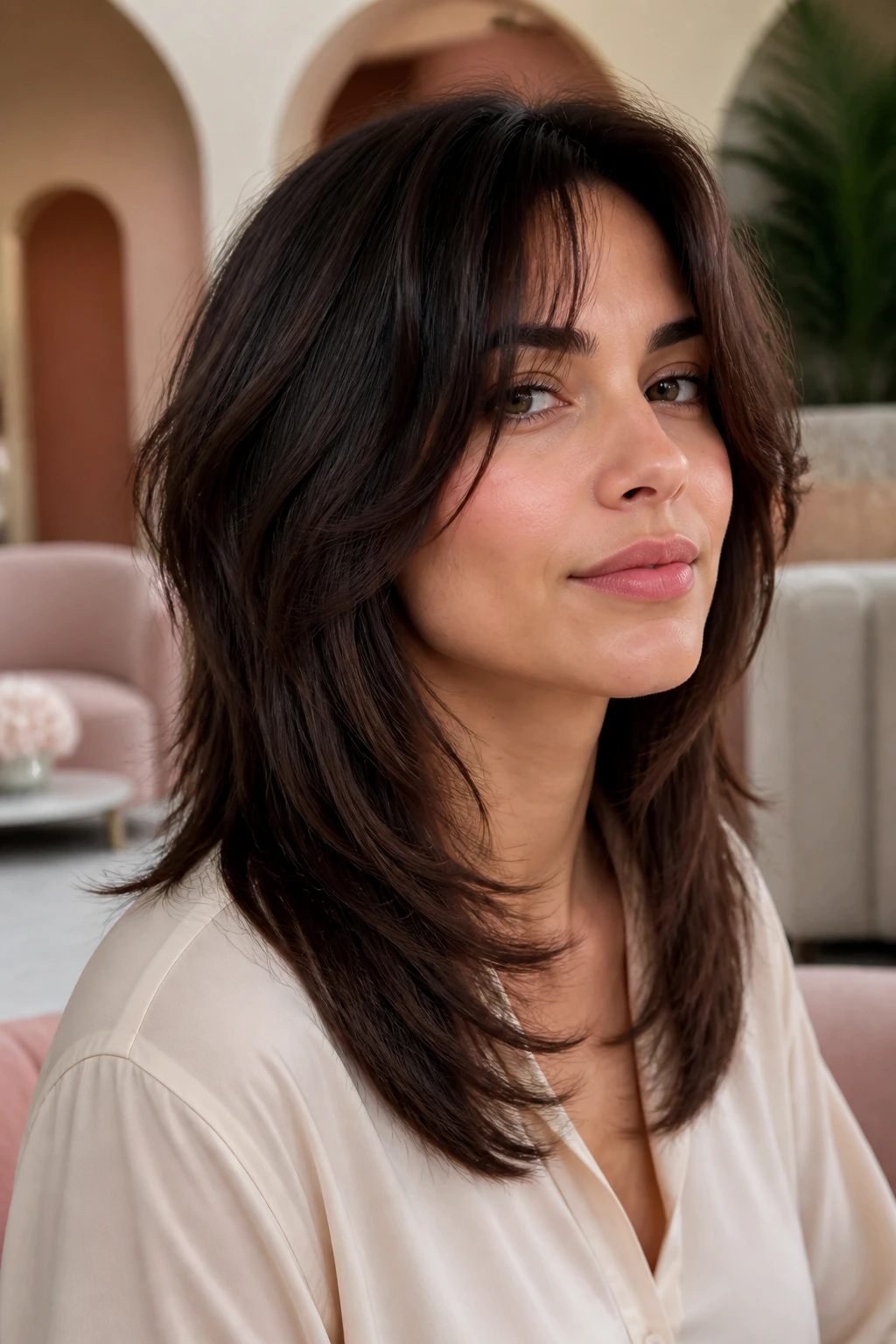
A U-shape shag keeps the bottom line rounded and gentle, which makes medium hair look fuller without looking blunt. The longest pieces sit in the back, the sides curve toward the face, and the layers are layered over that frame rather than replacing it. It’s a softer, more feminine take on the shag shape.
This works well if you want movement but don’t want the ends to look scrappy. A U-shape gives the haircut a little visual weight at the back, which helps if your hair is fine or if you prefer to wear it loose most days. The front can still have curtain pieces or cheekbone-length layers, but the outline stays smooth.
It’s also a good bridge cut. If you’ve had a one-length medium haircut and want to move toward something more textured without a big leap, this is a sensible step. The silhouette changes enough to feel fresh, but it doesn’t ask you to relearn everything about your styling routine.
15. V-Shape Shag with a Tapered Back
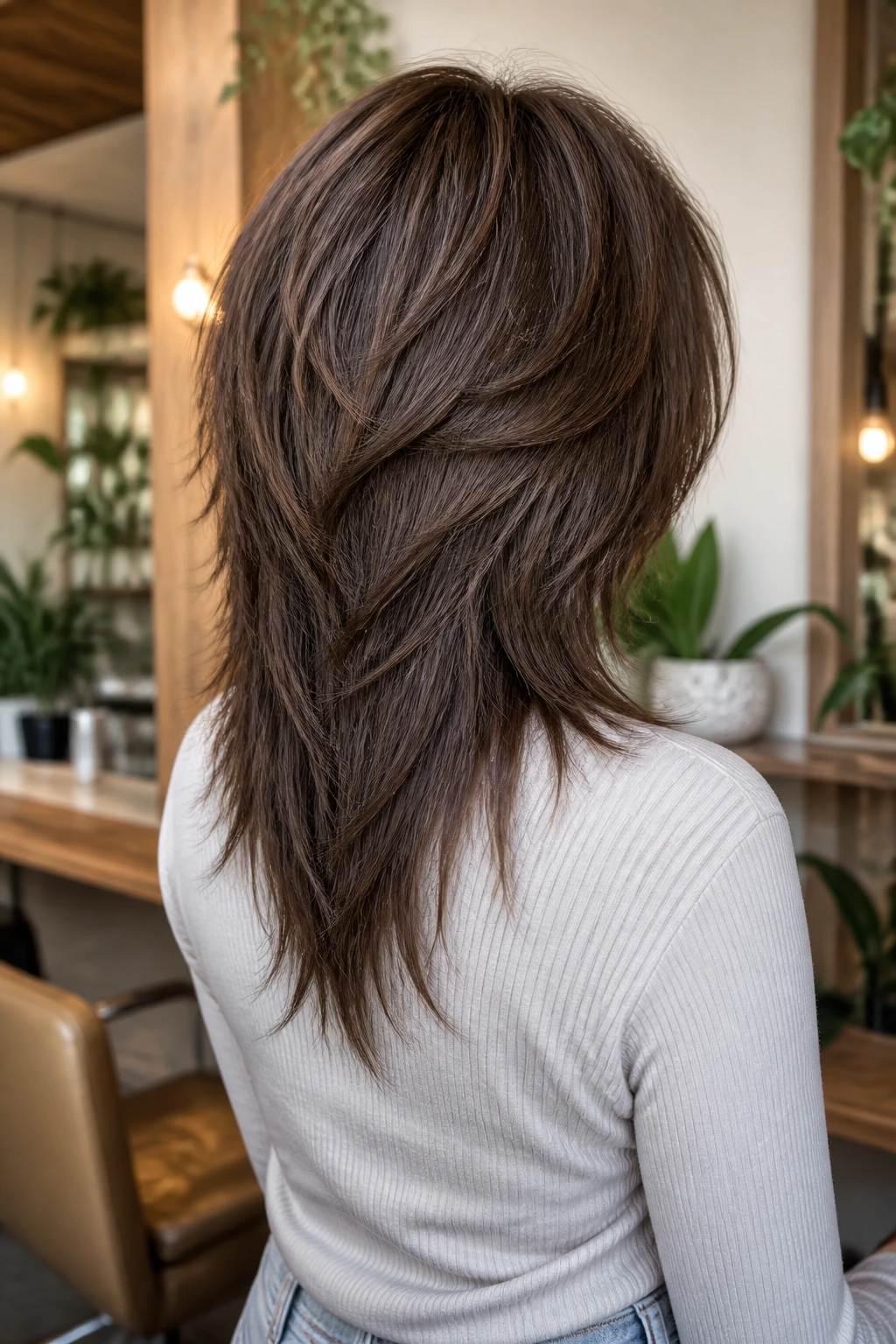
If the U-shape is soft, the V-shape is sharper. The back narrows as it drops, which makes medium hair look longer and a little more graphic. The shag layers sit on top of that V, so you get both motion and direction. It’s cleaner than a wolf cut, but it has some of that same energy.
This version suits people who like a stronger line in the back and more obvious face framing in the front. It can make thick hair feel lighter and give straight hair a shape that doesn’t just collapse to the shoulders. The only caution is going too narrow too fast. If the point starts too high, the cut can feel dated or overstyled.
Ask for the taper to stay gradual. That keeps the haircut wearable. A light curl or bend through the front makes the V show up in a nice way, especially when the layers around the face are left longer and more relaxed.
16. Heavy-Fringe Shag with Eyes-Covering Bangs
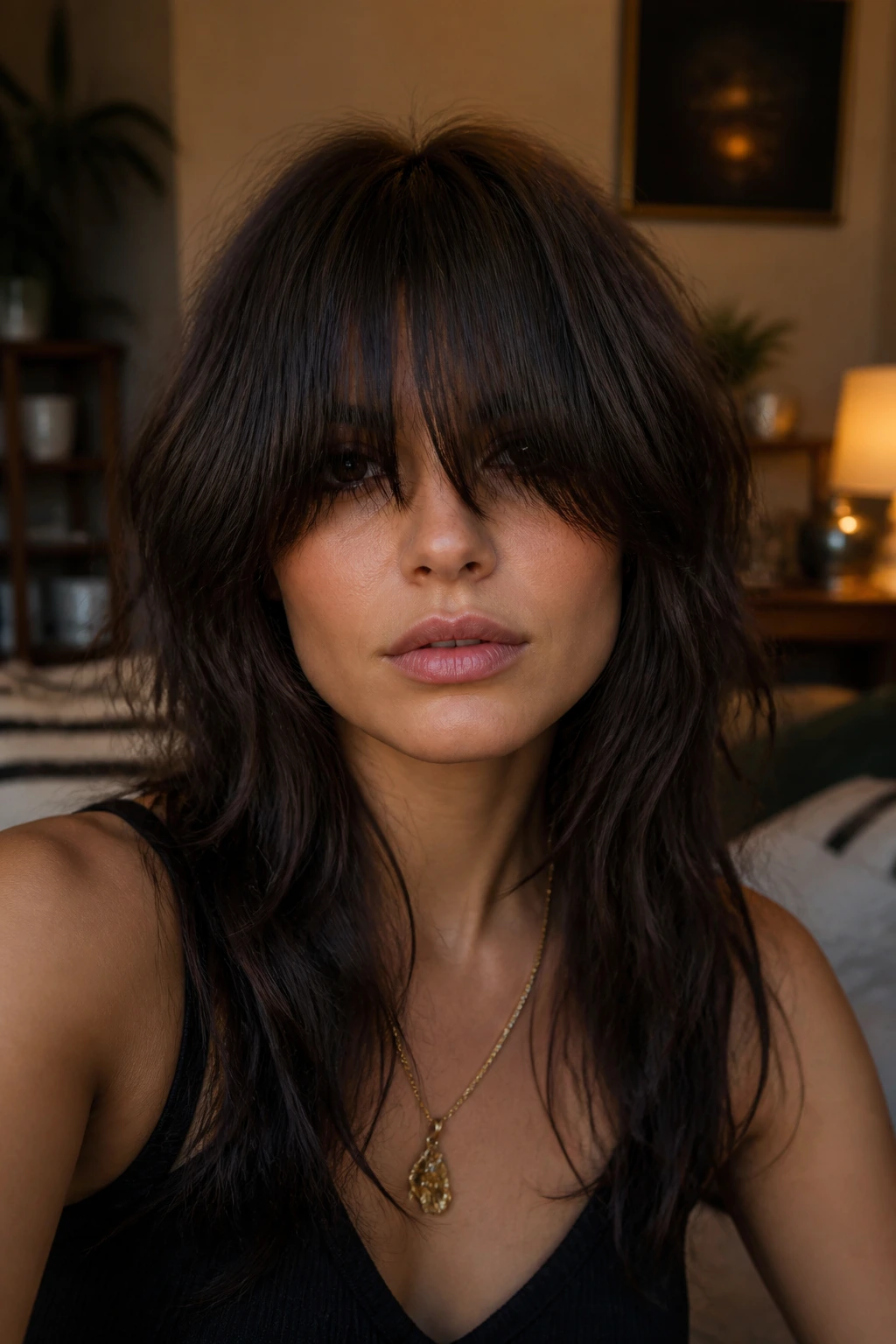
This one has presence. The fringe is fuller, sometimes brushing or even grazing the lashes, and the rest of the shag is shaped to support that weight at the front. On medium hair, a heavier fringe can make the haircut feel deliberate instead of airy, which is useful if you want more drama and less softness.
The danger is that heavy bangs can swallow the face if the layers around them are too short too. Keep the side pieces longer and let them fall toward the jawline or collarbone. That creates balance and stops the fringe from taking over the whole cut.
This version needs a little more maintenance than a curtain bang shag. A bang trim every 3 to 5 weeks keeps it from poking into the eyes and splitting down the middle. Still, if you like the feeling of hair that sits close to the face and changes your profile, this one has real charm.
17. Long Side-Bang Shag with Swing
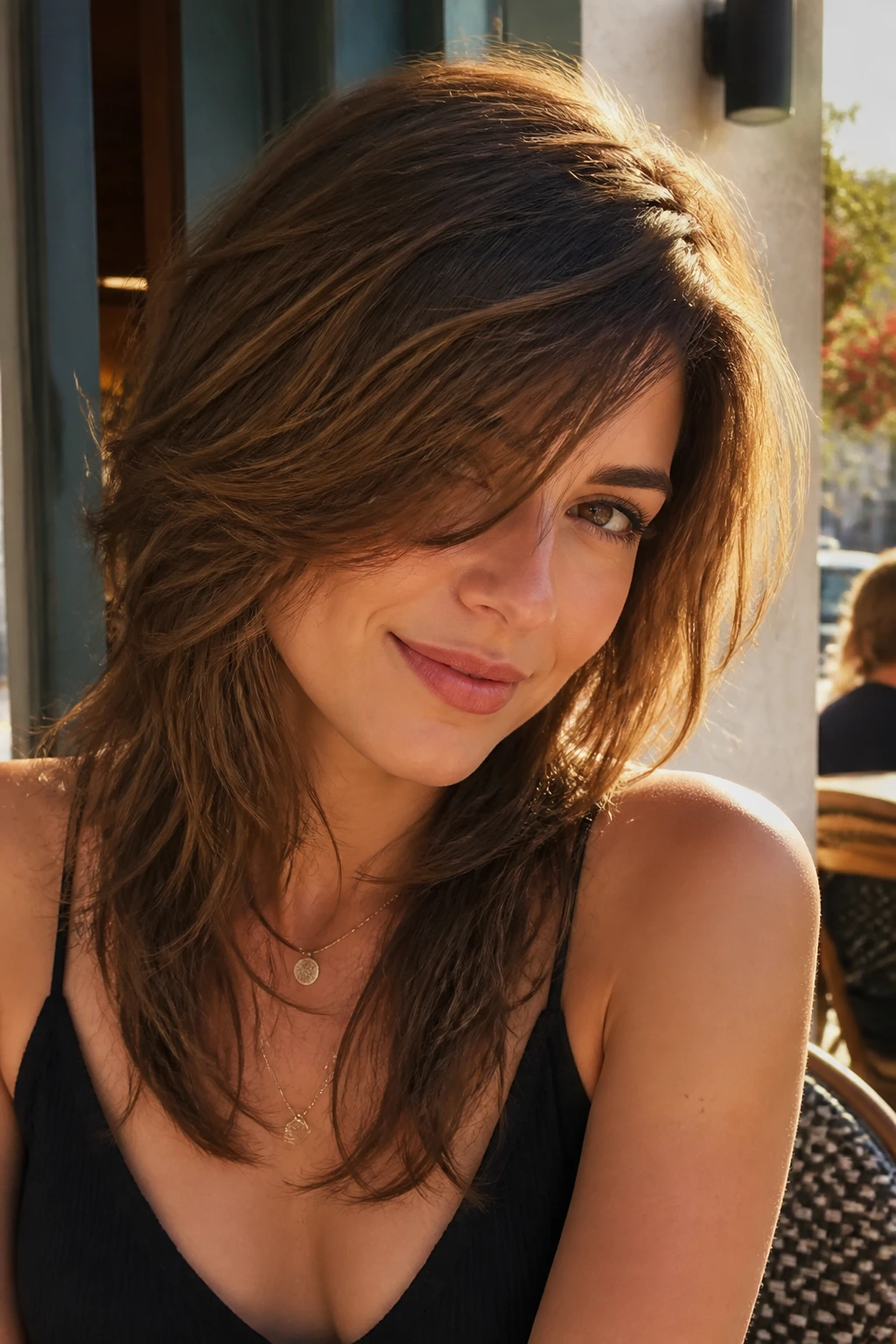
A long side bang gives the shag a softer, more old-school kind of motion. Instead of parting down the middle, the front falls in one sweeping direction, which is flattering on medium hair because it creates diagonal lines across the face. Those lines tend to soften stronger jawlines and add movement to straighter textures.
This is a good cut for anyone who’s not sold on curtain bangs but still wants fringe of some kind. The side bang should be long enough to tuck behind the ear if you get bored with it. That matters. Bangs that can be moved around are useful bangs. Bangs that trap you are not.
Styling is simple if you start with direction at the root. Blow-dry the fringe the opposite way for a second, then sweep it over and finish with a brush. That little trick helps it sit with more swing and less flatness. The rest of the cut can stay loose and shaggy so the front doesn’t look disconnected.
18. Lob-to-Shag Transition Cut
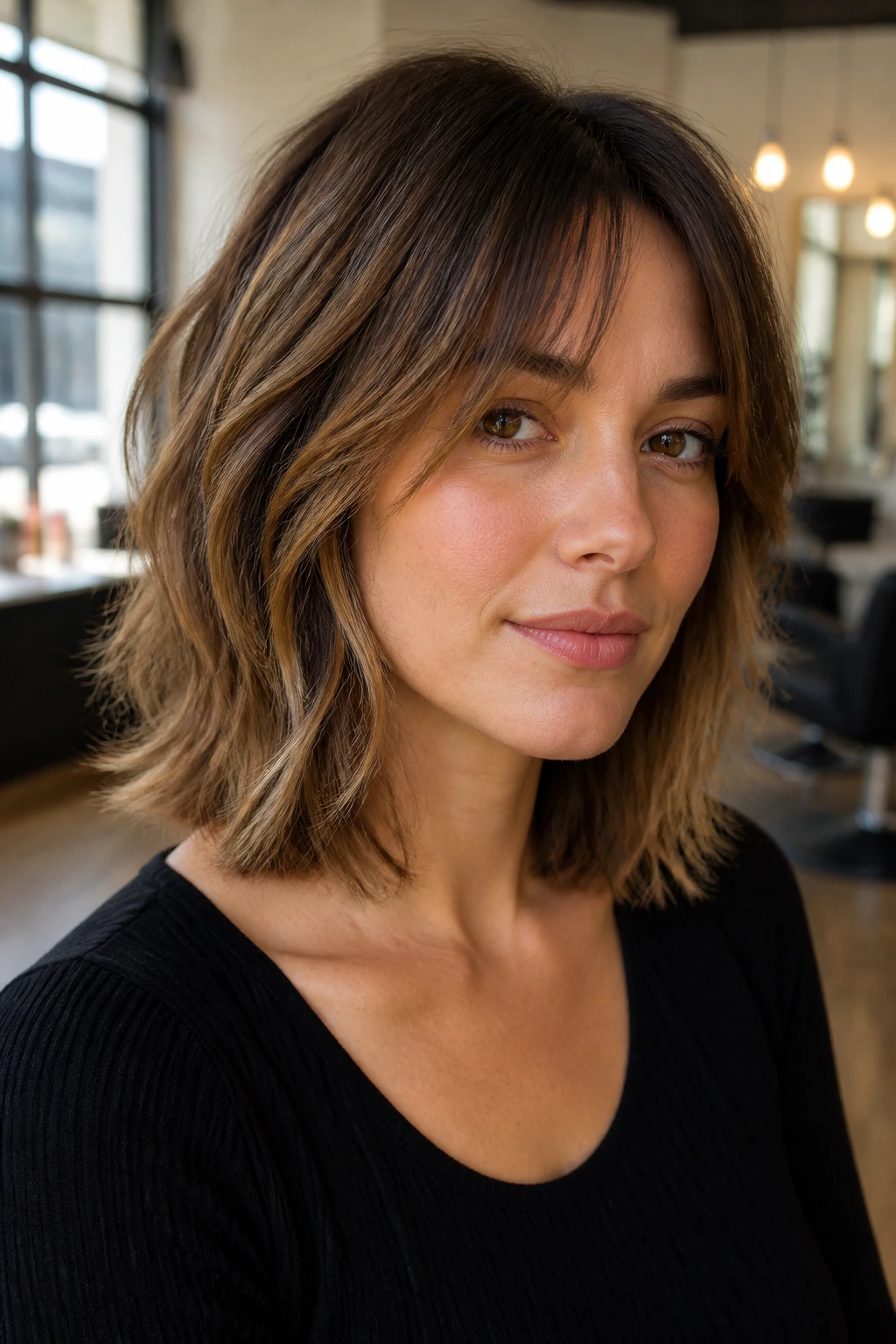
This is the haircut for people who like the idea of a shag but do not want to jump all the way in. It starts with a lob-like outline, then adds enough internal layering to give movement and a little edge. Medium hair usually takes well to this approach because it keeps the length familiar while changing the texture of the silhouette.
The outline should still feel solid at the bottom. That’s what keeps it from becoming a chopped-up experiment. Ask for soft layers near the front, subtle movement through the crown, and maybe a bit of point cutting at the ends so the cut bends instead of hanging like a blunt shelf.
This version is especially friendly if you’re nervous about bangs. You can keep the front long, part it in the center or off to the side, and decide later whether to go shorter. A lot of people start here, realize they like the movement, and then lean into more fringe on the next appointment.
19. Blowout Shag with a Face-Frame Flip
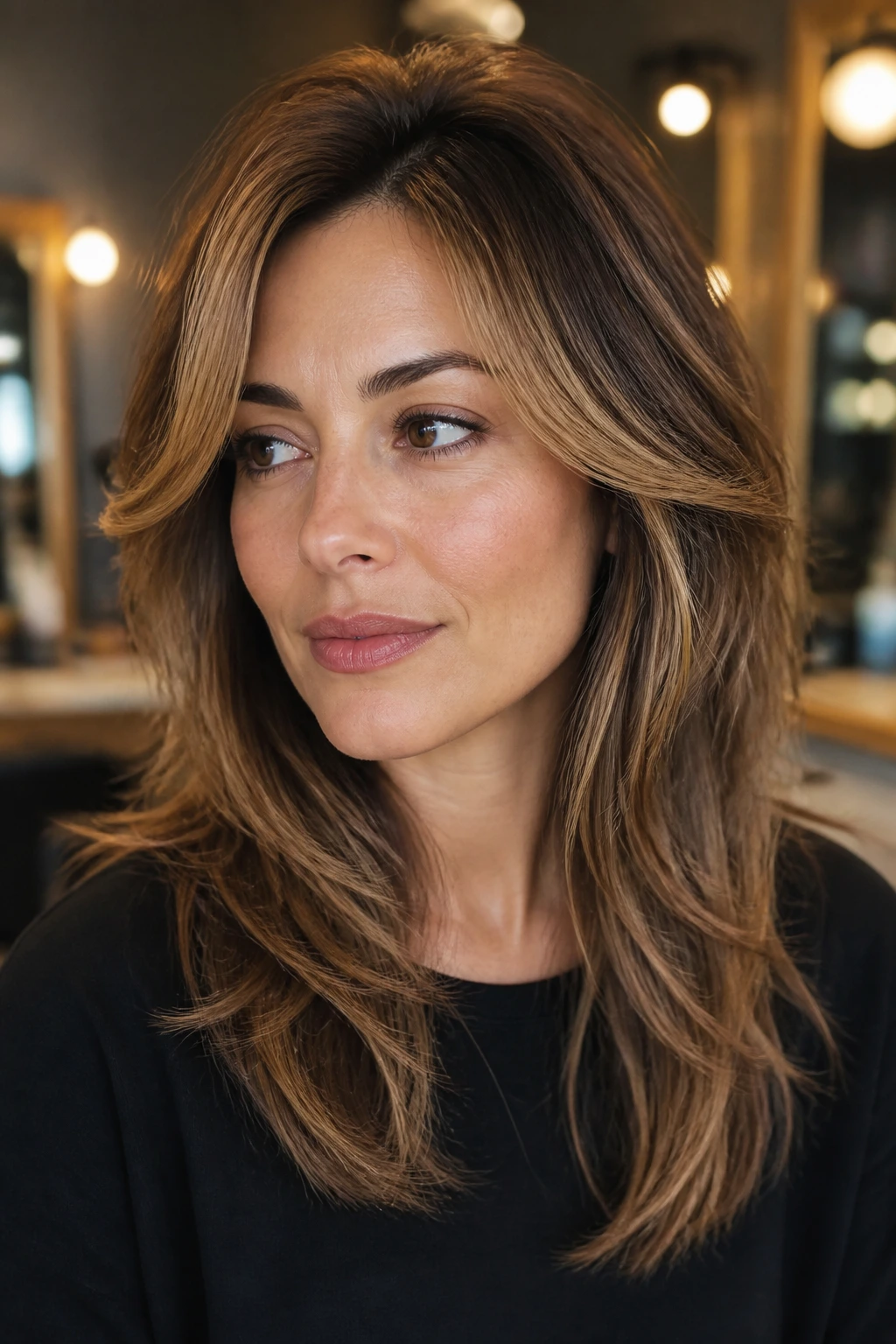
This shag was made for a round brush. The front pieces flip away from the face, the crown lifts, and the ends curve out just enough to show the layering without turning fussy. It’s one of the prettiest modern long shag haircuts for medium hair if you want the cut to look styled without looking stiff.
The big thing here is direction. Blow-drying the face frame away from the face opens the whole shape and stops the haircut from sinking into your cheeks. If the layers are cut well, a medium round brush and a little heat are enough to create the shape. If the layers are cut badly, no amount of effort will rescue it. That’s how blunt the truth is.
Use a heat protectant with a little grip, not a slippery serum that makes everything fall flat. Then finish with a light spray, not a helmet. You want the flip to stay soft enough to touch.
20. Beach-Texture Shag That Looks Better Slightly Undone
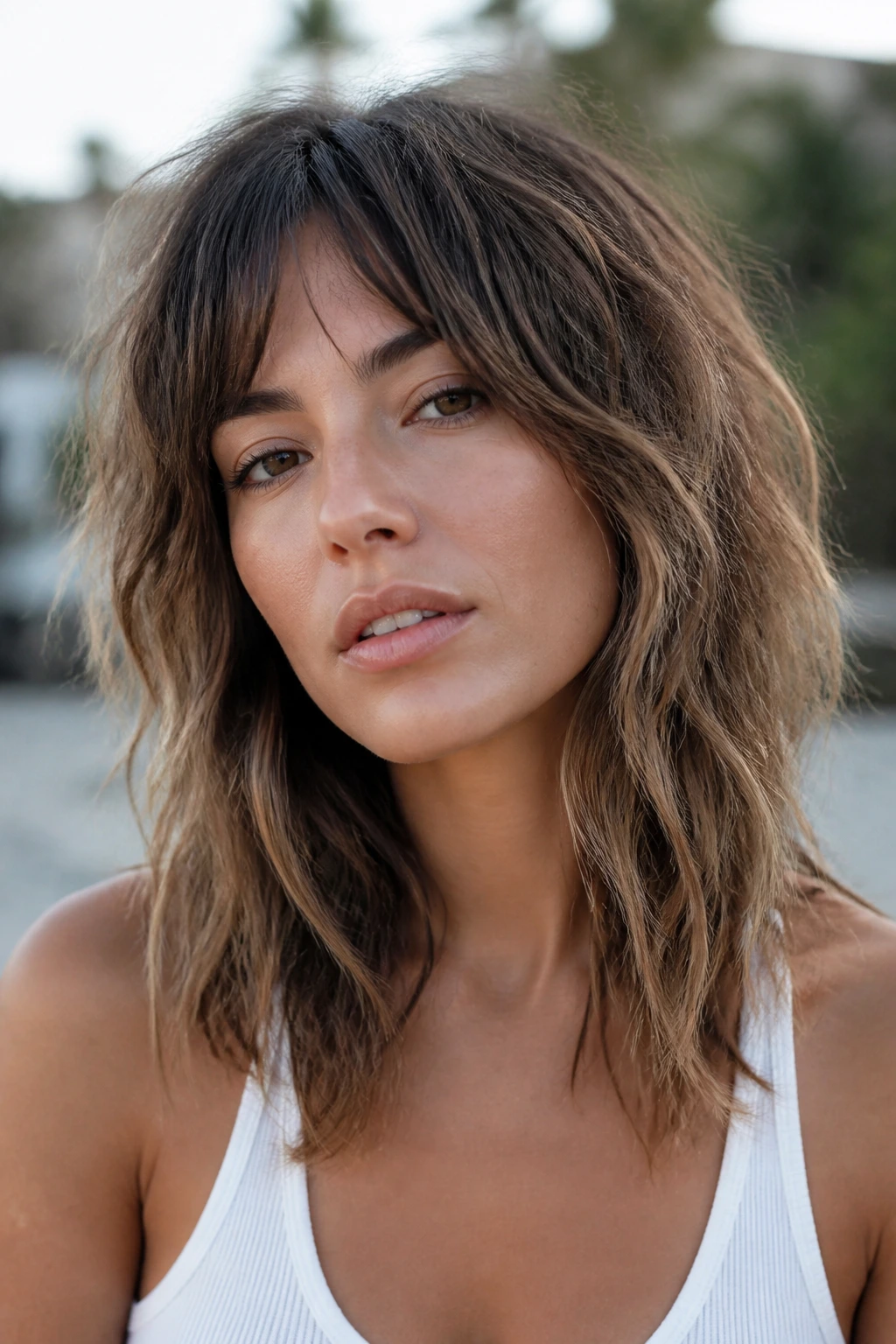
Some haircuts get better when they’re a little messy. This is one of them. The layers are meant to separate, the ends can live a little piecey, and the overall mood is casual without looking unfinished. On medium hair, beach texture keeps the cut from settling into a safe, bland shape.
This version does not need perfect curls. It needs bends, air, and a little asymmetry. A salt spray or texture mist through damp hair, followed by a rough dry or a loose wrap with a curling iron, gives the cut that lived-in shape. If you overbrush it, the whole effect disappears. That’s the catch.
It suits people who don’t want a haircut that only works in one styling mode. Wear it with a center part, toss one side back, let the front pieces fall where they want. The point is movement, not neatness.
21. Razored-End Shag with Sharp Texture
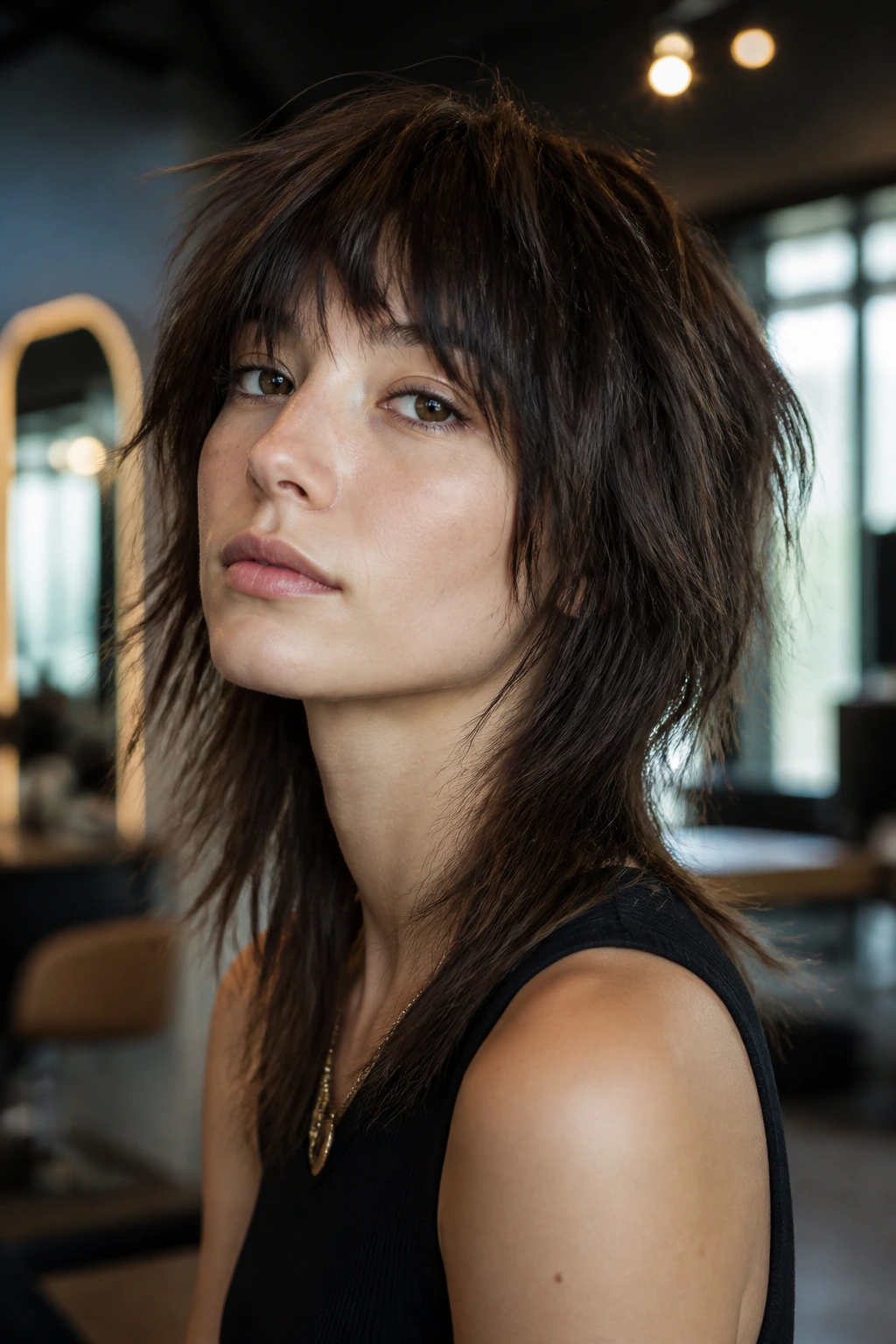
Razored ends give a shag a different kind of edge than blunt scissors do. The layers taper out a little more sharply, which makes medium hair feel lighter and more fractured in a good way. This is the choice if you want the haircut to look a little rebellious but still wearable.
A razor cut is not always the answer, though. On coarse, frizz-prone hair, too much razor work can make the ends puff or catch. On fine hair, it can make the perimeter look thin if the stylist goes too far. The sweet spot is a clean outline with controlled texture near the mids and front.
This version loves a matte texture cream or a tiny bit of wax warmed in the hands and pinched into the ends. That little separation is what makes the cut feel current rather than simply unfinished. If you want the haircut to have a bit of bite, this is the one.
22. Wolf-Cut Shag for Medium Hair
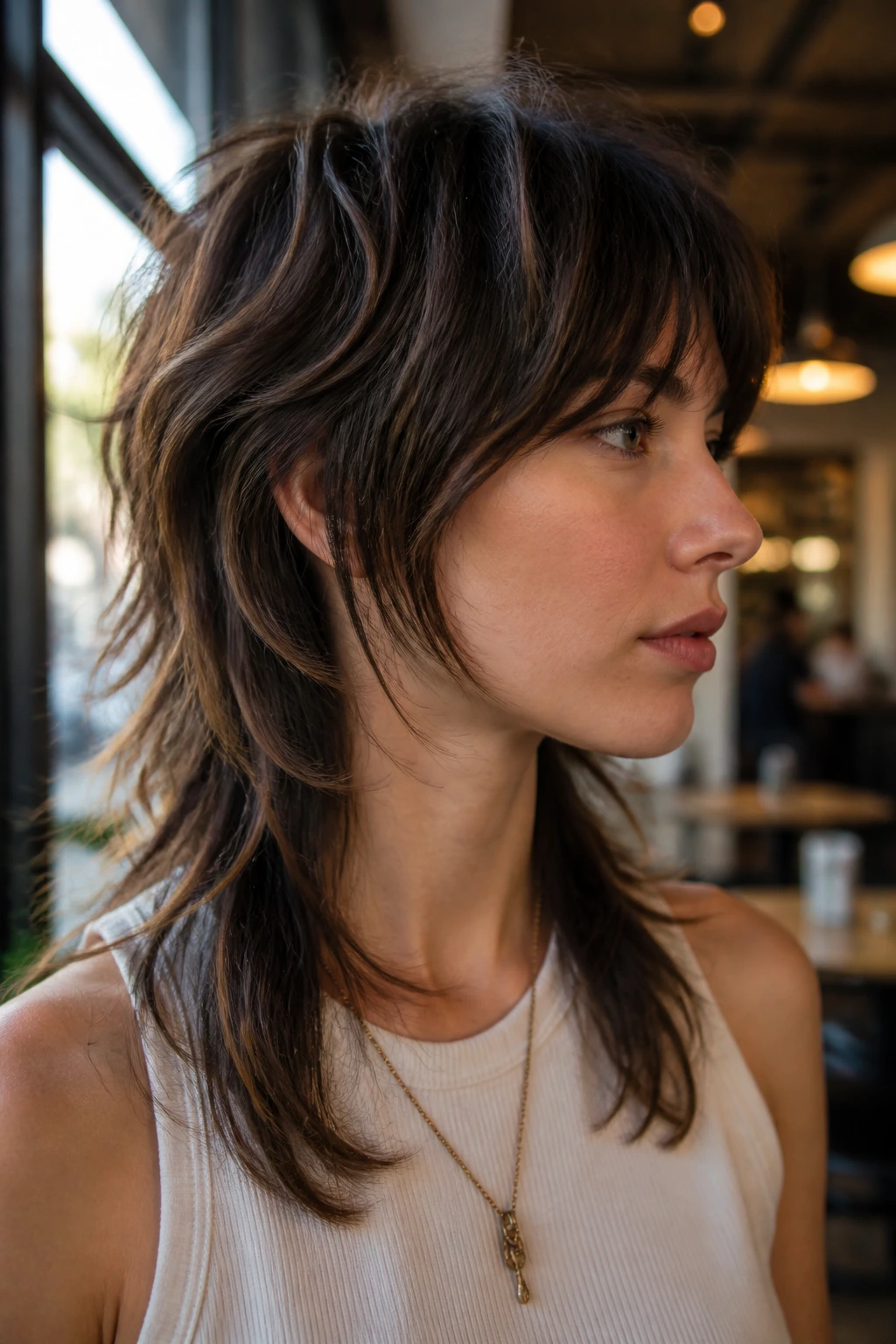
The wolf-cut version sits between shag and mullet, but it’s softer than the internet caricature makes it sound. On medium hair, it means shorter layers around the crown, a little more length in the back, and a front that has enough face framing to keep the whole thing balanced. It’s dramatic, but it doesn’t have to be extreme.
This cut works best when the contrast between the top and the bottom is intentional. You want the crown to lift, the sides to taper, and the perimeter to stay long enough that the whole thing still feels like hair you can wear to dinner, not only to a concert. That balance is what keeps it from becoming too costume-like.
If your hair already has wave or bend, this cut comes alive fast. If it’s stick-straight, you’ll need a little styling to show the shape. Either way, it’s the shag for someone who wants the haircut to make a statement before the outfit does.
23. Romantic Shag with Soft Sweeping Layers
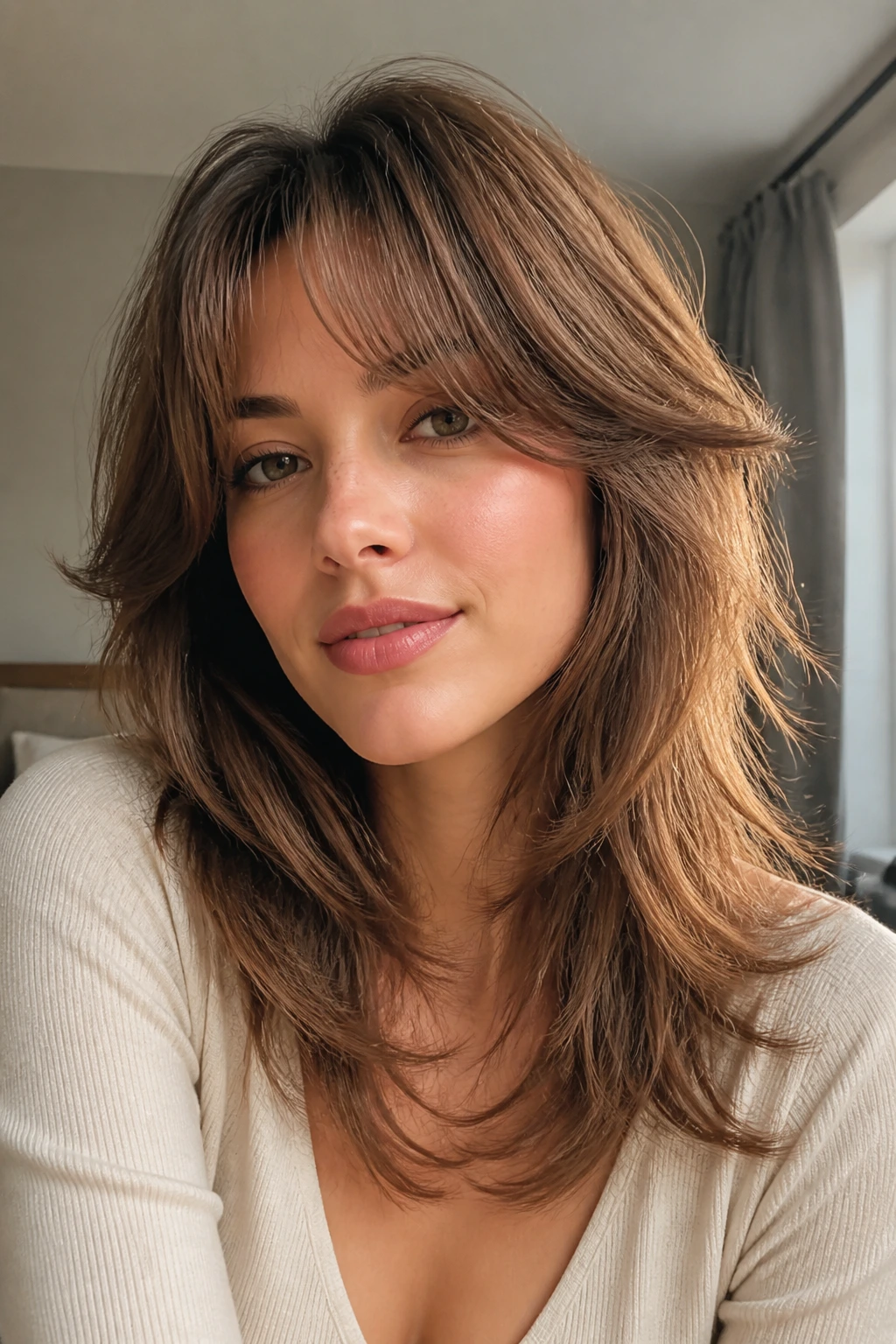
Not every shag needs to feel punk or punk-adjacent. This version leans softer, with layers that sweep and fold instead of spike and break. Medium hair handles this beautifully because the length holds a gentle curve, and the face frame can stay airy instead of severe.
I like this one for people who want a flattering haircut that still feels a little undone. The ends should move, but they shouldn’t look ragged. Ask for long layers around the cheek and jaw, with enough room at the bottom to keep a clean line. If the layers get too short, the romance disappears and the haircut starts looking busy.
A soft bend with a curling iron, brushed out with fingers, is enough. You do not need to polish every section. In fact, a little inconsistency keeps the shape from feeling overworked.
24. Money-Piece Shag with Bright Front Panels
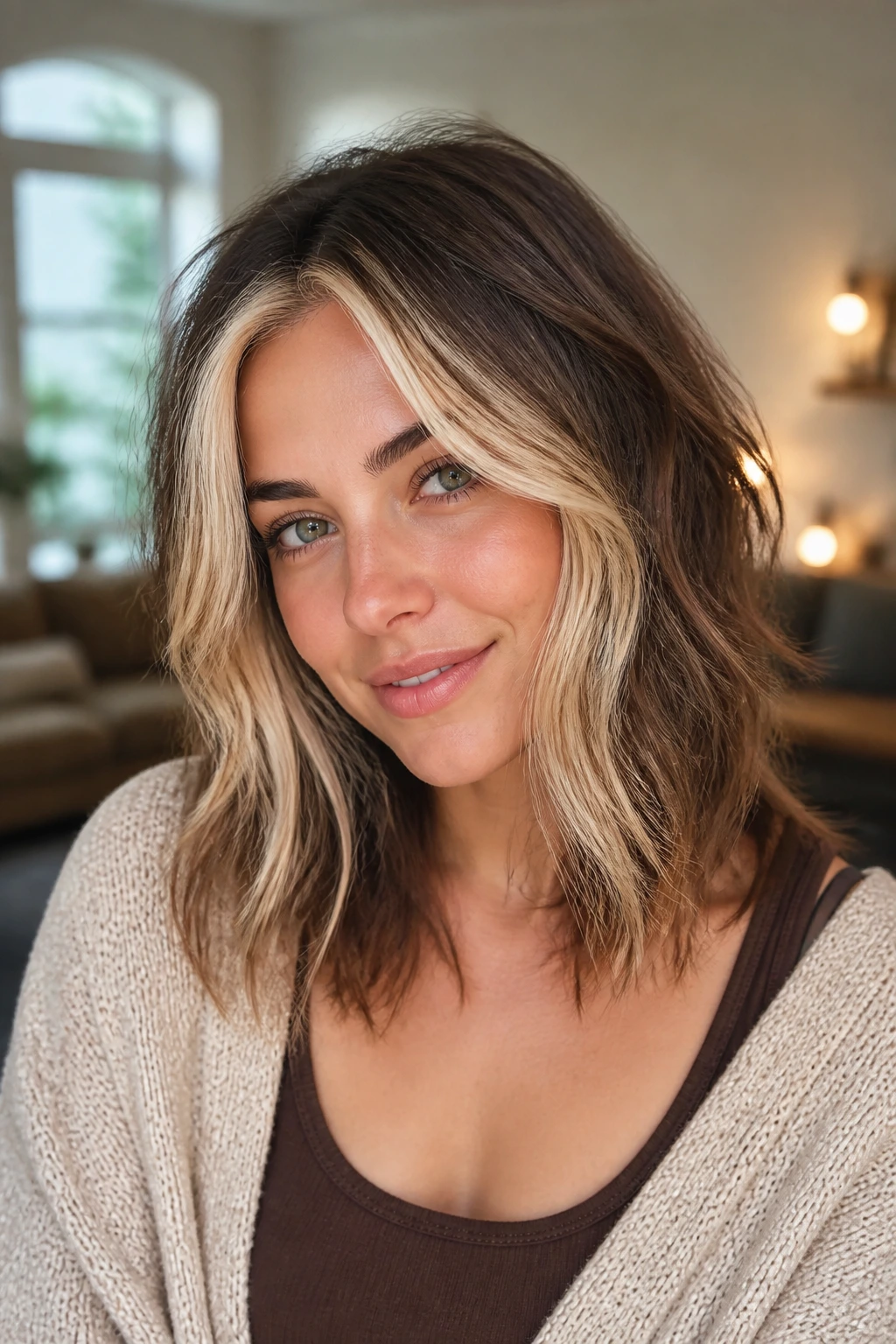
This shag uses the haircut and the color together. The front panels are a touch brighter, which throws the layers into sharper relief and makes the face frame stand out. On medium hair, that contrast can do a lot, especially if the rest of the cut is fairly natural and soft.
The haircut itself should still do the heavy lifting. Bright front pieces without good layering just look like streaks. Good front pieces without color can still look strong, but the color helps the shape read from farther away. It’s a nice trick if you want the cut to feel more visible and less muted.
Because the front is doing extra work, keep the longest pieces around the collarbone so the bright sections have somewhere to fall. If the front is too short, the money piece can feel harsh. A little bend away from the face keeps it flattering.
25. Low-Maintenance Grow-Out Shag
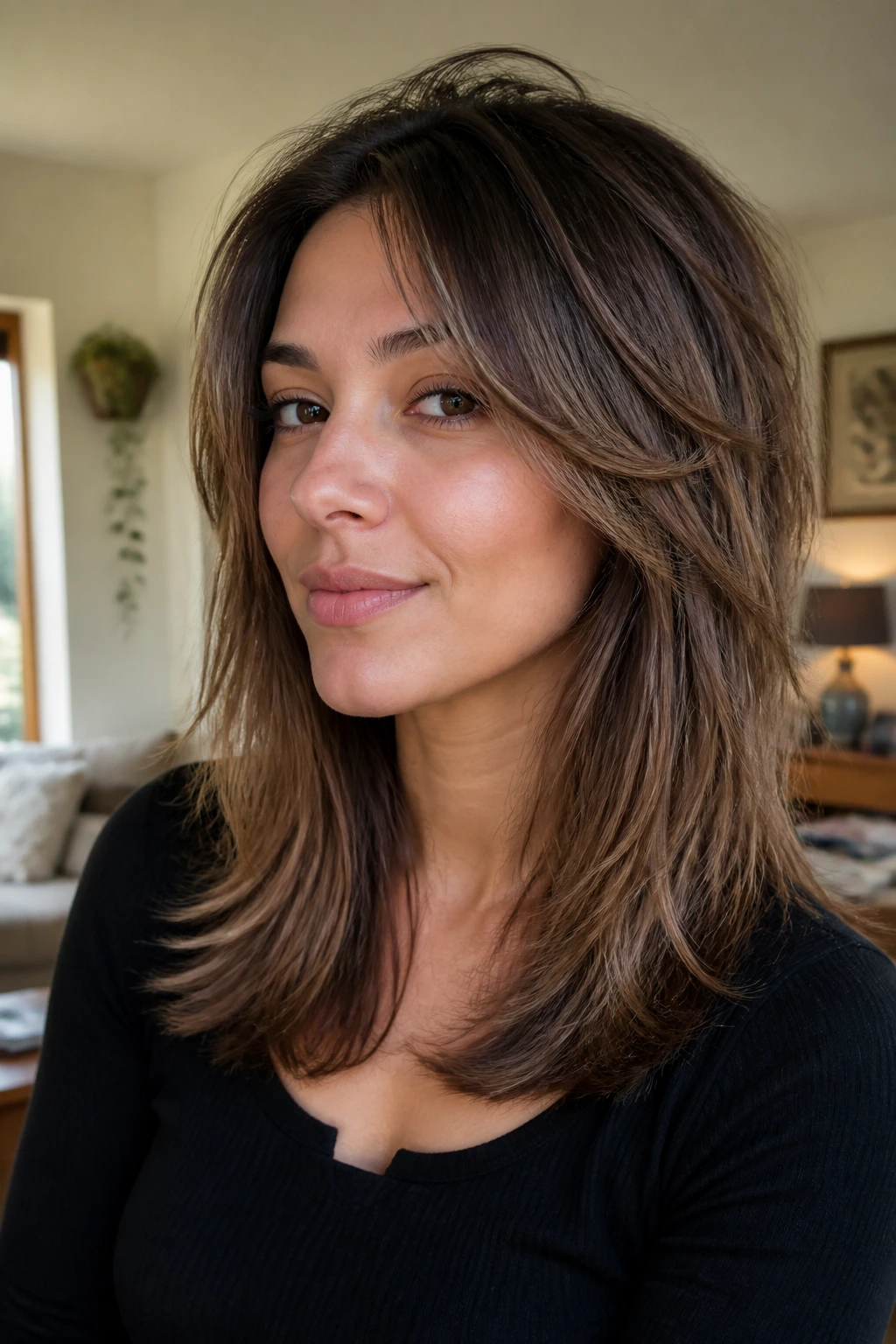
This is the shag for people who want the shape to survive real life. The layers are softer, the transitions are longer, and the whole haircut is designed to age gracefully over the weeks after the cut. Medium hair is perfect for this because the length gives the layers somewhere to settle.
The best version doesn’t rely on fringe that needs constant trimming. Instead, the front layers start lower and blend more gradually. That means the cut still has movement when it grows, not just a weird gap where the bangs used to be. If you’re not someone who books trims on a clock, this matters.
Styling can stay simple: a blow-dry cream, a quick bend at the front, and maybe some dry shampoo at the roots on day two. It won’t look as sharp as a freshly carved shag, but it won’t betray you either. That’s the point.
26. Forward-Weighted Shag with Strong Face Framing
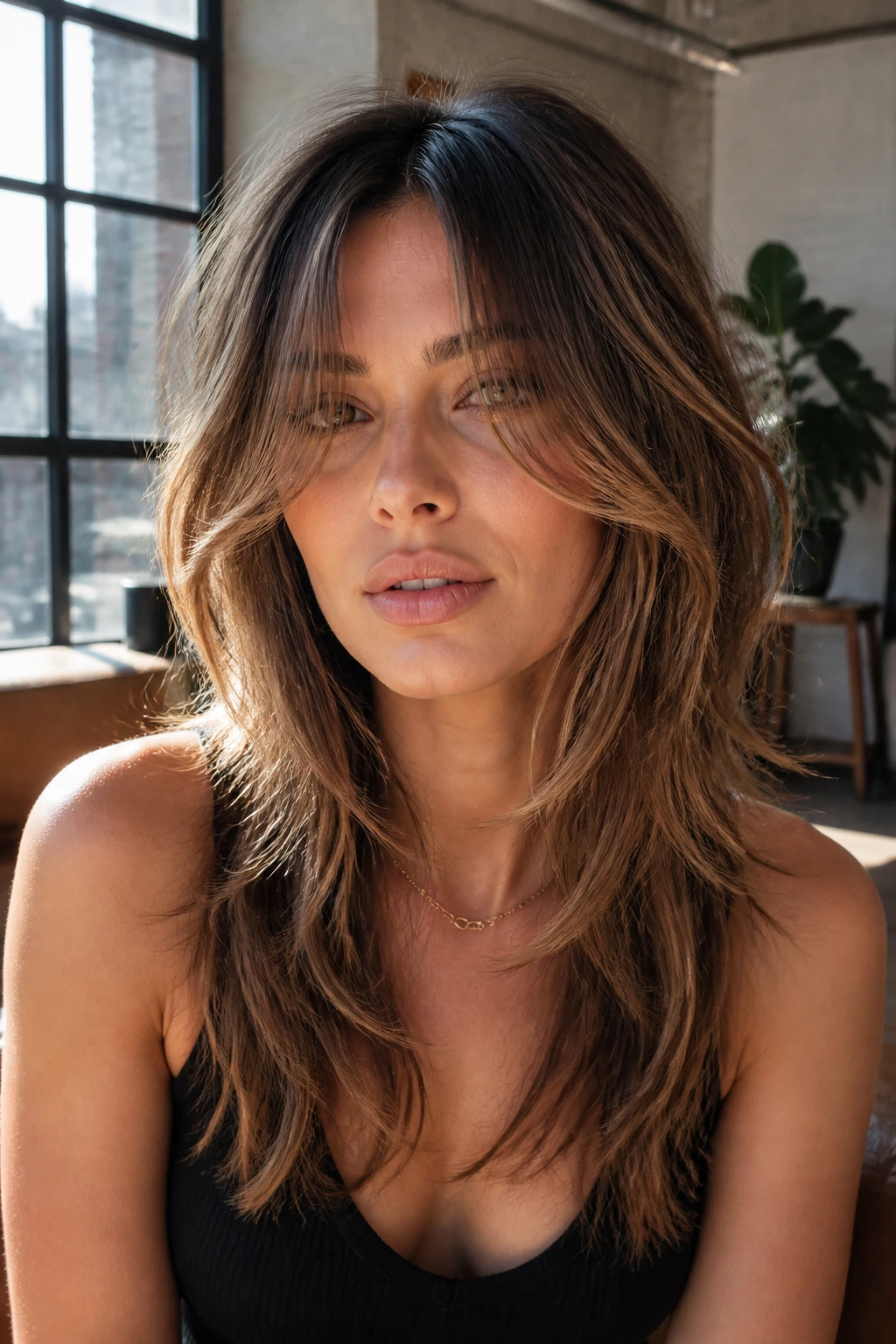
Some shags are airy around the edges. This one pushes the attention forward. The longest face-framing pieces are more pronounced, and the rest of the cut supports that shape rather than competing with it. On medium hair, it creates a focused, elongated line that feels modern and a little fashion-forward.
This cut suits people who want the front of the haircut to do the talking. It works well on round and square faces because the forward movement can soften width and draw the eye downward. Keep the back layers lighter, but not too short. If the back gets too chopped, the haircut loses the long line that makes this version feel clean.
A center part helps the shape stay balanced. A side part can make it more dramatic. Either way, the front should fall with purpose, not drape around the face in a lazy way.
27. Straight-Hair Shag with Hidden Movement
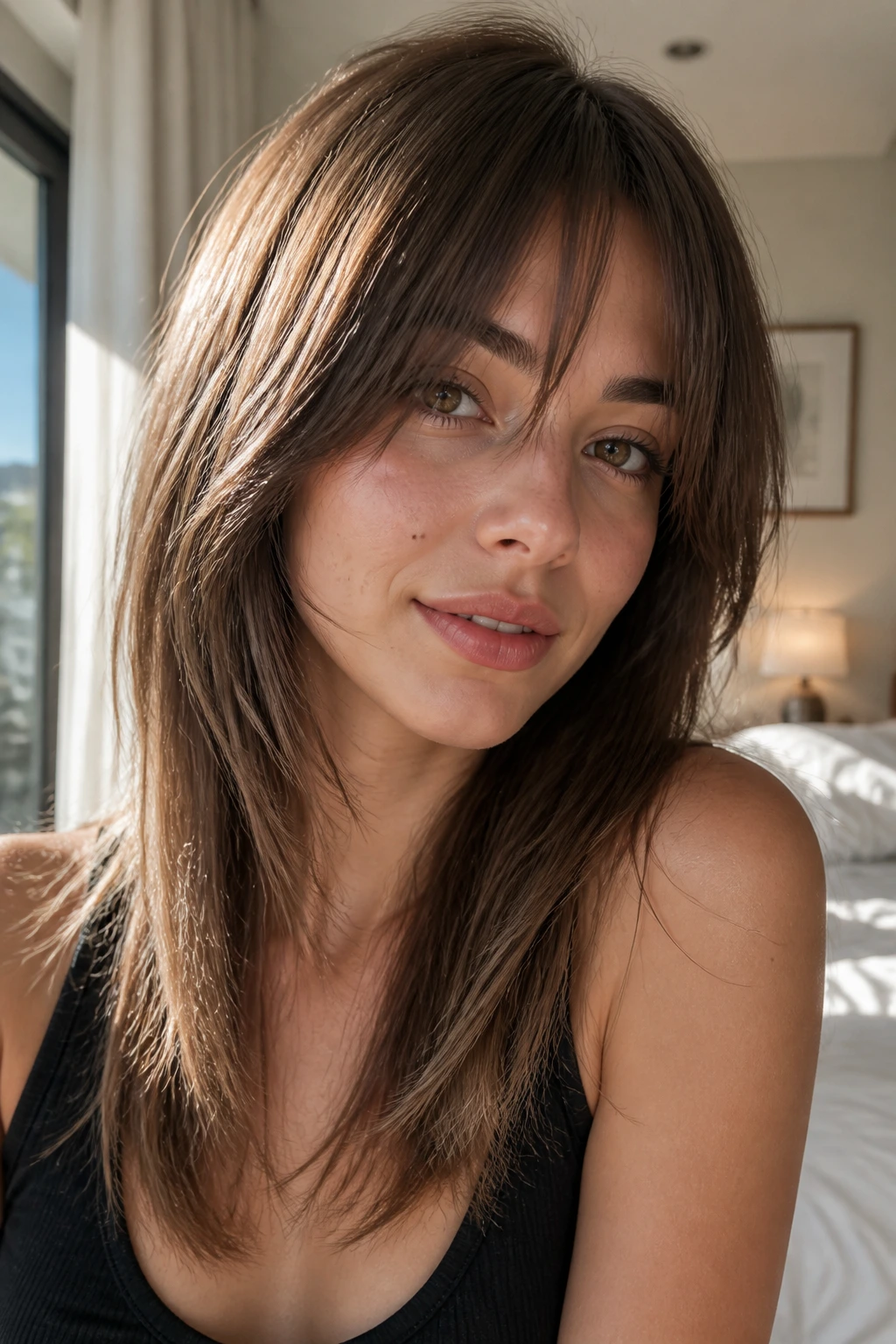
Straight hair can wear a shag better than people assume. The trick is not making the haircut look too choppy on day one. The layers need to be long enough that straight hair can show movement when it’s styled, but not so short that the cut breaks into little unrelated pieces.
On medium hair, hidden movement is the sweet spot. The crown gets a touch of lift, the front pieces angle forward, and the ends are texturized just enough to bend when you blow-dry them. If you let straight hair hang in one line, it’ll always look heavier than you want. Give it a little architecture and the difference is immediate.
A flat iron bend works well here. One soft turn away from the face, then a second toward the back on the lower section, and the whole cut changes. It’s not a curl. It’s more of a signal that the haircut has shape.
28. Wavy-Hair Shag with Airy Ends
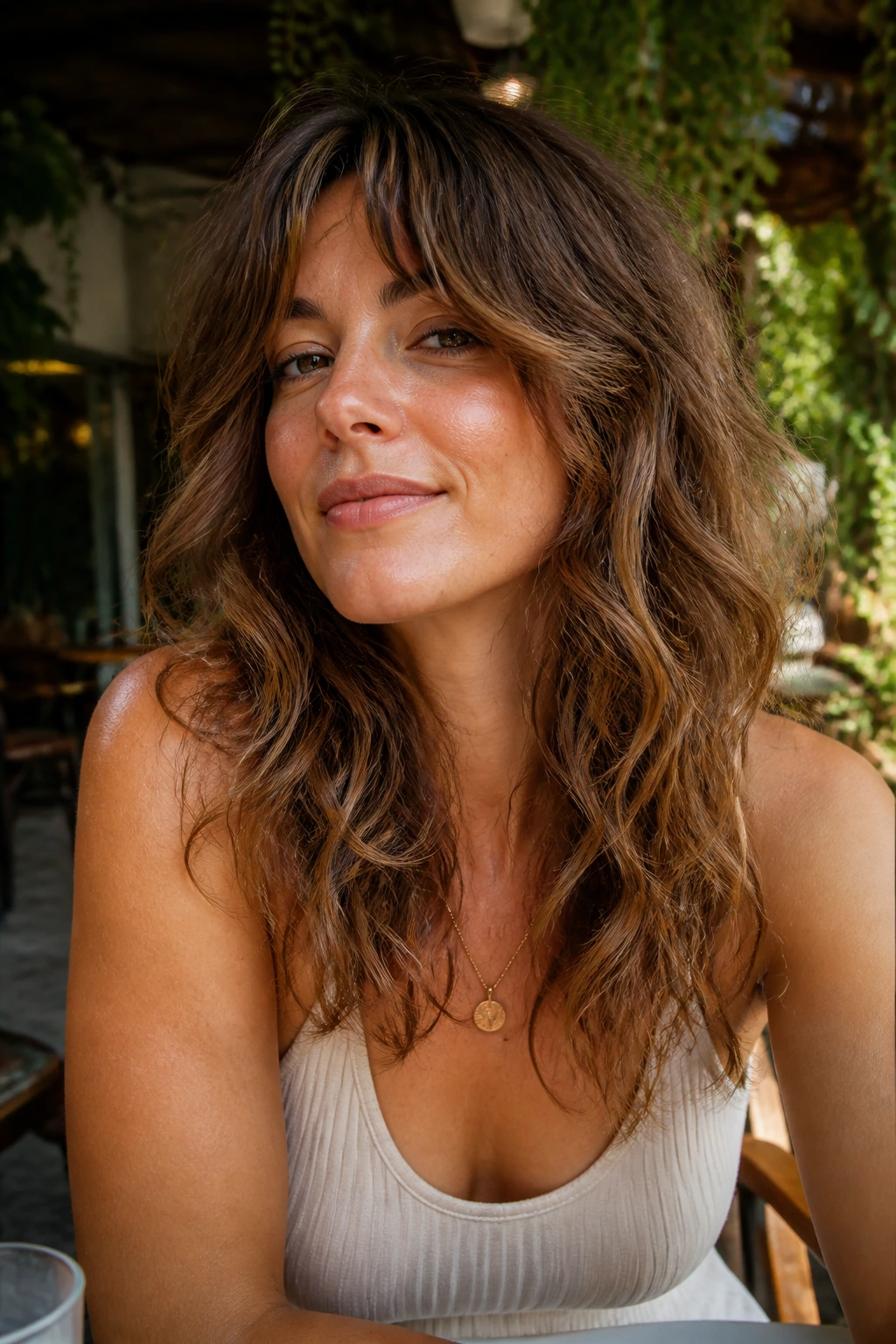
Wavy hair is where shag cuts feel almost unfairly easy. The wave pattern does half the styling work, and the layers simply help the bends land in better places. On medium hair, airy ends keep the weight from pulling the wave flat.
The danger with wavy hair is over-layering the top and under-cutting the bottom. That can make the mids puff while the ends vanish. Ask for a soft internal shape with enough bottom length to keep the outline clean. The best result is a wave that bends around the face and then drapes lightly at the shoulders.
A diffuser on low heat or a quick scrunch with mousse usually gets this cut where it needs to go. If the wave is strong, skip too much brushing. Once the cut dries, a little finger separation is enough.
29. Dense-Hair Shag with Internal Debulking
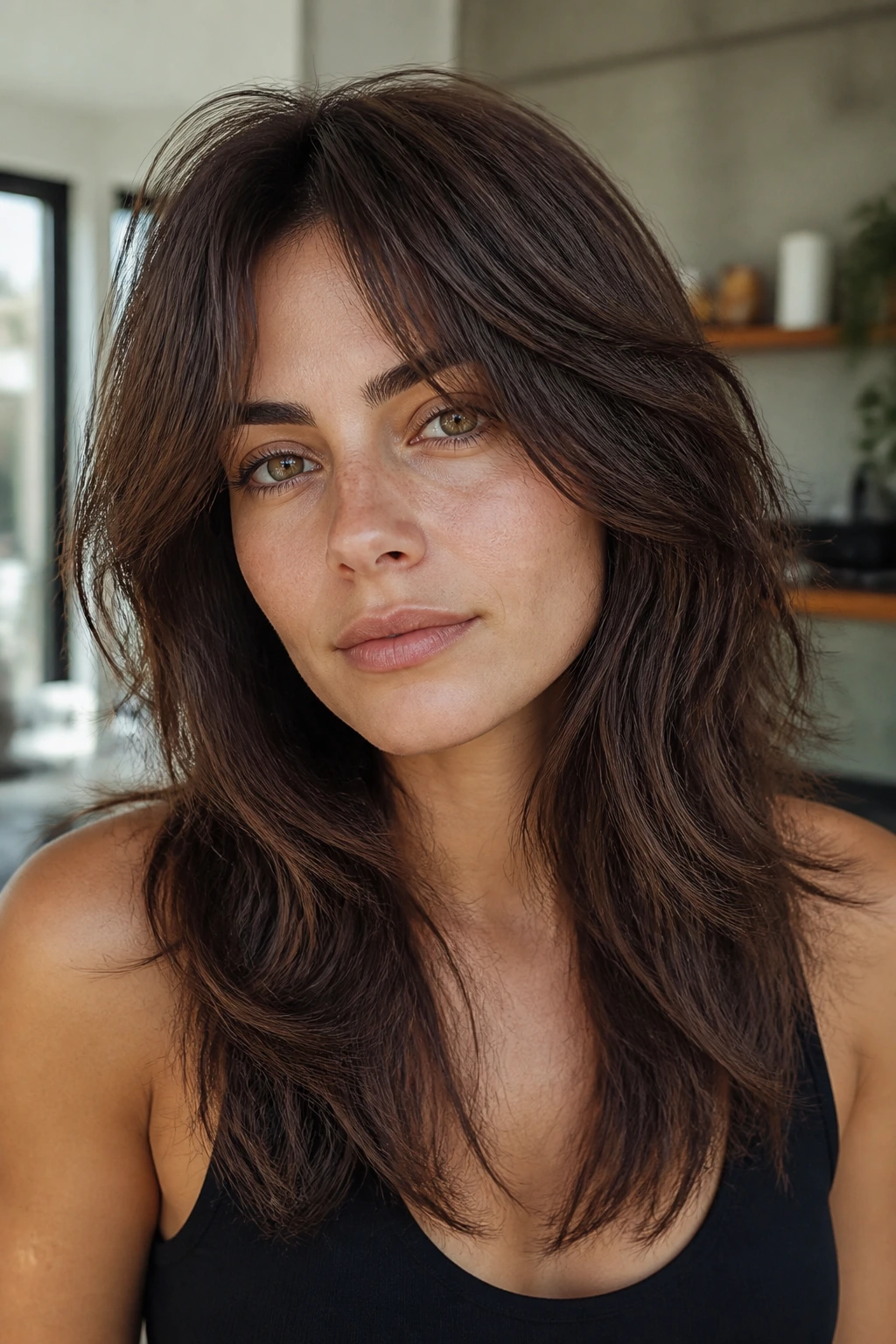
Dense hair needs room to breathe, but it also needs control. This shag removes weight from inside the haircut so the exterior can still fall cleanly. On medium hair with a lot of density, that’s the difference between a shape that moves and a shape that just takes up space.
The best version keeps the outline a little stronger than the average shag. If the ends get too broken up, dense hair can look spread out and frizzy. Ask for long layers that begin below the cheekbone, plus targeted debulking where the hair usually swells widest — often around the back of the head and the sides near the jaw.
This haircut is one of the better matches for people who hate that triangle silhouette dense hair can create. It gives the hair somewhere to go. If your hair is humid-frizz prone, a smoothing cream on damp mids and a loose blow-dry can keep the shape from ballooning.
30. Transitional Soft Shag for First-Timers
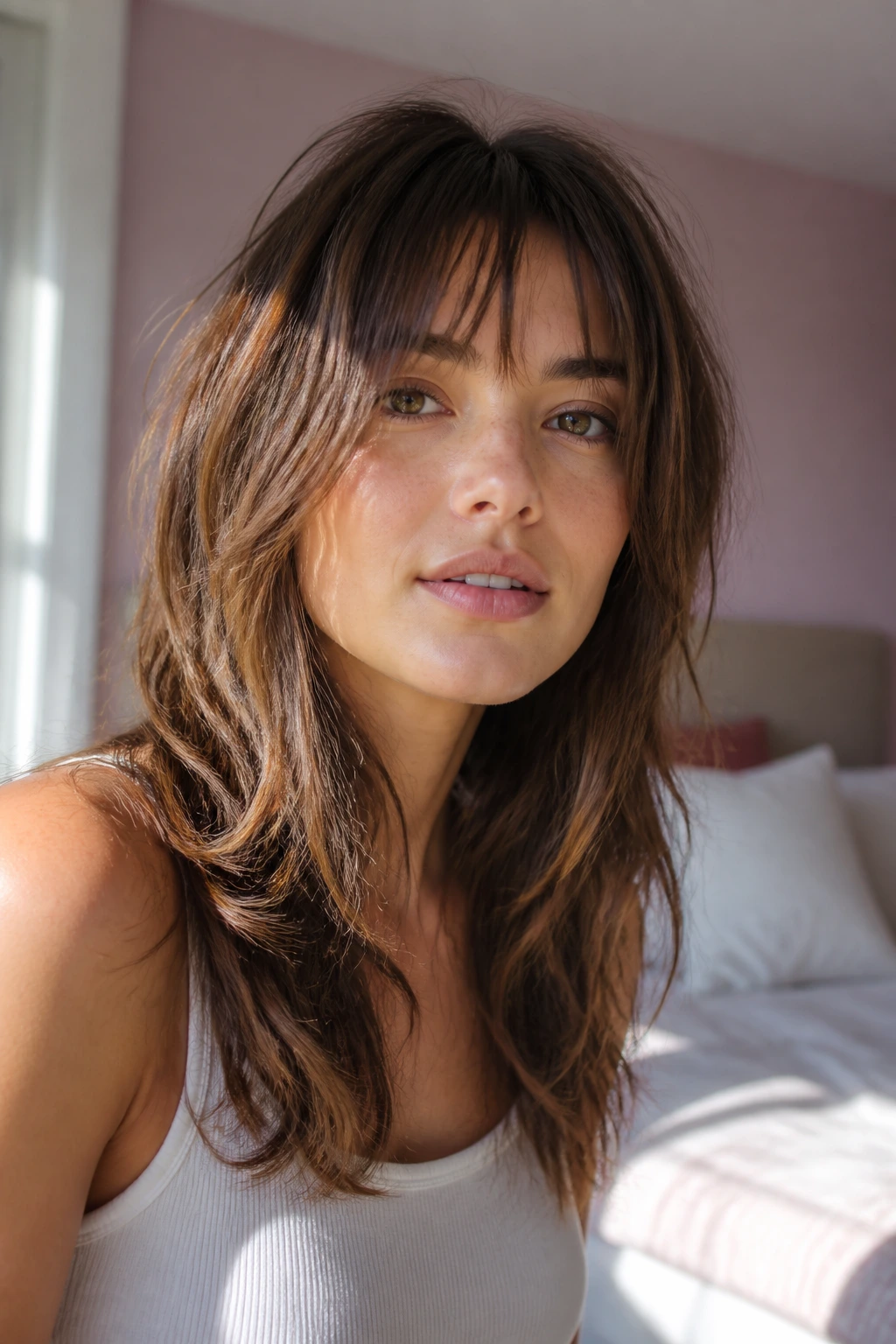
If you’ve never had a shag and you’re nervous about it, start here. The layers are long, the fringe is optional or very light, and the overall shape stays close enough to a layered medium cut that it won’t feel like a leap. It still has movement. It just doesn’t shout.
This is the haircut I’d point a cautious person toward first. You can live with it straight, wave it with a curling iron, or tuck it back when you want it out of your face. The styling commitment is low, which helps if you’re not ready to build a whole morning routine around your haircut.
Ask your stylist to keep the longest layers subtle and the front frame soft. If you love it, you can always go shorter or choppier at the next appointment. If you don’t, the grow-out is usually gentle. That’s a good place to start.
Why the Long Shag Keeps Medium Hair from Falling Flat
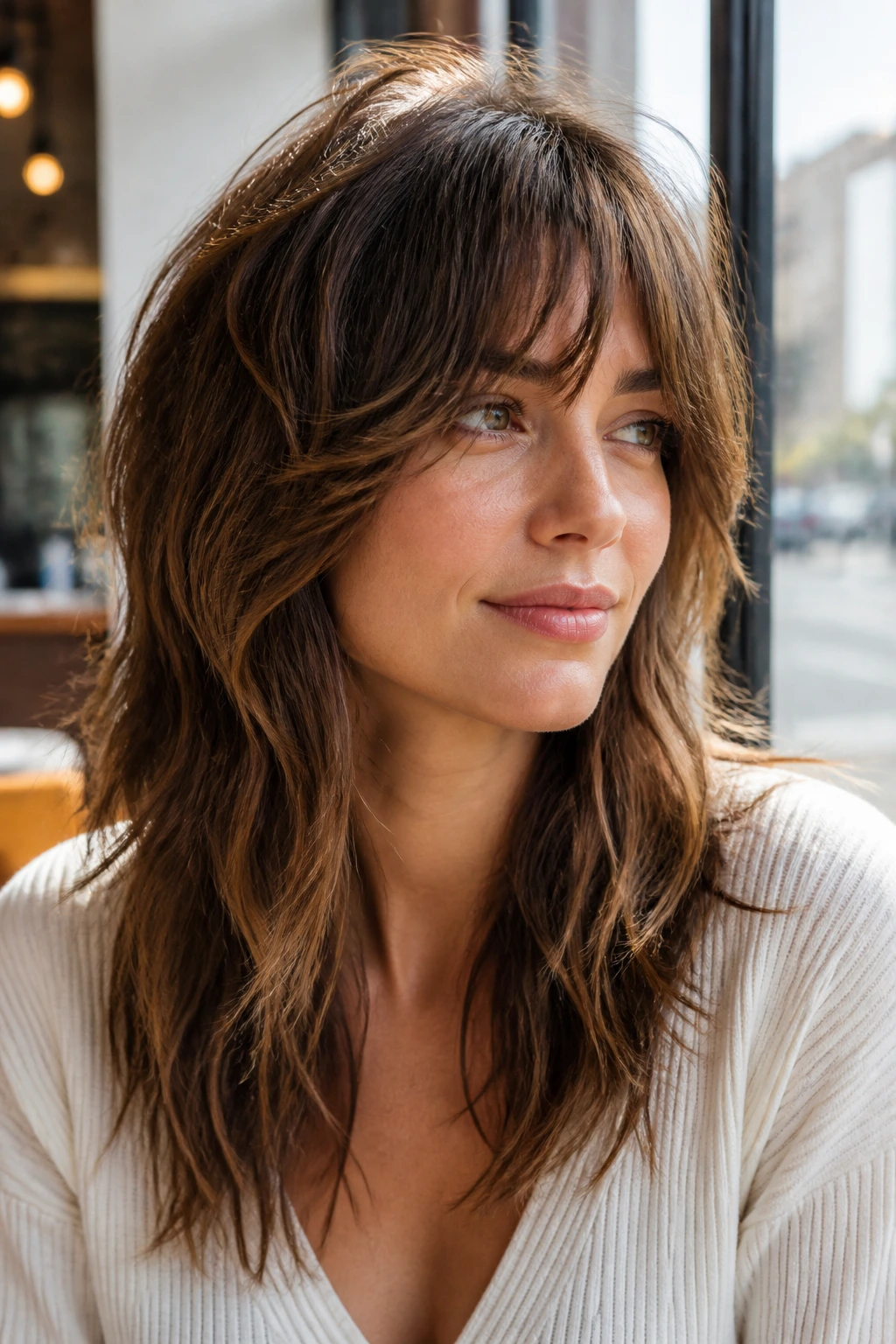
Medium hair often sits in an awkward middle ground. It’s long enough to get heavy, but not long enough to drape in a dramatic way on its own. A long shag solves that by shifting the weight upward in a controlled way. The crown gets some lift, the mids get movement, and the ends stop behaving like a single block.
The real trick is that a shag removes bulk where hair tends to collapse, not just where it’s easy to cut. Around the cheekbones and collarbone, the layers break up the outline. Near the back, the internal removal keeps the shape from ballooning. On straight hair, that means more bend. On wavy hair, it means the pattern can stack instead of spreading out. On thick hair, it means less drag. On fine hair, it means the perimeter still has something to hold on to.
I also think long shags age better than a lot of medium-length layered cuts. A blunt lob can go from polished to heavy fast. A long shag usually softens as it grows, which is why it reads as intentional for longer than people expect. That matters if you do not want to live in the salon chair.
Tools That Make Styling These Cuts Easier
-
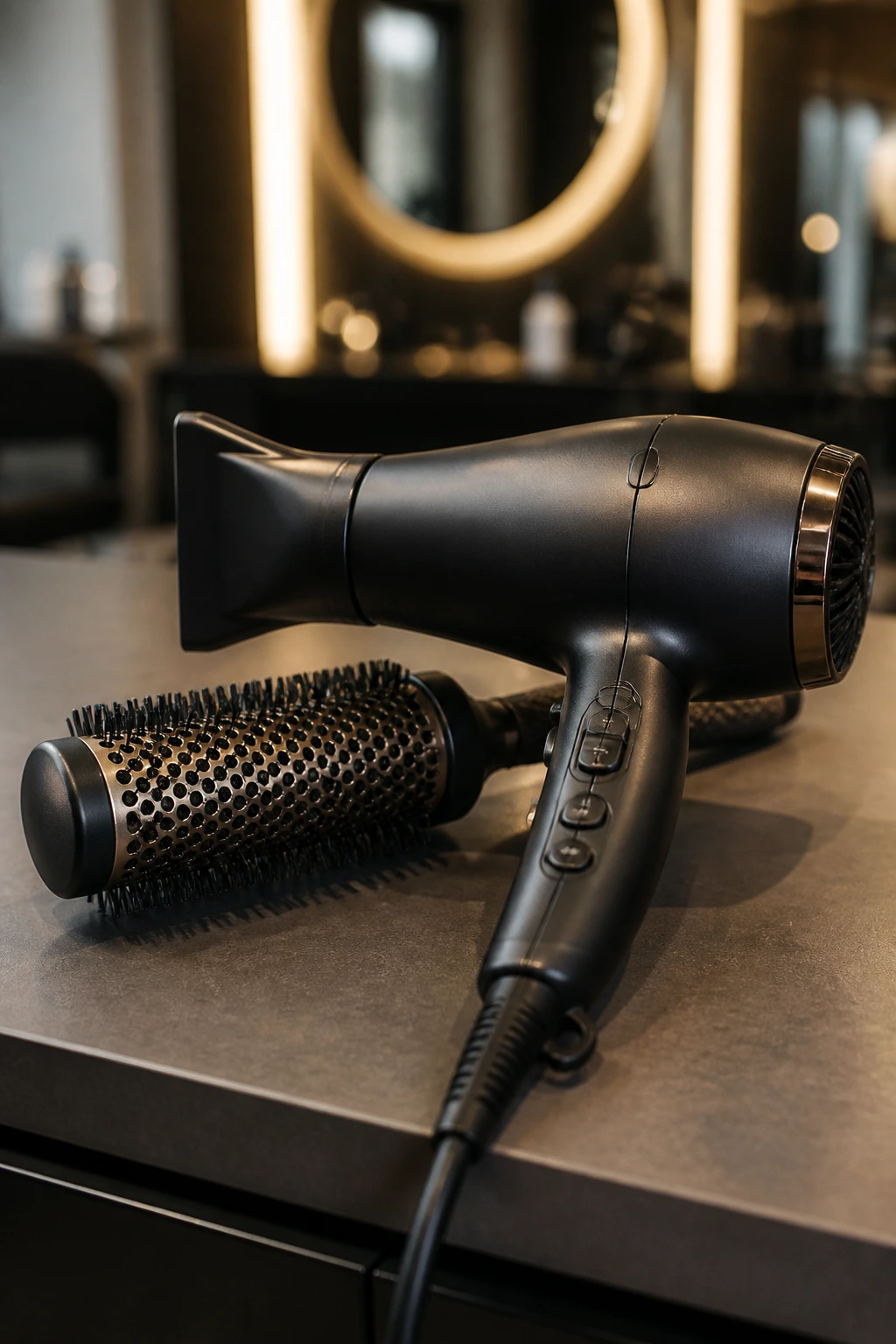
A blow dryer with a nozzle attachment — The nozzle helps aim airflow at the roots and front pieces so the shape doesn’t frizz out halfway through drying.
-
A medium round brush, about 1.5 to 2 inches — This is the easiest way to bend curtain bangs, face-framing layers, and the ends without making curls that look too set.
-
A 1-inch curling iron or wand — Good for loose bends through the front and mids when you want the shag to look a little more styled.
-
A flat iron with rounded edges — Useful for straight hair that needs a soft turn rather than a full curl.
-
Heat protectant — Non-negotiable if you use hot tools more than once a week. Keep it on the mids and ends, not the roots.
-
Lightweight mousse or root lift spray — Especially helpful for fine hair or flatter textures that need the crown to come up.
-
Texturizing spray or dry texture mist — This gives the layers a little grip and separation without turning the cut crunchy.
-
Wide-tooth comb and tail comb — The wide-tooth comb helps keep waves intact, and the tail comb is handy when you want a clean part.
-
Duckbill clips or section clips — Makes it easier to dry the fringe and front pieces in sections instead of blasting everything at once.
-
Satin pillowcase or bonnet — Not a styling tool in the usual sense, but it keeps the layers from getting crushed overnight.
How to Choose the Right Cut for Your Texture and Face Shape
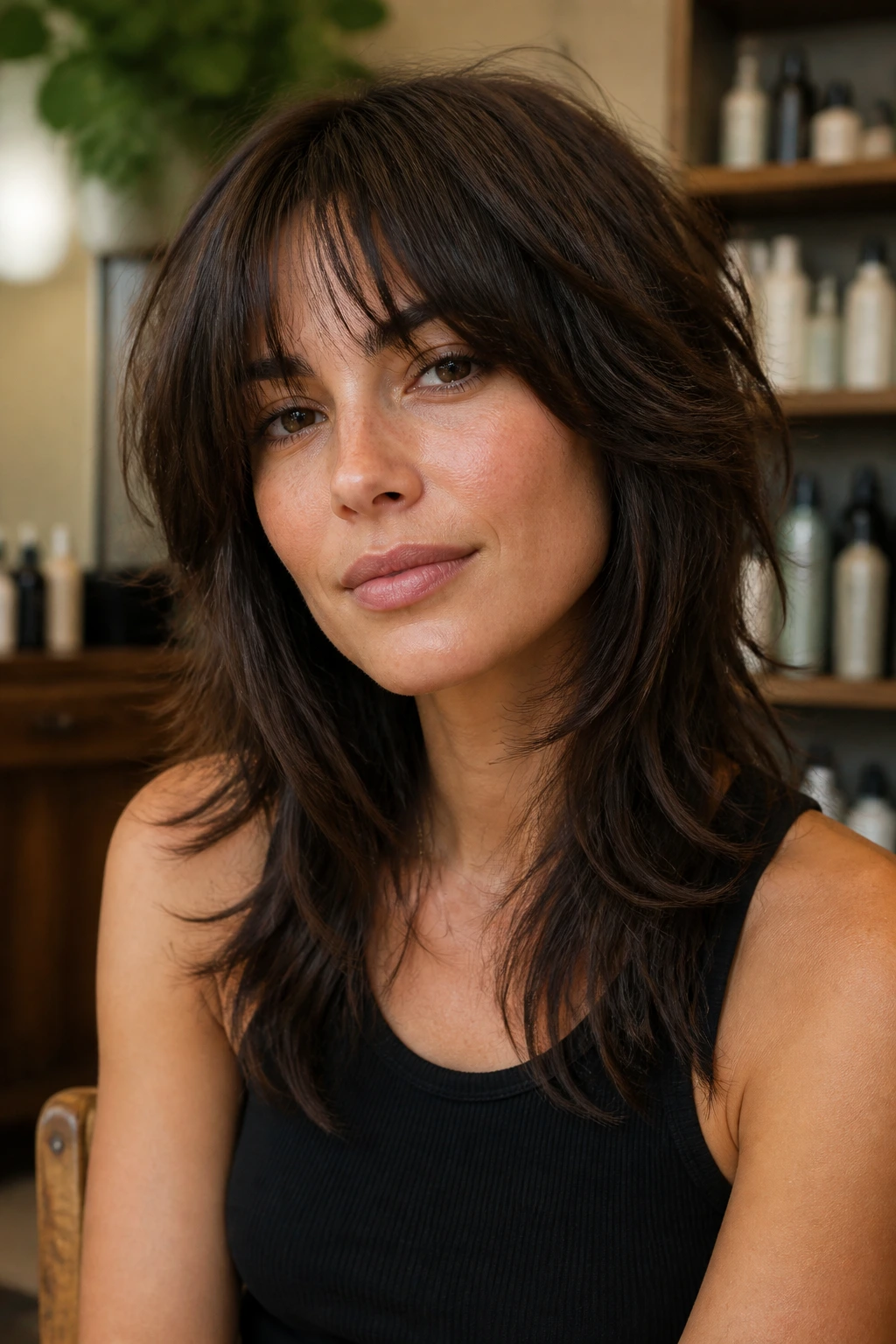
The smartest shag is the one that works with your hair, not against it. Fine hair usually does better with longer layers, a softer face frame, and less aggressive thinning. Thick hair can handle more removal inside the shape, but it still needs a solid perimeter so the ends don’t fray. Curly hair wants the cut shaped around the curl pattern, ideally while dry or nearly dry, because shrinkage changes everything.
Straight hair is where a lot of people get tripped up. If the layers are too short, the cut can look broken instead of textured. In that case, longer face-framing pieces and a stronger outline help a lot. Wavy hair usually gives you the most range. It can carry curtain bangs, razored ends, or a soft wolf-shag hybrid without much complaint.
Face shape matters, but not in a rigid, rules-and-regulations way. A round face often benefits from face-framing pieces that start lower, around the mouth or collarbone, because they draw the eye down. Square faces usually soften nicely with piecey layers around the cheek and jaw. Longer faces often look better with fuller fringe or a stronger curtain bang, since that adds width where the face needs it. If you bring photos to the salon, bring ones that show the front and the back, not just the glam shot from the front.
How to Wear and Style These Cuts
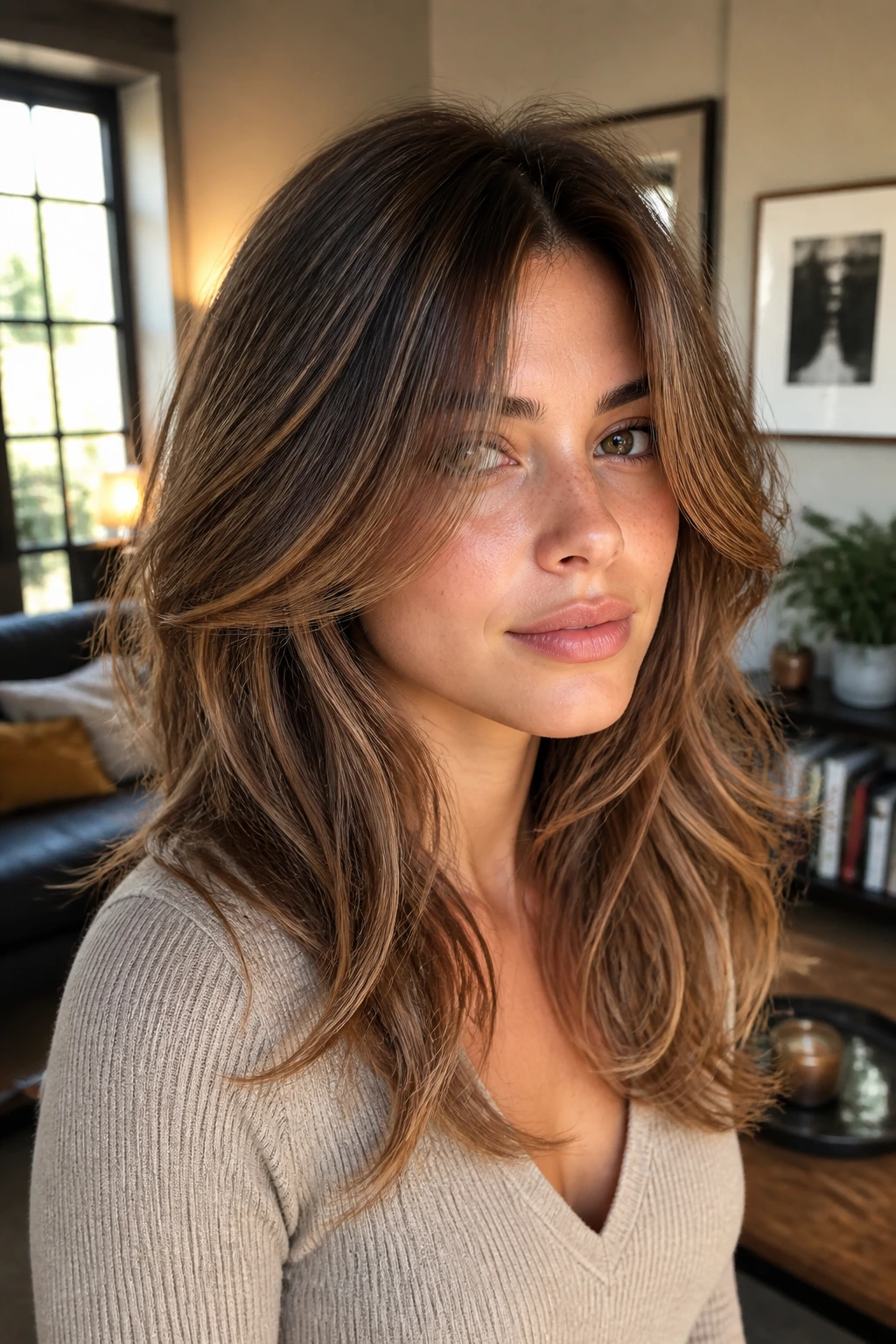
Presentation: If you want the cut to look its best fast, aim for a visible bend in the front pieces and a clear part at the crown. A clean middle part gives curtain and bottleneck fringe a softer fall, while a deep side part gives the whole haircut more lift and drama.
Pairings: Texturizing spray, mousse, and a light smoothing cream are the products that show up most often here. The mistake is layering on too many creams and oils, which can erase the texture you paid for. Use one product for lift and one for definition, not five products fighting each other.
Length Balance: Keep the perimeter long enough that the haircut can still tuck behind the ear or tie back. If every layer sits too high, medium hair turns fussy fast. The best shags hold onto a little length at the bottom so the shape stays practical.
Styling Mood: Air-dried gives you casual movement, a round brush gives you polished softness, and a flat iron gives you bend with a cleaner outline. Pick one mood and commit to it on a given day. Trying to mix all three usually muddies the shape.
Small Tweaks That Change the Mood

Texture Boost: A quarter-size amount of mousse at the roots, then a little texturizing spray at the mids, gives the cut more lift than most heavy creams ever will. If your hair is fine, start smaller than you think; shag cuts can go from lively to stringy fast when product is overdone.
Customization: Swap curtain bangs for bottleneck bangs if you want more structure around the face. Keep the shortest layer below the cheekbone if you want the haircut to stay ponytail-friendly. Ask for a softer perimeter if you like romantic movement, or more razored ends if you want a sharper edge.
Finish Move: Flip the front pieces away from the face with a round brush or flat iron, then pinch the ends once they cool. That tiny cooling step is what keeps them from falling straight in ten minutes.
Make-It-Yours: Fine hair usually needs longer layers and root lift. Thick hair usually needs internal debulking and a stronger outline. Curly hair usually needs the cut shaped to the curl, not against it. Straight hair usually needs the most help from styling, so keep the layers long enough to be worth the effort.
Keeping the Shape Between Salon Visits
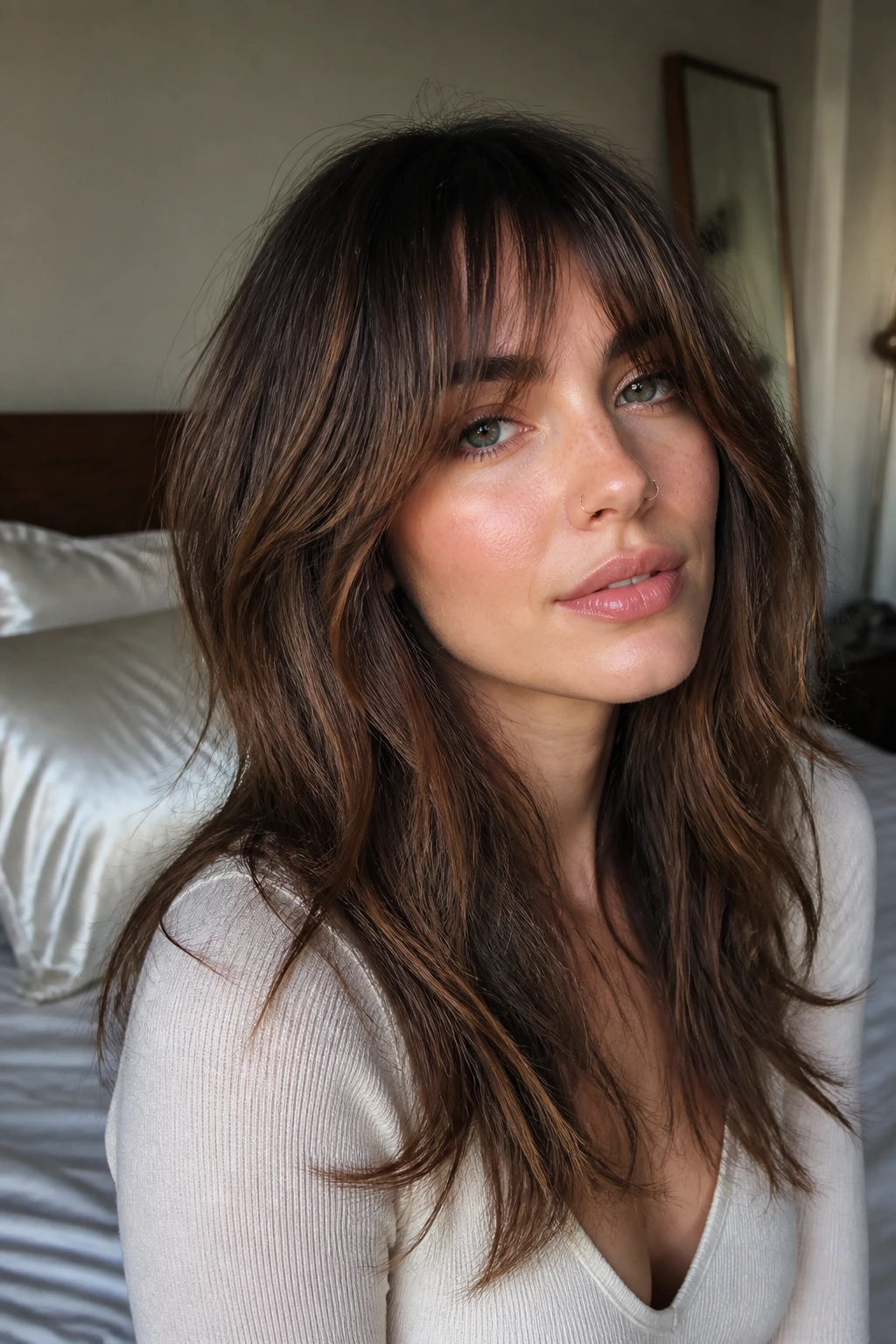
A long shag on medium hair can hold its shape for a while, but the fringe and face frame tell on you first. Bangs usually need a trim every 3 to 5 weeks if they sit near the brows. The rest of the cut often looks its best with a shape refresh every 8 to 12 weeks, depending on how fast your hair grows and how exact the layers are.
At home, the easiest way to preserve the shape is to keep the roots from getting greasy and the mids from getting crushed. A satin pillowcase helps. So does sleeping with the front pieces clipped loosely back or tucked into a soft bonnet if the fringe is short enough to flip weirdly overnight. If your hair gets flat by day two, a touch of dry shampoo at the roots and a quick bend on the front layer can wake it up without a full restyle.
If the ends start fanning out in odd directions, that usually means the perimeter is due for a dusting. If the fringe starts splitting open in the middle, that’s a bang trim issue, not a haircut failure. And if the whole cut starts feeling heavier, don’t panic. Long shags often just need a tiny clean-up rather than a dramatic change.
Variations and Adaptations to Try
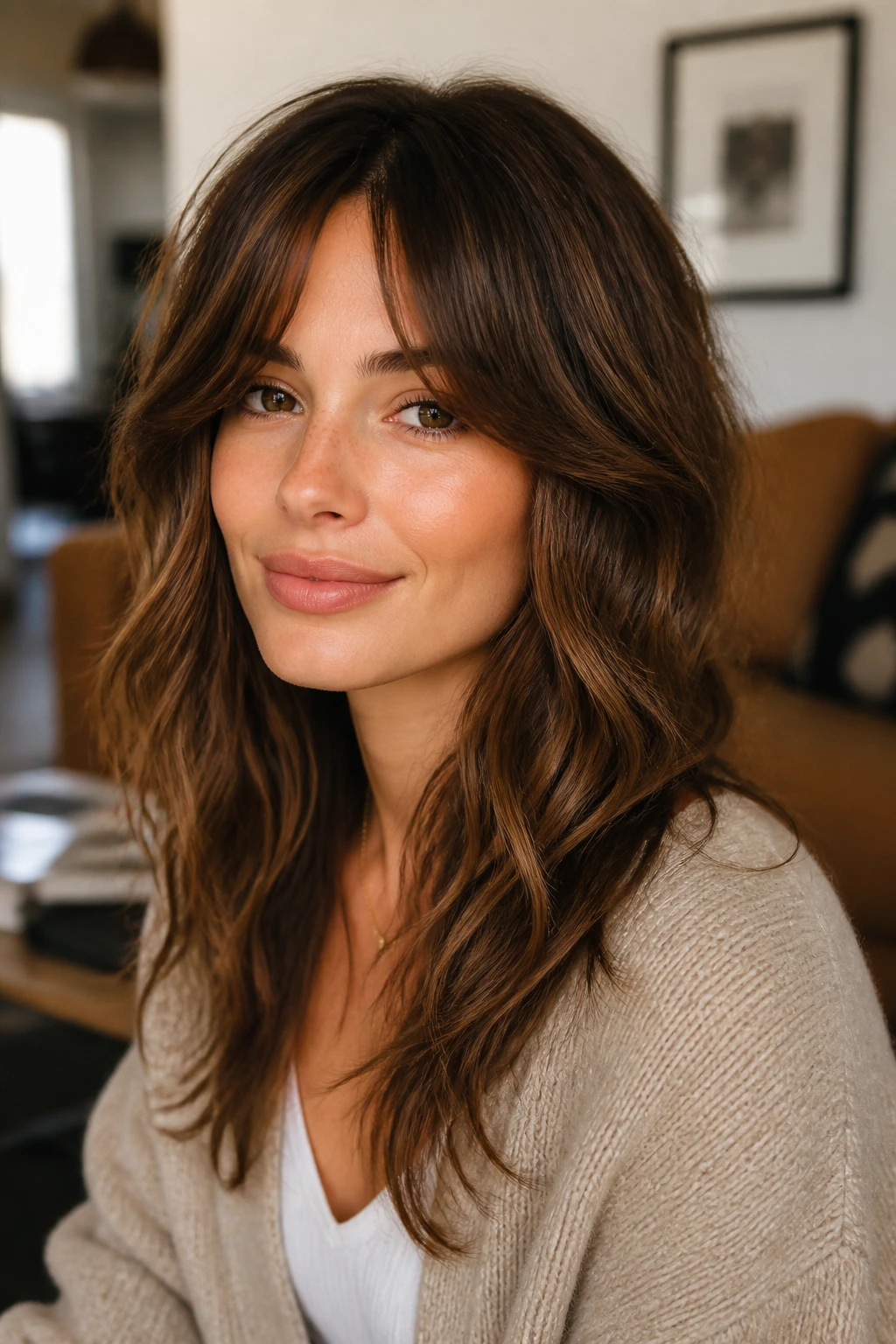
The Soft Curtain Refresh: Keep the fringe light, the layers long, and the outline smooth. This version is ideal if you want the shag shape without any obvious edge.
The Wolfy Edge Edit: Shorten the crown a little, add more separation in the mids, and keep the back slightly longer. This gives the haircut a more directional, lived-in feel.
The Curly Round-Up: Shape the layers around the curl pattern and leave the fringe long enough to shrink naturally. This works best when curls are cut with their spring in mind, not stretched flat.
The Blowout-Friendly Version: Ask for longer front pieces, a rounder crown, and bend-friendly ends. It’s the best fit for people who love a brushed-out, salon-style finish.
The Fine-Hair Lift Cut: Keep the layers longer and lighter, and avoid over-thinning. A bit of root lift spray and a small round brush will do more here than aggressive texture ever will.
The Dense-Hair Debulked Version: Use internal weight removal and preserve a stronger perimeter. This keeps thick hair from expanding into a triangle as soon as it dries.
Common Mistakes to Avoid
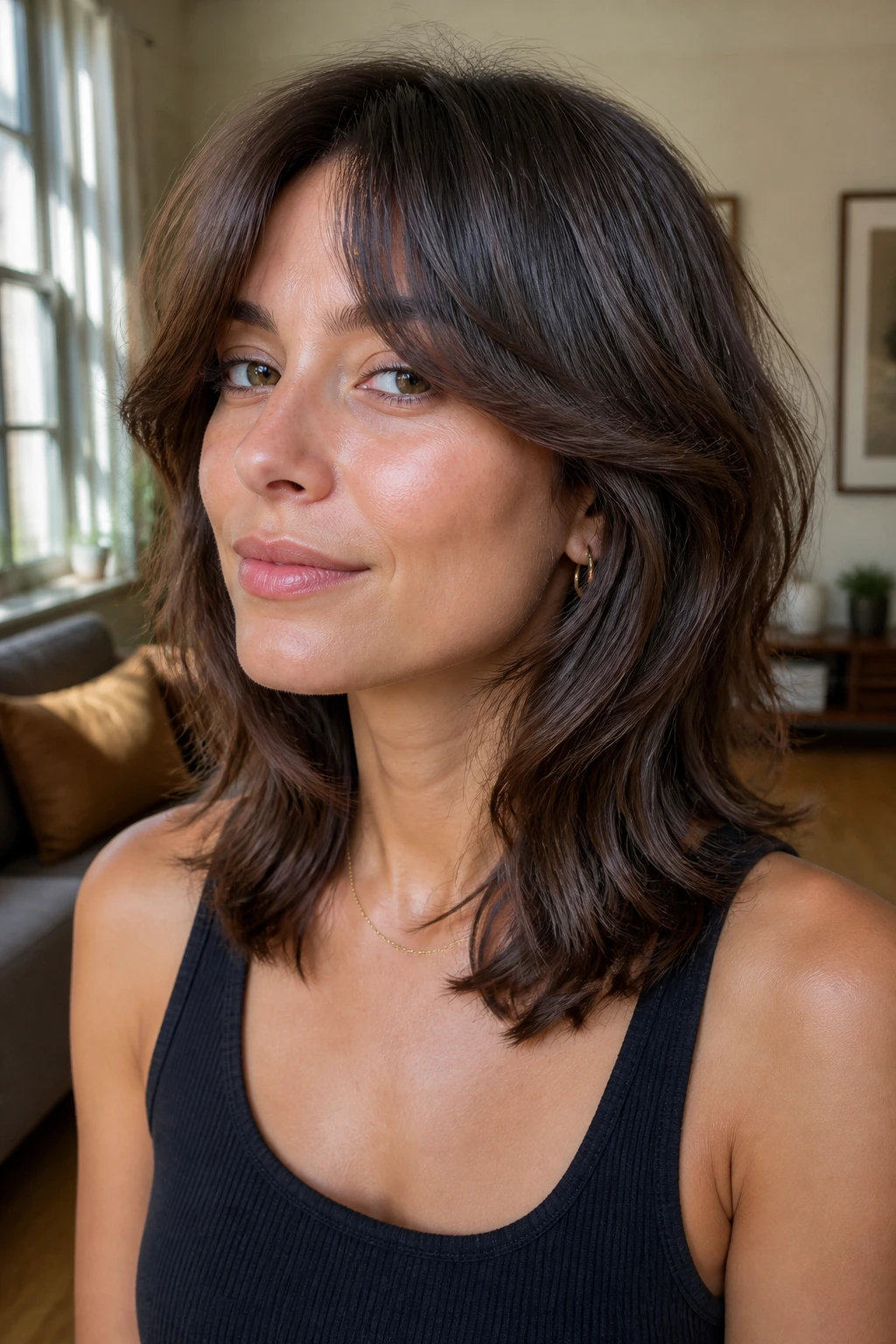
Cutting the front too short. The fastest way to ruin a shag is to chop the face frame up too high and then wonder why it sticks out. Short layers spring up even more once the hair dries, so ask for the fringe and front pieces to land lower than you think you need.
Over-thinning fine hair. Thin or fine medium hair can lose its body fast if it gets carved up too aggressively. The fix is a softer hand: longer layers, less razoring, and a perimeter that still holds shape.
Ignoring how your hair dries. A cut that looks lovely wet can behave in a completely different way once it dries. Wavy hair expands, curly hair shrinks, and straight hair loses bend fast, so the layer plan has to match the texture you actually live with.
Styling every piece the same way. Shags look flat when every section gets the same curl or the same blow-dry direction. Give the front a little more attention than the back. Let the ends be a touch inconsistent. That irregularity is part of the shape.
Using heavy products to force texture. Thick creams and oils can weigh the layers down and make the cut feel limp. If the haircut is good, a little mousse or texture spray usually beats a slick finish.
Frequently Asked Questions
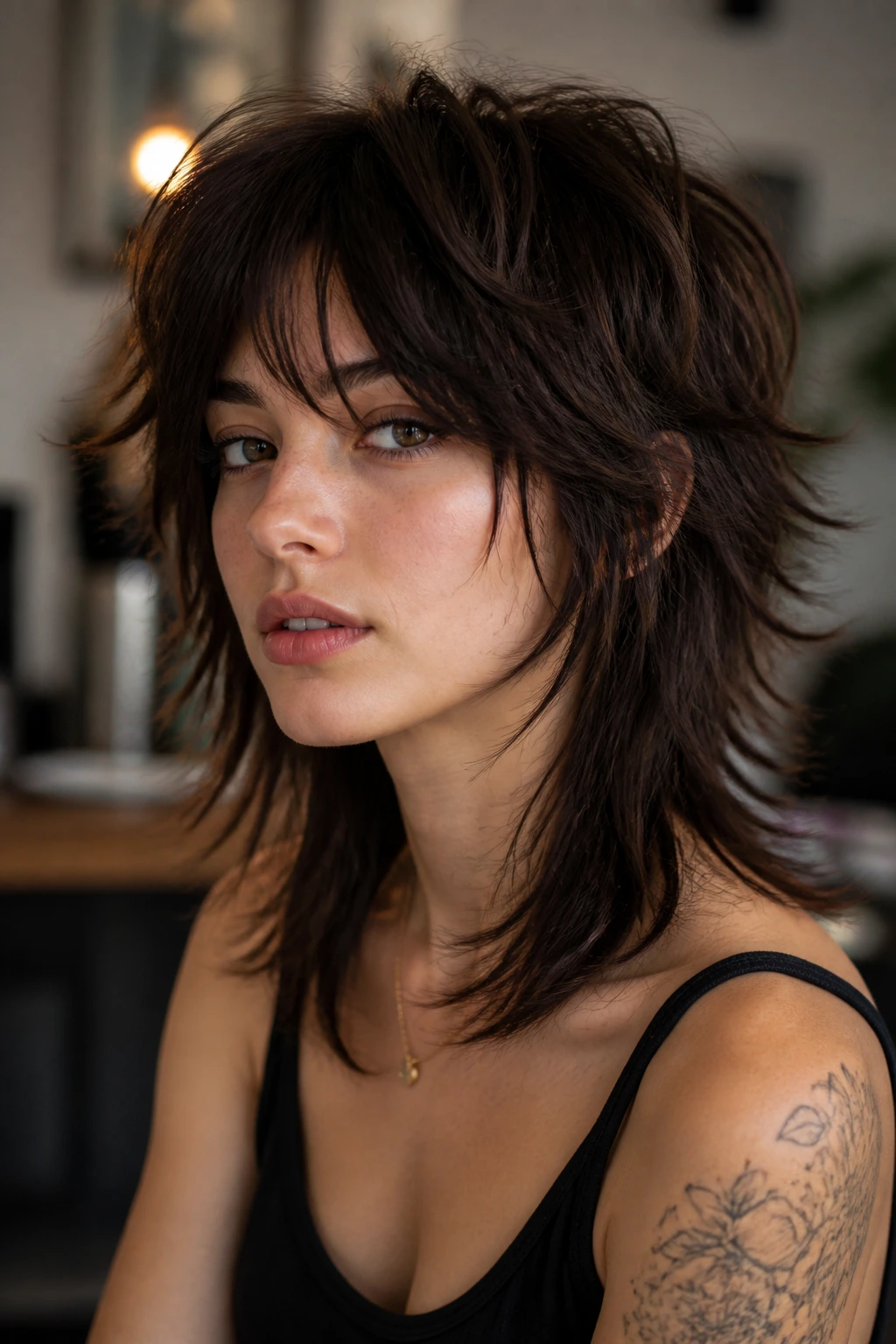
What’s the difference between a long shag and a wolf cut?
A wolf cut usually pushes harder toward contrast: shorter crown, longer back, more obvious edge. A long shag keeps the same layered idea but usually feels softer, more wearable, and easier to dress up.
Will a long shag work on straight hair?
Yes, but it needs a smarter layer plan. Straight hair usually does better with longer face-framing pieces, a clean outline, and some styling bend so the layers actually show.
Is a shag haircut good for fine hair?
It can be, as long as the stylist doesn’t over-thin it. Fine hair usually needs lighter layering, a bit of root lift, and a perimeter that still has enough weight to look full.
How often should I trim a long shag on medium hair?
The fringe may need a tidy-up every 3 to 5 weeks. The shape itself usually benefits from a full refresh every 8 to 12 weeks, depending on how fast your hair grows.
Can I still tie my hair back with a shag?
Yes, and that’s one of the reasons medium length works so well here. Keep the shortest face-framing pieces long enough to tuck or clip, and you’ll still have ponytail days.
What should I tell my stylist if I want one of these cuts?
Bring reference photos that show the front, side, and back. Then say how much time you actually spend styling, because a shag for air-drying is not the same as a shag for blowouts.
Does a long shag work on curly or coily hair?
It can work beautifully on curls, but the cut needs to respect shrinkage and curl pattern. Ask for the shape to be built around how your hair falls when it’s dry or nearly dry.
What if the shag feels too choppy after the cut?
Usually the problem is layer placement, not the shag idea itself. A small refinement at the next appointment — longer face frame, softer perimeter, less crown removal — can calm the shape without losing the movement.
The Shape That Still Feels Fresh

The best thing about a long shag on medium hair is that it keeps its personality without getting trapped in one mood. It can look soft, sharp, polished, messy, or a little rock-and-roll, depending on how the layers sit and what you do with the front. That flexibility is why it keeps hanging around.
If you’re picking one version to try, choose the one that matches your daily habits, not the one that looks the most dramatic on a mood board. Hair that works with your routine always wins over hair that only behaves in a photo. Bring the photo, ask for the right weight removal, and leave enough length at the bottom to let the shape breathe.