



Wavy hair does peculiar, lovely things when it’s cut short. Give it too much blunt weight and it sits like a helmet; remove too much and the sides puff out while the top goes limp by lunch. A good short shag fixes that tension by working with the bend in the hair instead of fighting it.
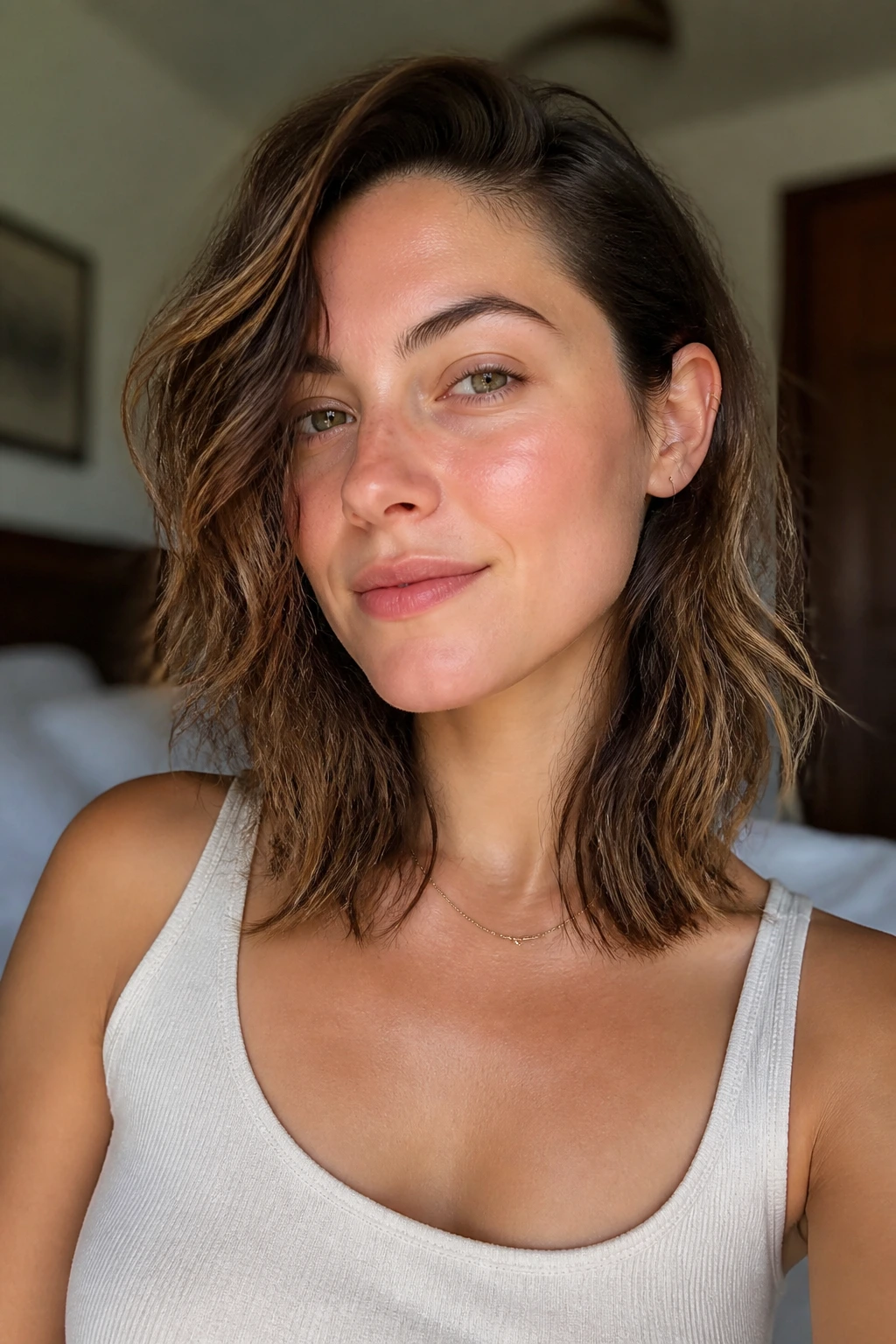
That’s why short shag haircuts for wavy hair keep showing up in salon chairs. The cut lets the wave pattern do half the styling, then uses layers to steer the shape toward the cheeks, jaw, or nape instead of letting it go wherever it wants. When the layers are placed well, the whole head moves in pieces instead of collapsing into one flat shape.
My bias is plain: the best versions keep enough weight to look deliberate on day three. You want movement, yes, but not so much removal that the ends turn wispy and sad the first time humidity walks through the door. The difference lives in where the layers stop, how much gets taken out of the crown, and whether the fringe is feathered, broken, or sliced too cleanly.
Why This Collection Works So Well on Wavy Hair
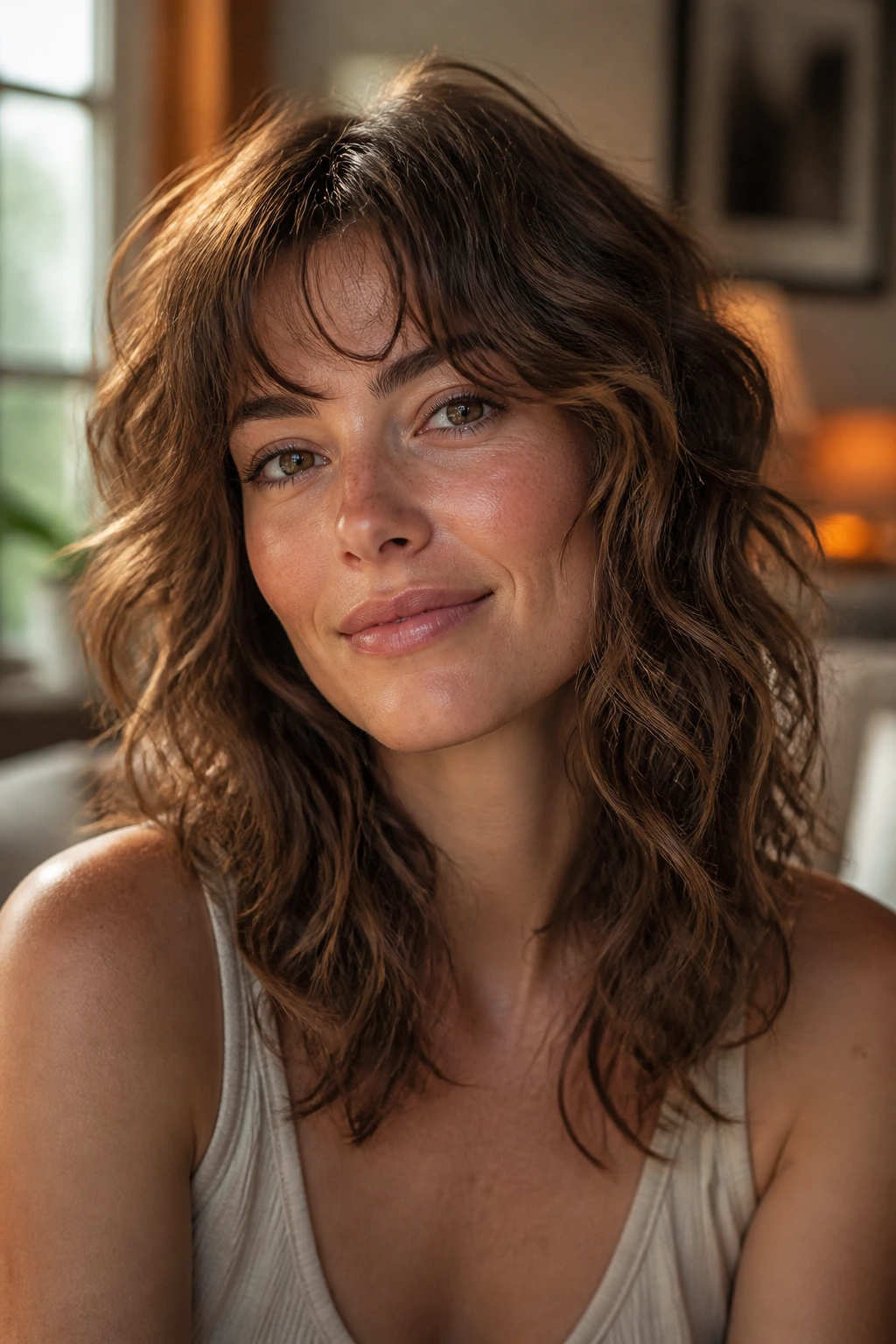
-
Wave-Friendly Weight Control: The right short shag keeps the crown light and the perimeter steady, so your waves bend without exploding outward at the sides.
-
Face-Framing Without a Round Brush: Choppy pieces around the cheekbone or jaw do the flattering work for you, which matters when you’d rather not spend 20 minutes chasing a blowout.
-
Soft Grow-Out: Layers that are cut with a little irregularity grow out with less drama than a blunt bob, which is useful when you don’t want a haircut that “dies” at week four.
-
Bang Options That Actually Behave: Curtain fringe, bottleneck bangs, and side-swept pieces sit better on wavy hair than straight-across, heavy fringe that has to be fought every morning.
-
Room for Density Differences: Fine waves need lift; dense waves need release. A short shag can do both if the layers are placed with intention instead of tossed in randomly.
-
Better Air-Dry Results: Wavy hair often looks best when you stop overhandling it. These shapes still have structure when they’re left to dry on their own, which is half the appeal.
1. Chin-Grazing Choppy Shag
This is the cut that sits right at the jawline and keeps moving. The outline is short enough to feel fresh, but the choppy layers stop it from looking like a blunt triangle the minute your waves wake up.
Why it suits wavy hair
The chin length gives the wave a place to fold back in toward the face instead of flaring out below it. That matters a lot if your hair gets wider the longer it gets, because a chin-grazing line keeps the shape contained while the interior layers add lift.
Ask for a perimeter that lands just at or slightly below the chin, then keep the layering soft through the crown. You do not want the top stripped bare. A few broken pieces around the temples are enough to keep the cut from reading too heavy.
- Best on medium-density waves that need a clean outline
- Works well if your hair falls flat at the roots
- Better with a side part or loose center part than a severe middle part
- Looks strongest when the ends are piecey, not sliced into a hard line
Pro tip: If your waves are coarse, keep a little more weight at the bottom. Too much removal near the ends can make the whole shape spread outward.
2. Soft Wolf Bob
This is the haircut for someone who wants a little bite without walking around with a full mullet silhouette. It keeps the front bob-like and the back slightly shaggy, which is a very useful trick on wavy hair.
The magic is in the crown. A small amount of lift up top keeps the haircut from feeling boxy, while the nape stays compact enough that the whole thing still reads as short. If your hair is thick, this cut can take a fair amount of internal removal; if it’s fine, the layers need to stay longer so the ends don’t disappear.
What I like here is the balance. The shape has attitude, but it doesn’t need aggressive styling to show up. A little mousse at the roots, a quick scrunch, and you’re done. No heroics.
3. Micro Shag with Curtain Fringe
Can a very short shag still feel soft? Yes. The trick is the fringe. Keep the bangs airy in the middle, let them open at the temples, and the whole haircut stops looking severe.
This version works well when your waves are loose and your forehead likes a bit of movement around it. The bangs should be long enough to tuck, flip, or split without sitting like a shelf. If they’re cut too short, the style gets fussy fast.
Styling note
A pea-sized dab of mousse at the roots and a light mist of heat protectant is enough for most days. Diffuse only until the hair is about 80 percent dry, then stop touching it. If you keep scrunching, the fringe can separate into weird little hooks.
4. Rounded French Bob Shag
Think of this as a bob that learned how to move. The perimeter stays rounded, but the interior layers and soft fringe keep the silhouette from turning stiff or blocky.
It’s a smart option for waves that form loose S-shapes and need a little help staying together. The rounded edge makes the haircut look polished; the shag layers keep it from feeling overmade. I especially like this on hair that puffs at the temples but sits flat at the crown. The soft roundness draws the eye in without creating a hard edge.
Who it flatters
- Oval and heart-shaped faces
- Waves that are fine to medium in density
- Hair that bends easily but frizzes when it’s over-thinned
If you wear glasses, this one can be a small miracle. The fringe can sit above the frame, just brushing it, or split around it depending on how much forehead you want to show.
5. Razor-Cut Pixie Shag
This one is sharp in the best way. It keeps the sides and back short, then adds rough, feathered texture on top so the waves have somewhere to break and bend.
Razor work can look beautiful on soft waves because it creates that airy, fragmented finish people usually chase with too much product. But there’s a catch: if your hair is very coarse or frizz-prone, a heavy razor hand can leave the ends fuzzy. In that case, ask for point cutting instead of a full razor pass.
The cut shines when the crown has enough length to twist and piece out with a little cream. It’s the sort of shape that looks almost better after you’ve slept on it once. There’s no flat helmet effect, which I appreciate more than I should admit.
6. Collarbone Shag with Broken Ends
This sits at the edge of “short” and “not quite short,” and that’s exactly why it works. The collarbone length gives waves enough room to clump in clean sections, while the broken ends stop the cut from feeling heavy.
Unlike a blunt lob, this version depends on internal movement. The top layers remove enough mass that the hair doesn’t sink, but the bottom keeps enough line to anchor the shape. That combination matters if your waves are inconsistent from side to side or if one section always dries flatter than the rest.
It’s the kind of cut that looks especially good when tucked behind one ear. The asymmetry shows off the layers without asking you to style the whole head like a magazine spread. Good haircuts should survive real life. This one does.
7. Tapered Nape Shag
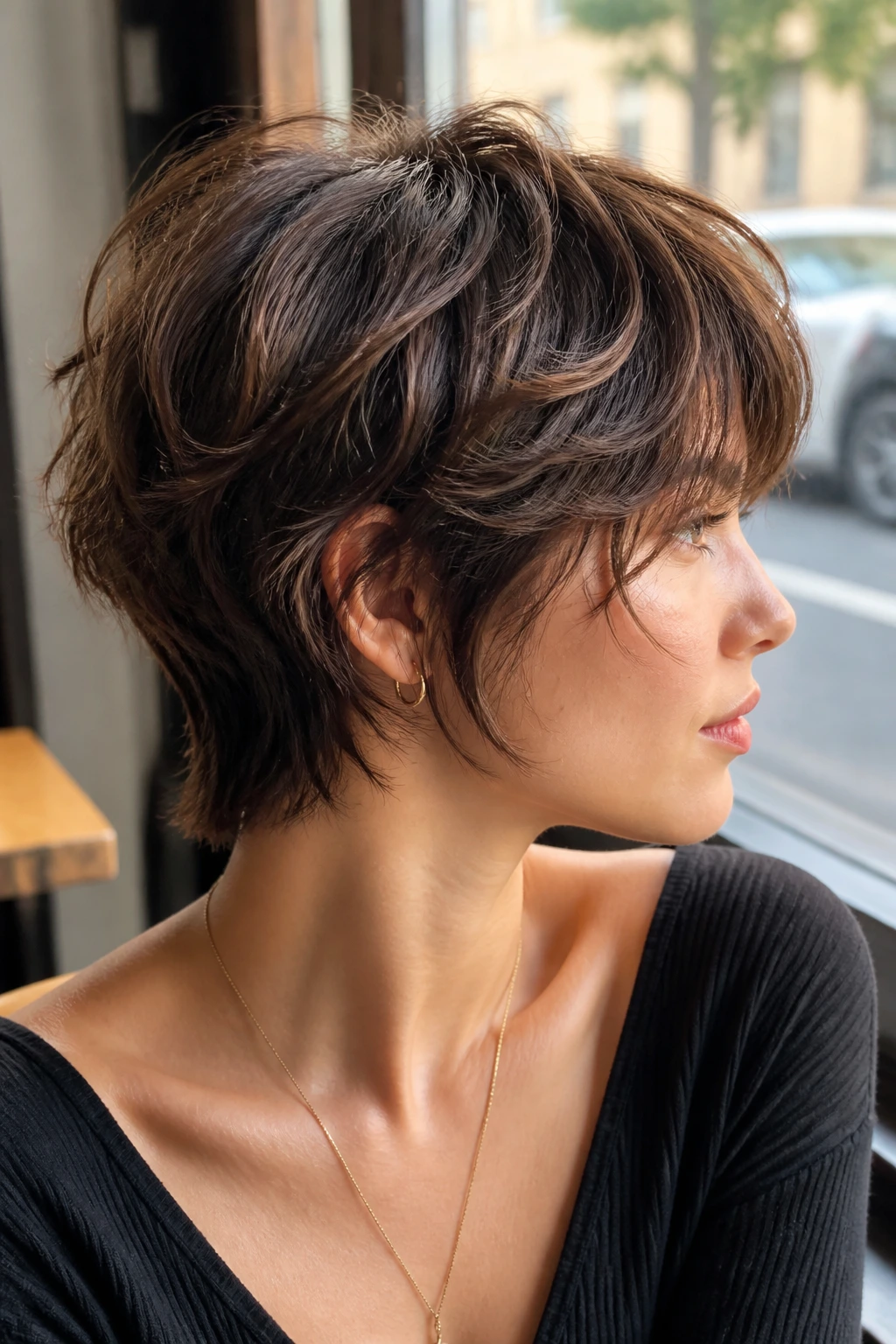
The nape is where this haircut earns its keep. Shorter, cleaner hair at the back removes bulk right where wavy hair likes to puff, and the longer top layers keep the profile from turning too boyish.
Styling note
If your hair grows out around the neck faster than anywhere else, this is a sensible choice. You can keep the top messy and textured while the back stays neat enough to last between trims. That’s not glamorous, but it is practical.
A tapered nape also helps thick hair sit closer to the head. I’d ask for softness through the back corners, not a hard fade. You want a gentle slope, not a barbered edge unless that’s the look you’re after.
8. Bottleneck Bang Shag

This is a bang story as much as it is a haircut. Bottleneck fringe starts narrower in the center, opens out near the eyes, and blends into the rest of the shag instead of sitting on top of it.
That shape works beautifully with wavy hair because it gives the forehead some coverage without making the front too dense. Heavy bangs can get bulky fast on waves. Bottleneck bangs break that problem apart and let the fringe separate into softer pieces.
The haircut feels especially good if you like moving your part around. Center it for a cleaner line, sweep it for a little drama, or let the fringe fall slightly uneven after air-drying. A tiny bit of separation is the whole point.
9. Jaw-Length Piecey Shag
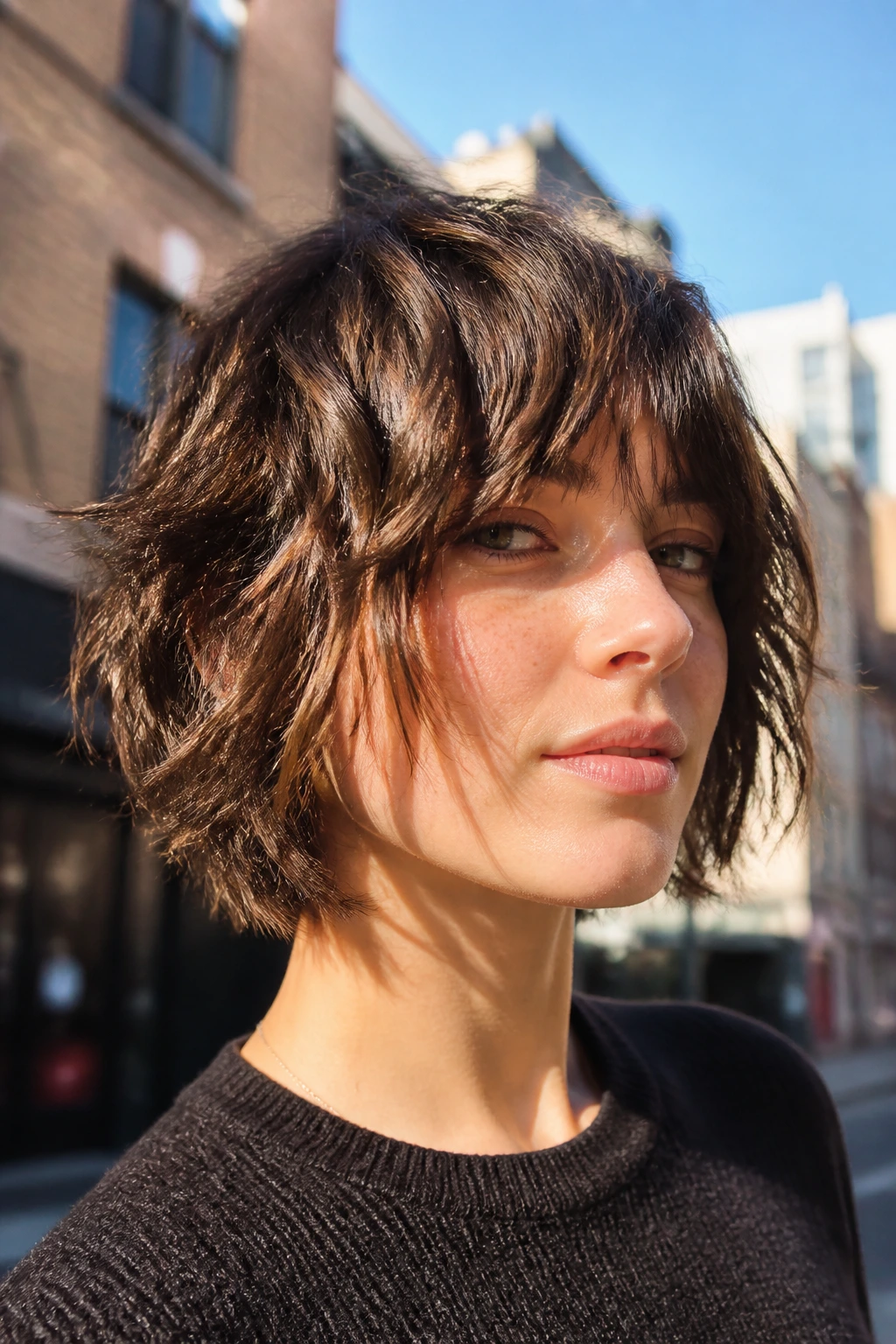
Why does this cut keep showing up in short-hair mood boards? Because the jawline is one of the easiest places to let wave texture do the heavy lifting.
The length is short enough to show off the neck and collar, but not so short that your waves lose their pattern. Pieces around the cheeks can be cut a touch shorter to keep the face open. That detail matters. Without it, jaw-length hair can frame the face in a way that feels square and stiff.
This is a strong pick if your hair is medium density and you want something that doesn’t balloon out at the sides. Ask for point-cut ends and a little bend in the front instead of a blunt edge. The result is less “cut” and more “lived-in shape,” which is exactly where this haircut lives.
10. Grown-Out Pixie Shag
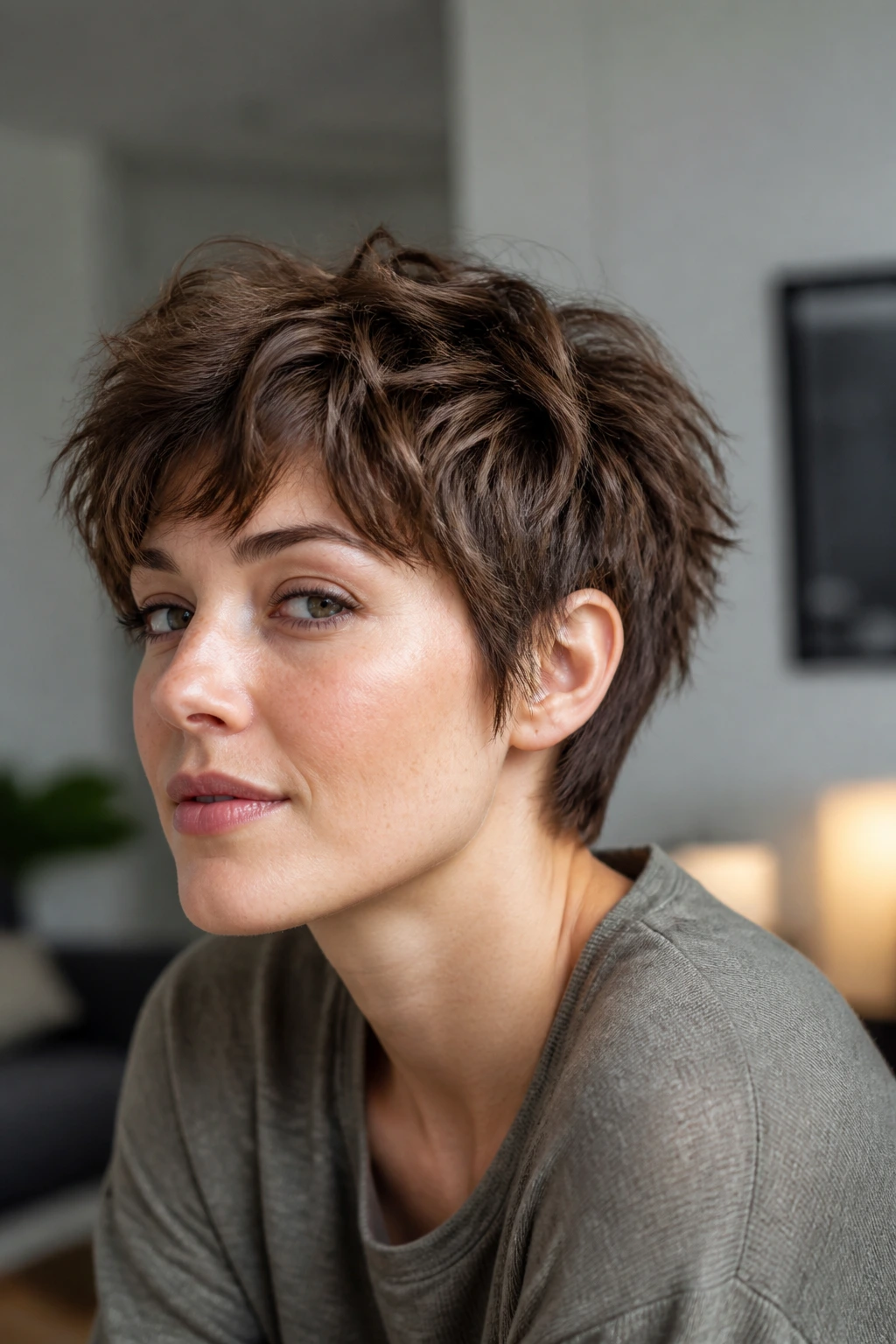
This is the haircut for people who want the ease of a pixie but don’t want to visit the salon every few weeks. It keeps enough length on top to show wave movement, while the sides stay short and broken up.
The grown-out part is not a flaw. It’s the point. The shape softens naturally, so the style looks intentional even when the top has a little extra length. If you like your hair a bit undone, this is your lane.
A side part can make the whole cut feel more relaxed, while a center part gives it a sharper, more modern edge. Either way, keep the styling light. A heavy cream will drag it down. A mousse or a light matte paste usually does the job better.
11. Feathered Indie Shag
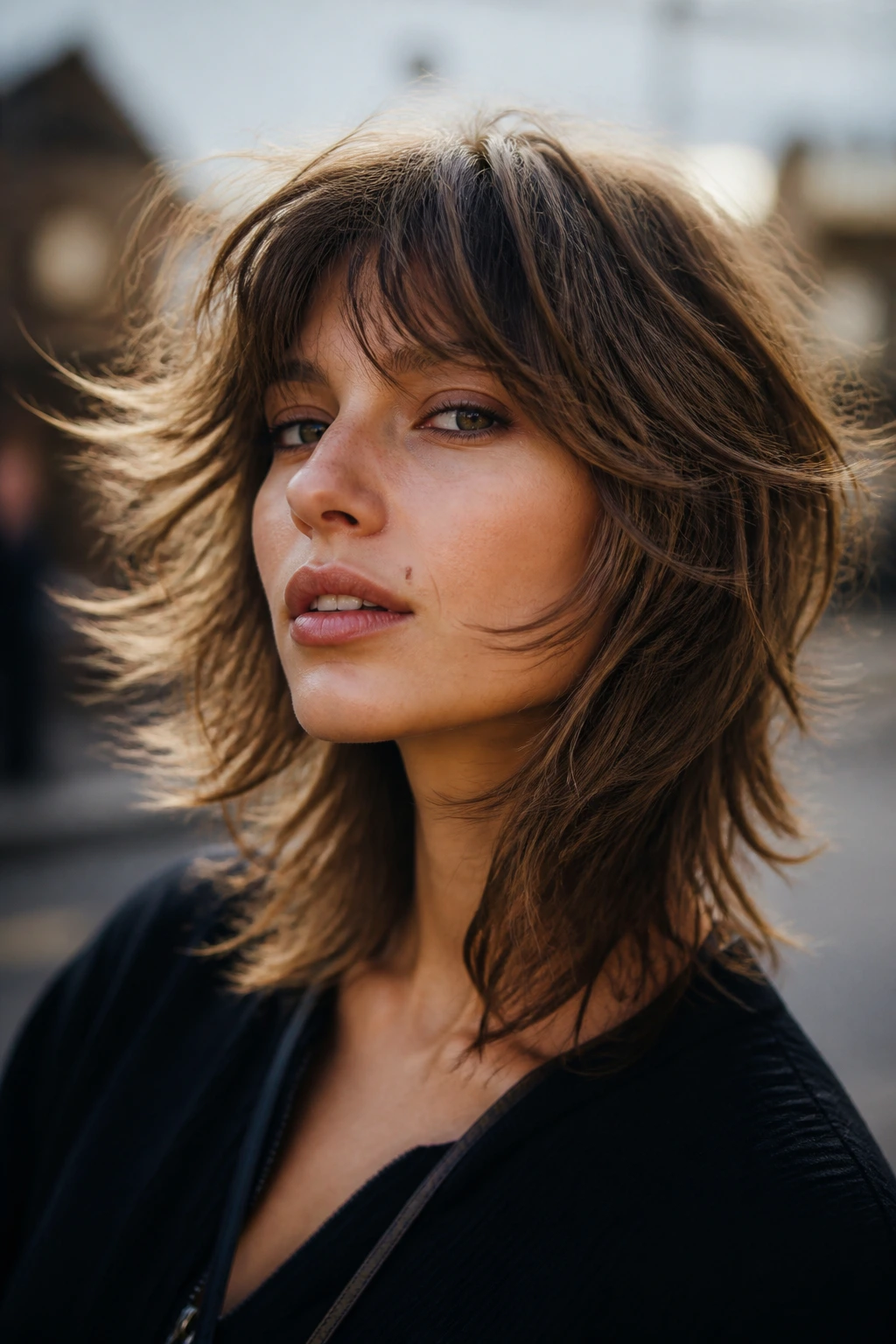
This one feels a little messy in a good way, like a haircut that knows how to move through air. The feathering starts near the cheekbones and continues through the ends, so the wavy texture reads as soft rather than over-styled.
It’s a strong choice for anyone who likes a bit of rock-and-roll texture without going full mullet. The layers should be long enough to bend, not chopped so short that they stick out. That’s the trap with feathering: done well, it looks airy; done badly, it looks thin and over-cut.
I’d ask for softness around the face and more interior removal than perimeter removal. That keeps the silhouette from losing its shape. On wavy hair, feathering should look like motion, not like the haircut got attacked with shears.
12. Curved Wolf Bob
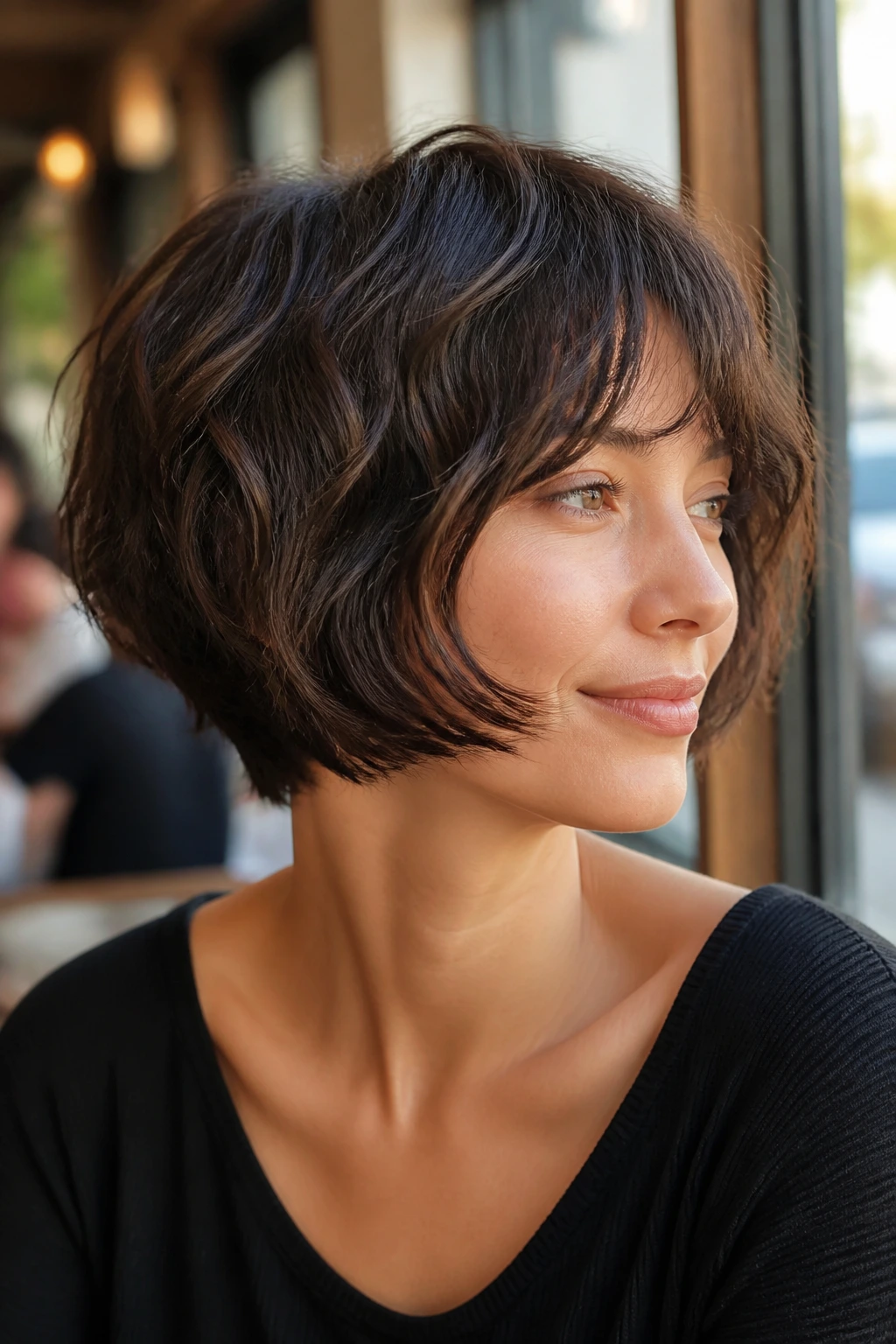
This is the friendlier version of a wolf cut. It keeps the back shorter, lets the front curve toward the chin, and rounds the silhouette so the result feels less punk and more wearable.
The curve matters. Straight wolf-cut edges can read a little jagged on waves, especially if the hair is thick. A curved wolf bob softens that effect and lets the shape move with your wave pattern instead of fighting it.
Good for people who want edge but still need the haircut to make sense with a blazer, a hoodie, or a wet ponytail. That matters more than people admit.
What to ask for
Ask for short layers at the crown, a softer front frame, and a back that stays compact at the neckline. If your stylist starts reaching for too much texturizing shears on the sides, slow them down. The haircut needs motion, not holes.
13. Air-Dried Beach Shag

This is one of the few haircuts that can look better when you leave it alone. The layers are cut to encourage a loose bend, so the wave pattern has somewhere to go without a blow-dryer forcing it into shape.
The style depends on restraint. Too much product and the hair gets stringy. Too much brushing and the wave splits apart in weird places. A touch of leave-in conditioner, a little mousse, and then hands off. That’s the whole attitude.
Best for
- Loose to medium waves
- Hair that dries in a bend without much help
- People who want texture more than polish
If your hair is very fine, keep the layers subtle. If it’s dense, ask for internal weight removal so the back doesn’t turn into a triangle by the afternoon.
14. Side-Swept Fringe Crop
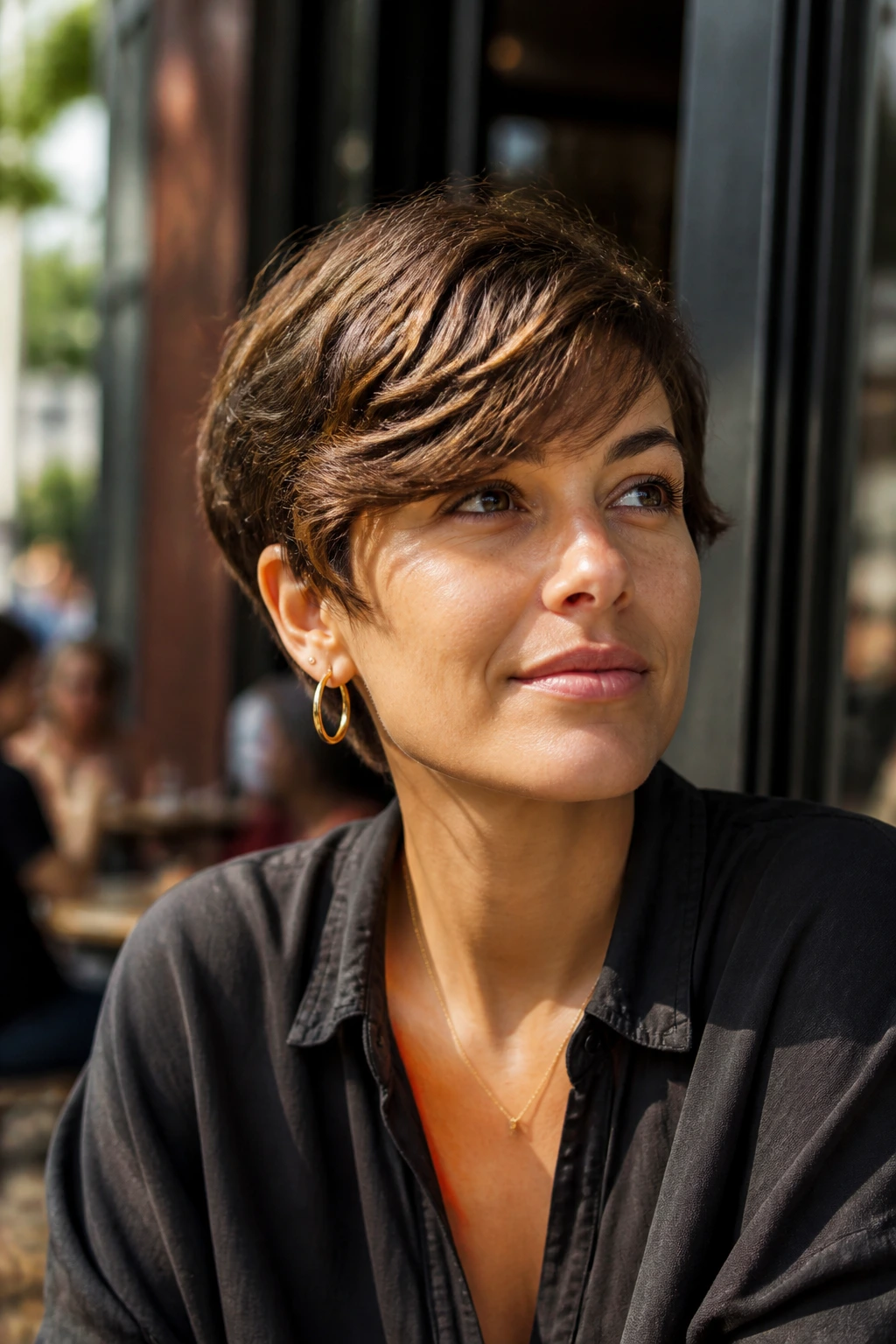
This is the haircut for someone who wants the front to do something interesting without committing to full bangs. The side-swept fringe takes the eye diagonally across the face, which is useful if your waves tend to puff at the temples.
The crop stays short enough to feel airy, and the fringe adds a little structure where the haircut needs it most. It’s a nice solution for forehead length, cowlicks, or a part that never behaves. A deep side part can make the whole thing feel polished; a softer part makes it more relaxed.
I like this on round faces and square faces alike because the diagonal line breaks up width. Keep the fringe piecey, though. A heavy side sweep starts looking dated fast.
15. Mushroom Shag with Soft Ends

Can a mushroom shape look good on wavy hair? Absolutely, if it’s loosened up. The old-school bowl effect disappears the second you introduce broken layers and soft ends.
The secret is not to let the line around the head get too rigid. Keep the crown rounded, but let the sides and nape breathe. That gives you the little cap-like silhouette without the helmet problem that makes people flinch at the word “mushroom.”
This works best when the waves are consistent and the haircut is cut with enough texture to keep the shape from feeling childish. Done right, it looks playful and a little weird in a charming way. Done wrong, it’s a cautionary tale.
16. Uneven Bob Shag

A slight asymmetry can do a lot for wavy hair. One side grazing the jaw while the other sits a touch shorter creates movement even when your hair is dry and a little sleepy.
The unevenness doesn’t need to shout. In fact, subtle is better. A deep side part can make the haircut feel intentional without turning it into a statement piece. Waves help here because they blur the line just enough to keep the shape from looking too engineered.
This cut is smart if you get bored fast. It gives you a visible change from the usual bob, but the grow-out is forgiving because the waves soften the mismatch. I’d take this over a perfectly even cut on texture-heavy hair almost every time.
17. Heavy Fringe Crop
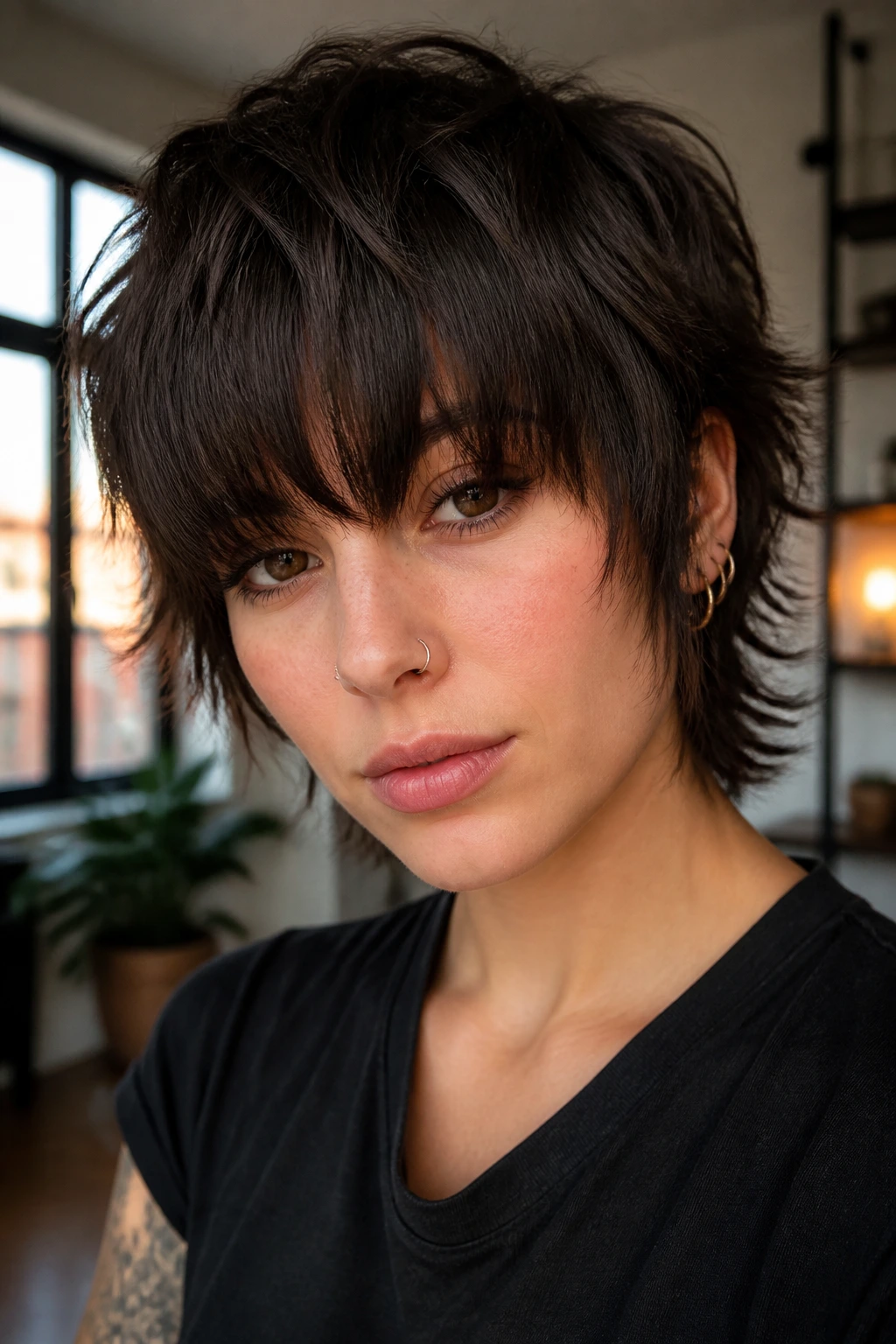
This one is for people who like their forehead covered and their shape compact. The fringe does the visual heavy lifting, while the rest of the cut stays short and shaggy enough to keep from going flat.
The key is keeping the bangs thick but not blunt. Wavy hair can make heavy fringe puff up if it’s cut too short, so the safest version sits just below the brow line and breaks into little pieces at the ends. That gives you coverage without creating a solid wall.
Styling note
A round brush is optional, not required. In fact, I’d skip it on most days and use a quick pass of a diffuser or even just fingers and a tiny bit of cream. The fringe should look separated, not blown into a perfect curtain. Perfect is the wrong goal here.
18. Rounded Layered Crop
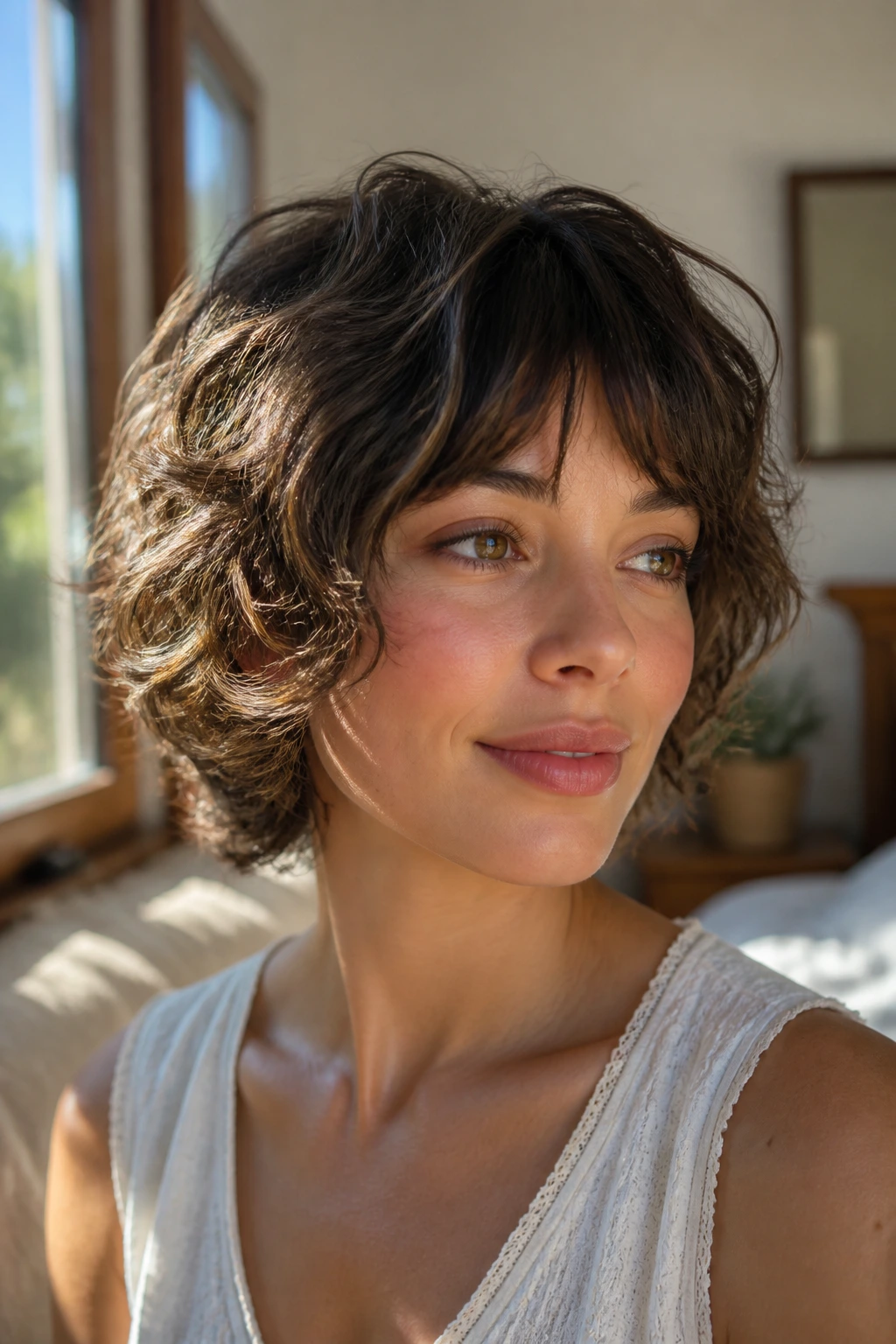
If you want volume without hard corners, this is the move. The silhouette is soft and rounded, with enough layering to keep the wave pattern from bunching up in one place.
The beauty of a rounded crop is that it gives the hair a sense of shape from every angle. Front, side, back — all of it feels considered. That matters on short hair, where one bad corner can throw off the whole thing.
It’s especially useful for fine wavy hair that needs lift but can’t afford too much thinning. Ask for layers that remove weight internally while keeping the outer edge intact. You get movement without a frayed perimeter.
19. Shattered Lob Shag
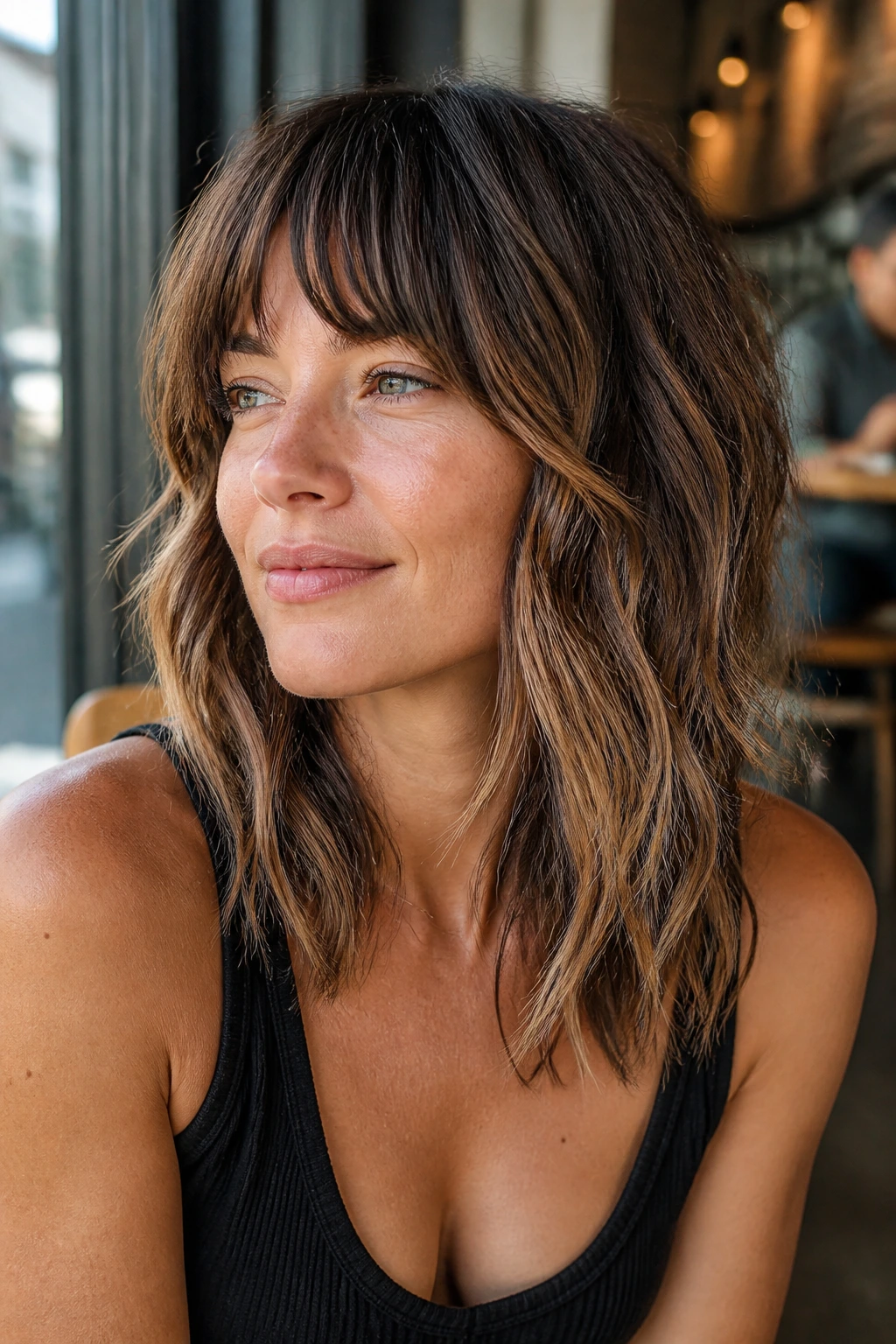
This is the slightly longer cousin in the family, and I’m including it because plenty of wavy heads look better with a bit of extra length before the shag layers begin. The “shattered” part means the ends are broken up enough to keep the line from feeling stiff.
Compared with a clean lob, this version gives the wave room to bend without collapsing into a block. It’s a good compromise if you want short hair that still pulls back into a clip or tuck behind the ears. A full shag can feel too choppy on some faces; this one keeps the edge softer.
If your hair is dense, this cut benefits from careful weight removal under the surface. If it’s fine, the lower layers should stay long enough to keep the ends from disappearing. That’s the balance.
20. Ear-Length Shag Crop
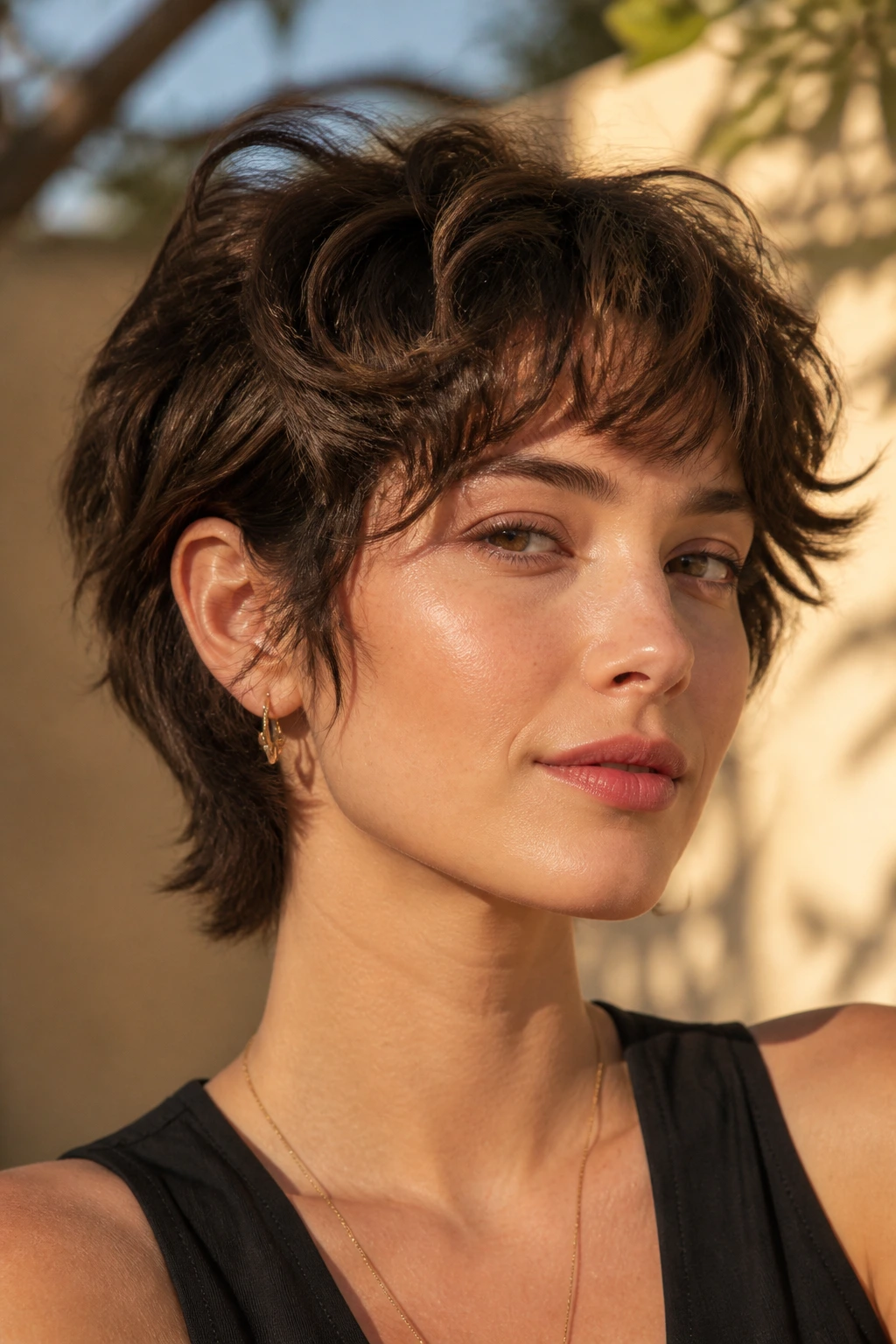
This one is unapologetically short. The ears show, the jawline shows, and the haircut has to earn its shape through texture rather than length.
That makes it a strong option for waves that already have personality. A short crop at the ear can look sharp and fresh, but only if the top and fringe are cut with enough broken texture to stop it from feeling too severe. If the surface is too smooth, the shape can veer into helmet territory fast.
It’s also a nice choice for hot weather, workouts, or anyone who gets impatient with hair touching the neck. The price of that ease is upkeep. The shorter you go, the more often the shape needs a cleanup around the ears and nape.
21. Long-Sideburn Shag
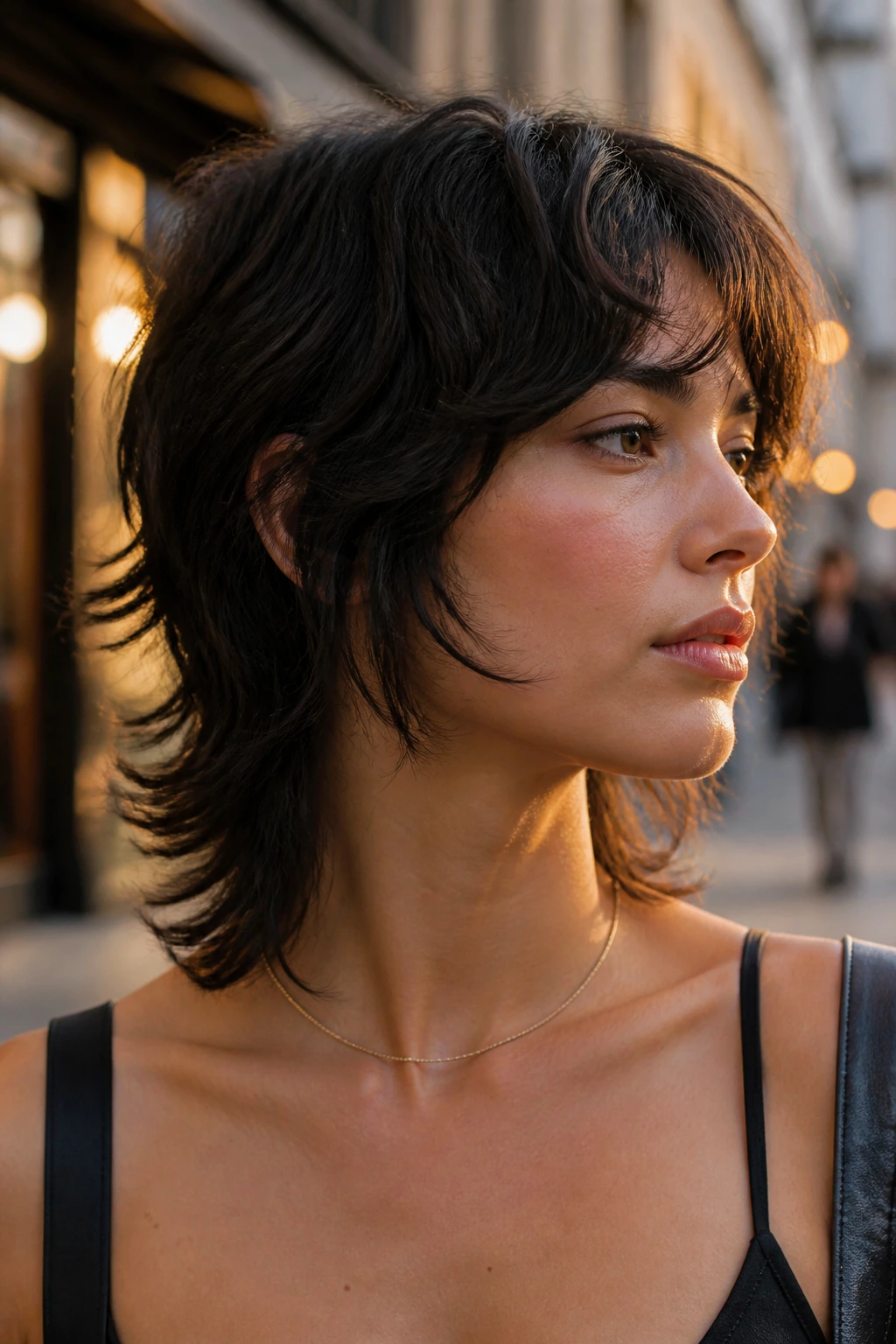
This cut is a small lesson in face framing. Keeping the sideburn area longer than you expect gives the haircut a soft edge that sits right along the cheek and jaw.
I like this on people who don’t want bangs but still need something happening near the face. The long side pieces work almost like built-in styling, especially if your waves turn inward slightly. They stop the haircut from feeling like a block and give the front a little swing.
If your hair flips out at the jaw, ask your stylist to keep the sideburns a bit heavier and taper them slowly. Too much removal here and the whole front gets too airy. You want a line you can tuck, twist, or leave alone.
22. Tousled Bixie Shag
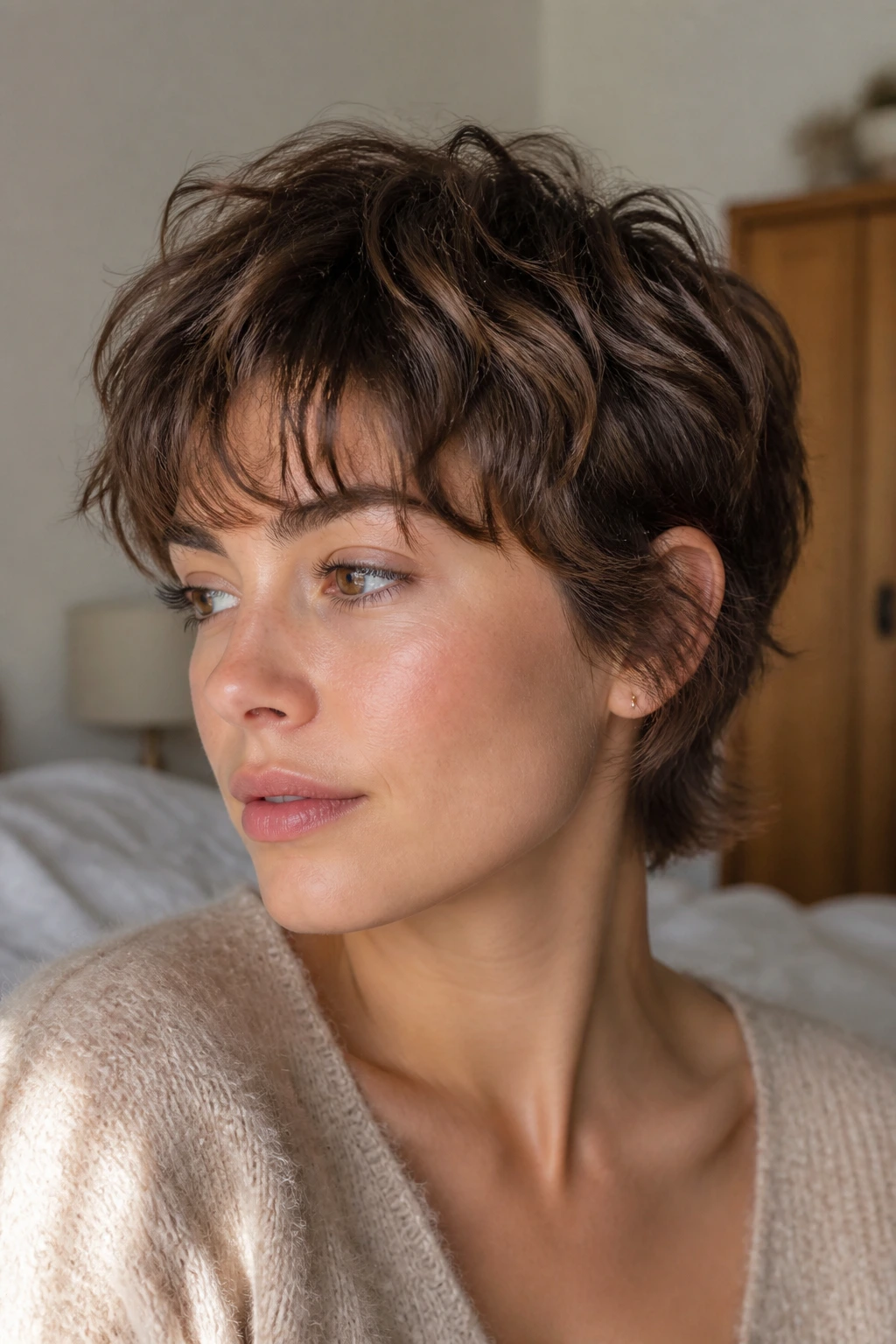
A bixie is what happens when a bob and a pixie decide to share a haircut. Add shag layers, and the shape gets even more interesting — shorter around the ears, longer on top, and soft enough to let waves do their own thing.
This is a good choice if you want something playful but not precious. The texture should be broken up just enough to keep the crop from sitting flat, especially through the crown. A little mousse at the roots helps. So does sleeping on it with a loose clip instead of crushing it under a tight pillow fold.
The bixie shag works best when the back is close enough to the head to show the neck but not shaved or overly severe. It’s a friendly version of short. That’s the charm.
23. Invisible-Layer Shag
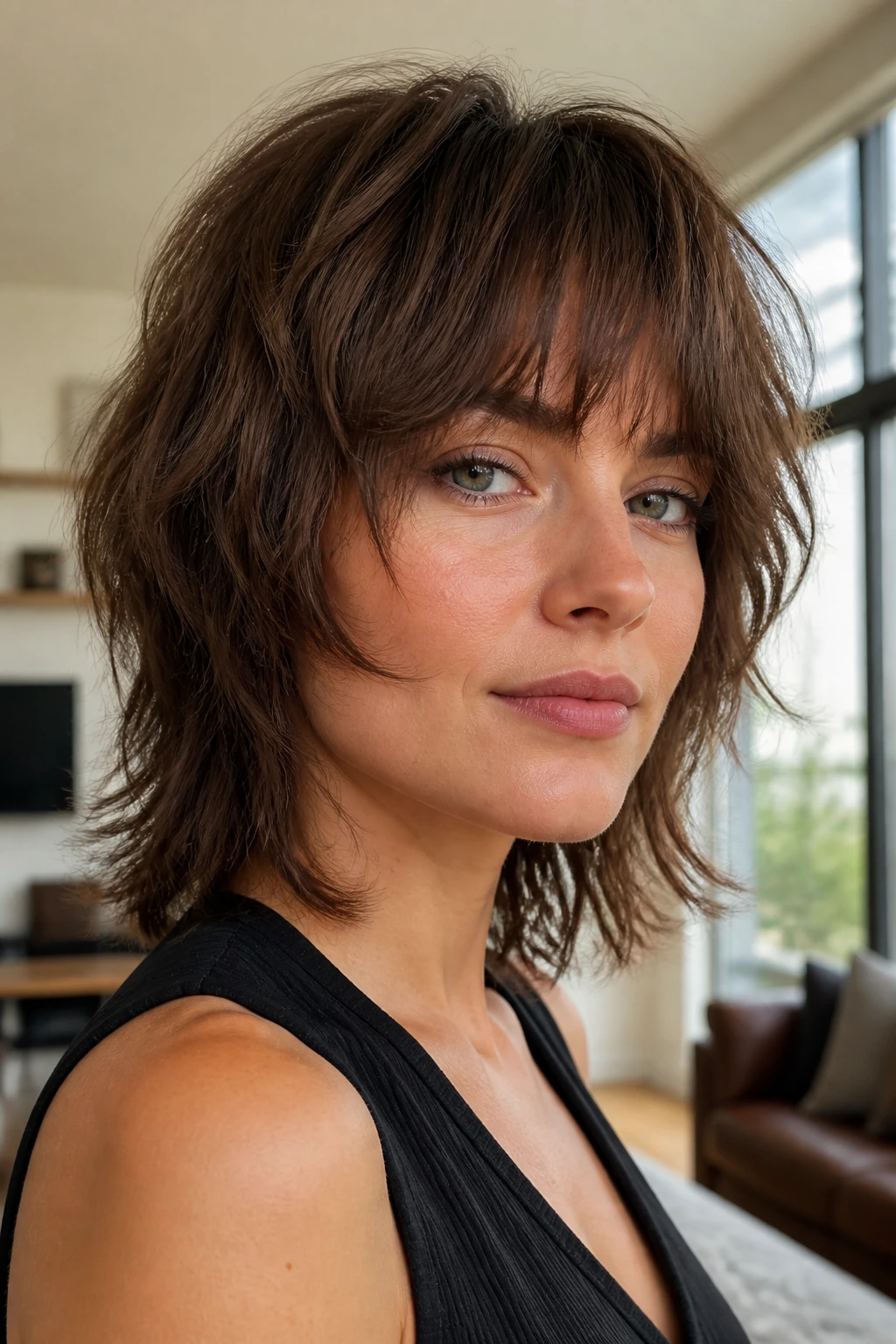
Some people love obvious choppiness. Others want movement without seeing every layer with the naked eye. Invisible layers are for the second group.
The cut keeps the outer shape clean, then removes weight underneath so the waves fall more softly. From the outside, it looks almost simple. From the inside, it has enough release to move. That can be a smart choice for fine hair, because the haircut gets texture without looking thin or shredded.
This is the version I’d suggest if you like a polished shape but hate spending time styling. It’s also handy when you want your hair to look good in a knot, clip, or half-up twist. The layers are doing work you don’t need to advertise.
24. Undercut-Back Shag
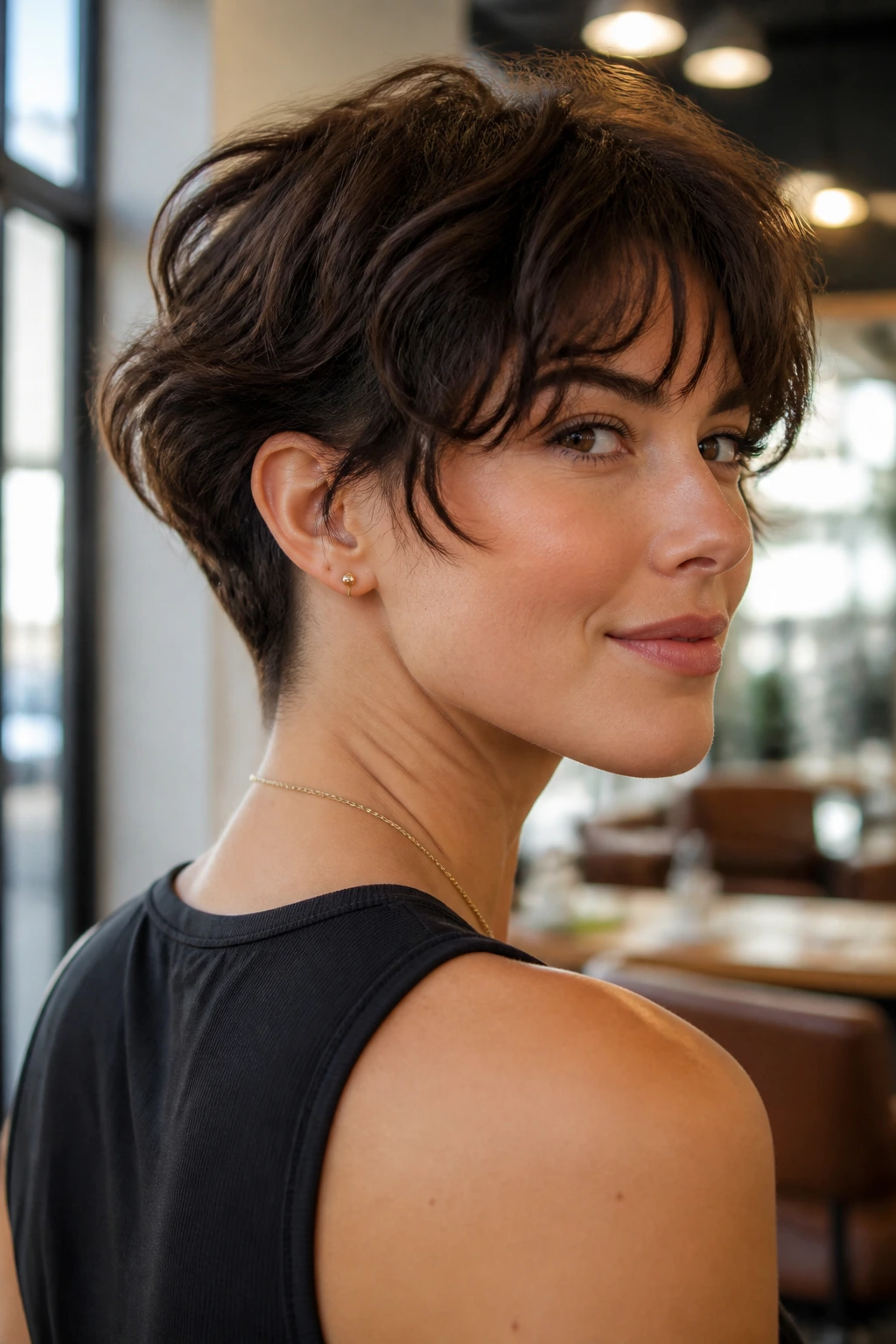
This is the bluntest answer to thick, bulky wavy hair. The undercut in back removes a slice of weight where hair often piles up, and the shag layers above keep the shape from going flat.
There’s a practical side to this cut that I appreciate. It can make a heavy head of hair feel lighter by a noticeable amount, and it helps the neckline sit cleaner under collars and scarves. The tradeoff is upkeep. The undercut will need regular attention, and that’s not everyone’s idea of fun.
If you like bold shape and you’re not married to a one-length grow-out, this one can be very satisfying. Just make sure the stylist blends the top layers into the undercut properly. A disconnected chop here looks accidental. A blended one looks sharp.
25. Feathered Jawline Shag

This is a quiet closer, not a loud one. The layers feather softly around the jaw, the ends stay light, and the haircut gives wavy hair a controlled, easy movement that never feels too stiff.
It’s a strong pick if you want short hair that still feels feminine or soft without turning into a blunt bob. The jawline placement keeps the face open, while the feathering stops the cut from pressing too hard against the cheeks. I’d especially point this toward anyone who likes a little motion but does not want a high-maintenance fringe.
Ask for the ends to be softened with point cutting rather than heavily thinned. That keeps the line airy but still full enough to hold shape. It’s a good way to end the list because it sums up the whole idea: shape first, texture second, and neither one should bully the other.
Why Short Shag Haircuts and Wavy Hair Click

Wavy hair has a built-in bend, and a short shag knows how to use it. That’s the whole relationship in one sentence. The layers break up weight, the perimeter keeps the outline honest, and the wave pattern fills in the spaces in a way straight hair never quite can.
The real win is balance. Too many blunt cuts on waves end up too wide at the bottom and too flat at the crown. Too many chopped layers can create frizz and leave the ends looking thin. A good short shag sits in the middle: enough structure to guide the hair, enough softness to let it move. That’s why it works on everything from loose bends to stronger S-waves.
The wave does half the work
A short shag doesn’t need to force movement. It only needs to invite it. That makes this cut especially useful for anyone who’s tired of fighting their hair with a round brush and a lot of patience.
Where the cut needs weight
The perimeter matters more than people think. If the ends are stripped too much, the haircut balloons outward. Keep a little weight at the bottom, and the waves fold in instead of out.
Why soft ends beat hard lines
Hard lines on wavy hair can look tidy for about ten minutes. Then the bend shows up and breaks the shape in odd places. Soft ends forgive that. They make the grow-out easier, too.
Essential Tools for Styling a Short Shag
-
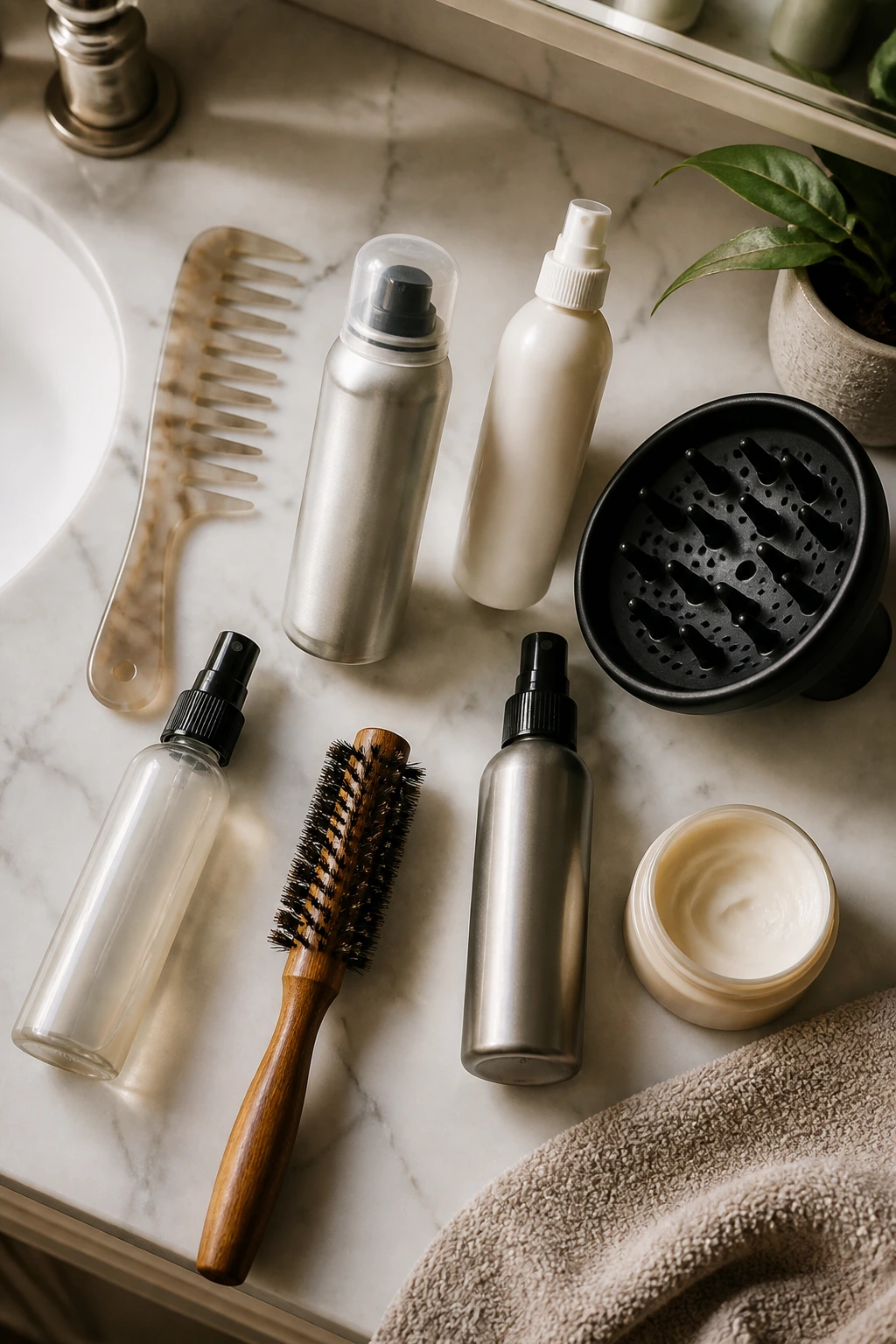
Wide-tooth comb: Use it in the shower or on damp hair to detangle without pulling the wave apart.
-
Microfiber towel or T-shirt: This cuts down on rough friction, which matters a lot if your ends frizz easily.
-
Root-lifting mousse: A light mousse gives crown lift without making the haircut crunchy or stiff.
-
Leave-in conditioner: Helpful on dry or coarse waves, especially if the ends feel scratchy after air-drying.
-
Diffuser attachment: Not mandatory, but useful if you want to keep the wave shape while reducing the wild puff that can happen with a regular nozzle.
-
Heat protectant spray: Necessary if you use a flat iron, round brush, or curling wand for touch-ups.
-
Small round brush or vent brush: Good for directing the fringe or smoothing the front corners when they start to flip.
-
Texture spray: A little goes a long way. Use it on dry hair to break up softness and keep the layers from looking heavy.
-
Light styling cream or paste: Best for piecing out the ends of shorter shags without coating the whole head.
What to Ask for at the Salon

The difference between a good shag and a haircut that makes you mutter at your mirror usually comes down to one conversation. Bring photos, sure, but also talk about where your waves swell, where they fall flat, and which side always does something rude.
Tell the stylist how much volume you can live with at the crown. That matters more than length alone. If you like a little height, they can remove weight higher up. If your hair already puffs, they need to leave more structure and work lower into the layers.
Be specific about the fringe. Say whether you want curtain bangs, a side sweep, or no fringe at all. Wavy hair shrinks and bends in a way that straight-hair photos never show, so ask for the front to be checked dry before the final snip if possible. That one detail saves a lot of regret.
If your hair is thick, mention that you don’t want the ends shredded. If it’s fine, say you need lift without seeing the layers through the ends. If you’ve got a cowlick at the crown or around the front hairline, say that too. Haircuts are geometry plus memory. The stylist needs both.
How to Style and Wear These Cuts
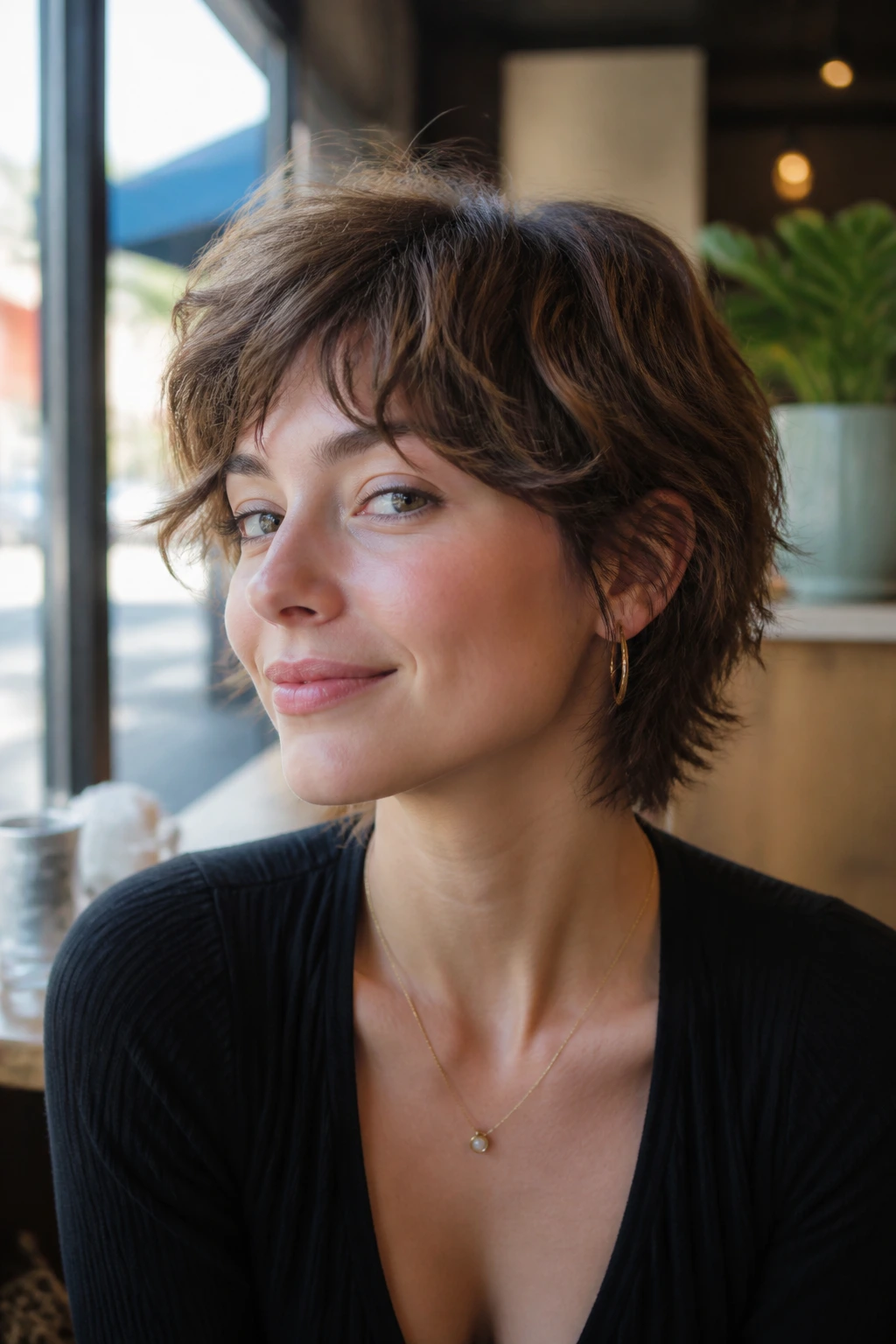
Wash Day: Start with a lightweight cleanser and a conditioner that doesn’t leave a heavy film behind. On damp hair, squeeze in a golf-ball-sized amount of mousse if you want volume, or a small dollop of cream if your waves are dry and need softness.
Drying: Air-dry when you can. If you diffuse, keep the heat low and the airflow gentle, and stop before the hair is bone-dry. Leaving a little dampness lets the wave settle into its shape without puffing out.
Finish: Once dry, pinch out any crispy spots with clean fingers and a touch of serum on the ends. Don’t rake through the whole haircut unless you want to blow the pieces apart. The shag works because the pieces stay visible.
Third-day reset: Mist the front lightly, twist a few sections around your fingers, and wake up the roots with a bit of dry shampoo if needed. Short shags often look better on day two or three than they do right out of the sink.
Additional Tips and Texture Boosters
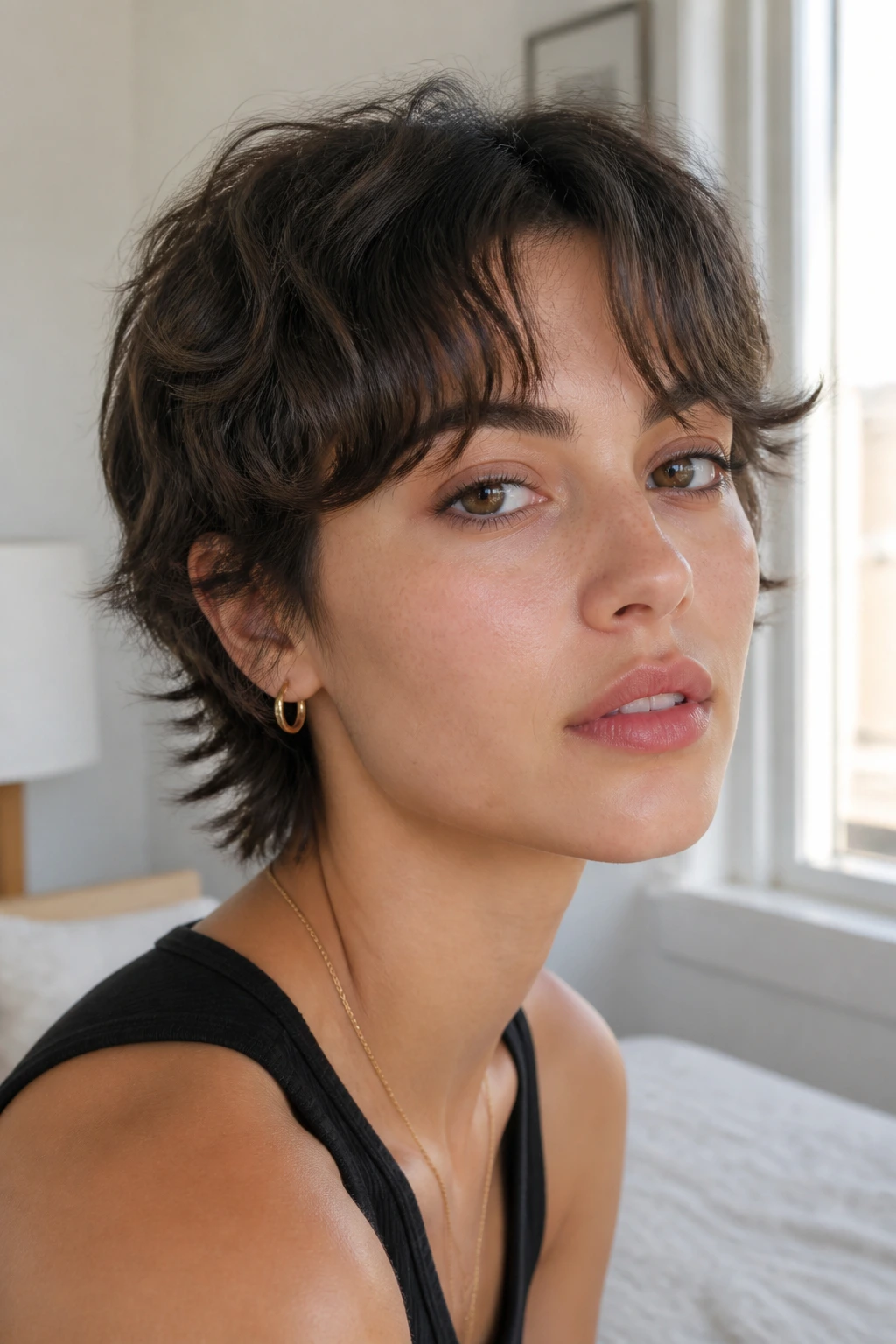
Texture Boost: If your waves collapse too fast, work a small amount of mousse into the roots, then add a lighter cream only to the ends. That split approach keeps the crown lifted while the perimeter stays soft.
Bang Tweak: Curtain bangs look best when they’re trimmed a little longer than you think. Wavy fringe springs up after drying, and too-short bangs can sit awkwardly above the brows before you’ve had time to blink.
Parting Change: A deep side part can rescue a shag that starts to feel too round or too symmetrical. Flip it, shake it out, and let the new part dry in place.
Volume Without Puff: If your hair has a habit of widening at the sides, diffuse from underneath for lift, then stop messing with the top. The top can take care of itself. The sides are where the trouble starts.
Make-It-Yours: Fine waves usually benefit from fewer, longer layers and more root support. Thick waves need more internal release and a little more cleanup around the nape. Coarse waves tend to like soft point cutting and less razor work.
Common Mistakes to Avoid
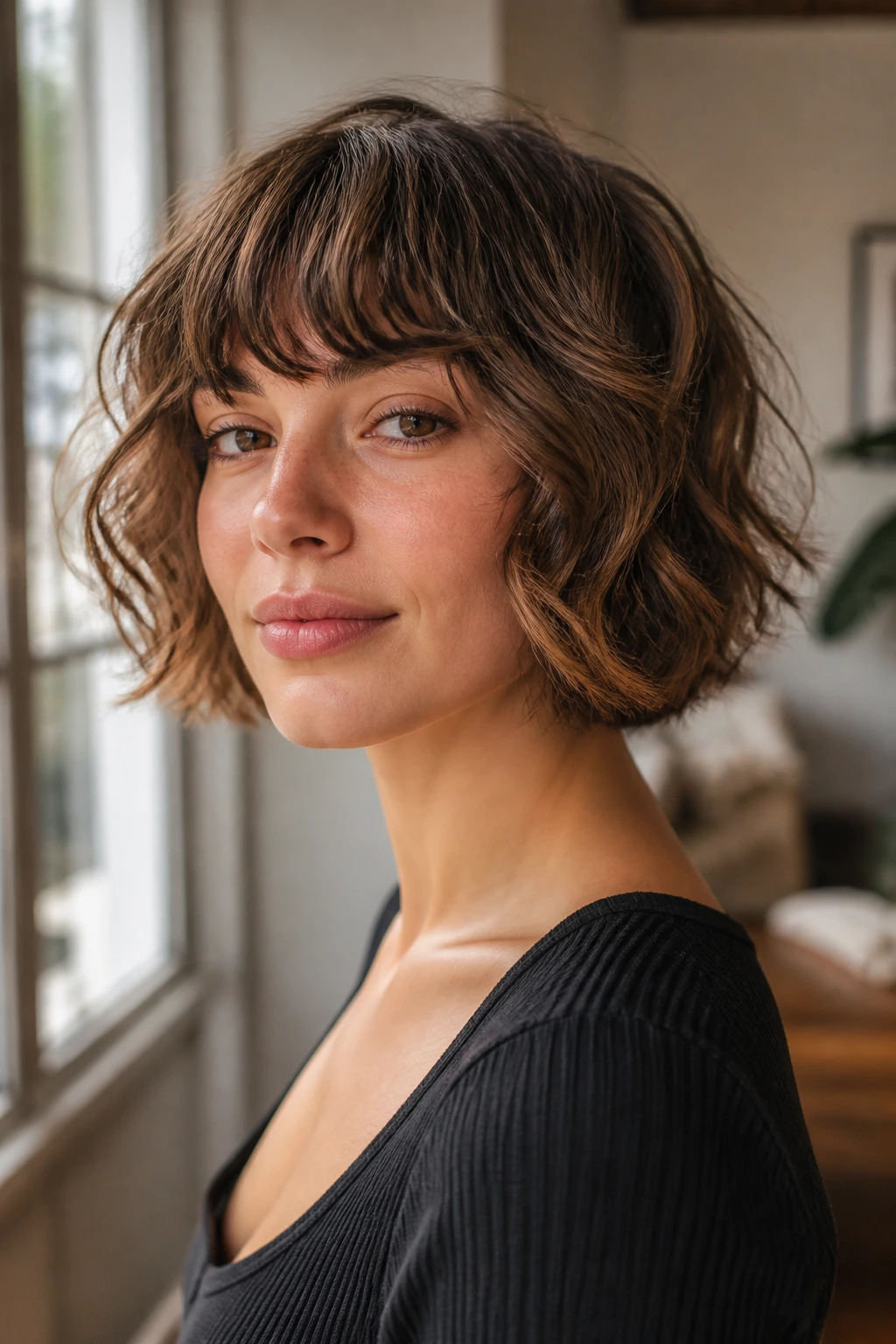
-
Taking too much off the crown: The haircut lifts for a day, then puffs into a halo. Keep some weight up top unless your hair is very dense and heavy.
-
Over-thinning the sides: This makes the ends look see-through and frizzy, especially on coarse waves. The fix is simple: ask for interior weight removal, not aggressive thinning at the perimeter.
-
Cutting bangs too short for wave shrinkage: Wavy fringe always springs up more than expected. If you want brow-skimming bangs, start a little longer and trim them dry.
-
Using heavy oils on the whole head: A slick finish sounds nice until the waves clump at the roots and the haircut loses its shape. Keep richer products on the ends only.
-
Ignoring the natural part: Forcing a part against a stubborn cowlick can make the whole cut look lopsided in a bad way. Work with the part your hair already prefers, then adjust from there.
-
Forgetting the nape and neck area: Short shags can look sharp from the front and messy in back if the neckline is neglected. A quick cleanup there makes a bigger difference than people expect.
Variations and Adaptations to Try

The Fine-Wave Version: Keep the layers longer, especially around the sides, and use mousse instead of heavier creams. Fine hair needs lift without being stripped to pieces.
The Dense-Hair Version: Ask for more internal weight removal under the crown and around the nape. Dense waves can handle a stronger shag shape as long as the perimeter keeps enough line.
The Soft-Face-Frame Version: Keep the front pieces longer and feather them around the cheekbones. This is a good choice if you want the cut to open the face without leaning hard into bangs.
The Edgier Razor Version: Use razor texturing through the top and fringe for a rougher finish. This works best when your waves are loose to medium and not too frizz-prone.
The Low-Maintenance Air-Dry Version: Leave more weight at the ends and keep the layers subtle. You’ll lose some drama, but you gain a haircut that behaves with minimal hands-on styling.
The Bang-Free Version: Skip the fringe entirely and let the front layers start near the cheek or jaw. That keeps the shape shaggy without forcing a bang commitment.
How to Keep the Shape Between Salon Visits
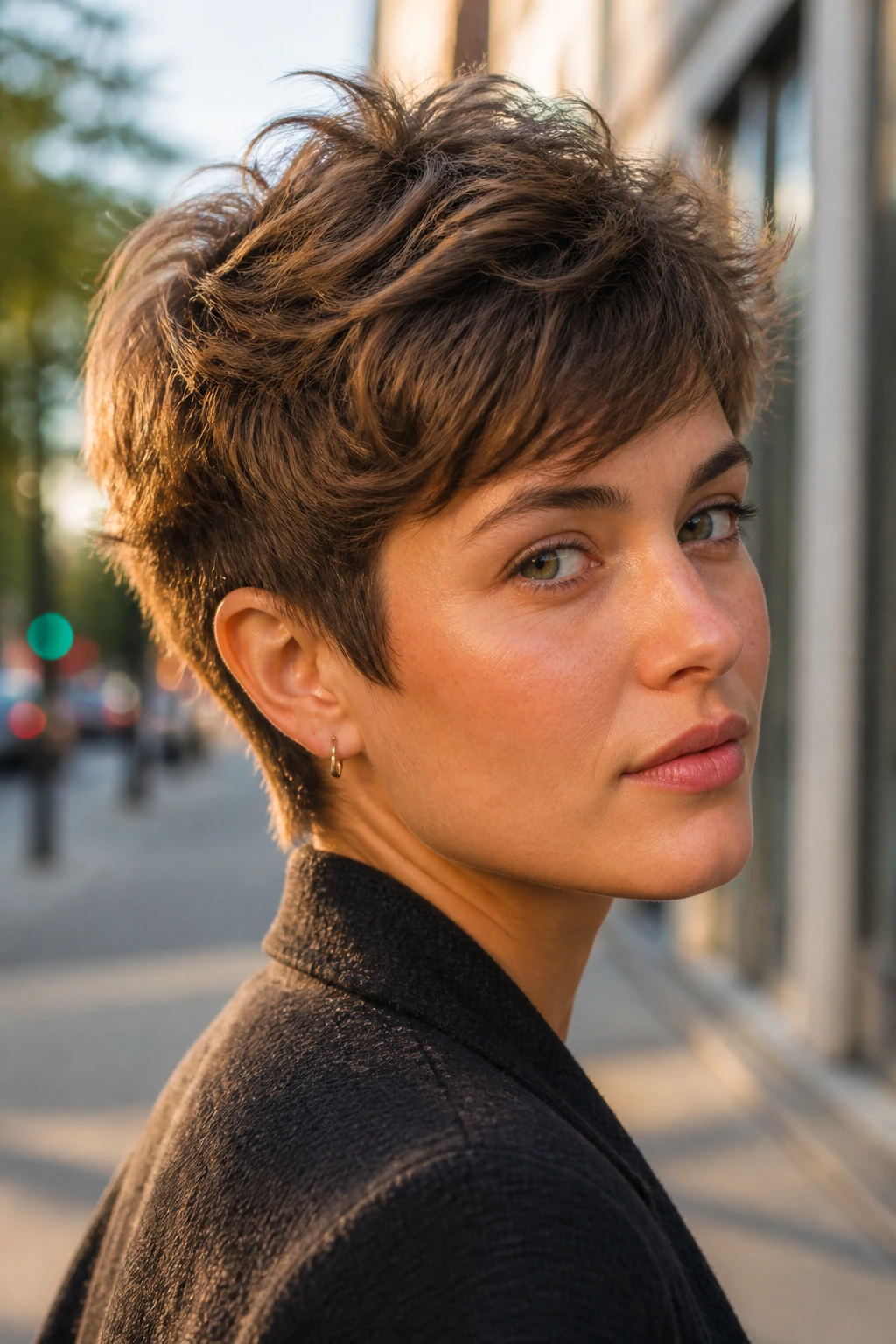
A short shag can stay sharp for weeks if you treat the outline like it matters. The front fringe usually needs the most attention, then the nape, then the face-framing pieces. If all three go untouched for too long, the haircut starts to sag in odd places.
For most shags, a trim every 6 to 8 weeks keeps the shape alive. If you wear heavy bangs or a tight nape, you may want a cleanup closer to 4 to 6 weeks. If the cut is softer and longer around the face, you can stretch a little farther. The key is not waiting until the haircut has turned into a different haircut.
At home, keep the ends from drying out with a light leave-in or cream, but don’t overdo it. Too much product is the fastest way to flatten a shag. Dry shampoo can help at the roots between washes, especially if your hair gets oily near the crown while the ends stay dry.
Sleeping matters more than people admit. A loose clip, a silk pillowcase, or even a quick mist-and-twist before bed can keep the wave from getting crushed. Short hair doesn’t have to be high drama. It just needs a little respect.
Frequently Asked Questions
What makes a short shag different from a bob on wavy hair?
A bob depends more on its outline, while a shag depends more on interior layers and broken texture. On wavy hair, that means the shag moves more easily and usually needs less round-brush styling to look alive.
Will a short shag work if my waves are loose instead of strong?
Yes, but the layers need to be a little softer. Loose waves can lose shape if the cut is too chopped up, so ask for longer layers and a perimeter that keeps some weight.
Can fine wavy hair wear a short shag without looking thin?
Absolutely, as long as the stylist avoids over-thinning the ends. Fine hair usually does better with subtle layering, a light fringe, and a little product at the roots rather than a lot of texturizing.
What should I say if I don’t want a mullet look?
Tell the stylist you want shag texture without a strong disconnect between the top and the back. That usually means keeping the nape cleaner and the crown layers softer, with less dramatic length difference.
How often do I need trims for a short shag with bangs?
Bangs usually need attention first, often every 4 to 6 weeks if you want them in shape. The rest of the cut can often wait a little longer, but the fringe tends to tell on you fast.
What product gives the best shape without crunch?
A light mousse or a soft styling cream usually works better than heavy gel. Mousse helps the root lift, cream helps the ends stay piecey, and neither one should leave the hair stiff if you use a modest amount.
What if my short shag puffs out at the sides?
That usually means too much weight was removed near the perimeter or the hair was brushed too aggressively while drying. Try drying with less disturbance, use a diffuser on low heat, and ask for more weight to stay in the lower sections next time.
Can I grow a short shag into a longer style without a weird stage?
Yes, if the layers were cut with some softness. A good shag grows into a longer shag, then eventually into a layered bob or lob. Regular dusting trims help it stay shaped while it lengthens.
Is a razor cut a bad idea for wavy hair?
Not automatically. It’s useful on loose, healthy waves that want airy texture, but it can make coarse or frizz-prone hair look rough if the stylist goes too hard. Point cutting is often the safer route when texture is already strong.
Grow-Out Grace

The best short shags don’t ask your hair to behave like someone else’s. They let the wave bend, lift, and settle in a way that feels deliberate even when you’ve barely touched it. That’s the real draw here: shape with enough looseness to survive real mornings.
If you’re choosing between too neat and too messy, aim for the middle and keep the layers honest. A short shag on wavy hair should still have a backbone. It just shouldn’t look like it had to try too hard to get there.