



Thick wavy hair can look spectacular in a shag haircut, but only when the layers are placed with a little intelligence. Too many snips in the wrong spot and the shape puffs out like a mushroom. Too little movement, and the whole thing collapses into a heavy curtain that hides the wave pattern instead of showing it off.
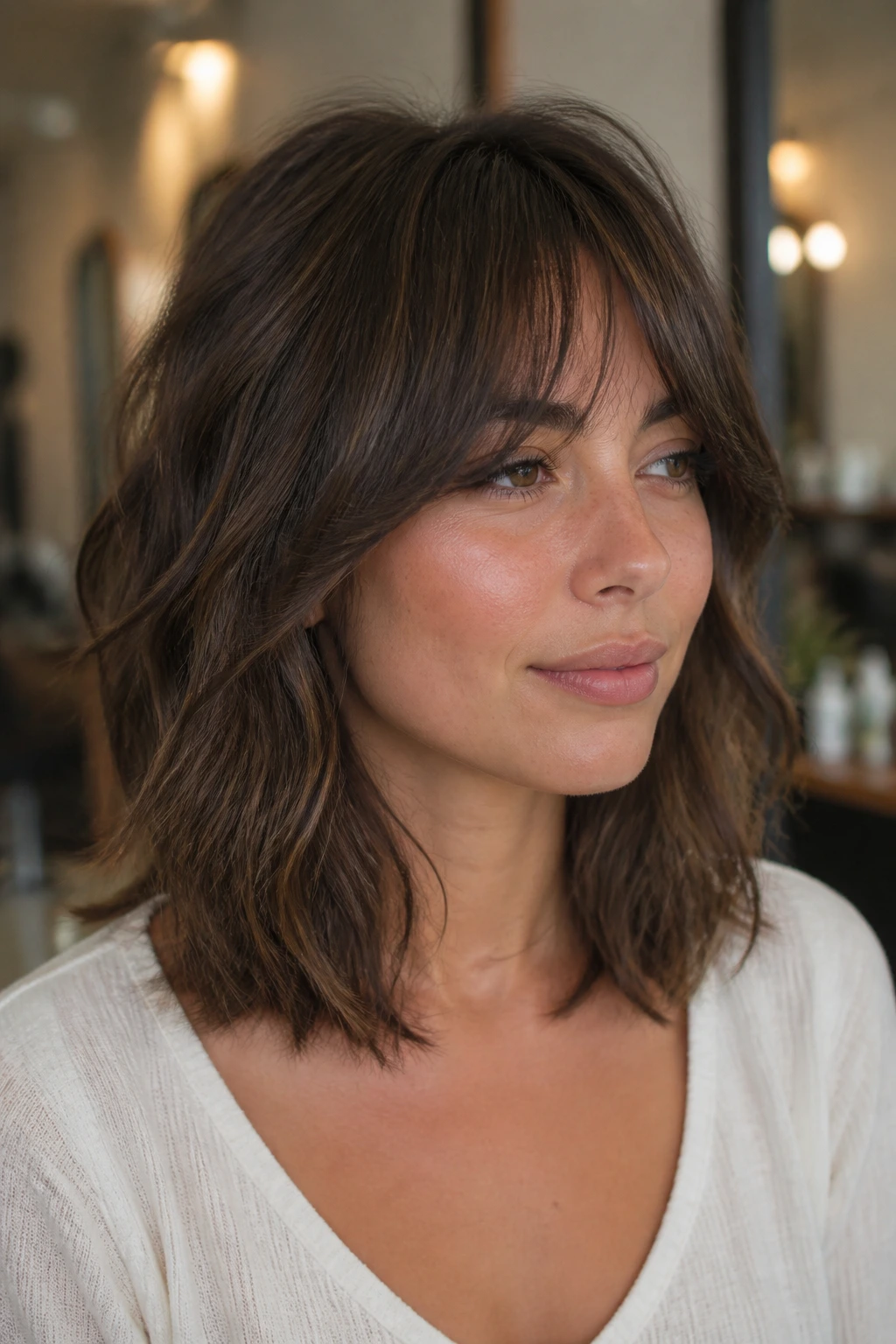
Wavy shag haircuts for thick hair with side-swept bangs work because the cut does some of the styling for you. The perimeter stays soft, the inside loses weight, and the fringe travels diagonally across the face instead of sitting there like a flat lid. That diagonal line matters more than people think. It breaks up width, draws the eye downward, and keeps dense waves from reading as boxy.
There’s a reason so many people keep circling back to shags when their hair gets too bulky. The shape can be airy or gritty, polished or piecey, long or shoulder-skimming, and it usually looks better with a little lived-in texture than with overworked perfection. Side-swept bangs are the part that makes the whole thing feel finished rather than accidental.
Why These 22 Wavy Shag Haircuts Work So Well on Thick Hair
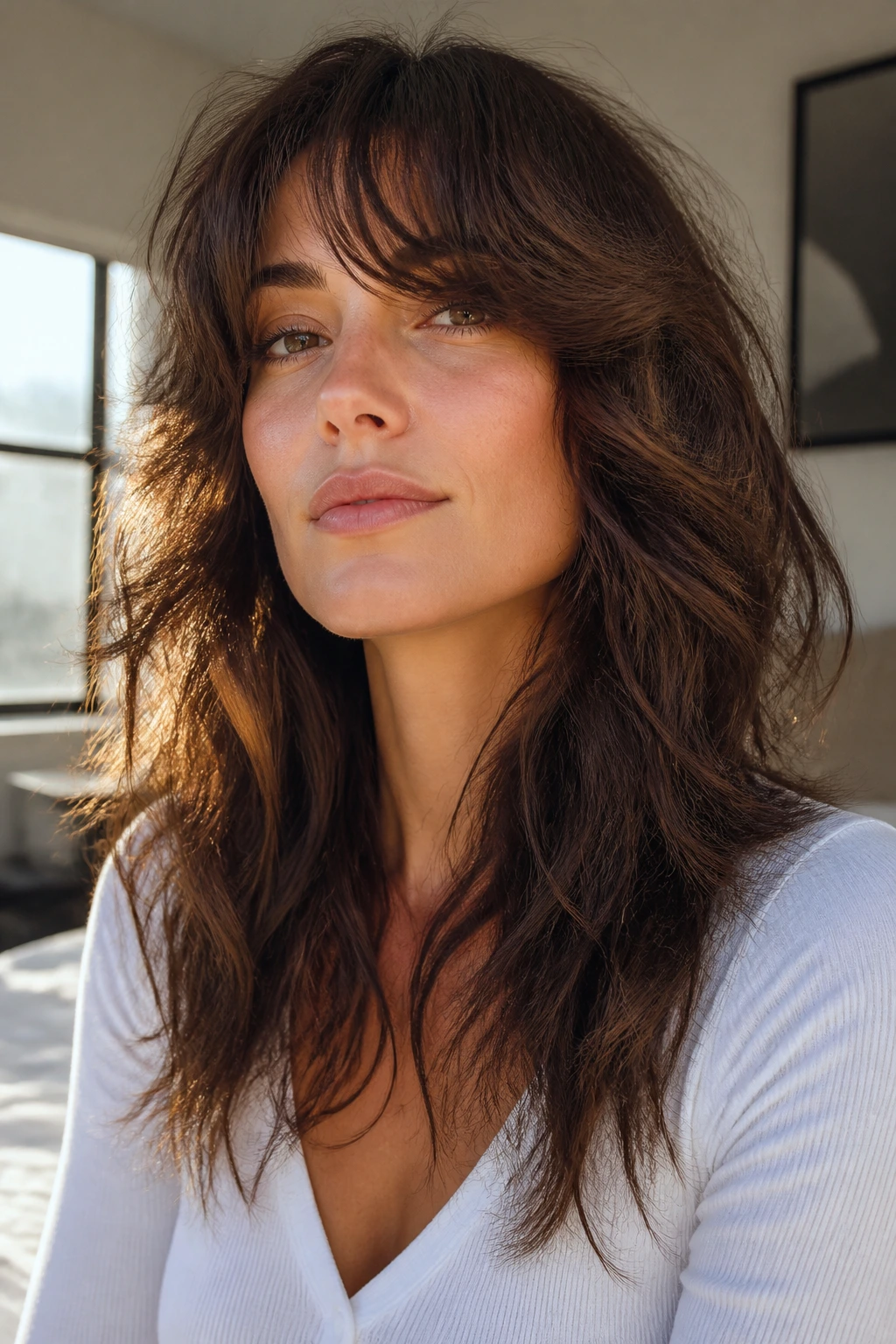
-
They remove weight where thick hair tends to sit heavy. The best shag layers take bulk out of the interior, not the ends, so your hair moves instead of turning into a bell shape.
-
They make waves look deliberate. Thick wavy hair can bend in several directions at once; a shag gives those bends a place to land instead of fighting them.
-
Side-swept bangs soften the front without hiding your face. A diagonal fringe cuts across the forehead in a way that feels lighter than blunt bangs and less fussy than curtain bangs.
-
They age well between salon visits. A good shag still looks like a haircut after 8 weeks, not a shape that gives up the minute it grows.
-
They give you styling options. You can blow them smooth, diffuse them, air-dry them, or rough-dry them with a little product and get four different moods from the same cut.
-
They work with density instead of against it. Thick hair has built-in body. The right shag uses that body instead of trying to flatten it out with a boring, one-length line.
1. The Collarbone Cascade Shag
The collarbone length is the sweet spot for a lot of thick, wavy hair. It’s long enough to keep the hair from springing up too high, but short enough that the layers can actually move. The side-swept bangs land somewhere between cheekbone and eye level, which keeps the front soft without swallowing your face.
Why It Feels So Balanced
This shape is the haircut equivalent of a deep breath. The perimeter hits right around the collarbone, while the layers step up gently through the mid-lengths instead of getting carved all the way to the crown. That means the wave pattern stays visible, and the hair doesn’t puff out at the sides the way a blunt cut sometimes does.
- Best for medium-to-high density waves that need shape, not a dramatic chop.
- Ask for soft internal layers rather than aggressive thinning.
- The bang section should be long enough to sweep across the forehead without splitting.
Tip: If your hair flips outward at the ends, this length usually behaves better than a shorter shag because the extra weight keeps the silhouette from getting too round.
2. The Heavy Fringe-Side Sweep Shag
This one starts with a stronger bang line, then sends it sideways. That’s the trick. A heavier fringe gives thick hair something solid to work with, and the side sweep stops it from feeling boxy or too blunt around the face.
You get a little drama here. Not nightclub drama. More like a cut that knows where the cheekbones are and refuses to ignore them.
Thick wavy hair does well with this version because the bangs can carry some weight without collapsing. If your hairline is dense or your front pieces usually spring up, a stronger fringe helps anchor the shape. The rest of the shag can stay choppy and loose while the front keeps its structure.
Wear it with a deep side part if you want the bang to stay put. If you part it too close to the center, the whole effect softens fast. That’s not a problem if you want ease. It is a problem if you want the sweep to stay visible.
3. The Airy Crown Layer Shag
Why do some shags feel lifted at the top while others look like they’re sinking? It comes down to crown layers. This version keeps the bulk off the roots and places more movement through the top third of the head, which gives thick waves a little rise before they fall into the lengths.
A lot of people with dense hair are afraid of crown layers because they worry about frizz. Fair concern. Too many short pieces up there can go cottony fast. But when the crown is cut with restraint, the result is better root lift and a more tapered shape through the sides. The side-swept bangs blend into that lift instead of sitting like a separate piece.
How to Wear It
Keep the styling light at the roots. A mousse or root spray near the crown is enough; don’t load the top with cream. This cut looks best when the hair is moved around with fingers, then left alone. If you keep touching it, you’ll flatten the lift you just paid for.
4. The Wolfish Shag with a Soft Sweep
A shag that leans wolf-cut can look fantastic on thick waves, but only if it’s softened around the face. This version keeps the edge in the back and the crown, then eases the front into side-swept bangs instead of a hard, chopped fringe.
That softness matters. Otherwise, thick hair can start to feel top-heavy, especially if the crown is short and the ends are heavily disconnected. The side sweep gives you a cleaner line at the front, which keeps the cut from tipping too far into costume territory.
Best for: people who want movement, a little rebellion, and hair that looks better the second day than it did the first.
Not ideal for: anyone who hates piecey texture or doesn’t want the top to feel shorter than the bottom.
The sweet spot here is balance. A little mullet energy. Not a full commitment to the mullet silhouette.
5. The Mid-Length Razor Shag
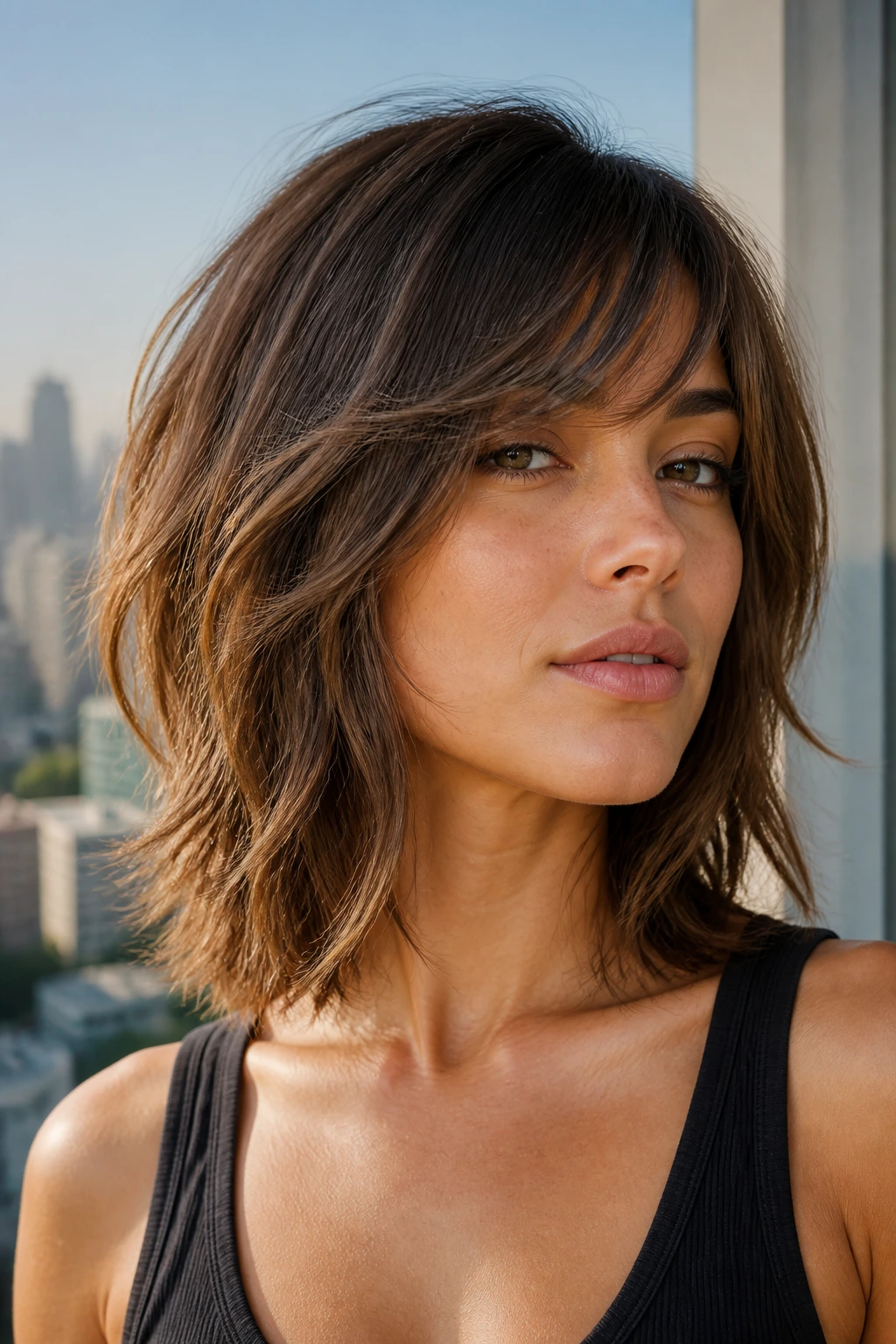
Razor cutting and thick wavy hair can be a lovely match when the hair is dense enough to handle it. The blade takes off weight fast, which helps coarse waves fall more softly instead of sticking out at the sides. The trick is not to overdo it.
This version sits in that middle zone between chin and shoulder. The side-swept bangs are carved to blend into the shortest face-framing pieces, so the front doesn’t look disconnected. On thick hair, that connection is everything. Without it, the shag can look like three different haircuts fighting each other.
What Makes It Different
A razor shag is less about blunt edges and more about controlled softness. The ends should look feathery, not wispy. If they look shredded, the cut has gone too far. Ask your stylist to keep the line visible enough that the hair still feels full at the bottom.
This is one of the best choices if your waves are coarse and your hair likes to hold shape with almost no effort.
6. The Long Face-Framing Shag
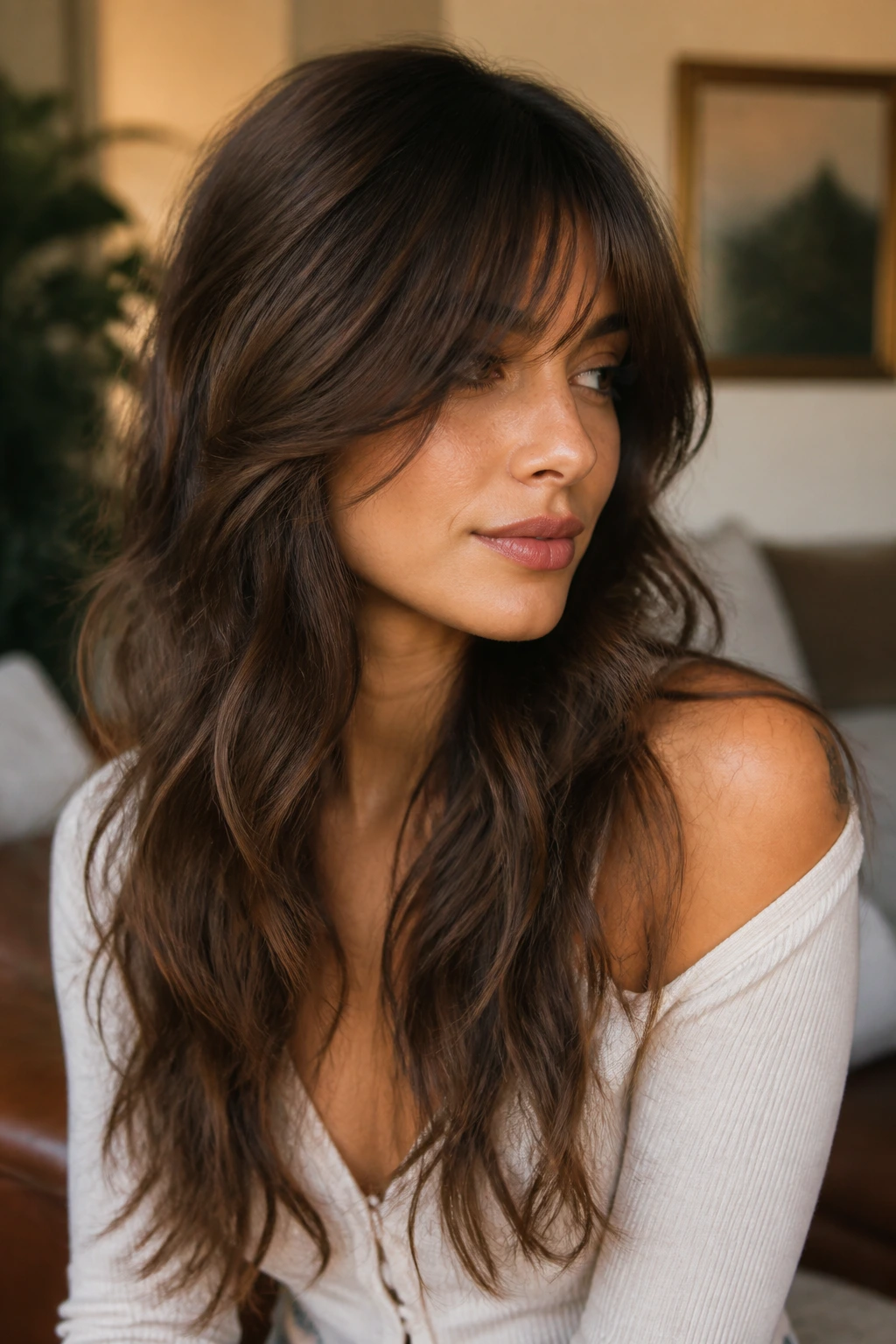
Not everyone wants to lose length, and thick wavy hair doesn’t need to be chopped short to benefit from a shag. This version keeps the length past the shoulders and uses long face-framing layers to create movement around the cheeks and jaw.
It’s a good answer for hair that gets triangular when it’s all one length. The side-swept bangs sit in front of the longer front sections, which softens the top half of the face and keeps the length from looking like a heavy block.
The main thing to watch is the placement of the shortest pieces. If they stop too high, you get a dated layered look from the early days of every salon’s razor. If they stop around cheekbone or just below, the effect is modern and easy to wear.
A cut like this works especially well when your wave pattern is strongest from mid-length down. Let the waves do the work. Don’t fight them with too much structure near the front.
7. The Chin-Skimming Side-Sweep Shag
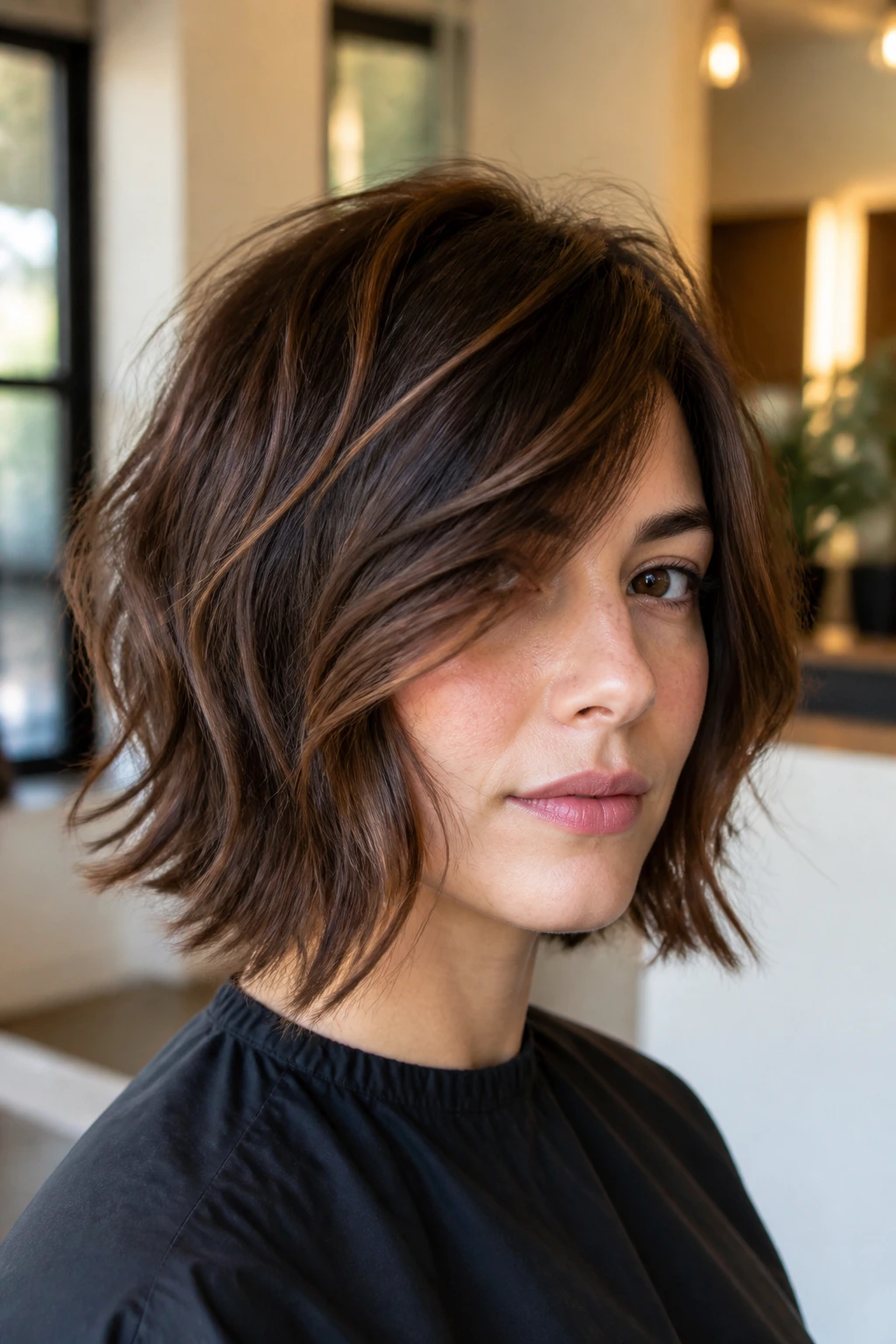
If your face feels wider than you want it to, chin-skimming layers can help a lot. They create a vertical line through the front of the haircut, which narrows the visual width at the cheeks and draws attention downward.
The side-swept bangs in this version are longer and more deliberate. They don’t sit as a tiny fringe; they travel into the chin-length pieces and make the haircut feel connected. That’s the part people often miss. The bang shouldn’t look pasted on. It should behave like the first step in a longer layer pattern.
This style is especially good for thick hair that has a lot of volume through the cheeks. A blunt bob with this density can feel too square. A shag with chin-length sweep pieces loosens that outline without making the hair look thin.
If your hair likes to flip around the chin, use a round brush for the first bend and then stop. Don’t over-set it. The relaxed finish is part of the point.
8. The Shoulder-Length Bedhead Shag

Shoulder length is where thick wavy hair often starts to wake up. Short enough to move, long enough to keep some weight. This version leans into that messy, slightly undone texture that looks good whether you’ve spent 10 minutes styling it or none at all.
Why does it work? Because shoulder length gives the wave pattern room to separate. The layers fall in different places, the bangs sweep across the face, and the shape never feels overly engineered. That’s a good thing here.
How to Use It
Dry it roughly, not perfectly. A little mousse at the roots and a touch of cream through the ends is enough. If you blow-dry every strand into submission, the cut loses its personality. And yes, that sentence applies to almost every shag.
This is the sort of haircut that looks better when a few pieces land where they want to land. The side-swept bangs should bend softly over one brow and then drift into the front layers. Nothing stiff. Nothing helmet-like.
9. The Soft Mullet Shag

A soft mullet shag is not for everyone. It asks for a little confidence. But on thick wavy hair, it can be one of the smartest ways to remove bulk without losing that swingy, lived-in texture people keep trying to fake with hot tools.
The side-swept bangs are what make it wearable. They soften the sharpest part of the cut, which is the transition from the shorter crown to the longer back. Without that front sweep, the shape can feel too severe. With it, the haircut reads playful instead of extreme.
- Keep the top shorter, but not shaved-up short.
- Leave enough length in the back that the ends still look soft.
- Ask for face-framing pieces that blend into the bang, not a hard stop at the temple.
This is a good cut if your hair has strong wave definition and you like clothes with a little edge. Leather jacket? Perfect. Crisp button-down? Also fine. It does both.
10. The Curtain-to-Side Hybrid Shag

Some side-swept bangs begin as curtain bangs and drift sideways over time. This version is built for that exact behavior. It starts with a center-friendly fringe, then angles the longer pieces deeper to one side so the cut can shift with your part without falling apart.
That flexibility is useful on thick hair, because heavy bangs usually need a little give. If the fringe is too exact, it gets bulky fast. If it’s too wispy, it separates and disappears. The hybrid gives you enough length to tuck, sweep, or redirect depending on the day.
The layers around the face should echo the bang line. Not copy it. Echo it. That small difference matters. It keeps the haircut soft while still giving you a visible shape near the cheekbones.
If you wear glasses, this is one of the better options. The sweep can be angled to clear the frames without getting hacked too short in front.
11. The Deconstructed Lob Shag

A lob gives thick wavy hair a cleaner base than a shorter shag, and the deconstructed part keeps it from feeling too polished. You get a shoulder-length cut with broken-up layers, soft texture through the ends, and side-swept bangs that keep the front from going flat.
This is one of my favorite choices for people who want to keep their hair looking professional without making it boring. The shape is neat enough for meetings and loose enough for weekends. That may sound dull. It isn’t. Hair that can move between those two moods without a full restyle is worth a lot.
What Makes It Different
The lob’s solid length keeps thick hair from puffing too high. The shag layers stop it from becoming a block. That middle ground is the magic.
If your hair is dense but not coarse, this version can be especially flattering because it keeps the cut controlled. Less frizz. Less volume roulette. More shape.
12. The Deep-Part Piecey Shag
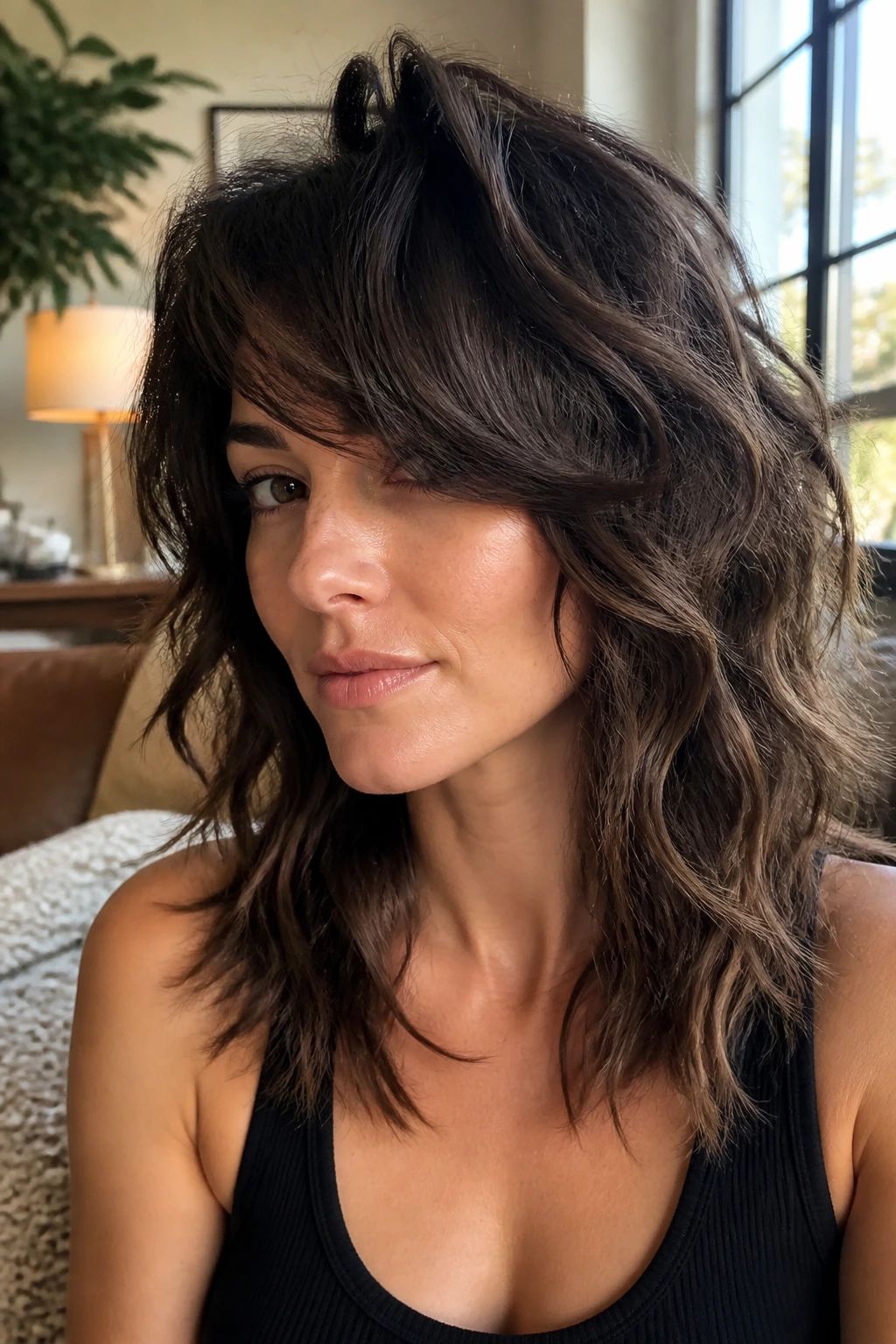
A deep side part can change the whole personality of a shag. Suddenly the bang sweep is deeper, the crown has more lift, and the layers on the heavy side fall in a more dramatic way. Thick hair often needs exactly that kind of directional shift.
This version works best when the layers are cut to move in both directions. One side can tuck closer to the face; the other can fall away a little more. That asymmetry feels modern and makes the thickness look intentional instead of bulky.
The side-swept bangs should be long enough to stay on the heavier side of the part without springing up. If they’re cut too short, they’ll fight the deep part all day. If they’re too long, they’ll hang like a curtain. Aim for a middle zone that can be brushed across and still see the eyes.
A little root lift spray at the part makes a big difference here. So does letting the hair cool before you touch it. Warm waves collapse fast.
13. The 70s Feathered Shag with Side Sweep
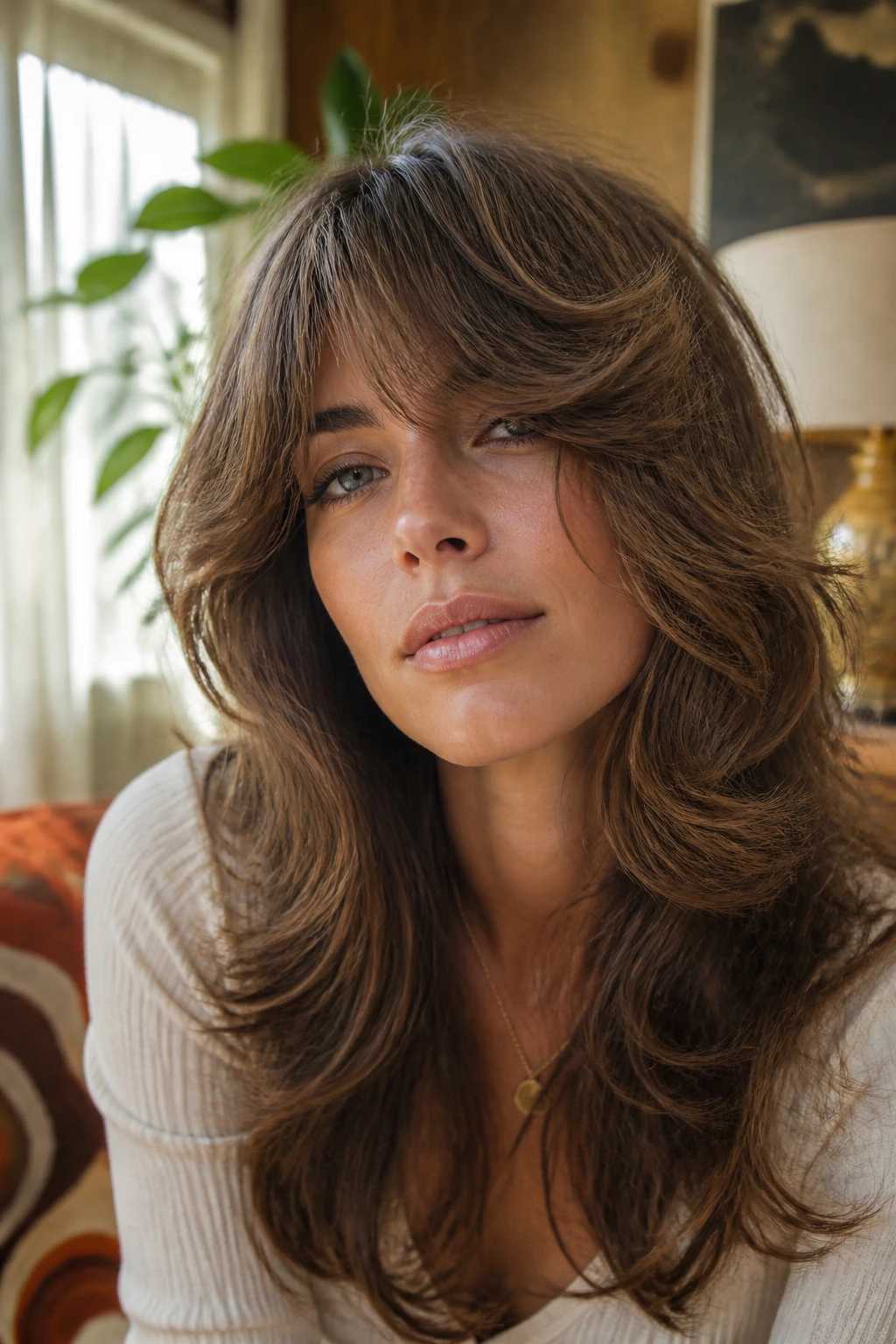
Why does this style keep coming back? Because feathered layers make thick wavy hair look lighter without making it flimsy. There’s a softness to the perimeter that a lot of modern cuts skip over, and the side-swept bangs complete the retro shape instead of fighting it.
This one is all about airflow. The ends flick away from the face, the layers sit lightly on top of each other, and the bang swings across the forehead with a little lift at the root. It’s not rigid. It’s not harsh. It moves when you turn your head, which is half the point.
How to Get the Most From It
A round brush and a blow dryer nozzle help if you want the feathered effect to show. The root should lift first, then the ends should bend away from the face. If you only curl the ends, the shape looks dated in a bad way. If you lift at the root and soften the mid-lengths, it looks expensive without trying too hard.
This is one of the best shags for thick hair that’s naturally smooth but still wavy.
14. The Layer Cake Shag
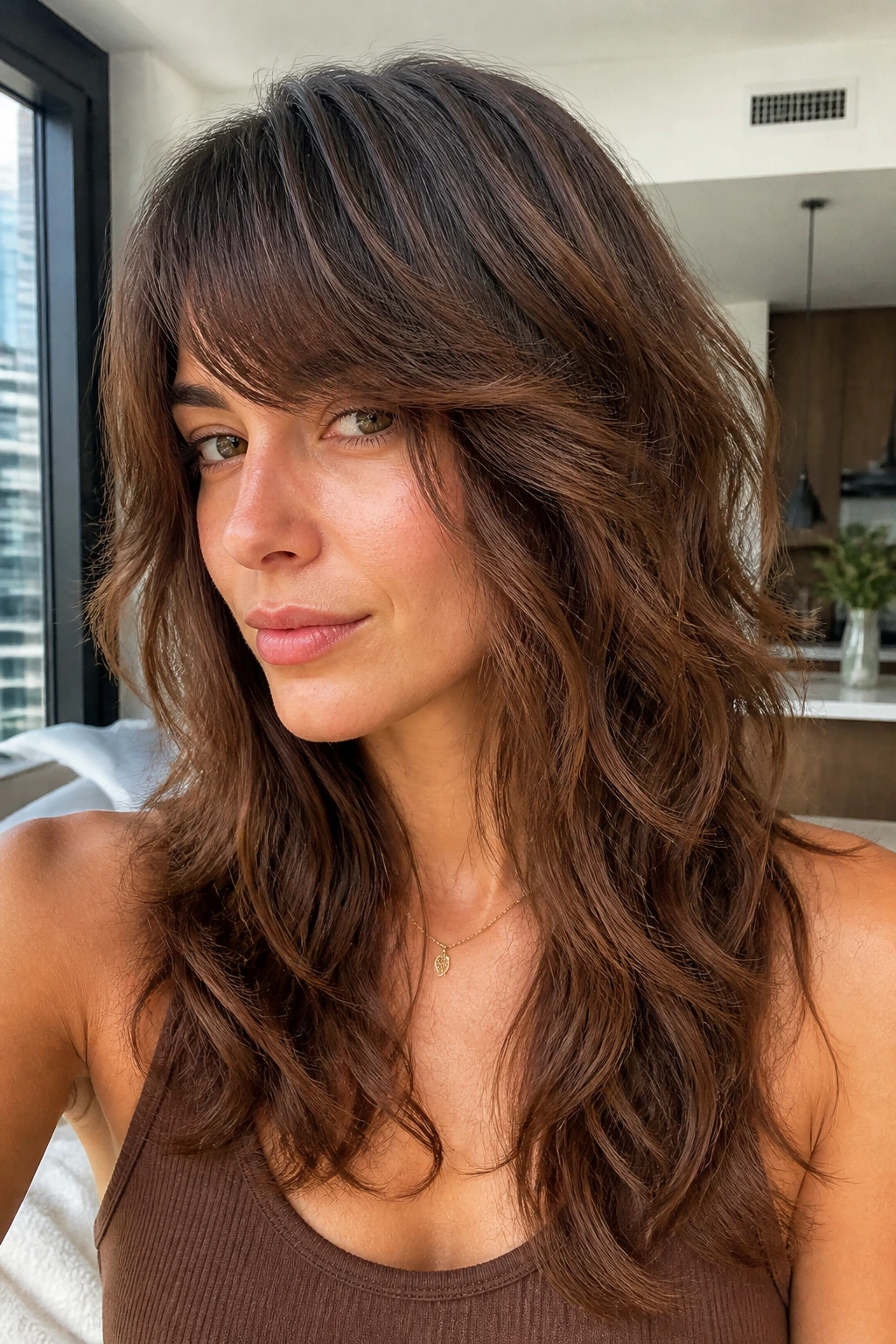
This cut stacks layers in visible tiers through the length, which sounds intense until you see what it does to dense waves. It removes bulk in stages instead of taking a huge chunk out of one place. That matters if your hair grows outward before it grows down.
The side-swept bangs here are the bridge between the top and the rest of the cut. They keep the upper layers from reading as choppy blocks. Without that fringe sweep, the tiers can feel too obvious. With it, the whole haircut looks layered on purpose.
The reason thick hair likes this shape is simple. It lets the wave pattern collapse in a controlled way. Each tier finds its own bend, and the result is more movement without the dreaded puff at the sides.
Use this one if your hair tends to feel heavy by mid-afternoon. The stacked layers help it stay lighter from morning to night.
15. The Air-Dry Friendly Shag

Some shags demand a blow dryer. This one doesn’t. Or at least, not much of one. It’s cut so that thick wavy hair can dry into shape with minimal hands-on styling, which makes it ideal if you want texture without a full routine.
The layers are softer around the interior and a bit longer through the ends. That lets the hair clump into natural wave ribbons instead of exploding into frizz. The side-swept bangs are kept long enough to tuck or sweep as they dry, which is the only way an air-dry bang survives real life.
What to Ask For
Tell your stylist you want the haircut to look good before you fight it with tools. That usually means avoiding micro-short layers at the crown and keeping the fringe long enough to bend with its own wave.
A light leave-in and a touch of curl cream are enough. Heavy oils will drag the front down and make the sweep less visible. This cut rewards restraint.
16. The Thick-Hair Control Shag

This is the cut for people who are done with hair that balloons. It keeps the shag shape, but the layering is more disciplined. Less choppiness, more control. The overall look is still loose, but the silhouette stays closer to the head.
Thick, coarse waves often need this version more than they need a dramatic wolf cut. Too much disconnection can make coarse ends stick out in different directions. This shape keeps the body where it belongs and trims only the places that create bulk.
The side-swept bangs should be smooth, not spiky. They need enough density to hold their shape, but not so much that they sit as a heavy pad over one eye. Think controlled bend, not dramatic swoop.
If your hair takes forever to dry, this version can also cut down on styling time because there’s less extra mass to move around.
17. The Razor-Ended Side-Bang Shag

Does this cut look rougher? A little. That’s the point. Razor ends can make thick wavy hair feel lighter and more modern, especially when the fringe itself is cut to lie softly across the forehead and into the side.
This is one of the most effective versions for hair that feels blunt no matter how much you layer it. The razor texture takes away that stiff line at the end and makes the cut land with more movement. The side-swept bangs are the key detail that keeps it from looking too broken up.
Best when the hair is coarse enough to hold the texture. If your waves are very soft already, the razor work can go too far and create frizz. In that case, scissors and point cutting may be safer.
A tiny bit of texture spray through the lengths will emphasize the cut ends. Too much, though, and the shape gets gritty in a hurry.
18. The Long Mermaid Shag
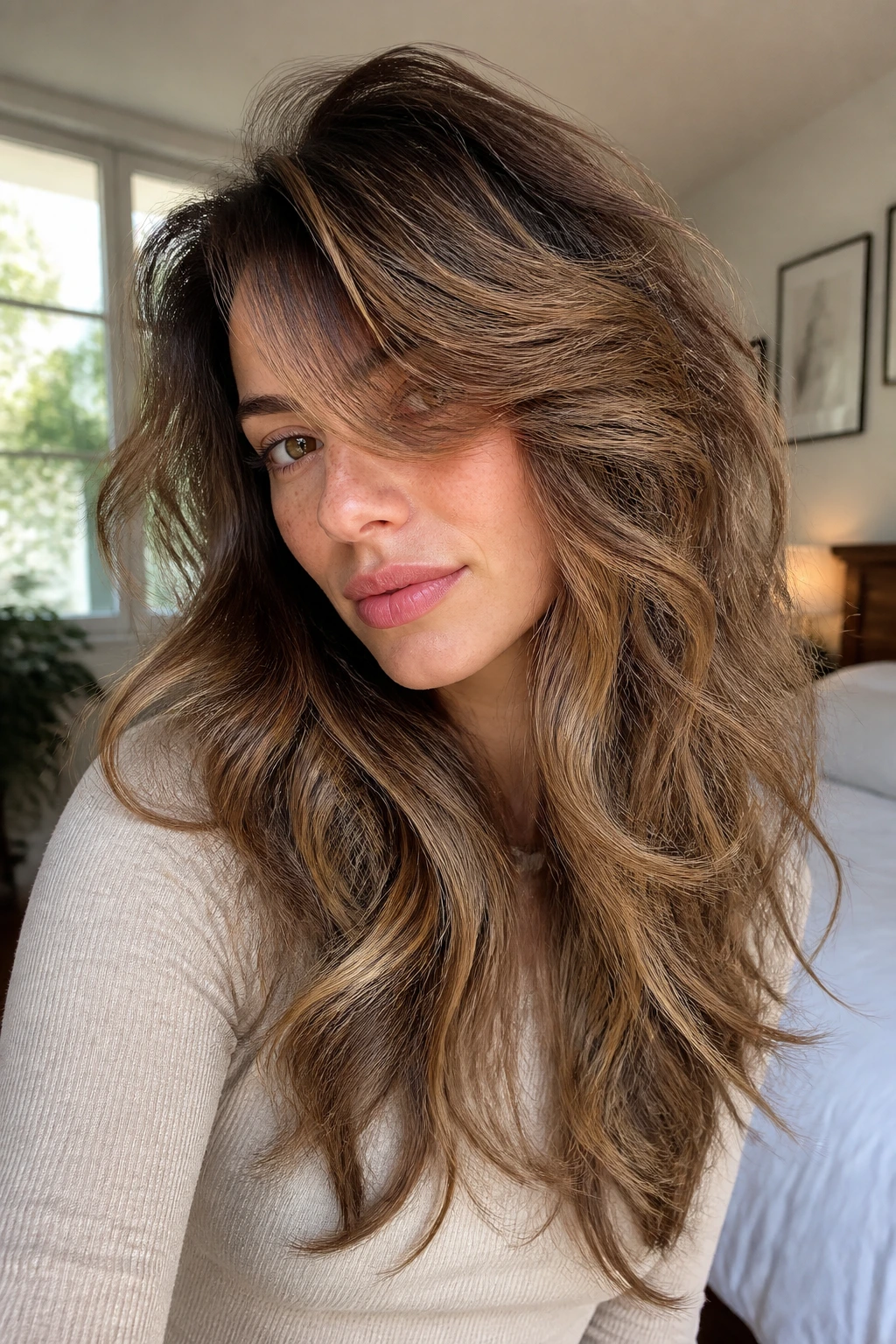
Long hair doesn’t have to mean flat hair. A mermaid shag keeps the length and still gives thick waves a shape that moves. The layers are spread out more widely, so the hair doesn’t lose the feeling of length, but the front and crown still get enough action to keep things from hanging straight down.
The side-swept bangs are longer here, which helps the haircut blend into the rest of the length. If the fringe is too short, the balance is off. Long hair wants a long sweep. That’s just how the eye reads it.
This version is good if you love the idea of a shag but don’t want to leave the salon with a cut that feels lightened to death. It’s softer, more romantic, and easier to dress up. The tradeoff is that you’ll need to style the bangs a bit more carefully so they don’t disappear into the waves.
19. The Short Choppy Shag

Short and shaggy can be a very good thing on thick waves, as long as the layers are deliberate. This version sits above the shoulders and uses shorter pieces to keep the hair airy. The side-swept bangs keep the front from going too severe.
The danger with short shags is obvious: if the layers are cut too high or too unevenly, thick hair can puff out like a triangle. The fix is proportion. Keep enough weight at the bottom so the silhouette still has a base.
Who It Suits
People who like strong shape. People who are fine with a little mess. People who don’t want to spend 20 minutes wrangling their hair every morning.
If that sounds like you, this version can be a relief. It dries faster, feels lighter, and tends to show off wave texture in a very direct way.
20. The Low-Maintenance Grow-Out Shag
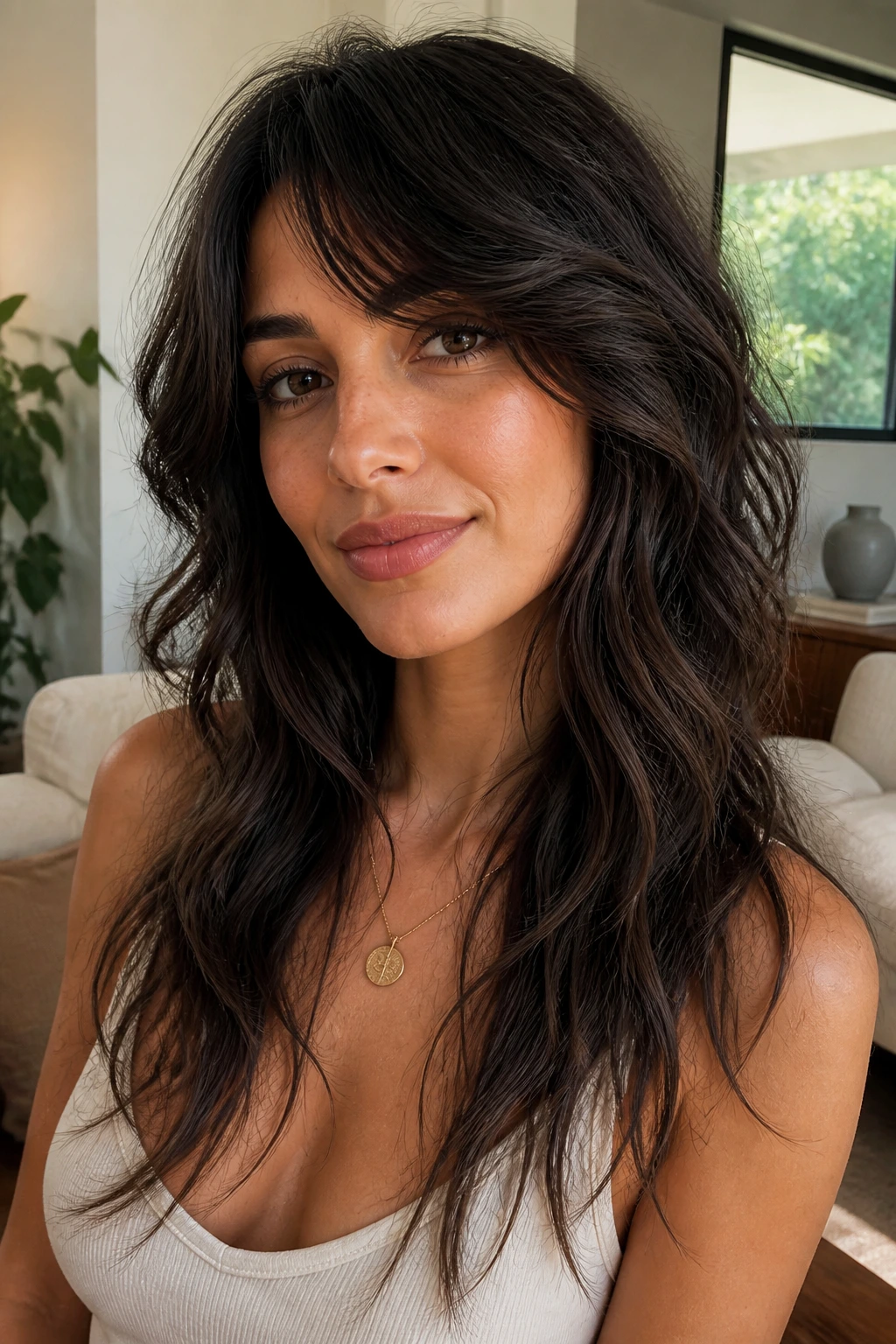
Some cuts are pretty when fresh and awkward two months later. This one is built to keep behaving. The layers are placed so they can stretch without breaking the shape apart, and the side-swept bangs are long enough to grow into face-framing pieces.
That makes it a smart choice if you don’t want constant salon visits. Thick hair can hold a shape for a while, but only if the layers are placed with grow-out in mind. The wrong shag gets puffy around the ears and heavy at the ends. A good grow-out shag just starts looking softer.
The key is not cutting the bangs too short in the first place. Let them hover at a point where they can tuck behind the ear or sweep to the side as they get longer. A little extra length buys you a lot of flexibility.
This is the cut I’d pick for someone who wants the shag mood without the maintenance mood.
21. The Softened Wolf Cut with Side Swept Bangs
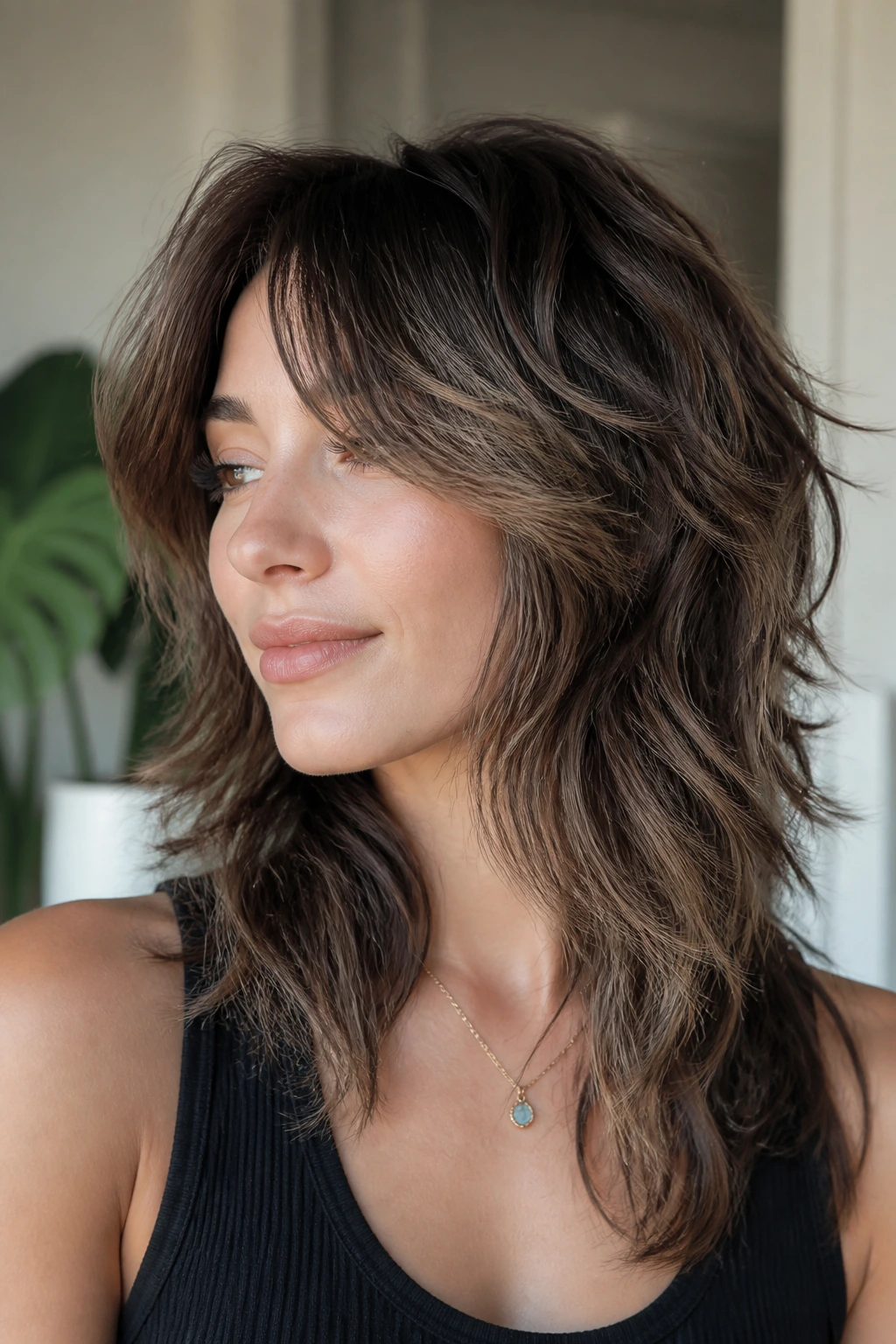
A wolf cut gets softer the moment the layers stop looking disconnected. That’s exactly what happens here. The top still has lift, the back still has movement, but the overall shape is easier to live with because the layers travel into each other instead of stopping abruptly.
The side-swept bangs matter even more in this version because they calm the sharpest part of the haircut. Thick waves can make a wolf cut look wild in a way you may or may not want. The bang sweep takes some of that edge off.
If you want the wolf-cut look but don’t want the full attitude, this is the compromise. It reads modern. It still has energy. And it won’t look out of place if you tuck it behind one ear and move on with your day.
22. The Glossy Polished Shag
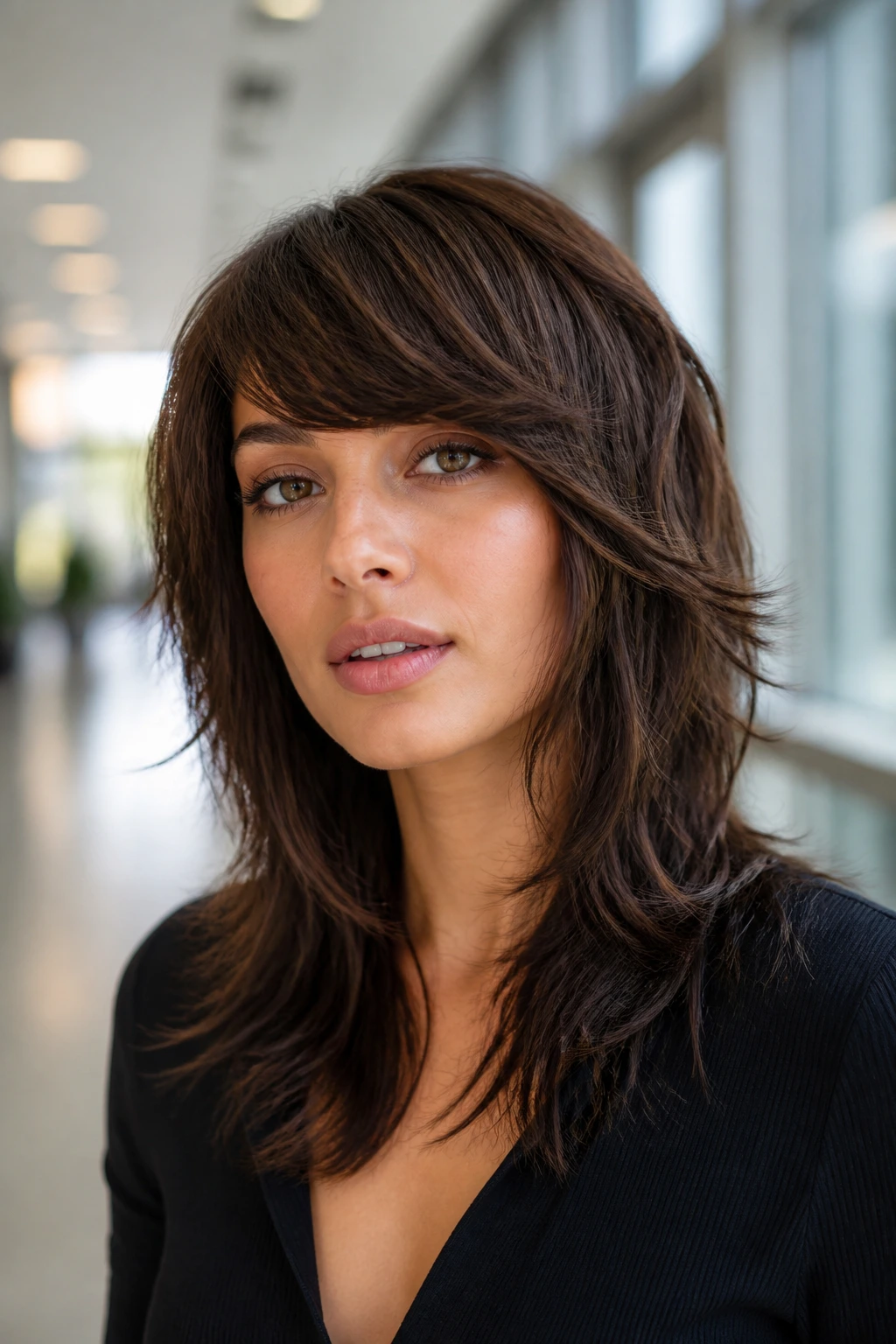
Not every shag has to look rough. A polished shag keeps the layered shape but smooths the surface enough that the waves look shiny and controlled. The side-swept bangs are brushed into a clean diagonal line, then softened at the ends so they don’t look stiff.
This version is especially good for thick hair that gets frizzy when it’s cut too aggressively. The layers still remove bulk, but they’re not shredded. The ends stay intact, which makes the whole haircut reflect light more cleanly.
It’s a smart choice if you want the shag shape in an office-friendly or dressy version. You still get movement. You still get texture. You just don’t look like you wrestled your own hair on the way out the door.
Why the Shag Shape Works Better Than a Blunt Cut on Thick Waves
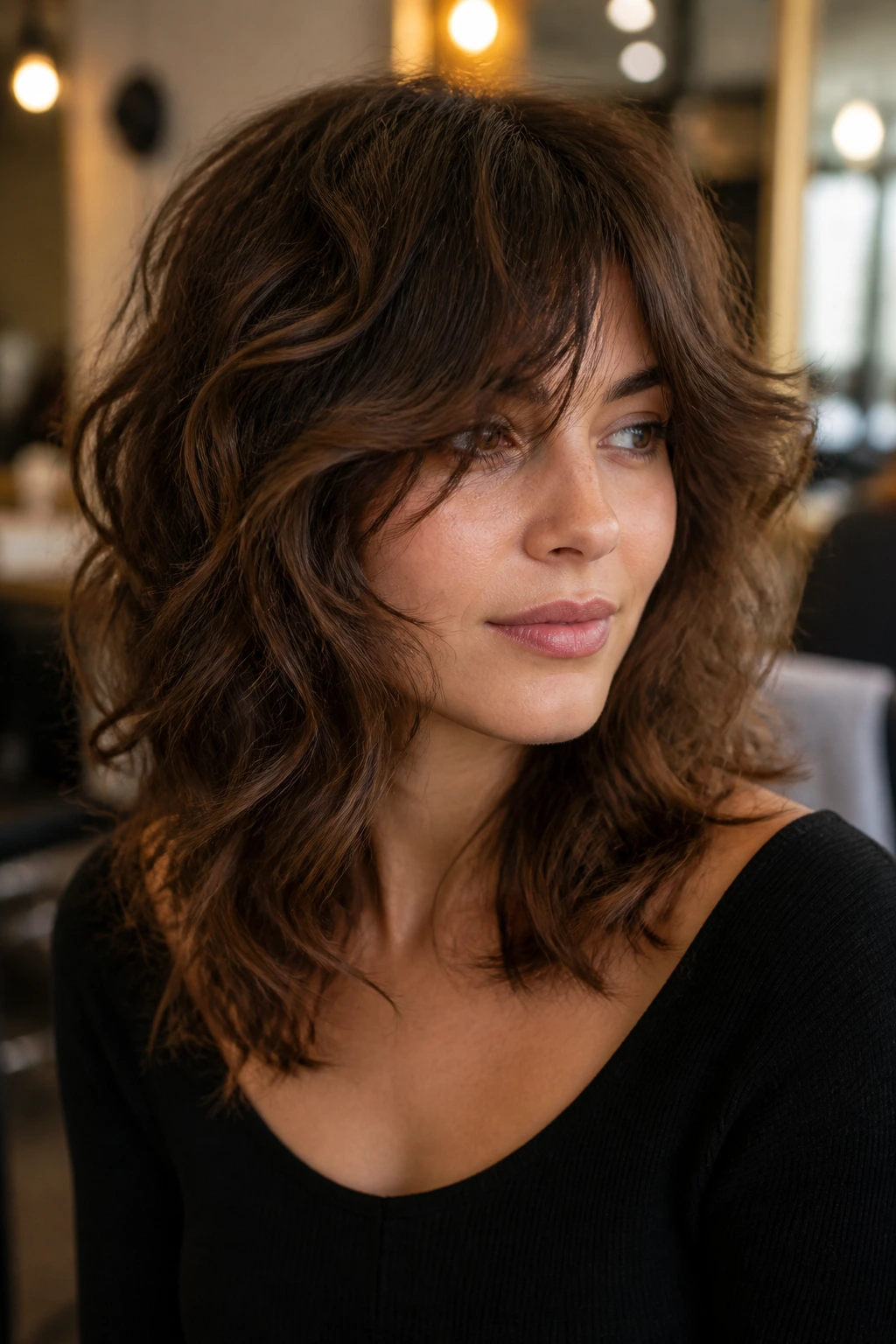
A blunt cut has its place. On thick wavy hair, though, it can act like a shelf. The hair hits one line, flips outward, and suddenly the whole head looks wider than it really is. That’s not a moral failing. It’s physics.
A shag breaks that shelf into smaller pieces. Internal layers remove hidden bulk, face-framing layers redirect the eye, and the side-swept bangs add a diagonal line that keeps the front from reading as wide and heavy. That diagonal is doing a lot of work. It softens the forehead, connects the front to the sides, and gives the haircut a sense of motion before you even style it.
The part people sometimes miss is the balance between removal and preservation. Thick hair does not need to be thinned into invisibility. It needs weight moved around with intent. If a stylist hacks out too much around the crown or chews up the ends with overused thinning shears, the shape can frizz out by noon. Leave enough substance at the perimeter, and the hair keeps its body while still moving.
Side-swept bangs help even more than many people expect because they create a kind of visual pause. Straight-across bangs can split thick waves into two competing shapes. A side sweep lets the haircut transition from top to length without that hard stop. It’s a small thing on paper. On the head, it changes everything.
The Tools That Make This Cut Behave
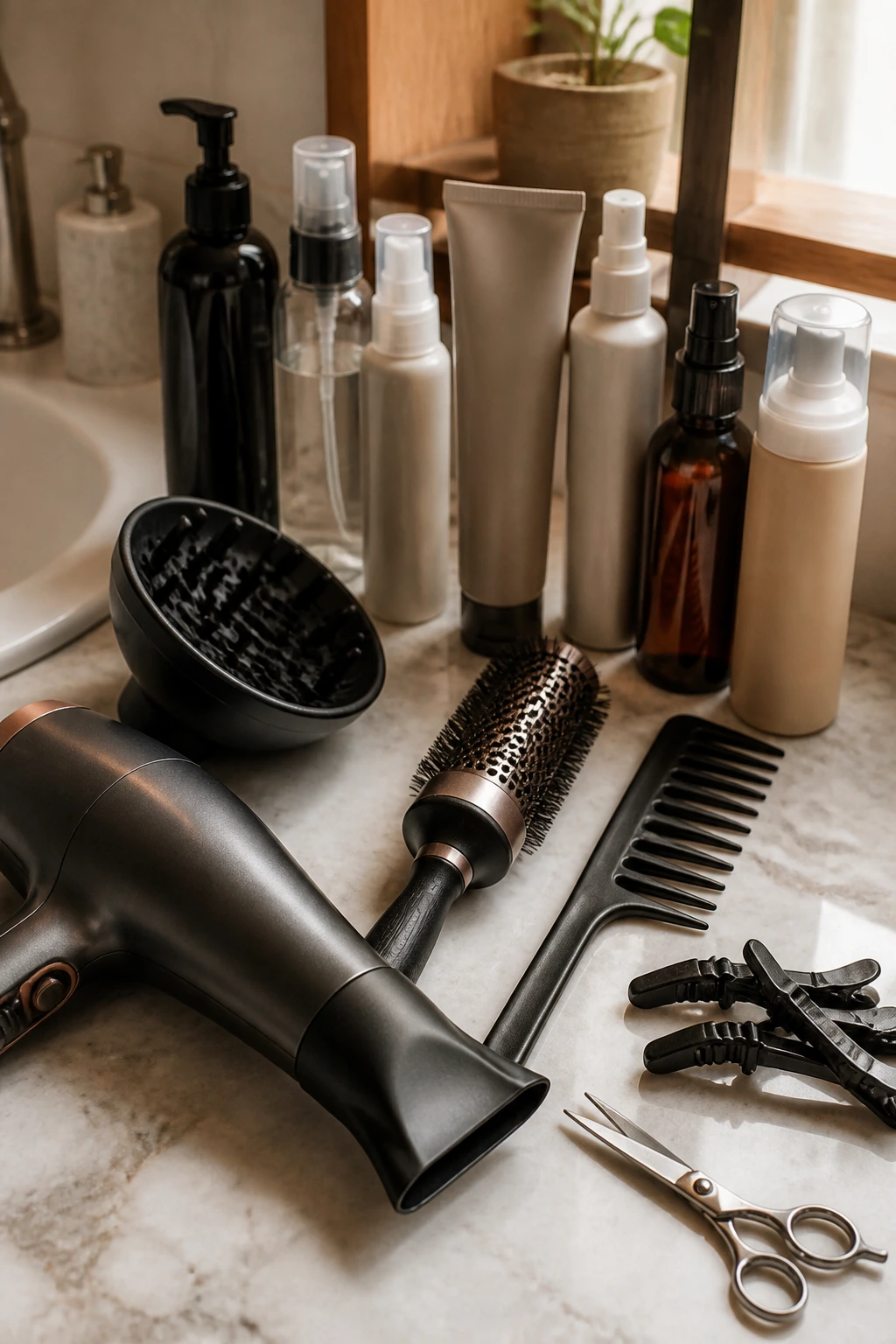
You do not need a drawer full of gadgets, but a few specific tools make thick wavy hair much easier to live with.
- A blow dryer with a nozzle: Directs airflow and keeps the fringe from going every which way.
- A diffuser: Helps waves set without blasting them apart.
- A round brush, 1.5 to 2 inches: Best for bending side-swept bangs and smoothing the front.
- A wide-tooth comb: Safer than a brush on damp, thick waves.
- Sectioning clips: Useful for drying or styling the bangs separately from the rest.
- Lightweight mousse or root lift spray: Gives the crown shape without turning the roots sticky.
- Curl cream or leave-in conditioner: Keeps thick waves soft and helps the layers clump in a nicer way.
- Texturizing spray: Good for second-day separation, especially on shaggy ends.
- Heat protectant: If you blow-dry or use a hot brush, don’t skip it.
- Haircut shears, if you trim bangs at home: Kitchen scissors chew the ends. Full stop.
How to Ask for the Right Version at the Salon
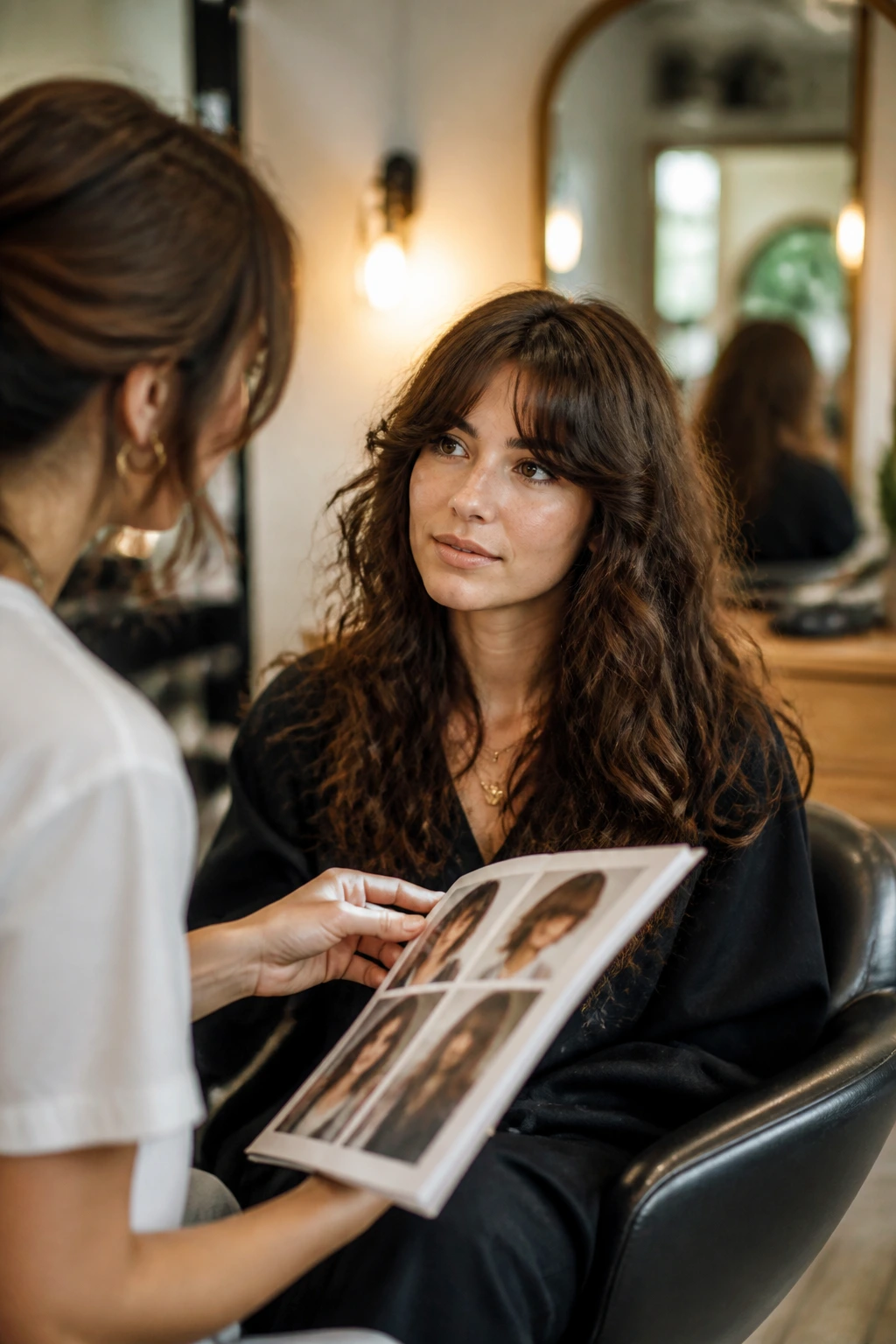
Bring photos, yes, but bring the right kind of photos. One picture for length. One for bang shape. One for texture. That small pile tells your stylist more than a single flattering selfie ever will.
Say the words thick wavy hair out loud. Not because stylists can’t see it, but because the cut should be planned around density, not just length. Then be specific about how your waves behave. Do they swell at the sides? Do the front pieces split? Do the ends go dry and puffy? Those details decide whether you need more weight removed at the interior or more softness left at the perimeter.
If you want side-swept bangs, describe how much forehead you want covered. Some people want a whisper of fringe near one eyebrow. Others want a fuller sweep that crosses the brow bone and bends toward the cheek. Those are not the same haircut. They require different lengths and different balance.
Tell the stylist how you actually dry your hair. Air-dried shag and round-brushed shag are cousins, not twins. If you never blow-dry, the cut should be shaped to look good that way. If you do like a smooth finish, ask for bangs that can hold a bend without needing a battle every morning.
And one more thing: if your hair is extremely dense, ask where the weight should come out. Around the crown? Through the middle? At the sides? A good shag is a placement decision, not just a “make it layered” request.
Styling the Cut on Wash Day and the Morning After
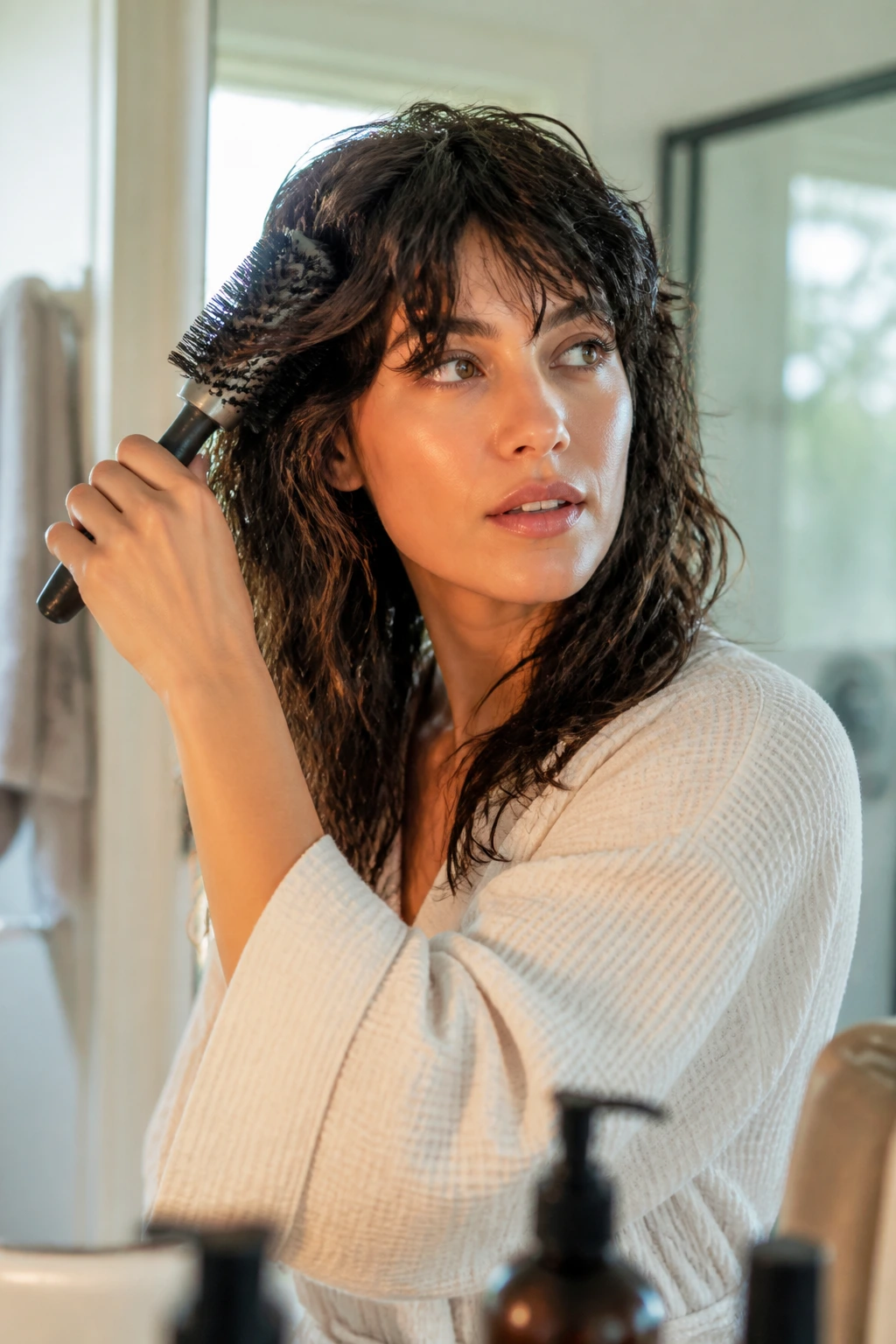
Wash Day
Start with conditioner only where you need it. Thick waves often want moisture through the mid-lengths and ends, not a slick film at the roots. Rake in a lightweight leave-in or mousse, then scrunch the hair once or twice so the wave pattern starts to gather.
The bangs need their own attention. Use a small round brush or a vent brush to guide the fringe across the forehead while the roots are still damp. Dry the bang area first if it tends to split. Wet bangs have ideas, and they are not always good ones.
Diffuse until the hair is about 80 percent dry, then stop touching it. Seriously. If you keep flipping sections around while they cool, the shape loosens and the bangs lose their sweep.
The Morning After
Second-day hair usually helps a shag. That’s the honest truth. The layers separate a little, the texture settles, and the whole cut looks less freshly-fought. Use a small puff of dry shampoo at the roots, then mist the bangs with water or a light styling spray and re-bend them with your fingers or a brush.
If the fringe has gone flat, don’t blast the whole head with product. A drop of water and 30 seconds of heat on just the front pieces is usually enough. The rest of the hair can stay as it is.
When Humidity Shows Up
Humidity does not care about your plans. Keep a small amount of anti-frizz serum on the ends only, not the roots. The wrong move is loading the top with oil. That makes the crown collapse and the layers cling in all the wrong places.
Small Tweaks That Change the Whole Finish
Volume Boost: Mist a root-lifting spray at the crown, then clip the roots while they cool. The lift lasts longer than trying to tease the hair later, and it looks cleaner too.
Bang Rescue: If your side-swept bangs keep splitting, blow-dry them in the opposite direction for 10 to 15 seconds, then sweep them back into place. That tiny reset can buy you a full day of cooperation.
Frizz Control: Use a pea-sized amount of serum on damp ends only. Thick wavy hair does not need much. Too much serum turns the layers limp and sticky.
Polish: If you want the shag to feel less messy, smooth the outermost layer with a round brush and leave the rest soft. That contrast keeps the haircut from looking overdone.
Shape Memory: Let the hair cool completely before touching it. Warm hair forgets the shape fast. Cold hair remembers.
The Mistakes That Make Thick Waves Pile Up or Puff Out
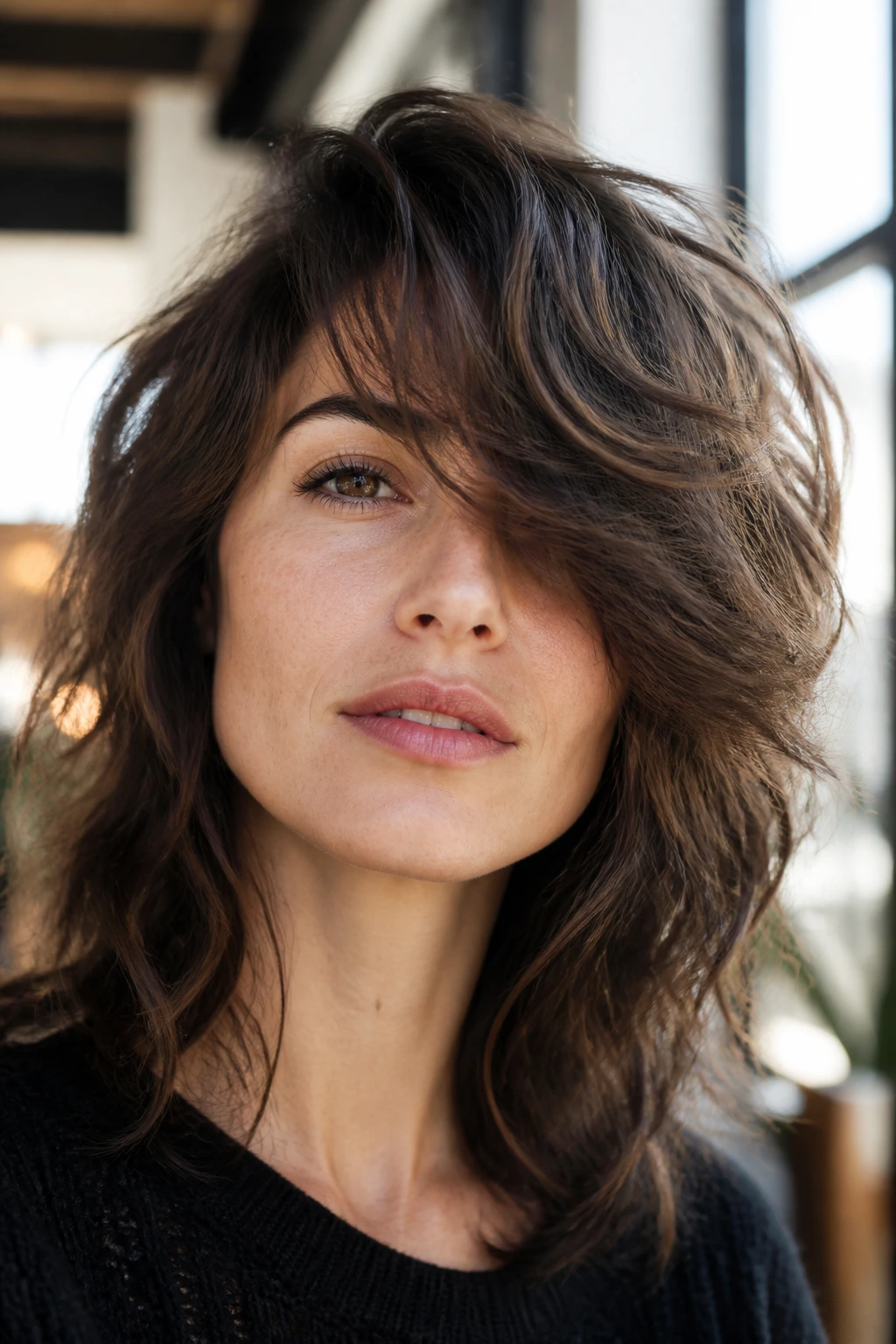
-
Cutting too much off the crown. The symptom is a triangle that starts at the cheekbones and widens as it goes down. The fix is to keep the top layers soft and preserve some length through the upper sides.
-
Over-thinning the ends. The symptom is see-through, fuzzy tips that look tired after one wash. The fix is to remove weight inside the shape, not shred the perimeter into nothing.
-
Making side-swept bangs too short. The symptom is a fringe that keeps springing back or standing up instead of sweeping. The fix is to leave enough length for the bang to bend and settle.
-
Using heavy creams everywhere. The symptom is flat roots and greasy-looking bangs by midday. The fix is to keep richer product on the ends and use lighter hold at the top.
-
Expecting the same finish every day. The symptom is frustration. Thick wavy hair changes with humidity, product build-up, and sleep. The fix is a cut that still looks good when it’s slightly imperfect.
-
Skipping bang trims. The symptom is a sweep that creeps into your eyes or loses direction. The fix is regular bang maintenance, even if you stretch the rest of the haircut.
Ways to Adapt the Cut for Different Faces and Routines
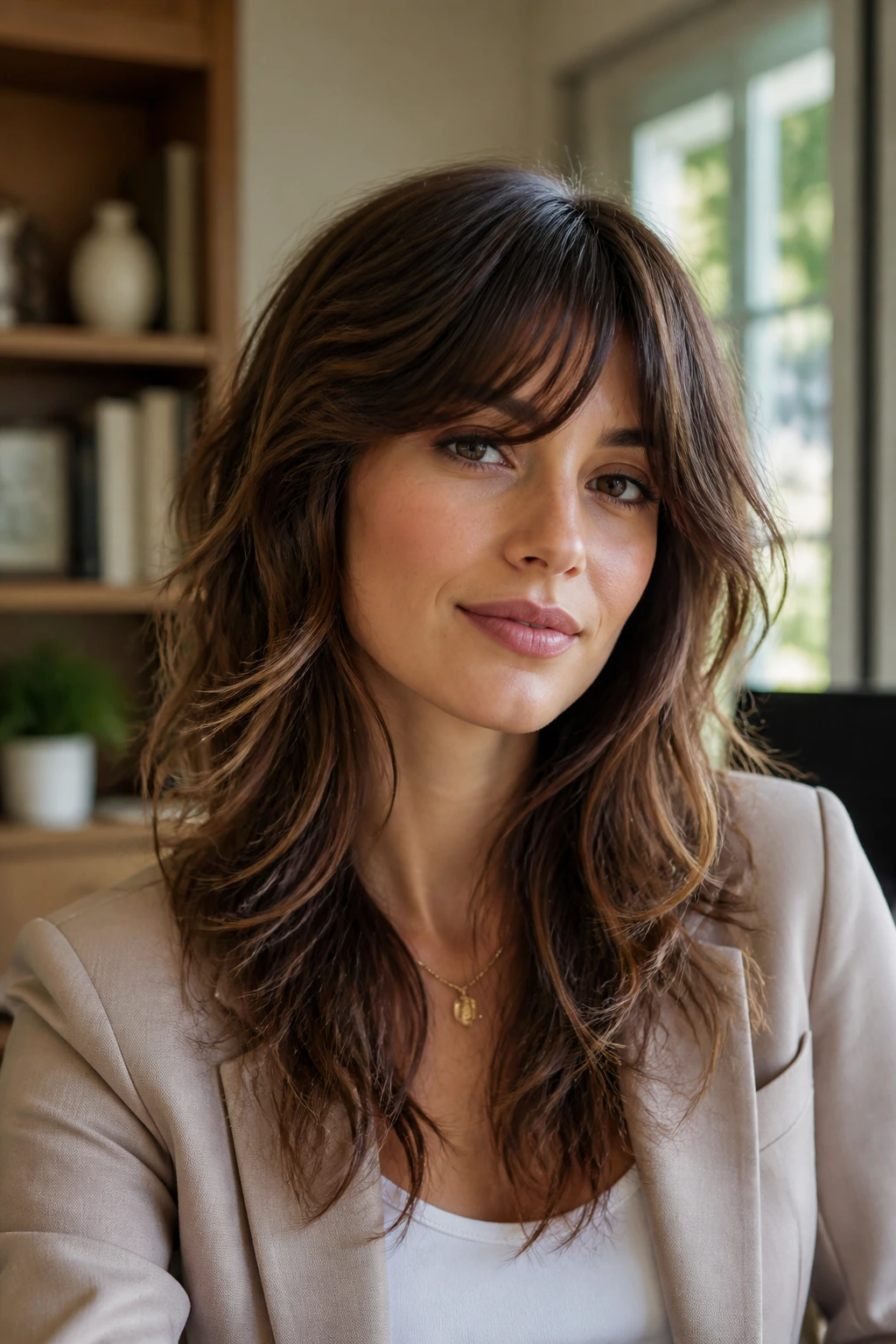
The Soft Office Version: Keep the layers longer, the ends smoother, and the bangs more polished. This version works if you want the shag shape without obvious choppiness.
The Edgier Wolf Lean: Shorten the crown a little more and let the back sit longer. The side-swept bangs keep it wearable while the rest of the cut brings more attitude.
The Air-Dry Version: Leave more length in the face-framing pieces and avoid over-texturizing the ends. You want the waves to settle naturally, not separate into fuzz.
The Round-Brush Version: Build in a smoother face frame and bangs that can bend cleanly under heat. This is the pick for people who like shine and a bit more control.
The Long-Hair Version: Keep the length past the shoulders and spread the layers wider apart. That preserves the dramatic length while still stopping the heavy curtain effect.
The Short-Texture Version: Go above the shoulders with stronger layering and a more visible bang sweep. This one dries faster and feels lighter, but it needs a little styling discipline.
Keeping the Layers and Bangs in Shape Between Trims

Bangs usually need attention first. If you like them precise, trim or refresh them every 4 to 6 weeks. If you’re happy with a longer sweep, you can push that farther, but the shape will soften as it grows. That’s fine. It’s a choice, not a failure.
The rest of the shag usually holds together for 8 to 12 weeks, sometimes longer if the layers are placed for grow-out. Thick hair can hide a lot. Still, once the front starts dropping into your mouth or the crown stops lifting the way it should, it’s time.
Wash routines matter too. If your waves start looking weighed down, a gentle clarifying wash every 2 to 4 weeks can strip away the product film that makes the layers look dull. Follow with conditioner on the ends only. Heavy build-up is one of the fastest ways to make a shag look smaller and flatter than it really is.
Sleeping on a silk or satin pillowcase helps the fringe and the ends keep their shape overnight. If that feels fussy, a loose twist or a soft clip at the front is the next best thing. The goal is simple: keep the side sweep from getting crushed.
Questions People Ask Before Going Shorter
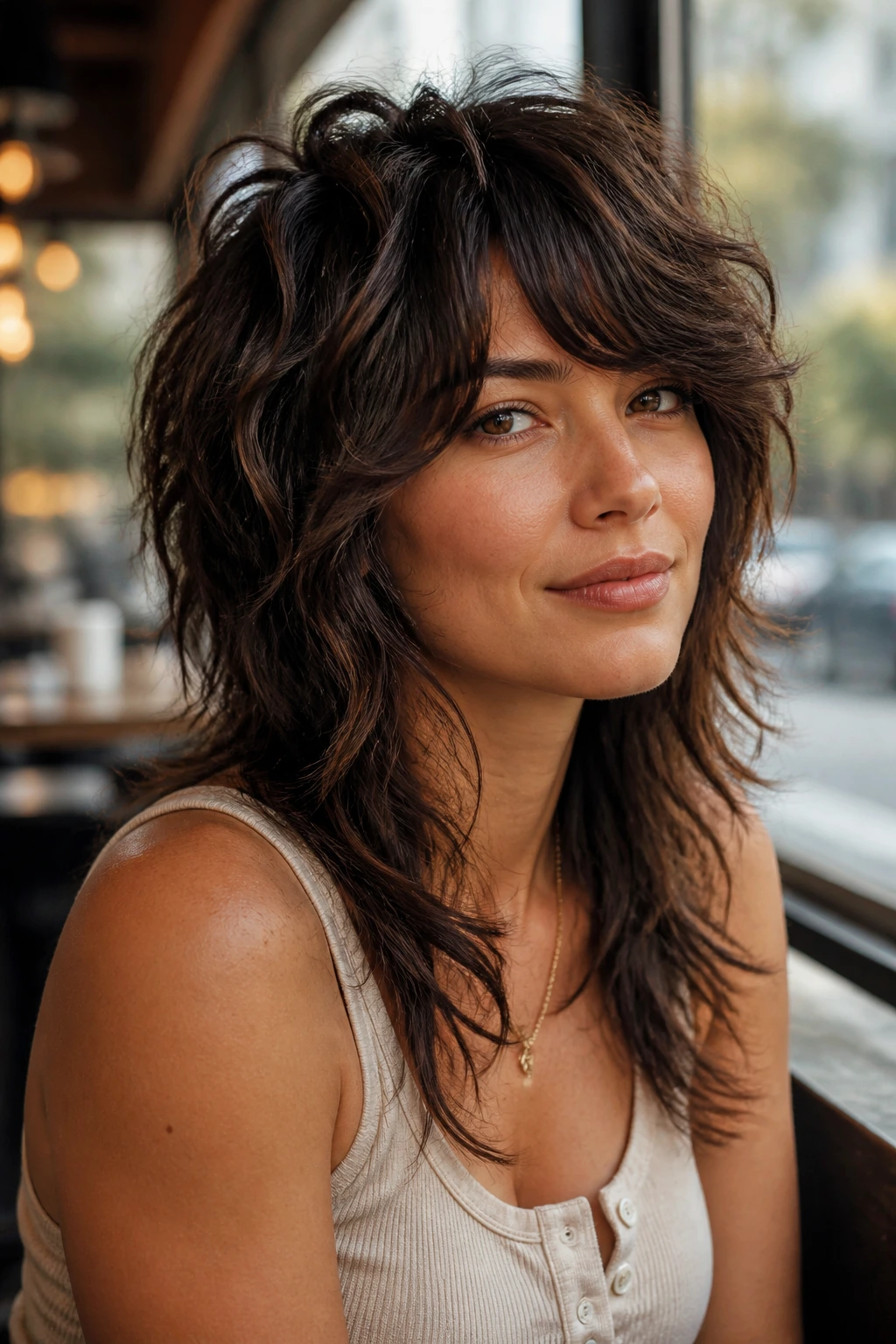
Will a shag make thick wavy hair look thinner?
If it’s cut well, it makes thick hair look lighter, not thin. The difference is in how the weight is removed. Internal layers reduce bulk while keeping the perimeter full enough to look healthy.
Do side-swept bangs work on coarse waves?
Yes, and often better than straight-across bangs. Coarse waves need enough length and density to hold the sweep, so ask for a fringe that can bend instead of one that needs constant forcing.
Can I air-dry this haircut?
You can, if the shape is built for it. Long face-framing layers and softer bangs usually air-dry more cleanly than highly disconnected cuts.
How often should I trim the bangs?
Most side-swept bangs need a refresh every 4 to 6 weeks if you want them to sit cleanly. If you prefer a looser, grown-in look, stretch that a little.
What if my waves split at the front?
That usually means the bang section is too short or too heavy for your hairline. A longer sweep, plus a little root direction at the dryer, usually fixes it.
Is a shag better than long layers?
For dense waves, often yes. Long layers alone can leave too much bulk at the bottom. A shag takes weight away more strategically and gives the whole cut a more visible shape.
Can I wear this with glasses?
Absolutely. You just need to plan the bang length so it clears the frames instead of landing right on top of them. That tiny detail changes everything.
What if the cut feels too fluffy after the first wash?
That usually means too much texturizing or too much volume taken from the wrong place. A smoothing cream on the ends and a cleaner bang bend can calm it down without flattening it.
The Cut That Moves With You

The best wavy shag haircuts for thick hair with side-swept bangs do one thing beautifully: they keep dense waves from sitting in a single, heavy block. The layers loosen the shape, the fringe softens the front, and the whole cut keeps its personality whether you spend five minutes on it or fifteen.
That’s why these shags last. Not because they’re trendy. Because they make practical sense on hair that has weight, bend, and a mind of its own.
Pick the version that matches your wave pattern, your styling patience, and how much edge you want to see in the mirror each morning. The right one should still look good when a few pieces fall crooked. That’s the whole point.