



Fine hair can look expensive when the cut gives it room, or it can sag into a single, apologetic curtain the second humidity shows up. That’s why short shaggy bangs with face-framing layers have such a loyal following among people whose strands are soft, airy, and a little too eager to lie flat.
The trick is not more hair. It’s smarter hair. A blunt fringe on fine hair often turns into a thin, see-through line at the ends, while the right shaggy shape breaks up that line, builds movement around the temples, and keeps the front from hanging heavy over the face. Point cutting, light razor work, and a face frame that starts in the right spot can make the difference between “I got a haircut” and “my hair looks like it woke up with a pulse.”
I’ve always liked this family of cuts because it behaves a little imperfectly on purpose. A soft bend over one brow, a fringe that lands just above the lashes, a few cheekbone pieces that kick out instead of sitting dead straight — those tiny irregularities are what keep fine hair from reading flat. The best versions don’t look overworked. They look alive.
Why These Short Shaggy Bangs Work on Fine Hair
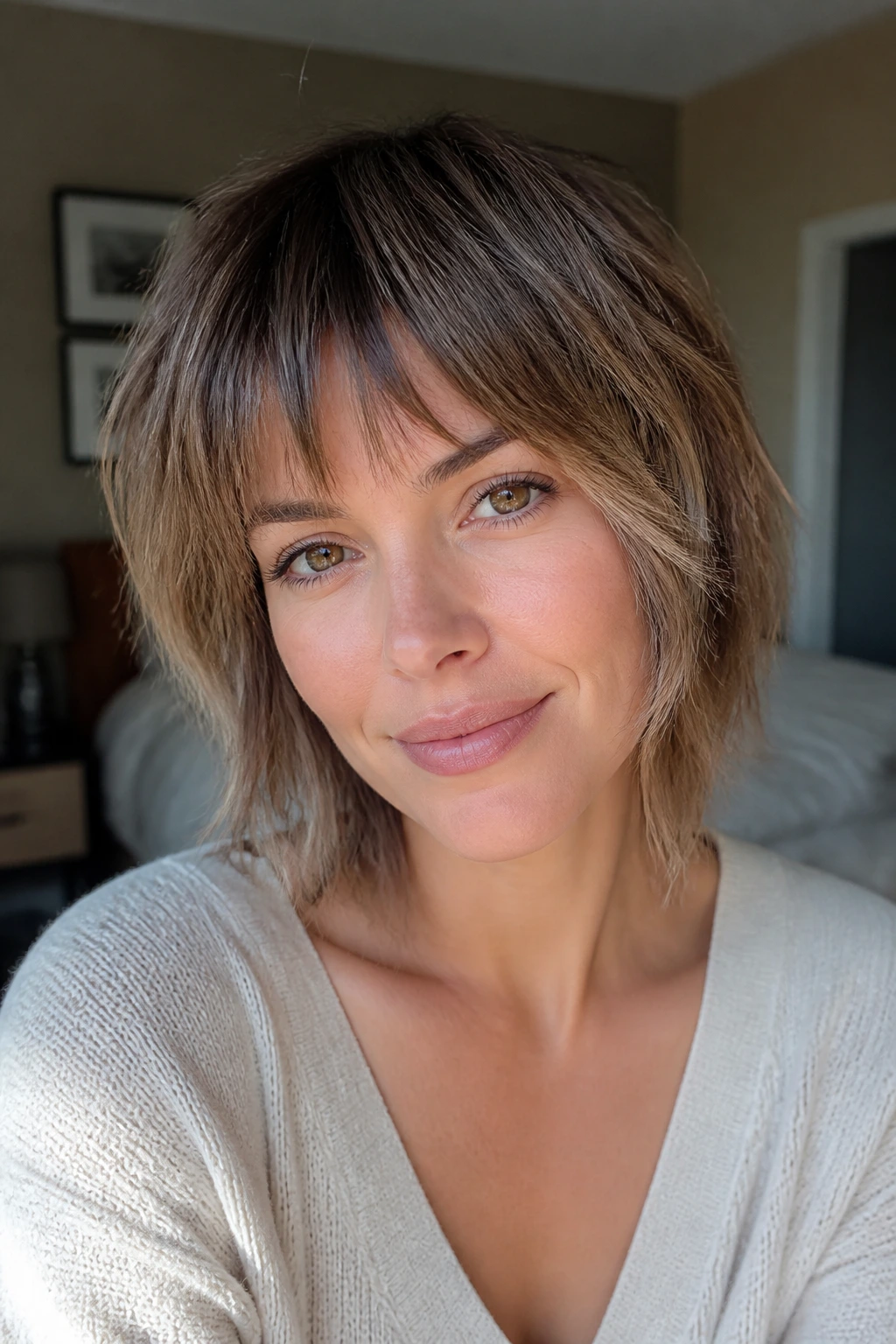
Built-in movement: The broken-up fringe keeps the front from forming one solid line, which is the fastest way to make fine hair look sparse and stiff.
Face-framing weight where it counts: Layers that land around the cheekbone, lip, or jaw give the eye something to follow, so the hair doesn’t disappear into the sides of the face.
Easier grow-out: A shaggy edge softens as it lengthens, so you do not get the hard “oops, my bangs are now a shelf” moment that blunt cuts create.
Less product, better shape: Fine hair usually hates heavy creams and thick oils; these cuts get texture from the cut itself, then need only a small amount of mousse, spray, or powder to hold it.
Better odds with cowlicks and parts: The right fringe can work with a messy natural split instead of fighting it all morning, which is one reason these cuts feel forgiving.
How to Choose the Version That Won’t Collapse by Noon

The haircut matters more than the styling trick. That’s the part people skip, and then they blame the product when the real issue is that the shape was wrong from the first snip.
If your hairline is low or your forehead is short, keep the fringe light and slightly broken up. A heavy block of bangs eats up too much visual space on fine hair. If your forehead is taller, you can go a touch fuller through the center and let the sides taper into face-framing layers. The goal is balance, not coverage.
Read the Cowlick First
A strong cowlick usually wants a side-swept or softly split fringe. If you try to cut straight across it, the bangs fight back every morning, and fine hair loses that fight fast.
Match the Side Pieces to Your Face Frame
Cheekbone pieces flatter most people because they open the face without dragging the cut downward. Jaw-length layers work better when the ends are extra wispy and need more support.
Keep the Perimeter Honest
Too many short layers on fine hair can make the ends look thin and tired. I’d rather see a little more length left at the bottom and a lighter touch through the fringe than a heavily textured crown with nothing left around the face.
1. Feathered Bottleneck Bangs with Jawline Layers
These are the bangs I reach for when someone wants softness without that full curtain effect. The center sits a little fuller, then the fringe tapers out as it reaches the temples, so the whole front reads as airy instead of chopped. When the jawline layers kick in, the cut gets shape fast, even if the rest of the hair is fine and flat.
Why it works
The bottleneck shape gives you a touch of density at the center, which matters on fine hair. Too much thinness through the middle and the fringe starts to look stringy by the second day. Keep the temple pieces feathered, not shredded.
Ask for the jaw layers to land right where the chin starts to narrow. That makes the haircut feel longer through the face without dragging the ends down. A quick blow-dry with a small round brush is enough to give the center a soft bend and keep the side pieces off the cheeks.
2. Choppy Micro Shag with Temple Veils
Short bangs can look too severe on fine hair if they’re cut clean and stiff. Add a little choppiness, though, and the whole thing loosens up. The temple veils are the quiet hero here — those small pieces at the sides soften the transition from fringe to face frame, which keeps the crop from looking harsh.
Micro shag works best when the texture is intentional, not chaotic. I like it on people whose hair has a slight bend or a stubborn part, because the tiny irregular pieces give that movement somewhere to live. On pin-straight hair, you’ll want a root-lift spray and a quick finger-dry so the bangs don’t sit plastered to the forehead.
Best for: smaller foreheads, short brows, and anyone who wants a cut that looks sharp without being precious.
Avoid if: you hate trimming bangs often. Micro lengths grow out fast, and fine hair shows every millimeter.
3. Brow-Skimming Razor Fringe with Collarbone Sweep

What if you want fringe, but you don’t want to babysit it? This is the move. A brow-skimming razor fringe keeps the front soft and broken up, while the collarbone-length face frame does the heavier lifting around the jaw and neck. The result has motion, but it doesn’t feel busy.
The razor work matters. On fine hair, a blunt scissor line can look clean for five minutes and then go see-through at the ends. A razor softens the edge and gives the bangs that slightly shredded finish that makes them sit better against the skin.
Styling note
Use a concentrator nozzle and blow the fringe side to side while it dries. That little bit of directional tension stops the bangs from splitting in one obvious line. Once it’s dry, bend the collarbone pieces away from the face with a round brush or a flat iron flick. Nothing fancy. Just enough.
4. Curtain-Flip Shag for Round Faces

You know the trick here: a center part that opens at the cheekbones instead of landing as one heavy sheet. On fine hair, that open shape is worth its weight in gold because it creates width where the face wants it and removes pressure from the crown. A curtain flip at this length feels fresher than a classic long curtain bang because the shorter front pieces keep the whole cut springy.
The face-framing layers should start around the lip or just under the cheekbone if the hair is very thin. Start them too high and the sides can go wispy in a bad way. Too low, and the cut starts dragging downward, which is the exact opposite of what a round face usually wants from a shag.
I like this version with a rough blow-dry and a quick flip of the ends away from the chin. That tiny outward bend makes the cut feel lighter.
5. Wisped Pixie Shag for Very Fine Hair

This one is for hair that collapses the second you put too much length on it. A wisped pixie shag keeps the perimeter short enough to hold its shape, then leaves just enough fringe and side length to stop it from looking like a strict crop. It’s not harsh. It’s airy. And on very fine hair, airy is the whole game.
The best part is the speed. You can rough-dry it with your fingers, pinch in a little lightweight paste at the ends, and be done. That’s the nice surprise with this shape: short doesn’t always mean fussy. Sometimes it means the hair finally stops dragging its own weight around.
If your strands are slippery, ask for a touch of internal texture near the crown, not a heavy thinning job. I trust point cutting here more than aggressive razoring.
6. Side-Swept Shag with Diagonal Face Frames
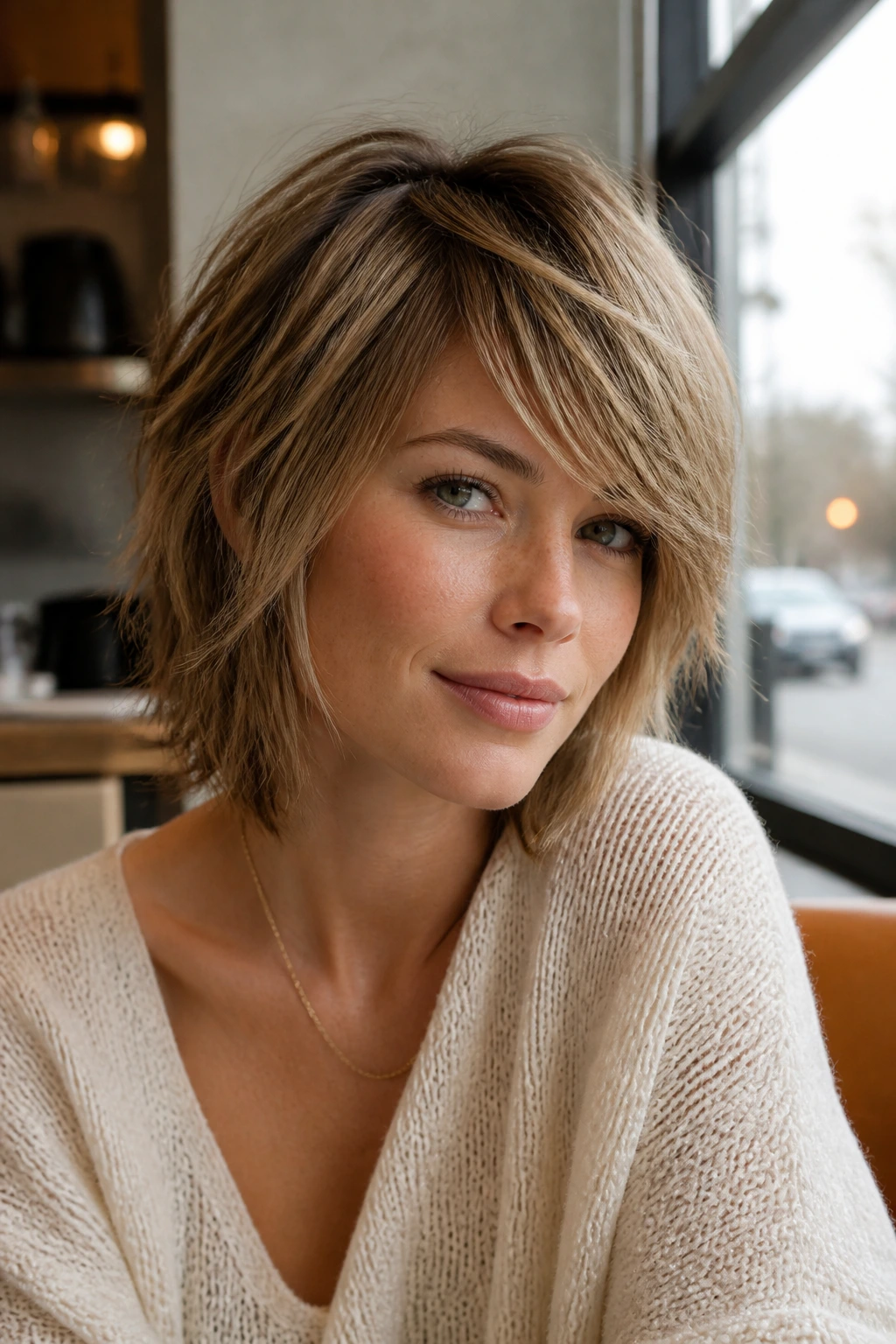
A straight-across fringe can make fine hair feel boxed in. A diagonal sweep fixes that by sending the eye sideways instead of straight down, which is a small thing that matters more than people think. The face-framing layers should follow the same diagonal line, so the whole front of the haircut feels connected.
This shape is especially good if one side of your hair naturally falls better than the other. Work with that bias. Don’t fight it. A side-swept shag lets the hair settle into its own habit, and that usually means less puffing, less flipping, fewer mornings spent negotiating with a cowlick.
Who it suits
- People who wear their hair with a side part more often than a center part
- Fine hair that goes flat at the crown but still has a little bend through the lengths
- Anyone who wants movement without committing to a full fringe
7. Rounded Fringe with Soft Cheekbone Wings

Can a fringe soften a square jaw without swallowing fine hair? Yes — if the line is rounded instead of blunt. The curve should follow the brow arch, then melt into soft cheekbone wings that skim the outer face. That roundness keeps the haircut from feeling too sharp, and the wings help balance stronger angles below.
The mistake with rounded fringe is making it too perfect. Fine hair needs a little break in the line, a few irregular ends, something that lets the fringe breathe. If it’s cut like a neat crescent, it can look dense at first and then get limp at the edges.
I’d keep the styling loose here. A small brush, a low heat setting, and a quick bend at the sides are enough. Don’t curl the fringe under too hard or it starts reading like a helmet.
8. Piecey Wolf Bob with Split Bangs

This is the cut for anyone who wants a bit more edge and still needs the hair to look full. The bob length gives the ends some weight, the wolf texture breaks up the bulk up top, and the split bangs keep the front from sitting as one hard block. On fine hair, that combination is useful because it creates the illusion of density without making the cut heavy.
The split bangs should not be too symmetrical. A slight unevenness makes the style feel modern and keeps the fine strands from lying like two flat ribbons. The face-framing layers can sit around the cheekbone and lip, then feather into the bob so the whole shape feels lived-in.
If your hair is naturally flat on top, ask for a little lift at the crown and keep the interior layers light. The perimeter should still have enough weight to swing.
9. Grown-Out Fringe with Long Razor Sides
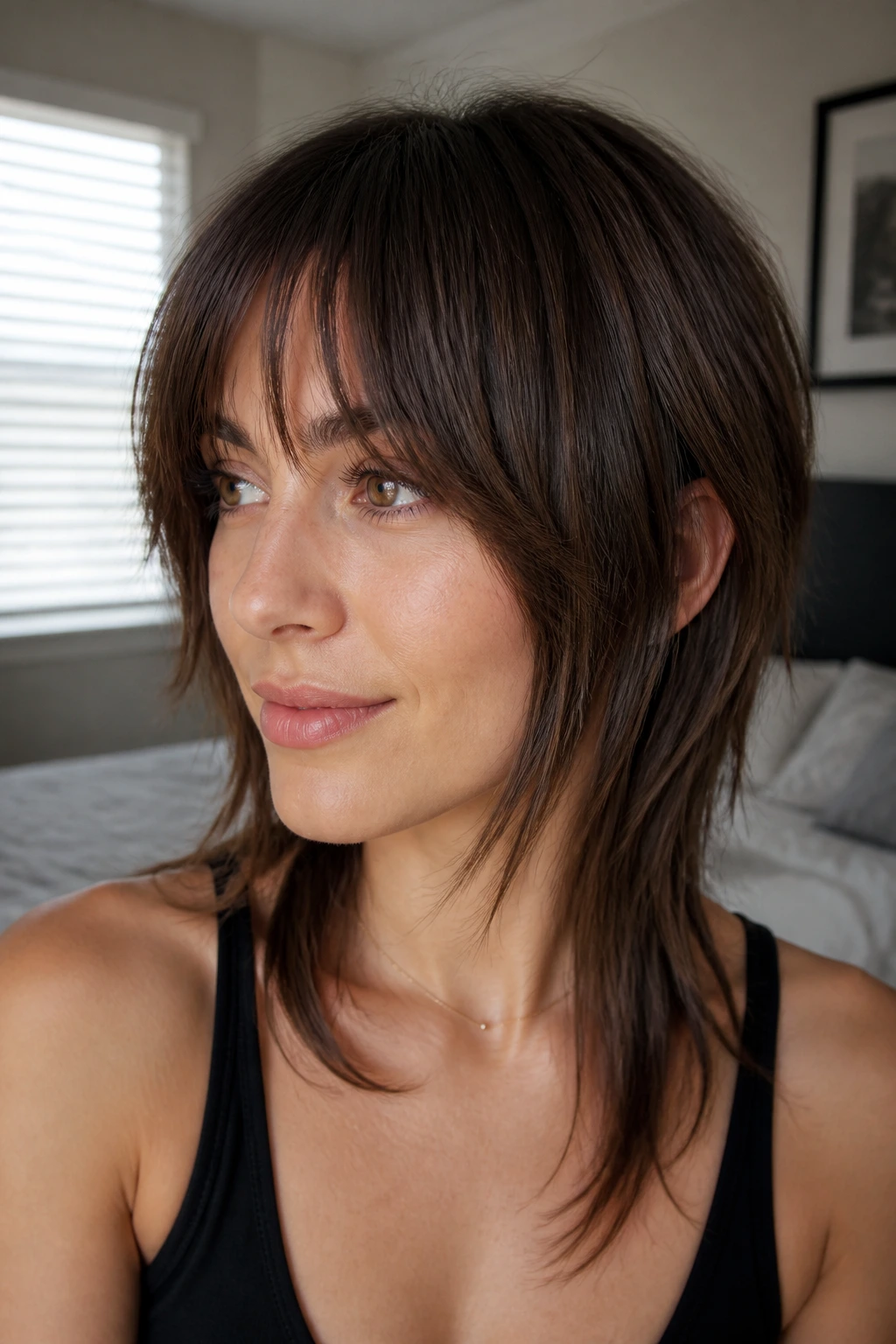
There’s something satisfying about a haircut that looks good even when you’re two weeks past your trim appointment. This is that haircut. The fringe stays intentionally grown-out, with the longest bits brushing the lashes or just touching the brow, while the side pieces stretch down into long razor-soft frames.
The trick is not to let the bangs become an accident. They should look designed to be a little long. That means the edges need softness, and the sides need enough length to connect the front to the rest of the cut. Fine hair benefits from that long-line shape because it keeps the front from feeling too feathered away.
Ask for this if you want:
- A lower-maintenance fringe that can be parted in the middle or swept aside
- Face-framing layers that do not jump from short to long too suddenly
- A shag that looks intentional on day 1 and day 40
10. Short Mullet with Airy Bangs

A short mullet on fine hair sounds scarier than it is. Done right, the crown gets just enough shortness to lift, the nape stays a touch longer, and the bangs stay airy so the front doesn’t feel dense. The cut has shape from every angle, which matters when each strand is trying to lie down and give up.
I like this one when the hair looks better with attitude than with polish. There’s movement through the top, a little swing at the back, and enough face framing to keep it from drifting into pure mullet territory. The bangs should be soft, not choppy to the point of disappearing.
Use a root spray, rough-dry the crown upward, then pinch the ends with texture spray. That’s the whole mood. And yes, it still looks best when it’s a bit messy.
11. Glasses-Friendly Wispy Fringe with Cheekbone Layers

If you wear glasses, the fringe needs to sit in a very specific zone. Too low, and it fights the frame. Too high, and the haircut looks disconnected. This wispy version lands right above the glasses line and uses cheekbone layers to open the face without crowding the lenses.
The soft edge is the important part. Fine hair can make glasses feel heavy if the bangs are too blunt, because all that density sits in one little rectangle across the forehead. A broken-up fringe keeps the area light, and the cheekbone pieces stop the sides from looking boxed in.
A small vent brush or a flat brush works better than a giant round brush here. You want a soft bend, not a big salon curl that will flatten under the frames by lunch.
12. Chopped French Shag with Flippy Ends
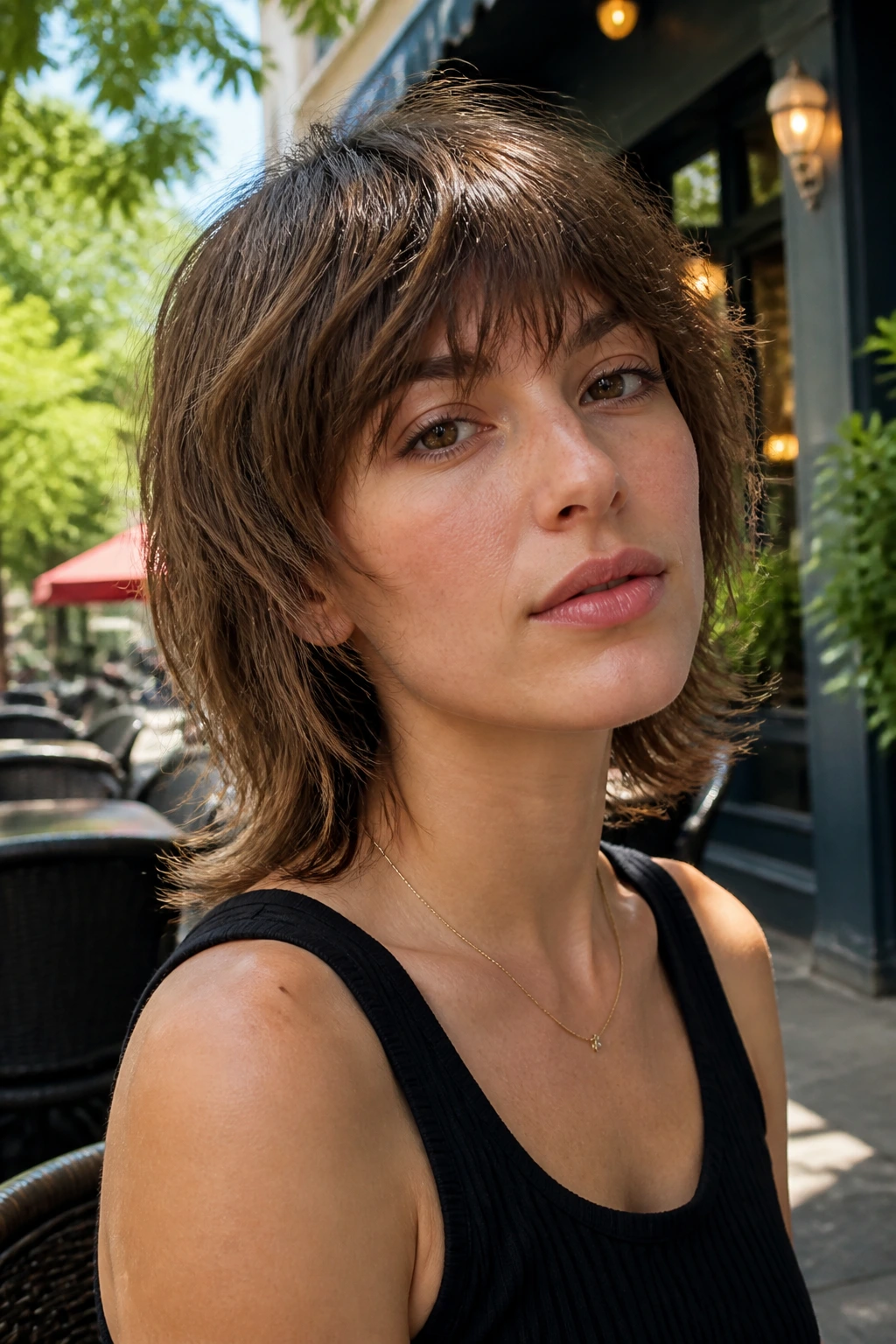
This cut has a little Parisian attitude, but not the fussy kind. The fringe is chopped and airy, the face-framing layers are loose, and the ends kick outward just enough to keep the whole haircut from looking studied. On fine hair, that outward flip is useful because it creates motion at the perimeter where the eye expects fullness.
I’d keep the crown soft and avoid over-layering the top. French shags work when the shape is casual, not when every piece is thinned to death. A quick twist of the brush at the ends gives that small outward bend that makes the style feel finished without feeling built.
Best trick: dry the hair until it’s about 90 percent done, then switch to a round brush only at the ends. The roots stay airy; the ends get the flip.
13. Barely-There Baby Bangs with Long Sides
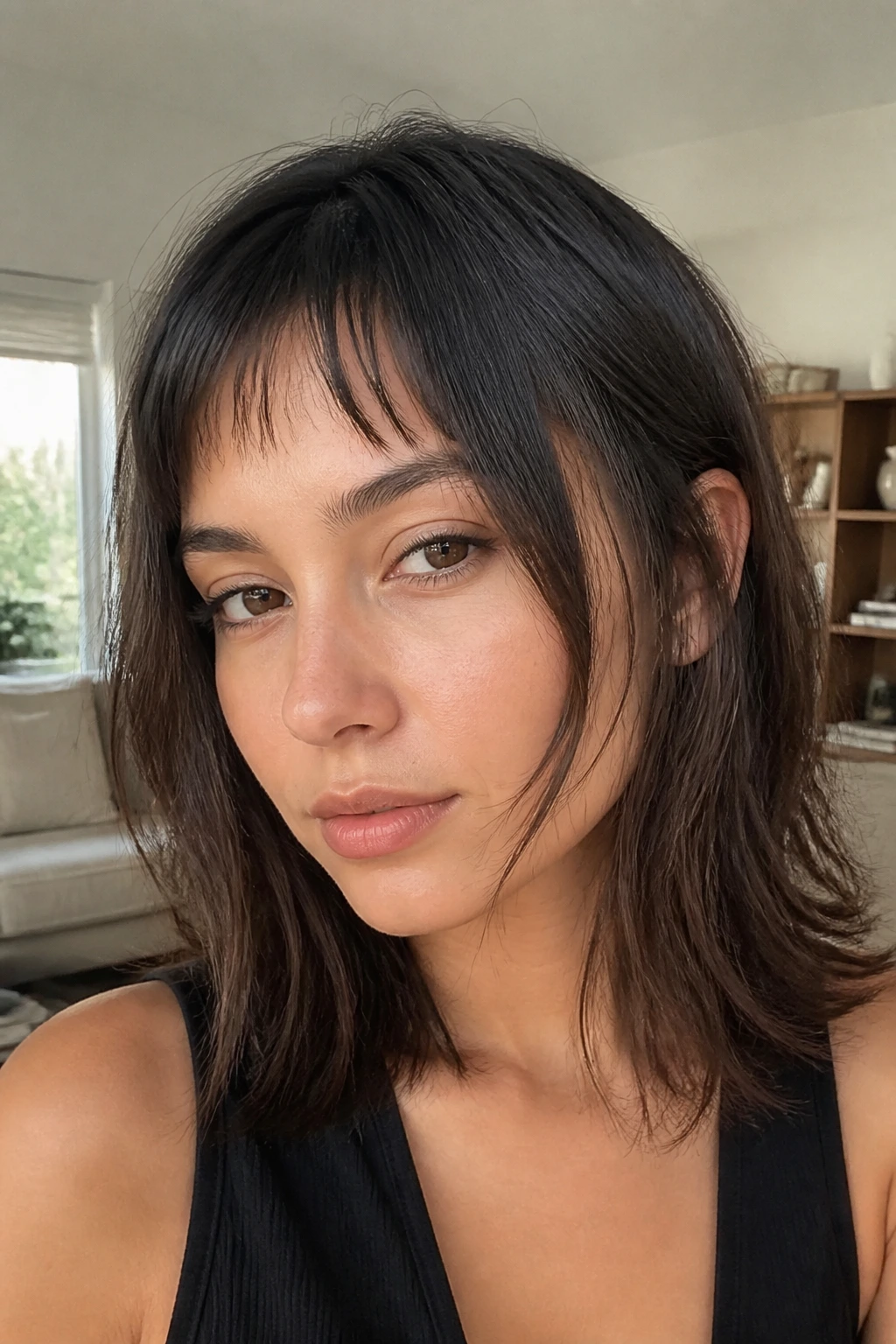
Tiny fringe only works when the rest of the haircut gives it room. On fine hair, that means keeping the sides longer and the front pieces soft enough to balance the short bang. Done right, the baby fringe brings the eye up, while the long sides stop the cut from feeling top-heavy.
I wouldn’t push this shape if the hairline is sparse or the forehead is very short. It needs some openness around it. But if the hair is fine, straight, and easy to control, a barely-there bang can look sharp without swallowing the face.
The key is restraint. Keep the bangs sparse, not blocky. If they look too full, the whole cut loses the little bit of air it needs.
14. Curved Shag Bob with Chin-Frame Sweep

A bob length gives fine hair a useful anchor. Add shag texture and a curved fringe, and the cut starts bending around the face instead of hanging like one flat sheet. The chin-frame sweep is what keeps it from reading too short at the front.
This shape is kind to longer faces and heart-shaped faces because the curve widens the area around the cheeks while the chin pieces balance the lower half. I like that it still has enough perimeter weight to behave on a windy day. Shorter layers alone would not do that.
If you blow-dry it, direct the fringe forward first, then bend the face frame away from the cheeks. That little S-shape gives the bob a better silhouette.
15. Tousled Crop with Broken-Up Fringe

A tousled crop is the haircut I’d pick for hair that looks best with texture and hates commitment. The fringe is intentionally broken up, the sides stay close, and the top carries just enough air to keep the shape from collapsing. Fine hair often looks fuller in this format because there’s less length dragging everything down.
This cut does ask for a little product. Nothing heavy. A pea-sized amount of paste or a dry texture spray through the crown is usually enough to separate the pieces. The broken fringe keeps the front soft, which matters because a compact crop can turn severe fast if the line is too clean.
A small detail that helps
Keep the fringe a touch longer at the corners than in the center. That makes the crop easier to wear and gives the face a softer edge.
16. Fluffed-Out Lob Shag with Short Front Layers

If you’re not ready to go short-short, this is the sensible compromise. The lob keeps enough length to hold weight, and the short front layers lift the face without making the whole head look over-layered. Fine hair tends to like this balance because the ends still feel substantial.
The front layers are doing a lot here. They should begin high enough to show movement but not so high that the side lengths go wispy. A little fluff at the crown is fine; a lot of fragmentation is not. That’s where people miss the point and cut too much off.
I’d style this with a loose blowout brush and then rake a small amount of texture spray through the mid-lengths. Leave the ends a bit piecey. They look better that way.
17. Cowlick-Calming Bangs with Tapered Sides
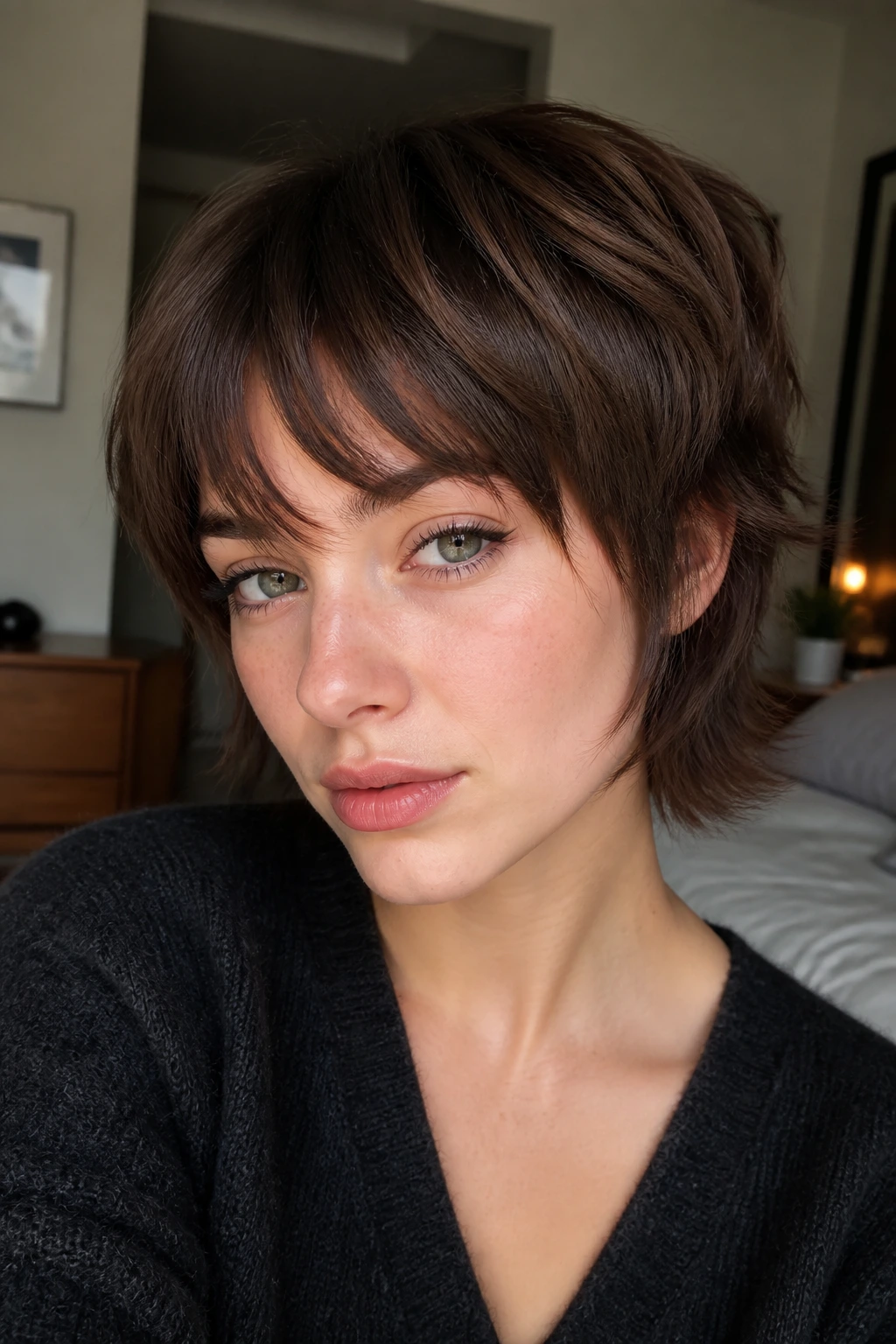
Cowlicks are stubborn. Pretending otherwise wastes time and leads to bad bangs. This version works with the cowlick instead of trying to flatten it into obedience. The bangs are cut with a slight offset, then tapered softly into the sides so the front can settle where it wants.
That offset is what keeps the hair from splitting in an obvious line. On fine hair, a cowlick can make the front look thinner than it is because the strands refuse to sit together. A tapered side piece helps disguise that break and makes the shape feel deliberate.
What to ask for
- Dry cutting around the hairline
- A fringe that follows your natural fall, not a perfect center line
- Soft side tapers rather than a hard temple point
18. Razor-Cut Bob Shag with Airy Ends
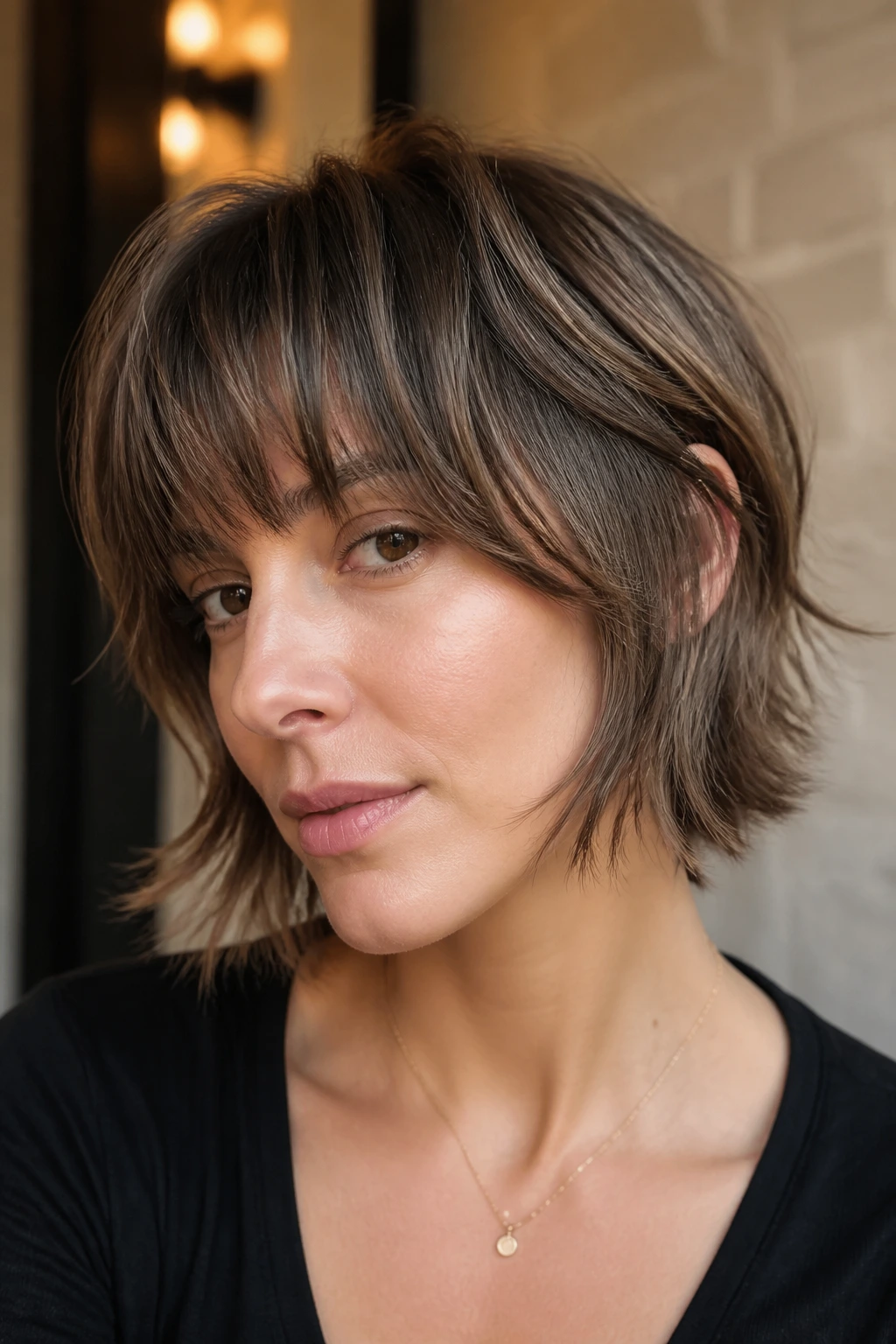
A one-length bob on fine hair can look sleek, but it can also look thin if the ends are too neat. The razor-cut bob shag solves that by keeping the perimeter from reading heavy while still preserving enough shape to feel like a bob. The bangs stay airy, and the ends look softer when they move.
This is one of my favorite versions for straight fine hair because it has structure. Not a lot of fluff. Structure. The razor work lets the front and ends sit together without a sharp shelf line, which is where a lot of bob-shag hybrids go wrong.
If the hair is prone to frizz, keep the razor touch light and finish with a flexible spray. Too much roughness at the ends can make fine strands look frayed instead of textured.
19. Soft Split Fringe with Lift at the Crown
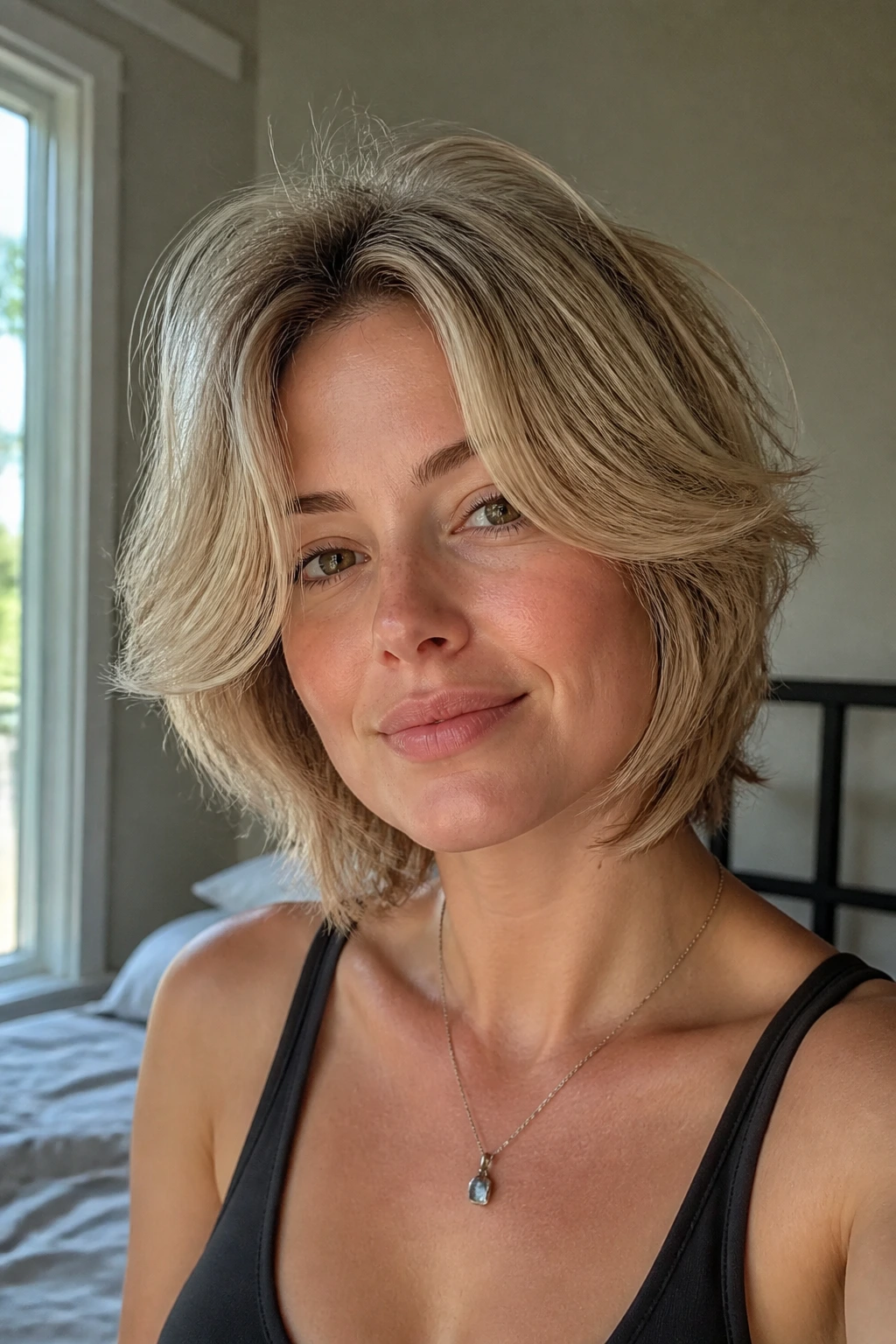
A middle split can be a gift on fine hair when the crown is lifted properly. The split opens the face, the crown lift gives the style some height, and the face-framing layers can fall in a clean line down the cheekbones. It’s a soft shape, but it doesn’t vanish.
This cut is useful for people who want bangs that are present without sitting on the forehead all day. The split makes the front easier to wear, especially if you tend to touch your bangs or push them aside. Fine hair likes that kind of flexibility because it lets the hair change shape without looking broken.
A light mousse at the roots and a quick dry with the head tipped forward usually does enough. Don’t overthink it. The shape does the work.
20. Bouncy Wave Shag with S-Curve Face Frames

If your fine hair has even a little wave, do not cut it into obedience. Let the wave show. This shag leaves enough movement through the layers for the S-curve to appear, then uses the face-framing pieces to guide that wave around the cheeks and jaw.
The best part is that wave gives the cut a kind of built-in body. Straight hair has to fake that with styling; wavier fine hair gets to keep it. The trick is not to overload the cut with too many short layers, because then the wave breaks up into frizz instead of bend.
Scrunch in mousse, diffuse only until the roots are set, then stop. If you keep drying until every strand is rigid, the bounce disappears.
21. Recession-Friendly Petite Fringe with Side Tapers

This version is worth talking about because not every face frame needs to be dramatic. A petite fringe with side tapers can soften a hairline that feels sparse at the temples without making the front look heavy. The bang is small on purpose, and the side pieces do the quiet work of blending everything together.
The shape should stay soft around the corners. Hard angles draw attention to the exact spots you’re trying to soften. A few airy pieces at the sides, a little length at the temples, and a fringe that lands just above the brow can make the whole hairline feel more balanced.
I’d keep styling light here. A touch of dry shampoo at the roots, a quick brush-through, and maybe one bend with a flat iron if the fringe wants to split.
22. Layered Halo Shag with Face-Opening Sides
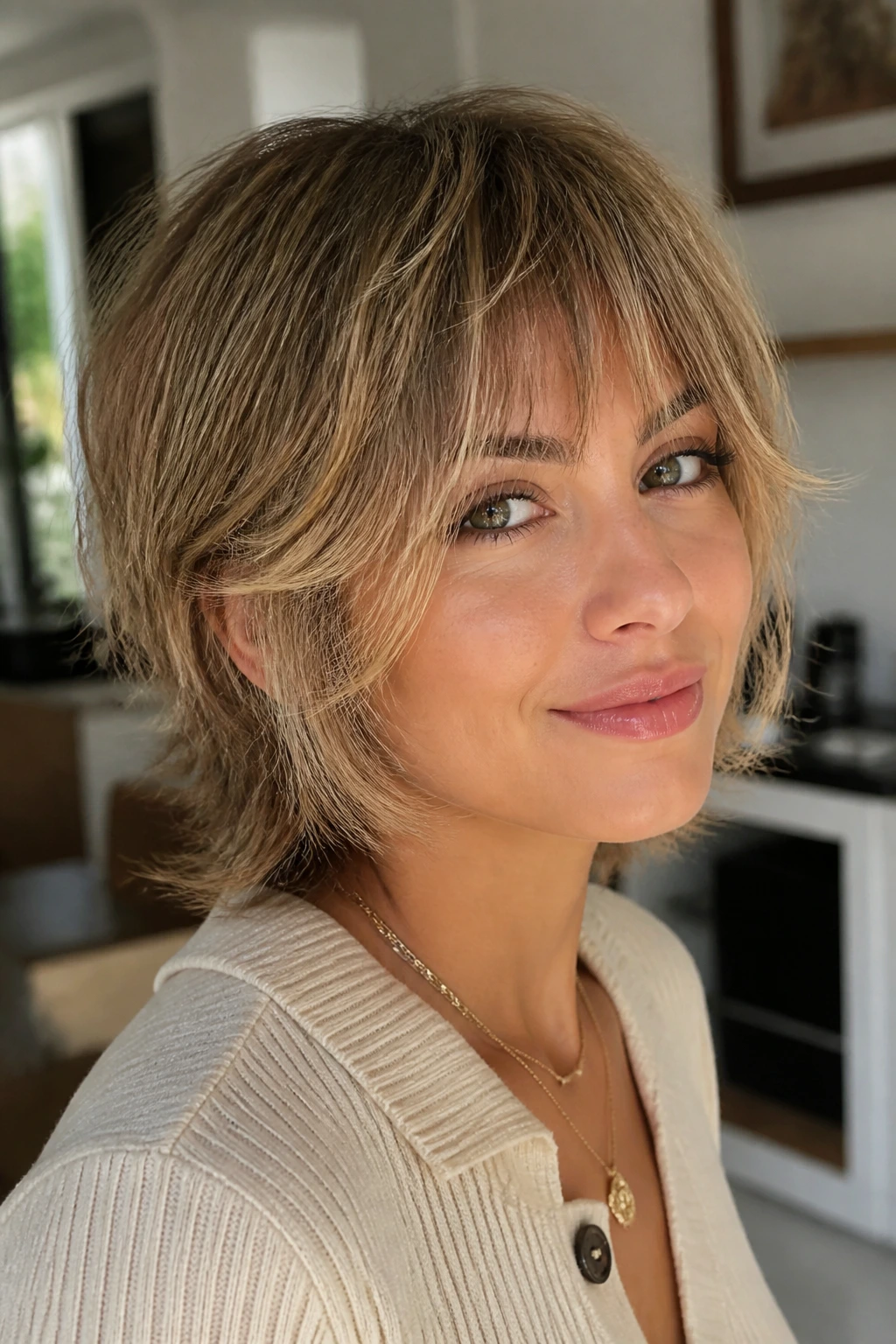
This is the most atmospheric version of the bunch. Layers circle the head with enough softness to create lift, while the face-opening sides keep the front from closing in. On fine hair, that halo effect can be a lifesaver because it gives body to the top and movement to the edges at the same time.
The cut works best when the layers are varied, not identical. Some pieces need to sit a little shorter near the crown; others need to stay longer around the cheeks and jaw. That unevenness creates the sense of fullness people are usually chasing when they say they want “volume.”
It’s also one of the easier shags to grow out. The layers don’t all land in the same place, so the shape softens instead of collapsing into one awkward line.
What to Tell Your Stylist When the Mirror Is Open
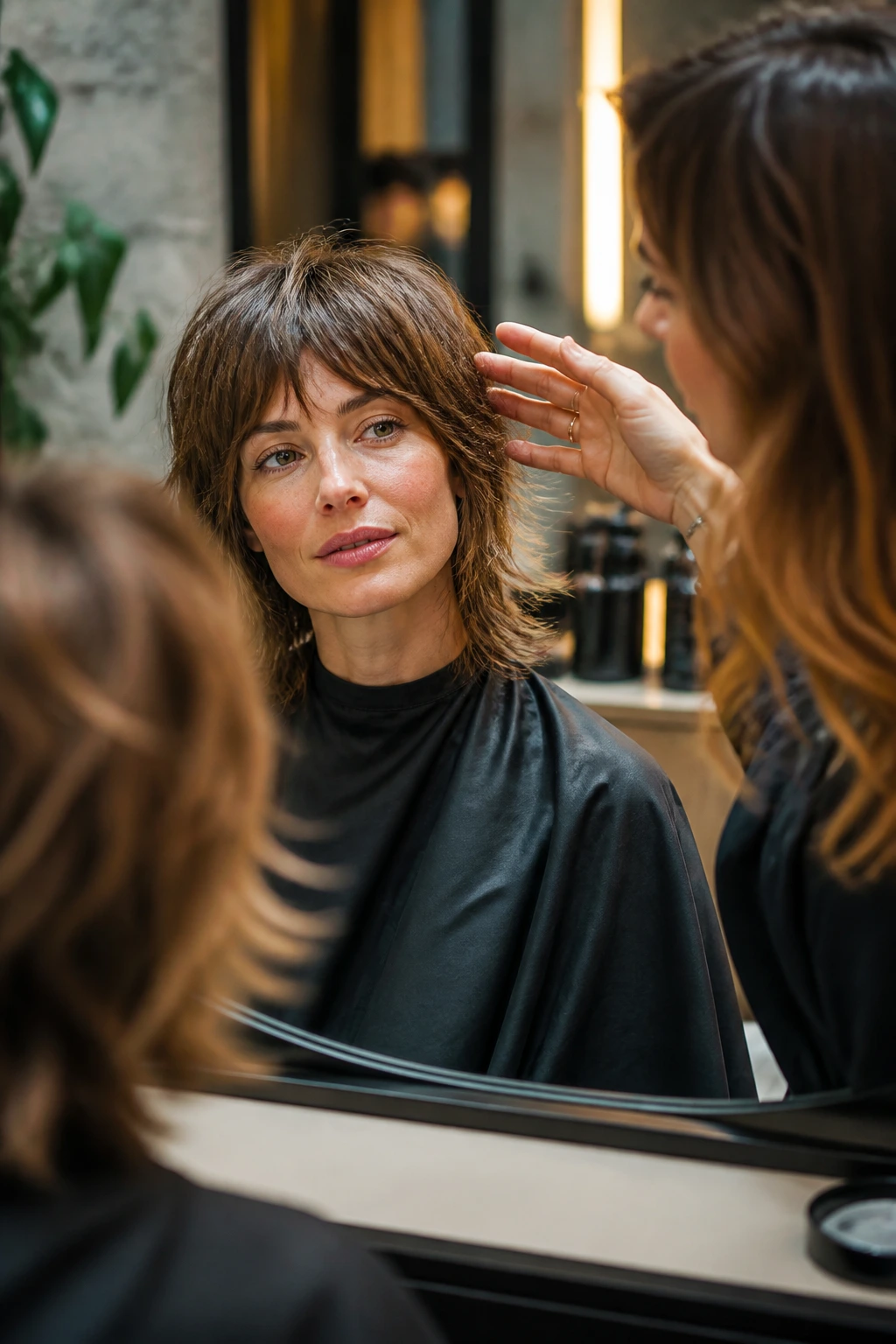
The best shaggy bangs are usually built in the consultation, not in the last five snips. Fine hair needs the haircut to respect how it naturally falls, so the conversation matters more than people admit.
Start with your hairline and part. Point out any cowlicks, any temple thinning, any side that always falls flatter than the other. If you wear glasses, bring them and wear them while you look in the mirror. A fringe that looks fine without frames can sit in the wrong spot once the glasses are on.
Ask for point cutting or soft slicing through the fringe instead of heavy thinning shears through the ends. On fine hair, thinning shears can leave little holes that show up the moment the hair dries. Also ask where the face-framing layers should begin — cheekbone, lip, or jaw — because that one decision changes how much density the front keeps.
One more thing. Say how you actually style your hair. If you air-dry most days, do not let anyone sell you a cut that only behaves after a forty-minute blowout. That’s a salon fantasy, and fine hair is usually the first thing to expose it.
Styling Tools That Earn Their Space on the Counter
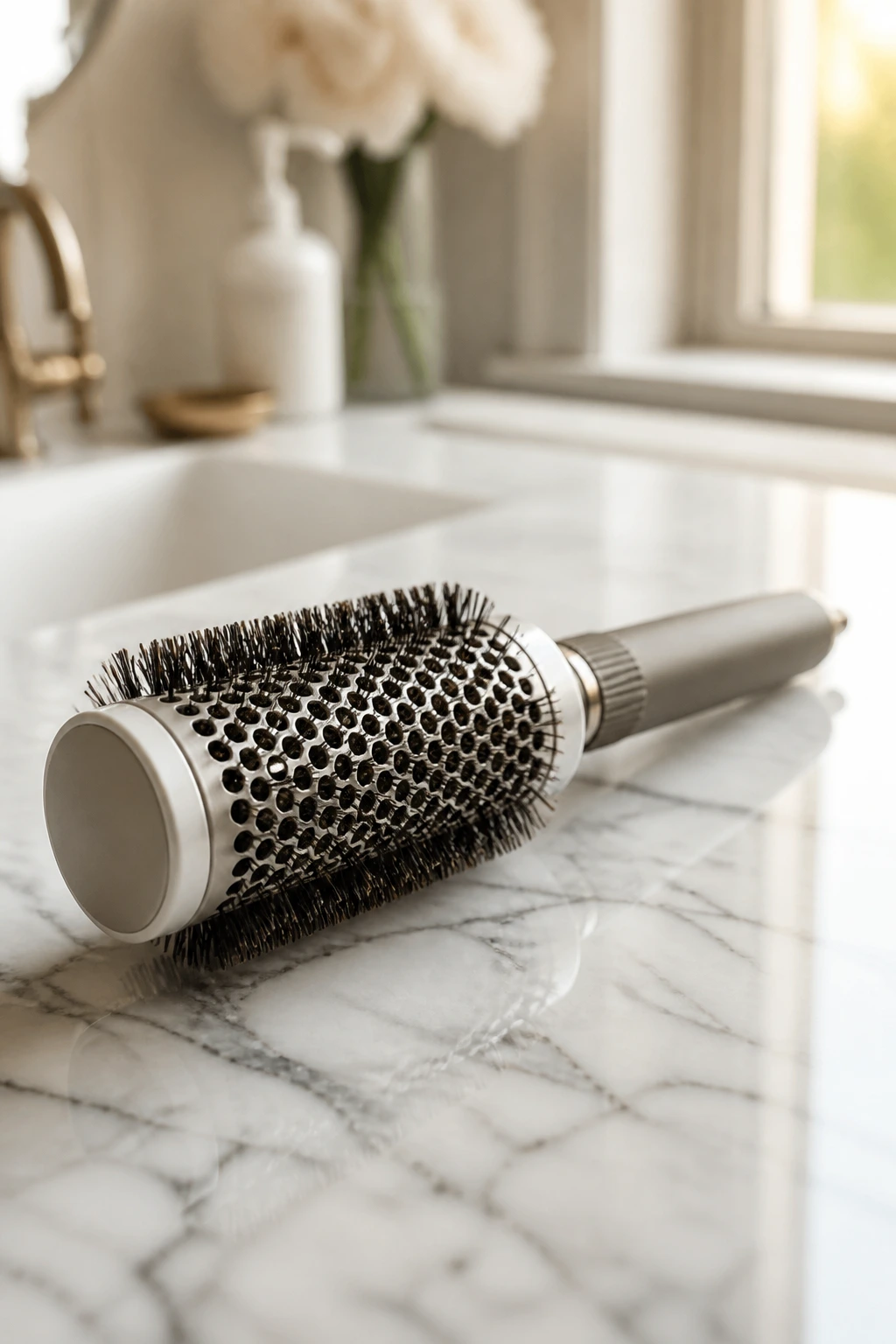
You do not need a crowded bathroom shelf. You need a few specific tools that make short shaggy bangs and face-framing layers easier to steer.
- 1-inch round brush: Small enough to shape the fringe and the front pieces without making them too curled.
- Blow dryer with a concentrator nozzle: Keeps airflow directed, which matters when fine hair is trying to drift flat.
- Vent brush or small paddle brush: Handy for rough-drying the crown and separating the fringe before the final pass.
- Lightweight mousse: Adds grip at the root without turning the hair gummy.
- Dry texture spray: Good for breaking up the ends and keeping the shag piecey on day two.
- Flexible-hold hairspray: Holds the bend without freezing the fringe into a shell.
- Small flat iron: Useful for a quick curve at the face frame or a stubborn cowlick near the bangs.
- Clips: Simple sectioning clips save time when you’re trying to dry the front and crown separately.
How to Style Short Shaggy Bangs Without Flattening Them

The enemy is not styling. It’s overstyling. Fine hair can go from airy to limp in one heavy-handed pass with the wrong cream or too much heat.
Root lift: Work a small amount of lightweight mousse into damp roots at the front and crown, then blow-dry the hair in the opposite direction of how it normally falls. That little push lifts the base without roughing up the whole head. If the roots dry flat, the fringe will follow them down.
Fringe bend: Use a round brush or your fingers to direct the bangs forward first, then slightly away from the face at the ends. You want a soft bend, not a curl. If the fringe hits the forehead like a sheet, separate it with your fingertips while it’s still warm.
Texture: Once the hair is dry, mist dry texture spray through the mid-lengths and pinch the ends into small pieces. Don’t spray the roots too hard or they can feel dusty. The goal is separation, not stiffness.
Day-two reset: Mist the front lightly with water, re-shape the fringe with the brush, and use a touch of dry shampoo at the roots if they’ve gone soft. Fine hair rarely needs more product on day two; it usually needs less.
Keeping the Shape Between Haircuts
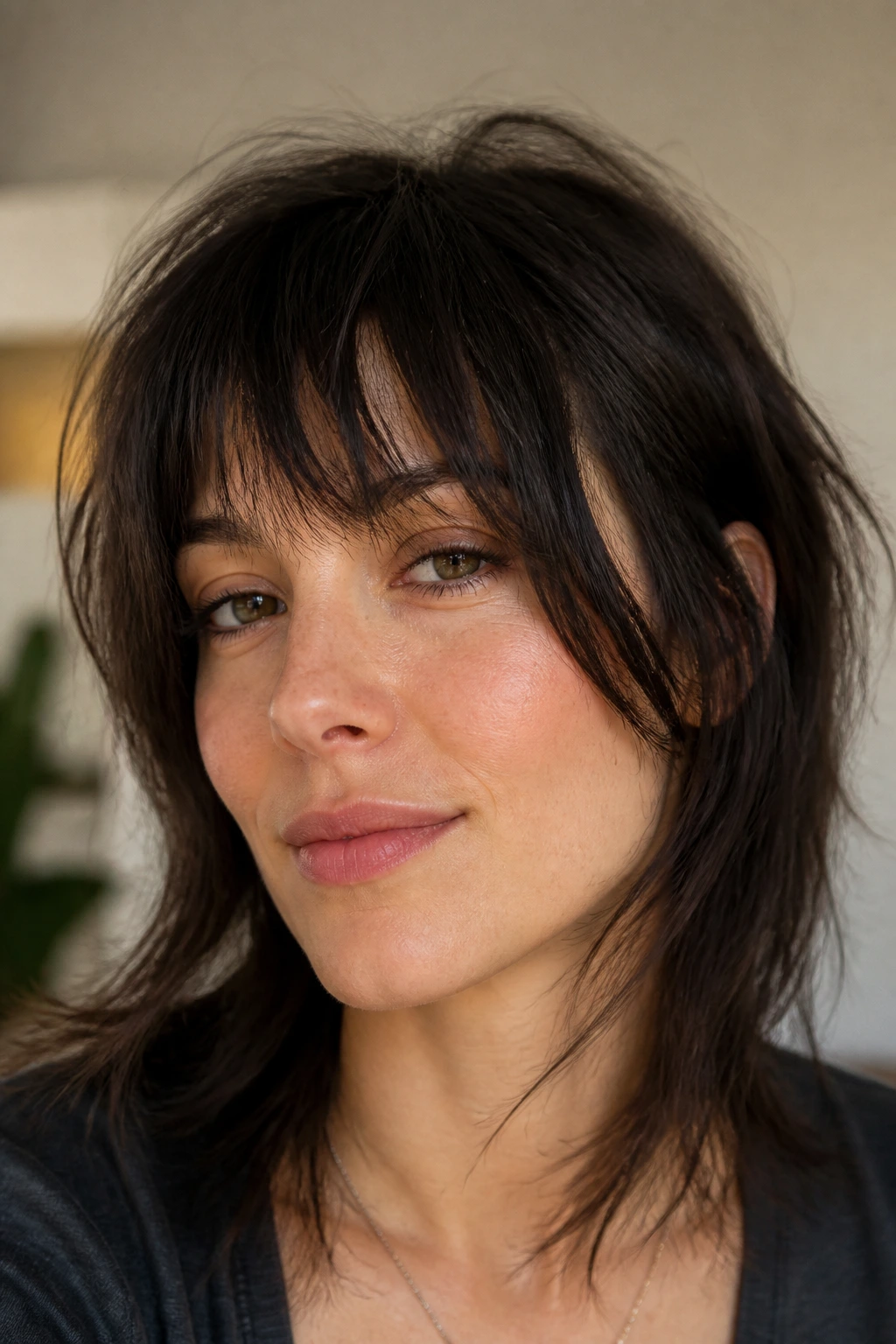
Short shaggy bangs do not stay neat for long, and that’s part of the charm. Still, there’s a line between soft grow-out and shape loss. Fine hair shows that line quickly.
Bangs usually need a trim every 3 to 5 weeks if you want the fringe to keep landing in the right spot. Face-framing layers can often go 6 to 8 weeks before they need a dusting, especially if the cut is meant to look slightly broken up. If your hair grows fast or the fringe starts touching your lashes too soon, shorten that schedule.
Wash the front section separately if it gets oily faster than the rest. Bangs on fine hair tend to collect skin oil and styling residue, which is why they suddenly look stringy even when the rest of the head still looks fine. A quick sink wash or a tiny bit of shampoo at the forehead can reset them.
If the cut starts to feel heavy, do not pile on more product. That just glues the strands together. Clarifying shampoo every couple of weeks can clear out dry shampoo and texture spray before they turn the fringe dull. A clean fringe bends better. It always does.
Common Mistakes That Make Fine Hair Look Thinner
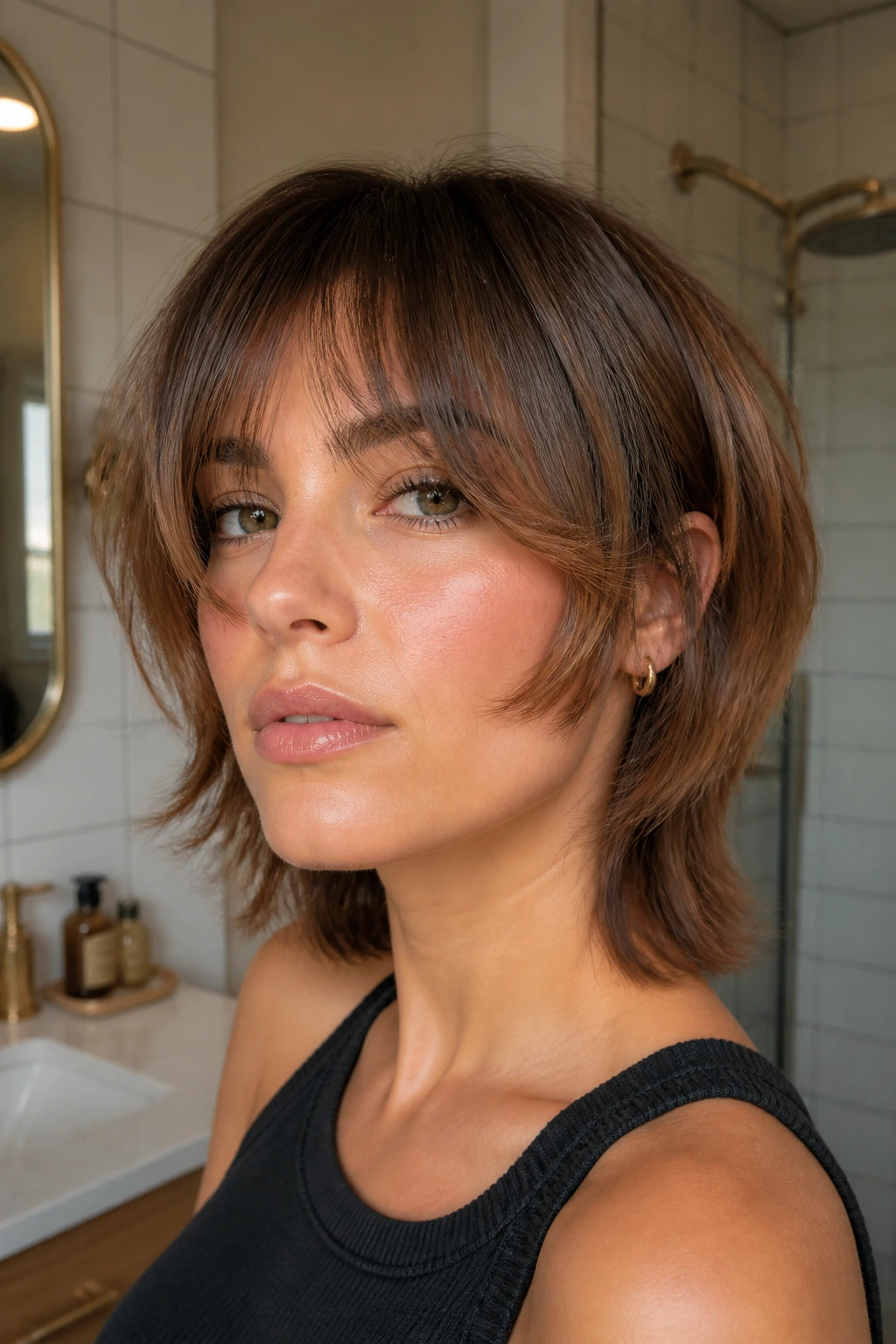
Cutting the fringe too blunt: A heavy straight line sounds flattering in theory, then it starts separating into thin strings by day two. The fix is softer ends and a little internal break in the shape.
Taking too much out of the crown: Short layers at the top can create lift, but too much removal leaves the hair fluffy above and skinny below. Ask for softness near the crown, not a shredded top.
Using creamy products at the root: Thick leave-ins and oils weigh fine hair down fast. Keep them on the ends, and choose mousse, spray, or powder near the scalp instead.
Ignoring the cowlick: Fine hair with a stubborn cowlick will show it. If the fringe splits where the hair grows naturally, the answer is to shift the part or soften the bang line, not to keep cutting harder against it.
Waiting too long for a trim: Shaggy bangs look charming when they’re a little grown out. They look tired when the shortest pieces no longer connect to the face frame. A small trim on time beats a dramatic rescue later.
Variations and Adaptations to Try
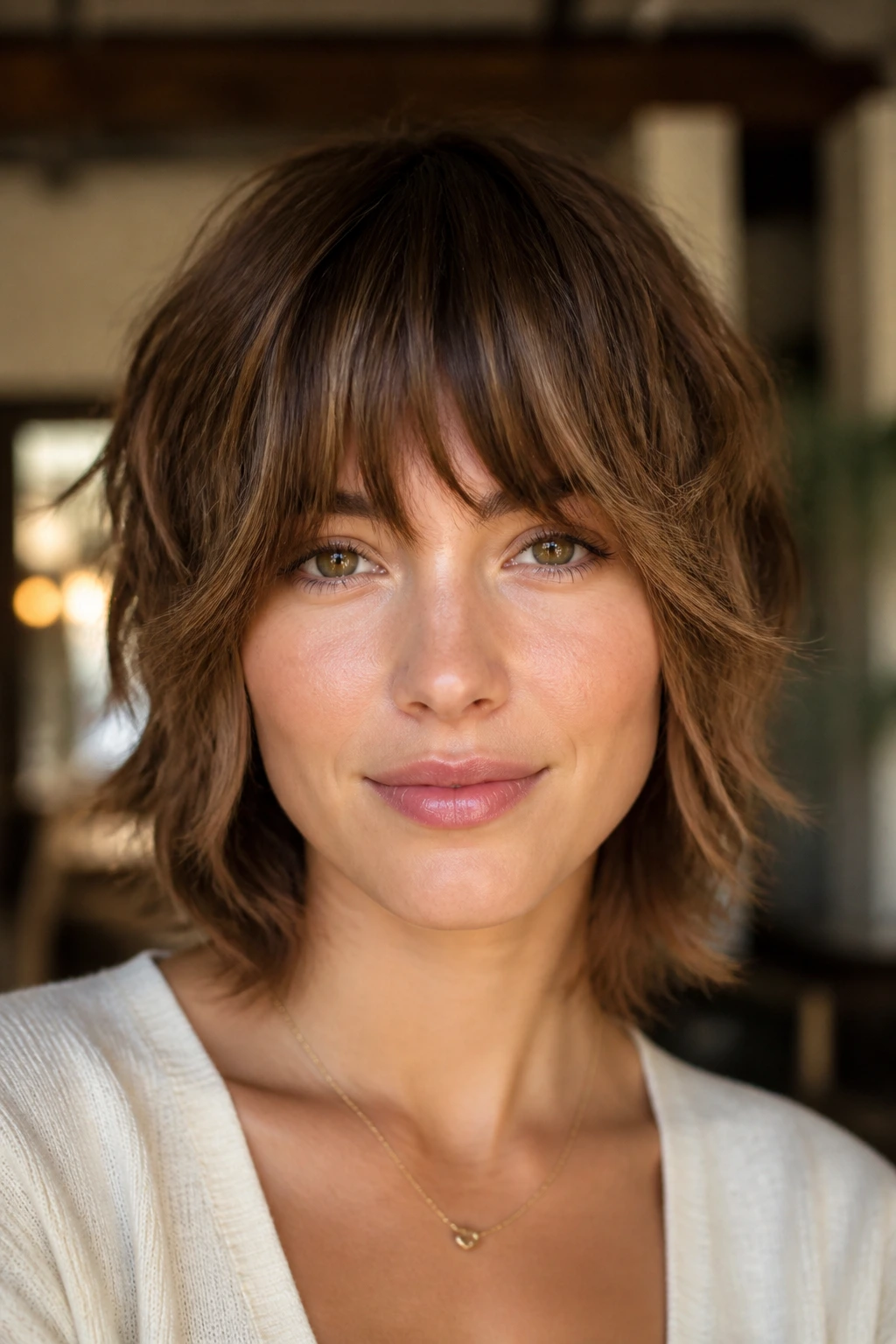
The Softer Office Version: Keep the fringe at brow level and let the face-framing layers start at the cheekbone. It reads polished enough for a neat setting, but the cut still moves when you turn your head.
The Air-Dry Wave Version: Leave the front a touch longer and use mousse plus scrunching instead of a round brush. This works well if your hair has any natural wave and you want the shag to do more of the work for you.
The Glasses-First Version: Lift the center of the fringe slightly and keep the temple pieces short enough to stay above your frames. It avoids the constant lens brush-off that ruins an otherwise good cut.
The Edgier Wolf Shift: Push the crown shorter and leave more length through the nape. The shape gets sharper, and fine hair often looks fuller because the contrast creates a stronger silhouette.
The Grow-Out Friendly Version: Start the fringe a little longer and keep the side pieces connected. If you’re not ready for frequent trims, this is the one that softens instead of stalling.
Questions People Ask Before They Cut the Fringe

Will short shaggy bangs work on very fine, straight hair?
Yes, if the cut keeps some weight in the center and uses soft texture at the edges. Straight fine hair usually needs a little product and a careful blow-dry, but the shape can absolutely hold.
What if I have a strong cowlick at the front?
Do not try to bully it into a straight fringe. A side-swept or softly split version usually behaves better, especially if the stylist cuts the bangs dry and follows the natural fall.
Do these cuts work with glasses?
They can, and some versions work better than others. Keep the fringe above the frame line and ask for temple pieces that clear the glasses rather than sitting right on top of them.
How often will I need a trim?
Bangs usually need attention every few weeks, while the face-framing layers can go longer. If the shortest pieces stop touching the rest of the cut, the shape starts to drift.
Should I ask for razor cutting or scissors?
Either can work, but on very fine hair the finish matters more than the tool. A light razor or point cutting gives softness; a heavy razored pass can make the ends look frayed if the stylist goes too far.
Can I air-dry this cut?
Yes, though the result changes by texture. Wavier hair often looks best air-dried with a little mousse, while very straight fine hair usually needs a quick root lift at the front to keep the bangs from splitting.
What if I hate the bangs after a week?
That usually means the fringe is too short, too heavy, or cut against your natural part. A small reshaping can fix a lot of that, and in a pinch you can sweep the front aside while the layers grow into the face.
The Cut That Keeps Moving

Short shaggy bangs with face-framing layers work because they solve the thing fine hair struggles with most: visible weight without visible heaviness. The haircut looks light, but it still has a shape. That’s the sweet spot.
If you bring one thing to the salon, bring your habits. Tell the stylist how your hair dries, where it splits, whether you wear glasses, and how often you’re willing to trim the fringe. That’s the real blueprint. The right cut for fine hair is never just about the photo — it’s about what the hair will do after you leave the chair.
And when the shape is right, these cuts keep giving back. A little bend at the brow, a few cheekbone pieces, a soft lift at the crown. Not loud. Just enough.