



Thin hair gets bossy at chin length. Leave it a little too long, and the ends start looking stringy; cut it too short, and you can lose the soft movement that makes loose curls feel airy instead of overworked. The sweet spot sits right around the jawline, where the shape can hold, the curls can sit on top of each other, and the whole style gets a bit more visual weight without asking your hair to behave like it’s twice as thick.
That’s why chin-length hairstyles for thin hair with loose curls keep coming back. They don’t rely on volume that disappears by lunch. They use line, placement, and a little bend at the ends to make the hair read fuller from the front, from the side, and in that unforgiving mirror view with the overhead bathroom light. Fine hair and low-density hair are not the same thing, either, and the best cuts respect that difference. One wants lightweight products and clean edges. The other needs a shape that hides scalp more cleverly.
A good chin-length style can do all of that at once. The 22 looks below move from polished to undone, from blunt to feathered, from soft French-bob energy to a more modern, piecey wave. Some of them are barely any work at all. Others need a curling iron, a clip or two, and about ten deliberate minutes. The point isn’t to chase volume for its own sake. It’s to build a shape that makes thin hair look awake.
Why These Chin-Length Cuts Earn Their Keep

- They keep the ends close together: Thin hair always looks fuller when the perimeter lands in one strong line instead of a wispy curtain.
- Loose curls add width where it matters: A soft bend around the cheeks and jaw makes the whole head look broader without piling on product.
- The jawline does some of the styling for you: Chin length gives the hair a natural stop, which keeps it from hanging flat against the neck.
- You can fake density with placement: A side part, tucked side, or a few face-framing pieces changes the way the eye reads the cut.
- The style survives real life better: These shapes usually hold up better than longer waves, especially if your hair goes limp by midday.
- They work with simple tools: A 1-inch iron, a light mousse, and a soft-hold spray are often enough.
1. Soft Blunt Chin Bob
A blunt edge does a lot of quiet work here. When thin hair lands in one clean line at the chin, the ends sit close together, and that density reads before anyone notices strand thickness. The loose curls should stay soft and mostly mid-length, not fully wrapped spirals that break the shape into pieces.
Why it helps thin hair
Keep the perimeter blunt and the internal layering minimal. That gives you the heaviest-looking outline with the least fuss. If you curl, use a 1-inch iron and leave the last inch out so the ends stay tidy instead of frayed.
- Best for fine, straight, or slightly wavy hair
- Works well with a center part
- Needs only light root lift, not big volume
- Looks best when the curl pattern is loose and even
Strong opinion: if the bottom line starts looking see-through, the cut needs a trim before it needs more product.
2. Deep Side-Part Lift Bob
This is the cut I reach for when one side of the head always lies flatter than the other. A deep side part creates instant height at the crown, then the longer sweep across the forehead draws the eye diagonally instead of straight down. Thin hair loves that little bit of visual trickery.
The loose curls should be directed away from the face on the heavier side, then brushed lightly so they fall into a soft wave rather than a ringlet. Pin the lighter side at the root for five minutes while it cools. That tiny bit of clip-set memory can make the part stay up longer than a blow-dry alone.
3. French Bob with Wispy Fringe

The French bob has attitude, but it’s not heavy about it. At chin length, with a wispy fringe that just skims the forehead, the cut gives thin hair a lived-in shape without needing a lot of volume at the crown. The fringe matters here: it should feel airy, not dense or helmet-like.
Best for people who want softness around the face
The fringe pulls attention upward, while the chin line keeps the rest of the cut tidy. I like this version on thin hair that has some bend but not much body. If your front hair is sparse, keep the fringe a touch longer so it separates instead of splitting into tiny pieces.
Quick note: don’t overload the bangs with dry shampoo. They’ll go chalky fast.
4. Angled Chin Bob
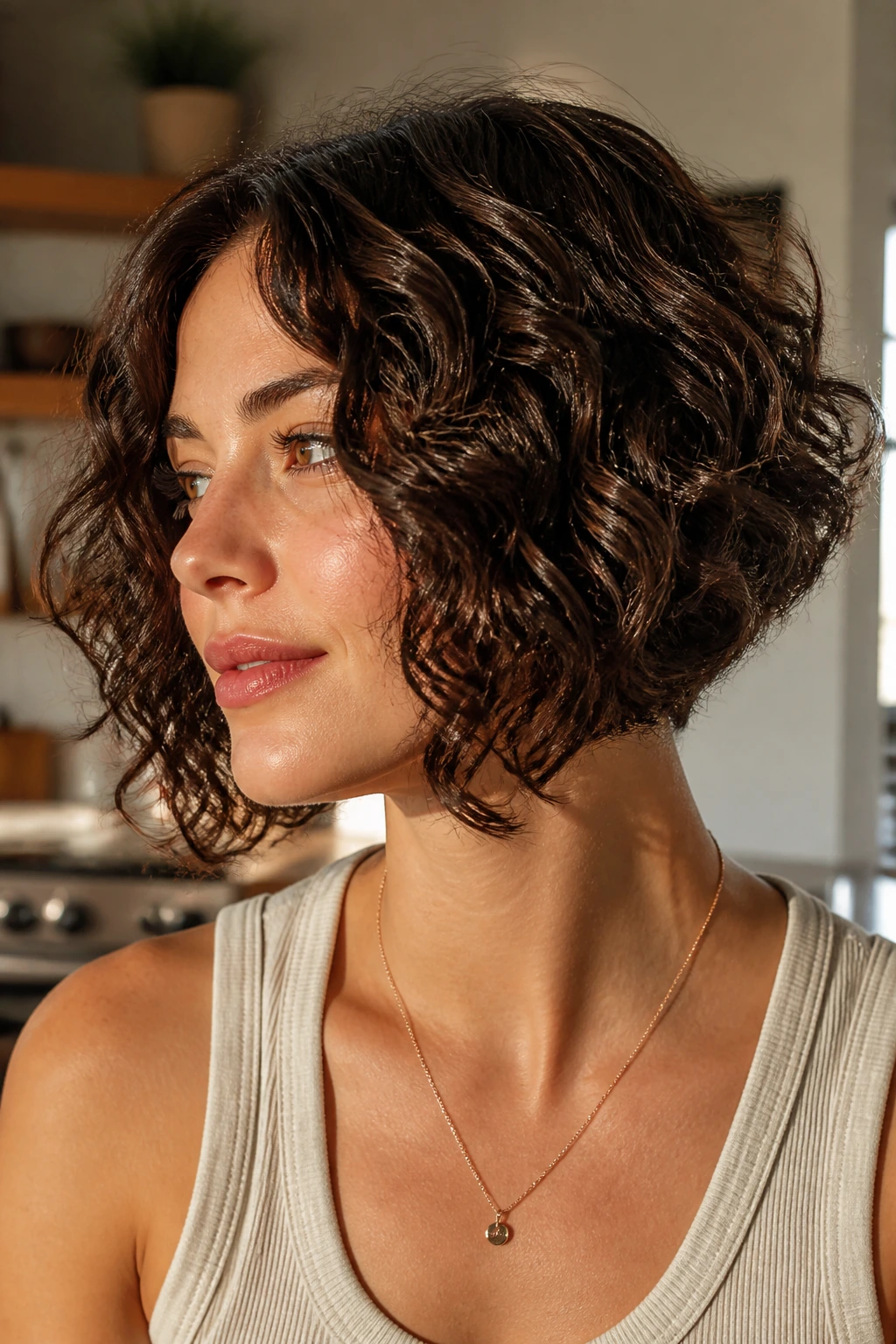
An angle changes everything. When the front pieces graze the chin a little longer than the back, the eye reads movement and shape, not just width. That forward slope is useful on thin hair because it creates the illusion that there’s more hair coming toward the face.
The loose curls should follow the angle, not fight it. Curl the front sections away from the face and let the back sit softer and flatter. If you want this to look polished instead of puffy, smooth the top layer with a round brush and let the ends bend under by half an inch.
5. Tucked-Behind-the-Ear Bob
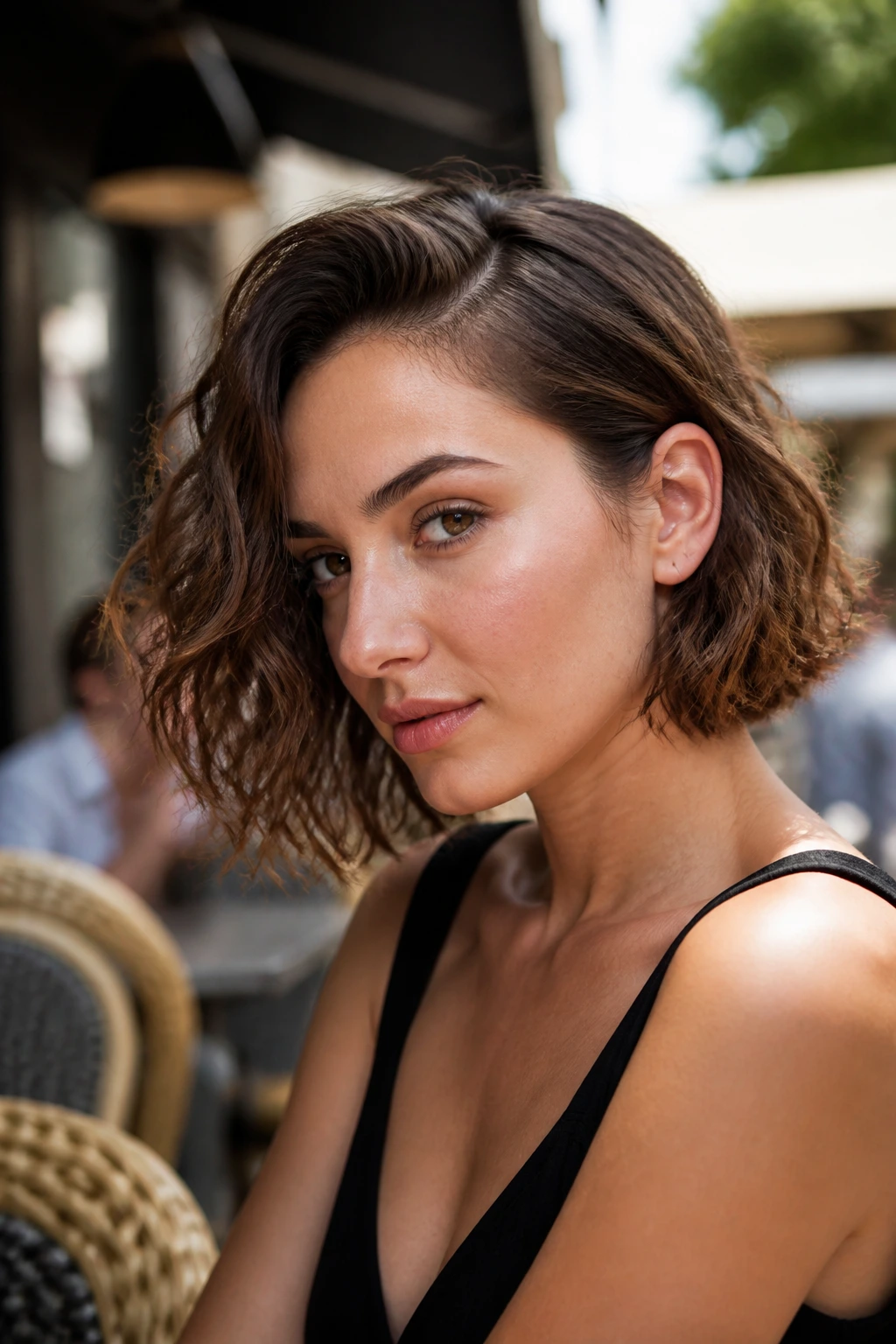
This one feels simple, but it’s sly. One side gets tucked behind the ear, the other side keeps its loose curve, and the asymmetry makes thin hair look deliberate instead of flat. The tucked side exposes the cheekbone and gives you a little lift at the root where hair often collapses.
It works especially well with a small hoop earring or a slim barrette. The styling is half the point. Let the front pieces fall forward first, then tuck only after the hair has cooled. If you tuck too early, the bend disappears and the style can look like it was forgotten halfway through.
6. Piecey Layered Bob
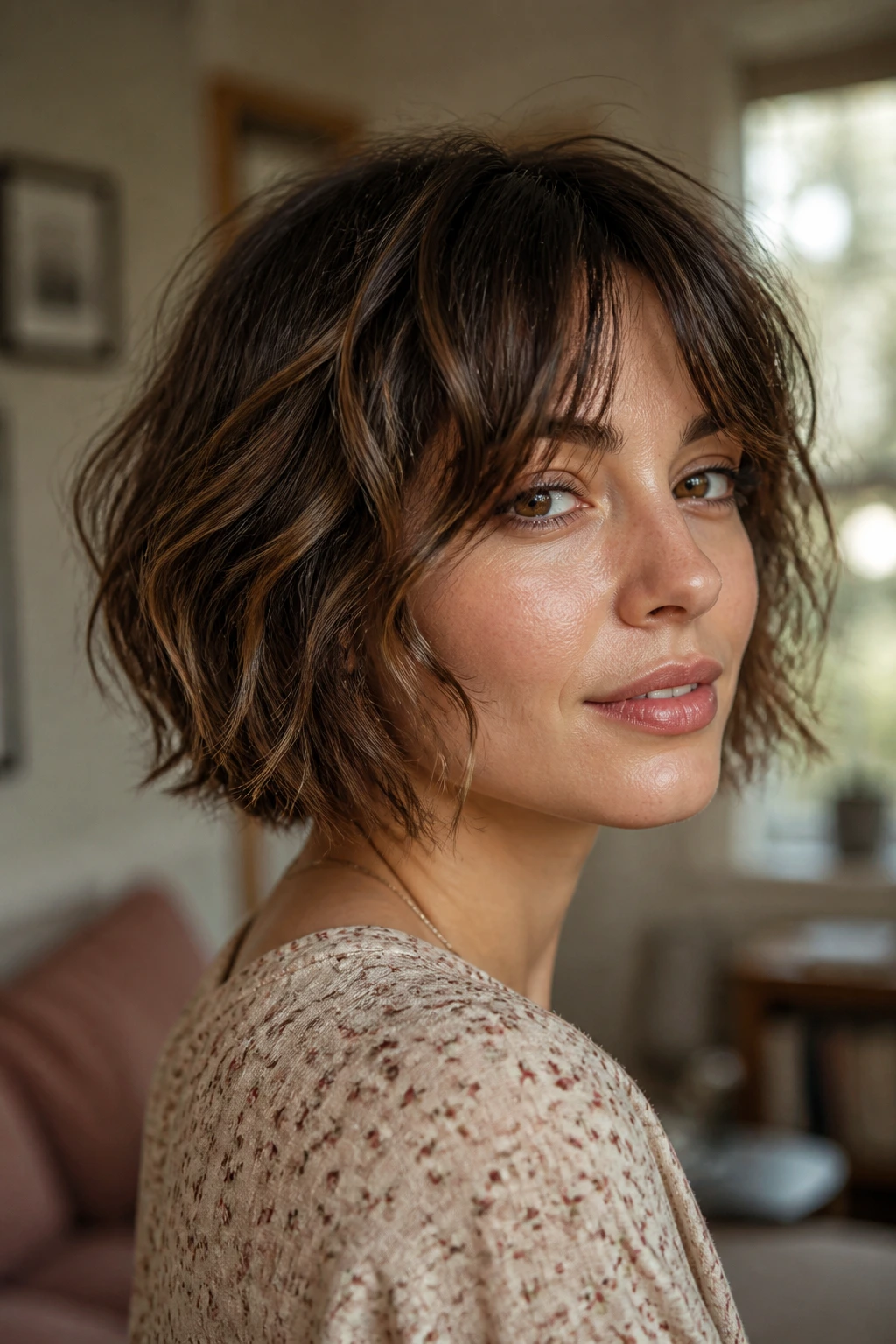
Too many layers on thin hair is a bad bargain. Piecey layers are different. They add separation, not hollowness, and they keep the outline around the chin while letting a few sections move on their own. That makes the hair look fuller because the eye sees texture instead of a single flat sheet.
What makes this one different
Use a light mousse at the roots and a tiny bit of texture spray at the ends. Then twist random sections around a curling wand, leaving the ends loose. You want a few separated bends, not a perfect wave set.
- Best for hair that goes limp fast
- Good if your strands are fine but not sparse
- Works with side or center parts
- Looks better a little messy than over-brushed
7. Airy Curly Shag Bob

A shag at chin length can be gorgeous on thin hair, but the layers need to be handled with a light hand. The goal is air, not gaps. Soft layers around the crown and cheekbones give the curls room to lift, while the chin-length perimeter keeps the shape grounded.
Use this when you want movement without a hard line. A diffuser on low heat helps the top stay fluffy without blasting the curls into a frizzy halo. I’d keep the curl pattern loose and separated, because a shag with tiny, tight curls can start looking busy very fast.
8. Curtain Bang Bob
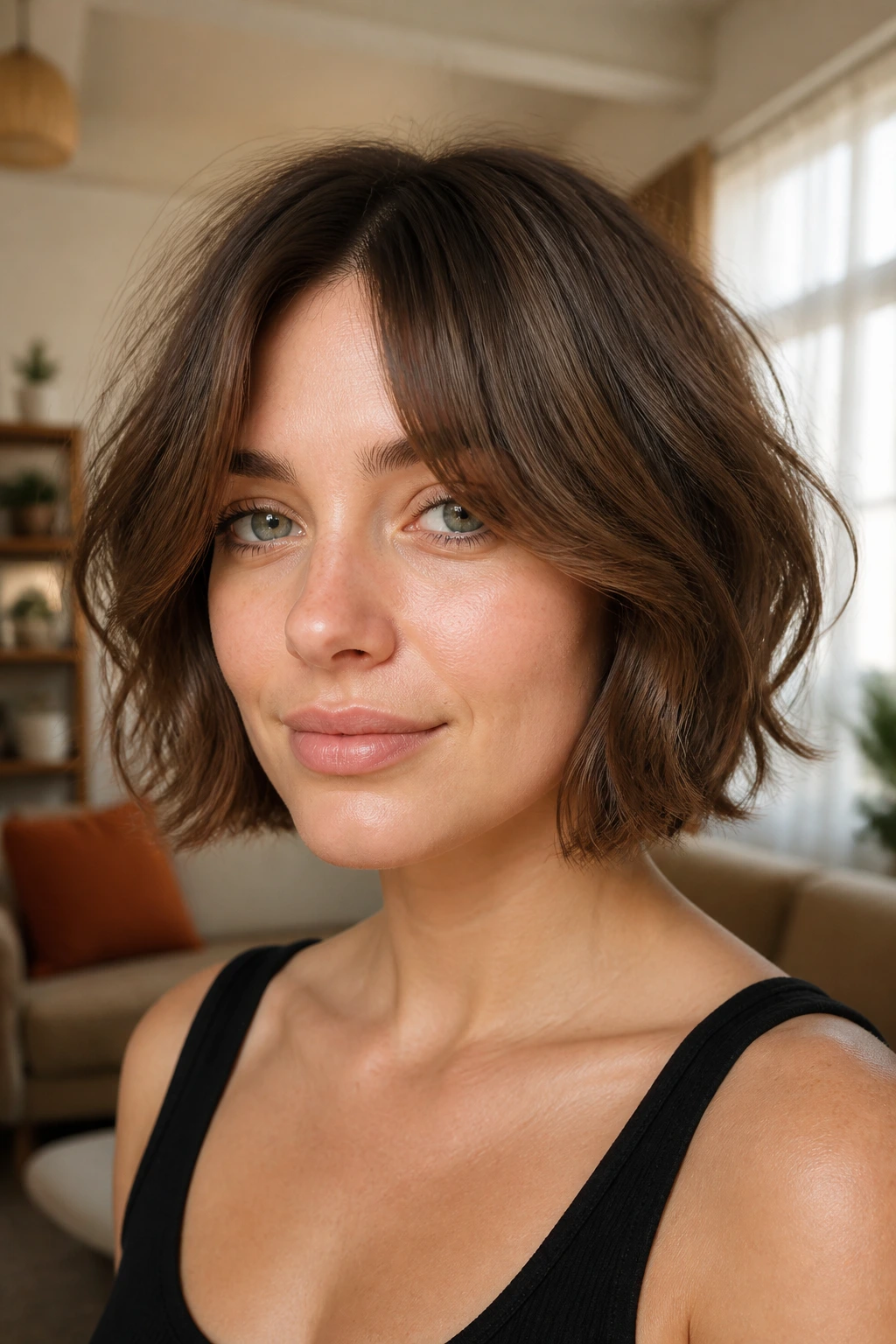
Curtain bangs can do what a heavy fringe cannot: they frame the face without swallowing it. On thin hair, they work best when they start a little lower, around the nose or cheekbone, and split softly in the middle so each side has room to fall. The rest of the bob stays at the chin, loose and bendy.
This style is useful if your forehead feels long or if you want the cut to look fuller around the front. The bangs create a second layer of visual interest, which gives the whole style more presence. Just don’t make them too short. Short curtain bangs can spike out and expose more scalp than you want.
9. Rounded Bubble Bob
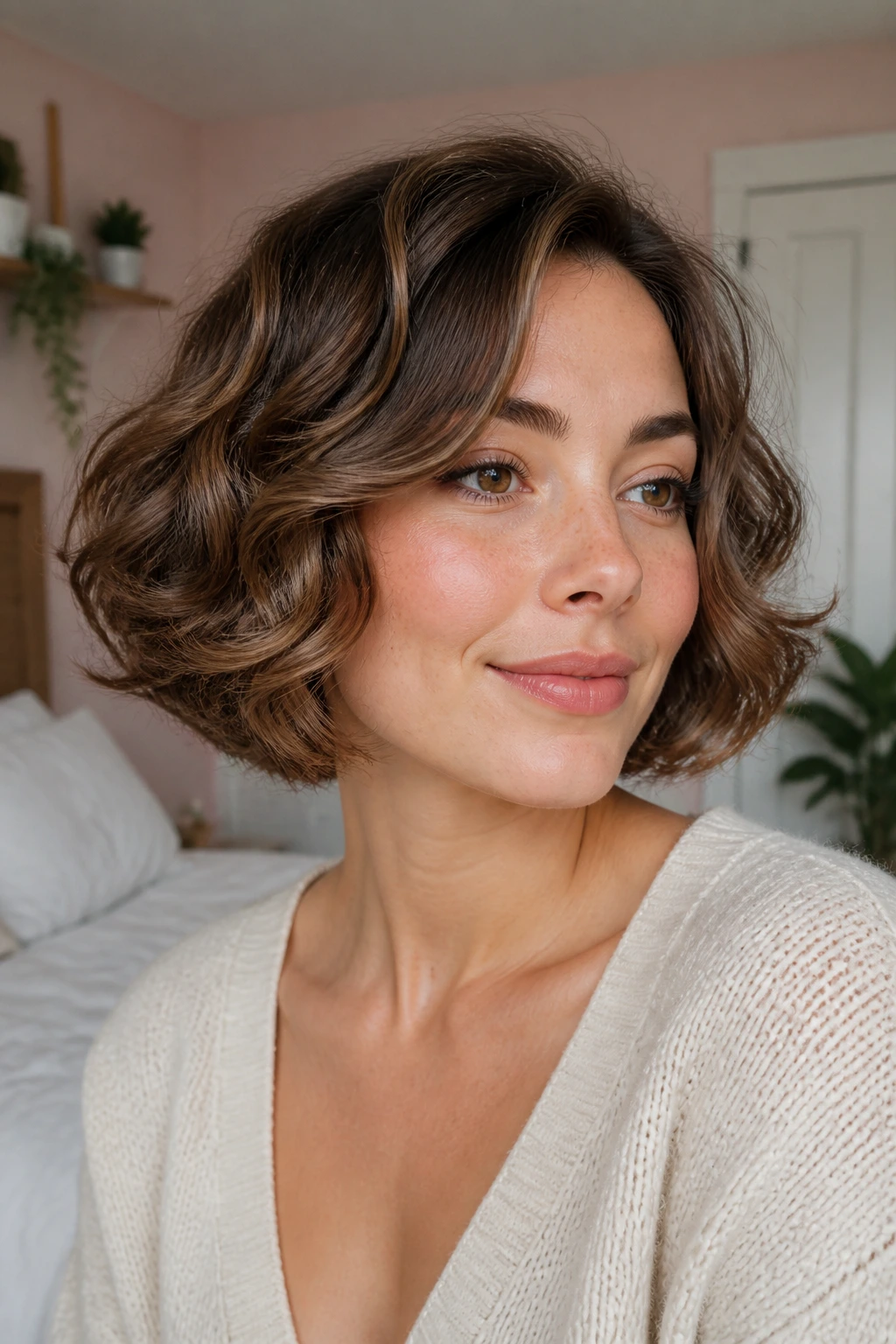
The rounded bubble bob has one job: make the silhouette feel plush. Hair is cut or styled into a gentle curve that hugs the jaw and curves back in at the ends. On thin hair, that shape is kinder than a blunt line with no body, because the curve gives the illusion of fullness from every angle.
A round brush blow-dry is the easiest route. Turn the ends under, set them with a cool shot, then lightly brush through the curls so they become soft bends instead of sculpted curls. The result feels polished without looking stiff. If your hair is fine, use a lightweight root spray before blow-drying. Heavy creams flatten this kind of shape fast.
10. Old-School Flip Bob

There’s something sharp about a flipped end. A subtle outward flip around the jaw adds width exactly where thin hair needs it, and it keeps the style from falling in a straight line against the neck. It also brings a little personality, which matters when the hair itself is fairly simple.
The trick is to keep the flip small. A huge retro flip can overpower fine hair and make it look sparse at the edges. Use a round brush or a curling iron to bend just the last half-inch outward. Then mist the ends lightly and leave them alone. Too much brushing turns the flip into a puff.
11. Face-Framing Bend Bob
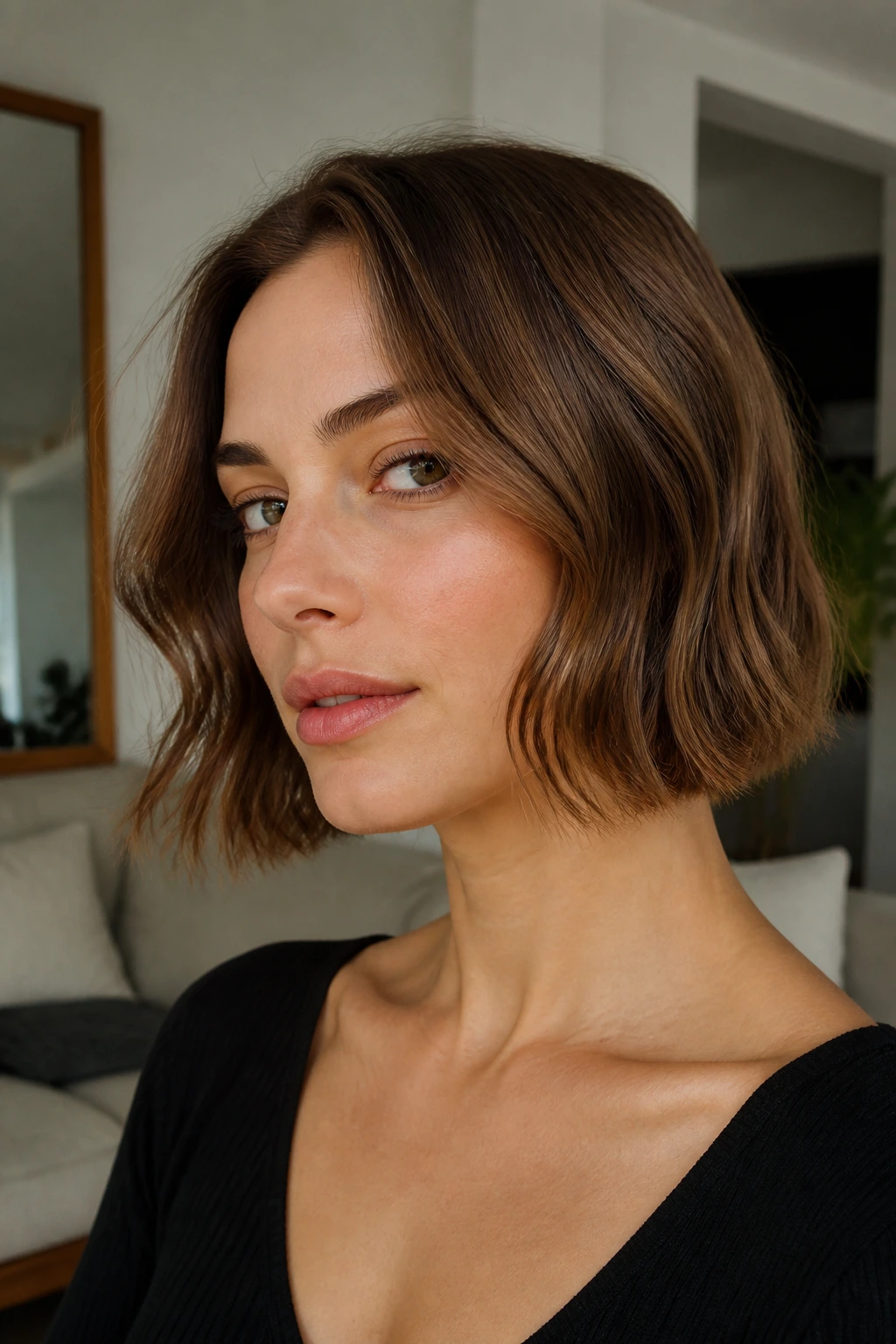
This is one of my favorites for people who want to look styled without spending twenty minutes on every section. The cut stays chin length, but only the pieces near the face get a soft bend. The rest can stay smooth or barely waved, which keeps the hair from looking overloaded.
Why it works
Thin hair usually looks better when the volume is placed in the front and around the jaw rather than all over the head. That’s what this shape does. It gives you movement where people look first, then keeps the back neat.
Best move: curl just the front two sections on each side, then tuck the rest behind the shoulders. Done.
12. Wet-Look Side Sweep Bob
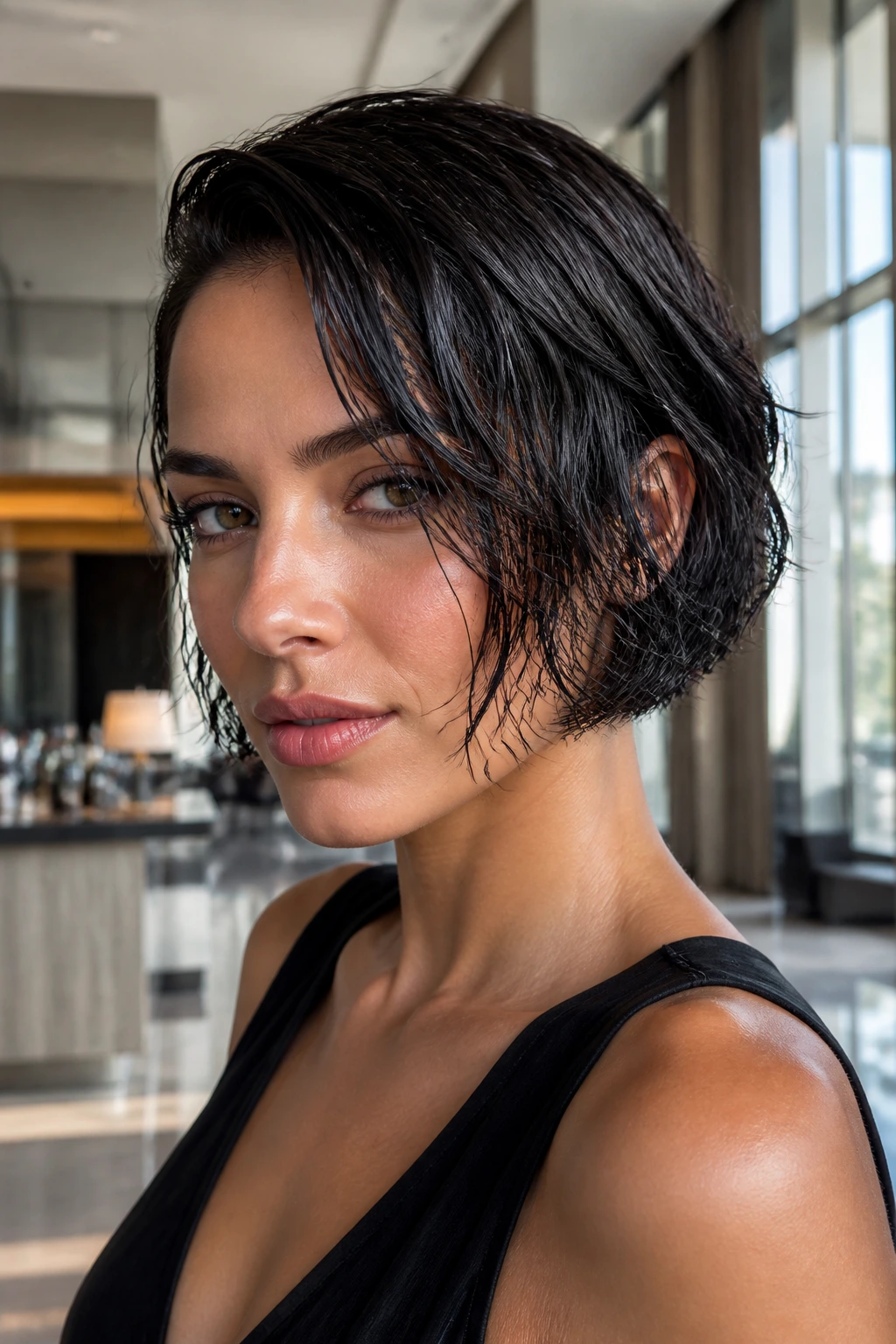
A wet-look side sweep can be a lifesaver for thin hair that turns fluffy in humidity or breaks apart the moment you curl it. A side sweep with a light gel or styling cream gives the hair a controlled finish, and a few loose bends through the lengths keep it from looking harsh.
This style leans sleek, so the chin-length cut needs to be clean and sharp. I’d use it when you want something modern and a little editorial, not soft and fluffy. Keep the product light. If the roots turn greasy, the whole style collapses into the scalp, and that’s the opposite of what you want.
13. Root-Lifted Loose Wave Bob
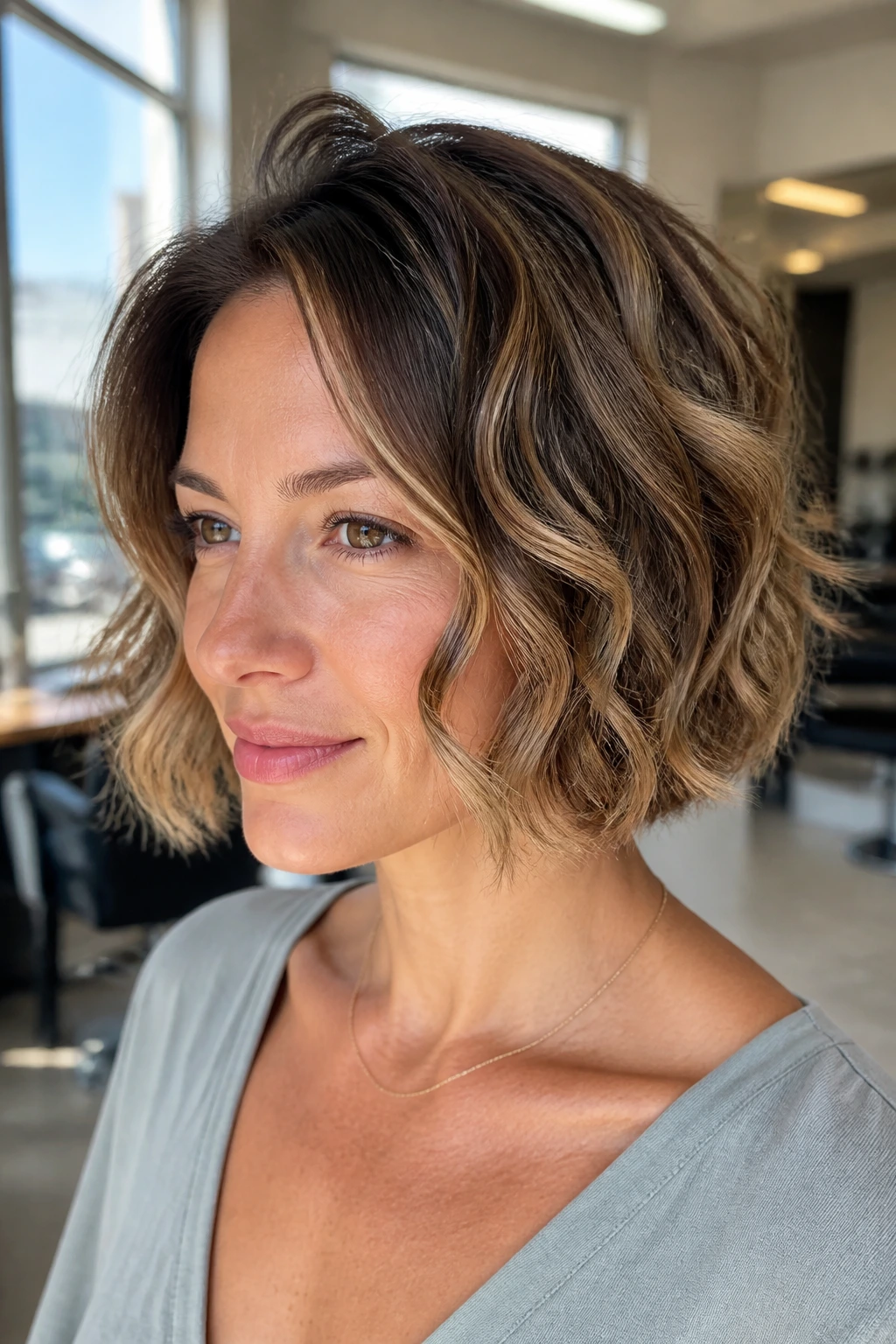
If you want volume without teasing, start at the roots. Clip the crown up while the hair cools, blow-dry the roots in the opposite direction of the part, then wrap loose sections around a curling iron and brush them out once they’re cool. That combination gives thin hair a softer, larger shape.
The lift points that matter
- Crown clips while the hair cools
- A root-lift spray on damp hair
- A round brush at the front hairline
- Loose bends through the middle, not tight spirals
This style looks best when the top isn’t too polished. A little separation at the roots makes the curls feel fuller.
14. Feathered Chin-Length Layers

Feathering can be dangerous on thin hair if it’s taken too high. Keep it around the face and perimeter, where it softens the edge without hollowing out the body. Done right, feathered layers make the cut move instead of sitting like a helmet.
I like this for hair that’s fine but still has enough strands to support some layering. The loose curls should catch the feathered ends and make them look soft, not chopped. If the layers start at the crown, though, the style can get see-through fast. Keep the crown heavier than you think.
15. Half-Up Twist Bob
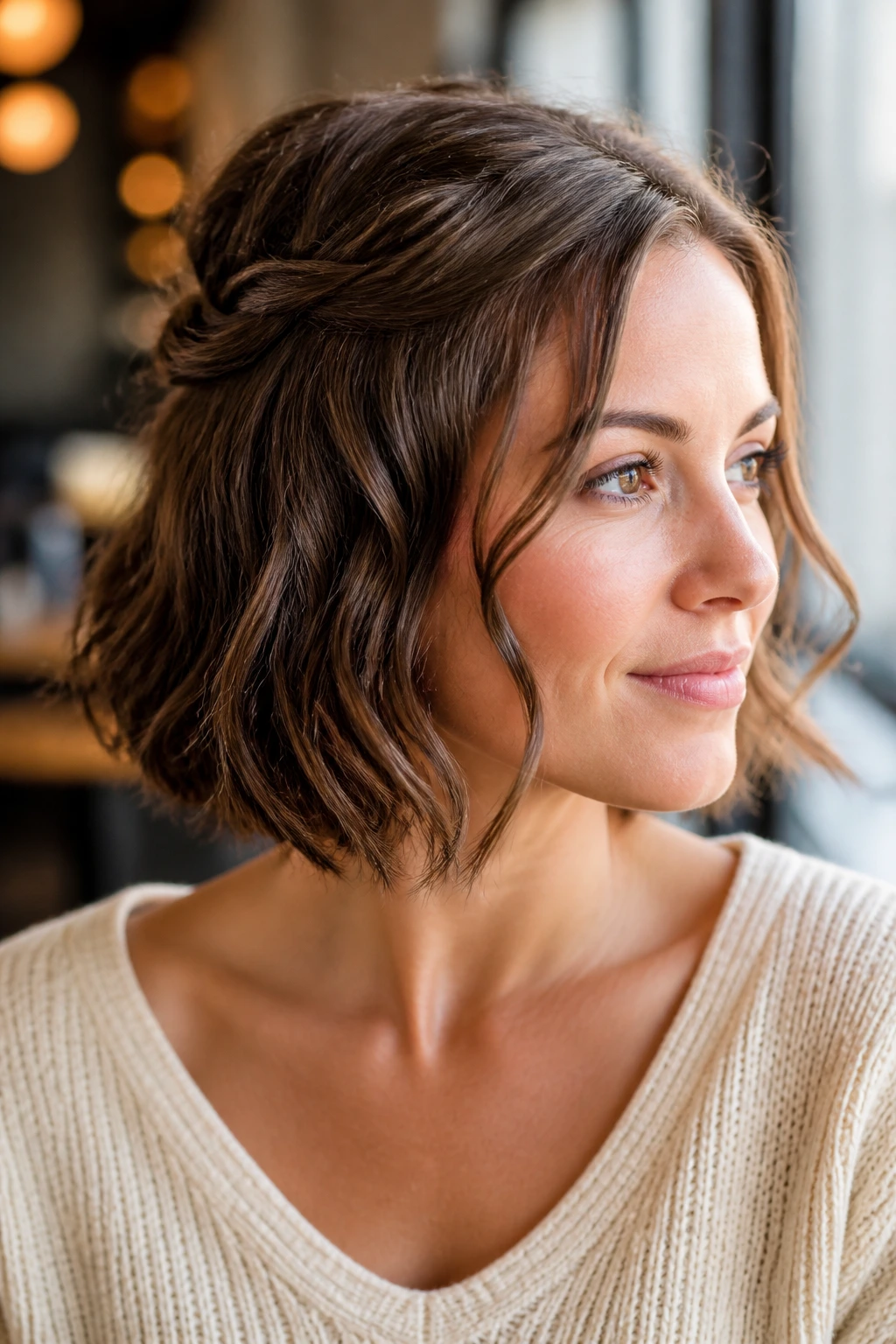
A half-up twist is one of those small tricks that makes chin-length hair feel dressed up in about two minutes. Pull back just the top third of the hair, twist it loosely, and pin it at the crown. The ends below stay loose and curled, so you keep the softness while getting a little extra lift.
This works well on second-day hair, especially if the curls have gone a little softer overnight. You don’t need perfection. A few loose pieces around the face make it look better, not worse. If your hair is extremely fine, use two crossed bobby pins instead of one elastic, because elastics can pull the top too flat.
16. Pin-Back Glam Bob
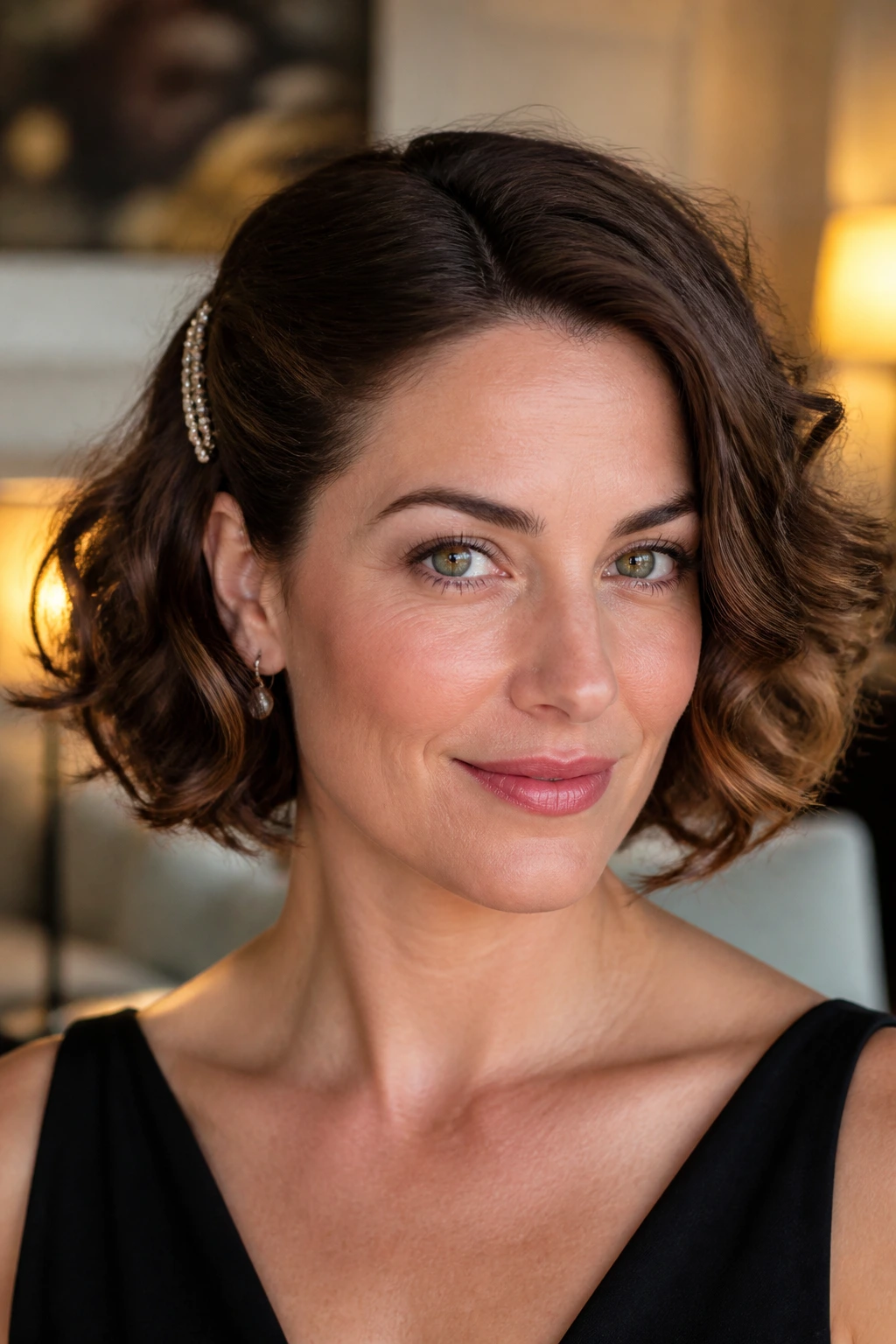
A decorative pin does more than decorate. It changes the shape. Pinning back one side creates height at the temple and keeps the front from dropping into your eyes, which is useful when thin hair wants to cling to the face. Pair it with loose curls and the result feels put together without being fussy.
The best pins for this style are slim and sturdy, not heavy. A big barrette can drag fine hair down by the end of the night. I’d also keep the part a little off-center so the style has some movement. A dead-center pin-back can look flat if the hair is too thin.
17. Tousled Textured Bob

This is the relaxed cousin in the group. A tousled textured bob doesn’t need the curls to sit neatly; it needs them to look separated and touchable. That makes thin hair seem thicker because the eye sees motion and shadow, not one smooth sheet.
Use a texture spray after curling, then break the curls apart with your fingers once they cool. A little roughness helps here. If you brush it too much, the style loses its body and goes soft at the roots. This is one of the best looks for people whose hair refuses to keep a perfect curl anyway. Let it be a little messy.
18. S-Wave Retro Bob

An S-wave is a beautiful compromise for thin hair. It gives you movement without the bulk of a full curl, and the repeated wave shape creates a fuller-looking silhouette along the chin. Brush it out softly and the whole style feels smooth, not fussy.
What to watch for
The wave pattern needs to stay shallow. Tight bends can make fine hair look shorter and thinner. Use a flat iron or curling iron to shape a loose S, then pin the curve for a minute while it cools. That cooling step matters more than people think.
My preference: this style looks best when the ends are slightly straighter than the middle. That little break keeps the bob from looking too done.
19. Side-Swept Fringe Bob
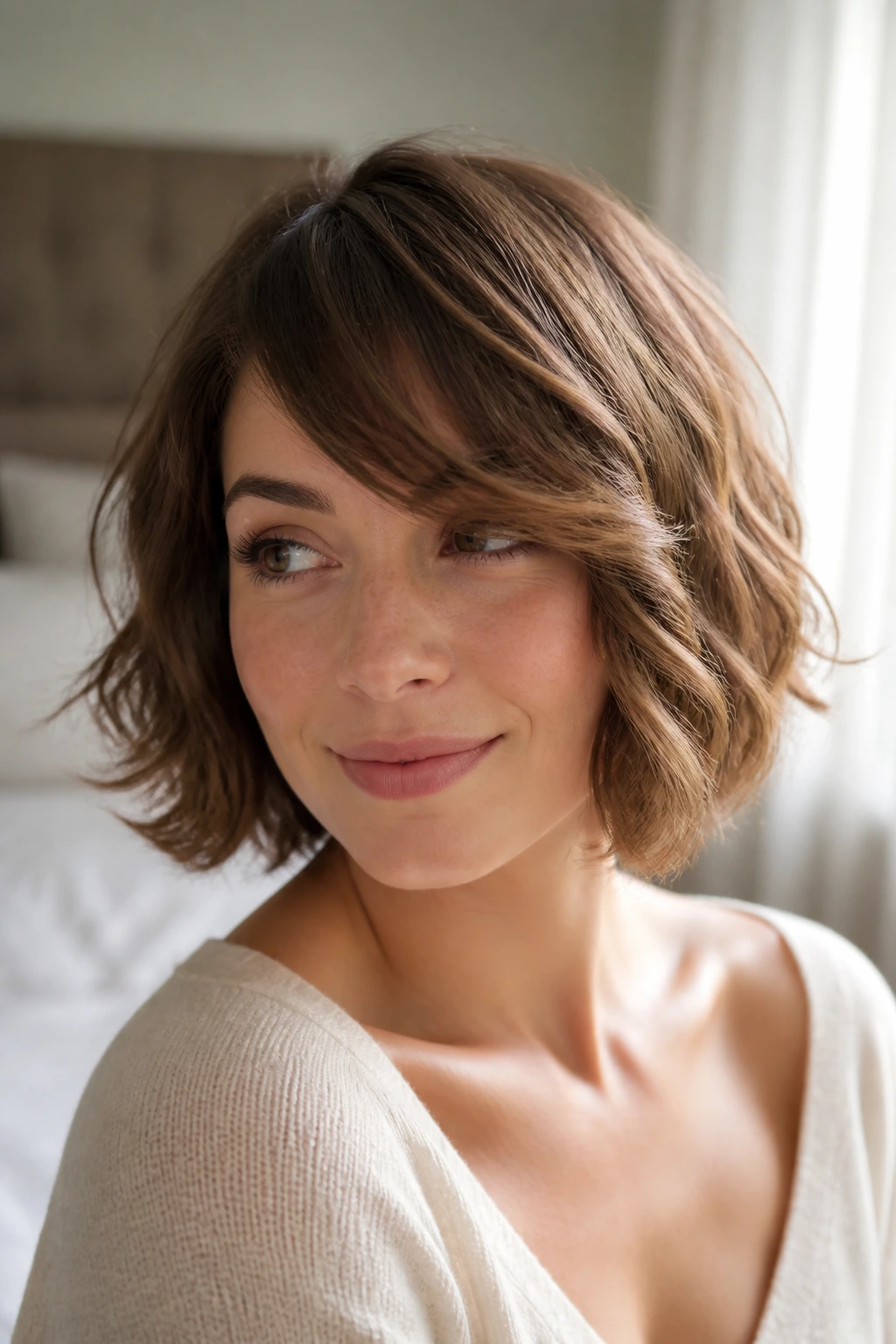
A side-swept fringe can be the best friend of thin hair when the front area needs help. It creates a diagonal frame across the forehead, which helps the hairline appear softer and the rest of the cut look fuller. The fringe should be long enough to move, not so short that it sticks up.
This shape works especially well if your hairline is a little sparse near the temples. Sweep the fringe across after blow-drying and mist the roots lightly at the part. I’d avoid heavy styling cream here. It can make the fringe separate in skinny little strands, and that’s usually not the look people want.
20. Air-Dried Mousse Bob
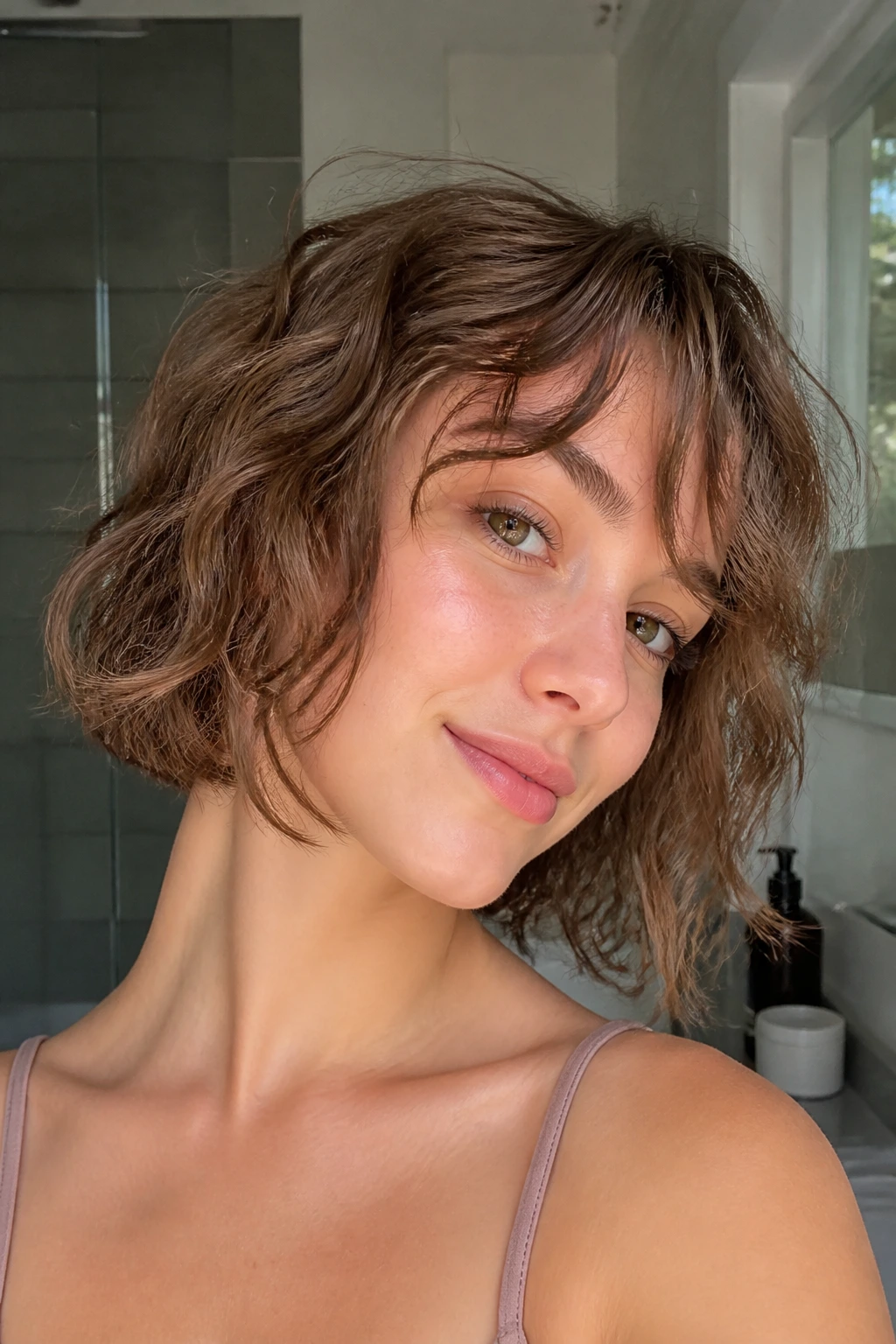
Some hair should be left alone more often. If your thin hair has a natural wave, an air-dried mousse bob can be the easiest way to keep texture without heat. The chin-length cut gives the wave something to land on, and a light mousse keeps the strands from drying flat.
Scrunch the product into damp hair, then let it dry with the head tilted slightly to one side so the roots don’t set completely flat. If you want more lift, clip the crown for the first ten minutes of drying. I like this option when hair gets brittle from too much heat styling. It feels honest, and it usually looks fresher on day two.
21. Crown-Boosted Asymmetrical Bob
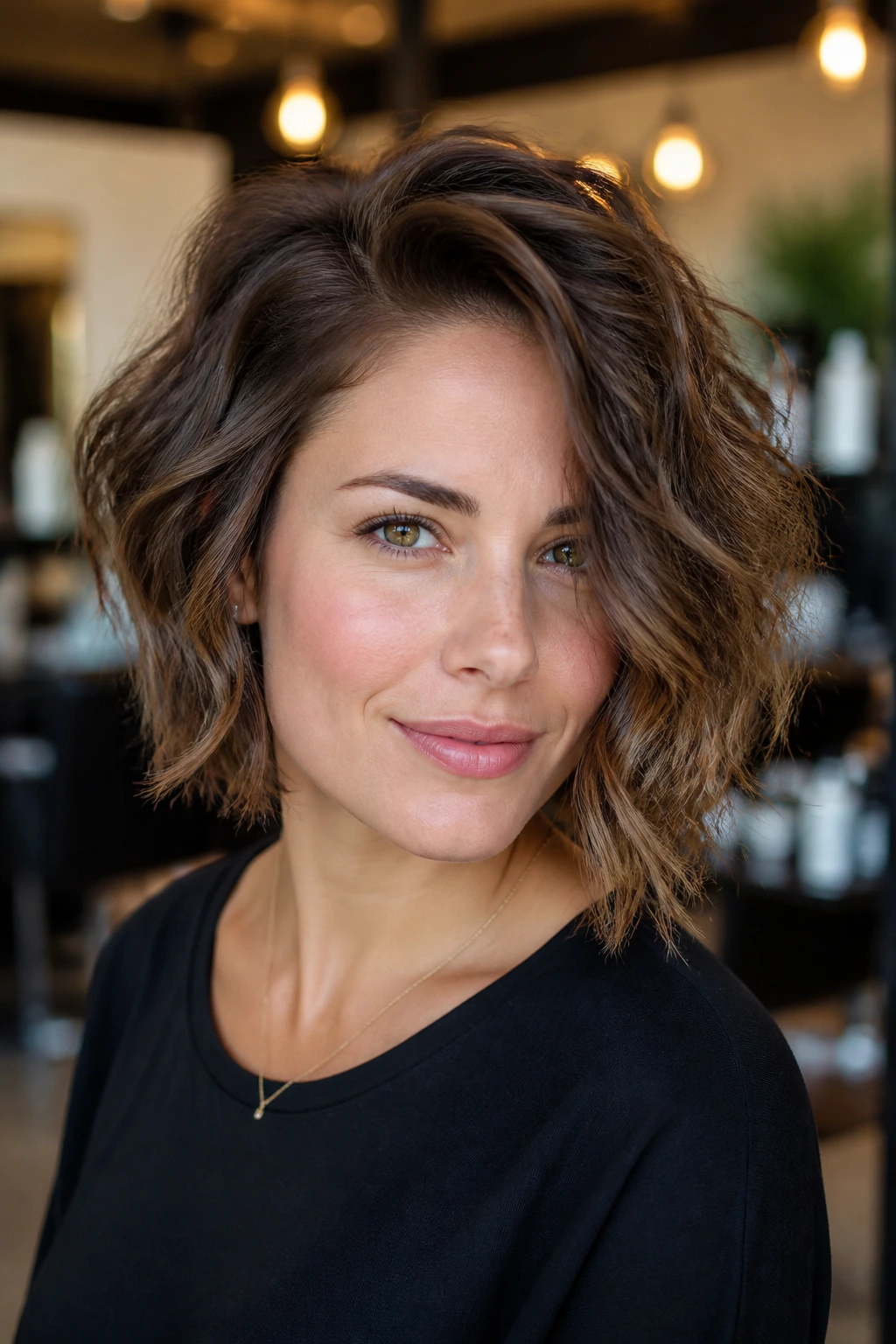
A slight asymmetry gives thin hair a sharper outline and a little bit of attitude. One side sits a touch longer, the crown gets lifted, and the eye keeps moving instead of stopping at a flat line. That movement is what makes the style look fuller than it really is.
Why it flatters thin hair
The asymmetry disguises any uneven density from side to side. Most people have it, by the way. This cut just works with it instead of pretending the head is perfectly balanced.
Use a side part, a root clip, and loose curls that bend toward the longer side. Keep the difference subtle — maybe half an inch to an inch, not dramatic enough to feel costume-like.
22. Minimalist Glassy Curl Bob
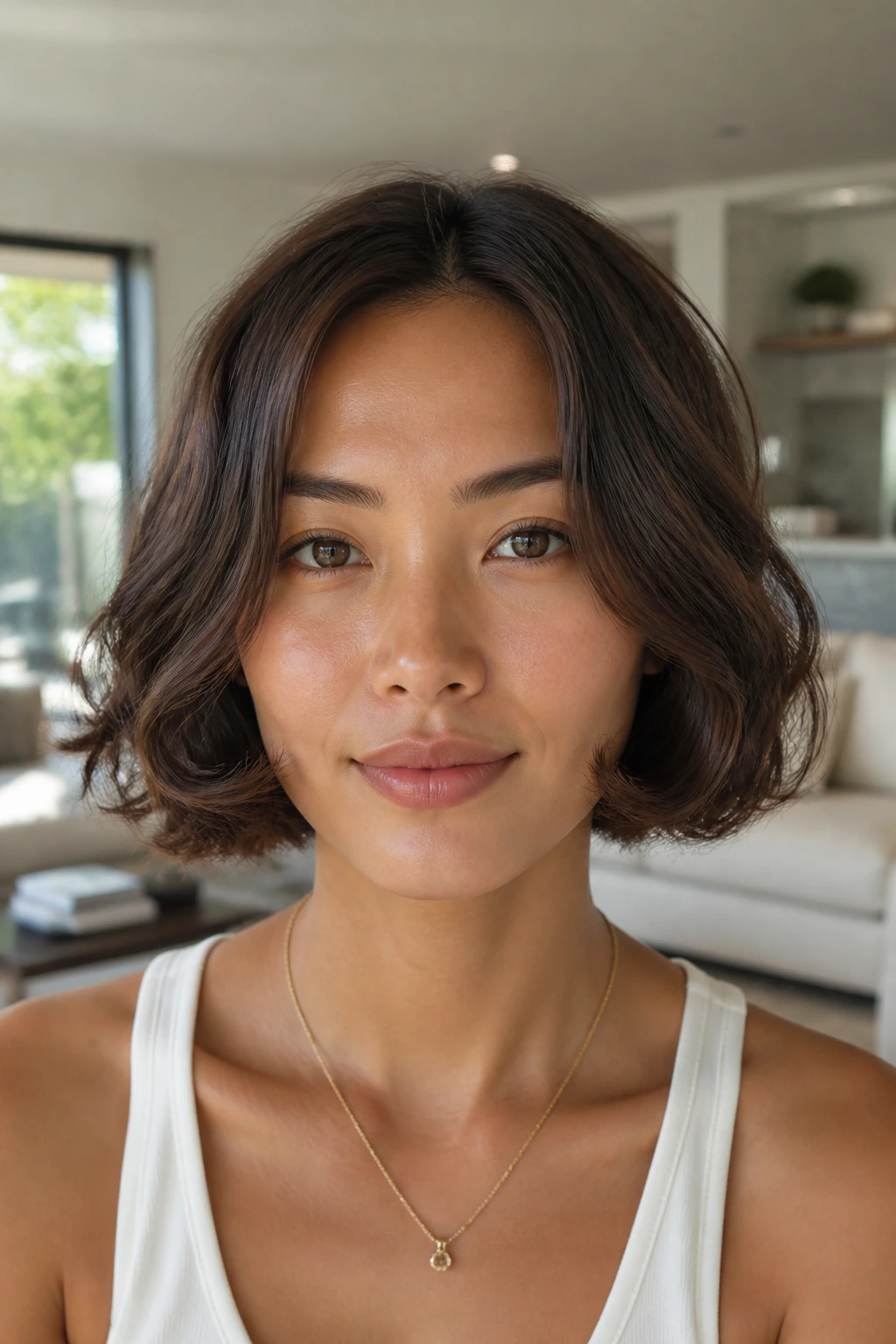
Not every thin-hair style needs mess and texture. A minimalist glassy curl bob keeps the chin-length shape smooth and shiny, with just a few loose curls at the ends. That sleek surface can make hair look healthier and denser than a lot of tousling ever will.
The key is restraint. Use a heat protectant, smooth the cuticle with a light serum on the mid-lengths only, and curl just the lower half of each section. You want polished bends, not bounce overload. This is the style I’d pick for straight, fine hair that frizzes when you try to force volume. Sometimes the cleanest answer is the best one.
Why Chin-Length Hairstyles for Thin Hair Work So Well with Loose Curls

Loose curls do something blunt cuts can’t do alone: they build width at the exact places the eye checks first. On thin hair, that means the cheeks, the jaw, and the lower half of the head. A longer cut pulls all of that downward. A chin-length shape keeps the movement close to the face, where it reads as fullness instead of length.
There’s also a physics piece to it. Shorter hair has less weight hanging from the root, so it collapses less. Fine hair can be slippery and bendy, which is annoying on a long cut, but useful at chin length because the curl can hold a soft shape without stretching itself out by noon. A tight spiral may shrink too much. A loose curl keeps the curve but leaves more visible length.
That’s why the best chin-length styles are usually not the most complicated ones. They use blunt edges, a bit of root lift, and curl placement that flatters the head shape. You don’t need twenty products. You need the right geometry.
How to Choose the Right Shape for Your Face and Density

Chin length sounds like one category, but the details change fast depending on your face shape and how much hair you actually have. Fine hair with high density can handle a little more layering than sparse fine hair. Round faces usually look better with a touch of angle or an off-center part. Longer faces often benefit from fringe or a rounder silhouette that adds width at the sides.
If your hair is thin at the temples, avoid fringe that’s too heavy or too short. It exposes the problem instead of softening it. If your hair is fuller at the crown but skimpy at the ends, a blunt perimeter will make more sense than a shag. And if one side always falls flatter, build the style around that imbalance instead of fighting it every morning. Hair rarely behaves symmetrically. You may as well work with the reality on the mirror.
A quick way to think about it
- Round face: choose angle, side part, or curtain fringe
- Square face: add soft bends around the jaw
- Long face: try bangs or a rounded bubble shape
- Very fine hair: keep the line blunt and the layers minimal
- Low-density hair: place volume at the crown and around the front
Tools and Products That Make Styling Easier
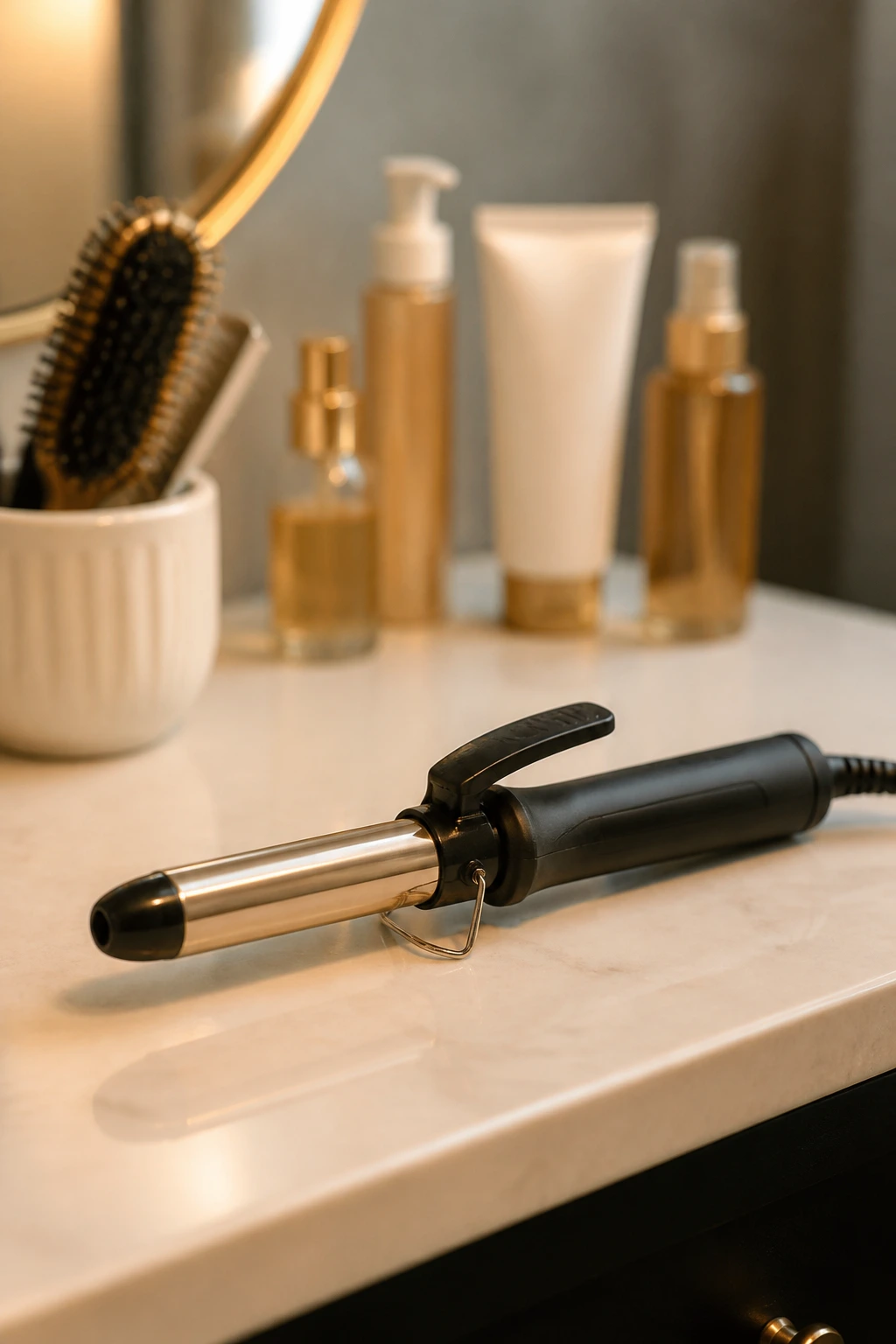
- 1-inch curling iron or wand: The sweet spot for loose curls on chin-length hair; bigger barrels can make the wave drop too fast.
- Heat protectant spray: Use it every time you style with heat so the ends don’t get dry and fuzzy.
- Light mousse: Gives damp hair some grip without making it sticky or stiff.
- Root-lift spray: Best for the crown and part line, where thin hair often lies flat.
- Duckbill clips or small sectioning clips: Great for setting roots while the hair cools.
- Round brush, 1.5 to 2 inches: Useful for the bubble bob, flipped ends, and soft bend styles.
- Dry shampoo: Works best on clean hair or as a next-day reset, not only when hair is oily.
- Texture spray: Helps piece out loose curls without crunchy buildup.
- Soft-hold hairspray: Keeps the shape in place without locking every strand into place.
- Velcro rollers, optional: Handy for crown lift and face-framing volume if you want a softer finish.
How to Wear These Styles With Necklines and Accessories

Presentation: Chin-length loose curls look best when the front isn’t crowded. Keep the crown lifted, let a few pieces move near the jaw, and use the part to control where the shape lands. If the style has a tucked side or a pin, let that be the focus instead of adding more going on around the face.
Outfit Pairing: Open necklines make this length easier to see. Square necks, V-necks, crew necks with a little room, and collared shirts worn open all give the curls space. Turtlenecks can work too, but they usually need a tighter, sleeker bob so the whole look doesn’t stack up around the neck.
Proportions: Thin hair looks fuller when it has a little contrast to lean against. A sharp earring, a structured collar, or a clean neckline helps the cut show up better than a busy top with lots of ruffles. You want the hair to be one of the focal points, not one more thing competing for attention.
Accessory Pairing: Small hoops, slim headbands, single barrettes, and fine-frame glasses tend to work best. Heavy clips and chunky headbands can drag fine hair down or hide the chin line, which is the one part you usually want to keep visible.
Styling Moves That Add Lift Without Crunch
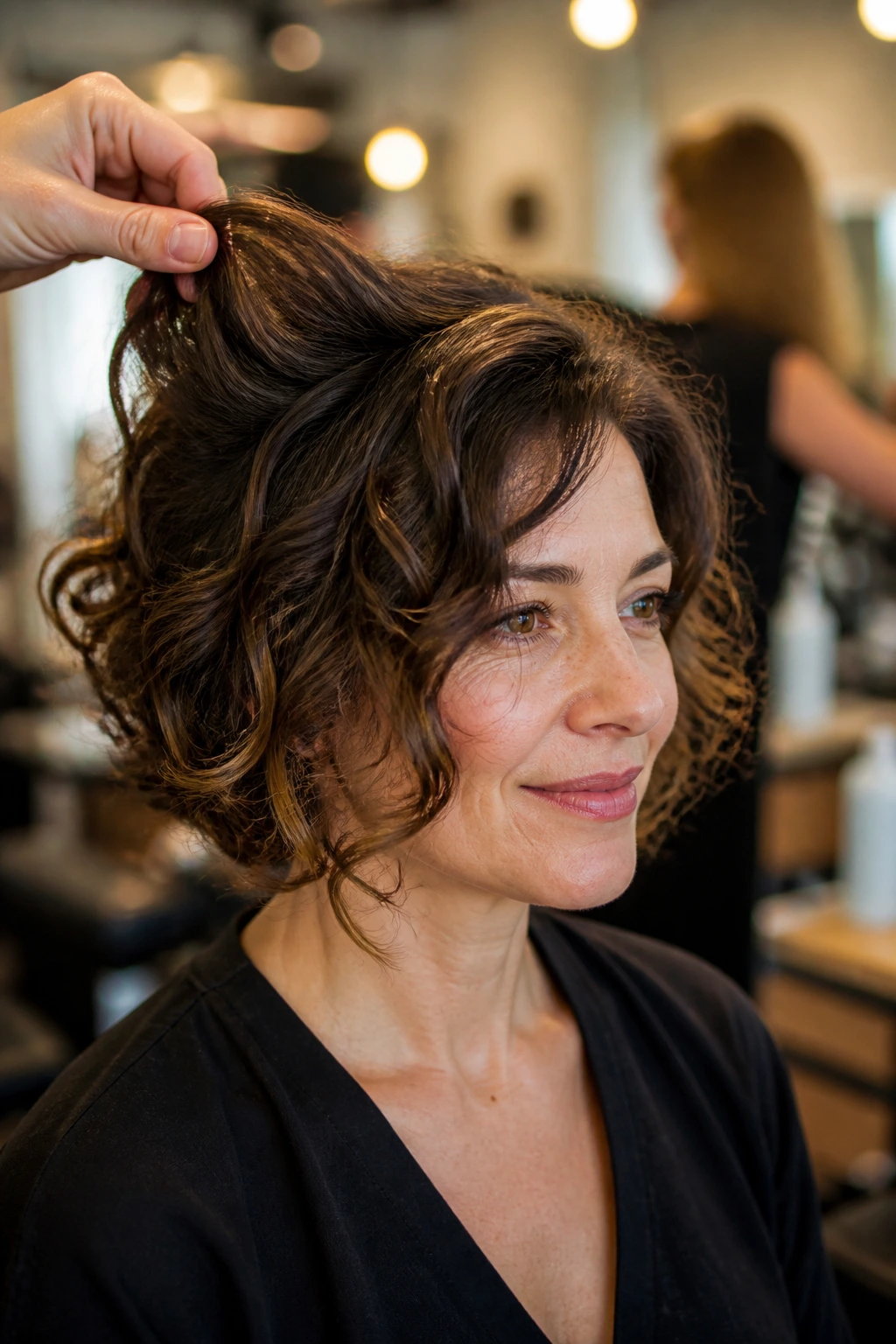
The biggest mistake with thin hair is loading it up with product and calling it volume. Product is not the same thing as lift. Lift comes from the roots, from the way you section the hair, and from how you let the curls cool before you touch them. If you skip those pieces, even the nicest mousse will fall flat.
Start on damp hair with a light mousse or root spray. Blow-dry the crown first, not last, and clip the roots up while they cool. That little pause matters. Then curl in small sections, keeping the barrel at 1 inch or under. Wrap mid-lengths and leave the ends slightly straighter so the style doesn’t look frayed. Once the hair is cool, brush or finger-comb it gently and hit the roots with a little dry shampoo.
I also like alternating curl direction around the face. It breaks up the pattern and stops the style from looking too uniform. Uniform is the enemy here. Thin hair needs movement, shadow, and a few odd pieces on purpose.
Common Mistakes That Flatten Thin Hair Fast

- Too many layers at the crown: The hair starts looking see-through at the top and wispy at the bottom. Keep the crown heavier and move the layers lower.
- Using a barrel that’s too large: Loose curls fall out fast on short hair if the barrel is oversized. Stick with 1 inch or smaller.
- Heavy creams and oils at the roots: They make fine hair collapse and turn stringy by lunch. Put richer products only on the very ends, if at all.
- Curling every section the same way: The style turns into a uniform helmet. Alternate direction or leave the front pieces slightly different.
- Skipping a trim: Chin-length cuts show damage fast. When the ends fray, the whole style loses its shape.
- Over-brushing curls: Brushing too soon or too hard wipes out the bend. Let the hair cool, then loosen it gently with fingers or a wide-tooth comb.
Variations and Alternatives to Try

For Very Fine Strands: Keep the line blunt, the layers minimal, and the curls loose enough to move. Fine strands need shape more than texture, so this version is cleaner and more polished.
For Naturally Wavy Hair: Let your hair air-dry with mousse, then touch up only the front pieces with a curling iron. This keeps the natural wave from expanding into frizz.
For Round Faces: Choose a side part or a slightly angled bob so the eye travels downward instead of straight across. A little length in front helps, too.
For Glasses Wearers: Try a tucked side, side-swept fringe, or a pin-back style so the frames and the hair don’t fight for space. Clean lines matter here.
For Heat-Free Days: Use velcro rollers at the crown and around the face, then mist with light hairspray once the hair is dry. It won’t mimic a curling iron exactly, but it gives thin hair a softer, fuller shape.
Between-Wash Care and Next-Day Reset

Thin hair at chin length usually looks best on day one or day two, and then it starts asking for help. That doesn’t mean washing it every day. It means knowing how to reset it without stripping it. A silk pillowcase helps more than people think. So does clipping the front sections up loosely before bed so they don’t get bent into the wrong direction overnight.
If the roots go flat, flip the part to the opposite side for a few hours. That gives the hair a different lift pattern without heat. A little dry shampoo at the roots, worked in with the fingertips, can bring the style back to life fast. If the ends need shape, re-curl only the front pieces and the top layer — not the whole head. That’s where most people waste time.
The schedule that tends to work
- Trim: every 6 to 8 weeks
- Wash: as needed, usually when roots lose lift
- Heat styling reset: touch up front pieces and crown, not everything
- Night care: silk pillowcase or a loose clip at the front
Questions People Ask Before Booking the Cut
Is chin length actually good for thin hair?
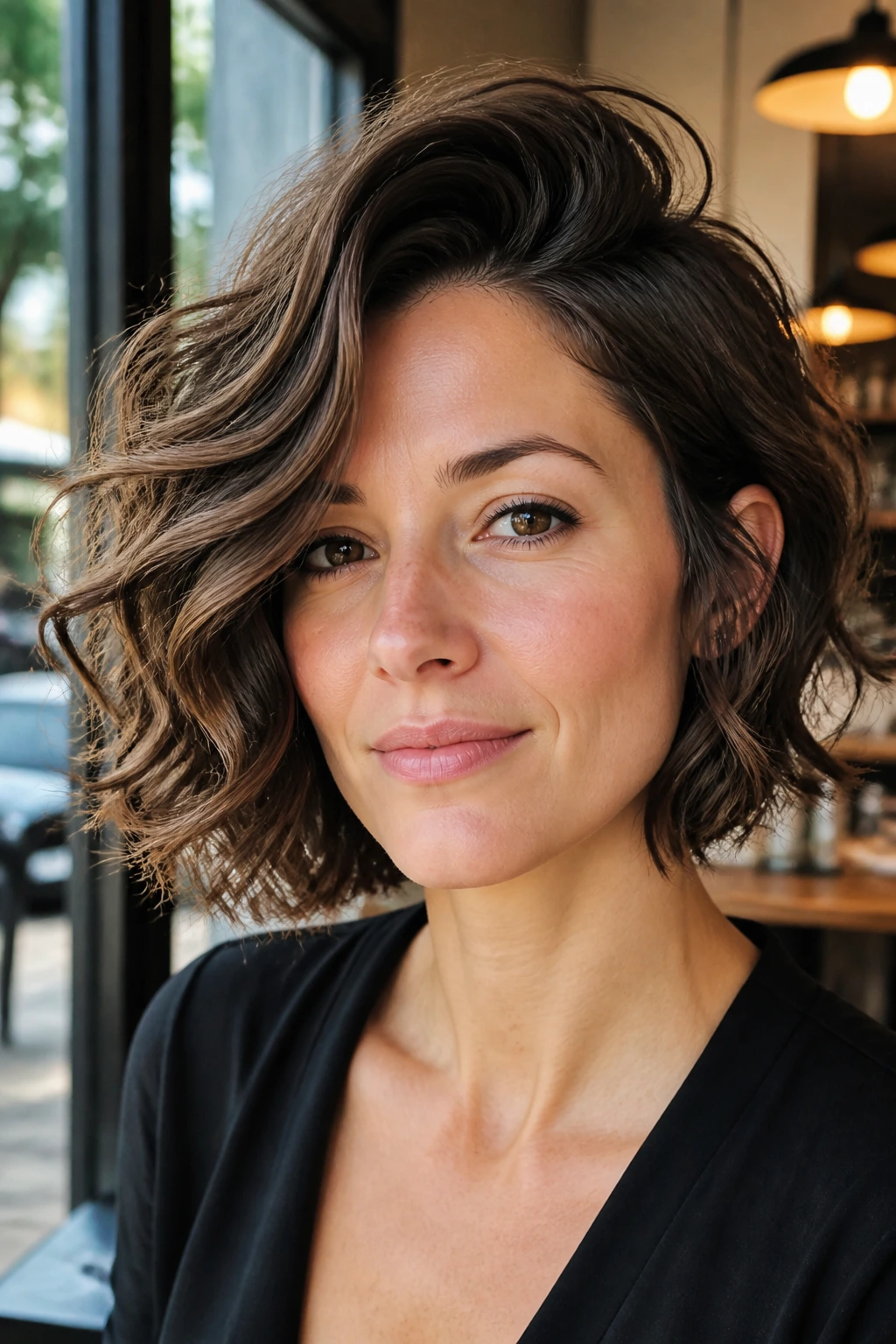
Yes, and it’s one of the smartest lengths if you want the hair to look thicker without a lot of styling. The cut keeps the ends close together and lets loose curls build width around the jaw instead of dragging the shape down.
Should thin hair be layered or blunt at chin length?
Blunt wins more often than not, especially if your hair is sparse or very fine. Soft layering can help if your hair has enough density to support it, but too many layers usually make the ends look thin.
What size curling iron works best for loose curls on short hair?
A 1-inch iron or wand is the safest bet. Larger barrels can create a wave that falls out fast, while smaller ones can make the style look too tight for this length.
How do I keep the curls from dropping?
Let the curls cool fully before touching them, and use clips at the root while the hair sets. Also, don’t overload the hair with oil or smoothing cream before curling.
Can I wear this cut if my hair is naturally straight?
Absolutely. Straight fine hair often looks best with blunt lines, root lift, and a few soft bends at the front. You do not need a naturally wavy pattern for this to work.
What if my hair is thin and frizzy at the same time?
Use lighter products than you think, and keep the curls looser. Frizzy fine hair usually gets worse when it’s weighed down, so a soft mousse and a gentle serum on the ends are better than rich creams.
How often should I trim a chin-length cut?
Every 6 to 8 weeks is a good rhythm if you want the line to stay clean. Once the ends start splitting, thin hair loses shape fast.
Can I make this work without heat?
Yes. Mousse, clips at the crown, and air-drying or roller-setting can give you enough bend to keep the style from falling flat. It won’t look identical to a curling iron finish, but it can look cleaner.
The Shape That Keeps Paying Rent

Chin-length hair earns its place when it does more than sit there. With the right cut, loose curls, and a little control at the root, thin hair stops looking like it’s trying to survive and starts looking like it has a plan. That plan can be blunt, soft, glossy, tousled, retro, or tucked behind one ear with a good earring. The length is flexible like that.
If your hair has been collapsing at longer lengths, this is the move that gives it some backbone. Keep the line clean, keep the product light, and let the curls do enough work without making them do all the work. That balance is what keeps the style looking alive on the first day, the second day, and the days when you only have five minutes and a mirror with bad lighting.