



Thick hair has a talent for doing its own thing. Left to grow in one block, it can puff at the sides, sit heavy at the crown, and turn the front into a curtain you have to negotiate every morning. A short shag haircut with bangs changes that whole equation. It takes weight out where thick hair tends to balloon, leaves movement where it usually goes stiff, and gives the fringe a job instead of letting it act like a stubborn shelf.
The reason this family of cuts works so well is simple: thick hair has enough body to support layers. You are not begging for volume the way someone with fine hair might. You are redirecting it. A good shag on dense hair doesn’t just chop randomly; it uses internal layers, soft edges, and a fringe that sits with the shape of the face instead of fighting it. That can mean curtain bangs that split cleanly, bottleneck bangs that narrow at the bridge of the nose, or a heavier fringe that gets thinned in the right places so it doesn’t sit like a helmet.
And yes, the difference between a flattering short shag and a “why does my hair look triangular?” haircut can be a few inches and a very specific way of removing bulk. The details matter. So do the bangs. The right one can make thick hair look lighter, more deliberate, and a little less like it’s trying to escape the room.
Why Thick Hair and a Short Shag Get Along So Well

Bulk Control: Thick hair usually needs shape more than it needs more haircut. A shag takes mass out at the crown, through the interior, and around the face so the whole cut stops sitting like a single heavy block.
Bang Flexibility: Dense hair can support a real fringe, not just a token few wisps. That means you can wear curtain bangs, bottleneck bangs, or a fuller brow-skimming fringe without the hair collapsing into strings.
Movement Without Overstyling: The layered structure gives the ends a little swing even when you air-dry. A lot of shag styles look better with a bend than with perfect polish, which is a relief if your morning routine is not generous.
Grow-Out Ease: A short shag is forgiving between appointments because the shape isn’t built on a hard line. When the bangs grow, they usually slide into cheek-length pieces instead of becoming an emergency.
Texture-Friendly: Thick hair can be straight, wavy, curly, coarse, or some unruly mix of all three before lunch. The shag format works across those textures because it doesn’t rely on a single finish to look intentional.
1. Chin-Grazing Soft Shag with Curtain Bangs
This is the cut I’d hand to someone who wants movement without looking like they tried to pick a fight with the scissors. The perimeter sits around the chin, the layers feather out through the cheeks, and the curtain bangs part cleanly down the middle so the front feels open instead of heavy.
Why It Works on Thick Hair
The chin length keeps the weight from collecting at the bottom, which is where thick hair often goes blunt and boxy. The curtain fringe pulls the eye upward and softens the front, especially if your hair likes to expand around the jaw. It’s one of the easiest short shag haircuts with bangs for thick hair to wear if you want shape but not drama.
A little bend at the ends is enough. Blow-dry with a medium round brush, direct the fringe away from the face, then let the layers fall where they want. If you force this cut into perfection, it loses the point.
Best for: thick wavy hair, round faces, and anyone who wants a soft frame around the cheekbones.
Skip it if: you want a sharp, geometric edge. This one is all about looseness.
2. Jawline Razor Shag with Piecey Bangs
Why does this one feel lighter than a blunt bob even when the length is similar? Because the razor or point-cut finish breaks up the edge, so the hair doesn’t sit in one hard line.
The fringe is cut into small, piecey sections that fall a little unevenly on purpose. On thick hair, that keeps the bangs from turning into a solid block across the forehead. The result has some bite, but it still moves.
What Makes It Different
- The jawline length shows off the neck and keeps the weight off the shoulders.
- Piecey bangs break up a dense front section so the face doesn’t get swallowed.
- The razored perimeter needs a light hand with product; too much cream makes it collapse.
- It looks best when the ends have a little separation, not when every strand is in place.
This is the one for people who like a lived-in finish and don’t mind a touch of edge.
3. Rounded French Shag with Feathered Fringe
Think of this as the softer cousin of the classic shag. The outline curves gently around the face, the crown has subtle lift, and the fringe is feathered enough to skim the brows without feeling choppy.
On thick hair, that rounded shape is the trick. It stops the cut from ballooning at the sides. Instead of a square silhouette, you get a bend that folds inward around the cheekbones.
The feathered fringe is useful here because it disperses bulk. If your hair is dense right across the front hairline, a blunt bang can feel heavy fast. Feathering keeps the line airy, and the whole haircut looks less like a statement and more like a good decision.
4. Collarbone Shag with Bottleneck Bangs
The collarbone length buys you a little extra safety if you’re nervous about going too short. It still counts as a short shag in spirit because the layers are active and the bangs do the heavy lifting.
Bottleneck bangs are the quiet star here. They’re shorter in the center and longer at the sides, so they blend into the layers near the cheeks. Thick hair likes this shape because it spreads the fringe across a wider area instead of dropping a dense slab straight down.
A small round brush and a blast of cool air are enough to set the fringe. Don’t overthink the rest. The texture is the point.
5. Curly Shag with Airy Bangs
Curly thick hair can wear bangs beautifully, but only if the cut respects the spring in the curl. A shag gives curls room to stack without creating a pyramid, and the bangs need to be cut longer than you think so they bounce to the right length once dry.
Why Curl Pattern Matters
A curl that looks forehead-length when wet may spring up a full inch or two when dry. That’s not a tiny detail; it’s the whole game. A stylist who understands thick curly hair will usually cut this shape dry or mostly dry so the final line makes sense in real life.
The airy bang should graze the upper brow or sit just above it, never hacked too high on day one. If you keep the front a little longer, it can blend into the side layers and avoid that awkward triangle that curls can create when they’re forced into a short fringe too fast.
This one shines when you diffuse with low heat and leave a little frizz alone. Polished curls are nice. A little edge is better.
6. Bixie Shag with Bottleneck Bangs
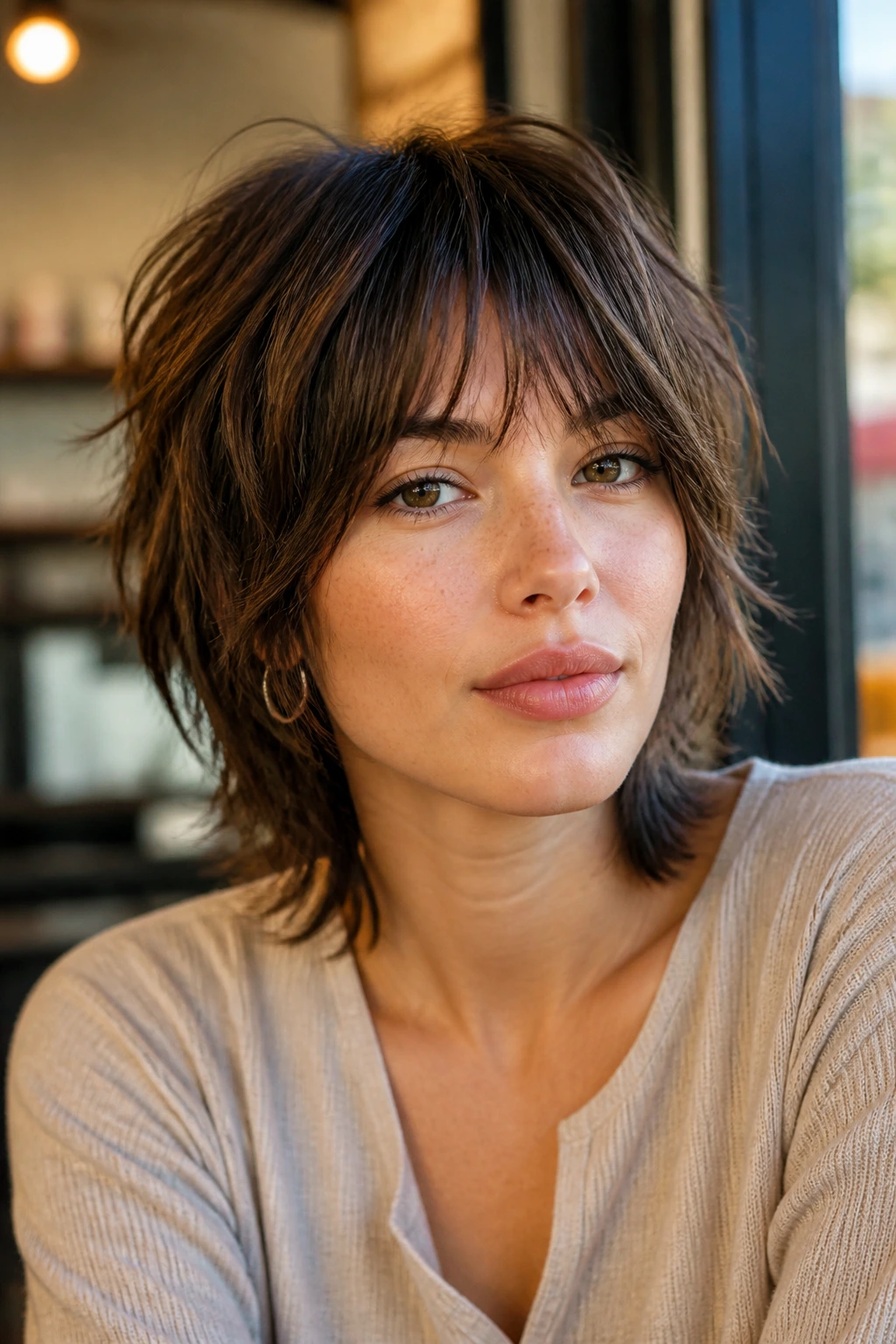
A bixie shag is the middle ground between a bob and a pixie, and thick hair makes it look fuller in the best way. The back and sides are kept short enough to lighten the outline, while the top and fringe stay long enough to carry shape.
Bottleneck bangs work especially well here because they balance the short sides. They give the cut a softer front and keep the forehead from feeling exposed. On dense hair, that matters. A very short crop with a heavy hairline can look too severe if the fringe is cut blunt.
The best version of this cut has internal layering through the top, not just the outside. Otherwise the shape puffs up like a mushroom cap. Nobody wants that.
7. Retro 70s Shag with Long Curtain Bangs
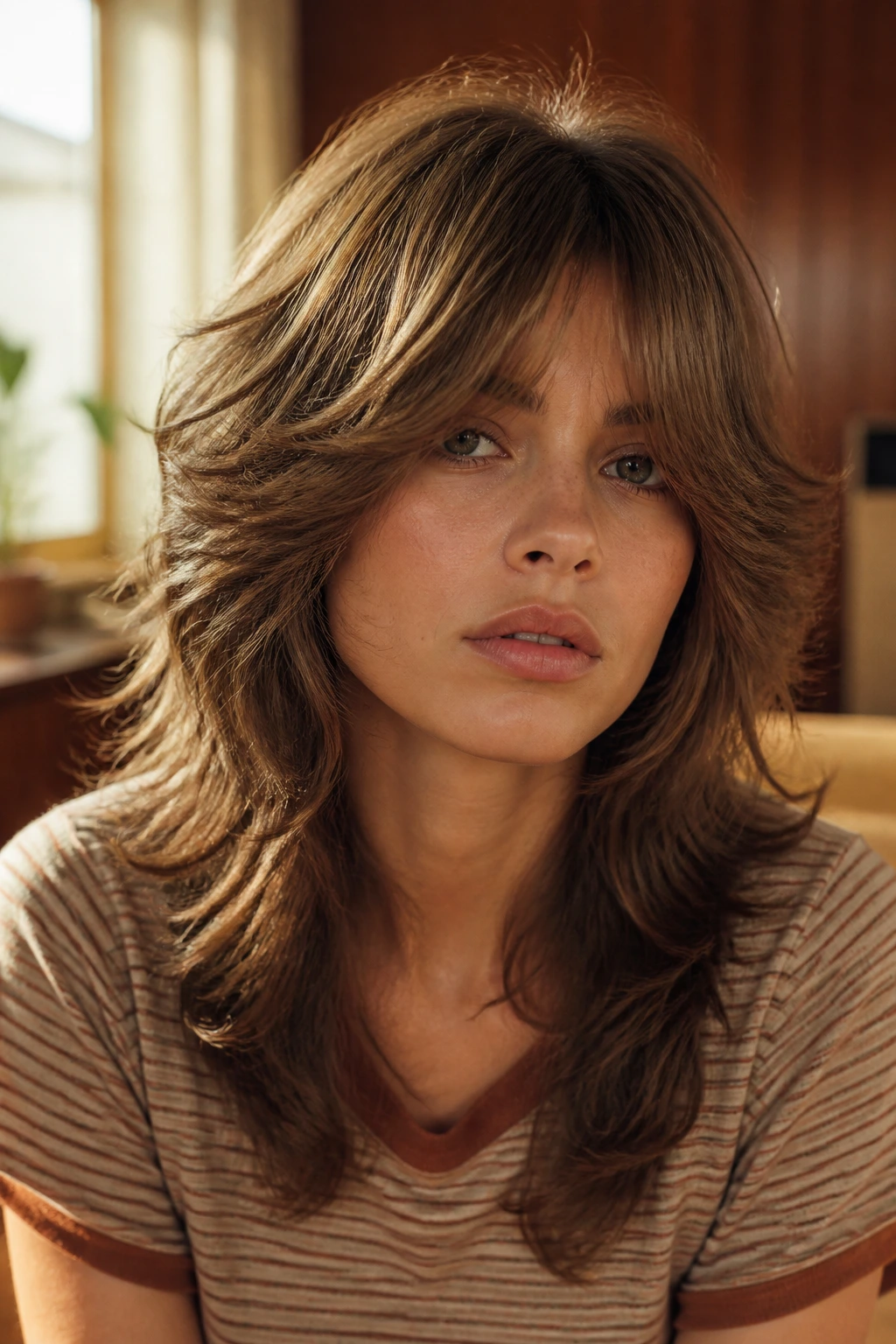
This is the cut for anyone who likes a little movement around the face and a little attitude in the ends. The layers are longer and more feathered than in a choppier shag, and the curtain bangs can be swept to either side for that soft, open shape.
Thick hair holds this style well because there’s enough weight to keep the face-framing pieces from disappearing. The long bangs also buy you flexibility. You can part them in the center, push them off to one side, or tuck one side back behind an ear and let the cut still look deliberate.
A blowout brush makes this one sing, but it doesn’t need perfect styling every day. If the ends have a bend and the bangs split around the forehead, it already looks right.
8. Shag Bob with Choppy Fringe
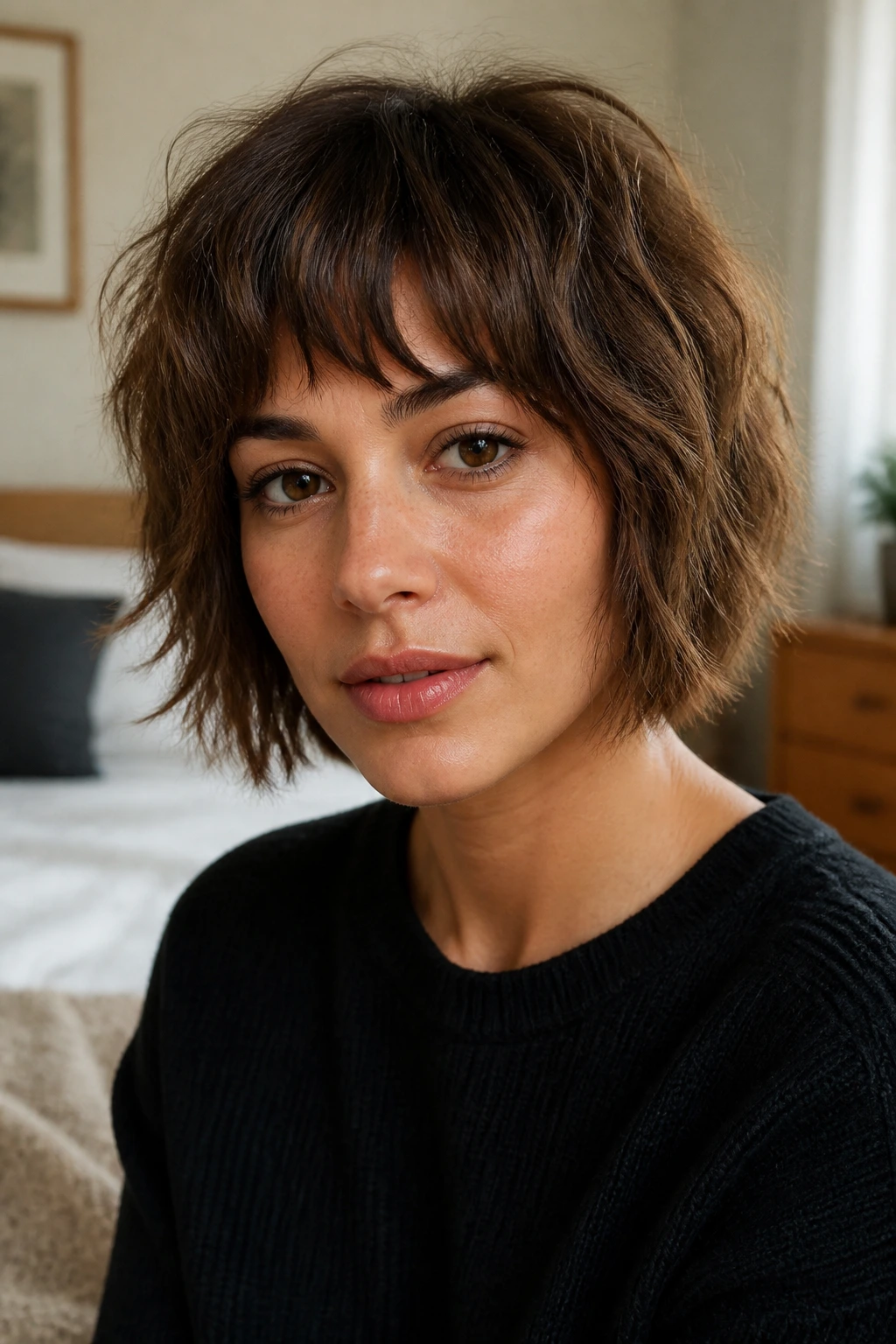
A shag bob gives you the cleaner outline of a bob with the movement of a shag, and that combo is handy when thick hair starts acting too square. The length usually sits around the jaw or just below it, which keeps the cut compact without making it stiff.
The choppy fringe is what stops it from looking too tidy. On dense hair, a straight full bang can sit heavy; choppy texture makes the front feel lighter and keeps the haircut from turning into a solid wall of hair and forehead.
A small warning: if your hair is very coarse, the choppy fringe needs regular shaping. It grows fast in terms of visual weight. One extra half-inch on thick hair can change the whole balance.
9. Side-Swept Grunge Shag
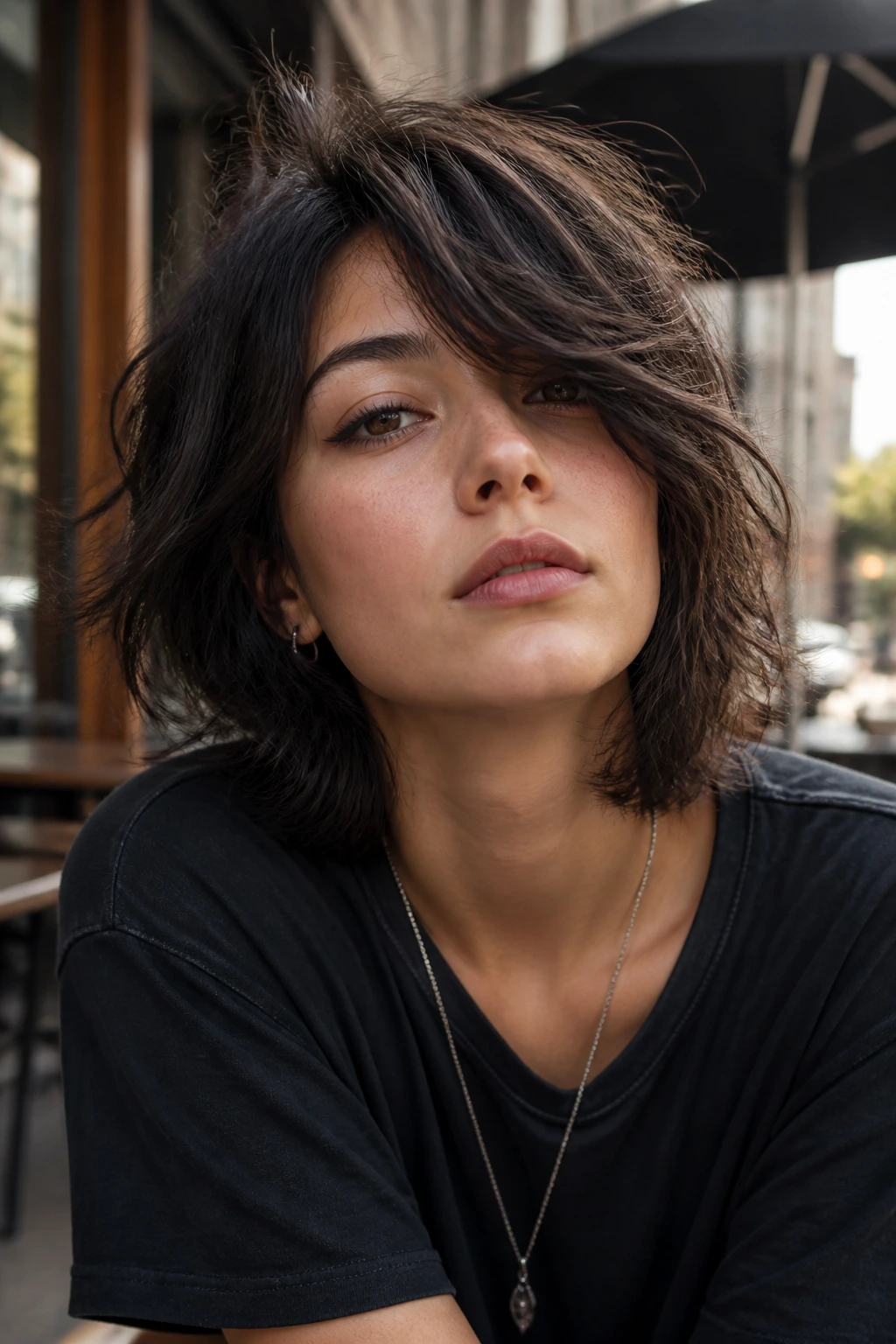
A deep side part changes everything here. Instead of dividing the front evenly, the fringe swings across one side of the forehead and lands in a long, messy sweep that feels a little rebellious and a lot more forgiving on heavy hair.
This cut is friendly to cowlicks. That’s the real reason I keep recommending it. If your hair insists on lifting at the front, a side-swept fringe can work with the grain instead of spending every morning arguing with it.
The look is best when it’s a touch undone. Spray the roots lightly, rough-dry the front in the direction you want, and stop before it turns too smooth. Grunge hair never looked better because it was neat.
10. Airy Pixie Shag with Long Fringe
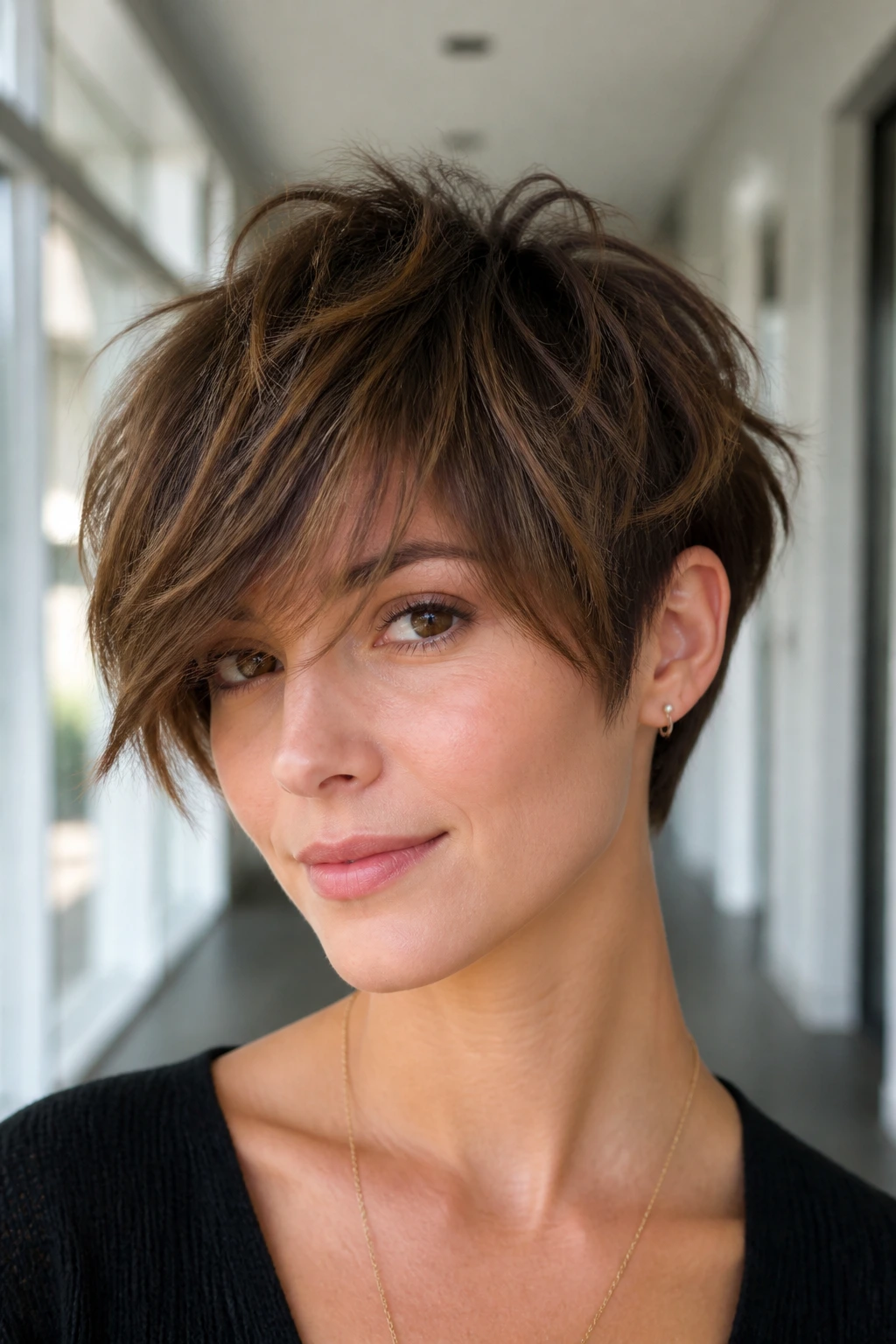
Short on the sides, longer on top, and with a fringe that can sweep across the brow — that’s the basic shape here. Thick hair makes this cut look plush, not sparse, which is a nice bonus when you want something cropped but not fragile.
The long fringe gives you enough length to style around the face. It also softens the transition from the top to the temples, which matters with dense hair because a hard disconnect can feel abrupt.
Best for: someone who wants a lot of neck exposure and a fast styling routine.
Watch for: over-thinning near the crown. Thick hair can handle a crop, but if the interior is stripped too hard, the top may stick up in odd directions.
11. Mushroom Shag with See-Through Bangs

Mushroom shapes have a bad reputation when they’re cut too blunt, and that’s fair. But with the right layers, the rounded outline can look chic on thick hair instead of helmet-like.
See-through bangs are the balancing piece. They let a little forehead show through, which keeps a heavy hairline from feeling boxed in. On thick hair, the transparency isn’t about being delicate; it’s about opening a dense front enough to let the rest of the cut breathe.
This style works best if the underside is thinned carefully and the outer surface is left soft. If you only shave down the bottom layer, the top still swells. That is how you get the mushroom effect people complain about.
12. Feathered Crop with Wispy Bangs
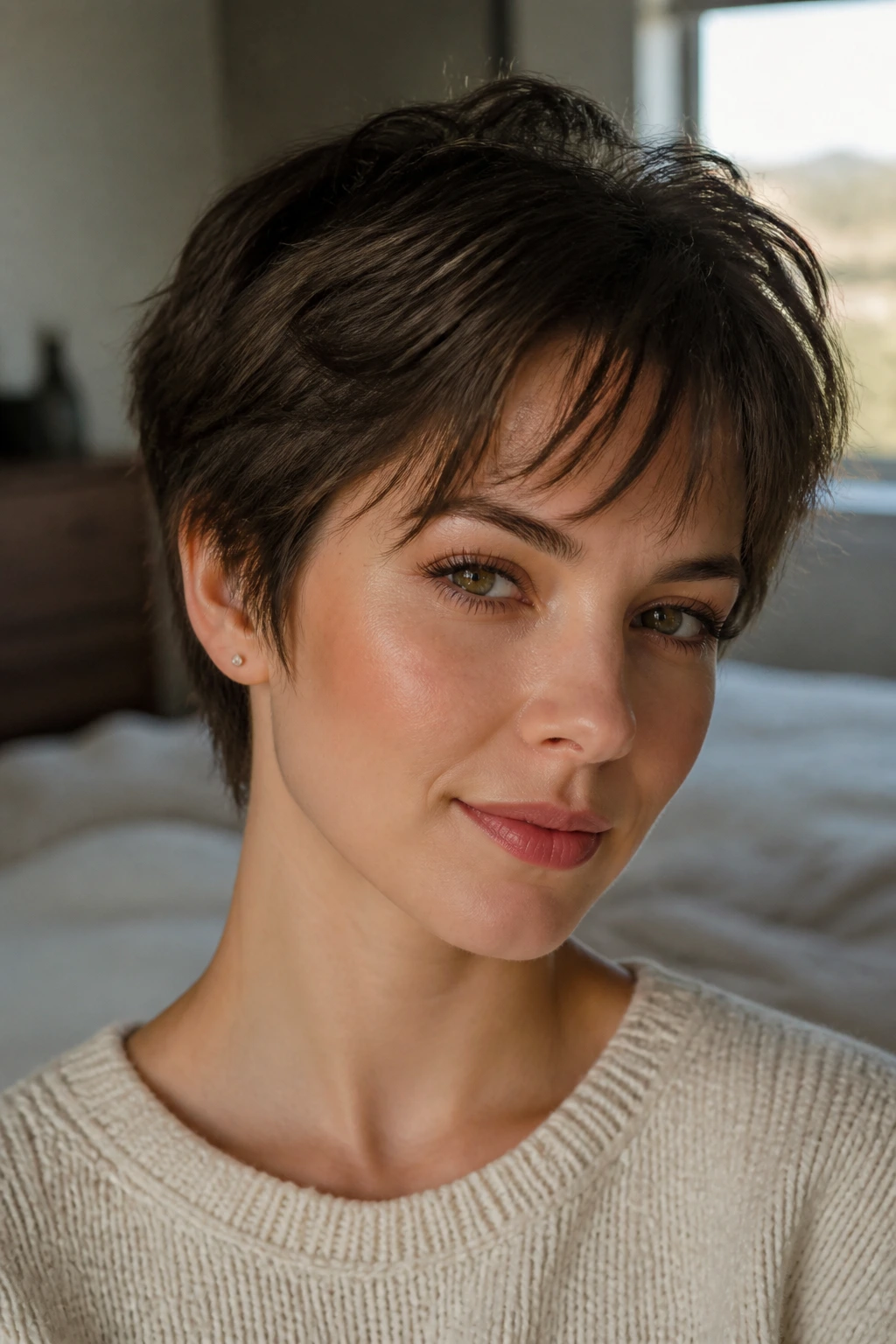
If your thick hair has a fine or silky texture, this is a smart one. The crop keeps the back and sides compact, while feathered top layers prevent the shape from turning blocky.
Wispy bangs are the visual relief valve. They break up the front and stop the cut from looking too heavy at the brow line. I like this style on people who want short hair but do not want the haircut to announce itself before they walk into a room.
A light styling foam at the roots helps here. Nothing crunchy. Just enough to keep the wispy fringe from disappearing into the rest of the cut.
13. Angled Shag with Deep Side Part
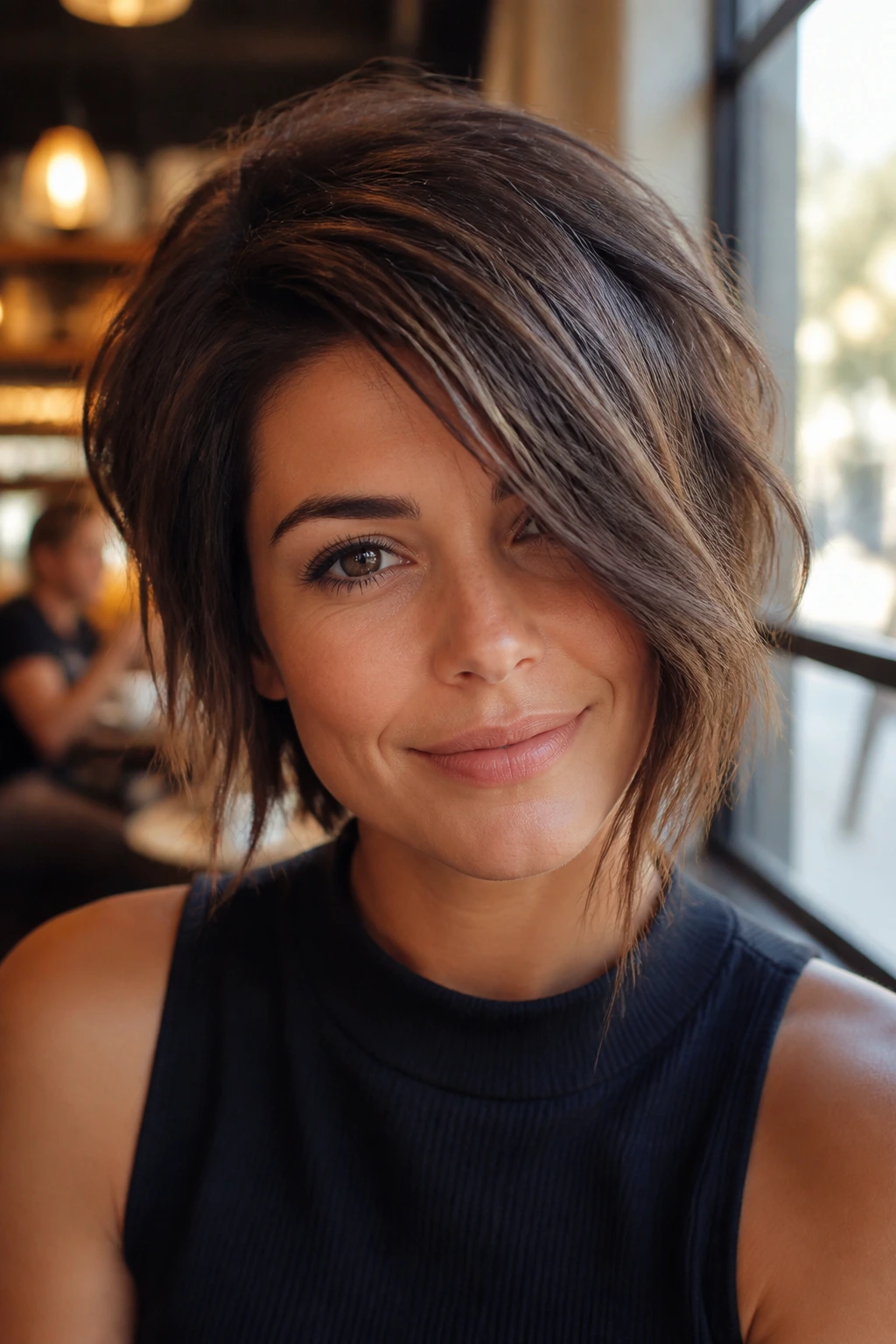
This one leans into asymmetry. One side sits a little longer, the part is pushed low, and the fringe drops across the forehead in a diagonal line that makes thick hair feel less square.
Why It Works
The angle changes where the bulk sits. Instead of building weight straight across the front, the cut distributes it from one temple toward the opposite cheek. That’s useful if your hair thickens at the sides or if one section naturally grows heavier than the other.
It’s also a good answer for people who want a shag but not the full “I woke up at a concert” look. The side part gives it polish. The layers keep it from feeling formal.
A flat iron can add a slight bend to the longer side, but keep the finish soft. Hard angles on thick hair tend to look sharper than you intended.
14. Disconnected Shag with Angled Bangs
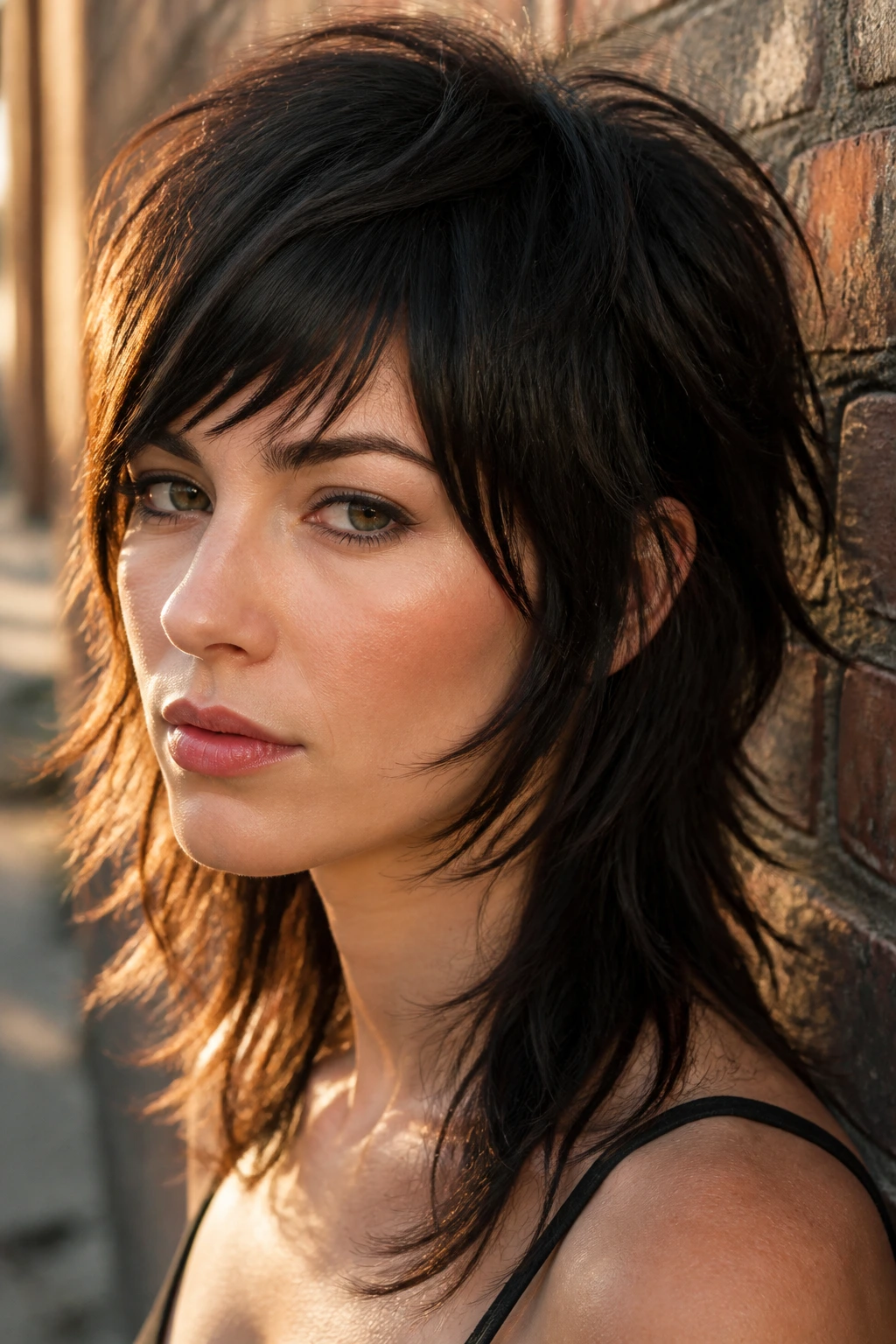
A disconnected shag keeps some of the top layers visibly shorter than the lower sections. That extra contrast gives thick hair a bit of attitude and stops it from reading as one continuous mass.
The angled bangs support that shape. They don’t sit flat across the forehead; they move diagonally and blend into the side pieces. If your hair is dense enough to swallow subtle layering, this is the version that keeps the cut visible.
It’s not the quietest option on the list. Good. Some thick hair needs a little disruption to stop it from acting like a blanket.
15. Rounded Shag Bob with Soft Fringe

A rounded shag bob is a nicer choice than a blunt bob when you want your thick hair to bend inward instead of out. The curve at the ends keeps the sides from flaring, and the soft fringe keeps the top from feeling too full.
The silhouette is polished, but not stiff. That matters. Thick hair can go rigid fast if every line is too exact. The shag element loosens the structure just enough to keep it wearable on regular days, not only on the day you leave the salon.
If you wear glasses, this cut behaves well. The soft fringe sits above or at the frame line instead of crashing into it.
16. Short Shag with Brow-Skimming Bangs
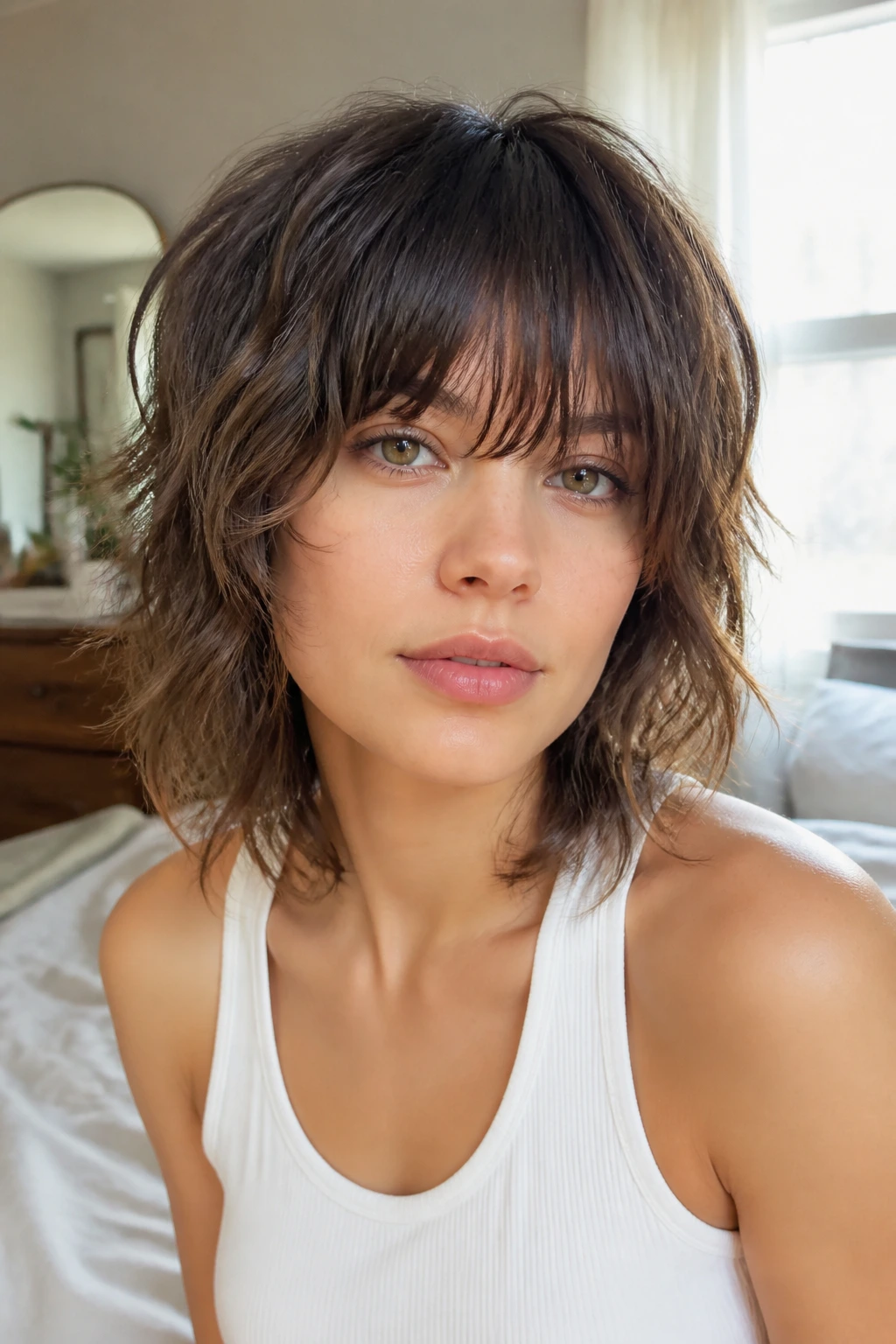
Brow-skimming bangs are a sweet spot for thick hair because they’re short enough to show the eyes and long enough to resist that awkward too-short stage. The shag layers around them keep the front from feeling heavy.
This version is a little easier to live with than a full blunt fringe. If your forehead is more active with cowlicks or you sweat easily, a brow-skimming line gives you enough shape without needing constant correction.
The trick is to keep the fringe textured at the ends. Heavy hair at brow level can go from chic to mat-like in a week if the cut is too blunt.
17. Wet-Look Textured Shag
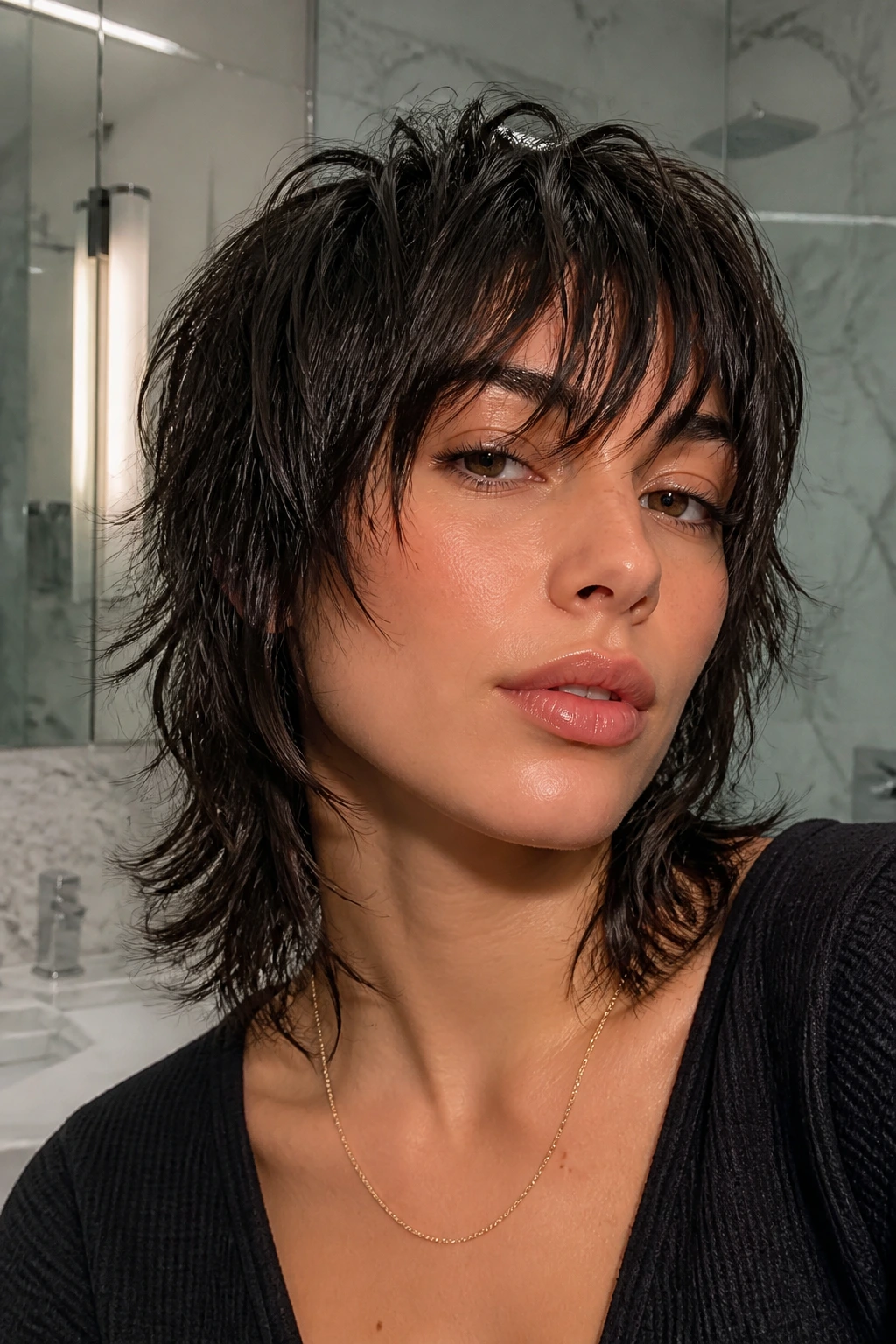
Some cuts are made for a polished finish. This one likes product. The layers are built to hold gel, cream, or a light mousse, and the fringe can be coaxed into separated, glossy pieces that look intentional rather than fuzzy.
Thick hair loves this look because it has enough density to hold the shape. A few drops of serum through the ends and a combed-down front can give the cut a strong outline without flattening it into nothing.
How to Wear It
Let the roots dry a little before adding product. If you saturate the hair when it’s dripping wet, the shape tends to collapse at the crown. Use less than you think, especially near the bangs.
18. Shaggy Wolf Bob with Bottleneck Bangs
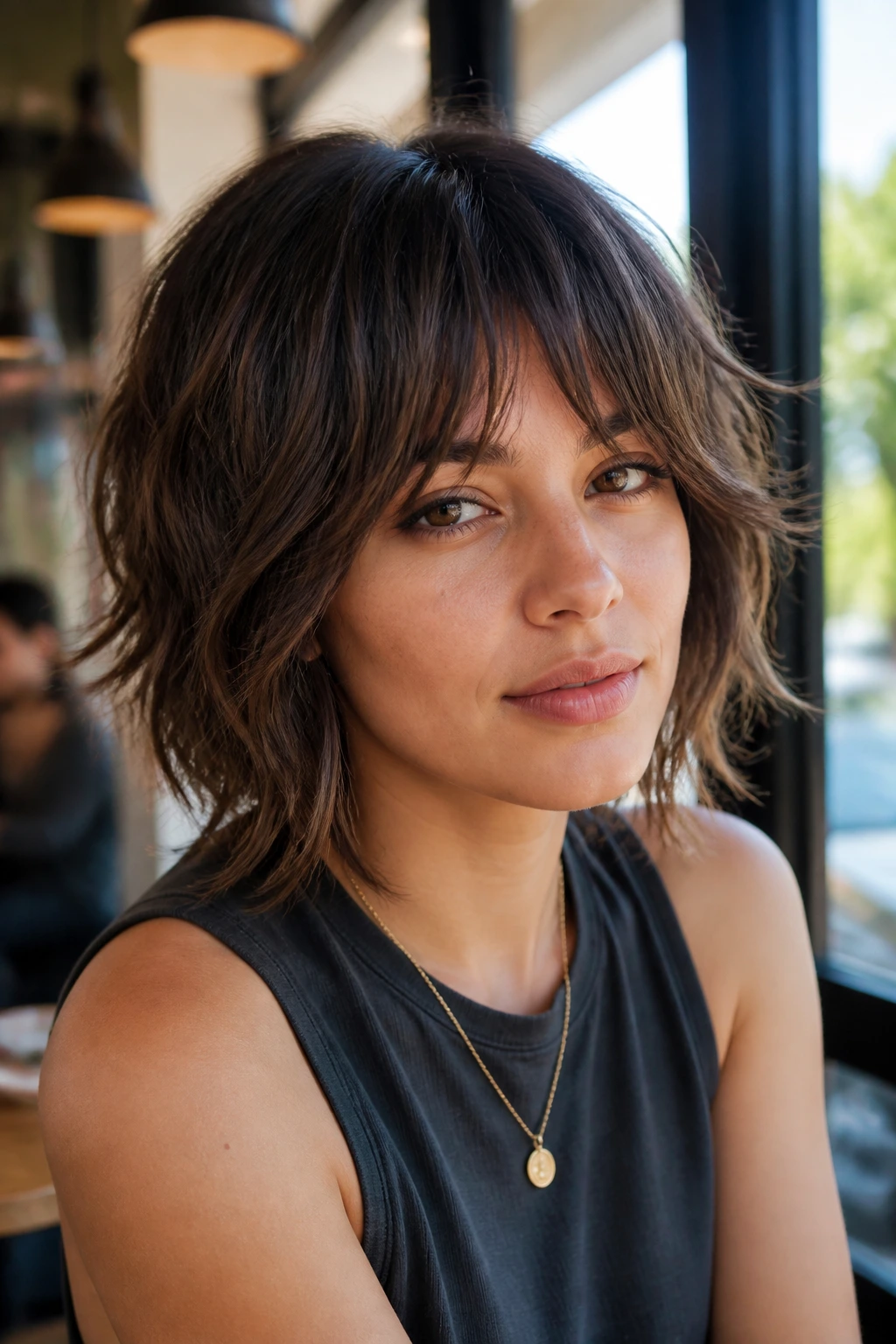
This is the cut for people who like a bit of edge but do not want a full wolf cut that takes over the room. The wolf bob keeps the overall length shorter, while the shag layers and bottleneck fringe give it that stepped, slightly wild shape.
Thick hair is good at supporting this kind of texture. The top can stay airy without going limp, and the bangs can be shaped to open through the center while still connecting to the sides. It’s a smart balance if you want movement around the face and a little roughness at the ends.
It’s also one of the best choices when you want the haircut to look good even after a day in a clip or ponytail. The shape survives real life.
19. Baby Curtain Bangs Shag

Baby curtain bangs are shorter than the classic version, which means they start above the brows and split before they reach the eyes. On thick hair, that shorter length keeps the fringe from feeling too heavy across the face.
The shag around it should be soft and not overly disconnected. If the layers are too jagged, the baby bangs can look fussy. If the layers are too smooth, the fringe disappears into them. The middle ground is where this cut lives.
This is the kind of style that looks playful without being precious. Small detail. Big difference.
20. Heavy Brow-Bang Shag
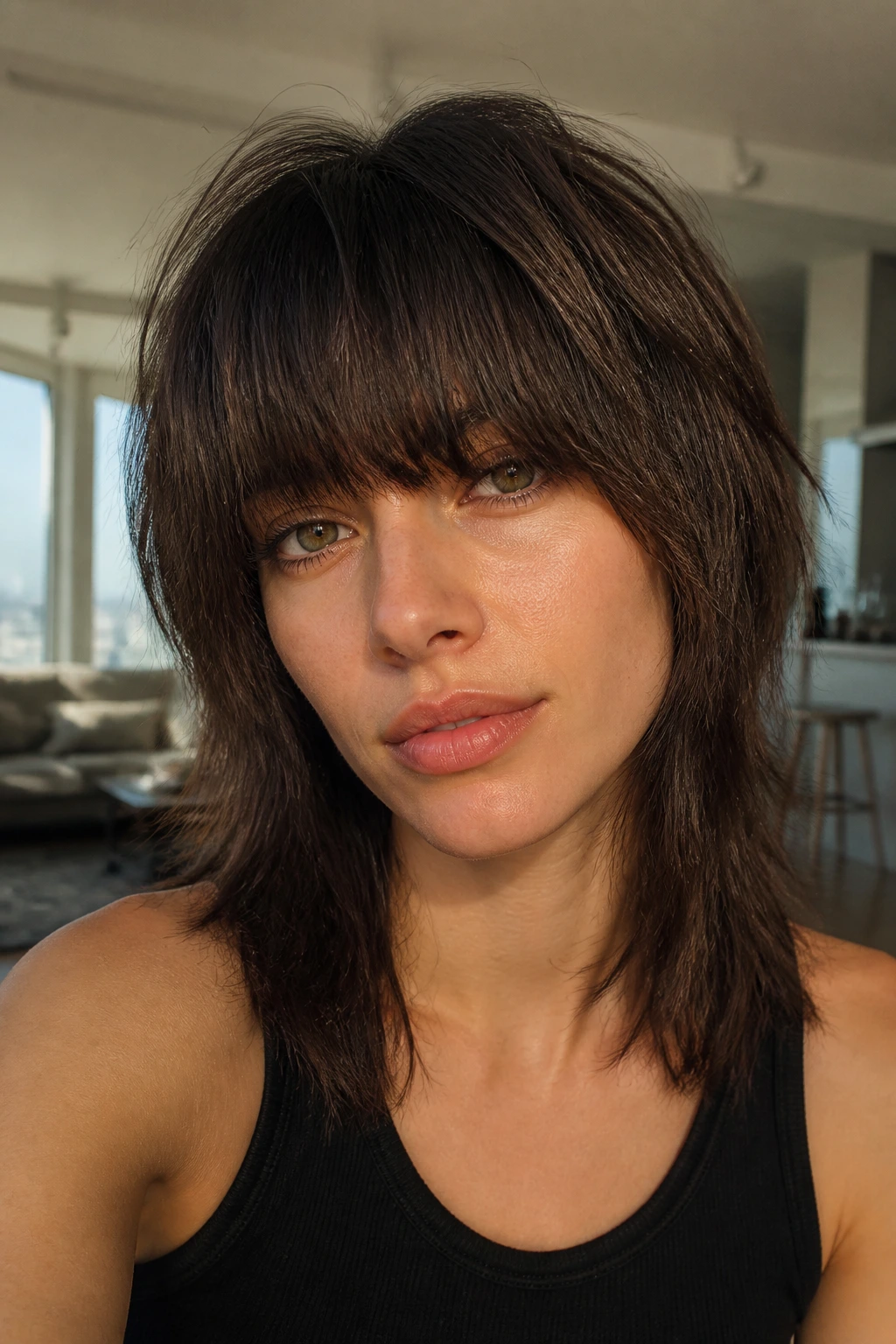
If you like a stronger fringe, this is the one. The bangs are fuller, the layers are choppy, and the overall cut has enough internal removal to stop the front from overwhelming the face.
Thick hair can absolutely carry a heavy bang. The key is not to keep it too blunt at the edges. A little point cutting at the ends helps it sit with the rest of the layers rather than sitting on top like a separate piece of hair.
This cut looks especially good if your hair has natural body and you are not afraid of a bit of maintenance. A heavy fringe needs a trim schedule. There’s no way around that.
21. Air-Dried Natural Shag
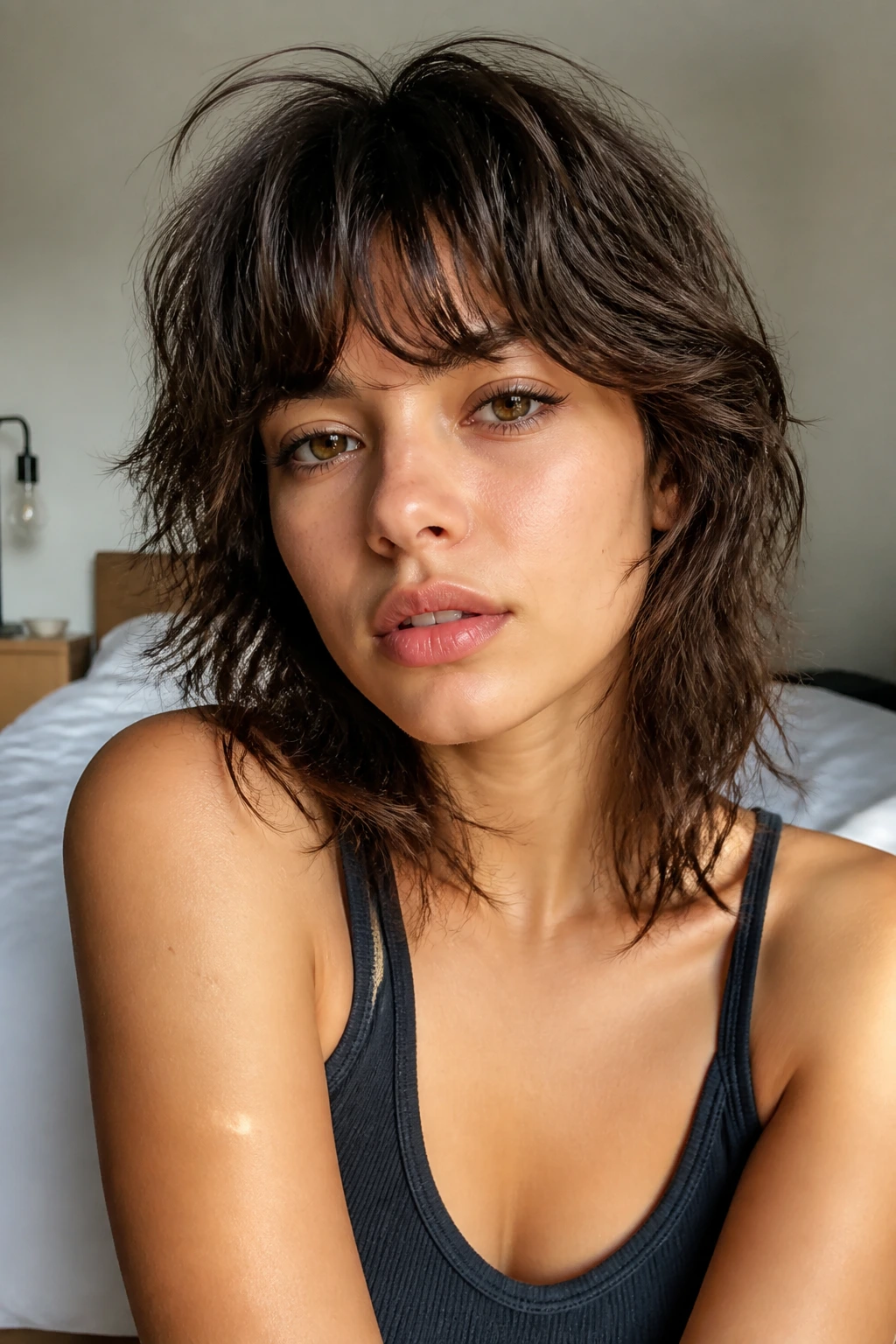
This is the haircut I’d recommend to the person who would rather put down the hot tools and get on with the day. The layers are cut to fall well on their own, and the bangs are long enough to settle into their own shape as the hair dries.
For thick wavy hair, that matters. Too much precision can turn into puff. A natural shag lets the texture do the work and keeps the front from needing constant heat shaping.
Best if you want:
- a cut that looks decent with no round brush
- bangs that can separate naturally instead of being forced flat
- a style that gets better with a little imperfection
This cut is not lazy. It’s strategic.
22. Polished Face-Opening Shag
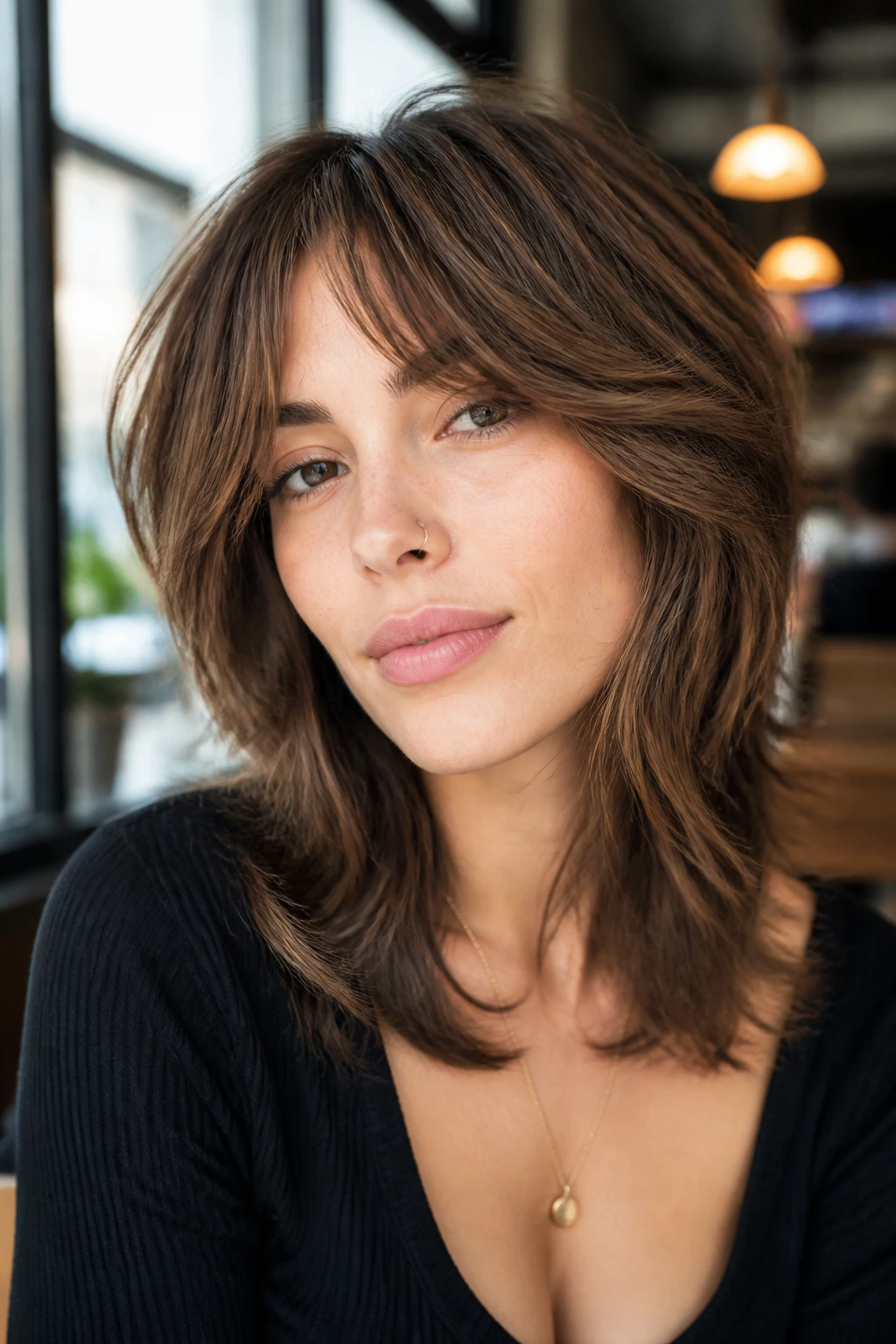
A lot of shag haircuts want to look slightly undone. This one can be dressed up. The layers are placed to carve out the cheekbones and jaw, the bangs are softened at the center, and the finish can go smooth without losing movement.
That makes it a strong choice for thick hair that needs structure more than rebellion. If your hair tends to look heavy in photographs or flat at the roots, a face-opening shag gives you a little lift around the eyes and a cleaner line through the sides.
I’d pick this one for anyone who wants the practicality of a shag but prefers the hair to read neat from a distance. It’s the least messy version of the category, which is a useful thing to have.
Why the Shag Layering Trick Works on Dense Hair

A good short shag is not just “layers” in the vague salon sense. It’s a careful removal of weight at specific points so thick hair stops stacking up in all the wrong places. The crown needs movement. The side panels need release. The front needs a fringe that can sit against your forehead without turning into a slab.
That is why a shag often looks better on thick hair than on thinner hair. There’s enough density to support shape. On fine hair, too much layering can leave you with see-through ends. On thick hair, the same approach can create air pockets, bend, and a cleaner outline.
The mistake people make is asking for texture everywhere. Don’t do that. If every inch is thinned, the haircut loses structure and the ends go fluffy. The better move is to keep some weight in the perimeter, cut thoughtful face-framing layers, and let the fringe do part of the visual work.
Essential Tools for These Cuts
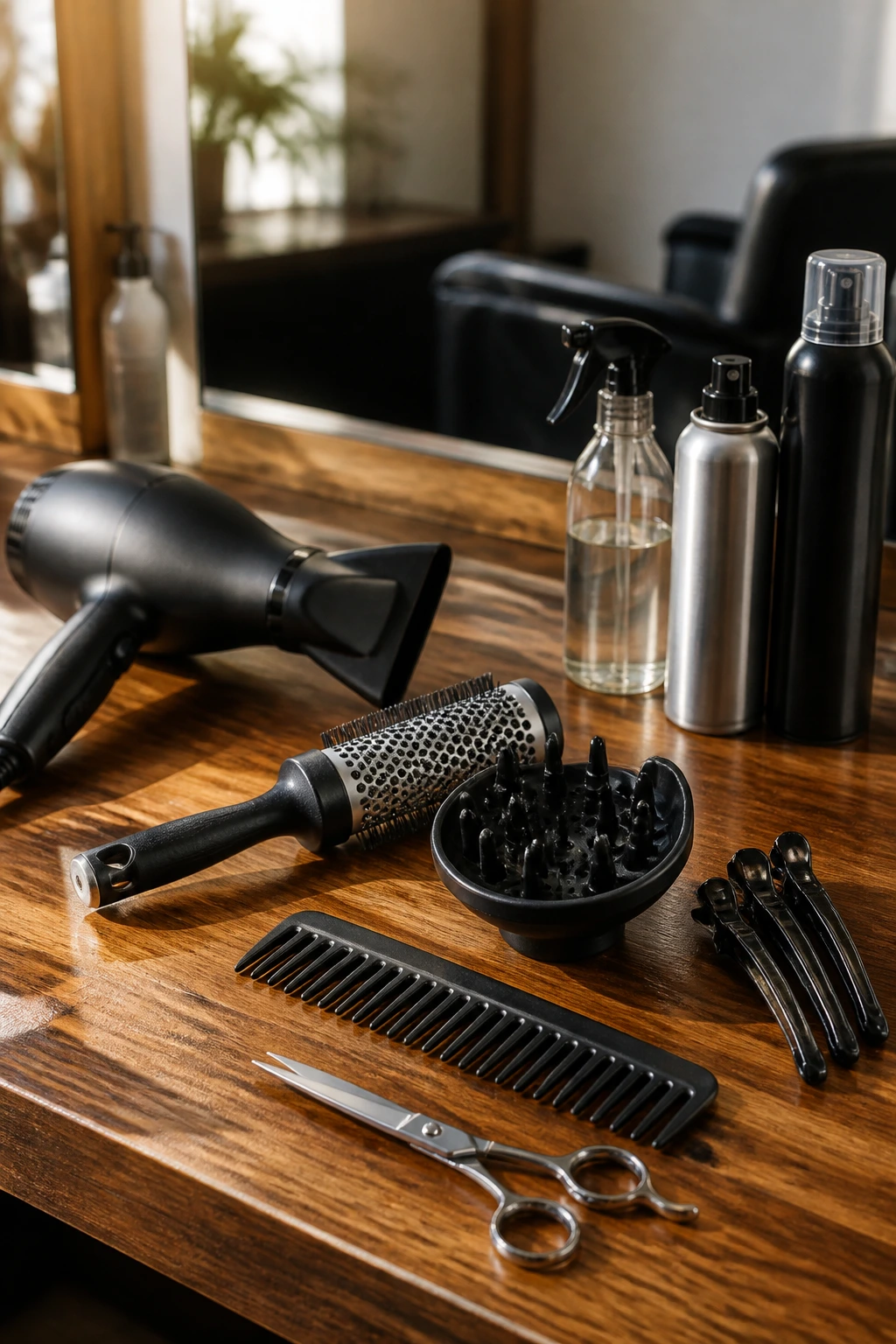
- A blow dryer with a concentrator nozzle: This helps direct the fringe and smooth the top without blasting the layers apart.
- 1-inch to 1.5-inch round brush: The sweet spot for bending bangs and cheekbone layers on short to medium shags.
- Diffuser attachment: Worth owning if your thick hair is wavy or curly and you want the shag to dry with shape instead of puff.
- Heat protectant spray: Use it before every hot-tool pass, especially on fringe pieces that get touched up often.
- Texturizing spray or light dry shampoo: Good for reviving separation at the roots and keeping bangs from sticking together.
- Mousse or lightweight styling foam: Best on damp hair when you want the layers to hold a soft bend.
- Sectioning clips: Small, cheap, and useful. They keep the fringe out of the way while you dry the rest.
- Wide-tooth comb: Better than a brush for distributing product through thick hair without flattening it.
- Small finishing scissors or a salon trim appointment: If your fringe grows fast, a little upkeep keeps the whole cut from drifting into your eyes.
How to Brief Your Stylist and Choose the Right Reference Photo
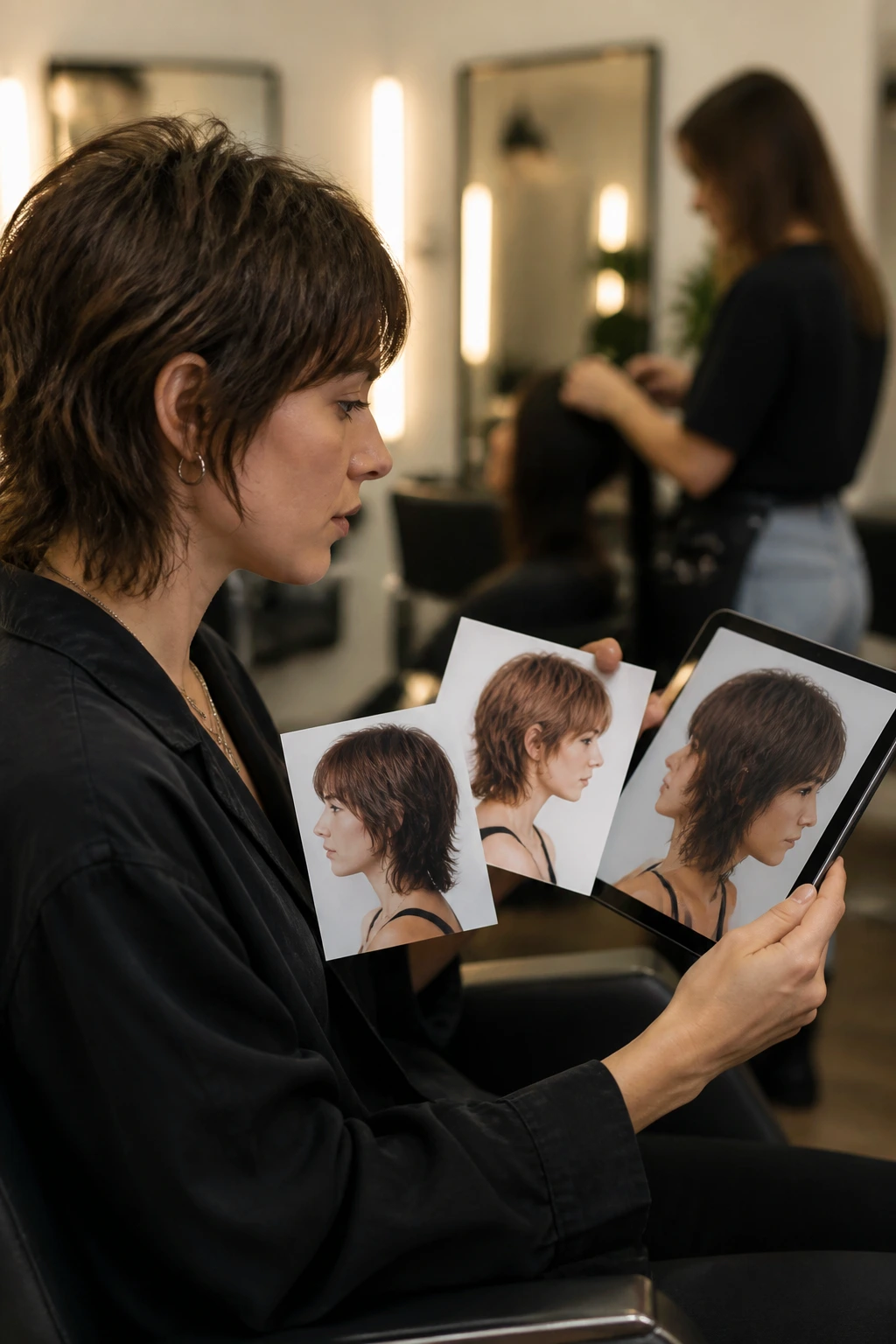
Thick hair needs a haircut conversation, not a vague “make it shaggy” request. Bring 2 or 3 photos, and make sure at least one shows the side view. That side angle is where you can see whether the layers are stacked high, whether the fringe is blunt or feathered, and how short the actual perimeter sits.
Say how you wear your hair most days. Air-dried? Blow-dried smooth? Half up? Clipped back while you work? Those details matter more than the face shape label people love to throw around. A cut that looks gorgeous in a polished salon photo can become a puffball if your hair is coarse and you never heat-style it.
If your hair is very dense, ask your stylist where they plan to remove weight. The useful answer sounds specific: interior layers, crown release, face-framing pieces, soft texturizing through the ends. If they only mention “texturizing the bottom,” ask them to explain more. That’s not enough for most thick hair.
How to Wear the Shape Day to Day
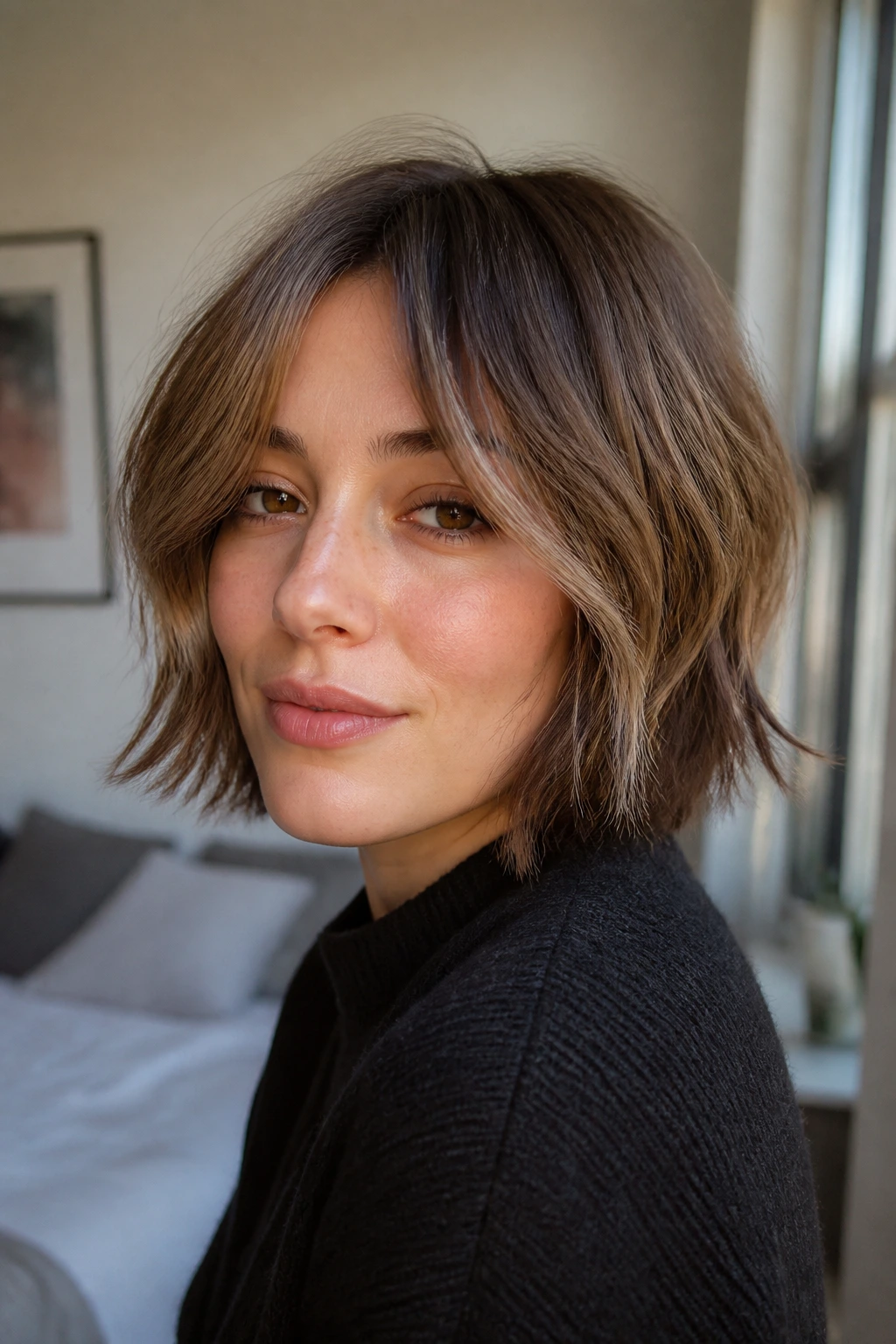
Texture: Use a light mousse or styling cream on damp hair, then scrunch or rough-dry depending on your texture. Thick hair usually needs less product than you think, because too much cream can crush the lift you just paid for.
Parting: A center part sharpens curtain bangs and bottleneck bangs. A deep side part is friendlier if your fringe grows heavy or one side naturally lifts higher than the other.
Finish: For a softer look, bend just the front pieces with a round brush and leave the back alone. For a grittier finish, hit the ends with a texturizing spray and separate them with your fingers once the hair is cool.
Accessories: Small clips, narrow headbands, and barrette-style pins work better than bulky accessories on short shag haircuts with bangs for thick hair. Heavy headbands can flatten the fringe and make the top swell behind them.
Additional Tips and Texture Boosters
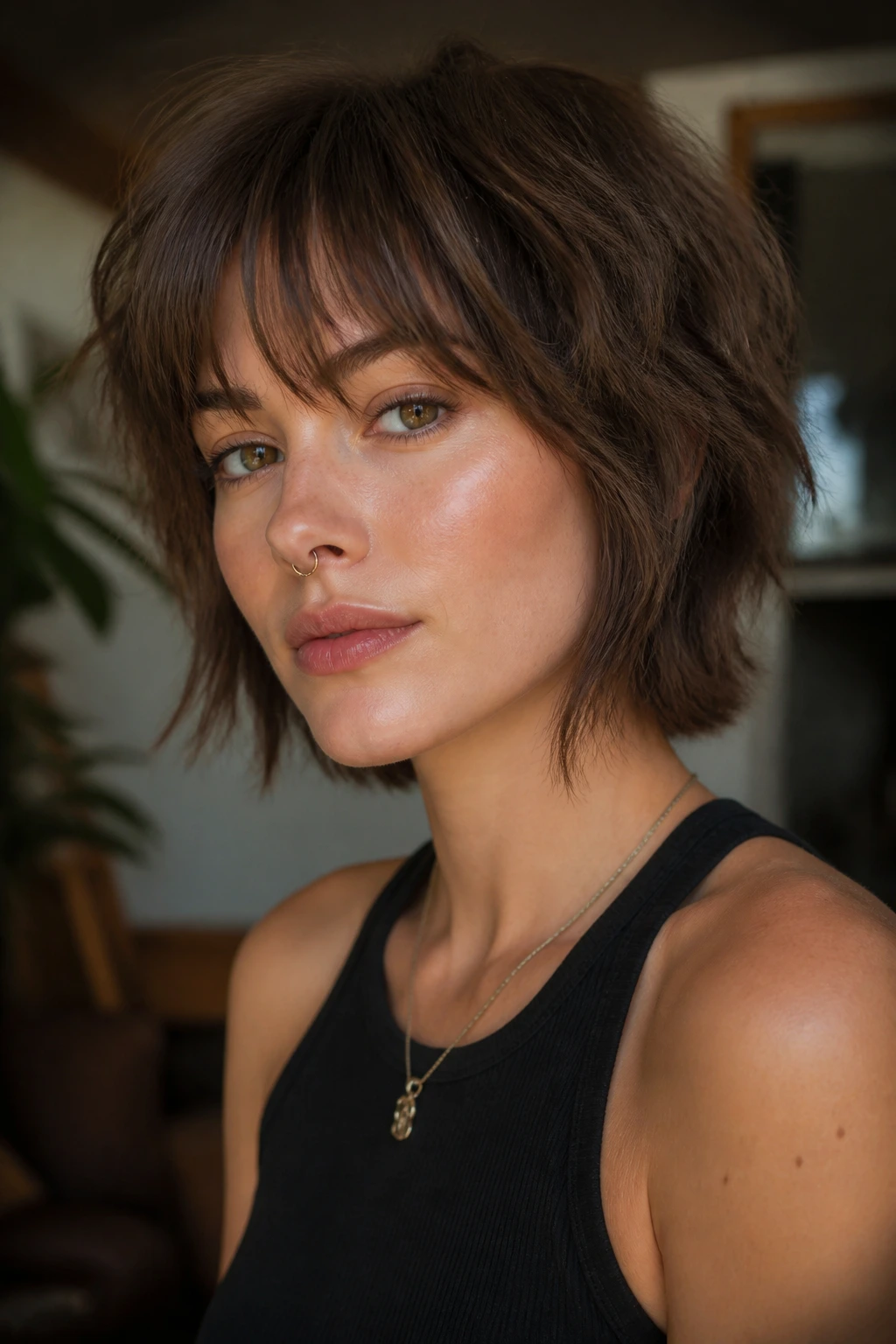
Fringe Control: Dry the bangs first, before the rest of your hair gets too warm and fuzzy. That gives you the cleanest shape and keeps the front from drying crooked, which thick hair loves to do.
Volume Control: If the crown gets too full, clip the roots at the top for 10 to 15 minutes while the hair cools. It’s a small trick, but it keeps the top from rounding out too much.
Smoothing Without Flattening: Run a pea-sized amount of serum only through the last 2 to 3 inches of the hair. Anything higher can make the shag lose its separation and start looking greasy by midday.
Heat-Free Help: Twist damp hair into two loose sections and let them air-dry. When you take the twists out, the layers usually fall with a natural bend that suits this cut better than a perfect blowout.
Common Mistakes People Make With Short Shags and Bangs
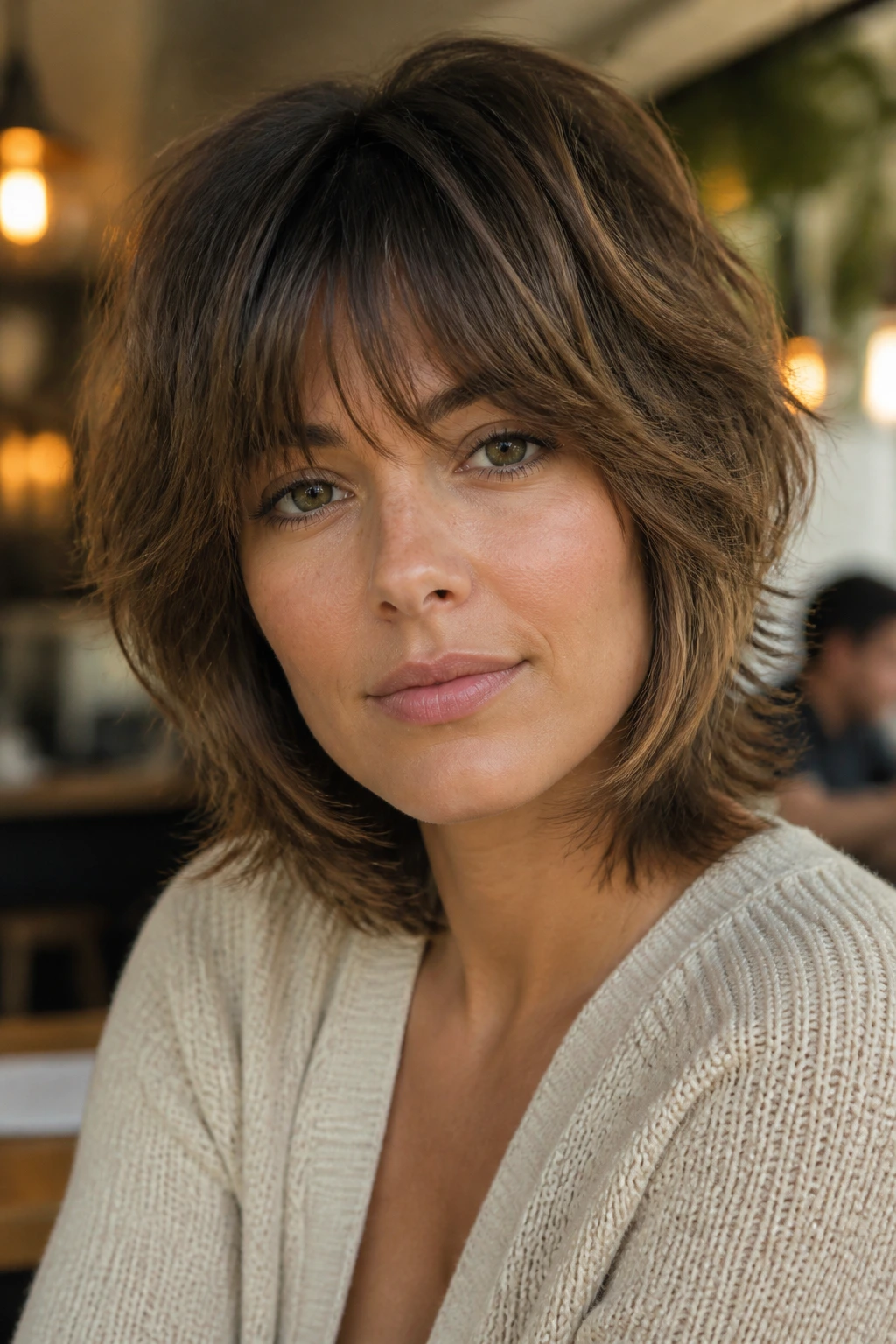
The first mistake is cutting the bangs too short while the hair is wet and stretched. Thick hair bounces up as it dries, and what looked like brow length in the chair can end up halfway to the hairline. The fix is simple: cut conservatively, then refine once the hair is dry.
The second is taking too much weight from the bottom and not enough from the interior. That’s how you get the triangle shape — flat top, broad sides, sad ends. Ask for internal layering and face-framing release, not just thinning shears at the ends.
Another common one: using heavy creams or oils near the roots. Thick hair already has presence. It does not need extra help looking weighed down. Keep richer products below the cheekbones and use lighter sprays near the fringe.
Cowlicks are the fourth trap. If your bangs grow in opposite directions and nobody accounts for that, the front will split in the wrong place and stay there. Show your stylist how your hair falls when dry, not just how it sits wet in the mirror.
And then there’s the blunt perimeter problem. On dense hair, a hard line can make the whole cut feel boxy. A little softness at the edge keeps the shape from turning into a shelf.
Variations and Adaptations to Try
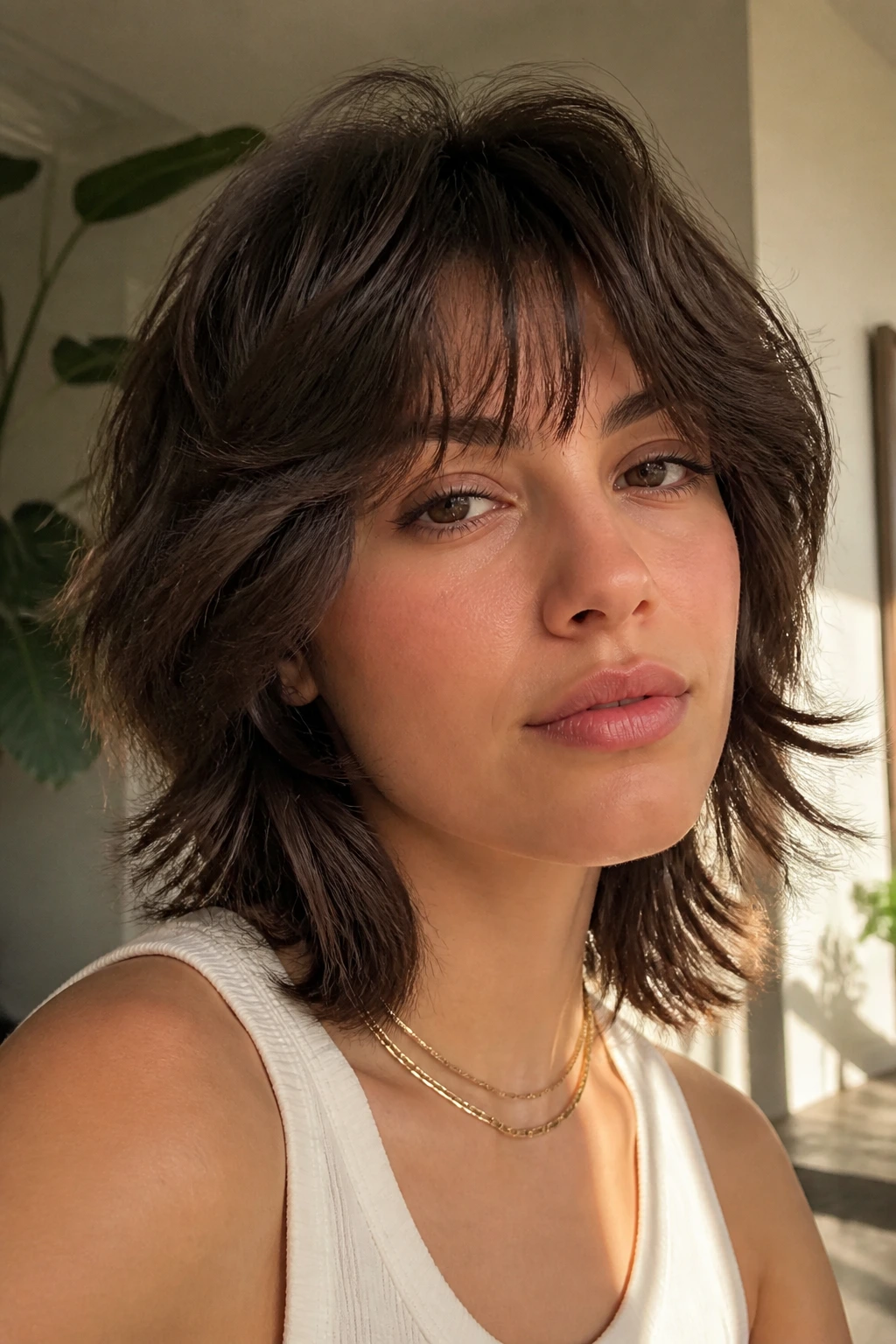
Soft Office Shag: Keep the ends just below the chin, soften the fringe into a curtain shape, and ask for less disconnection through the layers. It reads cleaner and grows out with less fuss.
Curly Halo Shag: Use longer layers and keep the bangs slightly longer so curls can spring into place. This version is better if you want shape around the face but do not want a fringe that constantly rebounds above the brow.
Wolf Bob Edge: Shorter at the top, choppier through the sides, and a heavier fringe at the front. It has more attitude and works best if you like separation and a slightly rough finish.
Low-Maintenance Air-Dry Shag: Keep the fringe longer and the perimeter softer so the haircut can settle on its own. This is a smart pick for thick wave patterns that already do half the work.
Polished Blowout Shag: Ask for rounded layers, face-framing pieces, and a fringe that can be brushed outward from the center. This version looks neat, has movement, and behaves well with a smooth finish.
Short Cropped Shag: If you want the shortest option, keep the top textured and the fringe longer than expected. Thick hair can handle the crop, but you still need enough length on top for the shape to read as shaggy rather than shaved.
Keeping the Shape Between Salon Visits
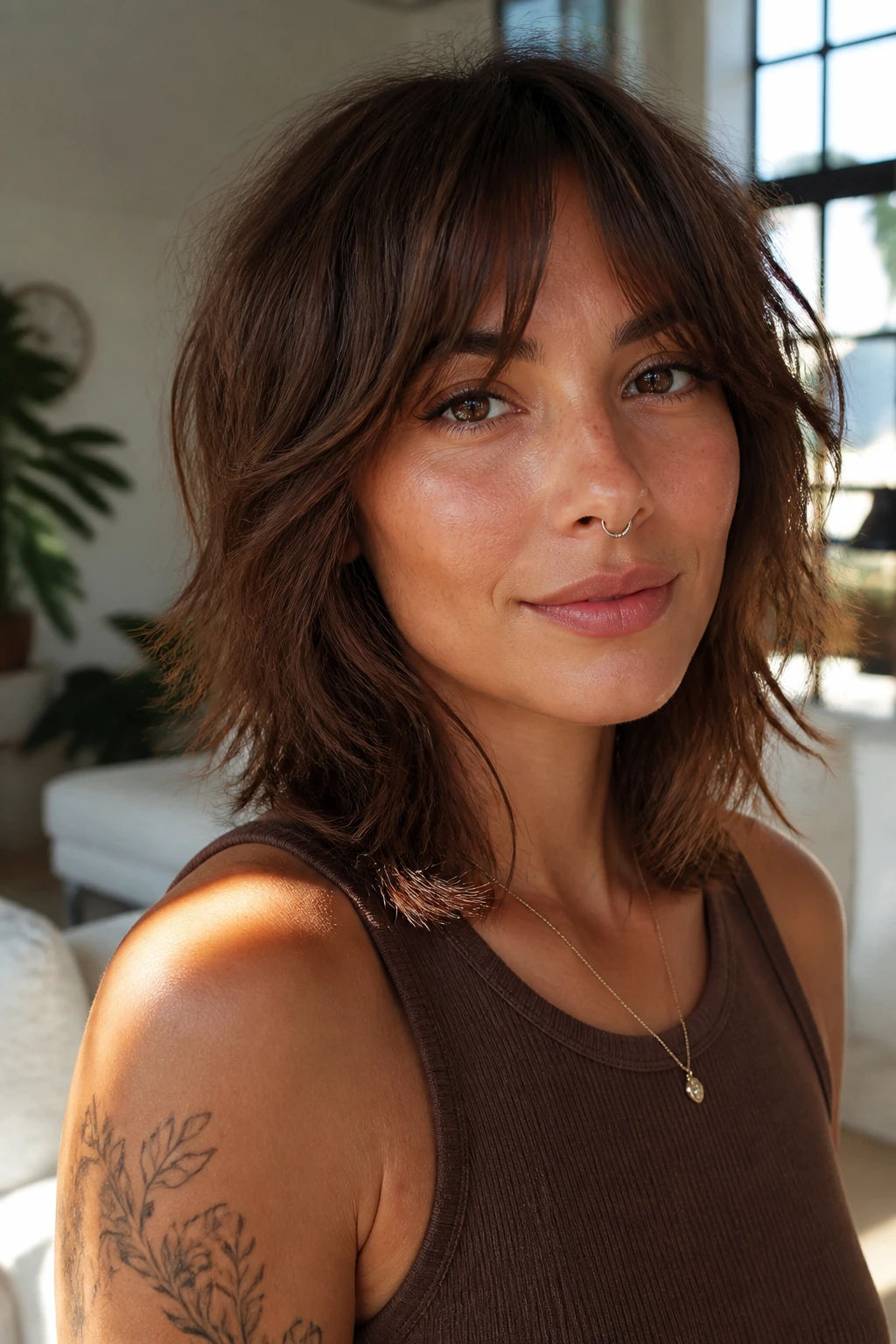
Short shag haircuts with bangs for thick hair usually hold their shape for about 6 to 8 weeks before the layers start losing their balance. Bangs may want attention sooner, often around 3 to 4 weeks, especially if they’re heavy or brow-skimming. If you like the fringe to sit just right, trim it before it gets into your eyes and starts forcing itself into a middle part.
Wash rhythm matters too. Thick hair can get weighed down by too much product buildup, so a clarifying wash every 2 to 4 weeks helps the layers keep movement. On the other hand, if your ends are razored or feathered, too much daily shampooing can make them frizz faster. Use your scalp’s oil level as the guide, not a rigid calendar.
At night, pin the fringe back loosely or let it rest under a silk or satin pillowcase. It sounds fussy. It isn’t. Bangs that keep getting crushed at the same angle tend to split in the morning, and thick hair only gets more opinionated when you sleep on it hard.
Frequently Asked Questions
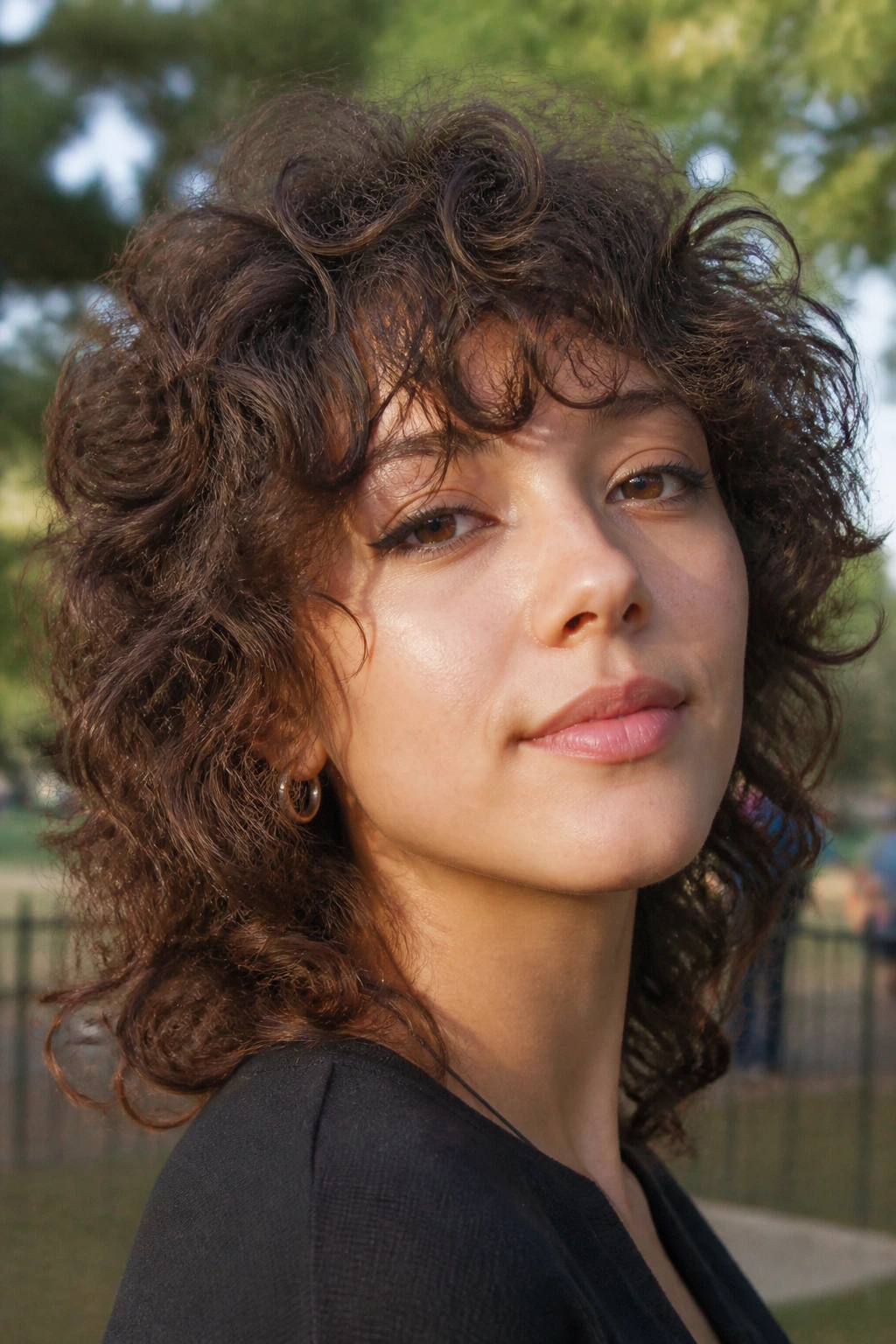
Will a short shag make thick hair look thinner?
It can, but not in a scary way. The goal is to remove bulk so the haircut moves, not to make the hair itself look sparse. If the stylist keeps enough weight in the perimeter and shapes the interior thoughtfully, thick hair looks lighter and more controlled.
What bangs work best with thick hair?
Curtain bangs, bottleneck bangs, and feathered fringe usually behave best because they let the hair spread out instead of dropping as one heavy block. Full bangs can work too, but they need more maintenance and a cleaner drying routine.
Can I get a shag if my hair is straight and very dense?
Yes, and straight dense hair often shows the shape beautifully. The key is to keep the layers purposeful and not over-thin the ends, or the haircut can flip out and look puffy instead of soft.
How often should I trim the bangs?
Every 3 to 4 weeks is a good rhythm for most fringe shapes on thick hair. If you wear brow-skimming bangs, you may want a touch-up sooner. If the bangs are longer curtain pieces, you can usually stretch the time a little.
Is this cut good for curly hair?
Absolutely, as long as the cut respects shrinkage and curl pattern. Curly thick hair usually looks best when the bangs are left longer than expected and the layers are cut with the natural bend in mind.
What if my bangs separate in the middle all day?
That usually means the front has a cowlick or the fringe is a little too short in the center. A quick blow-dry with a brush, a tiny amount of mousse, and a center part or soft side part usually helps. If it keeps happening, ask for a slightly longer fringe next time.
Can I air-dry a short shag and still have it look good?
Yes, and some of the best versions are made for air-drying. The important part is the cut: if the layers are placed well, the hair will fall into shape with very little help. A light styling foam or wave cream can keep the ends from puffing.
Will this cut work if I wear glasses?
It can work very well, especially with curtain bangs, rounded shag bobs, or soft side-swept fringe. The trick is keeping the front pieces from landing directly on the frame line unless that’s the look you want. A good stylist will adjust the fringe so it clears the glasses instead of fighting them.
The Shape That Keeps Its Edge
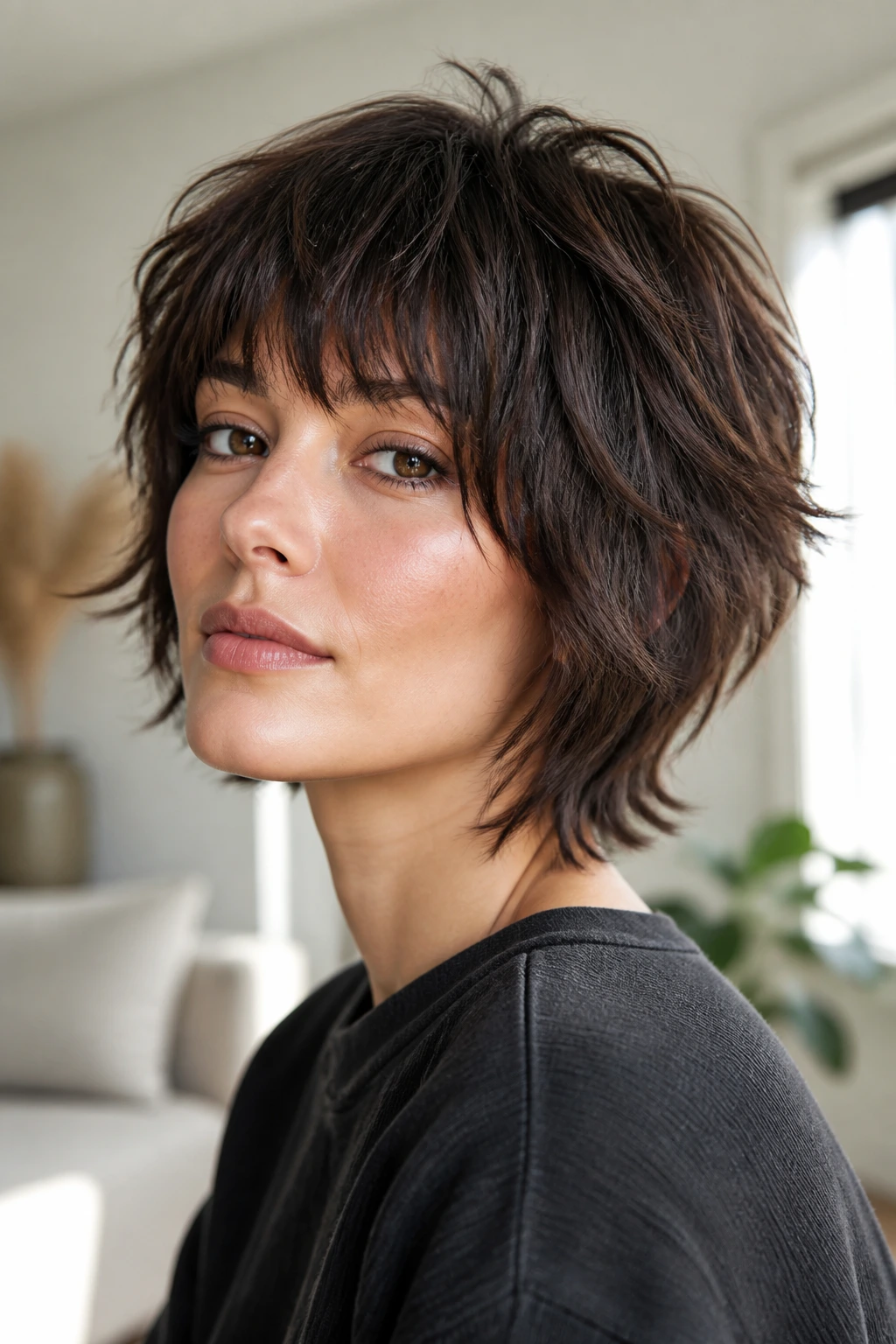
The nicest thing about a short shag on thick hair is that it doesn’t ask you to tame your texture into something fake. It gives the density somewhere to go. The bangs frame the face, the layers take the weight off the sides, and the whole cut looks like it belongs on your head instead of being pinned there for the sake of a photo.
If thick hair has ever felt too bulky to cut short, this is the family of styles that changes that story. Choose the fringe that fits your daily life, not just the mirror moment, and keep the layers specific. The right version will look good with a brush, better with a little mess, and best when it has room to move.